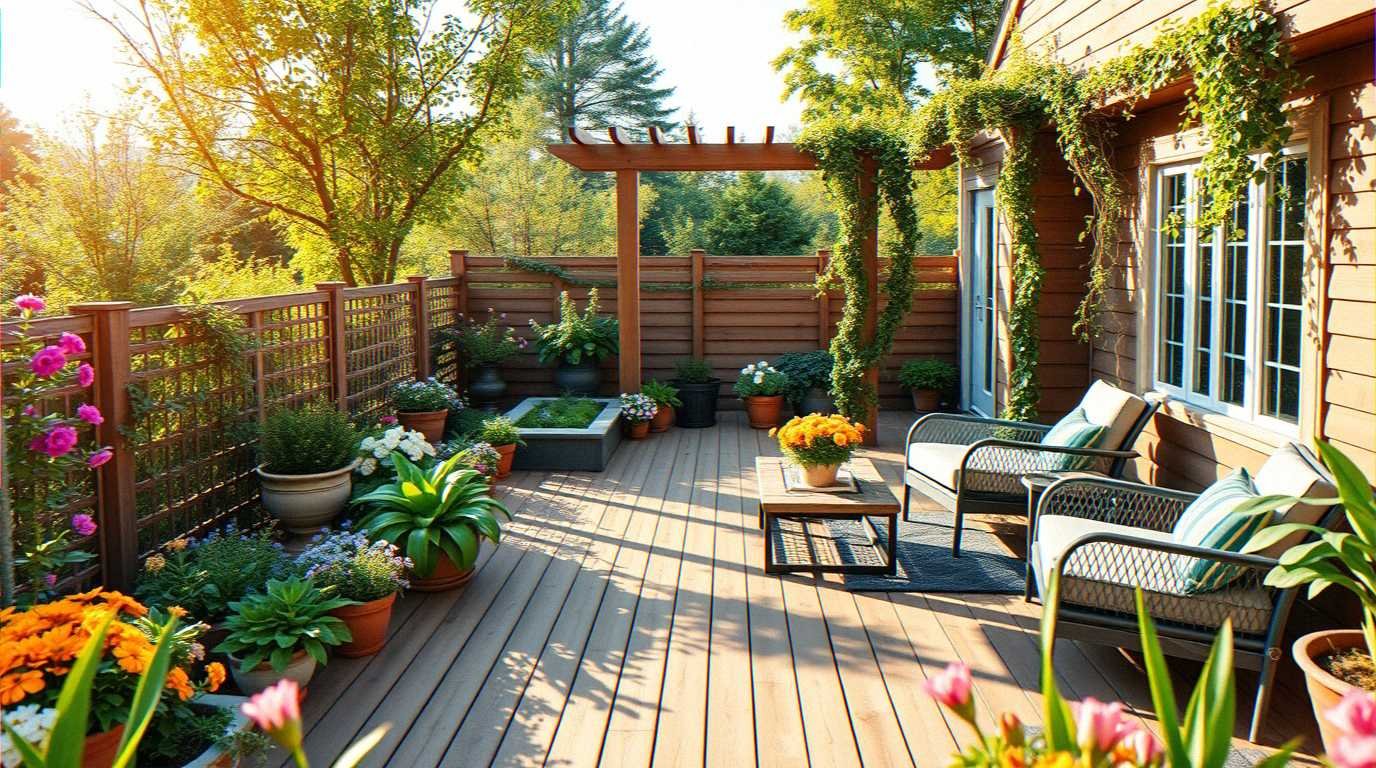
So, you’ve got this awesome deck, right? But the area around it looks…well, kinda sad. Maybe there’s just bare dirt, some scraggly grass that refuses to grow, or—let’s be honest—a patch of weeds throwing a party you didn’t invite them to.
The truth is that the area surrounding your deck is ideal for designing something truly stunning. I’ve spent years turning plain deck perimeters into spectacular displays, and I assure you that it’s not as hard as you might think. These ideas will help you create the dreamy outdoor vibe you’ve been picturing on Pinterest, whether you’re working with a large backyard or a small townhouse deck.
Container Gardens: Your Deck’s Best Friend
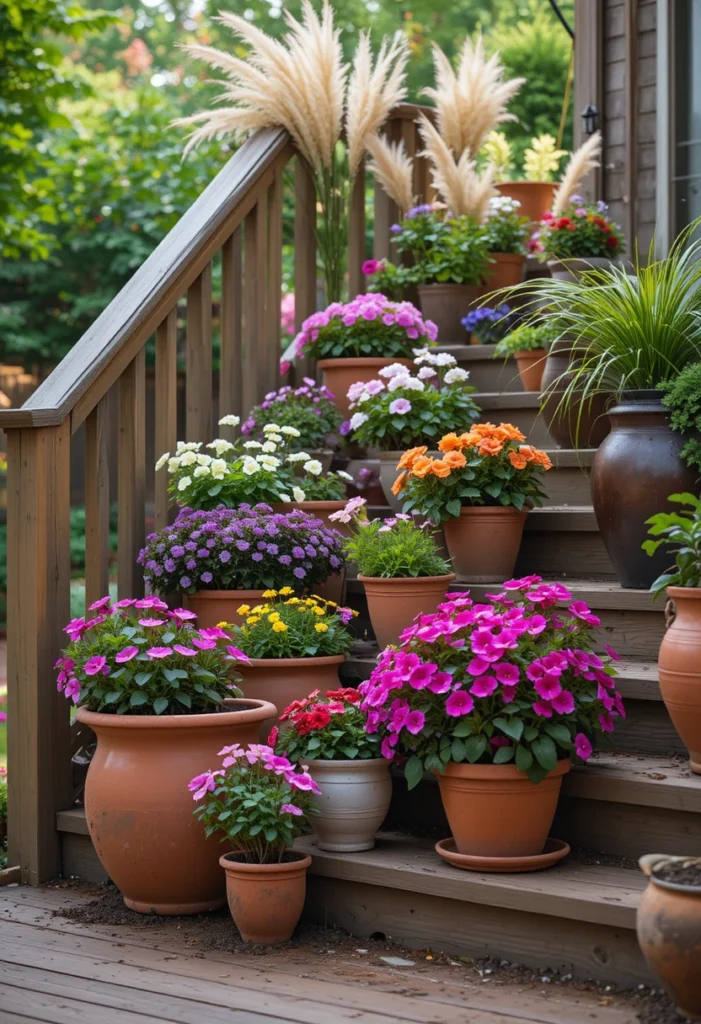
Container gardening is honestly the MVP when it comes to deck areas. You can move things around, experiment with different looks, and—FYI—you don’t need to dig up your entire yard.
I always start with large ceramic or terracotta pots clustered at the base of deck stairs. Mix different heights and textures. Plant some trailing petunias or sweet potato vines that’ll cascade down beautifully. Add some upright plants like ornamental grasses or even small shrubs for vertical interest.
Ever wondered why containers work so well? They create instant impact without permanent commitment. Plus, if something dies (happens to the best of us), you just swap it out.
Smart Container Placement
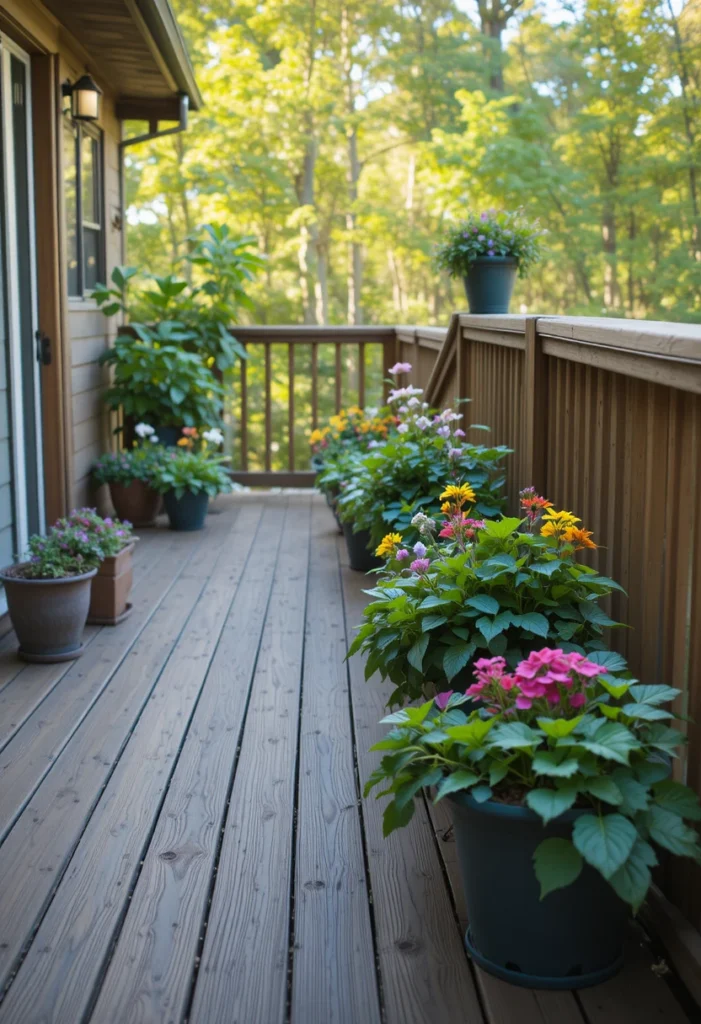
Position your containers strategically:
- Corners of the deck: Frame the structure and soften harsh angles
- Along railings: Create a flowing connection between deck and ground
- Under the deck: Perfect spot for shade-loving plants like hostas or ferns
- Stairway sides: Guide visitors up while adding color
Build Raised Beds Around the Perimeter
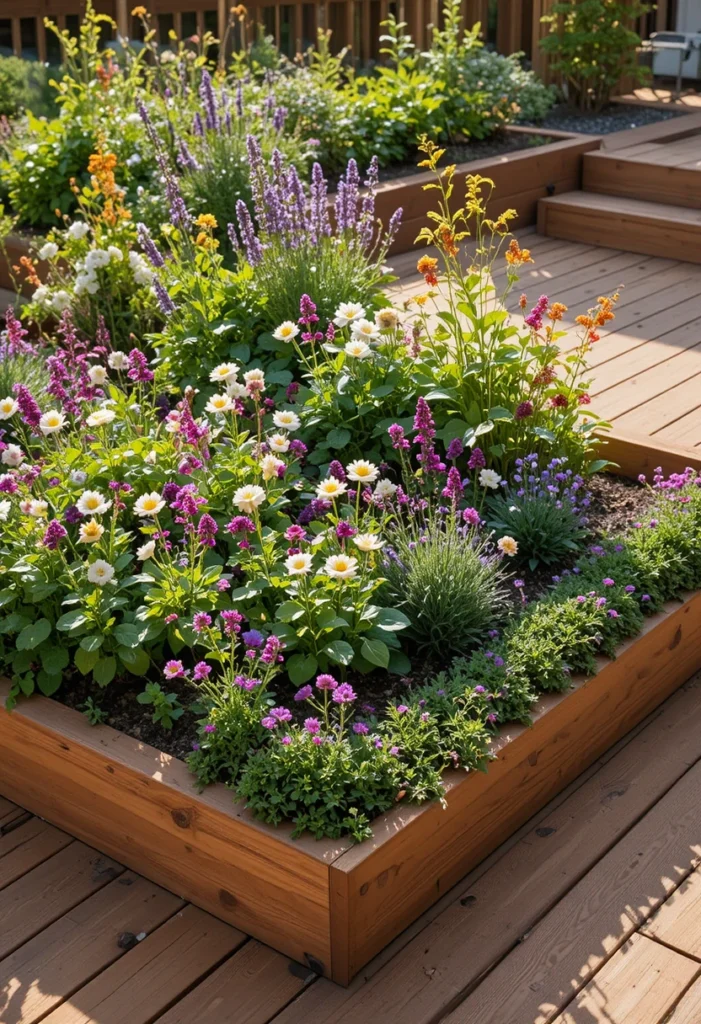
Raised beds are my go-to for creating defined garden spaces that look intentional and polished. I built L-shaped beds around two sides of my deck using cedar boards, and wow—game changer.
The beauty here is you control the soil quality completely. No fighting with whatever clay or sand disaster exists naturally. Fill those beds with gorgeous blooming perennials, herbs you actually use, or even compact vegetables.
The beds should be between 12 and 18 inches tall. This height provides adequate soil depth for the majority of plants and appears proportionate. Use low-maintenance plants like creeping thyme or sedum to line the inside edge closest to your deck.
Vertical Gardens for Maximum Impact

Got limited space? Go vertical. Seriously, this is where you can get creative and turn your deck area into something Instagram-worthy.
Trellises attached to deck posts create instant vertical growing space. I’ve trained climbing roses, clematis, and even cucumber vines up these. The vines soften the deck structure and create this cottage-garden vibe that’s absolutely dreamy.
Additionally, wall-mounted planters are very effective. You can make a freestanding frame close by or fasten them directly to deck posts. Add herbs to them (fresh basil outside your kitchen, for example). Sure, please) or flowing flowers.
Create a Curved Garden Border
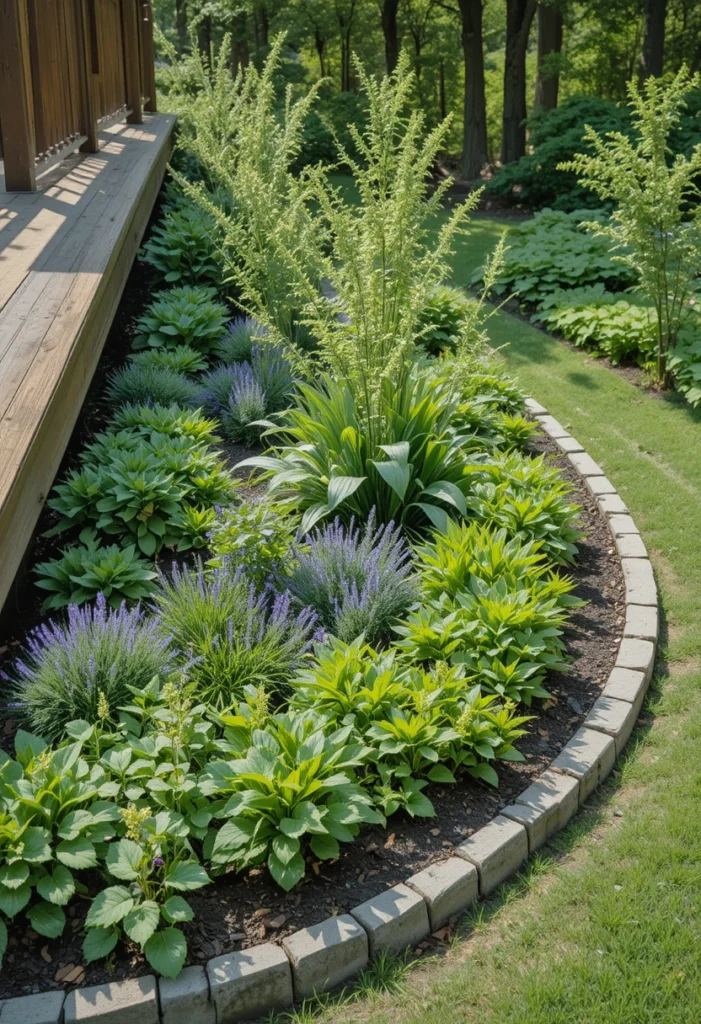
Straight lines are fine, but curves? They’re where the magic happens, IMO.
I ditched the straight-edge approach and created a gently curving border that flows from one deck corner around to the other side. This makes the whole space feel more organic and less “deck just plonked in the middle of a yard.”
Use a garden hose to map out your curve before digging. Walk around it from different angles. Does it look natural? Great. Does it look like you used a ruler? Try again.
Fill this border with layers: taller plants toward the back, medium heights in the middle, low growers and groundcovers at the front edge.
Install Deck Skirting with Lattice Panels
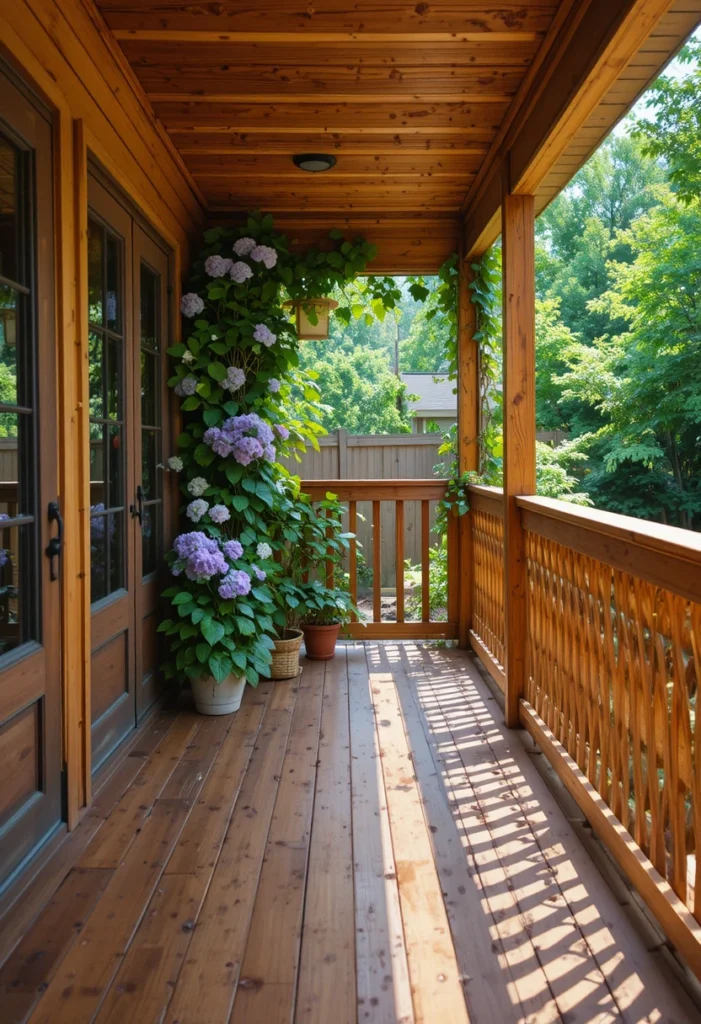
That eerie, dark area beneath your deck? Let’s take care of it. This area can be transformed with lattice panels, which are surprisingly cost-effective.
Paint or stain the lattice to match your deck, then plant climbing vines at the base. Morning glories, climbing hydrangeas, or jasmine will quickly cover the lattice and create this lush, living wall effect.
The bonus? You’re hiding potential storage space or just preventing critters from setting up camp under there. Win-win.
Incorporate River Rock or Gravel Paths
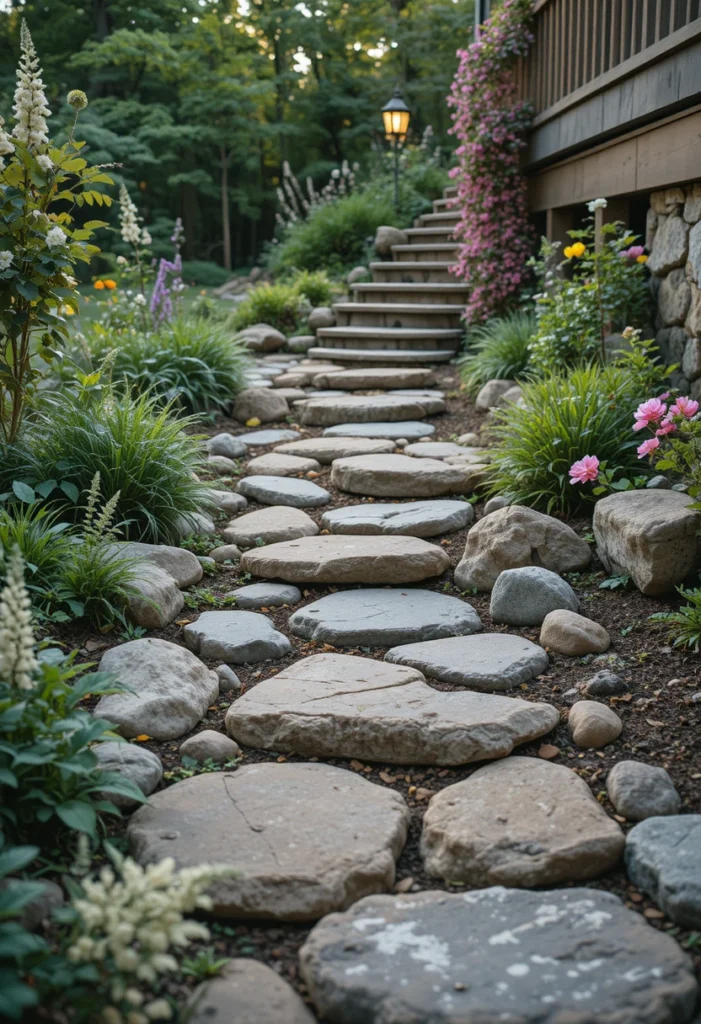
Not everything needs to be green. I created a river rock pathway that winds from my deck steps through the garden, and it adds this gorgeous textural contrast.
| Element | Best Use | Maintenance | Visual Impact |
|---|---|---|---|
| River Rock | High-traffic areas | Low | Natural, flowing |
| Pea Gravel | Pathways, borders | Medium | Casual, cottage-style |
| Mulch | Around plants | Medium-High | Traditional, neat |
| Flagstone | Formal paths | Low | Elegant, permanent |
The crunch of gravel underfoot? Chef’s kiss. Plus, it’s excellent drainage for those areas where water tends to pool after rain.
Plant a Pollinator Garden
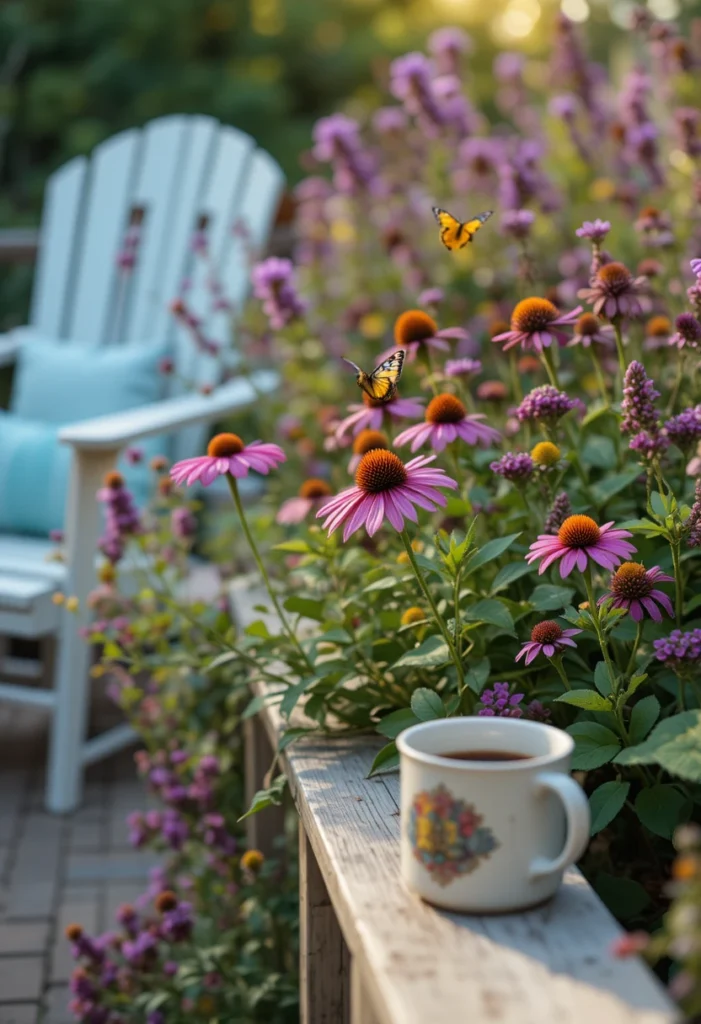
Want to feel good about your garden while making it gorgeous? Plant for pollinators. I’m talking bees, butterflies, and hummingbirds—the whole crew.
Choose native plants that bloom at different times throughout the season. Black-eyed Susans, coneflowers, bee balm, and salvia are my favorites. Cluster the same species in groups of three or five for maximum visual impact and to help pollinators find them easily.
Position these gardens where you can actually watch the action from your deck. There’s something incredibly relaxing about sipping morning coffee while butterflies do their thing just a few feet away.
Use Multi-Level Planting Techniques
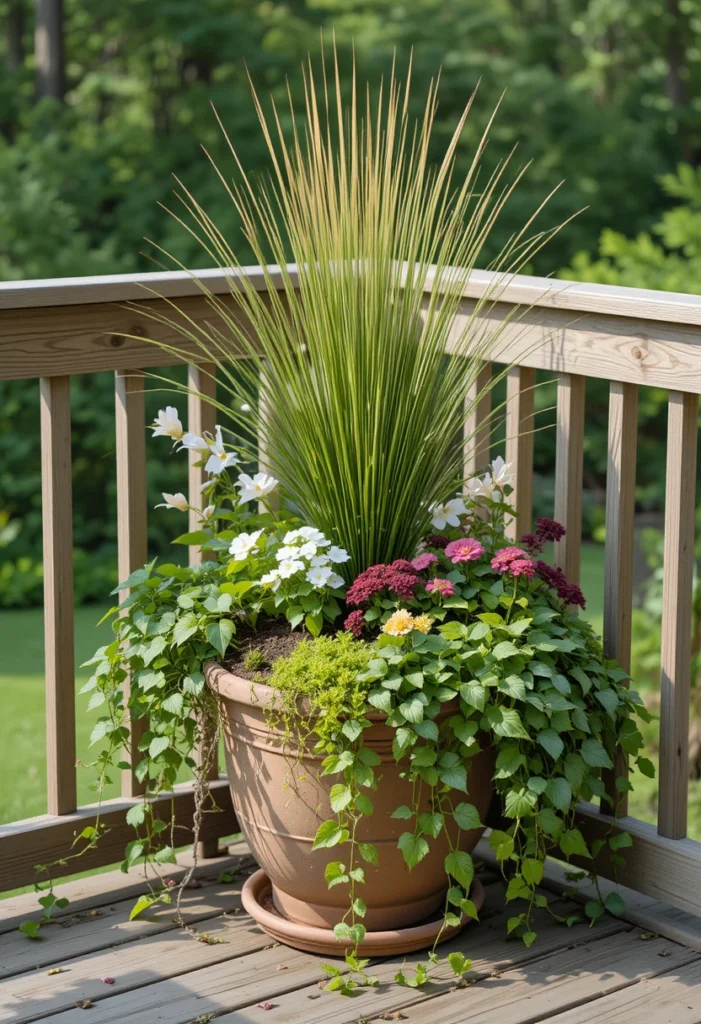
Think in layers, folks. This is how you create that “professionally landscaped” look without hiring anyone.
I use this formula:
- Thriller: A tall, dramatic focal point (ornamental grass, small tree, or large perennial)
- Filler: Medium-height plants that fill space and add color
- Spiller: Trailing plants that cascade over edges
This works in containers AND in-ground beds. The varied heights create depth and interest from every angle, including when you’re looking down from your deck.
Create a Shaded Garden Under the Deck

If your deck is elevated, you’ve got built-in shade—use it! This spot is perfect for plants that would crisp up in full sun.
Hostas are the obvious choice, but don’t stop there. Ferns, astilbe, coral bells, and bleeding hearts all thrive in shade and look absolutely stunning. I’ve created this woodland-garden vibe under my deck that feels like a secret hideaway.
Add some solar-powered fairy lights back there, and you’ve got ambiance for days. :/
Install a Wooden Border Frame

A simple wooden border creates definition and makes everything look pulled together. I used 4×4 pressure-treated posts at corners with 2×6 boards connecting them.
This frame serves multiple purposes:
- Keeps mulch and soil contained
- Provides clean lines that complement your deck
- Offers attachment points for string lights or hanging baskets
- Creates visual continuity between deck and garden
Stain it to match your deck or go contrasting for more drama. Your call.
Mix Edibles with Ornamentals

Who says your deck garden can’t be productive? I mix herbs, vegetables, and flowers together, and honestly, it looks amazing while being useful.
Plant rosemary and lavender near seating areas for their fragrance. Tuck cherry tomatoes into flower beds. Add colorful Swiss chard—it’s basically an ornamental plant that you can eat.
Everything grows organically when using the cottage-garden method. Additionally, you don’t even need to leave your deck area to pick dinner ingredients. Level of efficiency: expert.
Add Outdoor Lighting for Drama
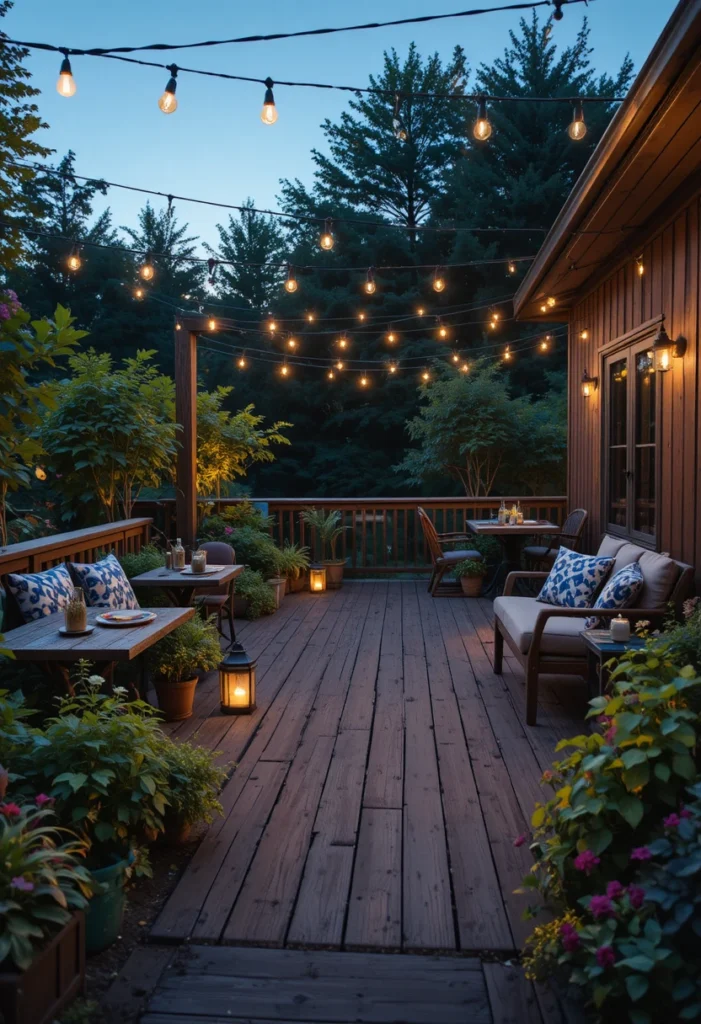
Garden lighting transforms everything once the sun goes down. I’m not talking boring spotlights—get creative here.
String café lights from deck posts to nearby trees or shepherd’s hooks placed in your garden beds. Install solar stake lights along pathways. Use uplighting to highlight a special tree or large plant.
This extends your outdoor time and makes the garden area around your deck feel like a true outdoor room. Game. Changer.
Create a Rock Garden Feature
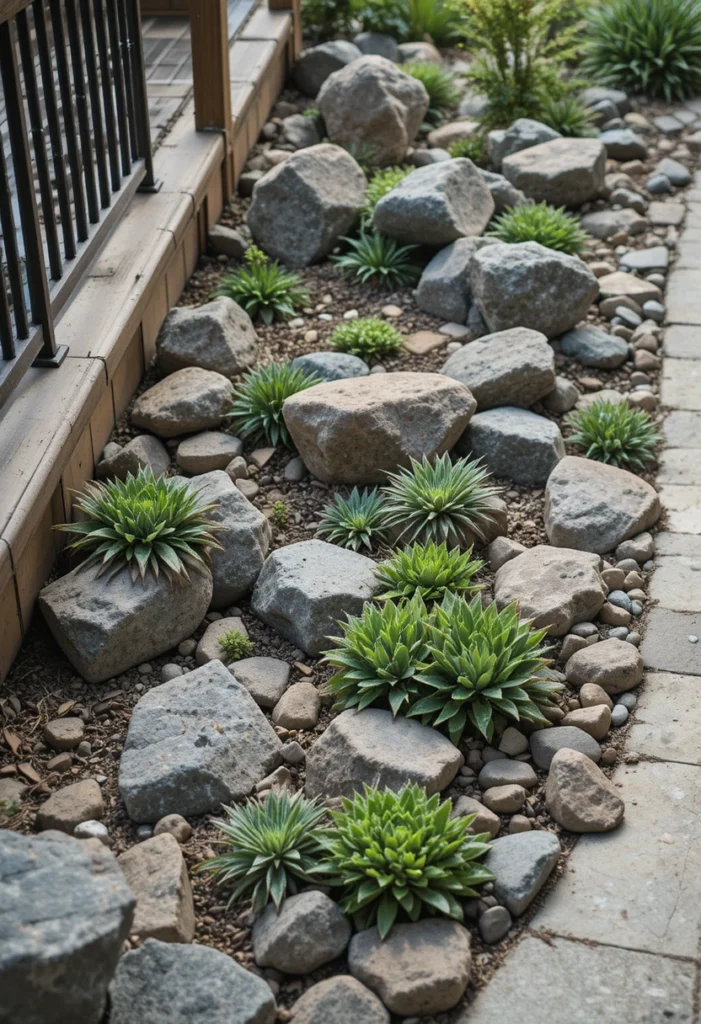
Rock gardens work beautifully around decks, especially if you’re dealing with slopes or drainage issues. I built a small rock garden on one side of my deck using different sized boulders and alpine plants.
Choose plants that love well-drained conditions: sedums, hens-and-chicks, creeping phlox, and ice plants. These are low-maintenance superstars that look great and barely need watering once established.
Position larger rocks strategically as focal points, then fill in with smaller rocks and plants. It should look natural, like these rocks have always been there.
Design a Stepping Stone Path

Stepping stones create movement and guide people through your deck garden naturally. I used irregular flagstones set in gravel, but you could also do concrete pavers, brick, or even wood rounds.
Space them for a comfortable stride—about 24 inches apart works for most people. Plant low groundcovers like creeping thyme or moss between stones. When you step on them, they release fragrance. Seriously lovely.
This approach works especially well if you want to create multiple “rooms” in your garden space—the path takes visitors on a journey.
Incorporate Water Features

The sound of water close to your deck? Perfectly dreamy. Everyone now loves the little fountain I installed in the garden bed nearest to my main seating area.
You don’t need anything elaborate. A simple bubbling urn or tiered fountain creates ambiance without requiring extensive installation. Most modern fountains are self-contained and solar-powered, making them ridiculously easy to add.
Position it where you’ll hear it from your favorite deck spot. The white noise effect drowns out neighbor sounds and traffic—bonus points for creating a relaxing atmosphere.
Plant Ornamental Grasses

If you want movement and texture, ornamental grasses deliver big time. I planted fountain grass and maiden grass at various points around my deck, and they add this gorgeous, flowing element that changes with every breeze.
They’re also insanely low-maintenance. Plant them, water until established, then basically ignore them. They look good from spring through winter, with many varieties offering amazing fall color and winter interest.
Use taller varieties as screens or focal points, shorter ones as border plants. The way they catch afternoon light? Chef’s kiss again.
Design a Herb Spiral
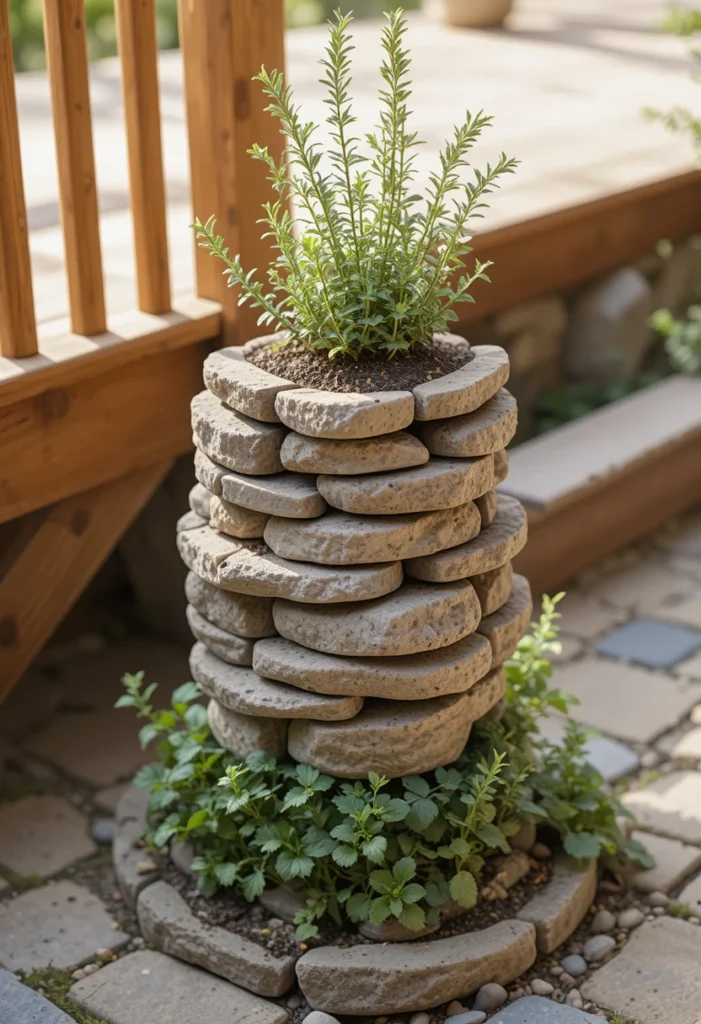
Want something unique and functional? Build a herb spiral near your deck. This three-dimensional garden structure creates microclimates in a small space—perfect for growing various herbs with different needs.
Stack rocks or bricks in a spiral pattern, building from ground level to about 3 feet high at the center. Plant Mediterranean herbs (rosemary, thyme, oregano) at the top where drainage is best. Put moisture-loving herbs like mint and parsley at the bottom.
It’s conversation-starting gorgeous AND you’ve got fresh herbs two steps from your kitchen door.
Add a Living Wall or Green Screen

Need privacy from neighbors? Create a living screen using tall plants or a trellis system with climbing vines.
I planted a row of bamboo (clumping variety—DO NOT plant running bamboo unless you enjoy regret) along one side of my deck area. It grew into a dense privacy screen within two seasons. Alternatively, install a sturdy trellis and plant fast-growing climbers like hops, wisteria, or climbing hydrangeas.
This creates a green backdrop that makes your deck feel more intimate and enclosed, like an outdoor room rather than just a platform in the yard.
Create Seasonal Color Rotation
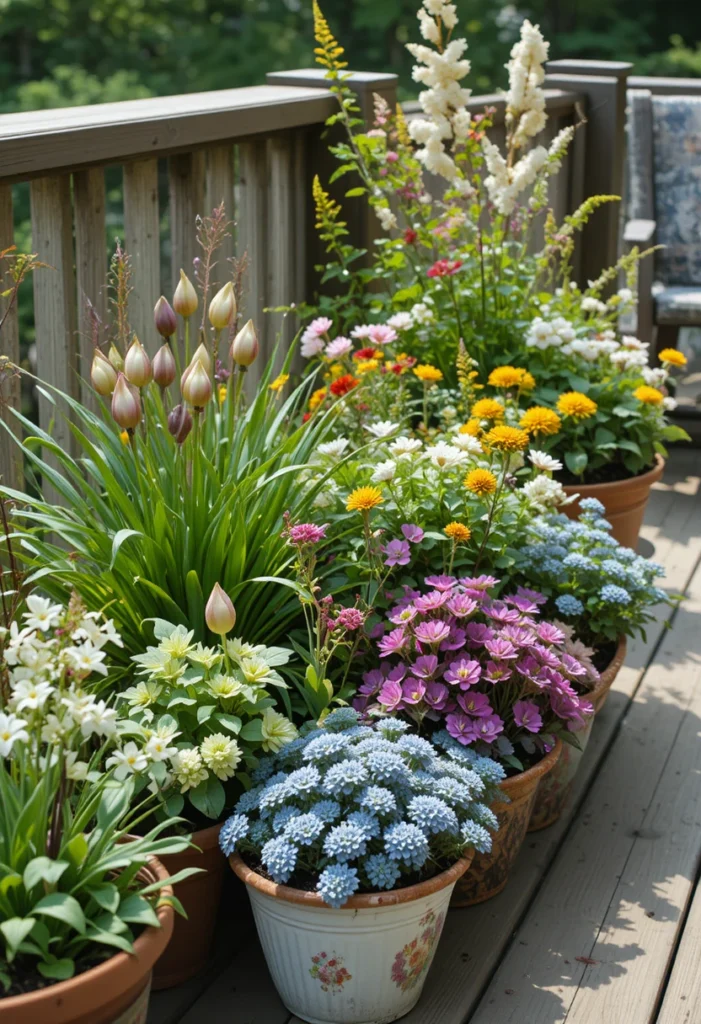
Here’s my secret for gardens that always look good: plan for year-round interest with seasonal plantings.
Around my deck, I have:
- Spring bulbs (tulips, daffodils) that pop up first thing
- Summer perennials and annuals for peak color
- Fall bloomers like asters and mums
- Winter interest from evergreens and ornamental grasses
Keep some containers specifically for seasonal swaps. When summer annuals fade, pop in mums or ornamental kale for fall. This keeps your deck area looking intentional and cared-for throughout the year.
Build a Small Pergola Extension
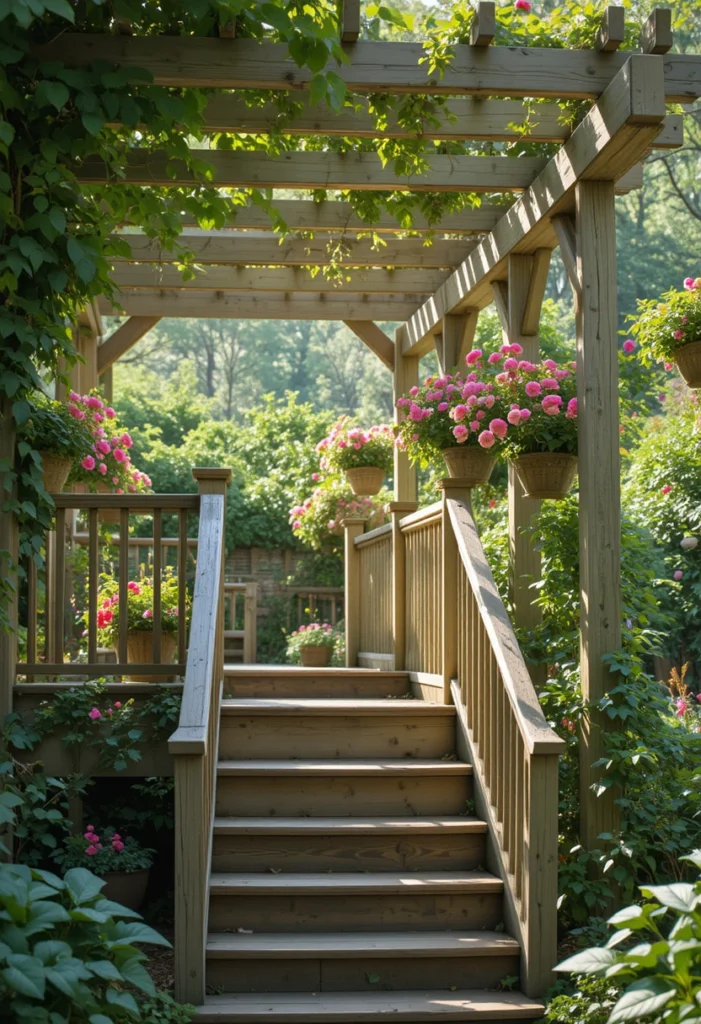
If you want to extend the garden feeling right onto your deck, add a pergola or arbor structure at one end. This creates a transition zone between deck and garden.
Train climbing roses, wisteria, or grapevines over it. Hang baskets from the crossbeams. Suddenly your deck doesn’t end abruptly—it flows naturally into the garden space around it.
I added a simple pergola over my deck stairs, and it completely changed the feel of the entrance. It’s welcoming, adds vertical interest, and gives me more planting opportunities.
Embrace Naturalized Planting

The most dreamy gardens often look slightly wild and unplanned. I’ve moved away from rigid, formal plantings around my deck toward a more naturalized cottage-garden style.
Let plants self-seed and spread a bit. Allow them to intermingle. Plant in drifts and clusters rather than rows. This creates a relaxed, organic feel that’s way more interesting than perfectly spaced specimens.
Some structure is good—you still want defined beds and pathways. But within those boundaries? Let things get a little wild.
Your Dream Deck Garden Awaits
Look, transforming the area around your deck doesn’t require a massive budget or professional landscaper. It requires vision, a bit of planning, and willingness to experiment.
Start with one or two ideas from this list that really speak to you. Maybe it’s adding some containers this weekend, or sketching out where a curved border would look amazing. Build from there, season by season.
The garden around your deck should make you want to spend time outside. It should make your morning coffee taste better and your evening wind-down more relaxing. It should be a space that feels like YOU.
So grab your gardening gloves and get started. Your dreamy outdoor space is literally just outside your back door—it’s time to make it happen.

14 thoughts on “20 Creative Ways to Garden Around Deck for a Dreamy Outdoor Space”