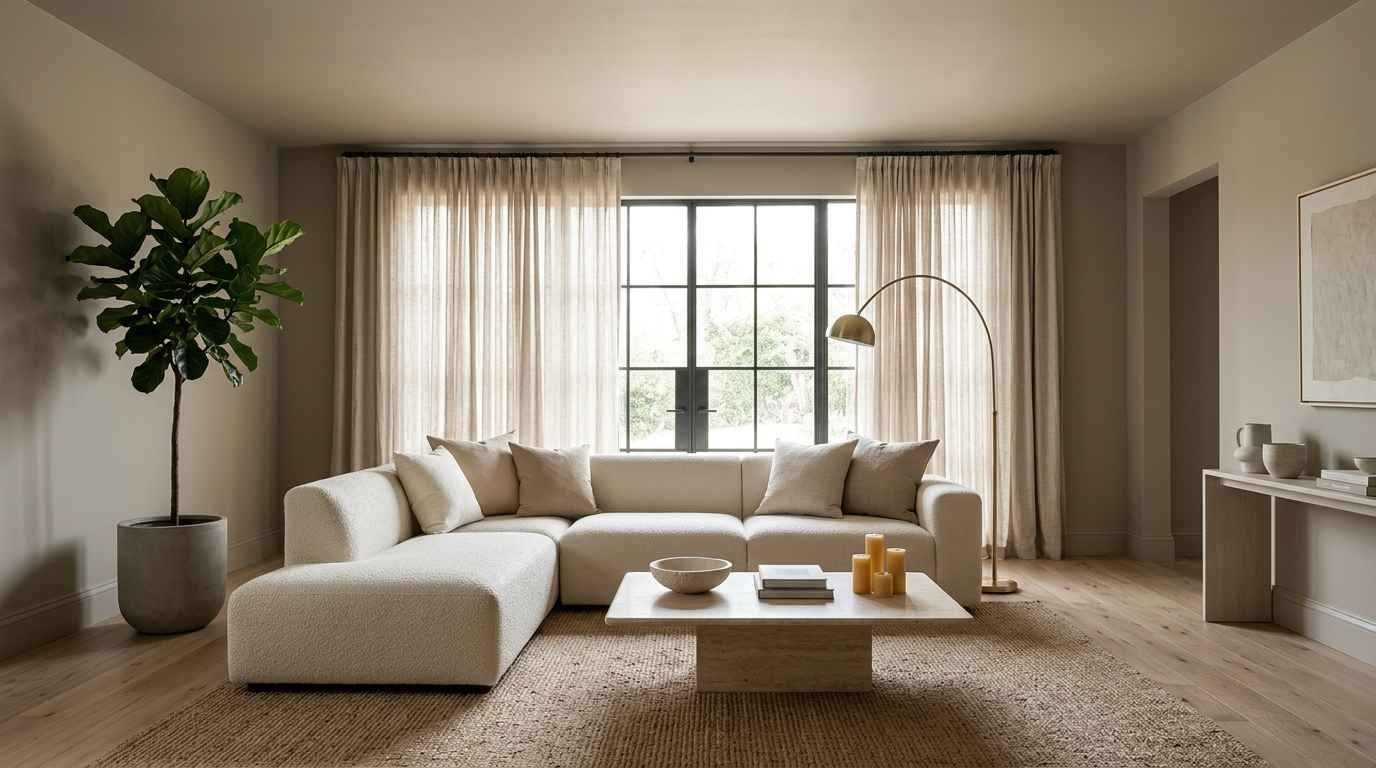
So you’re staring at your living room, and something just feels… off. Too much stuff, too many competing colors, too much visual noise.
You want it calm. You want it cozy. You want people to walk in and immediately exhale. That’s exactly what neutral cozy minimalism does — and honestly, it’s one of the most satisfying design directions you can take a space.
I’ve been obsessed with this aesthetic for years now. Something about the combination of warmth and restraint just clicks.
Here are 27 ideas that actually work in real homes, not just on perfectly staged Pinterest boards.
1. Start With a True Neutral Base
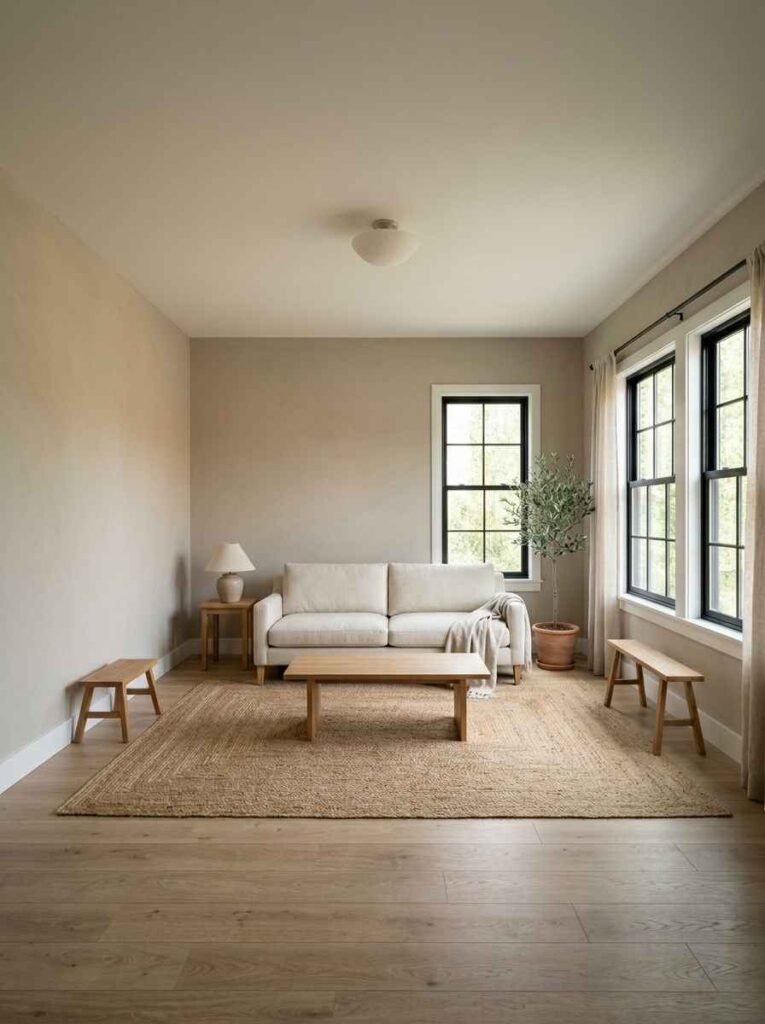
Before anything else, pick your wall color with intention. A true neutral base means a color that doesn’t pull too warm or too cool on its own but adapts with the light throughout the day.
Think Farrow & Ball’s “Elephant’s Breath” or Benjamin Moore’s “Pale Oak.” These aren’t boring — they’re the quiet backdrop that makes everything else sing.
If you go too white, the room feels clinical. Too beige, and you’re back in 2003.
Pro tip: Always test at least three swatches in the actual room before committing. Paint chips in stores lie.
2. Layer Textures, Not Colors
Here’s where most people go wrong with minimalism — they strip everything back and end up with a flat, cold space.
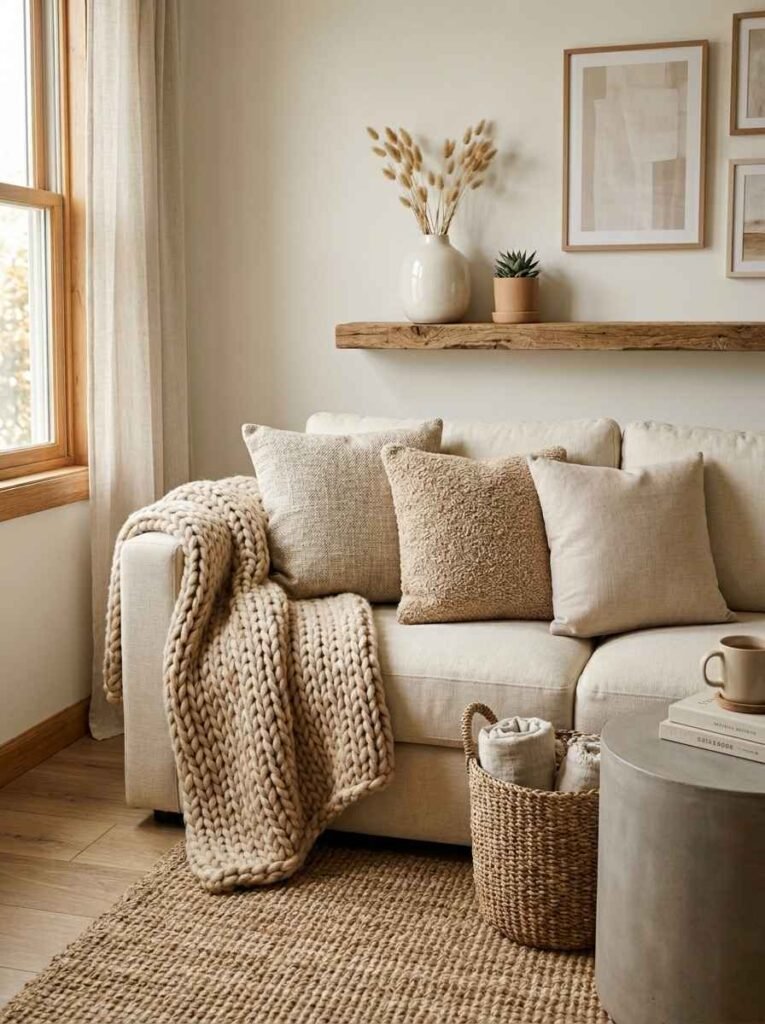
The trick is to keep the color palette tight while varying textures wildly.
Think linen cushions next to a chunky knit throw. A smooth concrete side table beside a rough-hewn wooden shelf.
Matte plaster walls behind a glossy ceramic vase. Your eyes get visual interest without chaos.
3. Invest in One Statement Sofa
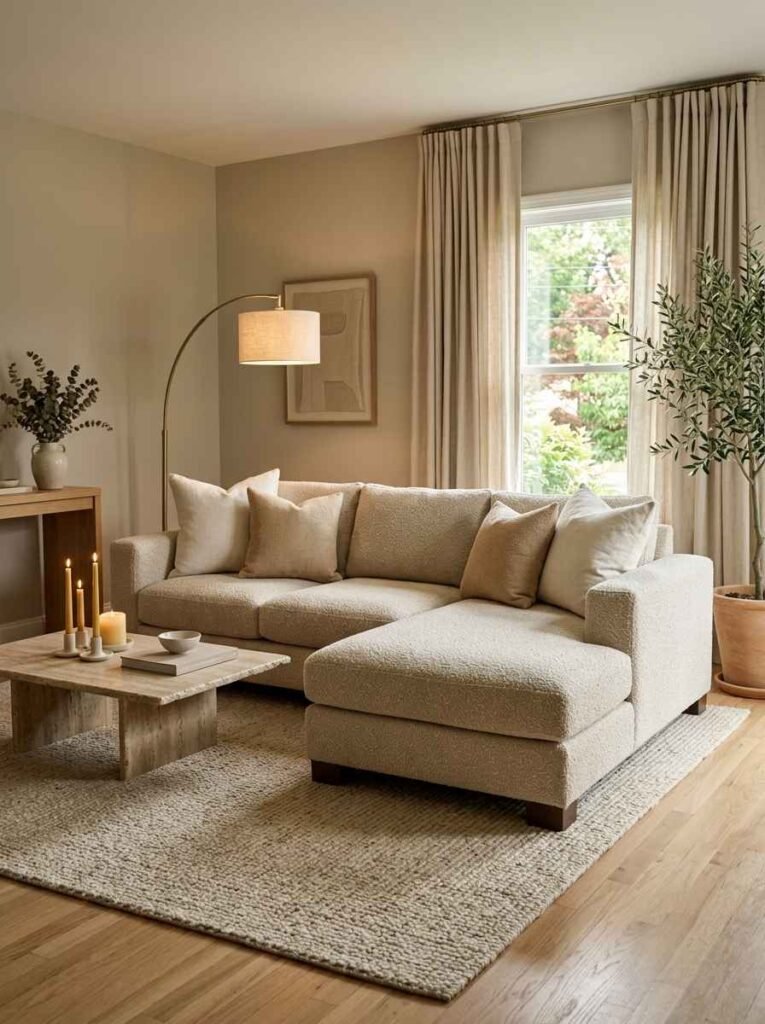
In a minimalist room, the sofa isn’t furniture — it’s the room. Every other decision orbits around it.
Go for a clean-lined silhouette in oatmeal, warm beige, stone grey, or dusty sage. Avoid busy patterns.
A boucle or linen weave in a neutral tone adds that cozy texture factor without making the room feel cluttered. Restoration Hardware and Castlery both do excellent sofas in this space if you want a starting point.
4. Pull the Rug In Tighter Than You Think
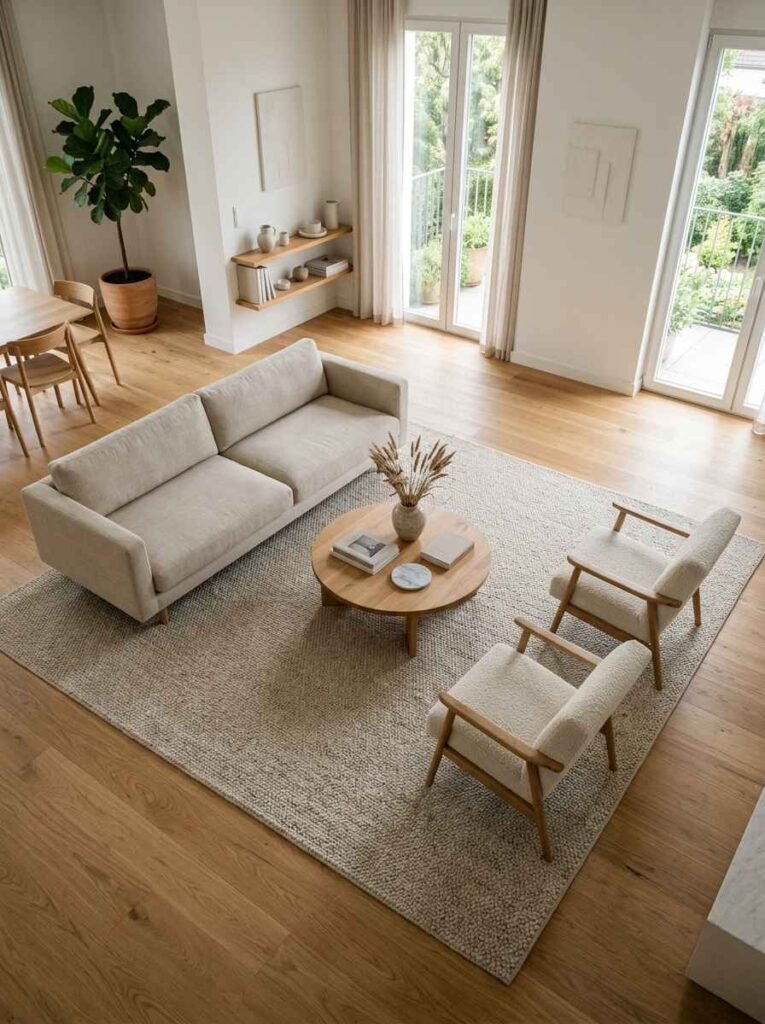
Almost everyone places their rug too small. It floats in the middle of the room looking lost, which visually breaks up the space instead of anchoring it.
For a cozy minimalist living room, size up. At minimum, the front legs of all your seating should sit on the rug.
Ideally, the whole sofa sits on it. A larger rug makes the room feel bigger, not smaller — counterintuitive but true.
5. Embrace the Imperfect Linen Curtain
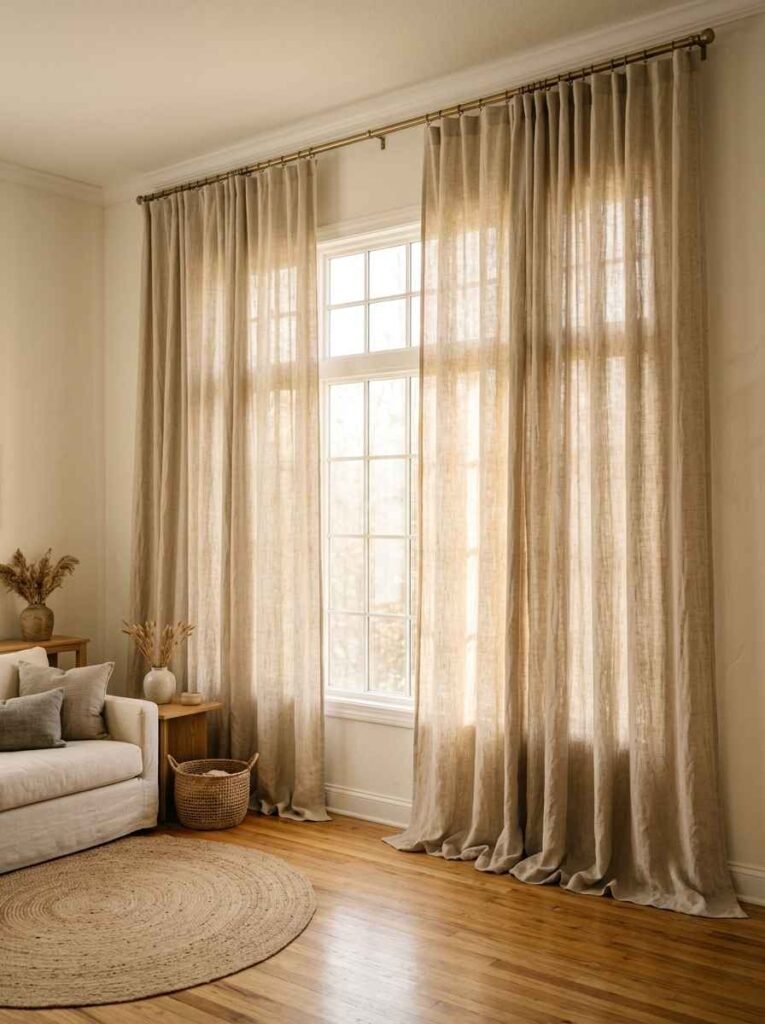
There’s something about unlined linen curtains that just does it. The way light filters through them, the way they puddle slightly on the floor — it’s effortlessly soft without trying.
Hang them high (close to the ceiling) and wide (past the window frame) to maximize the sense of height and light.
Stick to natural undyed linen or soft white for that airy, European farmhouse quality that Pinterest can’t get enough of.
6. Use Wood Tones as Your Warm Anchor
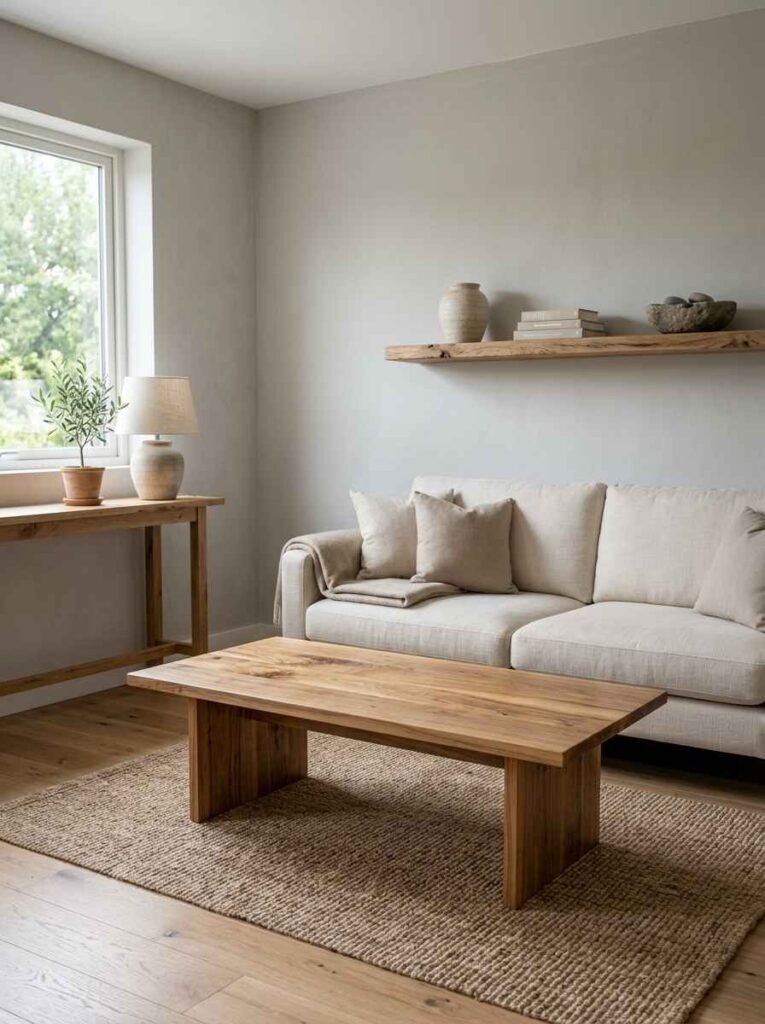
In a neutral palette, you need something to stop the room from feeling cold. Natural wood does that better than almost anything else.
A walnut coffee table, oak floating shelves, or even a raw timber console can introduce warmth without adding color.
It connects the room to something organic and real, which is exactly the energy minimalist cozy spaces need.
7. Keep the Coffee Table Low and Simple
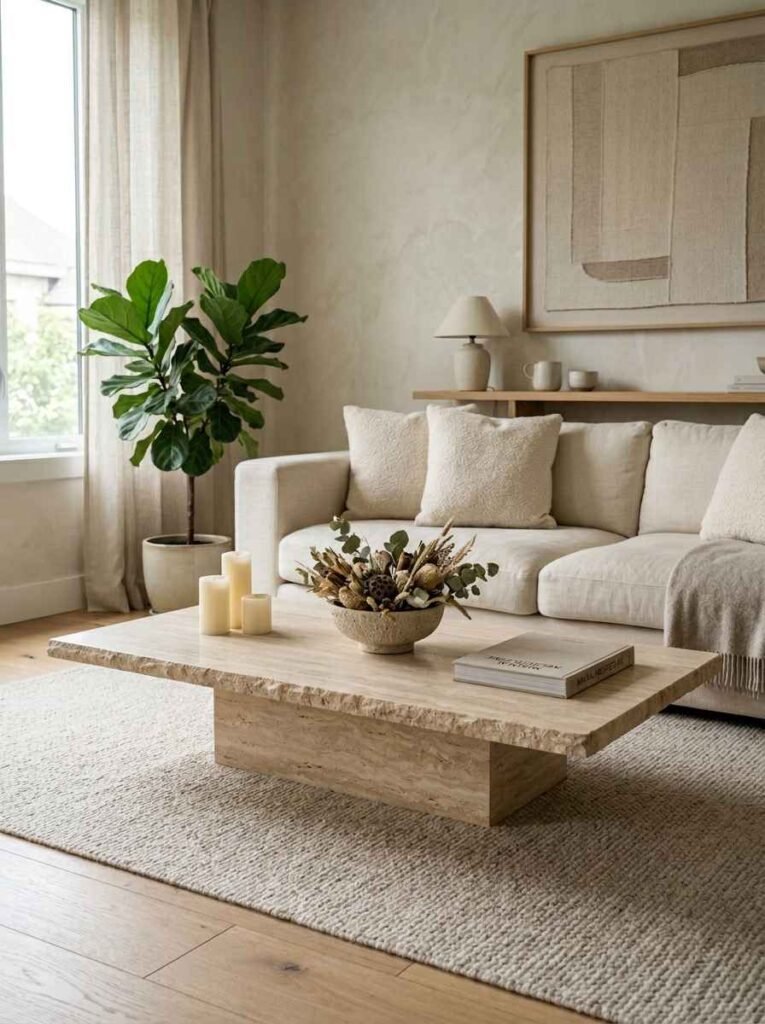
A low, simple coffee table creates breathing room and keeps sightlines open. This sounds minor, but it actually changes how the whole space feels.
Something rectangular in travertine, light oak, or matte black works well. Avoid glass-top tables in cozy spaces — they’re sleek but cold, and they disappear in a way that makes the room feel unfinished.
8. Choose Lighting That Does the Heavy Lifting
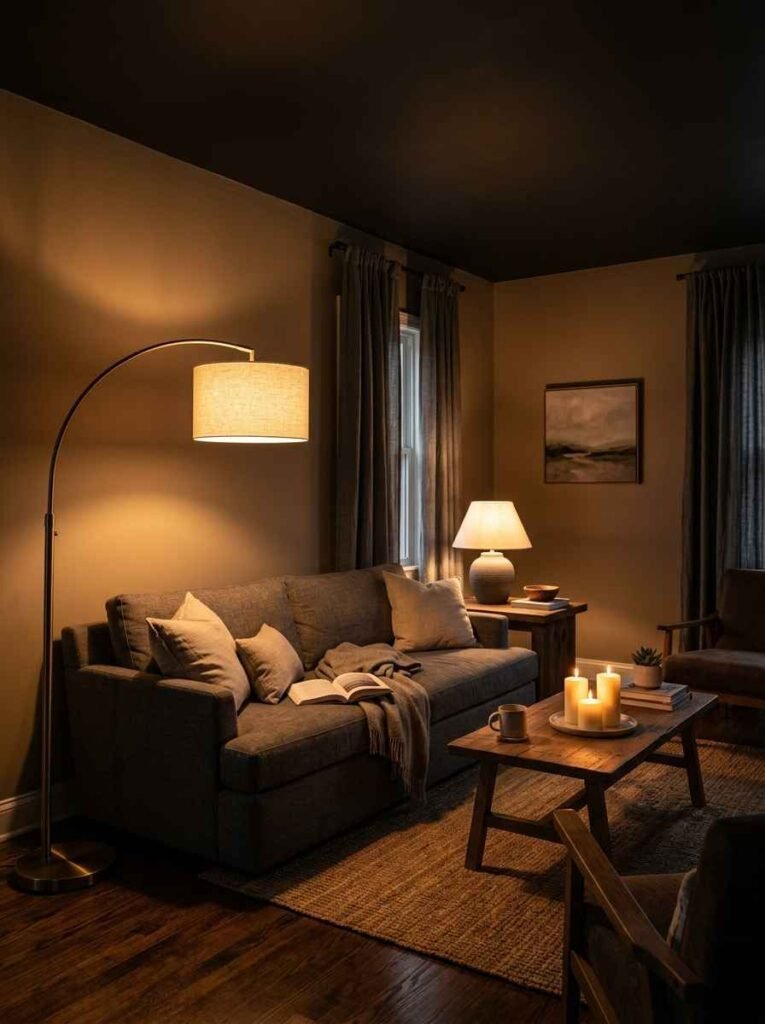
Overhead lighting is the enemy of cozy. Fix it by layering your light sources:
- A floor lamp in the corner with a warm bulb (2700K max)
- Table lamps on side tables at seated eye level
- Candles on the coffee table or shelving
- If you must have overhead, put it on a dimmer and turn it all the way down after 6pm
Wow, the difference warm layered lighting makes is genuinely hard to overstate. It can transform the same room from office waiting area to weekend retreat.
9. Edit Your Shelf Styling Down to Three Objects
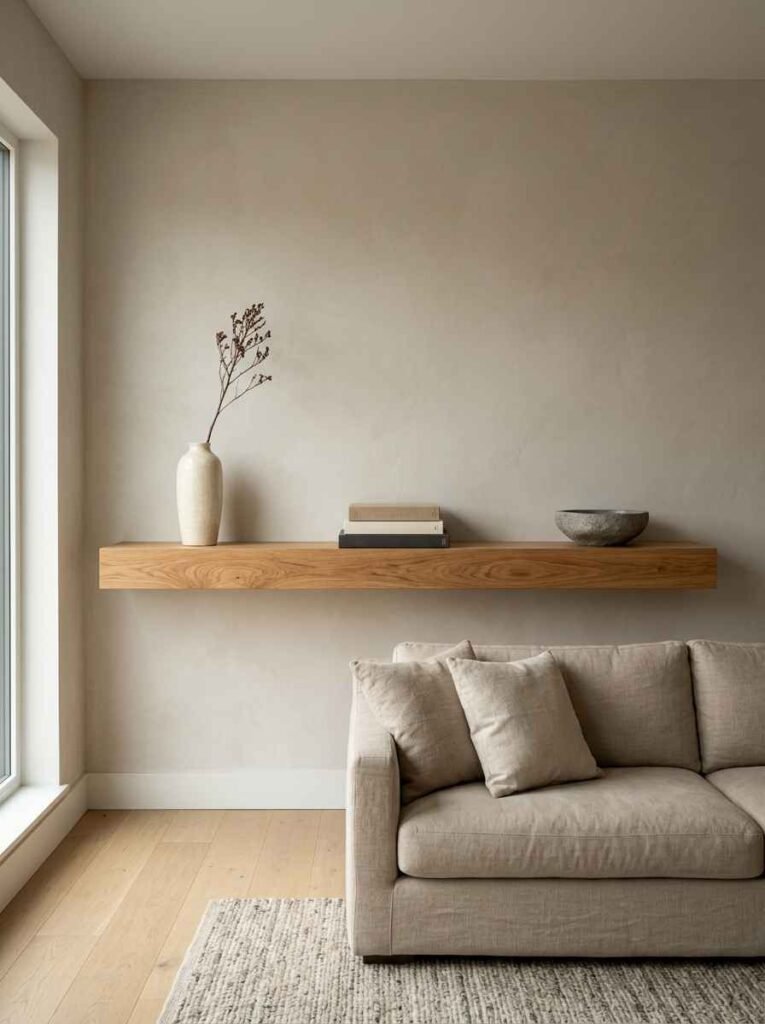
Shelves are where cozy minimalism either succeeds or collapses. The common mistake is over-styling — too many objects, too much variety, too much visual competing.
Try this: for every shelf, put three objects maximum. One tall (a vase, a sculptural form), one medium (a small stack of books), one low (a bowl, a candle).
Leave negative space. The gaps are doing as much work as the objects.
10. Add a Single Arch Element
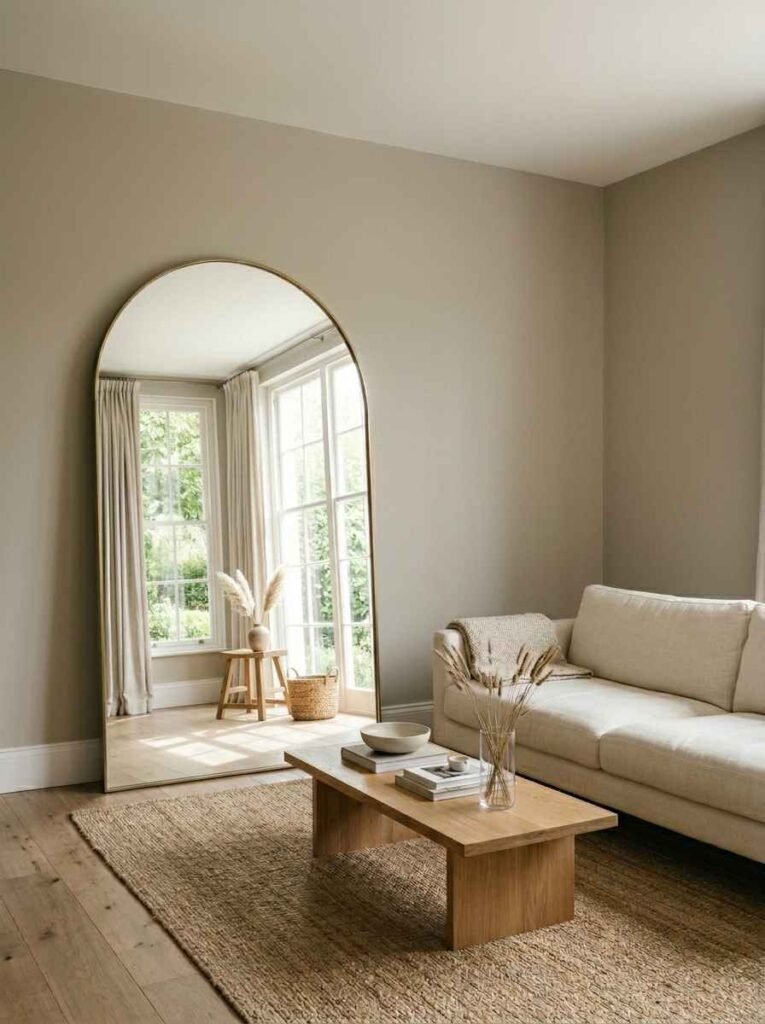
Arches soften a room. Arched doorways, arched mirrors, arched shelving units — they break up the rigidity of rectangular architecture and add an old-world softness that reads as warm and timeless.
An arched floor mirror in particular is a brilliant move: it bounces light, adds height, and acts as a subtle focal point without demanding attention.
11. Bring in Natural Fiber Accents
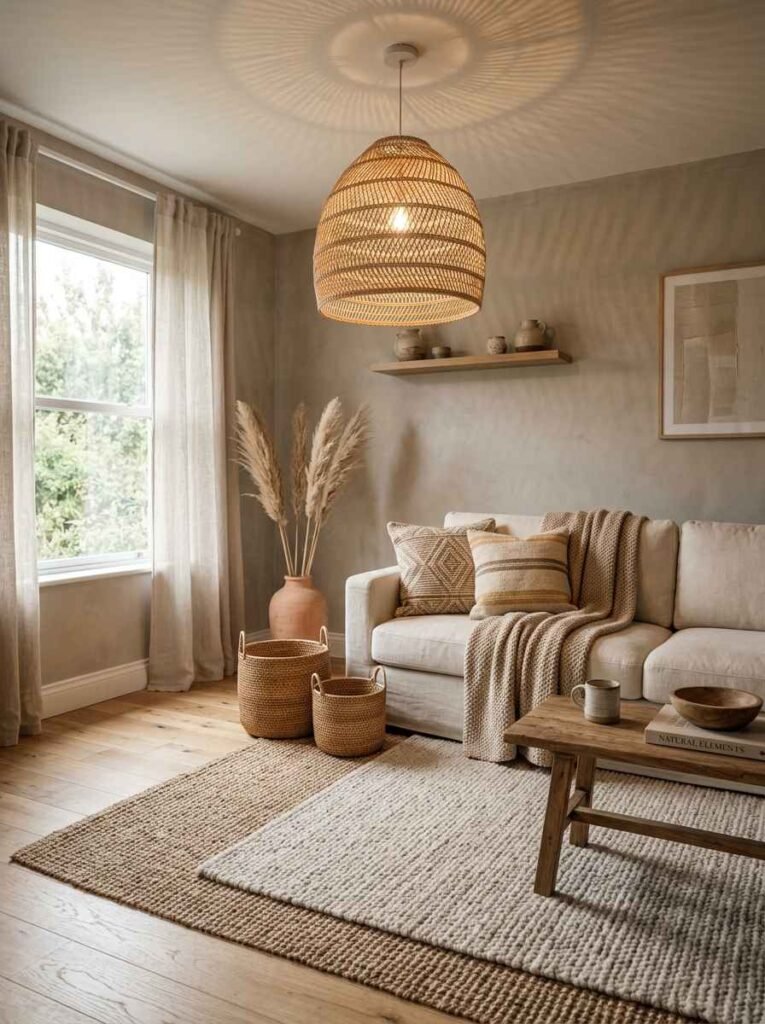
Rattan, jute, seagrass, woven bamboo — these materials add texture and warmth without adding color or visual weight. They’re doing quiet work in the background.
A jute rug under your main neutral rug. Rattan baskets for storage. A woven pendant lamp. Small touches of natural fiber tie the room to something tactile and grounded.
The Citizenry has some genuinely beautiful handcrafted pieces in this vein.
12. Try a Monochromatic Moment
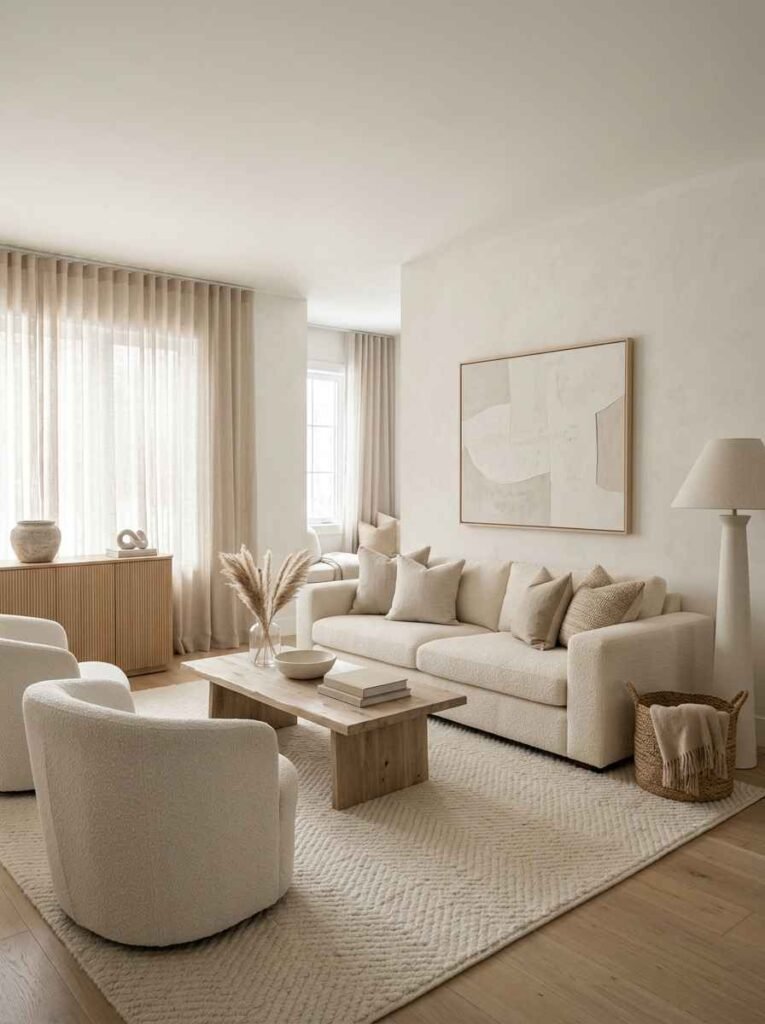
Pick one neutral and use it in varying tones across the room. Warm white walls, cream sofa, oatmeal cushions, soft sand curtains.
Different shades of essentially the same color create depth without contrast.
This is the tonal dressing approach, and it’s much harder to pull off than it looks — but when it works, it looks incredibly intentional and calm.
13. Let One Piece of Art Lead
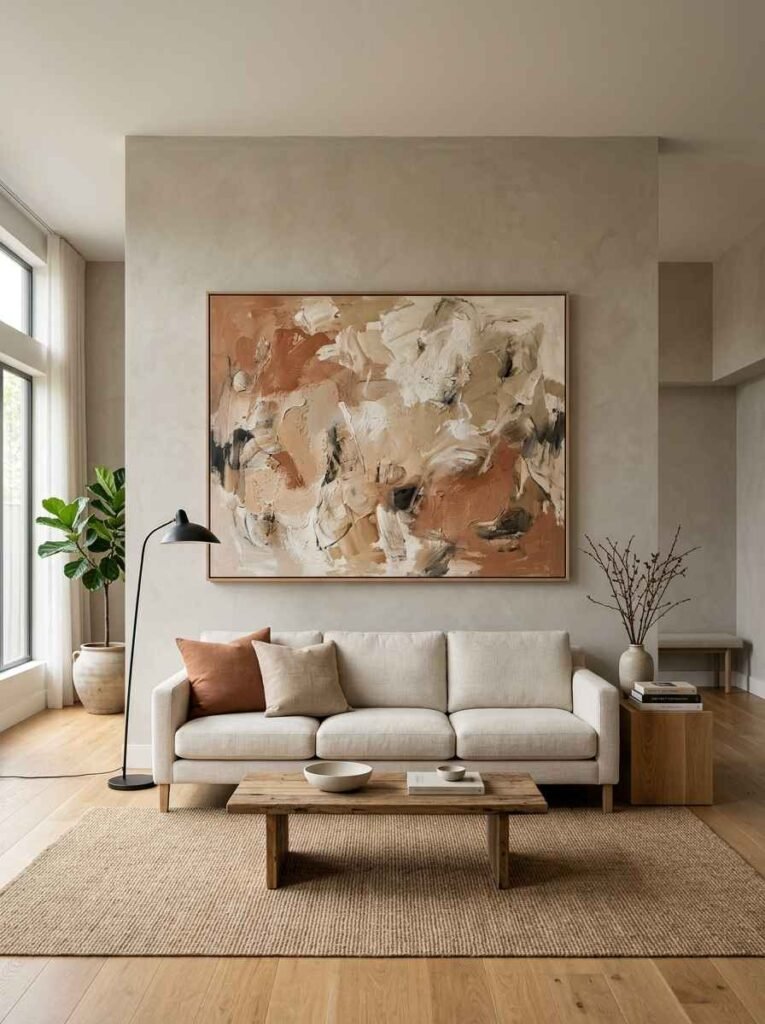
In a minimalist room, one strong piece of art carries more weight than a gallery wall.
A large-scale abstract in muted earth tones, or a simple line drawing in an oversized frame — something that commands the wall without screaming.
Scale matters here. Too small and it looks lost; correctly sized and it anchors the whole room. Generally, aim for art that fills about two-thirds of the wall space above your sofa.
14. Add a Throw Blanket That’s Actually Beautiful
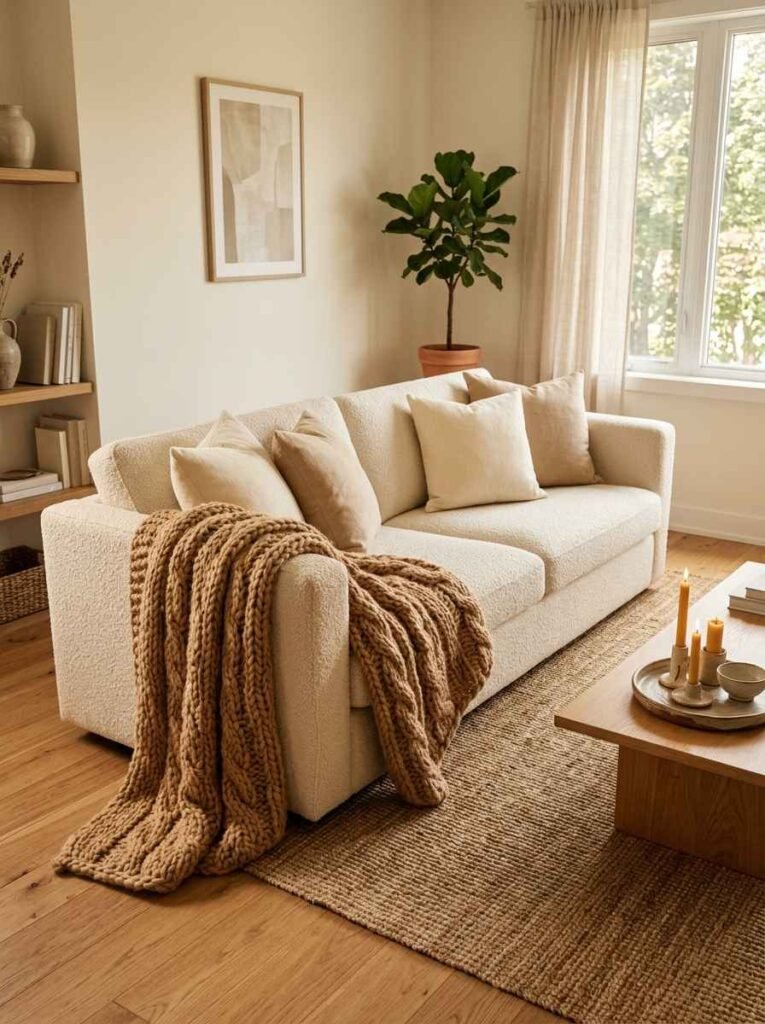
The throw blanket is doing emotional labor in your living room. It signals: this is a place where you can relax.
Get one that genuinely looks good.
A chunky wool throw in camel, ivory, or warm grey draped over a sofa arm — casually, not folded perfectly — adds that lived-in warmth that no Pinterest board can fake.
15. Keep Electronics Invisible or Minimal
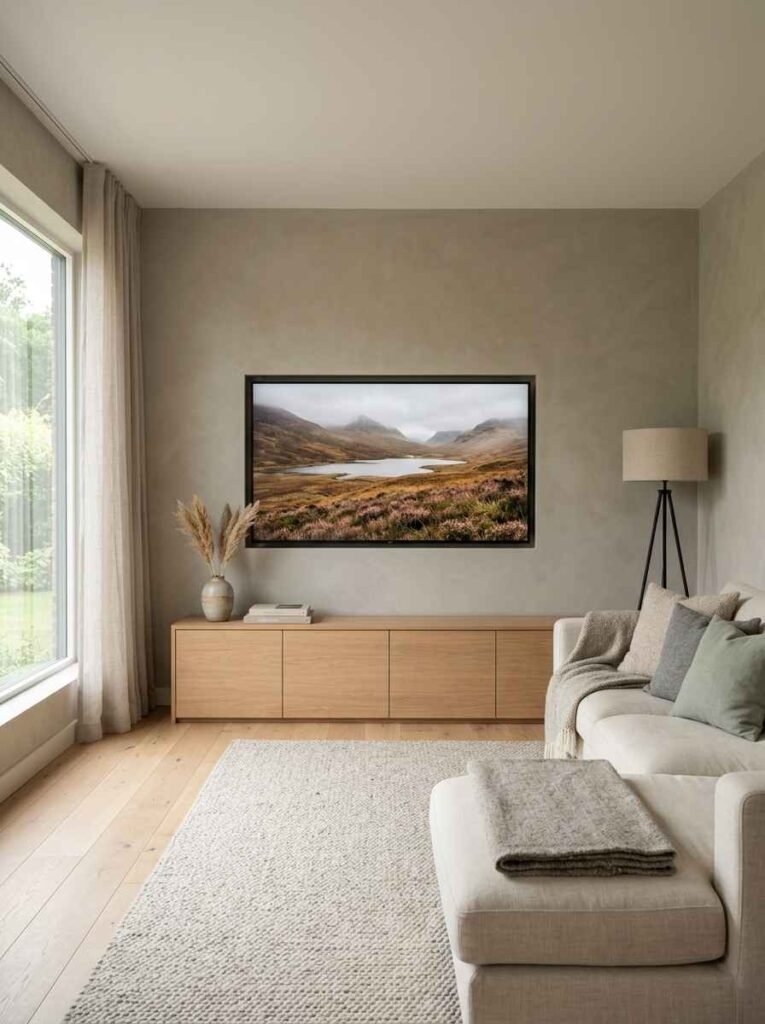
The TV is probably unavoidable. But how it exists in the room matters. Mount it flush to the wall, hide the cords, and don’t build a shrine around it with bulky entertainment units.
A low, clean media console with closed storage keeps things tidy.
If you want to go further, a Samsung Frame TV that displays art when not in use is a genuinely useful solution for a minimalist space.
16. Use Plants Strategically, Not Decorativel
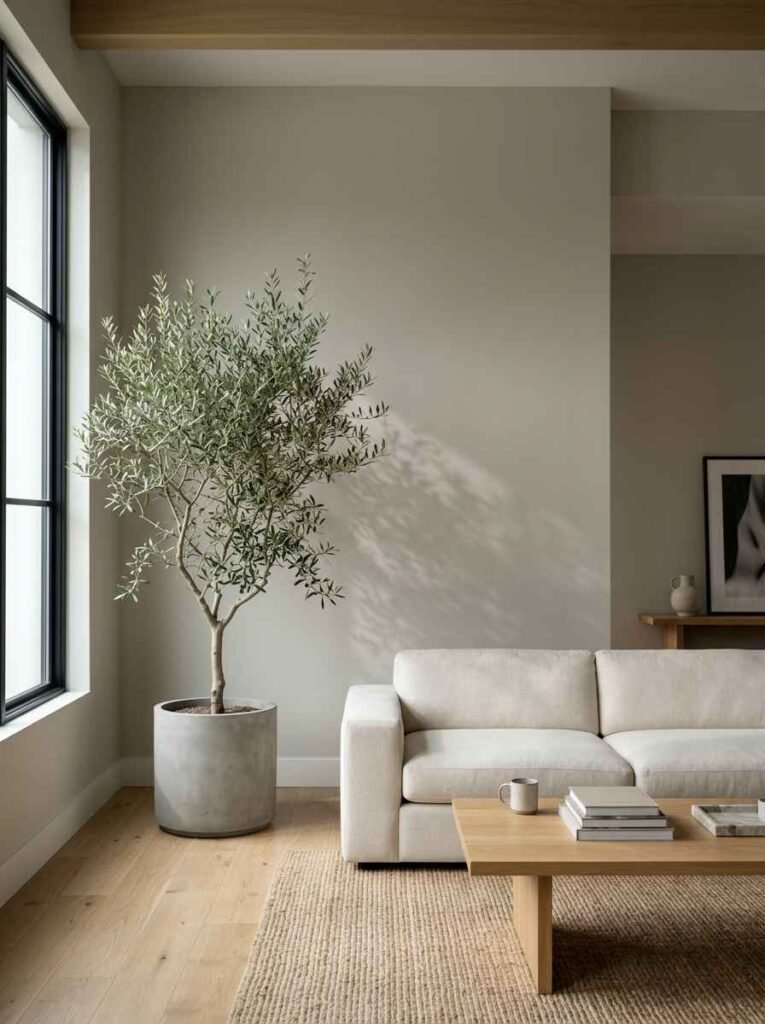
Plants in a cozy minimalist room aren’t filler — they’re structural. One large fiddle leaf fig or olive tree in a simple terracotta or concrete pot adds height, organic shape, and life.
Avoid the “scattering small plants everywhere” approach. That reads as clutter. One or two plants placed with intention beats fifteen plants placed casually.
17. Consider a Reading Nook or Corner Moment
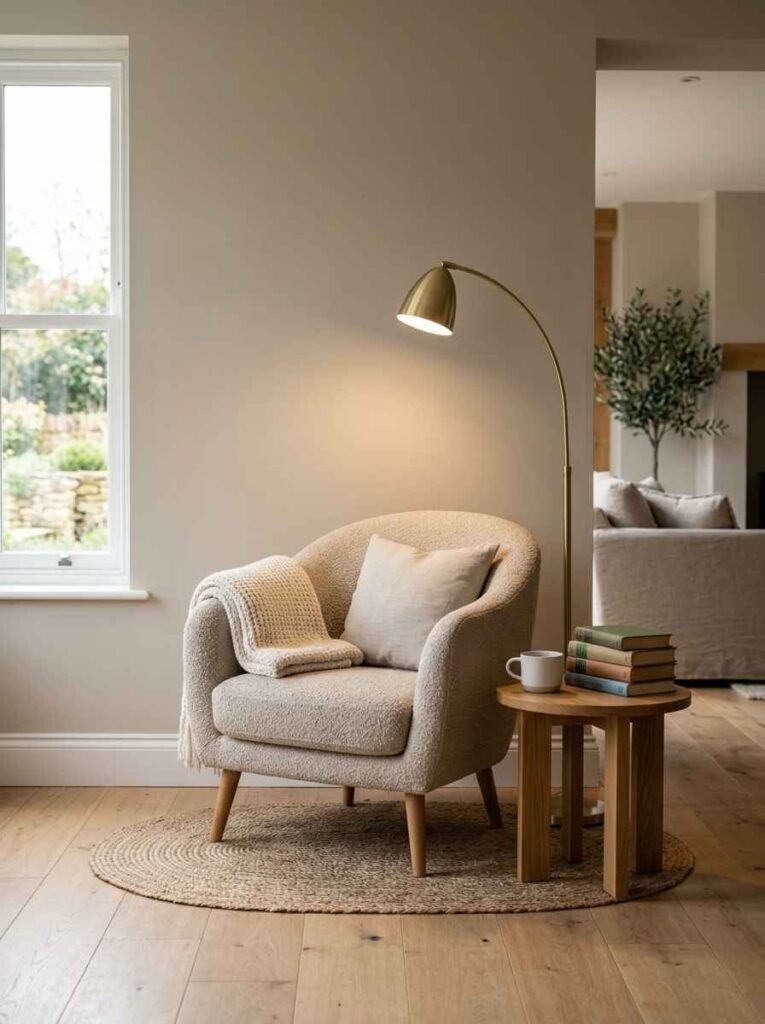
A cozy minimalist room benefits from at least one human-scaled corner — a place that says “sit here, slow down.” A single armchair in a textured neutral fabric, a side table, a floor lamp, and a small stack of books.
That’s it. That corner will become the most photographed and most used spot in your home.
18. Choose Hardware and Fixtures in Warm Metals
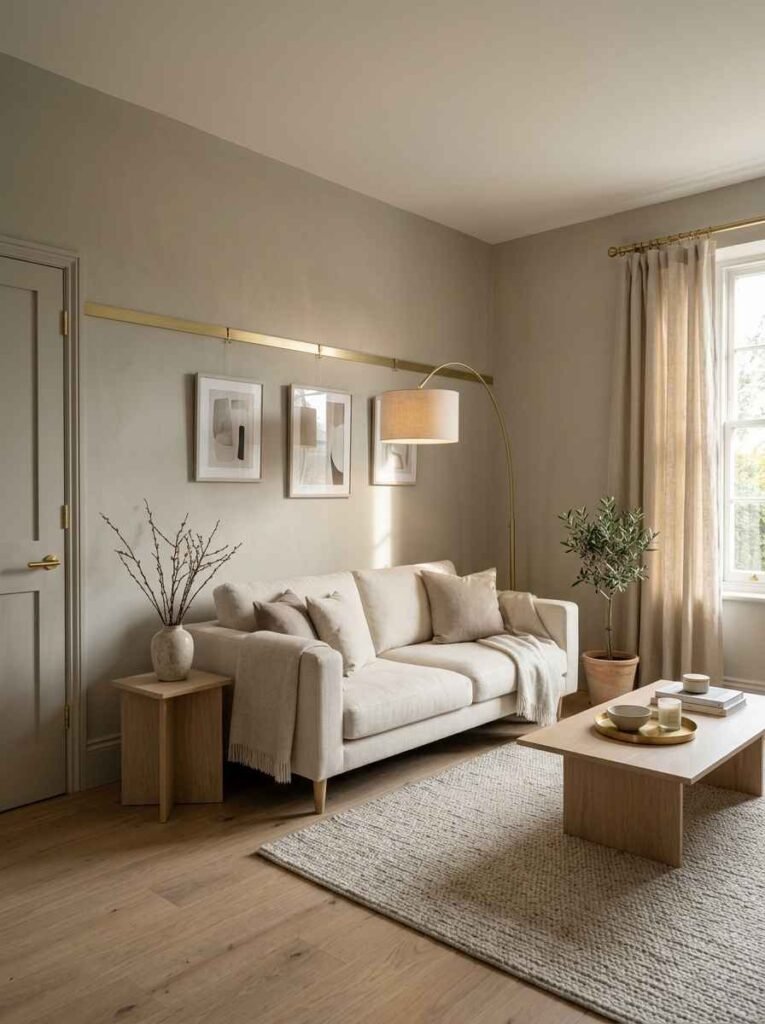
Brushed brass, aged bronze, and warm gold add richness to a neutral palette without disrupting the calm.
These finishes catch light in a way that chrome and nickel simply don’t — warmer, softer, more organic.
Light switch covers, curtain rod brackets, picture rail hooks, door hardware — these small choices add up and pull a room together in ways that are hard to explain but immediately felt.
19. Try a Japandi-Influenced Furniture Mix
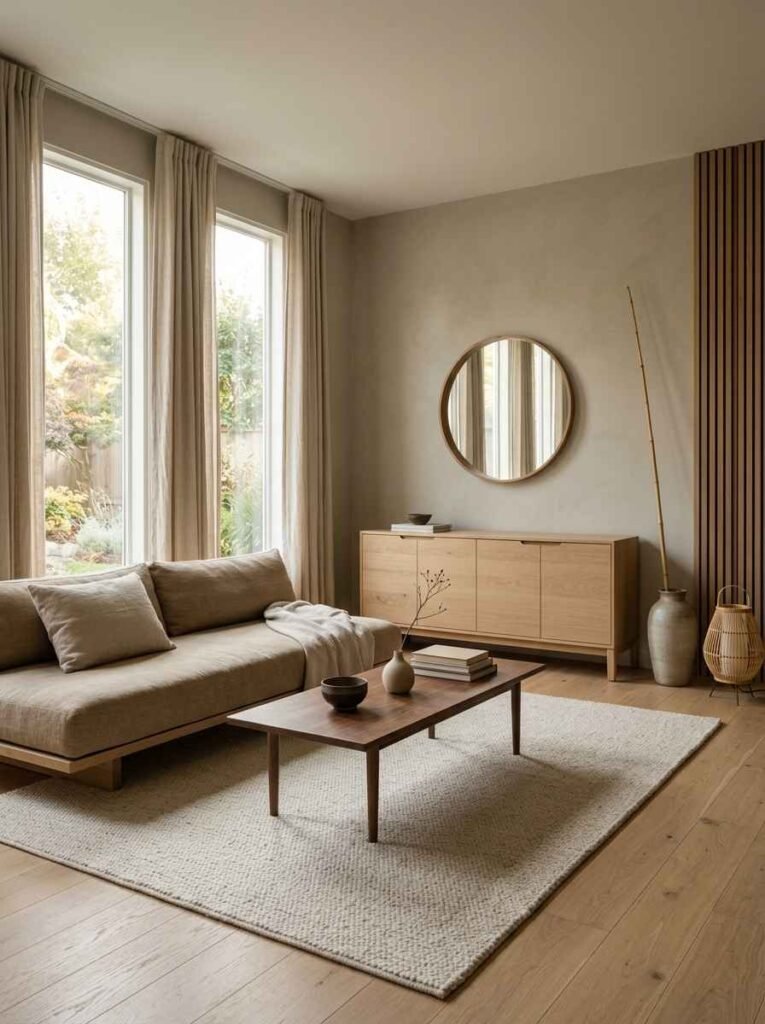
Japandi is the design marriage of Japanese minimalism and Scandinavian warmth, and it fits the neutral cozy minimalist brief almost perfectly.
Low-profile furniture, clean lines, natural materials, a quiet color palette.
The key distinction from stark minimalism is that Japandi includes warmth — wooden elements, handmade ceramics, imperfect textures. It doesn’t feel austere. It feels considered.
20. Paint Your Ceiling
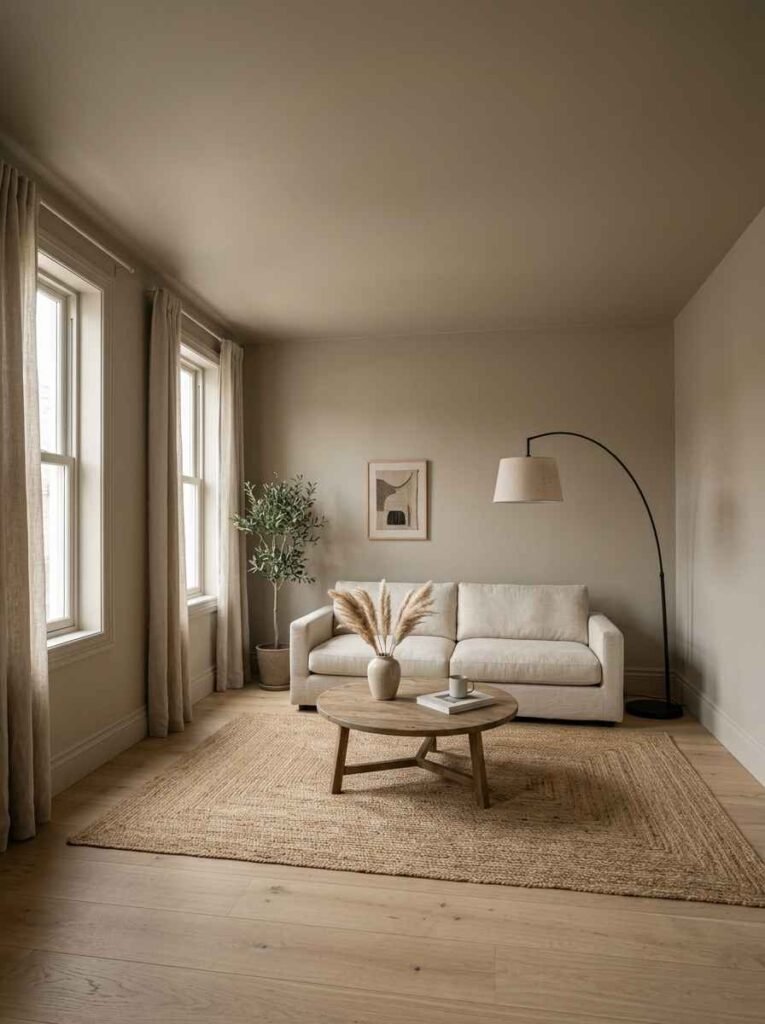
This is one of the most underrated moves in interior design.
Painting your ceiling the same color as your walls (or one shade lighter) makes the room feel enveloped, cozy, and intentional.
Rooms with brilliant white ceilings and colored walls can look patchy and incomplete. Extending the wall color upward closes the box in a way that feels safe and soft.
21. Use Mirrors to Amplify Light Without Adding Clutter
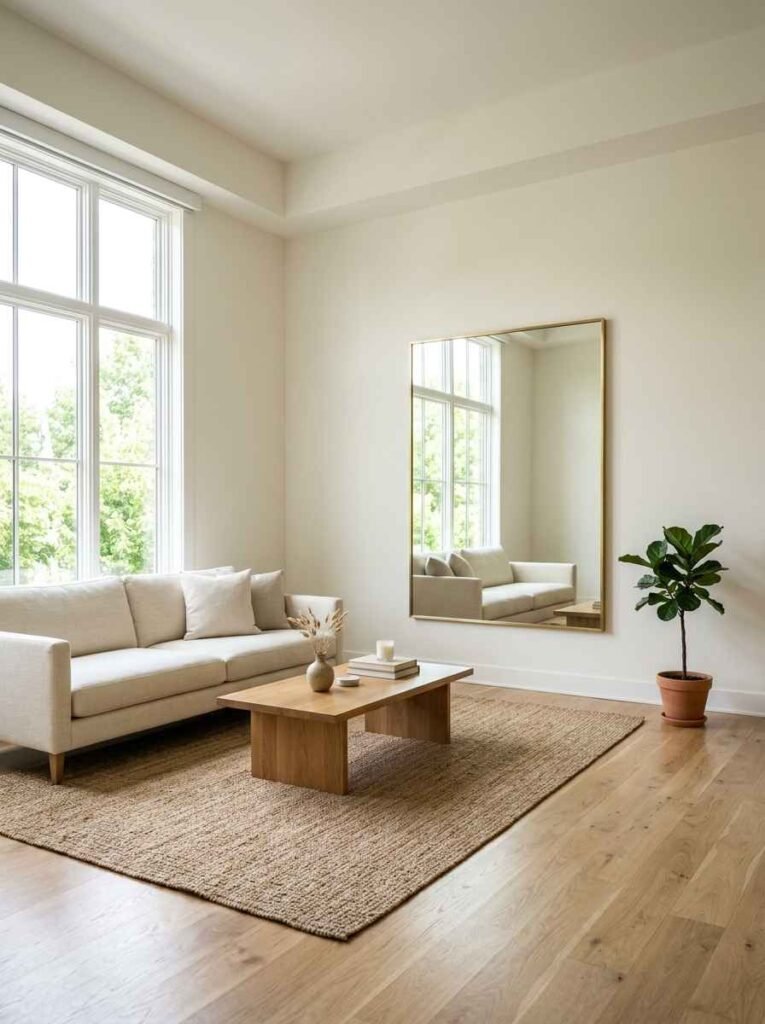
A well-placed mirror does the work of a window in a north-facing or dark room. It bounces natural light around and makes a space feel larger without adding visual noise.
The key is to be deliberate about placement. A mirror opposite a window maximizes light gain. A mirror on a side wall just makes things feel busy.
22. Opt for Closed Storage Wherever Possible
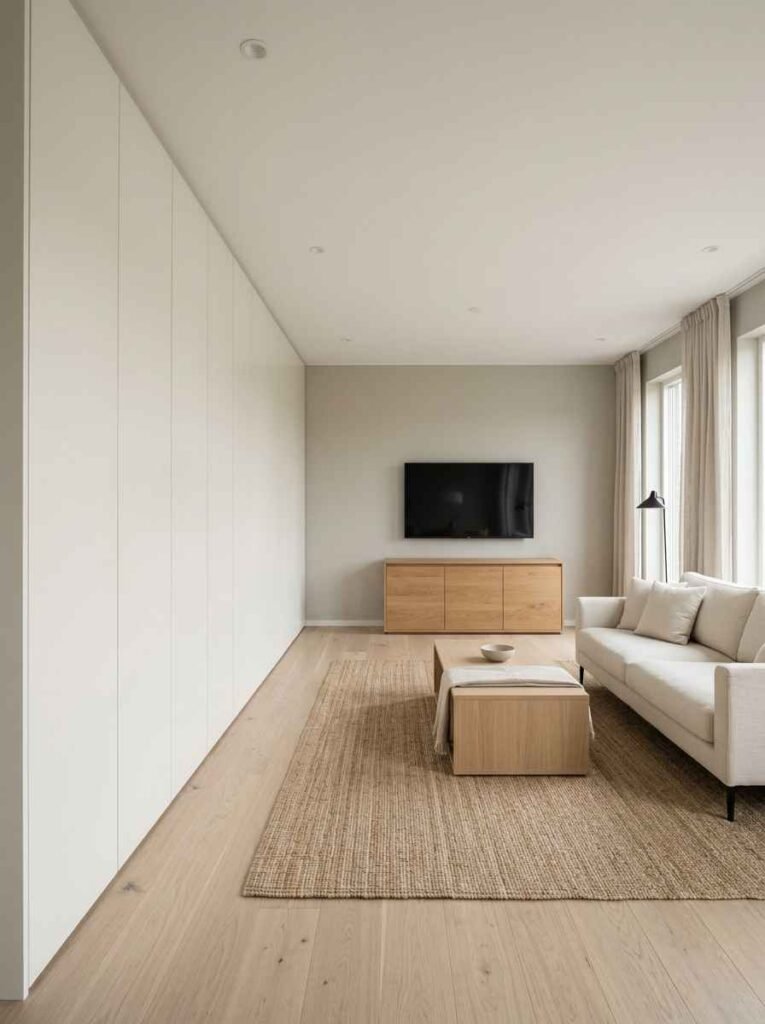
Open shelving looks great on Instagram. In real life, it becomes a maintenance headache and a visual dumping ground within six months. For a genuinely calm minimalist space, closed storage is your best friend.
A sideboard with doors, a coffee table with drawers, built-in cabinets with simple slab fronts — keeping the visual field clean requires keeping stuff out of sight.
23. Keep Cushion Covers in an Odd Number
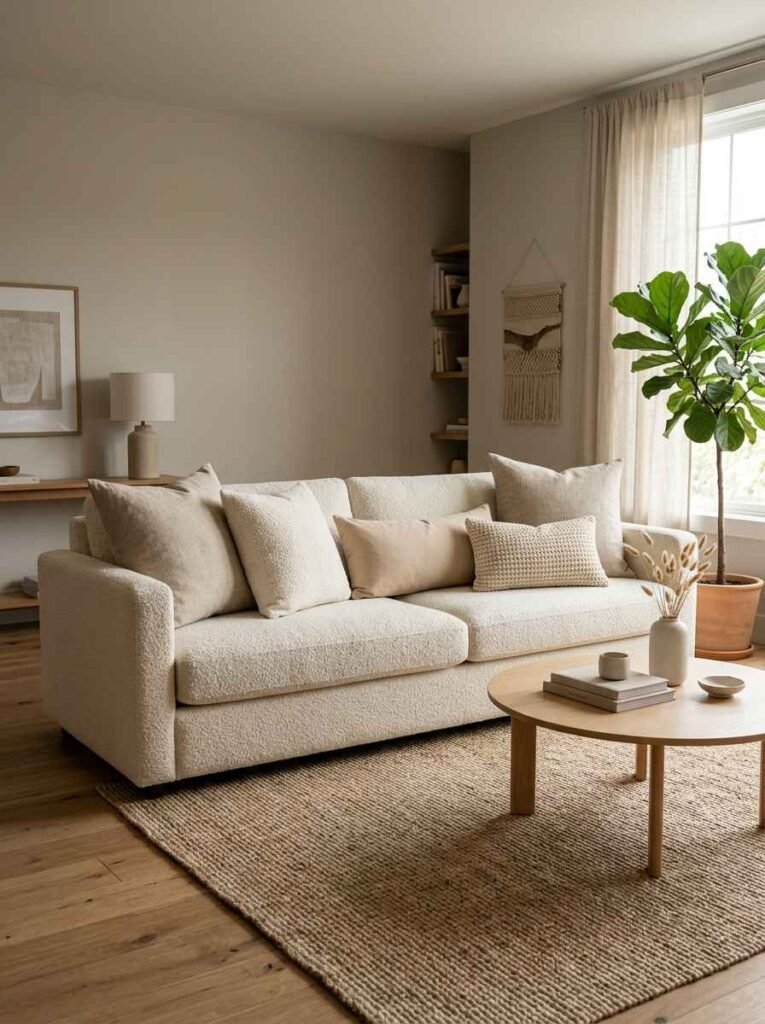
Styling cushions in odd numbers (three or five) looks more natural and relaxed than even arrangements. Two cushions look like a hotel lobby. Five cushions in varying textures and slightly different tones of the same neutral look like a home.
Mix shapes too — a square alongside a bolster alongside a lumbar pillow creates visual rhythm without disorder.
24. Ground the Room With a Dark Accent
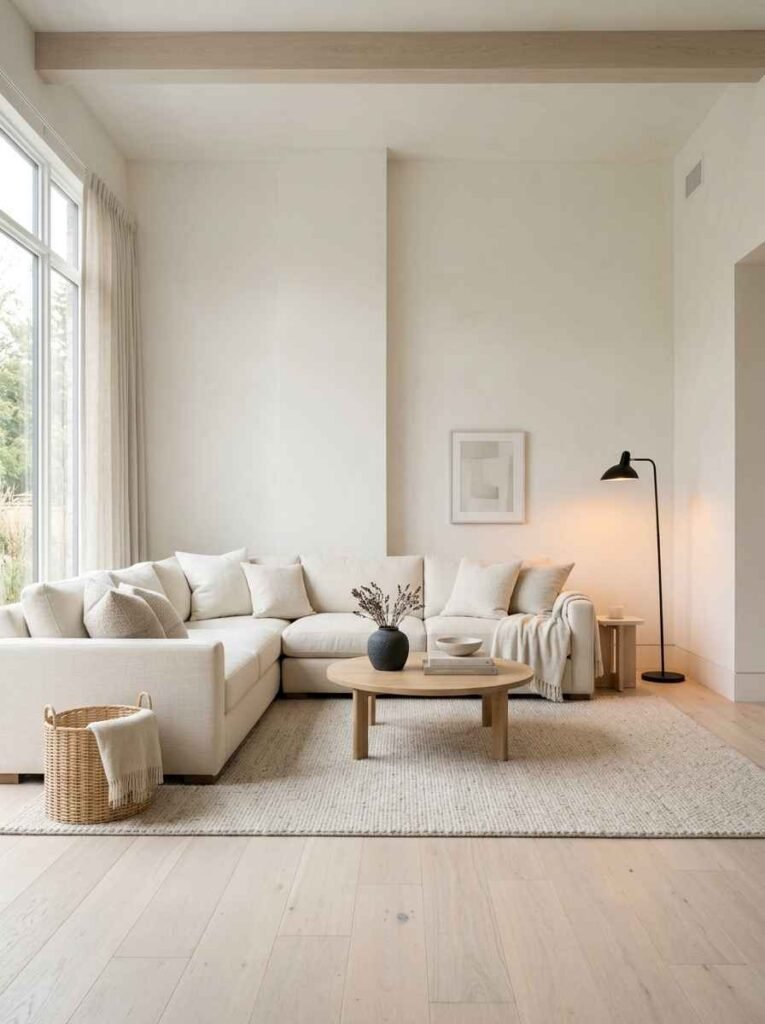
Even in a very light, airy room, one dark element stops the space from feeling washed out. A dark-stained wood side table, a black iron floor lamp, a deep charcoal vase — something small that the eye can rest on.
It provides contrast without disrupting the soft, neutral overall feel. Think of it as punctuation. A single full stop in a long paragraph of soft sentences.
25. Choose Organic Shapes Over Geometric Rigidity
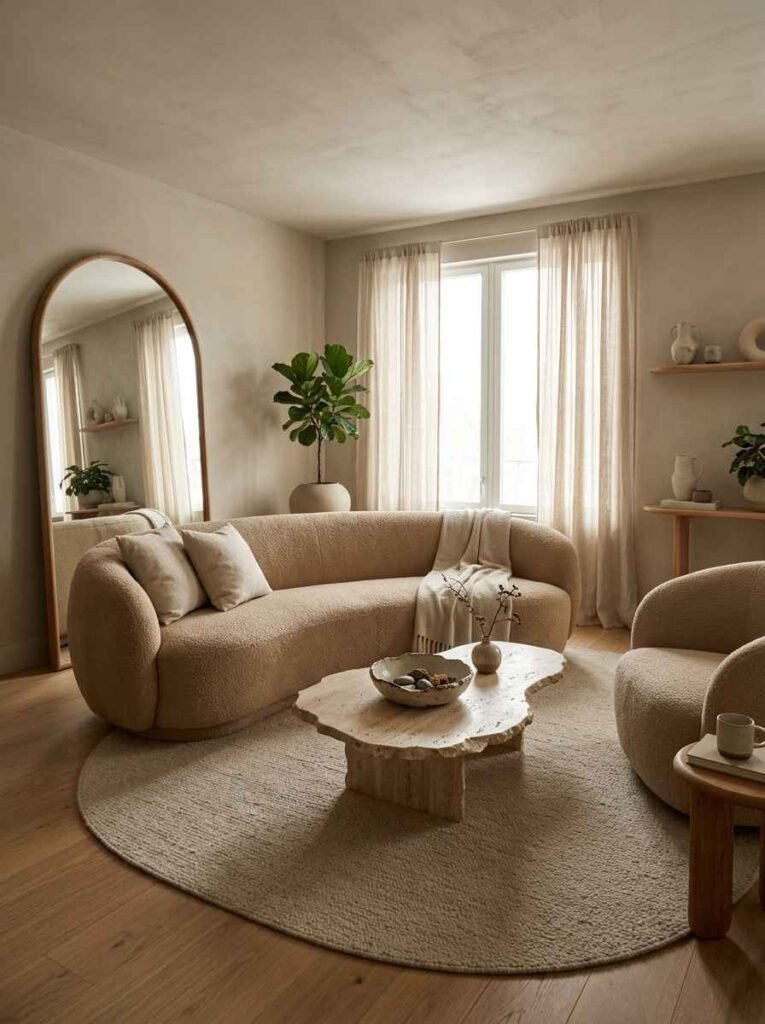
Minimalism gets cold when everything is perfectly rectangular and square. Organic, imperfect shapes — a curved sofa, a round coffee table, an irregular ceramic bowl — soften the room and make it feel warmer.
This is a small but meaningful design principle. Perfect geometry feels corporate; organic shapes feel human.
26. Edit Ruthlessly and Often
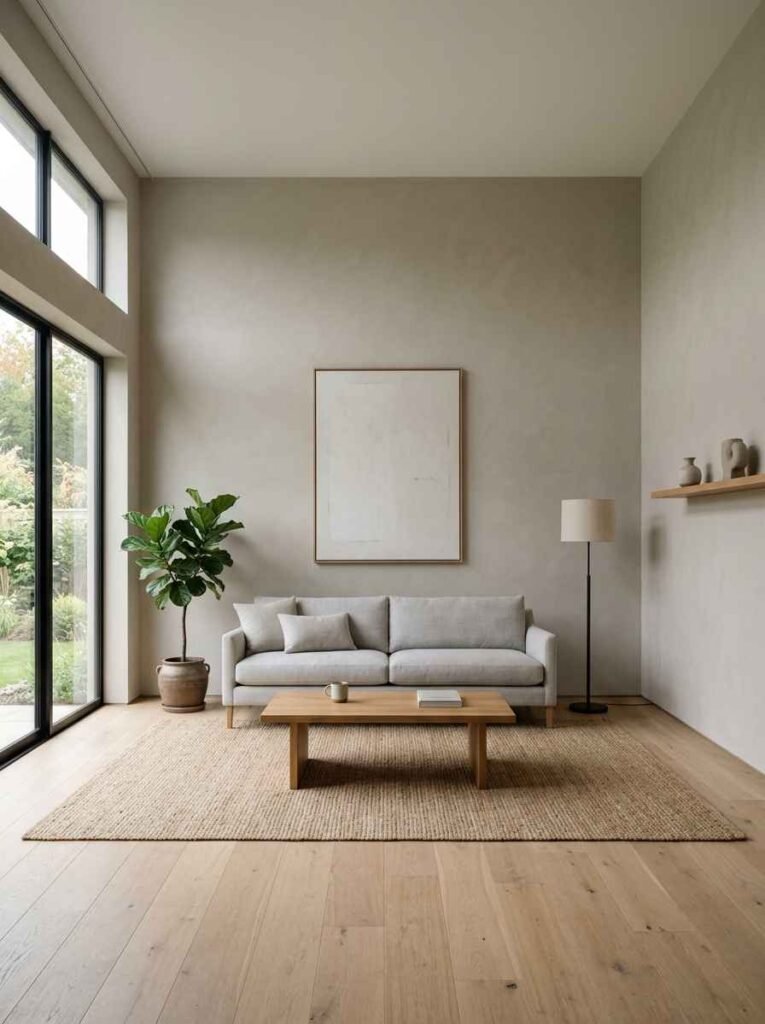
The ongoing work of a cozy minimalist living room isn’t decorating — it’s editing. Every few months, remove one object from each shelf. Ask whether everything in the room earns its place.
Cozy minimalism is a practice as much as a style. The room that looks effortless is usually the room that has been edited twenty times.
27. Let the Room Breathe
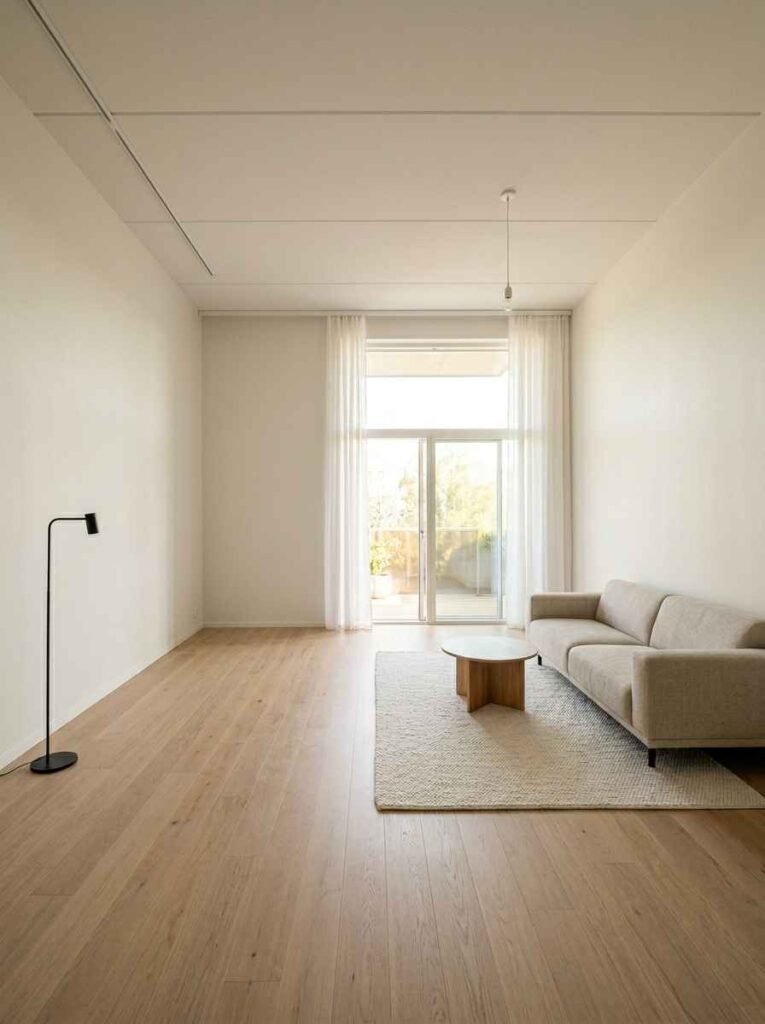
This is the hardest one for most people to actually do. Leave wall space empty. Leave shelf space empty. Resist the urge to fill every corner.
The negative space in a room is active, not passive. It’s what gives the eye somewhere to rest. A room that’s 70% full looks intentional and calm; a room that’s 95% full looks chaotic even if every individual object is beautiful.
A Quick Reference: Neutral Cozy Minimalist Palette Guide
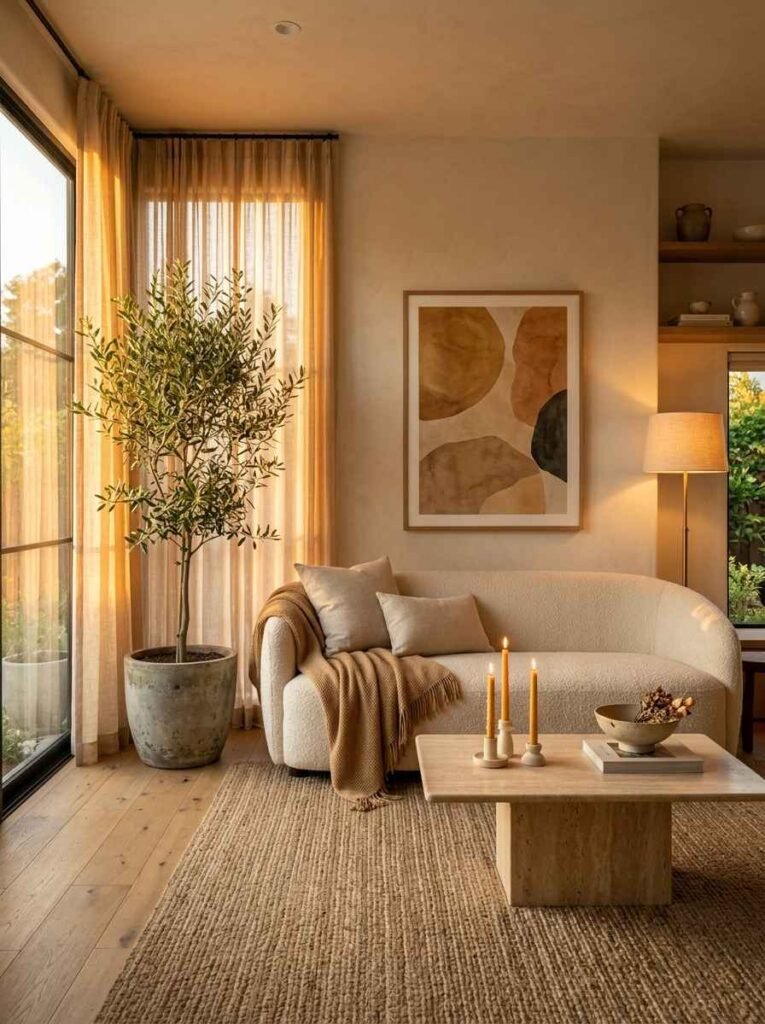
| Element | Ideal Choices | What to Avoid |
|---|---|---|
| Walls | Warm white, greige, soft taupe | Stark white, cool grey |
| Textiles | Linen, boucle, cotton, wool | Polyester, busy patterns |
| Wood tones | Light oak, walnut, natural pine | Dark stained or painted |
| Metal accents | Brushed brass, aged bronze | Polished chrome, nickel |
FAQs
Q: Can I do cozy minimalist on a budget? Honestly, yes — this is one of the more budget-friendly aesthetics because it requires fewer things, not more expensive things. Start by editing what you already have. Remove half the objects from your shelves, swap one throw for a quality neutral one, and add a floor lamp. The transformation is usually dramatic before you spend a single dollar.
Q: How do I stop a neutral room from looking bland? Texture is everything. If your neutral room feels flat, it’s almost always a texture problem, not a color problem. Introduce woven, knitted, rough, smooth, matte, and shiny surfaces. The contrast between them creates the visual richness that color would otherwise provide.
Q: What’s the most common mistake people make with minimalist living rooms? Going too cold. Minimalism without warmth is just spartan. The “cozy” part of this aesthetic requires active effort: warm lighting, natural materials, soft textiles, and at least one organic or handmade element. If your minimalist room makes you want to put a sweater on, it needs more warmth, not more stuff.
Final Thought
Getting a neutral cozy minimalist living room right is genuinely one of the more satisfying design projects you can take on. It rewards patience, restraint, and the willingness to live with less. Start with one corner — your reading nook, your shelving, your sofa styling — and let the rest follow.
What’s the one change in your living room you’ve been putting off? Drop it in the comments — I’d love to hear what space you’re working with.
