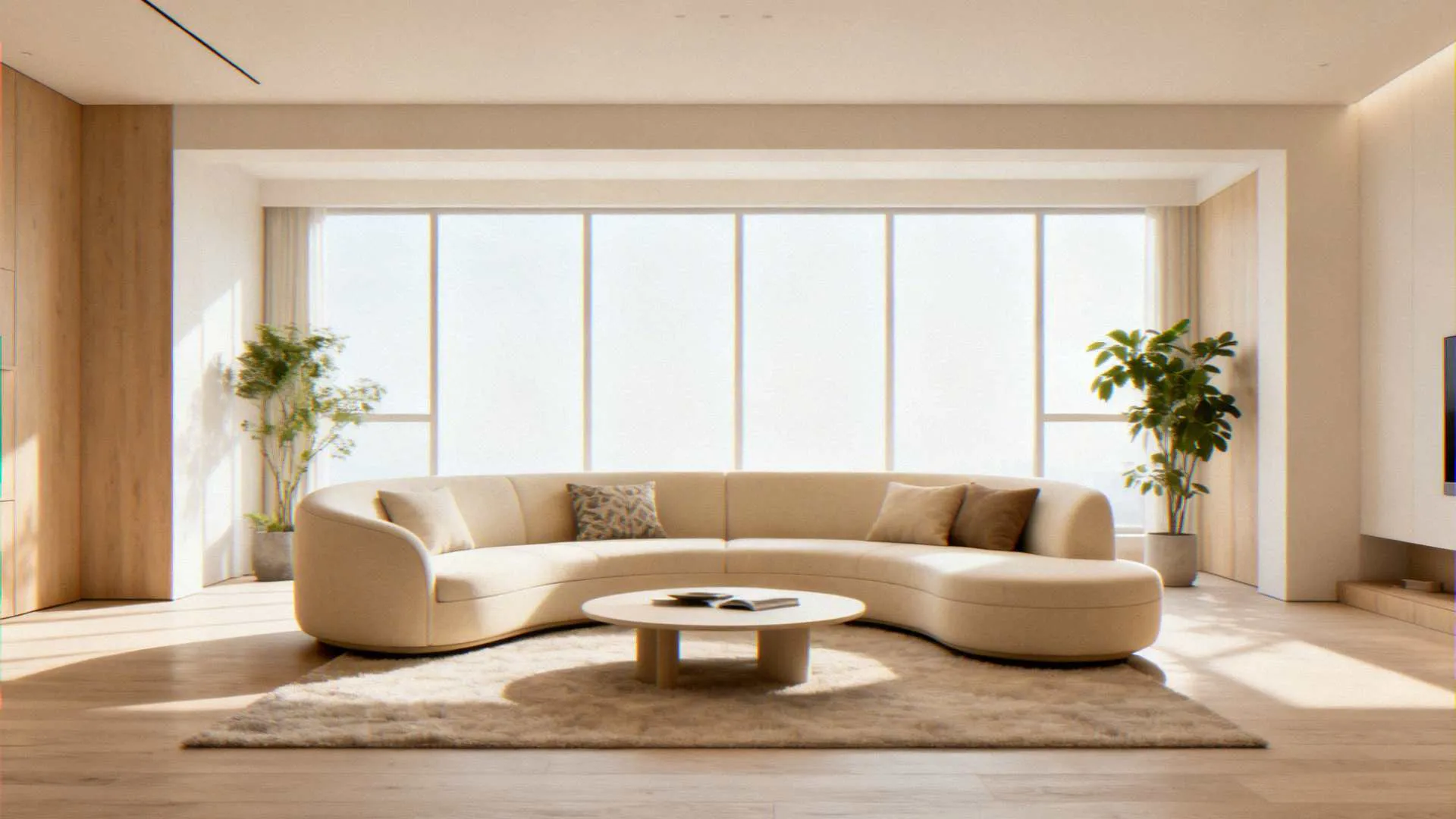
You have bought one of those curvy couches, lovely, sweeping, melodramatically beautiful, and now you find yourself standing in your very straight living room asking yourself what exactly happened to your brain. Been there.
Trust me, I’ve had that exact moment of panic where a piece of furniture makes you question all your life choices.
Here’s the thing though: a curved sofa in a rectangular room isn’t a design problem. It’s actually a design opportunity. The contrast between curves and straight lines creates visual tension that makes a space feel intentional and sophisticated. You just need to know how to work with it.
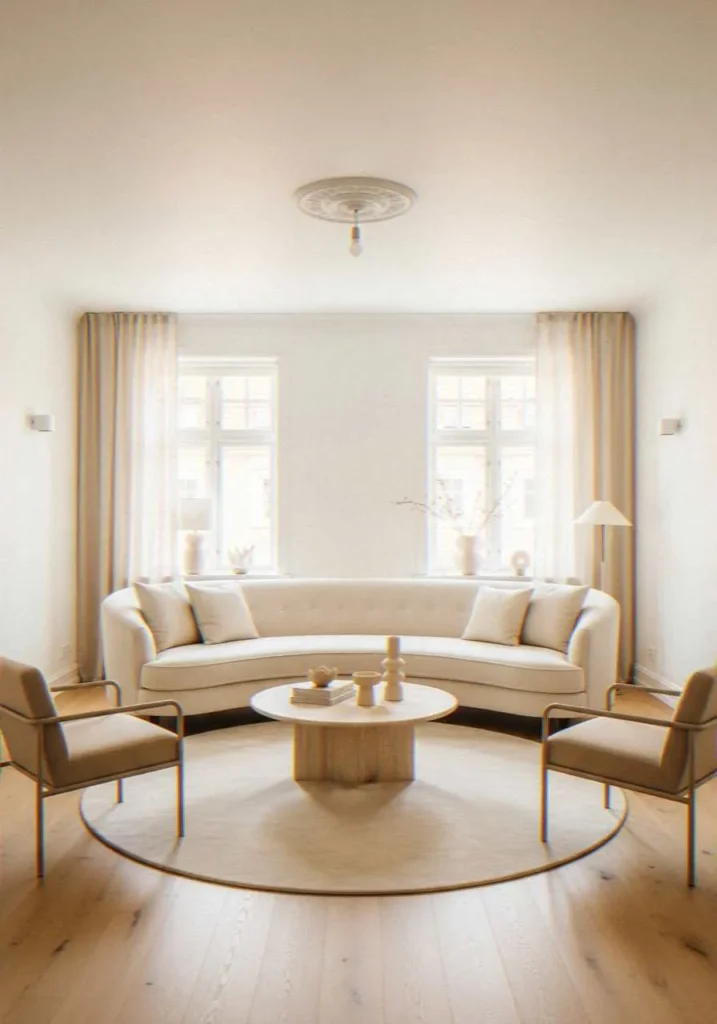
Why Curved Sofas and Rectangular Rooms Are Actually a Match
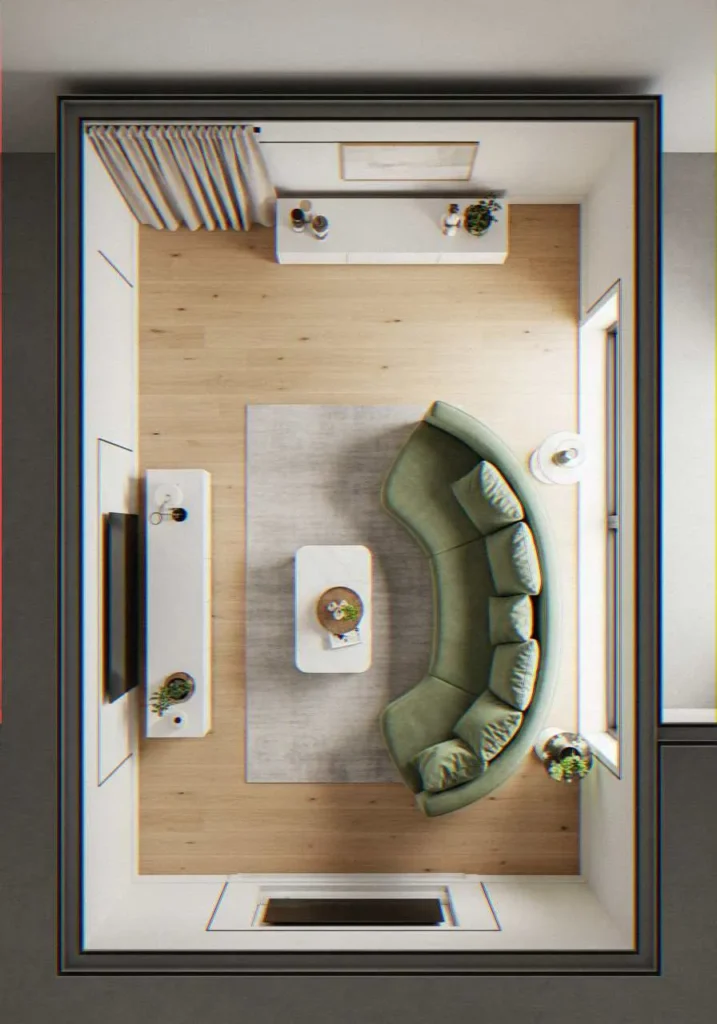
I used to think curved furniture only belonged in round or open-plan spaces. Then I styled a curved sectional in my own 12×18 ft rectangular living room, and it completely transformed the space from “functional box” to “room people actually compliment.”
The secret? Rectangular rooms desperately need softness. Four hard corners and parallel walls create a tunnel-like rigidity. A curved sofa breaks that monotony in a way no straight-lined piece ever could.
The Visual Science Behind It
- Straight lines lead the eye forward and create a sense of length
- Curves slow the eye down and create a sense of intimacy
- Mixing both creates balance — which is exactly what good interior design is about
- Rectangular rooms have plenty of straight lines already, so the curve becomes the focal point naturally
Choosing the Right Placement for Your Curved Sofa
Where placement most people come short and frankly enough, it is the make-or-buy call on this entire set-up.
Floating in the Center
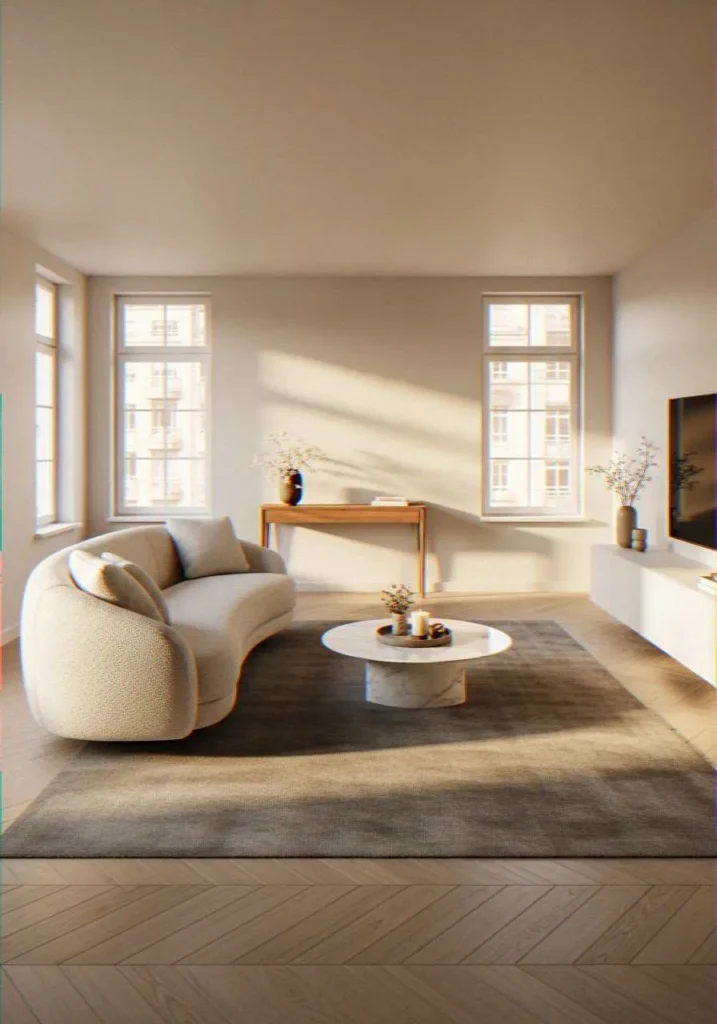
Floating your curved sofa away from the wall is my top recommendation for rectangular rooms. I know it feels counterintuitive — especially if your room isn’t massive — but pushing a curved sofa against a flat wall cancels out its best feature.
When floated the curve is inward, and forms a natural conversation area that is comfortable and intentional.
Try positioning it roughly one-third of the way into the room from the main wall. Leave enough space behind it for a console table if you like, which also helps define the sofa’s “back zone.”
Curved Sofa Facing the TV
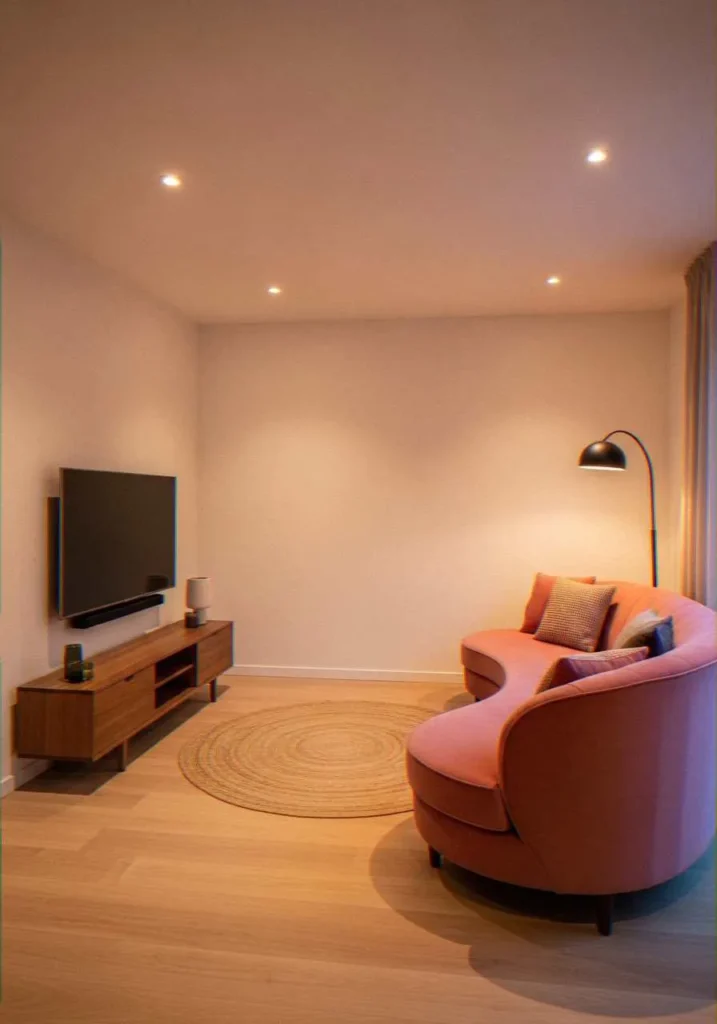
If your television sits on the short wall of the rectangle (which is common), placing your curved sofa directly opposite it works beautifully. The curve gently wraps seating toward the screen, almost like a personal home theater vibe. Make sure the sofa’s curve faces the TV, not away from it — sounds obvious, but I’ve seen it done wrong more times than I’d like to admit :/
Sectional Curves in a Corner
If you have a curved sectional rather than a standalone curved sofa, nestling it into a corner of the rectangular room can actually work well. The key is to leave breathing room — don’t let both arms of the sectional touch the walls simultaneously. That creates a cramped, furniture-store-showroom feel that nobody wants.
How to Arrange the Rest of Your Furniture Around It
That is the magic of the actual styling. It is not the other items that shine, it is your curved sofa that shines.
The Coffee Table Dilemma
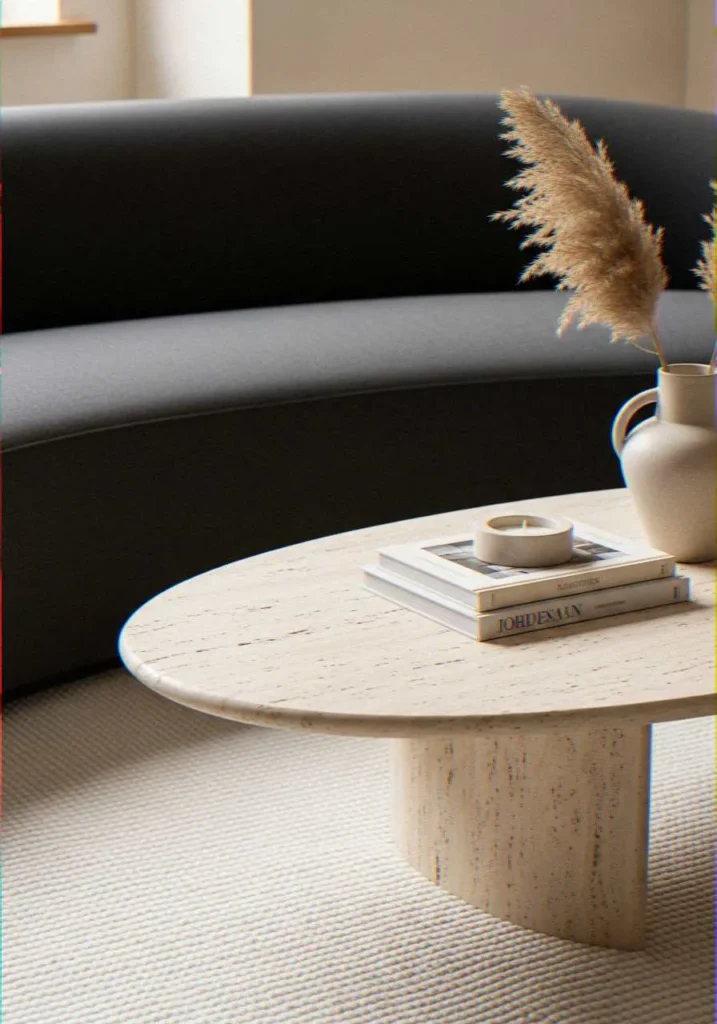
A rectangular coffee table in front of a curved sofa looks awkward — it’s like wearing a square hat. IMO, round or oval coffee tables are the obvious winner here. They echo the curve of the sofa and reinforce that sense of flow throughout the room.
If you love the look of a rectangular coffee table, try a slightly softer-edged one — like a rounded rectangle. It bridges the gap between the sofa’s curves and the room’s straight lines without feeling like a visual clash.
Side Tables and Accent Chairs
- Round side tables next to a curved sofa look seamless and considered
- Accent chairs with tapered or angled legs add geometry that complements the sofa’s softness
- Avoid chairs that are too bulky or boxy — they’ll compete with the sofa rather than complement it
- Two accent chairs facing the sofa create a conversational triangle that works perfectly in a rectangular room
The Rug Situation
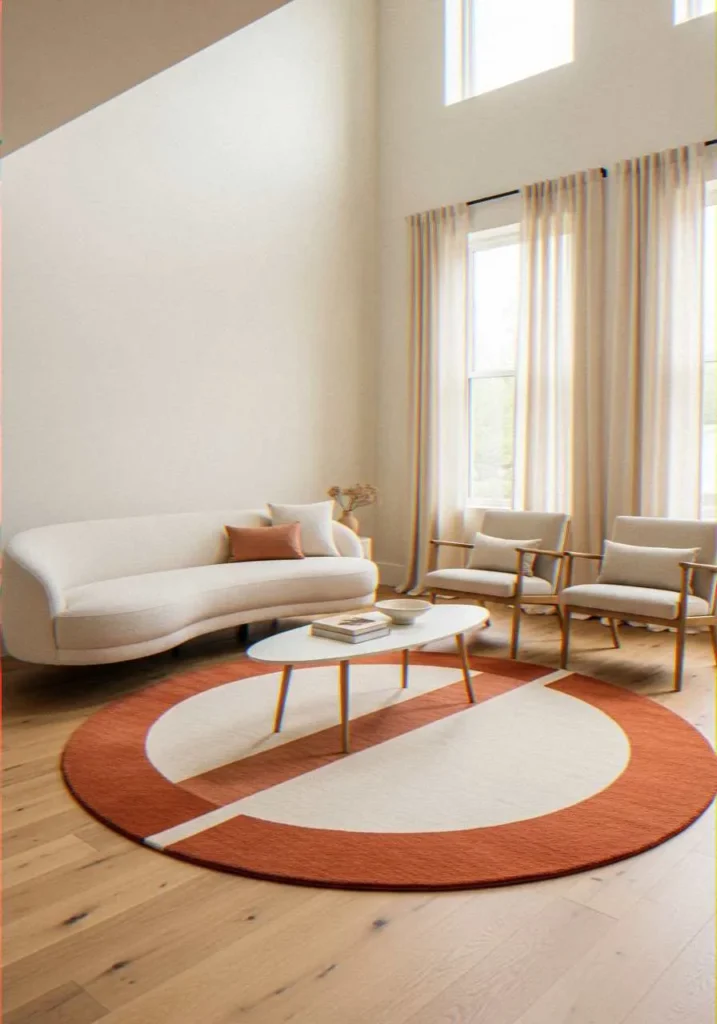
Your rug is more important than people realize in this setup. A large area rug anchors the floating curved sofa and essentially tells the room “this is the living area.” Go big — most people size down and end up with a rug that looks like a welcome mat.
In shape, a massive square carpet beneath a curvately shaped sofa appears truly impressive and inclines towards the theme of the circle. However, a big rectangular carpet is also perfect, as it strengthens the structure of the room and the sofa is in contrast with it.
Color and Fabric Choices That Work With the Room’s Shape
Let’s talk about how color and material choices affect the way your curved sofa interacts with a rectangular space.
Light vs. Dark Sofas
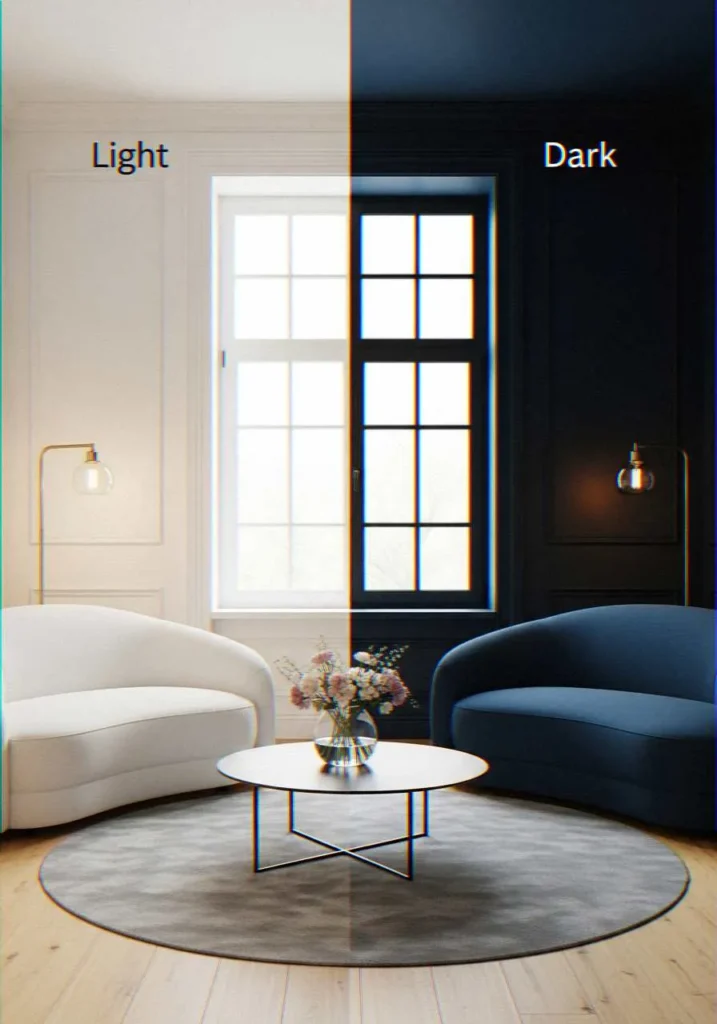
A light or neutral-colored curved sofa (think cream, sand, soft grey) tends to feel less visually heavy in a rectangular room. It curves without dominating. A dark curved sofa — deep navy, forest green, charcoal — makes a bolder statement and works best when your room has higher ceilings or generous natural light.
There is a cozy taupe curved living room sofa that I have, and it strikes the happy medium between contemporary and light. FYI, even neutral warm clothes are very photogenic in case you consider such things important as well.
Fabric Texture
- Boucle and textured fabrics add dimension without requiring bold color
- Velvet curved sofas are dramatic and gorgeous but need balance from simpler surrounding pieces
- Performance fabrics (like Bouclé-weave polyester blends) are practical for high-traffic rectangular rooms that double as family spaces
- Avoid overly shiny or patent-leather-look fabrics — they reflect the room’s hard angles right back at you
Lighting That Complements a Curved Sofa Setup
Lighting is the unsung hero of any furniture arrangement, and it matters even more when you’re mixing curves and rectangles.
Overhead Lighting
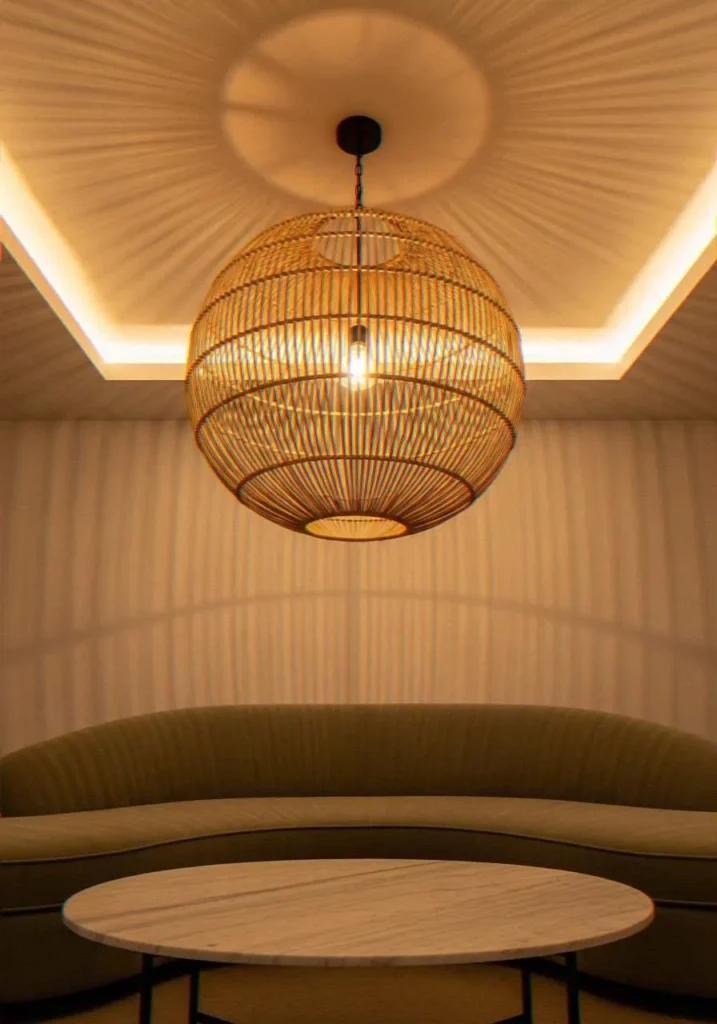
A round pendant light or chandelier above the coffee table area mirrors the sofa’s curves and ties the layout together visually. If you have recessed lighting, position a light directly above the center point of the sofa’s curve — it highlights the shape beautifully in the evenings.
Floor Lamps and Sconces
- Place a tall arc floor lamp behind one end of the curved sofa to define its boundary and add height
- Wall sconces flanking the TV or main focal wall reinforce the room’s rectangular structure, balancing the sofa’s softness
- Warm-toned bulbs (2700K–3000K) make curved sofas look luxurious — trust me on this one
Common Mistakes to Avoid
I would be doing a disservice to you, had I not pointed out to you the pitfalls that people fall into by this arrangement as far as styling is concerned.
- Pushing the curved sofa flat against the wall — wastes the shape entirely
- Over-accessorizing with too many curved items — suddenly it looks like you live inside a bubble
- Choosing a coffee table that’s too small — scale matters, and a tiny table looks lost in front of a large curved sofa
- Ignoring the back of the sofa — if it floats in the room, the back is visible; style it with a console table and some objects
- Matching everything too precisely — a curved sofa looks best with collected, slightly eclectic surroundings, not a fully matched furniture set
My Favorite Finishing Touches
Once the big pieces are in place, the details make all the difference.
Throw pillows on a curved sofa look best when you vary the sizes — a couple of larger square pillows on the ends and a few smaller ones in the center. Don’t go overboard with geometric-patterned pillows; they fight with the sofa’s curves. Soft organic prints or solid colors work better.
A throw blanket draped casually over one arm of the sofa adds warmth and signals “this room is actually lived in” rather than “this room is a furniture catalog.”
Plants – in particular round-leaf plants such as pothos, monstera or fiddle-leaf figs – repeat the shape of curved lines and introduce organic curves to the corners of the rectangular room.
Wrapping It Up
Styling a curved sofa in a rectangular living room comes down to one core idea: let the curve be the star, and let everything else support it. Float it with intention, pair it with round accessories, choose the right scale of rug, and light it well.
Your rectangular room doesn’t fight with a curved sofa — it frames it. And once you nail this setup, I promise you’ll wonder why every room doesn’t have at least one beautiful curve in it. Now go rearrange something.
FAQs About Styling a Curved Sofa in a Rectangular Living Room
People ask me these questions a lot, so let me answer them straight — no fluff, no filler.
Can a Curved Sofa Work in a Long Narrow Living Room?
Yes, and better than you would imagine, at least, so far as you have it placed. The greatest error in a long narrow room is placing all your furniture against the long walls, and probably will only seem to make a bowling alley appearance. An impossibly curved couch, which runs at right angles to the room length, and floats out of the wall, is visual disruption of that tunnel form and a width where there was none.
I’d recommend a compact curved sofa rather than a full curved sectional for a narrow room — you want the curve without eating up all your floor space. Pair it with a round coffee table and two slim accent chairs opposite, and you’ve essentially created a room within a room.
The curve does the heavy lifting of making a tight rectangular space feel deliberately designed rather than just… long.
One thing to avoid: placing a large curved sectional along the long wall of a narrow room. That amplifies the narrowness rather than fighting it.
How to Place a Curved Sofa in a Rectangular Room With a Fireplace?
A fireplace gives you a clear focal point, which actually makes this easier. Position your curved sofa so its curve faces the fireplace directly — the sofa essentially hugs the room toward the fire, which looks intentional and feels incredibly cozy in practice.
When the fireplace is in one of the short sides of the rectangle (the most common), place the curved sofa some few feet back in front of the fire, with the center of the sofa falling on the fireplace.
It is a shape that is natural in its tendency to draw people into a semicircular seating arrangement around the fire – it is what curved sofas were created with.
If the fireplace is on a long wall, angle your approach slightly: float the sofa facing the fireplace but offset it just enough to keep traffic flow around the room.
Add a curved-back accent chair on one side of the fireplace and a floor lamp on the other to frame it without blocking the heat zone. Whatever you do, don’t push the curved sofa flat against the opposite wall — the distance kills the intimate feel that a fireplace seating area should have.
What Size Rug for a Curved Sofa in a Rectangular Room?
Go bigger than your instinct tells you. Seriously — most people rug-shop timid and end up with something that looks like a postage stamp under a statement sofa. As a general rule, your rug should extend at least 12–18 inches beyond both sides of the curved sofa.
Here’s a rough sizing guide based on room size:
- Small rectangular room (under 12×14 ft): 8×10 ft rug minimum
- Medium rectangular room (12×16 to 14×18 ft): 9×12 ft rug — this is the sweet spot for most standard living rooms
- Large rectangular room (over 15×20 ft): 10×14 ft or larger; consider a 9 ft round rug if you want to lean into the curved sofa’s shape
For shape, a round rug (8–10 ft diameter) under a curved sofa looks stunning and reinforces the curved theme throughout. If you prefer a rectangular rug, make sure all front legs of the sofa and any facing accent chairs sit on the rug — that’s what anchors the whole arrangement visually.
How to Style a Curved Sofa Against a Straight Wall?
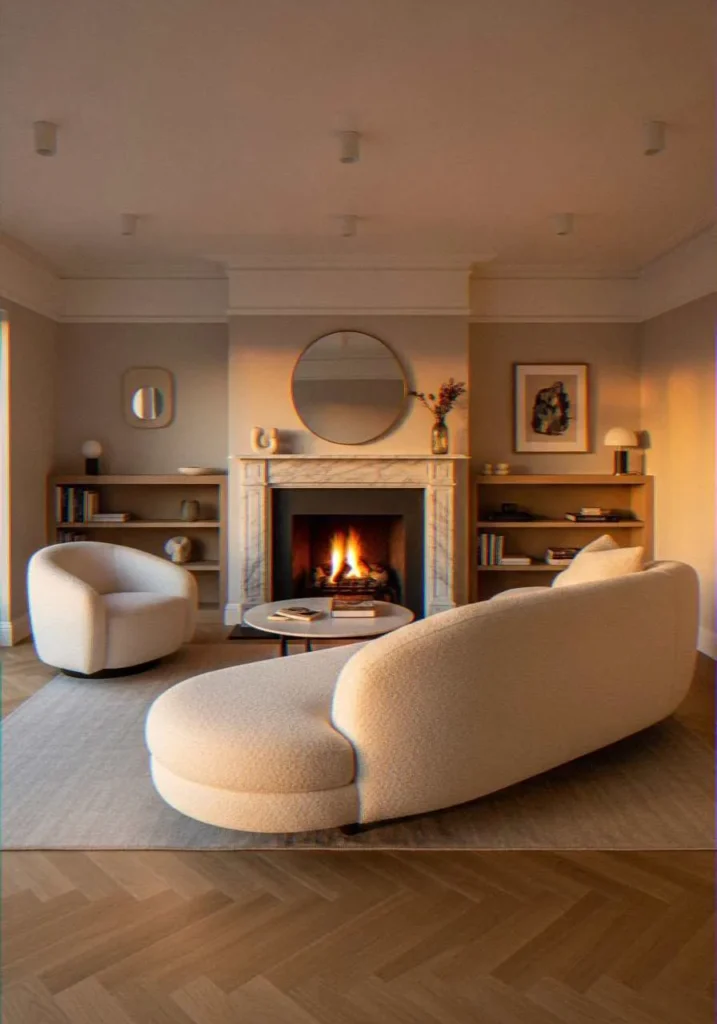
I am being frank here, but I would not choose to have a curved sofa against a wall, however I fully understand that not all rooms can accommodate floating furniture. The great news is that it is possible to make it work with some clever changes.
The key is to compensate for the lost curve visual by creating depth in other ways. Hang a large piece of artwork or a gallery wall above the sofa — something wide enough to span the sofa’s length. This gives the wall-sofa combo a sense of composition rather than just “furniture pushed to the side.”
A console table behind the sofa obviously isn’t possible here, so use side tables on both ends to frame the sofa and give it definition. Add a floor lamp on at least one end — it creates vertical height that draws the eye up and makes the sofa feel like a styled vignette rather than furniture in storage mode.
Another tip: When the sofa is used as perpendicular to the wall, the curve is turned outward in the room and this actually works in your favor as far as the overall layout is concerned.
Arrange your coffee table and accent chairs before it like you do normally and the curve welcomes people to the seating area even in a wall stance.
Will a Curved Sofa Make a Rectangular Room Look Smaller?
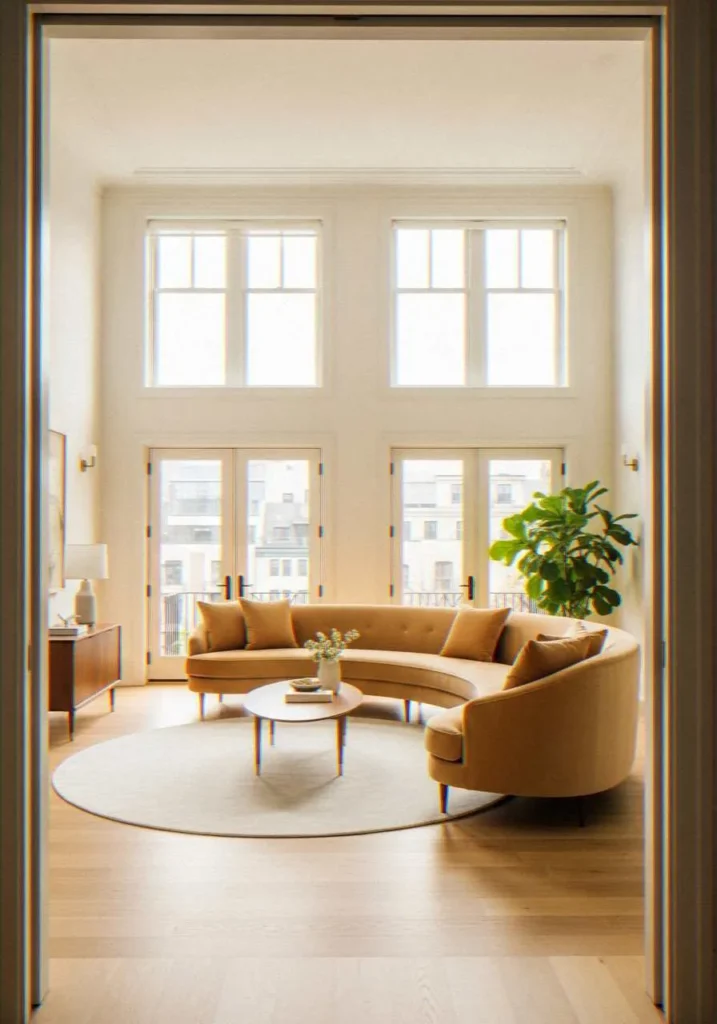
This is the most common question I receive and the answer is; not when you dress it up. An oversized and placed curved sofa will certainly cram up a room, but that is a problem of scale and placement, rather than a problem of curved sofa.
Here’s what actually affects perceived room size:
- Color: A light or neutral curved sofa recedes visually and keeps the room feeling open. A very dark, large curved sofa in a small rectangular room will feel heavy — not because it’s curved, but because it’s dark and large.
- Scale: Choosing a curved sofa that fits the room proportionally is everything. A curved loveseat or compact curved sofa in a smaller rectangular room looks intentional. A massive curved sectional in the same space looks like a mistake.
- Leg visibility: Curved sofas with visible legs — even short ones — let light travel under the piece, which makes the room feel bigger. Sofas that sit flush to the floor block that sightline and can feel heavier in a smaller room.
- Placement: Floating the sofa away from the wall (even just 6–8 inches) paradoxically makes the room feel larger, not smaller. It creates layers of depth that your eye reads as space.
So no — a curved sofa won’t shrink your rectangular room. If anything, the softness a curve introduces can make a boxy rectangular room feel more expansive because it removes some of that rigid, closed-in geometry. The trick is getting the scale and color right, and the rest takes care of itself.
