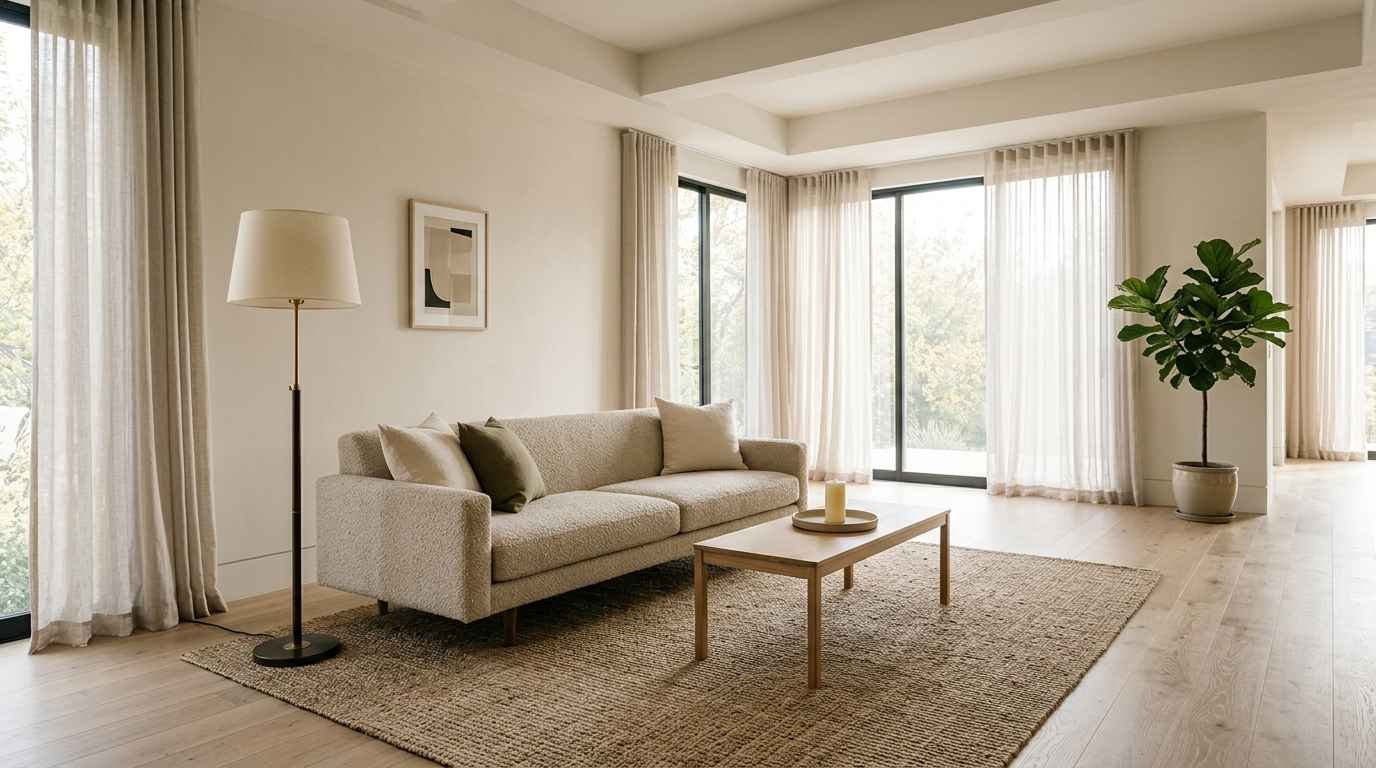
My living room used to look like a furniture showroom that got hit by a Pinterest tornado. Too many throw pillows.
A gallery wall with 11 frames. A rug layered over another rug because I saw it on Instagram and thought, “sure, why not.” It looked busy, it felt heavy, and I never actually wanted to sit in it.
Then I stripped almost everything out. Kept a sofa, one lamp, a single piece of art. And wow, the room finally felt like somewhere I could breathe.
If you’re a Pinterest person (and you clearly are, because here you are), you already know that minimalist cozy living rooms are absolutely everywhere on the platform right now.
But a lot of those pins are just aesthetics with no real guidance behind them.
So here are 28 ideas that actually work, drawn from real rooms, real design principles, and a fair amount of personal trial and error.
Start with the furniture you actually use
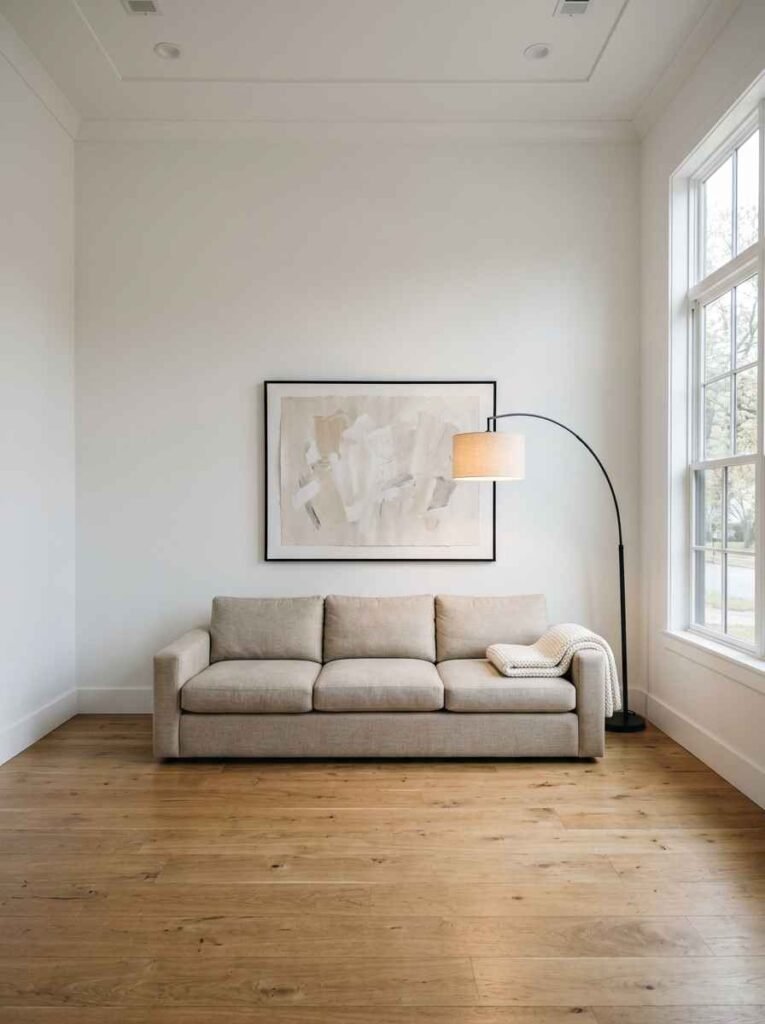
Before you touch the decor, sort out the furniture. This is where most people get it wrong.
They buy a beautiful linen sofa, then pile it with so much stuff you can barely see the sofa anymore.
Keep only what you use at least 3 times a week. If that accent chair has become a laundry holder, it’s not furniture, it’s a hamper with ambitions.
The sofa is the room
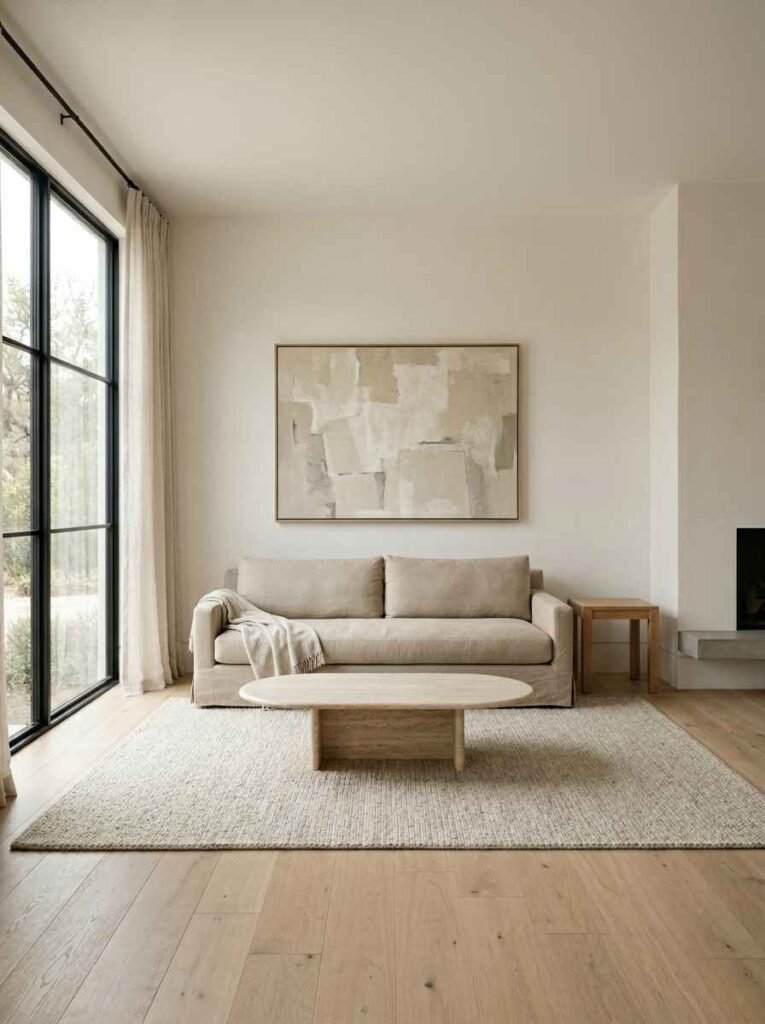
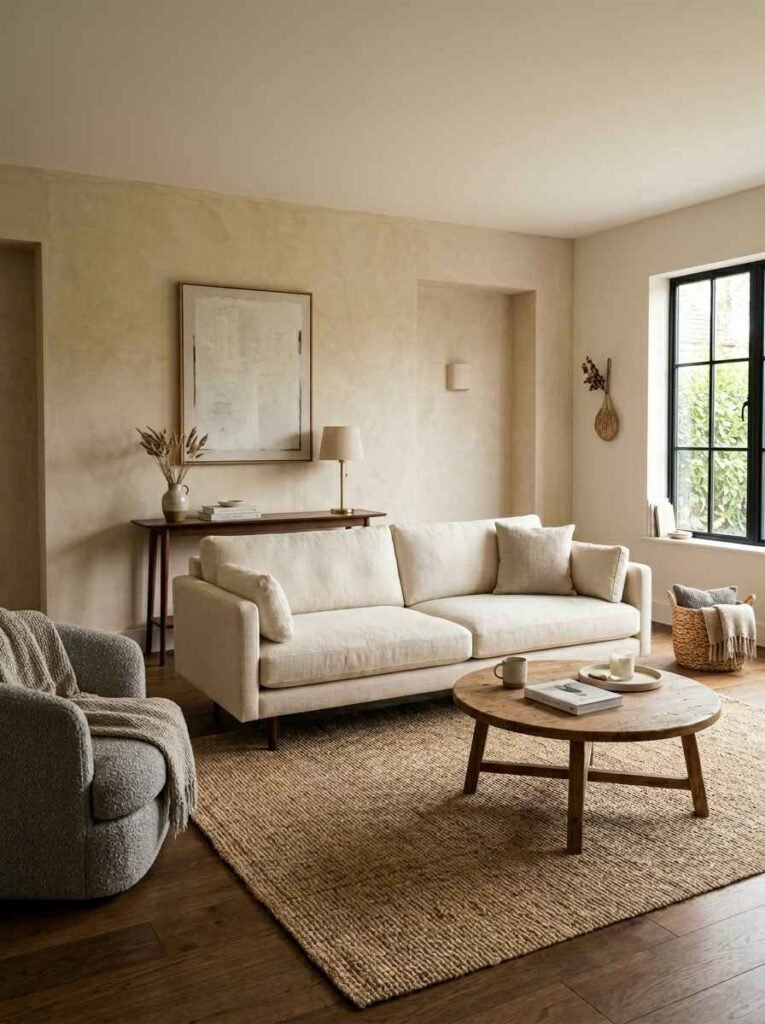
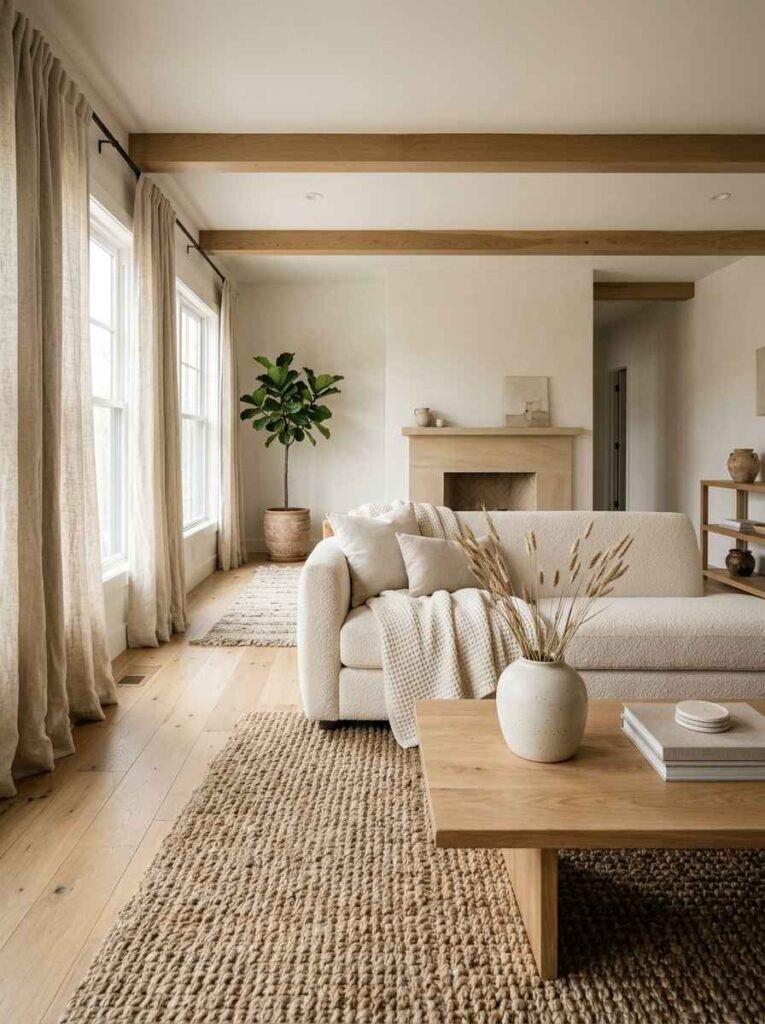
In a minimalist space, your sofa does most of the visual work. Go neutral: warm white, sand, oatmeal, or a soft charcoal. Avoid patterns unless it’s a very subtle texture.
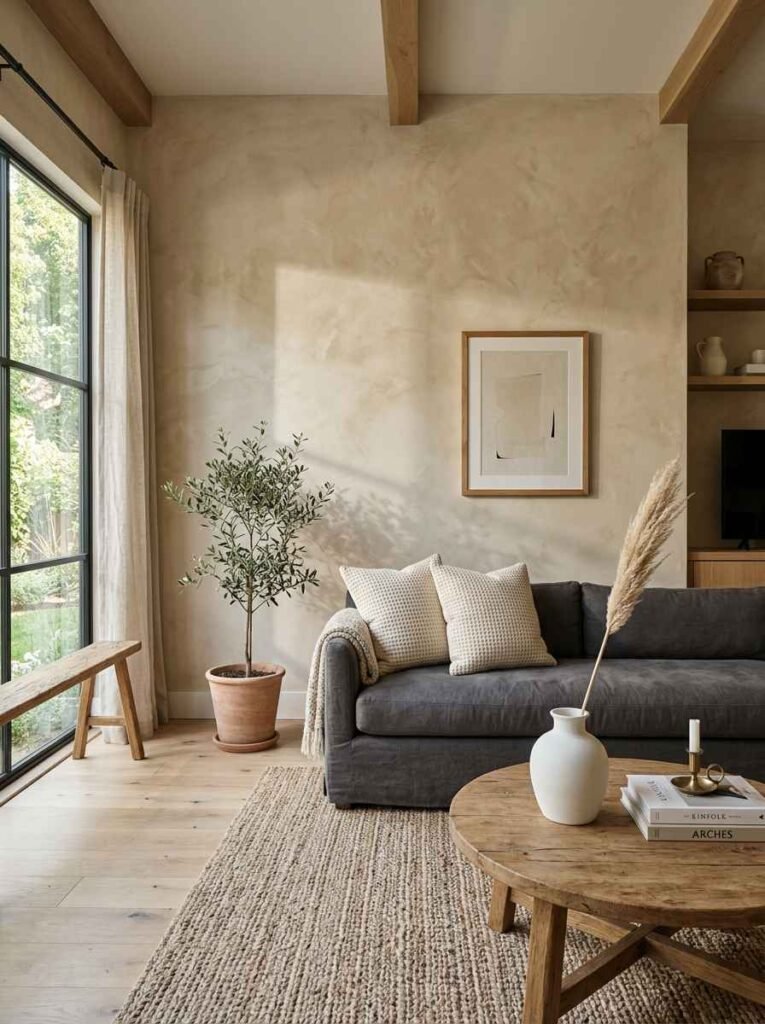
A low-profile sofa in a natural linen or boucle fabric reads as both minimal and cozy at once.
The Pottery Barn Pearce sofa and similar deep-seated styles are popular for a reason: they look clean but feel like a hug.
One chair is enough
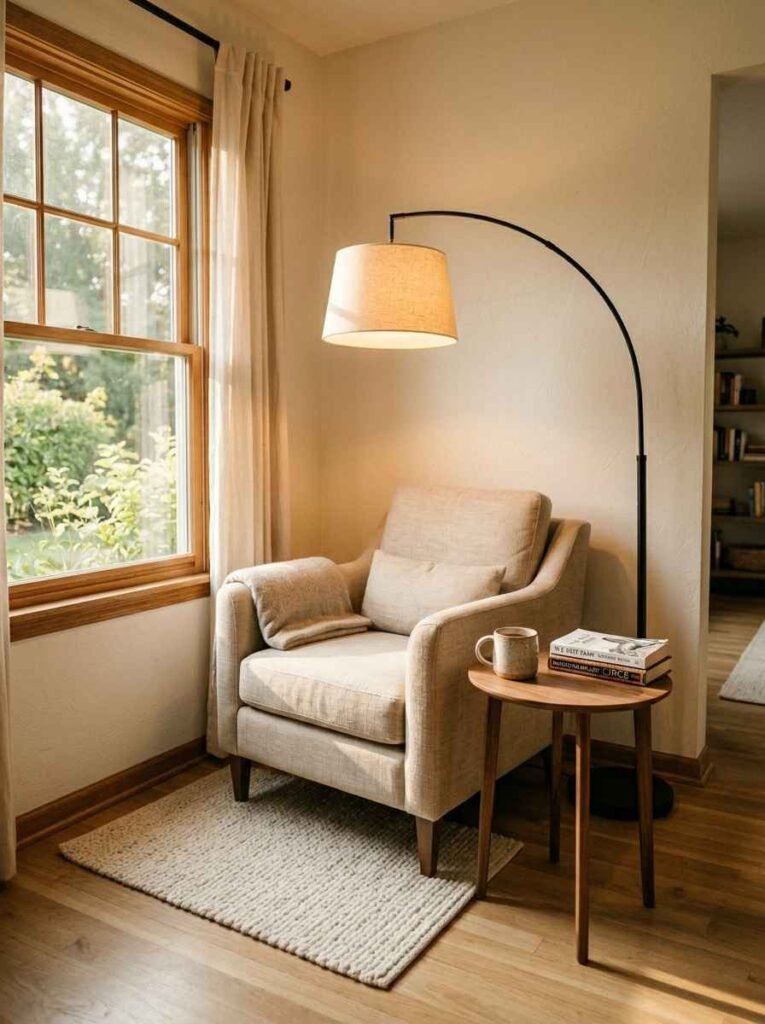
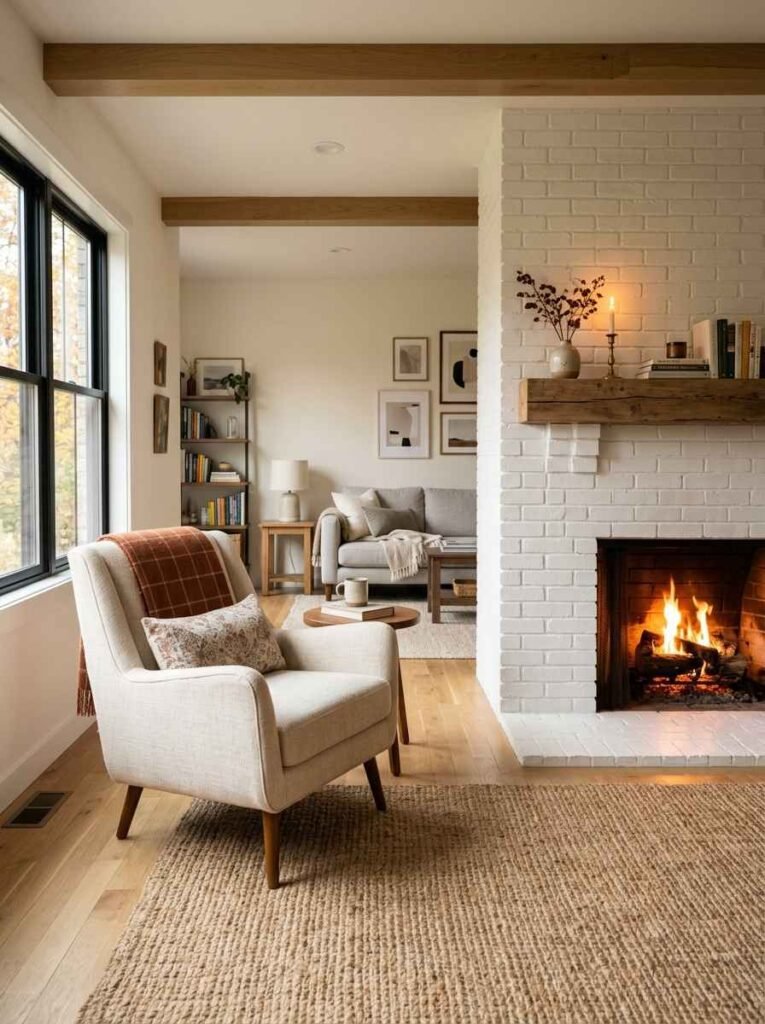
A single armchair in a corner does more for a room than 2 mismatched accent chairs that don’t quite work together.
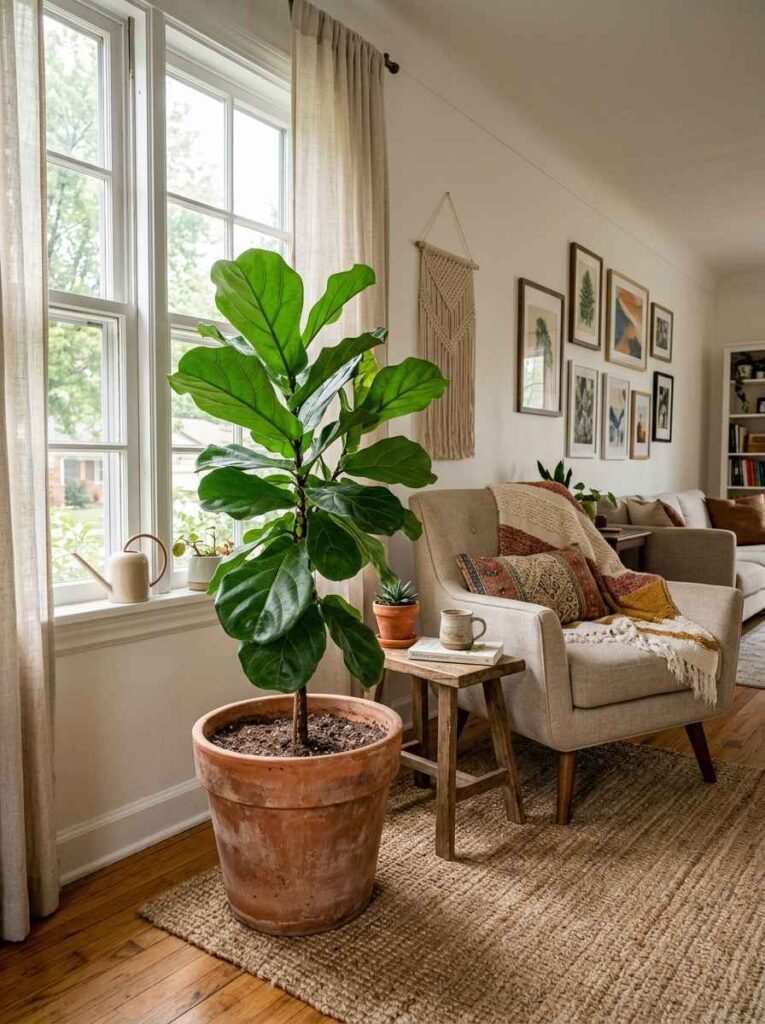
Pair it with a small side table (round edges, natural wood) and you’ve got a full reading nook without the clutter.
The 28 ideas, broken into categories
Lighting ideas
1. Use a floor lamp instead of overhead lighting. Most overhead lighting is harsh and unflattering. A warm-toned floor lamp next to your sofa changes the entire mood of the room after dark. Get one with a linen shade, not a white plastic drum.
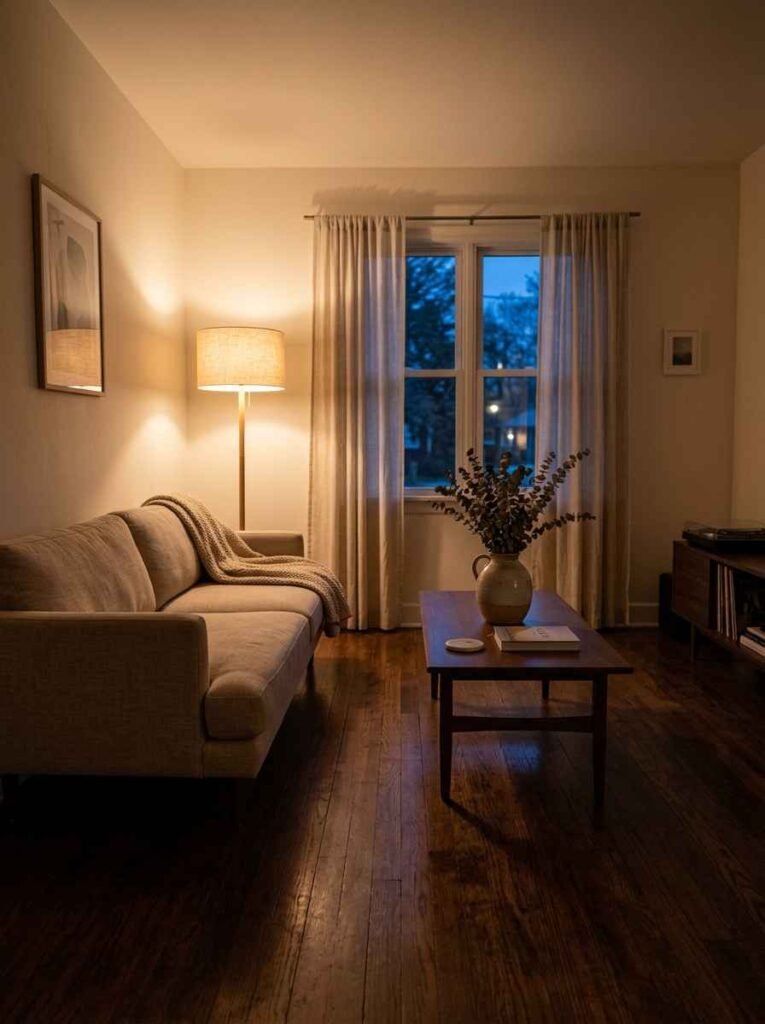
2. Layer 2 light sources, not 5. One floor lamp, one table lamp. Done. You get depth without turning your living room into a lighting showroom.
3. Try warm bulbs, 2700K specifically. The difference between a 2700K bulb and a standard cool-white is genuinely shocking. Everything looks softer, warmer, more intentional.
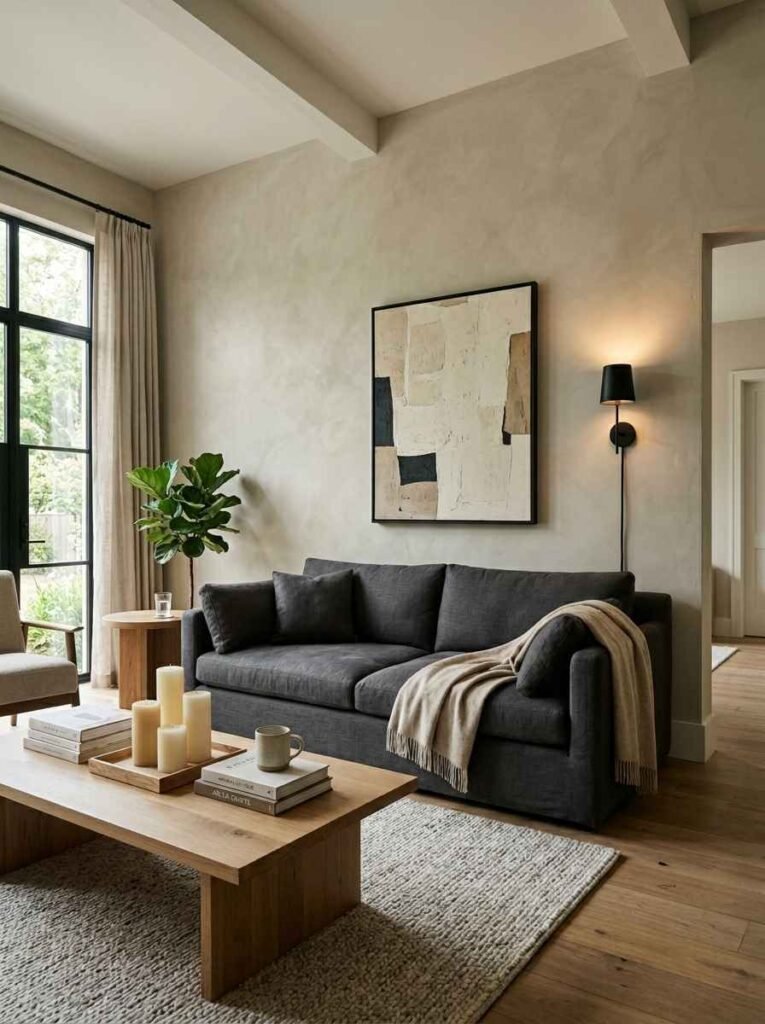
4. Consider a simple plug-in wall sconce. No wiring needed. Hang it at eye level behind the sofa for a cozy, layered effect that looks considered without being complicated.
5. Use candles as decor that also work. A few pillar candles on a tray do double duty: they look good in photos and actually create atmosphere when lit. IMO, this is one of the easiest wins in minimalist styling.
Color palette ideas
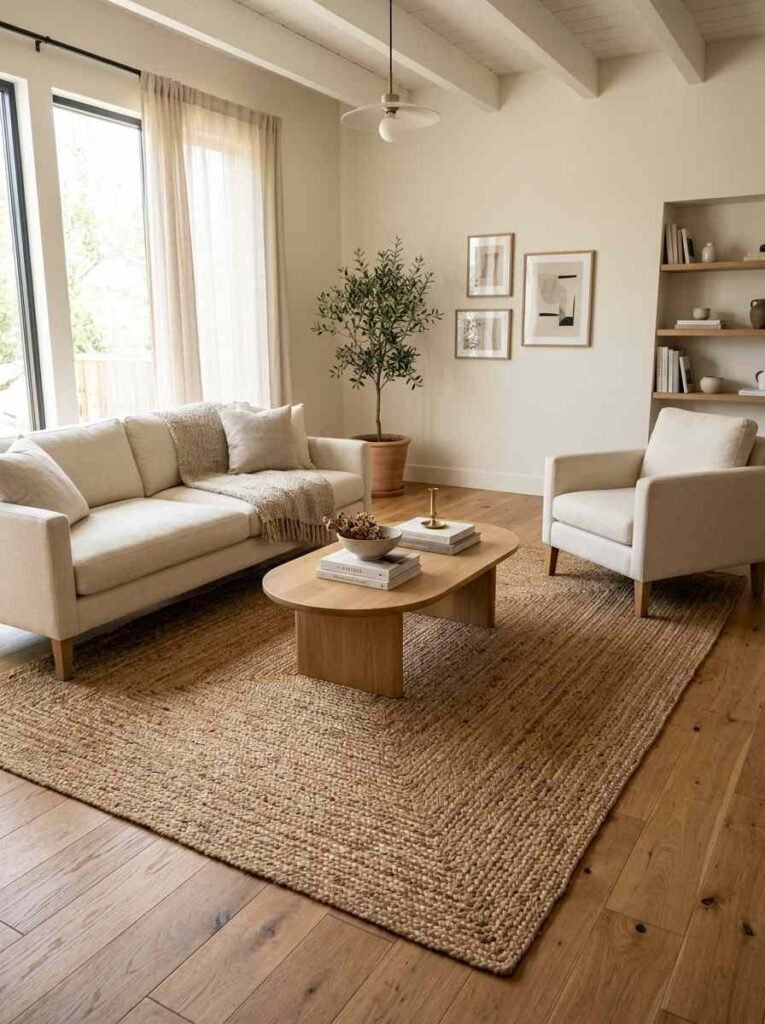
6. Pick one neutral and commit. The most common mistake I see on Pinterest boards is too many “neutrals” that don’t actually go together. Warm whites clash with cool greys. Pick your base and build from there.
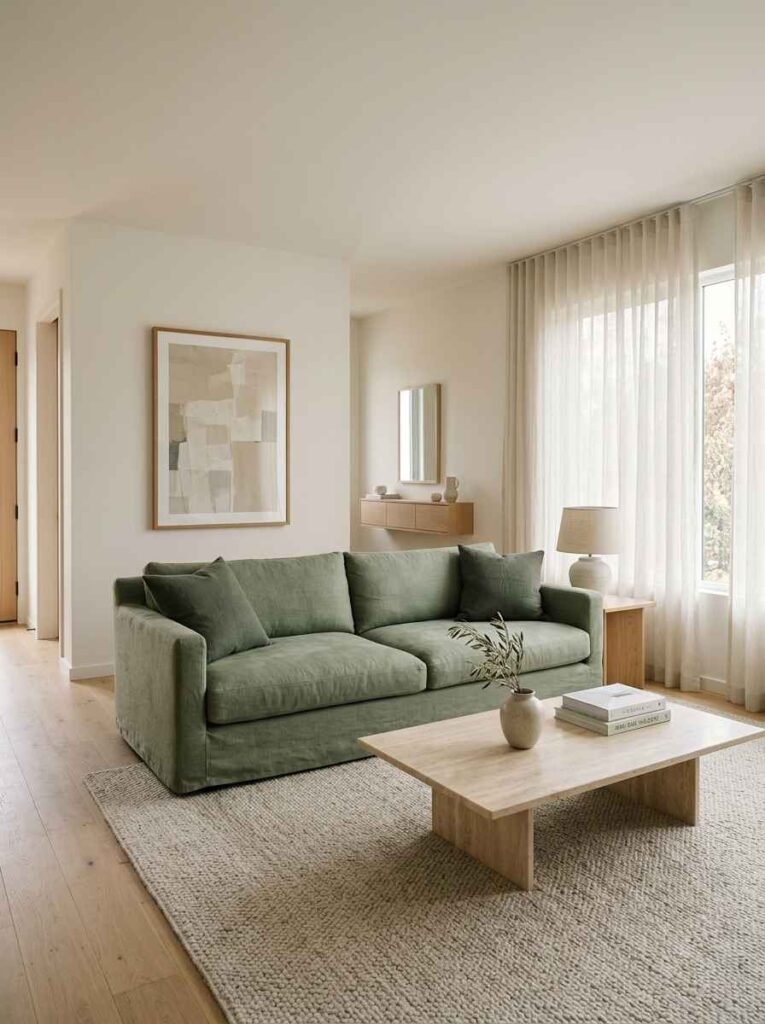
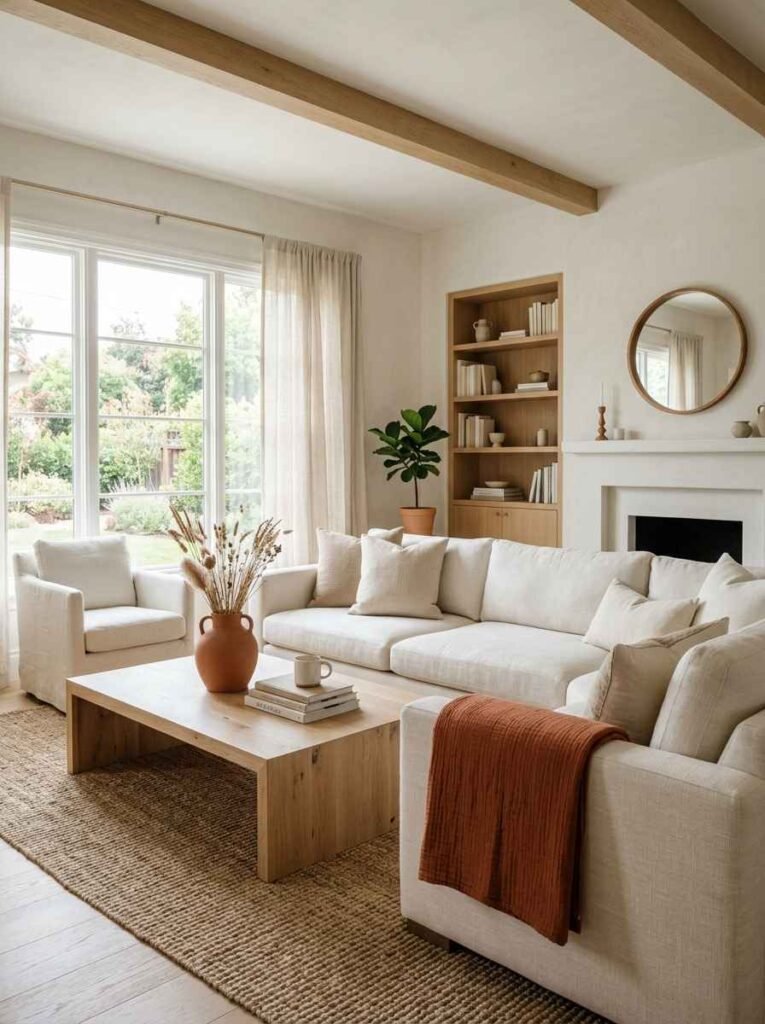
7. Add depth with a single earthy tone. Terracotta, sage, dusty rose, warm taupe. One of these as an accent (in a pillow, a throw, a single vase) is enough. More than 2 accent colors and the “minimalist” part starts to slip.
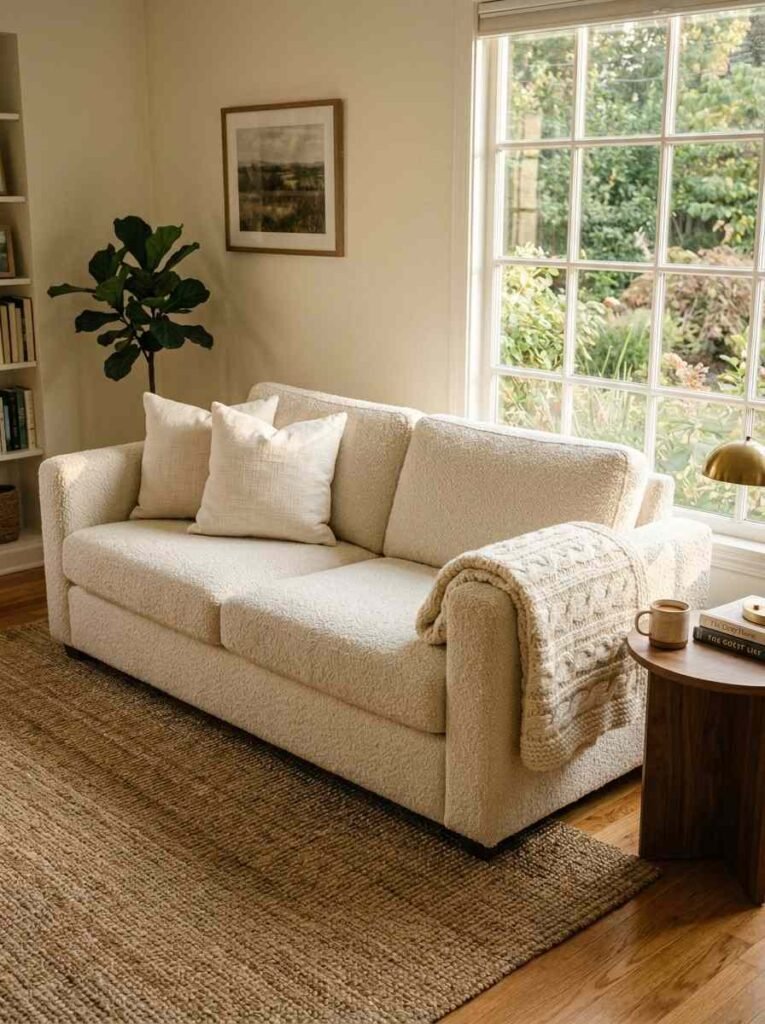
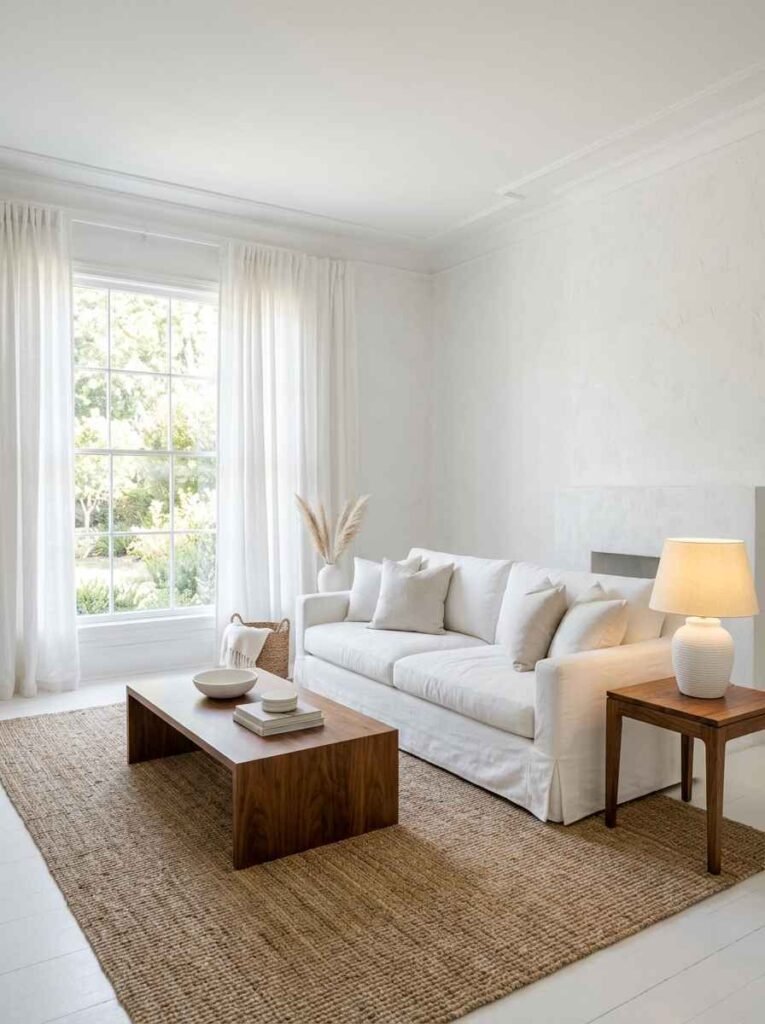
8. Try an all-white room with warm wood accents. It sounds boring until you see it done well. The key is texture: different whites in different materials (cotton, linen, plaster, ceramic) so the room doesn’t feel sterile.
| Color palette | Best for | Common mistake | Goes well with |
|---|---|---|---|
| Warm white + oak | Small rooms | Too many brass accents | Linen, soft cotton |
| Greige + terracotta | Open plan spaces | Overdoing the warm tones | Rattan, matte ceramics |
| Charcoal + cream | Larger rooms | Cold feel without texture | Wool, aged leather |
| Sage + natural wood | Boho-minimal crossover | Too many plants | Linen, raw clay |
9. Don’t paint an accent wall. I said what I said. In a genuinely minimalist room, a single bold wall usually looks like an afterthought. If you want depth, add texture to the walls instead (limewash paint, a plaster finish) rather than a different color.
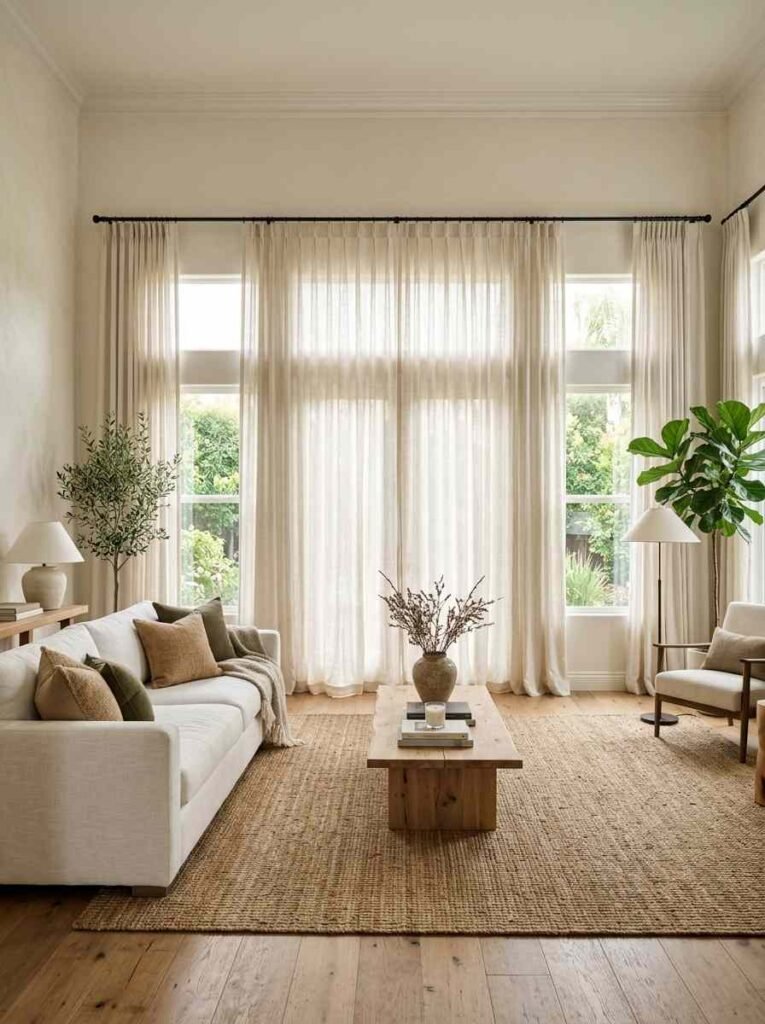
10. Let the furniture be the color. A sage green sofa in a neutral room is the accent. You don’t need a throw pillow in 3 different tones on top of it.
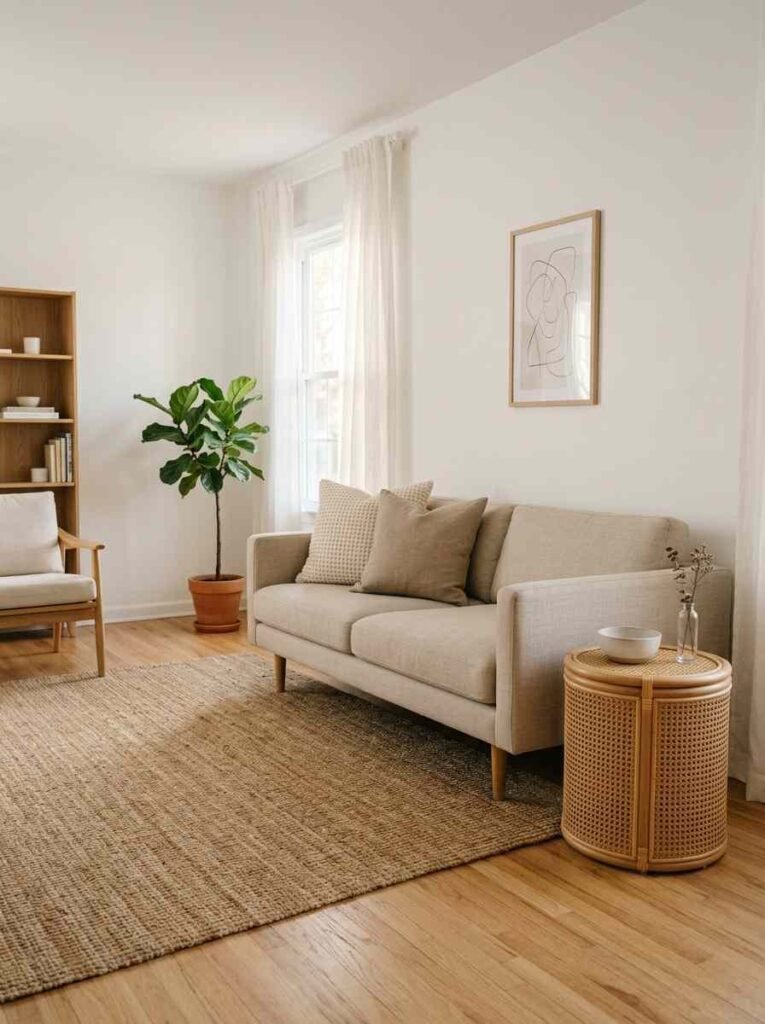
Texture and layering ideas
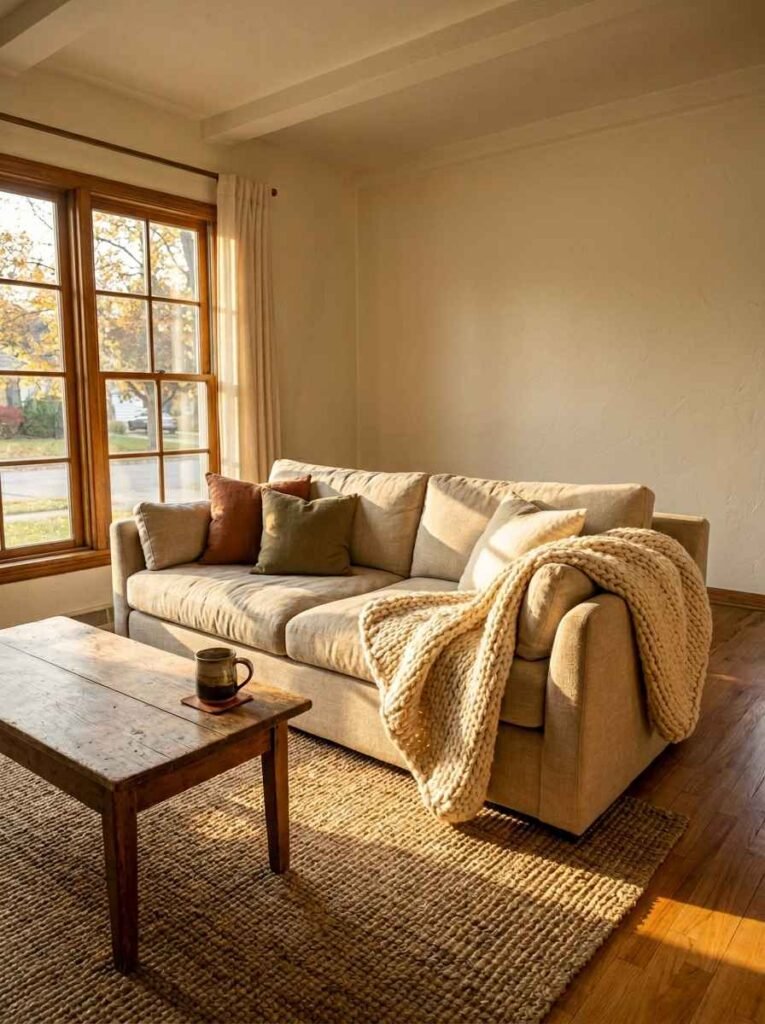
11. Use a chunky knit throw, but fold it properly. Half the photos I see on Pinterest have a throw draped like someone sneezed on the sofa. Fold it neatly over one armrest or drape it in a single loose fold. It should look placed, not abandoned.
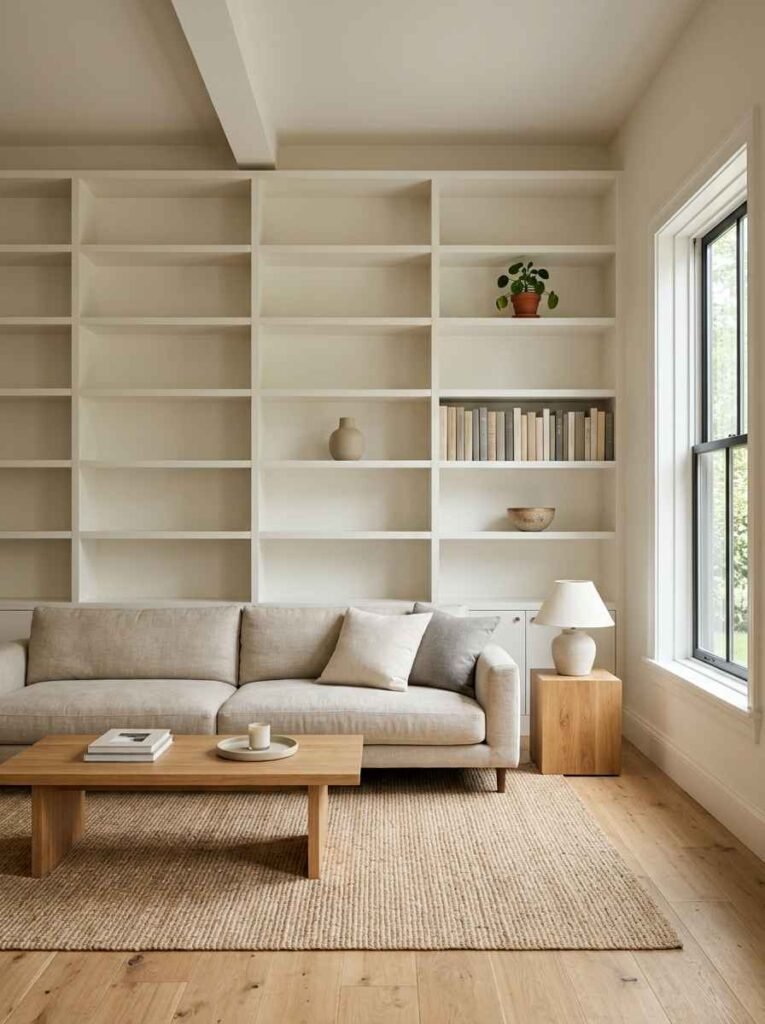
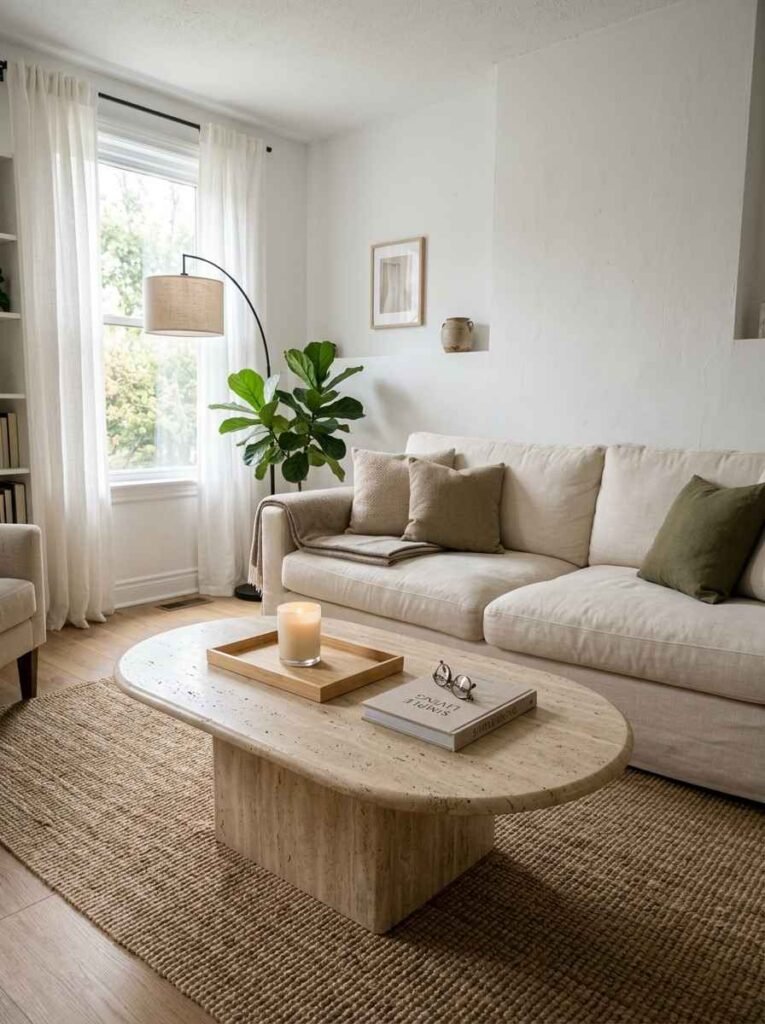
12. A jute or wool rug grounds the whole room. Natural fiber rugs work in almost every minimalist scheme. They add texture without competing with anything else. The Loloi or Rugs USA natural fiber options are worth looking at before you go straight to a generic shag rug.
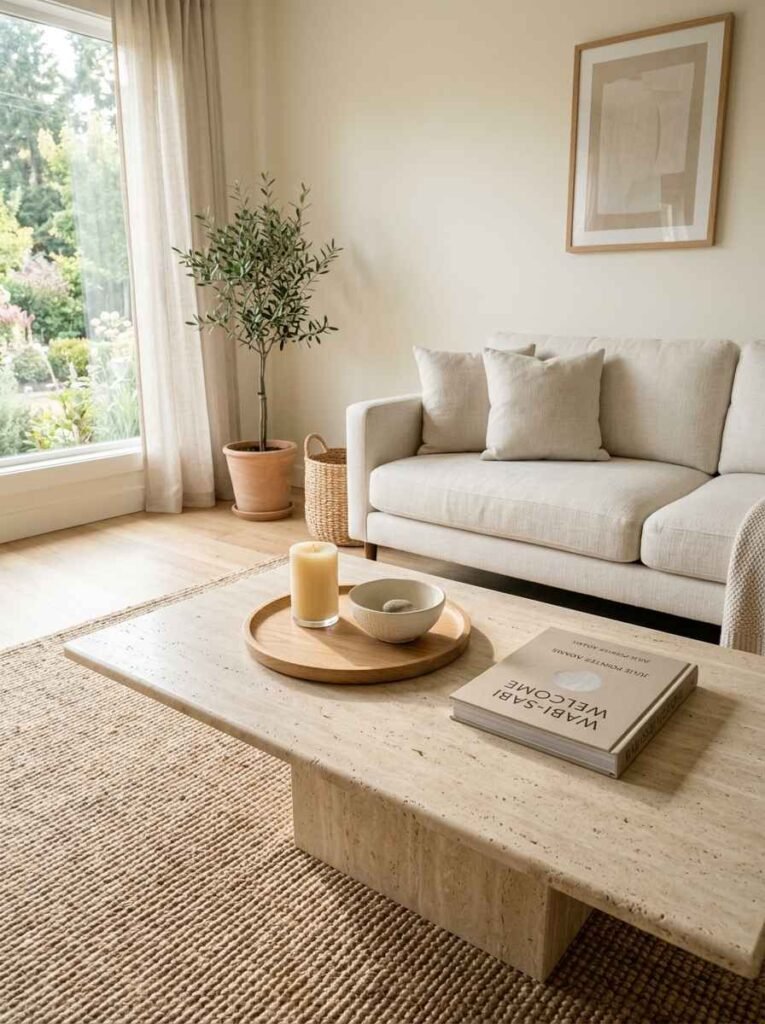
13. Linen curtains, always floor-length. Short curtains make ceilings look lower. Floor-length linen panels in a natural or white tone make any room look taller, more considered, and more expensive than they actually are.
14. Mix 2 pillow textures, not 5 pillow colors. Two pillows in similar tones but different textures (say, a waffle-knit and a smooth linen) look much more intentional than 4 pillows in 4 different shades.
15. Add one woven or rattan element. A woven basket, a rattan side table, a simple wicker pendant. One natural woven piece in a room reads as texture. Three of them reads as a beach house.
Storage and declutter ideas
16. One storage basket, visible on purpose. A large woven basket by the sofa for blankets does the same job as a blanket ladder but takes up less visual space.
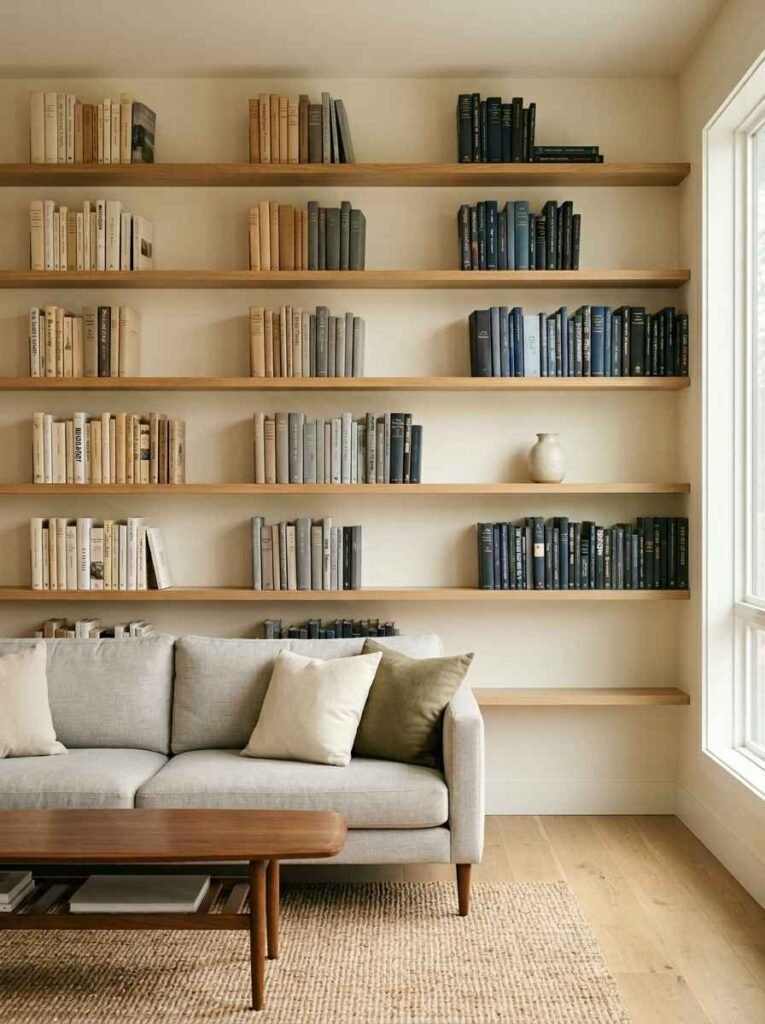
17. Built-in shelves look better than freestanding ones. If you have the option, built-ins make the room look considered and finished in a way that a freestanding shelving unit never quite manages.
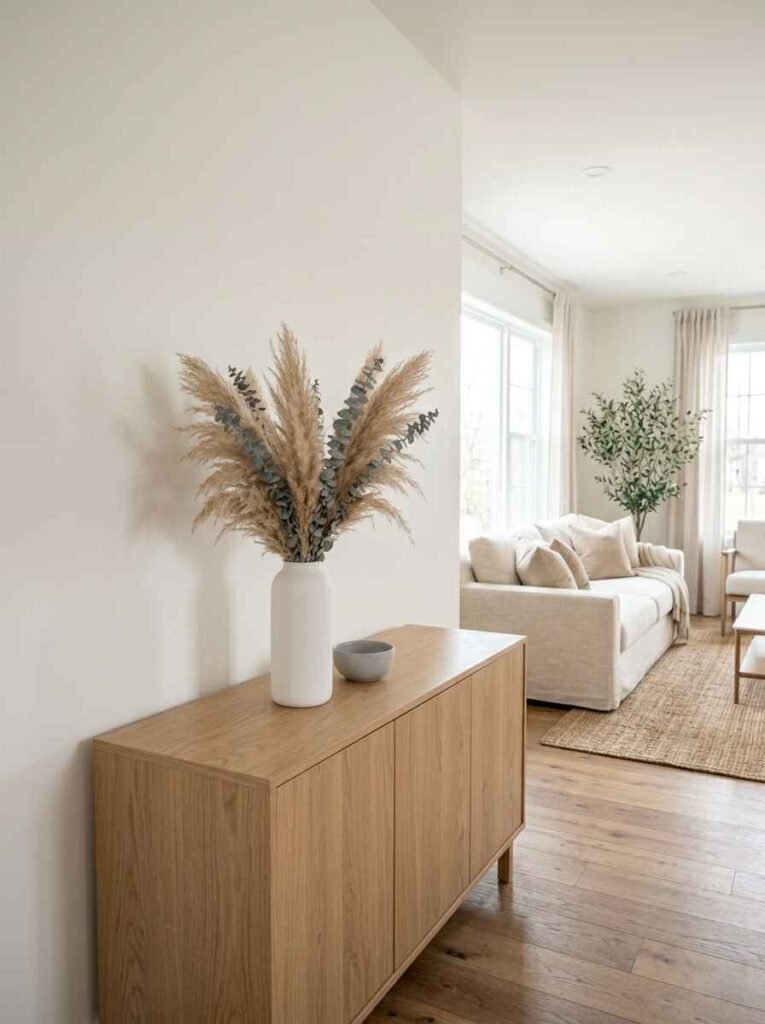
18. Keep surfaces clear except for 1 to 3 objects. A coffee table with 6 things on it isn’t styled, it’s cluttered. A coffee table with a small tray, one candle, and a single book is styled.
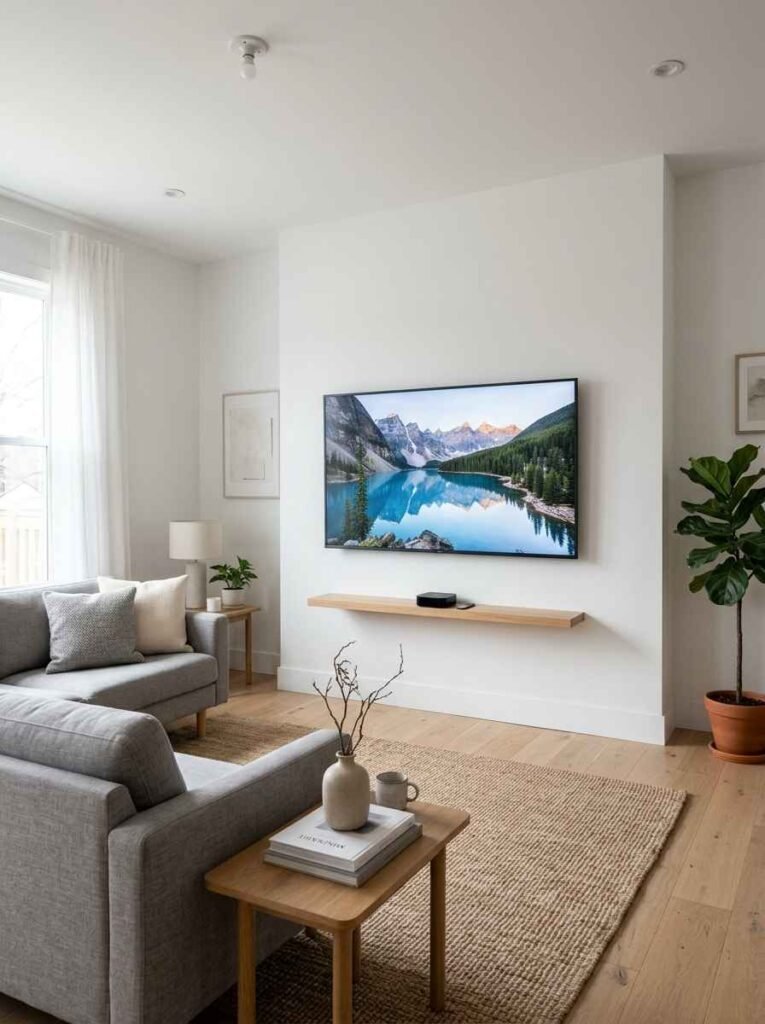
19. Hide your tech where you can. I know this sounds extreme, but a TV mounted on the wall with the cords hidden behind a simple cord cover makes a huge difference. If you have a streaming device, get a small cable management box.
20. Edit your bookshelf down to books you actually like. Books are great decor. Books you hate that you’re keeping out of obligation are just clutter with spines. Edit ruthlessly.
Plant and natural element ideas
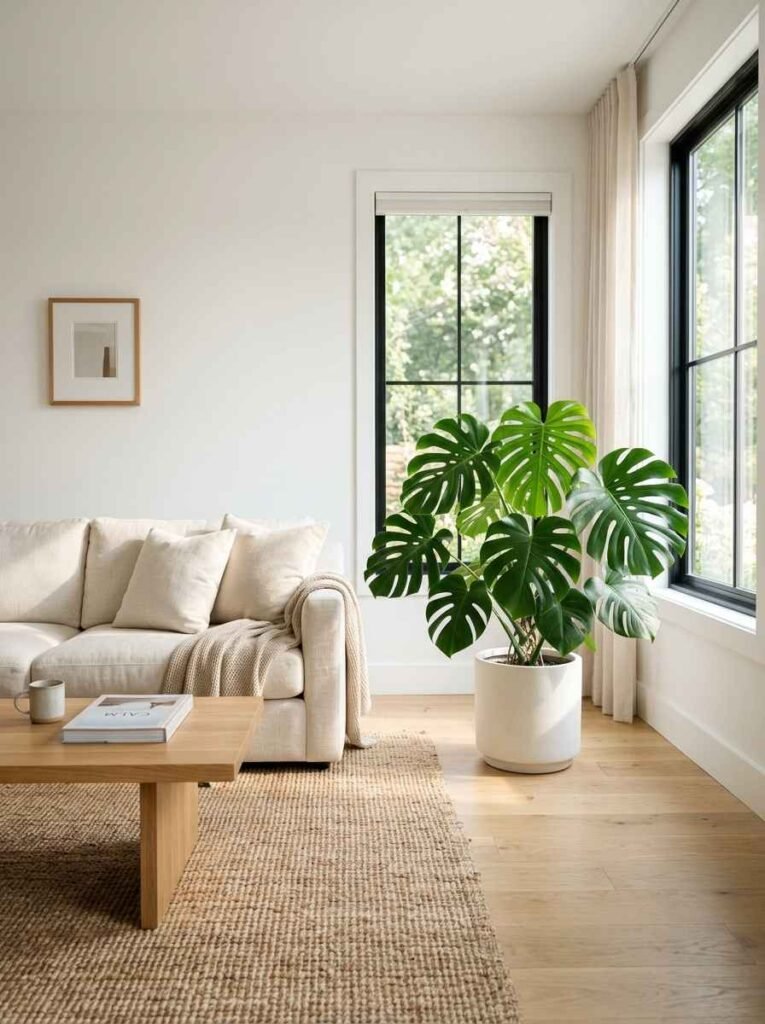
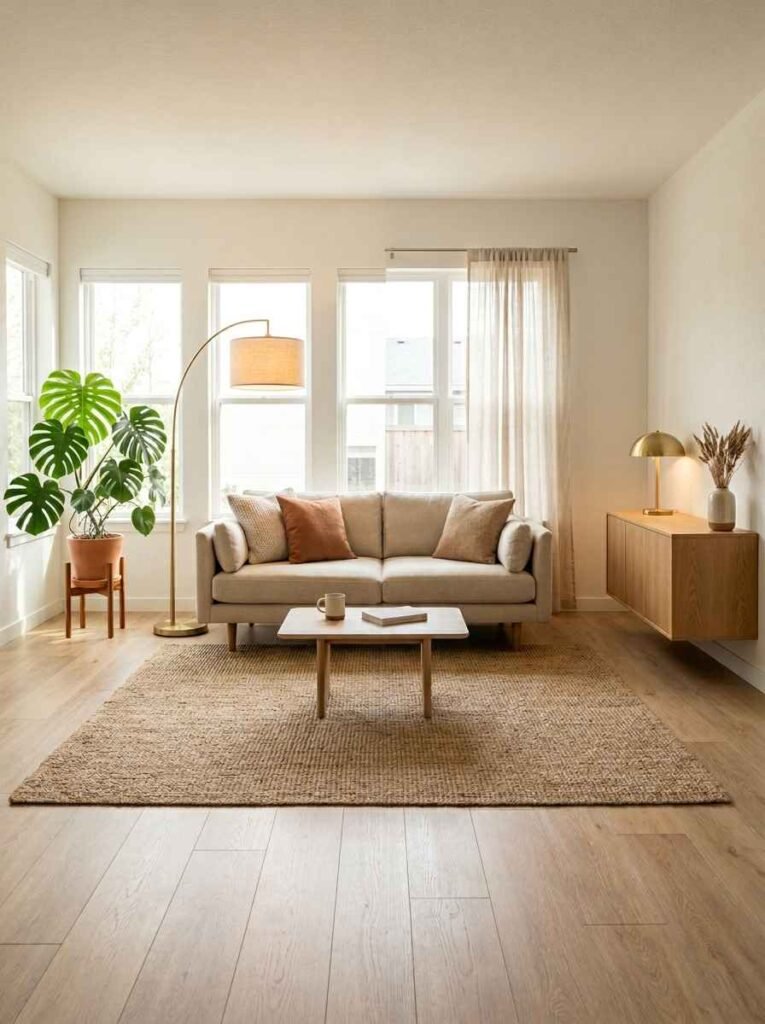
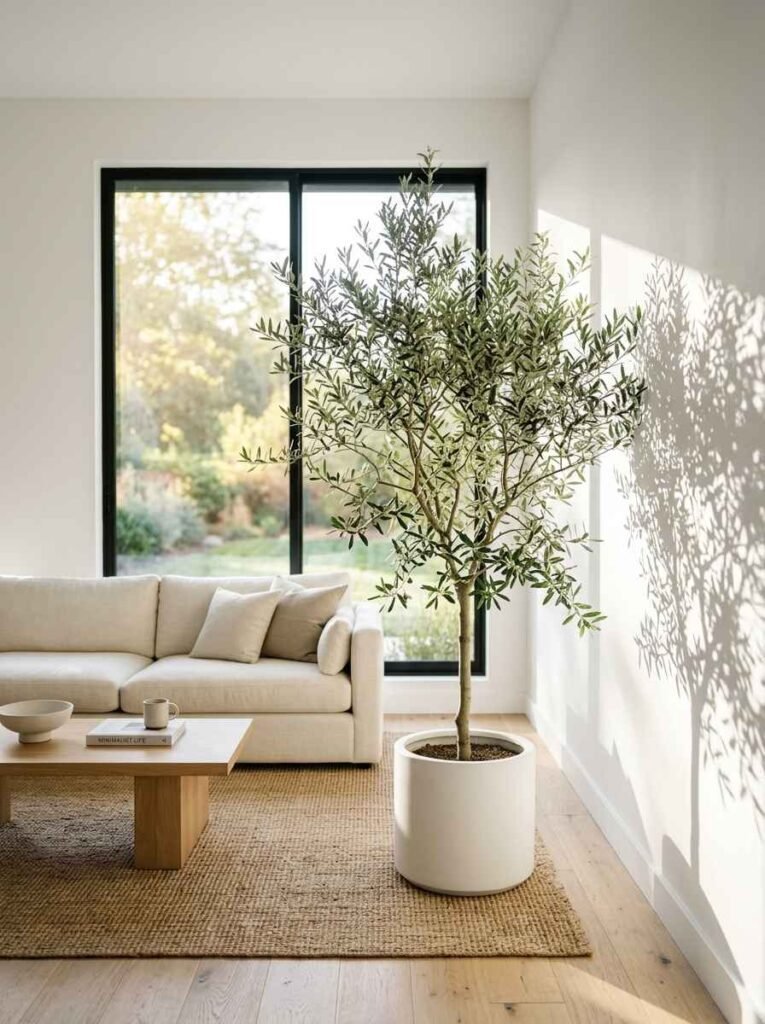
21. One large plant beats six small ones. A 4-foot fiddle leaf fig or monstera in a corner does more for a room than a windowsill covered in 6 tiny succulents. (Succulents are wonderful. They belong on a desk, not as a primary living room plant strategy.)
22. Use a simple terracotta or matte white pot. The pot matters as much as the plant. A beautiful plant in a garish pot is still a garish pot.
23. Dried botanicals in a tall vase. Pampas grass, dried lavender, eucalyptus. Long-lasting, low maintenance, and they photograph beautifully.
The Studio McGee approach of using dried stems in a simple ceramic vase is popular for good reason.
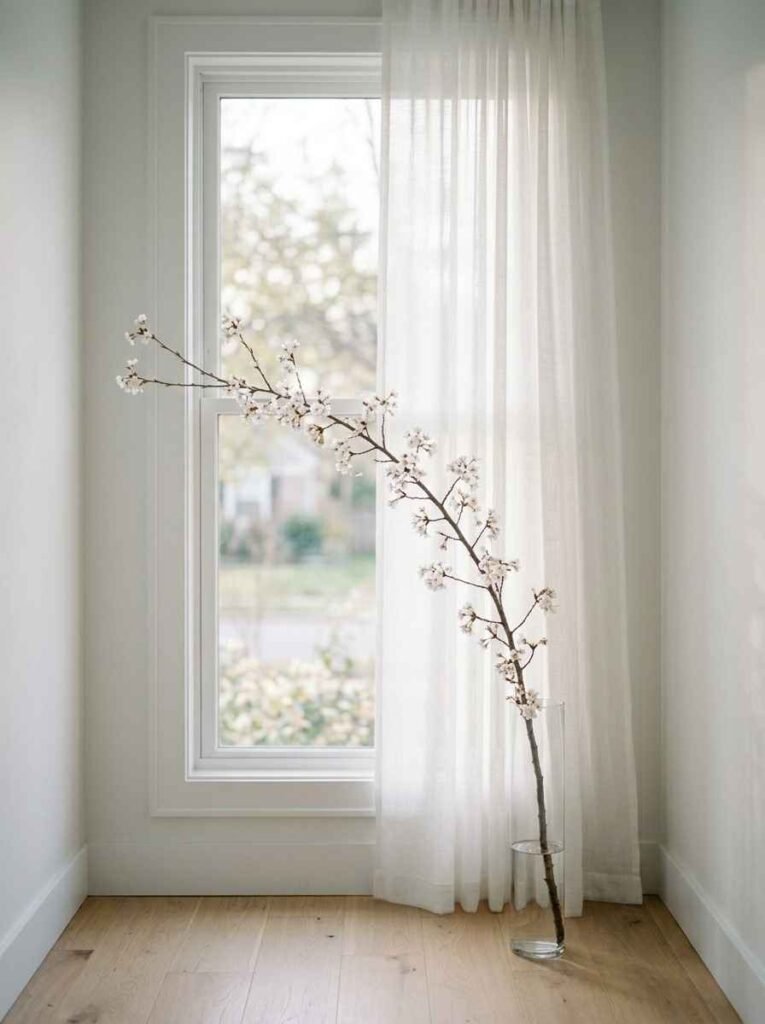
24. A single branch in a vase. Sounds ridiculous. Works completely. One long cherry blossom or eucalyptus branch in a tall thin vase by the window is one of the most effortlessly minimalist things you can do.
Layout and flow ideas
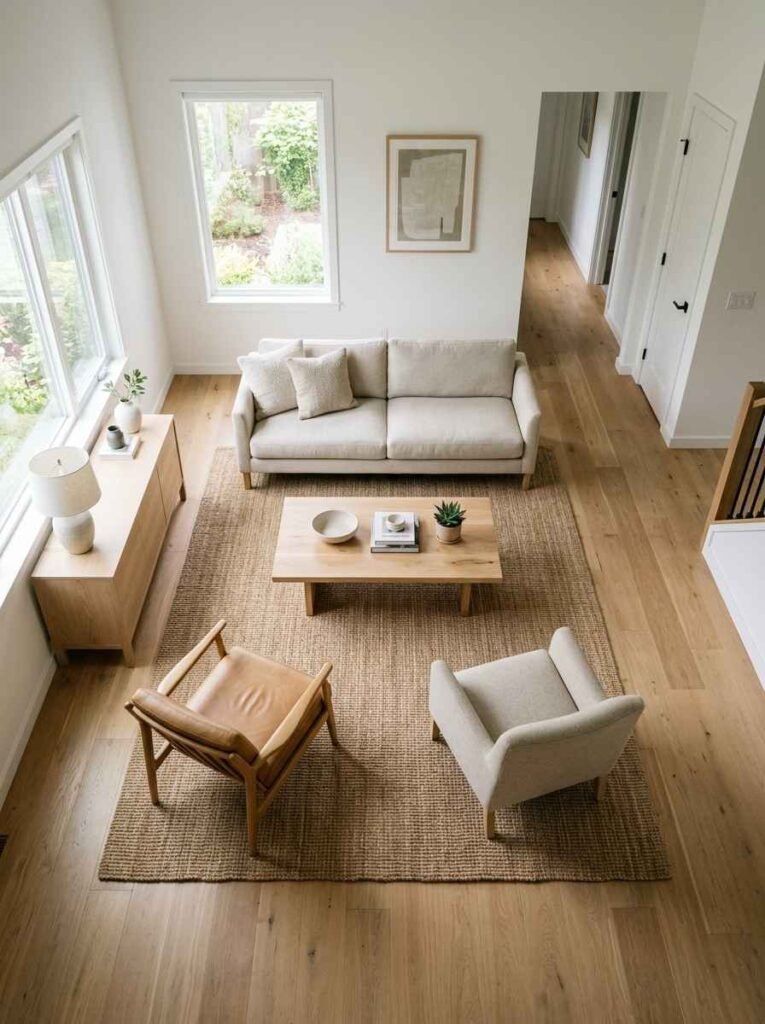
25. Pull furniture away from the walls. This is the single biggest layout change most people can make. Floating your sofa 12 to 18 inches from the wall makes the room feel intentional, not like a waiting room.
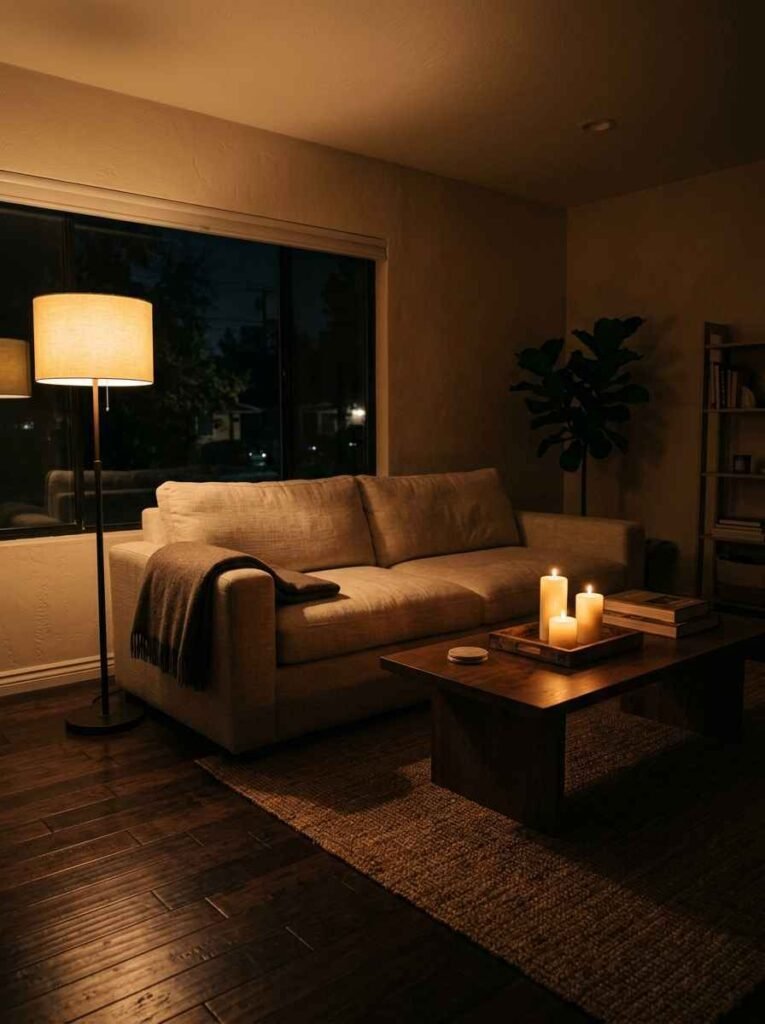
26. Face seating toward a focal point, not the TV. If your only seating arrangement faces the television, the room loses all its warmth when the TV is off. Angle at least 1 chair toward a window or fireplace.
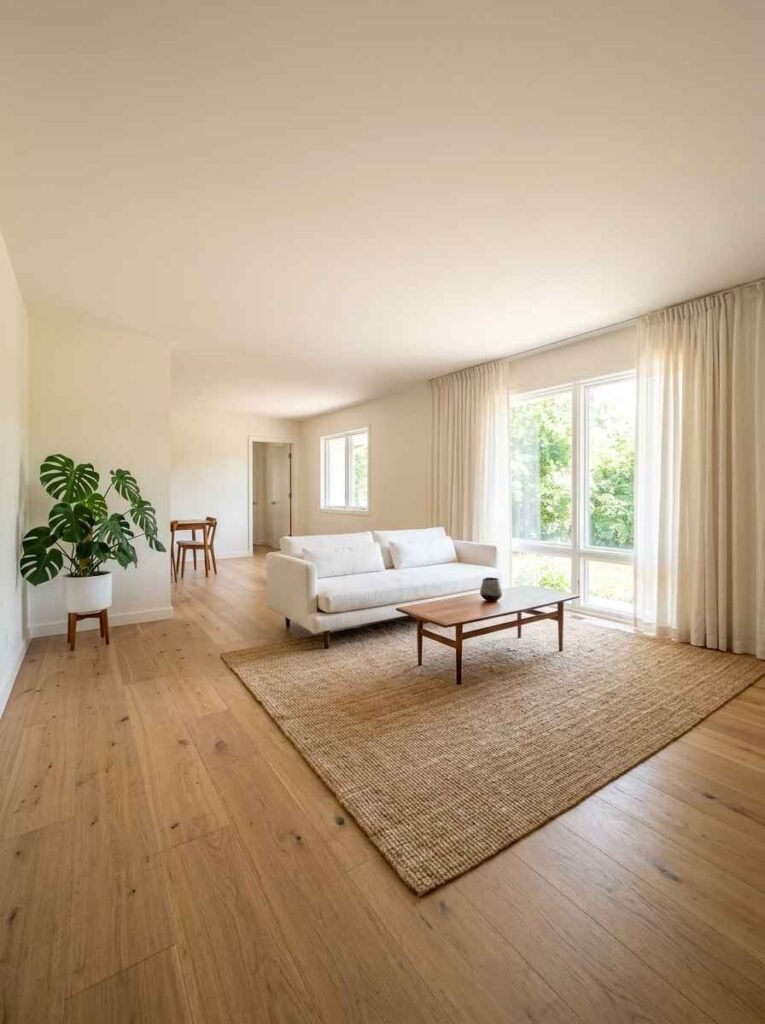
27. Leave breathing room between furniture pieces. Tight, cramped furniture arrangements feel oppressive. You want at least 18 inches of clear walkway between major pieces.
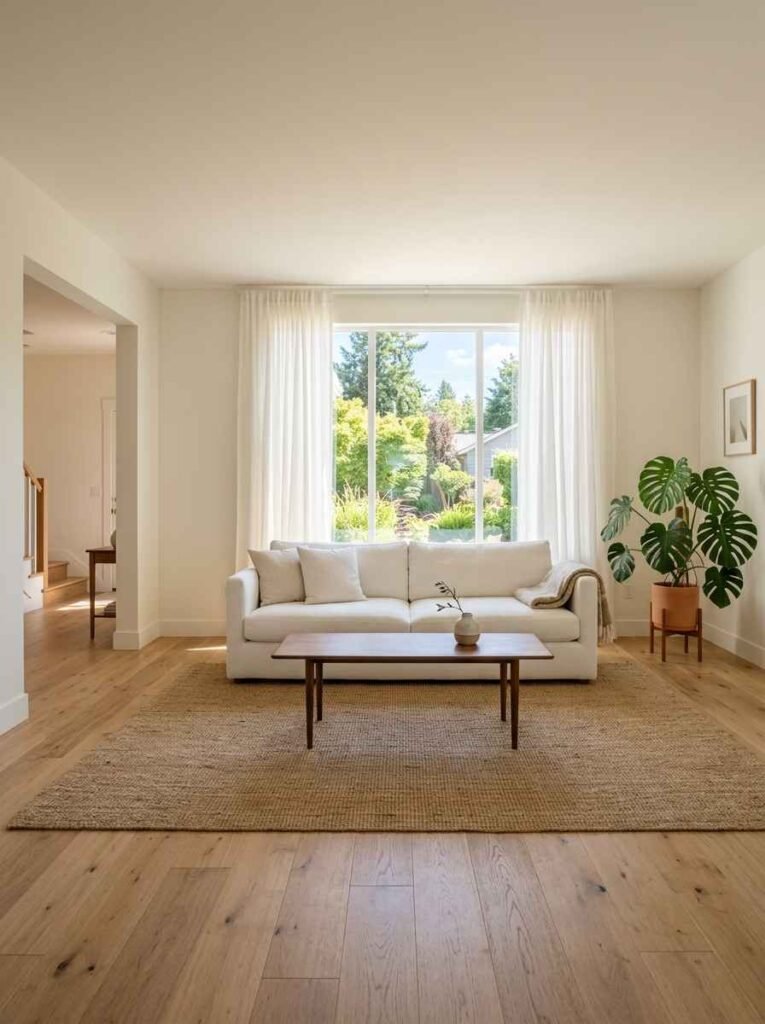
28. Use a coffee table that’s lower than your sofa cushions. A coffee table that sits at or below cushion height makes a room feel more relaxed.
Higher tables feel corporate. This is a small thing that changes how the whole room reads.
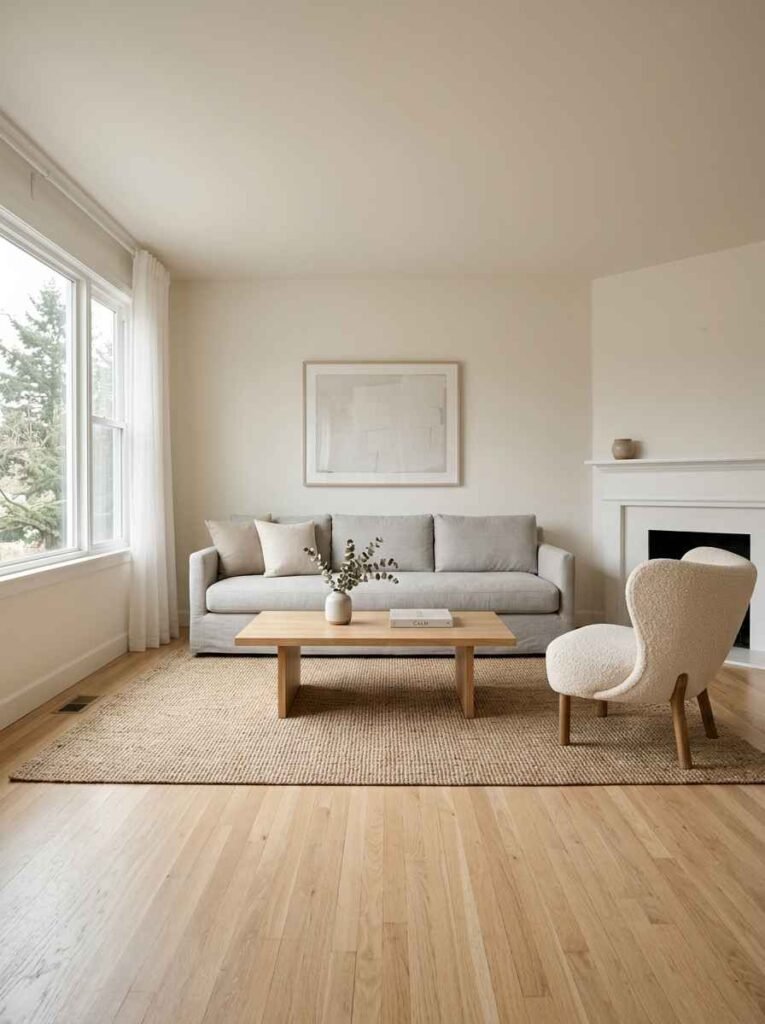
A note on the “cozy” part
Okay, I want to be honest about something here. The word “cozy” gets used so broadly on Pinterest that it’s almost meaningless now.
You see it on rooms that look like hospital lobbies just because someone stuck a candle on a marble table.
Real coziness is physical and sensory. It’s a sofa soft enough to sink into. It’s warm lighting that doesn’t give you a headache. It’s a rug under your feet when you walk in barefoot.
If you focus on how the room feels rather than how it photographs, you’ll land somewhere genuinely good.
The minimalist cozy overlap works because removing clutter is one of the most effective things you can do for the feeling of calm. It’s not about having nothing, it’s about having what matters.
Quick comparison: common mistakes vs. better choices
- Too many throw pillows vs. 2 to 4 in complementary textures
- Overhead lighting only vs. floor lamp plus 1 table lamp
- Furniture pushed against walls vs. floating arrangement with breathing room
- 6 small plants vs. 1 large statement plant
- 5 different accent colors vs. 1 earthy accent in a neutral base
FAQs
Can a minimalist living room still feel warm and cozy? Yes, and I’d argue it feels warmer than most heavily decorated rooms.
The key is material choice: natural fibers, warm-toned bulbs, and wood surfaces all read as warm regardless of how much or little furniture you have.
A room with one beautiful linen sofa and good lighting is more welcoming than a room stuffed with furniture in clashing patterns.
How many decorative items should I keep on a coffee table? I’d say 1 to 3, grouped on a tray so they look intentional rather than scattered.
A candle, a small stack of 2 books, and a low ceramic bowl is a classic combination that works in almost any room without looking overdone.
What’s the best rug size for a minimalist living room? Go bigger than you think. A rug that fits only under the coffee table leaves the room looking unanchored.
You want the front legs of all your seating pieces to sit on the rug, which usually means an 8×10 or 9×12 for a standard living room. The Apartment Therapy rug sizing guide is worth bookmarking if you’re unsure.
Final thought
A minimalist cozy living room isn’t a style you achieve once and maintain forever. It’s more of an ongoing edit.
You strip it back, live in it, notice what you actually reach for and what just sits there looking vaguely guilty. Then you strip it back again.
The rooms that feel the best on Pinterest and in real life are the ones where someone made real decisions. Not “maybe I’ll keep this in case” decisions, but actual deliberate choices about what deserves space.
So here’s the question worth sitting with: what’s in your living room right now that you genuinely love, versus what’s just there because you haven’t decided yet?
