
Let’s be honest — studio apartment living is basically a masterclass in creative problem-solving. And nothing tests your spatial IQ quite like trying to stuff a king-size comforter somewhere that isn’t the middle of your floor. I’ve been there.
I lived in a 400-square-foot studio for three years, and every season change felt like a game of Tetris I was destined to lose.
But here’s the thing — you don’t have to sacrifice comfort for space. With the right approach, you can store your bulky seasonal bedding without turning your apartment into a fabric graveyard. Let me walk you through everything that actually worked for me.
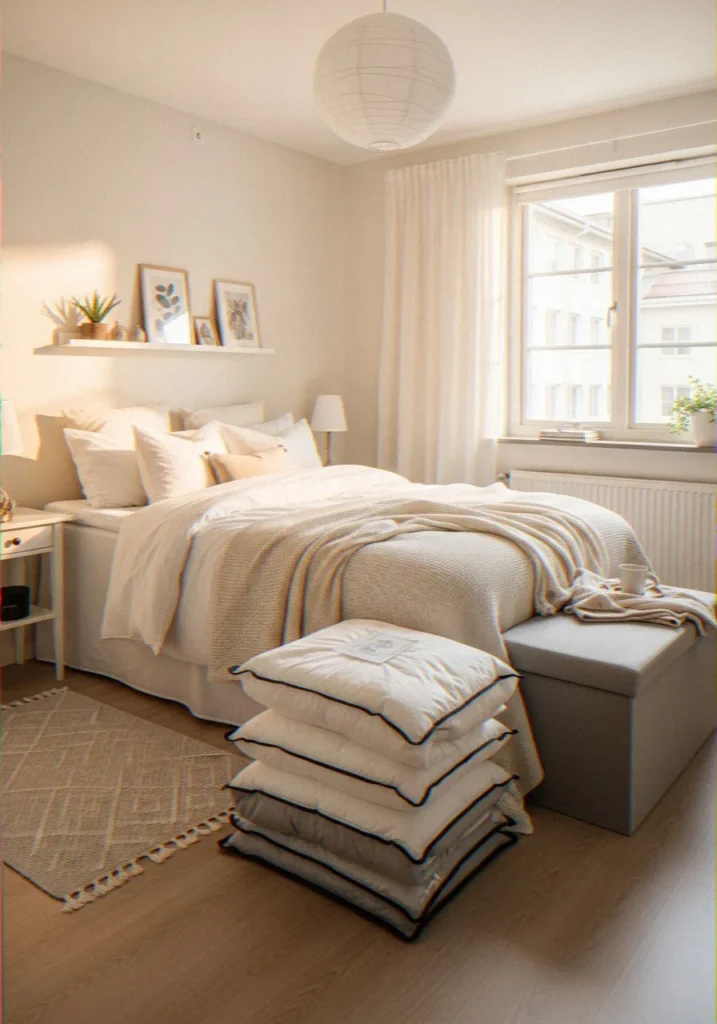
Why Seasonal Bedding Storage Feels Impossible in a Studio
Studio apartments don’t have the luxury of a dedicated linen closet, a spare bedroom, or even a hallway cabinet most of the time. You’re working with one room that has to pull triple duty — bedroom, living room, and sometimes even a home office.
Bulky items like winter comforters, weighted blankets, and thick duvets take up a disproportionate amount of space. And if you just shove them under the bed or into a corner, they collect dust, lose their fluffiness, and honestly just stress you out every time you look at them.
The good news? A little strategy goes a long way.
Step 1: Declutter Before You Store Anything
I know, I know — you didn’t come here for a decluttering lecture. But hear me out.
You need to work out what is worth being stored before even deciding on where to put your bedding. And that shabby blanket that your college roomy left you? You actually need it? IMO, no. That thing has had its time.
Ask yourself:
- Have I used this in the last 12 months?
- Does it still hold its shape and warmth?
- Would I actually reach for it next season?
If the answer to any of these is no, donate it or toss it. Freeing up even one extra comforter worth of space makes a huge difference in a small apartment.
Step 2: Invest in Vacuum Storage Bags (Seriously, Game-Changer)
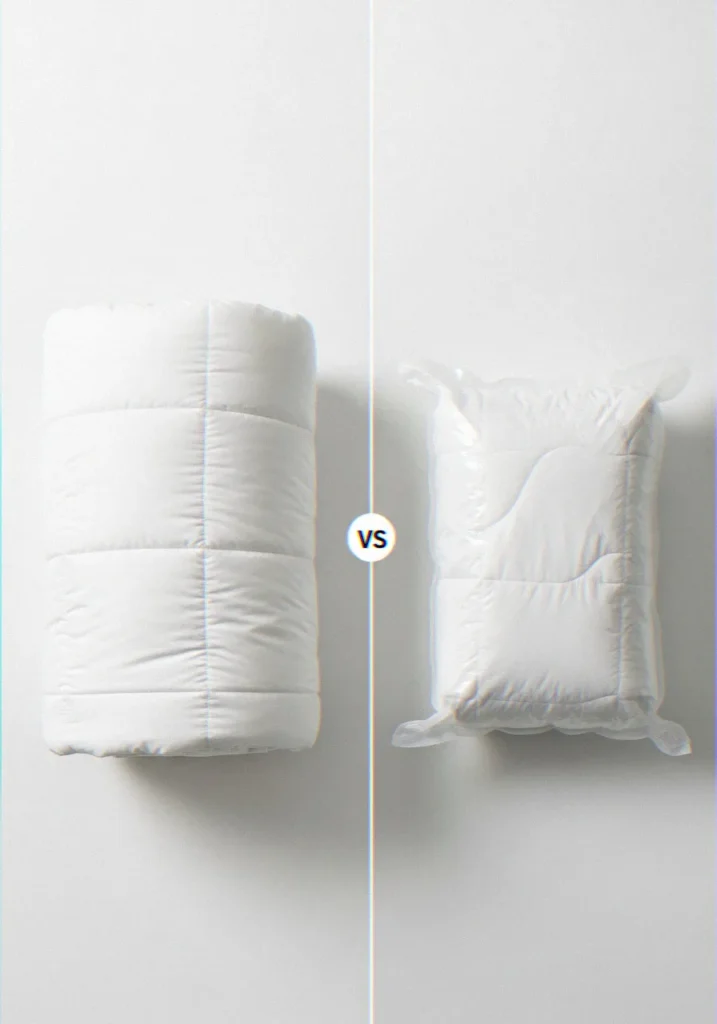
Vacuum storage bags could be considered the solution that has changed my studio life the most, were I to choose only one type of storage solution. These are almost magical things.
You put on your comforter, put it into the bag, zip codes and use a vacuum cleaner to remove all the air. The mountain of fluffy cotton turns into a flat compact slab that can be slid anywhere.
What to Look for in a Good Vacuum Bag
Not all vacuum bags are created equal, and I learned this the hard way after buying a cheap pack that started leaking air within a week. Here’s what matters:
- Double-zip seal — prevents air from creeping back in
- One-way valve — makes the vacuuming process quick and airtight
- Durable, thick plastic — resists punctures from zipper edges or storage surfaces
- Size variety — get a pack with jumbo and large sizes for comforters specifically
Brands like Space Saver and Spacehaven consistently get good reviews for durability. I’ve personally used Space Saver bags for two years and they still hold their seal perfectly.
How Much Space Do They Actually Save?
A queen-size comforter can go from about 12 inches thick to roughly 2–3 inches flat. That’s not a typo. You can store three season’s worth of bedding in the space that one comforter previously occupied. :/ (Yeah, past-me was not thrilled realizing I’d been doing it wrong for so long.)
Step 3: Use the Space You’re Already Ignoring
Here’s where studio apartment living gets creative. You have more storage real estate than you think — you’re just not using it yet.
| Storage Spot | Best For |
|---|---|
| Under the Bed | Vacuum-packed comforters |
| Closet Top Shelf | Seasonal blankets |
| Storage Ottoman | Throws and light bedding |
| Floor Pouf | Thin blankets or quilts |
Under the Bed
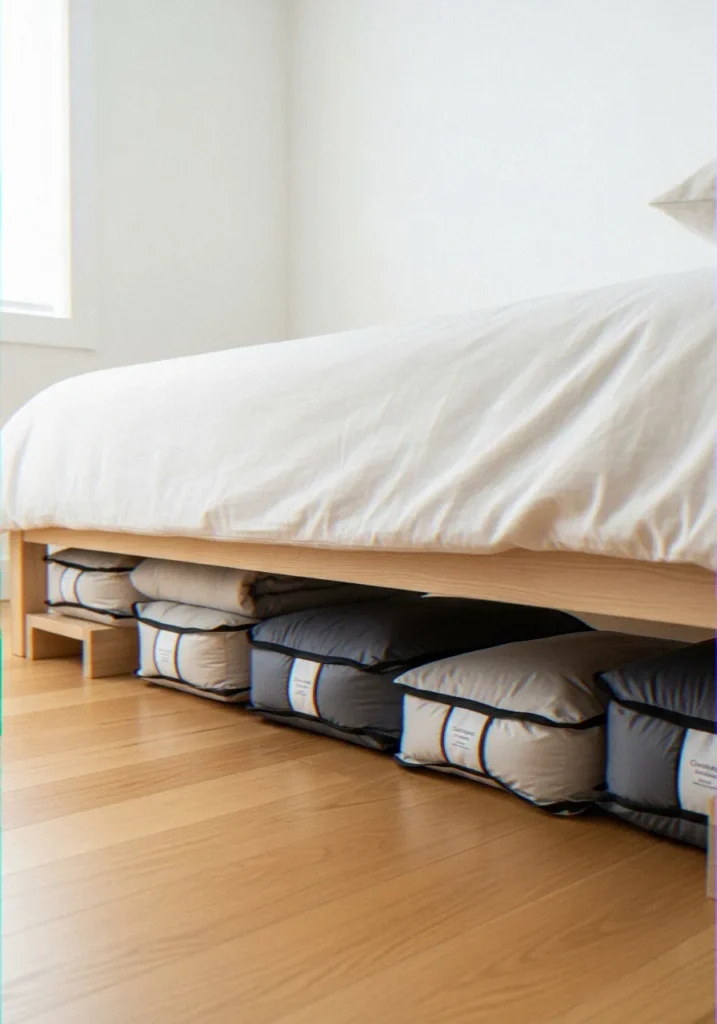
This is the obvious one, but most people don’t maximize it properly. If your bed sits low to the ground, bed risers can lift it 6–8 inches and create a whole new storage zone underneath.
Pair that with flat vacuum bags or under-bed storage containers with lids, and you’ve got a legitimate seasonal bedding system.
I kept my summer-weight duvet and extra throw blankets in two slim under-bed bags all winter long. Out of sight, zero clutter, easy to swap when the seasons changed.
The Top Shelf of Your Closet
Most studio closets have a top shelf that collects random junk — old shoe boxes, cables from 2015, a printer you’ll “definitely use again.” Clear that shelf off. Vacuum-compressed bedding fits perfectly on a high shelf and stays clean behind closed doors.
If your closet doesn’t have a top shelf, a simple freestanding shelf unit installed inside the closet can create one for under $30. And while you’re in there reorganizing — this is also the perfect moment to tackle how to store sweaters in a small closet.
Fold sweaters vertically using the KonMari method and stack them in bins on lower shelves, freeing up your prime top-shelf real estate exclusively for bulky bedding. Two problems solved in one closet session.
Ottoman Storage
One of the greatest purchases that can be made in a studio apartment is a storage ottoman. It serves as a coffee table, additional seating, footrest and storage unit. A lot of ottomans can accommodate one or two folded or light seasonal blankets.
FYI — if you haven’t already replaced your regular coffee table with a storage ottoman, this is your sign. 🙂
Step 4: Try Decorative Floor Poufs for Out-of-Season Blankets
Ever looked at a floor pouf and thought, “cute, but is it actually useful?” I used to. Then I discovered that many floor poufs double as hidden storage compartments, and my whole opinion flipped.
Zip-up poufs can contain rather a lot, two to three lightweight out-of-season blankets or one thinner throw rolled up tightly.
They are in an open spot in your living room, appear deliberate and cool, and nobody ever suspects that they are secretly employed in storage.
The key is knowing which poufs actually work for this purpose. Look for:
- A zippered or Velcro opening on the bottom or side
- A rigid or semi-structured interior so the pouf holds its shape when loaded
- Dimensions of at least 20 inches wide — anything smaller and you’re struggling to fit real blankets inside
- Material that’s easy to clean — this thing is going to get sat on daily
Moroccan-style leather poufs and large knit poufs tend to have the best internal capacity. Just avoid overfilling them — a pouf stuffed to capacity loses its shape and starts looking sad pretty quickly.
I use mine for lighter cotton blankets and summer throws, not for a full winter duvet. Know its limits and it’ll serve you well.
Step 5: Get Smart with Your Furniture Choices
This one’s more of a long-game tip, but it’s worth mentioning. Storage-forward furniture can completely change how much room you have for seasonal items.
Beds with Built-In Drawers
Platform beds with built-in drawers underneath are a studio dweller’s best friend. You get the footprint of a regular bed but with actual dresser-level storage built right in.
I switched to one during my second year in my studio and it genuinely freed up an entire standalone dresser’s worth of floor space.
Storage Benches at the Foot of the Bed
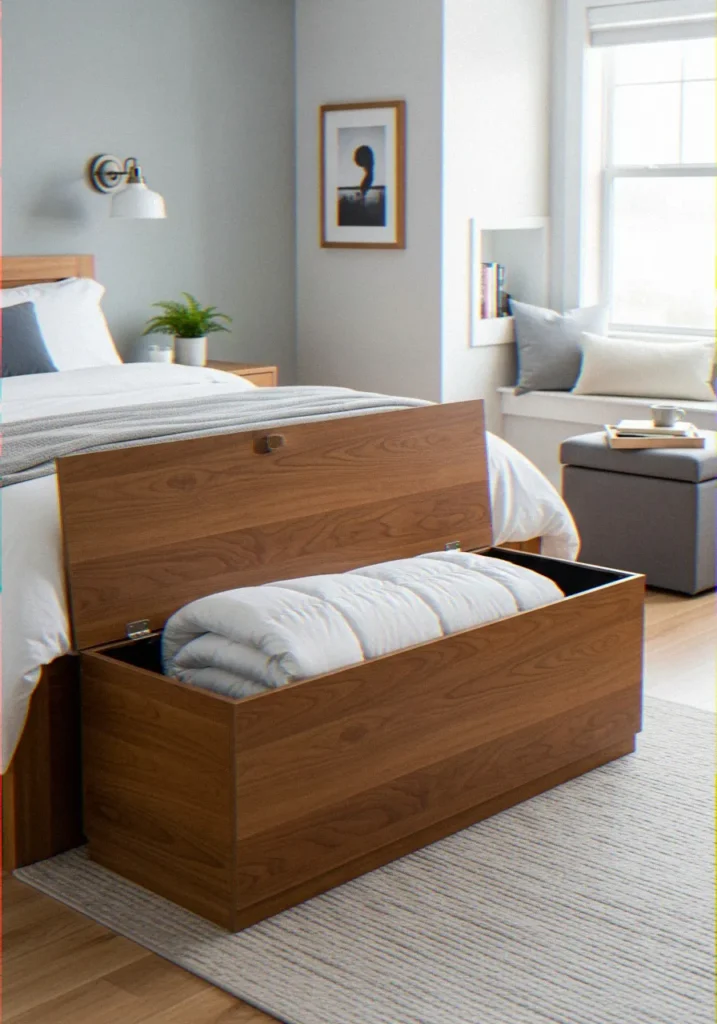
A bench, sitting at the end of your bed, is quite purposeful and very stylish but at the same time, it contains a lot more. Majority of them have the capacity to accommodate one massive folded comforter or multiple lighter blankets. It is also a bench to place your shoes on as you sit down – this too is a small win, yet a win.
Step 6: Organize Your Comforters and Sheets as a System
Here’s something most people skip entirely — treating your comforters and sheets as a paired set rather than separate items. When I started storing my sheet sets inside my pillowcases and then rolling my matching comforter alongside them, everything became dramatically easier to find and manage.
The logic is simple: store what belongs together, together. When season-change day arrives, you’re not hunting for matching pieces across three different storage spots. Your summer bedding set comes out as one coordinated bundle, and your winter set goes in as one.
A few rules I swear by for organizing comforters and sheets:
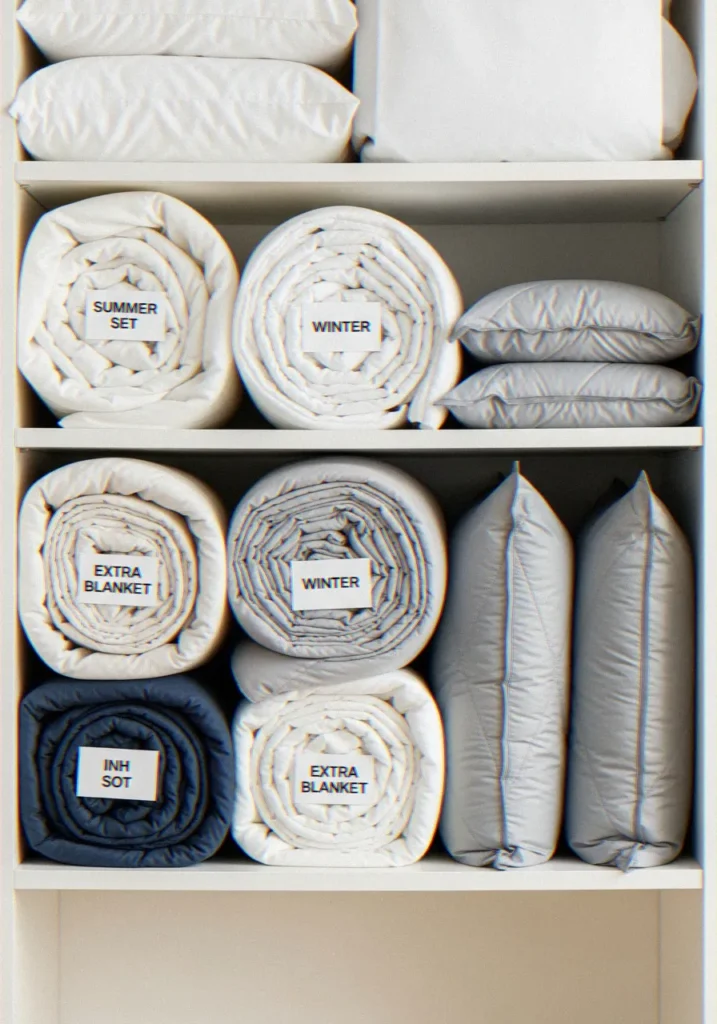
- Roll, don’t fold flat — rolling reduces bulk and makes stacking more stable
- Use the pillowcase-as-pouch trick for sheet sets so pieces never scatter
- Label everything with masking tape and a marker (sounds basic, but future-you will appreciate it at 11pm in December)
- Keep your most-used sets at eye level and current-season extras toward the back
This little change in attitude, to think in groups, not in units, really reduces your store room requirement and removes the scramble.
Step 7: Keep Things Clean and Protected
Here’s something people often overlook — how you store your bedding matters as much as where you store it.
Comforters and duvets can develop musty smells, attract dust mites, or even grow mildew if stored improperly. Trust me, opening a storage bag in October to find your favorite blanket smells like a basement is not a fun experience.
Best Practices for Clean Storage
- Wash everything before storing — always store clean bedding; oils, sweat, and body odor attract pests and cause fabric breakdown over time
- Use breathable cotton bags for long-term storage — vacuum bags are great for short-to-medium term, but if something is going away for more than 6 months, a breathable cotton storage bag helps the fabric maintain its integrity
- Add cedar blocks or lavender sachets — these naturally deter moths and keep things smelling fresh without any chemicals
- Avoid damp areas — never store bedding under a bed that sits on cold concrete or near an exterior wall prone to condensation
Step 8: Tackle Your Bags and Other Small-Space Clutter Too
As long as you are in the full organization mode, it will be a good idea to consider how to fit bags into a small space since tote bags, weekend bags, and oversized purses all take up the same precious space as your bedding will.
My go-to solution: store smaller bags inside larger ones and hang the whole stack on a sturdy over-the-door organizer. This keeps bags off your floor, off your closet shelf, and completely out of the way.
Suddenly that top closet shelf has room for your vacuum-packed comforters again. It’s one of those small organizational dominos that, once you knock it over, frees up space in three different spots simultaneously.
Step 9: Create a Seasonal Rotation System
The final piece of the puzzle is having an actual system, not just a storage solution. Without a routine, you’ll end up with bedding shoved in random places and no idea where anything is come December.
Here’s the simple rotation system I use:
| Season | Bedding to Store | Bedding to Use |
|---|---|---|
| Winter | Lightweight quilts | Heavy comforter |
| Spring | Heavy duvet | Medium blanket |
| Summer | Thick comforter | Light cotton sheet |
| Fall | Thin blankets | Warmer duvet |
- At the start of each season, wash and vacuum-bag the outgoing bedding
- Label every bag with a piece of masking tape and a marker — “Winter Comforter,” “Summer Duvet,” etc.
- Store outgoing items in the harder-to-reach spot (top shelf, back of under-bed storage) and keep the current season’s extras in the more accessible spot
- Do a quick check every 3 months to make sure nothing has shifted, leaked air, or developed moisture
This takes maybe 30 minutes per season change and saves you so much frustration.
Frequently Asked Questions
1. How Do You Store a Heavy Winter Duvet in a Studio Apartment Without a Closet?
No closet? Not a problem, of course, but I can greatly comprehend why this seems like a wall of brick. The secret is to consider all furniture as a storage space.
Your best options when there’s no closet:
- Vacuum storage bags under the bed — if your bed is on risers, a compressed duvet takes up almost no vertical space under there
- Storage ottoman or bench — as mentioned above, a large storage ottoman can hold a folded duvet and sit in plain sight without looking out of place
- Decorative storage baskets or trunks — a large wicker trunk or blanket box near your sofa doubles as a side table and holds a full winter duvet with ease
- Wardrobe or freestanding armoire — if you’re genuinely closet-free, a slim wardrobe unit gives you that vertical storage space back and costs less than you’d think
The key with no-closet storage is leaning into furniture that does double duty. Every piece in your studio should earn its square footage, and a beautiful storage trunk that also hides your winter duvet is earning it ten times over.
2. Do Vacuum Storage Bags Damage Down Comforters Over the Summer?
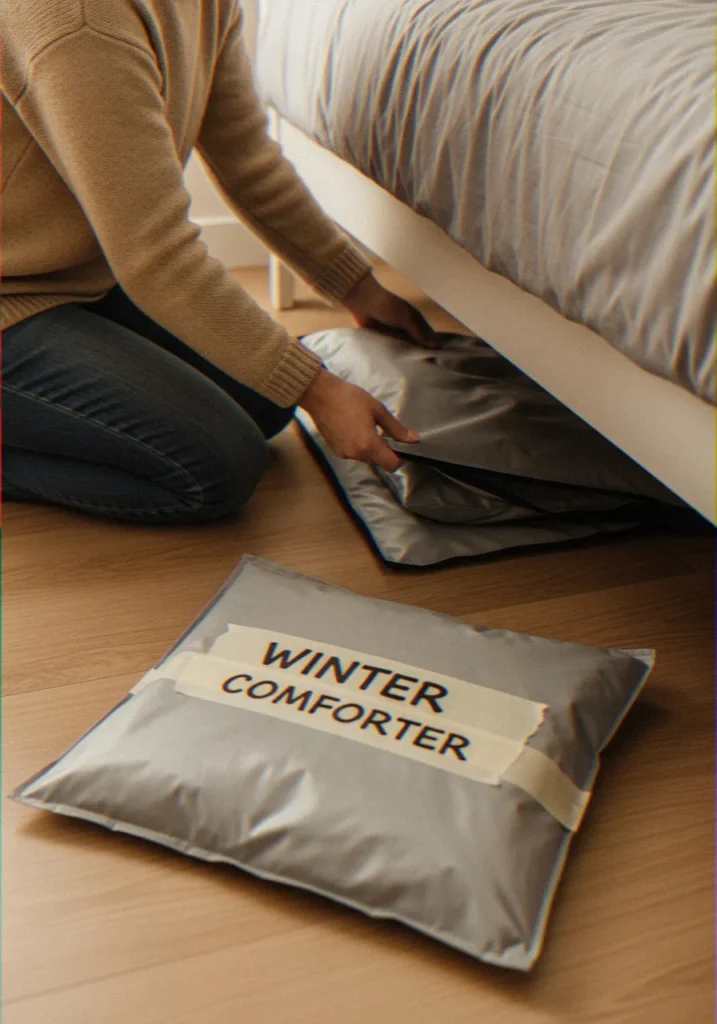
This is a really important question, and the answer is: it depends on the duration and the bag quality.
For short-term storage (under three months), vacuum bags are generally fine for down comforters. The compressed environment won’t permanently damage the down clusters if they’re given adequate time to re-loft once you take the comforter out.
Most people find that tossing the duvet in the dryer on low heat with a couple of tennis balls for 20–30 minutes restores its fluffiness perfectly after vacuum storage.
However, storing down in a vacuum bag for a full summer — four to six months — is where problems can develop. Prolonged compression can:
- Break down individual down clusters over time, reducing insulating ability
- Trap residual moisture if the duvet wasn’t bone dry before sealing, potentially leading to mildew
- Cause the outer fabric to crease permanently along fold lines
My recommendation for summer-long storage of a quality down comforter: use a large, breathable cotton storage bag instead. Yes, it takes up more physical space — but your down duvet will come out in October in far better condition. Save the vacuum bags for synthetic-fill comforters and lighter blankets. Your down deserves better.
3. Can You Use Decorative Floor Poufs to Store Out-of-Season Blankets?
Yes — and honestly, it’s one of my favorite dual-purpose moves in a small apartment. But there’s a smart way to do it and a frustrating way to do it.
The smart way: choose a pouf specifically designed with storage in mind. Not every pouf opens up, and even some that do have such a shallow interior that they’re basically useless for anything thicker than a tea towel.
What to look for in a storage pouf:
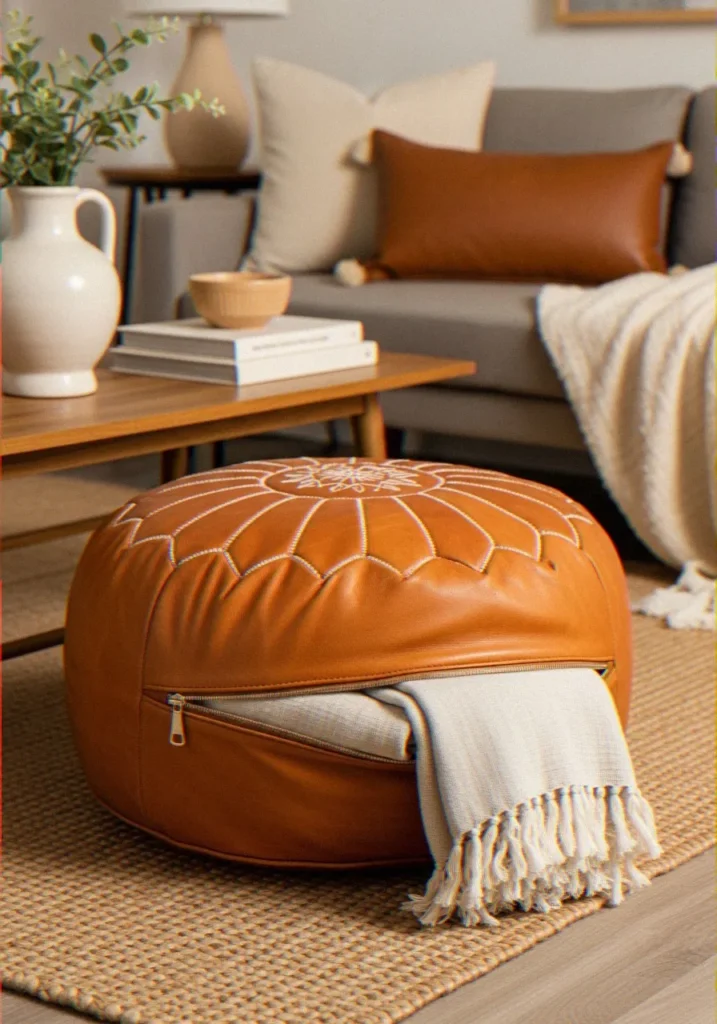
- Minimum 20-inch diameter and at least 12-inch height for meaningful capacity
- A sturdy zipper or Velcro closure — not just a loose flap
- Semi-firm structure so it doesn’t collapse or look lumpy when loaded
- Easy-clean exterior material, since it’s going to be sat on constantly
What works well inside a storage pouf: lightweight cotton blankets, thin quilts, summer throws, or a single layer blanket. What doesn’t work: a stuffed-to-capacity winter duvet.
Overstuffing a pouf makes it lose shape, the zipper strains, and it ends up looking less like décor and more like a fabric emergency.
Used within its limits, a decorative pouf is genuinely one of the most seamless storage solutions in a studio — it adds visual warmth to a space and secretly handles overflow storage without a single storage bin in sight.
The Bottom Line
Living in a studio apartment doesn’t mean you have to choose between comfort and order. Vacuum storage bags, smart furniture, a solid organizational system for your comforters and sheets, and creative dual-purpose pieces like storage poufs and ottomans will handle even the bulkiest seasonal bedding without making your space feel chaotic.
Start small — grab a pack of vacuum bags this week and tackle just one item. You’ll immediately see how much space you’ve been leaving on the table, and it becomes genuinely satisfying from there. Your future self — and your floor — will thank you.

1 thought on “How to Organize Bulky Seasonal Bedding in a Studio Apartment”