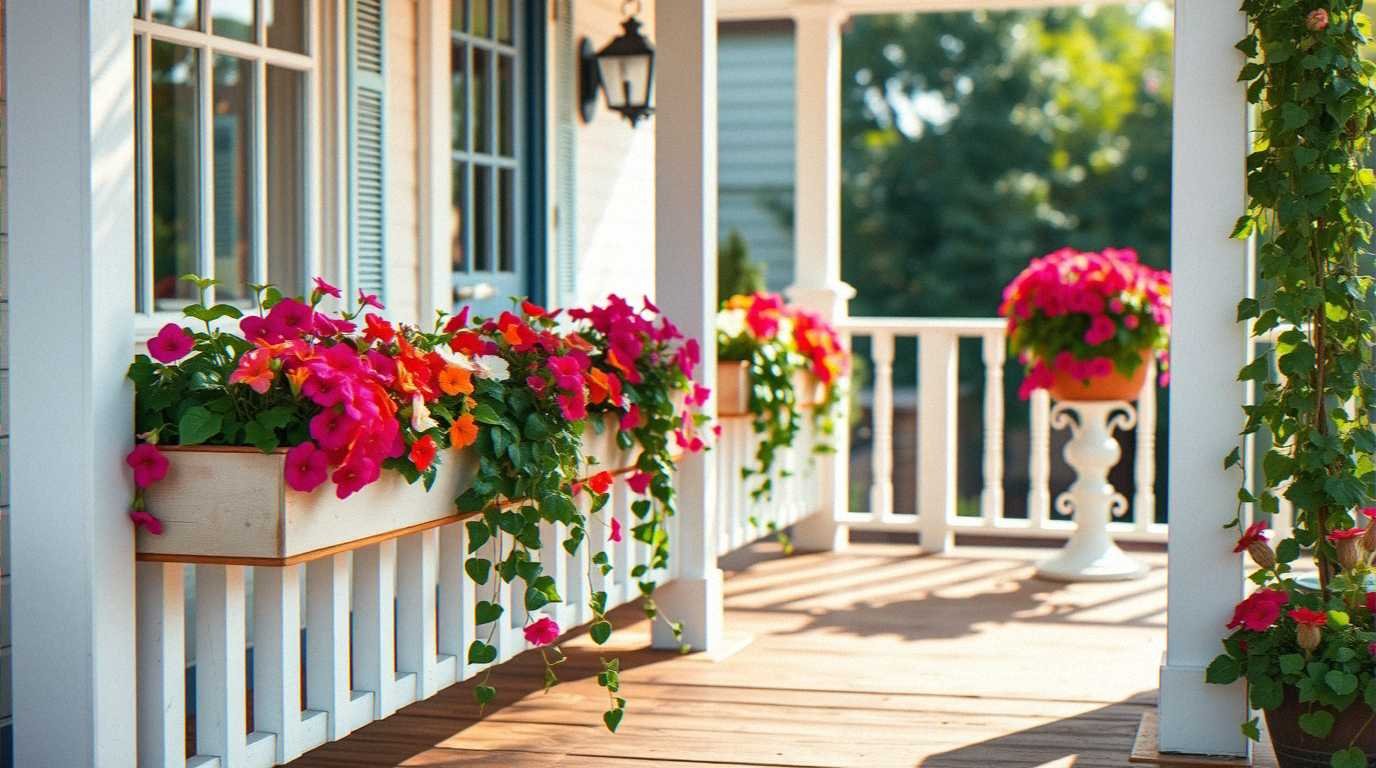
Here’s what nobody tells you about porch railing planters: they’re basically a commitment relationship with your outdoor space. But unlike most commitments, this one actually pays off. I’ve been experimenting with railing planters for the past three years, and honestly? My porch has never looked better—or required less floor space.
The secret sauce isn’t just choosing pretty flowers and calling it done. It’s about strategic planning for every single season so your porch doesn’t look like a sad, forgotten corner come October. Because let’s face it—nobody pins photos of dead petunias and empty planters.
Ready to create a year-round display that actually works? Let’s make it happen.
Spring Awakening: Early Bloomers

Spring is when your porch gets to show off after months of winter bleakness. I start planning my spring display in late February because early bloomers need time to establish before the real show begins.
Pansy and Primrose Power Boxes
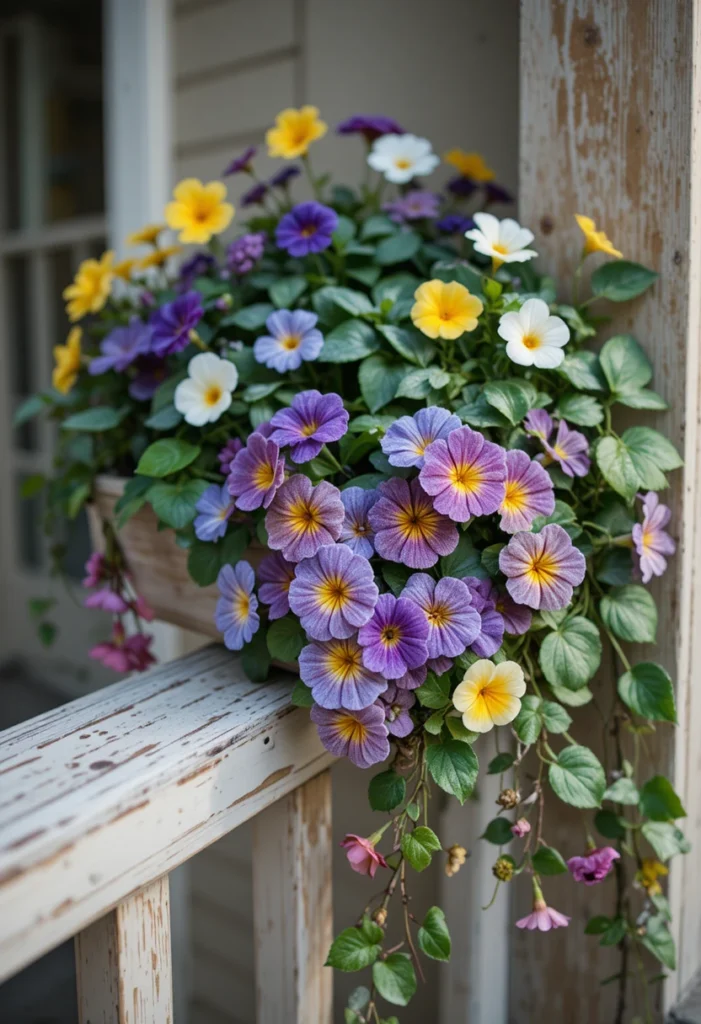
Pansies are the overachievers of spring flowers—they tolerate cold, bloom like crazy, and come in practically every color imaginable. I fill my railing boxes with a mix of pansies and primroses for that cottage garden vibe that screams “spring is here!”
https://en.wikipedia.org/wiki/PansyMix purple, yellow, and white pansies for a classic look. Add some trailing vinca vine for texture, and you’ve got yourself a Pinterest-worthy setup. These guys can handle frost, which means you’re not gambling every time the weather forecast looks sketchy.
Daffodil and Tulip Bulb Displays
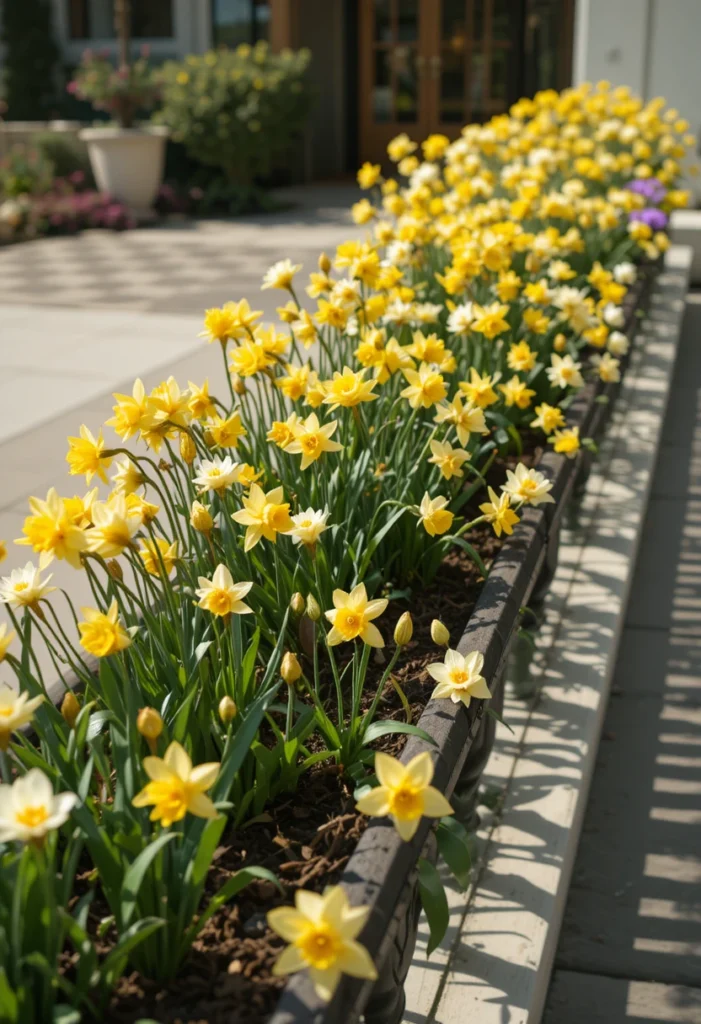
Do you want drama in the spring? The fall before, plant bulbs in your railing planters. After years of purchasing pre-bloomed flowers and wondering why other people’s displays looked better, I discovered this trick.
Choose dwarf varieties specifically—full-size daffodils get way too tall and floppy in shallow planters. Tete-a-tete daffodils and smaller tulip varieties work perfectly. Plant them dense (like, almost touching) for maximum impact when they bloom.
Spring Transition: Late Season Stars
As we move toward late spring, your early bloomers start fading. This is where strategy matters—you need plants that bridge the gap to summer without looking like you gave up halfway through the season.
Snapdragon and Stock Combinations
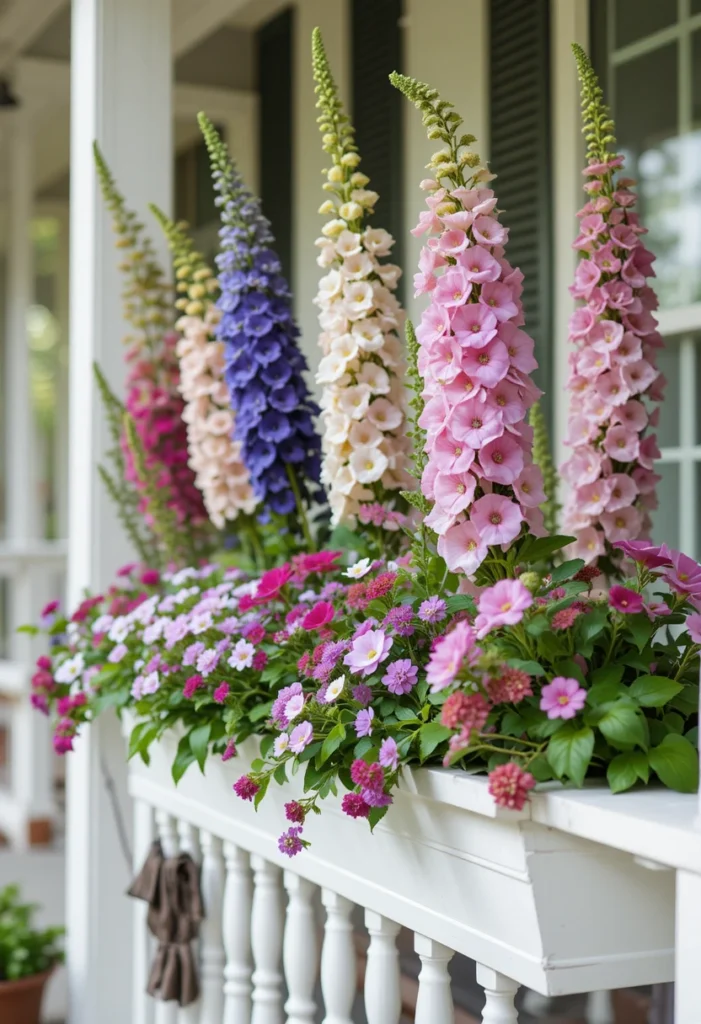
Snapdragons are criminally underused in railing planters, IMO. They add vertical interest, come in stunning colors, and smell incredible. Pair them with stock flowers for a fragrance that makes your entire porch smell like a fancy garden party.
I plant these in mid-April, and they keep going strong until the summer heat finally takes them down. The height variation keeps things interesting without overwhelming the space.
Herb Garden Starter Boxes

Spring is prime time to establish your herb garden before summer cooking season hits. I dedicate at least two railing planters entirely to herbs—basil, cilantro, parsley, and chives make regular appearances.
Plant them in planters that drain well and receive plenty of sunlight. If your planters lack drainage holes, drill some right away because herbs detest wet feet. I assure you that I have overwatered more herbs than I would like to acknowledge.
Summer Explosion: Heat-Loving Varieties
Summer is when railing planters truly shine. This is your moment to go bold, bright, and absolutely fearless with color. The plants that thrive in summer heat create displays that stop traffic.
Geranium and Calibrachoa Classics
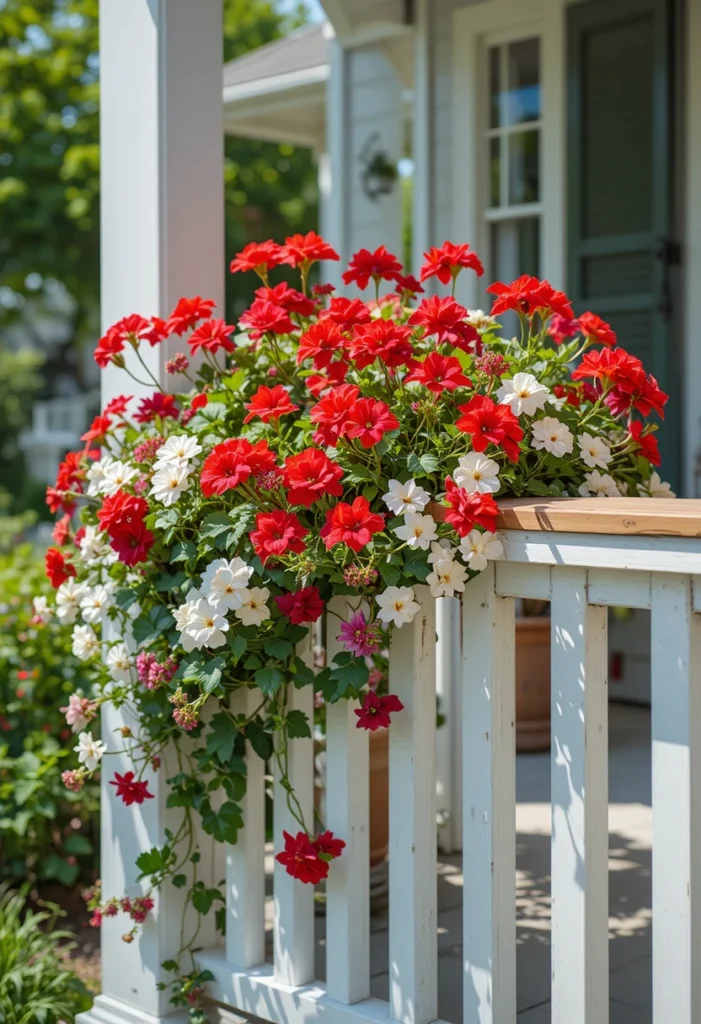
You know what never fails? Geraniums. They handle full sun, bloom constantly, and basically laugh in the face of summer heat. I pair them with calibrachoa (million bells) for a cascading effect that looks way fancier than the effort required.
Color combinations that work:
- Red geraniums with white calibrachoa
- Pink geraniums with purple calibrachoa
- White geraniums with pink calibrachoa
- Coral geraniums with yellow calibrachoa
The geraniums provide the main show while calibrachoa spills over the edges like a floral waterfall. It’s the perfect high-impact, low-maintenance combo.
Petunias and Verbena Overload
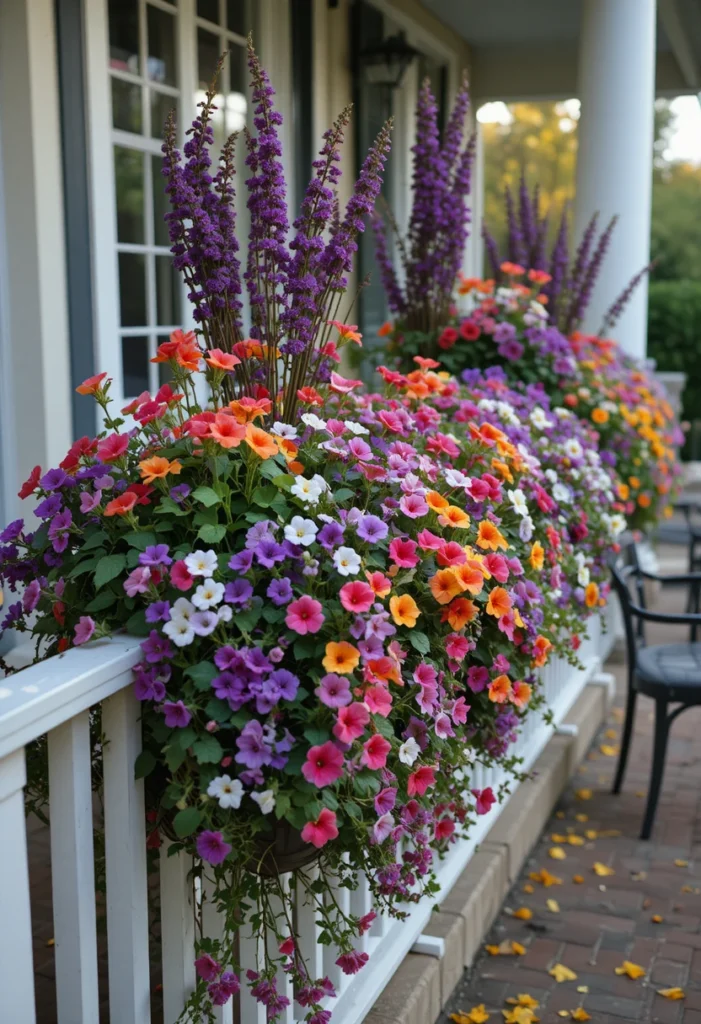
If you want serious flower power, petunias deliver. Modern varieties are disease-resistant, self-cleaning (no deadheading!), and bloom until frost. I fill entire planters with nothing but petunias and verbena, and people genuinely think I spend hours maintaining them.
The trick is choosing Wave or Supertunia varieties—they’re bred specifically for containers and won’t peter out by mid-July like their ancestors did. Mix upright verbena with trailing petunias for dimension and movement.
Summer Specialty: Tropical Vibes
Want your porch to feel like a vacation destination? Go tropical. These plants bring that resort-style aesthetic that makes your neighbors wonder if you hired a professional landscaper.
Coleus and Sweet Potato Vine Drama
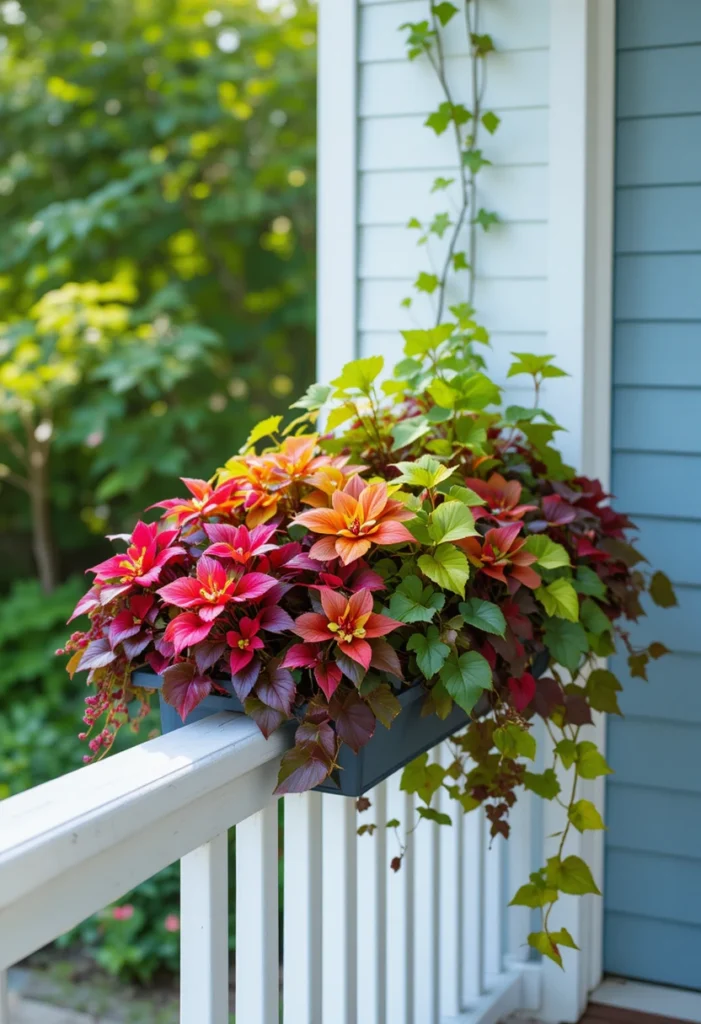
Let’s talk about foliage instead of flowers for a moment. The number of Coleus varieties has skyrocketed in recent years, and the variety of colors available is insane. When combined with sweet potato vine (the chartreuse variety is a chef’s kiss), you can create an intriguing display even in the absence of flowers.
I use these in partially shaded areas where traditional flowering plants struggle. The color intensity actually increases in part shade, which feels like cheating but in the best way possible.
Begonia and Caladium Shade Solutions

Not everyone has a full-sun porch, and that’s totally fine. Begonias and caladiums thrive in shade and bring color that rivals any sun-loving plant. Dragon wing begonias bloom constantly, while caladiums provide those gorgeous patterned leaves everyone wants to photograph.
Plant them together in moisture-retaining planters since shade plants don’t dry out as fast. Water less frequently but more deeply—these guys prefer consistent moisture over the drought-stress-water cycle.
Fall Favorites: Autumn Transitions
This is where most people drop the ball. They let summer plants die slowly and pretend the sad, crispy remains are “seasonal.” Don’t be that person. Fall offers amazing planter opportunities if you actually plan for them.
Mums and Ornamental Kale Combos
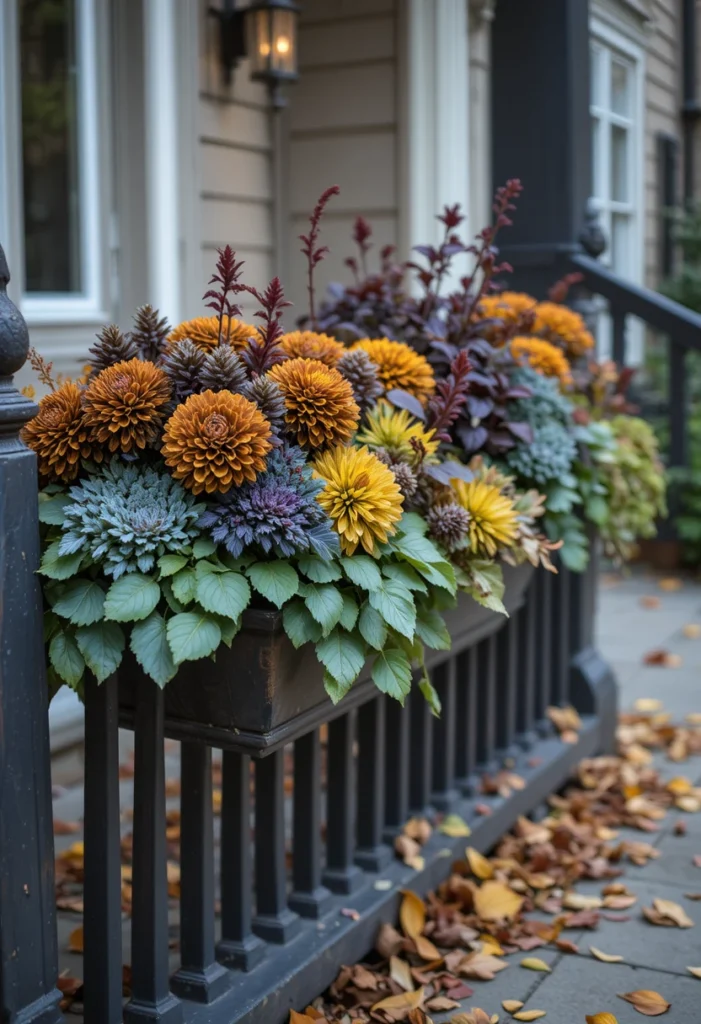
Mums are the obvious choice, but for texture and durability, mix them with decorative kale. While kale continues to look good until hard frost (and sometimes beyond), mums bloom for four to six weeks.
Best color pairings:
- Bronze mums with purple kale
- Yellow mums with white kale
- Burgundy mums with green kale
- White mums with mixed kale
Layer in some pansies if you want flowers that last beyond the mums. Pansies handle cold like champions and bridge the gap to winter beautifully.
Aster and Sedum Late Bloomers
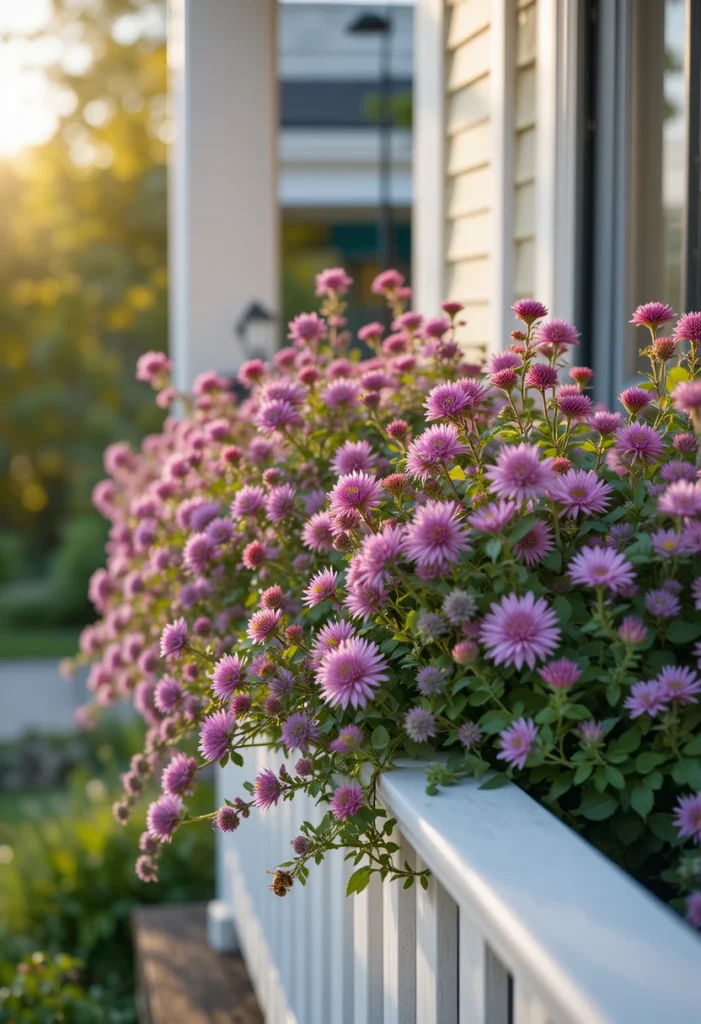
For a more naturalistic fall display, try asters and sedums. Asters bloom in late summer through fall with daisy-like flowers in purple, pink, and white. Sedums provide that architectural interest with their succulent-style leaves and pink-red flower clusters.
I planted these in September last year, and they performed way longer than my mums. The pollinators went crazy for them too—butterflies and bees were constantly visiting, which added movement and life to the whole display.
Fall Into Winter: Cold-Tolerant Beauties
As temperatures drop, you need plants that can handle the mood swings of late fall. Some days it’s 60°F and sunny; other days it’s 30°F and sleeting. These plants don’t care.
Pansies and Violas Extended Season
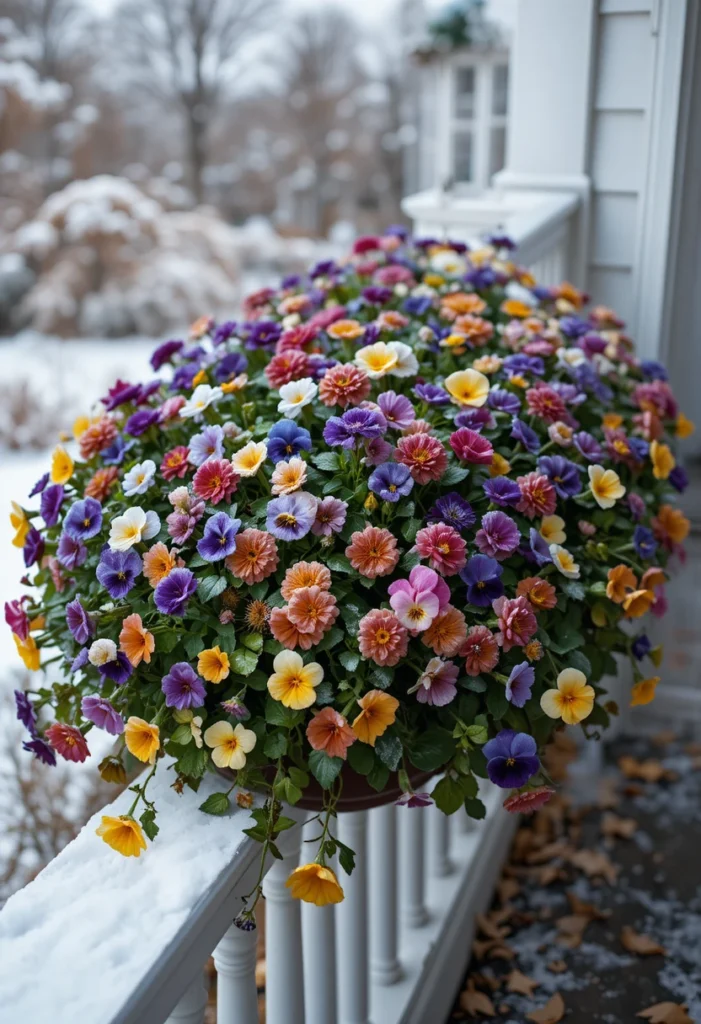
Unexpected! Pansies reappear. In fact, fall-planted pansies are more resilient than spring-planted ones, and if the weather permits, they can bloom through light snow. Even smaller and more resilient to cold, violas have been known to reappear after being buried in snow.
Plant them densely in October for color that lasts until the ground freezes solid. Some varieties even survive winter and rebloom in early spring, which feels like getting two displays for the price of one.
Ornamental Cabbage Displays
Ornamental cabbage is basically kale’s fancier cousin. The rosette formation looks like roses, and the colors intensify in cold weather. These plants actually get more beautiful as temperatures drop, which is the opposite of everything else in your garden.
Combine different sizes and colors for impact. The larger varieties work as focal points while smaller ones fill gaps. They tolerate temps down to 20°F, and even after they freeze, they often hold their structure through winter.
Winter Wonderland: Evergreen Elegance
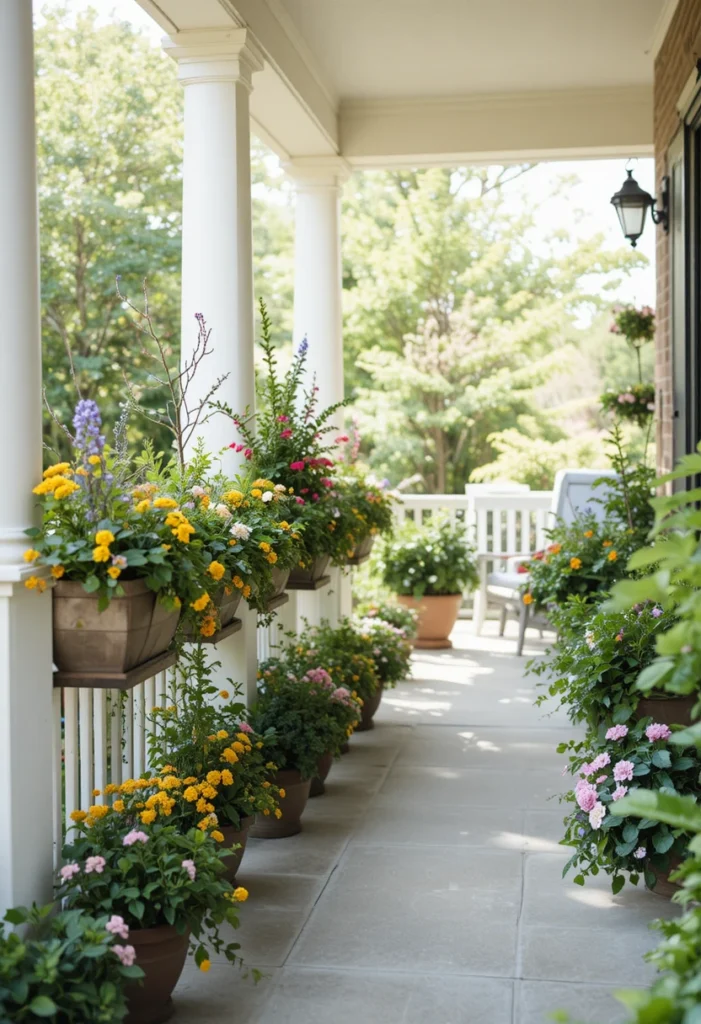
Most people just give up on railing planters in winter. But here’s a secret: winter displays can be stunning if you embrace the season instead of fighting it.
Evergreen and Berry Branches
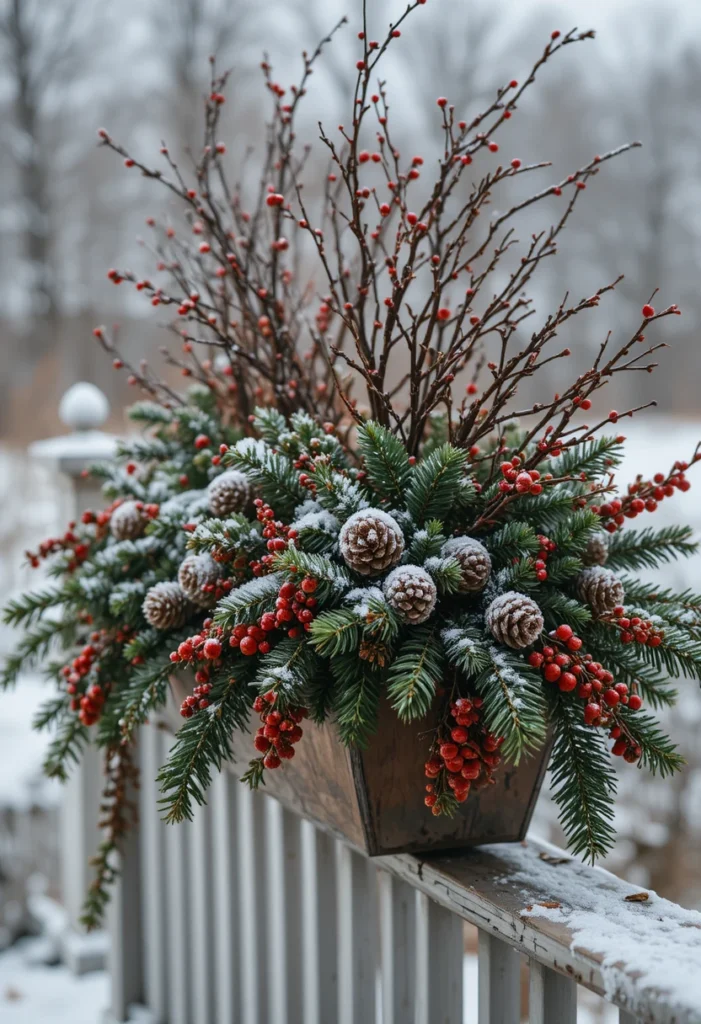
Fill your planters with clippings from evergreen shrubs—boxwood, juniper, cedar, whatever you’ve got. Add branches with berries (holly, winterberry, rose hips) for pops of color against the green.
| Evergreen Type | Best Feature | Pairing Suggestion |
|---|---|---|
| Boxwood | Dense, Classic | Red winterberry stems |
| Cedar | Textured, Aromatic | White pine cones |
| Juniper | Blue-toned, Hardy | Red dogwood stems |
| Pine | Long needles, Full | Orange bittersweet |
This isn’t technically “planting,” but it creates a display that looks intentional and festive. I refresh mine every 4-6 weeks as the greens dry out. Total cost? Basically free if you prune your own shrubs.
Cold-Hardy Succulents

Some succulents actually tolerate cold better than you’d think. Sempervivum (hens and chicks) and certain sedum varieties survive freezing temperatures and look architectural even in snow.
Create a winter succulent garden in shallow planters mounted to your railing. Mix different varieties for color and texture variation. They require zero water in winter (the snow handles it), and they actually look better after cold exposure when their colors intensify.
Year-Round Foliage: Consistent Greenery
If the idea of swapping planters every season makes you tired just thinking about it, consider year-round foliage options. These plants provide consistent structure with minimal maintenance.
Boxwood and Dwarf Evergreens
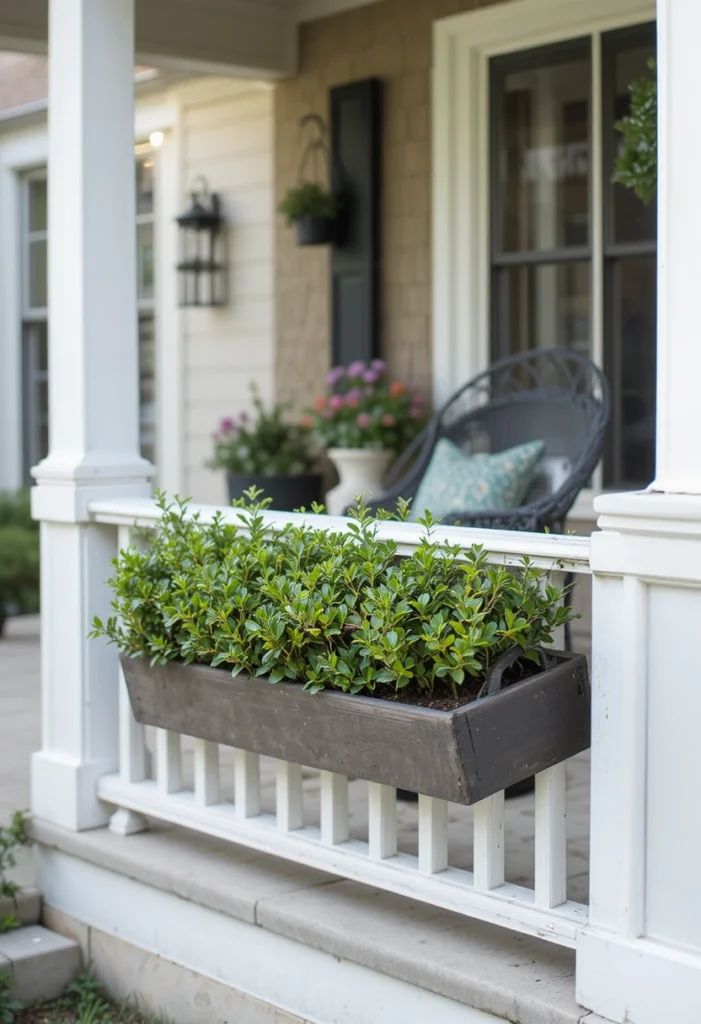
Dwarf boxwood in railing planters creates a classic, formal look that works every season. They’re slow-growing, which means they don’t outgrow their space quickly, and they tolerate pruning if you want specific shapes.
I have three matching boxwood planters on my front railing that I’ve maintained for two years. They provide consistent structure while I rotate seasonal flowers in other planters. It’s the best of both worlds—stability and variety.
Ornamental Grasses for Movement
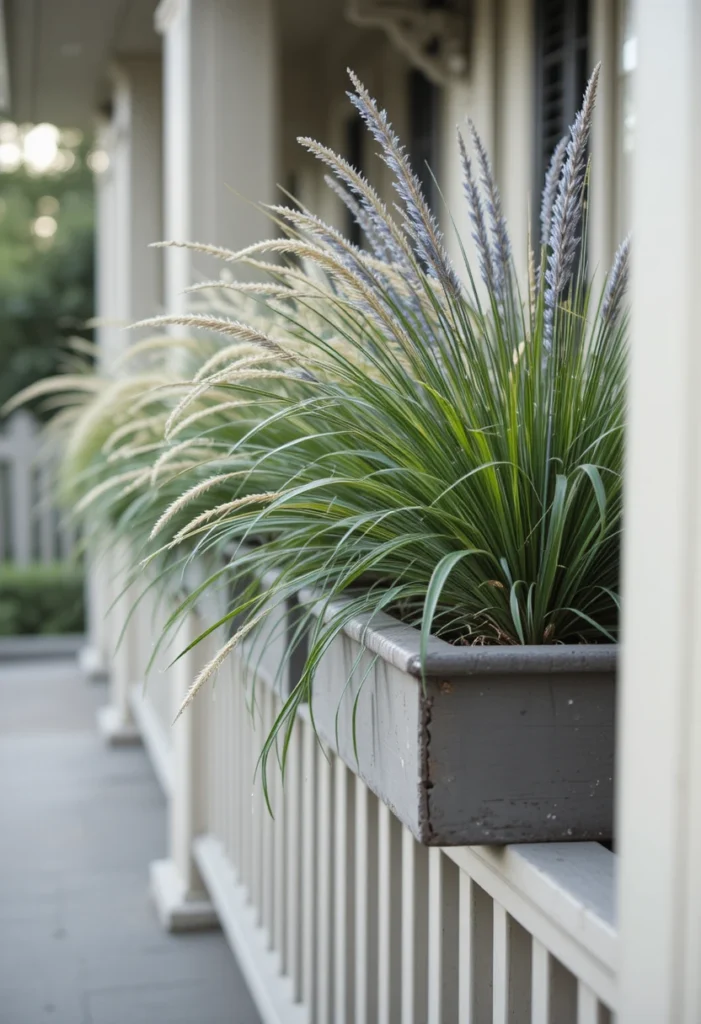
Ornamental grasses add movement and texture year-round. Dwarf fountain grass, blue fescue, and Japanese forest grass work beautifully in railing planters. They sway in the breeze, which adds life to your display without requiring constant deadheading or maintenance.
Fresh green growth in the spring, full and fluffy growth in the summer, golden tones in the fall, and architectural seed heads in the winter are all attractive features of these grasses. Once you plant, you can enjoy it forever, or at least for a few years before you need to divide.
Seasonal Rotation Strategy
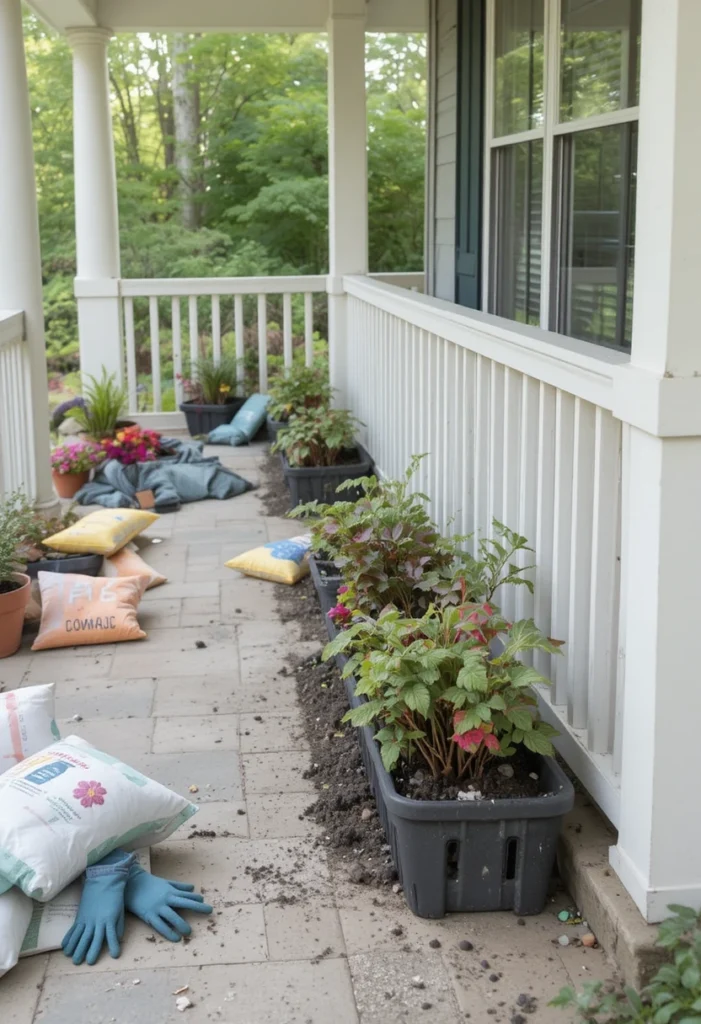
Let’s talk logistics because pretty ideas mean nothing if you can’t actually execute them. I learned this the hard way after spending too much money on plants that didn’t fit my rotation schedule.
Planning Your Planter Investment
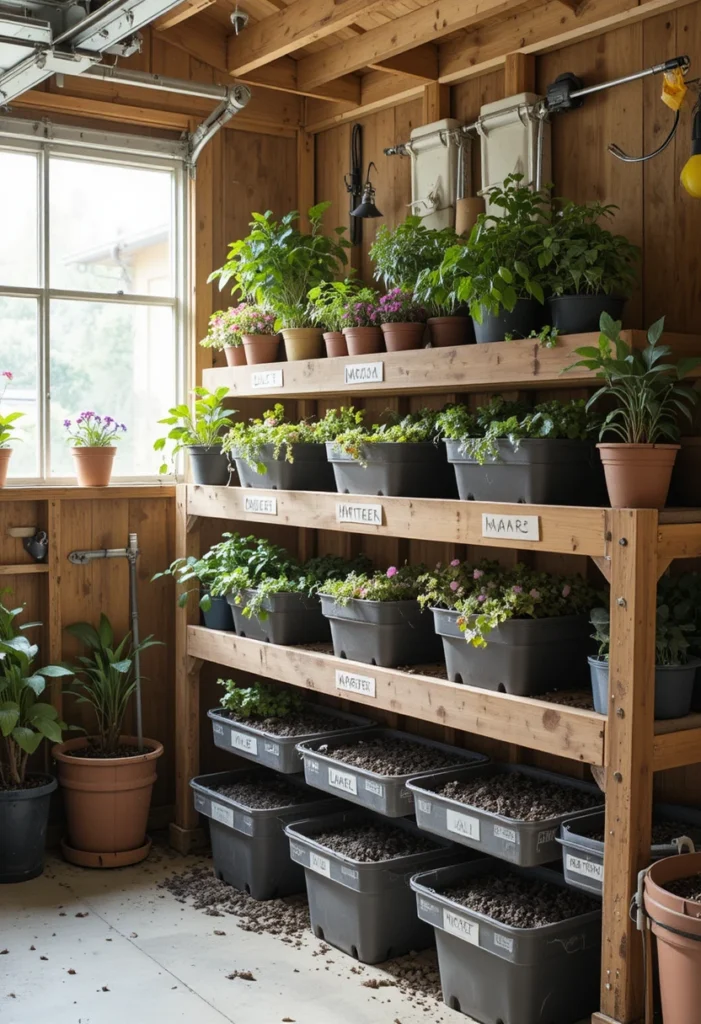
Buy enough planters to have active and backup sets. I keep six planters on my railing with four in rotation. This lets me prep the next season’s display without leaving my porch bare during transitions.
Store off-season planters in your garage or shed, already planted and establishing. When swap time comes, it takes 15 minutes instead of half a day of planting from scratch.
Quick-Change Mounting Systems
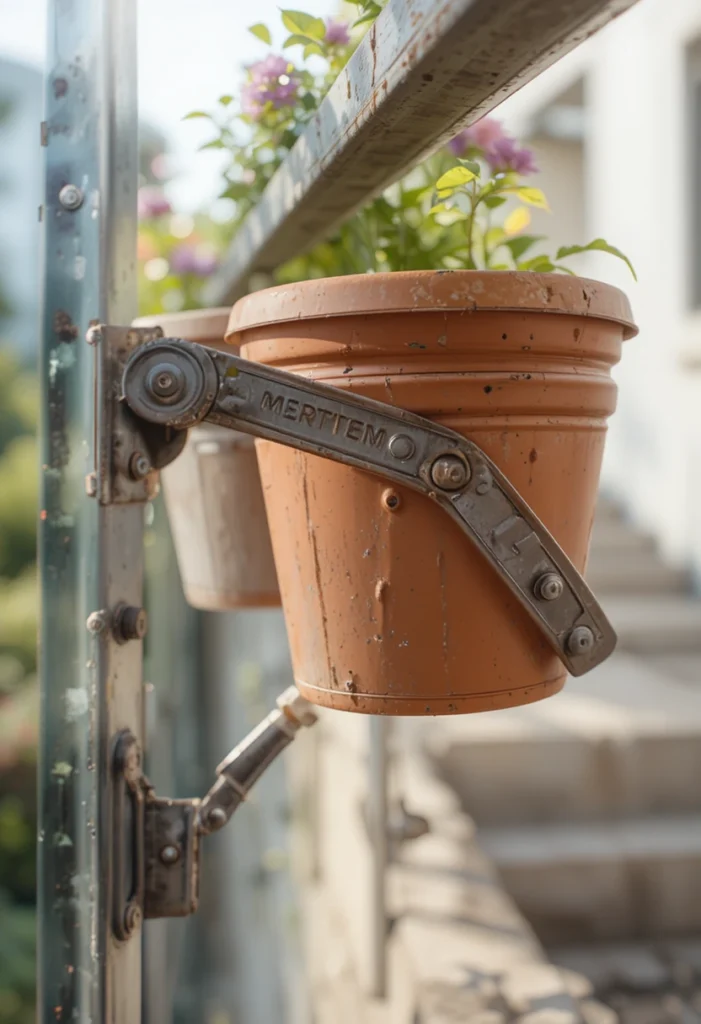
Invest in universal mounting brackets that accept different planter sizes and styles. I wasted so much time removing and reinstalling different bracket systems before I figured this out.
Adjustable hooks and brackets let you swap planters without tools. The initial setup takes more thought, but seasonal changes become effortless. You’re looking for convenience here—the easier the swap, the more likely you’ll actually do it.
Budget-Friendly Seasonal Solutions

Real talk: keeping planters fresh every season gets expensive if you’re not strategic. Here’s how I manage costs without sacrificing quality.
Perennial Plants for Rotation
Some plants work across multiple seasons. Pansies bloom spring and fall. Ornamental kale works fall through winter. Certain succulents handle everything except the coldest winter days.
Build your collection around these multi-season performers, then supplement with season-specific annuals for color pops. My core rotation plants have lasted two years while I swap in affordable annuals to refresh the look.
Grocery Store Finds
Avoid sleeping on plants from the grocery store. Seasonal flowers are often half as expensive at supermarkets as they are at garden centers. Yes, there aren’t many options, but for last-minute updates and gap-filling? They function flawlessly.
I buy grocery store mums every fall and mix them with more expensive ornamental kale. Nobody can tell which plants cost $4 versus $12, and my wallet definitely appreciates the strategy :).
Container Selection for All Seasons
Your planters themselves matter more than you might think. Some containers work year-round while others crack after one freeze-thaw cycle (learned that expensive lesson personally).
Material Matters
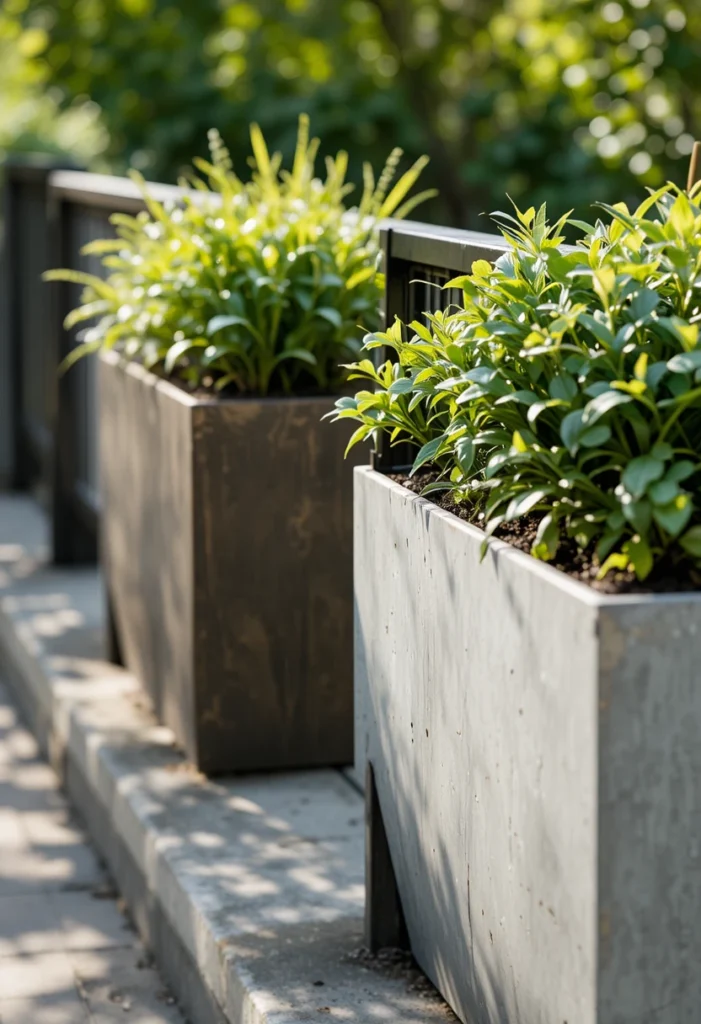
Resin and composite planters handle temperature swings better than terra cotta or ceramic. They’re lightweight, drain well, and don’t crack in winter. I switched to resin after replacing broken ceramic planters two years in a row.
Metal planters look amazing but can heat up in summer sun, potentially cooking roots. If you go metal, choose light colors that reflect heat rather than dark ones that absorb it.
Drainage is Non-Negotiable
Every planter needs drainage holes—period. Standing water kills more plants than underwatering ever will. If your beautiful planter doesn’t have holes, drill them. I don’t care how pretty it is; without drainage, it’s a plant coffin waiting to happen.
Add pot feet or spacers under planters to ensure water actually escapes. Even with drainage holes, if the planter sits flat against the railing, water can’t fully drain. Simple fix with huge impact.
Maintenance Schedule for Success
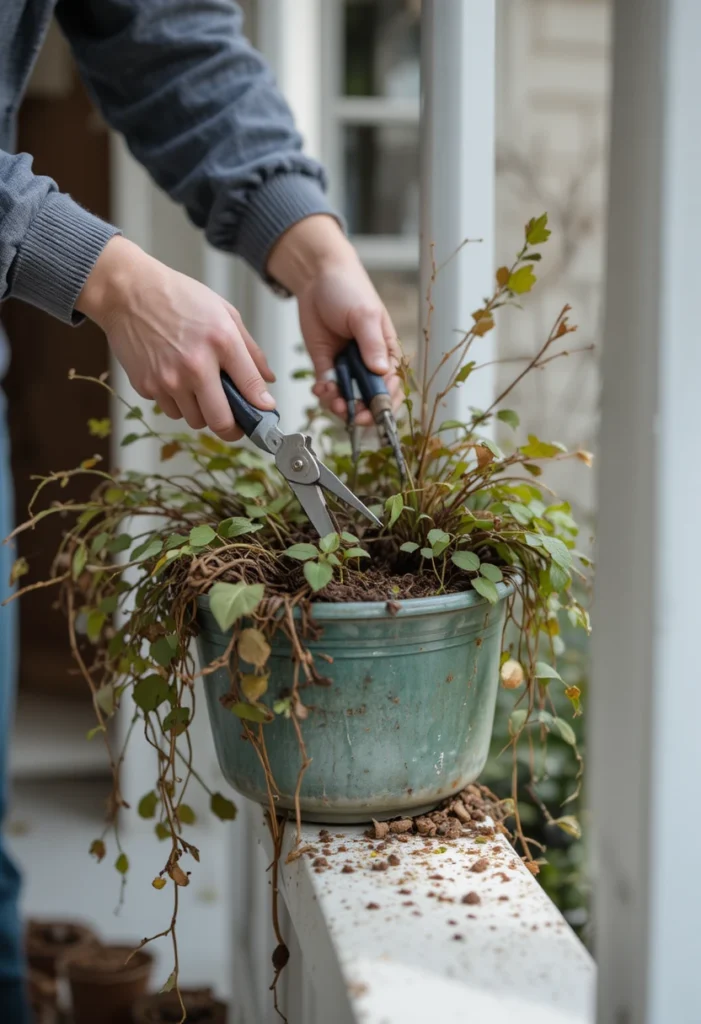
The difference between planters that look amazing and ones that look sad usually comes down to consistent maintenance. Here’s my realistic schedule that doesn’t require daily attention.
Weekly Tasks:
- Deadhead spent blooms (5 minutes)
- Check soil moisture (2 minutes)
- Water as needed (10 minutes)
- Remove yellow leaves (3 minutes)
Monthly Tasks:
- Fertilize with liquid plant food
- Trim back overgrown plants
- Check for pest issues
- Clean planter exteriors
FYI, I use my phone’s reminder app for this. Otherwise, I absolutely forget until plants look terrible and I’m scrambling to fix things.
Final Thoughts
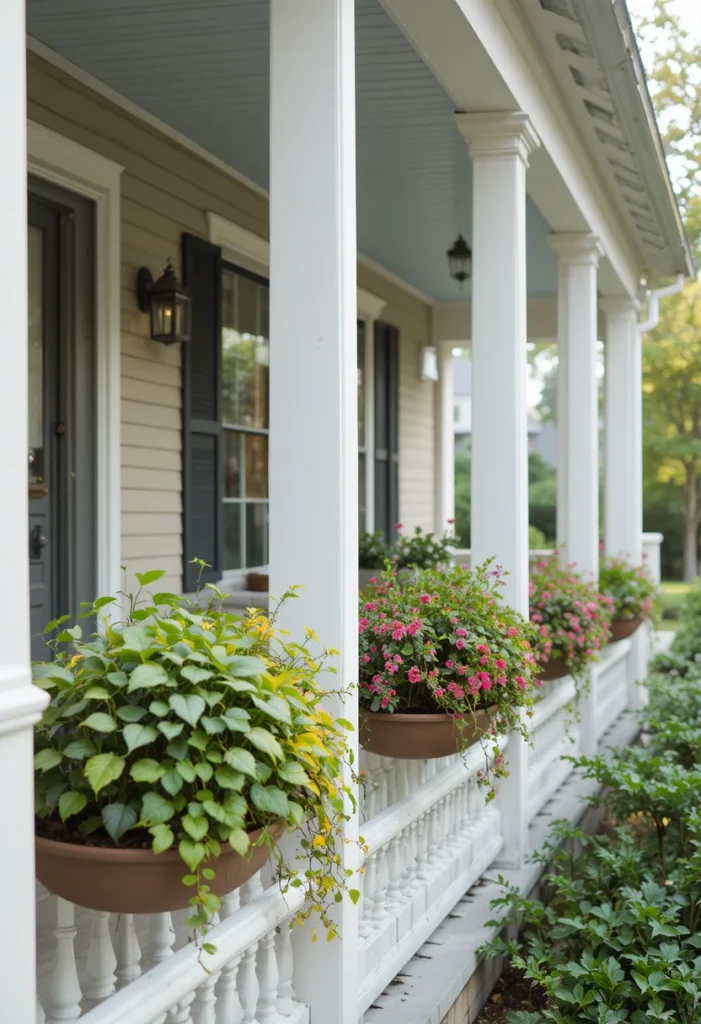
Creating year-round railing planter displays isn’t about being a master gardener or spending a fortune. It’s about understanding what works in each season and planning accordingly. Start with one or two planters and build from there. Test different plants, see what thrives in your specific conditions, and adjust.
The goal isn’t perfection—it’s creating something that makes you happy when you look at it. Whether that’s formal boxwood symmetry or wildflower chaos, make it yours. Your porch, your rules.
Now grab some planters and get started. Spring waits for no one, and your railing has serious potential just waiting to be unlocked.

3 thoughts on “21 Must-Try Porch Railing Planters Flower Boxes Ideas for Every Season”