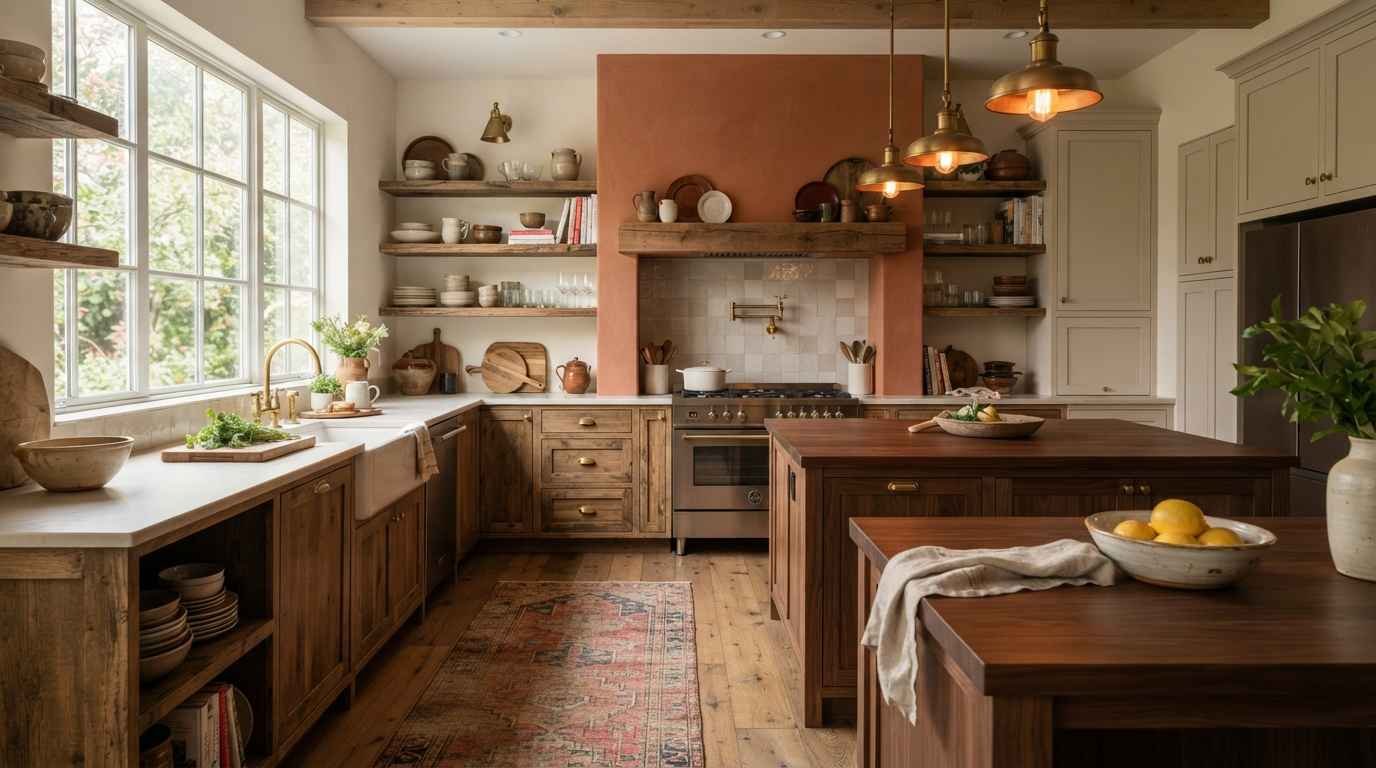
I redid my kitchen three times before it finally felt like mine.
Not because I have money to burn (I don’t), but because I kept chasing a “perfect” style instead of just mixing what I actually loved.
The day I hung a flea market mirror next to a brand new brass pendant light, something clicked. That’s when I understood what eclectic really means.
If you’re stuck between farmhouse and mid-century and industrial and can’t pick one, good news: you don’t have to.
Eclectic kitchens are built on contrast, warmth, and a little bit of chaos that somehow works.
Here are 24 ideas I’ve collected from my own kitchen, friends’ renovations, and hours of scrolling boards I probably should have closed hours earlier.
I should mention, I’m not an interior designer. I’m just someone who’s repainted the same cabinets four times and finally stopped second-guessing every decision.
Everything in this list has actually been tested in a real kitchen, mine or someone I know, not pulled off a showroom floor.
Why cozy and eclectic actually go together
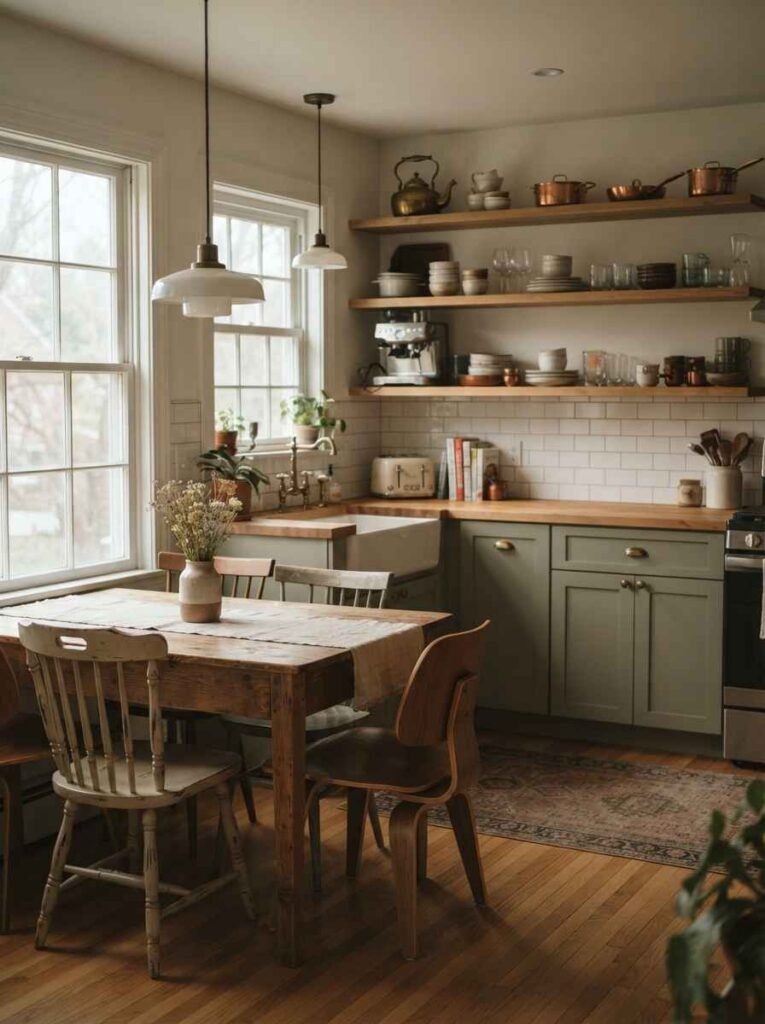
People assume eclectic means messy. It doesn’t. It means intentional variety.
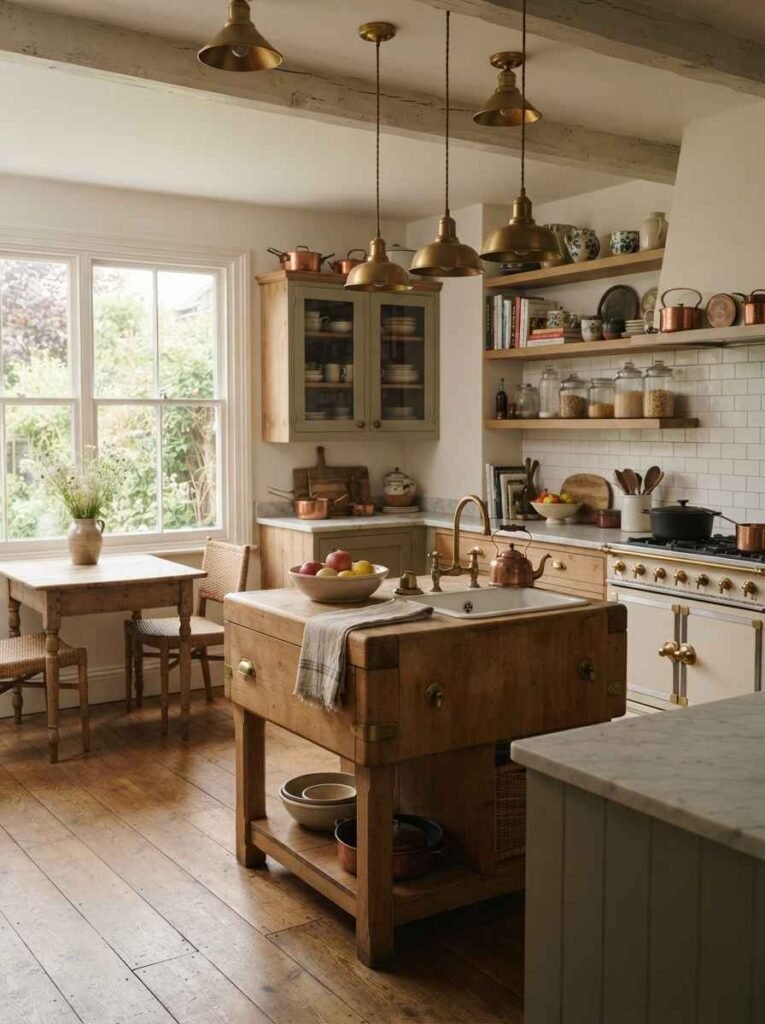
A cozy eclectic kitchen layers textures (wood, stone, linen, brass) with pieces from different eras. The trick is a shared color thread or material that ties everything back together.
Miss that thread and yes, it looks messy.
Nail it and it looks collected, like a space that grew over years instead of one Saturday at a furniture store.
Think about the kitchens you actually remember visiting. Odds are none of them came from a single showroom display. A grandmother’s teapot next to a sleek new espresso machine. A worn wooden spoon jar beside a stainless steel range. That contrast is what makes a room feel like someone lives there, not like it’s waiting to be photographed for a catalog.
FYI, this is also the cheapest way to decorate a kitchen well. You’re not buying a matching set.
You’re hunting, mixing, and occasionally getting lucky at an estate sale.
My mother-in-law still brings up the $15 brass candlestick she found at a church sale, and honestly,
she’s earned the bragging rights.
Warm colors and layered textures
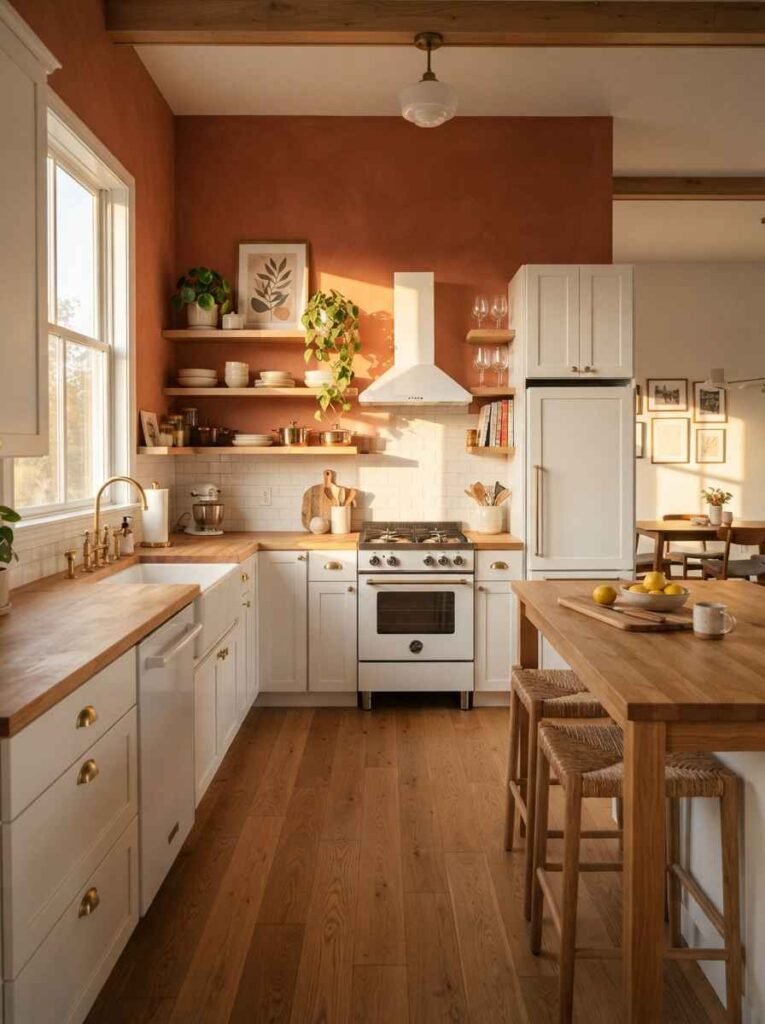
1. Terracotta accent walls. A single wall in warm terracotta paint makes white cabinets pop and instantly reads as inviting rather than clinical. It’s a small commitment too. If you hate it in a year, one wall is an afternoon project, not a full renovation.
2. Mixed wood tones. Pair a butcher block island with darker oak flooring. Don’t match them. The slight mismatch is the whole point, and it’s also a relief for anyone who’s ever tried to find flooring that perfectly matches existing cabinets.
Spoiler: it rarely happens anyway.
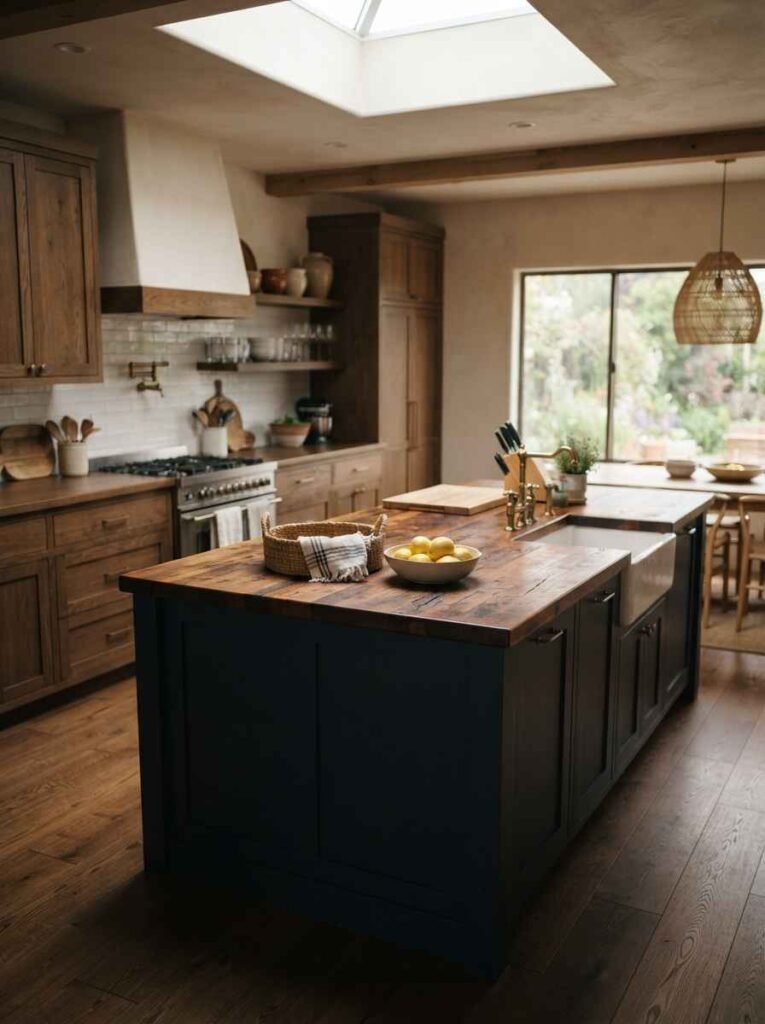
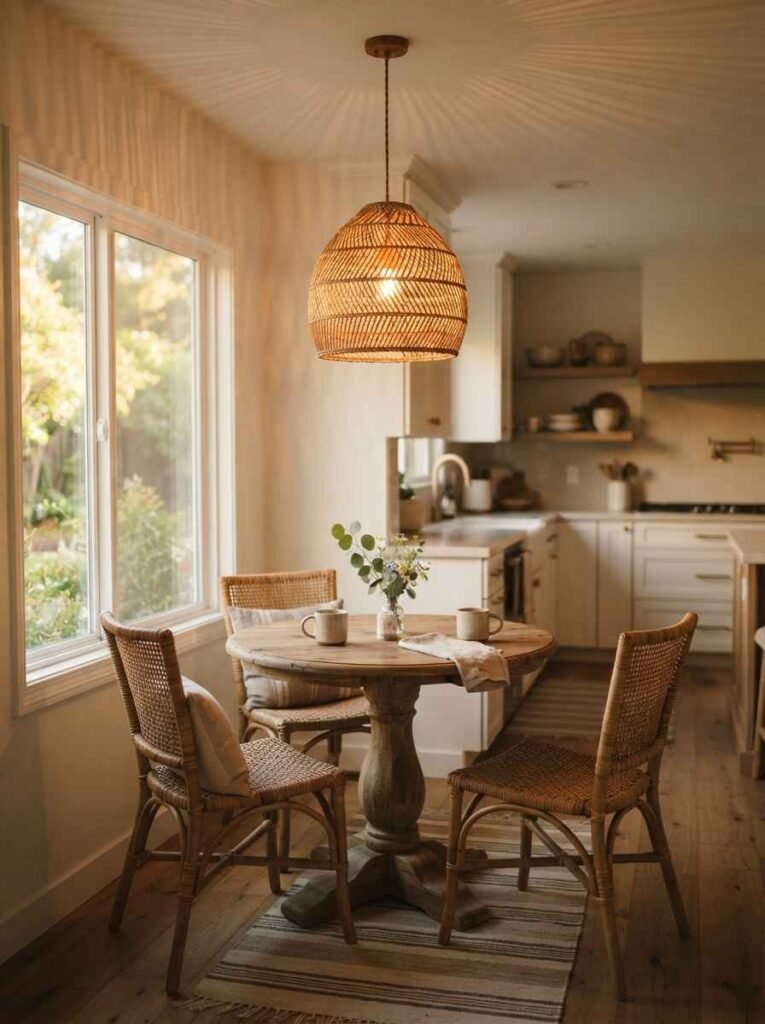
3. Woven pendant lights. Rattan or seagrass shades soften a kitchen’s lighting and add texture without adding clutter.
I swapped a bare bulb fixture for a woven one over my dining nook, and the whole corner suddenly looked finished instead of half-done.
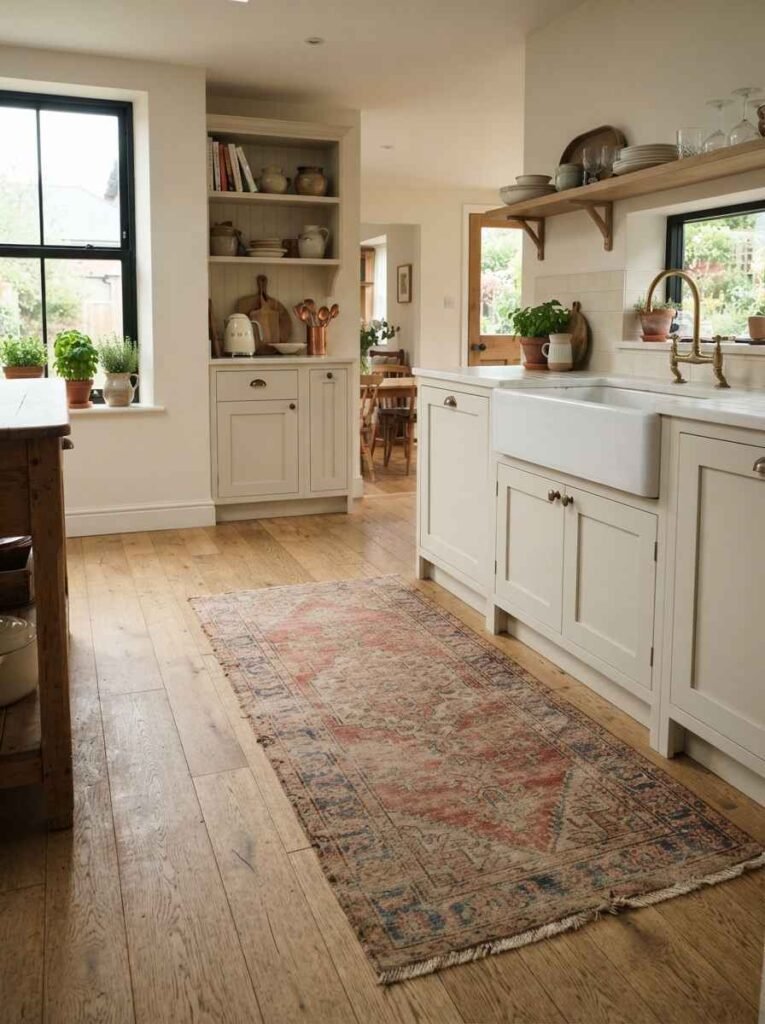
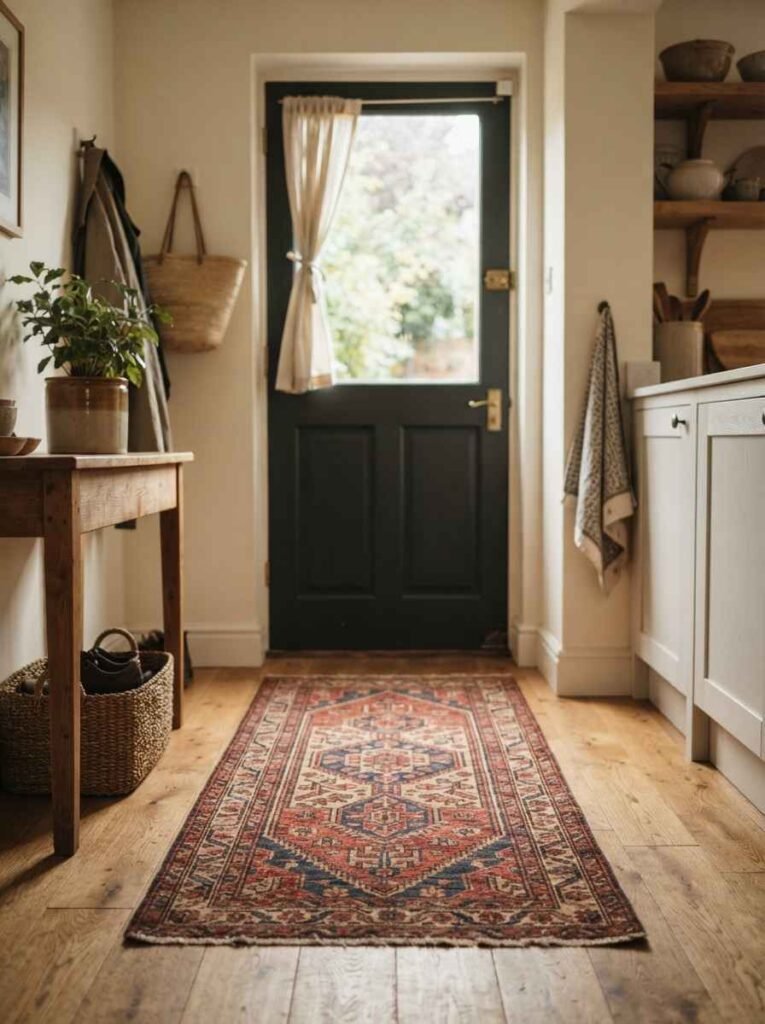
4. Vintage rugs on hard floors. A worn Persian-style runner in front of the sink does more for coziness than any paint color ever will.
I found mine for $40 and I still think about that win. It also saves your feet during long cooking sessions, which nobody tells you until your back starts complaining.
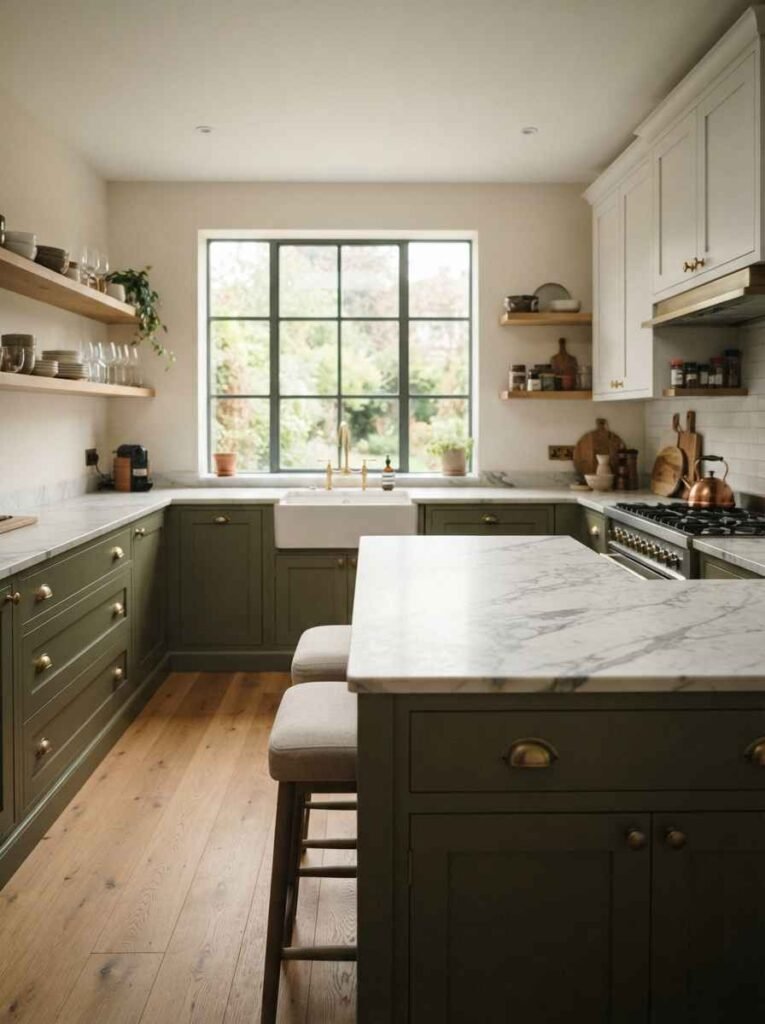
5. Sage or olive green lower cabinets. Paint experts have pointed to moodier, olive-influenced greens as a growing 2026 kitchen trend, and honestly, they hide fingerprints better than white too.
Pair them with lighter uppers so the room doesn’t feel heavy or closed in.
6. Open wood shelving mixed with closed cabinets. Full open shelving is a nightmare to keep tidy (trust me, I tried it for eight months).
Half and half looks curated instead of chaotic, and it gives you somewhere to hide the mismatched Tupperware nobody wants on display.
Statement lighting and metal mixing
7. Brass and black hardware together. This shouldn’t work. It does.
The contrast reads as collected, not indecisive, and it’s a good option if you’ve already got some black appliances but want to warm the room up.
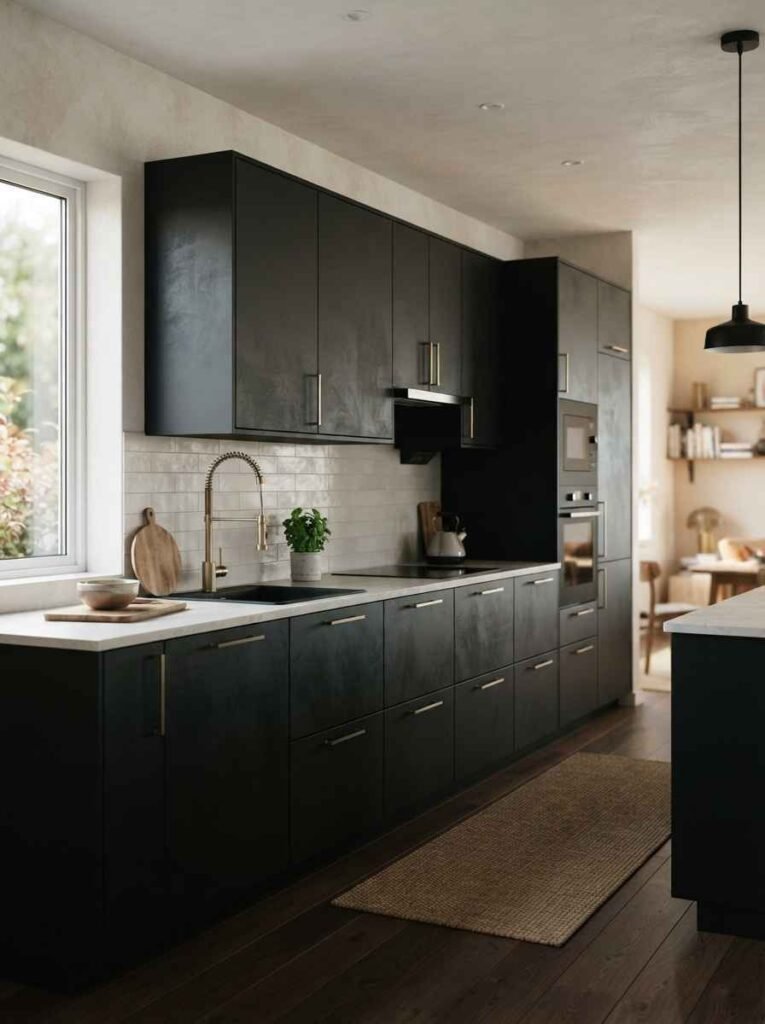
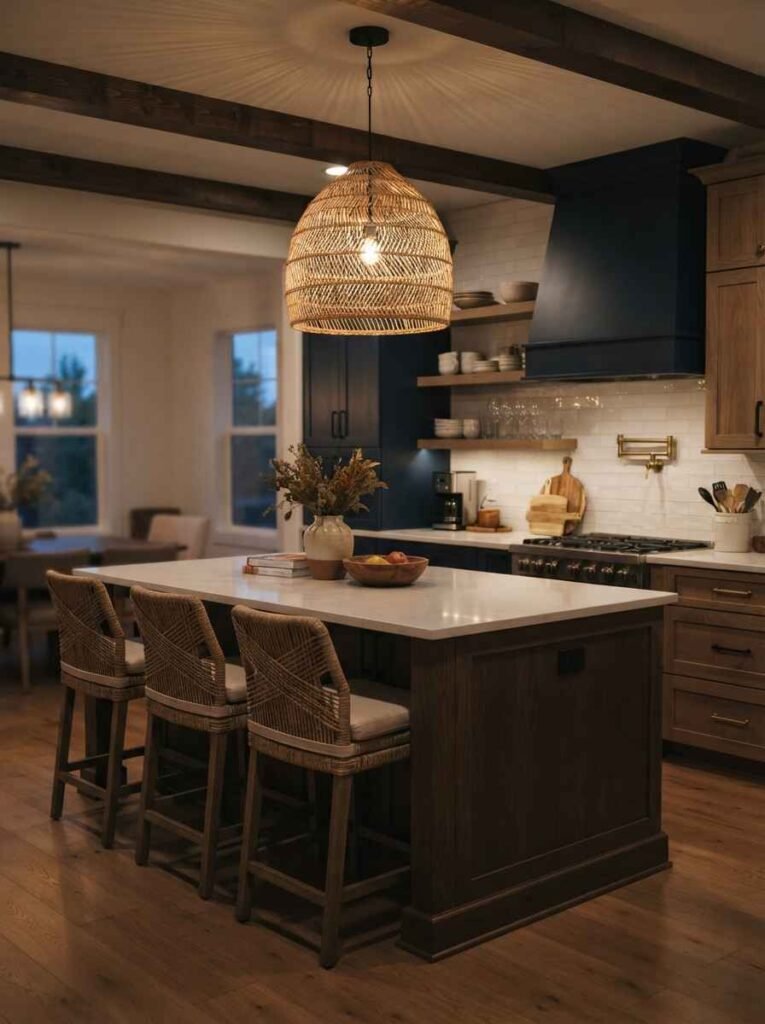
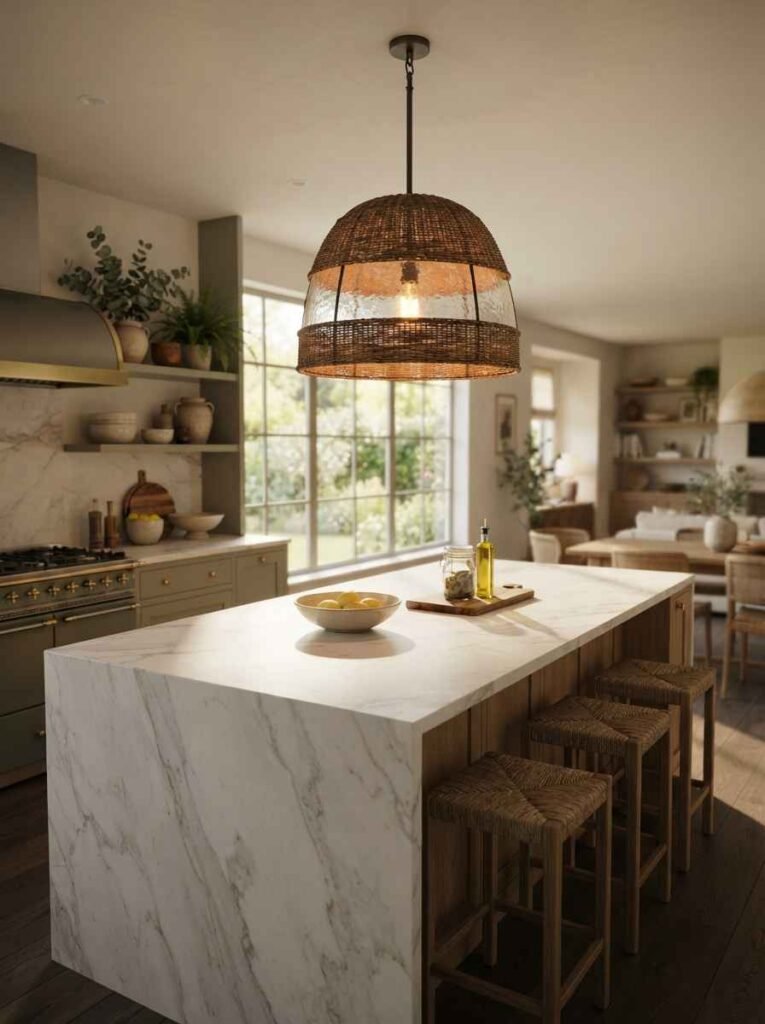
8. A single oversized pendant over the island. One bold fixture does more work than three matching ones.
It becomes the anchor everyone looks at first, which takes the pressure off getting every other detail perfect.
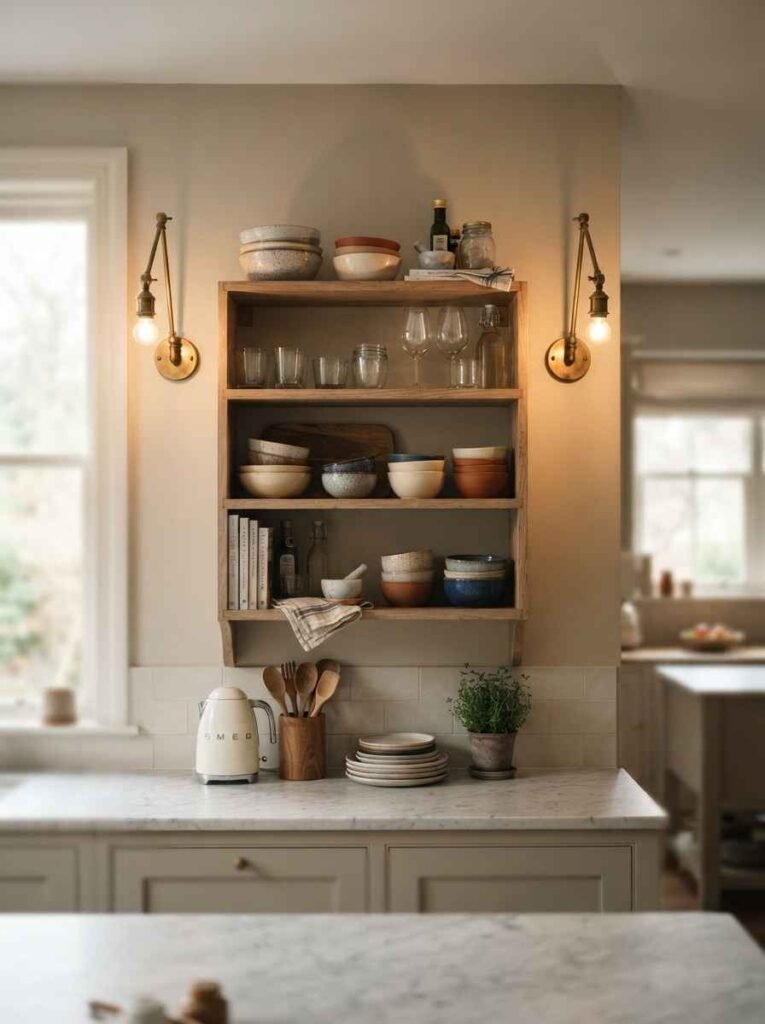
9. Wall sconces flanking open shelves. Soft, warm bulbs here beat harsh overheads every single time.
I switched mine to warm 2700K bulbs last year, and my kitchen photos stopped looking like they were shot in a hospital.
10. Mixed metal faucets and cabinet pulls. Copper faucet, nickel pulls. Nobody notices unless you tell them, and even then most people just nod and say it looks nice.
IMO that’s the whole appeal of eclectic design: it looks effortless even when you agonized over it.
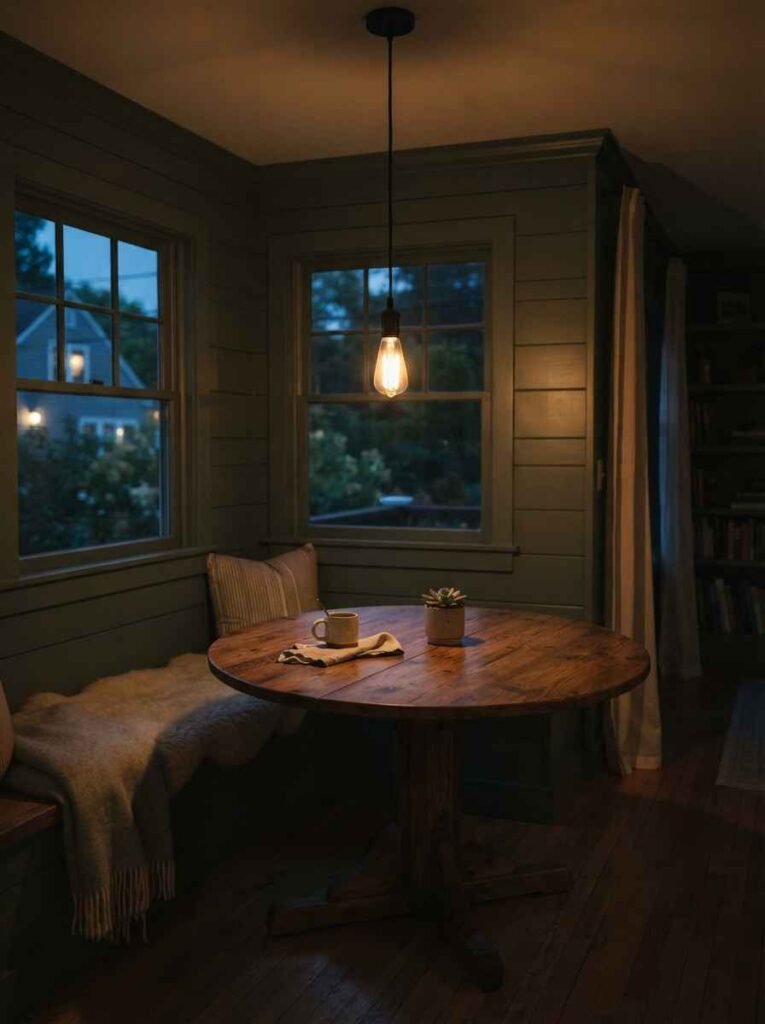
11. Exposed filament bulbs. Cheap, warm, and they make even a boring fixture feel intentional.
Put them in a plain socket over a breakfast nook and suddenly the corner has personality.
Textiles, plants, and personal touches
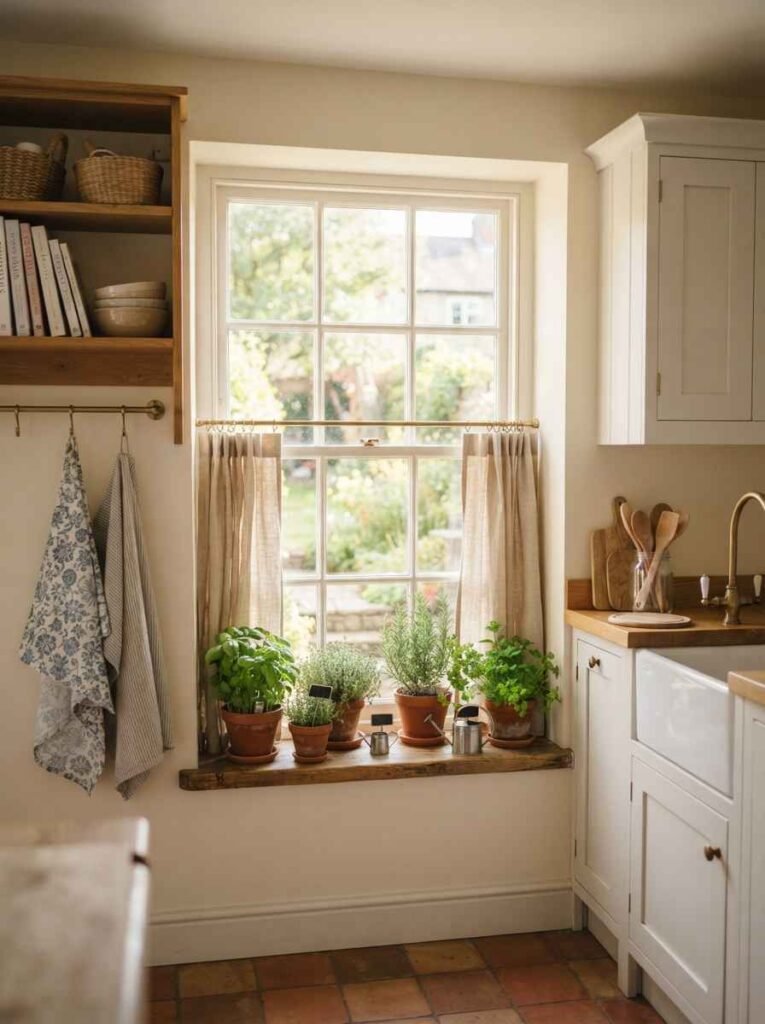
12. Café curtains instead of blinds. A short gingham or linen curtain over the sink window softens hard edges fast, and unlike blinds, it doesn’t collect grease and dust in every little slat.
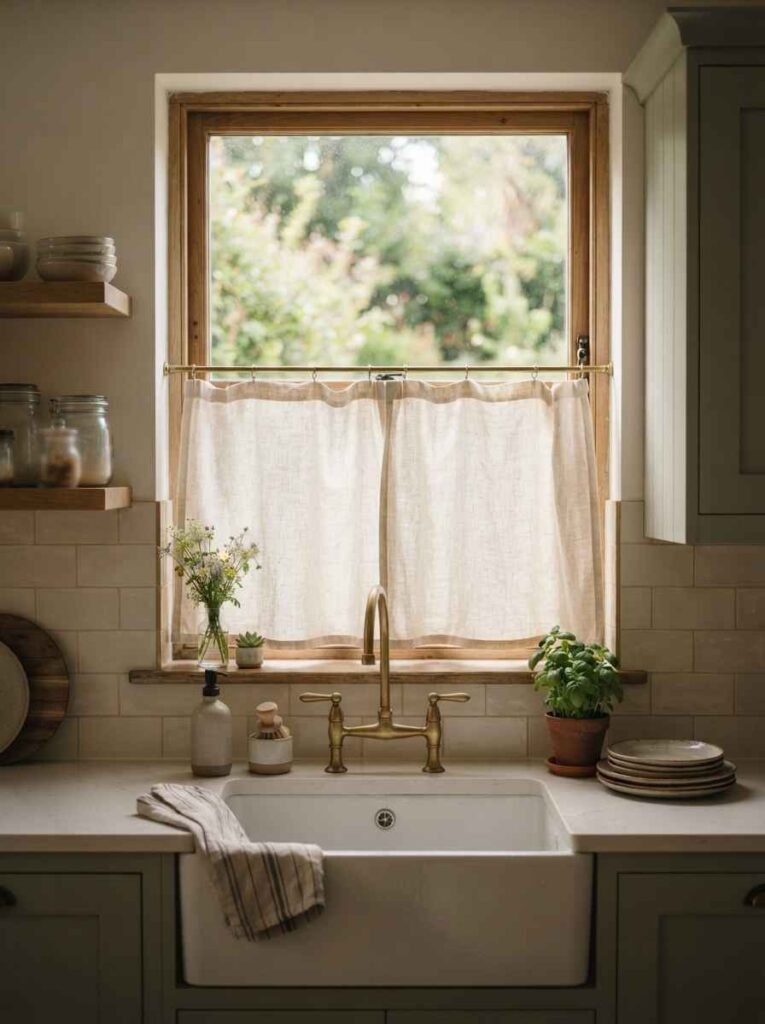
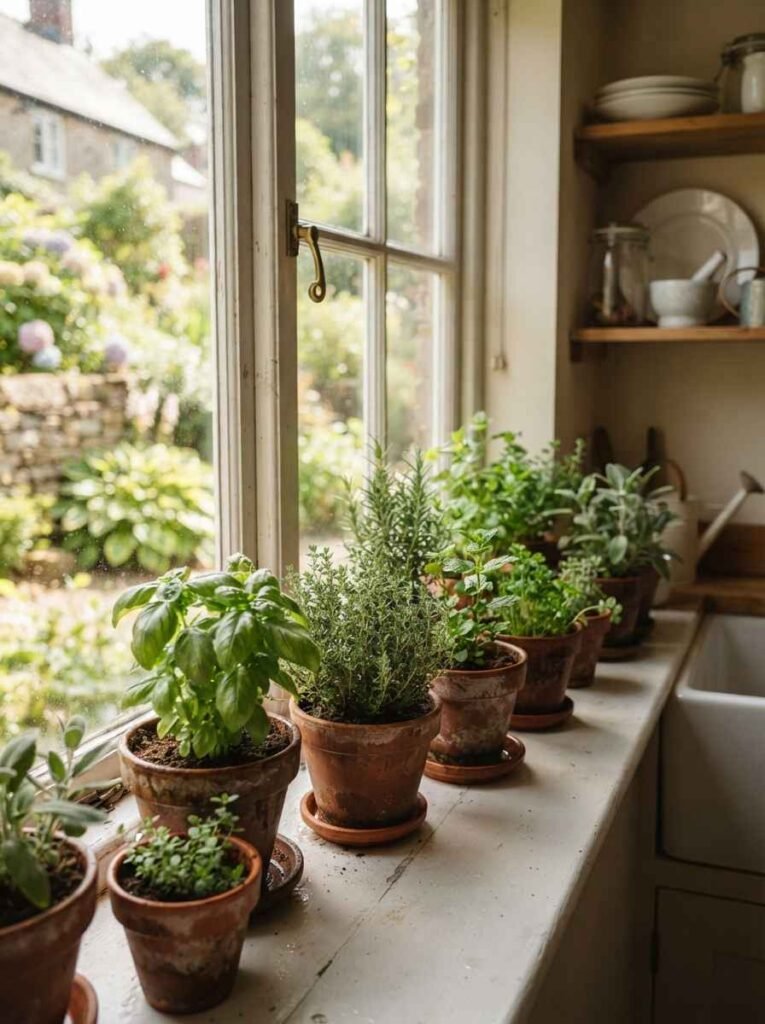
13. Open herb shelves. Fresh basil on a windowsill smells better than any candle, and it’s honestly the closest thing I have to a green thumb.
Half of mine die within a month, but the ones that survive make the whole room feel alive.
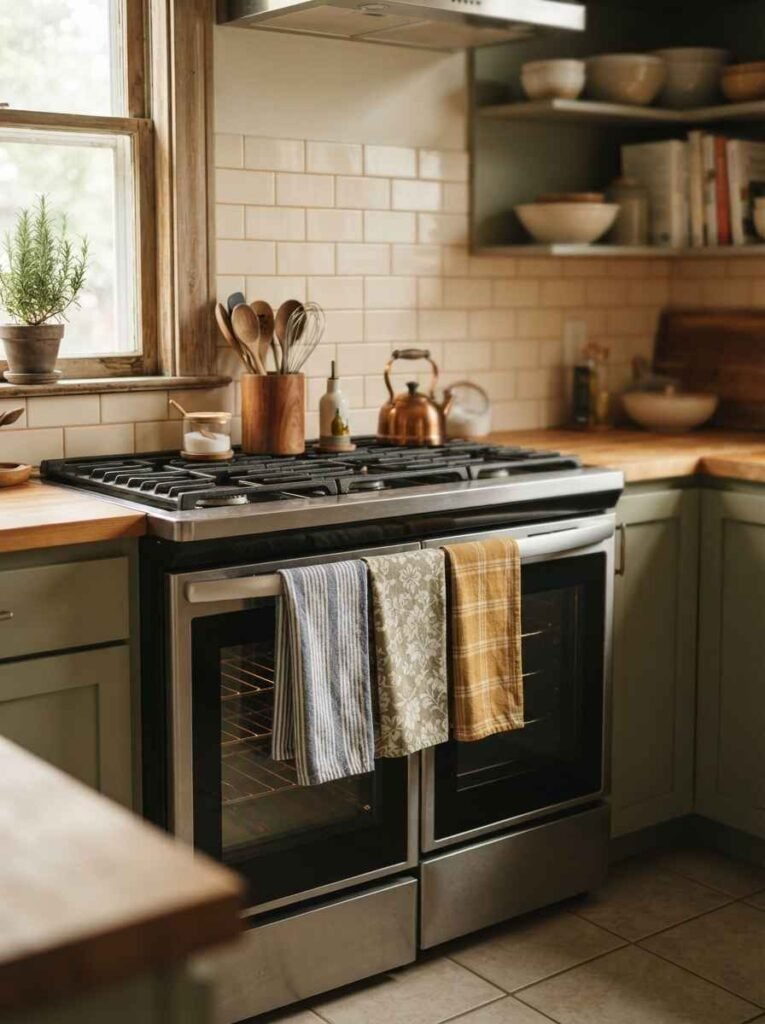
14. Layered dish towels as decor. Hang two or three patterned towels on the oven handle.
It’s a small thing that adds real warmth, and it’s an easy way to swap in seasonal color without touching paint or furniture.
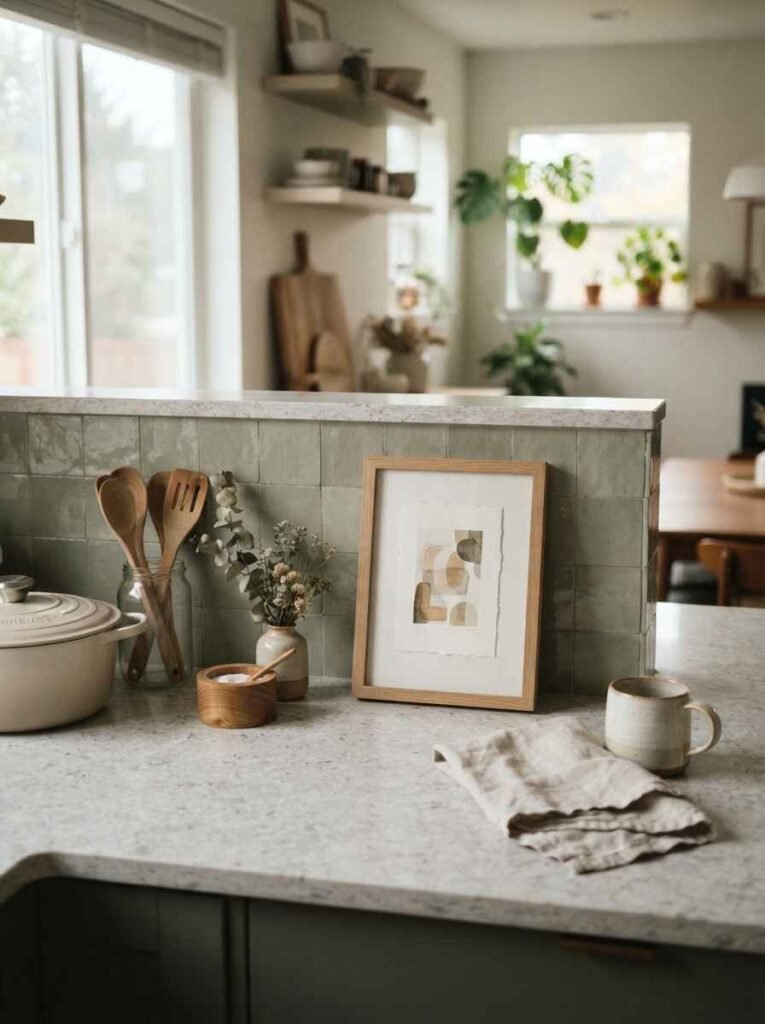
15. Framed art leaning on a shelf, not hung. Leaning art feels lived-in.
Hung art feels staged. Prop a small print against the backsplash tile and move it whenever you feel like a change.
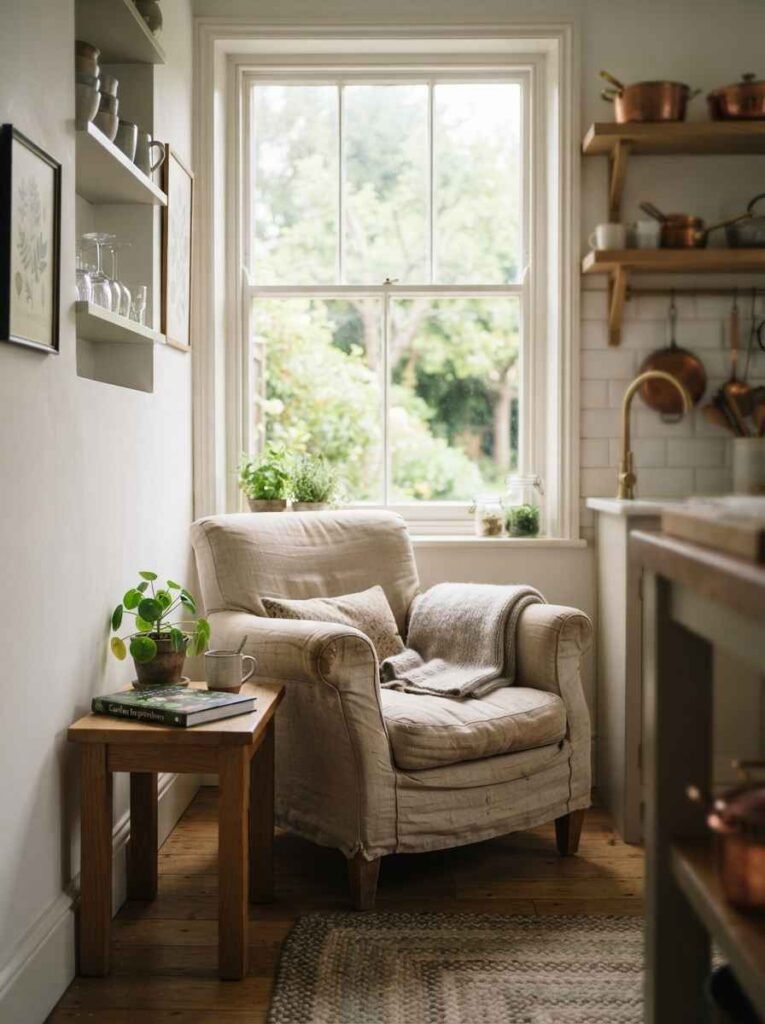
16. A reading nook corner, even a tiny one. A single chair and a small side table near a window turns a kitchen into a room people actually want to sit in, not just cook in and leave.
Okay, slight tangent: I once turned a broom closet into a “nook” that was just a stool and a lamp. My husband called it ridiculous.
I still sit there with coffee every morning, so who’s laughing now?
Vintage and thrifted finds
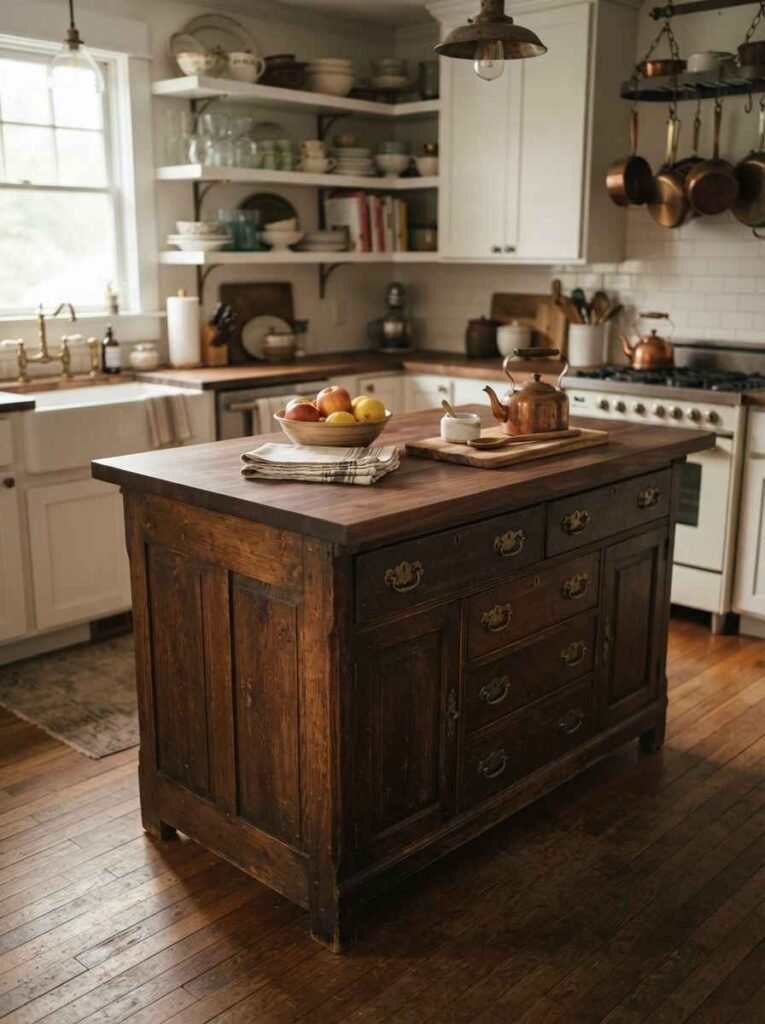
17. A repurposed antique dresser as a kitchen island. Sand it, seal the top, done.
Way more character than anything flat-pack, and the drawers usually hold more than a standard island cabinet anyway.
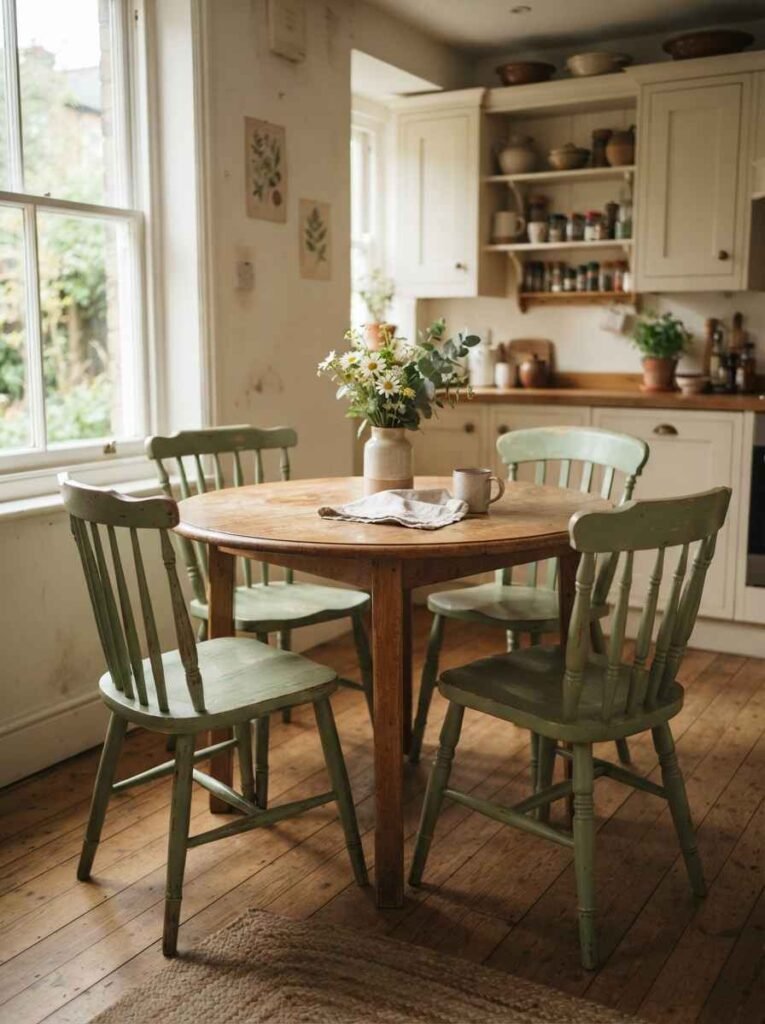
18. Mismatched dining chairs around a small table. Four chairs, four different eras, one paint color to tie them together.
This is my favorite trick on this whole list, mostly because it turns thrift store rejects into a set.
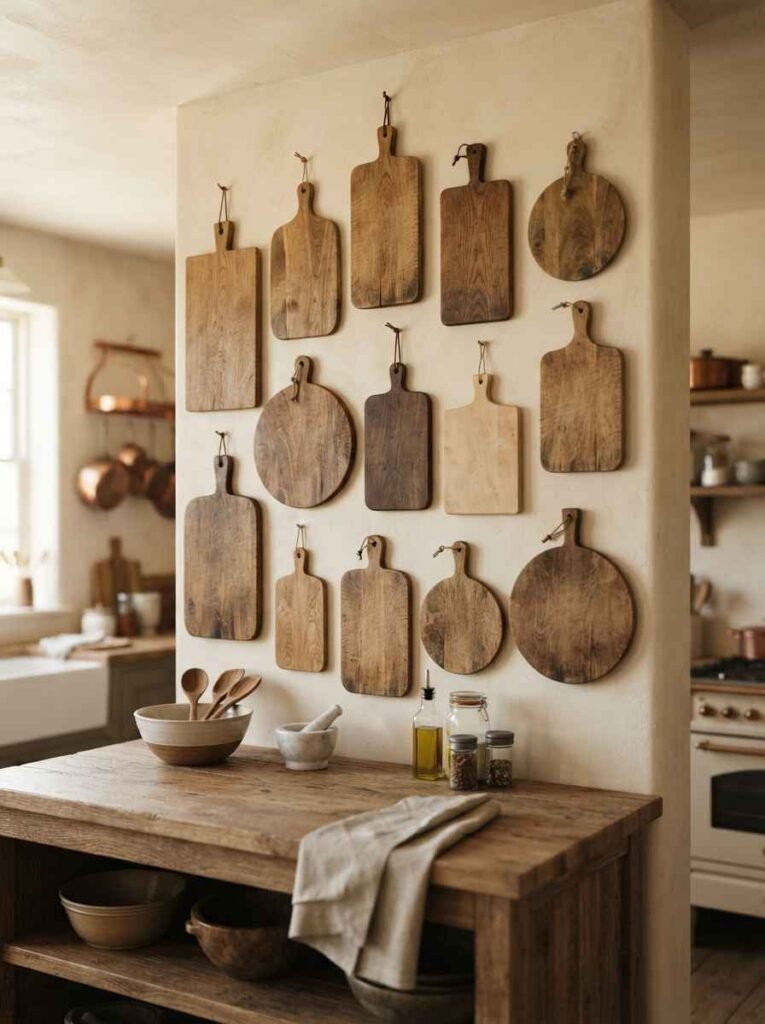
19. Old cutting boards displayed as wall art. Free decor if you already have them. Free is my favorite price point.
Group three or four different sizes together for an instant gallery wall that cost you nothing.
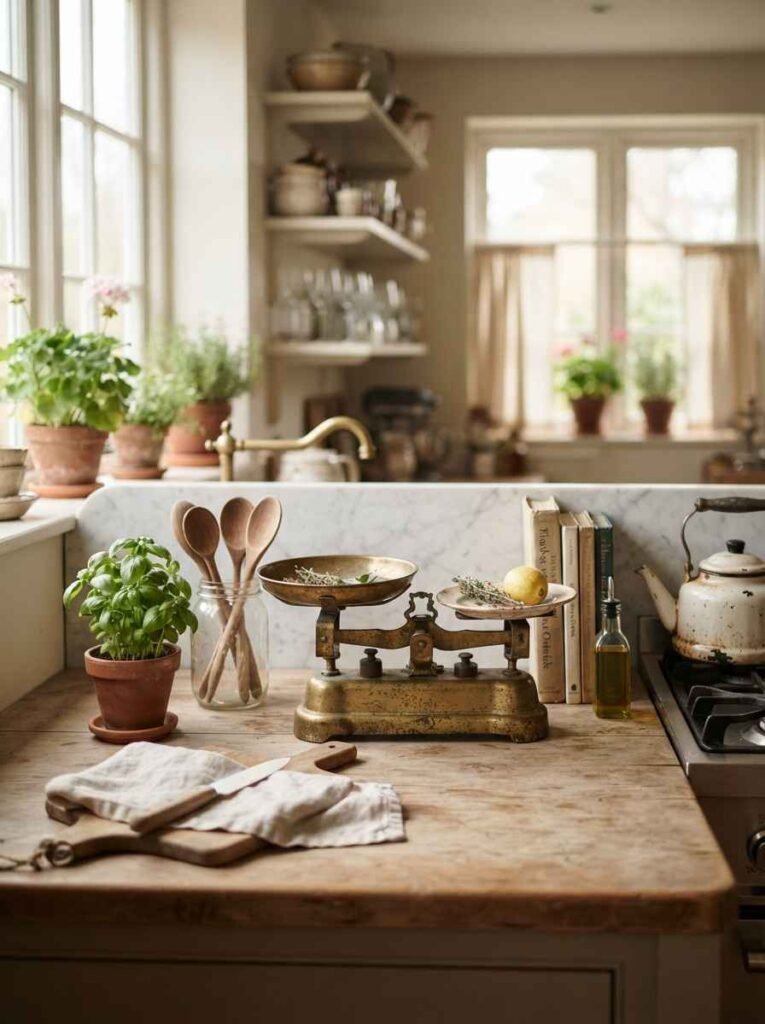
20. A vintage scale or clock as a counter accessory. Small, functional-looking objects do a lot of storytelling, even ones that don’t actually work anymore.
Mine hasn’t told correct time in years and I’ve never once fixed it.
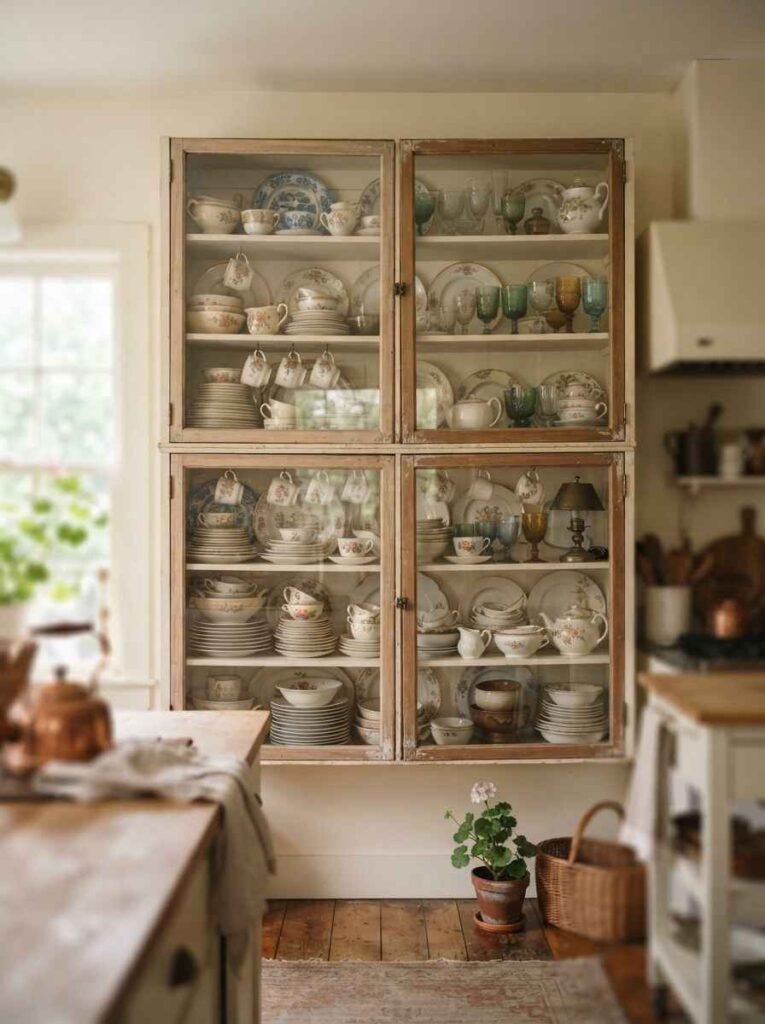
21. Open glass-front cabinets for grandma’s dishes. If you inherited china you’re too nervous to use, display it instead.
It earns its keep that way, and it beats leaving it wrapped in newspaper in a box somewhere.
Small details that pull it all together
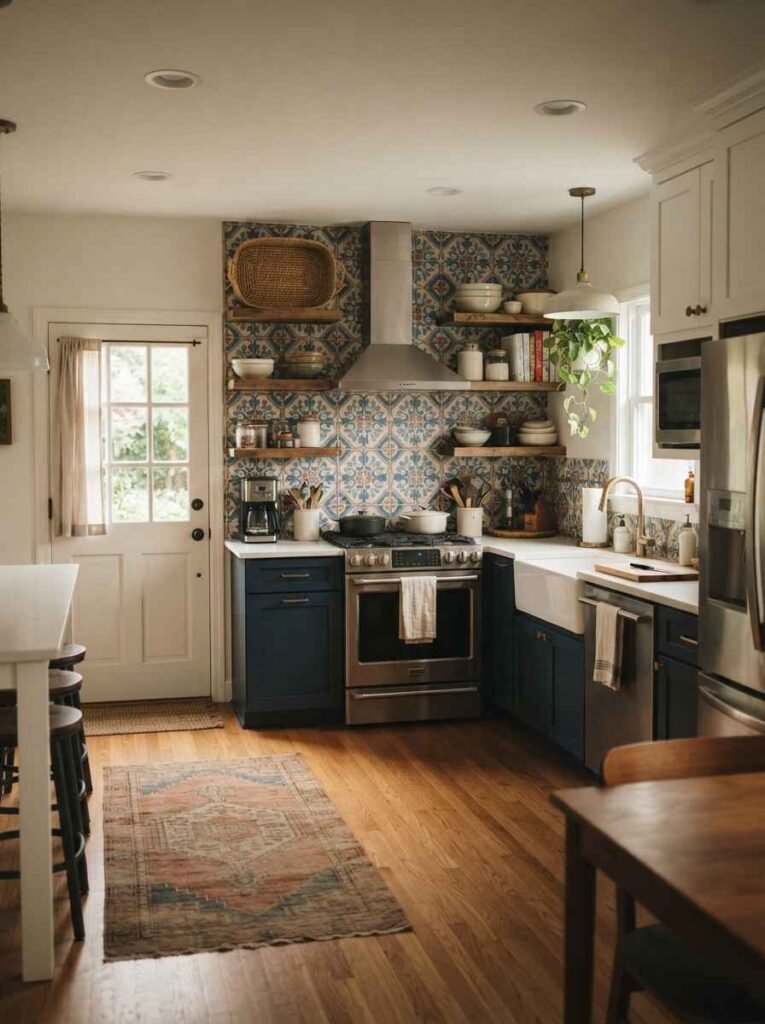
22. A patterned tile backsplash in an unexpected color. Terracotta, deep blue, or ochre tile behind the stove becomes the room’s focal point without any extra effort.
Keep the rest of the room simple so this one detail gets to do the talking.
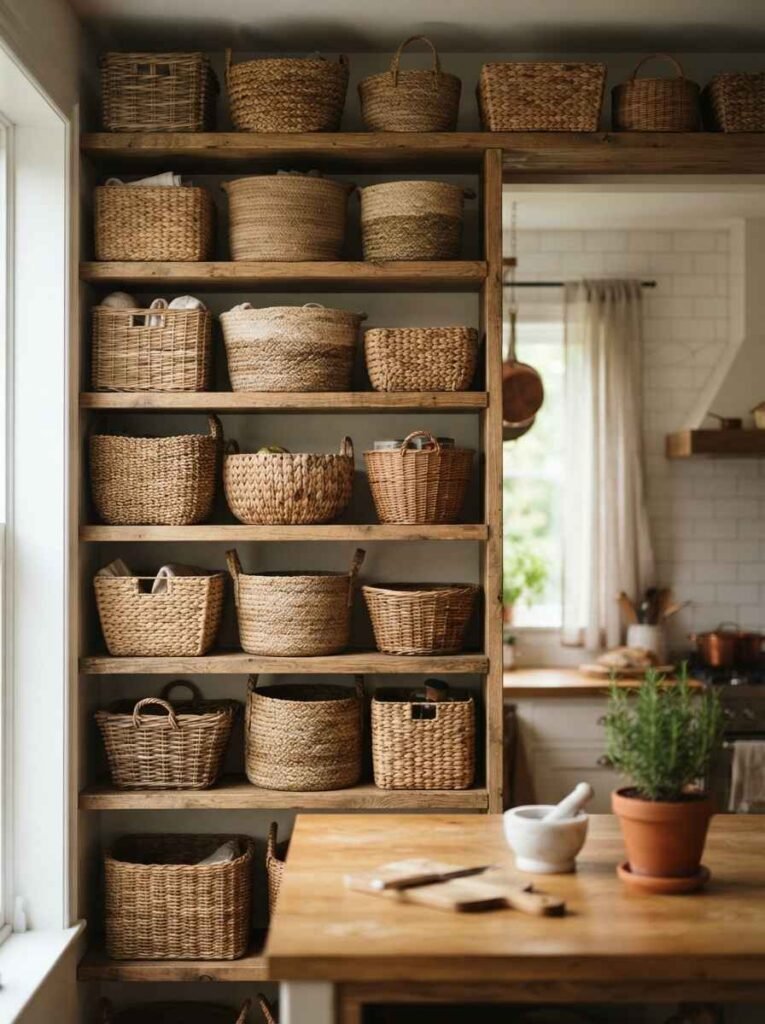
23. Woven baskets for open storage. Baskets hide clutter and add texture in one move. Cheap, functional, and they photograph well too, which matters more than I’d like to admit when I’m saving pins.
24. A single bold rug by the back door. Practical for muddy boots, and it adds one more layer of pattern to the room.
Wow, a $25 rug doing that much visual work still surprises me every time I walk past it.
Quick reference: matching styles to materials
| Style influence | Best material pairing | Mood it creates |
|---|---|---|
| Farmhouse | Butcher block + linen | Warm, lived-in |
| Mid-century | Brass + walnut | Confident, retro |
| Cottage | Rattan + vintage tile | Soft, nostalgic |
| Industrial-eclectic | Black iron + reclaimed wood | Grounded, edgy |
A few honest opinions
IMO, the biggest mistake people make is buying everything new at once. A kitchen that looks collected has to actually be collected over time.
Give it six months. Let a few pieces come from somewhere other than a big box store.
I’ve watched friends drop their entire budget in one weekend at a big furniture chain, and the room ends up looking like a showroom instead of a home. Slower is better here, even though it’s tempting to want the finished look immediately.
Also, don’t skip the lighting. A gorgeous backsplash under a cold, flat overhead light loses half its charm. Warm bulbs, layered sources, done. This is honestly the detail people skip most, probably because it’s less exciting than picking tile.
One more thing worth saying: not every idea on this list will suit your kitchen, and that’s fine. Pick five or six that genuinely fit your space and your budget rather than trying to force all 24 in at once. A room that tries to do everything usually ends up doing nothing well.
If you want more color direction before you commit to paint, the Sherwin-Williams kitchen color guide is worth a look, and HGTV Home’s color collection page shows how these shades work in full rooms rather than just paint chips.
FAQs
Does eclectic style work in small kitchens? Yes, actually better than in large ones sometimes. Small spaces need fewer statement pieces to feel finished, so the mixing stays controlled. One bold rug and one great light fixture can carry a small galley kitchen on their own.
How do I keep an eclectic kitchen from looking cluttered? Pick one or two colors or materials that repeat throughout the room.
Everything else can vary as long as that thread holds it together. I use brass and warm wood as my repeating thread, and it lets almost everything else mix freely.
What’s the cheapest way to start this look? Thrift stores and estate sales. A single vintage piece, a rug, or reworked hardware costs a fraction of a full renovation and changes the whole feel. Start with one piece, live with it a while, then add the next.
Final thought
A cozy eclectic kitchen isn’t about following a checklist. It’s about liking the room you cook in, mess and all.
Pin a few of these ideas, save the ones that actually match how you live (not how your feed looks), and start with just one change this week. Which one are you trying first?
