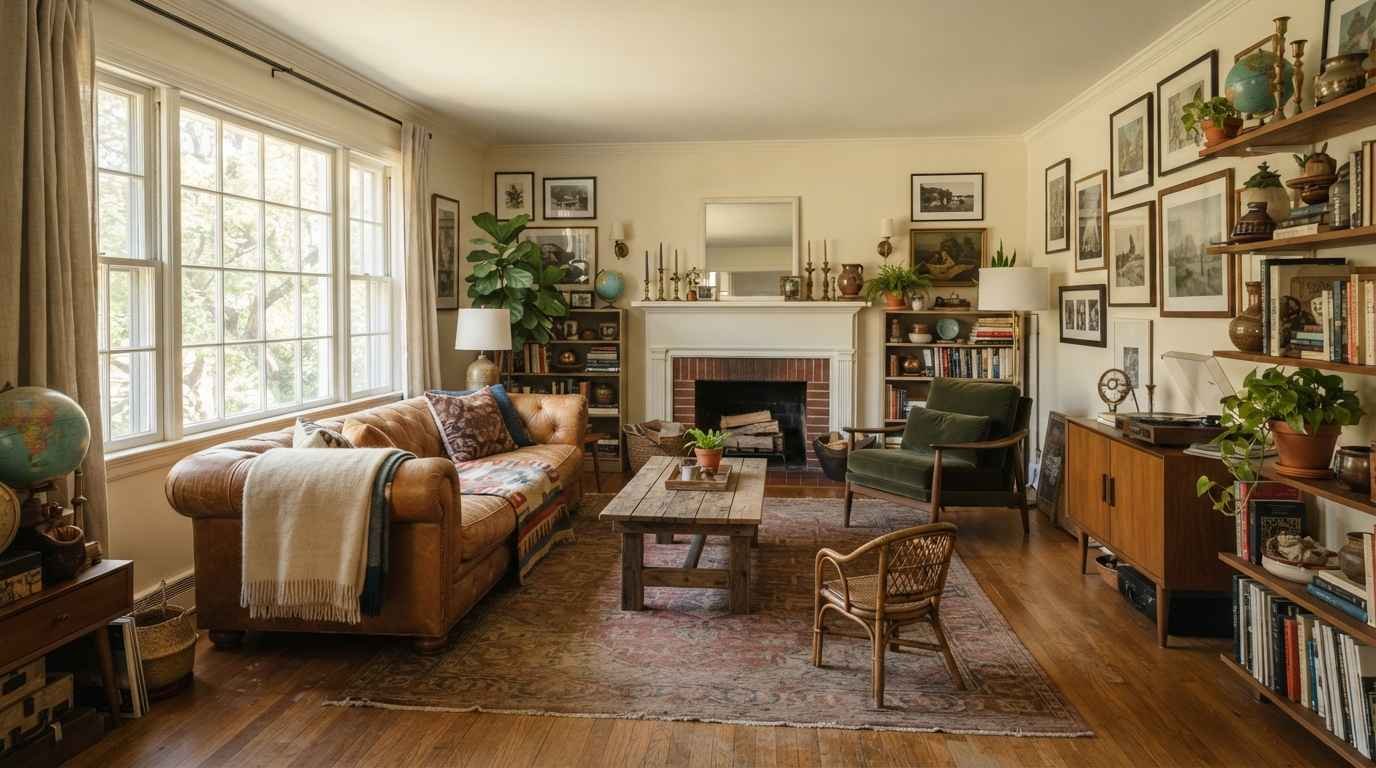
My first attempt at an eclectic living room looked like a garage sale had a fight with a furniture showroom.
Mismatched chairs everywhere. Zero cohesion. My sister walked in and just said “wow, this is a lot.”
She wasn’t wrong.
It took a few years, a lot of trial and error, and probably too many hours scrolling Pinterest boards at midnight to figure out the difference between eclectic and just cluttered.
There’s a real line there, and once you see it, you can’t unsee it.
This list covers the 22 ideas that actually moved the needle in my own space, plus a few I’ve picked up watching other people do it better than me. No fluff, no filler, just stuff you can use this weekend.
Cozy eclectic isn’t a trend that’s fading anytime soon either.
Scroll any Pinterest home feed right now and you’ll see the same mix showing up again and again: warm neutrals, secondhand pieces, and one or two loud choices per room. People are tired of the matchy-matchy showroom look.
They want a living room that looks like it belongs to an actual human with actual taste, not a catalog page.
What eclectic actually means (and what it doesn’t)
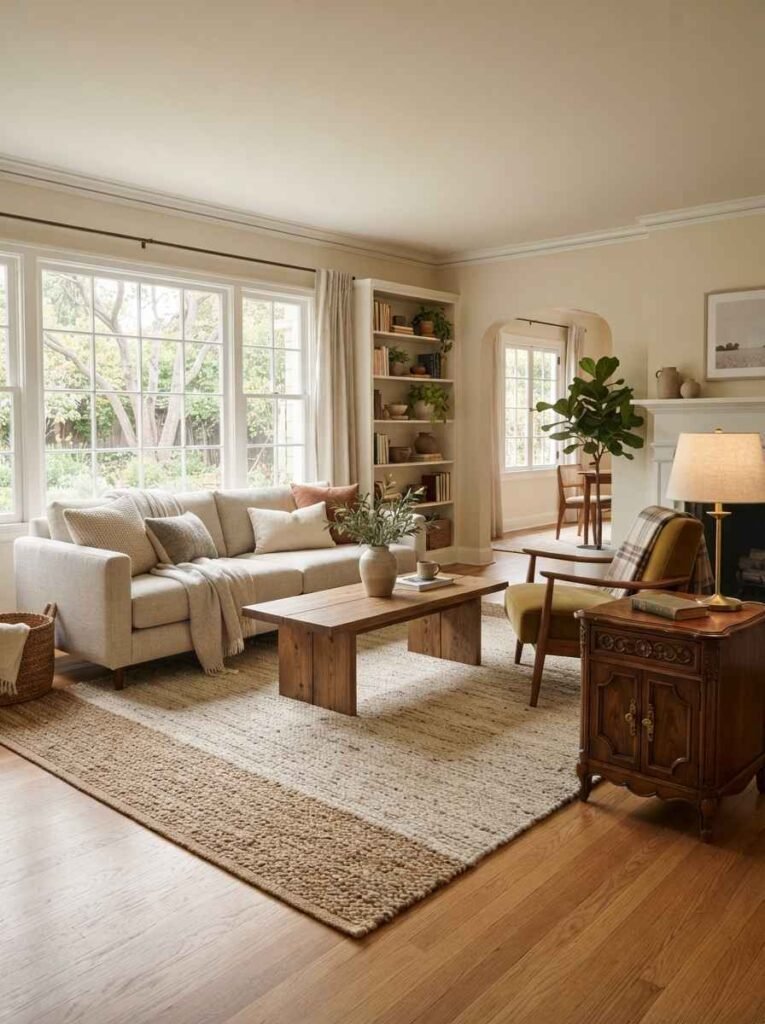
Eclectic doesn’t mean “throw everything you own into one room.” It means picking pieces from different eras, cultures, and styles, then tying them together with a thread of intention. Color, texture, or scale usually does the tying.
The style has roots that go back further than most people think. If you want the deep dive, Wikipedia’s overview of eclecticism in architecture and design is a decent rabbit hole for a slow Sunday.
Think of it like a good playlist. You wouldn’t put 12 songs from the exact same artist in a row and call it a mixtape.
You’d pick tracks that sound different but somehow flow together because of mood, tempo, or a shared theme. Your living room works the same way.
The mistake most people make is trying to buy “eclectic furniture” as if it’s one category at a store.
It isn’t. Eclectic is a method, not a shopping list. You build it slowly by combining things that shouldn’t logically go together but somehow do once you find the connective thread.
For now, let’s get practical.
Mixing furniture styles without the chaos
1. Pair a vintage sofa with modern chairs
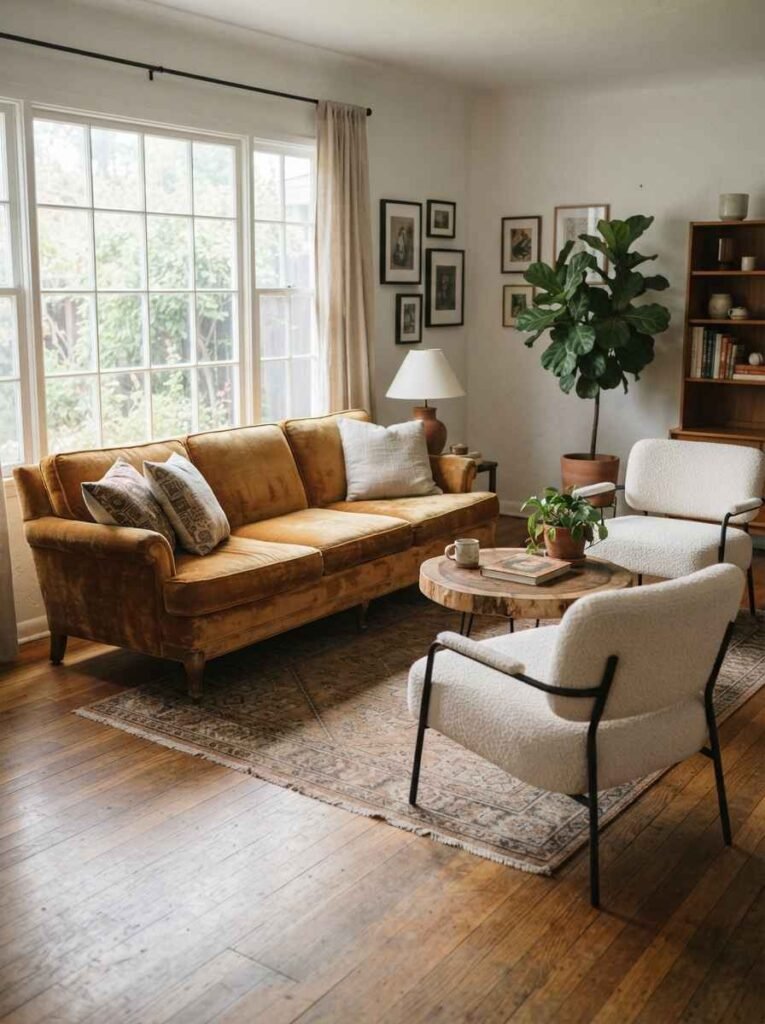
A grandma-era sofa next to two sleek accent chairs sounds wrong on paper. It works in real life.
The contrast is the point. I did this with a 1970s velvet sofa I found for 80 dollars and two boxy modern armchairs, and the room finally felt like it had a personality.
The trick is scale, not style. Keep the proportions roughly similar so nothing looks like it wandered in from a different house.
A dainty vintage loveseat next to an oversized modern sectional will fight each other.
A vintage piece with real presence next to a modern piece with equal presence tends to hold its own.
2. Mix wood tones on purpose
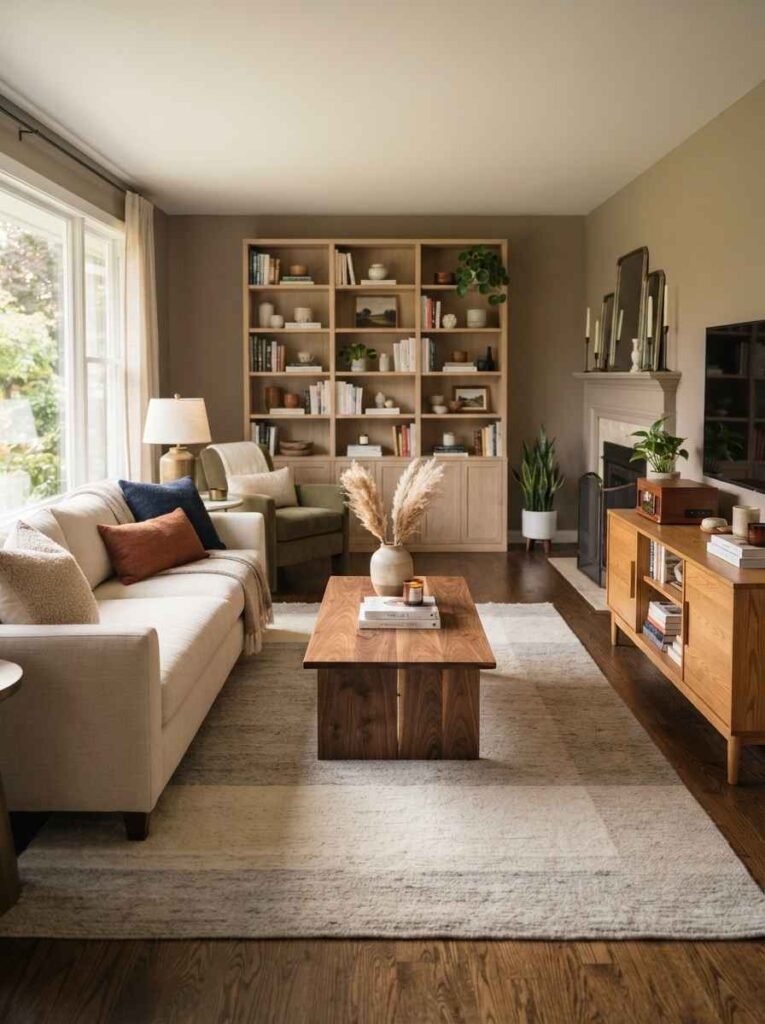
The old rule said match your wood finishes. Ignore that rule.
A walnut coffee table under an oak media console reads as curated, not careless, as long as everything shares a warm or cool undertone.
3. Add one bold statement chair
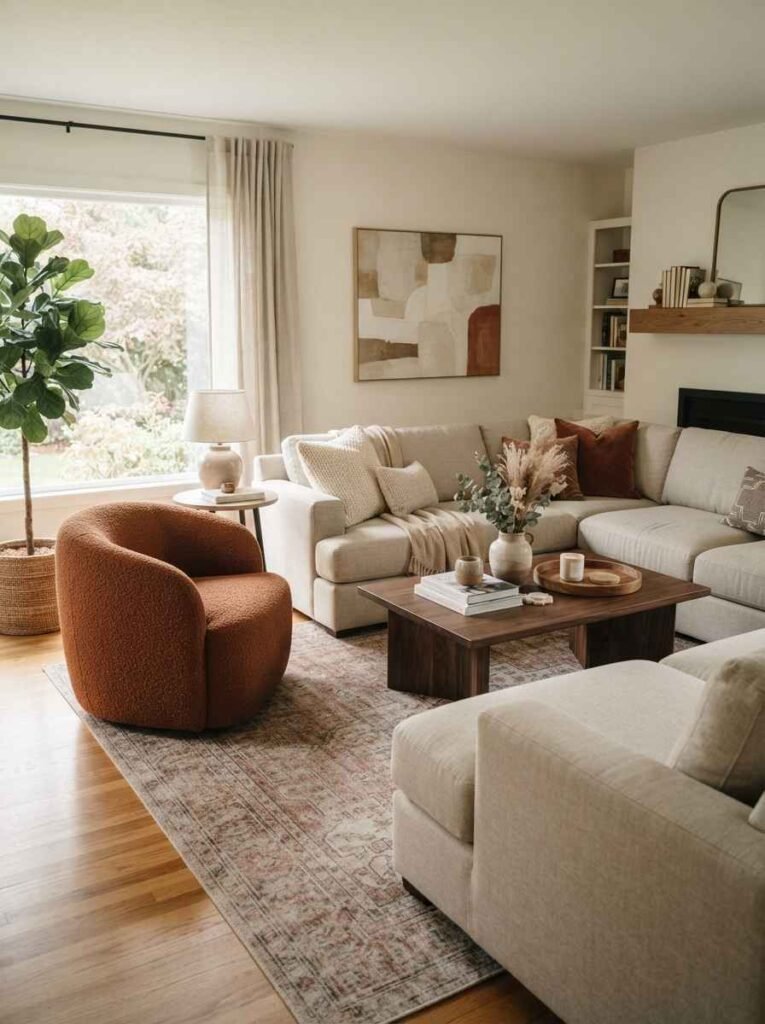
Every eclectic room needs a piece that makes guests ask “where did you get that?” Mine is a curved orange bouclé chair that has zero business existing next to my beige sectional. Somehow it just works.
Layering color and pattern like you mean it
4. Anchor with a neutral base, then build up
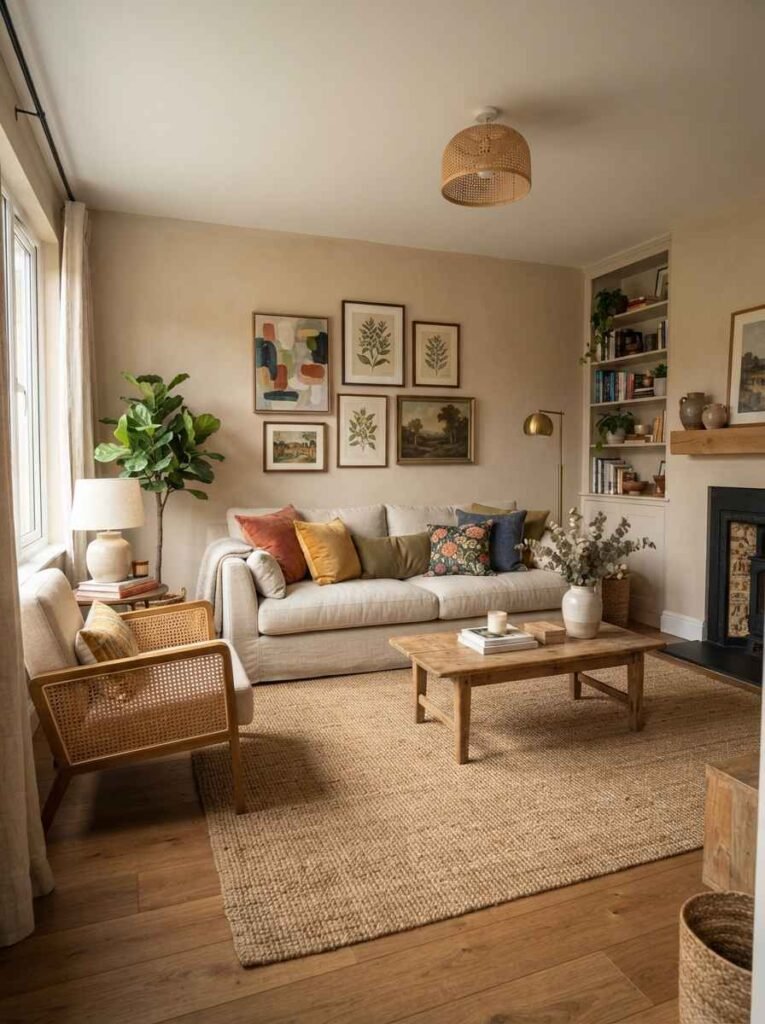
Start with walls, floors, and your biggest furniture piece in a calm neutral. That’s your canvas. Then go wild with everything smaller: pillows, art, rugs, throws.
5. Clash prints on purpose
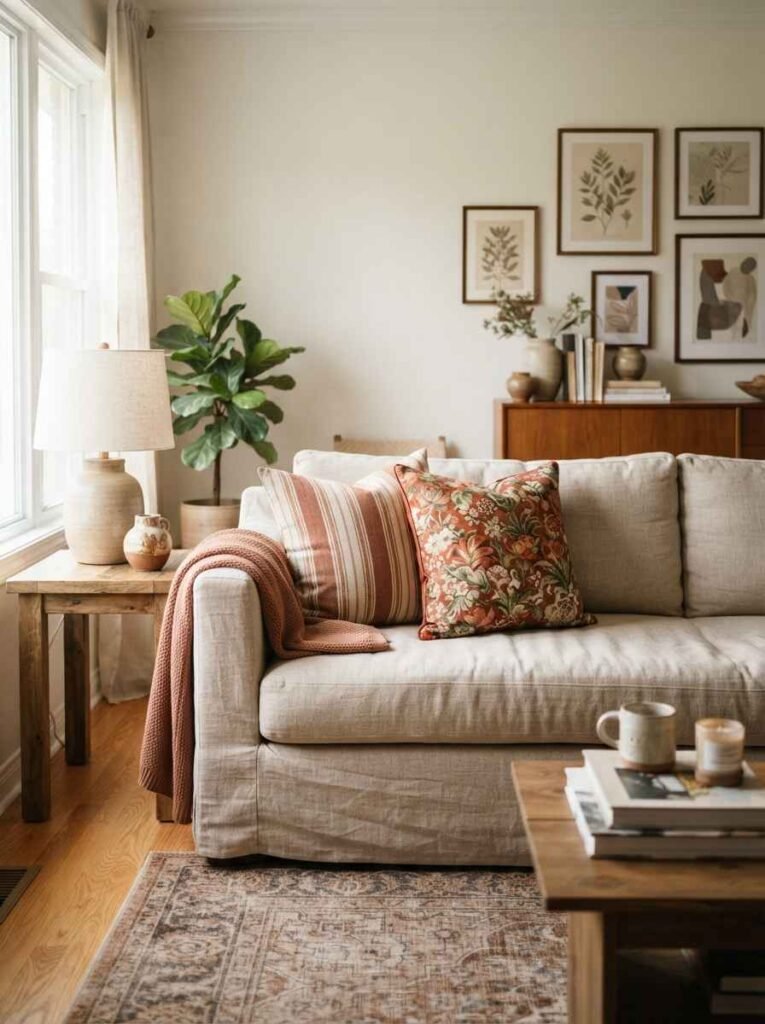
Florals with stripes. Geometric with paisley. IMO the trick is keeping one shared color between the two patterns so your eye has an anchor point.
Without that anchor, it just looks like an accident.
I threw a striped throw pillow next to a floral one on my sofa last year, both in slightly different shades of the same rust color, and it’s the combo people compliment the most when they visit.
Different scale helps too. Pair a large-scale pattern with a small, tight one so they don’t compete for the same visual space.
6. Use the color wheel’s opposite trick
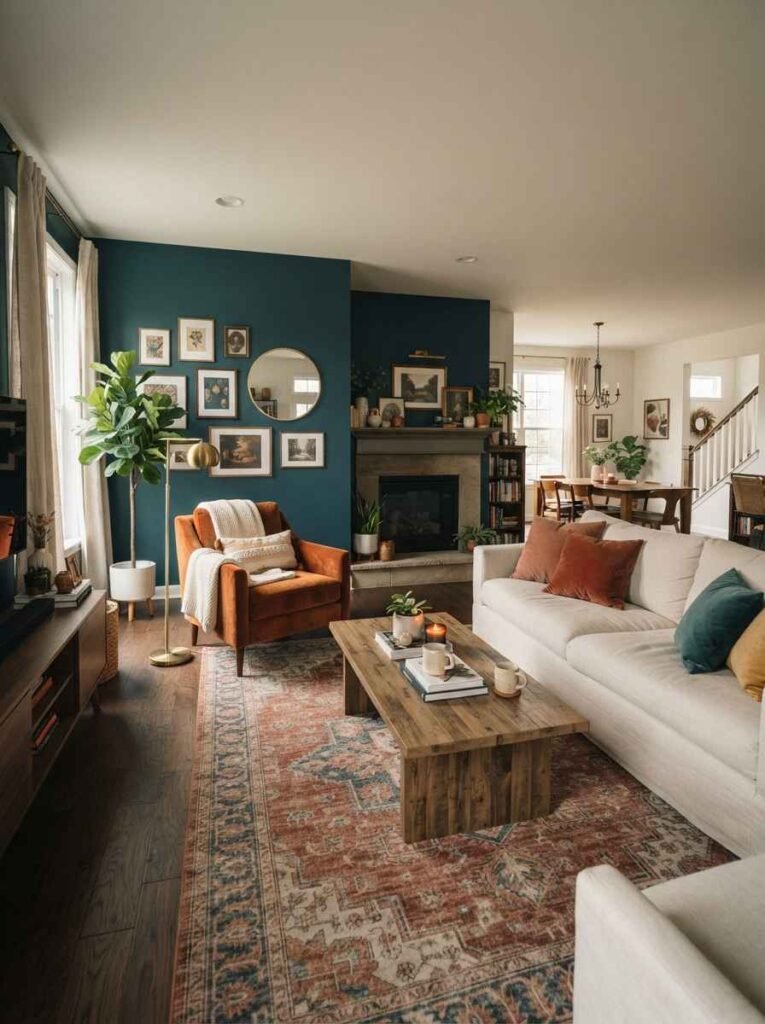
Complementary colors, the ones sitting across from each other on the wheel, create instant energy in a room. Rust and teal. Mustard and navy.
If you’re stuck picking a palette, Adobe Color’s wheel tool is genuinely useful for testing combos before you buy anything.
Texture and textiles that make a room feel lived in
7. Stack two rugs
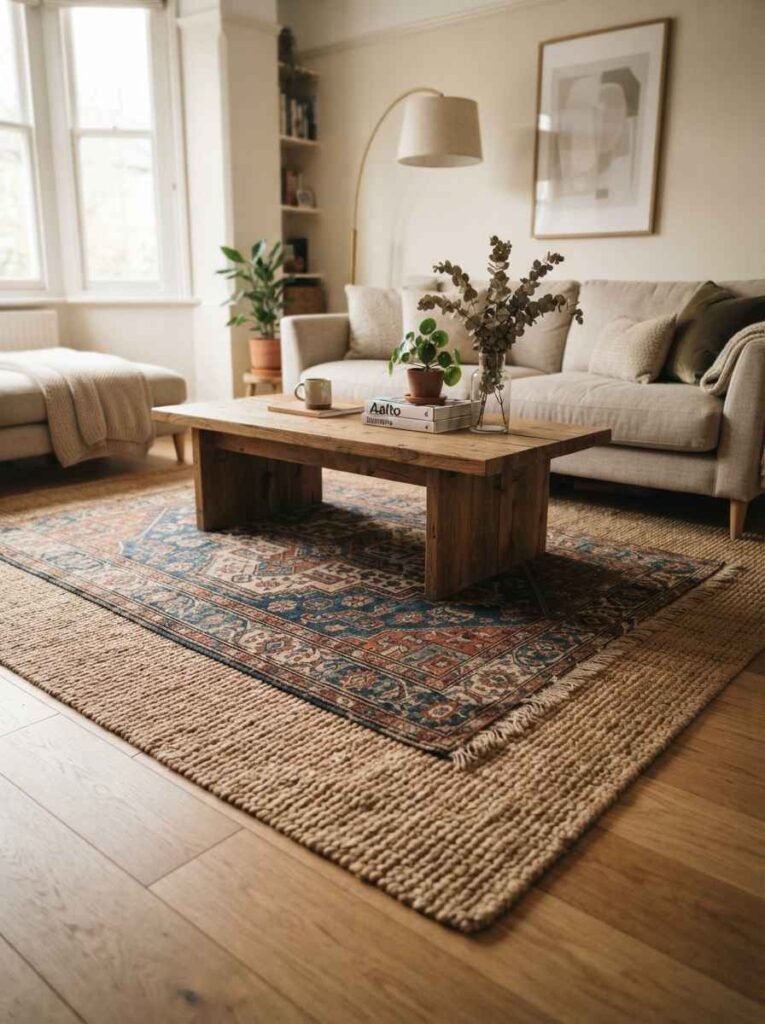
Layering a smaller patterned rug over a larger jute or sisal one adds depth that a single rug just can’t.
It also hides that stain you never fully got out. Not that I’m speaking from experience or anything.
8. Mix rough and smooth textures
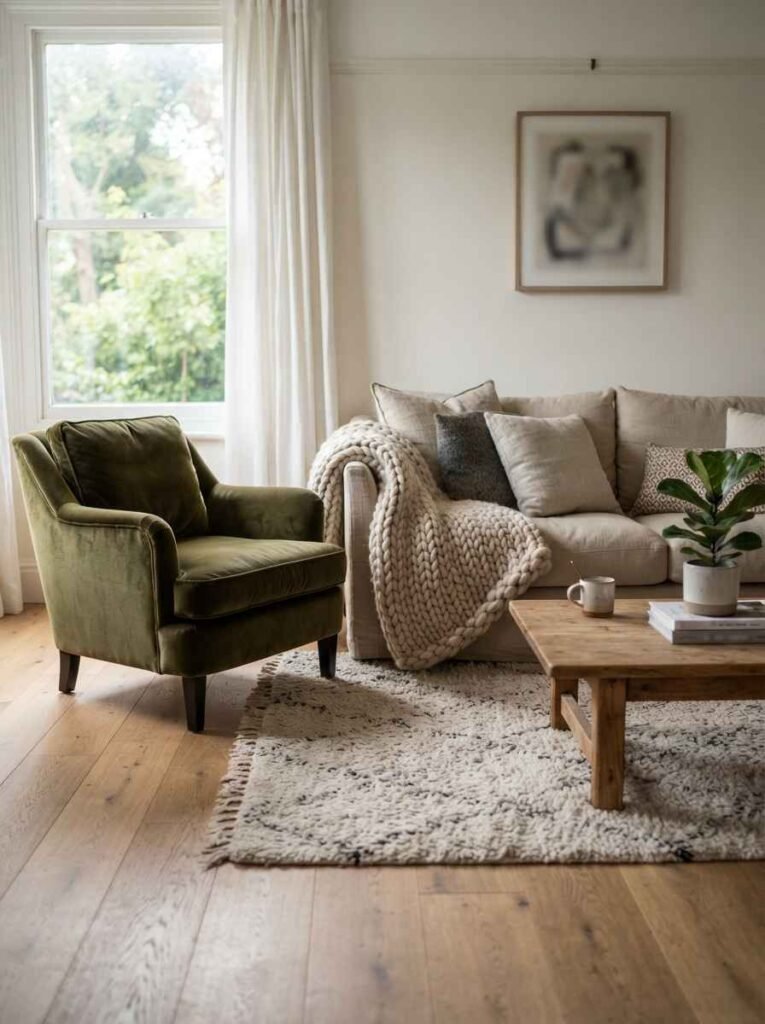
Velvet next to raw linen. Chunky knit throws over a leather chair. Your hand should want to touch everything in the room, and that only happens when textures actually differ.
9. Go odd with your throw pillows
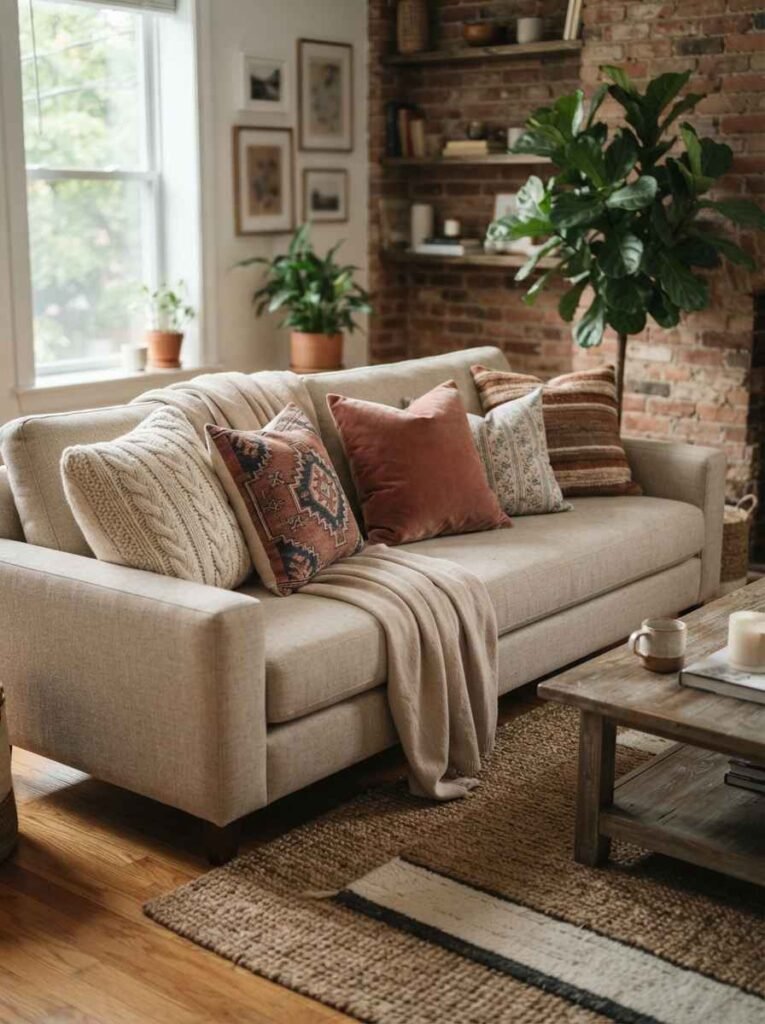
Three or five pillows, never an even matched set.
Even numbers read as showroom. Odd numbers, mismatched but color-coordinated, read as someone who actually lives there and made choices.
Gallery walls and personal displays
10. Build a gallery wall with mismatched frames
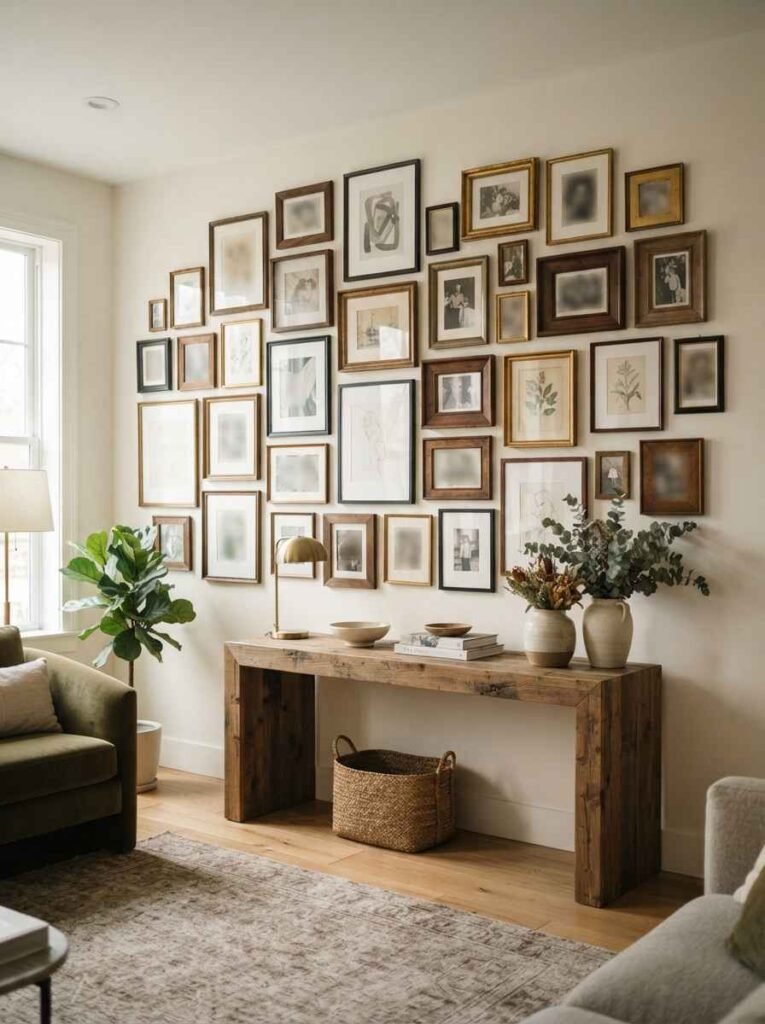
Skip the matching frame sets from big box stores. Thrift frames in different woods and finishes, then unify them with a consistent mat color or a loose color theme in the art itself.
Lay everything out on the floor first before you touch a hammer.
Move pieces around until the spacing and balance feel right, then take a photo from above so you have a map to follow on the wall. This one step alone saved me from about six extra nail holes.
11. Display things you actually collected
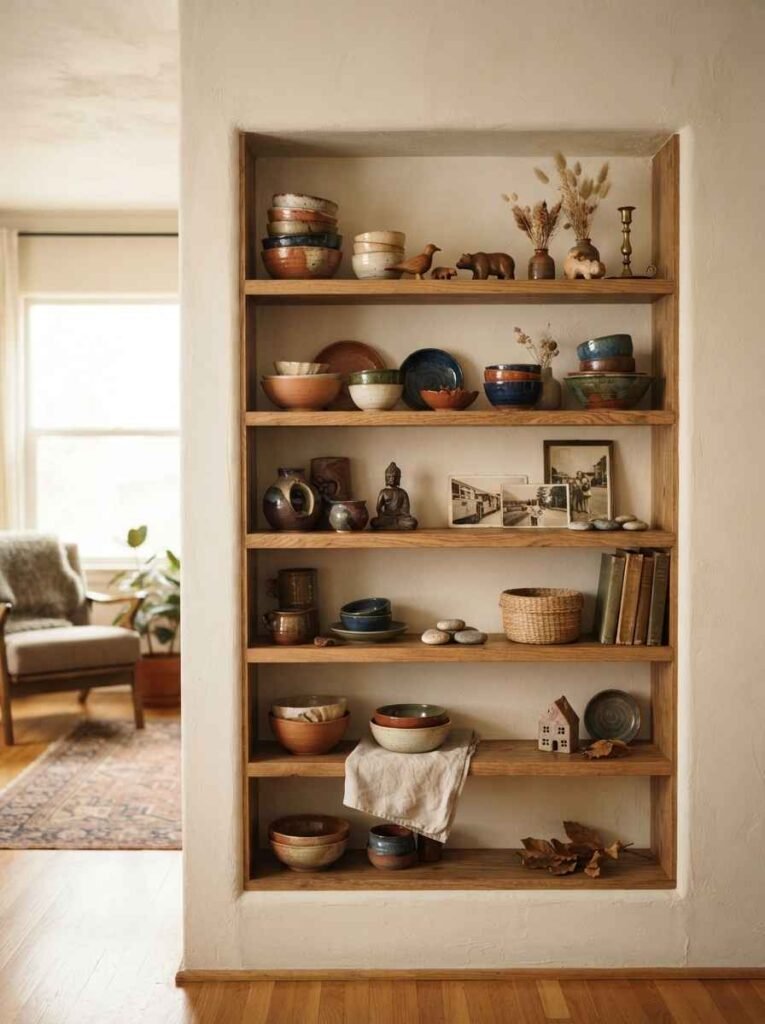
A shelf of ceramic bowls from three different countries tells a better story than anything you bought new last week.
This is the part people notice first when they walk into my place, and it’s the cheapest section of the whole room.
12. Try open shelving over a closed cabinet
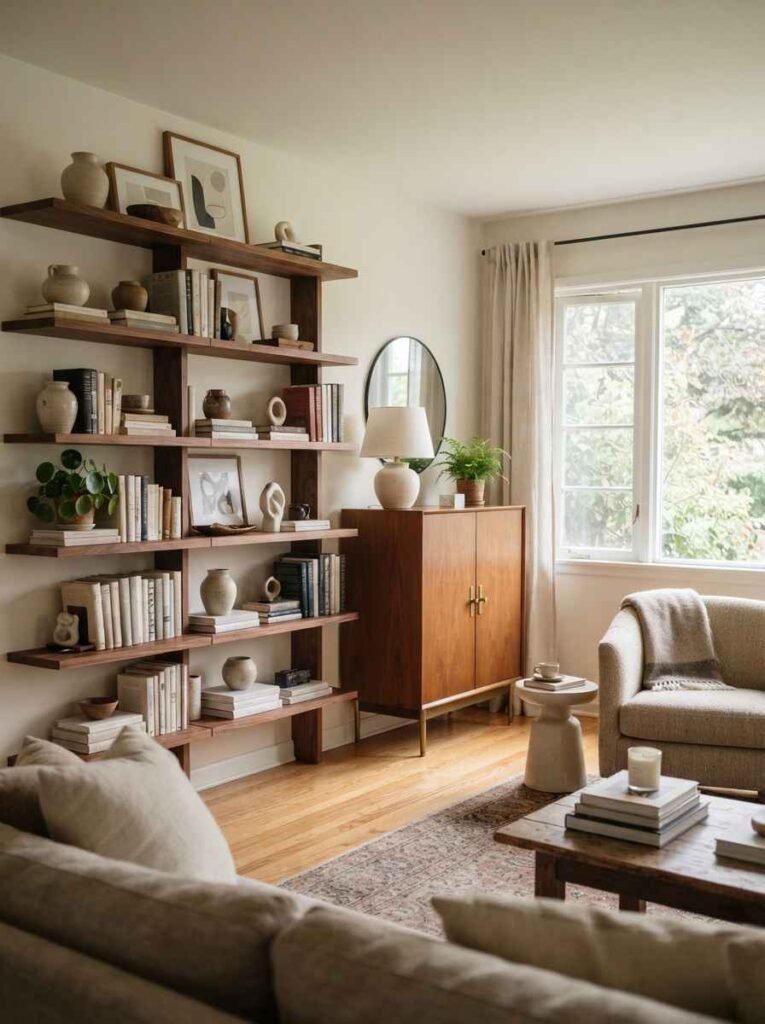
Open shelves let you rotate and style objects seasonally. A closed cabinet just hides your good stuff.
Unless you’re not a great duster, in which case, fair enough, go closed.
Lighting that actually sets a mood
13. Layer three light sources minimum
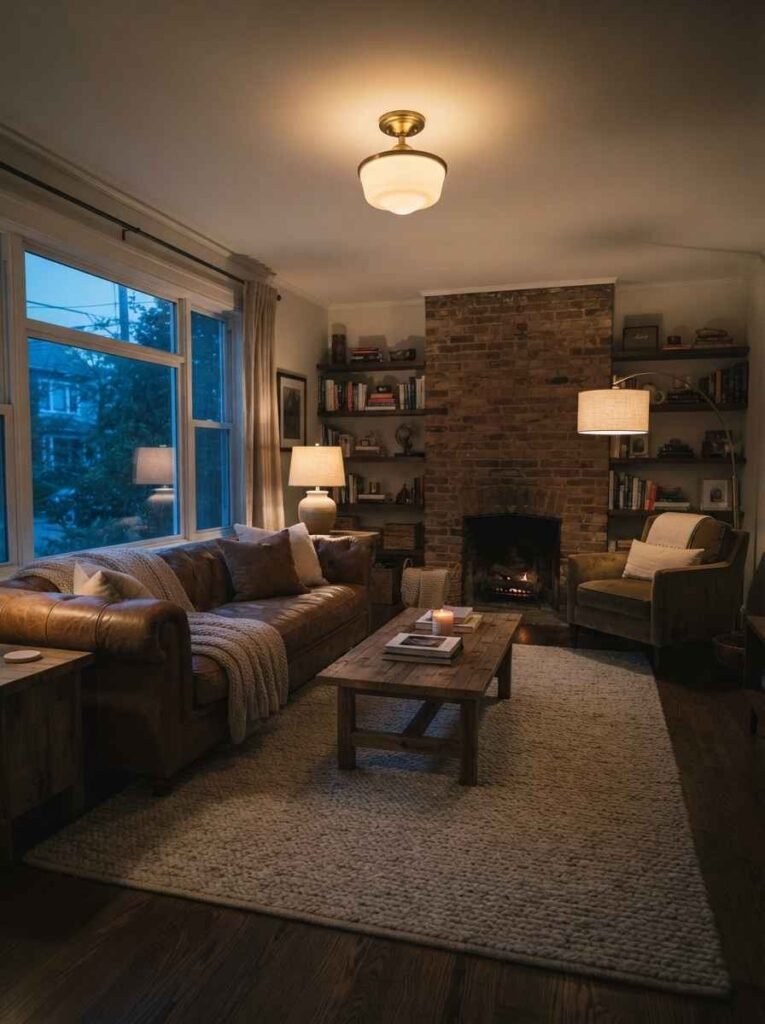
Overhead, table lamp, floor lamp. One light source flattens a room. Three sources at different heights create the kind of glow that makes people not want to leave your couch.
Warm bulbs matter here too. A 2700K warm white bulb beats a cold daylight bulb every time in a living room.
This is insane how much a simple bulb swap changes the entire feel of a space, and it costs almost nothing to test.
14. Hunt for vintage lamp bases
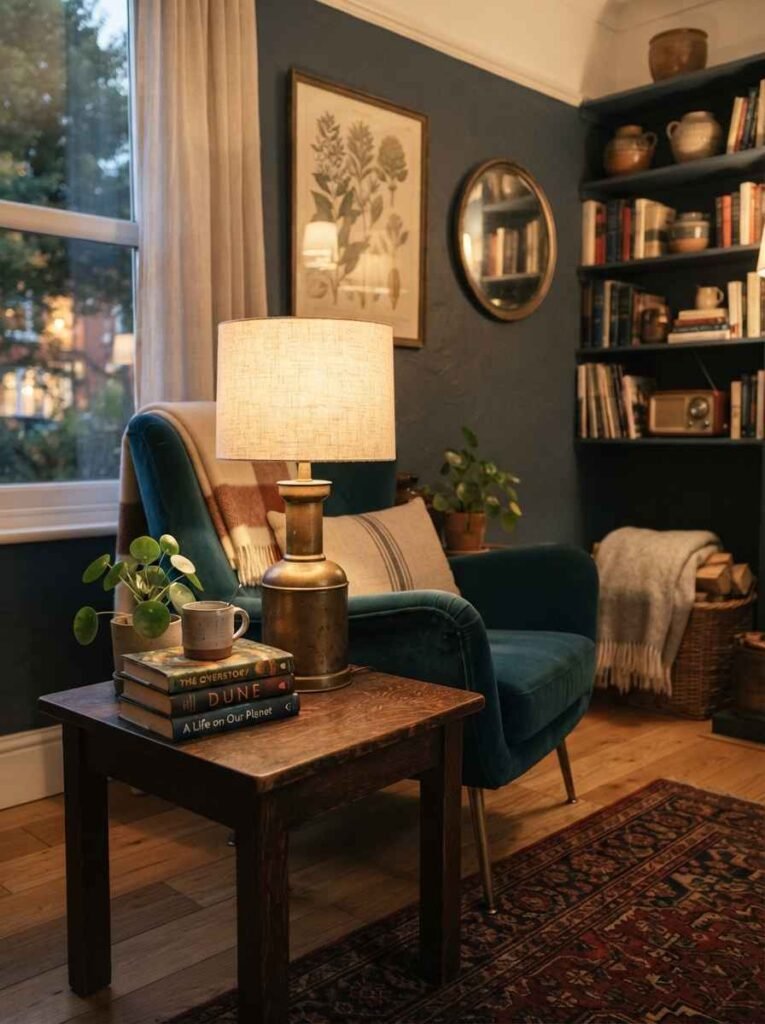
Estate sales and flea markets are goldmines for lamp bases with real character. Rewire an old one if you have to.
A brass lamp with 40 years of history beats a new one from a catalog every single time, in my opinion.
15. Commit to one weird statement pendant
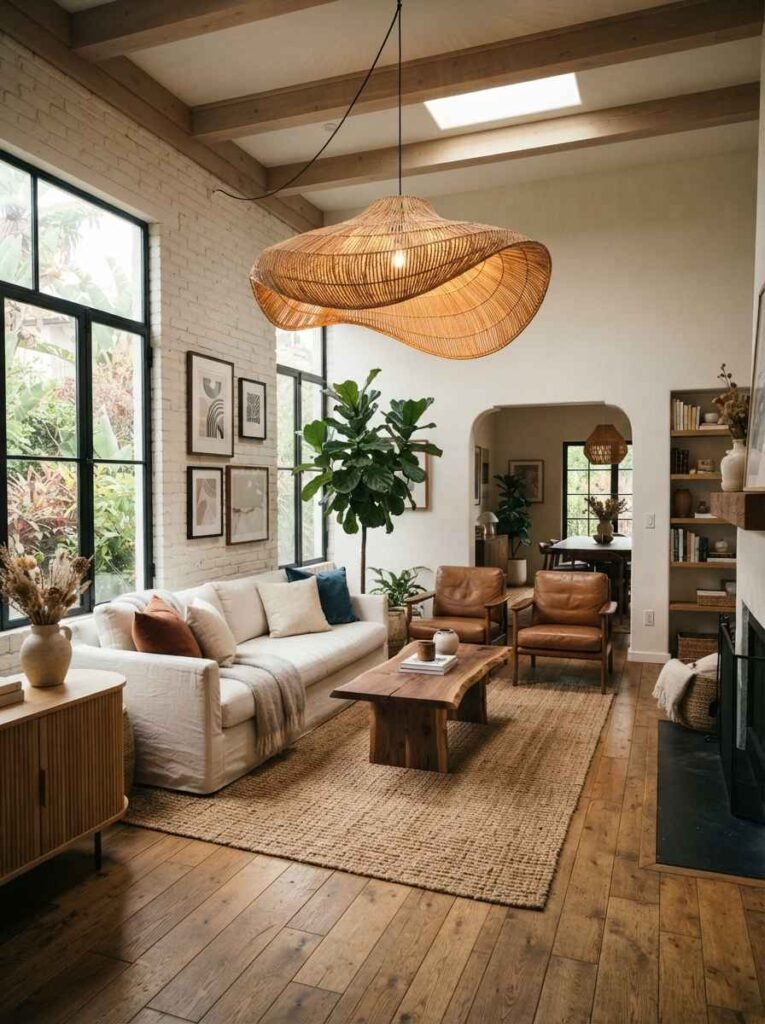
A sculptural or oversized pendant light over your seating area becomes the room’s exclamation point. This is where you can get a little theatrical without it feeling like too much.
Vintage and thrifted treasures
16. Thrift one hero piece each season
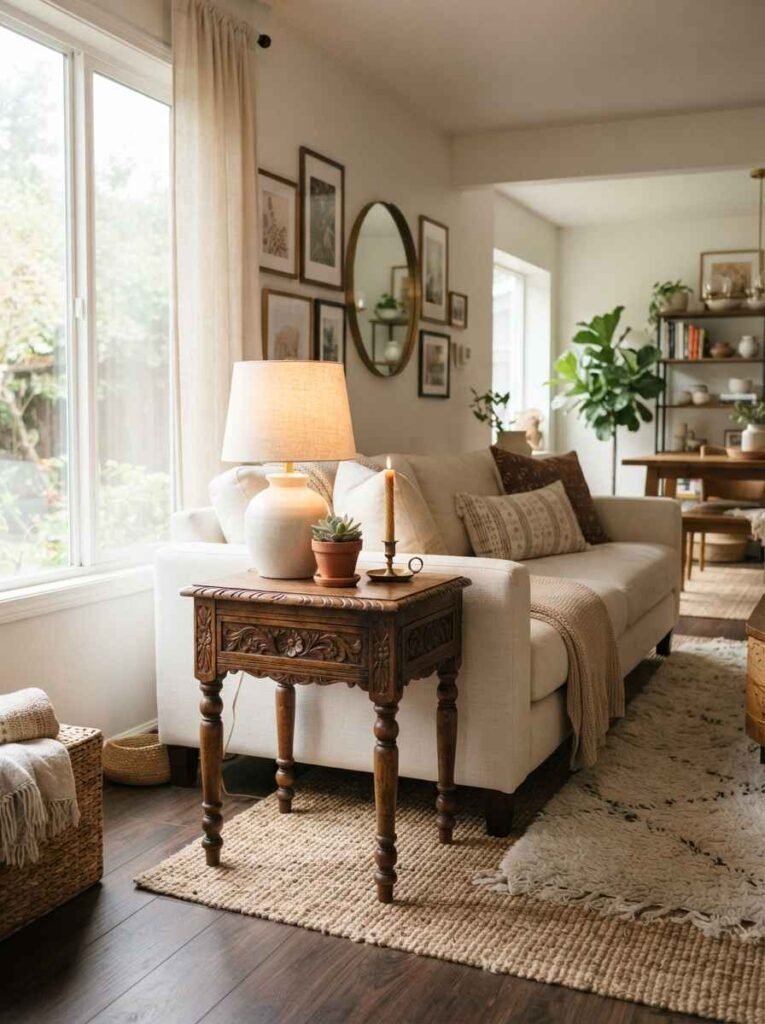
Set a rule: one secondhand find per season, max. It forces patience and keeps the room from feeling rushed or overstuffed. My best find so far was a carved wooden side table for 15 dollars that I still can’t believe nobody else grabbed first.
17. Repurpose furniture for a new job
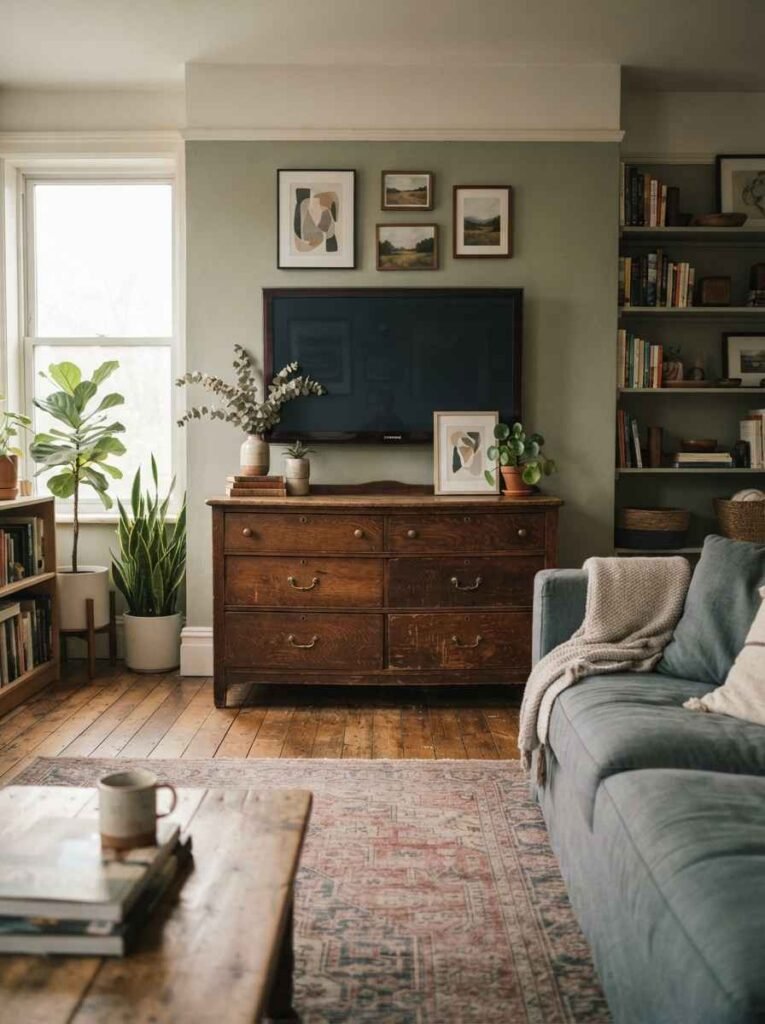
An old dresser becomes a TV console. A vintage trunk becomes your coffee table with built-in storage. This isn’t about style. It’s practical, and it usually saves real money.
18. Bring in a family heirloom, even a small one
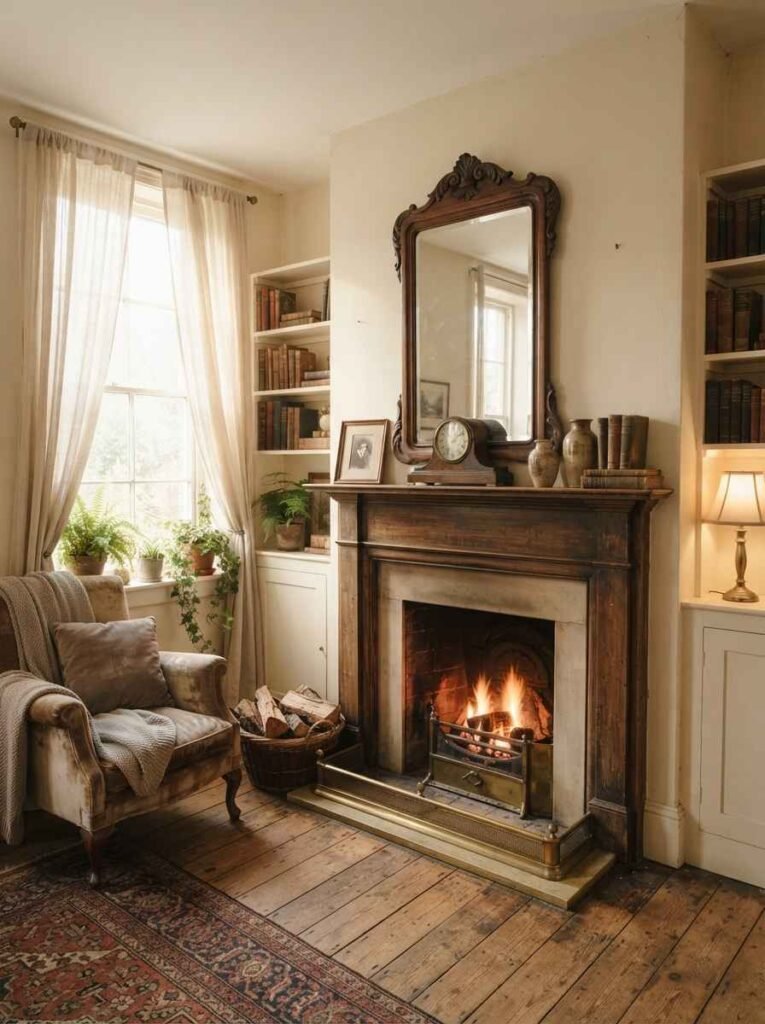
A single piece with actual history, a mirror, a small table, a clock, adds warmth that no amount of new furniture can fake. Ever wonder why grandma’s old chair somehow fits better than the brand new one? That’s why.
Plants and natural materials
19. Group plants in odd-numbered clusters
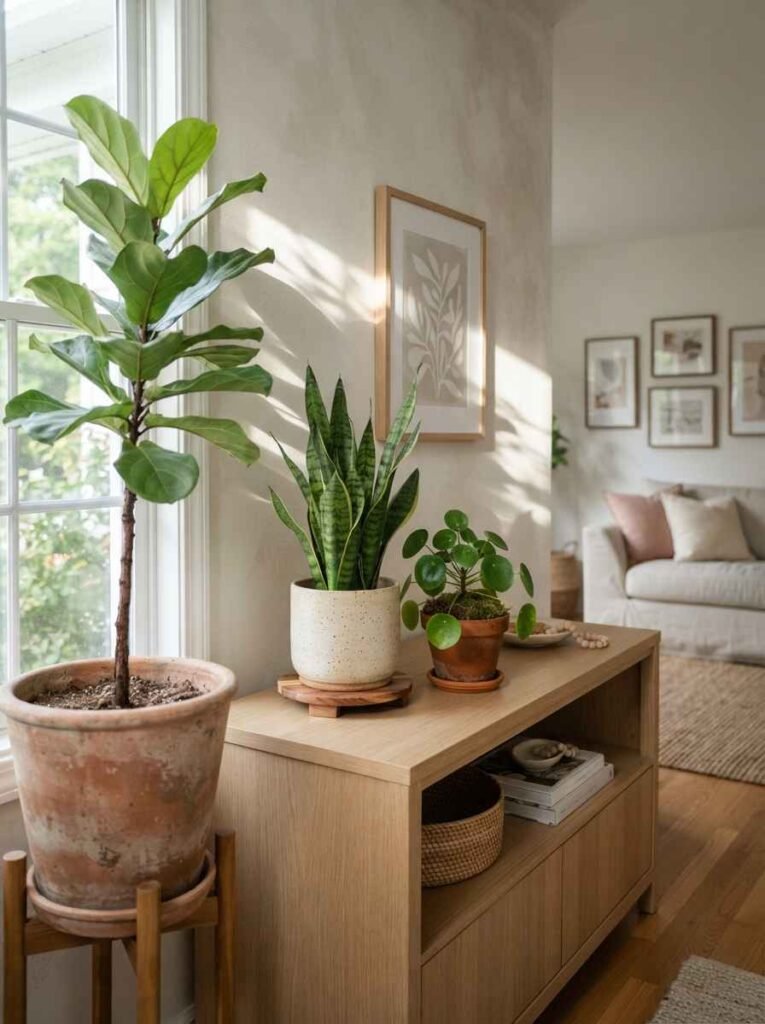
Three plants of varying heights on a console table look intentional. Two look accidental. This is a small detail, but it makes a real difference once you notice it.
20. Bring in rattan, jute, and cane
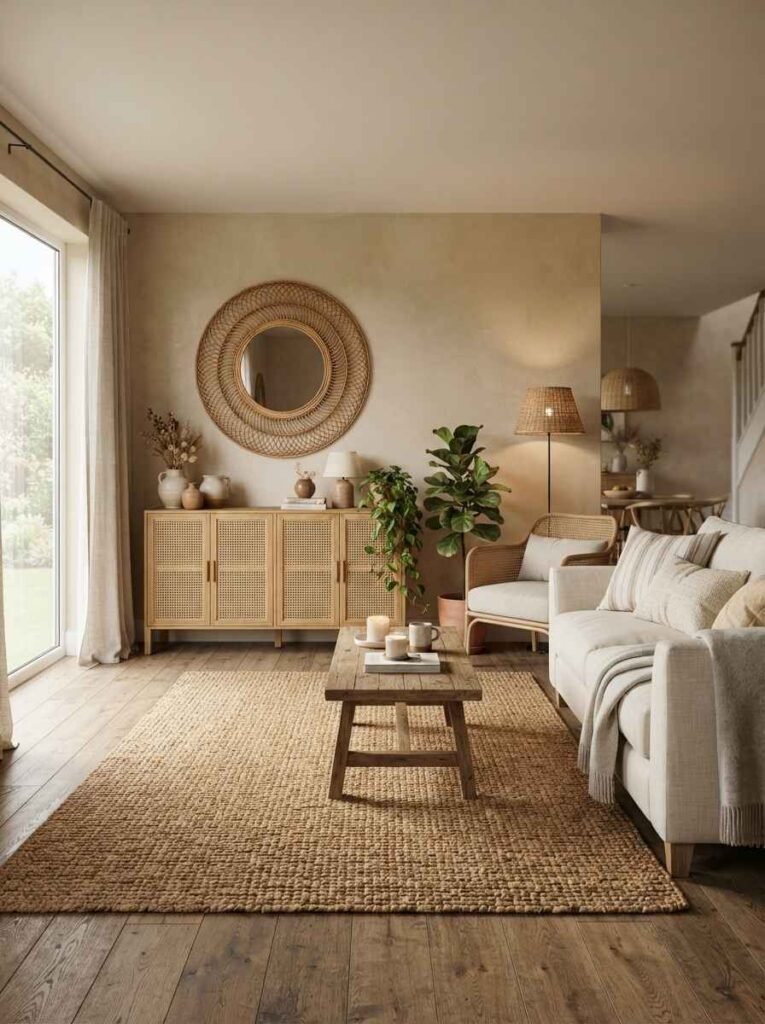
Natural materials soften a room full of hard lines and glossy surfaces. A rattan mirror frame or a cane-front cabinet adds warmth without adding a single new color to worry about.
Small finishing touches that pull it all together
21. Style your bookshelf like a designer would
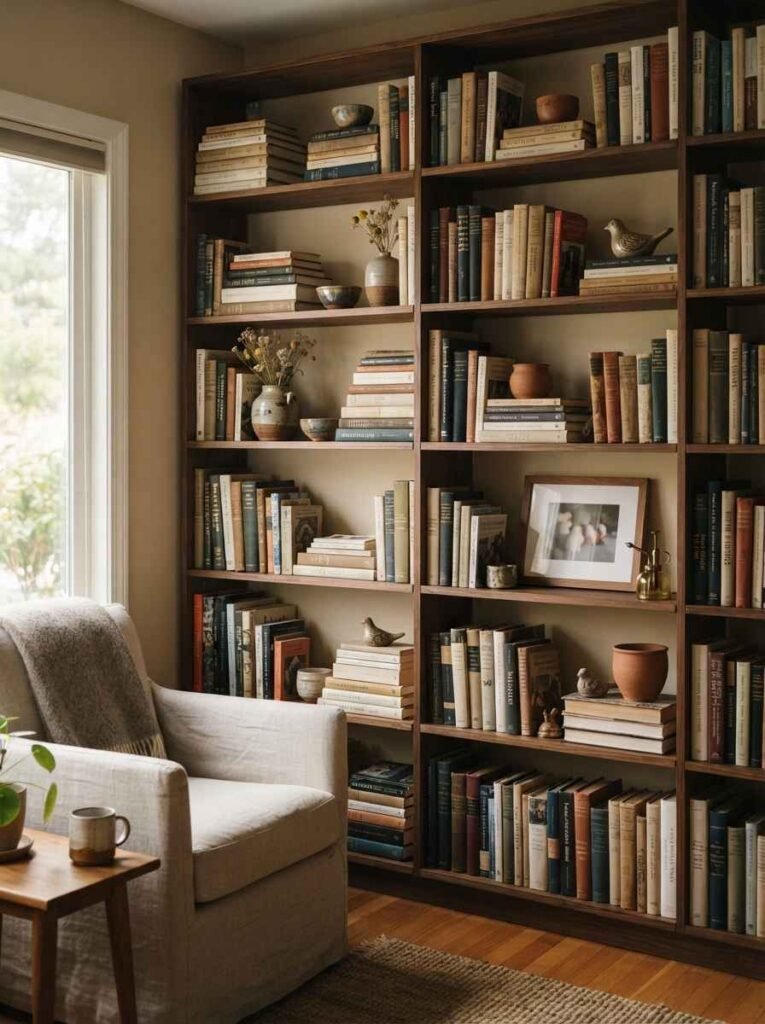
Stack some books flat, some upright. Mix in small objects between stacks: a small bowl, a candle, a framed photo.
A shelf of only books, all upright, all the same size, looks like a library display, not a home.
22. Style your coffee table with a tray
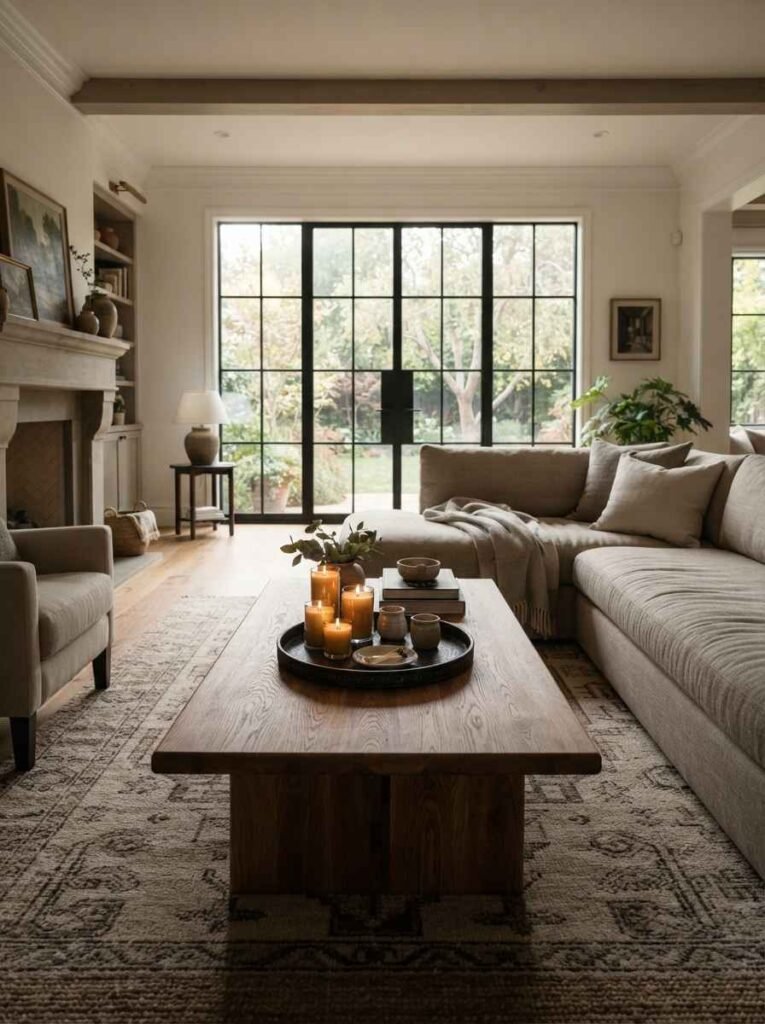
A tray corrals the chaos of candles, coasters, and remotes into something that reads as intentional. It’s a five-minute fix that makes the whole room look pulled together in photos, which, let’s be honest, matters if you’re planning to pin this room later.
Quick cheat sheet for eclectic styling
| Element | Do this | Skip this |
|---|---|---|
| Furniture | Mix 2-3 eras or styles | Buying a matching set |
| Color | Neutral base, bold accents | An all-neutral room |
| Textiles | Layer 3+ textures | One fabric type throughout |
| Display | Odd-numbered groupings | Symmetrical matched pairs |
A quick side note
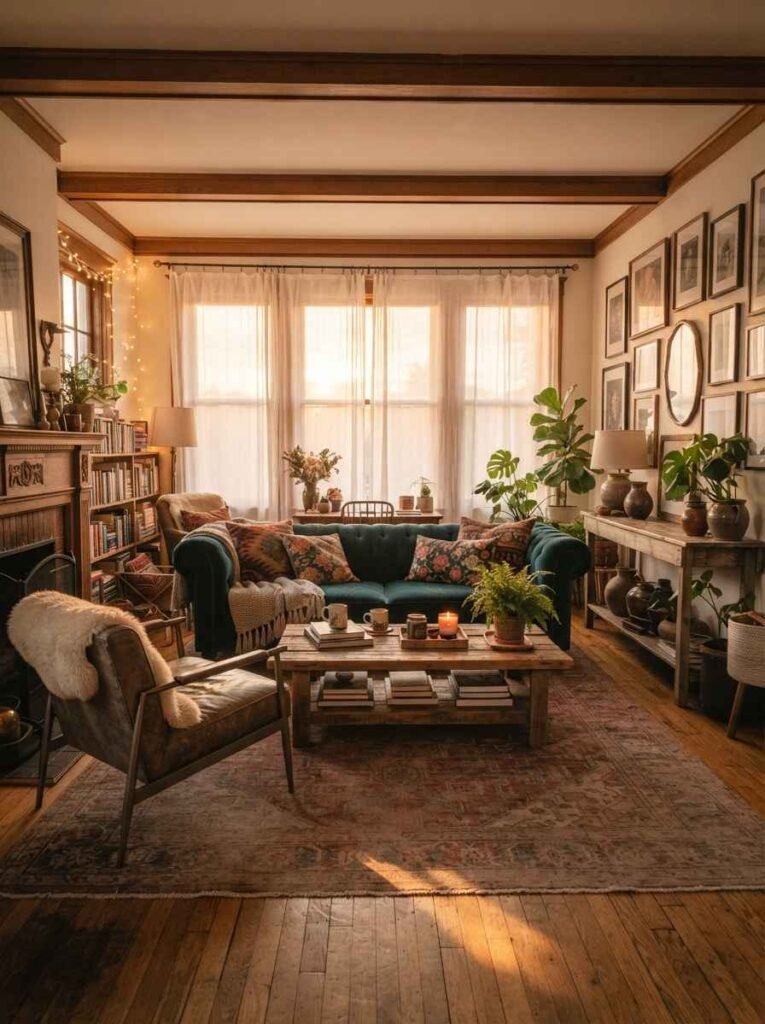
Random thought while writing this: I think the reason eclectic rooms photograph so well for Pinterest boards specifically is that they already have built-in visual tension. Minimalist rooms need perfect lighting to look interesting. Eclectic rooms already have it baked into the mix of colors and shapes. Anyway, back to the list logic.
If you’re pinning inspiration for your own space, Pinterest itself is honestly still one of the best tools for building a mood board before you buy a single thing. Save what pulls you in, ignore what doesn’t, and patterns in your own taste will start showing up fast.
Frequently asked questions
Is eclectic style the same as bohemian style? Not quite. Boho leans heavily on natural textures, fringe, and earthy tones. Eclectic is broader and can include modern, vintage, industrial, or even glam pieces mixed together, as long as there’s a unifying thread.
How many colors should an eclectic living room have? Three to five works well for most rooms. One neutral base, one or two main accent colors, and a couple of smaller pop colors through pillows or art keeps it from feeling random.
What’s the easiest way to start if I have a tight budget? Start with textiles. New throw pillows, a thrifted rug, and a couple of secondhand frames cost very little and change a room fast. Furniture swaps can come later once you know your direction.
Final thought
Eclectic design rewards patience more than perfection.
Give yourself permission to add pieces slowly, thrift when you can, and trust the combinations that make you smile even if they seem a little odd on paper.
Which of these 22 ideas are you trying first? Save this list, pin your favorites, and let your living room actually look like you.
