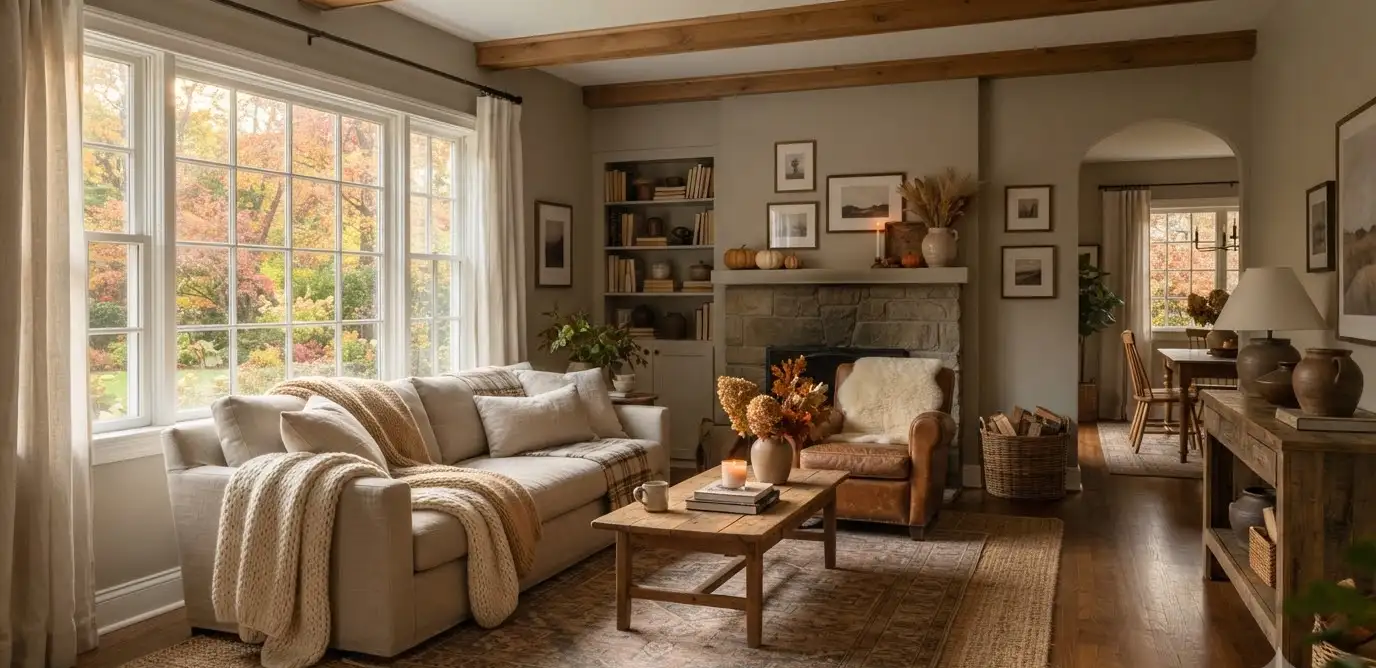
Fall decor gets a bad rap. Pumpkins on every surface, plaid throws stacked three deep, orange everything.
I get why people burn out on it by mid-October.
Here’s the thing though. A neutral fall living room does not need a single pumpkin to feel warm.
It needs texture, layered tones, and a little restraint.
I redid my own living room three autumns ago after getting tired of chasing trends, and it’s the only seasonal refresh I’ve stuck with every year since.
This list is built for Pinterest boards and real rooms, not just pretty flat lays. Save what speaks to you, skip what doesn’t, and mix a few of these together.
That’s honestly how the best rooms come together anyway.
1. Start with a warm, layered neutral base
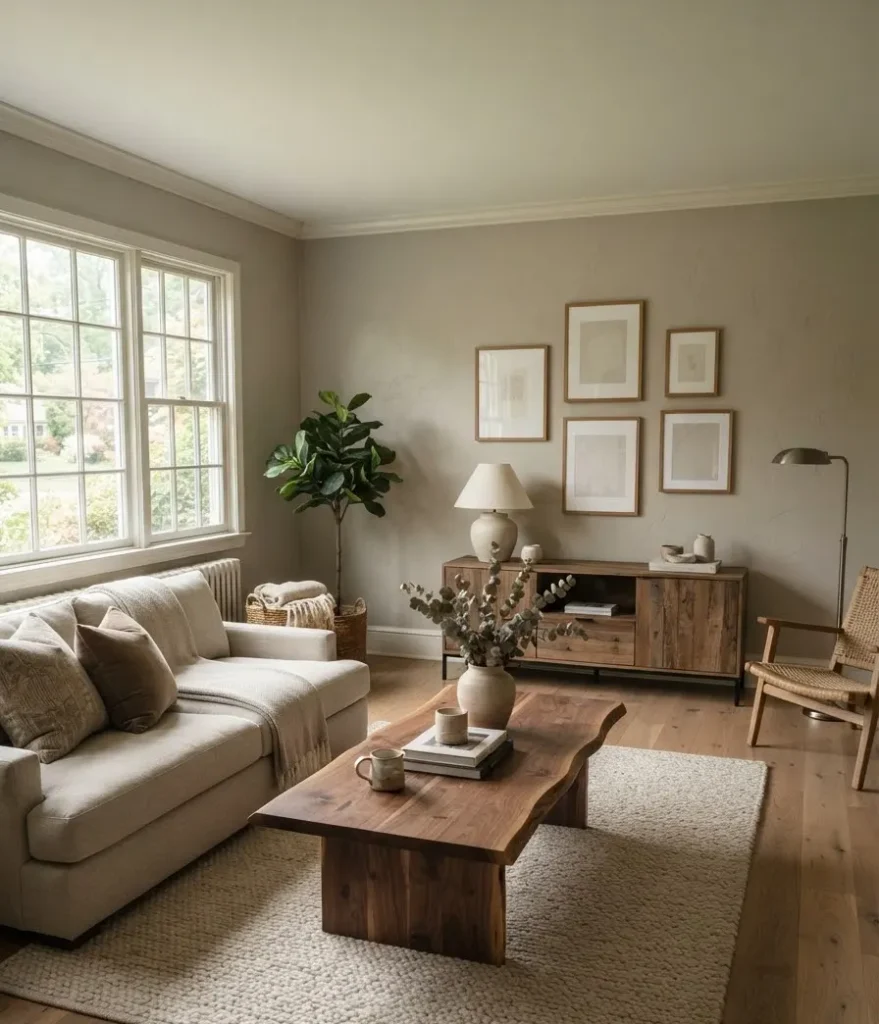
Beige alone can feel flat. Mix warm taupe, oatmeal, and soft camel instead of picking one shade and calling it done.
I painted my walls a warm greige (Sherwin-Williams calls their version “Agreeable Gray,” and it’s popular for a reason) and layered in camel and cream textiles on top.
The contrast in undertones, not colors, is what gives the room depth.
2. Chunky knit throws, always within reach
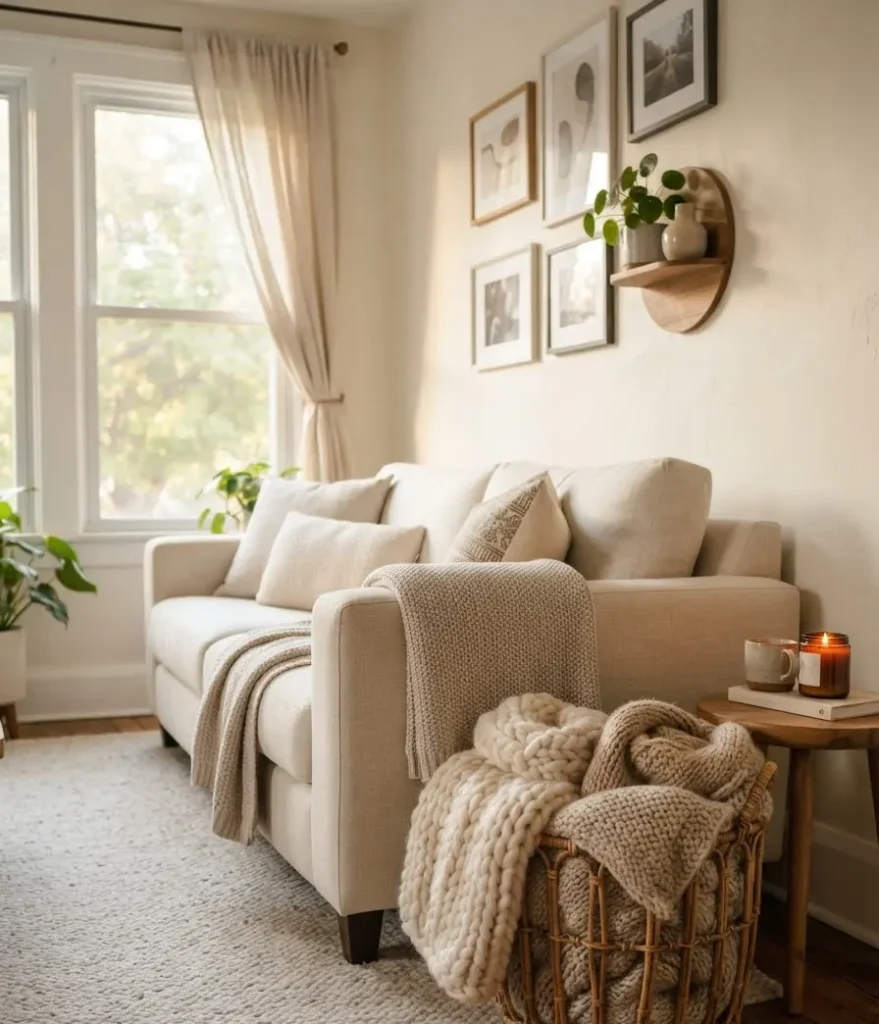
A basket by the sofa with two or three chunky knit throws does more for fall coziness than any candle ever will. Wool, boucle, or heavy cotton all work.
- Drape one over the arm of the sofa, not folded flat
- Keep colors in the same family: cream, oatmeal, dove gray
- Skip anything with a busy pattern; texture is the point here
3. Swap in a mohair or sherpa accent pillow
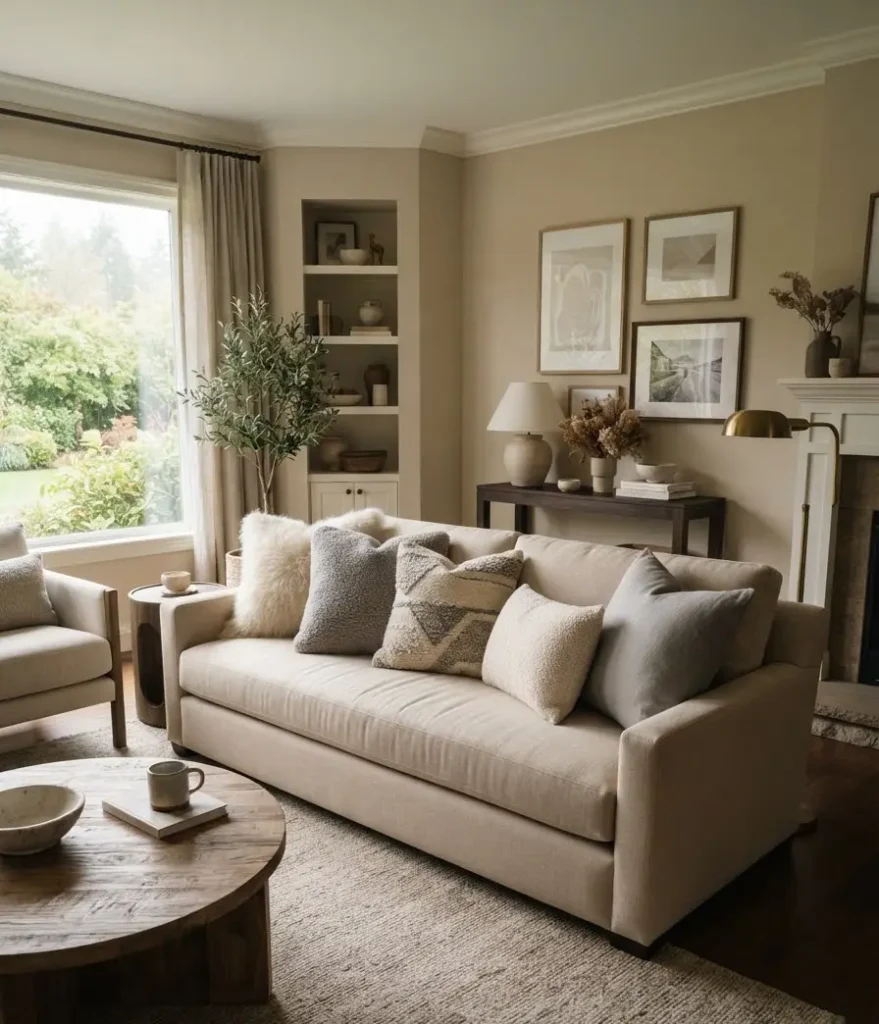
Two or three pillows in mohair, sherpa, or bouclé fabric change the whole feel of a sofa. IMO this is the cheapest high-impact swap on this entire list.
I rotate mine seasonally and keep the rest in a bin under the guest bed. Takes maybe ten minutes.
4. Bring in dried and preserved botanicals
Fresh flowers die. Dried pampas grass, wheat stems, and preserved eucalyptus do not, and they carry that soft fall texture without a hint of orange.
A tall stem in a stoneware vase on the floor next to a bookshelf fills an awkward empty corner instantly.
I’ve had the same pampas arrangement going on two years now and it still looks good.
5. Layer rugs for warmth underfoot
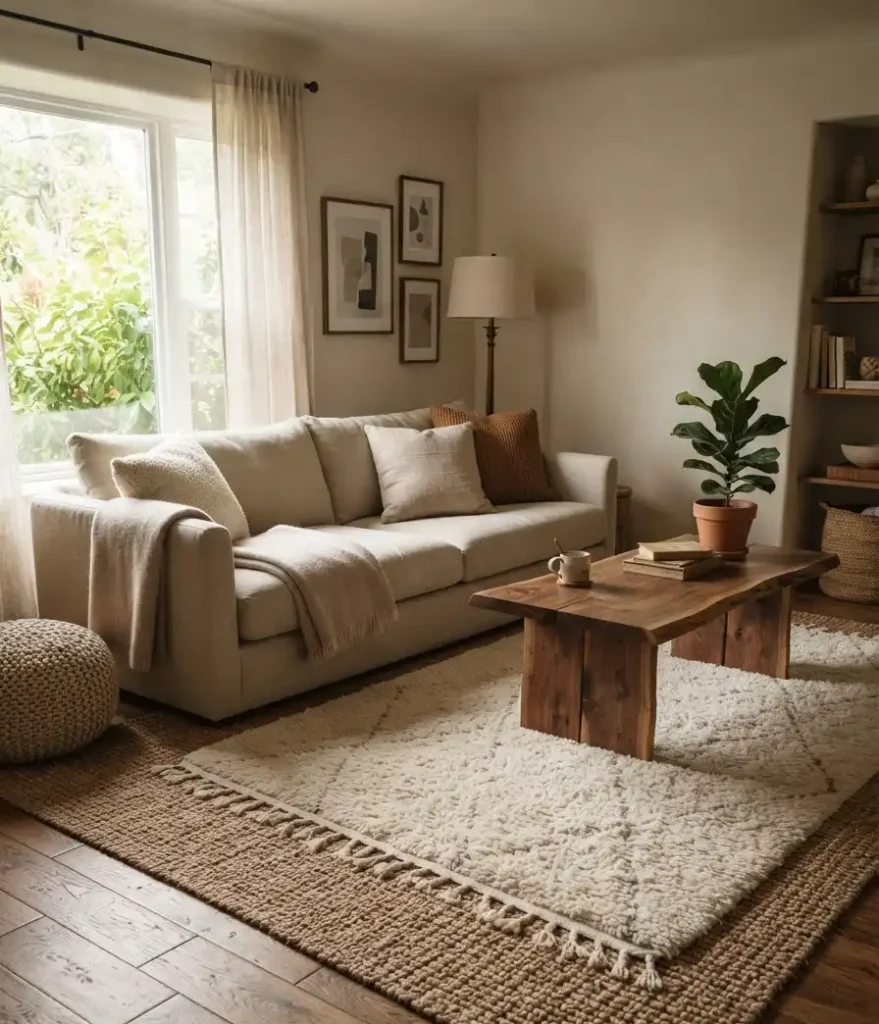
A jute or sisal rug as a base layer, topped with a smaller wool or shag rug, adds both warmth and visual texture.
This works especially well in living rooms with hardwood or tile floors that turn cold once the temperature drops.
Layering rugs sounds fussy on paper. In practice it takes five minutes and instantly makes a room feel more finished.
6. Trade bright whites for candlelight tones
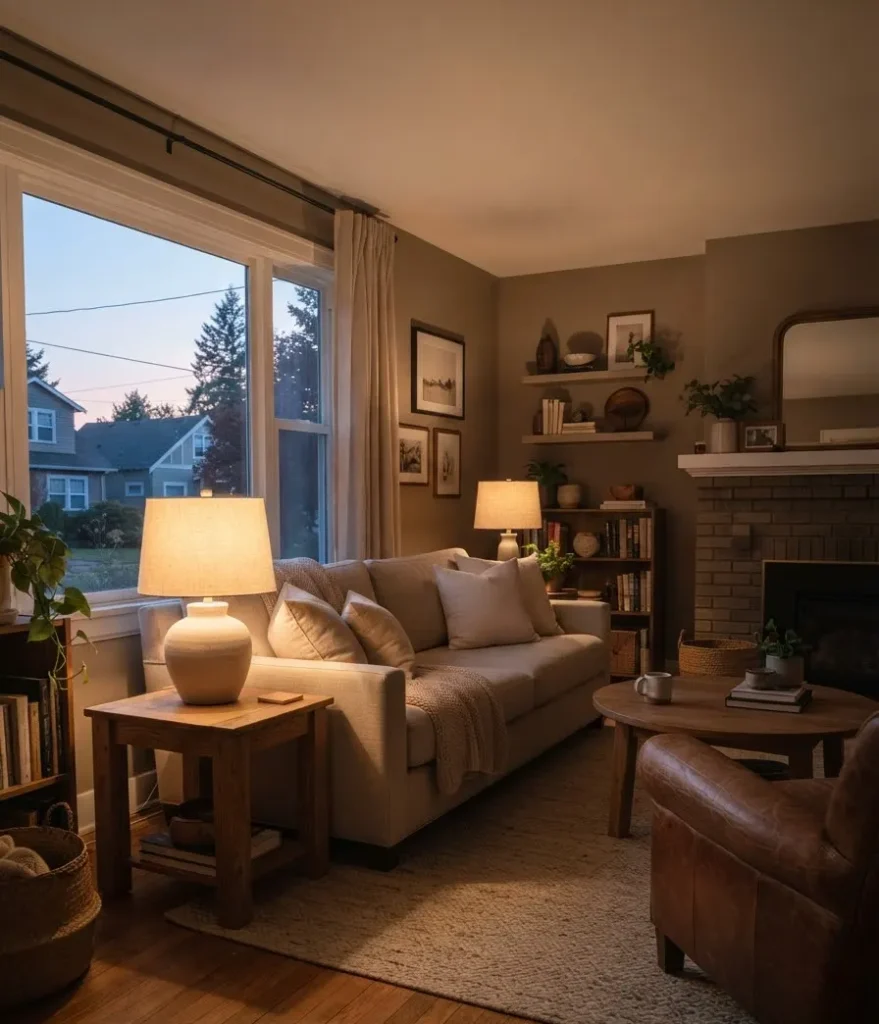
Swap your usual bright white bulbs for warmer 2700K bulbs, or add a few table lamps with linen shades. The light itself becomes part of the seasonal shift, no decor purchase required.
Ever notice how a room can look completely different just from warmer lighting? It’s one of the most underrated changes on this list, and one of the cheapest.
7. Add a wood or stone coffee table tray
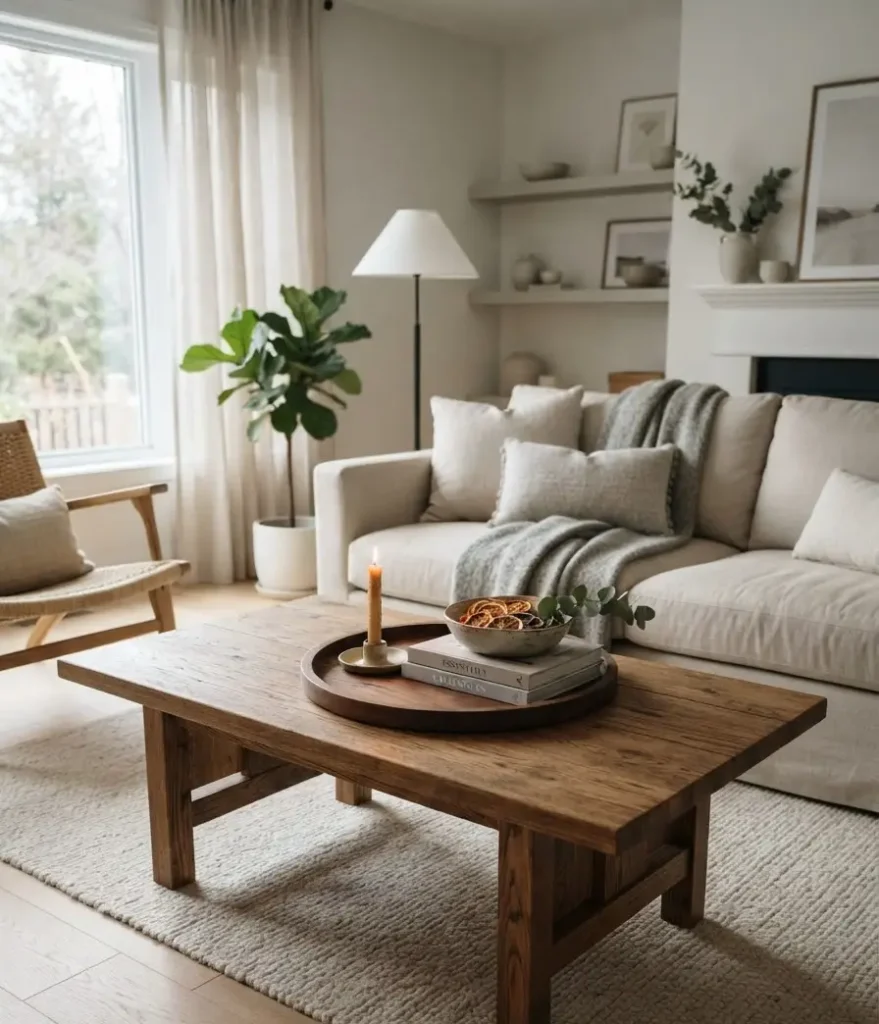
A simple wood tray on the coffee table gives you a spot to group a candle, a small stack of books, and maybe a bowl of dried orange slices without the surface looking cluttered.
Stone trays work too if you want something with more weight.
Keep it to three items max. Any more and it starts looking like a display shelf instead of a coffee table.
8. Use stacked books as a styling tool, not just storage
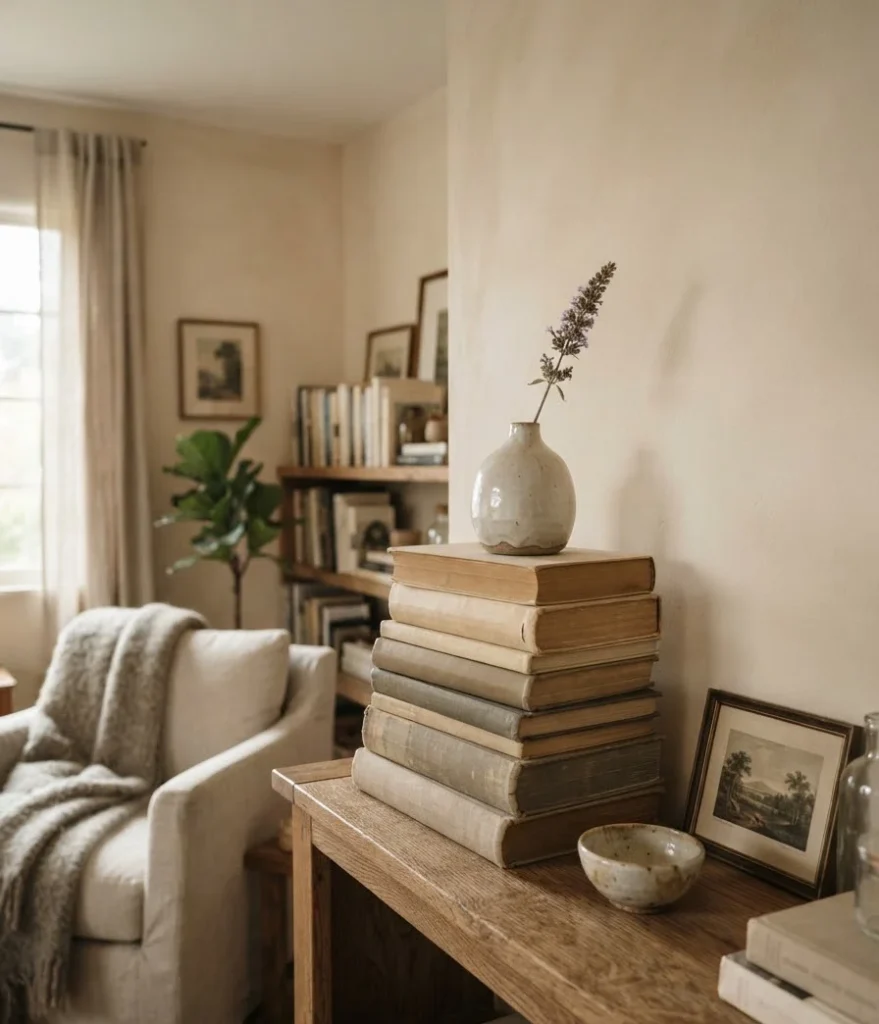
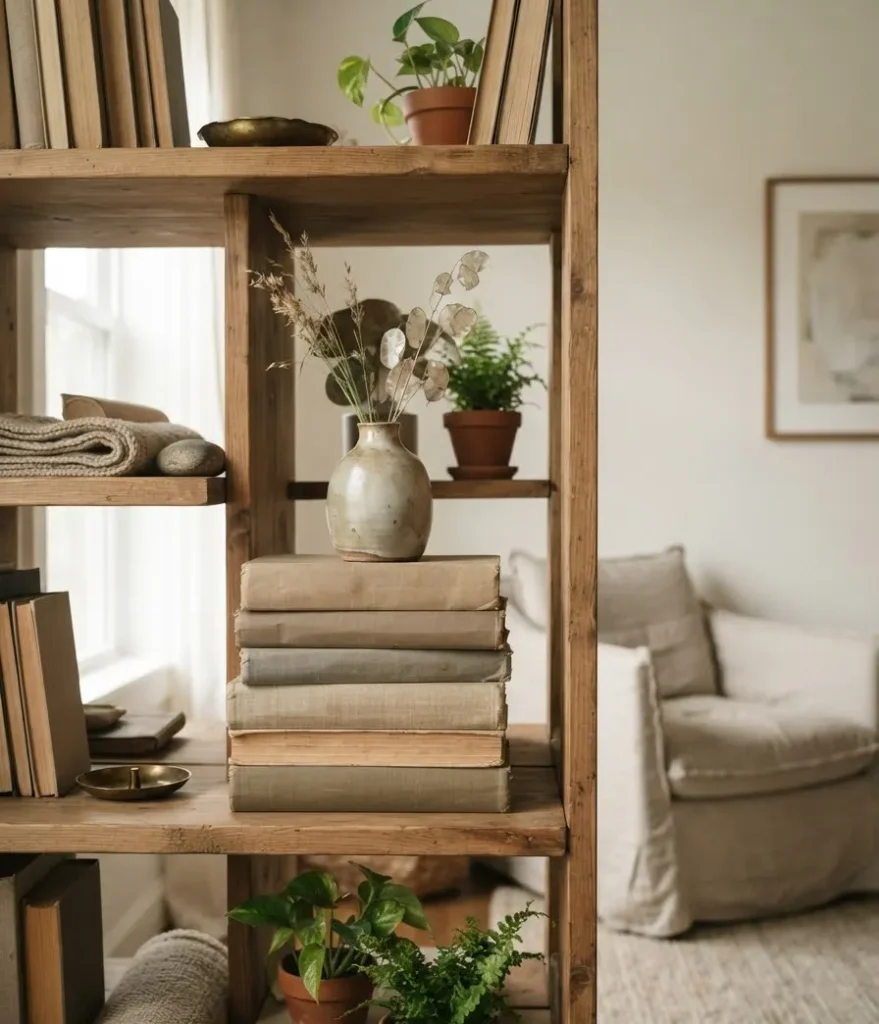
Old hardcovers with faded, muted spines make surprisingly good decor.
Stack three or four horizontally and set a small object like a ceramic vase or a piece of dried botanical on top.
This is the kind of tip that sounds almost too simple to matter. It matters. I’ve built entire shelf vignettes around a stack of thrifted books that cost me two dollars total.
9. Introduce leather or suede accents
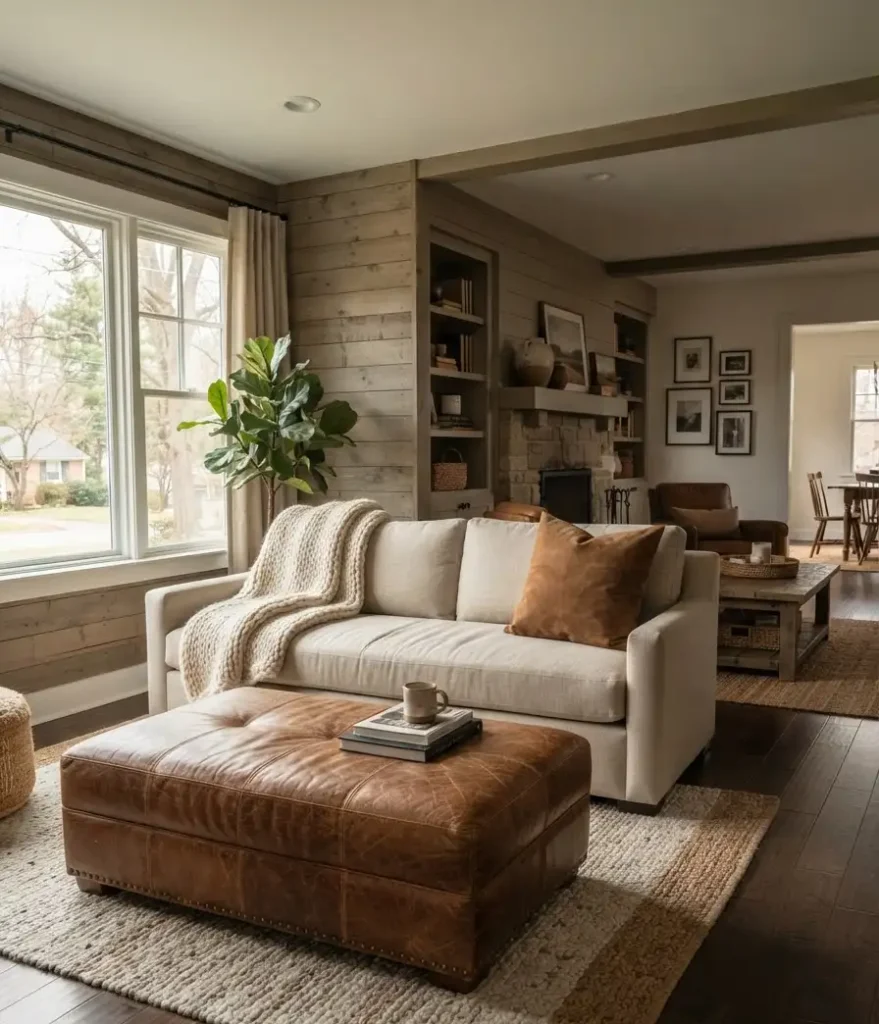
A leather ottoman, a suede-look throw pillow, or even a leather-bound tray adds a rugged, warm texture that plays well against soft knits.
The contrast between rough and soft materials is genuinely what makes a neutral room feel intentional instead of boring.
Quick side note: I once tried mixing in a faux leather pouf from a discount store and honestly could not tell the difference from the $300 version at a name-brand shop.
Nobody’s inspecting your pouf that closely. Save the money.
10. Bring nature indoors with branches or twigs
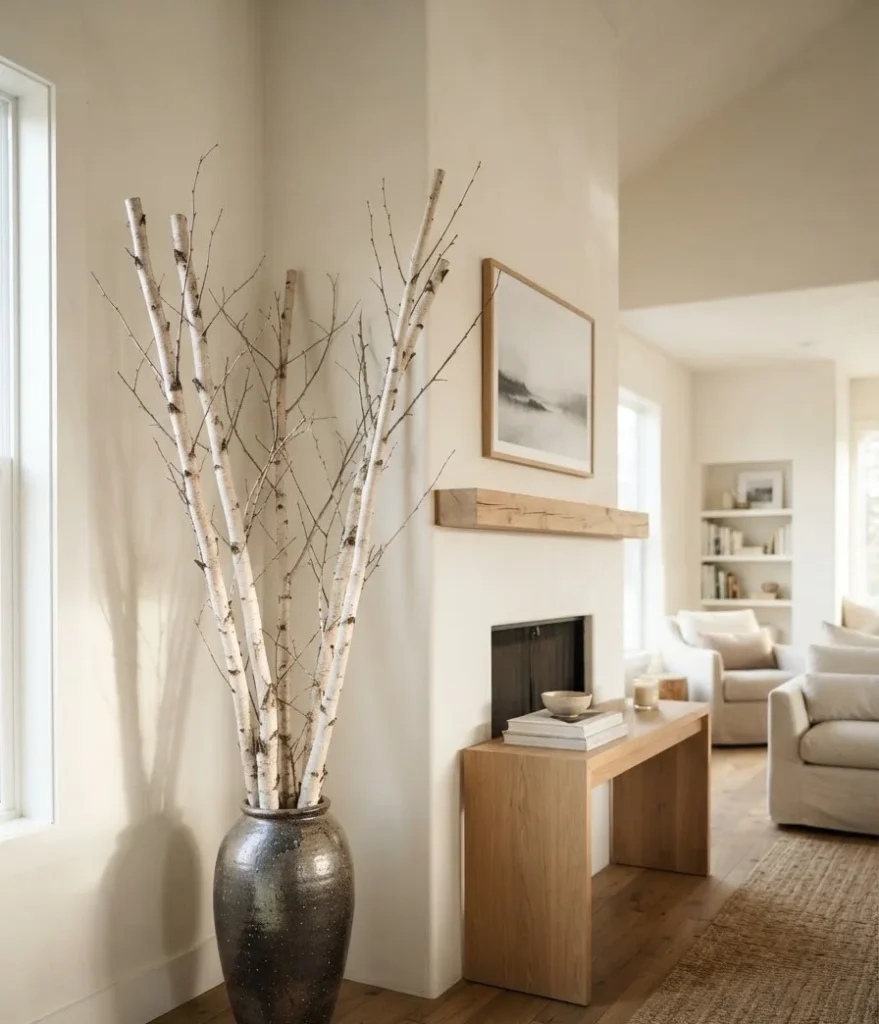
A tall vase of bare birch branches or curly willow stems adds height and a slightly wild, natural element to a corner or mantel.
This works in rooms both large and small since branches take up vertical space rather than floor space.
11. Choose ceramics in matte, earthy glazes
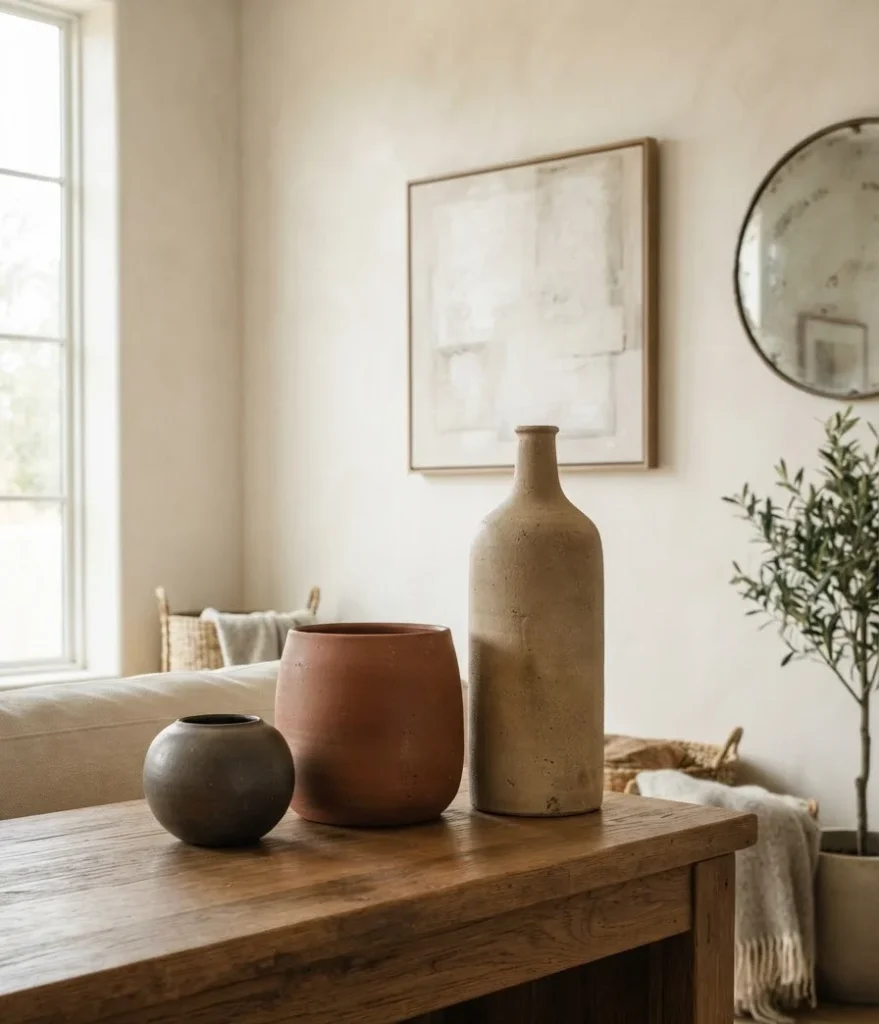
Skip the shiny, bright ceramics and look for matte finishes in stone, sand, or clay tones instead.
A cluster of three different-sized vessels on a shelf or console table reads as intentional rather than random.
Table comparing quick style pairings for reference:
| Element | Best paired with | Avoid pairing with |
|---|---|---|
| Chunky knit throw | Leather ottoman, wood tray | Shiny satin pillows |
| Dried pampas grass | Stoneware or ceramic vase | Bright glass vases |
| Matte ceramics | Wood or stone surfaces | High-gloss lacquer furniture |
| Layered rugs | Warm-toned lighting | Cool white overhead light |
12. Add a mantel or shelf vignette with odd numbers
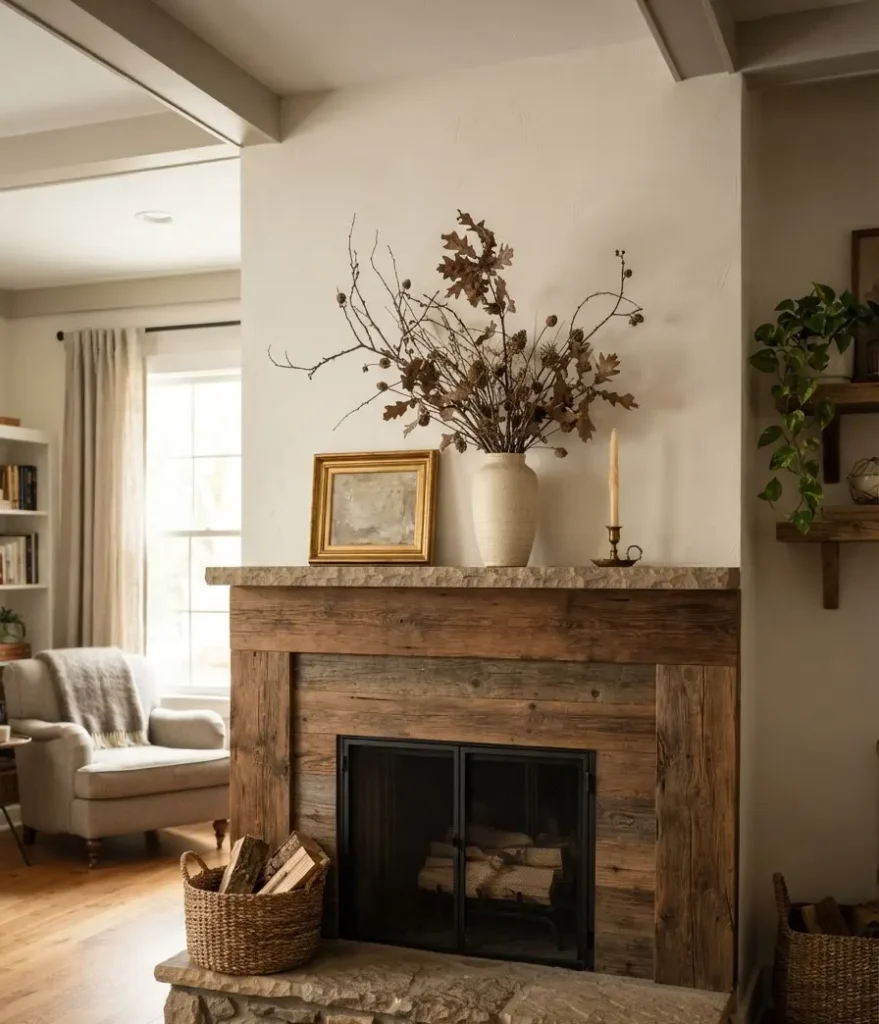
Group items in threes or fives on a mantel or open shelf.
A candle, a small framed print, and a dried branch arrangement is an easy formula that works nearly every time.
Even numbers tend to look too symmetrical and stiff.
Odd numbers feel more collected, like the room evolved over time instead of being staged in an afternoon.
13. Use linen or cotton curtains in warm off-white
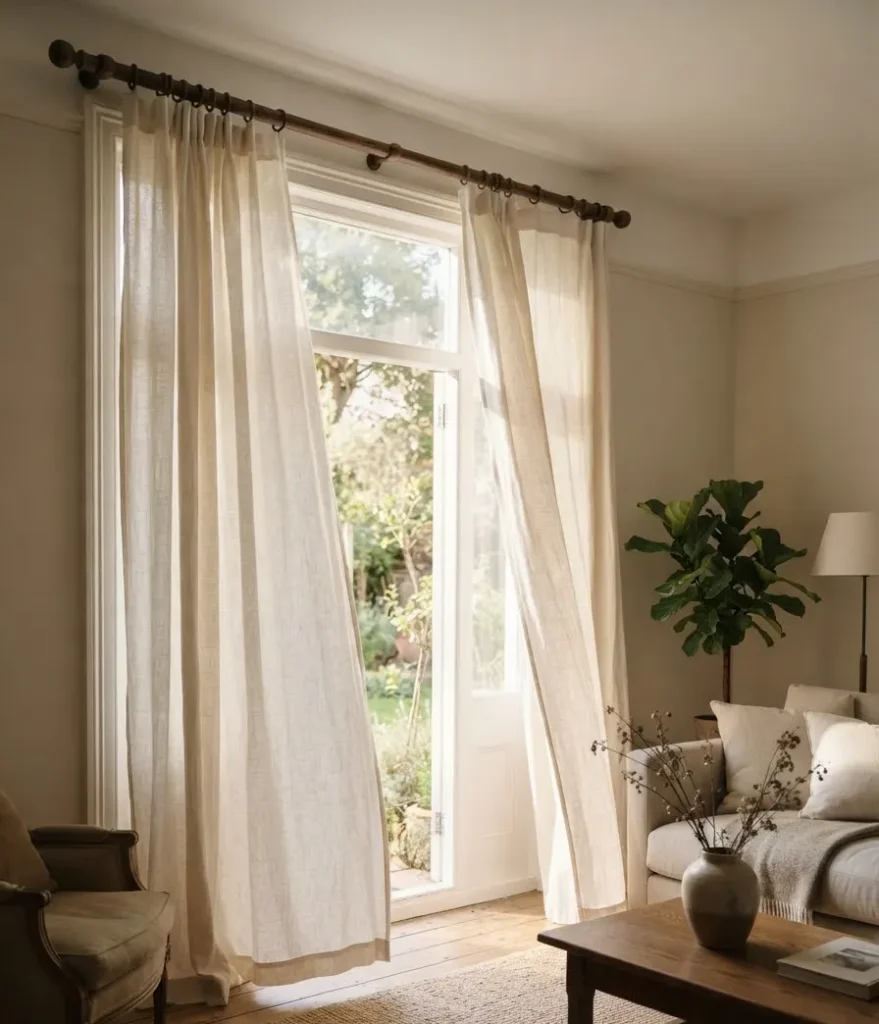
Heavy blackout curtains can feel cold and modern.
Linen curtains in a warm ivory or oatmeal soften the whole room and let in that low golden fall light beautifully.
If you’re not ready to replace curtains entirely, even swapping curtain rings or tiebacks for a warmer wood or brass tone helps tie the window treatments into the rest of the room.
14. Bring in a wood-toned accent piece
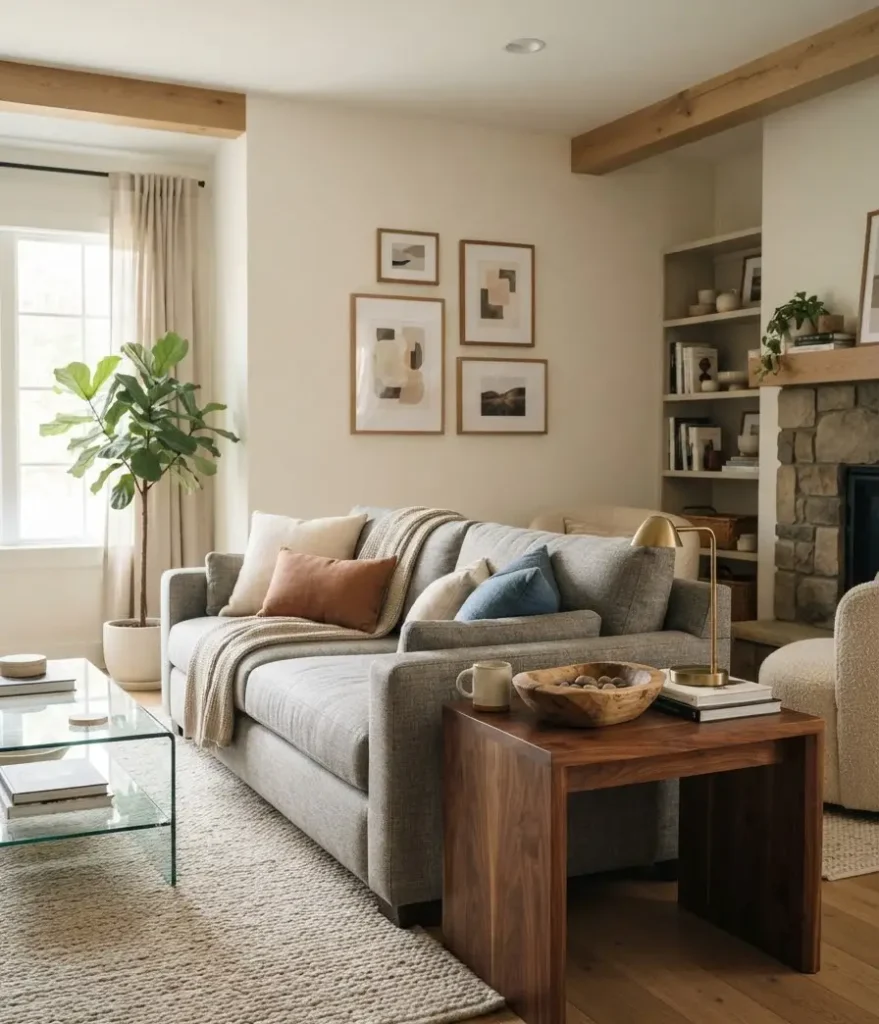
A single walnut or oak side table, a wooden bowl, or a carved wood object adds warmth without introducing any new color.
This is especially useful in rooms that are mostly white or gray and need one grounding element.
I’ll be honest, I resisted wood accents for years because I thought they’d clash with my gray sofa.
Wow, was I wrong. It ended up being the piece that made the whole room click.
15. Finish with a single, well-placed candle scent
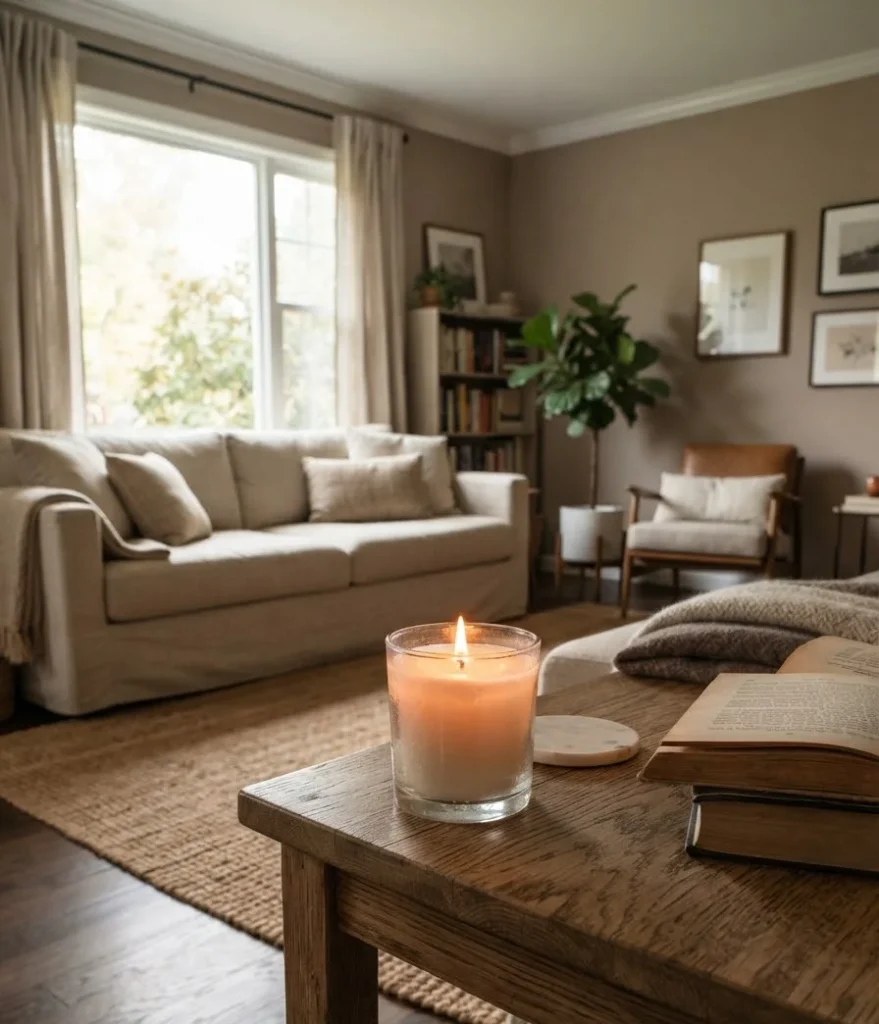
One good candle in a warm scent like amber, sandalwood, or fig does more for the “fall feeling” of a room than a dozen decor items combined.
Skip the pumpkin spice cliché and go for something a little less expected.
Brands like Boy Smells and P.F. Candle Co. both make warm, non-pumpkin fall scents that fit a neutral room without screaming autumn.
A few real talk notes before you start
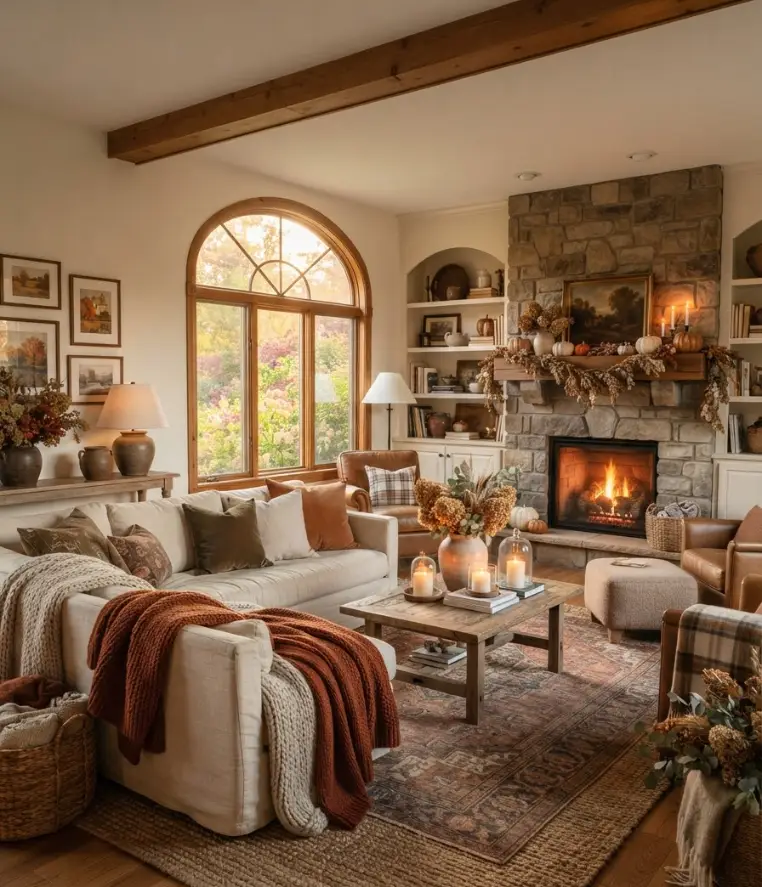
Not every idea on this list needs to happen at once. Pick two or three that fit your current setup and budget, and build from there.
I made the mistake of trying to overhaul my whole living room in a single weekend once, and honestly, it just looked like a furniture store threw up in my apartment for about three days until things settled into place.
Also, and this might be an unpopular opinion, you don’t need a completely new color palette every fall.
Half of this list is about texture and lighting, not paint or big purchases. That’s IMO the actual secret to decor that doesn’t feel exhausting to keep up every year.
Frequently asked questions
Do neutral fall living rooms work in small apartments? Yes, and arguably they work better. Neutral tones don’t visually shrink a room the way bold seasonal colors can, and layering texture instead of adding more furniture keeps small spaces from feeling cluttered.
What’s the cheapest way to get a fall look without buying new furniture? Lighting and textiles. Warmer bulbs, a couple of throw pillows, and one knit blanket will shift the feel of a room more than people expect, and none of it requires touching your furniture layout.
How do I keep neutral decor from looking boring? Mix textures, not just colors. A room with only smooth, matching surfaces reads as flat no matter how nice the individual pieces are. Rough wood next to soft knit next to matte ceramic is what gives a neutral palette life.
Final thought
A neutral fall living room isn’t about following a trend, it’s about building a space that actually feels good to sit in once the weather turns. Start with one or two ideas from this list, live with them for a week, and see what pulls the room together.
Which one are you trying first: the layered rugs, the wood accents, or finally admitting the pumpkin spice candle has to go? Save this post and let me know.
