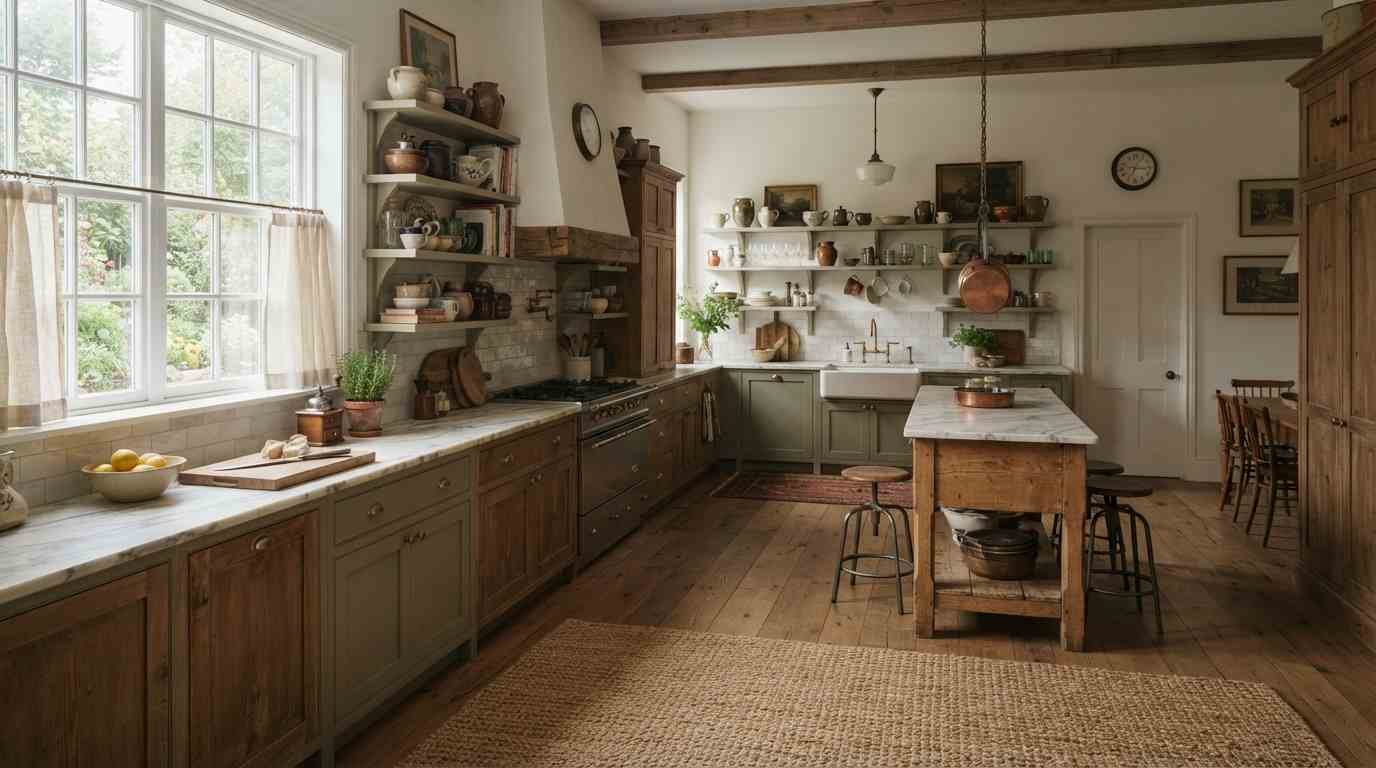
My kitchen used to look like a showroom nobody lived in. White cabinets, gray counters, one sad plant by the window. It photographed fine. It felt like nothing.
Then I started mixing things I actually loved instead of things that matched, and the whole room changed. That’s what eclectic really means.
Not chaos. Not a theme park of styles thrown together. Just a room that tells the truth about who lives there.
If you’re pinning kitchen inspiration right now and feeling stuck between “too matchy” and “too much,” this list is for you.
I’ve tested most of these ideas in my own 1920s rental kitchen, and a few came from friends who let me raid their houses for photos (thanks, Priya).
What makes a kitchen feel eclectic instead of just cluttered
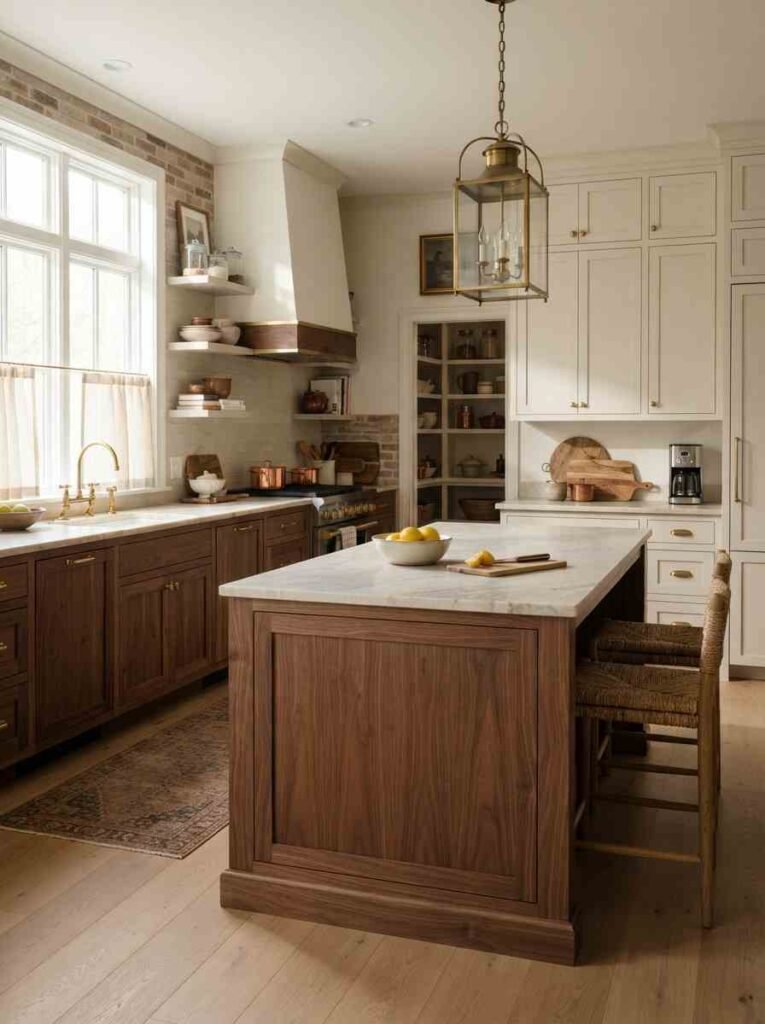
Here’s the line most people miss. Eclectic design has a spine. There’s usually one repeated color, one consistent material, or one shape that shows up three or four times. Everything else can wander.
Without that spine, you just get clutter with good lighting. With it, you get a room that feels collected over years, even if you bought half of it last weekend.
I learned this the hard way.
My first attempt at “eclectic” was really just five different styles fighting for attention in one small room.
A farmhouse table, a mid-century chair, industrial shelving, and a chandelier that belonged in a completely different house. It looked like a furniture store clearance section, not a home.
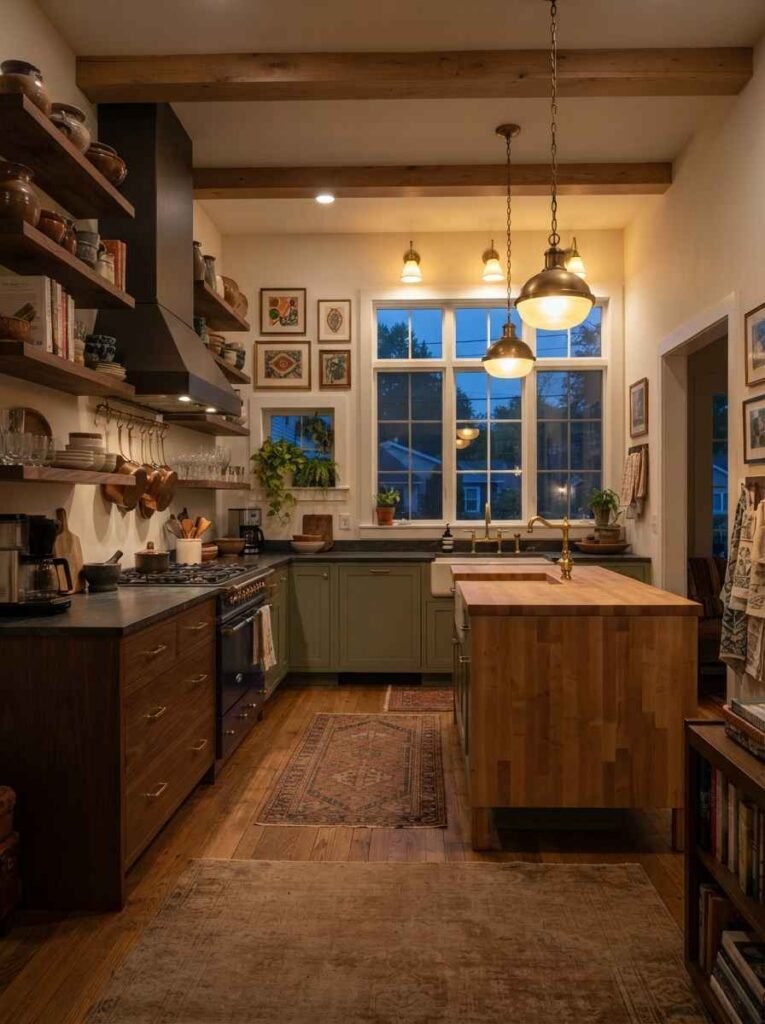
The fix wasn’t buying less stuff. It was picking a thread. For me, that thread became warm wood tones and brass accents.
Once I filtered every new piece through that lens, the room stopped fighting itself.
Design blogs like Apartment Therapy call this “curated maximalism,” and that’s a fair way to describe it.
You’re not decorating randomly. You’re collecting with a filter running in the background.
The 17 ideas
1. Mix wood tones on purpose
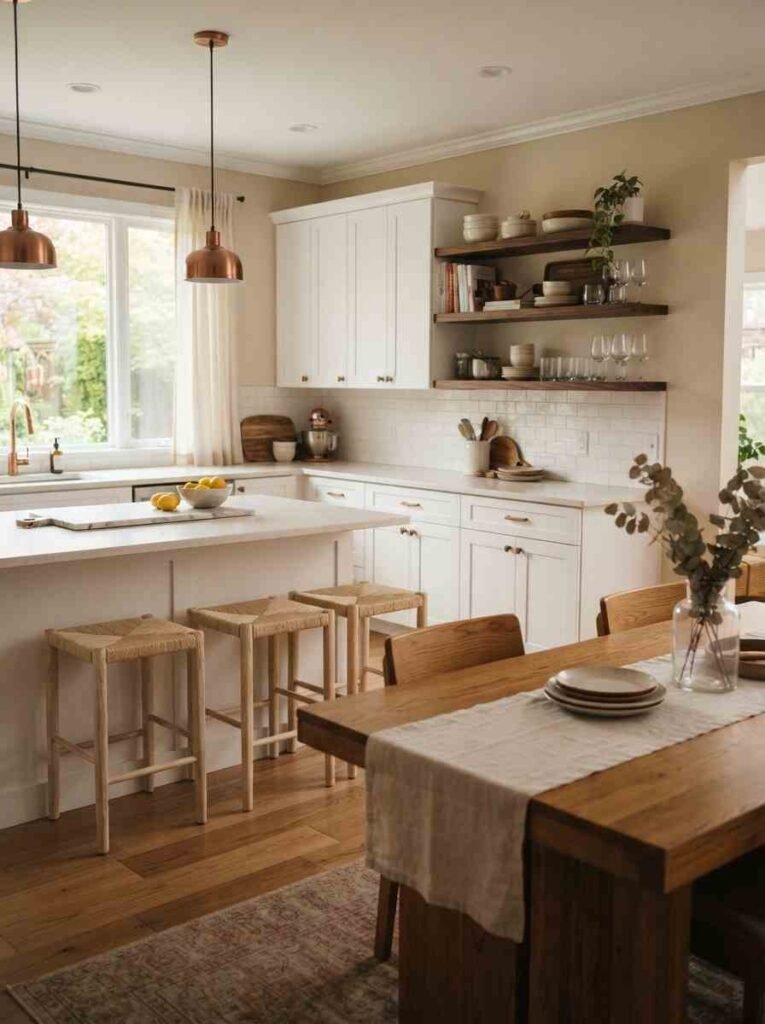
Stop matching every wood surface to the cabinets. Pair a warm oak table with a darker walnut shelf and a pale ash stool, and let the grain patterns do the talking.
I did this in my own kitchen and it looked accidental in the best way.
The trick is keeping the undertones warm across all three pieces, so they argue less than you’d think.
A lot of people get nervous mixing woods because they assume it needs to match like a bedroom set. It doesn’t.
Think of wood tones the way you’d think of denim washes.
Different shades, same family, and somehow it always works out. If you want a safety net, keep at least one piece, usually the largest, close to your floor color so your eye has an anchor point.
2. Hang open shelving with mismatched brackets
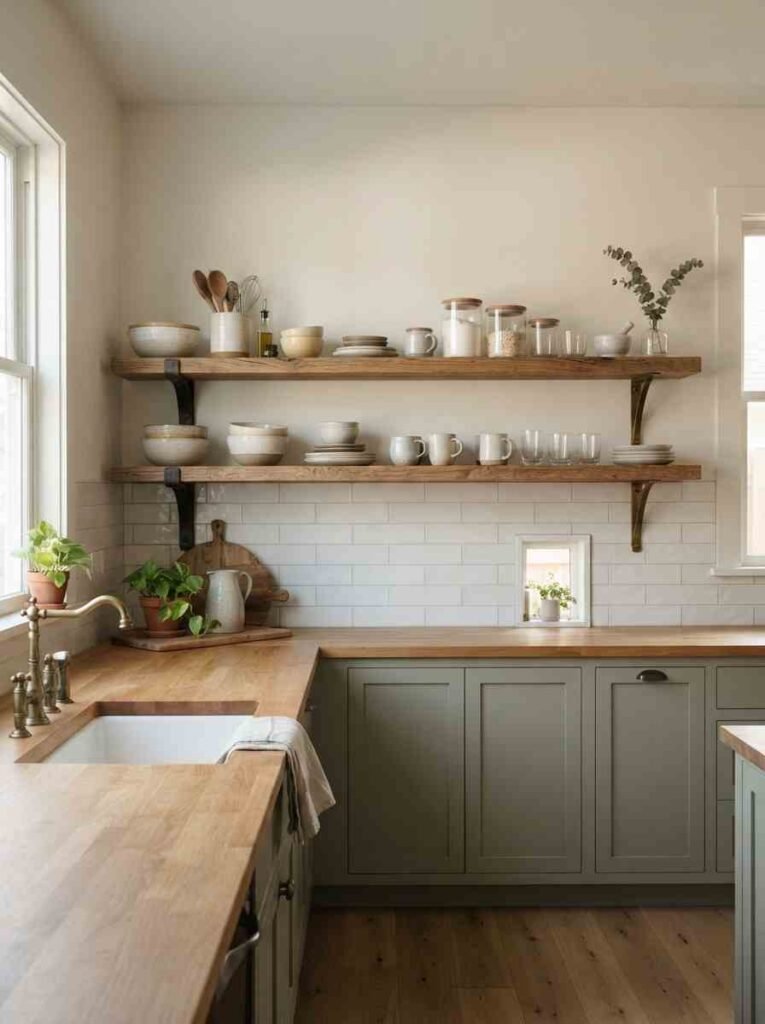
Open shelves already read as lived-in. Mismatched brackets push that further without looking sloppy.
Try one iron bracket, one brass one, same shelf depth.
It reads intentional if the shelves themselves stay level and evenly spaced.
3. Layer vintage and modern lighting
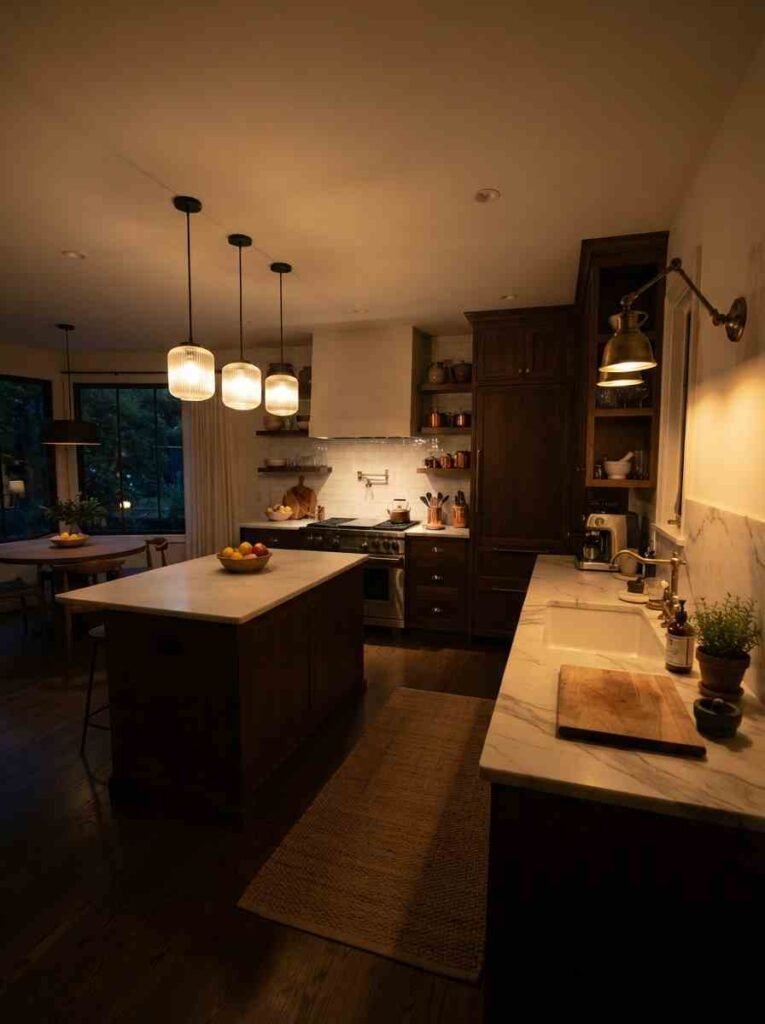
A sleek pendant over the island, a flea-market brass sconce by the sink. That contrast is doing more work than any paint color ever will.
IMO lighting is the most underrated tool in an eclectic kitchen. Nobody notices it directly, but everyone notices when it’s wrong.
Most builder-grade kitchens come with one flat overhead light and nothing else, which is exactly why they feel so cold.
Layer in at least three light sources: overhead, task lighting under the cabinets, and one lamp or sconce that’s purely about mood.
That third layer is the one people skip, and it’s the one that makes evenings in the kitchen actually feel nice instead of clinical.
4. Bring in a patterned rug
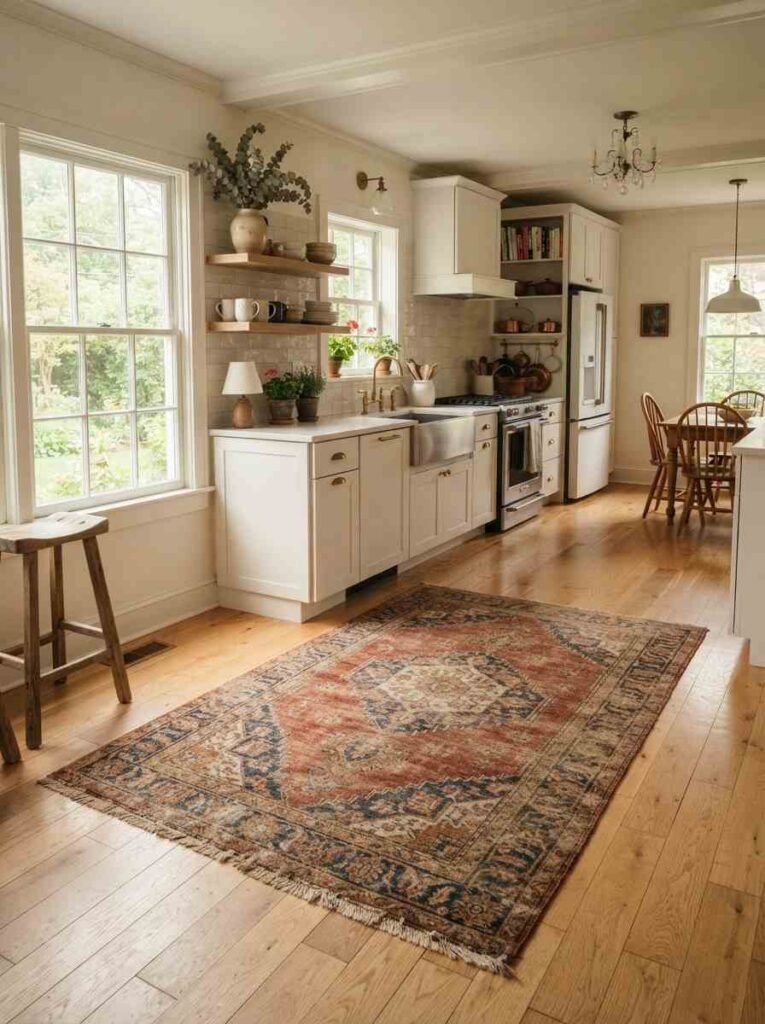
A flat cotton kilim or a faded Persian-style rug softens hard floors and adds a pattern that cabinets and tile can’t. Kitchens with rugs just feel warmer, full stop.
Pick one with reds, rusts, or deep blues if your cabinets are neutral. That single rug can become the color anchor for the whole room.
5. Collect open glass-front cabinets
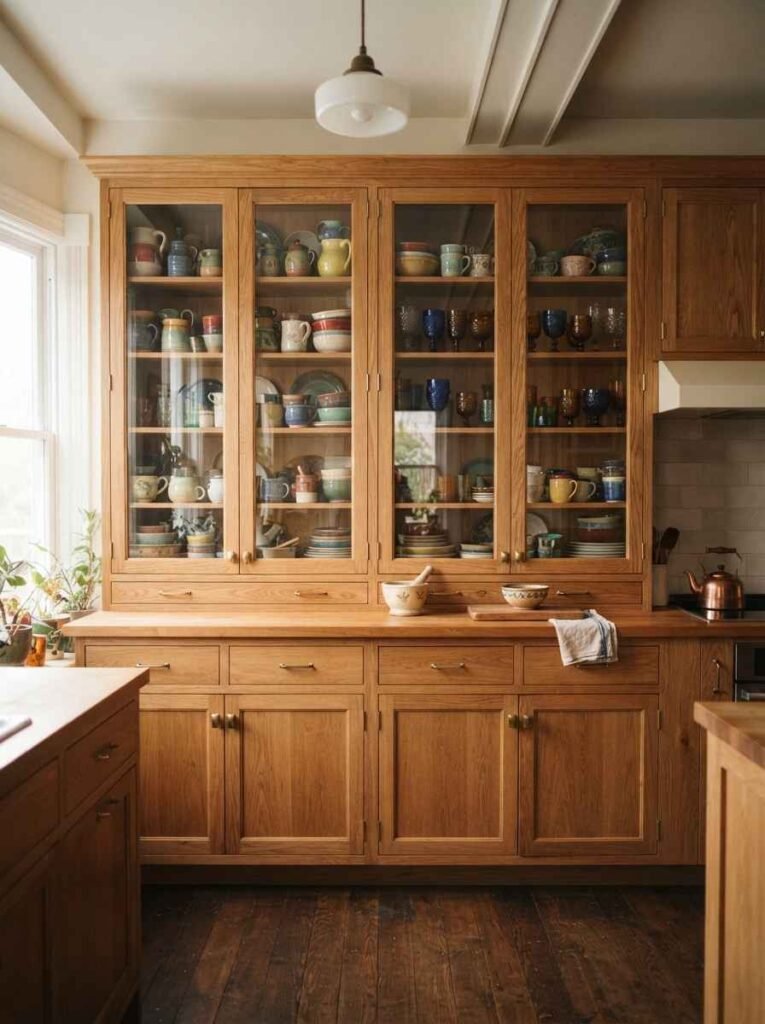
Swap one or two solid cabinet doors for glass.
Fill them with mismatched glassware, colored ceramics, whatever you’ve actually collected over the years.
This is the fastest way to make builder-grade cabinets look curated. And it costs almost nothing if you already own the glassware.
6. Paint just the island
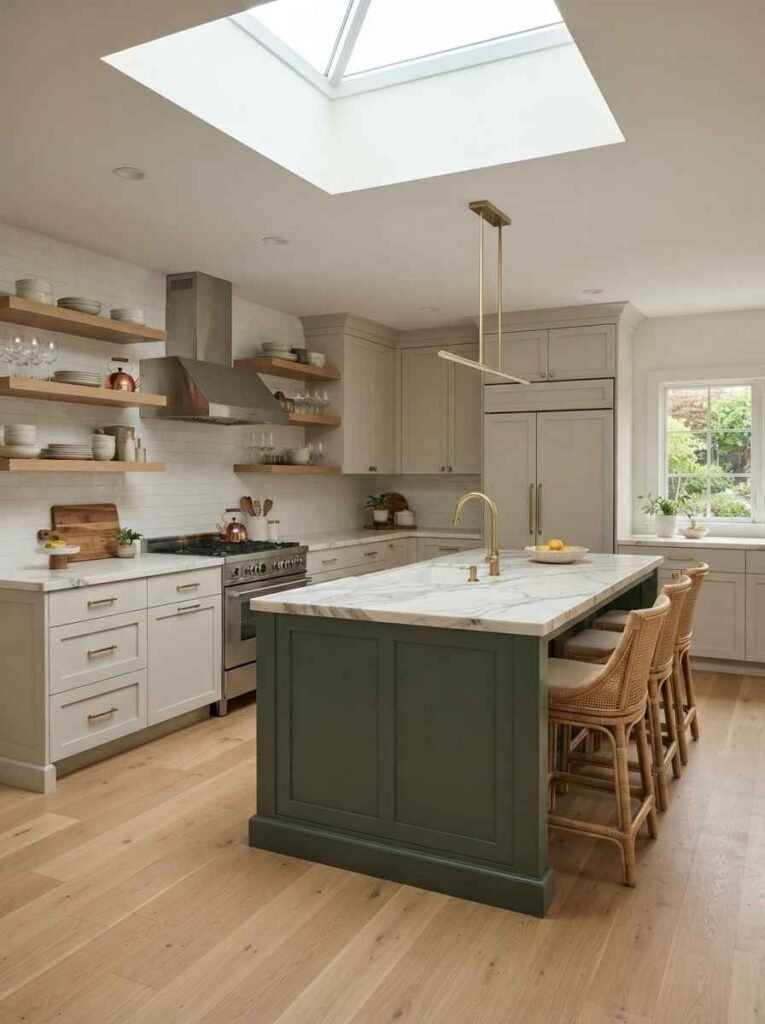
Leave the perimeter cabinets neutral and paint the island a deep, saturated color. Forest green, ink blue, terracotta.
One bold surface reads as a design choice; a whole room of bold color can read as a mistake.
Benjamin Moore’s color of the year archive is a solid starting point if you’re stuck choosing a shade.
I went with a deep sage on my island two years ago, and I still haven’t gotten tired of it. That’s the real test with bold color choices, not whether you love it the first week, but whether you still love it after two winters.
Cheap paint and a weekend is all this idea really costs, which makes it one of the lowest-risk ways to test a bolder look before committing anywhere else.
7. Hang art that has nothing to do with food
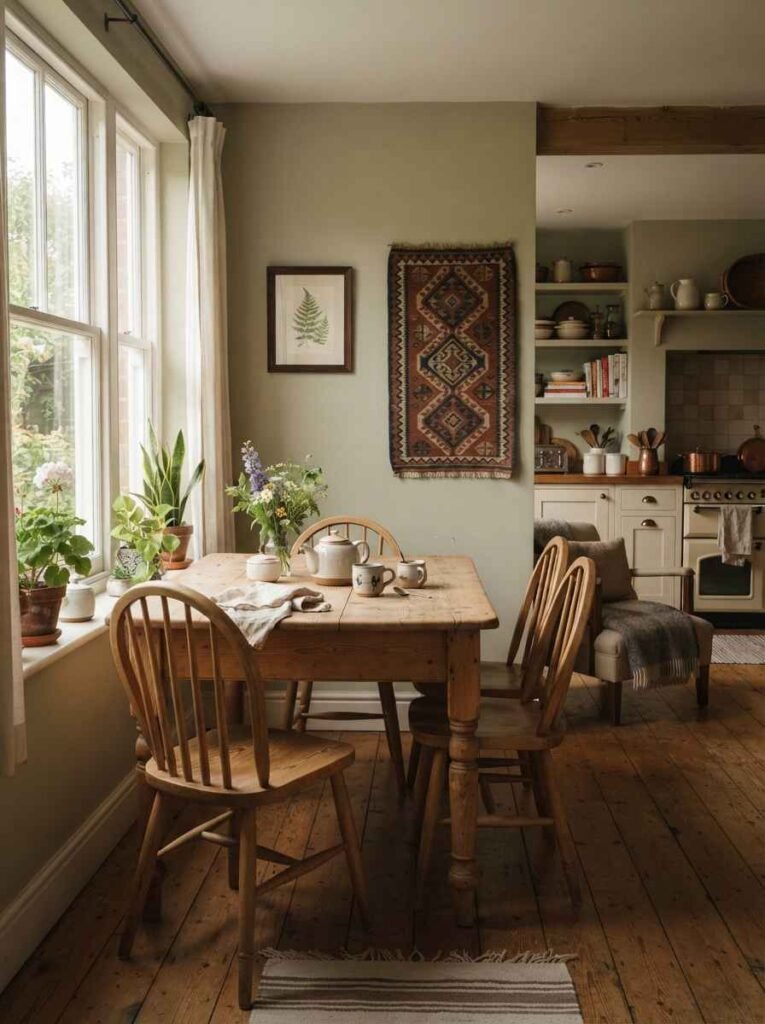
A small oil painting, a framed textile, a botanical print from your grandmother’s house. Kitchens don’t need to be full of rooster prints and “eat” signs.
This one’s personal opinion, but I think non-kitchen art in a kitchen is the single fastest way to make it feel like a real room in your home instead of a showroom set.
8. Use a runner instead of a mat by the sink
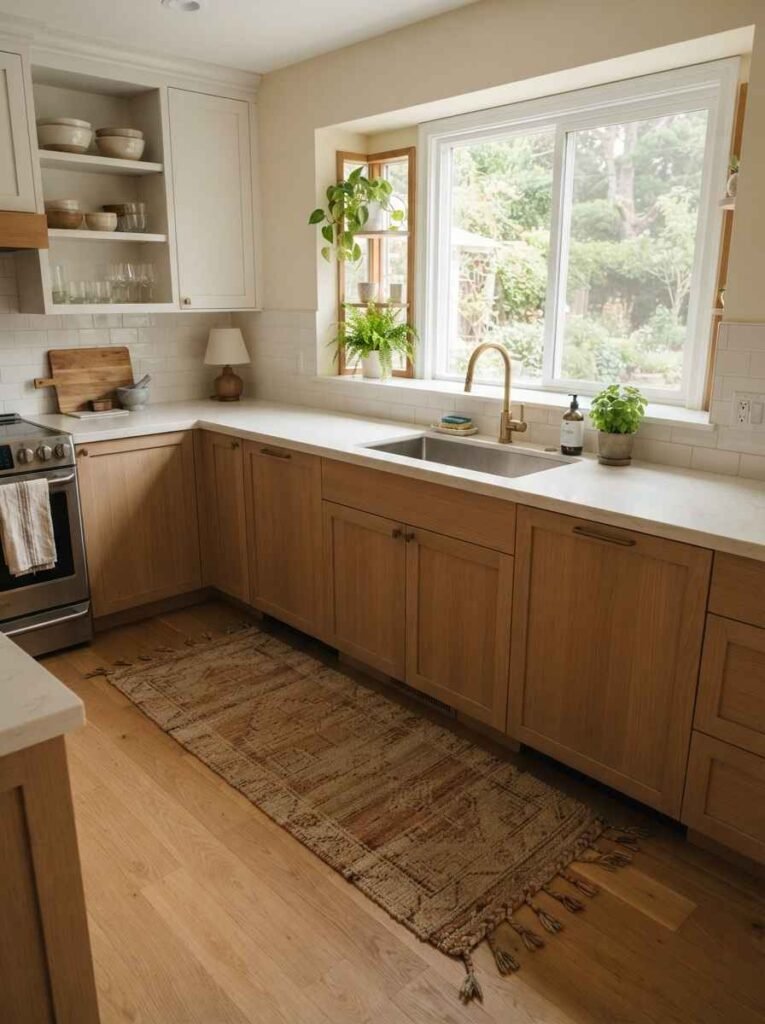
A woven runner rug reads warmer and more collected than the standard anti-fatigue mat. It also hides splashes better than you’d expect.
9. Add a plate rack on the wall
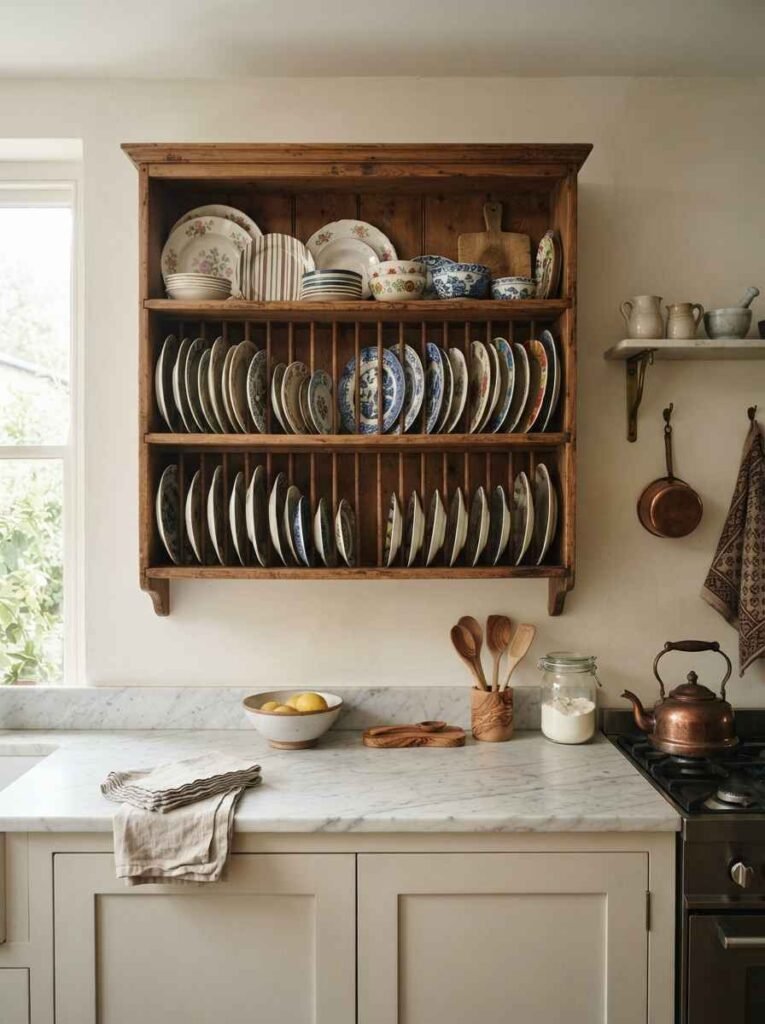
Open plate storage puts your dishes on display, mismatched patterns and all.
It’s functional storage that doubles as decoration, which is basically the whole eclectic philosophy in one object.
10. Bring texture through baskets and woven storage
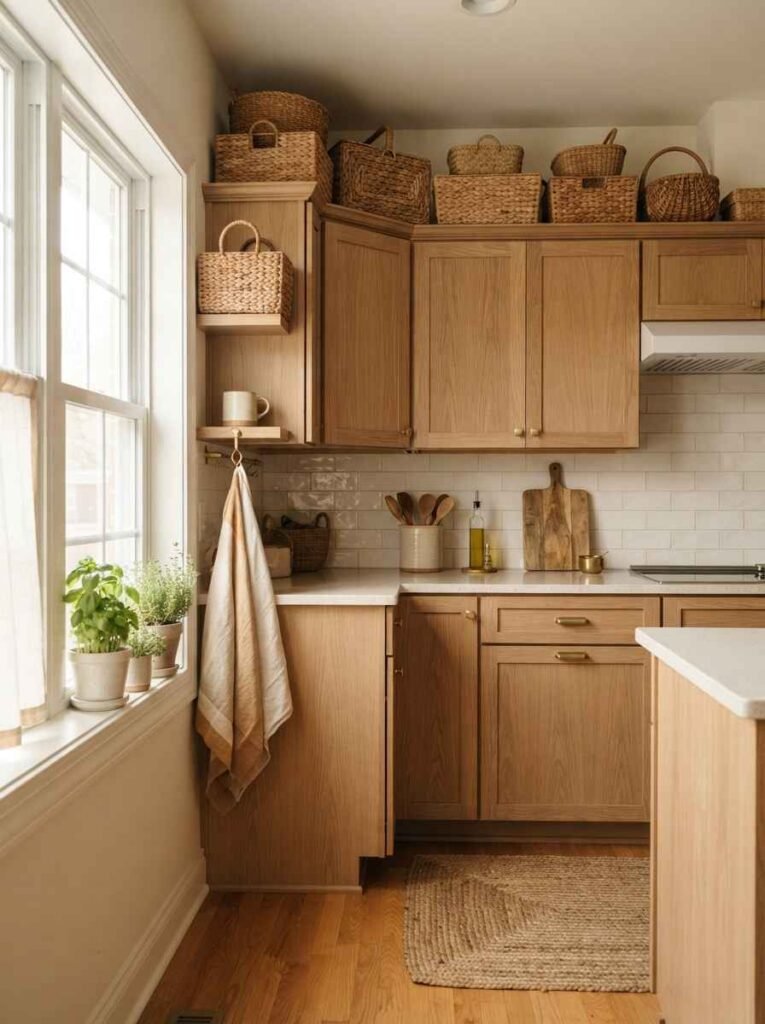
Rattan, seagrass, jute. Stack a couple of baskets on top of cabinets or use them as bins for produce and linens.
Woven texture next to smooth tile or painted wood creates the kind of contrast that makes a room feel finished rather than staged.
11. Choose one statement tile, not a whole wall of it
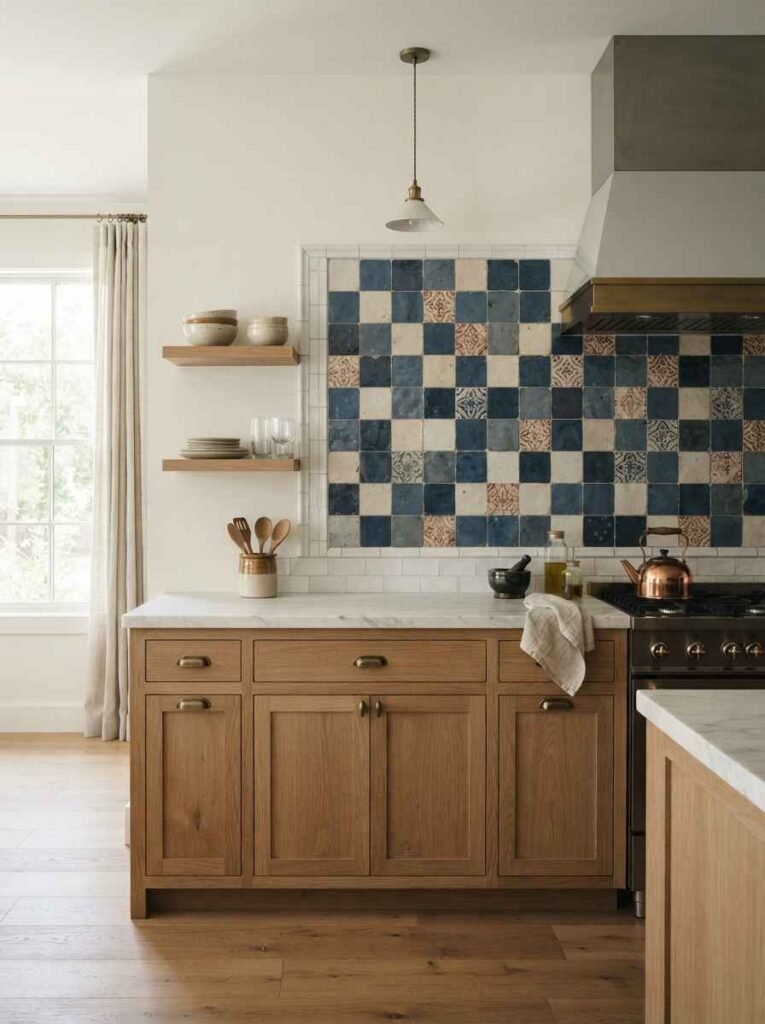
A hand-painted Moroccan or Zellige tile as a backsplash accent, framed by simple subway tile everywhere else, gives you pattern without overwhelming the room.
Ever notice how the busiest-looking kitchens on Pinterest usually only have one patterned surface? That’s not an accident.
The Spruce has a whole archive on backsplash trends, and almost every popular example follows this same rule.
One loud surface, everything else quiet. It’s basically the same logic as a statement necklace with a plain outfit.
The pattern gets to be the whole point instead of competing with five other busy elements in the room.
12. Mix seating styles at the table or island
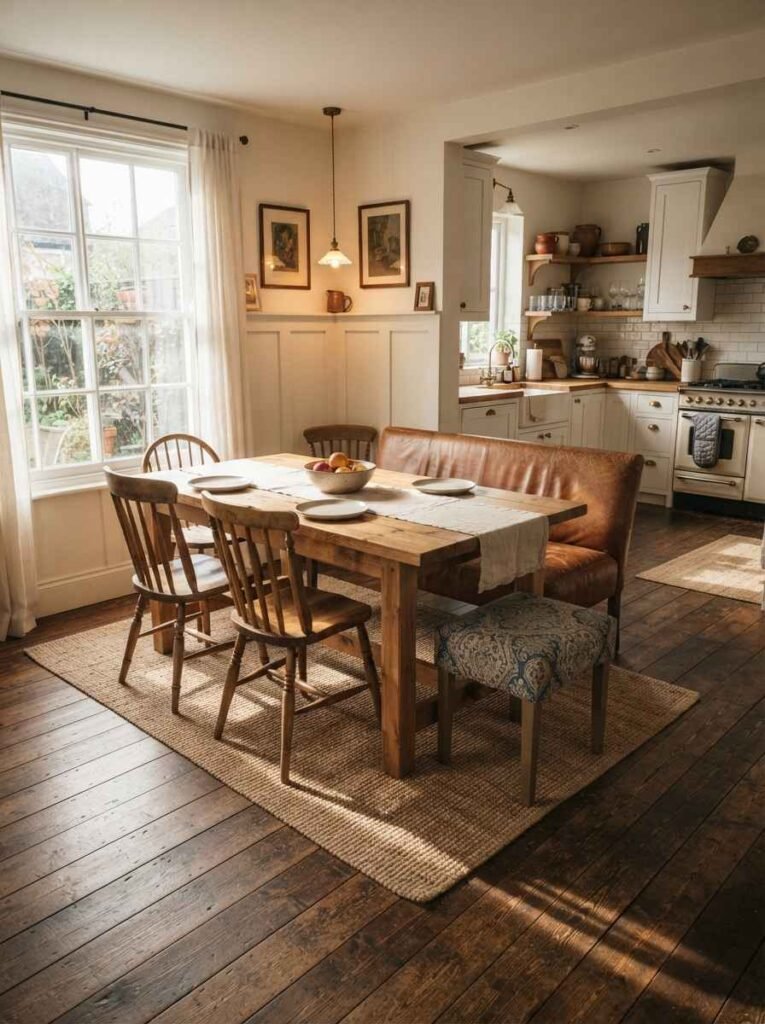
Two wooden chairs, a leather bench, a single upholstered stool with a totally different fabric. Matching dining sets are safe. Mismatched seating is memorable.
Wow, this one alone changed how my dining nook felt. It went from “rental furniture” to “someone actually lives here.”
13. Display cookbooks like decor
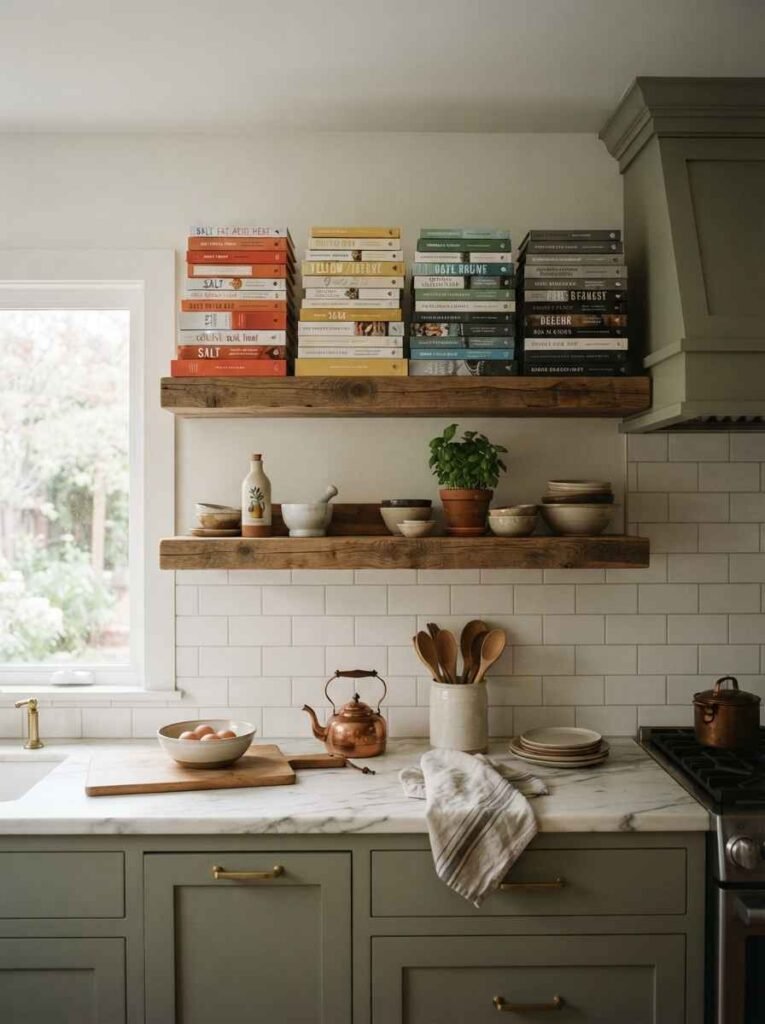
Stack them horizontally, group by spine color, lean a few open on a stand. Cookbooks are already full of color and pattern, so let them work for you instead of hiding them in a drawer.
14. Add brass or unlacquered hardware
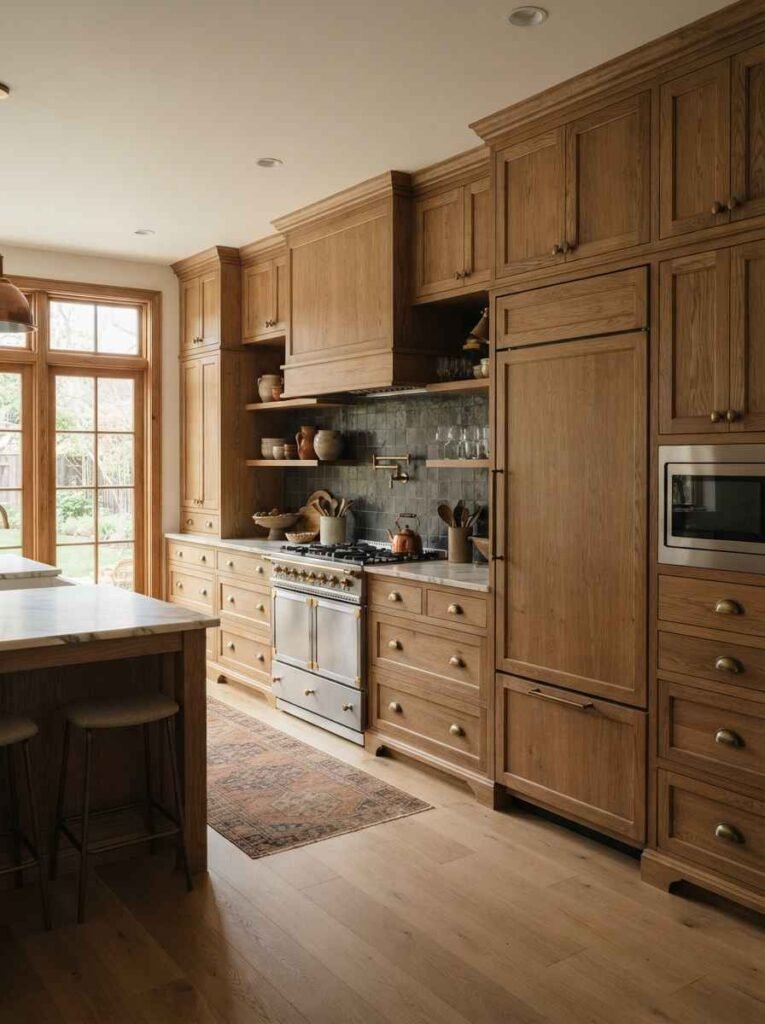
Swap plain cabinet knobs for aged brass, unlacquered pulls, or even mismatched vintage knobs from a salvage shop.
Hardware is small, but it’s the detail people notice up close.
15. Use curtains instead of a solid cabinet door under the sink
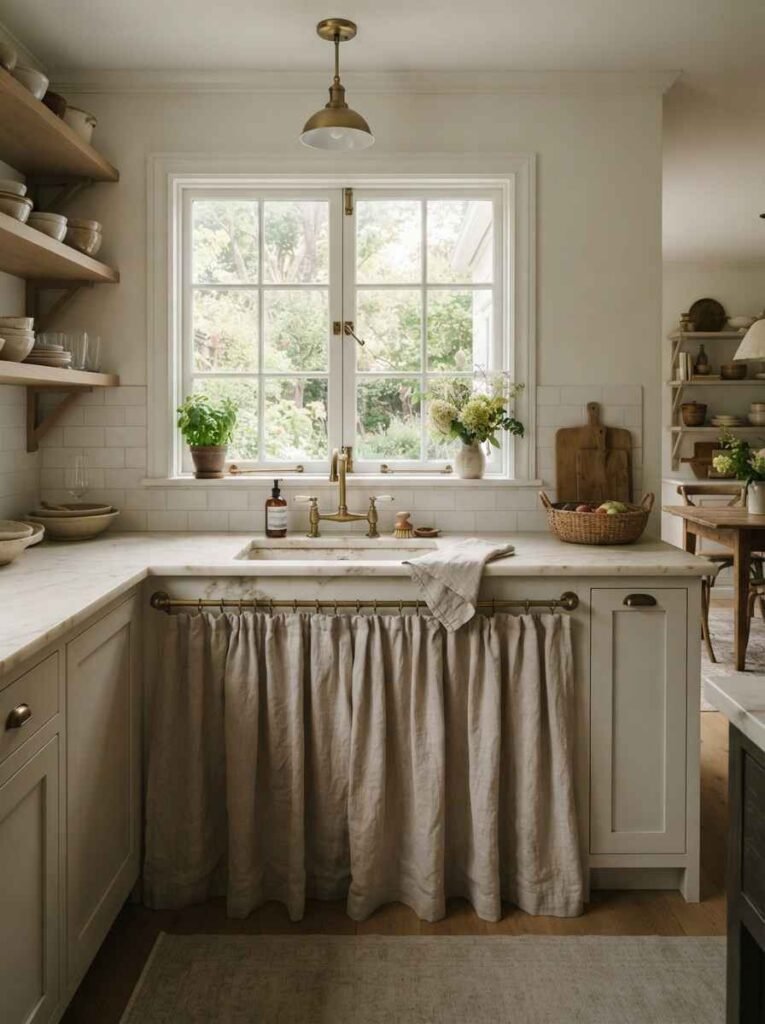
A simple gathered curtain on a tension rod under the sink softens all the hard lines in a kitchen. It’s a five-dollar fix that looks like a designer decision.
16. Bring in a single antique or inherited piece
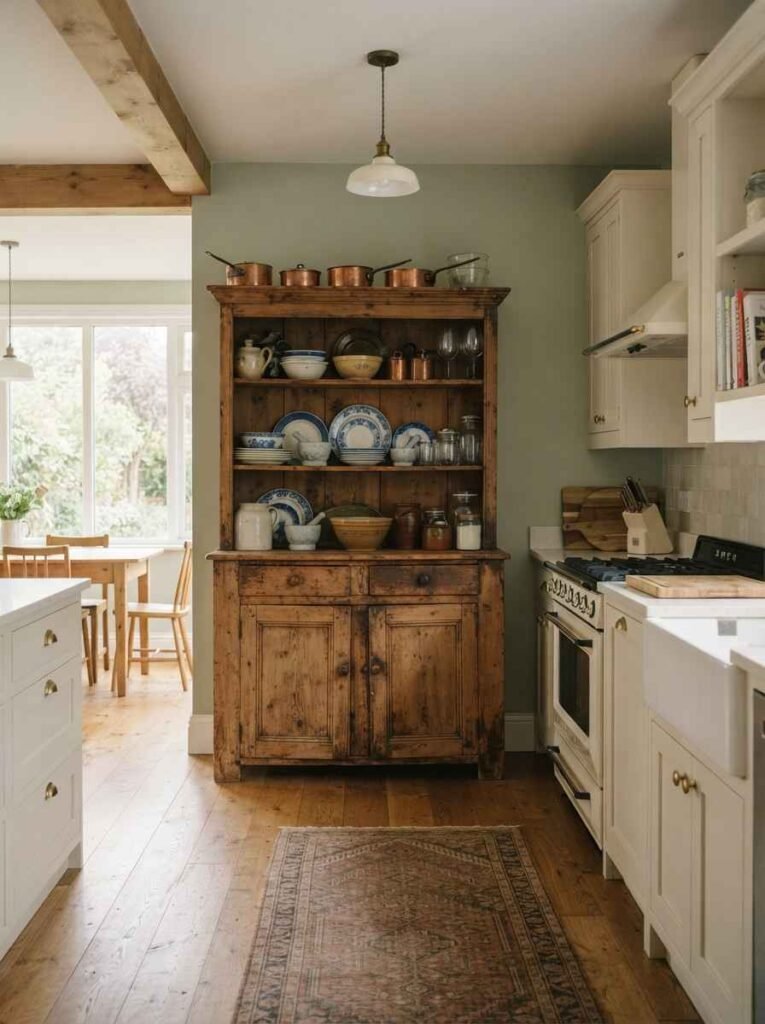
A grandmother’s hutch, a flea-market cabinet, an old farm table.
One genuinely old piece grounds the whole room and gives it a history that new furniture can’t fake.
17. Let plants do double duty
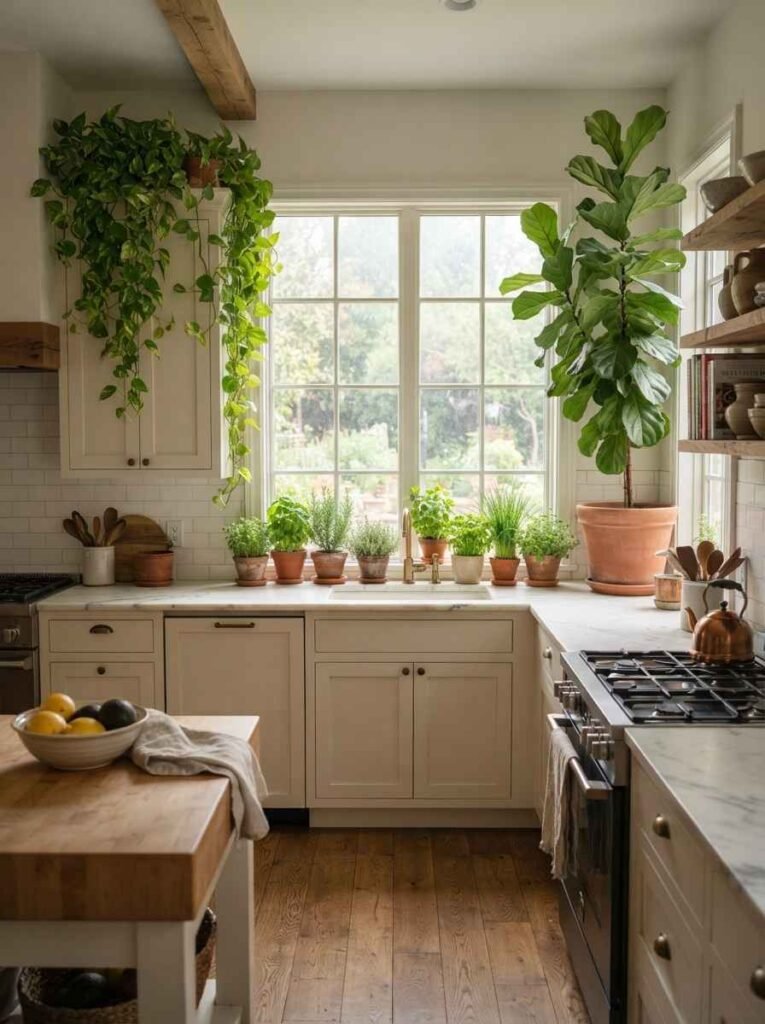
Herbs on the windowsill, a trailing pothos on top of the fridge, a fiddle-leaf fig in the corner if you’ve got the space. Plants add color and life without adding another decorating decision to make.
I kill most houseplants within a month, full disclosure. But herbs on a sunny windowsill have somehow survived years in my kitchen, maybe because I actually use them for cooking instead of just admiring them. If you’ve got a black thumb like me, start there instead of anything fancy.
A quick side note
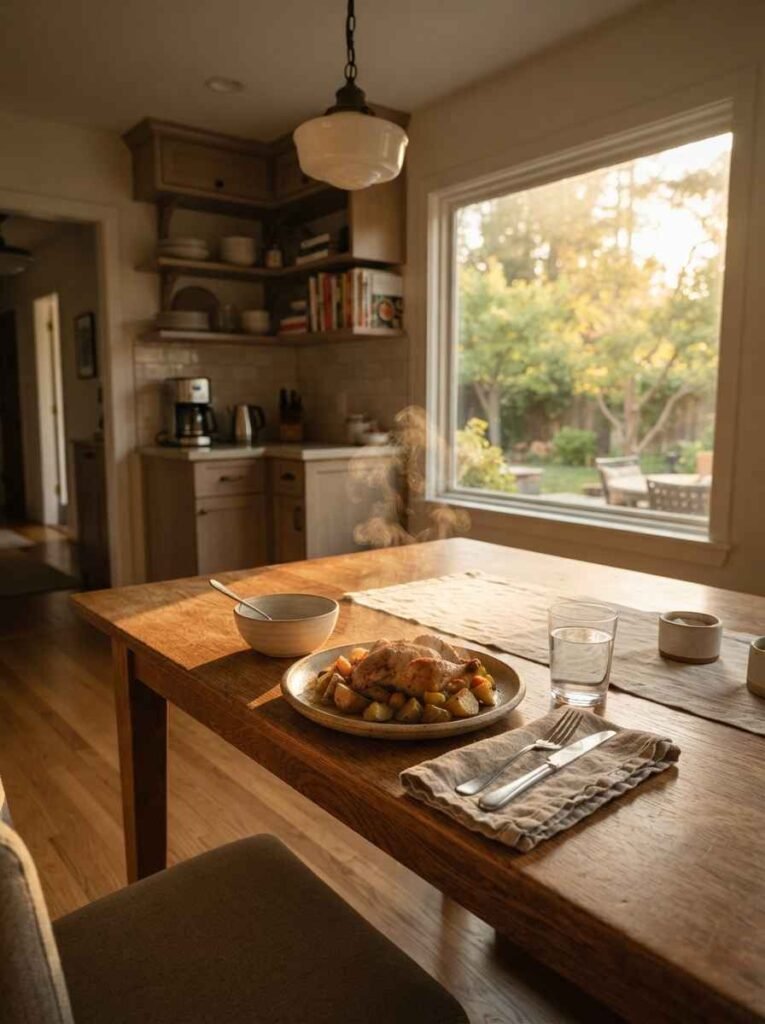
Random thought, but has anyone else noticed how much better food tastes when the kitchen actually feels good to stand in?
I used to order takeout constantly in my old sterile kitchen. Now I cook almost every night, and I genuinely think the room itself has something to do with it. Maybe that’s just me.
Quick comparison: low effort vs high impact
| Idea | Effort level | Impact |
|---|---|---|
| Curtain under the sink | Low | Medium |
| Painted island | Medium | High |
| Statement tile backsplash | High | High |
| Mismatched seating | Low | High |
FAQs
Do eclectic kitchens work in small spaces? Yes, and honestly they can work better. A small kitchen only needs one or two of these ideas to feel transformed, since there’s less visual real estate to compete for attention.
How do I keep an eclectic kitchen from looking messy? Pick one repeated color or material and stick to it across the room. That single thread is what separates “collected” from “cluttered.”
What’s the cheapest idea on this list to start with? The curtain under the sink or swapping cabinet hardware. Both cost under 30 dollars and take an afternoon.
Final thought
You don’t need a full renovation to make your kitchen feel like yours. Pick two or three ideas from this list, the cheap ones if budget’s tight, and see how the room shifts.
This is insane to admit, but it took me almost three years of living in my kitchen before I made a single one of these changes.
I kept waiting for some bigger renovation budget that never showed up. Don’t wait like I did.
A curtain under the sink and a can of paint on a Saturday afternoon will get you further than you’d expect.
Which one are you trying first? Save this post and pin your favorite idea so you don’t lose it in the scroll.
