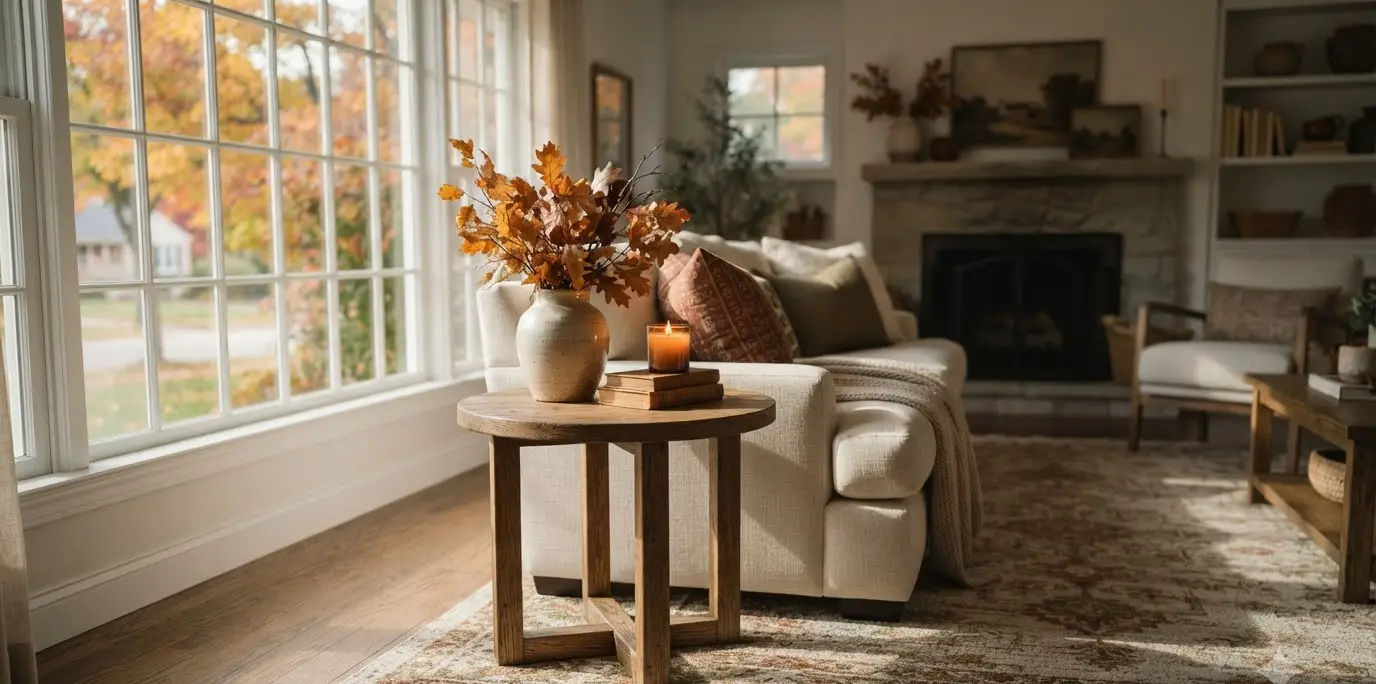
Your side table is the smallest piece of furniture doing the biggest amount of visual work in your living room. Nobody notices it when it’s empty.
Everybody notices it when it’s styled right.
I redecorate mine every single fall, and I still get it wrong half the time. That’s the fun part, honestly.
This is what I’ve learned after years of trial, error, and one too many trips to the craft store for fake pumpkins I didn’t need.
Why the side table matters more than you think
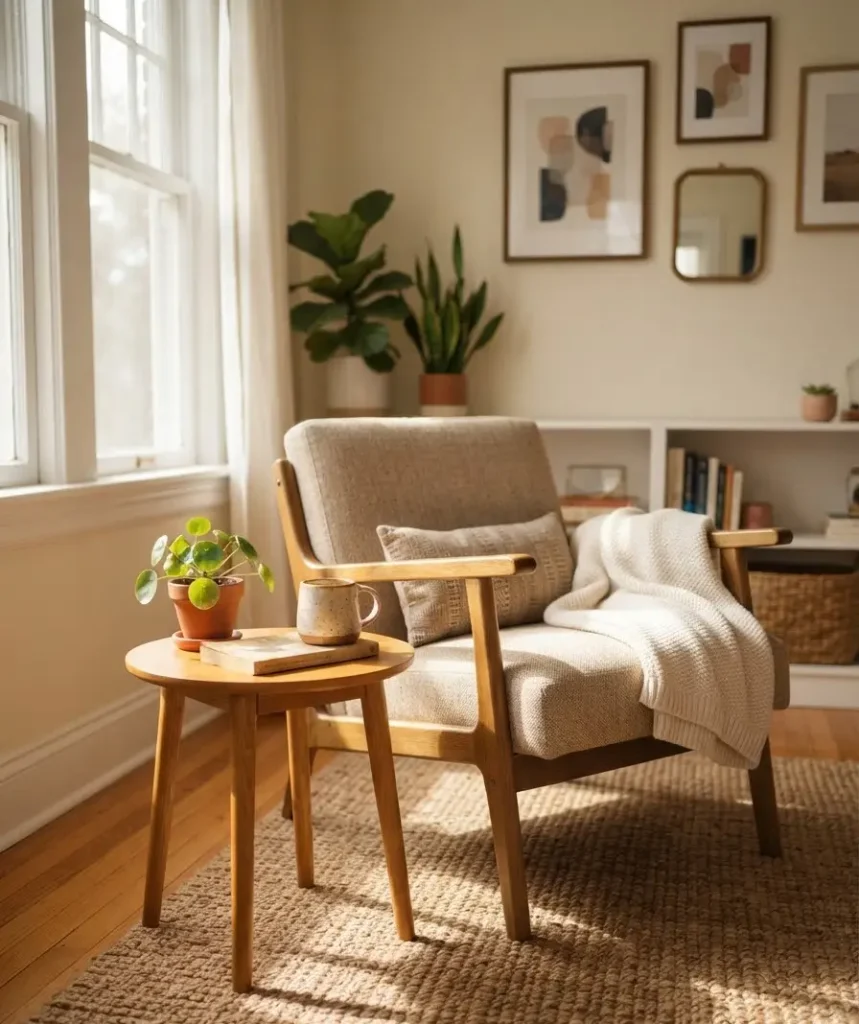
A coffee table gets all the attention. It’s the centerpiece, the thing everyone photographs forPinterest boards.
But your side table sits right next to where people actually sit, drink coffee, and rest their arm at 9pm on a Tuesday.
That proximity matters. It’s the surface people look at up close, not from across the room.
So the styling needs to hold up under scrutiny, not just look good in a wide shot.
I learned this the hard way when a friend picked up a “decorative” ceramic pumpkin from my side table and asked, completely straight-faced, if it was a candle holder that had lost its candle. It was not. It was just a bad pumpkin.
Start with a color story, not a shopping list
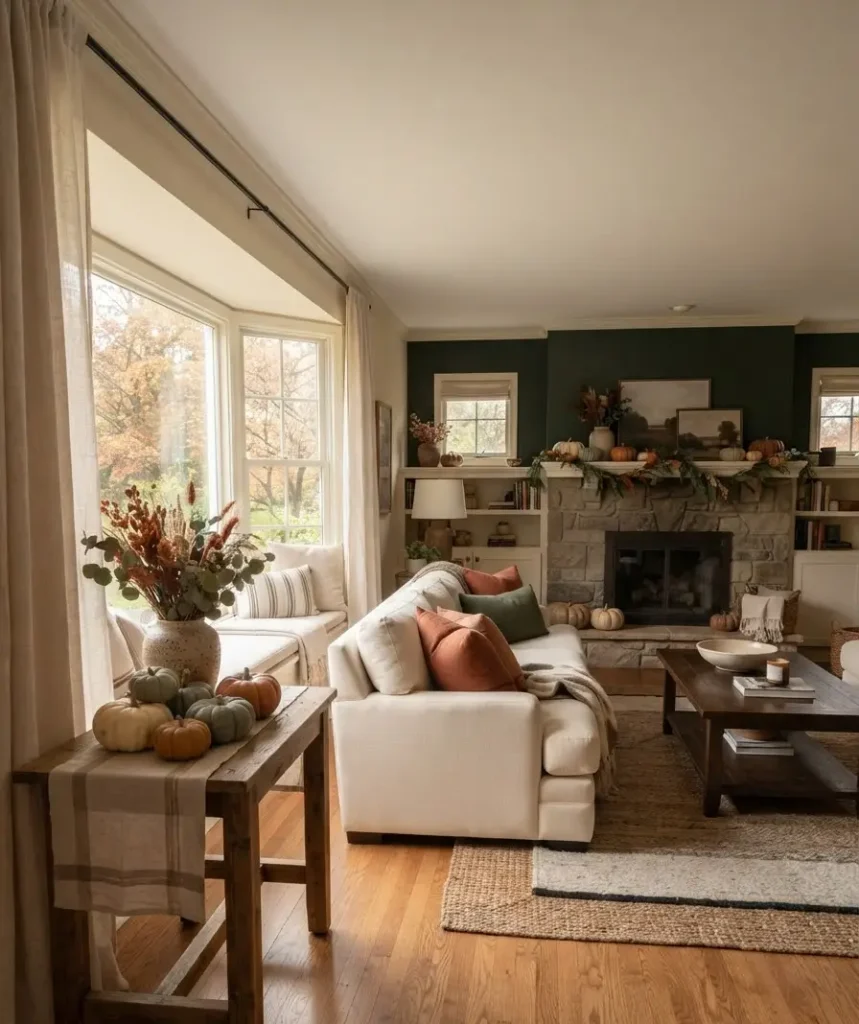
Before you buy a single pinecone, pick three colors and stick to them. Fall gives you a lot of options: rust, cream, olive, mustard, deep burgundy, warm brown.
Pick three and let everything else follow.
I go with cream, terracotta, and a deep forest green most years. It’s warm without turning my whole living room into a pumpkin patch.
IMO, that’s the difference between “seasonal update” and “Halloween store threw up on my furniture.”
Here’s a quick way to think about it:
- Base tone: your neutral, usually cream, white, or light wood
- Accent tone: your main fall color, rust or mustard work well
- Depth tone: a darker shade like forest green or espresso brown to ground the arrangement
Skip a fourth color unless you really know what you’re doing. Three tones read as intentional. Five tones read as clutter.
The rule of odd numbers, and when to break it
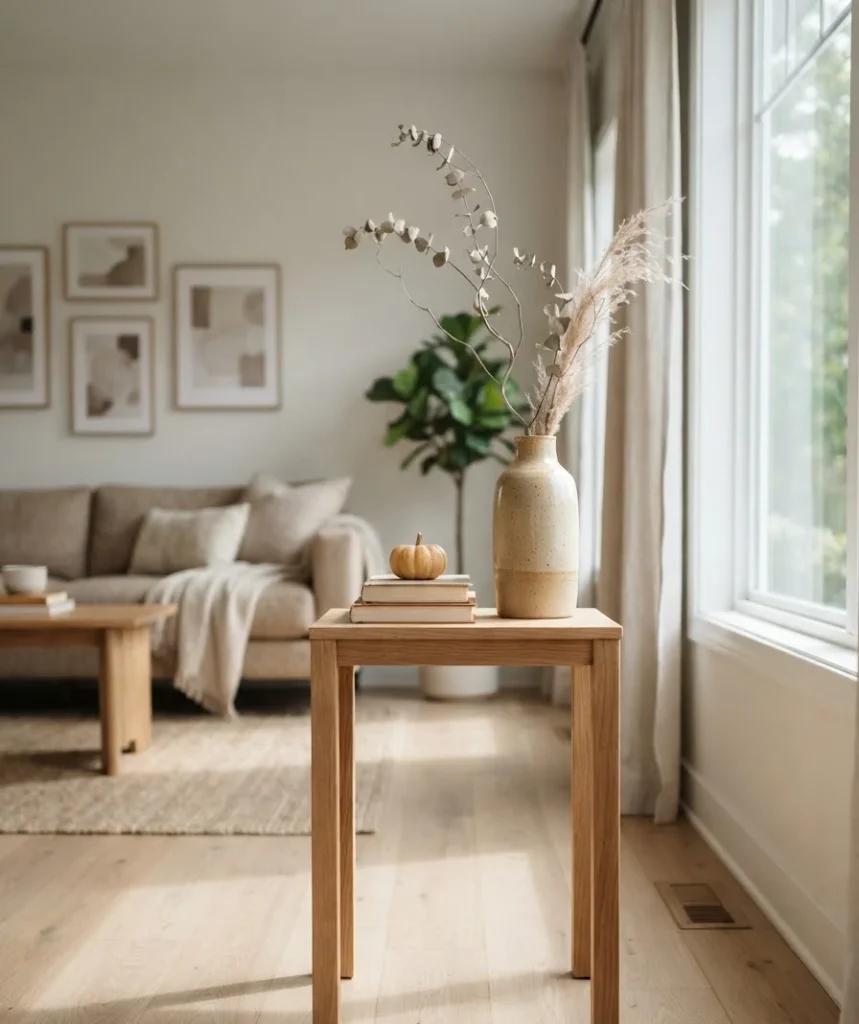
Interior designers love the rule of odd numbers: group items in threes or fives, never in twos or fours.
It works because odd groupings force your eye to move around instead of landing flat.
I follow this maybe 70% of the time.
The other 30%, I break it because two tall candlesticks flanking a small stack of books just looks better than three. Rules are a starting point, not a religion.
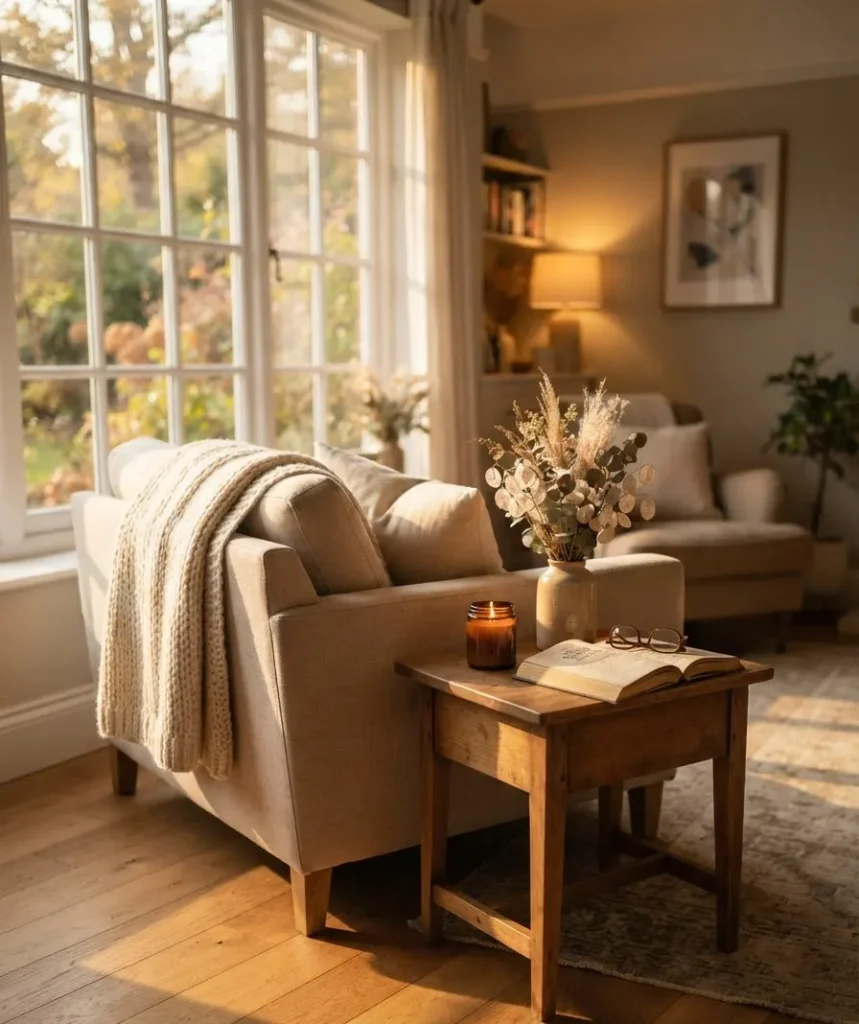
A basic three-item side table setup usually looks like this:
- One tall item (a vase, a lamp, or a candlestick)
- One medium item (a small stack of books, a bowl, or a plant)
- One small item (a mini pumpkin, a stone, or a candle)
Vary the heights. If everything sits at the same level, your eye has nowhere interesting to go.
Textures that actually feel like fall
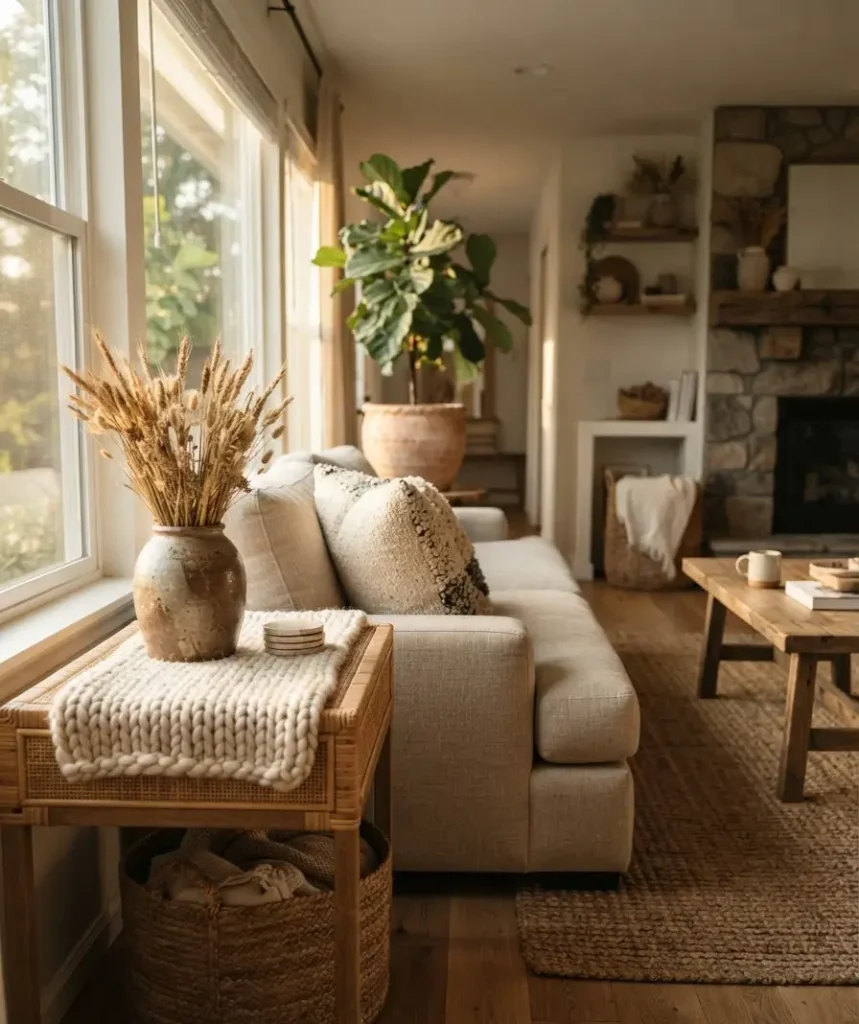
Color gets all the credit, but texture is doing half the emotional lifting.
A side table full of smooth, shiny surfaces feels cold no matter how orange you make it. Fall decor needs texture you want to touch.
Think about mixing:
- Woven baskets or rattan trays
- Chunky knit table runners (yes, tiny ones exist)
- Rough ceramic or stoneware vases
- Dried or faux foliage with visible stems and texture
- Wood in a natural, unpolished finish
I always add one woven piece, even if it’s just a small basket under a candle.
It softens everything else on the table and keeps the whole vignette from feeling too styled, too showroom, too “I bought this whole scene from one store.”
A quick side-by-side: real vs faux fall foliage
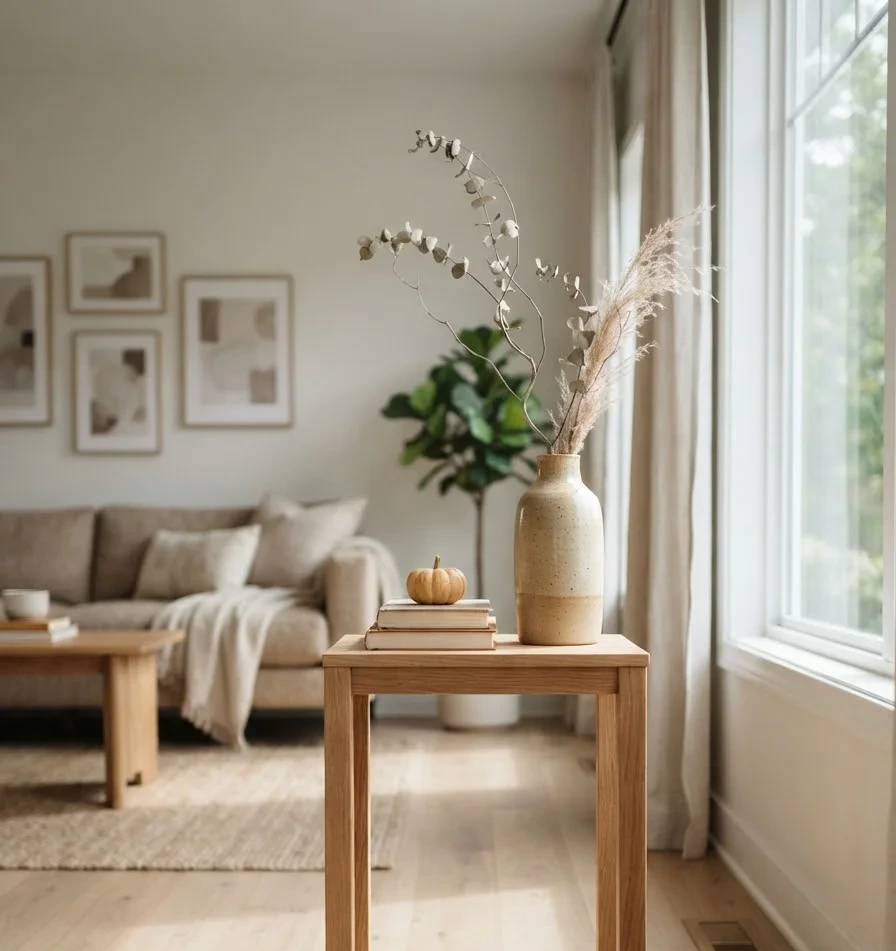
People ask me constantly whether to buy real dried stems or go faux. Here’s my honest take in a small table, because both have real tradeoffs.
| Factor | Real dried foliage | Faux foliage |
|---|---|---|
| Cost | Cheap upfront, replace yearly | Higher upfront, reused for years |
| Look | More texture, slightly imperfect | Consistent, can look plasticky if cheap |
| Upkeep | Sheds, fades by December | Dust it and it lasts |
| Best for | Renters, one-season commitment | Anyone decorating long term |
My honest opinion: spend the extra money on one or two good faux stems rather than a dozen cheap ones.
A single well-made stem in a nice vase beats a bunch of flimsy sprigs every time. I made that mistake my first year and regretted it by week two.
Small styling ideas that punch above their size
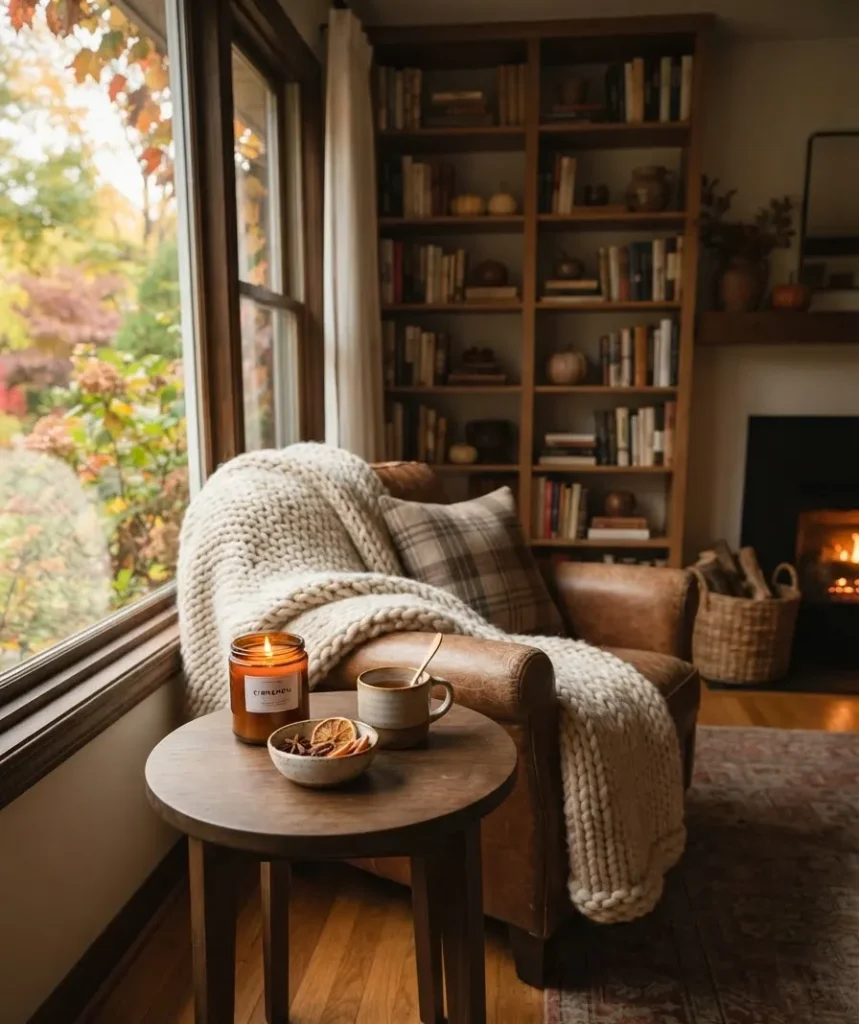
You don’t need to redo your whole side table to make it feel like fall arrived. Small swaps go a long way, and they’re cheap enough to try without committing hard.
- Swap your everyday candle for something in cinnamon, amber, or fig
- Add a single ceramic pumpkin instead of a whole cluster
- Layer a small tray under your existing lamp to add a defined base
- Stack two or three books with warm-toned spines and set something small on top
- Drop in a mini bowl of dried orange slices or cinnamon sticks for scent and texture
- Trade a summer throw for a chunky knit one draped nearby, even though it’s not “on” the table
That last one is a bit of a cheat since it’s not technically on the table, but a table styled alone in a room with no supporting texture nearby looks like a display in a furniture store. Let the surrounding pieces help.
A quick, mildly unrelated thought
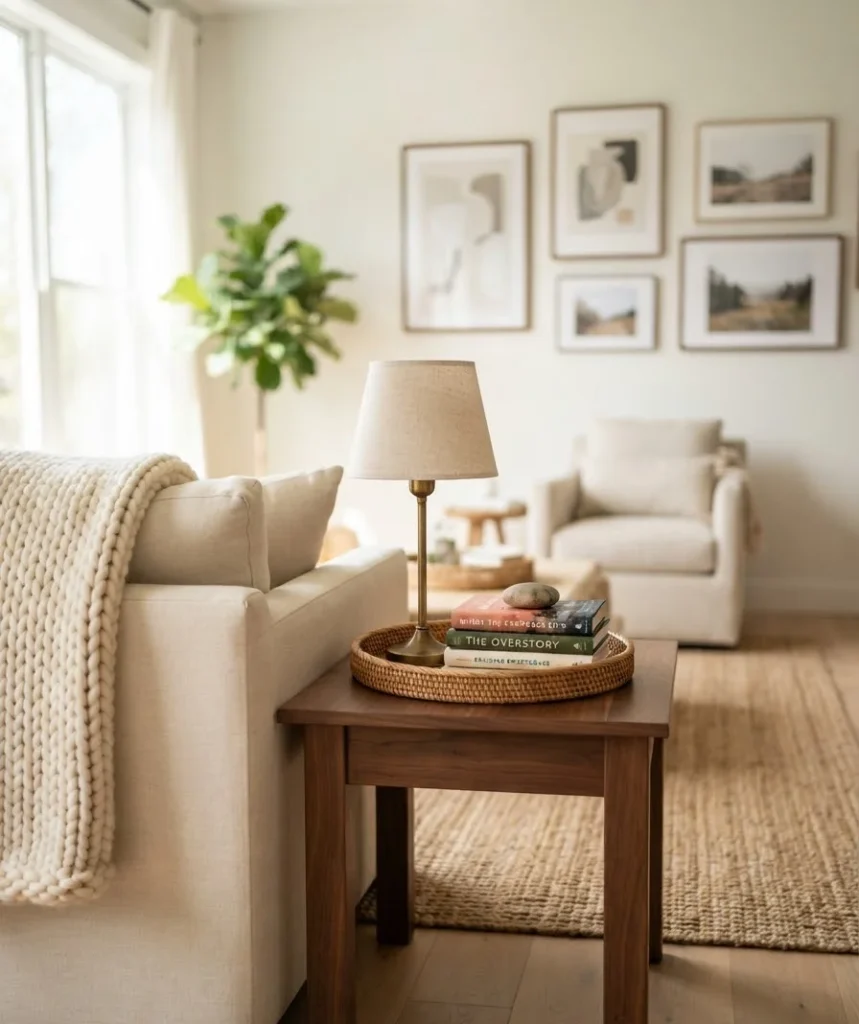
I once spent an entire Saturday reorganizing my side table three separate times because the lighting kept changing throughout the day and things that looked great at noon looked flat by 6pm.
My partner walked past around hour four and just said “it’s a table.” He was not wrong, but also, he does not understand the assignment.
Anyway. Back to it.
Matching your side table style to your living room aesthetic
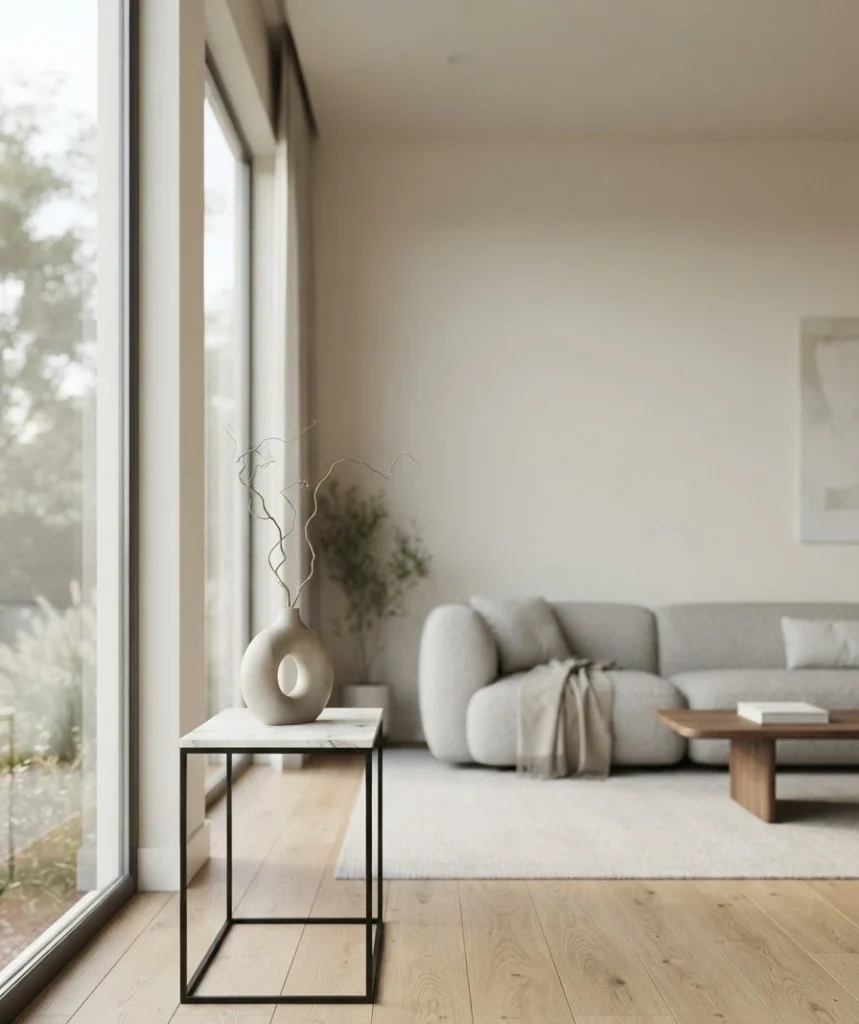
Not every home wants the same version of fall, and that’s a good thing. Here’s how I’d approach a few common styles.
Modern and minimal: One statement item, usually a sculptural vase or a single branch in a simple ceramic vessel. Skip the clutter entirely. Less items, more negative space.
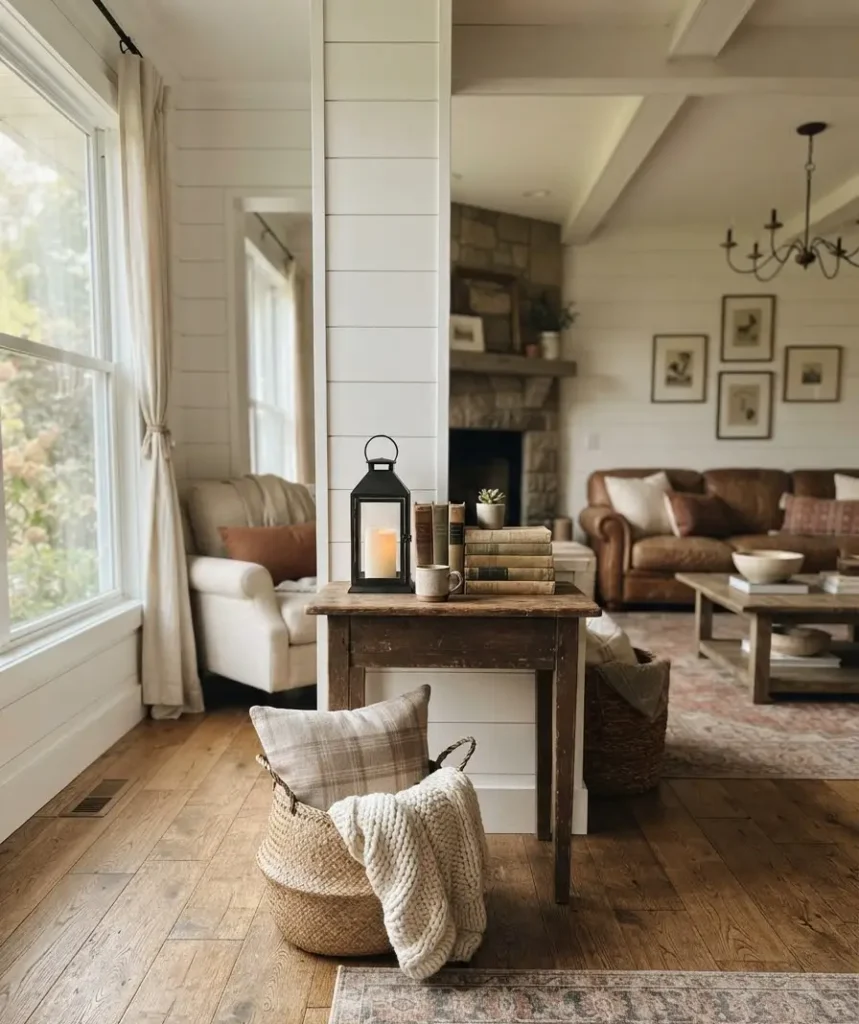
Farmhouse or cottage: Layered textures, a stack of vintage-looking books, a small woven basket, maybe a lantern with a flameless candle inside.
Boho: Mixed materials, a little asymmetry, dried pampas or wheat stems, warm brass accents.
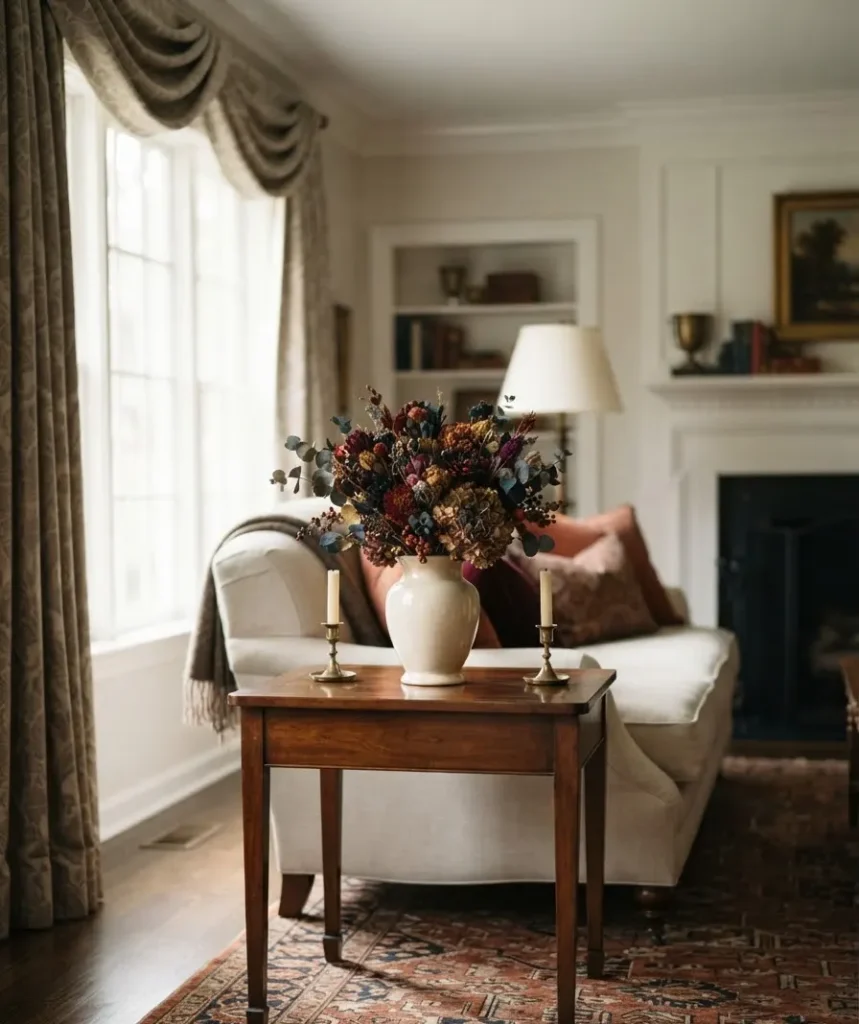
Traditional: Symmetry matters more here. A pair of small candlesticks, a classic vase, muted jewel tones layered with the rust and cream.
I’m a modern-farmhouse hybrid person myself, which basically means I own too many baskets and refuse to admit it.
Where to look for real inspiration
If you want more visual reference before you start pulling things off shelves, a few sources are worth a look.
This roundup of fall living room decor ideas has some good examples of how side tables work alongside a full seasonal room refresh, not just in isolation.
For a more hands-on, personal take on styling a small vignette, this guide to decorating fall coffee table centerpieces breaks the process down step by step, and a lot of the same logic applies to side tables.
And if you want a huge range of options across different styles, this list of side table decor ideas covers boho, farmhouse, and modern takes in one place.
Common mistakes I still catch myself making
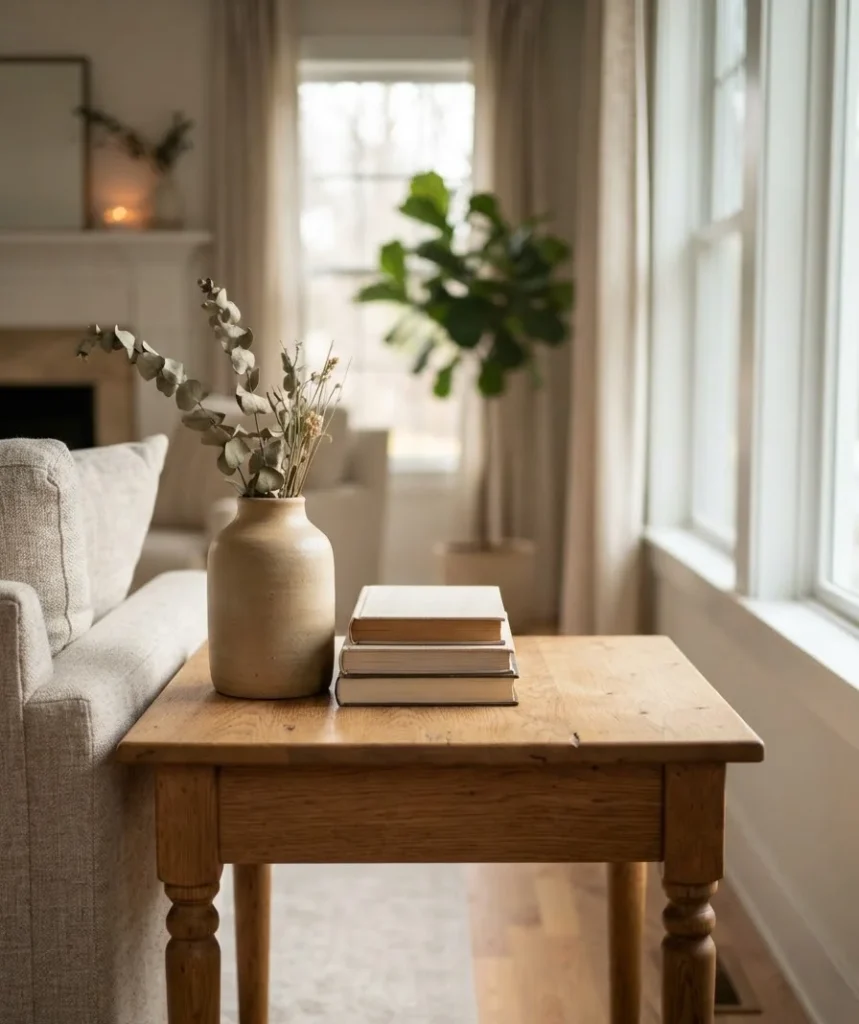
Even after years of doing this, I slip up. Being honest about it helps more than pretending I’ve got it perfect.
- Overcrowding the table because “one more thing” always sounds like a good idea in the moment
- Forgetting scale, putting a tiny candle next to a huge lamp and wondering why it looks off
- Matching everything too closely so the table looks like a set instead of a collection
- Ignoring the table’s actual function, people need somewhere to put a coffee mug down
That last one is real. A table can look incredible and still be useless if there’s no flat space left for an actual drink.
Function first, styling second. This is insane how often I forget that rule myself.
Frequently asked questions
How many items should go on a small side table? Three to five items usually works best.
Fewer than that can look bare, more than that tends to feel cluttered on a smaller surface. Vary the height and size so your eye has somewhere to travel.
Do I need to buy new decor every fall? Not really. Rotate a few key seasonal pieces, like a vase, a candle scent, or a runner, and keep your base items (lamp, tray, books) the same year round. It saves money and still feels fresh each season.
What colors work best for fall side table decor? Rust, cream, mustard, deep green, and warm brown are the classics for a reason. Pick two or three and build around them instead of trying to use every fall color at once.
Final thought
A great side table doesn’t need a big budget or a design degree behind it.
It needs three good items, a color story you actually like, and the willingness to move things around until they feel right.
So, what’s sitting on your side table right now, and does it actually earn its spot? Grab one new piece this week and see what changes. Sometimes that’s all it takes.
