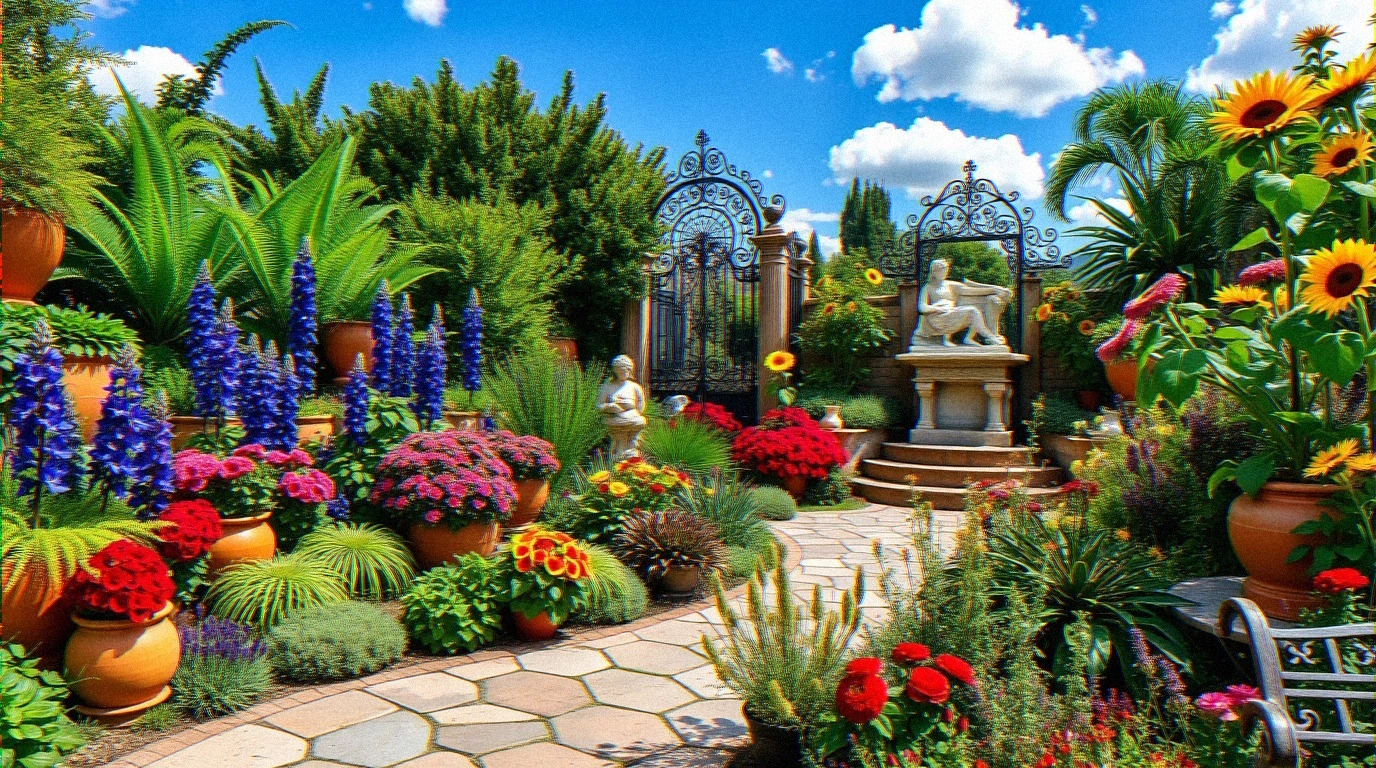
Isn’t your garden mostly beige right now? Don’t worry, I’ve been there. For a long time, I thought “tasteful” meant pale and muted, and my borders looked like a dentist’s office waiting room. I found jewel-tone planting, and everything changed after that.
We’re talking about deep sapphire blues, smoldering rubies, and rich amethyst purples—colors that are so bright that they look almost fake in the afternoon light.
People don’t just walk by your front garden anymore; they stop and stare. Jewel-tone plants are what make maximalist gardening a way of life.
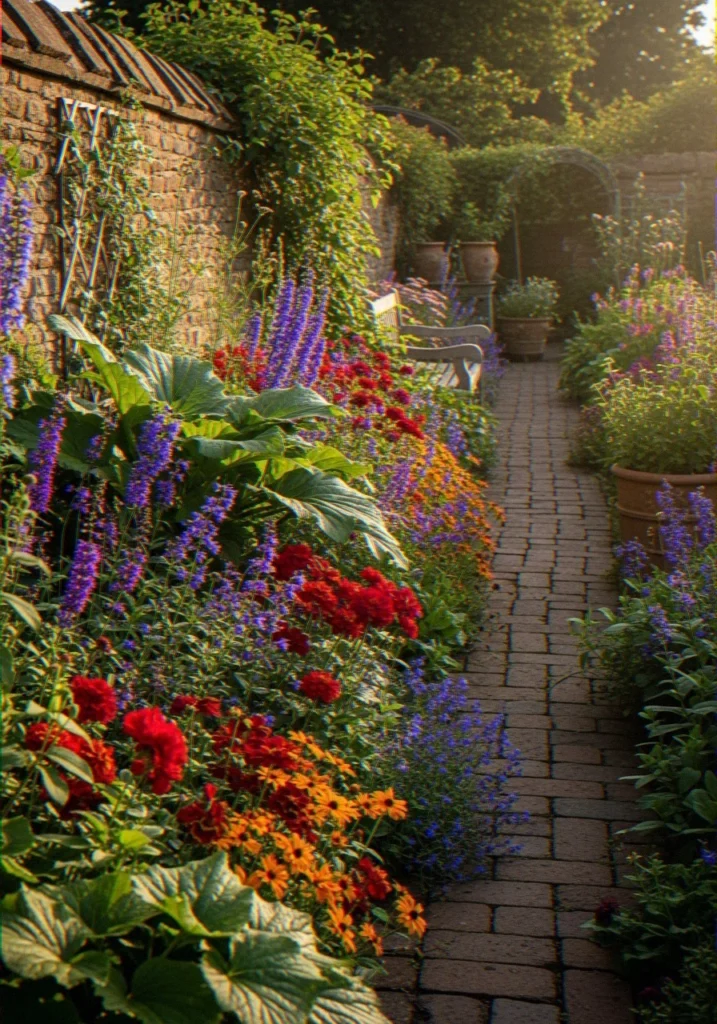
Why Jewel Tones Actually Work (It’s Not Just Luck)
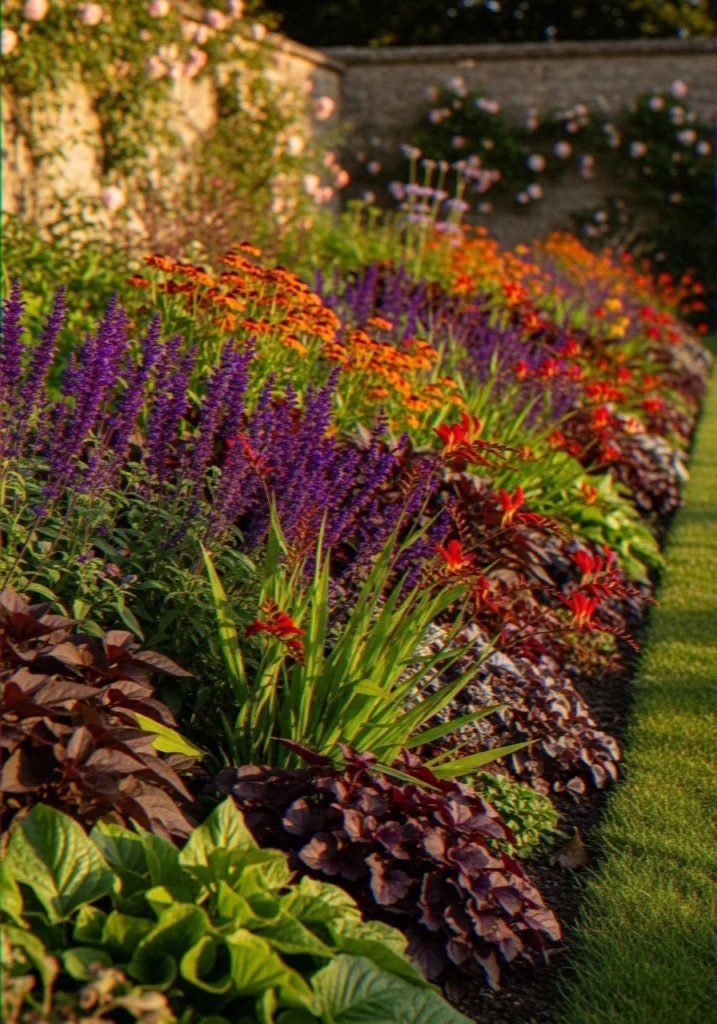
This is what most casual gardeners don’t get: jewel tones work because they have real optical depth. In the sun, pastels lose their shape.
Jewel tones look like they glow from the inside out, especially when the light hits them in the golden late afternoon light around 5 PM in the summer.
I saw this by accident when I put a deep-violet Persian shield next to a rust-orange helenium one year and stepped back, thinking I had made a terrible mistake.
Instead, it was the best thing I’d ever planted, to be honest. That’s when I really fell down this rabbit hole.
These colours borrow their name from gemstones — emerald, sapphire, ruby, amethyst, topaz — and they share that same sense of richness and weight. They don’t compete with each other so much as amplify each other.
That’s the whole secret. A garden built around jewel tones feels intentional and layered, not chaotic, even when it’s absolutely packed with plants.
The Star Players: Best Jewel-Tone Plants You Actually Need 🌸
Persian Shield (Strobilanthes dyerianus) — The Showstopper Nobody Talks About Enough
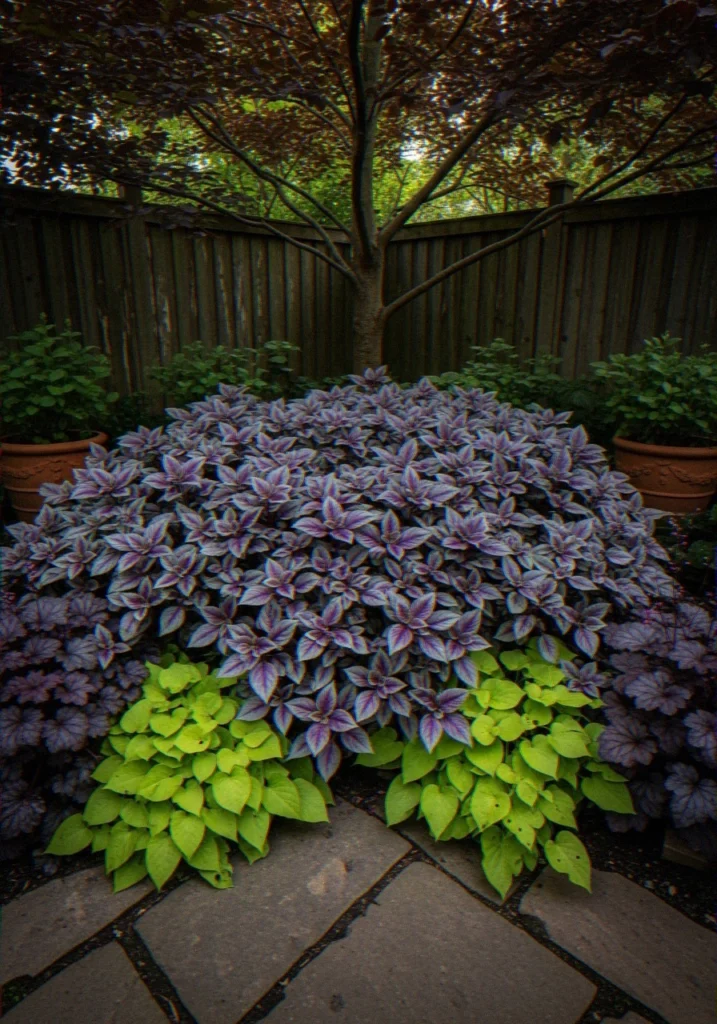
In my honest opinion, Persian shield is the most underrated plant in the world. That’s it. Depending on the angle of the light, the leaves shine between deep violet and metallic silver.
The first time I grew it, I stood in my garden for ten minutes just watching it catch the sun.
It grows best in partial shade, which is great for those dark, awkward corners where flowering plants just sit around and give up.
The contrast is crazy when you put it with lime-green sweet potato vine. It gets to be about 60 cm tall and can be used as a focal point at the front of a border or in a big pot on a shady patio.
Agapanthus — Pure Sapphire Sky in a Pot 💙
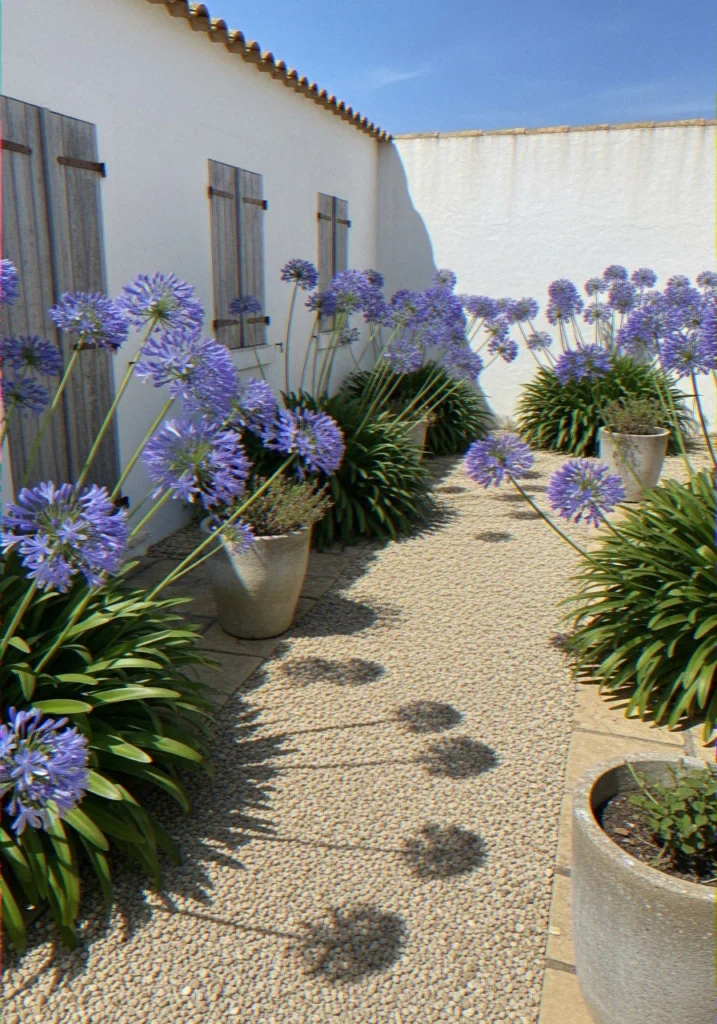
There’s something almost cinematic about a well-grown agapanthus in full bloom, bro, I’m not even exaggerating.
Those loose globe-shaped flower heads in the most genuine sapphire blue hold their colour for weeks right through summer.
I grow ‘Black Pantha,’ which tips into deep indigo at the petal tips, and every single person who comes into my garden asks about it.
Agapanthus wants full sun and well-drained soil, and in return it gives you virtually zero fuss — it’s one of those plants that rewards you for mostly leaving it alone.
For more variety research, the RHS Plant Finder is genuinely one of the most trustworthy tools I keep going back to.
Crocosmia ‘Lucifer’ — Ruby Red Drama That Earns Its Name
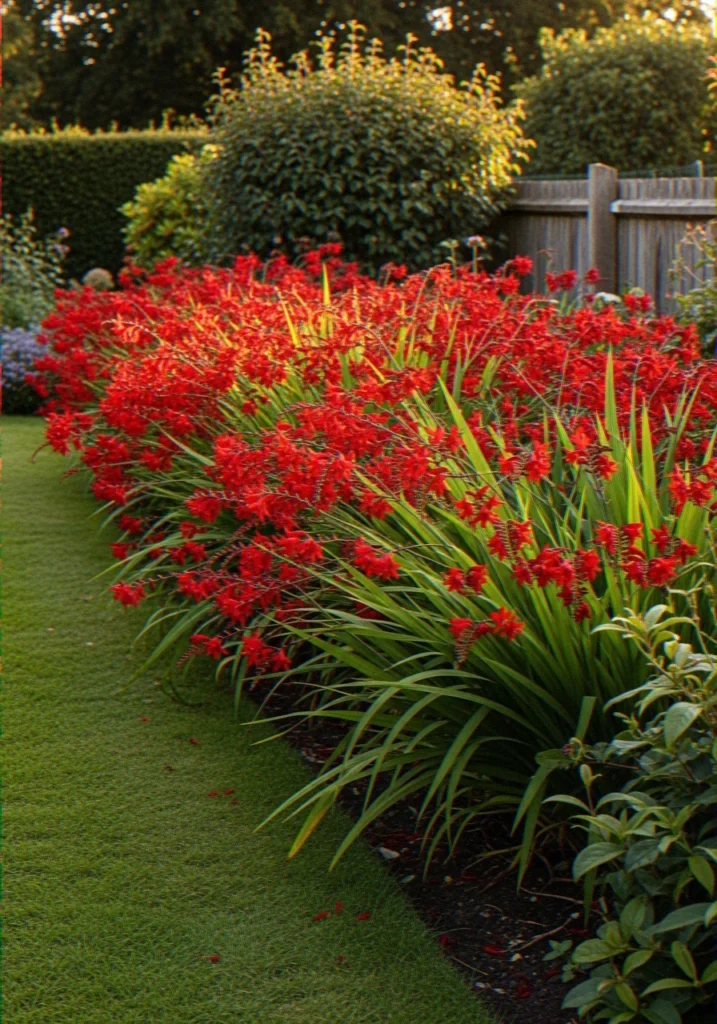
Crocosmia “Lucifer” lives up to its dramatic name in July. The ruby-red flowers that arch over each other are loud in a good way.
They look like they belong in a tropical or exotic place, but they can grow well in most parts of the UK and US.
The strap-like leaves look great even before the flowers bloom, so you’ll have something to look forward to in the spring.
I found out that you should plant this in groups of at least seven or eight. The first year, I only planted three corms and wasn’t impressed.
The big planting is what makes it more than just a “nice plant.” Trust me, one of these is not enough.
Dahlias — The Undisputed Maximalist Champions 🏆
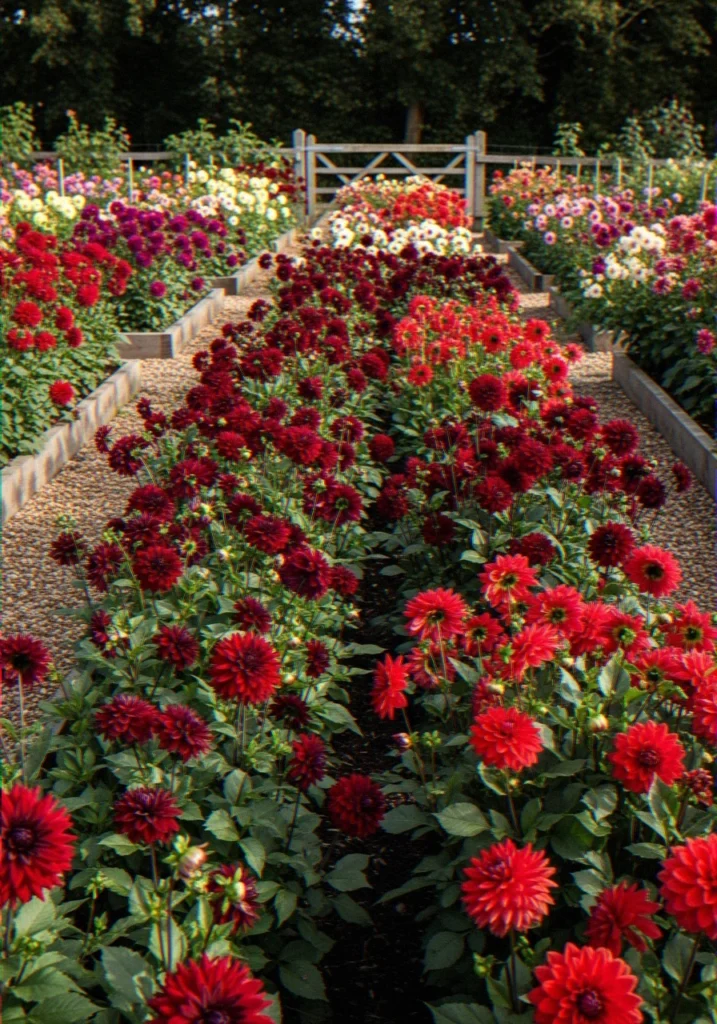
That’s right. We really need to talk if you’re making a jewel-tone garden and dahlias aren’t on your list.
The colors are amazing on their own: “Arabian Night” in a dark burgundy color, “Karma Choc” in a deep chocolate ruby color, and “Bishop of Llandaff” in a bright scarlet color.
These flowers look so good that they almost seem real. They bloom from the middle of summer to the first hard frosts.
Some are small, only 60 cm tall, while others are huge, 1.5 m tall dinner-plate dahlias that you can see from the end of the street.
I’ll be honest — I killed my first batch of dahlia tubers by planting them too early in cold, wet soil. That was embarrassing. Now I wait until late May here in the UK, and I’ve never lost one since.
Deadhead regularly (takes five minutes every couple of days, genuinely) and the bloom count goes through the roof.
Sarah Raven’s dahlia guides are brilliant for variety selection — detailed, honest, and they actually explain what each cultivar looks like at full size rather than just showing you baby nursery photos.
Helenium ‘Moerheim Beauty’ — Topaz and Amber Fire in Late Summer
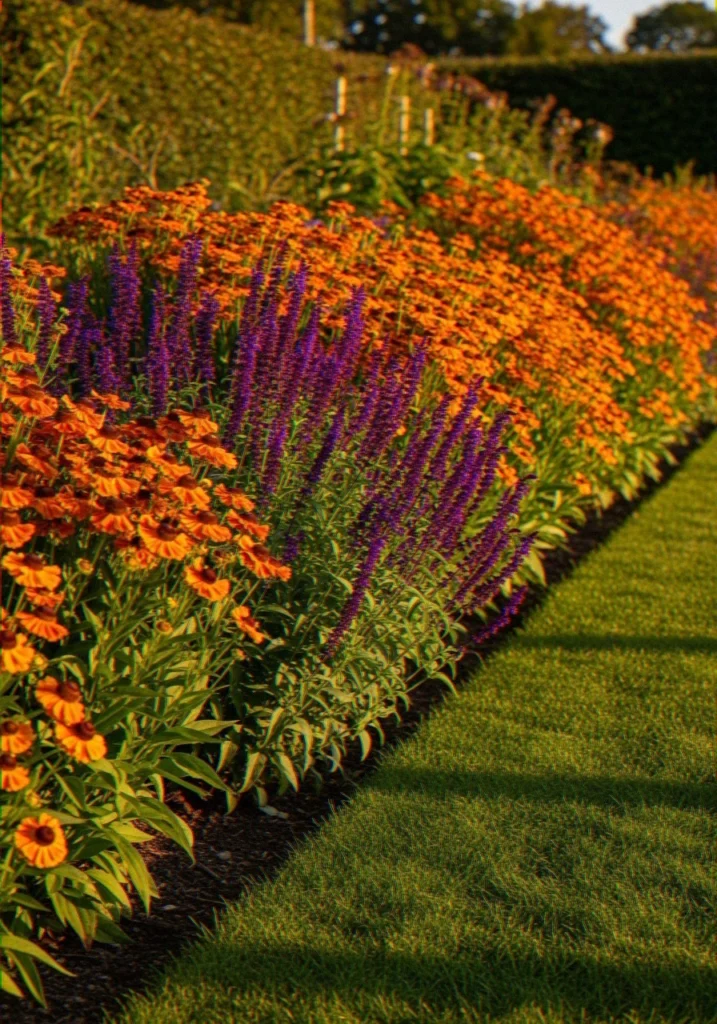
Helenium is my go-to recommendation for anyone chasing that late-summer ember warmth.
Moerheim Beauty’ delivers topaz, amber, and warm ruby tones all in one flower head, and it flowers just when most other things are starting to look tired.
It’s a genuinely bulletproof perennial — tolerant of most soils, reliable year after year, beloved by every bee within a half-mile radius.
I pair it with the deep purple spires of Salvia nemorosa ‘Caradonna’ and that combination is, without question, my favourite pairing in the whole garden.
It reaches 1 m to 1.2 m, placing it perfectly in the middle layer of a jewel-tone border.
How to Layer Jewel Tones Without Making It Look Like a Mess
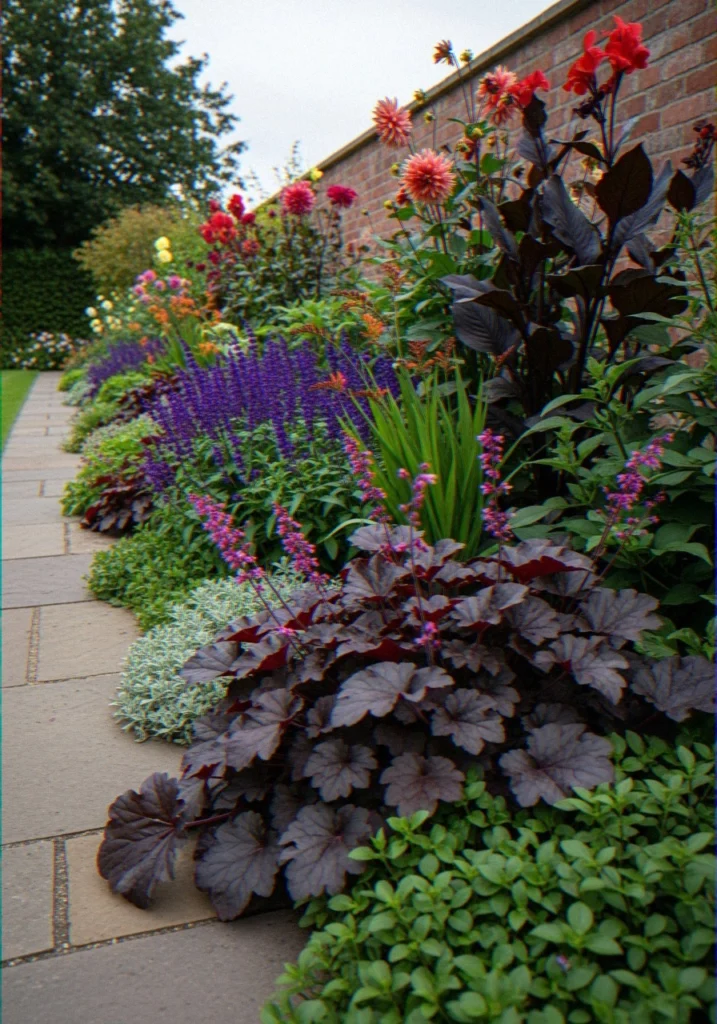
This is where a lot of people slip up — and honestly I’ve made every single one of these mistakes myself, so I’m speaking from genuine experience here, not theory.
First, choose a dominant tone. Pick one jewel color, like deep violet, and use it as the main color for the whole scheme.
Everything else either goes well with it (burgundy, ruby, deep plum) or stands out (amber, topaz).
When you run four jewel tones at the same time with no hierarchy, that’s when gardens start to look like a festival accident. Basically, you need a main character and a group of people who help them.
Layer on purpose by height. In the front are plants that don’t grow very high, like Persian shield and dark heucheras.
Plants that are in the middle, like crocosmia, salvia, and helenium, are in the middle. Put tall dahlias or black-leaved cannas in the back.
You’d be surprised how many people (including me in the past) just plant things wherever there’s space and then wonder why the result looks flat.
When flowers bloom, foliage can hold them together.
The most important thing I learned from reading garden design blogs is that foliage is what gives the jewel-tone mood between peak flowering times.
The Persian shield, dark-leaved phormiums, and the purple-black elder Sambucus nigra ‘Black Beauty’ all bloom all year.
These plants do the hard work so that your border doesn’t look gray and sad when the dahlias and heleniums aren’t blooming.
The Secret Weapons: Jewel-Tone Foliage Plants You’re Probably Skipping
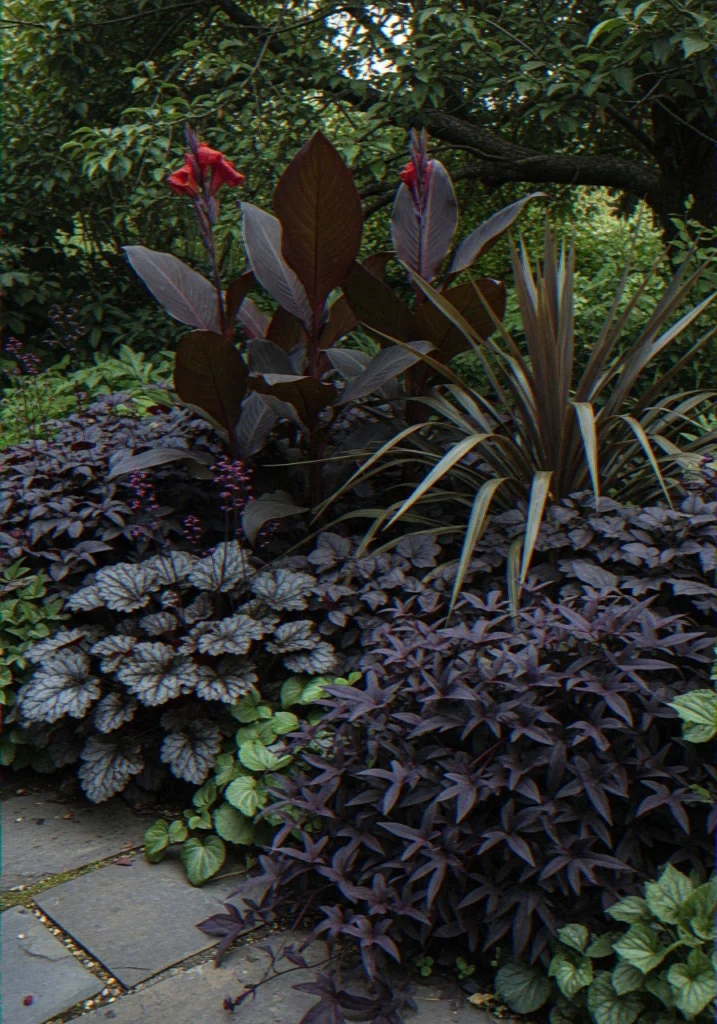
Most people get so focused on flowers that they completely overlook foliage, and that’s a massive missed opportunity. Here are the ones I keep coming back to:
- Heuchera ‘Obsidian’ — near-black leaves with a ruby undertone in direct sun. I tried this tucked next to a chartreuse euphorbia and it was genuinely one of those “wow!” moments in the garden. Totally worth it.
- Canna ‘Purpurea’ — massive burgundy paddle leaves that read as deep garnet from across the garden. Honestly this one is so dramatic it almost feels like cheating.
- Phormium ‘Platt’s Black’ — black-bronze strap leaves that anchor bold jewel-tone combinations with real authority. Evergreen, too, which makes it a year-round workhorse.
- Ipomoea batatas ‘Sweet Caroline Purple’ — I tried this as ground cover under tall dahlias one summer and it worked brilliantly. Spreads fast, looks killer, and the deep violet colour is completely consistent all season.
- Persian shield (again) — yes, it gets two mentions. It deserves them.
Harmony in the Garden: The Invisible Framework
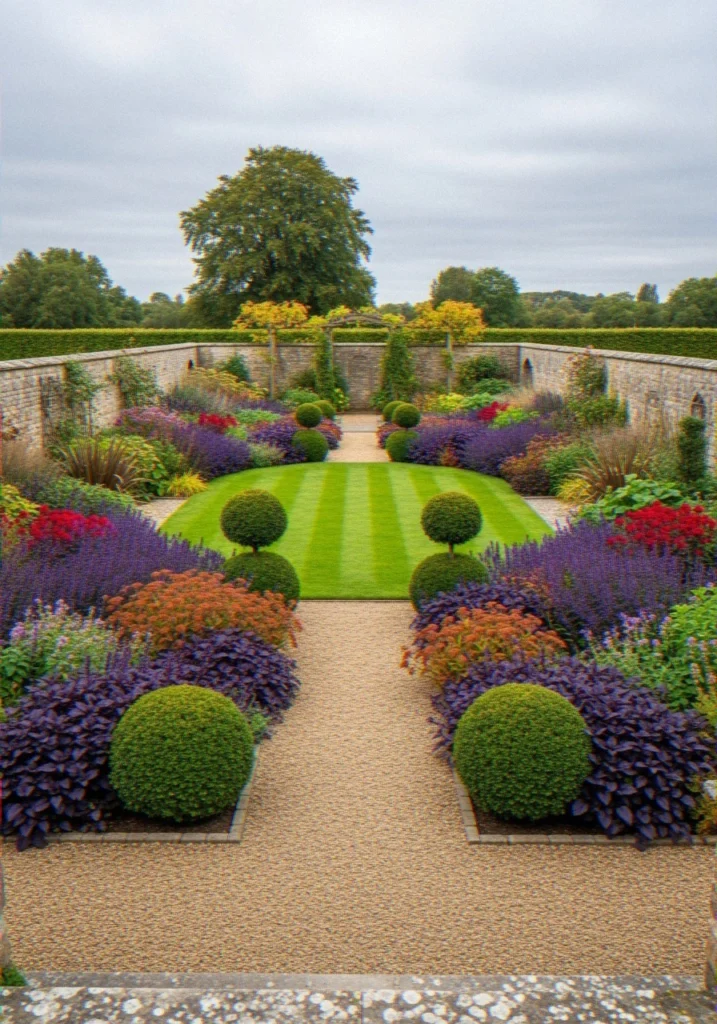
One random thought that keeps coming back to me is the “one plant, one pot, lots of gravel” garden trends that were all the rage a few years ago.
Honestly, that whole style seems a little old-fashioned now that I’ve seen how rich and full of personality a well-done jewel-tone maximalist scheme can be. Anyway, let’s get back to harmony.
The best maximalist gardens I’ve visited — and I’ve wasted entire weekends trawling through Garden Design Blog and other brilliant garden blogs for inspiration — all share one quality that’s hard to put your finger on at first.
There’s structure underneath the abundance. Repeated plant varieties. A consistent colour temperature.
Strong architectural shapes holding the whole thing together. Harmony in the garden doesn’t mean restraint. It means the invisible logic that makes generosity feel intentional rather than overwhelming.
That distinction took me three fairly ugly garden seasons to actually understand.
Pairing Jewel Tones With the Right Garden Style
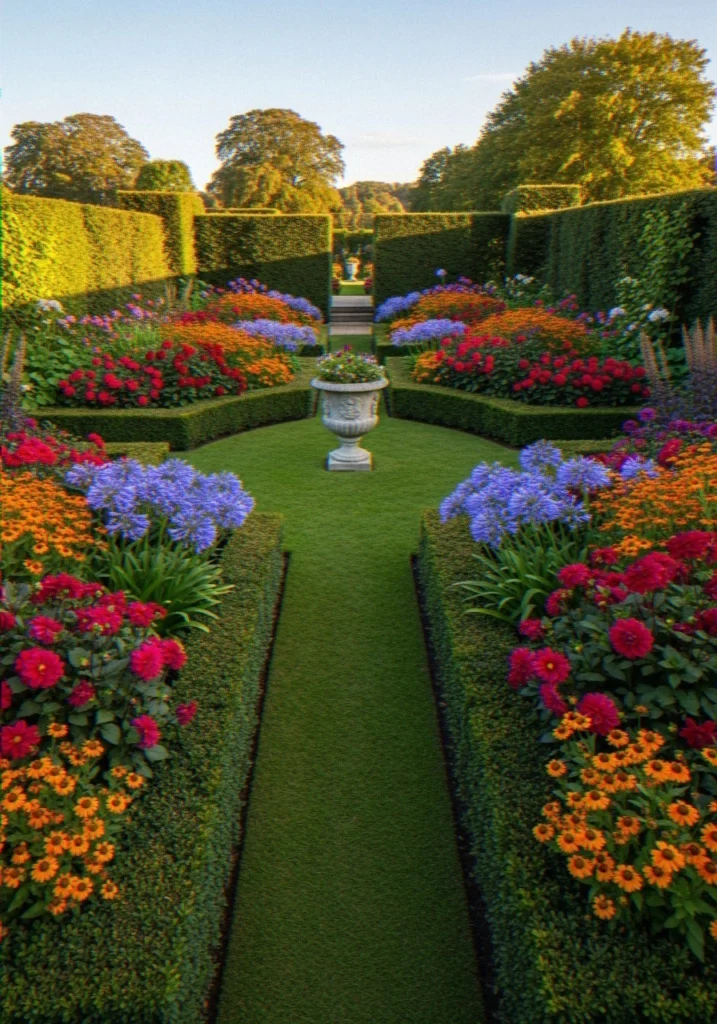
Jewel-tone planting works across more garden styles than people expect. Cottage gardens are the most obvious fit — relaxed, layered, overflowing borders are the perfect home for dahlias, crocosmia, and agapanthus.
Tropical-inspired gardens love the drama of cannas and Persian shield combined with big structural leaves.
Even formal gardens can handle jewel tones when they’re clipped into geometry — the contrast between tight hedging and saturated colour is actually awesome in a very unexpected way.
The one pairing that doesn’t work? Ultra-minimal Scandi-inspired design. I’ve seen people try to shoehorn jewel-tone plants into a super stripped-back garden and neither side wins — the plants look fussy, the minimalism looks defeated.
For gorgeous inspiration on how this looks in real grown borders rather than computer renders, Gardens Illustrated is genuinely brilliant — their photography actually shows you how these colours land in practice. Worth bookmarking if you haven’t already.
FAQ — People Also Ask
What plants are best for a jewel garden?
The strongest picks are Persian shield for year-round violet foliage, agapanthus for genuine sapphire blue, crocosmia ‘Lucifer’ for ruby red drama, dahlias in deep burgundy or magenta, and helenium for amber-topaz warmth.
Mixing dark-leaved foliage plants like heuchera ‘Obsidian’ and canna ‘Purpurea’ into the scheme means you’ve got jewel-tone colour in every season — not just peak summer when everything performs at once.
Which plant gives 12 months of flowers?
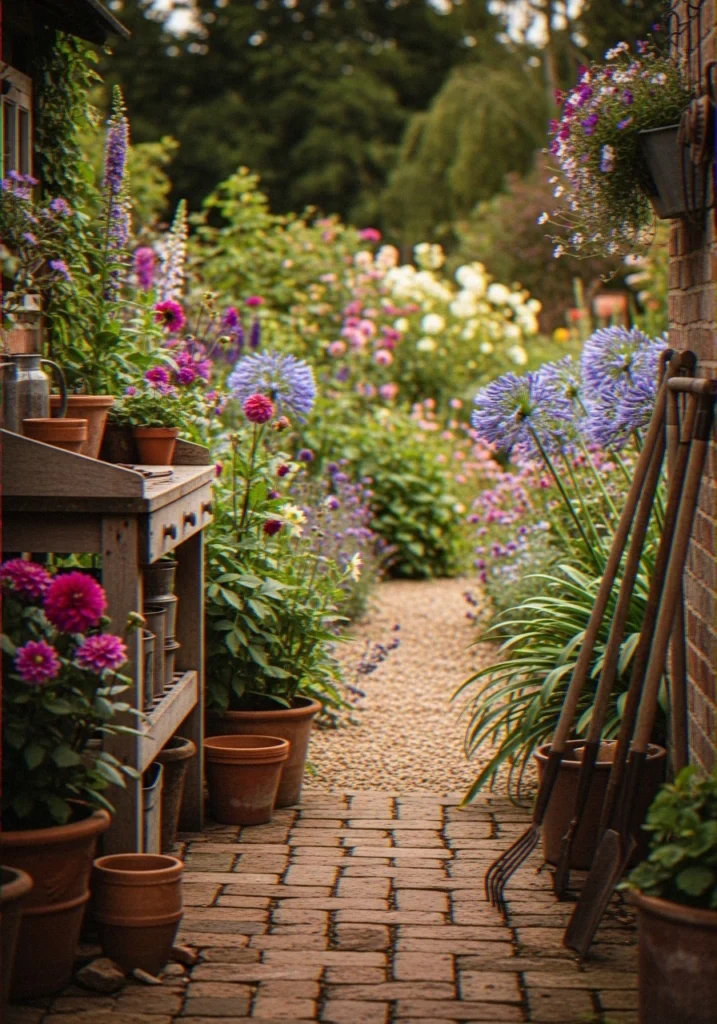
In a temperate climate like the UK or US, no one plant really blooms for twelve months. If someone says otherwise, they are probably trying to sell you something.
A layered combination strategy is a smart way to get around this: hellebores for deep plum and ruby tones from January to April, agapanthus through the summer, dahlias for color in the fall, and evergreen dark-leaved foliage plants to hold the scheme together in the winter.
Cannas can live almost all year in the southern US, where it is warmer, with little effort.
Why is Gen Z obsessed with plants?
Honestly, it makes complete sense to me. Plants offer something genuinely rare right now — slow, tangible, offline growth that you can actually watch and participate in. There’s no algorithm involved.
You put a bulb in soil and something extraordinary happens, and that feels increasingly radical.
Jewel-tone and maximalist aesthetics also align perfectly with Gen Z’s broader rejection of minimalism and their embrace of bold self-expression.
Dark dahlias and iridescent Persian shield are extremely photogenic too, which never hurts.
How do I make my garden look posh?
The most effective single move is repetition. Pick three to five plants and use them in large, confident groups rather than buying one of everything and scattering it around.
Add structure through clipped topiary or evergreen hedging — even simple box balls work brilliantly as anchors.
Keep your jewel-tone palette coherent rather than random. And always think vertically: a climber on a wall or a tall dahlia at the back of a border immediately creates the sense of a garden that’s been designed, not just assembled.
One Last Thing Before You Go
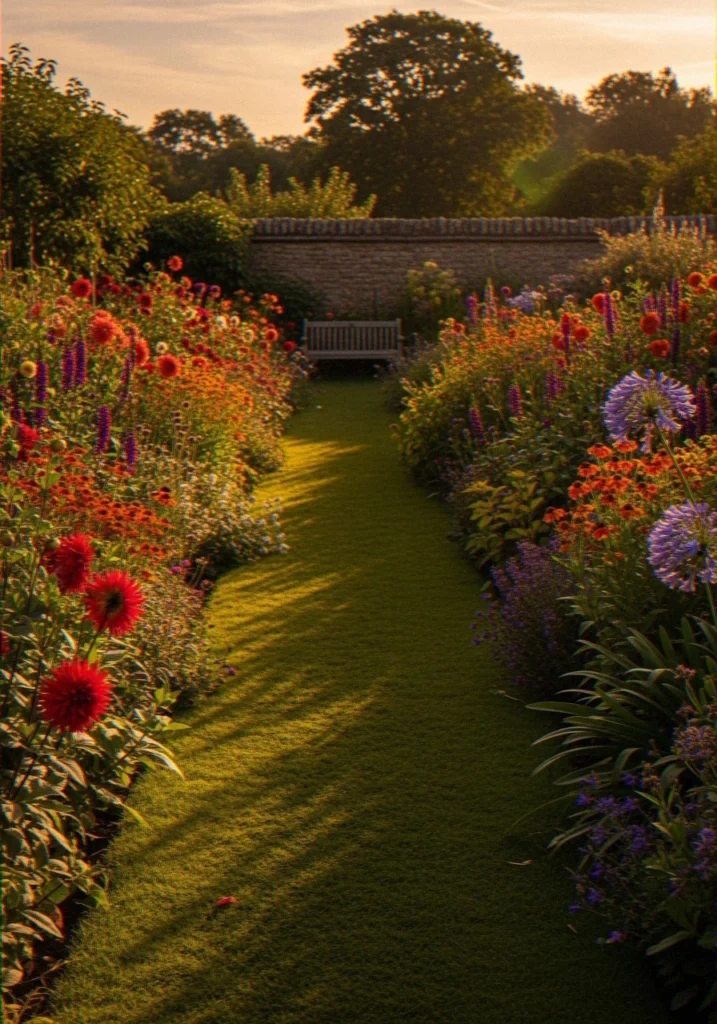
Building a jewel-tone maximalist garden doesn’t have to be a huge, complicated job that costs a lot of money and needs a landscape designer.
Start with just three plants. I’d start with a Persian shield, a dark dahlia variety, and an agapanthus.
Then I’d add more plants as you go. Even though there is a lot of thought behind every combination, the best jewel-tone gardens look like they grew that way naturally.
Whether you find out about it through the best gardening blogs, a neighbor’s border that blew you away on your morning walk, or years of your own trial and error like I did, the joy never really ends.
Your garden doesn’t have to look like anyone else’s. Turn it all the way up. 🌺
So — which jewel-tone plant are you most excited to try first? Drop it in the comments or share your garden photos. I genuinely want to see what you’re working with!
