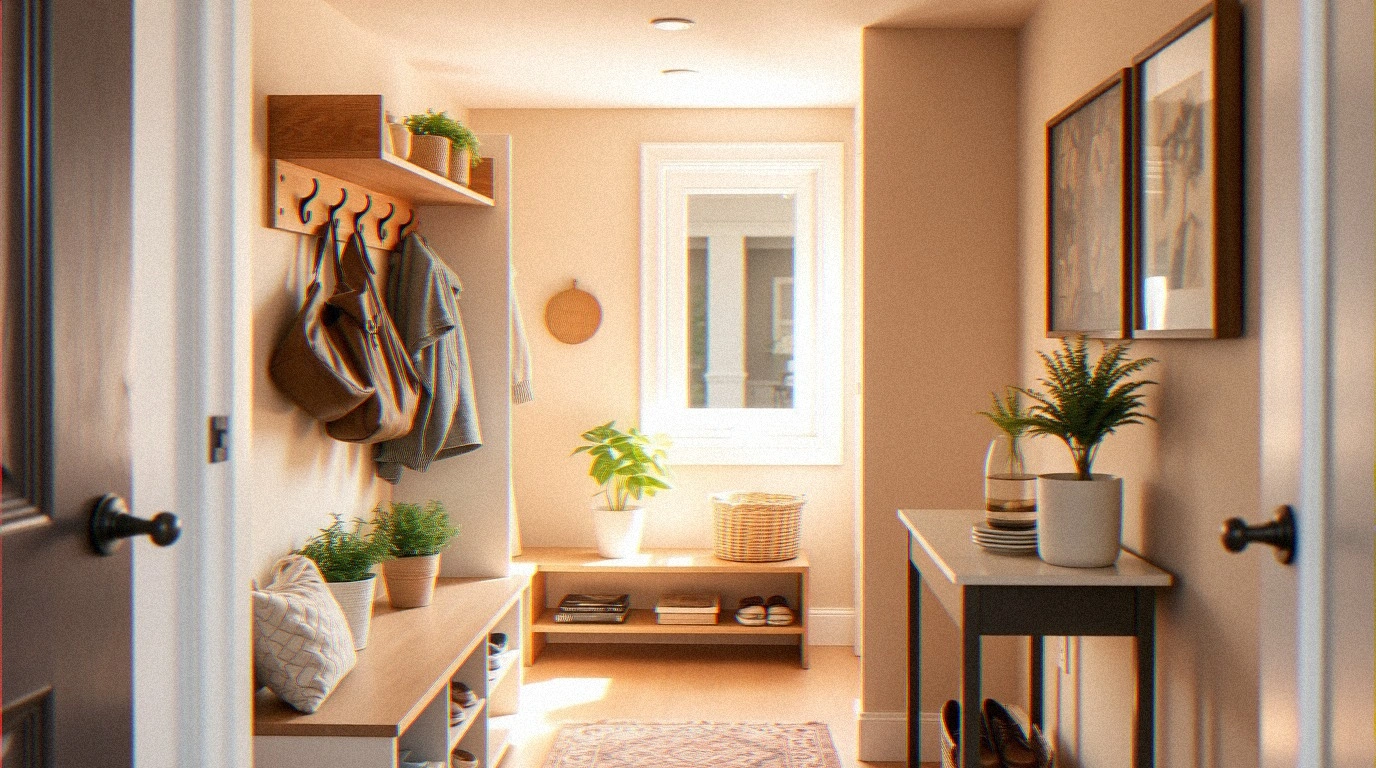
I used to be genuinely embarrassed by my entryway. Like, proper embarrassed. Coats on the floor, shoes everywhere, bags piled against the door like some kind of obstacle course.
Every single morning felt like a treasure hunt for my keys. Sound familiar? Yeah, I thought so.
The good news is I’ve spent way too much of my free time (and honestly, way too much money — don’t judge me) figuring out what actually works for narrow entryways and small mudrooms.
These 52 ideas are the real deal — tried, tested, and some of them straight-up life-changing. Let’s get into it.
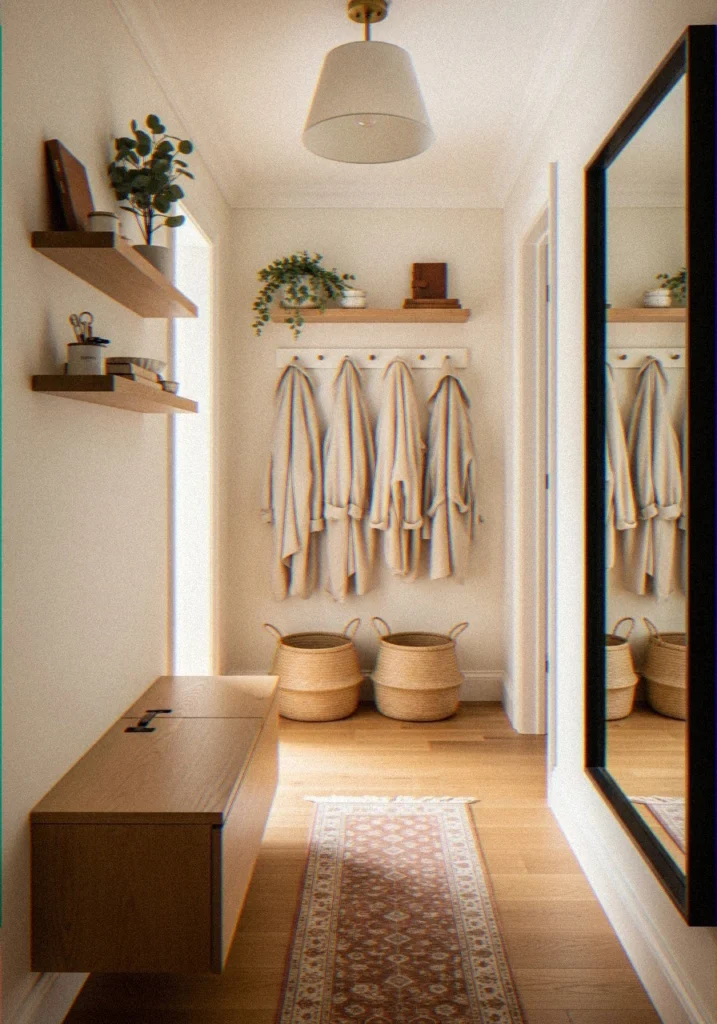
What Is a Mudroom Entryway? (And Why Yours Is Probably a Disaster Right Now)
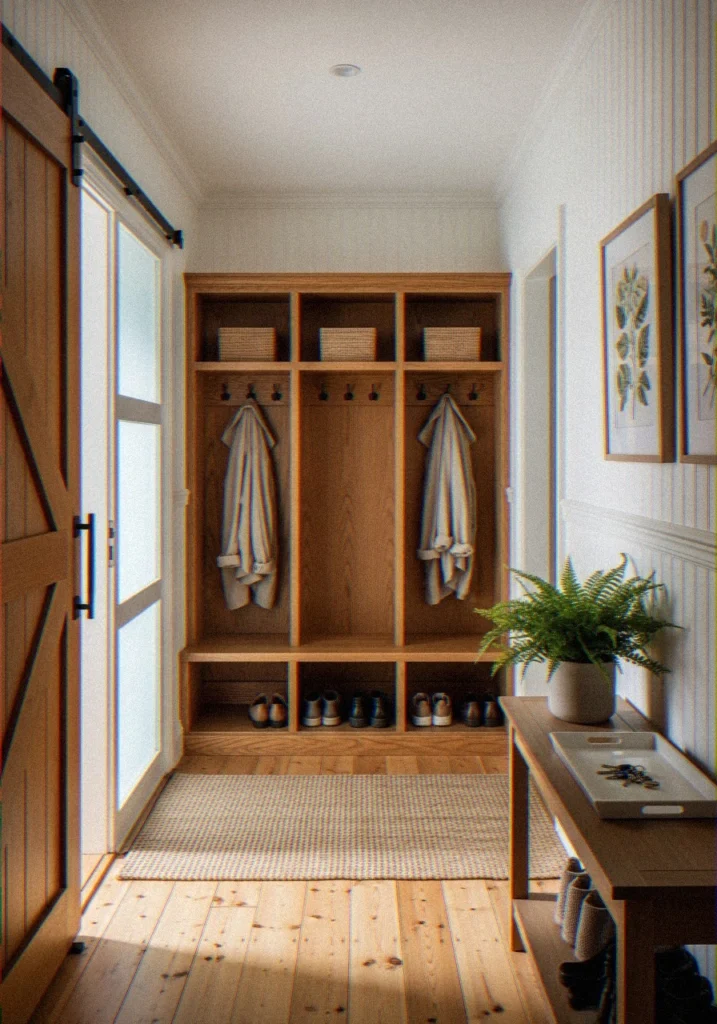
A mudroom entryway is basically a buffer zone between the chaos of the outside world and the inside of your home.
It’s the spot where coats get hung, shoes get dumped, bags get parked, and everything that followed you in from outside gets contained before it spreads through the rest of your house like some kind of mess virus.
Originally, mudrooms were full utility rooms in old farmhouses — built to handle muddy boots and wet gear before anyone tracked it through the kitchen. These days though, the concept is way more flexible.
Your mudroom doesn’t have to be a separate room at all. It can be a section of a hallway, a corner near the back door, or just a really well-organised patch of wall near wherever you walk in.
Here’s why it actually matters: research from UCLA’s Centre on Everyday Lives and Families found that cluttered home environments directly raise cortisol — your stress hormone.
So a chaotic entryway isn’t just an eyesore, bro. It’s literally stressing you out every time you walk through the door. That’s a properly good reason to sort it out.
How to Style a Narrow Entrance Hallway
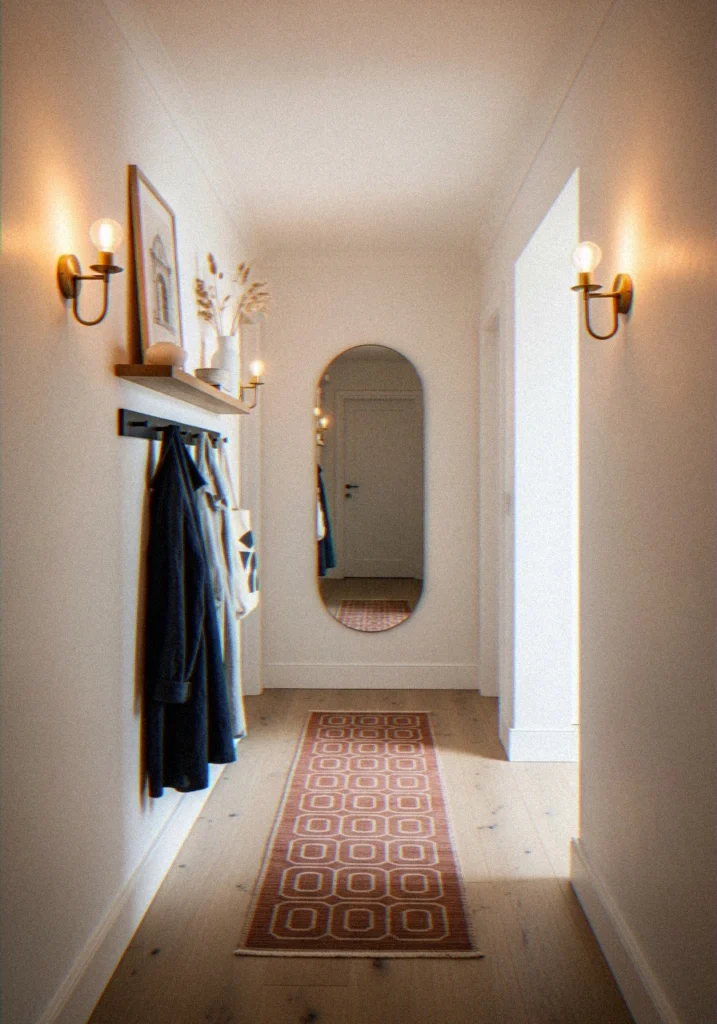
When it comes to styling a narrow hallway, it’s less about finding the “right look” and more about learning a few rules that change everything once you know them.
People usually treat a narrow hallway like a smaller version of a big room: they put the same furniture in there and use the same approach, but they have to fit it all in a smaller space. That’s where you went wrong.
Go Vertical — Seriously, Just Do It
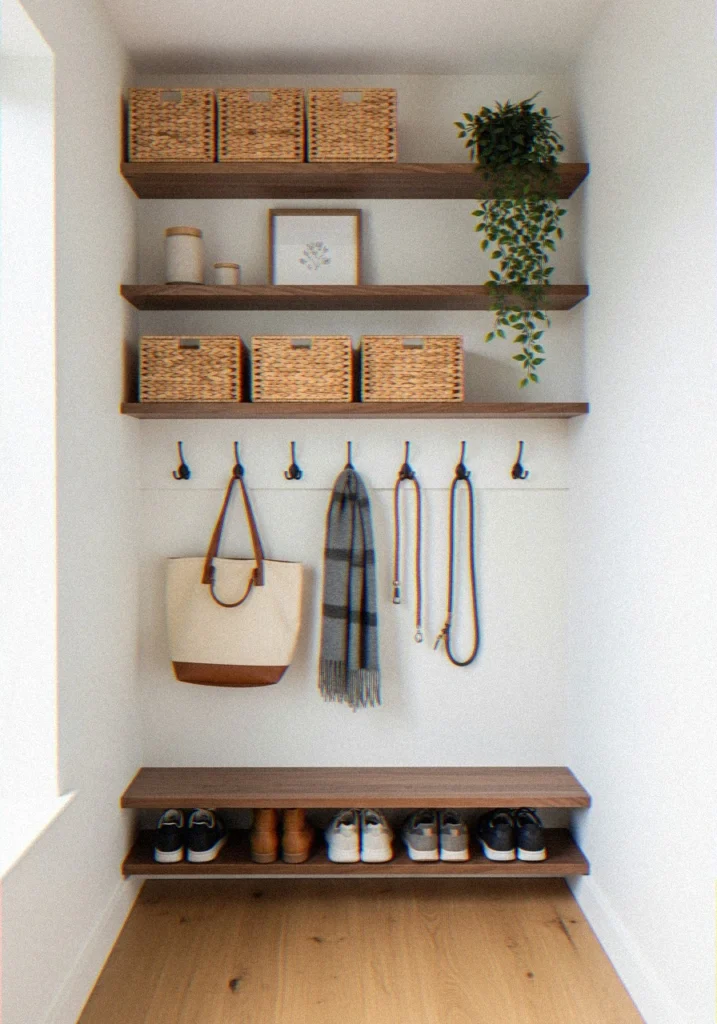
In a narrow entryway, the floor is the enemy. The hallway feels smaller and harder to get through because of all the stuff on the floor.
When you move storage off the floor and onto the walls, like hooks, rails, shelves, and floating cabinets, the whole space opens up in a way that is almost shocking.
Last spring, I moved three pairs of shoes off the floor of my hallway and onto a ledge on the wall.
The difference was clear right away. My partner thought I had broken a wall. It felt that dramatic. Always go up.
Use Light Like It’s Your Secret Weapon 💡
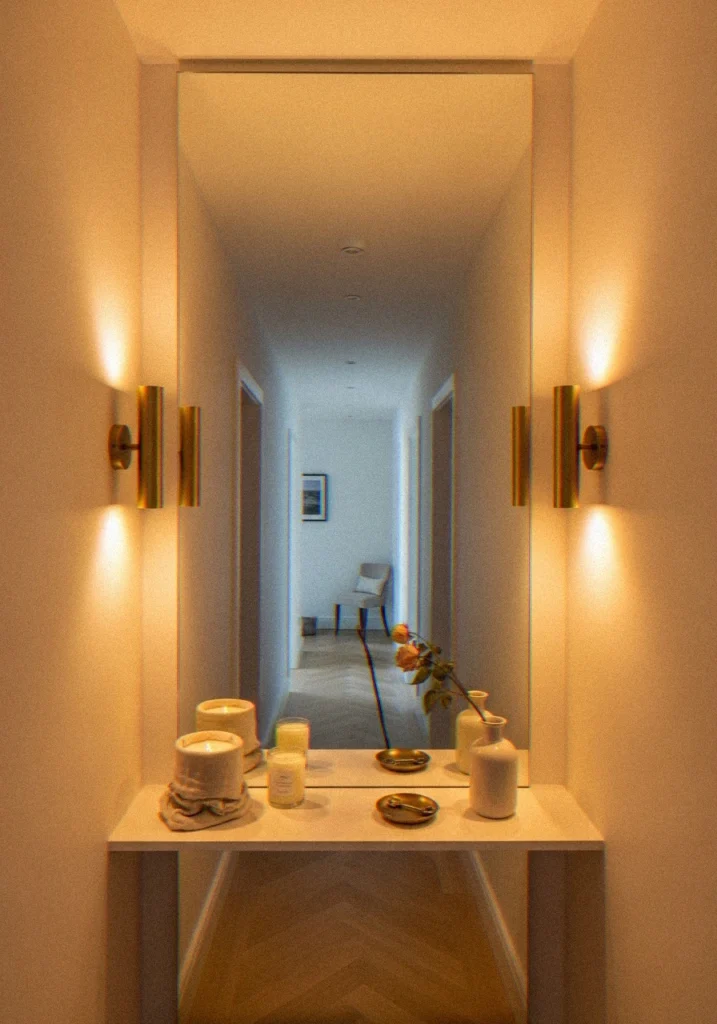
Even when they’re not, dark hallways feel small. Light colors like warm whites, creamy neutrals, and very light greiges on the walls reflect light and make the walls look farther away.
Put a wall sconce on each side to give the room a warm glow at night. And if you only do one thing from this whole article, put a full-length mirror on one wall.
In a narrow hallway, a full-length mirror is like a magic trick. It makes the room look twice as wide.
I’m not kidding; I put one in my 42-inch-wide hallway, and the first time I walked past it, I really did a double take. It seemed like someone had added a whole new hallway. That was a great use of $45.
Create One Visual Anchor
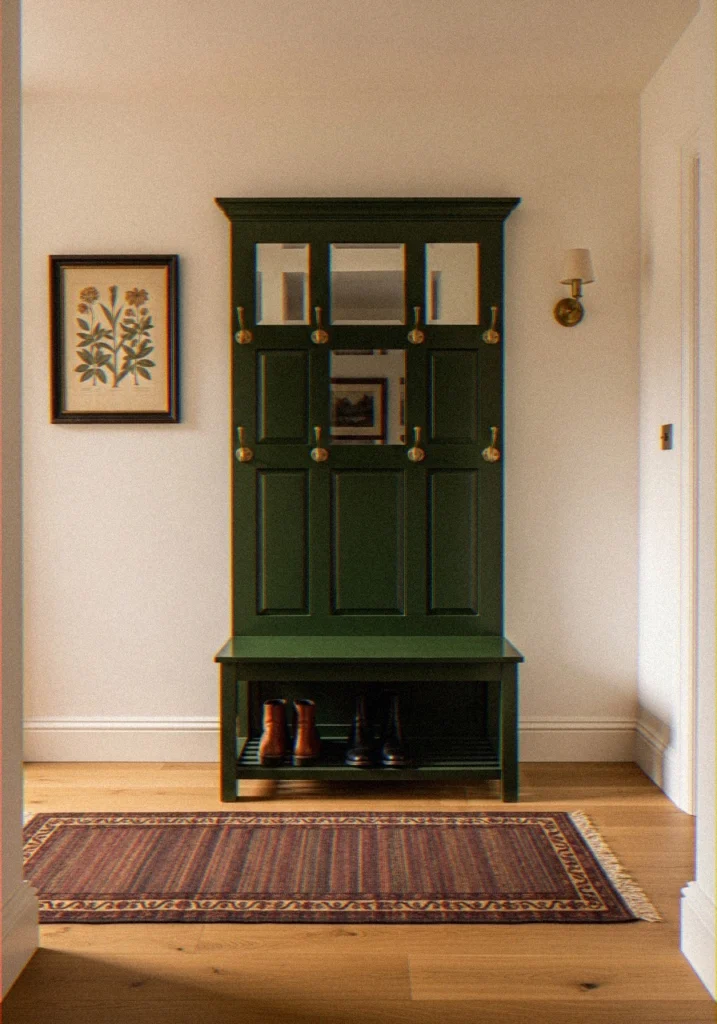
Every cool narrow entryway has one focal point — something that signals “this was designed, not just happened.” A killer hall tree. A framed gallery wall with hooks integrated into it. A bold geometric rug. A dramatically lit floating shelf.
Pick one thing that makes the space yours and build everything else around it. Without an anchor, a narrow hallway looks like a corridor. With one, it looks like a room.
Keep Colours Consistent
Combining too many wood tones, basket colors, and paint shades in a small space results in visual noise that the area is truly unable to handle.
A maximum of two or three colors should be used throughout to create a unified look for the walls, furniture, hooks, and baskets. More labor-intensive than any storage product you’ll ever purchase is consistency.
How to Create a Mudroom in a Small Space
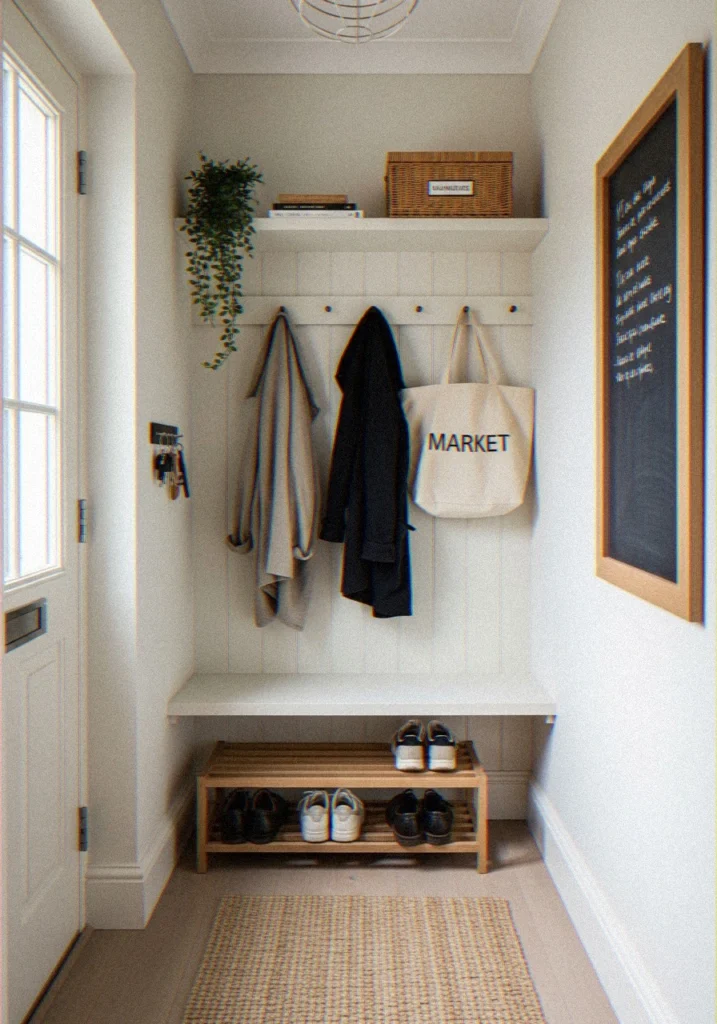
FYI — you don’t need a renovation permit or a contractor or even a particularly long weekend to create a proper mudroom in a small space.
This is genuinely one of the most achievable home projects out there. Here’s how I’d approach it from scratch.
Step 1: Pick Your Zone
Select the corner or wall nearest to the door you use the most. Not your second-most-used door, but the door you use on a daily basis.
No one will use your “mudroom” if it is three rooms from the entrance to the house. The whole point is proximity.
Step 2: List Your Clutter Categories
Before you buy a single thing, sit down and write out exactly what collects near your door. For most households it’s some version of: coats and jackets, shoes and boots, bags and backpacks, keys and wallets, mail and random papers, hats and gloves, maybe pet stuff.
Your storage needs to map directly to your actual life — not some aesthetic you saw on Pinterest that belongs to someone with a different family, different habits, and probably a cleaner car.
Step 3: Build From the Top Down
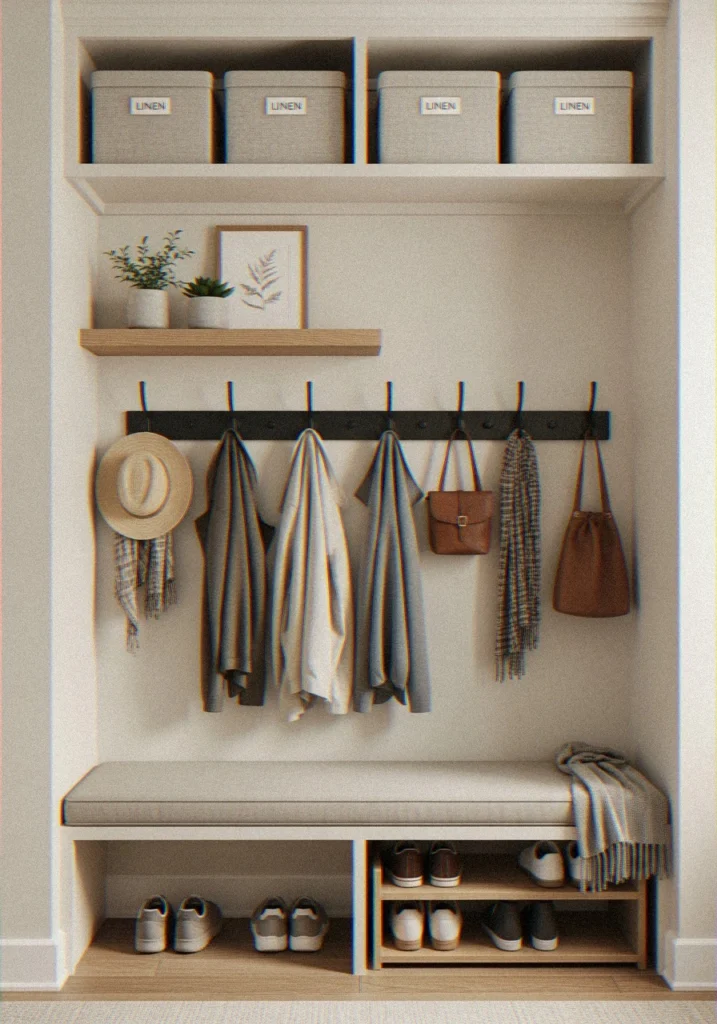
Once you’ve got your zone and your categories sorted, start at the top of the wall and work downward. High shelf (around 7 feet) for seasonal or rarely-used items. Middle zone (eye level, around 5–6 feet) for hooks, daily grab-and-go items, key storage. Lower zone (below 4 feet) for shoes, baskets, and bench seating.
This layered approach uses every vertical inch and stops you ending up with a weird pile of stuff at the same height with nothing above or below it.
Step 4: Make It Feel Like a Room, Not a Closet
The details that distinguish a “storage area” from an actual mudroom include a small rug, a single framed piece of art, and a plant on a shelf.
They totally alter the atmosphere of the room, but they only take five minutes to add and require no expertise. The feeling of coming home is genuinely enhanced by a friendly entryway. That’s just psychology, not interior design jargon.
How to Create Storage in a Narrow Hallway
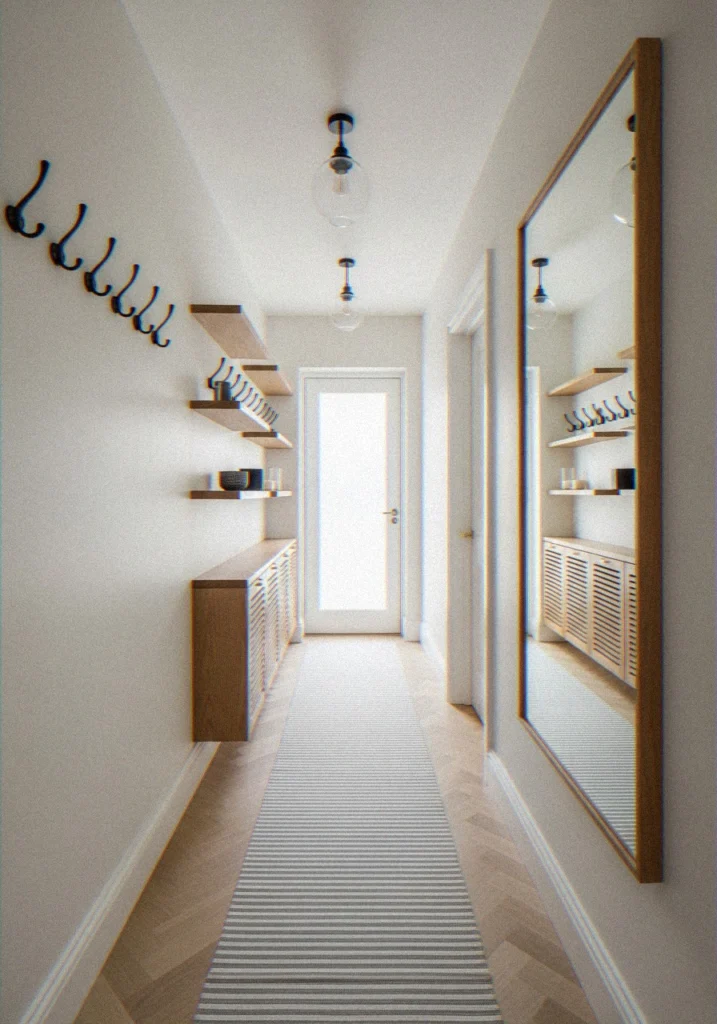
Narrow hallways have one non-negotiable rule: never block the path. You need at least 36 inches of clear walking space at all times — anything less and the hallway shifts from “cosy” to “claustrophobic” pretty fast.
Every storage decision you make has to preserve that clearance. Wall-mounted, shallow, flush — that’s your operating principle throughout.
Use the Full Wall Height (Please, I’m Begging You)
The majority of people only utilize the lower half of their hallway walls, paying no attention to anything higher than six feet. It is a waste of space.
Set up a seven-foot shelf for labeled seasonal bins; a step stool will do just fine because you only need to access it twice a year. In the meantime, you’ve made valuable eye-level space available for the things you really need on a daily basis.
Think in Zones, Not Individual Pieces
Instead of buying one hook here and one basket there, treat your hallway wall like real estate with designated zones. A 6-foot section becomes “the coat zone”: peg rail at 5.5 feet, shelf above at 7 feet, shoe ledge at floor level.
A 3-foot section near the door becomes “the grab-and-go zone”: key hook, mail slot, phone charger. Zoning makes the whole system feel intentional rather than cobbled together from a weekend trip to IKEA.
Section 1: Wall-Mounted Storage — The Foundation of Every Narrow Mudroom
When floor space is off the table — and in a narrow hallway, it is — you go vertical. Wall-mounted storage is the most effective category of solutions for small entryways, full stop.
I’ve seen it transform hallways that looked completely hopeless into genuinely gorgeous, functional spaces. The key is layering different types of wall storage across the full wall height, so you’re using every inch rather than just the convenient middle bit.
1. Floating Wall Shelves
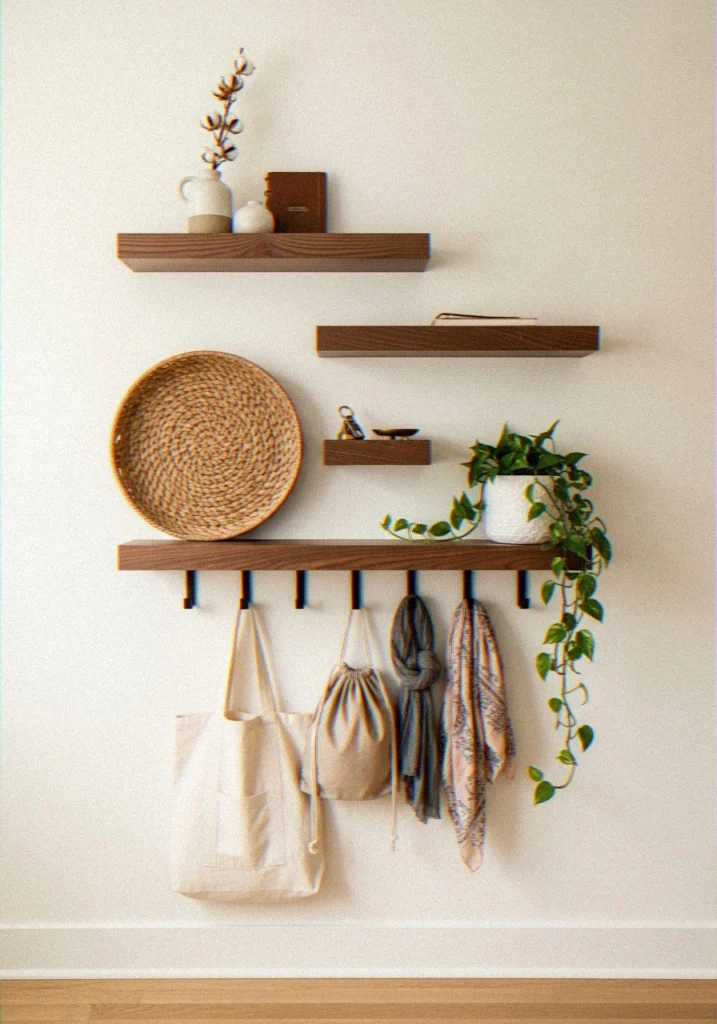
Floating shelves are my personal starting point for almost every narrow mudroom project. They’re affordable, available in every size and finish imaginable, and they keep the floor completely clear.
In my own hallway I use three staggered oak floating shelves — one at 72 inches for rarely-grabbed items, one at 60 inches for daily essentials, and one at 48 inches just above the bench.
The stagger creates visual rhythm and makes the whole setup look designed rather than thrown together on a Sunday afternoon.
- Best for: Keys, mail, small baskets, a plant if you’re feeling fancy
- Ideal depth: 8–10 inches — useful without crowding the walkway
- Pro tip: Match shelf finish to your hook rail. It makes everything look like it was planned. Which it wasn’t. But nobody needs to know that.
2. Pegboard Wall Panels
From garages and workshops, pegboards have evolved significantly. In a contemporary entryway, a painted pegboard panel—matte black, soft white, or even sage green—looks truly deliberate.
Pegboards are incredibly versatile; you can rearrange hooks, shelves, small bins, and baskets to suit your changing needs.
Before committing to the entryway, I tested this in my utility room. To be honest, I wish I had placed it close to the front door right away. I’ve never used a more versatile wall storage system than this one.
3. Rail Systems with Sliding Hooks
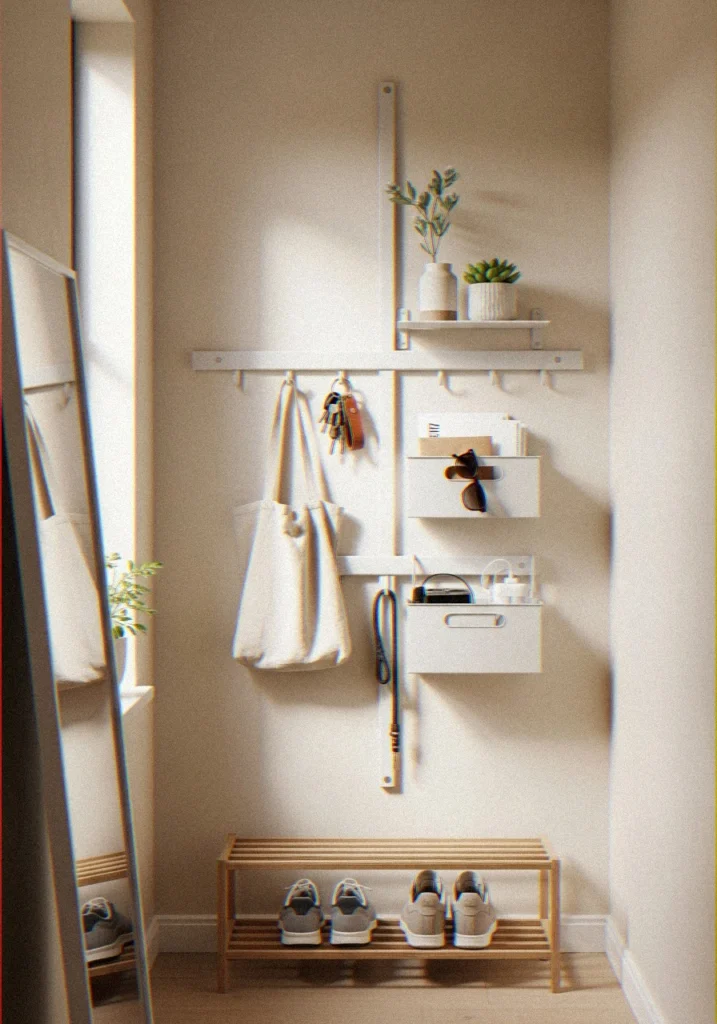
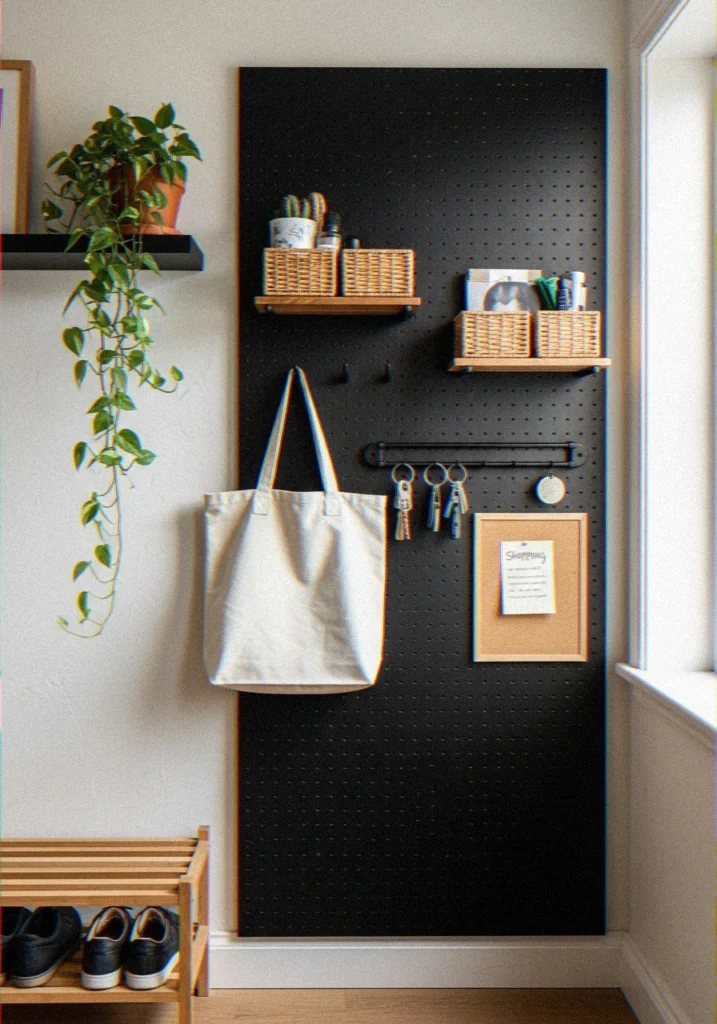
Systems like IKEA’s SKÅDIS or similar rail-and-hook setups mount flat against the wall as a single vertical strip, with hooks, bins, and shelves sliding anywhere along the rail.
They protrude barely an inch from the wall surface. Maximum storage, minimum intrusion. Honestly, this is insane value for the price — I think mine cost about £35 total including the extra hooks.
4. Vertical Hook Strips
A thin vertical hook strip mounts four to eight hooks in a single column in place of a large coat rack that requires wall space you don’t have.
It takes up about 4 inches of wall width and holds an entire family’s worth of jackets. Instead of being a utility patch, modern versions have a sleek enough appearance to be a purposeful design element.
These are massively underrated in the narrow entryway world.
5. Built-In Wall Niche Storage
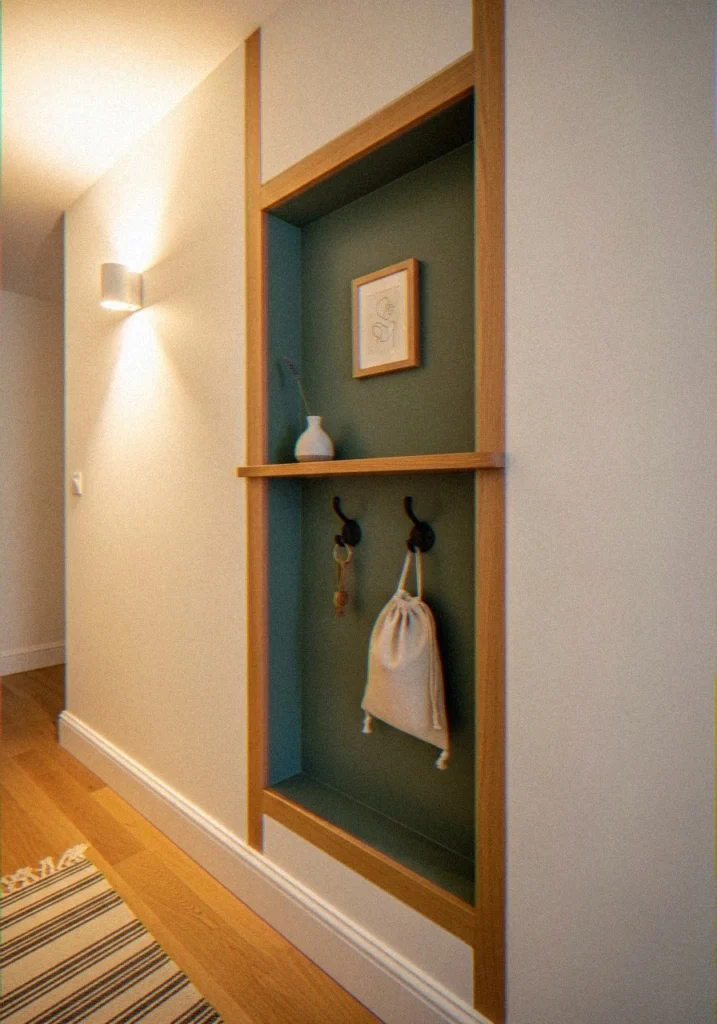
For anyone willing to invest a bit more time and cash — carving a recessed niche into the wall between studs gives you storage that sticks out literally zero inches from the wall surface.
Paint the interior a contrasting colour, add a slim shelf and a couple of hooks, and you’ve got a feature that looks completely custom. Because it is.
Worth doing if you’re already doing any other wall work at the same time.
6. Magnetic Key and Accessory Strip
Keys, sunglasses, small tools, and dog tags are kept at eye level with a magnetic strip near the door that is nearly free and takes up no floor space.
You can install it in five minutes and use it every day for the next ten years. Uninteresting? Yes. However, it’s also one of the best £8 you’ll ever spend.
Section 2: Bench Storage Ideas That Work in Truly Tight Spaces
Here’s the thing about benches in narrow entryways — the wrong bench makes things dramatically worse, and the right bench makes things dramatically better.
Depth is the critical measurement. Anything over 16 inches and you’re eating into your walking clearance.
Anything under 12 inches and it’s not really functional enough to justify the wall space. That 12–16 inch sweet spot is where all the best narrow entryway benches live.
7. Slim Upholstered Storage Bench
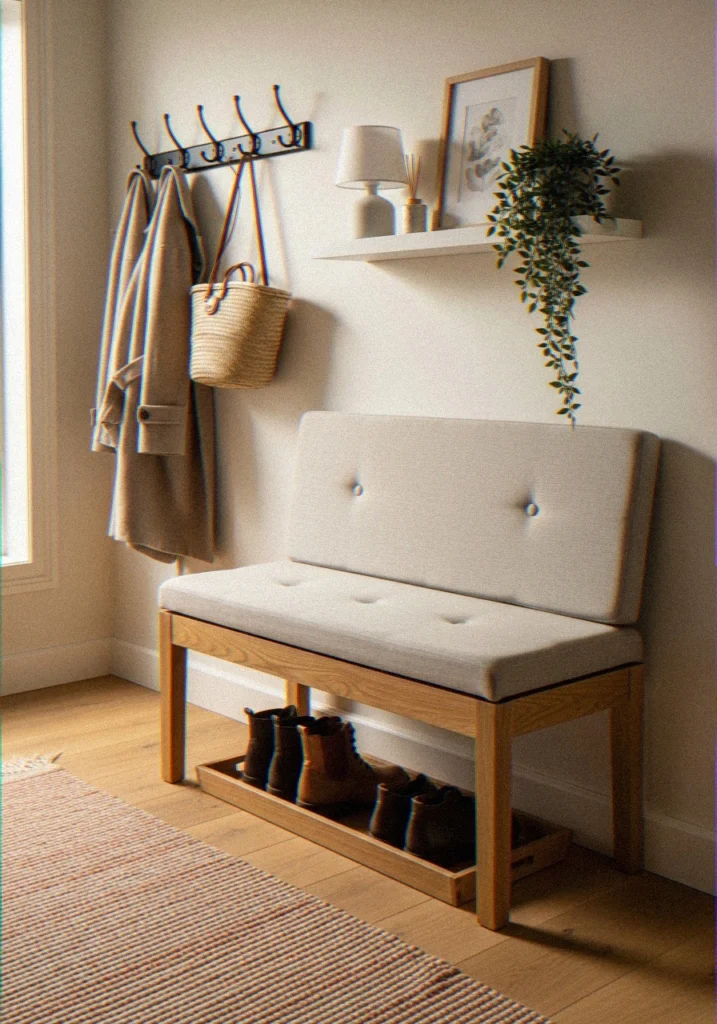
A 14-inch deep upholstered bench with a lift-up lid is one of the hardest-working pieces of furniture you can put in a narrow mudroom.
I have one in my entryway and the lid gets opened multiple times a day — shoes, seasonal accessories, dog gear, all of it hidden inside.
The cushion makes it comfortable for putting on shoes, which is a detail that sounds small but genuinely matters at 7am when you’re half asleep and running late.
8. Floating Wall Bench
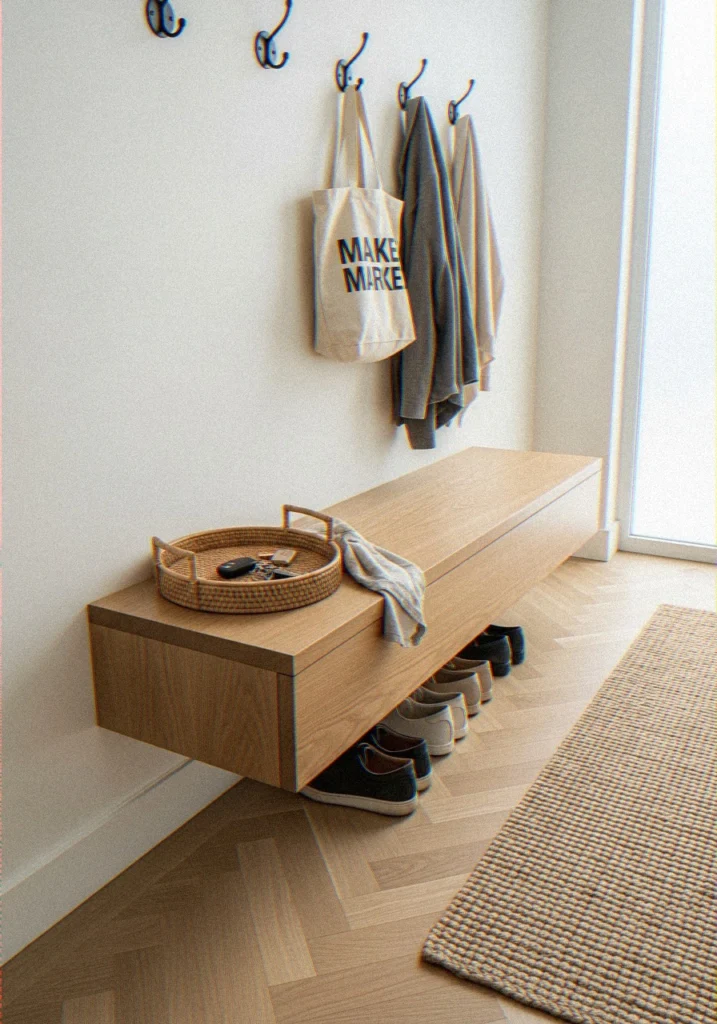
The hallway appears wider than it actually is because of a legless wall-mounted bench that keeps the floor fully visible. Additionally, cleaning underneath is simple because you can just vacuum all the way through.
A floating bench is nearly always a better option than a freestanding one for extremely narrow hallways that are less than 40 inches wide. I assure you of this.
9. Crate Bench DIY 🛠️
Two wooden crates stacked side by side, topped with a cut piece of foam wrapped in fabric — instant bench with open cubby storage, and the whole project often comes in under £40.
You can paint or stain the crates to match your hallway aesthetic.
This one I actually built myself last year and it’s still holding up great. Open cubbies hold shoes, baskets, or rolled blankets depending on the season.
10. Corner Entry Bench
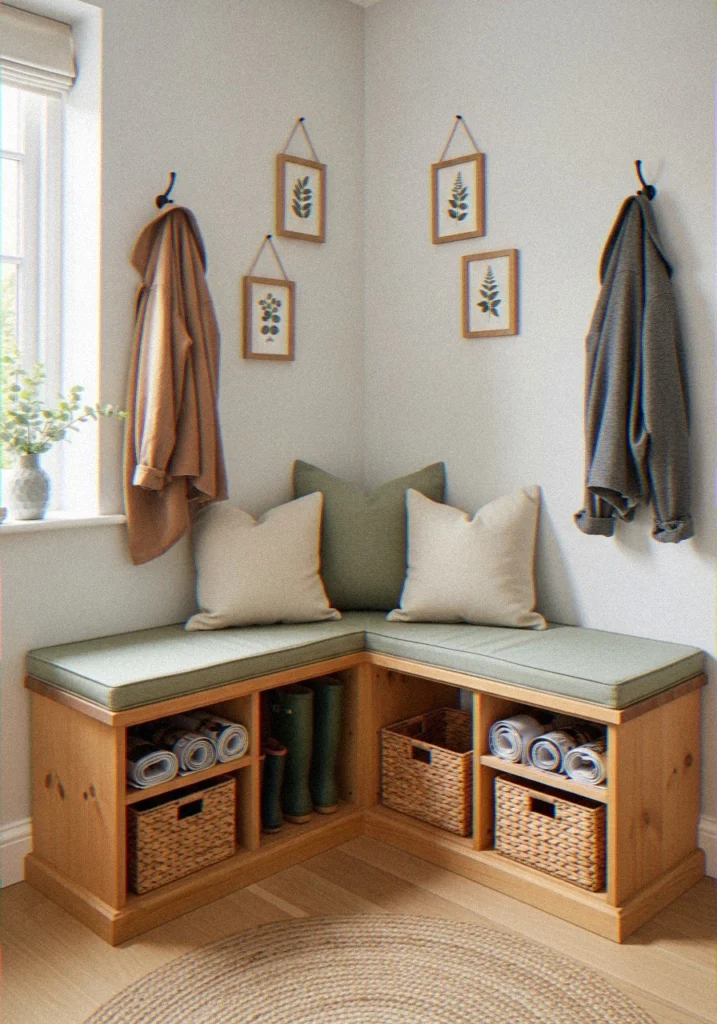
Corners are completely dead space in most narrow entryways — and a corner bench reclaims that dead space entirely.
Even a small L-shaped corner bench gives you seating and storage in a spot that would otherwise just accumulate mysterious items that nobody can explain.
If your hallway meets another wall at any angle, this is worth serious consideration.
📊 Narrow Mudroom Storage: Quick-Reference Infographic
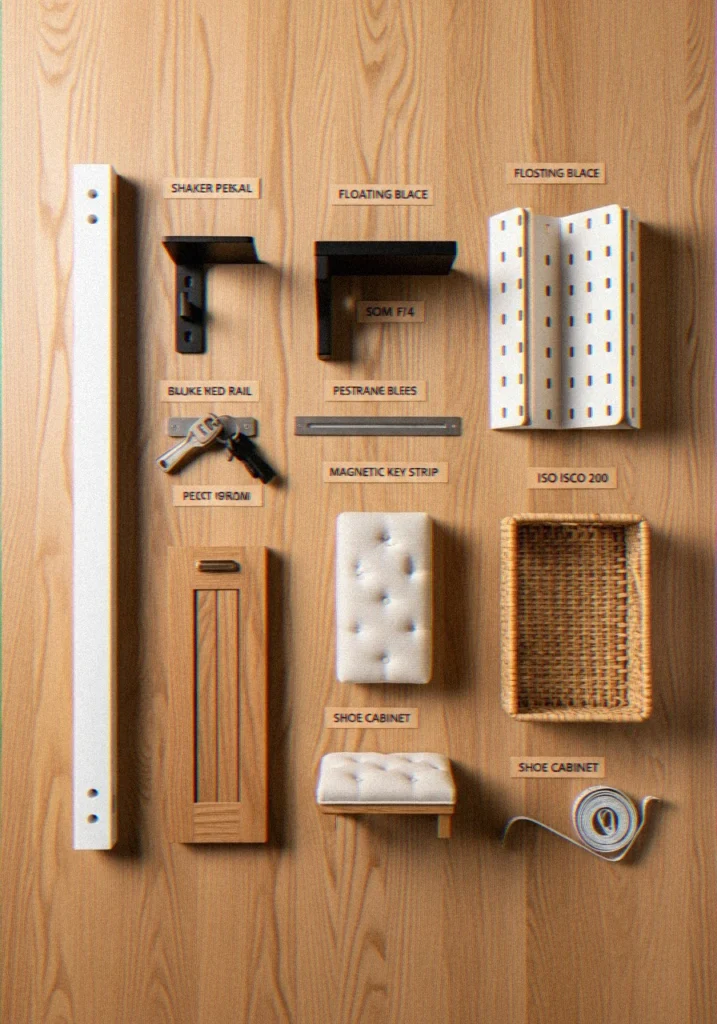
| Storage Solution | Depth (Projection) | Best Use Case | Budget Range (USD/GBP) |
|---|---|---|---|
| Floating Shelf | 8–10 inches | Keys, mail, baskets | $20–$80 / £15–£60 |
| Shaker Peg Rail | 3–5 inches | Coats, bags, hats | $40–$150 / £30–£110 |
| Pegboard Panel | 1–2 inches | Flexible daily items | $30–$100 / £25–£80 |
| Storage Bench | 12–16 inches | Shoes, seasonal gear | $80–$300 / £60–£220 |
| Wall Niche (recessed) | 0 inches | Hooks + shelf combo | $150–$500 / £120–£380 |
| Slim Shoe Cabinet | 10–12 inches | Hidden shoe storage | $100–$400 / £80–£300 |
| Hall Tree | 14–18 inches | All-in-one solution | $120–$500 / £90–£380 |
| Magnetic Key Strip | 0.5 inches | Keys, small daily items | $10–$40 / £8–£30 |
Section 3: Shoe Storage That Won’t Take Over Your Hallwa
Shoes. The eternal entryway enemy. In a narrow mudroom, shoe storage can get out of control so fast — and most shoe storage products are designed for walk-in closets, not 40-inch hallways. Here’s what actually works in tight spaces, from experience.
11. Over-Door Shoe Organiser
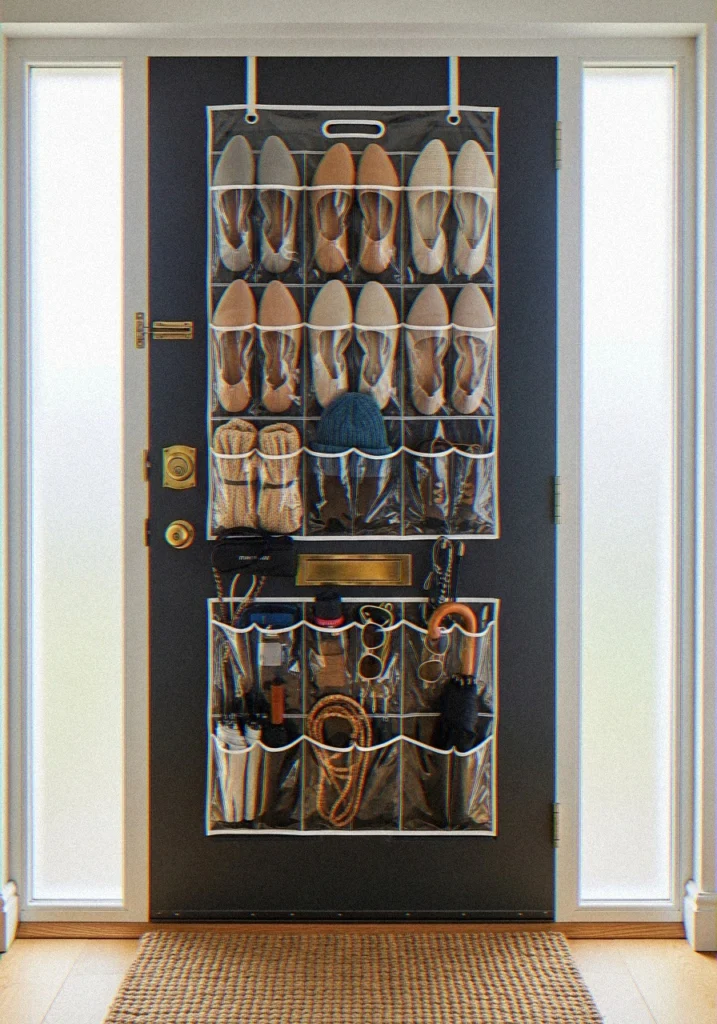
In most homes, the back of your entry door is entirely unutilized space. Twelve to twenty-four pairs of shoes, along with hats, gloves, chargers, dog leads, sunglasses, and anything else small and reachable, are stored in a clear-pocket organizer that is hung over the door.
There is no use of hallway space. For truly small entryways, this is the most space-efficient shoe option. I gave it a skeptical try, and it totally converted me. Two years later, I’m still using mine.
12. Vertical Shoe Slots
A vertical shoe rack stores shoes on their sides rather than flat, taking up roughly 30% less space while holding the same number of pairs.
They look neater than a traditional angled rack and the slimmer footprint means they tuck against a wall without blocking the path. Great for households with multiple people.
13. Floating Shoe Ledges
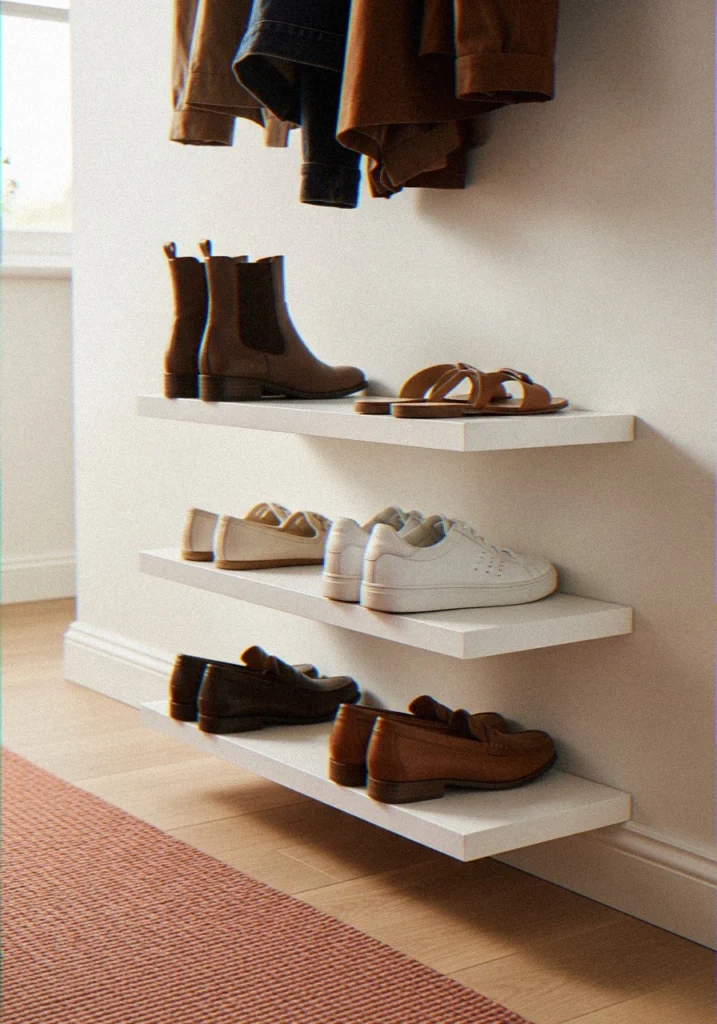
As dedicated shoe ledges, thin floating shelves that are placed 6 to 8 inches off the ground work flawlessly.
You can create space for 6–10 pairs using just wall space and no floor footprint by mounting two or three stacked vertically with 6-inch spaces between them.
When doing serious organizing work, the shelf edges virtually vanish when painted to match the wall.
Measure twice, people. At first, this one didn’t work out for me because I misjudged the spacing and the boots didn’t fit.
14. Hidden Shoe Cabinet (Slim Profile)
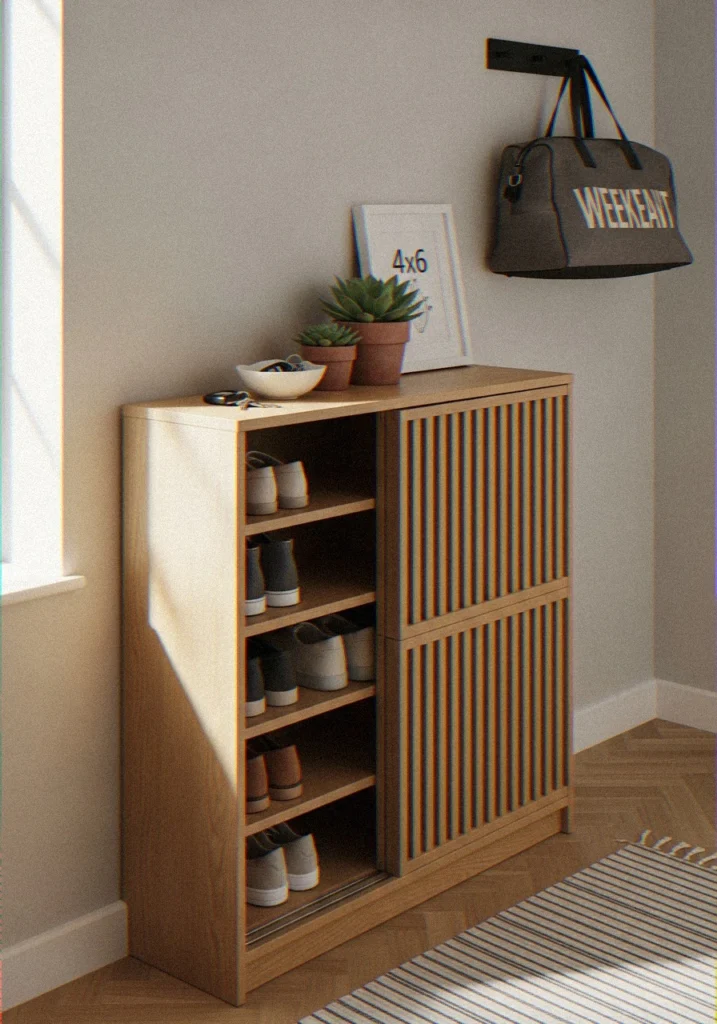
A slim shoe cabinet with closed doors is the most visually clean solution for entryway shoe storage. Everything hidden, no visual clutter, just a neat piece of furniture.
Key spec to watch: depth of 10–12 inches maximum. Anything deeper and it eats into your walking clearance. Real Simple’s organisation editors have done excellent roundups of the best slim options at various price points — worth a read before you buy.
15. Angled Shoe Rack
Compared to a flat-lay rack, an angled rack takes up less floor depth and holds more pairs per square foot.
Look for models that tuck against a wall without becoming a trip hazard and are less than 10 inches deep. I once killed my toe on one of these in the dark. Purchase a slim one. Really?
16. Wicker Basket Clusters
Three matching wicker baskets beside the door, stacked or lined up, are casual, affordable, and surprisingly effective for households that rotate through shoes quickly.
Each basket holds 2–3 pairs. They look like décor rather than storage — which is exactly the vibe you want.
17. Tension Rod Shoe Hack (Inside a Cabinet)
Install a tension rod horizontally inside a low cabinet, and hang shoes heel-over-rod. Stores twice as many shoes as laying them flat on the cabinet floor.
Total cost: under $10. This is the kind of solution that makes you feel like an absolute genius, and it costs the price of a coffee.
I showed this to my mum and she immediately went and bought five tension rods. She now uses them everywhere.
Section 4: Coat and Jacket Storage for Truly Tight Hallways
Coats are bulky. They take up serious hook space. And in a household with multiple people and seasonal gear, they will absolutely colonise your entire wall if you let them.
Here’s how to keep them organised without sacrificing your whole hallway to outerwear.
18. Double-Row Hook System
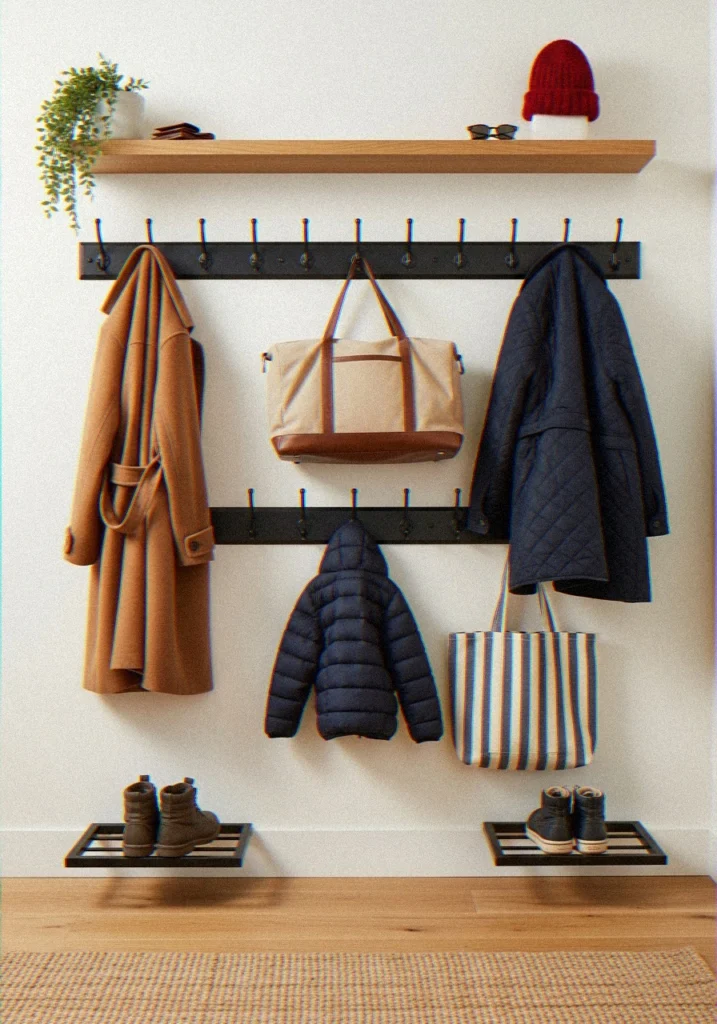
Mount one row of hooks at adult height (around 60–66 inches from the floor) and a second row at kids’ height (around 40–44 inches). You double your hanging capacity on the same section of wall without adding any extra width.
This is genuinely one of the smartest, simplest moves for family entryways. So obvious in hindsight. Why don’t more people do this?
19. Shaker Peg Rail ✨
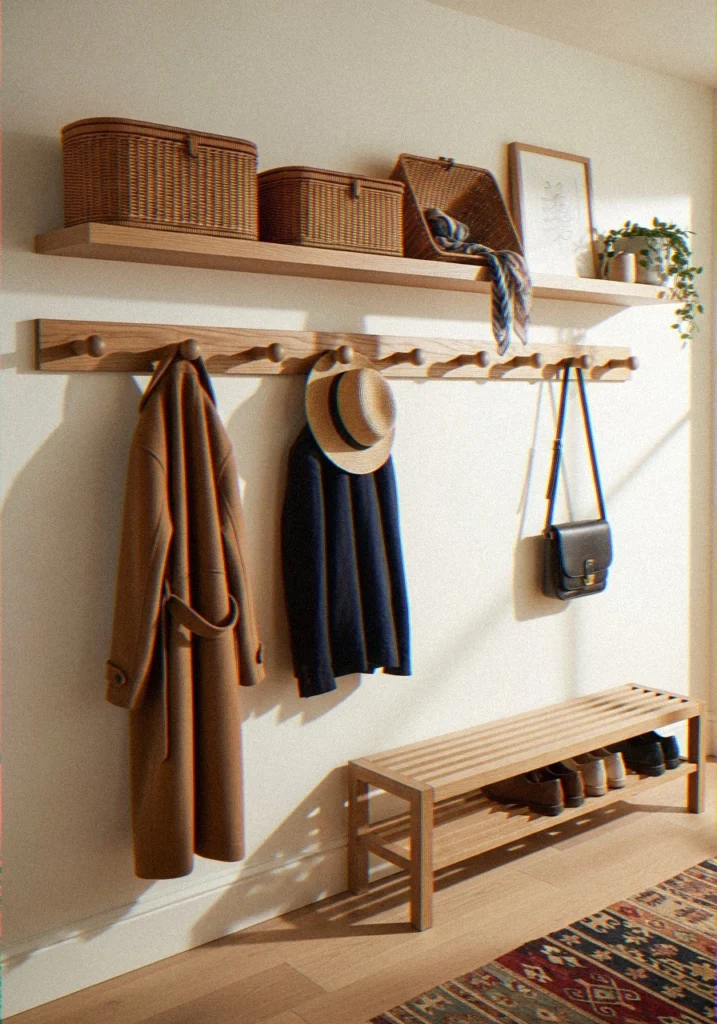
A Shaker-style peg rail is the most timeless, versatile, and honestly beautiful coat storage solution for narrow hallways. Full stop.
A 48-inch rail gives you 6–8 pegs, each capable of holding a coat or multiple bags. Mount a floating shelf 8 inches above it and baskets below, and you’ve built a complete mudroom wall system from one simple product.
Apartment Therapy consistently features Shaker rail mudroom builds that prove how killer simple can actually look when it’s executed well.
20. Accordion Wall Hooks
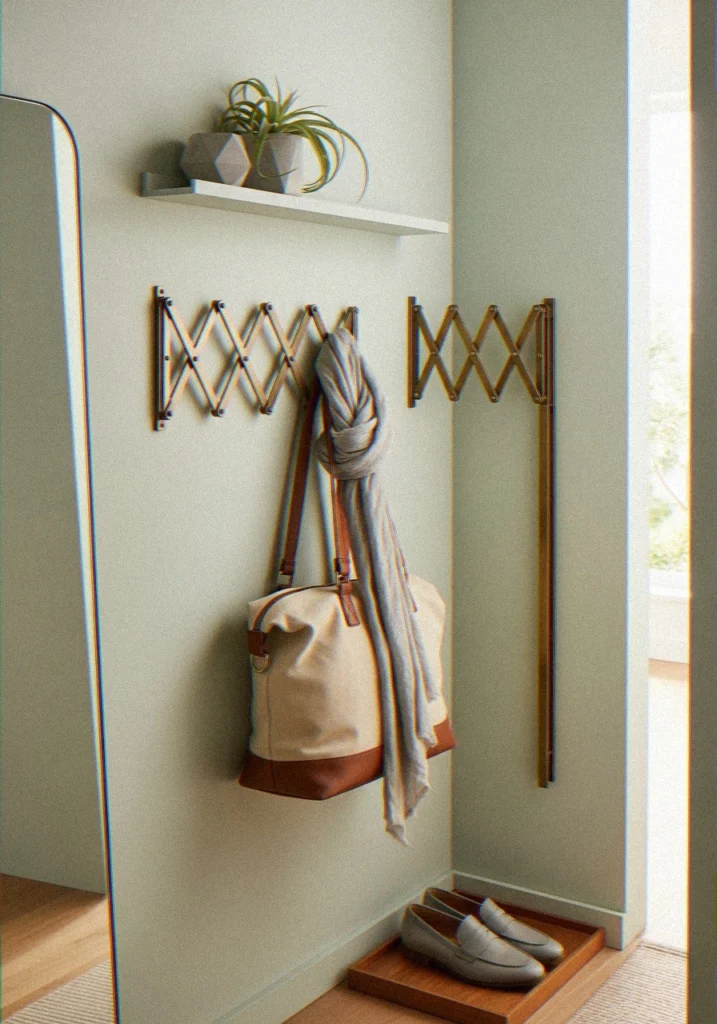
Accordion hooks fold completely flat against the wall when not in use and extend outward only when needed.
In a hallway where every inch of clearance matters, this is a meaningful advantage — especially when the entryway doubles as a passage to other rooms. I know, I know — they sound gimmicky. But they’re actually brilliant.
21. Slim Wardrobe with Mirror Door
It might seem like a standalone wardrobe would take up too much space in a narrow hallway, but if you pick one that is 18 to 20 inches deep and has a mirrored door, the mirror will make the cabinet look smaller.
In one piece, you get a mirror that makes the room look bigger and a place to store coats. Two birds, one very small closet.
22. Recessed Coat Cabinet
A recessed coat cabinet built between wall studs holds 4–6 jackets in a space that protrudes only 3–4 inches from the wall surface.
Requires construction, yes. But the result looks like something from a design magazine and adds genuine property value. Worth it if you’re already doing other wall work.
Section 5: Multi-Functional Furniture — Make Every Piece Work Overtime
In a narrow mudroom, one-purpose pieces are a luxury the space can’t afford. Multi-functional furniture is where the real magic happens — one item doing three jobs simultaneously.
This is the mindset shift that separates a good narrow mudroom from a great one.
23. Hall Tree with Integrated Storage
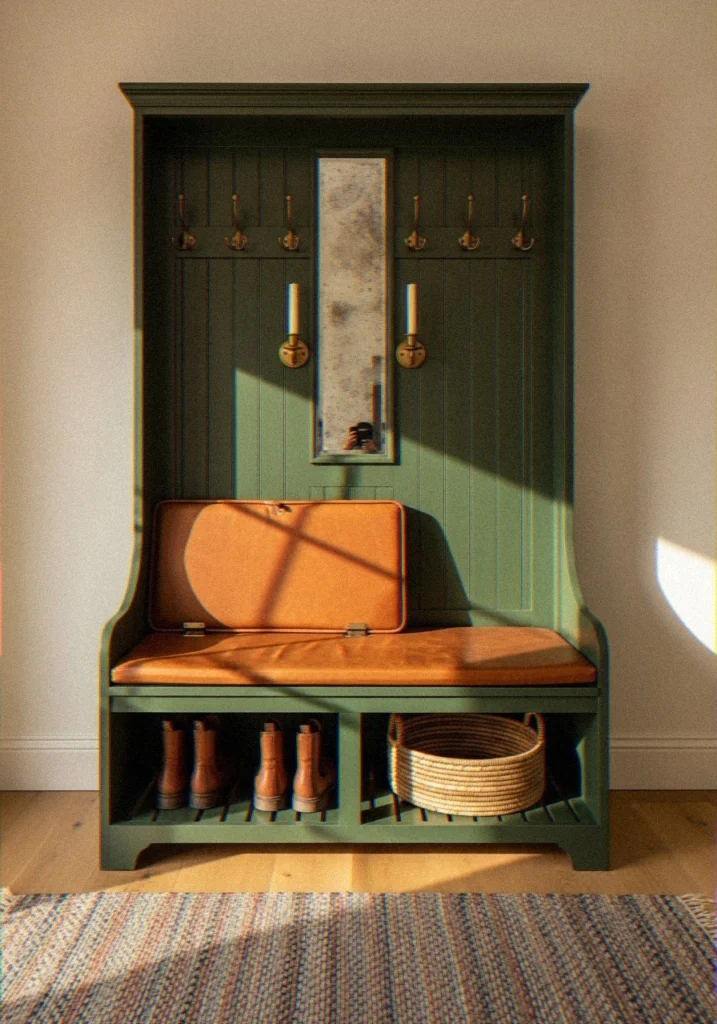
A hall tree is a small piece of furniture that has coat hooks, a bench, and shelves all in one. The best narrow-hallway versions are less than 18 inches deep and tall enough to make good use of vertical space.
This is the closest thing to a full mudroom system in one piece of furniture. For renters who can’t put in built-ins, it’s the best option.
24. Narrow Console Table with Lower Shelf
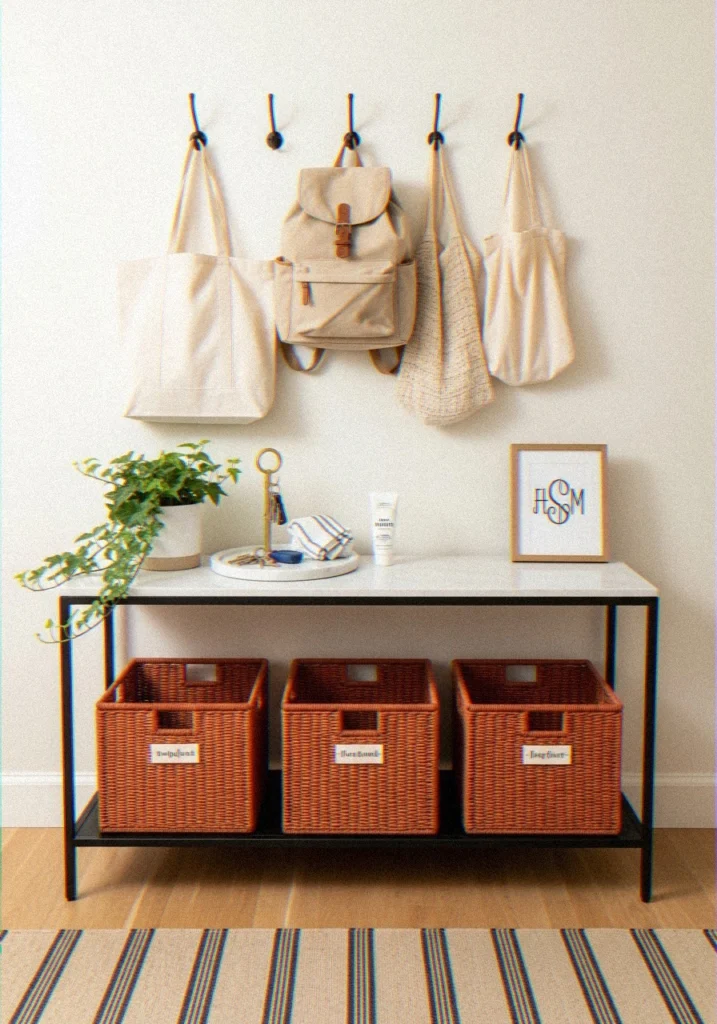
A 10–12 inch deep console table gives you a surface on top for keys, mail, and a small plant, plus a lower shelf for baskets, shoes, or bins.
Add hooks on the wall above it and you’ve created a complete mudroom zone from one table and $20 worth of hooks. This is one of those setups that looks like you spent way more than you did.
25. Stackable Cube Storage Units
The IKEA KALLAX in its 1×4 or 2×2 configuration, stacked vertically and narrow, is one of the most versatile options out there. Combine open cubbies, bins, and baskets.
Put a hook rail right above it. Because it is modular, you can change it as your family grows. And believe me, it will.
To be honest, this trend of stacking KALLAX vertically seems a little overdone now, but it still works. You can’t argue with function.
26. Murphy Bench
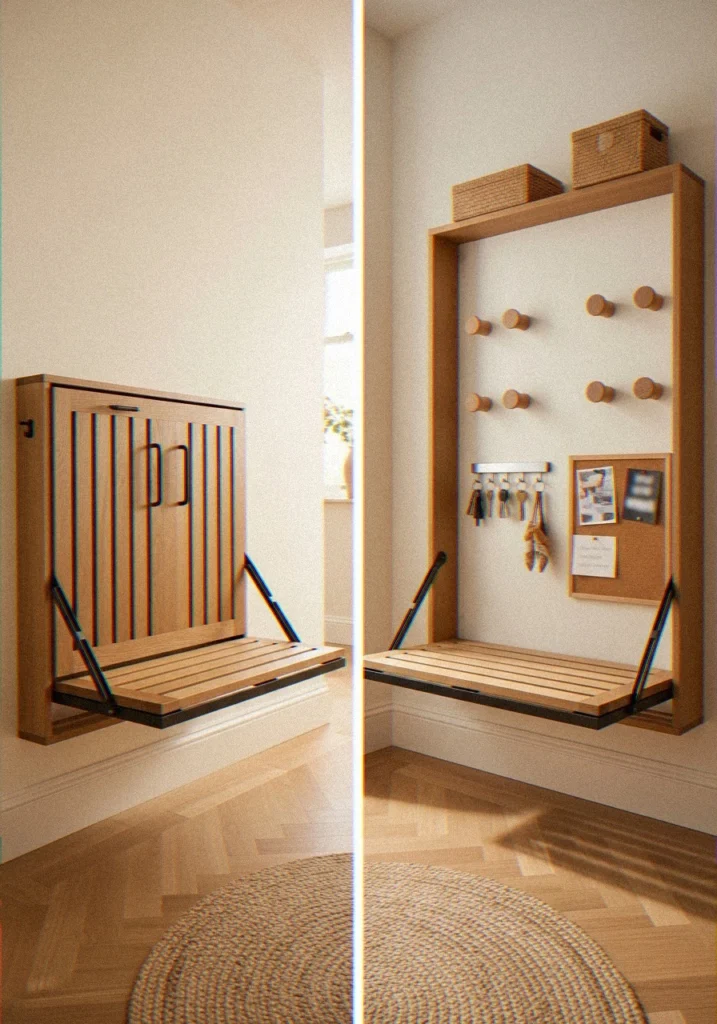
A Murphy bench folds flat against the wall when not in use, revealing a hook panel and storage board behind it. Fold it down when you need to sit.
Fold it up when you don’t. Genuinely clever, and in a hallway under 38 inches wide, it might be the only bench solution that doesn’t compromise clearance.
I haven’t tried one personally yet but it’s top of my list for the back entrance.
27. Ladder Shelf
A leaning ladder shelf takes up about 10–12 inches of depth at the base and gives you 4–5 tiers of surface space.
Top rungs for bags and seasonal items, middle rungs for baskets and daily gear, bottom rung as a shoe rest. Leans against the wall with no mounting — perfect for renters who can’t put holes in things.
Section 6: Lighting and Mirror Tricks That Visually Widen Narrow Hallways
Almost everyone underestimates this part, so let me be clear: the right lighting and mirror placement make a narrow hallway feel much different than any storage item.
A well-lit, reflective entryway makes you feel welcome and generous. No matter how big it is, a dark, flat-walled one feels small.
28. Full-Length Mirror
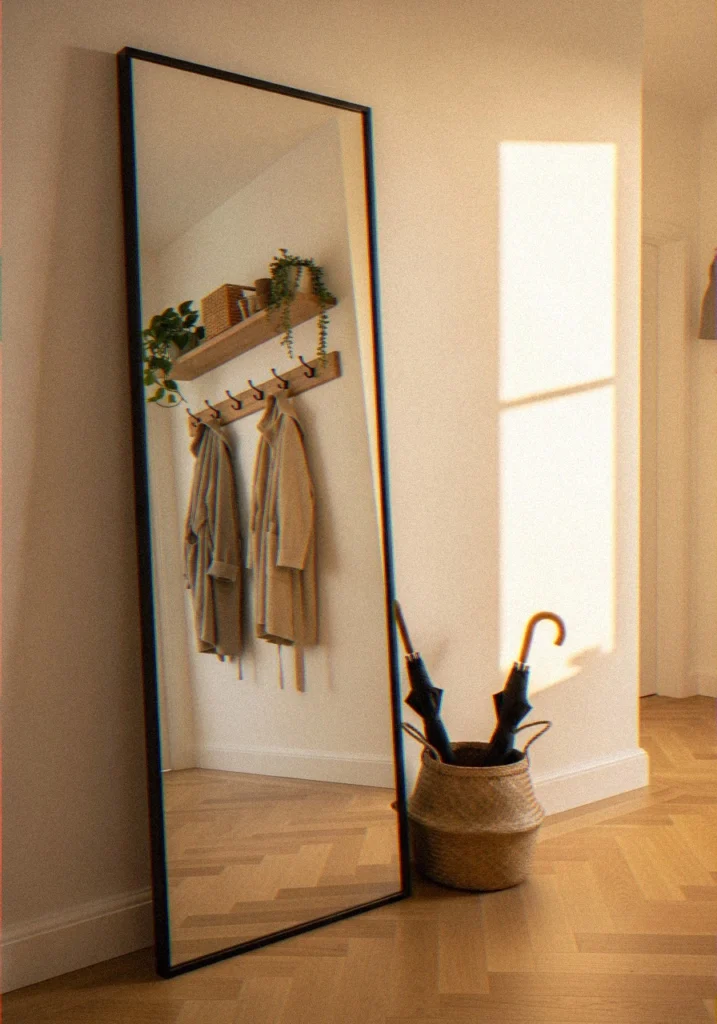
This is the single highest-ROI item in narrow hallway design. A full-length mirror on the wall opposite your storage visually doubles the width of the space and bounces light beautifully.
It’s also genuinely useful for checking your outfit on the way out.
I added one to my 42-inch hallway for £35 and genuinely thought a wall had been moved. That’s how effective it is. IMO this is non-optional in any narrow entryway.
29. Wall Sconces
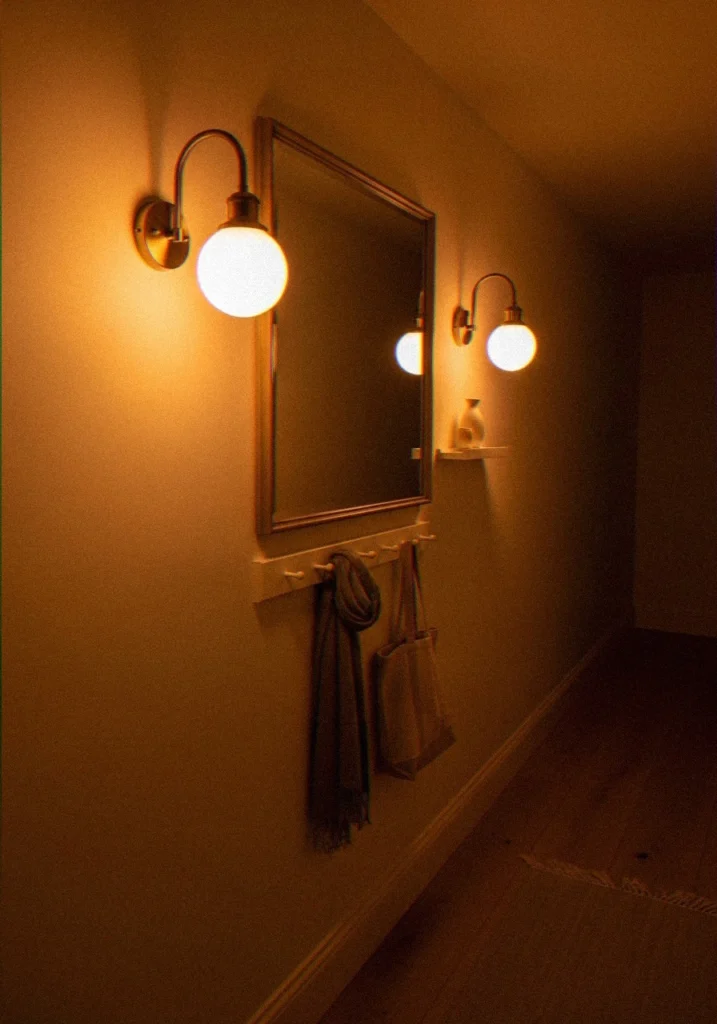
Wall sconces add warm ambient light at eye level without taking any floor space. They make a hallway feel inviting rather than institutional — a detail that sounds small but completely changes the energy of the space.
A pair of brushed brass or matte black sconces flanking a mirror transforms a corridor into a room.
30. Recessed Ceiling Lighting
If you’re doing renovation work anyway, recessed ceiling lights in a narrow hallway are absolutely worth including.
They illuminate without hanging down and crowding the visual space. Pair with a dimmer for morning brightness and evening warmth.
31. Lucite and Glass Accents
Clear or shiny accents, like lucite hooks, glass-front cabinet doors, and metallic basket handles, add depth and light in a way that builds up over time.
Each part has a small effect. When you put them all together, the hallway feels much more open.
Section 7: Narrow Mudroom Ideas From Pinterest — What Works in Real Life 📌
Pinterest is wonderful for inspiration and occasionally completely disconnected from reality. A lot of pinned mudrooms have 60+ inches of width, natural light, and budgets that would make you cry.
Here’s what the most popular Pinterest mudroom styles actually look like when adapted for real narrow spaces.
32. The Classic White Shaker Mudroom
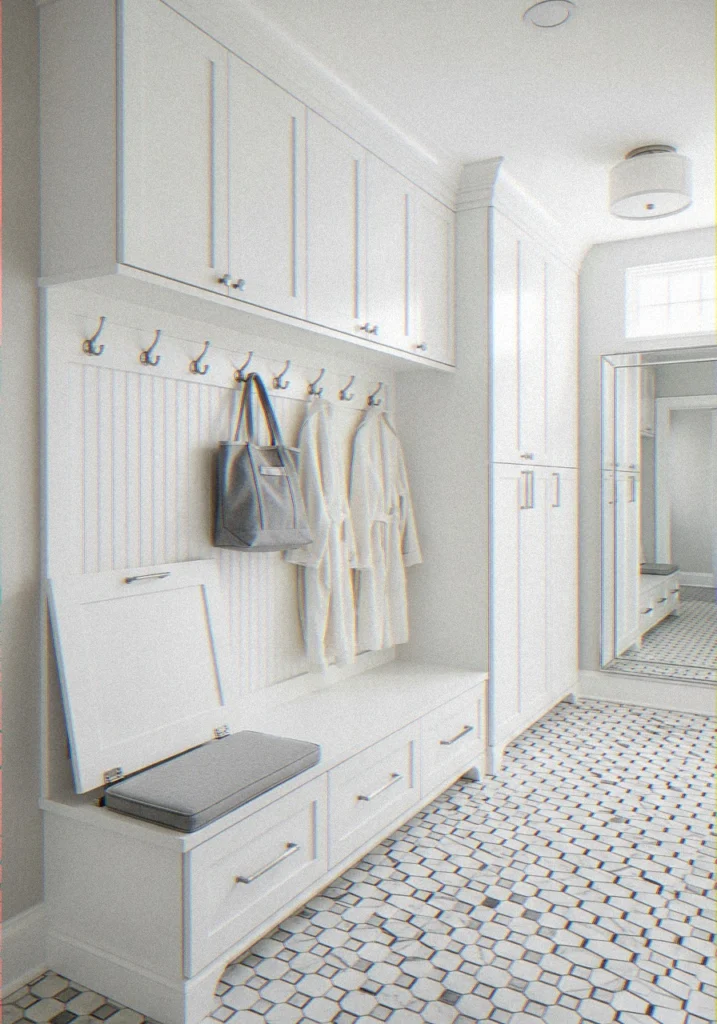
White shaker cabinets, chrome hardware, a cushioned bench, geometric tile floor — one of the most-pinned mudroom looks for very good reason.
It’s clean, timeless, and incredibly functional. In a narrow hallway, you achieve it with a single wall of shallow upper and lower cabinetry (12 inches deep maximum) rather than wrapping all four walls. The look translates brilliantly to tight spaces.
33. The Rustic Farmhouse Entry
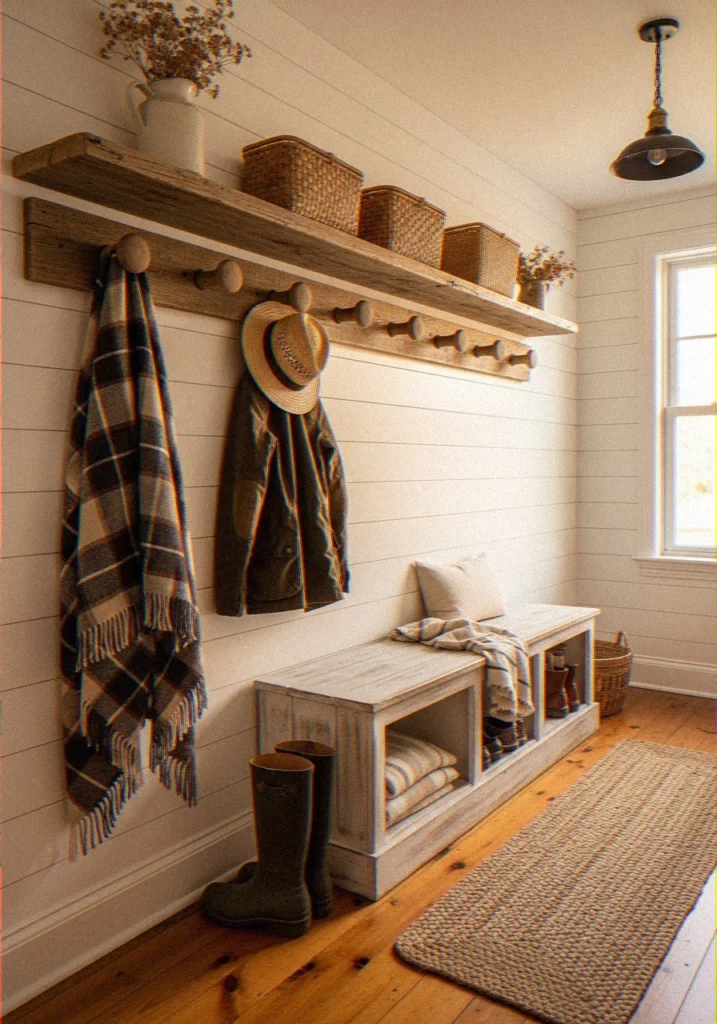
Shiplap walls (or shiplap-print wallpaper for renters), a barn wood peg rail, woven baskets, and a bench that looks old.
It looks like you put it together on purpose, not perfectly, and it is warm and forgiving. This means you can add to it over time without everything needing to arrive at once.
One of the most affordable ways to make a narrow mudroom look nice.
34. The Modern Minimalist Entry
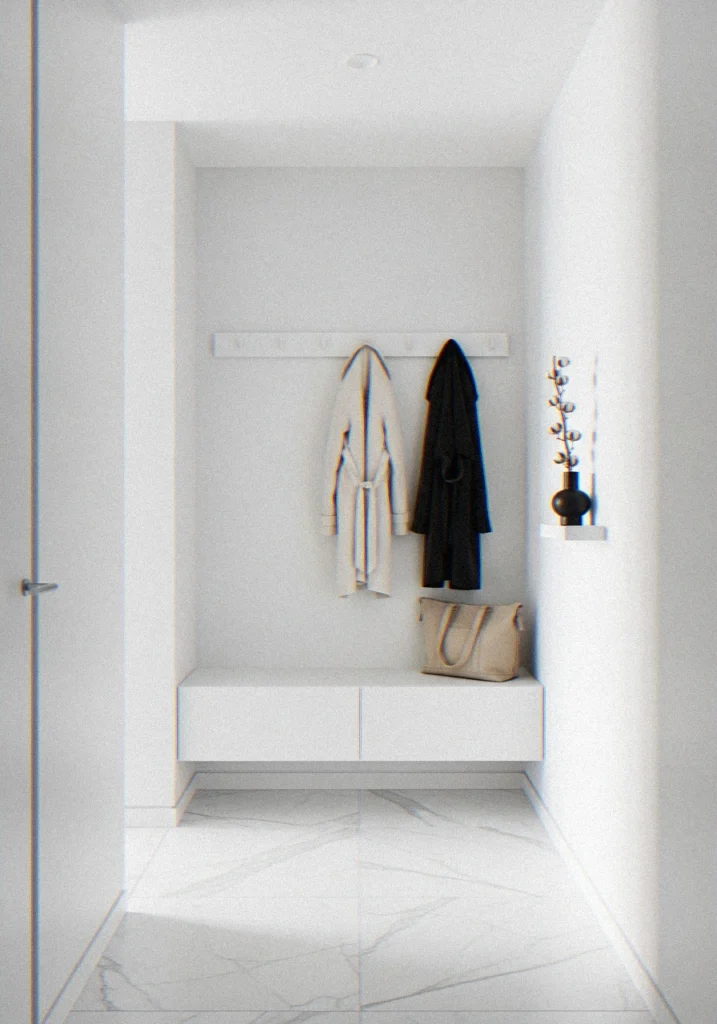
All white, flush-mounted hooks, concealed shoe storage, zero visual clutter. This style requires discipline — everything must be put away for the look to work — but the payoff is a hallway that feels spacious even at 36 inches wide.
It’s my personal aesthetic, though maintaining it with two kids is… aspirational at best :).
35. The Bold Dark Entryway
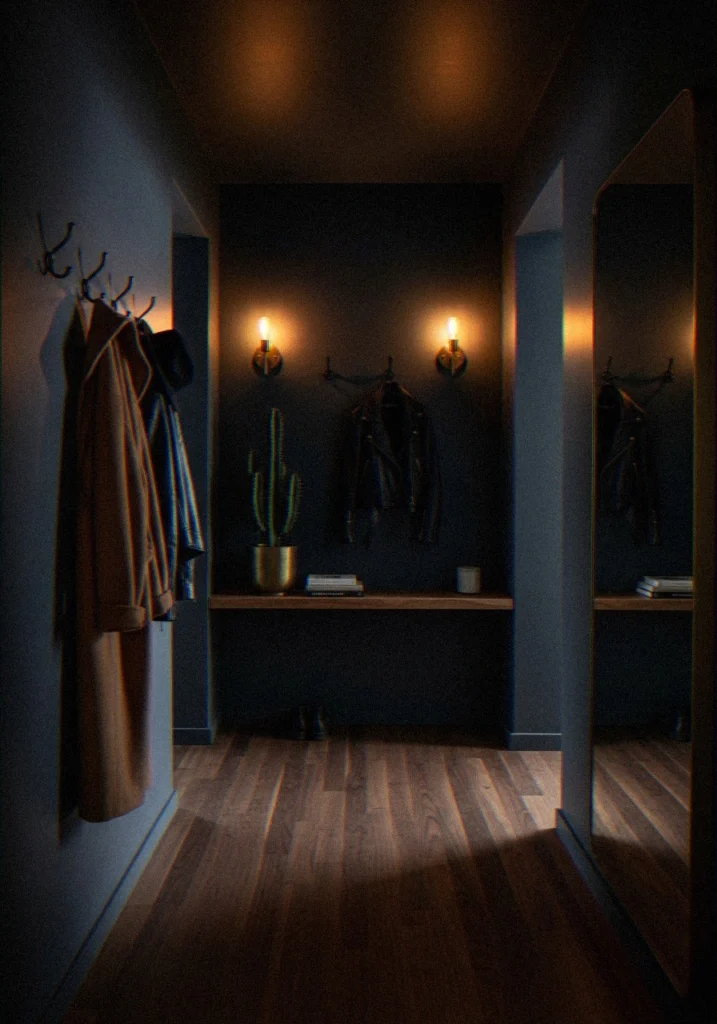
Deep charcoal or navy walls, matte black hooks, brass accents, warm lighting. Sounds counterintuitive in a narrow space, right?
Actually, when paired with good lighting and a mirror, a dark-walled narrow hallway feels dramatic and intentional rather than cramped.
One of the more surprising Pinterest mudroom trends that genuinely works in person.
Section 8: DIY Narrow Mudroom Ideas — High Impact, Low Budget 🛠️
Some of the best narrow mudroom transformations I’ve ever seen were done for under $100. Genuinely. And some of them looked better than professional installs. Here’s the DIY hits — and one honest miss.
36. Pallet Shelf Wall
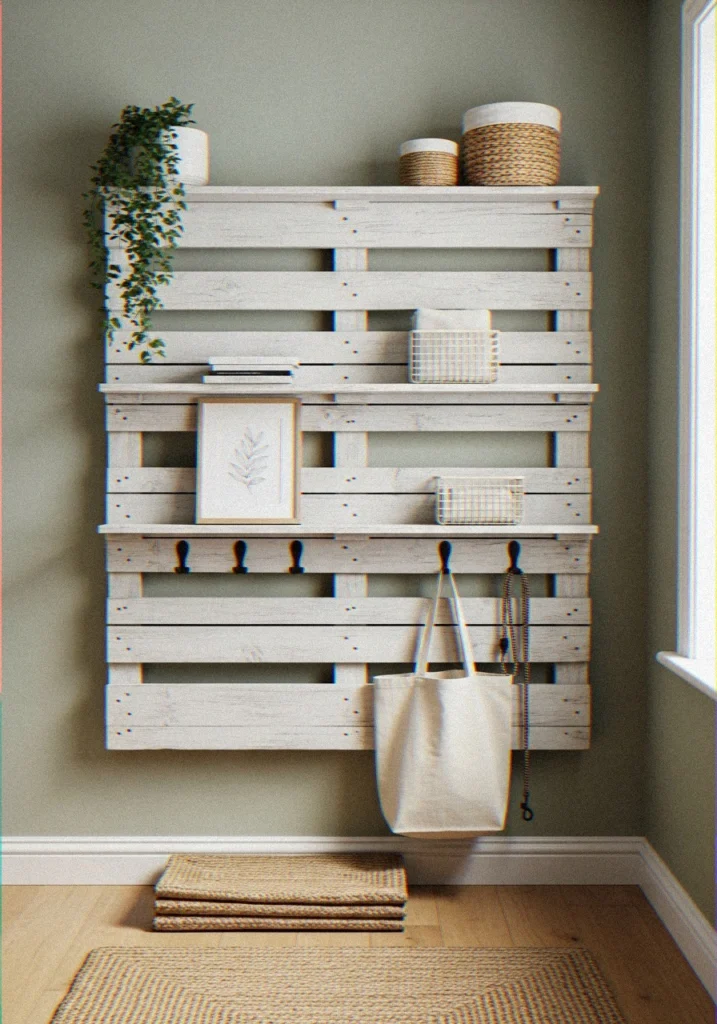
A clean, sanded, painted wooden pallet mounted horizontally gives you multiple shelf tiers plus built-in gaps for hooks.
Pallets are often free from hardware stores (get ones marked HT — heat treated, not chemically treated). Total cost: under $40 including paint and mounting hardware.
I tried this in my garage first before moving the concept to my entryway and honestly wish I’d started there.
37. Dollar Store Basket Wall Grid
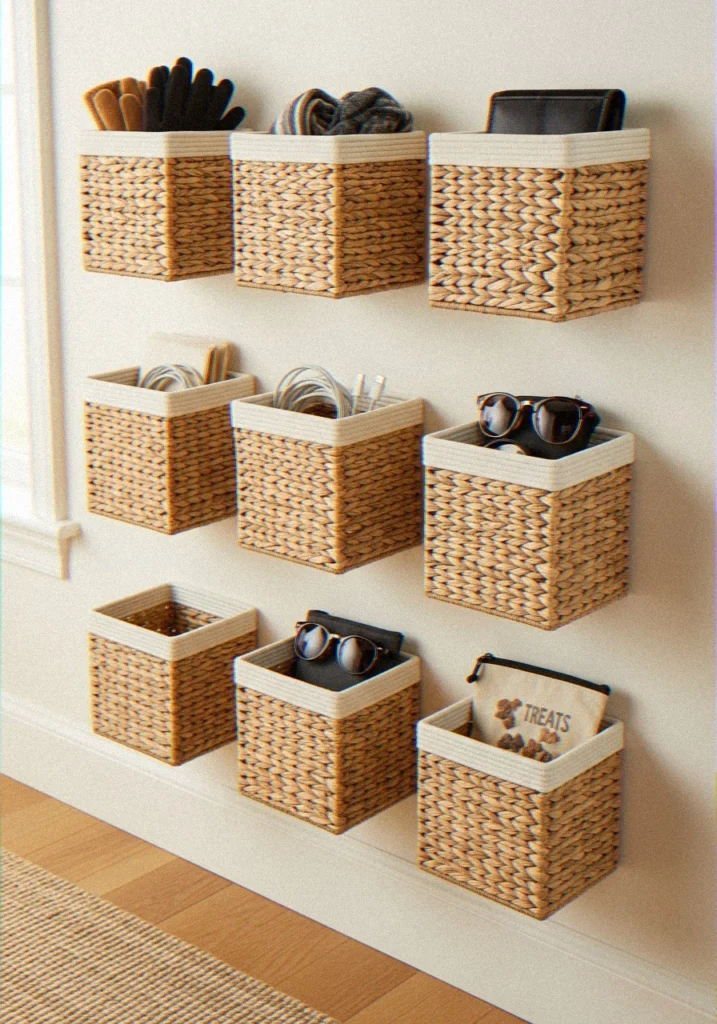
Buy 9–12 matching wicker baskets from a dollar store or pound shop, mount them in a 3×3 or 4×3 grid using command strips, and assign each basket a category.
The whole installation runs under $40 and looks like a designed feature.
This is insane value for how good it looks. One of my genuine all-time favourite budget solutions.
38. PVC Pipe Shoe Storage
You can use 12-inch pieces of 3-inch PVC pipe as shoe cubbies by cutting them into 12-inch pieces and putting them in a crate. You can paint it or leave it natural for an industrial look.
It sounds totally strange until you see it, and then it’s clear that it’s smart. I was unsure about this one, but it really won me over.
39. Thrifted Coat Rack Transformation
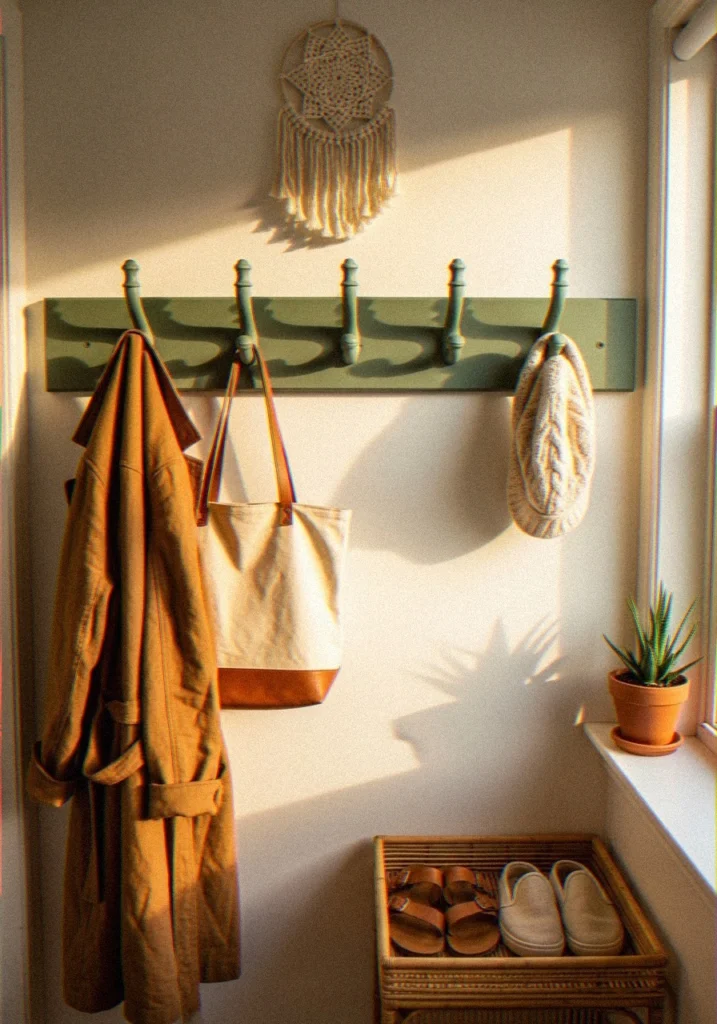
A wooden coat rack from a charity shop, sanded, painted fresh, mounted on the wall — costs $15–25 and looks genuinely custom.
The imperfections in thrifted pieces add character that flat-pack furniture doesn’t have. This flopped for me the first time because I didn’t strip the old varnish properly — the paint just peeled off. Do the prep work.
40. Rope and Hook Hanging Storage
Two horizontal wooden dowels connected by thick rope handles, with S-hooks for coats and bags. Bohemian, functional, costs about $25 in materials. Looks like something from an Etsy shop. In a good way.
Section 9: Long Narrow Mudroom Ideas — When Length Is Actually Your Advantage
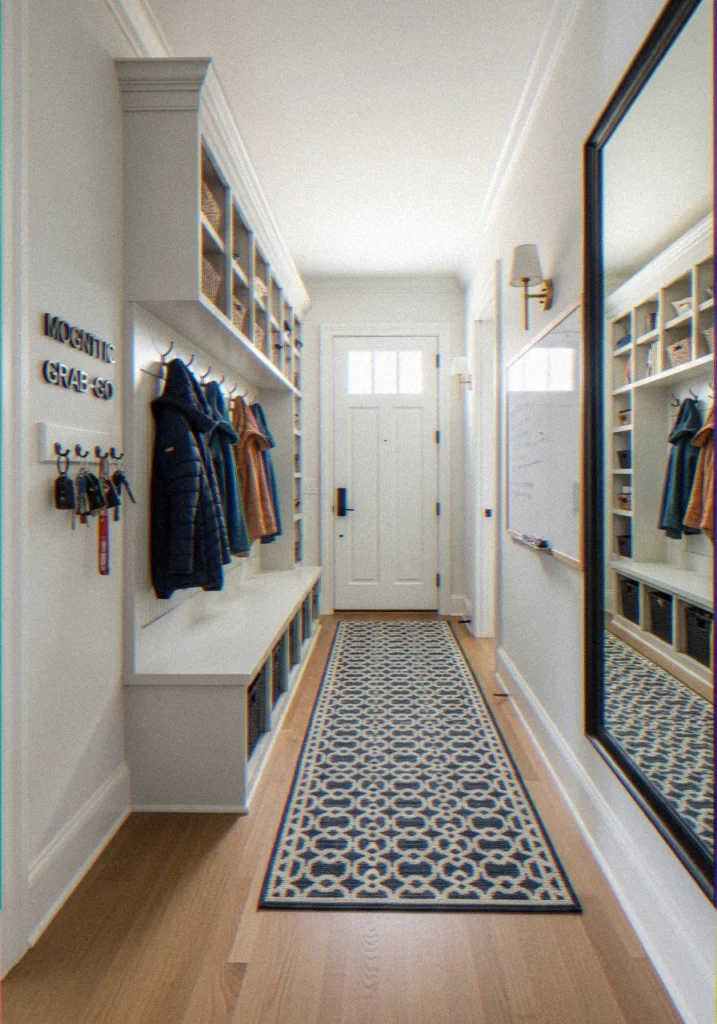
Long narrow mudrooms get a bad reputation, but honestly they’re a gift if you know how to work with them. You’ve got serious wall footage.
The trick is dividing it into distinct zones rather than treating it as one long, undifferentiated storage corridor.
Zone 1: The Entry Drop Zone (First 3 Feet)
Immediately inside the door: key hook, small shelf for wallet and phone, hooks at shoulder height for the one or two jackets you use most. Lean and tight — only the items you touch every single day live here.
Zone 2: The Main Coat and Bag Station (Middle Section)
The bulk of the storage: full peg rail, storage bench, upper shelves for bags, hats, and seasonal accessories. This is where the majority of your family’s daily gear lives.
Give it the most wall space because it does the most work.
Zone 3: The Secondary Storage (Far End)
Seasonal bins, less-accessed sports equipment, the family command centre (whiteboard, charging station, mail sorter). Further from the door means appropriate for occasional-use items rather than daily ones.
41. Continuous Peg Rail the Full Length
Running a peg rail the entire length of a long narrow mudroom creates visual continuity and serious hook capacity.
Pair it with consistent floating shelves above at the same height for a built-in look that doesn’t require actual cabinetry. Awesome effect, relatively low cost.
42. Zoned Rug Placement
Two rugs — one at the entry zone, one at the main coat zone — create visual sections in a long space without any physical dividers.
It’s a quiet designer trick that makes a tube-like hallway feel organised and purposeful.
43. Built-In Locker System
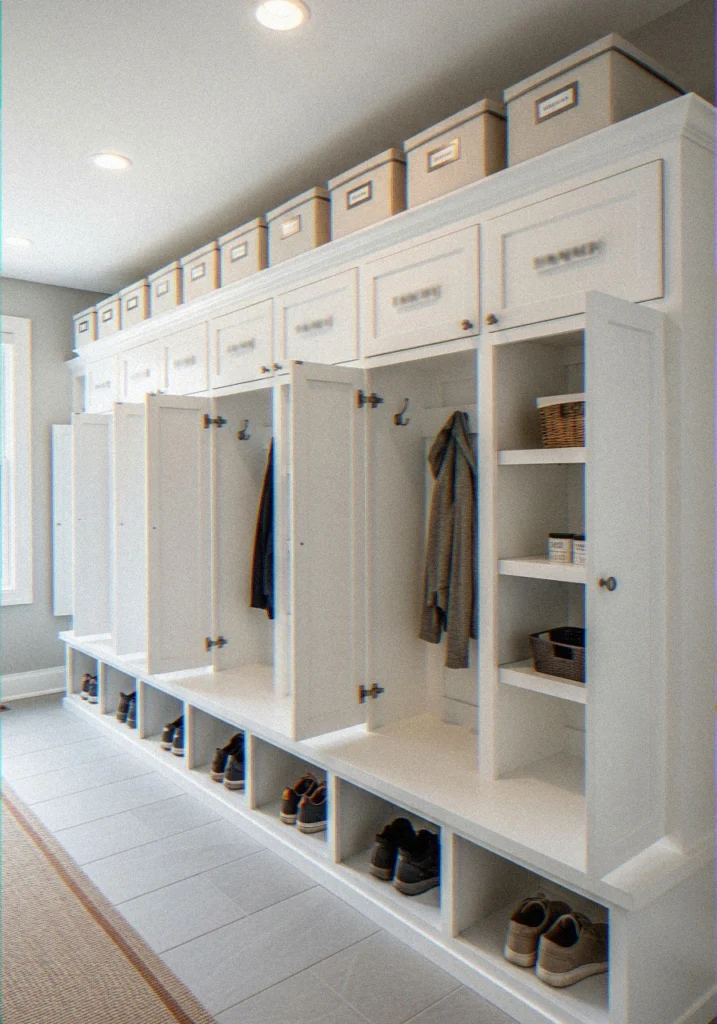
If any mudroom investment is worth making in a long narrow space, it’s built-in lockers. Each family member gets their own compartment — hook, shelf, cubby.
The organisational impact is massive. HGTV’s mudroom design guide has stunning long-mudroom locker layouts worth bookmarking before you plan anything.
44. Sliding Barn Door Storage Cabinet
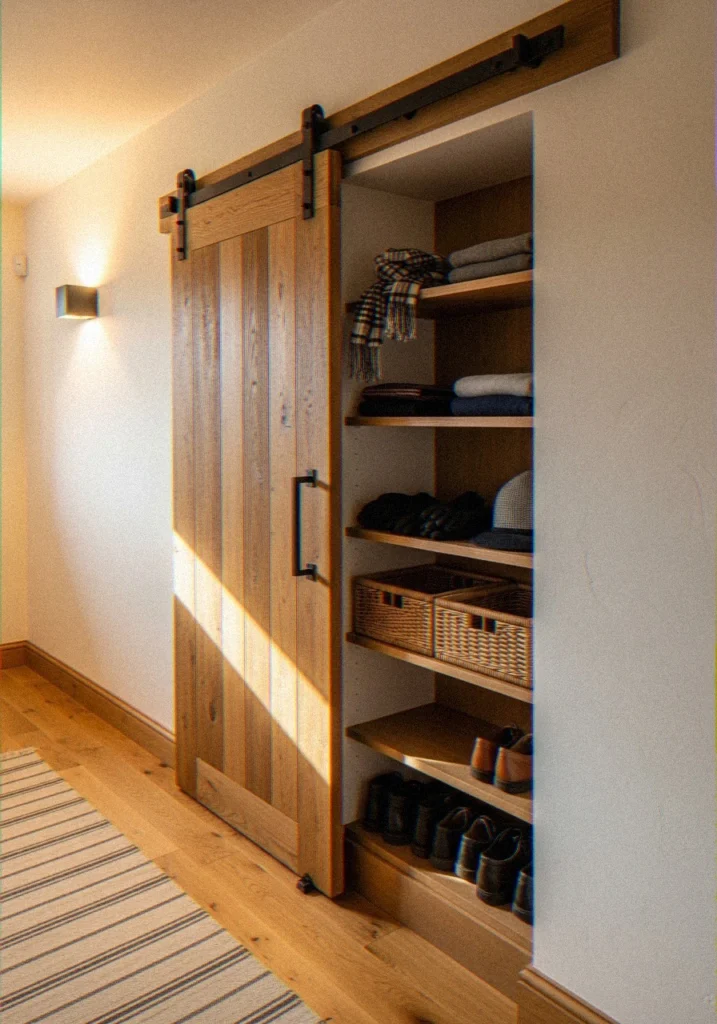
A wall-mounted cabinet with a sliding barn door keeps everything behind one visually dramatic panel. The door slides parallel to the wall, never blocking the hallway.
Functional, killer-looking, and one of those solutions that makes guests ask where you got it.
Section 10: Seasonal Organisation Strategies for Narrow Mudroom
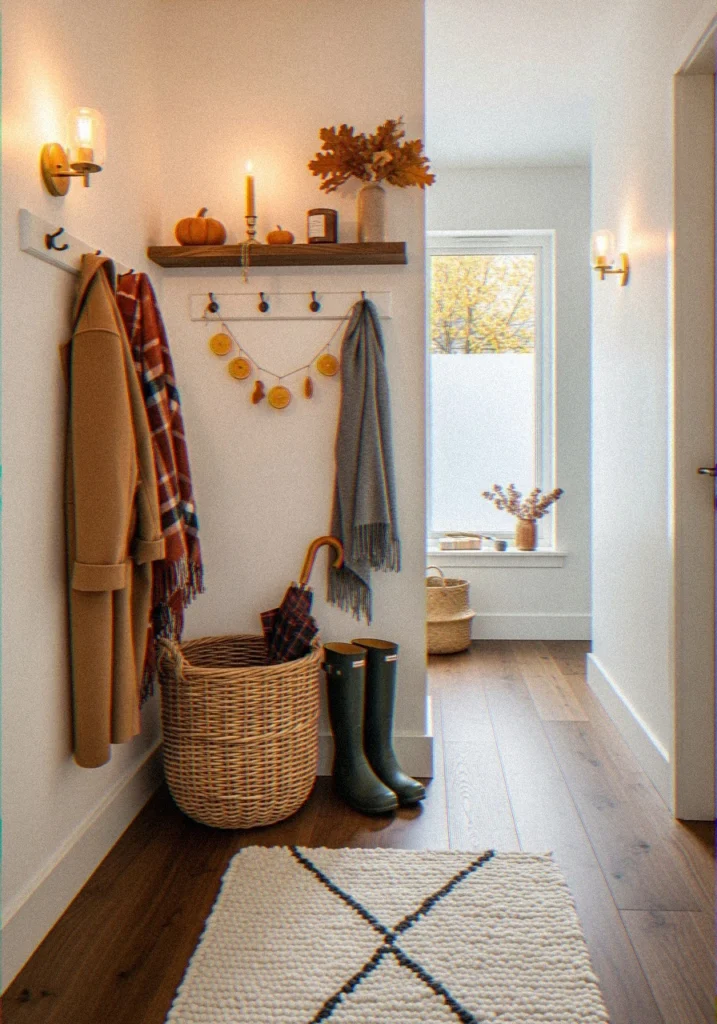
One of the trickiest challenges in a small mudroom is seasonal changeover. You can’t store winter and summer gear in the same tiny space. Here’s the system that actually works.
45. Vacuum Compression Bags for Off-Season Coats

Vacuum storage bags shrink big coats and jackets down to about 20% of their normal size. You put your off-season coats in bags, which you then put under your bed or in your bedroom closet.
Your mudroom hooks only hold current-season gear. I do this every April and October without fail.
It’s a habit that only takes 30 minutes twice a year but makes a huge difference for the other 11 months.
46. Seasonal Swap Bins
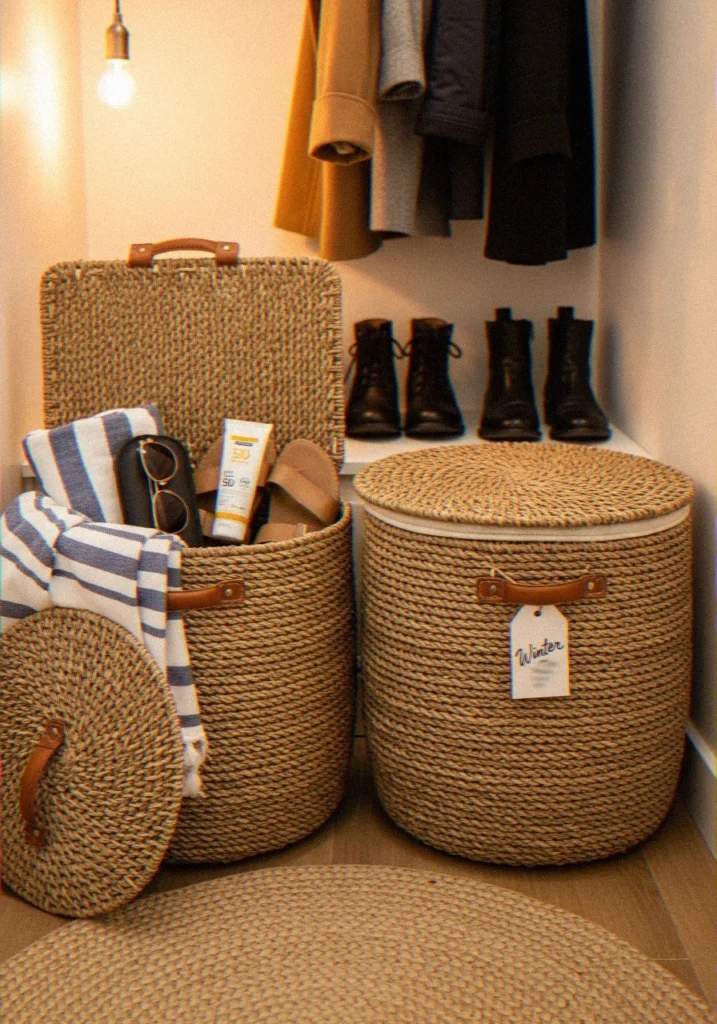
Two large labelled bins — summer gear in one, winter gear in the other — live in a closet or garage. At each seasonal change, pull the relevant bin out and swap it into the mudroom. One bin at a time. No overlap, no chaos.
47. Rotating Shoe Station
Only current-season shoes stay in the mudroom. Off-season footwear goes into labelled boxes in a bedroom or under a bed. Sounds completely obvious.
Most households don’t do it. It’s one of the most effective ways to keep a small mudroom from feeling overwhelmed by footwear.
48. Extra Hook Capacity
Install more hooks than you currently need. In winter, every one fills up. In summer, half sit empty — and that emptiness makes the hallway feel refreshingly open.
Extra hooks cost almost nothing and you’ll always be glad they’re there.
Section 11: Finishing Touches That Make a Narrow Mudroom Feel Like Home ✨
These last ideas are the details — the things that take a functional mudroom and make it genuinely lovely to walk into.
49. Chalkboard or Whiteboard Command Panel
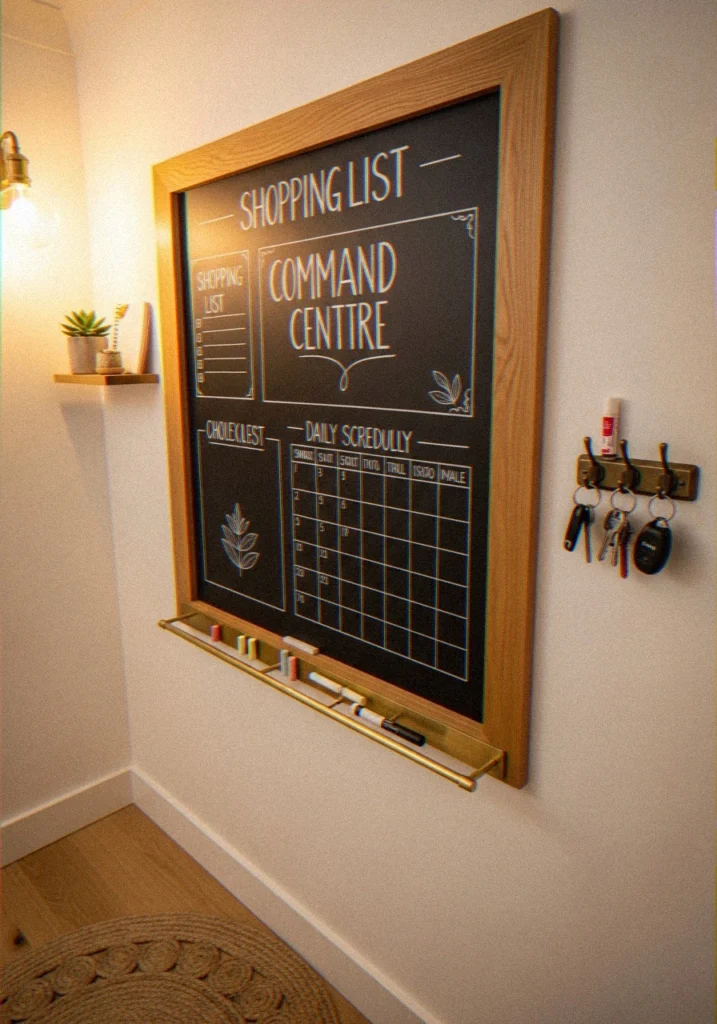
A framed chalkboard near the door serves as a family communication hub. Shopping lists, reminders, schedules, notes — visible the moment you walk in or out.
About $30 for a good-looking framed version, and it replaces approximately 47 different apps on everyone’s phones. I’m joking. Mostly.
50. Decorative Baskets as Gallery Wall
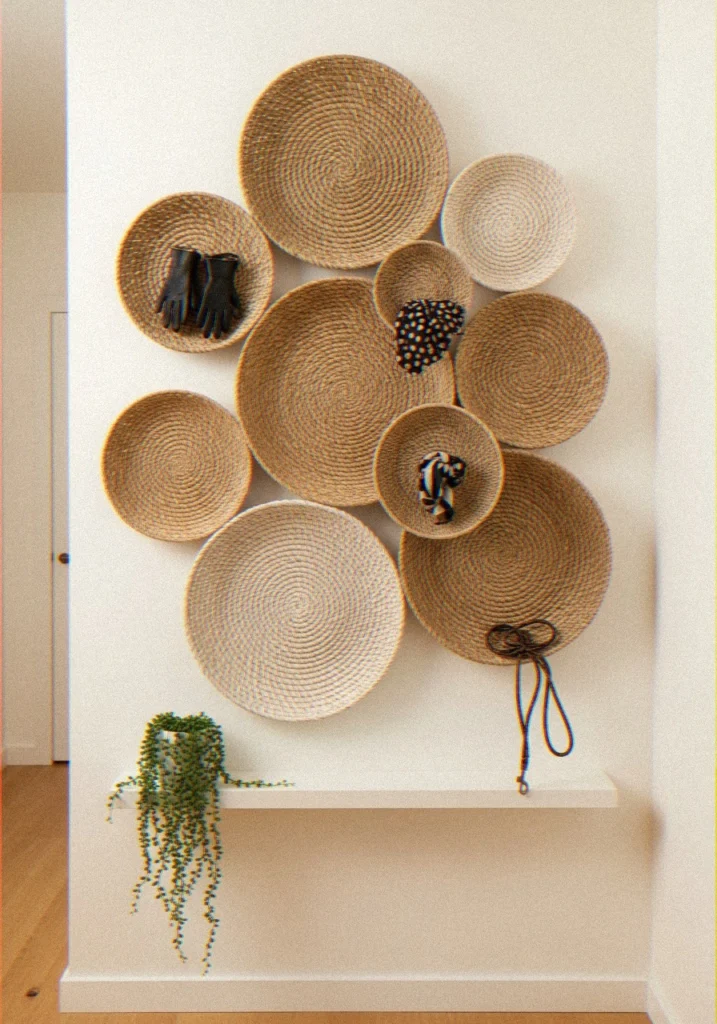
Group 5–7 woven baskets in varying sizes, hung clustered together on a wall like art.
Each basket holds something useful — gloves, leads, small toys, charging cables — but together they look like a cool bohemian gallery display. Storage that doesn’t look like storage. The dream.
51. Small Potted Plant or Herb Wall 🌿
Near the door, a small wall-mounted planter adds color and vitality to the room.
A single trailing plant on a shelf transforms an entryway from a “utility zone” to a “welcoming space.”
Fresh herbs in a mudroom next to the kitchen are especially great because they smell wonderful and you’ll cook with them because they’re right there as you enter.
52. Personal Gallery Wall with Integrated Hooks
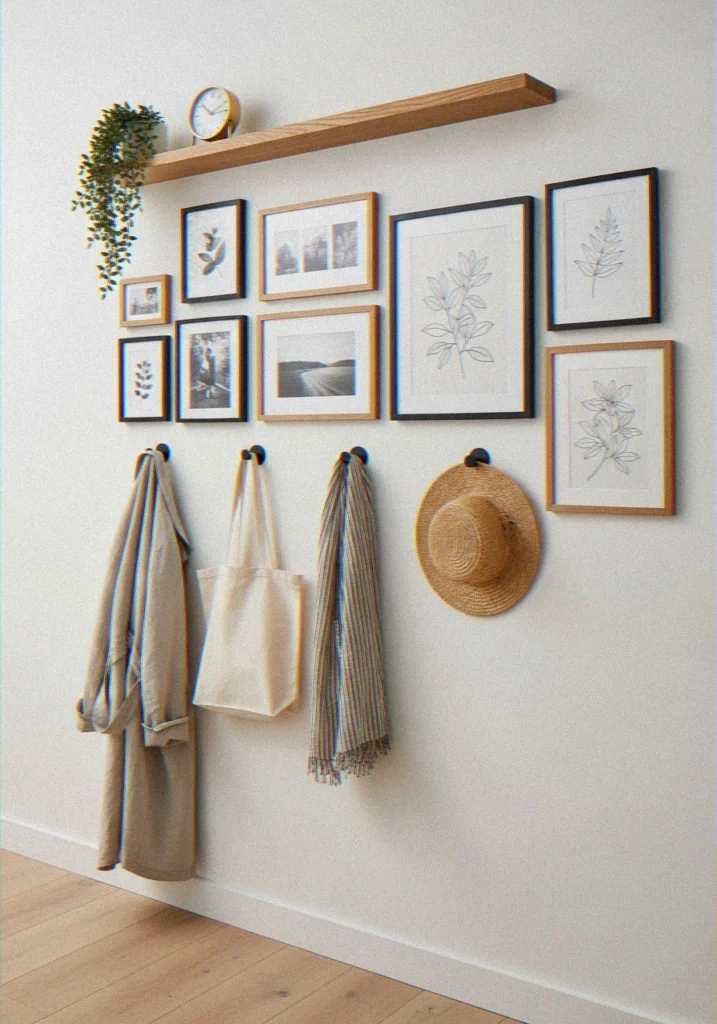
Family photos, art prints, and coat hooks arranged together in a gallery wall.
Hooks positioned between frames at consistent heights, as if they were always meant to be part of the display.
It transforms the hook wall from a utility fixture into something personal and curated.
This is genuinely one of my all-time favourite narrow mudroom ideas.
It costs almost nothing extra if you already have art you love, and it makes the space feel completely yours.
My Own Narrow Mudroom Transformation — Real Numbers, Real Results
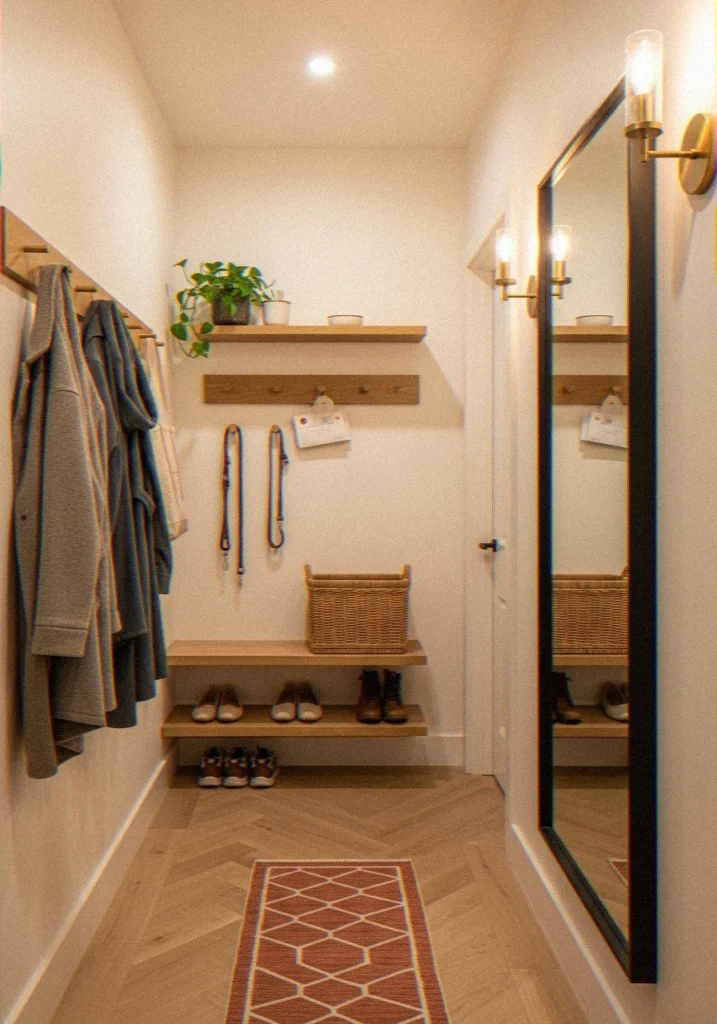
I want to be specific here because real numbers are way more useful than vague inspiration. My hallway: 42 inches wide, 9 feet long, zero natural light.
Here’s exactly what I installed:
- 48-inch Shaker peg rail at 60 inches from the floor — 6 pegs, holds 4 adult coats and 2 bags
- Two floating shoe ledges at 6 and 12 inches from the floor — flat shoes on the upper ledge, boots on the lower
- One 36-inch floating shelf at 72 inches — keys, a small plant, a wicker basket with sunglasses and spare change
- One wicker basket on a command hook under the shelf — dog lead, spare batteries, mail
- Full-length mirror on the opposite wall — 72 inches tall, plain black frame, $45 from a discount home store
- Two wall sconces flanking the mirror — warm white bulbs, installed in about two hours
The entire cost, including the electrician for the sconces, was approximately $320 USD/£250 GBP. My hallway was truly embarrassing before this.
It became the first comment made by visitors after that. One of the best home investments I’ve ever made is that transformation for that price, dude.
📊 Quick Comparison: Best Solutions by Hallway Width
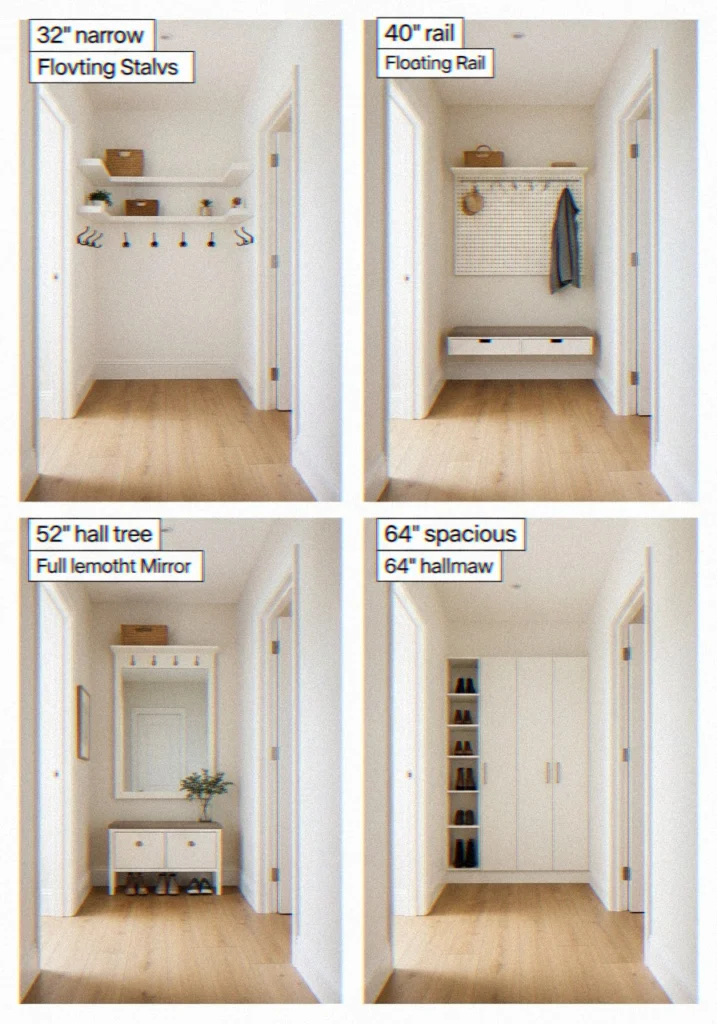
| Hallway Width | Top Recommendation | What to Avoid | Primary Goal |
|---|---|---|---|
| Under 36 inches | Wall-mounted hooks + floating shelves only | Any freestanding furniture | Maximum floor clearance |
| 36–48 inches | Slim floating bench + peg rail + floating shelves | Deep cabinets over 12 inches | Balance storage and clearance |
| 48–60 inches | Hall tree + slim shoe cabinet + full-length mirror | Bulky armoires or wardrobes | Multi-zone organisation |
| 60+ inches | Full built-in system or locker configuration | Under-using vertical space | Complete mudroom experience |
People Also Ask
What is a mudroom entryway?
A mudroom entryway is a transitional zone between the outside world and the interior of your home — a designated area where outdoor gear like coats, shoes, bags, and accessories lives before (or instead of) coming into the main living spaces.
The name “mudroom” comes from old farmhouse utility rooms built specifically to handle muddy boots and wet outerwear, keeping all that outdoor mess contained before anyone tracked it through the kitchen or sitting room. Today the concept is way more flexible.
Your mudroom doesn’t need to be a separate room — it can be a hallway section, a closet conversion, a corner near the back door, or even a well-thought-out patch of wall near your most-used entrance.
The key function is containment: every frequently-used item has a designated home close to the door, so chaos gets stopped before it spreads through the rest of the house.
When it works well, a mudroom entryway genuinely changes the rhythm of your daily life — mornings feel less frantic, evenings feel less stressful, and you stop losing your keys every single day (just me? probably not just me).
How to style a narrow entrance hallway?
Styling a narrow entrance hallway comes down to four things working together, and if you nail all four, the result is honestly impressive regardless of how tight the space is.
First: go vertical. Every item on the floor shrinks your hallway — get storage off the floor and onto walls using hooks, rails, shelves, and floating benches.
Second: use light aggressively. Pale walls, warm sconces, and a full-length mirror do more for the perceived size of a narrow hallway than any structural change ever could.
A mirror alone can make a 36-inch hallway feel double its actual width — that’s not an exaggeration. Third: create one strong focal point.
A well-chosen hall tree, a gallery wall with integrated hooks, a statement rug, or a dramatically lit shelf gives the space identity.
Without an anchor it looks like a corridor; with one it looks like a designed room. Fourth: keep the colour palette tight.
Two or three cohesive tones throughout walls, furniture, baskets, and hooks. Visual consistency makes a narrow space feel calm and curated.
These four things together cost very little to implement and make an enormous difference.
How to create a mudroom in a small space?
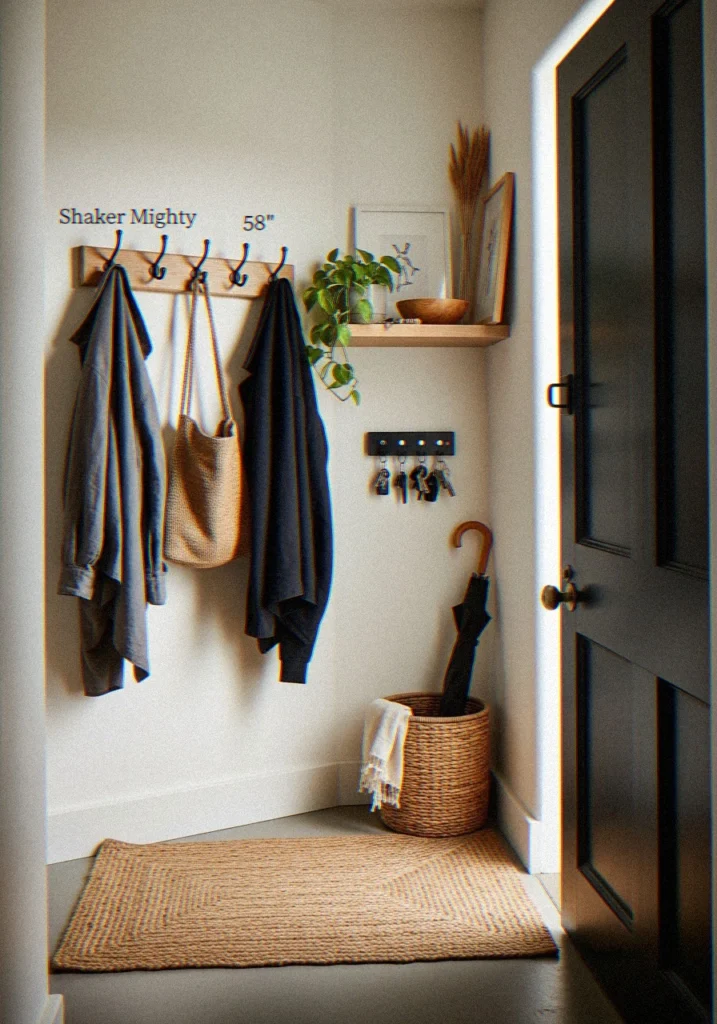
Creating a mudroom in a small space starts with one principle: proximity to your actual entry point. Choose the area immediately adjacent to your most-used door — whether that’s a section of hallway wall, a closet you’re willing to gut and convert, or a corner near the back door. Next, be specific about what you’re storing.
Write down the actual categories of items that collect near your door: coats, shoes, keys, bags, mail, pet accessories, hats and gloves.
Your storage needs to match your real daily habits, not an idealised version of them.
Then build vertically, starting from the top of the wall and working down: high shelf for seasonal bins, eye-level hooks and rails for daily items, low zone for shoes and bench seating.
Finally, add one or two finishing touches that make the space feel intentional — a small rug, a framed print, a potted plant.
Those details are what separate a “storage area” from an actual mudroom. You don’t need a big space. You need a specific zone with a specific plan.
How to create storage in a narrow hallway?
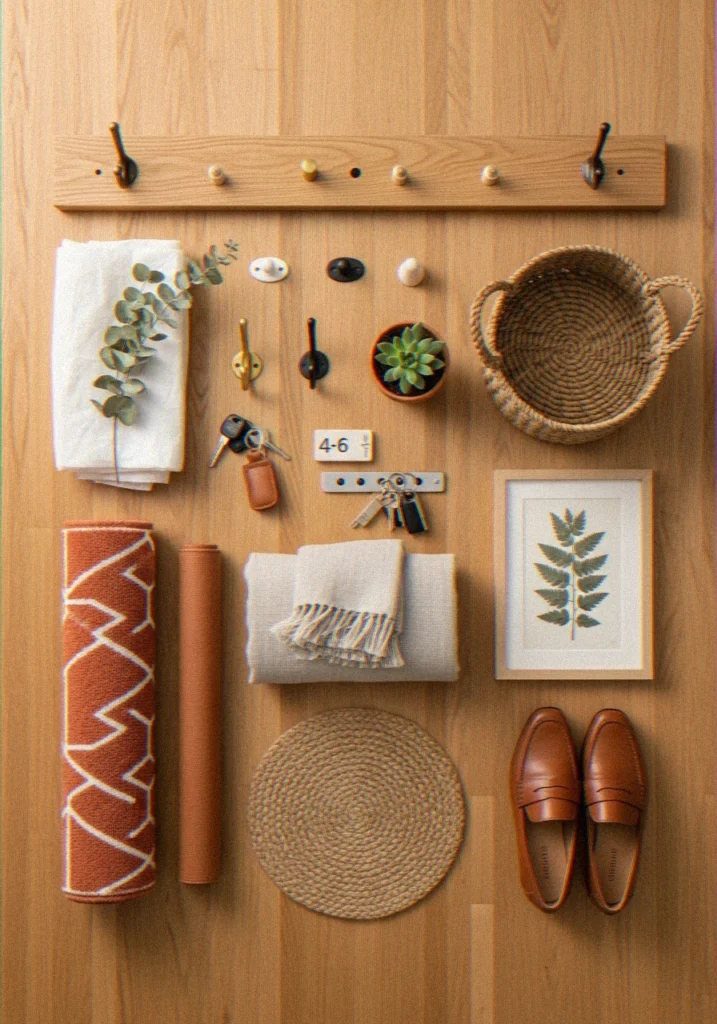
When it comes to storage in a small hallway, there is one unbreakable rule: never obstruct the path.
Every storage solution must be wall-mounted, shallow (usually less than 12 inches deep for the tightest spaces), and vertically oriented in order to provide a minimum of 36 inches of walking clearance at all times.
Start with the walls: a shoe ledge or slim shoe cabinet for shoes, floating shelves for everyday necessities, and a peg rail for coats.
Then, instead of focusing on individual pieces, think in zones.
Assign particular wall sections to particular purposes, such as “coat zone,” “grab-and-go zone,” and “seasonal storage zone.
” Make use of the entire wall height rather than just the handy middle section; a 7-foot shelf for seasonal bins is nearly free and reclaims space that would otherwise be lost.
A floating wall-mounted bench is usually the only bench option that maintains sufficient clearance for hallways that are less than 40 inches wide.
A full-length mirror on one wall, warm sconce lighting, and a pale paint colour round out the approach. Combined, these strategies can make even a 36-inch hallway feel organised, functional, and genuinely good-looking.
Get More Decor Inspiration
How to Create a Corridor Garden for Local Pollinators?
41 French Country Living Rooms Ideas That Instantly Elevate Your Home
What Indoor Plants Are Safe to Move Outdoors in Summer?
People Also Search For
Narrow Mudroom Ideas Entryway Hallway Storage Pinterest
Pinterest is incredible for narrow mudroom visual inspiration — but a lot of the most-pinned mudrooms have 48–60+ inches of width, custom cabinetry budgets, and natural light that most real homes don’t have.
When you’re browsing Pinterest for genuinely narrow entryway ideas, search specifically for “small entryway,” “narrow hallway storage,” or “36-inch mudroom” rather than just “mudroom ideas.” Filter toward builds that show wall-mounted-only systems, floating benches, and vertical shoe solutions.
The most-pinned narrow mudroom aesthetics right now lean toward white Shaker cabinetry, black matte hardware, warm wood accents, and natural woven baskets — a combination that’s timeless, achievable at various budgets, and looks killer in a tight space when executed well.
Save pins that show actual measurements and product links rather than just the finished photo — those are the ones that actually help you make decisions.
Entryway Mudroom Ideas
Entryway mudroom ideas cover an enormous range — from a £15 hook rail from a charity shop to a full custom built-in system worth thousands.
But the most effective entryway mudrooms, regardless of budget or size, share a few common characteristics: they’re immediately accessible from the entry point, they address the specific clutter categories of that household, and they use vertical space efficiently.
The style — farmhouse, minimalist, Scandi, rustic, modern — is secondary to those fundamentals. Pick your aesthetic after you’ve sorted the function, not before.
A beautiful mudroom that doesn’t actually contain your clutter is just expensive decoration.
Narrow Mudroom Ideas Entryway Hallway Storage DIY
DIY narrow mudroom projects are genuinely some of the most satisfying home improvement projects you can take on.
The results are often more customised and better-suited to your specific space than anything off-the-shelf — because you’re building for your exact dimensions, your exact habits, your exact family.
Top DIY narrow mudroom projects: pallet shelf walls (often free materials, $20–40 in supplies), Shaker peg rail installations (a beginner woodworking project), floating shelf installs, crate bench builds, dollar store basket gallery walls, and tension rod shoe organisers inside existing cabinets.
If you’re comfortable with basic tools and wall anchors, a complete DIY narrow mudroom can be done over a single weekend for under $100.
The most important rule: measure everything twice before buying anything. In narrow spaces, a half-inch miscalculation can genuinely change what fits and what doesn’t.
Long Narrow Mudroom Ideas
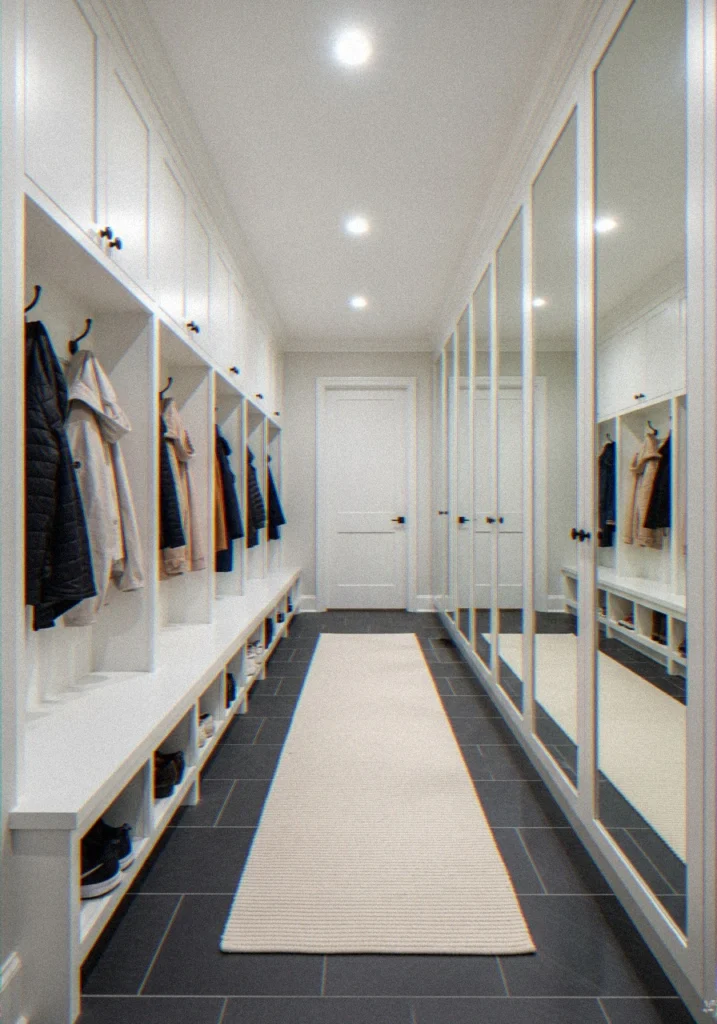
Long narrow mudrooms are actually a designer’s playground — you’ve got serious wall footage and the opportunity to create a genuinely comprehensive organisational system that short entryways can’t accommodate.
The key is treating the length as a series of distinct zones rather than one continuous storage wall. Zone 1, right at the door: lean grab-and-go storage for daily items only.
Coat hooks, a storage bench, a complete peg rail, and shoe storage are located in Zone 2, the main body. Zone 3, the far end: a family command center, sports equipment, or secondary storage for seasonal goods.
The three zones are visually cohesive and give the impression of a planned system rather than an accumulation thanks to the continuous peg rail and uniform floating shelves at the same height.
One of the most satisfying home organization investments you can make is a built-in locker system in a long, narrow mudroom; everyone gets their own space, and the “where’s my stuff” argument essentially vanishes overnight.
Wrapping It Up — Now Your Turn 🙌
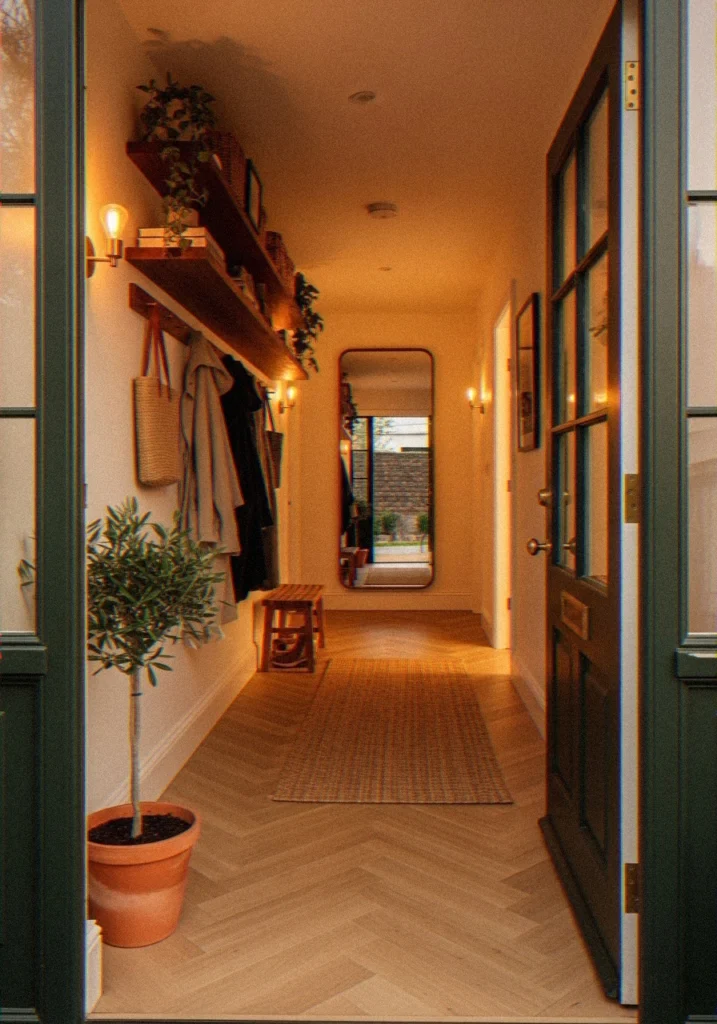
So there you have it — 52 narrow mudroom and entryway storage ideas that genuinely transform small spaces, with real talk about what works, what doesn’t, and what I’d do differently if I were starting over.
From a $8 magnetic key strip to a full built-in locker system, from a Sunday afternoon DIY to a weekend renovation — there’s something here for every hallway width, every budget, and every tolerance for power tools.
Here’s what I actually want you to take away from all of this: a small space isn’t a limitation — it’s a constraint that forces intentionality.
And intentionality in home design always produces better results than just throwing money and furniture at a problem.
Some of the most organised, calming, and genuinely lovely entryways I’ve ever walked through were also some of the smallest. Size doesn’t determine quality. A clear plan does.
Pick two or three ideas from this list that feel immediately doable.
Start there. One good peg rail, a pair of floating shoe ledges, and a full-length mirror can completely change how your mornings feel — and once you feel that difference, you’ll want to keep going. Trust me on that one.
Now — have you tried any of these in your own narrow entryway? I’d genuinely love to know what worked for you, what flopped spectacularly, and what you wish you’d done differently. Drop it in the comments — let’s swap notes! 👇
