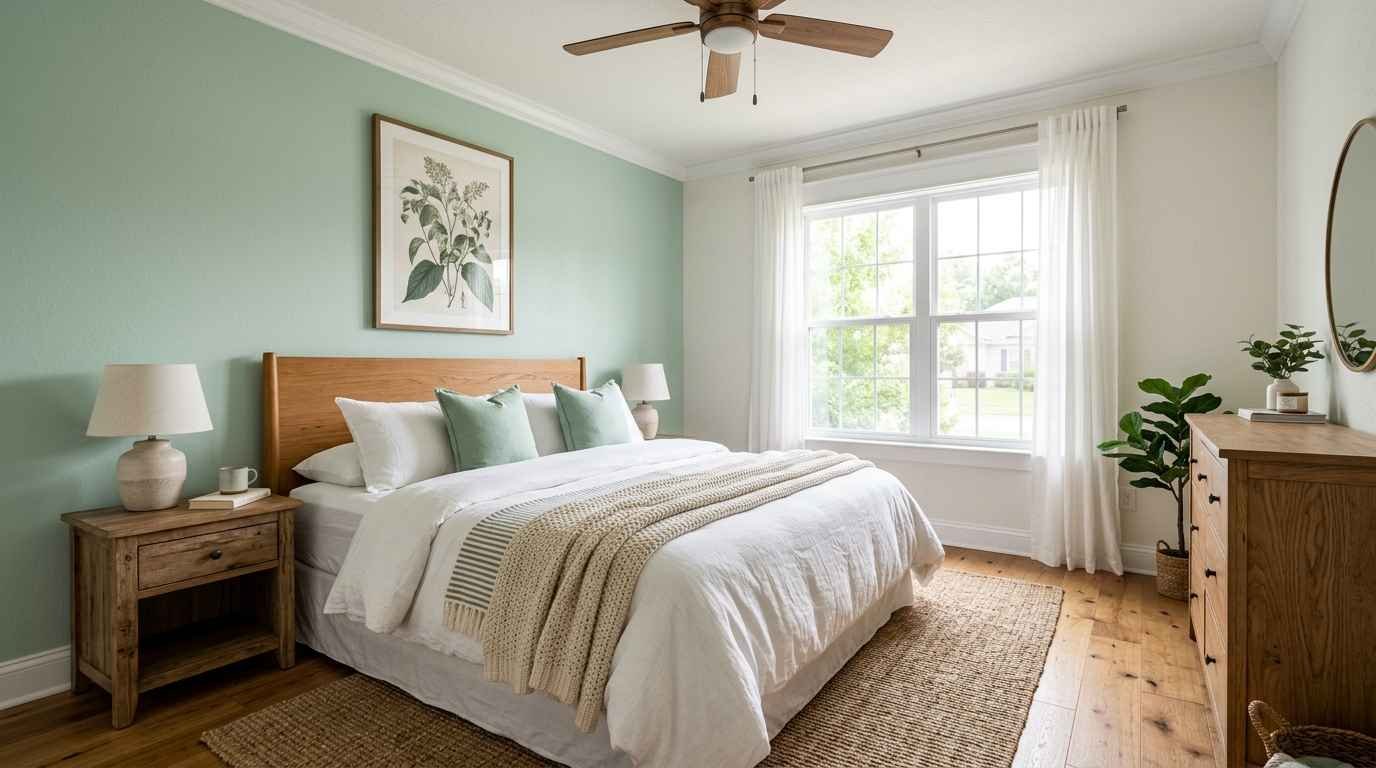
I painted my first apartment bedroom mint green in my early twenties, mostly because the sample pot was on sale for $4.
i had no plan. No Pinterest board. Just a roller, a bad radio playlist, and way too much confidence.
It turned out great. And nine years later, I still can’t walk past a paint aisle without checking if they’ve got a good mint on the shelf.
Mint green and white is one of those combinations that looks effortless but actually does a lot of work in a room. It’s fresh without being cold.
calm without being boring. And if you’re pinning bedroom inspiration right now, chances are you already sense that this pairing has staying power beyond a single design trend cycle.
So here are 30 real ways to bring mint green and white into a bedroom, organized by what actually matters when you’re decorating: walls,
textiles, furniture, lighting, and the small details that make a room feel finished instead of half-decorated.
Why mint green and white works so well together
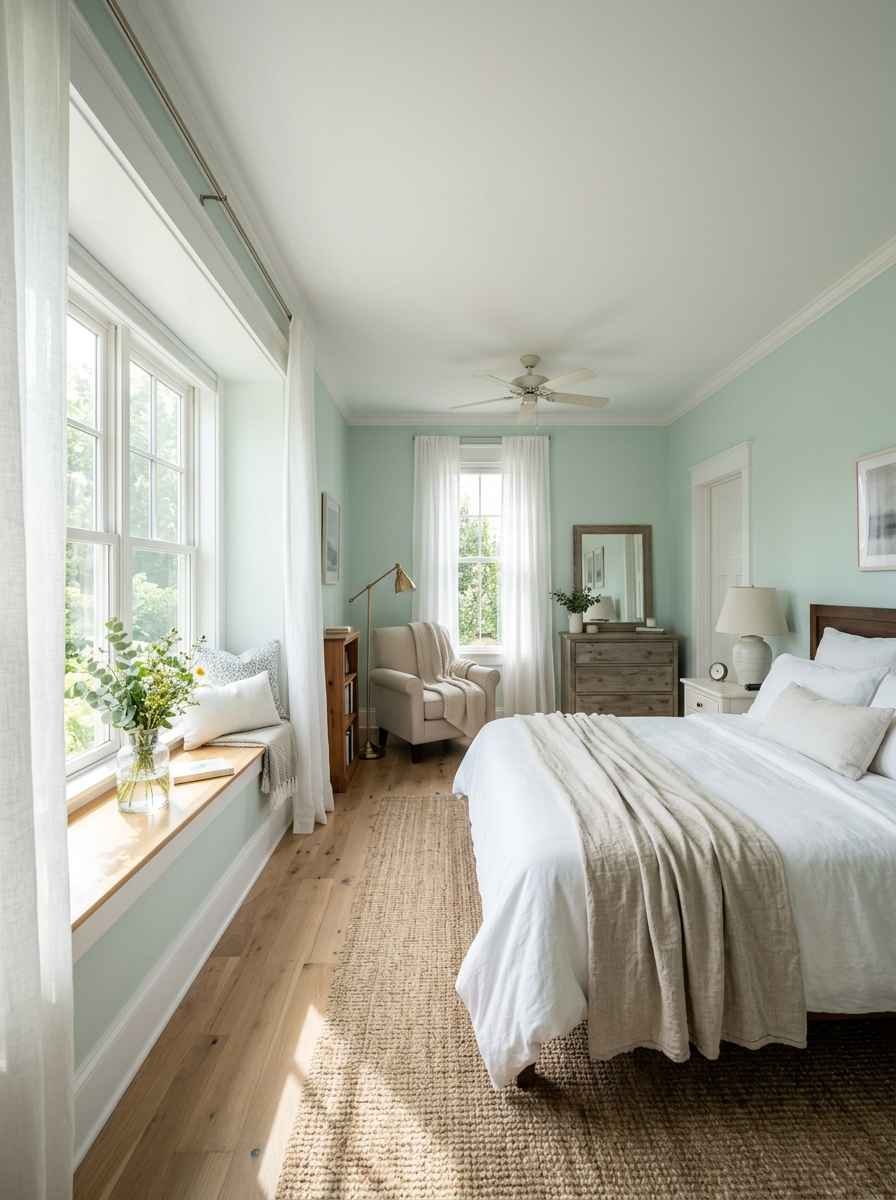
Green sits next to blue on the color wheel, and mint specifically leans light and slightly blue-toned, which is why it reads as cool and soothing rather than earthy.
Pair it with white and you get contrast without any tension. Nothing fights for attention.
There’s also research behind why this matters in a bedroom specifically.
According to the Sleep Foundation’s research on bedroom color, cooler tones like green and blue tend to promote more positive emotional associations than warm, saturated colors, which can make them a smarter pick for a room built around rest.
I’m not saying paint color alone will fix your sleep schedule (mine is still a mess). But it doesn’t hurt.
IMO the real magic is in the ratio. Too much mint and a room starts to feel like a nursery.
Too much white and it feels sterile, like a dentist’s waiting room nobody asked for.
The sweet spot is roughly 60 to 70 percent white with mint doing the accent work: walls, bedding, one or two furniture pieces, and textiles.
Wall and paint ideas
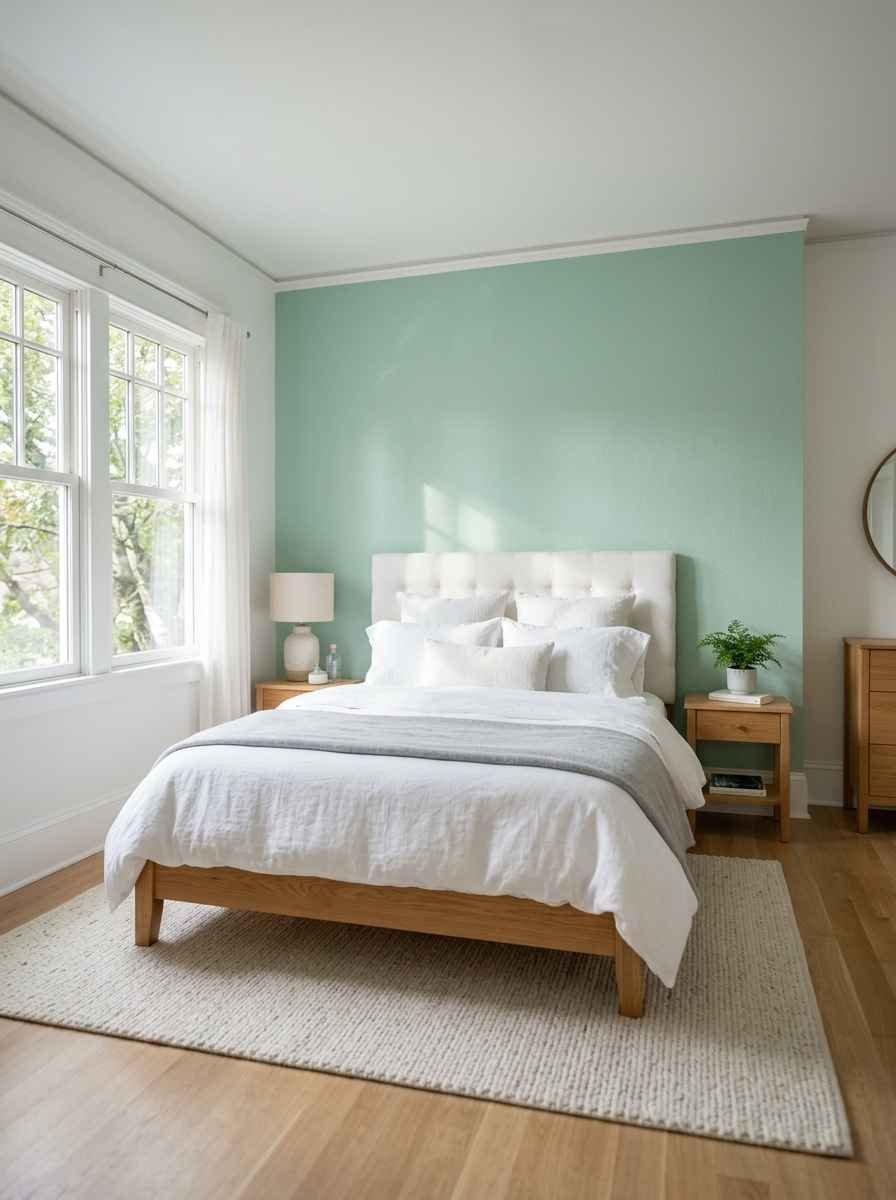
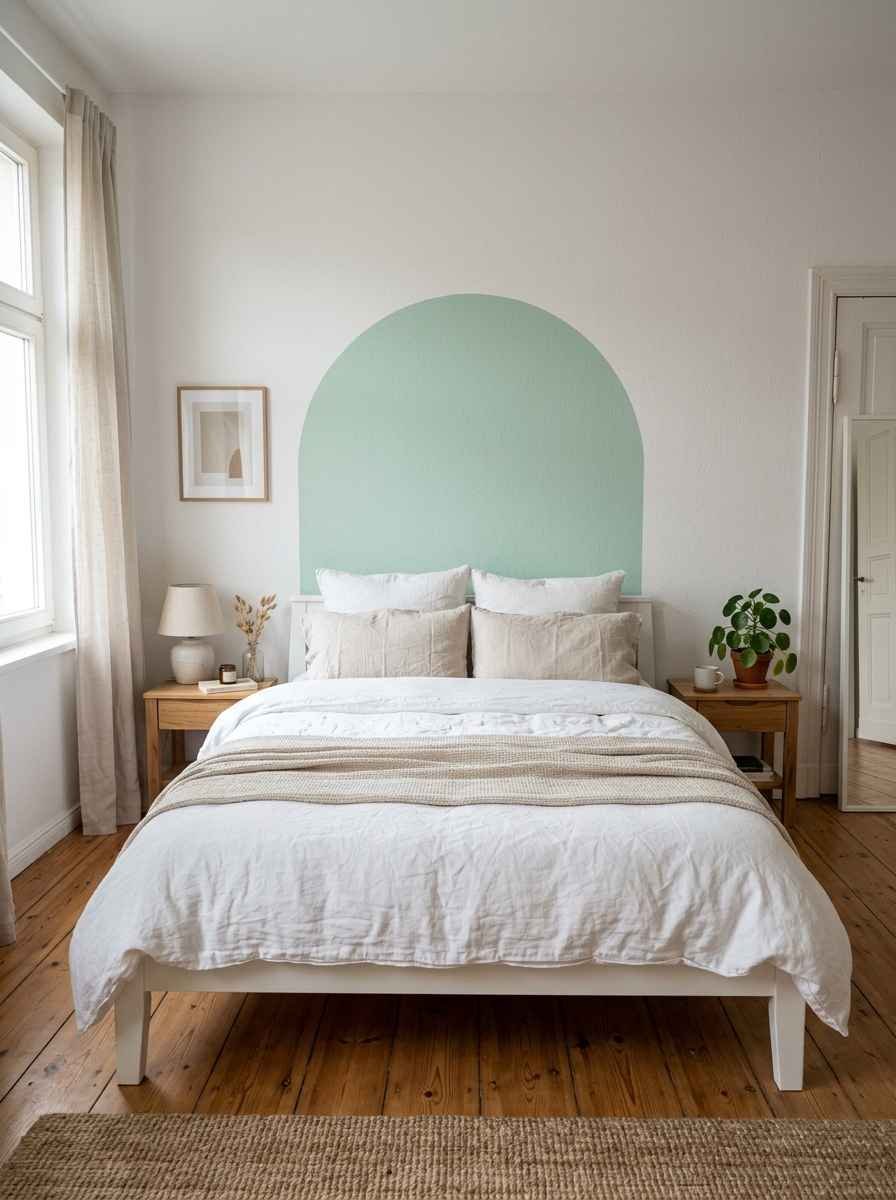
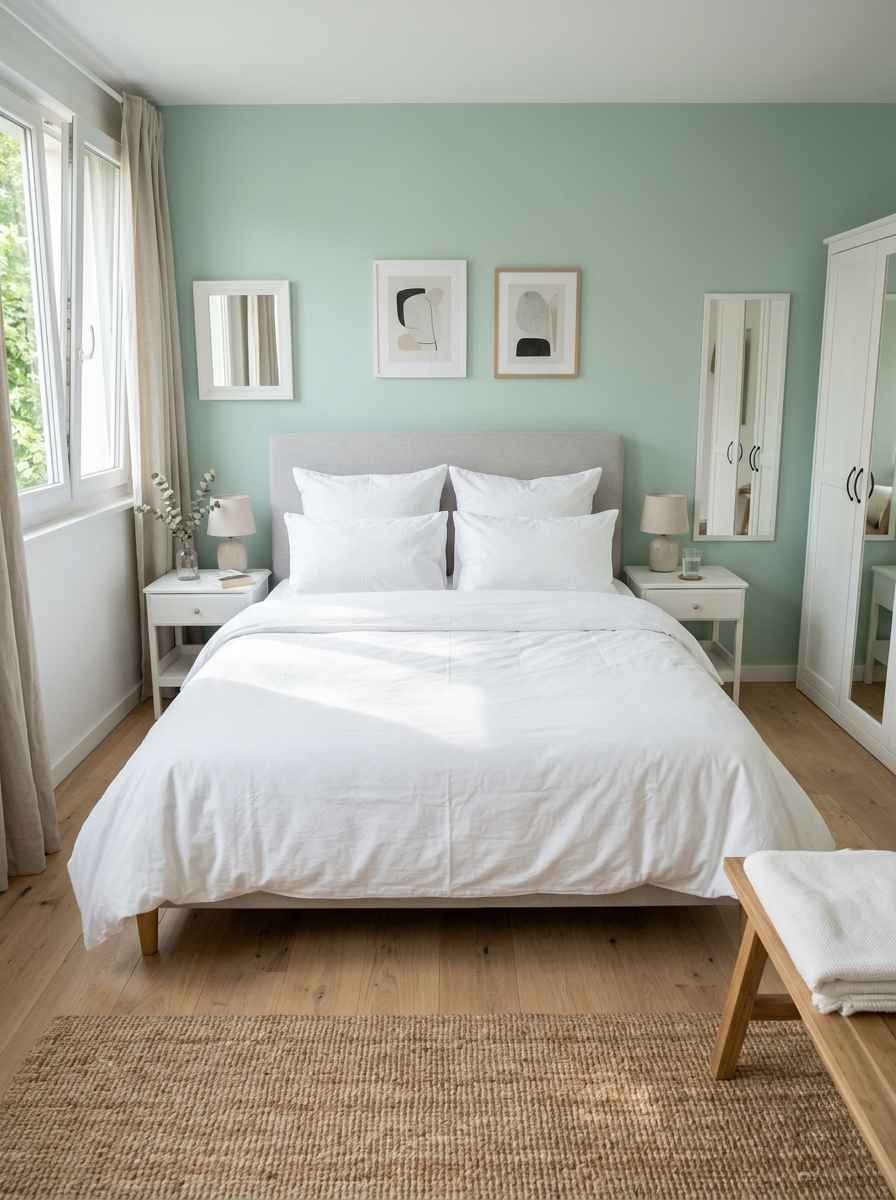
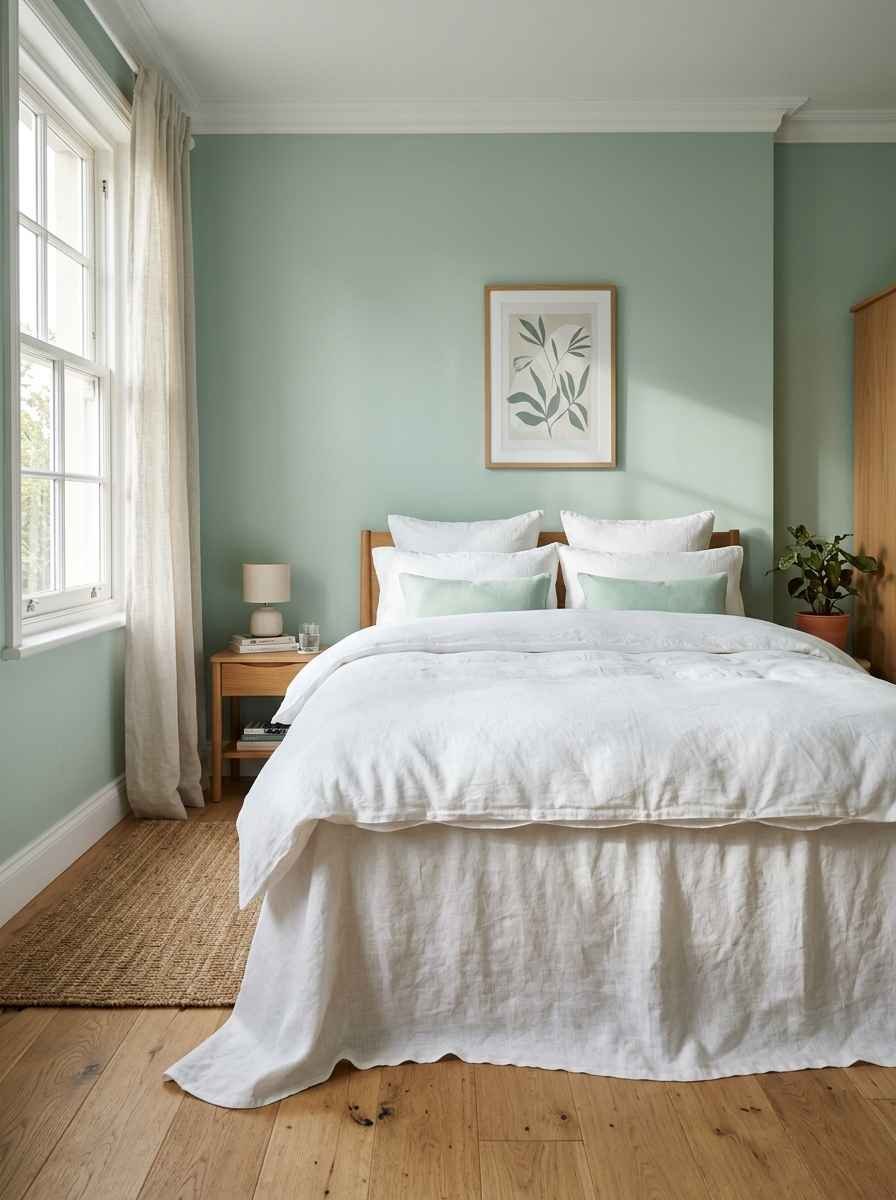
- Paint just one accent wall mint, usually behind the headboard, and keep the other three white. This is the easiest entry point if you’re nervous about commitment.
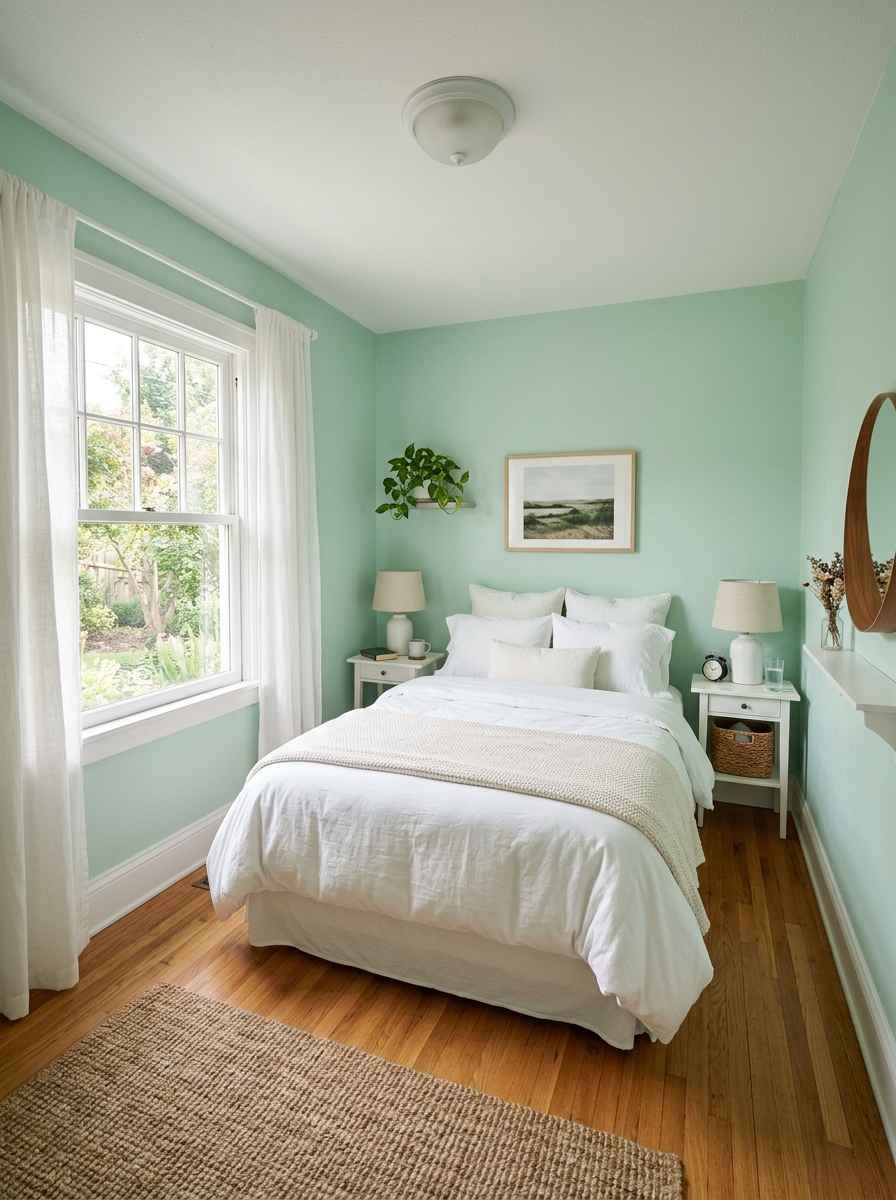
- Go full mint on all four walls in a smaller bedroom. Counterintuitively, a soft, light mint can make a small room feel larger because it doesn’t create the boxed-in effect that darker colors do.
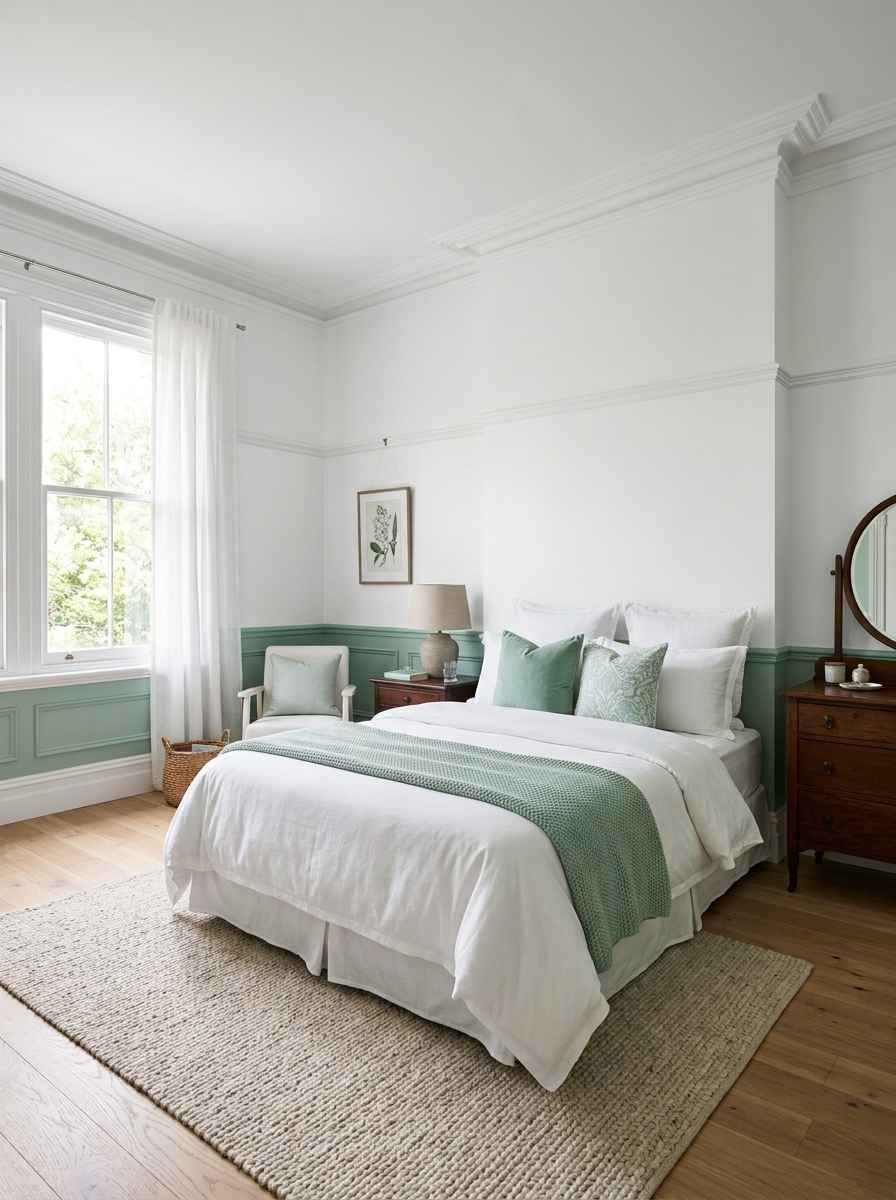
- Try a two-tone wall, mint on the bottom third with a white chair rail, white above. This works beautifully in older homes with existing trim.
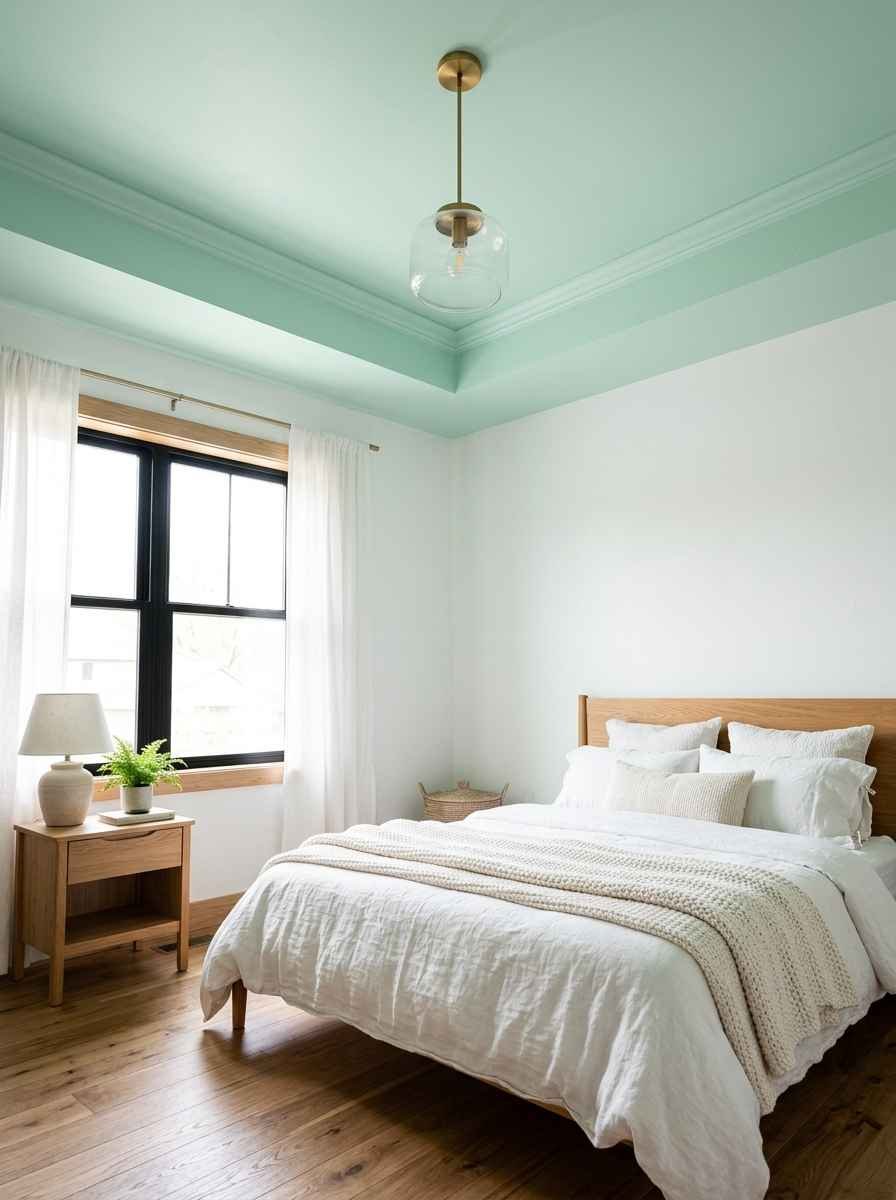
- Use mint on the ceiling instead of the walls. Keep the walls crisp white and paint the “fifth wall” mint for a surprising, editorial look.
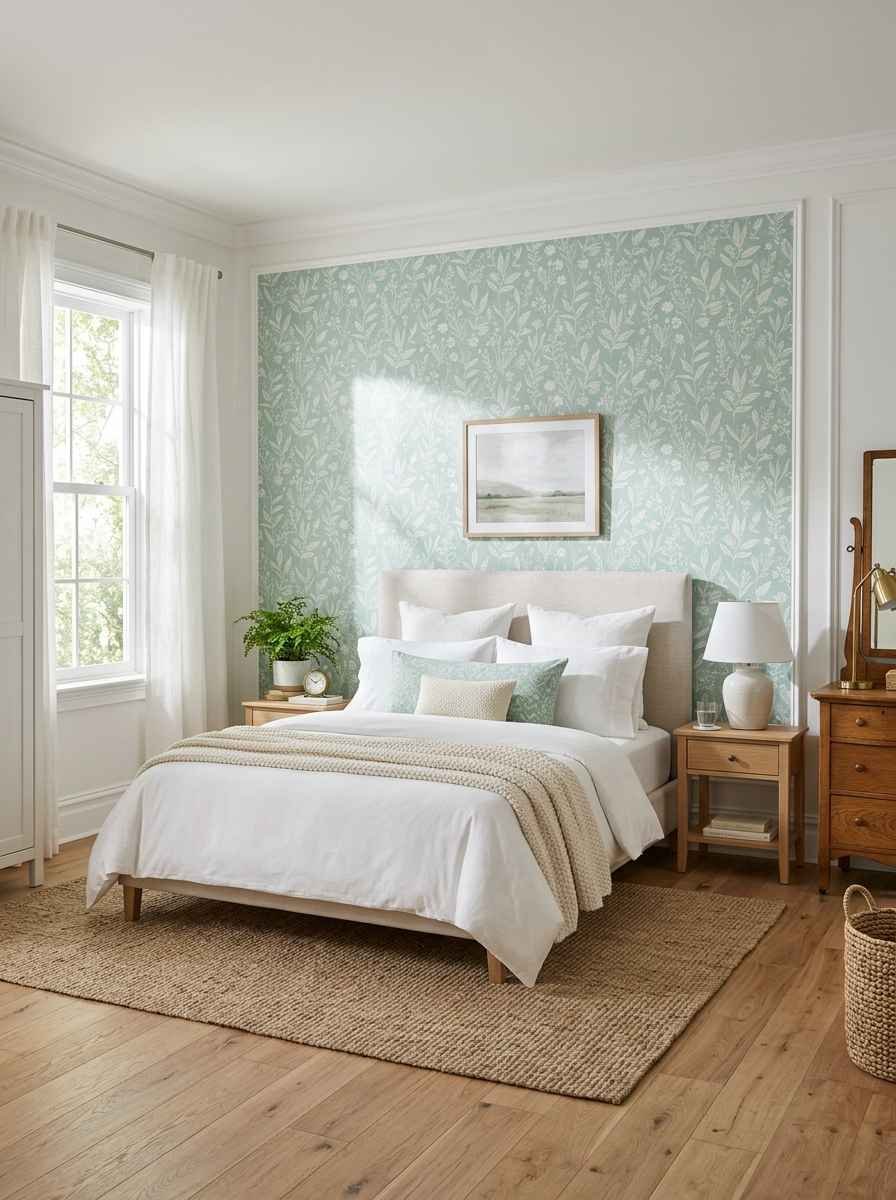
- Wallpaper over paint. A subtle mint botanical print adds texture that flat paint can’t.
- Benjamin Moore’s green paint collection is a solid place to start swatching if you want to see how different mint undertones (some lean more blue, some more yellow) actually look on your wall before committing.
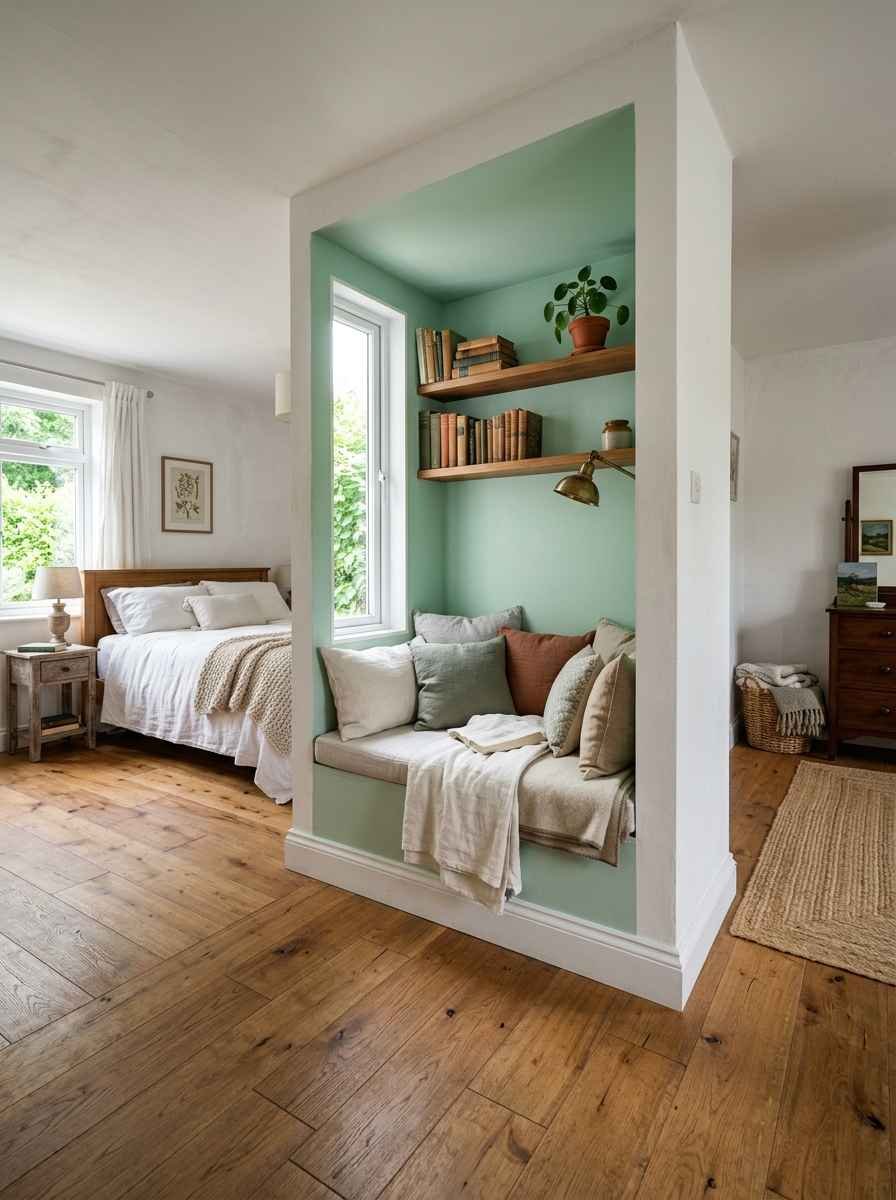
- Paint the inside of a built-in nook or alcove mint while leaving the rest of the room white. It frames the space like a little stage.
- Add a mint painted headboard shape directly on the wall if you don’t own an actual headboard yet. It’s a cheap trick that photographs really well, which matters if this room is going on your feed.
Bedding and textile ideas
- Start with white sheets as your base, always. White bedding photographs cleaner and lets your mint accents actually pop instead of competing.
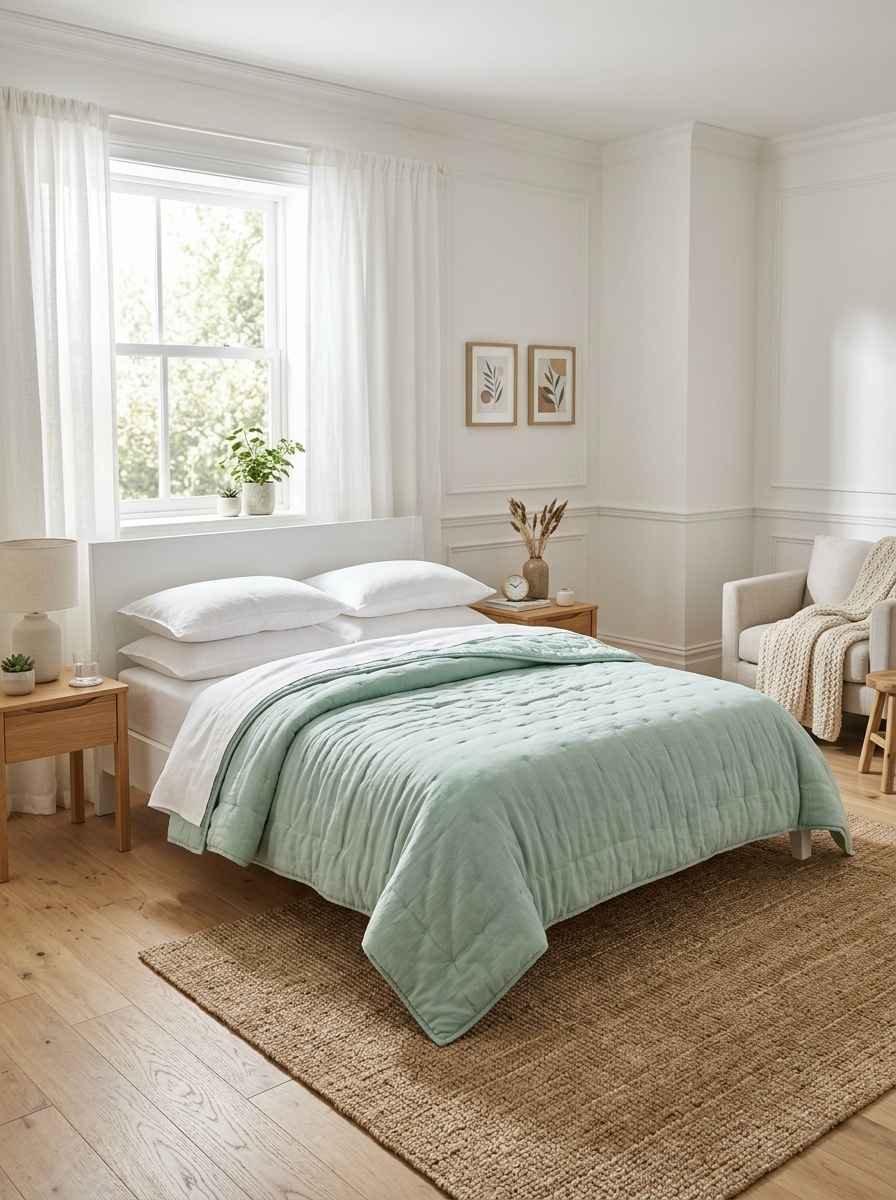
- Layer a mint quilt or duvet over the white sheets. This is the single highest-impact, lowest-effort change on this entire list.
- Mix in a few white throw pillows with mint piping or trim for a tailored, hotel-suite feel.
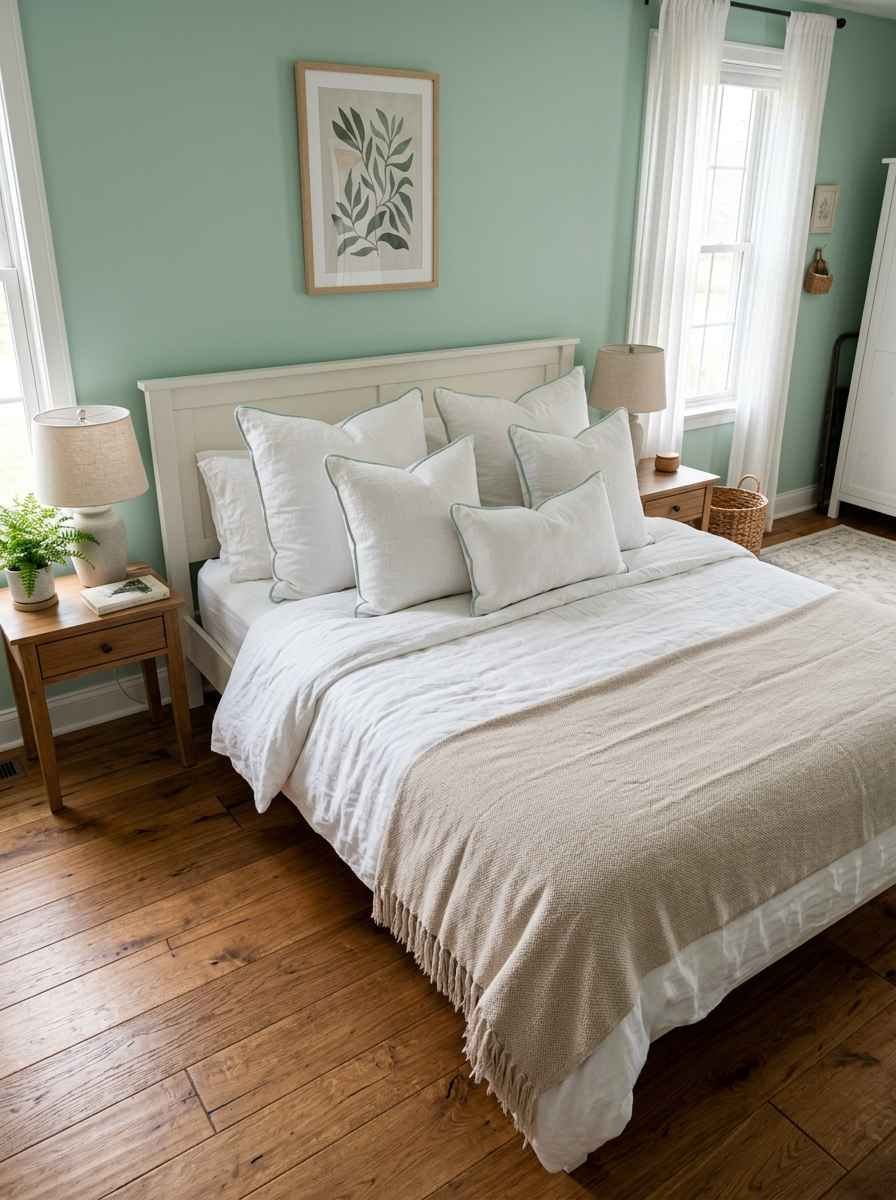
- Add a chunky knit mint throw blanket at the foot of the bed. Texture does a lot of heavy lifting in a color scheme this quiet.
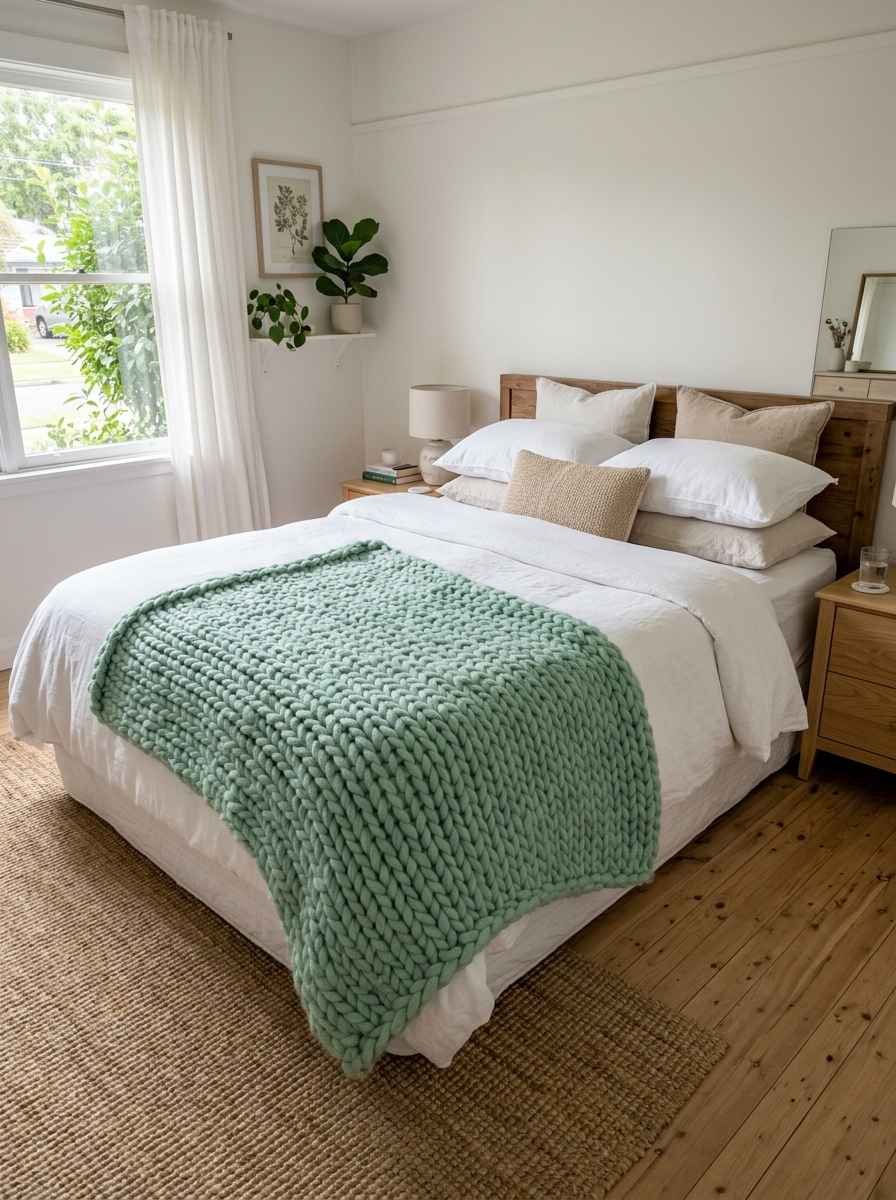
- Try a mint and white gingham or stripe duvet if solid colors feel flat to you. Pattern breaks things up without adding a third color.

- Go bold with a mint velvet headboard. Velvet catches light in a way that makes even a pale color feel rich instead of washed out.
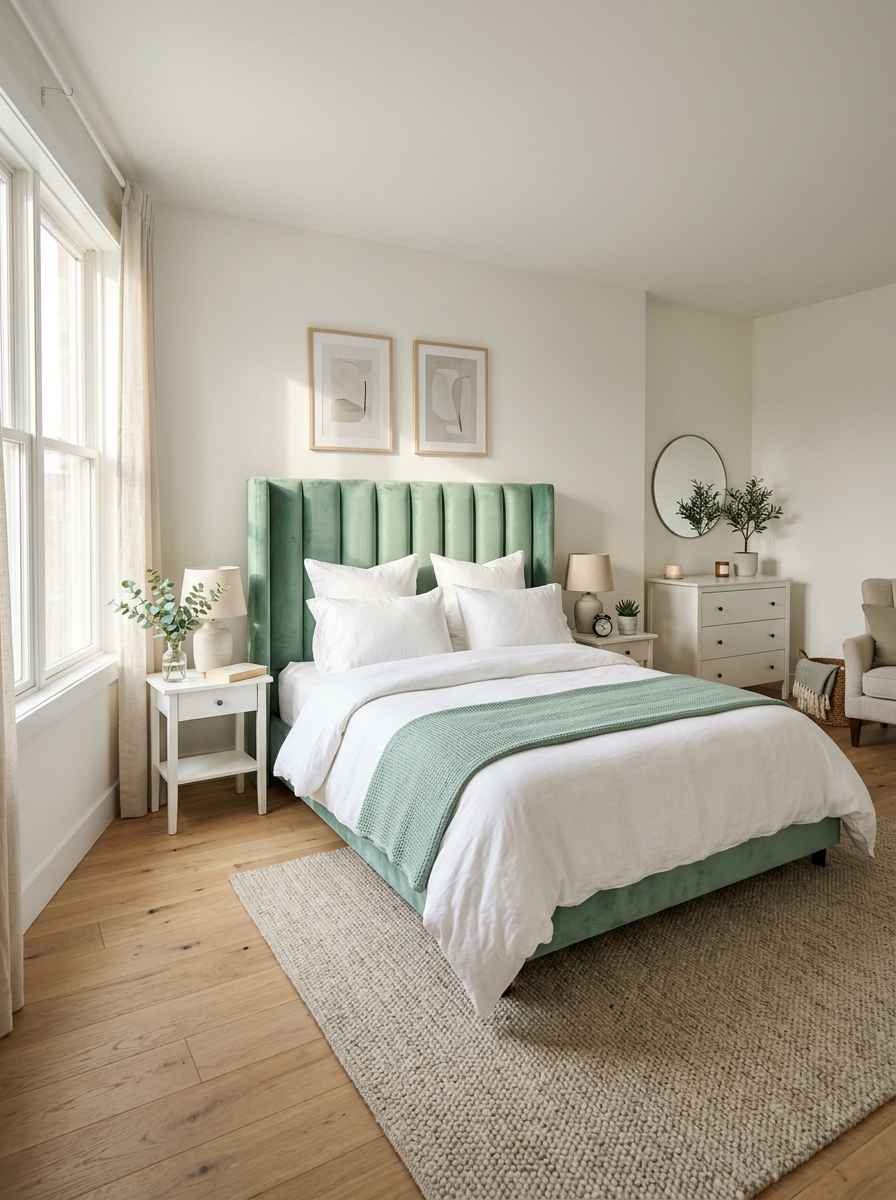
- Use a white bed skirt to hide storage under the bed while keeping the base of the room visually light.
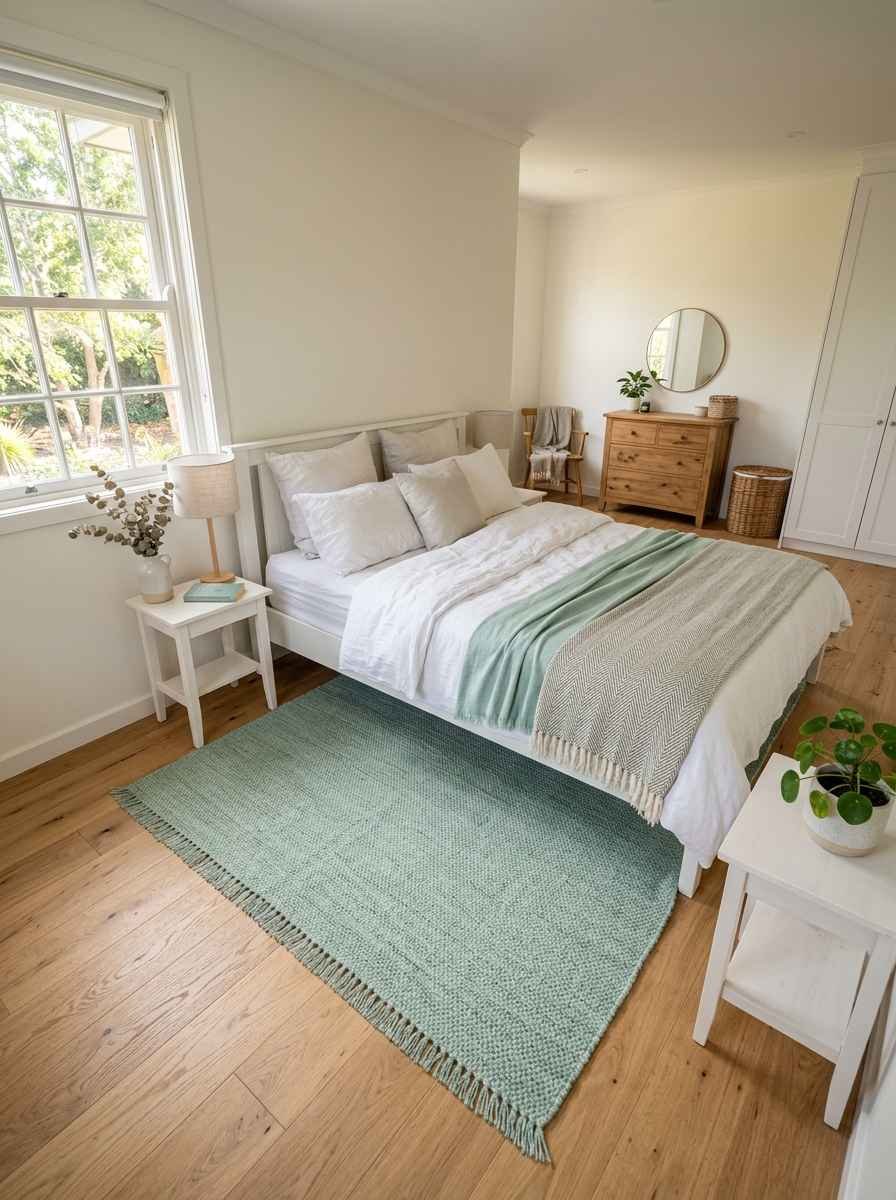
- Bring in a mint area rug under or beside the bed. Rugs are honestly one of the most underrated ways to introduce color because they don’t require any wall commitment at all.
Furniture and decor ideas
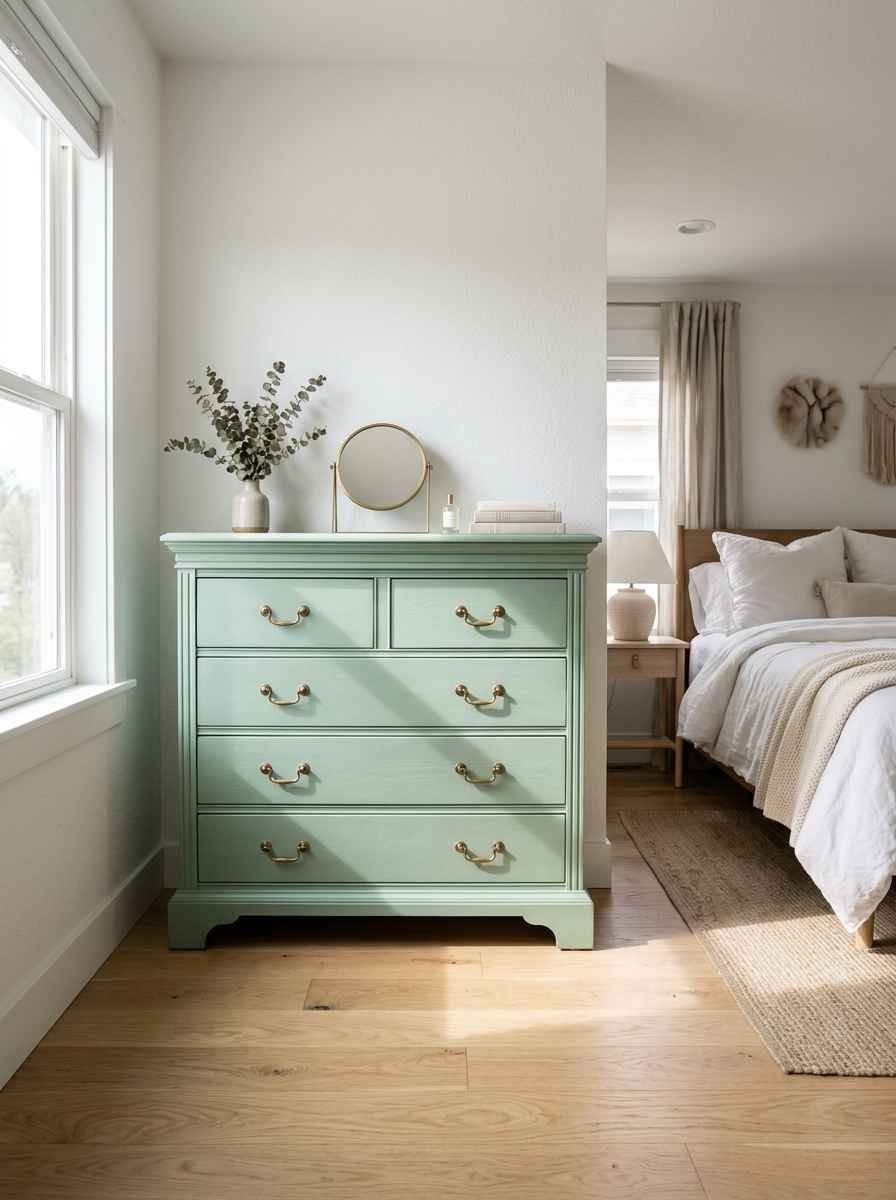
- Paint an old dresser mint instead of buying new. I did this with a $30 thrift store dresser and it’s still the compliment I get most from guests. Sand it, prime it, two coats, done.
- Keep your nightstands white so they don’t visually compete with a mint accent wall or headboard.
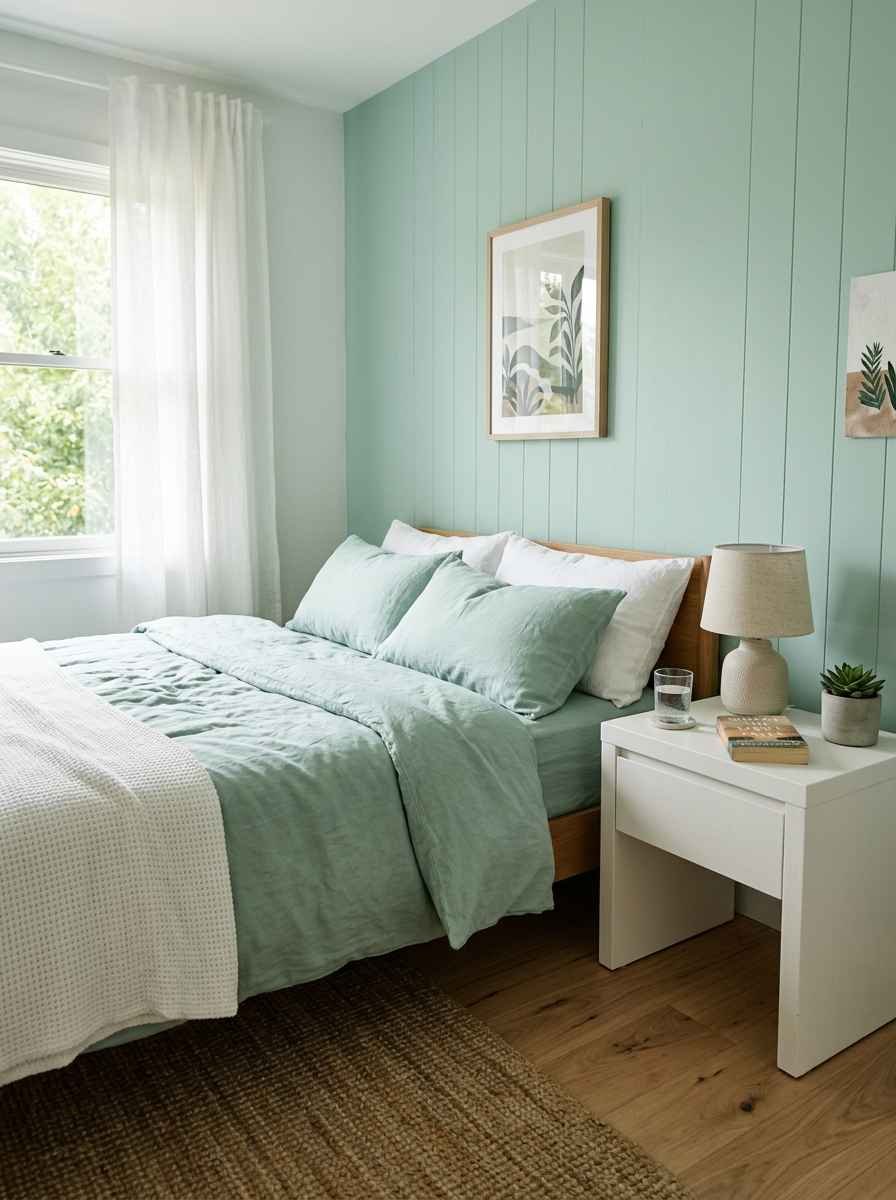
- Add a single mint accent chair in the corner, ideally somewhere you’ll actually sit and read, not just somewhere clothes go to die.
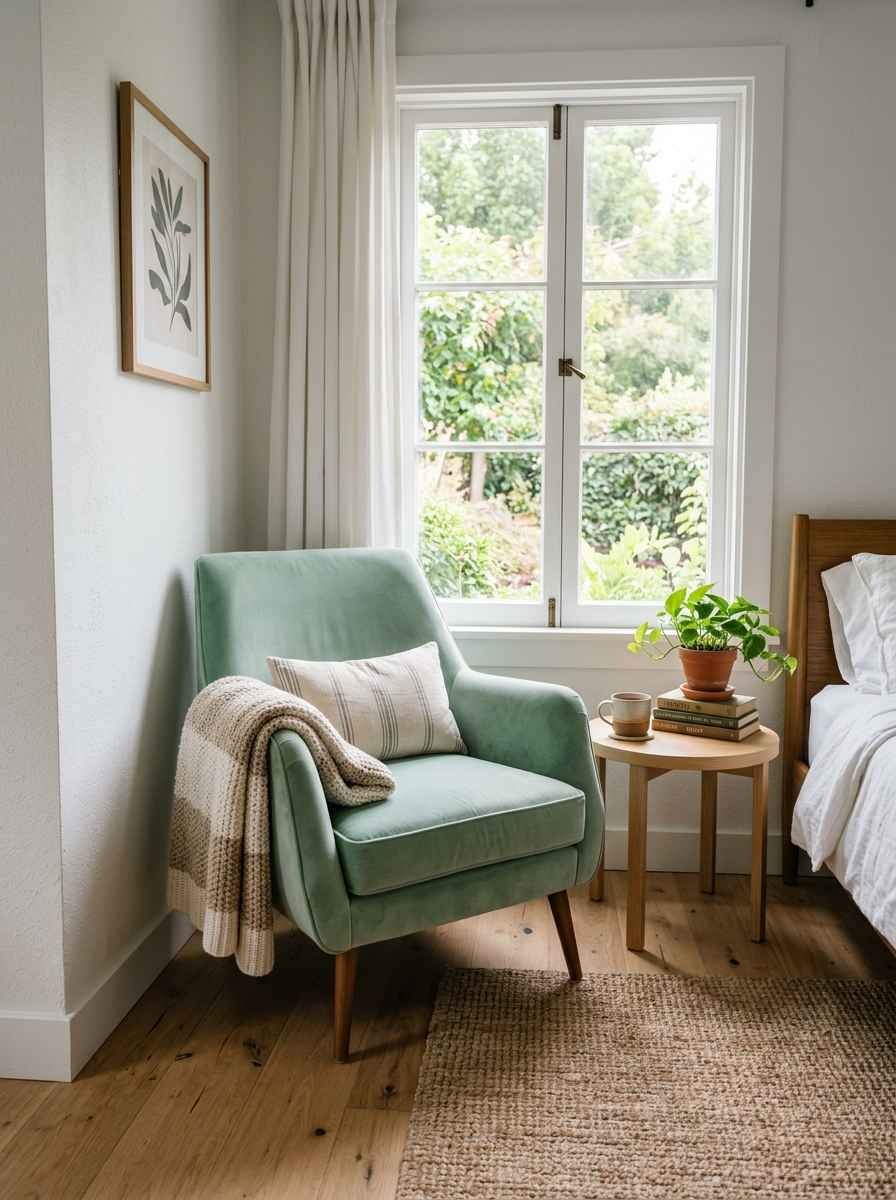
- Choose white or natural wood furniture as your default, and let mint show up only in soft goods and small pieces. This keeps the room from feeling like a themed set.
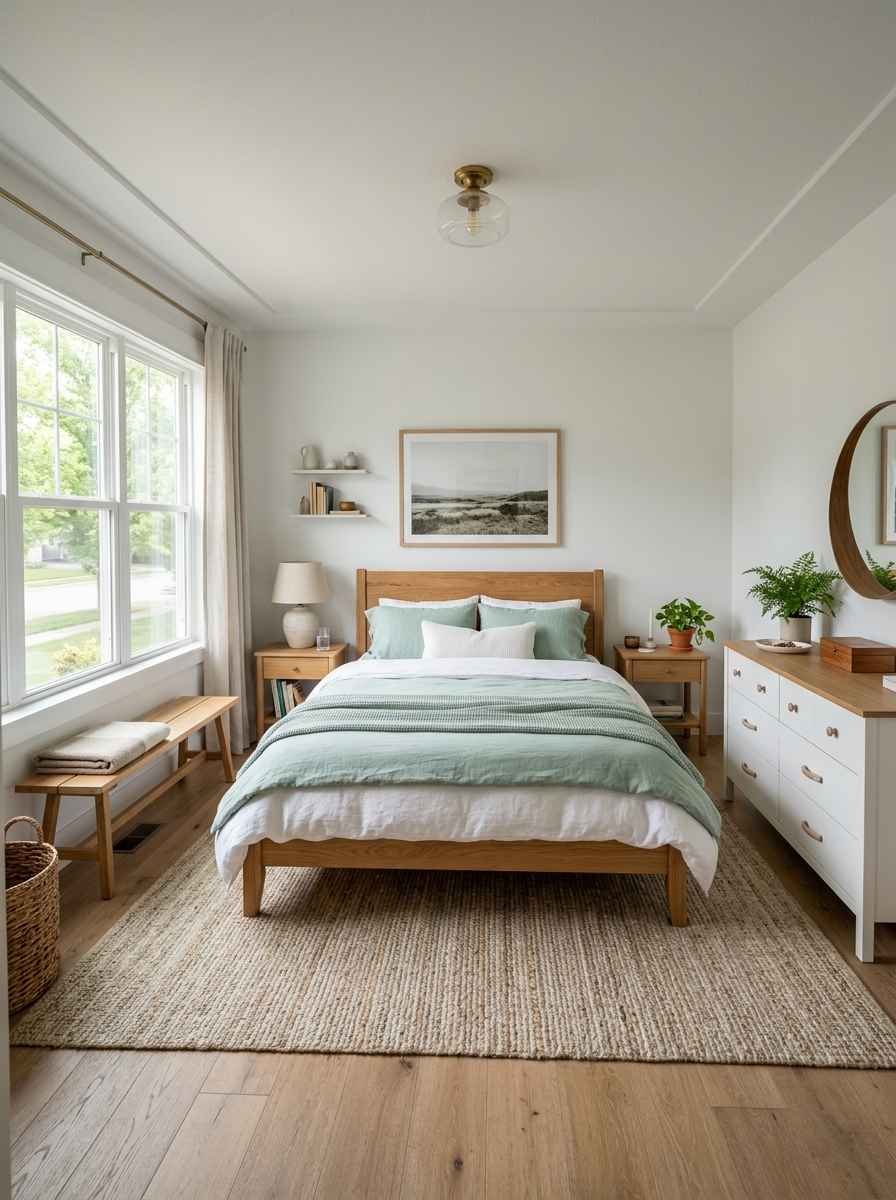
- Hang a round mirror with a white frame to bounce light around. HGTV’s design team notes that mirrors have real power to visually enlarge a small bedroom, and I’d add that they do it without adding any extra color to manage.
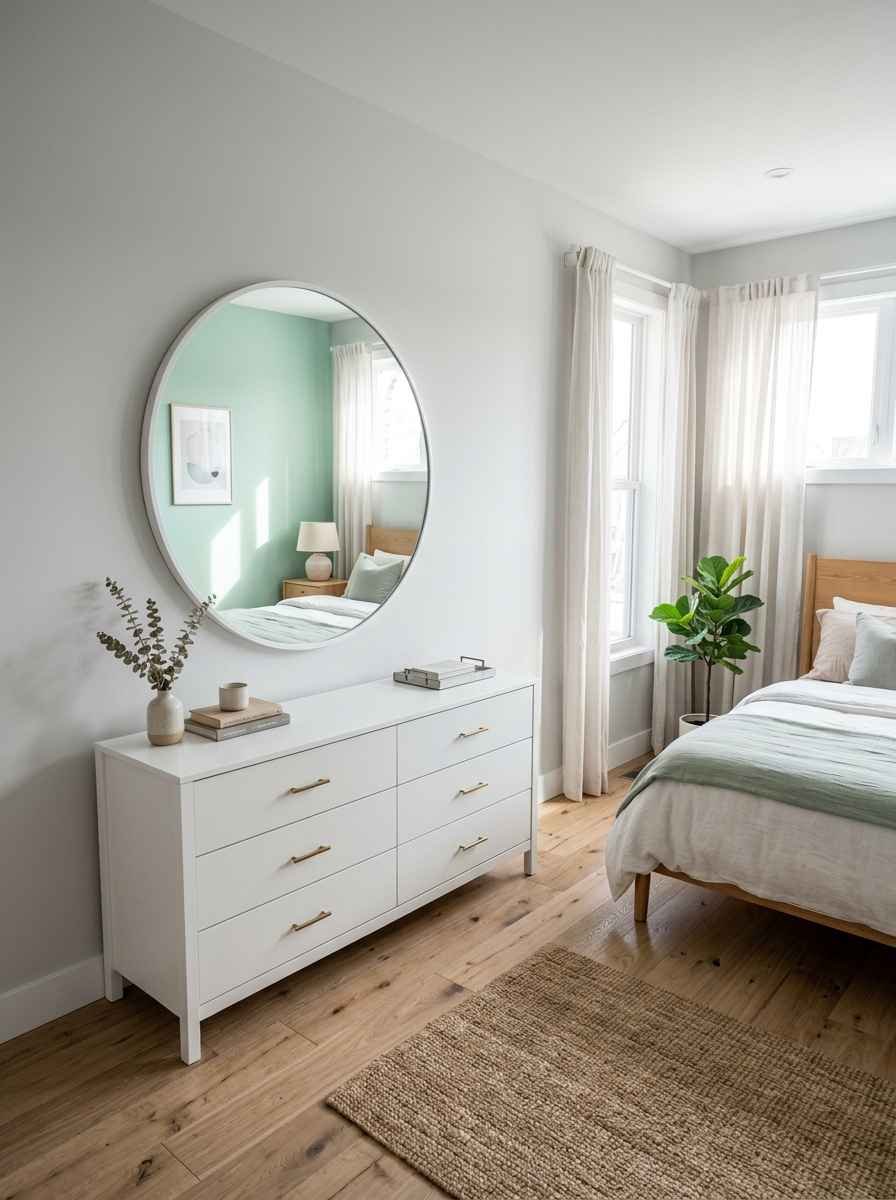
- Add brass or gold hardware to any mint furniture piece. Warm metal against a cool green stops the room from feeling flat.
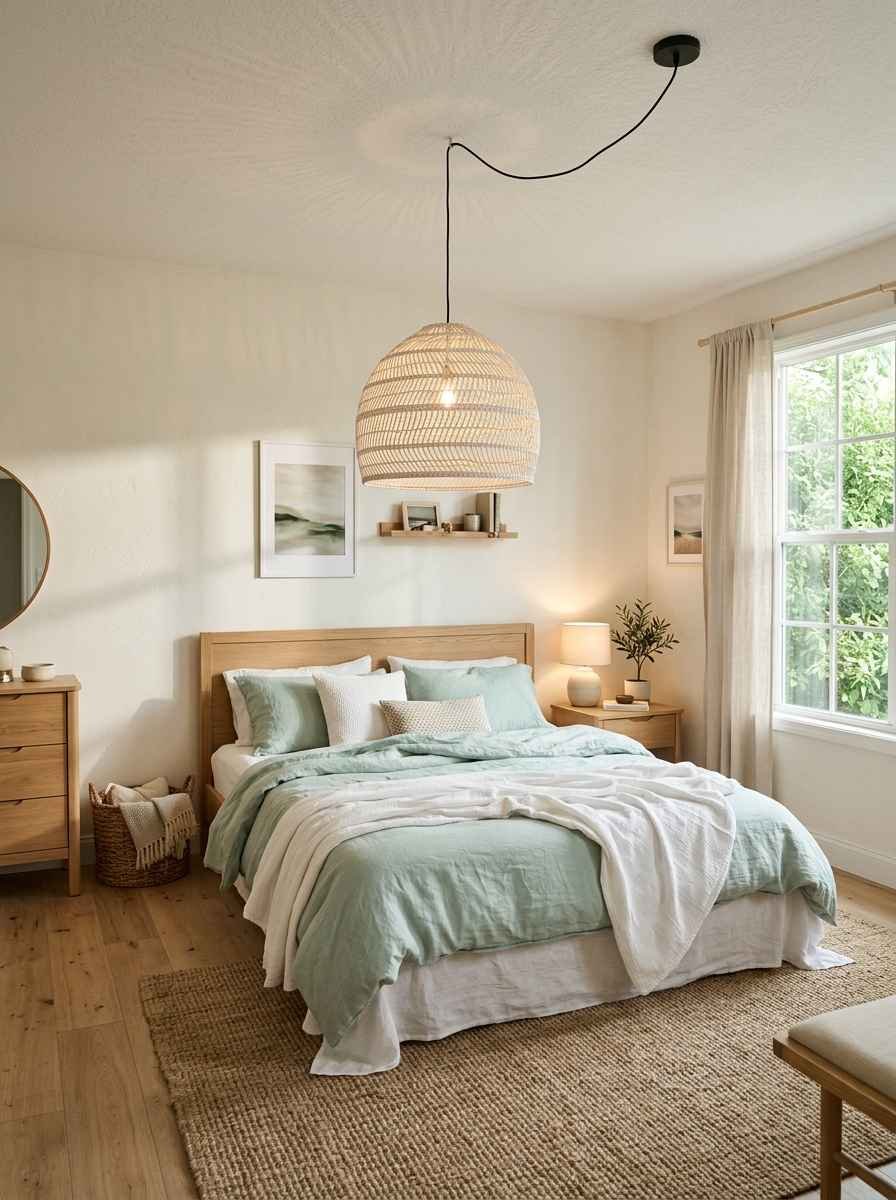
- Bring in a woven white pendant light instead of a standard ceiling fixture. It adds texture and a slightly organic feel that plays well against mint’s freshness.
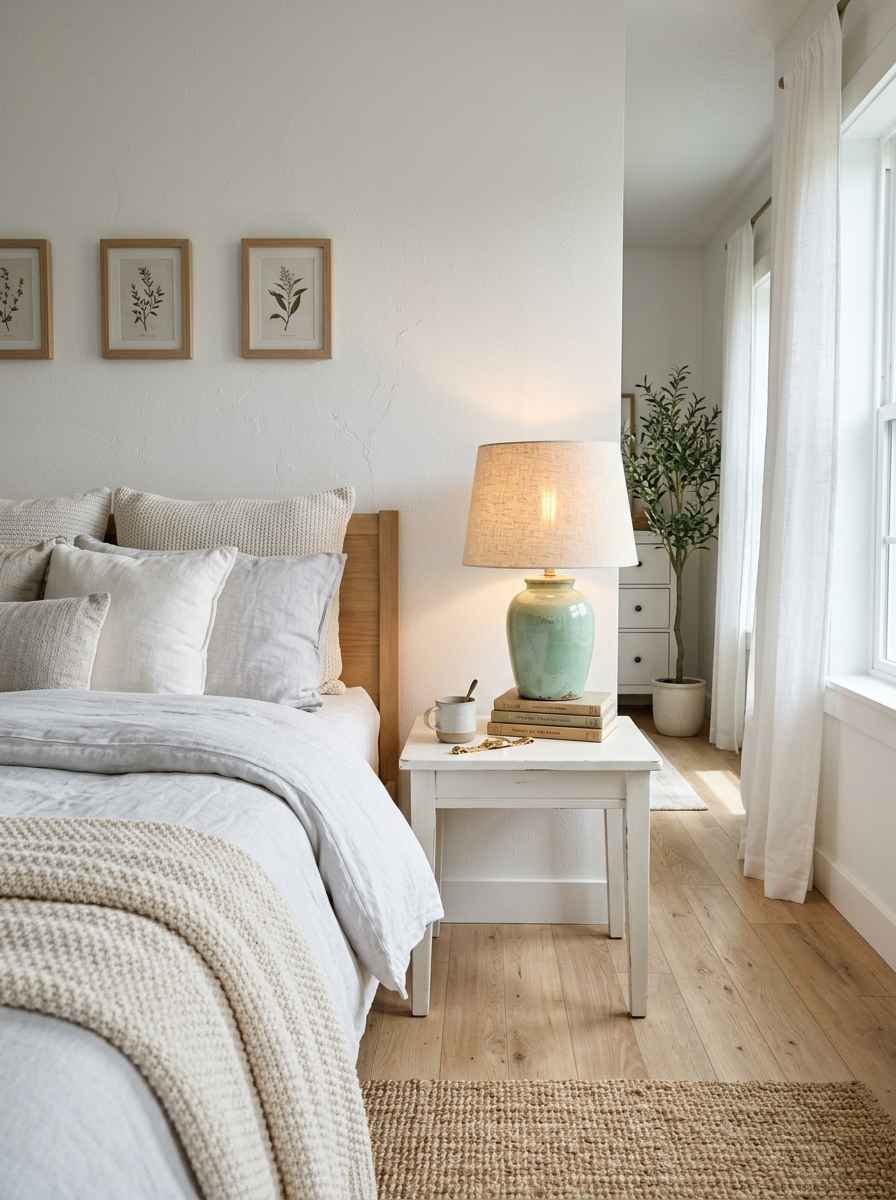
- Use a mint ceramic lamp base with a white linen shade on your nightstand. Small, cheap, and it ties the palette together instantly.
Plants, art, and finishing touches
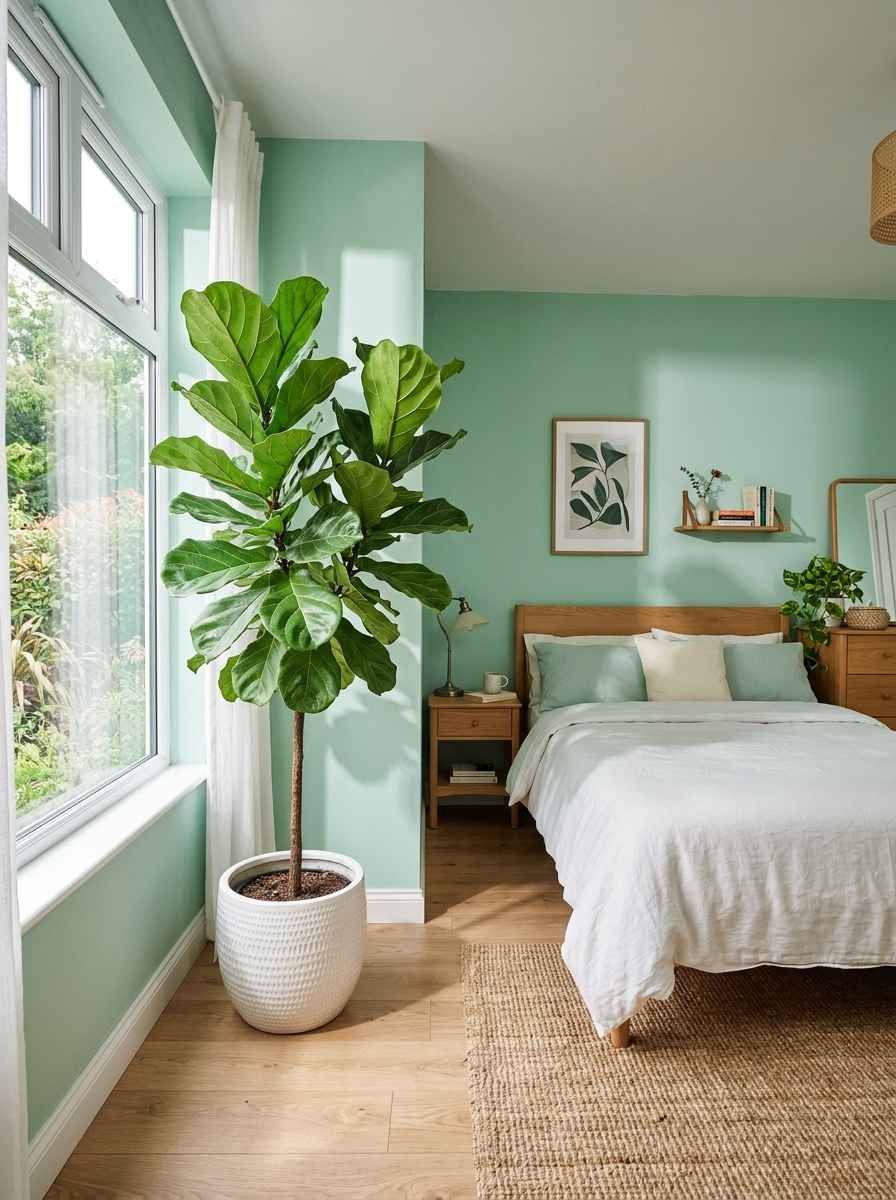
- Add real plants. This sounds obvious, but nothing sells a green-toned room like actual greenery. A few pothos vines or a fiddle leaf fig make mint walls feel intentional instead of arbitrary.
- Hang botanical line art in white frames. Skip anything too literal or leafy; simple line work keeps it modern.
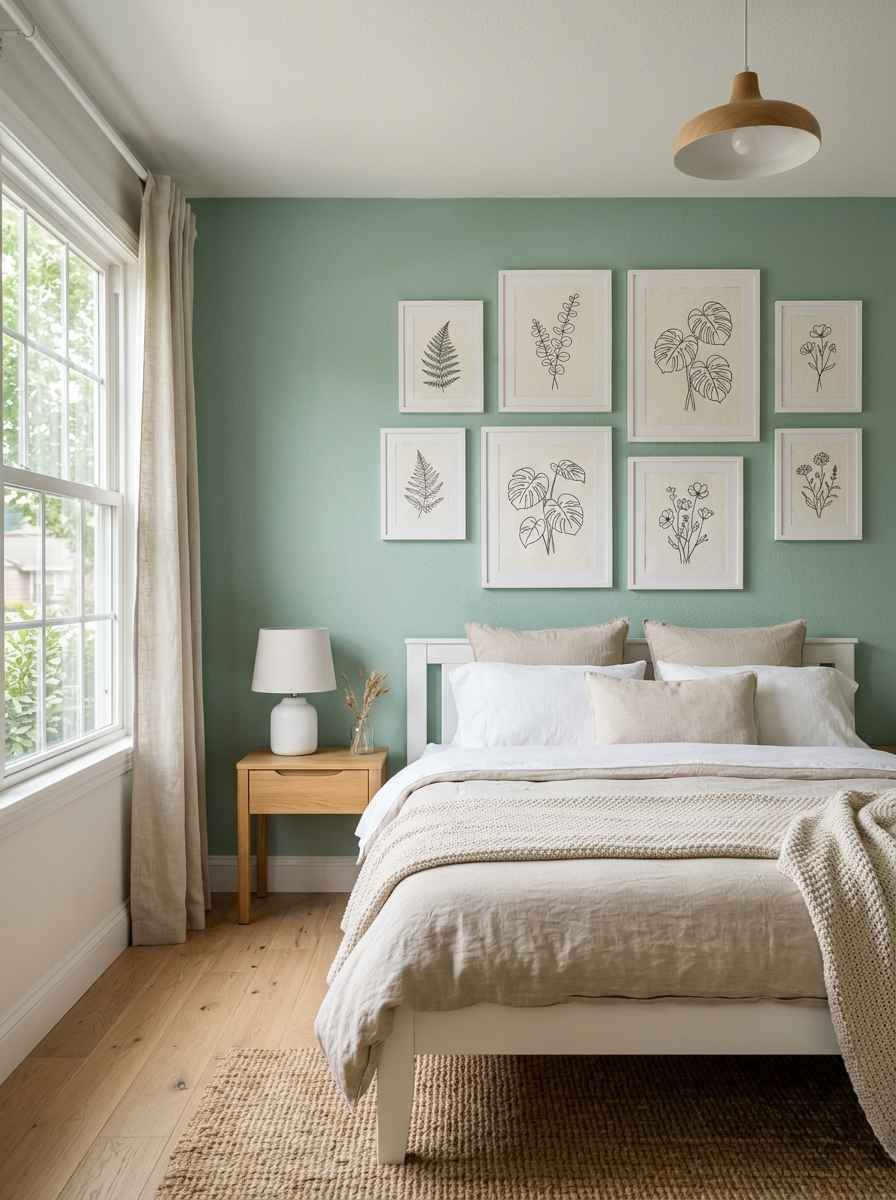
- Use a white gallery wall with one or two mint mats inside the frames for a cohesive but not matchy look.
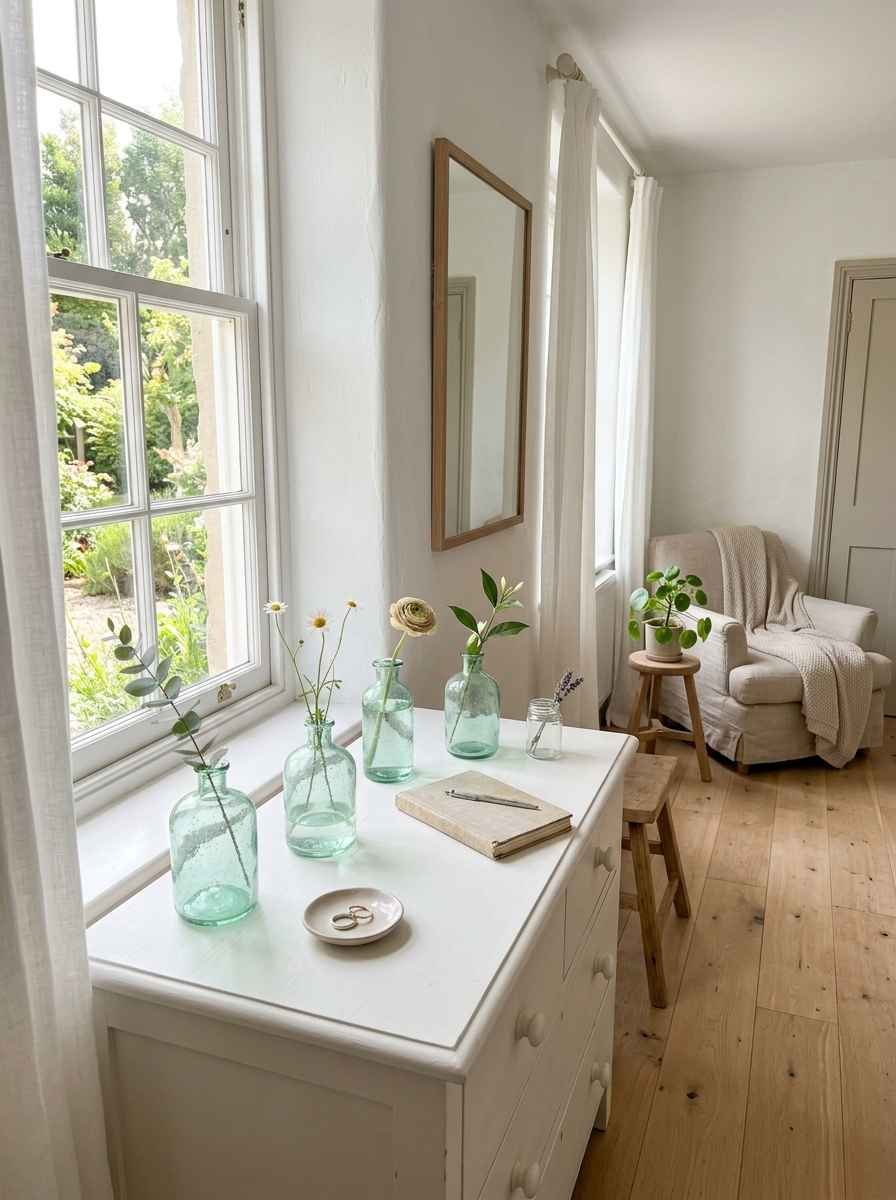
- Add mint glass vases or bud vases on a dresser or windowsill. Small, cheap, and endlessly restyleable depending on the season.
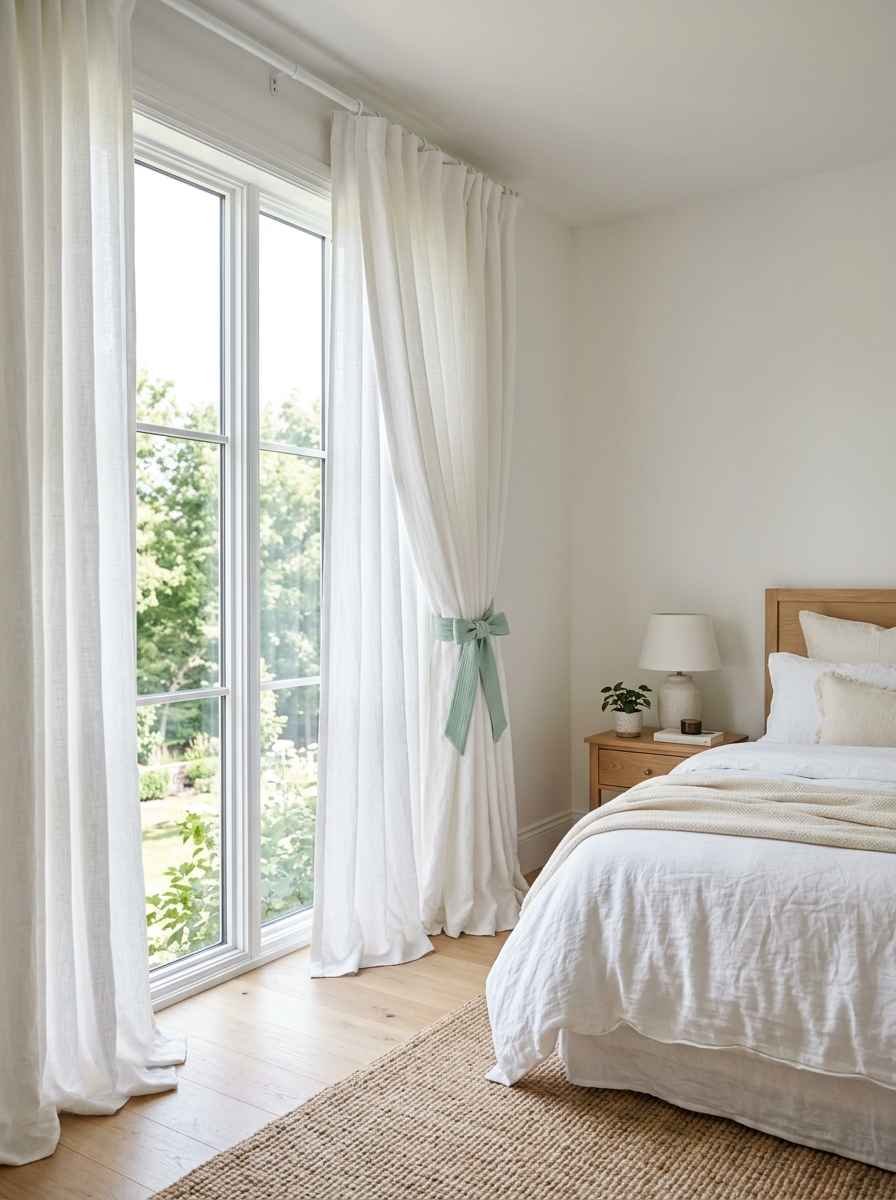
- Bring in white curtains with a mint tieback or trim. Long curtains that puddle slightly on the floor also make ceilings feel taller, which is a nice bonus in a lot of bedrooms.
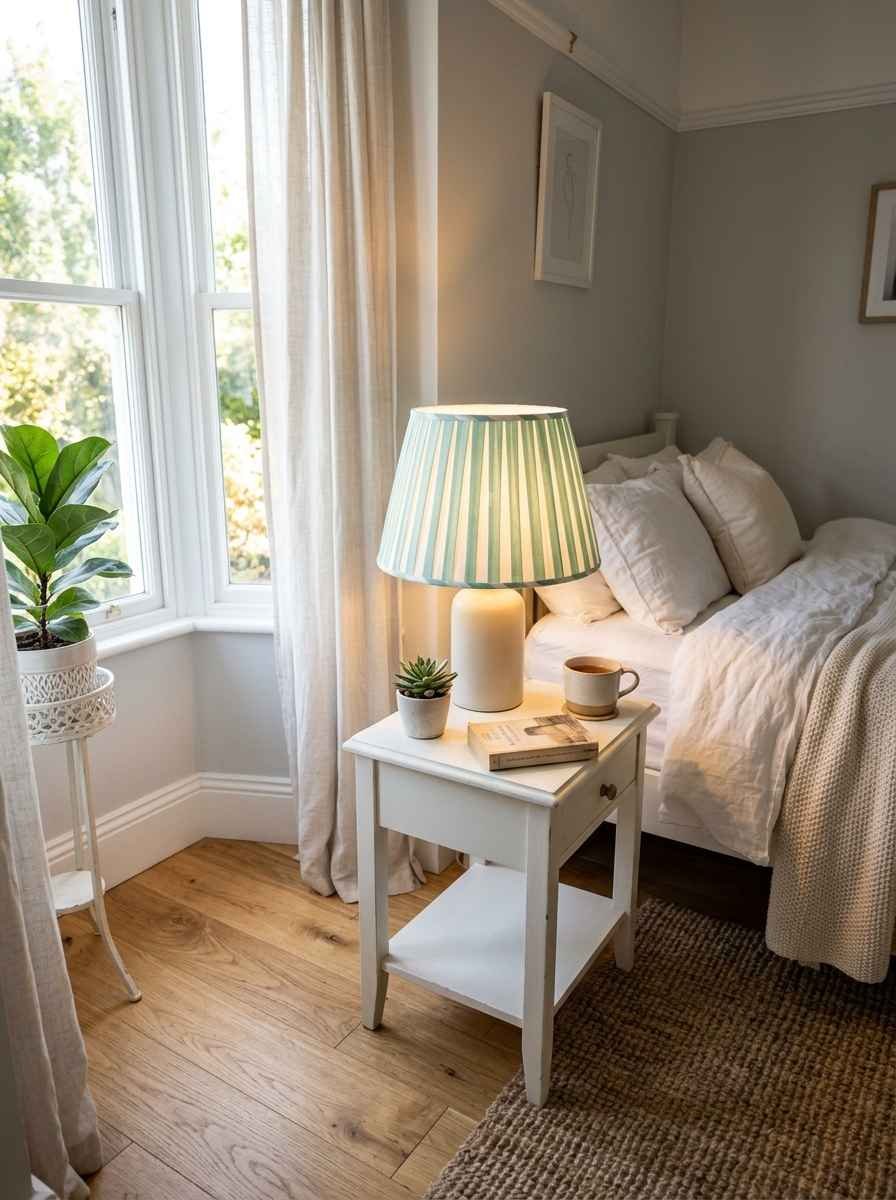
- Use a mint and white striped or checkered lampshade as a small, low-commitment pattern moment.
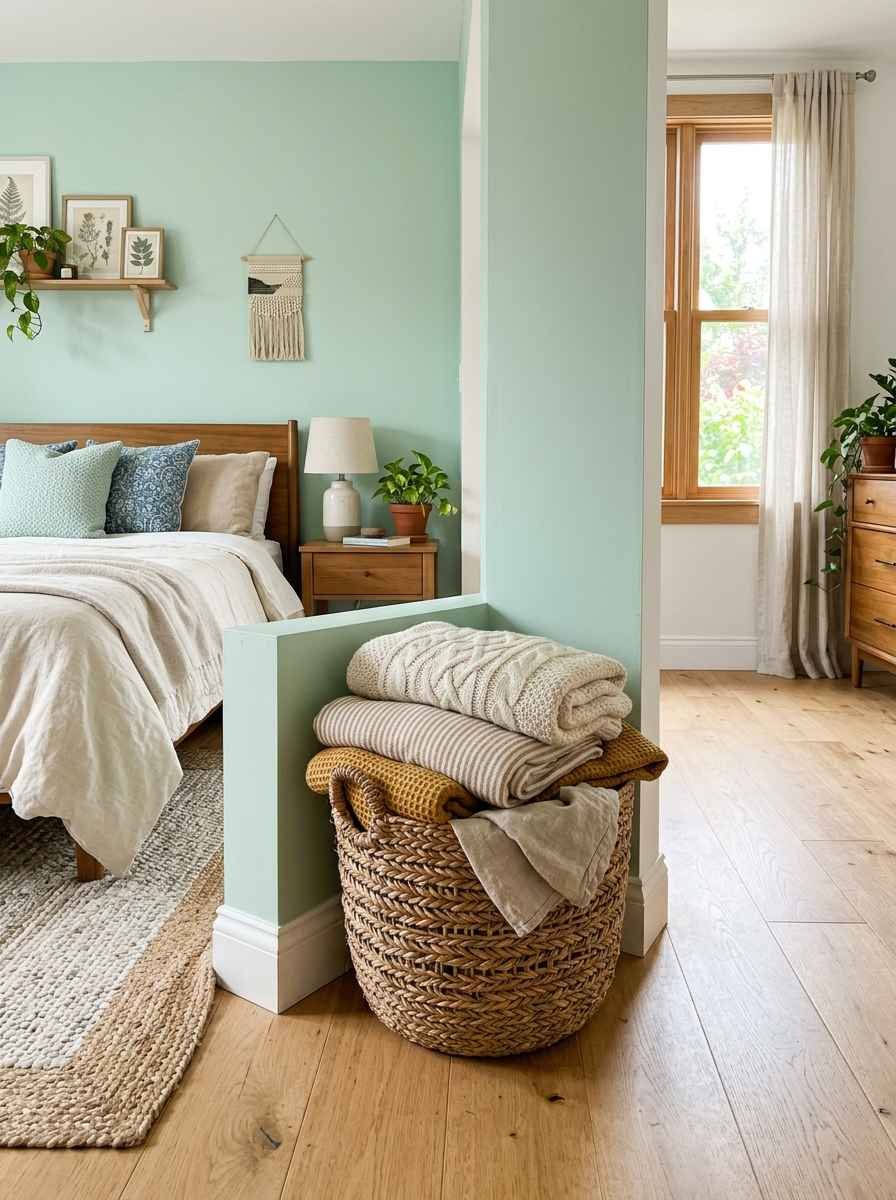
- Finish the look with a woven white or natural fiber basket for extra blankets or laundry.
- It softens all the smooth surfaces and keeps the room from feeling too polished, too perfect, too much like a showroom nobody actually lives in.
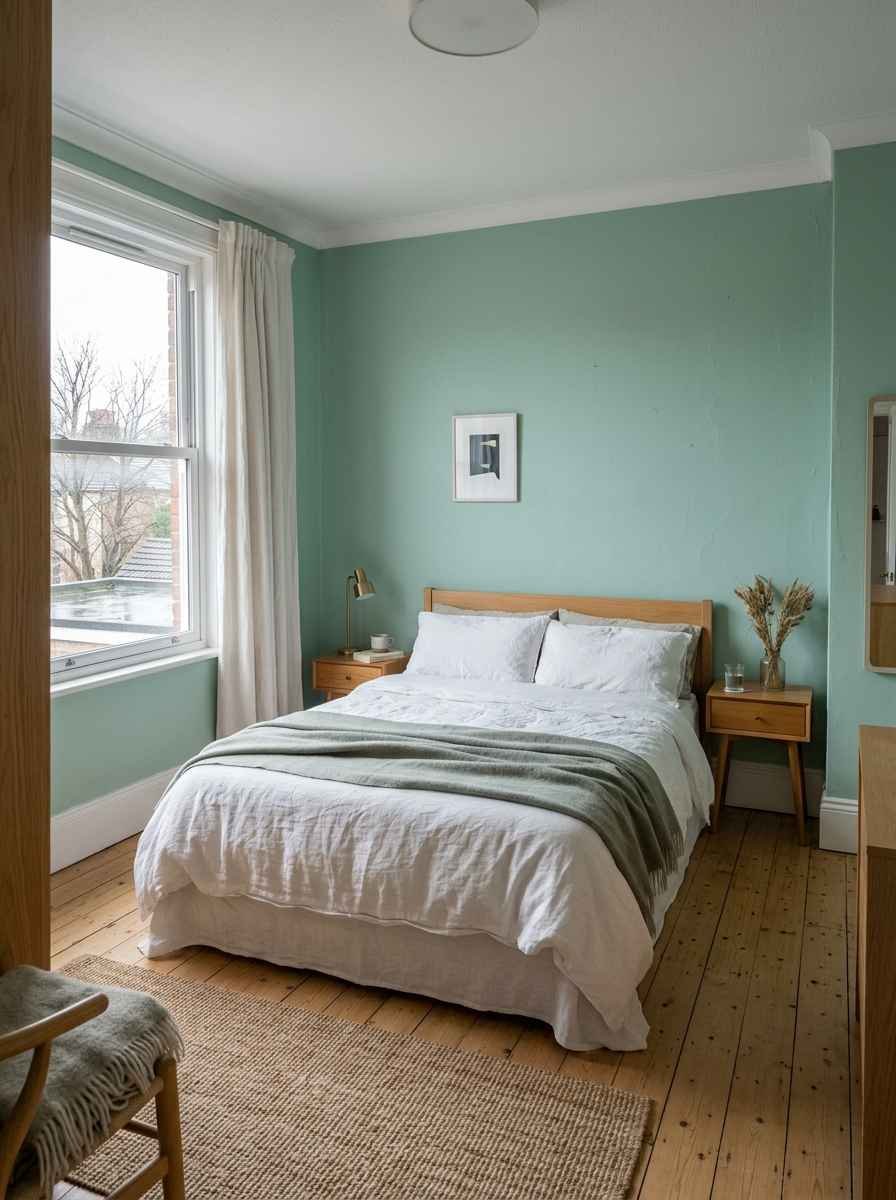
Okay, slightly off topic, but can we talk about how weirdly satisfying it is to fold a mint towel? I have no design reason for including that.
I just think about it more than a grown adult probably should.
A quick reference table
| Room element | Mint or white? | Why |
|---|---|---|
| Walls | Mint (or one accent wall) | Sets the calm, cool base tone |
| Bedding base layer | White | Keeps the palette crisp and photo-ready |
| Furniture | Mostly white or wood | Prevents the room from feeling one-note |
| Accents (rug, throw, art) | Mint | Adds color without overwhelming the space |
A few things I’d genuinely skip
Not every mint idea is a good one, and I’ve made a couple of these mistakes myself.
Mint carpet, for one. It looked charming in a showroom and dated within about 18 months in my actual house.
I’d also skip mint on every single wall in a north-facing room with limited natural light; it can read gray and flat rather than fresh. South or east-facing rooms handle a full mint wall much better.
And honestly, don’t buy a full matching mint bedroom set from one collection unless you love a very specific, very coordinated look. Rooms feel more collected, more lived-in, when the mint comes from three or four different sources instead of one boxed set.
Frequently asked questions
Does mint green go out of style fast? Sage and mint greens have held on far longer than most trend colors, partly because they read as closer to a neutral than a true bold color. I wouldn’t call it risk-free forever, but it’s held up better than a lot of the pastels that came and went around it.
What white shade pairs best with mint green? A warm white or off-white tends to soften mint better than a stark, cool white, which can sometimes make the whole room feel a little clinical.
Test both on your actual wall before deciding; lighting changes everything.
Can mint green work in a small bedroom? Yes, and honestly it’s one of the better colors for small rooms specifically.
A soft, light mint doesn’t close a space in the way darker colors can, and pairing it with plenty of white keeps everything feeling open.
Final thought
Mint green and white isn’t a trend you need to rush into or overthink.
Pick one starting point, whether that’s a quilt, a wall, or a single thrifted dresser, and build from there.
That’s genuinely how the best version of this room comes together anyway.
Which one of these are you trying first: the accent wall, the thrifted dresser flip, or the velvet headboard? Save this pin and let me know down in the comments.
