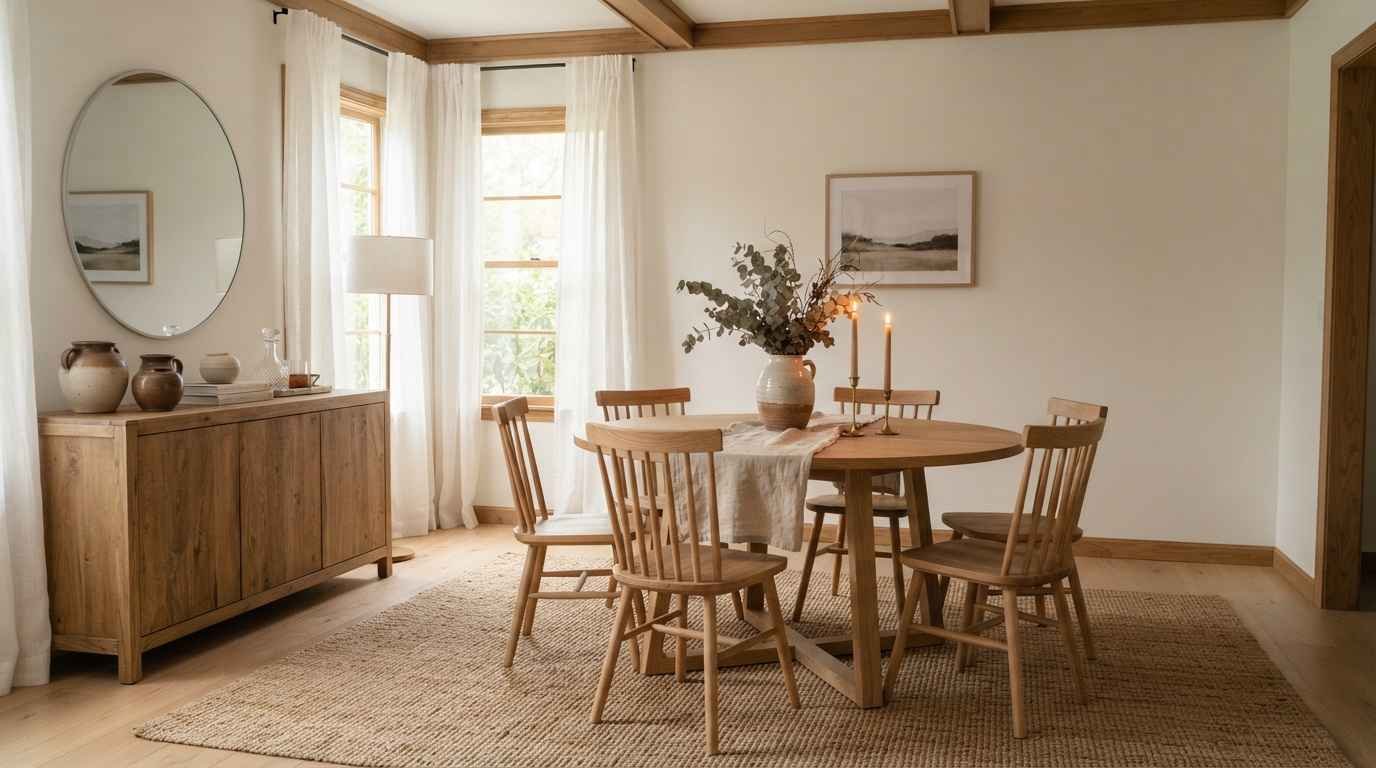
I redid my dining table for under 40 dollars last spring and my sister asked which designer I used.
There wasn’t one. There was a trip to a thrift store, a bundle of dried pampas grass, and about twenty minutes of moving things two inches to the left until it felt right.
That’s the secret nobody puts on a Pinterest pin: expensive-looking tables aren’t about spending more.
They’re about spending less, but on the right things. Fewer objects, better materials, more breathing room.
Here are 25 ways to get there, grouped so you can actually use them instead of scrolling past a wall of bullet points.
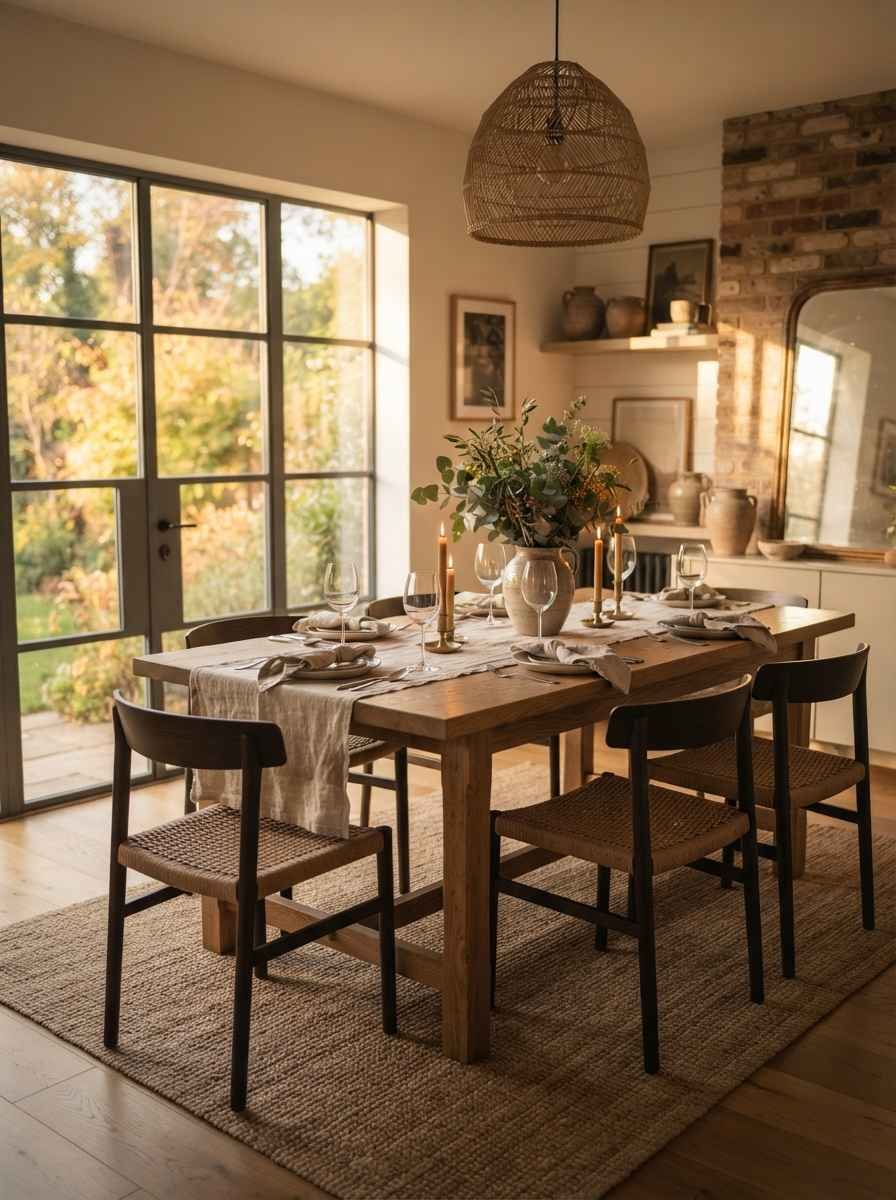
Start with the vessel, not the flowers
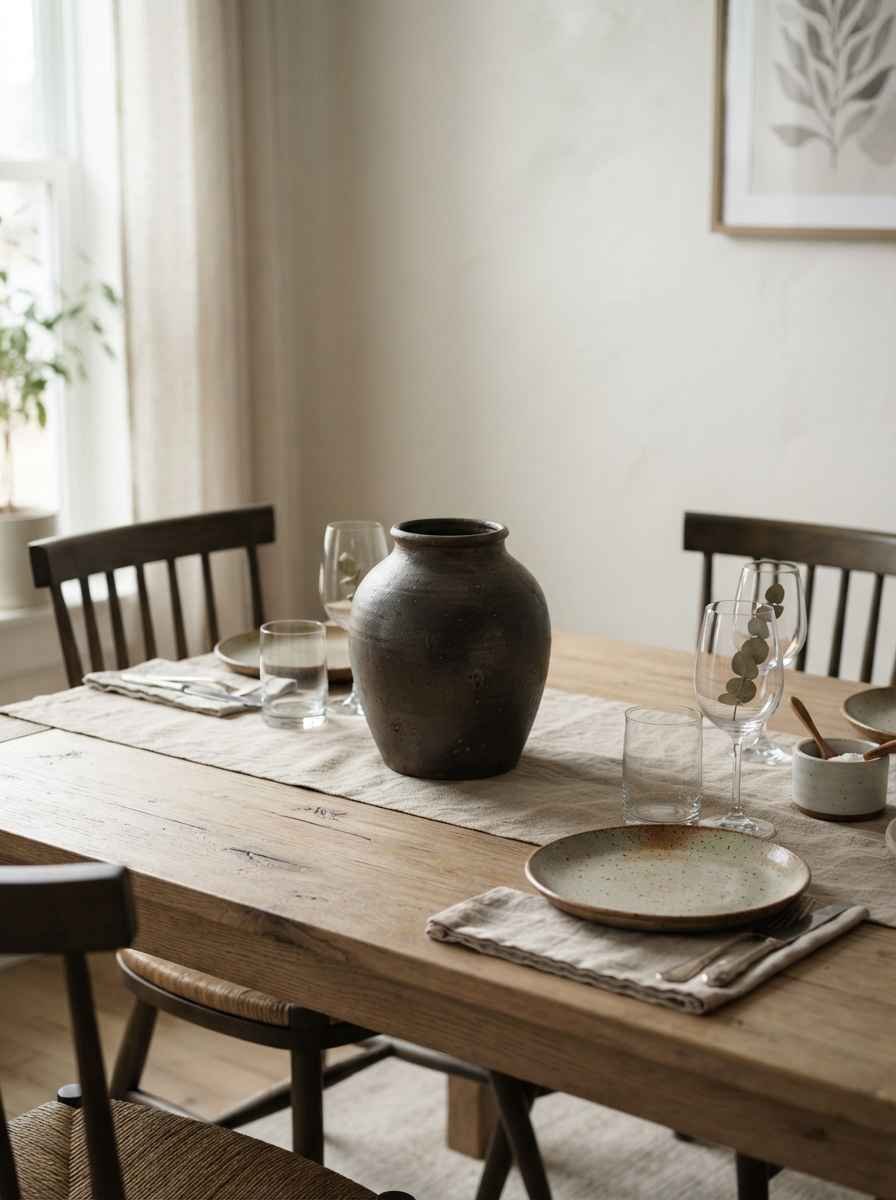
Most people buy flowers first and a vase as an afterthought. Flip that.
- A single ceramic vase in a matte, earthy glaze does more for a table than a bouquet from the grocery store. Pick one shape you love and let it be the star.
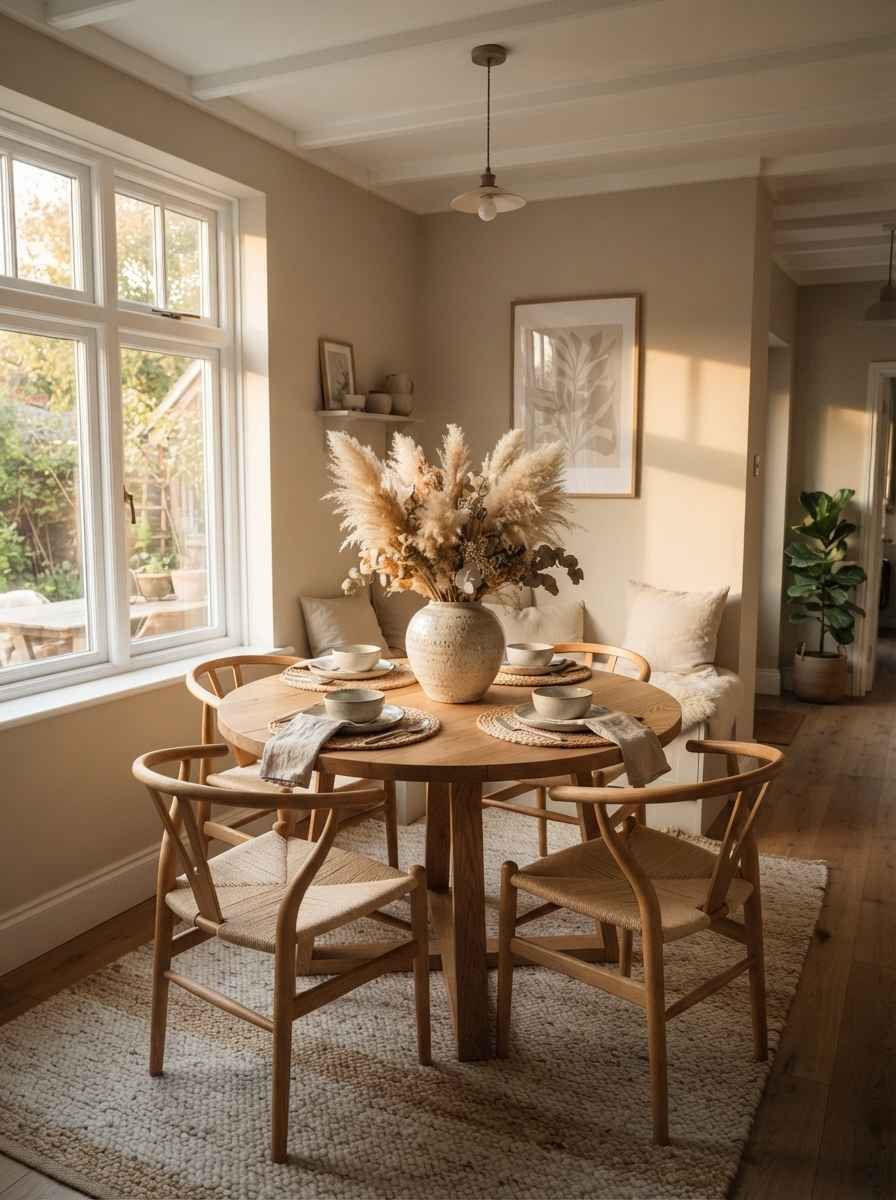
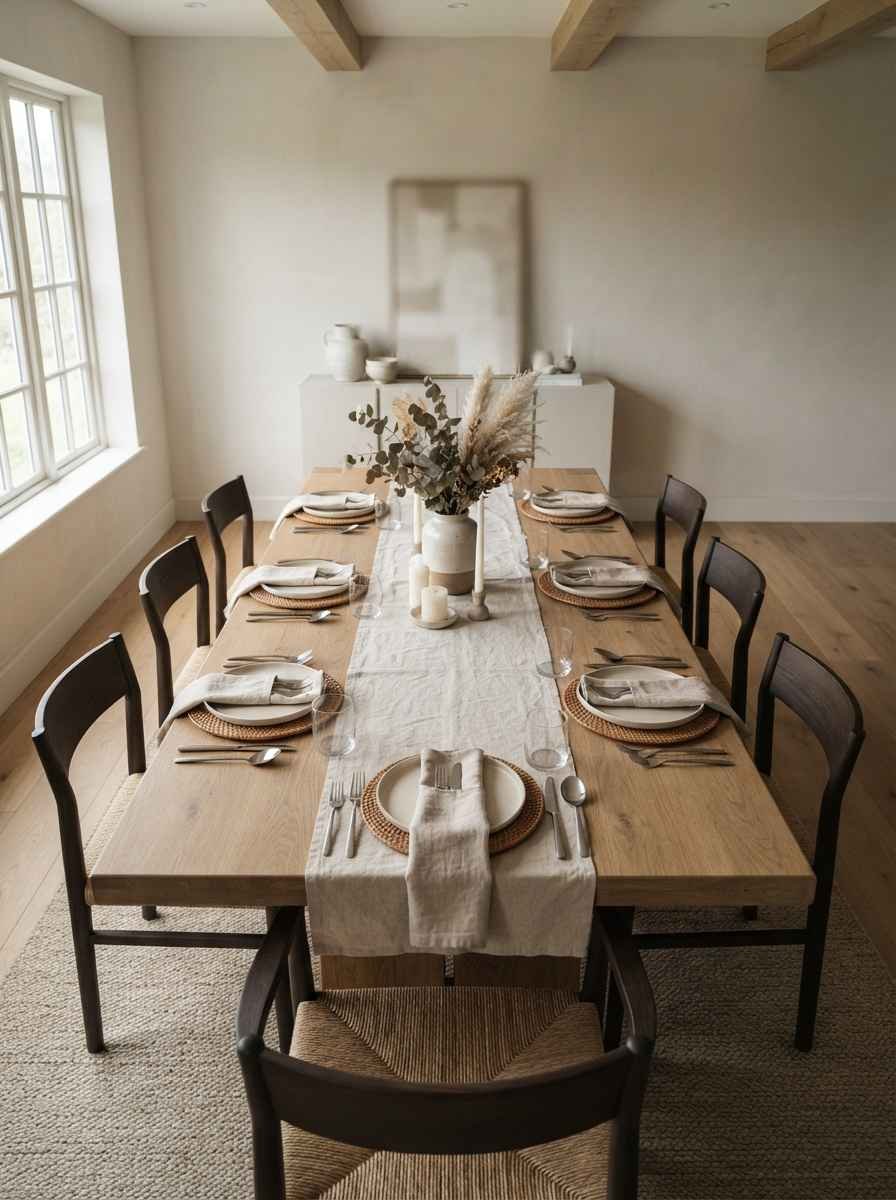
- Dried pampas grass or bunny tails in that vase. No water changes, no wilting, and it photographs beautifully in low light, which matters if you’re shooting content for the ‘gram.
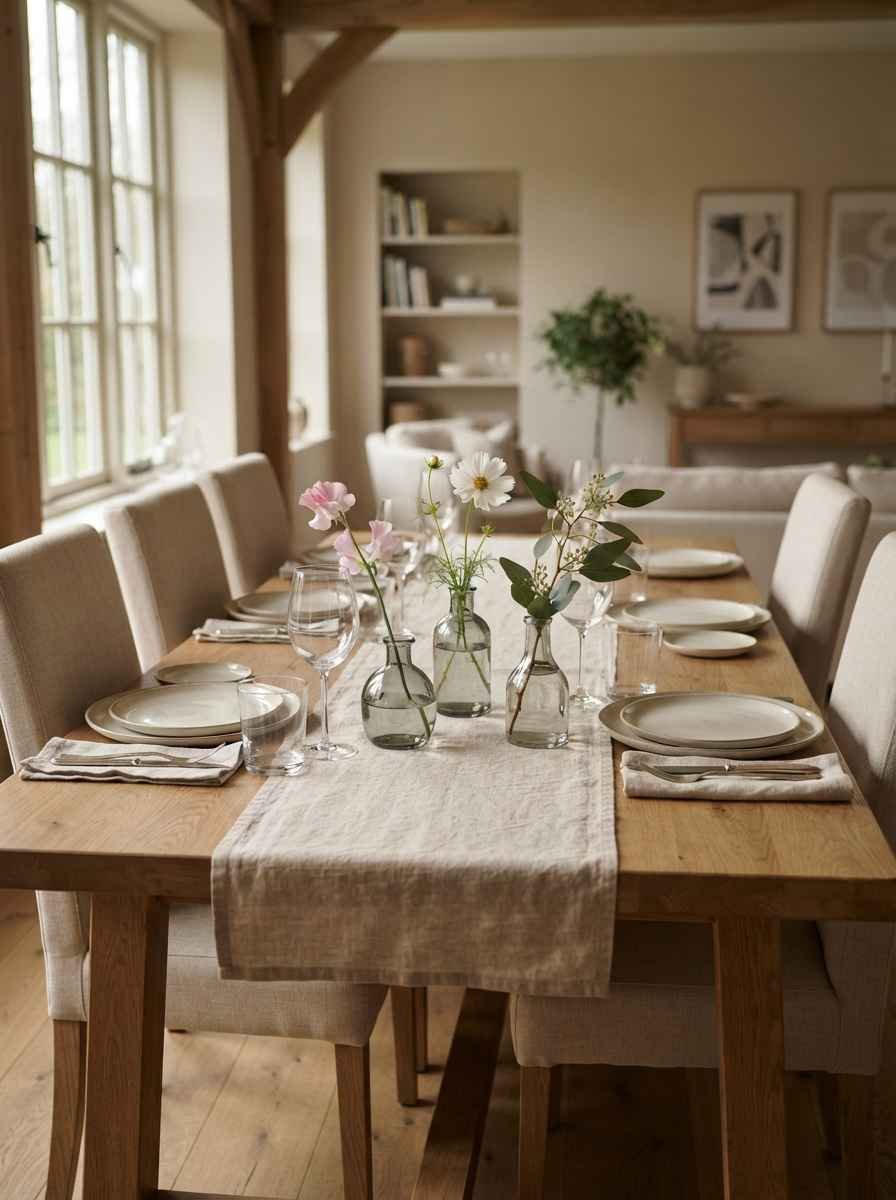
- Bud vases with a single stem each, clustered in odd numbers (three, not four). This is the move designers use when a room needs softness without competing for attention.
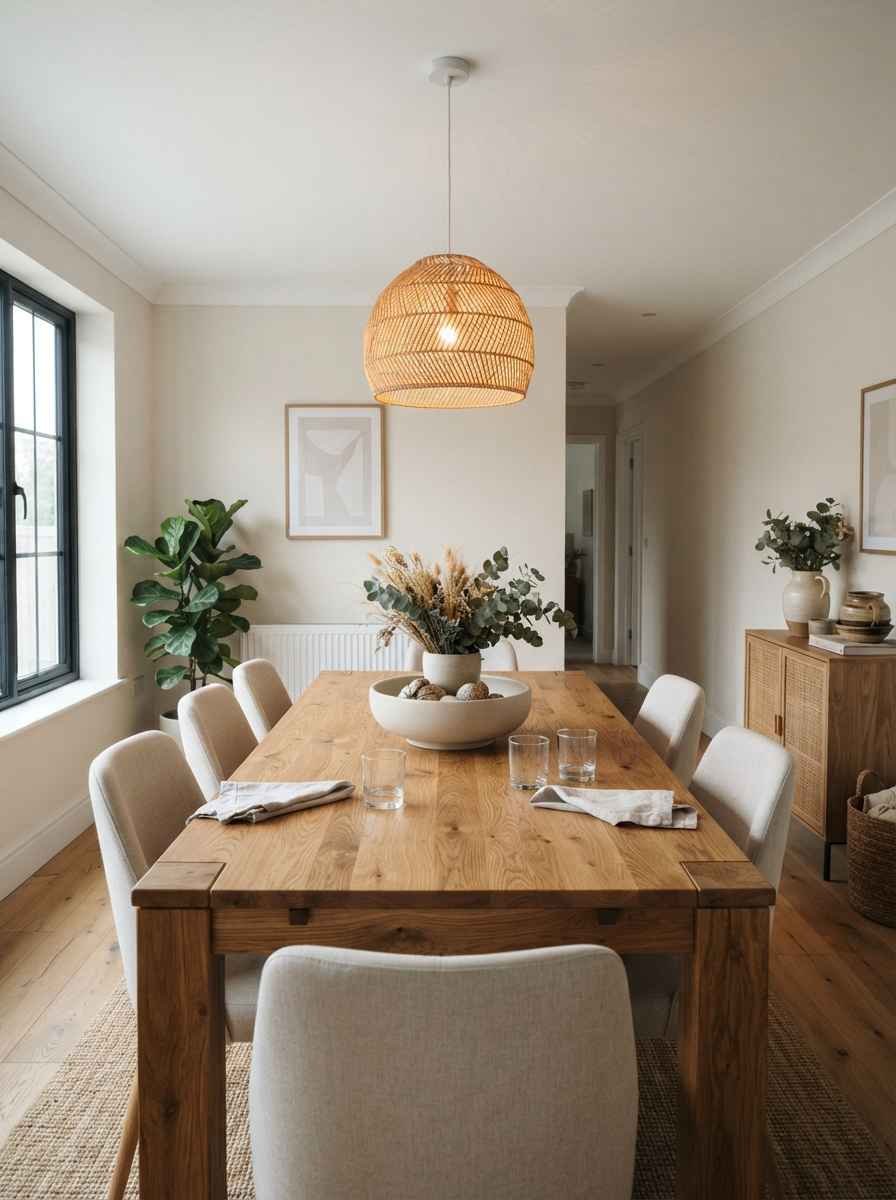
- A low, wide bowl instead of a tall vase when your ceiling fixture hangs close to the table. Nobody wants to duck around a floral arrangement to pass the potatoes.
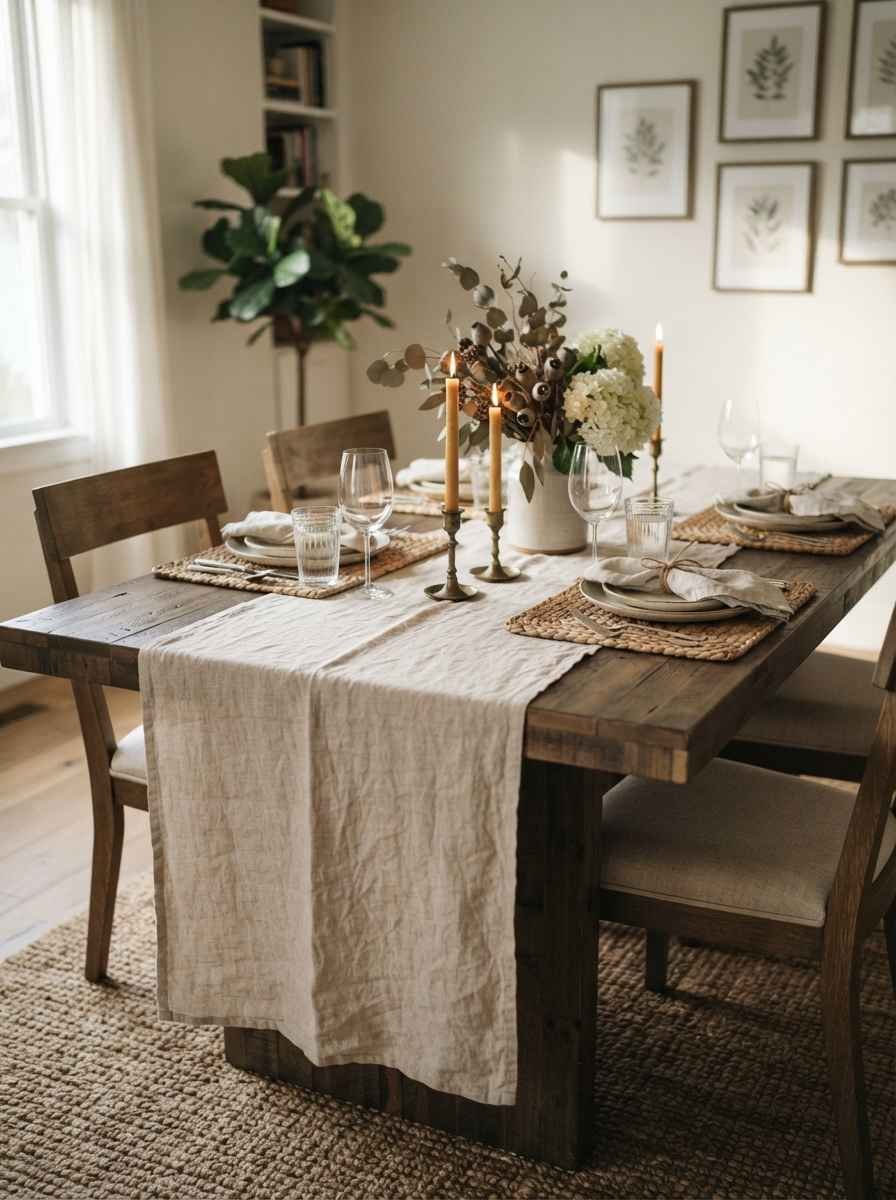
I own three vases total. That’s it. Rotating between them keeps the table from ever feeling stagnant, and I’m not storing a cabinet full of ceramics I use twice a year.
Linens are doing more work than you think
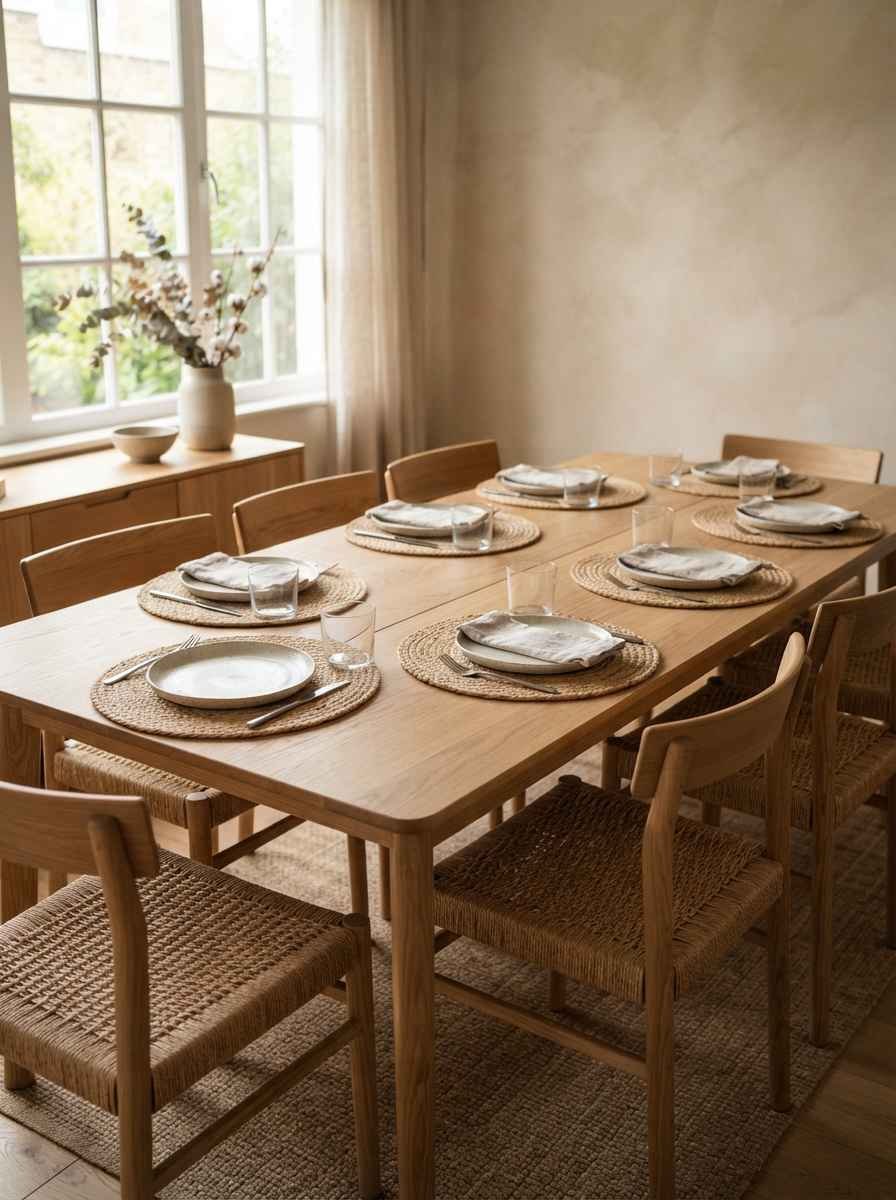
A tablecloth screams “special occasion.” A runner whispers “I have my life together.”
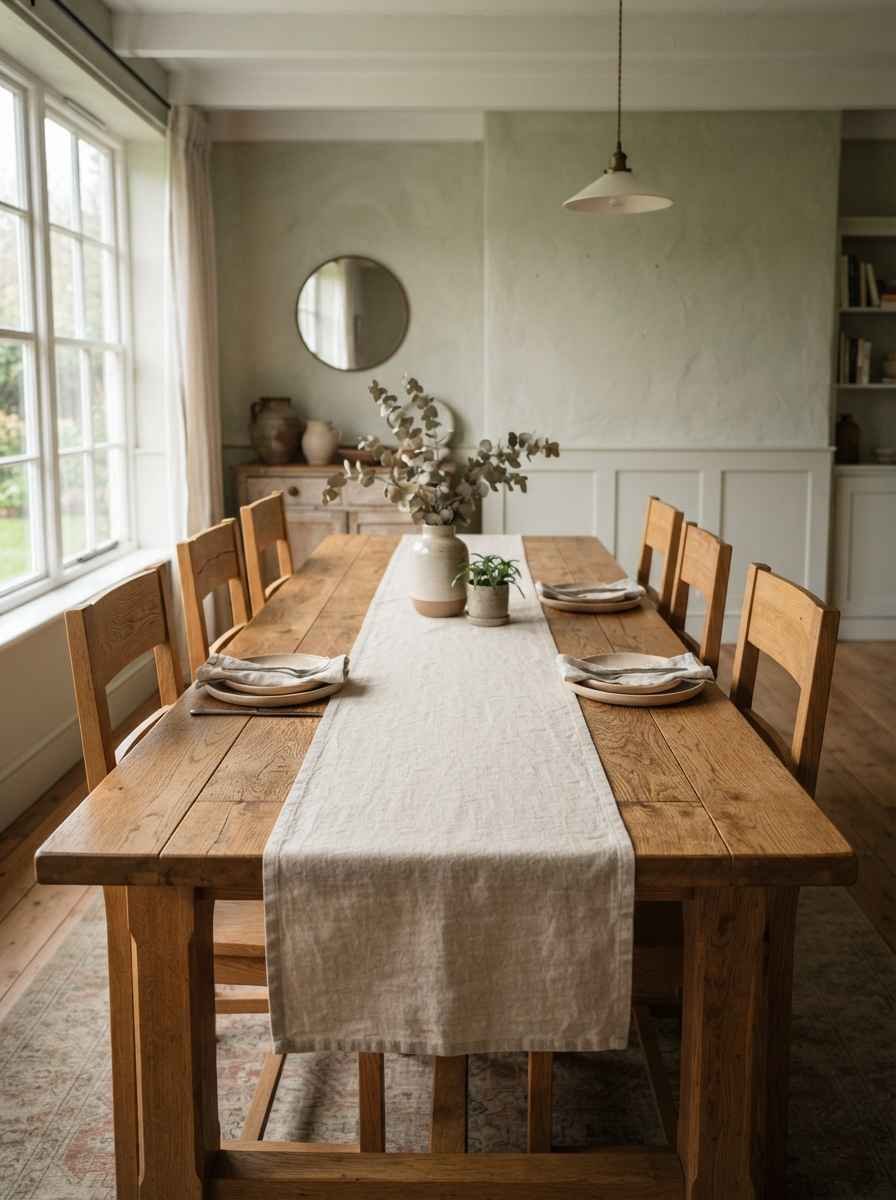
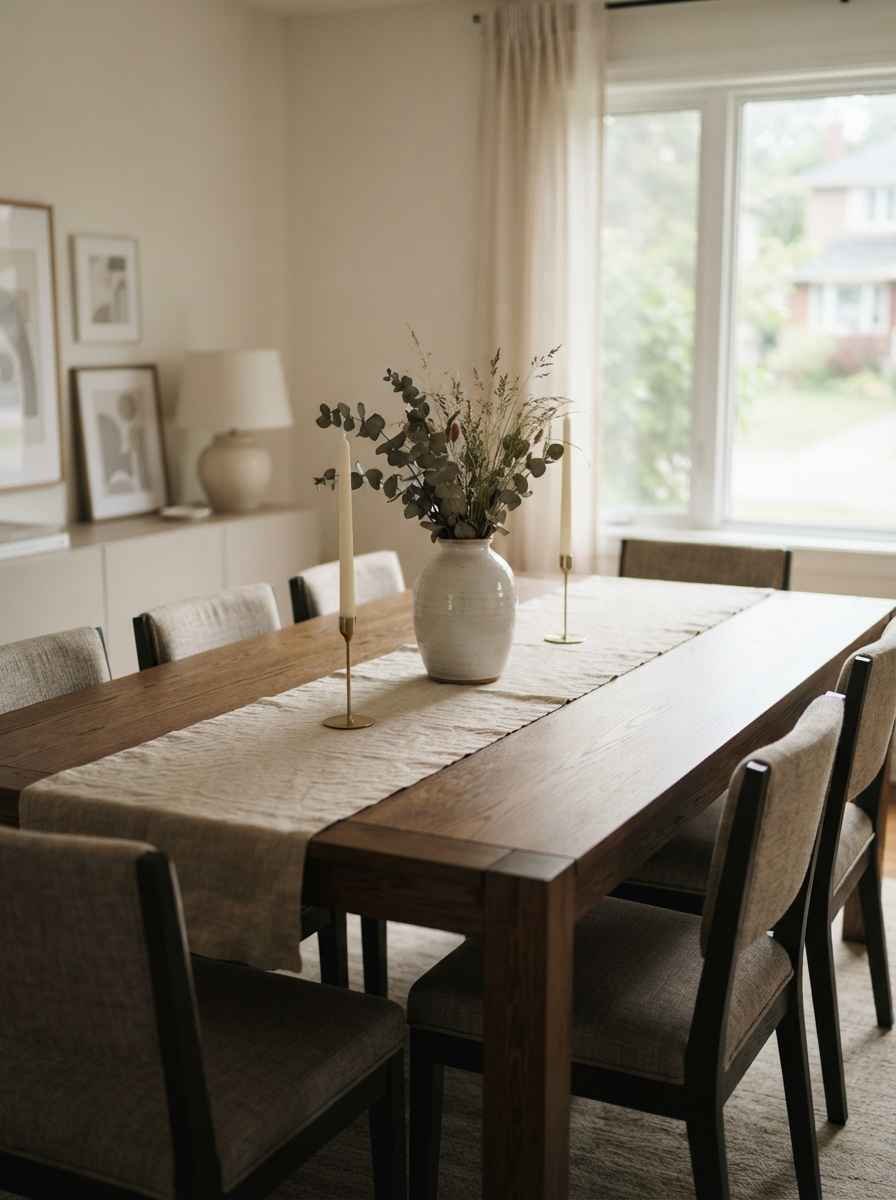
- A linen runner in oatmeal or bone white, left slightly wrinkled on purpose. Perfectly pressed linen reads as trying too hard.
- Woven placemats in a natural fiber like jute or rattan. They add texture without adding color, which is the whole minimalist game.
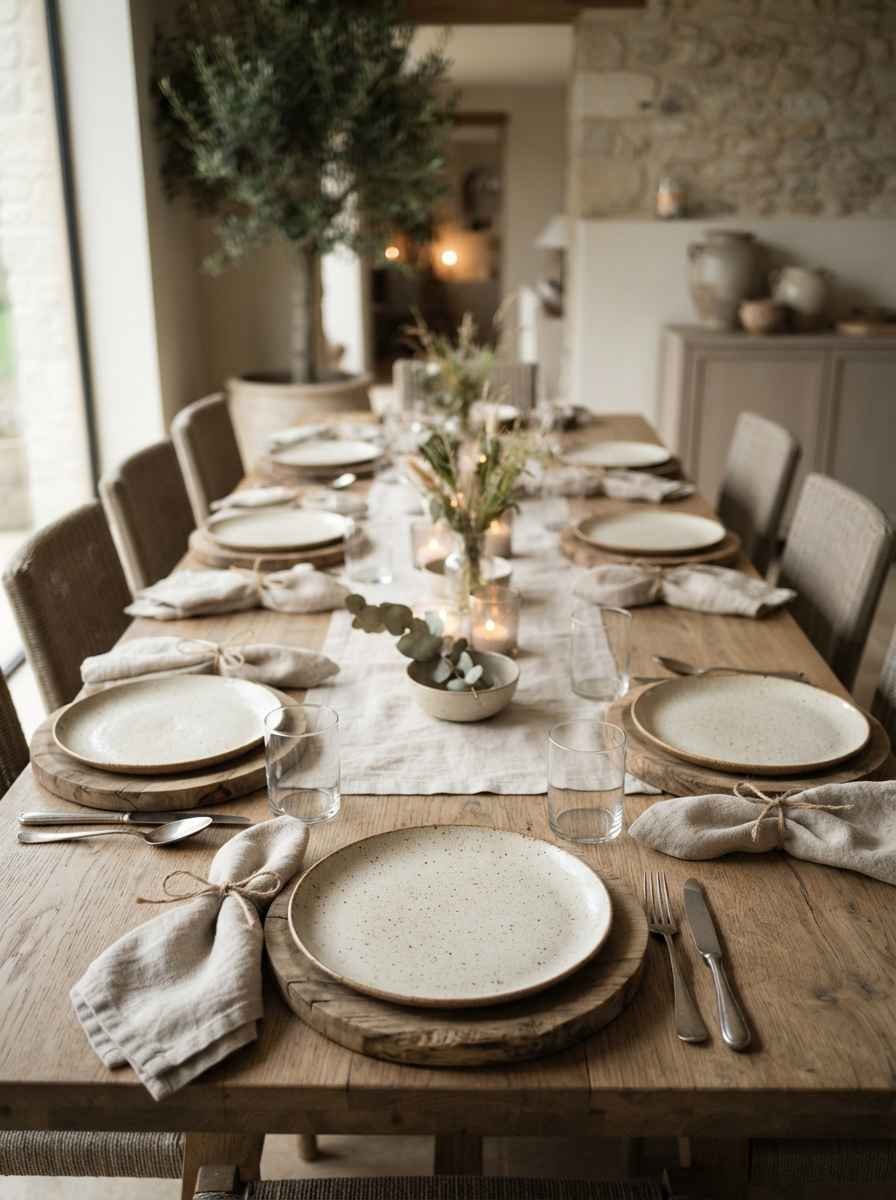
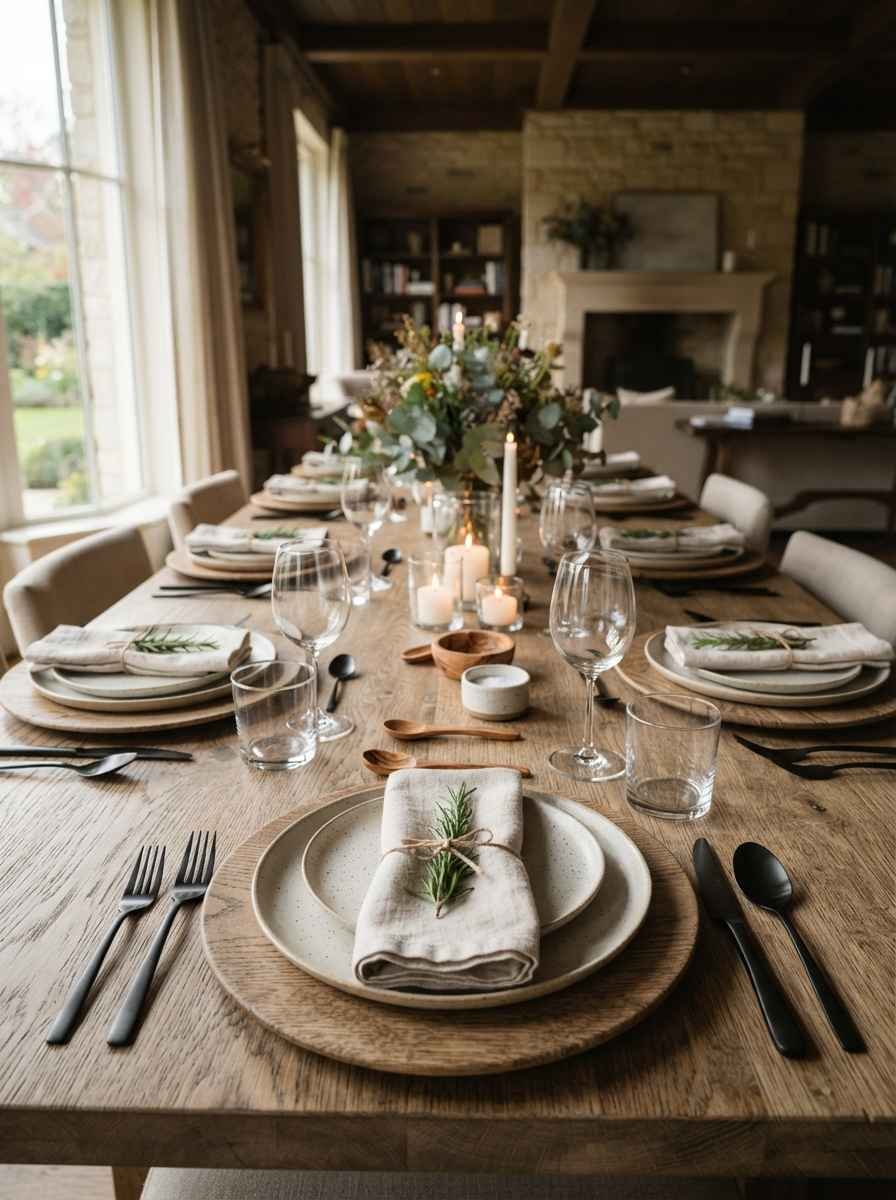
- Cloth napkins tied with a simple loop of twine, no bow, no fuss. IMO this one detail upgrades a table faster than almost anything else on this list.
- Layering a runner over bare wood rather than covering the whole surface. Let the grain of the table show through. That’s the actual wood you paid for, so let it work.
Let candles carry the mood
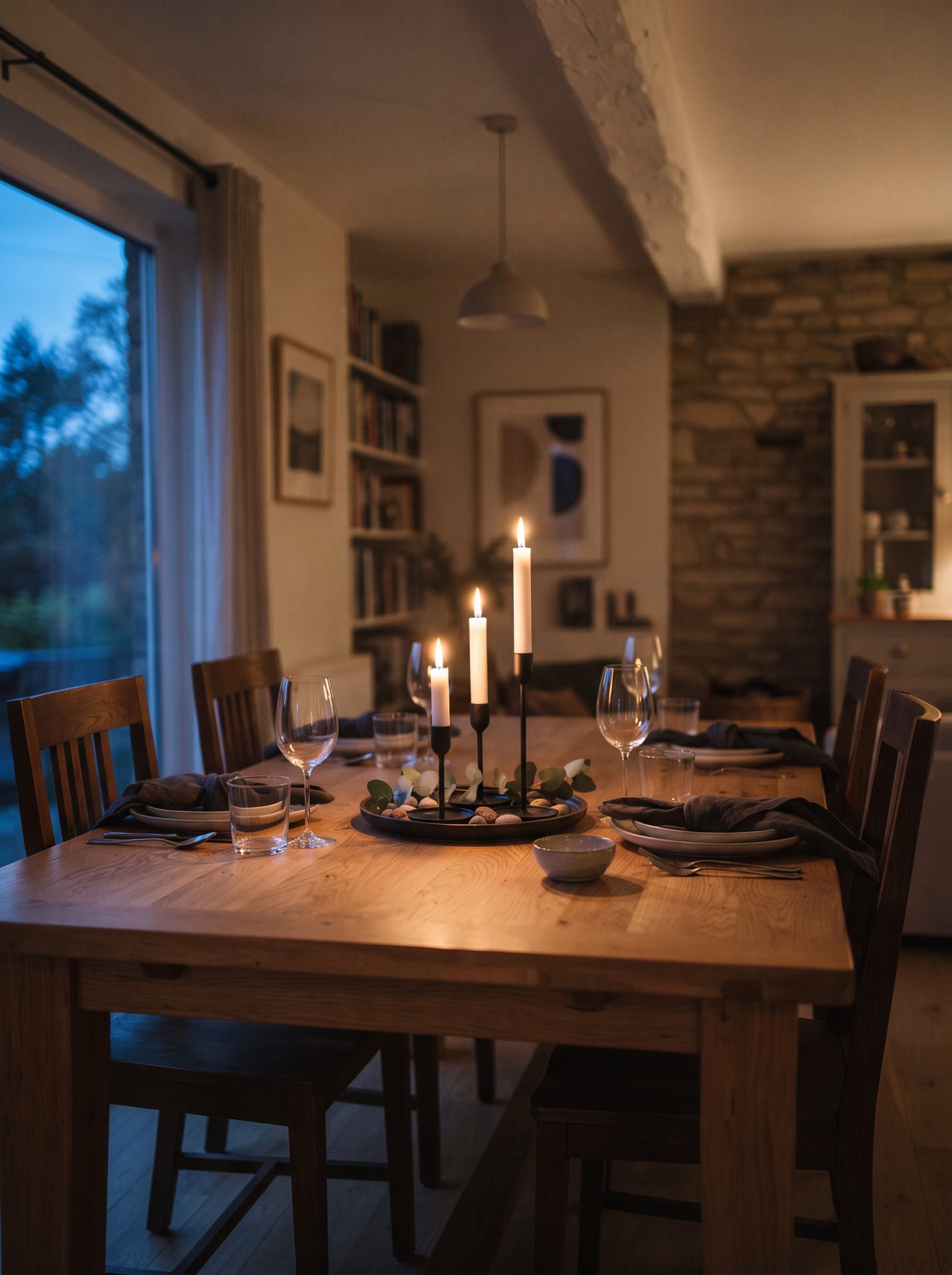
Nothing kills a “curated” table faster than fluorescent overhead lighting.
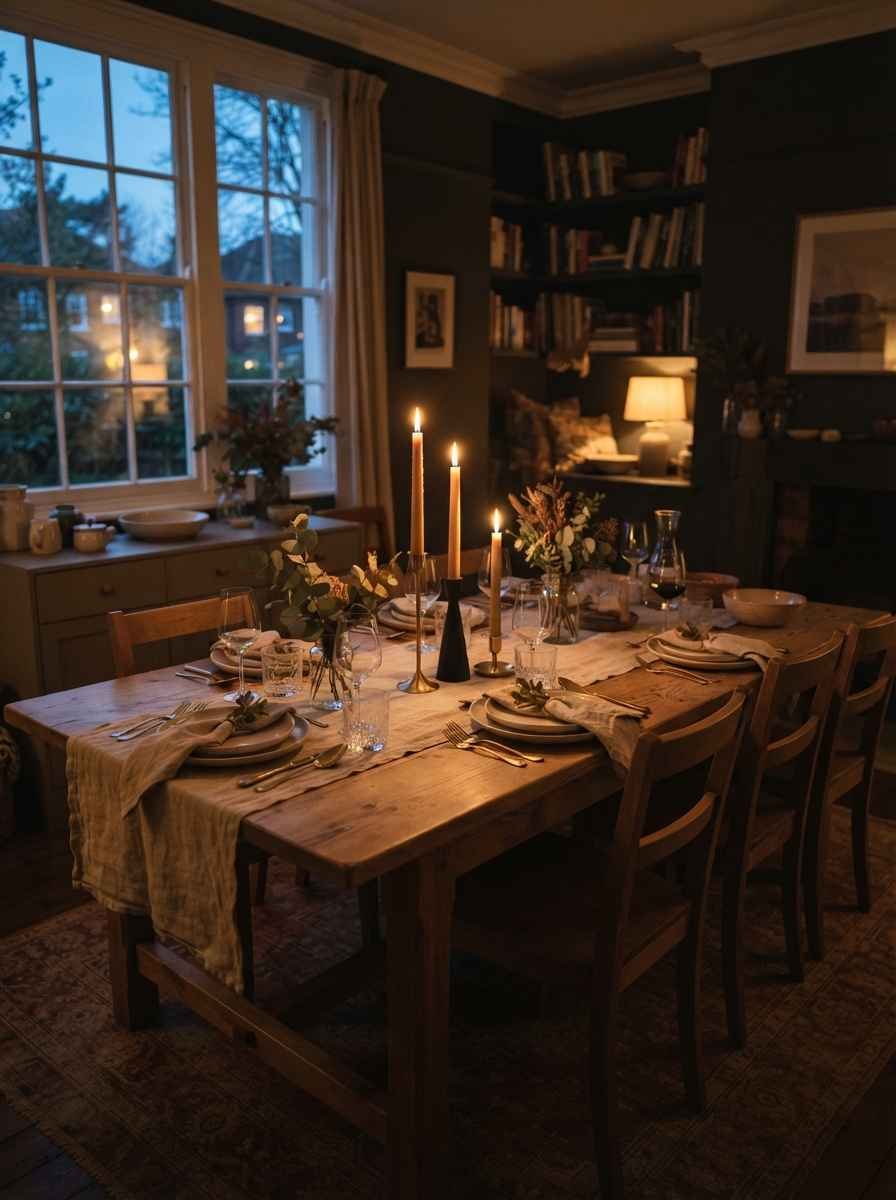
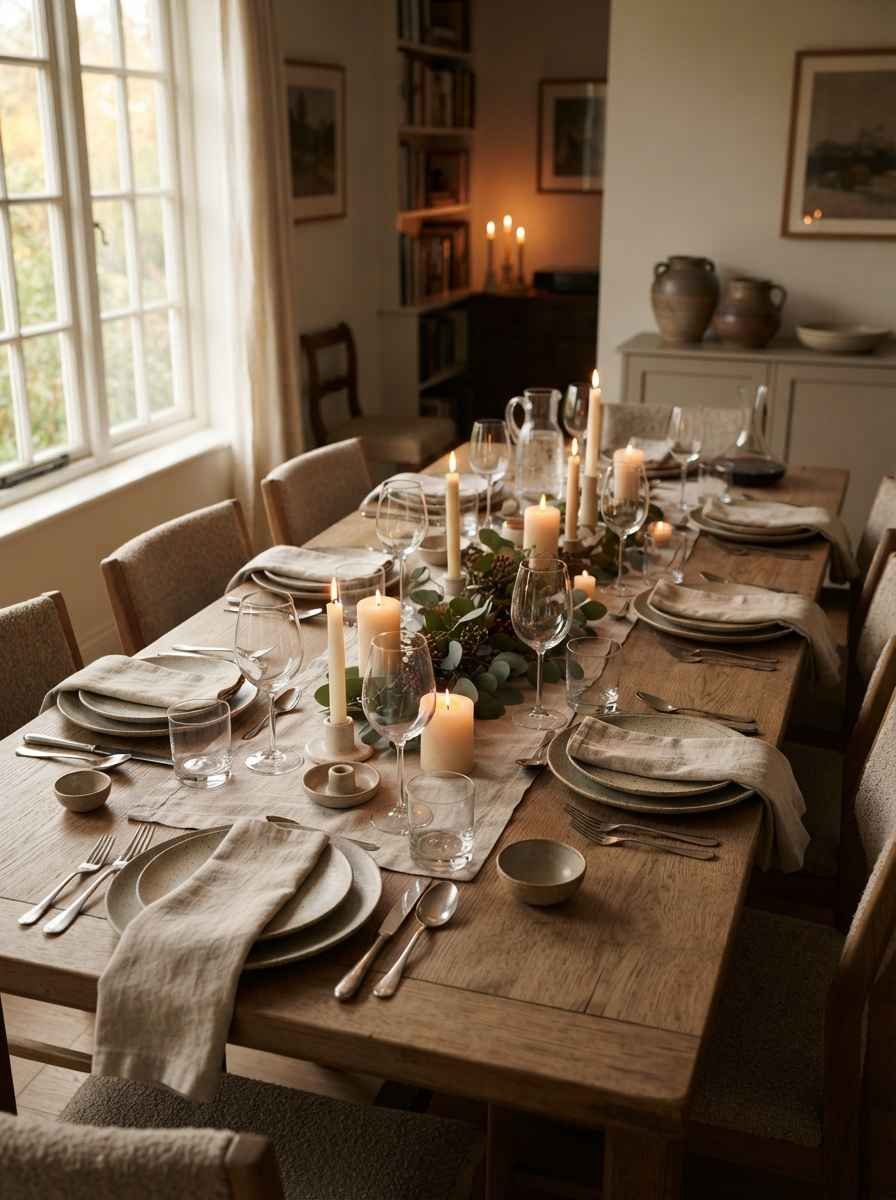
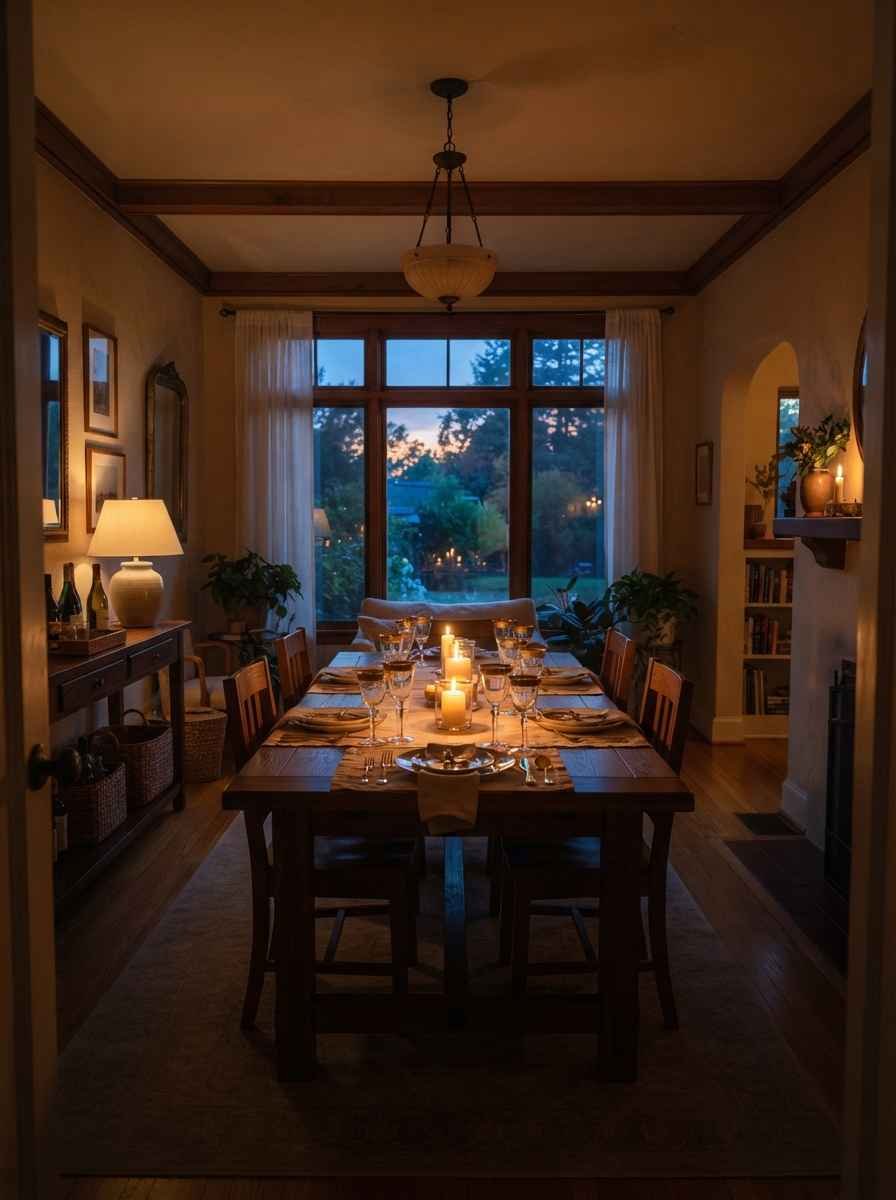
- Taper candles in mismatched but tonally matched holders. Different heights, same color family, brass or matte black.
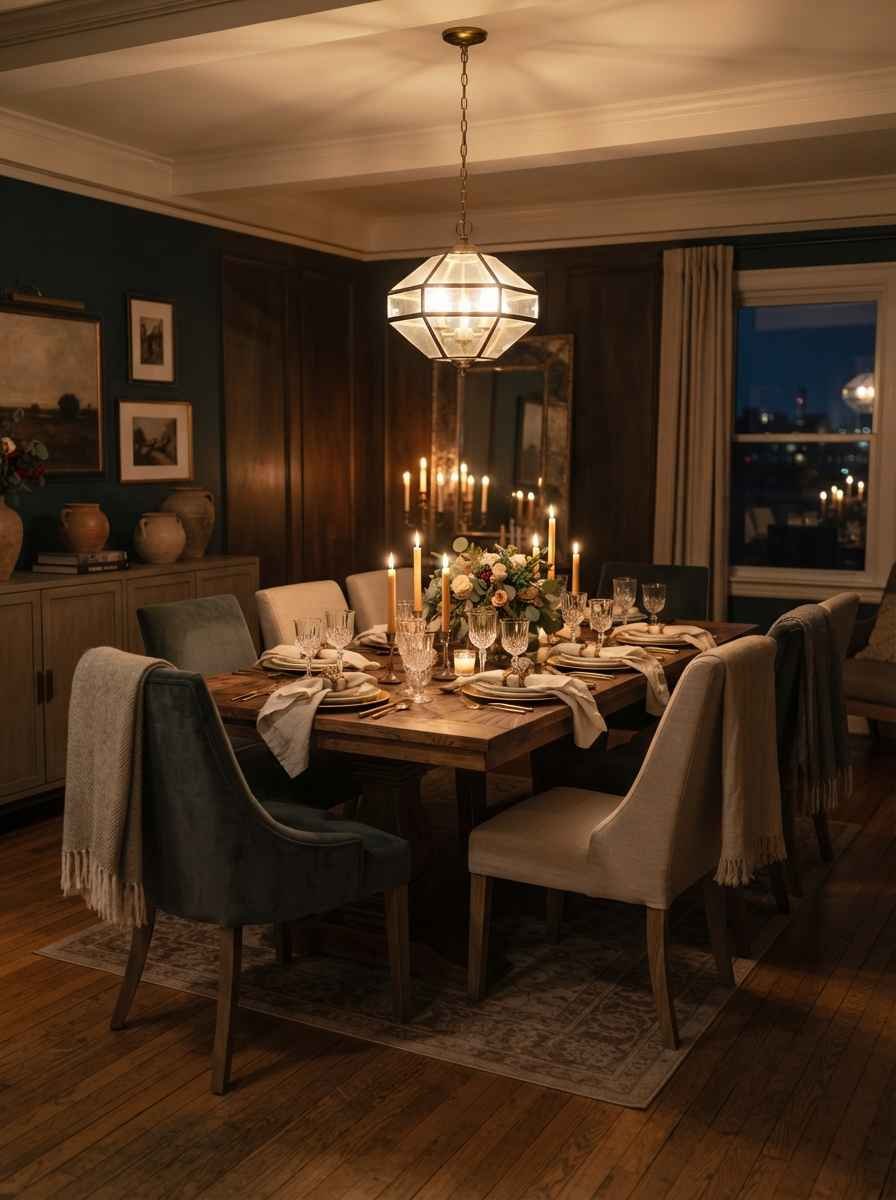
- Unscented candles for meals. Scented ones fight with the food. I learned this the hard way at a dinner party where the vanilla candle basically seasoned the pasta.
- A cluster of three candle heights instead of one tall centerpiece. Odd numbers again. Your eye reads groupings of three as intentional, groupings of two as accidental.
- Warm-white bulbs overhead, dimmed low, paired with the candlelight. This combination alone makes a 200-dollar table set look like it belongs in a magazine.
Here’s a quick cheat sheet if you’re staring at your table right now trying to decide where to start:
| Element | Budget-friendly pick | Effect on the room |
|---|---|---|
| Centerpiece | Single ceramic vase | Anchors the eye, low maintenance |
| Table covering | Linen runner | Adds texture, feels lived-in |
| Lighting | Taper candles, warm bulbs | Softens the whole space |
| Greenery | Olive branch or eucalyptus | Brings life without upkeep |
Bring in something alive
This is where a lot of tables go wrong. Plastic greenery photographs fine but feels off the second you touch it.
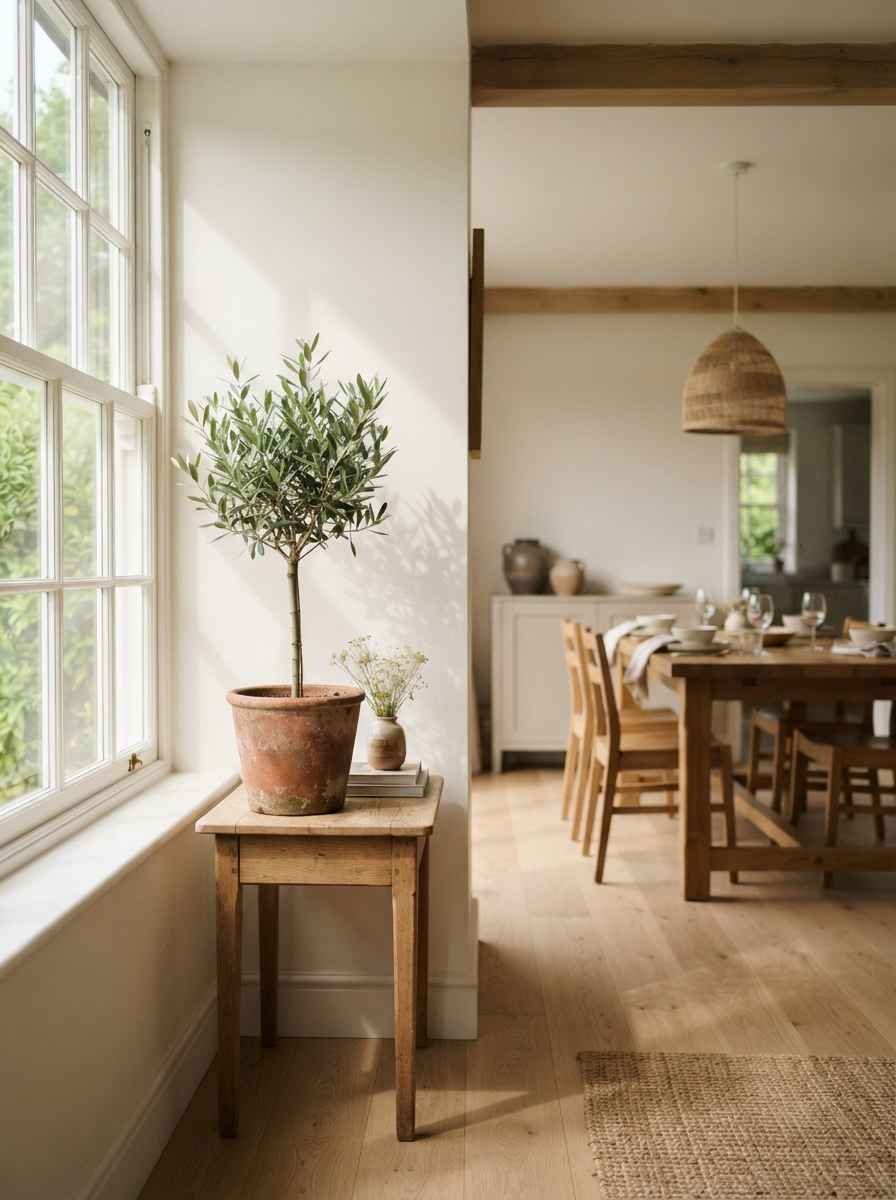
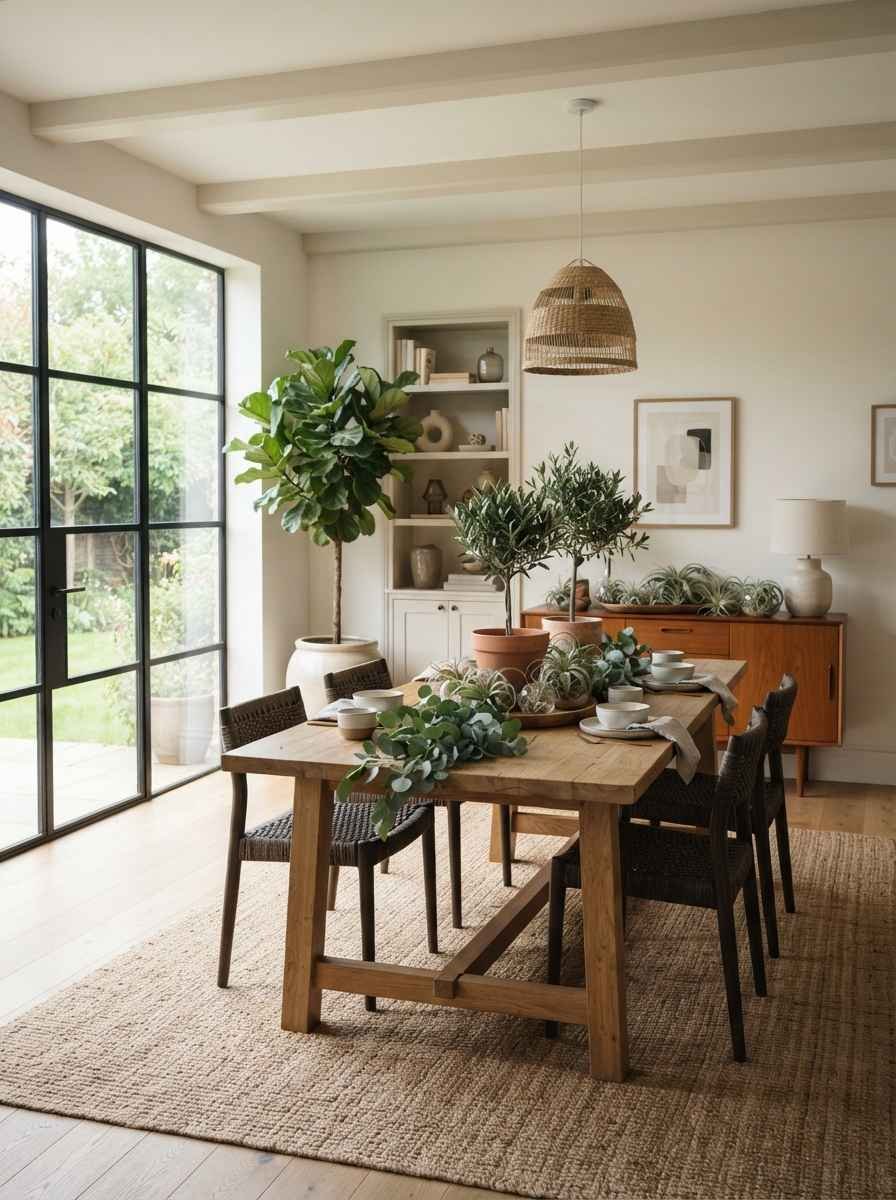
- A small potted olive tree on a side table nearby, not on the dining surface itself, if you want height without crowding plates.
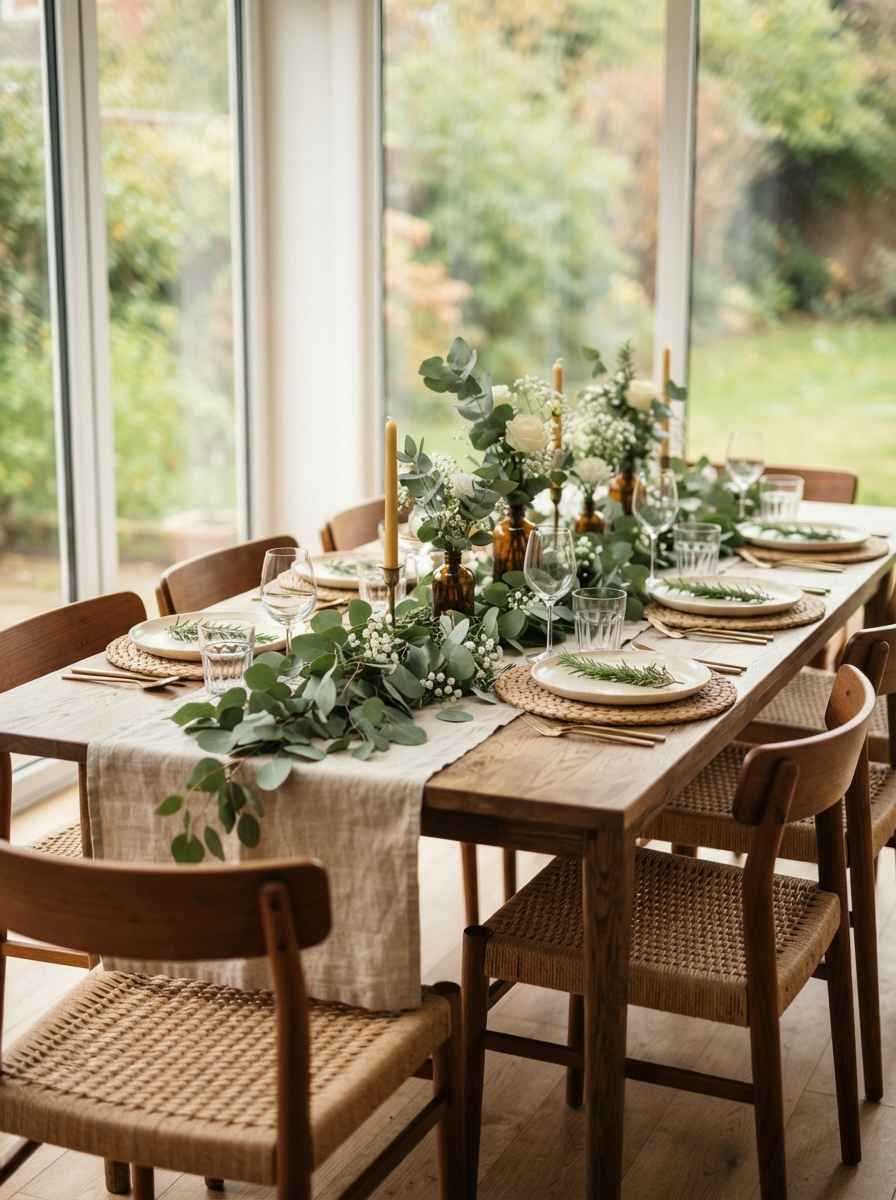
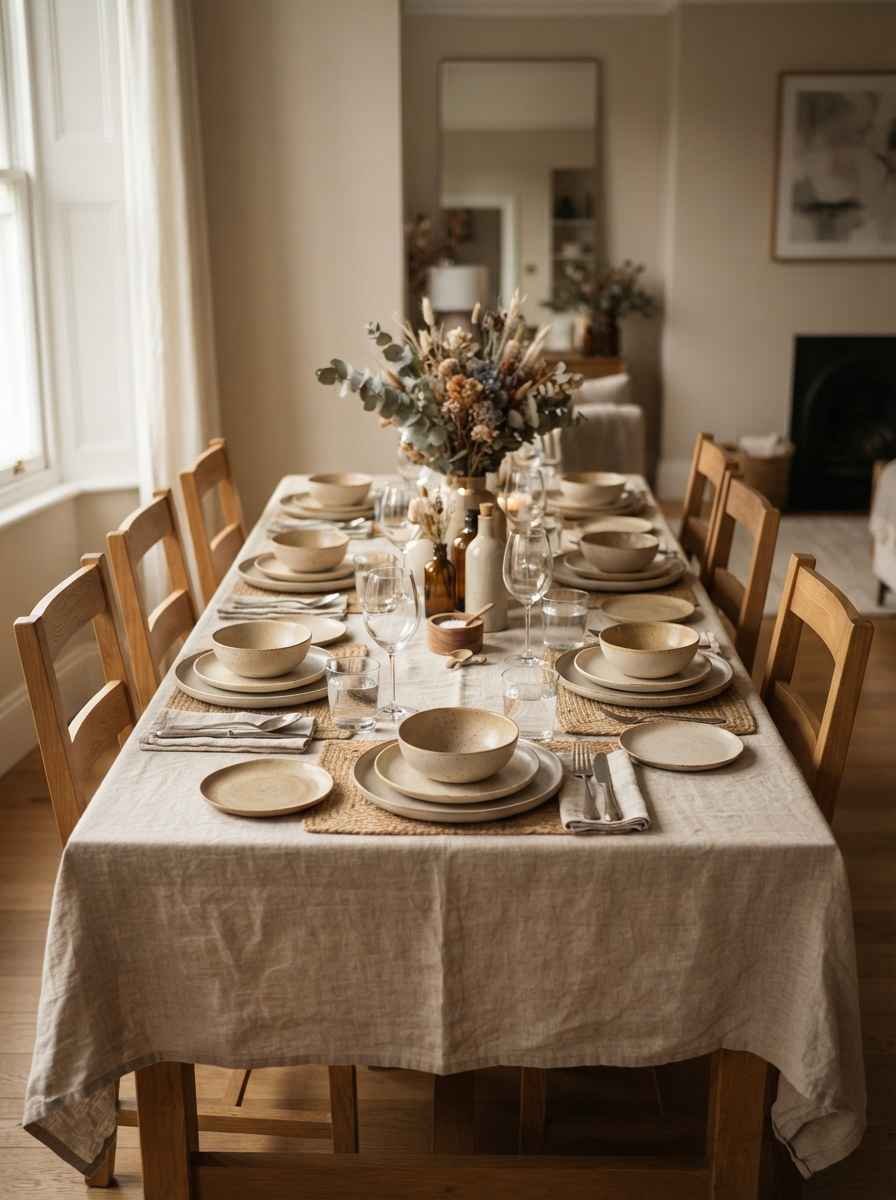
- Eucalyptus stems, fresh or dried, draped loosely across the runner rather than standing upright. This is the look you’ve seen in every “elevated Thanksgiving table” pin, and it’s genuinely one of the cheapest tricks here.
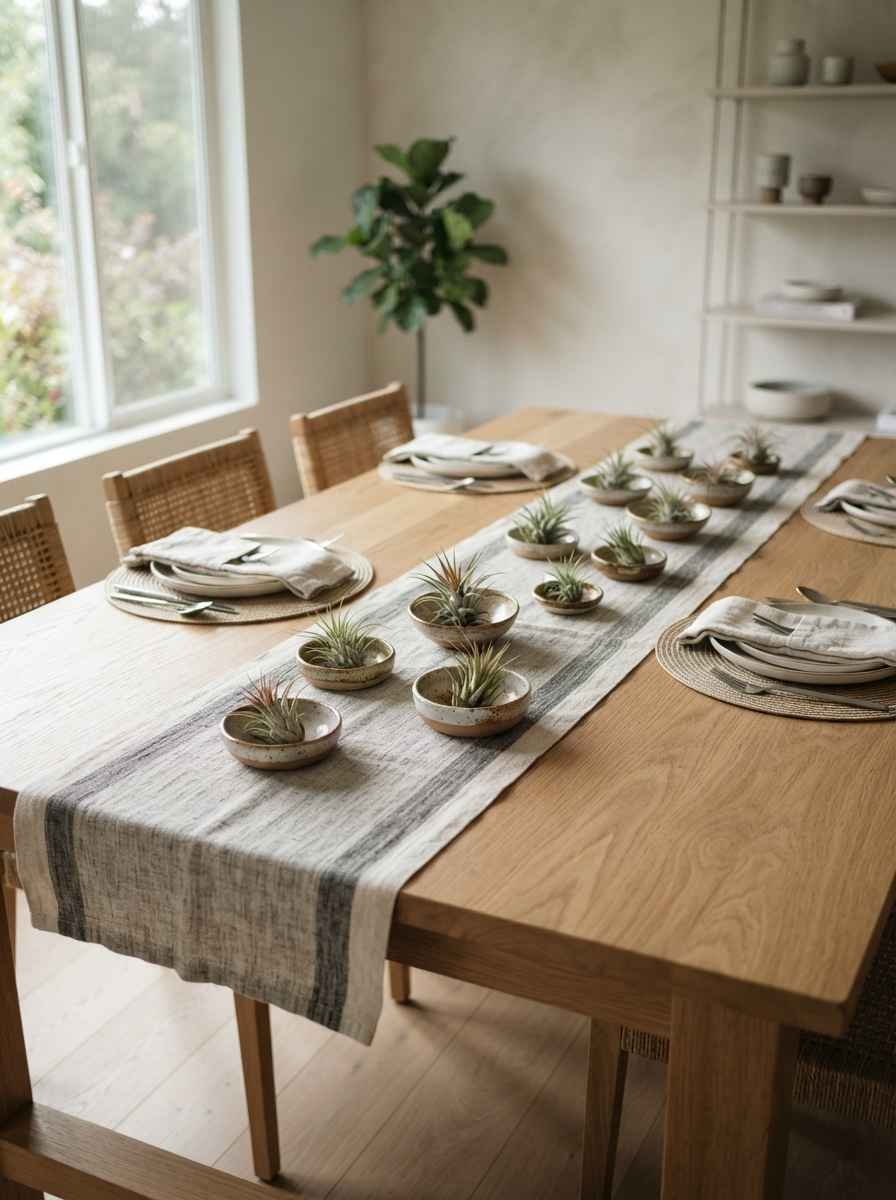
- Air plants tucked into small dishes, no soil, no watering schedule, just misted once a week. Great if you’ve killed every houseplant you’ve ever owned. I have. No shame.
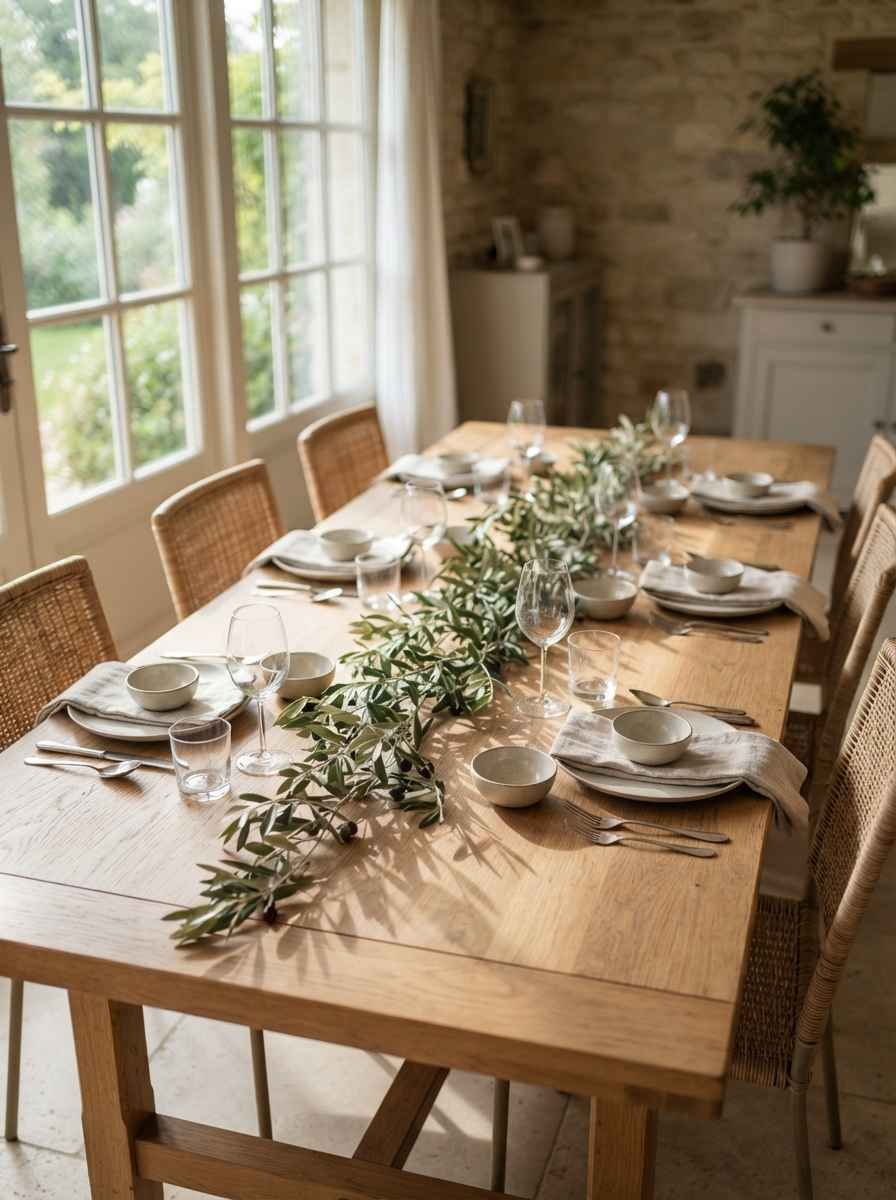
- A single branch of magnolia or olive laid flat, almost like a table runner made of nature. Sounds fussy, looks effortless once it’s actually on the table.
Texture over color, always
If your instinct is to add another color to “liven things up,” resist it. Minimalist tables win on texture, not palette.
- Stoneware or matte ceramic dinnerware in warm neutrals instead of glossy white porcelain.
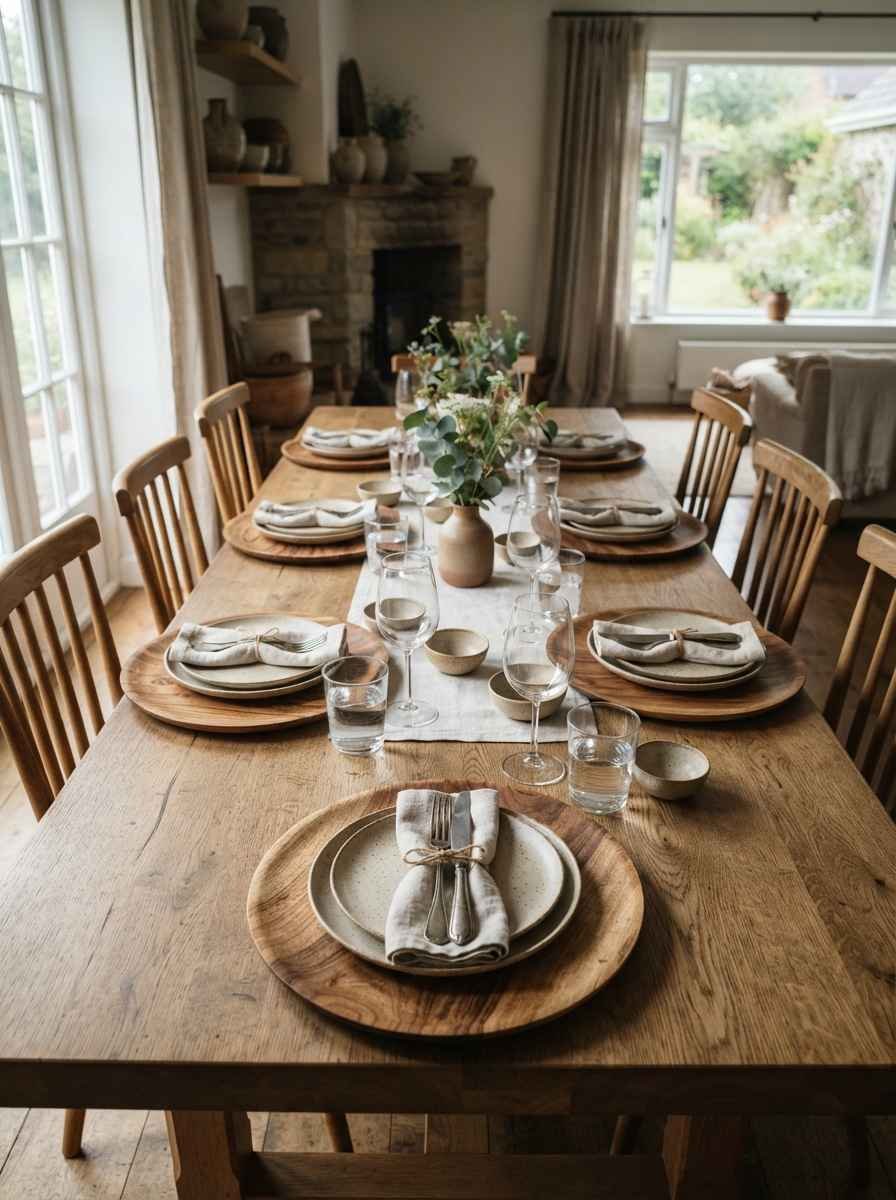
- Wood charger plates under each setting. Cheap to find secondhand, and they instantly ground a table visually.
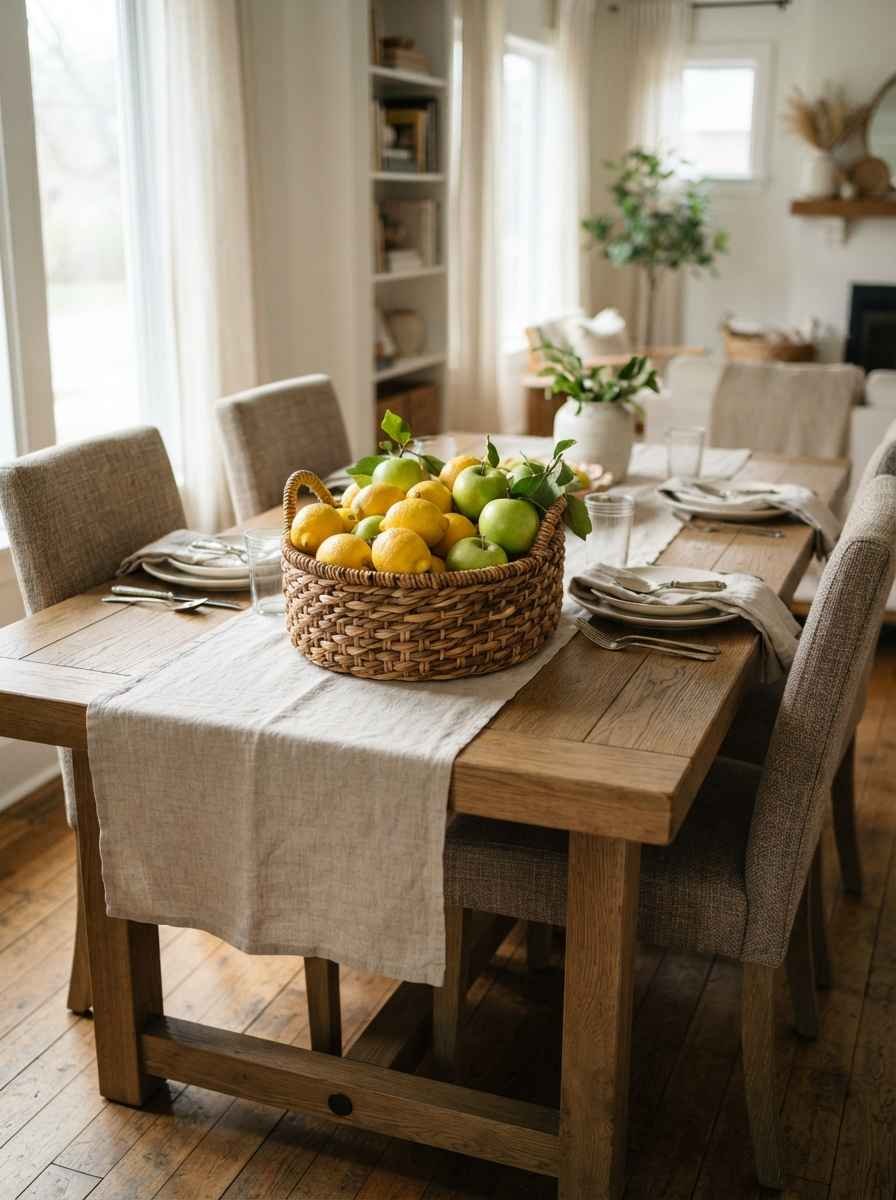
- A woven basket of fruit as a functional centerpiece. Lemons and green apples work particularly well against neutral linens.
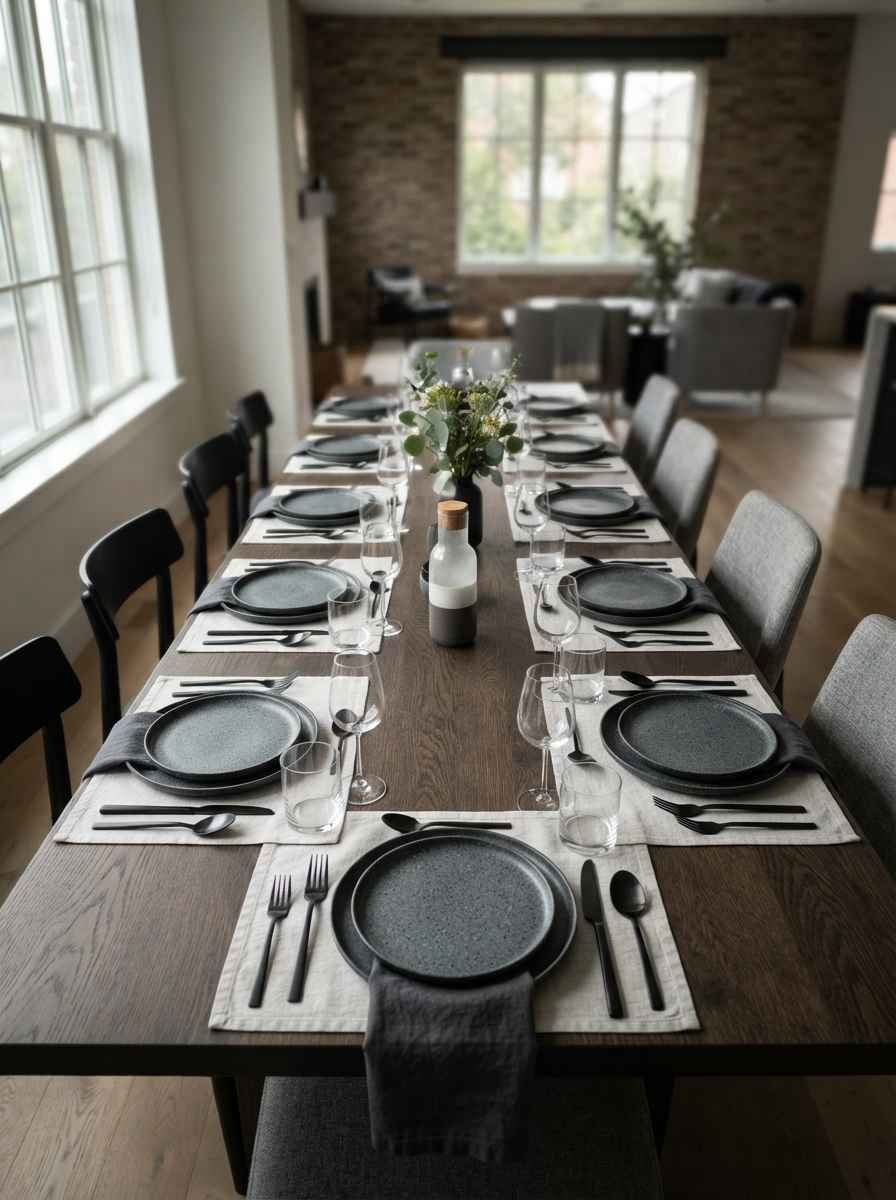
- Subtle brass or matte black flatware instead of standard stainless. This one costs a bit more, but it’s the detail guests actually comment on.
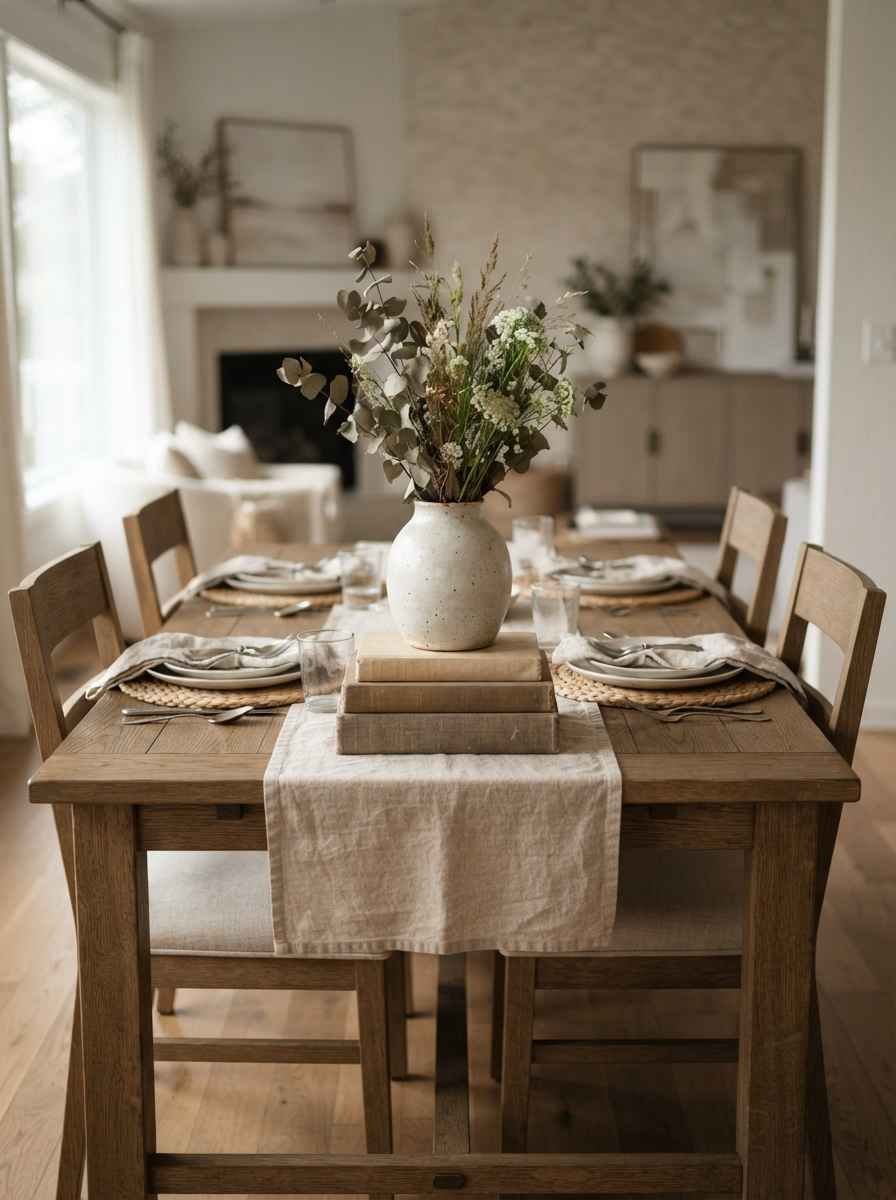
- A stack of two or three linen-bound books under a vase for height variation.
- Old cookbooks work perfectly and nobody will guess they cost you a dollar at a used bookstore.
Random aside: I once saw a table styled entirely around a stack of design magazines as the “base,” and honestly, it looked incredible until someone spilled red wine on a 1987 issue of Architectural Digest. Worth the risk? Debatable. Moving on.
Symmetry, restraint, and knowing when to stop
This is the part where most people overdo it, myself included, back when I thought “more is more.”
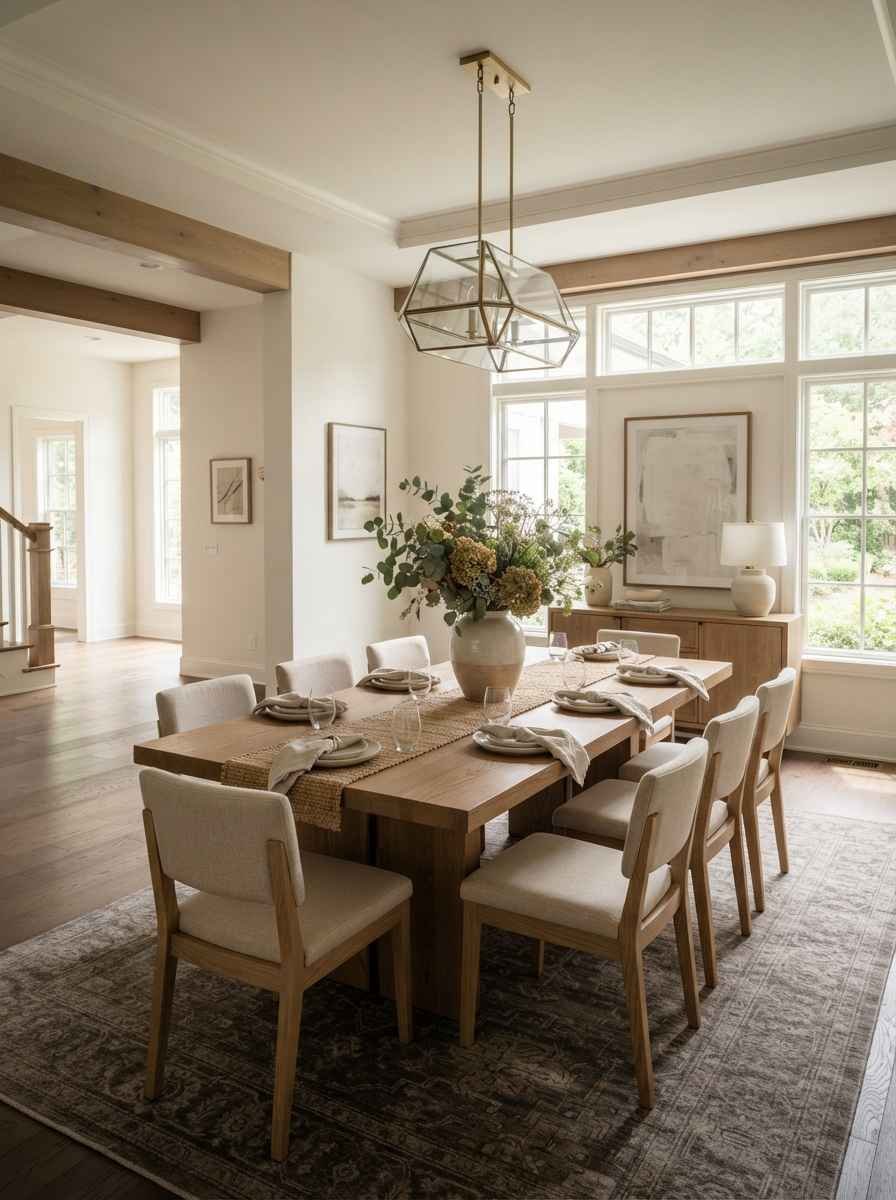
- Center your main object dead in the middle, then build outward symmetrically. Asymmetry works in art. On a dining table, it just looks unfinished.
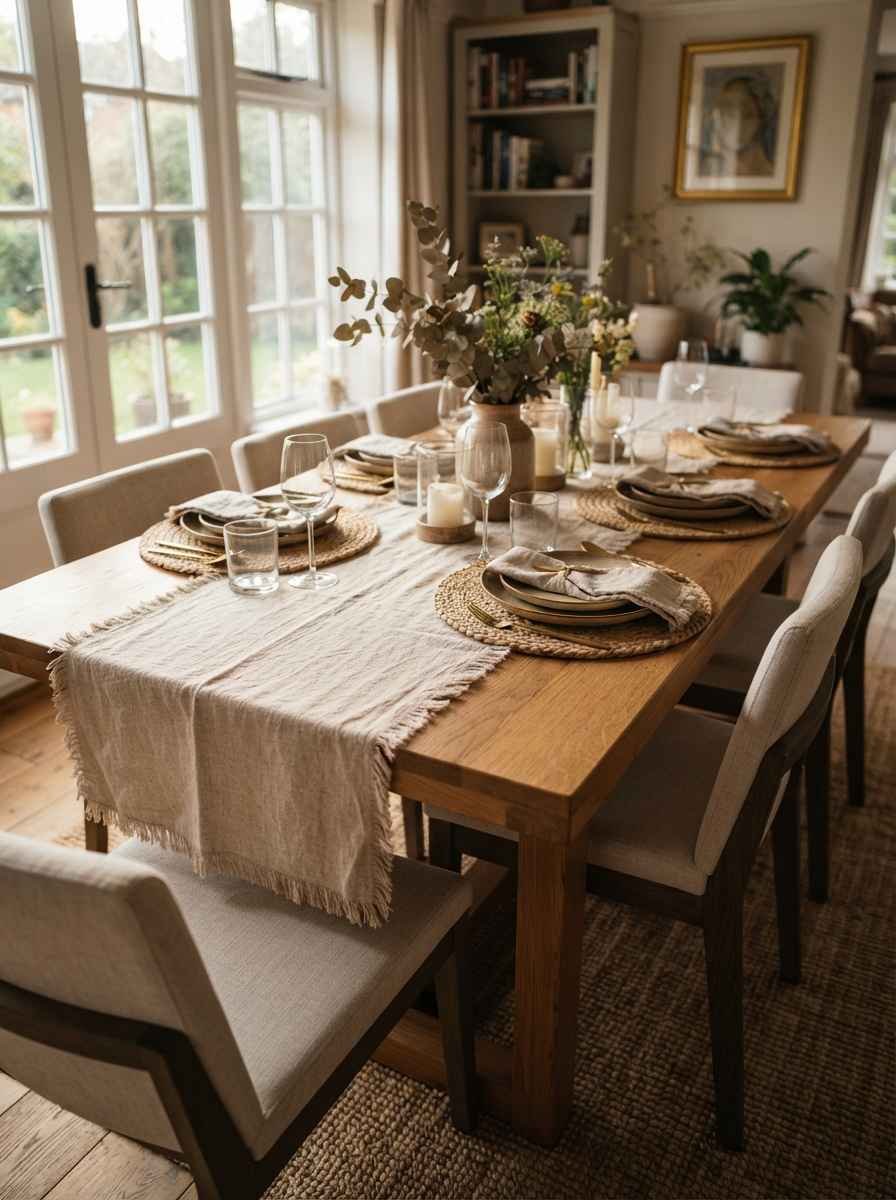
- Leave negative space on purpose. A table with breathing room between objects reads as expensive. A crowded table reads as cluttered, no matter how nice each individual piece is.
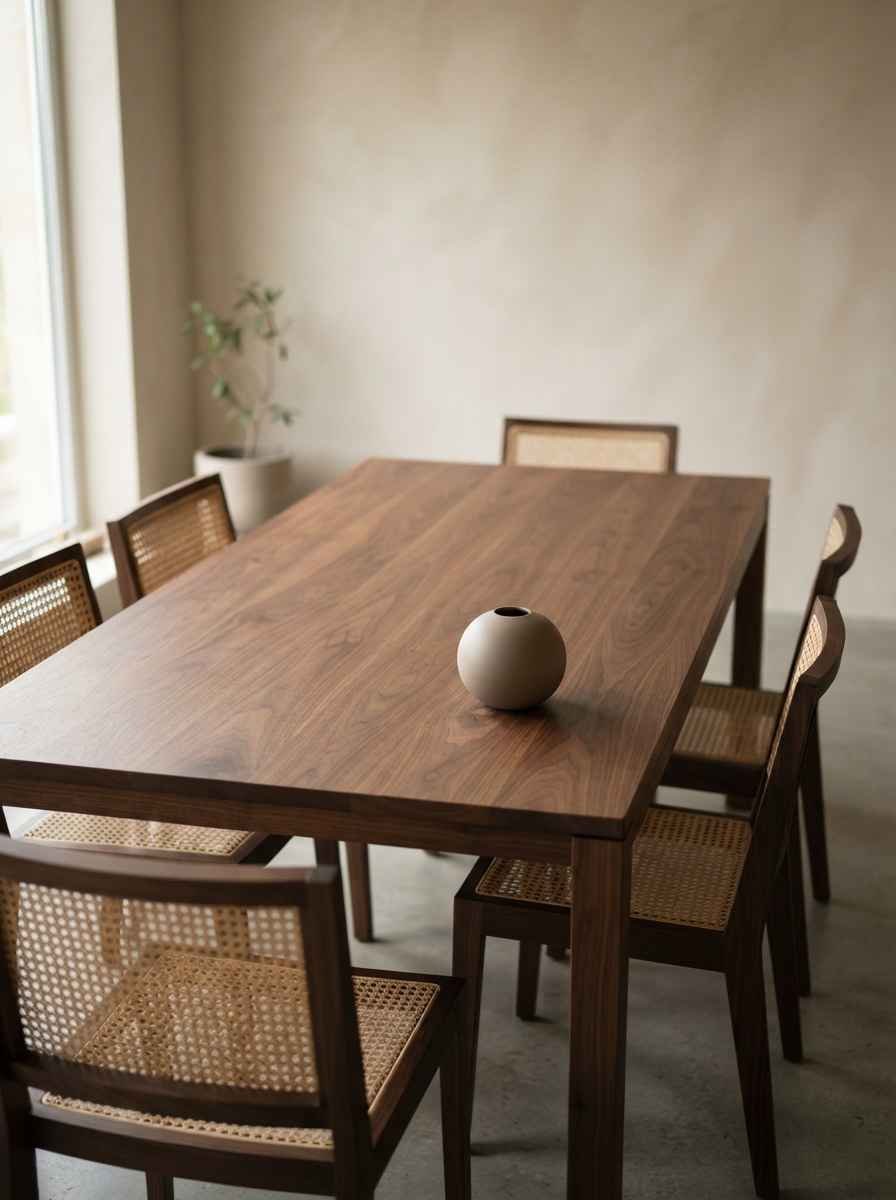
- One small sculptural object, a ceramic orb, a smooth stone, something with no function at all, placed slightly off to the side.
- This is the detail that makes people ask where you got it.
- Edit ruthlessly before every meal. Walk away, come back in five minutes, and remove one thing. There’s almost always one thing too many.
- This isn’t just about the table. It’s genuinely one of the better lessons in style overall.
This is insane, but the biggest shift in how my table looks came from removing things, not adding them. If you take away one idea from this whole list, take that one.
For more on layering textures without overcomplicating a space, Apartment Therapy’s guide to tablescaping is worth a read, and The Spruce has solid seasonal breakdowns if you like switching things up every few months.
Better Homes & Gardens also runs a good roundup of centerpiece ideas if you want more inspiration boards to pin.
FAQs
Do I need to buy new dinnerware for a minimalist table? No. Start with what you already own in neutral tones and swap in one or two new pieces, like a wood charger or a ceramic vase, before replacing an entire set.
How often should I change the centerpiece? Seasonally is plenty. Swap dried pampas for eucalyptus in spring, olive branches in fall, and you’ll keep the table feeling current without buying new pieces every month.
What’s the cheapest way to start? A linen runner and a single vase.
That combination alone changes the whole table, and both items together usually cost less than 30 dollars secondhand.
So, which one of these 25 are you trying first, the runner or the candles? Save this list before your next dinner party and let me know how it turns out.
