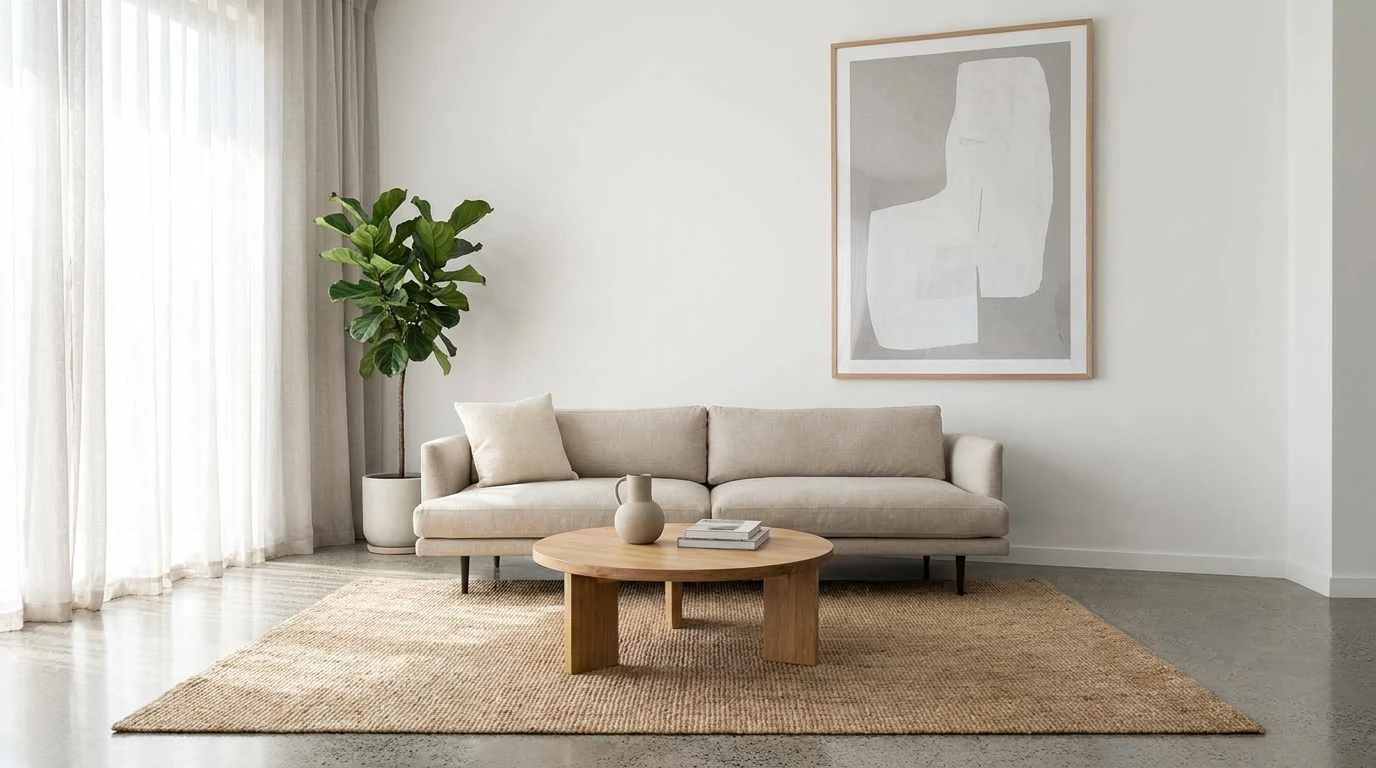
Small apartment, big style ambitions? You’re in the right place.
Minimalist decor isn’t about living in an empty box that feels more like a waiting room than a home.
It’s about making smart choices so every piece in your living room actually earns its spot.
I’ve helped friends turn cramped rental living rooms into spaces that feel calm, intentional, and (dare I say) Pinterest-worthy.
Here are 28 ideas that work whether you’ve got 400 square feet or a sprawling open-concept layout.
Start With a Neutral Color Palette
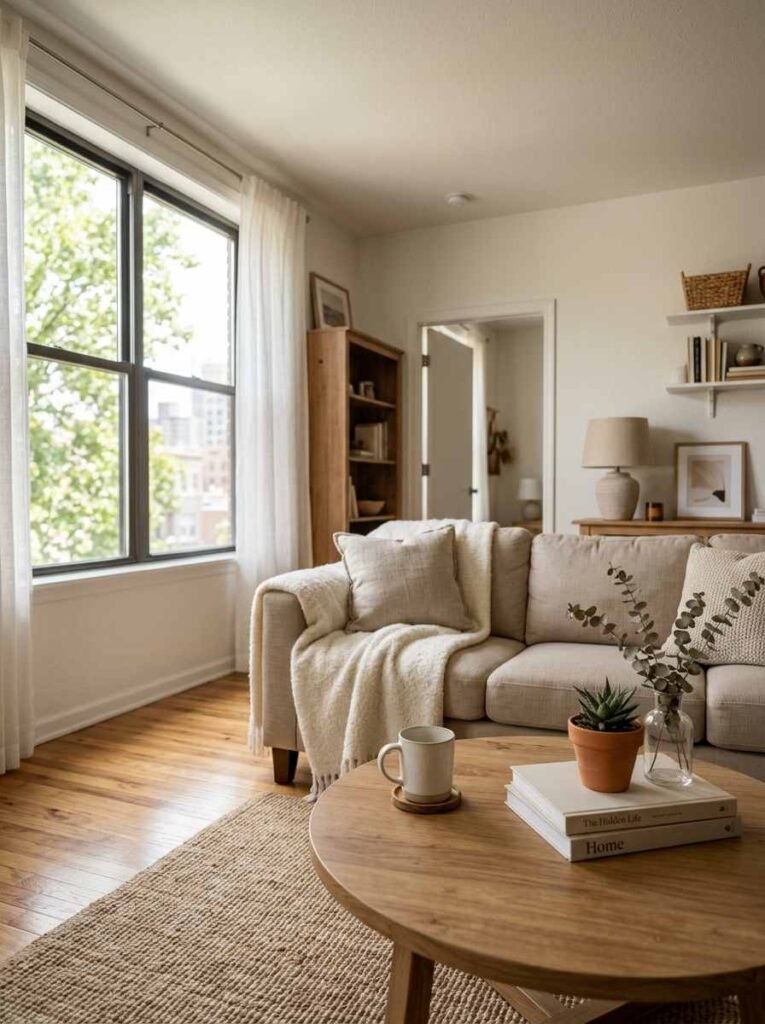
Color sets the tone before anything else does. A neutral base makes a small room feel bigger and gives you room to add personality later without things looking chaotic.
Stick to 2-3 main colors throughout your living room. White, beige, soft gray, and warm taupe are all solid starting points.
- Off-white walls with warm wood tones
- Soft gray paired with black accents
- Beige and cream layered with natural textures
- Greige (the unofficial mascot of minimalist apartments everywhere)
Why Neutral Doesn’t Mean Boring
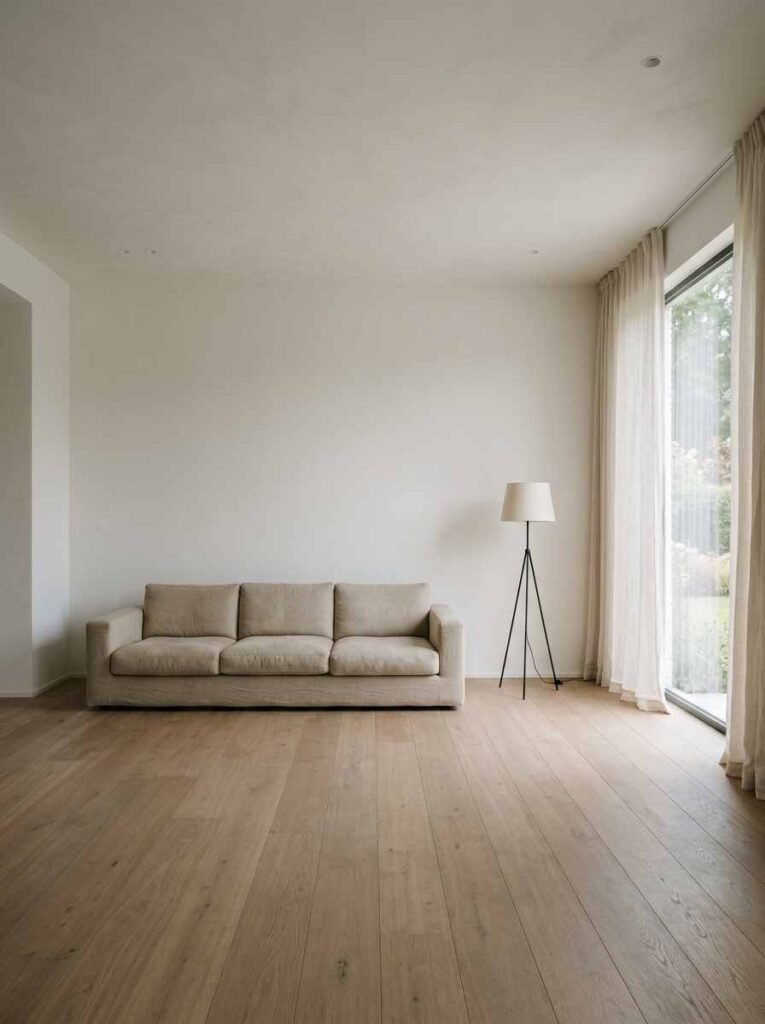
IMO, this is where people get nervous. They hear “neutral” and picture a beige cave. But neutral is just your canvas.
You add interest through texture, shape, and a few well-placed accent pieces instead of color overload.
Choose Multi-Functional Furniture
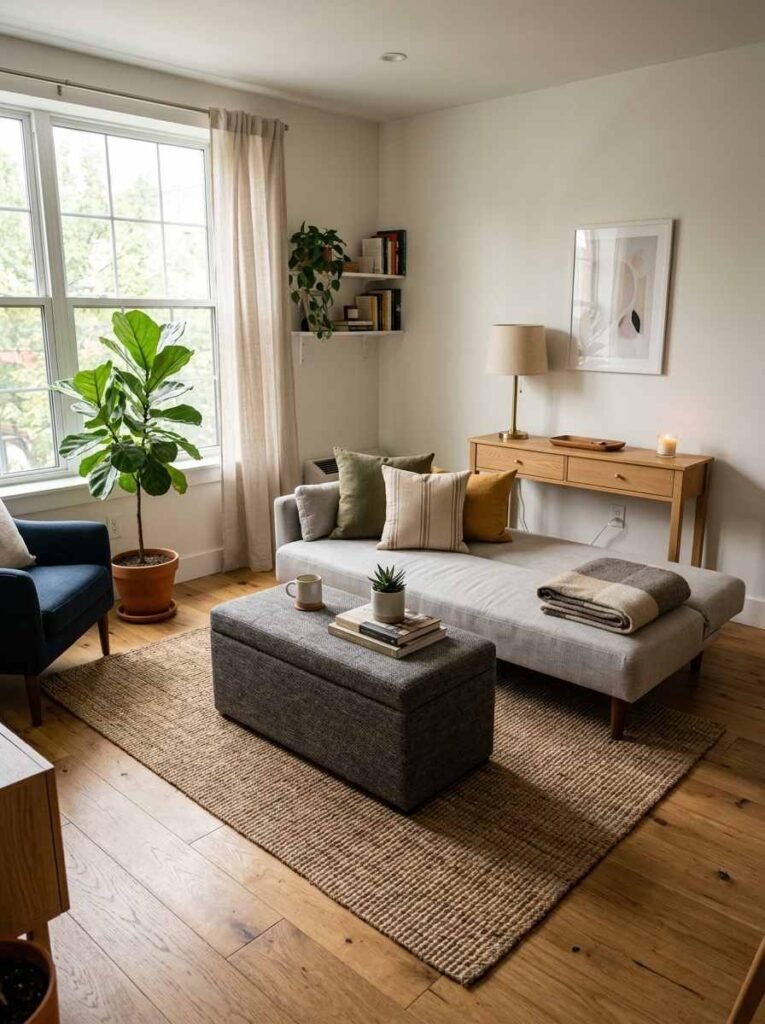
Apartment living means every square foot counts. A coffee table that’s only a coffee table is a missed opportunity.
- Storage ottomans that double as seating and hide clutter
- Sleeper sofas for guests without dedicating a whole room to them
- Nesting tables that tuck away when you need floor space
- Console tables with drawers instead of open shelving
Ever wondered why furniture showrooms always look so spacious? It’s not magic. It’s fewer pieces, each doing more work.
Embrace Negative Space
Here’s a comparison that might change how you see your living room:
| Cluttered Approach | Minimalist Approach |
|---|---|
| Every wall covered in decor | One or two intentional focal points |
| Furniture pushed against every surface | Breathing room between pieces |
| Mixed styles competing for attention | Cohesive, calm visual flow |
| Constant rearranging to “fix” the look | Set it once, enjoy it daily |
Empty space isn’t wasted space. It’s what makes the good stuff stand out.
Layer Texture Instead of Color
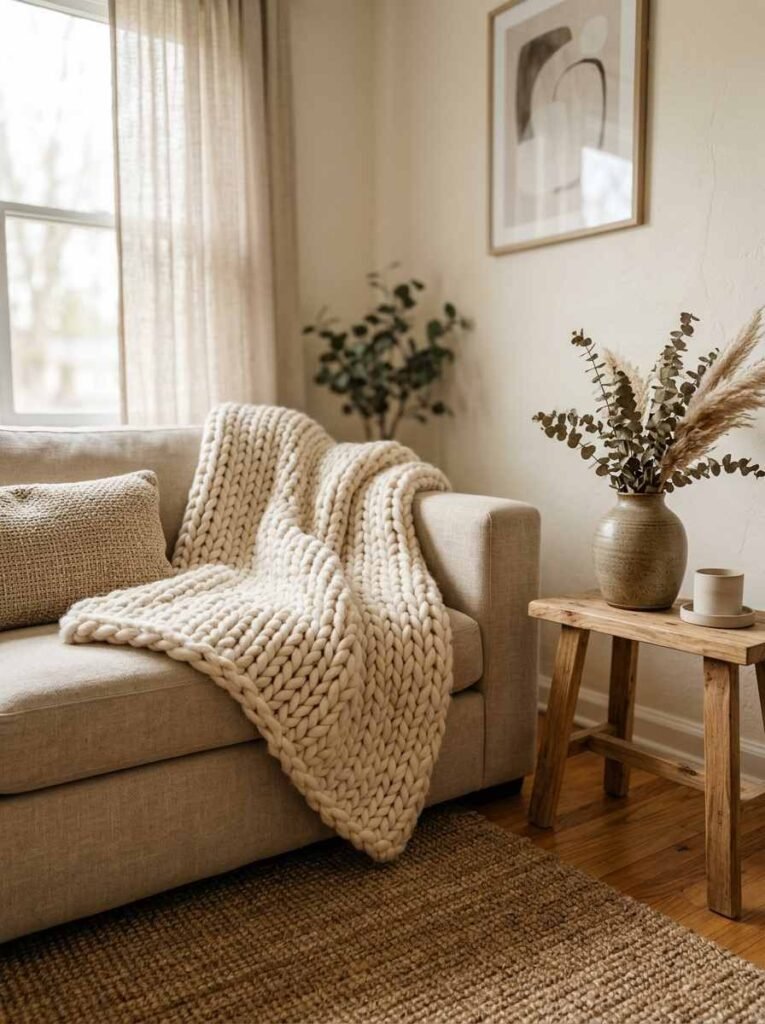
Without bold colors doing the heavy lifting, texture becomes your best friend. This is honestly the part most people skip, and it’s the difference between minimalist and sterile.
- Chunky knit throw blankets
- A jute or wool area rug
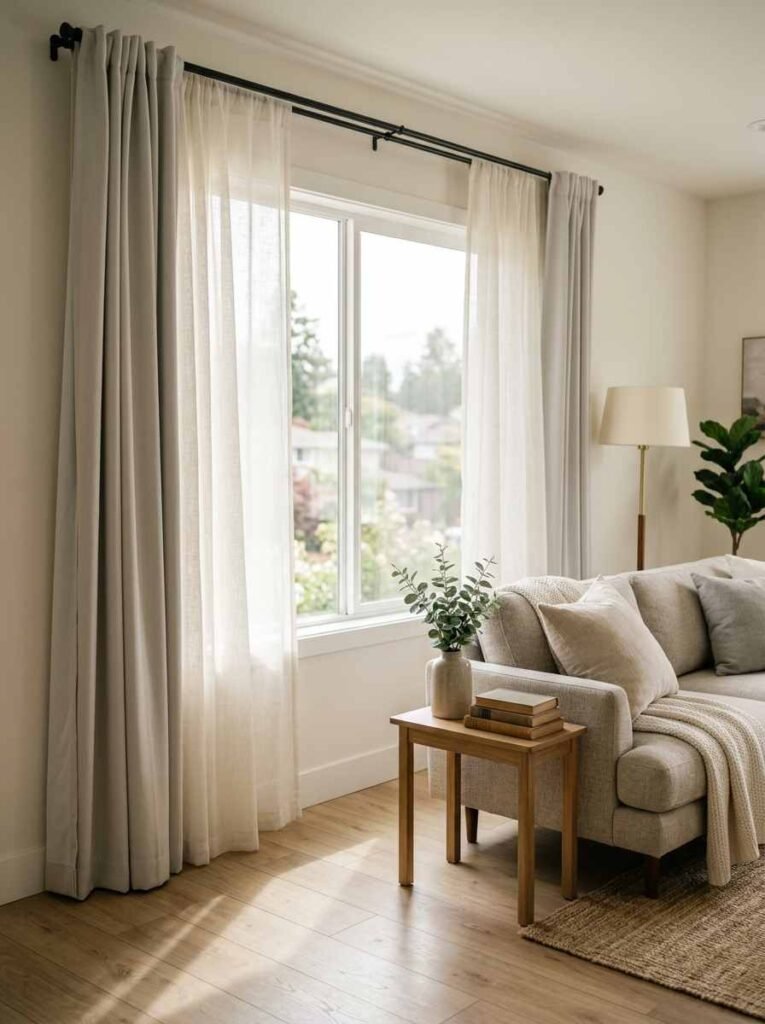
- Linen curtains instead of blackout panels
- Wood, ceramic, and matte metal finishes mixed together
Keep Window Treatments Simple
Heavy drapes with tassels and layers? Hard pass. Simple linen or cotton curtains in a neutral shade let light in and keep the room feeling open.
If privacy’s a concern, go with sheer panels layered under a light blackout liner.
You get function without sacrificing the airy look.
Use Vertical Storage Wisely
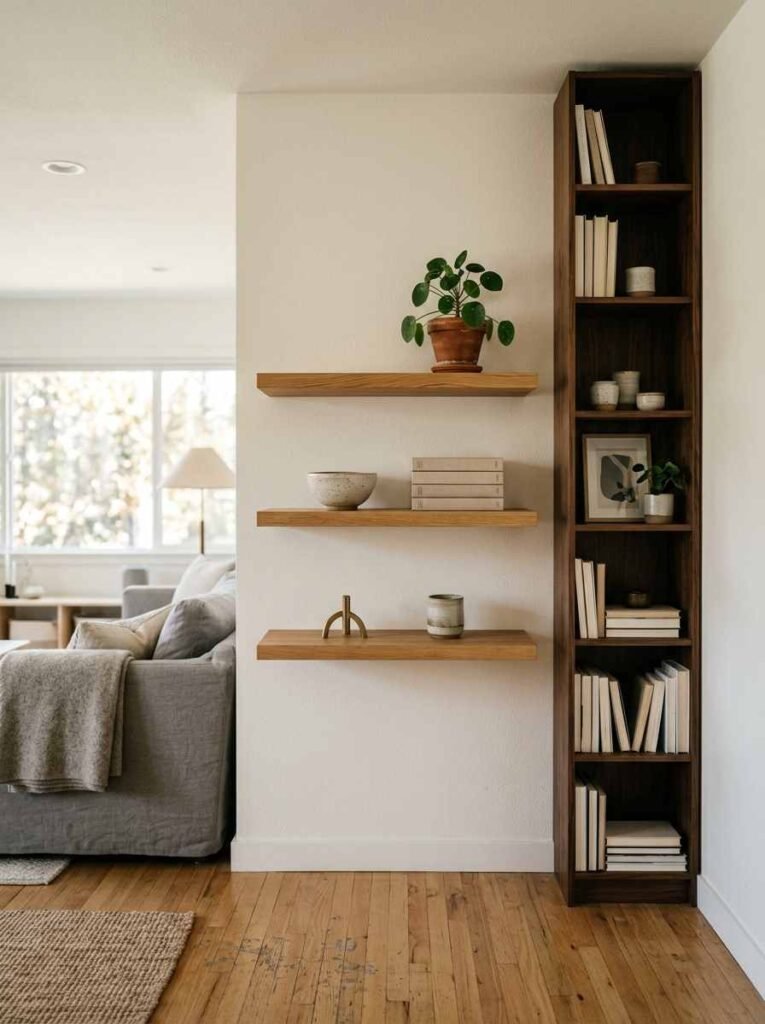
Small living rooms need to think up, not just across. Floating shelves above the sofa or a tall, slim bookshelf in the corner adds storage without eating up floor space.
Floating shelves work best when you:
- Limit each shelf to 3-4 items max
- Mix heights and shapes for visual interest
- Leave gaps. Don’t fill every inch.
Choose One Statement Piece, Not Five
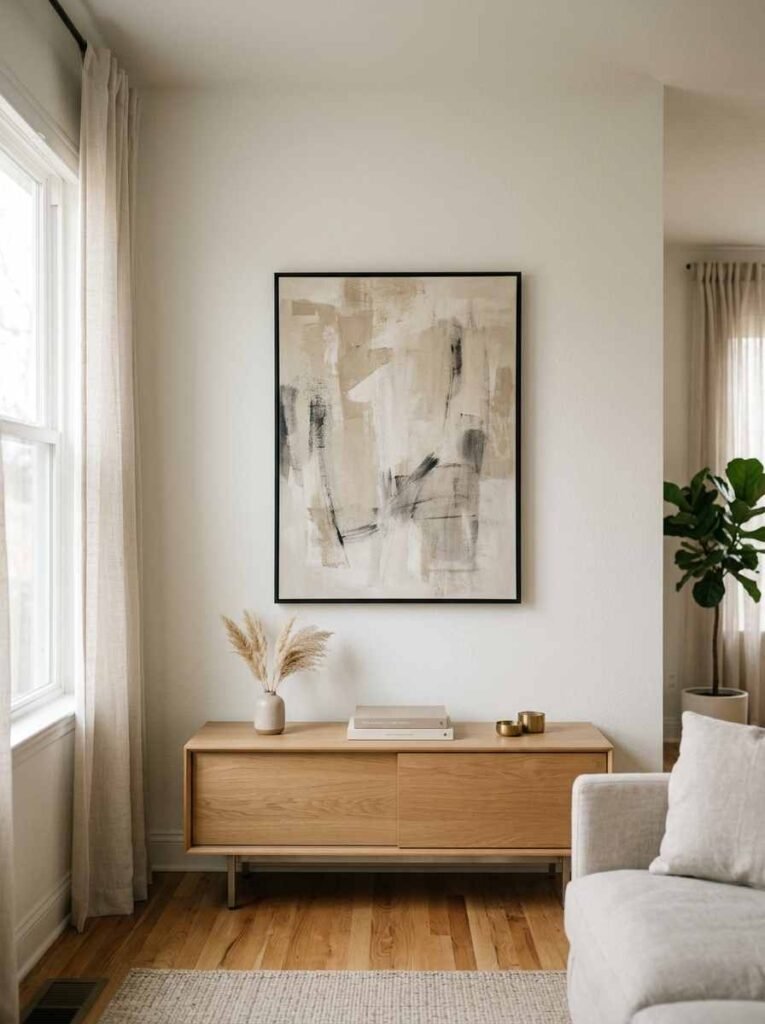
This trips people up constantly. They want their space to feel curated, so they add a statement mirror, a statement chair, a statement rug, a statement light fixture…
and suddenly nothing is the statement because everything is shouting at once.
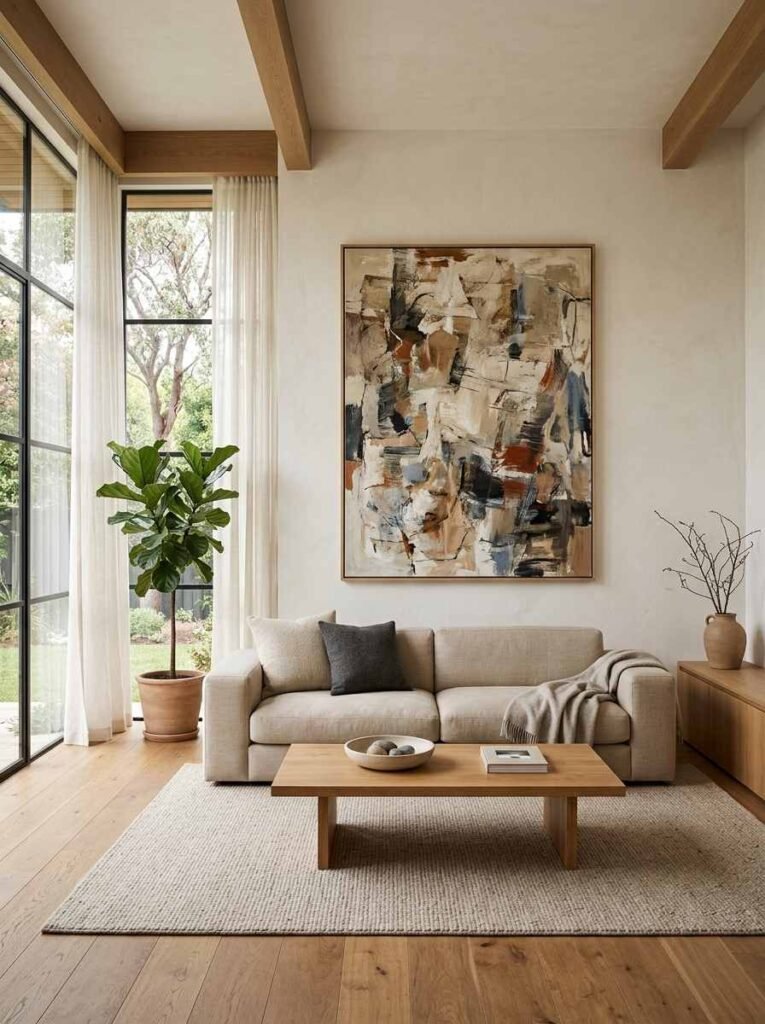
Pick one. A single oversized piece of art, a sculptural floor lamp, or a unique accent chair. Let it actually stand out.
Go Light on Wall Art
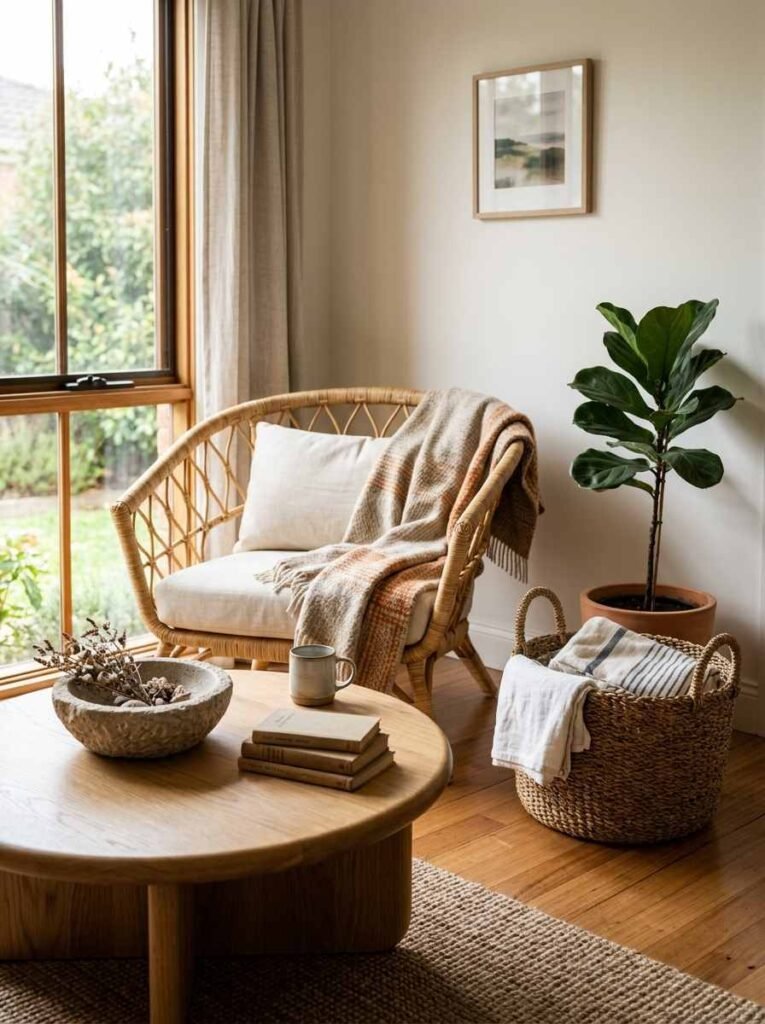
Gallery walls are great in the right space. In a small minimalist living room? They can feel busy fast.
Try one large piece, or two smaller ones with generous spacing between them.
Framing Matters More Than You Think
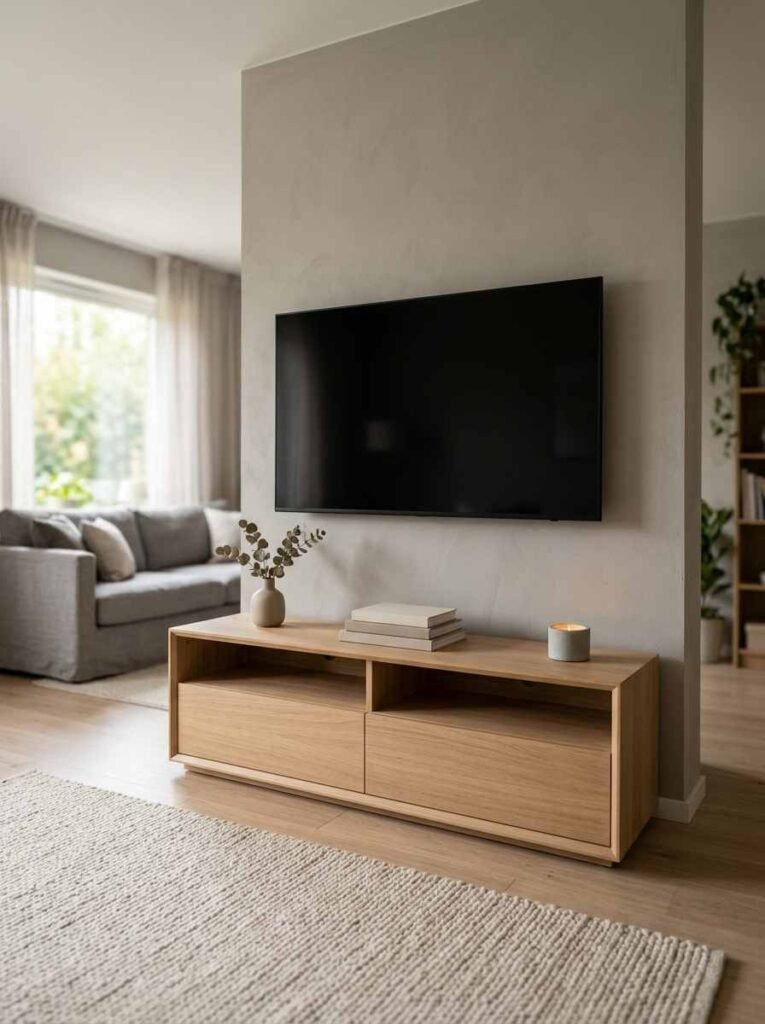
Thin, matching frames in black, white, or natural wood keep a cohesive look. Mismatched frame styles undo a lot of the calm you’re working to create.
Add Warmth With Natural Materials
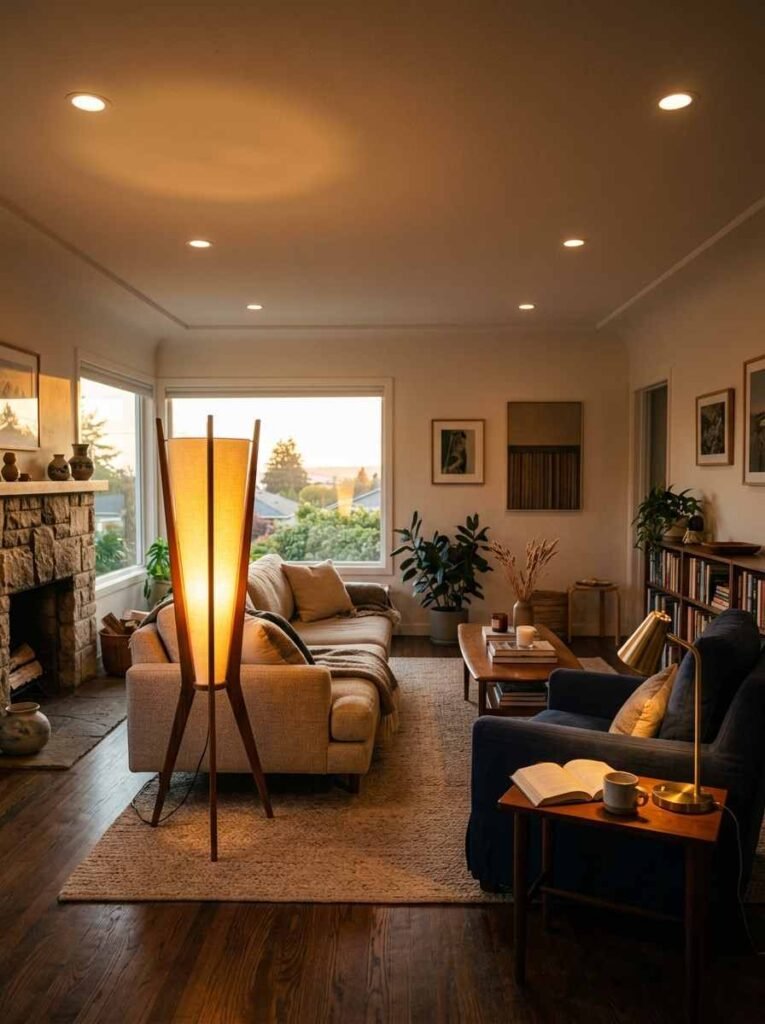
Minimalist doesn’t have to mean cold. Rattan, light wood, linen, and stone bring warmth into a space without adding visual clutter.
- A rattan accent chair
- Wood coffee table with rounded edges
- Stone or ceramic decorative bowls
- Woven baskets for blankets or magazines
Hide the Cords and Cables
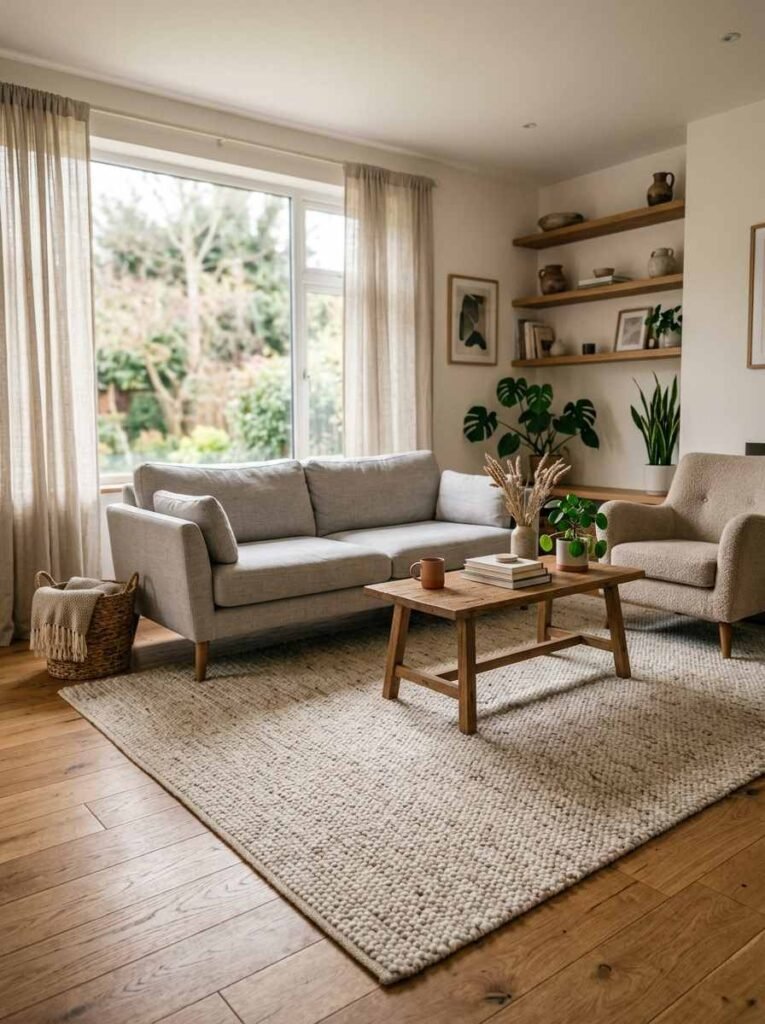
Nothing kills a minimalist vibe faster than a tangle of cords behind your TV. A simple cord management box or adhesive clips along the baseboard fixes this in about 10 minutes.
Rethink Your Lighting Layers
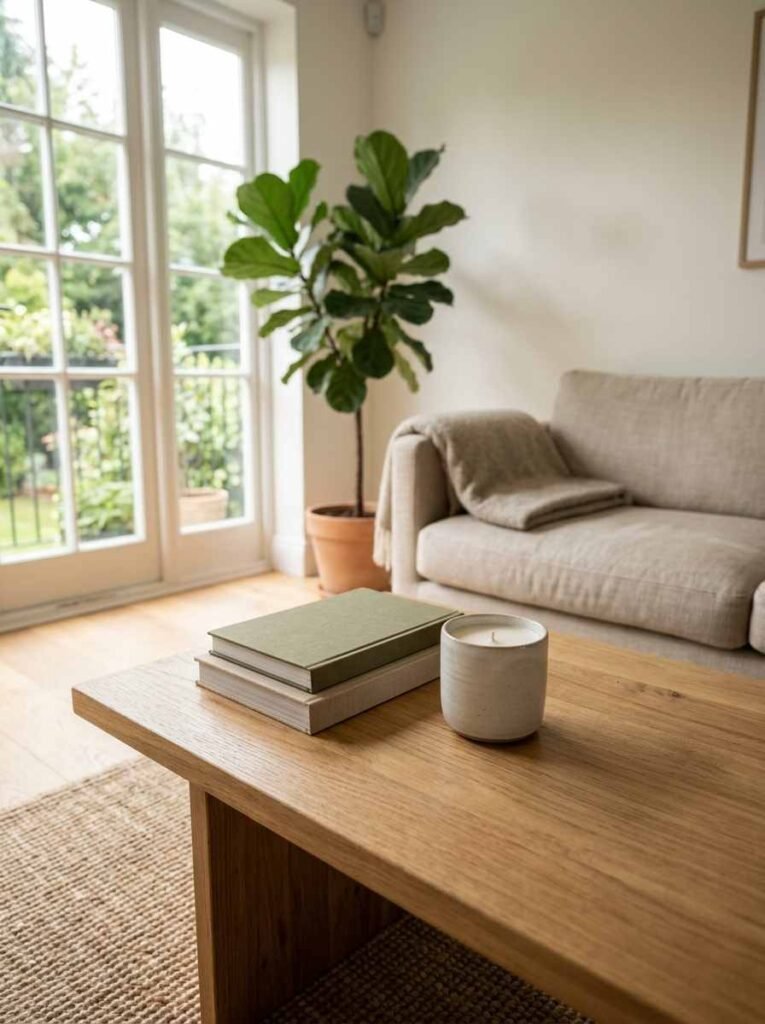
One overhead light doing all the work makes a room feel flat and a little institutional. Layer your lighting instead:
- Ambient (overhead or recessed)
- Task (a reading lamp by the chair)
- Accent (a small uplight behind a plant or sculpture)
Three layers, way more depth.
Use a Single Area Rug to Anchor the Room
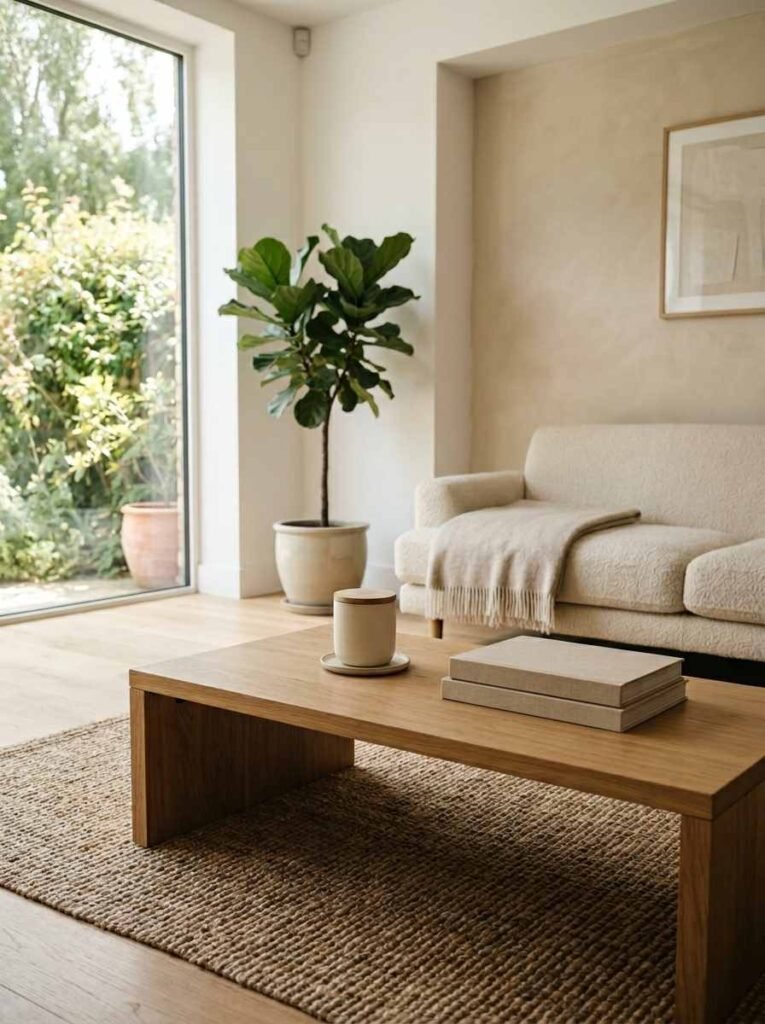
Your rug should be large enough that at least the front legs of your furniture sit on it.
A too-small rug floating in the middle of the room is a classic mistake, and it makes the whole space feel disconnected.
Keep Surfaces 80% Clear
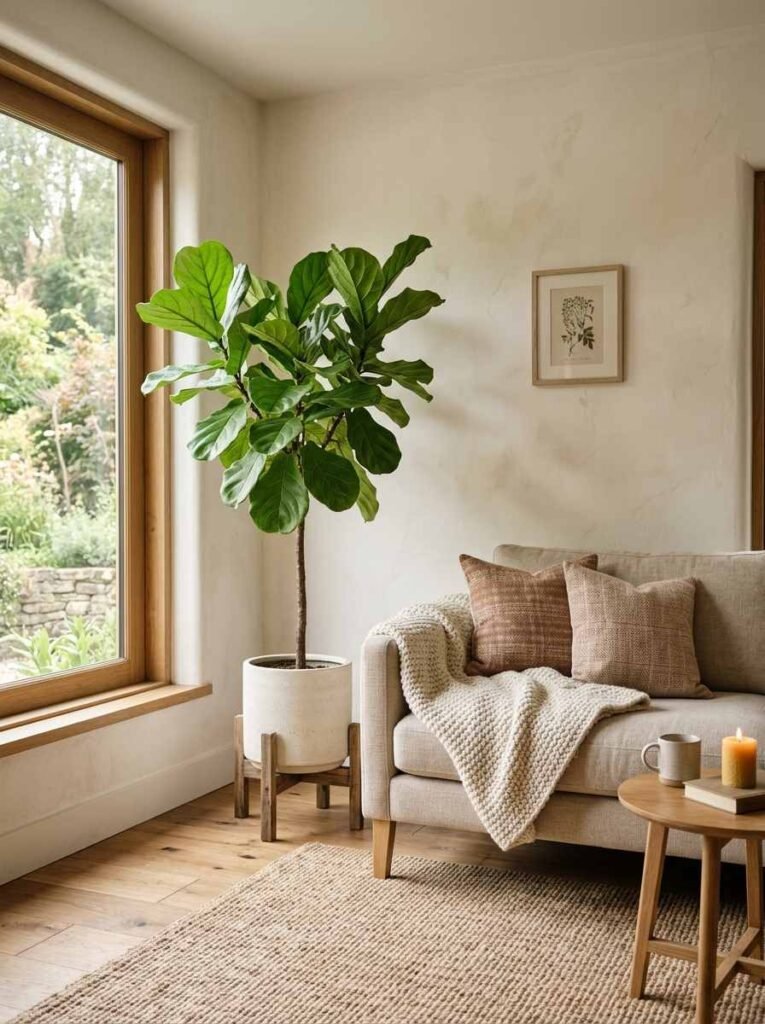
This one’s simple but people struggle with it: leave most surfaces mostly empty. Coffee tables, console tables, shelves. Aim for 80% clear, 20% styled.
That 20% is where your favorite candle, a small plant, or a stack of two books lives. Not ten things. Two or three.
Choose Furniture With Visible Legs
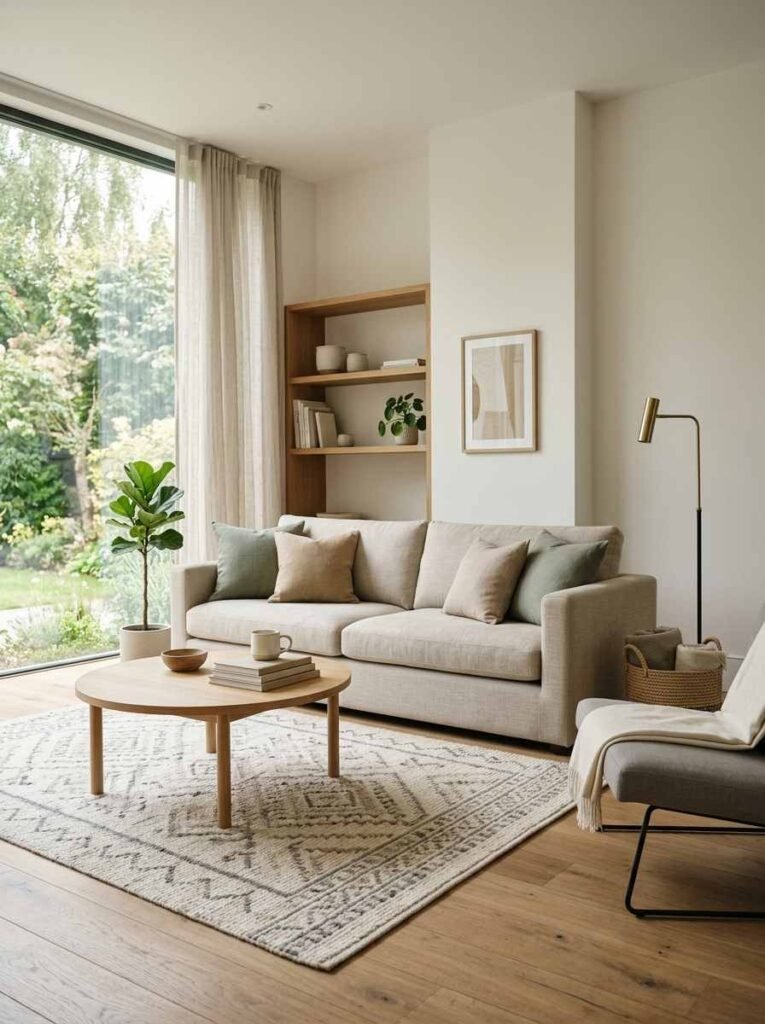
Furniture that sits flush to the floor (like a low platform sofa) can make a small room feel heavier.
Pieces with visible legs let light pass underneath, which tricks the eye into seeing more floor space.
Add One Bold Plant
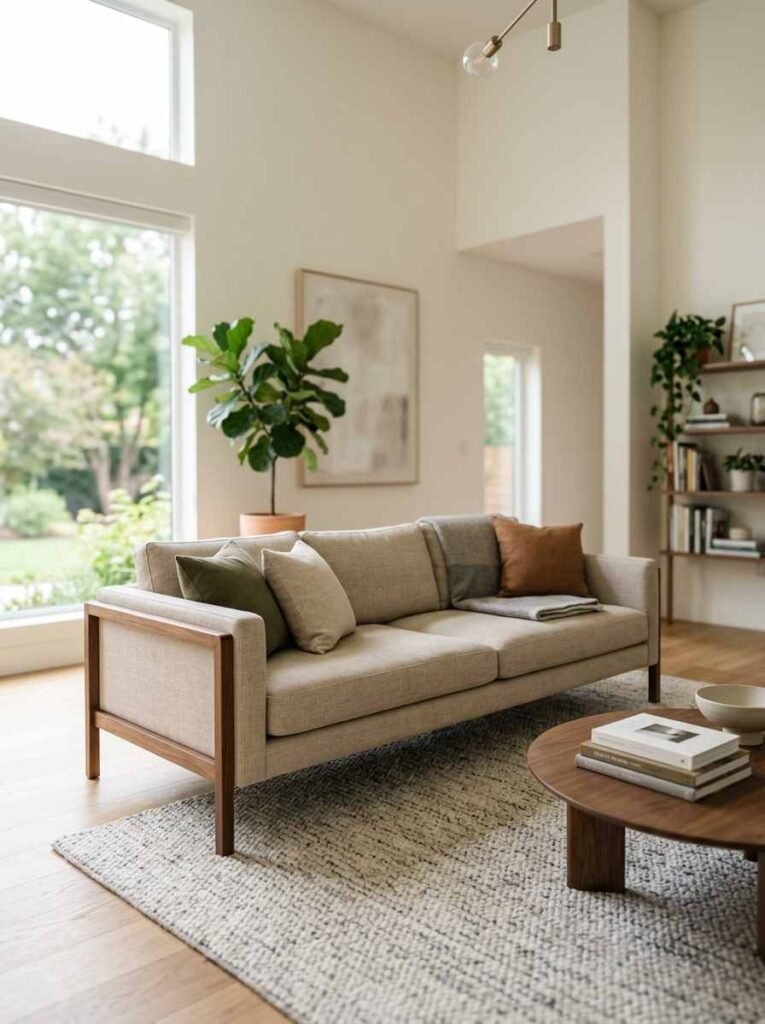
A single large plant, like a fiddle leaf fig or a snake plant, brings life into the room without adding clutter. Skip the windowsill army of six small succulents. One big plant makes more visual impact than five small ones competing for attention.
Use Mirrors to Expand the Space
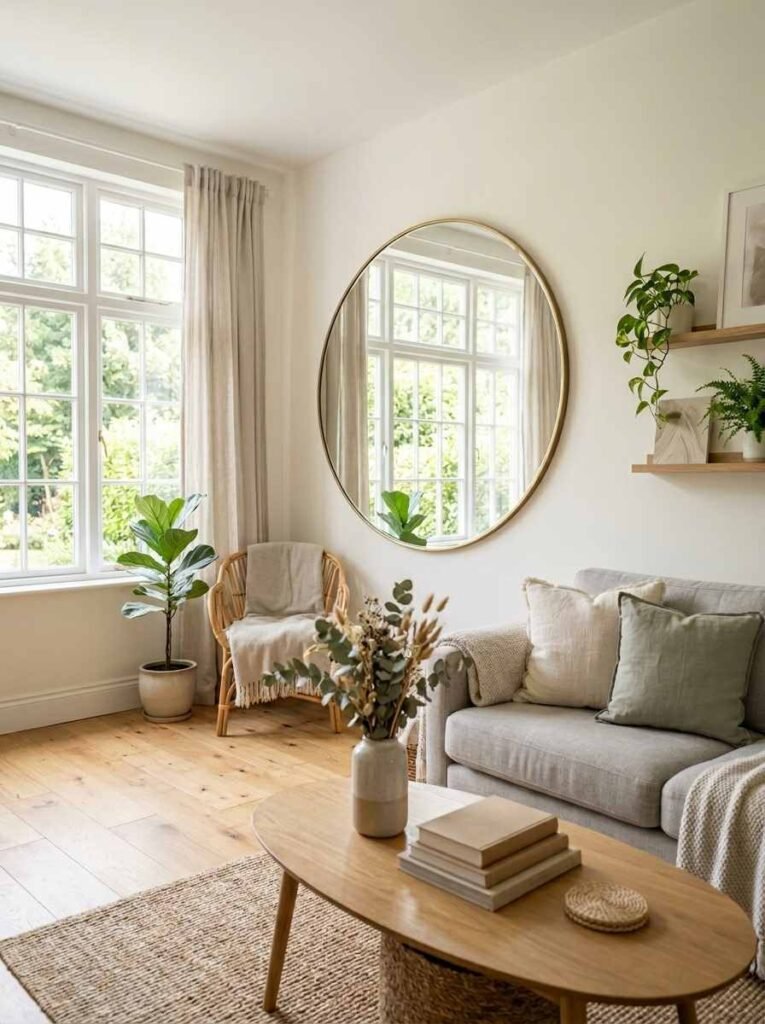
A well-placed mirror reflects light and makes a room feel roughly twice as open. Position it across from a window or near a light source for the best effect.
Stick to One Pattern Per Room
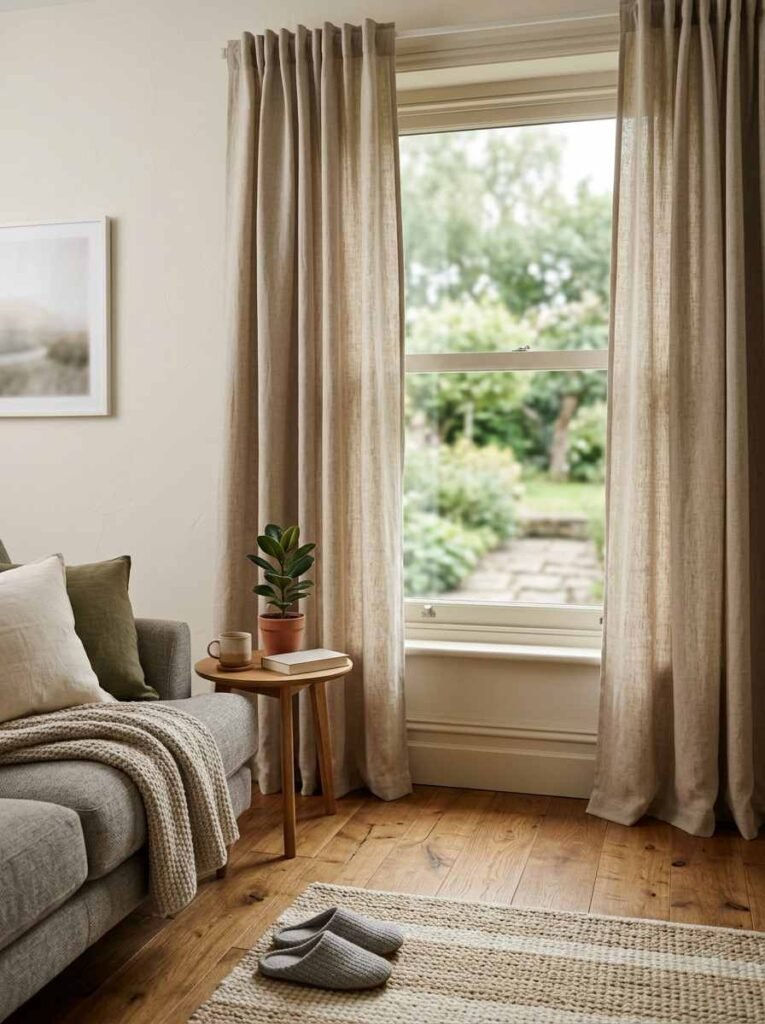
If your rug has a pattern, keep your throw pillows solid. If your curtains have texture, keep your upholstery simple. Competing patterns are a fast track to visual chaos, even in a small dose.
Choose a Low-Profile Sofa
A sofa with a lower back and clean lines reads as more spacious than a tall, bulky one, even at the same square footage.
Look for straight or slightly tapered arms instead of rolled or tufted designs.
Keep Your Coffee Table Empty-ish
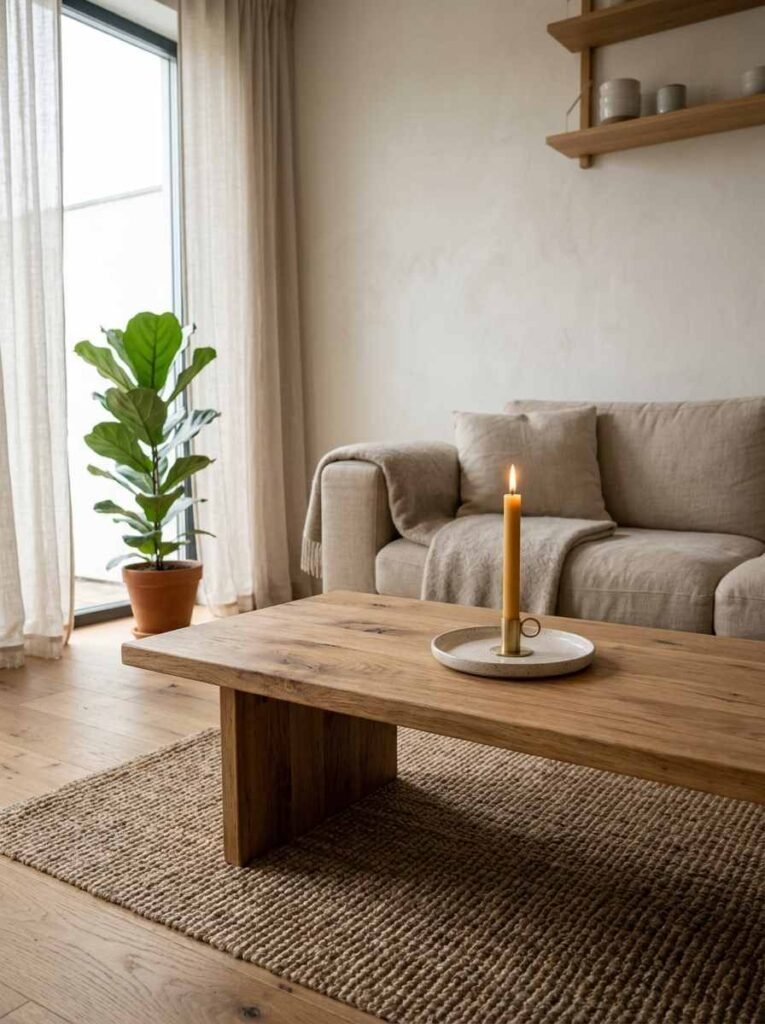
I get it, coffee table books are cute. But stacking five of them with a candle, a vase, a tray, and a remote control basket turns your coffee table into command central.
Pick one or two items and call it done.
Use Blackout Curtains That Still Look Soft
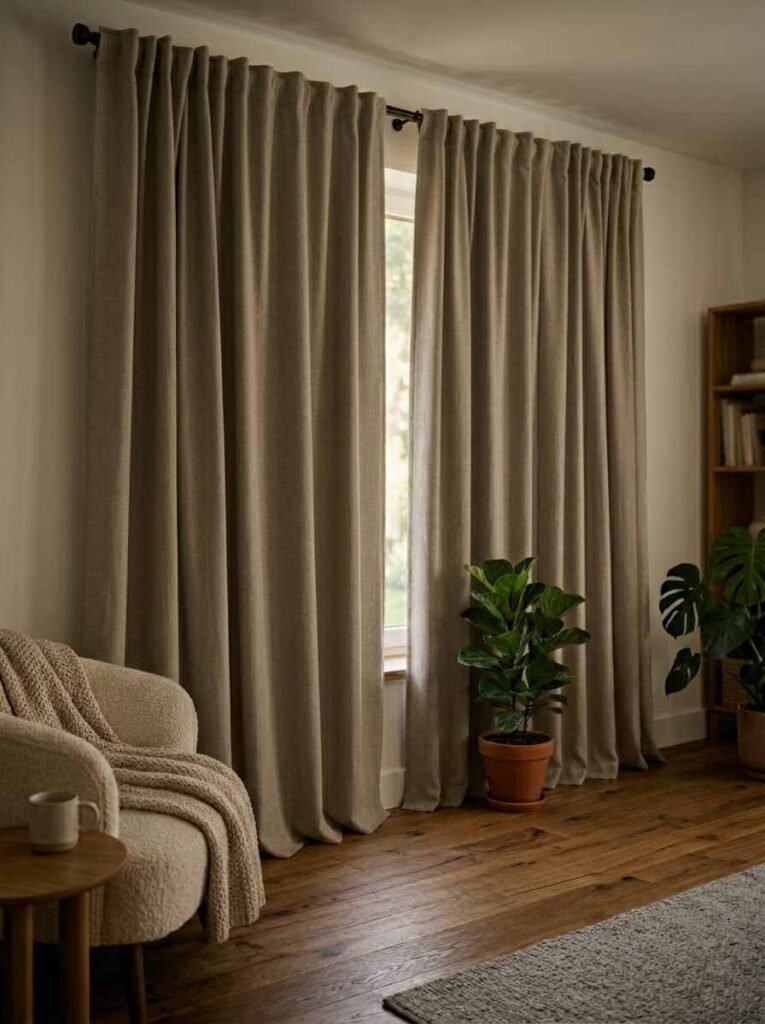
You can have function and form. Look for blackout curtains in linen-look fabric instead of the shiny, hotel-conference-room style ones.
They block light just as well and look ten times better.
Add Texture Through Pillows, Not Color
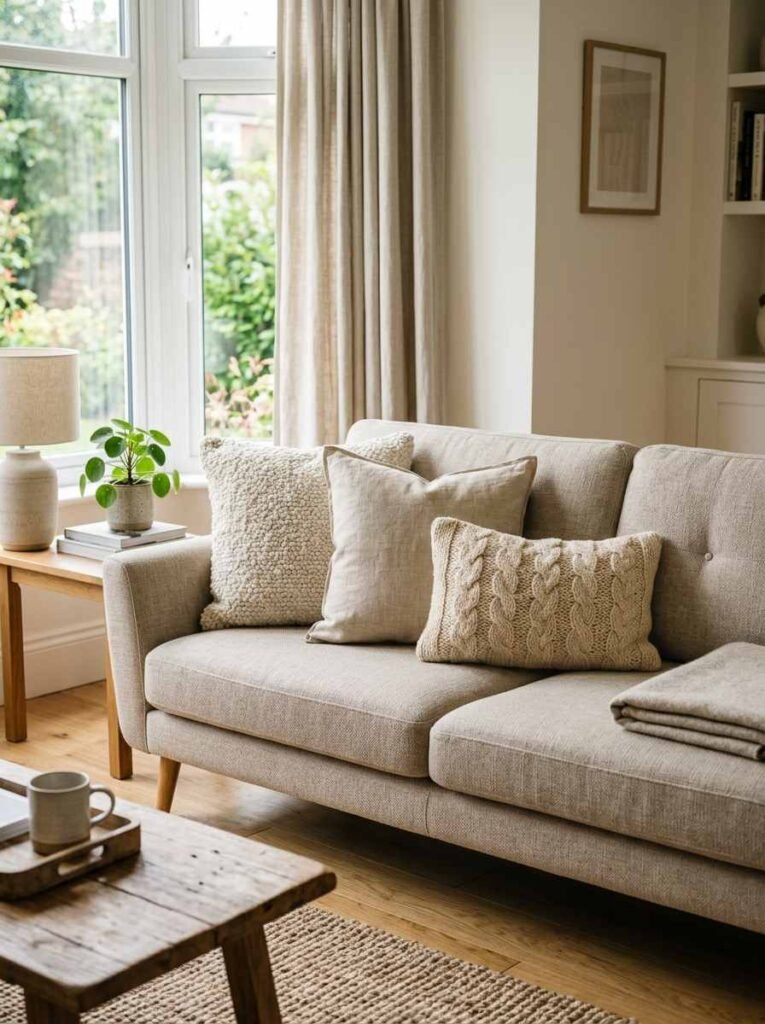
Two or three pillows in varying textures (boucle, linen, knit) in similar neutral tones add depth without breaking your color scheme.
Skip the mismatched pattern pillow pile.
26 Best Room Decor for Men Minimalist Ideas for a Clean Aesthetic
Float Your Furniture Away From Walls
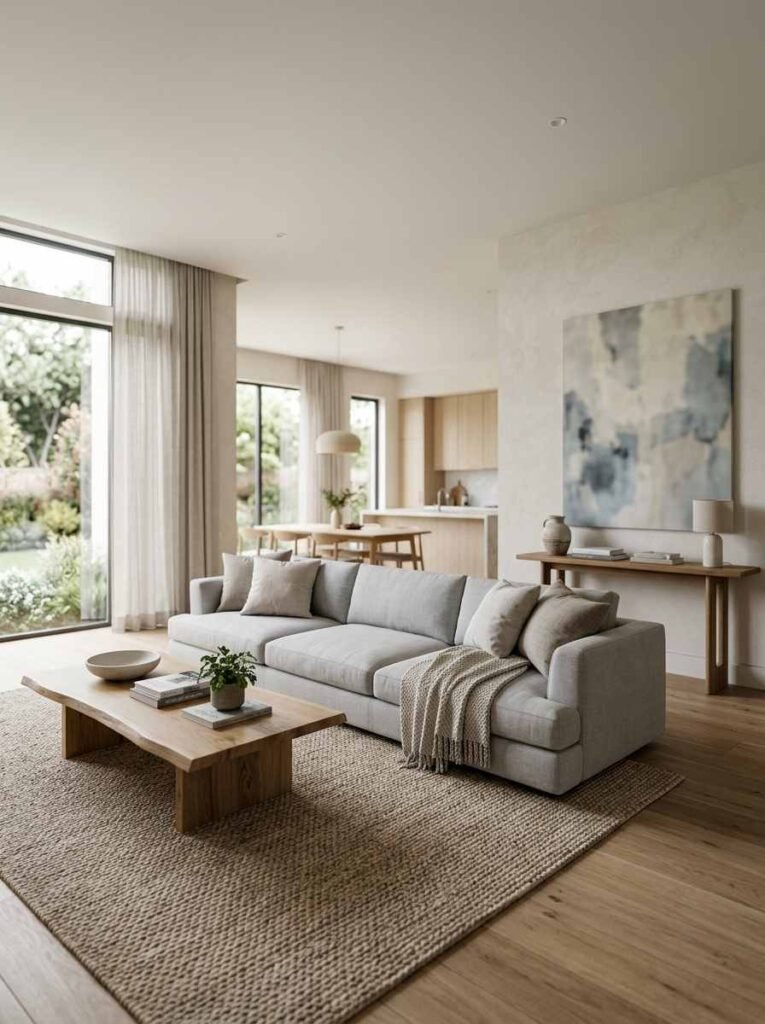
Counterintuitive, but pulling your sofa even 6 inches off the wall creates a sense of intentional layout instead of “we shoved everything against the perimeter.” It works especially well in open-concept apartments.
Use a Console Table Behind the Sofa
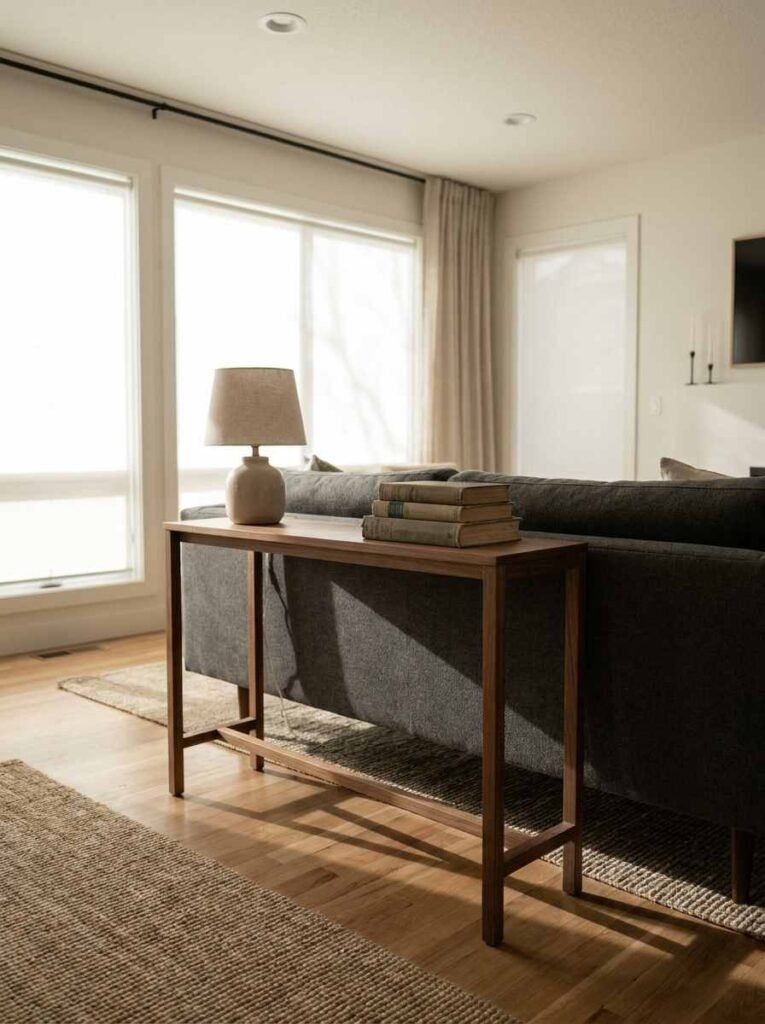
If your sofa floats in the middle of the room (hello, open floor plans), a slim console table behind it adds function and anchors the space.
Use it for a lamp, a small plant, or a stack of books.
Choose Curtains That Touch the Floor
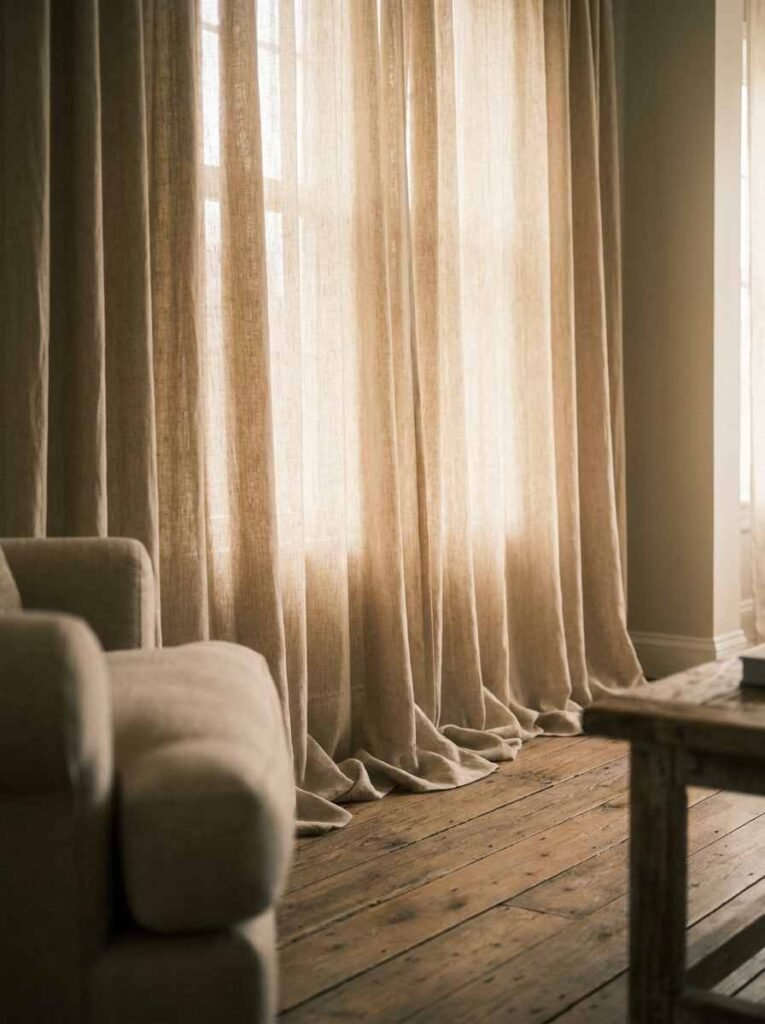
Curtains that stop short of the floor read as cheap or unfinished, even on a great window. Hem them so they just graze the floor or “puddle” slightly for a softer look.
Add a Throw Blanket With Intention
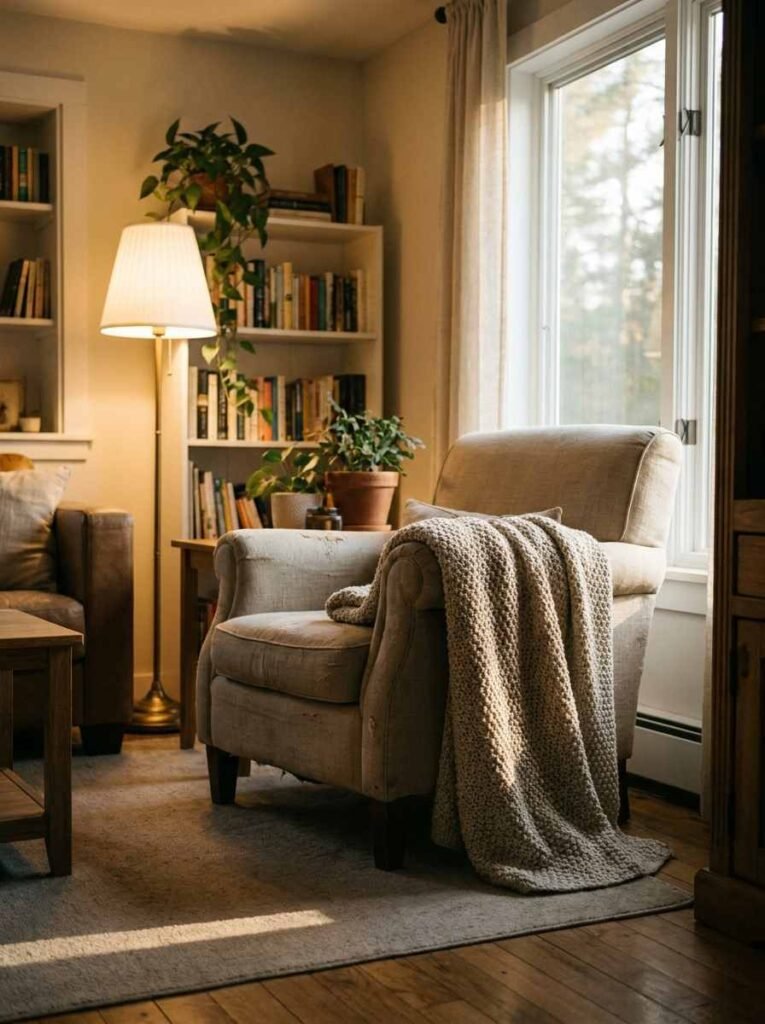
One blanket, draped (not bunched) over the arm of your sofa or folded at the foot, adds warmth and texture.
Five blankets stuffed in a basket defeats the purpose.
Use Negative Space on Your Shelves
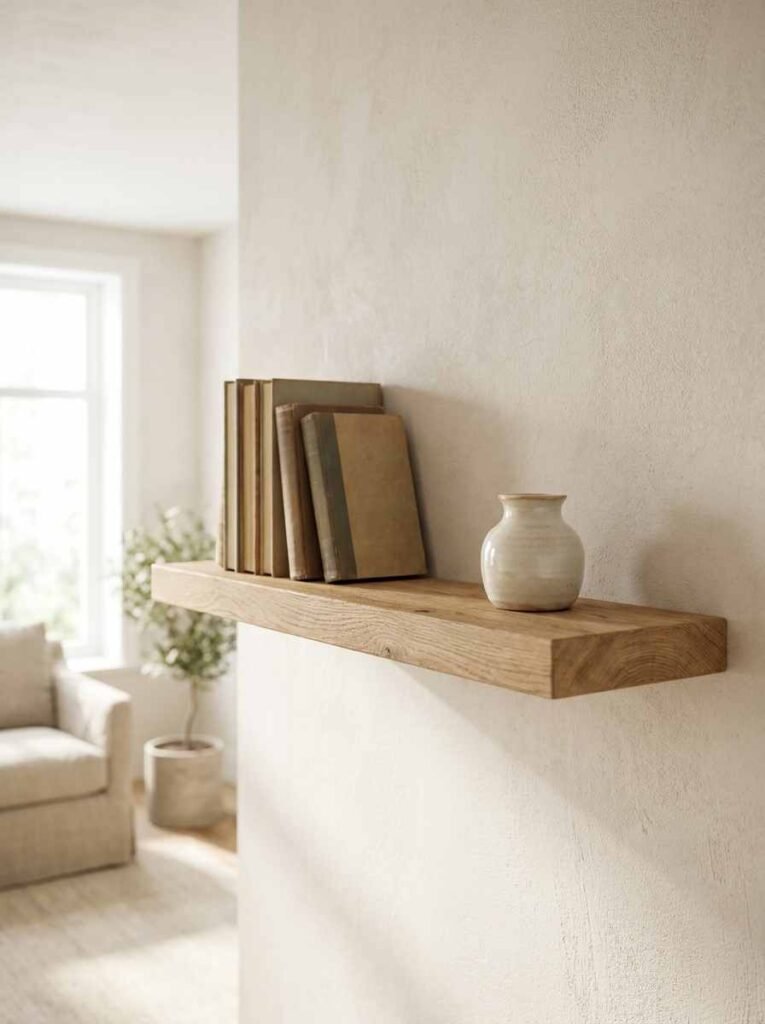
Bookshelves don’t need to be full. Leave gaps. Lean a few books instead of stacking all of them upright. Add one small object per shelf section instead of filling every inch.
Keep Your TV Setup Simple
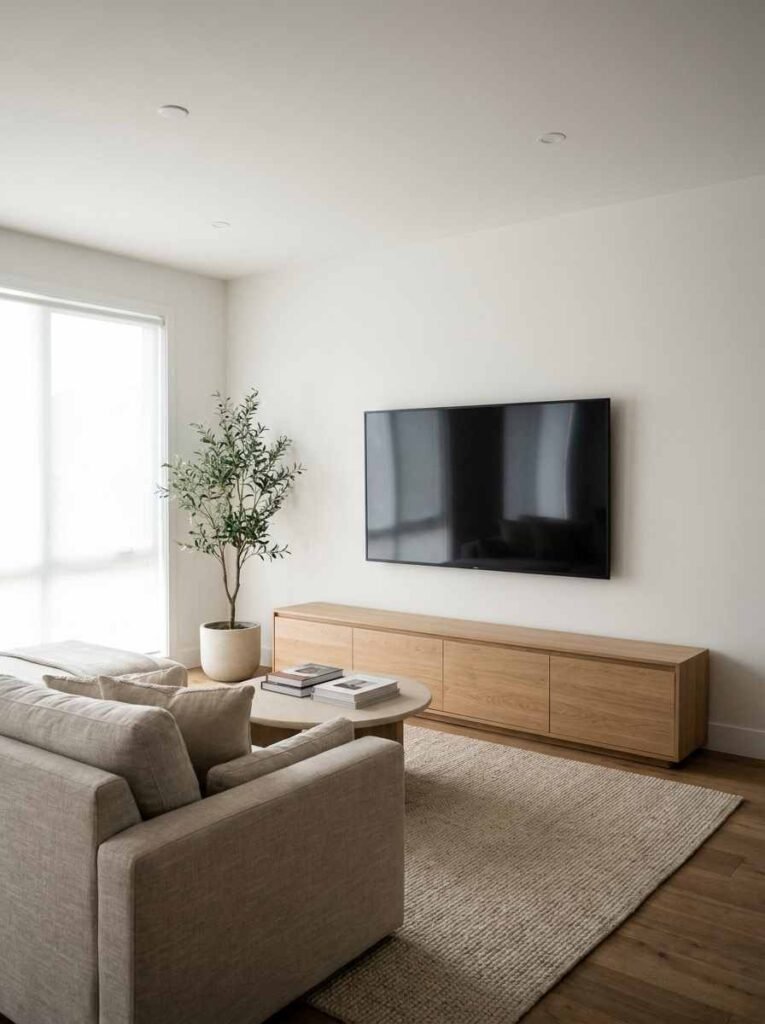
A wall-mounted TV with a slim console below (rather than a bulky entertainment center) keeps the wall visually quiet. If you can hide the cords too, even better.
We covered that one already, but it’s worth the reminder. 🙂
Add One Sculptural Object
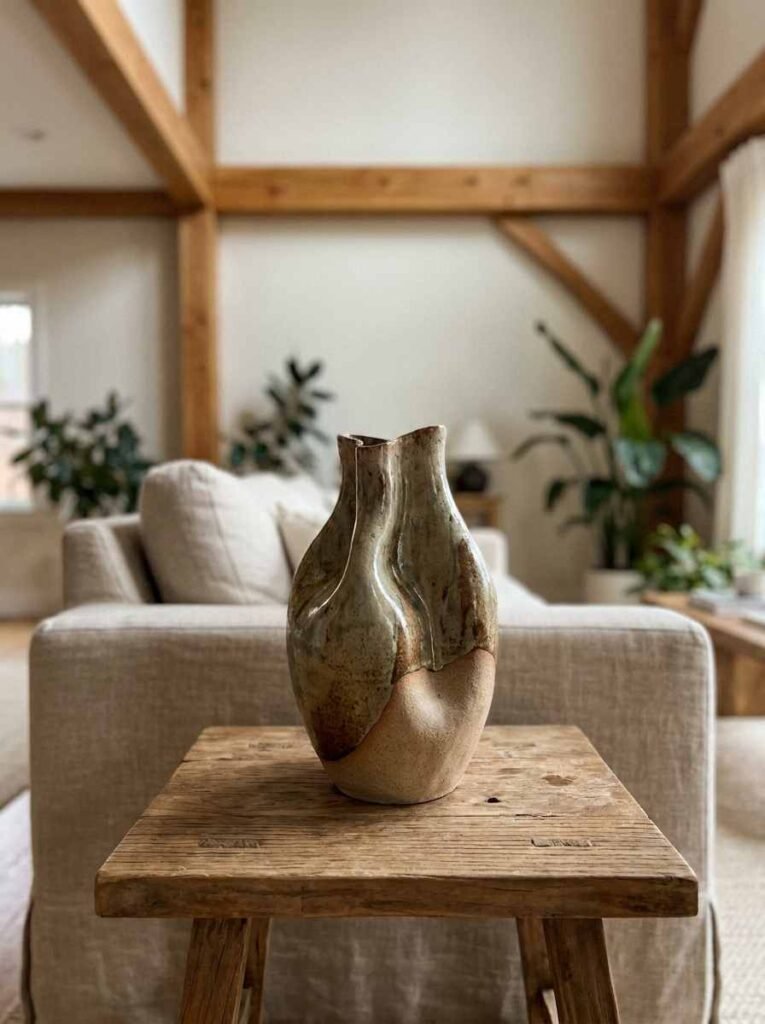
A ceramic vase with an interesting shape, a small abstract sculpture, or even a unique bowl gives your eye somewhere to land. One well-chosen object beats a shelf full of trinkets every time.
Trust the Process, Not the Trend
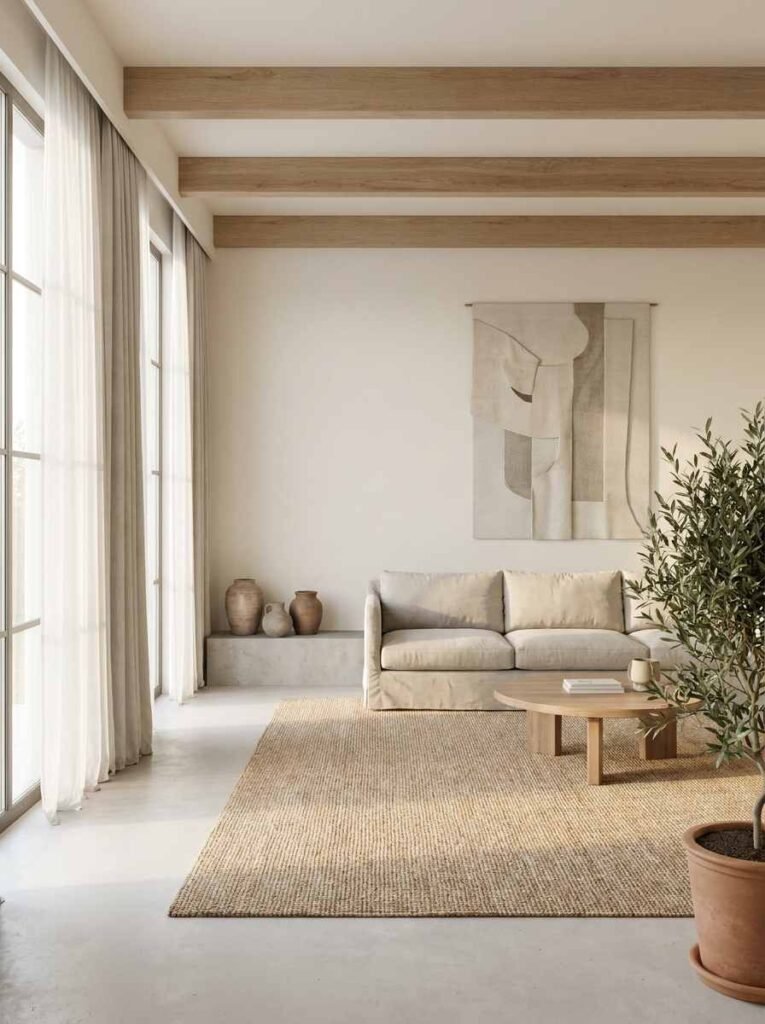
Minimalism isn’t about chasing the next aesthetic that pops up on your feed.
It’s about building a living room that feels calm every single day, regardless of what’s trending this month.
Twenty-eight ideas, zero overwhelm (hopefully). The best part about minimalist decor is you don’t need to overhaul your whole apartment at once.
Pick three or four of these, live with them for a few weeks, then add more.
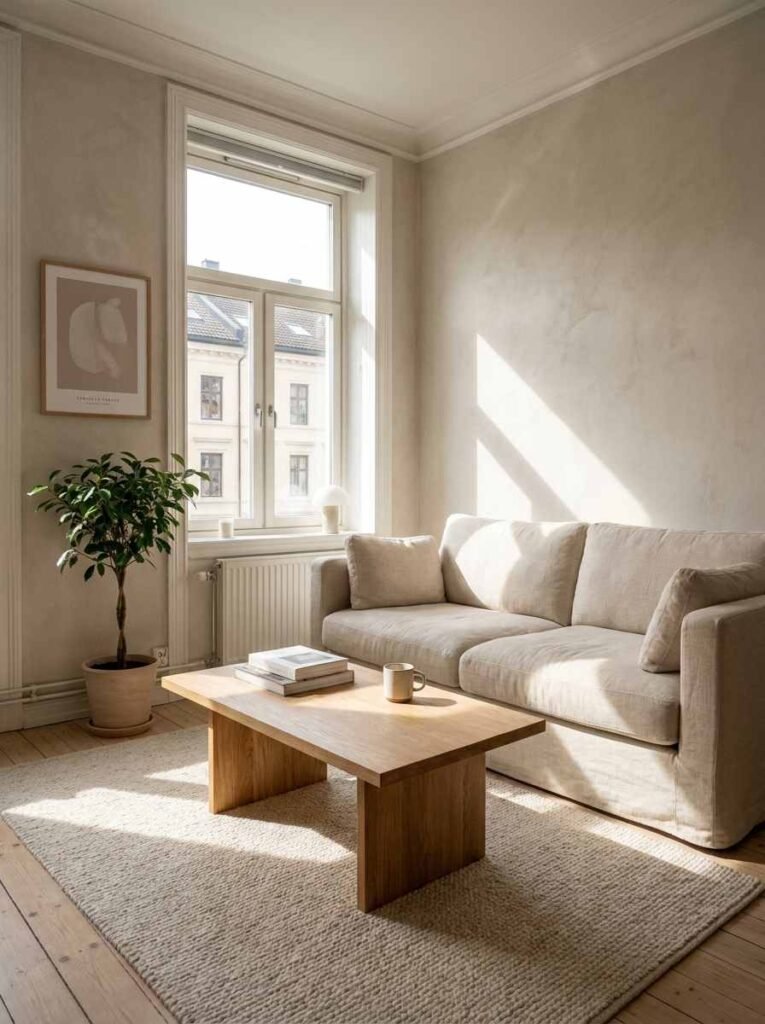
Your living room should feel like a place you actually want to sit in, not a showroom you’re afraid to mess up.
So go pull that rug six inches off the wall and see how it feels. FYI, it’s a smaller change than you’d think, but it makes a difference.
