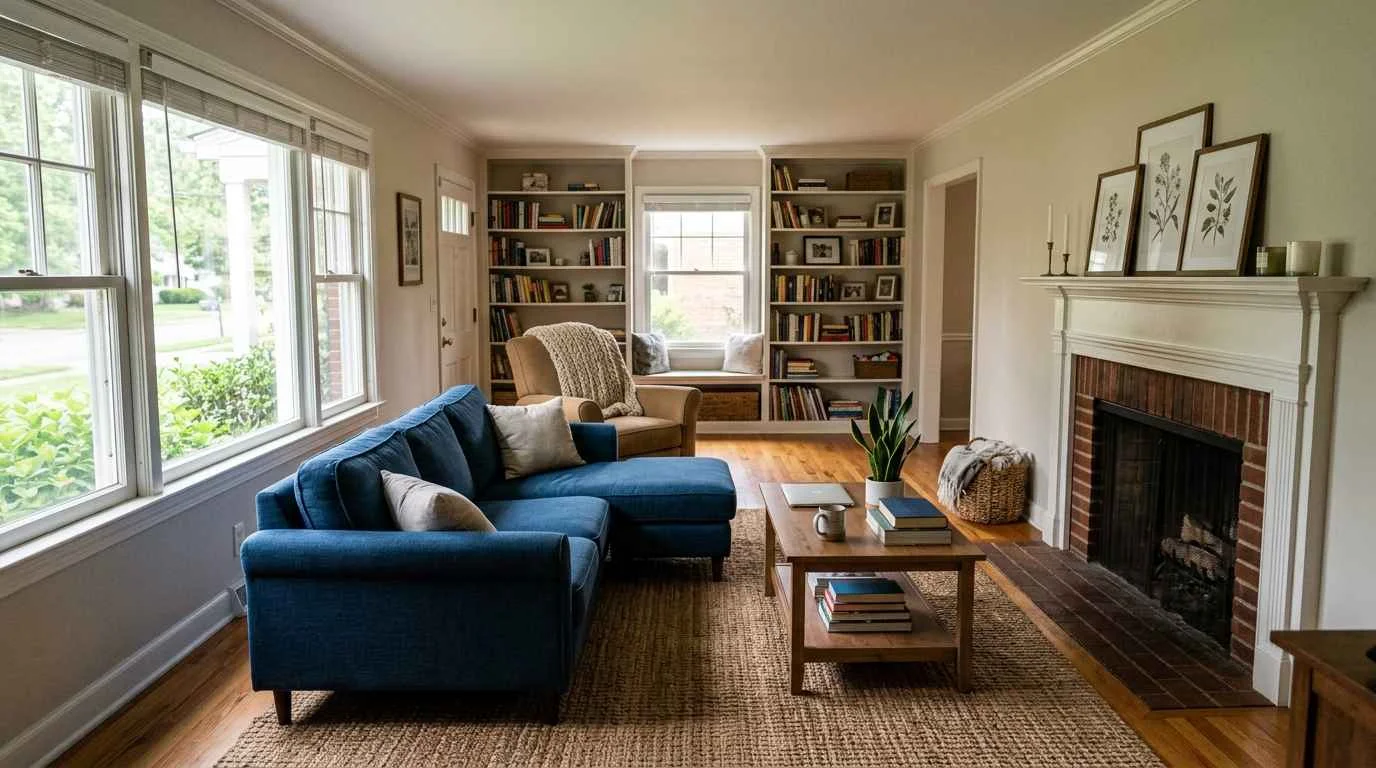
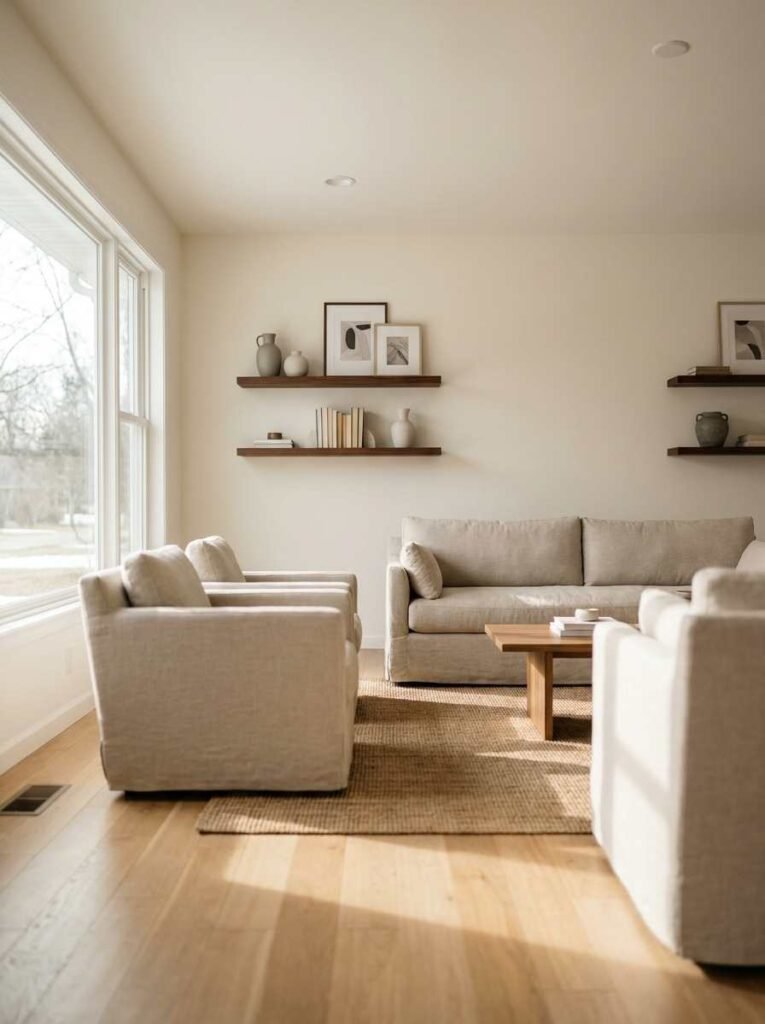
My shelves used to look like a clearance bin. Mismatched candles, three photo frames from three different eras, a fake succulent I bought in 2019 and never once dusted.
Then I gutted the whole setup and started over with one rule: every item has to earn its spot.
That’s the entire philosophy behind minimalist shelf styling.
Every shelf gets room to breathe, and the eye gets somewhere to land instead of bouncing around ten different objects.
It’s also why minimalist shelves photograph so well for Pinterest boards.
Less stuff means less competing for attention in the frame, and it’s a lot easier to recreate a clean shelf from a single saved pin than a busy one with twelve tiny objects crammed onto it.
Here are 27 ways to get there, grouped by what actually changes the look.
Start with the shelf itself
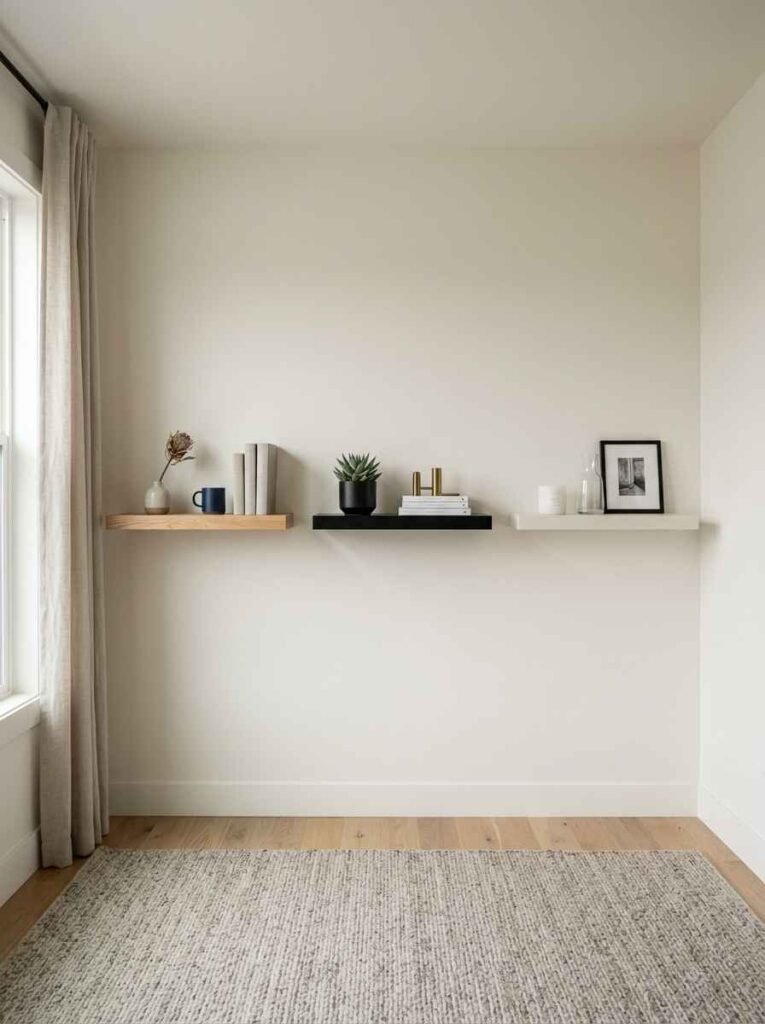
Material and shape decide more than half the look before you put anything on them. Get this part right and even an empty shelf already looks intentional.
Pick one material and stick with it. Mixing warm wood with black metal hardware in the same room reads busy fast.
Choose one finish, repeat it across every shelf in the room, and the whole space starts to feel designed instead of assembled piece by piece.
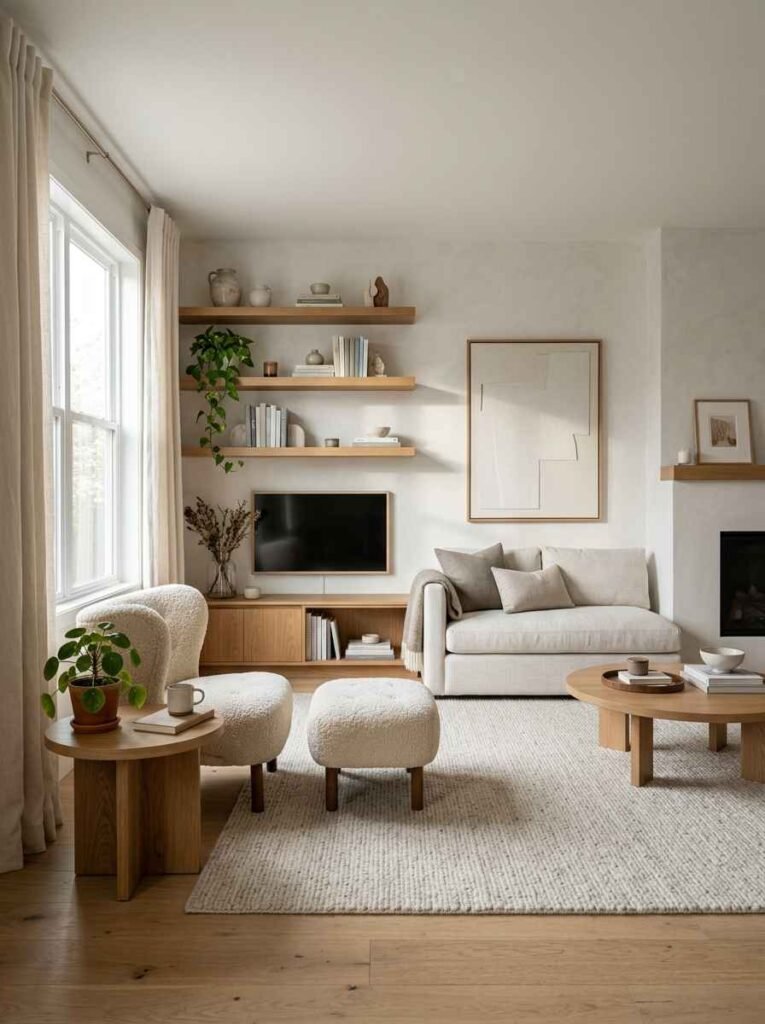
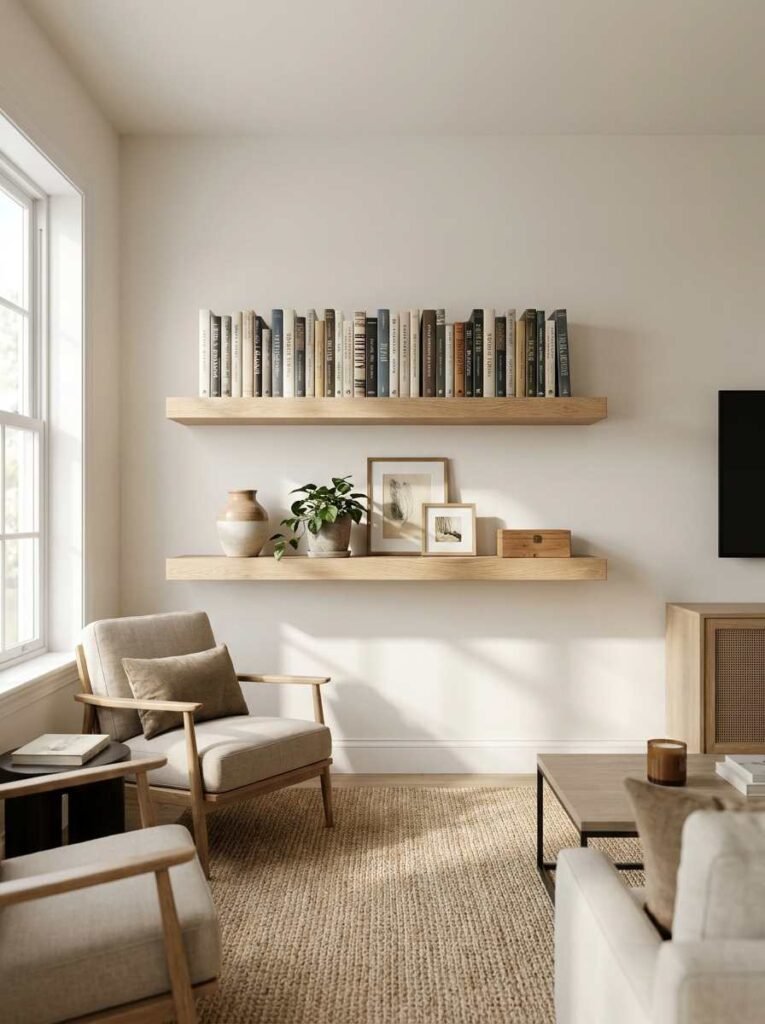
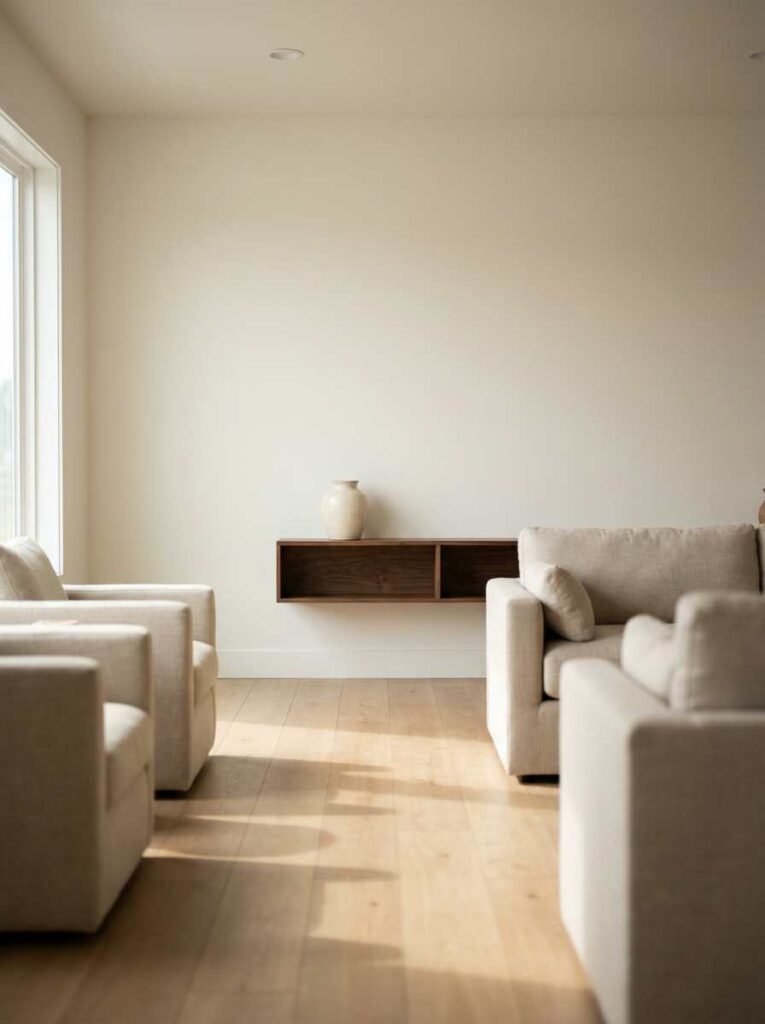
Floating shelves beat bulky bookcases. They take up less visual weight and make the wall feel more open, which is half the minimalist trick anyway.
A single floating shelf above a console table does more for a small living room than a full bookcase ever will.
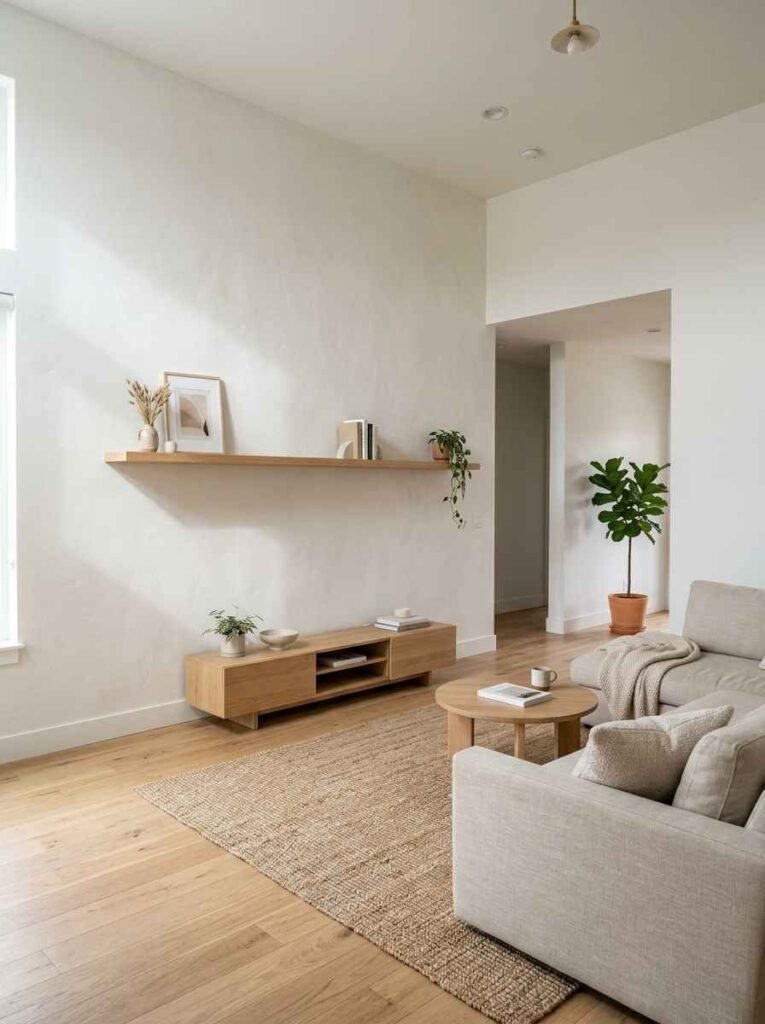
Leave one shelf empty. Sounds wrong. Looks right.
An empty shelf gives your eye somewhere to rest, and it makes everything else on the wall look more deliberate by comparison.
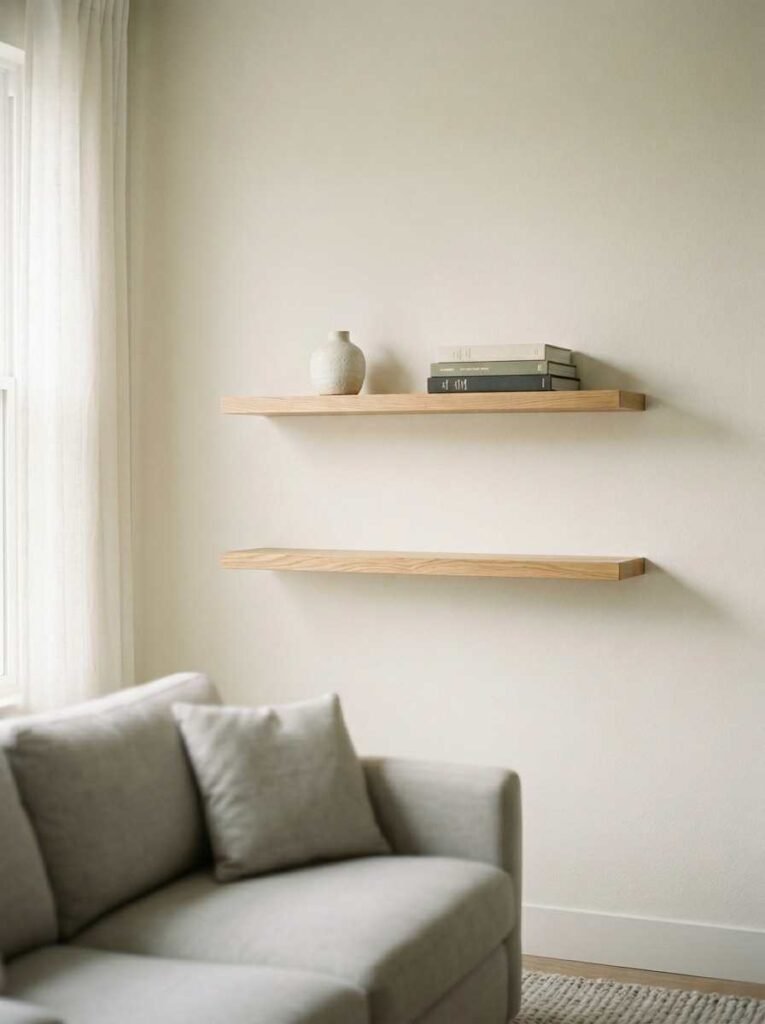
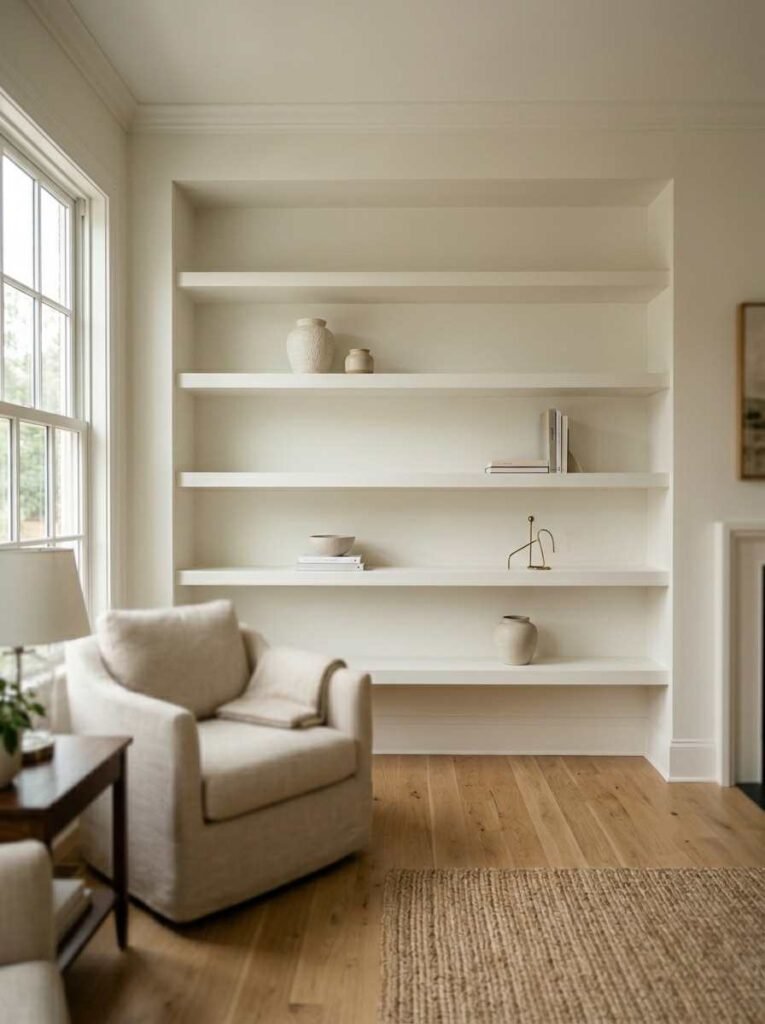
Paint the shelves to match the wall. It’s the cheapest way to fake a built-in look without hiring a carpenter. Same color, same sheen, and the shelf almost disappears into the architecture.
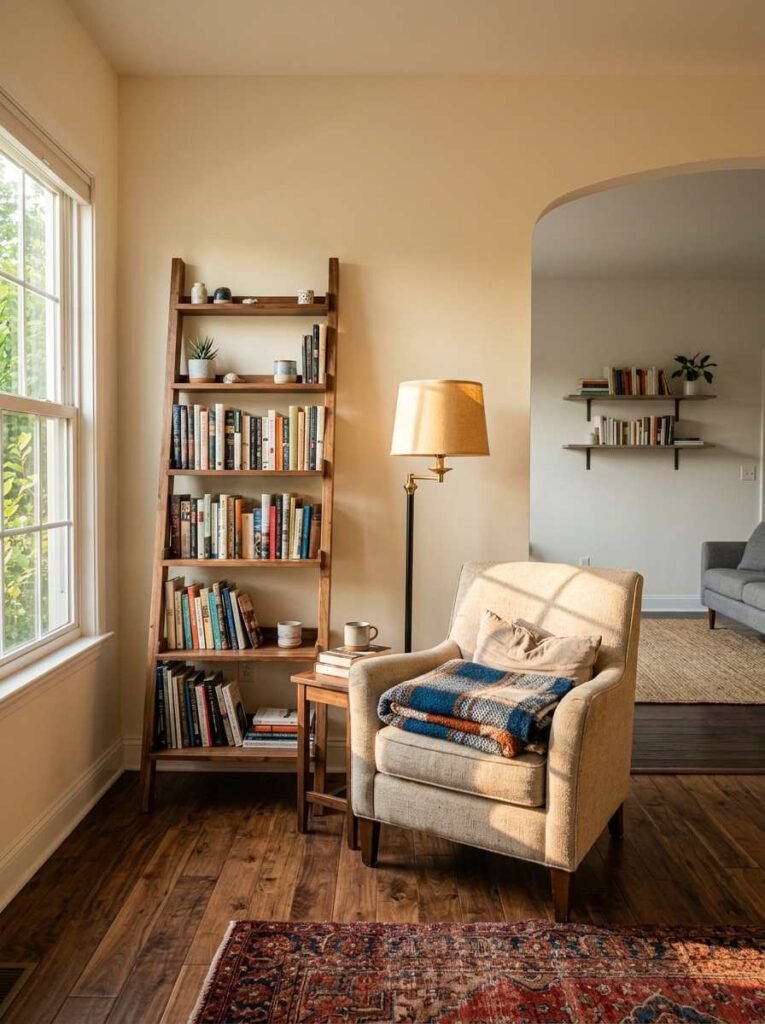
Skip the ladder shelf. It’s a fine piece of furniture, but the diagonal lines and open sides add visual noise a calm room doesn’t need.
Save it for a reading corner instead, somewhere it can be the main event.
Fewer items, paired smarter
This is where most “minimalist” shelves go wrong. People remove stuff, then cluster what’s left into a messy little pile anyway.
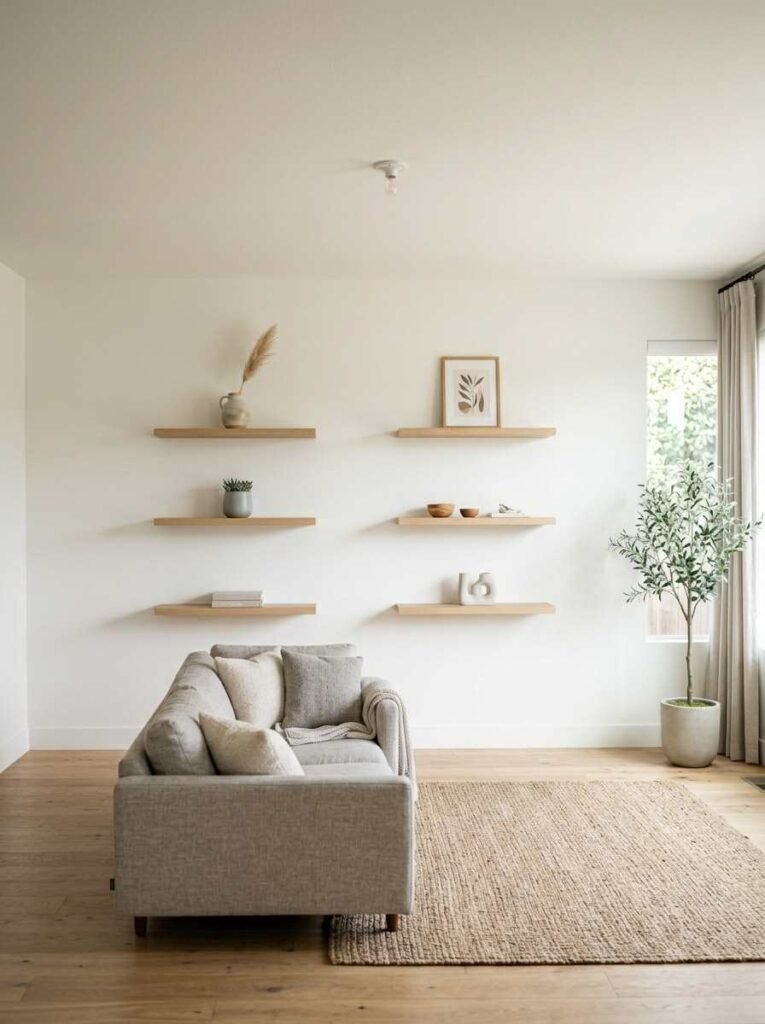
Pair objects instead of grouping them. Two items per cluster reads intentional. A pile of five starts looking like a yard sale table, even if every individual piece is nice on its own.
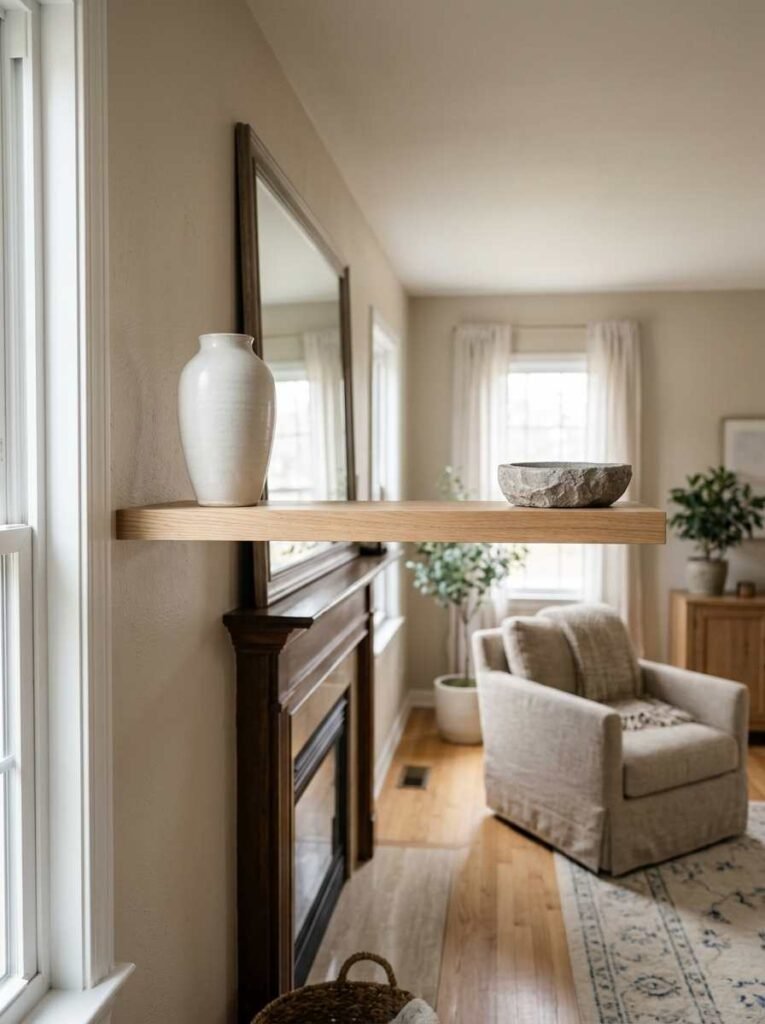
Combine one tall piece with one short piece. Height contrast does the visual work clutter used to do.
A tall vase next to a low dish covers more visual ground than five small trinkets lined up in a row.
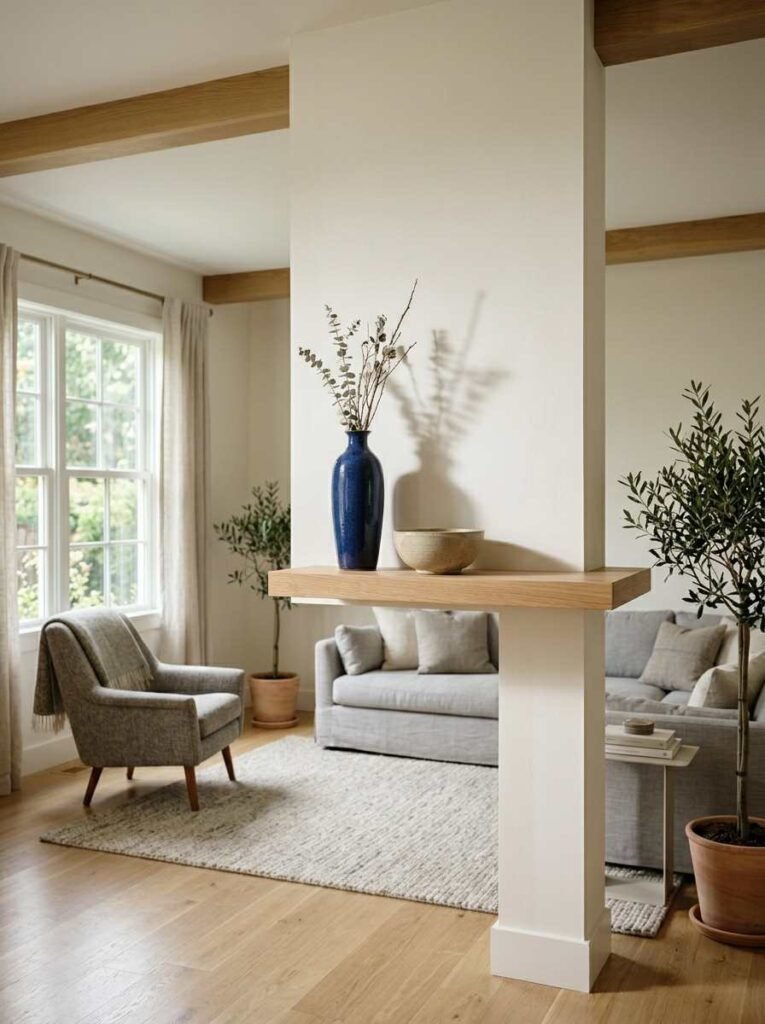
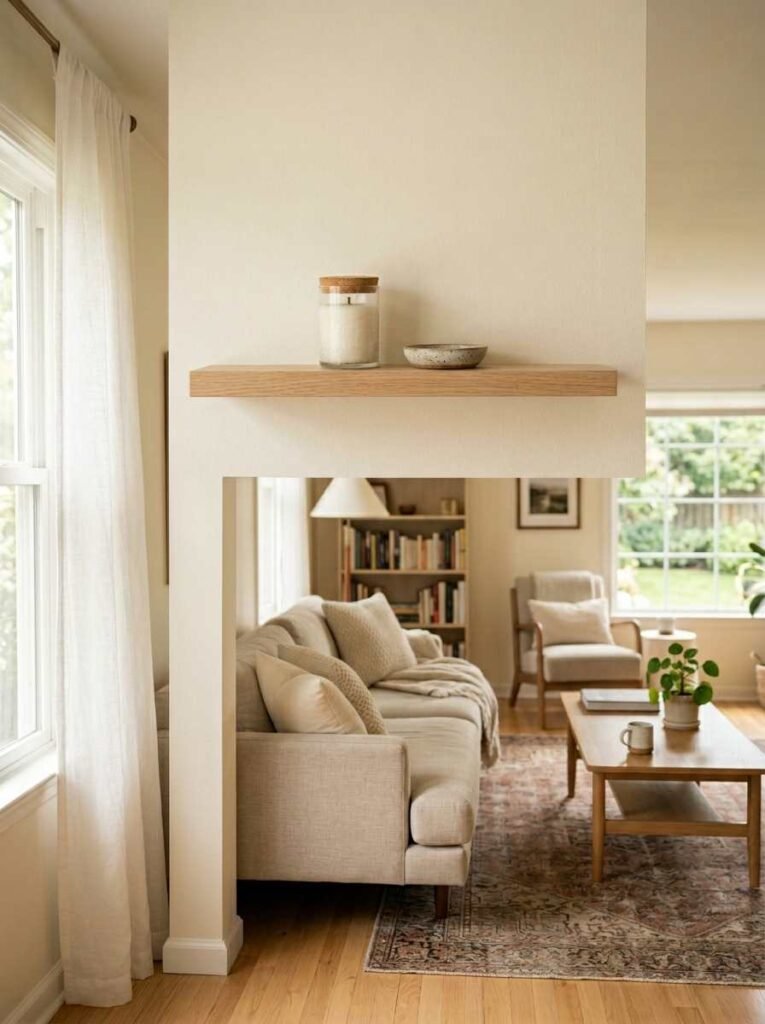
If a shelf looks finished with two things on it, stop at two. Adding a third “just to fill the gap” is how clutter sneaks back in, usually within a month.
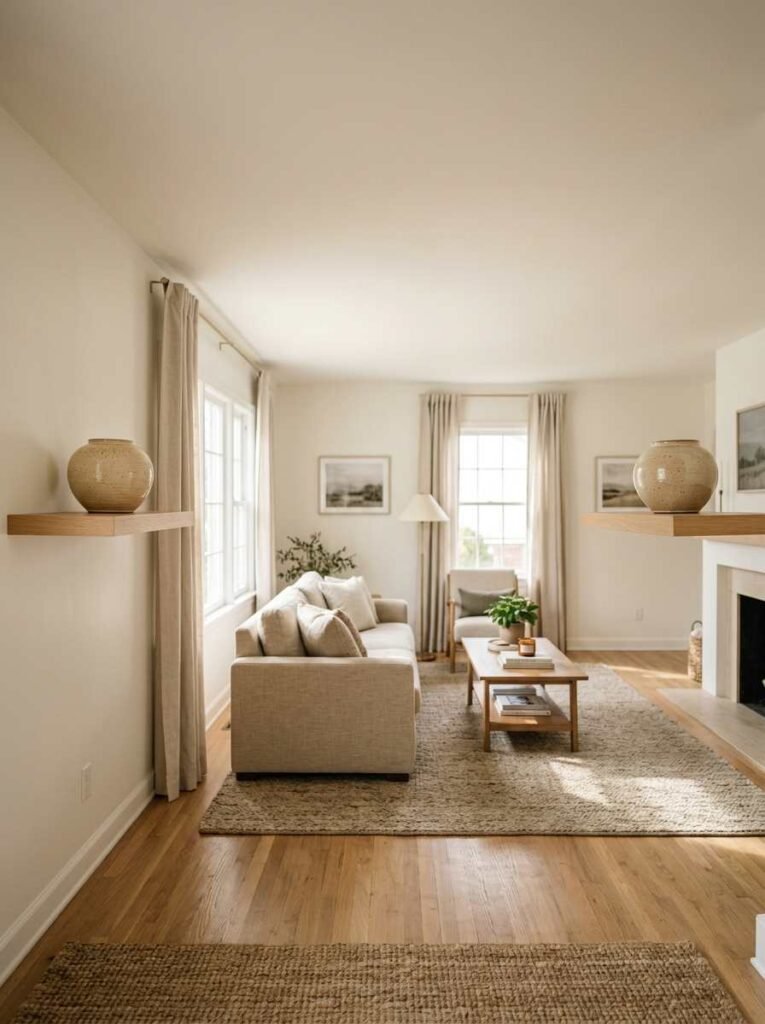
Repeat one shape across the room. All round vases, or all angular boxes. Repetition reads as a choice, not an accident, and it ties shelves on opposite walls together without anyone consciously noticing why.
A few quick numbers help here:
| Object type | How many per shelf | Why it works |
|---|---|---|
| Books | 1 stack or row | Clean line, less visual noise |
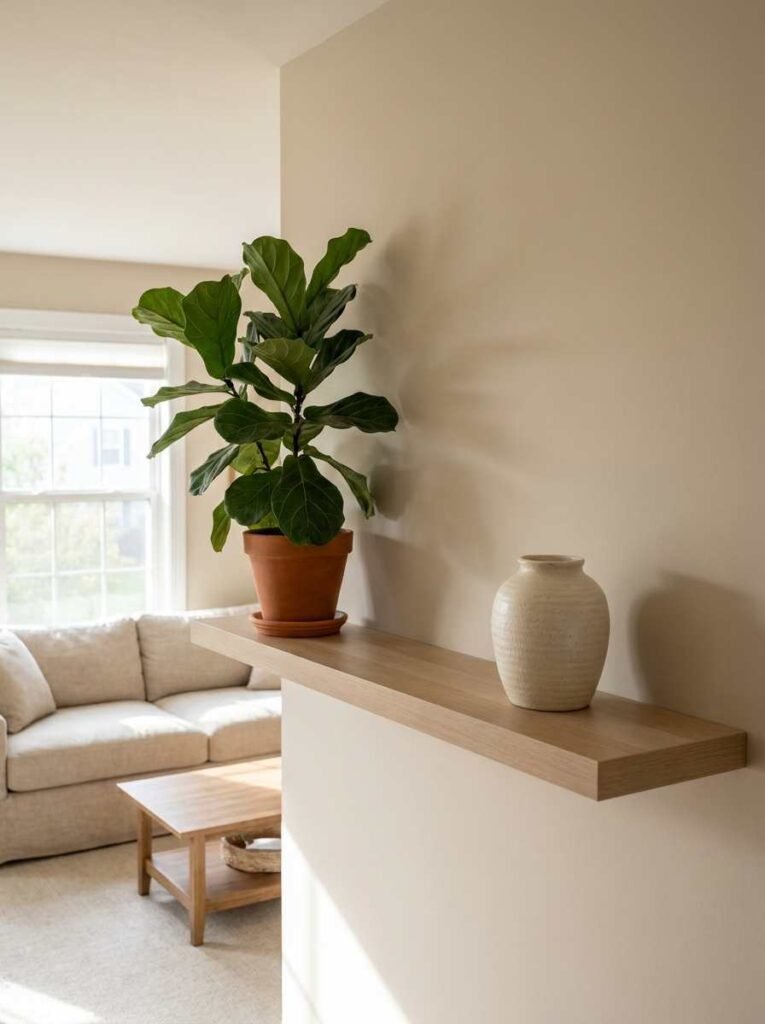
| Plants | 1 | Keeps focus on one green moment |
| Ceramics or vessels | 1 to 2 | Adds texture without crowding |
| Personal items | 1 | Adds warmth without piling up |
Books, but quieter
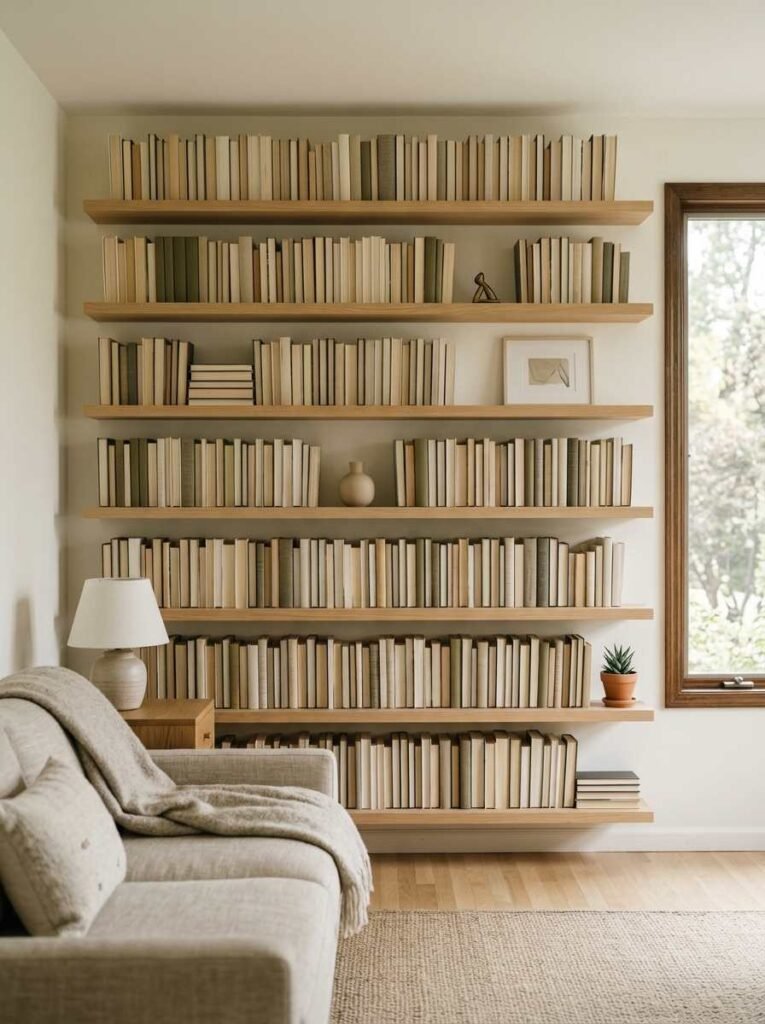
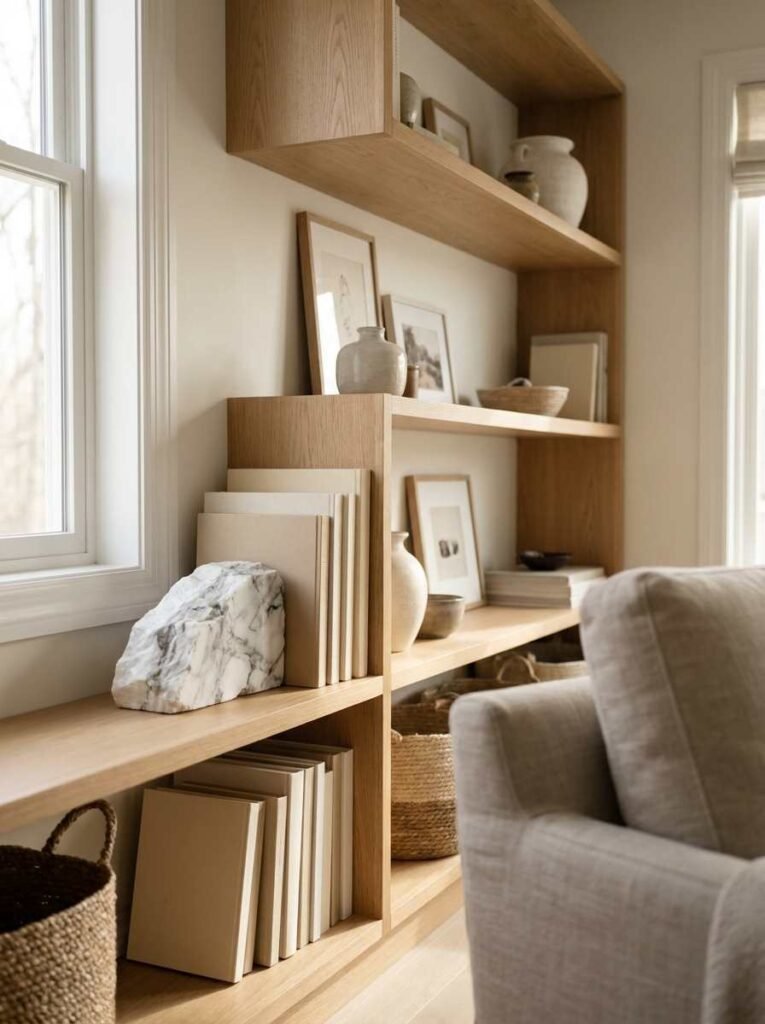
Stack books spine-in for a monochrome wall. You lose the rainbow of book covers but gain a calmer wall instantly.
It works best with hardcovers, since the bare pages give you a more even texture than mixed paperback spines.
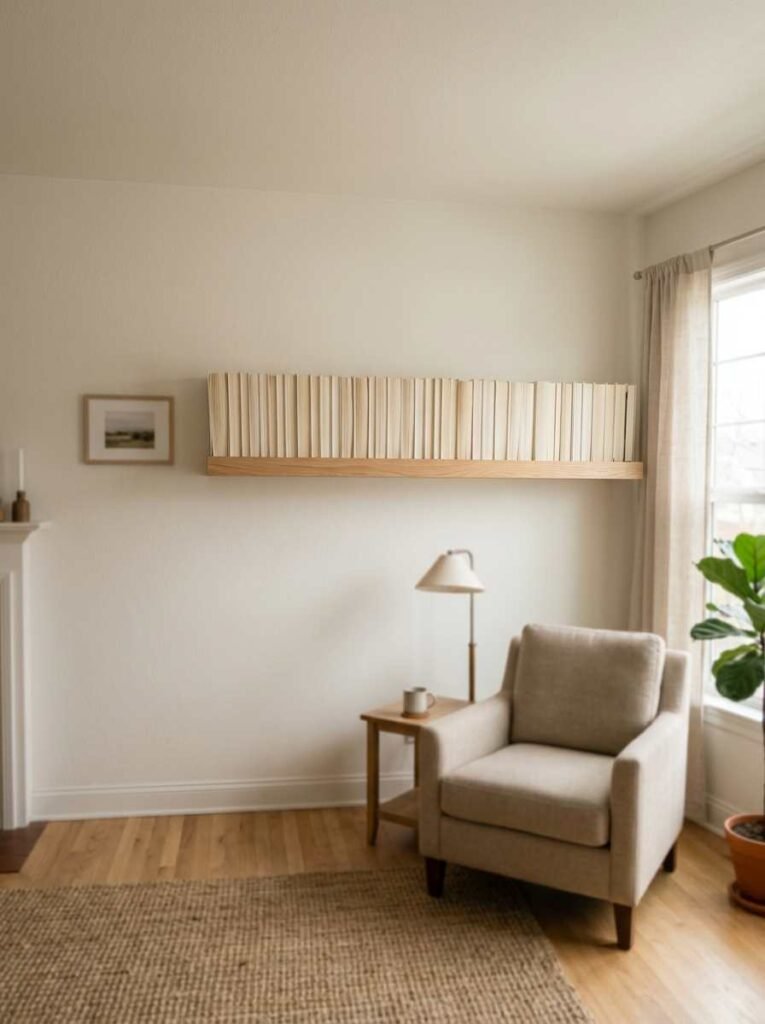
Stack 2 to 3 books flat and top them with one object. A small bowl or a single smooth stone works. It turns a stack of books into a tiny pedestal instead of just a pile.
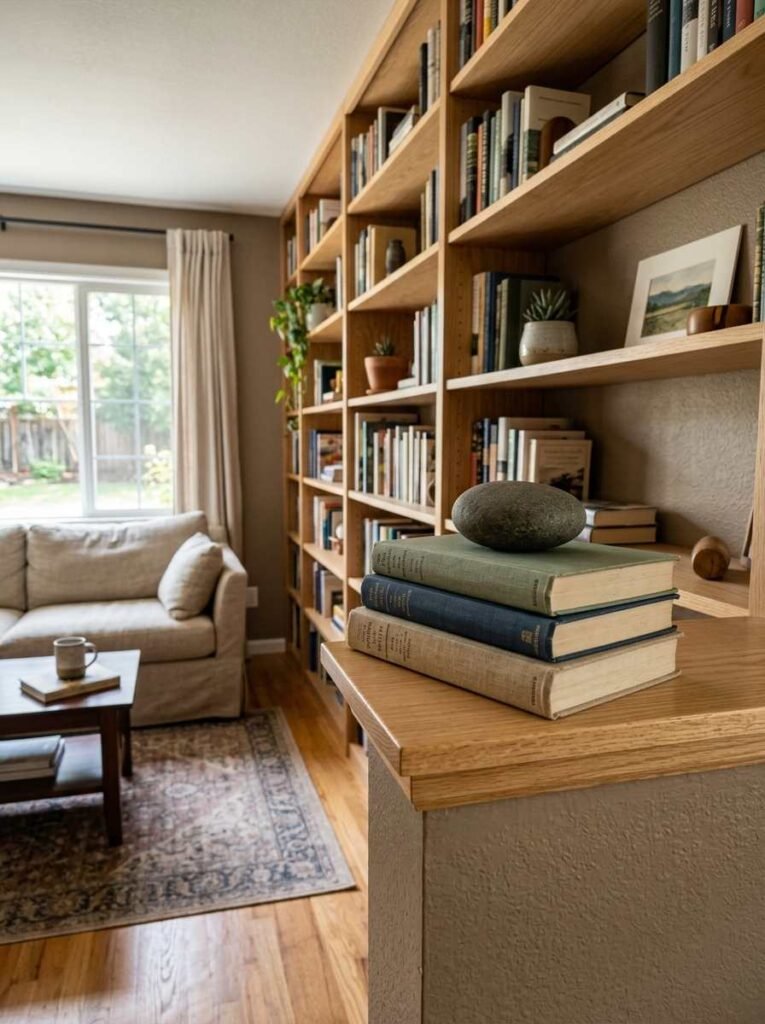
Give one shelf to books only. No decor mixed in. A purely functional shelf actually makes the styled ones look more intentional, almost like a palate cleanser between the decorative sections.
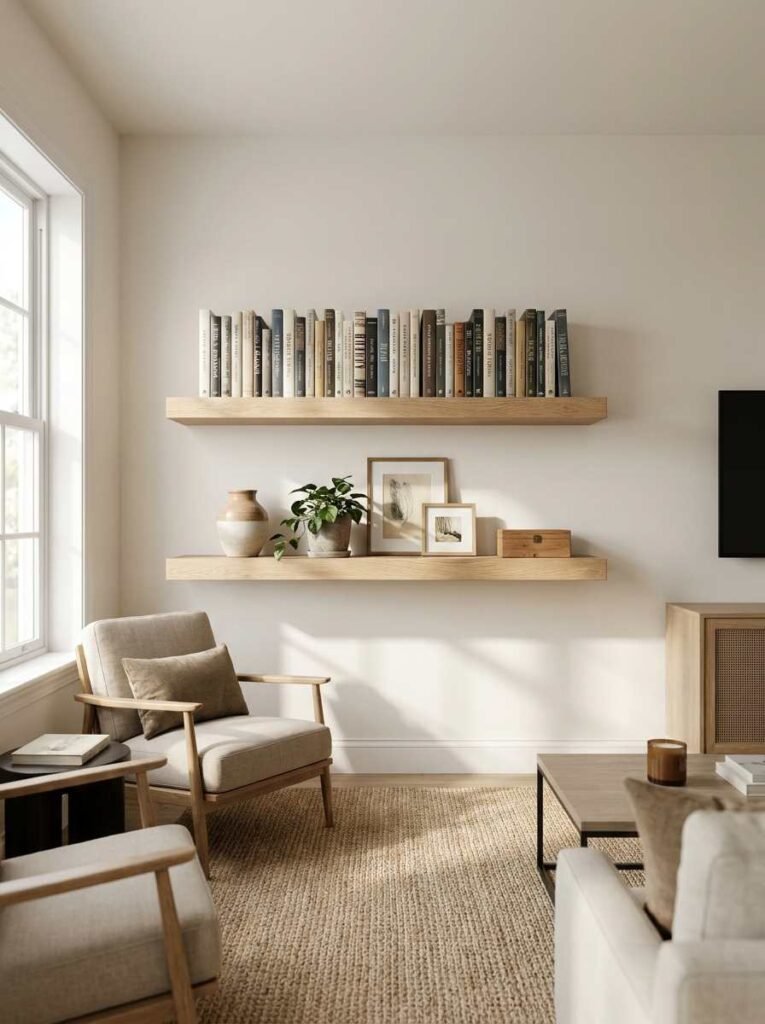
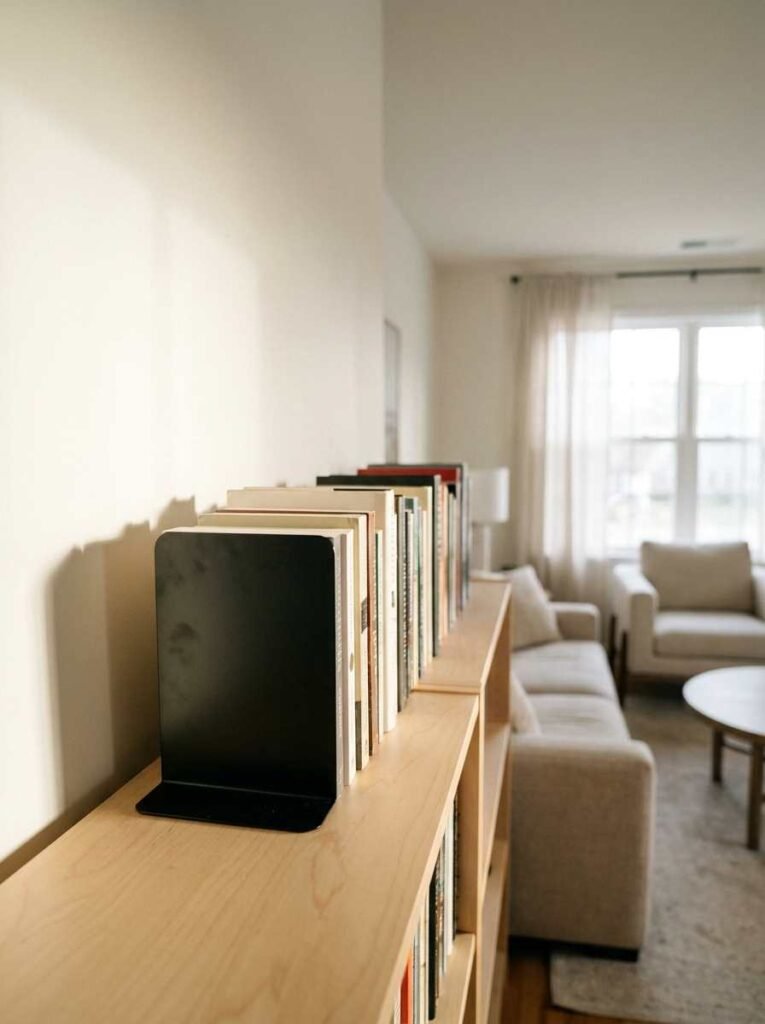
Use a single bookend, not a pair. One sturdy bookend at the open end of a row reads more deliberate than two, and it leaves the other end loose enough to add or pull books without rearranging anything.
Brass or matte black both photograph well against light wood.
Texture without the noise
Once the bones and the books are sorted, texture is what keeps a minimal shelf from feeling cold. A little roughness goes a long way.
24 room decor for men minimalist inspirations every man needs
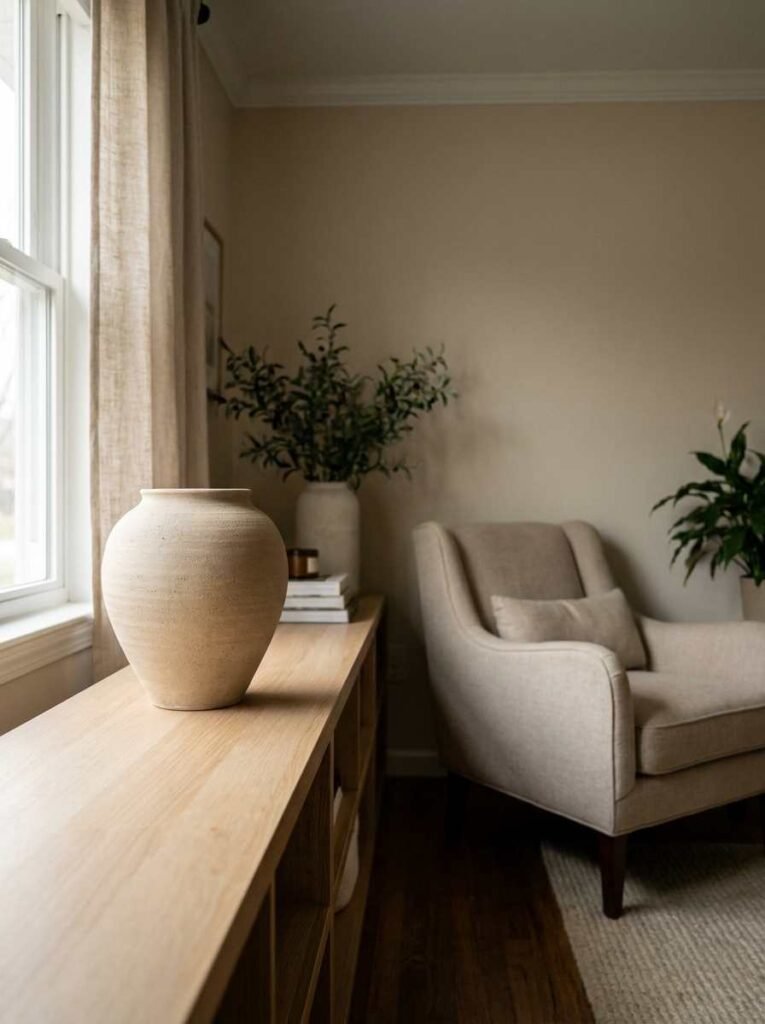
Add one ceramic vessel, unglazed or matte. Texture without shine keeps the whole shelf calm. A raw stoneware vase does more for the mood than a glossy one ever could.
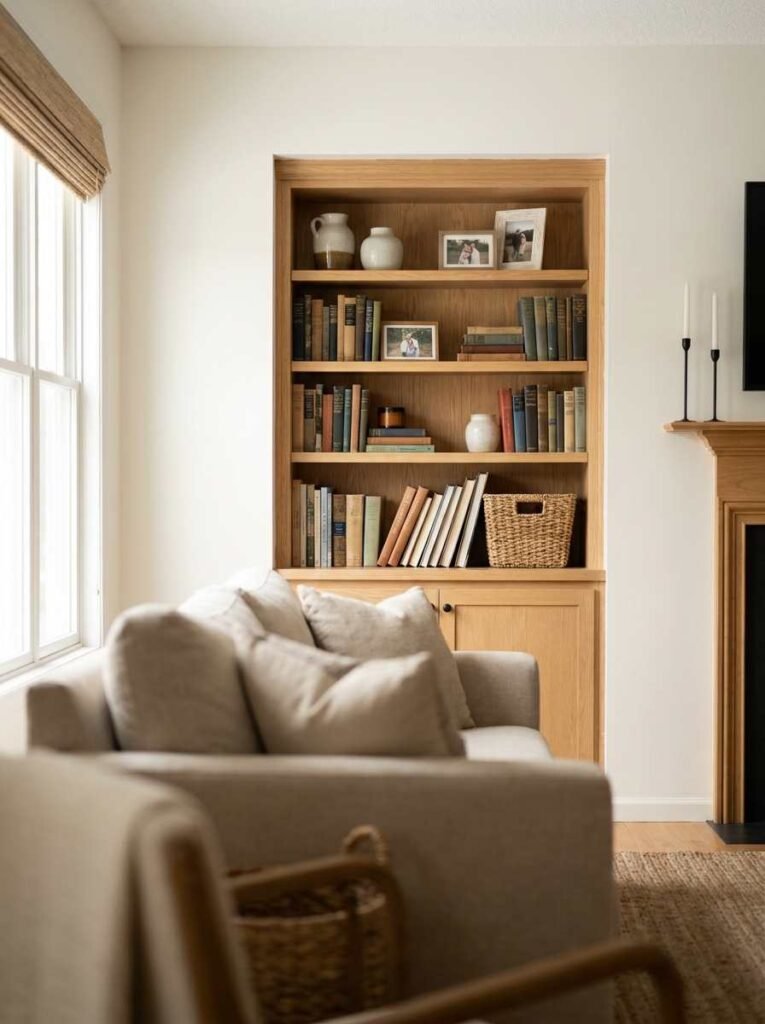
One woven basket softens hard edges. Rattan or seagrass works. Just one is plenty, and it’s a good spot to tuck away small clutter you don’t want sitting out in the open.
A chunk of raw stone or marble can act as a paperweight-style accent. It’s heavy, literally and visually, so it anchors a shelf on its own without needing anything else around it.
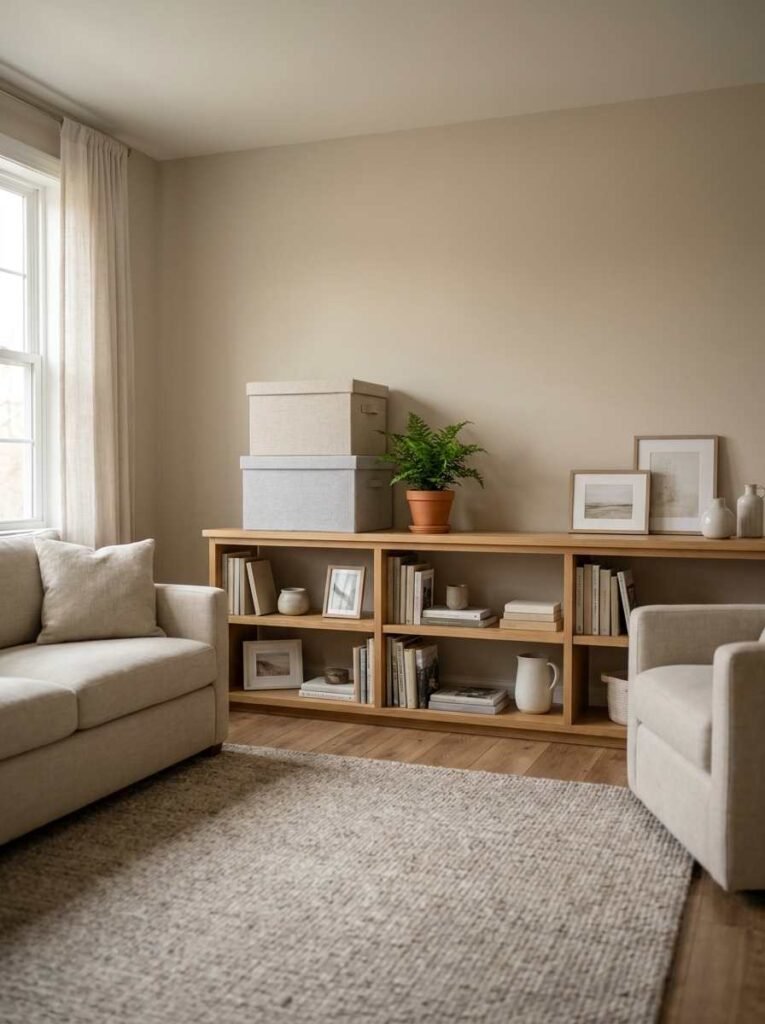
Linen-covered boxes hide clutter and add texture at the same time. Chargers, remotes, whatever you don’t want visible just goes inside, and the shelf still looks finished from across the room.
Stick to one or two boxes per shelf so they read as decor and not storage.
Plants, the minimalist way
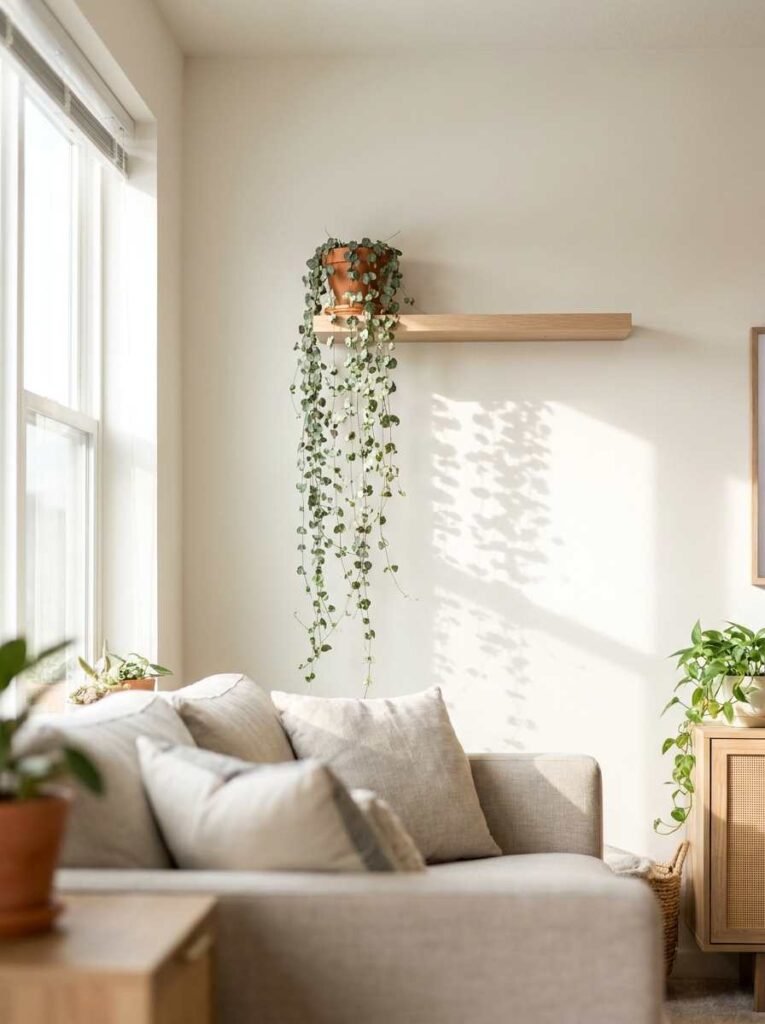
A living room without a single plant always feels a little flat, even a minimalist one. One good plant, picked carefully, does the job.
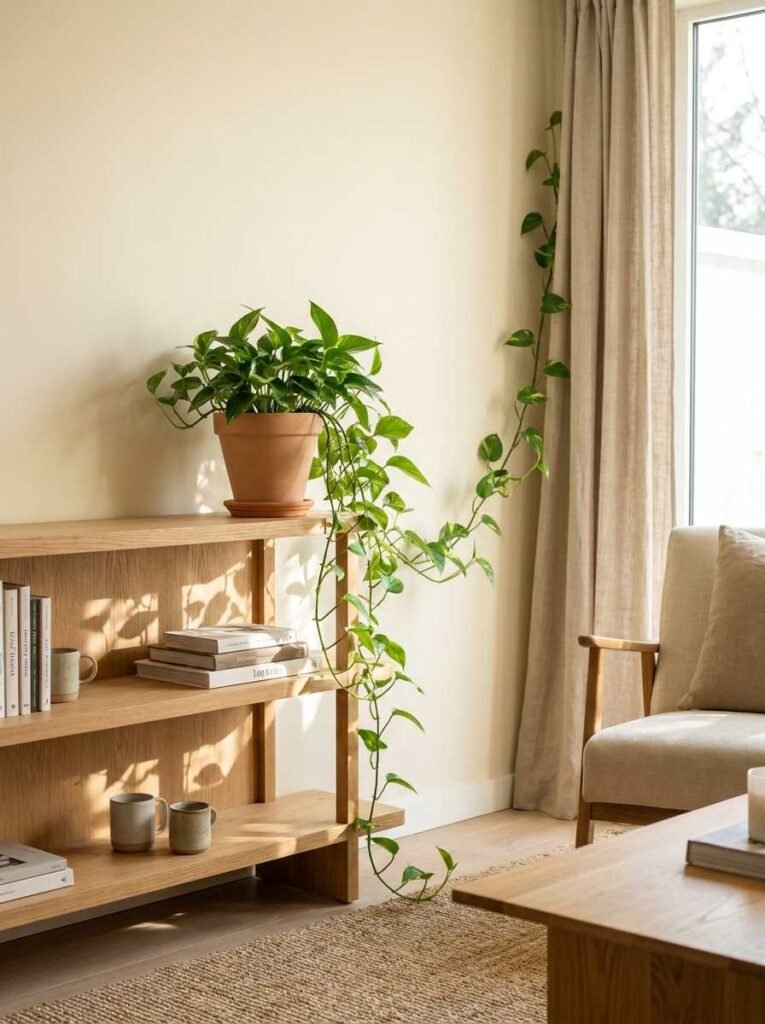
One trailing plant beats five small ones. A pothos or philodendron draping off the shelf edge does more for the room than a row of tiny succulents ever will, and it’s easier to keep alive too.
Skip fake plants unless they’re genuinely good fakes. A cheap faux fern reads cheap from across the room. A quality faux fig in decent light fools most guests, especially under a warm bulb.
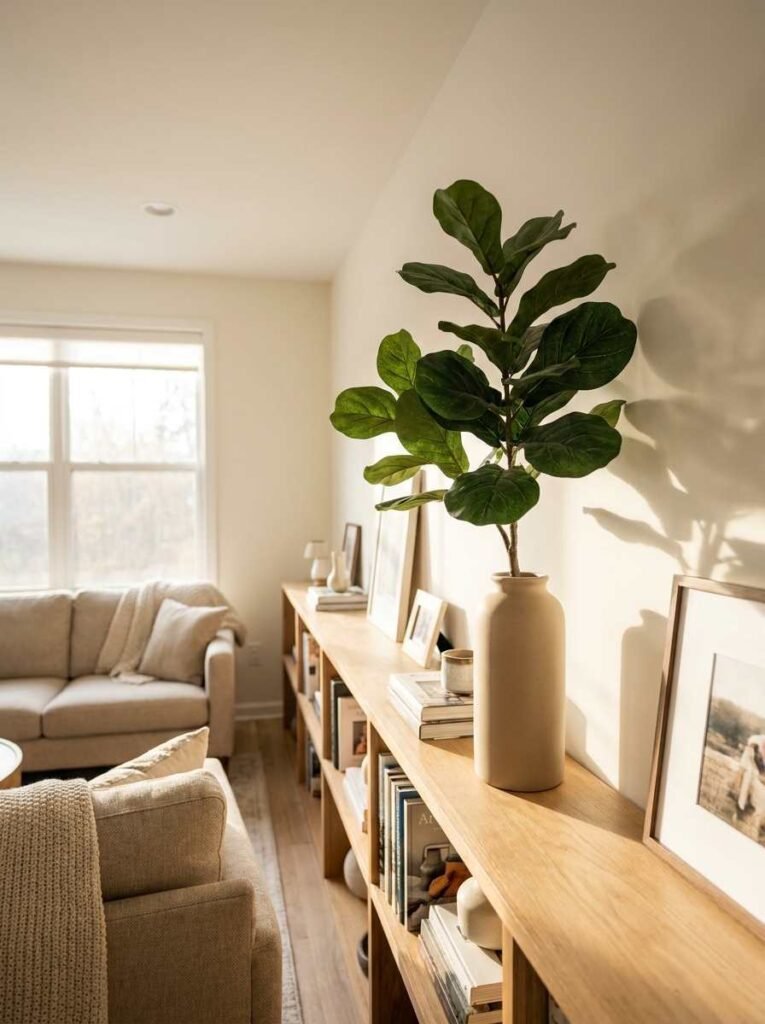
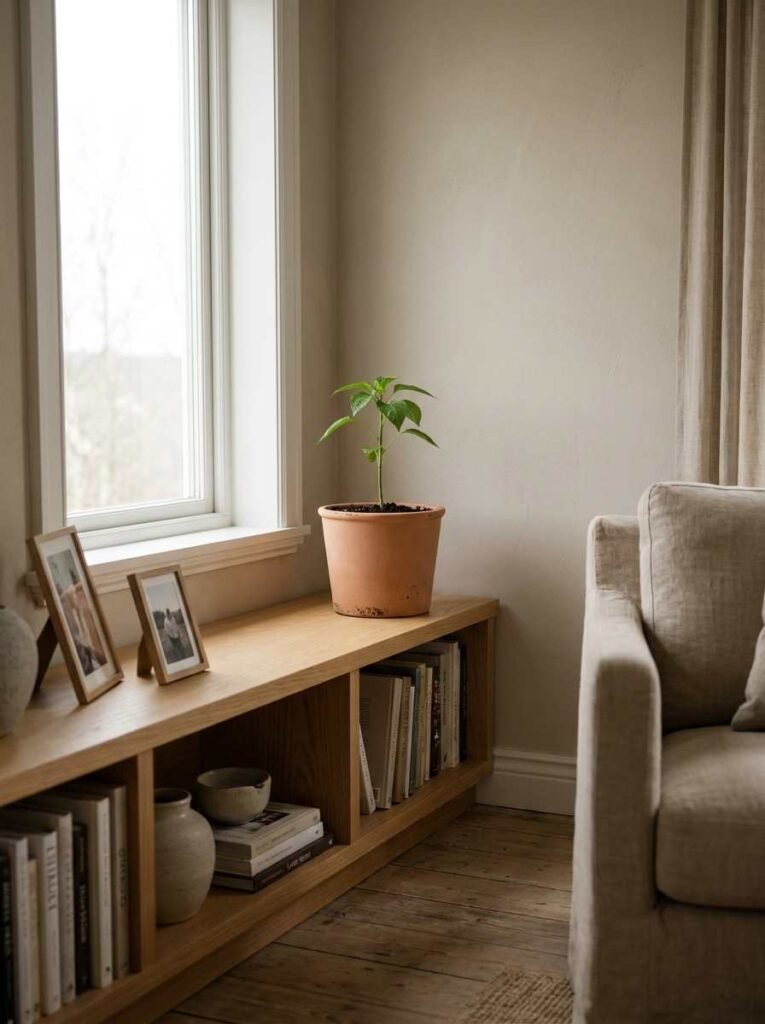
One small planter in a plain pot, nothing patterned. Terracotta, white, or matte black all work fine, as long as it matches the same material logic running through the rest of the shelf.
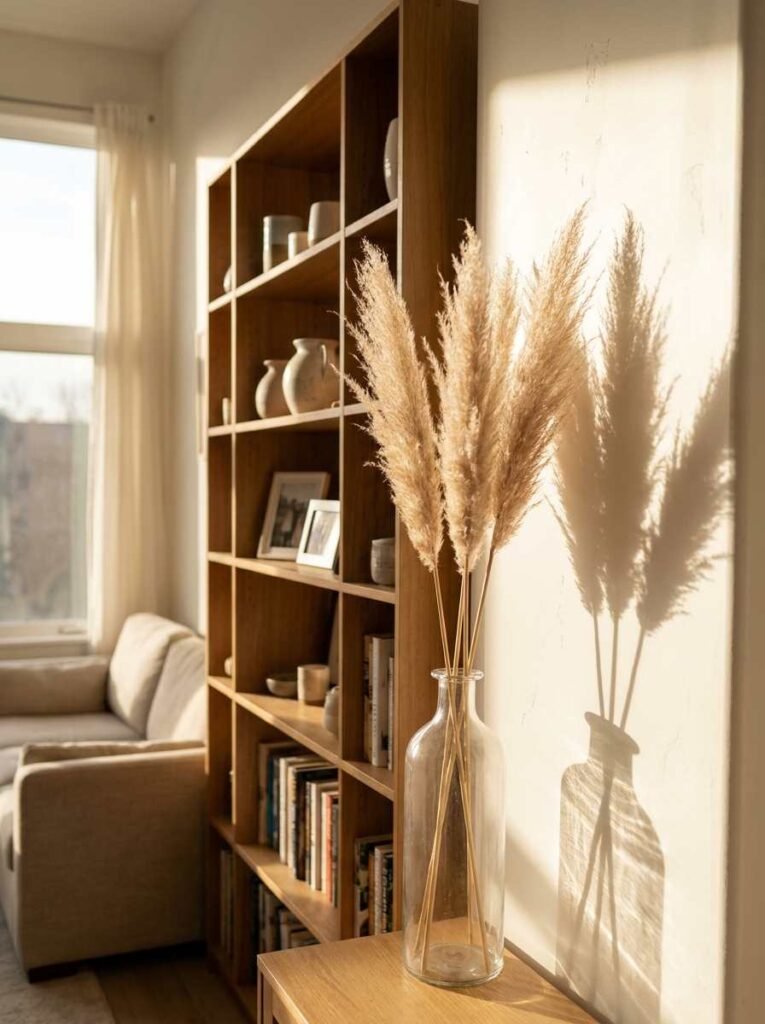
Try dried branches over fresh flowers. Pampas grass or eucalyptus lasts months and skips the weekly maintenance, which matters more than people admit when they’re styling shelves they’ll actually live with.
Personal pieces that earn their spot
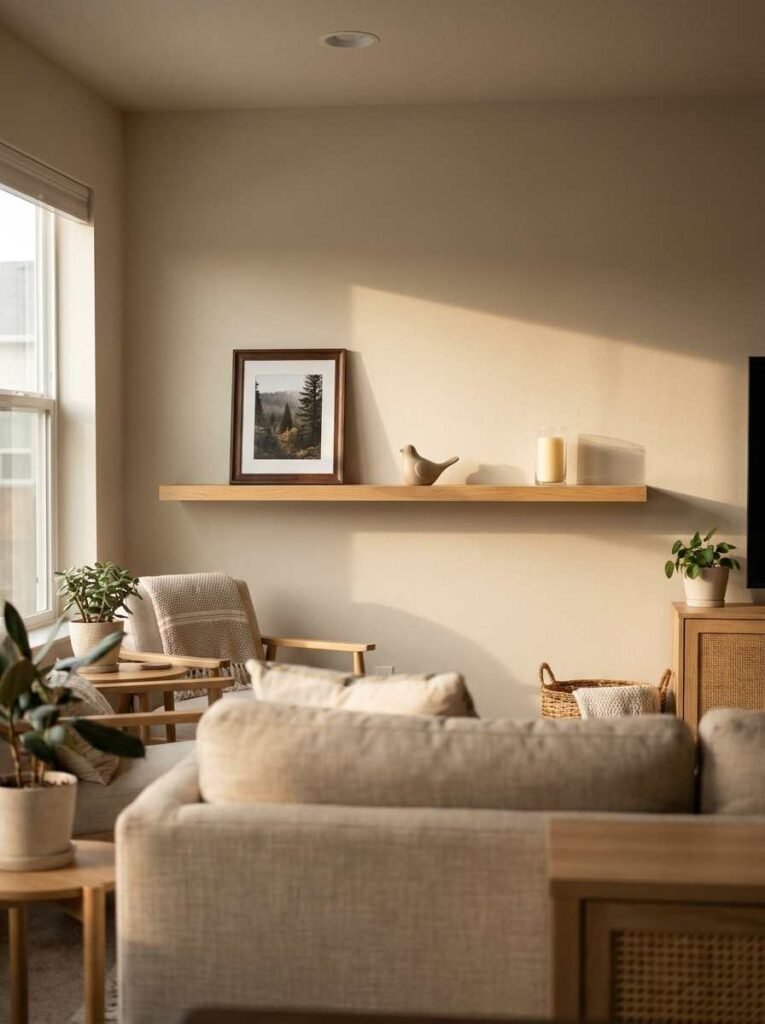
A shelf can still feel personal with just one or two pieces, picked carefully instead of piled on.
One framed photo, not a gallery wall’s worth. Pick the photo that actually means something and let it stand alone. A single frame draws the eye; a row of five competes with itself.
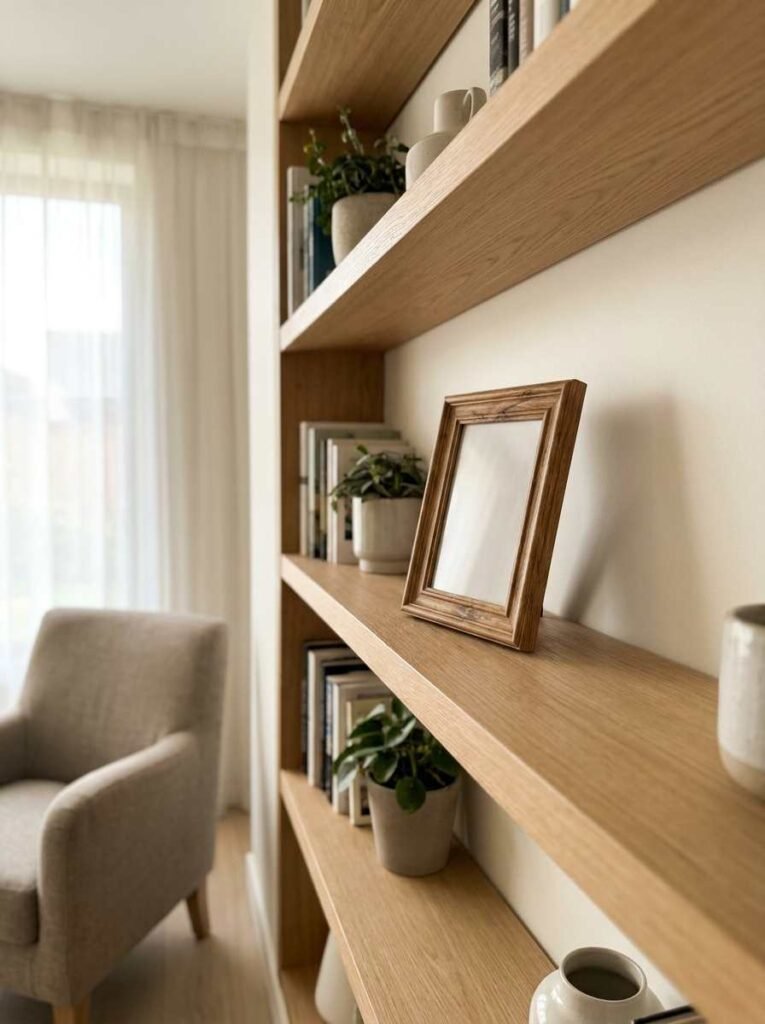
A small object with a real story behind it. A rock from a trip, a gift from a specific person. Skip the generic “decor objects” with no story at all, the ones that look like they came shrink-wrapped from a big box store, because guests can usually tell.
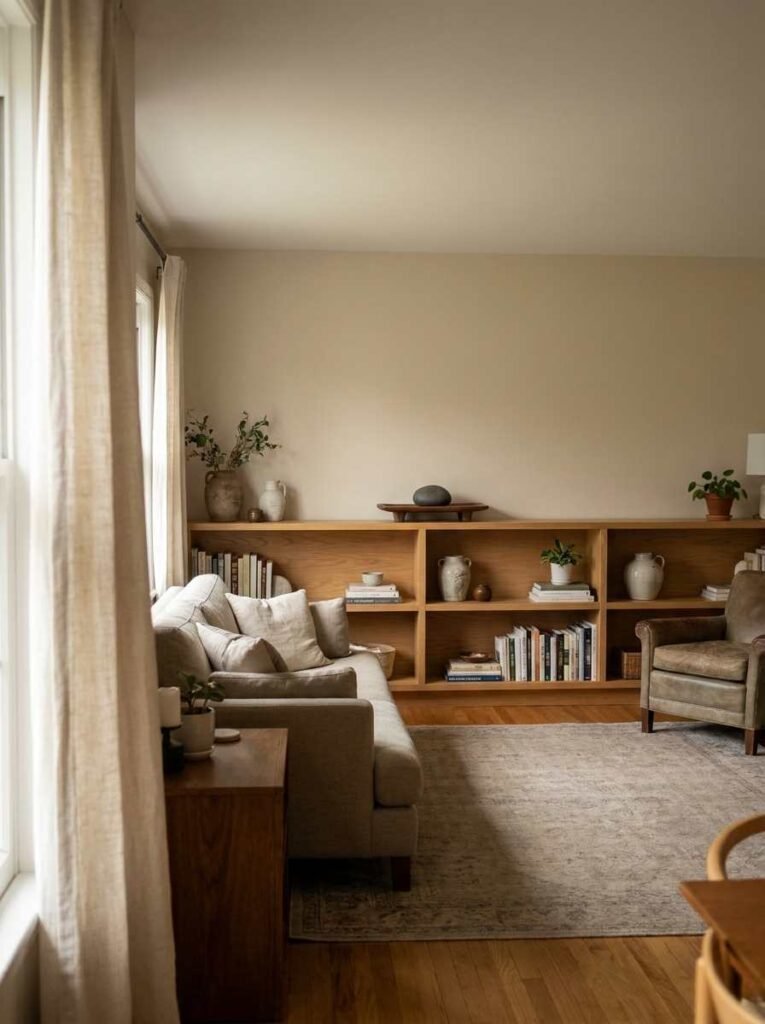
Display one souvenir, not the whole collection. Rotate them out every season if you’ve collected more than a few. It keeps the shelf feeling current instead of frozen in 2018.
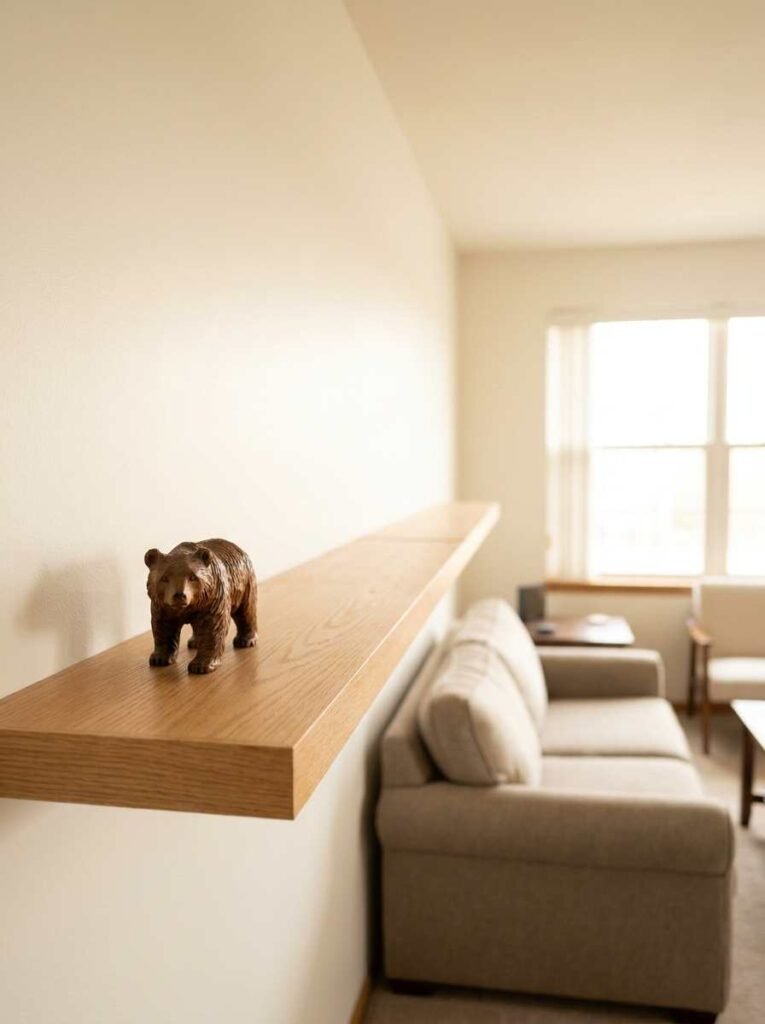
A candle in a plain holder, left unlit during the day. It still warms up the shelf even when it isn’t burning, and it gives you one more neutral object to balance taller pieces nearby.
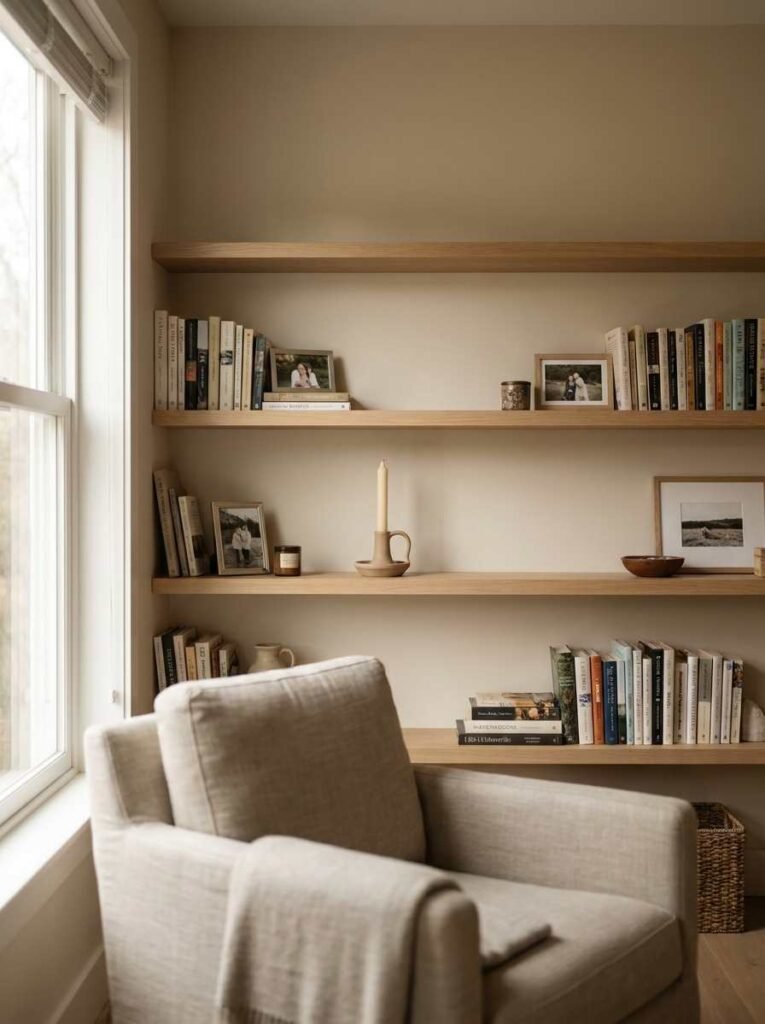
What to skip, and the final test
Skip string lights and anything that blinks. They photograph fine for Pinterest, but they clutter a room fast in person, and the cord alone undoes half the calm you just built.
Step back 6 feet and remove one more thing. This is the real test for whether a shelf is minimal or just smaller-cluttered. If you can pull one item and the shelf still looks finished, pull it. Do that across every shelf in the room and you’ll end up with the calm, stylish space you were actually going for in the first place.
My shelves still aren’t magazine-perfect. They’re edited, though, and that’s the part that actually shows.
Pin a few of these, try three or four on one shelf this weekend, and see how much calmer the room feels with half the stuff gone.
Save the ones that fit your space and skip the rest. A minimalist shelf comes from slowly removing things over time, one swap at a time, until what’s left actually matters.
