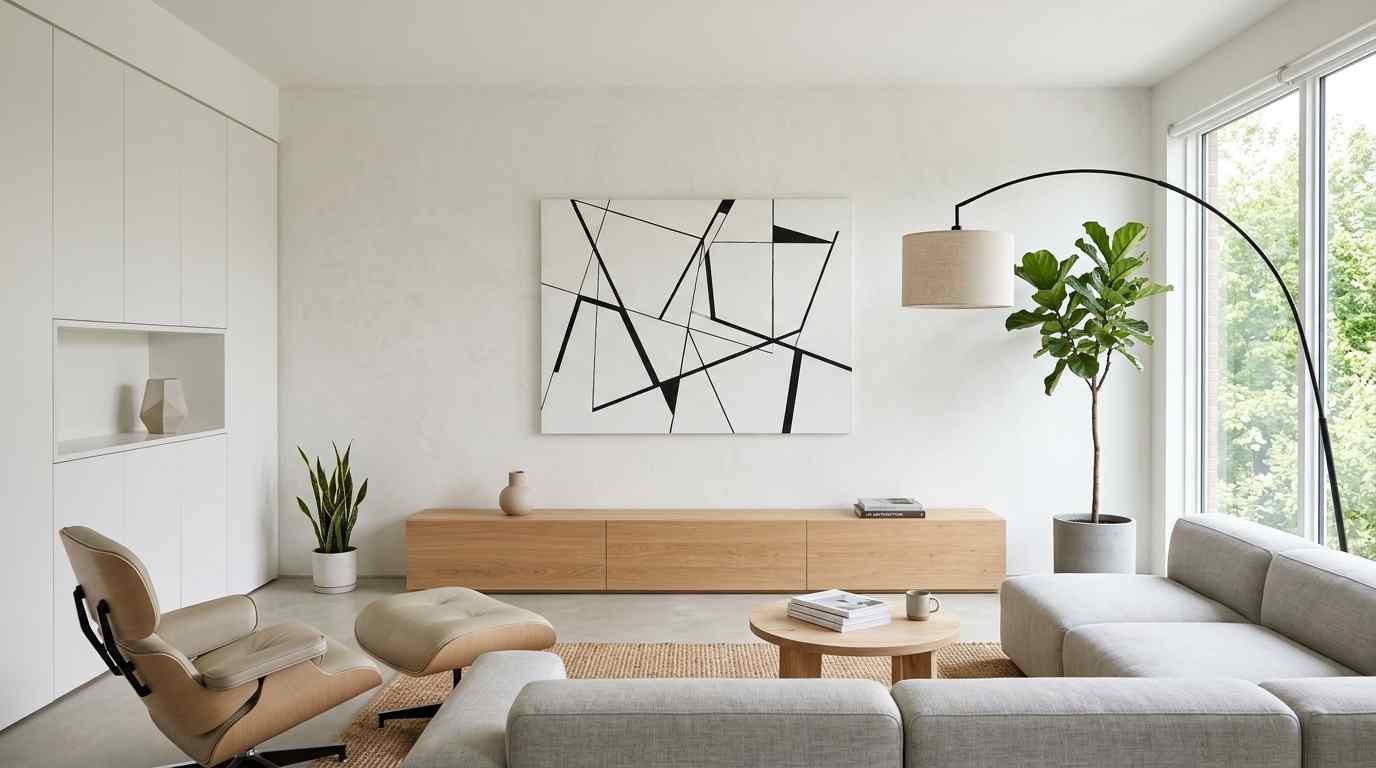
Your living room is doing too much. The throw pillows are fighting the curtains, there’s a blanket draped over everything, and somehow you still feel like something’s off.
Sound familiar?
Minimalism fixed that for me. Once I stopped adding and started editing, my living room actually felt like a place I wanted to be.
Here are 28 ideas that’ll do the same for yours — no full renovation required.
Start With the Walls
1. Go Warm White, Not Bright White
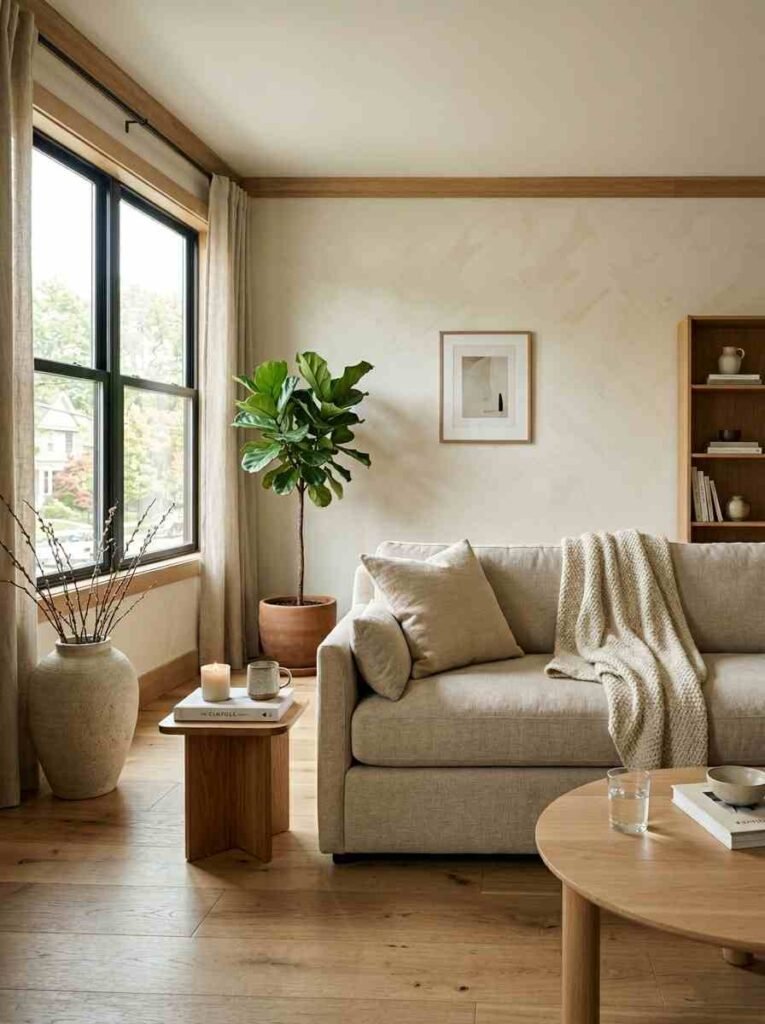
Bright white walls look clinical in photos and worse in person.
Warm whites like Benjamin Moore’s White Dove or Sherwin-Williams Alabaster do something completely different — they make a room feel calm without feeling cold.
One coat changed my entire apartment. No furniture moved, no new purchases. Just paint.
2. Leave Some Wall Space Empty
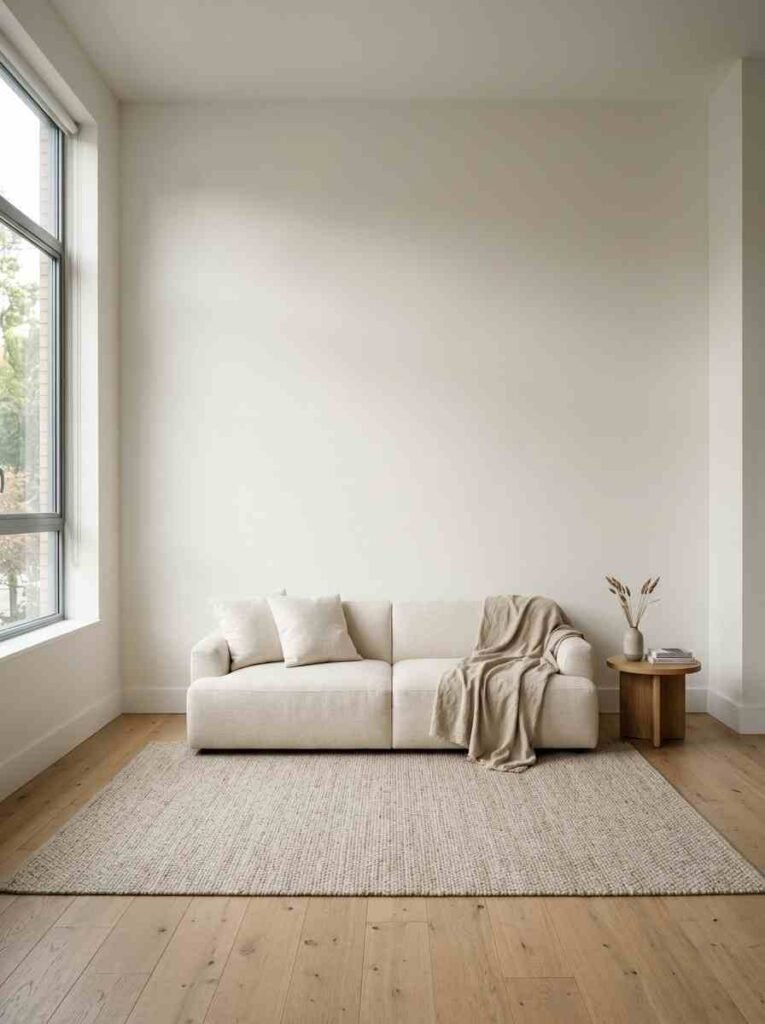
This one hurts people. We’re wired to fill empty walls.
But in a minimalist space, negative space is the design element — it gives the eye somewhere to rest.
Pick one wall to leave completely bare. You’ll be surprised how intentional it looks.
3. One Statement Art Piece, Centered
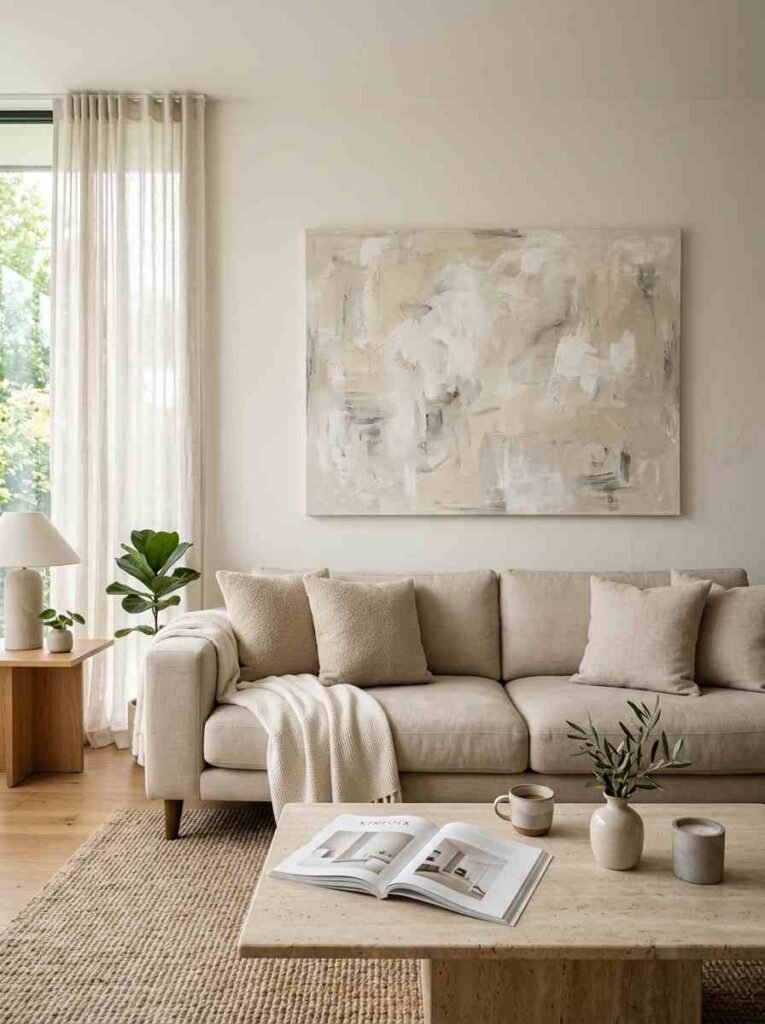
Gallery walls are out. One large-format print or canvas, centered and properly hung (eye level, not ceiling level) carries so much more visual weight.
IMO, this single swap is the fastest way to make a room look curated.
Furniture: Less Is Actually More
4. The Three-Piece Rule
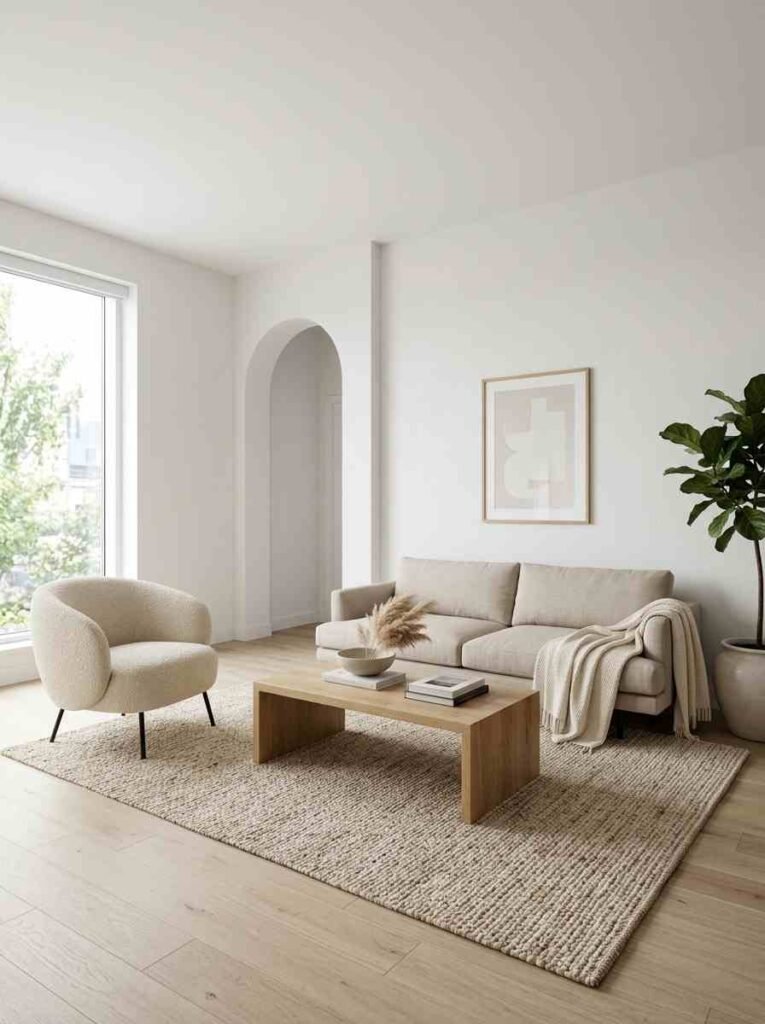
Living room furniture: sofa, coffee table, one accent chair. That’s the base. Everything else is optional and earns its place only if it serves a function.
Most people have 6-8 pieces in a room that works better with 3.
5. Choose Low-Profile Sofas
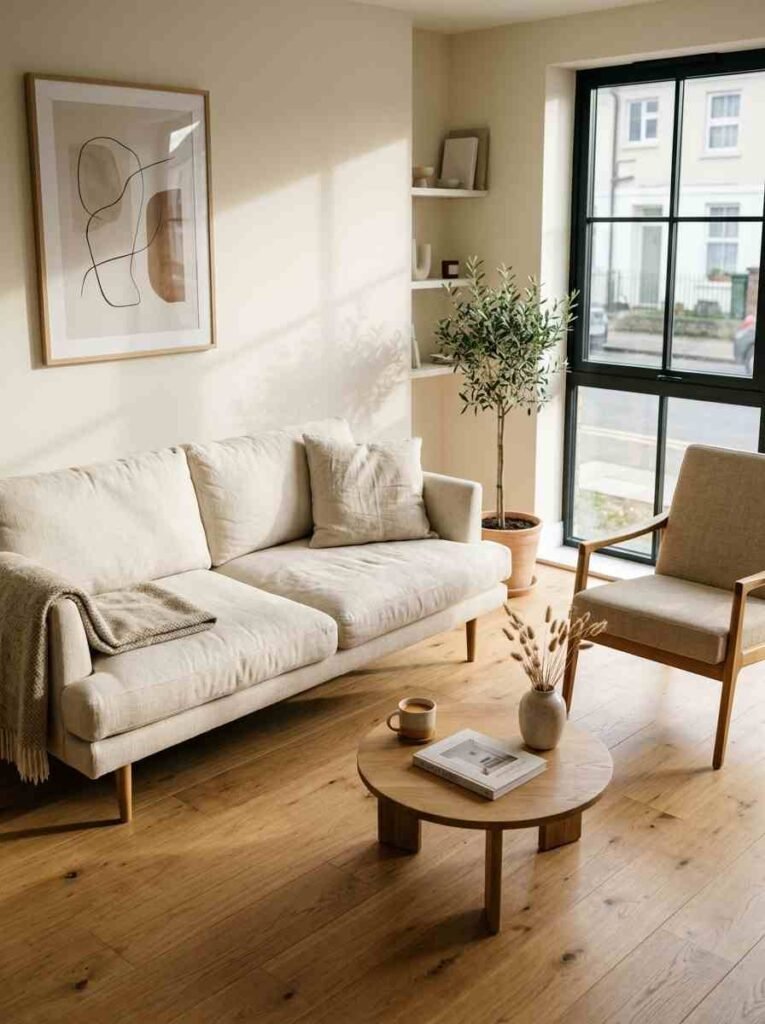
High-back, chunky sofas dominate a room. Low-profile sofas — think clean lines, minimal arms — keep the visual horizon low and make ceilings feel taller. Kivik from IKEA, anything from Article, or Floyd if you’re going higher-end.
6. Legs Matter More Than You Think
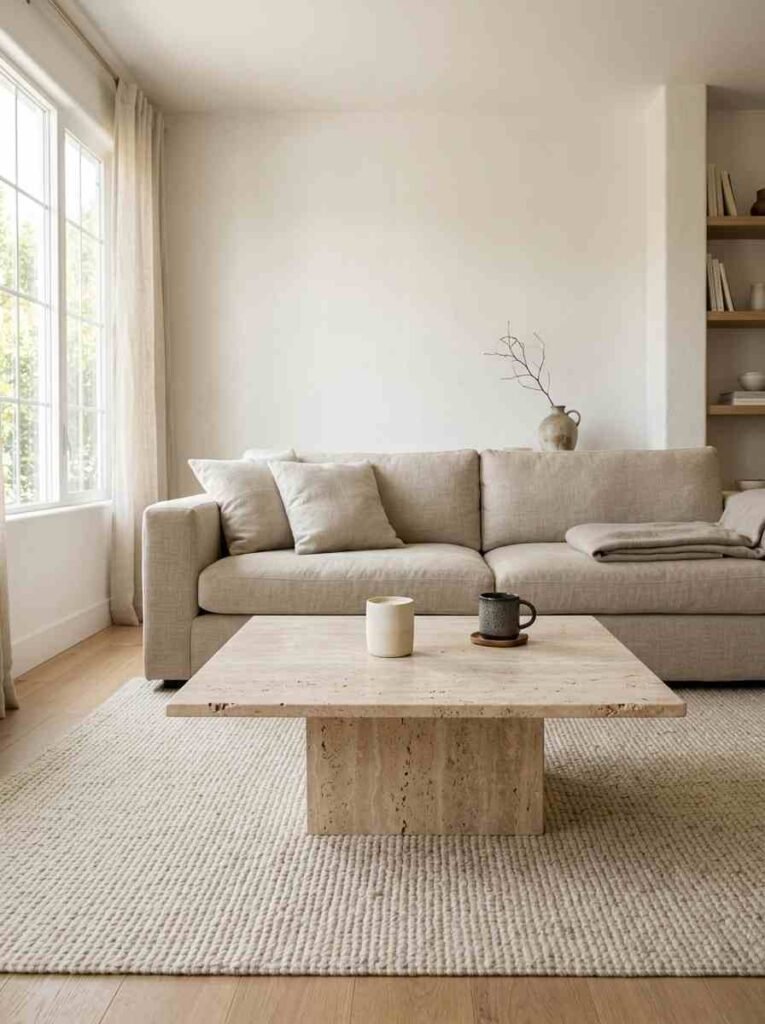
A sofa or accent chair on legs lets light pass underneath, which makes the whole room feel airier.
Furniture that sits flush to the floor visually weighs a space down.
Next time you shop, flip it over and check the legs first.
7. One Coffee Table, Not a Cluster
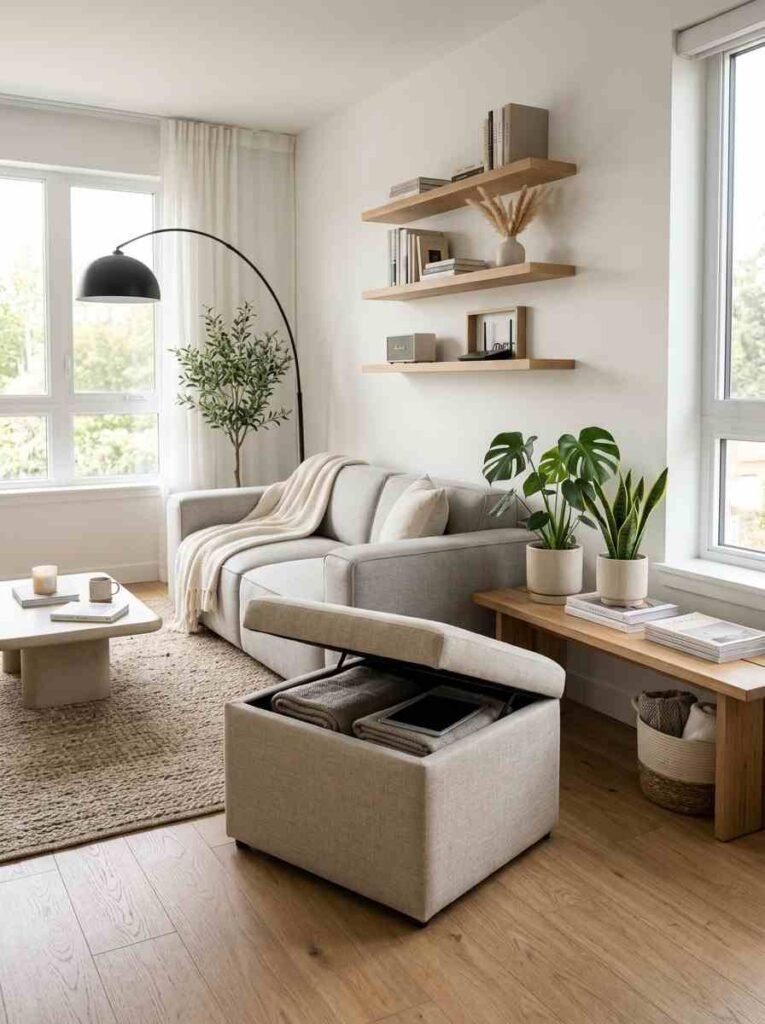
A single, well-proportioned coffee table beats a coffee-table-plus-two-side-tables setup every time. Opt for natural materials — marble, travertine, light wood — and keep the surface 80% clear.
8. Multipurpose Over Decorative
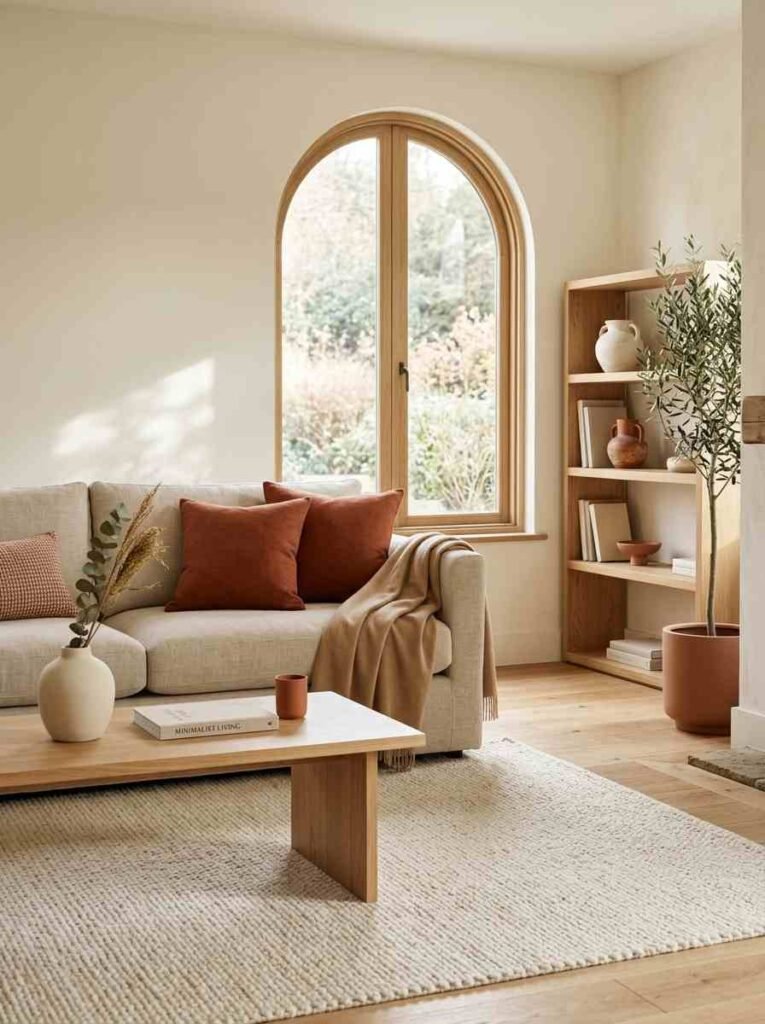
An ottoman that opens for storage. A bench at the end of the sofa that also seats guests. Shelving that holds books and hides cables. In minimalism, every piece should do at least two things.
The Color Story
9. Build a 3-Color Palette and Commit
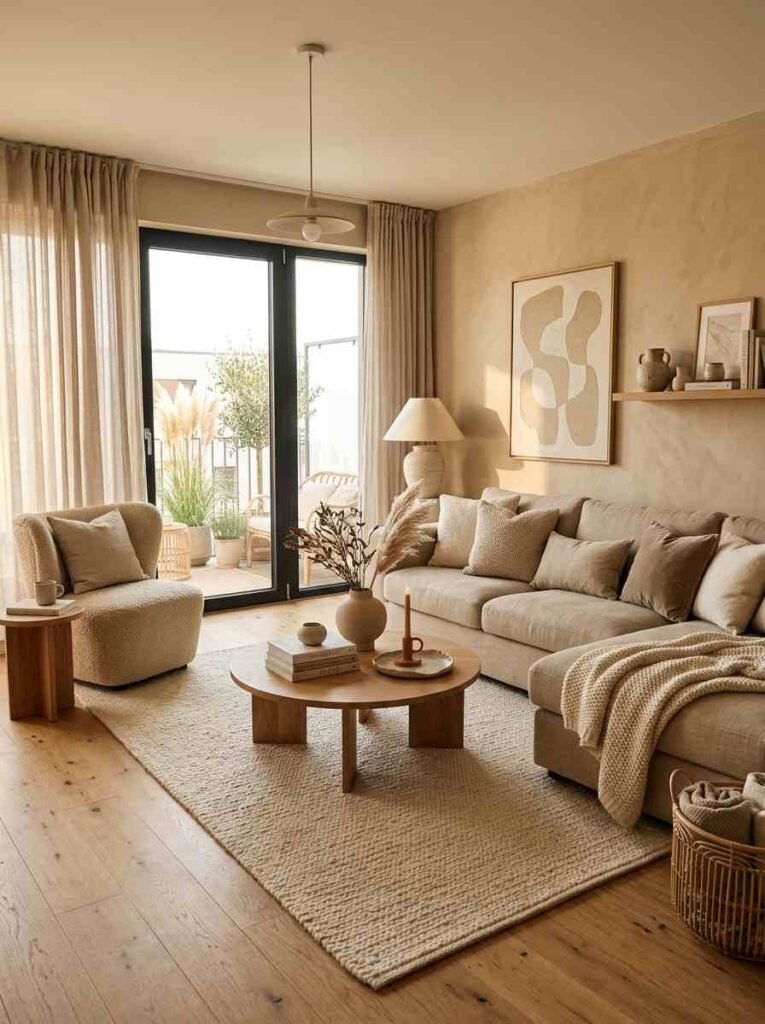
Pick one neutral base (walls + large furniture), one warm accent (cushions, small decor), one natural texture (wood, linen, stone). Stick to these three. Every purchase goes through the filter: does this fit the palette?
| Element | Role | Example |
|---|---|---|
| Base color | Walls & sofa | Warm white + oatmeal |
| Accent color | Cushions & art | Terracotta or sage |
| Natural texture | Wood, stone, linen | Oak coffee table, linen throw |
| Wildcard (optional) | One bold piece | Black floor lamp |
10. Warm Neutrals Over Cool Grays
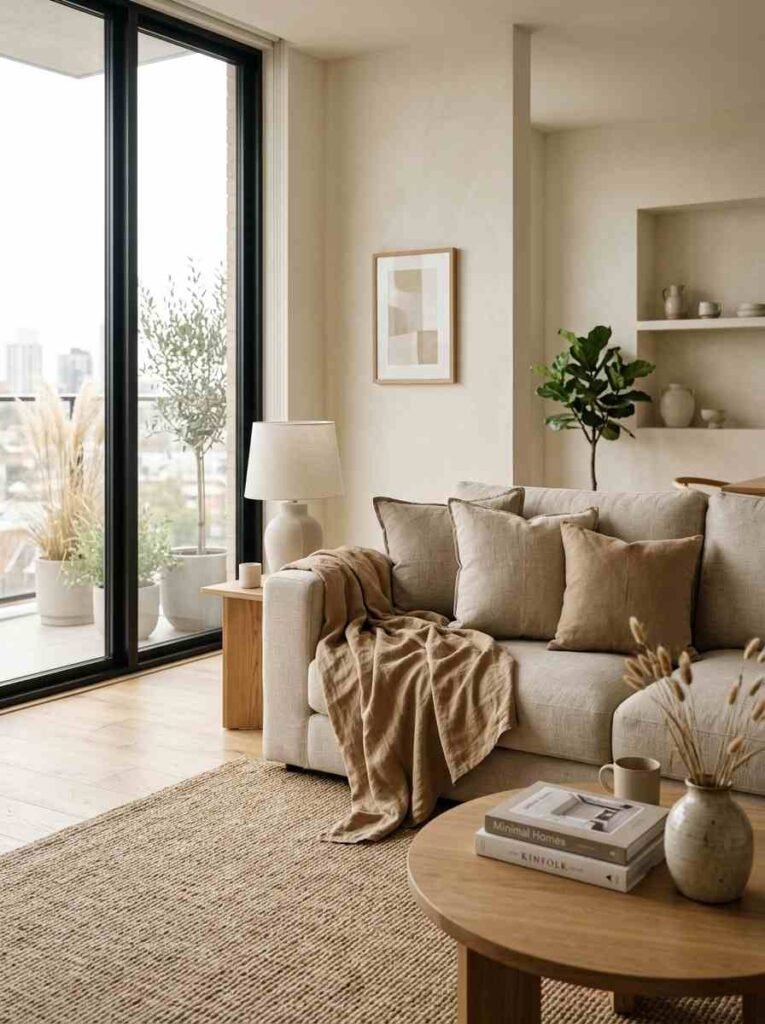
Gray had a moment. That moment is over. Warm beiges, greiges, and sand tones feel more inviting and age better with natural light changes through the day.
11. Tone-on-Tone Layering
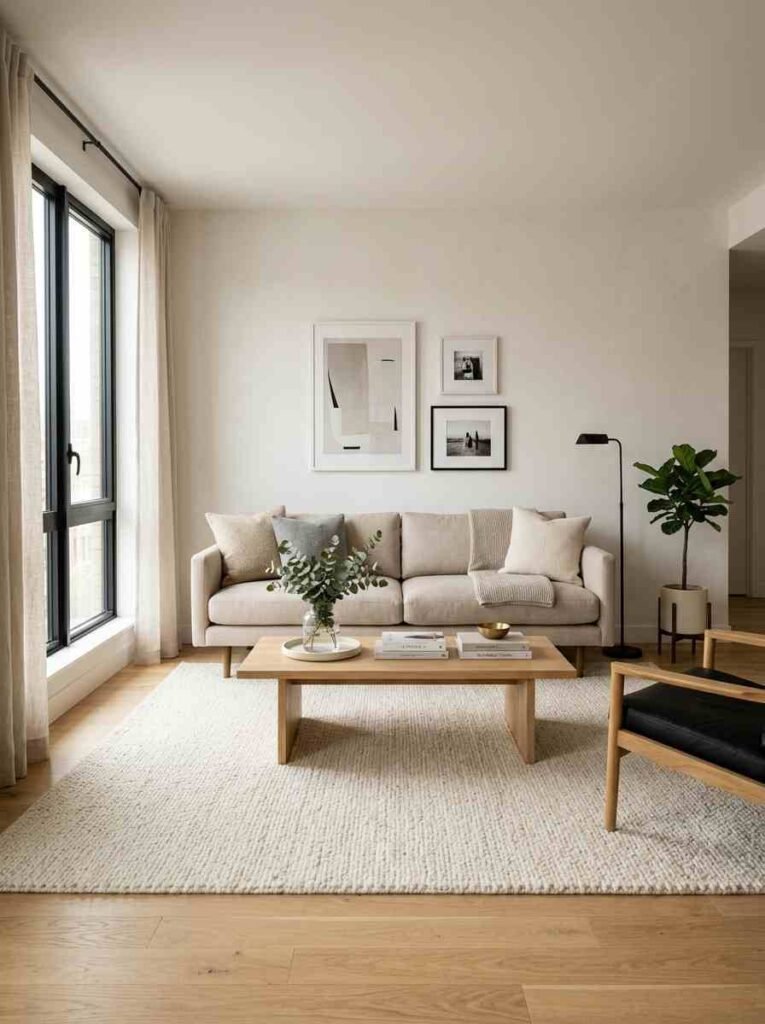
Use three shades of the same color family together. Cream walls, oatmeal sofa, camel throw.
The result looks expensive without any single piece being expensive. 🙂
Textiles Done Right
12. One Texture Per Category
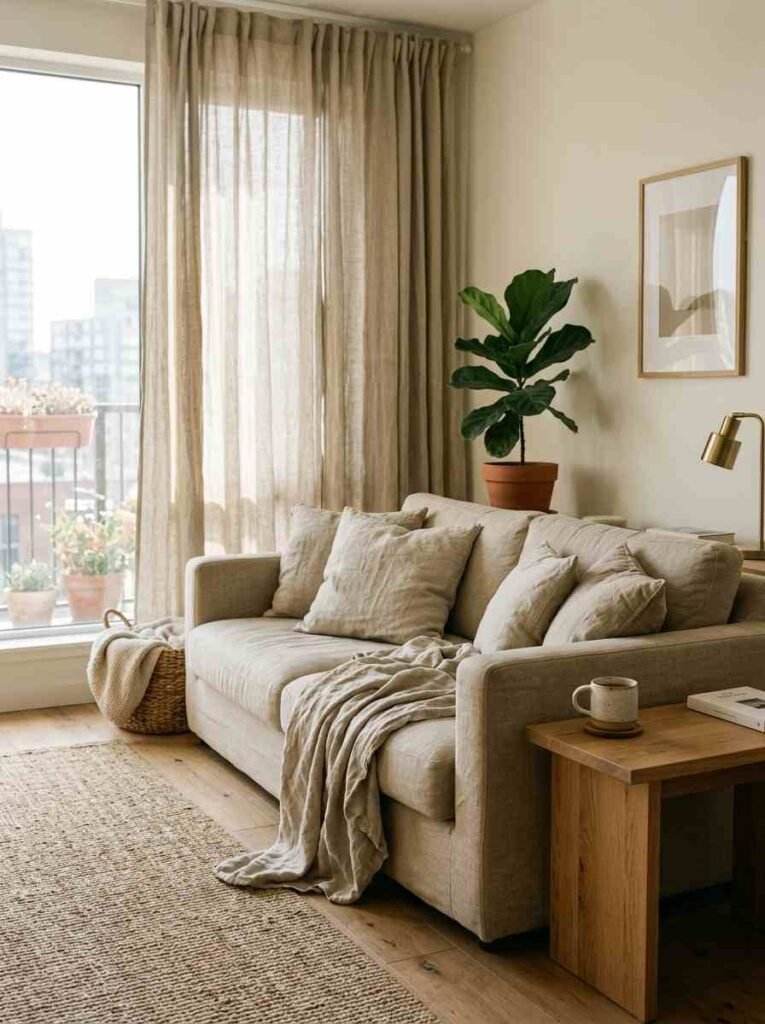
One linen throw. One wool rug. Two cotton cushions. When you layer multiple textures within the same category,
it reads as clutter even if the colors match. One standout texture per item type keeps things cohesive.
13. The Rug Should Be Bigger Than You Think
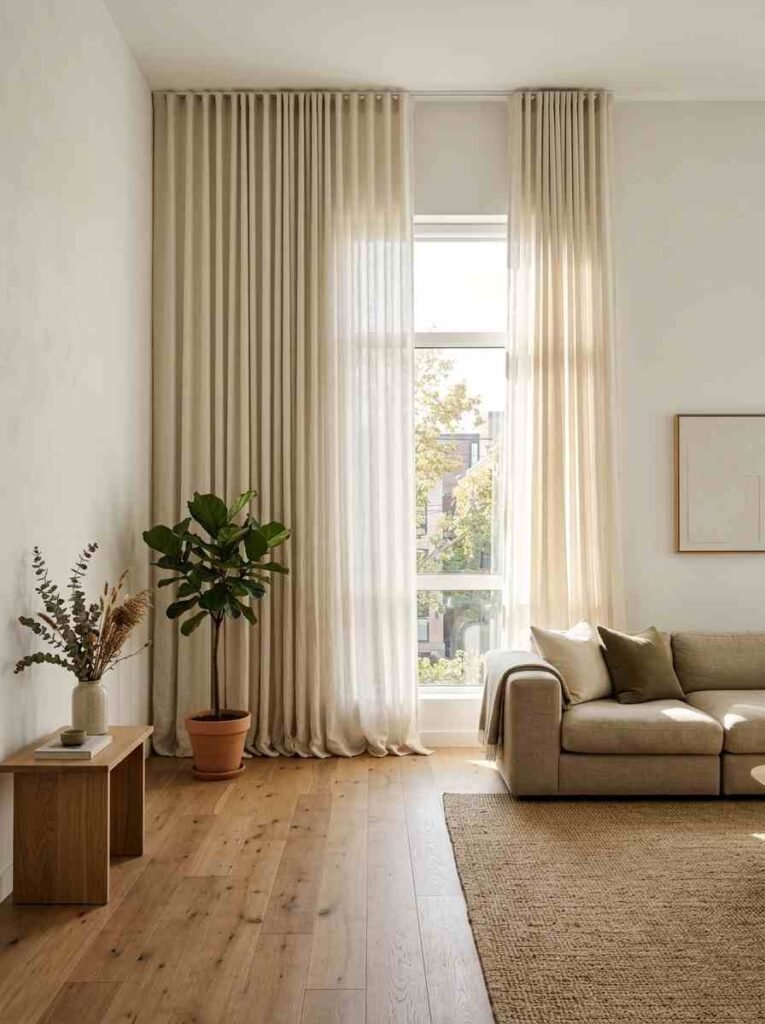
Most people buy rugs too small. Front legs of the sofa should sit ON the rug, not next to it. A rug that floats in the middle of the room makes everything look disconnected.
Size up at least one size from your instinct.
14. Linen Over Everything
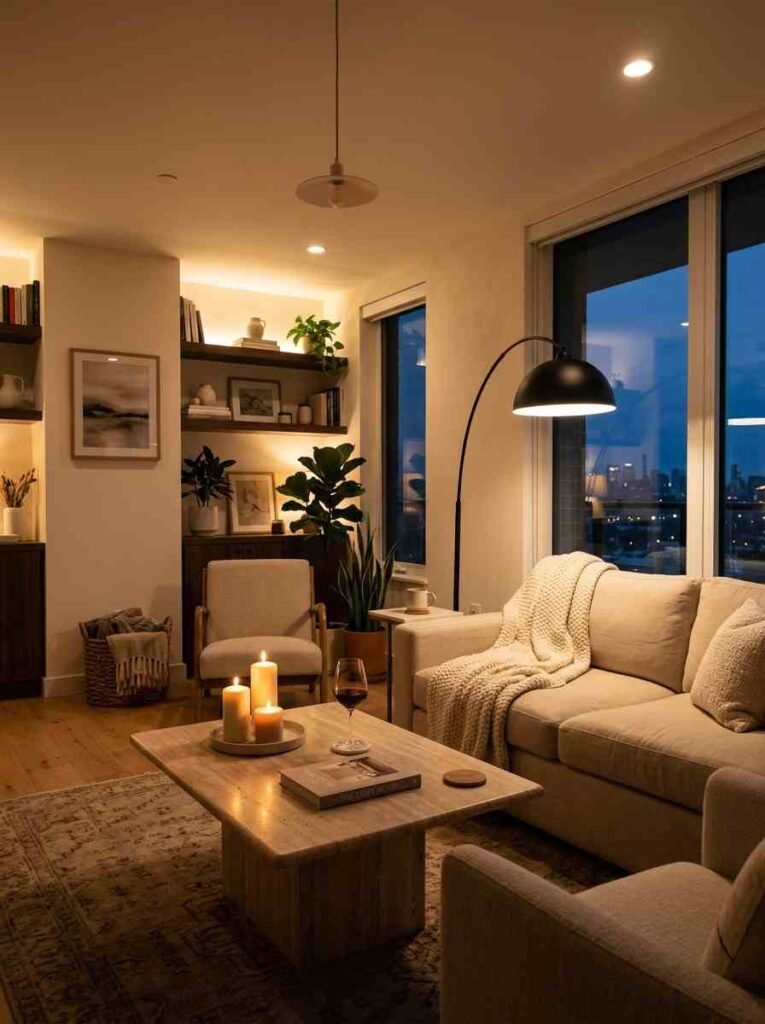
For cushion covers, throws, and curtains: linen. It wrinkles in a way that looks intentional rather than messy, ages beautifully, and photographs incredibly well. FYI, pre-washed linen is worth the extra few dollars.
15. Curtains Floor to Ceiling
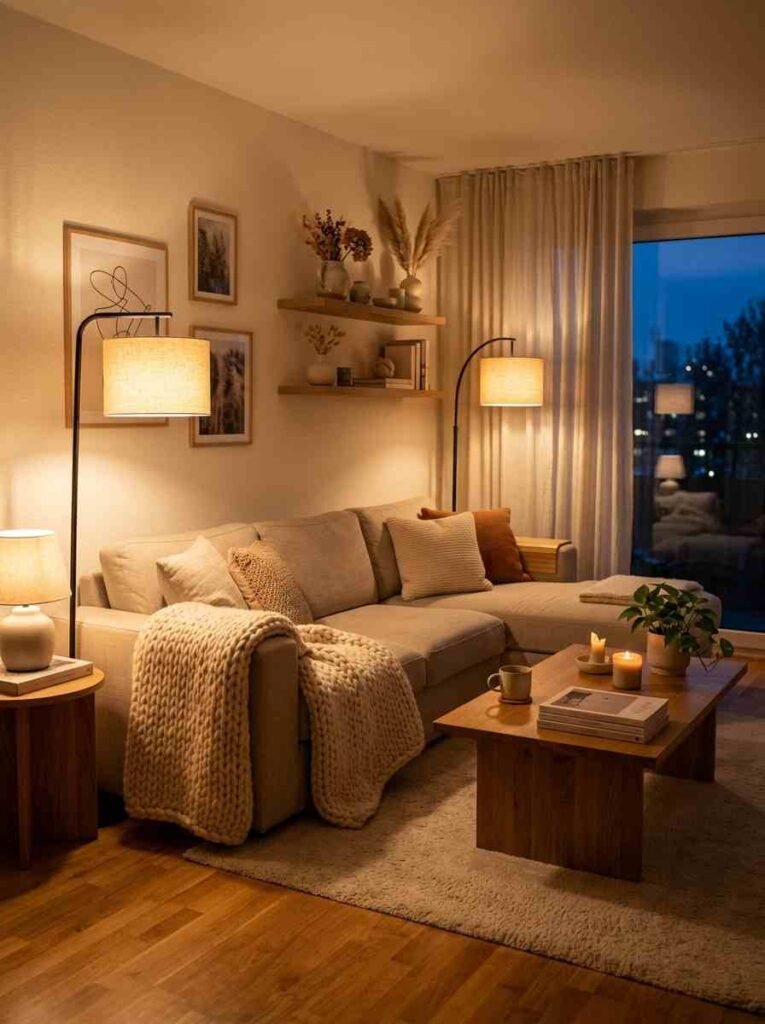
Even if your windows aren’t floor-to-ceiling, your curtains should be. Hang the rod as close to the ceiling as possible, let the fabric pool slightly on the floor.
This single trick makes a room look twice as tall.
Lighting: The Underrated Variable
16. Layer Three Light Sources
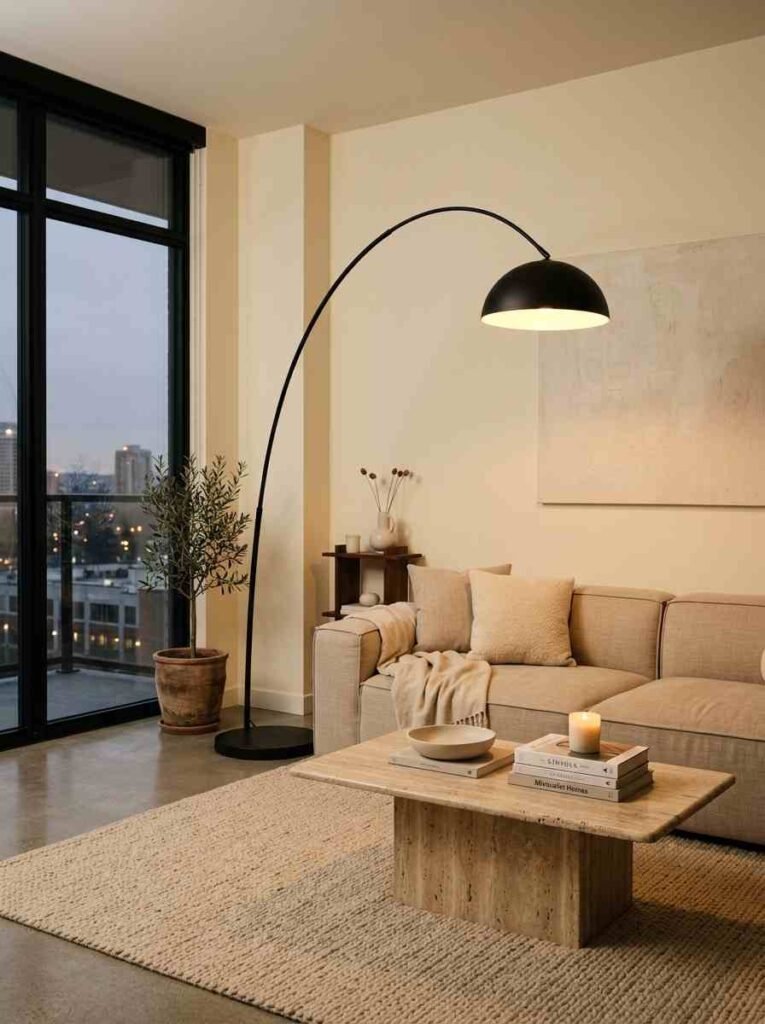
Overhead lighting only makes a room feel like an office. The formula: one ambient (overhead), one task (floor or table lamp), one accent (candle or LED strip). Switch off the overhead at night and you’ll wonder why you ever used it.
17. Warm Bulbs Only
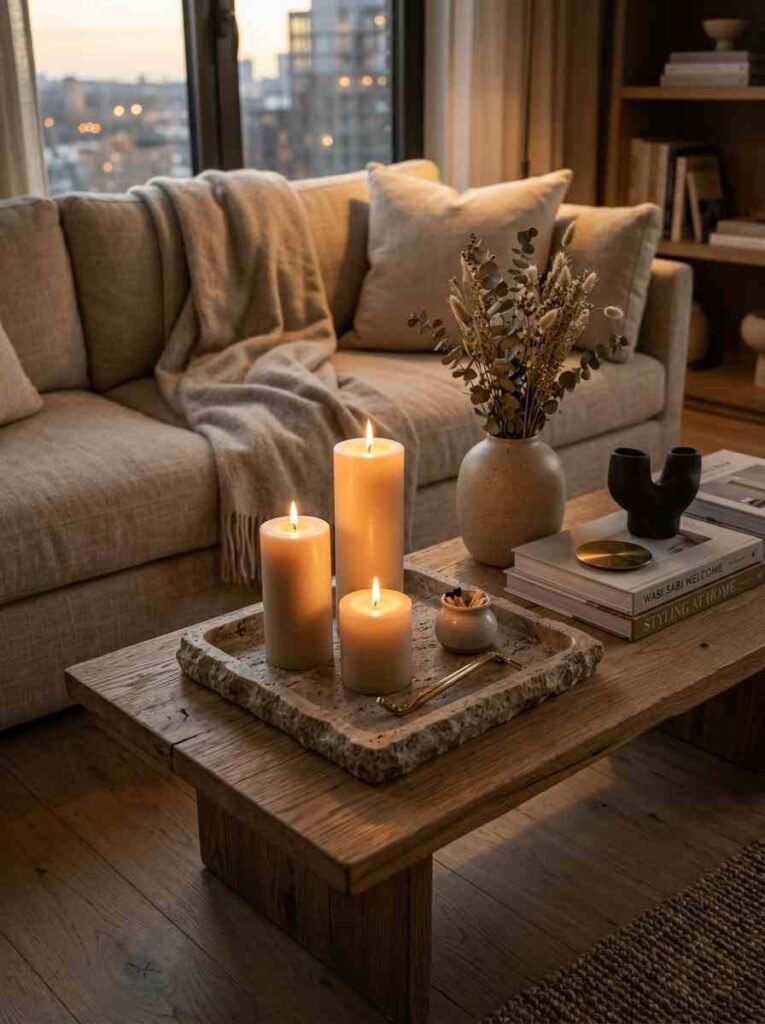
2700K–3000K color temperature. Anything cooler makes neutrals look gray and skin look washed out. This is a $10 fix per bulb that changes how every other design decision reads.
18. A Single Arc Floor Lamp
Tall, arching, sculptural — a good floor lamp does the work of a ceiling fixture and a decor piece simultaneously.
Matte black and brushed brass are the two finishes that work in almost any palette.
19. Candles as Intentional Decor
Not a bunch of mismatched candles everywhere. Two or three pillar candles, same color family, different heights, grouped on a tray.
When lit, they add warmth that no electric light replicates.
Natural Elements
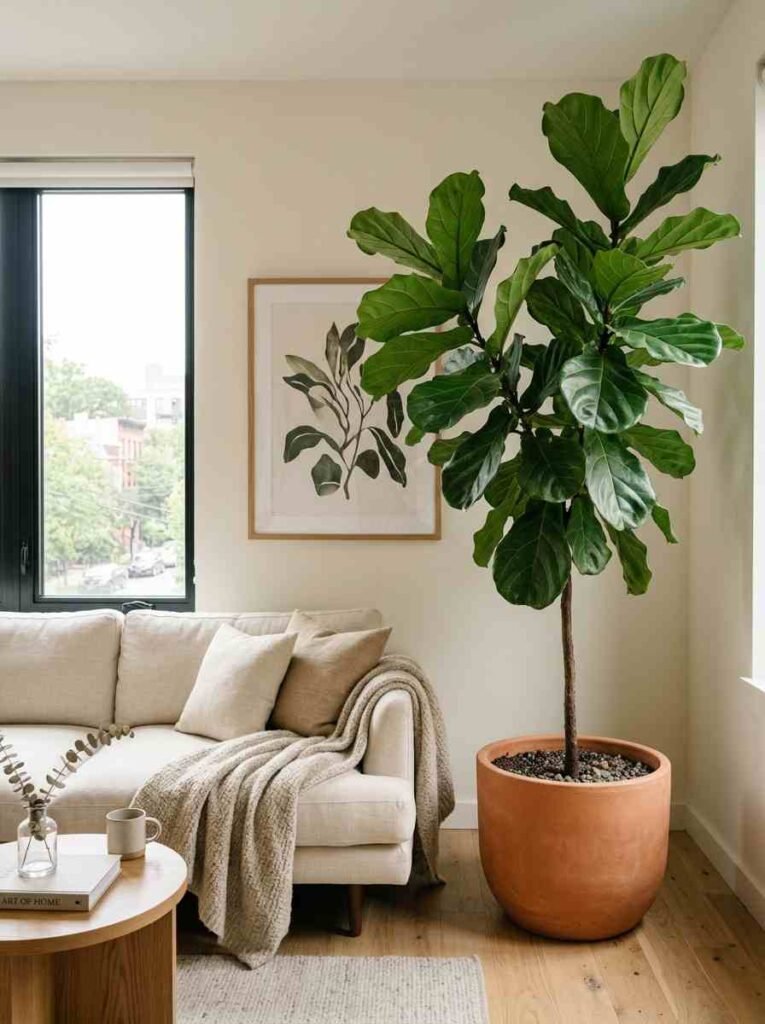
20. One Statement Plant
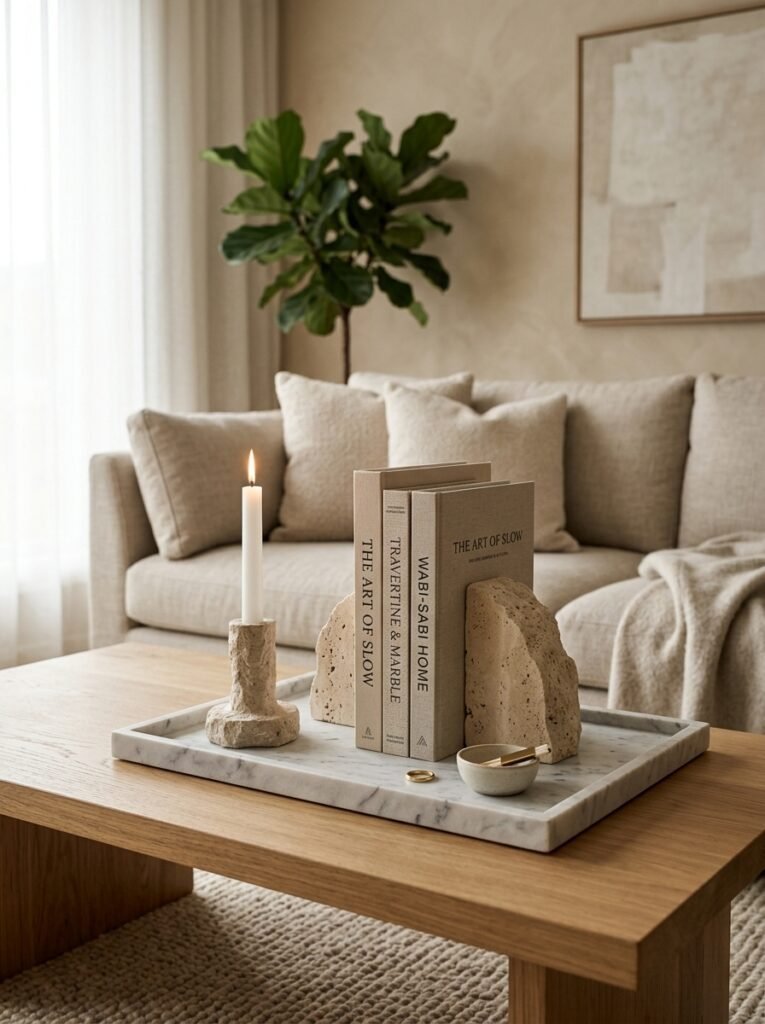
Not a collection. One. A large fiddle-leaf fig, a mature monstera, a tall snake plant in a good pot. A single well-sized plant does more than six small ones scattered around the room.
The pot matters as much as the plant. Terracotta, matte ceramic, or concrete — keep it neutral.
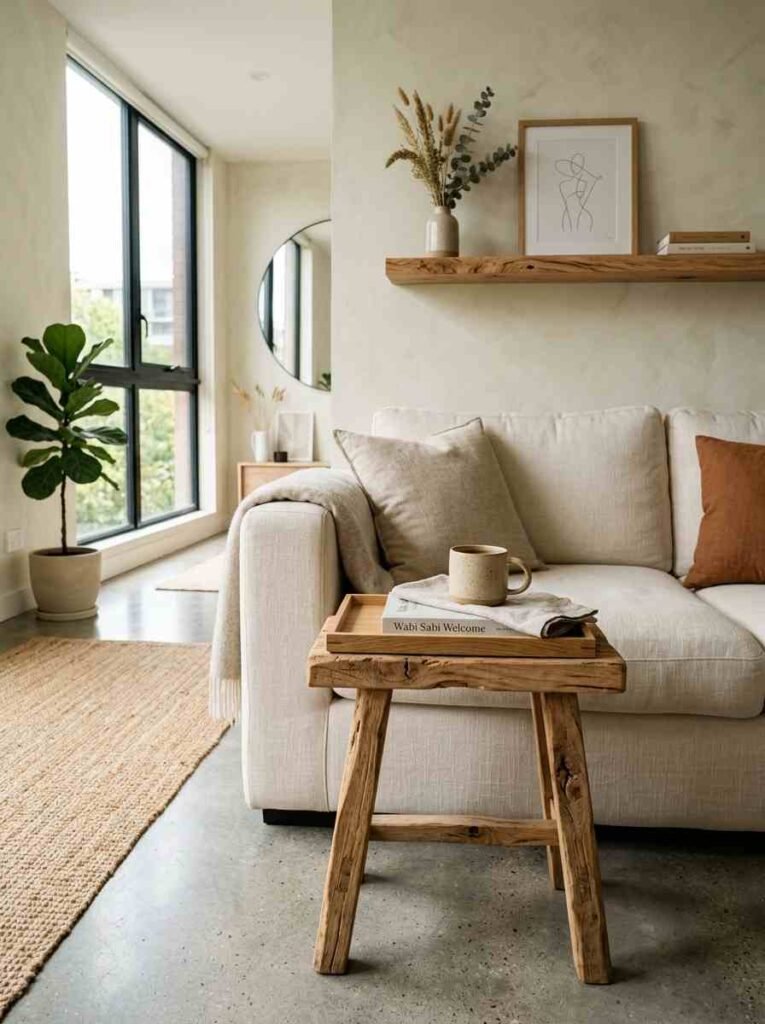
21. Wood in Unexpected Places
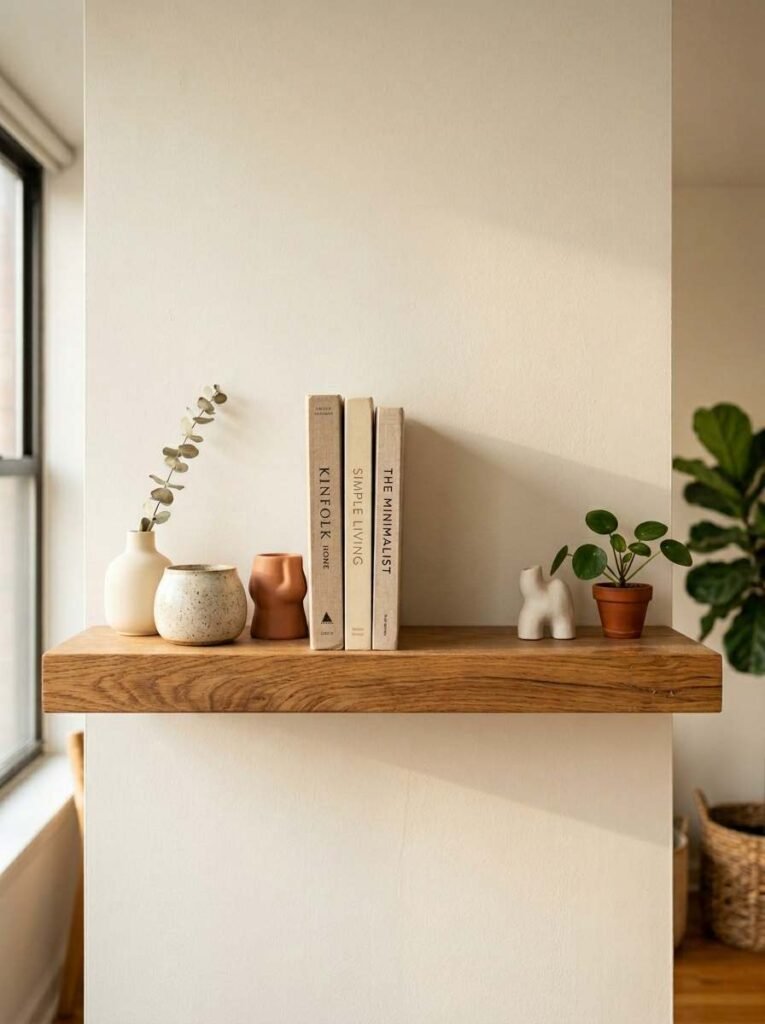
A wooden stool as a side table. Wooden trays to corral objects on shelves. A raw-edge wooden sculpture. Natural wood introduces warmth that manufactured finishes can’t fake, and it reads as intentional even when it’s actually practical.
22. Stone Accents, Used Sparingly
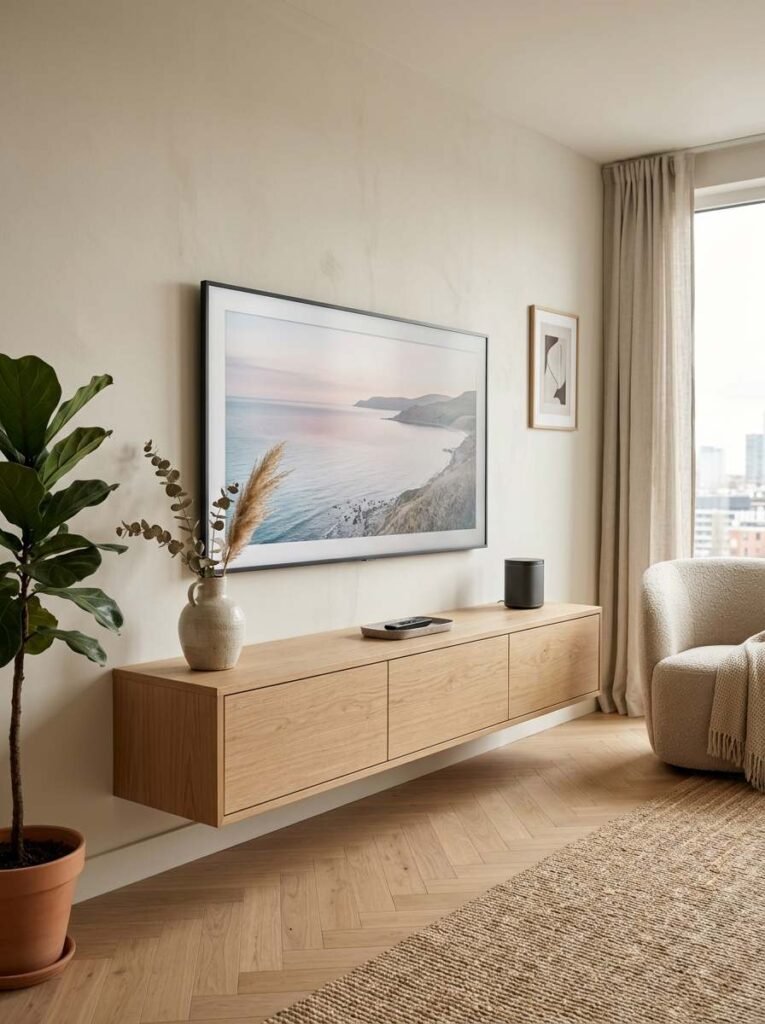
One marble tray. A travertine bookend. A single stone candle holder. Stone reads as luxury at any price point — it just needs restraint. One or two pieces, not an entire stone collection.
Shelving and Storage
23. Edit Your Shelves to 60% Full
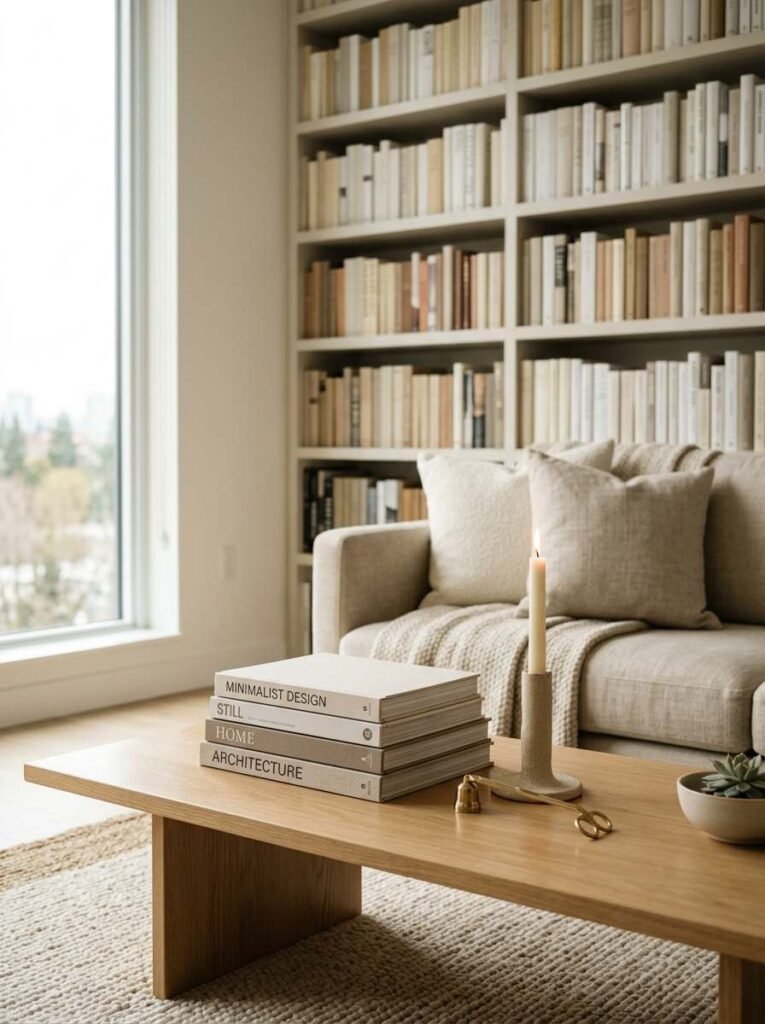
If every shelf is packed, nothing stands out. The rule: 60% objects, 40% empty space. This is the difference between a shelf that looks like a display and one that looks like overflow storage.
Group items in threes, vary height, and let the empty space work with you.
24. Hide the Tech
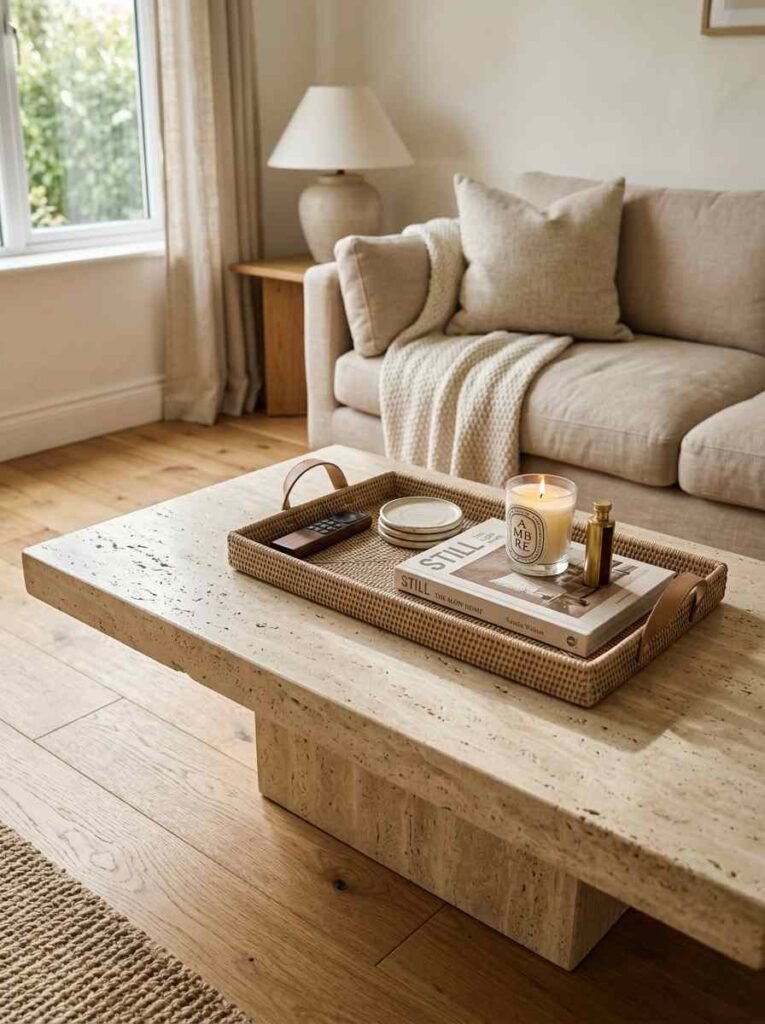
Cables, routers, streaming boxes — they break every minimalist aesthetic immediately.
Cable management boxes, cord covers, and furniture with built-in cable routing are worth every penny. Your eye goes straight to the mess when it’s there.
25. Books as Decor (If Done Right)
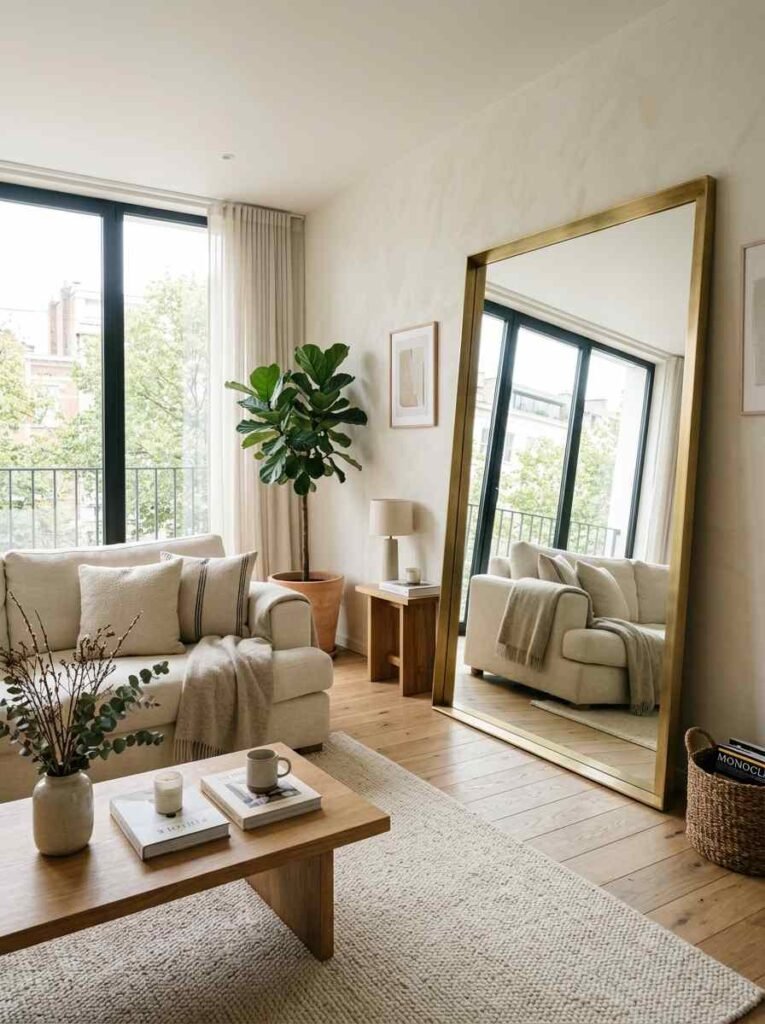
A stack of books on a coffee table works. A shelf of books all facing spine-out, organized by color works. A pile of random paperbacks on every surface doesn’t. Treat books like any other decor object — curate, don’t collect.
The Details
26. Trays Are Your Best Friend
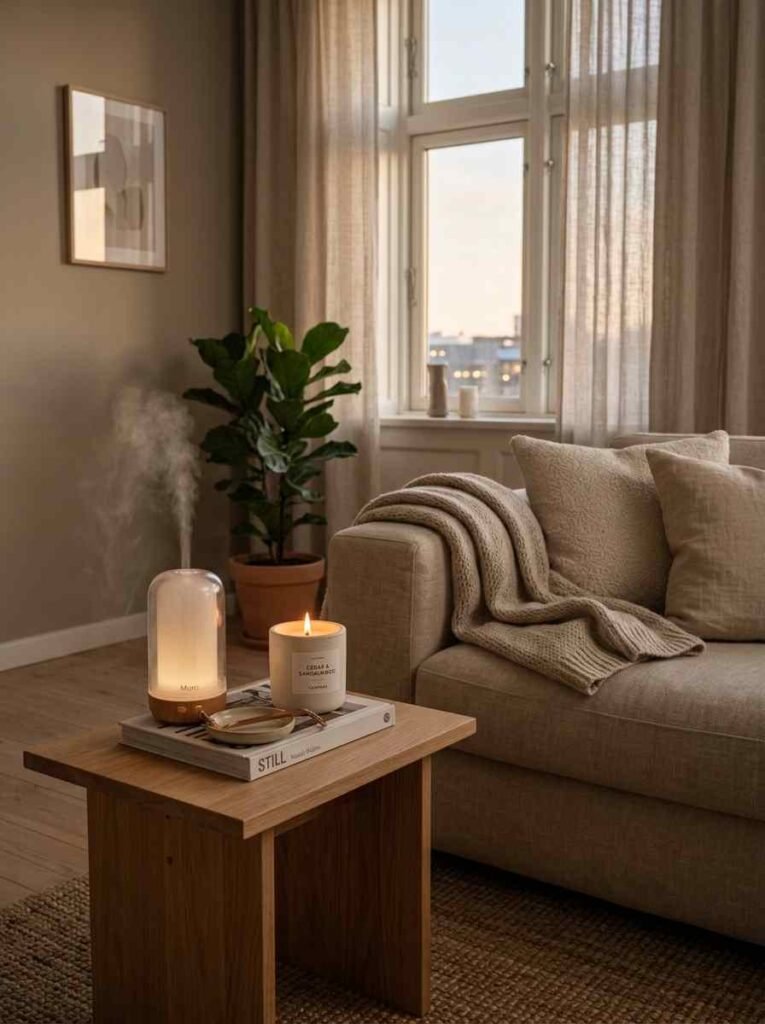
A tray corrals random objects — remote controls, coasters, candles — into a visual unit that reads as intentional decor. One tray per surface, maximum. Without a tray, five objects look messy. Inside a tray, the same five objects look styled.
27. Mirrors That Work Harder
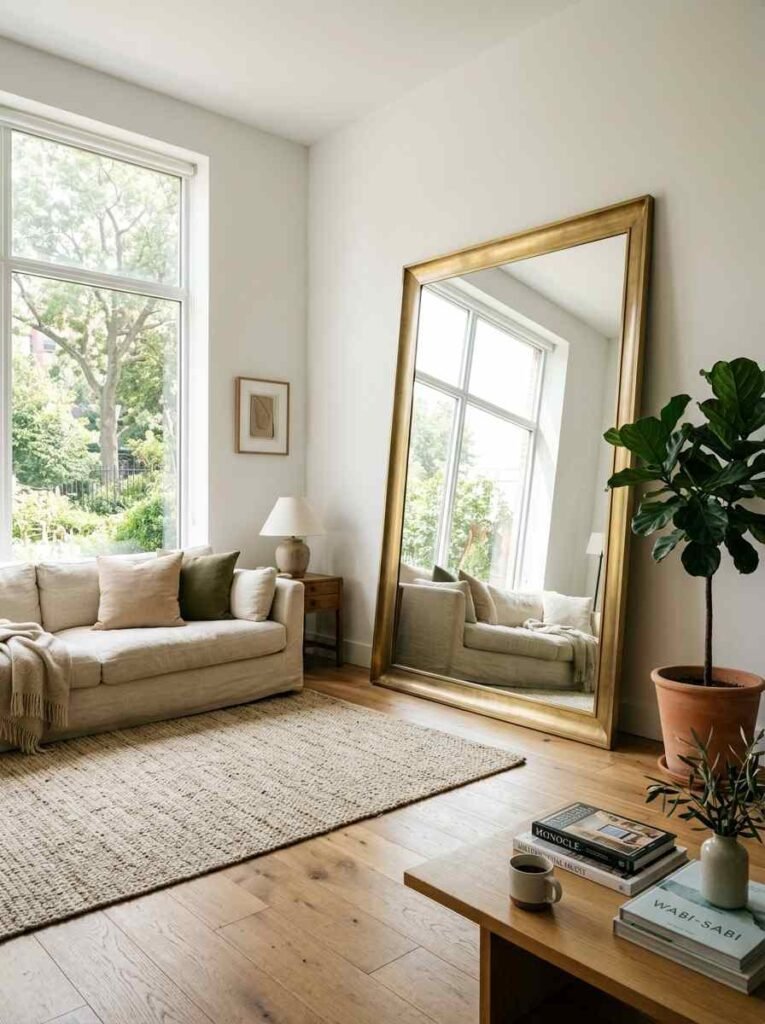
A large mirror opposite a window doubles your natural light and makes the room feel bigger. The frame should match your existing metal finishes. Lean it against the wall rather than hanging — it reads more casual and more current.
28. Scent as the Final Layer
Minimalism is a whole-room sensory experience, not just visual. A diffuser or quality candle in a consistent scent — something clean and woody like cedarwood or sandalwood — completes the experience in a way that photographs can’t capture but visitors always notice.
Putting It All Together
You don’t need to do all 28 at once. Pick the three that feel most achievable this week — the paint color, the curtain height, the one large plant — and start there.
Minimalism isn’t about having less. It’s about having exactly what you need and making sure every single piece earns its spot.
Your living room should feel intentional, not incomplete.
Now go look at your living room with fresh eyes. What’s the first thing you’d remove? :/ Start there.
