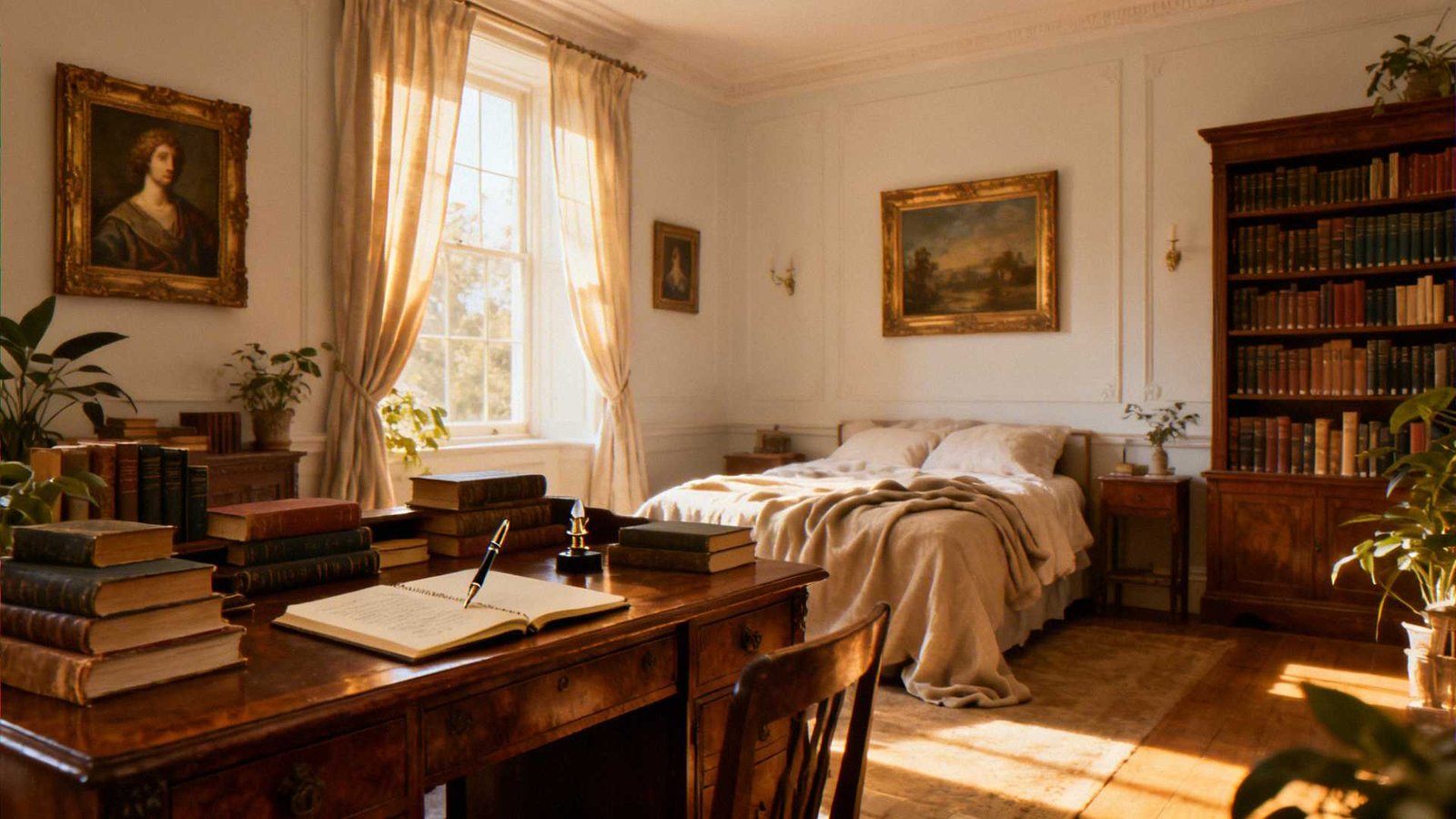
Look, I’ll be honest with you—stumbling into the light academia aesthetic was like finding that perfect coffee shop where everything just clicks. You know what I mean? That moment when you realize your bedroom could feel less like a generic IKEA showroom and more like a sun-drenched library in an old European university.
Light academia isn’t just another Pinterest trend that’ll fade faster than your New Year’s resolutions (ouch, too real?). It’s about creating a space that whispers “intellectual cozy” without screaming “I’m trying too hard.” Think warm neutrals, vintage books, and enough natural light to make you actually want to get out of bed on Monday mornings.
Ready to transform your bedroom into a scholarly sanctuary? Let’s get into it.
Understanding the Light Academia Vibe

Before we start rearranging furniture, let’s talk about what light academia actually is. This aesthetic celebrates knowledge, literature, and classic beauty—but in a softer, more approachable way than its dark academia cousin.
The color palette? Think cream, beige, soft whites, and warm browns. We’re talking about colors that make you feel like you’re perpetually living in golden hour. The overall mood should feel optimistic, refined, and just a touch romantic.
Here’s the thing: light academia isn’t about perfection. It’s about creating a space that inspires you to read that book you’ve been putting off, journal your thoughts, or just exist peacefully with a cup of tea.
1. Start With a Neutral Color Foundation

Cream and beige walls are your best friends here. I painted my bedroom a soft ivory last year, and wow—the difference it made was incredible. These colors reflect natural light beautifully and create that airy, open feeling that’s essential to the aesthetic.
Avoid stark white if you can. It can feel too clinical and cold. Instead, opt for warmer whites with undertones of cream or yellow. Trust me on this one—the warmth makes all the difference when you’re trying to create that cozy scholarly vibe.
If you’re renting and can’t paint, consider removable wallpaper in subtle patterns like delicate florals or classic stripes. Keep it understated though—we’re going for timeless, not overwhelming.
2. Invest in Quality Bedding (Because You Deserve It)
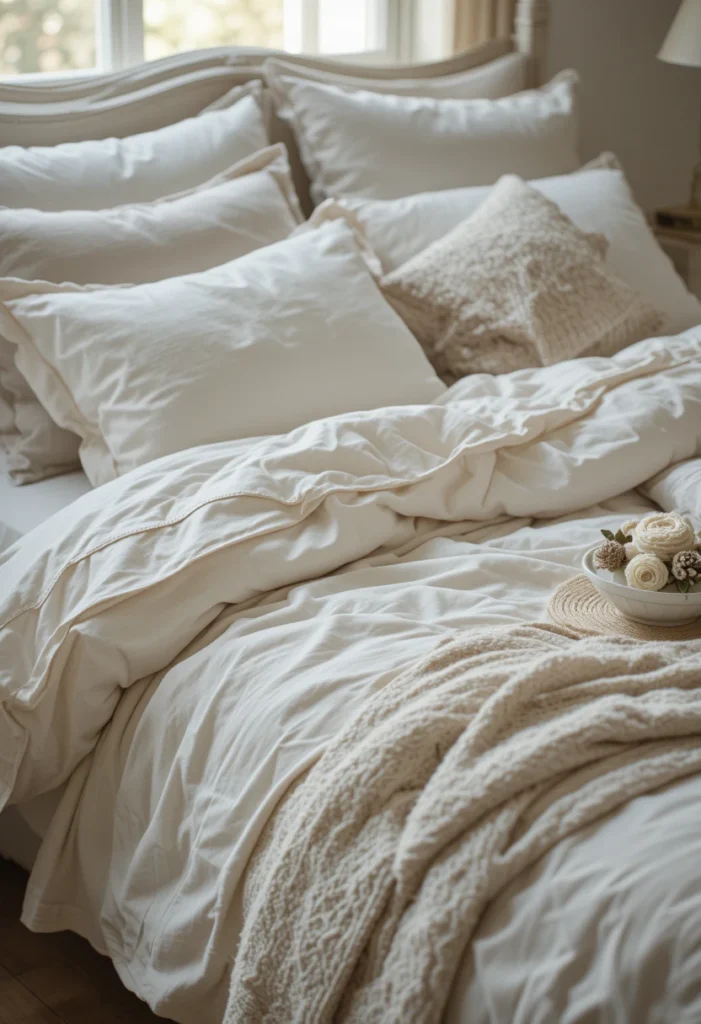
Your bed should look like something straight out of a romantic period drama. Linen sheets in cream, white, or soft taupe are non-negotiable IMO. They have that perfectly imperfect, lived-in texture that screams sophistication.
Layer it up with:
- A chunky knit throw blanket in neutral tones
- Multiple pillows in varying sizes (but keep the colors cohesive)
- A quilted coverlet or vintage-inspired bedspread
Pro tip? Don’t make your bed too perfectly. Light academia embraces that “I just rolled out of bed after reading poetry until 2 AM” look. A few artful wrinkles add character.
3. The Wooden Furniture Rule

Opt for wooden furniture in light or medium tones. Oak, birch, and light walnut work beautifully. The goal is to avoid anything too dark or modern-looking.
I picked up a vintage wooden desk from a thrift store for like $40, and it’s become the centerpiece of my room. The worn edges and slightly faded finish? Chef’s kiss. That’s the kind of character you can’t buy new.
Look for pieces with classic lines and minimal ornamentation. A simple wooden nightstand, a vintage dresser, or a classic bookshelf can anchor your space perfectly.
4. Create Your Personal Library Corner

Ever wondered why bookshelf aesthetics are so satisfying? Because books aren’t just for reading—they’re visual storytelling.
Stack your books both vertically and horizontally for visual interest. Mix in some vintage hardcovers with weathered spines. Thrift stores and estate sales are goldmines for these beauties.
Here’s my system:
| Display Method | Best For | Visual Impact |
|---|---|---|
| Vertical stacking | Tall bookcases | Classic, organized |
| Horizontal stacking | Side tables, window sills | Casual, artistic |
| Color-coordinated | Open shelving | Instagram-worthy |
| Mixed arrangement | General display | Natural, authentic |
Don’t own enough books? (Honestly, is that even possible? :)) Start collecting. Even if you haven’t read them yet, they add instant scholarly credibility.
5. Let There Be (Natural) Light
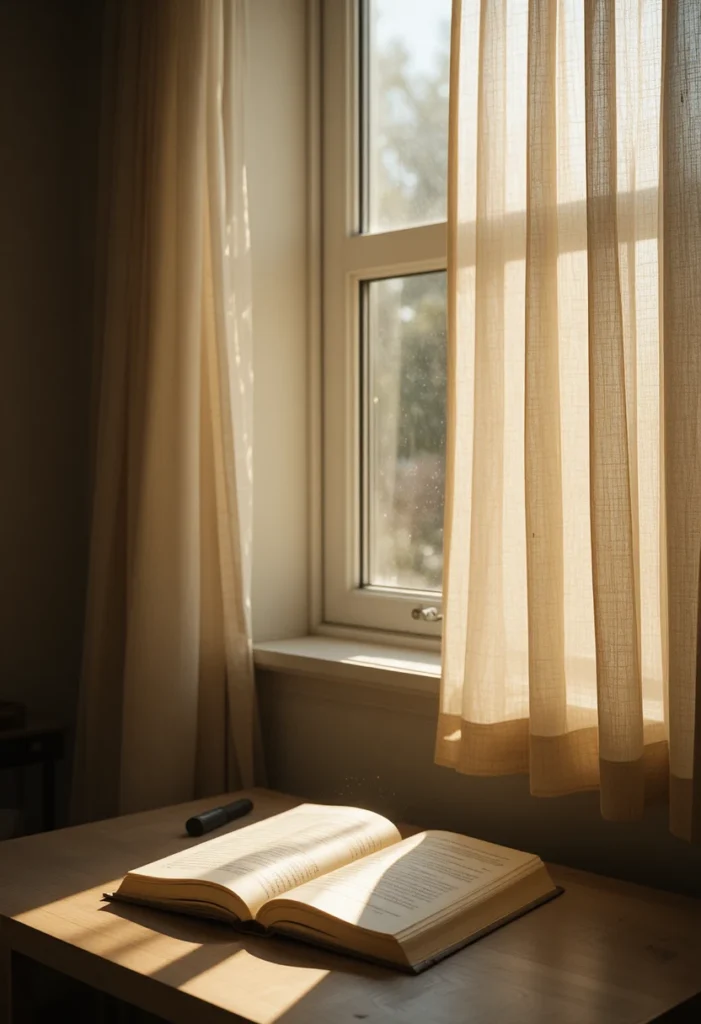
Natural light is basically the secret ingredient in light academia. Keep your windows as unobstructed as possible. Heavy, dark curtains? Nope. We’re going with sheer linen curtains or light cotton drapes that filter sunlight softly.
Position your desk or reading chair near a window. There’s something almost magical about natural light hitting the page of a book—it makes even textbook reading feel romantic.
If your room lacks natural light, invest in warm-toned lamps that mimic daylight. No harsh fluorescent lighting allowed in this sanctuary.
6. The Power of Vintage Accents

This is where you can really have fun. Scour antique shops, flea markets, and your grandmother’s attic for treasures like:
- Old typewriters (even if they don’t work)
- Vintage globes
- Antique picture frames
- Classic alarm clocks
- Brass candlesticks
These pieces tell stories and add depth to your space. Plus, they’re usually more affordable than you’d think. I found a beautiful brass globe at an estate sale for $15, and people always ask about it.
7. Incorporate Botanical Elements
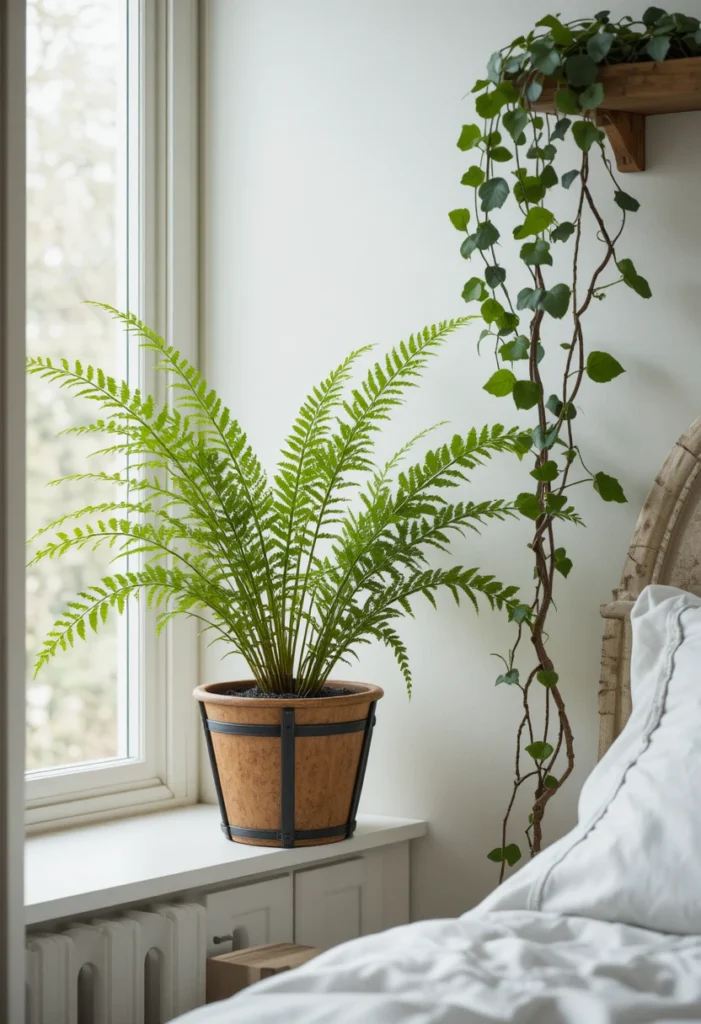
Plants breathe life into any space—literally and figuratively. Choose classic, elegant plants rather than trendy succulents. Think:
- Ferns in vintage planters
- Eucalyptus branches in glass vases
- Ivy trailing from shelves
- Fresh or dried flowers in muted colors
Fresh flowers don’t have to break the bank. A single stem in a simple glass bottle can be just as impactful as an elaborate arrangement. Sometimes less really is more.
8. Gallery Wall of Inspiration

Create a curated gallery wall featuring academic-inspired art. Mix vintage botanical prints with classic literature quotes, old maps, and black-and-white photographs.
FYI, you don’t need expensive frames. I’ve found gorgeous frames at discount stores and spray-painted them gold or left them in their distressed wood state. The mismatched-but-cohesive look is actually what you’re going for.
Include some empty vintage frames too. It adds dimension and that collected-over-time vibe that makes spaces feel lived-in rather than decorated.
9. The Writing Desk Setup

Every light academia bedroom needs a proper writing desk. This is your command center for journaling, studying, or pretending you’re a novelist in 1920s Paris.
Keep your desk relatively minimal but functional:
- A quality desk lamp (brass or ceramic bases work well)
- A pen holder with actual nice pens
- A leather journal or notebook
- A vintage desk organizer
- Maybe a small potted plant
The key is making it look inviting enough that you’ll actually use it. A cluttered desk just becomes another flat surface for laundry (been there, regretted that).
10. Textured Rugs and Layers
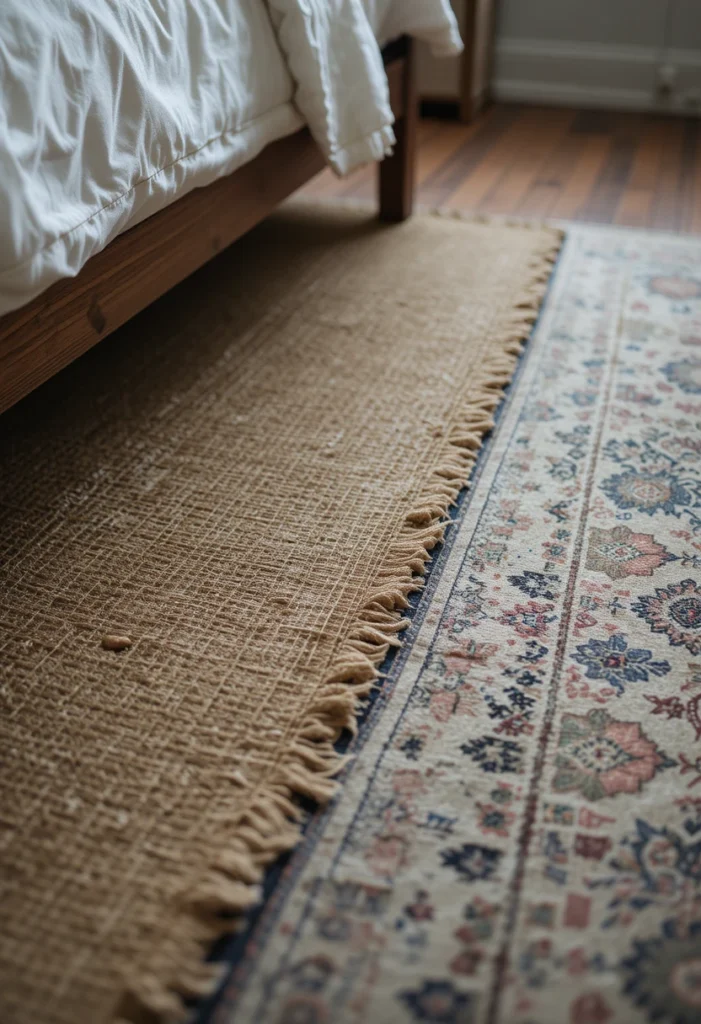
Add warmth underfoot with natural fiber rugs. Jute, sisal, or vintage Persian rugs in muted colors work beautifully. The texture adds another dimension to your space and makes it feel more grounded.
Layer smaller rugs over larger ones if you’re feeling adventurous. A sheepskin rug next to your bed? Perfect for those cold morning toe-touches to the floor.
Natural materials are crucial here. Avoid synthetic fibers that photograph with that telltale plasticky sheen. We’re going for authentic, not artificial.
11. Vintage Mirrors and Reflective Surfaces
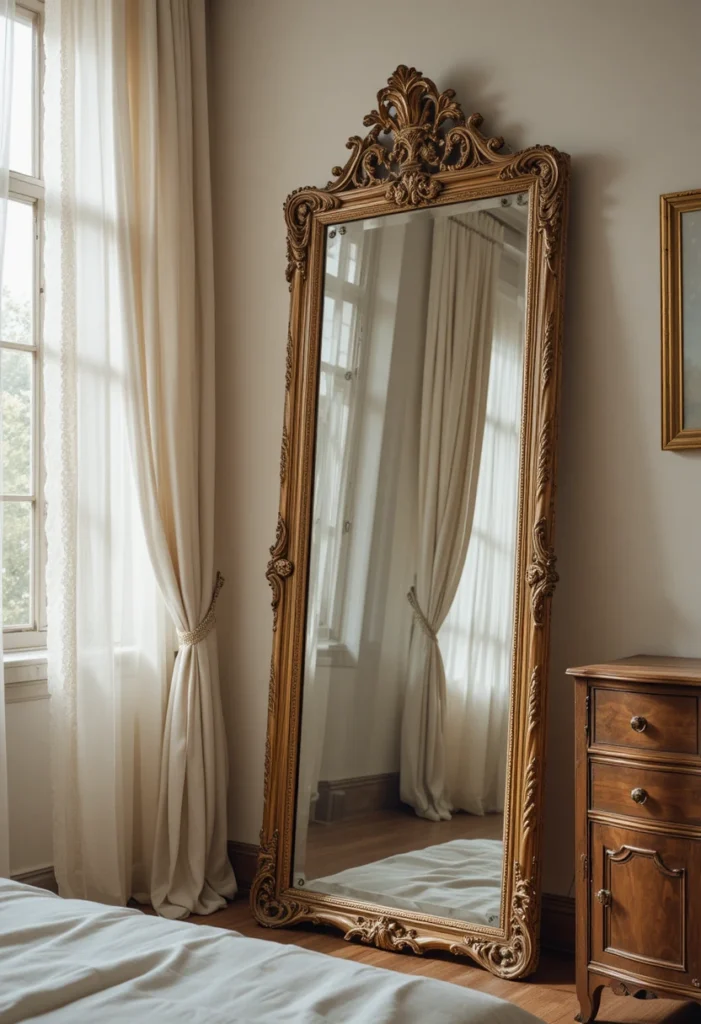
Mirrors multiply light and make spaces feel larger. Hunt for ornate vintage mirrors—gold or dark wood frames both work depending on your other furniture.
Lean a large mirror against the wall rather than hanging it for that effortlessly elegant look. Smaller mirrors can be grouped on walls or placed on dressers alongside your other vintage finds.
The reflection of natural light bouncing around your room? That’s the light academia sweet spot right there.
12. Soft Lighting Strategy

Beyond natural light, your artificial lighting needs to be thoughtfully layered. Harsh overhead lighting kills the vibe faster than you can say “fluorescent nightmare.”
Use multiple light sources:
- A bedside table lamp for reading
- A desk lamp for working
- String lights or fairy lights for ambiance (use sparingly—we’re not going full dorm room here)
- Candles for that romantic scholarly glow
Warm white bulbs only. Cool white bulbs make everything look like a hospital waiting room, and nobody wants that energy in their bedroom.
13. Incorporate Classical Art and Sculpture

Small classical busts or prints of Renaissance art add that academic gravitas. You’re essentially saying, “Yes, I appreciate the masters, and yes, I have taste.” :/
Don’t go overboard though. One or two carefully chosen pieces are better than turning your room into a museum gift shop. A small bust of a Greek philosopher on your bookshelf? Sophisticated. Ten of them? Maybe trying too hard.
Prints are your affordable friend here. Download high-resolution images of public domain classical art and print them yourself. Frame them simply, and boom—instant culture.
14. The Cozy Reading Nook
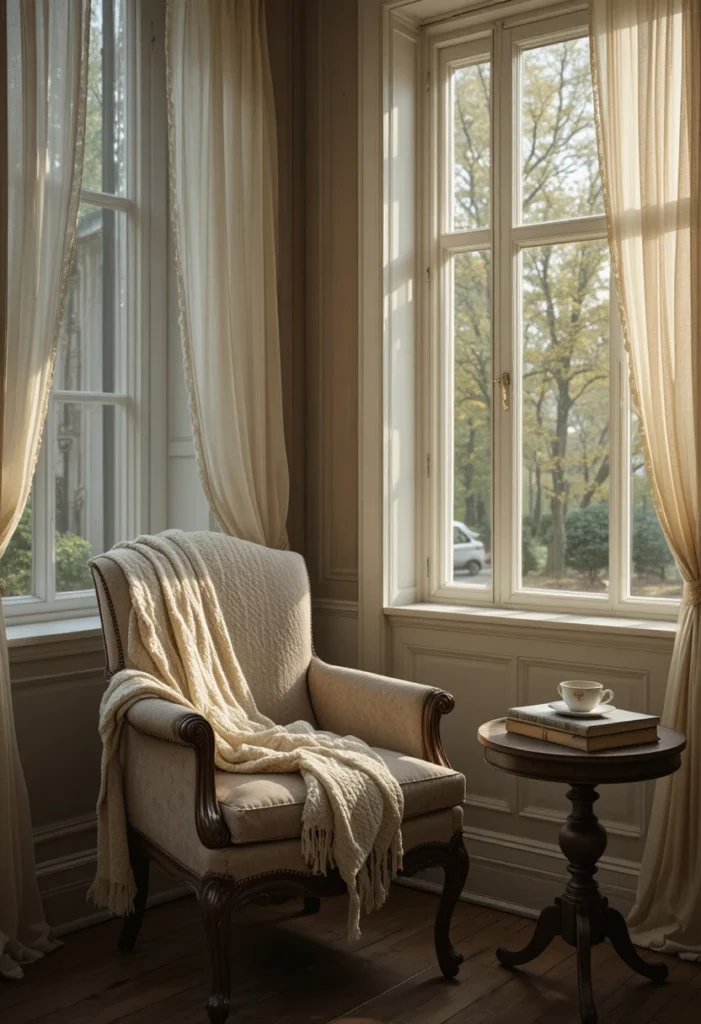
If you have even a small corner available, create a dedicated reading nook. This is non-negotiable for true light academia vibes.
You’ll need:
- A comfortable chair (vintage armchair, wooden rocker, or cushioned window seat)
- Good lighting nearby
- A small side table for your tea/coffee
- A throw blanket draped casually
- A small stack of books within reach
I carved out a reading nook in the corner by my window, and it’s become my favorite spot in the entire house. Something about having a designated “thinking and reading” space just hits different.
15. Vintage Trunks and Storage Solutions
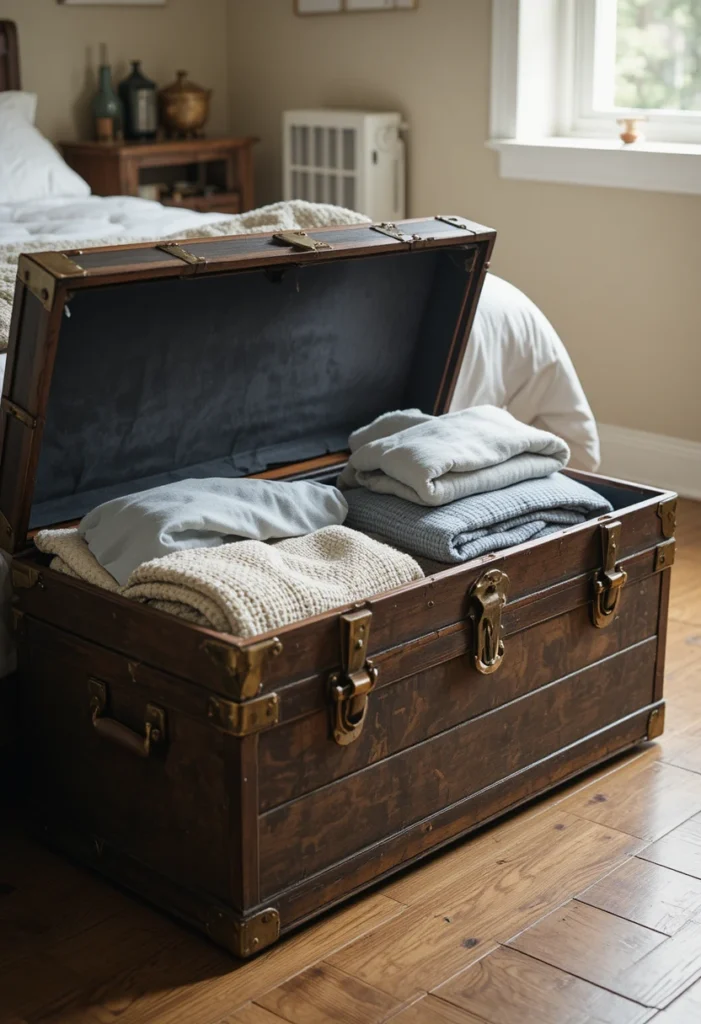
Practical storage that doubles as decor? Yes, please. Vintage trunks, wicker baskets, and wooden boxes with brass hardware solve your storage problems while enhancing the aesthetic.
Use them to store:
- Extra blankets and pillows
- Out-of-season clothes
- Books you’re not currently displaying
- Random stuff you need to hide when guests come over (we all have it)
A trunk at the foot of your bed serves as both seating and storage. It’s functional furniture that actually looks intentional rather than like you’re desperately trying to hide your mess.
16. Personal Touches and Collections

This is where your personality shines through. Display collections that mean something to you:
- Vintage postcards from bookstores you’ve visited
- Pressed flowers from meaningful moments
- Old letters or handwritten notes
- Academic medals or certificates in vintage frames
- Antique keys or other curiosities
The light academia aesthetic isn’t about copying someone else’s Pinterest board exactly. It’s about curating a space that reflects your intellectual interests and personal journey.
17. Quality Over Quantity Approach

Here’s something nobody tells you about aesthetic bedroom design: less is genuinely more. I learned this the hard way after cramming way too many “vintage finds” into my space.
Choose each item deliberately. Does it serve a purpose or bring you joy? If not, it’s just clutter wearing a costume. Every piece in your room should either be functional, beautiful, or ideally both.
A few well-chosen items will always look more sophisticated than a room stuffed with every light academia prop you can find. Curation is key, my friend.
18. Embrace Imperfection and Patina
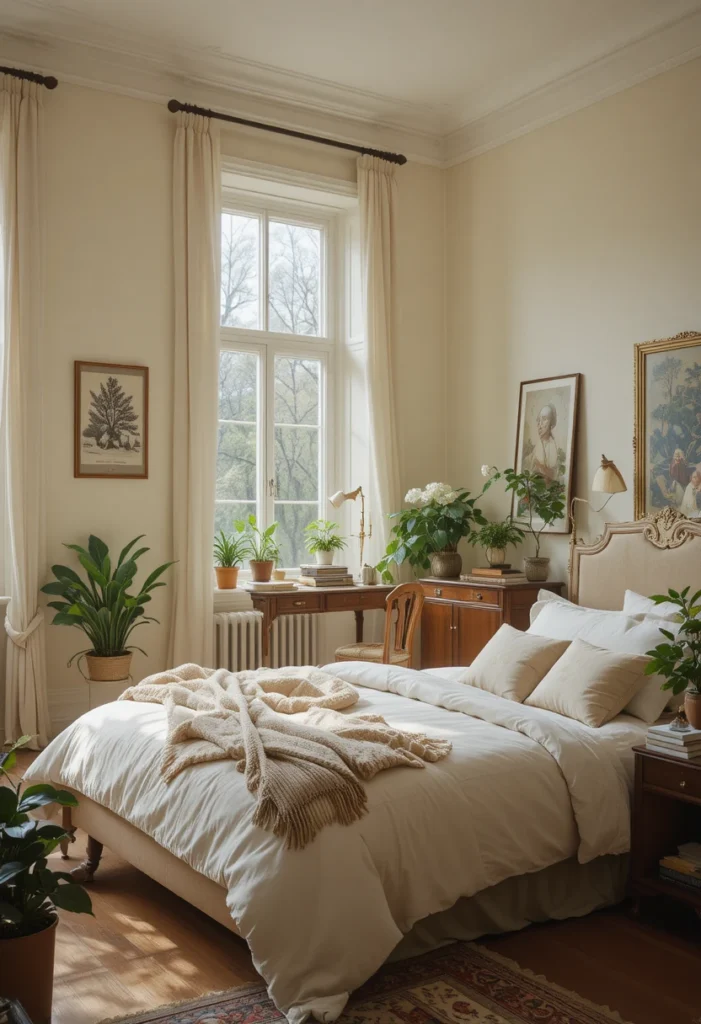
The worn, lived-in look is actually what you want. That vintage book with the cracked spine? Perfect. The wooden desk with water rings from decades of coffee cups? Even better.
Don’t stress about making everything pristine. Light academia celebrates the beauty of things that have been loved and used. Those imperfections tell stories and add authenticity that you literally cannot replicate with brand-new items.
Sometimes the best pieces are the ones that look like they’ve lived a whole life before landing in your room.
19. Seasonal Flexibility

One thing I love about light academia is how easily it adapts to seasons. Keep your base neutral and timeless, then swap in seasonal elements:
- Spring: Fresh flowers, lighter linens, open windows
- Summer: Sheer curtains, minimal layering, lots of natural light
- Fall: Warmer throws, deeper accent colors, more candles
- Winter: Extra blankets, heavier curtains, cozy lighting
This approach keeps your space feeling fresh without requiring a complete overhaul every few months. Plus, it gives you an excuse to keep “improving” your space (as if you needed one).
Bringing It All Together
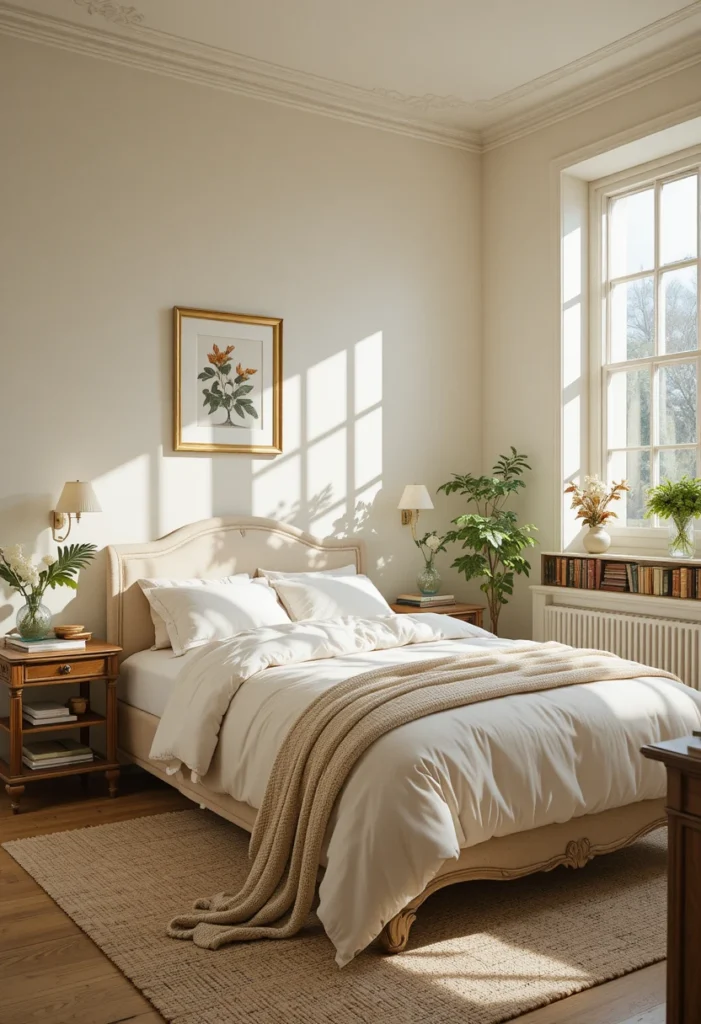
Creating a light academia bedroom isn’t about following a rigid formula or buying everything at once. It’s about slowly curating a space that inspires you to think, read, create, and rest peacefully.
Start with the basics—neutral colors, quality bedding, good lighting. Then layer in vintage finds and personal touches as you discover them. The best light academia spaces are the ones that evolve naturally over time, collecting pieces that genuinely resonate with you.
Your bedroom should feel like a sanctuary where intellectual curiosity meets comfort. It should make you want to curl up with a book, write in your journal, or just exist peacefully in a space that reflects who you are.
And hey, if all else fails, just add more books and call it a day. That’s basically half the aesthetic right there. 🙂
Now go forth and create your scholarly sanctuary. Your future well-read, aesthetically-pleased self will thank you.
