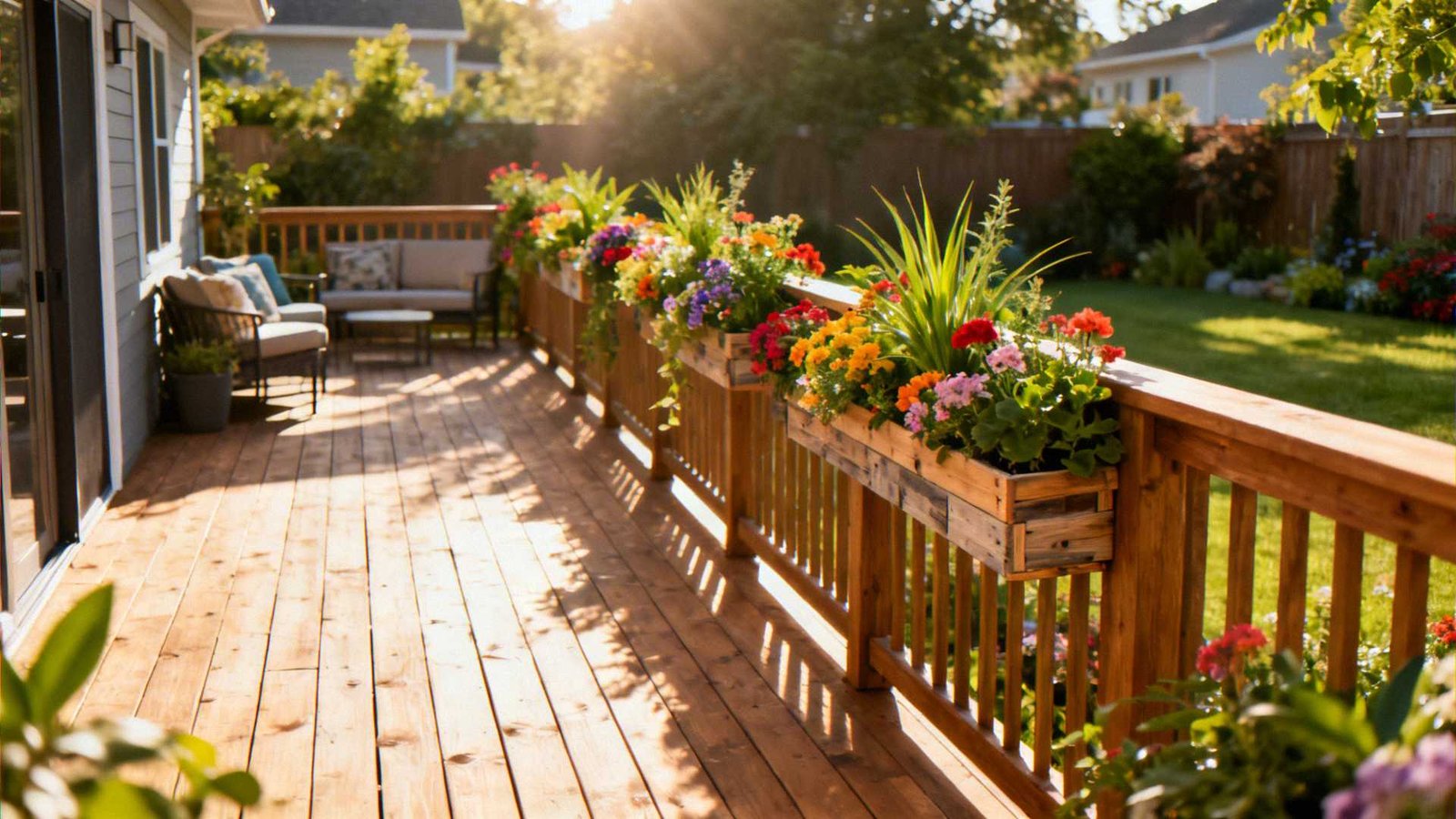
Look, I’ve spent way too many weekends staring at my boring deck railing, wondering why it looks so… blah. You know that feeling, right? You’ve got this perfectly decent outdoor space, but something’s missing. Turns out, the answer was literally right under my nose—or rather, right on top of my railing.
Deck railing planters are having a serious moment on Pinterest, and honestly, I get it. They’re like jewelry for your deck. They transform that sad, empty railing into a cascading garden paradise without eating up your precious floor space. And the best part? You can DIY most of these ideas on a lazy Saturday afternoon.
So grab your coffee (or wine, no judgment), and let’s talk about 18 planter ideas that’ll make your neighbors seriously jealous.
Why Deck Railing Planters Are Actually Genius
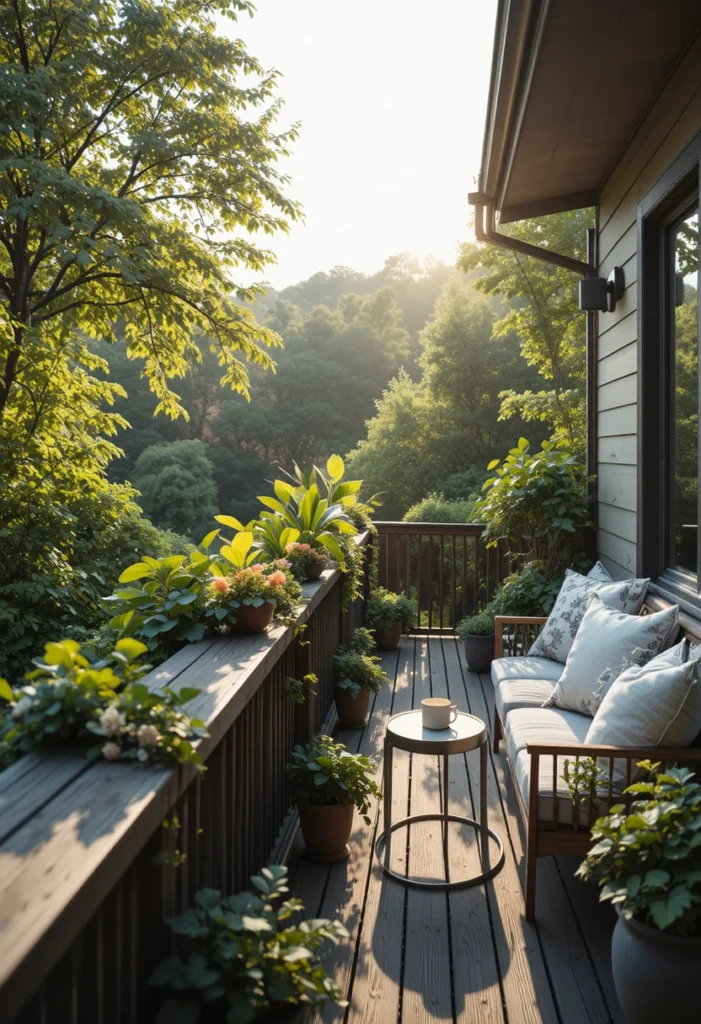
Before we jump into the fun stuff, let me tell you why I’m obsessed with railing planters. First off, space efficiency is no joke. My deck isn’t exactly massive, and every square foot counts. By going vertical with planters on the railing, I freed up floor space for actual furniture—you know, so people can sit down.
Second, accessibility. No more bending over to tend to plants or breaking my back weeding. Everything’s right there at a comfortable height. My knees thank me daily.
Third, and this is huge—visual impact. A row of colorful planters along your railing creates this amazing living border that softens the whole space. It’s like your deck is giving everyone a floral hug 🙂
Traditional Box Planters: The Classic That Never Gets Old
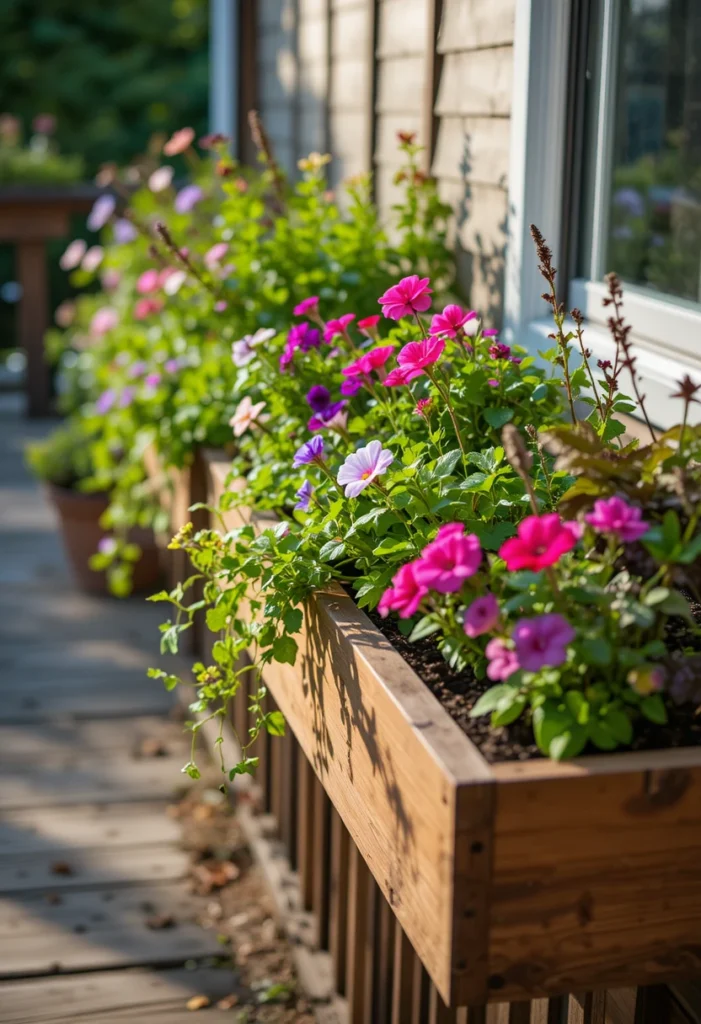
Let’s start with the OG of railing planters—the classic box style. These rectangular beauties hook right over your railing and sit pretty on both sides.
What makes them work:
- Simple installation (seriously, you just hook and hang)
- Available in tons of materials—cedar, plastic, metal, whatever floats your boat
- Great drainage when you drill proper holes
- Perfect for shallow-root plants like herbs and petunias
I built mine from cedar fence pickets, and they cost me maybe $30 total for six planters. Not bad, considering the pre-made ones at the garden center wanted $25 EACH. The trick is making sure your brackets are sturdy enough to handle wet soil—trust me, that’s heavier than you think.
Quick Comparison: Materials That Work
| Material | Durability | Cost | Maintenance |
|---|---|---|---|
| Cedar | High | Medium | Oil annually |
| Plastic | Medium | Low | Just rinse |
| Metal | Very High | High | Check for rust |
| Composite | High | Medium | None needed |
Hanging Basket Hybrids: Best of Both Worlds

Have you ever thought, “Cool, but where am I supposed to hang them?” when you saw hanging baskets? Go into the hanging basket holder that is mounted on the railing. You can essentially achieve the cascade effect of hanging baskets without the need for ceiling hooks thanks to this brilliant invention.
I stumbled across this idea on Pinterest at 2 AM (as one does), and it changed my deck game completely. You mount these curved brackets to your railing, and they hold standard hanging baskets at the perfect angle.
What’s brilliant here? You can swap out baskets seasonally. Spring pansies? Done. Summer petunias? Easy. Fall mums? You got it. No permanent commitment required.
Gutter Planters: Repurposing at Its Finest
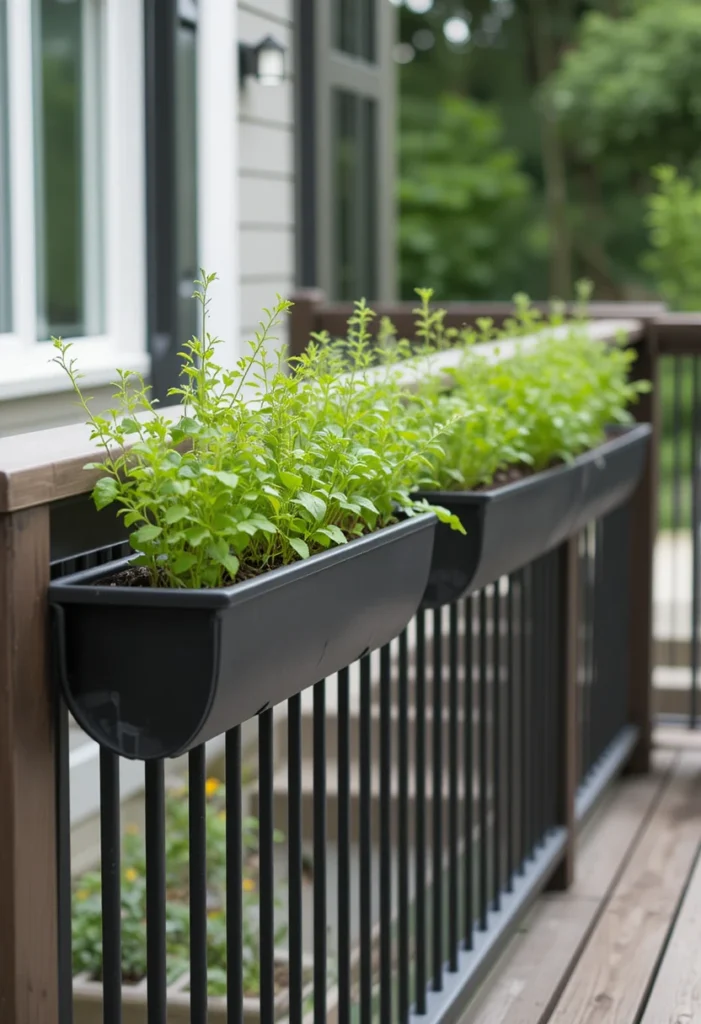
Okay, hear me out before you think I’ve lost it. Rain gutters make incredible railing planters. Yes, those things on your roof. IMO, this is one of the most creative uses I’ve seen.
Cut gutters to your desired length, cap the ends, drill drainage holes, and mount them horizontally along your railing. The long, narrow shape is perfect for creating herb gardens or succulent displays.
Why this works so well:
- Super affordable (vinyl gutters are dirt cheap)
- Creates a clean, modern look
- Easy to create multiple rows for a dramatic effect
- Lightweight even when filled with soil
Pro tip: Paint them before mounting. I did mine in a matte black, and it looks way more intentional than contractor-white gutters would’ve.
Mason Jar Magic: Cottage Core Vibes Activated
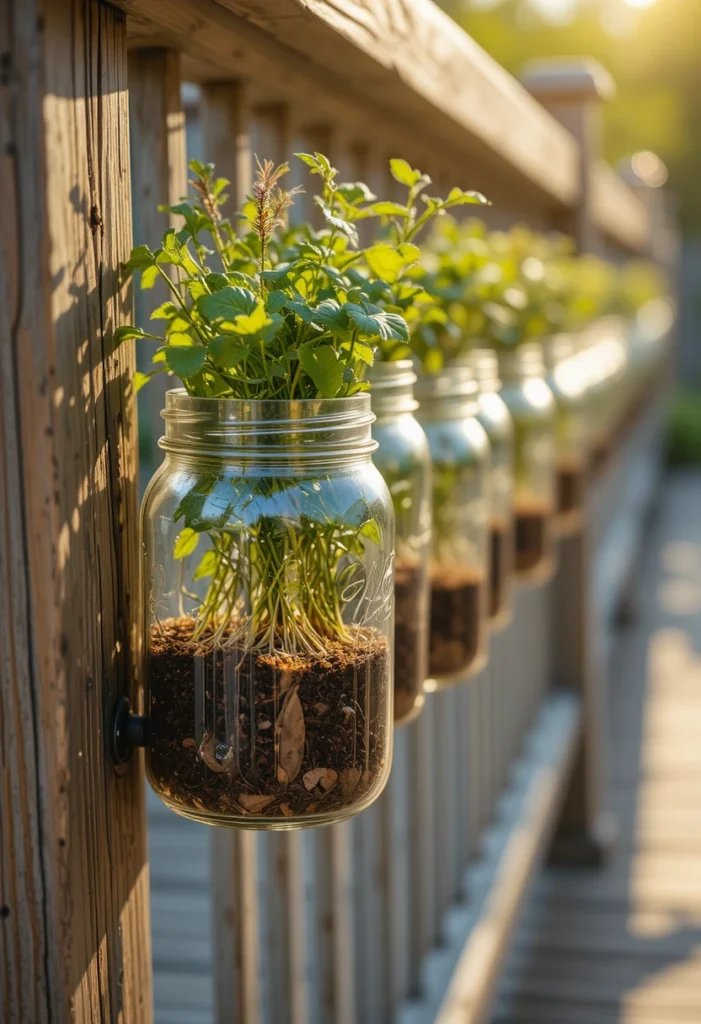
If Pinterest has taught me anything, it’s that people will never stop loving mason jars. And you know what? For railing planters, they actually make sense.
Grab some hose clamps, stainless steel rings, or create simple wire holders that attach your jars to vertical railing posts. Fill them with herbs, small flowers, or even succulents.
This whimsical touch is added by the see-through glass, particularly in the afternoon when sunlight strikes them. Additionally, since the soil isn’t hidden behind glass, you can see precisely when your plants need water.
Fair warning though: drainage is tricky with jars. Either drill through the bottom (carefully!), use them as decorative holders with nursery pots inside, or layer gravel at the bottom and water sparingly.
Pallet Planter Panels: The Rustic Champion
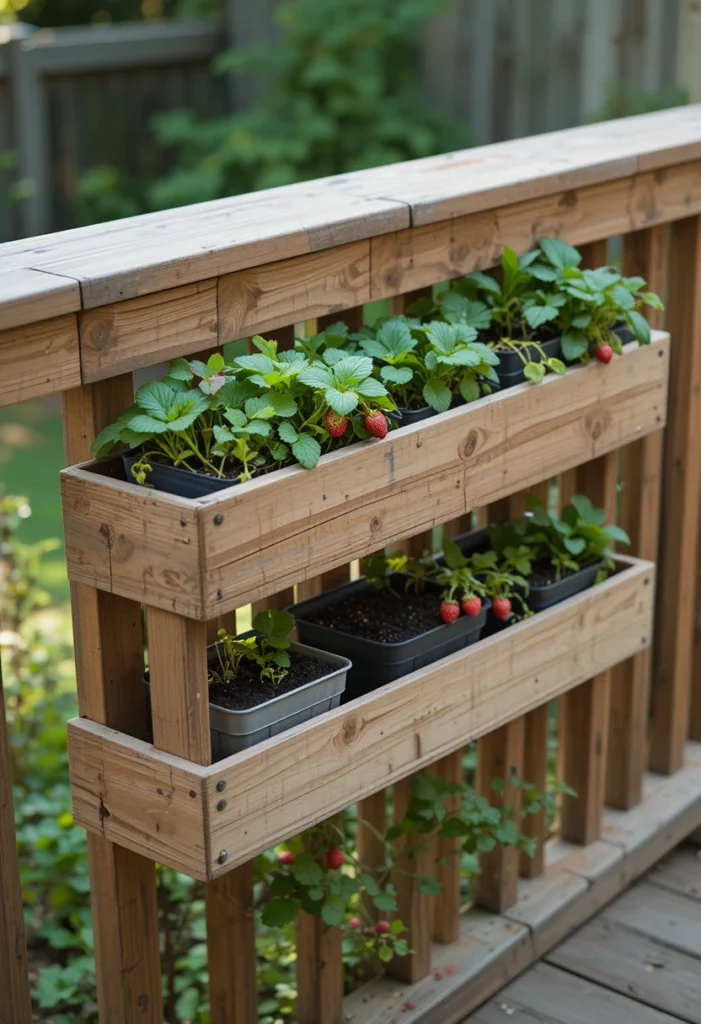
Pallets are basically the duct tape of DIY projects—you can use them for everything. For deck railings, stand a pallet section vertically and mount it to your railing posts to create a living wall effect.
The gaps between pallet slats are perfect for tucking in small pots or creating pockets for plants. I’ve seen people grow everything from herbs to strawberries in these setups.
What I love:
- Often free (check behind stores or post on Nextdoor)
- Creates instant rustic charm
- Tons of planting opportunities in one structure
- Easy to customize with paint or stain
Just make sure you’re using heat-treated pallets, not chemically treated ones. Look for the “HT” stamp—FYI, this matters for plant safety.
Window Box Style: Traditional Elegance
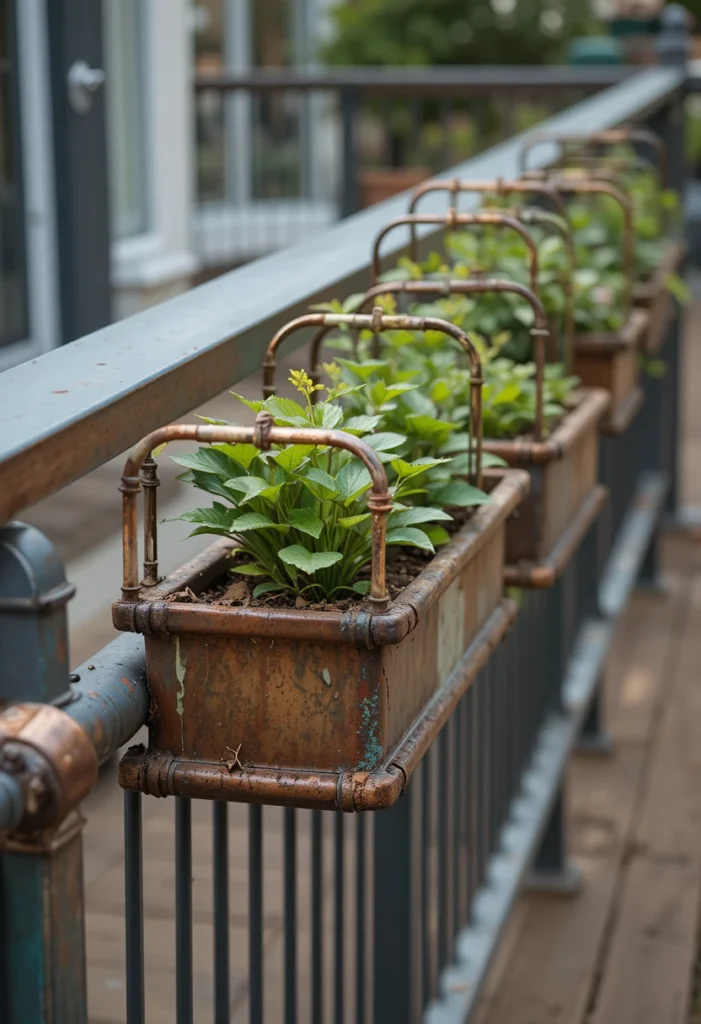
You can’t scroll through Pinterest without seeing these formal window-box style planters mounted on deck railings. There’s a reason they’re everywhere—they’re gorgeous and they work.
These longer, rectangular planters typically mount with brackets underneath the railing or hang over the top edge. The classic look pairs perfectly with any architectural style, from modern to traditional.
I went with a simple stained wood version that matches my deck. Filled them with a combo of upright geraniums, trailing vinca, and some asparagus fern for texture. The whole setup took maybe two hours, including staining time.
The key is mixing plant heights and textures—you want upright growers in the back, fillers in the middle, and spillers cascading over the edge.
Copper Pipe Planters: Industrial Chic Alert
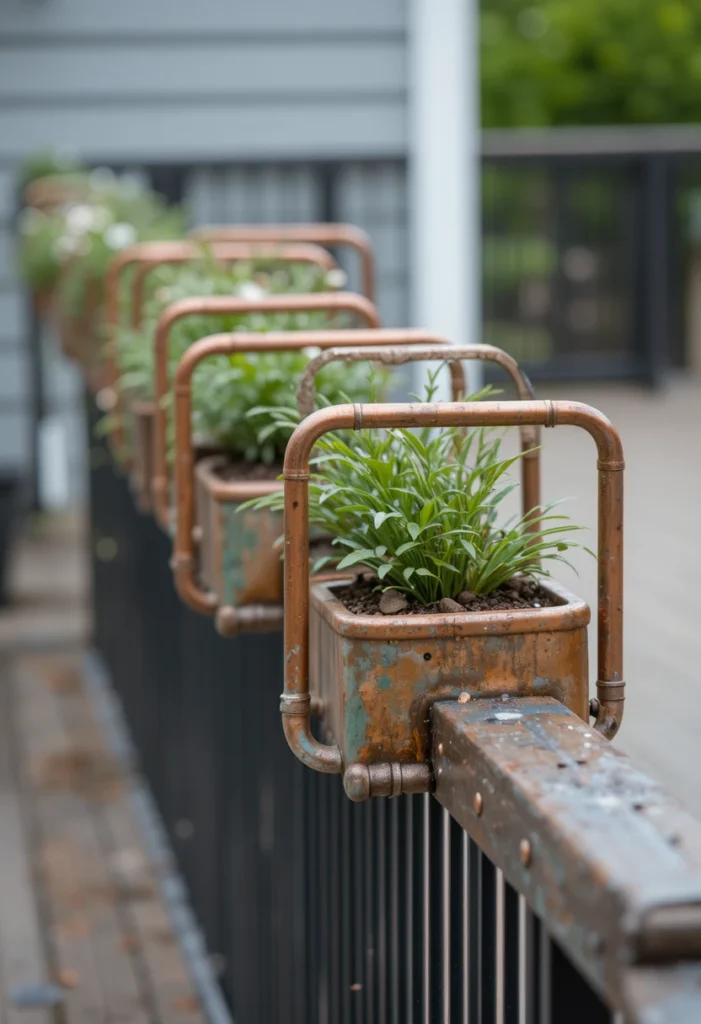
For those who like their DIY with a side of modern industrial vibes, copper pipe planters are where it’s at. These use actual copper plumbing pipes cut and joined to create geometric planter frames that hang or mount to railings.
Fair warning: copper isn’t cheap. But here’s the thing—it patinas over time, developing that gorgeous verdigris finish that people pay extra for. So basically, your planters get better looking as they age. Not bad, right?
The construction involves:
- Cutting pipes to size with a pipe cutter
- Using elbow and T-joints to create shapes
- Adding small pots or liners inside the frames
- Mounting with pipe straps to railing posts
It’s more complex than some other options, but the payoff is this ultra-stylish look that nobody else on your block will have.
Tiered Ladder Planters: Vertical Garden Goals
This idea uses small wooden ladders or custom-built stepped frames that lean against or attach to your railing. Each “step” holds a small pot or planter, creating this cascading effect that’s pure Pinterest gold.
I built a simple version using leftover deck boards, creating three tiers that lean against my railing at a 70-degree angle. Each tier holds 3-4 small pots, giving me space for 9-12 plants in the footprint of maybe two feet.
Best plants for this setup:
- Herbs (different varieties on each tier)
- Succulents (drainage is crucial here)
- Small annuals like pansies or violas
- Trailing plants on the top tier for drama
The visual interest comes from the varied heights and the ability to create color patterns across the tiers.
Fabric Pocket Planters: Soft and Functional

Here’s something different—vertical fabric planters with multiple pockets that hang from your railing like a soft-sided storage organizer. These work especially well for herbs and small flowers with shallow root systems.
These planters are lightweight, simple to install, and surprisingly sturdy because they are made of felt or heavy-duty fabric. Although high-quality ones last for several seasons, I was initially dubious (won’t they just fall apart?).
Advantages you might not expect:
- Excellent drainage (fabric breathes)
- Easy to store in winter (just fold them up)
- Root-friendly environment
- No drilling or complex mounting required
Mount them to railing posts with zip ties or small hooks. When the season ends, empty them out, wash them, and store them flat.
Repurposed Container Creativity: Anything Goes

This is where Pinterest really shines—people mounting the most unexpected containers to their railings. I’ve seen old colanders, vintage lunch boxes, teapots, and even cowboy boots transformed into quirky planters.
The rules here are simple: if it can hold soil and you can attach it securely, it’s fair game. My personal favorite? Vintage metal toolboxes mounted horizontally along the railing. They’re sturdy, weatherproof, and tell a story.
Quick drainage reminder: Whatever container you choose, drill holes in the bottom. Drainage isn’t optional—it’s survival for your plants.
Bamboo Planter Boxes: Natural Zen Aesthetic
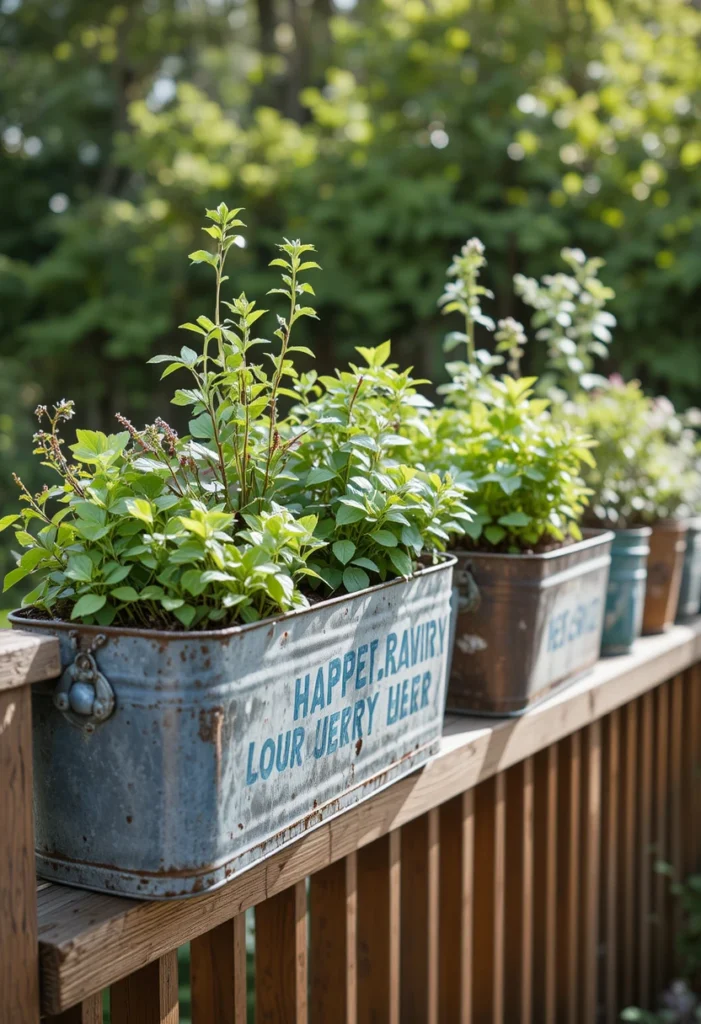
For a more natural, tropical vibe, bamboo planter boxes bring that resort-style feeling to your deck. You can buy pre-made bamboo planter boxes or DIY them with bamboo fencing material wrapped around a simple wooden frame.
The natural golden-brown color of bamboo adds warmth, and it’s actually pretty weather-resistant when sealed properly. I hit mine with a coat of outdoor polyurethane, and they’ve held up beautifully through rain and sun.
These work especially well if you’re going for a cohesive outdoor living space with natural materials. Pair them with bamboo privacy screens or furniture for the full effect.
Self-Watering Rail Planters: Smart and Practical
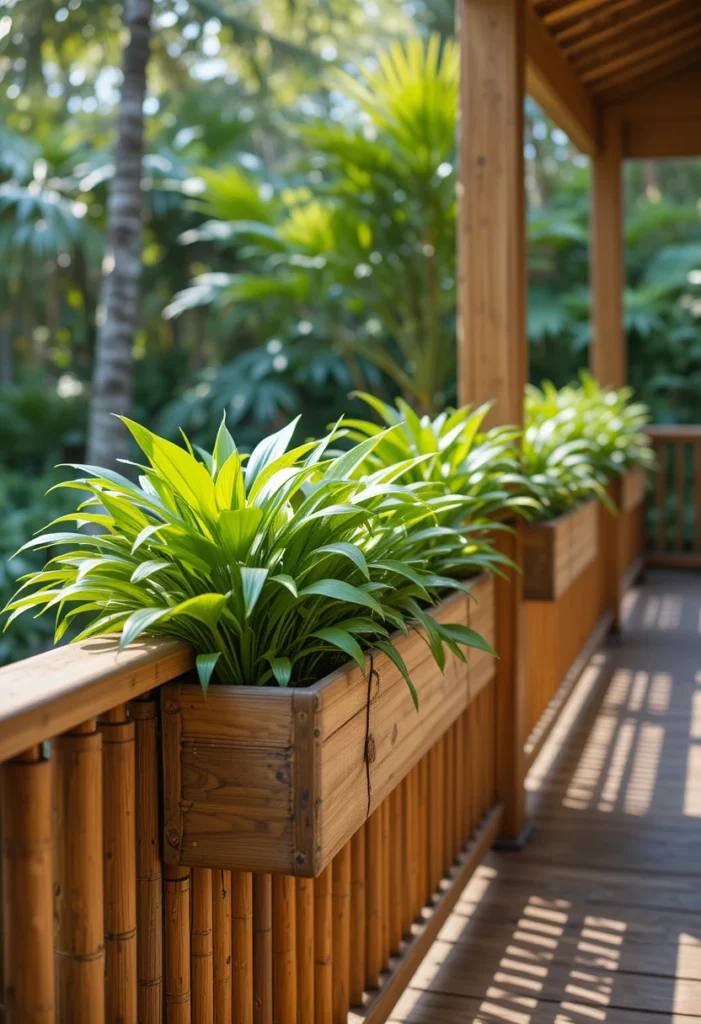
Let’s be honest—sometimes we forget to water our plants. Life happens. That’s where self-watering railing planters become total lifesavers.
These planters have a built-in reservoir system that wicks water up to plant roots as needed. You fill the reservoir every few days instead of watering daily. For someone like me who travels for work, this feature is clutch.
The downside? They’re generally more expensive than DIY options. But the convenience factor might be worth it, especially if you have a large deck with lots of planters to maintain.
Hanging S-Hook Systems: Maximum Flexibility
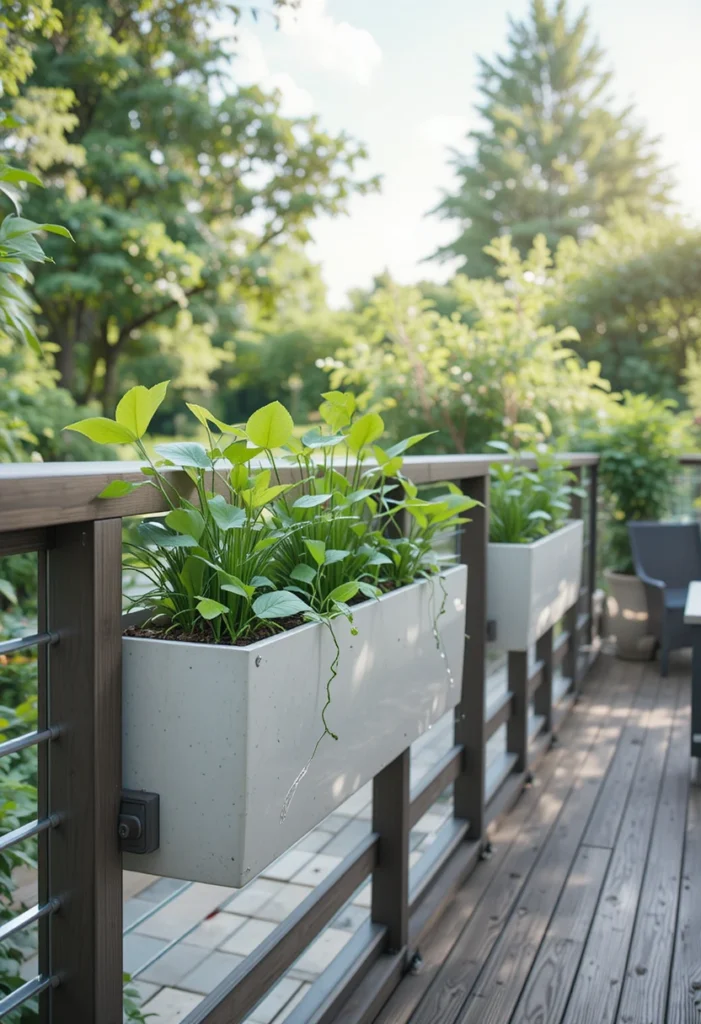
This approach uses heavy-duty S-hooks that hang over your railing and hold various pot sizes. It’s basically the lazy person’s solution (said with love because I am that person).
What’s brilliant:
- Zero construction required
- Swap plants anytime without tools
- Works with any pot that has a lip or handle
- Adjust spacing easily
This system is what I use for my seasonal displays. Springtime? Pots of vibrant primroses should be hung. Summertime? Use geraniums and petunias instead. Fall? Add the decorative kale. It takes roughly fifteen minutes to complete the switchover.
Cinder Block Planters: Modern and Modular
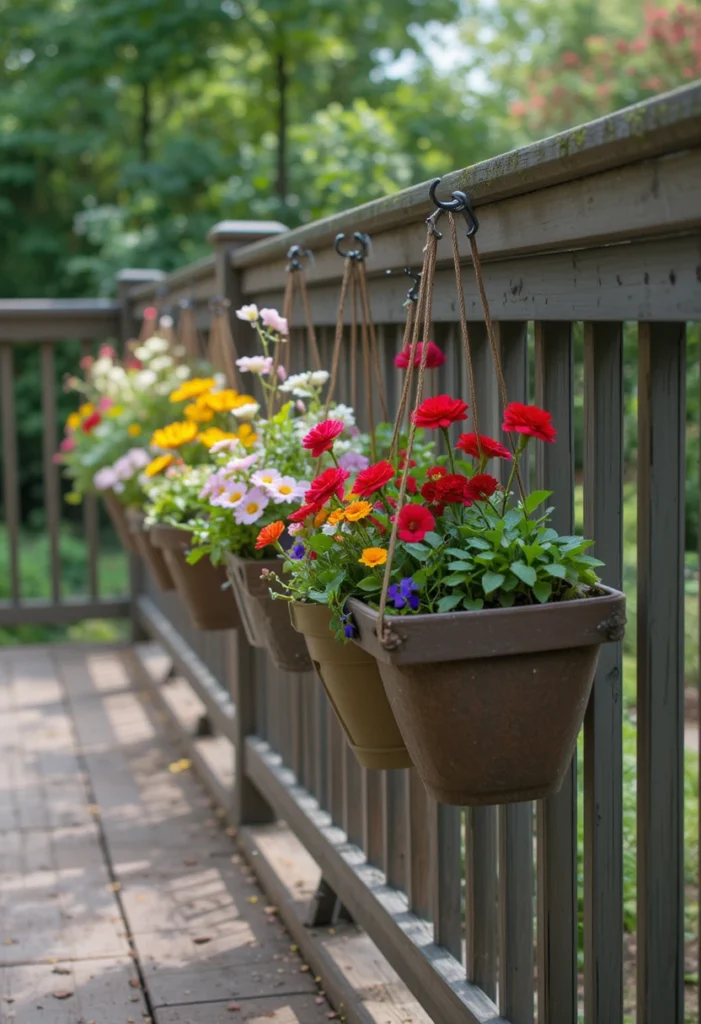
Okay, this one requires some deck support (those blocks are heavy), but the look is so cool. Stack cinder blocks on their sides along your railing, using the hollow centers as individual planters.
The gray concrete provides this modern industrial contrast to lush greenery. Plus, you can customize your configuration—stack two high, create a long single row, whatever works for your space.
Paint the blocks if solid gray isn’t your thing. I’ve seen Pinterest users create ombre effects, geometric patterns, or even bold solid colors that totally transform the look.
Best for:
- Succulents (they love the drainage)
- Herbs that prefer drier soil
- Small cacti arrangements
- Trailing plants that soften the hard edges
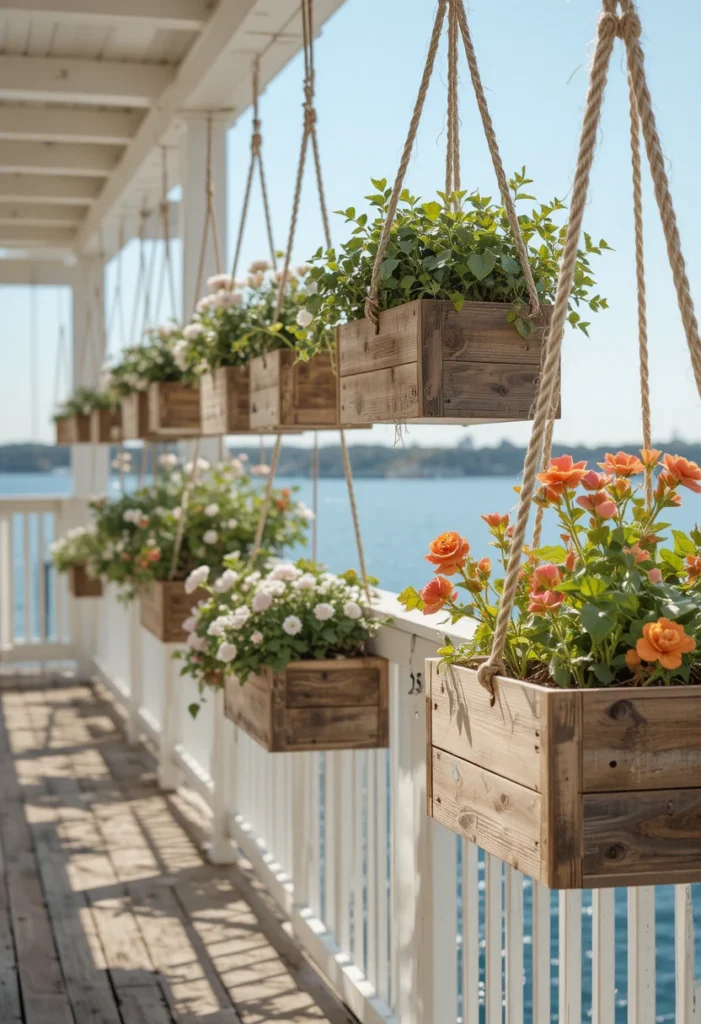
Rope and Wood Suspended Planters: Nautical Charm

These planters use rope or thick jute cord to suspend wooden planter boxes from your railing at various heights. The rope adds texture and a slightly nautical or bohemian vibe depending on how you style them.
Creating these involves:
- Building or buying simple wooden boxes
- Drilling holes in the corners
- Threading rope through and knotting underneath
- Suspending from railing hooks or eye screws
The varying heights create visual interest, and the rope softens the overall look. I paired mine with brass fixtures for a more upscale coastal feel.
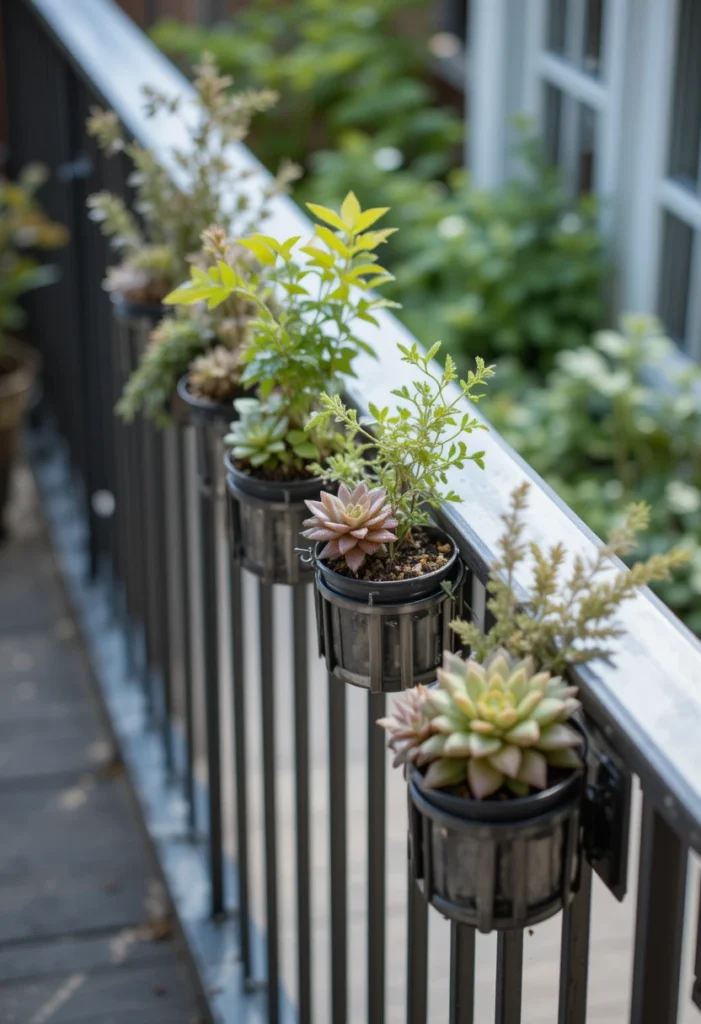
Magnetic Planters: Small Space Solution
For metal railings, magnetic planters are straight-up genius. These small containers have strong magnets built into the back that adhere directly to metal surfaces. No tools, no brackets, no drama.
Obviously, these work best for smaller plants—succulents, air plants, small herbs, or individual flowers. You’re not growing tomatoes in these things :/
But for adding quick pops of green and color? Unbeatable. And you can rearrange them on a whim to create new patterns or designs.
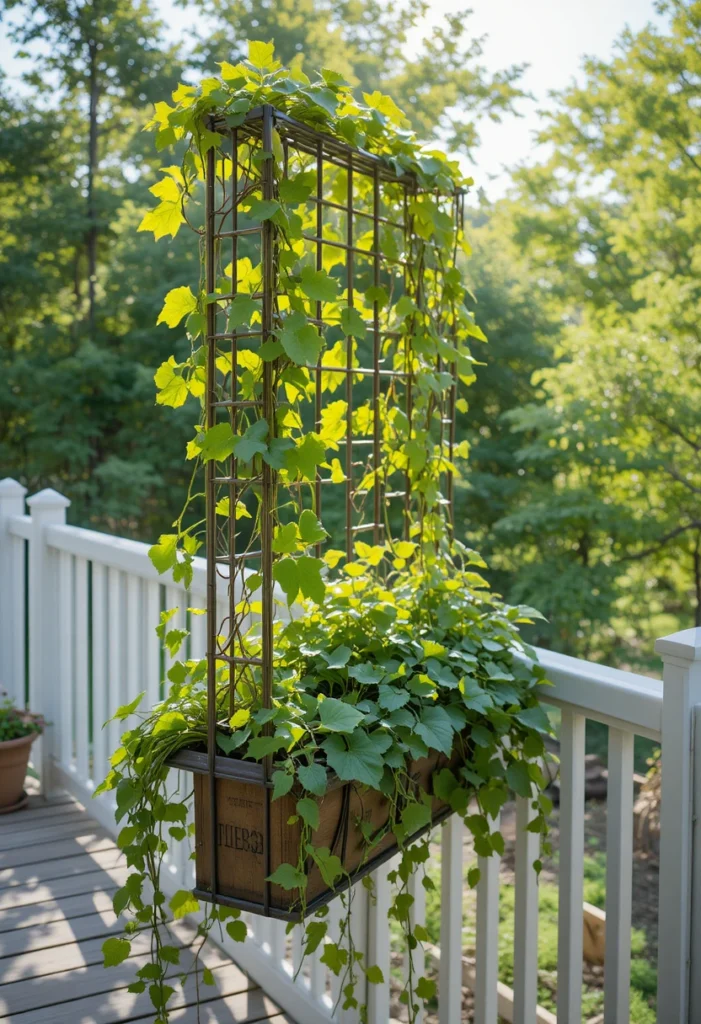
Vertical Trellis Planters: Climb Higher
This setup combines a planter box with an attached trellis or support structure mounted to your railing. The concept lets you grow vining plants like clematis, sweet peas, or even small varieties of climbing roses.
The vertical growth draws the eye upward and creates privacy as plants fill in the trellis. I used these along one side of my deck where I wanted to block the view from my neighbor’s window (nothing personal, just prefer not to make eye contact while grilling in my pajamas).
Construction is straightforward:
- Mount planter box to railing
- Attach trellis to railing posts behind the planter
- Plant your climbers and train them onto the trellis
- Watch your living privacy screen grow
Painted Can Planters: Color Pop Central

Sometimes the simplest ideas are the best. Take ordinary tin cans, paint them in coordinating or contrasting colors, and mount them to your railing with pipe straps or wire.
This is the pinnacle of upcycling—those cans of tomato sauce that you would typically recycle are transformed into adorable planters. With the exception of the paint I already had, I spent exactly zero dollars doing an entire set in ombre blue hues.
Tips for success:
- Remove labels completely and clean cans thoroughly
- Punch drainage holes in the bottom with a nail and hammer
- Use outdoor paint or seal with polyurethane
- Add felt pads between cans and railing to prevent scratches
The size is perfect for herbs or small annuals. And when you get bored of the color scheme? Just repaint.
Making Your Choice: What Actually Works for You
So we’ve covered a ton of options, and maybe you’re feeling slightly overwhelmed. That’s fair. Here’s how I’d approach choosing the right planter style for your situation.
Consider your railing type first. Wood railings give you the most flexibility—you can screw, nail, or hang pretty much anything. Metal railings require different mounting strategies (magnets, clamps, or hooks). Vinyl railings are trickier and might limit your options to hanging solutions.
Think about weight. Some ideas, like cinder blocks, require serious structural support. Others, like fabric pockets, are so light that any railing can handle them. Know your deck’s limits.
Match your maintenance personality. If you travel a lot or forget to water, self-watering systems or drought-tolerant plants in simple containers make more sense than high-maintenance setups.
And honestly? Start small. You don’t need to transform your entire railing in one weekend. Pick one idea, try it out, see how it performs through a season. You can always add more.
The Bottom Line on Deck Railing Planters

After trying way too many of these ideas (my deck is basically a planter testing ground at this point), here’s what I know for sure: the best deck railing planter is the one you’ll actually maintain and enjoy looking at.
Whether you go simple with classic box planters or get wild with painted cans and copper pipes, you’re adding life and personality to your outdoor space. That matters more than following trends or achieving Pinterest perfection.
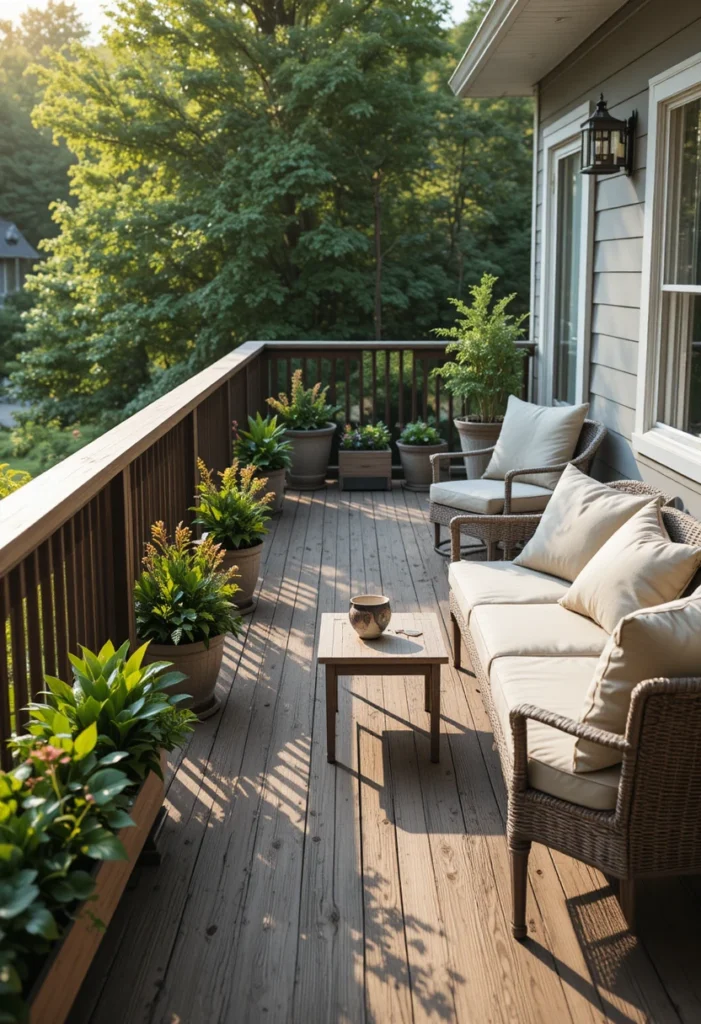
So pick an idea, grab your tools, and spend a weekend making your deck railing less boring. Your future self (and probably your future Instagram photos) will thank you. And hey, if it doesn’t work out? That’s what fall decoration is for—just cover it up with some cornstalks and call it seasonal 🙂
Now get out there and make something beautiful. Or at least, make something interesting.

3 thoughts on “18 Stunning Deck Railing Planters DIY Ideas Pinterest Users Love”