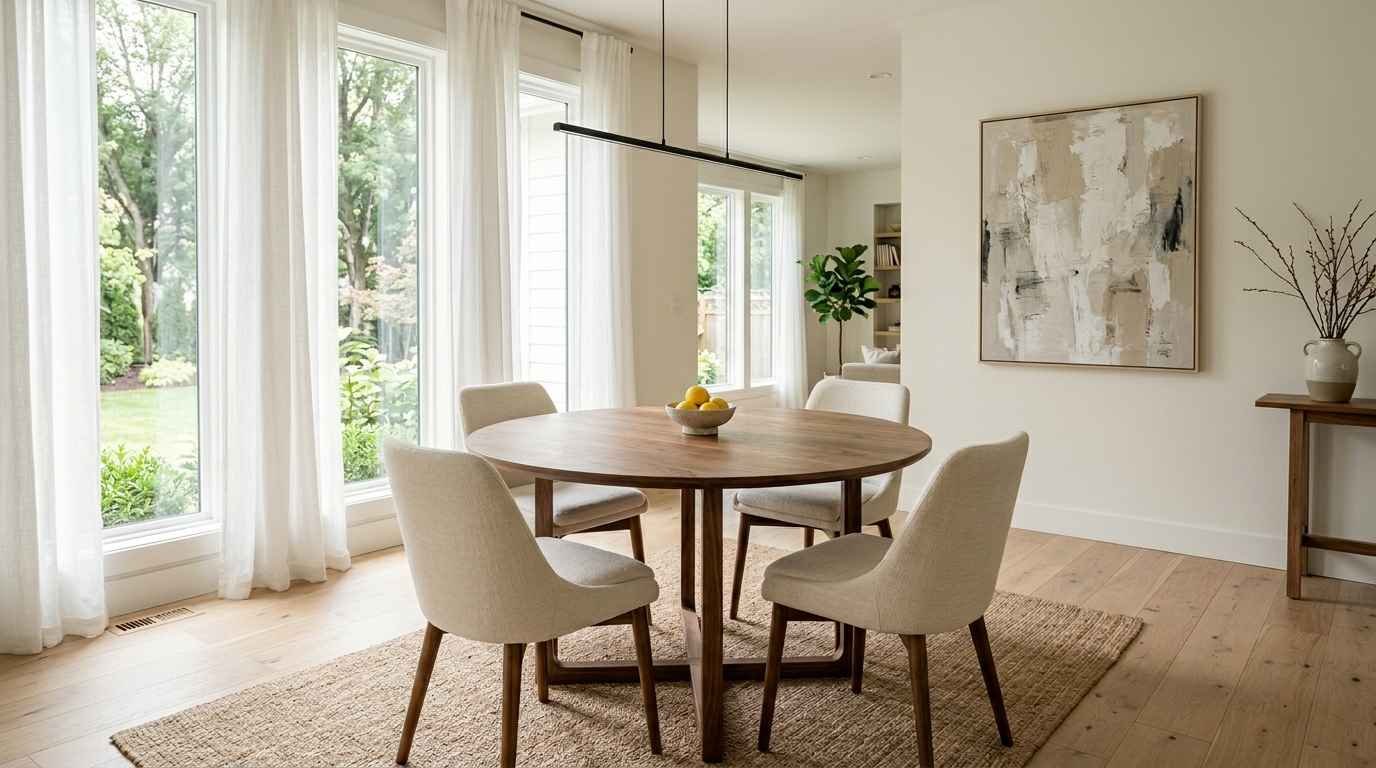
My dining room used to look like a furniture showroom had a yard sale inside it.
Too many chairs, a rug that didn’t know what it wanted to be, and three different wood tones competing for attention. Sound familiar?
Minimalism fixed it. And I don’t mean the cold, sterile kind that makes guests feel like they’re eating dinner in a hospital lobby. I mean the kind where every single thing earns its spot.
Here are 35 ideas to get you there.
Start With the Table
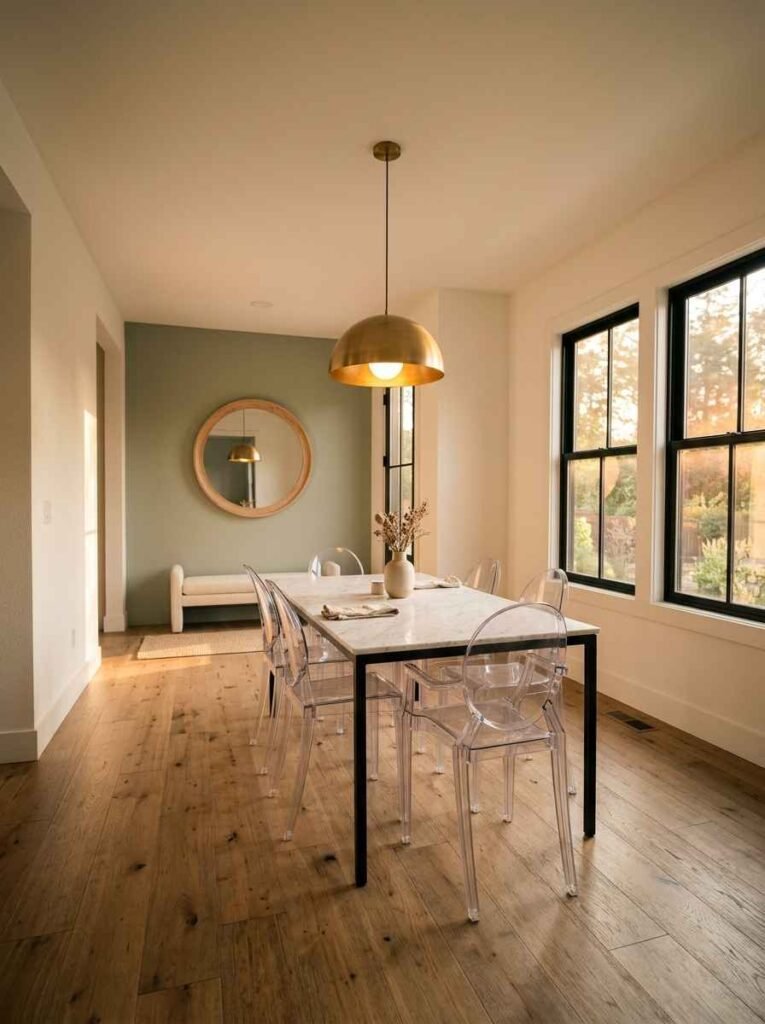
Your dining table sets the whole tone. Get this right and everything else follows.
1. Go for a round table
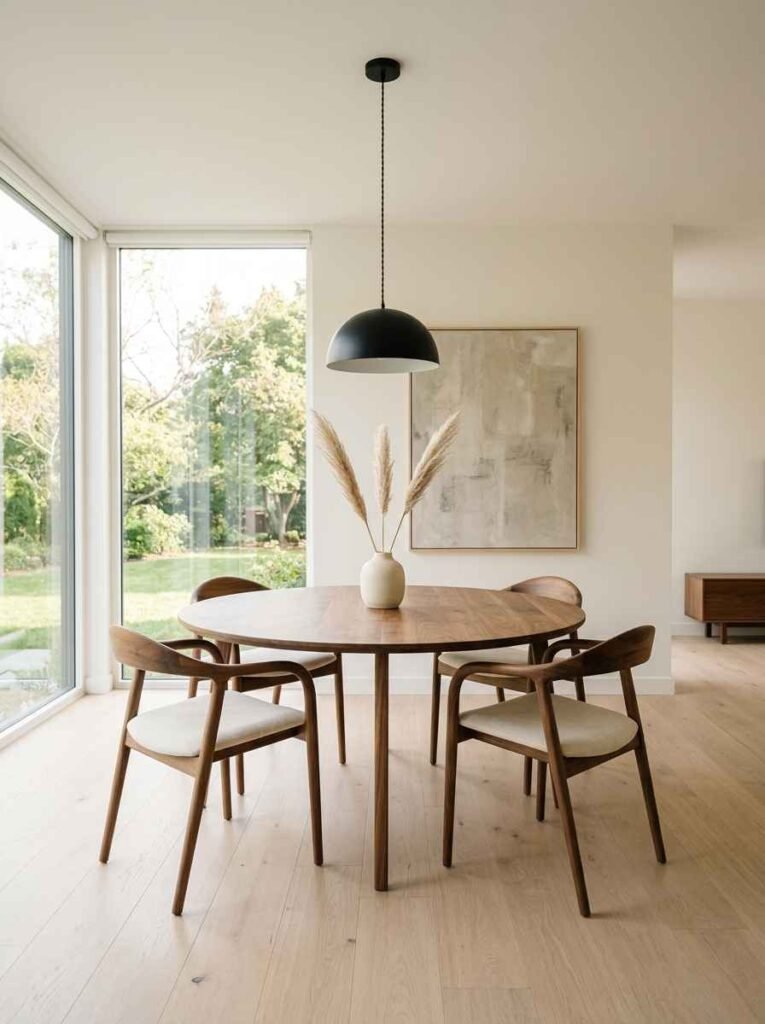
Round tables make conversation easier. No “head of the table” power dynamics, no awkward corners.
A round walnut or white oak table in the center of a room looks deliberately placed, not just plopped there.
2. Choose one wood tone and commit
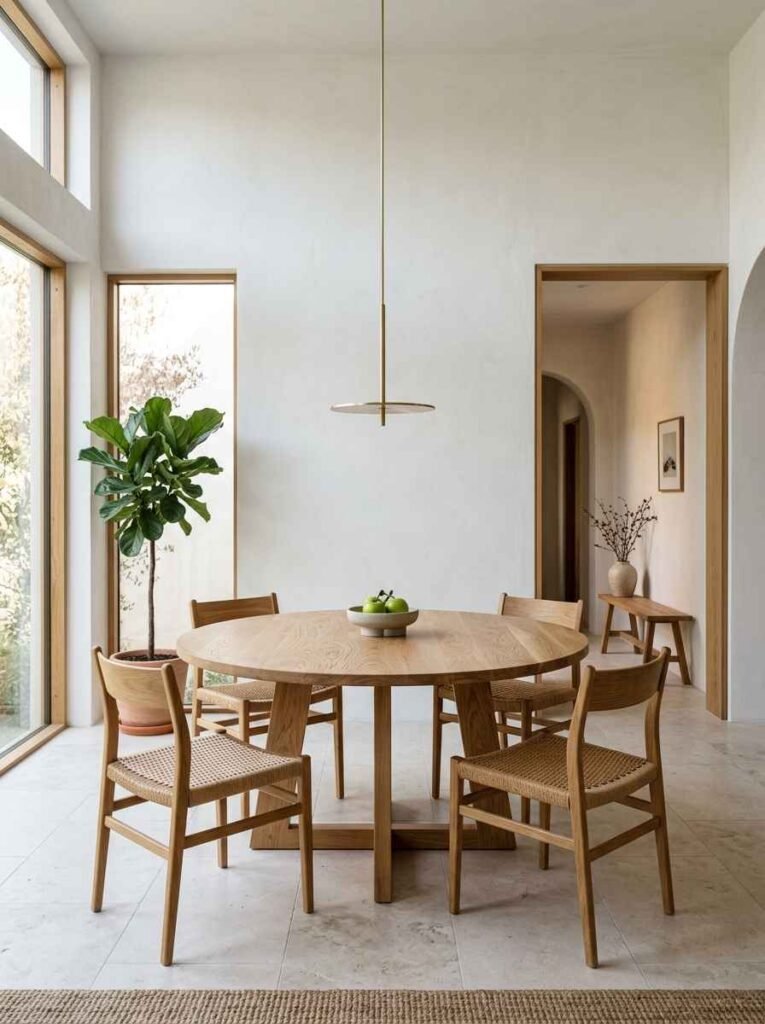
Mixed woods can work, but in a minimalist room, they usually just look like you bought furniture across 4 different years (which… you did, but no one needs to know).
Pick a tone — warm or cool — and stick with it.
3. Keep the tabletop clear (mostly)
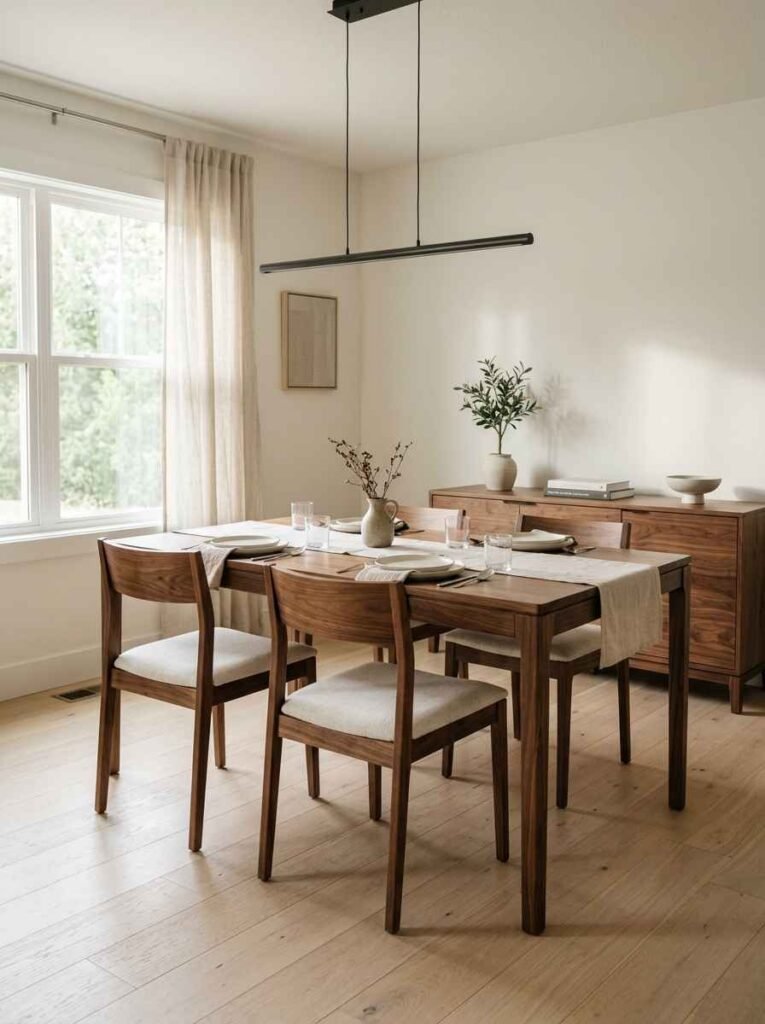
A centerpiece is fine. One. A single vase, a small bowl of fruit, or a candle cluster. The whole table doesn’t need to be styled for a magazine cover every day.
4. Try a marble or stone top
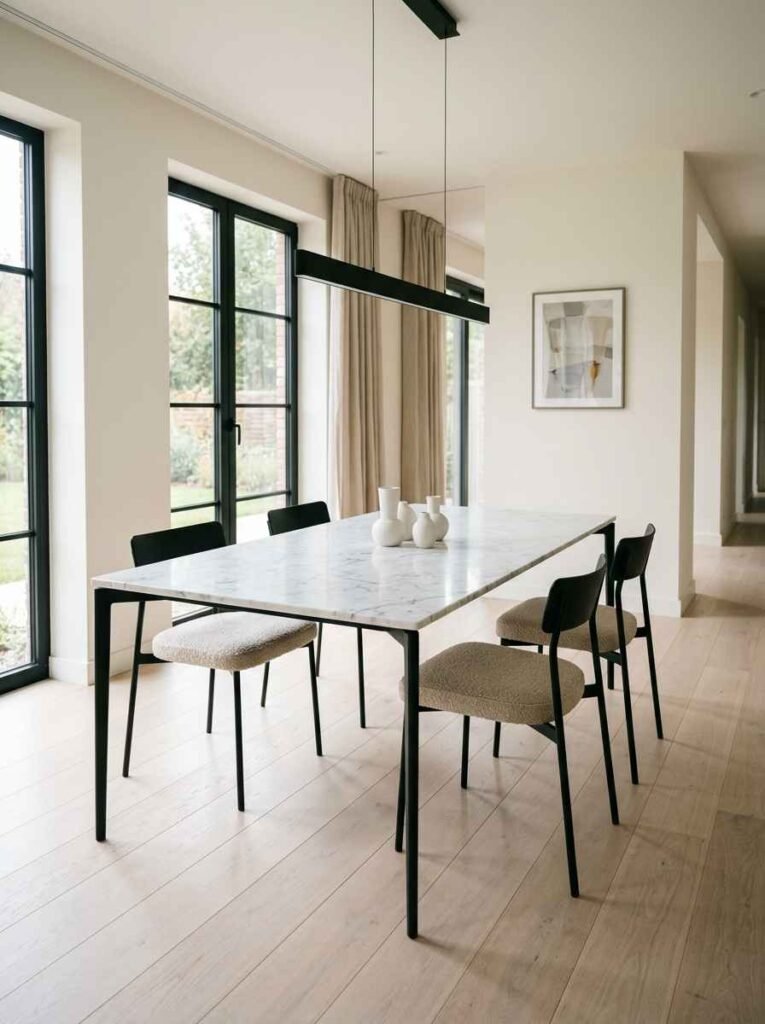
A stone-top table does two things at once: it adds texture and keeps the color palette controlled. White or light grey marble with clean metal legs is a classic that actually earns that label.
5. Consider a trestle base
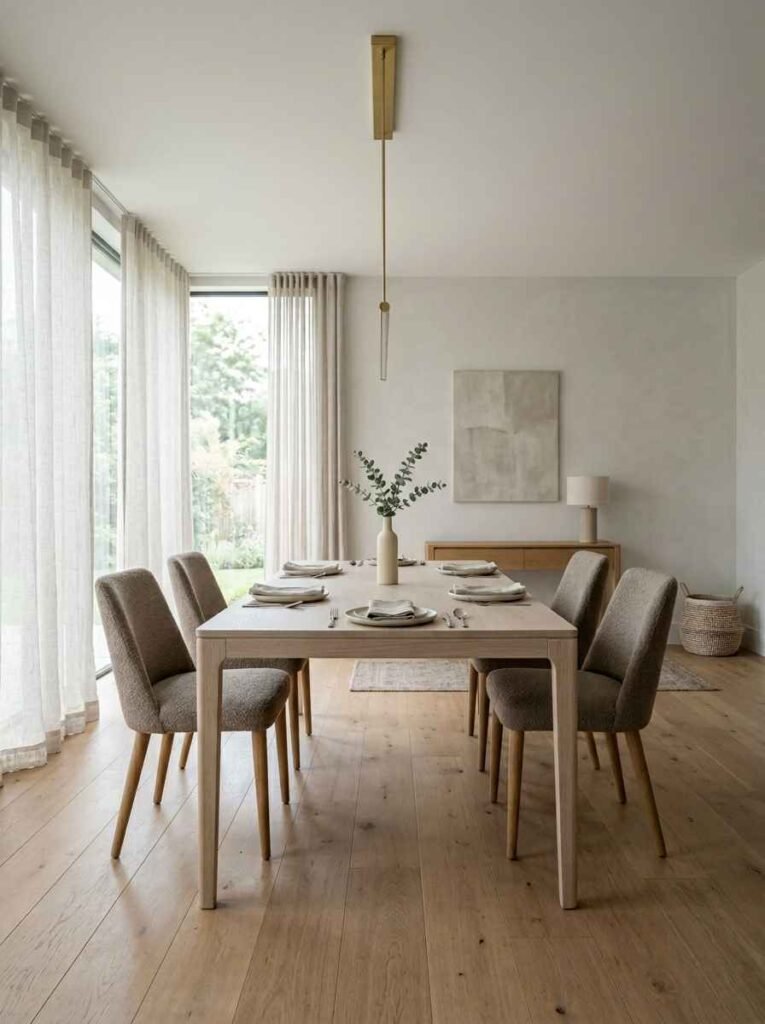
Trestle tables have visual lightness. The open base means less visual weight on the floor, which makes a smaller dining room feel bigger. That’s a practical win.
Chairs That Don’t Shout
The best minimalist dining chairs are the ones you don’t really notice — until you sit down and realize how good they are.
6. Go monochromatic with your seating
All white, all black, all natural linen. Mixing chair styles and colors is a design move, but it takes real skill. If you’re not confident, matching is always cleaner.
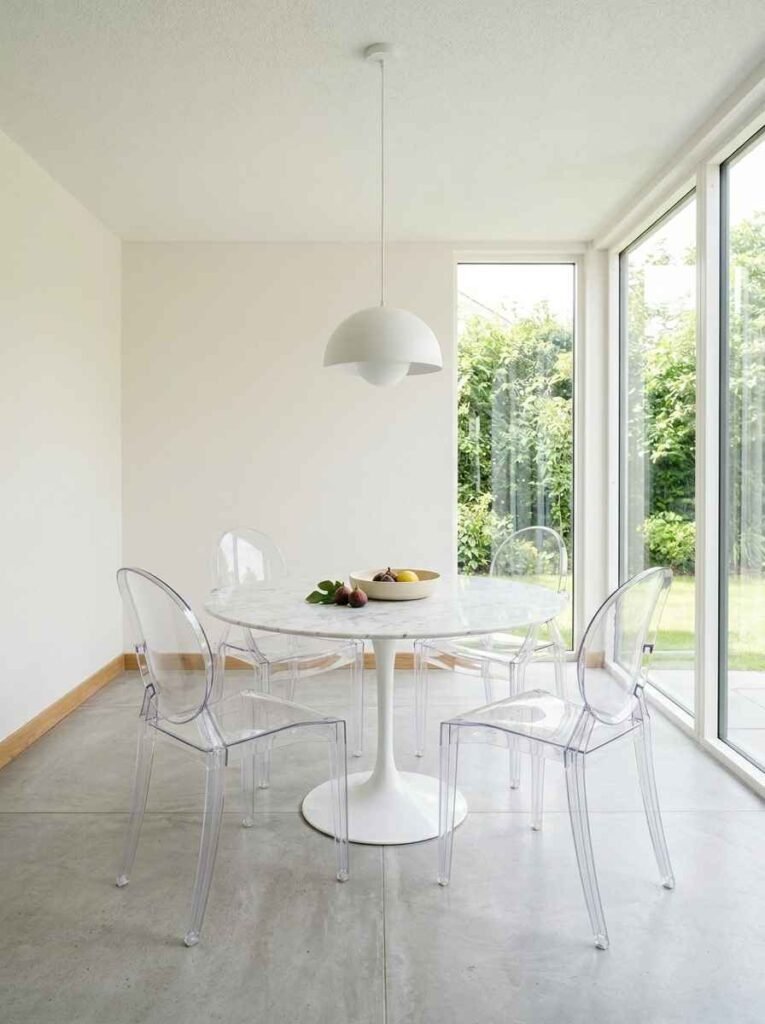
7. Try ghost chairs
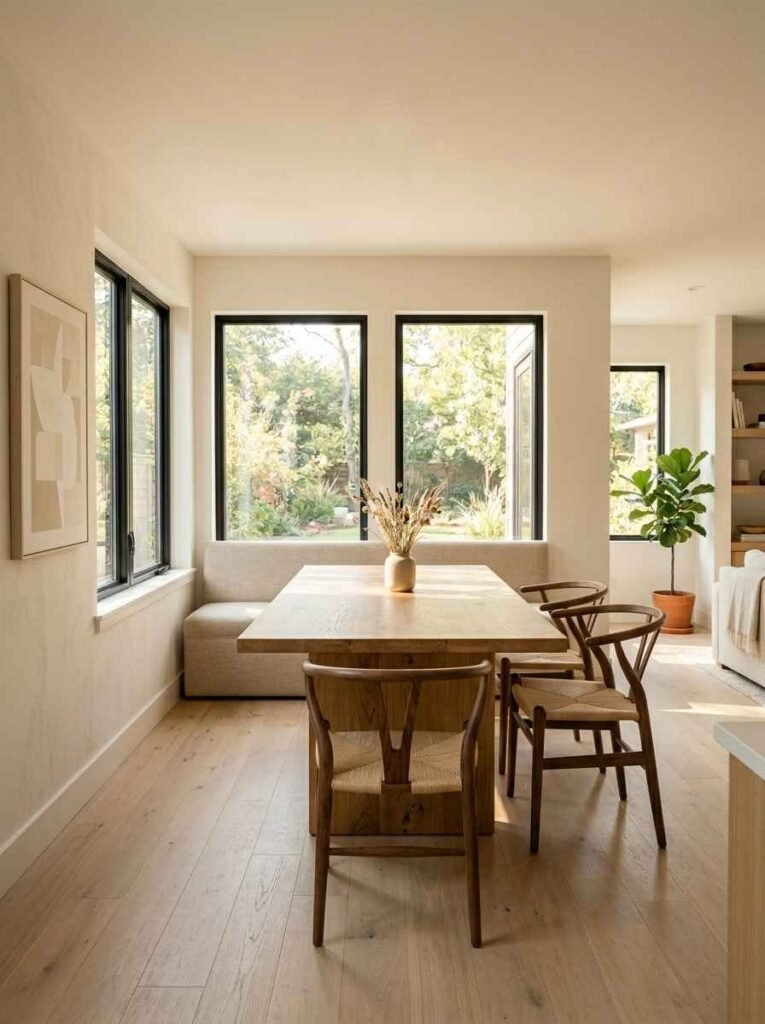
Transparent acrylic chairs are kind of a cheat code for small dining rooms. They take up visual space without actually filling the room. FYI, they’re also easier to keep looking clean than upholstered seats.
8. Bench one side
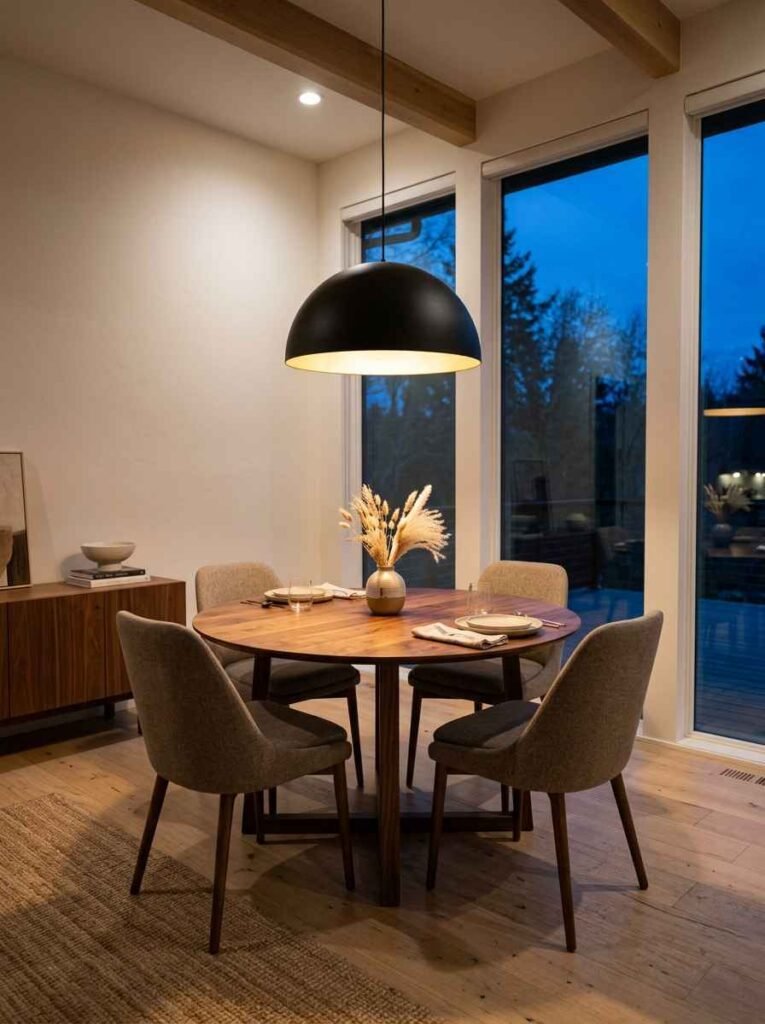
Replace the chairs on one long side with a simple bench. Fewer legs, cleaner silhouette, and suddenly the room looks more intentional.
9. Upholster in a solid neutral
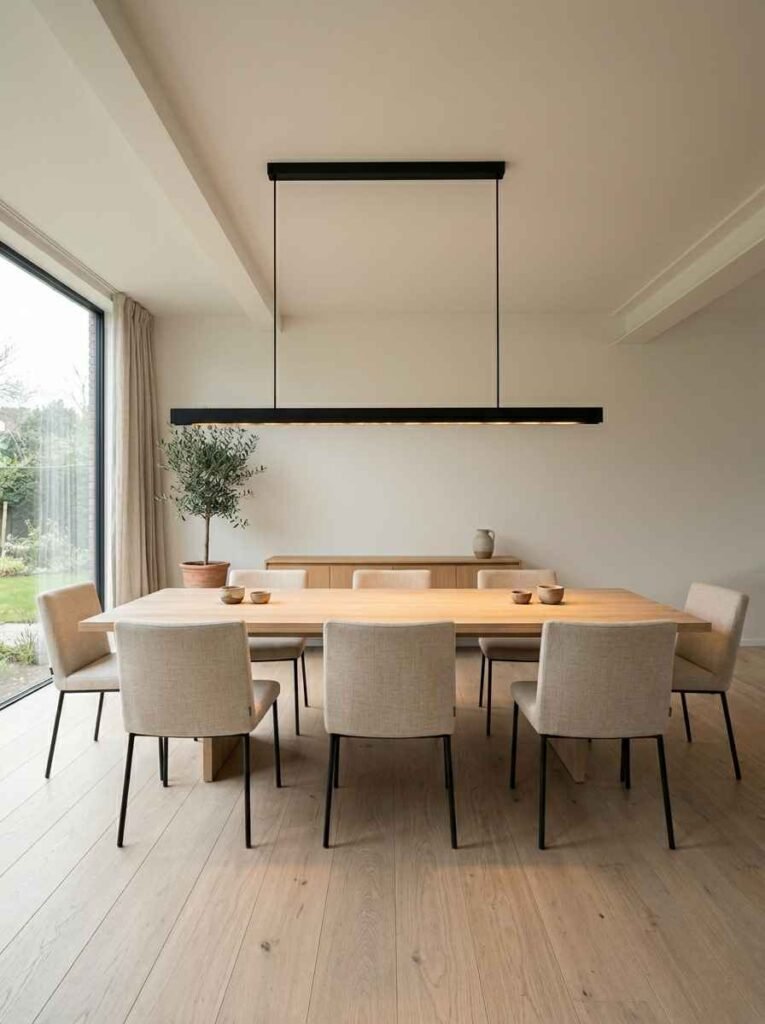
If you want fabric seats, choose one solid — cream, warm grey, sage, dusty terracotta. No patterns. Patterns work against you in a minimalist room.
10. Leave space between chairs
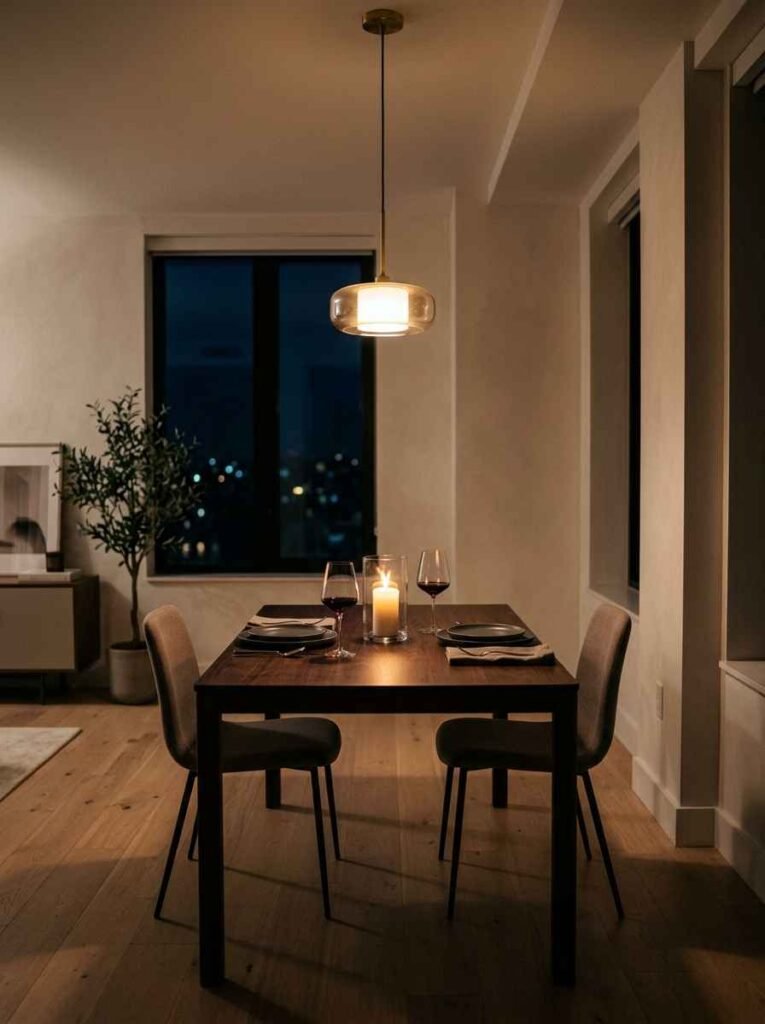
Crowded chairs are a clue the room feels tight. Give each chair room to breathe. If you can’t seat 6 comfortably, seat 4 comfortably. That’s the better choice.
Lighting That Actually Does Something
Lighting is where minimalist dining rooms usually go wrong. People buy a fixture that’s either too small (looks like it escaped from a closet) or too ornate (looks like it wandered in from a different century).
11. Hang a single statement pendant
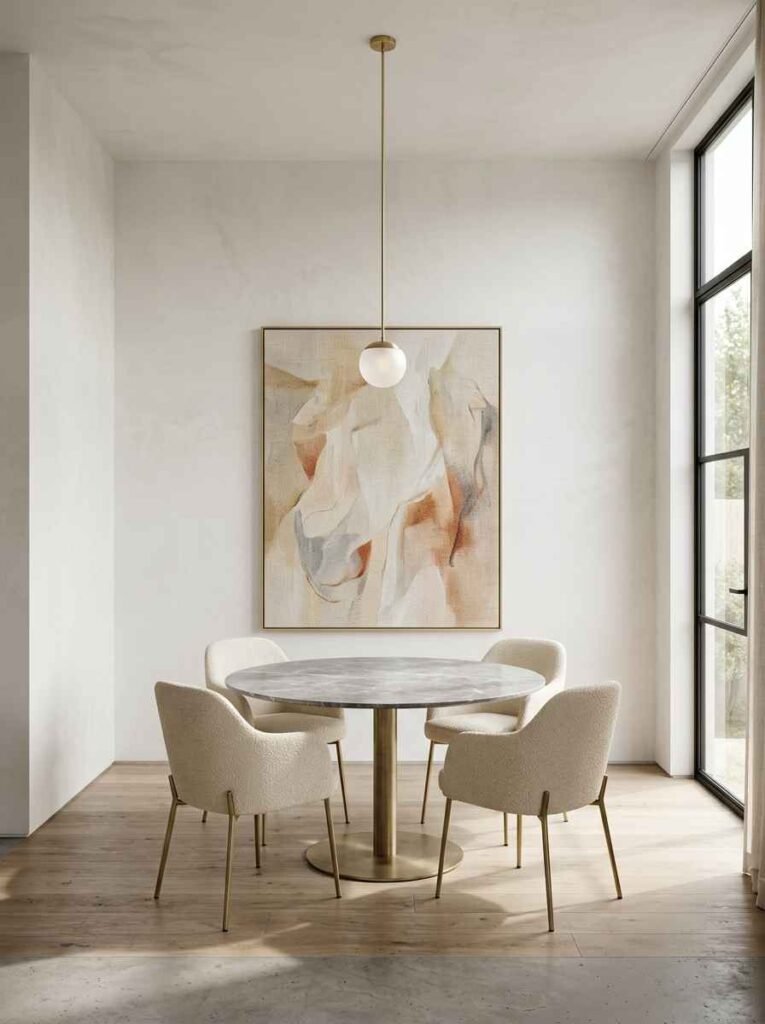
One pendant, centered over the table. That’s the whole job. The fixture should hang low enough to feel intimate but high enough that tall guests don’t have an incident.
12. Try a linear suspension light
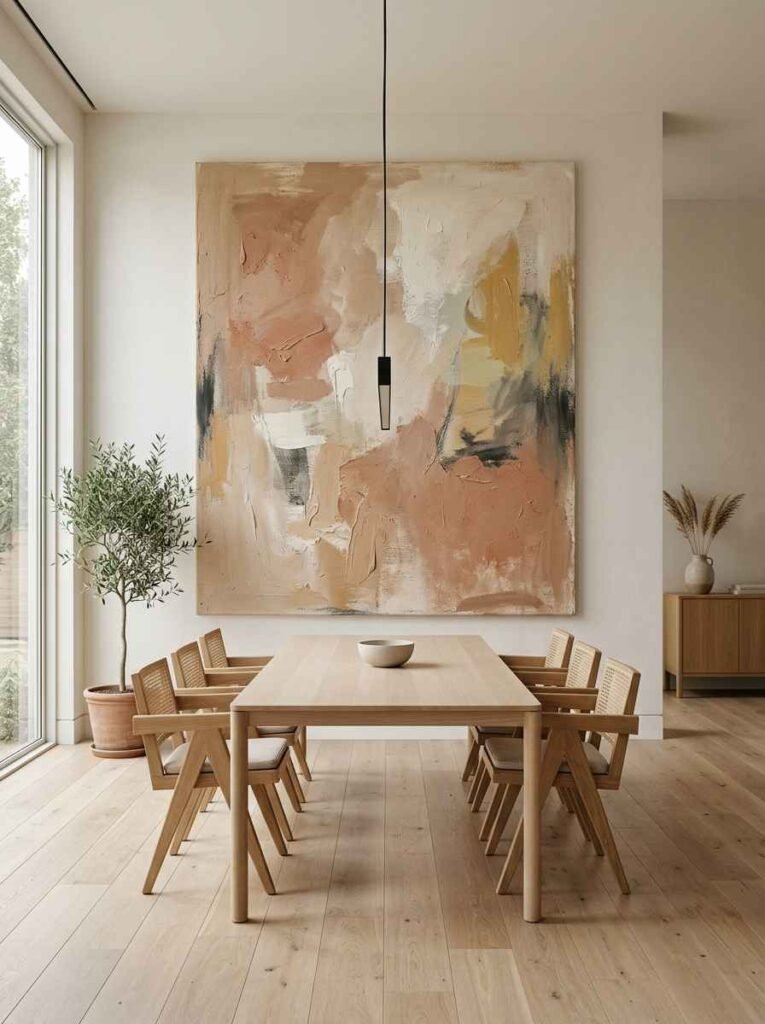
Long, narrow light fixtures work especially well over rectangular tables. They mirror the shape of the table and feel architectural rather than decorative.
13. Go for warm bulbs only
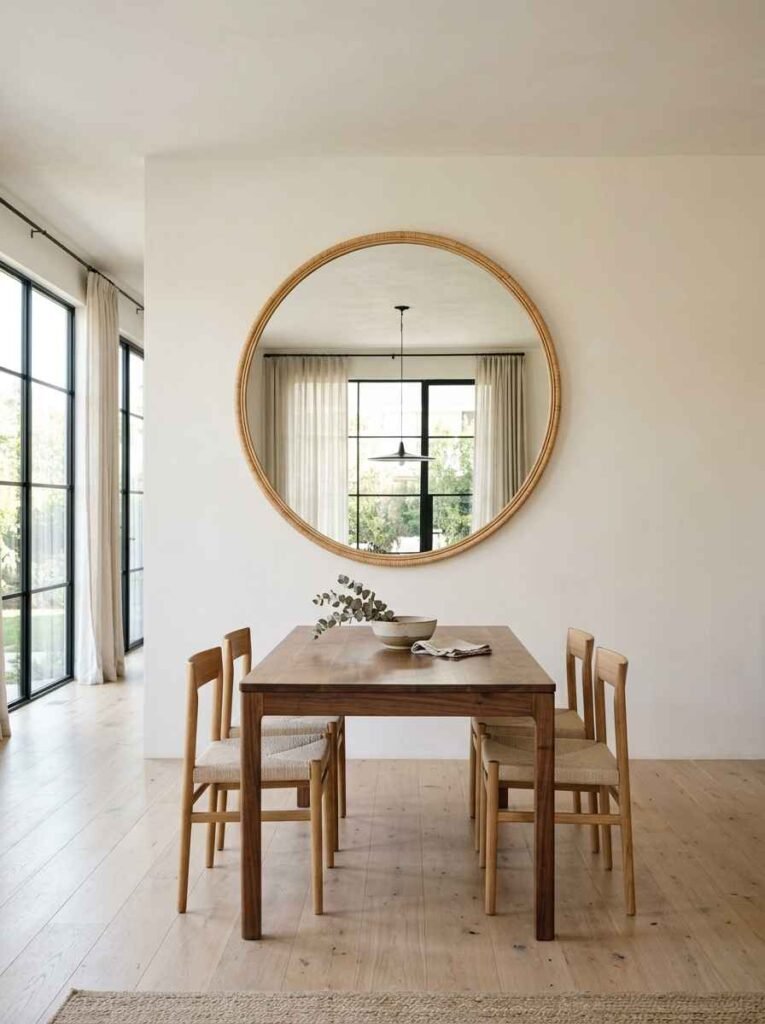
2700K to 3000K. Cooler bulbs make food look wrong and people look tired. Minimalism doesn’t mean clinical.
| Element | Ideal choice | Why |
|---|---|---|
| Bulb temperature | 2700K–3000K | Warm, flattering light |
| Pendant height | 30–36″ above table | Intimate but functional |
| Fixture finish | Matte black or brushed brass | Reads as intentional |
| Number of fixtures | 1 (or 3 in a row) | Avoids visual clutter |
14. Add a dimmer switch
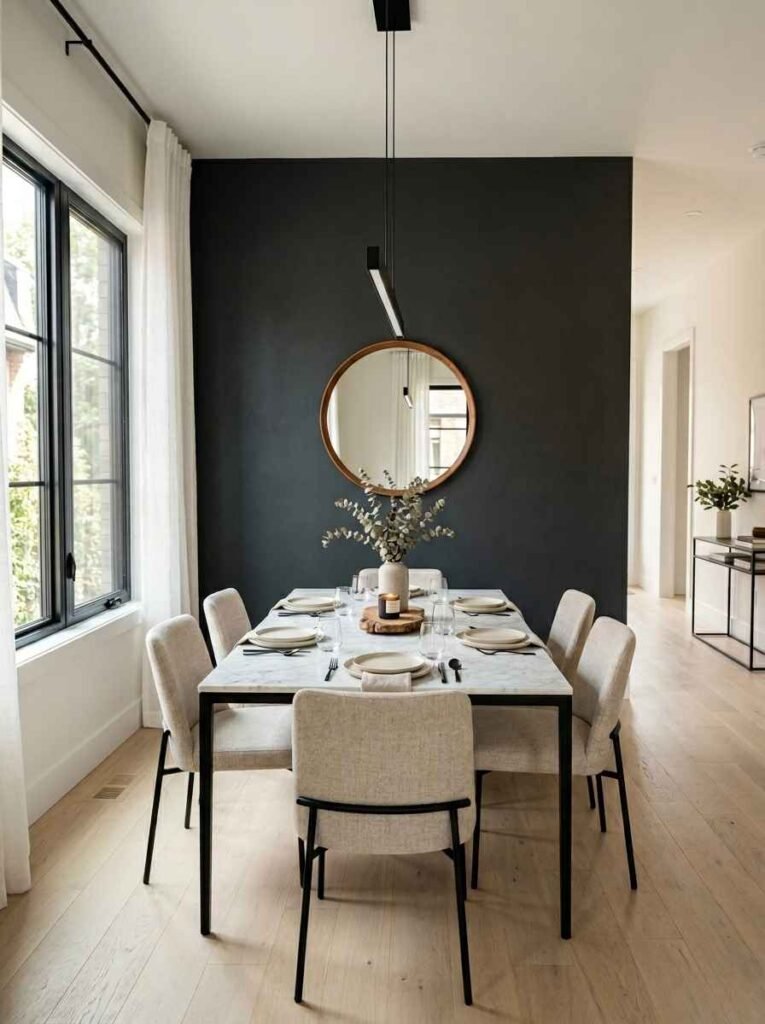
Non-negotiable. Dining room lighting should shift from bright and practical to low and atmospheric. A $20 dimmer switch changes the whole room’s personality.
15. Skip the chandelier unless it’s really simple
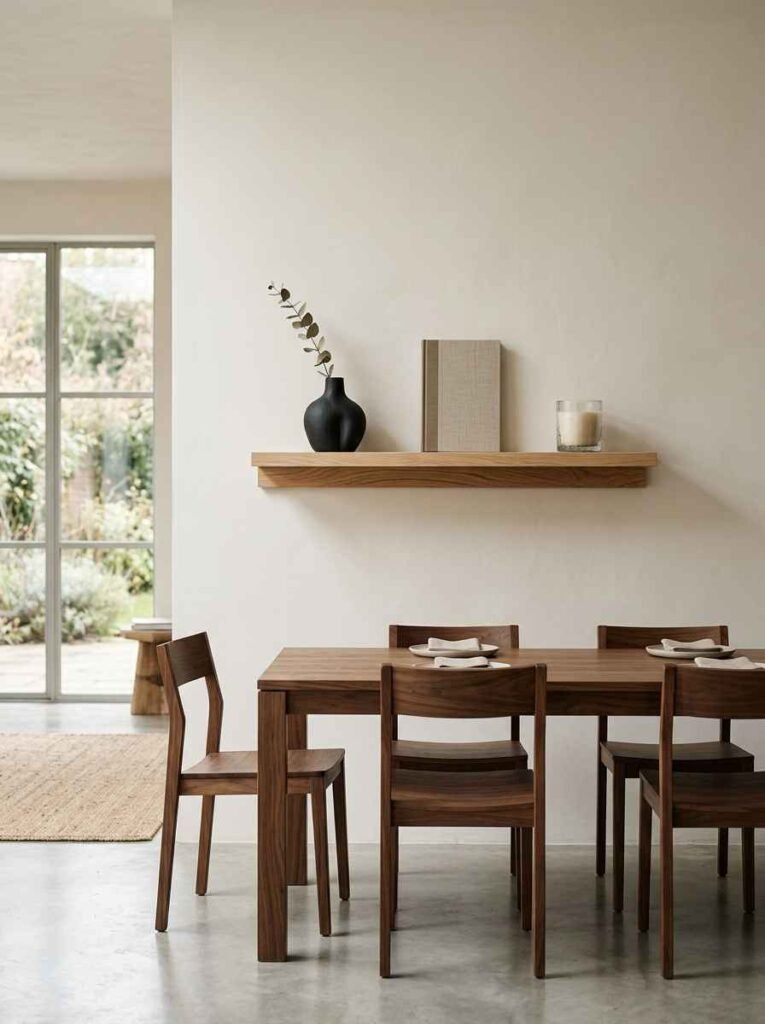
Most chandeliers fight against minimalism. If you love the look, find one with clean geometric shapes and no crystal fringe. The Muuto E27 or similar bare-bulb cluster styles work. The ornate ones don’t.
25 easy ideas to design a minimalist home decor living room on any budget
Walls: Where Less Really Is More
Every piece on the wall competes for attention. In a minimalist dining room, that competition should be brief.
16. One large piece of art, centered
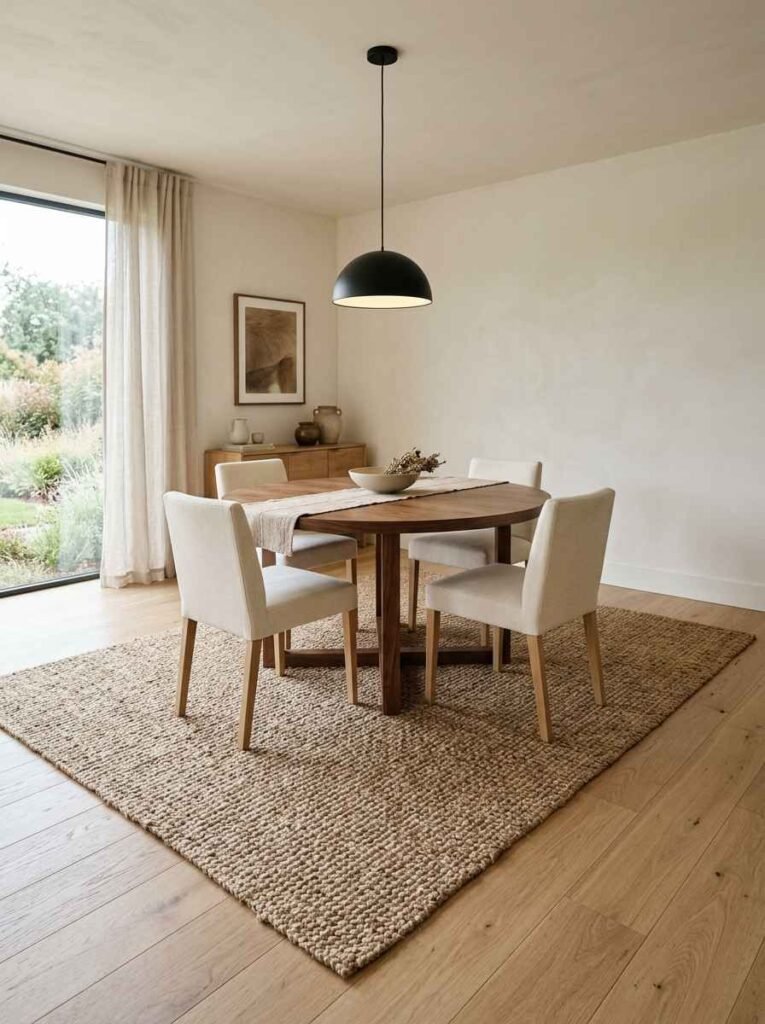
One big piece beats a gallery wall every time. A large canvas in neutral tones — abstract, botanical, landscape — anchors the wall without requiring the whole room to work around it.
17. Try a large round mirror
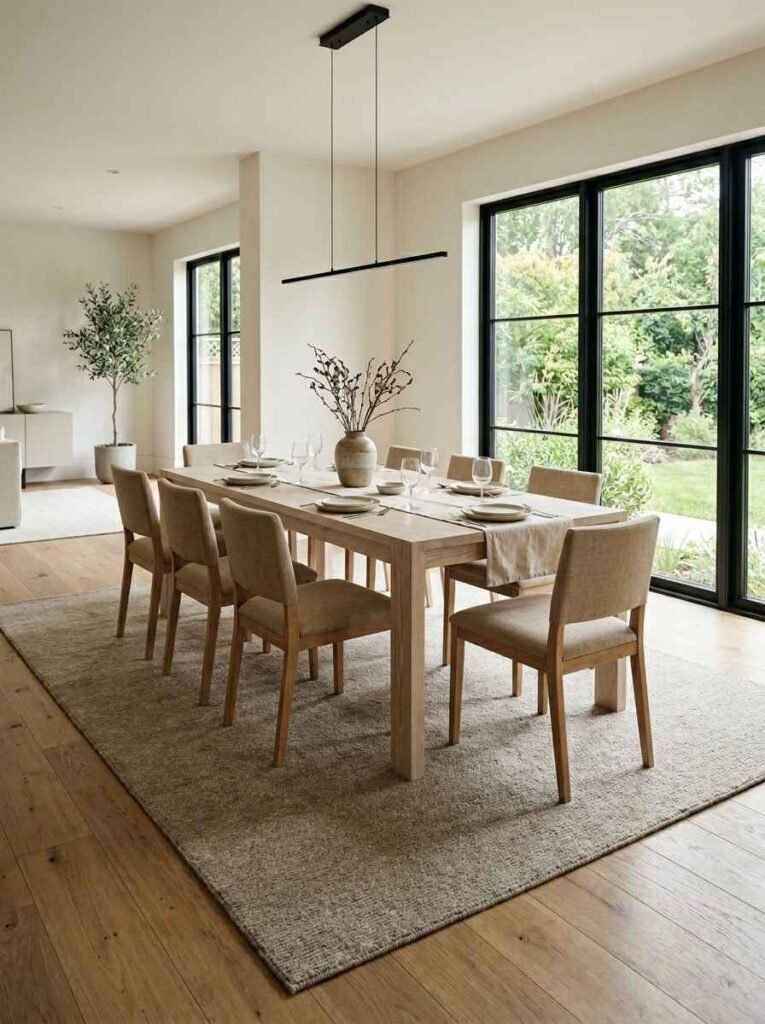
A round mirror on the dining room wall bounces light, makes the room feel larger, and costs less than most art. Win on all counts.
18. Go with a simple accent wall
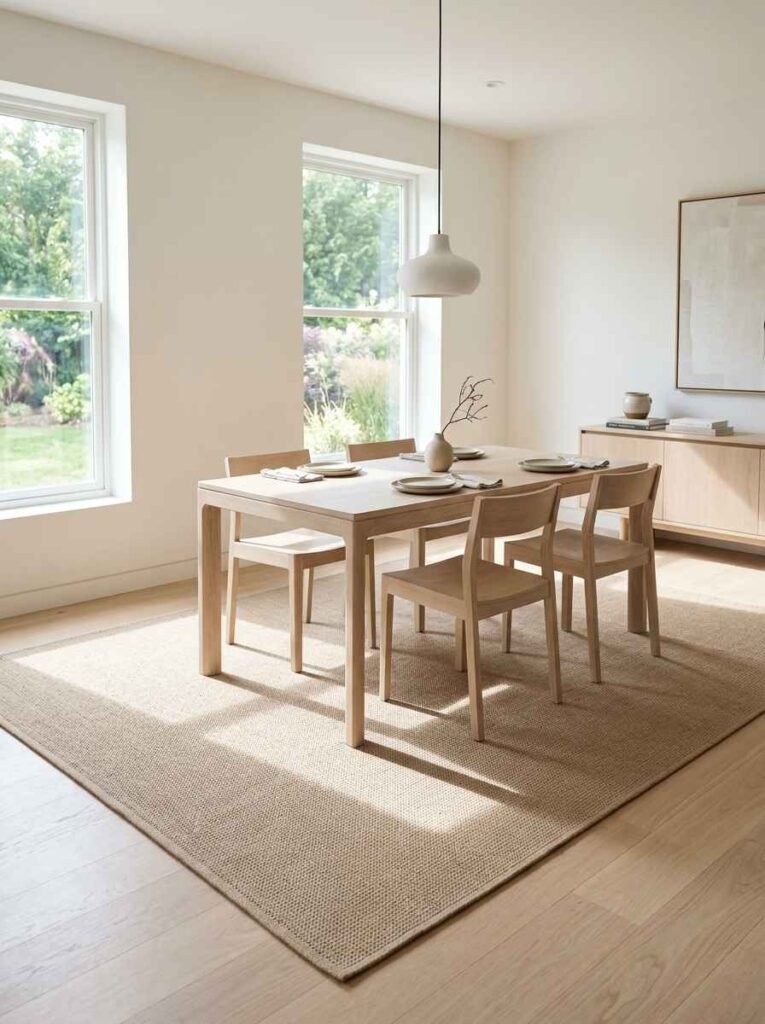
Not a feature wall with texture panels and LED strips (that’s a different aesthetic). Just a deeper shade of a neutral — charcoal, warm taupe, dusty blue — on one wall. It adds depth without adding stuff.
19. Leave some walls completely empty
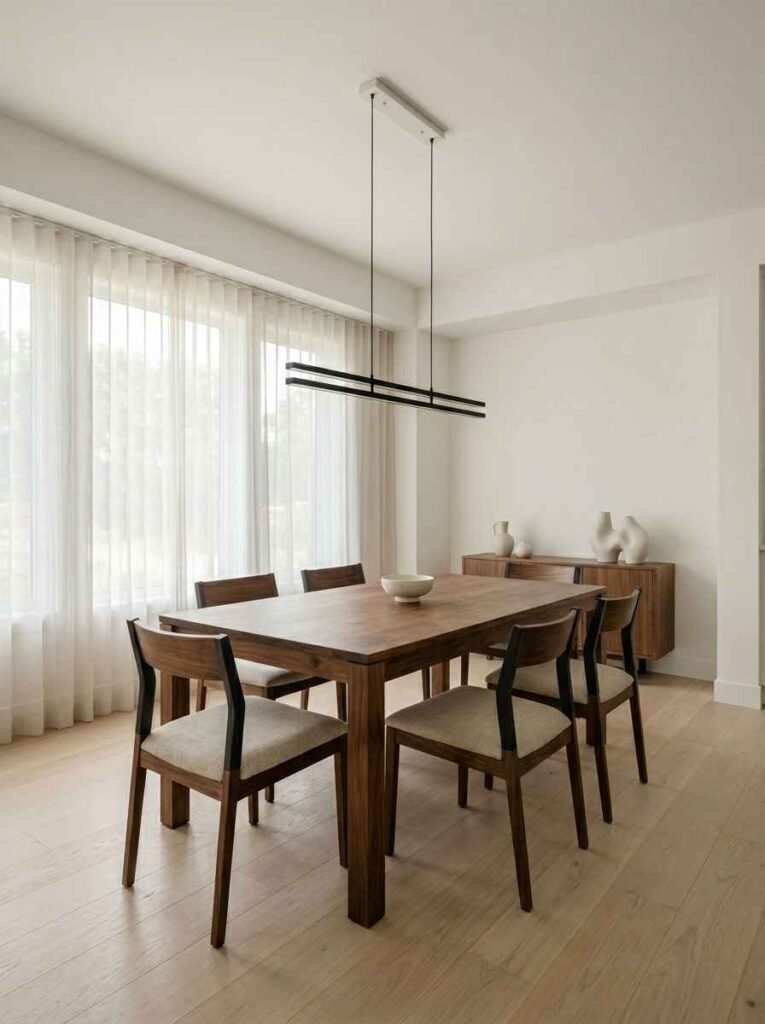
This one feels counterintuitive. Empty wall space reads as intentional in a minimalist room. You don’t have to fill every surface.
20. Try a single floating shelf
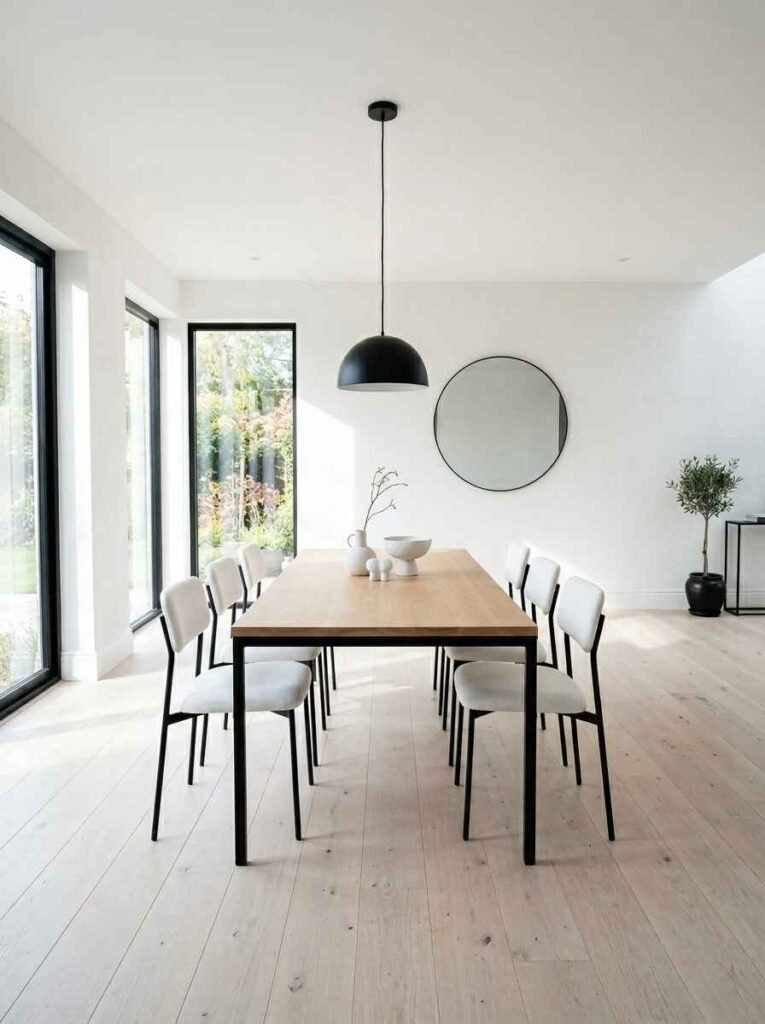
One shelf, with three things on it max. A small plant, a candle, a book. Done.
Flooring and Rugs
21. Choose a rug that grounds the table
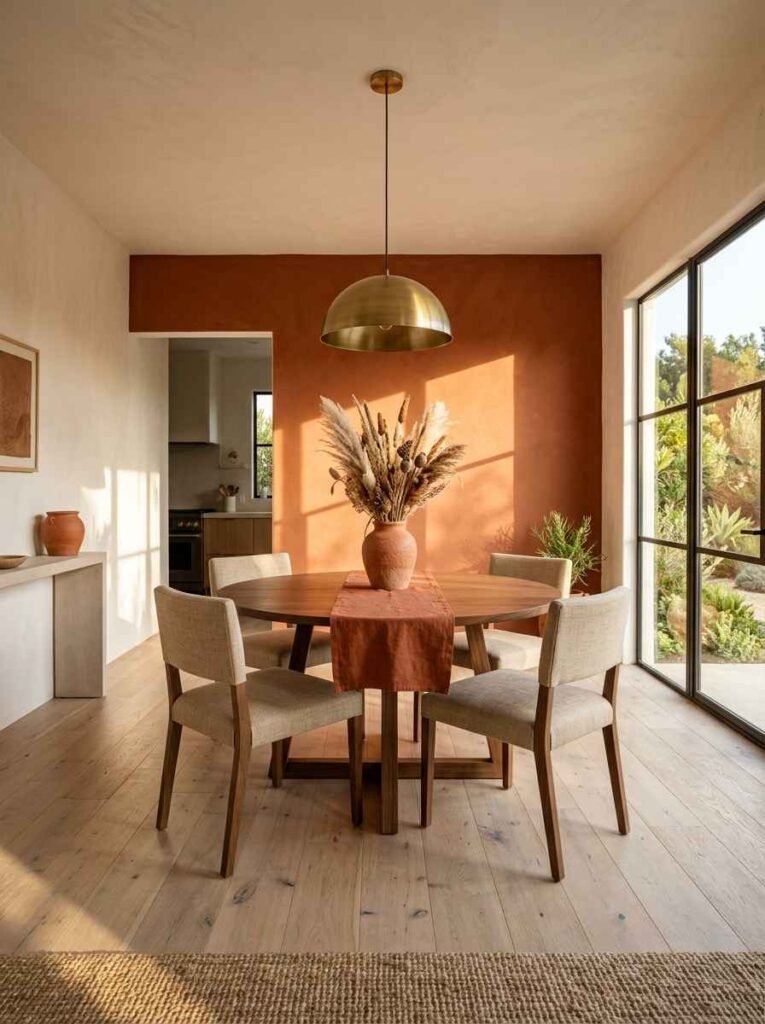
The rug should be large enough that chair legs stay on it even when pulled out. If guests are constantly catching chair legs on the rug edge, it’s too small.
22. Stick to solid or subtle texture
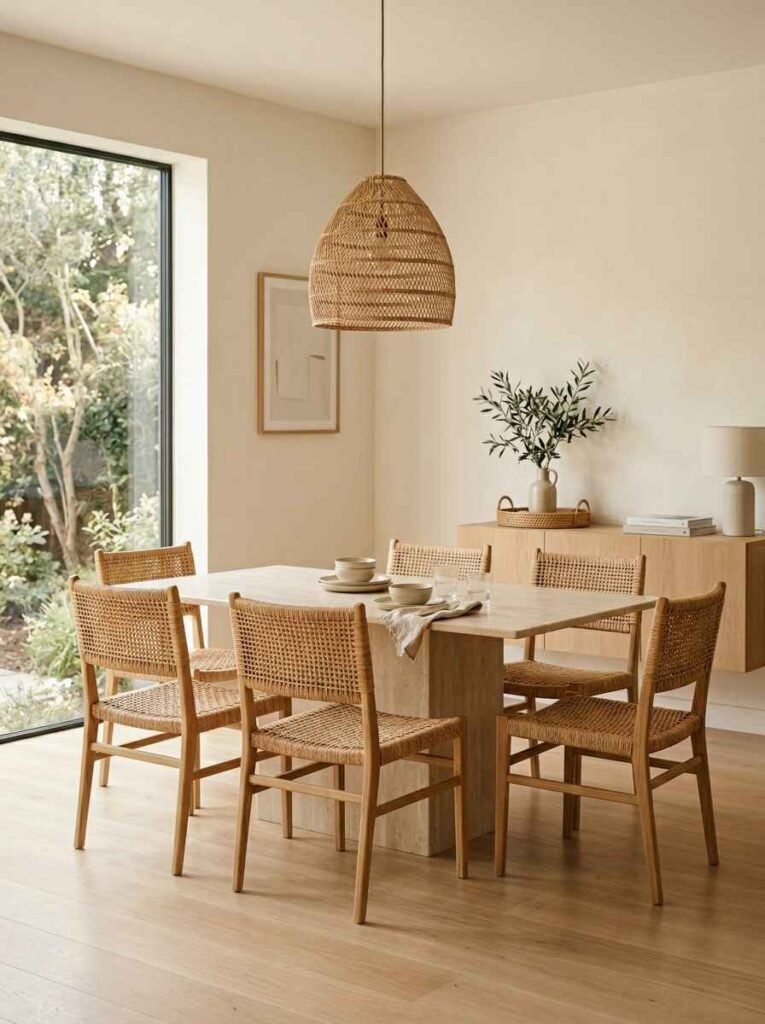
A jute rug, a low-pile wool in a single color, or a subtle geometric. Busy patterns compete with everything else.
23. Let good flooring breathe
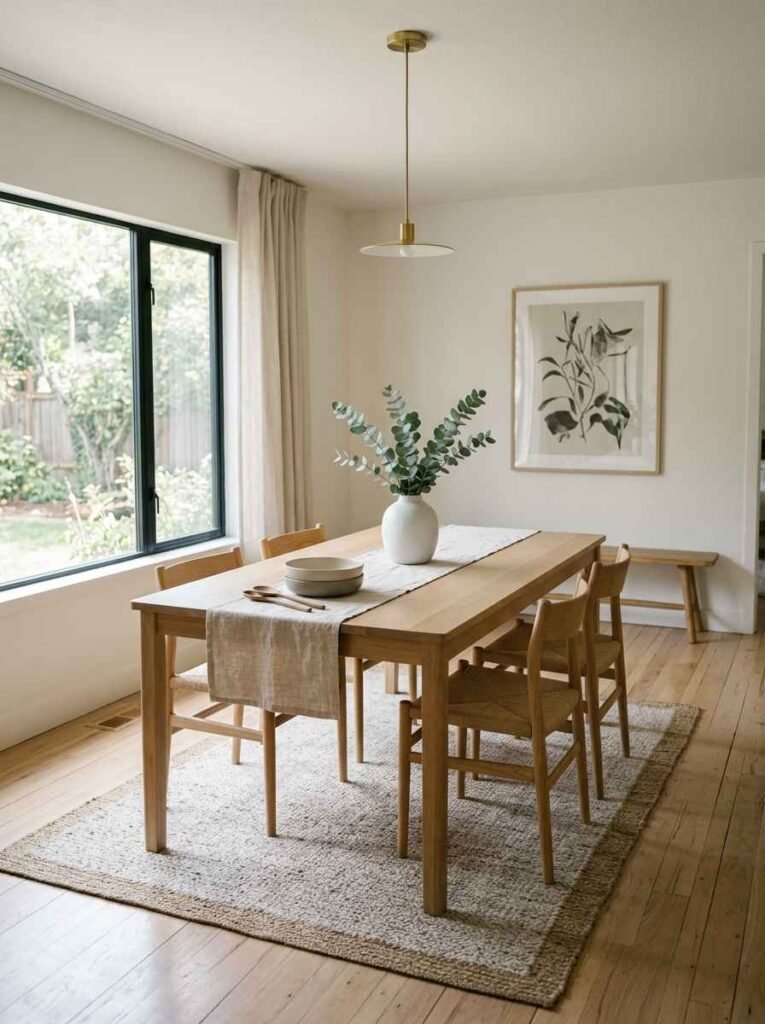
If you have beautiful hardwood or tile, you don’t actually need a rug. No rug is also a choice. 🙂
24. Try a flatweave
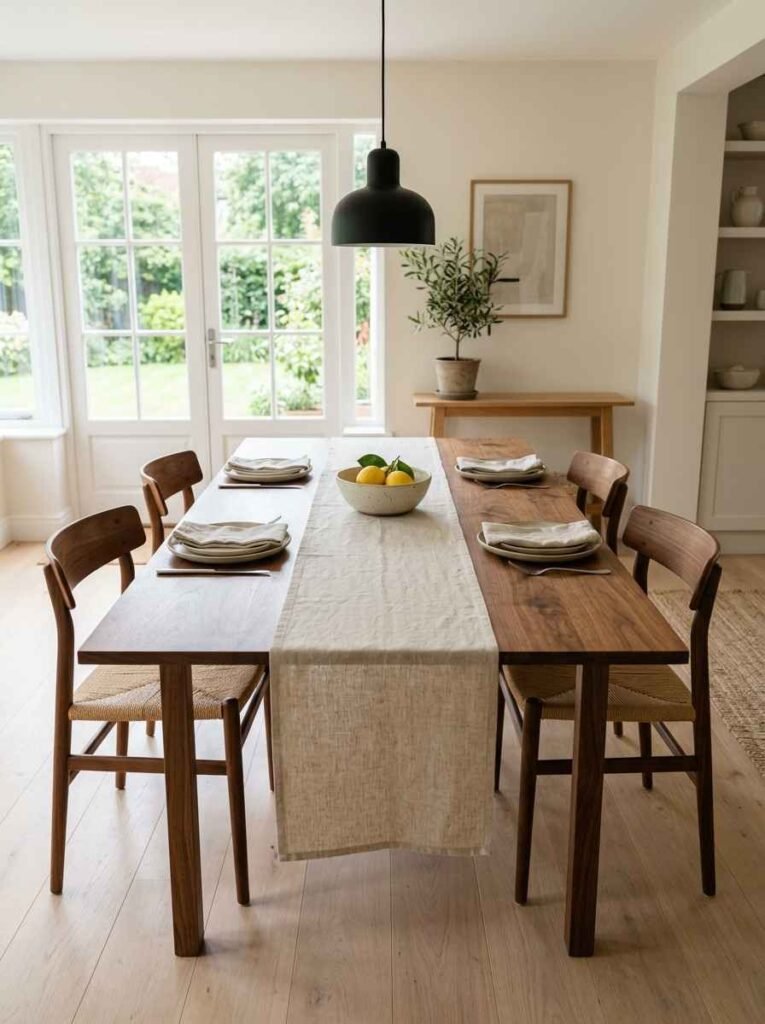
Flatweave rugs feel modern and are way easier to keep clean in a dining room. Practical minimalism is still minimalism.
Color and Materials
25. Stick to a 3-color palette max
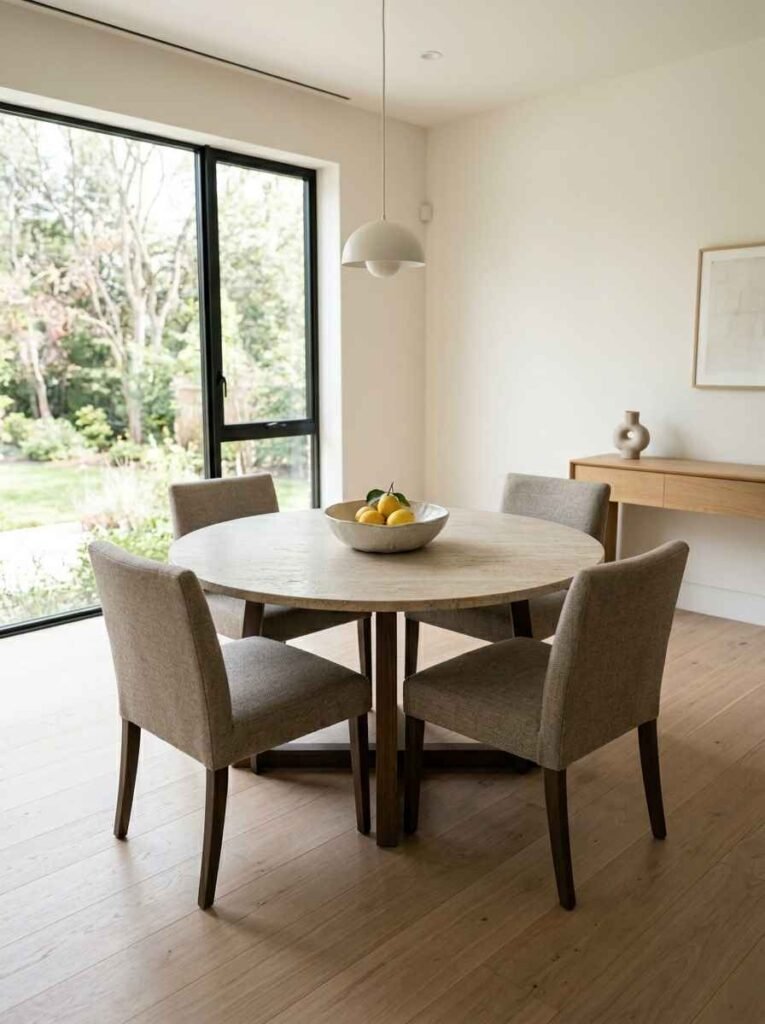
Wall color, wood tone, and one accent. Three. That’s it. Adding more doesn’t add richness — it just adds noise.
26. Make white work harder
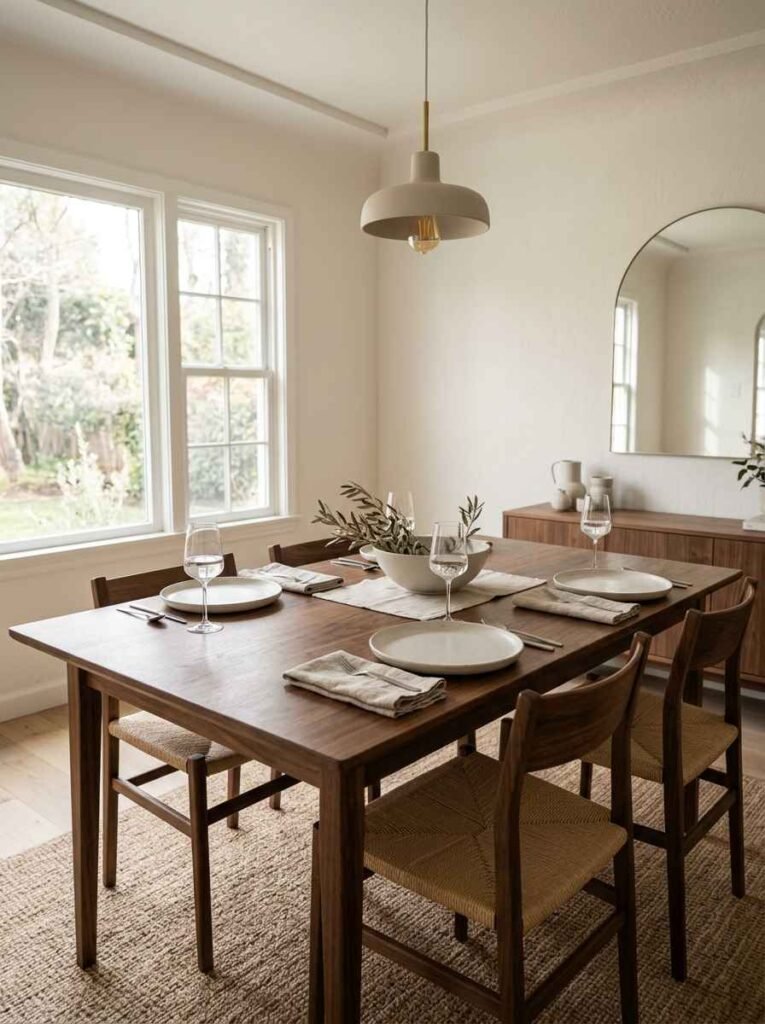
White walls with warm-toned wood and black metal accents is a combination that’s popular for a reason. It’s calm, it’s adaptable, and it makes food look good.
27. Try terracotta as your one color
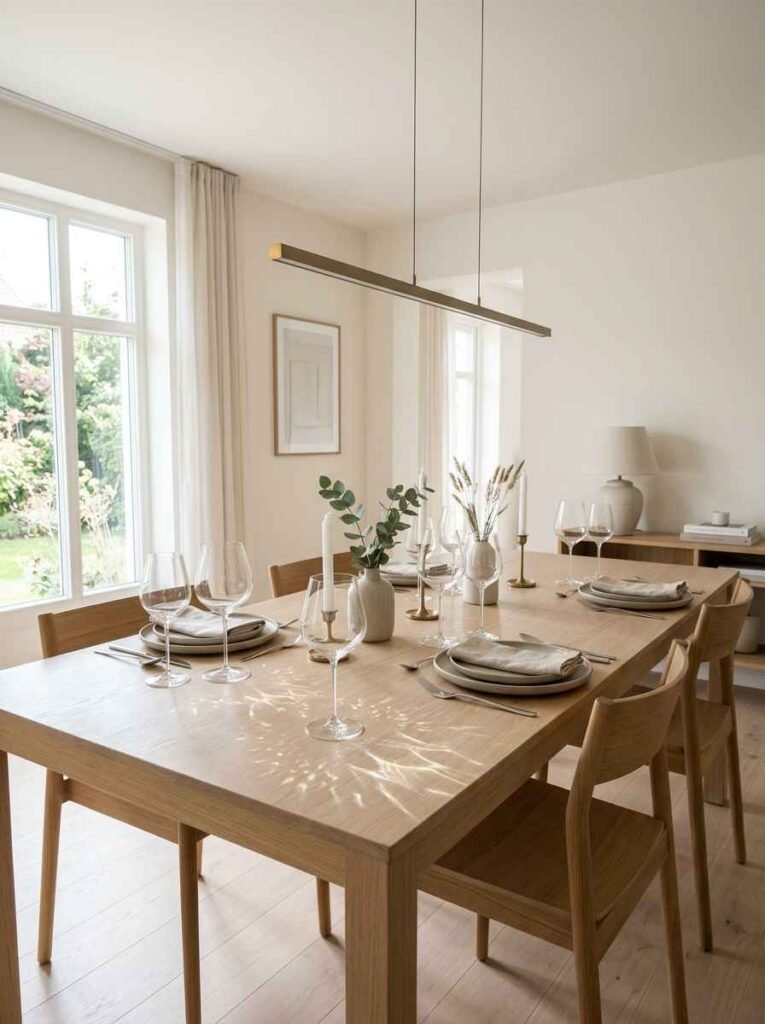
Terracotta is having its moment and honestly it deserves it. A terracotta linen table runner, a few terracotta vessels, or even a terracotta accent wall reads as warm and grounded rather than trendy.
28. Bring in one material with texture
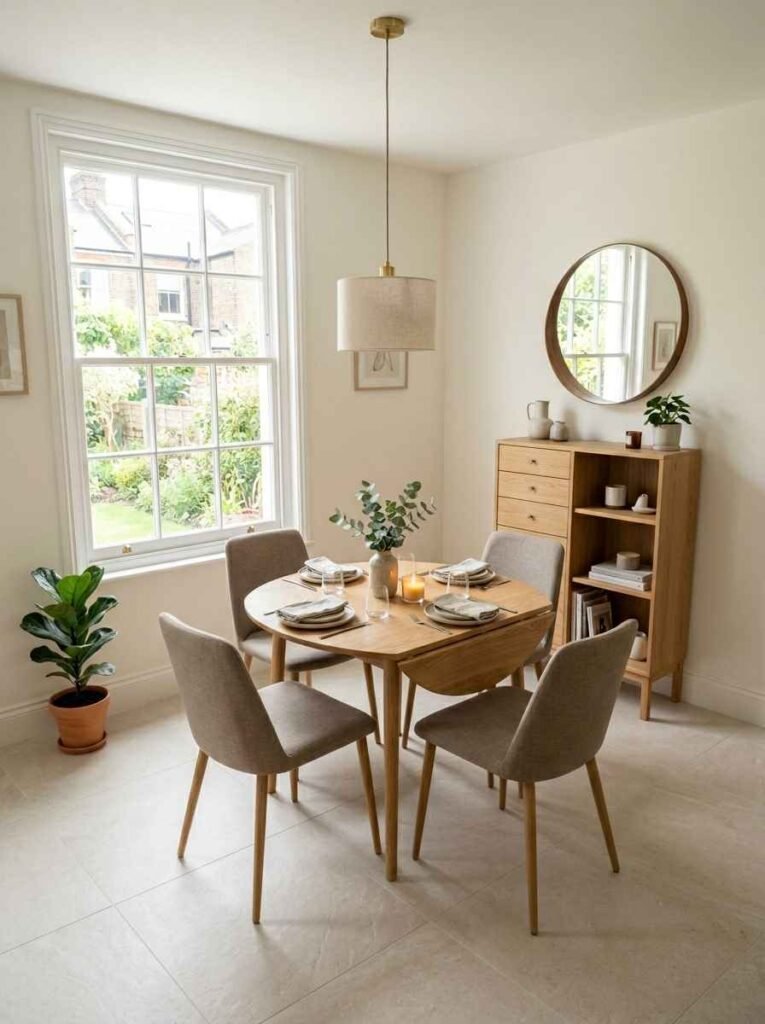
Rattan, linen, raw ceramic, rough linen. One material with tactile interest stops the room from feeling flat.
Styling the Table (Day-to-Day)
29. Use a simple table runner instead of a full tablecloth
A runner gives you the layered look without covering the whole table surface. Especially useful if you have a beautiful table you actually want to see.
30. Keep a small bowl of something real
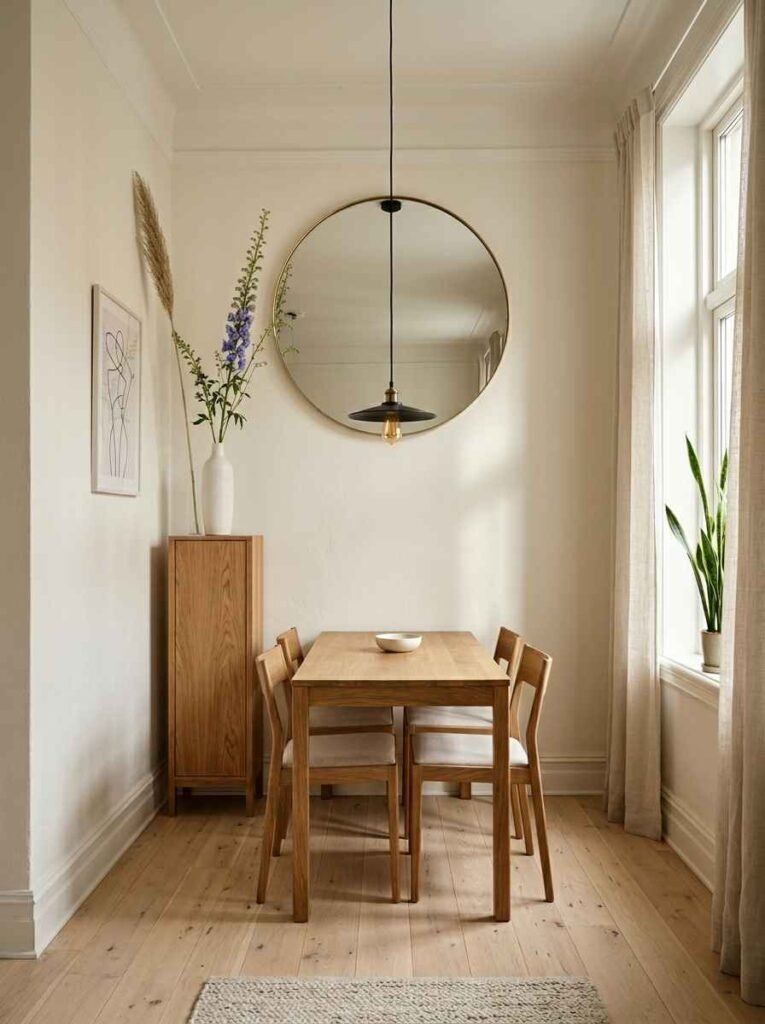
A ceramic bowl with lemons, figs, or eucalyptus branches. Fresh or dried, doesn’t matter. It’s grounding, it’s organic, and it takes 30 seconds to refresh.
31. Match your tableware to the room
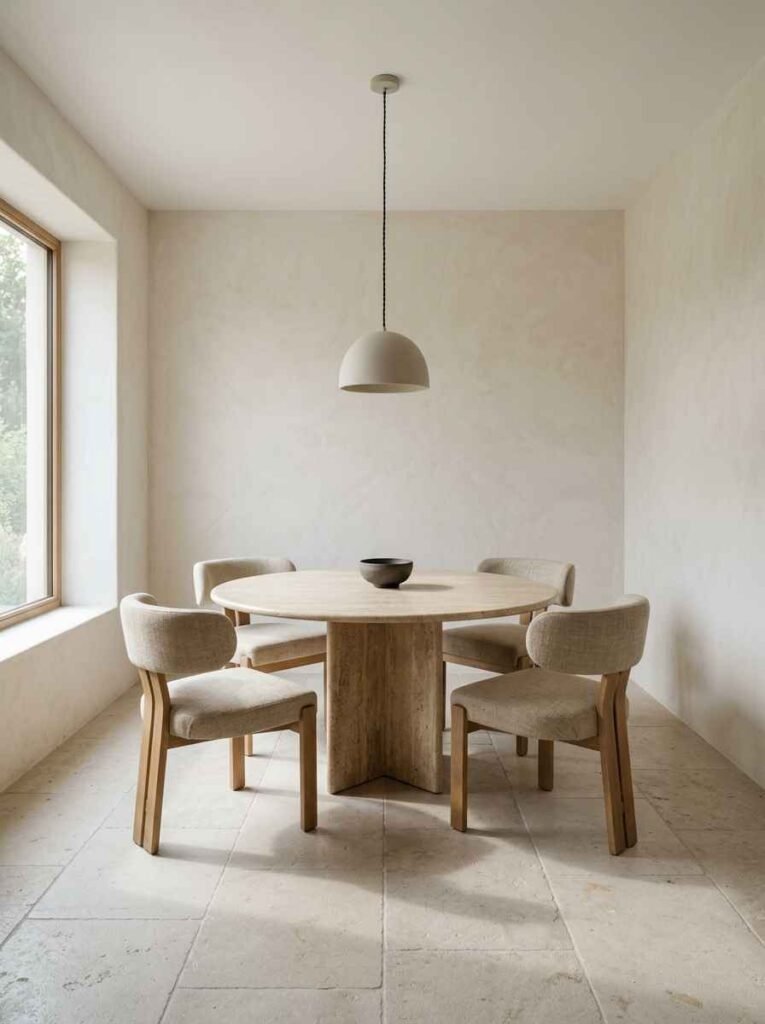
Matte ceramic plates in a neutral tone look better on a minimalist table than something busy. White, off-white, speckled grey. They don’t compete with the food or each other.
32. Use thin-stemmed glassware
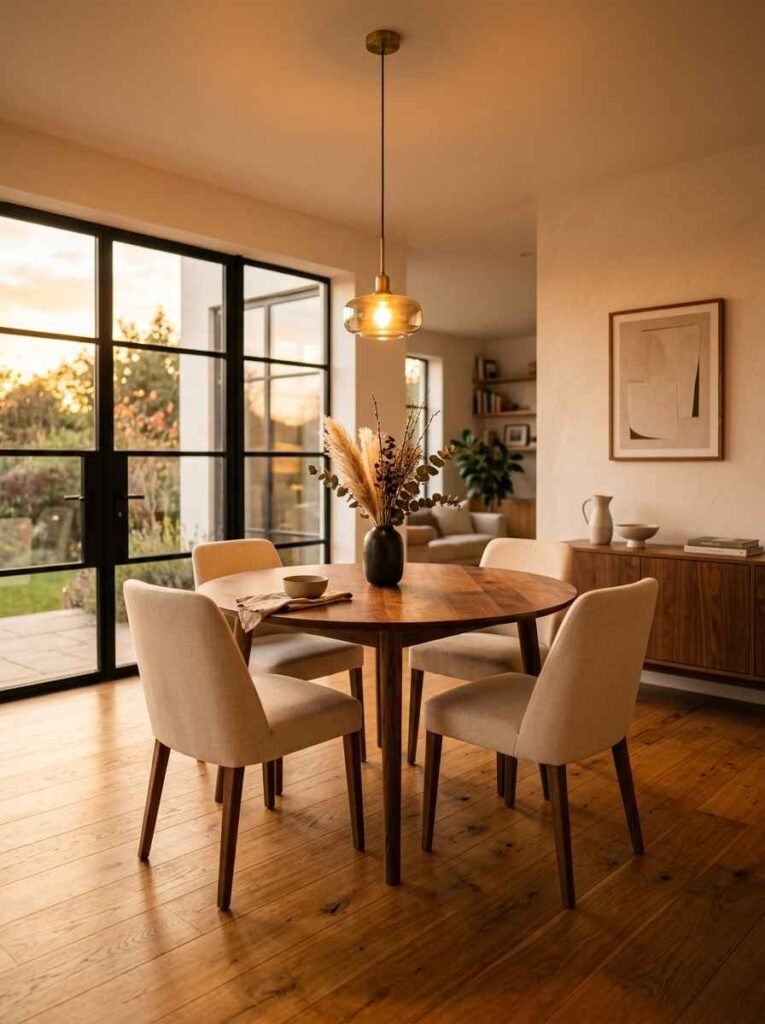
Thick, chunky glassware feels casual in a way that works in some rooms and not in this one. Slim stems and clear glass feel more considered.
Small Space Solutions
33. Go wall-mounted or foldable
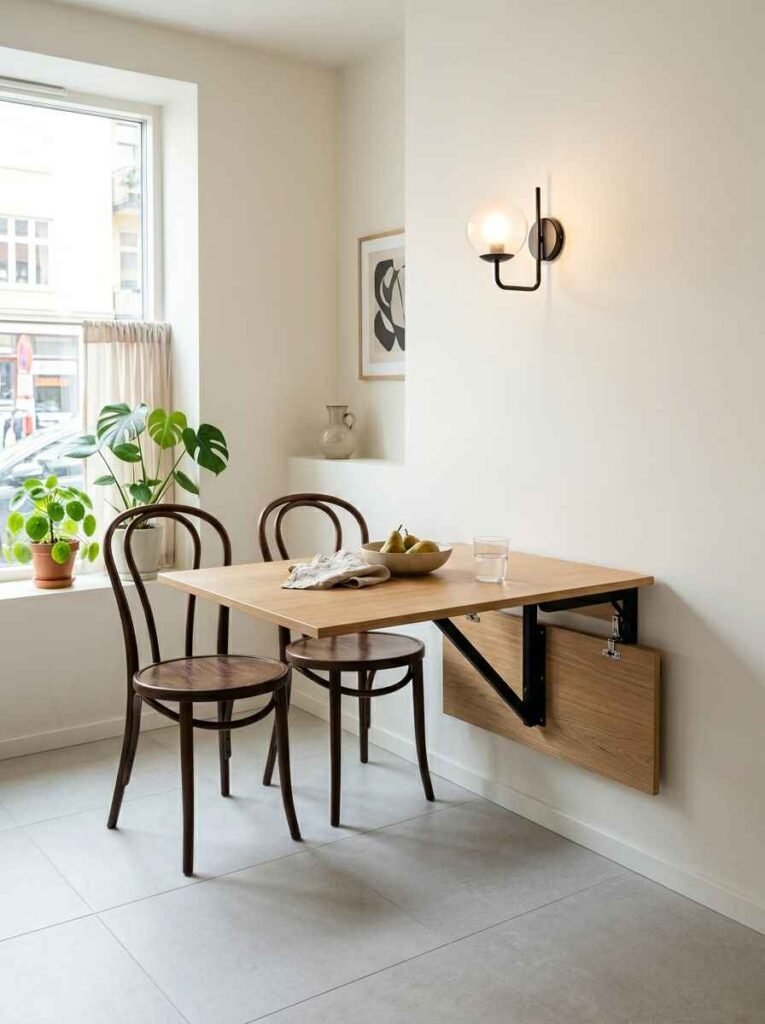
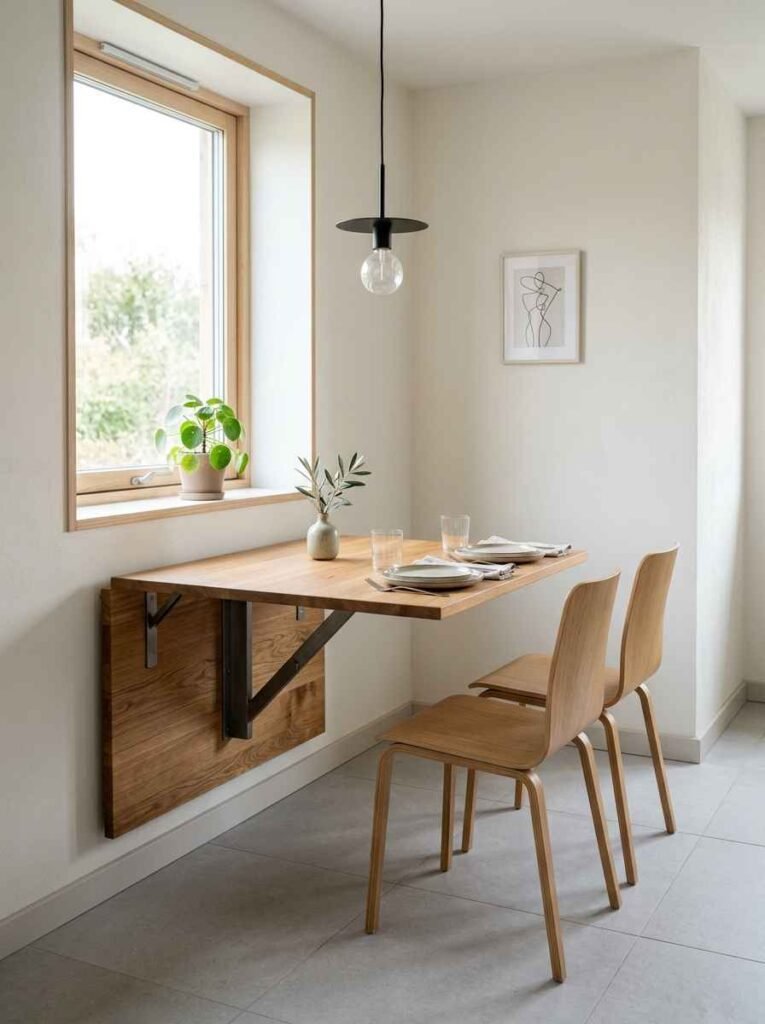
If your dining room is small, a wall-mounted drop-leaf table is a real option. Folded up, it’s almost invisible. Dropped down, it seats 4. That’s space efficiency IMO.
34. Use vertical space
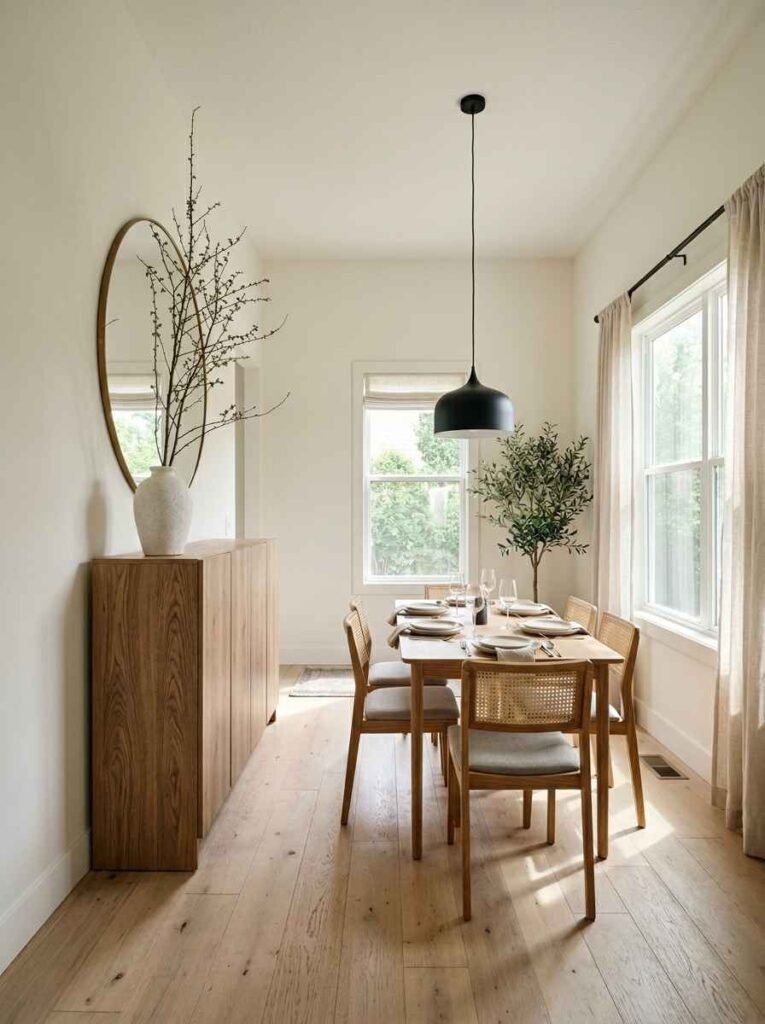
A slim, tall sideboard instead of a wide, low buffet. A pendant light instead of a floor lamp. Vertical scale makes small rooms feel taller.
35. Fewer pieces, better pieces
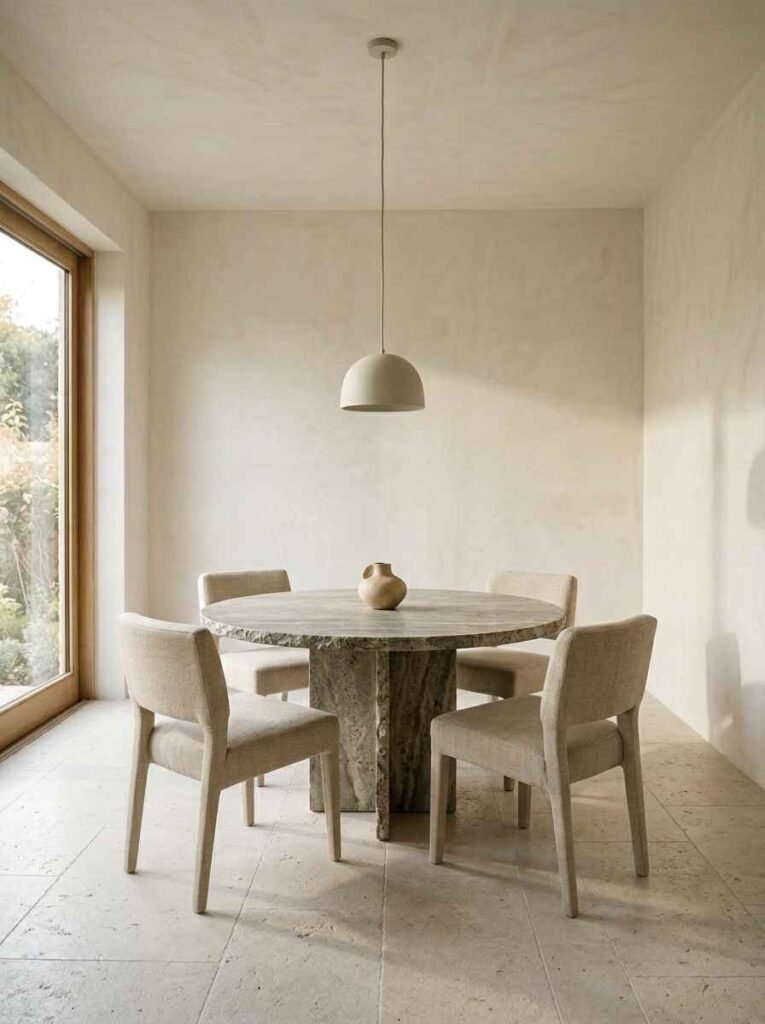
One fewer chair, one fewer accessory, one fewer thing on the wall. Minimalism in a small room isn’t a sacrifice — it’s a practical advantage. Edit ruthlessly and the room thanks you.
Pulling It Together
Here’s the thing about minimalist dining rooms: they look effortless because the decisions were deliberate.
You’re not just removing things. You’re choosing what stays. The table that earns the center of the room.
The light that makes everyone look good. The one piece of art that doesn’t need company.
Start with one change — the lighting, the table clear-out, the rug upgrade. See how it feels. Then keep going. The elegance builds gradually, one good decision at a time. :/
Pinterest is full of beautiful inspiration, but the rooms that actually work? They’re the ones where someone made real choices, not just collected pretty things. Be that person.
Save this article to your Pinterest board for easy reference when you’re ready to shop or start your makeover.
