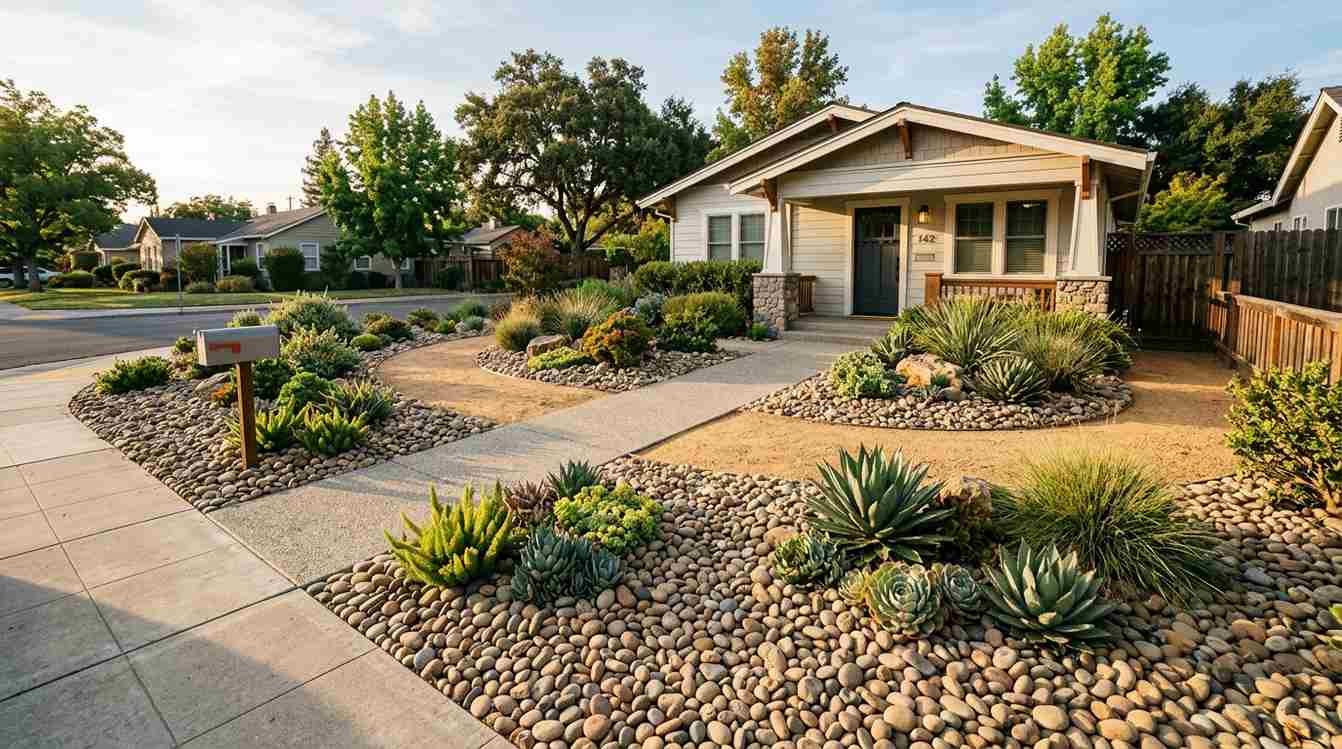
Your front yard is the first thing anyone sees. And if right now it’s a sad patch of grass you mow out of obligation, rocks might be your best friend.
No, seriously — rock landscaping can turn a tiny, forgettable front yard into something that looks intentional, stylish, and shockingly low-maintenance.
I’ve spent way too many weekend hours staring at front yards (my own and other people’s, not gonna lie), and what I keep coming back to is this: rocks just work.
They’re affordable, drought-resistant, and they look good year-round. No dead grass in July. No muddy mess in March.
Here’s a roundup of 30 ideas that actually fit small spaces and real budgets.
Why Rock Landscaping Works So Well for Small Front Yards
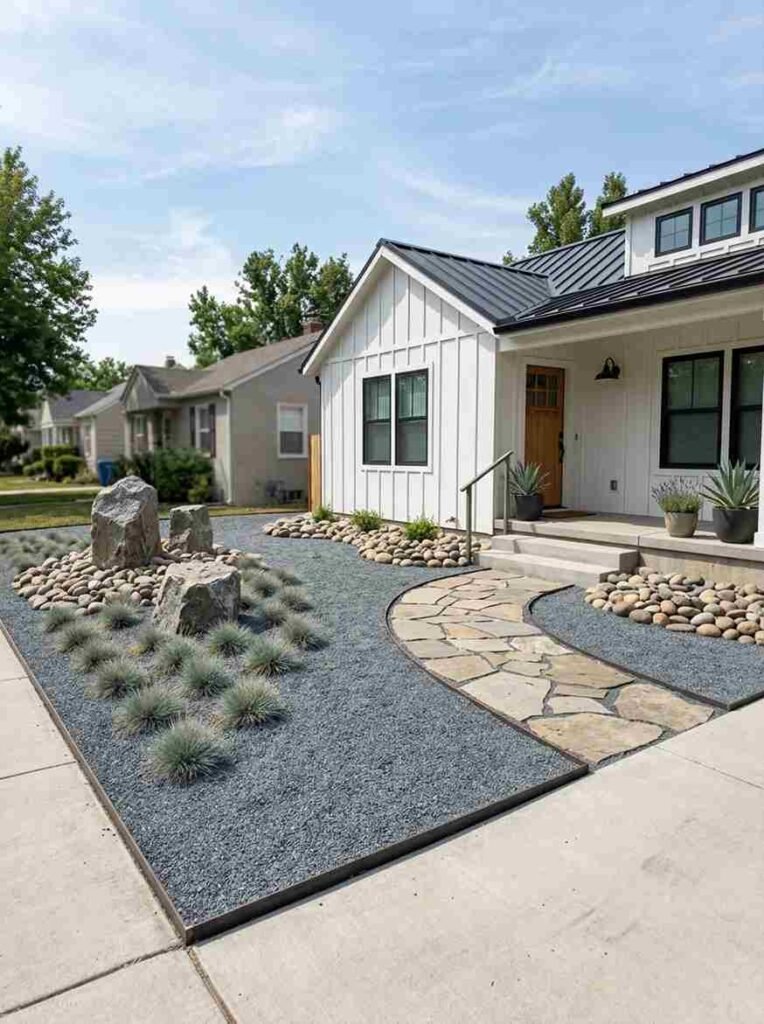
Small yards have one big problem — every design decision gets magnified. A bad choice looks really bad.
But rocks give you something most plants can’t: permanence and texture without bulk.
The practical benefits are hard to argue with:
- Zero watering once installed
- Virtually no ongoing maintenance
- Works in full sun, shade, slopes, and flat ground
- Looks intentional even when installed on a budget
FYI, rocks also solve the classic small-yard trap of trying to cram too many plants in. Sometimes less really is more.
Budget Breakdown: What You Can Do at Every Price Point
Before picking ideas, know what you’re working with.
| Budget | What’s Realistic |
|---|---|
| Under $100 | Gravel path, river rock border |
| $100–$300 | Dry creek bed, full gravel front |
| $300–$600 | Boulder focal points + gravel beds |
| $600+ | Full hardscape with pavers + boulders |
The good news? Most of the ideas below hit that $100–$300 sweet spot.
30 Small Front Yard Rock Landscaping Ideas
Simple Gravel & Mulch Swaps
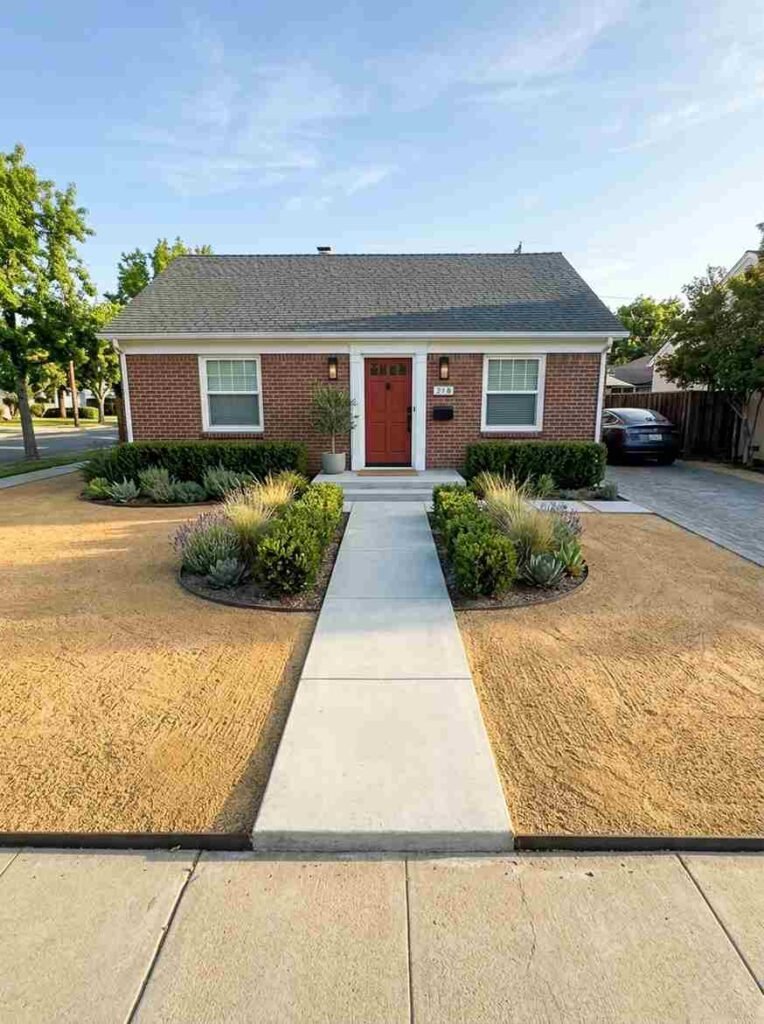
1. Replace your lawn with decomposed granite. Decomposed granite (DG) gives you a smooth, sand-like surface that handles foot traffic and looks clean.
It costs $40–$80 per cubic yard, and for a small front yard, one or two yards gets the job done.
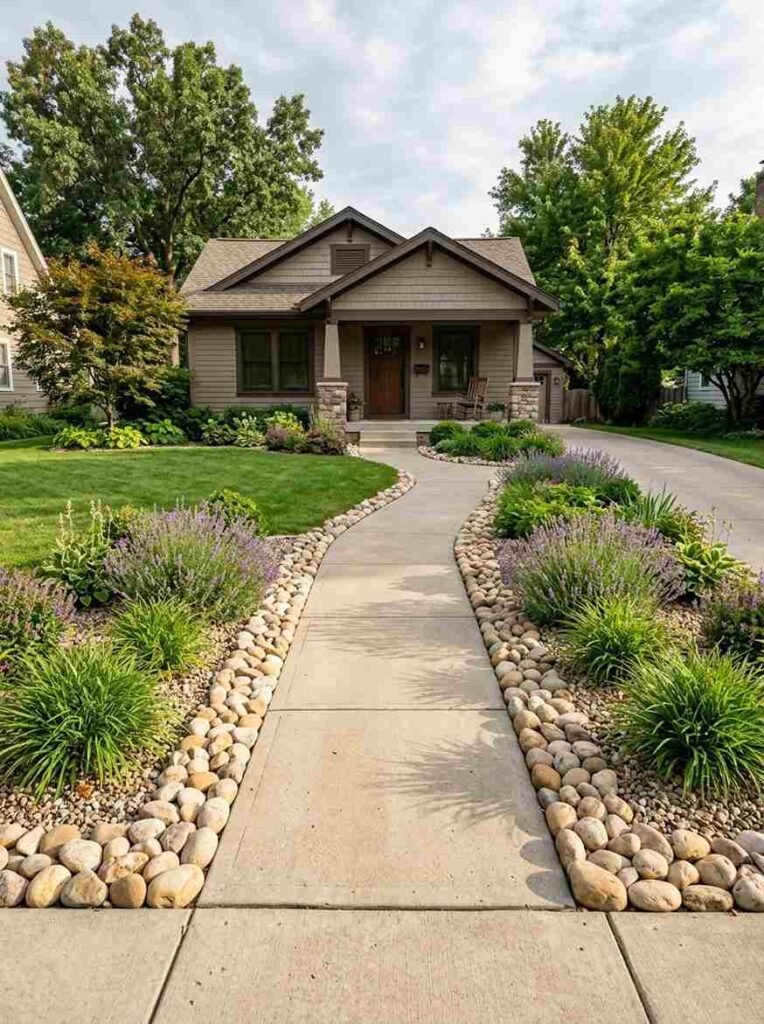
2. River rock border along your walkway. Line both sides of your front path with rounded river rocks. It’s tidy,
it’s timeless, and you can do it in an afternoon with two bags from any hardware store.
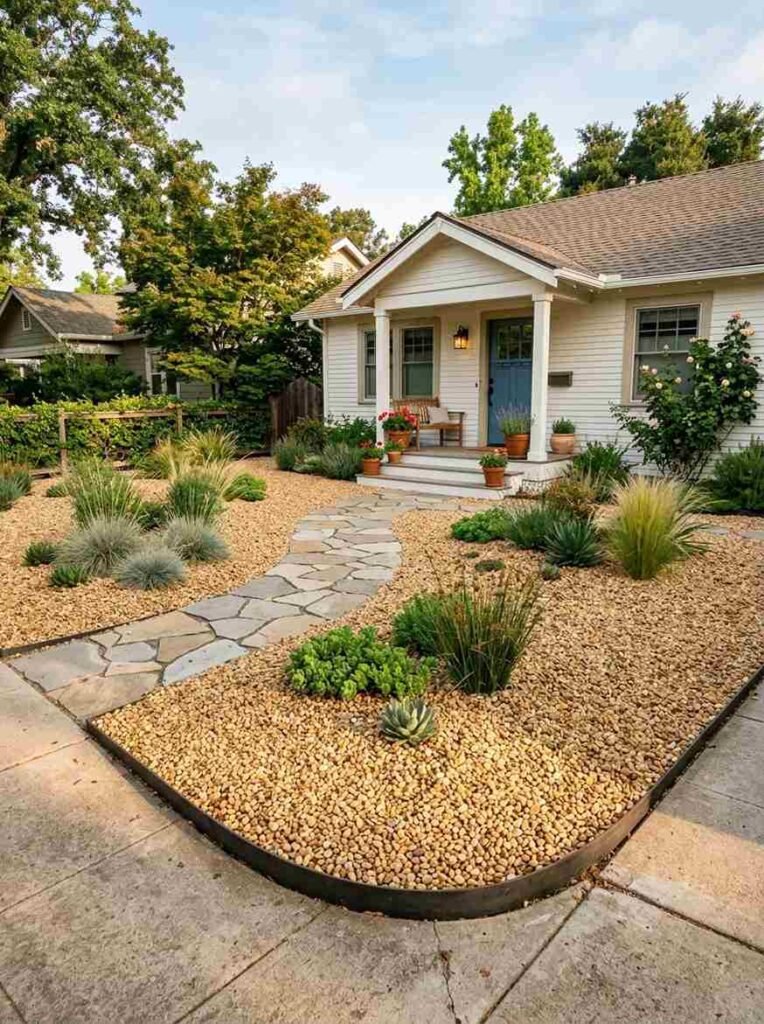
3. Pea gravel ground cover. Pea gravel is the friendliest gravel to walk on barefoot (in case anyone’s counting). It settles nicely around plants and costs almost nothing.
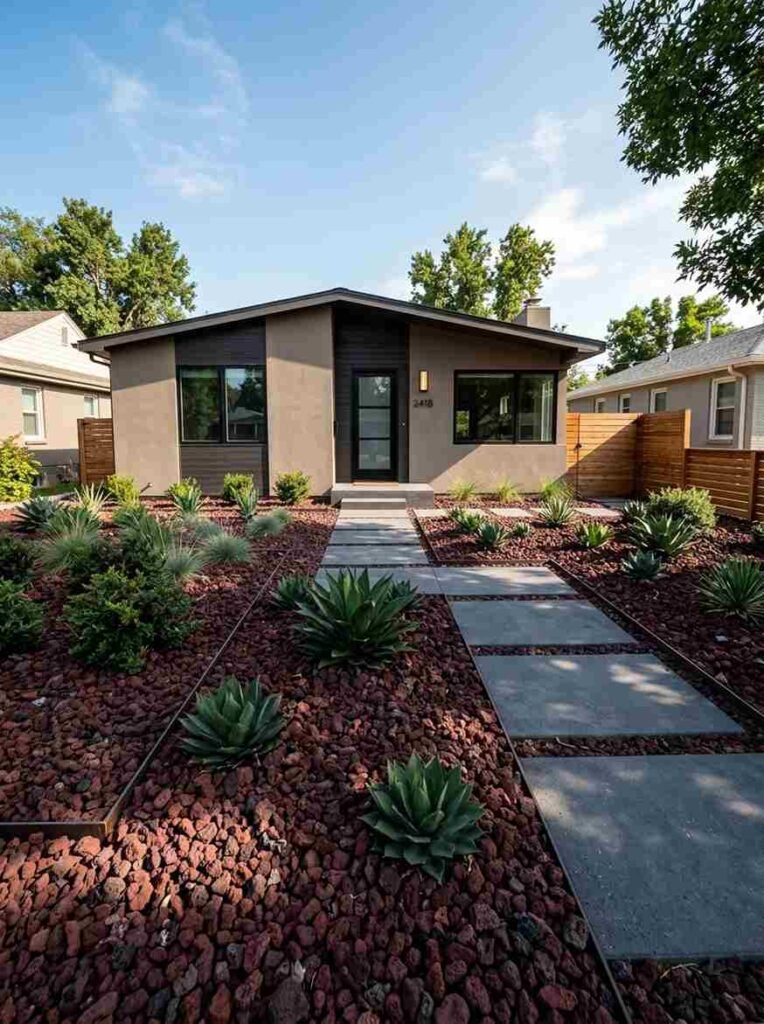
4. Lava rock mulch replacement. Swap traditional wood mulch for red or black lava rock in your planting beds. It doesn’t break down, doesn’t float away in rain, and adds serious color contrast.
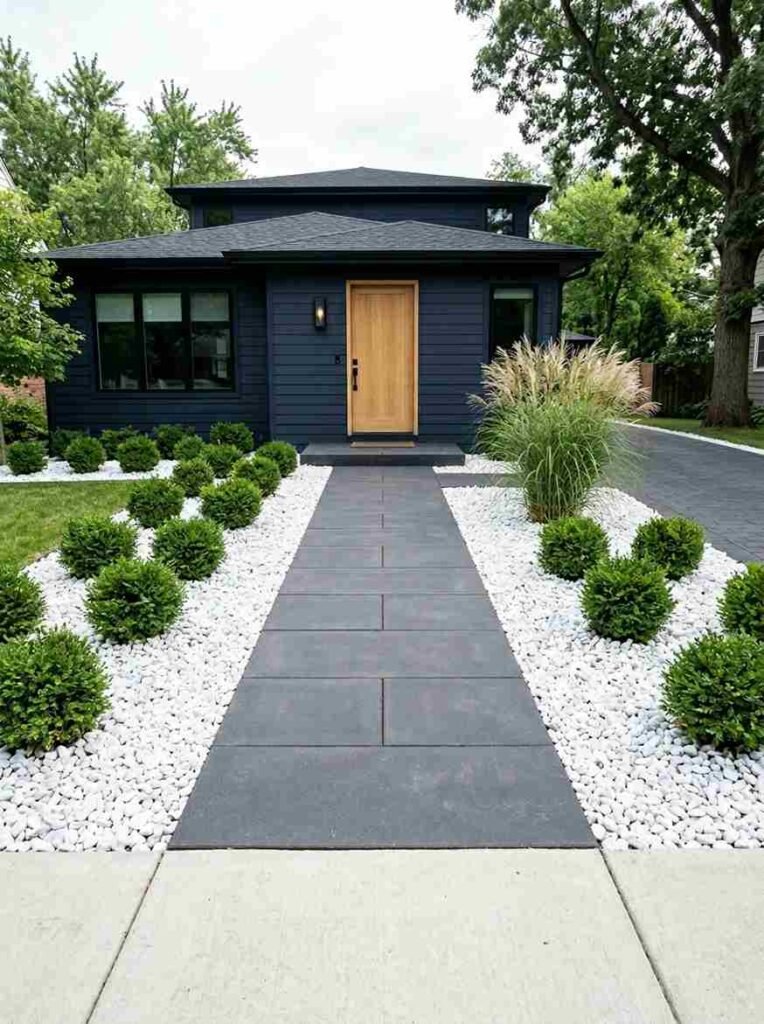
5. White marble chips near the entrance. For a clean, modern look, white marble chips around your front door planting beds pop beautifully against dark green plants or a dark house exterior.
Dry Creek Beds
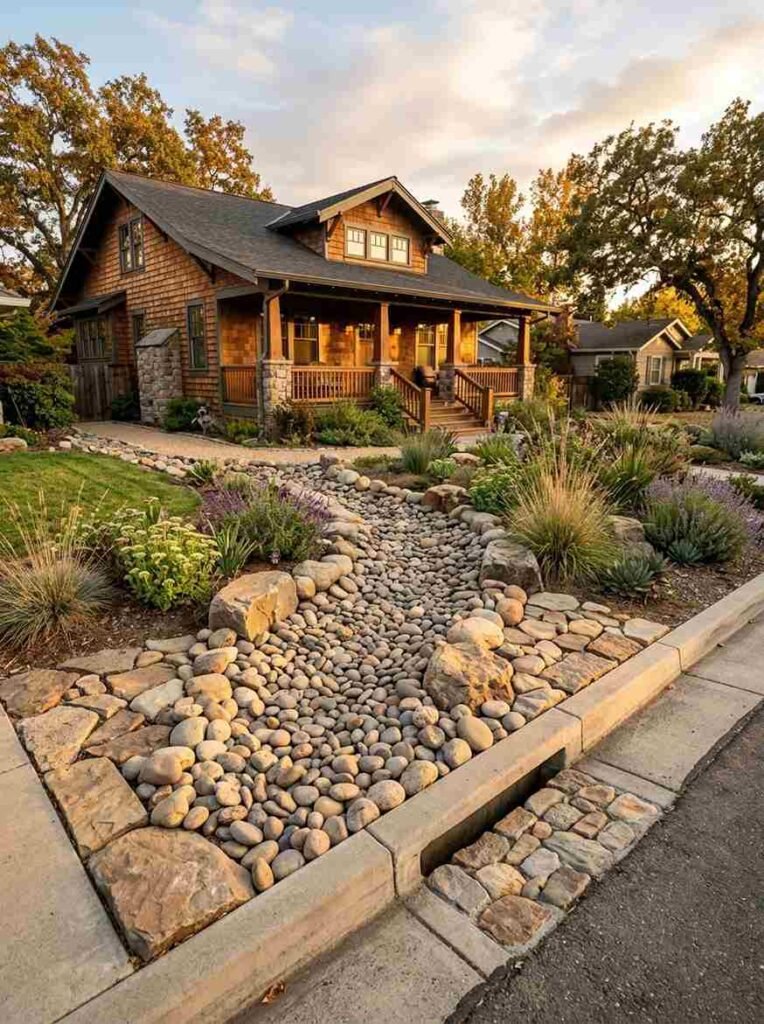
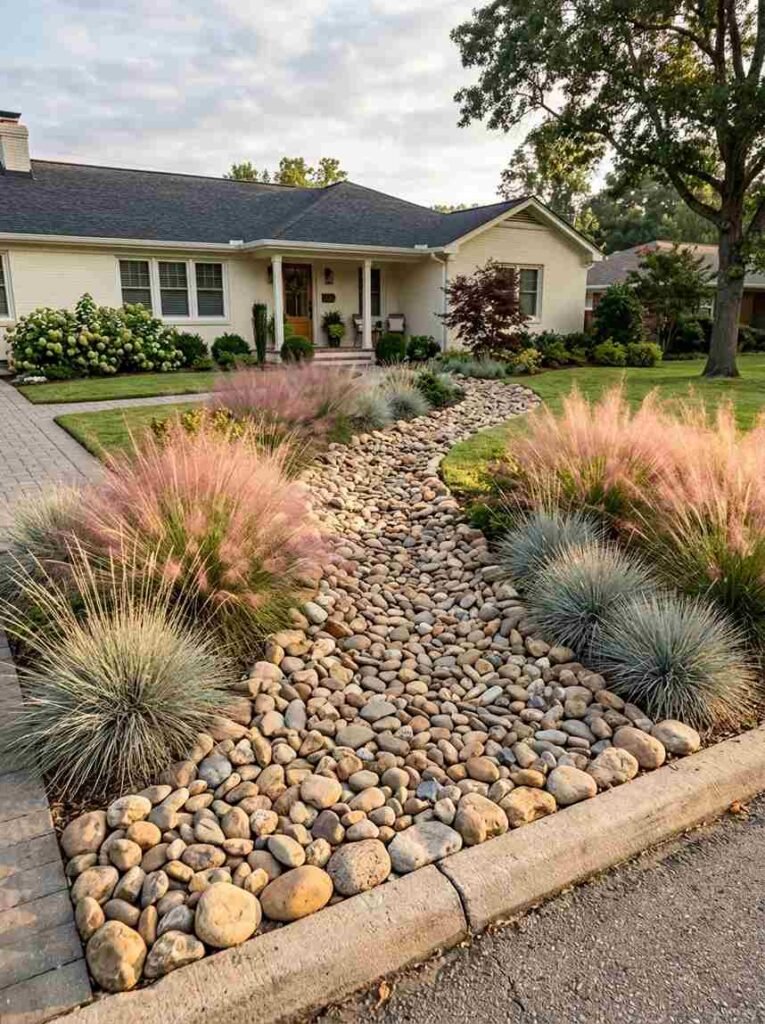
6. Functional dry creek for drainage. Got a slope or low spot that collects water? A dry creek bed solves the drainage problem and looks like a design feature. Use a mix of large flat stones and smaller river rock.
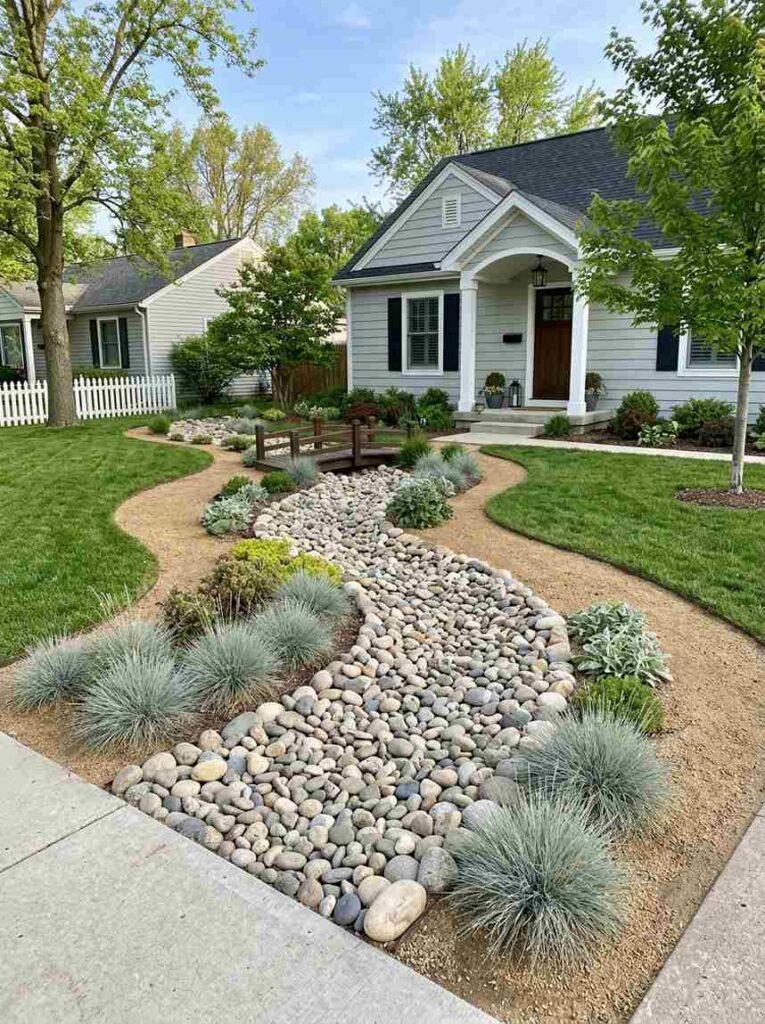
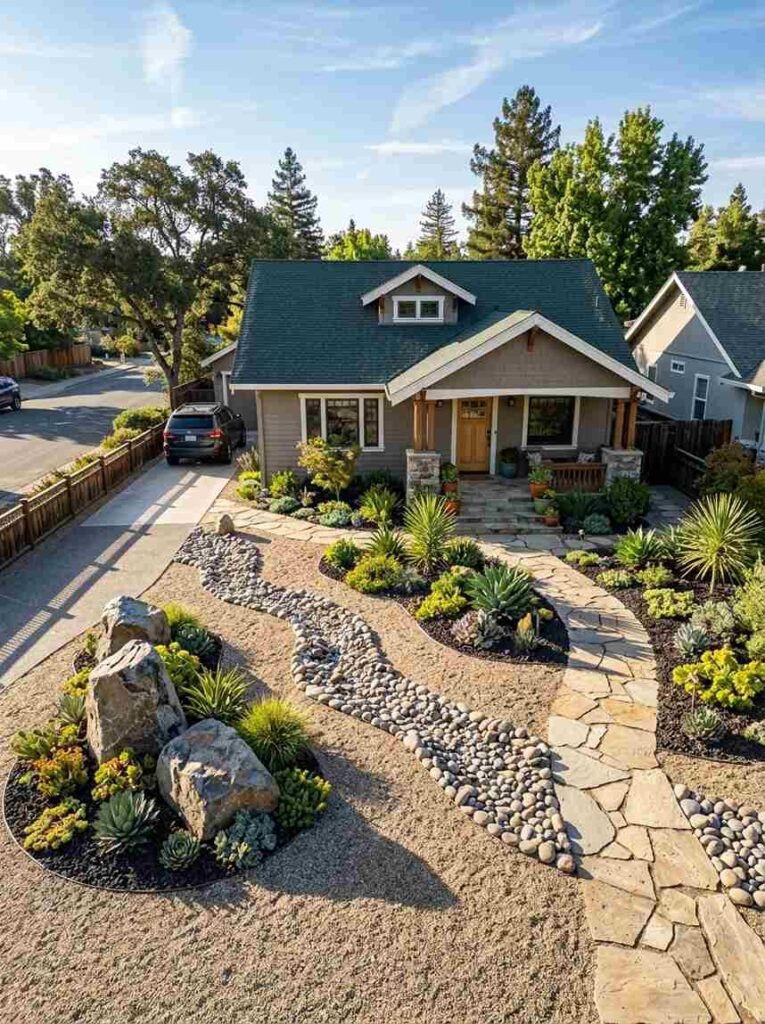
7. Decorative winding creek across the yard. Even without a drainage need, a winding dry creek adds movement and visual interest to a flat front yard. Keep it shallow and simple.
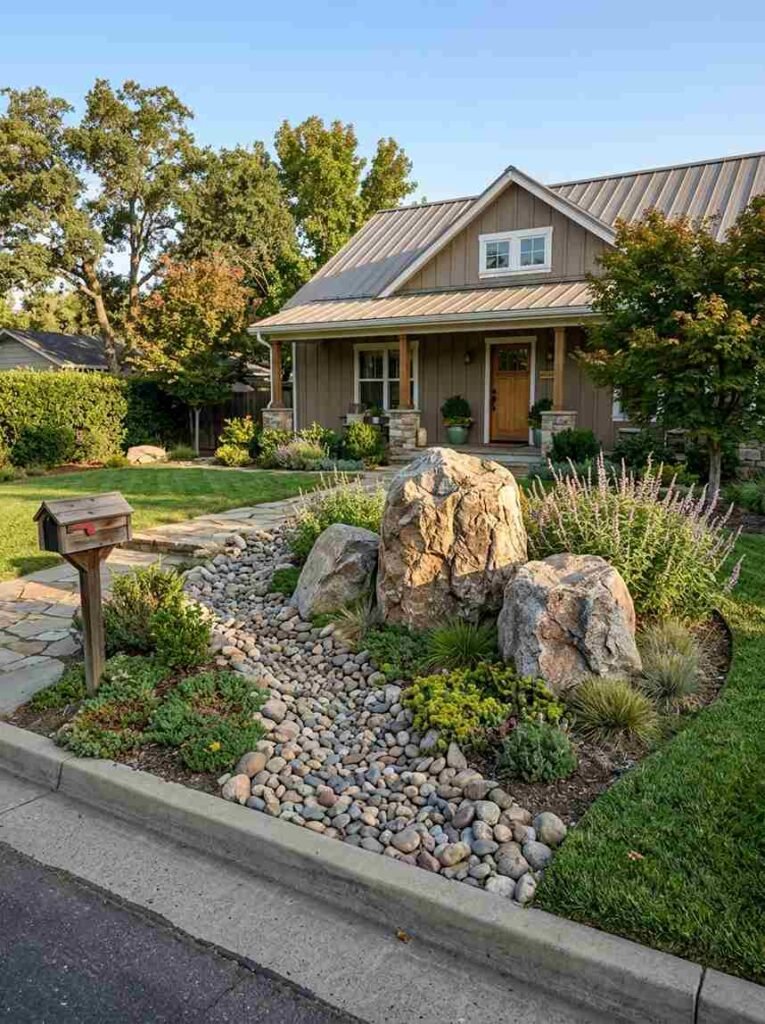
8. Boulder-anchored creek entry. Place 2–3 large boulders at the “source” of your dry creek and let smaller rocks trail away from them. It reads as natural and deliberate at the same time.
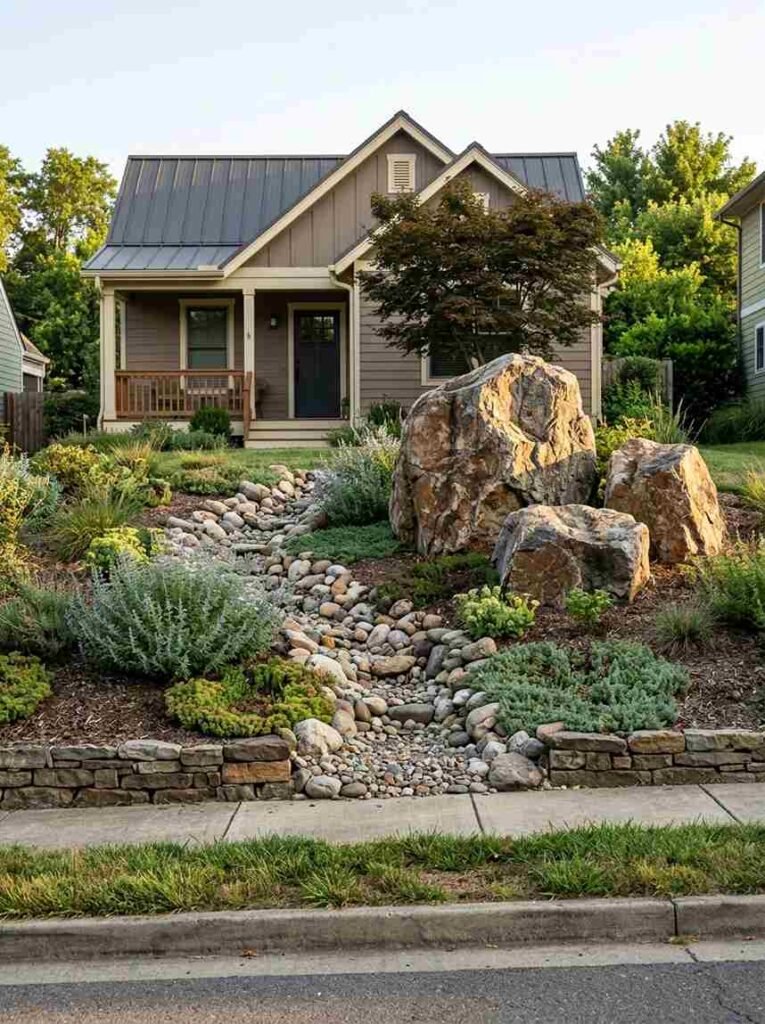
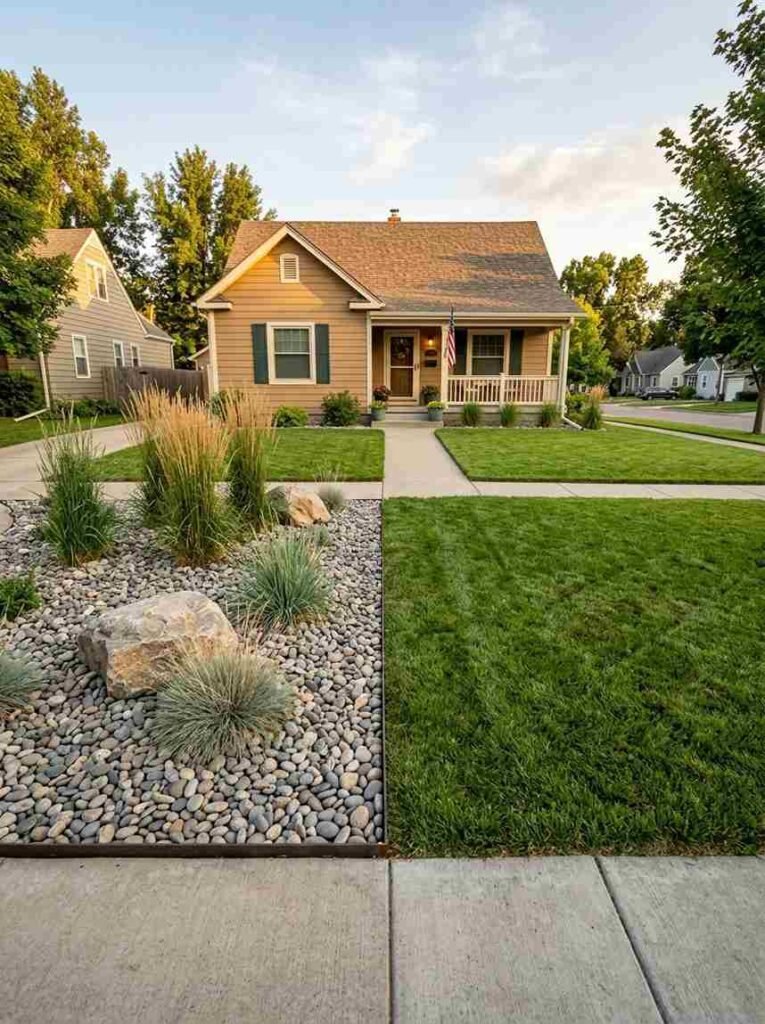
9. Dry creek with ornamental grasses. Plant drought-tolerant grasses like Blue Fescue or Muhly Grass along the edges of your creek bed. The contrast between soft plant texture and hard rock is genuinely beautiful 🙂
Boulder & Rock Focal Points
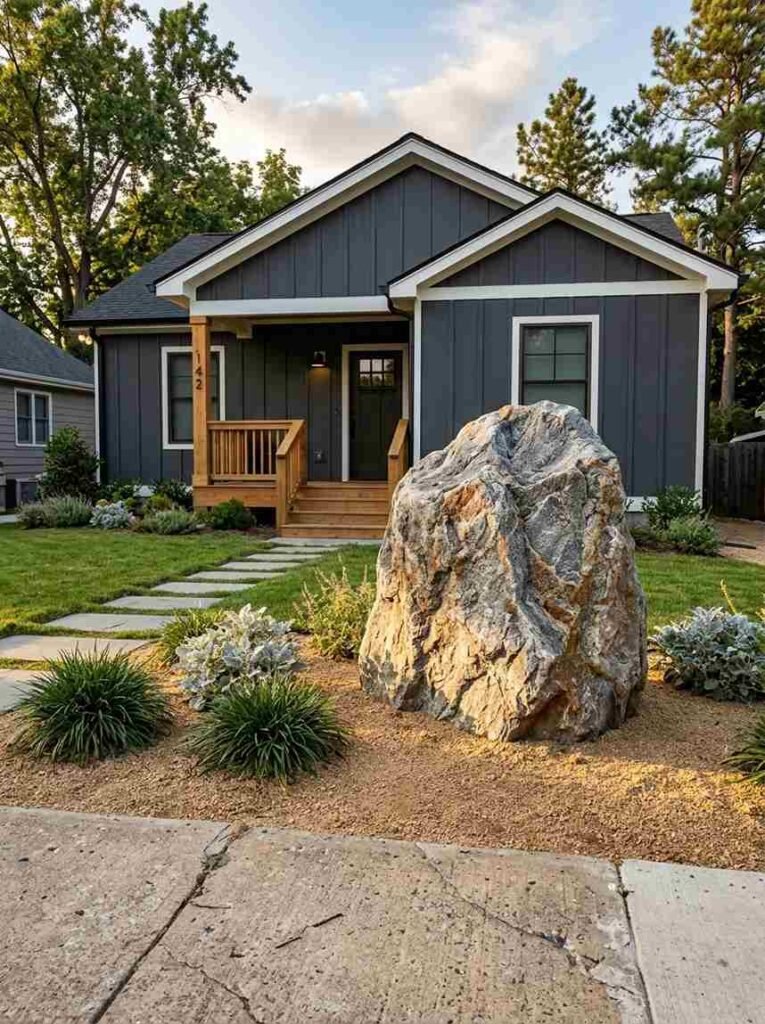
10. Single statement boulder. One well-placed boulder does more work than a dozen small rocks scattered randomly. Find a locally sourced granite or basalt boulder and let it anchor a corner of the yard.
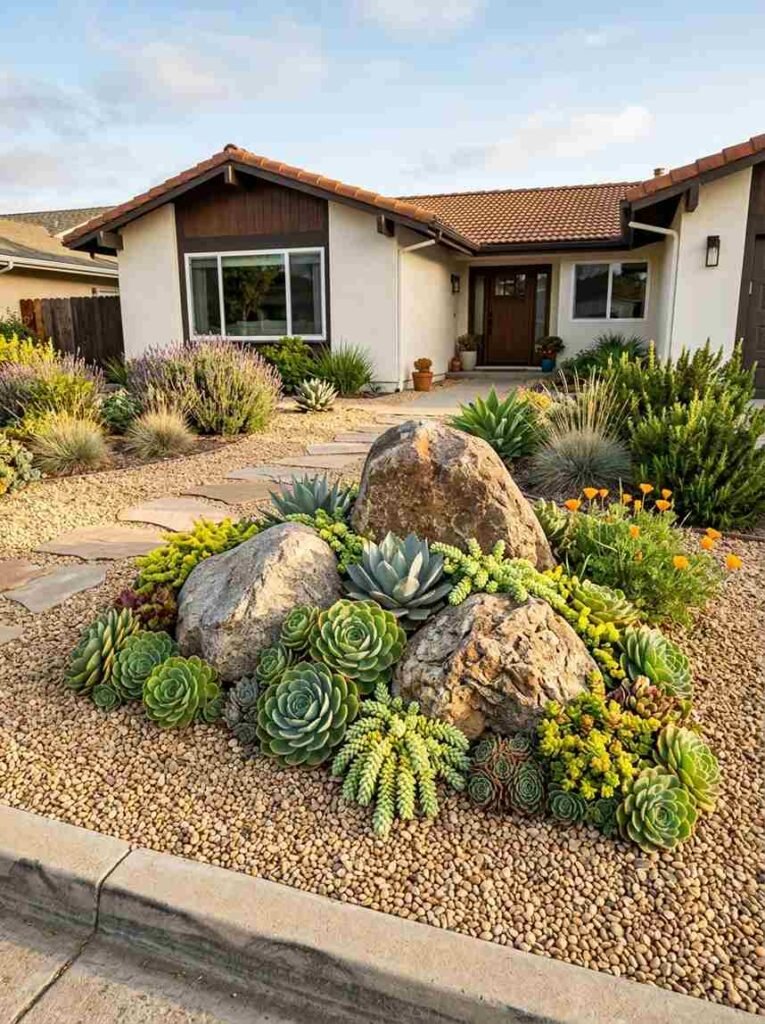
11. Boulder grouping with succulents. Cluster 3 boulders of different sizes together and tuck succulents into the gaps between them. This combo is everywhere on Pinterest for a reason — it photographs beautifully and thrives in dry conditions.
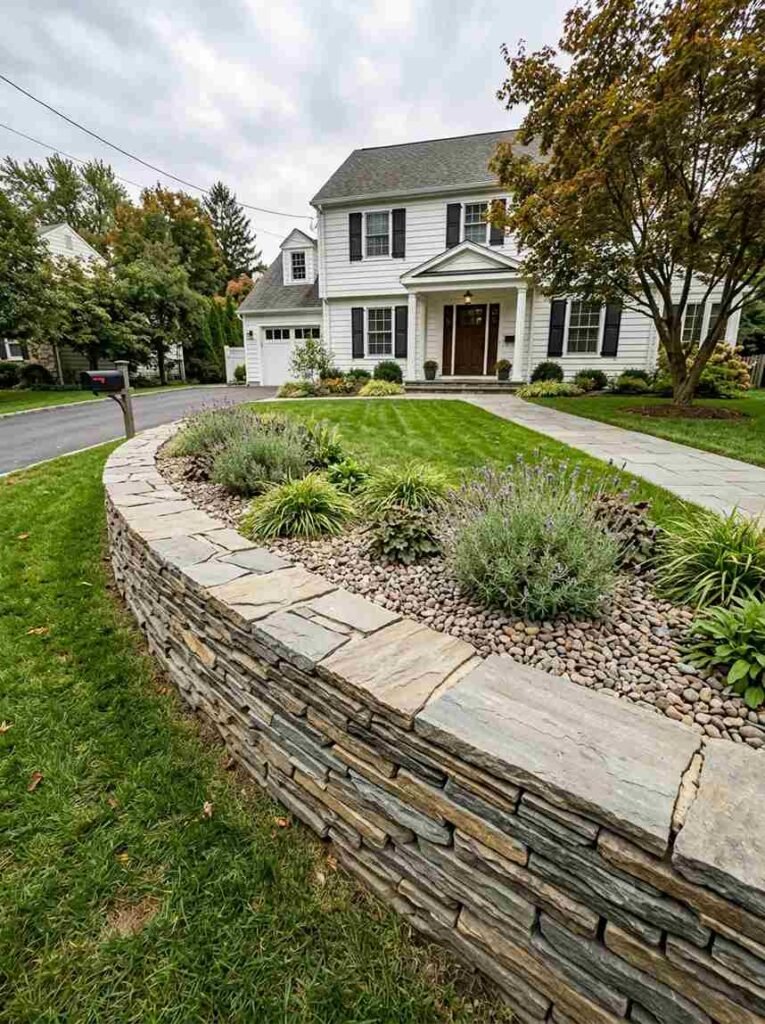
12. Stacked flat stones as a border accent. Stack a few flat flagstones or shale pieces into a low, informal wall. It doesn’t need to be structural. It just adds height variation.
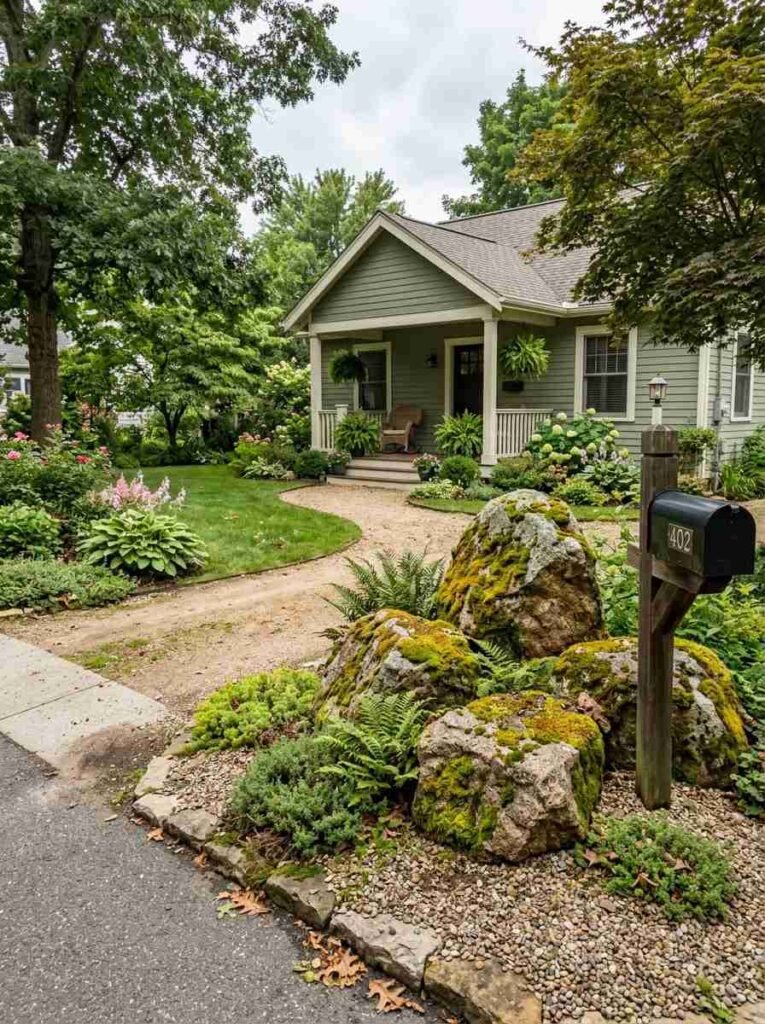
13. Moss rock clusters. Moss rock has that naturally weathered look that makes a yard feel established even when it’s brand new. Group several together near your mailbox or house number sign.
Rock Garden Designs
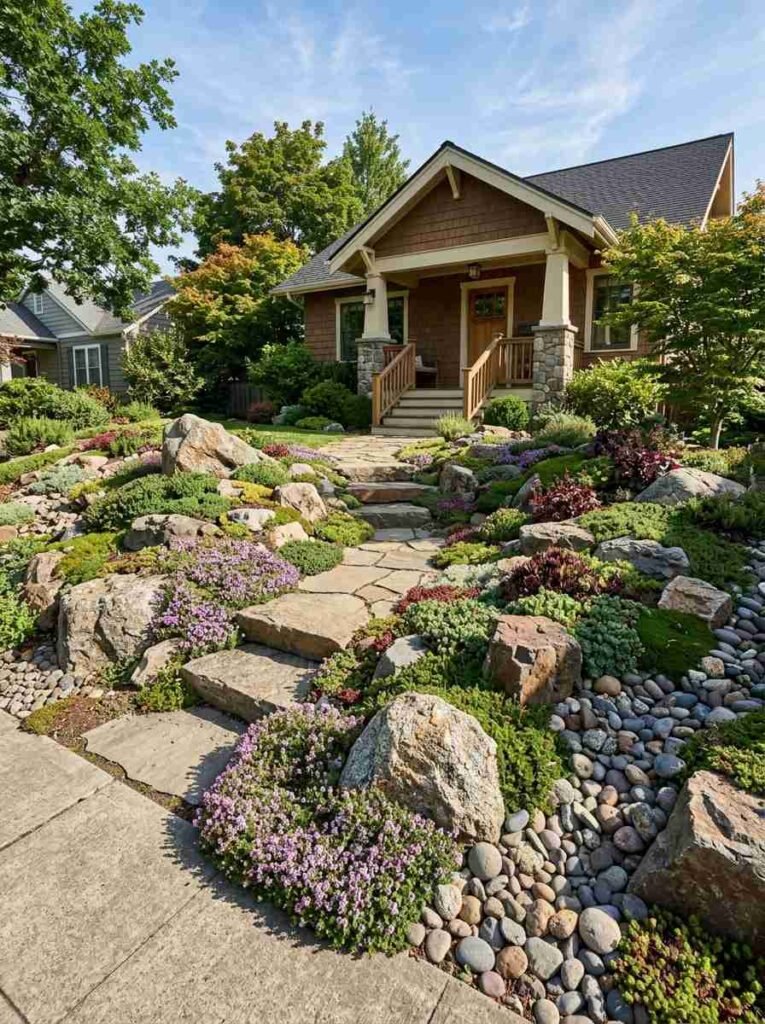
14. Alpine rock garden. Layer different-sized rocks on a slight slope and fill gaps with low alpine plants like Creeping Thyme or Sedum.
This style looks complex but needs almost no care once established.
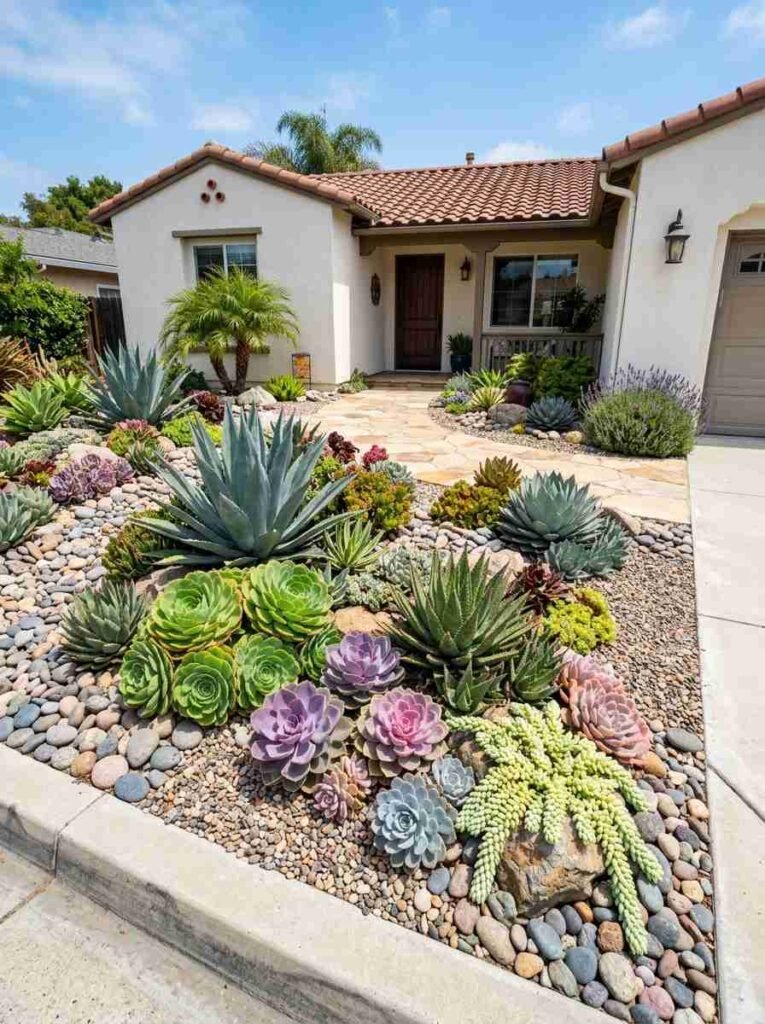
15. Succulent rock garden. Combine gravel mulch, a few strategically placed rocks, and a collection of hardy succulents.
Works especially well in warm climates. The whole thing can be planted for under $150.
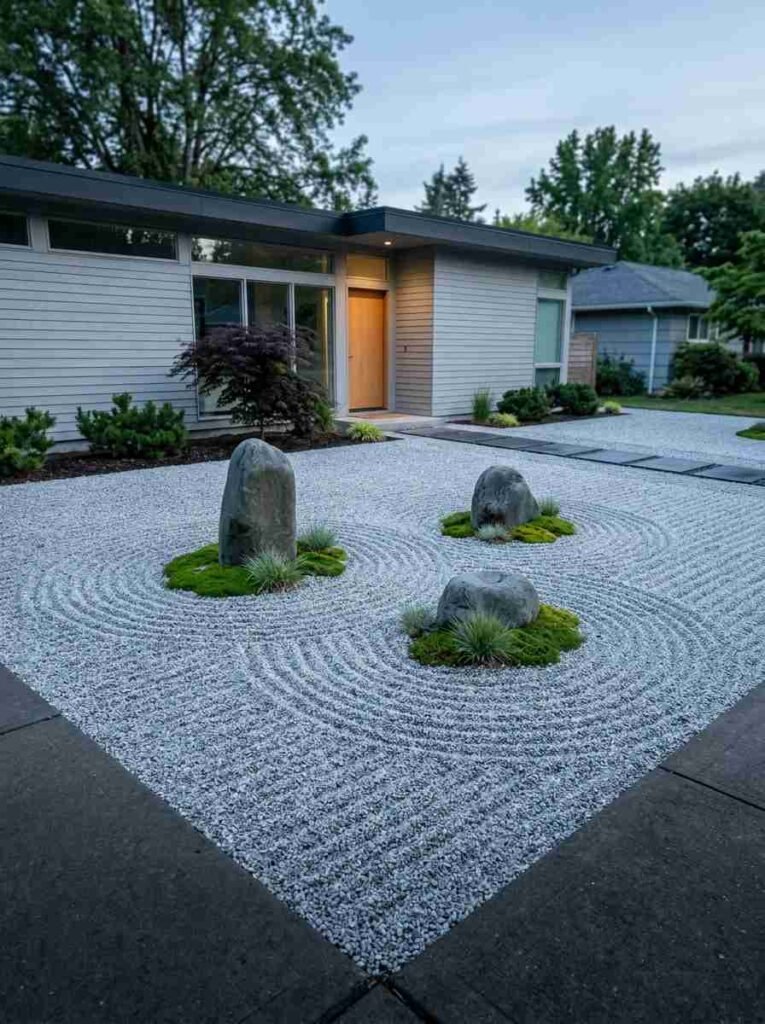
16. Japanese-inspired gravel garden. Rake decomposed granite or fine gravel into patterns around a few carefully chosen rocks.
You don’t need to copy a traditional design exactly — just the principle of intentional simplicity translates well to small spaces.
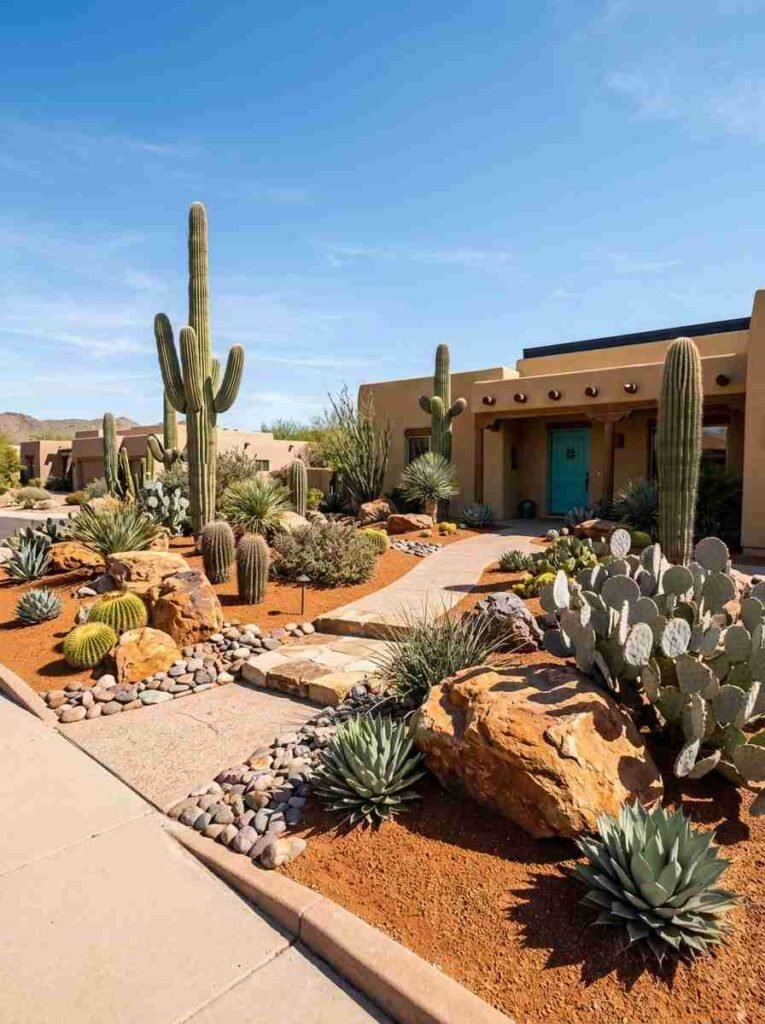
17. Cactus and rock desert garden. If you live somewhere dry, lean all the way in.
A desert-style front yard with gravel, boulders, and native cacti is both authentic and extremely low maintenance.
Pathway & Edging Ideas
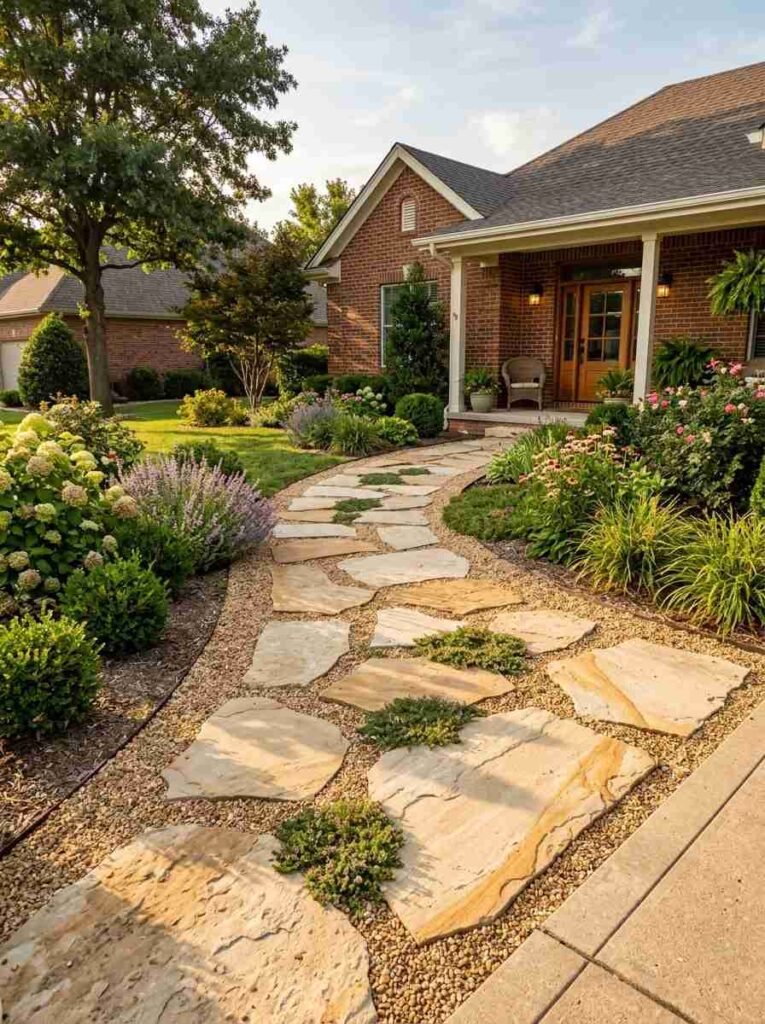
18. Flagstone stepping path with gravel fill. Lay large flat flagstones as stepping stones through a gravel bed.
The contrast between the large stone and the fine gravel looks polished without much effort.
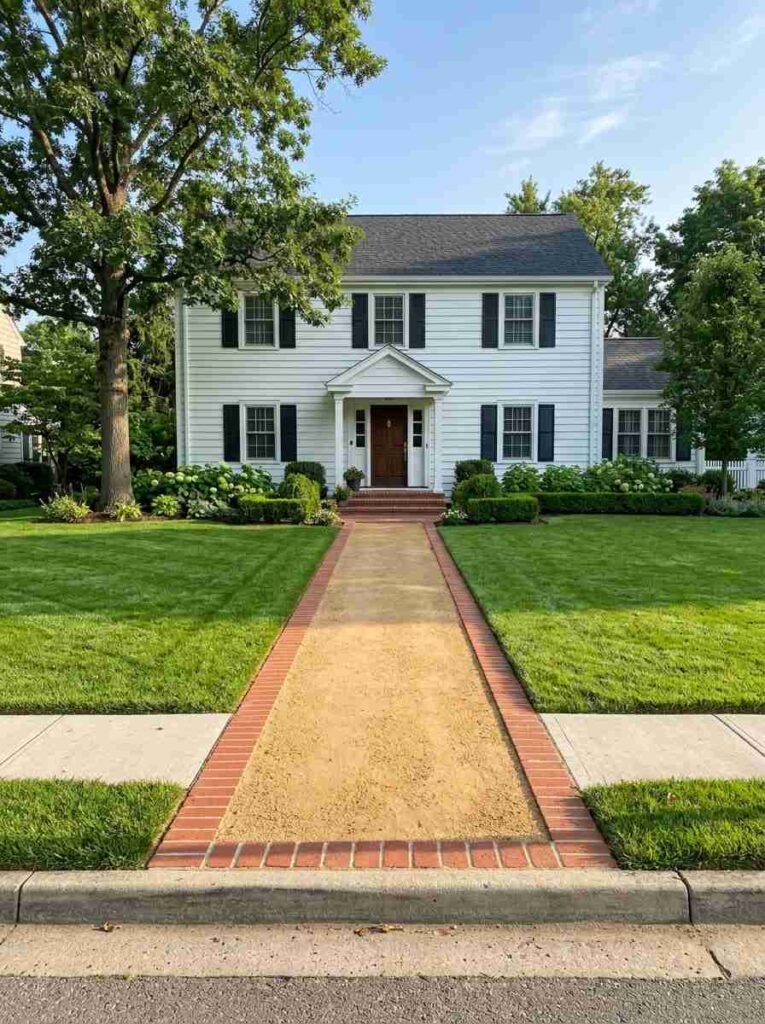
19. Decomposed granite path with brick edging. Use brick or steel edging to define a clean DG path.
Without edging, DG migrates everywhere — the edging is what makes it look intentional.
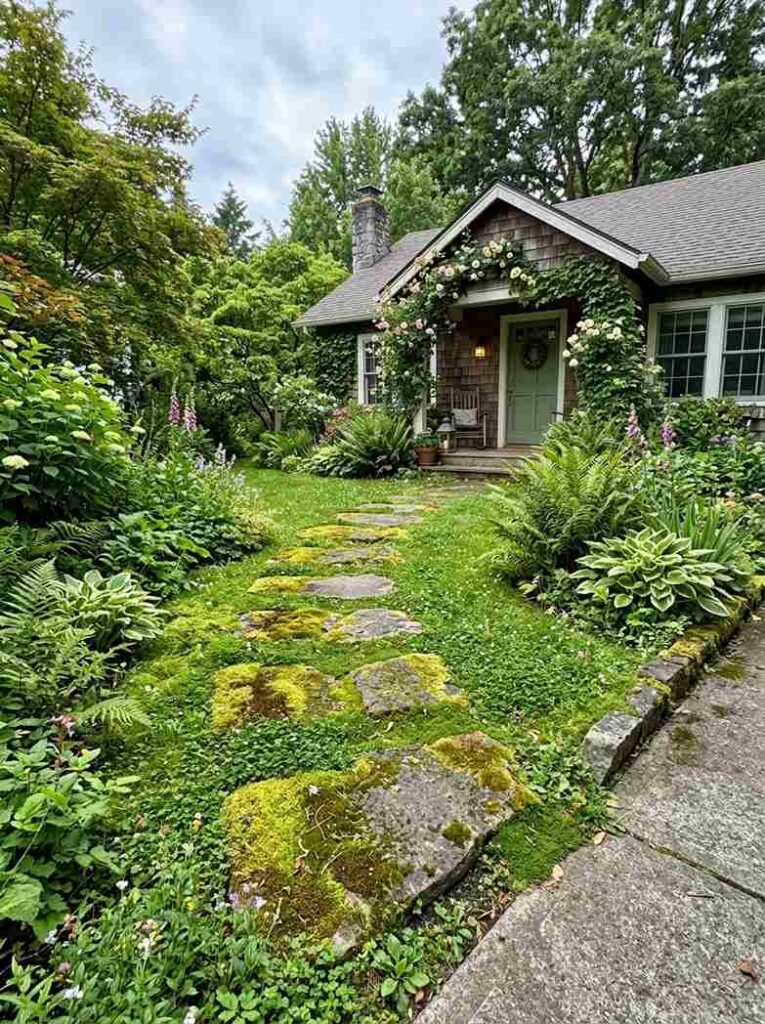
20. Mossy stepping stones. Large flat stones allowed to develop moss (or seeded with moss paste) look like they’ve been there for decades. Very cottage-garden, very pinnable.
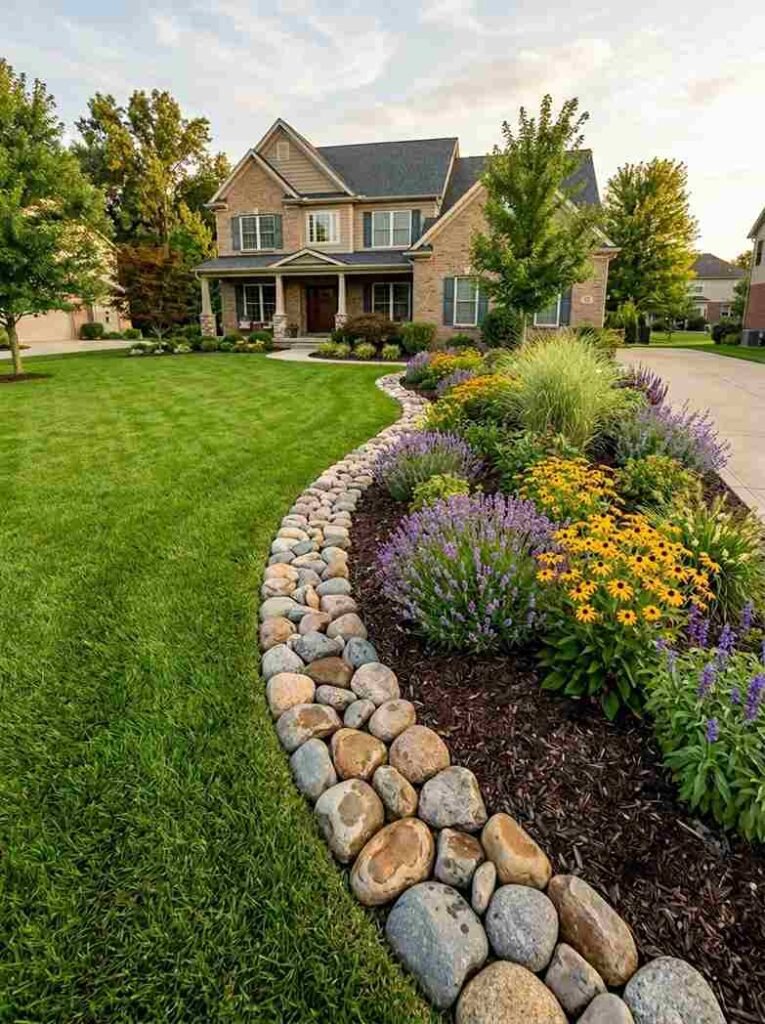
21. River rock edge between lawn and bed. If you’re keeping some lawn, a single row of larger river rocks makes a clean transition edge between grass and planting beds. No mowing over flower beds anymore.
Slopes & Drainage Solutions
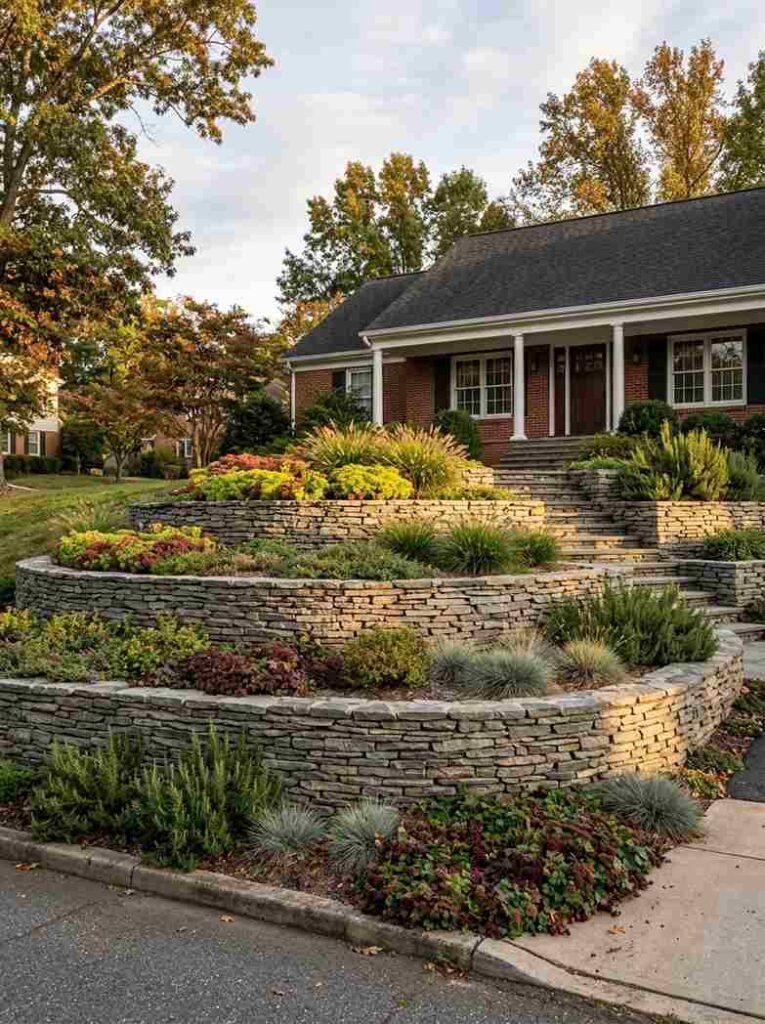
22. Terraced rock walls on a slope. Stack flat fieldstone or retaining wall blocks into low terraces.
Fill each level with soil and plants. This turns a maintenance nightmare slope into a feature.
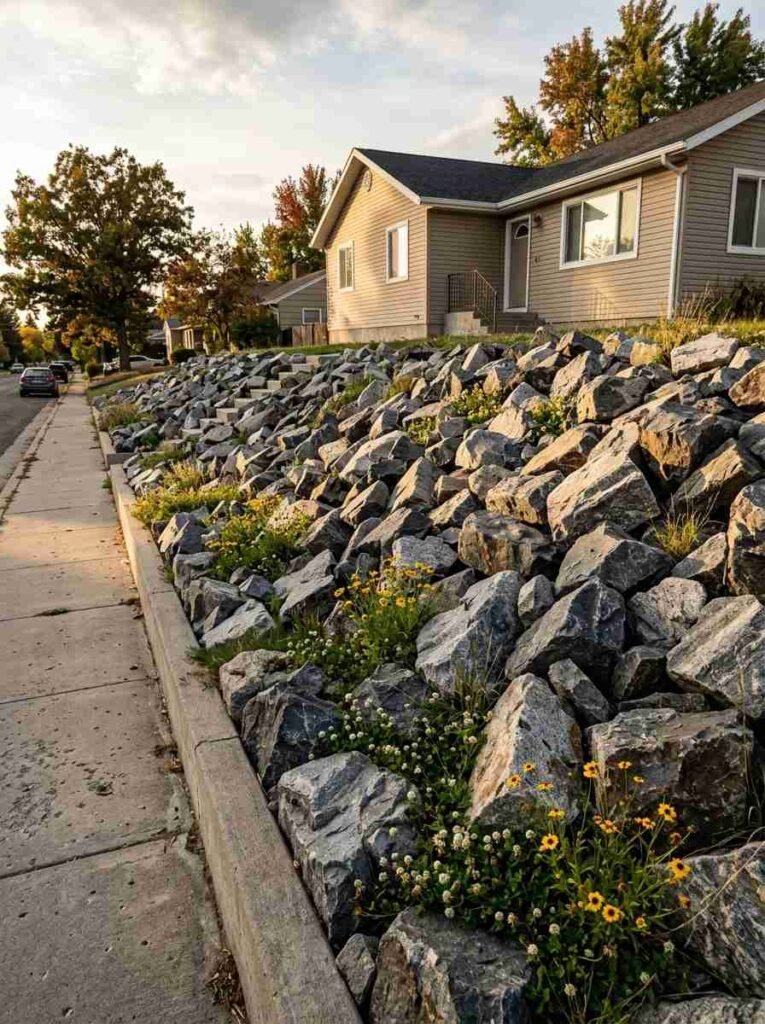
23. Riprap erosion control. Large angular rocks placed on a slope prevent soil erosion and look much better than bare dirt. It’s an engineering solution that moonlights as landscaping.
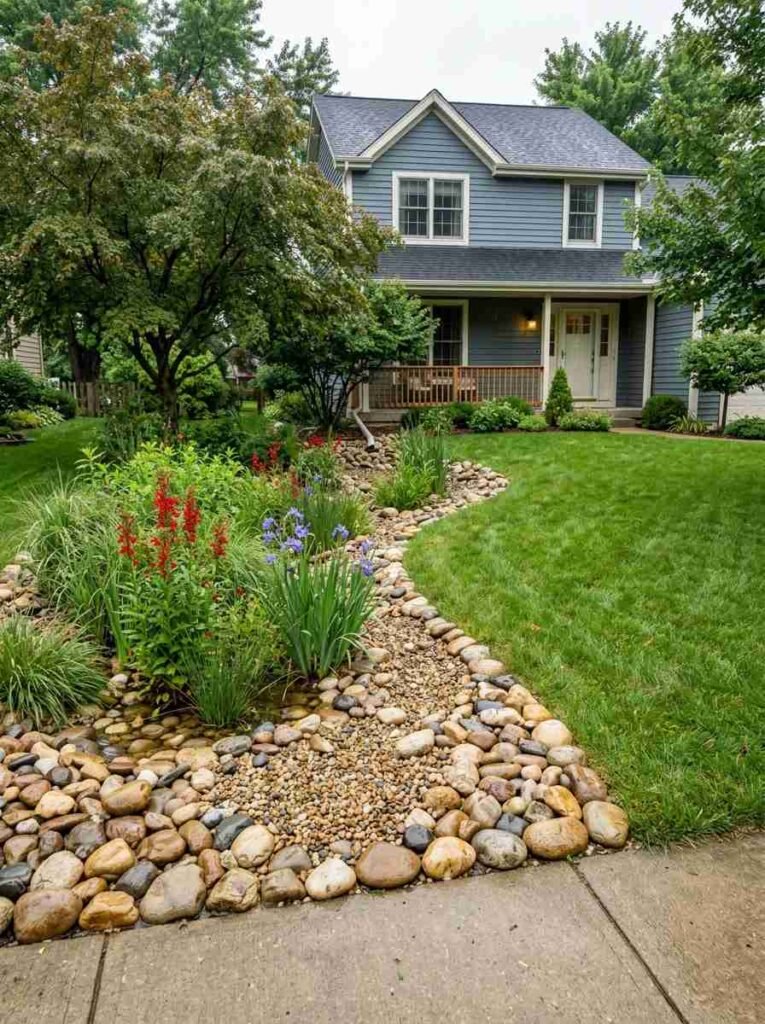
24. Rain garden with rock lining. A shallow depression lined with gravel and river rock captures rainwater runoff.
Plant it with water-tolerant natives and you’ve solved drainage and created a habitat.
Color & Texture Play
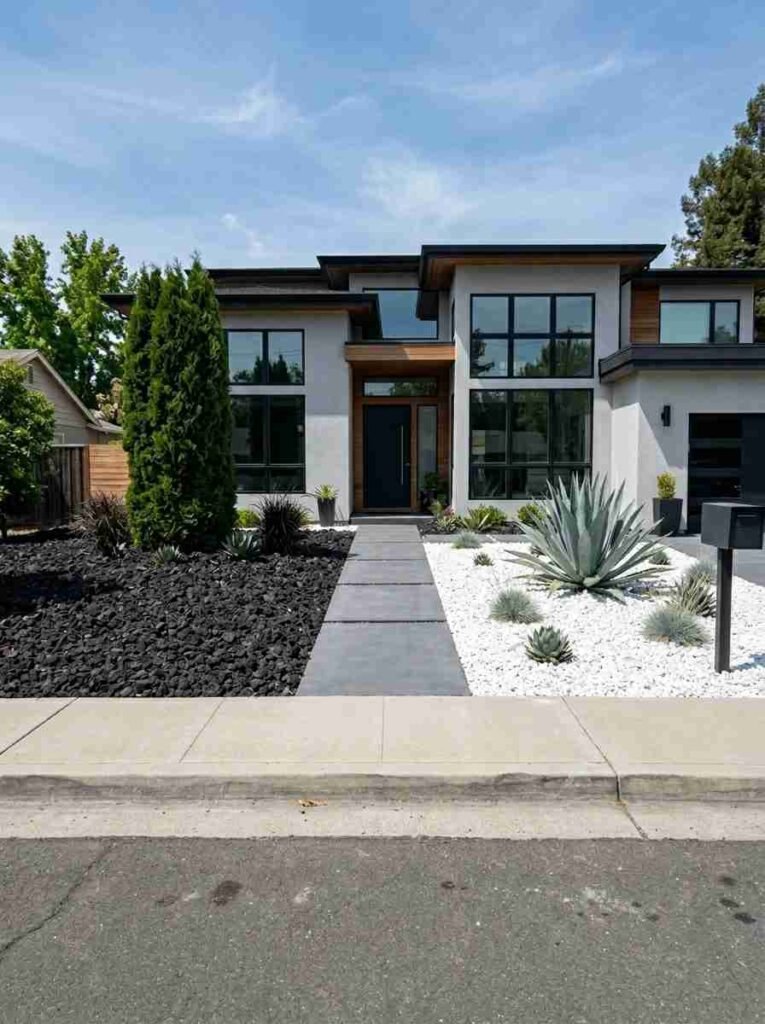
25. Contrasting rock colors. Mix black lava rock with white marble chips in separate planting zones. The contrast draws the eye and makes a small yard look more complex.
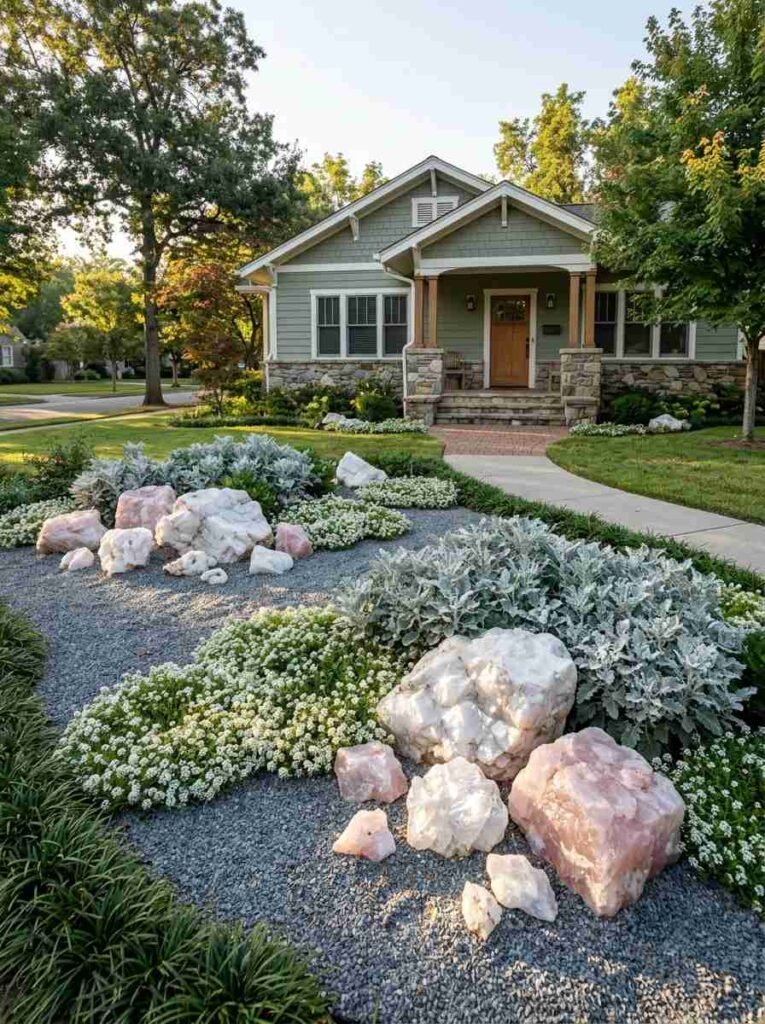
26. Quartz and crystal accent rocks. Rose quartz, white quartz veins, or similar mineral-rich rocks catch sunlight and add sparkle. Use them as accent pieces, not ground cover.
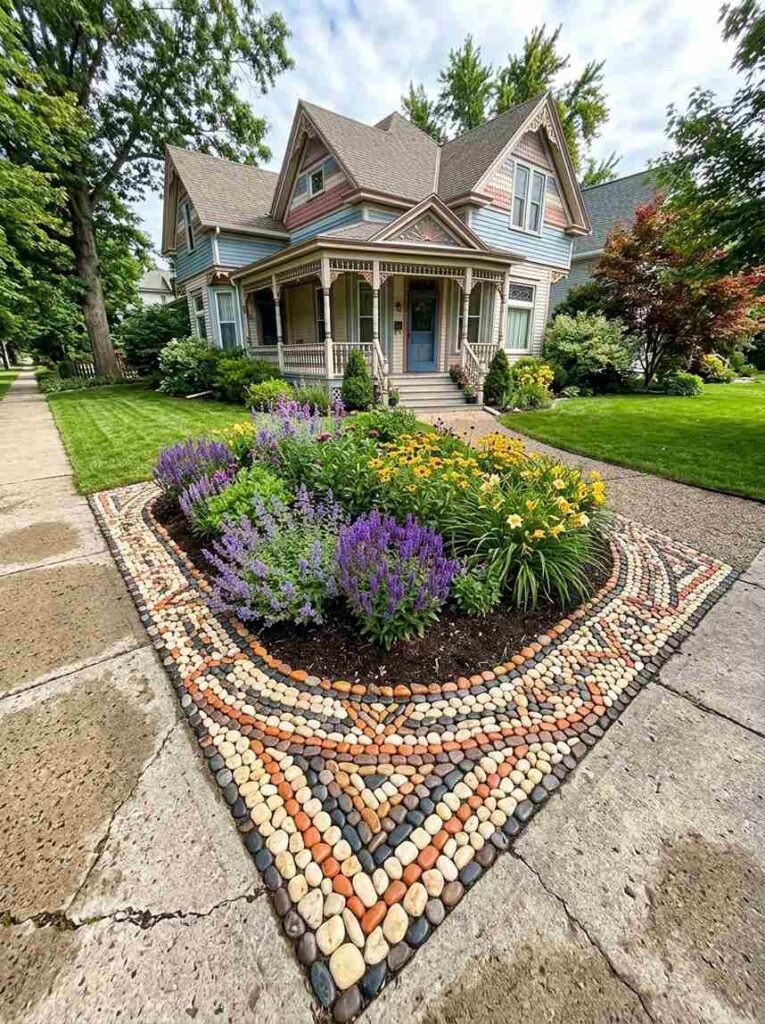
27. Multicolor river rock mosaic border. Sort river rocks by color and lay them in a pattern as a border.
IMO this takes patience, but the results are genuinely stunning and totally unique.
Mixed Material Ideas
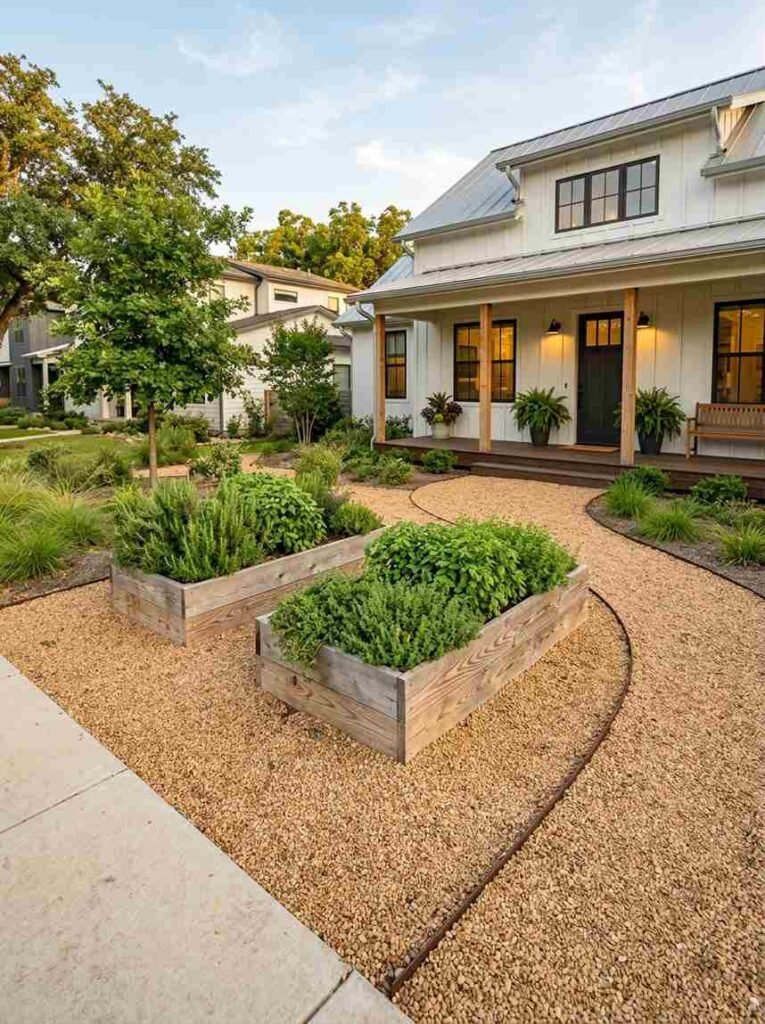
28. Gravel + wood raised beds. Combine gravel ground cover with low wooden raised beds for vegetables or herbs.
The contrast between organic wood and mineral gravel looks intentional and modern.
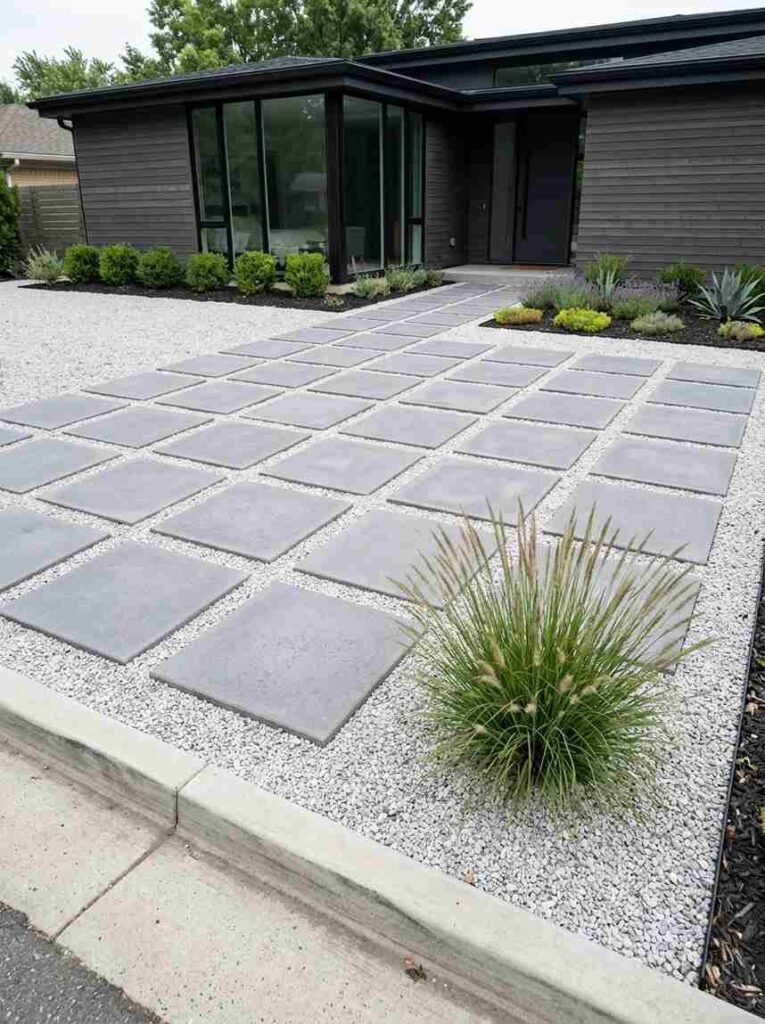
29. Concrete pavers set in gravel. Large square concrete pavers laid in a grid across a gravel field gives you a clean, contemporary look. Great for a modern house exterior.
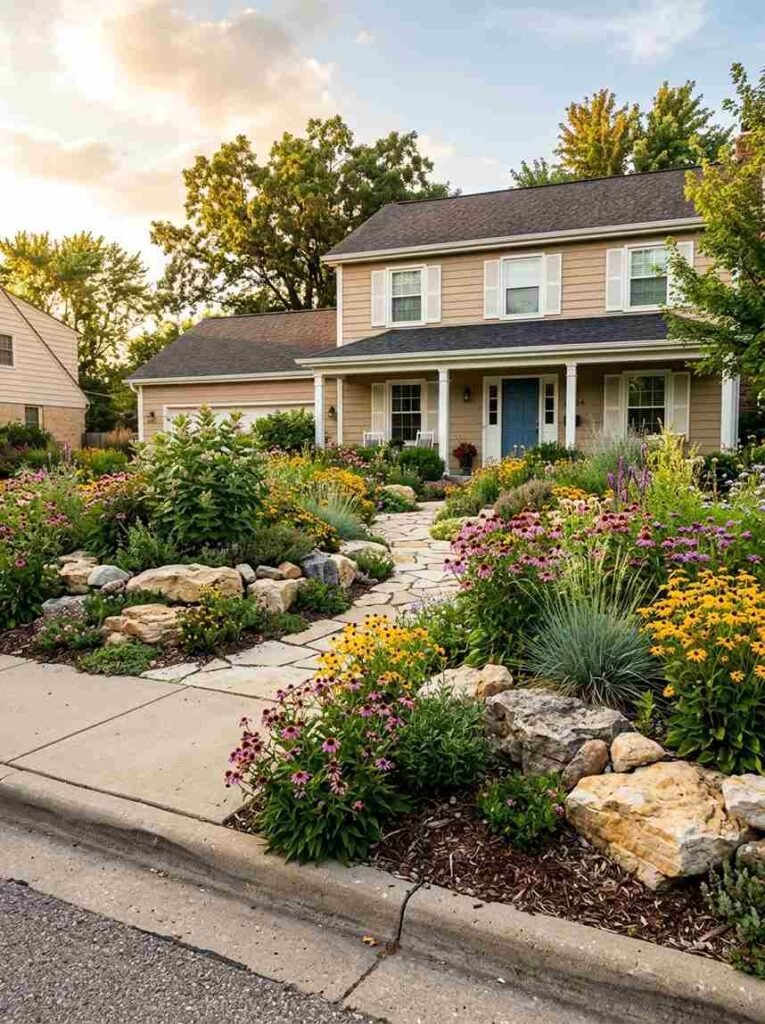
30. Rock + native plant combo. This is the one that really holds up long-term. Pair local rocks (meaning rocks that naturally occur in your region) with native plants.
Everything looks like it belongs. Maintenance practically disappears.
Installation Tips Before You Start
A few things that’ll save you headaches:
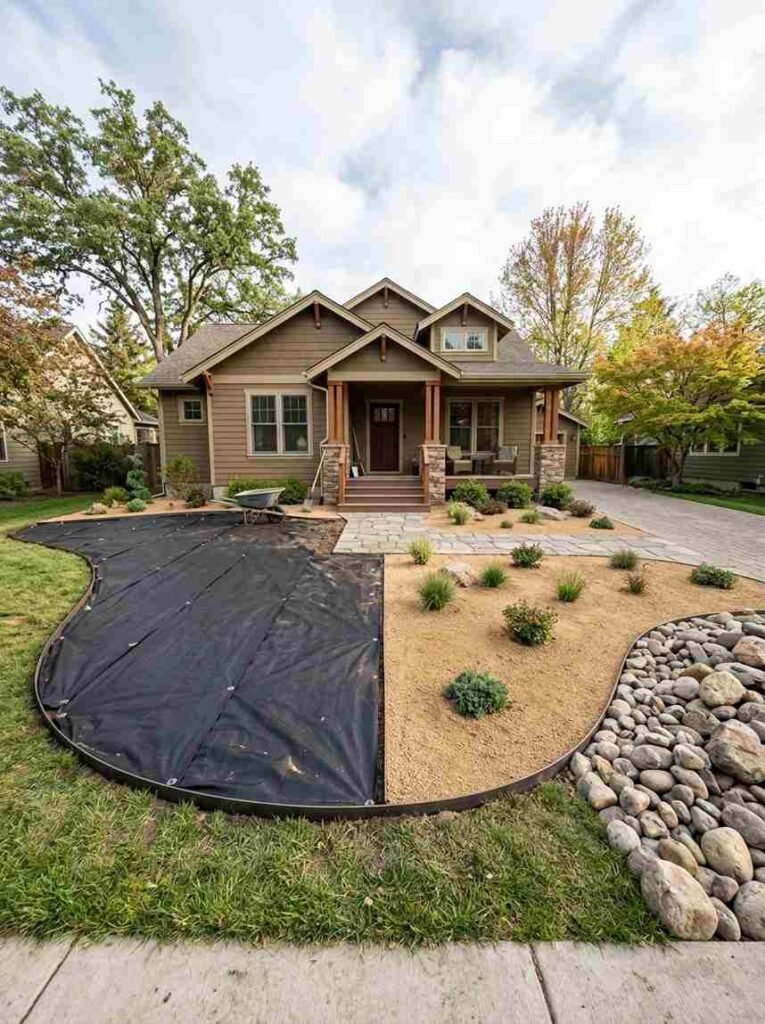
- Lay landscape fabric first. Under any gravel or rock ground cover, fabric prevents weeds from pushing through. Skip this step and you’ll regret it by year two.
- Calculate more material than you think you need. Rocks and gravel always look thinner once spread out. Add 15–20% to your estimate.
- Bigger rocks for slopes, smaller for flat areas. Small gravel on a slope will wash away. Match rock size to your terrain.
- Edge everything. Steel, aluminum, or plastic edging keeps rocks where they belong and makes the whole project look finished.
Maintenance: How Little You’ll Actually Do
Here’s what rock landscaping maintenance actually looks like:
- Blow or rake out leaves in fall (10 minutes)
- Pull the occasional weed that makes it through the fabric (5 minutes, twice a year)
- Top up gravel every 3–5 years as it compacts
That’s genuinely it. Compare that to weekly mowing, seasonal fertilizing, and reseeding bare spots, and you’ll understand why people make this switch.
Getting Started: The Simplest First Move
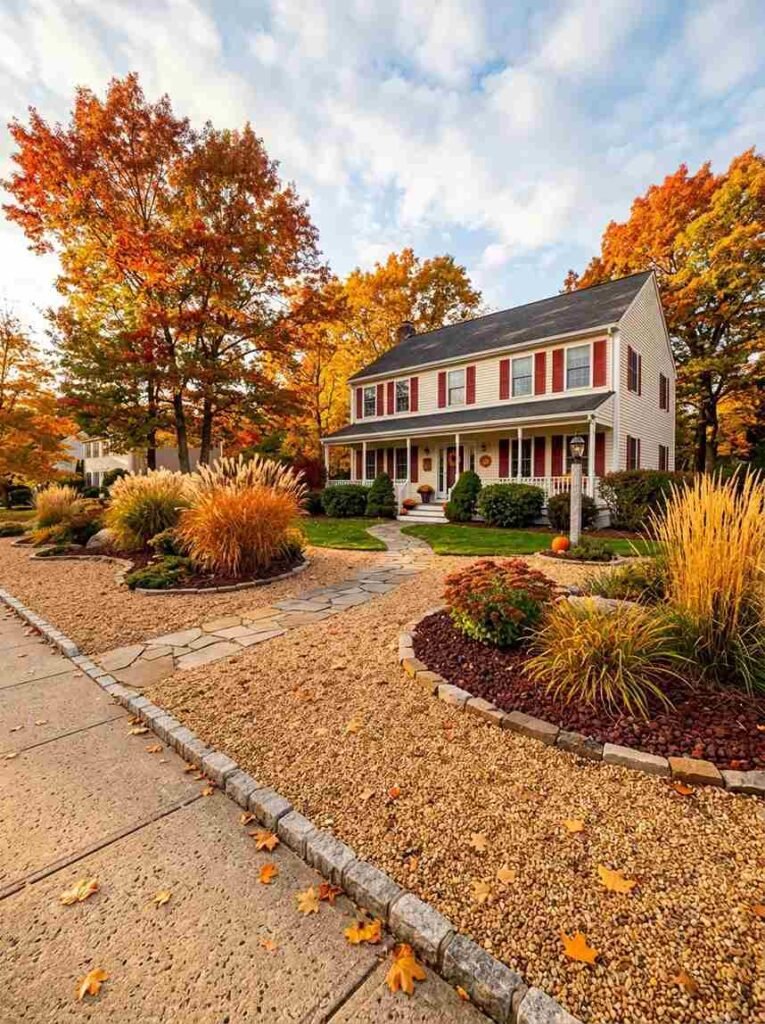
Overwhelmed by 30 ideas? Start here: pick one section of your front yard — just one — and swap the ground cover for gravel.
That’s it. One section. See how it looks, how it feels to maintain (or not maintain), and whether you like the direction. Most people who try it in one spot end up doing the whole yard within a year. :/
The best front yard rock garden isn’t the most expensive or the most elaborate. It’s the one you actually finish. Pick an idea from this list that fits your budget, your climate, and your aesthetic — then go buy some rocks.
Save this guide to your Pinterest boards so you can come back to it when you’re ready to start. Your front yard is going to thank you.
