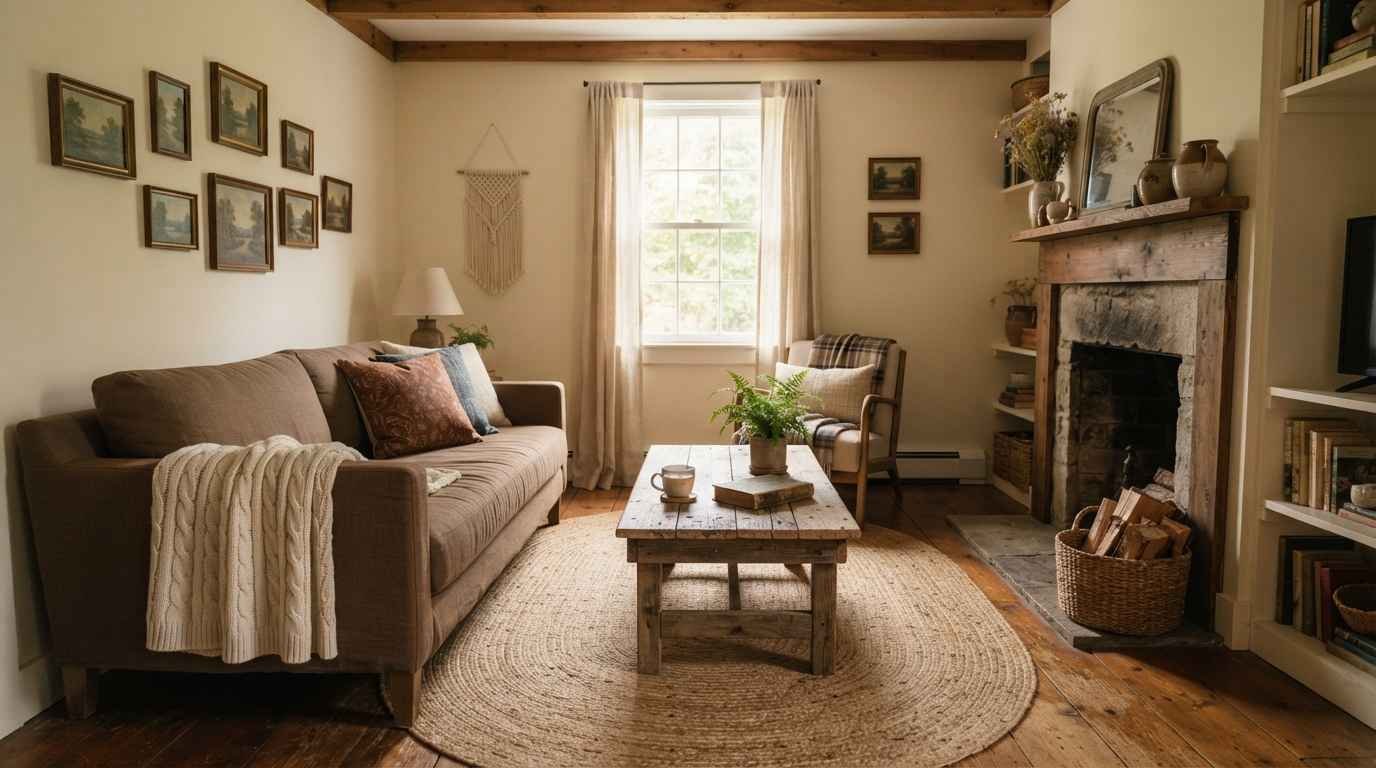
My first apartment had a living room the size of a walk-in closet.
I mean it, 180 square feet, one window, and a radiator that took up more floor space than my couch.
I almost gave up on the whole “rustic cozy” dream because every Pinterest board I saved showed massive farmhouses with 12-foot ceilings and reclaimed barn wood everywhere.
Turns out, you don’t need the barn. You need the right pieces, the right layering, and a plan that respects how small your room actually is.
I learned that the hard way, through a lot of trial, error, and one regrettable oversized armchair that blocked my only doorway for three months.
This list covers 26 ways to bring that warm, lived-in, cabin-in-the-woods feeling into a small living room without making it feel like a storage unit.
Pin whatever speaks to you and save this for your next redecorating weekend.
Why rustic style works so well in small spaces
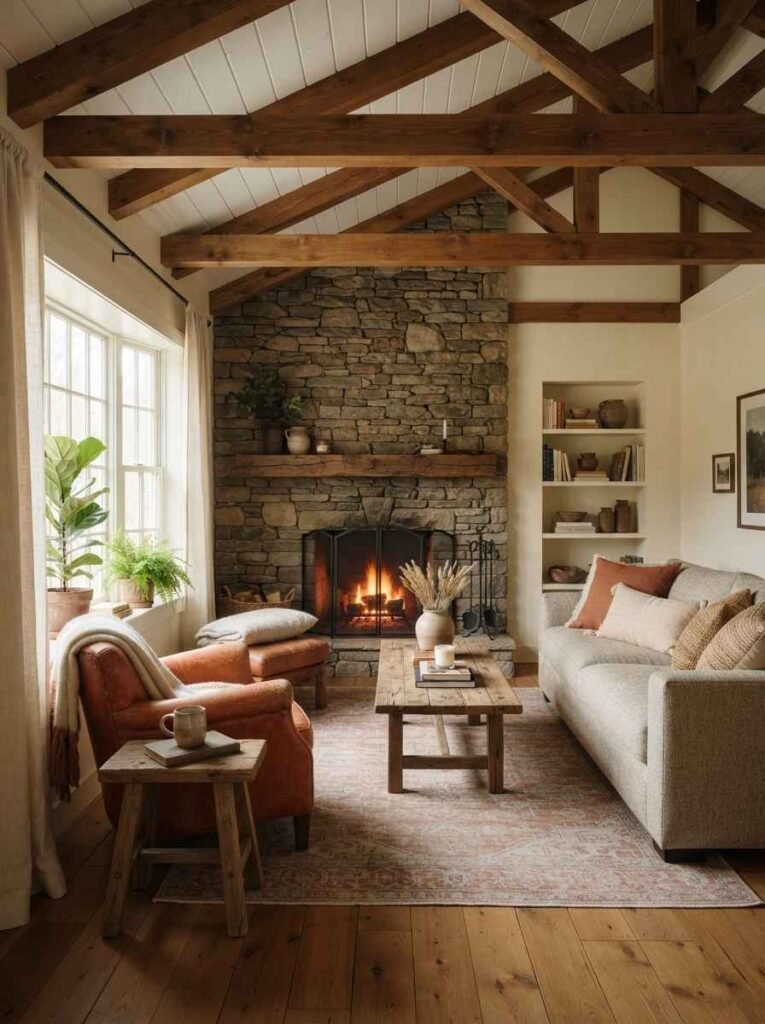
Rustic decor leans on natural materials, warm tones, and texture instead of size.
A small room actually benefits from this because the coziness reads as intentional rather than cramped.
Modern minimalist rooms can feel cold and empty when they’re small. Rustic rooms feel intimate. There’s a real difference between “this room is tiny” and “this room is a hug.”
Think about the cabins you’ve stayed in on vacation. Most of them are small.
Some are downright tiny. But nobody walks into a cozy cabin and complains about square footage, because every surface is doing something: holding texture, catching light, telling a little story.
That’s the trick. Small rooms punish empty, sterile design.
They reward layered, textured, warm design. Rustic style happens to be built entirely around layering and texture, which makes it almost unfairly well-suited to compact spaces.
I’ll be honest, it took me two failed room refreshes before this clicked for me. My first attempt at “cozy” just looked cluttered.
My second attempt, after I started paying attention to material and tone instead of just piling on decorations, actually worked.
The difference wasn’t more stuff. It was better stuff, chosen with a little more care.
1. Start with a warm neutral base
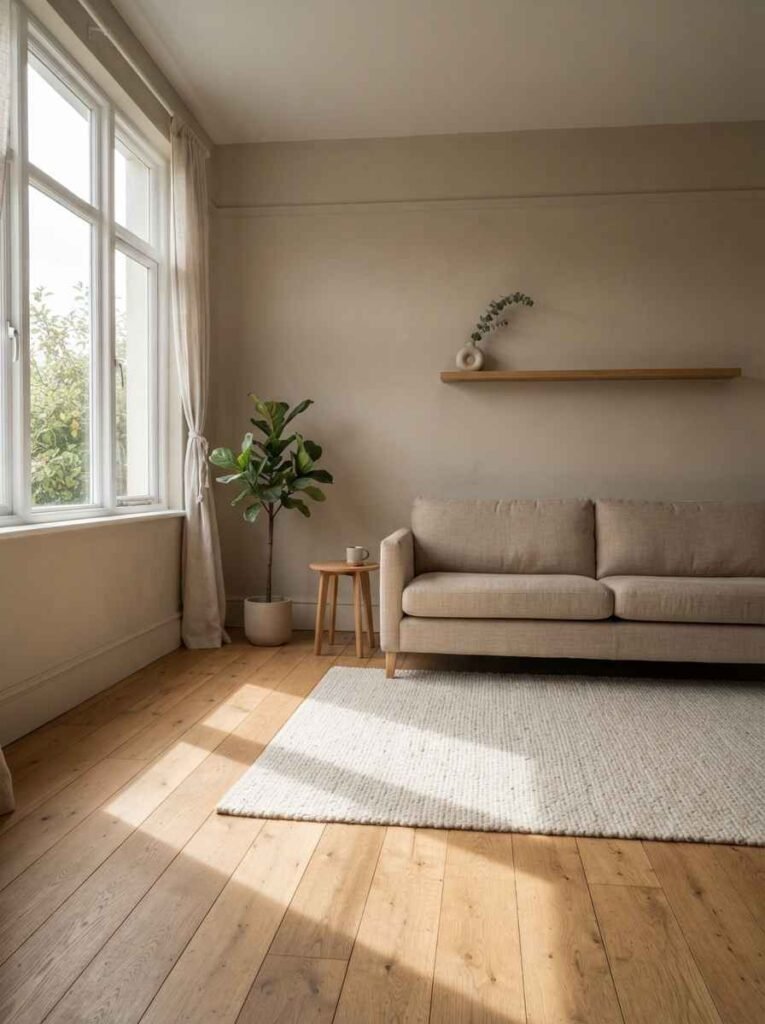
Skip stark white walls. Go with warm greige, soft cream, or a muted terracotta instead.
These tones bounce light around without making the room feel sterile.
A warm base coat is the single easiest way to make a small space feel bigger and cozier at the same time, and it costs less than most furniture pieces you’ll buy this year.
2. Bring in reclaimed wood accents
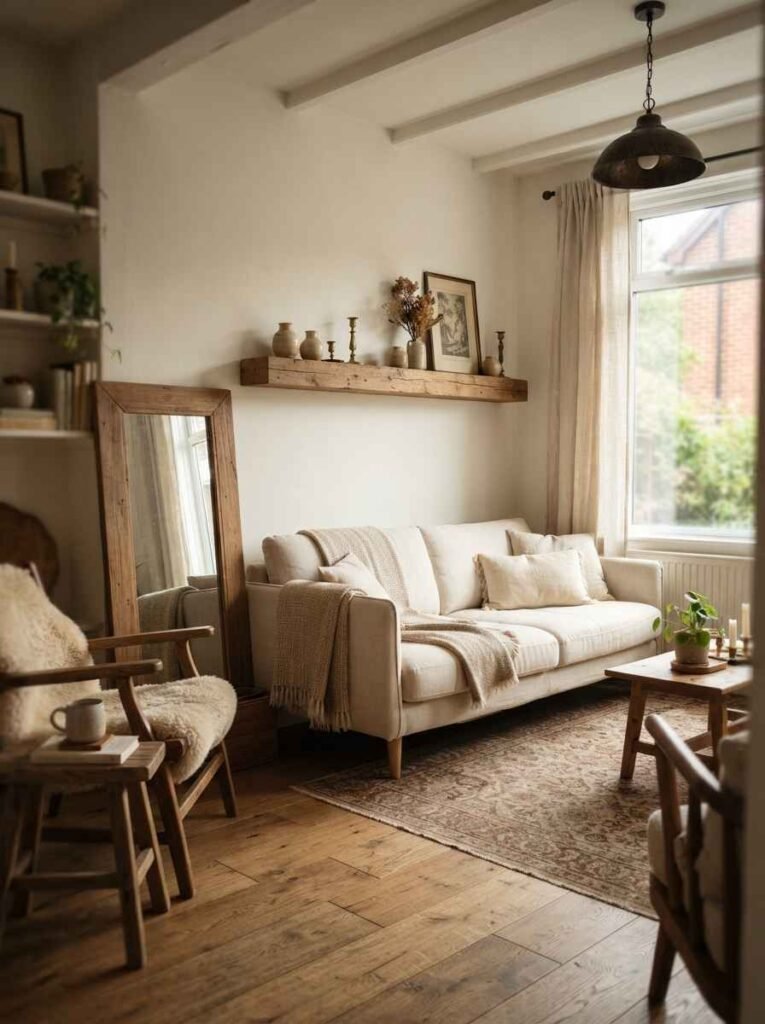
You don’t need a full wood-paneled wall. A single reclaimed wood shelf or a wood-framed mirror does the job.
I picked up a scrap barn wood shelf from a local salvage yard for $12. It’s held more sentimental knickknacks than any store-bought shelf ever could.
3. Layer in a chunky knit throw
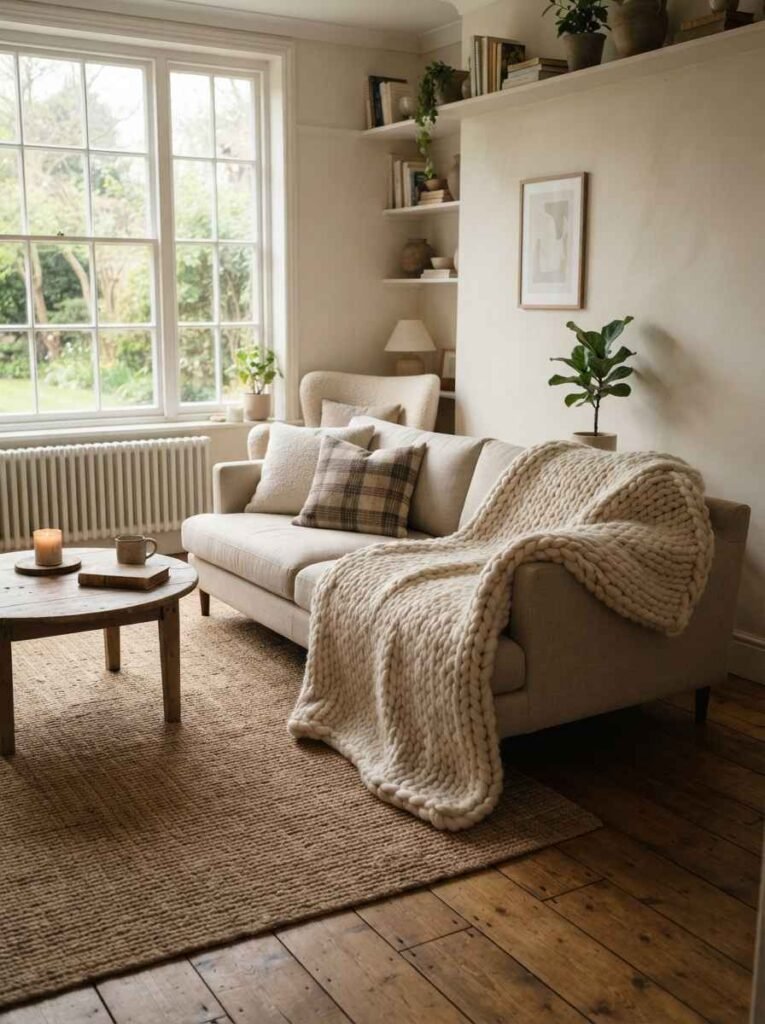
This one’s almost too obvious to mention, but people skip it constantly. A thick, oversized throw draped over the arm of your sofa adds instant texture.
IMO, this is the cheapest décor upgrade that actually photographs well.
4. Choose a low-profile sofa
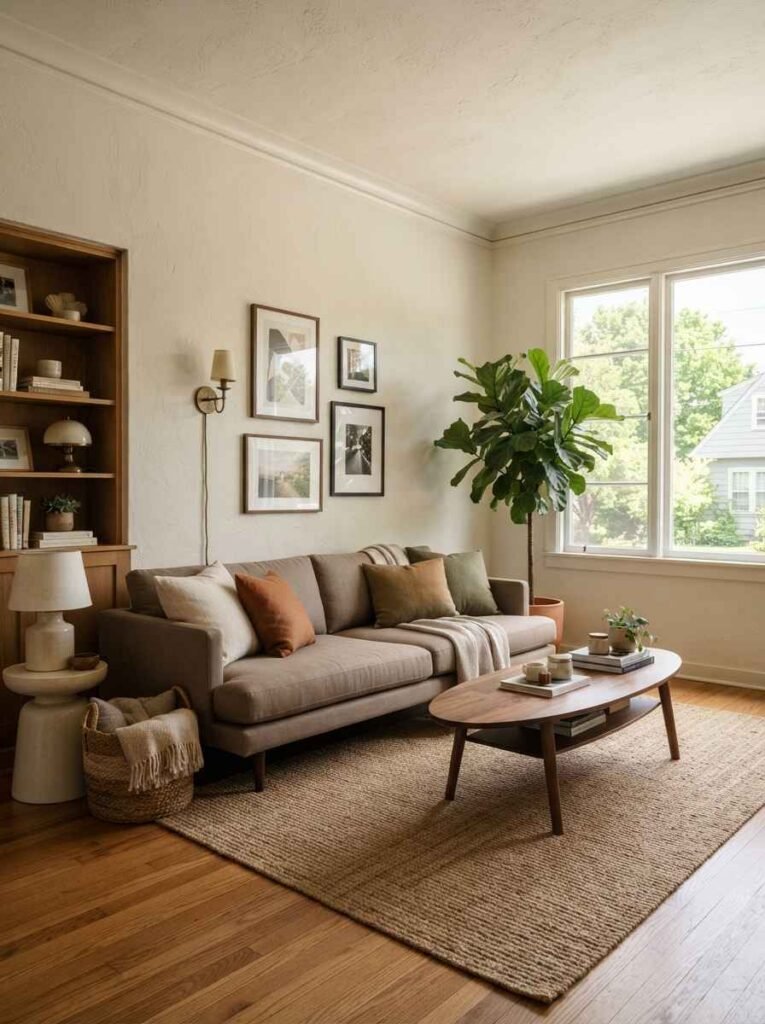
Small rooms need furniture that doesn’t fight for airspace. A low-back sofa keeps sightlines open and makes ceilings feel taller.
I swapped my old high-back sectional for a low, slim-arm sofa and the whole room breathed differently. Genuinely surprised how much of a difference 6 inches made.
5. Add a vintage-style area rug
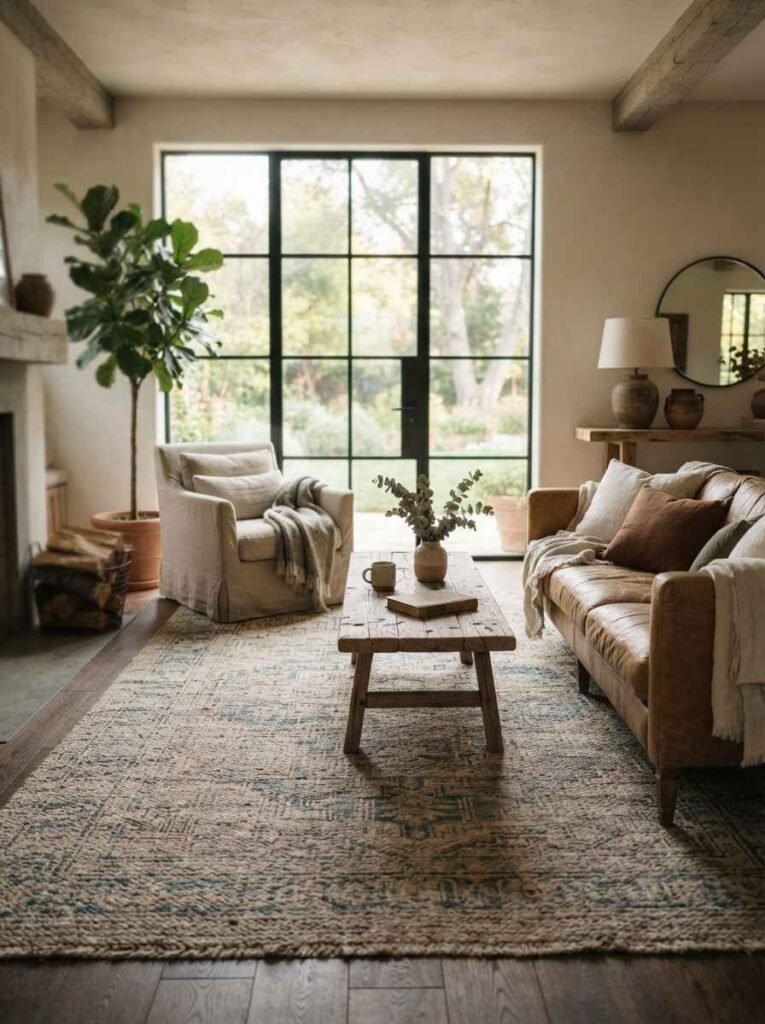
A jute or wool rug with a faded, worn-in pattern grounds the whole room.
Skip anything glossy or synthetic looking, since it clashes with the rustic vibe fast.
6. Hang open wood shelving instead of cabinets
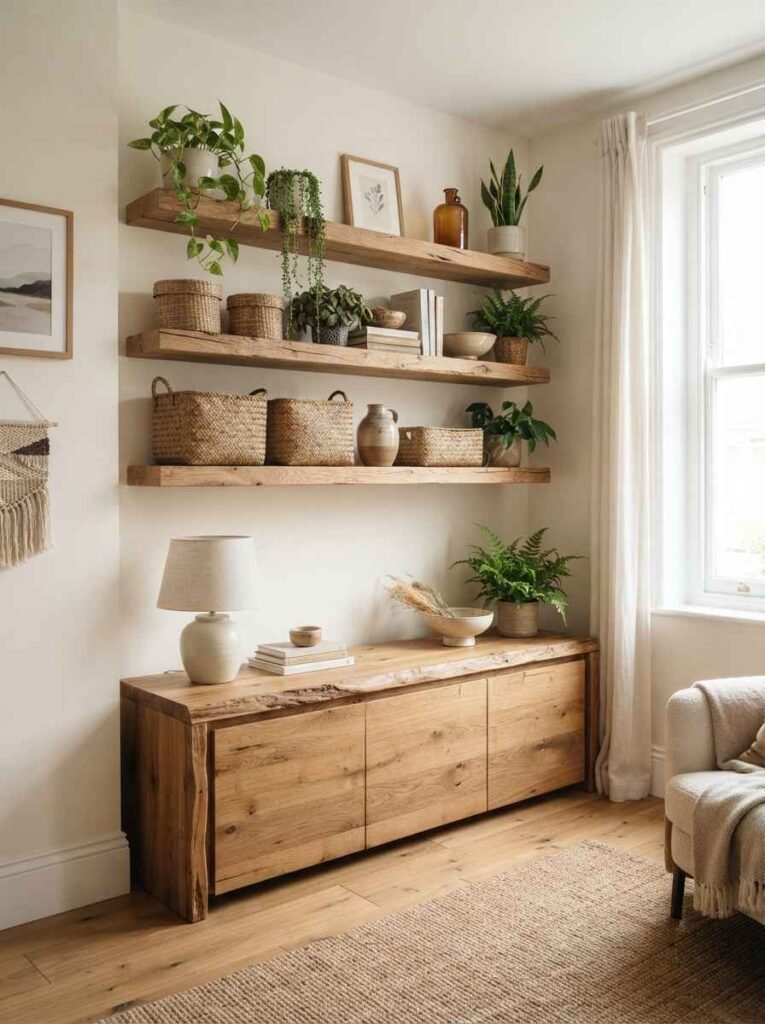
Closed cabinets make small rooms feel boxed in. Open shelves, especially rough-cut wood ones, keep things airy while still giving you storage.
7. Use mason jars as vases or storage
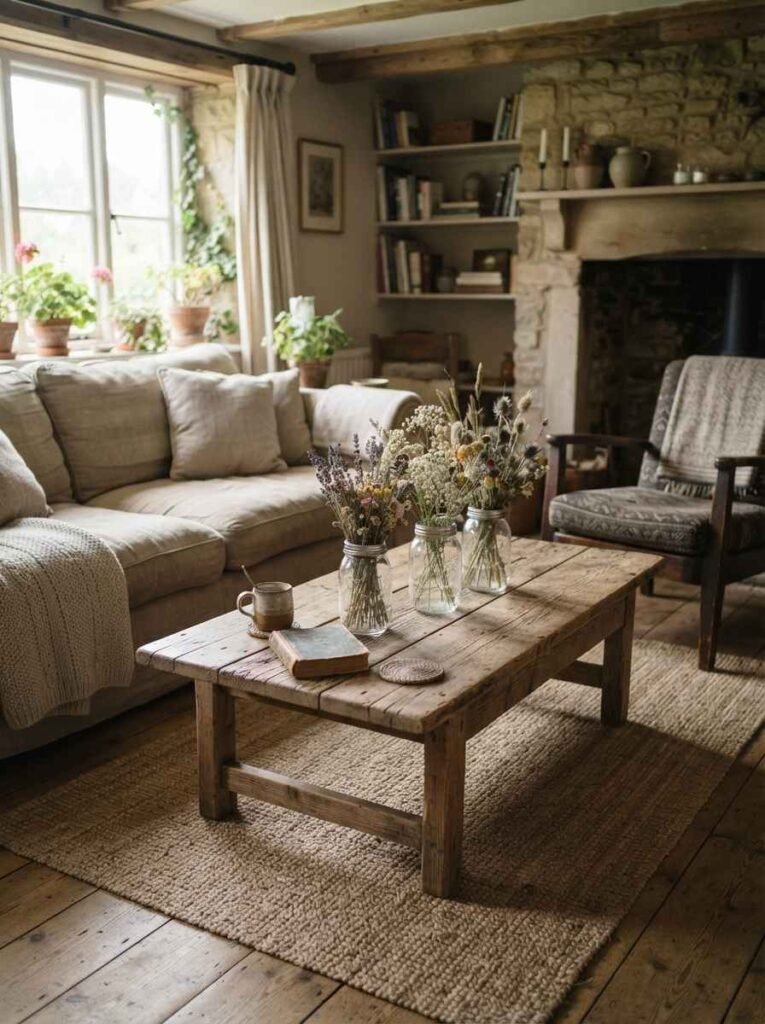
This trick is a little cliché at this point, but it still works. Fill a few with dried wildflowers or eucalyptus and set them on your coffee table.
8. Go for a stone or brick accent wall (or faux version)
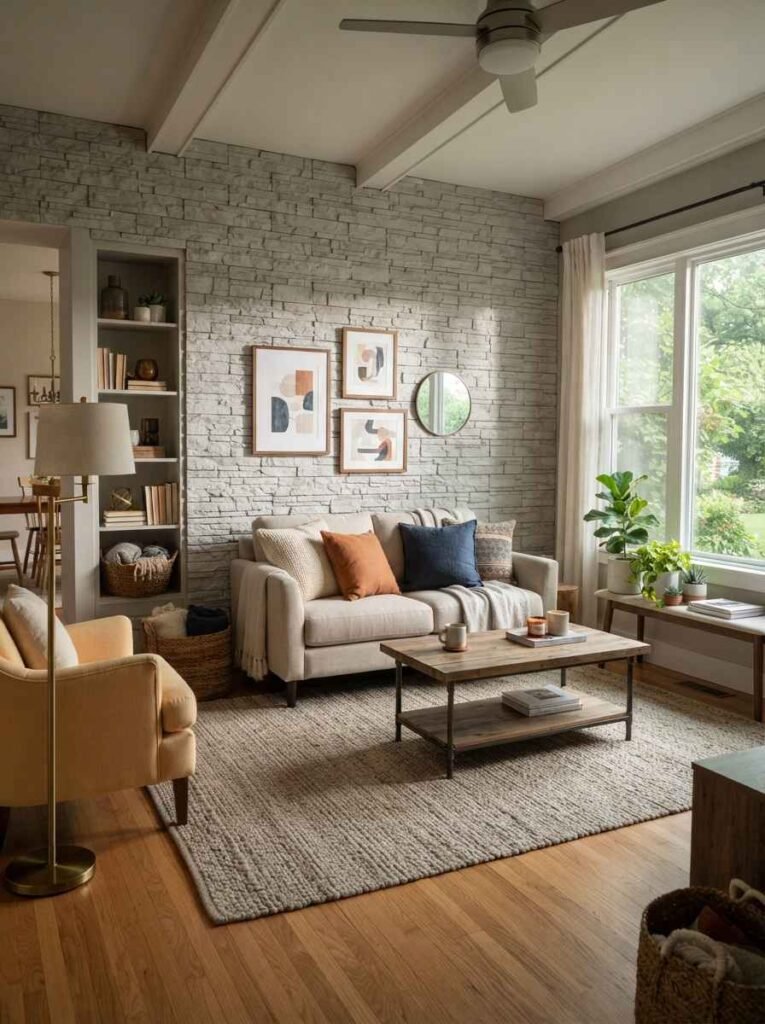
A full stone wall isn’t realistic in most rentals. Peel-and-stick faux stone panels give you 80% of the look for a fraction of the cost and effort.
9. Pick furniture with visible wood grain
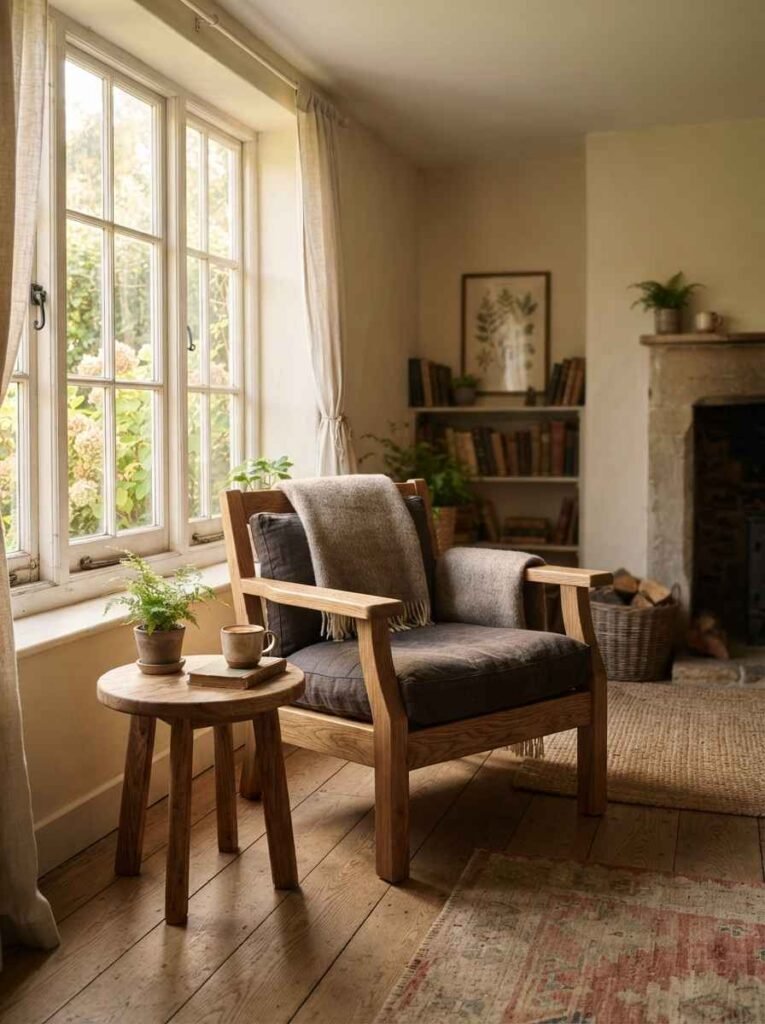
Furniture with painted or laminate finishes tends to flatten a room’s texture. Pieces with visible, imperfect wood grain add depth even in a 10×10 space.
10. Layer your lighting
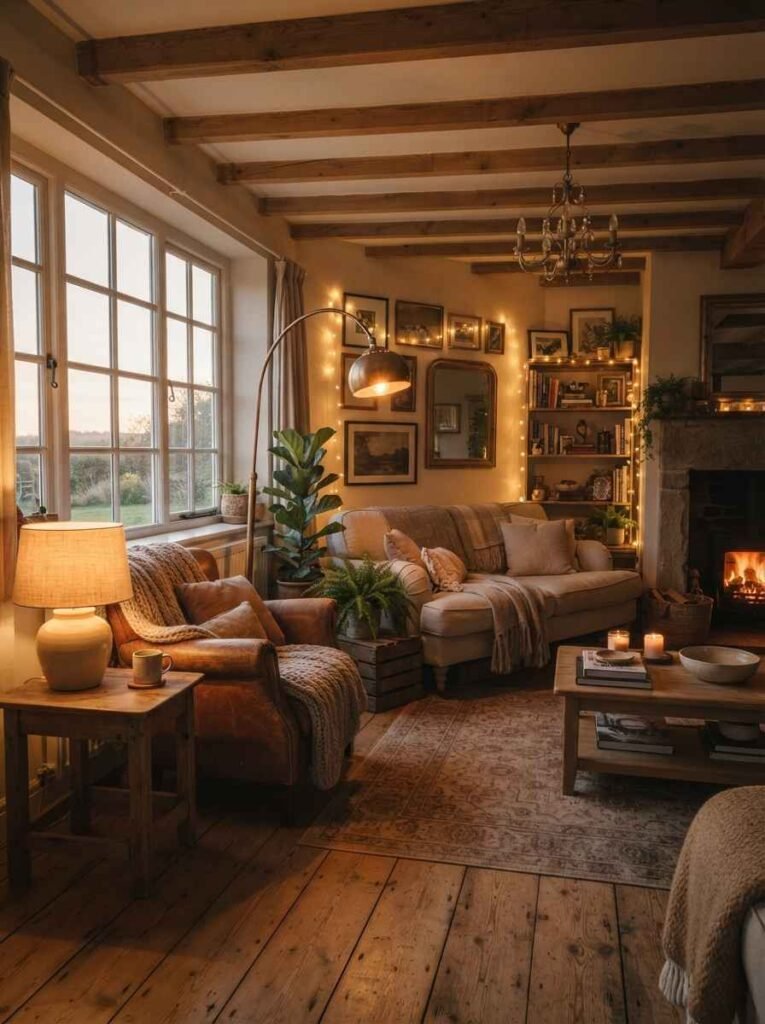
One overhead light makes a small room feel like an interrogation room. Combine a floor lamp, a table lamp, and maybe a few string lights for that golden-hour glow.
11. Use woven baskets for storage
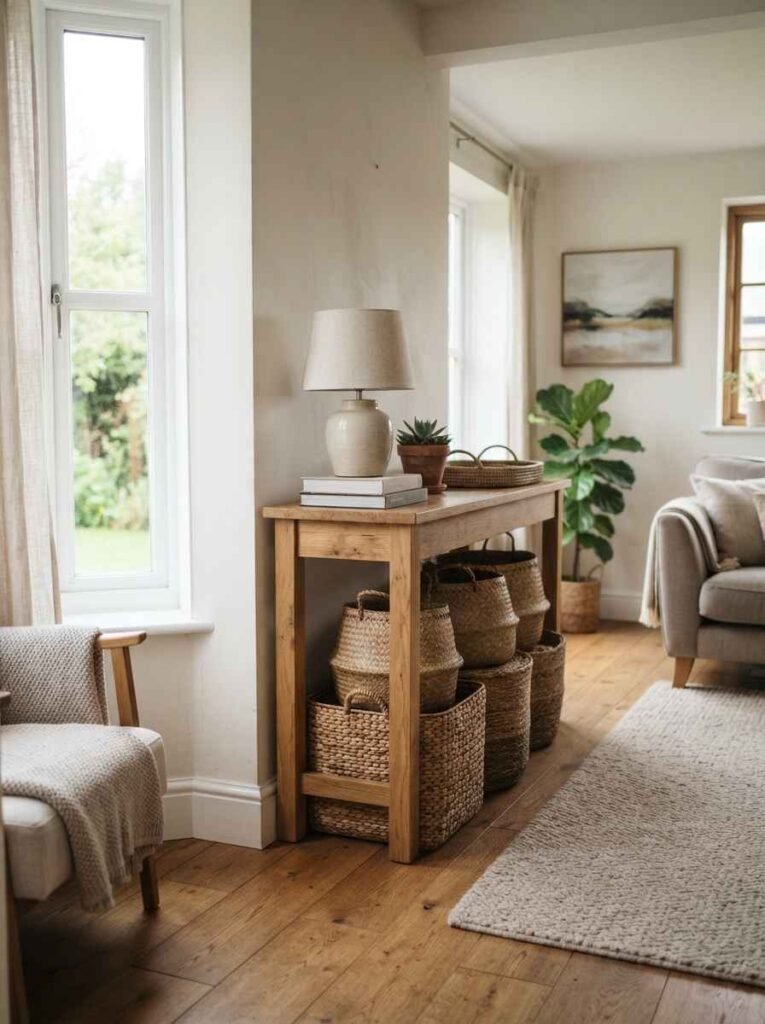
Baskets solve two problems at once: they hide clutter and add texture. Stack a couple under a console table or use one as a magazine holder.
12. Bring in leather accents
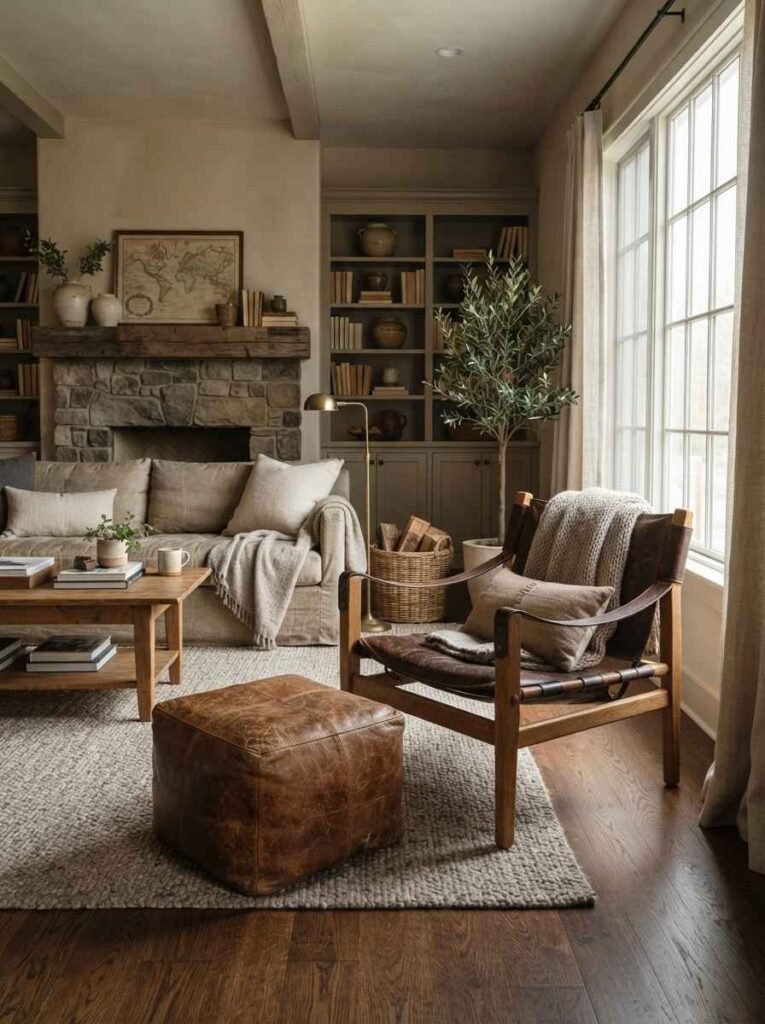
A single leather ottoman or a leather-strapped accent chair adds a rugged, lived-in feel. Leather ages beautifully too, so it only gets more charming over time.
13. Hang a gallery wall of nature prints
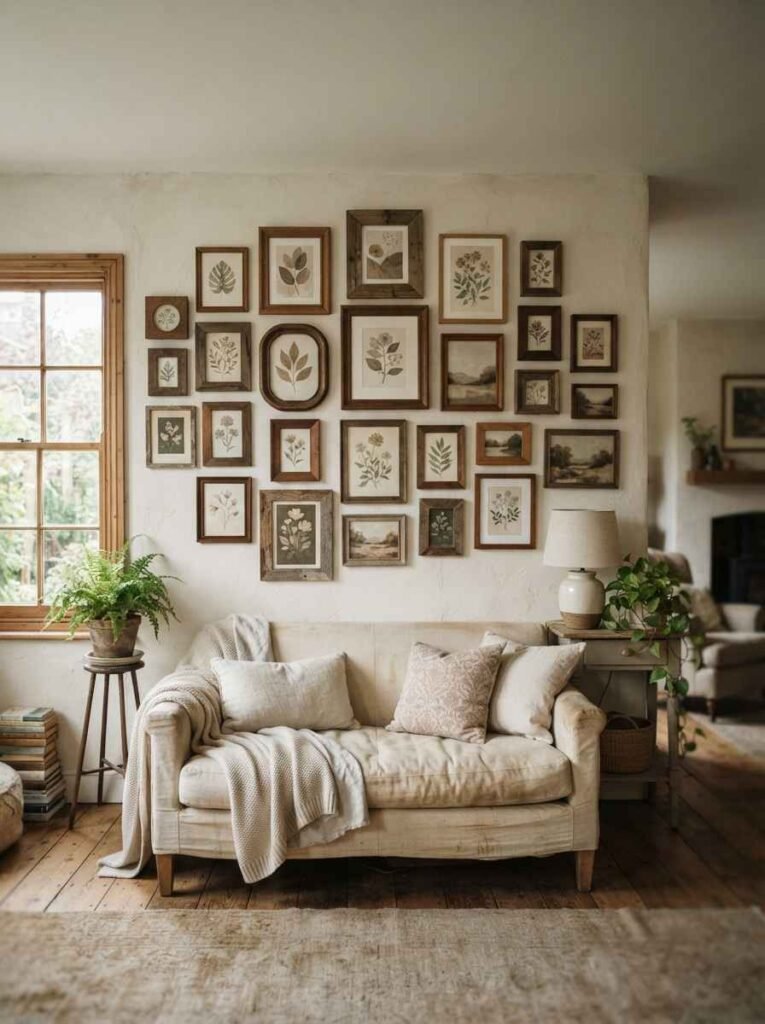
Landscape sketches, botanical prints, or black-and-white forest photography all work here. Keep frames in mismatched wood tones for that collected-over-years look.
14. Try a wood beam ceiling accent
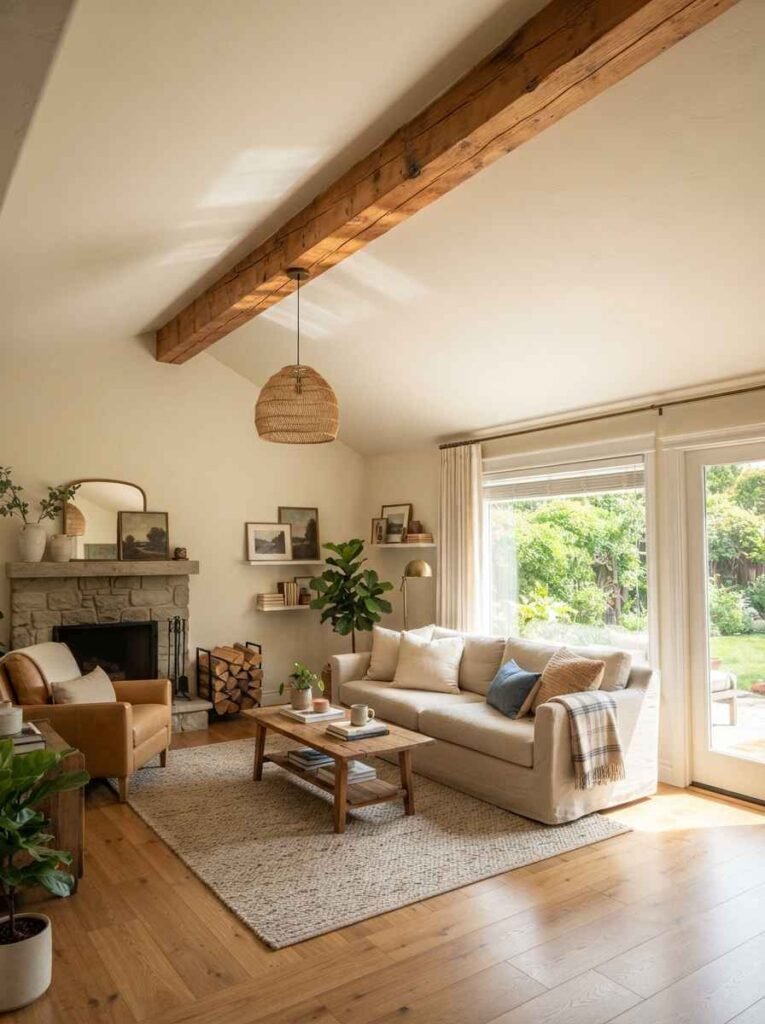
If your ceiling allows it, a single faux beam across the center adds architectural interest without eating floor space. This one requires more effort, but it’s worth it if you’re staying long-term.
15. Use plaid or buffalo check textiles
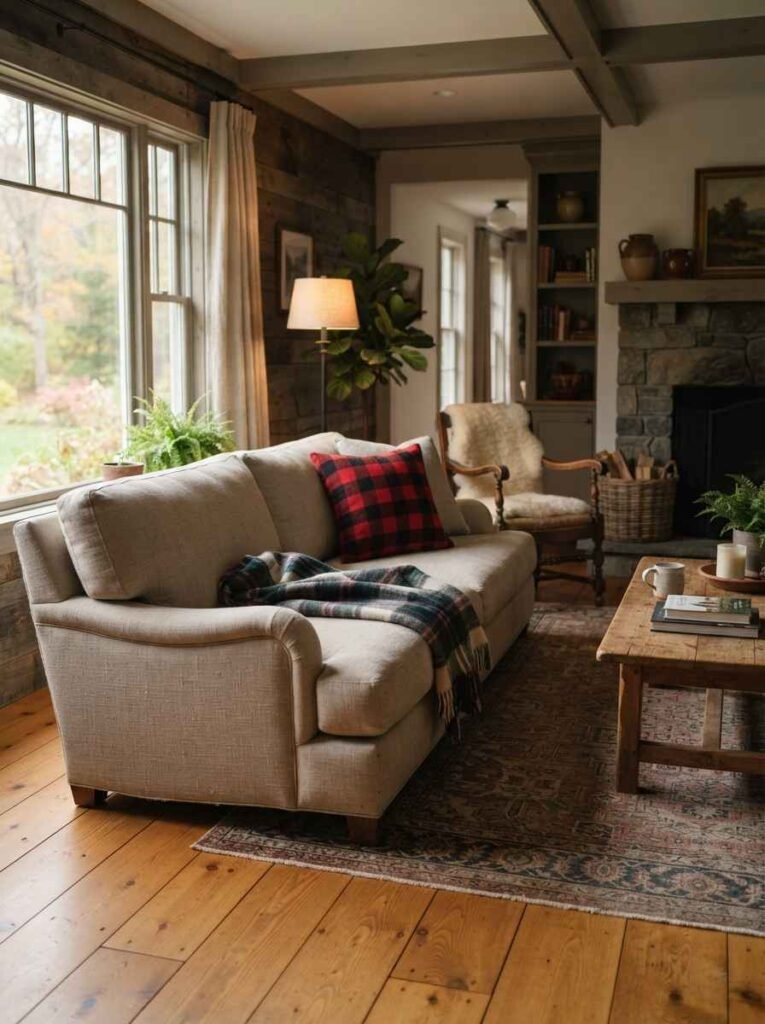
A plaid throw pillow or buffalo check curtain panel instantly signals “cozy cabin” without going full theme-park rustic.
16. Choose a stone fireplace surround, or fake one
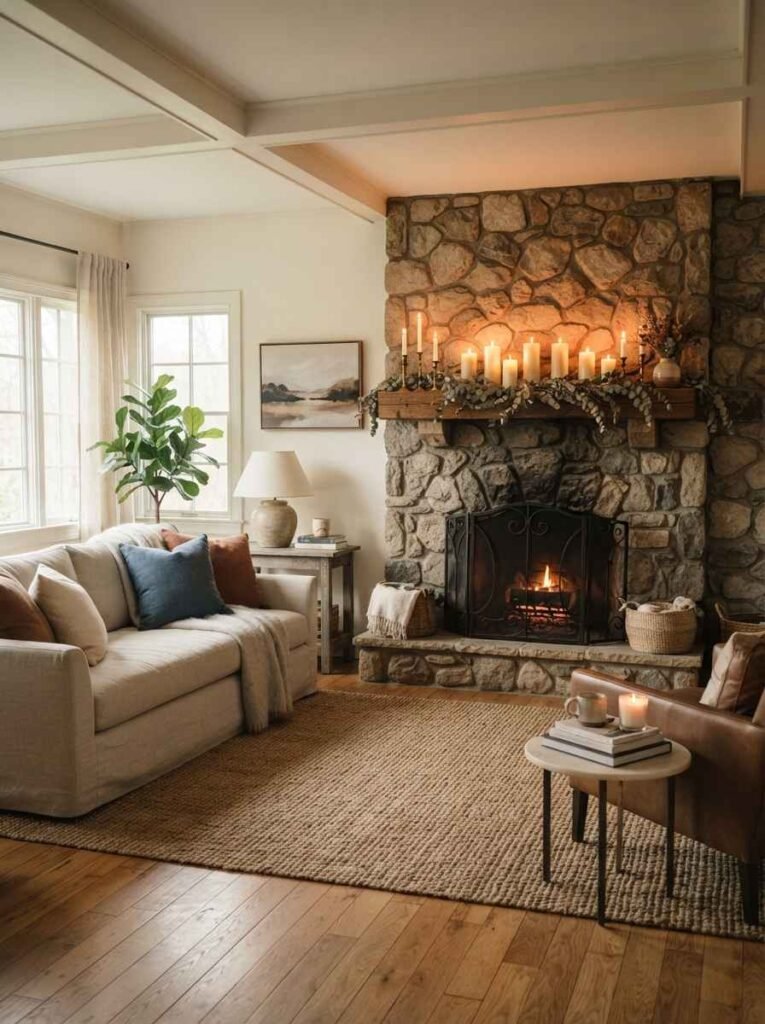
Not everyone has a working fireplace, and that’s fine. A faux mantel with a few pillar candles gives you the same visual anchor.
17. Add greenery in terracotta pots
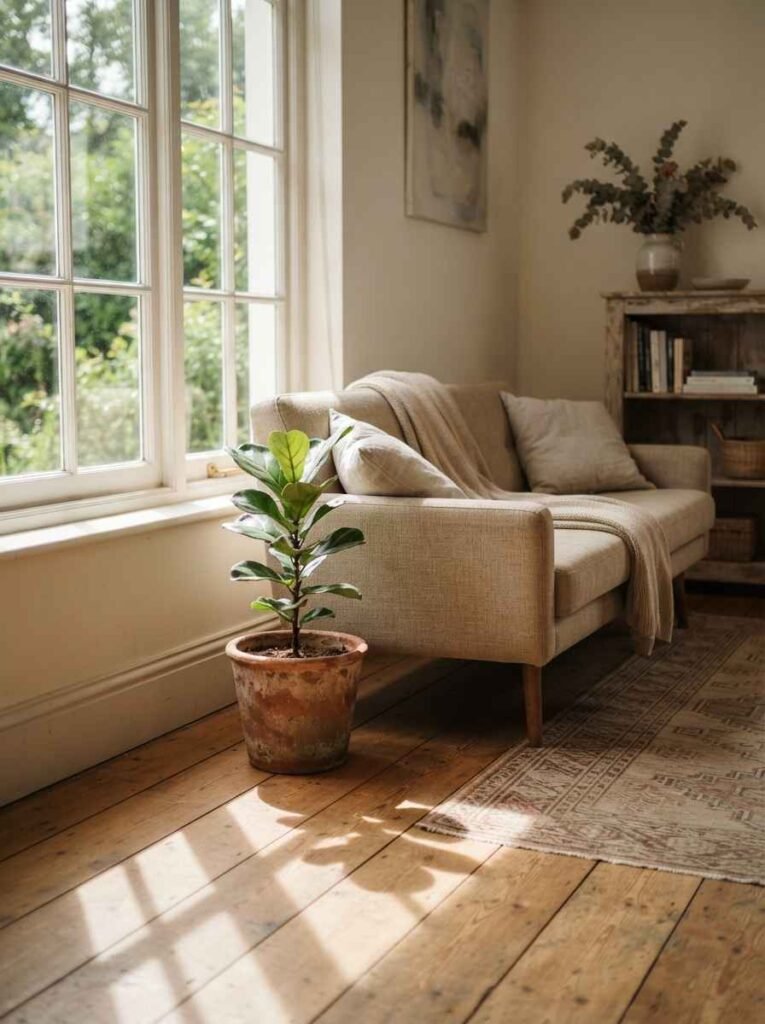
Skip the sleek ceramic planters. Terracotta, especially the slightly chipped and weathered kind, fits the rustic palette much better.
18. Use a distressed wood coffee table
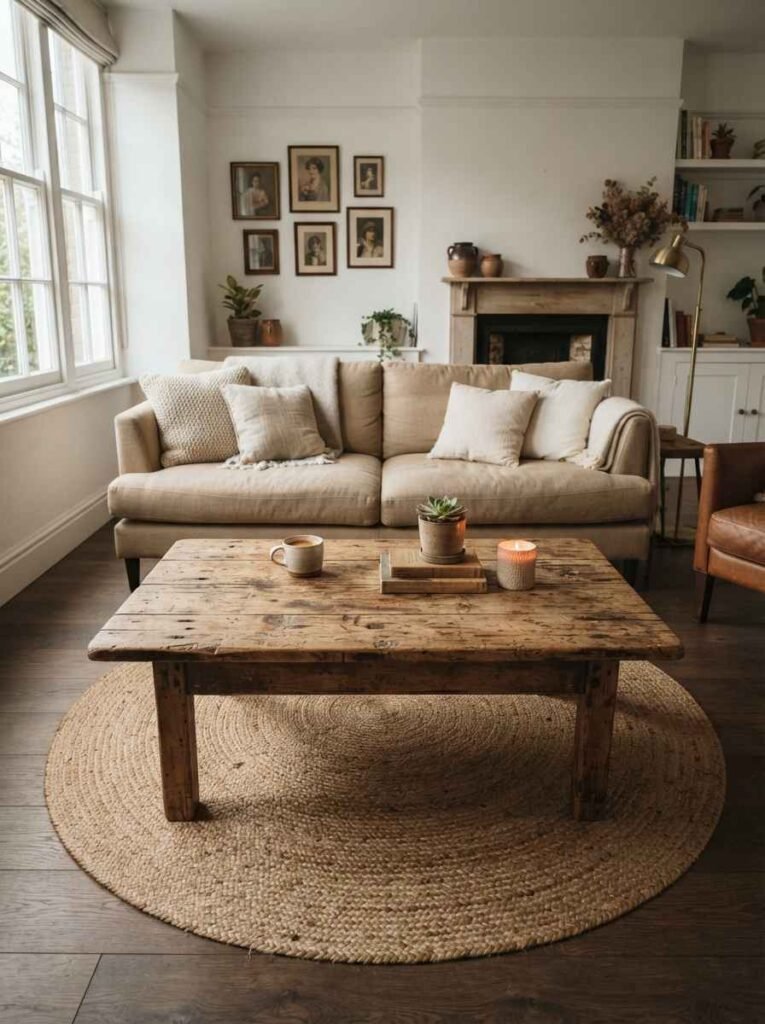
This is often the single most impactful furniture swap you can make. A distressed or reclaimed wood coffee table becomes the room’s visual anchor.
I resisted this upgrade for almost a year because my old glass coffee table technically still “worked.” But glass reflects light in a cold, sharp way that fights against everything rustic decor is trying to do. The second I swapped it for a scarred, secondhand wood table, three other design choices in the room suddenly made sense together. Sometimes one piece really does carry the whole room.
19. Hang curtains in linen or burlap-inspired fabric
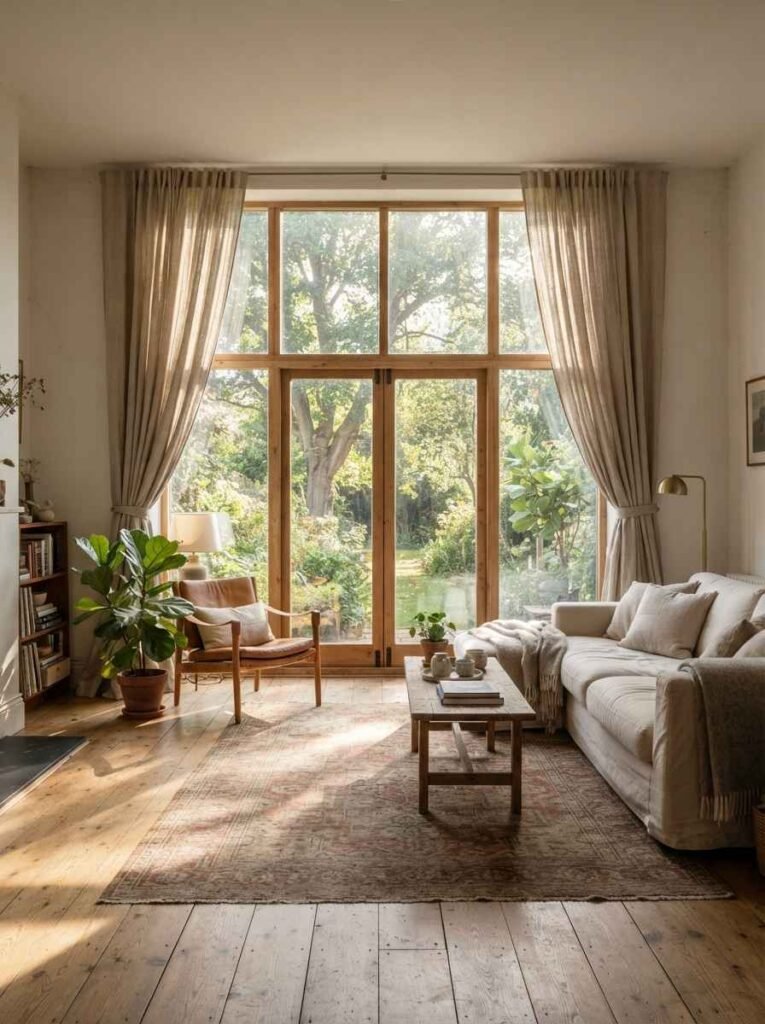
Heavy, textured curtain fabric softens hard window lines. Linen in particular filters light beautifully and keeps the room warm-toned even on gray days.
20. Bring in antique or vintage finds
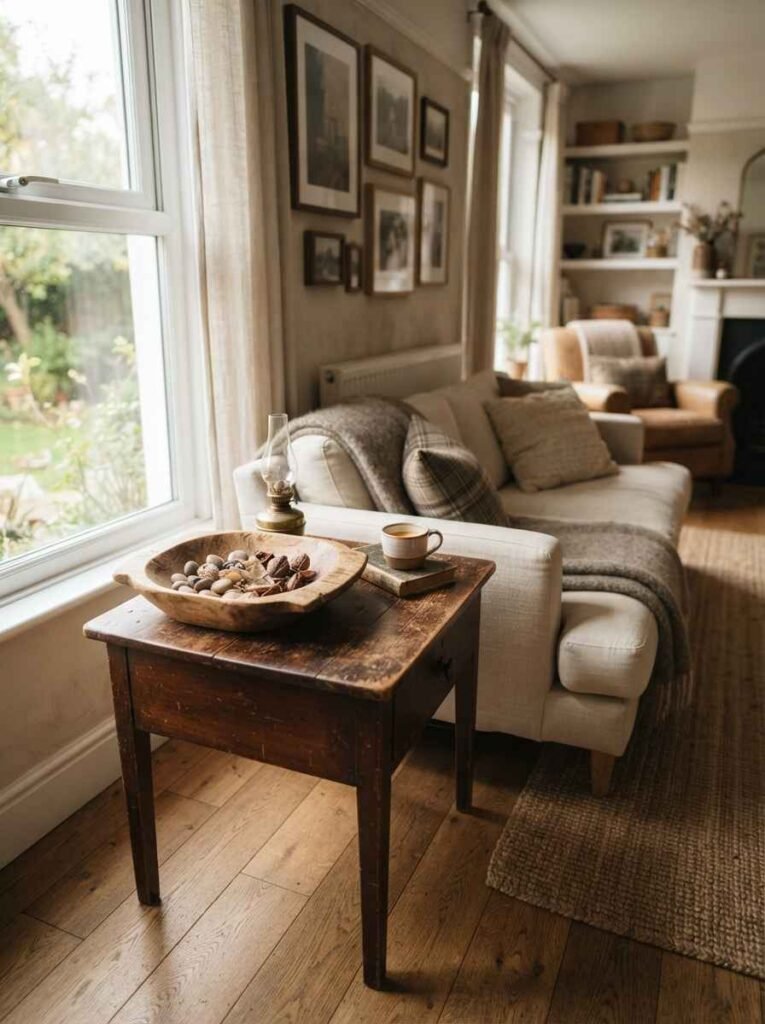
Estate sales and flea markets are goldmines for rustic decor. I found a hand-carved wooden bowl at an estate sale for $4 that now sits proudly on my coffee table.
21. Add a wood-burning candle scent
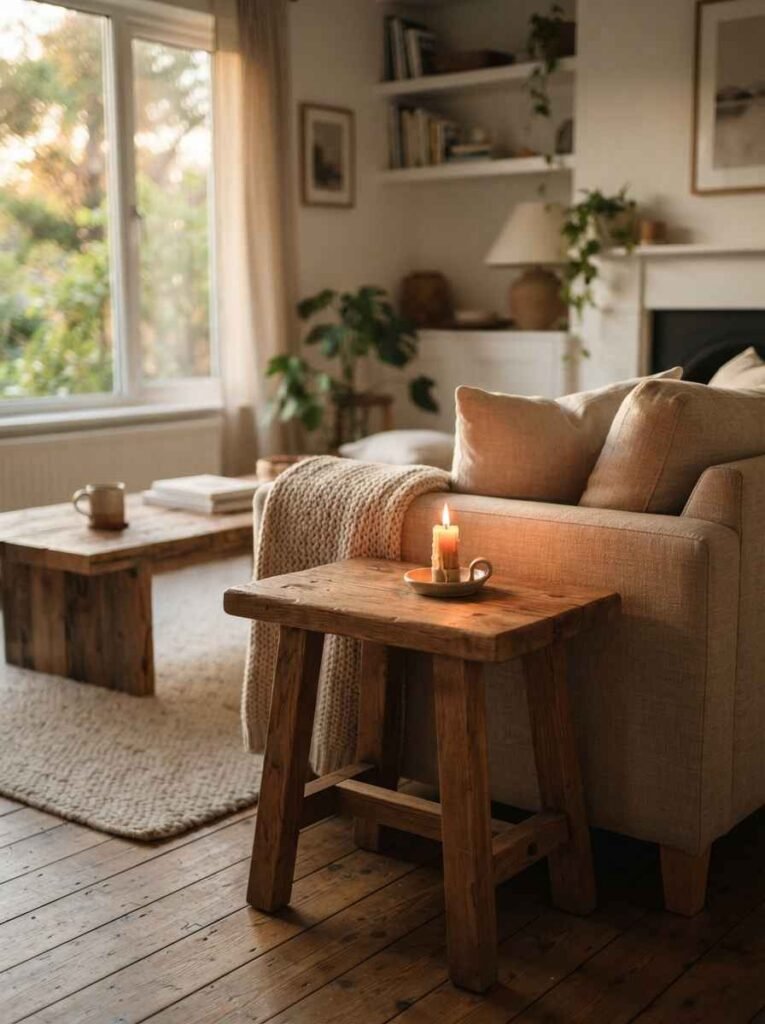
This sounds small, but scent shapes how cozy a room feels almost as much as visuals do. A cedar or fireside-scented candle ties the whole sensory experience together.
22. Use a ladder shelf in a corner
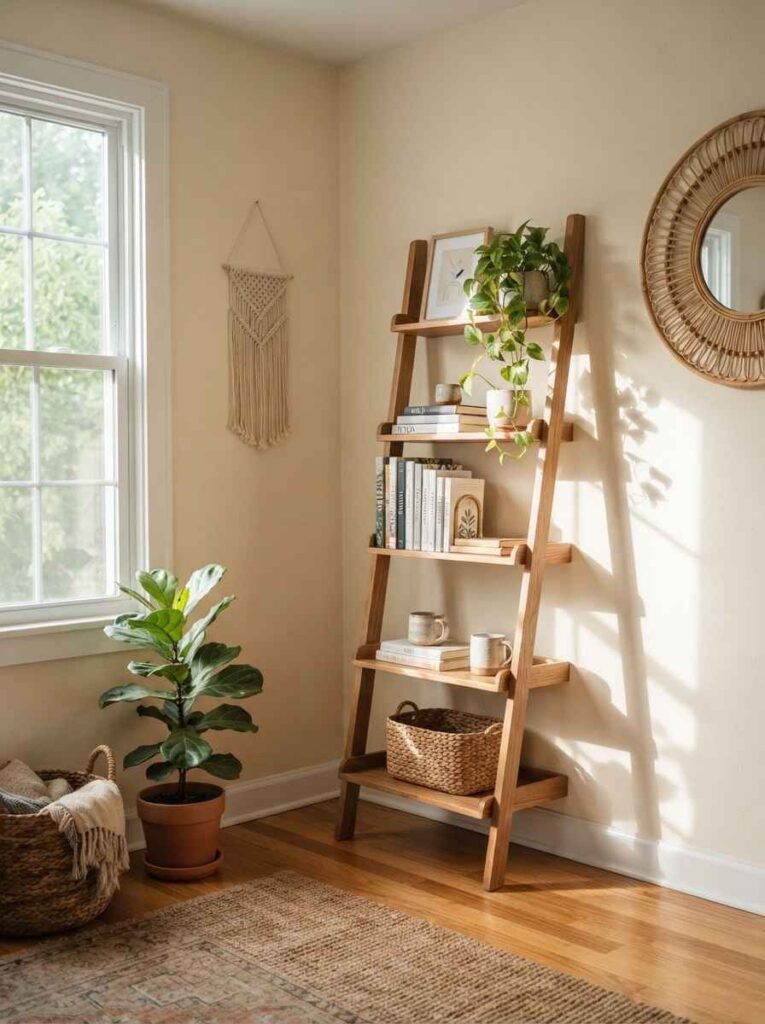
Corner space in small rooms often goes to waste. A leaning ladder shelf fits into awkward corners while giving you display space for books and plants.
23. Choose a patchwork or quilted throw pillow
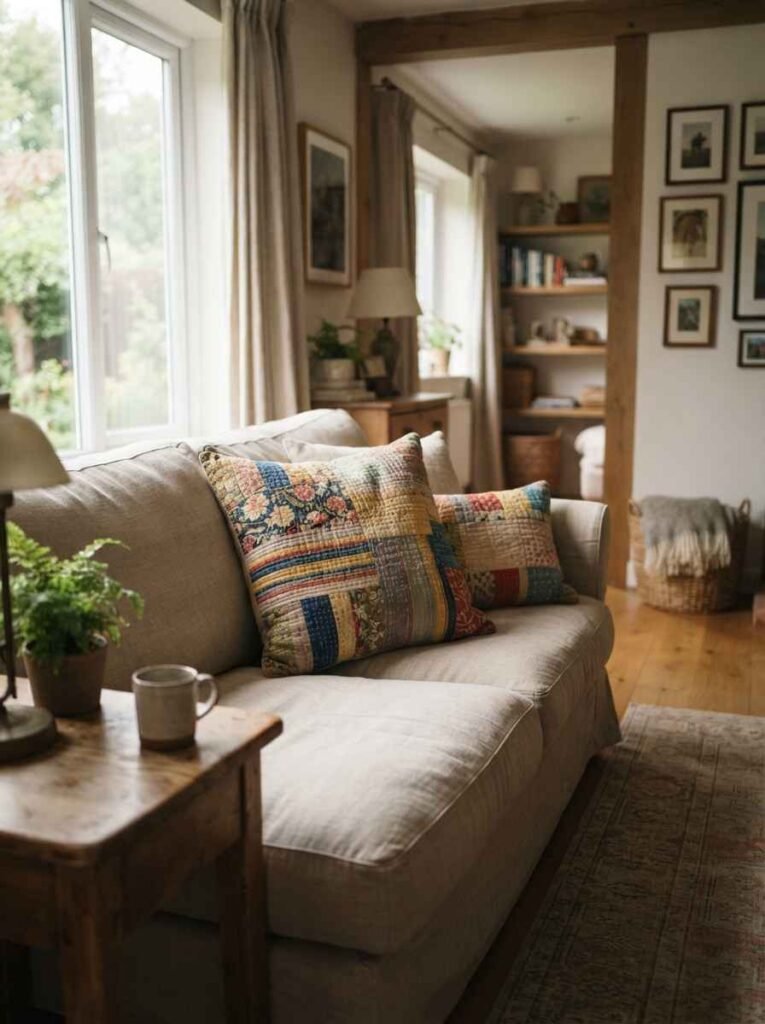
Quilted textures read as handmade, which fits the rustic aesthetic perfectly. Mix two or three patterns for a collected, not-matchy look.
24. Keep your color palette to 3 main tones
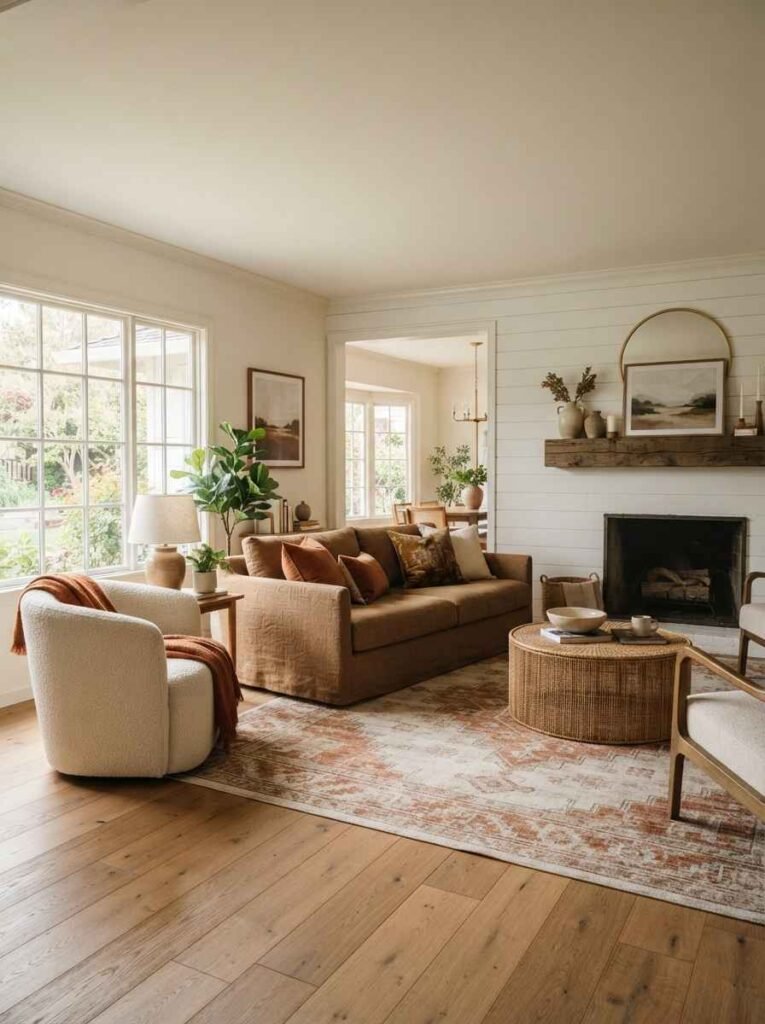
Too many colors fight each other in a small space. Stick to warm brown, cream, and one accent, like forest green or rust orange.
25. Add a woven wall hanging
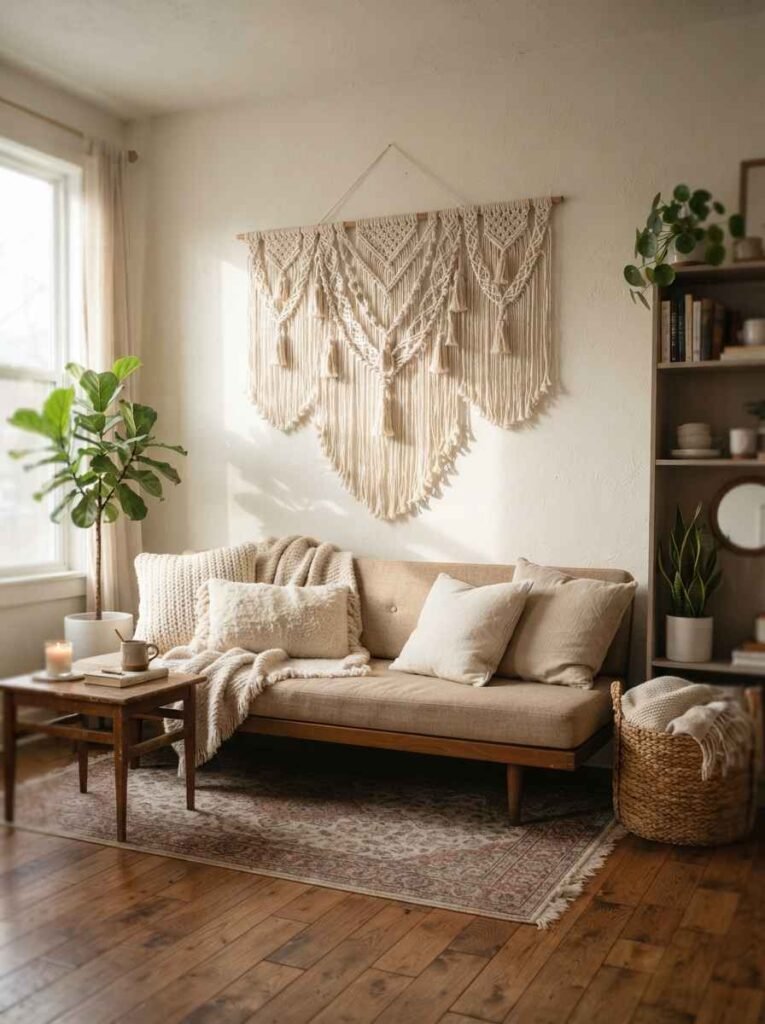
A macrame or woven tapestry adds texture without taking up floor space, which matters a lot in a tight room.
26. Let natural imperfection lead your choices
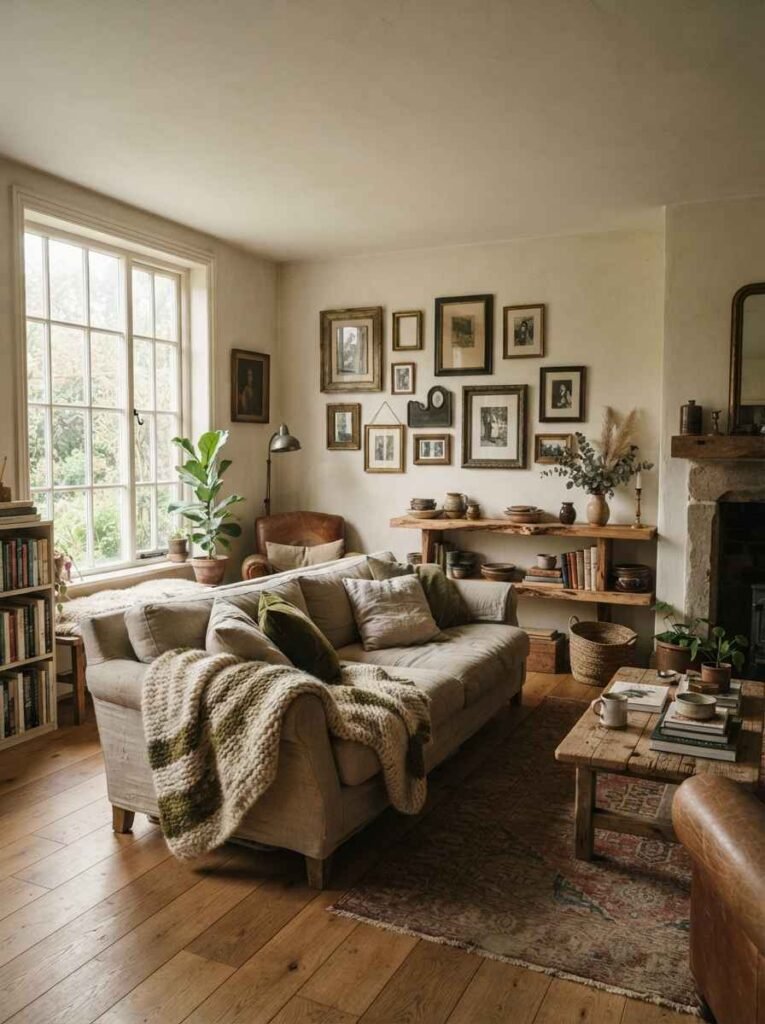
Rustic style thrives on imperfection: knots in wood, uneven stitching, mismatched frames. Chasing a flawless look actually works against the style you’re going for.
A quick comparison table for small-space rustic swaps
| Room element | Skip this | Try this instead |
|---|---|---|
| Sofa | Tall, bulky sectional | Low-profile sofa with slim arms |
| Storage | Closed cabinets | Open wood shelving |
| Wall feature | Full stone wall | Peel-and-stick faux stone panel |
A quick side note
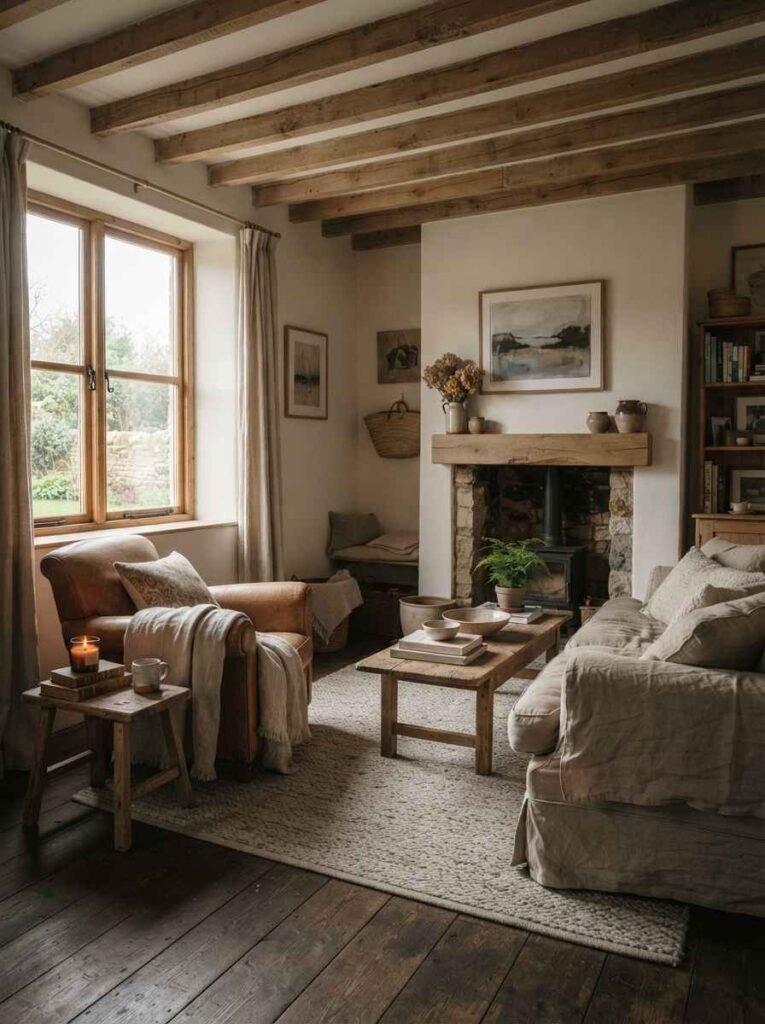
Random thought here, but I’ve noticed rustic small spaces photograph better in overcast light than bright sunny light.
The warm tones pop more when the light is soft. Not sure why nobody talks about that, but it’s changed how I schedule my Pinterest photo sessions.
How to pin these ideas without overwhelming your board
Create separate boards for furniture, textiles, and lighting instead of one giant “living room” board. It makes shopping later so much easier, trust me on this one.
Save close-up texture shots too, not just full-room photos.
Fabric and wood grain details matter more than people realize when you’re trying to recreate a look. According to interior design resources like the National Association of Realtors home styling guide, warm, textured spaces consistently rank higher in buyer and renter appeal, which says a lot about how universal this cozy pull really is.
If you want more inspiration on mixing textures without clutter, the folks at Apartment Therapy have some solid breakdowns on layering rustic elements in rental-friendly ways.
FAQs
Can I do rustic decor in a rental without painting the walls? Yes.
Peel-and-stick wood or stone panels, removable wallpaper, and textile layering (rugs, curtains, throws) get you most of the way there without touching a single wall.
What’s the cheapest way to start a rustic small living room makeover? Start with textiles: a throw, a couple pillow covers, and a rug.
These three items alone shift the whole feel of a room for under $150 in most cases.
Does rustic decor work with modern furniture I already own? It can, especially if your existing pieces have wood or leather elements.
Mix in two or three rustic accent pieces before replacing anything major, and see how the room feels before you commit to bigger purchases.
How many rustic elements are too many for a small room? More than you’d think, as long as the color palette stays tight.
The problem usually isn’t too much rustic decor, it’s too many competing colors or finishes fighting for attention at once.
Final thought
Small rooms don’t need to apologize for their size.
Wow, I really wish someone had told me that back when I was cramming furniture into that 180-square-foot apartment.
Pick 3 or 4 ideas from this list, start there, and build slowly. What’s the first swap you’re making this weekend?
