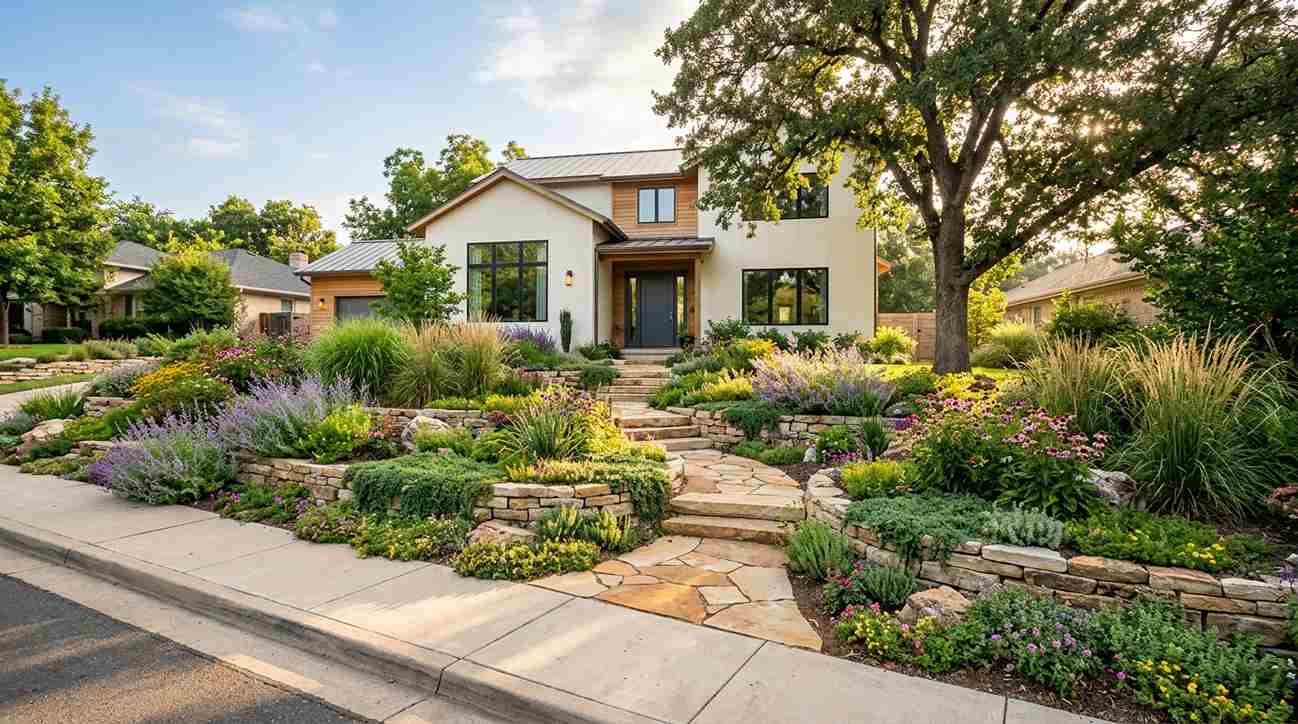
You’ve got a sloped front yard. Most people see a problem. I see a canvas.
Seriously — a sloped yard gives you something flat yards never will: natural dimension. Layers, terraces, flowing water features, cascading plants. You can do things with a slope that flat yards can only fake. The trick is knowing which ideas actually work at a small scale and still look sharp.
I’ve pulled together 24 of the best ideas, sorted by what you’re trying to solve. Bookmark this. Pin it. Come back to it when you’re ready to dig.
Terracing: The Classic That Always Delivers
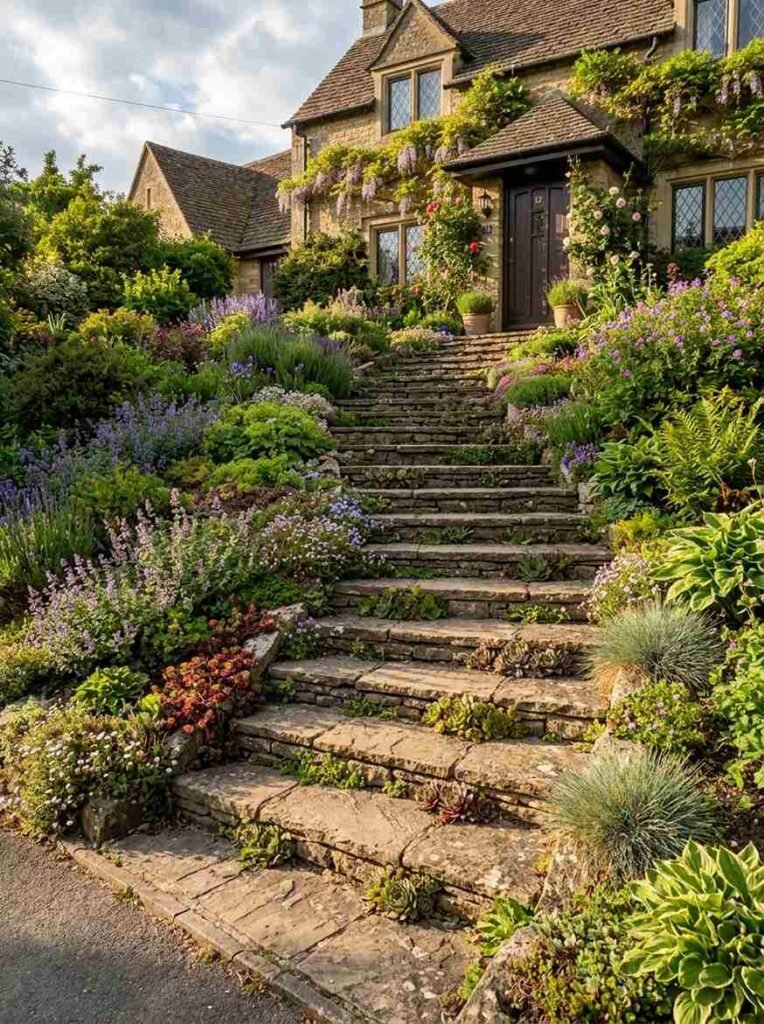
Dry-stack stone terraces
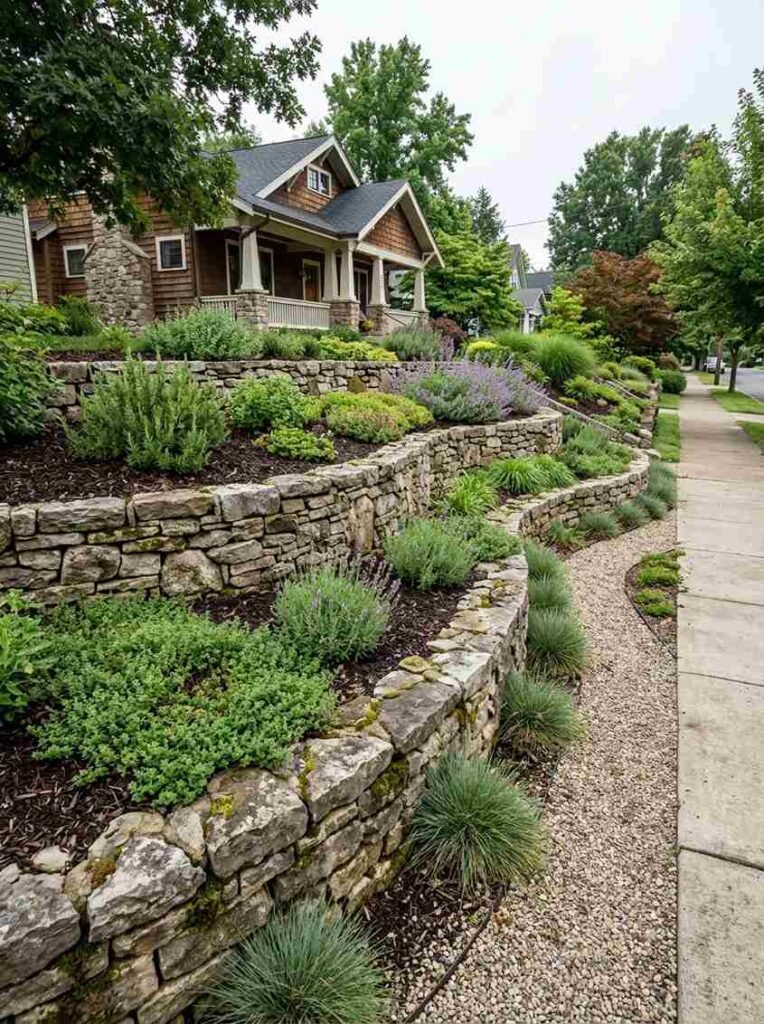
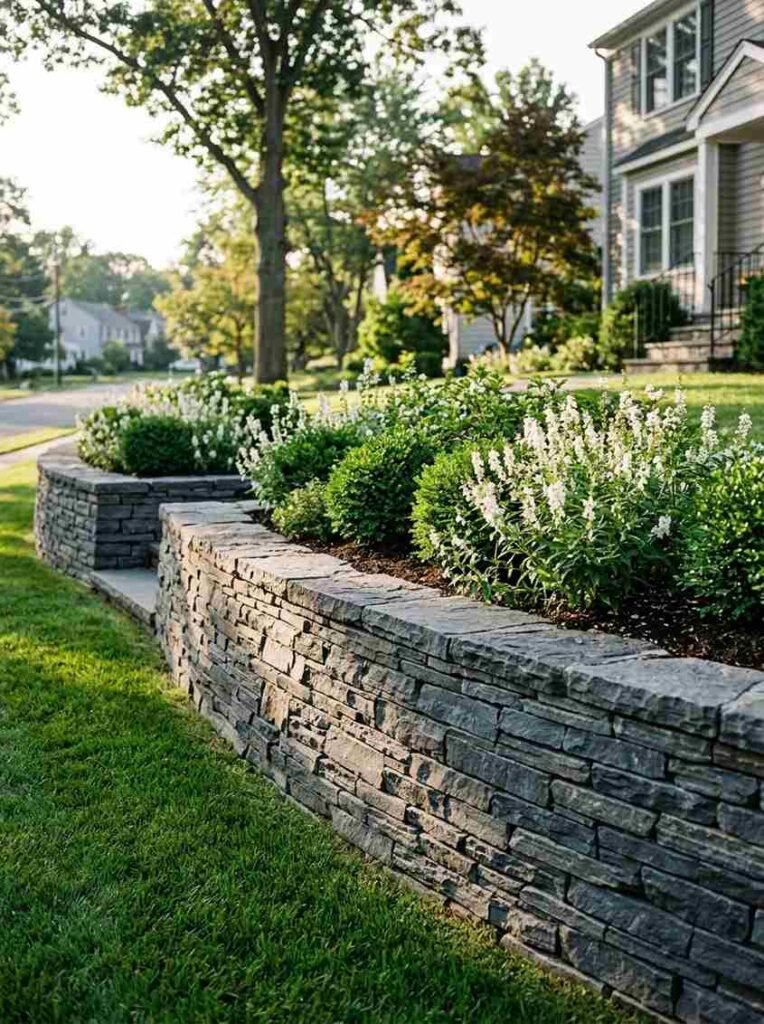
Stacked stone retaining walls are probably the single most popular slope fix — and for good reason. They hold soil, they look incredible, and they age beautifully. Use fieldstone or limestone for a natural feel. Bluestone if you want something sharper and more modern.
Keep each terrace level narrow enough that you can reach the center from the edge. Around 3–4 feet wide is the sweet spot for small yards.
Timber sleeper terraces
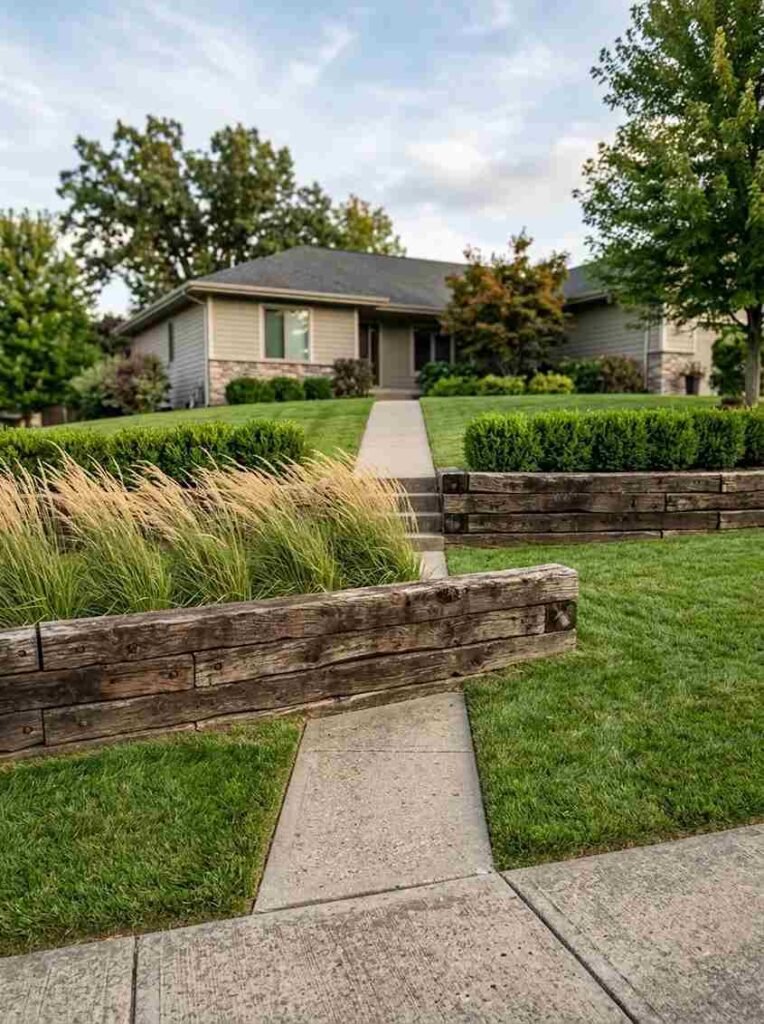
Railway sleepers (or hardwood sleepers) cut a clean, graphic line across a slope. They’re more affordable than stone and install faster. Pair them with ornamental grasses or low boxwood hedges along each level for that structured look.
FYI — treated pine sleepers will warp over time in wet climates. Go hardwood if you’re in a rainy region.
Gabion wall terraces
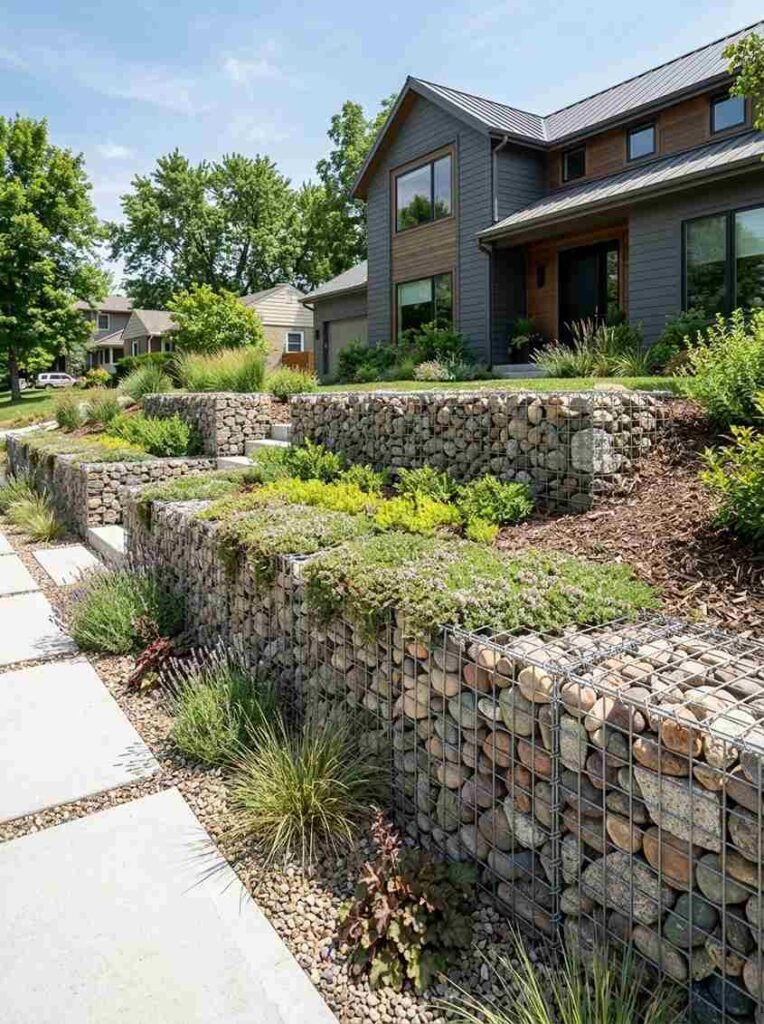
Gabion walls — those wire cages filled with gravel or stone — are having a serious moment right now. They drain naturally, handle pressure from soil movement better than solid walls, and look genuinely contemporary. Stack them two or three courses high on a gentle slope and plant low groundcover between levels.
Groundcover Ideas That Do the Heavy Lifting
Creeping thyme
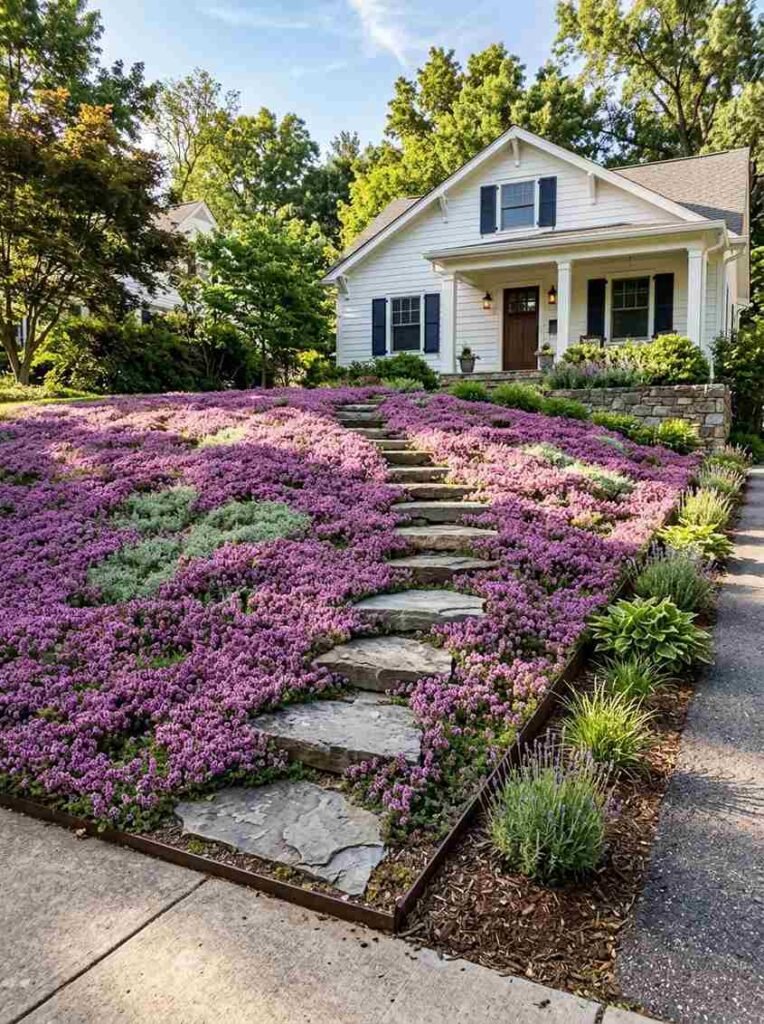
Creeping thyme spills over edges, handles foot traffic, releases a light scent when you brush it, and basically takes care of itself. It turns purple when it blooms. On a sunny slope, it looks like something out of a Provence garden.
Best for: sunny slopes with well-draining soil.
Blue star creeper
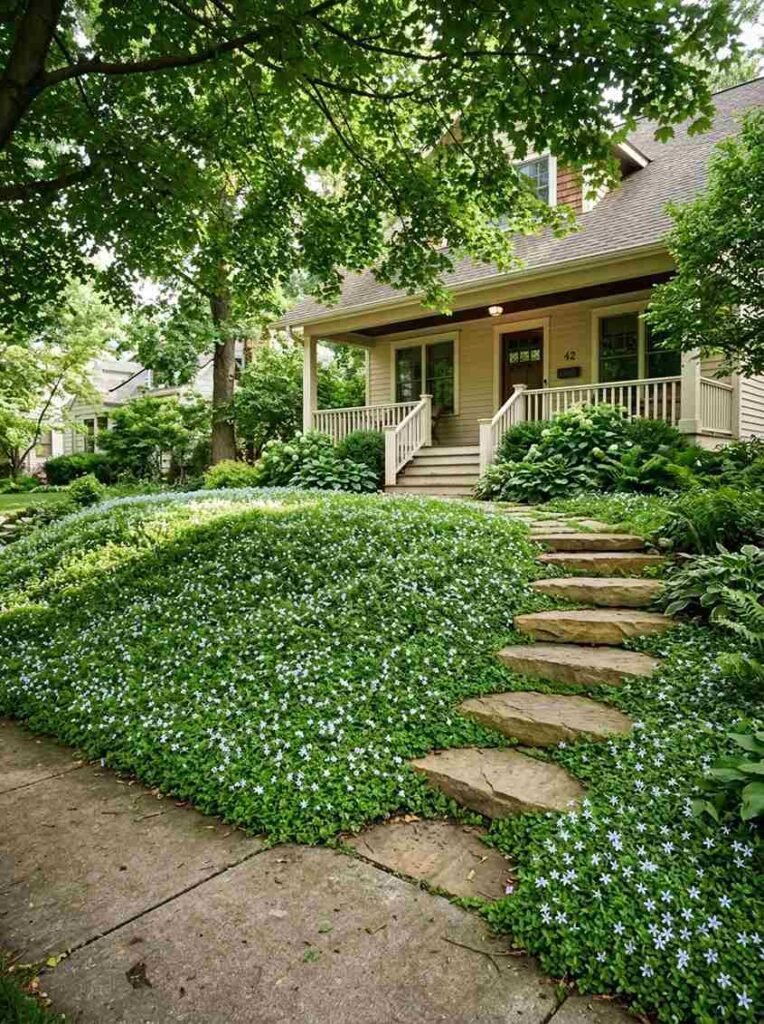
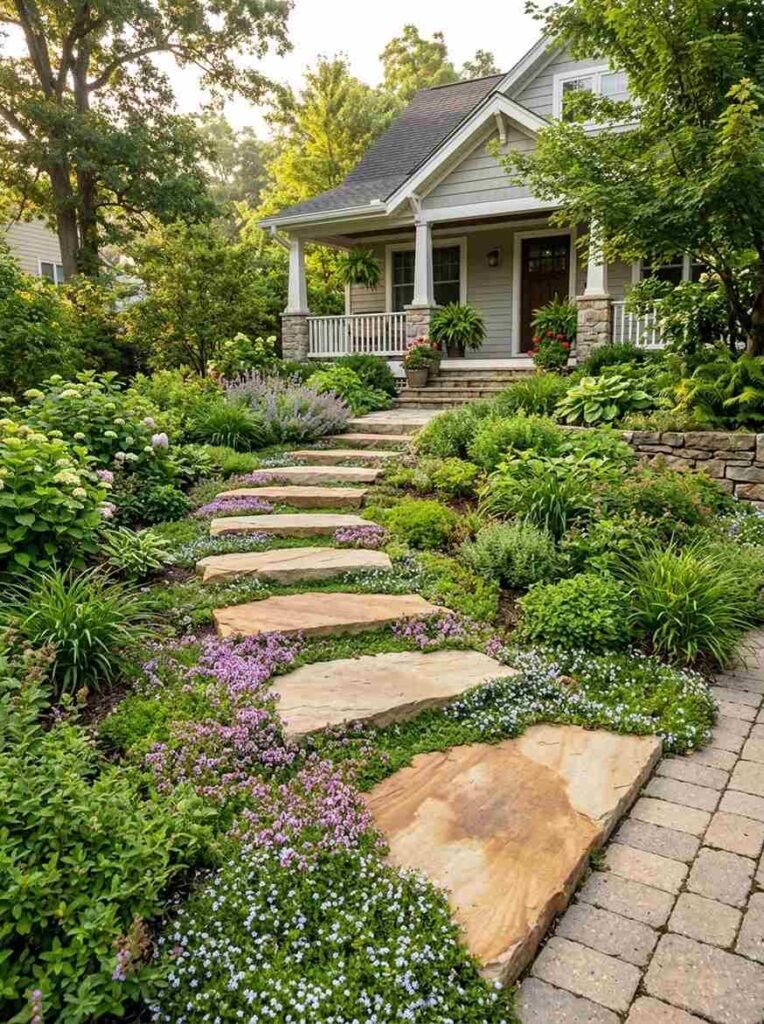
If you want something that stays greener and lower than thyme, blue star creeper is your answer. Tiny white-blue flowers in spring. Dense mat that smothers weeds. Works beautifully between stepping stones or along a slope edge.
Creeping juniper
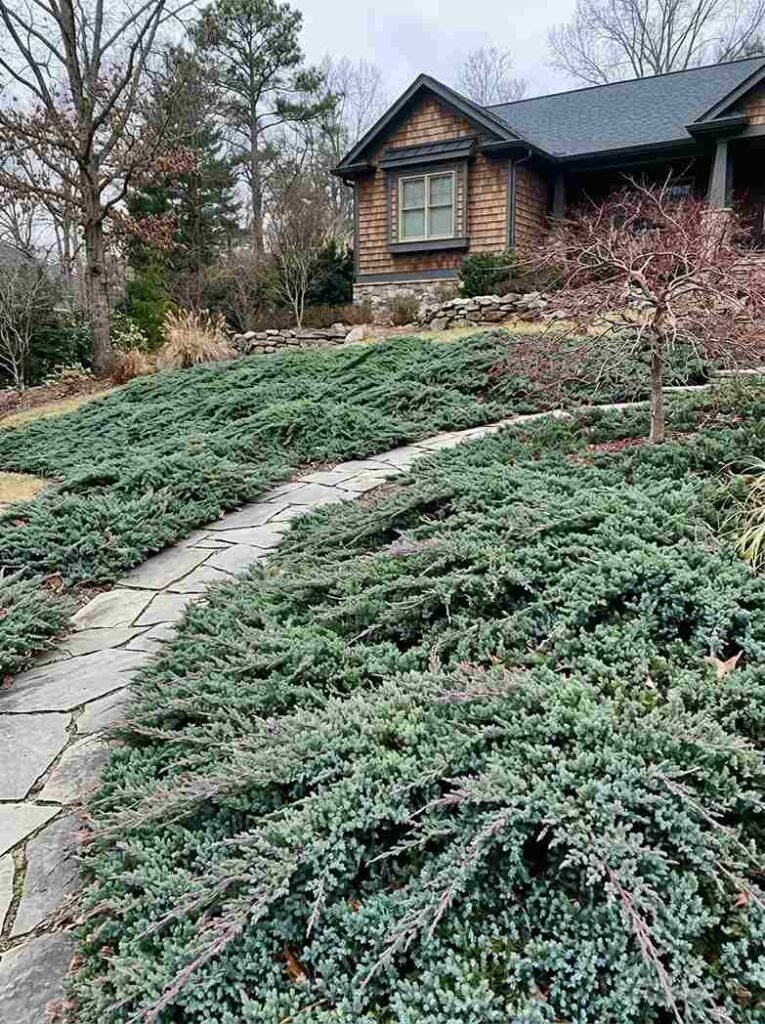
For zero-maintenance coverage on a large section of slope, creeping juniper is hard to beat. It spreads wide, roots deep, and holds soil on even steep grades. Goes blue-green in summer and turns slightly purplish in cold winters. Low water needs once established.
Native groundcovers
Whatever your region, there’s a native groundcover built for your specific slope, rainfall, and soil. Wild ginger for shaded slopes in the northeast. Wooly thyme for hot, dry western climates. Native violets for the midwest. Worth researching — they’ll perform better than anything bred for a generic garden center shelf.
Steps and Pathways: Getting People Up the Slope
Getting foot traffic up and down a sloped yard safely is half the battle. Good steps also define zones and give the front yard visual structure.
| Step Style | Best For | Material | Vibe |
|---|---|---|---|
| Floating concrete | Modern homes | Poured concrete | Clean, minimal |
| Natural flagstone | Traditional/cottage | Sandstone, slate | Organic, warm |
| Timber + gravel | Casual/relaxed | Hardwood + pea gravel | Earthy, textured |
| Corten steel risers | Contemporary | Weathered steel | Industrial, bold |
Stepping stone paths
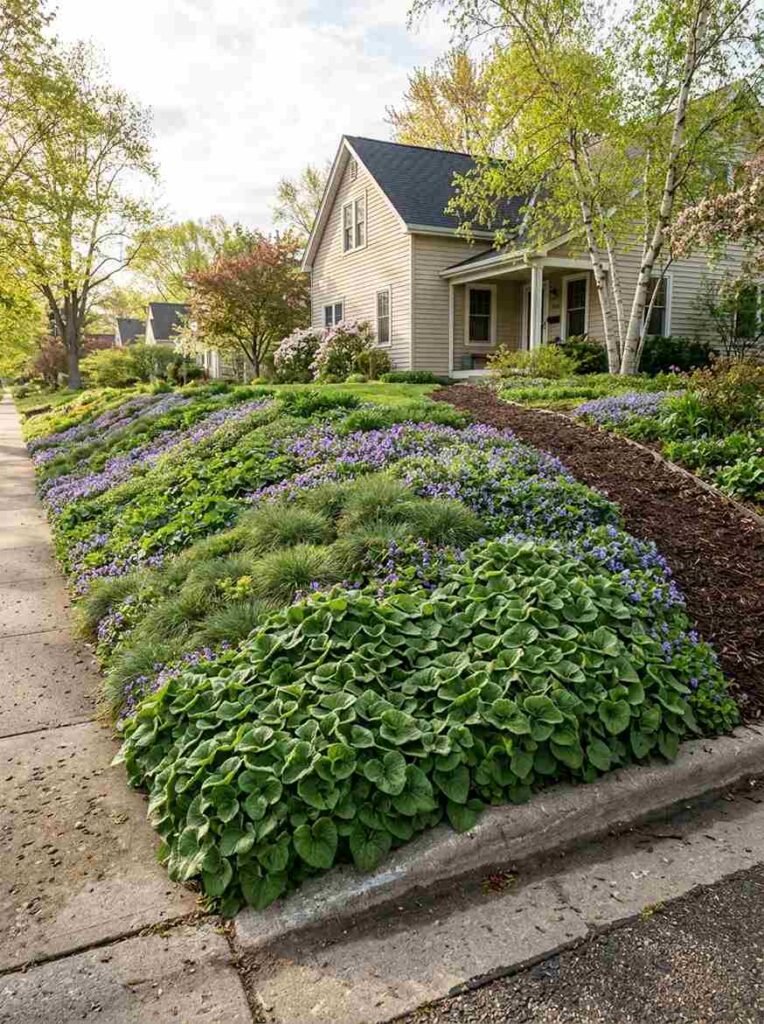
A winding stepping stone path through a planted slope looks effortless — and it IS effortful to get right. Space stones for a natural stride (roughly 18–24 inches center to center). Let low groundcover fill the gaps between them over time.
Integrated steps with plantings
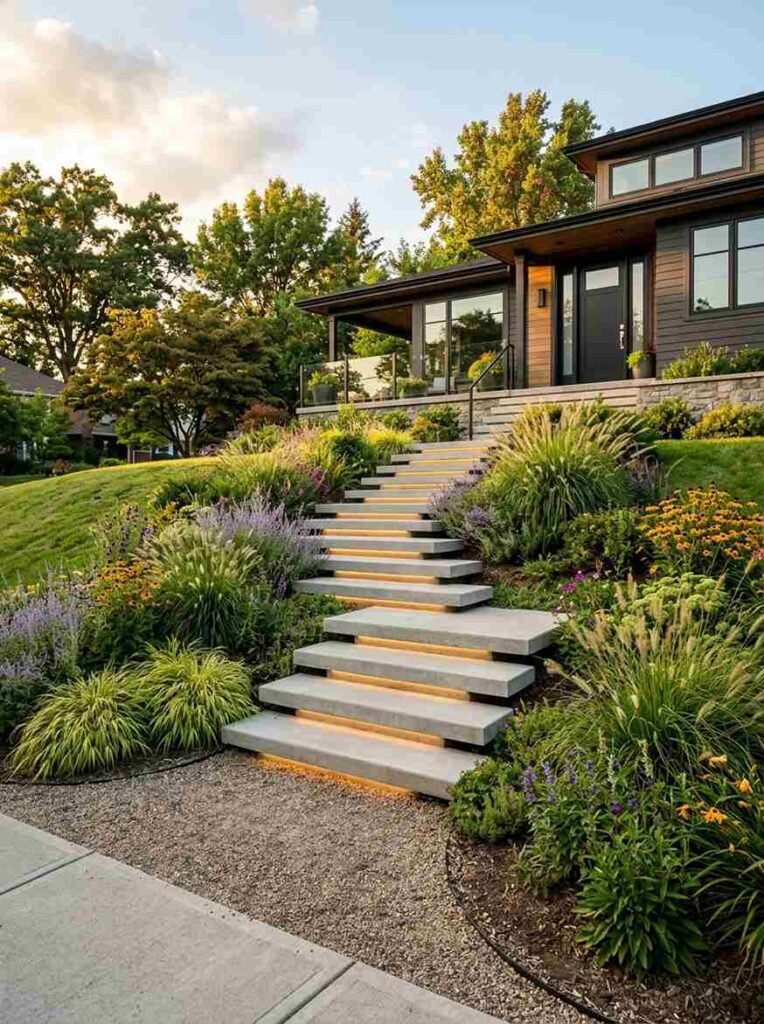
Build wide, shallow steps and tuck plants into the risers or along the edges. Succulents work great here. So do trailing sedums or small ornamental grasses. The step becomes part of the landscape, not just a utility route.
Water Features on a Slope: Why You’re Missing Out
A slope is a ready-made waterfall. The grade does the work for you.
Pondless cascading waterfall
A pondless waterfall recirculates water from a buried reservoir up through the slope and back down over rocks. No standing water. No pond maintenance. Just the sound and look of moving water. They work beautifully on slopes as gentle as 2:1.
Stream bed with dry cree
Even without a pump, a dry creek bed down a slope looks intentional and interesting. When it rains, it manages drainage naturally. Fill it with smooth river rock, add boulders at bends, plant ornamental grasses along the banks. It handles water AND looks good doing it.
Modern Planting Ideas for Sloped Yards
Ornamental grasses
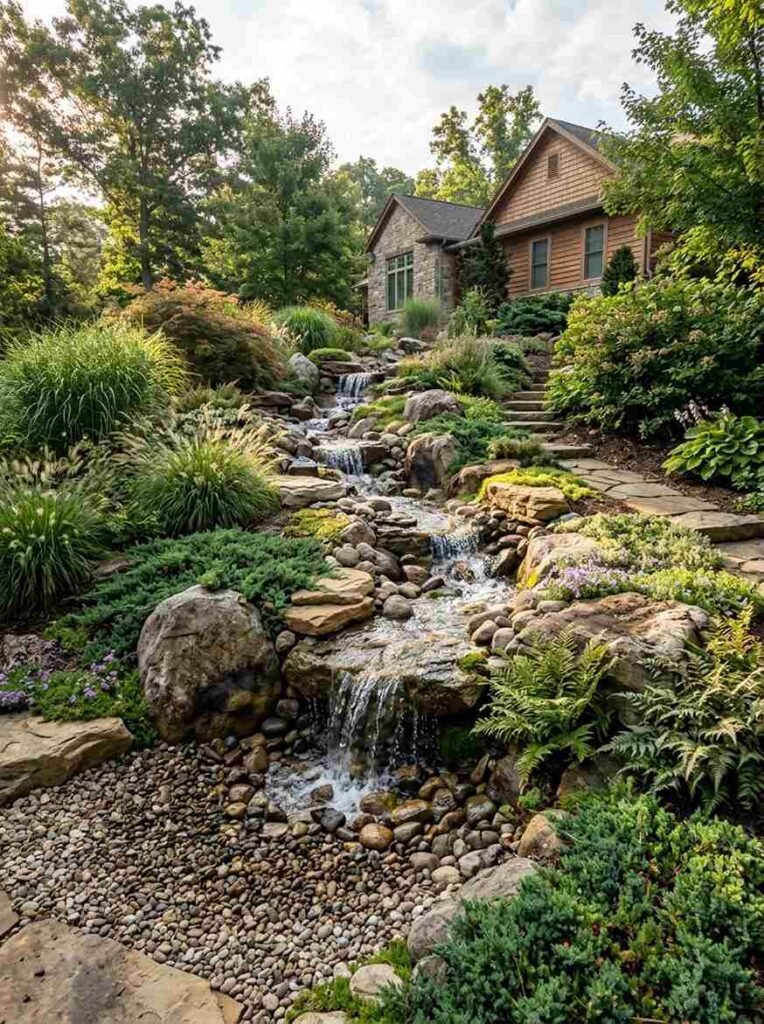
Ornamental grasses on a slope move in the wind, hold soil with deep roots, and need almost no maintenance. Feather reed grass, blue oat grass, and Karl Foerster are all reliable. Mix heights for layered texture.
Succulents and sedums
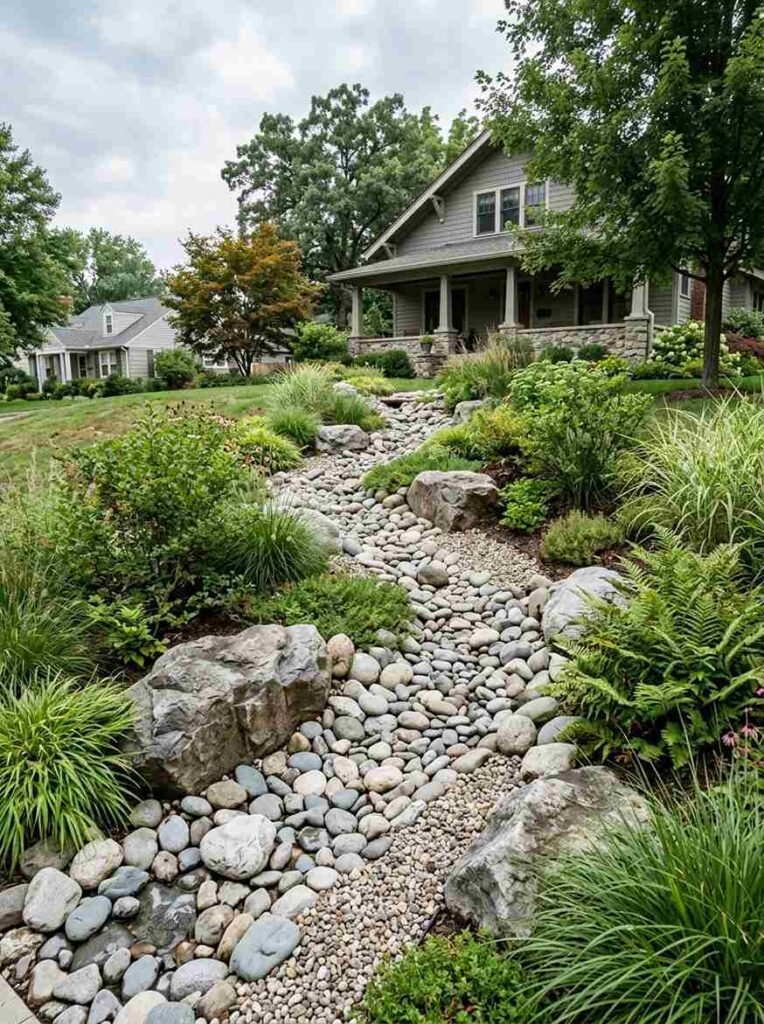
If your slope faces south or west and bakes in the sun, lean into it. Sedums, agaves, and hardy succulents love the heat, the drainage, and the tough conditions. They also look genuinely striking — especially planted in drifts rather than individual specimens scattered around.
Native shrubs in tiers
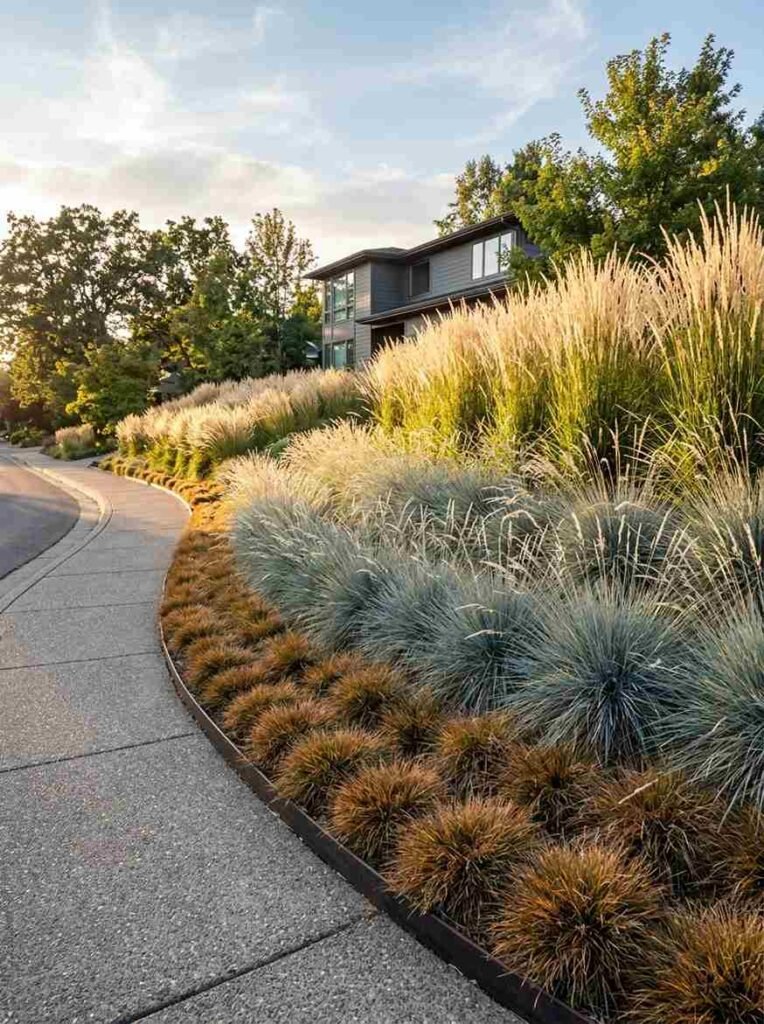
Layer native shrubs by height across the slope. Low-growing natives at the front, medium shrubs in the middle, taller ones toward the top near the house. This is how slopes look in nature. It works because it mirrors what plants do when left alone.
Flowering perennial drifts
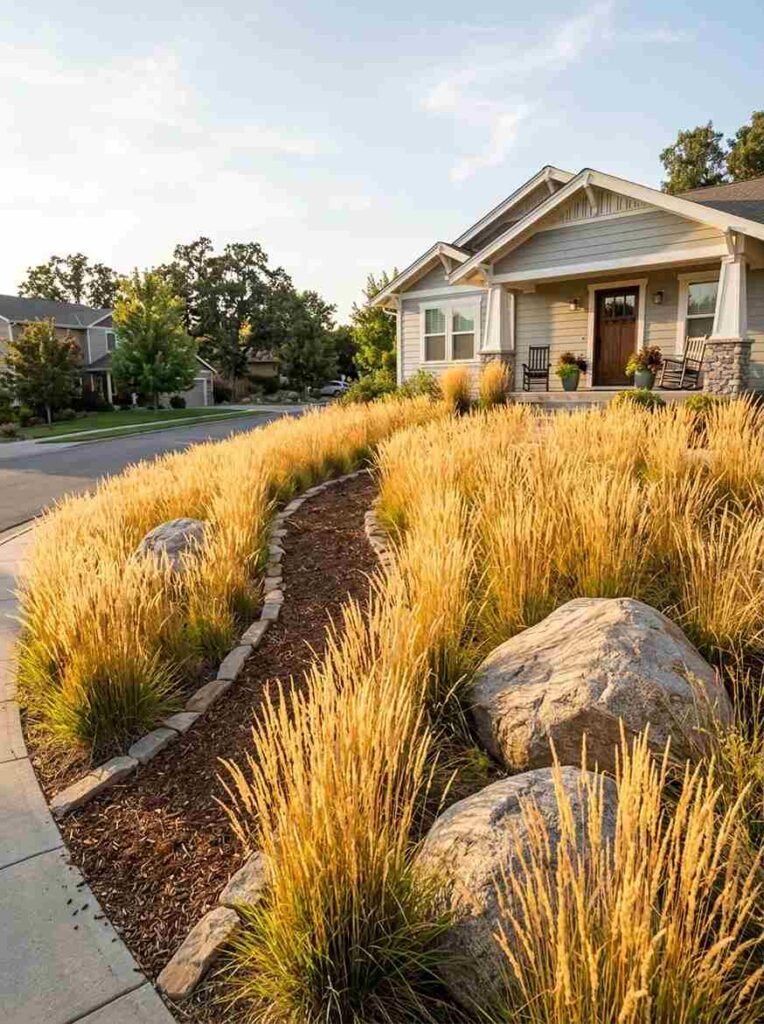
Mass-planted perennials in sweeping drifts look intentional and lush. Coneflowers, black-eyed Susans, salvia, catmint — plant 5 or 7 of the same variety in a cluster rather than one of everything. Drifts read better from the street.
Retaining Walls That Double as Design Features
Curved concrete walls
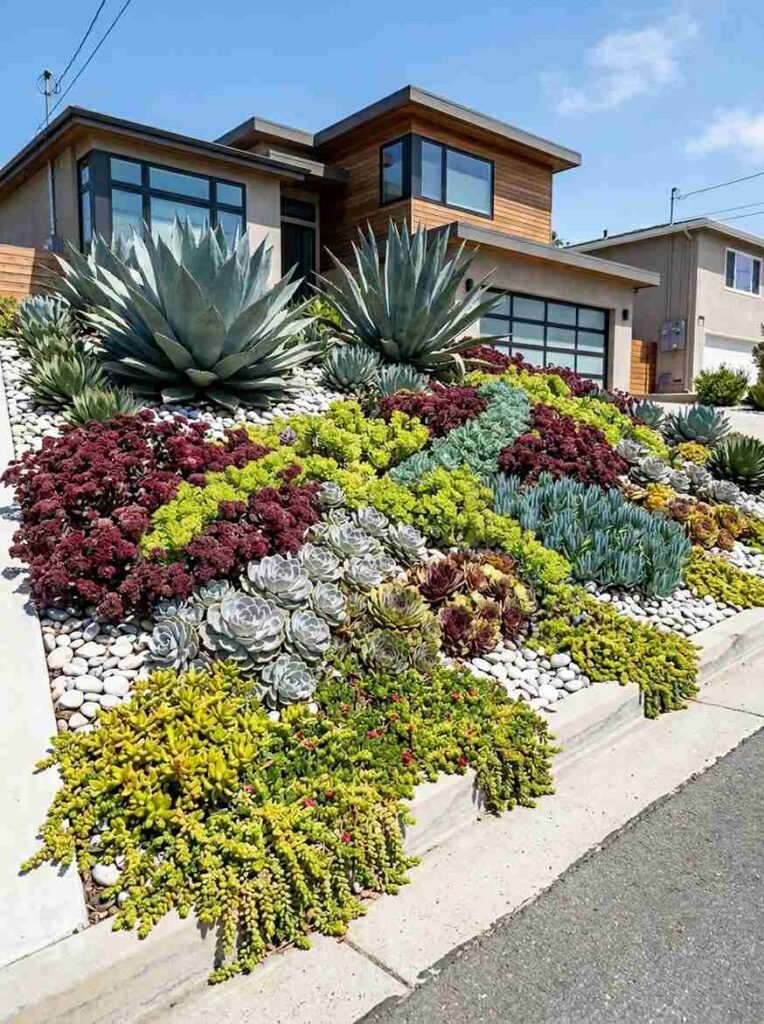
A gently curved concrete retaining wall softens a slope and adds sculptural presence. Paint it a warm white or leave it raw for a brutalist vibe. Either way, it photographs beautifully (important if you’re going for that Pinterest-worthy front yard :)).
Corten steel retaining walls
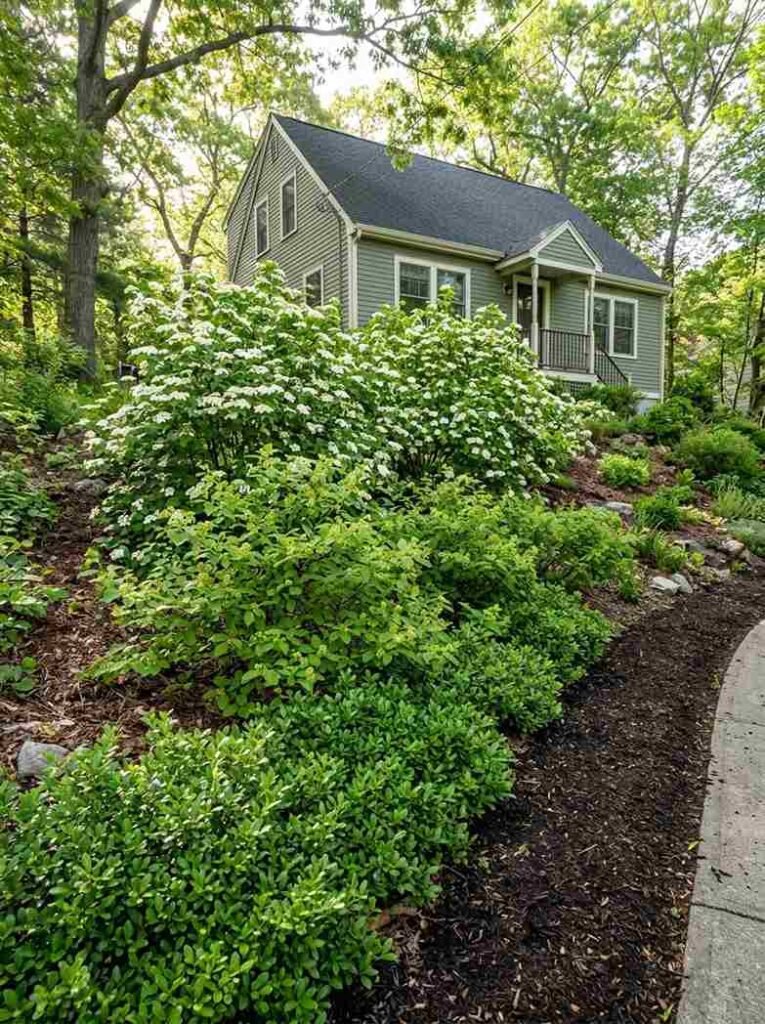
Corten steel rusts to a rich reddish-brown and then stops. It’s weatherproof, it ages well, and it looks unmistakably modern. Thin corten panels as retaining walls are a bold move — they contrast beautifully with green planting.
Low brick walls with integrated seating
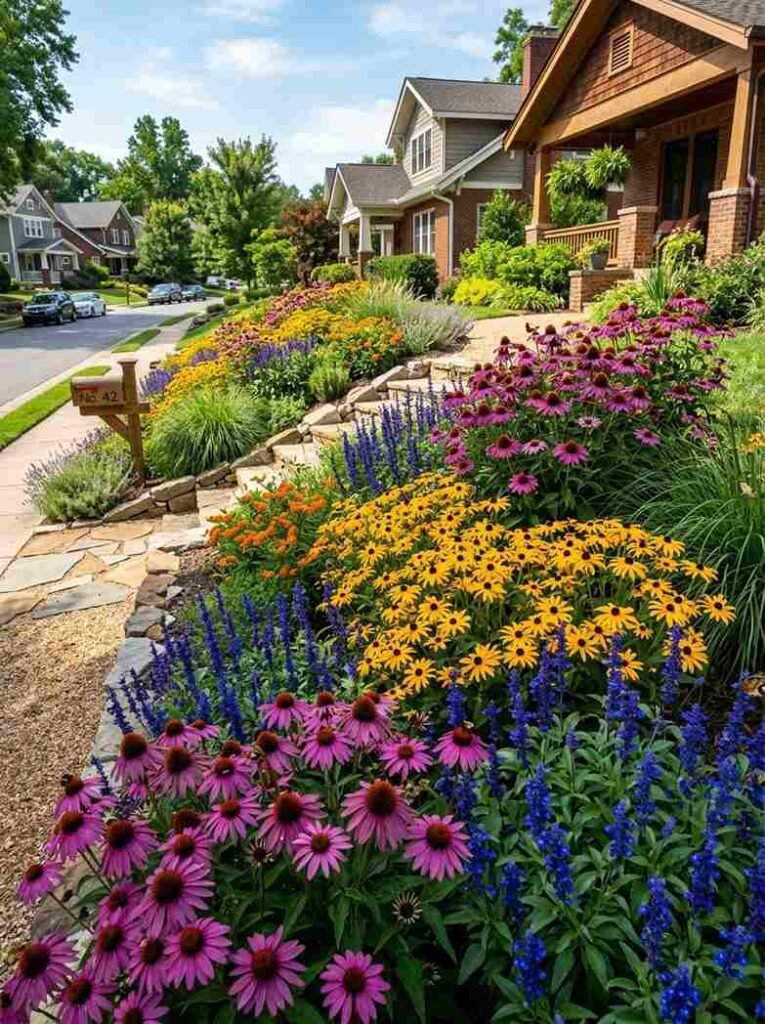
On a gentle slope, low brick walls just tall enough to sit on create terraces AND seating. Add a flat coping stone and suddenly you have an outdoor wall bench. Useful on a slope that’s near the front entry where people wait.
Lighting Ideas for Sloped Yards
Uplighting along retaining walls
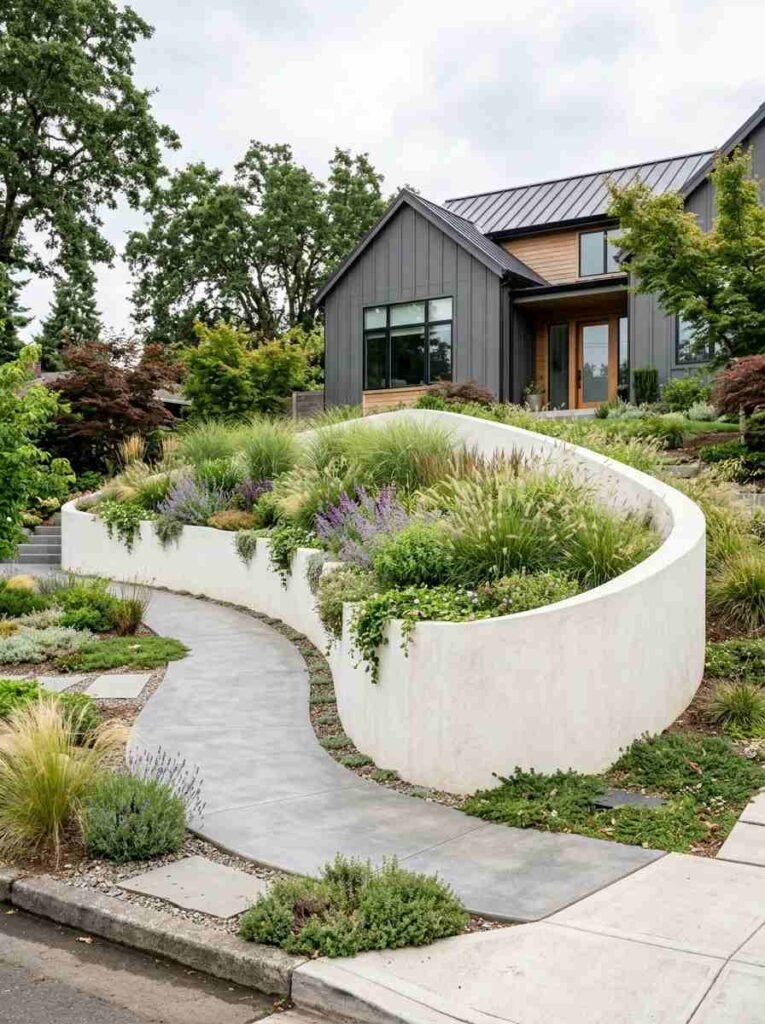
Solar or low-voltage path lights tucked along the base of retaining walls create a dramatic effect at night. The light grazes the wall texture and defines each terrace level. Not a lot of fixtures needed — 4 to 6 well-placed lights beat 20 scattered ones.
Step lighting
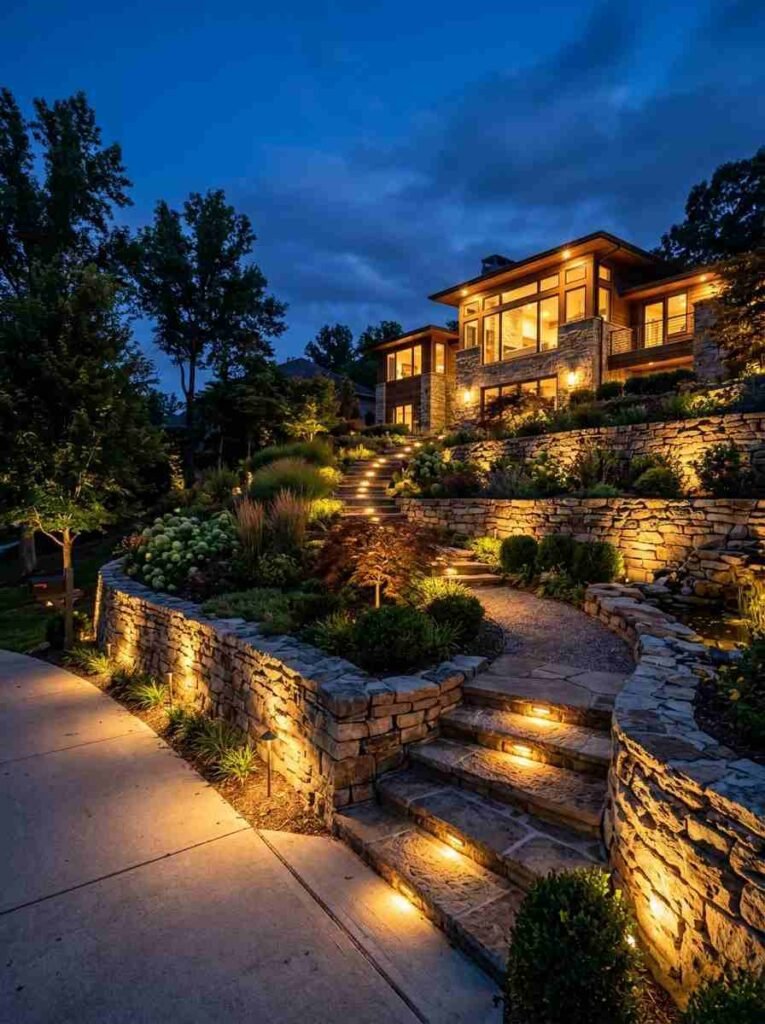
Recessed LEDs built into the risers of steps do two things: they light the path safely and they make the steps look designed. A small detail with a big visual payoff.
Downlighting from trees
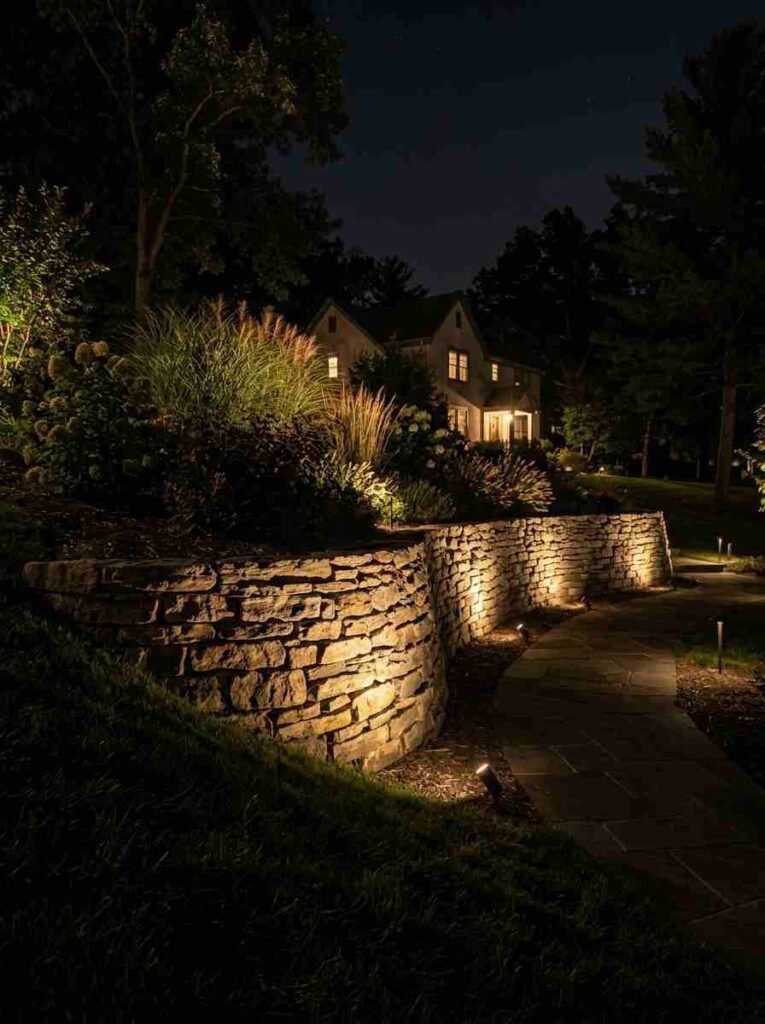
If you have a tree on the slope, mount a directional downlight in the canopy aimed at the path or planting below. Moonlighting effect. Looks natural and dramatic at the same time.
Erosion Control That Doesn’t Look Like a Construction Site
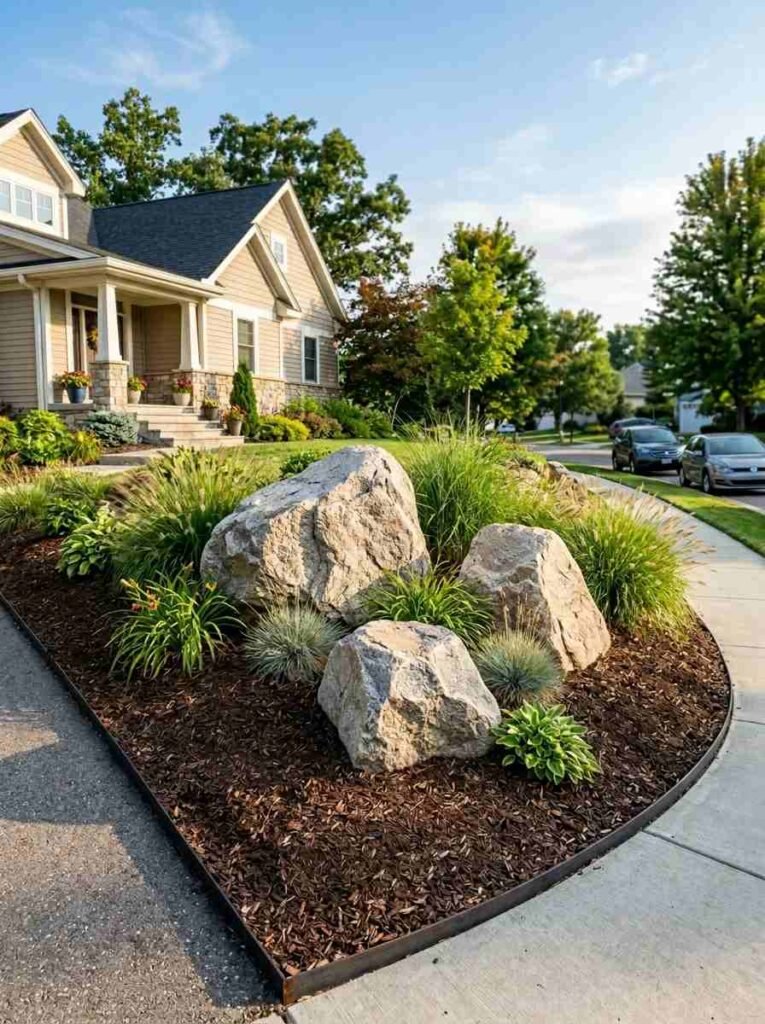
Erosion is the real enemy on any slope. Here’s what actually works.
- Jute netting over freshly planted slopes holds soil while plants establish
- Coir logs along slope edges slow water runoff and look more natural than concrete barriers
- Deep-rooted native plants are the long-term answer — nothing holds soil like roots
- Mulching thickly (3–4 inches) on planted slopes reduces surface erosion significantly
IMO, the combination of deep-rooted groundcover plus a well-built retaining wall handles 90% of slope erosion problems.
Quick Wins: Low-Effort, High-Impact Ideas
Not every slope needs a full reno. Sometimes a few targeted changes make a dramatic difference.
Mulch and boulder groupings
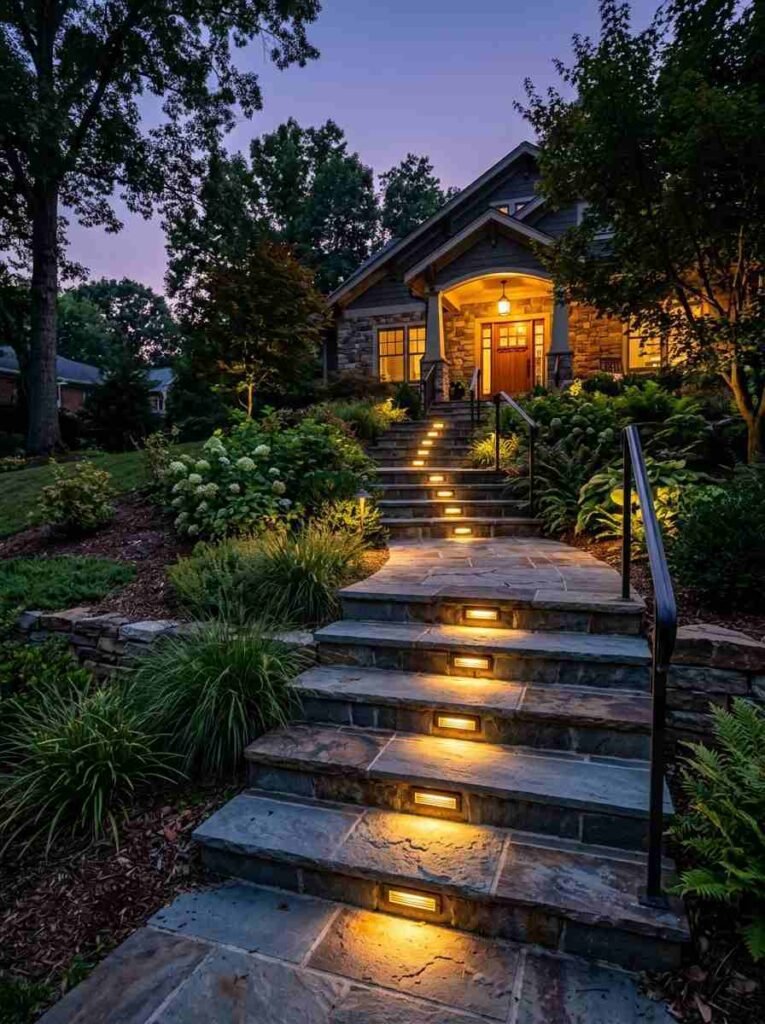
A cluster of 3 large boulders on a mulched slope looks intentional and sculptural. It’s one of the fastest ways to add visual interest to a bare slope. Use odd numbers. Space them unevenly. Don’t line them up in a row.
Plant a focal point at the top
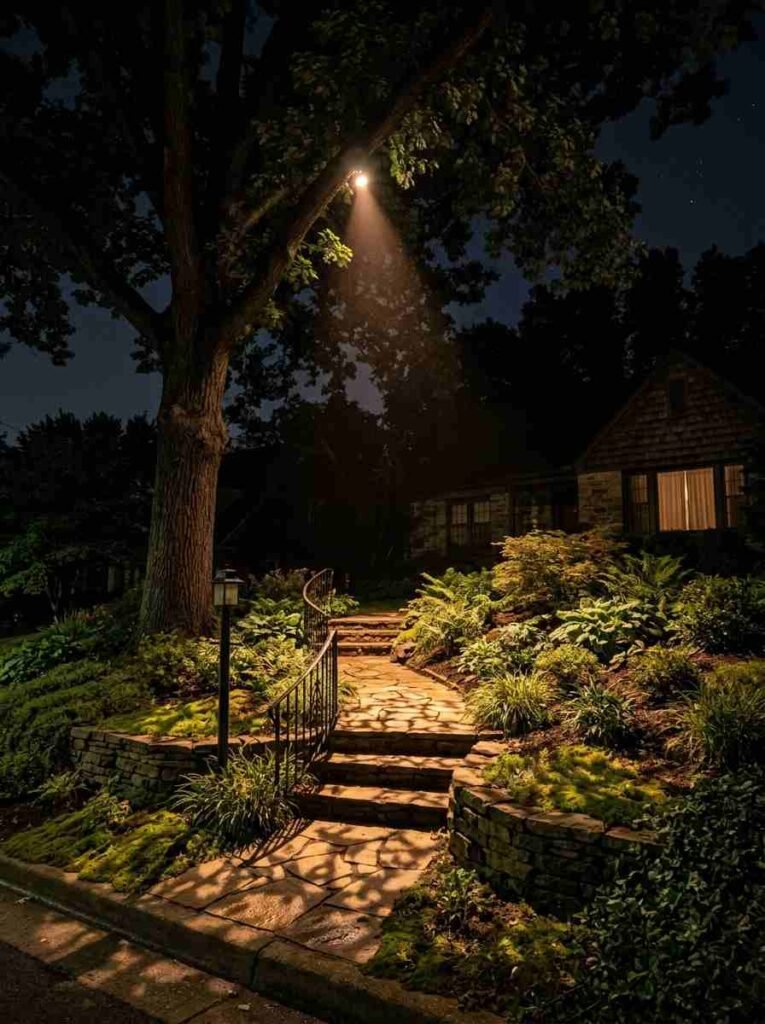
Whatever sits at the top of your slope draws the eye. A Japanese maple, a dramatic ornamental grass, a sculptural yucca — pick one strong focal plant and build the slope planting around it.
Edge everything cleanly
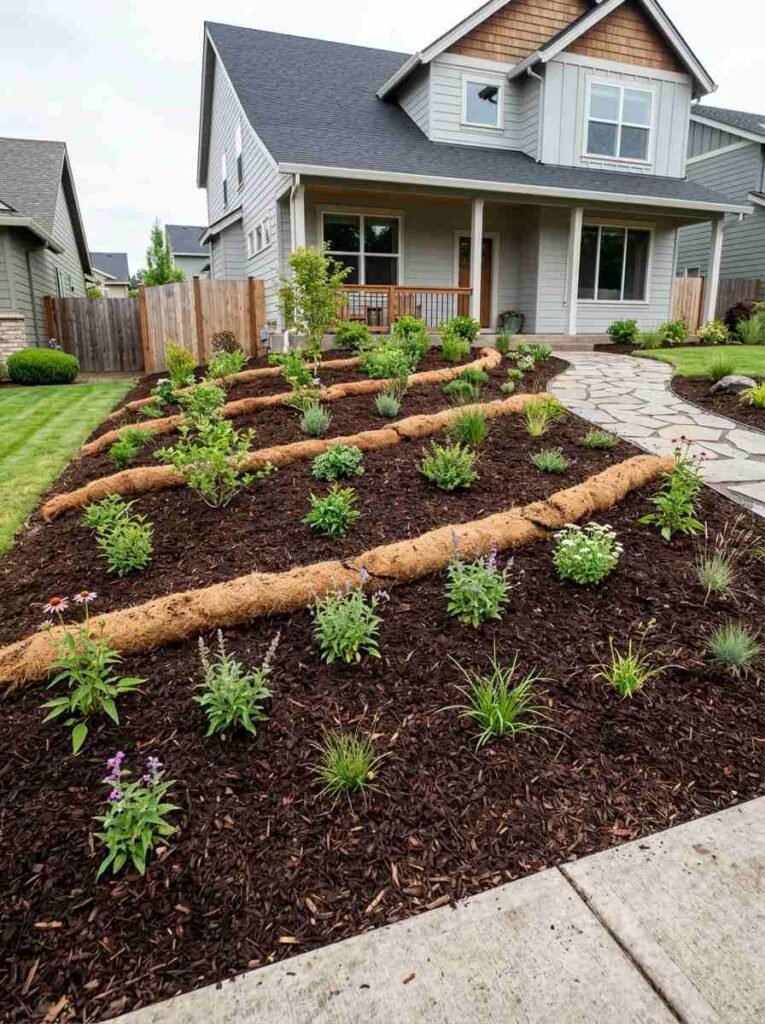
Sharp edges between lawn, mulch beds, and paths transform how a slope reads. Rent a bed edger for an afternoon. It costs almost nothing and the before-and-after difference is genuinely shocking.
Pulling It Together
A sloped front yard rewards clear thinking more than big budgets. Pick one approach — terracing, groundcover, water feature, bold planting — and execute it well rather than doing a bit of everything.
The ideas above work at small scales, photograph beautifully for Pinterest inspiration boards, and hold up over time. Some you can do yourself over a weekend. Others need a landscape contractor. Either way, the slope you’ve been fighting is about to become the best thing about your front yard.
Start with what annoys you most. Fix that first. The rest follows.
