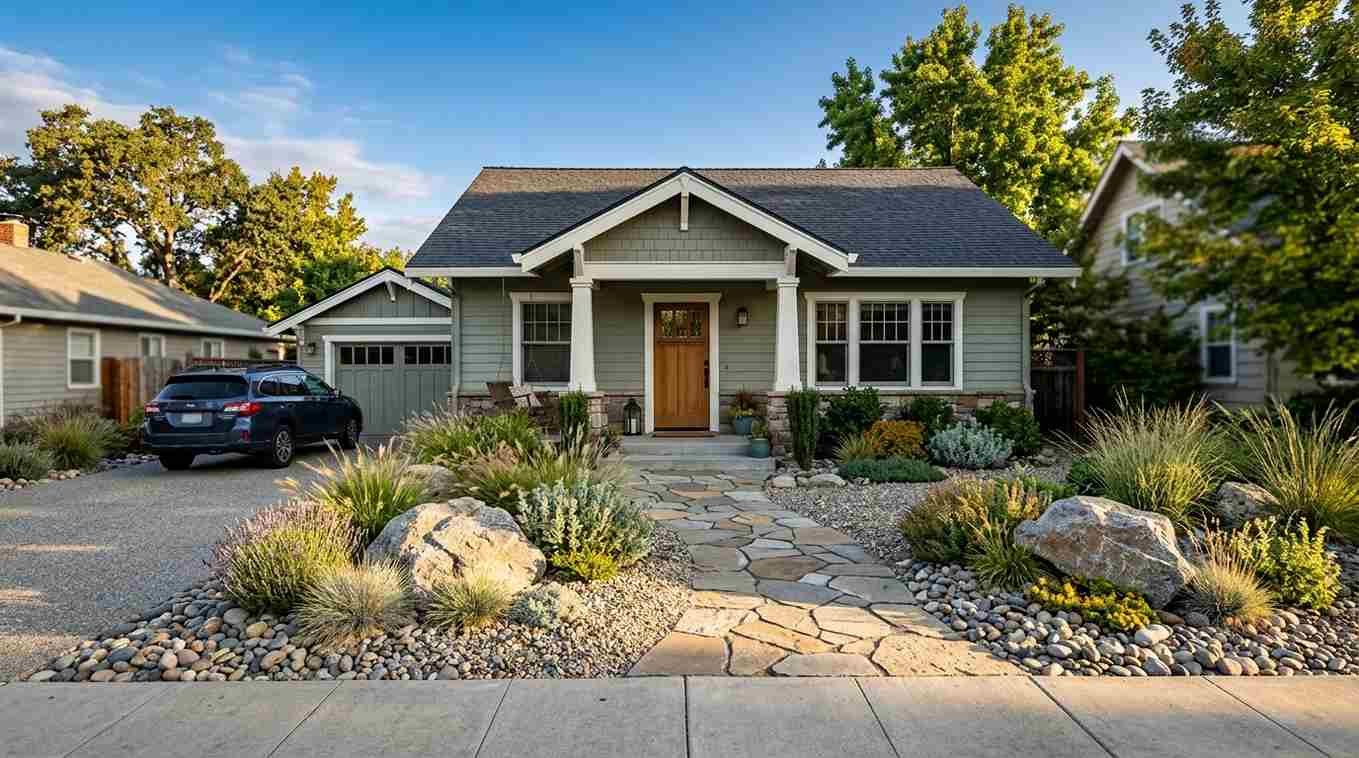
Your front yard is the first thing people see — and if it’s just a flat patch of thirsty grass, you’re leaving a LOT on the table.
Rock landscaping fixes that. It looks great year-round, needs almost zero maintenance, and — IMO — gives even a tiny front yard that polished, intentional look that grass just can’t deliver.
I’ve been obsessing over rock yard ideas for a while now, and these 28 ideas are genuinely worth saving (you know, for your Pinterest boards that are already at 3,000 pins).
Why Rock Landscaping Works So Well for Small Front Yards
Small spaces punish bad design. There’s nowhere to hide a mess.
Rock landscaping, though? It actually thrives in tight spaces. The textures, colors, and layers create visual interest without needing square footage.
You’re working with the constraints instead of fighting them.
A few quick wins you get automatically:
- No mowing. Ever again.
- Drought tolerance — rocks don’t care if it doesn’t rain for three weeks.
- Year-round curb appeal, including winter when everything else looks dead.
- Lower water bills (a genuinely underrated perk).
The Big Ideas: 28 Rock Landscaping Styles Worth Stealing
River Rock Designs
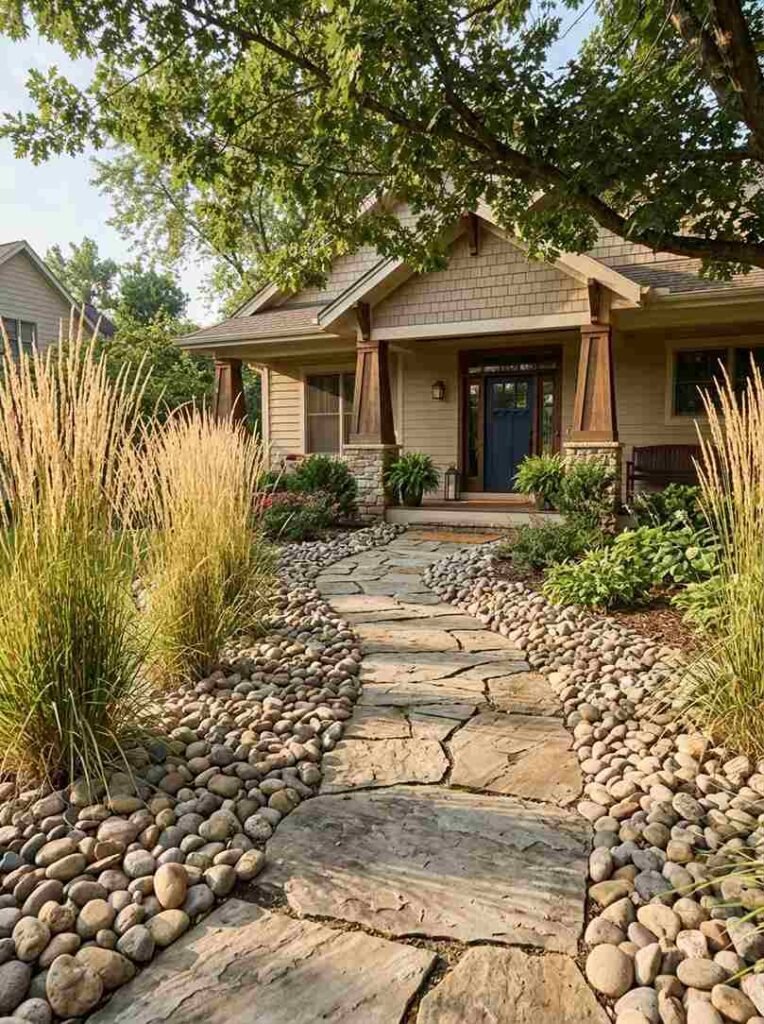
1. River rock pathways Line a simple path with smooth river rocks on both sides. The rounded edges give a relaxed, natural feel — like your front yard belongs near a creek somewhere scenic. Pair with low ornamental grasses for movement.
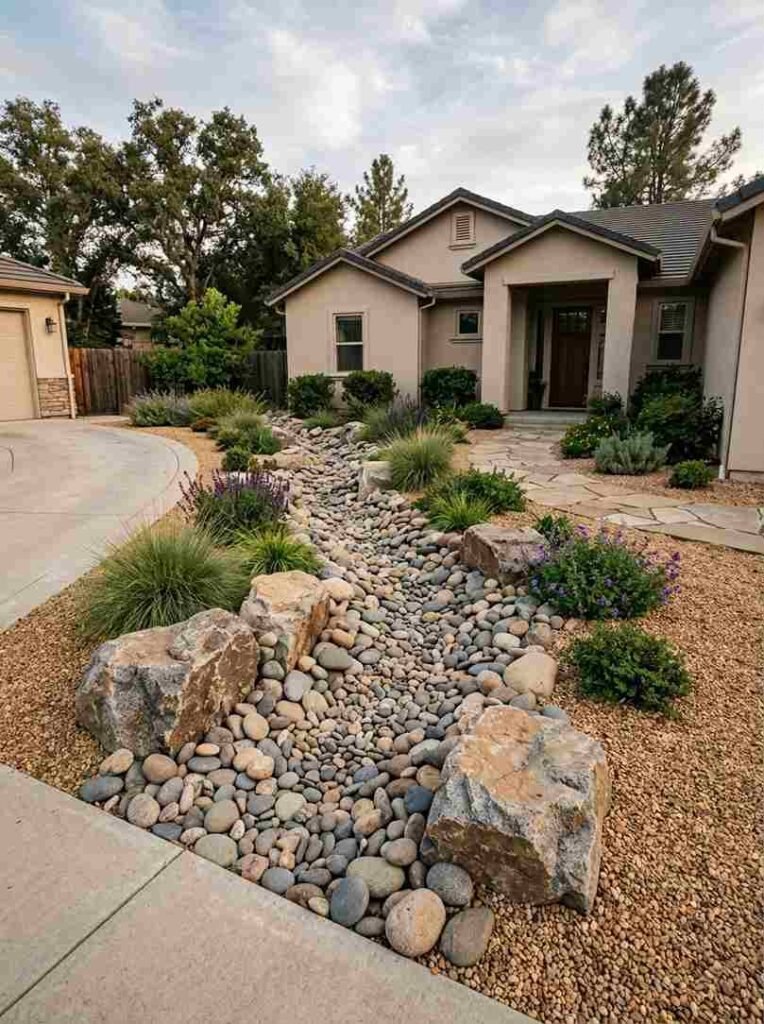
2. River rock dry creek beds A dry creek bed running across your front yard looks intentional and handles drainage at the same time.
Two problems, one solution. Use varying sizes — chunky rocks anchor the “banks” while smaller pebbles fill the middle.
3. River rock mulch replacement Swap wood mulch for river rock around your existing plants.
It suppresses weeds, holds soil moisture, and honestly looks way more polished. Light-colored river rock especially pops against dark soil.
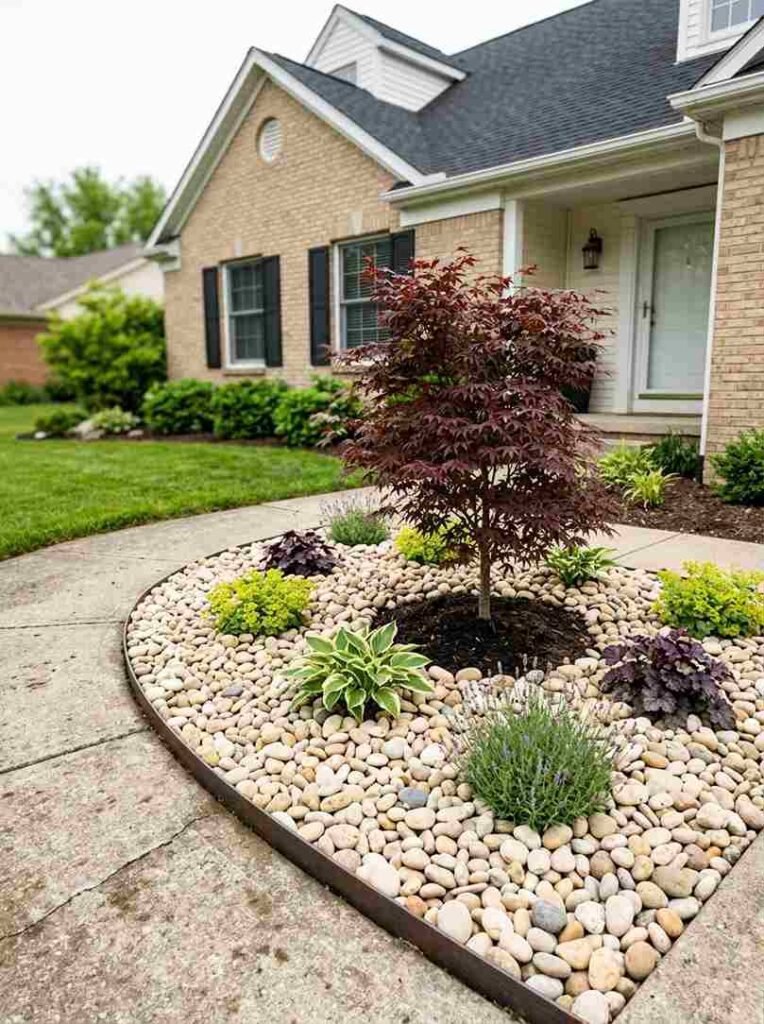
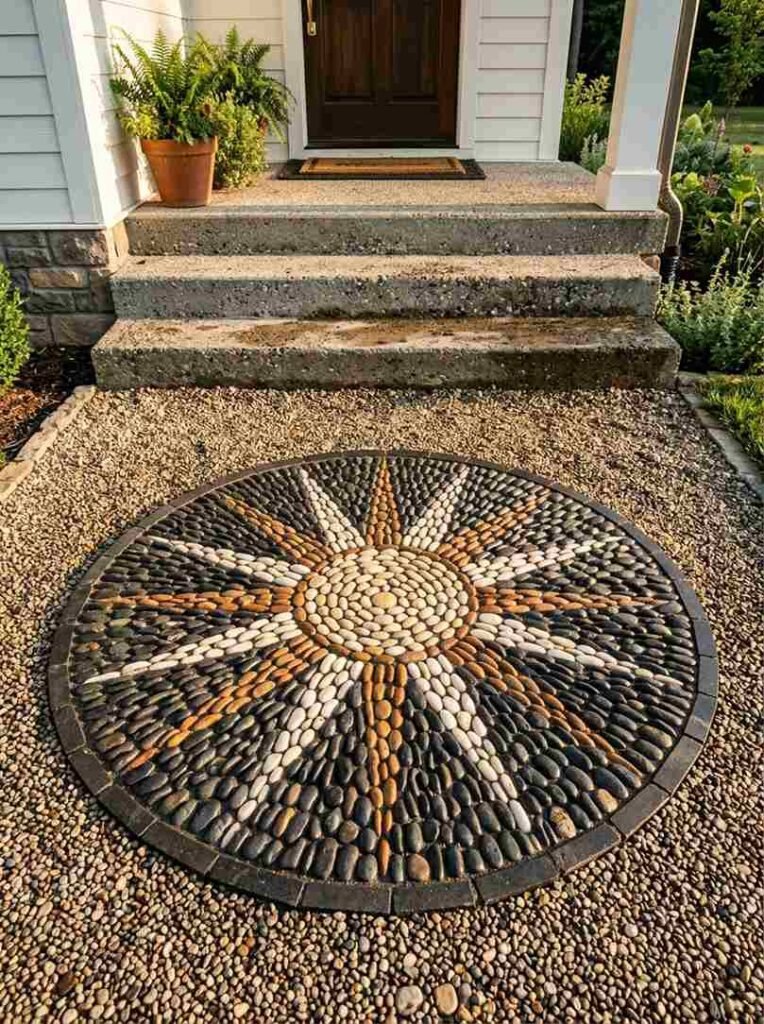
4. Pebble mosaic accents Group pebbles by color to create simple mosaic patterns near your entry.
A sunburst near the front door, a small spiral in a planting bed — small details that make people stop and actually look.
Gravel and Decomposed Granite
5. Gravel front yard base Replace the lawn entirely with a gravel base, then layer in plants and boulders.
This is the move if you want maximum impact with minimum upkeep. Fine pea gravel in warm tones reads as sophisticated, not sparse.
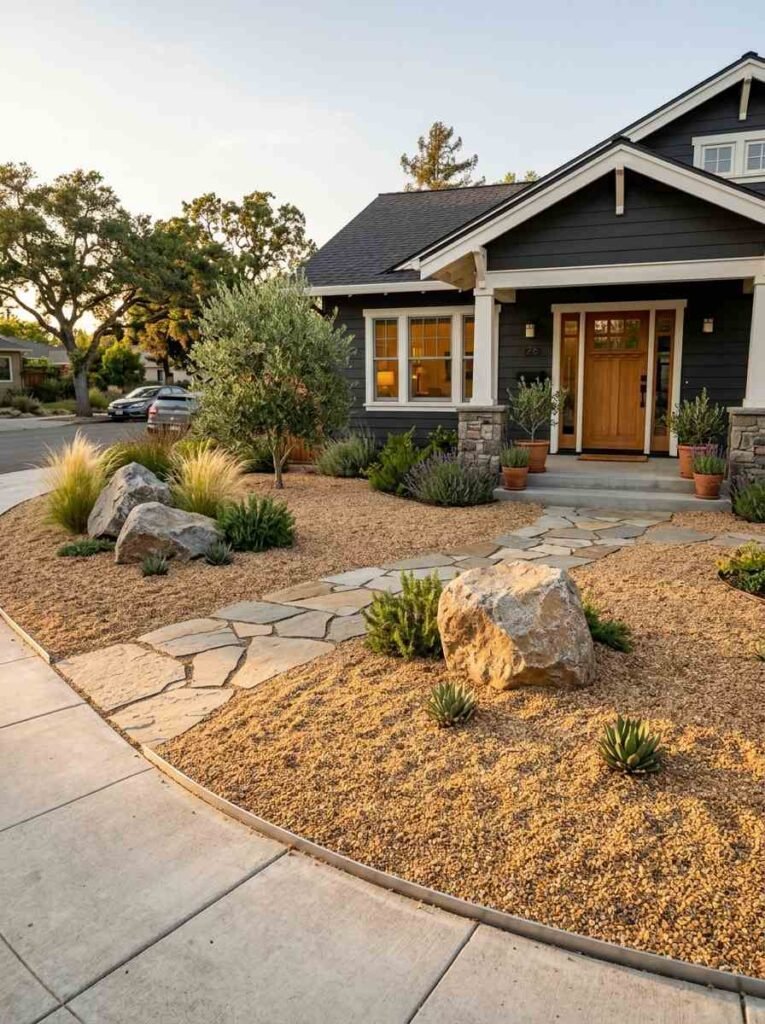
6. Decomposed granite pathways DG (decomposed granite) compacts into a firm, walkable surface that looks natural.
It’s cheaper than pavers, easier than concrete, and it comes in gold, brown, and gray tones. Great for winding paths through planting beds.
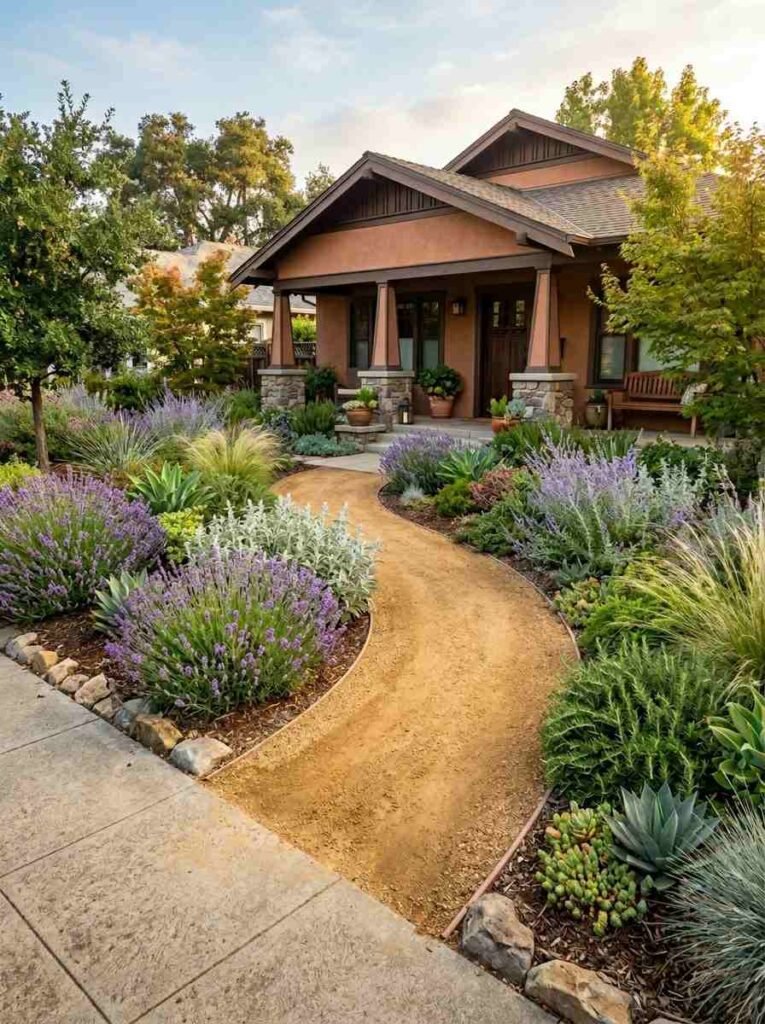
7. Gravel contrast planting Grow ornamental grasses, agave, or lavender directly through a gravel bed.
The spiky green against the pale stone is a classic contrast that works in almost any climate.
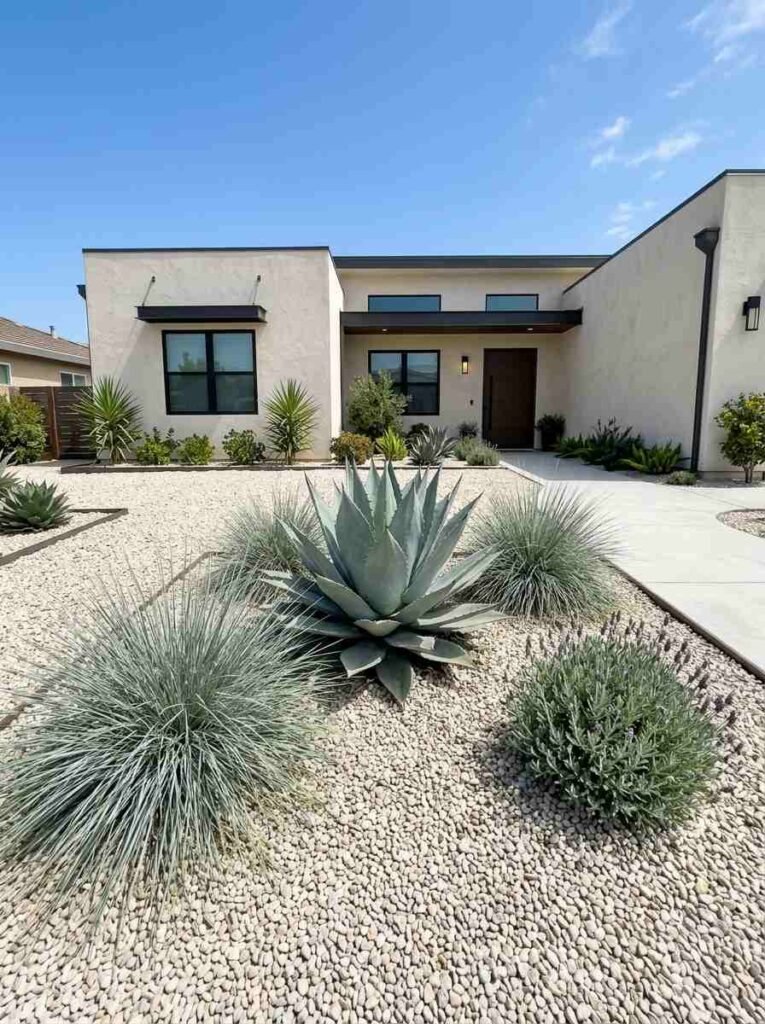
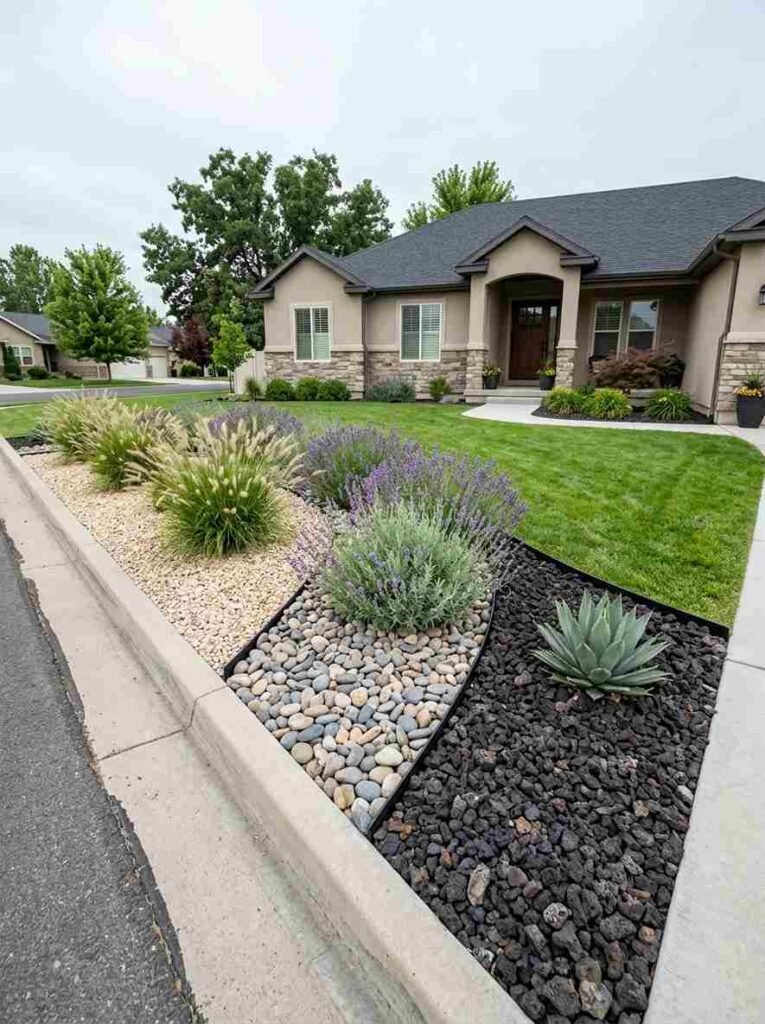
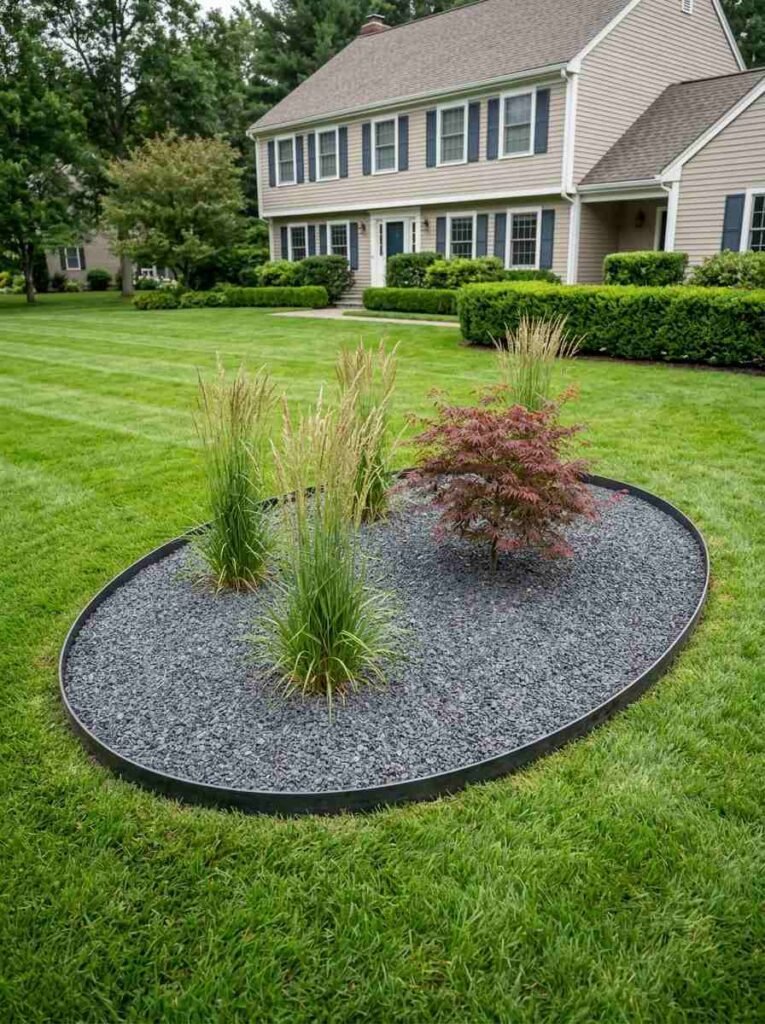
8. Gravel borders with edging Use steel or concrete edging to define crisp gravel borders around planting beds. The clean lines make a small yard look intentional and larger than it is.
| Style | Best For | Maintenance | Cost Range |
|---|---|---|---|
| River rock | Natural/casual look | Low | $$ |
| Decomposed granite | Paths & full coverage | Very low | $ |
| Flagstone + gravel | Modern/structured | Low | $$$ |
| Boulder focal points | Dramatic statement | None | $$-$$$ |
Boulder and Stone Features
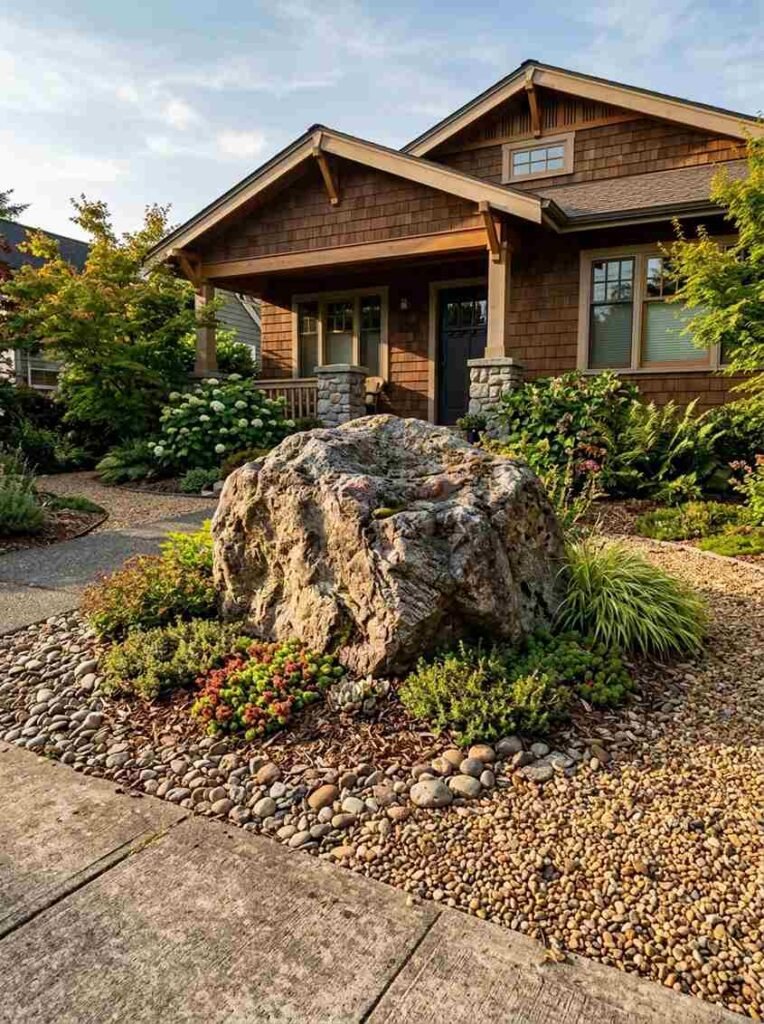
9. Single statement boulder One large boulder, well-placed near your entry, does more visual work than you’d expect.
Bury about 1/3 of it in the ground so it looks like it belongs there — not like it got dropped off a truck yesterday 🙂
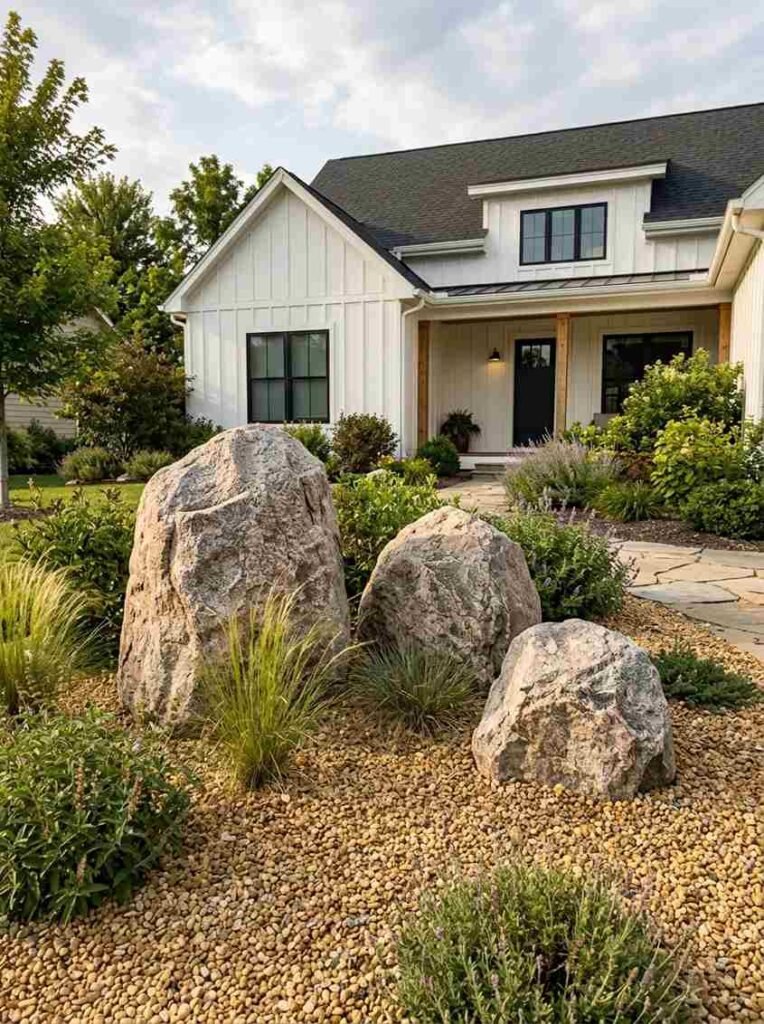
10. Boulder clusters Group 3 boulders of varying sizes together. Always odd numbers — it’s one of those design rules that sounds arbitrary until you break it and realize why it exists.
11. Stacked stone planters Build low, stacked stone walls to create raised planting beds. The texture of dry-stacked stone is rich and warm, especially with succulents or trailing plants spilling over the edges.
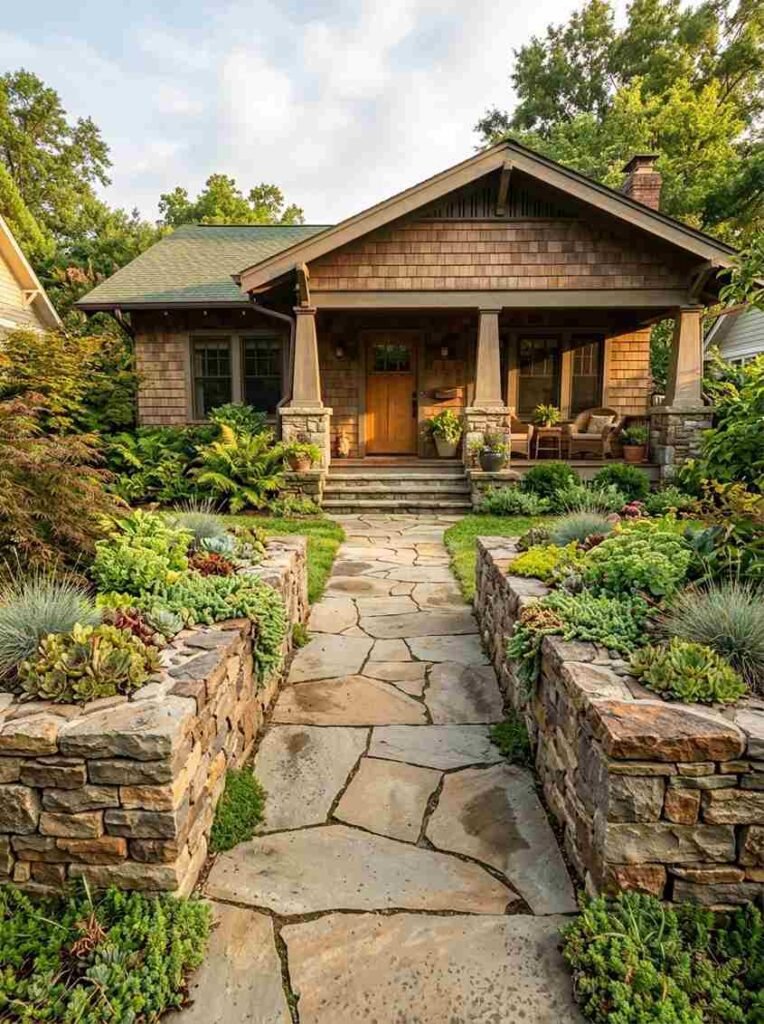
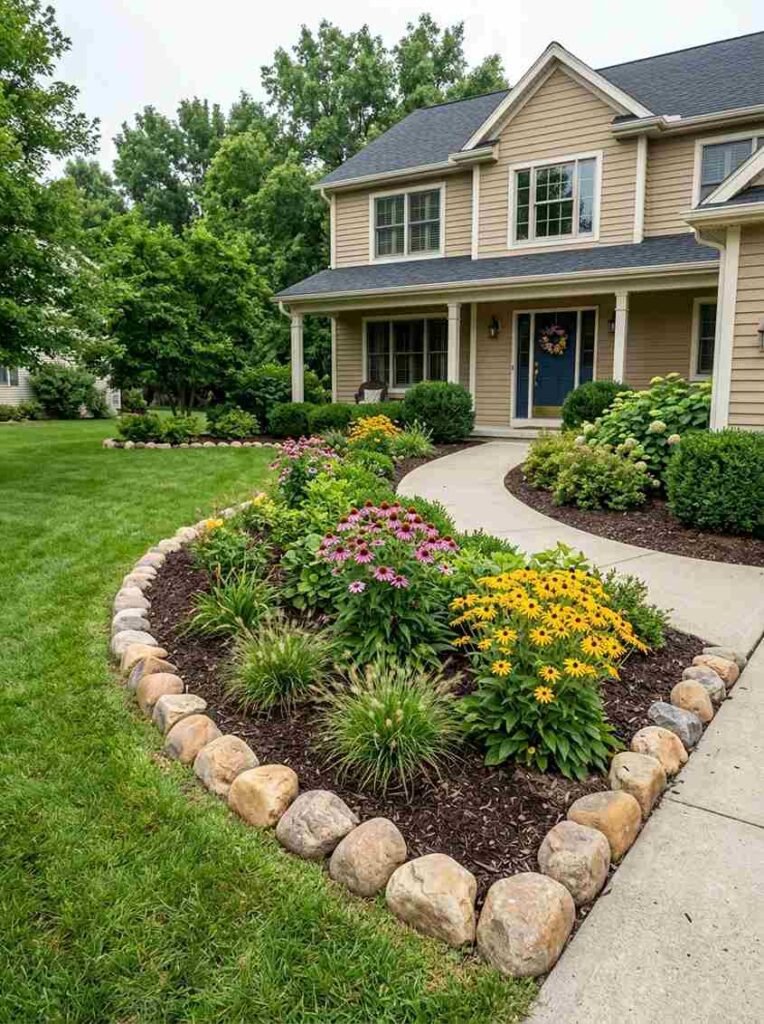
12. Stone edging borders Line your planting beds with uniform medium-sized stones as edging.
It’s simple, cheap, and gives the whole yard a finished look that flower bed edging plastic strips simply cannot match.
Desert and Xeriscape Styles
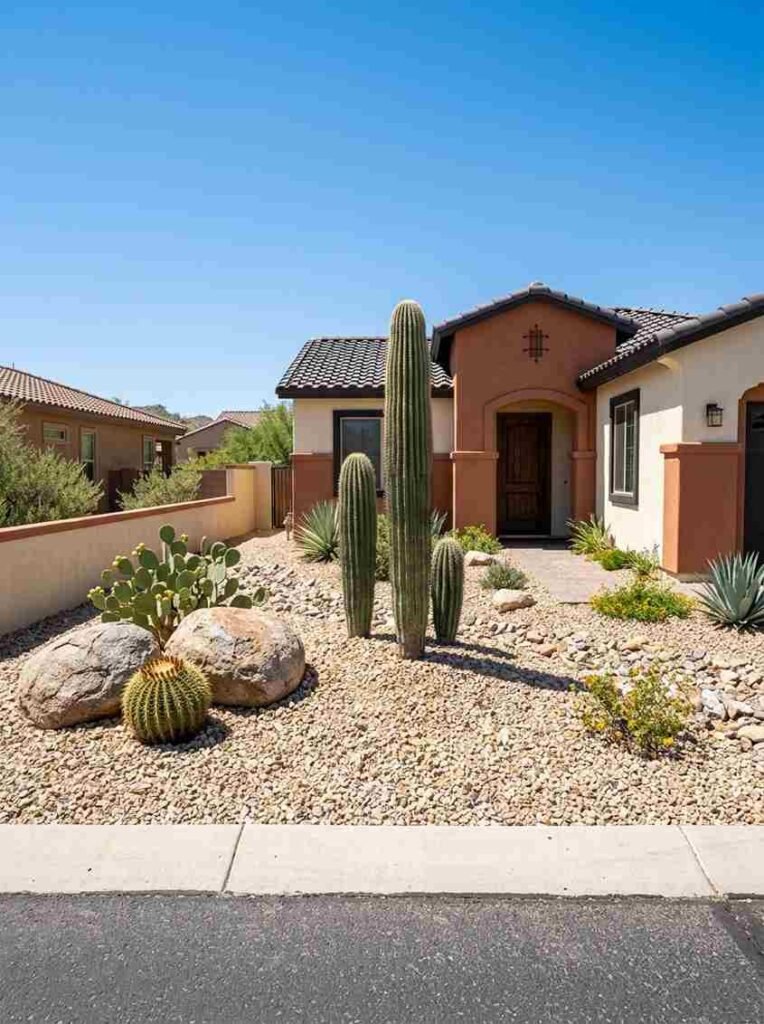
13. Cactus and gravel xeriscape If you’re in a dry climate, lean into it completely. Large gravel, sculptural cacti, and a few dramatic boulders.
Water once a month. Done. FYI — xeriscape yards have actually been shown to increase property value in drought-prone regions.
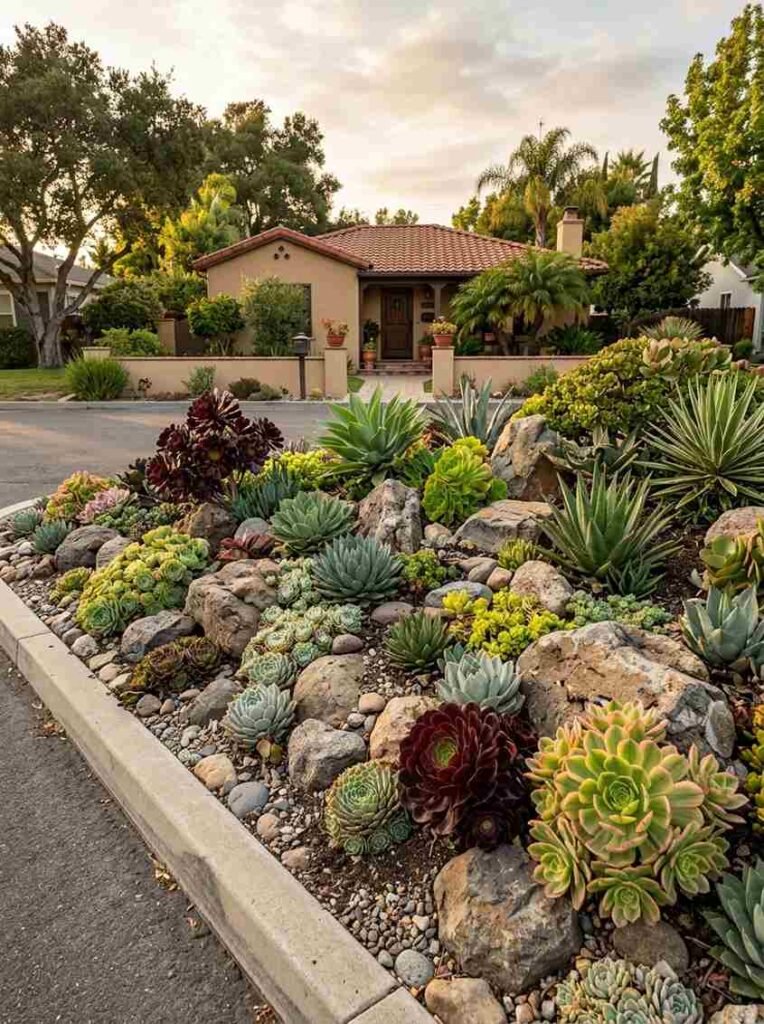
14. Succulent rock garden Low-growing succulents tucked between and around rocks create a living, evolving composition. Hens-and-chicks, sedum, and echeveria all work.
They spread slowly, filling gaps over a season or two.
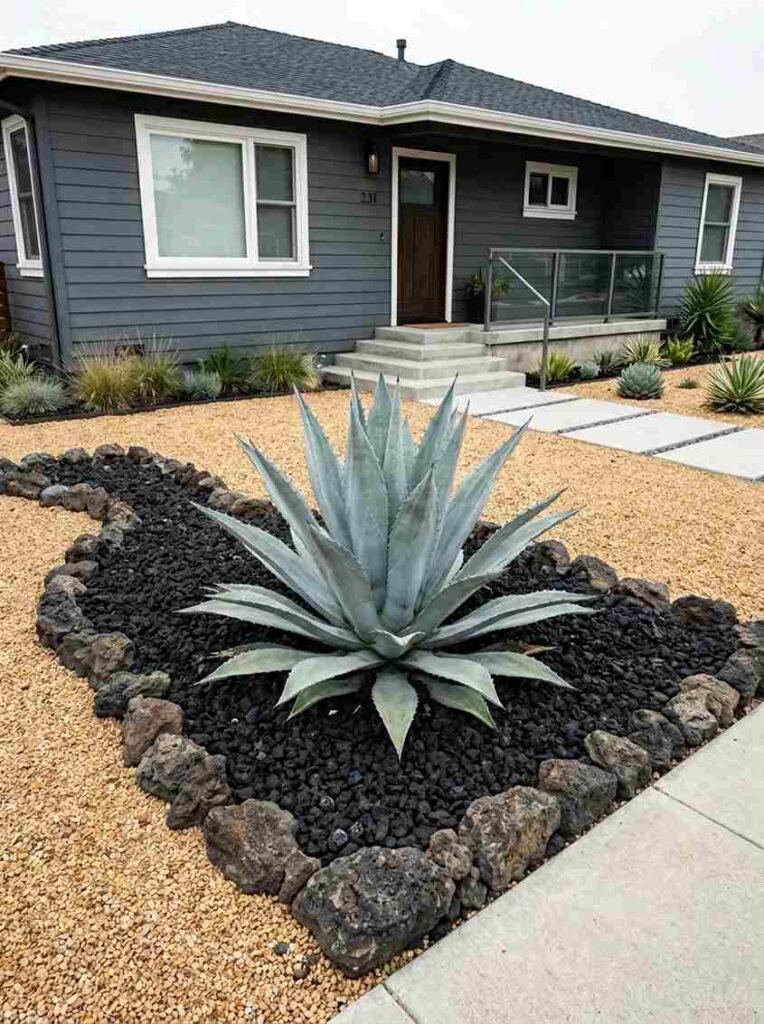
15. Agave focal plant with rock mulch One large agave surrounded by dark volcanic rock mulch is a statement.
The silvery-blue of the agave against black rock is genuinely striking — the kind of front yard people photograph without asking.
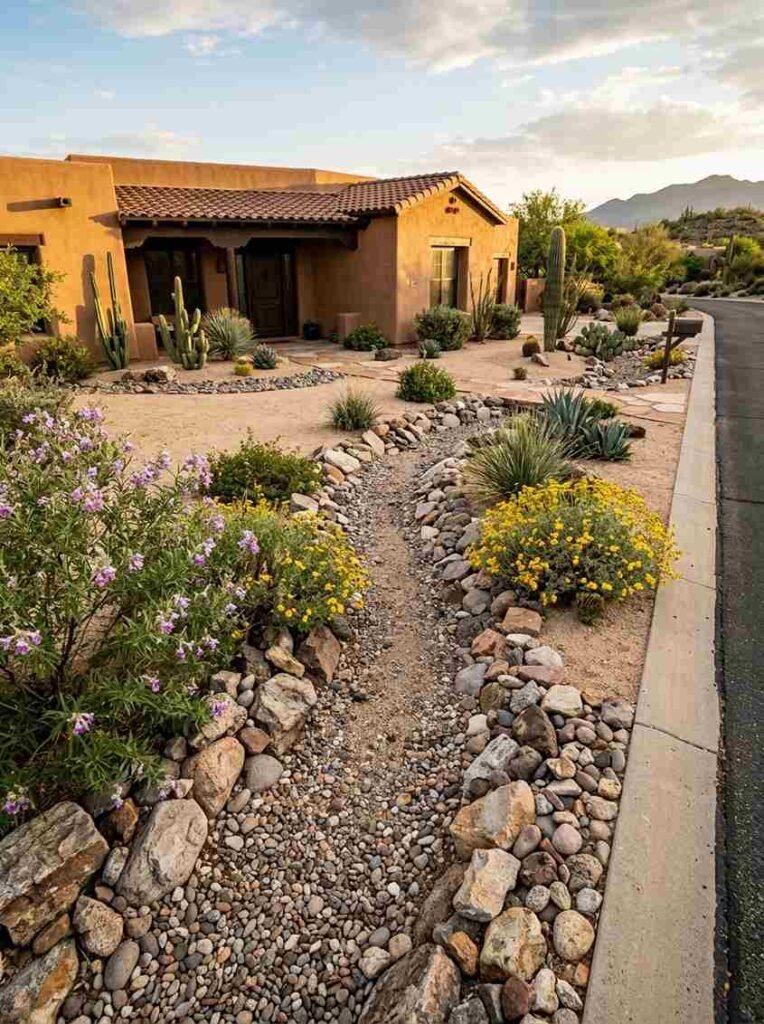
16. Desert wash design Recreate the look of a desert wash: a wide, shallow gravel channel with boulders and drought-tolerant shrubs along the sides.
It handles rain runoff and looks like purposeful landscape architecture.
Formal and Structured Styles
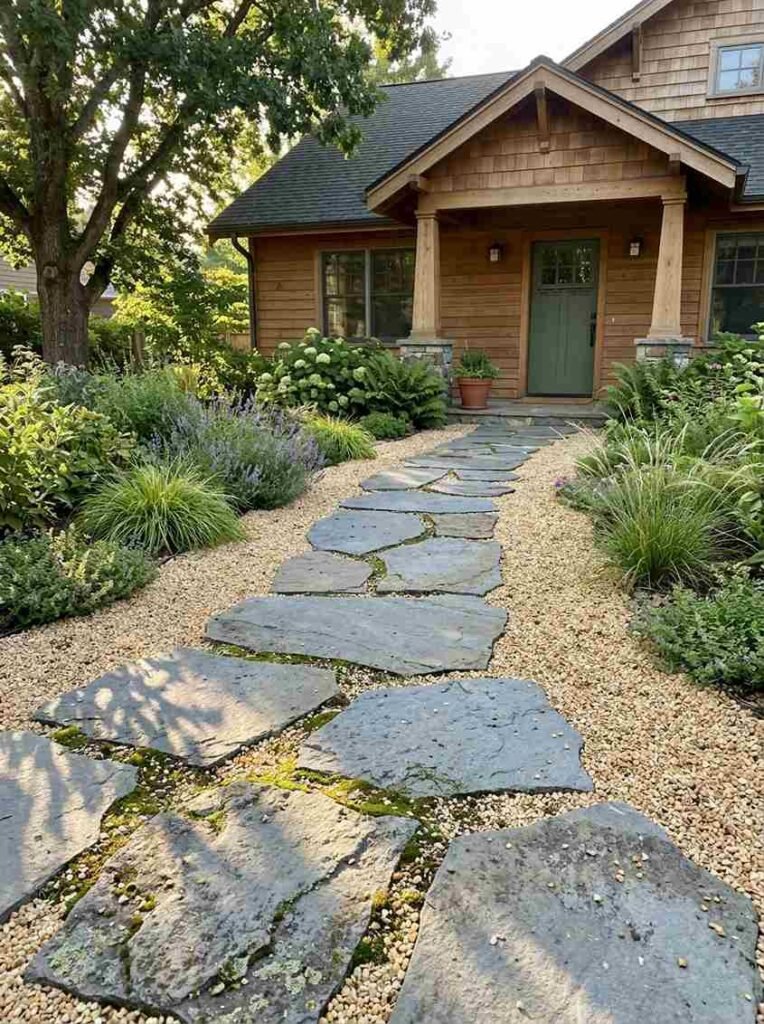
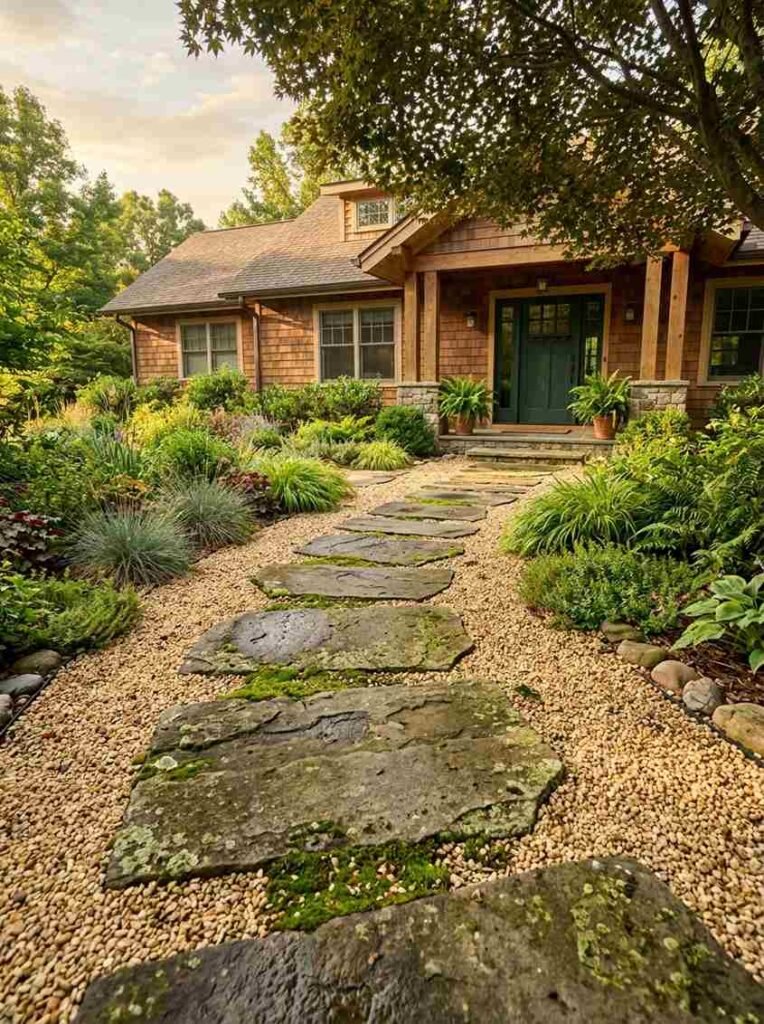
17. Flagstone stepping stones in gravel Set large, flat flagstone pieces as stepping stones through a gravel bed.
The contrast between the flat stone and loose gravel looks structured without feeling rigid.
18. Geometric rock patterns Use contrasting rock colors to create geometric sections — a grid, a diagonal stripe, alternating circles. Best for very small, flat yards where the geometry can really read clearly from the street.
19. Rock and mulch combination zones Split your front yard into defined zones — gravel here, wood mulch there, flagstone walkway through the middle.
Zoning makes small spaces feel larger because the eye travels through sections.
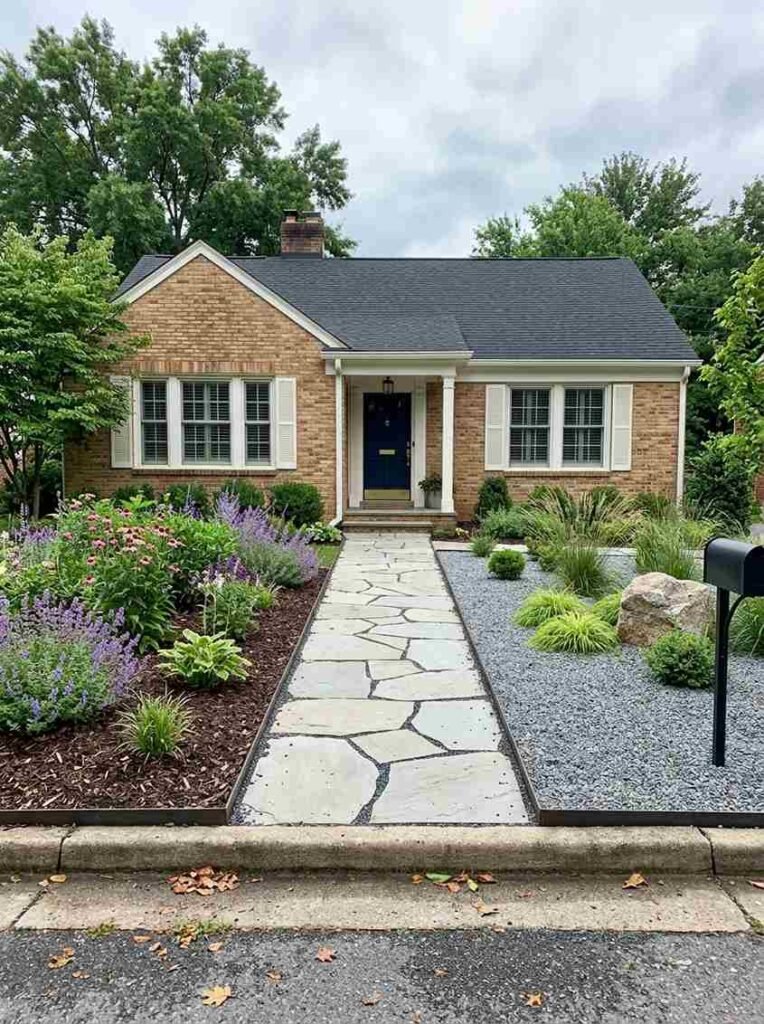
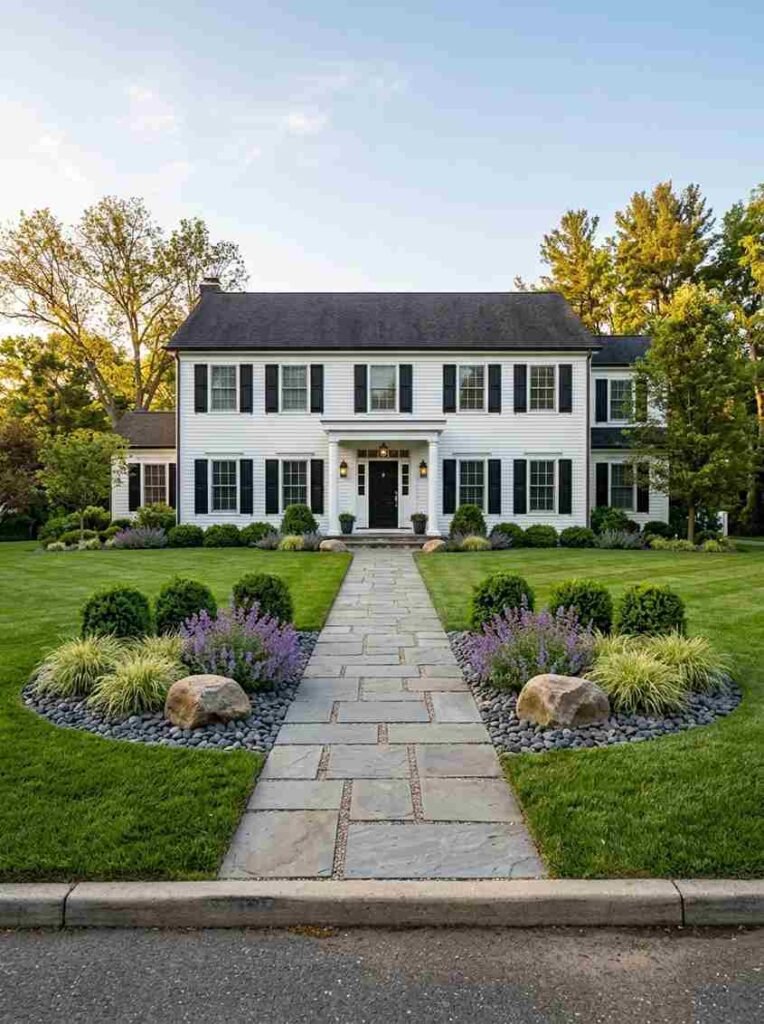
20. Formal symmetrical rock beds Mirror matching rock planters or boulder placements on either side of your walkway. Symmetry reads as intentional and polished — the front yard equivalent of a well-set table.
Low-Maintenance Planting Combos
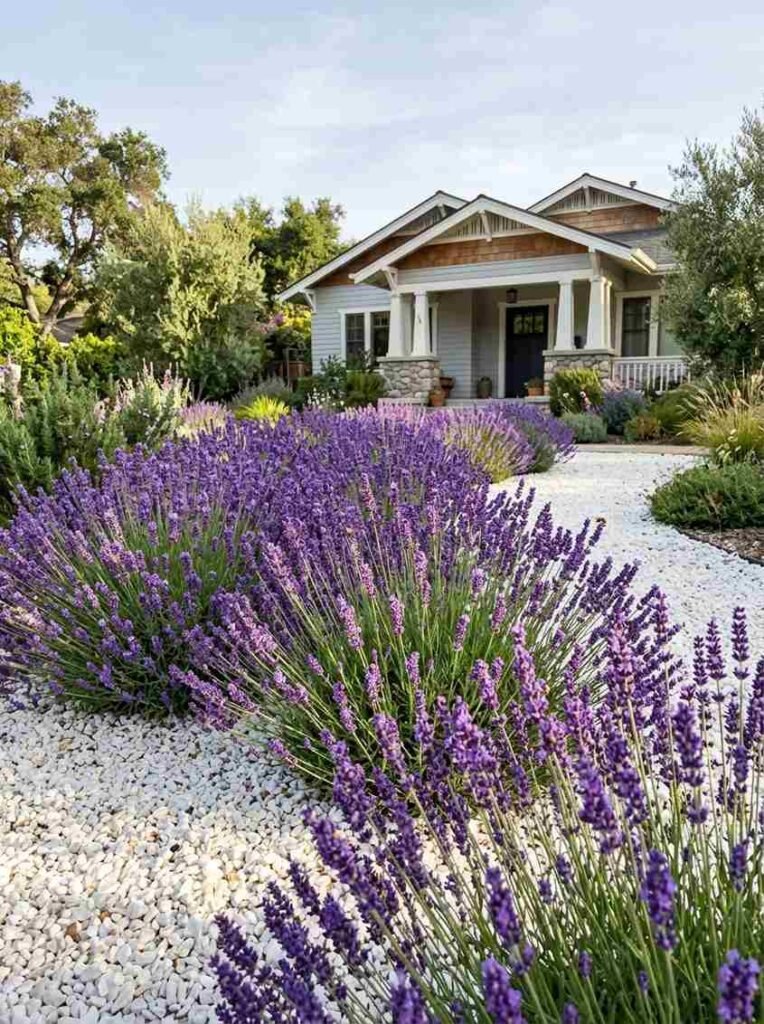
21. Lavender over white gravel Purple lavender blooming over white or light gray gravel is one of those combinations that just works every time. Smells amazing, attracts pollinators, drought-tolerant, and it photographs beautifully. Pinterest gold.
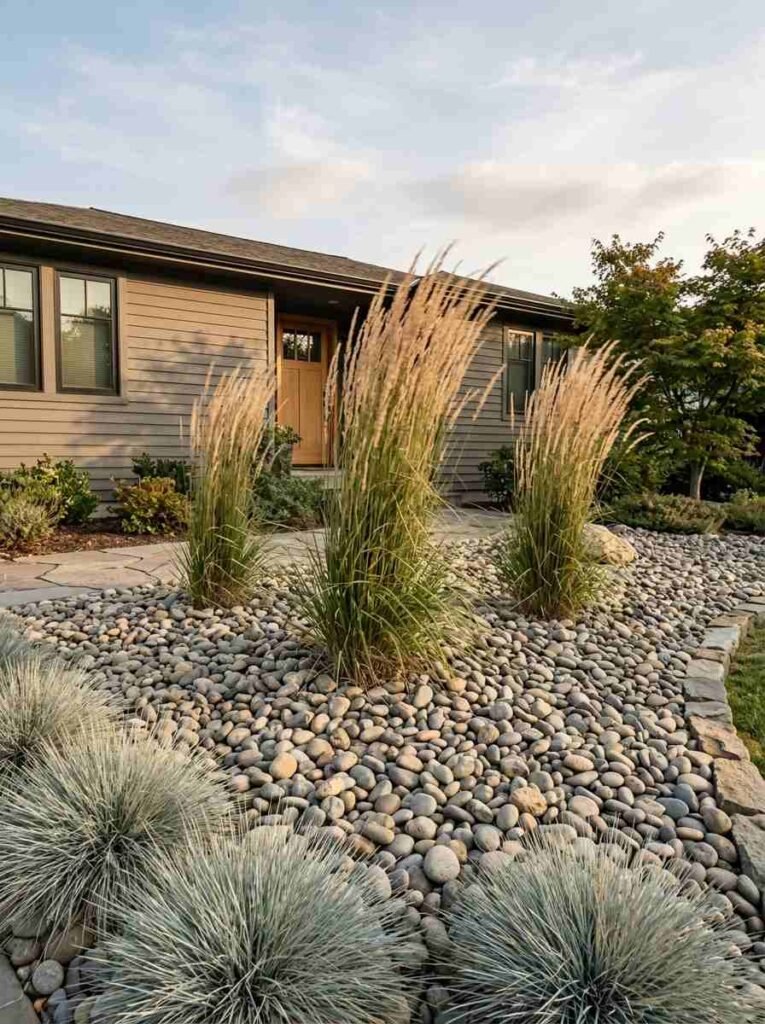
22. Ornamental grass + river rock Feather reed grass or blue oat grass planted in river rock beds sways with any breeze. It adds movement to an otherwise static rock composition.
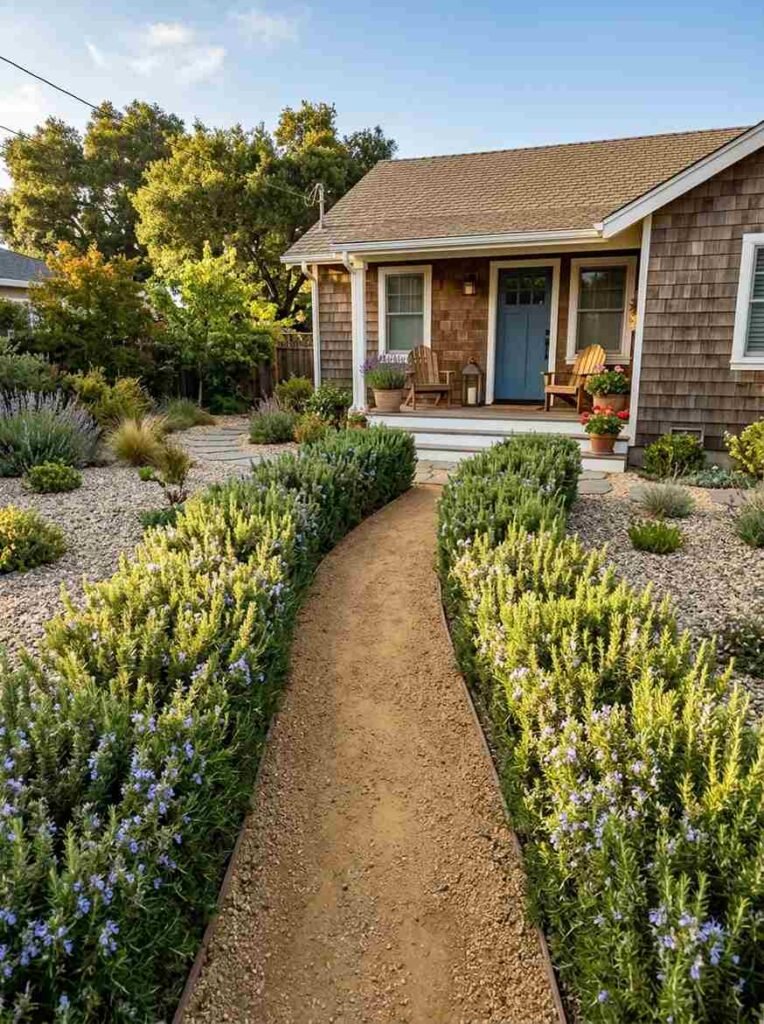
23. Rosemary hedge with gravel base Rosemary grows into a tidy low hedge with minimal effort. Plant along a walkway with a gravel base underneath and you’ve got a fragrant, practical, good-looking border.
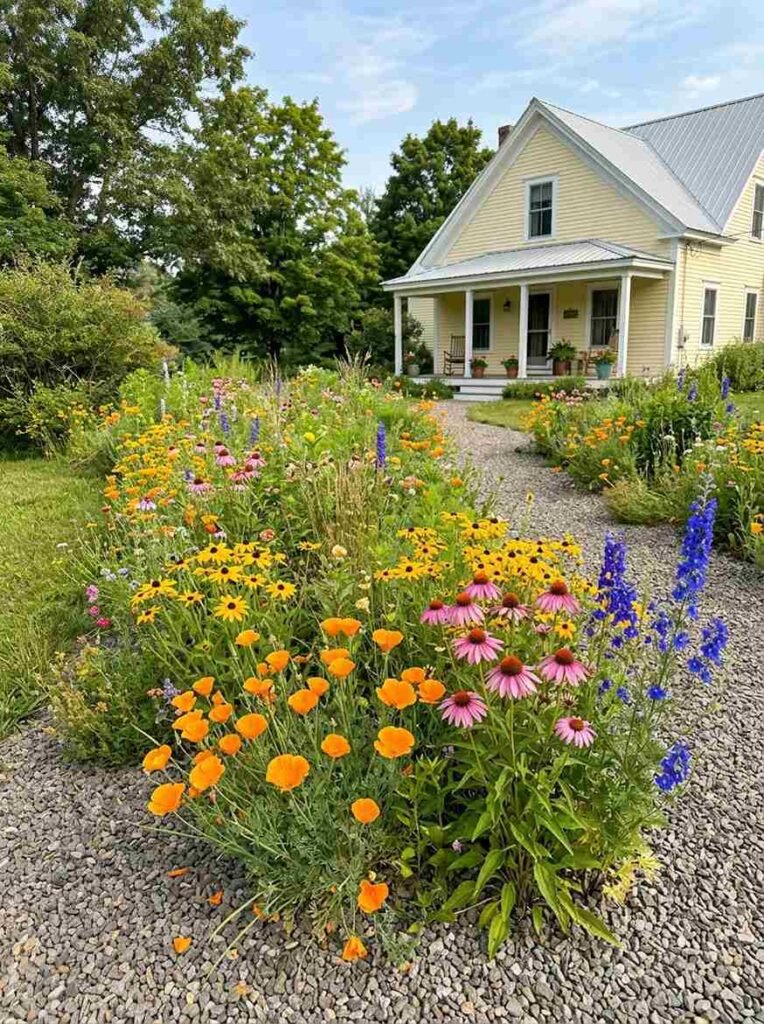
24. Native wildflowers in gravel Scatter native wildflower seeds through a gravel bed. They naturalize over time — seeding themselves back year after year — and the informal look softens all the hard stone texture.
Special Features and Accents
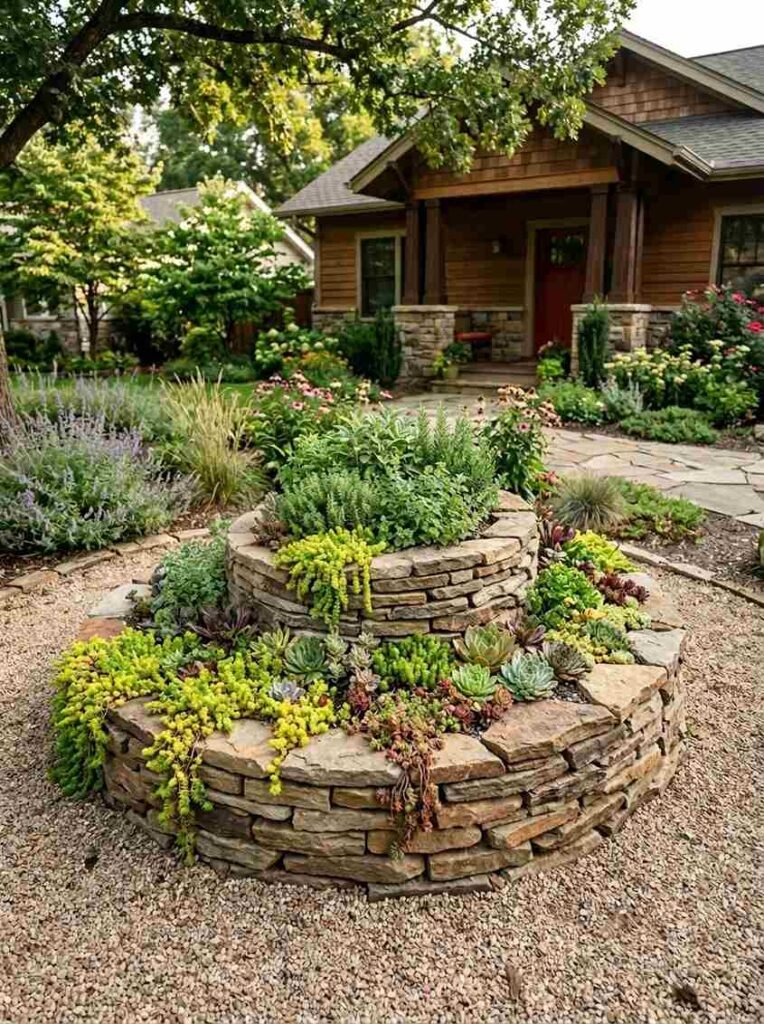
25. Rock spiral garden A spiral of stacked rocks, about knee-height, creates a raised planting area with a focal point. Each level of the spiral can hold different plants. Small footprint, big visual payoff.
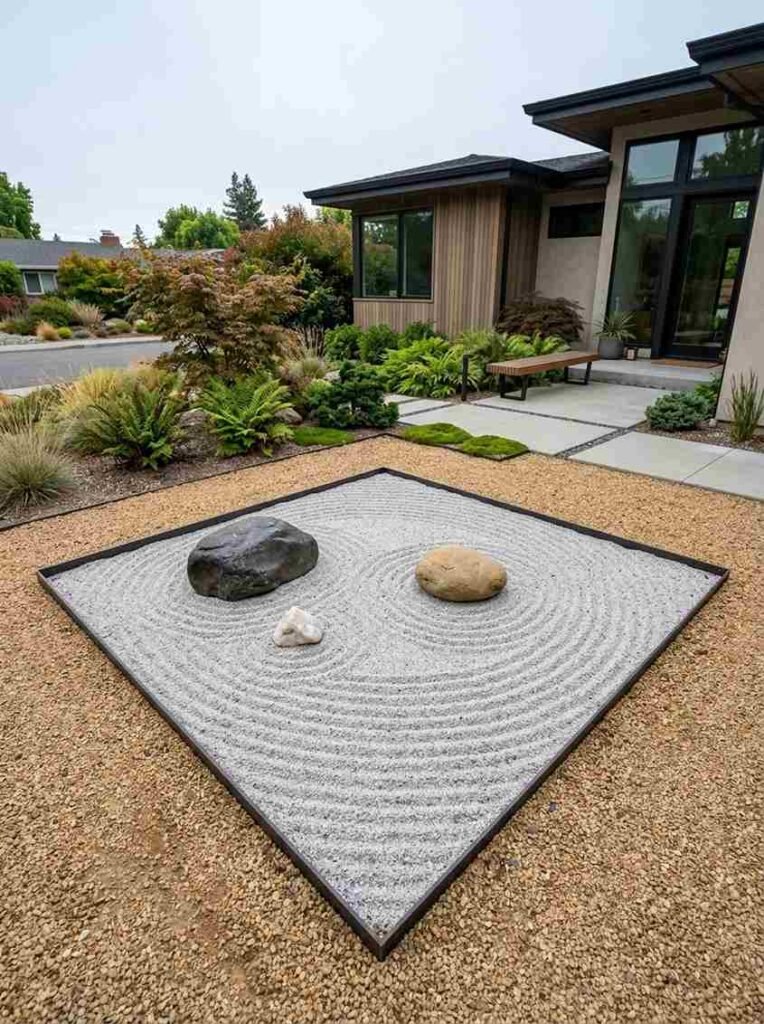
26. Zen-style raked gravel section A small section of fine, raked gravel with a few carefully placed rocks creates a calm, minimal moment near your entry. You don’t need a full Japanese garden — even a 4×4 foot section reads beautifully.
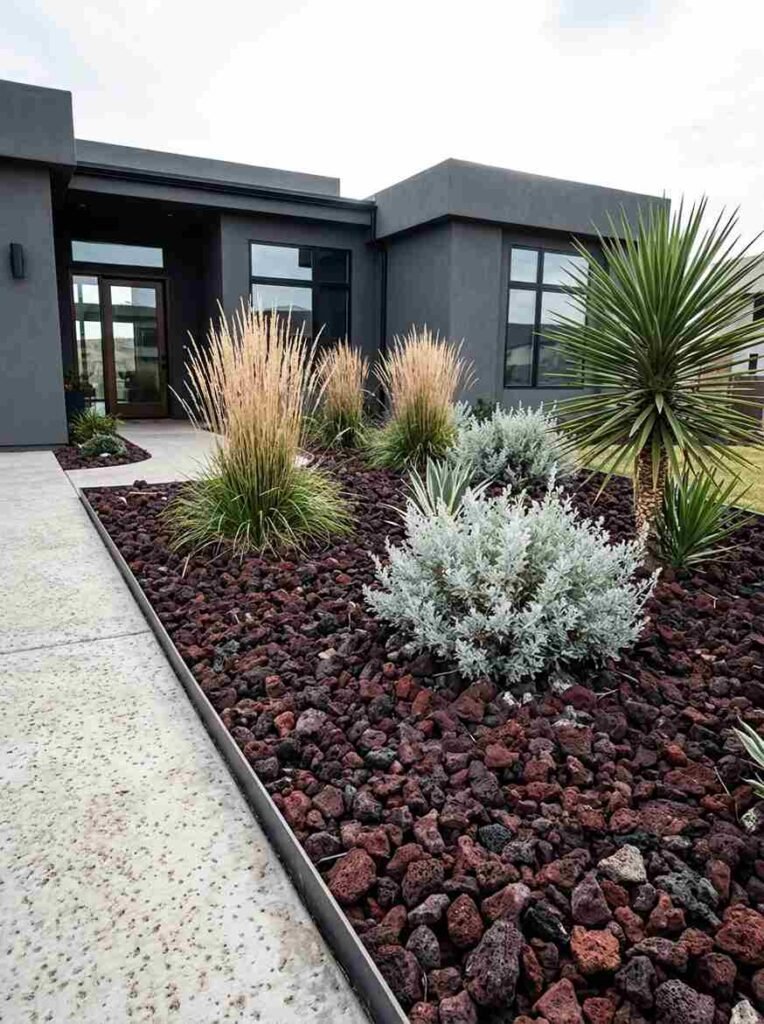
27. Lava rock mulch beds Red or black lava rock is lightweight, porous, and surprisingly dramatic. It reads differently than standard gray gravel — the color is warmer and the texture is more interesting up close.
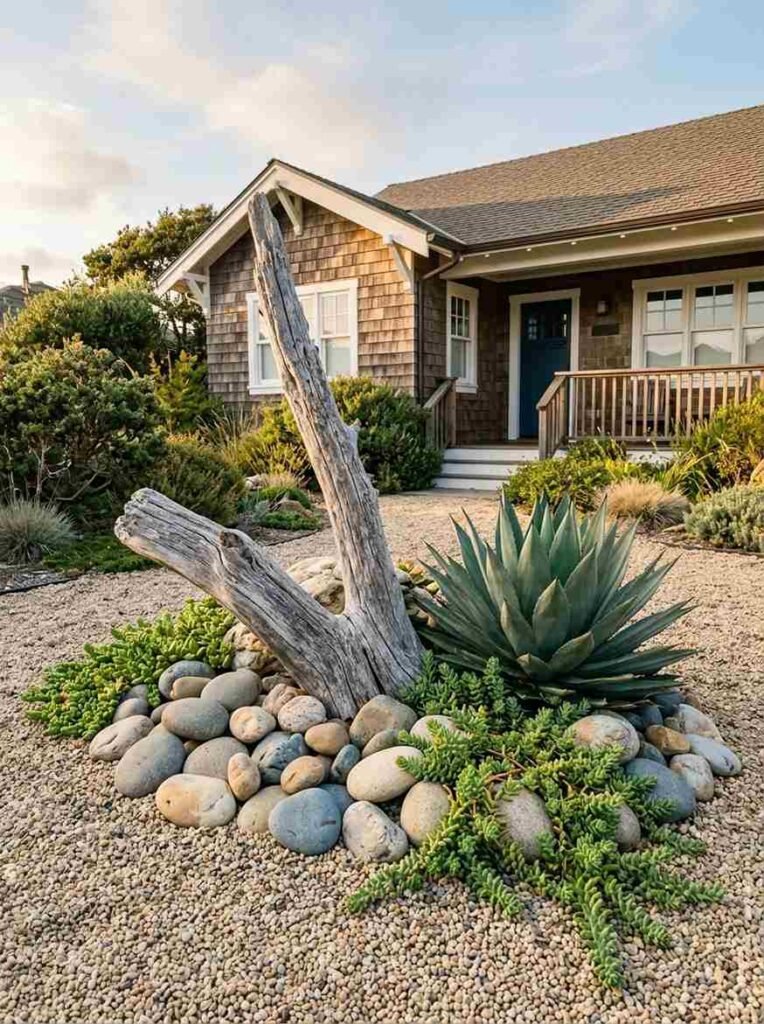
28. Rock and driftwood combo Pair a few interesting pieces of driftwood with smooth river rocks and a drought-tolerant plant or two. The organic shapes work together in a way that looks curated but relaxed. It’s the kind of thing that gets pinned repeatedly 🙂
How to Actually Start (Without Overcomplicating It)
Pick one section of your front yard — not the whole thing. Seriously.
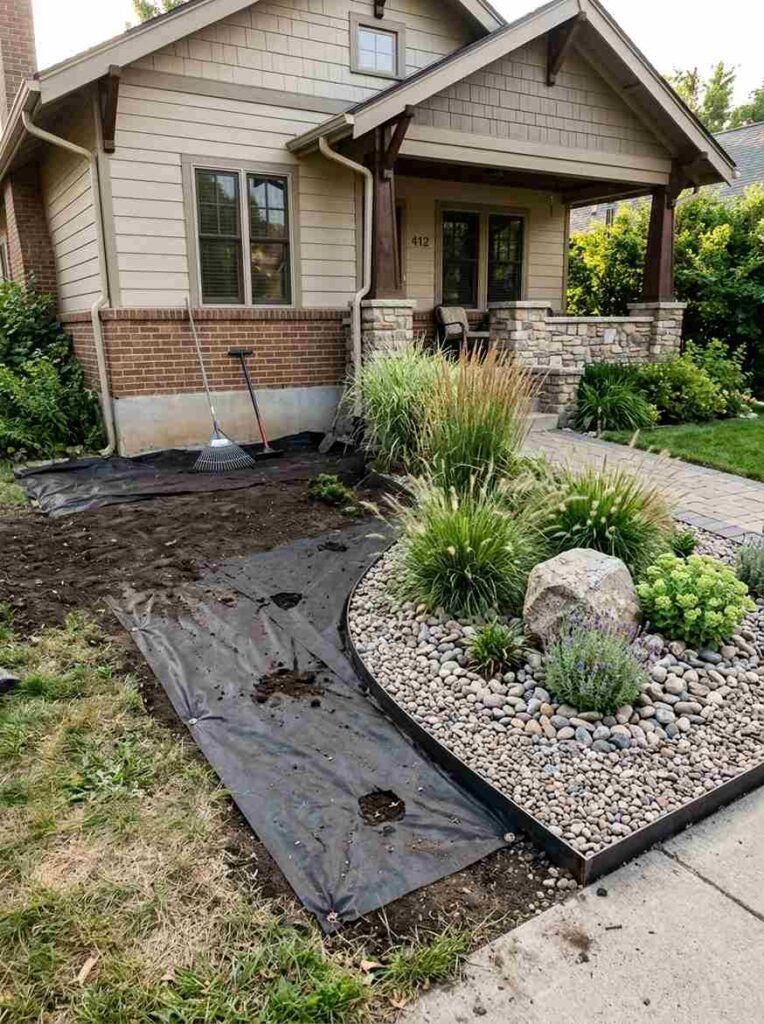
Start with a 6×8 foot area. Clear it, lay landscape fabric, add your rock base, place one or two plants. Step back. See how it feels. Then expand from there.
The biggest mistake people make is trying to redesign everything at once and burning out halfway through. One zone done well beats four zones abandoned.
A quick start checklist:
- Measure your space before buying any rock (you’ll need more than you think — figure on 1-1.5 inches of depth minimum)
- Choose rocks that complement your house’s exterior color
- Lay landscape fabric before any rock to cut weed pressure down by about 80%
- Think in odd numbers when grouping boulders or plants
- Leave negative space — packed-in rock everywhere looks chaotic
Final Thought
Rock landscaping doesn’t require a big yard or a big budget. It just requires a little intention.
Pick two or three ideas from this list that genuinely excite you — the ones you’d actually save to a board and come back to. Start small, see what works for your specific space and climate, and build from there.
Your front entrance sets the tone for everything that follows. Might as well make it worth the walk.
