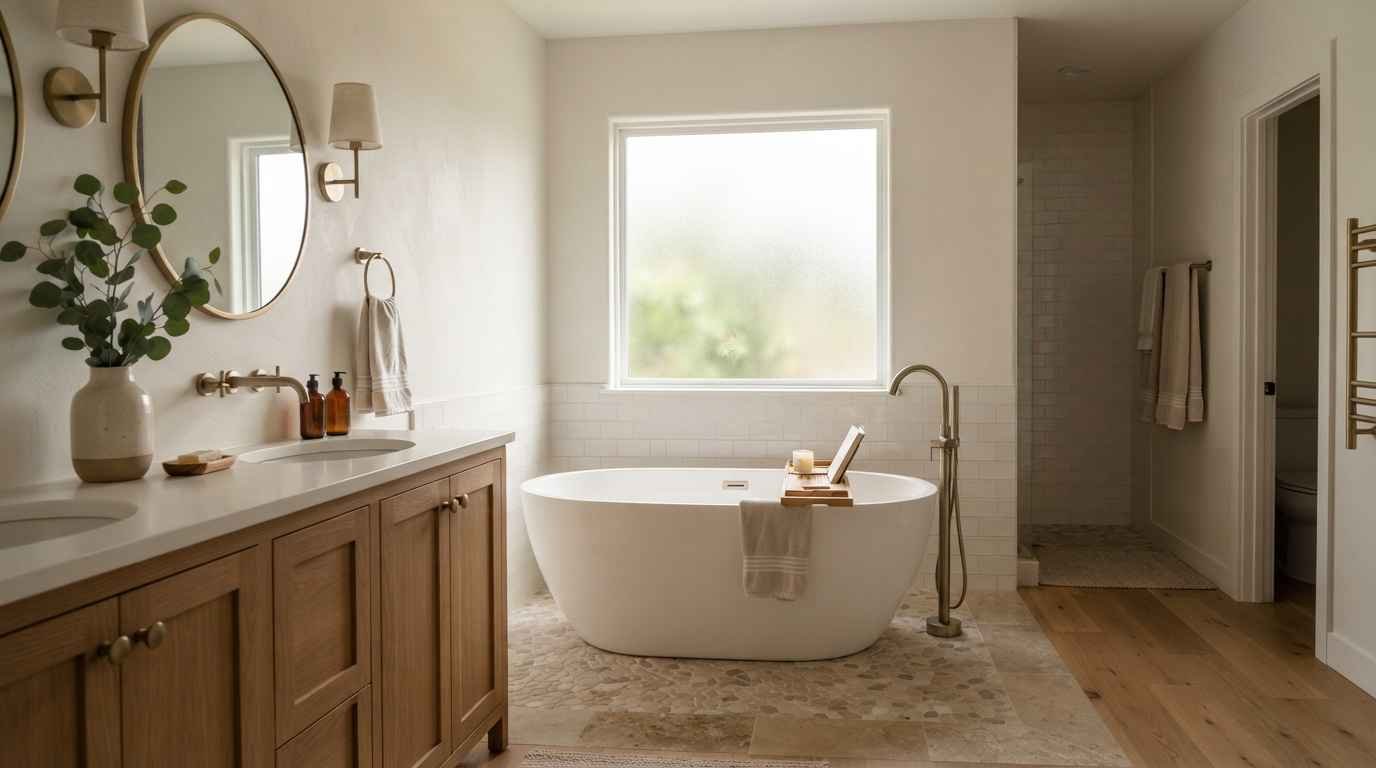
I’ve redone two bathrooms in the last five years, and I still pin bathroom photos like it’s my job.
If you’re the kind of person who has a Pinterest board named something dramatic like “bathroom goals” with 400 saved images and zero actual plans, this one’s for you.
A bathroom makeover doesn’t need a $30,000 budget or a contractor on speed dial.
Sometimes it’s a color, a mirror, or one bold tile choice that flips the whole room.
I’ve grouped 30 ideas below by theme so you can actually find what fits your space, instead of scrolling forever.
Quick disclaimer before you start pinning: not every idea here works in every bathroom.
A tiny half bath and a primary bathroom with a soaking tub are basically different projects wearing the same name.
Read through the categories, figure out which one matches your square footage and budget, and steal from there.
That’s how I approach every board I build, and it’s saved me from a lot of half-finished projects.
Warm, earthy, and organic looks
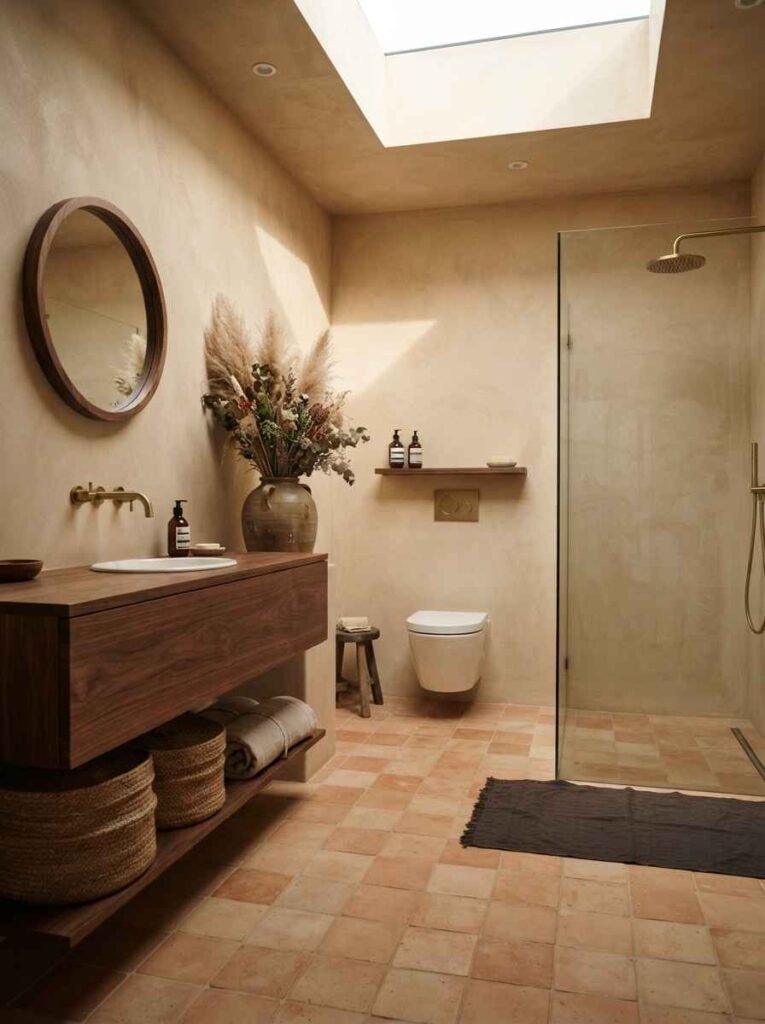
This is the direction most designers are leaning right now, and honestly, I get it.
White-box bathrooms feel like a dentist’s office. Warmth feels like a home.
- Limewash walls. Textured, slightly imperfect, and impossible to fake with regular paint. It reads expensive because it kind of is a pain to apply, but the payoff is huge.
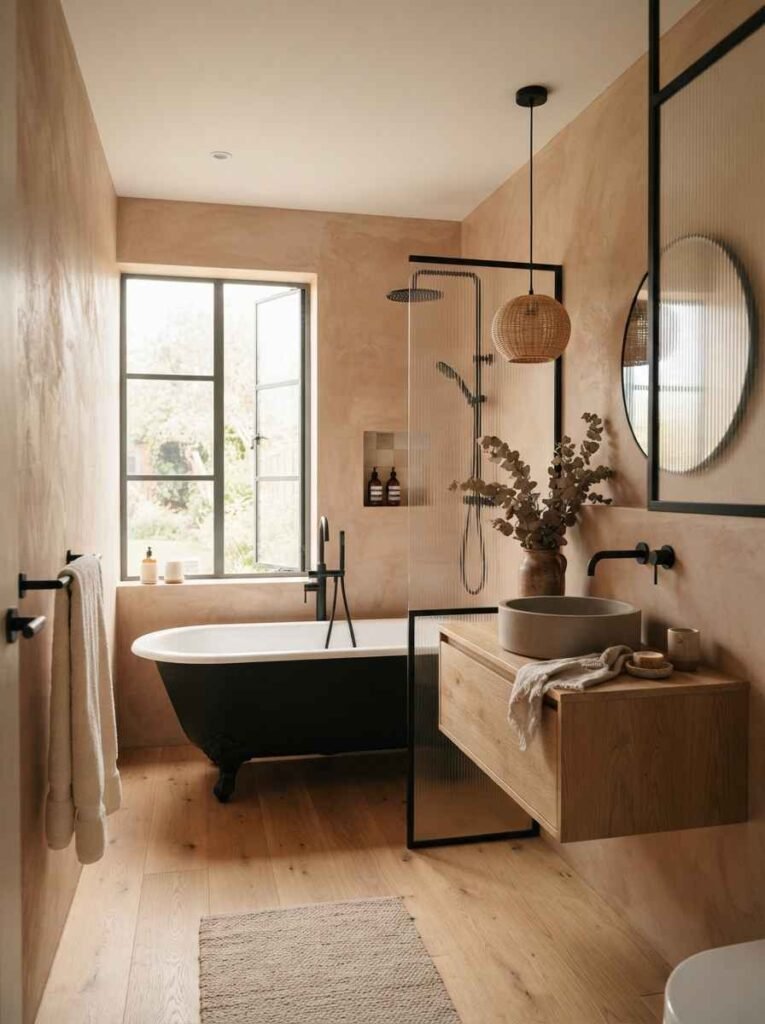
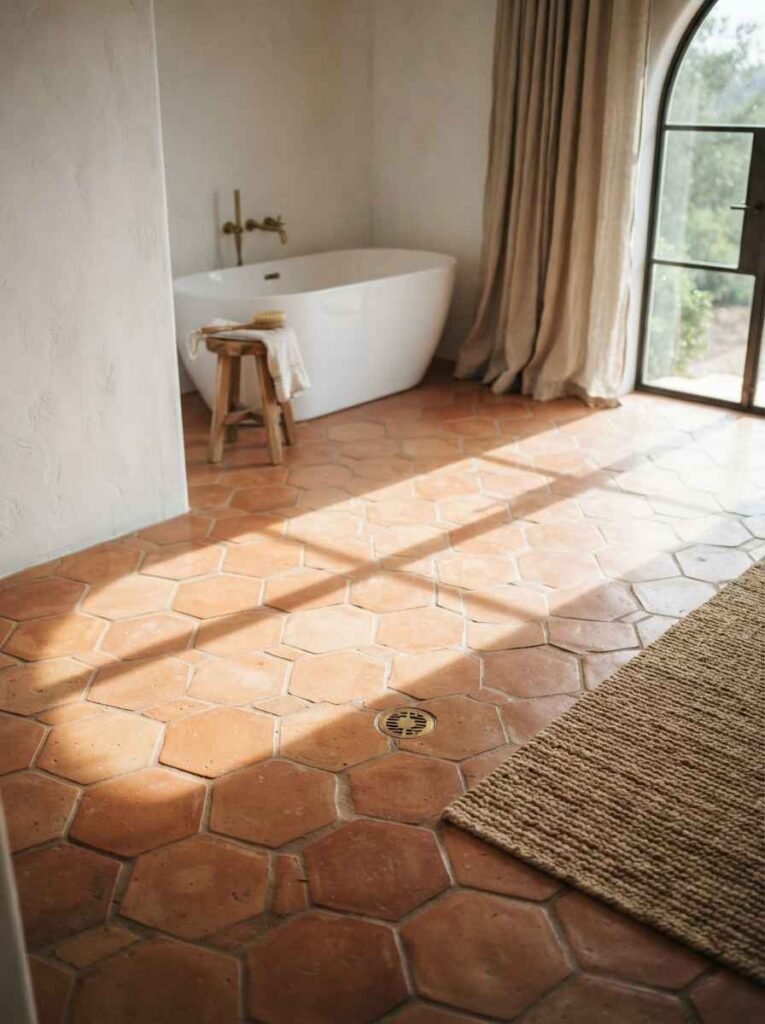
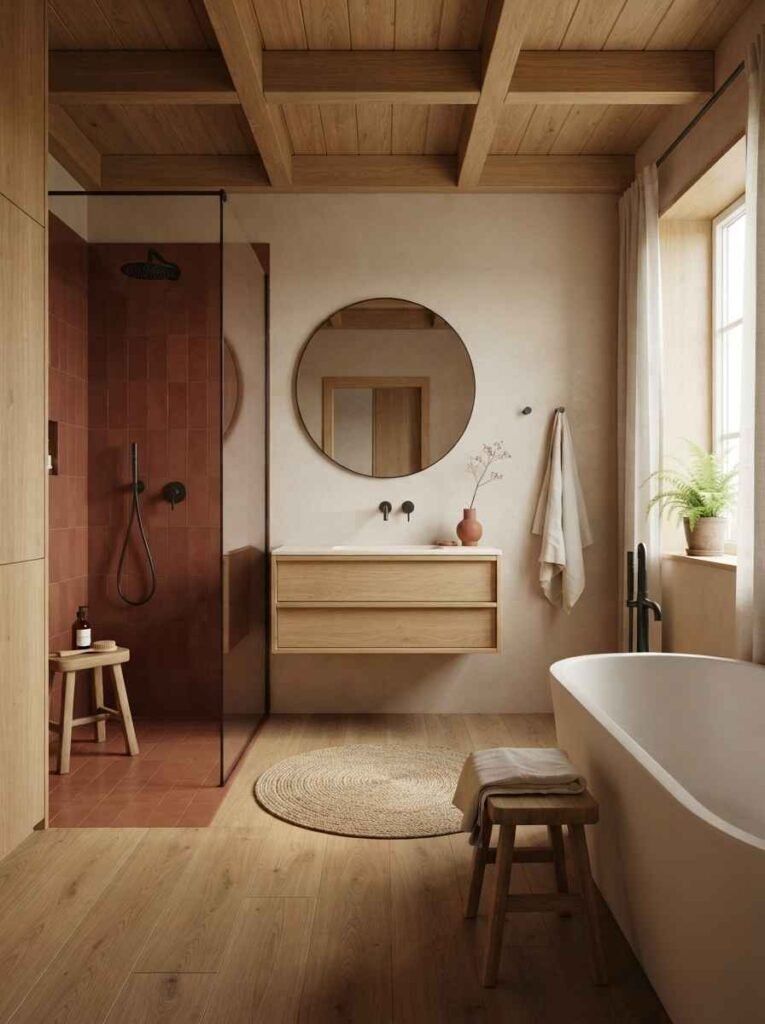
- Terracotta tile flooring. Warm underfoot, forgiving of scuffs, and it photographs beautifully in natural light.
- Exposed wood vanity. Skip the painted MDF. A slab of white oak or walnut instantly makes the room feel less “builder grade.”
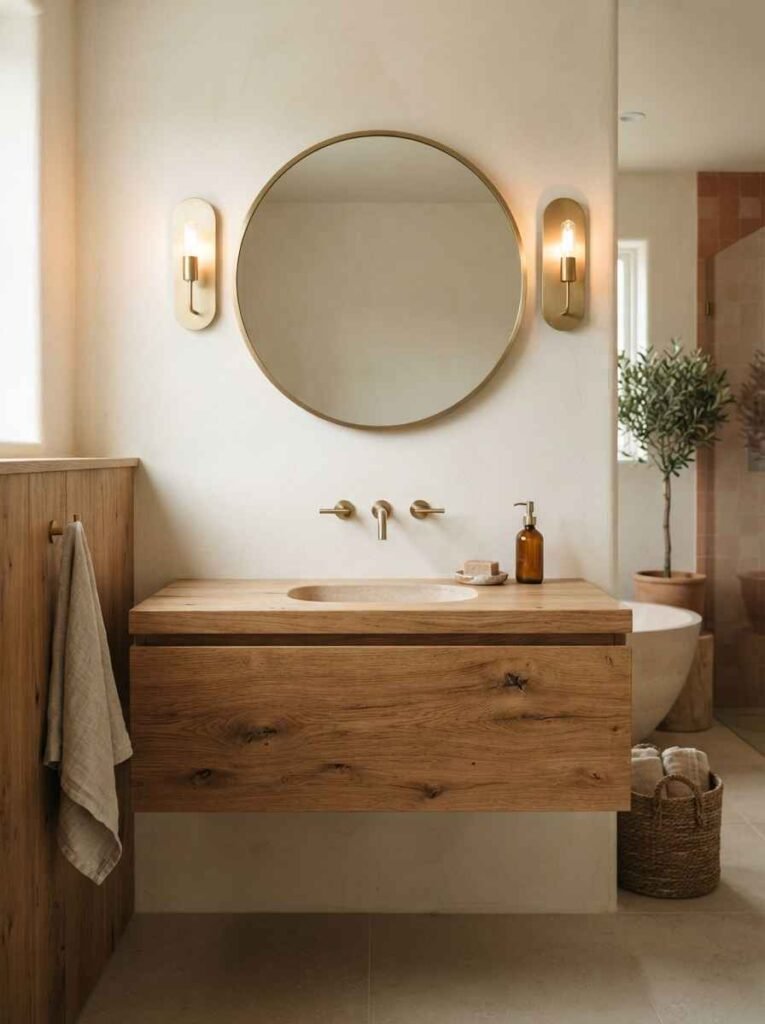
- Woven baskets for storage. Cheap, textural, and they hide clutter better than any drawer organizer I’ve bought.
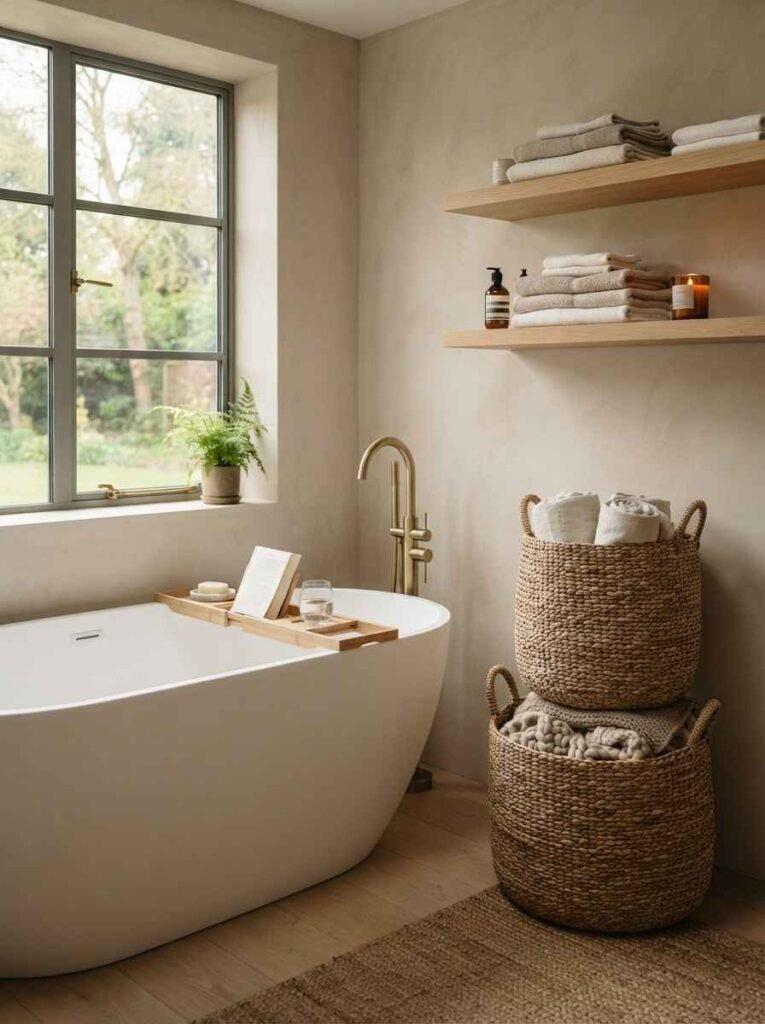
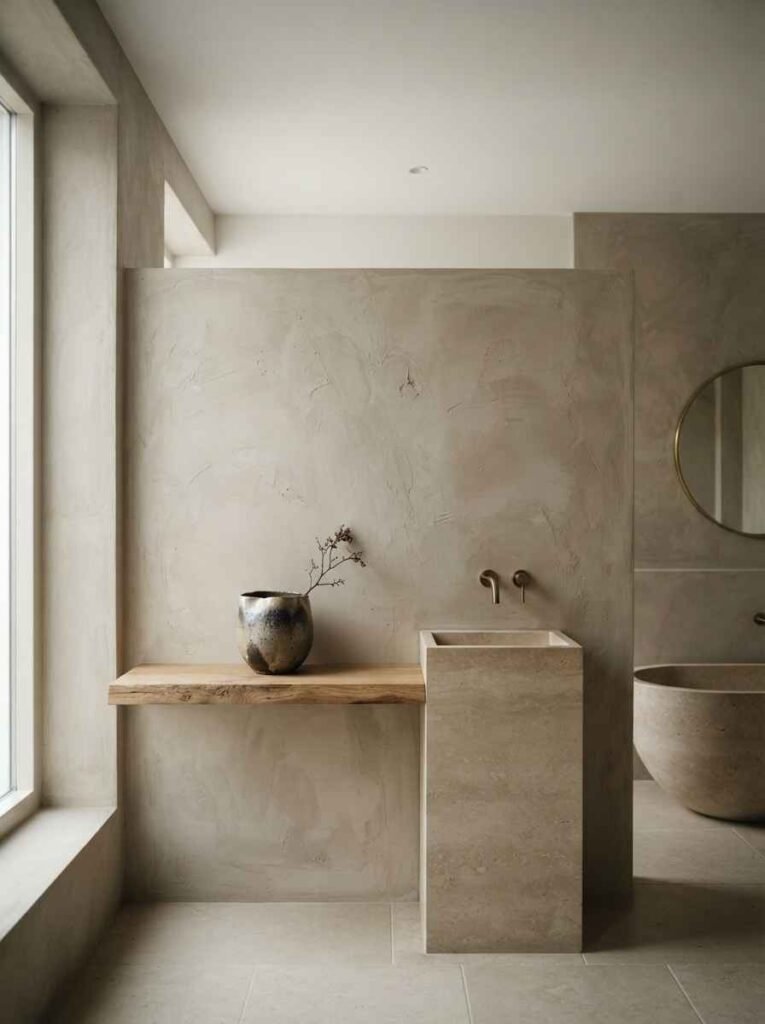
- Clay or plaster wall finish. Similar spirit to limewash but with more visible hand-troweled texture. It’s having a real moment, and I don’t think it’s going anywhere soon.
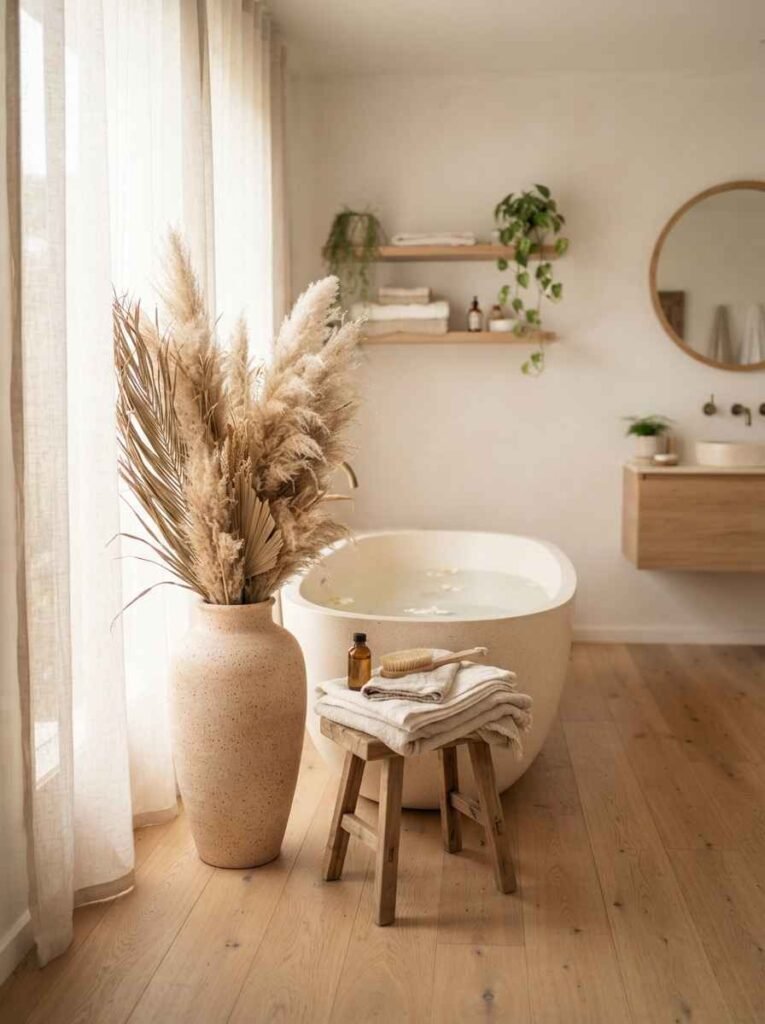
- Dried botanicals instead of live plants. IMO this is underrated.
- No watering schedule, no mildew risk, and they still add softness.
Bold color and pattern (the Pinterest favorites)
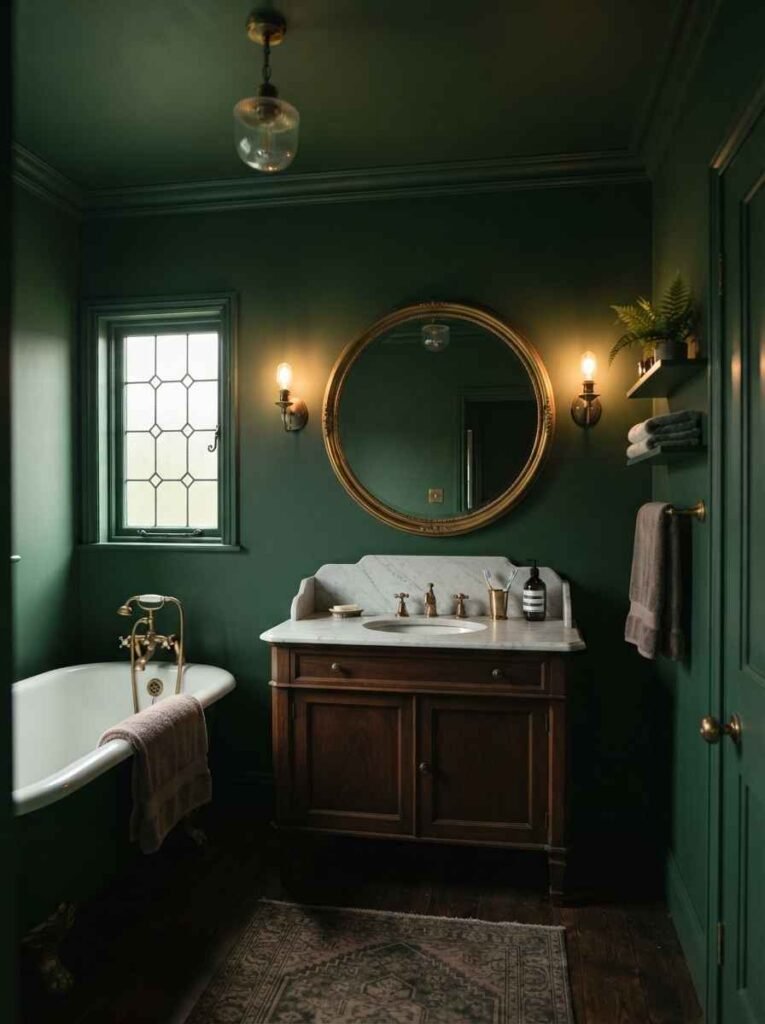
If your feed is full of jewel-toned bathrooms lately, you’re not imagining it. Color drenching has taken over, and it’s one of the cheapest ways to make a small bathroom feel intentional rather than accidental.
- Color-drenched walls and ceiling. Same paint color everywhere, trim included. It tricks the eye into forgetting where the walls end.
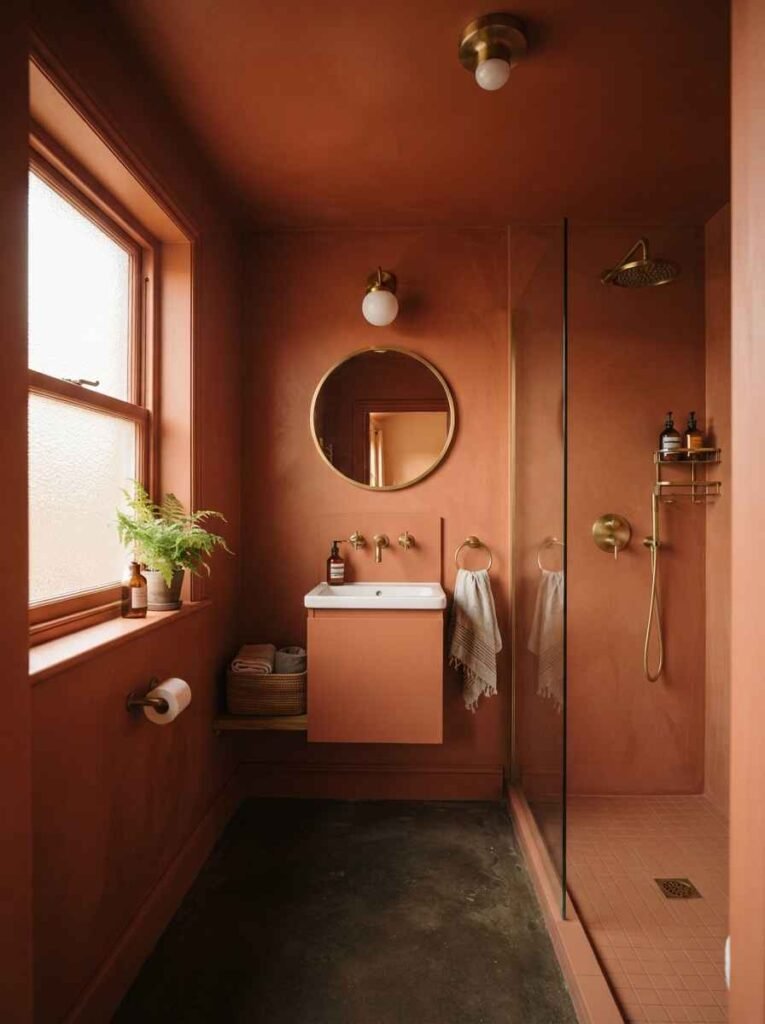
- Forest green vanity. Pairs with brass hardware in a way that feels timeless, not trendy. I did this in my powder room and I’m still not tired of it two years later.
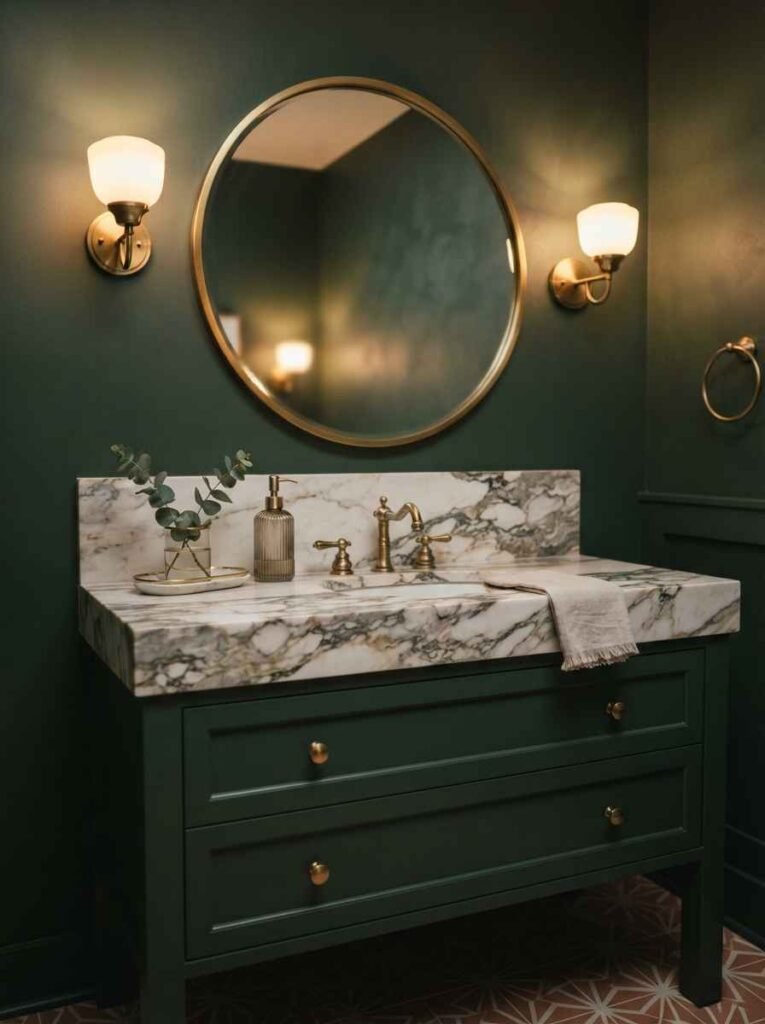
- Deep terracotta or rust tones. Warm, moody, flattering lighting for skin tones. Big plus if your bathroom doubles as your “getting ready” space.
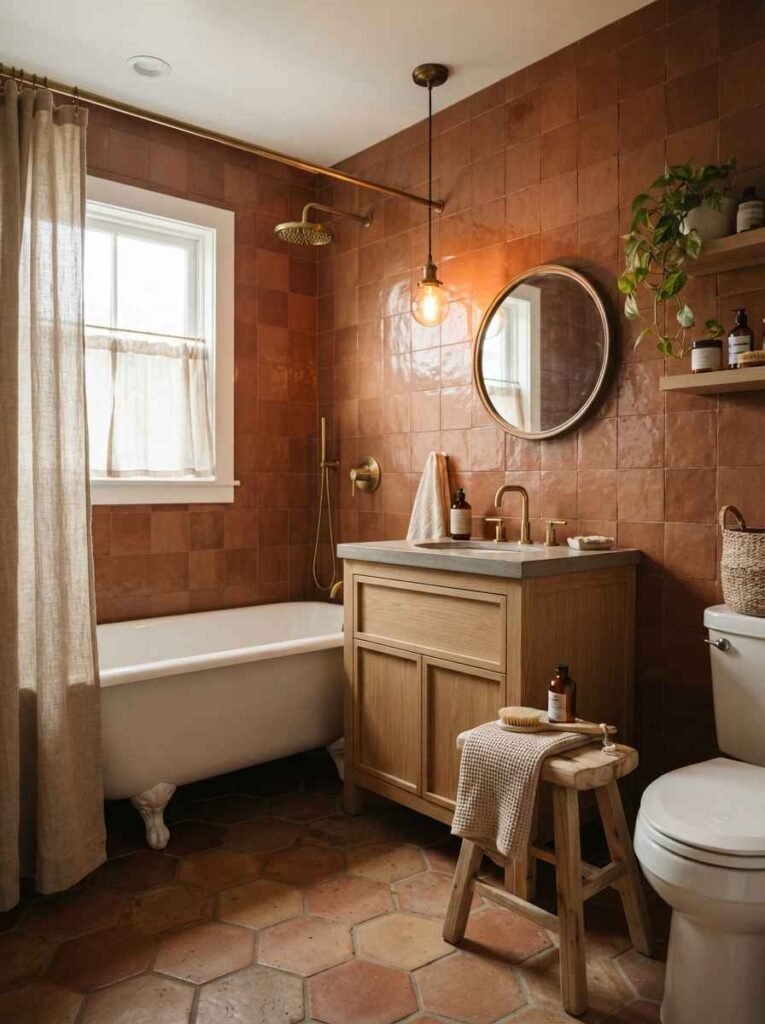
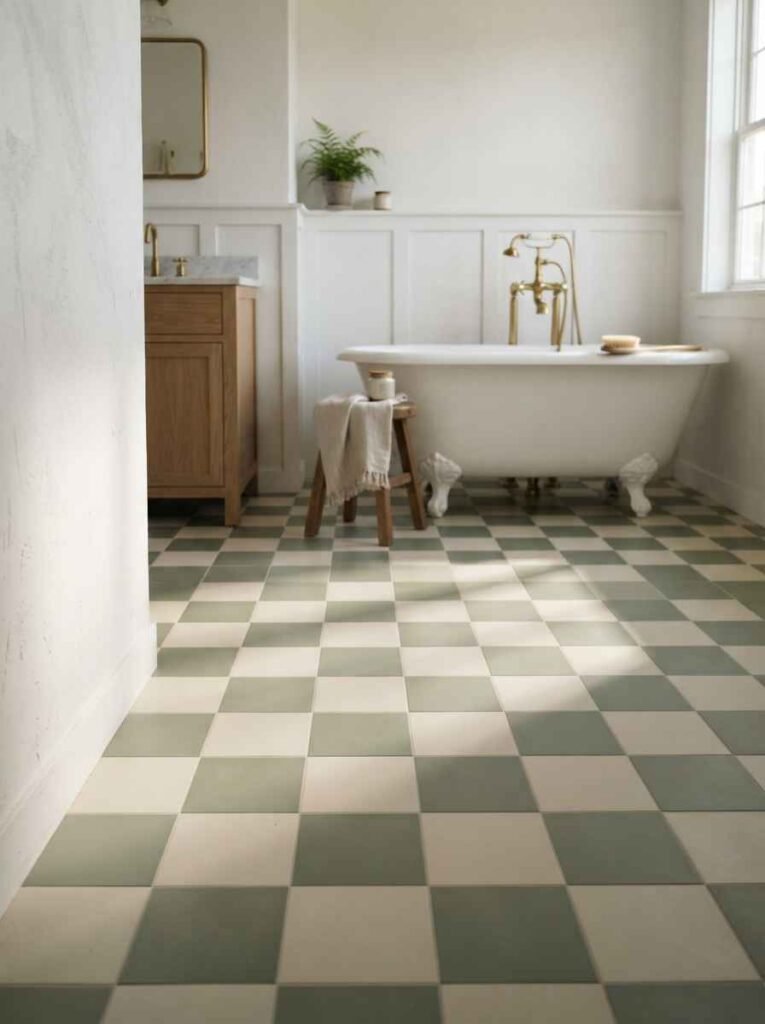
- Checkerboard flooring. Classic, but do it in an unexpected color pairing (sage and cream, black and terracotta) so it doesn’t read like a diner.
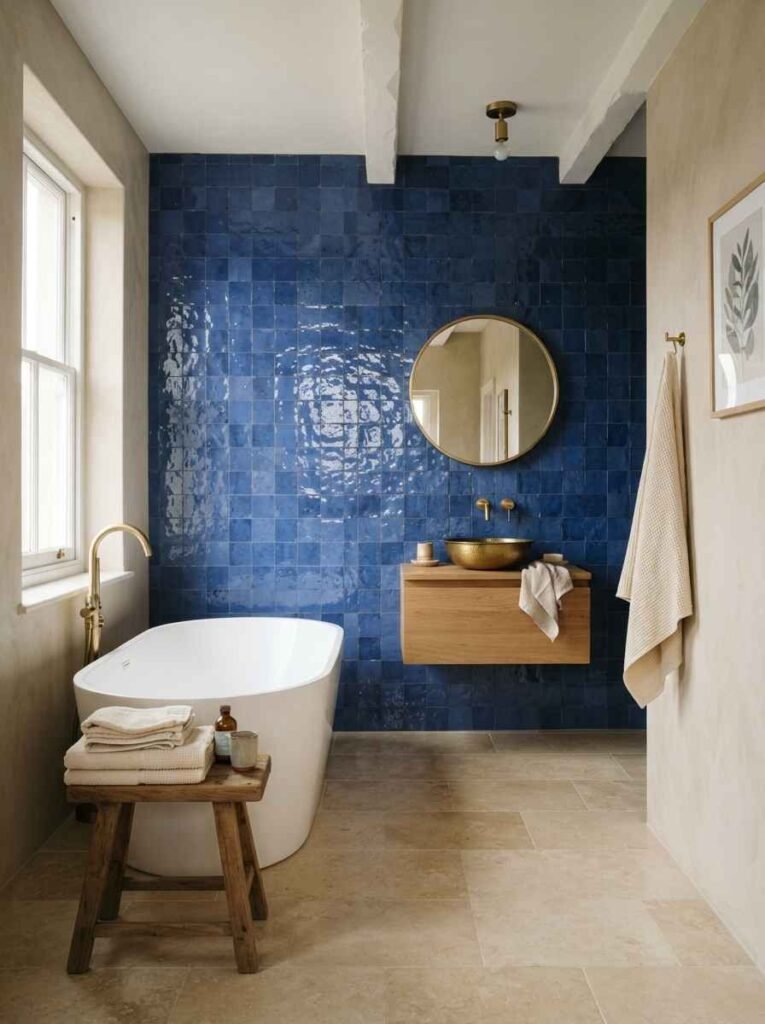
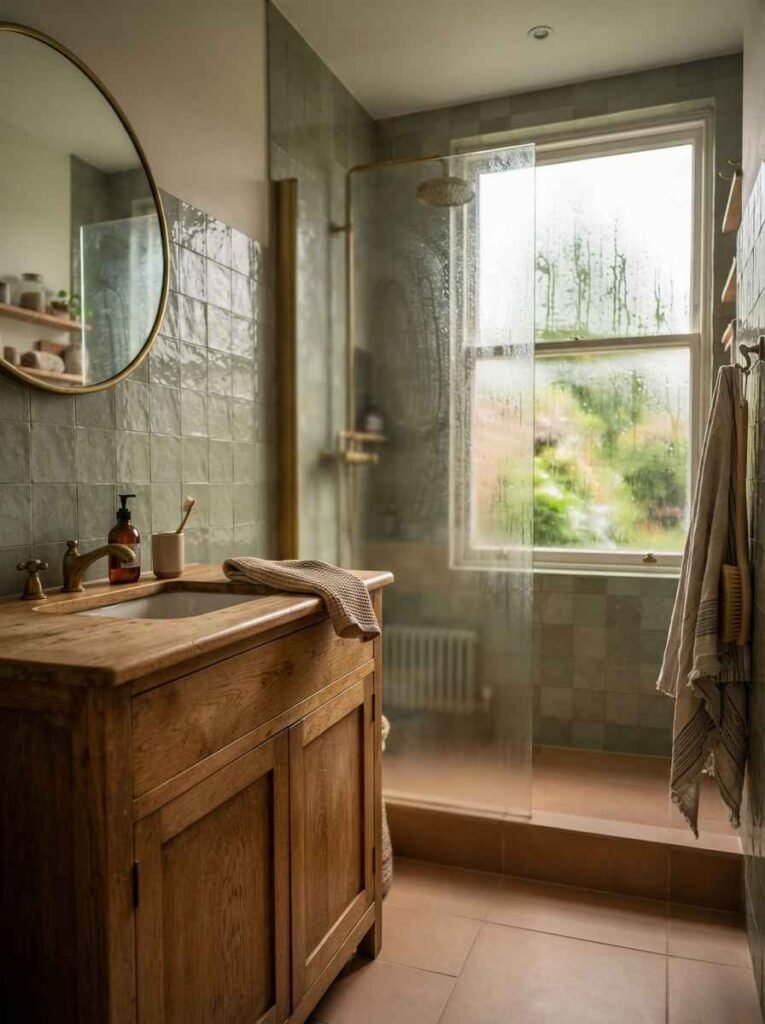
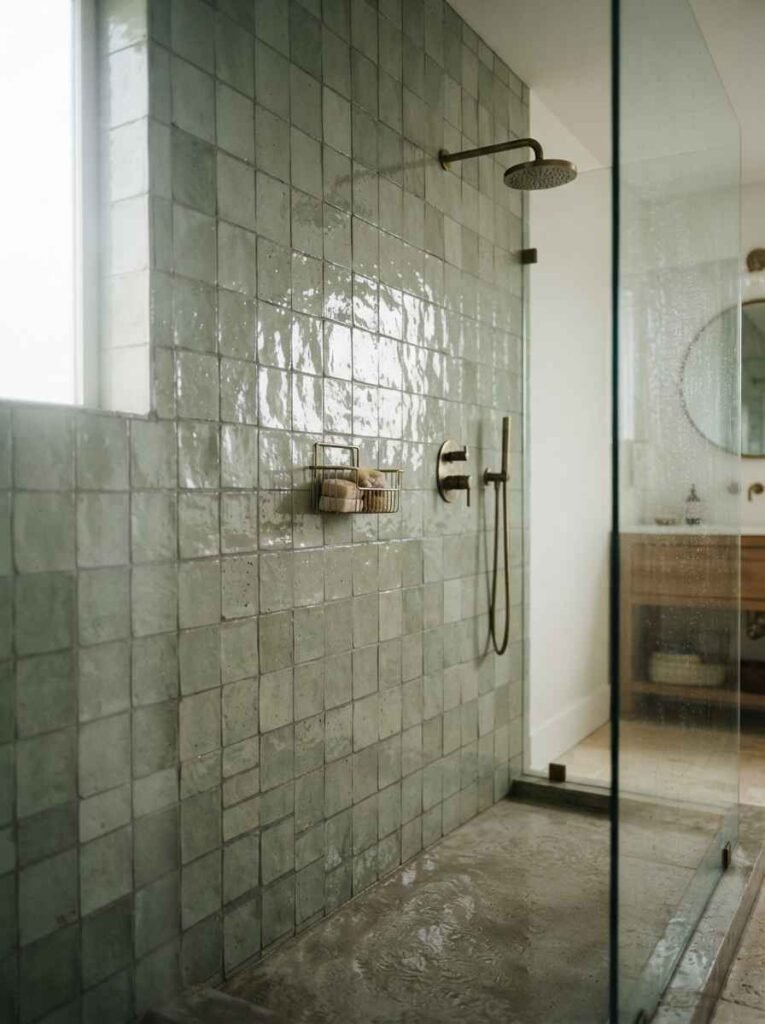
- Zellige tile in a single accent wall. Handmade tile has irregular edges and light-catching glaze, which makes it look nothing like the flat, mass-produced stuff. One wall is usually enough; the whole room can feel busy fast.
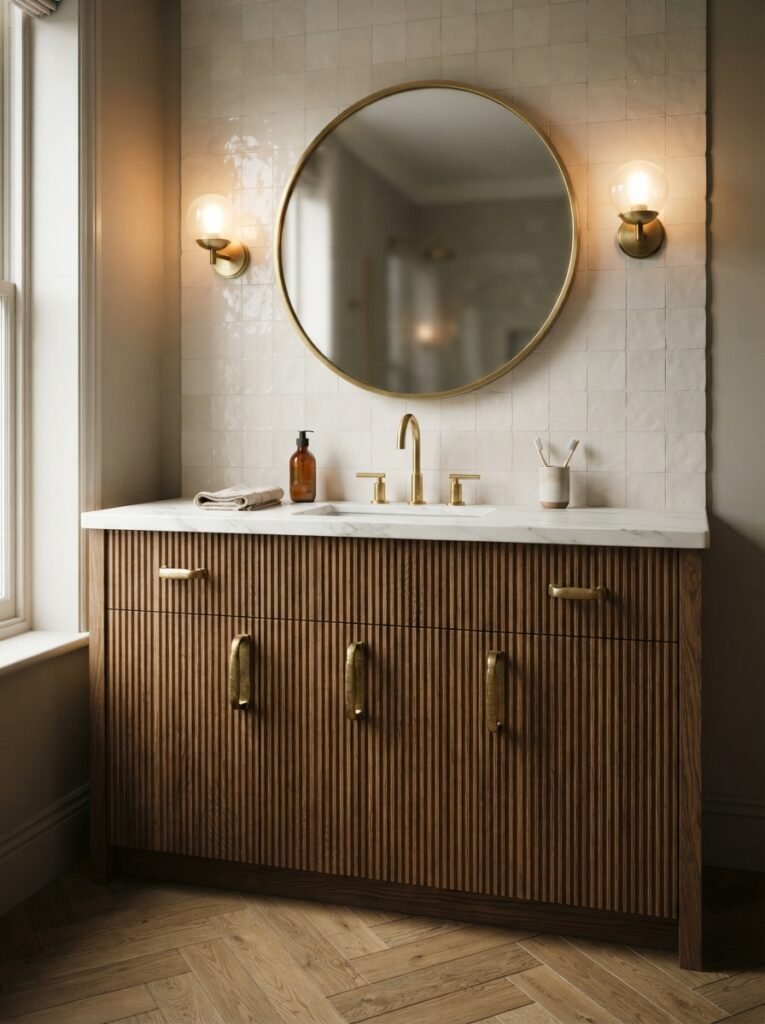
- Scalloped or fluted cabinet fronts. Soft curves against hard tile create a nice visual tension.
- This one’s more opinion than fact, but I think fluted cabinetry is one of the few “trends” that’ll still look good in 10 years.
Small bathroom tricks that actually work
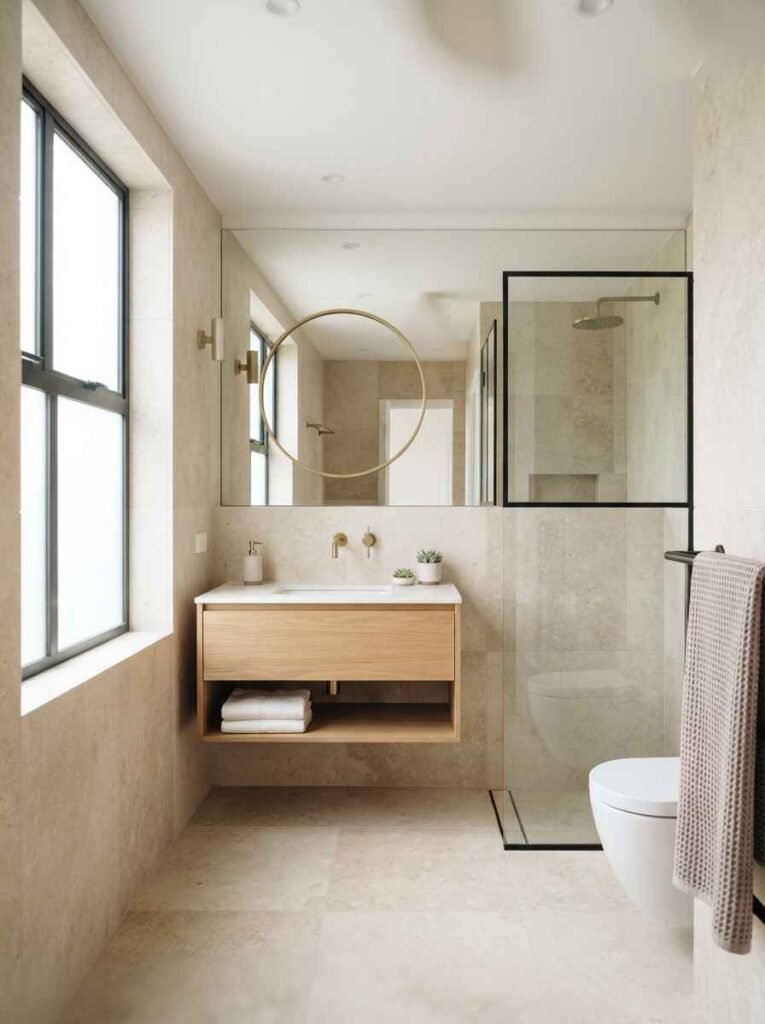
Small bathrooms get a bad reputation. I’ve had a genuinely tiny one (32 square feet, I measured), and there’s more you can do than the internet lets on.
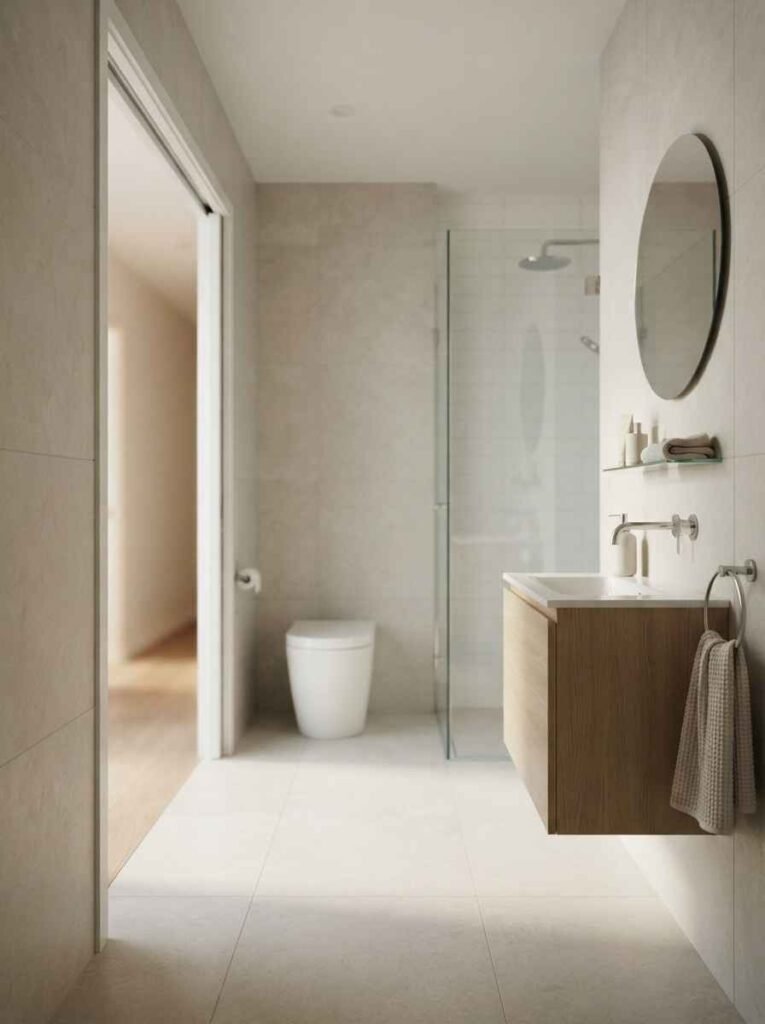
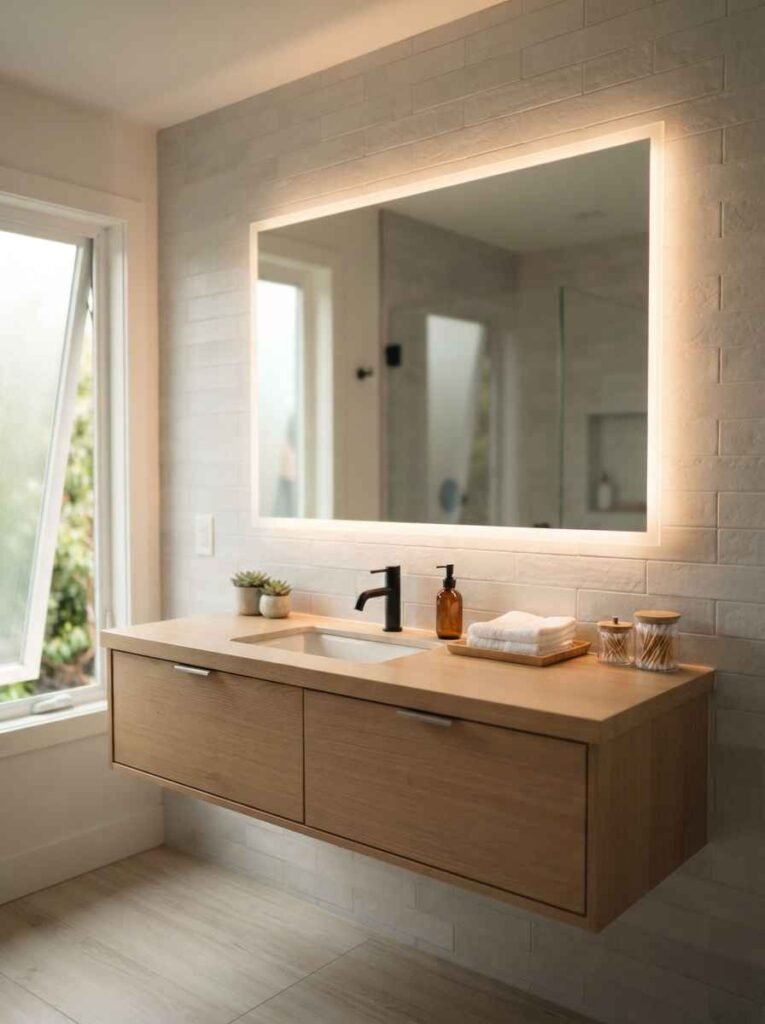
- Wall-mounted vanity. Floats the sink off the floor, which visually opens up the whole room. Small change, disproportionate impact.
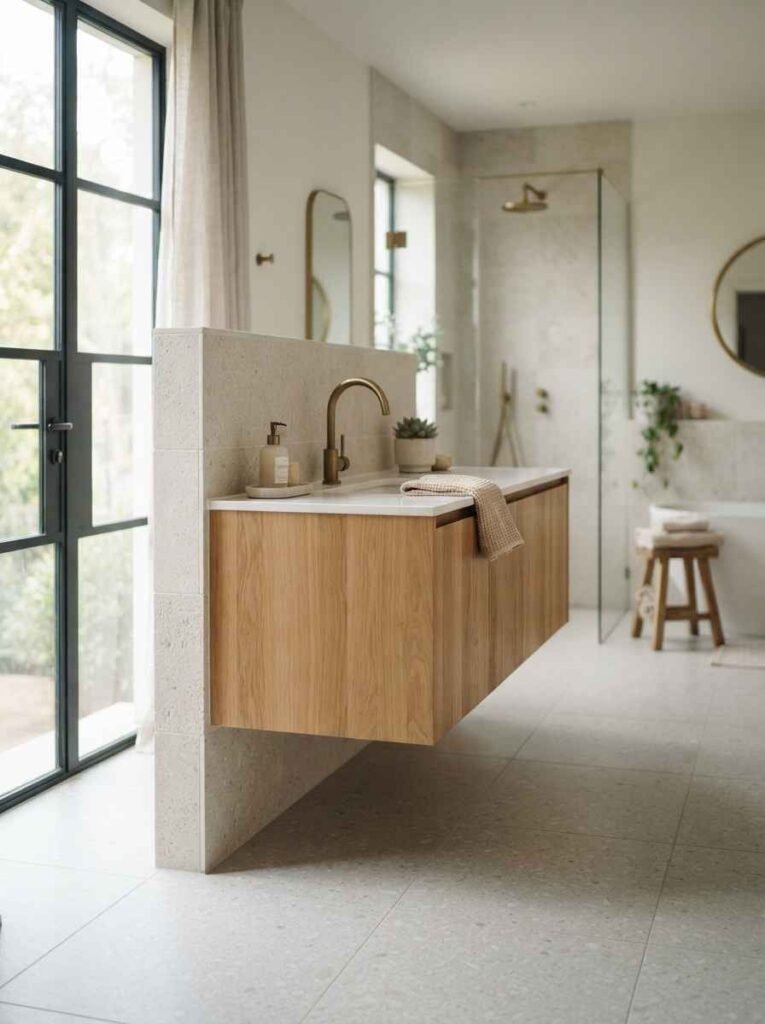
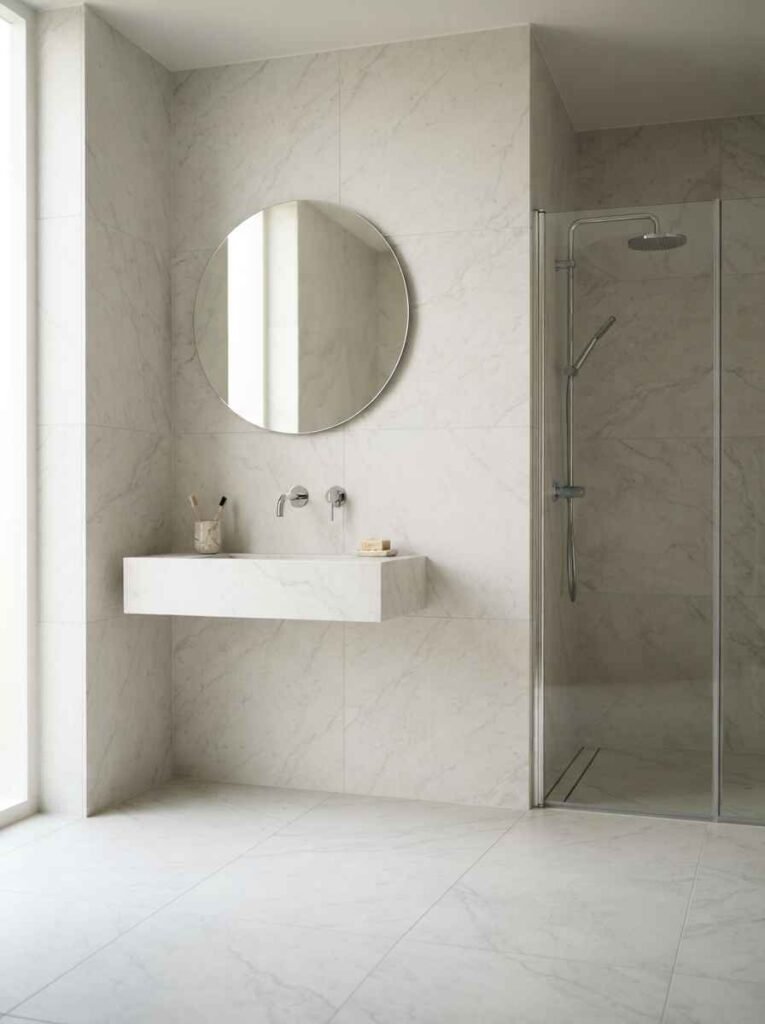
- Large-format tile with minimal grout lines. Fewer breaks in the surface make a small room read as one continuous space instead of a patchwork.
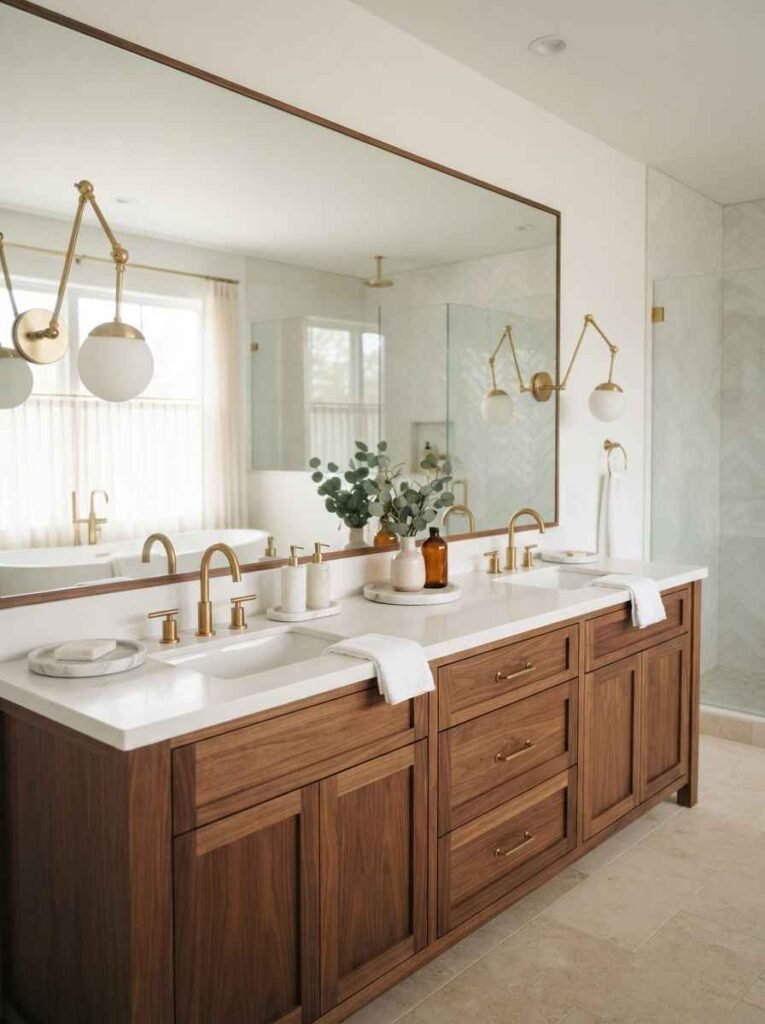
- Mirror that spans the full width of the vanity. Bounces light around and makes the room feel roughly 20% bigger, at least to the eye.
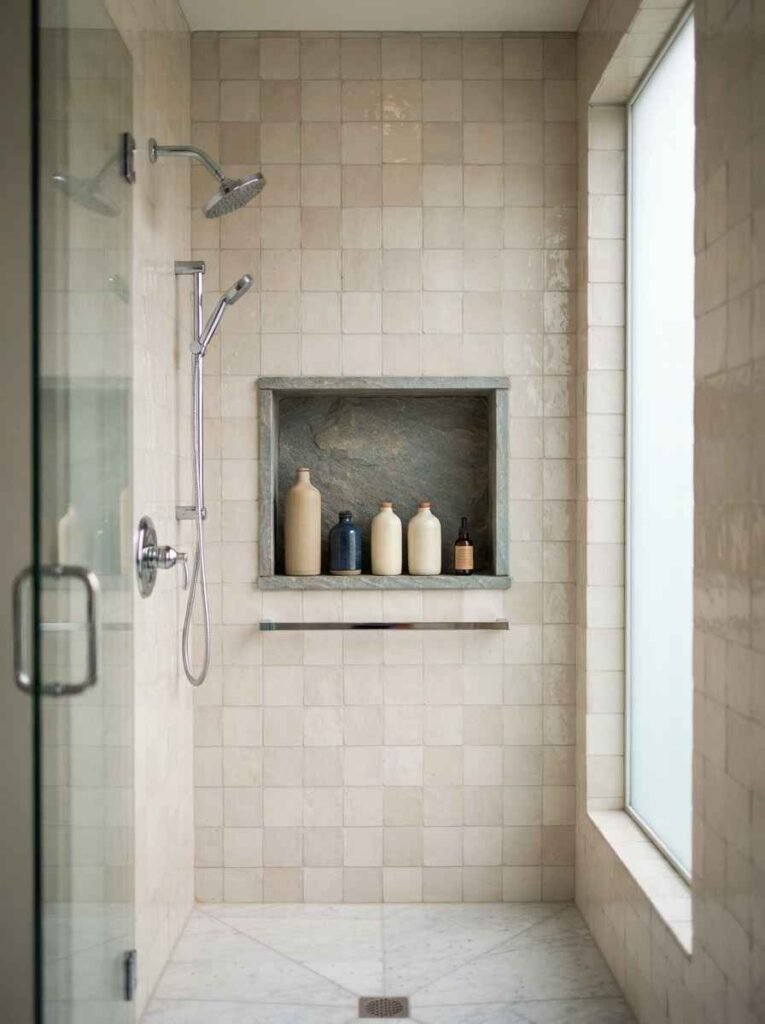
- Recessed niche shelving in the shower. No bulky shower caddy hanging off the showerhead like an afterthought.
- Pocket door instead of a swing door. Frees up floor space a standard door would eat into.
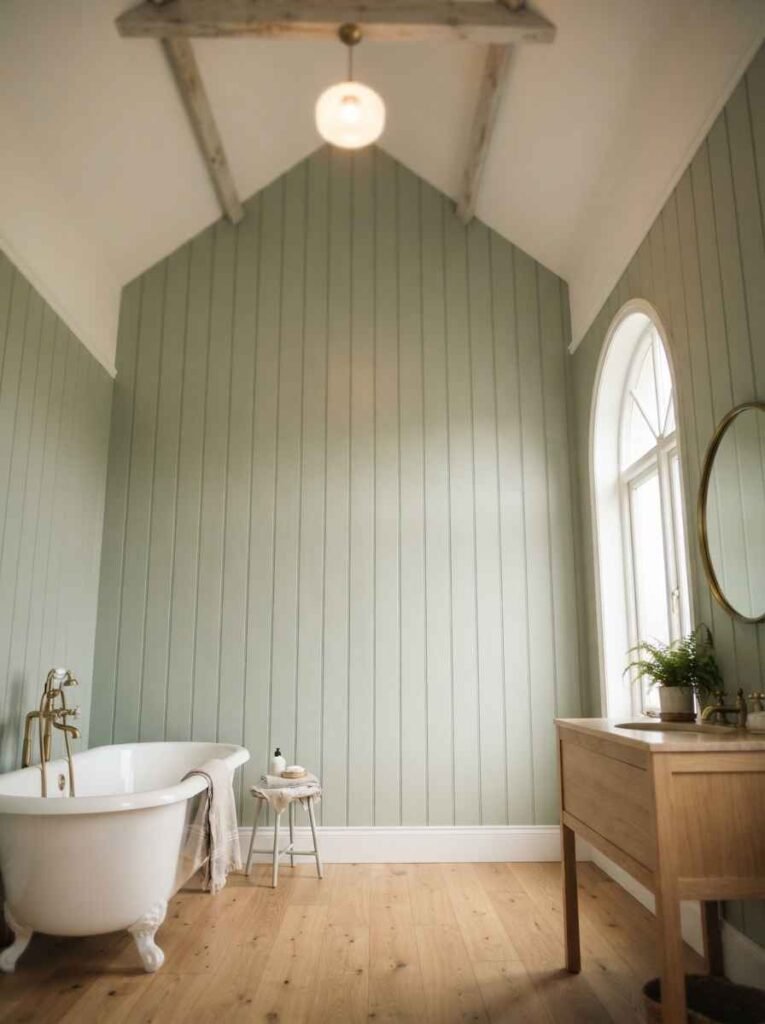
- Vertical striping or paneling. Draws the eye upward, which makes low ceilings feel taller.
One more small-bathroom thought, since it doesn’t fit neatly into the numbered list: lean into one bold move rather than five timid ones. A small room with a single confident choice (a bold tile, a saturated color, a great mirror) reads as designed. A small room with five cautious “safe” choices just reads as small.
Fixtures and hardware that quietly upgrade everything
- Wait, I already used that number. Let’s keep going.
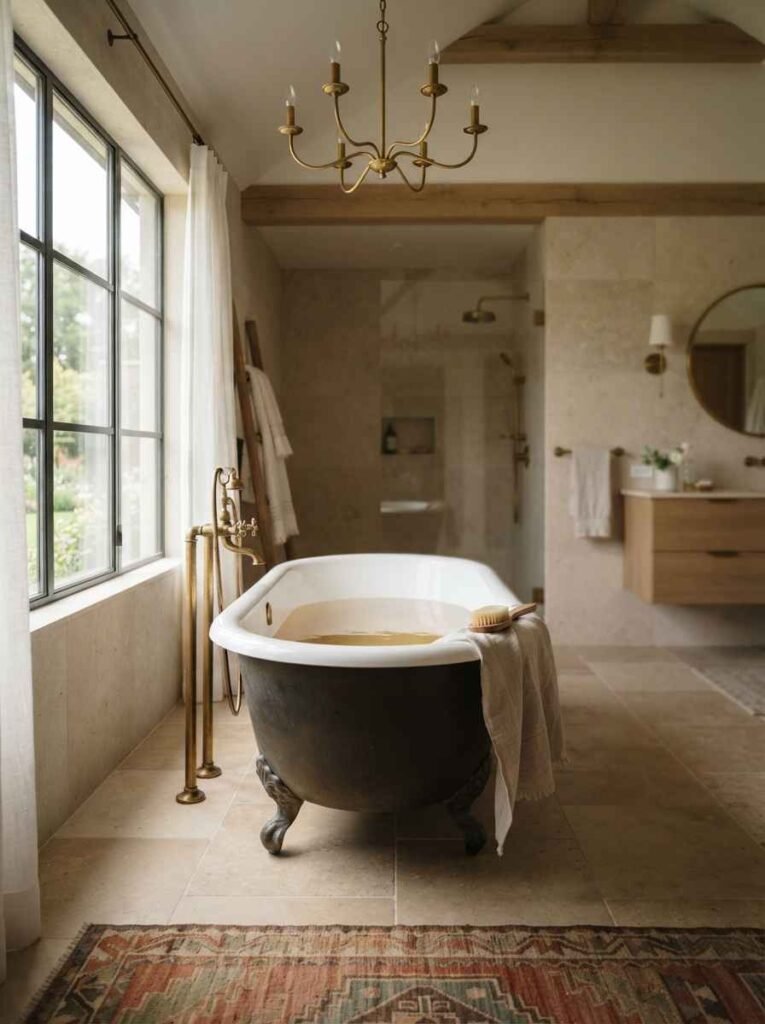
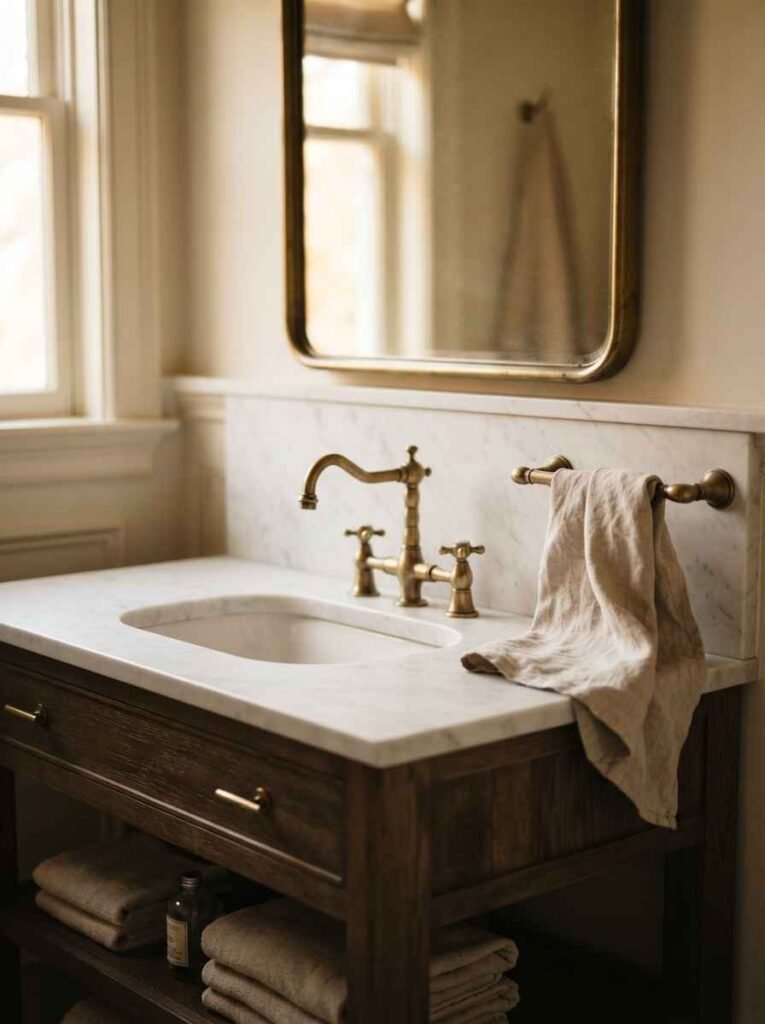
- Unlacquered brass fixtures. They develop a patina over time, which some people love and some people hate. I love it. It ages like a good leather jacket instead of looking dingy.
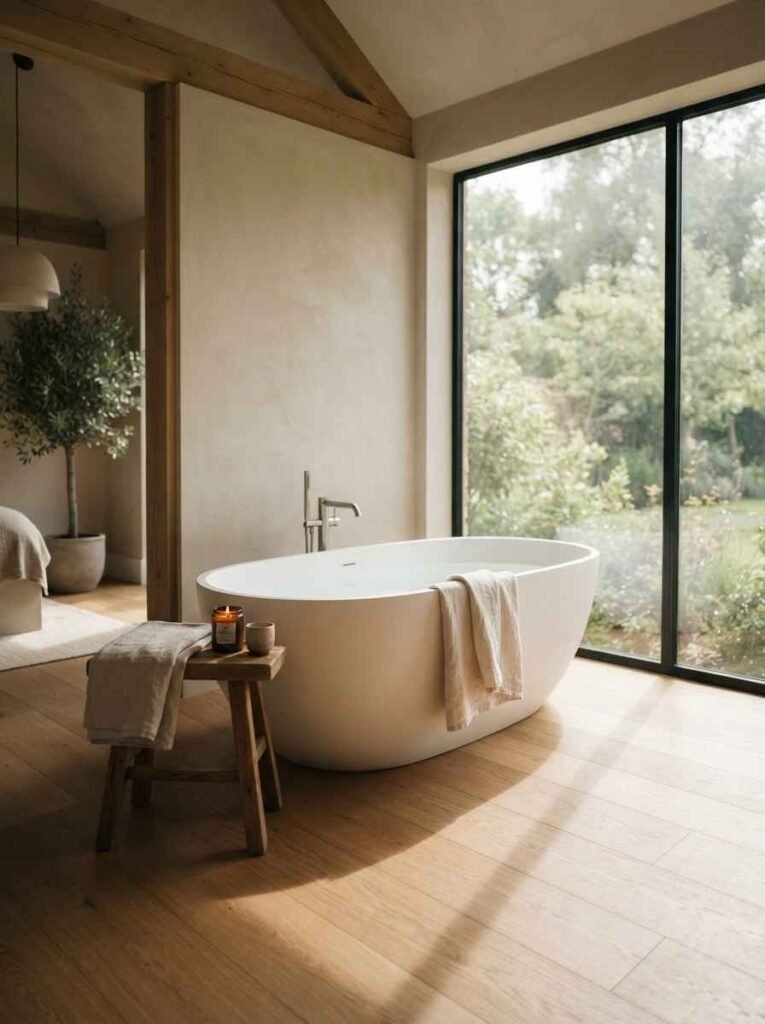
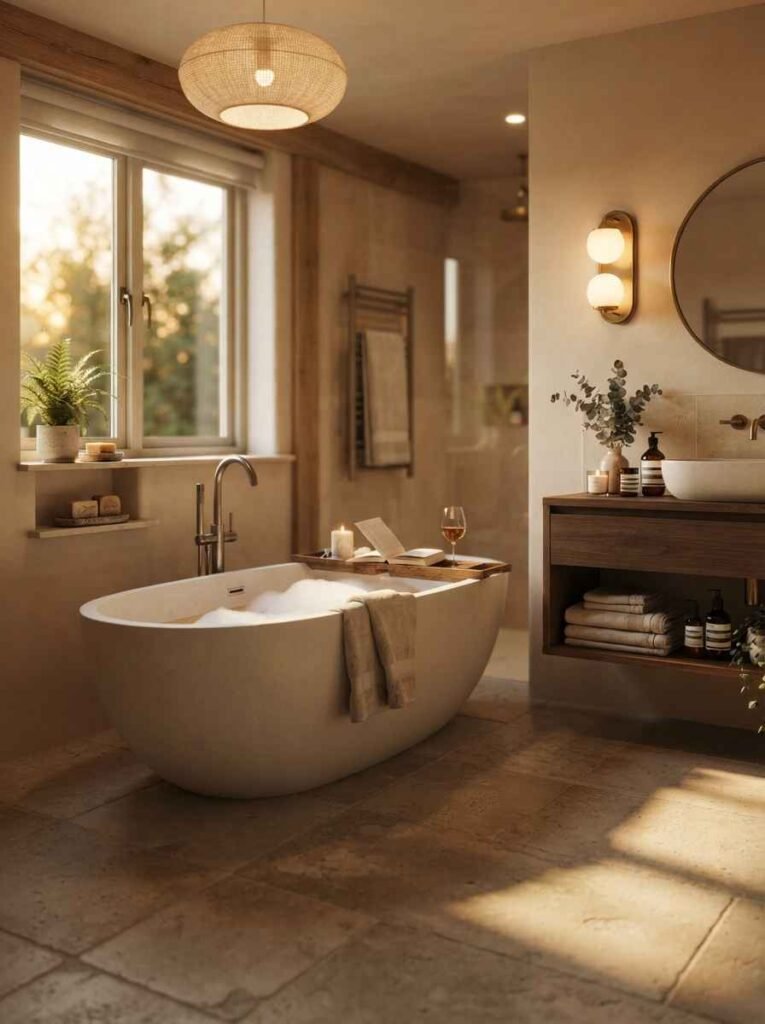
- Freestanding tub. The single biggest “wow, this is insane” reaction I’ve gotten from guests in either bathroom I’ve redone. Not cheap, but it’s the centerpiece move.
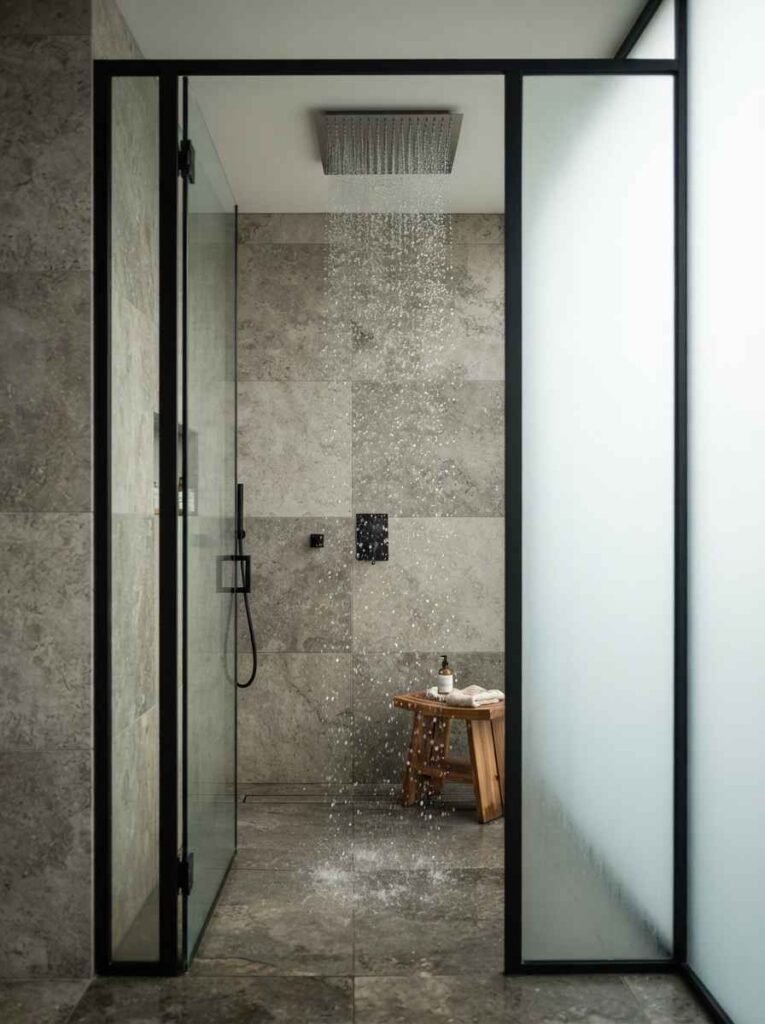
- Rainfall showerhead. Genuinely changes the daily shower experience, not just the photos.
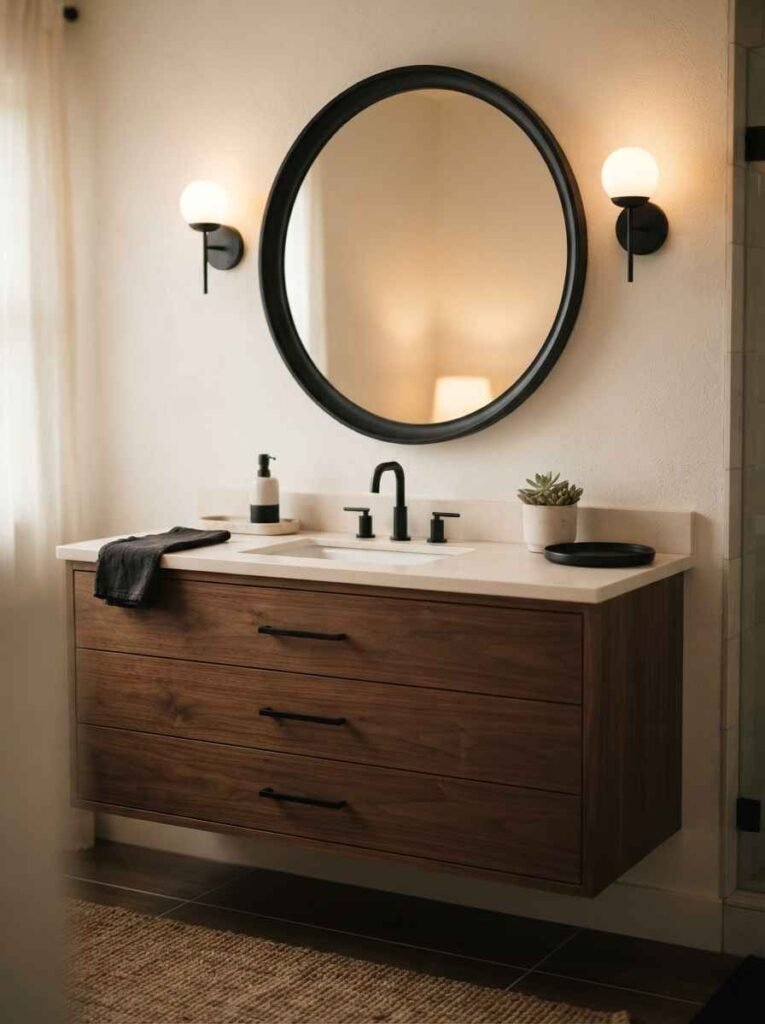
- Matte black hardware. Still relevant, still a safe pairing with almost any tile color, though I’d argue it’s starting to feel slightly expected rather than exciting.
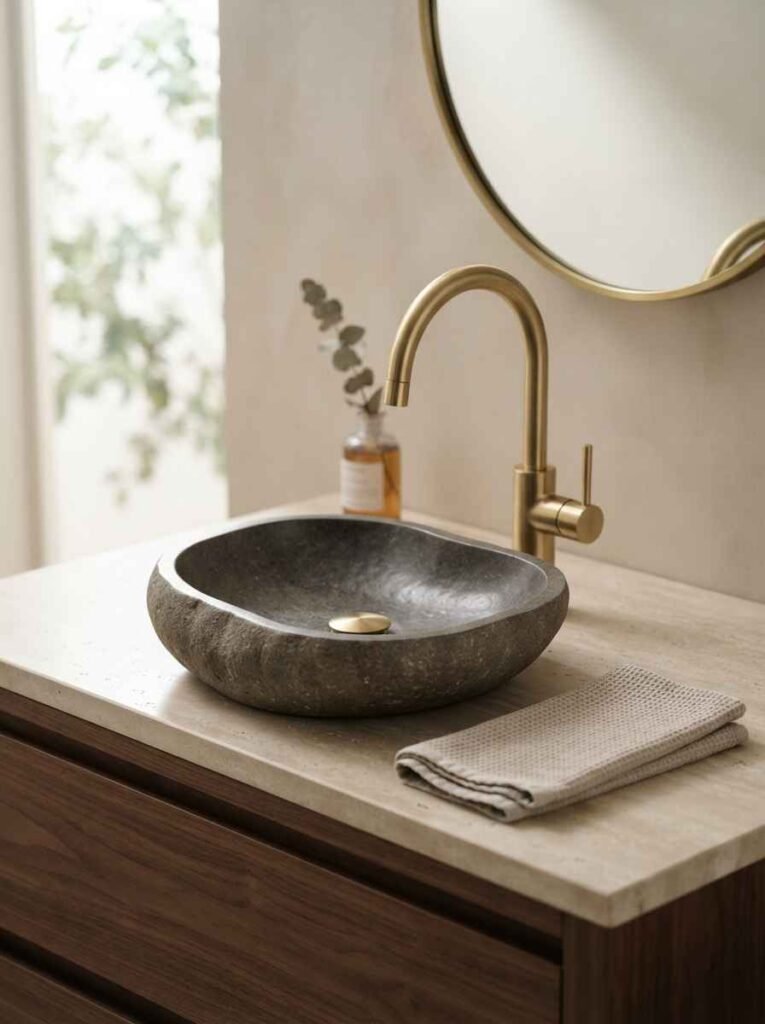
- Statement faucet. A gooseneck or waterfall faucet in an unexpected finish can carry a whole vanity design on its own.
- Smart mirror with built-in lighting. Not just a gadget. Even, glare-free light for makeup and shaving is worth more than people expect.
Lighting, mirrors, and finishing touches
Lighting is the part everyone forgets, and it’s the part that makes or breaks how the whole room actually feels at 7am.
- Layered lighting. One overhead fixture, one vanity light, maybe a dimmer. A single harsh ceiling light is doing your bathroom no favors.
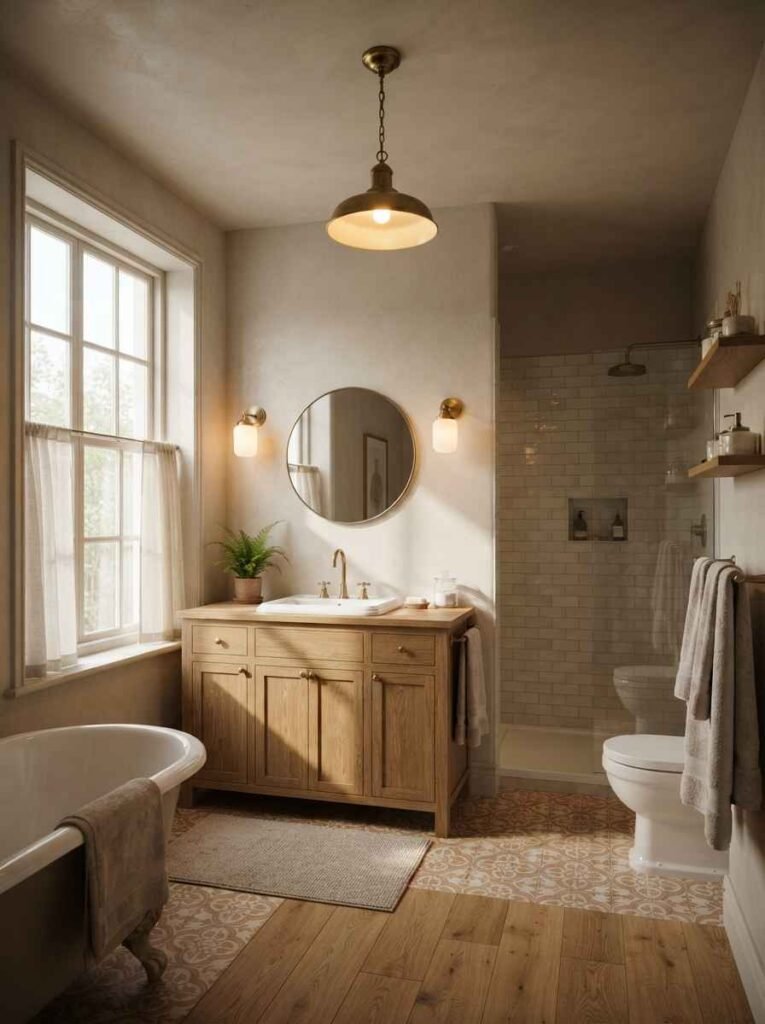
- Warm bulb temperature (around 2700K to 3000K). Cool white bulbs make every bathroom look like a hospital hallway. Ask me how I know.
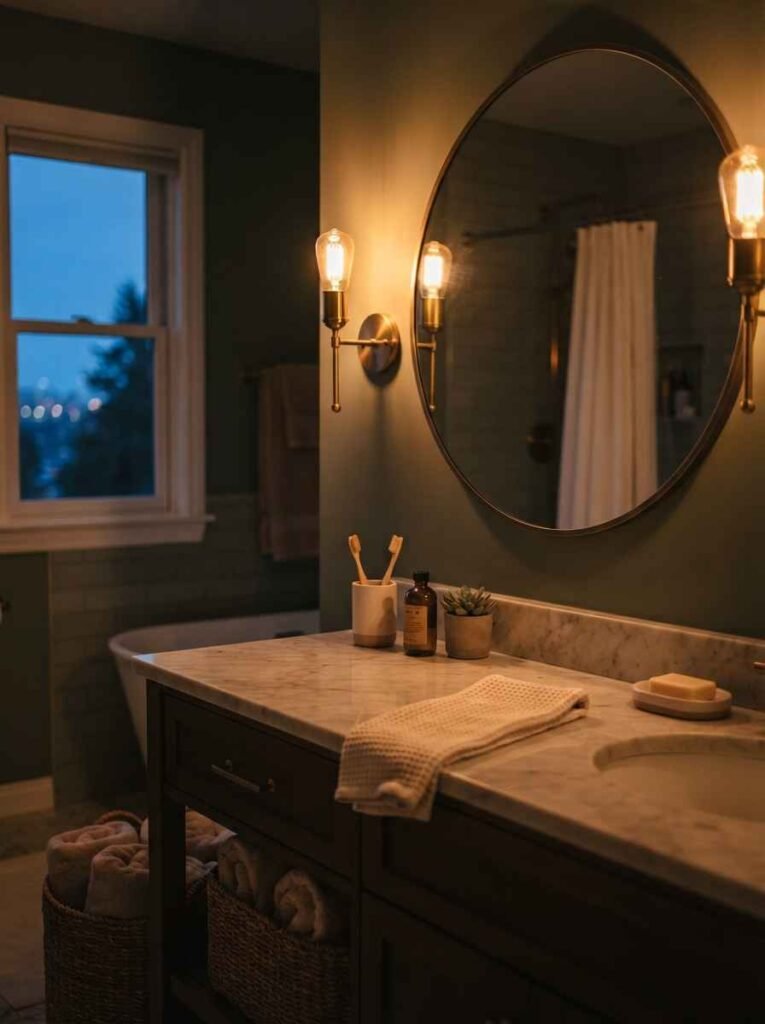
- Arched or curved mirror. Softens a room full of hard tile lines and rectangular fixtures.
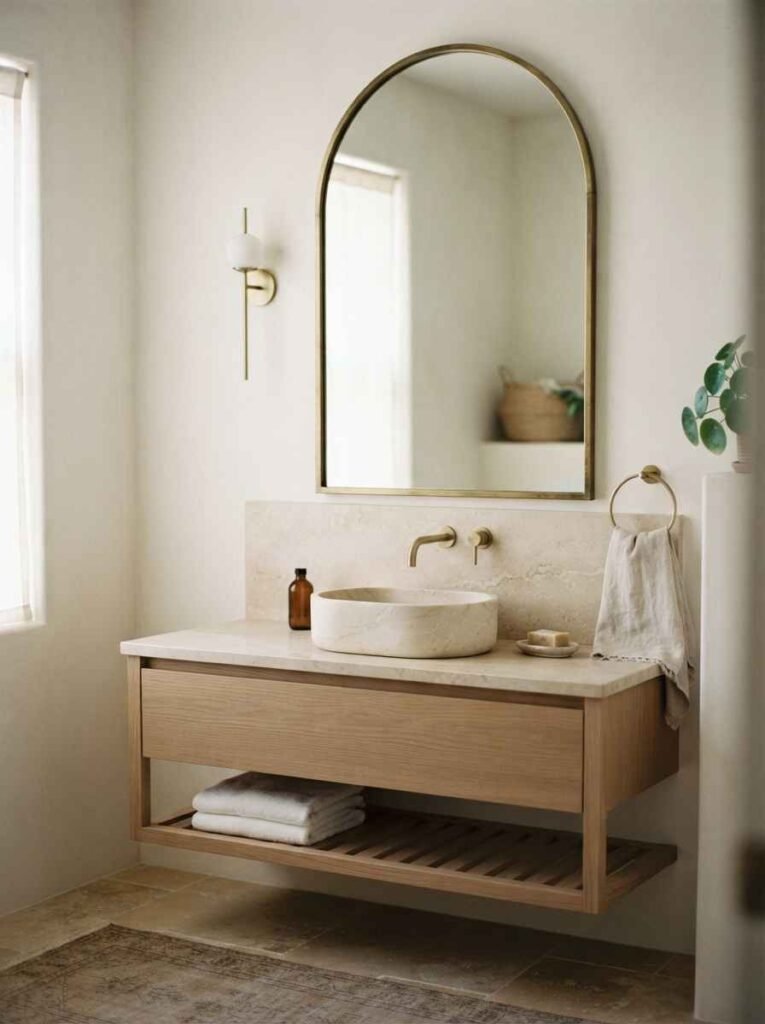
- Sculptural sconces flanking the mirror. More flattering light than a single top-mounted fixture, and it doubles as decor.
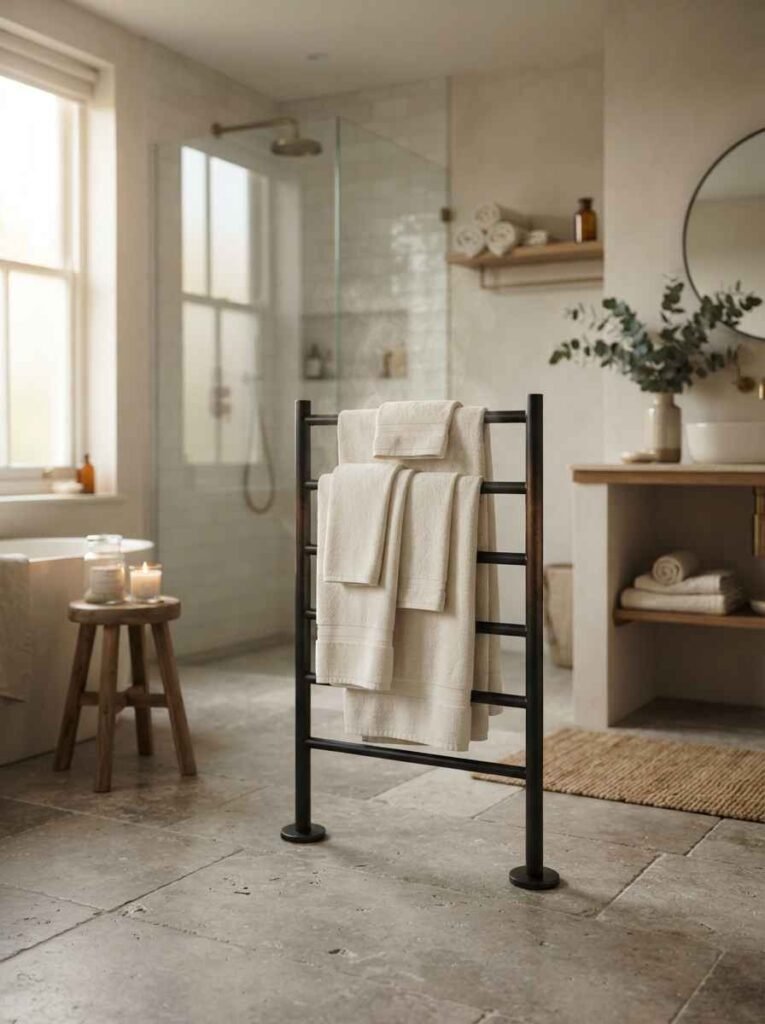
- Heated towel rack. Small luxury, huge daily payoff, and it solves the “damp towel smell” problem nobody wants to talk about.
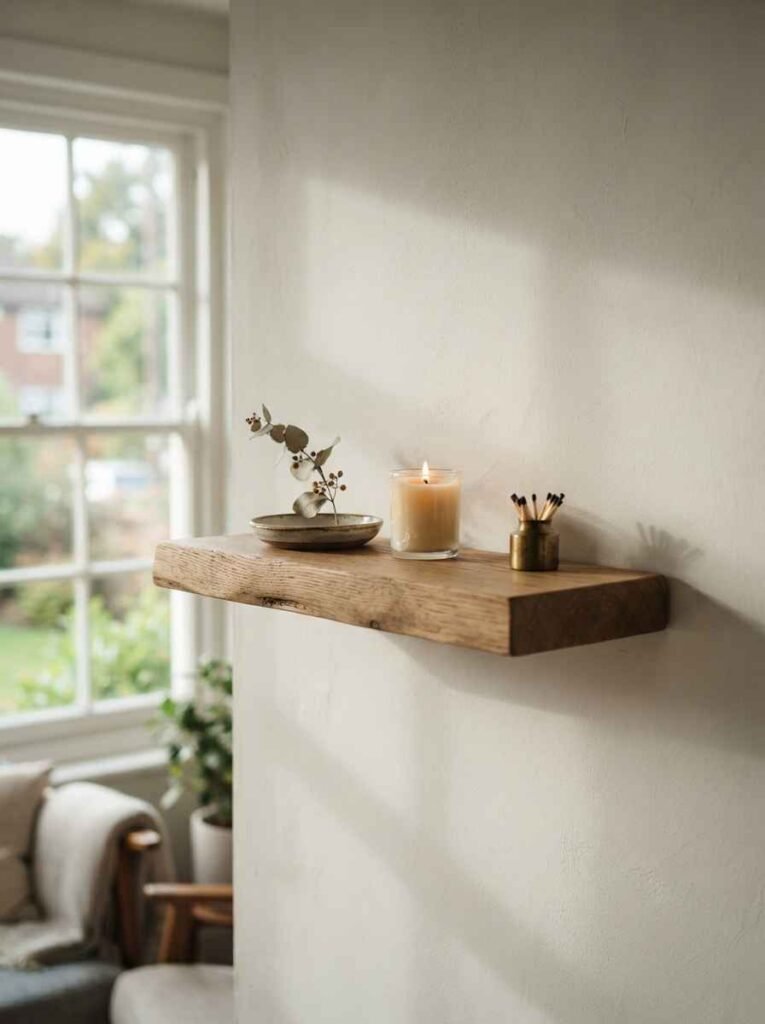
- One curated shelf of objects. A candle, a small plant, a ceramic dish for rings. Not clutter, just enough to make the room feel lived in rather than staged.
Quick side note, completely unrelated: I once spent 45 minutes in a tile showroom arguing with myself over two shades of white that looked identical under the store lighting and completely different once I got a sample home. Bring samples home. Always. Store lighting lies.
A quick comparison table
Here’s a simple way to think about which direction fits your space and budget.
| Style direction | Best for | Rough cost to try |
|---|---|---|
| Color drenching (paint) | Small or rental-friendly bathrooms | Low, a weekend and a few gallons |
| Limewash or plaster walls | Powder rooms, statement walls | Medium, plus some patience |
| Freestanding tub + brass fixtures | Primary bathroom remodels | High, plumbing changes likely |
| Wall-mounted vanity + large tile | Small or awkward layouts | Medium to high |
Designers keep saying bathrooms are turning into full architectural moments instead of an afterthought, and that tracks with what I’m seeing everywhere from renovation shows to my own neighborhood. If you want more on where the industry’s headed, House Digest’s rundown of 2026 bathroom trends and Decorilla’s breakdown of sculptural, seamless-surface bathrooms are both worth a scroll for extra inspiration.
Materials that actually survive a humid bathroom
Aesthetic ideas are great until humidity wrecks them six months in.
I learned this the expensive way with a wallpaper accent wall that bubbled by winter.
A few notes before you commit to any of the above.
- Limewash and plaster need a moisture-resistant, pre-mixed version if they’re going anywhere near a shower splash zone. Regular DIY lime putty mixes are more finicky in high-humidity rooms.
- Unlacquered brass will tarnish faster in a steamy bathroom than in a dry kitchen. If you want that patina, great. If you don’t, seal it or pick a lacquered finish instead.
- Wood vanities need a proper sealant, and even then, keep them away from direct spray. A vanity six feet from the shower ages very differently than one right next to it.
- Large-format tile hides fewer flaws in an uneven subfloor, so budget for proper leveling if you’re going that route. It’s not the tile’s fault when this goes wrong, it’s usually the prep work.
- Grout color matters more than people think. White grout with a zellige accent wall will look dingy within a year in a household with kids. Go a shade or two darker than you think you need.
None of this is meant to talk you out of any idea on this list.
It’s just the difference between a bathroom that still looks good in three years and one that needs a redo because nobody thought about ventilation.
How to actually pick a direction (instead of pinning everything)
Here’s my honest opinion: most people don’t fail at bathroom design because of bad taste.
They fail because they try to combine six aesthetics from six different Pinterest boards into one 40-square-foot room.
Pick one dominant material (tile, wood, or plaster) and one accent color. Everything else should support those two choices, not compete with them.
That’s it. That’s the whole secret, and it took me two bathroom renovations to actually learn it.
FAQs
What’s the most budget-friendly way to change a bathroom’s whole aesthetic? Paint, hardware swaps, and a new mirror. In that order.
You can transform the feel of a bathroom for under $300 without touching a single tile.
Do trendy bathroom colors go out of style fast? Bold colors age better than people assume, especially in a small, low-traffic room like a powder bath.
The finishes that date fastest are usually cheap materials, not bold choices.
Can I mix warm wood tones with matte black hardware? Yes, and it’s one of my favorite combinations. Warm wood keeps matte black from feeling too cold or industrial.
Final thought
Thirty ideas is a lot, I know. You don’t need all of them, and honestly, you shouldn’t try.
Pick two or three that actually excite you, save this for later, and start there.
What’s the one bathroom detail you’ve been wanting to change but haven’t pulled the trigger on yet? I’d genuinely love to know.
