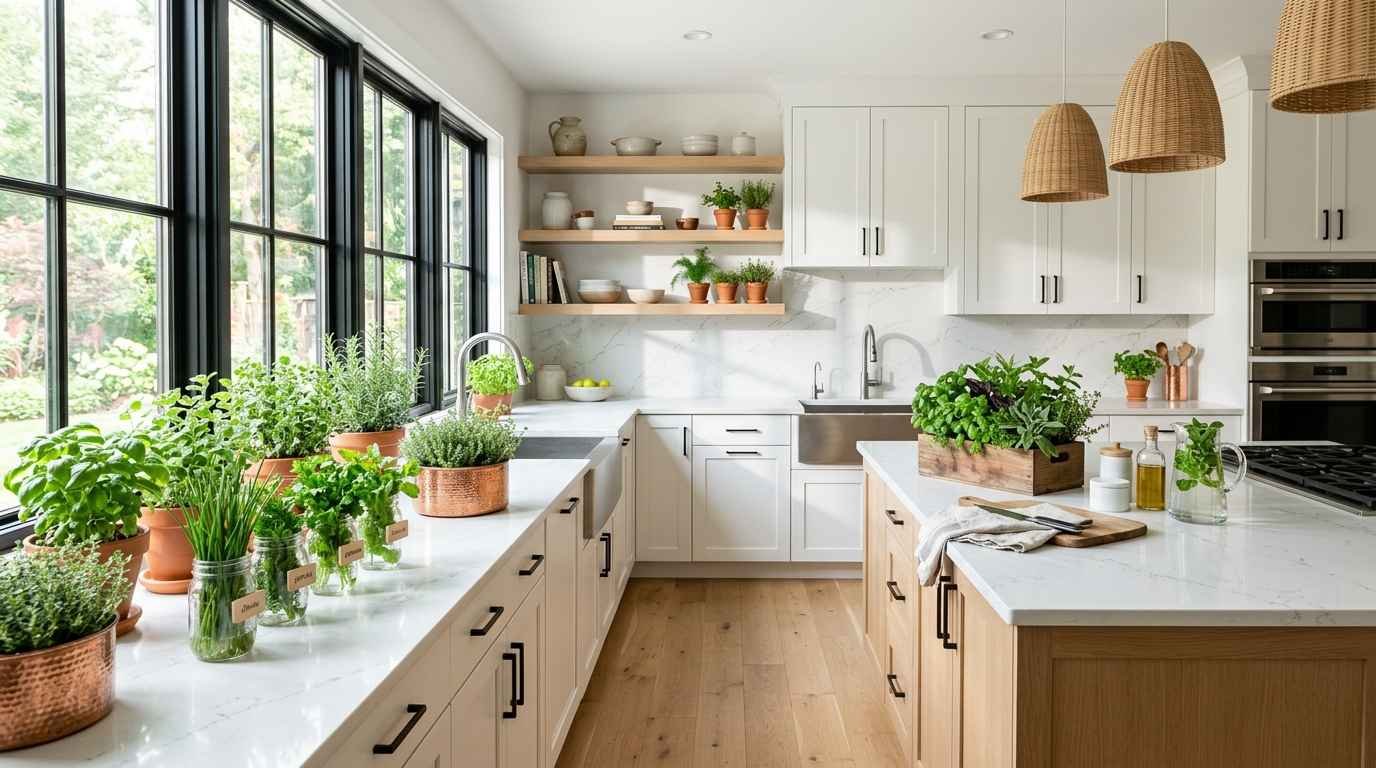
So you want fresh basil at 11pm on a Tuesday. Same. And somehow, you’re also working with a kitchen the size of a shoebox. Totally fine — there are 28 ways to fix exactly this problem.
I’ve been growing herbs indoors for years, and honestly the hardest part isn’t the plants.
It’s figuring out where to put them without your kitchen looking like a greenhouse exploded.
These ideas solve that. Some are clever, some are cheap, and a few are genuinely beautiful enough to pin and actually do (I see you, Pinterest board full of aspirational projects from 2021 :)).
Let’s get into it.
Window & Light-Based Ideas
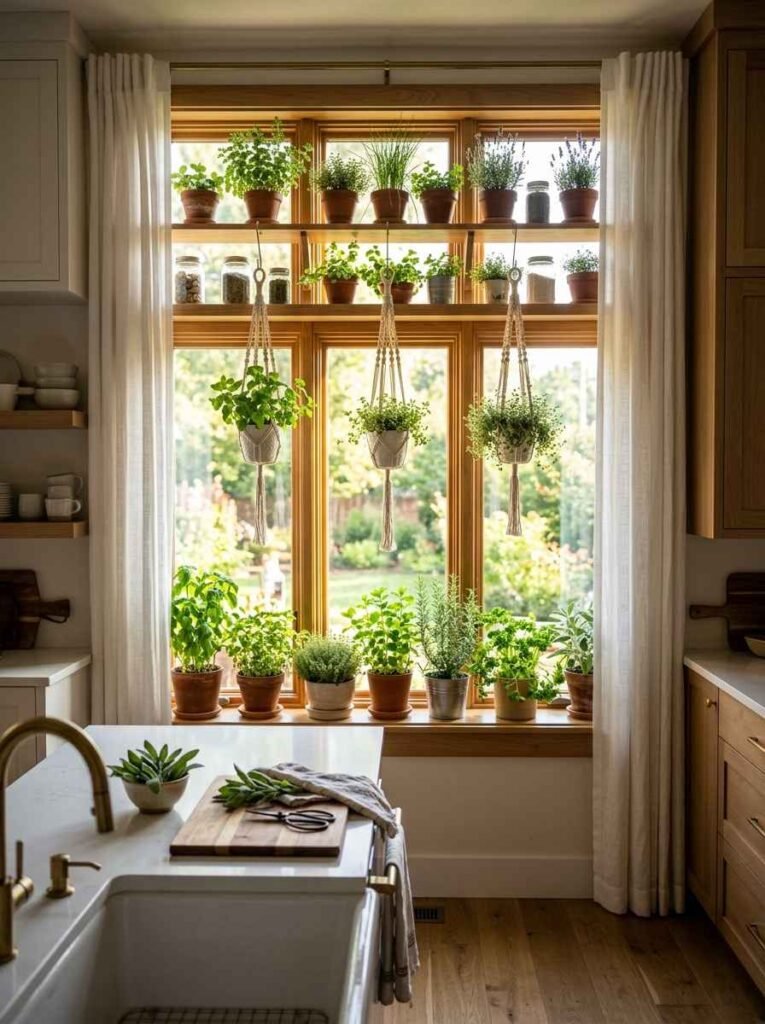
Light is the whole game with indoor herbs. Get this right and everything else is easy.
1. The Classic Windowsill Row
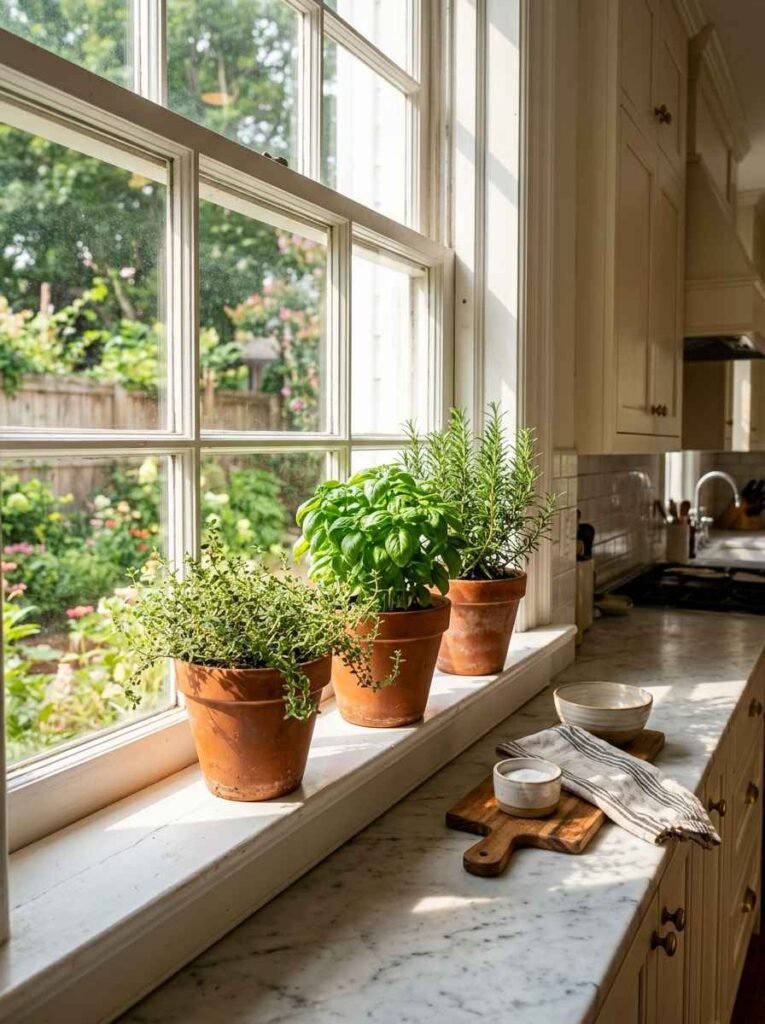
Three pots, one sunny windowsill, done. South-facing windows are ideal — they get 6+ hours of direct light.
Terracotta pots work especially well because they’re breathable and look great in photos, FYI.
2. Tiered Windowsill Shelf
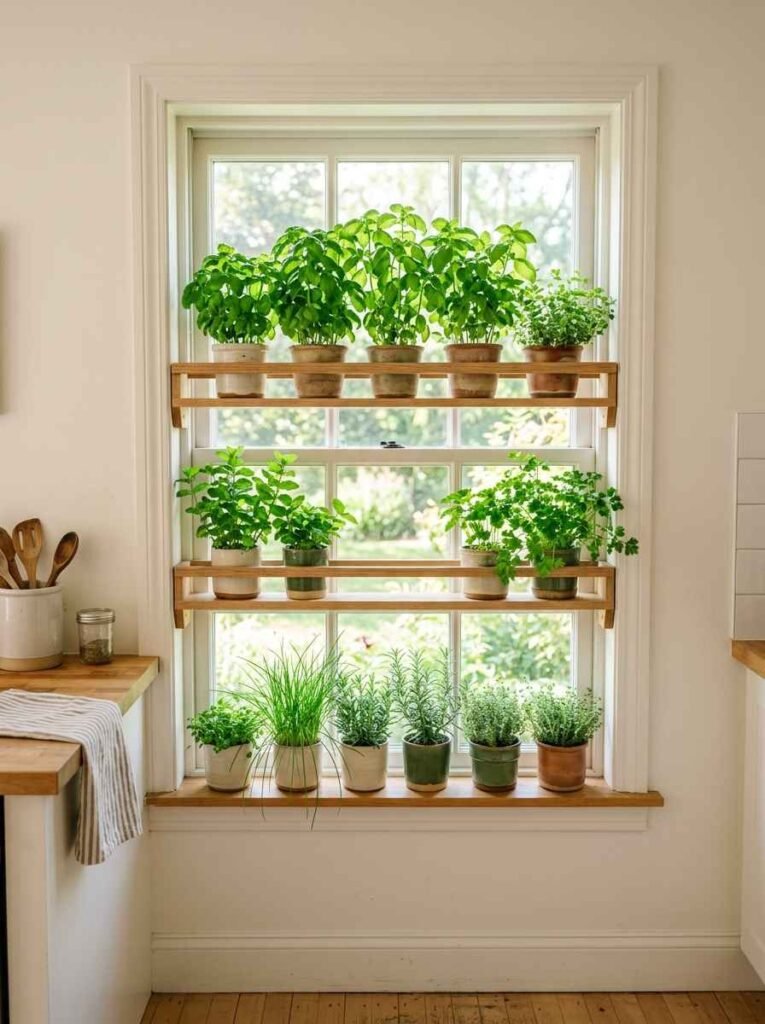
Stack two or three narrow shelves right in the window frame. You triple your growing space without using any counter space.
Basil on top (needs the most light), mint on the bottom (tolerates less).
3. Suction Cup Window Planters
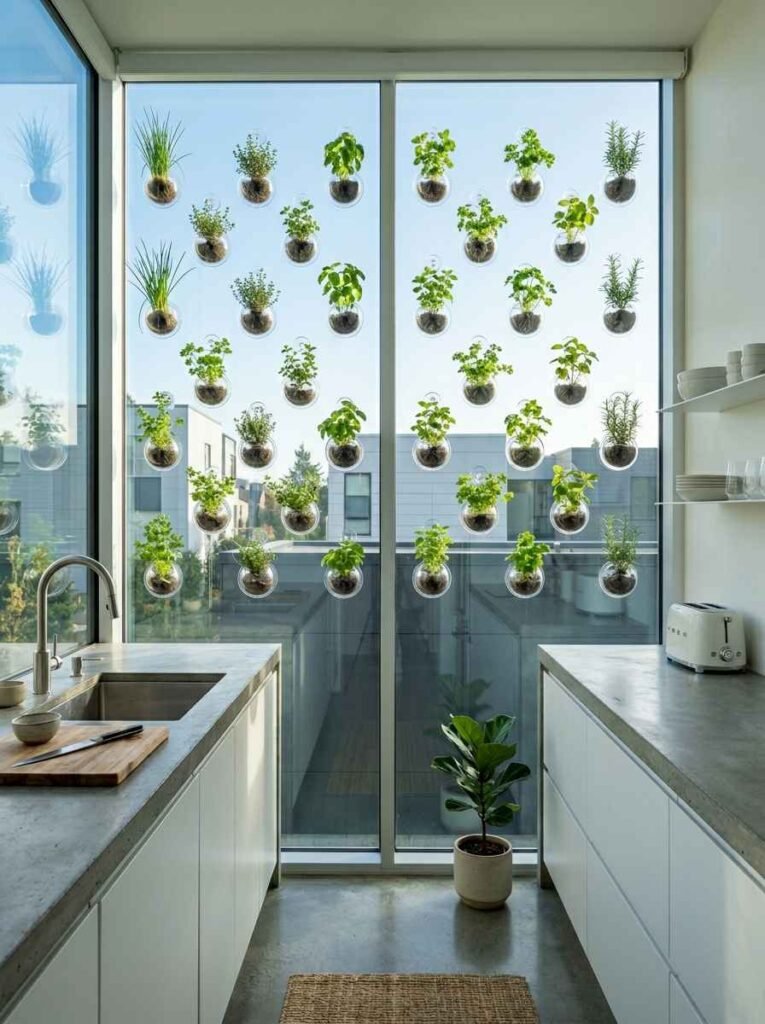
These are exactly what they sound like — clear acrylic planters that stick to the glass. Each herb sits in its own little pod suspended in the light.
Very modern, very minimal, very “I have my life together.”
4. Hanging Window Basket
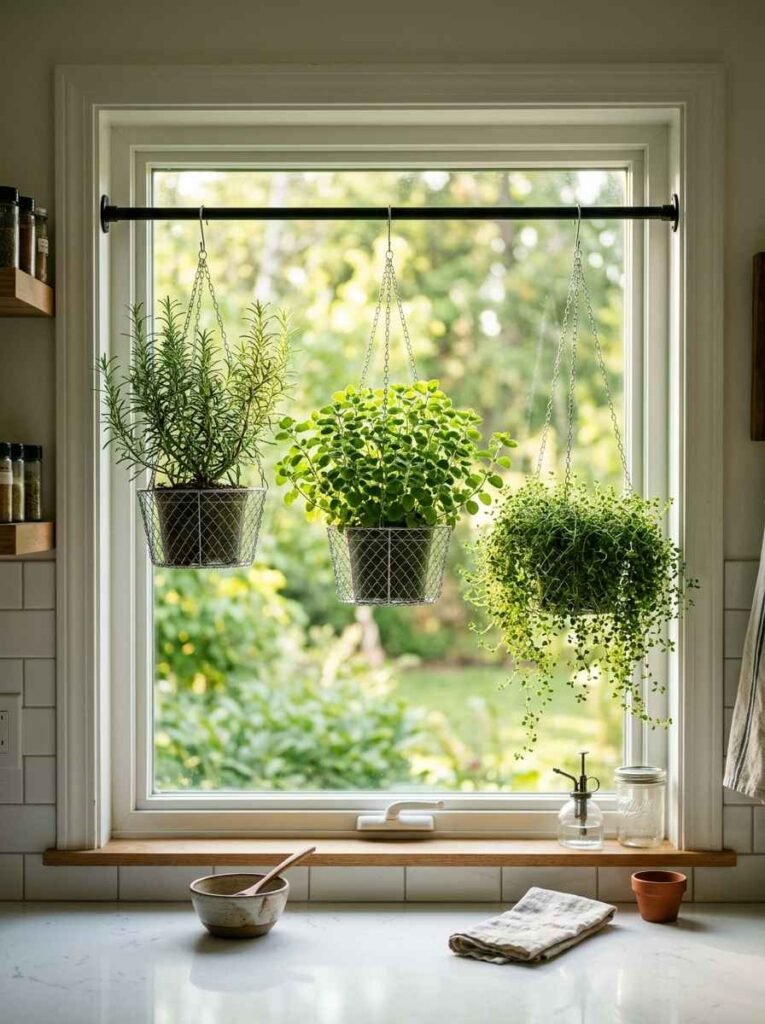
A rod across the window with hanging planters. Looks beautiful backlit in the morning. Herbs like thyme, oregano, and rosemary do well here.
Wall-Mounted Ideas
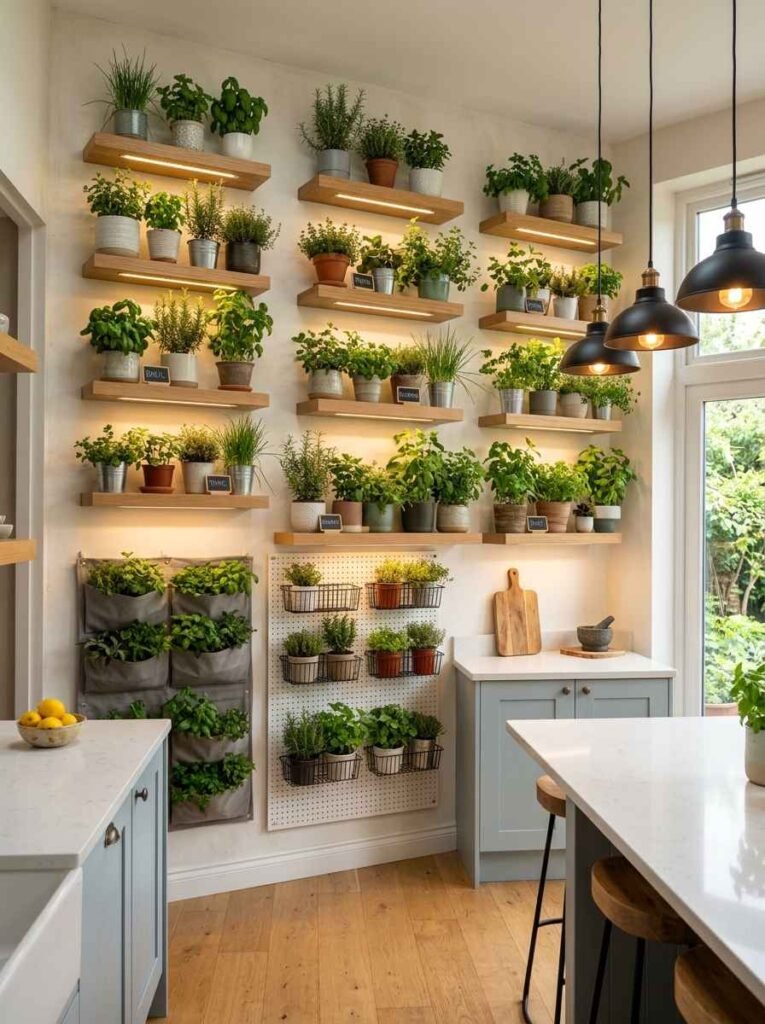
Walls are underrated. Most kitchens have plenty of them and use zero of that space for plants.
5. Magnetic Wall Planters
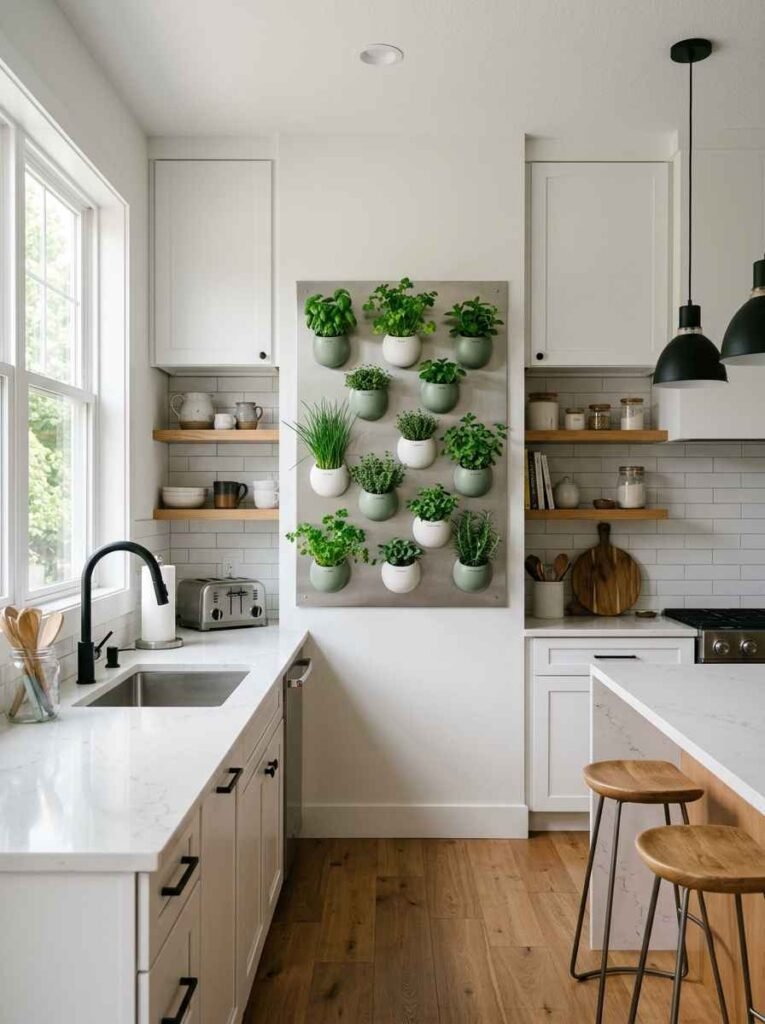
Magnetic containers on a steel panel or magnetic paint section. Rearrange them whenever you want — it’s basically Lego for adults who cook. Great for renters.
6. Pegboard Herb Wall
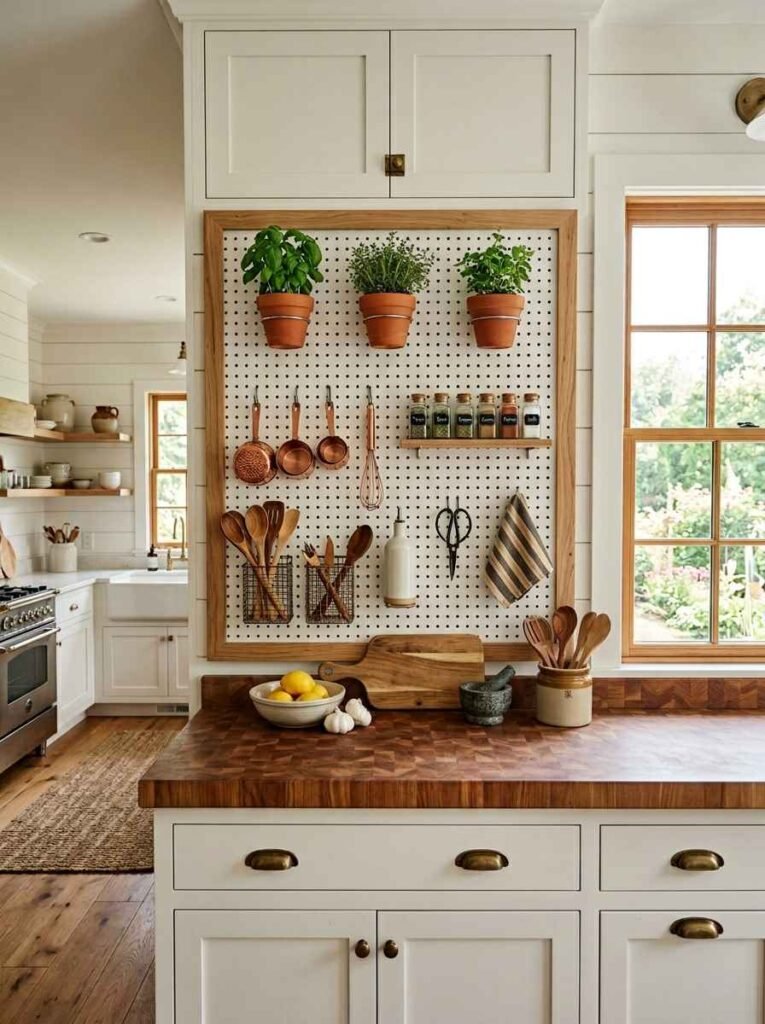
A pegboard panel with small pots clipped in. You can mix herbs with hooks for utensils and shelves for spices. One wall, maximum function.
7. Floating Shelf Herb Garden
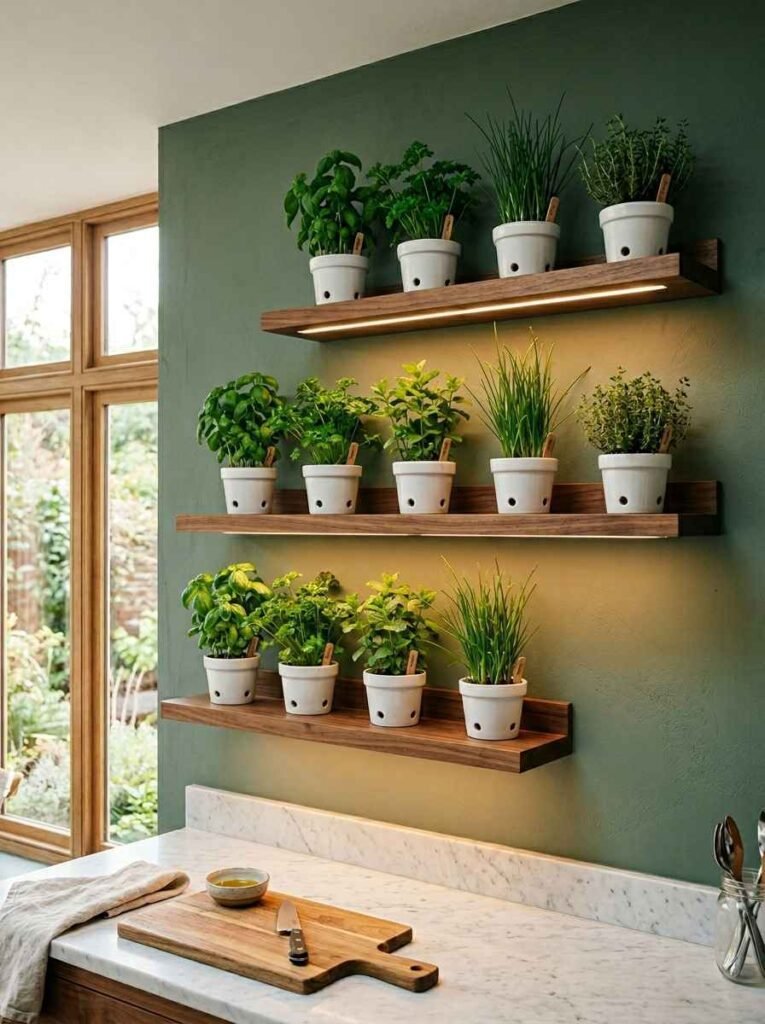
Two or three narrow floating shelves staggered up the wall. Grow lights clipped underneath each shelf let you put this anywhere, not just near windows.
This is my personal setup and it works really well.
8. Vertical Pocket Planter
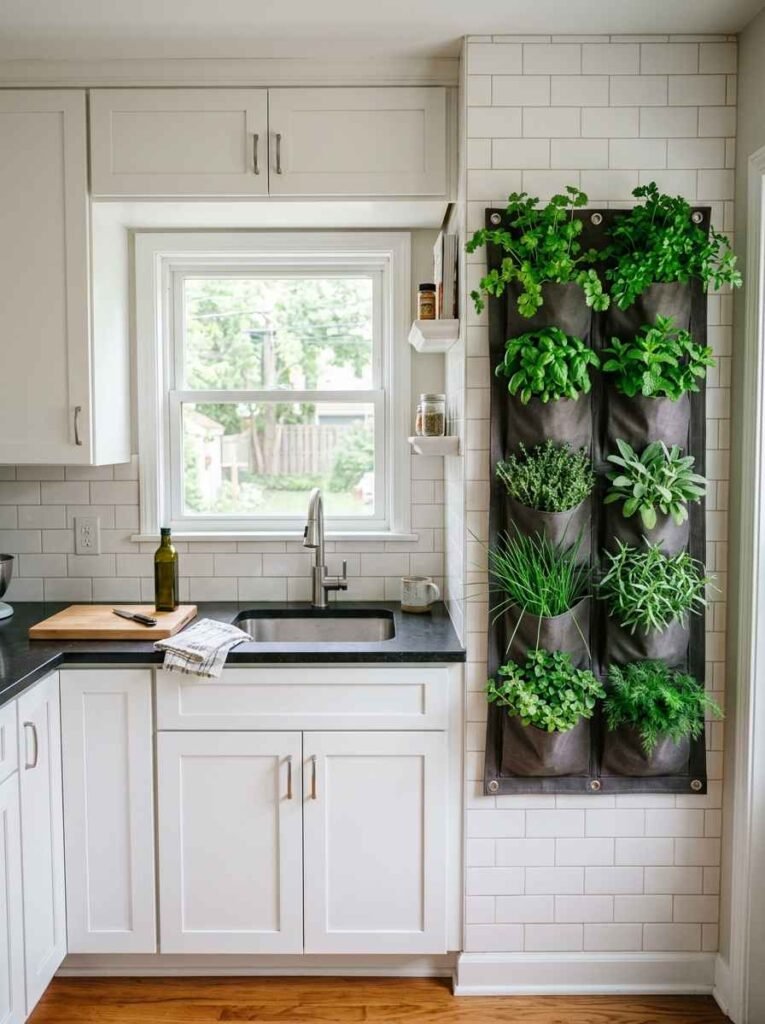
Fabric wall pockets designed for vertical gar
dens. These compress into almost nothing when you mount them, but hold 6–12 individual herb plants. IMO the best bang-for-wall-space option out there.
9. Reclaimed Wood Plank Display
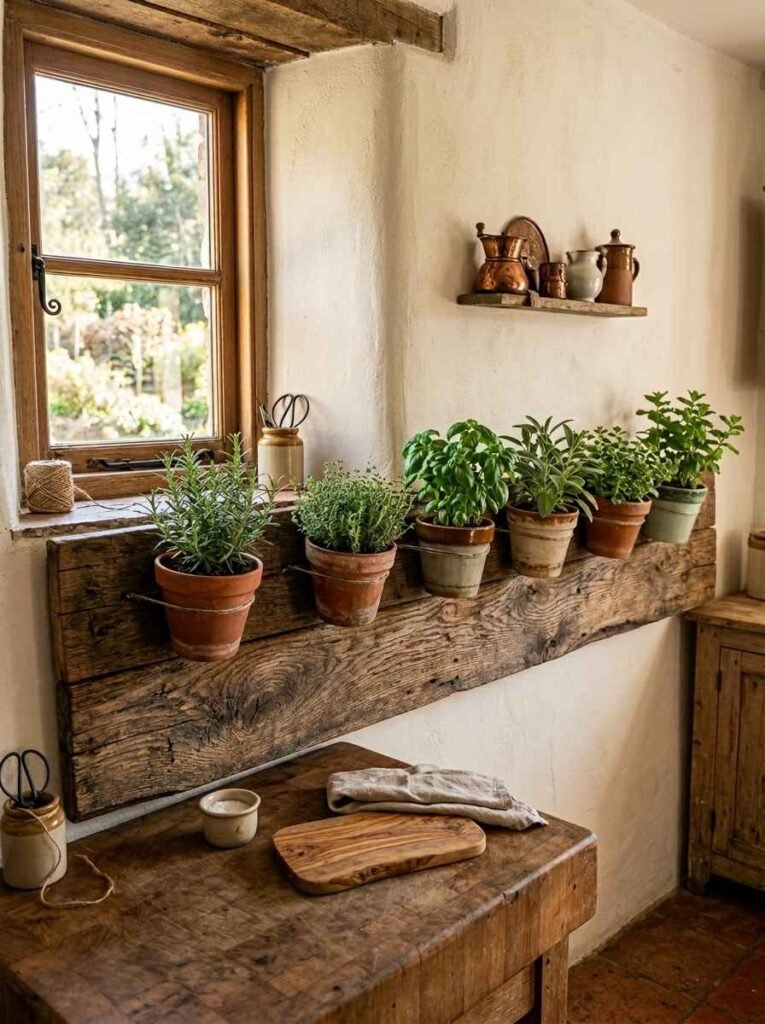
A single wide wooden plank with small pots screwed or wire-fastened to it. Rustic, warm, Pinterest-ready. Use a sealer on the wood so moisture doesn’t wreck it over time.
Counter & Tabletop Ideas
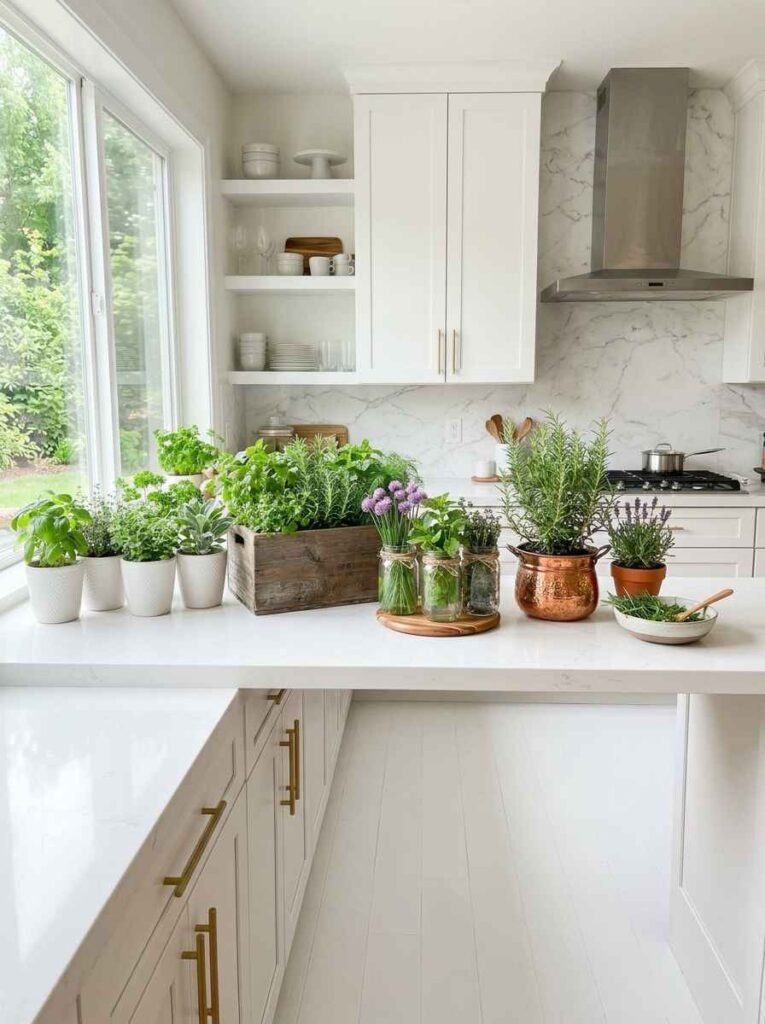
Not everyone has wall space to spare either. Here’s what works on flat surfaces.
10. Matching Ceramic Pot Set
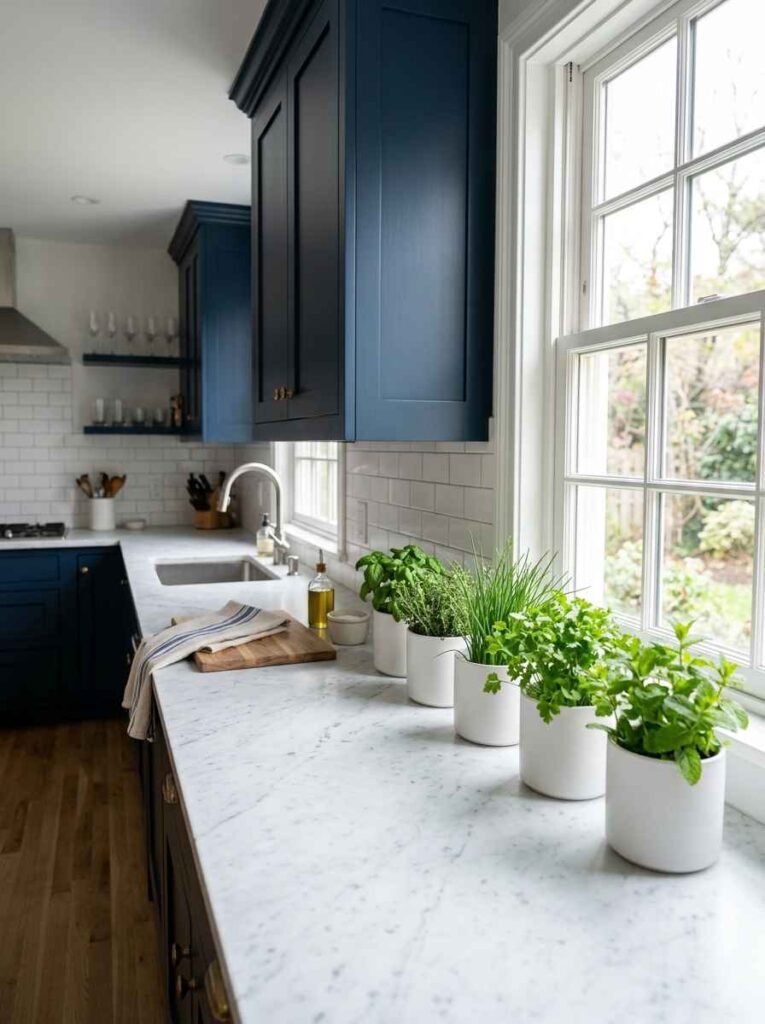
Three to five matching ceramic pots in one color family. Simple, clean, looks intentional. White or matte black both photograph beautifully.
11. A Wooden Crate Herb Box
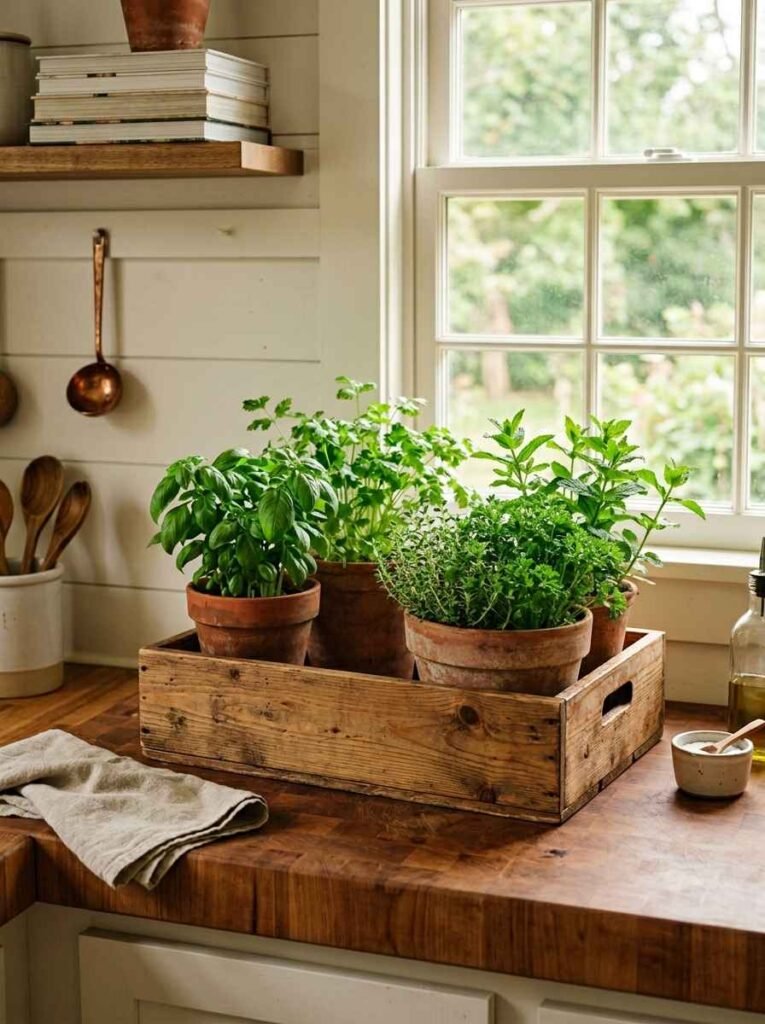
One wide wooden crate, several small pots inside. Looks good, easy to move, easy to water. Line the bottom with a waterproof liner so your counter doesn’t get damaged.
12. Chalkboard Label Pots
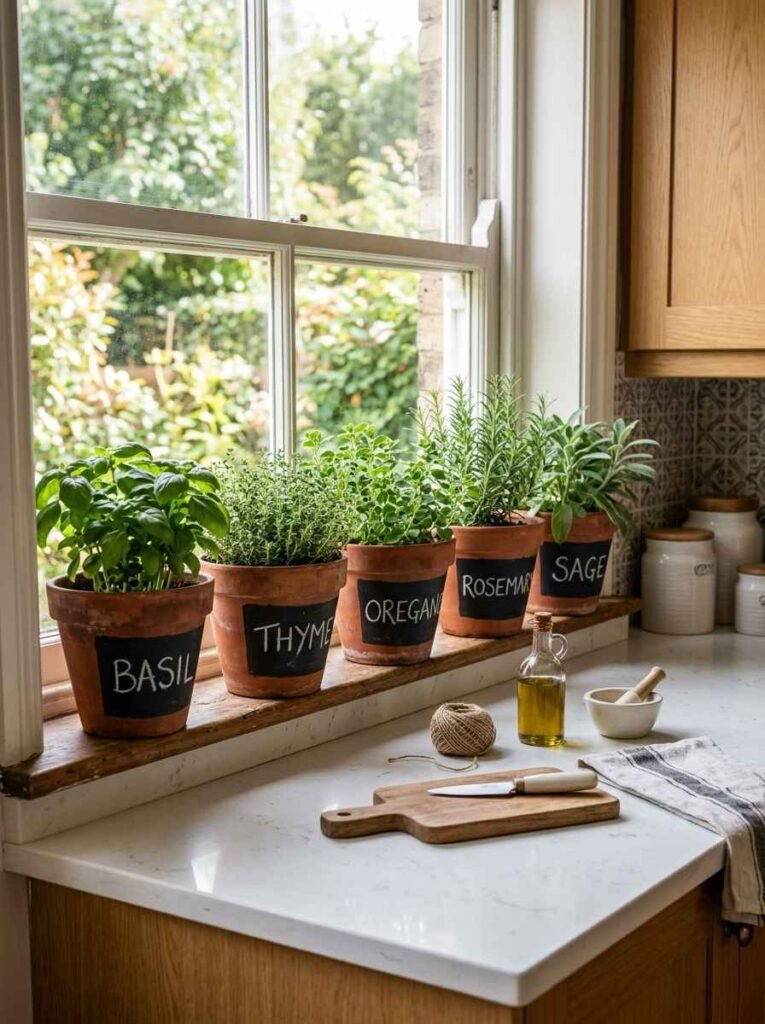
Plain terracotta pots with chalkboard paint on the front. Write the herb name, wipe it off, update it. Small detail that makes the whole setup feel organized rather than chaotic.
13. Glass Jar Herb Garden
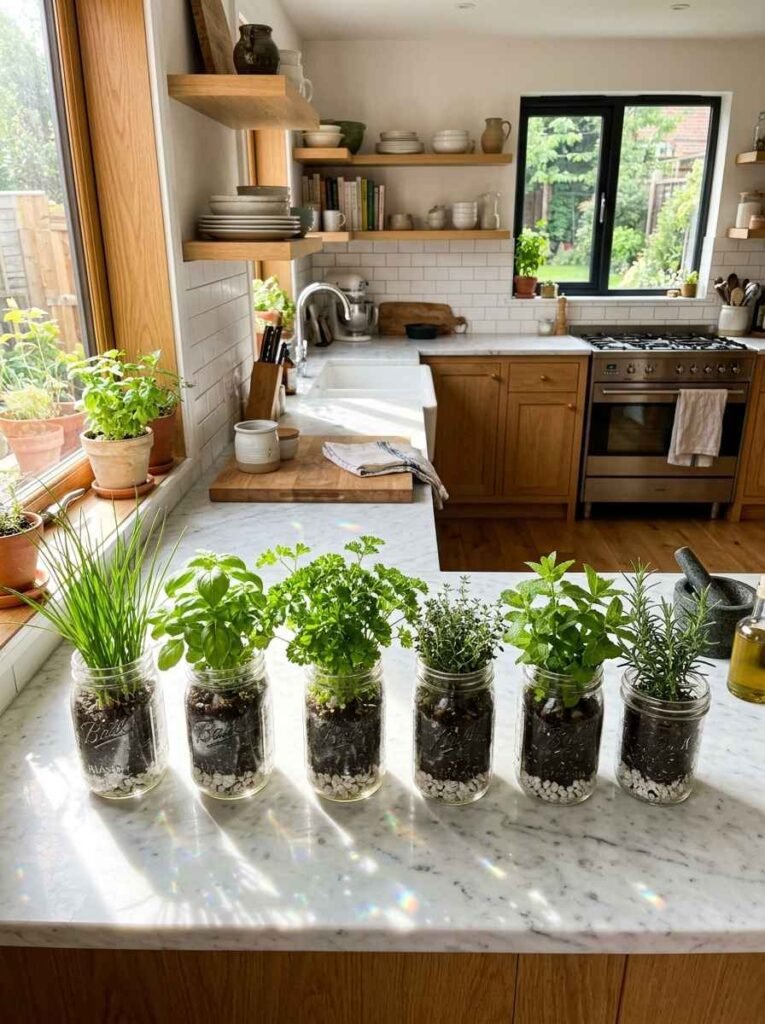
Mason jars or repurposed pasta sauce jars. Add rocks to the bottom for drainage since most jars have no holes. Cheap, sustainable, looks great on a marble counter.
14. Copper Pot Collection
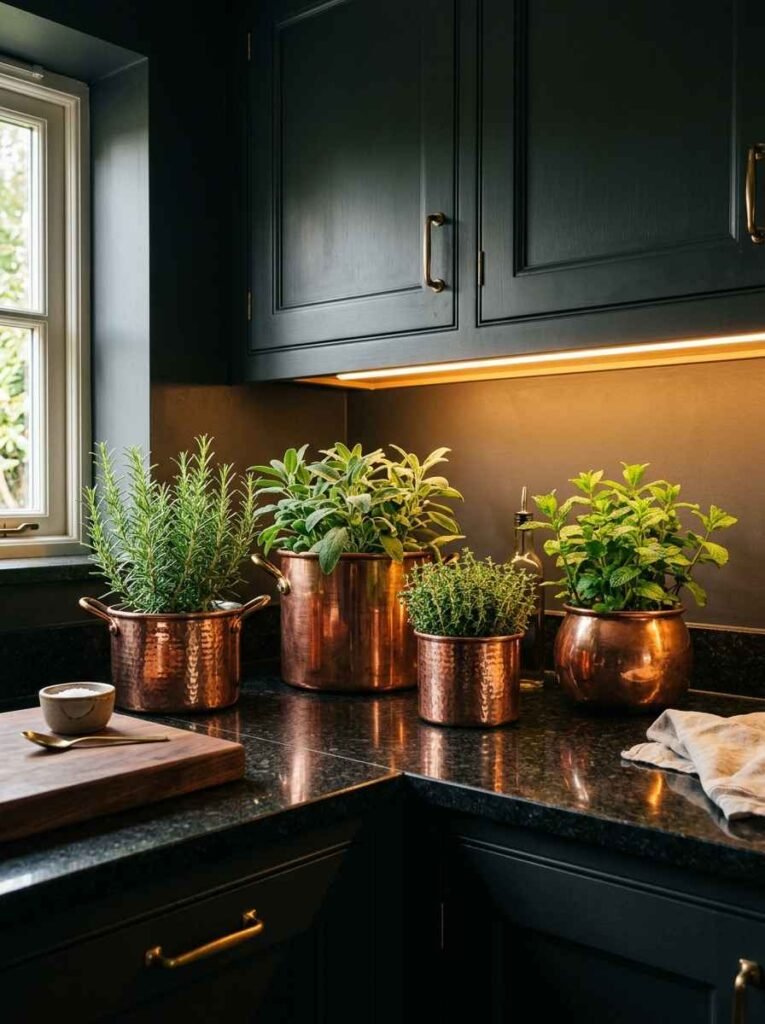
Copper pots with herb plants are a really specific aesthetic — warm, rich, a little vintage — but when it works, it really works. Pairs especially well with dark kitchen cabinetry.
15. Tiered Plant Stand
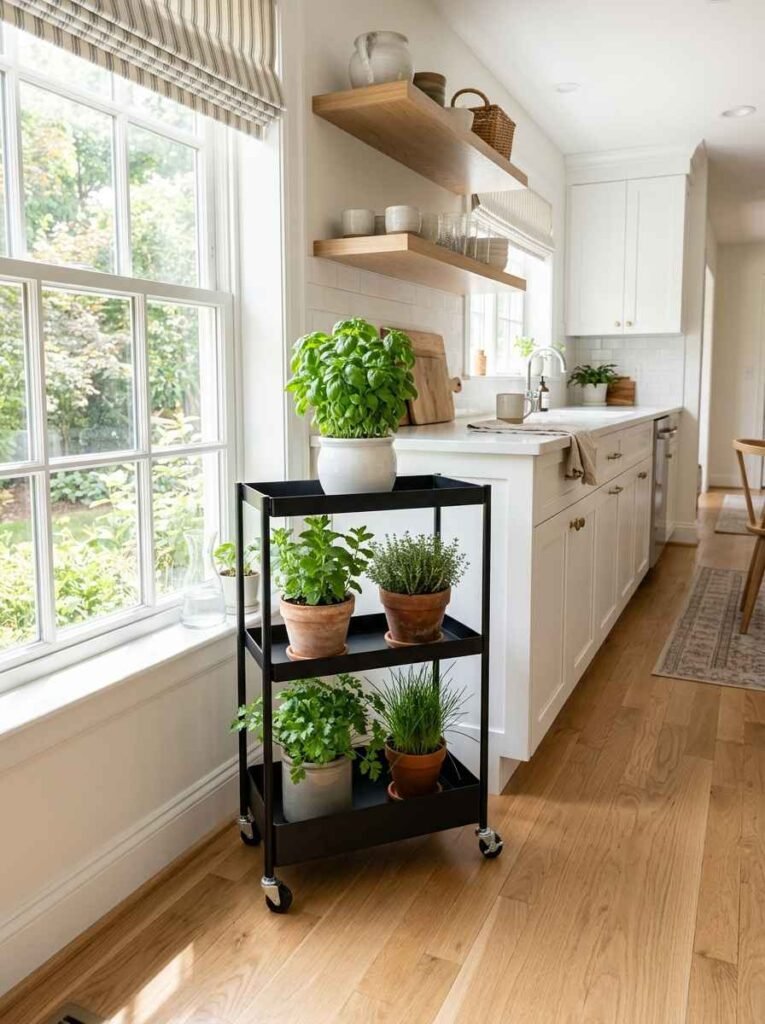
A 3-tier rolling plant stand you can tuck into a corner or pull out when needed. Herbs on every shelf, wheels so you can rotate for light. This is the most flexible option for kitchens that get uneven sunlight.
Hydroponic & High-Tech Ideas
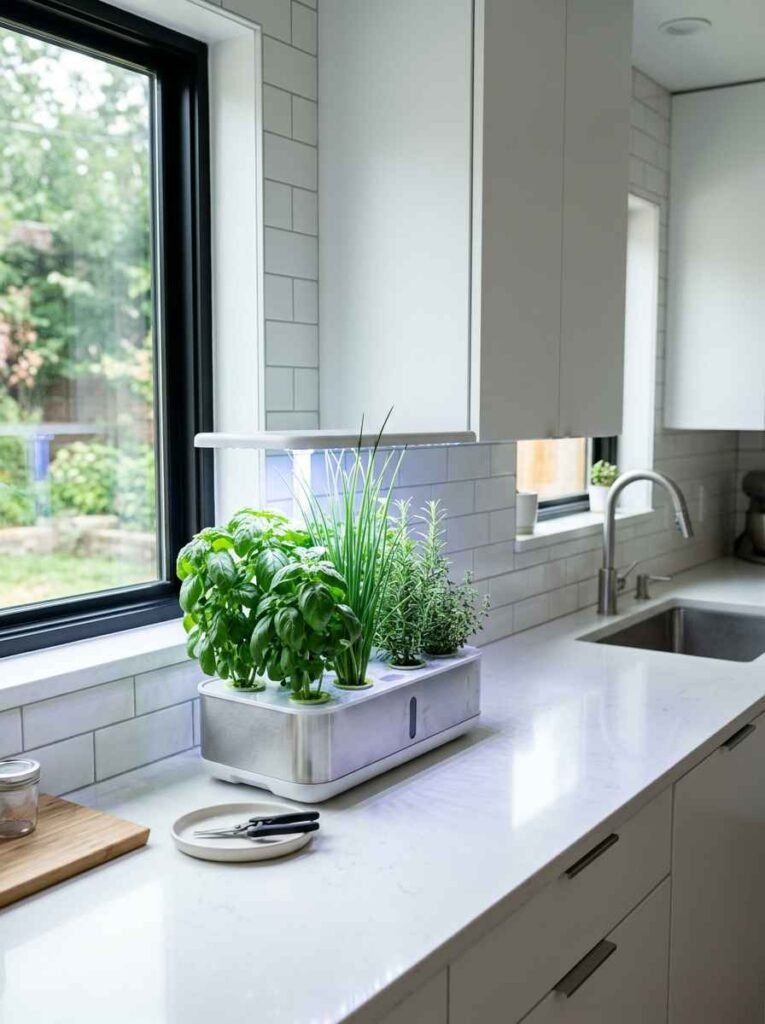
These cost more upfront but honestly require less work once they’re running.
| System Type | Cost Range | Best For | Maintenance |
|---|---|---|---|
| Basic hydroponic kit | $30–$60 | Beginners | Low |
| LED pod system | $80–$150 | Year-round growing | Very low |
| Self-watering planter | $20–$50 | Busy households | Very low |
| Countertop garden appliance | $100–$200 | Herb variety | Minimal |
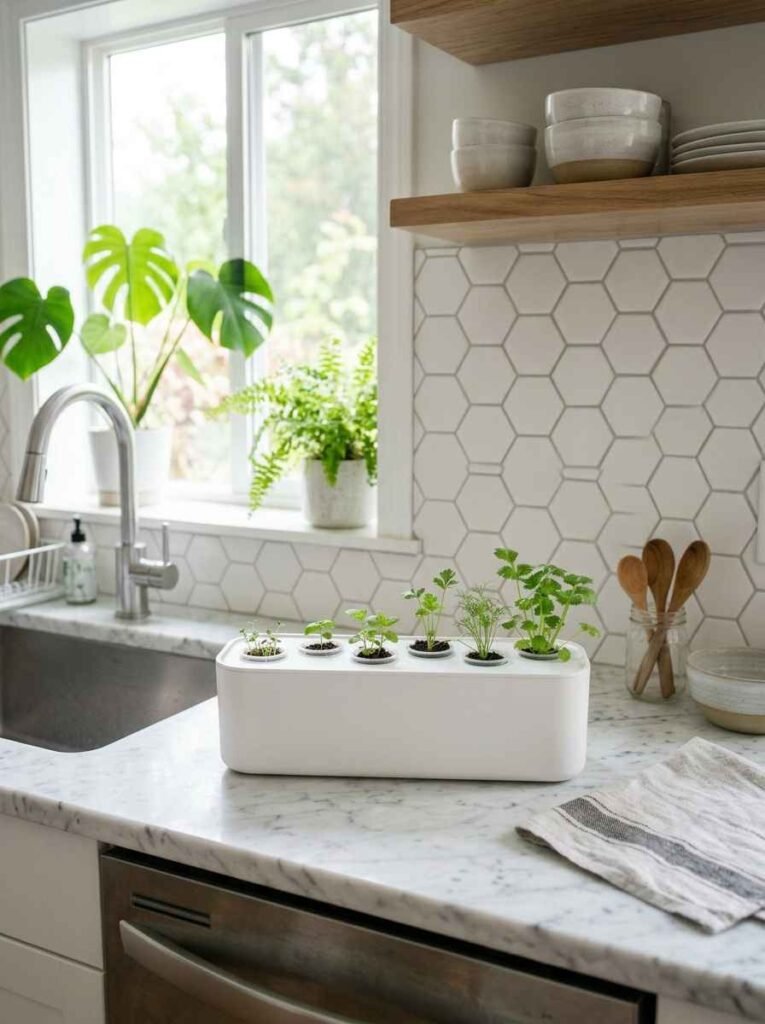
16. Countertop Hydroponic Garden
Systems like AeroGarden or similar — pods of water and nutrients, built-in LED lights, almost foolproof. Herbs grow 2–3x faster than soil. You can harvest basil in three weeks.
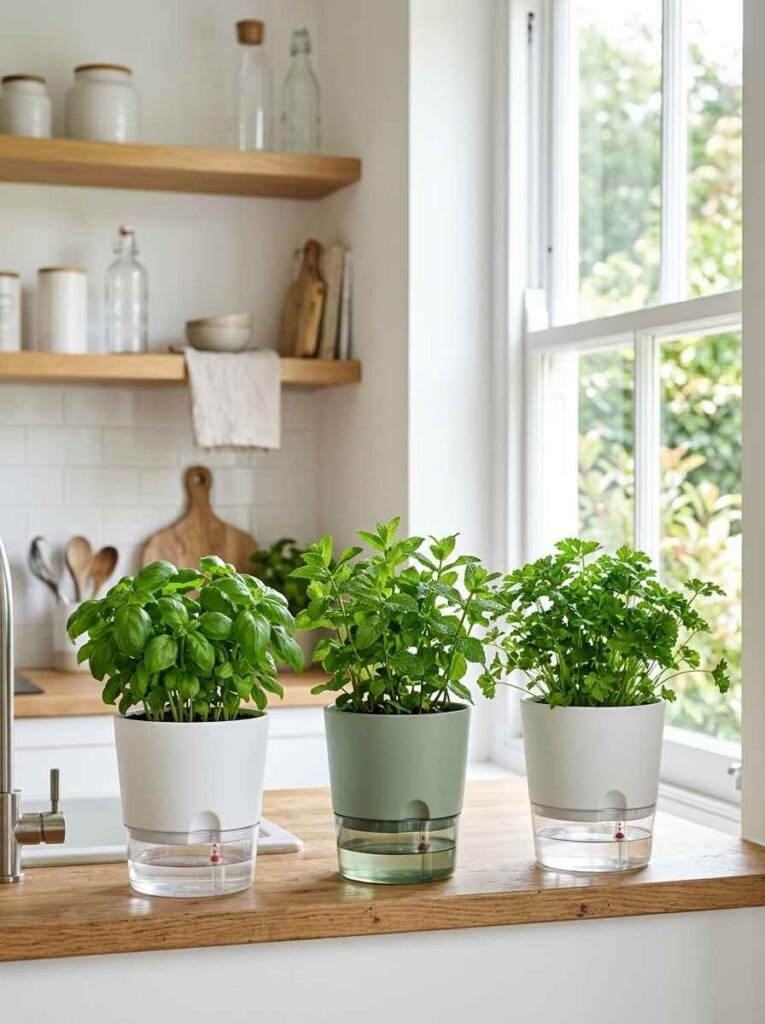
17. Self-Watering Planter
A planter with a reservoir at the bottom. The plant drinks what it needs. You refill the reservoir every 1–2 weeks. Good option for people who kill plants mostly through forgetting.
18. LED Grow Light Shelf System
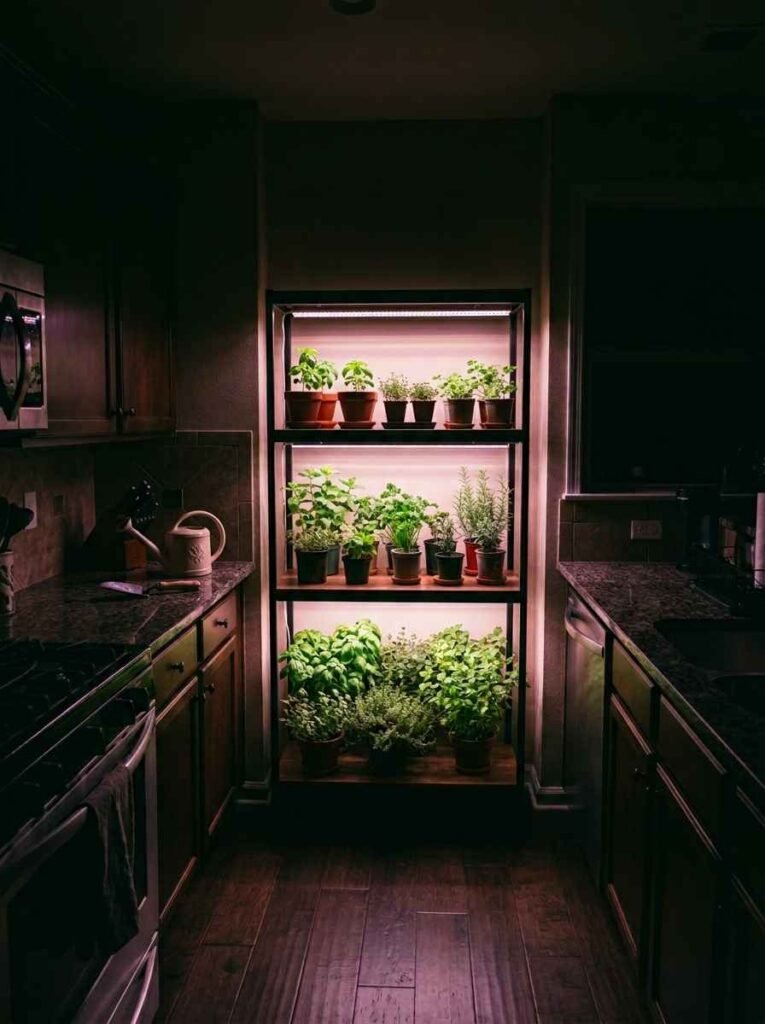
A dedicated shelving unit with full-spectrum LED strips under each shelf. No window required. Put it in a dim corner, a pantry, or wherever you have space.
19. Herb Pod Starter Kit
Pre-seeded grow pods in a small self-contained unit. Great for beginners who want to skip the soil-and-germination stage and just start harvesting.
Hanging & Suspended Ideas
These are the ones that look the most dramatic and take up zero counter or wall space.
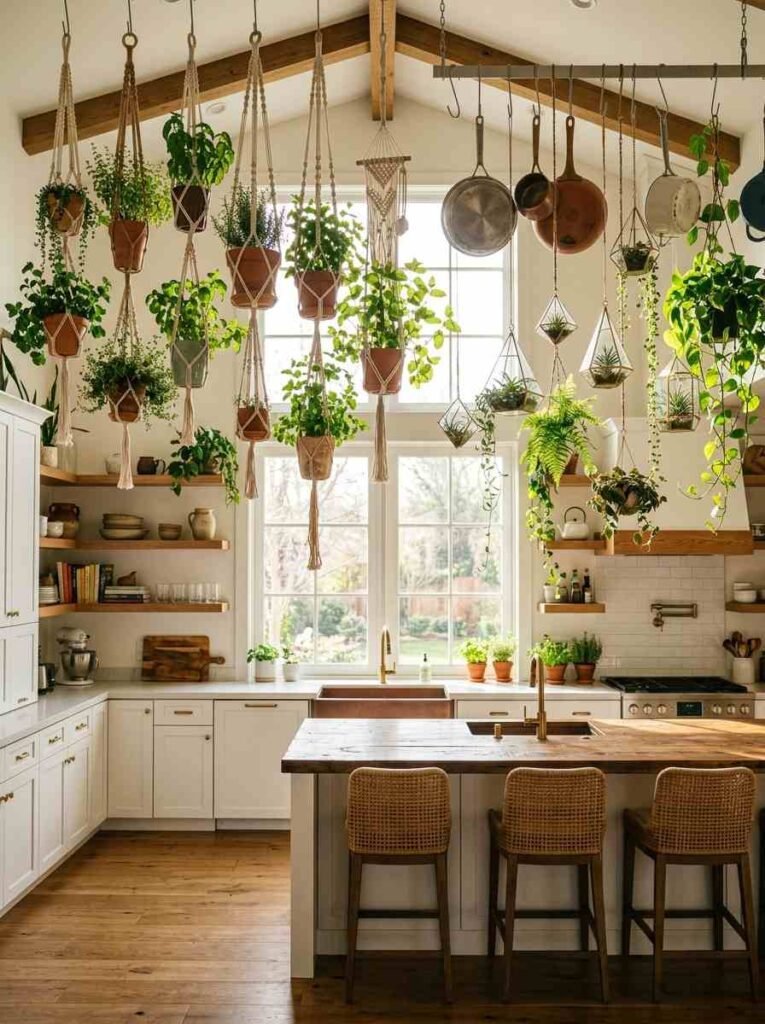
20. Hanging Macramé Plant Holders
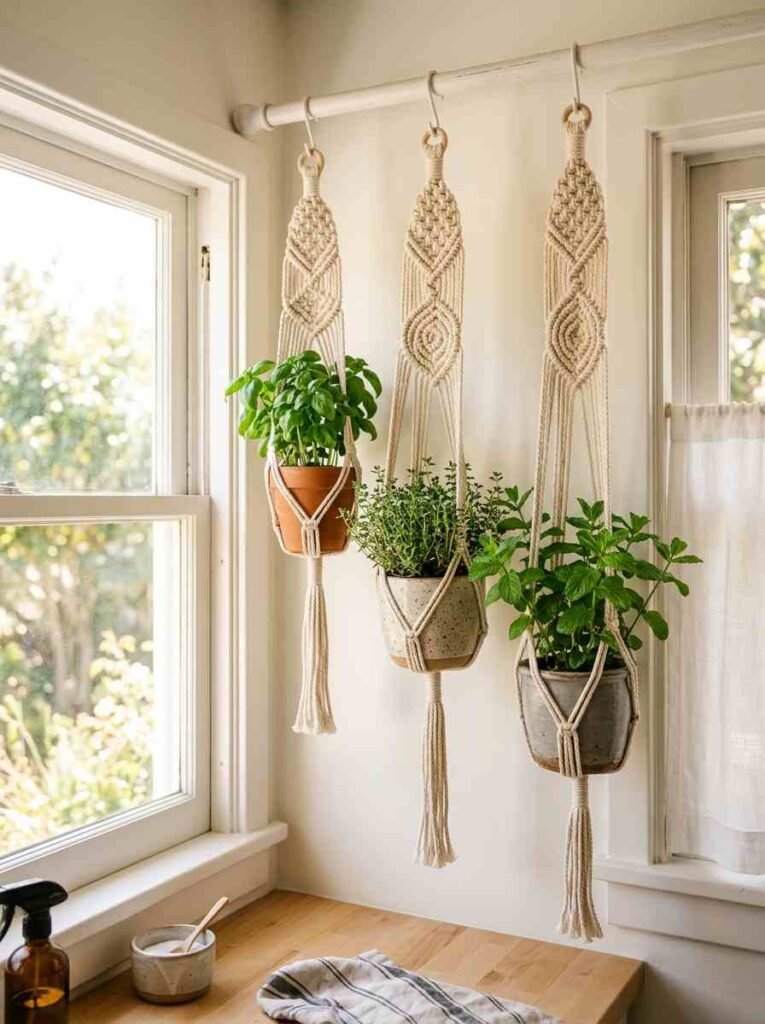
A cluster of macramé hangers at different heights near a window. Use 4-inch pots — they’re heavy enough to stay stable but light enough that the cords hold them easily.
21. Ceiling-Mounted Rail System
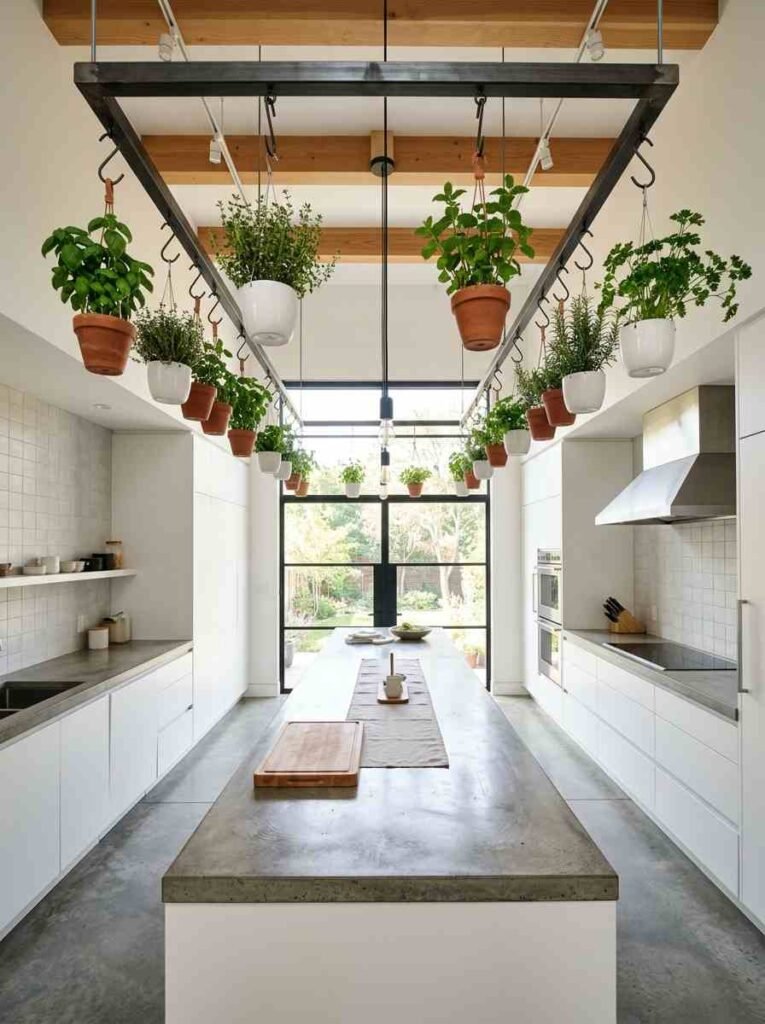
An IKEA-style ceiling rail with S-hooks and hanging pots. Great in kitchens with high ceilings. The herbs hang at eye level or just above the counter.
22. Hanging Glass Terrariums
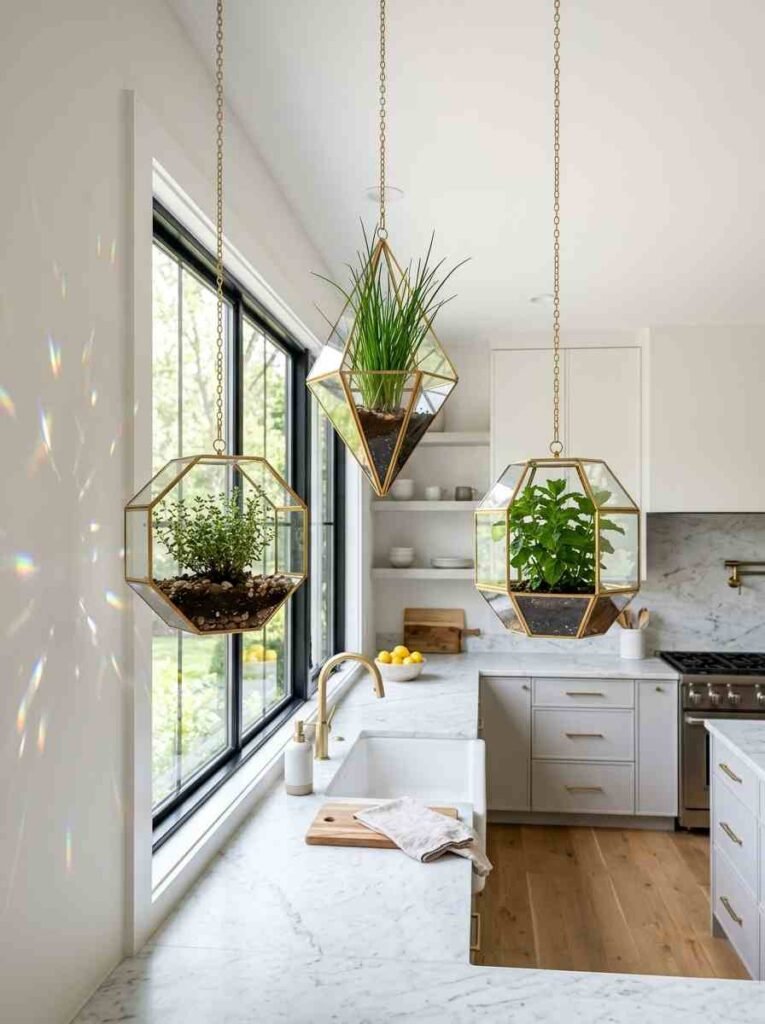
Open glass geometric terrariums hung from the ceiling. Best for smaller herbs like thyme or chives that don’t grow too tall. Very modern aesthetic.
23. Suspended Wooden Dowel Planter
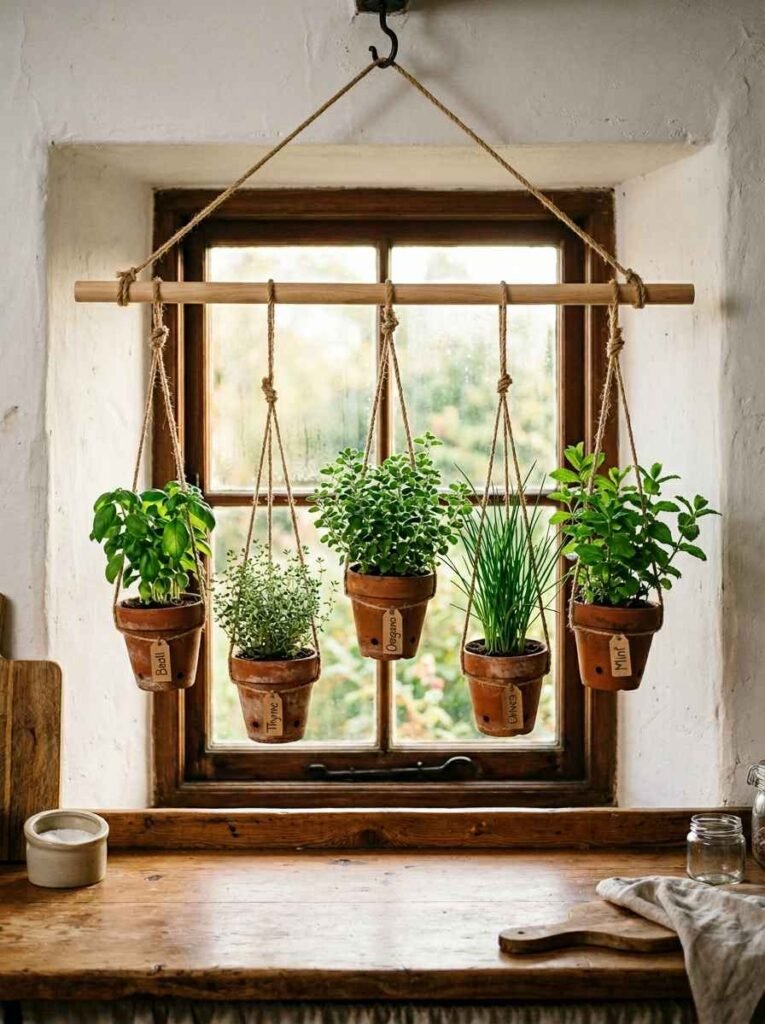
A wooden dowel hung horizontally with several small hanging pots on rope. Minimal, handmade feel, and very easy to DIY for under $20.
Upcycled & DIY Ideas
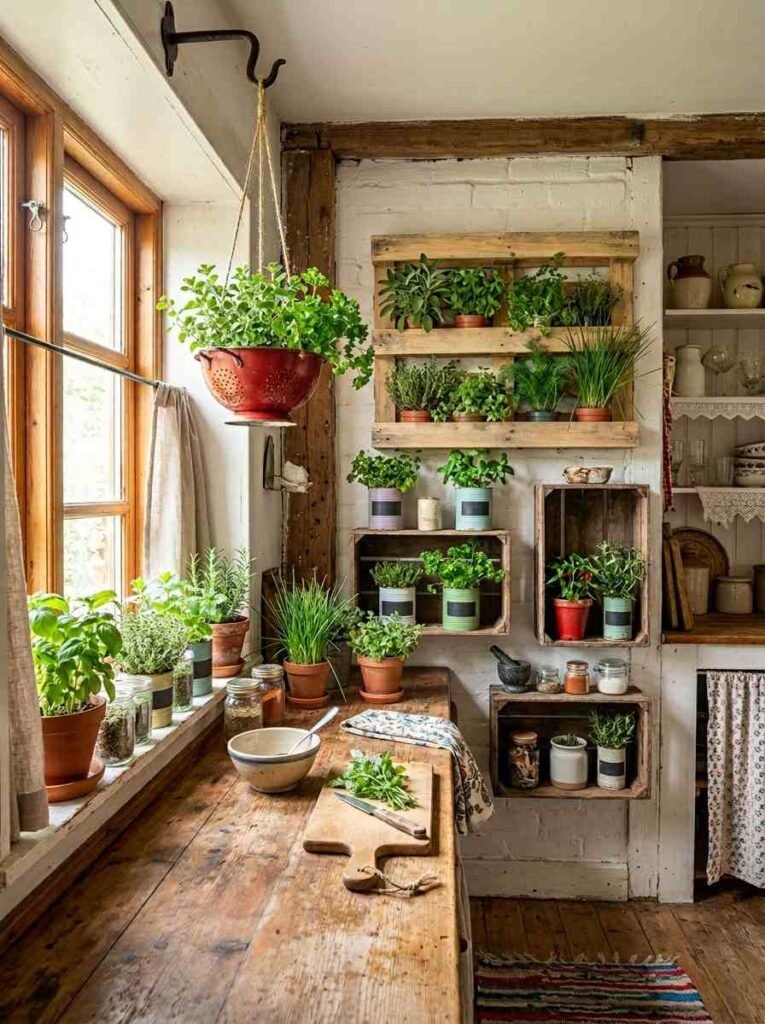
These are the ones that require 45 minutes and some supplies you probably have.
24. Tin Can Herb Garden
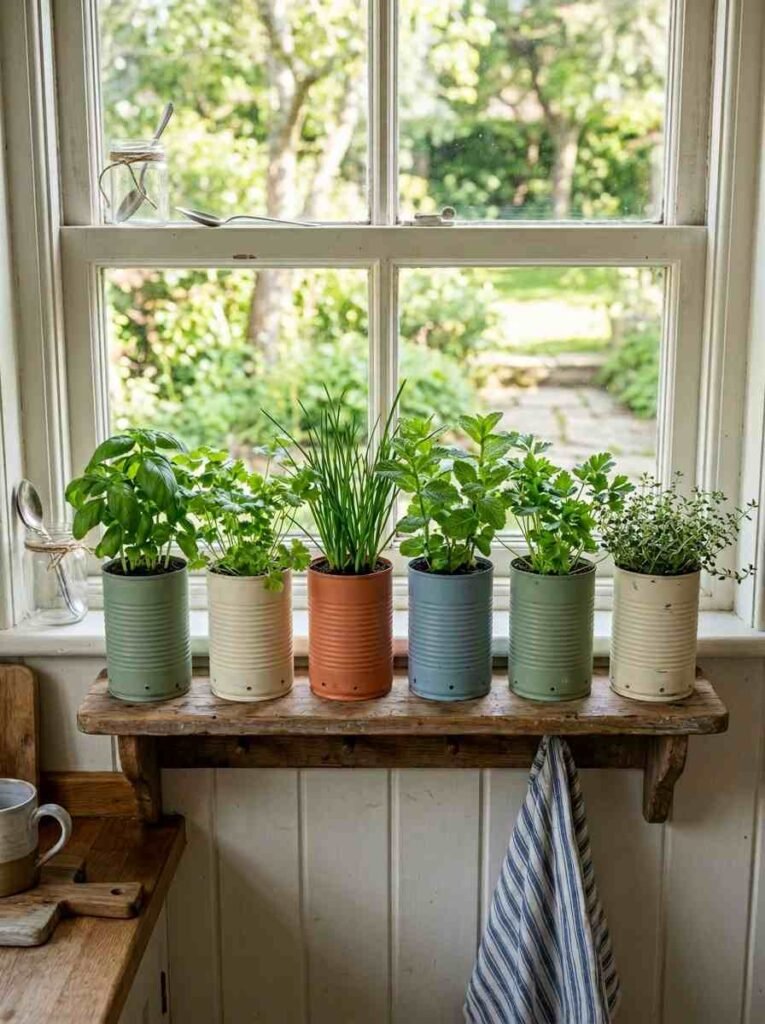
Cleaned tin cans, a few drainage holes poked in the bottom, painted or labeled. Line them up on a shelf or windowsill. Looks intentional, costs almost nothing.
25. Colander Herb Planter
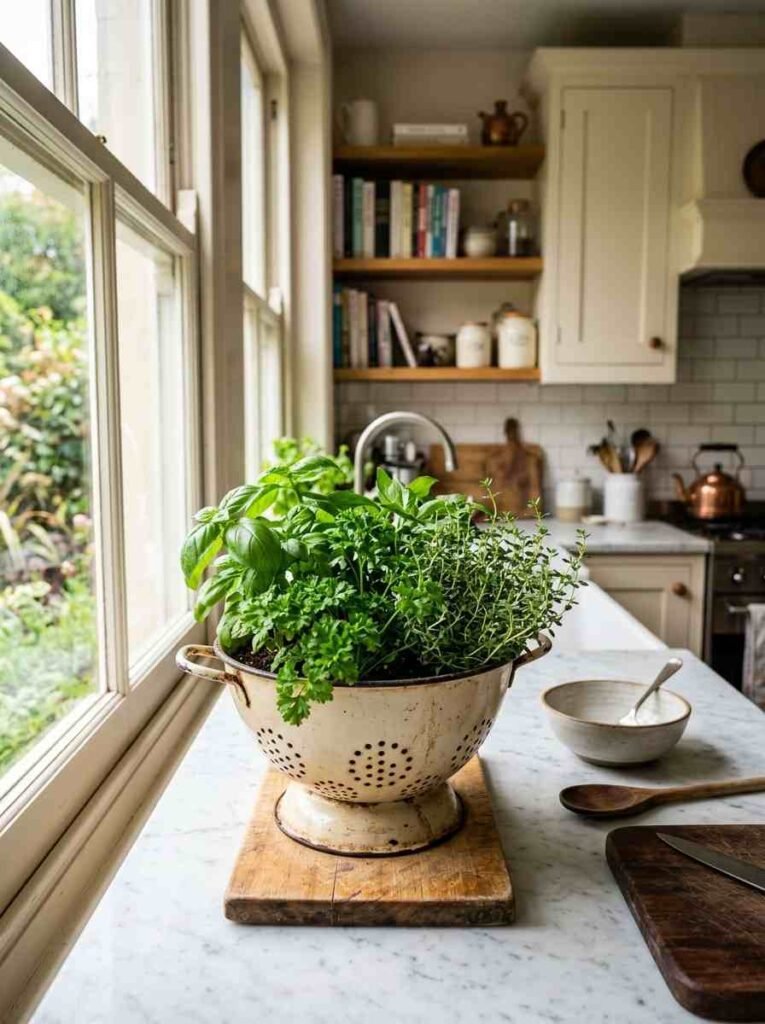
A colander already has drainage holes. Fill it with soil, plant several herbs together, hang it or set it on the counter. Unexpected and genuinely practical.
26. Repurposed Pallet Planter
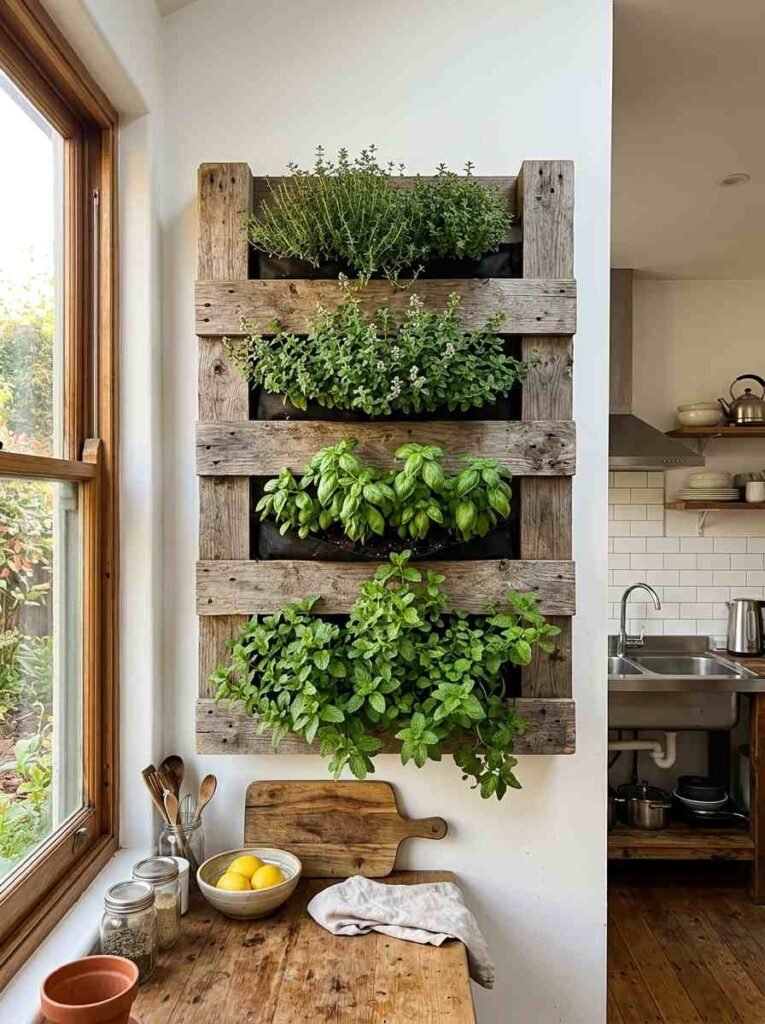
A small section of a wooden pallet mounted vertically on the wall. Stuff landscape fabric in the slats, fill with soil, plant herbs directly. Heavy when full, so make sure it’s secured properly.
27. Wine Crate Wall Garden
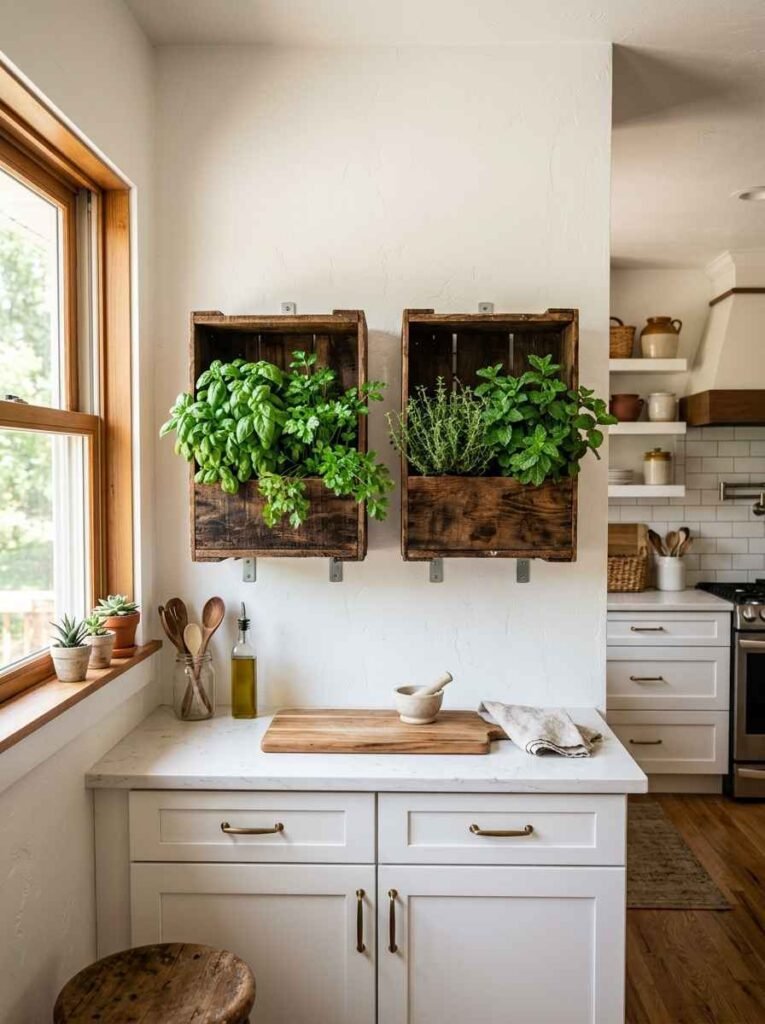
Wine crates are exactly the right size for herb growing and have good depth. Mount one or two on the wall, line them, fill with soil. The wood grain looks warm and textural.
28. Ladder Shelf Display
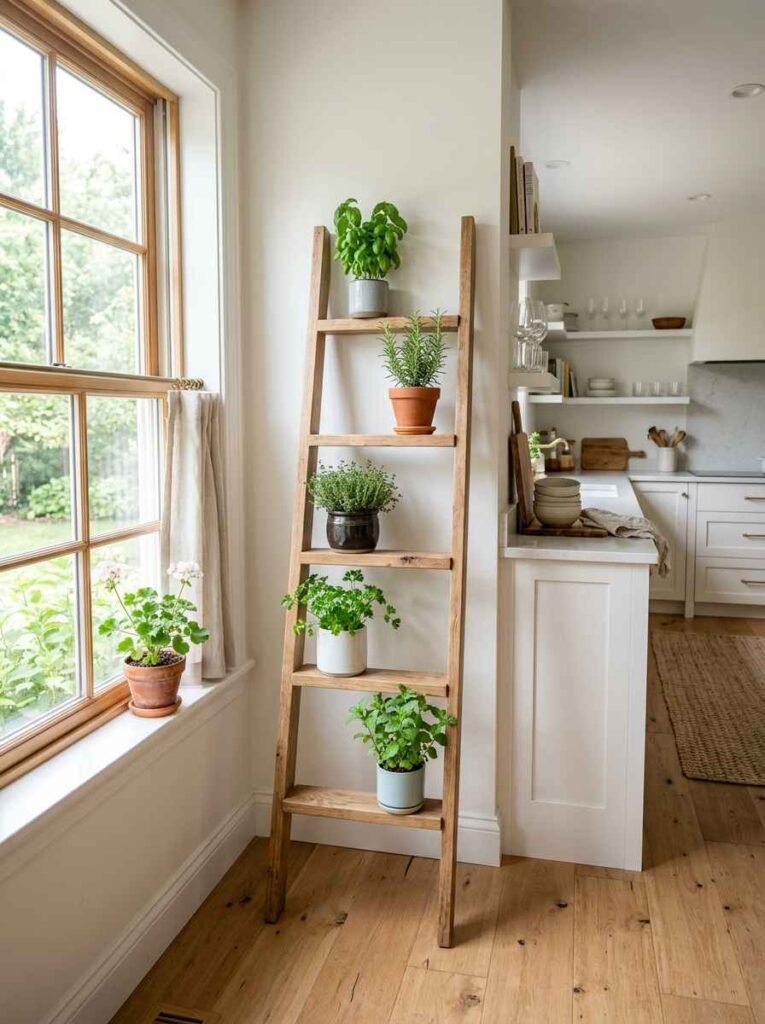
A leaning wooden ladder with shelves or just rungs to hold small pots. Leans against the wall, no drilling required. Good for renters and people who like to rearrange things seasonally.
How to Pick the Right Setup for Your Kitchen
Before you order anything, answer 3 questions:
- How much light does your kitchen get? South-facing window = most options. North-facing or no window = you need grow lights.
- What’s your maintenance tolerance? If you forget to water, go hydroponic or self-watering.
- What do you actually cook? Grow what you’ll use. Basil if you make pasta. Mint if you make drinks. Cilantro if you make everything.
Best Herbs for Indoors
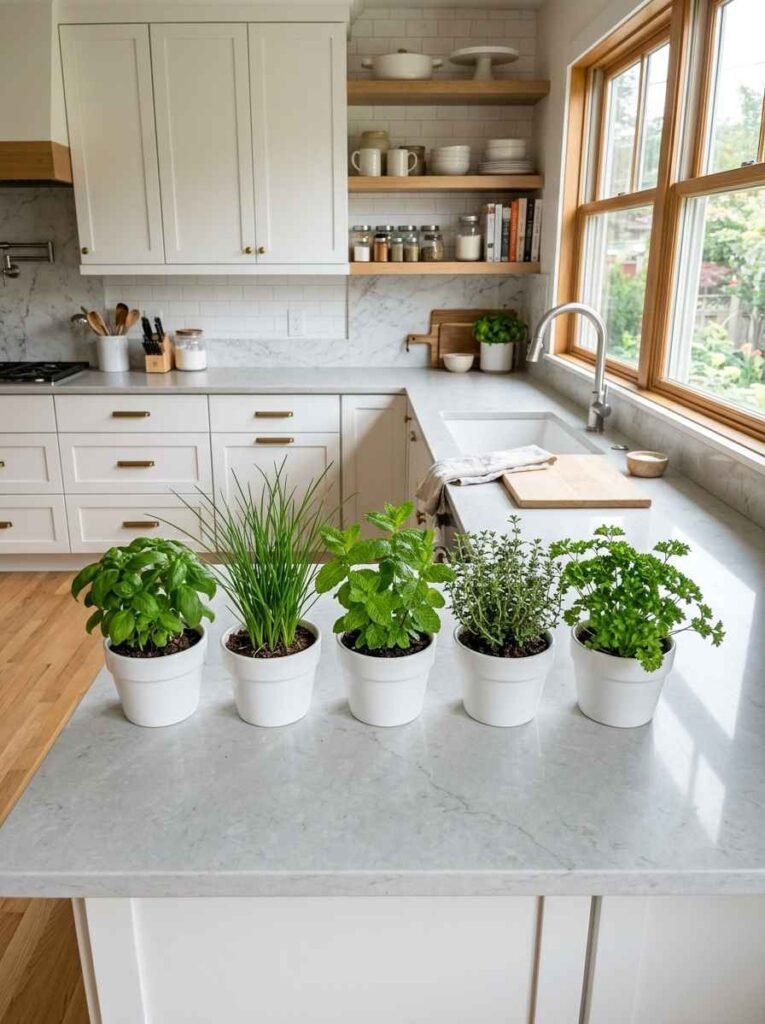
These 5 are the easiest to keep alive in a kitchen:
- Basil — needs warmth and lots of light
- Chives — nearly indestructible, tolerates lower light
- Mint — grows aggressively (keep it in its own pot)
- Thyme — drought-tolerant, good for forgetful waterers
- Parsley — steady grower, works in partial light
Final Thought
Fresh herbs change how you cook. Not in a “revolutionize your kitchen” way — just in a “wait, this actually tastes different” way. And having them three feet from your stove means you’ll actually use them.
Pick one idea from this list that matches your space and your willingness to maintain it. Start there. You don’t need all 28. You just need one that works.
Then maybe come back for a second one. That’s how this usually goes 🙂
