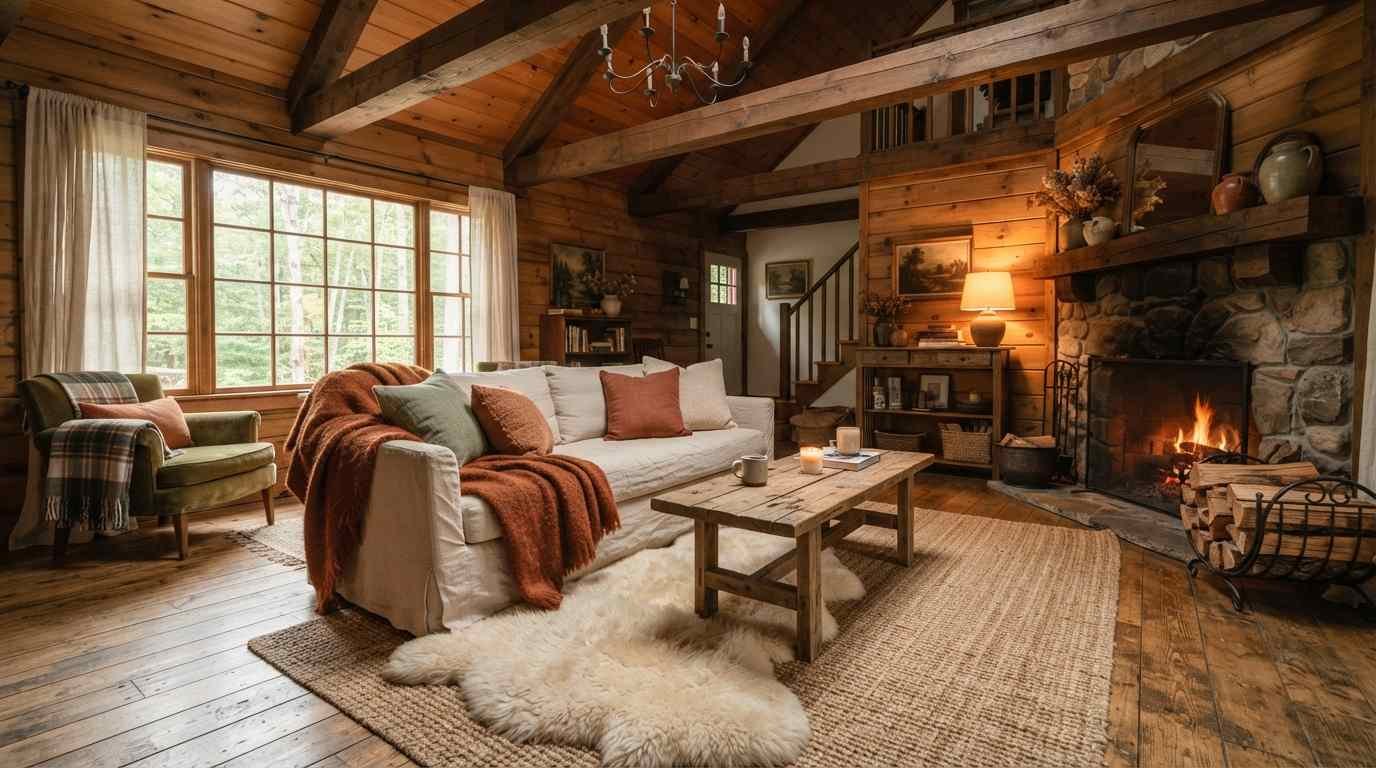
My first apartment had a living room the size of a walk-in closet. No fireplace, no exposed beams, definitely no mountain view.
And yet I still managed to make it feel like a cabin tucked in the woods, just by leaning into a few rustic tricks that work no matter the square footage.
If you’re chasing that same cozy, wood-and-wool feeling in a small space, you’re in the right place.
Small rooms actually have an advantage here: less space means less to decorate, which means every choice you make hits harder.
Let’s get into the 17 ideas that turned my cramped little room into the coziest spot in the house.
1. Pick one warm anchor color, not five
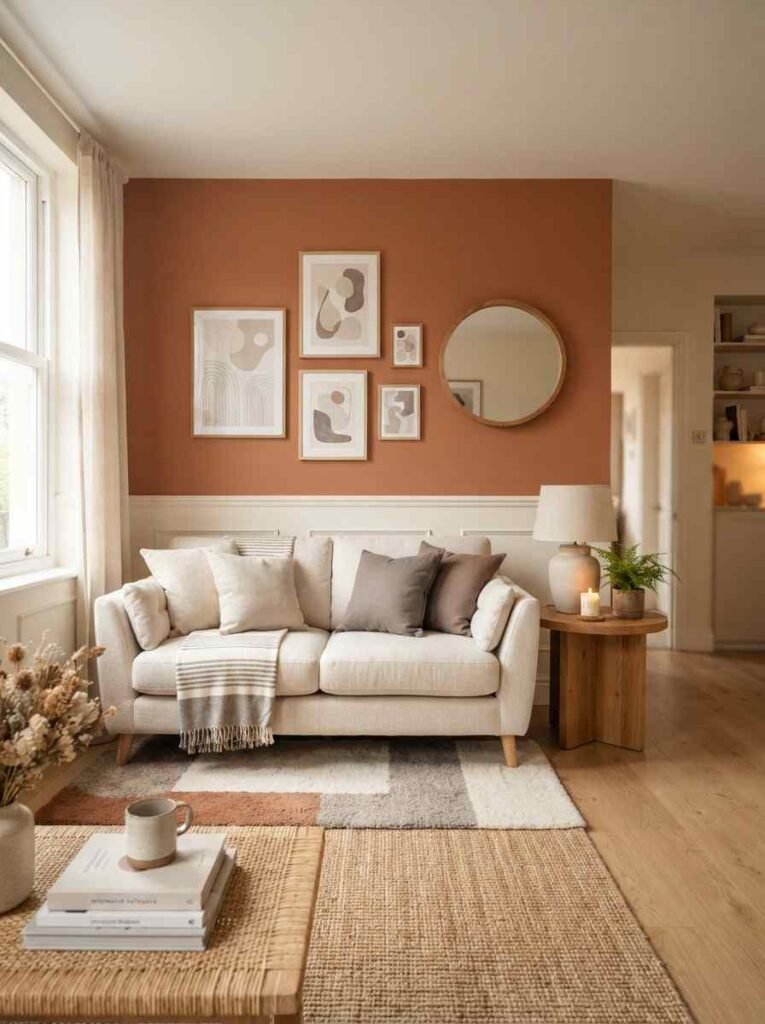
Rustic doesn’t mean chaotic. Choose one warm base, like a soft terracotta, muted sage, or warm gray, and build everything else around it.
I made the mistake of mixing four “earthy” tones in my first attempt and it looked more like a paint sample wall than a living room.
Stick to a tight palette. It reads calmer, and calm is what cabin vibes are all about.
2. Bring in real wood, even in small doses
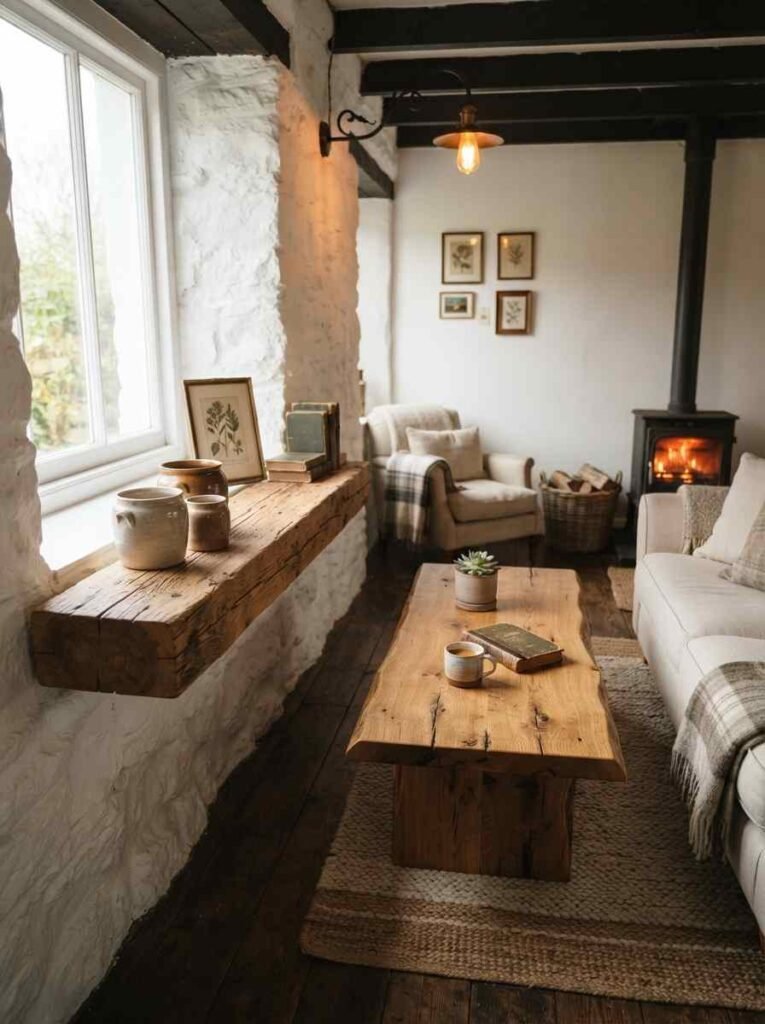
You don’t need full wood paneling to get the effect. A reclaimed wood shelf, a wooden coffee table, or even a stack of firewood logs in a basket by the wall does the job.
Real wood grain adds texture that no printed material can fake.
I picked up a single weathered plank at a salvage yard for $12 and turned it into a floating shelf. Still my favorite piece in the room.
3. Layer textiles like you mean it
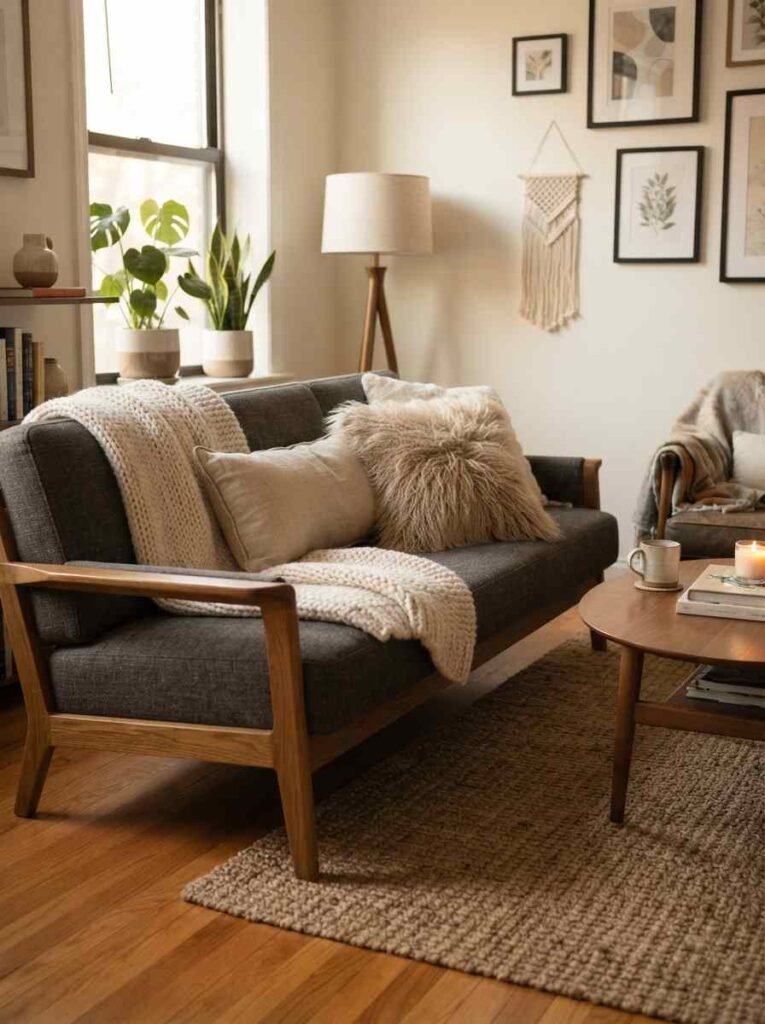
Chunky knit throws, sheepskin rugs, woven pillow covers: this is where the “cozy” part of cozy rustic actually happens.
A bare rustic room just looks unfinished. A layered one feels lived-in.
Mix at least two textures on your sofa. Wool plus linen, or knit plus faux fur, both work well together.
4. Use a faux or electric fireplace if you can’t get the real thing
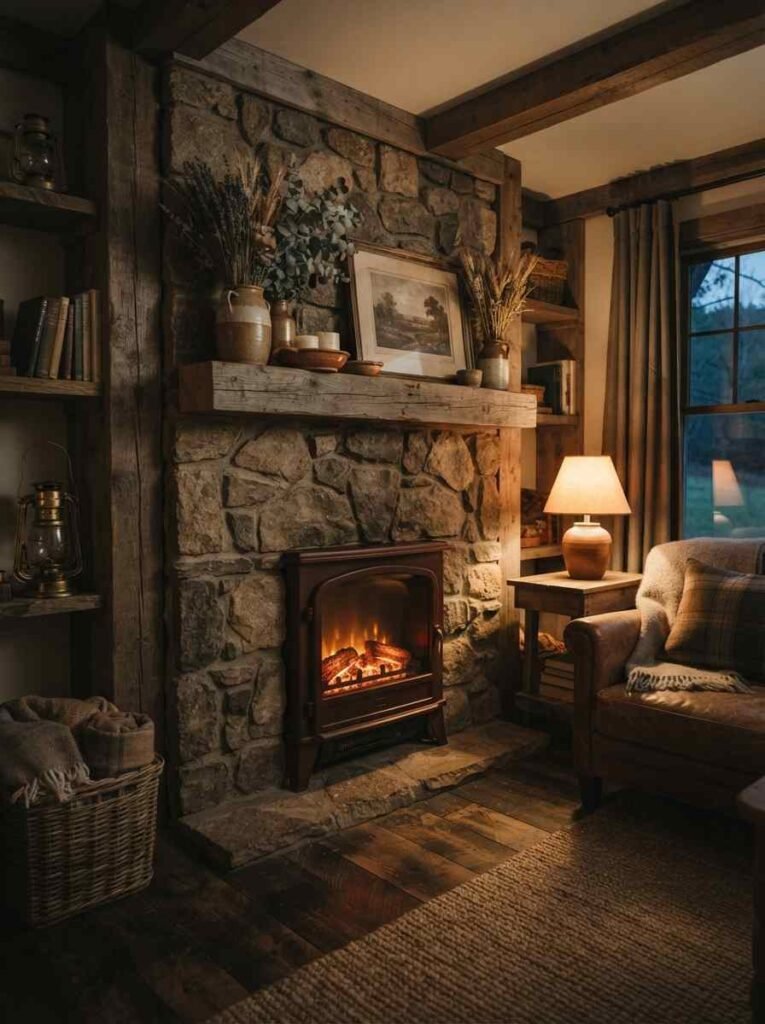
Not everyone has room (or a chimney) for an actual hearth.
A small electric fireplace insert or even a candle-filled mantel arrangement gives you that flickering warmth without the renovation.
According to Better Homes & Gardens, warm ambient lighting is one of the fastest ways to make any room feel more inviting, and a fireplace substitute checks that box instantly.
5. Go for exposed or faux beams overhead
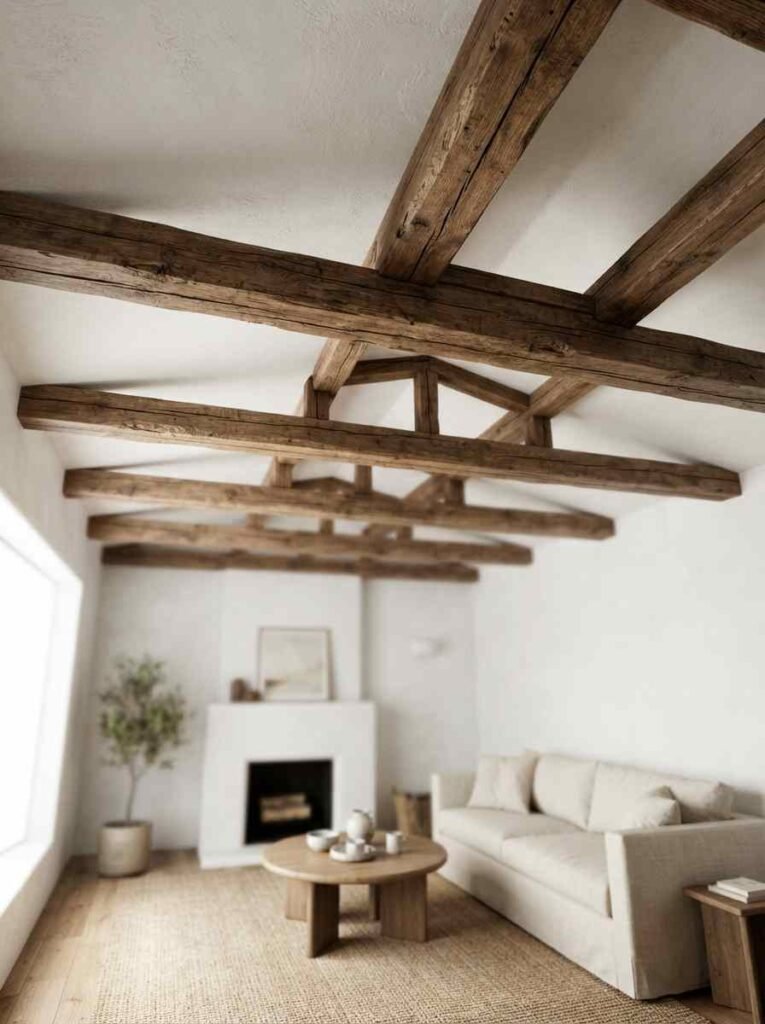
Ceiling beams pull the eye up, which tricks a small room into feeling taller.
If structural beams aren’t in the cards, lightweight faux beams (foam or thin wood) mount easily and cost far less than you’d think.
6. Choose furniture with visible wood legs
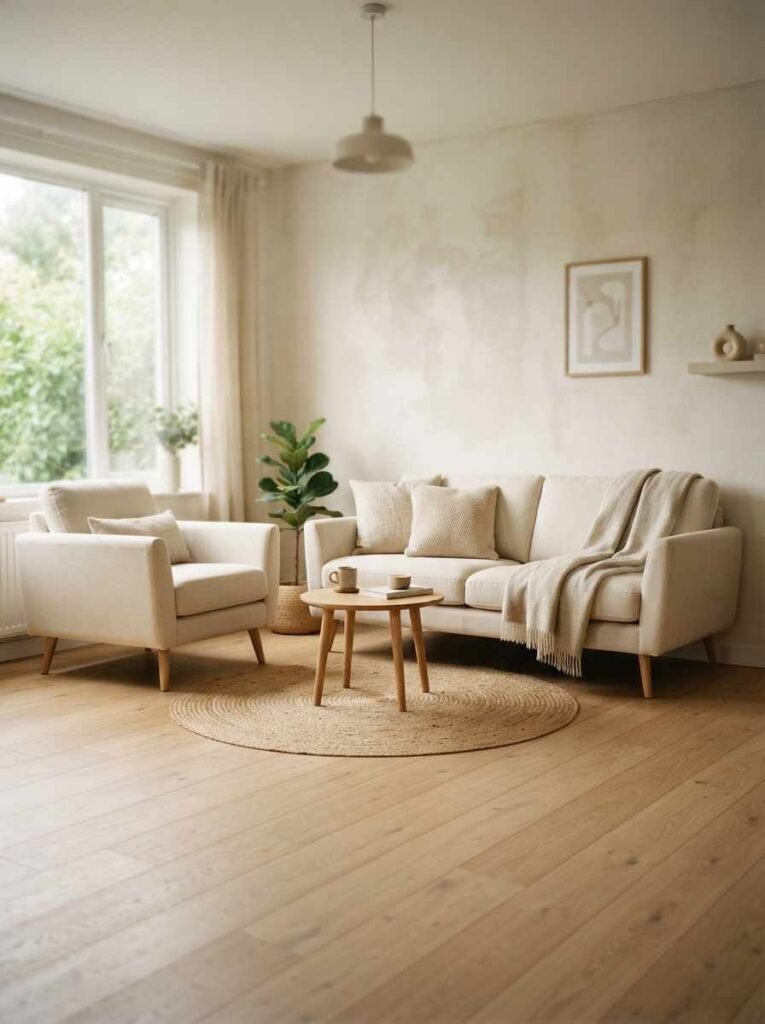
Sofas and chairs that float on slim wooden legs feel lighter in a small room than boxy, upholstered-to-the-floor pieces.
You get the rustic material without the bulk. This one small swap changed how open my room felt more than any paint color did.
7. Add a plaid or buffalo check accent
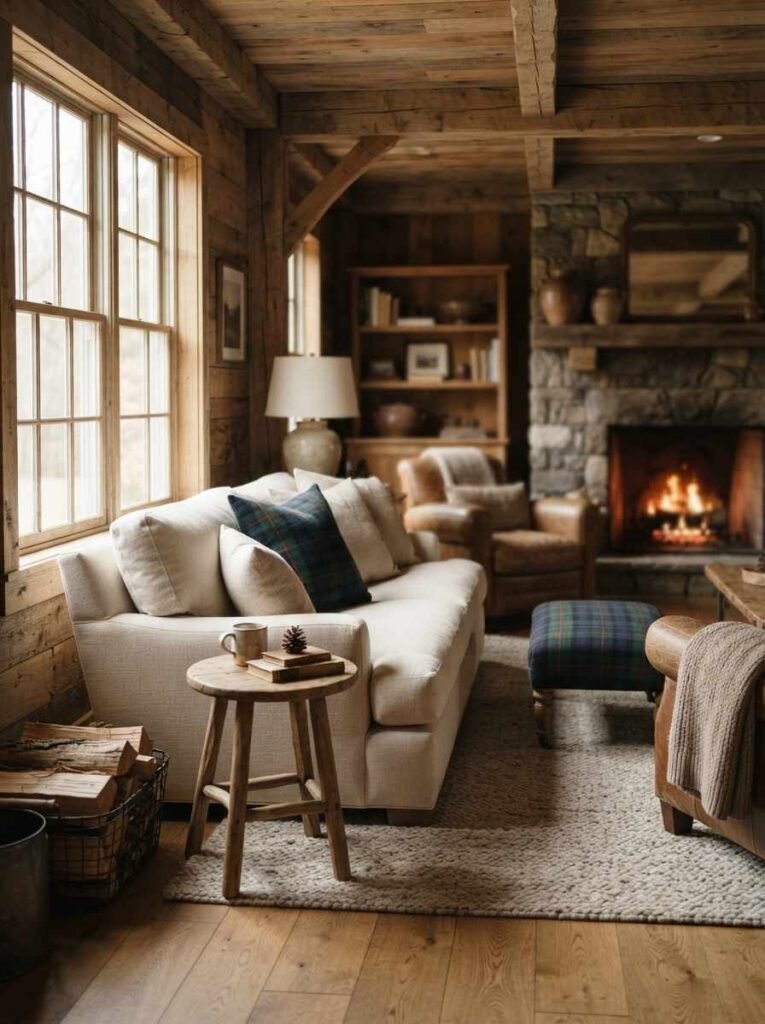
One plaid throw pillow or a small plaid ottoman brings instant cabin energy.
Don’t overdo it though. One or two plaid accents read as intentional; five reads as a hunting lodge gift shop.
8. Use a jute or wool area rug to ground the space
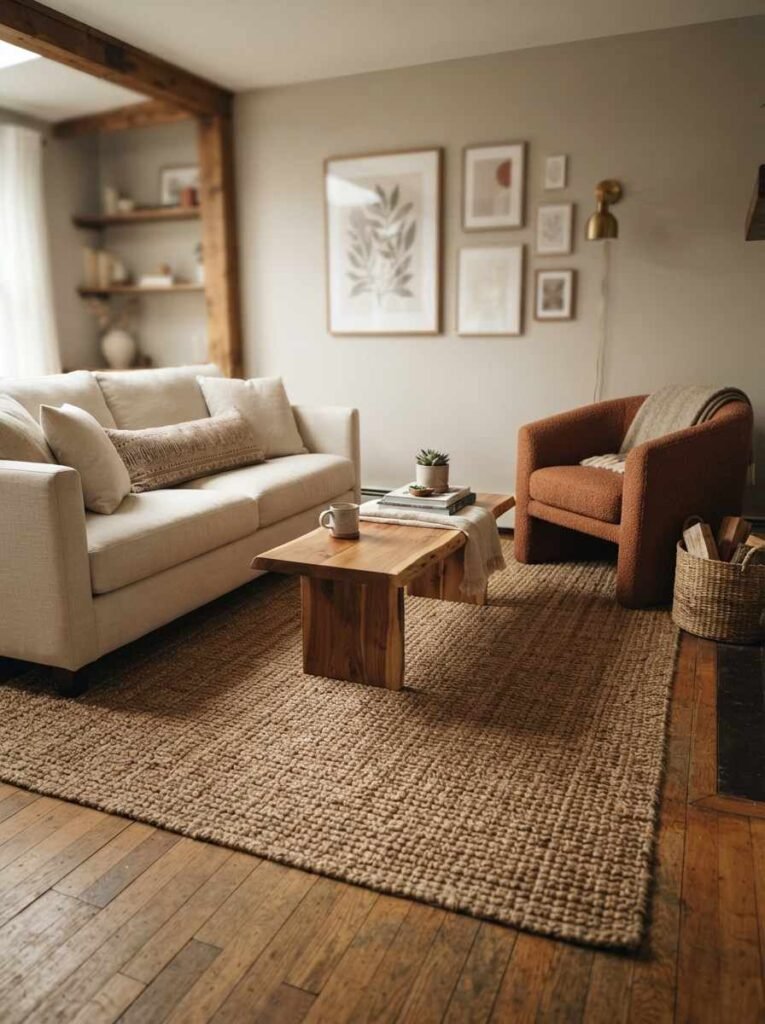
A natural fiber rug adds texture underfoot and visually defines your seating area, even when that “area” is basically the whole room.
Layering a smaller patterned rug over a plain jute base is a trick I picked up after seeing it done in a tiny Airbnb cabin, and it’s genuinely one of my favorite small-space moves.
9. Keep window treatments simple and sheer
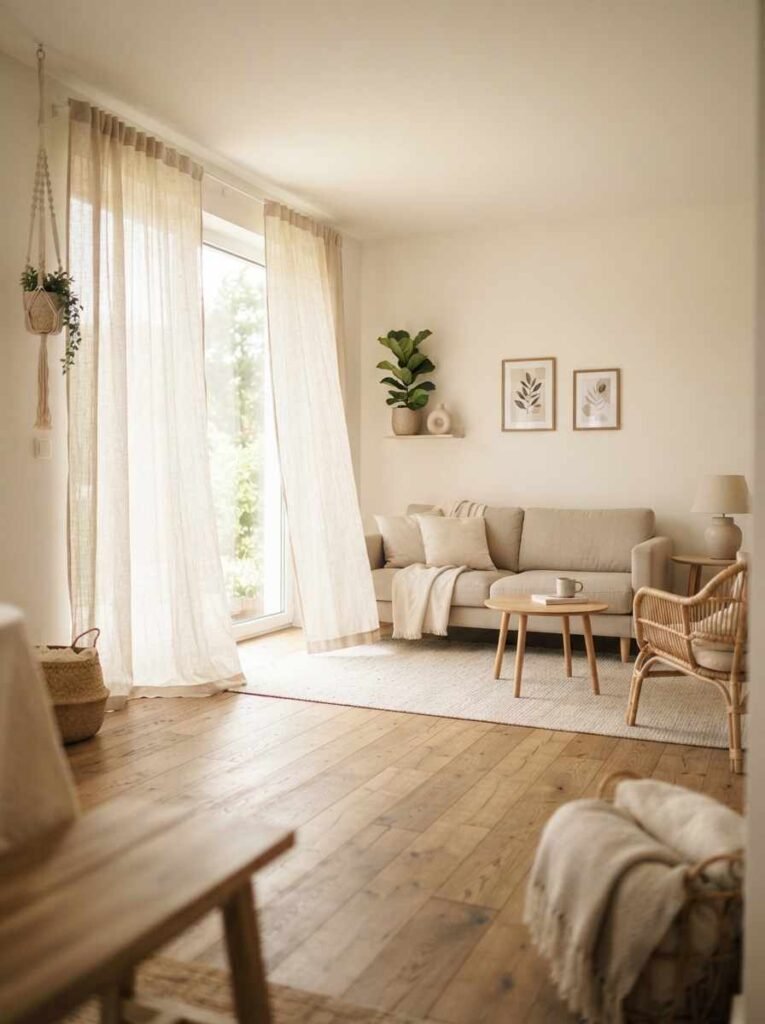
Heavy drapes swallow small rooms whole. Light linen curtains let natural light pour in while still softening those hard window edges.
More daylight always makes a compact rustic space feel bigger than it is.
10. Hang a gallery of black-and-white nature prints
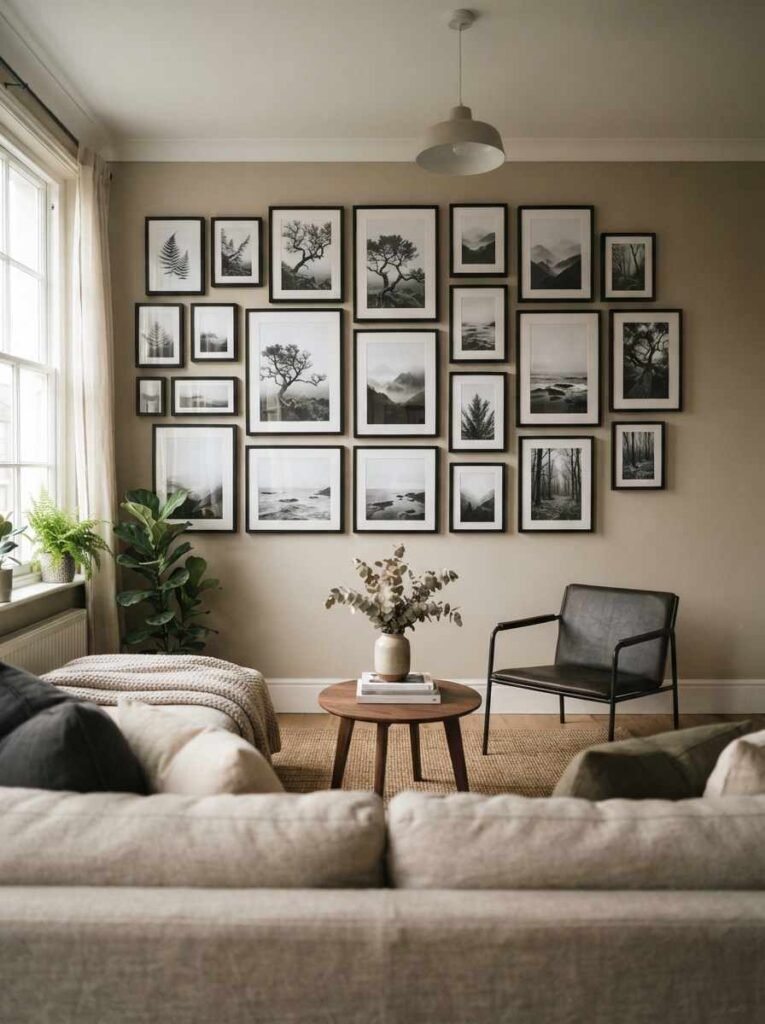
Landscape photography, botanical sketches, or vintage topographic maps all fit the rustic mood without adding visual clutter.
Frame them simply, ideally in raw or dark wood, and keep the arrangement tight rather than sprawling.
11. Bring in greenery, but keep it low-maintenance
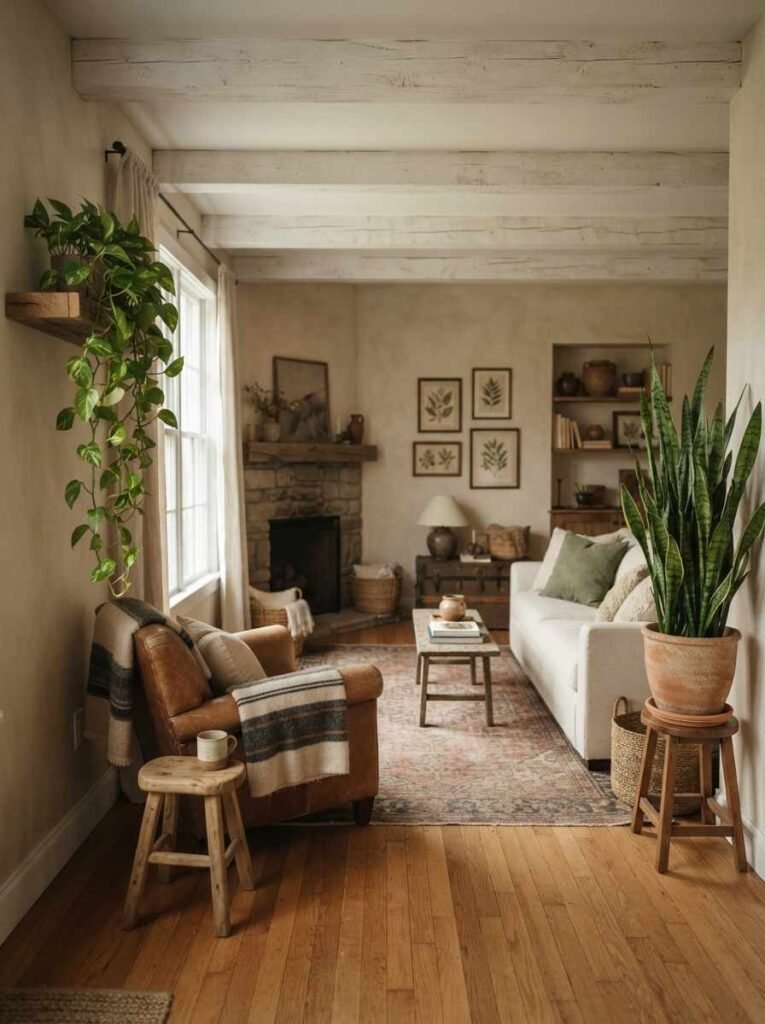
A trailing pothos or a hardy snake plant adds life to a rustic room without demanding much from you.
IMO, plants do more for a small space than most decor purchases, and they’re a lot cheaper than a new sofa.
12. Swap your ceiling light for something with character
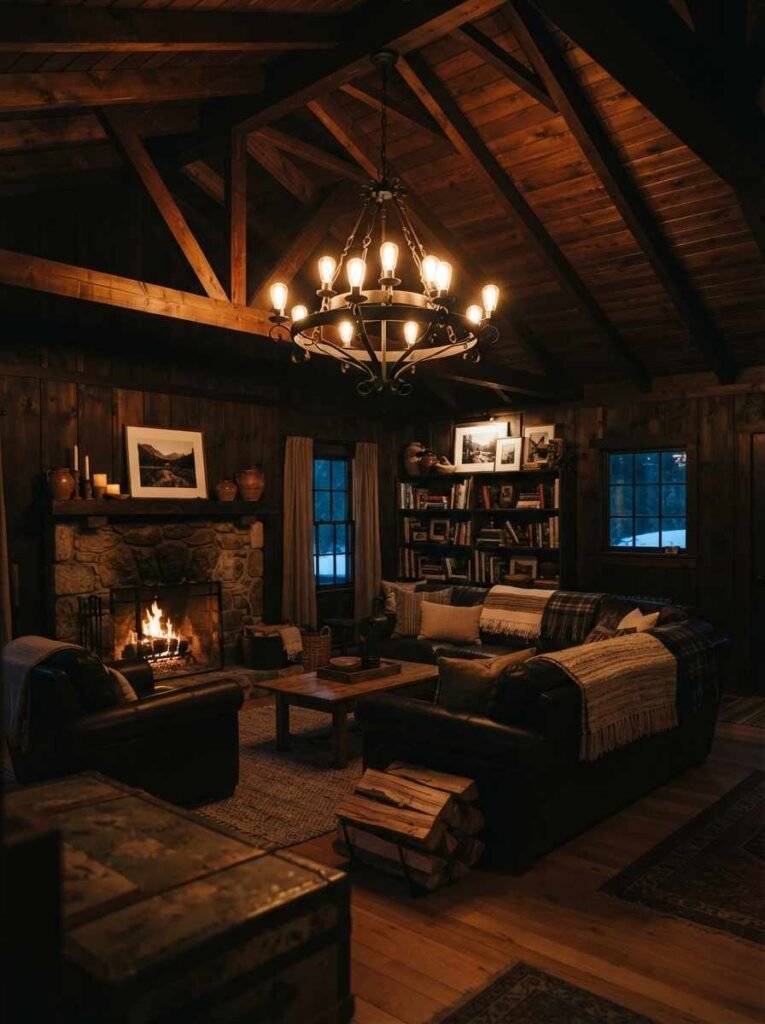
A wrought iron chandelier or a simple wood-and-rope pendant instantly upgrades the mood.
Builder-grade flush mounts are the fastest way to undo everything else you’ve done in the room, so this swap matters more than people expect.
13. Use vertical storage to keep the floor open
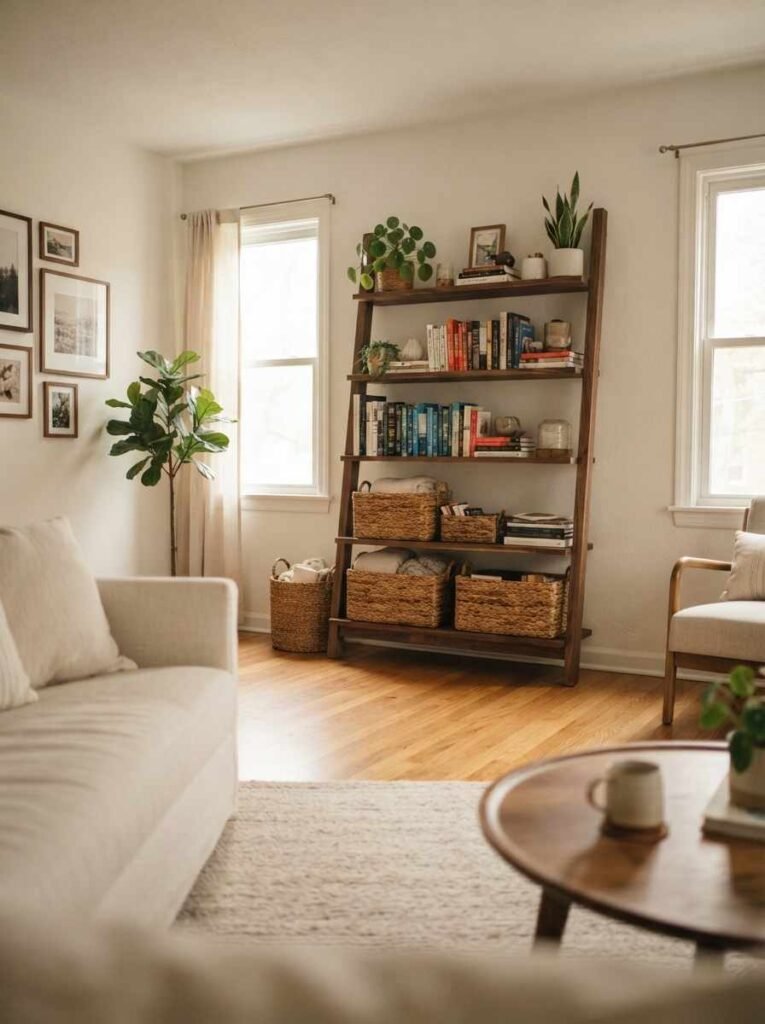
Small rooms need every inch of floor space they can get.
Tall, narrow wood shelving units store books and decor without eating into your walking room.
I built mine from stacked wooden crates, screwed together and stained, for under $40.
14. Choose a leather accent chair over a second sofa
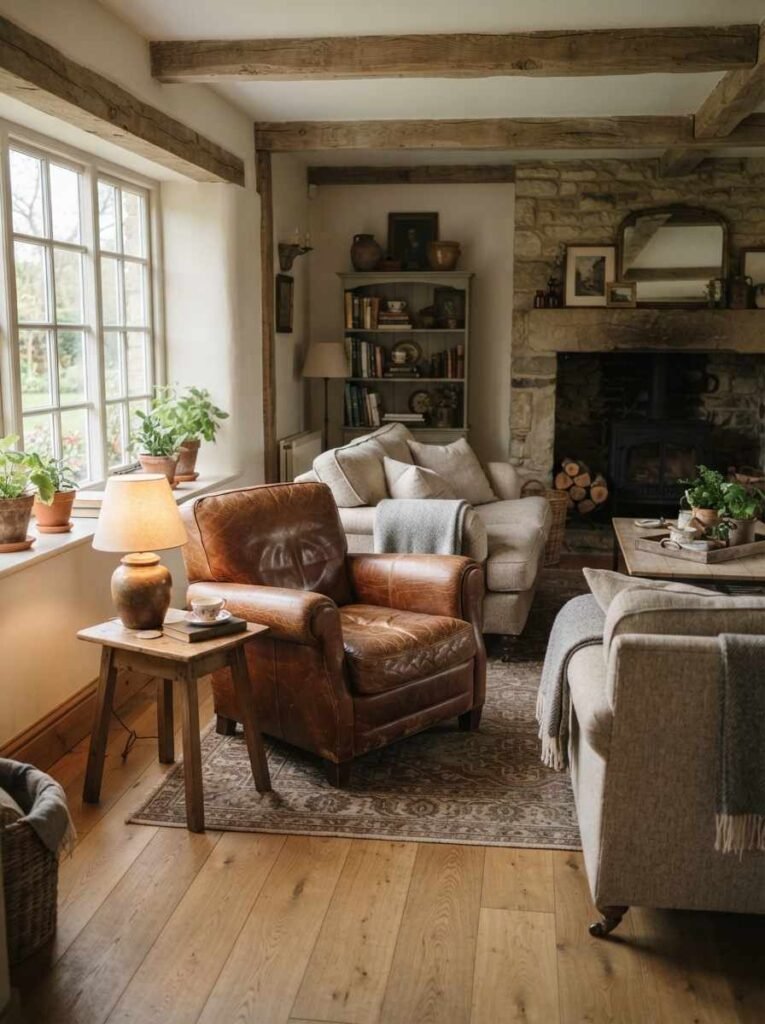
One worn leather chair adds rustic texture and saves you the footprint of a full second seating piece.
Leather also ages beautifully, so it only gets more “cabin” looking over time.
15. Add a woven basket for firewood, blankets, or magazines
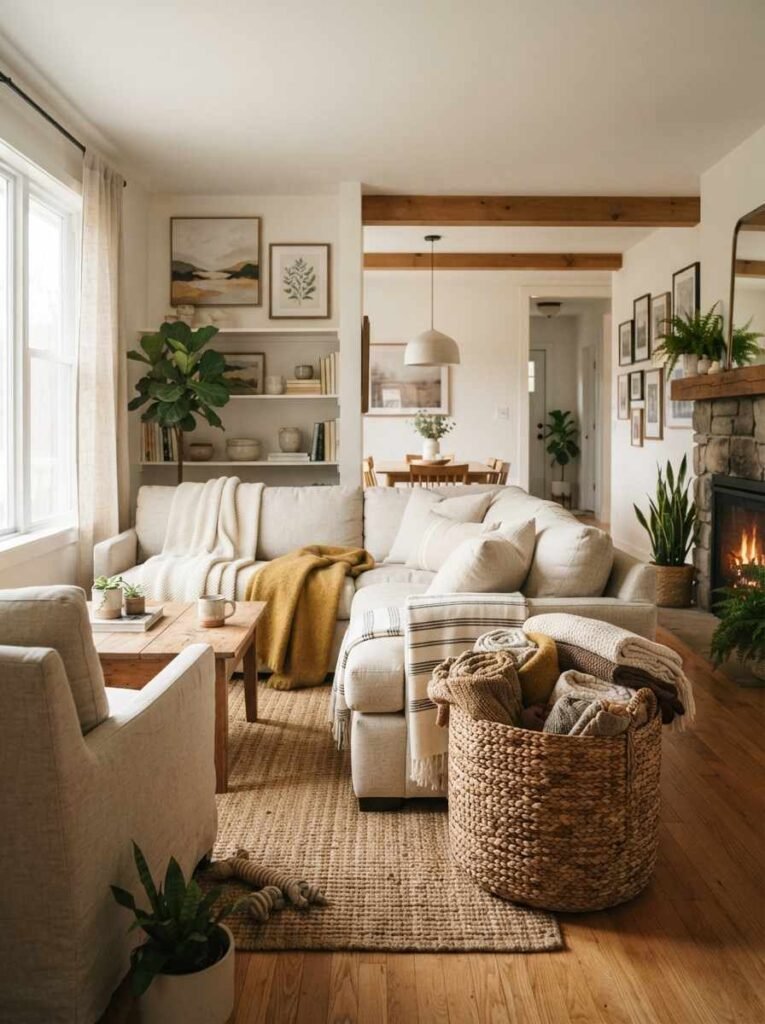
Function and texture in one object.
A woven basket by the sofa gives you somewhere to stash extra throws while adding that natural, handmade look rustic decor depends on.
16. Bring the outdoors in with dried botanicals
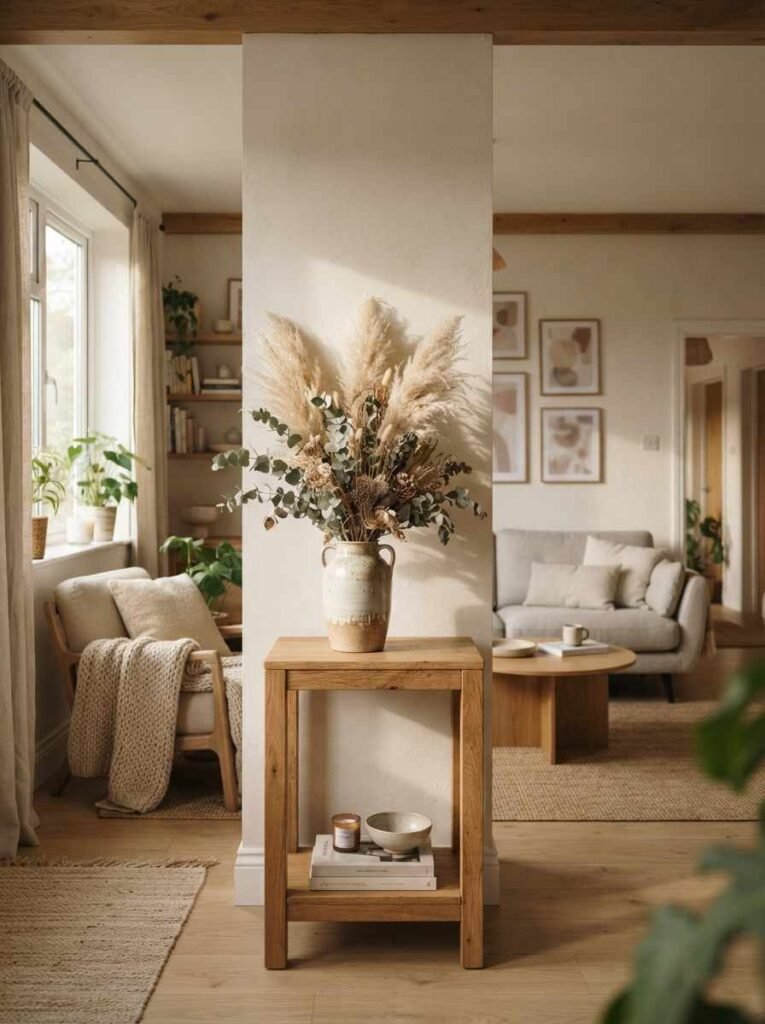
Skip fresh flowers, which need constant upkeep, and go for dried grasses, pampas, or eucalyptus in a simple ceramic vase.
They last for months and soften any corner of the room. Little details like this are what separate a room that just has rustic furniture from one that actually feels like a cabin.
17. Don’t be afraid of a little imperfection
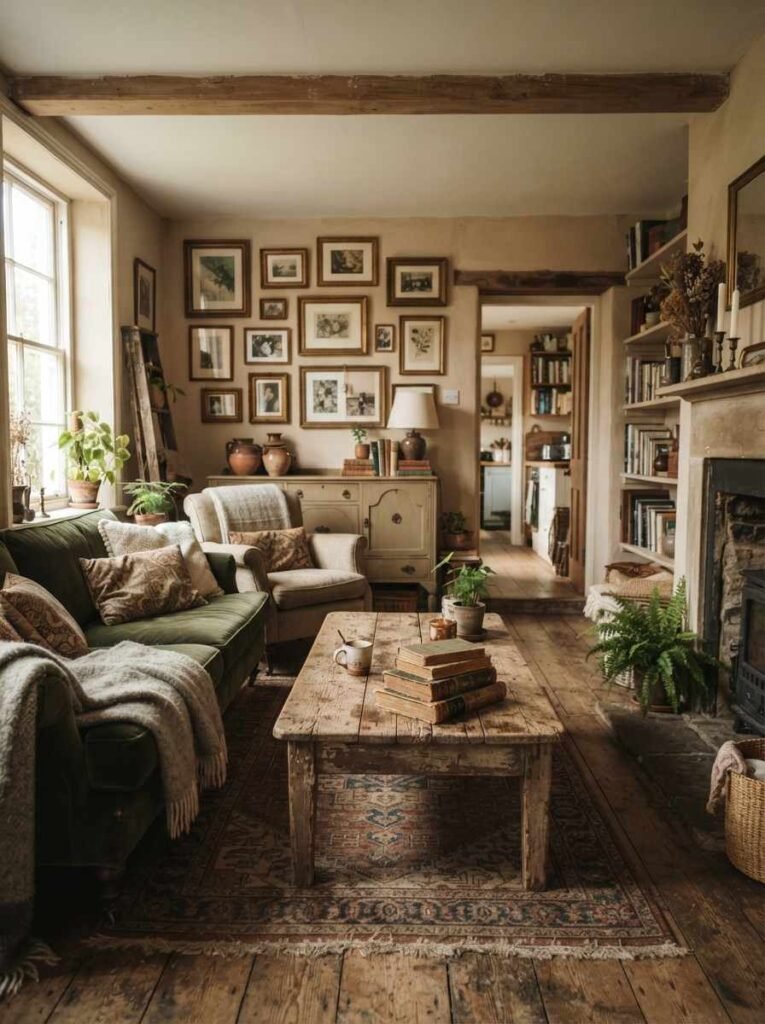
Distressed wood, mismatched vintage frames, a slightly uneven stack of books: this is the whole point of rustic style.
Perfectly matched, showroom-polished rooms never feel like a cabin. The lived-in imperfections are the personality.
Honestly, unrelated thought here, but I once spent an entire Sunday trying to make a coffee table look “intentionally distressed” and just ended up scuffing my knuckles.
Some rustic charm you buy, some you earn the hard way.
A quick comparison: rustic vs. modern small living rooms
| Element | Rustic Small Living Room | Modern Small Living Room |
|---|---|---|
| Materials | Reclaimed wood, wool, leather | Glass, metal, high-gloss finishes |
| Color palette | Warm neutrals, earth tones | Cool grays, whites, bold accents |
| Lighting | Warm bulbs, wrought iron fixtures | Sleek LED, minimalist fixtures |
| Overall feel | Lived-in, layered, personal | Clean, sparse, streamlined |
Frequently asked questions
What’s the best color for a small rustic living room? Warm neutrals like beige, soft gray, or muted sage work best.
They let wood tones stay the visual star instead of competing with a busy palette. Dark, saturated colors can work too, but only in rooms with strong natural light.
Can I get a cabin vibe without any real wood? Yes, though it helps to include at least one genuine wood piece.
A single reclaimed shelf or wood coffee table does more for authenticity than an entire room of wood-look laminate, according to design resources like House Beautiful.
How do I make a tiny living room feel cozy instead of cramped? Layer textures instead of adding more furniture.
Rugs, throws, and pillows build warmth without taking up floor space, while mirrors and sheer curtains keep the room feeling open.
This is the fun part of small-space decorating: you get to be deliberate about every single piece, because there’s no room for anything you don’t actually love.
Pick two or three ideas from this list, start there, and let the rest build over time. Which one are you trying first?
