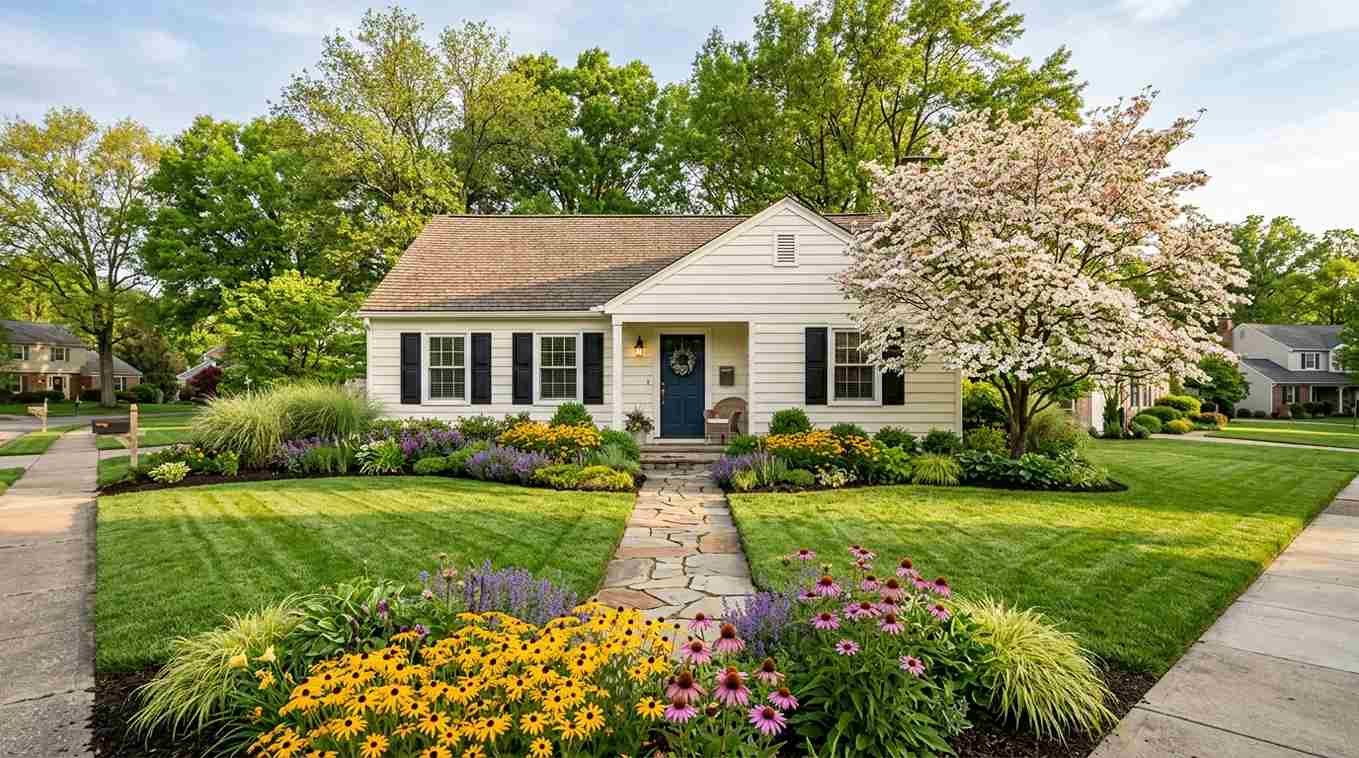
Your front yard is doing a lot of heavy lifting. It’s the first thing neighbors see, the first thing guests judge, and the first thing you see after a long day. So yeah, it matters.
Good news: you don’t need a landscaping degree or a bottomless budget to make it look great.
I’ve pulled together 28 ideas that are genuinely beginner-friendly, visually stunning on Pinterest, and actually doable on a weekend.
Let’s get into it.
Start With the Basics Before You Plant Anything
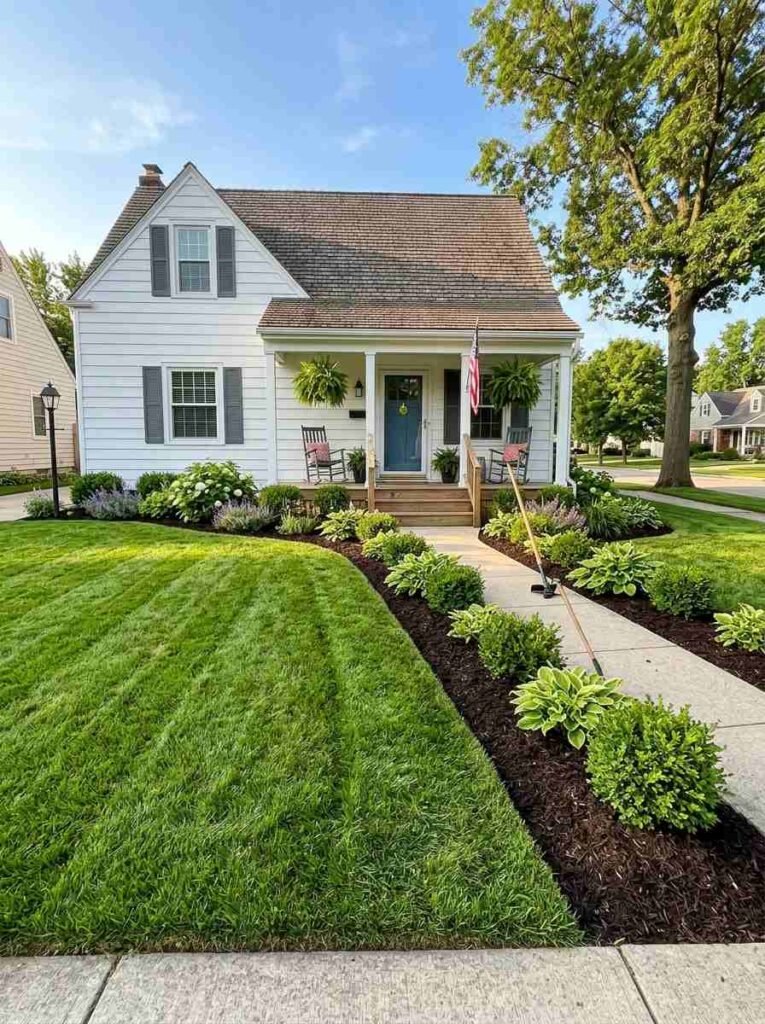
Define Your Edges First
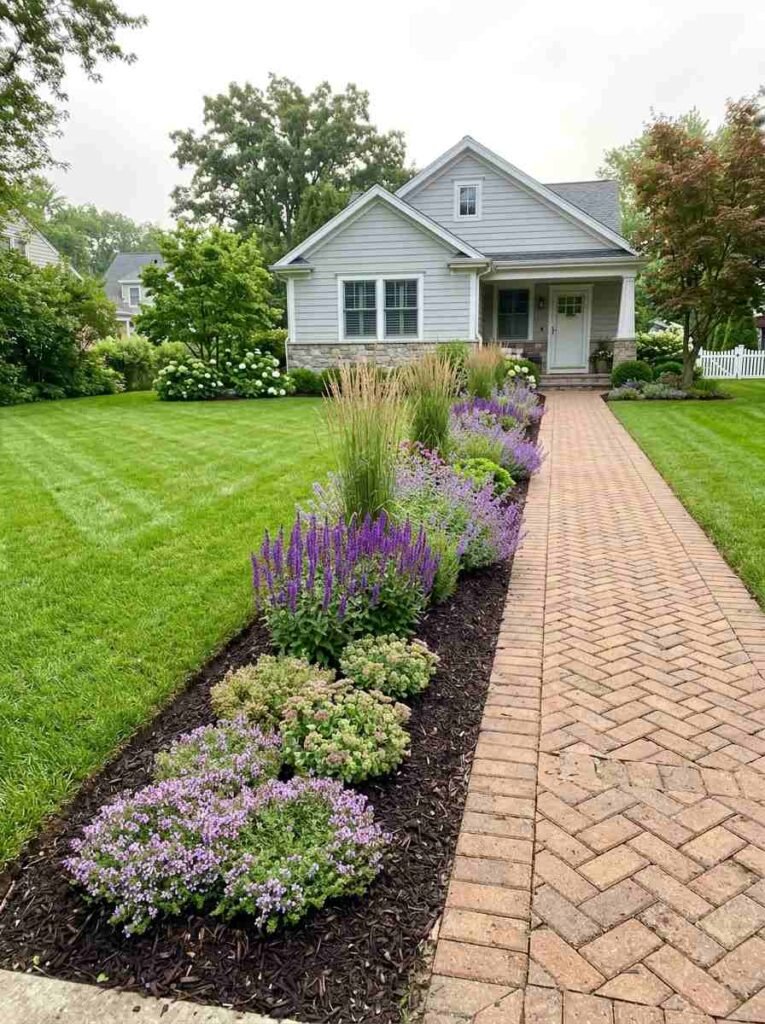
Sloppy edges ruin even the prettiest yard. Before you add a single plant, grab a half-moon edger and clean up where your lawn meets your beds.
Takes an hour. Transforms everything. It’s the haircut your yard desperately needs.
Sharp edges = instant curb appeal boost, zero plants required.
Fix Your Lawn Patches
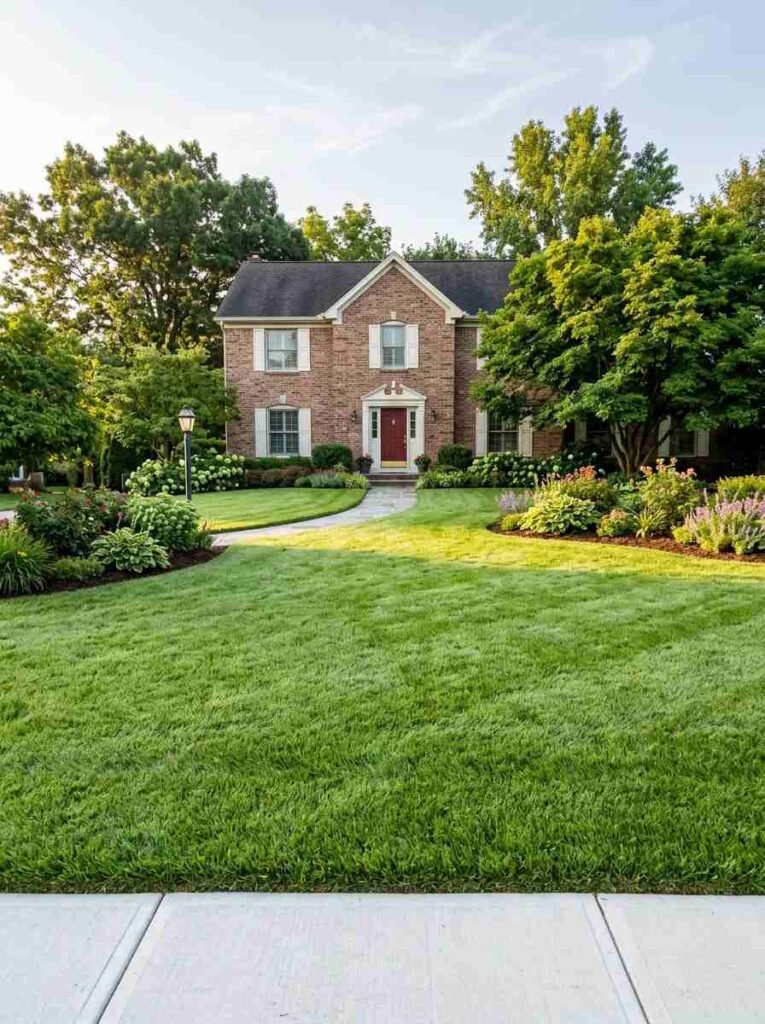
Bare spots scream “neglect” louder than anything else. Reseed or use sod patches before worrying about decorative stuff.
A patchwork lawn with gorgeous flower beds still looks like a patchwork lawn.
Low-Maintenance Landscaping Ideas
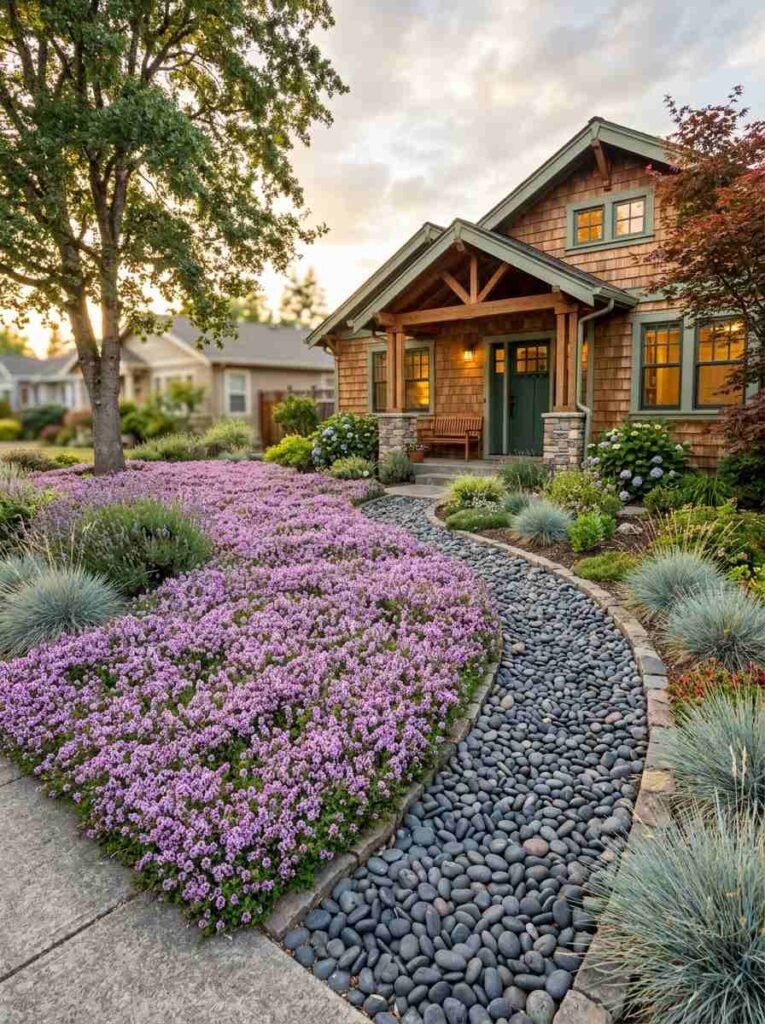
1. Swap Grass for Ground Cover
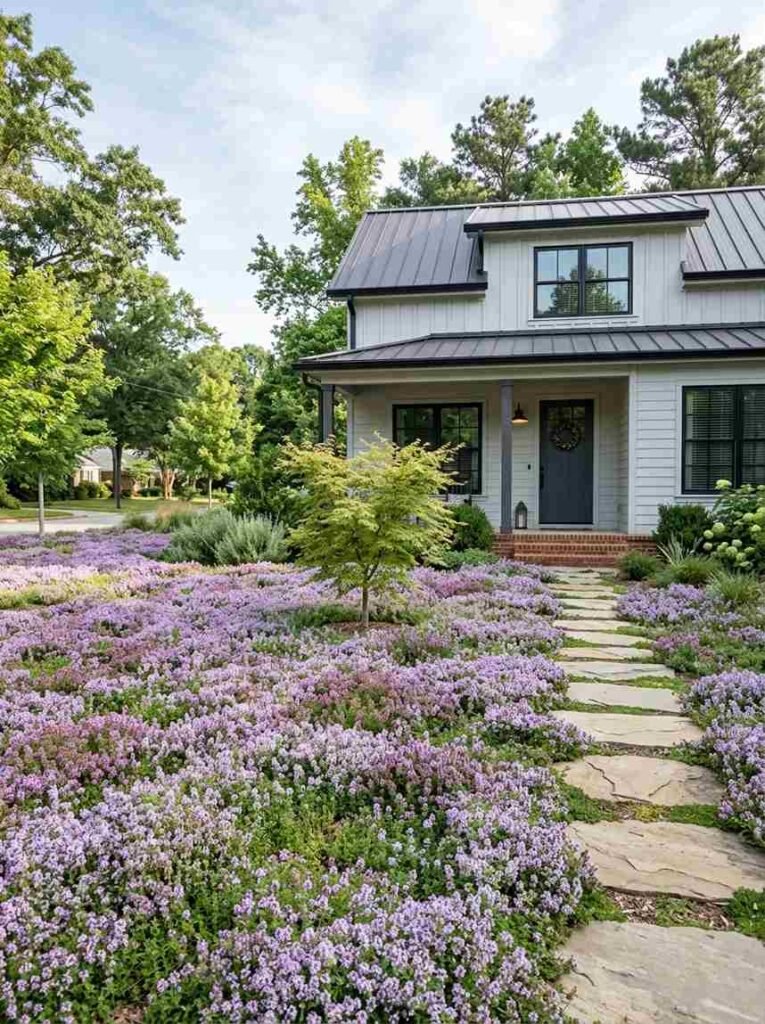
Creeping thyme, clover, or sedum look lush, stay low, and basically take care of themselves.
IMO, creeping thyme is the MVP here — it smells incredible when you walk on it, stays green, and even blooms purple in summer. 🙂
2. Use Mulch Generously
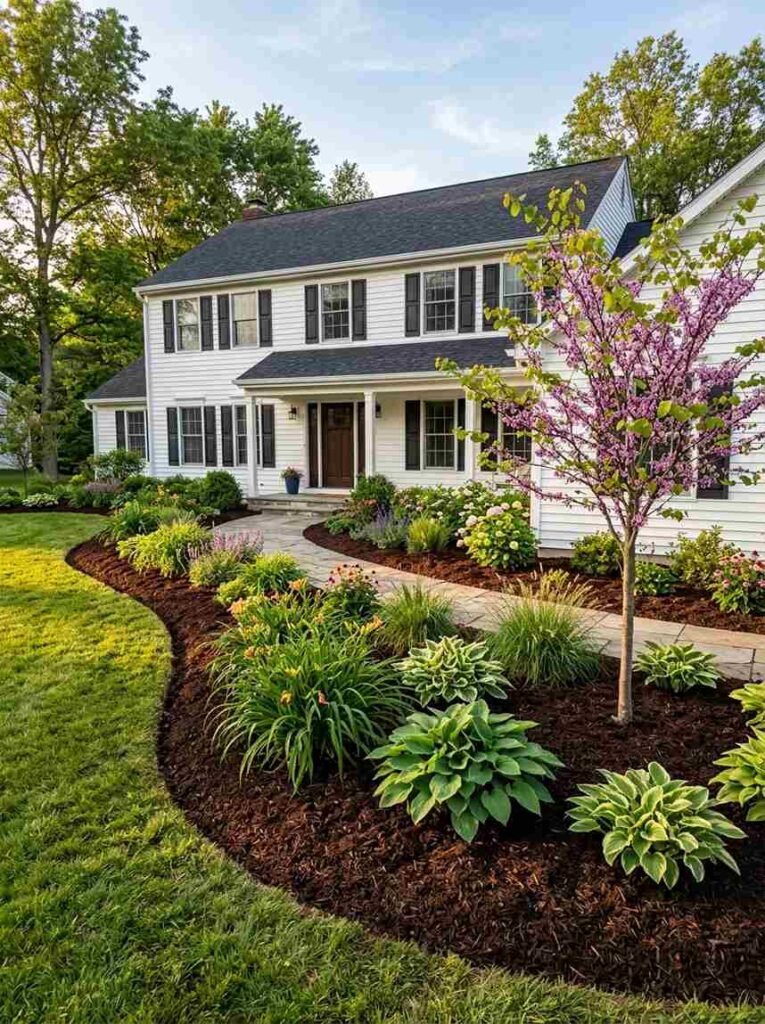
A fresh layer of dark mulch in your beds makes plants pop and suppresses weeds. 3 inches is the sweet spot. Go cedar or hardwood for longevity.
Pro tip: Mulch around trees in a donut shape, not a volcano. Tree volcanos kill trees slowly. You’ve seen them everywhere and now you can’t unsee them. Sorry.
3. Plant Ornamental Grasses
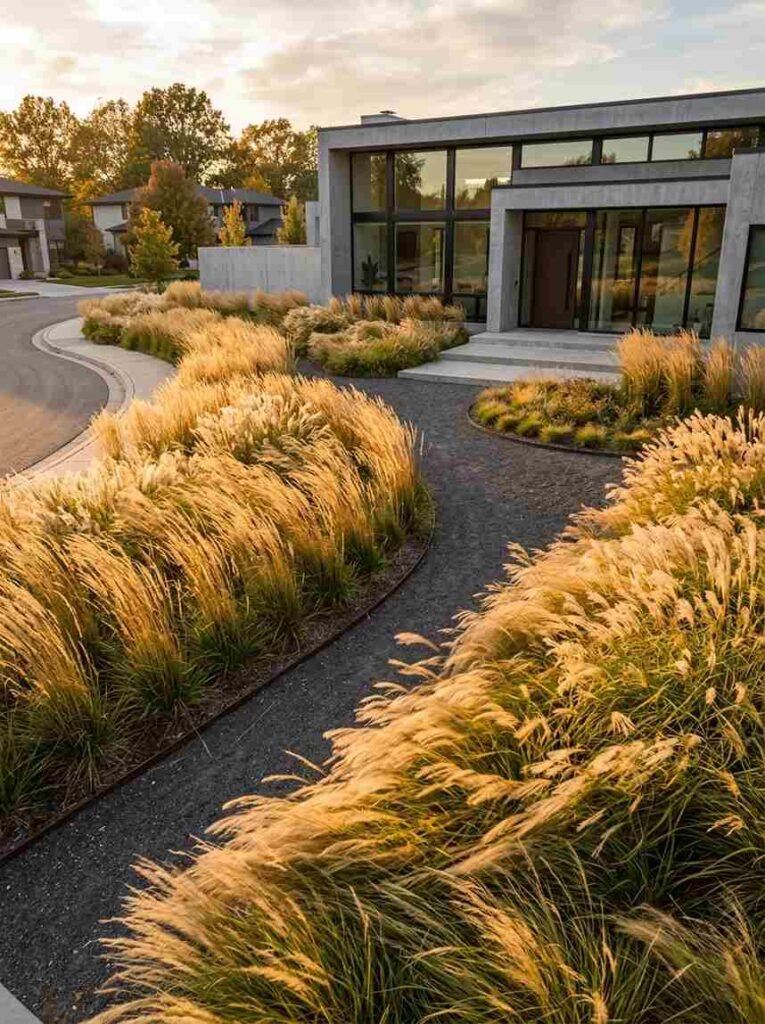
Feather reed grass, blue fescue, or maiden grass add movement and texture with almost zero effort.
They handle drought, look great in all seasons, and give your yard that designed-but-effortless look.
4. Go Native Plants
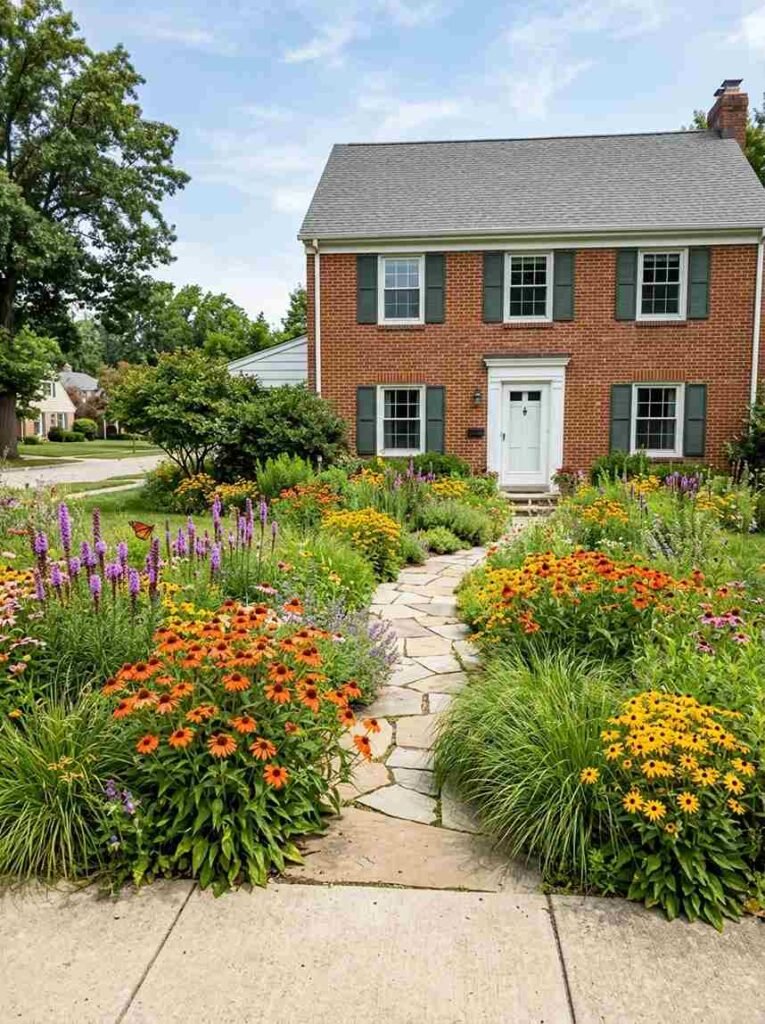
Native plants are basically on easy mode. They’re already adapted to your local climate, soil, and rainfall.
Black-eyed Susans, coneflowers, or native sedges depending on your region — pick whatever grows wild nearby and work with it.
| Plant Type | Effort Level | Visual Impact | Best For |
|---|---|---|---|
| Native Perennials | Low | High | All climates |
| Ornamental Grasses | Very Low | High | Modern yards |
| Creeping Ground Cover | Low | Medium | Slopes/edges |
| Annual Flowers | Medium | Very High | Color pops |
5. Plant a Statement Shrub
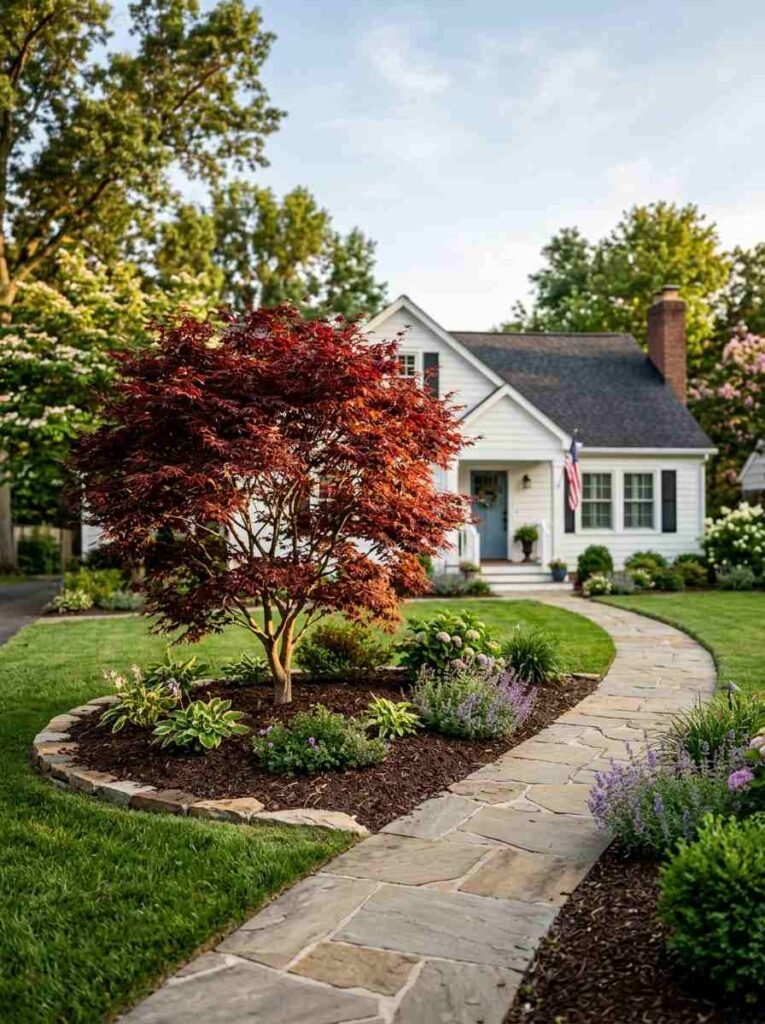
One well-placed boxwood, spirea, or dwarf Japanese maple does more work than 10 random plants scattered around.
Pick one. Put it where people’s eyes naturally land — near your front door or at a corner of your bed.
Flower Bed Ideas That Actually Work
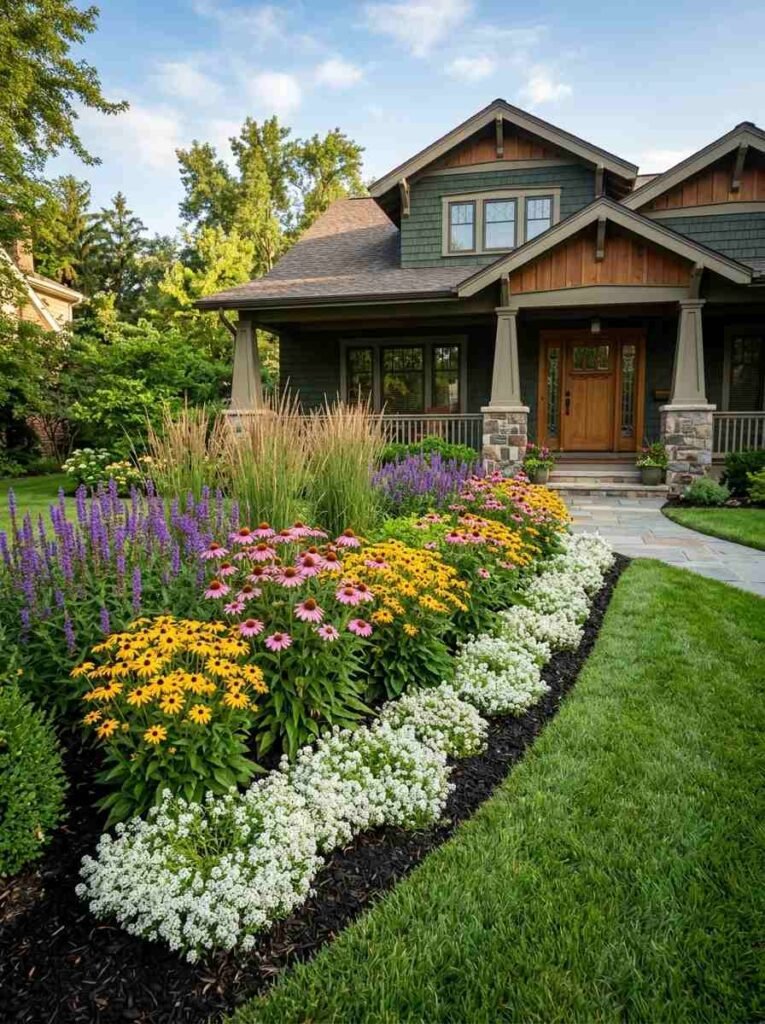
6. Layer Your Plants by Height
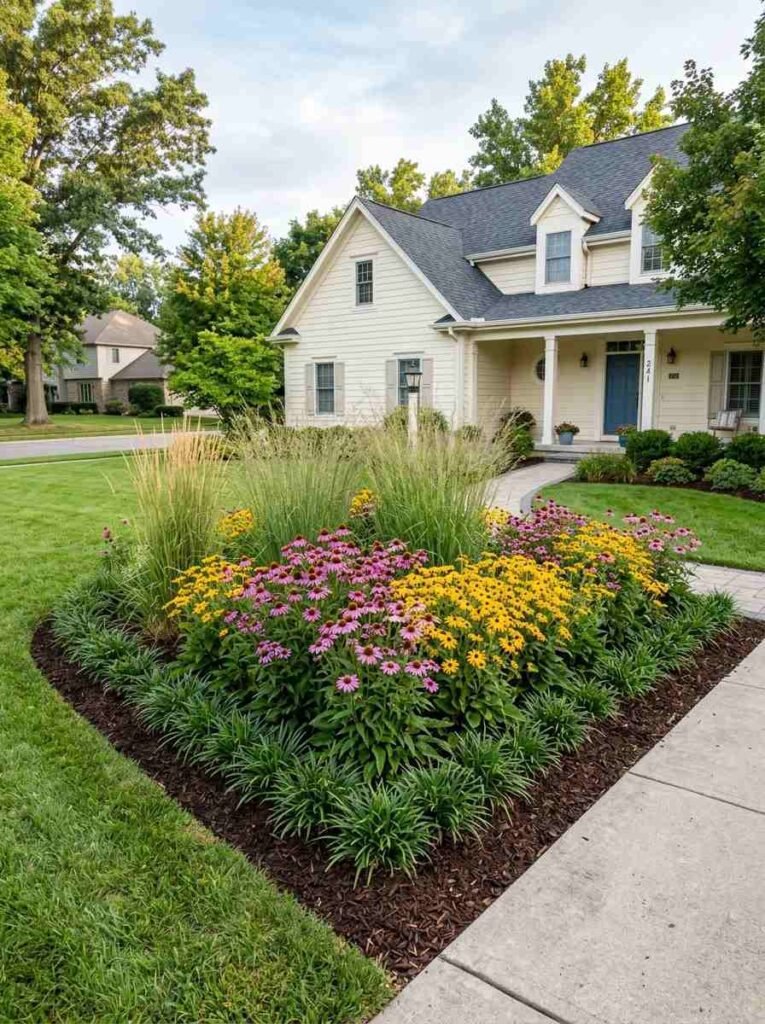
Tall plants at the back, medium in the middle, short at the front. This is the rule that makes amateur beds look professional.
Violate it and your garden looks like a crowd at a concert where everyone’s the same height.
7. Stick to a 3-Color Palette
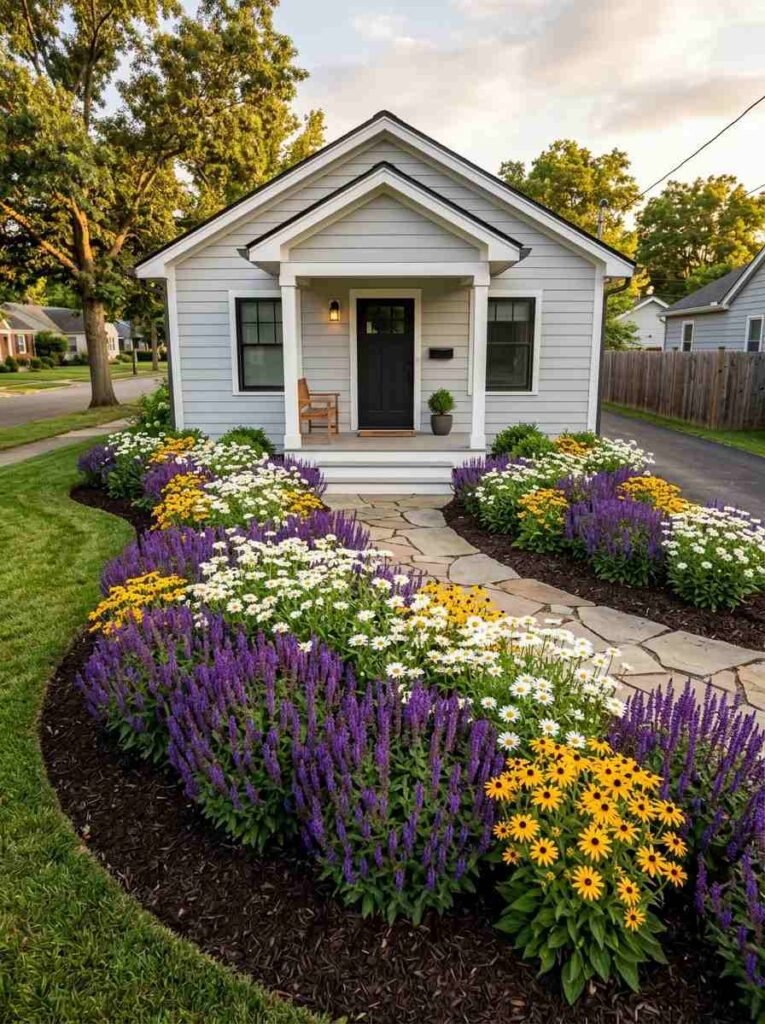
More than 3 colors and it starts looking chaotic. Pick one dominant color, one secondary, one accent. That’s it. Your neighbors will wonder if you hired someone.
8. Add Bulbs for Effortless Spring Color
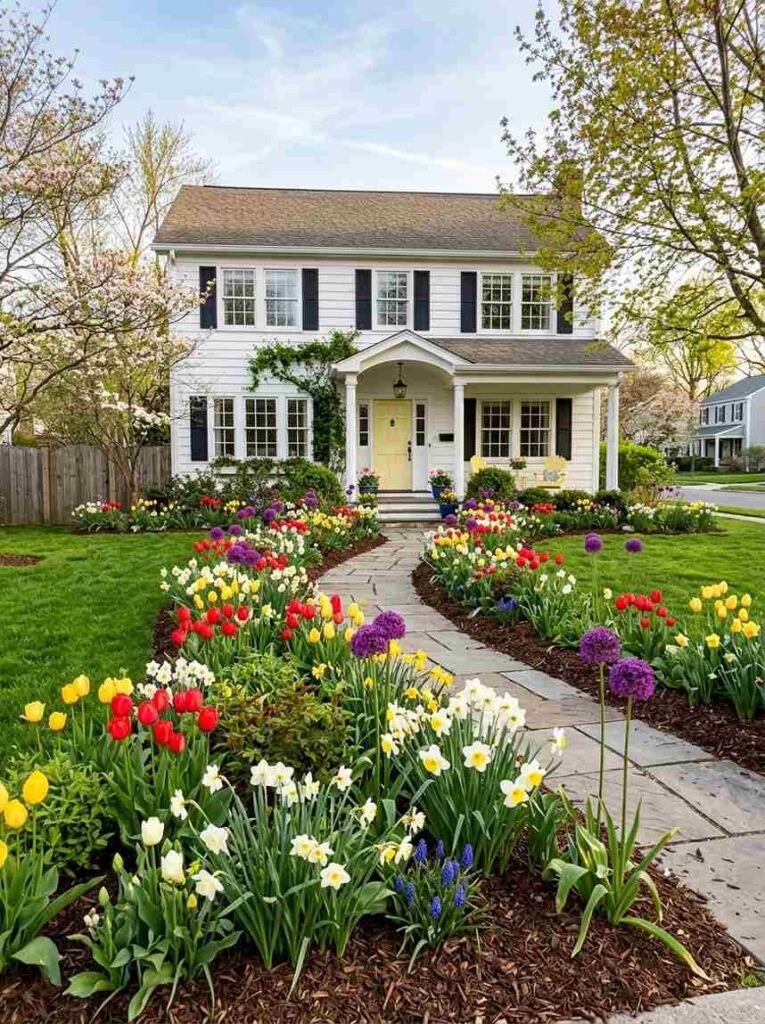
Plant tulips, daffodils, or alliums in fall and forget about them. Come spring, they just… show up.
Every single year. It’s one of my favorite gardening tricks because future-you does all the work.
9. Use Perennials as Your Foundation
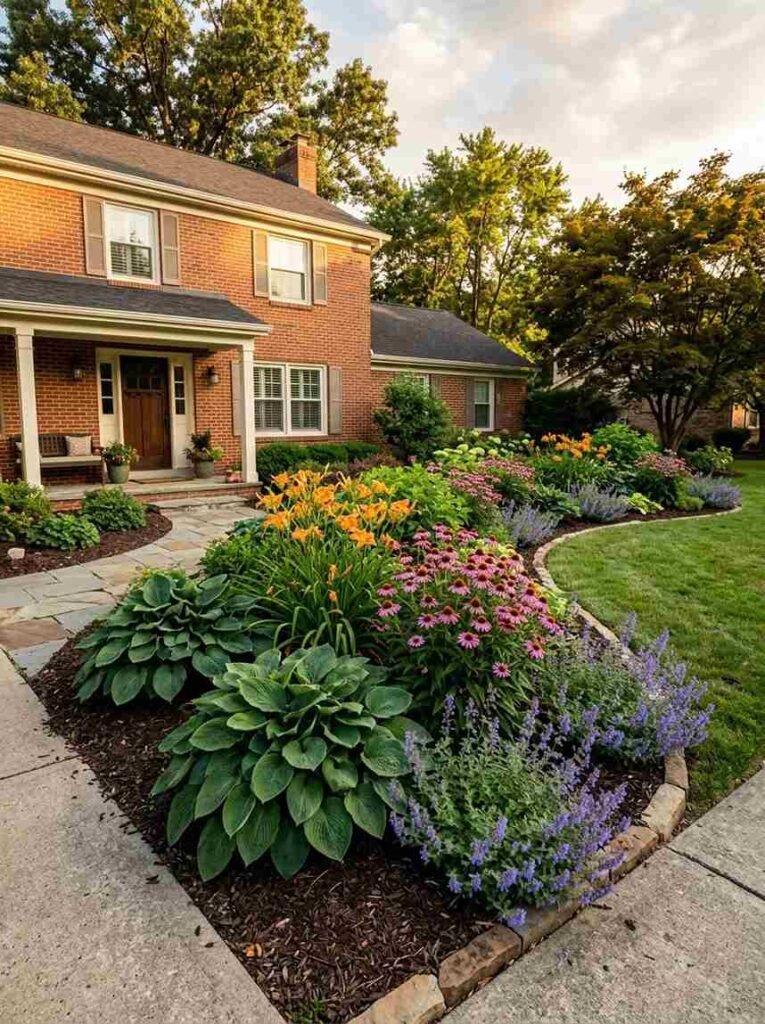
Perennials come back every year. Annuals don’t. Build your beds around perennials (hostas, daylilies, coneflowers) and fill gaps with cheaper annuals for color.
Way more cost-effective long-term.
10. Add a Pop of Yellow
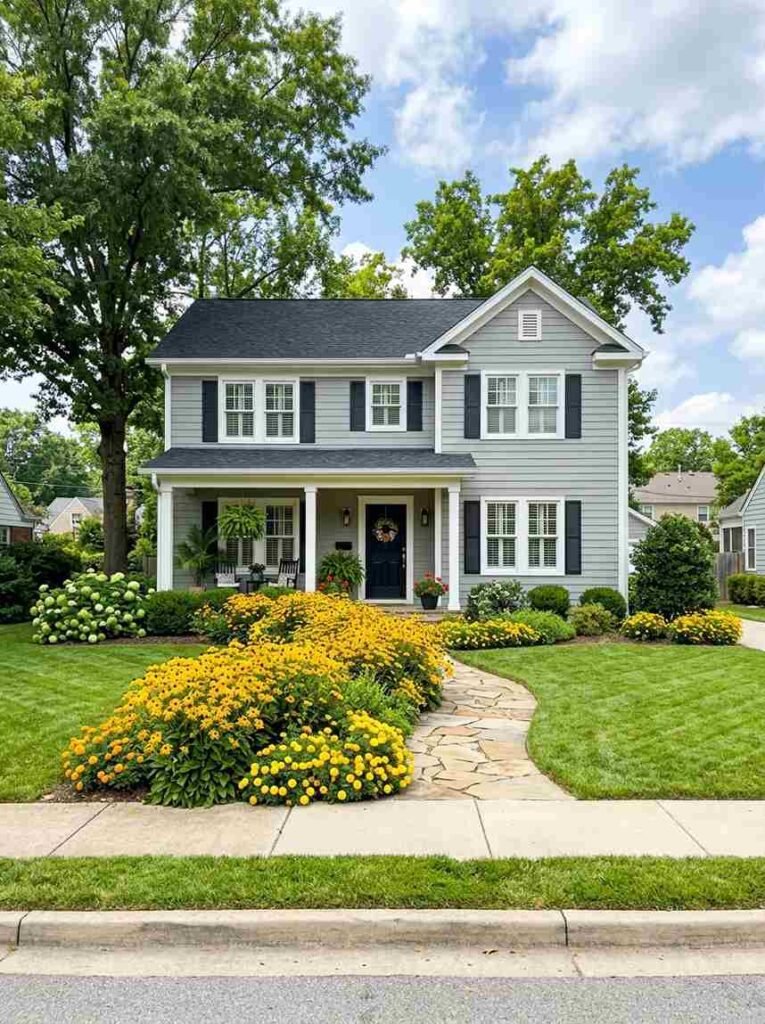
Yellow is the single best color for curb appeal in photos and in real life. Rudbeckia, marigolds, or black-eyed Susans catch the eye immediately.
FYI, this is why real estate listings always feature yellow flowers. It’s not an accident.
Pathway and Walkway Ideas
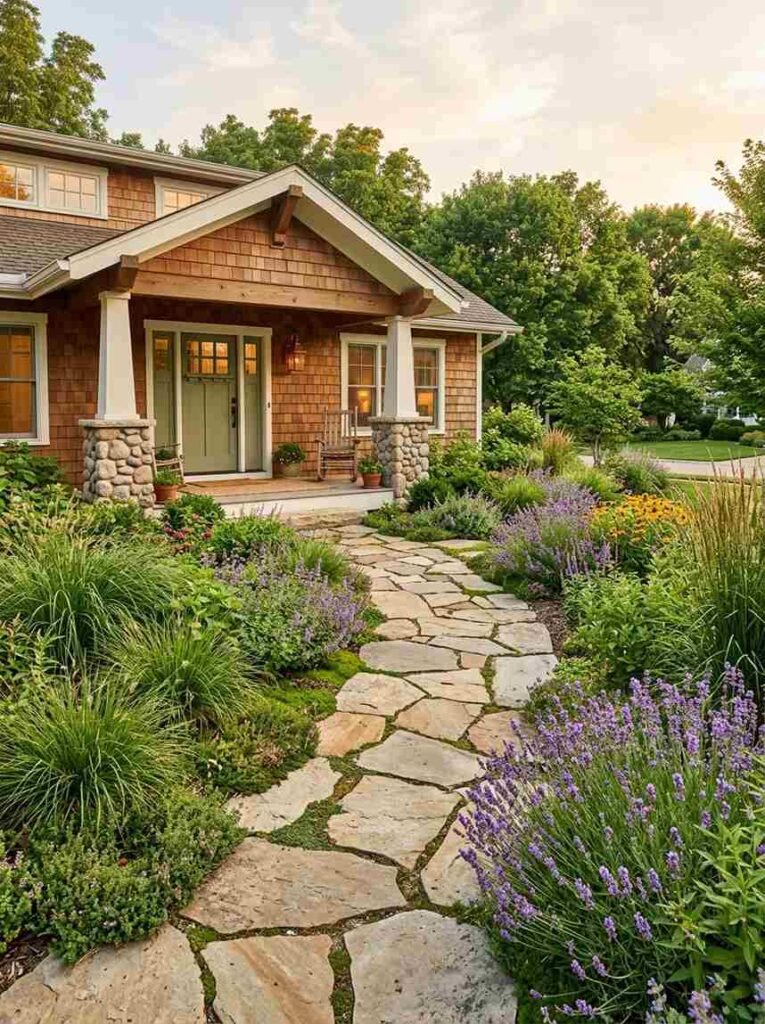
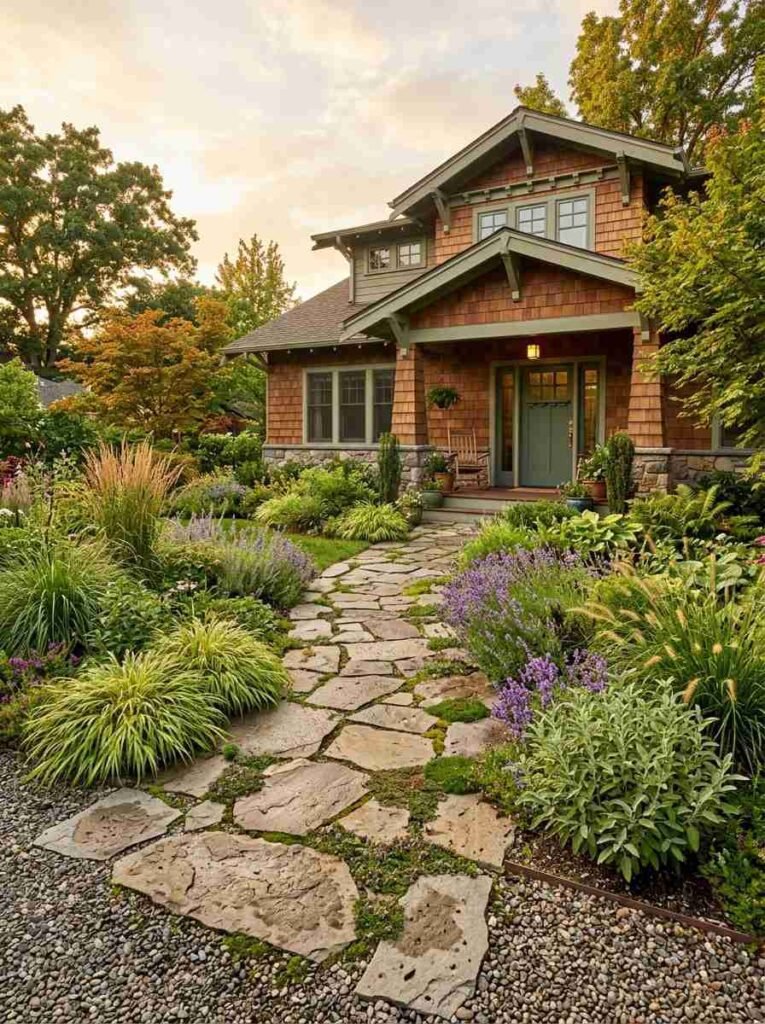
11. Lay a Simple Stone Path
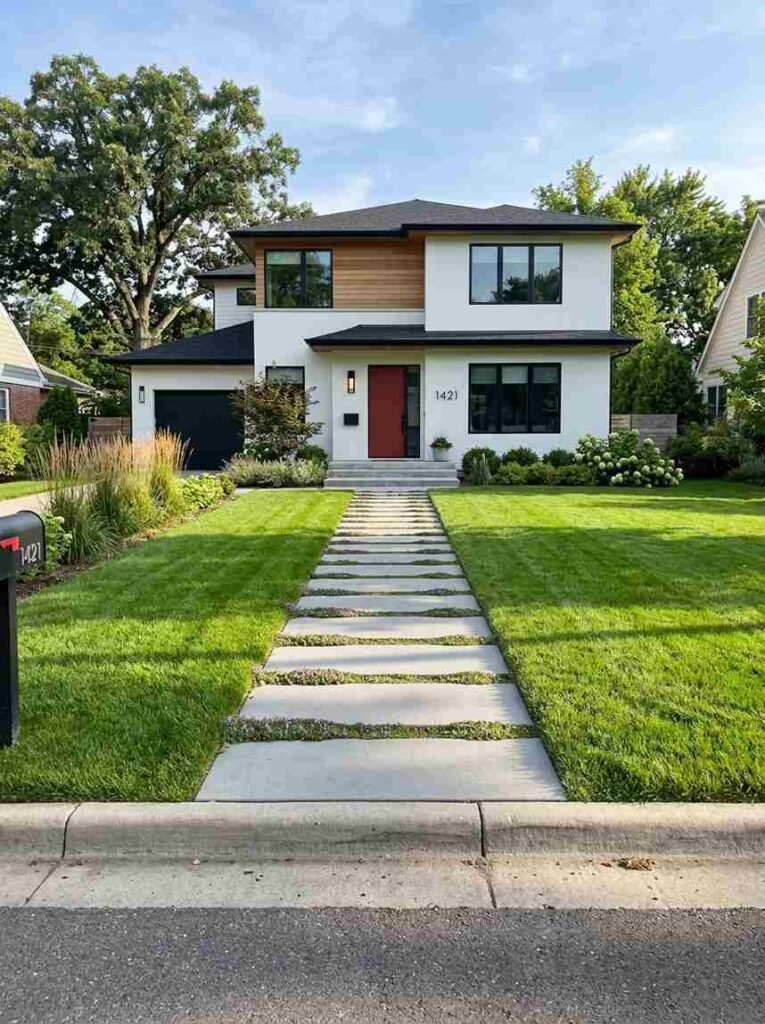
A stepping stone path from your driveway to your front door adds structure and keeps people off your lawn.
Use irregular flagstone for a natural look, or square pavers for something more modern. Either works.
12. Line Your Walkway With Low Edging Plants
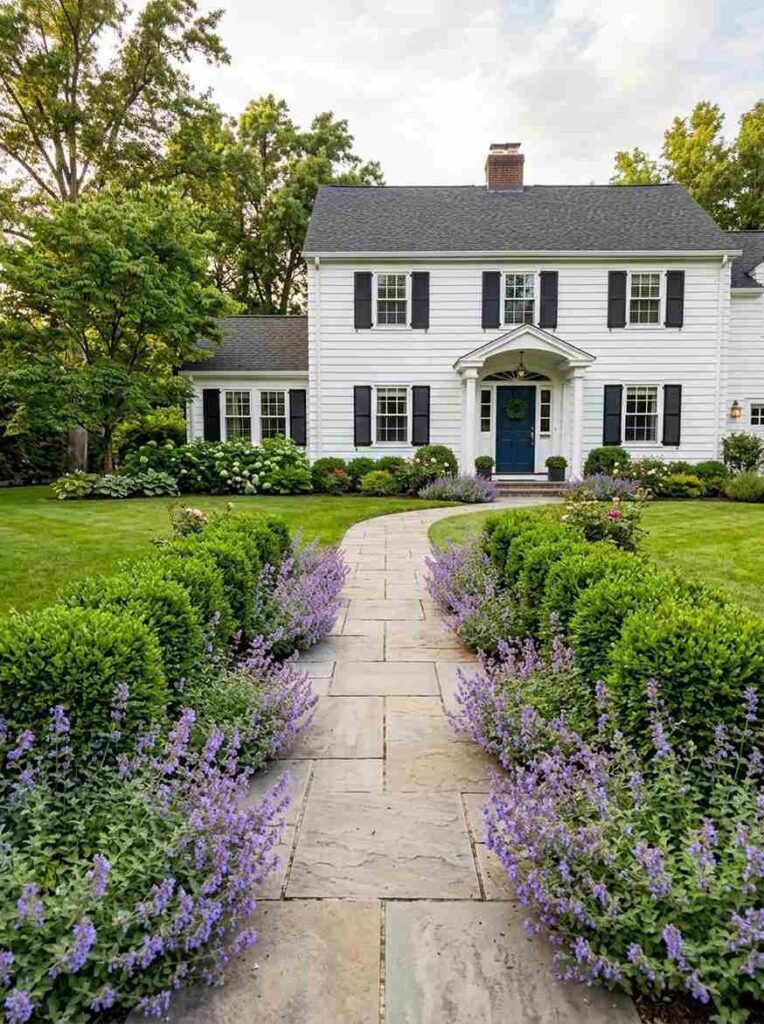
Dwarf boxwoods, liriope, or catmint flanking a walkway creates that classic, intentional look. It channels visitors toward the door and makes the whole yard feel organized.
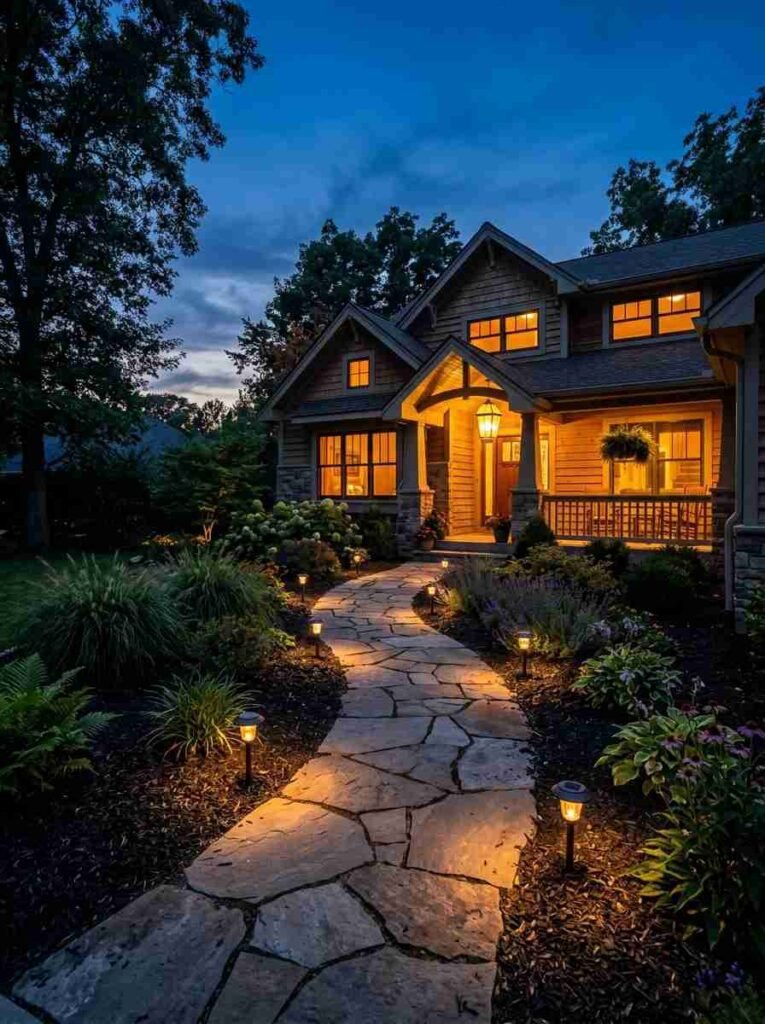
13. Add Solar Path Lights
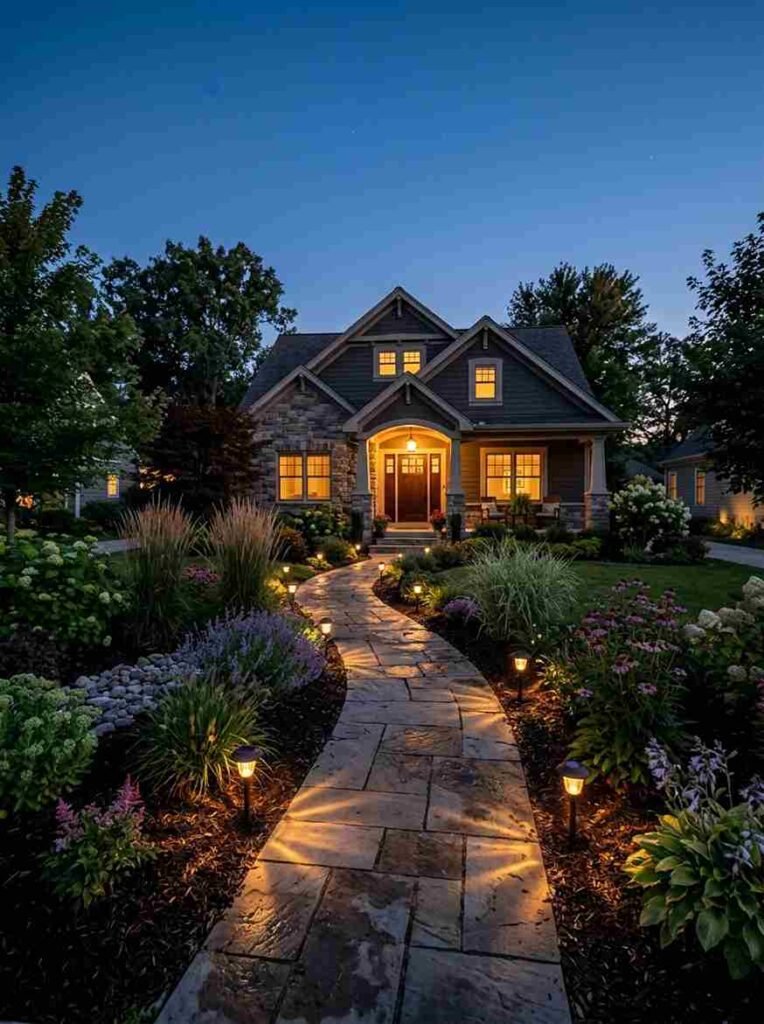
Solar lights along a pathway cost almost nothing to run and look great at dusk. They also photograph beautifully for Pinterest.
Pick a consistent style — mixing lantern styles looks messy.
14. Use Gravel as a Low-Maintenance Mulch Alternative
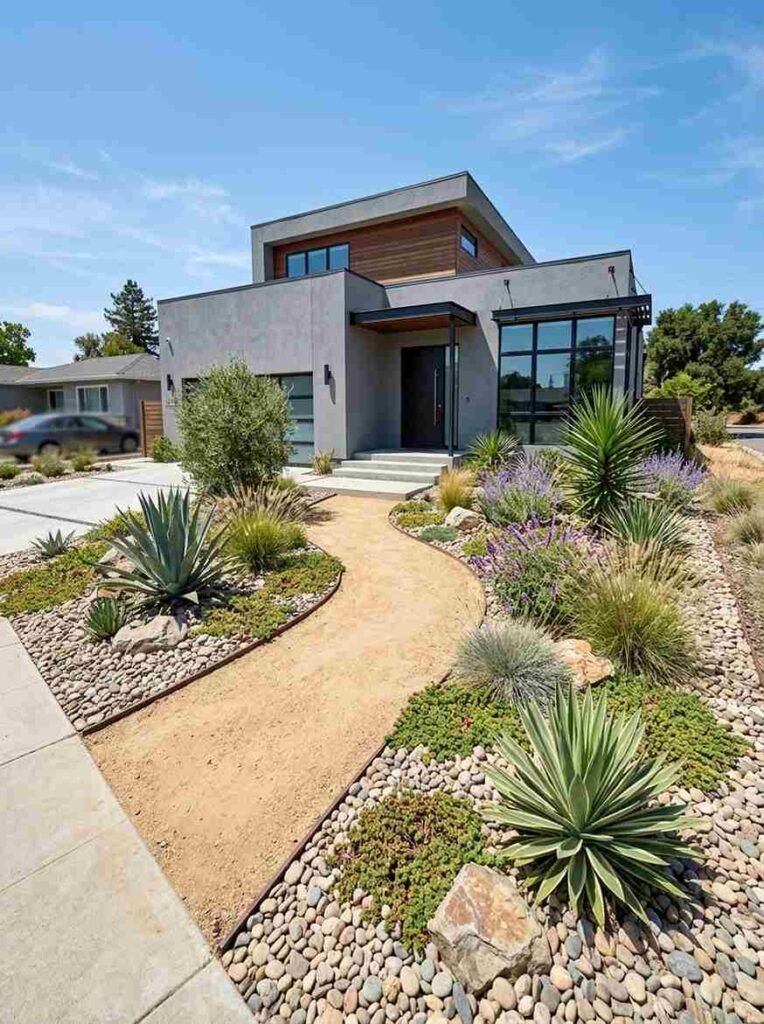
River rock or decomposed granite between plants looks clean, drains well, and never needs refreshing. Great for hot, dry climates where mulch just dries out and blows away.
Trees and Focal Points
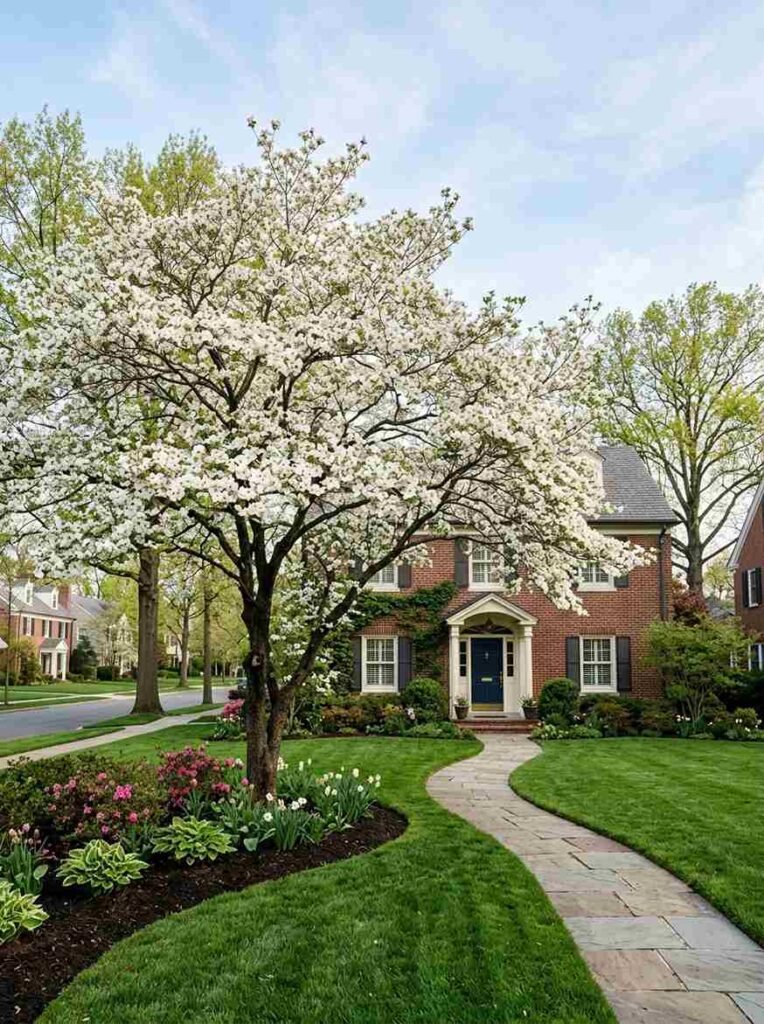
15. Plant One Flowering Tree
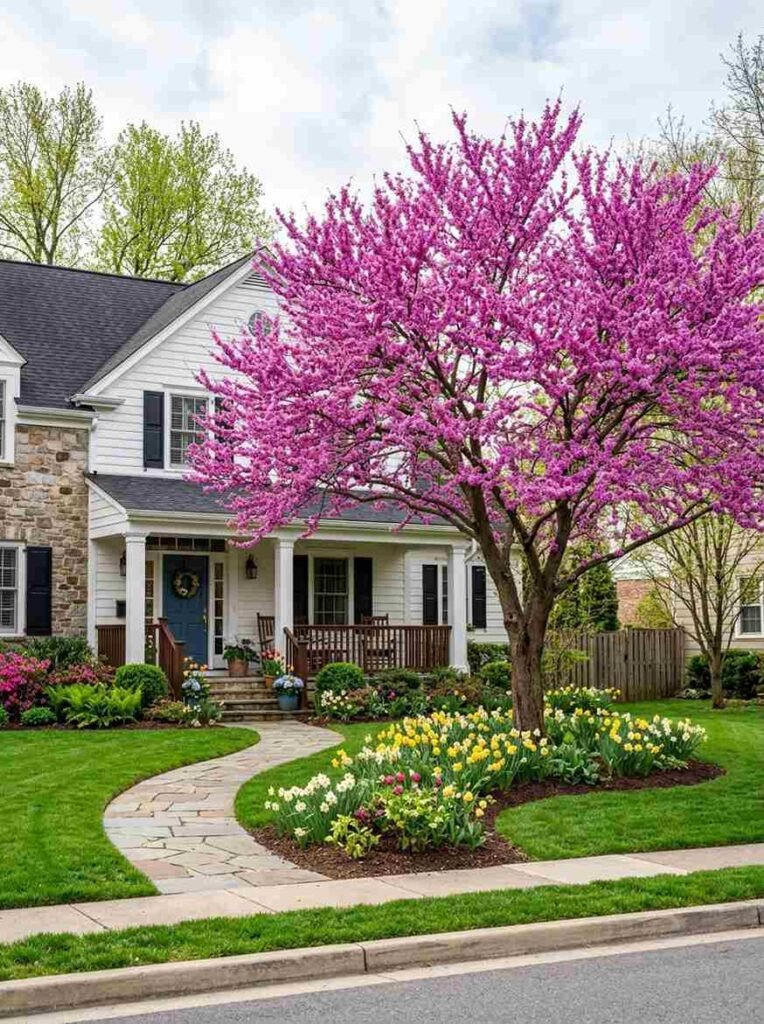
A dogwood, redbud, or cherry tree gives you 3 seasons of interest — spring blooms, summer shade, fall color.
Plant it off-center in your yard, not dead center. Centered trees look like they’re from a 1980s subdivision.
16. Frame Your Entry With Columnar Trees
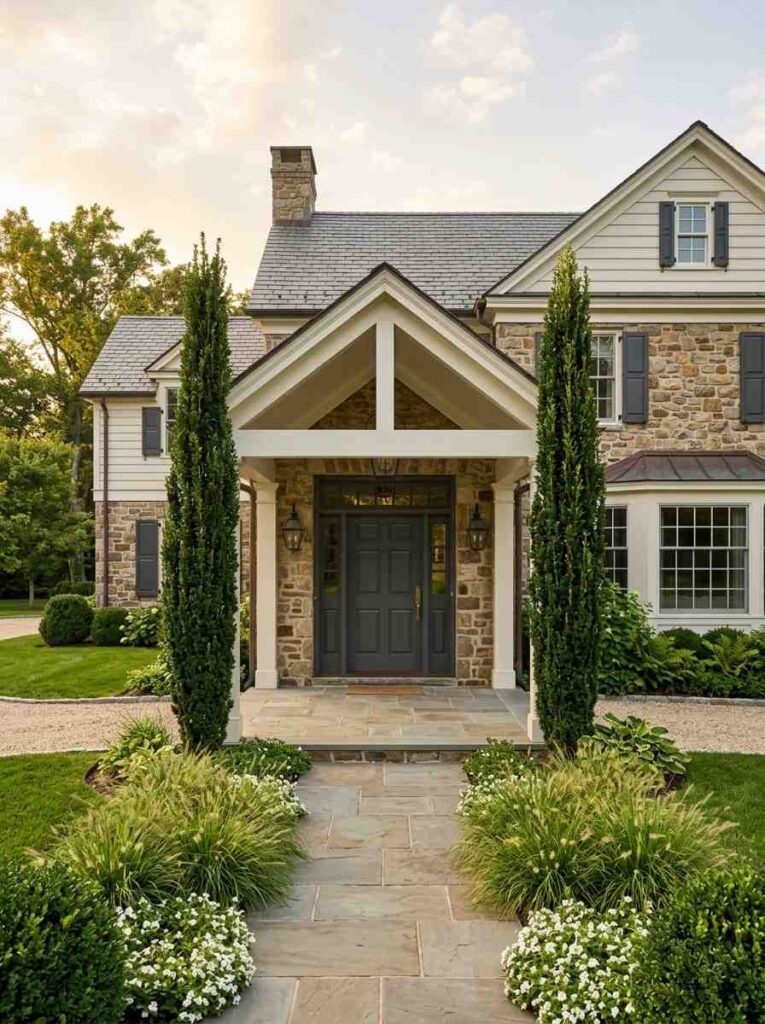
Columnar trees (Sky Pencil holly, Italian cypress, columnar apple) planted on either side of your front door create an architectural effect without taking up much space.
Elegant, structured, Pinterest-perfect.
17. Add a Decorative Planter by the Door
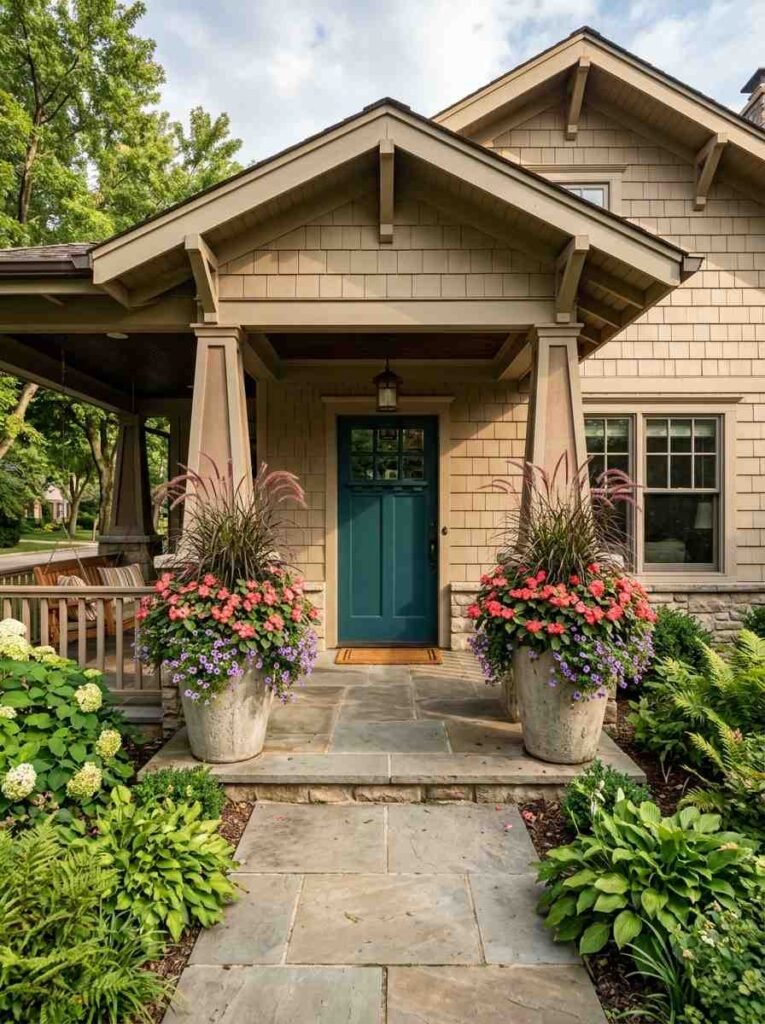
A large ceramic or concrete planter flanking your front door gives you a spot to swap seasonal color without touching your beds.
Plant it with a thriller (tall), a spiller (trailing), and a filler (mounding). Classic combo, always works.
18. Use a Birdbath or Gazing Ball as a Focal Point
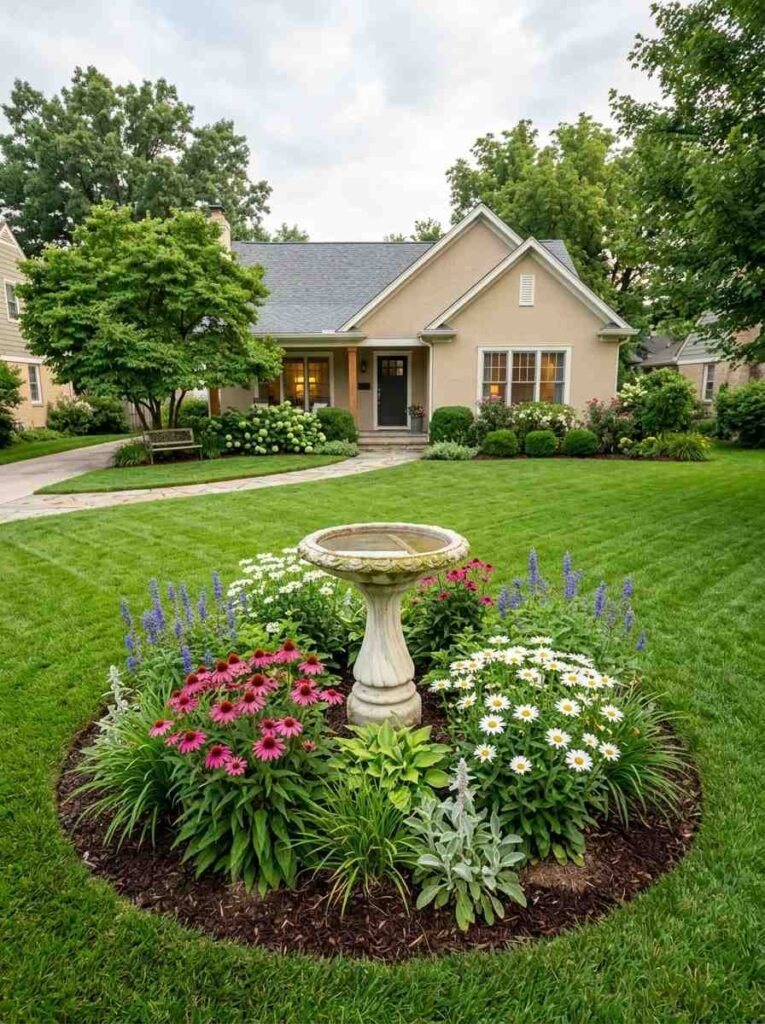
A focal point gives the eye somewhere to land. It doesn’t have to be expensive — a simple birdbath, a sculptural boulder, or even a large decorative pot can anchor a bed and make the whole thing look intentional.
Curb Appeal Tricks That Cost Almost Nothing
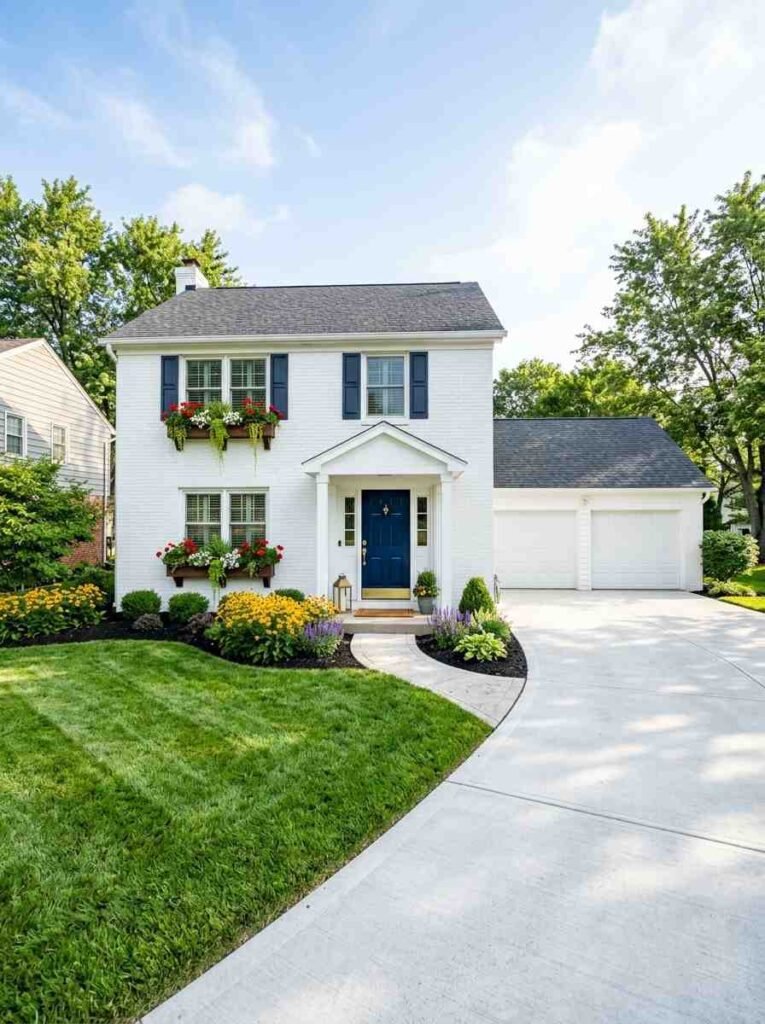
19. Paint Your Front Door a Bold Color
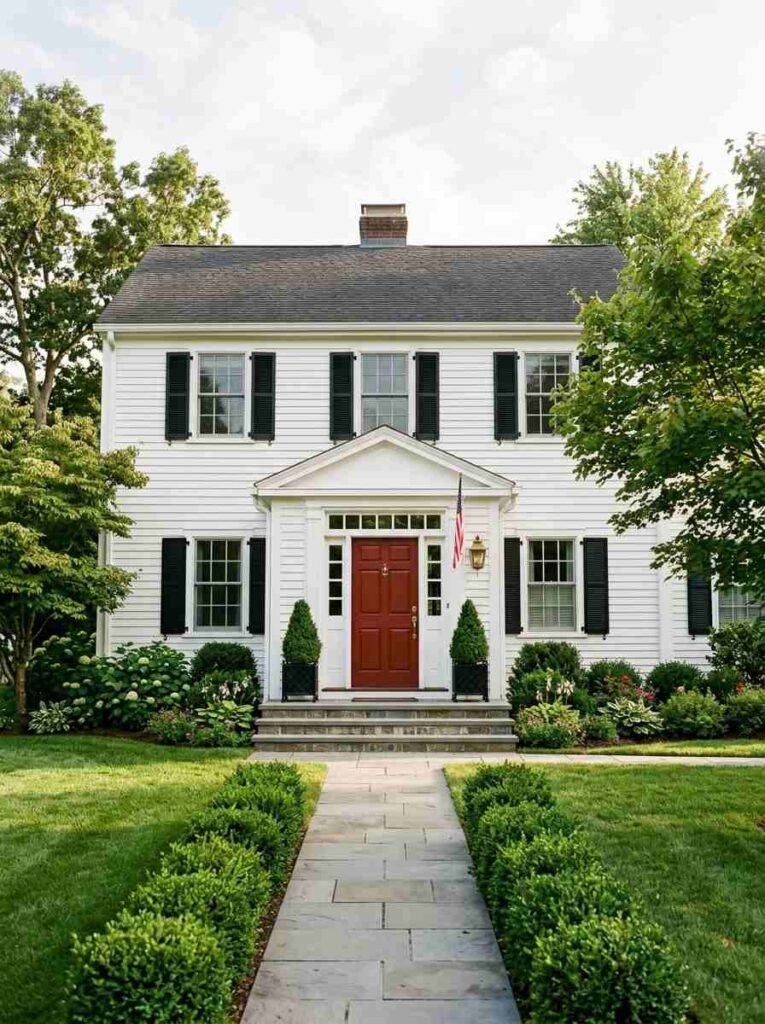
This technically isn’t landscaping, but it’s the fastest way to transform how your yard looks in photos.
A navy, red, or deep green door against a neutral house exterior makes everything around it look more intentional.
20. Power Wash Everything
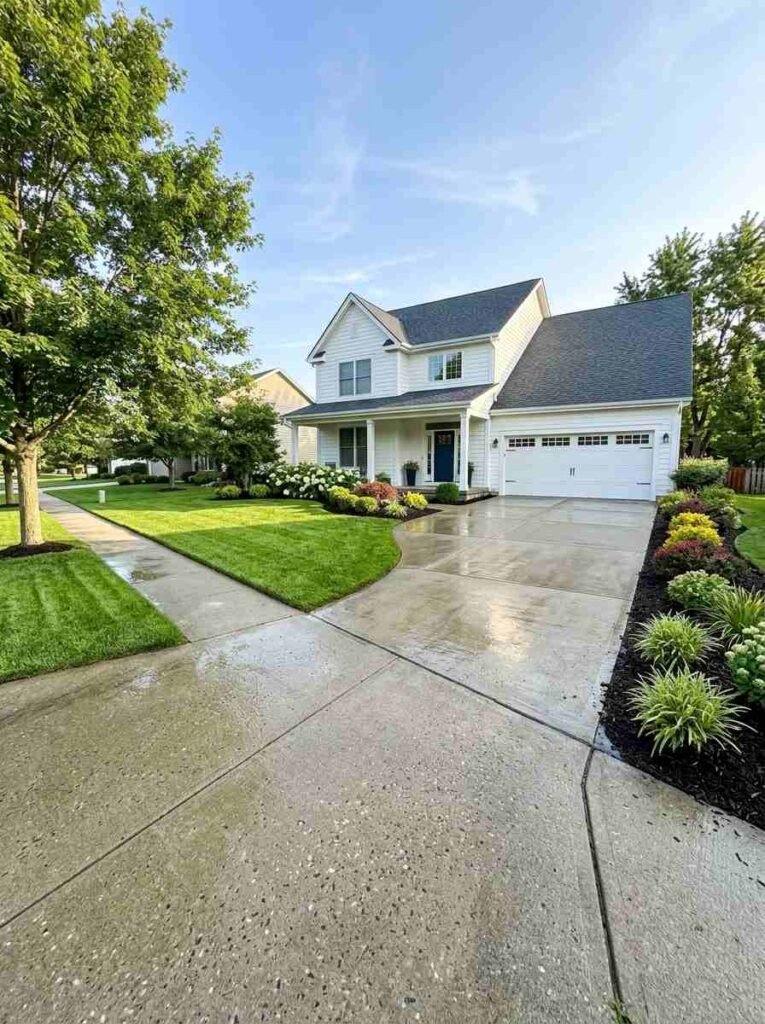
Your driveway, walkway, porch, and siding. Power washing removes years of grime and makes everything look fresher without touching a single plant. Rent a washer for an afternoon and watch your yard transform.
21. Add Window Boxes
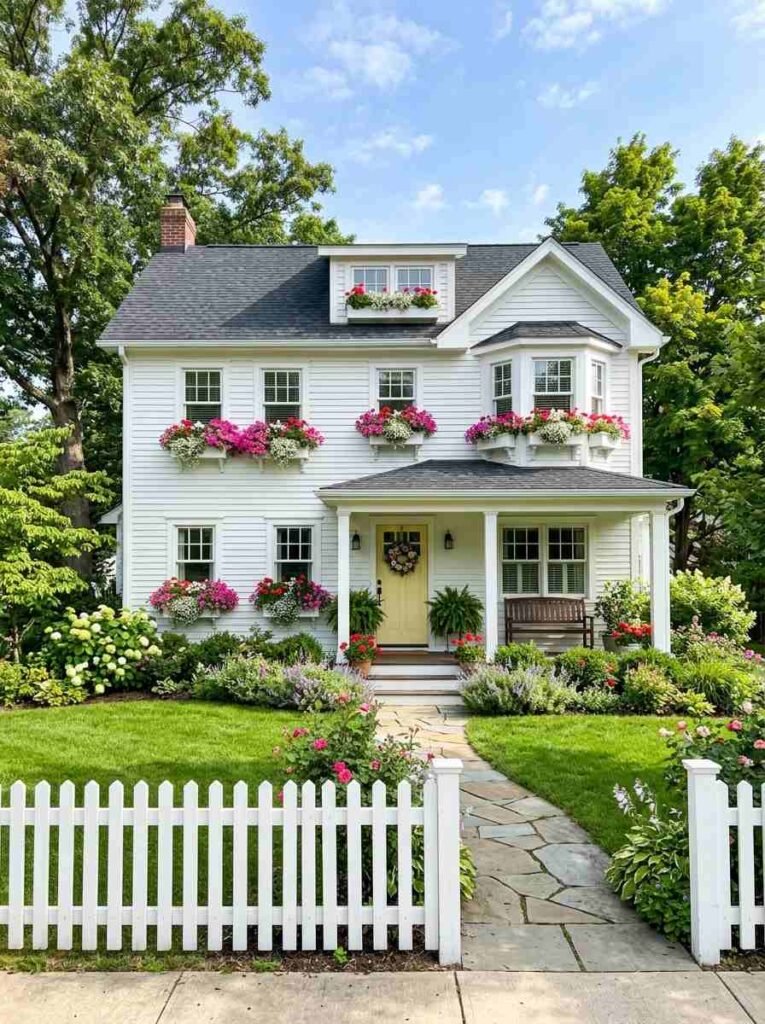
Window boxes full of trailing petunias or geraniums add vertical interest and make your house look like someone actually cares about it. They’re also a great Pinterest photo waiting to happen.
22. Replace a Dying Lawn Section With a Rock Garden
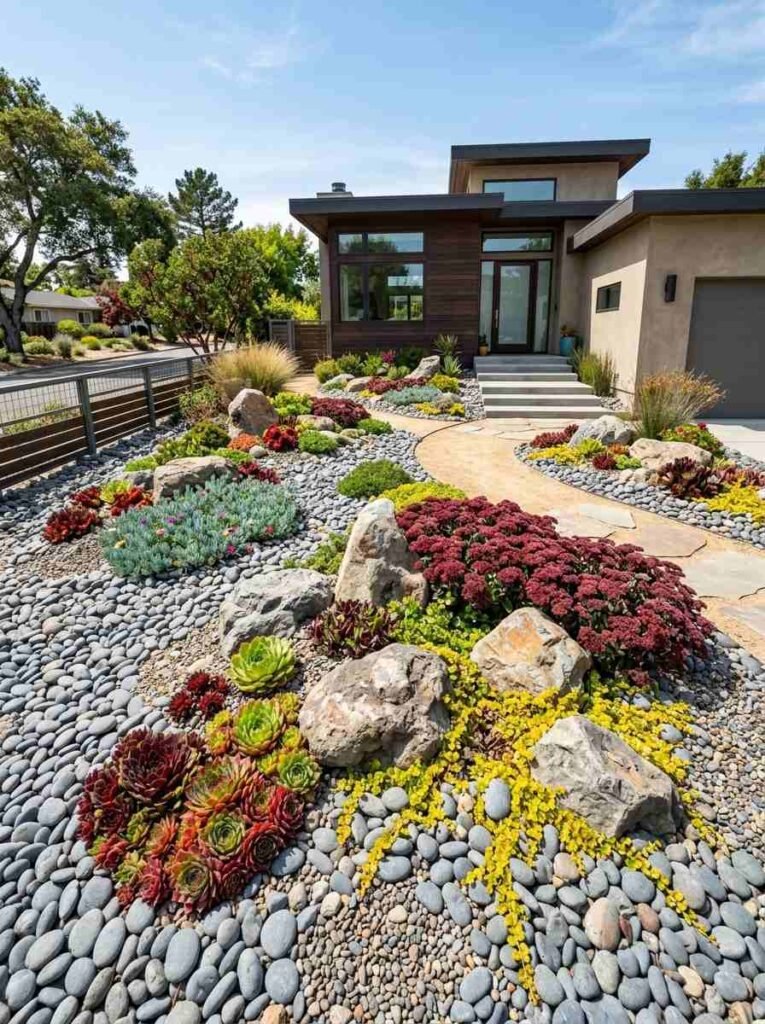
A drought-tolerant rock garden with sedums, hens-and-chicks, and ornamental rocks is lower maintenance than lawn and way more interesting. It’s also one of the most saved looks on Pinterest right now.
Seasonal Ideas Worth Pinning
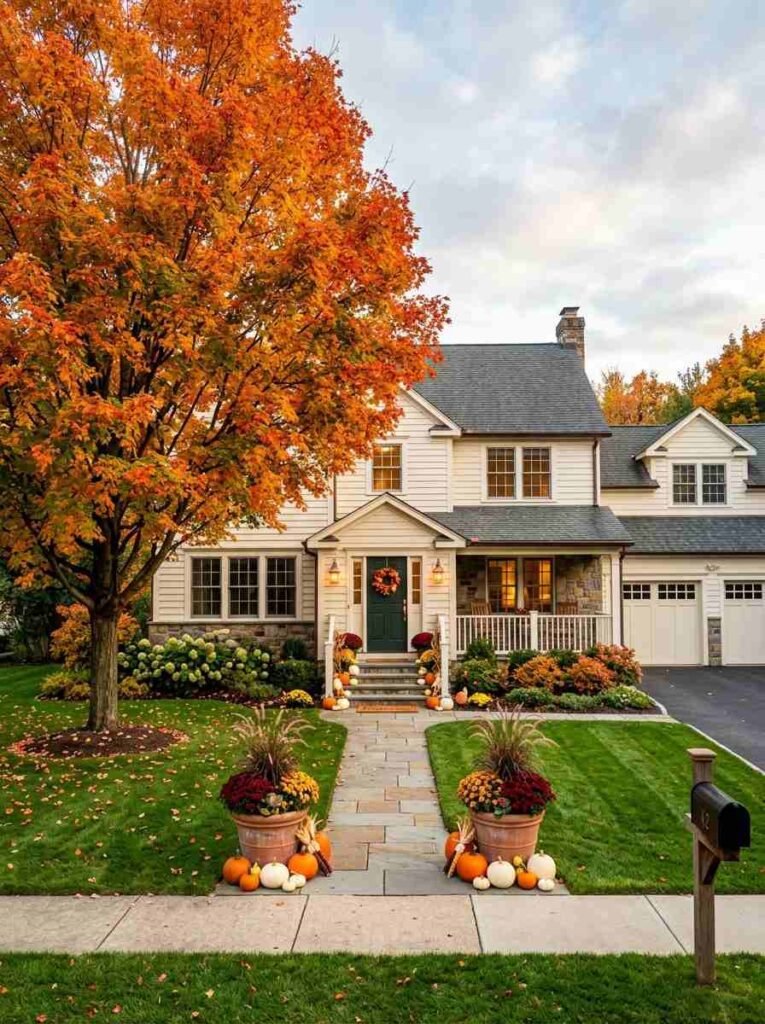
23. Plant a Spring Bulb Border
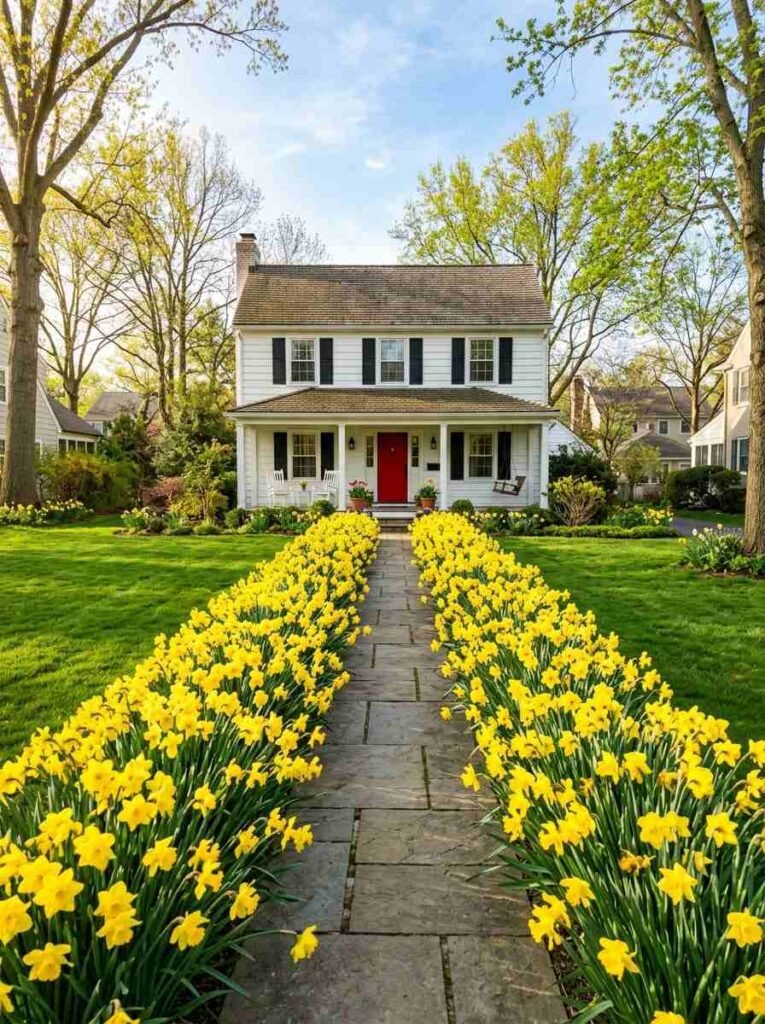
A border of daffodils along your front walk is one of the most cheerful sights in early spring. Plant them 6 inches deep in October, and they’ll naturalize and multiply over the years with zero effort from you.
24. Go All-In on Fall Mums
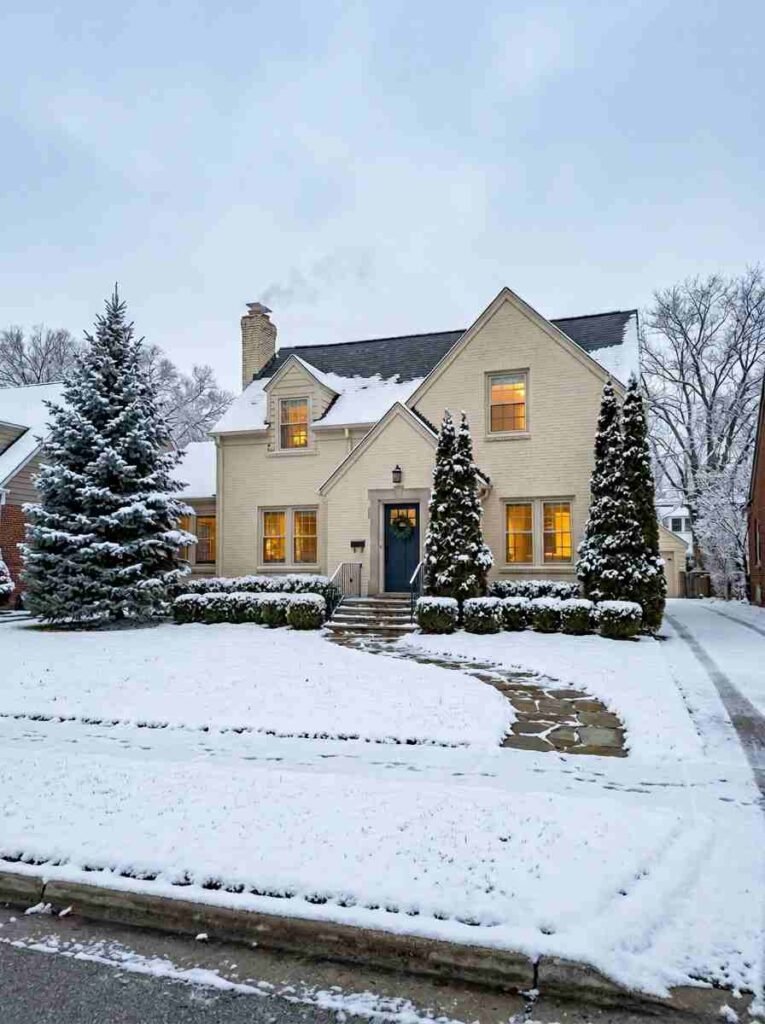
A few large pots of mums in rust, burgundy, or gold near your front door in September and October is the easiest seasonal refresh there is. Pair with mini pumpkins and you’ve got a full fall vignette.
25. Add Winter Interest With Evergreens
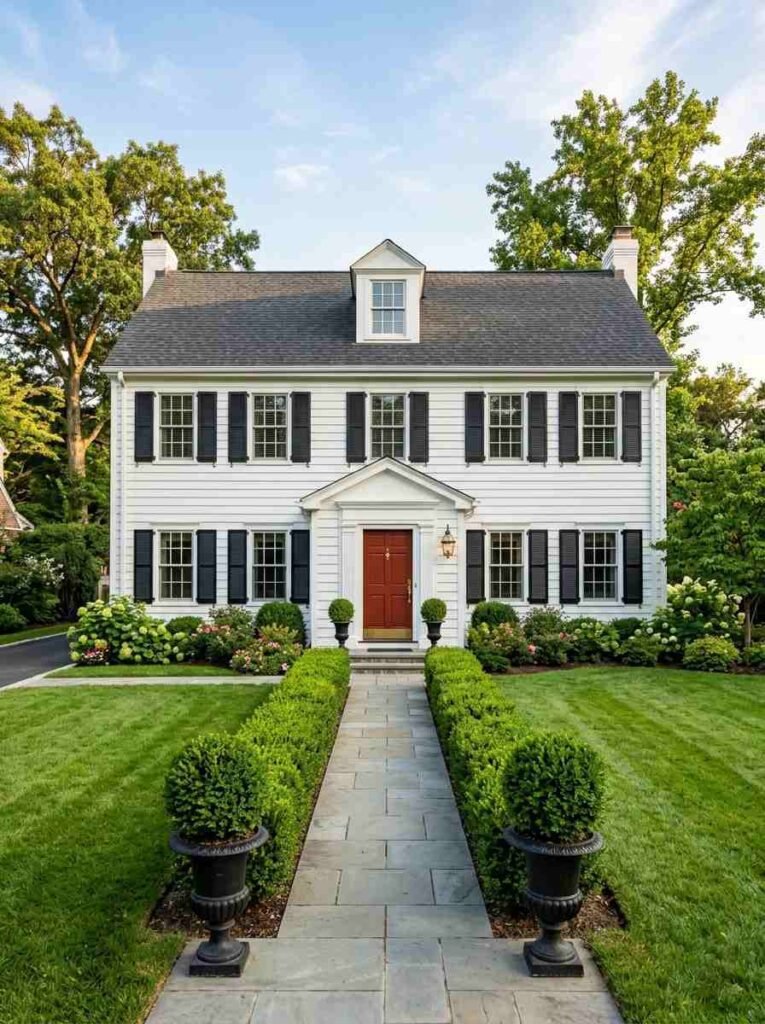
Most beginners ignore winter. Don’t. A few well-placed evergreen shrubs (arborvitae, boxwood, yew) mean your yard has structure even when everything else dies back. They also make your spring plants look more intentional by contrast.
Smart Beginner Moves
26. Start Small and Expand
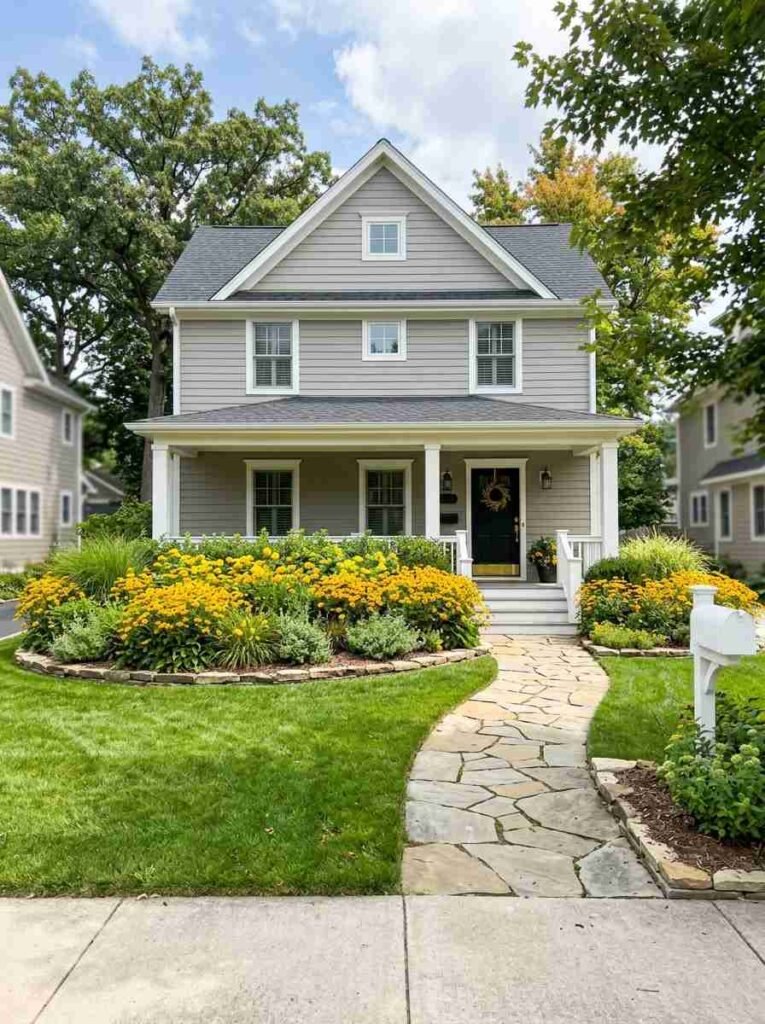
Pick one bed and make it perfect before spreading out. Every beginner’s mistake is trying to do everything at once and ending up with a half-finished yard that looks worse than before. One great bed beats five mediocre ones.
27. Use Landscape Fabric Under Mulch Thoughtfully
Landscape fabric prevents weeds but also prevents your soil from breathing long-term. Use it under gravel or rock gardens. Skip it in plant beds and just mulch deeply instead. You’ll thank yourself in 3 years when your soil is still healthy. :/
28. Take a Photo Before You Start
This sounds obvious but almost nobody does it. Take a “before” photo. You’ll forget what it looked like, and the before-and-after comparison is the best motivation to keep going — plus it makes for great Pinterest content if that’s your thing.
Wrapping Up
Front yard landscaping doesn’t have to be complicated or expensive. Pick 3 or 4 ideas from this list that feel manageable, do them well, and build from there. A great front yard happens one good decision at a time.
Start with the edging. Seriously. Do that first. Everything looks better with clean edges.
Then pick your focal point, add some layered planting, and enjoy the fact that your front yard is finally working for you instead of just sitting there judging you every morning.
