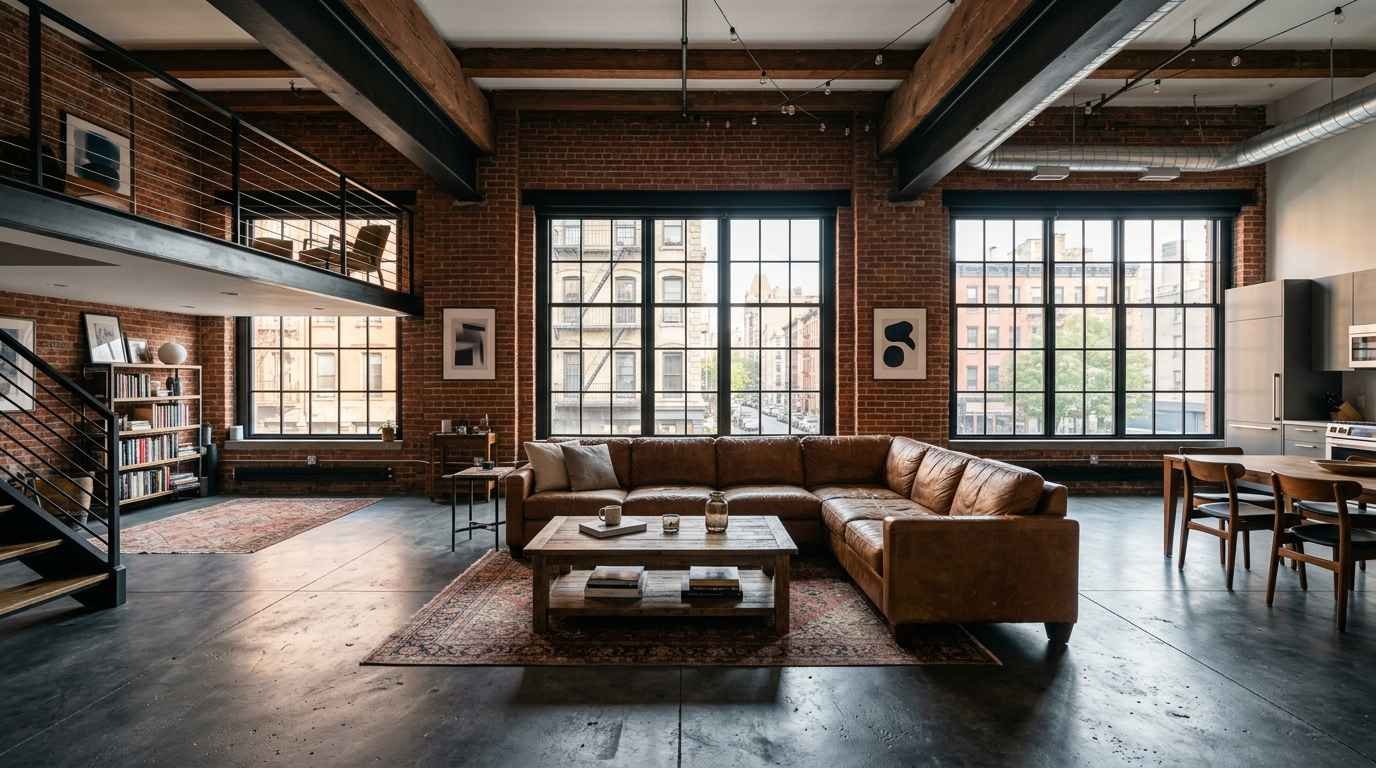
I fell for industrial lofts the first time I stood in a friend’s converted warehouse apartment in Chicago and felt genuinely small next to a 14-foot window.
No curtains. Just raw brick, a rusted steel beam running across the ceiling, and light pouring in like the room had been designed by an architect who never learned the word “cozy.”
I left with paint chips in my pocket and a Pinterest board that’s still growing.
If you’re pinning industrial ideas for your own place, or just daydreaming about one, this list is for you. I’ve pulled together 26 ideas that actually hold up over time.
Not trendy for a season and gone.
Timeless, in the way exposed brick has been timeless since the 1960s.
Where this look actually comes from
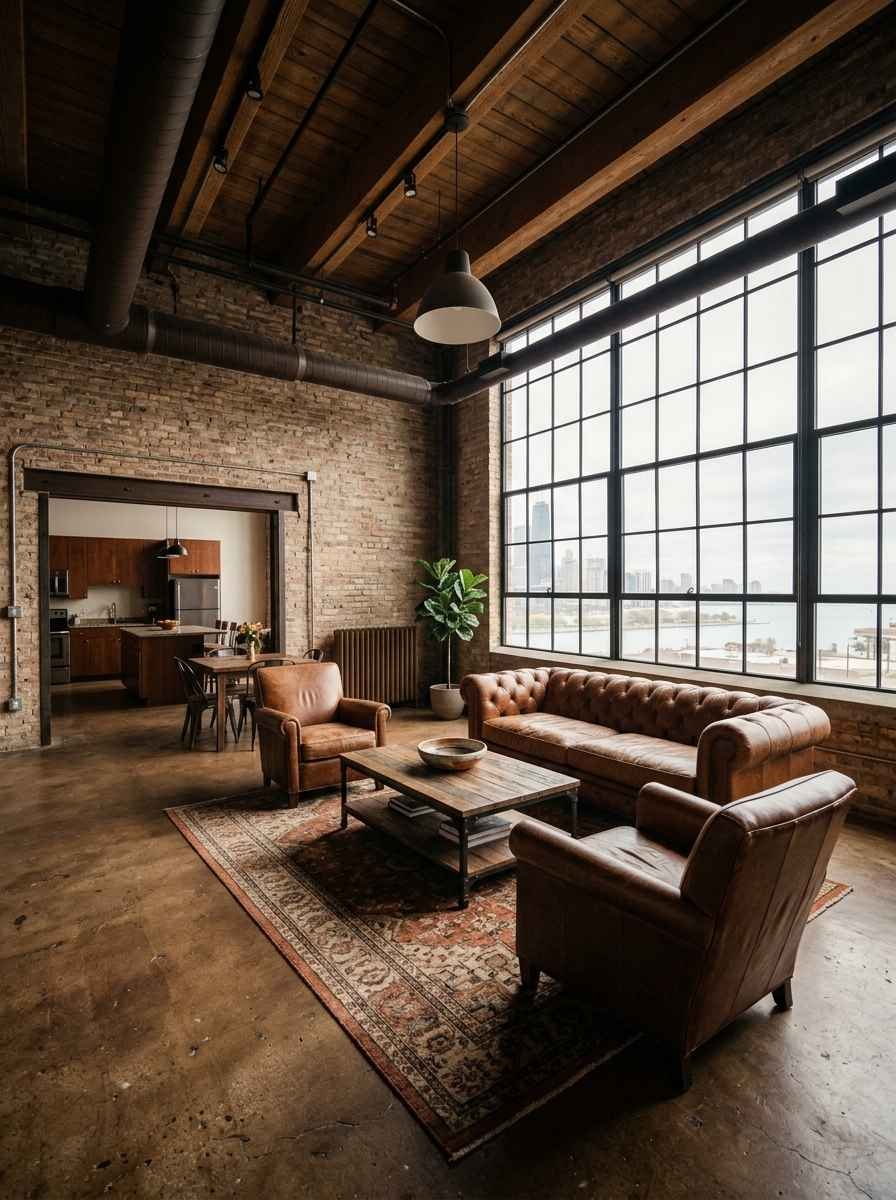
Industrial loft style isn’t a marketing invention.
It started in SoHo, New York, in the 1960s, when artists moved into empty manufacturing buildings because the rent was cheap and the ceilings were tall.
By 1962, SoHo held roughly 650 former manufacturing and warehouse spaces, and rents in some of them ran as low as $50 a month, according to a detailed history of the style.
Sculptor Donald Judd was one of the early residents. He kept the beams, the brick, the pipes, exactly as they were.
That’s the whole point of this style. You’re not decorating over a space. You’re working with what’s already honest about it.
Get the bones right first
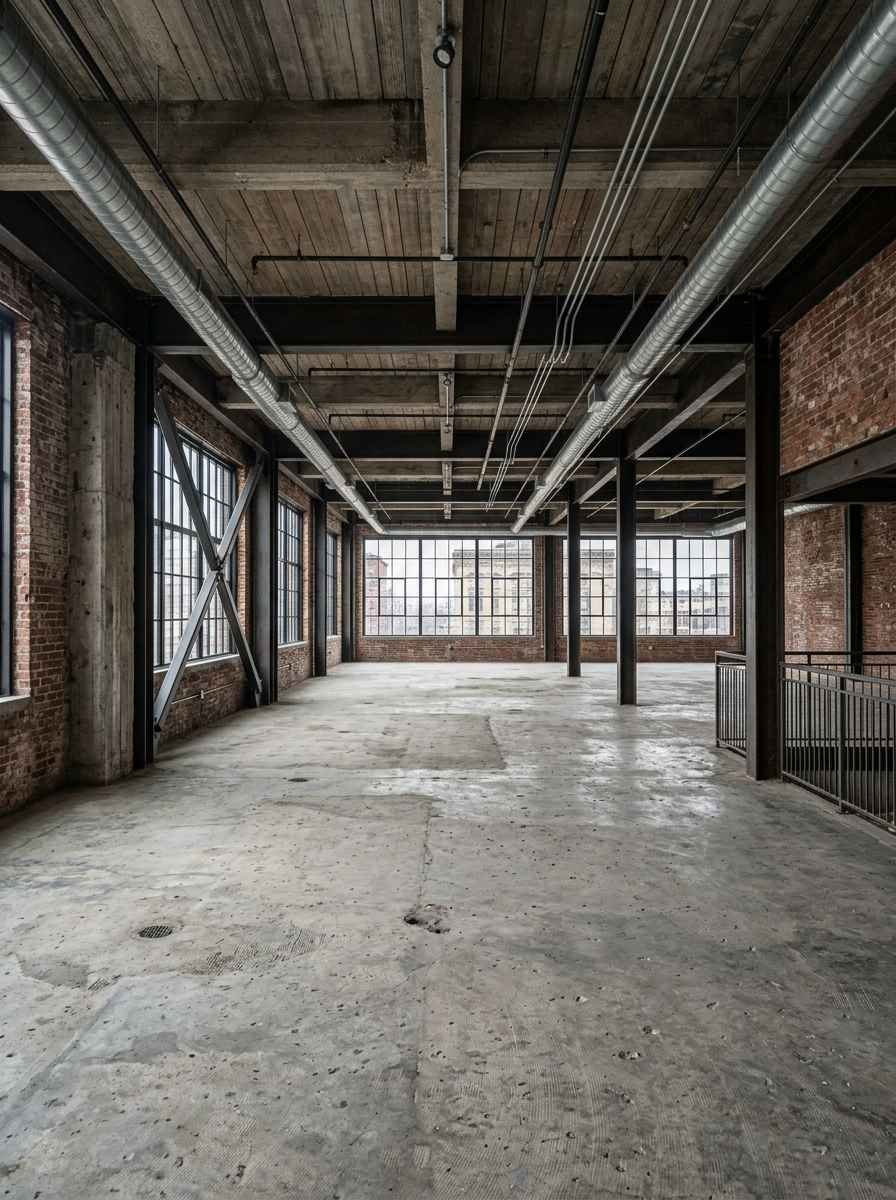
Before you buy a single throw pillow, sort out the structural stuff. This is where the character lives.
1Leave the brick alone. If your walls have original exposed brick, don’t paint it unless you have to. It’s uneven and a little dusty and that’s exactly why it works.
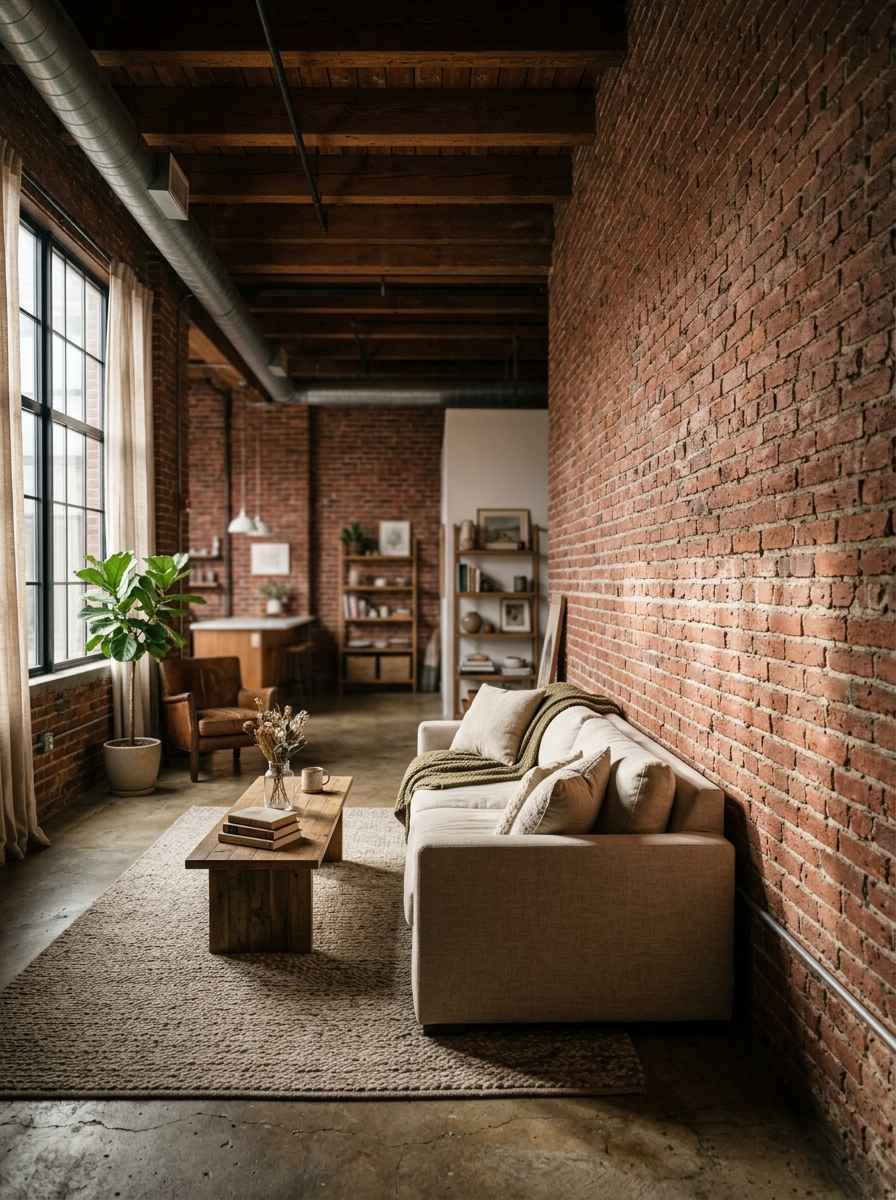
2. Don’t hide the ductwork. Galvanized metal ducts running across a high ceiling look intentional when they’re left bare.
Painting them white kills the effect. I made that mistake once in a rental and regretted it within a week.
3. Polish (or seal) the concrete floors. Raw concrete is cold underfoot in January, so a sealed finish with a wool rug layered on top solves both the look and the comfort problem.
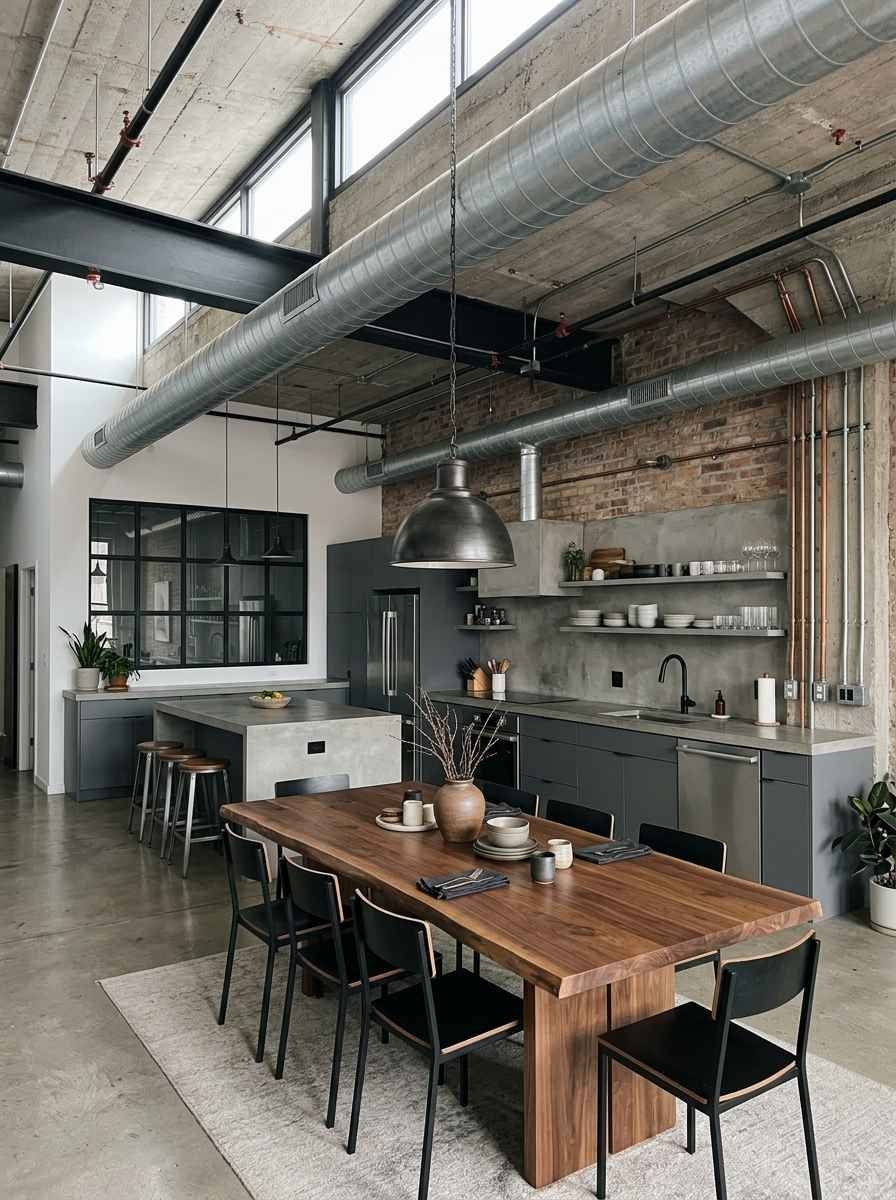
4. Keep steel beams visible. Whether they’re structural or decorative, a black or dark iron beam across the ceiling anchors the whole room.
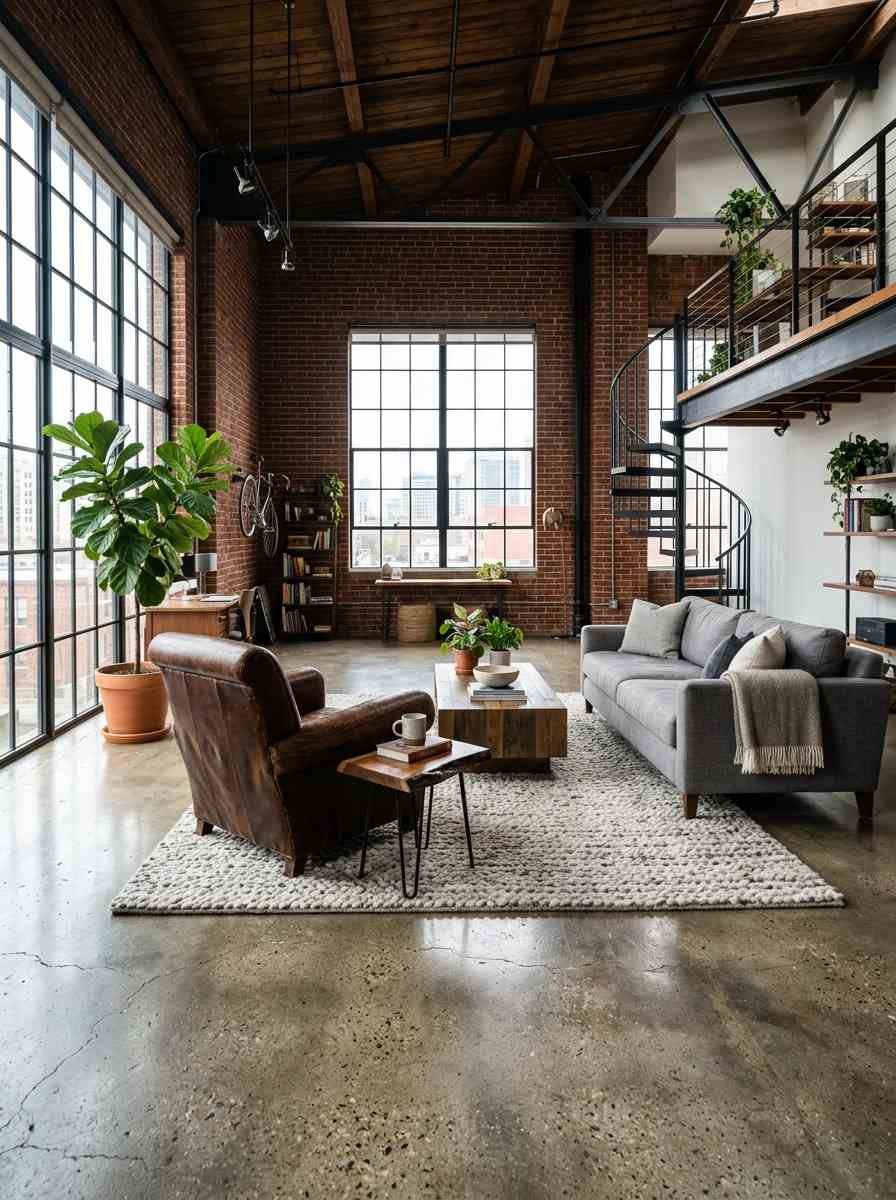
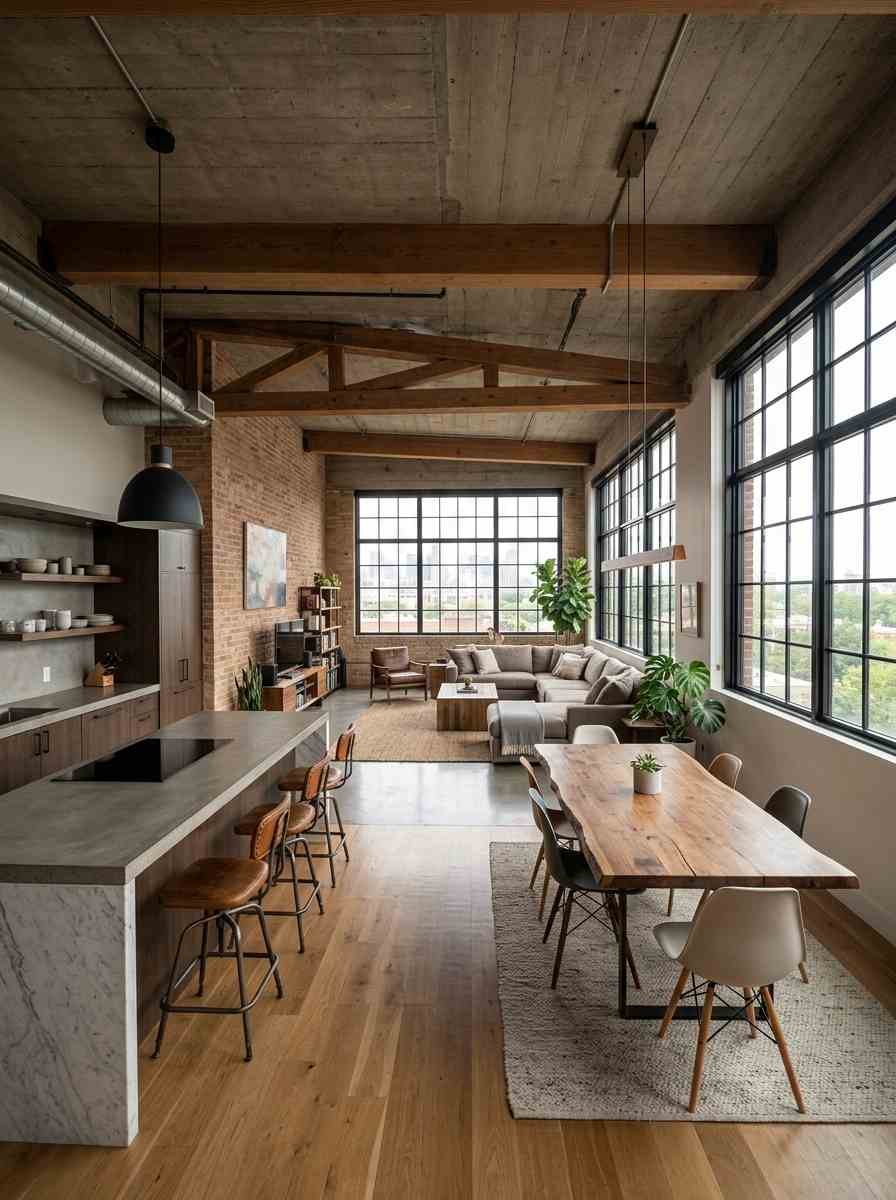
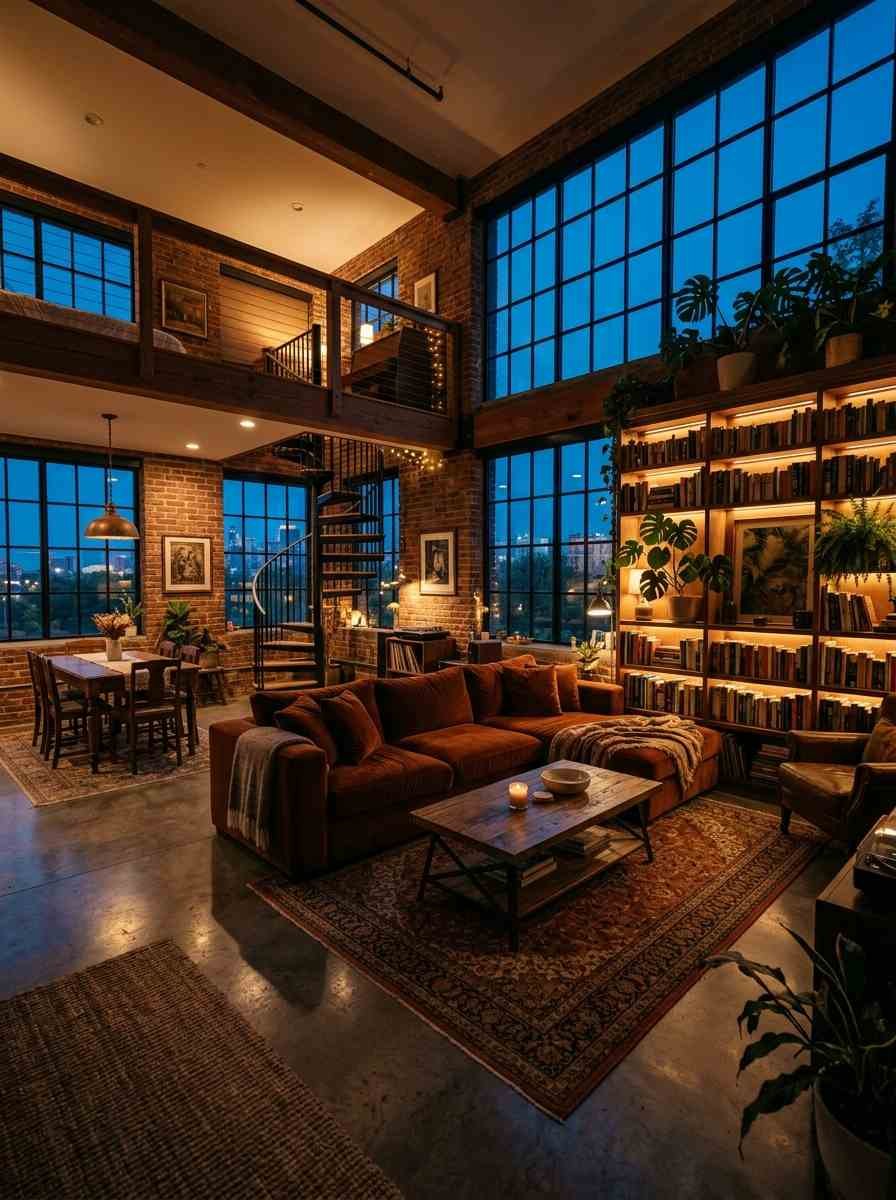
5. Push for an open floor plan. Lofts were built with huge, undivided floors. Minimal interior walls keep that flow between kitchen, dining, and living space.
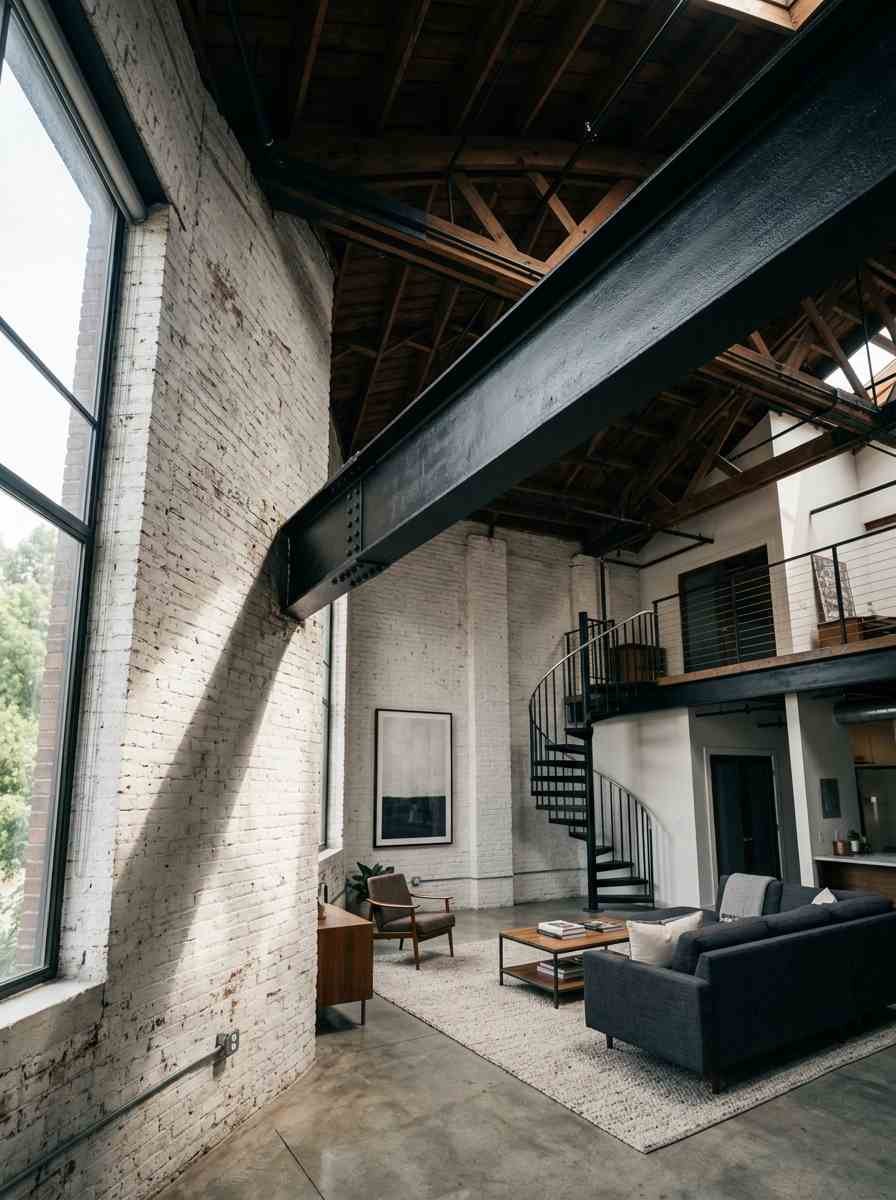
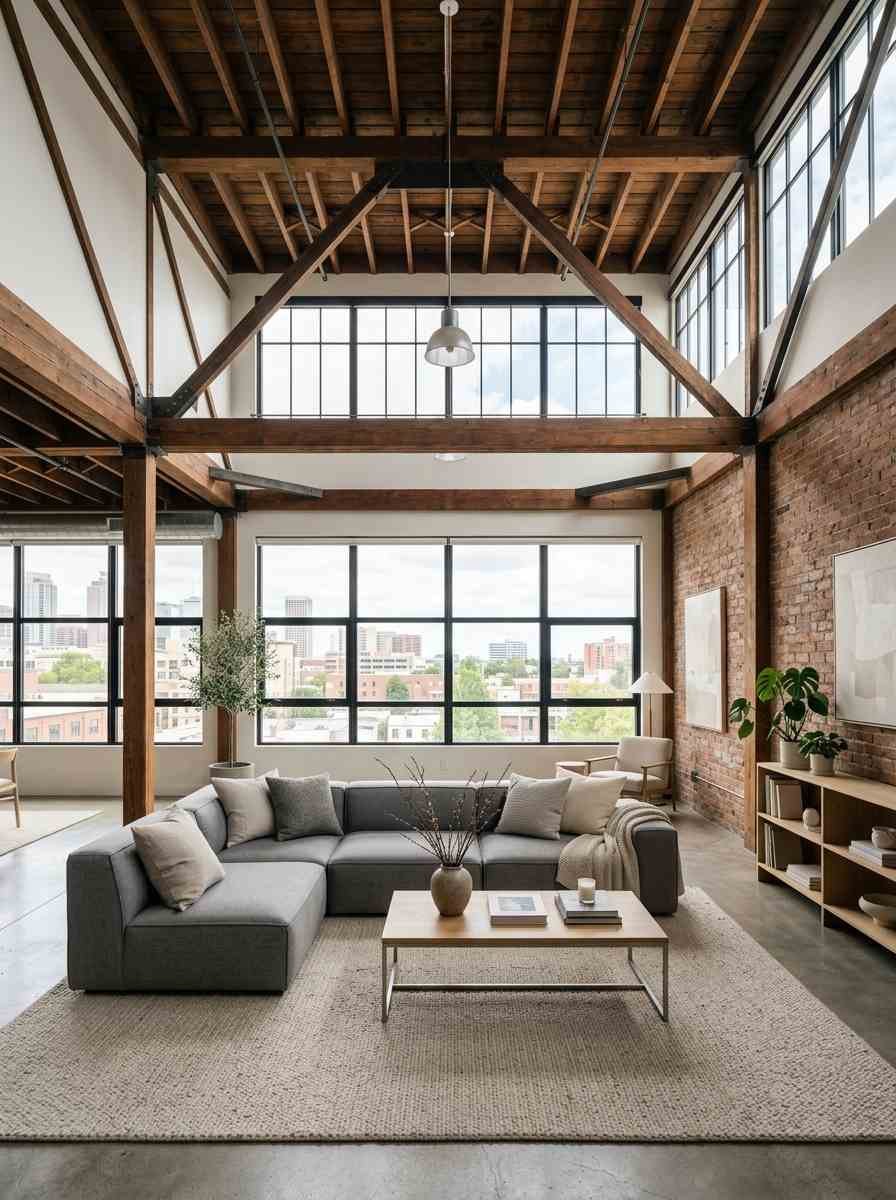
6. Maximize the windows. Original factory windows are often oversized and multi-paned. Skip heavy drapes. Sheer panels or nothing at all let the architecture do the talking.
Lighting that makes or breaks the room
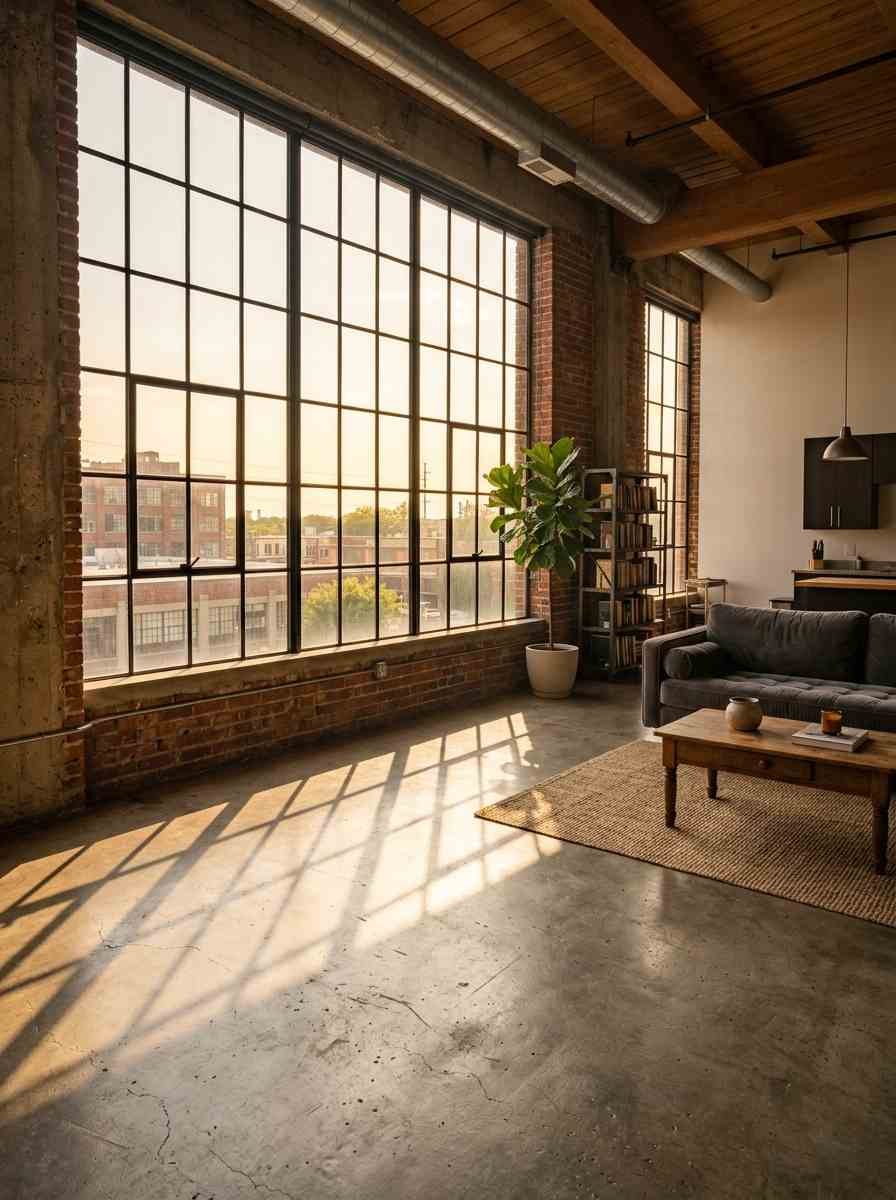
Bad lighting turns an industrial space cold and unfinished.
Good lighting is what makes people say this is insane the second they walk in.
7. Hang Edison bulb fixtures. The visible filament is a small detail, but it reads as vintage instantly.
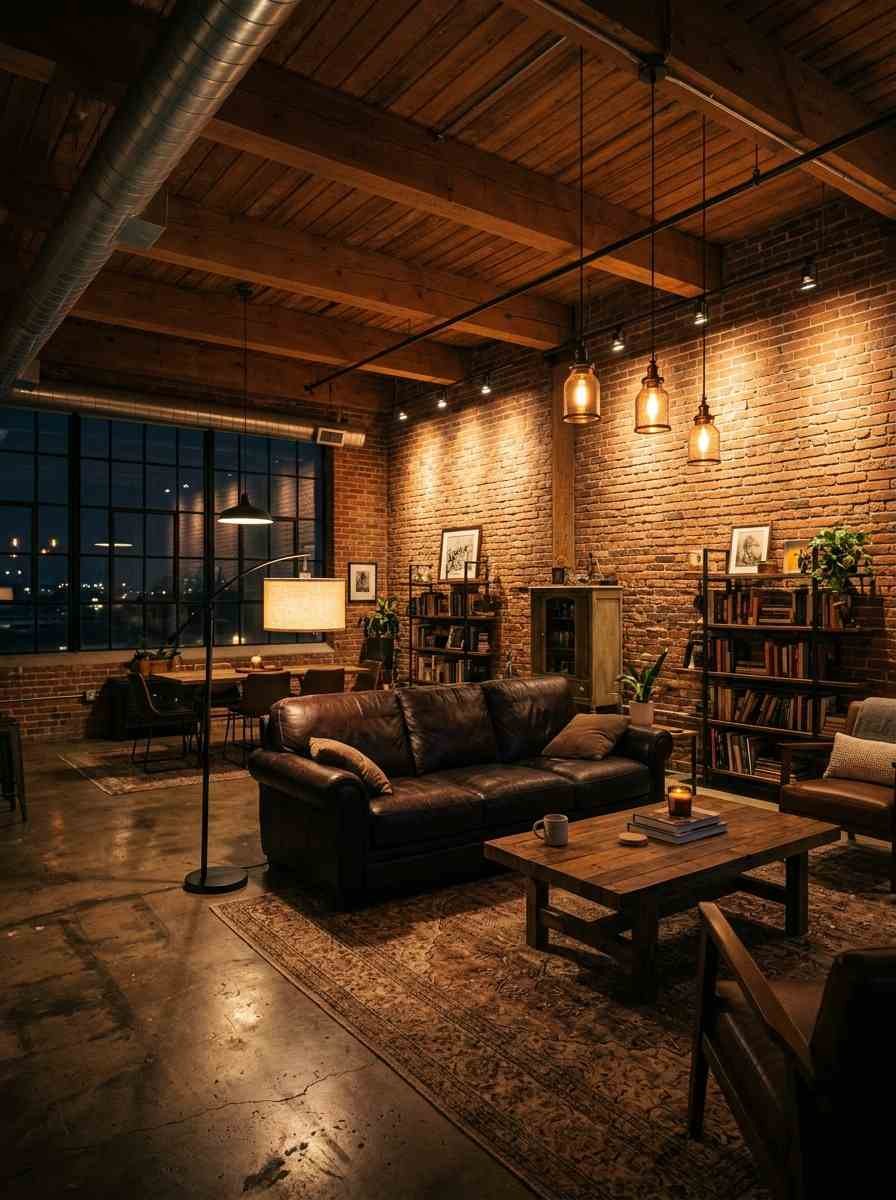
8. Add a track lighting system. Aim it at exposed brick or a beam to create shadow and texture after dark.
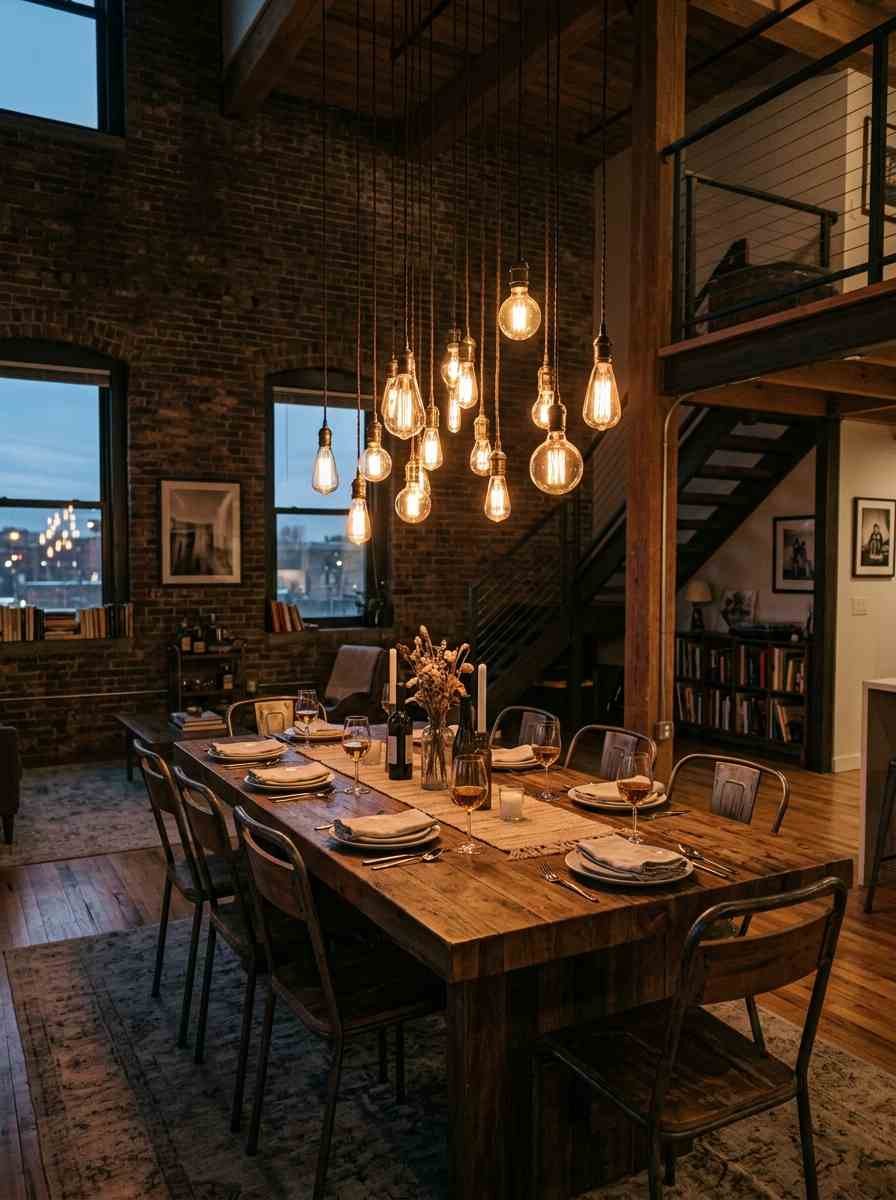
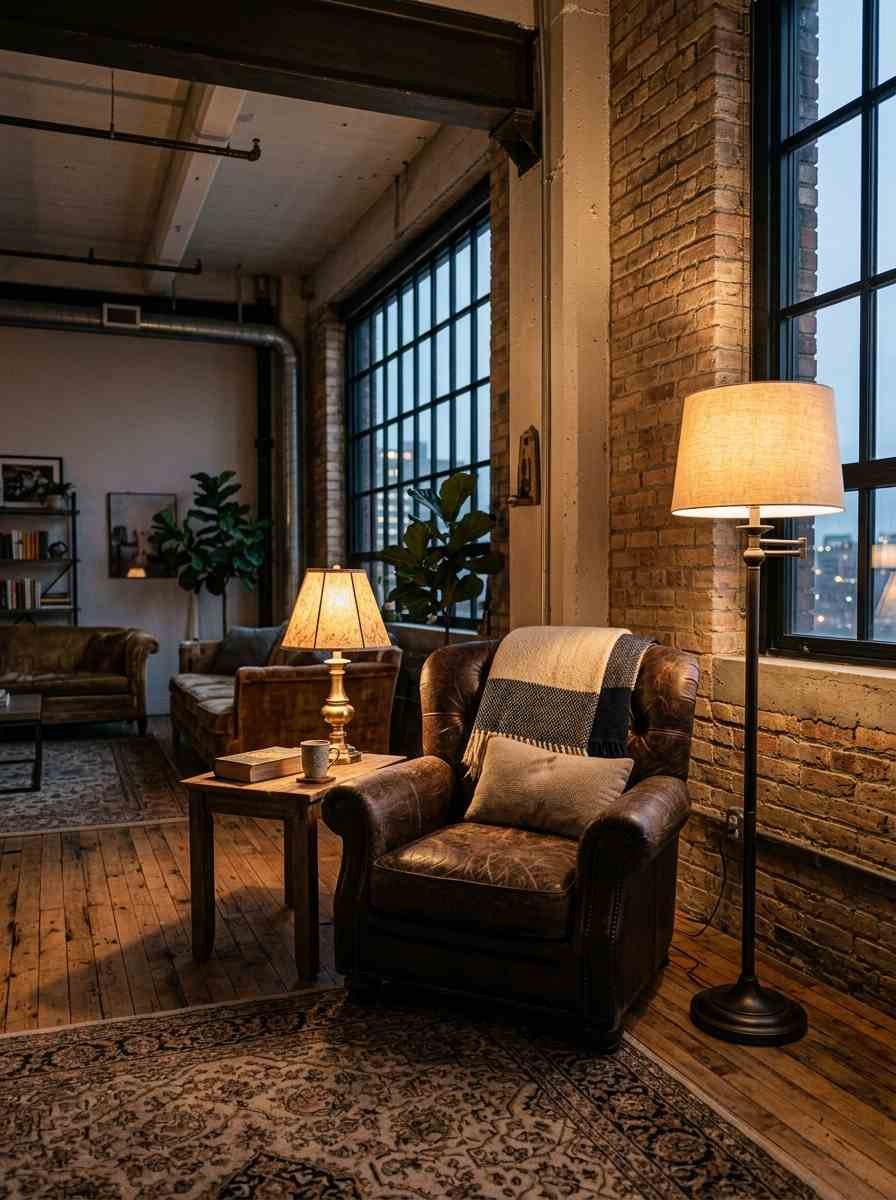
9. Layer in floor and table lamps. Overhead light alone feels institutional.
Lamps with metal bases soften the room without fighting the aesthetic.
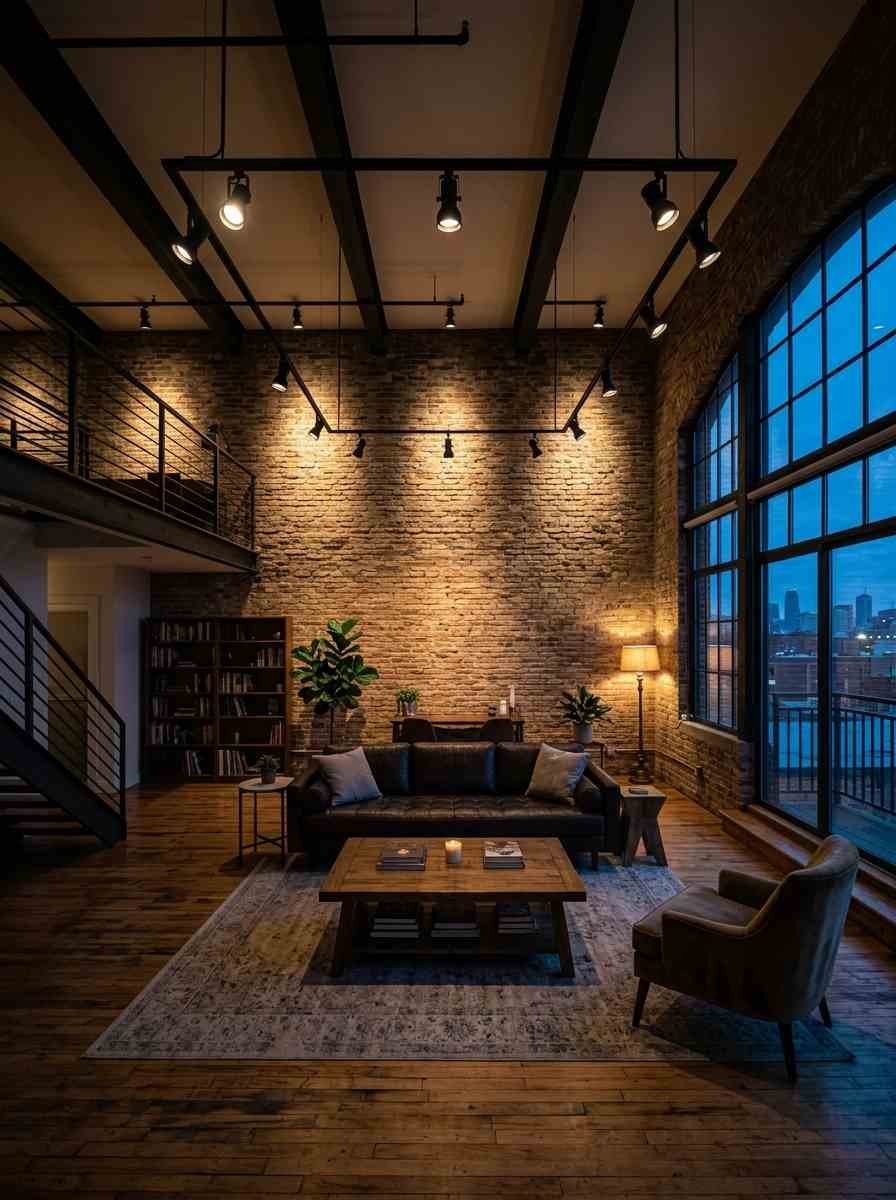
10. Use dimmers everywhere you can. A loft that’s bright and functional during the day should be able to go moody by 9pm.
Furniture that earns its keep
Here’s a slightly random thought that’s been rattling around my head while writing this: furniture shopping for a loft is oddly similar to buying a winter coat.
You want something that looks good and actually works, not a piece that only photographs well. Anyway, back to it.
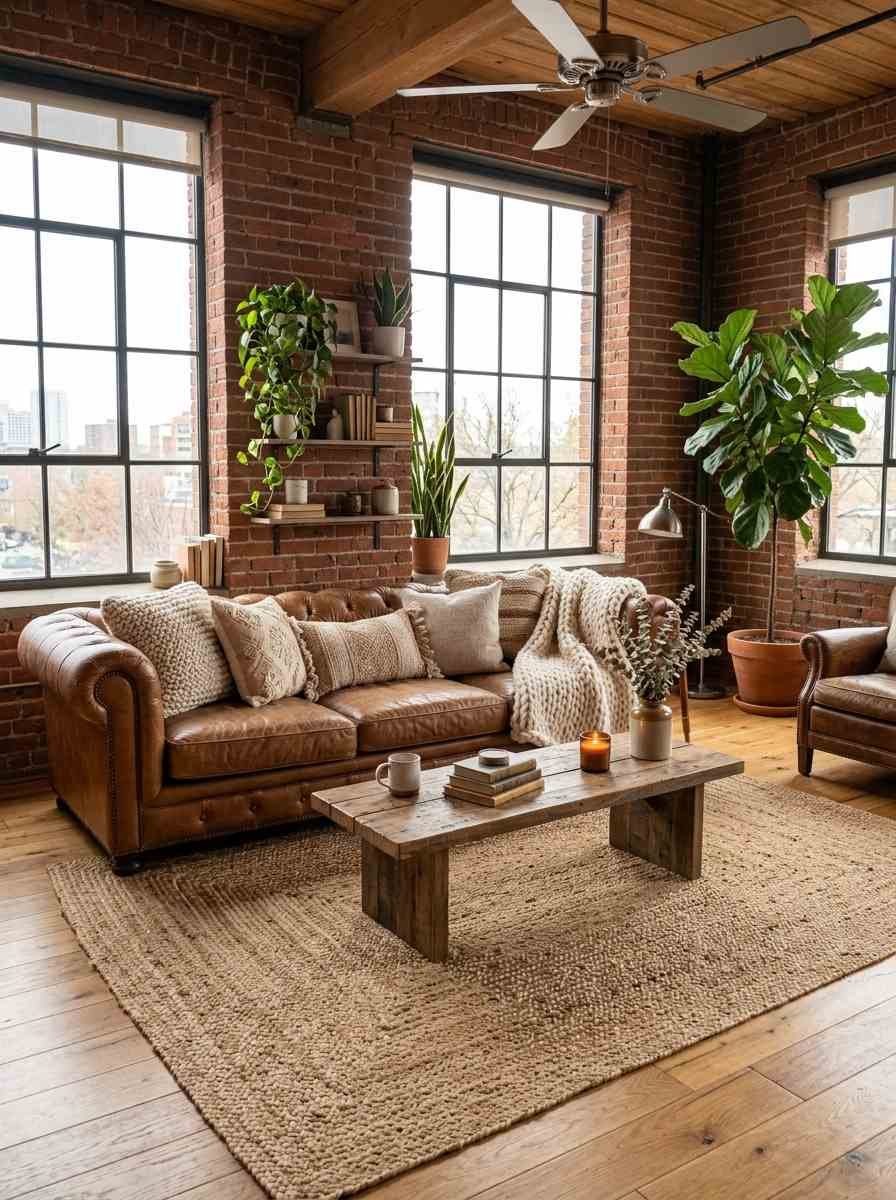
11. A worn leather sofa or armchair. Rich brown leather with visible creasing brings warmth to a room that’s otherwise all metal and stone.
IMO this is the single easiest way to make a loft feel lived-in instead of staged.
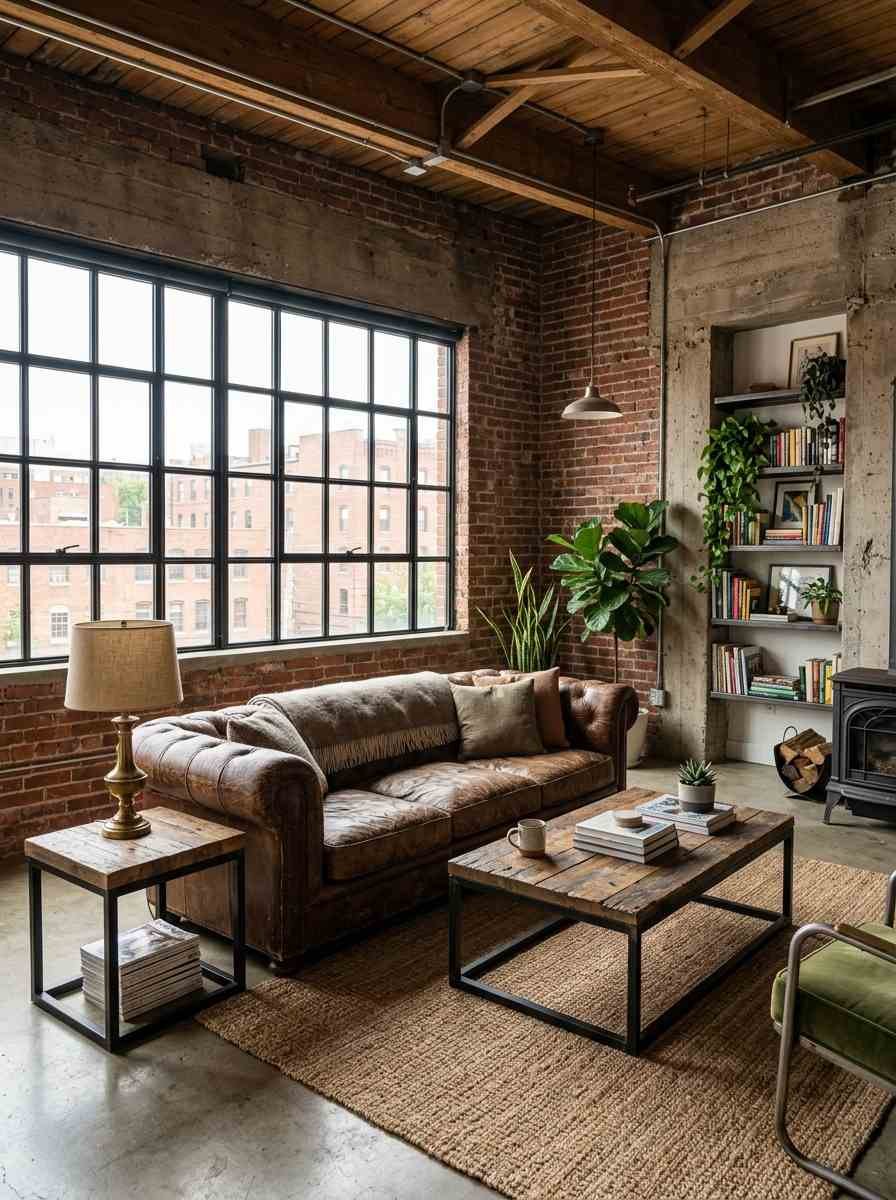
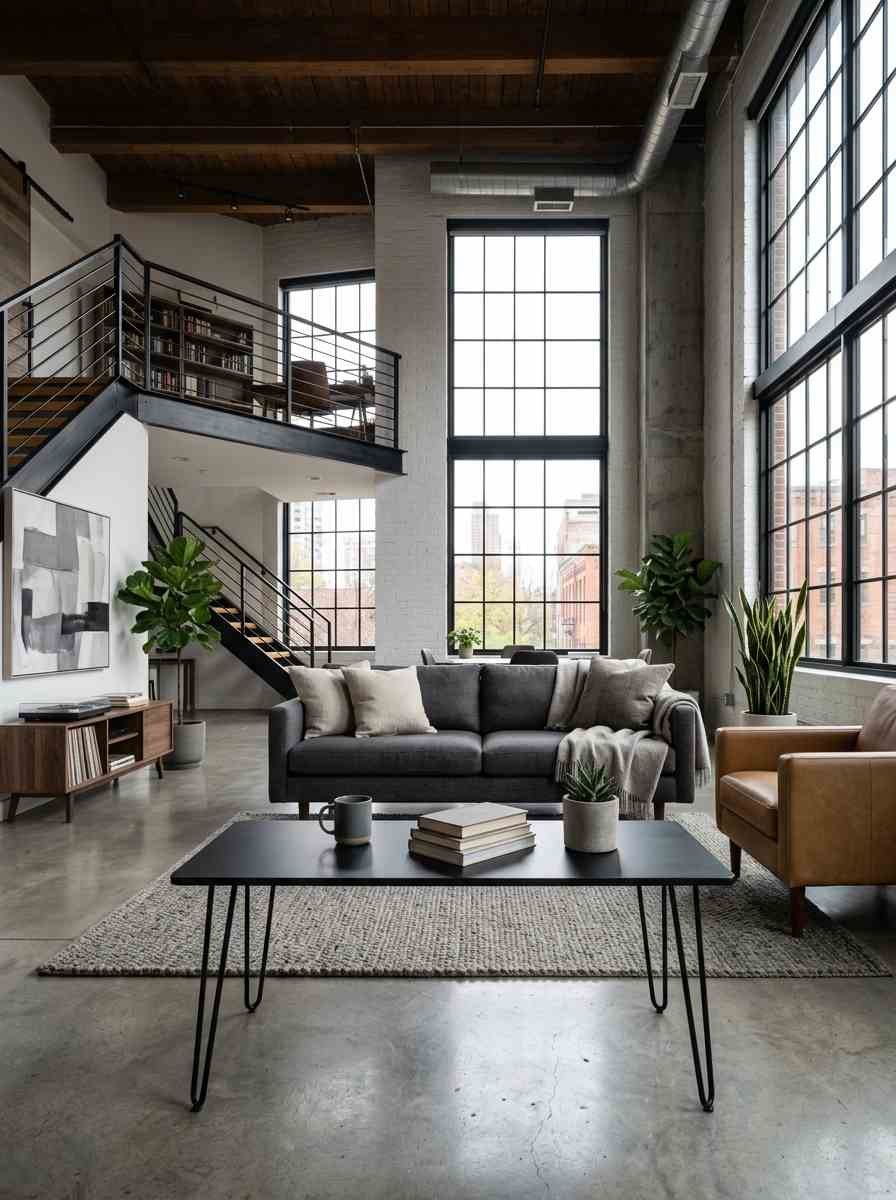
12. Metal coffee tables with hairpin legs. They’re light, visually, which matters in a big open room where everything else feels heavy.
13. A reclaimed wood dining table. Salvage-yard wood tends to be denser and more durable than new timber, and it carries actual history in the grain.
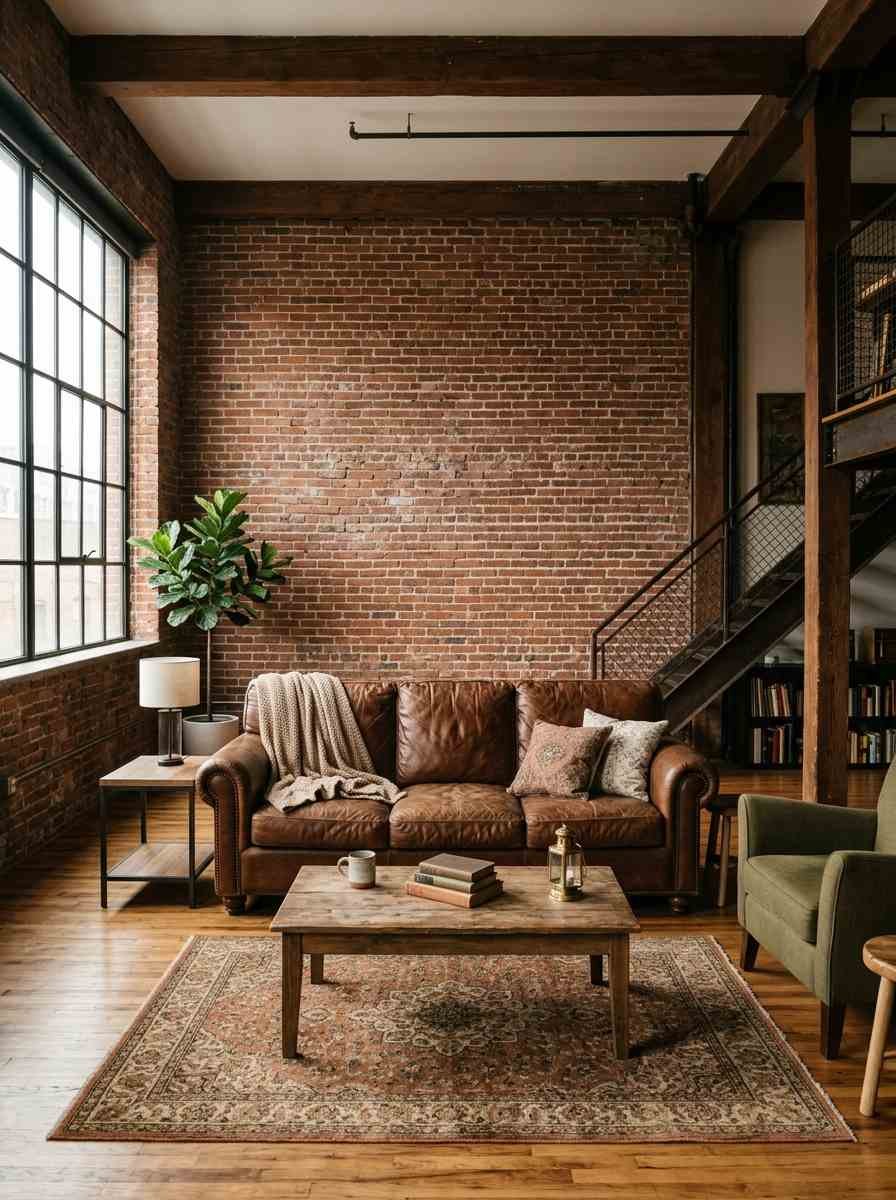
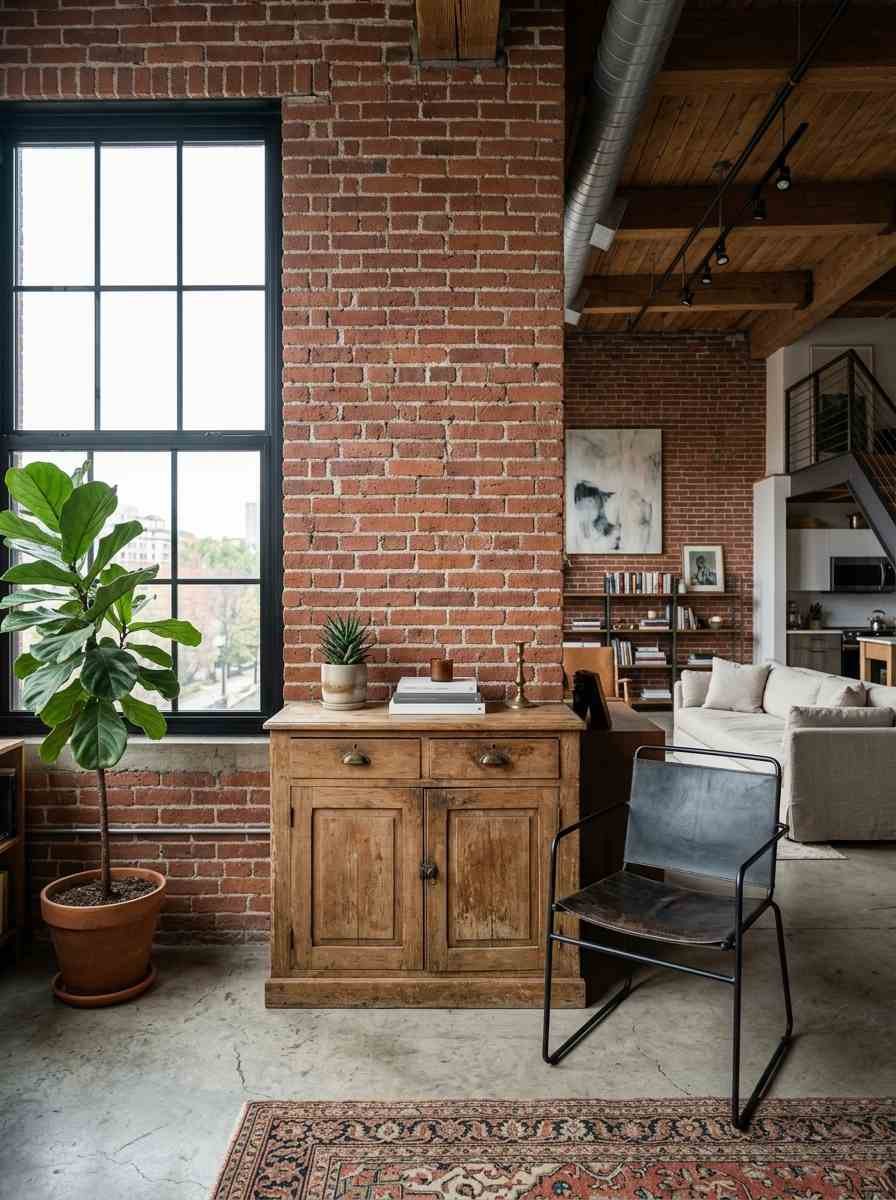
14. Mix vintage with modern, don’t pick one. Pair a sleek new metal chair with a battered old cabinet. The contrast is what keeps the room from feeling like a showroom.
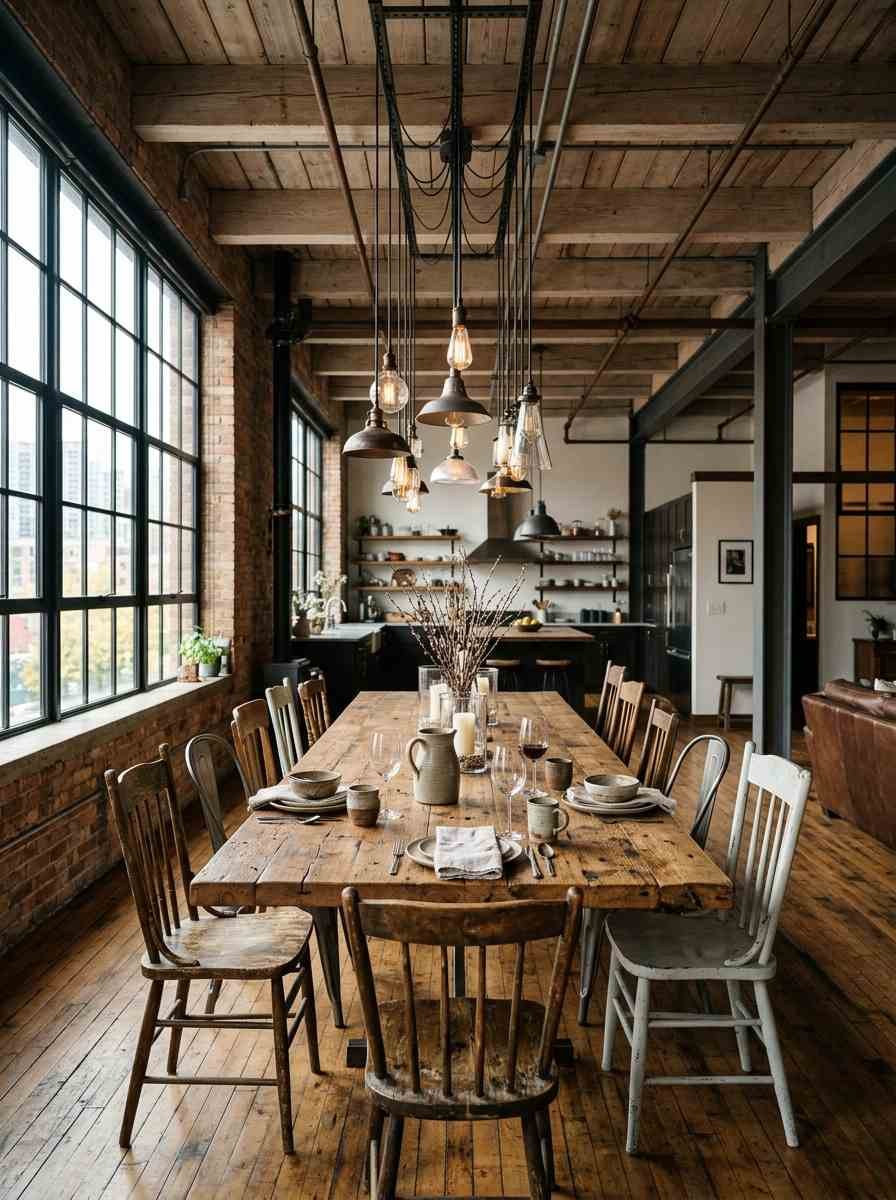
15. Go low-profile with your seating. Modular, low-slung sofas keep sightlines open in a tall space, so the architecture stays the star.
16. Add one oversized, slightly impractical piece. A big vintage factory cart as a coffee table. A giant leaning mirror. Every loft I’ve loved has one item that doesn’t quite make sense on paper.
Color and texture without going cold
17. Build from a neutral base. Grays, blacks, warm whites. This is the foundation, not the finished palette.
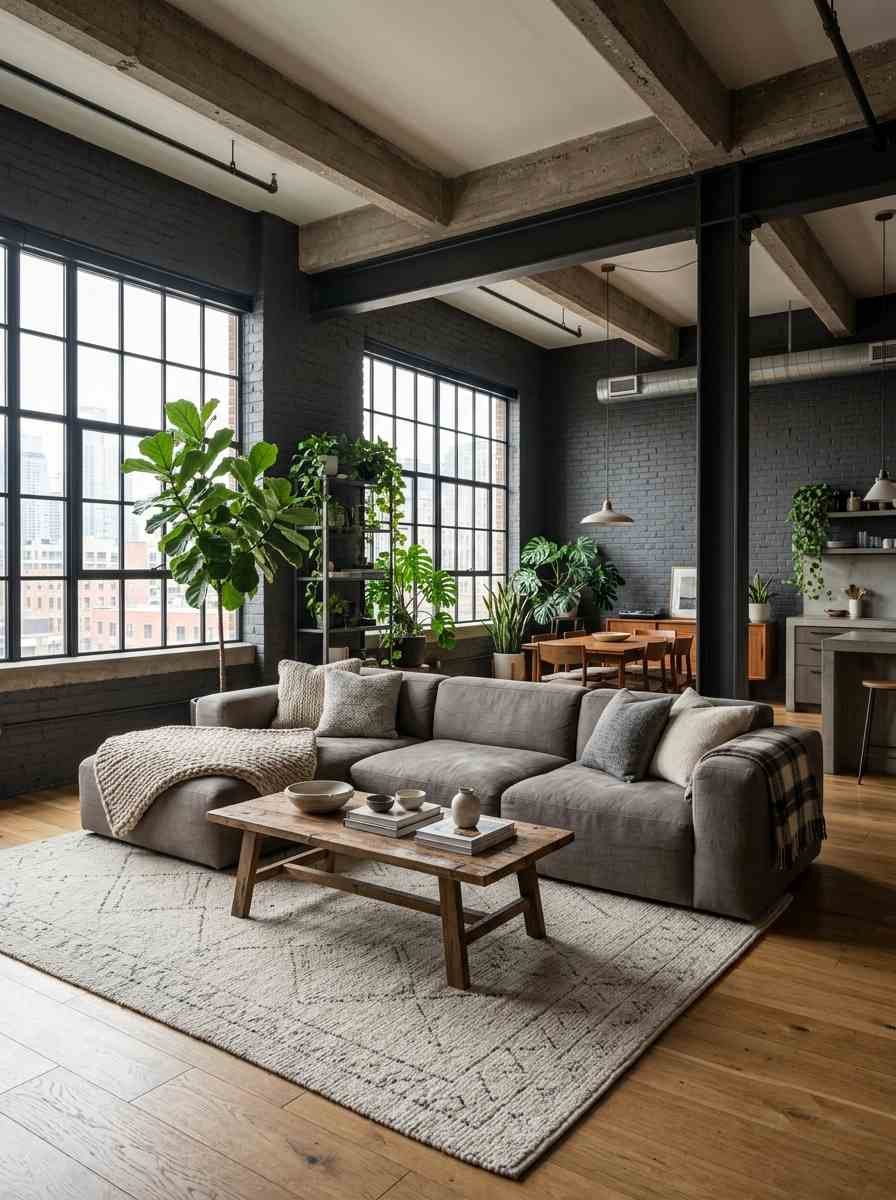
18. Pick one accent color and commit to it. Sherwin-Williams’ Industrial Refresh collection pairs urban grays with warm browns and a splash of olive, which is a genuinely good starting point if you’re stuck.
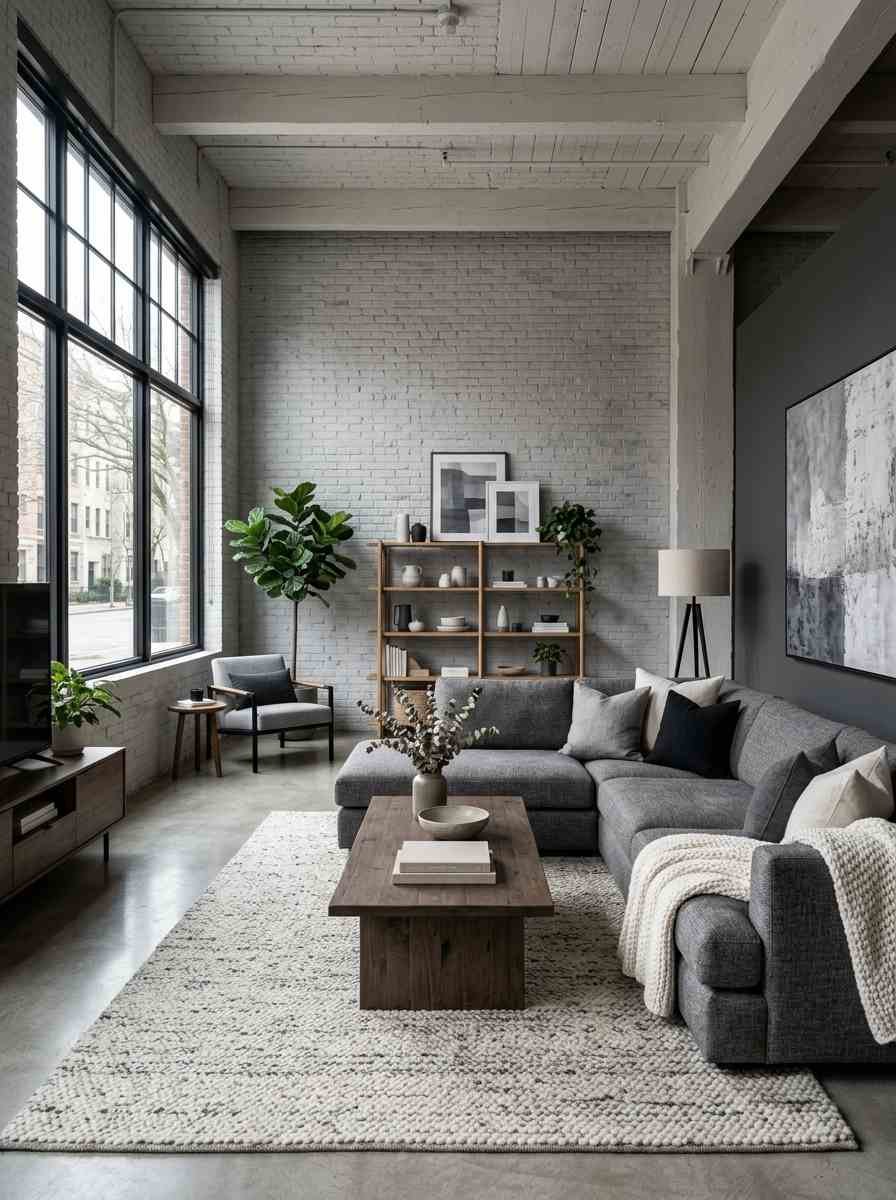
19. Layer textiles on hard surfaces. A jute or wool rug, a chunky knit throw on the leather sofa, woven pillows. Soft against rough is the whole trick of this style.
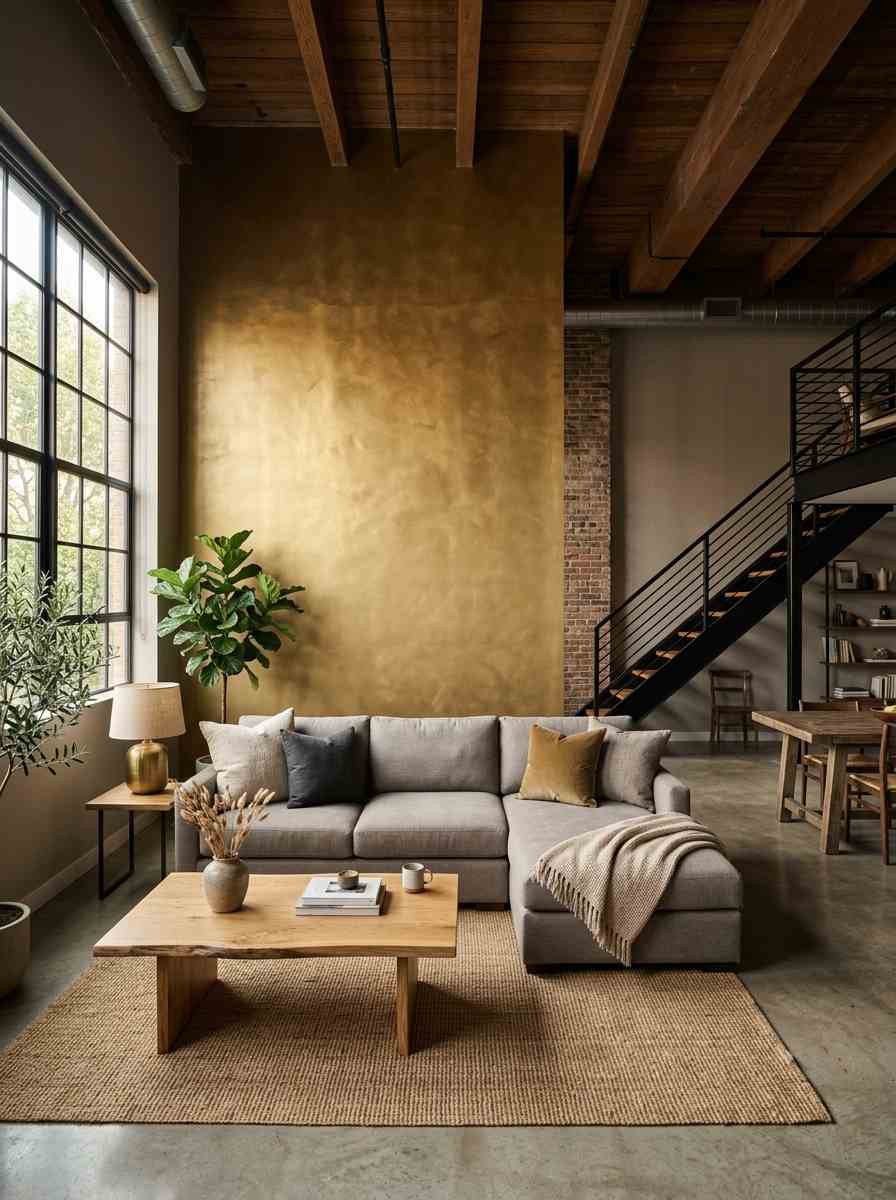
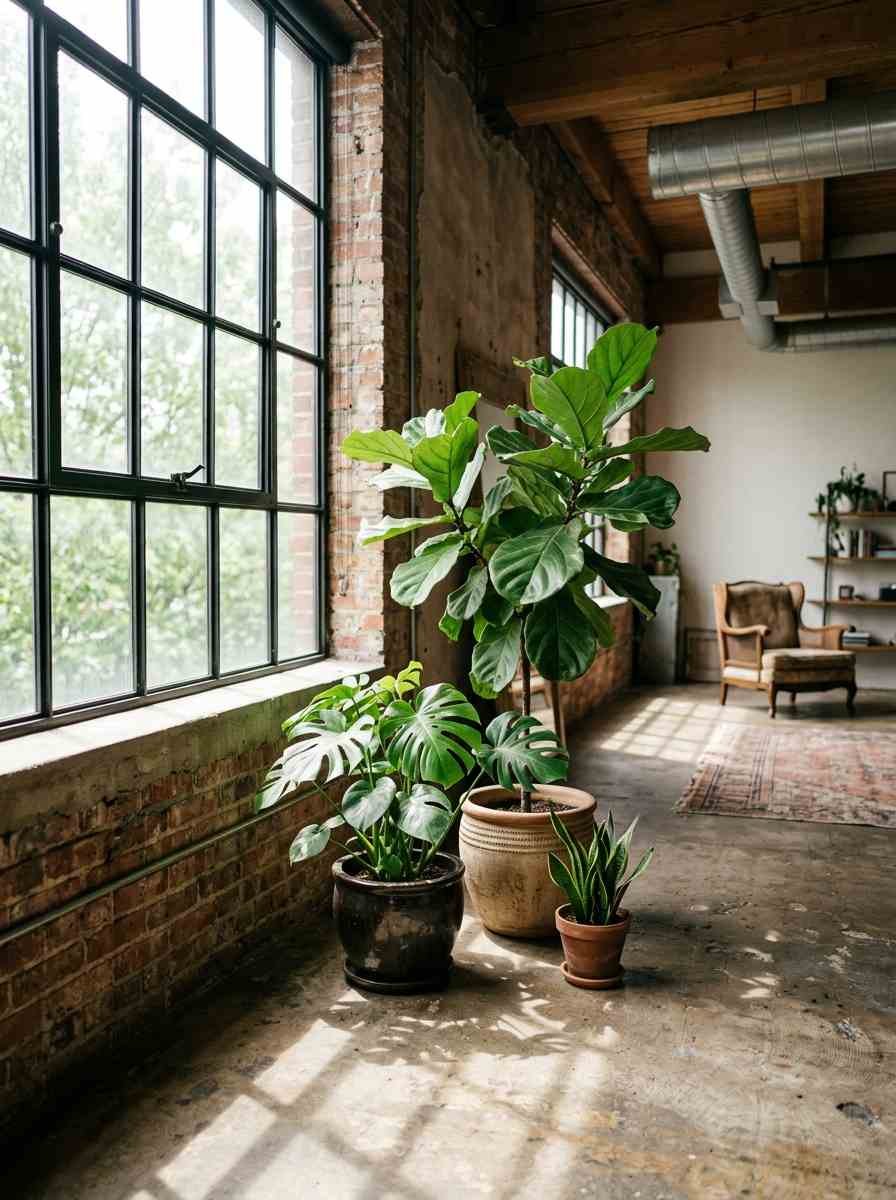
20. Bring in real plants, not just one. A single fiddle leaf fig in the corner looks staged. A cluster of two or three different sizes looks like someone actually lives there.
21. Try one bold accent wall, if you dare. A deep charcoal or even a muted rust can work beautifully against brick, though I’d test a sample first.
Paint is cheap. Redoing an entire wall twice is not.
Small details, big impact
22. Install open steel shelving. No cabinet doors. Let the objects on the shelf do the decorating.
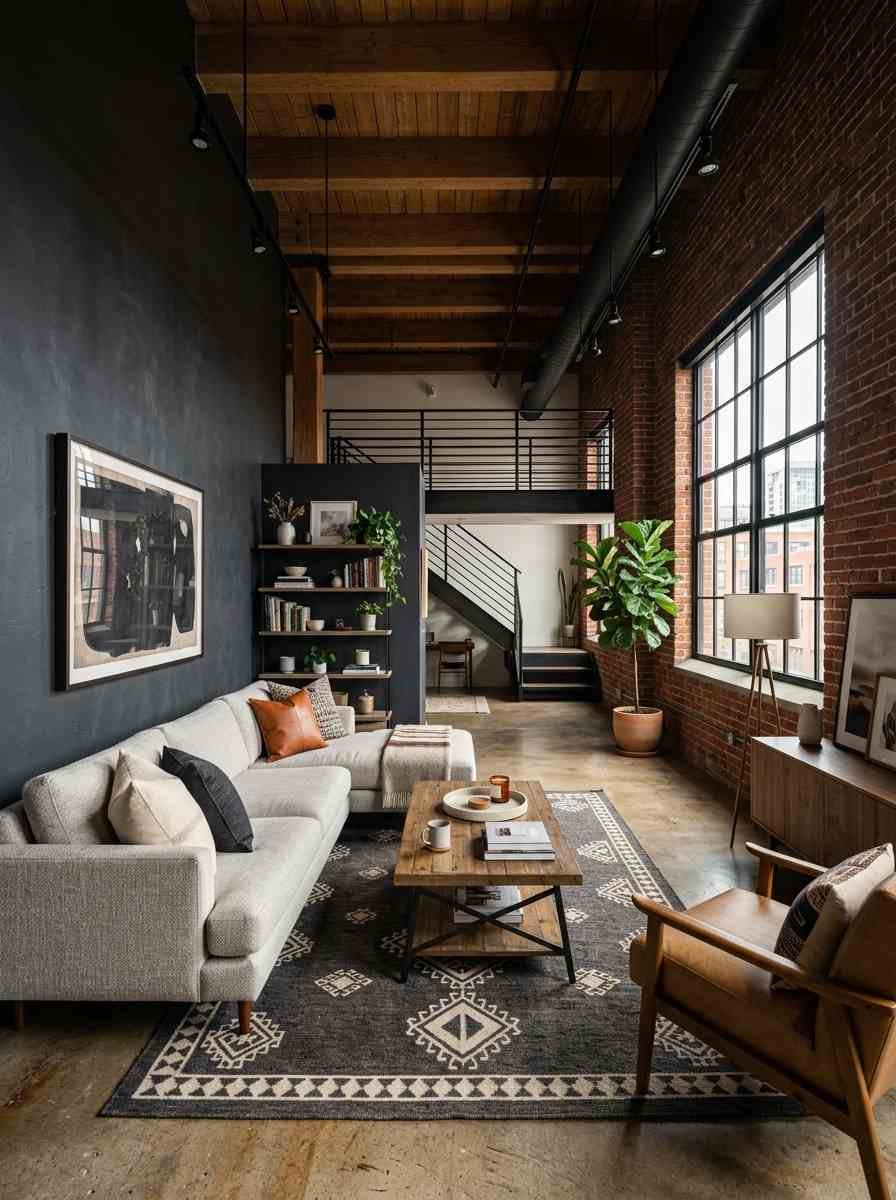
23. Hang oversized art or architectural photography. Small framed prints get swallowed by a 12-foot wall. Go bigger than feels comfortable.
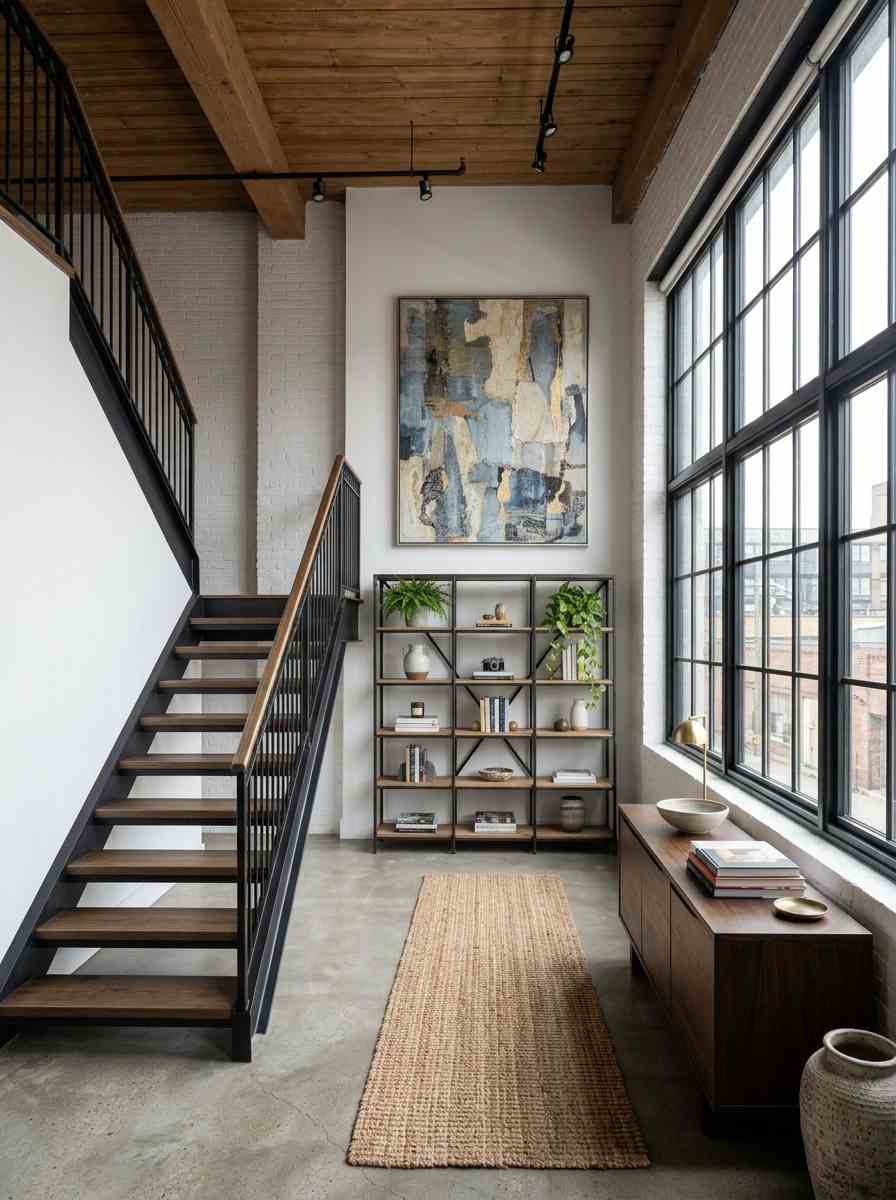
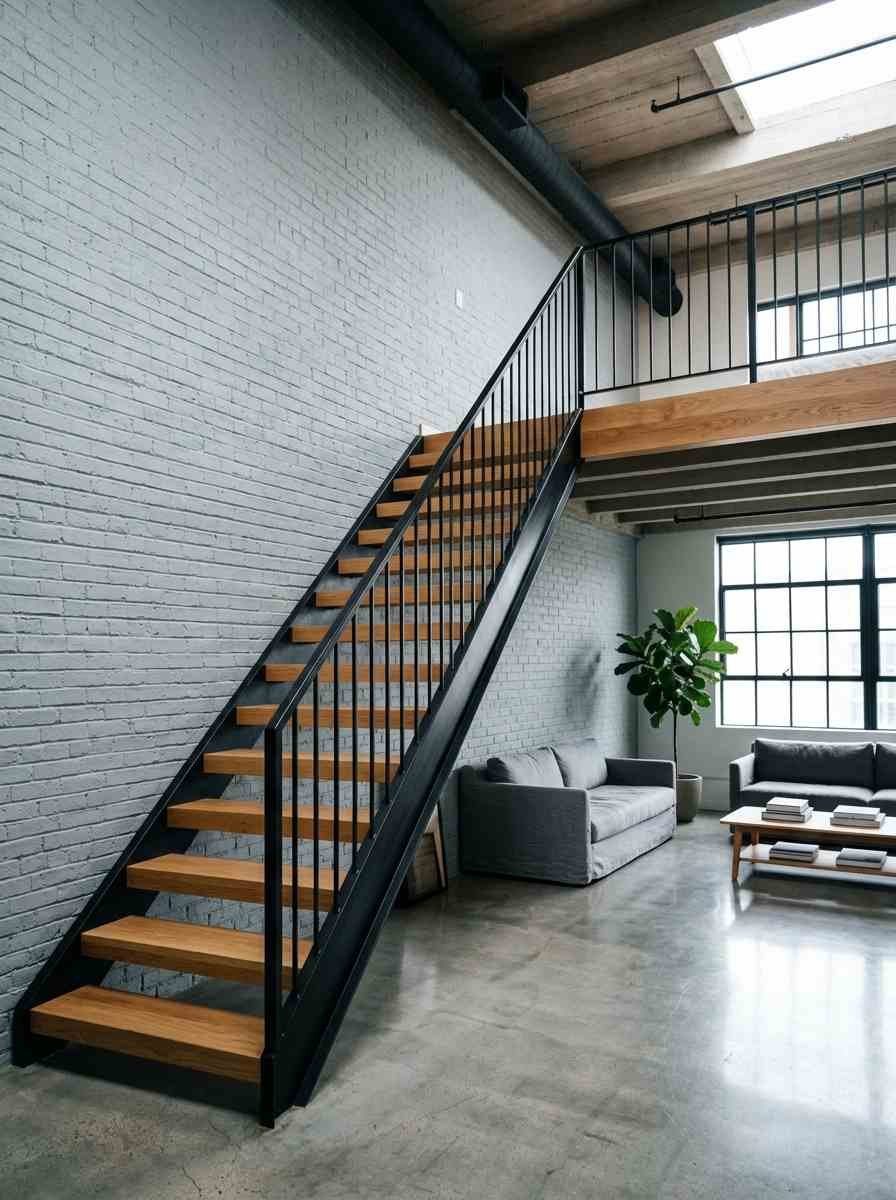
24. Use iron railings on stairs or lofted platforms. Simple black iron, no ornamentation, keeps the line clean.
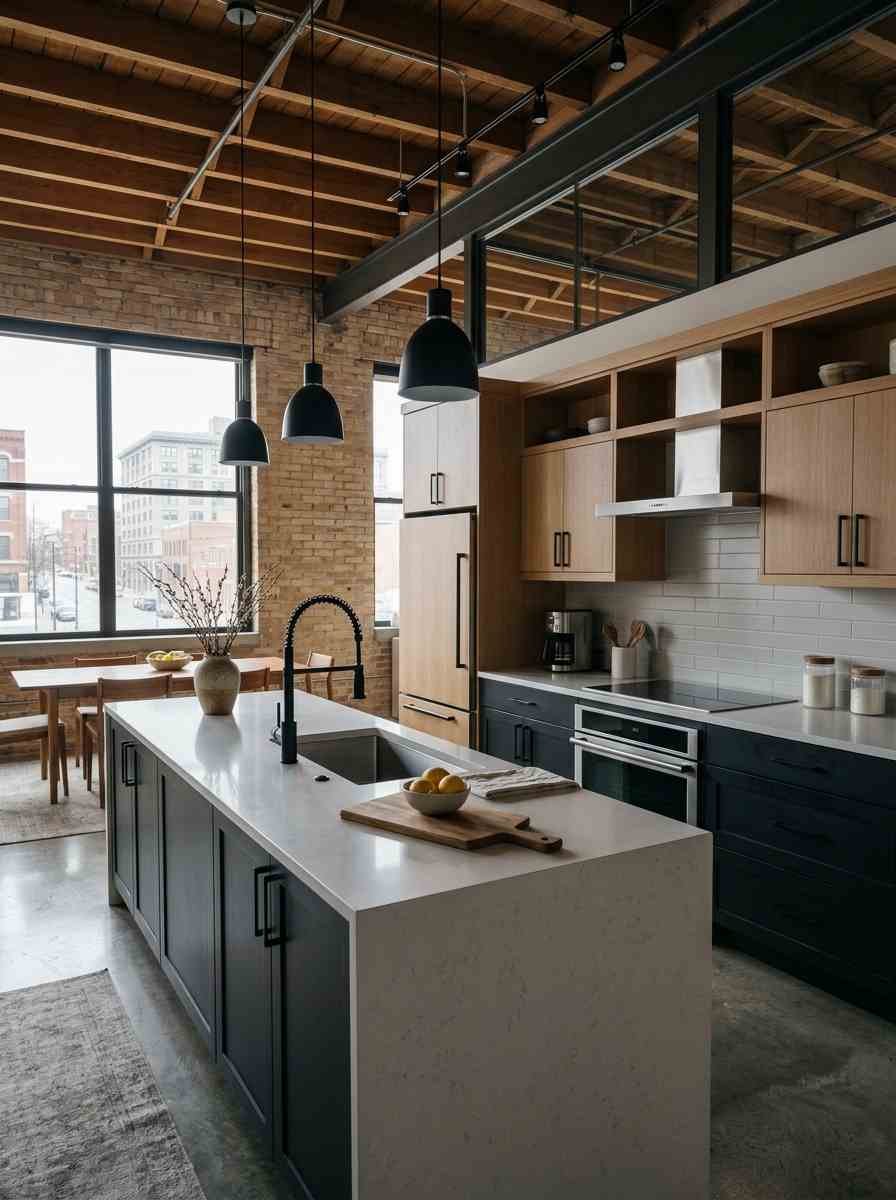
25. Pick metal hardware everywhere. Door pulls, cabinet handles, faucets. Brushed steel or matte black hardware ties smaller rooms back into the bigger aesthetic.
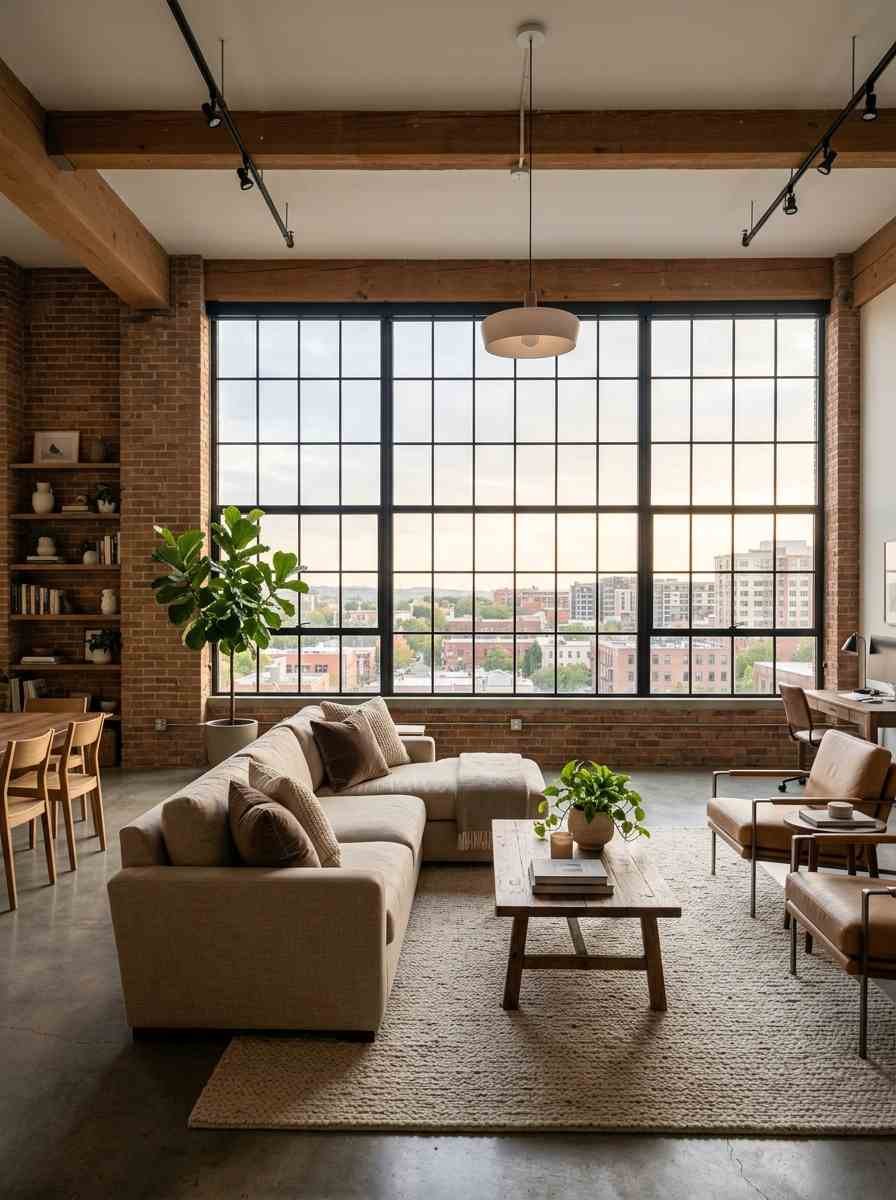
26. Anchor the room with one clear focal point. A fireplace, a window wall, or a striking media console.
Every great loft I’ve toured has a spot your eye lands on first, and everything else is arranged around it.
Quick reference table
| Element | Best material or finish | Why it works |
|---|---|---|
| Walls | Exposed brick or brick slip veneer | Adds texture that paint can’t fake |
| Lighting | Matte black track lighting, Edison bulbs | Casts shadow and warmth after dark |
| Flooring | Sealed concrete, wool rug layered on top | Balances industrial cold with comfort |
| Accents | Brushed steel or blackened metal hardware | Unifies small details with the bigger style |
Frequently asked questions
Can I pull off this look in a regular apartment, not an actual converted loft? Yes. You won’t have original architecture to lean on, so the work shifts to furniture, lighting, and color.
Metal shelving, a leather sofa, and the right paint palette can carry most of the aesthetic even with standard drywall and ceiling heights.
Isn’t industrial style too cold or masculine for a family home? It can feel that way if you stop at brick and metal and skip the second half of this list. Textiles, plants, and warm wood are what keep it livable. The best industrial lofts I’ve seen belong to families, not just bachelors.
What’s one paint color to start with if I’m overwhelmed? A warm charcoal or urban gray on the walls, paired with a single warm accent like Sherwin-Williams’ Independent Gold or a similar brass-adjacent tone.
Start small, on one wall or one piece of trim, before committing the whole room.
So which of these 26 are you actually pinning tonight? Save the ones that fit your space, skip the ones that don’t, and tell me in the comments which idea you’re trying first.
I’d genuinely love to see where you take it.
