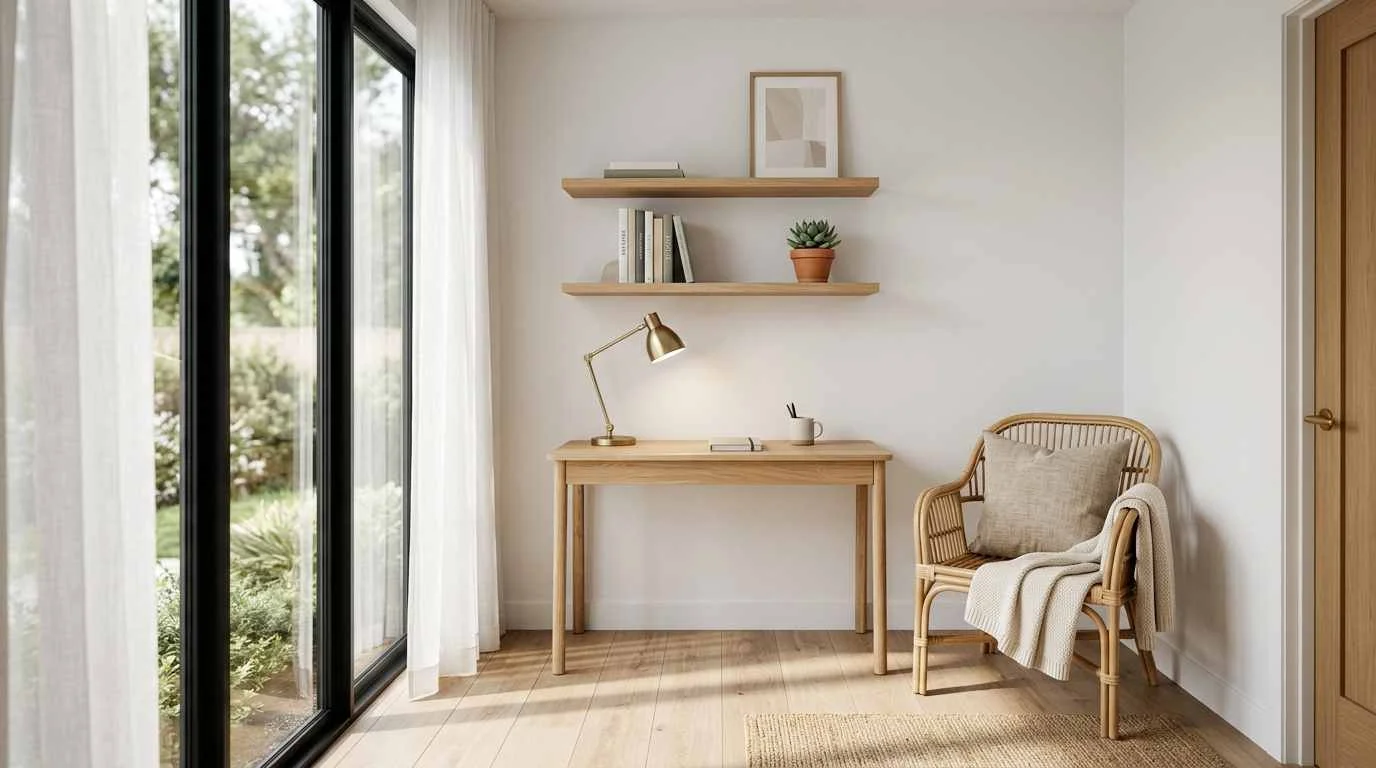
I turned a 6-foot-wide closet into my study room last winter. No window, barely room for a chair, and somehow it became the spot I actually want to work in.
Small study rooms get an unfair reputation. People assume square footage equals a calm, minimalist room, but a tight space mostly needs the right pieces, the right colors, and a layout built around its actual shape.
Here are 25 ideas that work in small spaces, pulled from rooms I’ve actually decorated (and a few I redid after getting it wrong the first time).
I grouped them into 5 categories: wall storage, furniture, color and light, personal touches, and layout. Pin the ones that fit your room and skip the rest.
Let the walls carry the storage
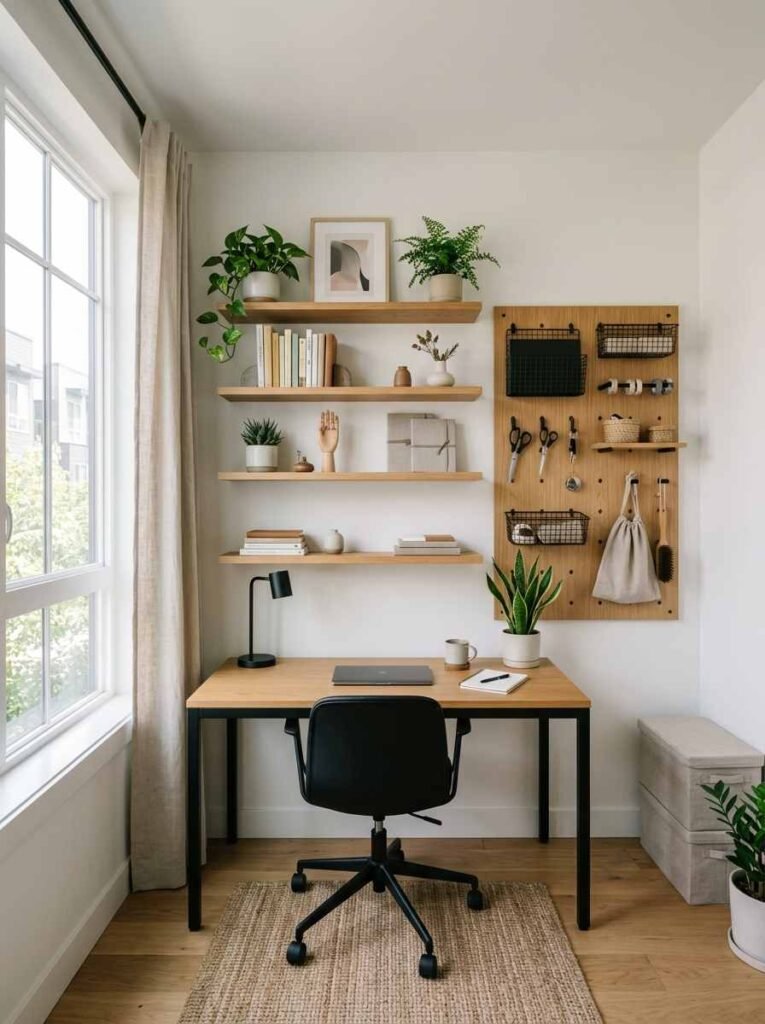
In a small room, the floor is the one thing you can’t spare. The walls, on the other hand, are wide open.
Floating shelves above the desk
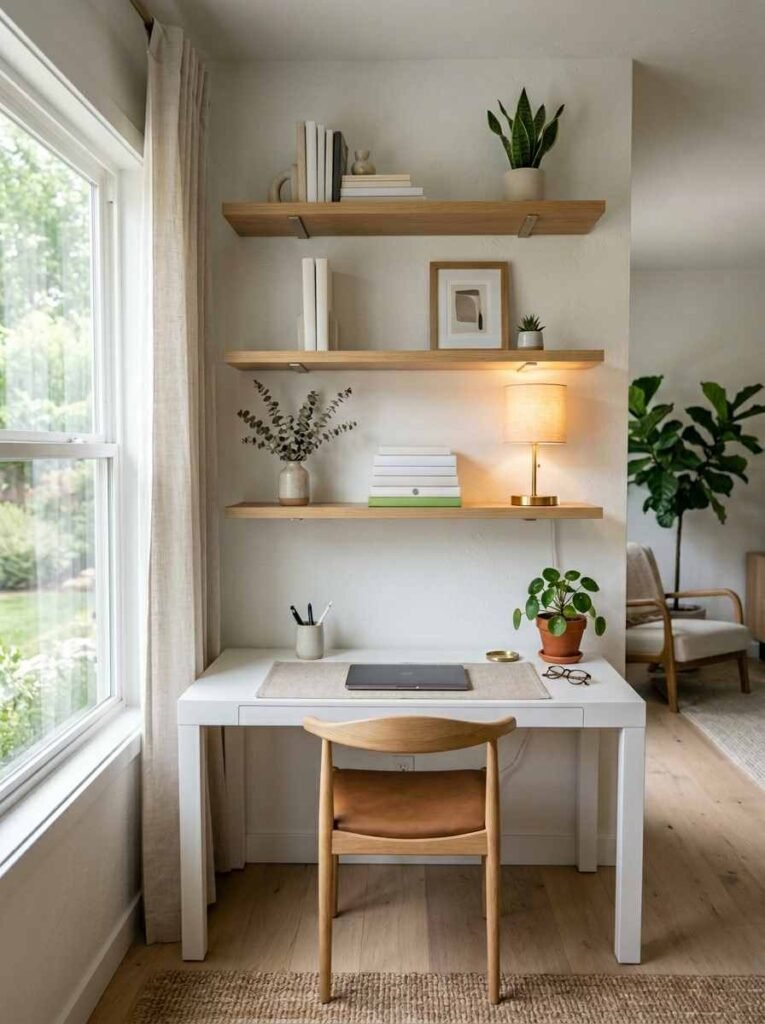
Floating shelves clear your desktop without eating floor space. Mount 2 or 3 at staggered heights and use them for books, a small lamp, or framed photos.
Leave one shelf almost empty.
A few bare inches make the whole wall look less crowded.
A pegboard instead of a bulletin board
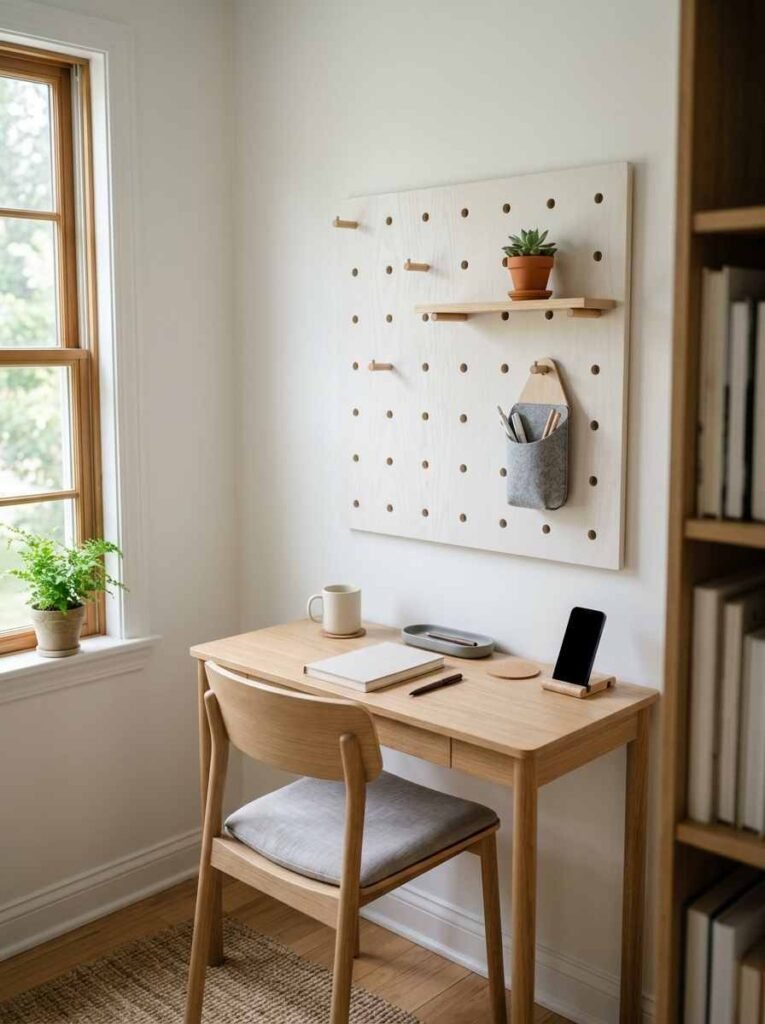
Pegboard holds way more than cork ever did: hooks, small shelves, even a cup for pens, all on one panel.
Paint it to match your wall and it disappears into the room instead of competing with it. Rearrange it in 10 minutes whenever your supplies change.
A slim wall-mounted file rack
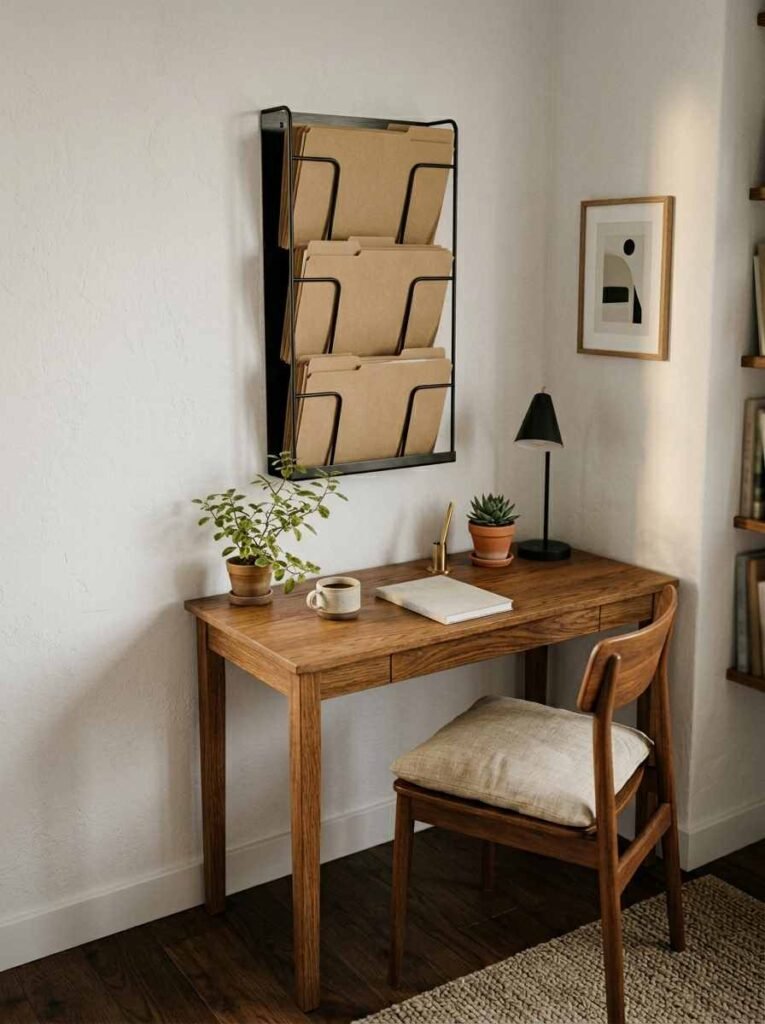
Skip the bulky filing cabinet. A wall rack with 2 or 3 slots keeps papers upright and visible, which makes you more likely to deal with them instead of letting them pile up on the desk.
A corner shelf unit
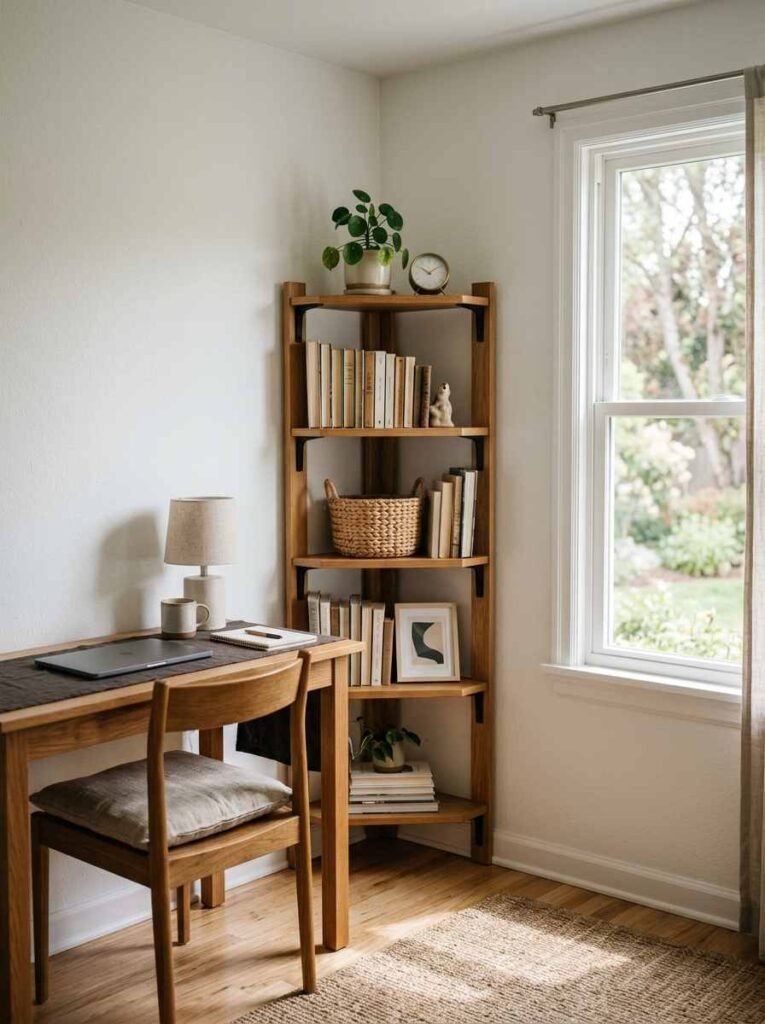
Corners go unused in most small rooms. A narrow corner shelf, 4 or 5 tiers, gives you storage that a flat wall unit can’t match in the same footprint.
A magnetic wall for notes
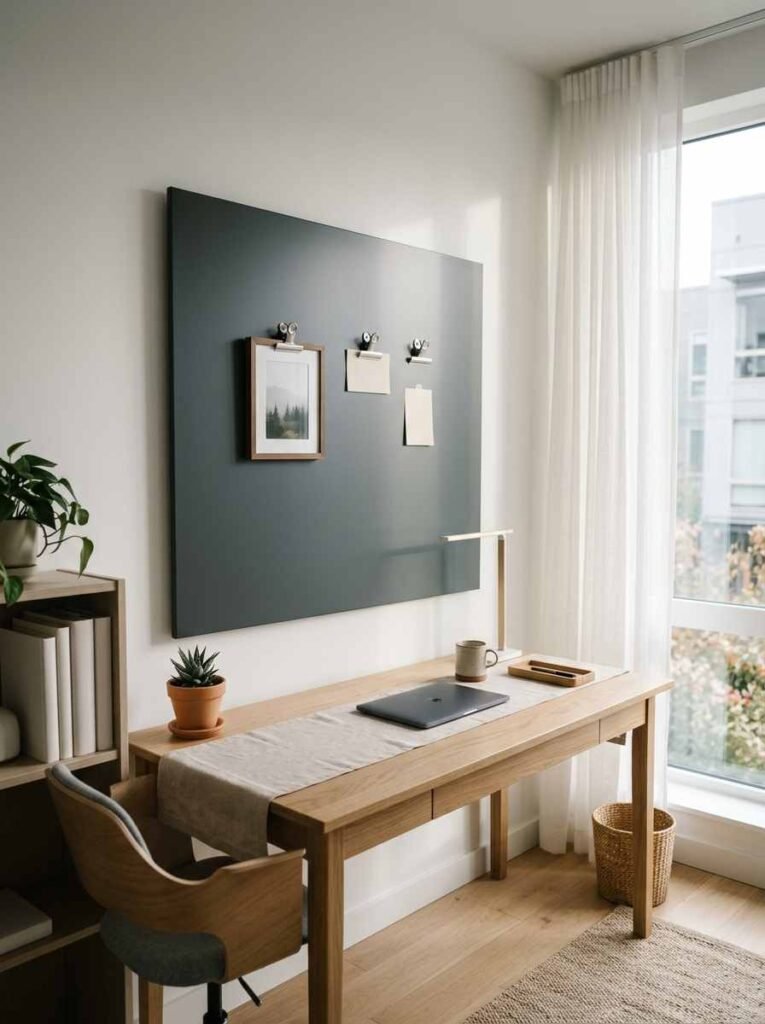
Magnetic paint or a magnetic panel turns a blank wall into a planner. Move notes around without a single thumbtack hole.
IMO this beats a corkboard for anyone who rearranges their to-do list daily.
Furniture that earns its footprint
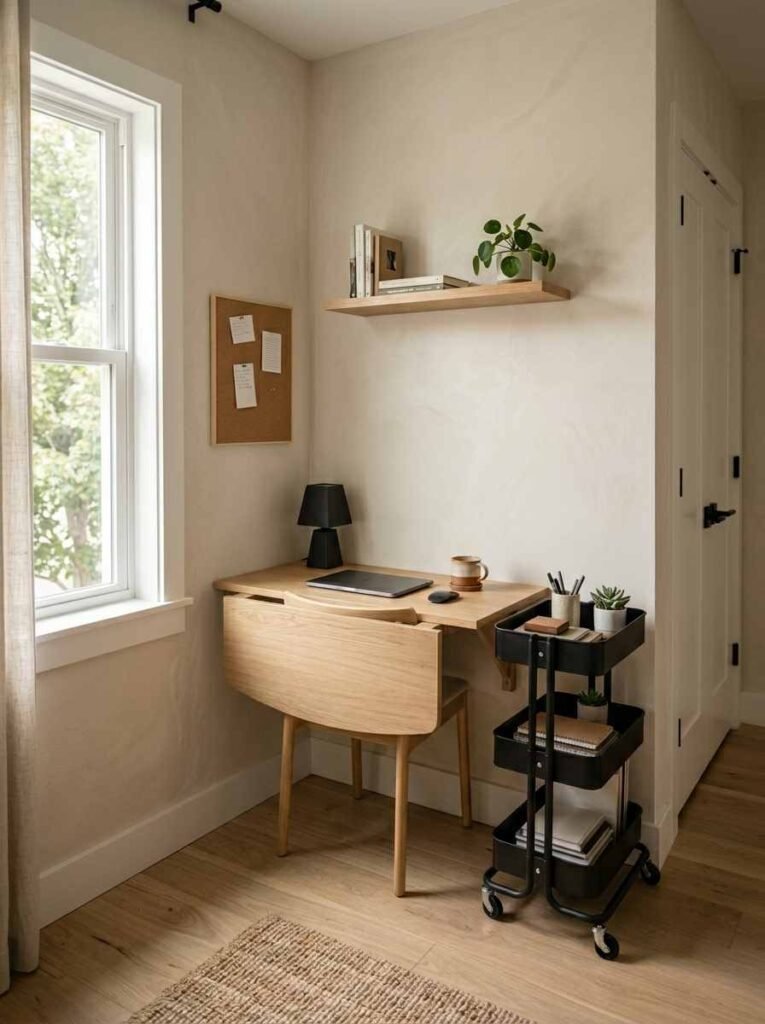
Every piece in a small study room has to do real work. If it’s just sitting there, it’s taking up space you need.
A fold-down desk
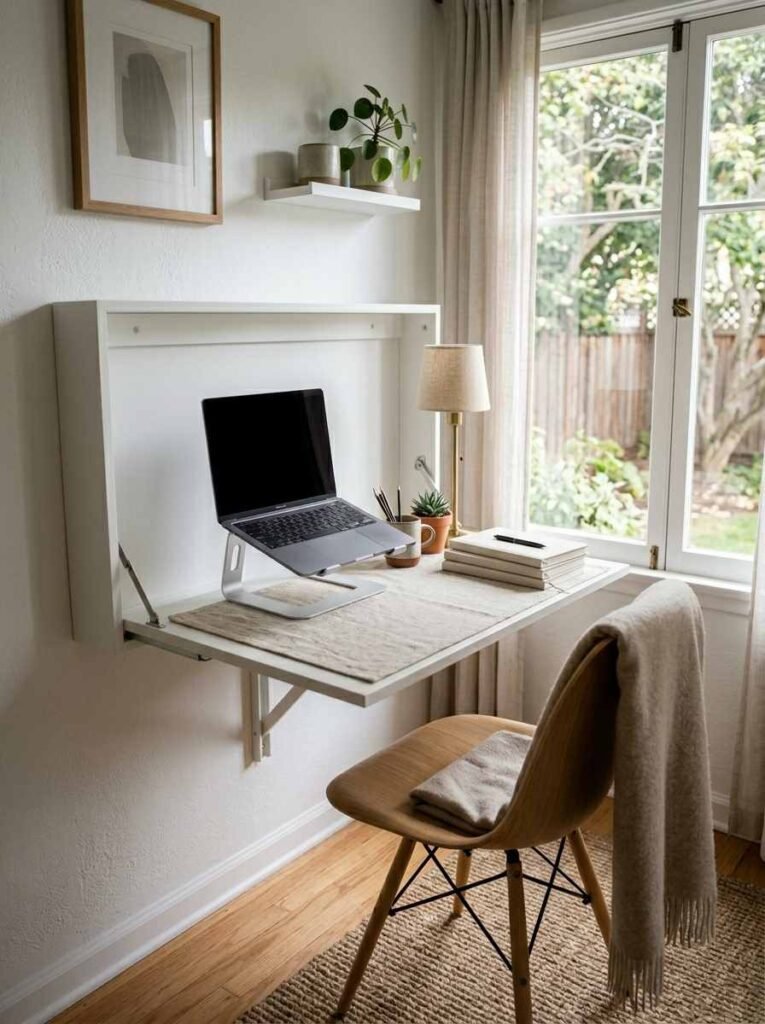
A wall-mounted desk that folds flat when you’re done studying gives the room back its floor space at night.
Good for rooms that double as a guest space or a closet conversion like mine.
A narrow console desk
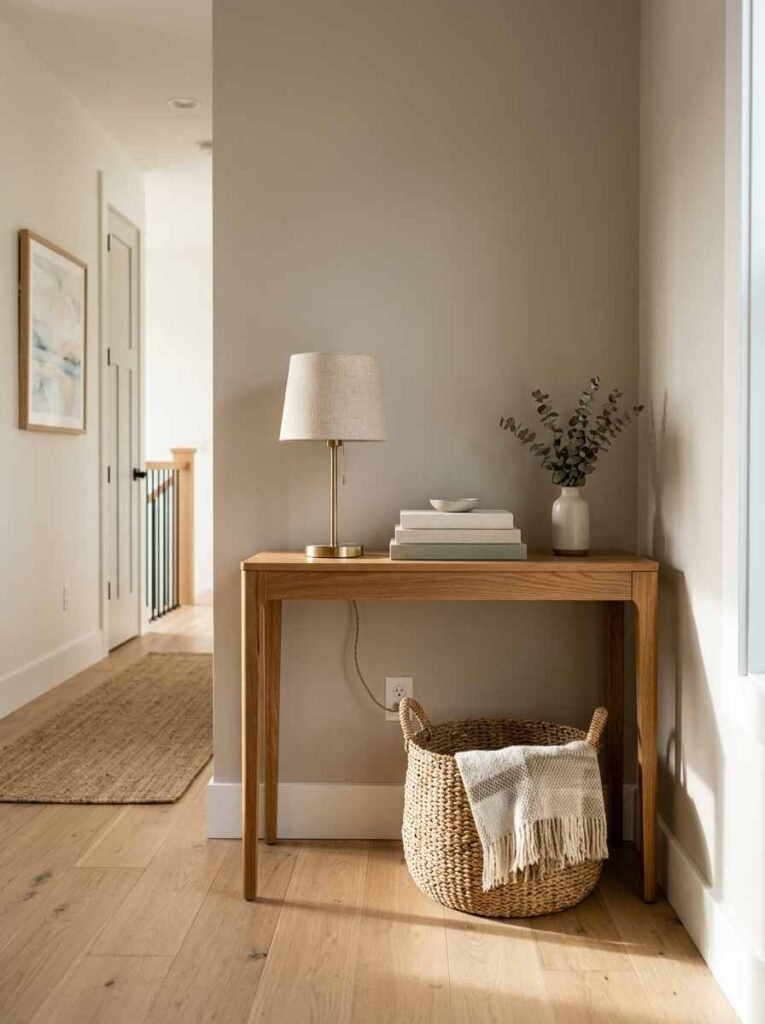
Console desks run 12 to 16 inches deep instead of the usual 24. That’s enough room for a laptop and a notebook, and you’ll barely notice it when you walk past. Push it against a wall in a hallway nook if you don’t even have a spare room.
Stacked cubes as a side table
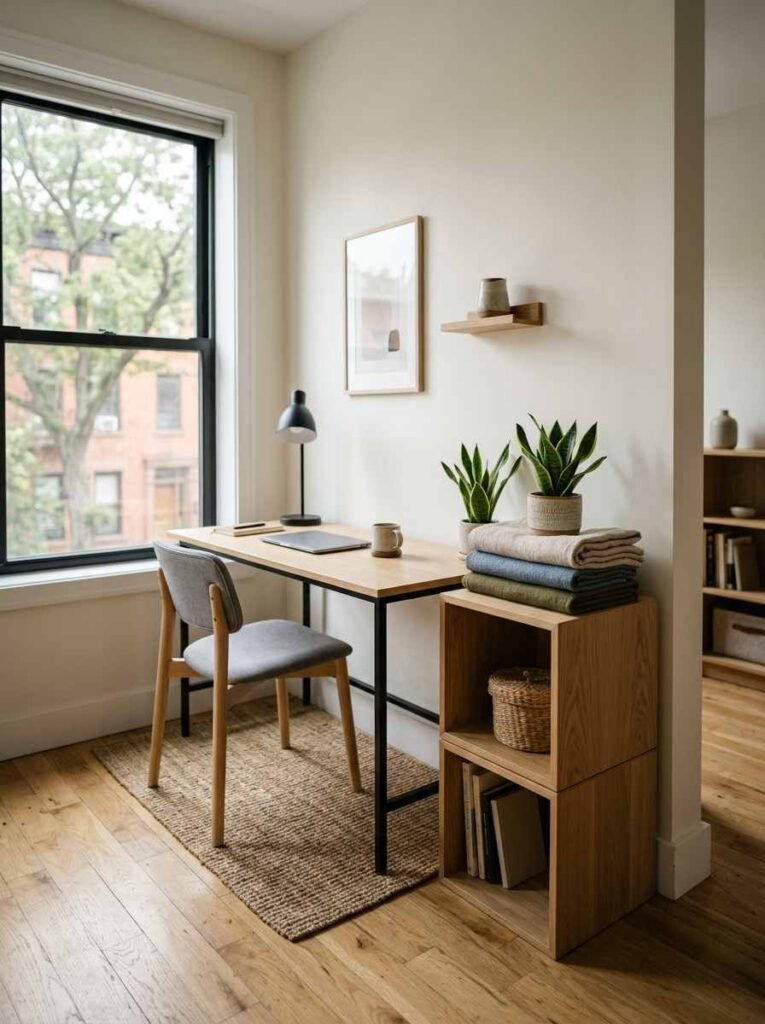
Two or three storage cubes stacked next to the desk work as a side table and extra storage at the same time. Pull one out when a friend comes over to study.
28 Minimalist Home Decor Living Room Ideas That Instantly Elevate Any Space
A chair that tucks all the way under
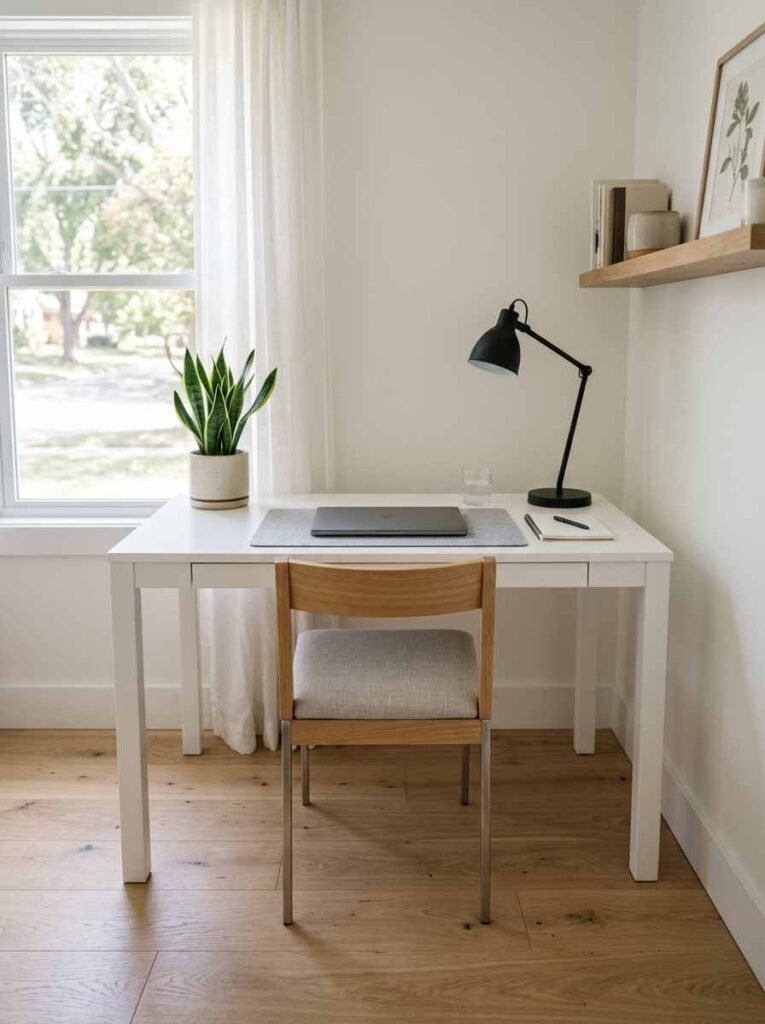
Pick a chair with no arms and a low back.
It needs to slide completely under the desk, or the room will always look like there’s a chair in the way (because there is).
A rolling cart for supplies
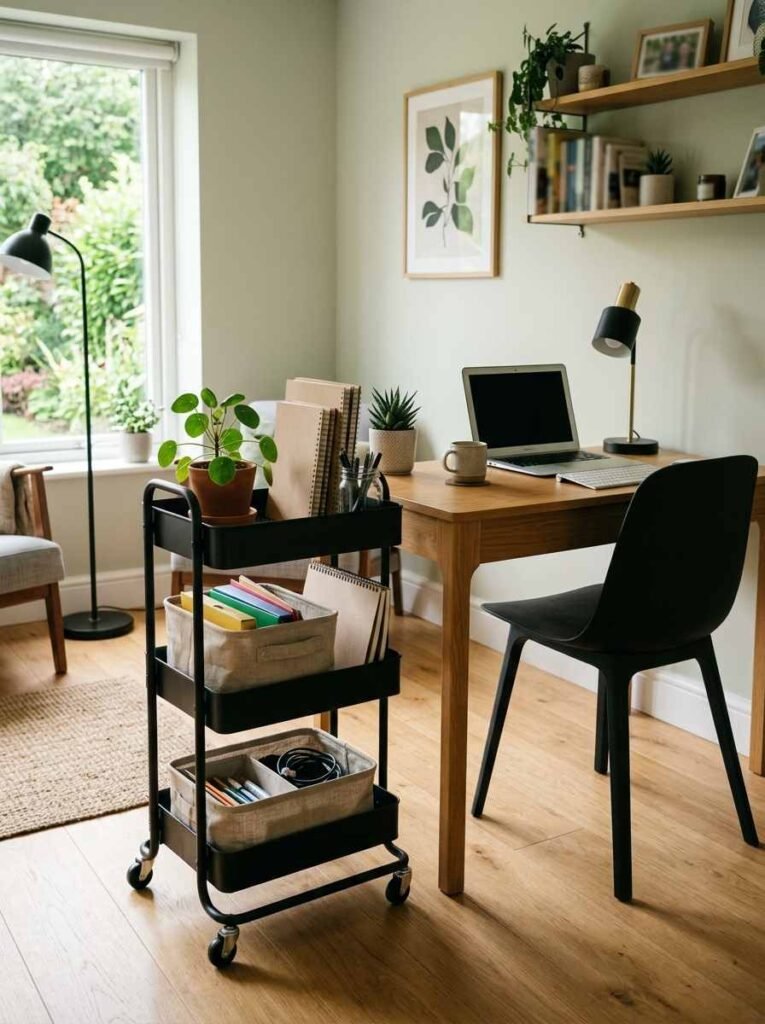
A slim rolling cart holds supplies and rolls out of sight into a closet when you’re not using the room. Way more flexible than a fixed cabinet bolted to one spot.
Color and light that make the room breathe
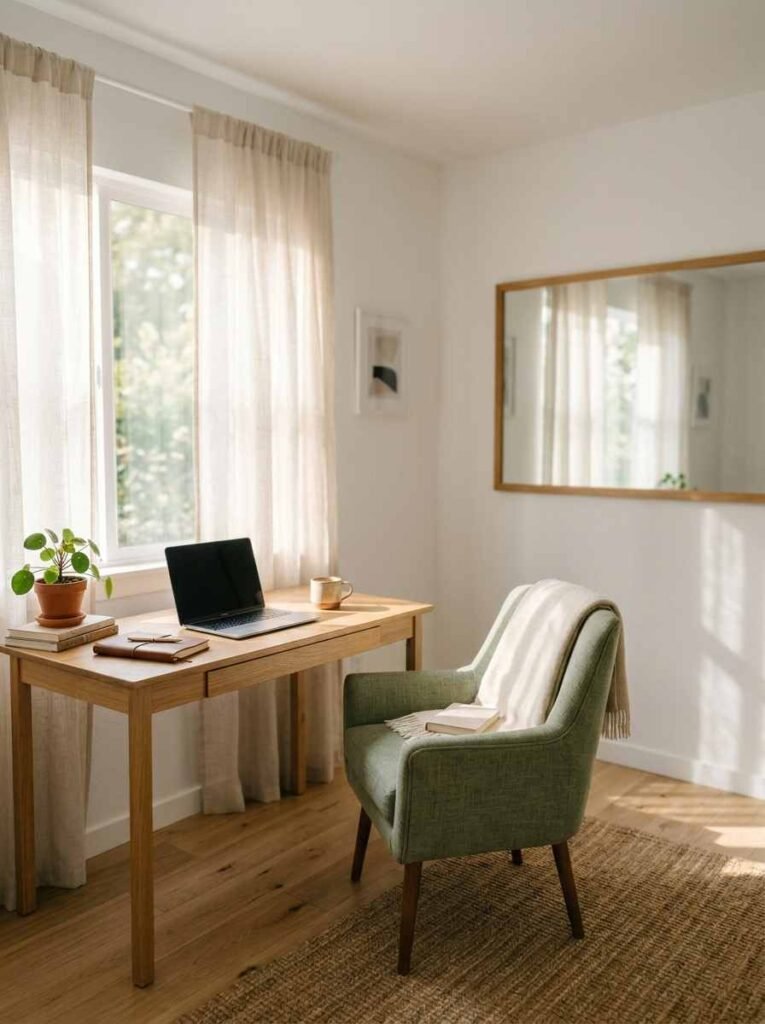
Color and light do more for a small room than any single piece of furniture. Get these two right and everything else gets easier.
White walls with one accent color
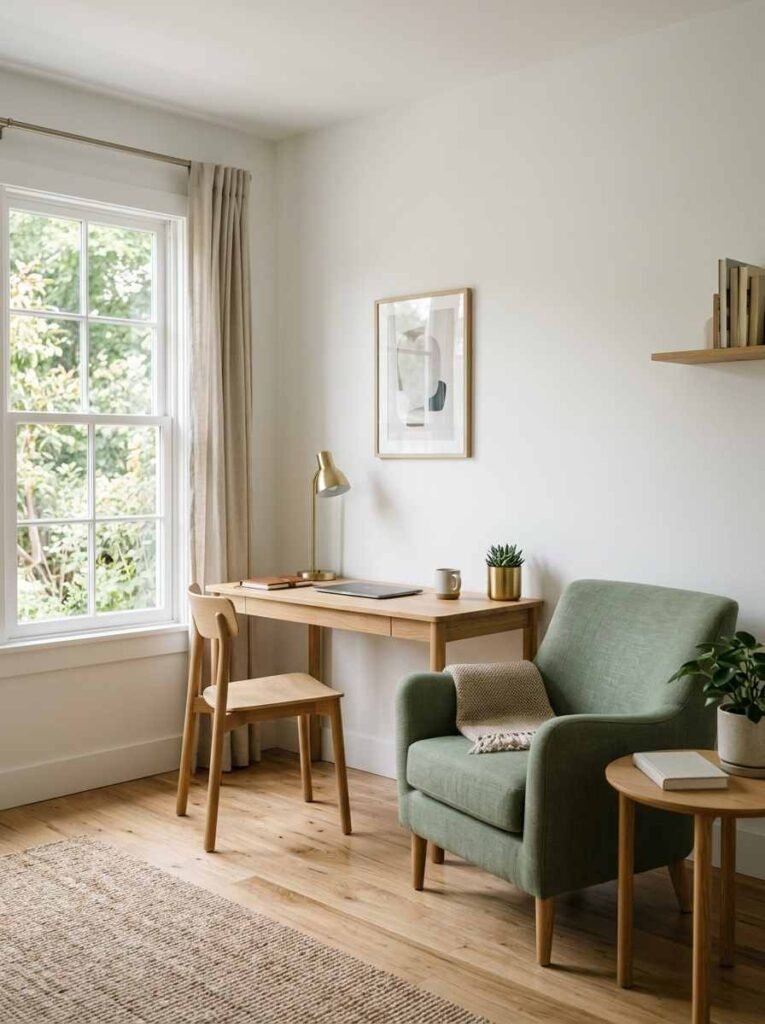
White bounces light around a small room better than any other color. Pick one accent, maybe a sage green chair or a mustard lamp, and let that be the only loud thing in the room.
Repeat that same accent color in 2 or 3 small spots, like a notebook cover or a pen cup, so it reads as a choice instead of an accident.
A warm desk lamp
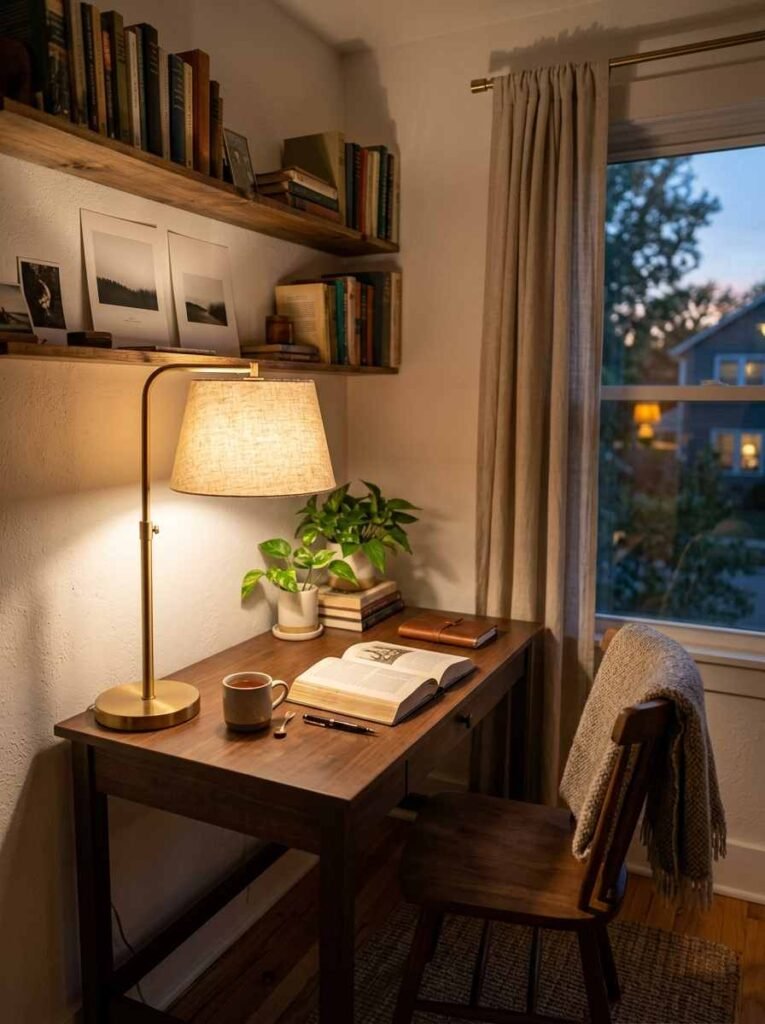
Overhead lighting flattens a small room and makes it feel like a supply closet. Swap it for a warm-toned desk lamp. The smaller pool of light makes the room feel calmer at 9pm than one bright overhead bulb ever will.
Sheer curtains
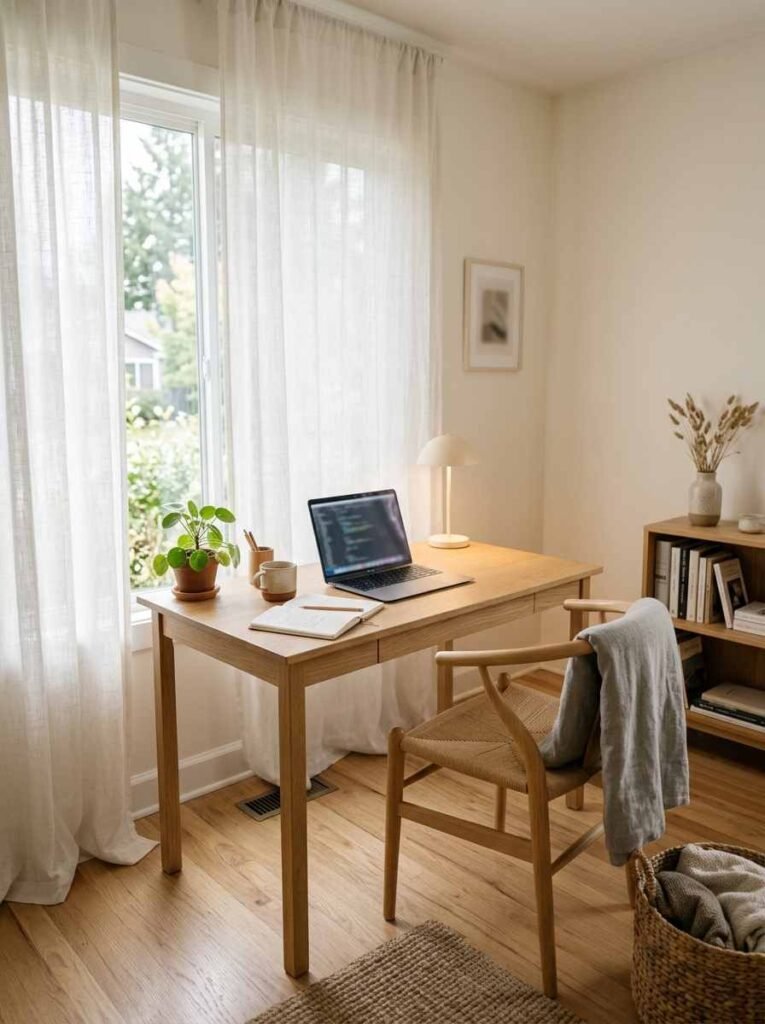
Sheers let light in without closing off the window completely. Blinds, especially the cheap plastic kind, tend to make a small room feel boxed in.
A mirror angled toward the window
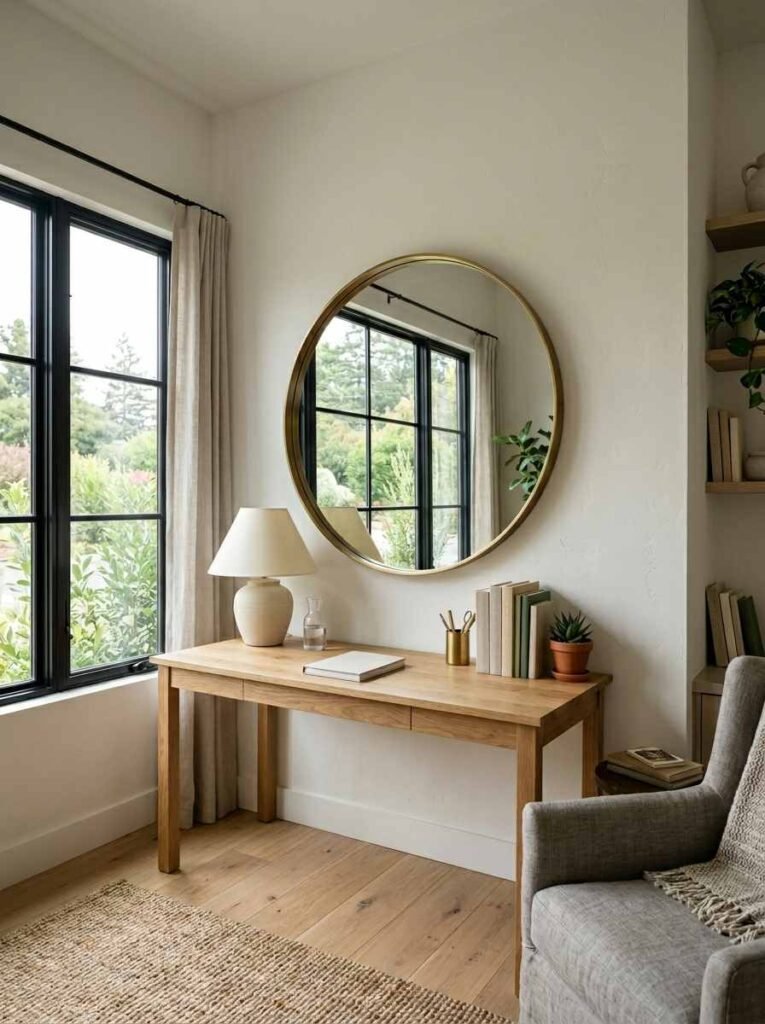
A mirror placed across from your window bounces daylight back into the room. It also makes the space look roughly twice as deep from the doorway.
Matte finishes
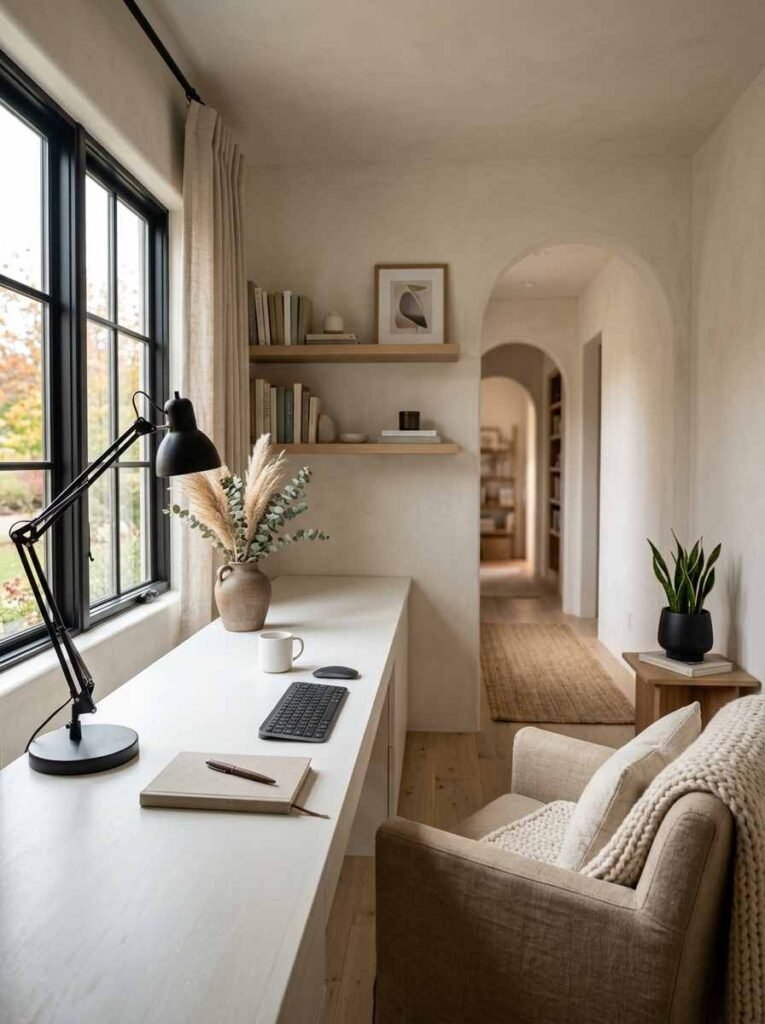
Glossy paint and glossy furniture reflect every bit of clutter back at you. Matte surfaces absorb light instead of bouncing it everywhere, which keeps a small room from feeling busy.
Here’s a quick palette cheat sheet if you’re not sure where to start:
| Vibe | Wall color | Accent piece | Best light source |
|---|---|---|---|
| Calm and airy | Soft white | Sage green chair | Sheer curtains |
| Cozy | Warm white | Mustard lamp | Warm desk lamp |
| Crisp and modern | Cool white | Black desk frame | Mirror plus daylight |
Small personal touches that don’t clutter the desk
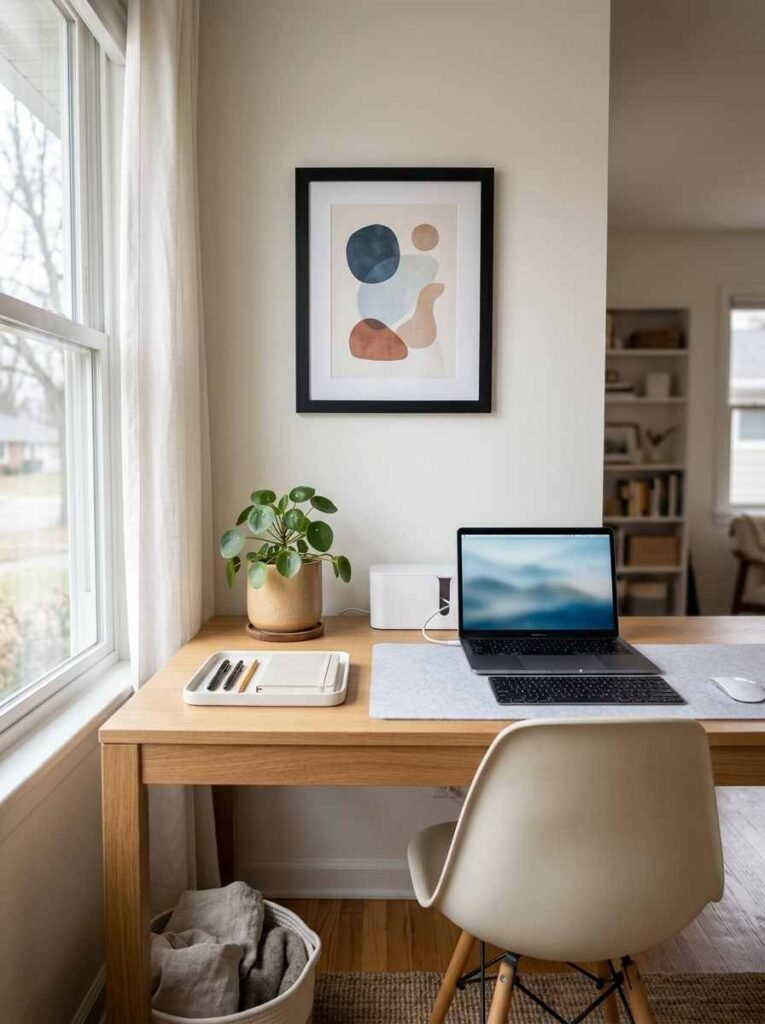
A minimalist room isn’t an empty room. It just means every object earns its spot.
One framed print
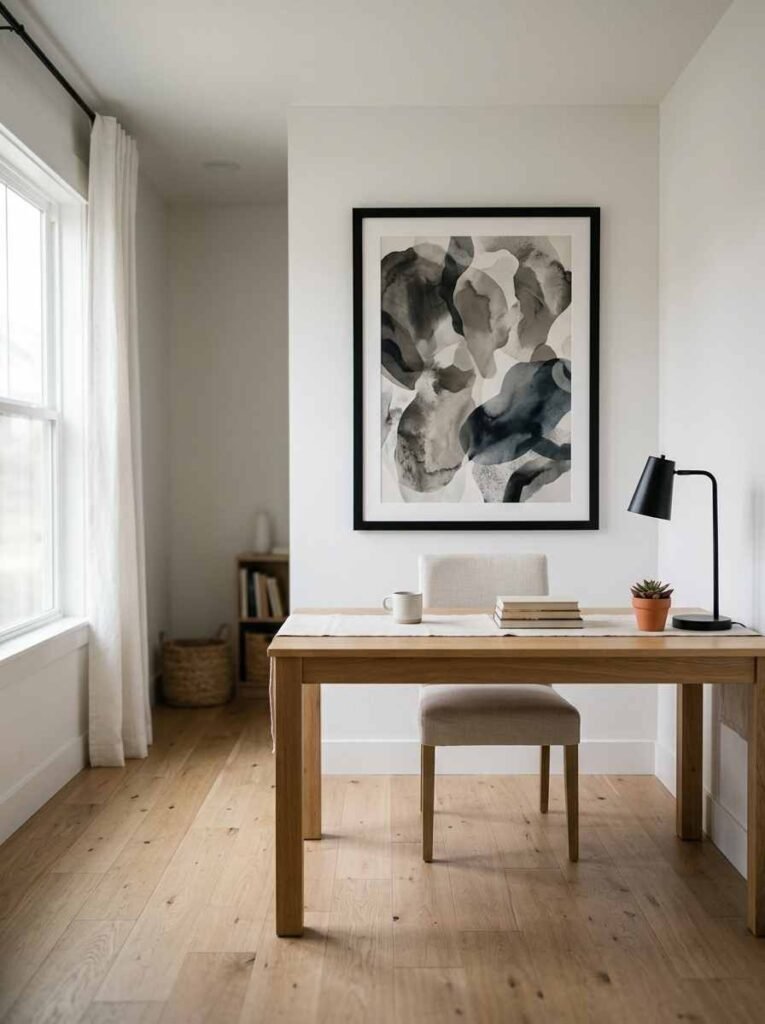
A gallery wall needs square footage to breathe. In a small room, one well-chosen print does more visual work than 6 mismatched ones crammed together.
Frame it in black or white so it doesn’t fight with the wall color.
One plant, chosen well
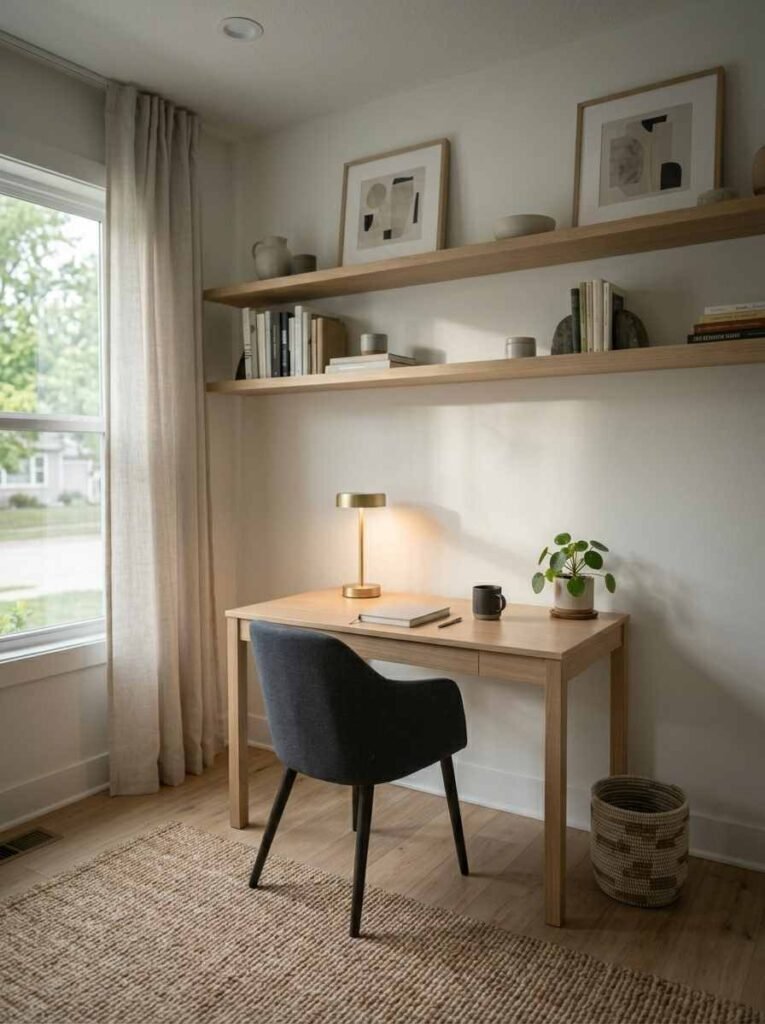
Pick a plant that can handle your actual light situation and let it be the only green in the room.
A snake plant survives almost anything, including me forgetting to water it for 3 weeks straight.
A cord box under the desk
Run your charger, monitor cable, and lamp cord into a small box under the desk. Nothing kills a minimalist look faster than a nest of cables hanging in plain sight.
A battery-powered desk lamp
No cord means no cord to hide. Battery lamps have gotten genuinely good, and skipping that one cable makes the desktop look cleaner than you’d expect.
A small tray for loose pens
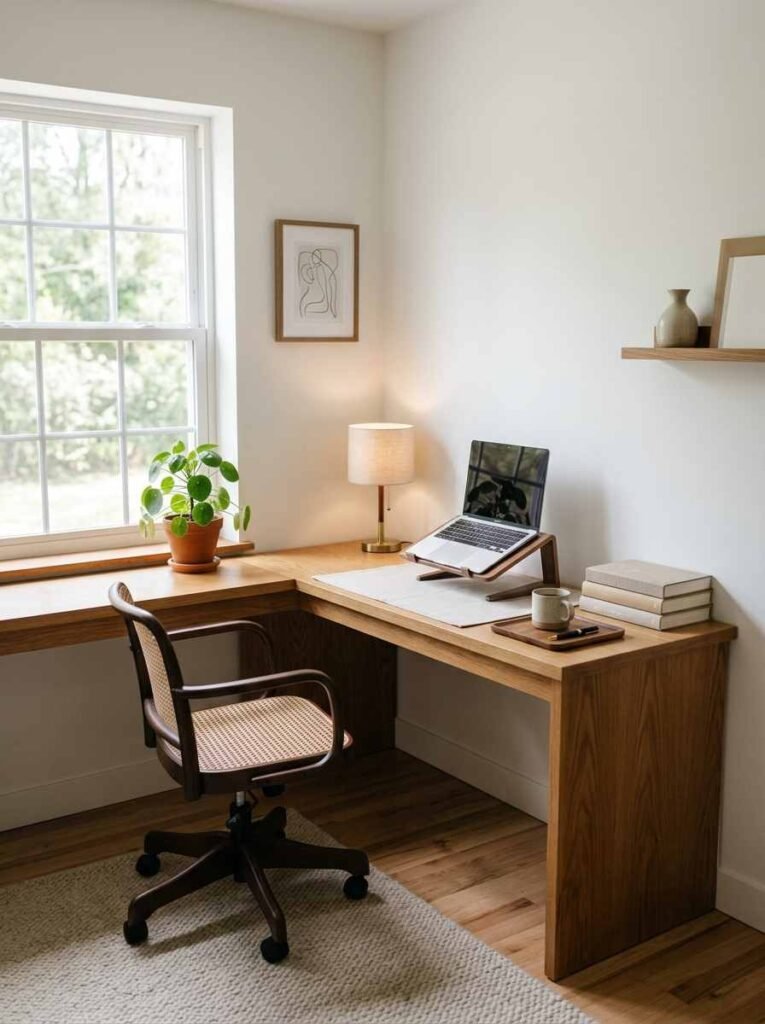
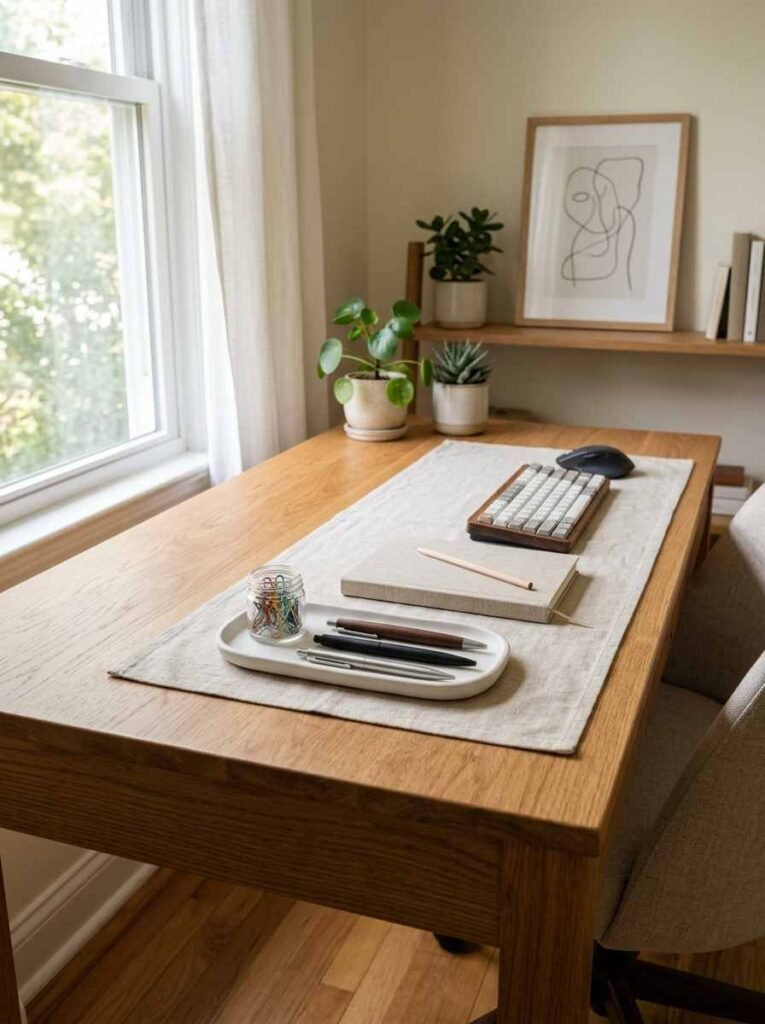
One shallow tray keeps pens, sticky notes, and paper clips contained. Without it, that stuff spreads across the whole desk within about a day. Ask me how I know.
Layout tricks for a tiny room
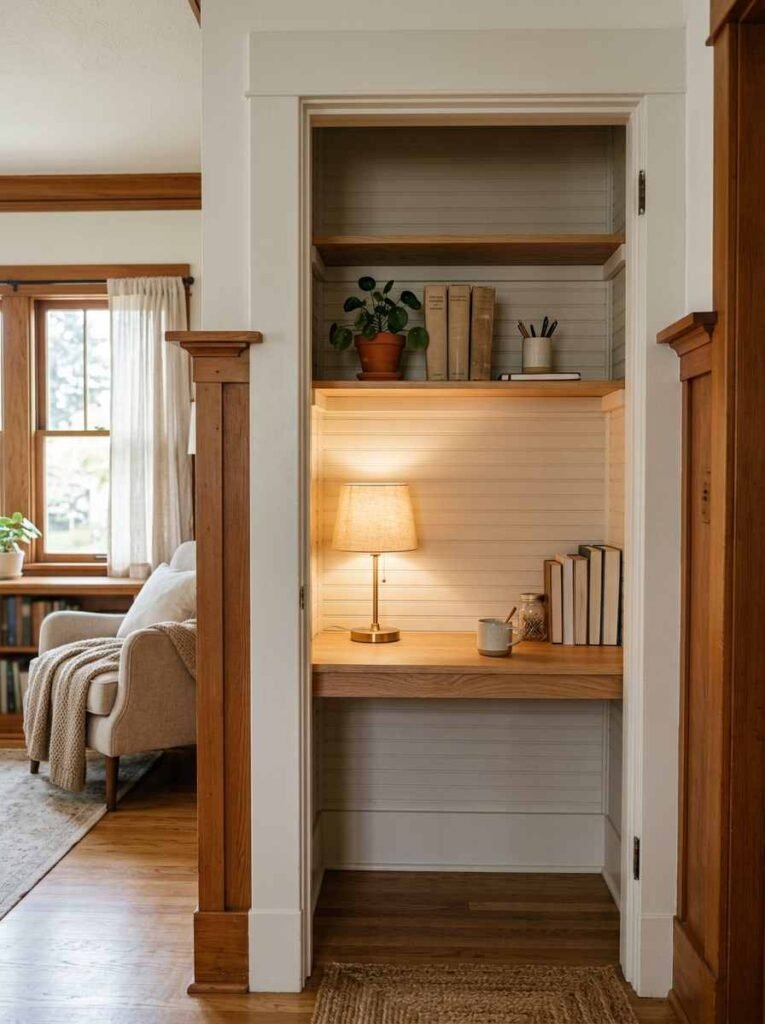
Sometimes the decor doesn’t matter as much as where you put it. A smart layout can make a 7×7 room feel bigger than it is.
An L-shaped corner desk
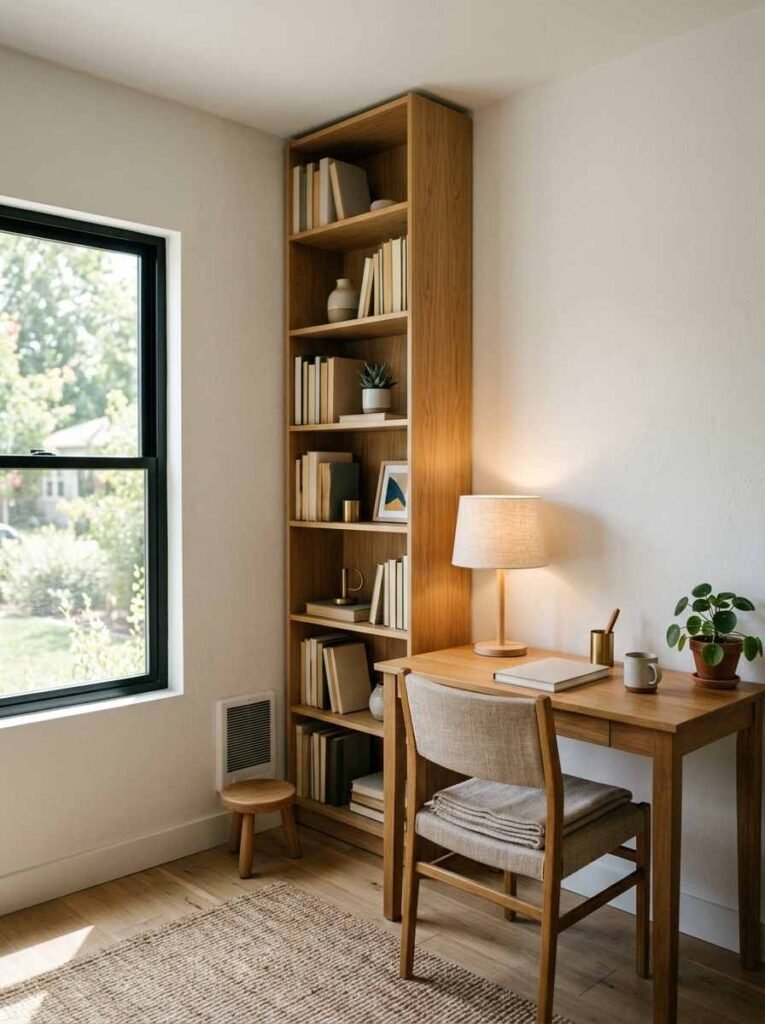
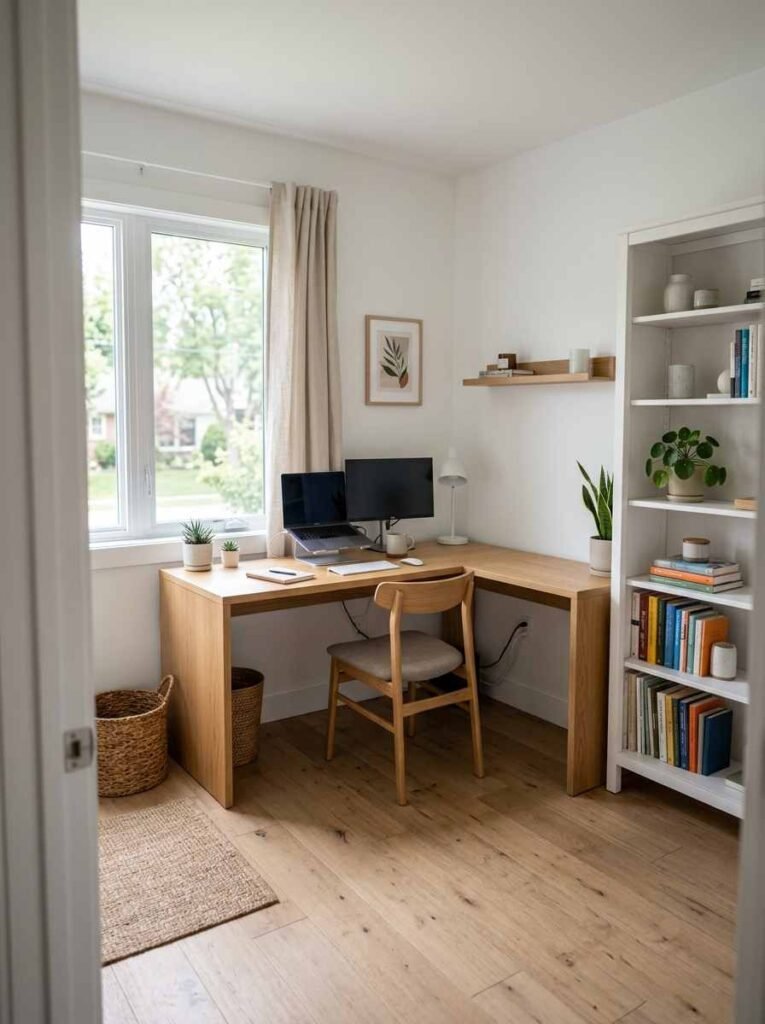
Corners sit empty in most small rooms. An L-shaped desk uses that dead space and gives you more usable surface than a straight desk in the same square footage.
One side for the laptop, the other for everything else, and the desk still doesn’t block the door.
A closet or stair nook as a study spot
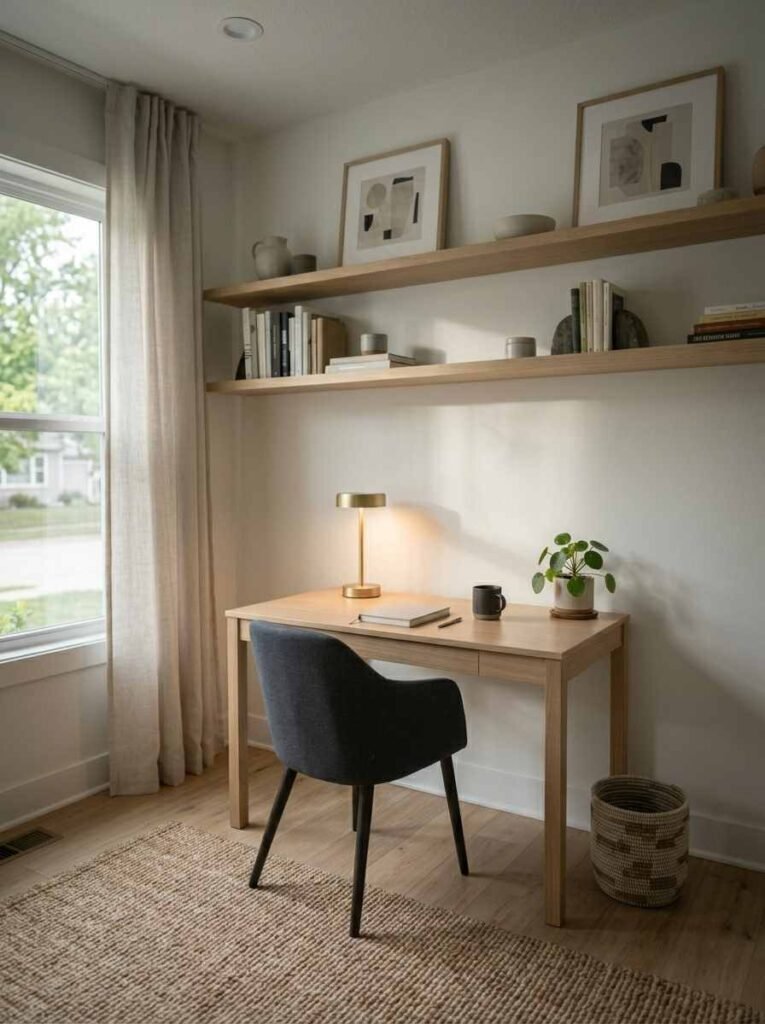
Closets and the space under a staircase make surprisingly solid study nooks. Mine used to store winter coats.
Now it’s where I get actual work done.
A tall, narrow bookcase
Going vertical instead of horizontal saves floor space and adds up to more total shelf area.
A bookcase that’s 12 inches wide and 6 feet tall holds more than a 3-foot-wide one that tops out at your shoulder.
A desk angled away from the door
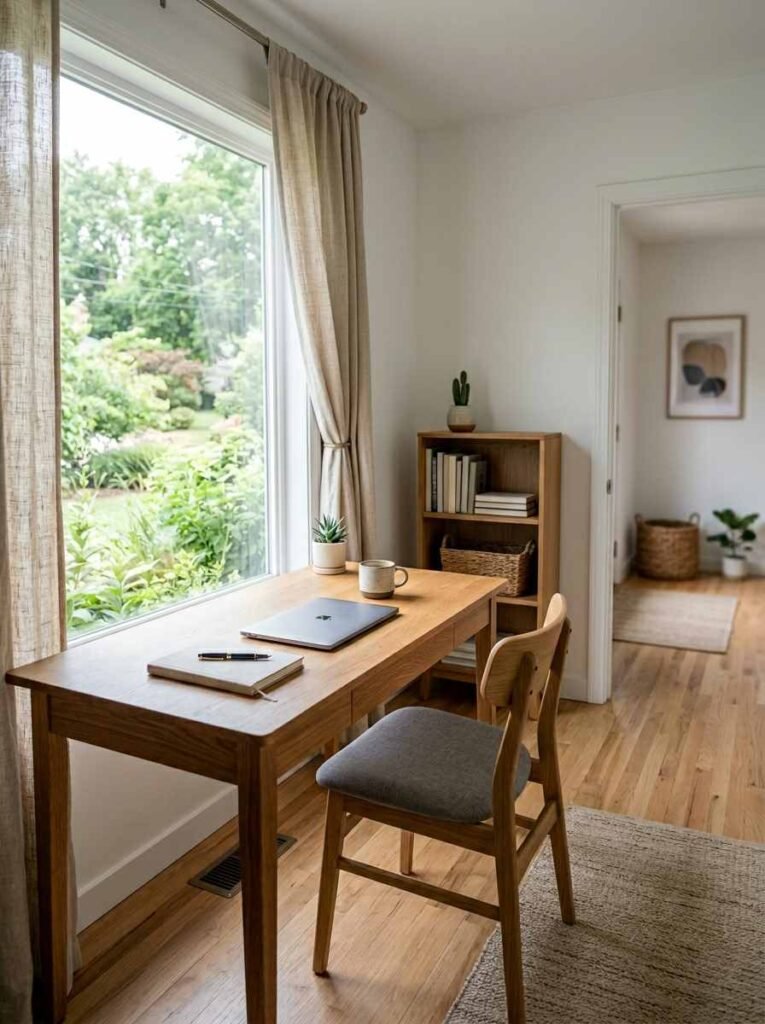
Facing the desk away from the doorway cuts down on hallway noise pulling your attention. It’s a small change, but it matters more than people expect.
A door-back organizer
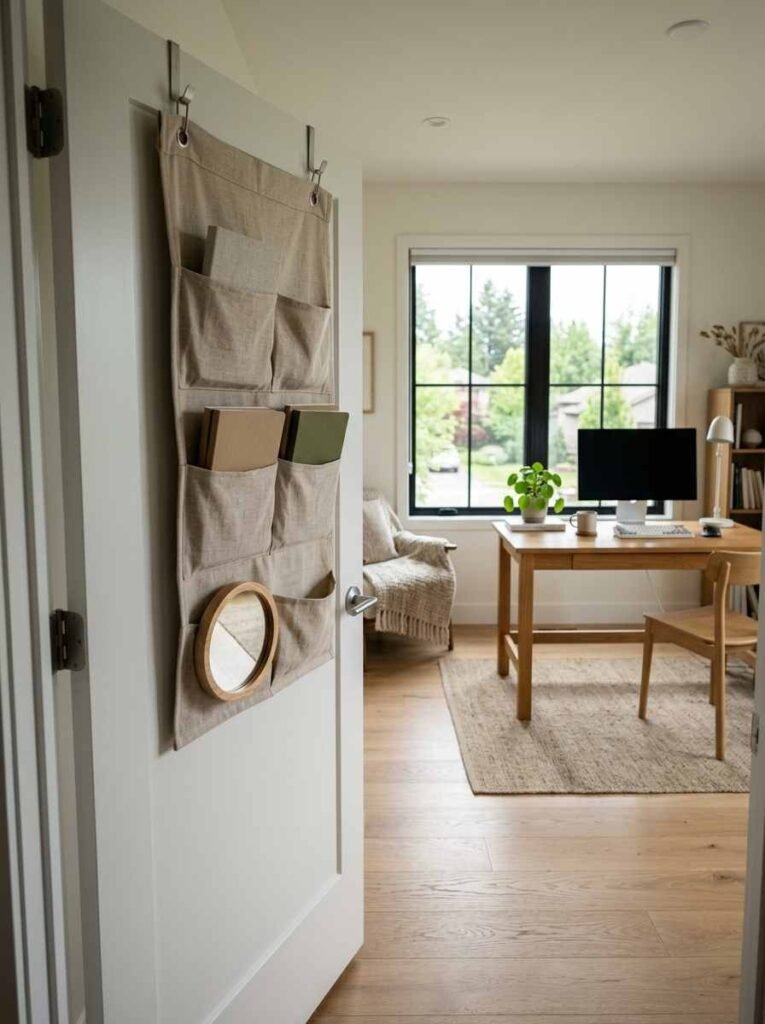
The back of the door is free real estate in almost every small room. A hanging organizer there holds notebooks and folders, even a small mirror, with zero floor space used.
Pin the ones that fit your room
Twenty-five ideas is a lot to take in at once. Save the ones that match your room and skip the rest.
A small, minimalist study room works best with 2 or 3 fixes aimed at the actual problem, whether that’s storage, lighting, or a desk buried in cables. Start there.
Pin your favorites, tackle the cheapest one first, and build from that.
My closet-turned-study-room didn’t come together in one weekend. It came together one shelf, one lamp, one decision at a time.
