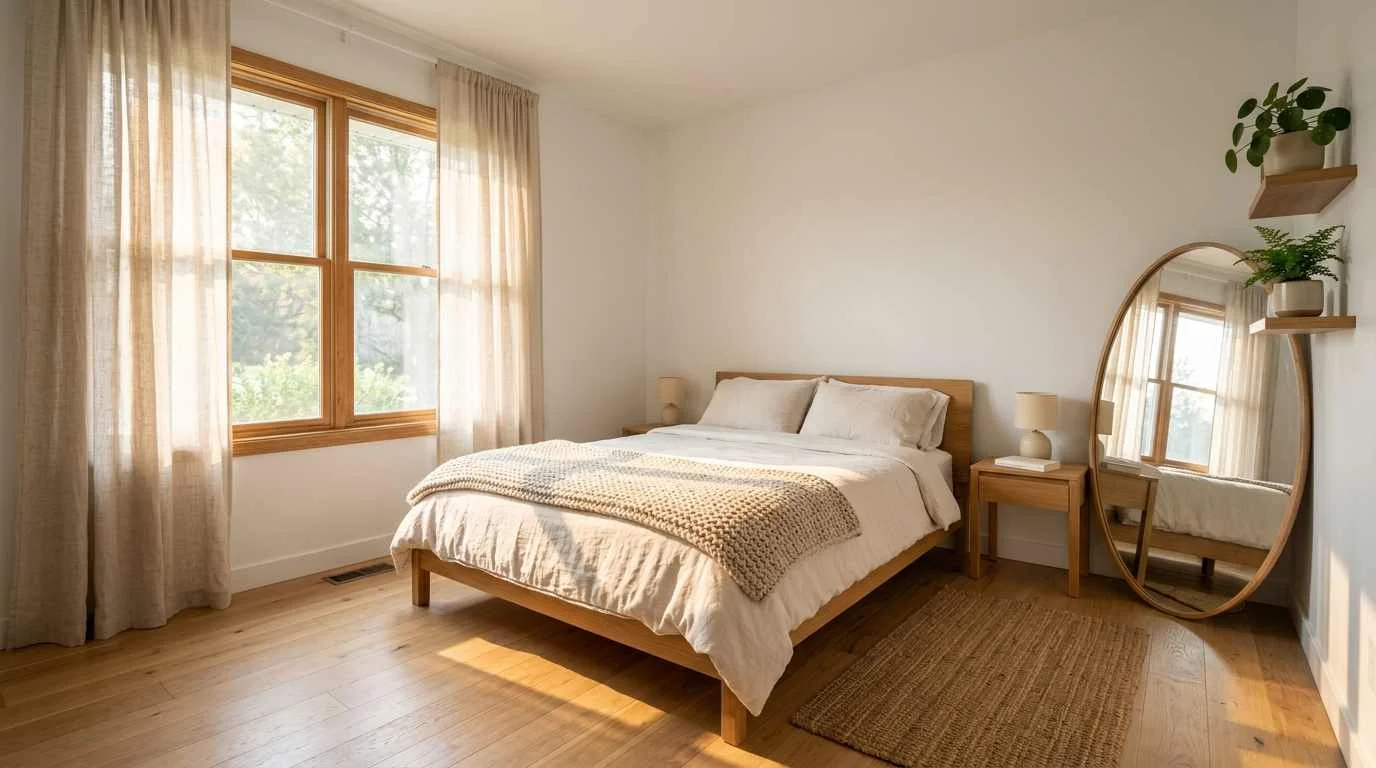
My bedroom used to feel like a storage unit that occasionally let me sleep in it.
Boxes in the corner, a nightstand drowning in stuff, curtains that blocked every inch of natural light.
It was a lot. Then I spent one Saturday afternoon completely stripping it back, and I couldn’t believe how much bigger and calmer the space felt by evening.
So if you’re sitting in a small room right now wondering why it always feels cluttered no matter how much you clean, keep reading.
These 25 ideas are the ones I’d actually tell a friend about.
1. Pull furniture away from the walls
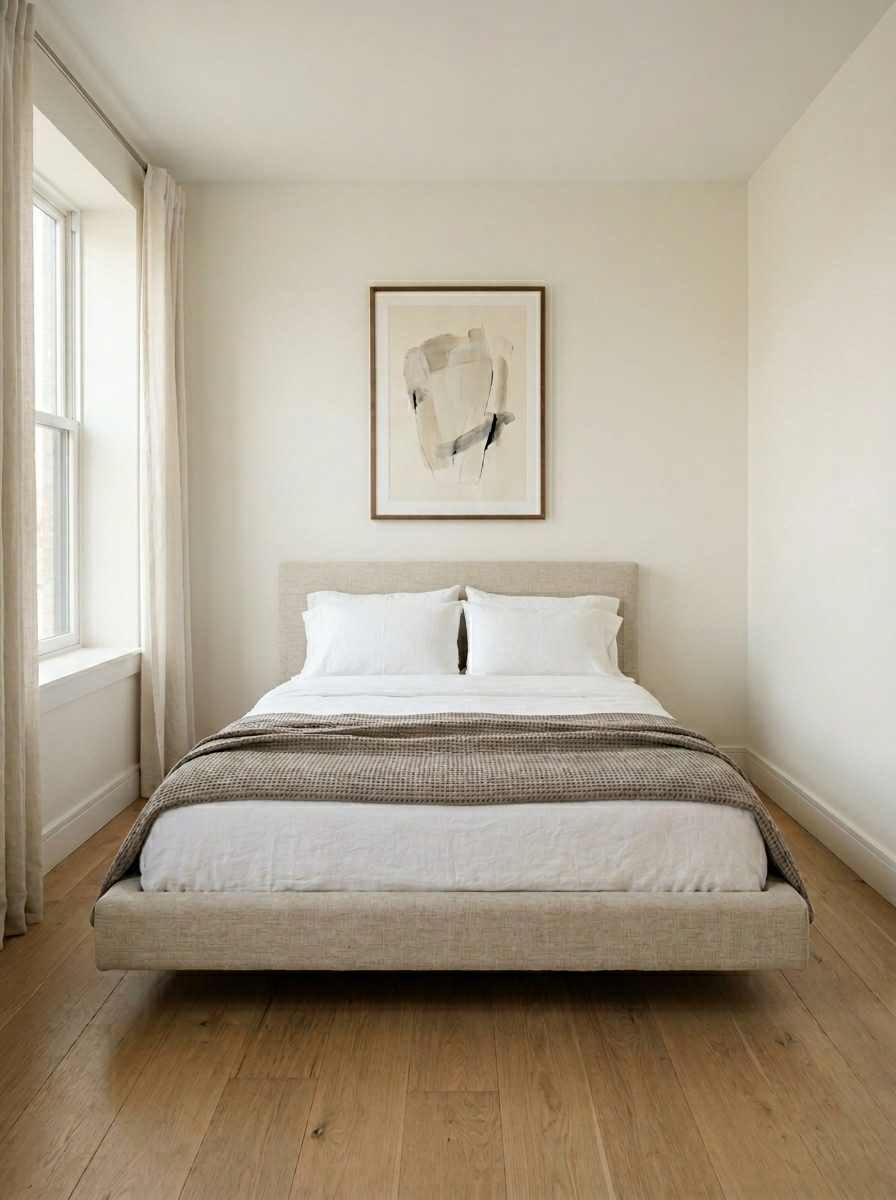
This one sounds wrong. Your instinct in a small room is to push everything against the walls to “create space.” But floating your furniture even 3-4 inches inward makes the room feel intentional, not crammed. Try it with just your bed first. You’ll see it immediately.
2. Use a low bed frame
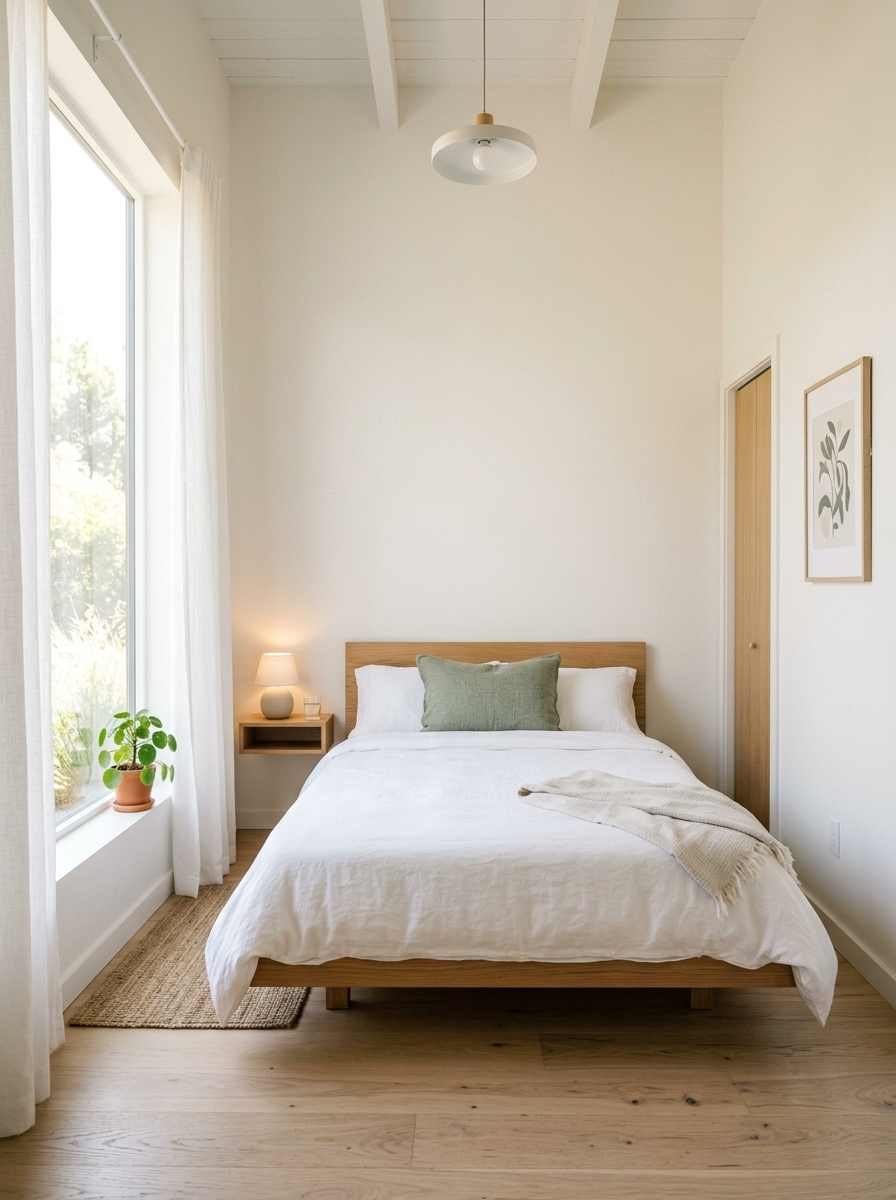
High bed frames eat vertical space and make ceilings feel lower. A platform bed or a low-profile frame (think around 14-18 inches off the floor) keeps your sightlines open.
I switched to a platform bed and the room felt like it added a foot of ceiling height overnight.
3. Pick one accent color and stick to it
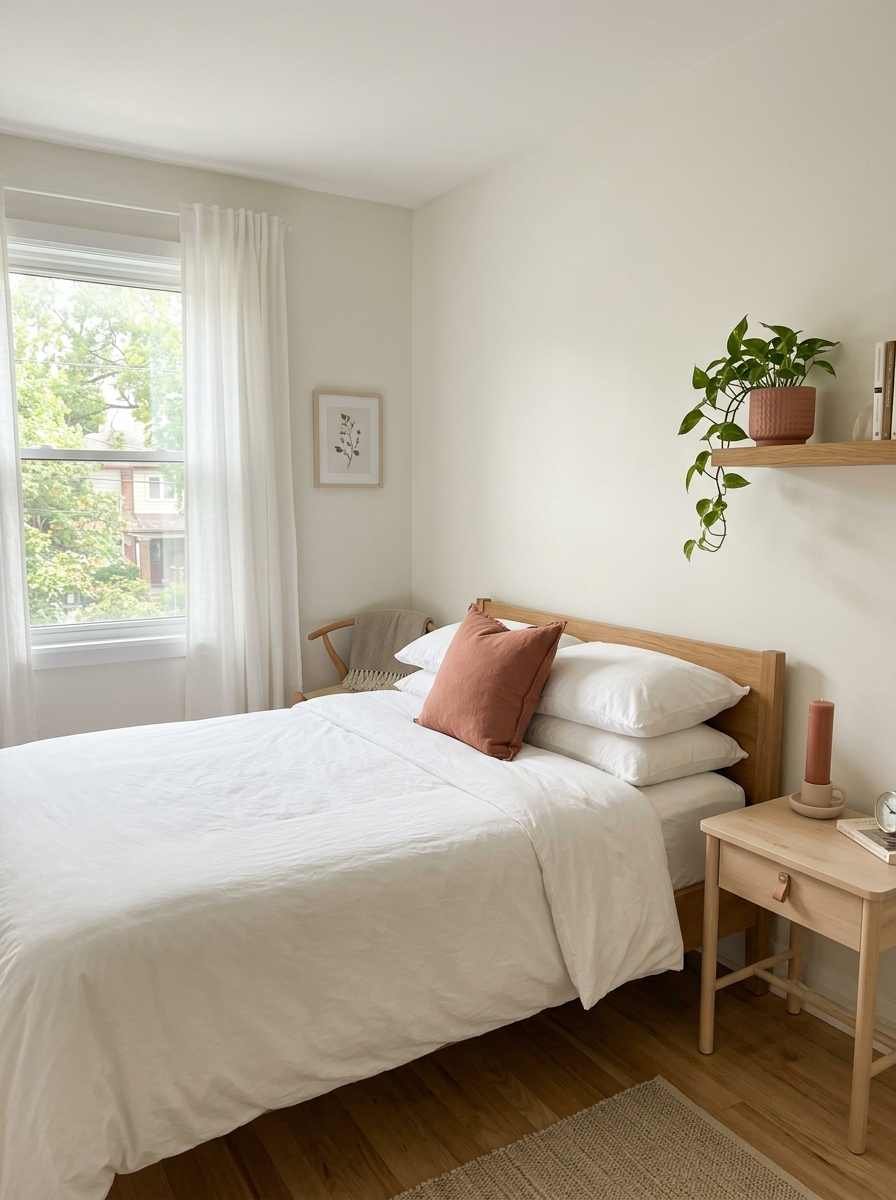
Minimalism doesn’t mean beige everything (although honestly, beige everything is underrated).
It means choosing 1 accent color and using it in 2-3 places max. A dusty terracotta throw pillow, a small terracotta planter, maybe a terracotta-toned candle.
That’s it. Repetition of a single color reads as intentional. Repetition of 6 colors reads as chaos.
4. Hang curtains high and wide
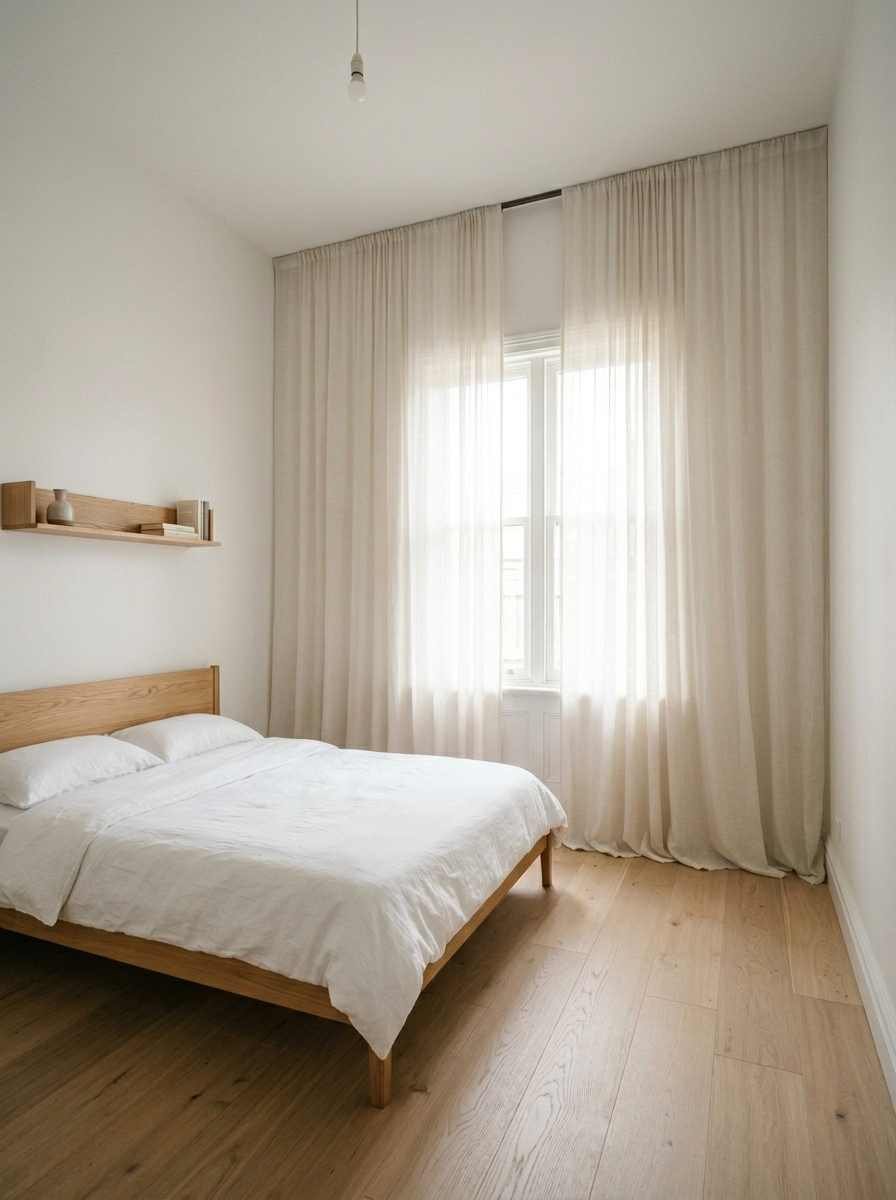
Hang your curtain rod at ceiling height, not above the window frame. And extend the rod 8-10 inches beyond each side of the window.
This makes windows look enormous. It’s the oldest interior design trick in the book, and it works every single time, regardless of your actual window size.
5. Mount your TV on the wall
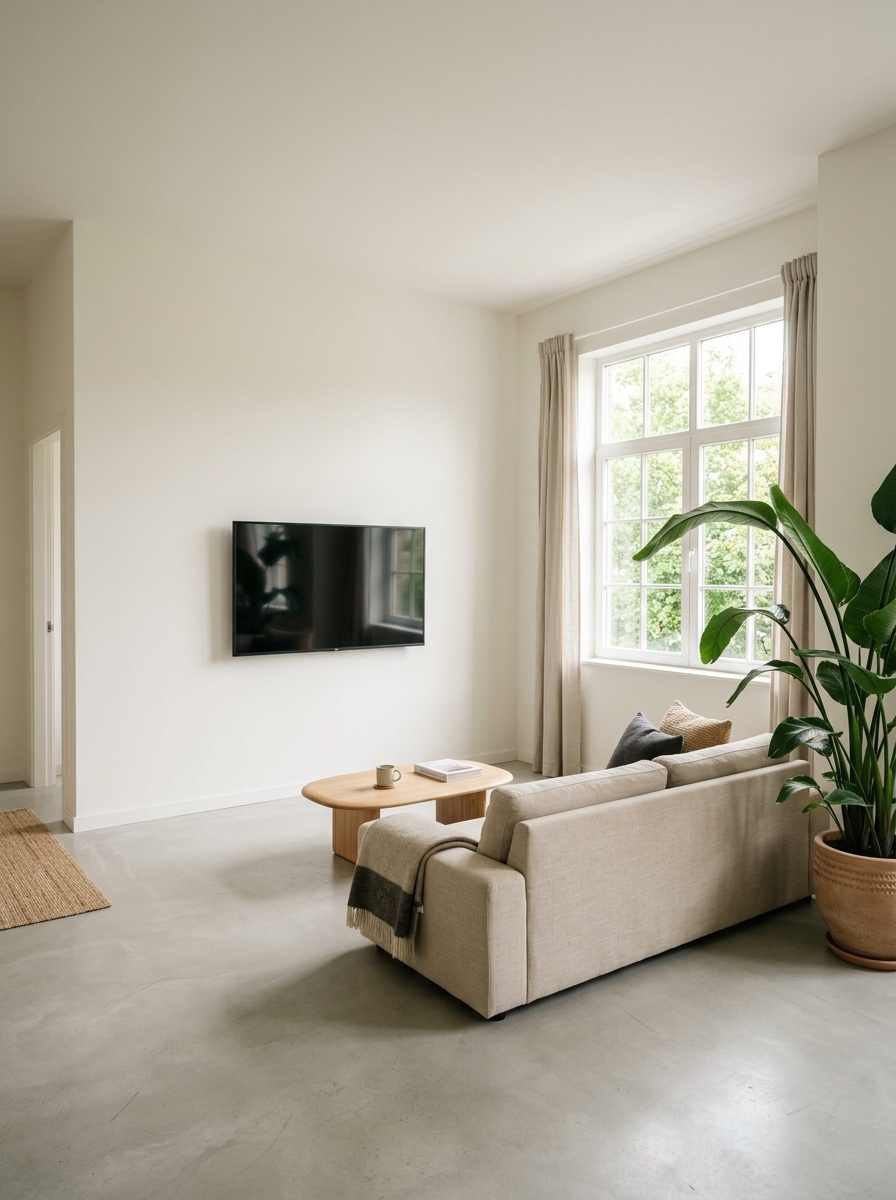
A TV on a bulky stand takes up floor space and visual weight.
Wall-mounting it (and running the cords through the wall or hiding them in a cable raceway) frees up real estate on the floor and keeps the eye moving upward. Cleaner. Calmer.
6. Add a large mirror
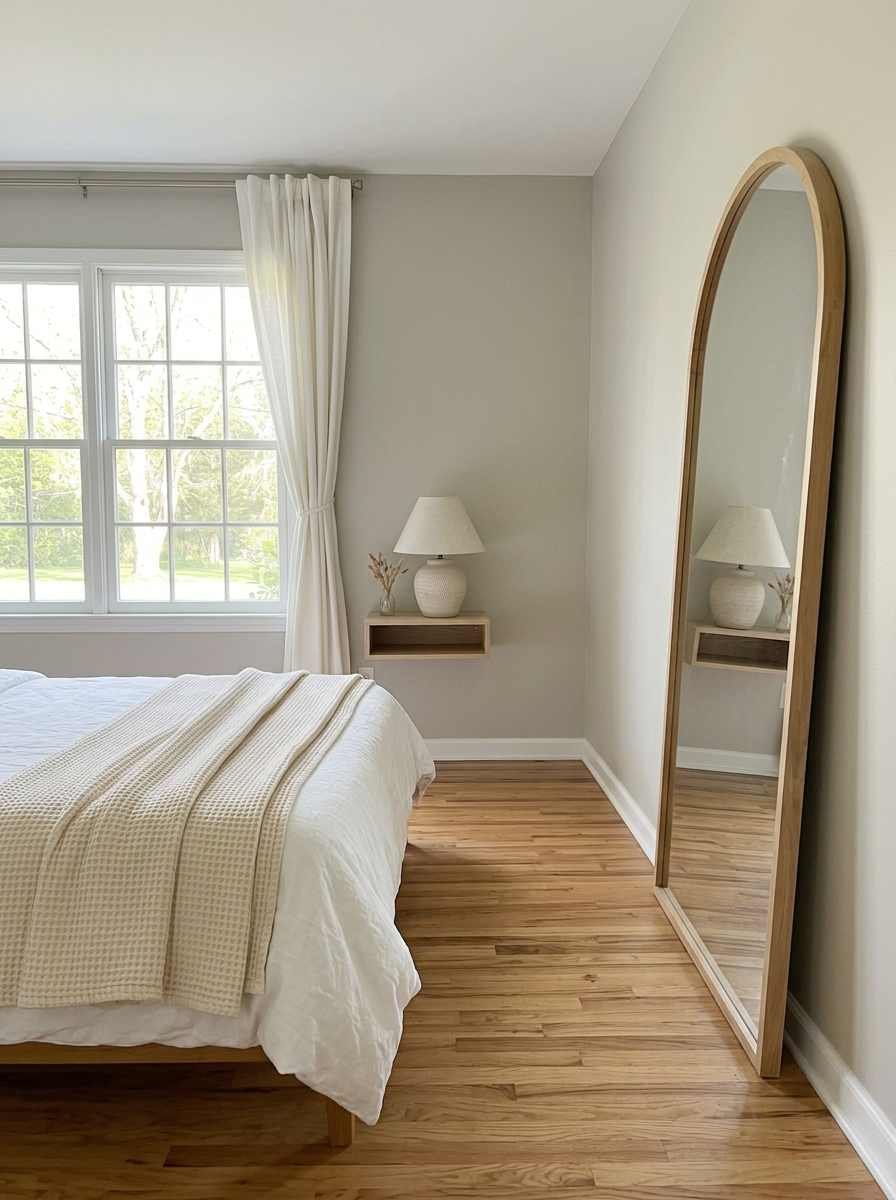
One large mirror, ideally leaned against a wall or hung opposite a window, bounces light around and genuinely makes the room feel bigger.
Not a gallery wall of small mirrors. One big one. A 24×36 inch mirror costs around $60-80 at most home stores and it does more work than most decor you’ll ever buy.
7. Go for open shelving (but edit ruthlessly)
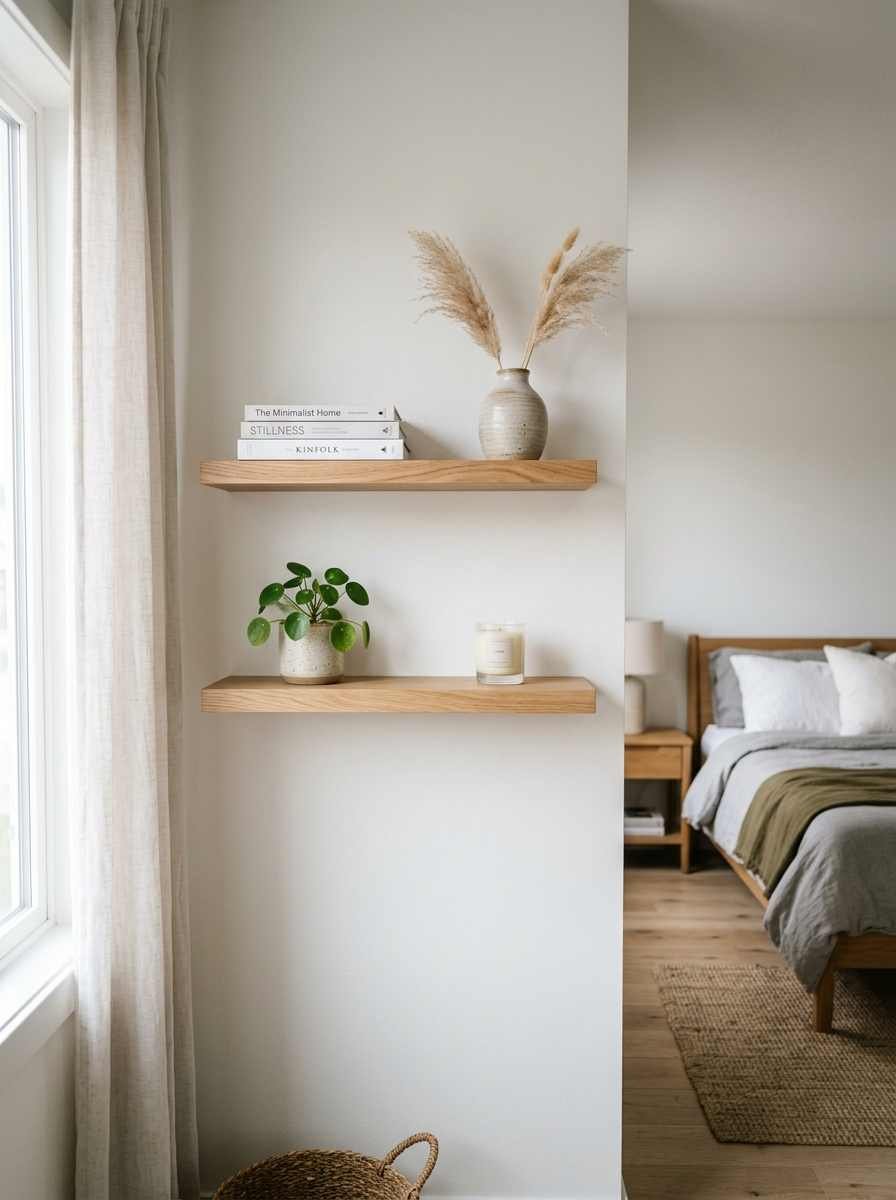
Open shelves look amazing in photos and chaotic in real life if you don’t edit.
The rule I use: every shelf should have a minimum of 40% empty space. Put up your 10 favorite things. Box the other 30 in storage.
IMO this is the single hardest minimalism discipline to maintain, but the payoff is real.
8. Use multi-functional furniture
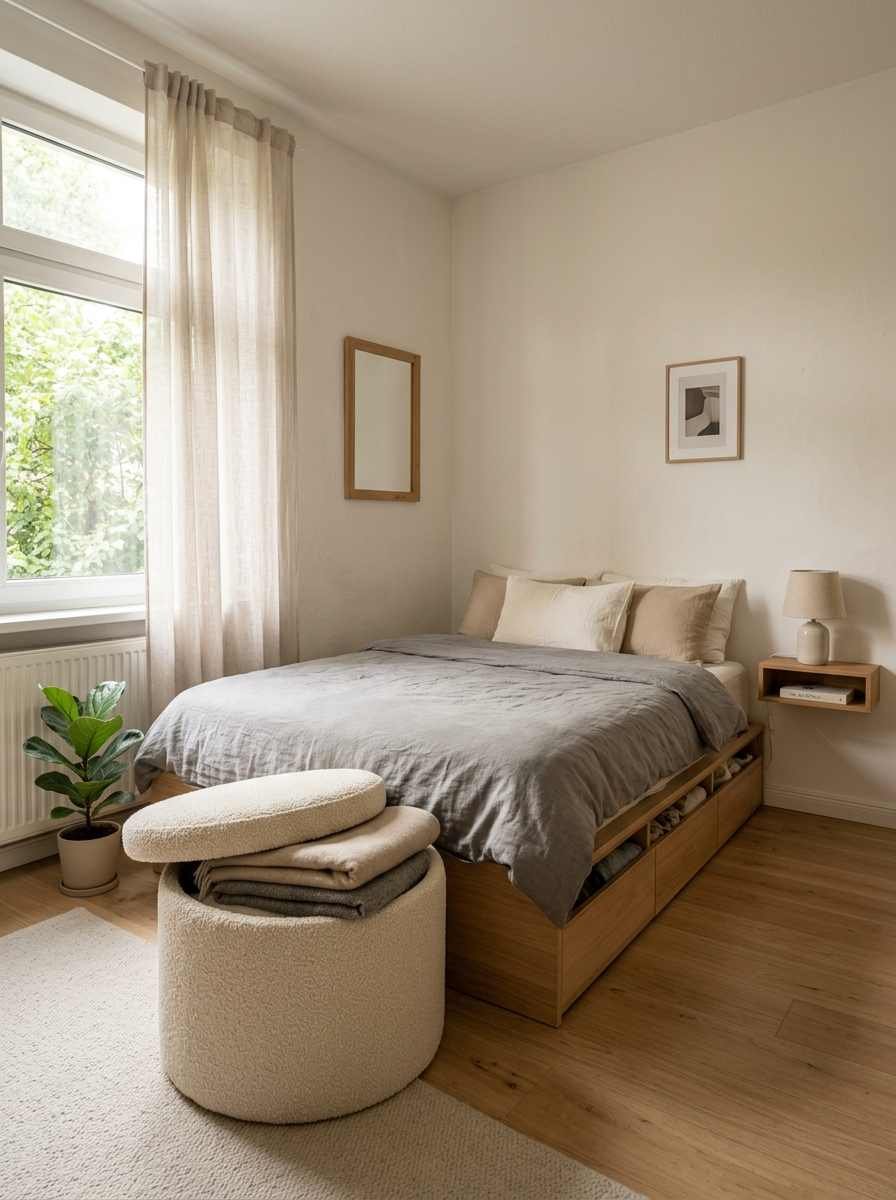
A storage ottoman instead of a coffee table. A bed with drawers underneath. A bench at the foot of the bed that also holds extra blankets.
In a small room, every piece of furniture should do 2 things. If it only does 1, it’s probably not earning its square footage.
Here’s a quick breakdown of swaps that work well:
| Instead of this | Try this | Space saved |
|---|---|---|
| Bulky coffee table | Storage ottoman | Floor + storage |
| Nightstand | Wall-mounted shelf | Floor space |
| Dresser + mirror | Wardrobe with interior mirror | Wall space |
| Bookshelf | Built-in or floating wall shelf | Floor space |
9. Choose light wood tones
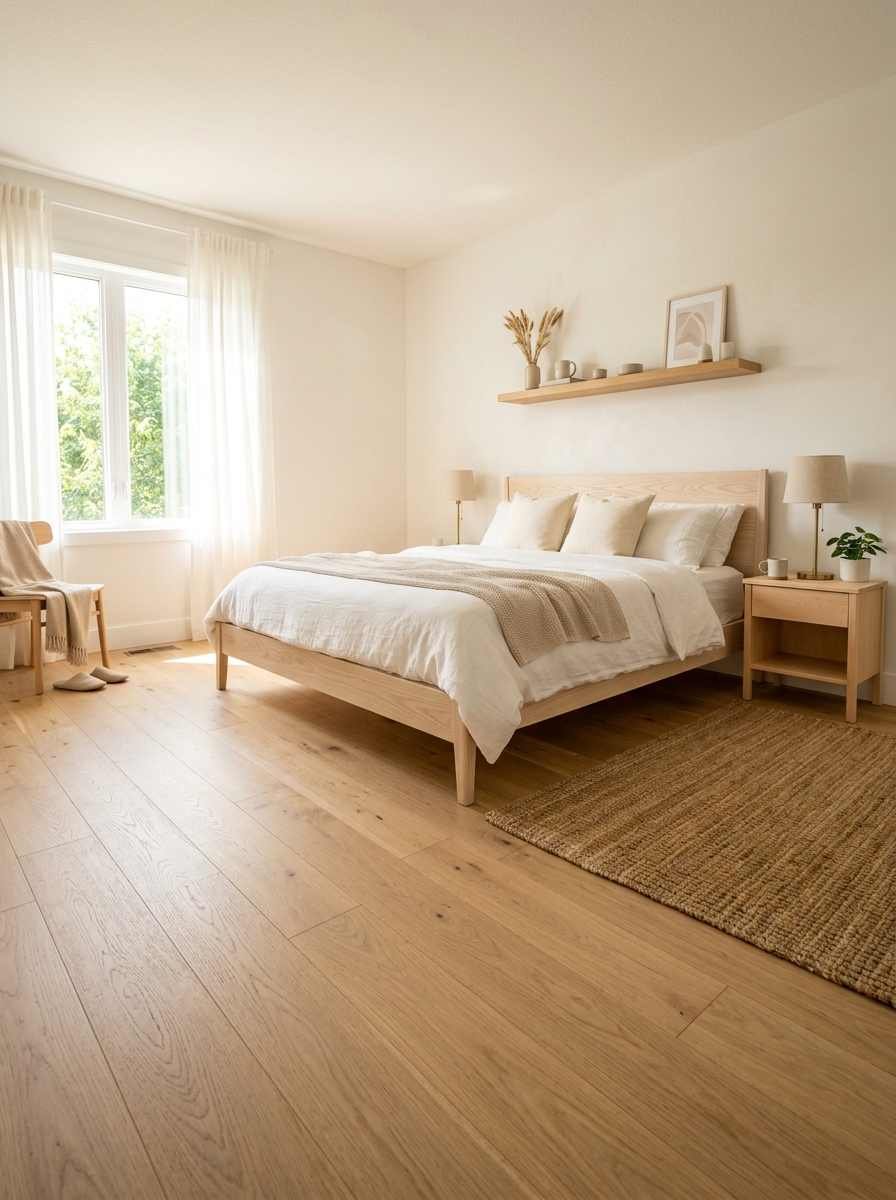
Dark wood furniture in a small room absorbs light. Light wood (like oak, maple, or ash) bounces it back.
If you already own dark furniture, that’s fine, a light-colored rug underneath can offset the heaviness.
10. Limit your throw pillows to 2
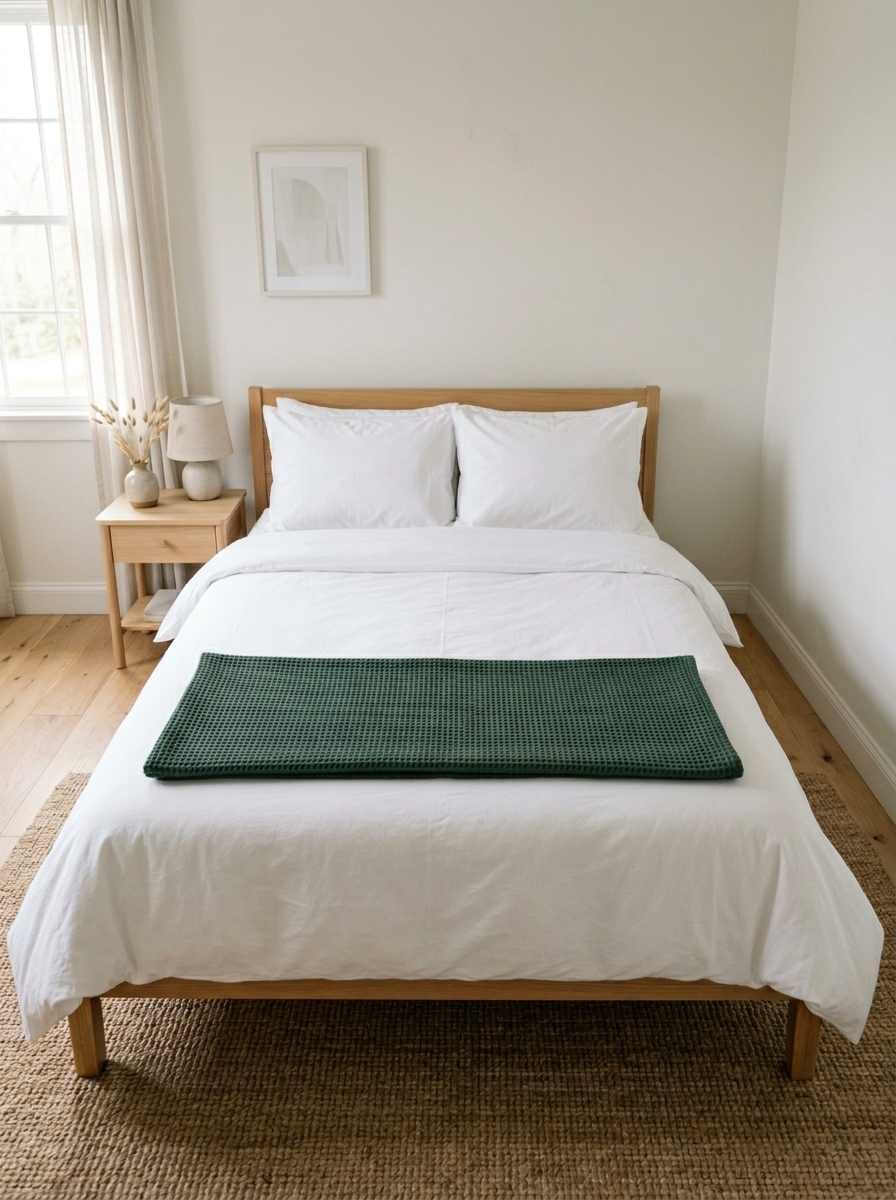
Four throw pillows on a twin bed looks like you’re running a pillow shop. Two well-chosen pillows (ideally in a texture that contrasts your bedding, like a linen pillow on a cotton duvet) look considered.
I know Pinterest boards show beds absolutely buried in pillows, but those are staged for photos. Nobody actually sleeps like that.
11. Use plants, but be selective
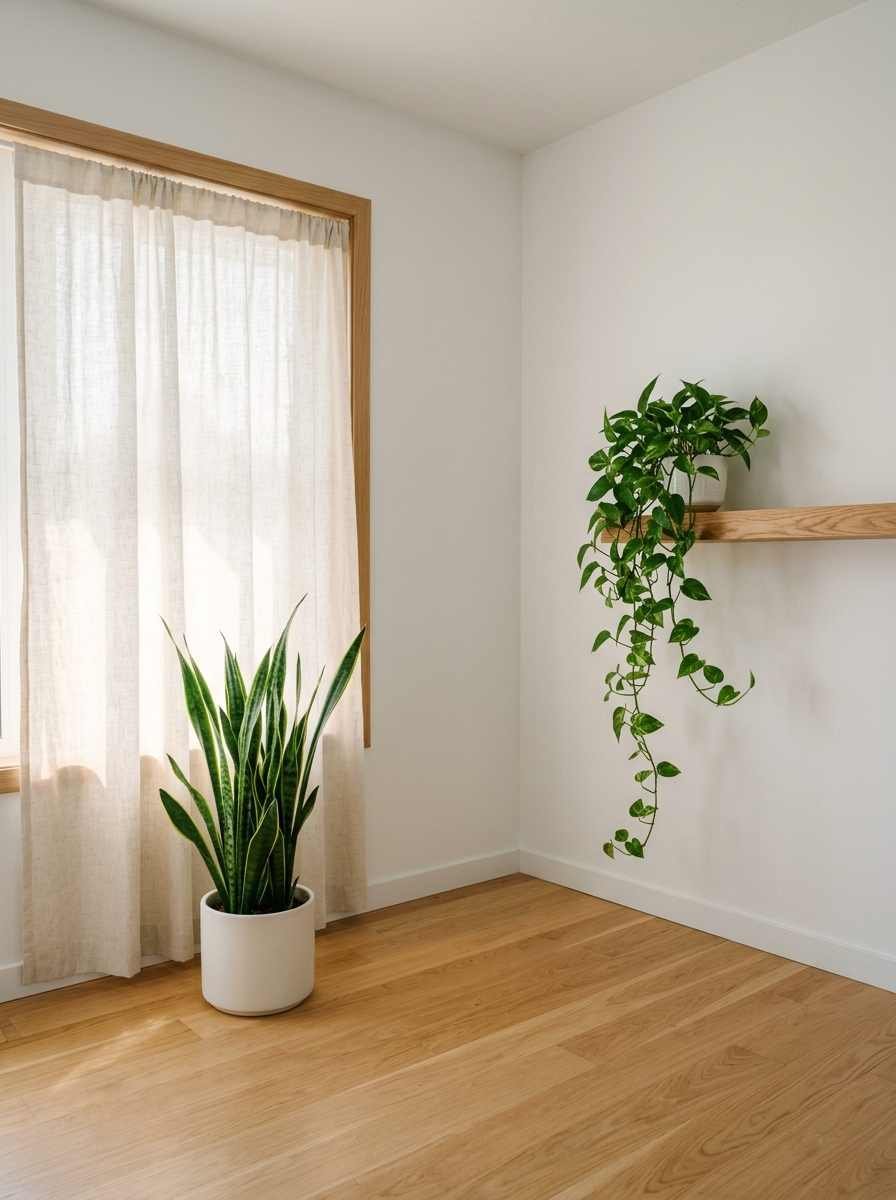
1 or 2 plants, well-placed, look fresh. 11 plants in a small room and you’ve accidentally created a greenhouse.
A single pothos on a floating shelf or a snake plant in the corner by the window does the job without overwhelming the space.
Check out The Sill (https://www.thesill.com) for plants that actually survive low-light small spaces.
12. Hide your chargers and cords
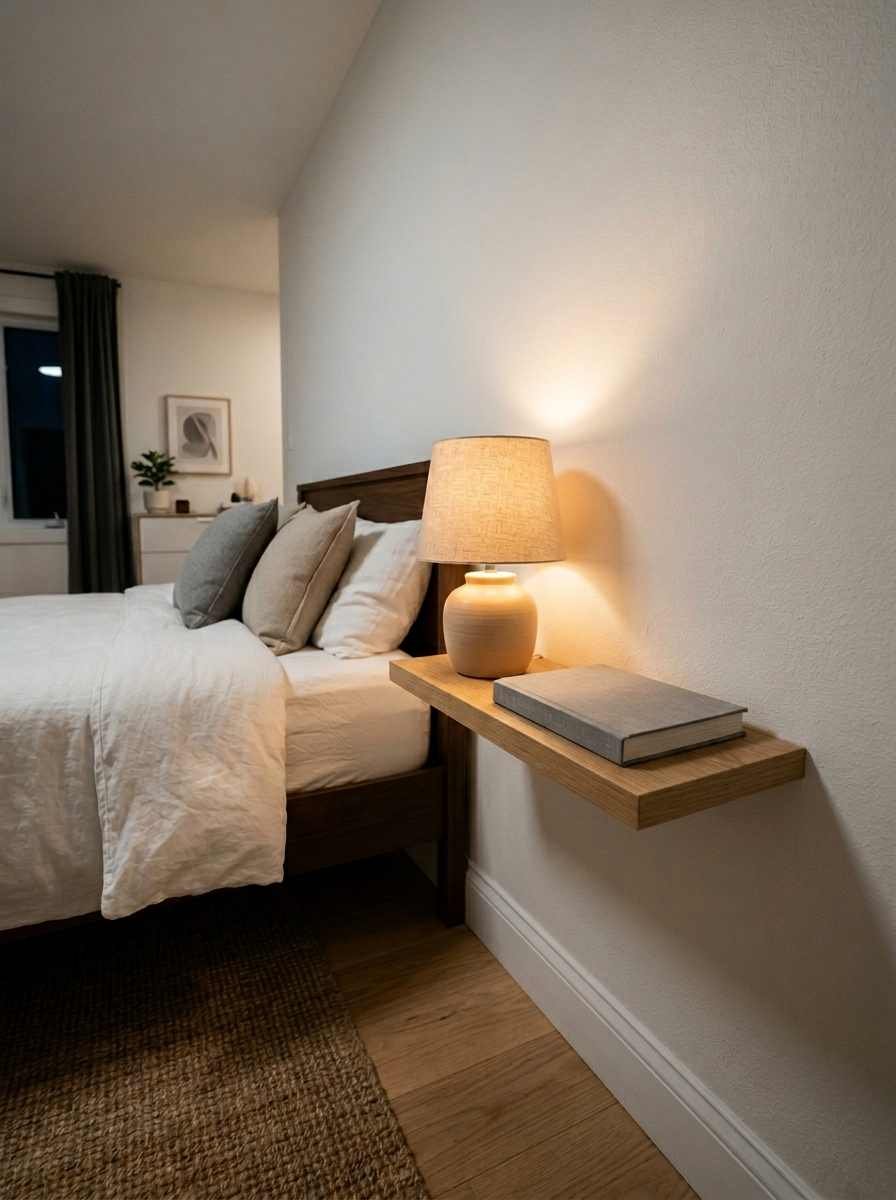
This is unglamorous advice but I’m including it because visible cords are visual clutter.
A small cord management box on your nightstand, or even just routing cords along baseboards with adhesive clips, removes a surprising amount of visual noise.
The room didn’t get bigger. It just stopped announcing its mess.
13. Choose bedding in one solid color
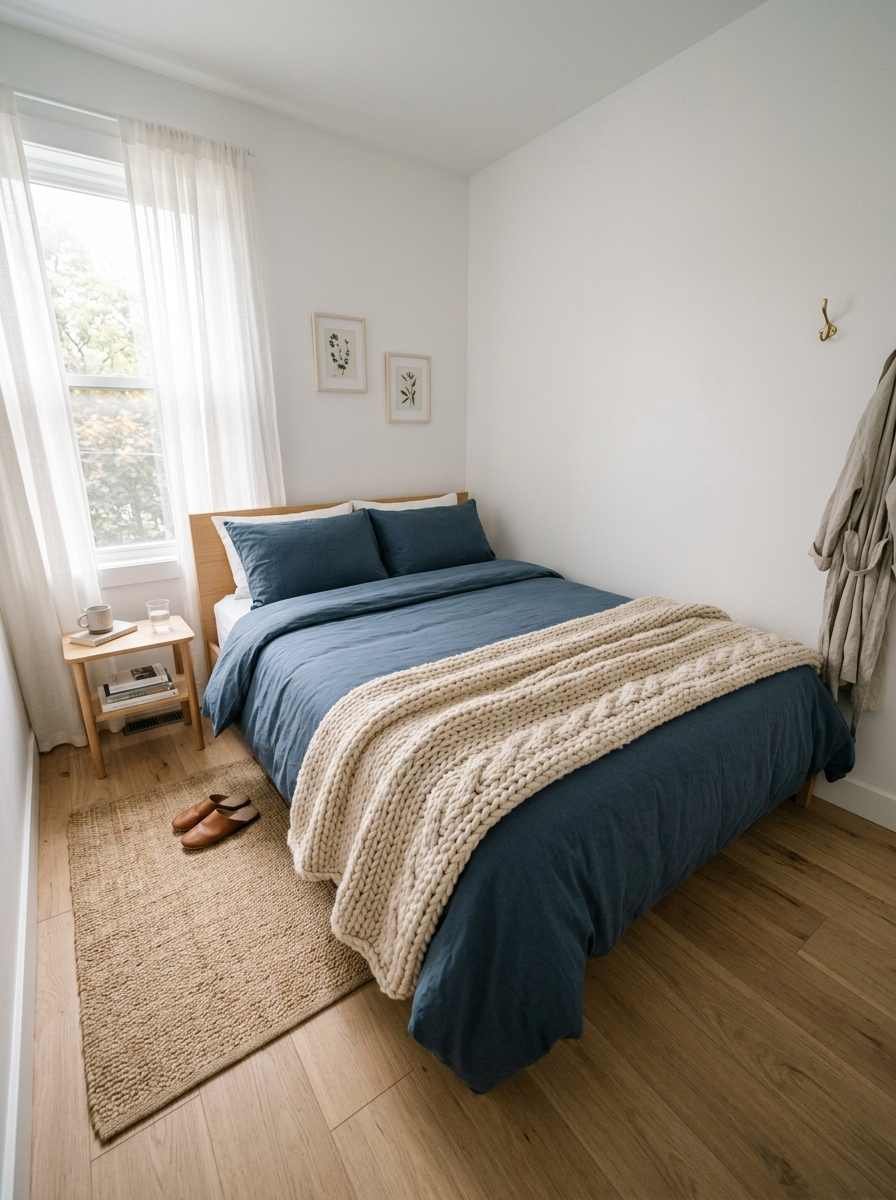
Patterned bedding in a small room adds busyness. One solid color, something in the white-to-linen-to-slate range, keeps the largest surface in the room from fighting for attention.
You can add texture through a chunky knit throw or a waffle-weave blanket. Texture reads differently than pattern.
25 Stunning Study Room Decor Minimalist Ideas for Small Spaces
14. Mount lighting instead of using floor lamps
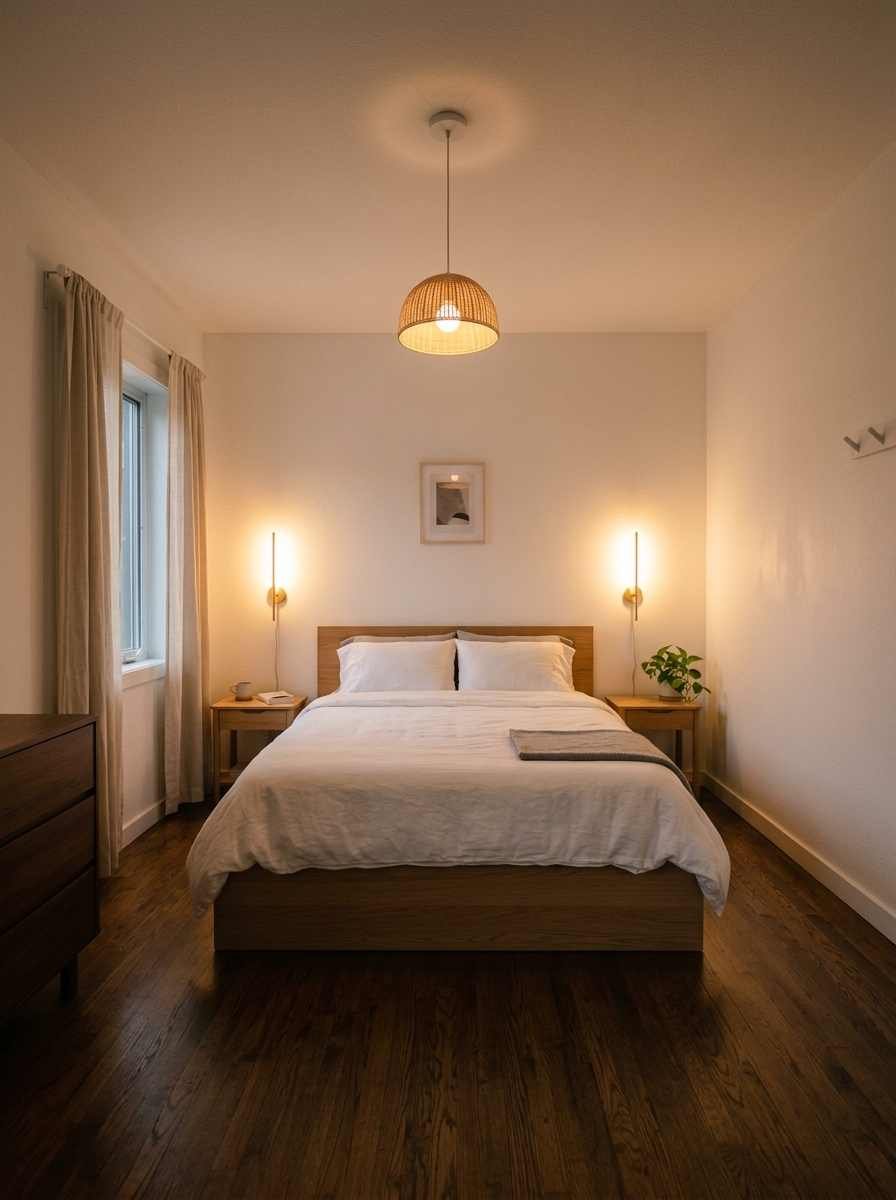
Floor lamps take up real floor space and their cords are annoying.
Wall sconces mounted on either side of your bed, or a ceiling pendant in the center of the room, keeps all your light sources off the floor.
It also looks a lot more considered than a generic floor lamp you’ve had since college.
15. Use vertical space intentionally
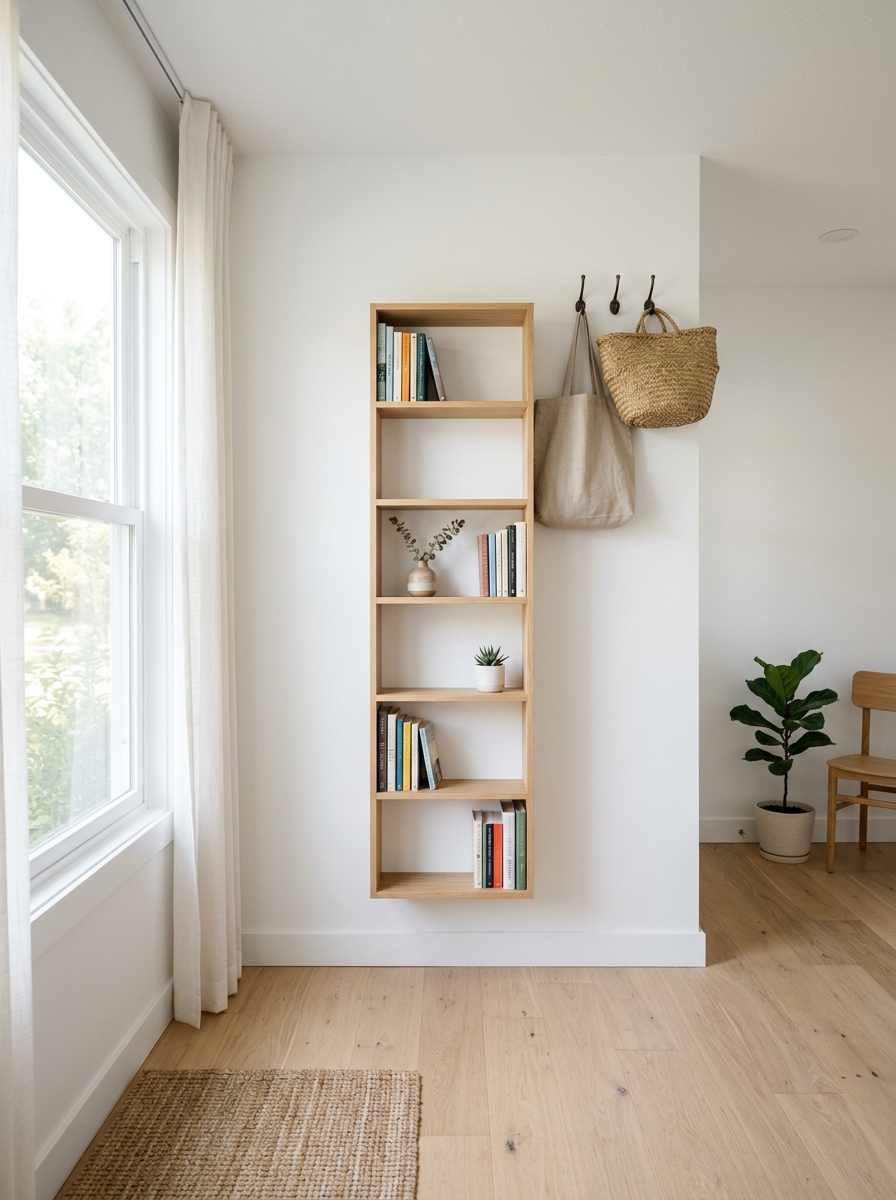
Go up. A tall, narrow bookshelf (think 6 feet tall, 18 inches wide) uses almost no floor space but holds a lot.
Wall hooks installed at 6 feet for bags or jackets. A ladder shelf leaned against a wall. Vertical storage tricks the eye into reading the room as taller.
16. Keep your nightstand surface almost empty
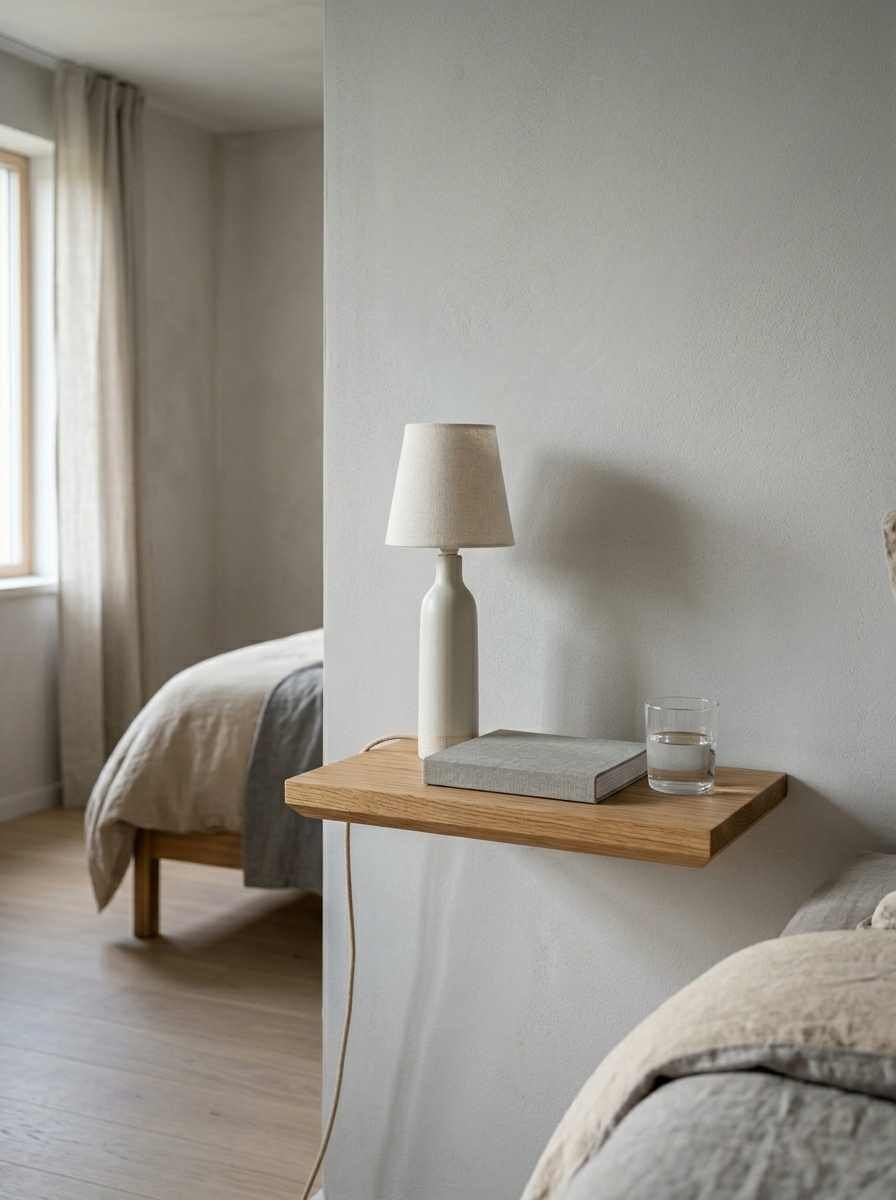
One lamp, one book, one small object. That’s the whole nightstand. Not 4 books, a water bottle, 2 lip balms, a charging cable, a candle, and your AirPods case.
Honestly, I’m guilty of this more than I’d like to admit, but every time I clear the nightstand down to 3 things the room just breathes differently.
17. Try a neutral rug under everything
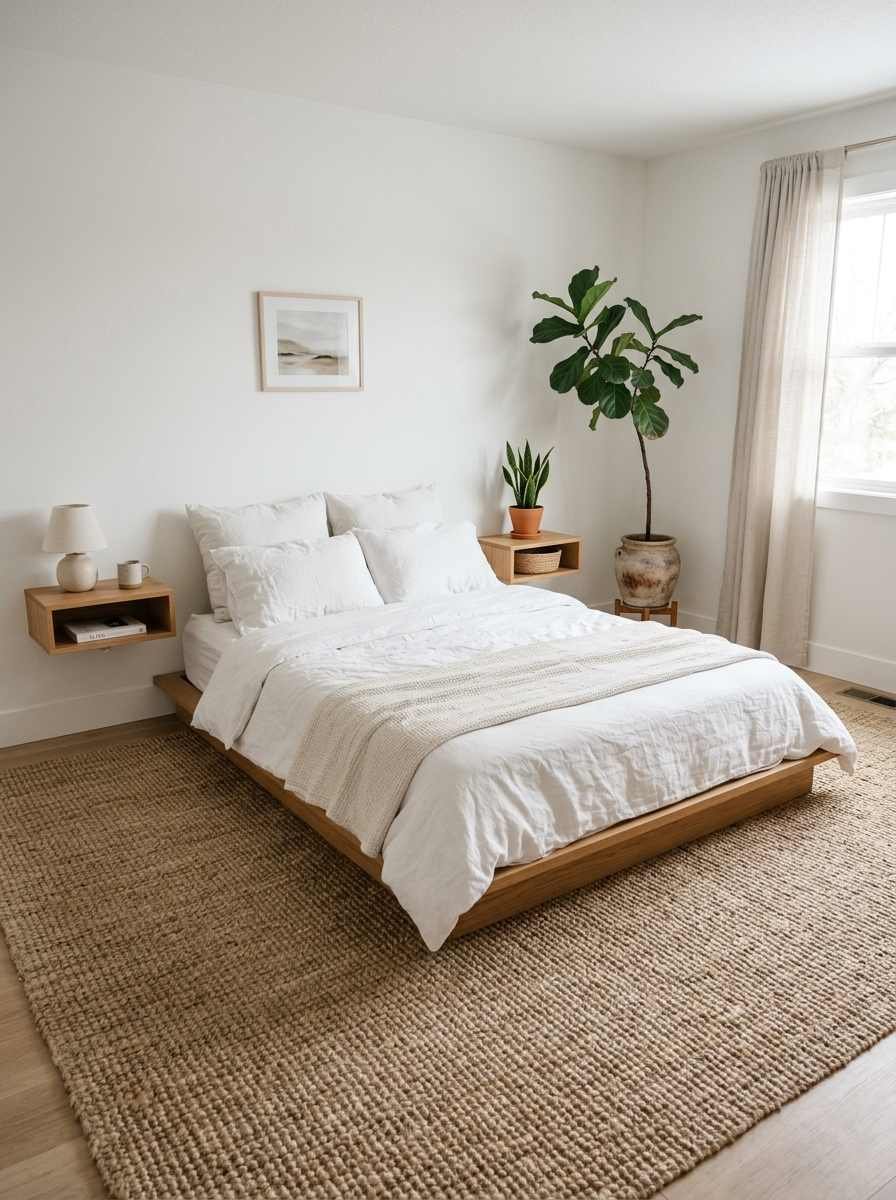
A rug that goes under your bed and side tables (not just in front of them) makes the furniture feel grounded and pulls the room together.
It also visually expands the floor plan. Aim for a rug that’s big enough so the front legs of your bed sit on it, at minimum.
Ruggable (https://ruggable.com) has machine-washable options that are practical for real life, not just photo shoots.
18. Remove anything from the top of furniture
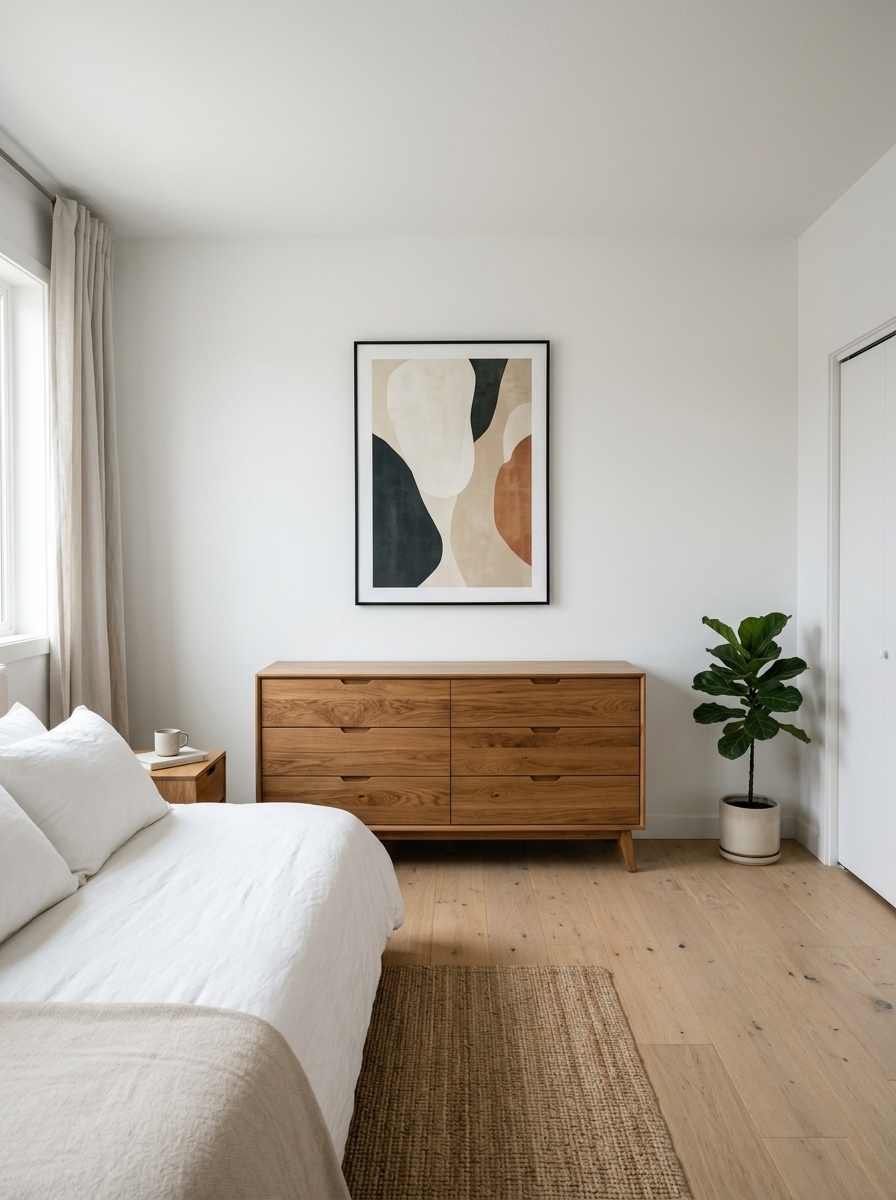
The top of your dresser, the top of your wardrobe, the top of your bookshelf: all of these collect stuff.
Clear them. Nothing on top of furniture is the fastest way to make a room look cleaner without moving a single piece of furniture.
19. Use sheer curtains for rooms that need light
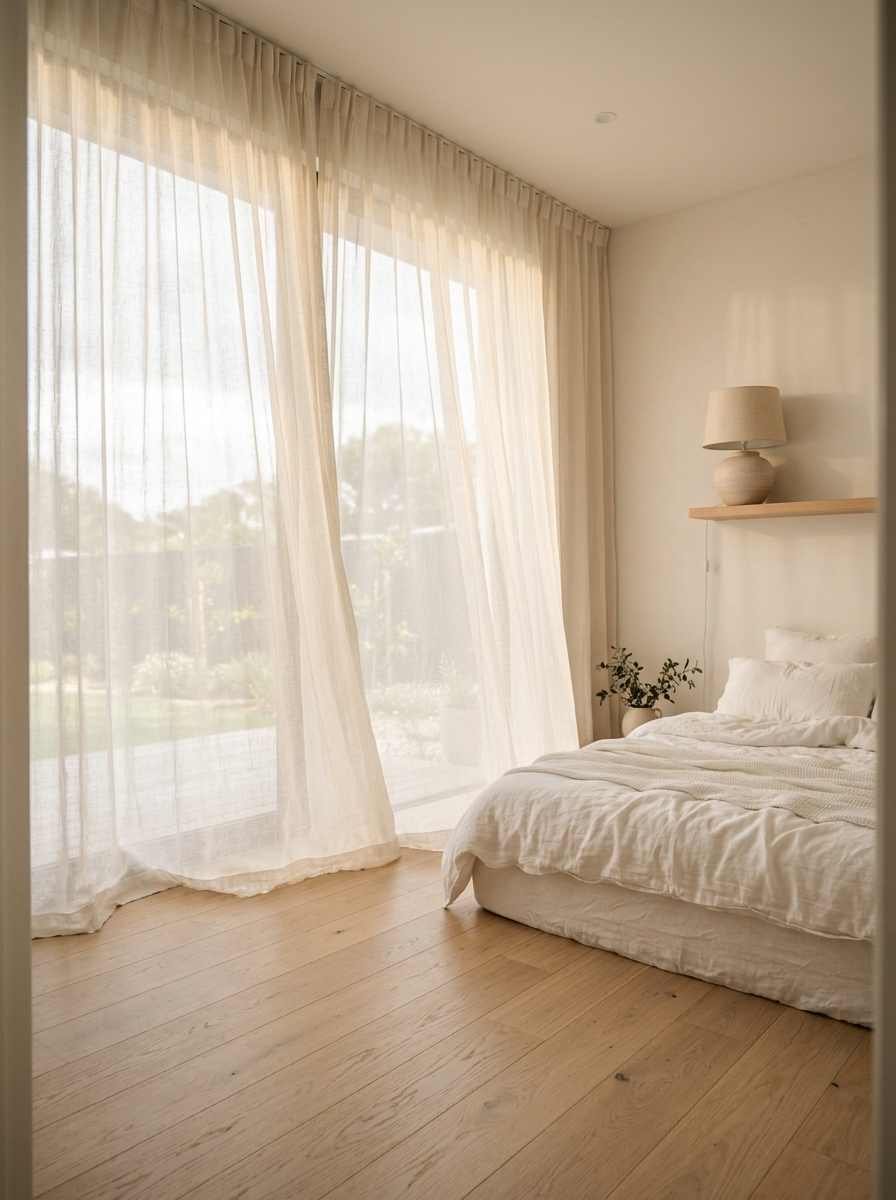
If your small room is also dark, heavy curtains make it feel like a cave. Sheer linen curtains filter light while still giving you privacy.
They’re also softer and less formal-looking than blackout curtains, which can sometimes make a small room feel serious in a way that’s not cozy.
20. Add a single piece of wall art (and frame it properly)
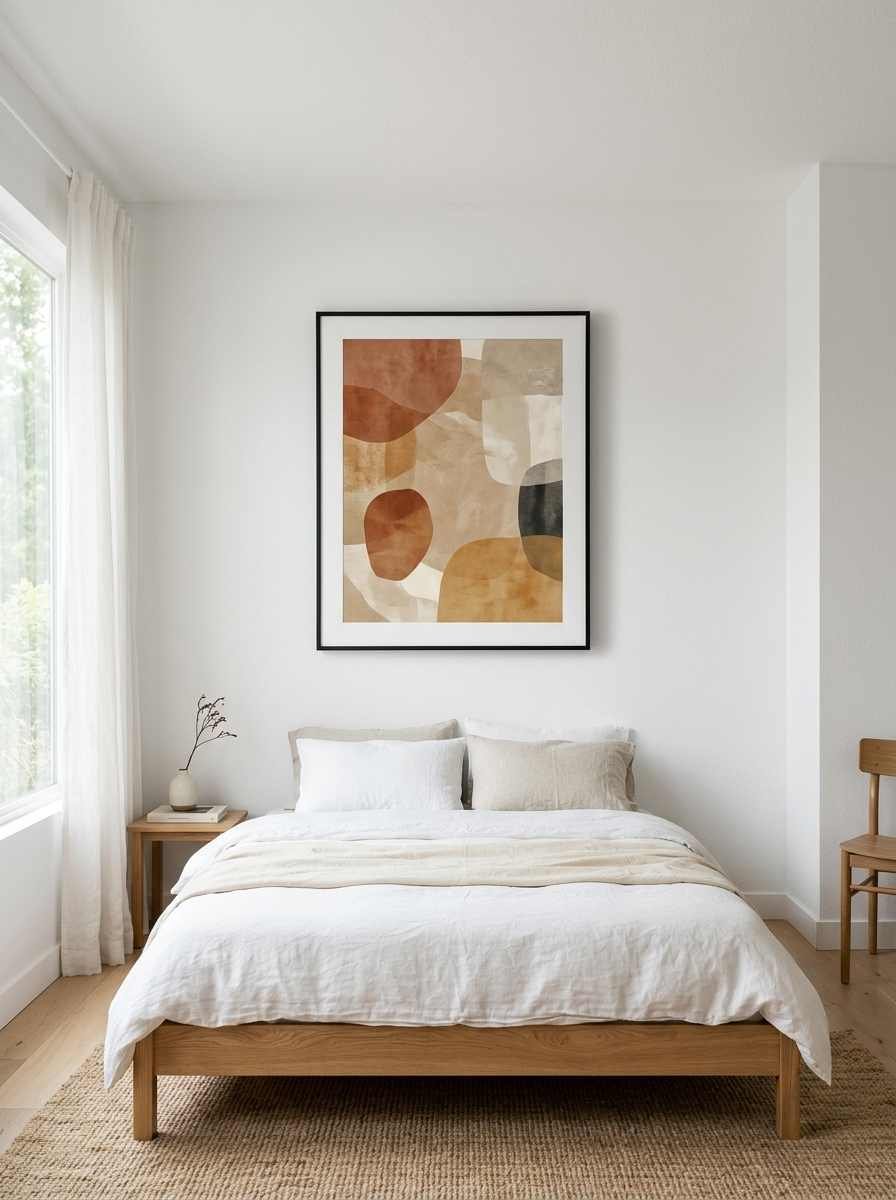
One large piece of art, properly framed, looks intentional. A group of 7 mismatched frames looks like a dorm room.
If you’re putting art in a small room, go for 1 piece that’s at least 18×24 inches and hang it at eye level (57 inches from floor to center, which is the standard gallery height).
Society6 (https://society6.com) has a lot of original art prints that are actually affordable.
21. Declutter your closet, even if nobody sees it
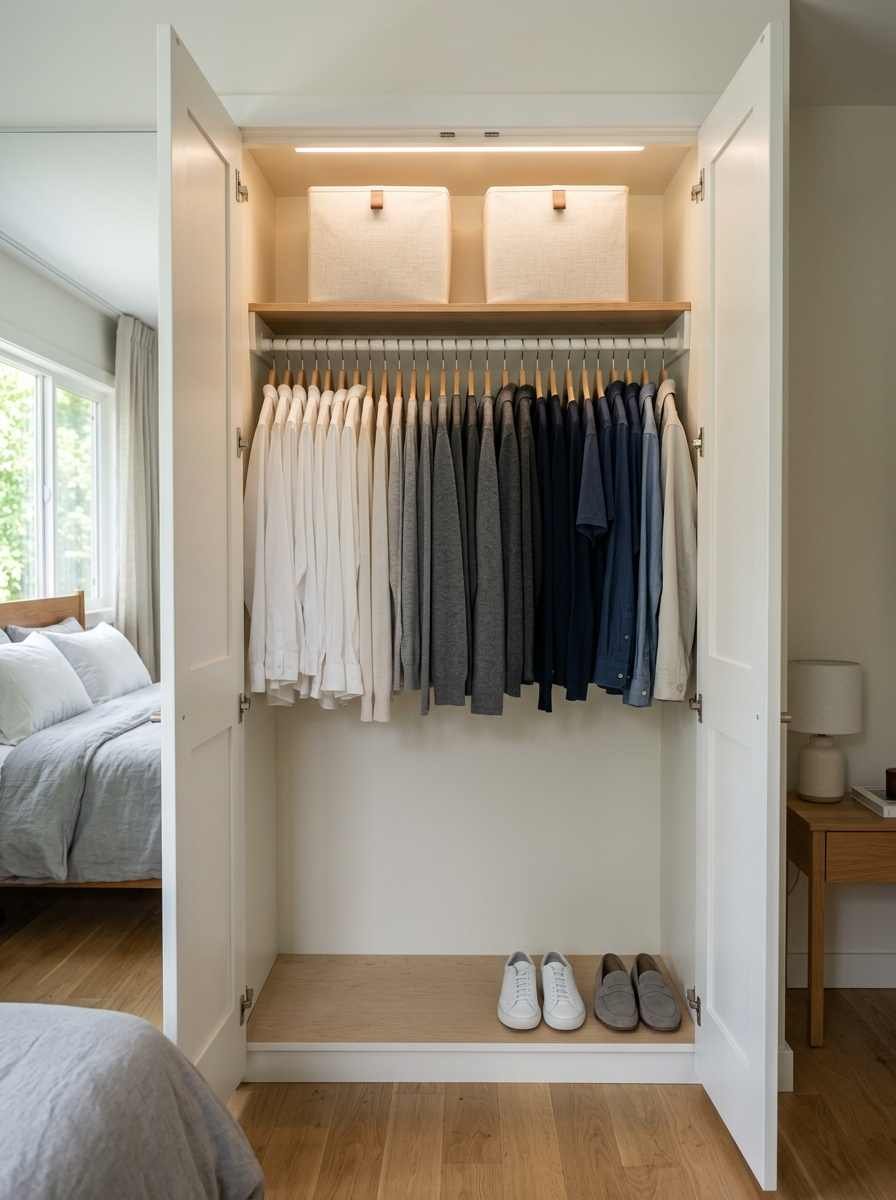
Okay, this one’s slightly off-topic because it’s technically inside a closet.
But a stuffed closet makes a small room feel psychologically heavier, even with the door closed. You know it’s in there.
Clear out anything you haven’t worn in 12 months and the room will feel lighter even without changing a single visible thing.
(This is either wisdom or I’ve been reading too much Marie Kondo. Probably both.)
22. Choose furniture with legs
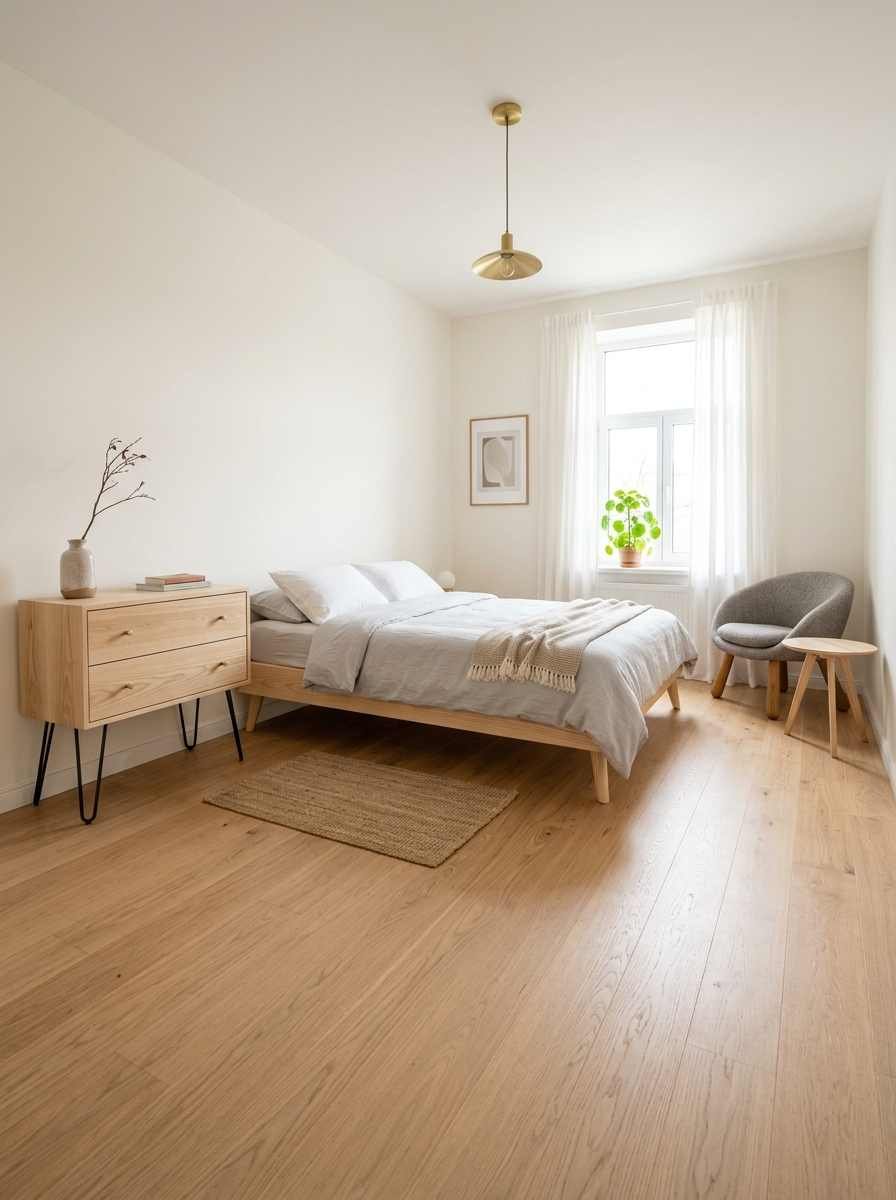
Furniture that sits on legs (so you can see the floor beneath it) makes a room feel more open than furniture that sits flush to the ground.
A sofa with 6-inch legs, a dresser with hairpin legs, a bed frame with visible legs. The visible floor space underneath reads as part of the room.
23. Use a single scent
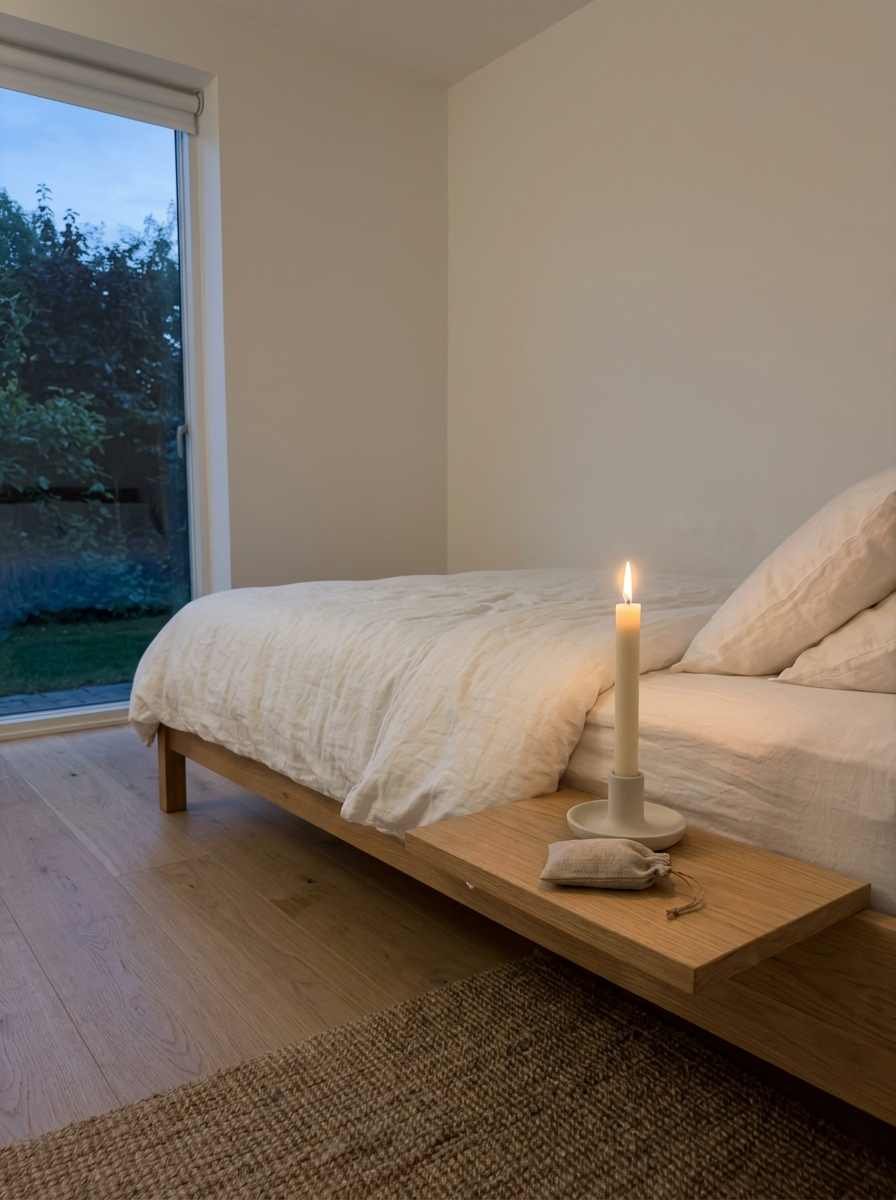
This sounds like lifestyle blogging advice but hear me out. A room with a consistent, simple scent (one candle or diffuser, one fragrance) feels more cohesive.
A room that smells like 3 different candles simultaneously feels busy in a way that’s hard to explain. Wow, I didn’t think I’d be writing about candle strategy today, but here we are.
24. Store seasonal items somewhere else entirely
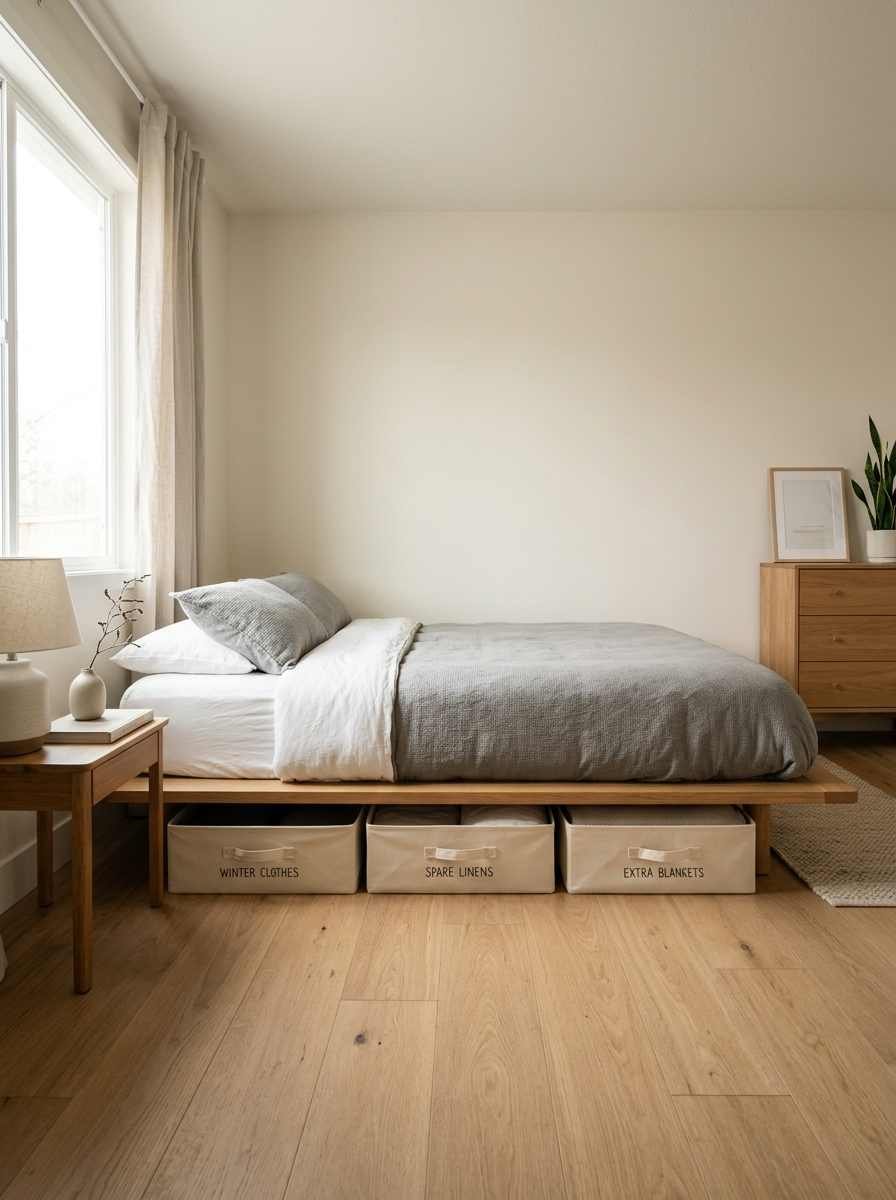
Winter coats in a bedroom closet in July. Extra blankets in the corner. A fan you only use 3 months a year.
Get these out of the room. Under-bed storage bins are fine, but ideally seasonal items live in a hallway closet, a storage unit, or at minimum in a dedicated bin under the bed, not stacked visibly in the corner.
25. Stick with 2 textures in the room
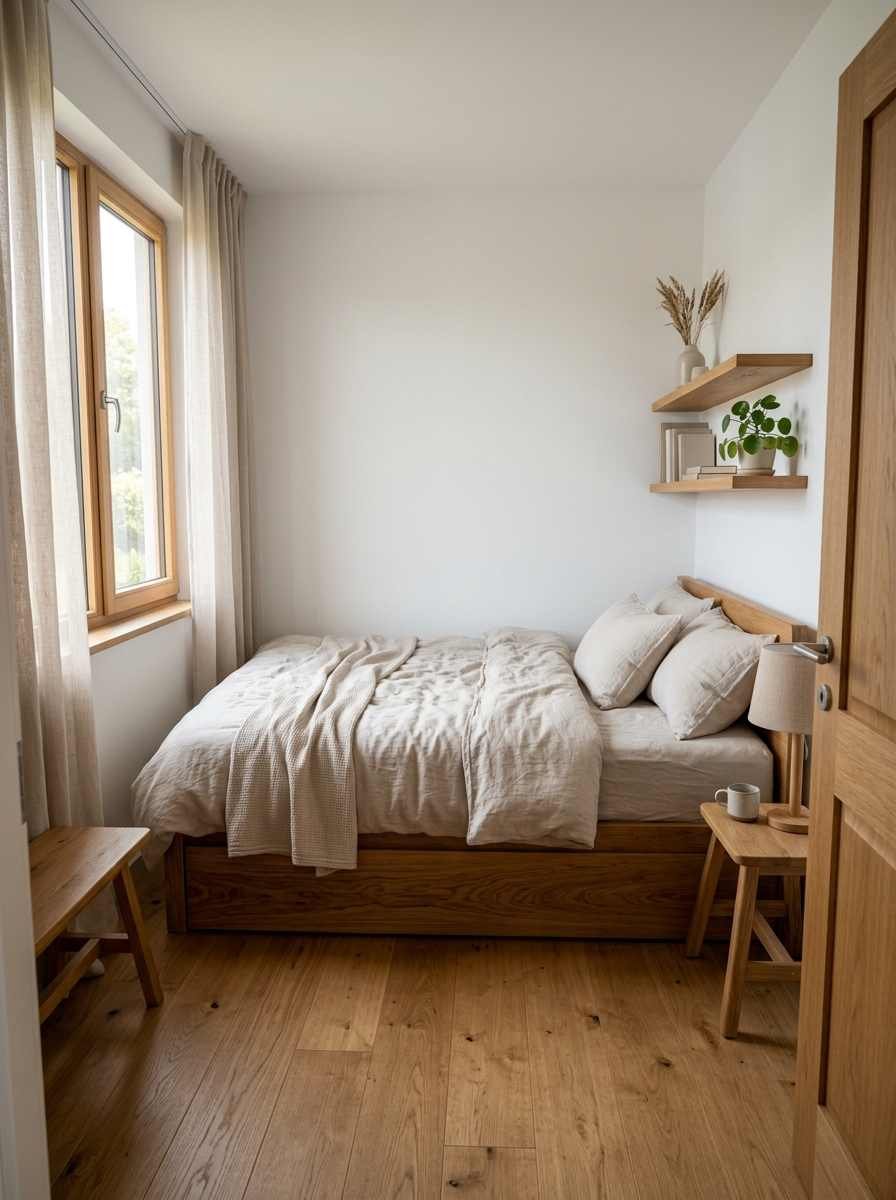
Minimalist rooms look good because they use restraint. Pick 2 textures and repeat them. Linen and wood. Cotton and concrete.
Wool and leather. When you limit the number of materials the eye has to process, the room feels quieter.
That quietness is what people call “calm” or “peaceful” when they walk into a well-designed small room.
Quick reference: small room minimalist wins by category
| Category | Best single change |
|---|---|
| Furniture | Switch to a low platform bed |
| Lighting | Mount wall sconces, remove floor lamp |
| Color | One neutral base, one accent color |
| Storage | Multi-functional furniture throughout |
FAQs
Q: Can minimalist decor work in a shared small room?
Yes, but you need agreement on what stays visible. The easiest approach is to define 1 surface per person that they control, and keep all shared surfaces decluttered. It’s less about aesthetic and more about negotiating storage.
Q: How do I make a minimalist room feel warm, not cold?
Texture does this. A wool throw, a jute rug, wooden accents. Minimalism gets cold-looking when every surface is white and shiny. Add 2 natural materials and the warmth comes back.
Q: Do I need to spend a lot of money to achieve this look?
The most effective changes here cost almost nothing: clearing surfaces, moving furniture away from walls, hanging curtains at ceiling height. The expensive stuff (new furniture, art) can wait. Start with what you already have.
Final thought
Small rooms don’t need more stuff. They need less of the wrong stuff and more intention with what stays. Start with 1 idea from this list this weekend, not all 25. Pick the one that requires no money: clear every surface in the room, put back only what you genuinely use. See how it feels.
Which of these ideas are you most tempted to try first? Drop it in the comments, I’m curious whether people are more drawn to the furniture changes or the decor ones.
