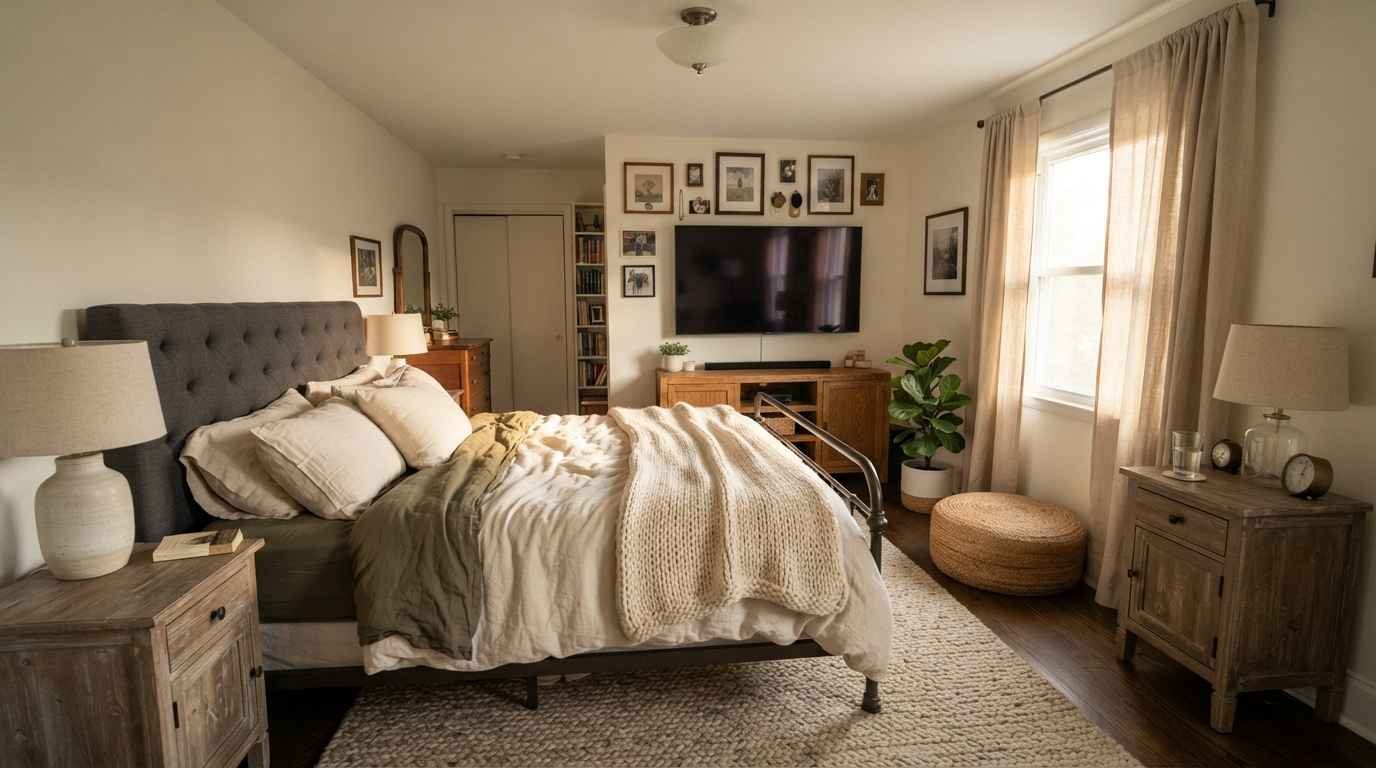
I mounted my first bedroom TV wrong. Dead center on the wall, at the height that looked “balanced” from the doorway.
Then I got into bed that night and realized I was staring up at it like I was watching a plane take off. Neck cramp by episode three.
That mistake taught me more about bedroom TV placement than any design blog ever did. So this list isn’t just 25 pretty ideas pulled off a mood board.
It’s what actually works once you’re lying down, propped on two pillows, three episodes deep into something you shouldn’t be watching on a Tuesday.
Pin what speaks to you. Skip what doesn’t fit your walls. That’s the whole point of a list like this.
Why bedroom TV placement is its own animal

Living room mounting rules don’t transfer to bedrooms.
You’re not sitting upright on a couch, you’re reclined, half-buried in a duvet, eyes angled up toward the wall.
That single difference changes the math. According to a height guide from Vogel’s, bedroom viewers typically need the screen centered around 60 inches from the floor, well above the standard 42-inch living room mark.
Taskrabbit’s mounting guide puts it a bit differently, suggesting bedroom TVs sit 2 to 4 inches higher than living room height, since you’ll be lying down or propped against pillows.
Neither number is gospel. Your bed height, your mattress thickness, how many pillows you stack behind your back, all of it shifts the ideal spot.
The only real way to know is to lie down in your usual position and have someone mark the wall where your eyes naturally land.
Here’s a rough starting point based on TV size, pulled together from a few mounting guides I trust:
| TV size | Seated eye level (living room) | Reclined eye level (bedroom) |
|---|---|---|
| 55 inch | Bottom edge ~26″ from floor | Center ~54-58″ from floor |
| 65 inch | Bottom edge ~24″ from floor | Center ~56-60″ from floor |
| 75 inch | Bottom edge ~22″ from floor | Center ~58-62″ from floor |
Treat that table as a launch point, not a rulebook. Measure your own setup before you drill a single hole.
Ideas that hide the TV until you actually want it

A blank black rectangle on a bedroom wall can kill the whole vibe of a space you’re supposed to relax in. These ideas get around that.
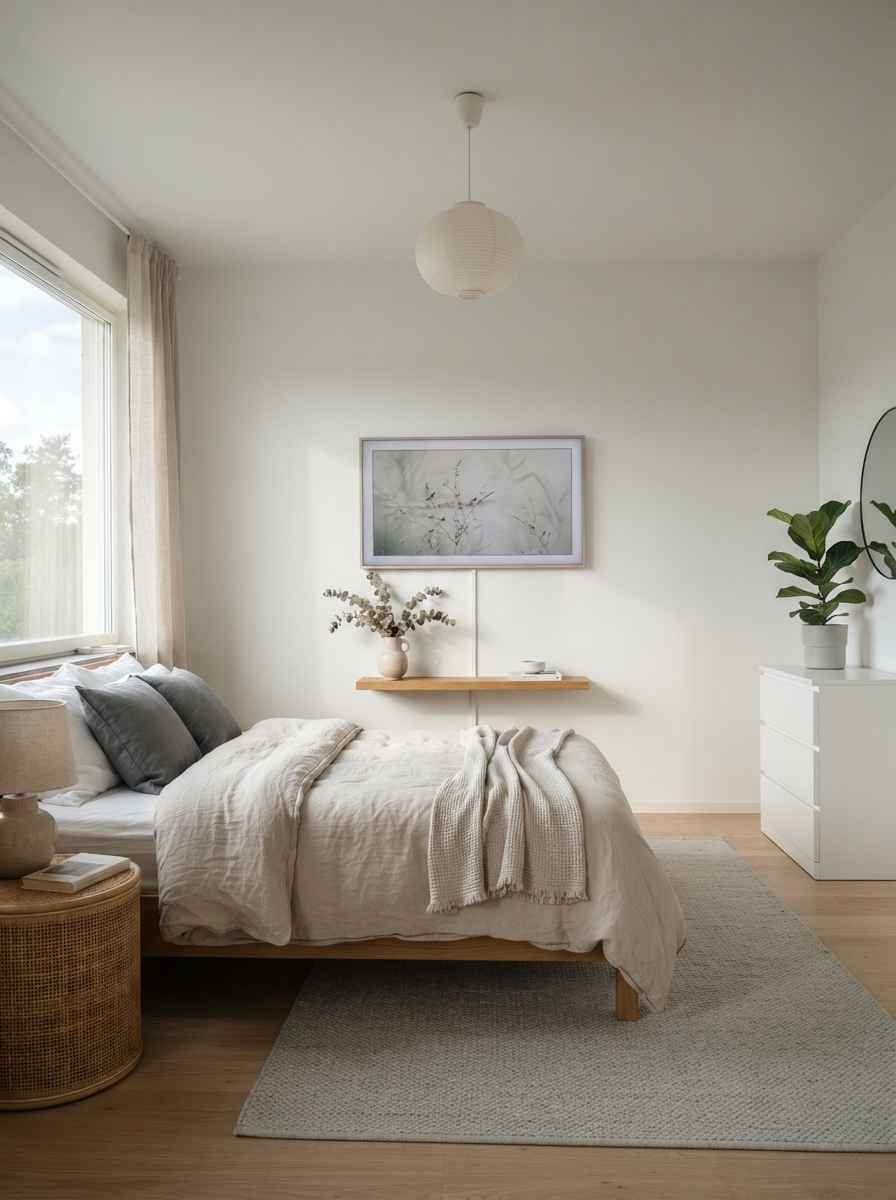
- Frame TV in art mode. Samsung’s Frame TV displays artwork when it’s off, and honestly, it’s the closest thing to cheating in bedroom design.
- IMO it’s overpriced for what you get, but if budget allows, it solves the “black hole on the wall” problem instantly.

- Sliding barn door cover. Mount the TV in a shallow niche and add a small sliding door on a barn-style track. Close it, and your wall reads as pure texture, wood, wallpaper, whatever you choose.

- Gallery wall camouflage. Surround the TV with a handful of framed prints at matching sizes so the screen reads as just another frame in the arrangement.

- Cabinet doors on hinges. Two doors that swing open from the center, similar to an old armoire. This one takes more carpentry but it’s genuinely satisfying to operate.

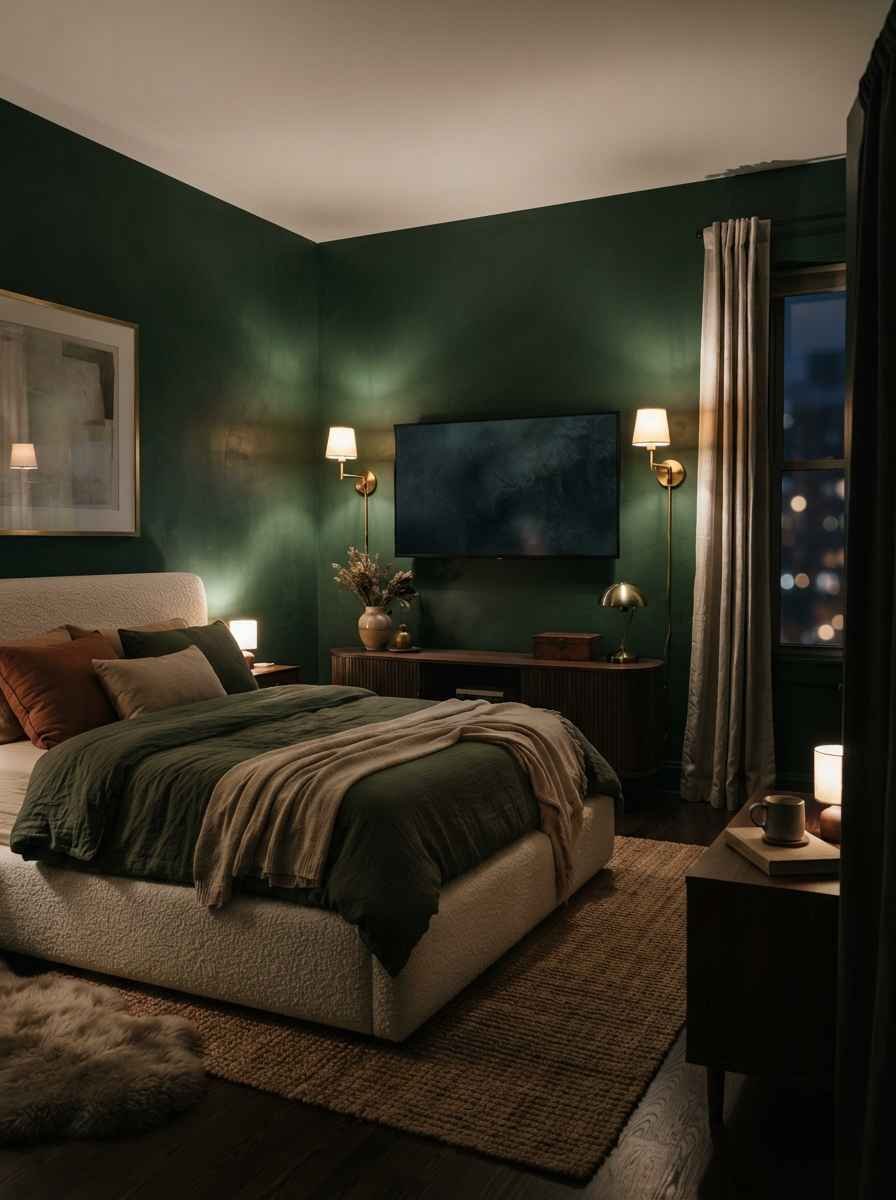
- Color-drenched wall. Paint the entire wall, TV included in spirit, one saturated color. A matte black or deep forest green wall makes a black TV nearly disappear into the background.
Ideas that make the TV the design feature

Sometimes you don’t want to hide it. You want the wall to look intentional, TV and all.
- Board and batten paneling. Build vertical or horizontal battens around the mount point, then paint everything one color.
- It gives the flat screen a “built-in” look for a fraction of custom cabinetry cost.

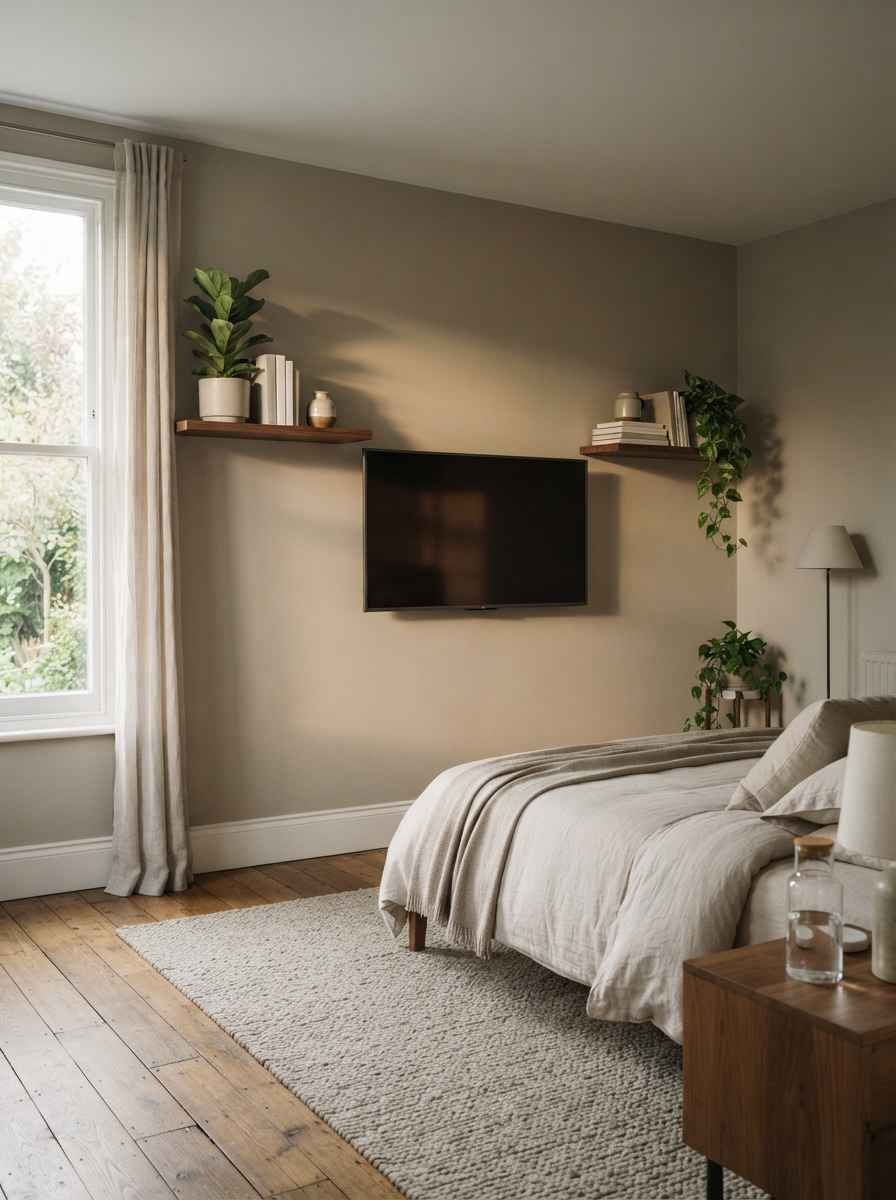
- Floating shelves flanking the screen. Add two slim shelves on either side for books, candles, or a small plant. Breaks up the rectangle and gives your eyes somewhere else to land.
- Textured accent wall. Shiplap, stone veneer, or a heavily textured wallpaper behind the mount adds depth that a plain drywall mount never will.

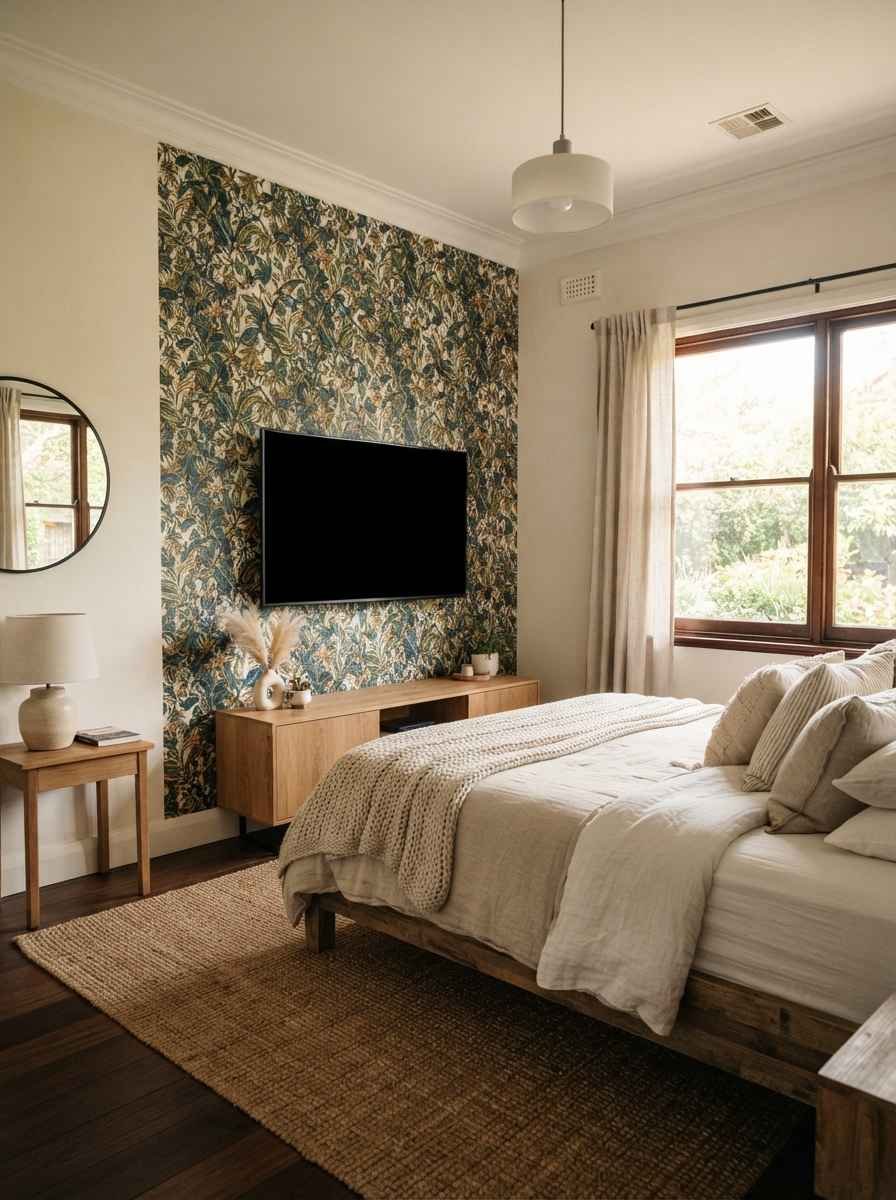
- Statement wallpaper backdrop. A bold pattern behind the TV turns the whole setup into a focal point instead of an afterthought.
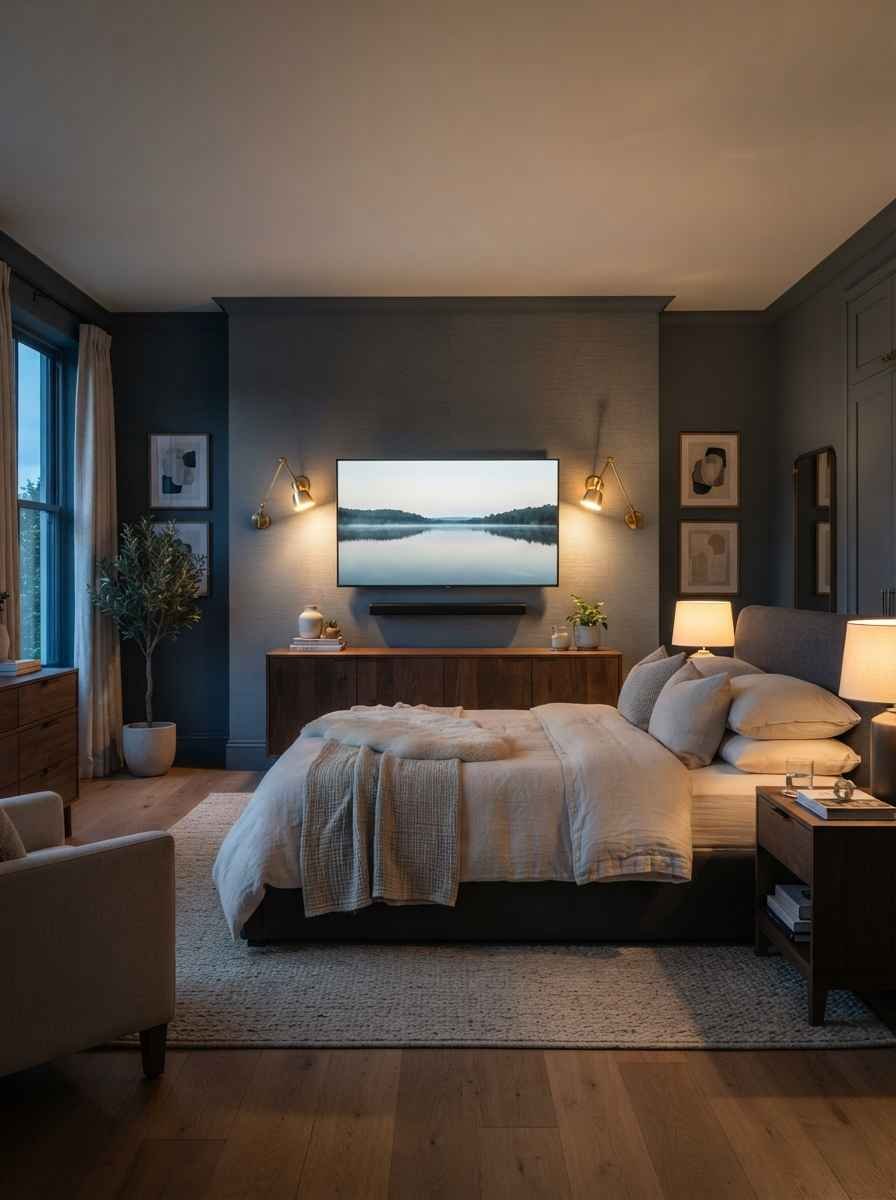
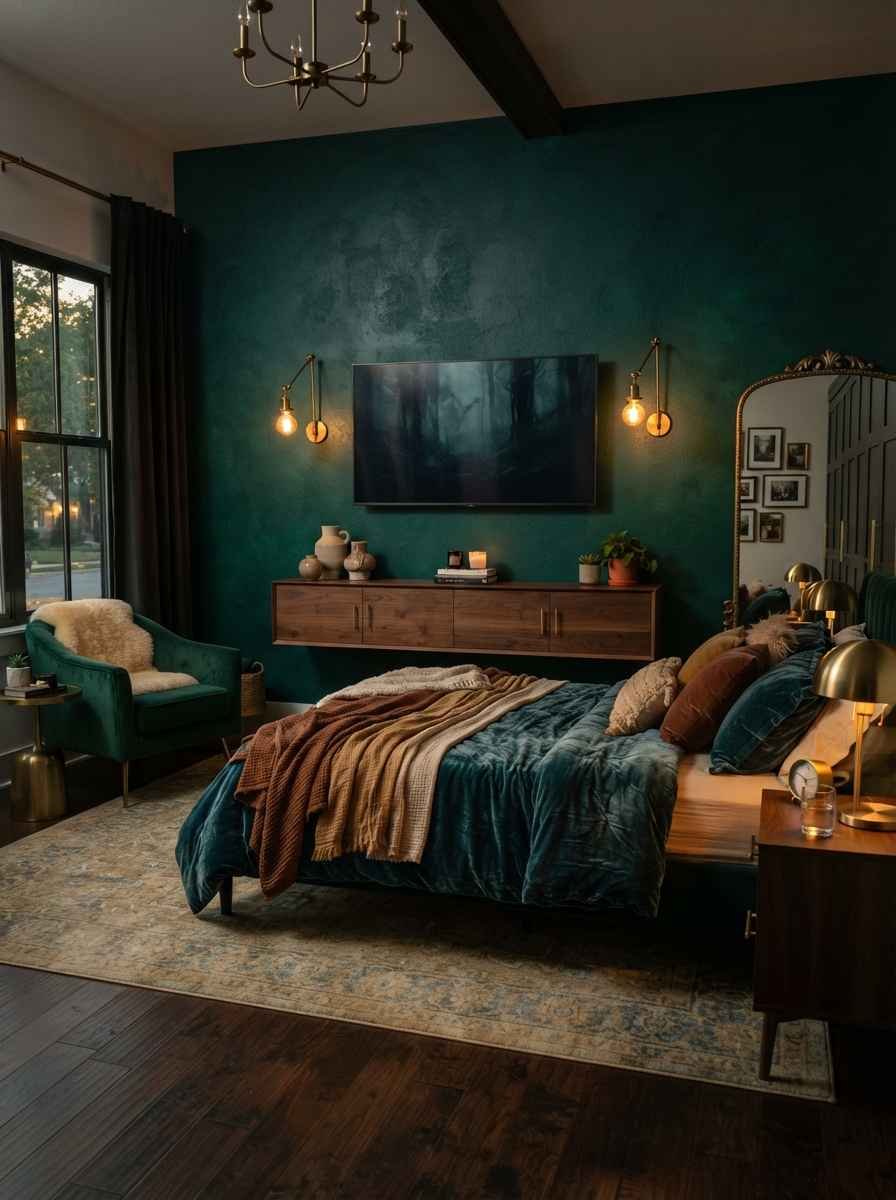
- Matching sconces on either side. Symmetrical lighting flanking the screen makes the whole arrangement look deliberate, almost like a piece of art gets hung there instead of an appliance.
Ideas for small or awkward bedrooms
Not everyone has a big blank wall facing the bed. These work when your layout fights you.
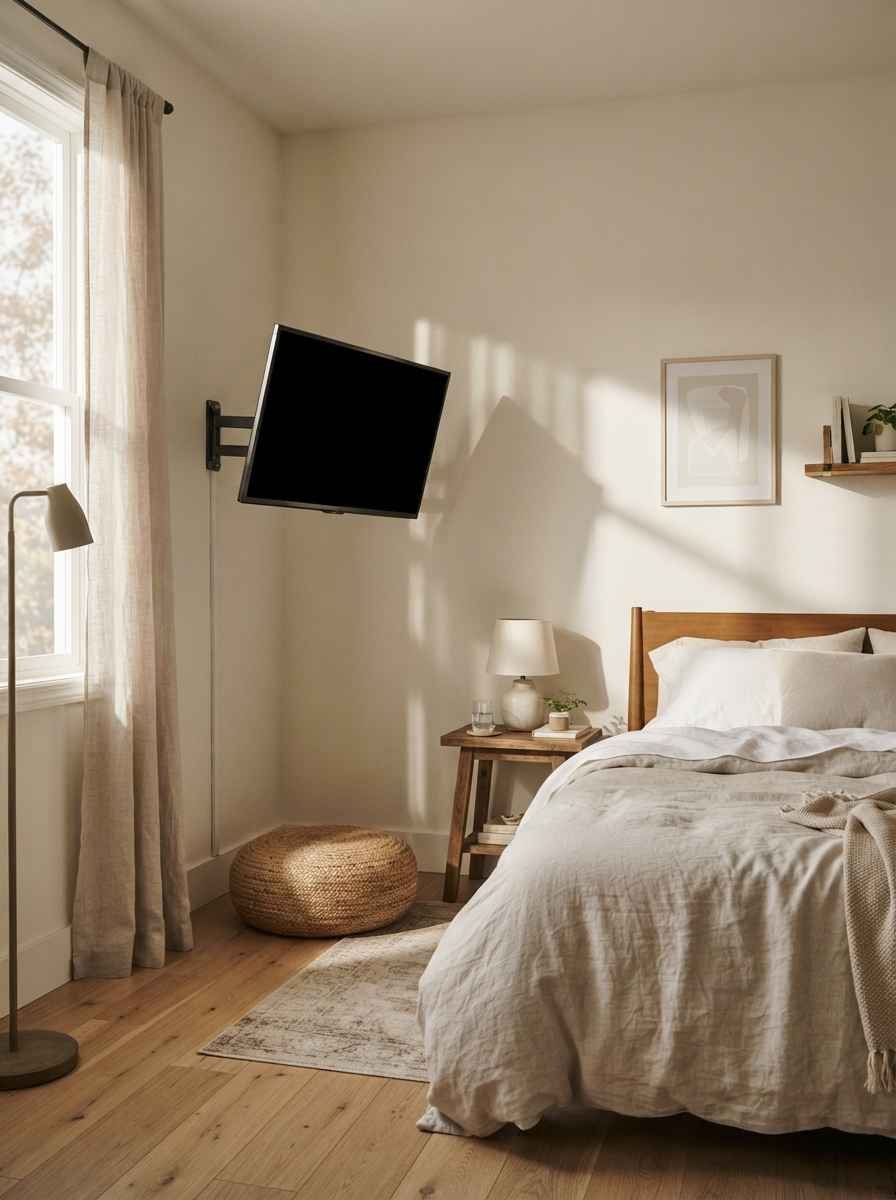
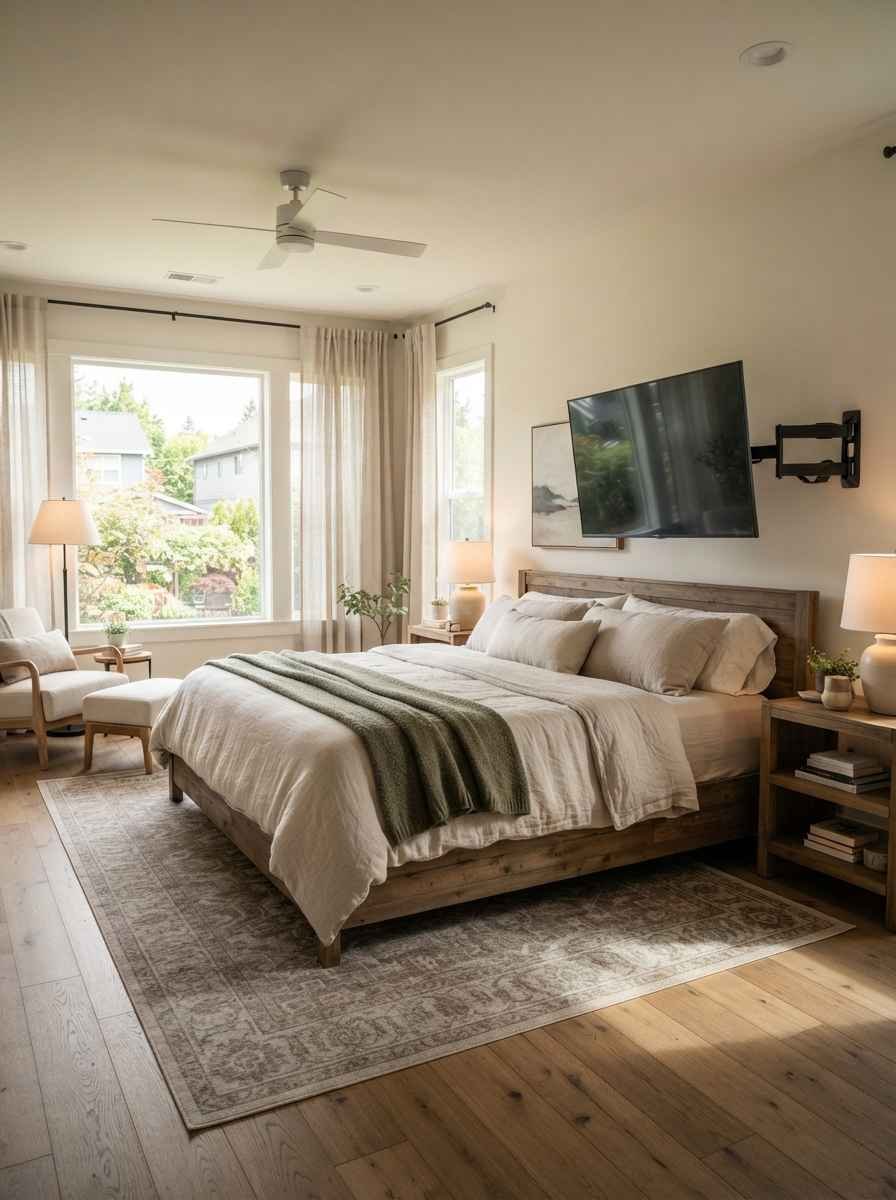
- Corner mount with a swivel bracket. A full-motion mount lets the TV pull out from the corner and angle toward the bed, which solves a surprising number of layout problems.

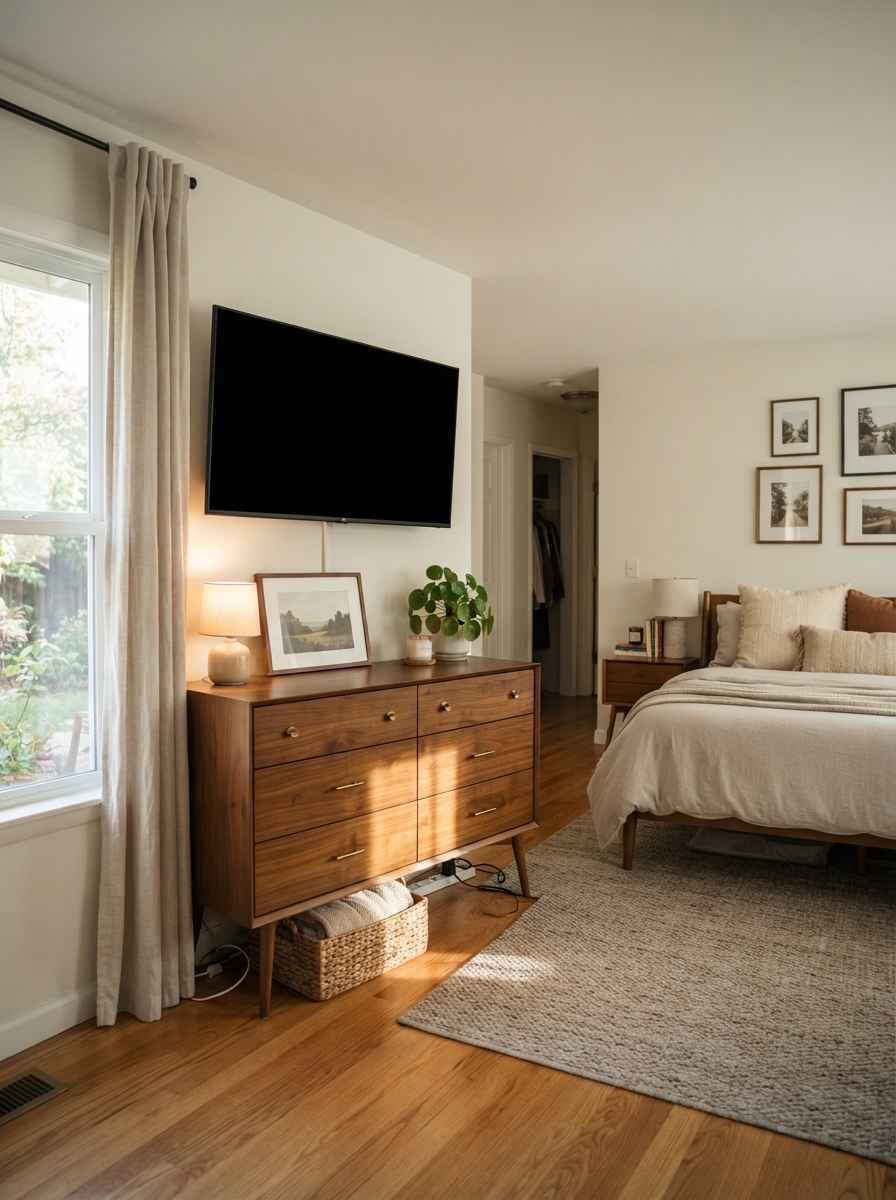
- Above a low dresser. Skip the dedicated console. Mount the TV a few inches above furniture you already own and free up floor space.
- Recessed wall niche. Frame out a shallow pocket in the drywall so the TV sits flush instead of protruding. Cleaner look, and it hides the mounting hardware completely.
- Under-cabinet mount for studios. In tiny bedrooms or studio apartments, a slim articulating arm tucked under a shelf or loft bed keeps the TV out of the main sightline until you swing it out.

- Adjustable arm that swings toward the closet side. If your bed sits at an angle, an arm mount that pivots toward wherever you’re actually lying beats a fixed spot every time.
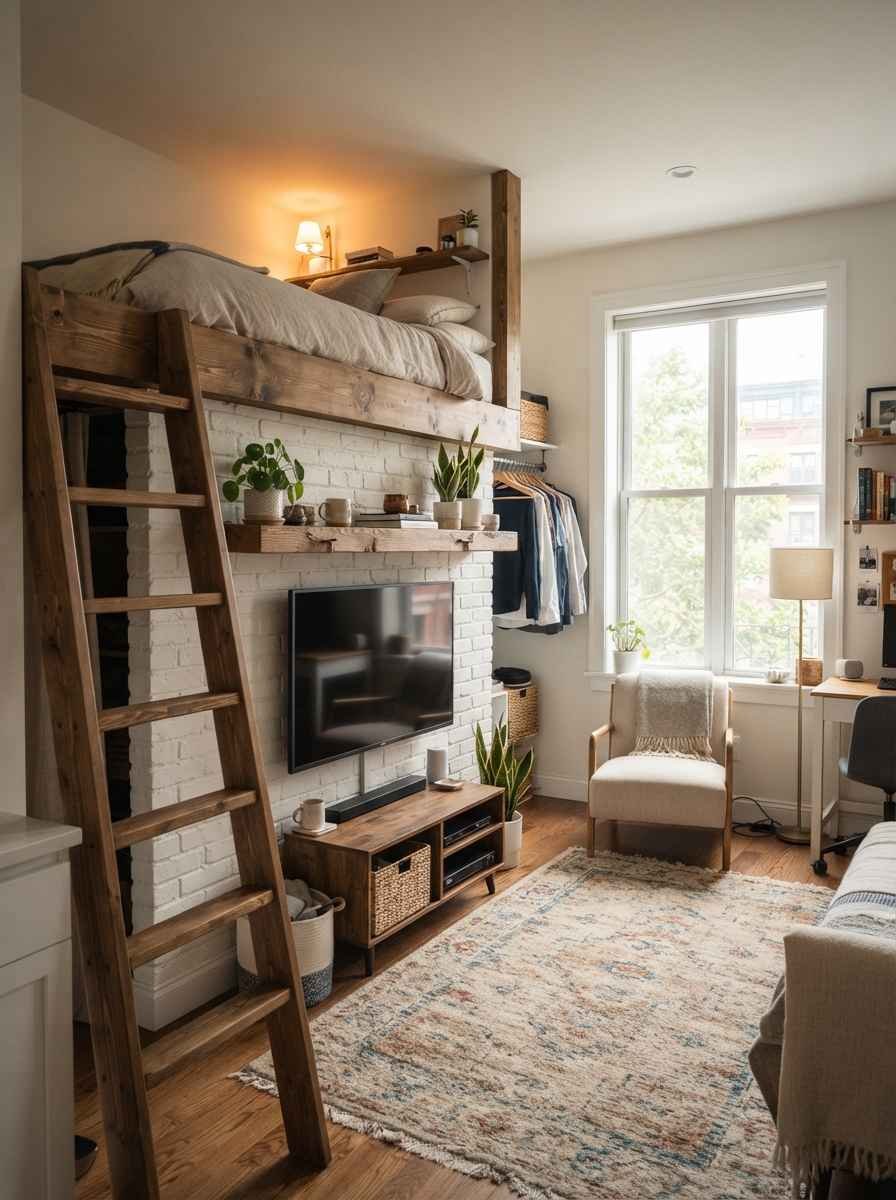
Ideas that lean into a specific aesthetic
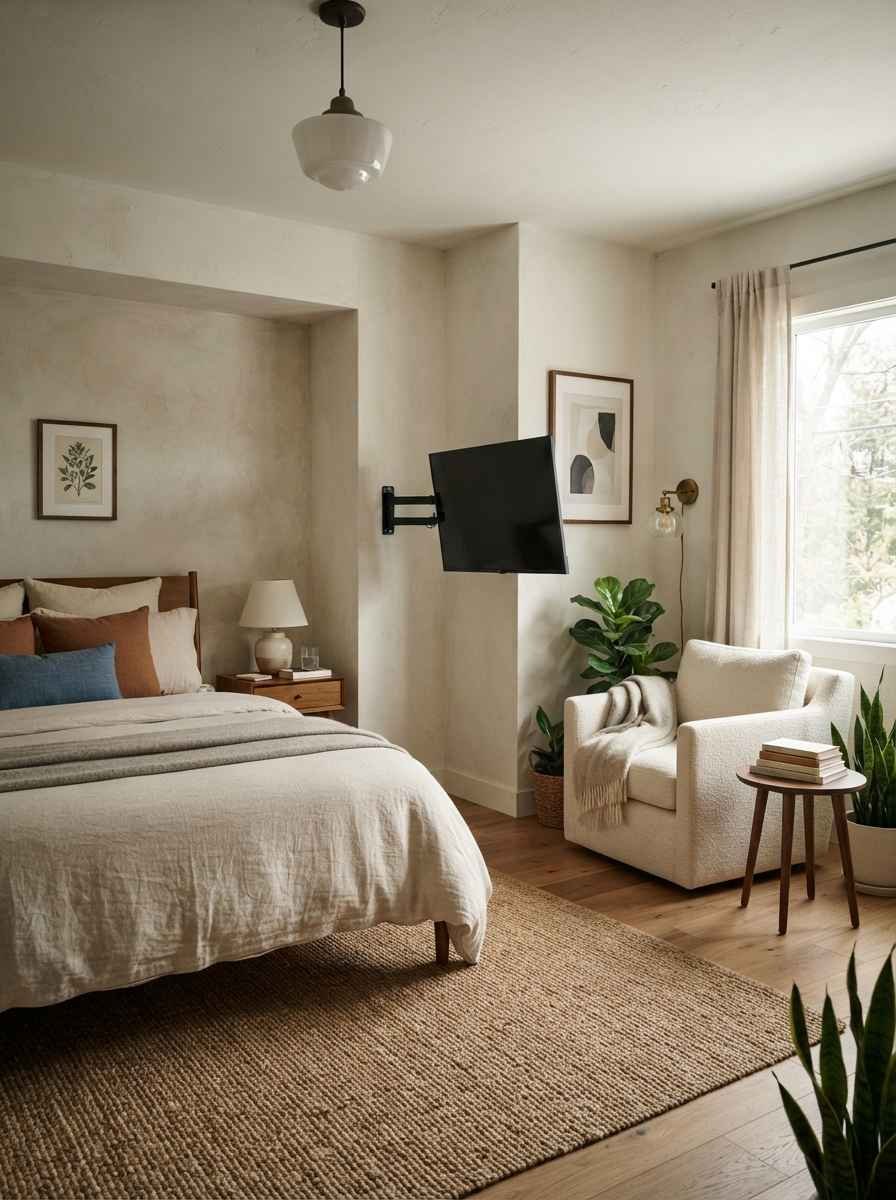
- Minimalist black-on-black. Pair a black-bezel TV with a matte black wall so the screen edges vanish and only the picture reads.
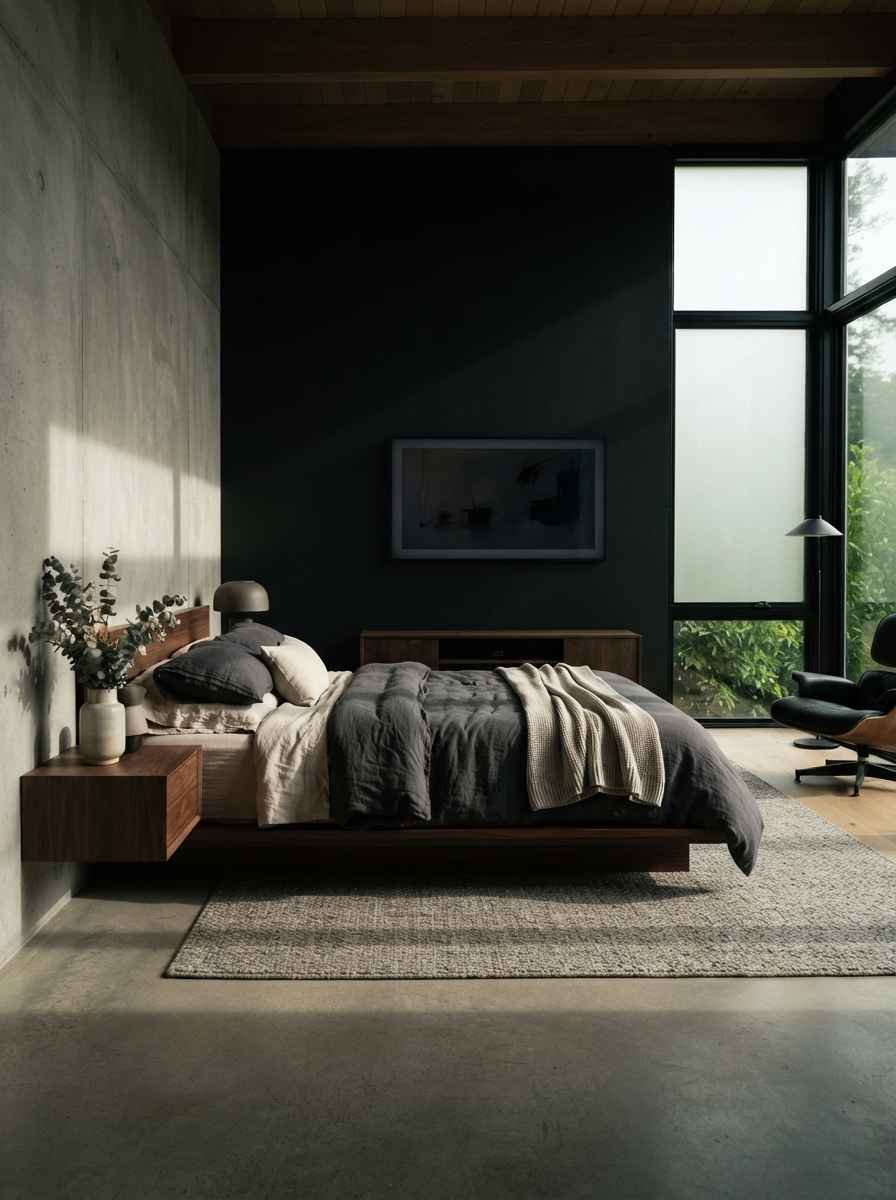
- Warm wood slat wall. Vertical wood slats behind the mount add warmth without competing with the screen when it’s on.

- Boho gallery mix. Combine woven wall hangings, dried florals, and small prints around the TV for a lived-in, collected look.

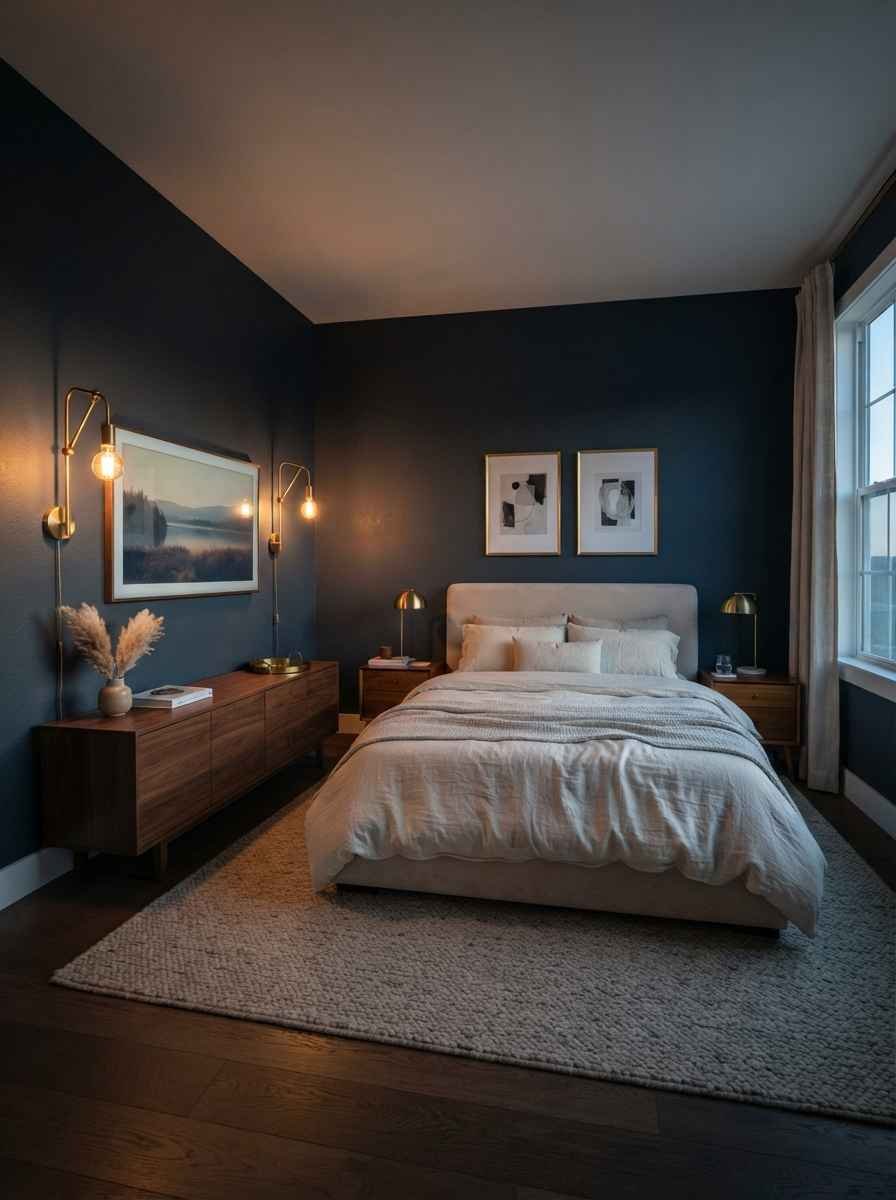
- Moody jewel-tone wall. Deep navy, burgundy, or emerald behind the screen creates contrast that photographs beautifully, which matters if you’re pinning this for inspiration in the first place.
- Scandinavian simplicity. Bare white wall, thin-profile TV, one small shelf underneath. Nothing else. Sometimes restraint is the whole design.
Ideas built around comfort, not just looks
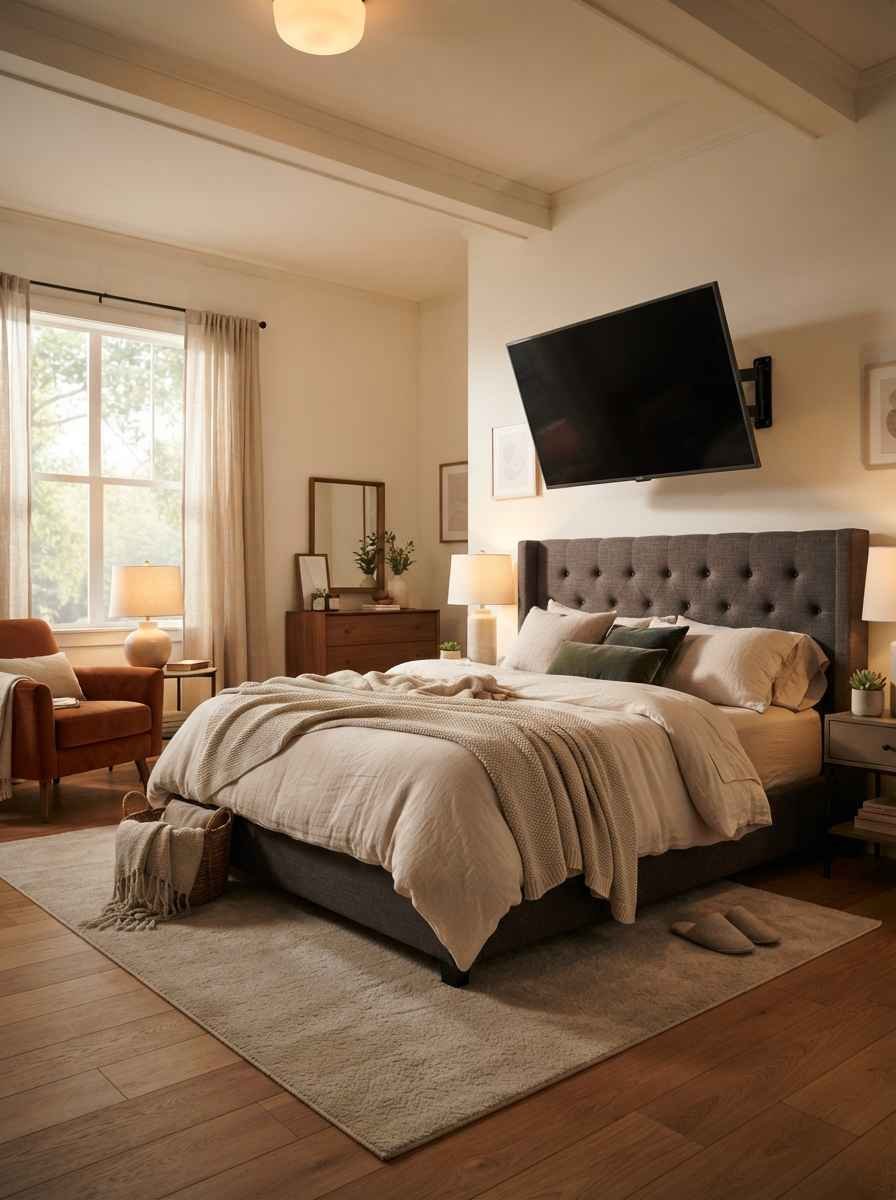
- Tilting mount for reading-in-bed posture. A tilt bracket lets you angle the screen down a few degrees, which cuts glare and reduces the neck strain that ruined my first attempt.
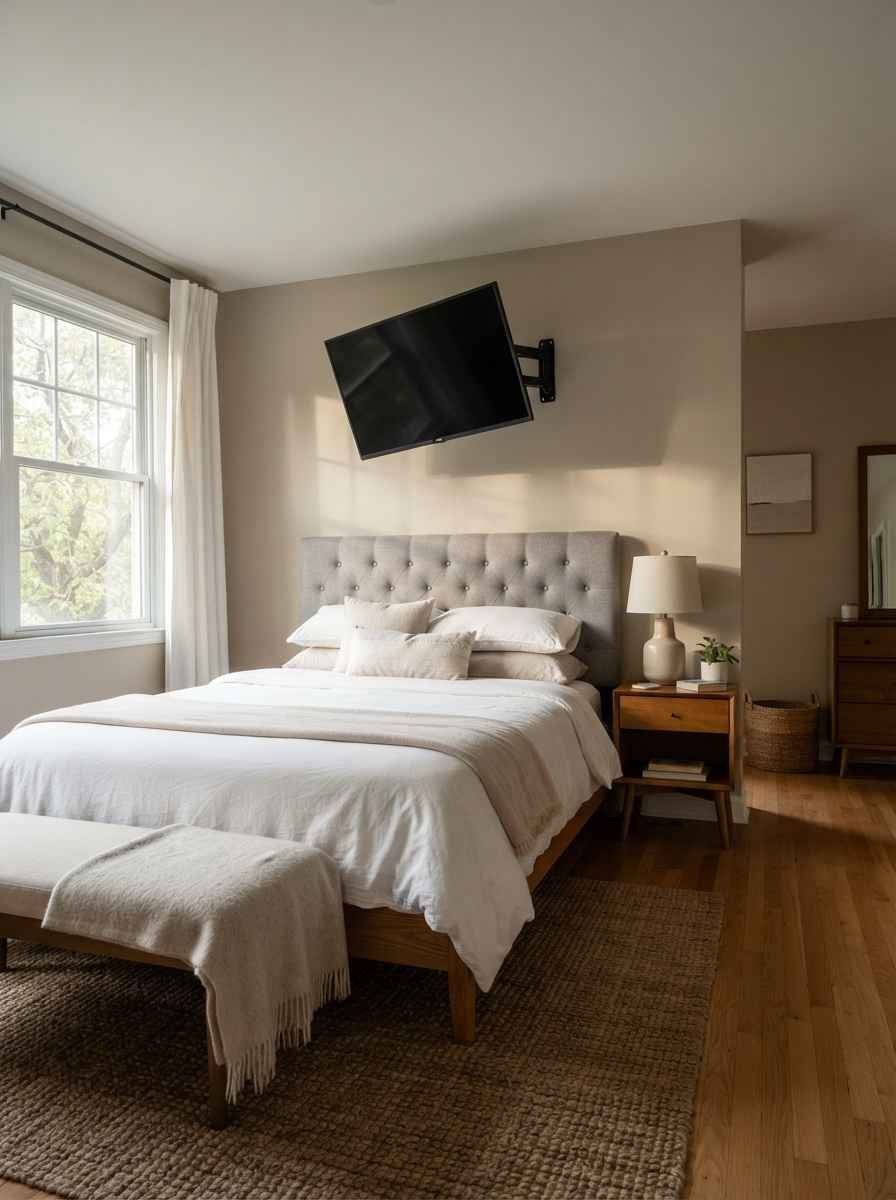
- Full-motion mount for shared beds. If two people watch from slightly different spots, a full-motion arm lets you nudge the angle without getting up.
- Cord channel painted to match the wall. Cheap, easy, and it’s the single upgrade that makes a mount look professionally installed instead of DIY.
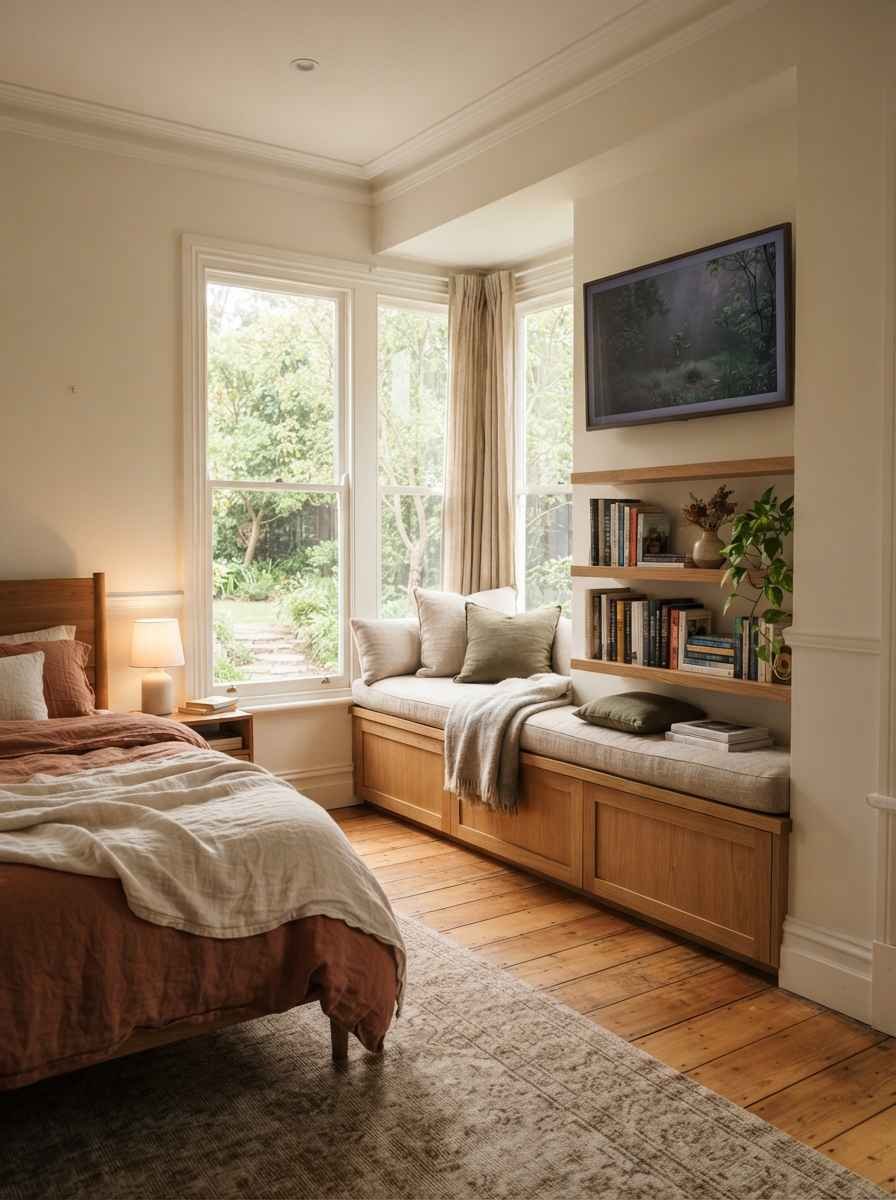
- TV above a window seat or bench. If your bedroom has a reading nook, mounting there instead of over the bed keeps the sleeping area screen-free while still giving you a viewing spot.
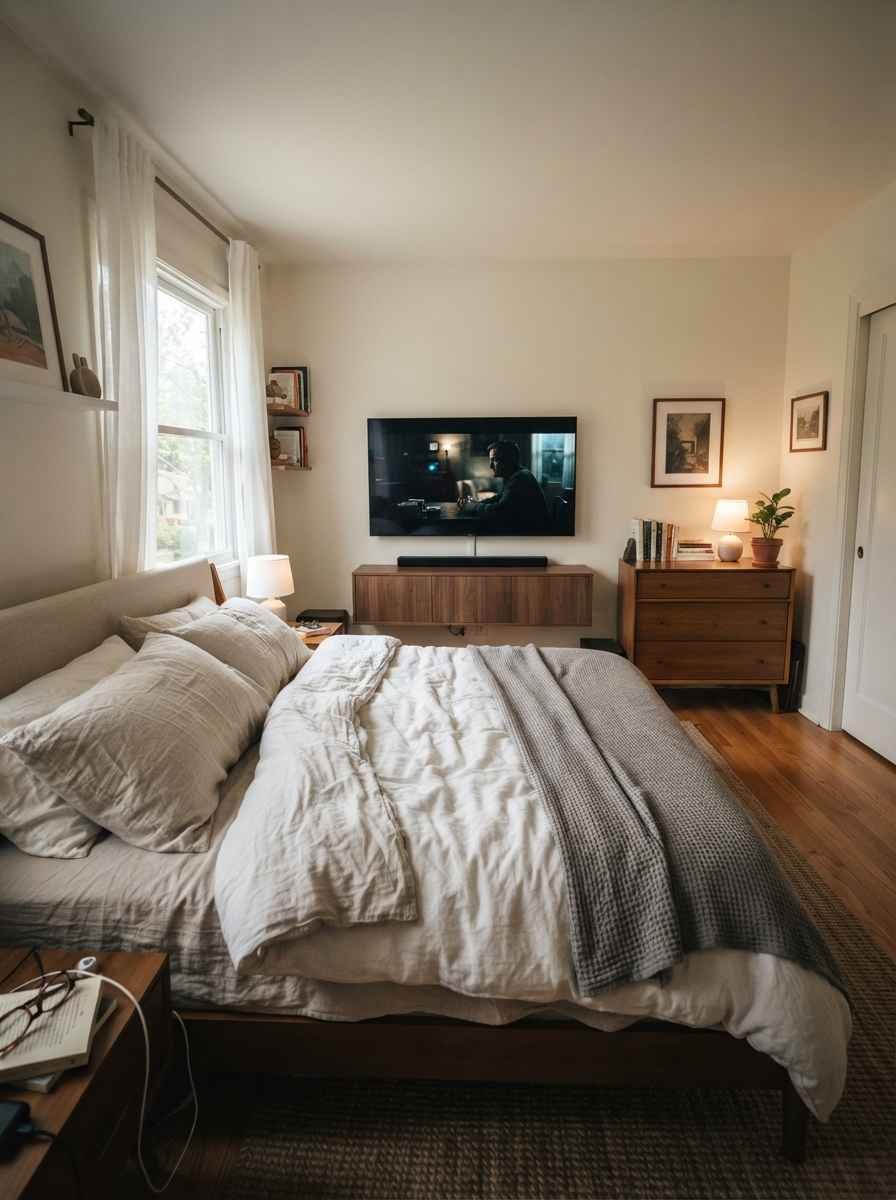
- Height matched to your actual pillow stack. This isn’t a “look,” it’s a habit.
- Before finalizing any of the ideas above, sit in your real nighttime position and check the angle. It changes everything about how the rest looks day to day.
That last one probably belongs at the top of this list, not the bottom, but here we are.
Design blogs love talking about aesthetics and forget that you’re going to be squinting up at this thing for the next five years.
Random aside: I once spent an entire Saturday debating paint swatches for this exact wall, three shades of “greige” that looked identical under my kitchen lights, and completely different at 9pm with the TV on.
Test your paint at night. Nobody tells you that part.
A word on safety before you start drilling

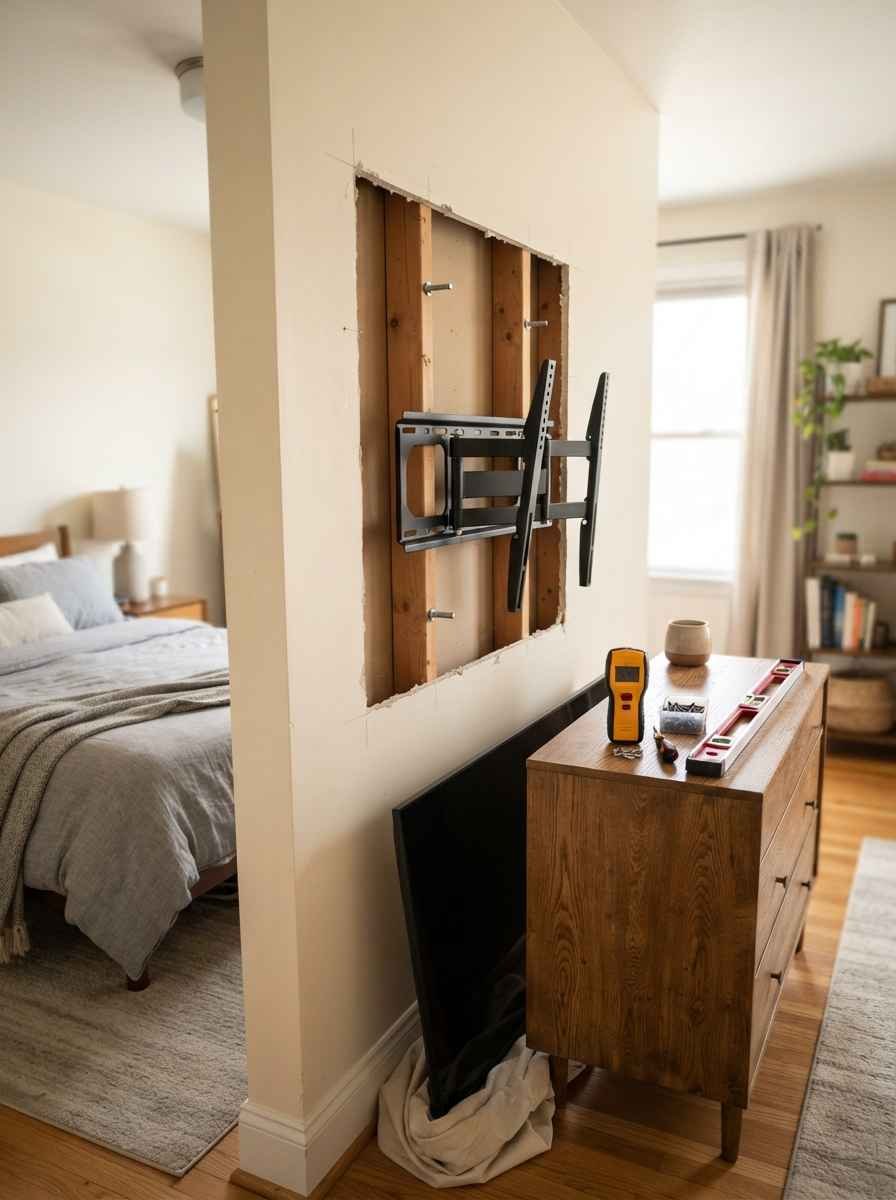
Before any of this becomes a Pinterest board come to life, find your studs.
A mount screwed only into drywall can fail under the weight of a modern TV, and that’s not a risk worth taking above a bed.
HelloTech’s mounting guide walks through the basics of stud location and weight limits if you’re doing this yourself for the first time.
If your walls are plaster or lath instead of drywall, a magnetic stud finder works better than the standard kind.
And if you’re mounting anything larger than 55 inches, check your bracket’s weight rating twice. Cheap mounts cut corners here more than anywhere else.
FAQs
How high should I mount a TV in a bedroom? Most people land somewhere between 48 and 60 inches from the floor to the center of the screen, higher than a living room mount, since you’re viewing from a reclined position.
Your actual number depends on bed height and how you prop yourself up.
Do I need a special mount for a bedroom TV? A tilting mount is usually worth the extra cost. It lets you angle the screen down toward your eye level while lying down, which cuts neck strain and glare in a way a fixed mount can’t.
Can I mount a TV without hitting a stud? Technically yes, with toggle bolts rated for the weight, but I wouldn’t risk it above a bed. Stud mounting is safer and it’s a five-minute job with a stud finder.
Final thought
Twenty-five ideas is a lot to scroll through, so don’t try to use all of them. Pick the one or two that match how your bedroom actually functions, not just how it photographs.
Which one are you saving first, the hidden Frame TV setup or the moody jewel-tone wall? Tell me in the comments, or better yet, pin it and come back once it’s on your wall.
