
I mounted my first bedroom TV crooked. By about an inch and a half.
You couldn’t tell from the bed, but I knew. Every single night, I knew.
So when I finally redid it (properly, with a level and someone holding the other end of the tape measure), I fell down a rabbit hole of bedroom TV setups.
Some were gorgeous. Some looked like a Best Buy display case got dropped into a bedroom by accident.
This list is everything I wish I’d known before I picked up the drill. Whether you’re working with a cramped studio, a king-size primary suite, or a rental where drilling is basically a felony, there’s an idea here for you.
Quick Reference: Which Mount Fits Your Bedroom
| Mount Type | Best For | Typical Cost | Effort Level |
|---|---|---|---|
| Fixed (flush) mount | Small rooms, minimalist look | $20–$50 | Low |
| Tilting mount | Watching from bed at an angle | $30–$80 | Low to medium |
| Full-motion / articulating arm | Awkward wall placement, corner setups | $60–$200 | Medium |
| No-drill floating shelf or cabinet | Renters, plaster walls | $40–$150 | Low |
I’ve used three of these four. The full-motion arm is my personal favorite for a bedroom, and I’ll explain why in a minute.
Get the Basics Right First
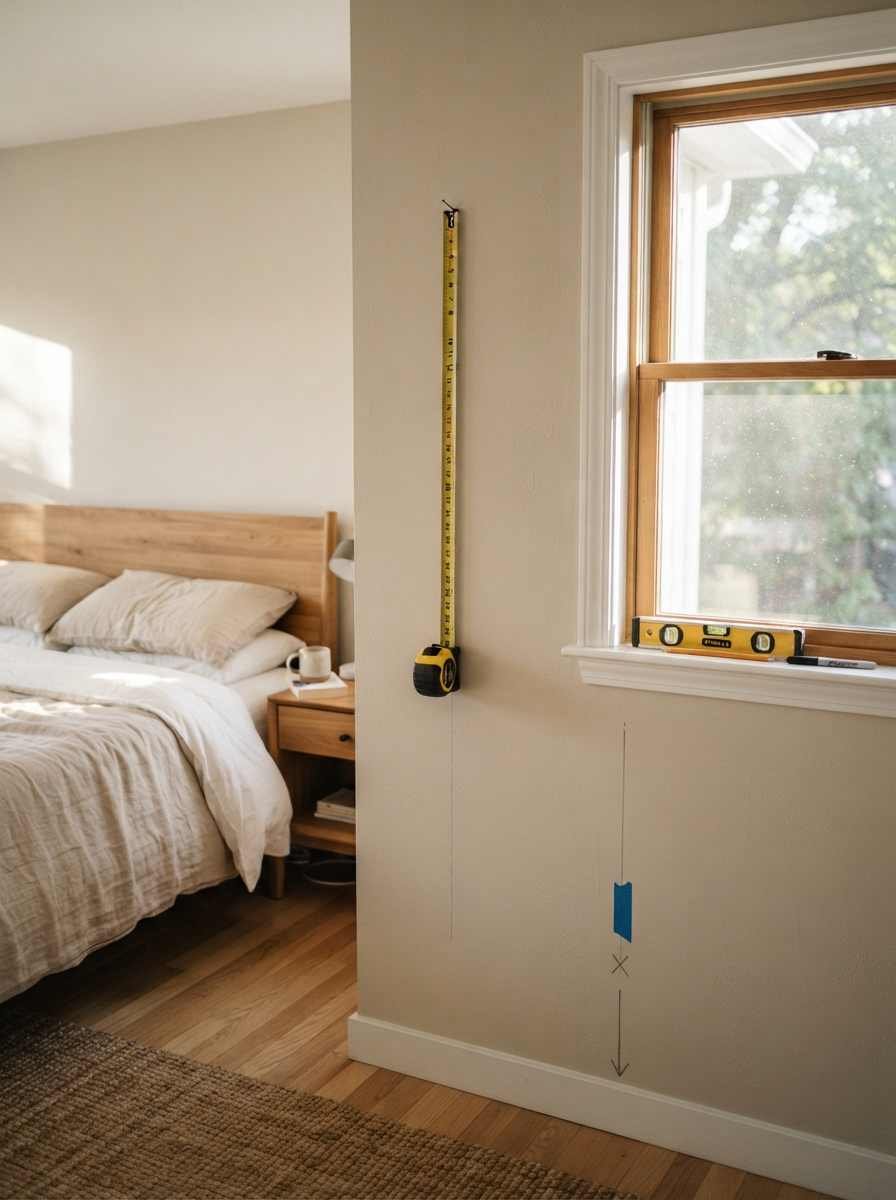
Before any of the pretty stuff, a few practical things matter more than aesthetics.
Height matters more than you’d think. A TV mounted for a couch doesn’t work for a bed, because you’re reclining, not sitting upright.
One bedroom TV placement guide recommends lying in bed, closing your eyes, and pointing to where your gaze naturally lands, then marking that exact spot on the wall before you drill a single hole. It sounds silly. It works.
Studs are non-negotiable. Drywall alone won’t hold a 40-pound TV for long, no matter how confident the anchor packaging looks.
If you don’t own a stud finder, Tom’s Guide has a solid rundown of five ways to locate a stud without buying a tool, including the classic knuckle-knock test.
Cables ruin the look faster than anything else. A gorgeous TV setup with three cords dangling to an outlet just looks unfinished.
Bob Vila’s guide on hiding TV wires covers recessed cable plates if you’re comfortable cutting into drywall, plus lower-effort options if you’re not.
Okay. Onto the ideas.
19 Bedroom TV Wall Ideas That Actually Work
1. The floating console illusion
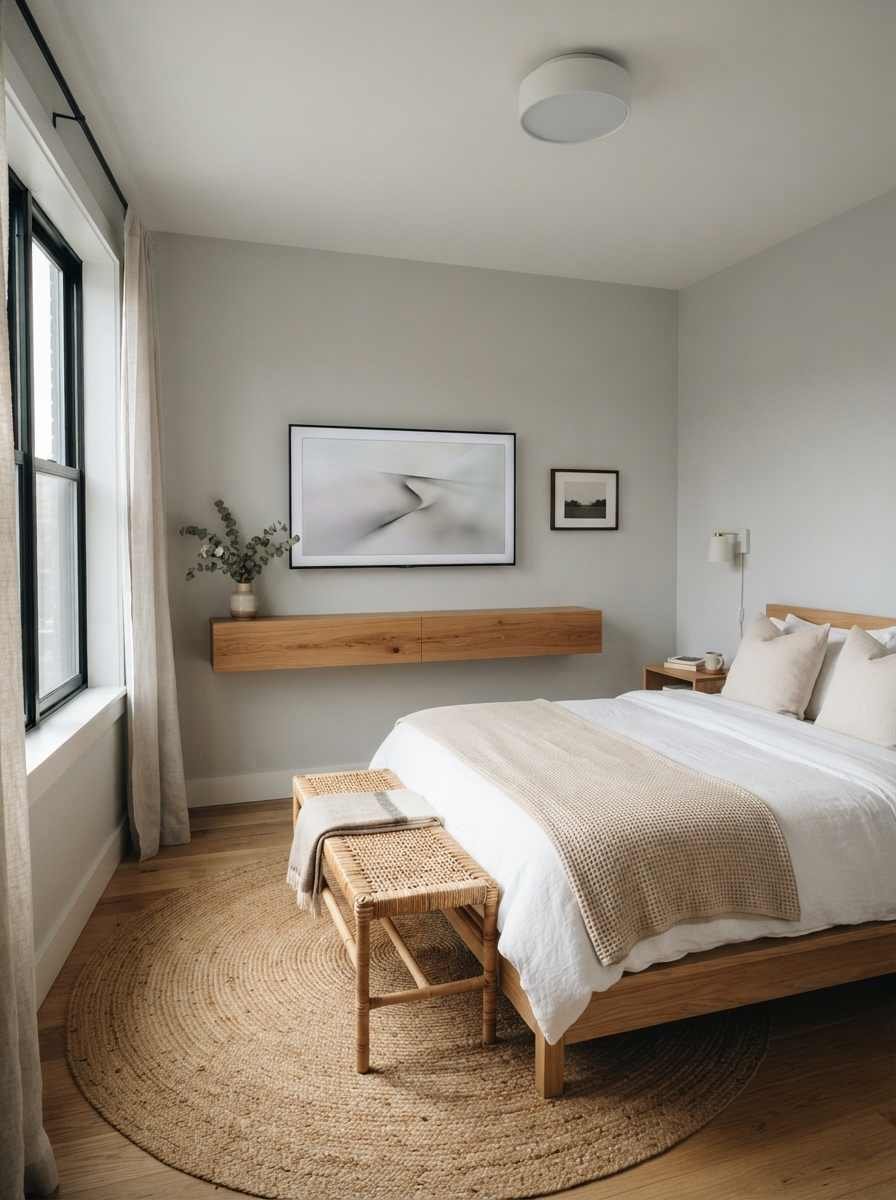
Mount the TV, then hang a slim floating shelf about 12 inches below it. It reads like a media console without eating floor space.
I did this in a 220-square-foot apartment and it made the room feel almost 20% bigger. IMO, this is the single best trick for small bedrooms.
2. Gallery wall with the TV as one “frame”
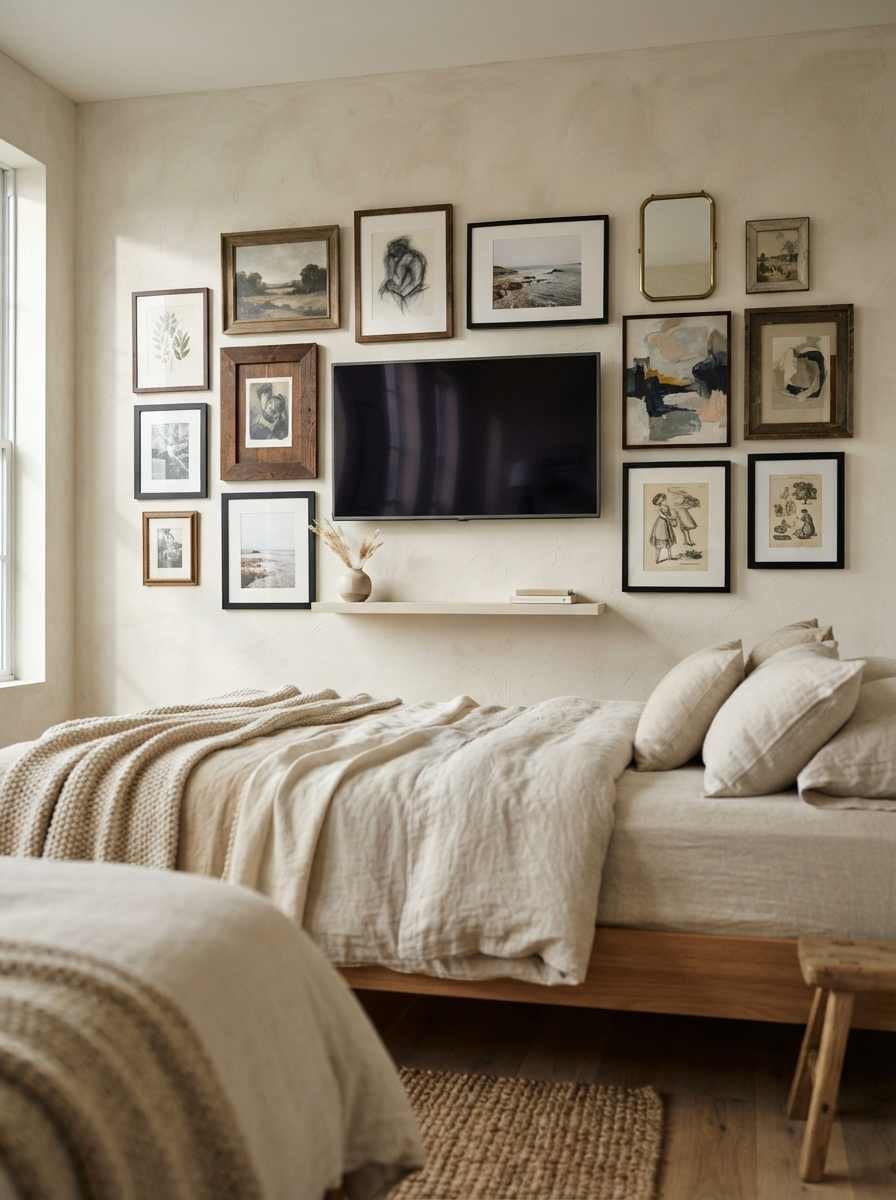
Surround the TV with actual framed art, arranged so the screen sits inside the grid like just another piece. When it’s off, you genuinely forget it’s a TV.
- Use frames in 2-3 sizes max, not one uniform size
- Keep 2-3 inches of spacing between every piece
- Turn the TV off before you commit to the final layout, since a black rectangle changes how everything else reads
3. Frame-style art mode TV

Several brands now sell TVs designed to display artwork when not in use, with a textured bezel that mimics an actual picture frame.
It’s pricier, sure, but if you hate the “black hole on the wall” look during the day, this solves it completely.
4. Centered above a low dresser
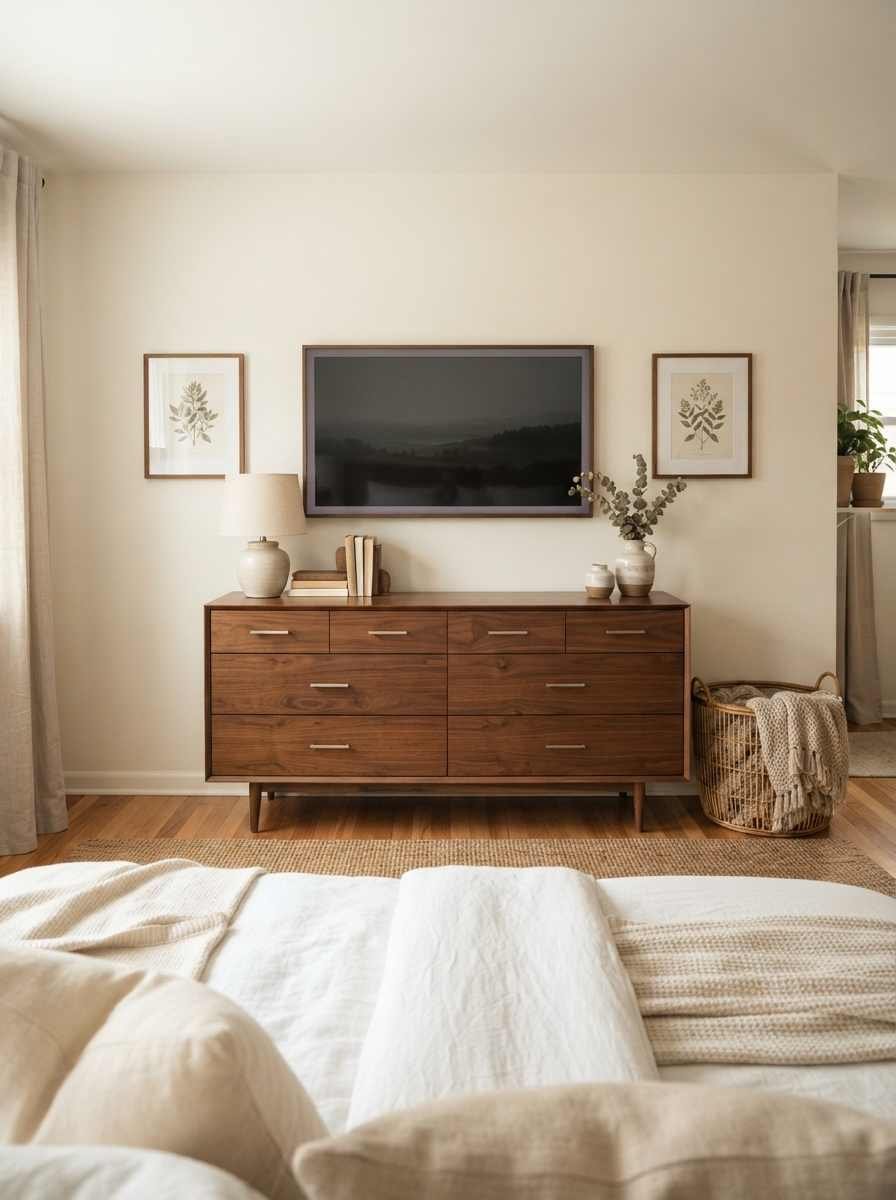
The classic. Mount the TV directly above a dresser that’s already against that wall. Simple, symmetrical, and it doubles your storage without adding furniture.
5. Off-center, aligned with the bed’s sightline
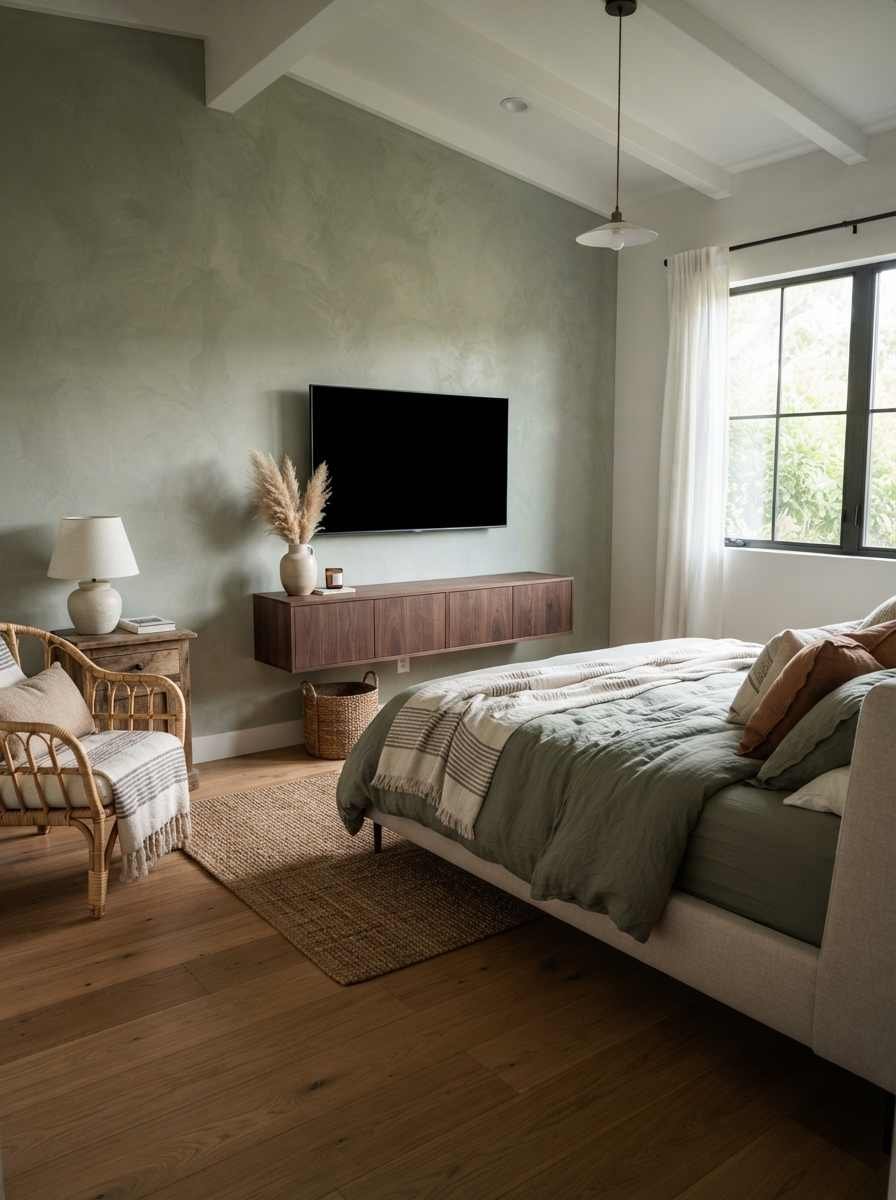
Here’s a rhetorical question for you: why does the TV have to be centered on the wall at all?
If your bed sits at an angle, or your nightstand eats up one side, mount the TV where your eyes actually land, not where the wall’s midpoint happens to be.
6. Behind a barn door or sliding panel
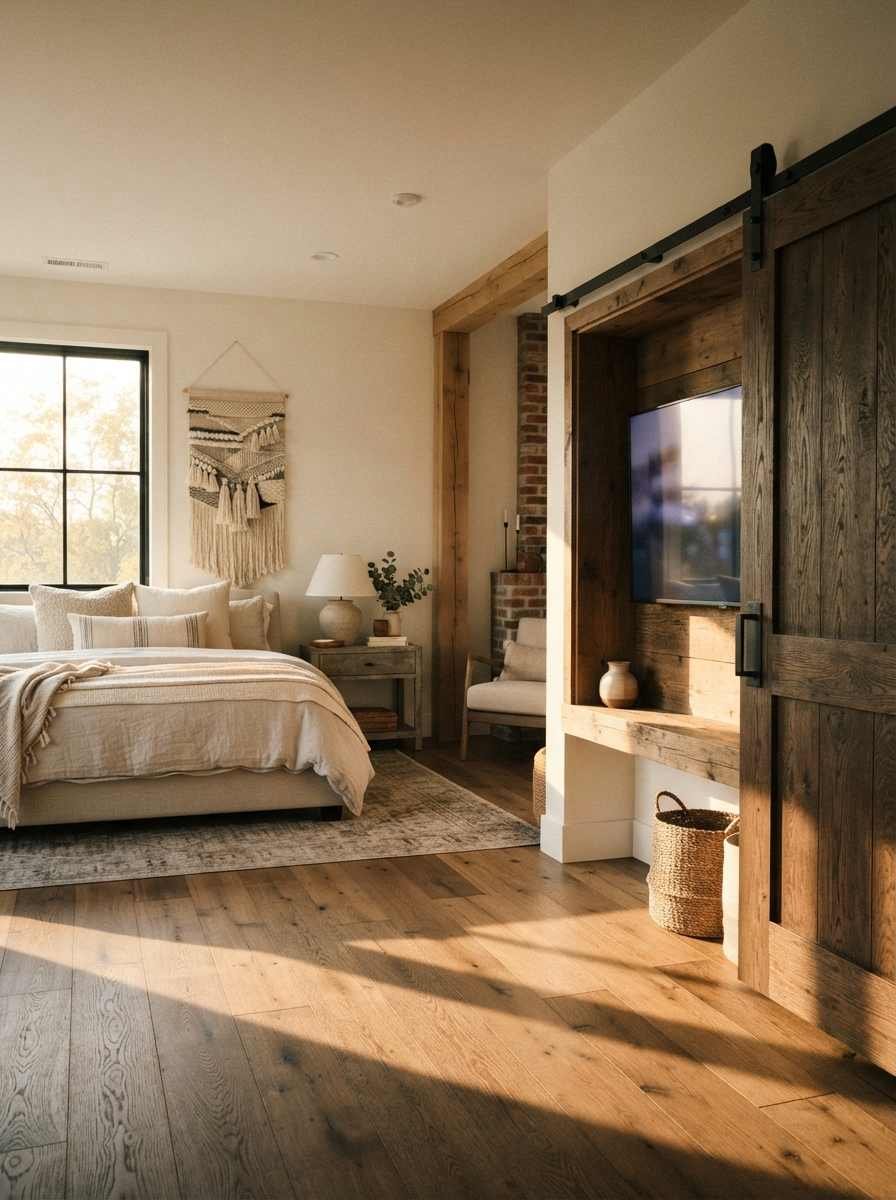
A sliding wood or fabric panel on a track hides the TV entirely when you’re not using it.
This one takes real carpentry skill, or a generous budget for a contractor, but the payoff is a bedroom that looks like a boutique hotel room half the time.
7. Recessed into a niche
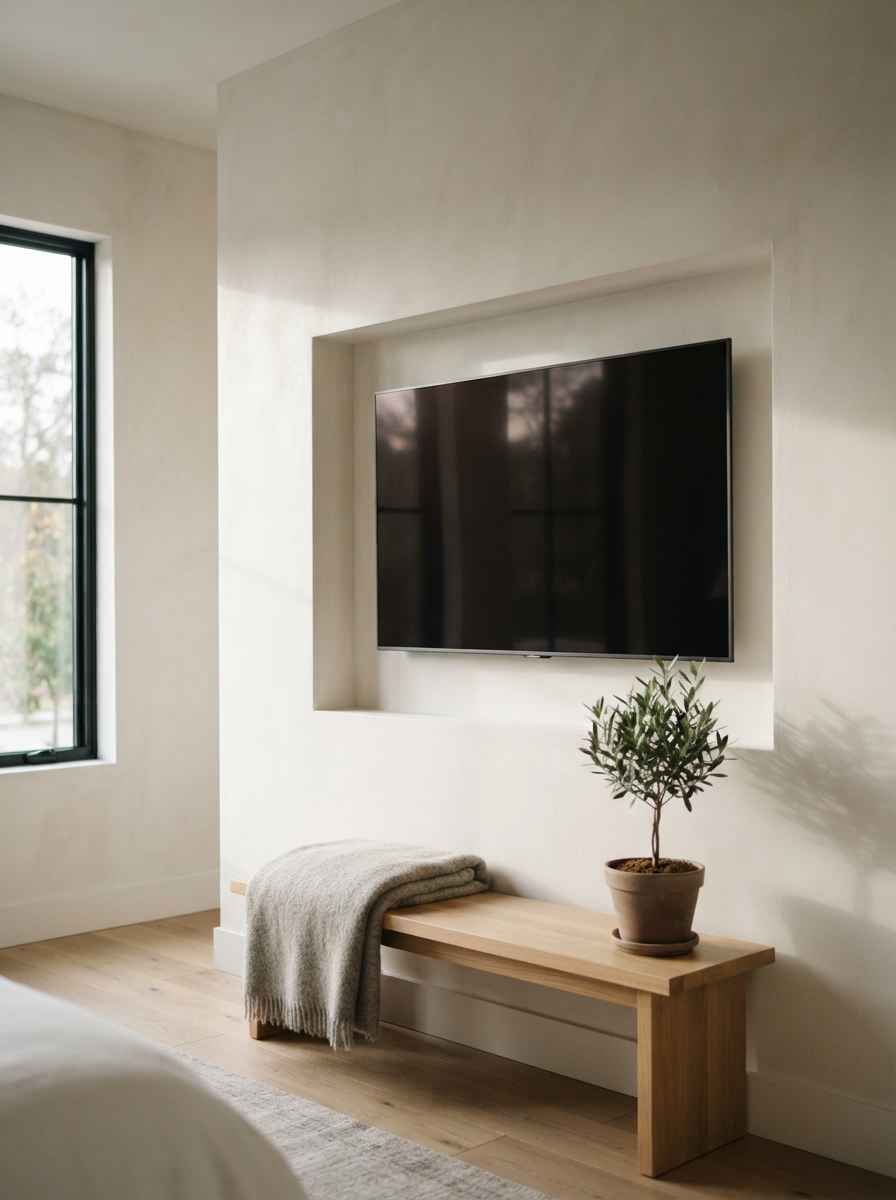
If you’re renovating anyway, framing out a shallow recess for the TV lets it sit almost flush with the wall. Cleaner sightline, and no bulky mount arm sticking out.
8. Swivel arm for a reading nook layout
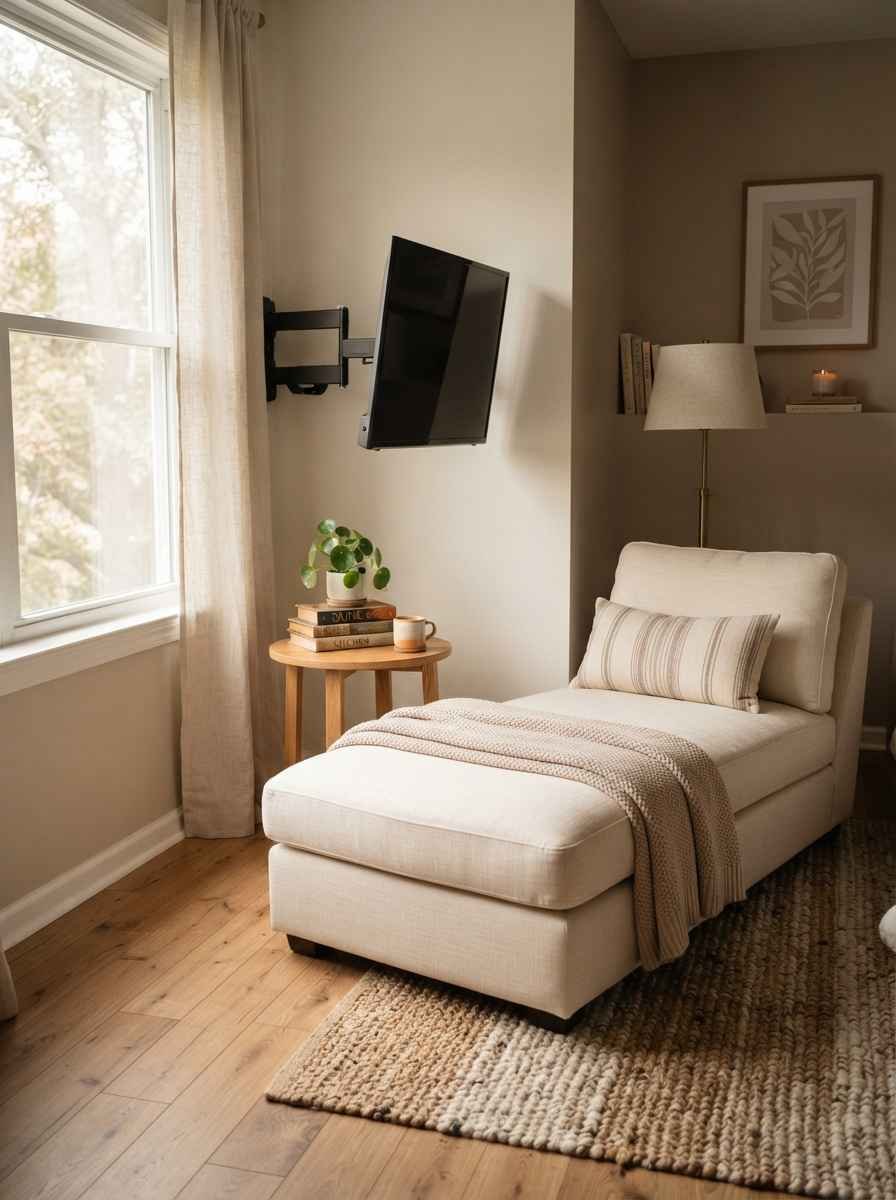
If your bed isn’t facing the main wall (say you’ve got a chaise or reading chair in the corner), a full-motion arm lets you swing the screen toward whichever spot you’re actually lounging in.
This is the setup I use now, and honestly, it’s the one upgrade in my apartment that visitors comment on every single time.
9. TV above a fireplace-style accent wall
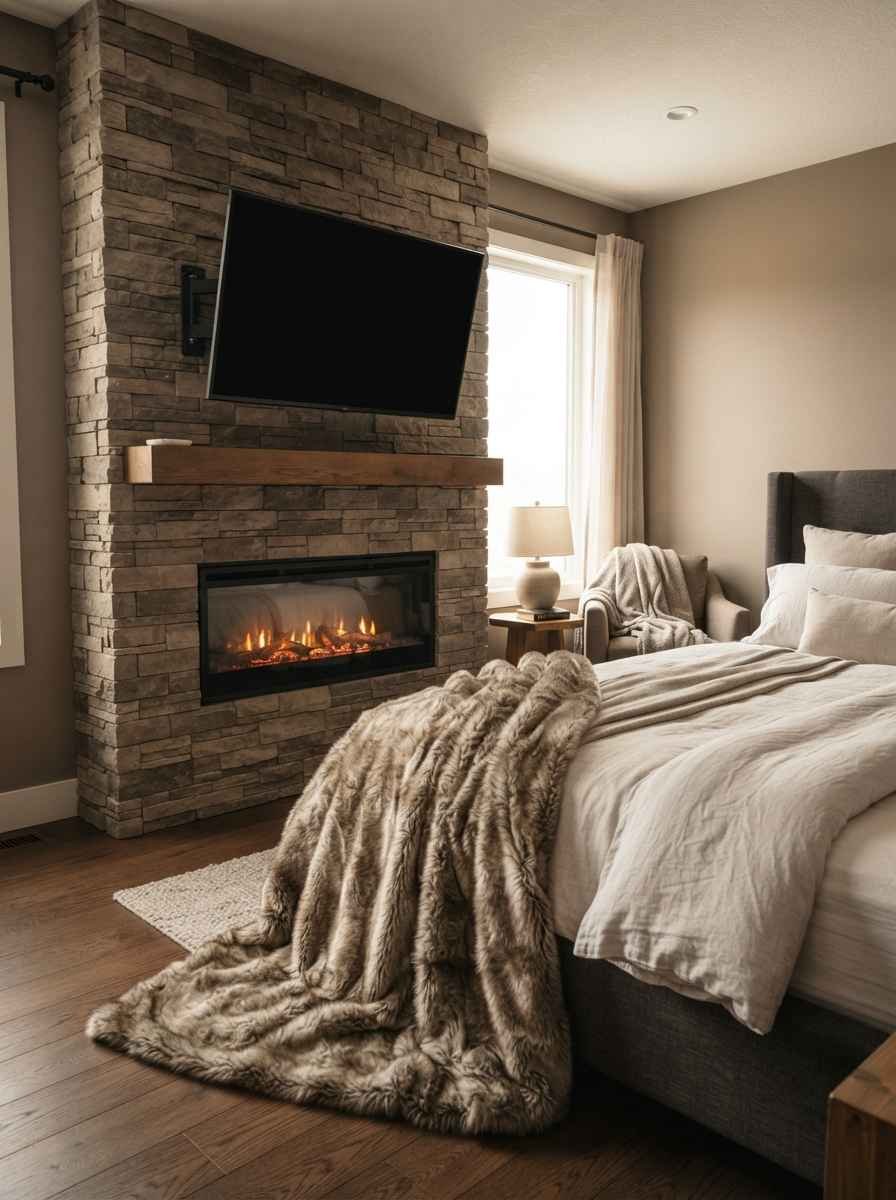
Some bedrooms have an electric fireplace or a faux mantel.
Mounting the TV above it works, but only with a tilting bracket, since fireplace height is almost always too high for comfortable reclined viewing.
10. Flanked by matching sconces

Two wall sconces, one on either side of the TV, at the same height. It frames the screen and adds warm light for reading once the TV’s off.
Simple, but it upgrades the whole wall instantly.
11. Inside a built-in shelving unit
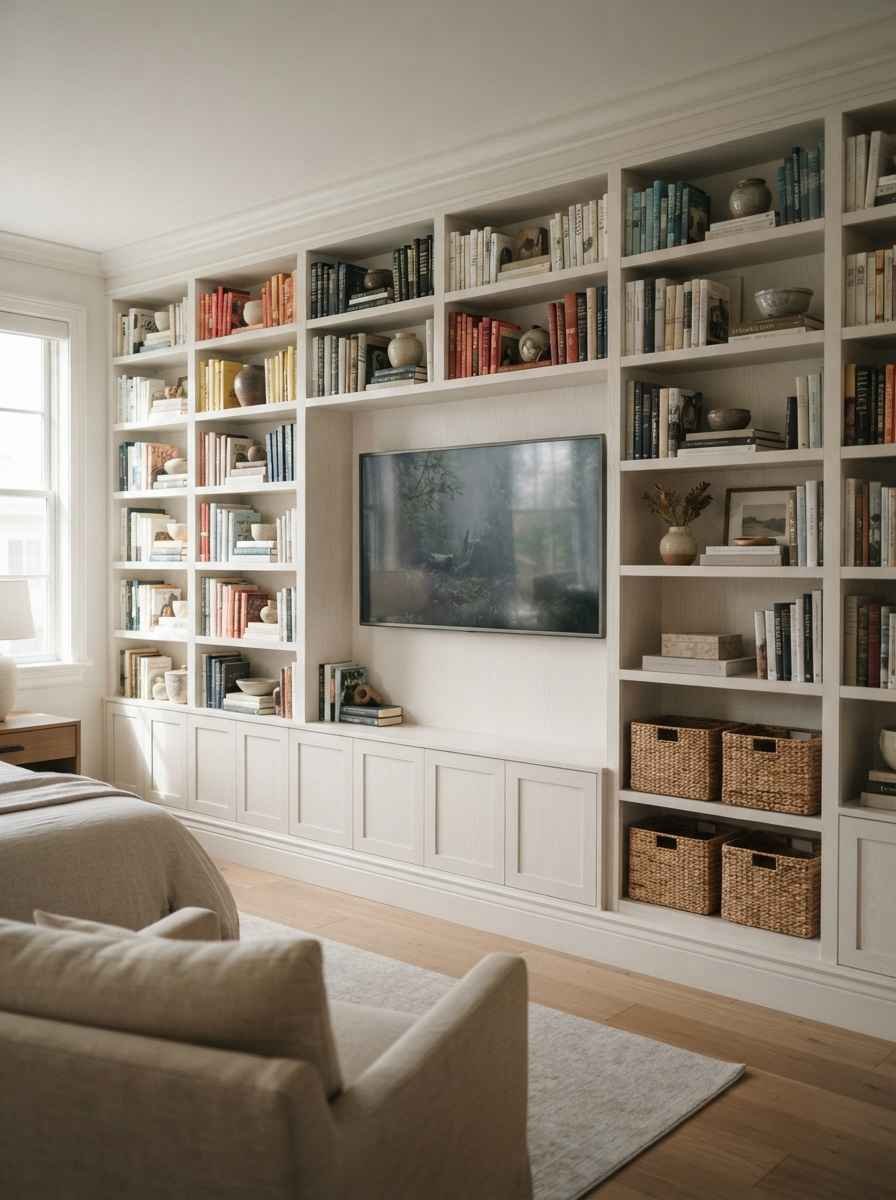
Built-in bookshelves with a cutout in the middle for the TV.
This works especially well in older homes with awkward wall nooks that don’t fit standard furniture anyway.
12. Wallpapered accent wall behind the screen
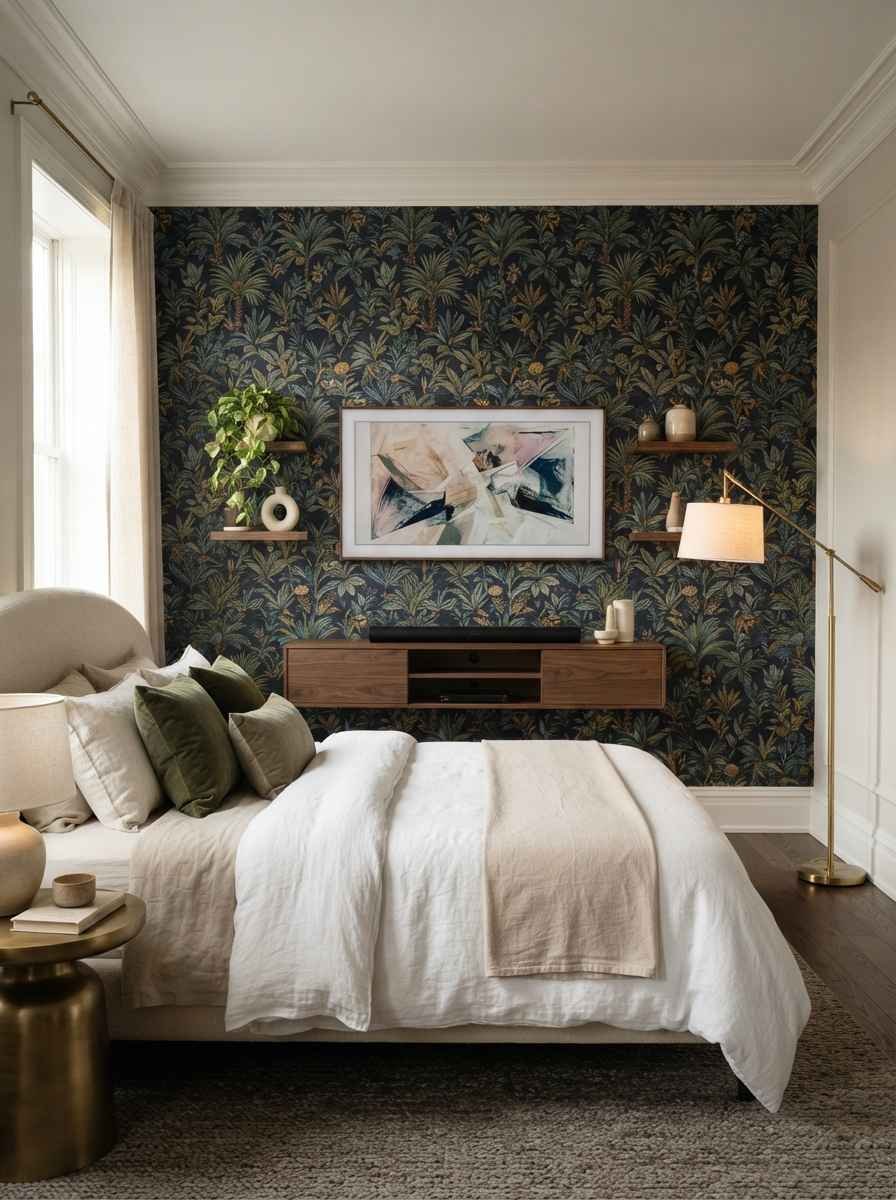
Paint or wallpaper just the section of wall behind the TV in a bold pattern or dark color. It creates a frame effect without a single extra object on the wall.
13. Mounted on a room divider or half-wall
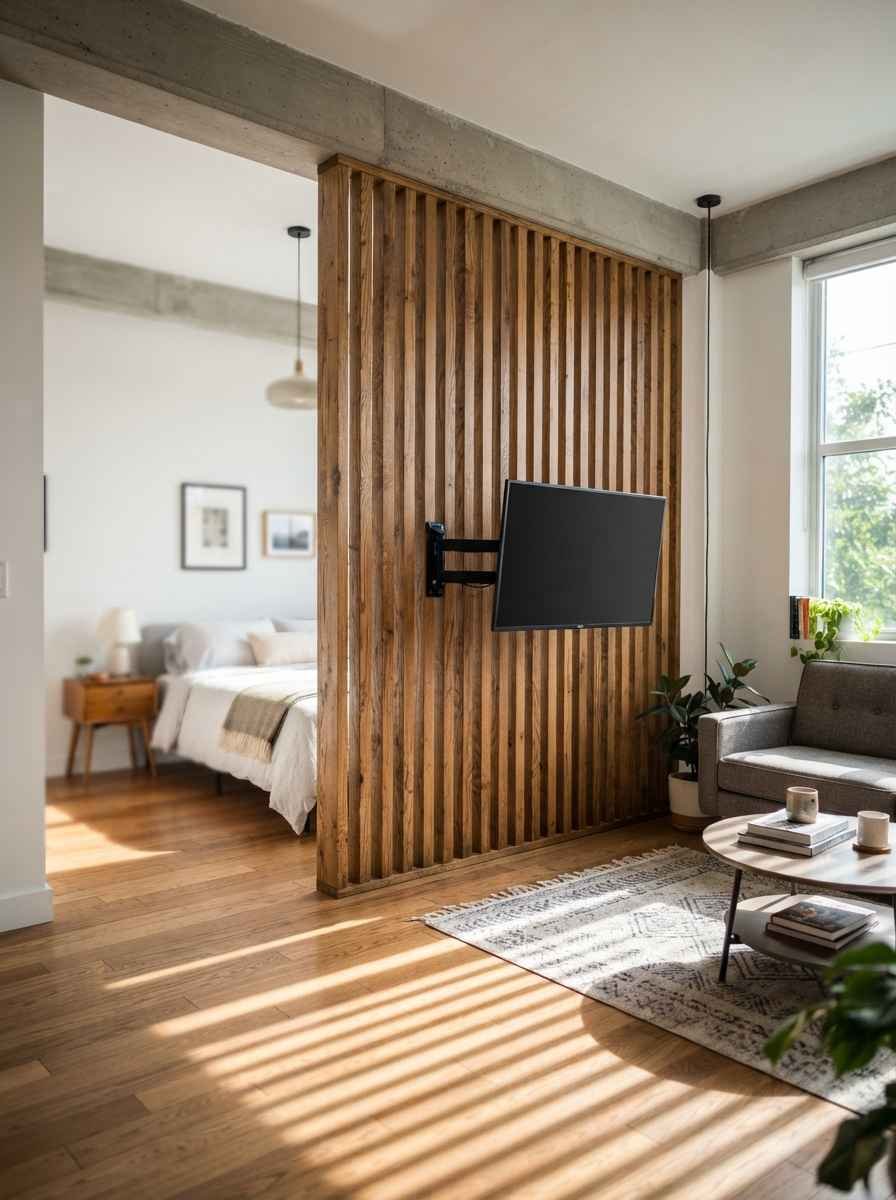
In studio apartments, a half-wall or slatted divider between the sleeping area and living space is a natural spot for a swivel-mounted TV that can face either side.
14. Corner mount for oddly shaped rooms
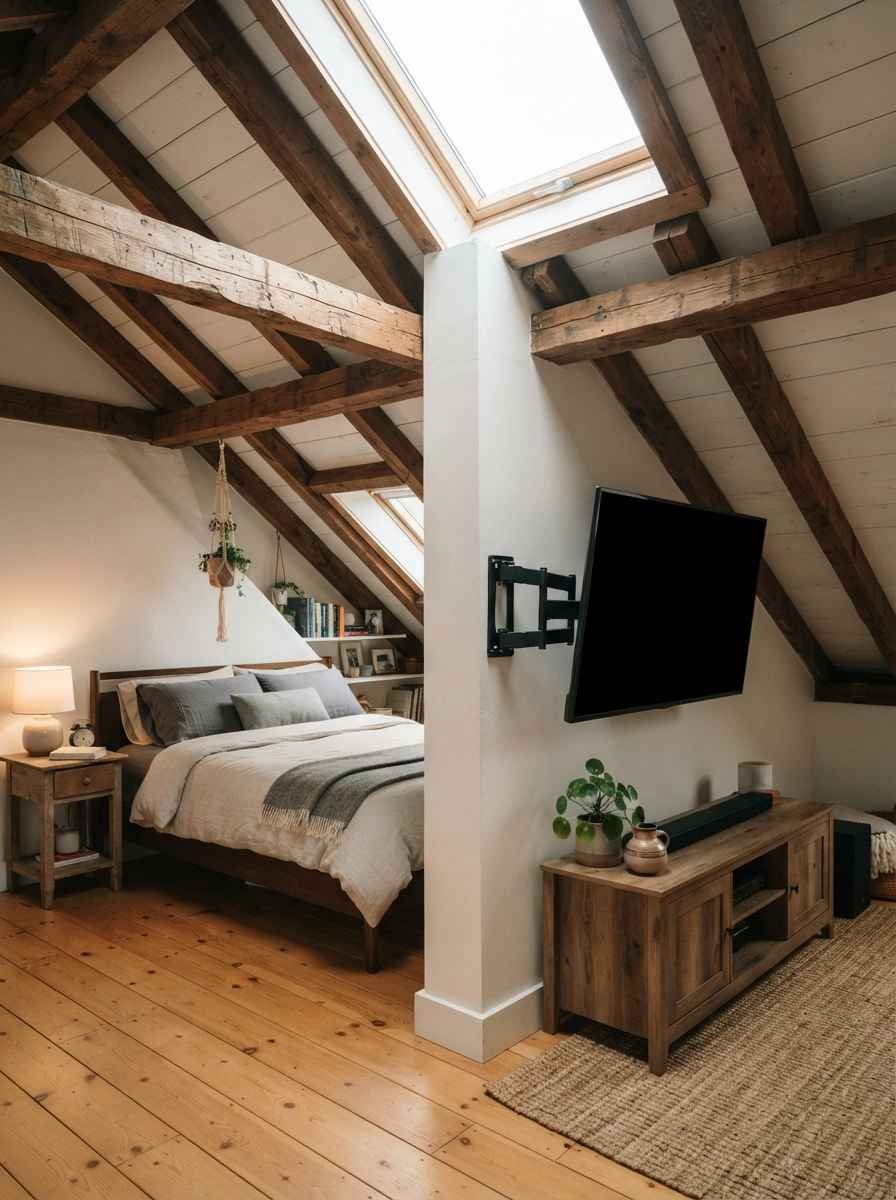
Attics, converted lofts, rooms with an awkward angle: a corner-specific mount tucks the TV where a flat wall mount simply wouldn’t work.
15. Under-cabinet pull-down mount
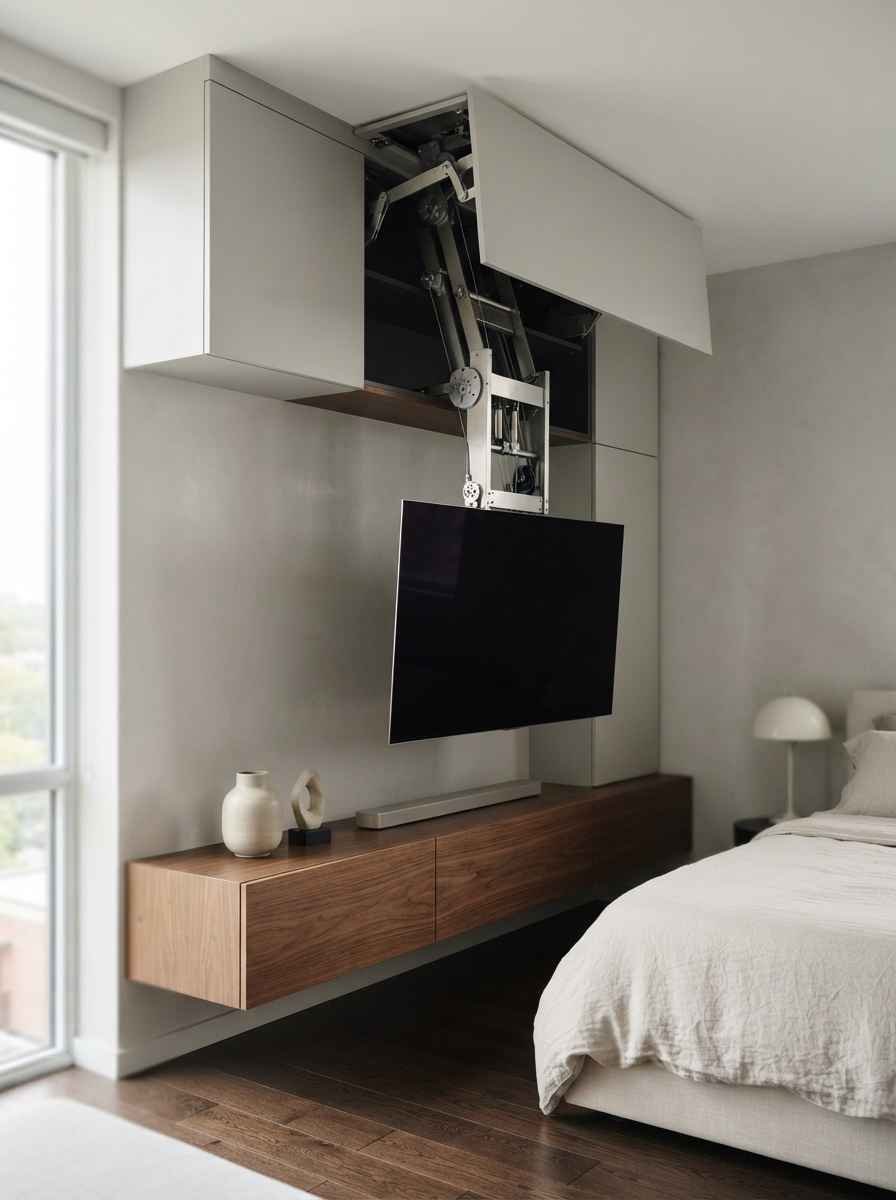
A motorized mount hidden inside an overhead cabinet that drops down when you want it and disappears when you don’t. Expensive. Also kind of magical the first time you see it in action.
16. Minimalist, no mount visible at all
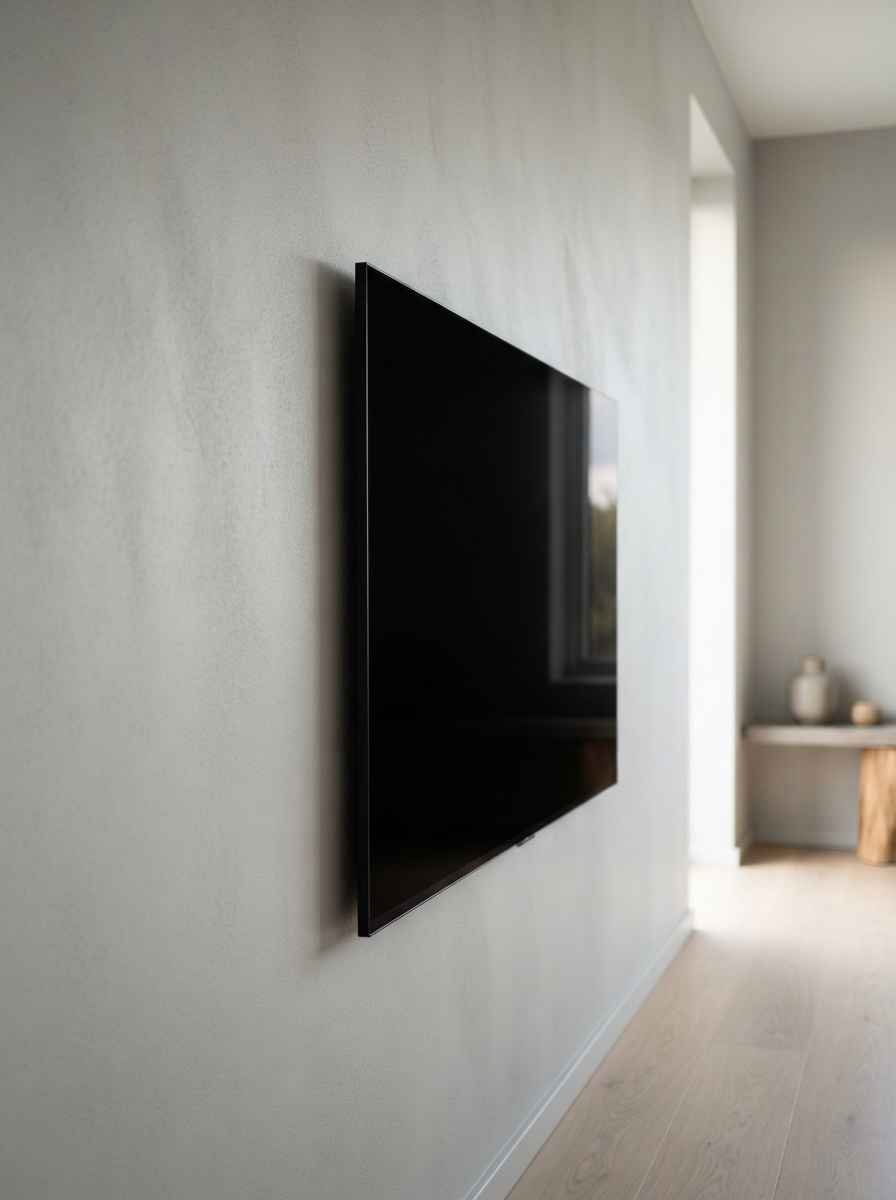
Ultra-thin mounts sit so flush against the wall that from a side angle, you’d swear the TV was floating with zero hardware.
Worth the extra cost if a clean look matters to you more than easy angle adjustment.
17. Paired with floating nightstands

If your nightstands are wall-mounted too, matching the TV’s mounting height and style creates a cohesive, almost architectural look across the whole wall.
18. Textured wood panel backdrop
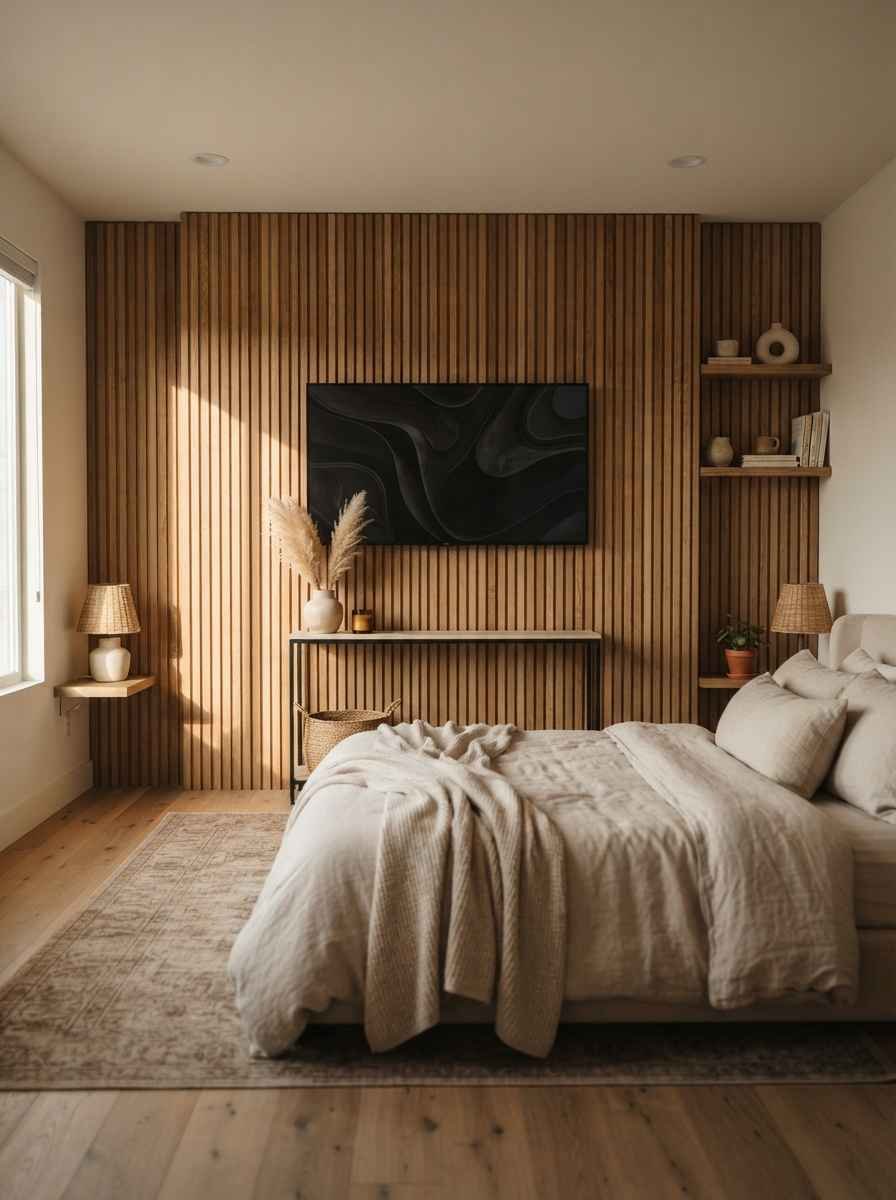
Slatted wood panels (the kind that are everywhere on Pinterest right now) behind a mounted TV add warmth that a flat painted wall just can’t match.
It’s one of those details that photographs beautifully, honestly, better in photos than it even looks in person.
19. TV on a rotating ceiling-mounted arm
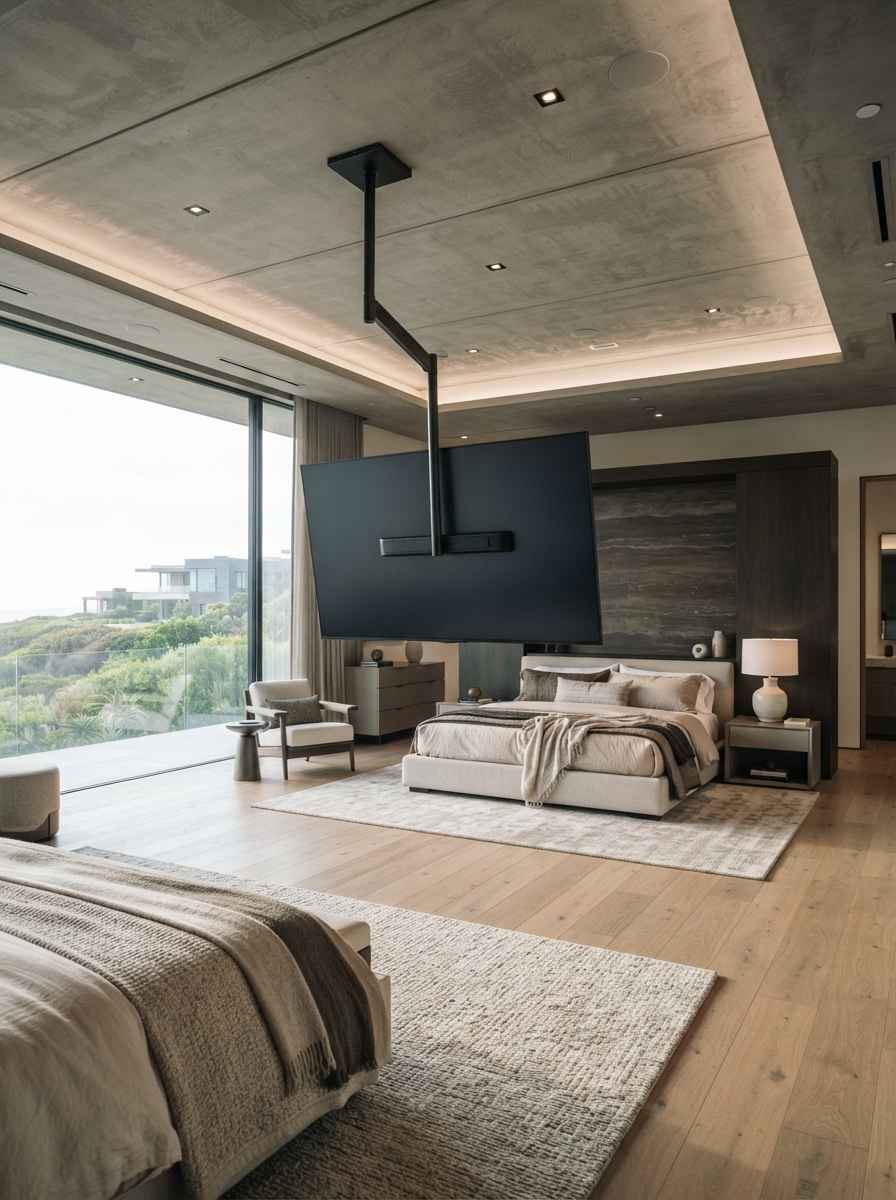
Rare, but real: a ceiling-mounted swing arm lets the screen rotate toward the bed or toward a seating area on the opposite side.
I’ve only seen this done well twice, but both times it made the whole room feel custom-built.
Random thought, unrelated but stick with me: I once spent 45 minutes on Pinterest looking at “cozy bedroom” boards instead of actually cleaning my bedroom.
If you’re reading this while doing the same thing, no judgment. We’ve all been there.
A Few Comparisons Worth Knowing
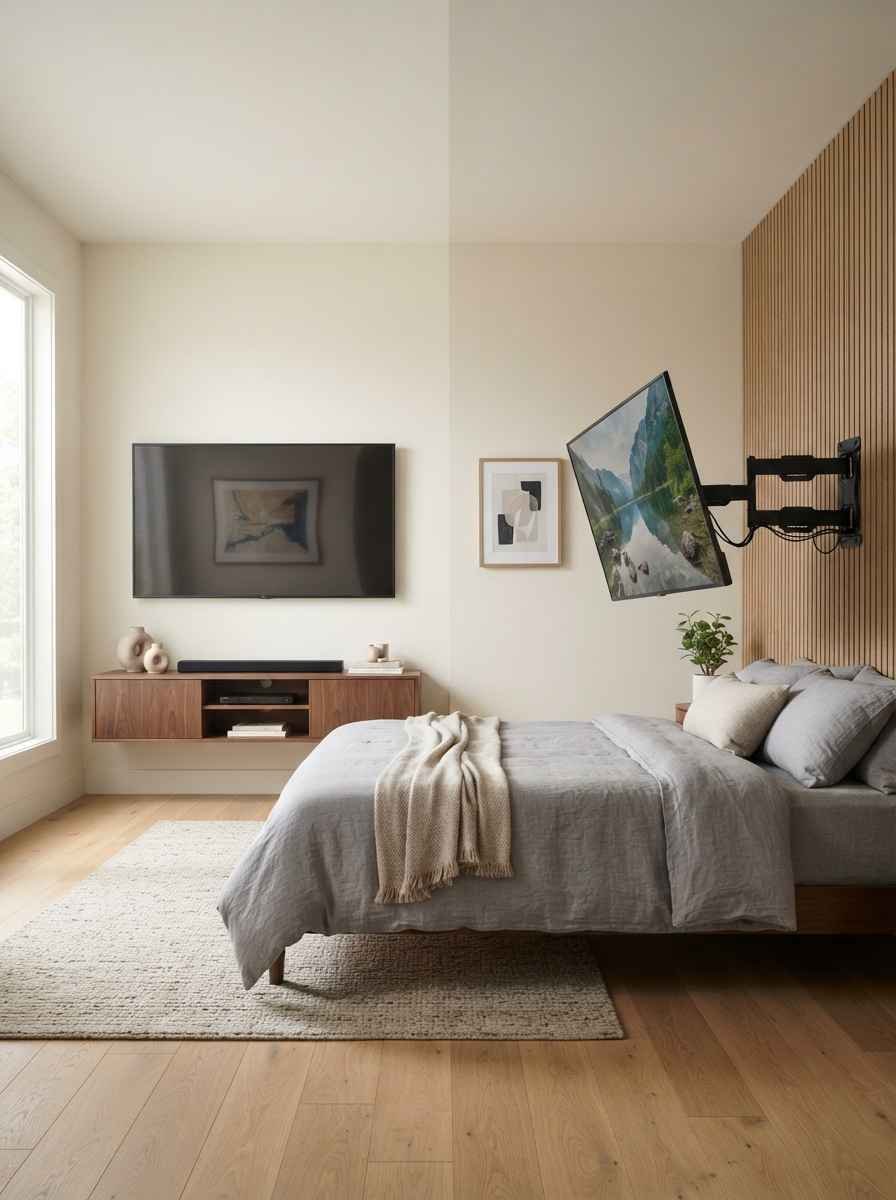
Full-motion arms cost more than fixed mounts, but for a bedroom specifically, I think they’re worth it almost every time.
You watch TV from bed at a different angle than you watch it from a couch, and a fixed mount locks you into whatever angle you picked on install day.
A tilting mount is the reasonable middle ground if budget’s tight.
Frame-style TVs are genuinely nice, but they’re not for everyone. If your bedroom already has strong wall art or a gallery setup, a second “art piece” that’s actually a TV can feel redundant. In a sparser room, though, it’s a smart way to avoid a blank screen staring at you all day.
Quick FAQs
How high should I mount a TV in a bedroom? Higher than you’d think, usually somewhere between 42 and 60 inches to the center of the screen, depending on your bed height and whether you watch while sitting up or lying flat.
Testing it with a cardboard cutout before drilling saves a lot of regret.
Can I mount a TV on a rental wall without drilling? Yes. No-drill options include TV carts, low dressers with the TV simply leaning against a securing strap, or adhesive-mounted lightweight brackets rated for smaller screens. Always check the weight rating before trusting any adhesive solution with a TV.
Do I need a stud for every bedroom TV mount? For anything over roughly 30-32 inches, yes.
Smaller TVs on lightweight mounts sometimes work with heavy-duty drywall anchors, but a stud is always the safer bet.
Final Thought
Nineteen ideas is a lot to scroll through, but you probably didn’t need all nineteen.
You needed the two or three that fit your actual wall, your actual bed, and your actual budget. Which one’s calling your name? Save this pin, pick your favorite, and go measure that wall this weekend.
