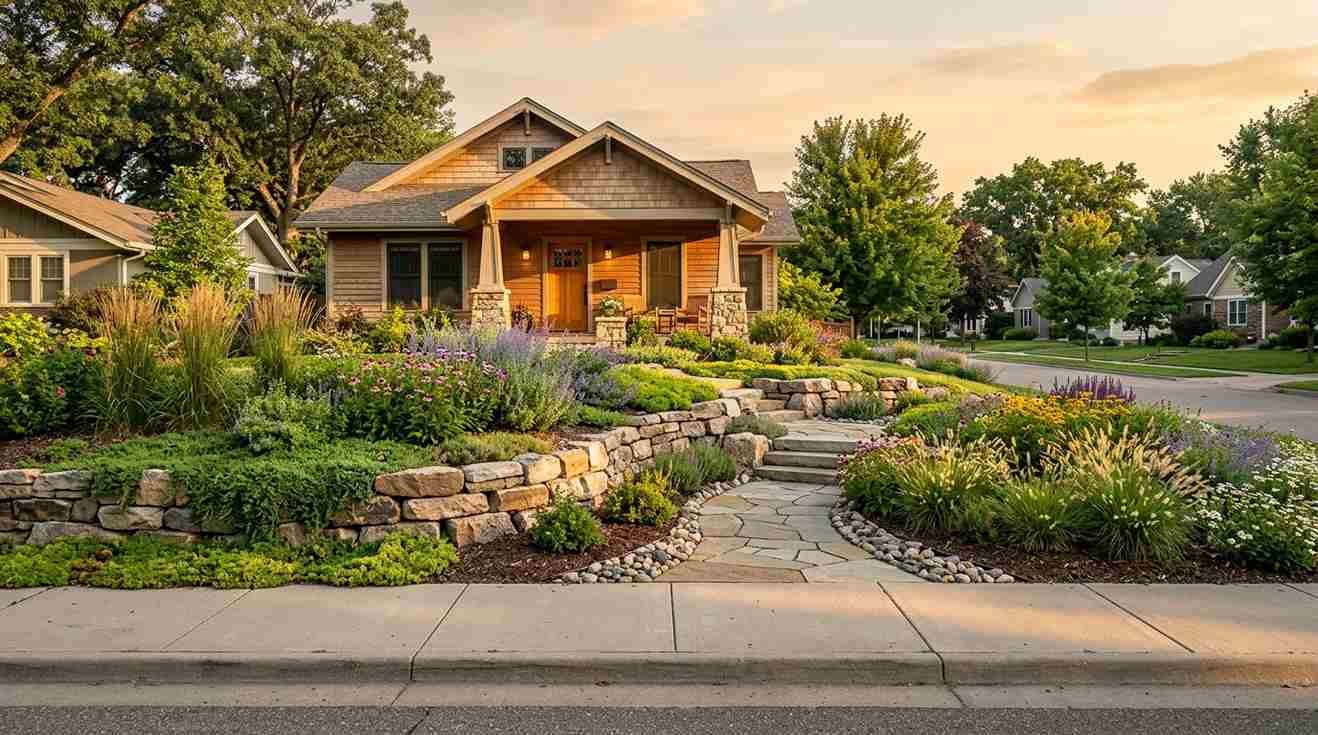
Your front yard is tilting downhill and you’ve been staring at bare dirt, scraggly grass, and muddy runoff every time it rains. Yeah, I’ve been there. A sloped front yard sounds like a landscaping nightmare — until you realize it’s actually one of the most interesting canvases you can work with.
Slopes force creativity. And creativity, it turns out, makes for some seriously stunning curb appeal.
Here are 31 ideas to transform that awkward incline into the entrance everyone slows down to look at.
Terracing: Turn the Slope Into a Feature
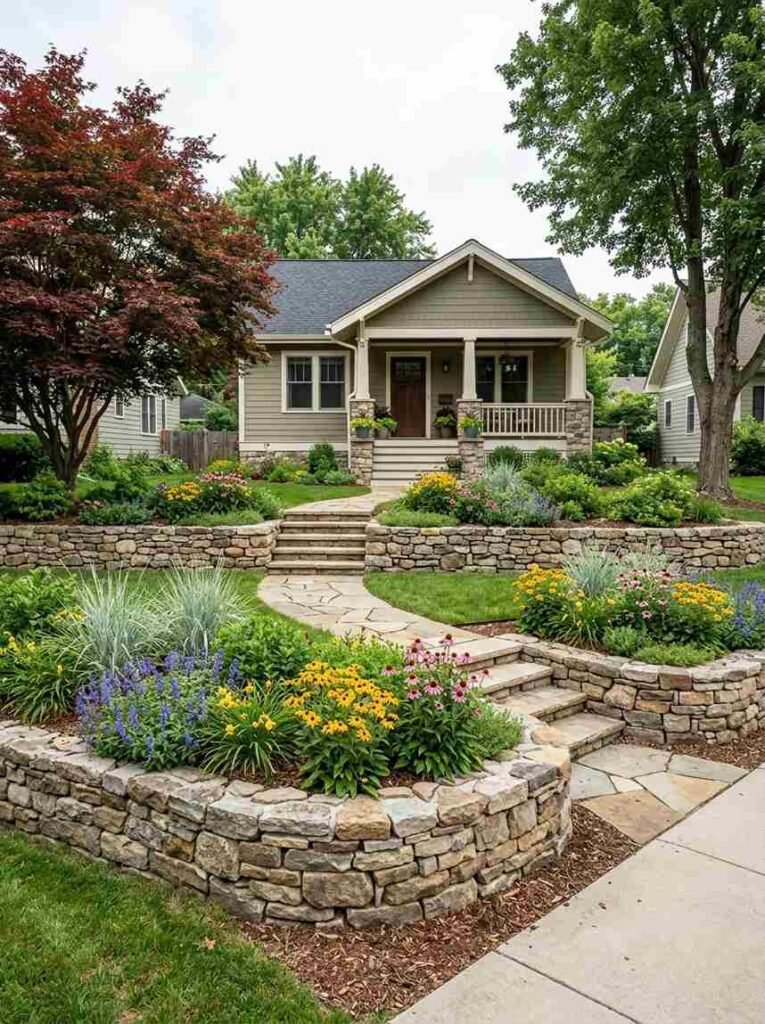
1. Stacked stone retaining walls
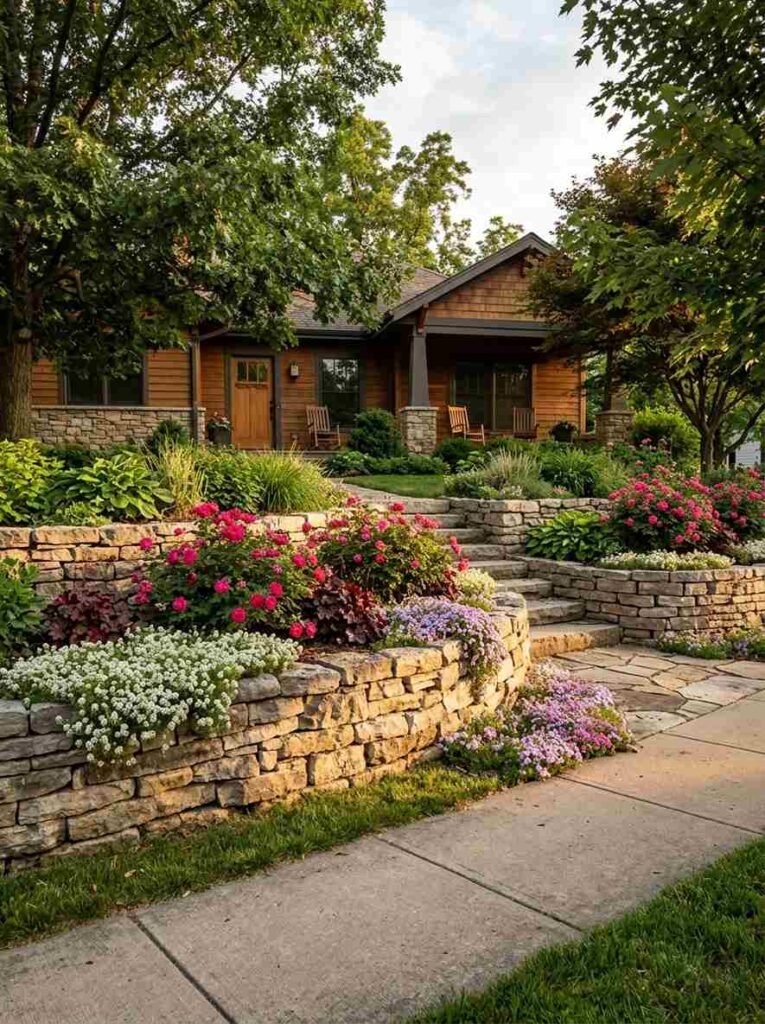
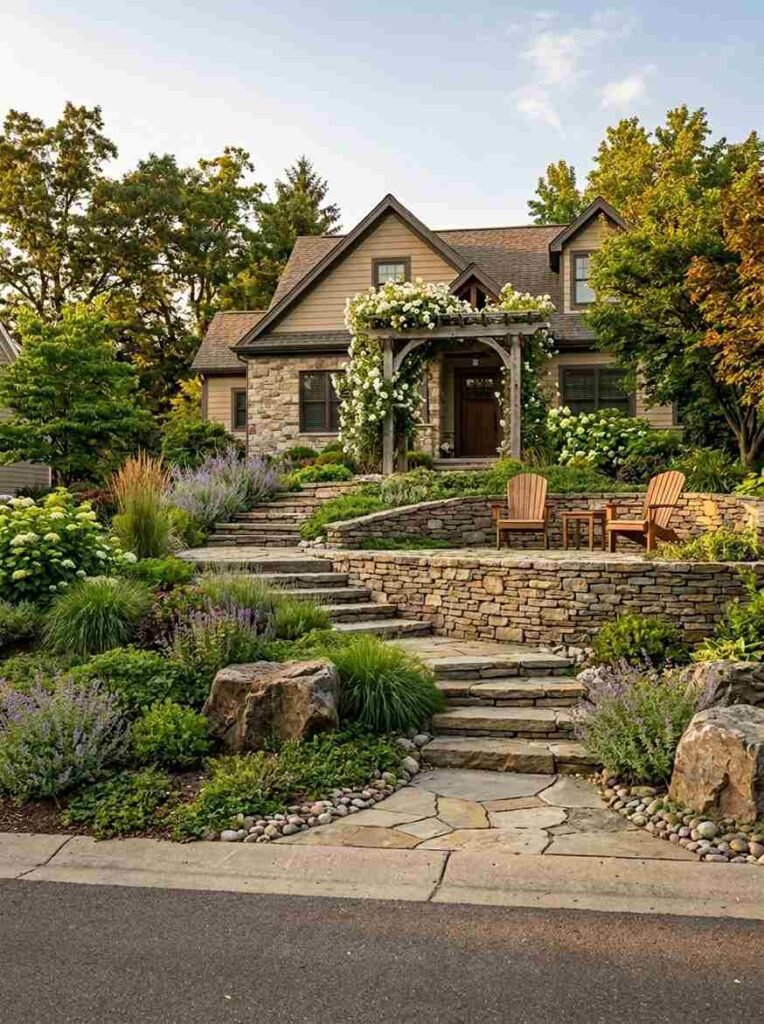
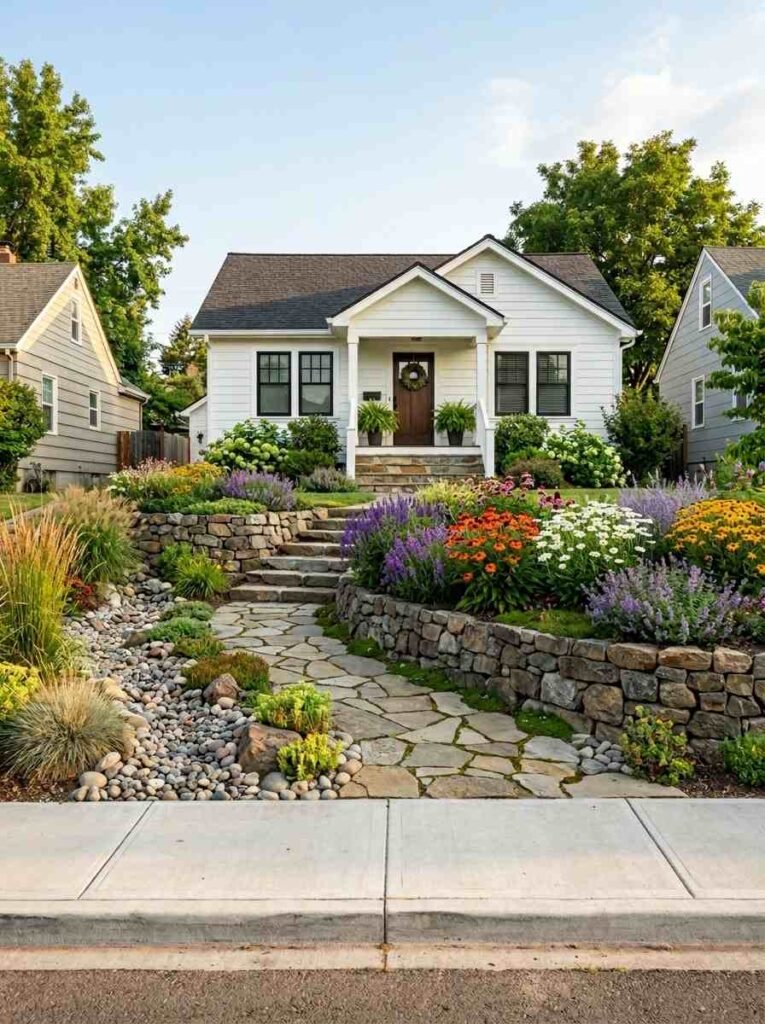
Nothing grounds a slope like natural stone. Stack dry-laid fieldstone or limestone to create 2–3 tiered planting beds. Each tier holds soil, stops erosion, and gives you a flat zone to plant in.
Pro tip: Keep individual wall heights under 18 inches for DIY-friendly builds. Anything taller needs proper drainage behind it.
2. Railroad tie terraces
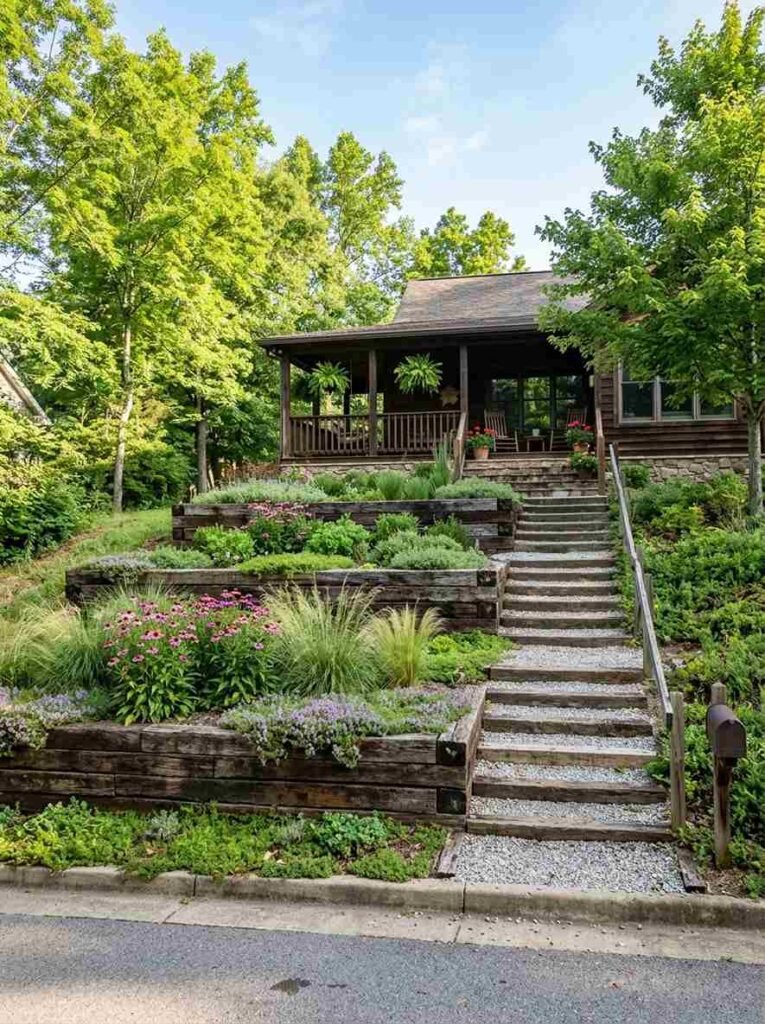
Rustic, affordable, and surprisingly sturdy. Horizontal railroad ties cut into the slope create instant terracing. Pair them with ground cover like creeping thyme between the levels for a finished look.
3. Gabion wall terraces
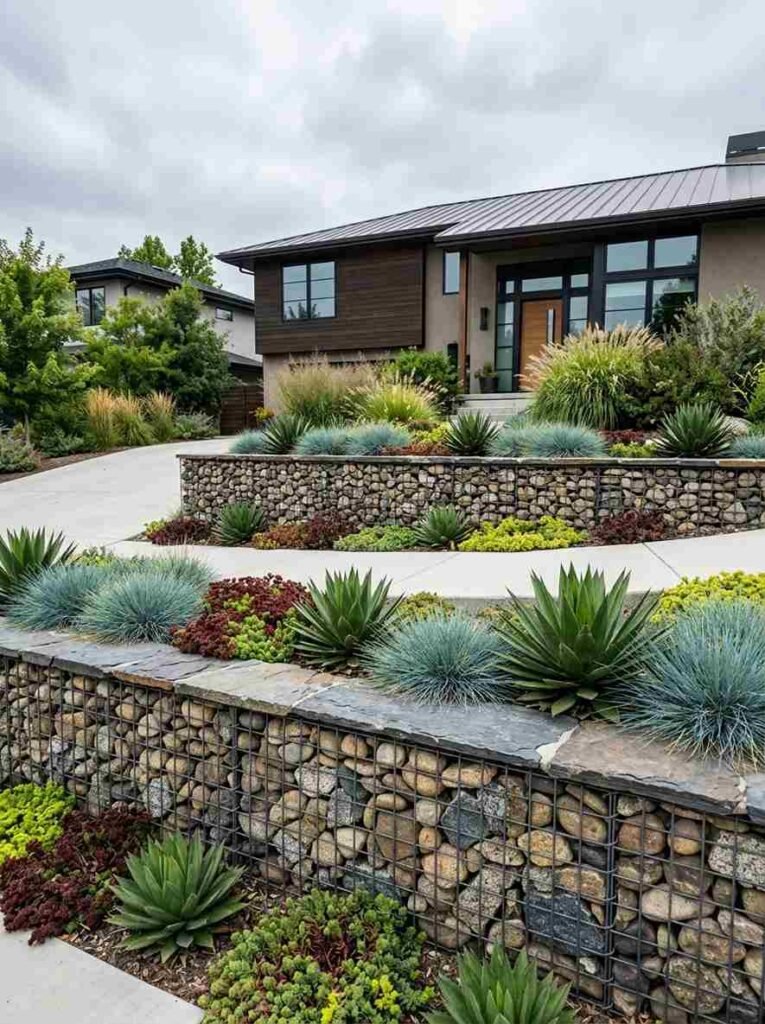
Wire cages filled with river rock or broken concrete. They drain naturally (no waterlogging), look industrial-chic, and last decades. FYI, gabion walls work especially well on steeper slopes where water management is a real concern.
4. Timber stair terraces
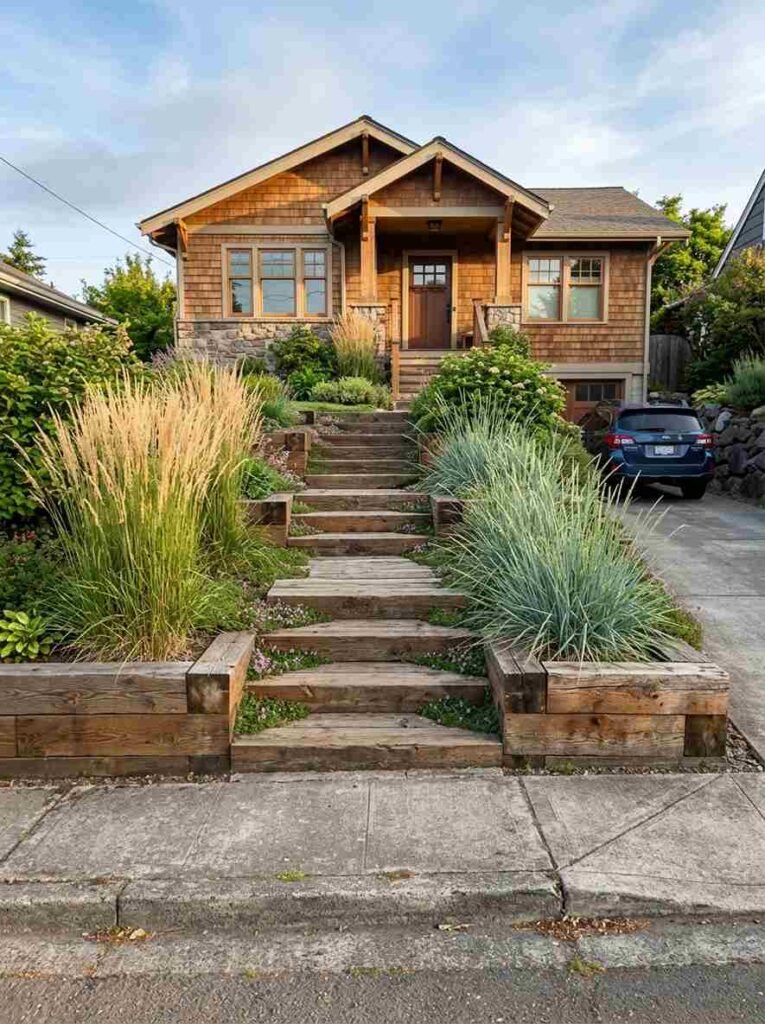
Build wide, flat timber steps directly into the slope. Plant low ornamental grasses on either side of each step. The steps double as access paths and visual anchors.
| Terracing Material | Cost Level | DIY Friendly | Best For |
|---|---|---|---|
| Stacked stone | Medium | Yes | Natural, cottage style |
| Railroad ties | Low | Yes | Rustic, rural settings |
| Gabion walls | Medium-High | Moderate | Modern, drainage-heavy slopes |
| Concrete blocks | Low-Medium | Yes | Clean, contemporary look |
Ground Cover That Actually Stays Put
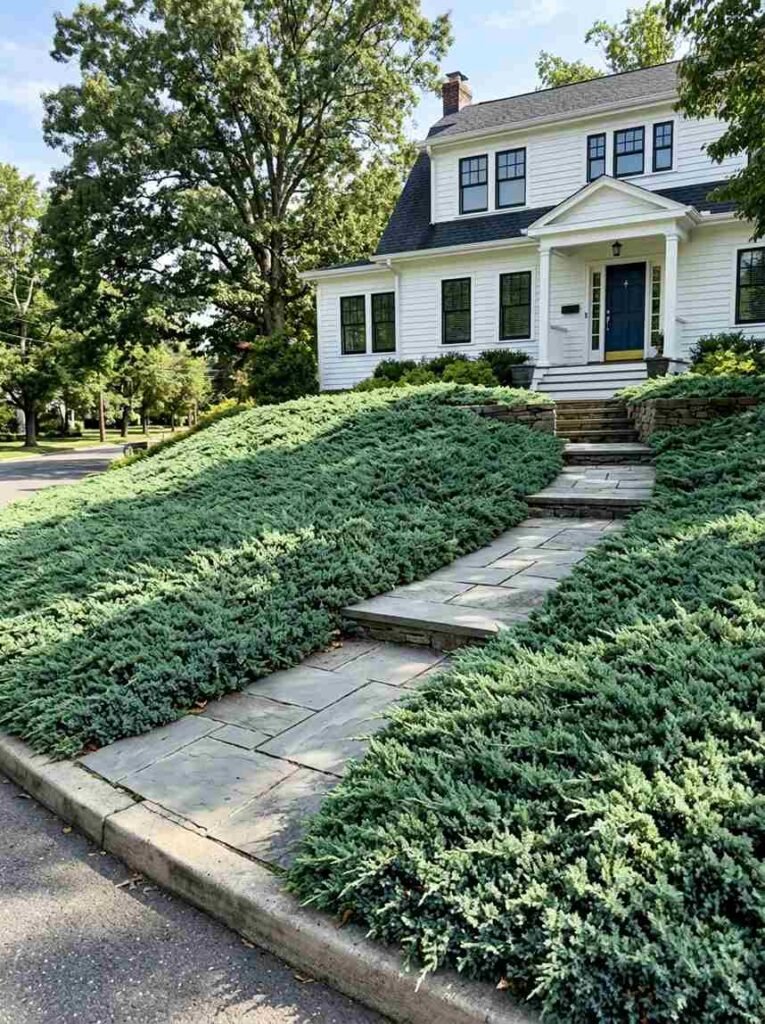
5. Creeping juniper
Low, spreading, and practically indestructible. Creeping juniper forms a dense mat that chokes out weeds and holds soil on slopes up to 45 degrees. Plant it once, ignore it forever.
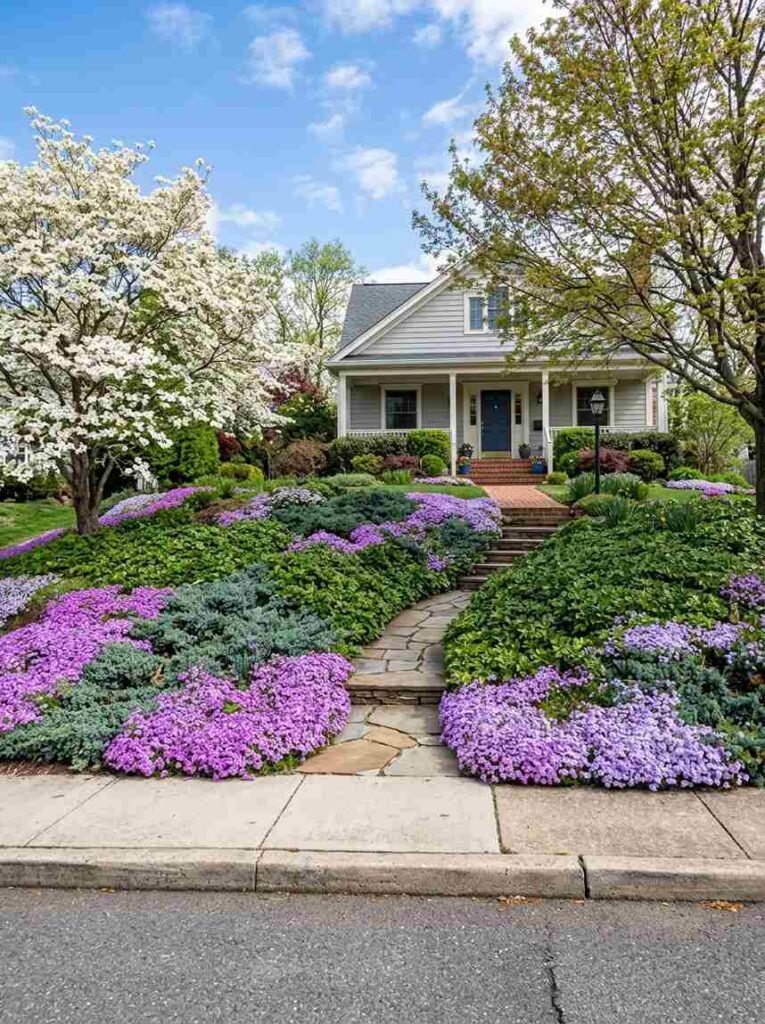
6. Creeping phlox
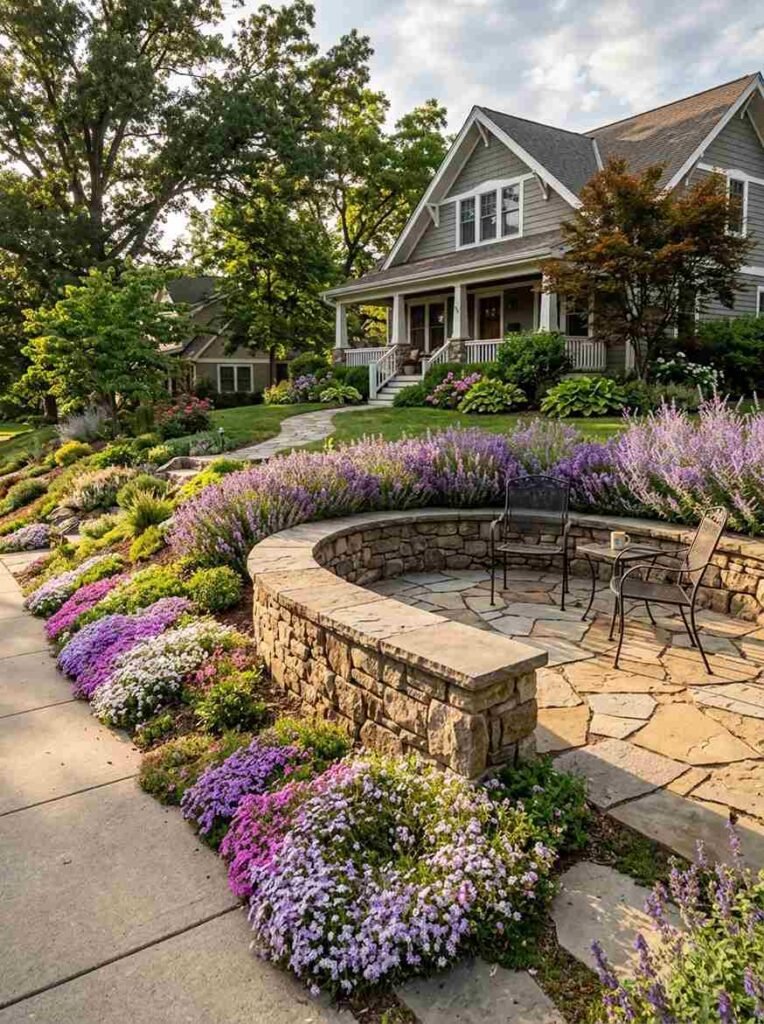
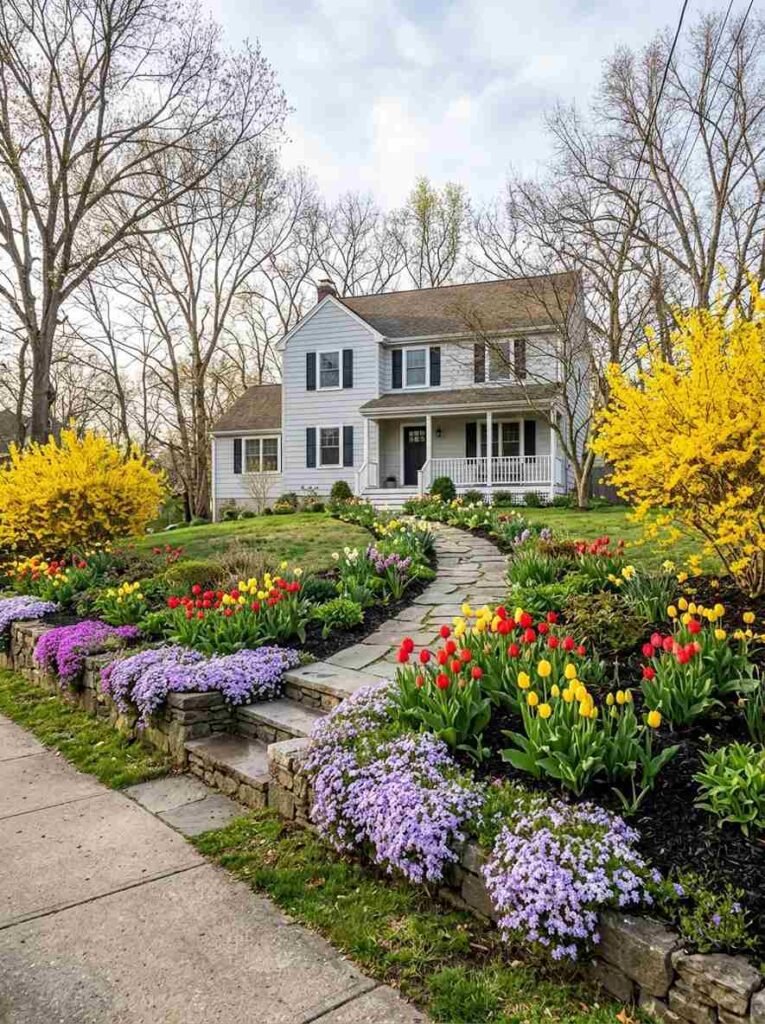
In spring, this stuff explodes in purple, pink, or white blooms. It cascades beautifully down a slope and spreads aggressively — which is exactly what you want when erosion is the enemy.
7. Pachysandra
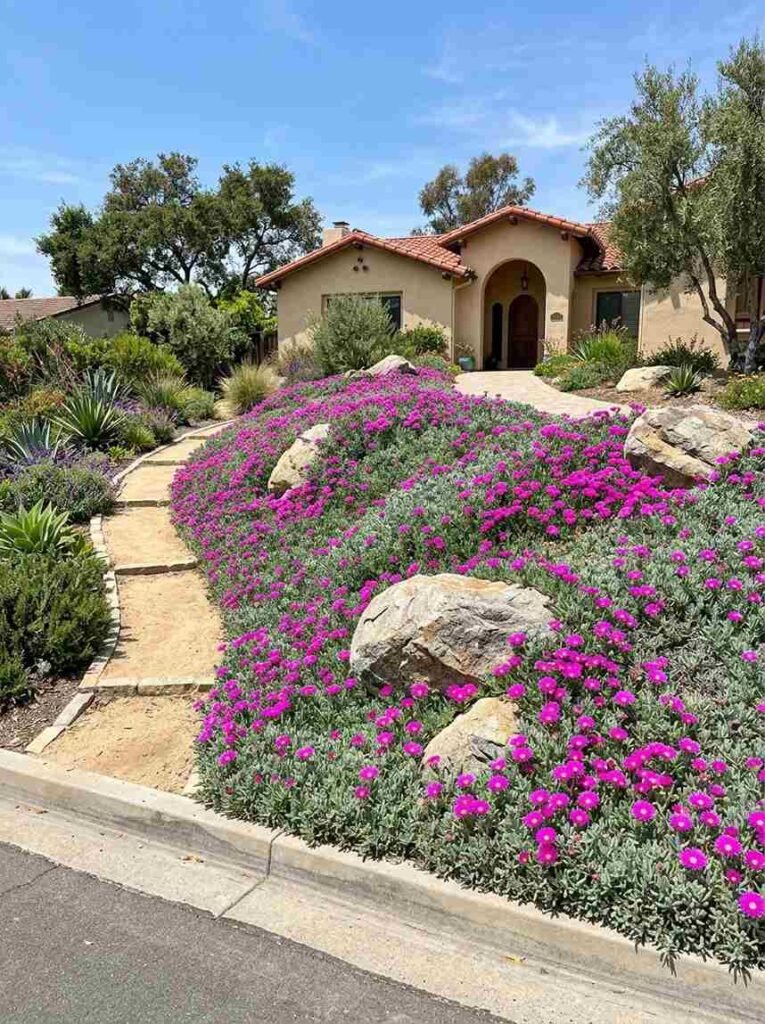
Classic for shady slopes. Dense, evergreen, and low-maintenance. Pachysandra spreads by runners, so within 2–3 years it fills in completely without replanting.
8. Ice plant (Delosperma)
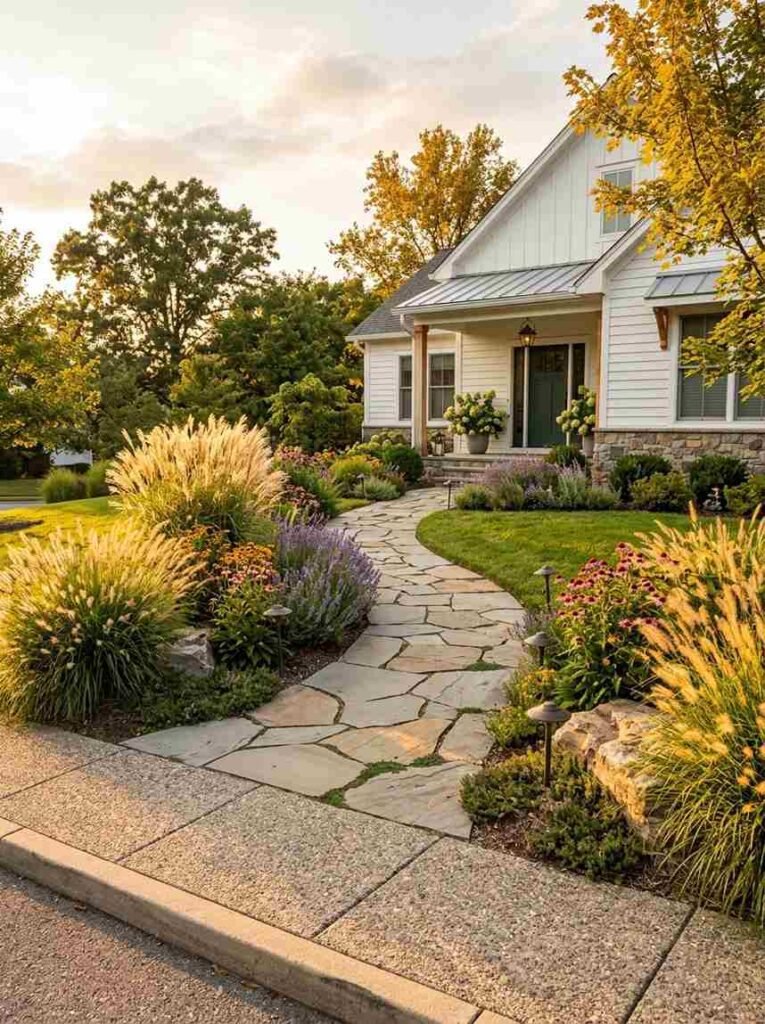
Hot, dry slope? Ice plant is your answer. Succulent leaves, neon flowers, zero water needs once established. It looks almost fake it’s so pretty. 🙂
9. Creeping thyme
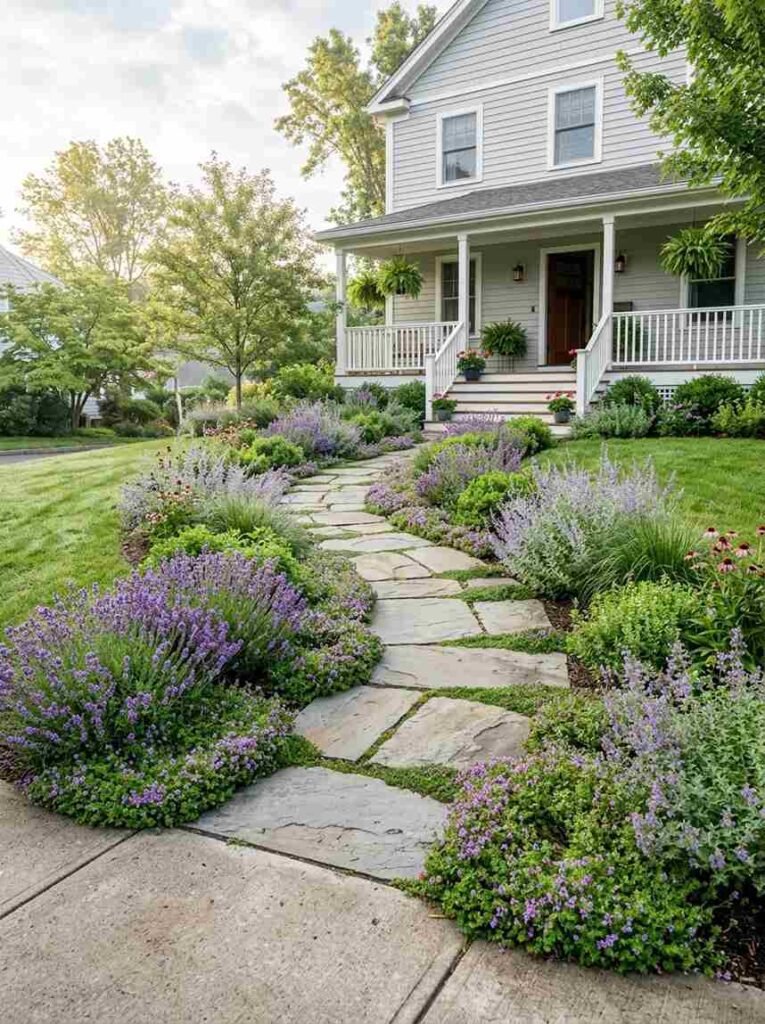
Doubles as a walking surface and a ground cover. Releases a subtle fragrance when you step on it. Plant between stepping stones on a gentle slope and watch it fill every gap.
10. Lantana
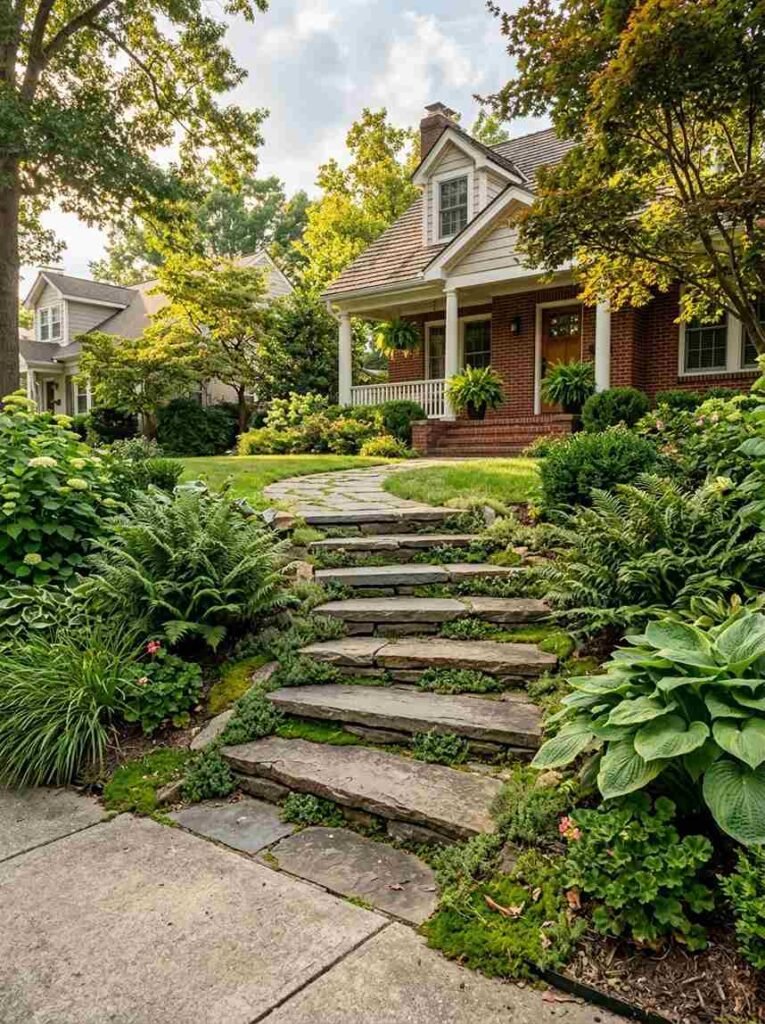
For warm climates, lantana is a workhorse. It blooms constantly, butterflies love it, and its sprawling habit makes it ideal for draping down slopes.
Pathway Ideas That Work With the Grade
11. Curved stepping stone path
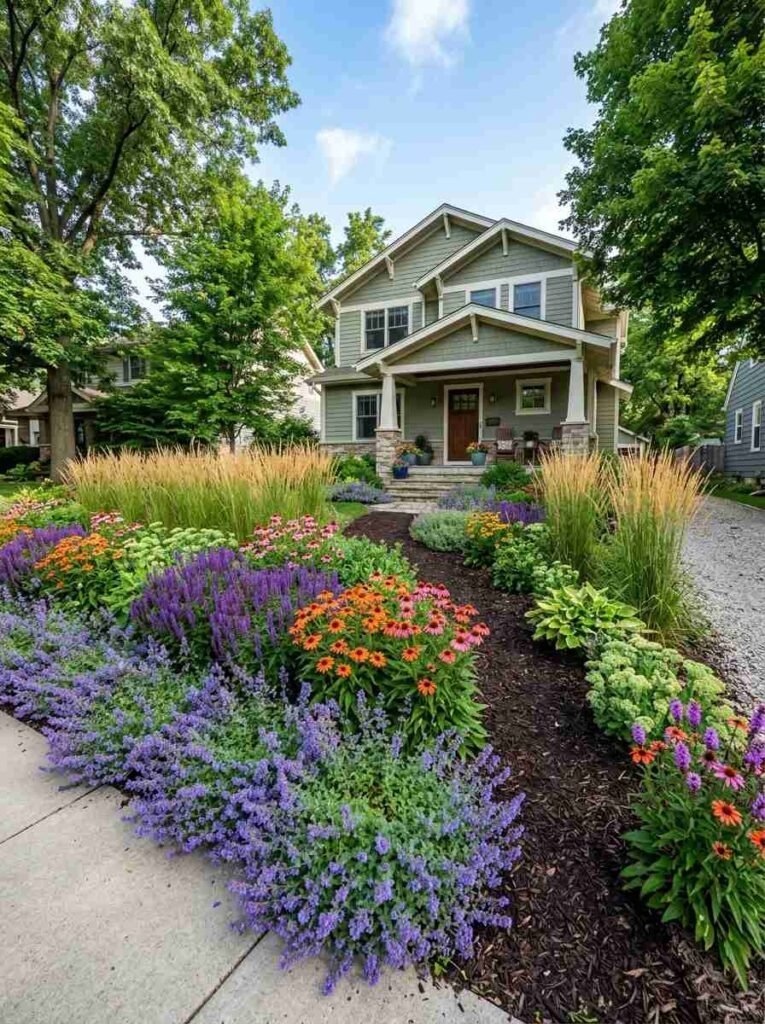
Straight paths fight a slope. Curved ones work with it. Place large, flat stones in a gentle S-curve down the incline. Leave gaps for creeping ground cover to fill.
12. Gravel path with timber edging
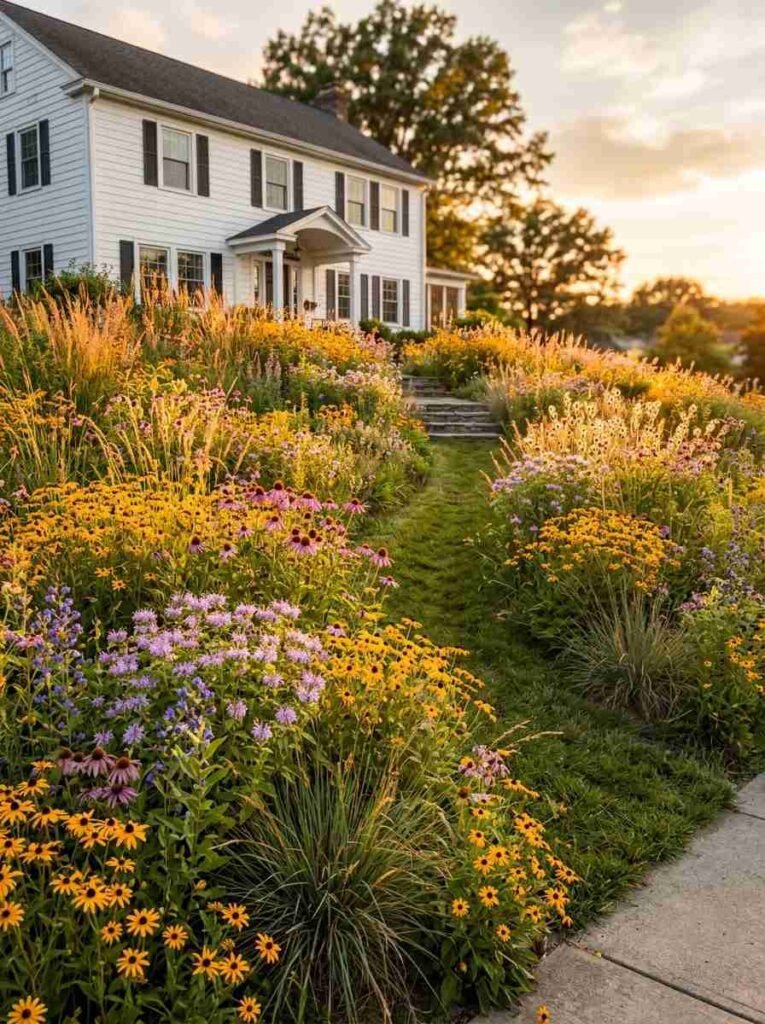
A 3-foot-wide gravel path cuts through a sloped yard cleanly. Timber edges keep the gravel in place. Add a few taller ornamental grasses flanking the path for drama.
13. Flagstone stairs with planted risers
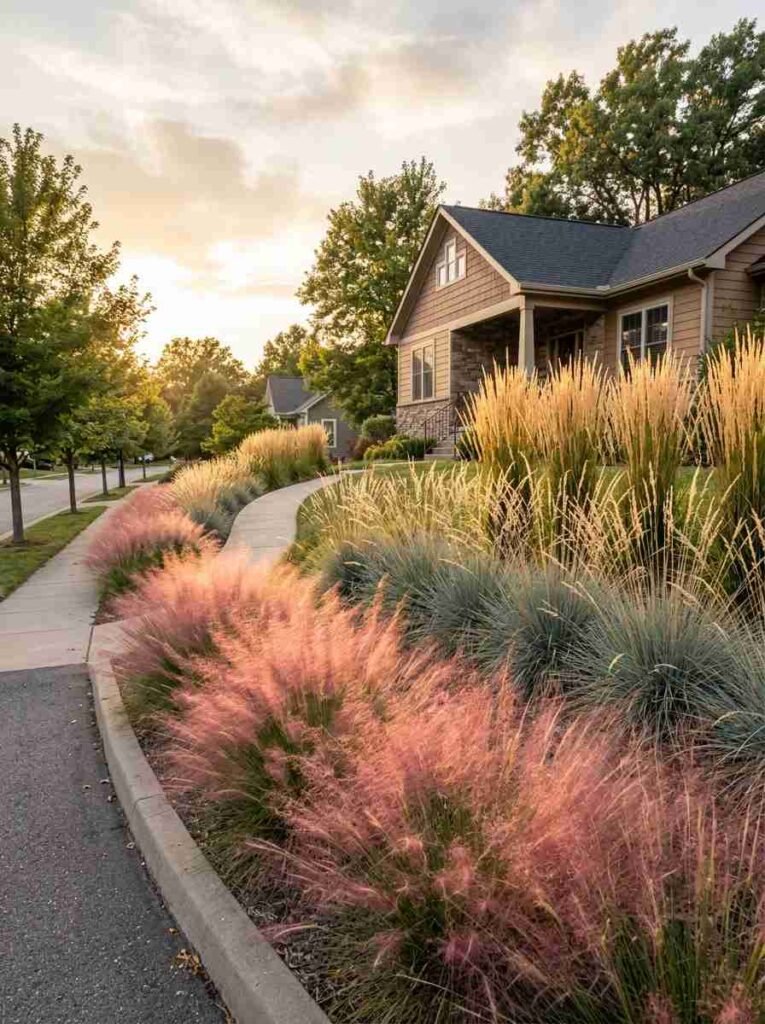
Instead of solid risers, leave space between each flagstone step. Plant creeping thyme or moss in those gaps. The result looks like the garden grew around the stairs organically.
14. Decomposed granite ramp
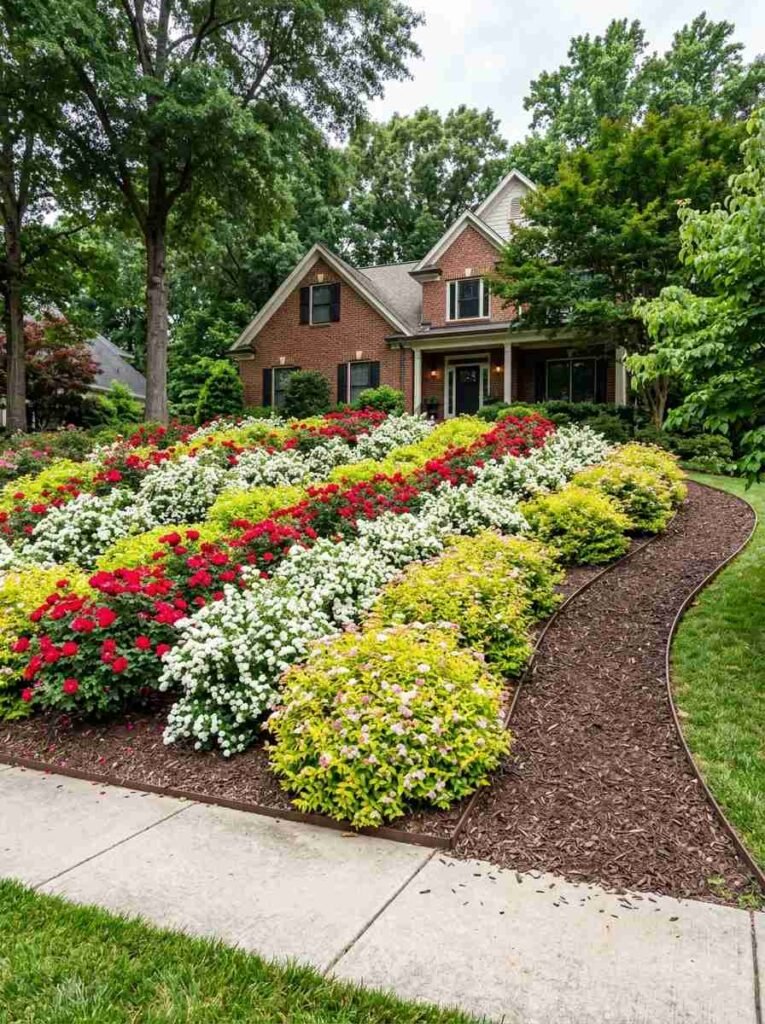
Gentle slopes (under 10%) handle a decomposed granite surface well. Compact it properly, edge it cleanly, and it gives a relaxed, Southwestern feel. Water drains through it naturally, which is the whole point.
15. Brick step landings
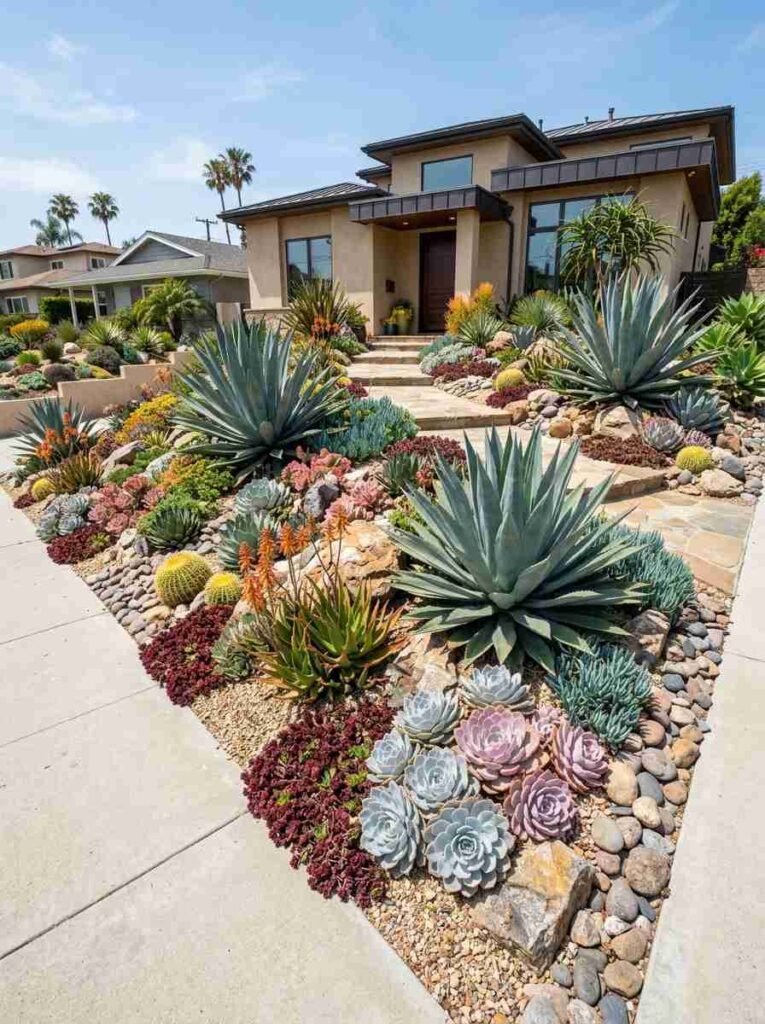
Wider brick landings every 3–4 feet break up a long slope visually and give you a place to pause. Frame each landing with low boxwood hedging for a formal feel.
Planting Strategies for Sloped Beds
16. Native wildflower meadow section
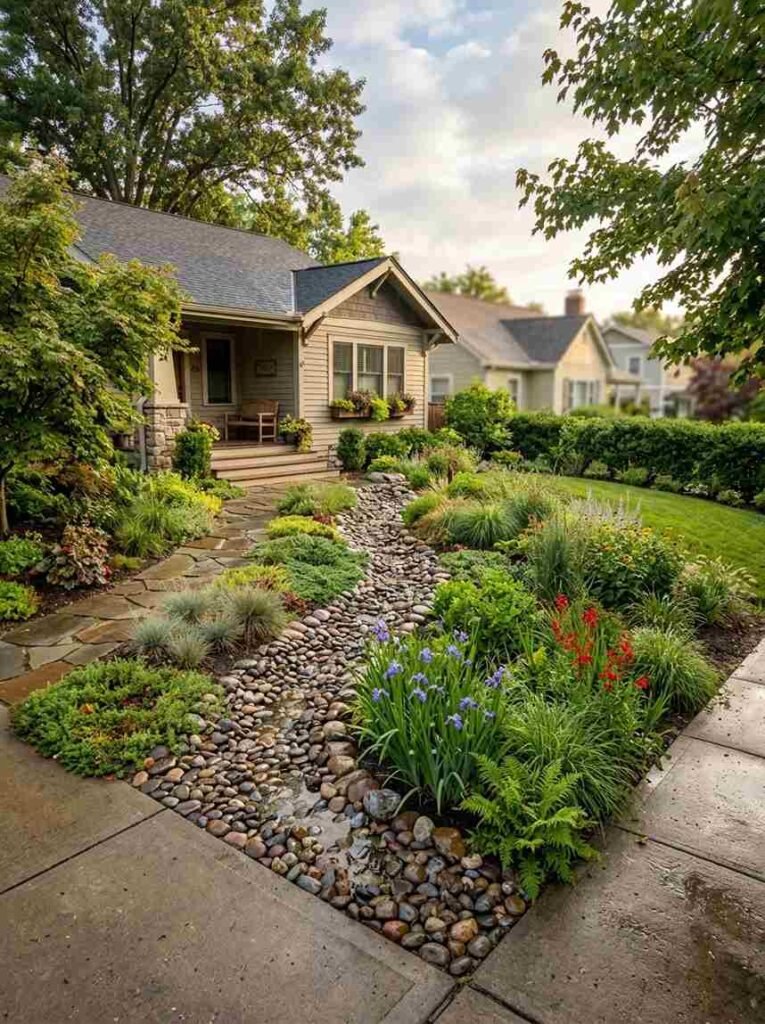
Pick a chunk of your slope and seed it with native wildflowers. Black-eyed Susans, coneflowers, wild bergamot. Once established, they need zero irrigation and the root systems hold soil better than turf ever will.
17. Ornamental grass bank
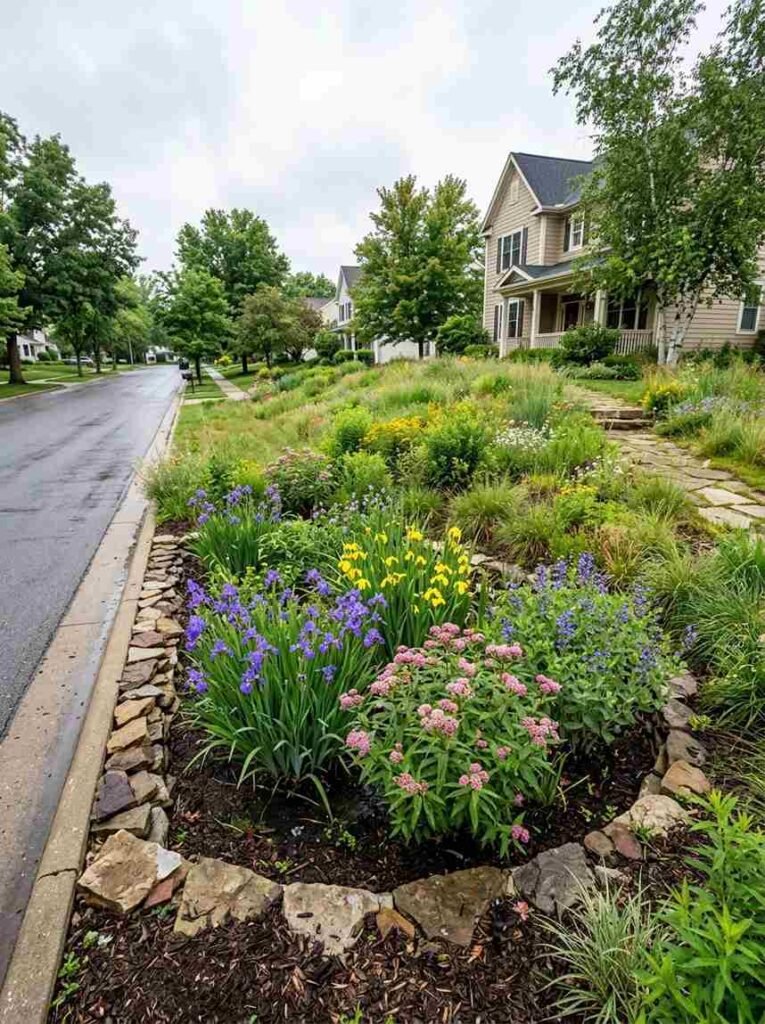
Mass plantings of ornamental grasses — Karl Foerster, Blue Oat Grass, Muhly Grass — move in the wind and look incredible in late afternoon light. They also need almost no maintenance past an annual cutback.
18. Mixed perennial border on the upper terrace
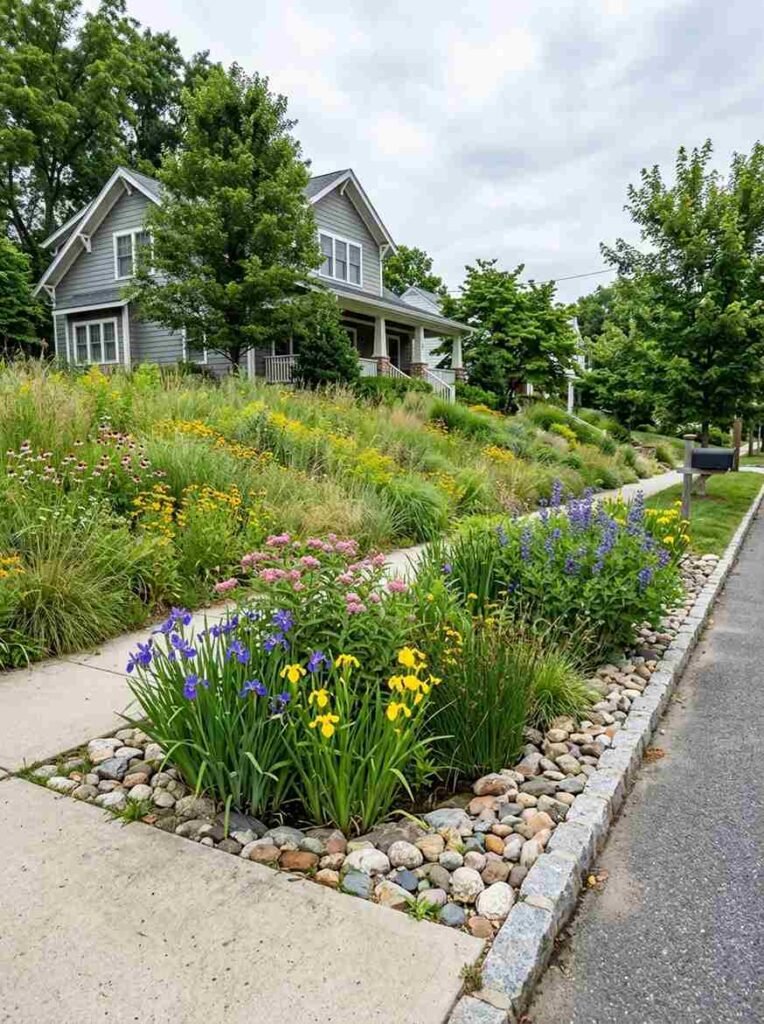
Put your showiest perennials at the top of the slope where they’re visible from the street. Salvia, Russian sage, coneflower. They bloom in sequence from spring through fall so something is always on.
19. Shrub mass planting
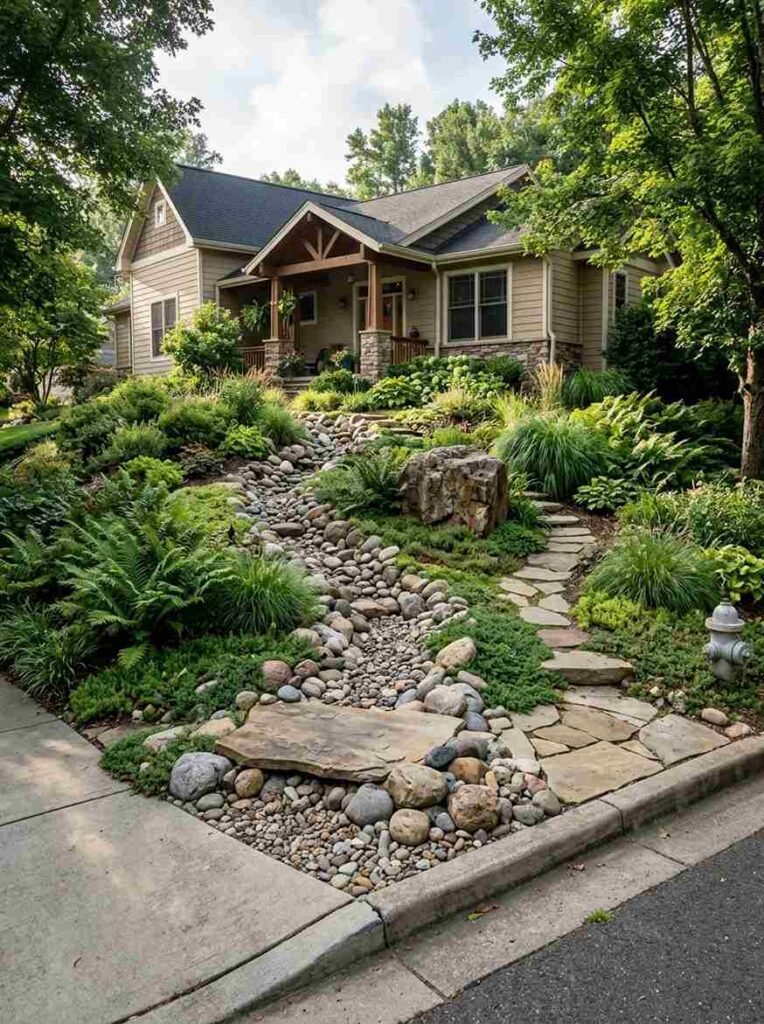
Repeat the same 3–5 shrub varieties across the slope in masses. Spirea, knock-out roses, dwarf yaupon holly. Repetition creates rhythm and makes a small yard feel intentional.
20. Succulent slope garden
If you’re in a dry climate, lean all the way in. Agave, sedum, echeveria, aloe. A slope covered in mixed succulents is genuinely stunning and probably the lowest-maintenance choice on this entire list.
Water Management That Looks Intentional
21. Rain garden at the base
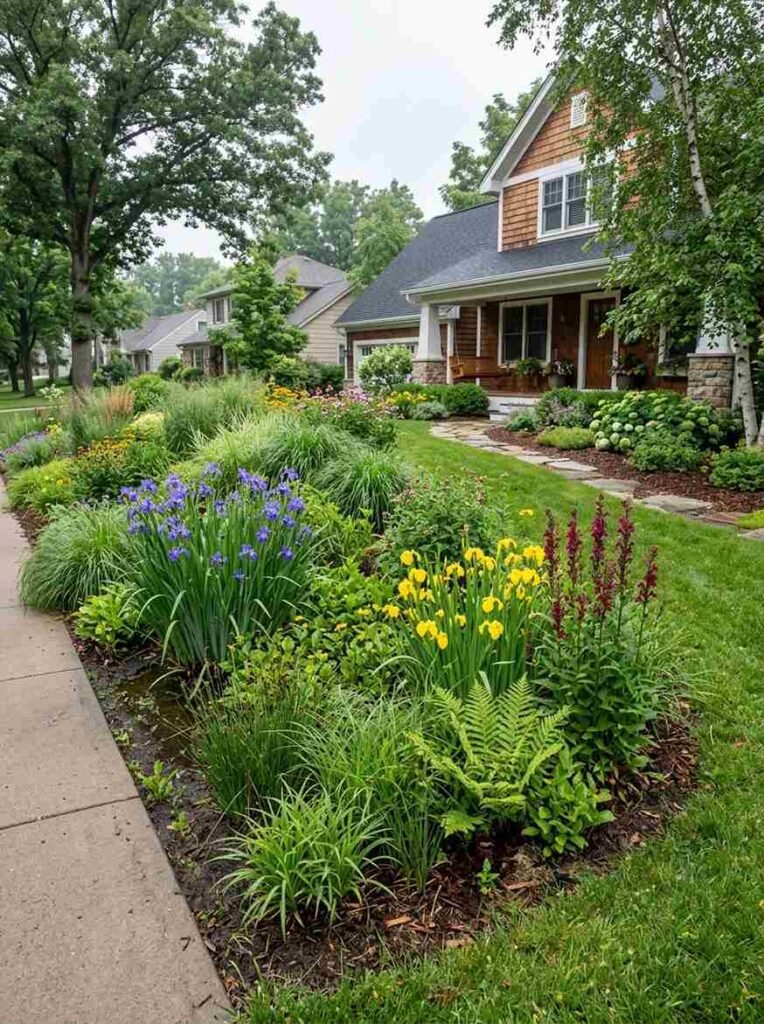
Channel slope runoff into a shallow depression at the bottom planted with moisture-tolerant natives. The plants filter the water, and the garden looks designed rather than accidental.
22. Dry creek bed
A meandering dry creek bed of river rocks guides water down the slope during rain events. The rest of the time it looks like a deliberate design feature. IMO this is one of the cleverest tricks in sloped yard landscaping.
23. French drain with decorative gravel cover
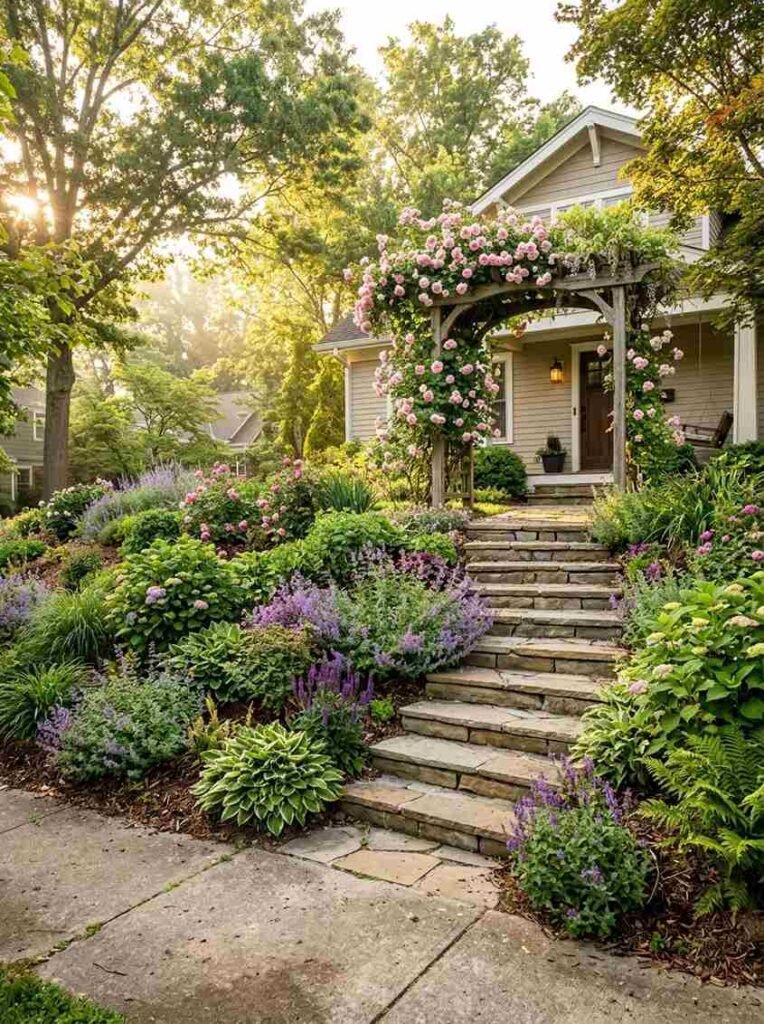
Run a perforated pipe along the slope to capture subsurface water. Cover it with 3–4 inches of river gravel. Functional and actually attractive.
24. Bog garden section
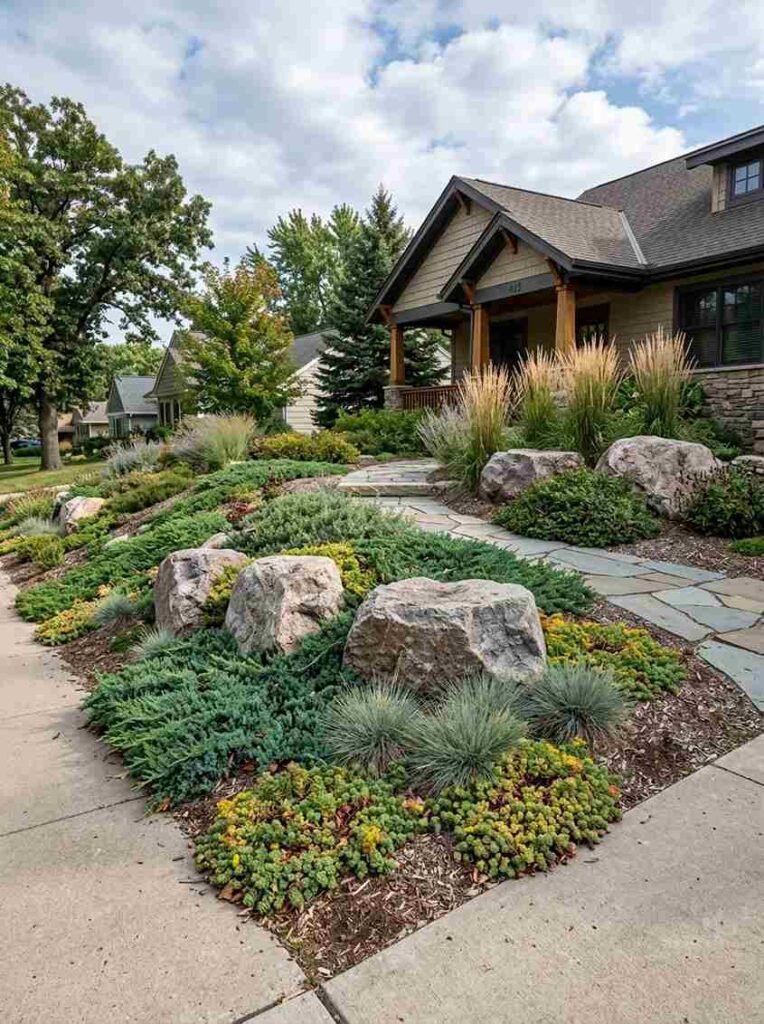
If one area stays consistently wet, stop fighting it. Plant it with moisture-loving plants — iris, cattail, cardinal flower. Turn the problem into a feature.
Structural Elements That Add Interest
25. Low stone wall seating area
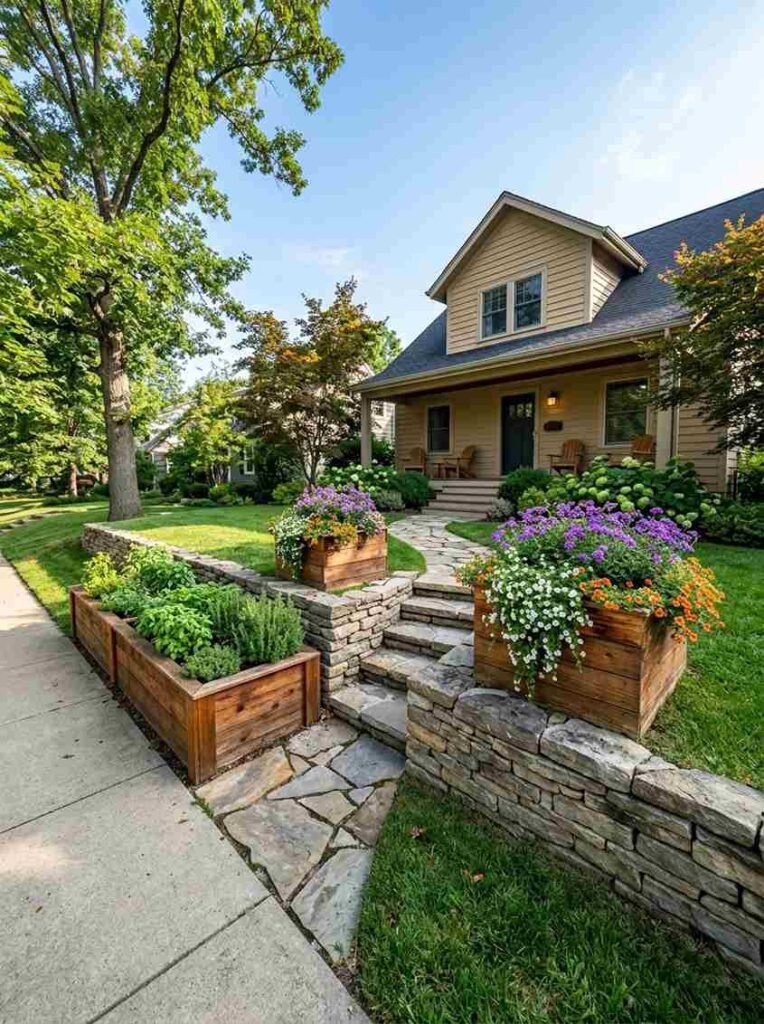
Build a curved low stone wall (18–24 inches tall) at the mid-slope level. It holds a flat seating pad, creates destination on the slope, and doubles as a retaining wall.
26. Arbor or gate at the top
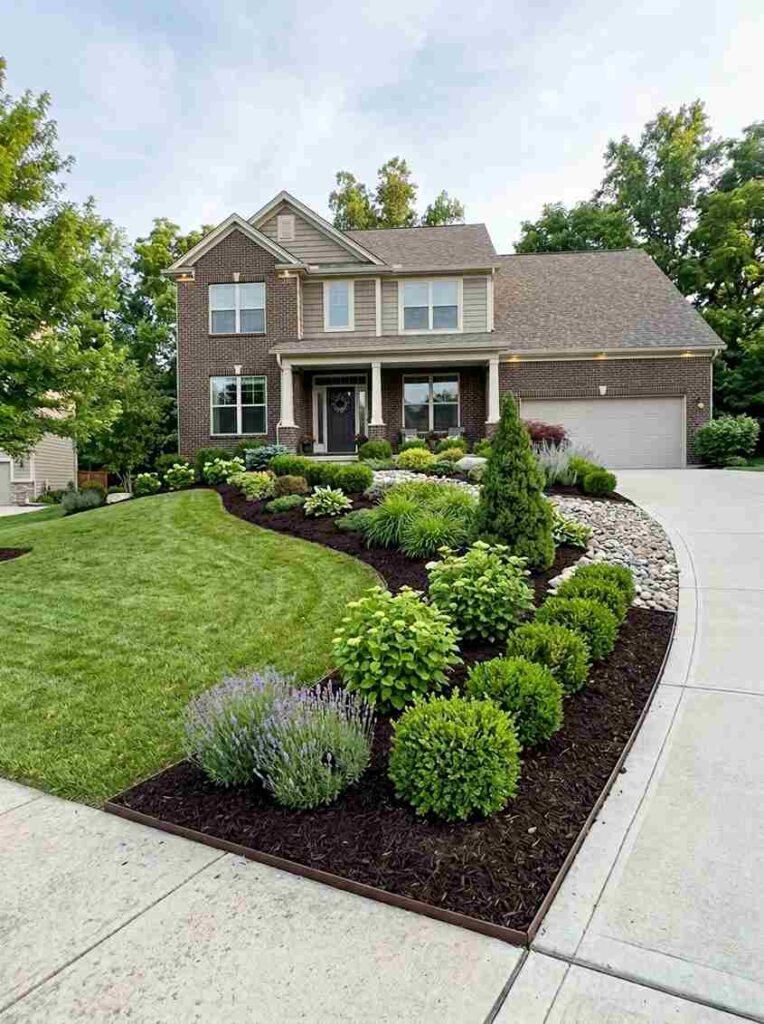
Frame the top of the slope with an arbor draped in climbing roses or wisteria. It creates an entry moment and draws the eye upward rather than letting it slide down the grade.
27. Boulders as anchors
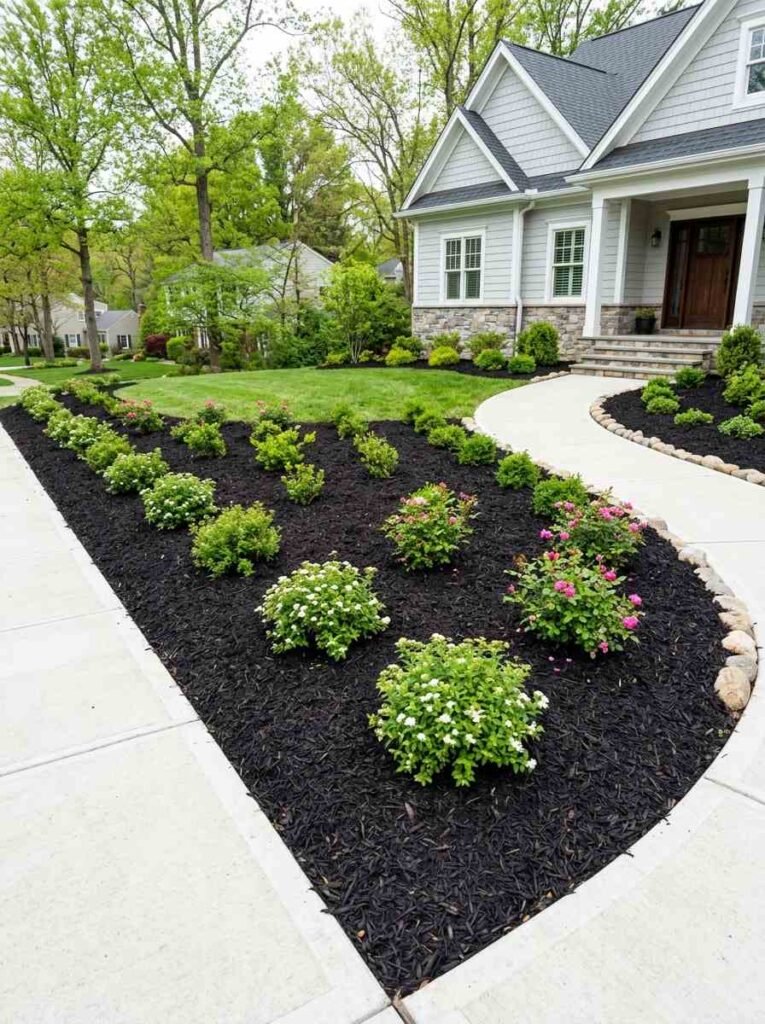
Place 3–5 large boulders (200+ lbs each) across the slope. They hold soil, break up the visual plane, and look like they’ve always been there. Group them in odd numbers — 3 or 5 reads as natural, 4 reads as deliberate in a bad way.
28. Raised planter boxes on terraces
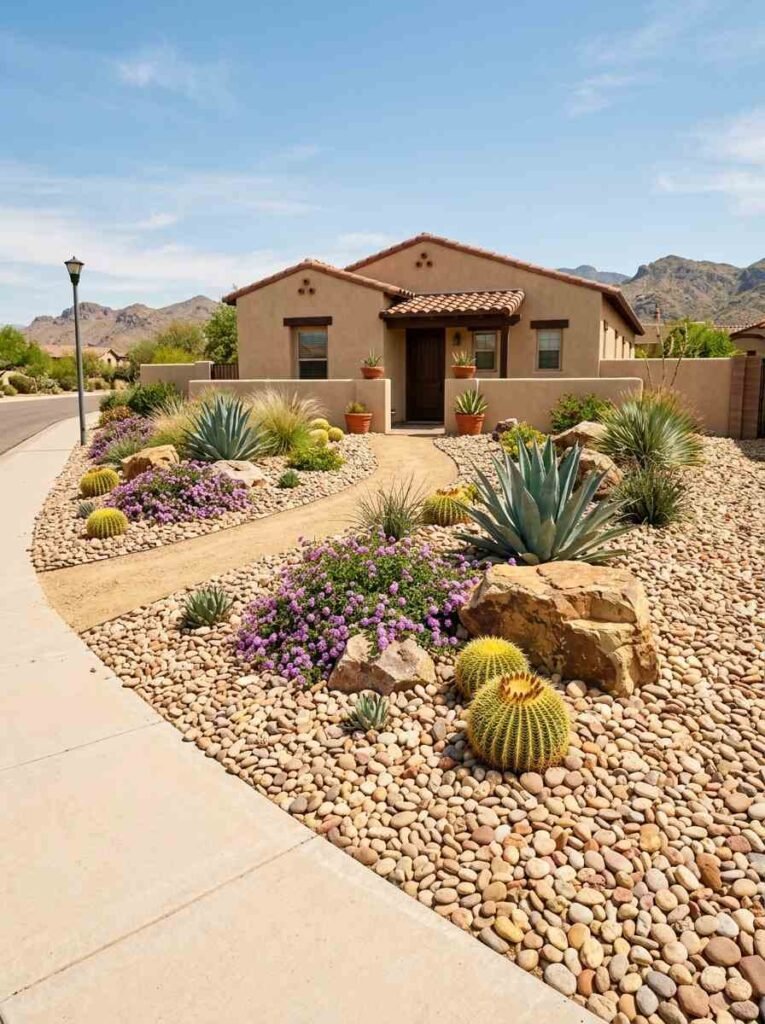
On your terrace levels, add cedar raised planter boxes. Seasonal color, herbs, vegetables — whatever you want. They add vertical interest and give you flexible planting zones.
Low-Maintenance Finishes
29. Mulch + landscape fabric combo
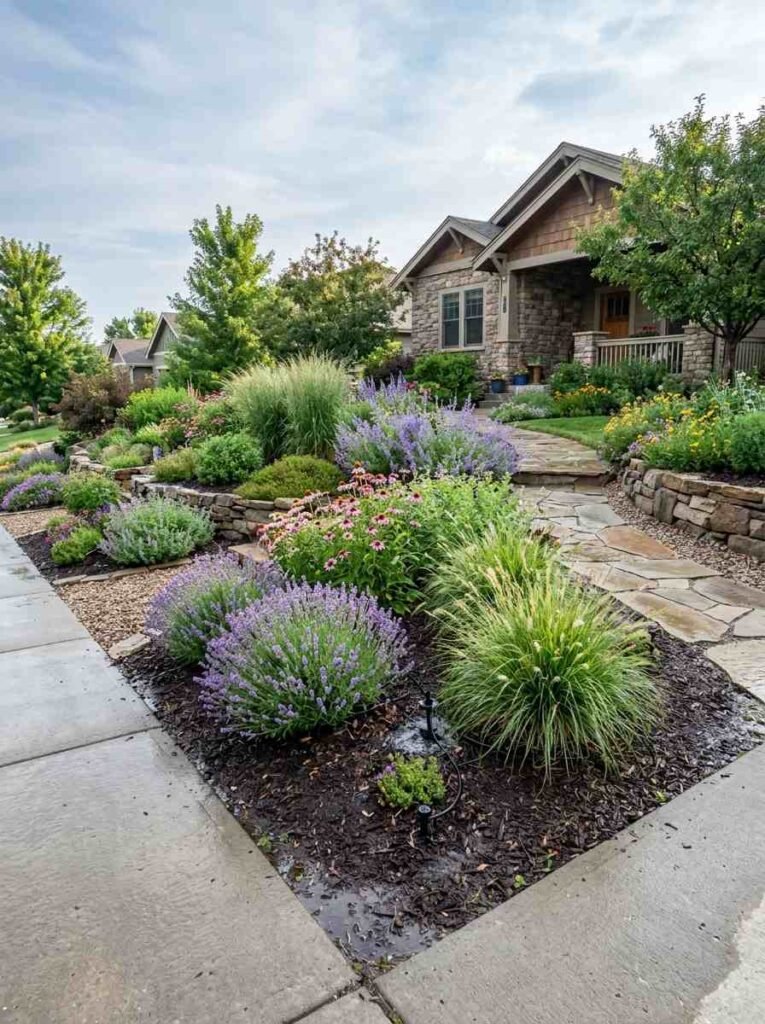
For planted slopes, 3–4 inches of shredded hardwood mulch over landscape fabric dramatically reduces weeding and water needs. Refresh the mulch every 2 years and you’re done.
30. River rock mulch in dry zones
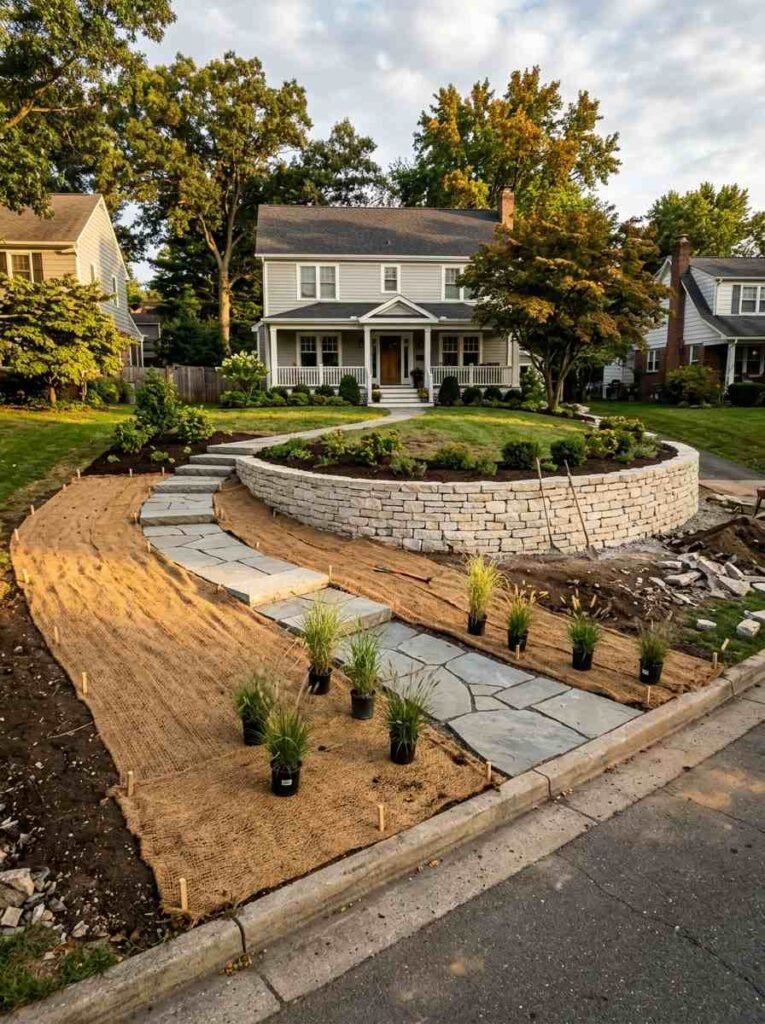
In areas where plants are sparse, river rock mulch is both practical and good-looking. It doesn’t wash away like wood mulch and reflects heat — great for drought-tolerant plantings.
31. Automatic drip irrigation
Install drip irrigation on any sloped bed you plant. Slopes dry out faster than flat ground. A drip system on a timer eliminates the guesswork and keeps your investment alive through hot summers.
A Few Things Worth Knowing Before You Start
Slopes above 3:1 (3 feet of run for every 1 foot of rise) need erosion control from day one. Don’t plant and wait — stabilize first with erosion control matting, then plant through it.
Always think about where the water goes. A well-landscaped slope manages water gracefully. A poorly planned one redirects it into your neighbor’s yard or your foundation. :/
And start with the bones — walls, paths, major boulders — before adding plants. It’s much easier to adjust hardscaping on a bare slope than to work around established plantings.
The Bottom Line
A sloped front yard is an invitation to do something more interesting than a flat lawn. Terracing, native plantings, dry creek beds, ground cover mosaics — the options are genuinely exciting once you stop seeing the slope as a problem.
Pick 3–4 ideas from this list that fit your climate, budget, and style. Start with the structure. Add the plants. Give it one growing season.
You’ll wonder why you were ever stressed about it.
