My first apartment had exactly four pieces of furniture in the living room, and it still managed to feel cluttered.
The number of things in a space rarely tells the whole story.
What actually changes a room is what your eyes land on first, how much visual noise is competing for attention, and whether anything in the space is pulling its weight.
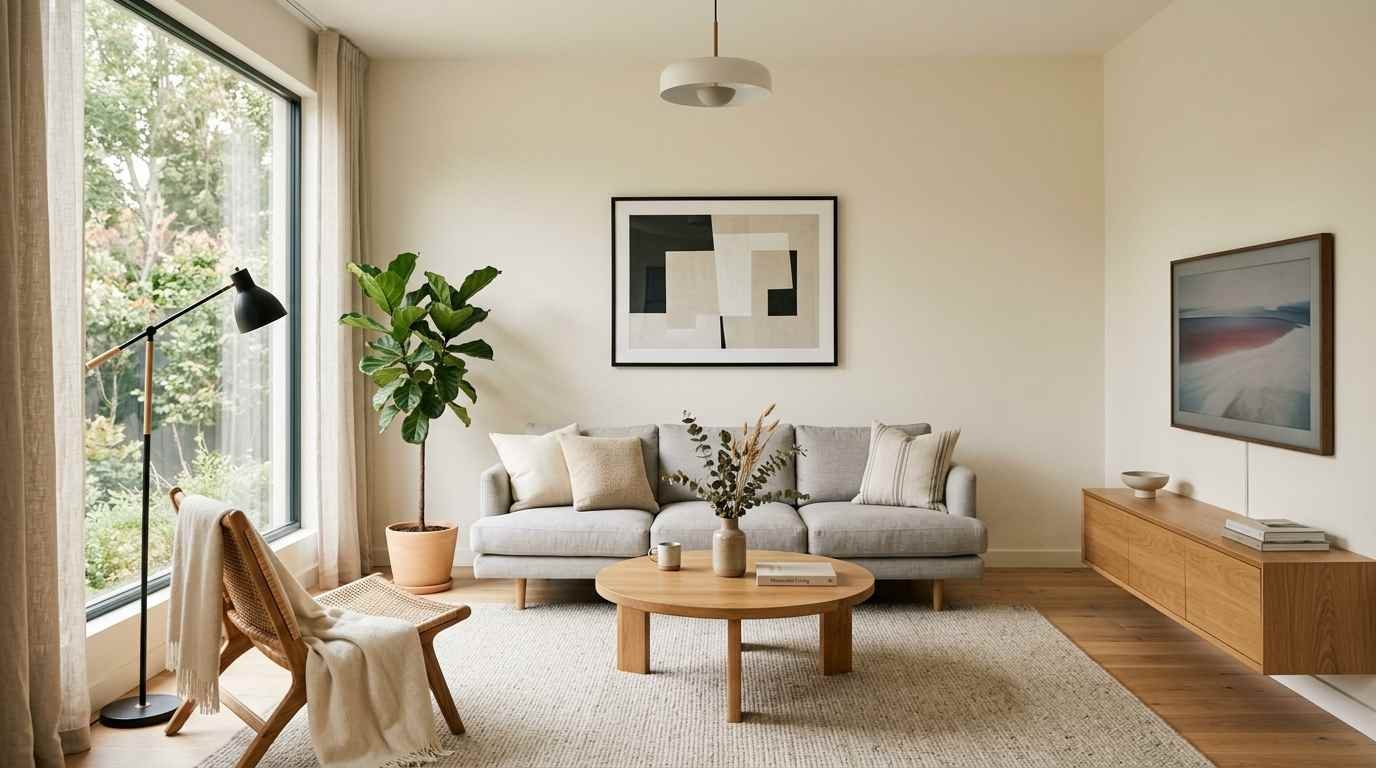
That’s the real idea behind a minimalist living room. Not bare walls and one lonely chair sitting in the middle of an empty floor like a showroom nobody can afford to sit in. A room that’s been edited down to what actually earns its place.
I’ve redone three living rooms over the past six years, two rentals and one place I own now, and this room always takes the longest to get right. Bedrooms are easy. Kitchens mostly fix themselves.
Living rooms have to multitask: relaxing on a random Tuesday and hosting six people on a Saturday call for two completely different setups, and somehow the same room has to handle both.
These 24 ideas come from what’s actually worked for me, a few things I tried and ripped right back out, and a bit of research into why a calmer room genuinely changes how you feel sitting in it.
Why fewer things actually calm you down
Researchers have measured this, which I find weirdly satisfying.
A UCLA study found that women who described their homes as cluttered had measurably higher cortisol levels throughout the day, the kind of chronic stress pattern usually linked to anxiety and burnout.
Psychology Today documented the connection between clutter and elevated cortisol in more detail, and it’s worth a read if you want the science behind why a messy room makes your shoulders tense up the second you walk in.
There’s a similar pattern with greenery and natural light. One peer-reviewed study tied higher neighborhood green space to lower stress hormone levels measured across the day.
That’s part of why one healthy plant does more for a minimalist room than five small ones scattered around on every surface.
None of this requires a design degree. A calmer room is something you can actually measure, and you can get there with small, specific changes.
Start with light and a quieter color palette
Paint and light cost less than furniture and do more work. Start here before buying anything.
Warm white over stark white.
Pure white walls read sterile, almost clinical, under most lighting. A warm white or soft greige keeps a room bright without making it feel like a waiting room.
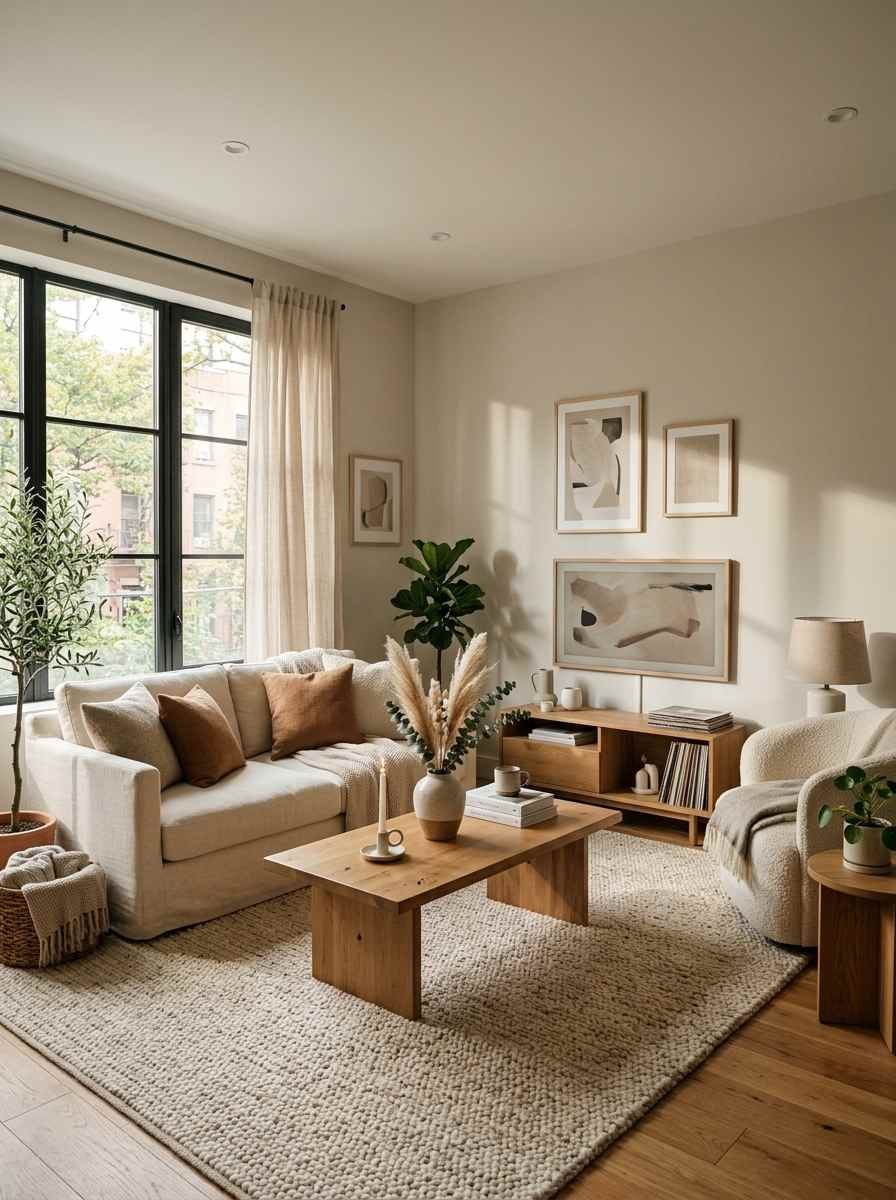
Pick one accent neutral, not three. Camel, sage, and dusty blue all work in a minimalist space. Picking one and repeating it, a throw here, a vase there, reads intentional.
Picking all three at once just looks like indecision.
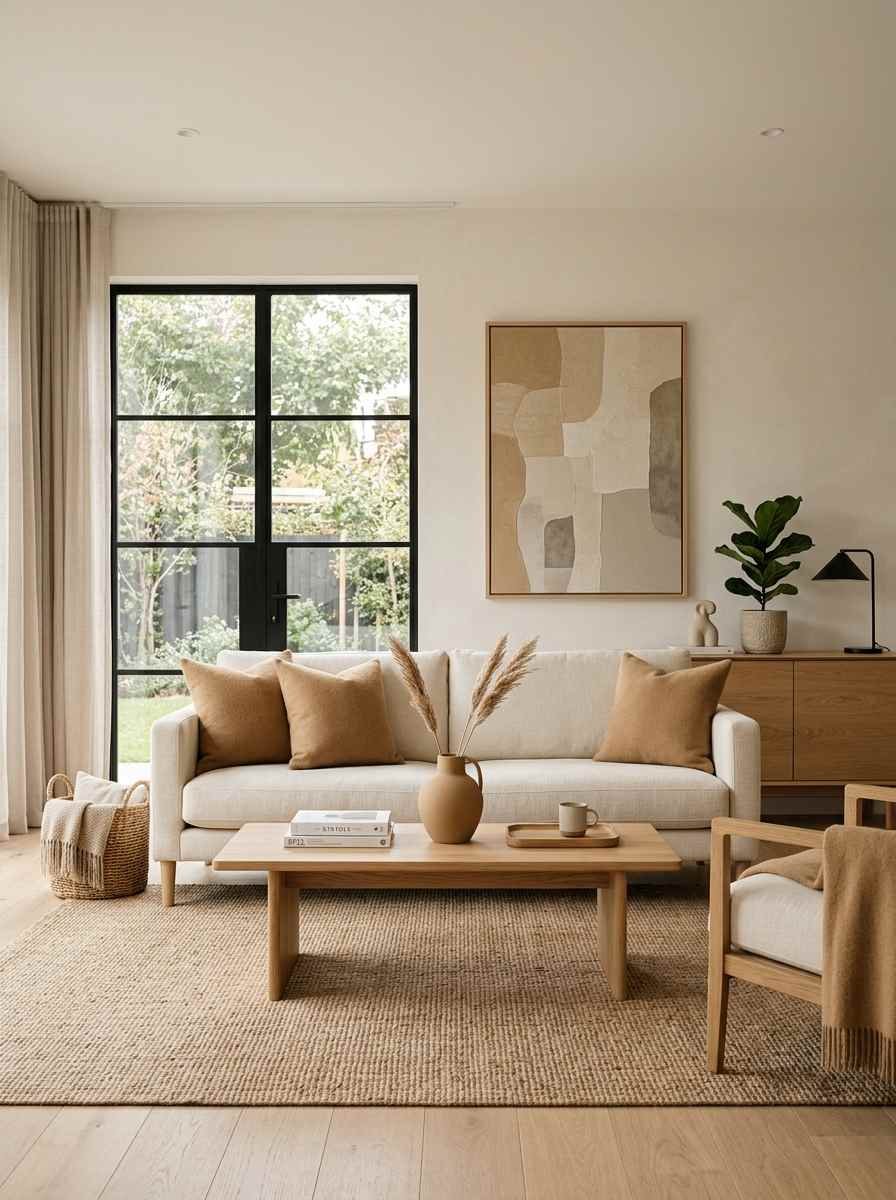
Swap heavy drapes for sheer linen panels. Blackout curtains belong in a bedroom.
In a living room, they block the one thing that makes minimalist rooms feel good: daylight.
Sheer linen lets light in and still gives you privacy once it’s dark out.
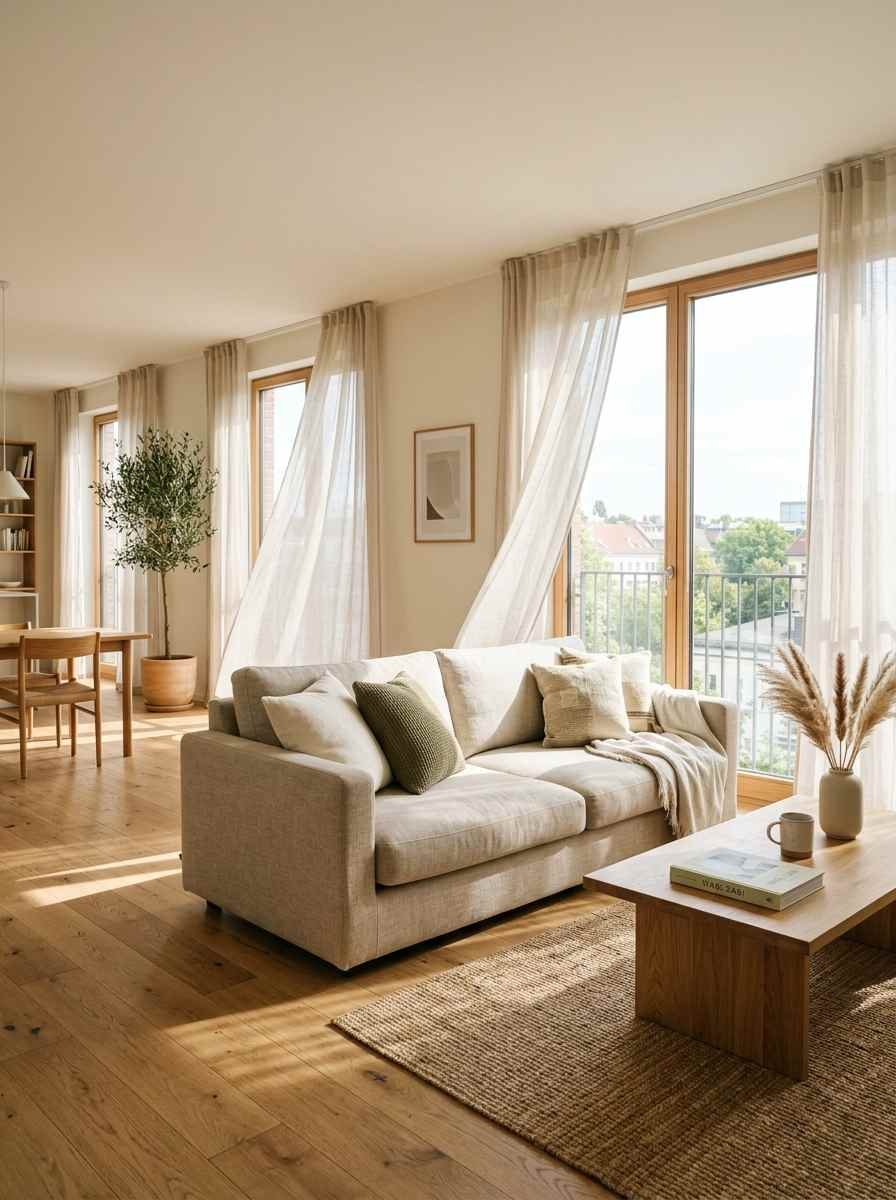
Hang a large mirror across from the window. This one sounds like a decorating cliché, mostly because it is one. It also works.
A mirror facing your main light source can make a room feel close to twice as bright by late afternoon.
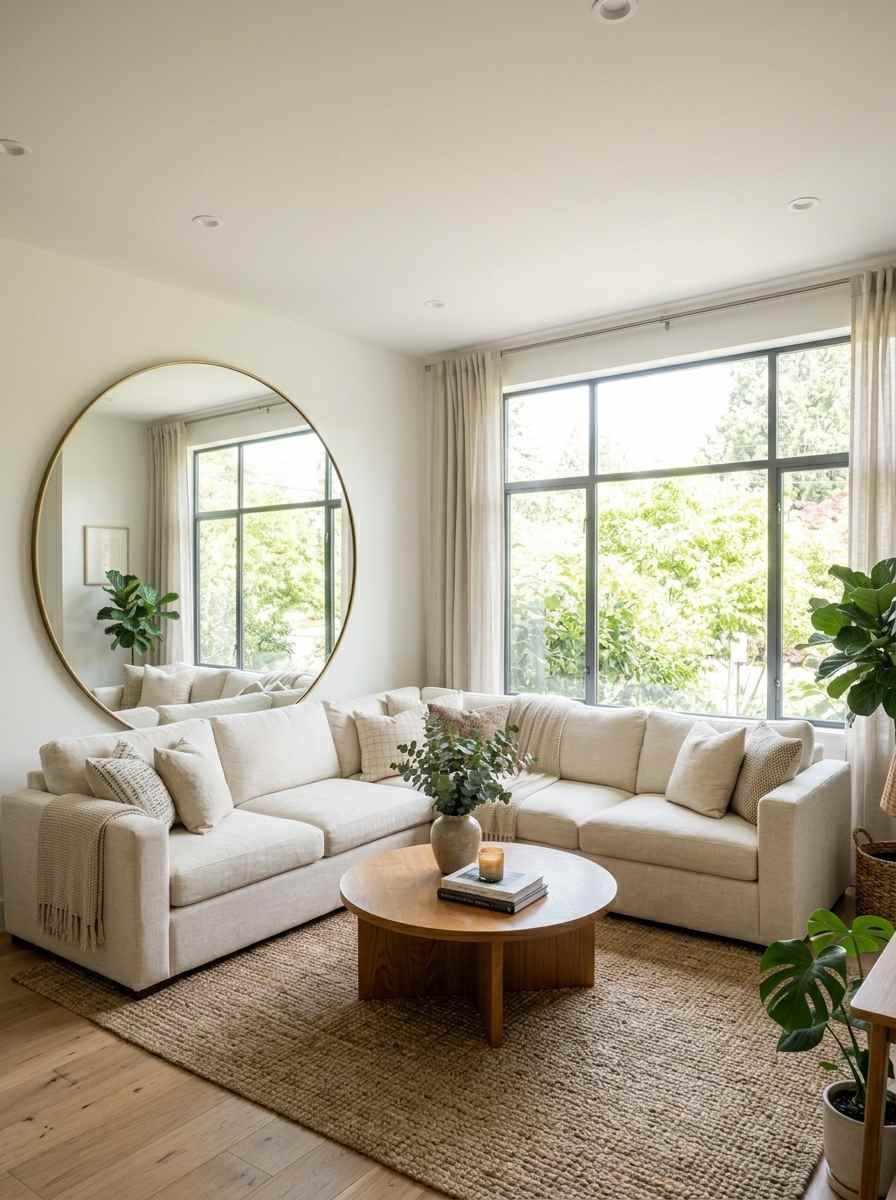
Designers tend to agree on this part. Decorilla’s breakdown of color psychology in interior design notes that muted, desaturated tones are what professionals reach for when the goal is a calmer space, not the stark white-on-white look people often mistake for minimalism.
Furniture: fewer pieces, but better ones
This is where most “minimalist” living rooms go sideways. People remove furniture, replace it with nothing, and then wonder why the room feels unfinished instead of calm.
One statement sofa instead of a full matching set. Skip the sofa-plus-two-armchairs-plus-ottoman combo from the catalog.
One well-made sofa and a single extra chair, if you actually need the seating, is usually enough.
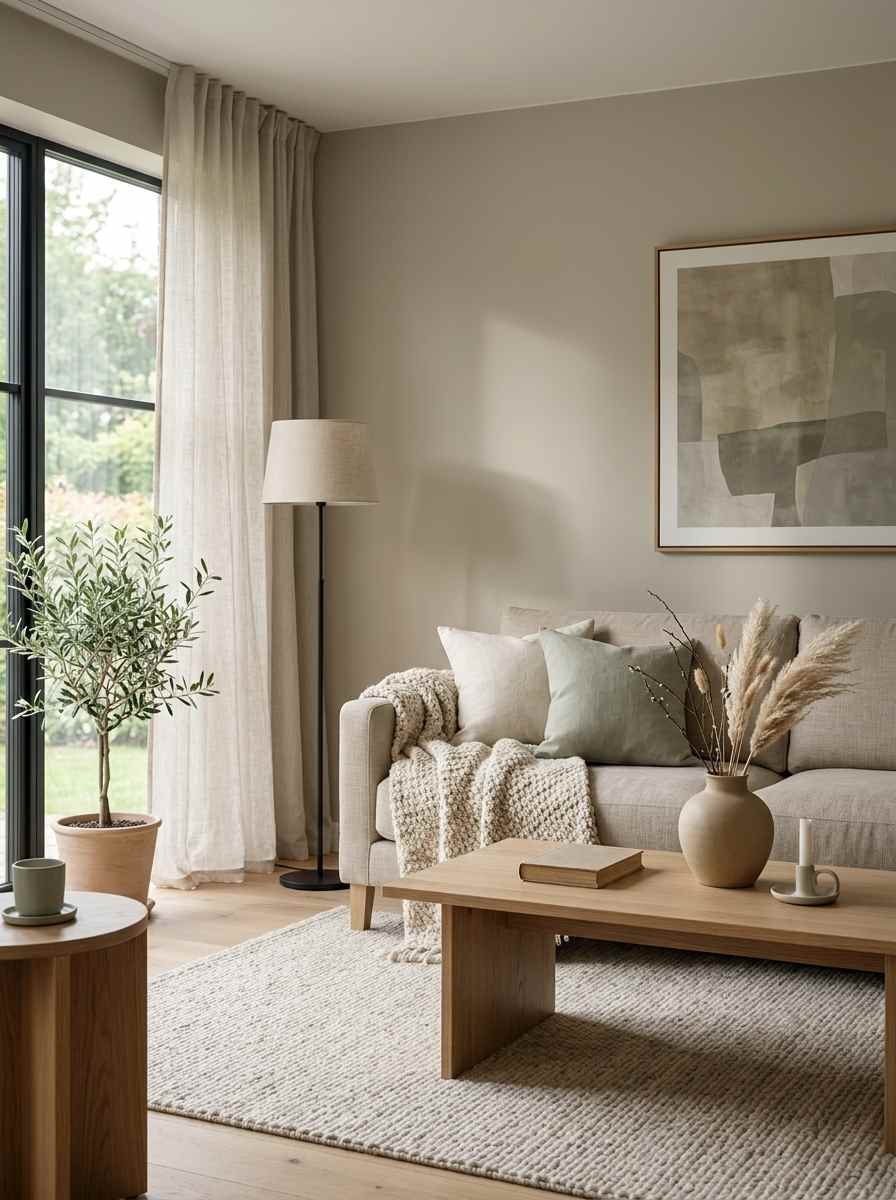
Furniture with exposed legs. Pieces that lift slightly off the floor read lighter, even at the exact same size as a skirted piece.
You can see floor underneath them, which tricks your brain into reading the room as more open than it is.
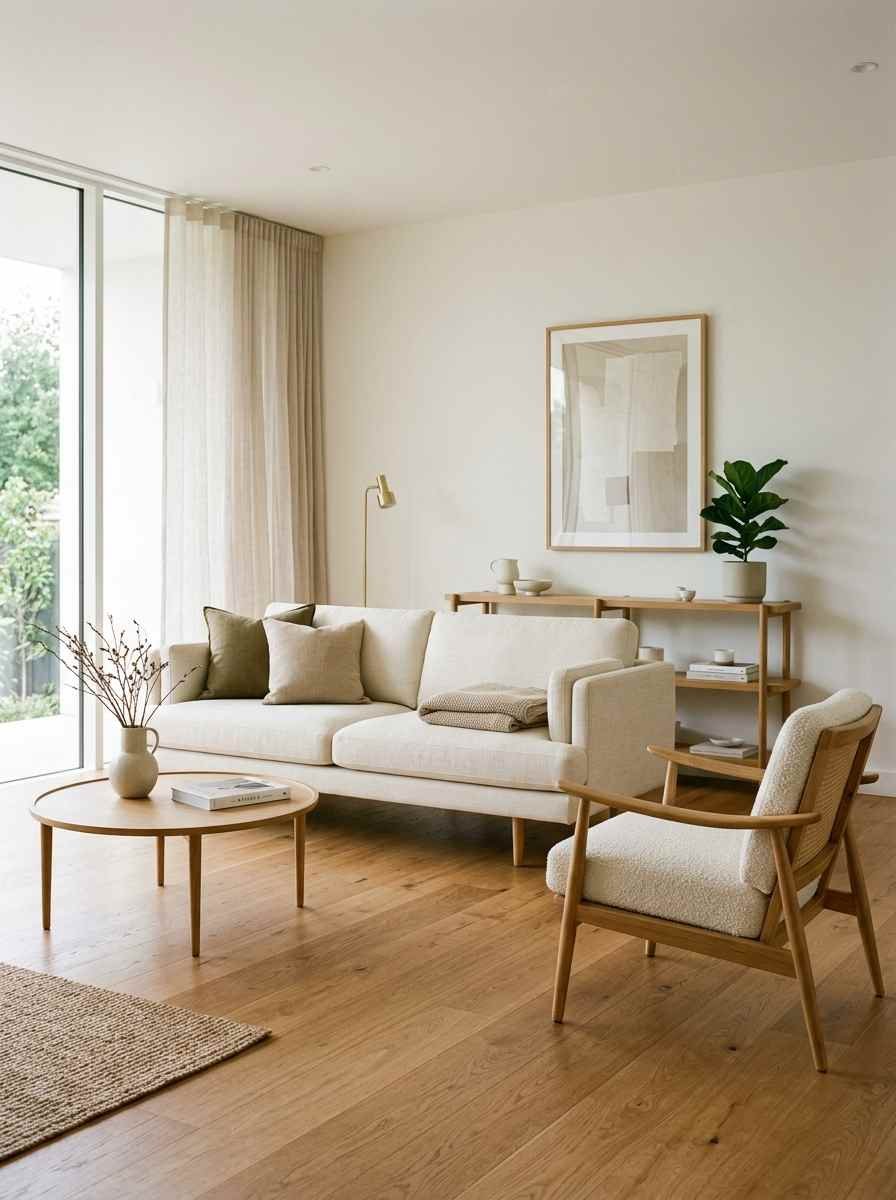
A coffee table doing two jobs. Storage underneath, a tray on top for the stuff you actually touch daily: remote, coasters, a candle. Hidden storage cuts visual clutter without losing function.
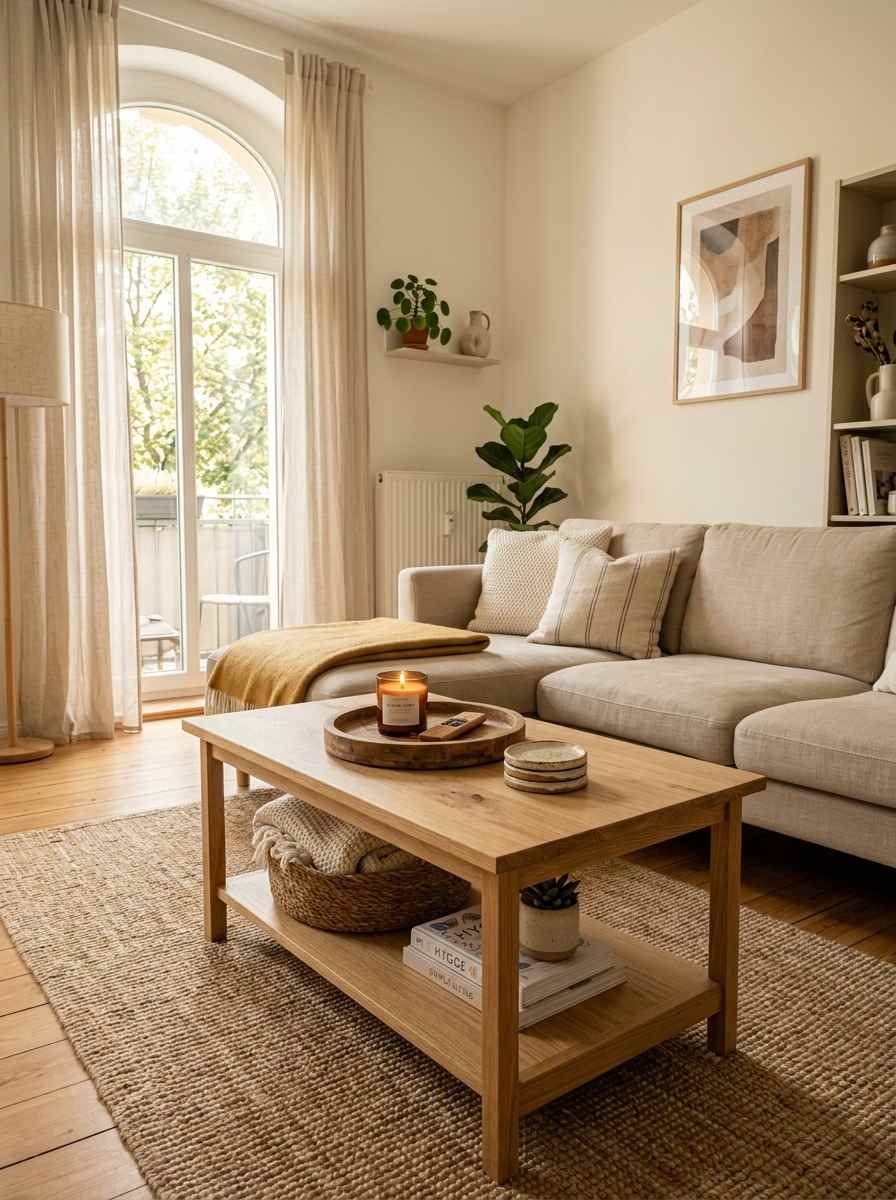
Buy furniture for the room you actually have. I learned this one the hard way.
I bought a sectional sized for a much bigger apartment than the one I was living in, and it ate every inch of walking space for two years before I finally sold it. Measure first. Always.
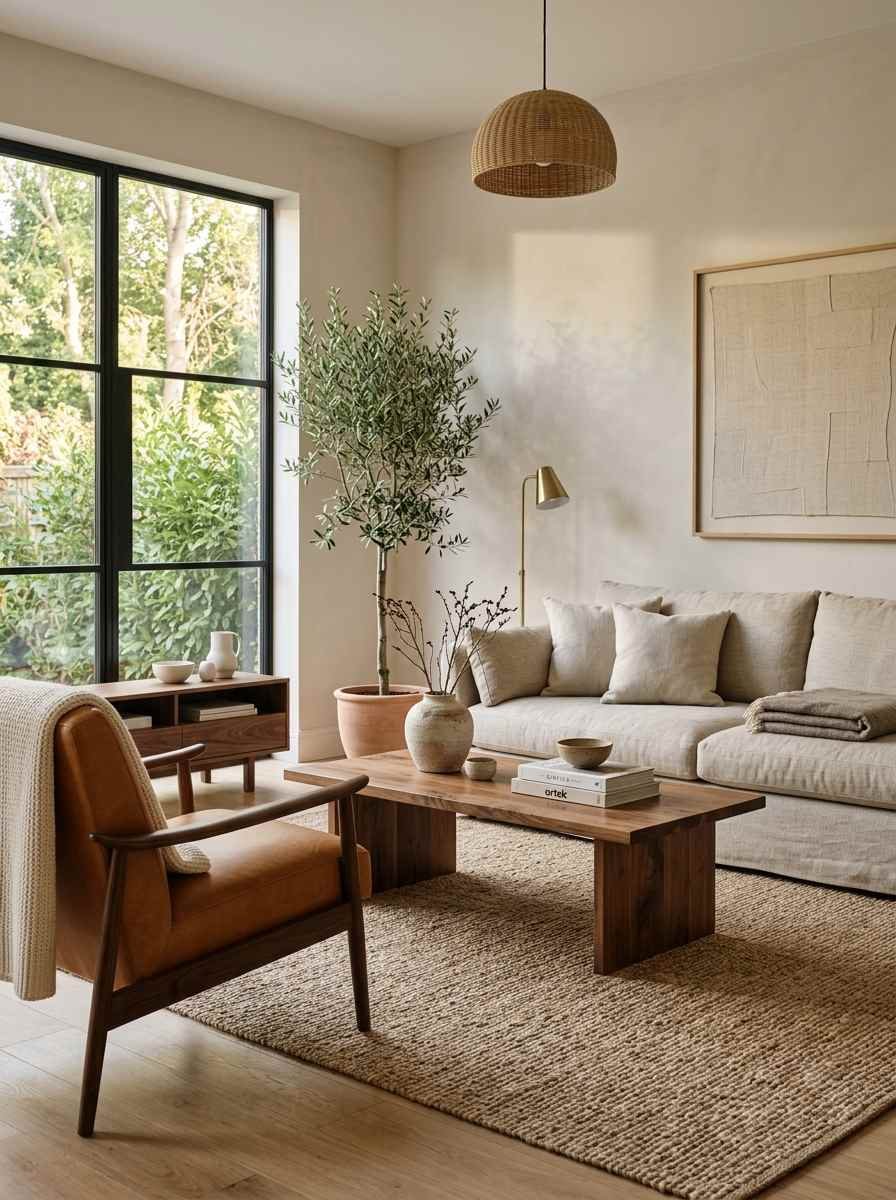
Storage that disappears instead of competes
Open shelving photographs beautifully and gets messy in real life within about three weeks. Closed storage is what keeps a minimalist room minimalist long after moving day is over.
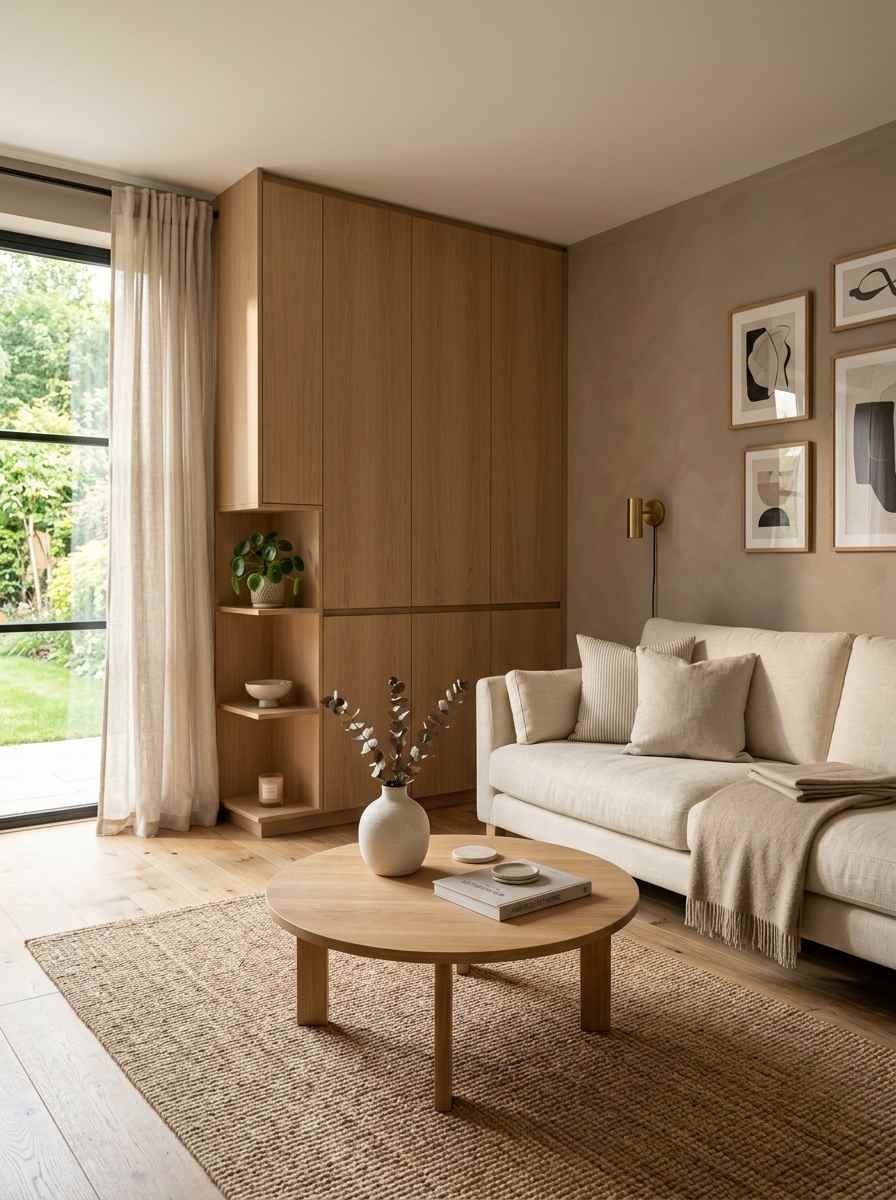
Closed cabinetry for anything you don’t want to style. Books you’ve read twice, board games, the random stuff every household accumulates.
Behind a door, none of it counts against the calm of the room.
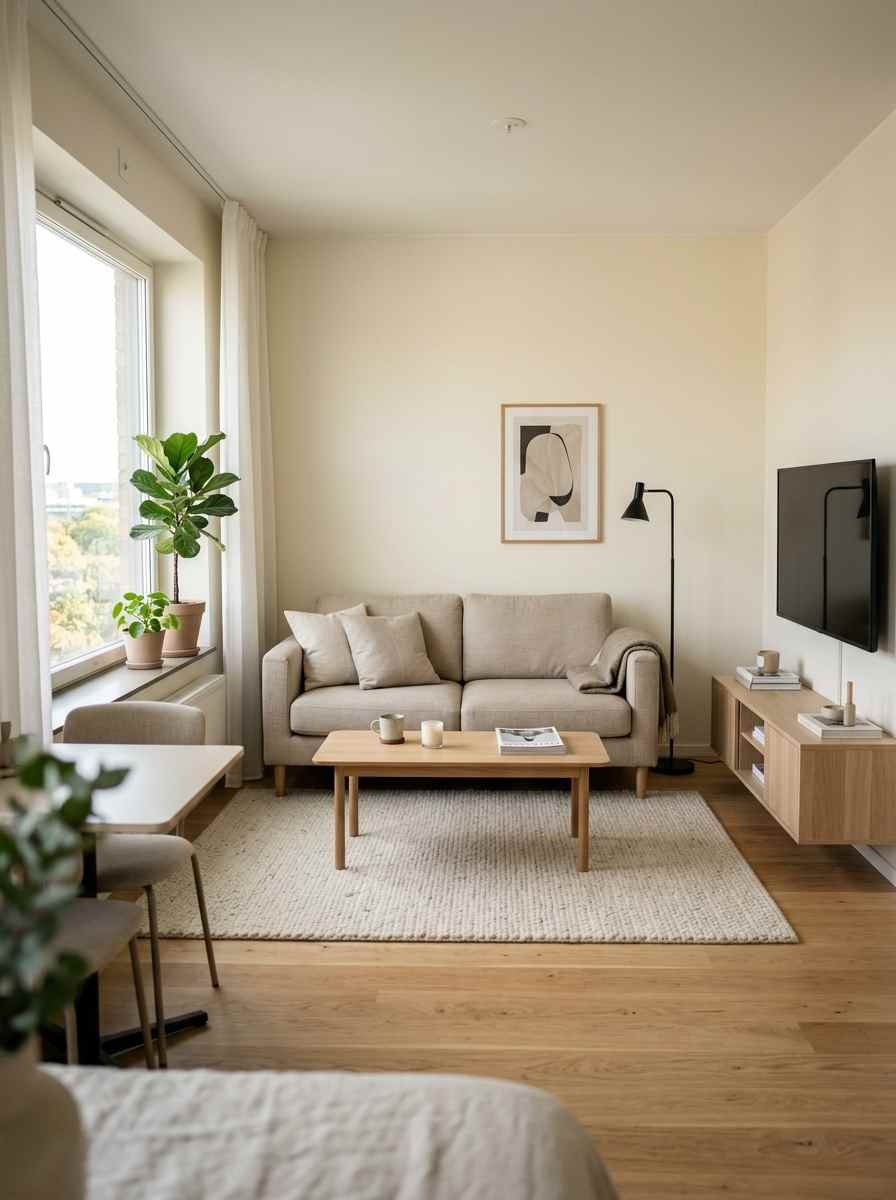
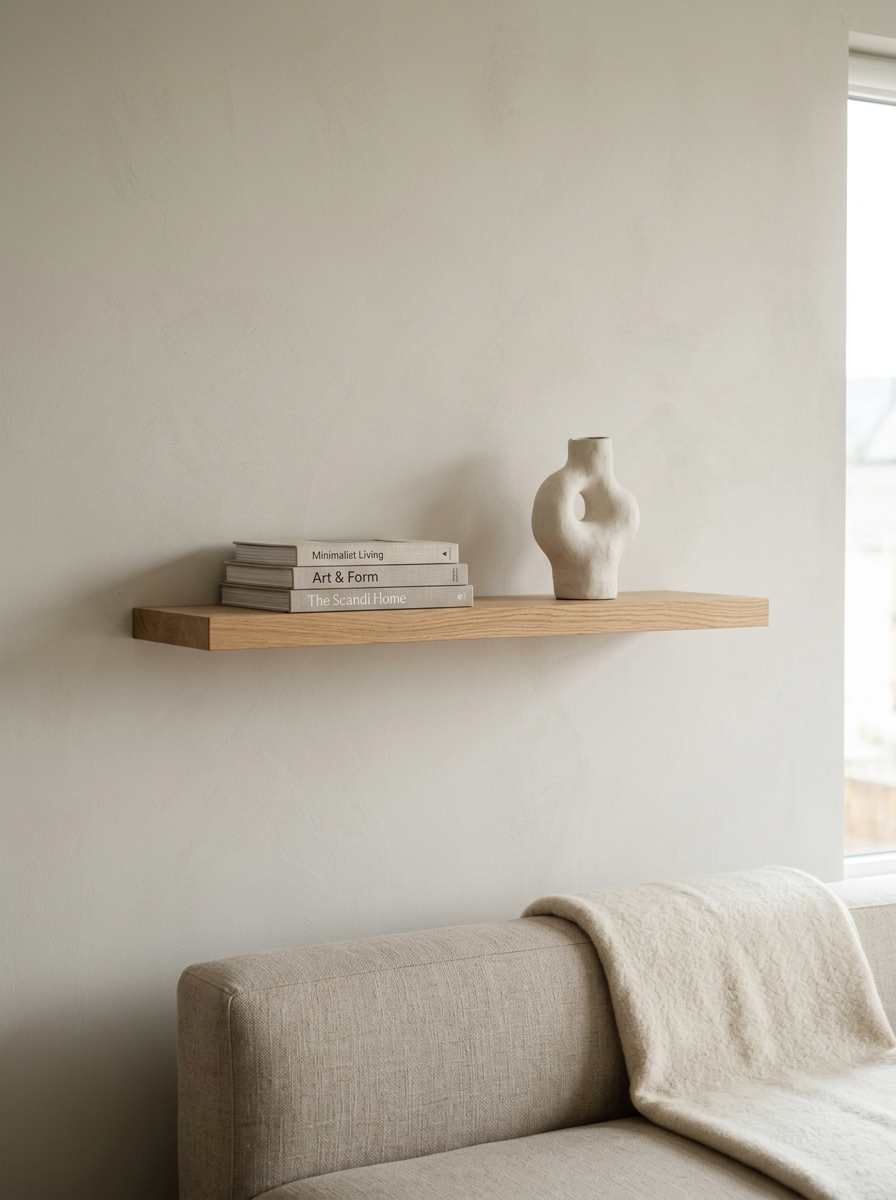
One floating shelf, styled lightly. A small stack of books and a single object, not five, gives you somewhere to display something personal without it turning into a curio cabinet.
A window seat or bench with storage underneath.
This earns its keep especially in smaller apartments, where every piece of furniture needs to multitask.
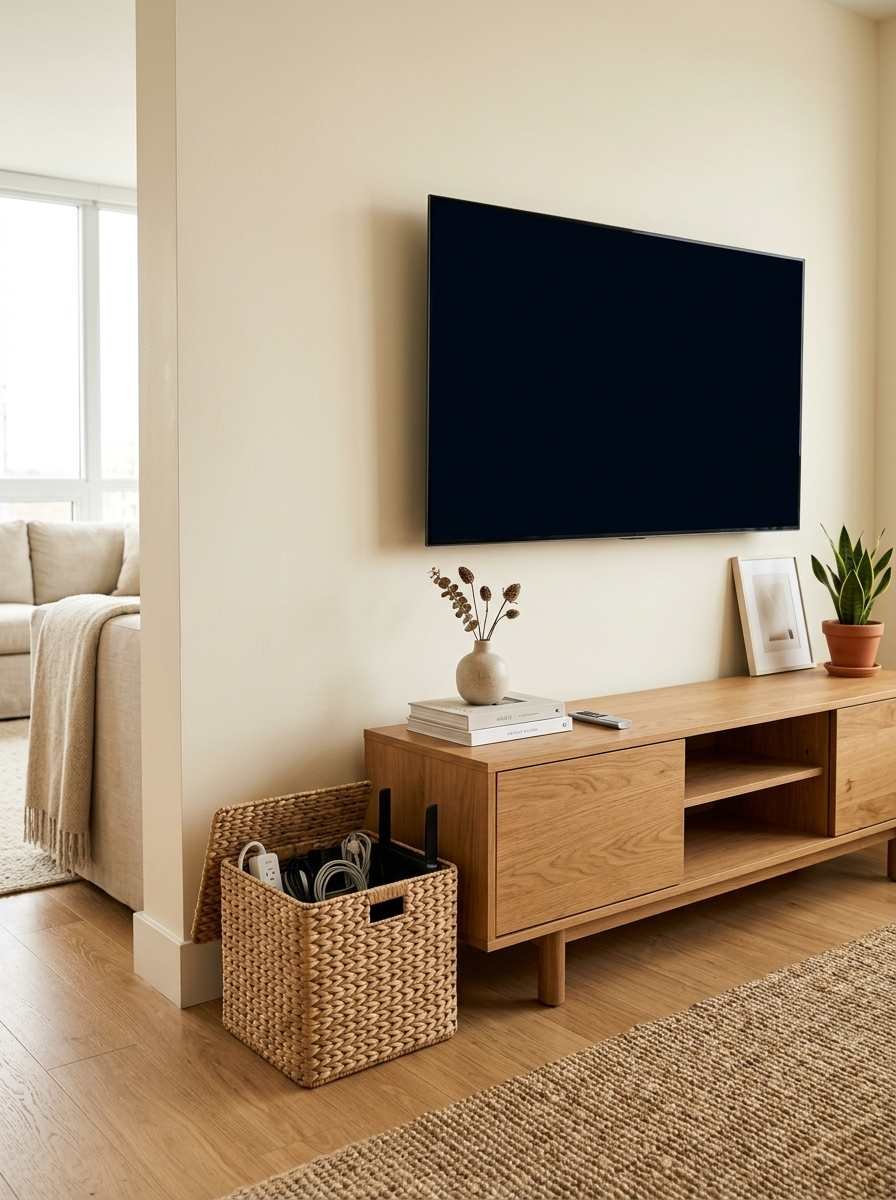
A basket for cords, specifically. Cable boxes, chargers, the power strip behind the TV: none of it photographs well, all of it is necessary.
A simple woven basket hides the mess in about four minutes of effort.
Side note, completely unrelated: my partner once asked why I have such strong opinions about where the router goes.
I genuinely don’t have a good answer for that one. I just know an exposed tangle of cables undoes everything else you’ve done in the room.
Texture and warmth, so the room doesn’t go cold
This is the part people skip, and it’s the reason some minimalist rooms end up feeling more like a waiting room than somewhere you’d want to spend a Sunday.
Linen, bouclé, and wool over anything synthetic and shiny. Natural textures absorb light instead of bouncing it back, which softens the whole room without adding a single new color.
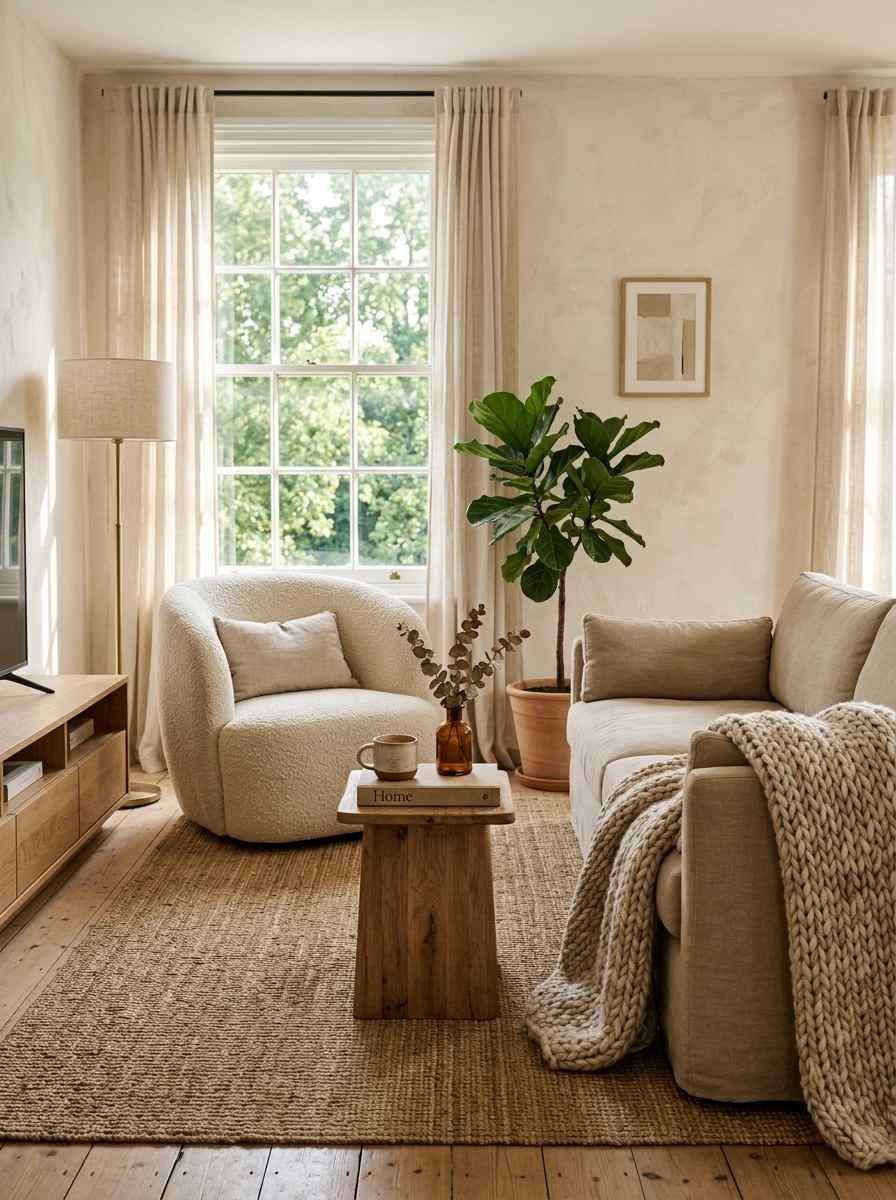
A textured rug, layered if the space allows it. A flat-woven jute rug under a smaller wool one adds depth without bringing in pattern or extra color.
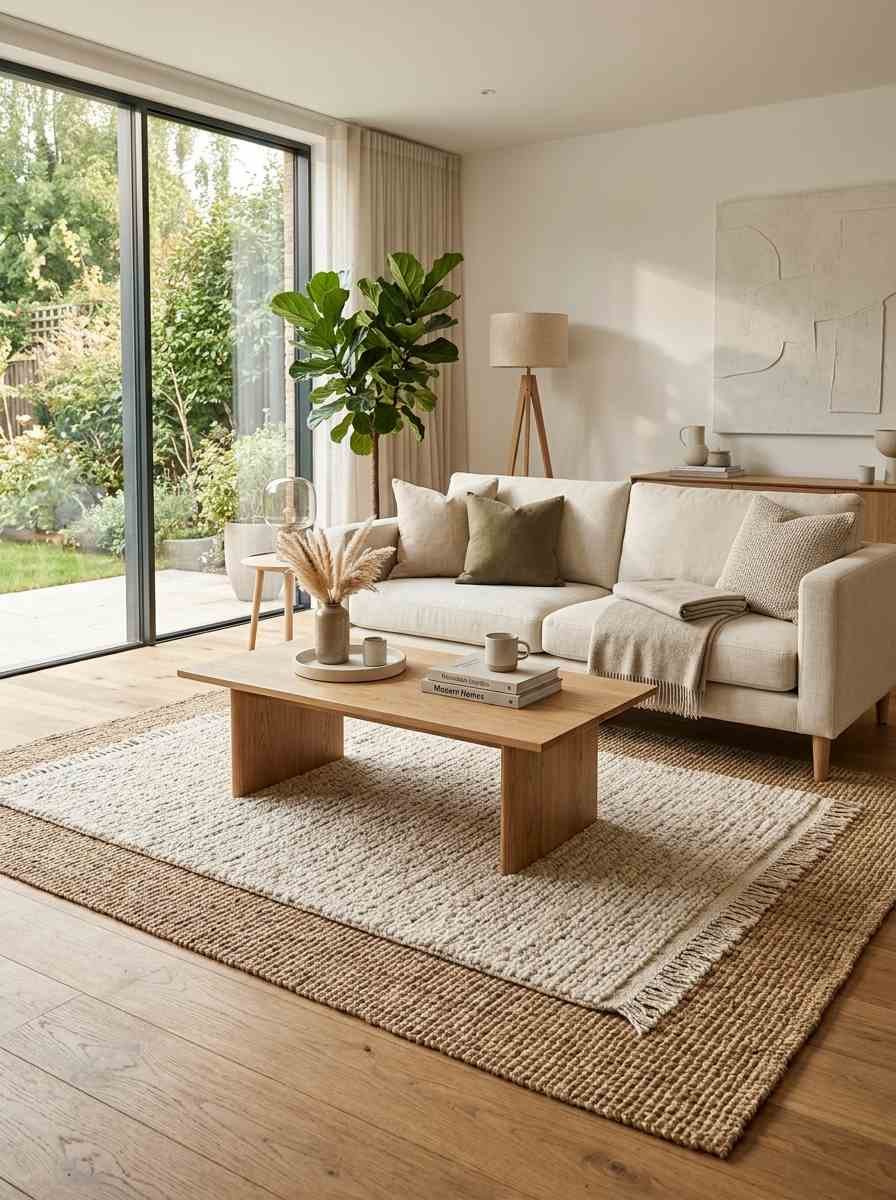
Wood tones to warm up white and gray. Oak, walnut, even one rattan chair: wood does the job that color usually does in other design styles.
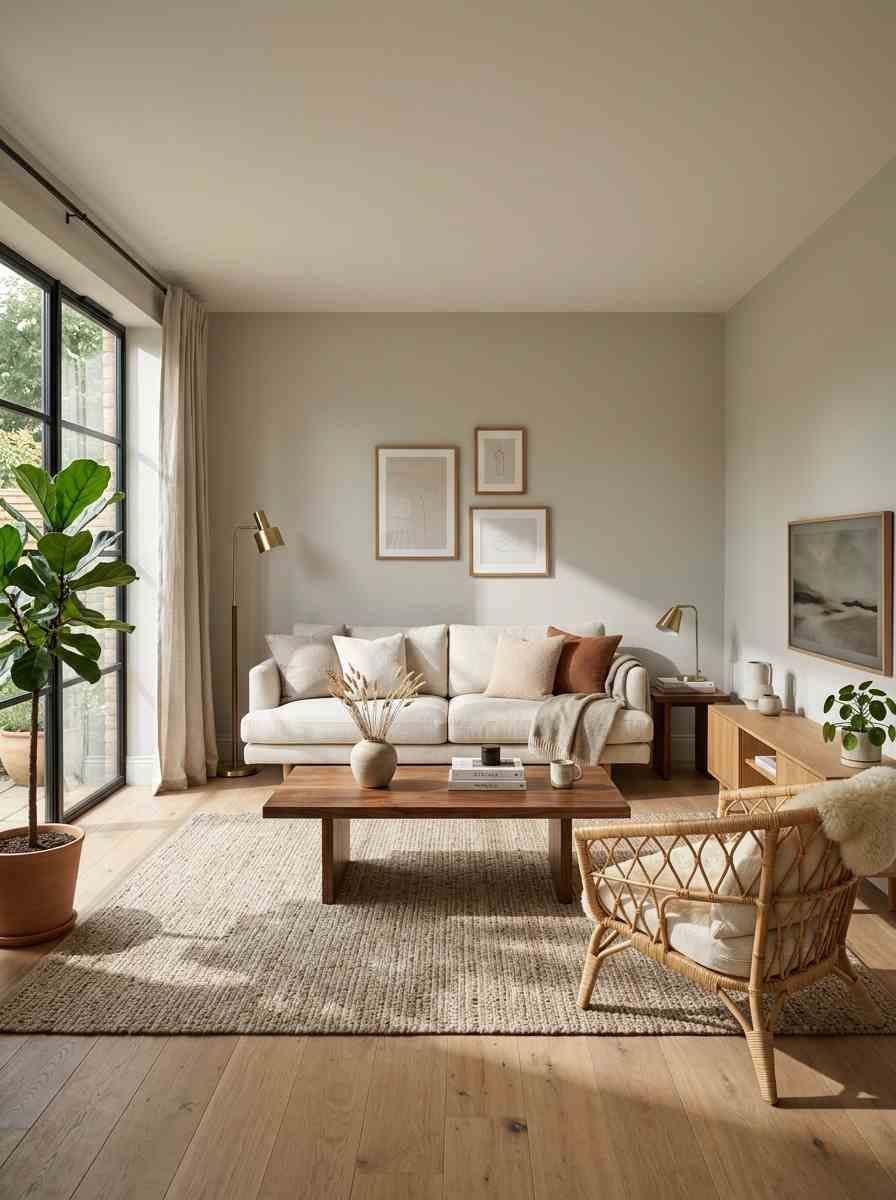
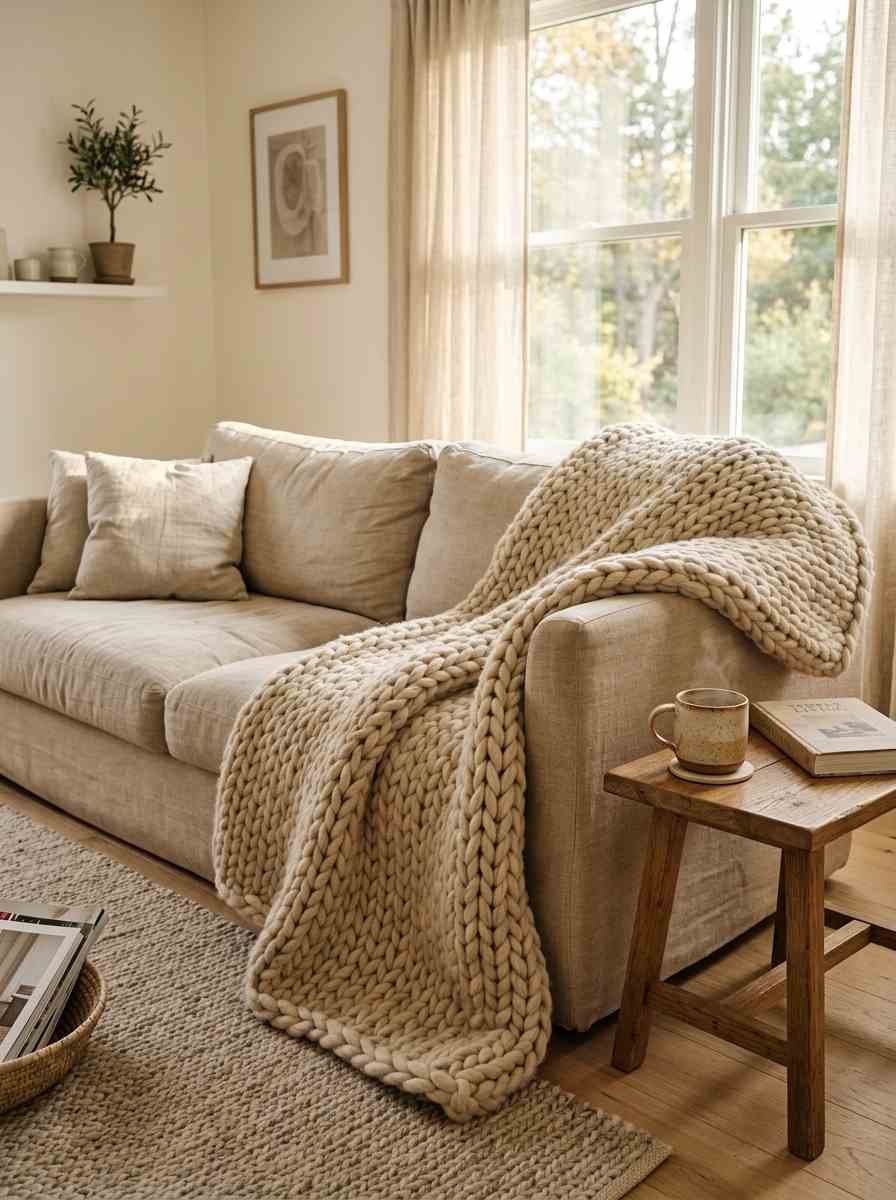
One genuinely chunky throw, left a little messy on purpose. A perfectly folded throw looks staged.
One tossed over the arm of the sofa, slightly rumpled, reads lived-in instead of showroom-fresh.
Layout changes that do more than they should
Sometimes the furniture is fine and the layout is the actual problem. These cost nothing and take an afternoon to fix.
Float the sofa a few inches off the wall. Wow, what a difference a small gap makes.
It instantly reads more intentional than furniture pushed flush against every wall like it’s being stored there.
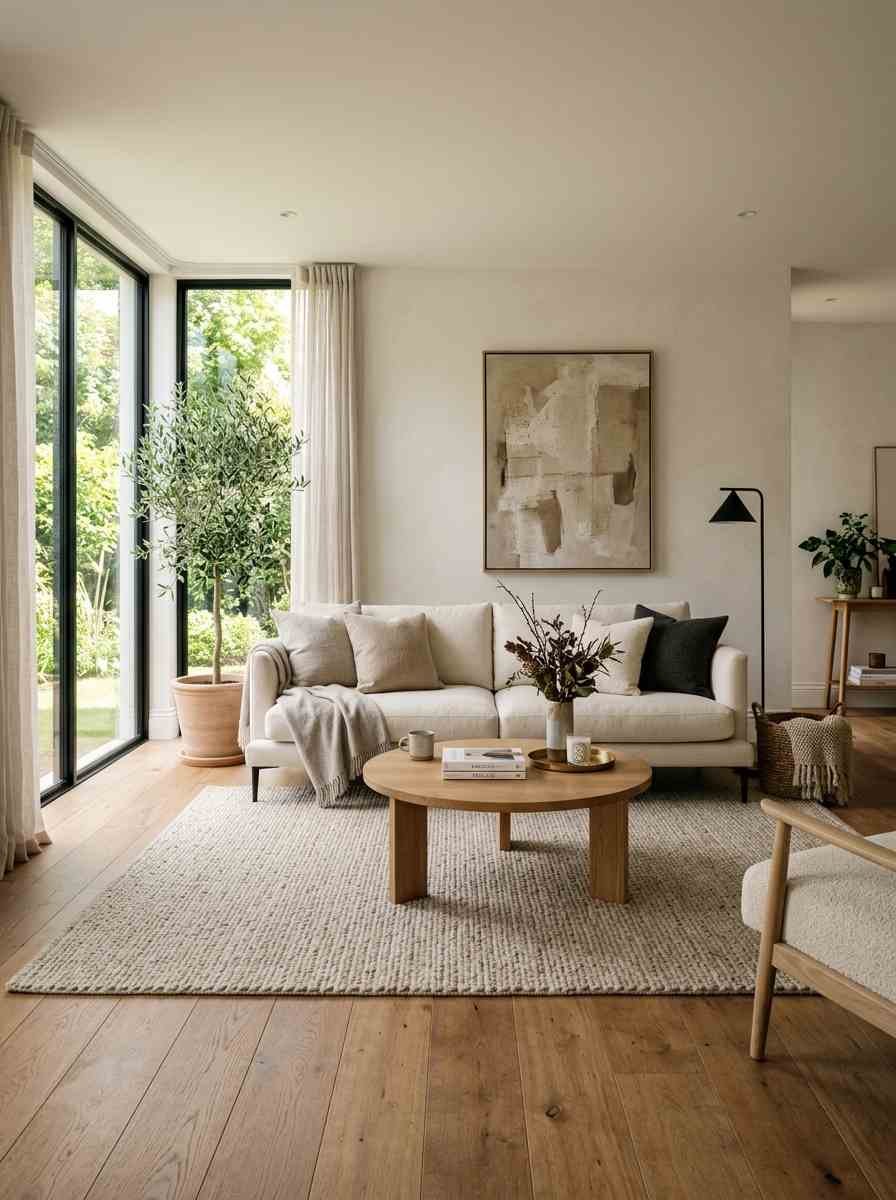
Pick one focal point. A TV wall, a fireplace, a single piece of art: choose one and arrange seating to face it.
Competing focal points make a room feel busy even when the furniture count is low.
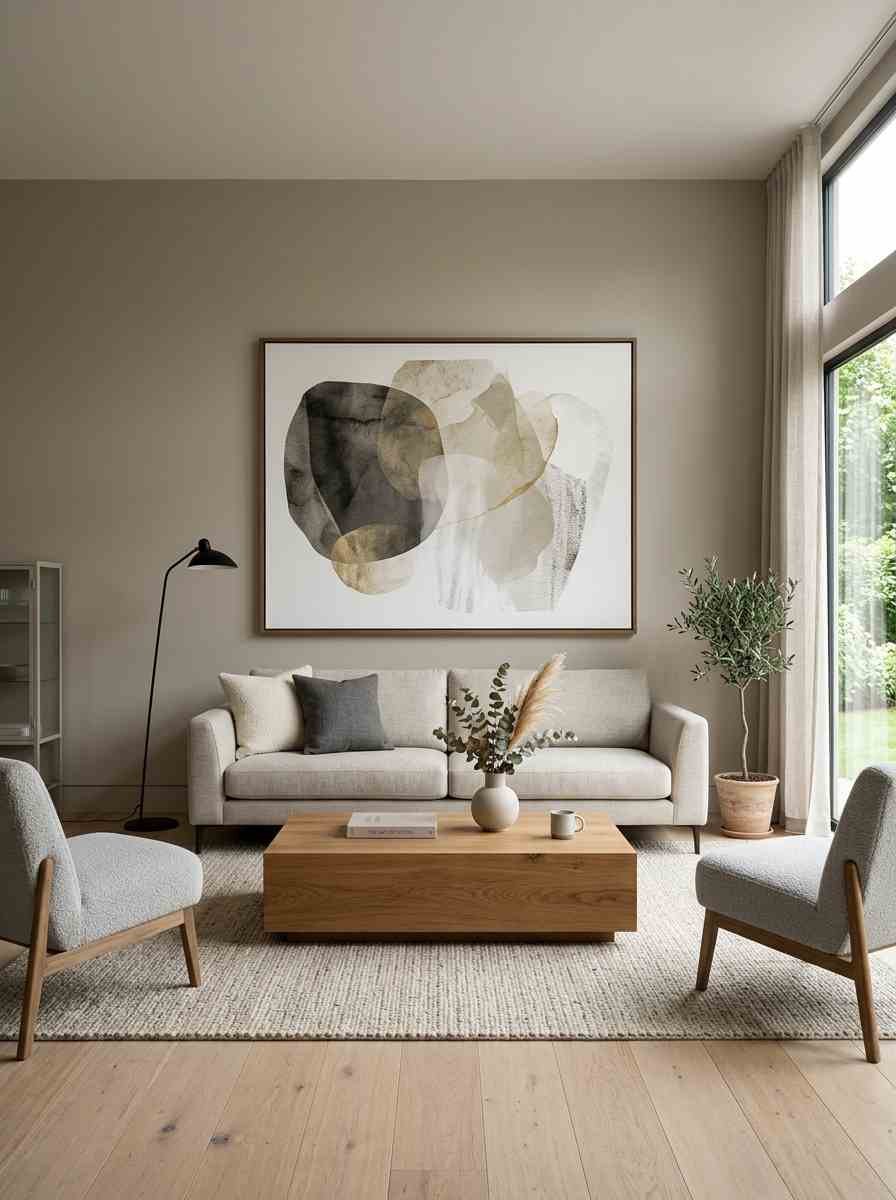
Leave one wall completely empty. Not every wall needs art, a shelf, or a mirror. A single bare wall gives your eyes somewhere to rest.
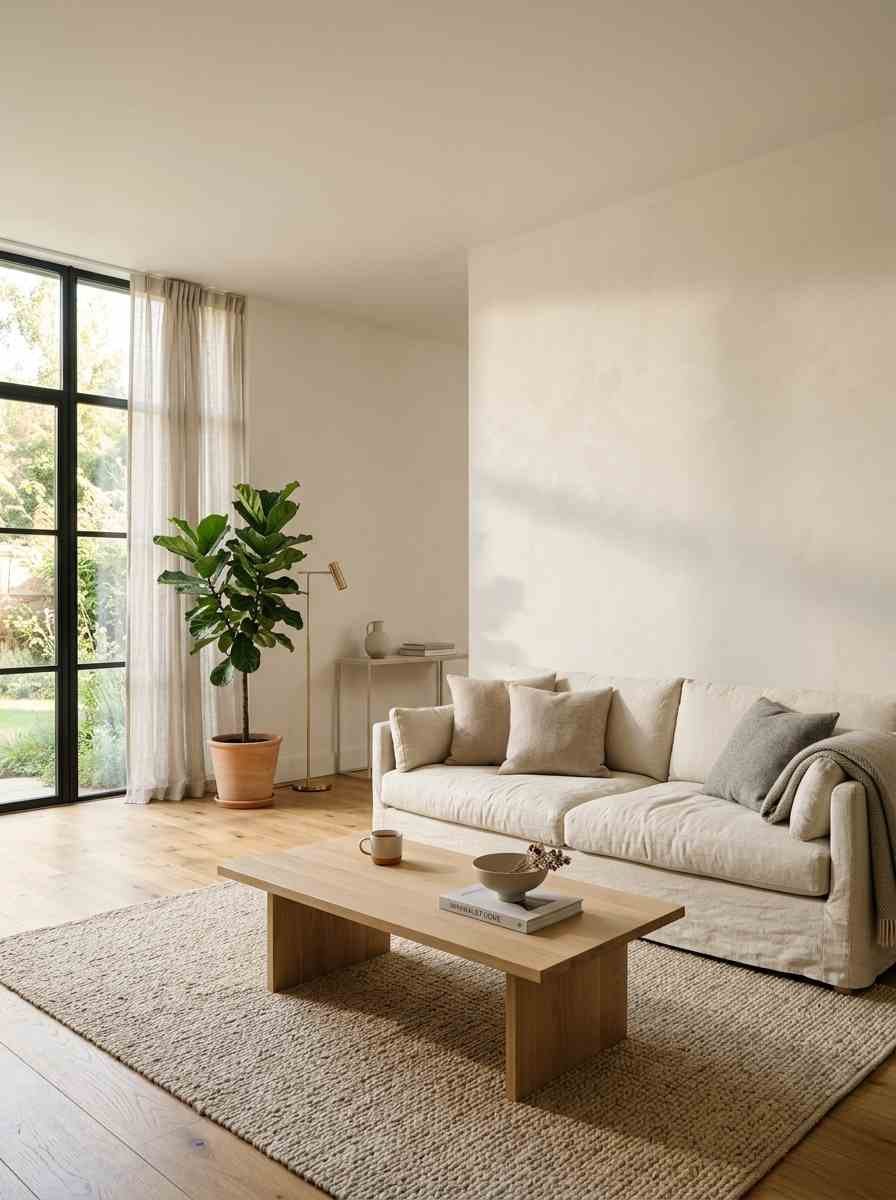
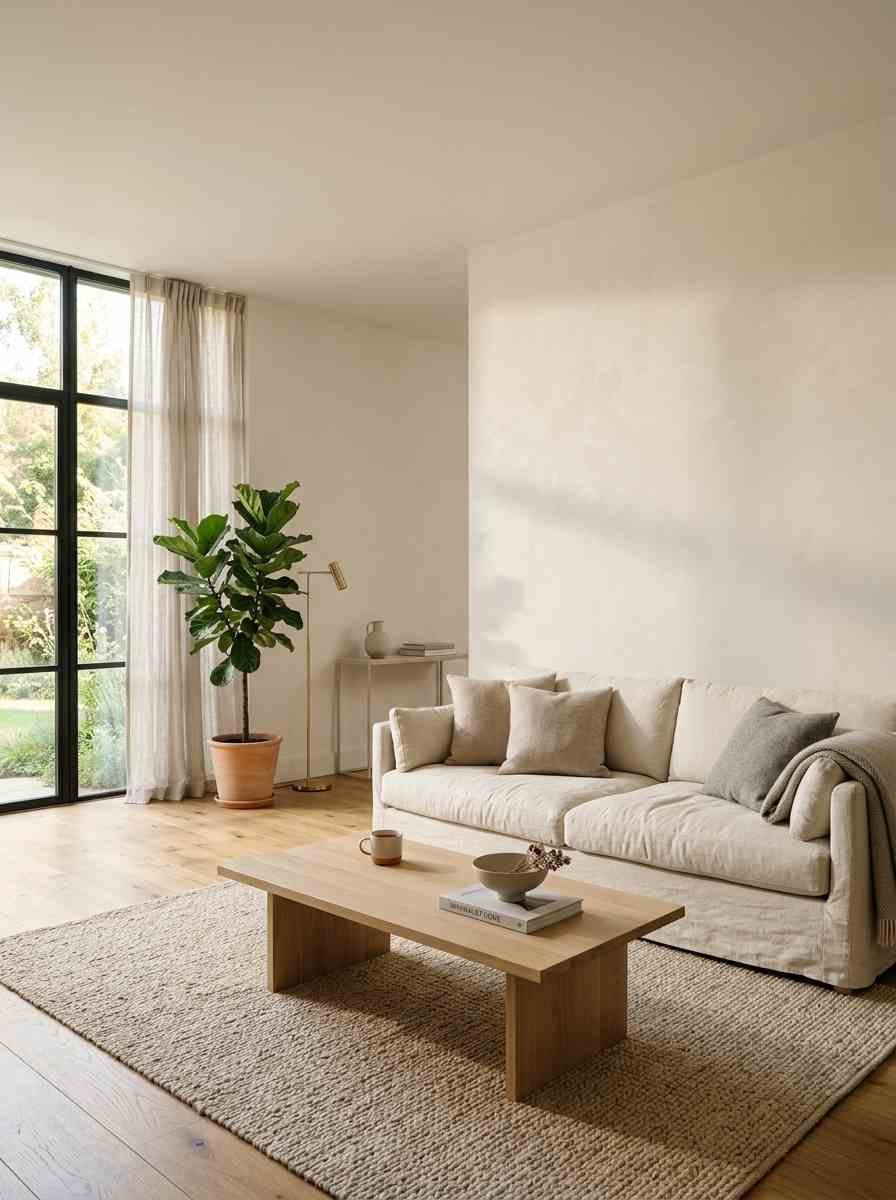
Keep at least 30 inches of clear walking space. Anything tighter and people start angling sideways past the coffee table, which subconsciously reads as cramped no matter how nice the furniture is.
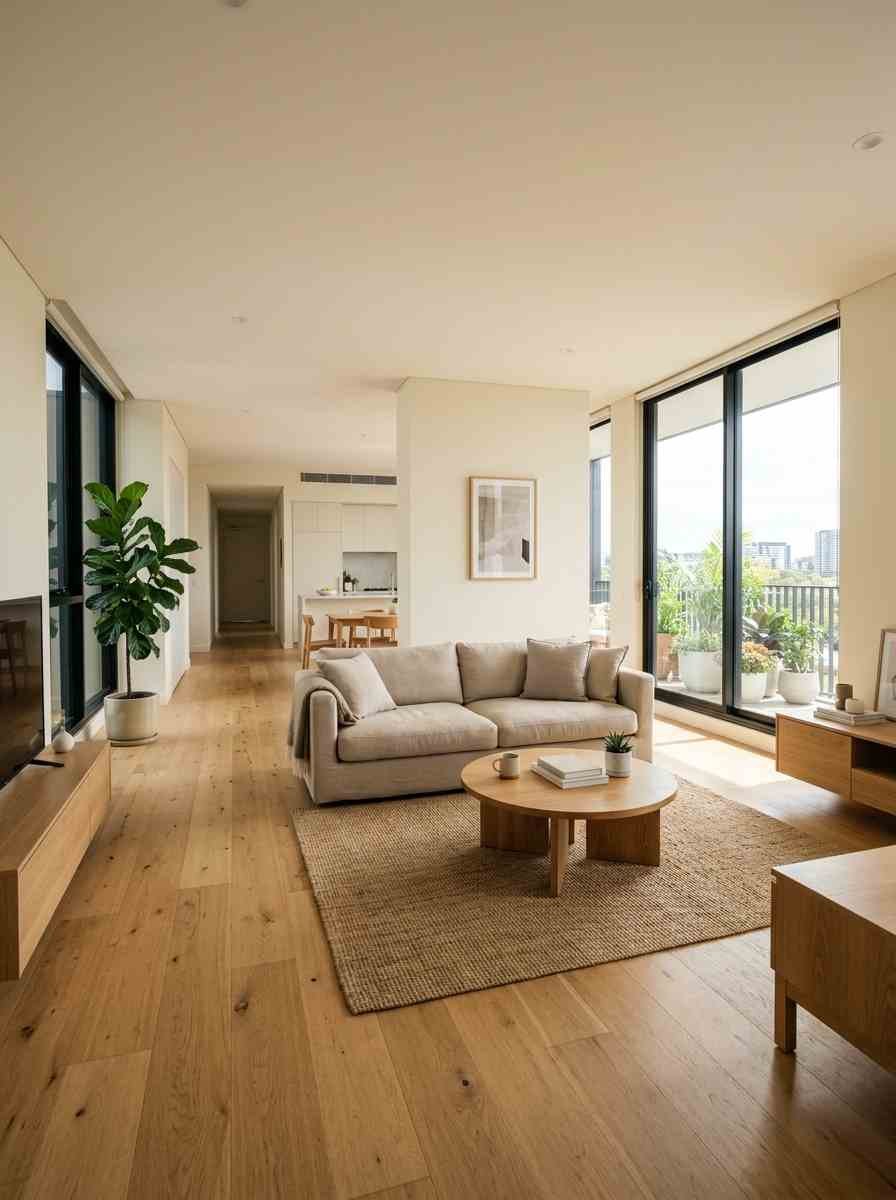
Decor accents worth actually keeping
A minimalist room can still hold a few things you genuinely love.
One oversized piece of art instead of a gallery wall. A single large piece does more visual work than six small frames fighting for attention, and it’s usually cheaper than framing six things separately.
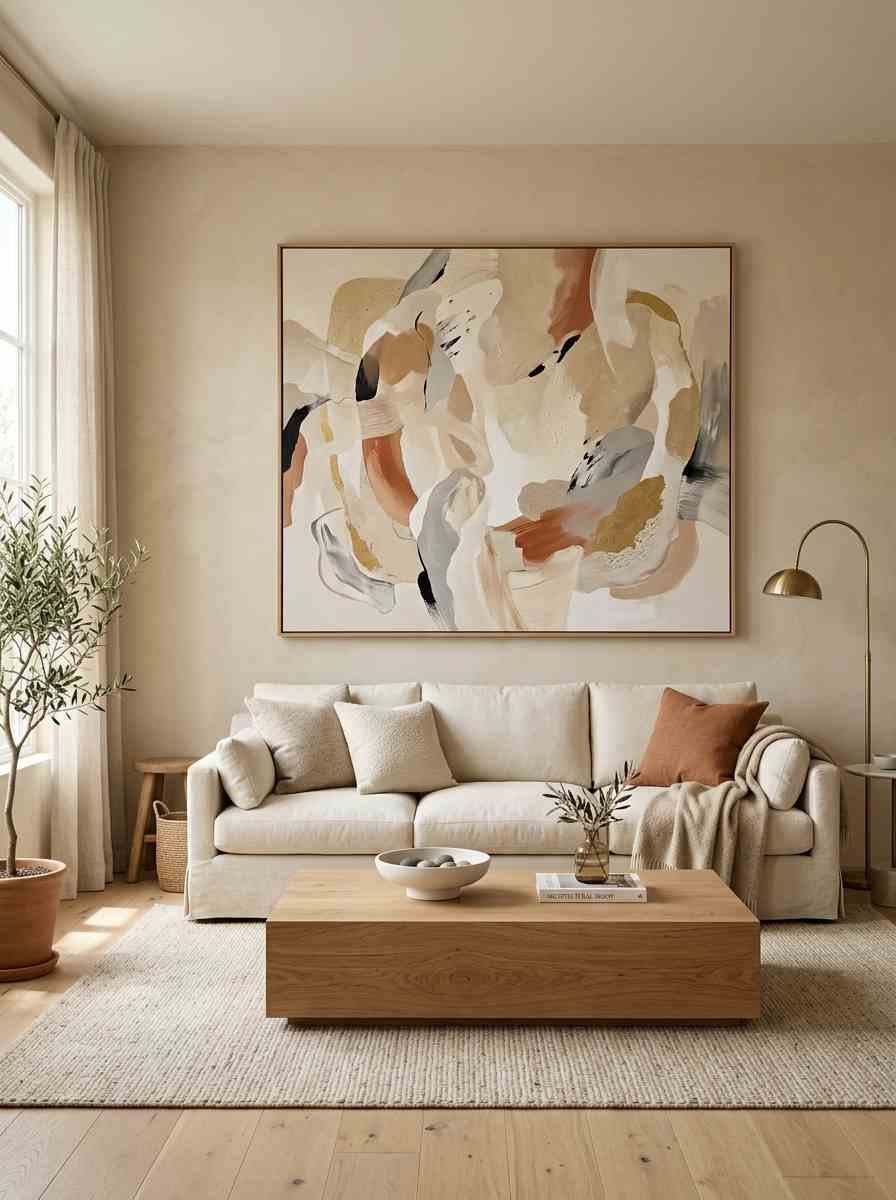
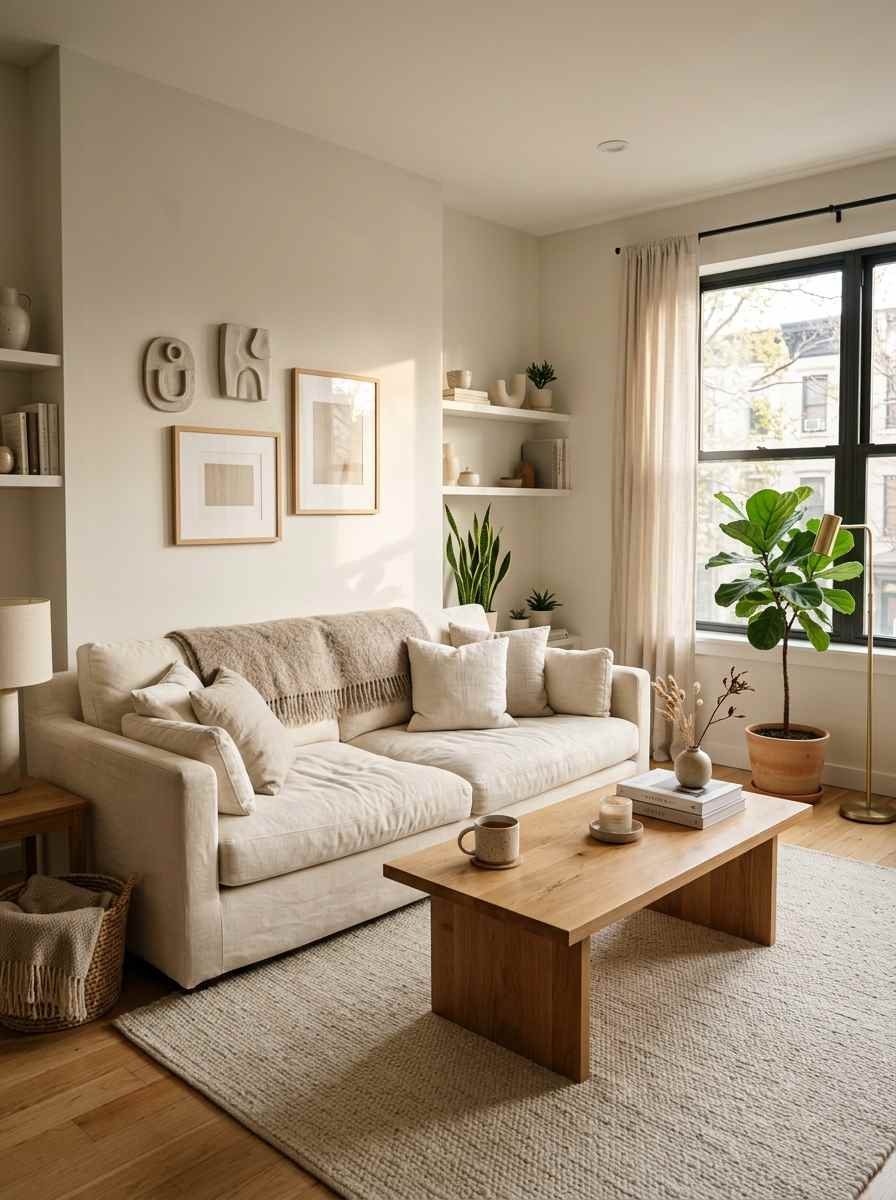
A single sculptural plant. A fiddle leaf fig, an olive tree, even a tall snake plant. One plant, well placed, brings in the texture and the small stress-relief benefit of greenery mentioned earlier, without turning your living room into a jungle.
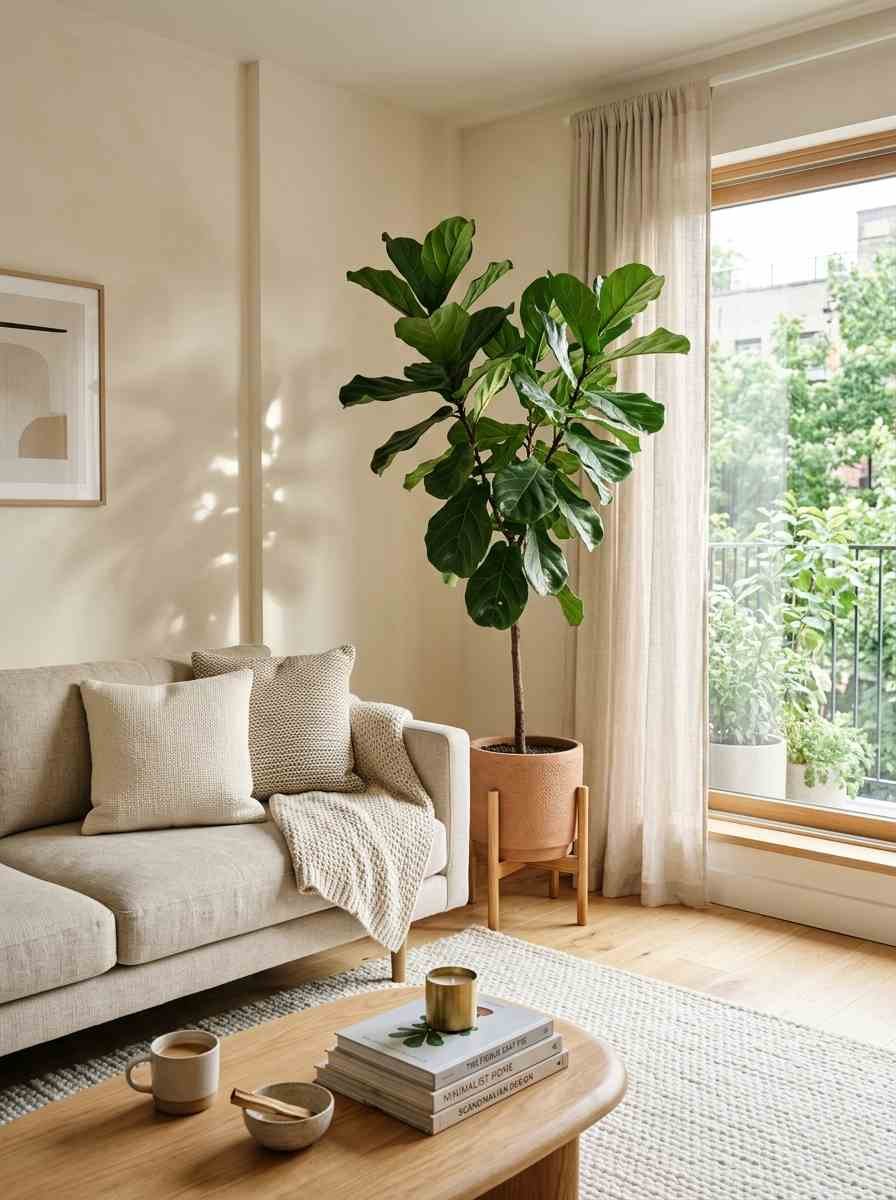
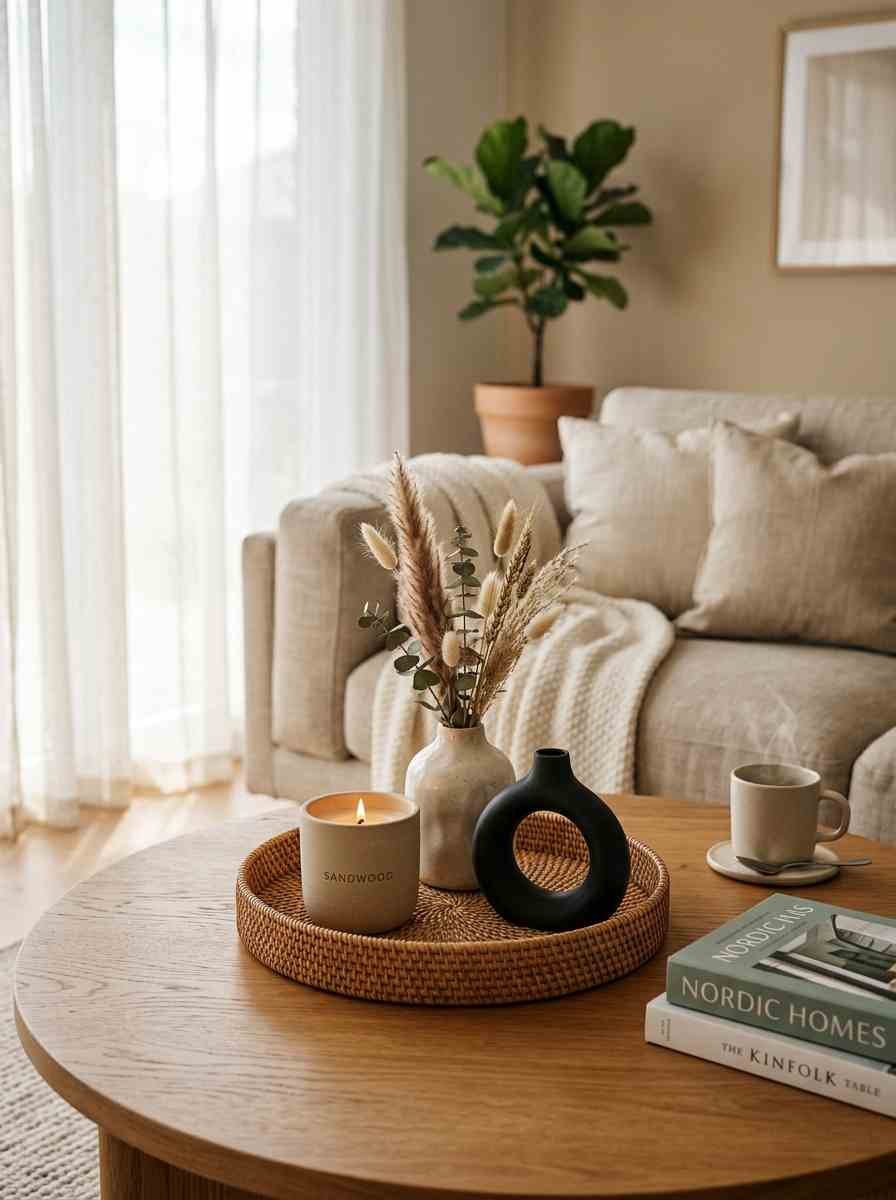
Objects in odd numbers, on a tray. One candle and one small vase, or three small objects grouped together.
Odd numbers, plus a defined boundary like a tray, keep a coffee table from sliding into catch-all territory.
A quick budget guide
| Budget tier | Where to spend it | Roughly what it costs |
|---|---|---|
| Under 100 dollars | Paint, a new throw, decluttering | 50 to 100 dollars |
| 100 to 500 dollars | A rug, sheer curtains, one accent chair | 200 to 500 dollars |
| 500 dollars and up | A sofa, custom shelving, real wood furniture | 800 dollars or more |
A few things I’d skip
Not everything that shows up on a minimalist mood board is worth doing. A few honest opinions, take them or leave them:
- Matching throw pillow sets. They look fine in photos and boring in person within a month.
- Geometric wall decals. They were everywhere around 2019, and most of them haven’t aged well, mine included.
- All-white rooms with zero wood or plant life. Technically minimalist, but cold enough that nobody wants to sit there for long.
- Glass coffee tables, if you have kids or a cat. I learned this one in about a week, and it involved a vase.
Common questions
Is a minimalist living room expensive to put together? Not necessarily. Paint, decluttering, and rearranging furniture you already own get you most of the way there. The furniture itself is where cost adds up, and that part can happen gradually.
How do I keep it from feeling cold instead of calm? Texture and wood tones do the heavy lifting. A room with only hard surfaces and white walls reads sterile. Add a rug, a throw, and something made of real wood, and the same color palette suddenly feels warm.
Do I need to get rid of most of my furniture? Usually not all of it. Start by removing duplicates (two coffee tables, three side tables nobody uses) and anything purely decorative that never actually gets touched. Edit before you buy anything new.
One more thing
I still rearrange my living room about twice a year, mostly because my opinion of what “calm” looks like keeps changing. That’s normal. A minimalist room works more like a habit than a finished project: edit, live with it for a while, then edit again.
Start with one idea from this list, maybe the sofa, maybe the cord basket, whatever feels most doable this weekend, and see how the room feels after a week before changing anything else. What’s the one thing in your living room right now that you’d genuinely miss the least if it disappeared tomorrow?
