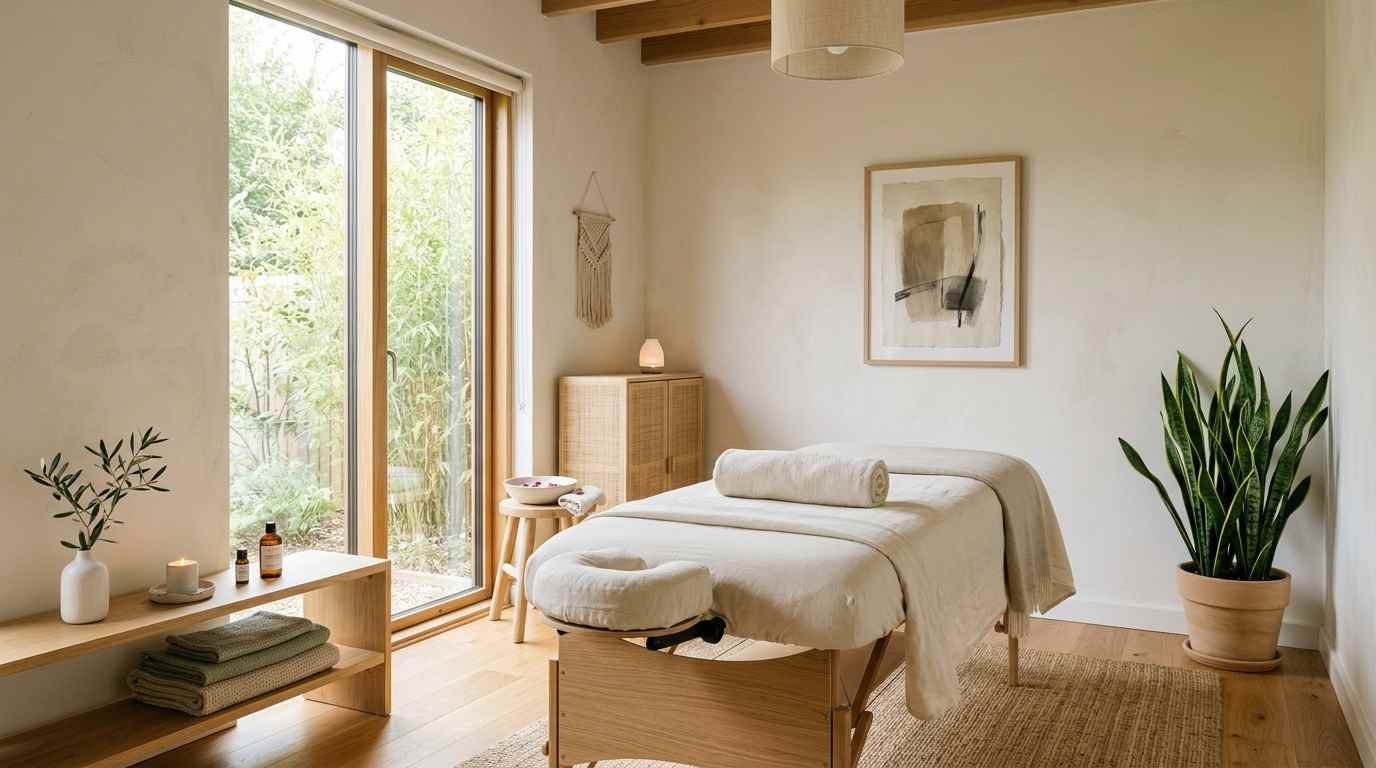
My first home treatment room had four walls, one window, and a folding table I bought secondhand from a yoga studio that was shutting down. It worked. Clients still booked sessions.
But it didn’t feel like a sanctuary, and after a year of squinting under fluorescent lighting and tripping over extension cords,
I finally got why minimalist design keeps showing up in every serious spa and wellness space. It removes everything that competes with the experience you’re trying to create.
Whether you give massages professionally, you’re setting up a room for someone who does, or you just want a quiet reset space at home, the same rules apply. Strip back the visual noise. Add only what earns its place. Below are 17 ideas that actually hold up once the candles burn out and the Pinterest board becomes a real room, plus a few things I’d skip if I started over.
I’ve redone my own treatment room three separate times over the past few years, each time with a smaller shopping list than the one before.
The version that finally worked had the fewest decisions left for a client to notice.
That’s the whole point of going minimalist here: a calm nervous system doesn’t have anything competing for its attention.
- Start with a true blank slate
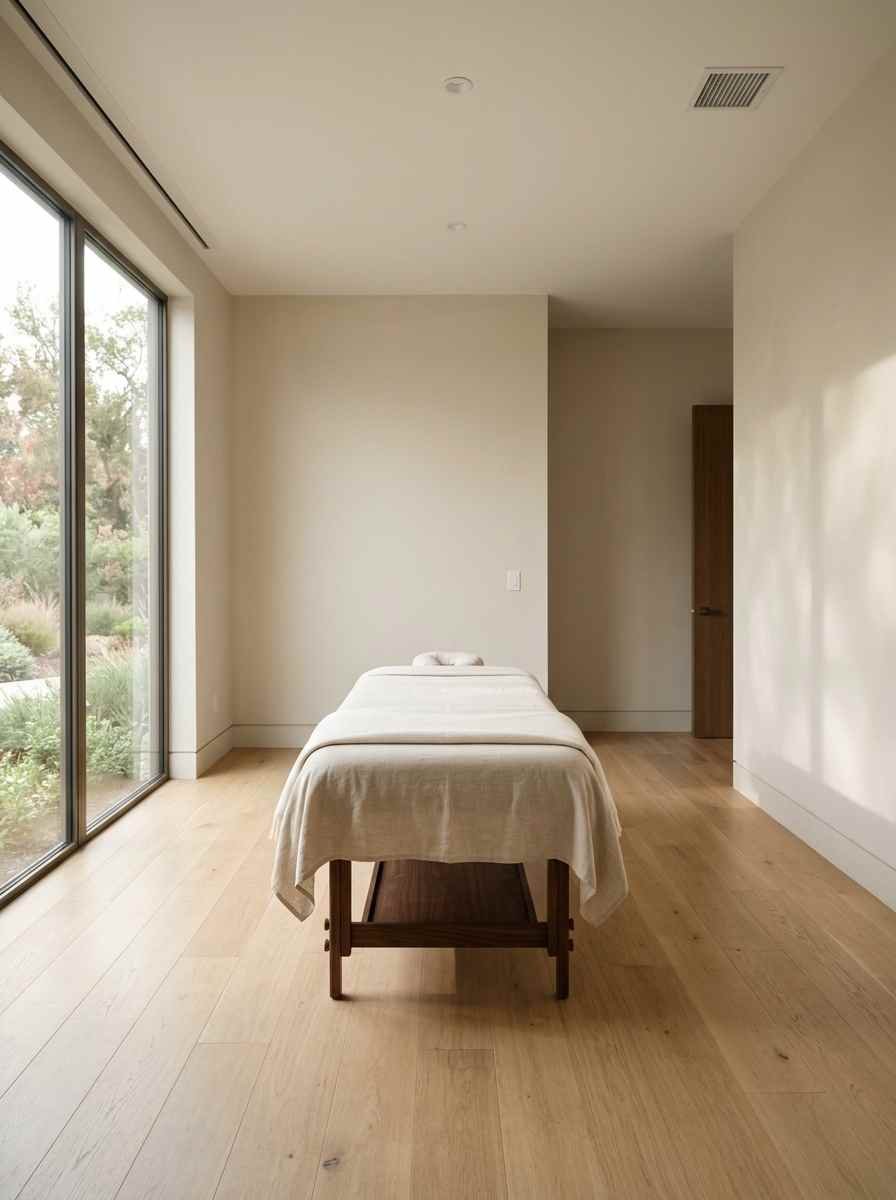
Before you buy a single thing, clear the room completely and look at what’s left. Bare walls, bare floor, bare surfaces.
Clutter does more than look messy: this WebMD overview of how clutter affects stress hormones found that people who described their homes as disorganized had measurably higher cortisol than people who described theirs as restful.
For a room meant to lower someone’s heart rate, that’s the opposite of what you want.
- Pick one calm color and commit to it
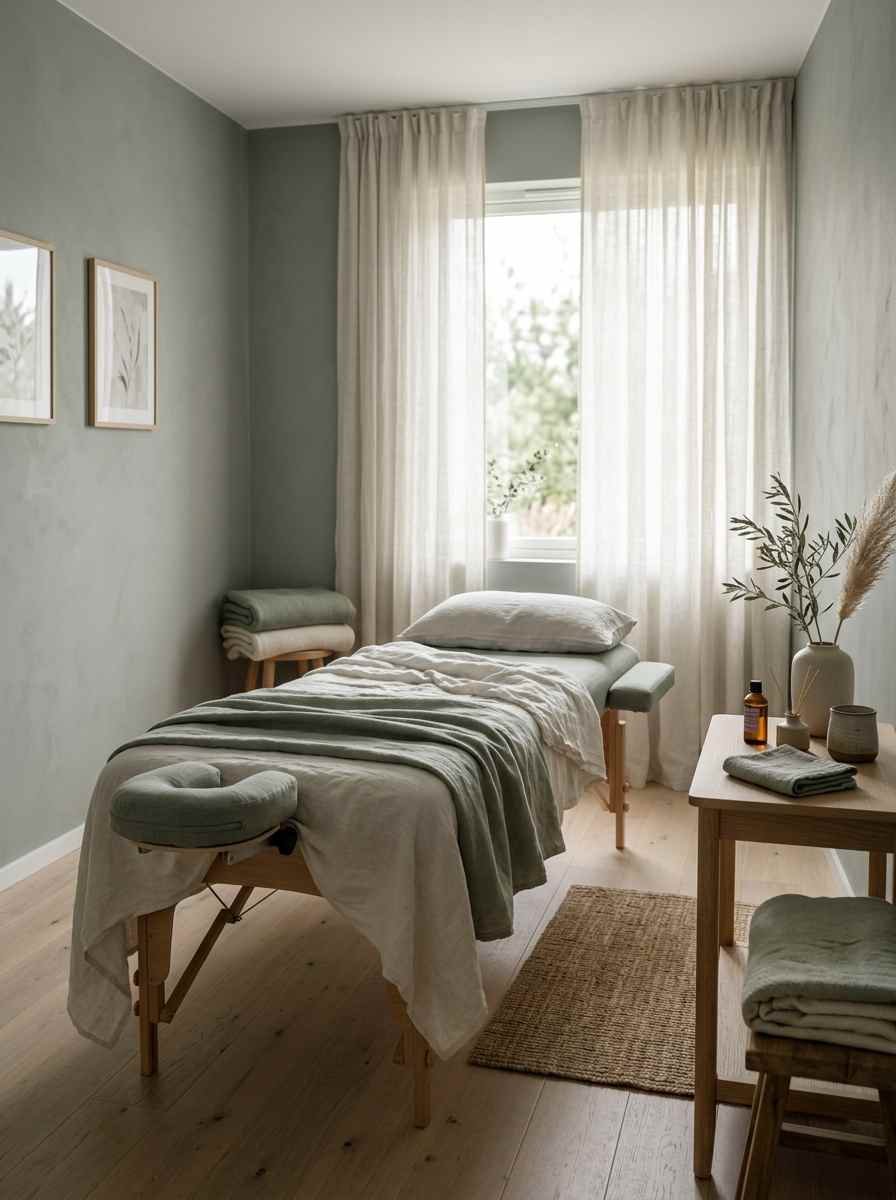
Minimalist can still be colorful; it just means choosing a quiet palette and sticking with it instead of layering five competing accent colors.
Sherwin-Williams’ guide to color psychology points to soft greens, muted blues, and warm neutrals as the most consistently calming choices for a room people use to unwind.
I went with a sage gray-green in my own space, and honestly, clients comment on it more than anything else in the room.
Quick color picks for a calmer treatment room
| Color | Mood it sets | Pairs well with |
|---|---|---|
| Sage green | grounded, natural, calm | rattan, linen, light oak |
| Soft gray-blue | airy, serene | white trim, brushed metal |
| Warm taupe | cozy, settled | woven textures, dark wood |
| Off-white or cream | clean, spacious | natural fiber rugs, plants |
- Bring in natural materials instead of polished ones
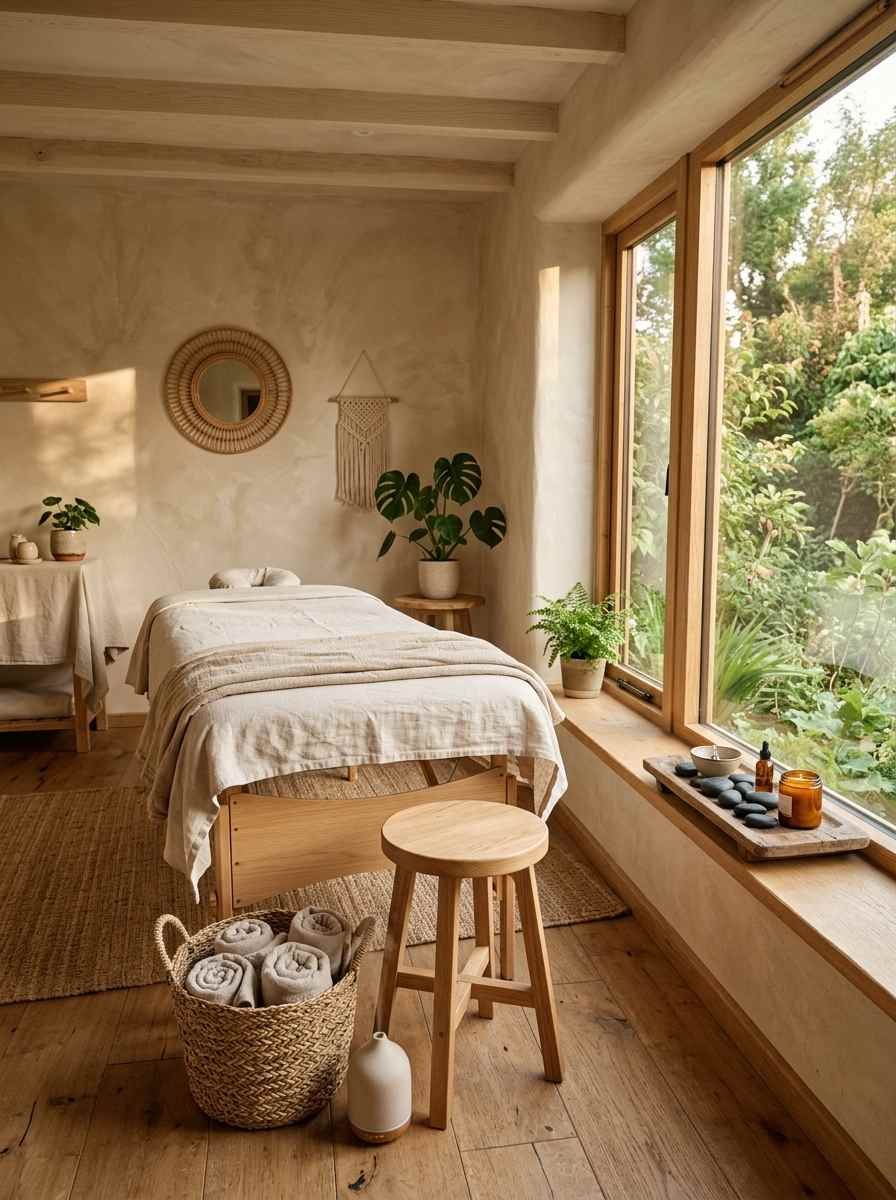
Glossy, synthetic surfaces read as clinical. Wood, stone, linen, and rattan read as warm, even when the room itself is small.
Swap a laminate side table for a simple wood one. Trade a plastic stool for woven seagrass. It’s a small material shift, but it changes how the whole room feels under your hand and under low light.
Texture does a lot of quiet work here too.
Run your hand across a smooth river stone versus a cold metal bowl and you’ll feel the difference immediately, and so will your clients, even if they can’t articulate why.
I keep a small tray of stones by the window for exactly that reason. Cheap to source, easy to clean, and they catch light in a way plastic never does.
- Add a plant or two, not a jungle
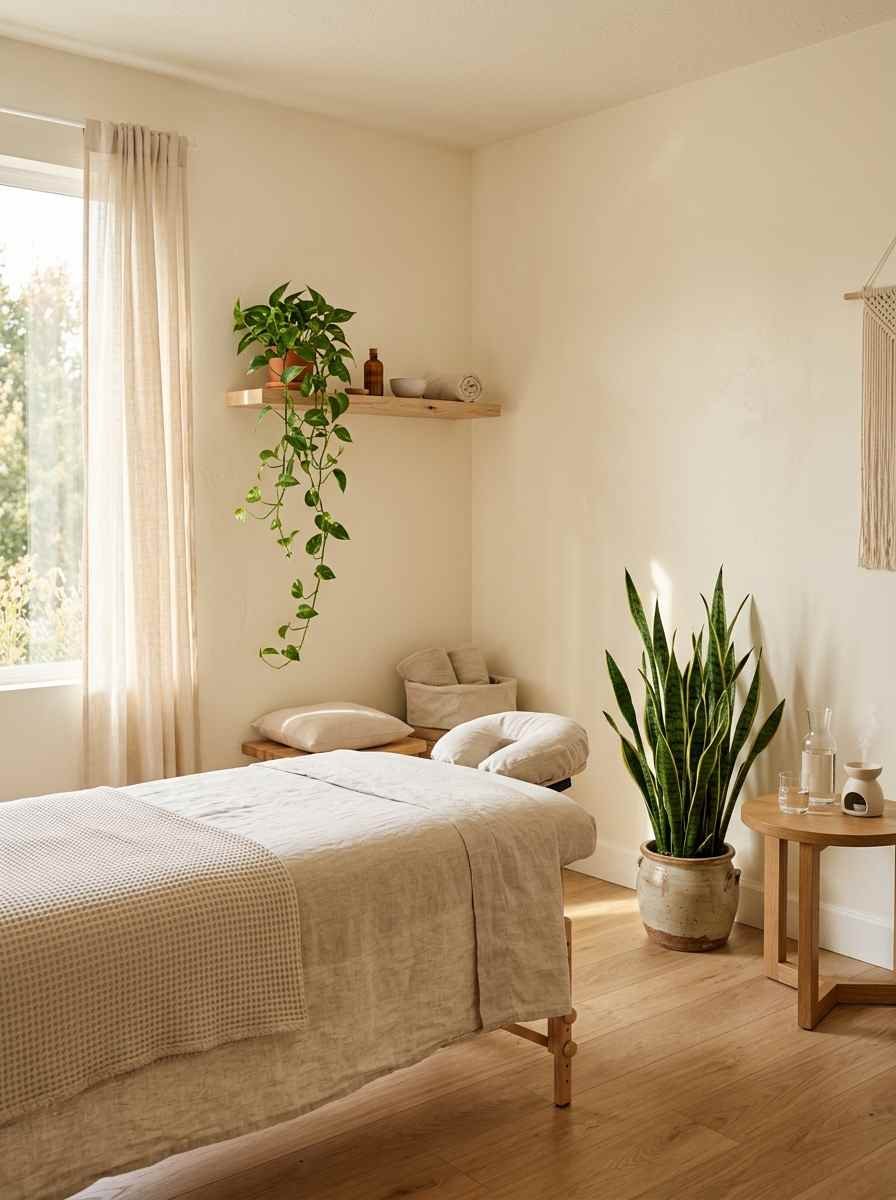
One healthy plant does more for a minimalist room than five struggling ones crammed onto a shelf.
INTEGRIS Health’s research on biophilic design links exposure to greenery and natural elements with lower stress and improved mood, even in small doses. A single snake plant or a pothos trailing off a shelf is enough.
You don’t need a wall of foliage to get the benefit, and frankly, a wall of foliage is one more thing to dust.
- Get the lighting right before anything else
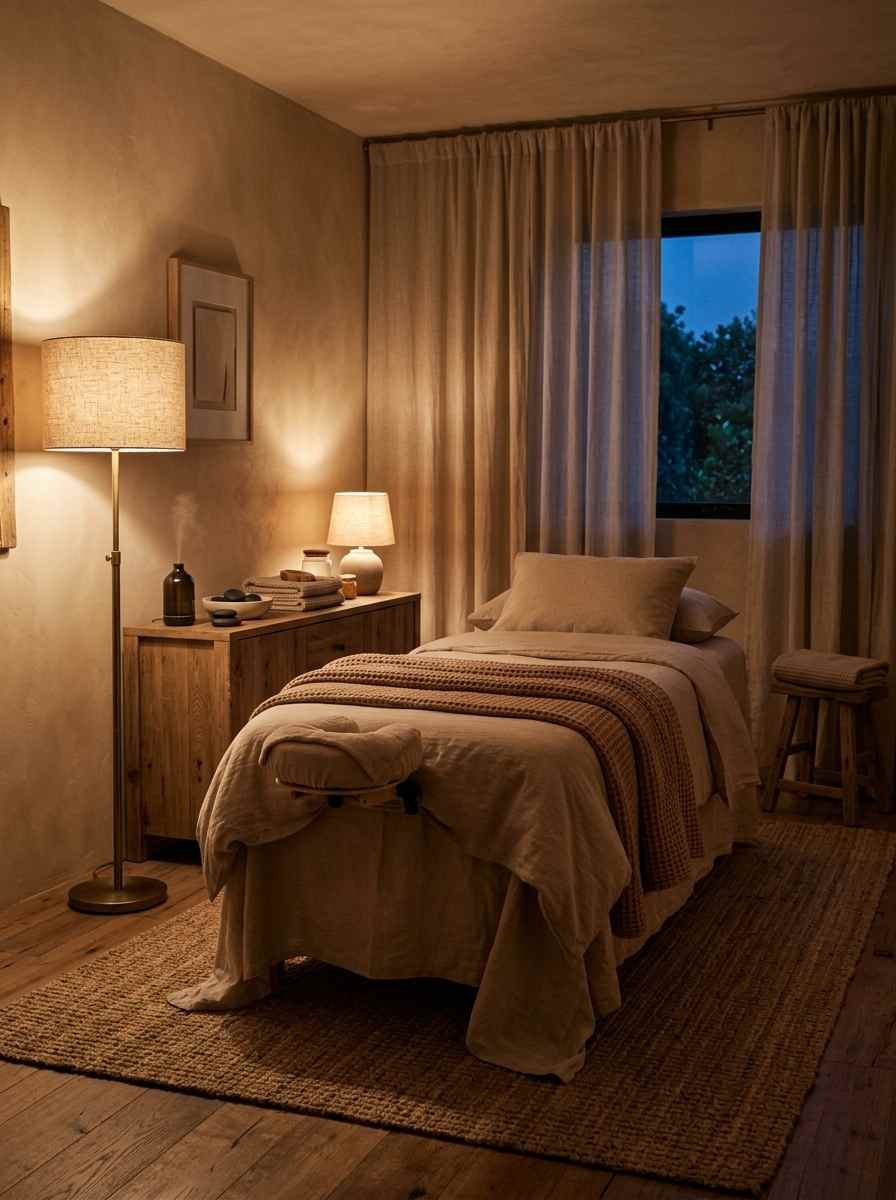
I’d argue lighting matters more than furniture, and I say that as someone who spent way too much money on a table before fixing my lamps.
Warm-toned bulbs (look for 2700K rated, not the bright white 5000K office stuff) and a dimmer switch change a room instantly.
Wow, the difference is honestly kind of ridiculous for something so cheap to fix. Skip overhead lighting entirely during sessions if you can.
A floor lamp and a small accent light will carry the whole room.
- Hang one piece of art, max two
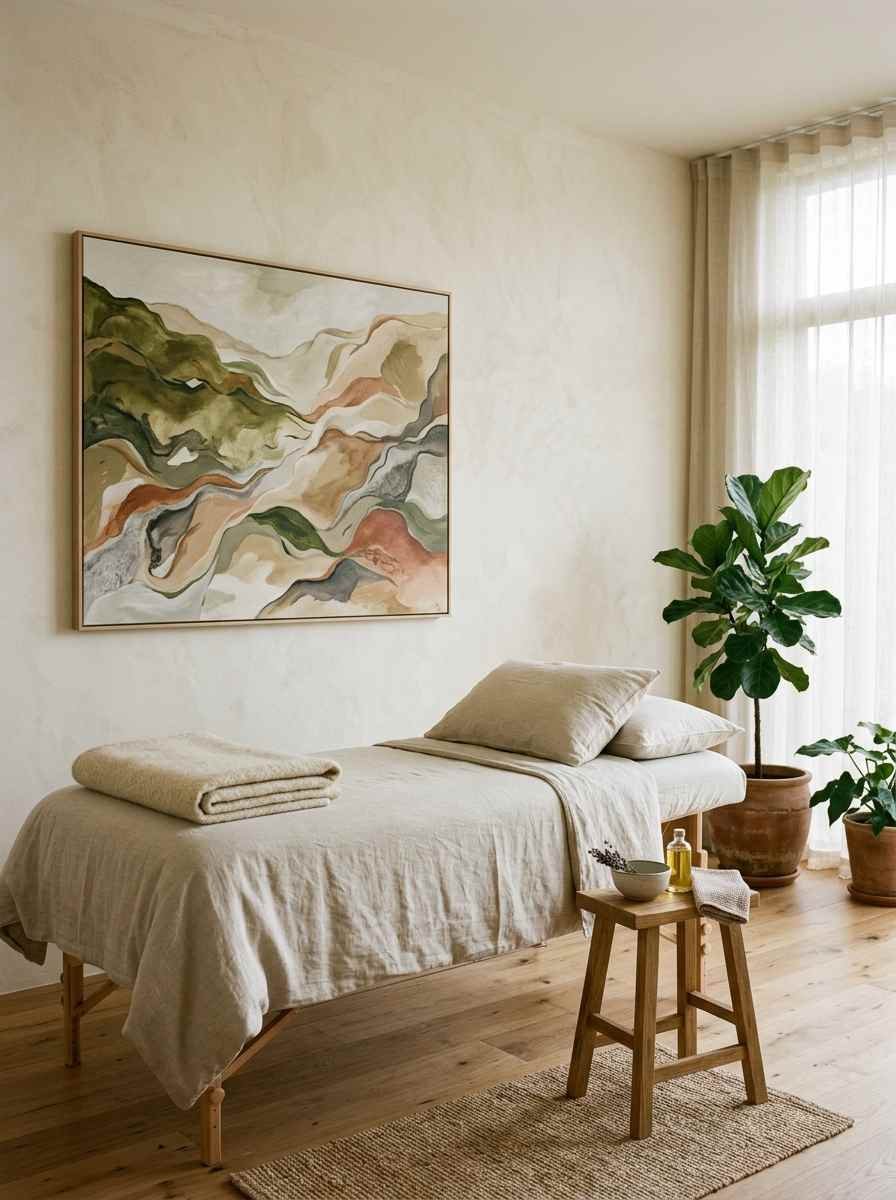
Pick something abstract, nature-inspired, or just texturally interesting, and resist the urge to fill every wall.
A gallery wall is great in a living room. In a treatment room, it’s visual clutter your client has to look at while trying to relax. One piece, well placed, does more work than six.
- Choose linens that feel as good as they look
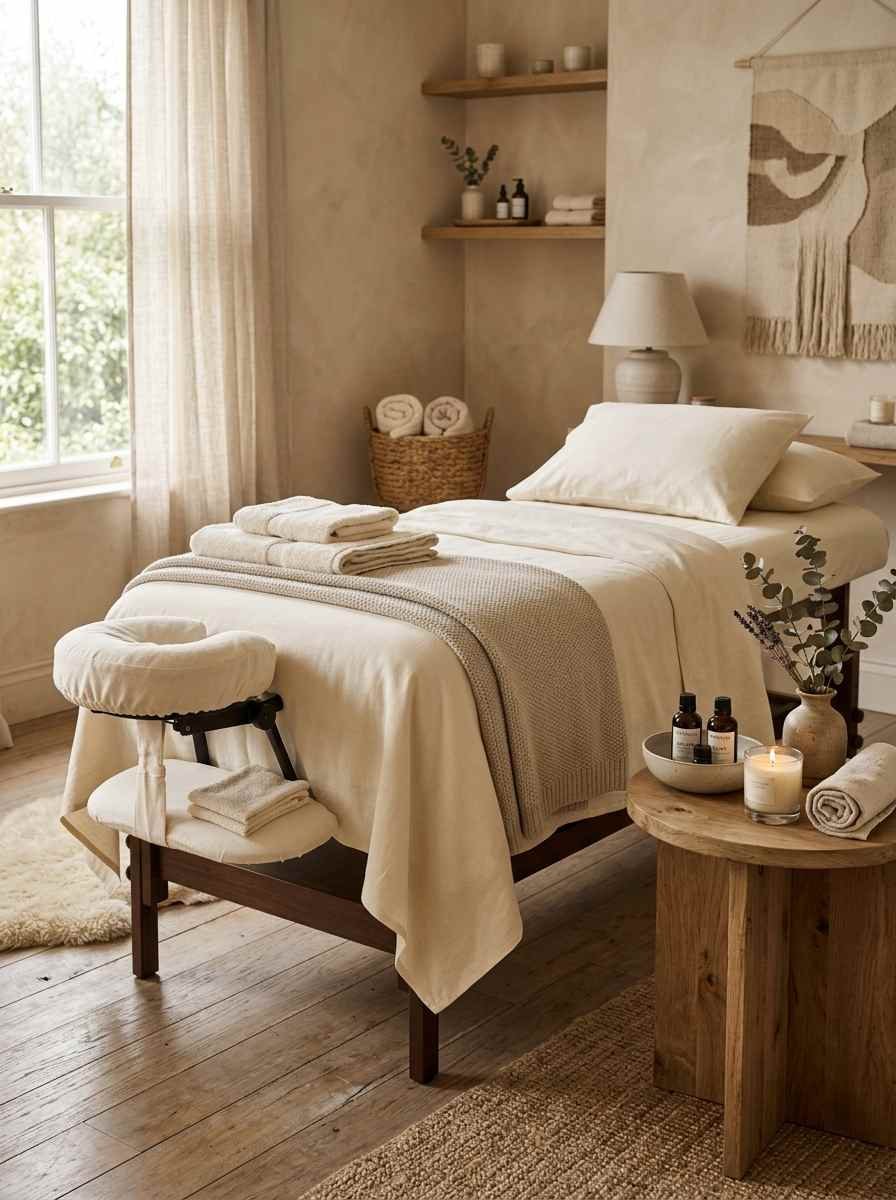
This one’s pure experience talking: buy the better sheets. A scratchy table cover undoes every other design choice in the room within the first 30 seconds of a session.
I look for 300-thread-count cotton or a soft microfiber blend in a neutral tone, and I keep two sets in rotation so one’s always clean.
- Layer scent carefully
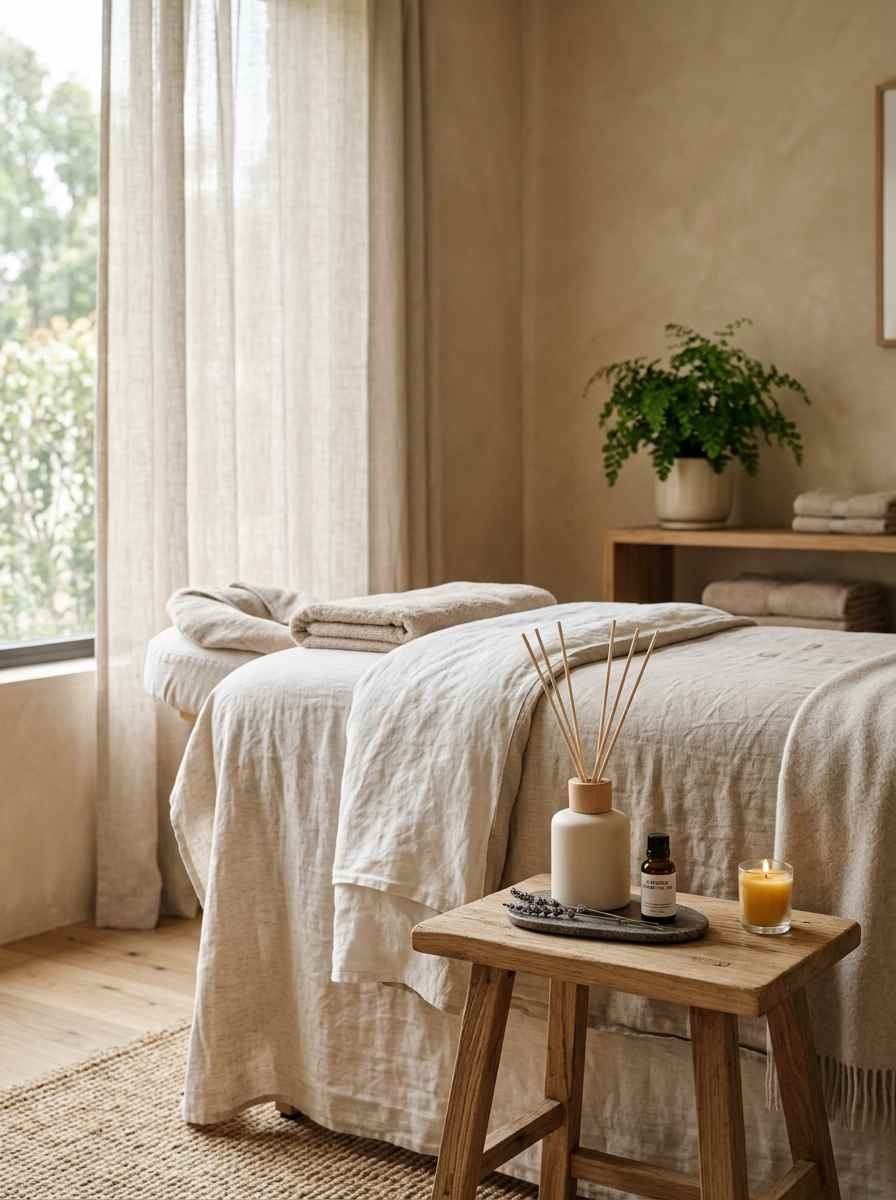
Scent is one of the fastest ways to shift someone’s mood, but it’s also the easiest thing to overdo.
This Mayo Clinic overview of aromatherapy benefits notes that lavender and similar scents have shown promise for easing anxiety and improving sleep quality, though researchers are still working out exactly how much and for whom.
wA single reed diffuser or a small ultrasonic diffuser with two or three drops of oil is plenty. If you have clients who are pregnant or have respiratory issues, ask first.
Not every scent works for every body.
- Control the soundscape, not just the visuals
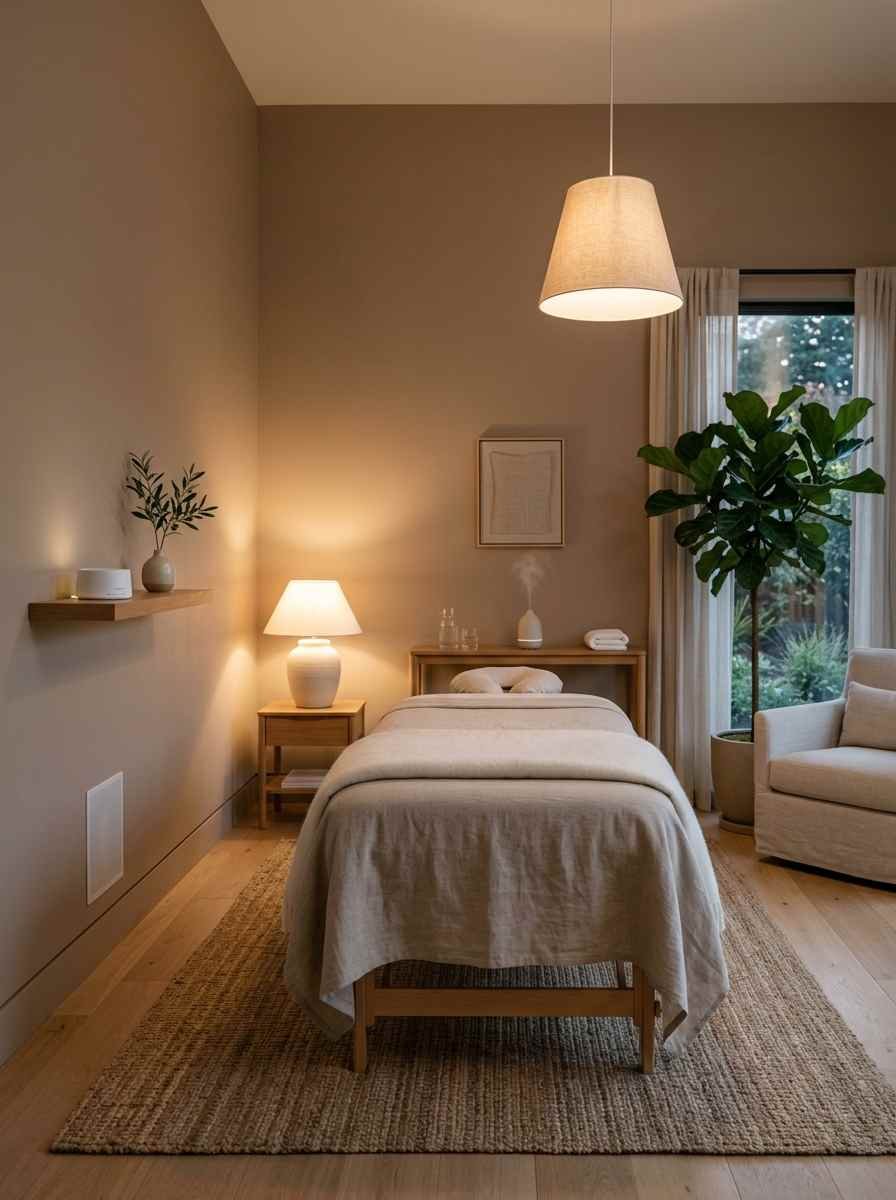
A white noise machine or a small speaker playing low ambient sound does more for the “spa feeling” than most decor choices combined.
IMO this is underrated compared to how much people spend on furniture. Skip anything with lyrics. Skip anything too loud.
The goal is a sound floor that masks hallway noise and traffic, not a playlist someone has to consciously tune out.
- Ground the room with the right rug
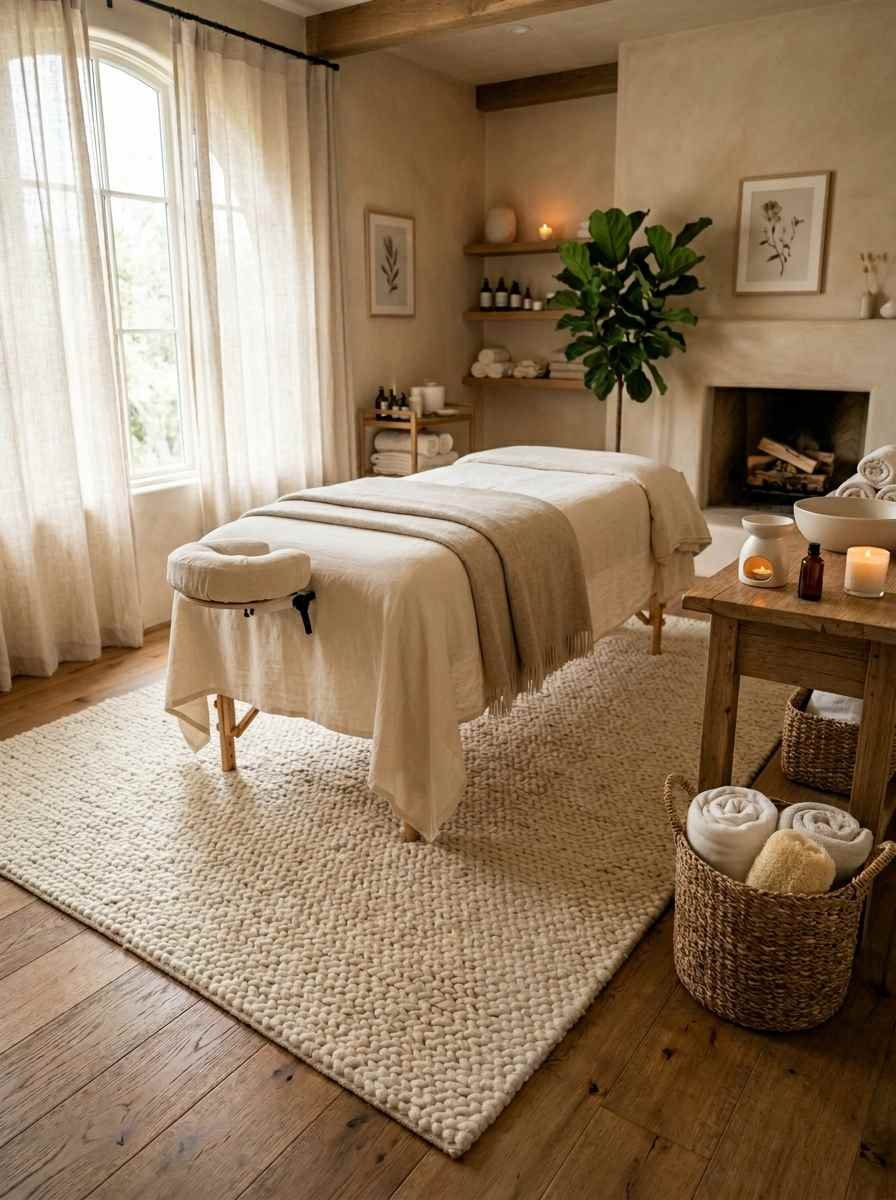
Jute and wool both work, but they’re not interchangeable. Jute is cheaper, has a nice natural texture, and holds up fine in low-traffic rooms, but it’s rougher underfoot if anyone’s barefoot.
Wool costs more and feels noticeably softer, plus it’s easier to clean if oil drips on it, which, let’s be honest, it will.
For a room people walk through barefoot or in socks, I’d spend the extra money on wool every time.
Completely unrelated, but I spent two hours on Pinterest last week comparing throw blanket textures instead of finishing actual work.
If that’s how you ended up here too, no judgment. Pinning ideas is honestly half the fun of redoing a room.
- Hide the function, keep the form
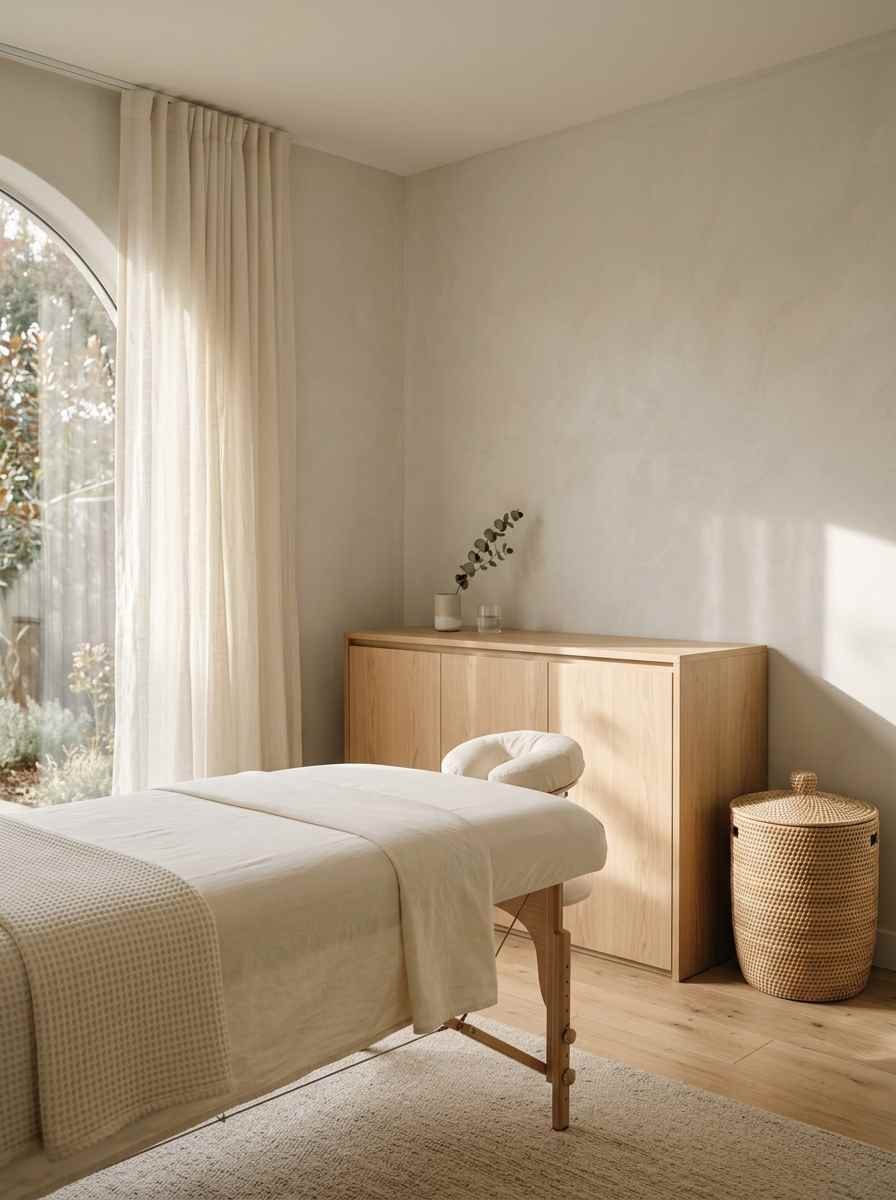
Oils, extra linens, massage tools, your phone charger: none of it needs to be visible.
A simple closed cabinet or a woven basket with a lid keeps the room looking calm while still being fully stocked.
Open shelving looks nice in photos and turns into a junk display within a month. I’ve tried both. Closed storage wins every time.
A small rolling cart with a fabric cover or a low cabinet next to the table works for most rooms.
A client’s eye shouldn’t land on a stack of folded towels mid-session. It should land on nothing at all.
- Soften hard edges with textiles
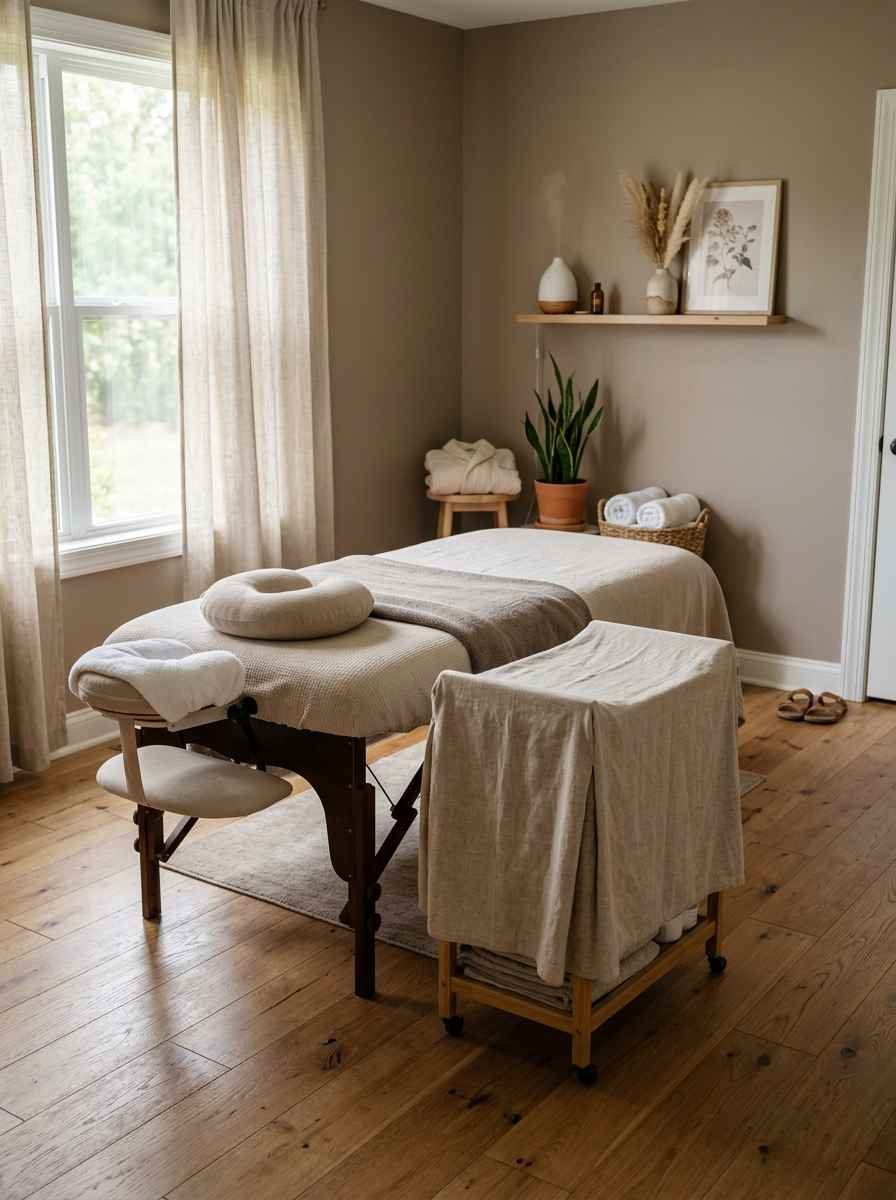
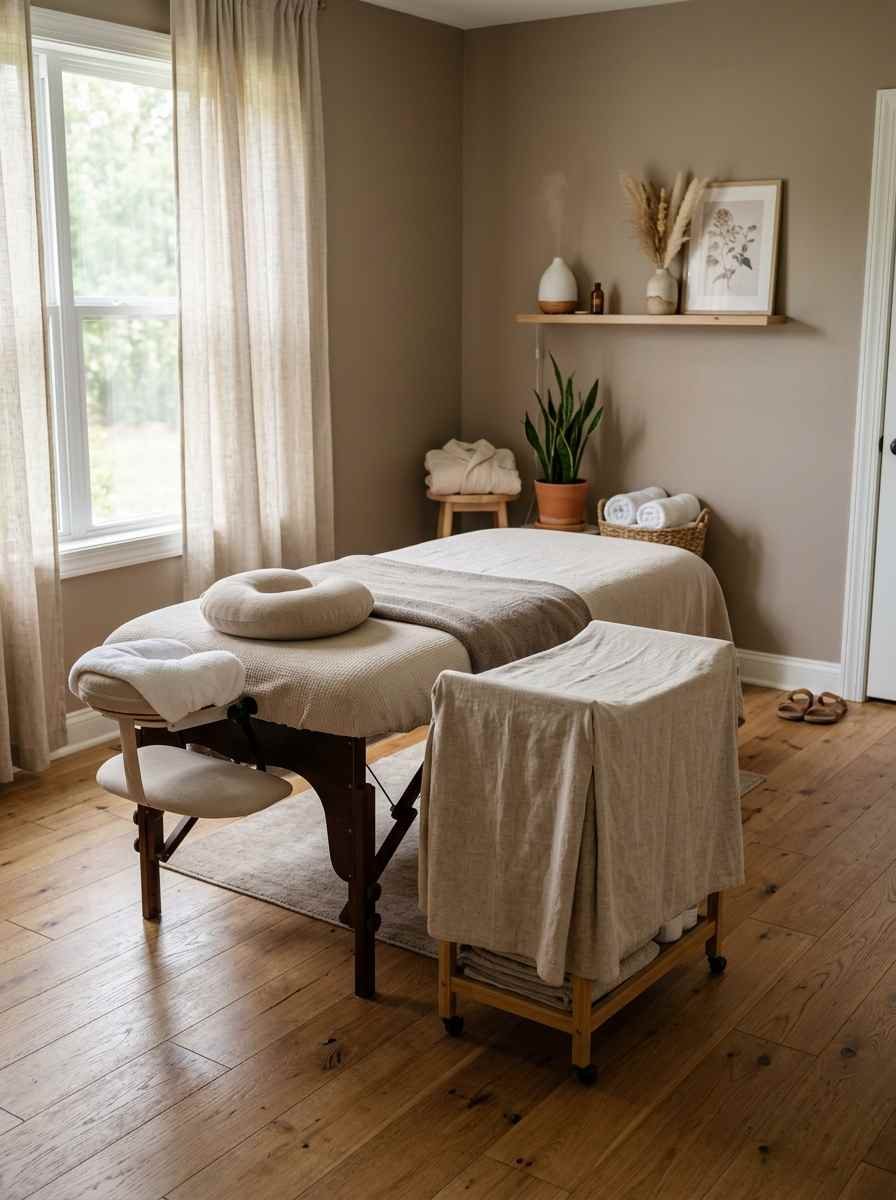
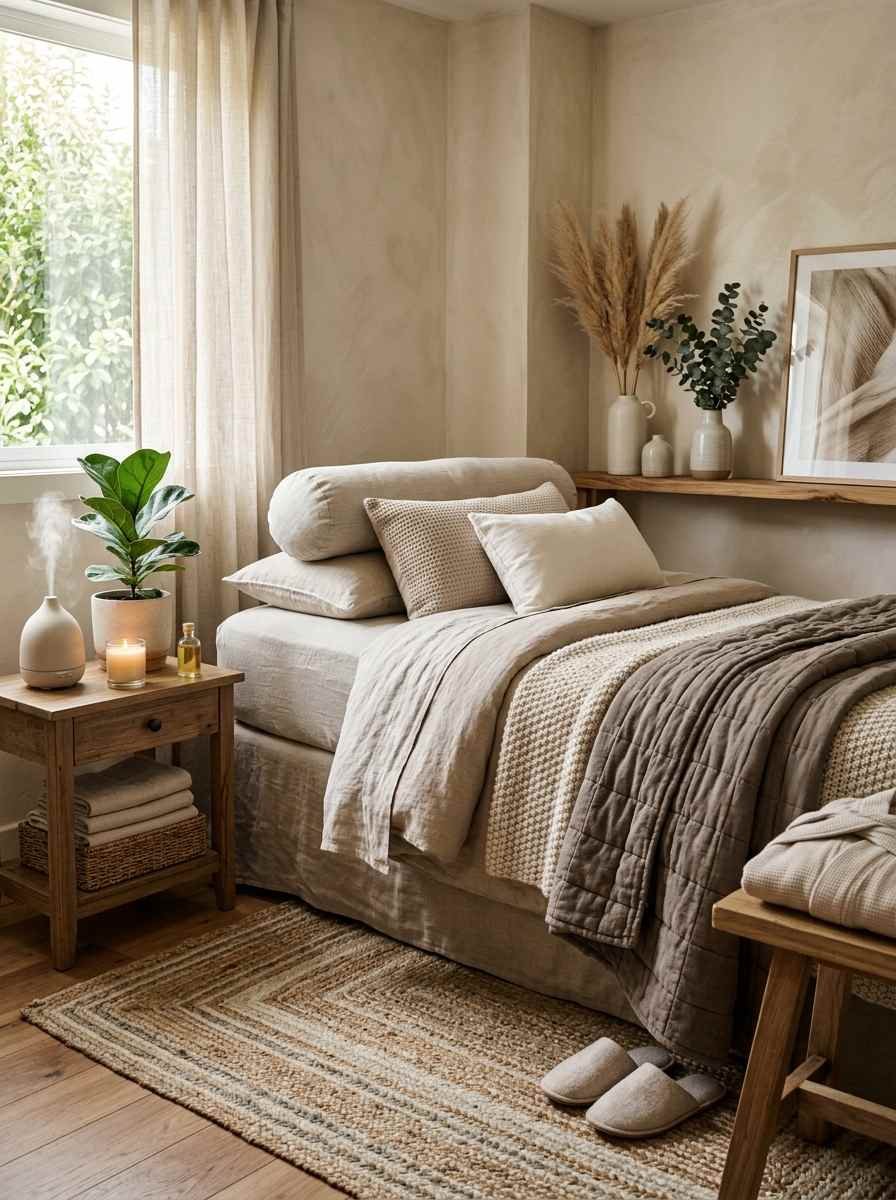
Bolster pillows, a folded throw, maybe a weighted blanket for clients who want extra grounding during a session.
I was skeptical about the weighted blanket trend until I tried one myself, and it genuinely helped me settle faster than I expected.
Keep textiles in the same color family as your walls so they read as part of the room instead of as add-ons.
- Get the temperature dialed in
It’s hard to relax while shivering or sweating.
A small space heater works well for spot-heating a room in winter without cranking the whole house’s thermostat, while a quiet desk fan handles summer.
I’d skip loud window units if you can avoid them; the noise fights everything you just did in step 9.
- Treat your windows like part of the design
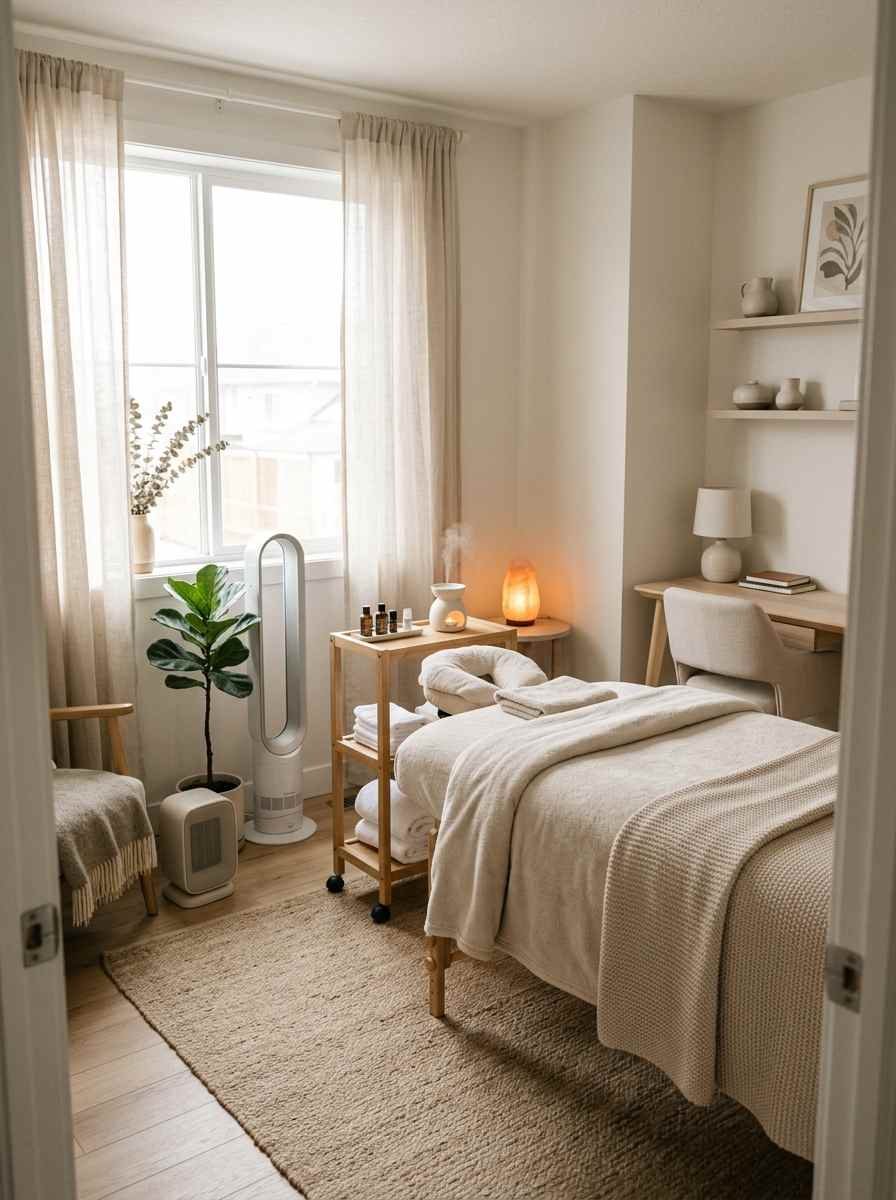
Sheer curtains soften daylight and keep the room from feeling like an exam room.
Blackout curtains give you full control for evening sessions or anyone sensitive to light.
Some rooms genuinely need both, layered, so you can adjust depending on the time of day.
- Create one small intentional corner
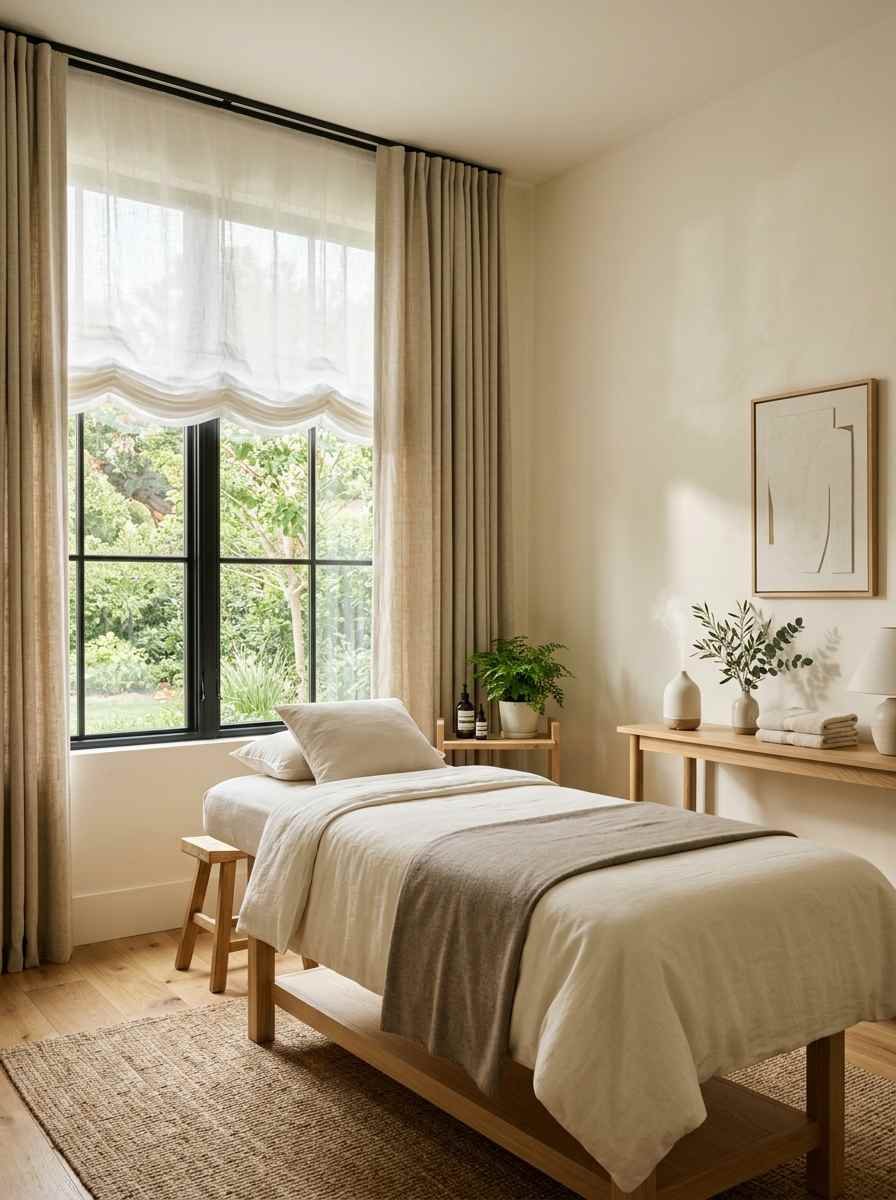
This doesn’t have to be spiritual if that’s not your thing. A small shelf with a candle, a smooth stone, or a single framed photo gives the eye a place to land that isn’t a blank wall. I’m not particularly woo-woo about it, but having one corner that feels deliberately set up, rather than just empty, makes a measurable difference in how finished the room feels.
- Keep tech invisible
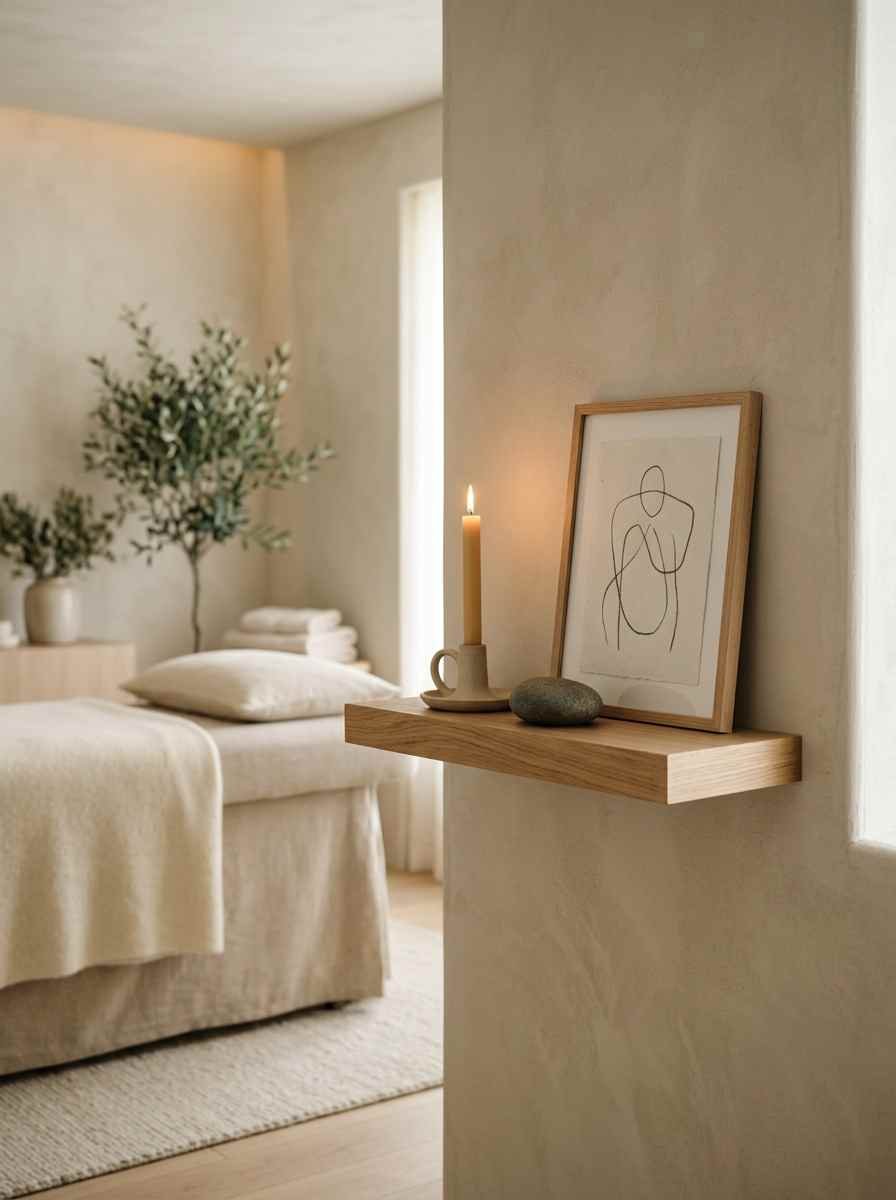
Chargers, outlet strips, your laptop, anything with a blinking light: tuck it away or behind furniture.
A glowing power strip in the corner of an otherwise calm room is distracting in a way that’s hard to pinpoint until you fix it.
- Add exactly one personal touch
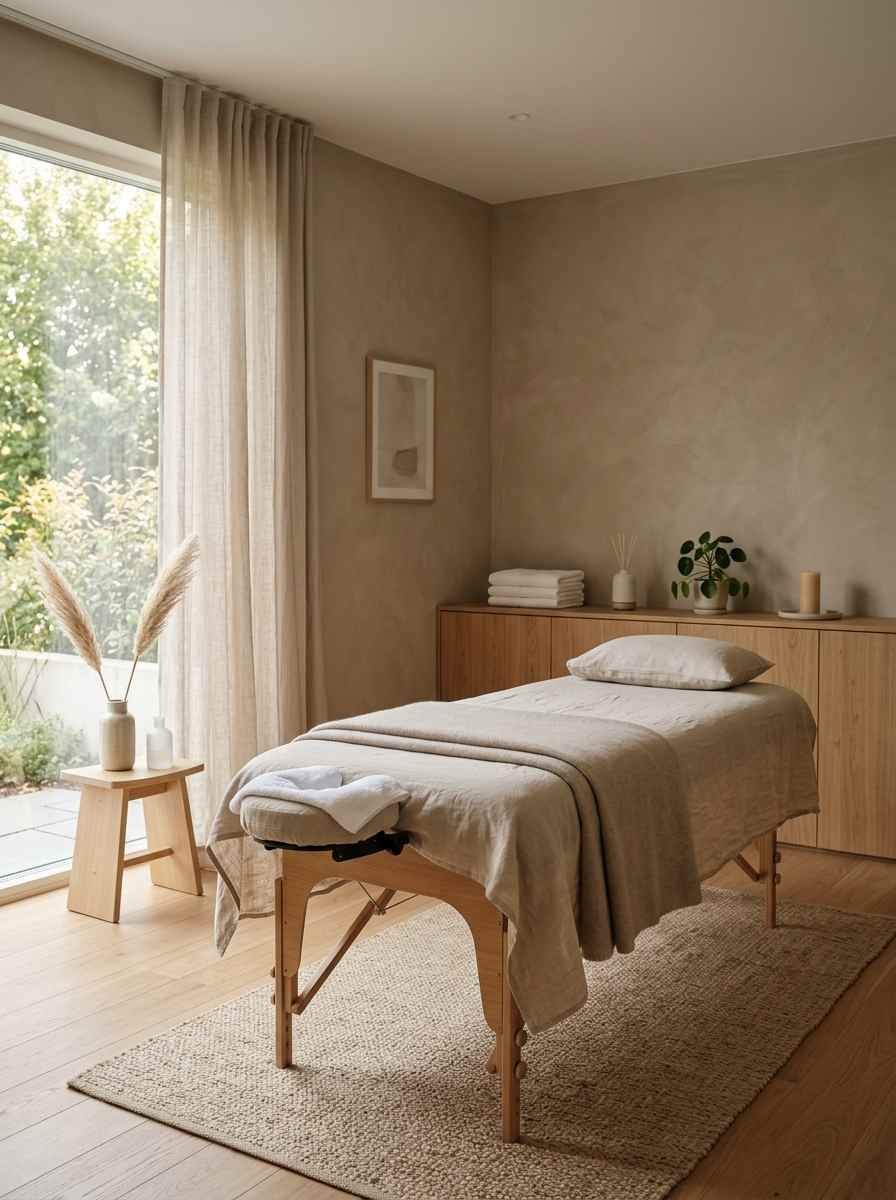
A meaningful object, a small piece of pottery, something with a story.
Minimalist rooms can start to feel sterile if you go too far in the other direction, so one item that’s genuinely yours keeps the space from feeling like a showroom. Just one, though.
The second personal item is where clutter creeps back in.
A few quick answers
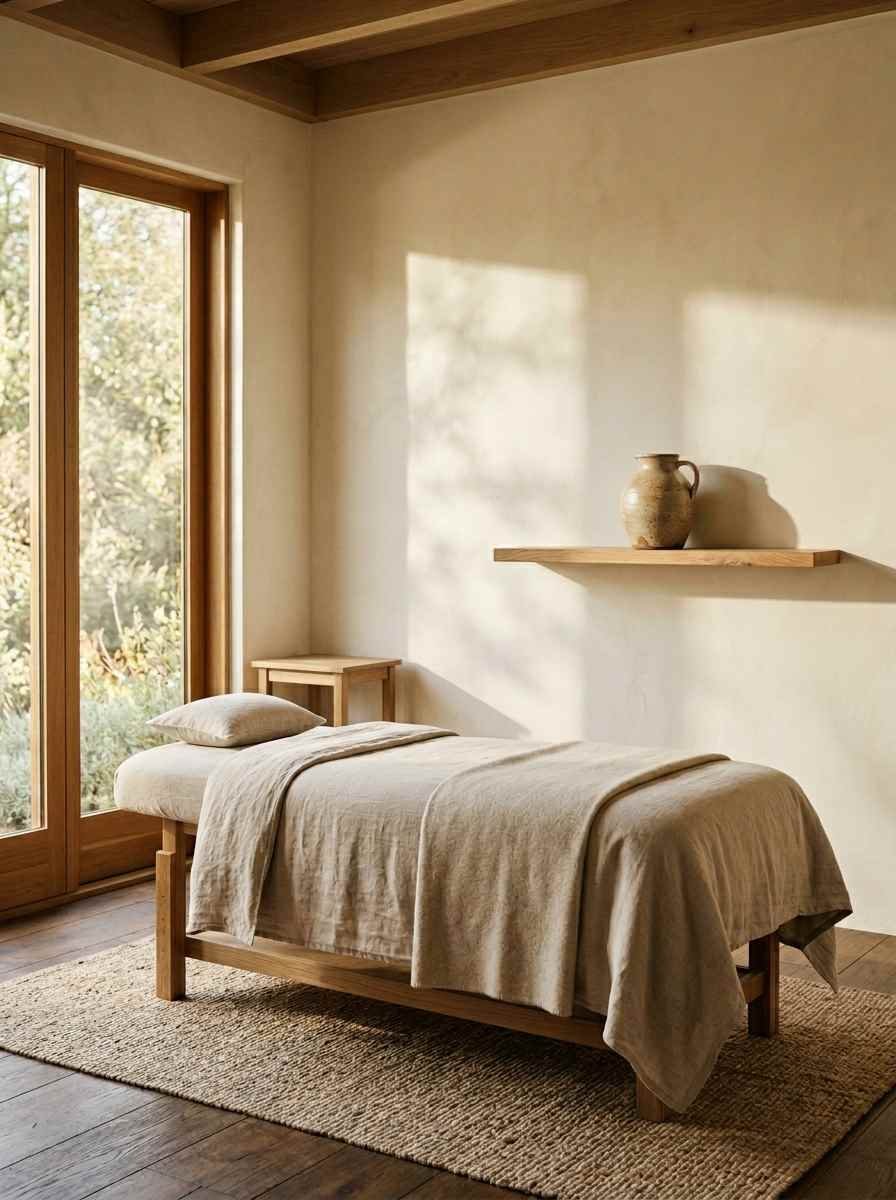
What’s the single best decor change for a more relaxing massage room? If I had to pick one, it’s lighting.
Warm bulbs and a dimmer cost less than almost anything else on this list and change the room’s mood more than any single piece of furniture.
Do I need to spend a lot of money to make my space feel like a spa? No. Decluttering, choosing one calm color, and fixing your lighting cost very little and do most of the heavy lifting. Save your budget for the table and the linens; those are worth the upgrade.
Is one scent enough, or should I rotate scents? One consistent scent is usually better. Clients associate a specific smell with relaxation over repeat visits, and switching scents constantly can actually work against that association.
A calm room doesn’t happen by accident, and it doesn’t take a full renovation either. Pick three things from this list, start there, and see how the room feels before you touch anything else. What would you change first in your own space, and are you saving this for your next free weekend?
