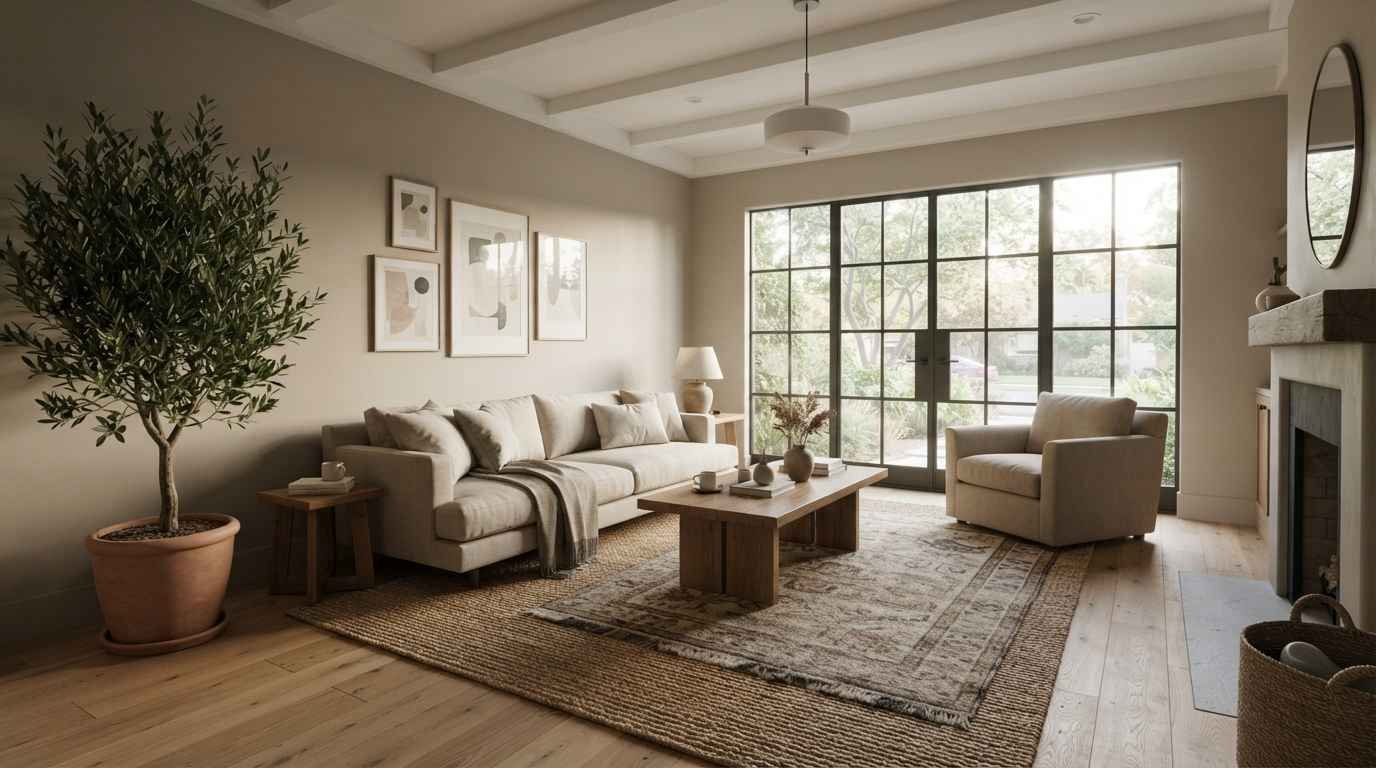
My apartment used to look like a furniture showroom threw up in it.
Then I spent one weekend clearing out three garbage bags of stuff I didn’t even remember buying, and the place finally felt like mine.
That’s the thing nobody tells you about minimalism: it’s not about owning nothing, it’s about only owning things that earn their spot.
If you’ve been scrolling Pinterest for hours saving boards you’ll never open again, this list is for you.
I’ve pulled together 24 ideas that actually work in real homes, not just in staged photos with a suspiciously empty fruit bowl. Some of these I’ve tried myself.
A couple I stole from a friend who redid her whole studio apartment for under $400. Let’s get into it.
Start With a Color Palette That Actually Calms You Down
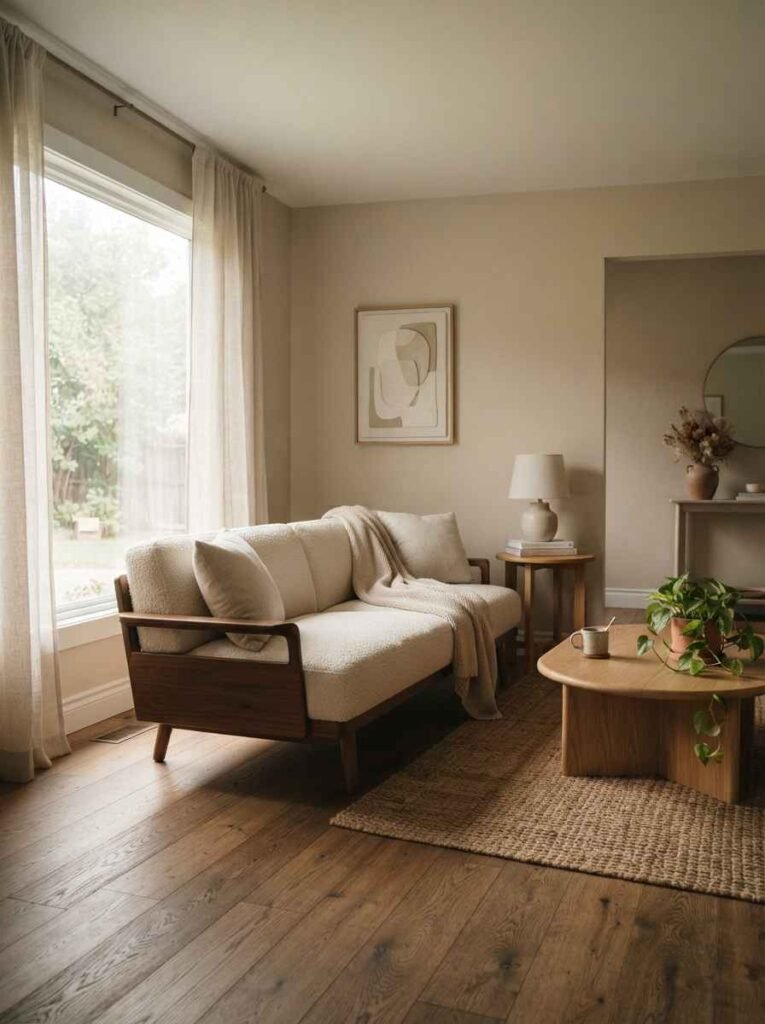
Color does more heavy lifting in a cozy minimalist space than any single piece of furniture.
Pick a palette early and stick with it, because a room with 12 different whites fighting each other is somehow worse than clutter.
- Go warm neutral instead of stark white. Think oatmeal, sand, and greige. Pure white can feel clinical, and IMO nobody wants their living room to feel like a dentist’s office.
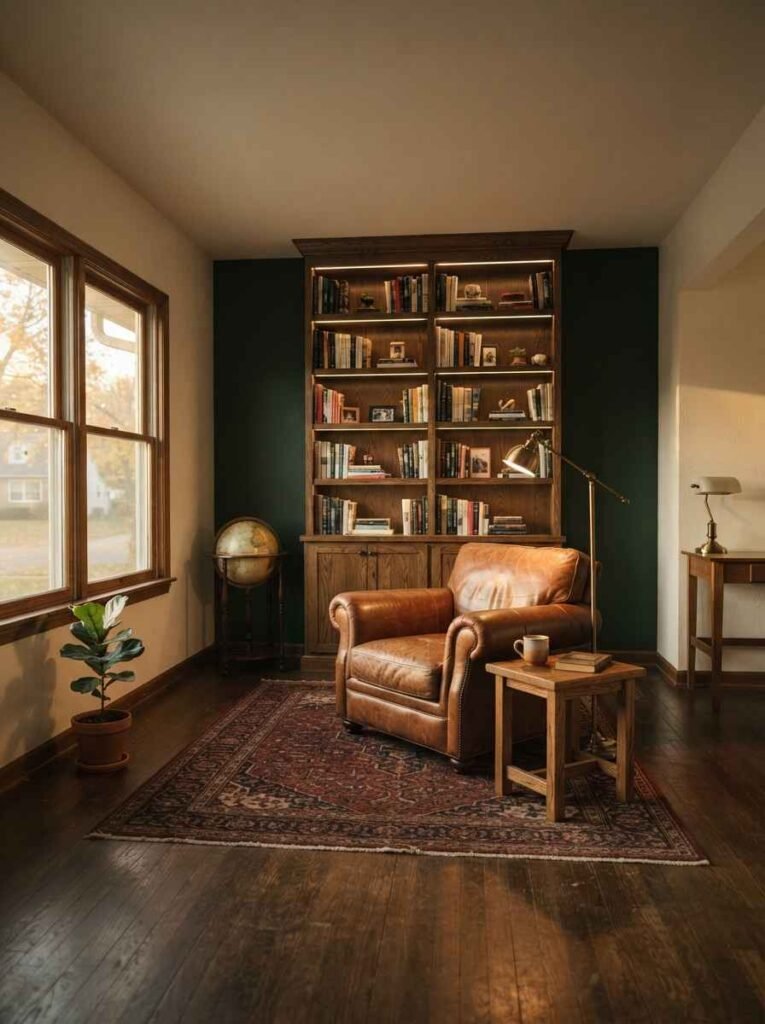
- Add one deep, moody color per room. A charcoal accent wall or a forest green bookshelf keeps things from feeling flat.
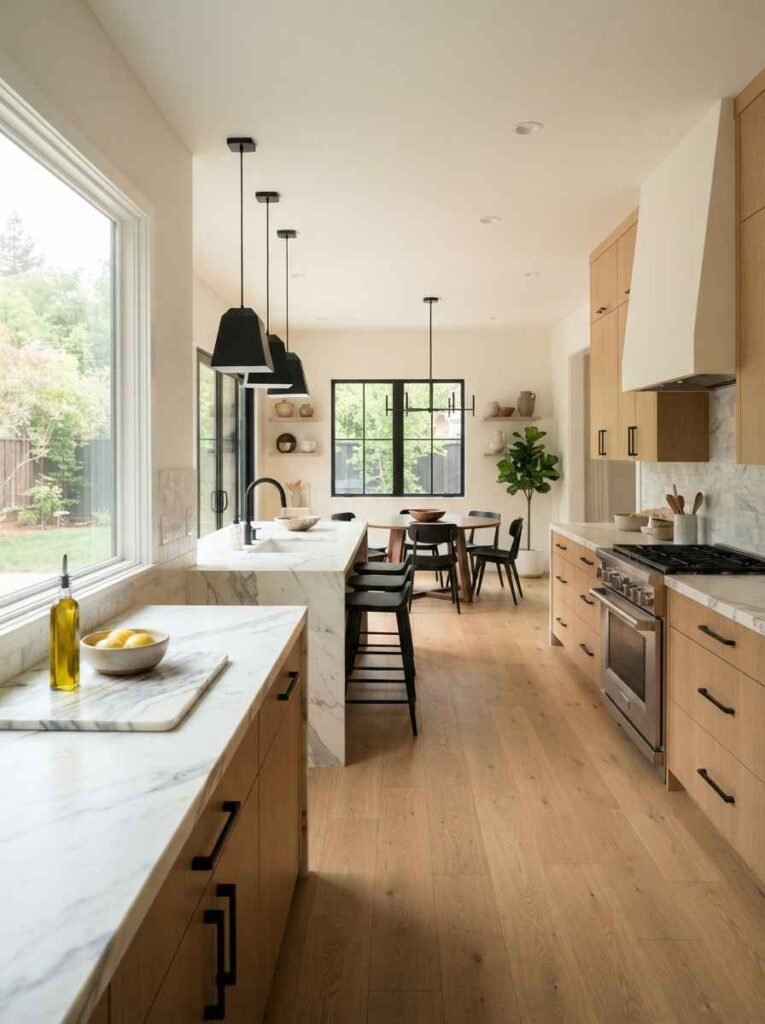
- Match your metals. Brushed brass, matte black, or warm bronze, just don’t mix all three on one shelf.
- Use the 60-30-10 rule. Sixty percent base neutral, thirty percent secondary tone, ten percent accent color. It’s a simple formula and it works every single time.
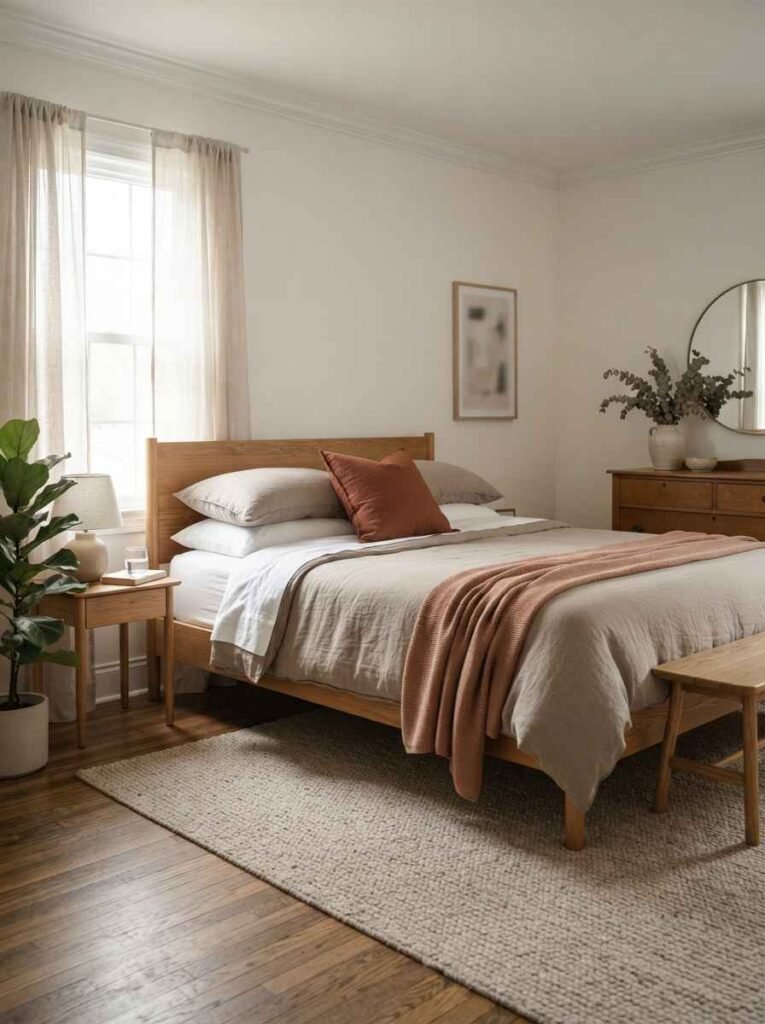
Here’s a quick reference table if you’re the type who likes things laid out simply:
| Element | Minimalist Choice | Why It Works |
|---|---|---|
| Wall color | Warm white or greige | Feels soft, not sterile |
| Textiles | Wool, linen, boucle | Adds texture without visual noise |
| Lighting | Warm 2700K bulbs | Mimics candlelight, feels cozy |
| Metal finish | One consistent tone | Keeps the room from feeling busy |
Furniture That Does More With Less
A cozy minimalist room isn’t empty. It’s edited. Every piece should either be beautiful, useful, or both. Ever wondered why some sparse rooms still feel warm while others feel like a waiting room? It usually comes down to shape and material, not quantity.
- Choose a low-profile sofa. Lower furniture makes ceilings feel taller and rooms feel bigger. This one trick changed my tiny living room more than anything else I tried.
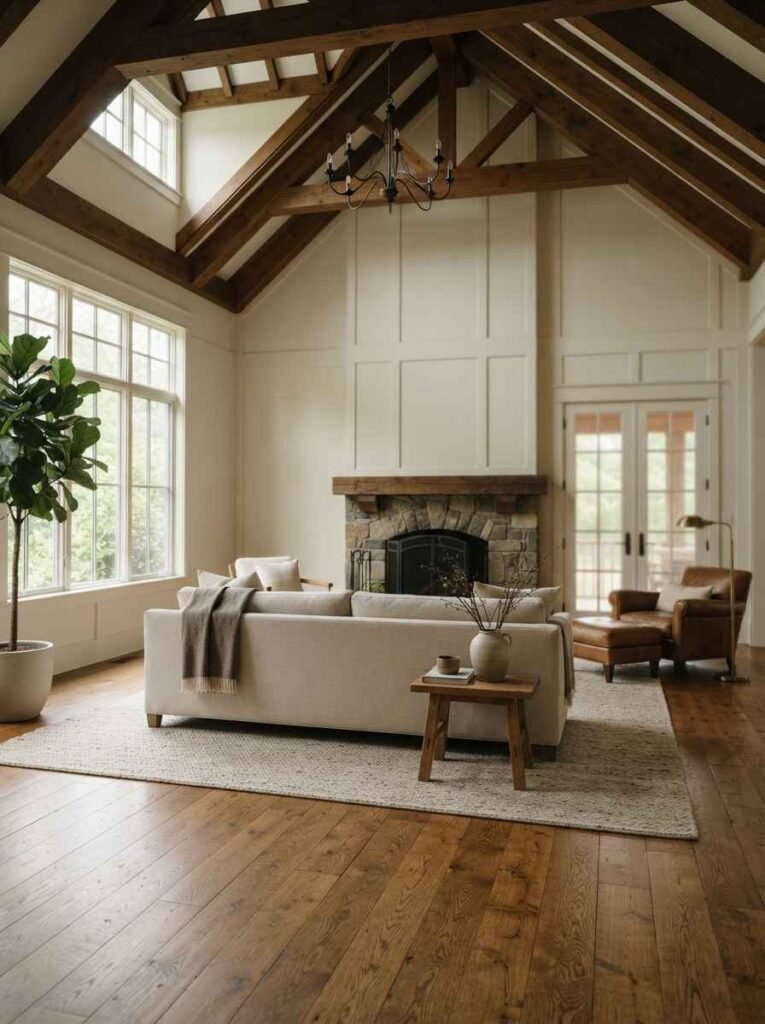
- Pick one statement chair. A single curved accent chair does more for a room than three mismatched ones ever could.
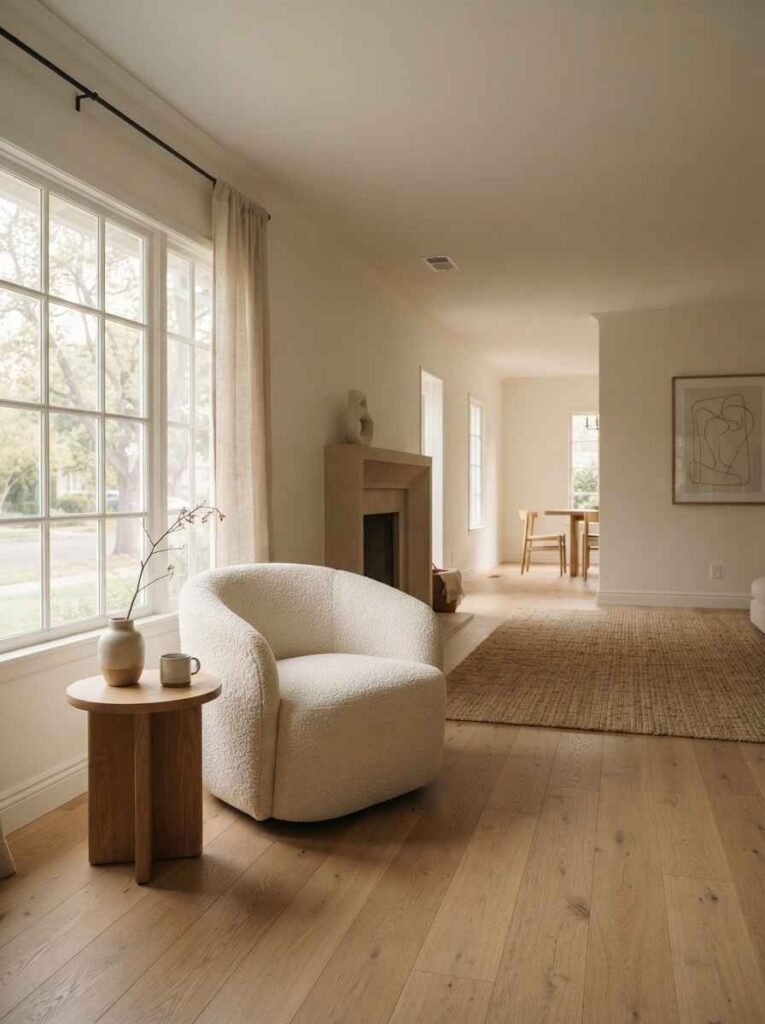
- Invest in a solid wood coffee table. Skip the glass-and-chrome combo. Wood grain adds warmth that glass just can’t fake.
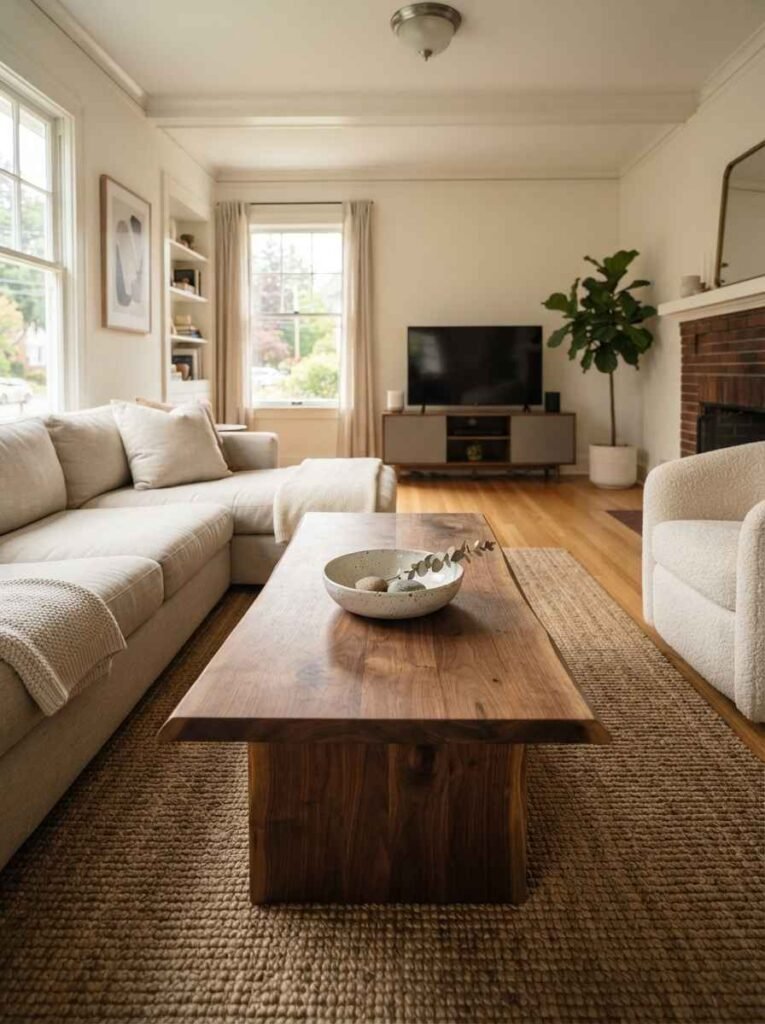
- Use furniture with rounded edges. Sharp corners read as cold. Curves feel inviting, and honestly, they’re safer if you have toddlers or clumsy roommates like I do.
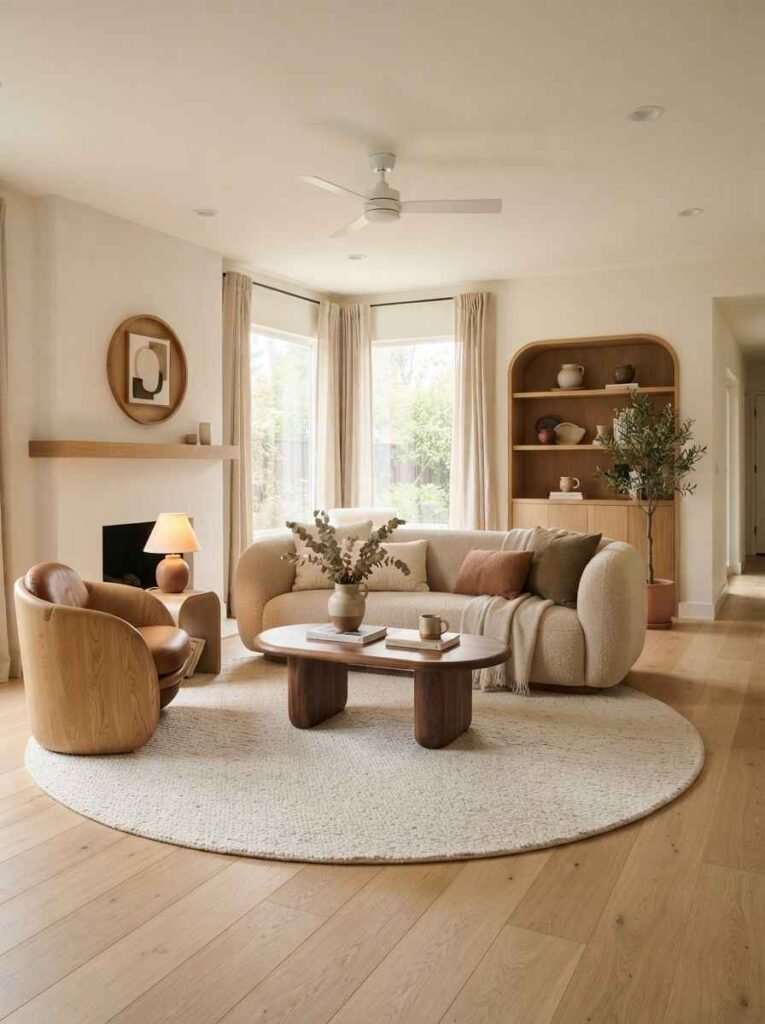
- Try a bench instead of a second sofa. It’s flexible, it doesn’t scream for attention, and you can slide it under a console table when you need floor space back.
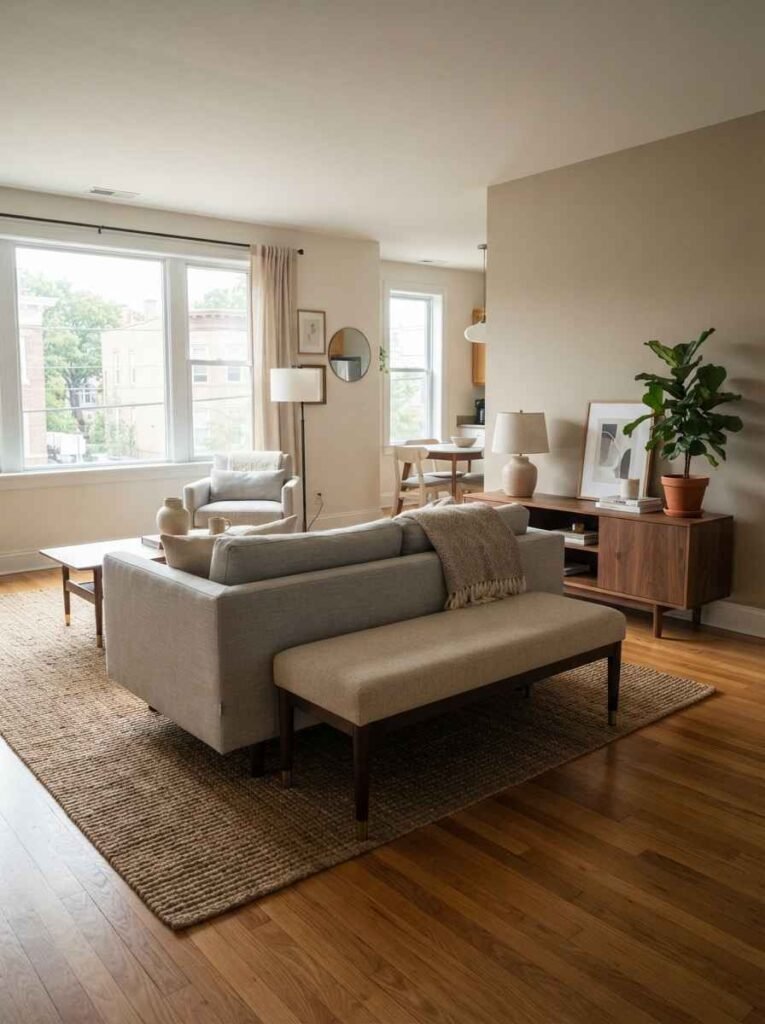
Layer Textures So the Room Doesn’t Feel Cold
This is where most minimalist attempts go wrong. People strip everything back and forget that texture is what makes a room feel lived in, not the amount of stuff in it.
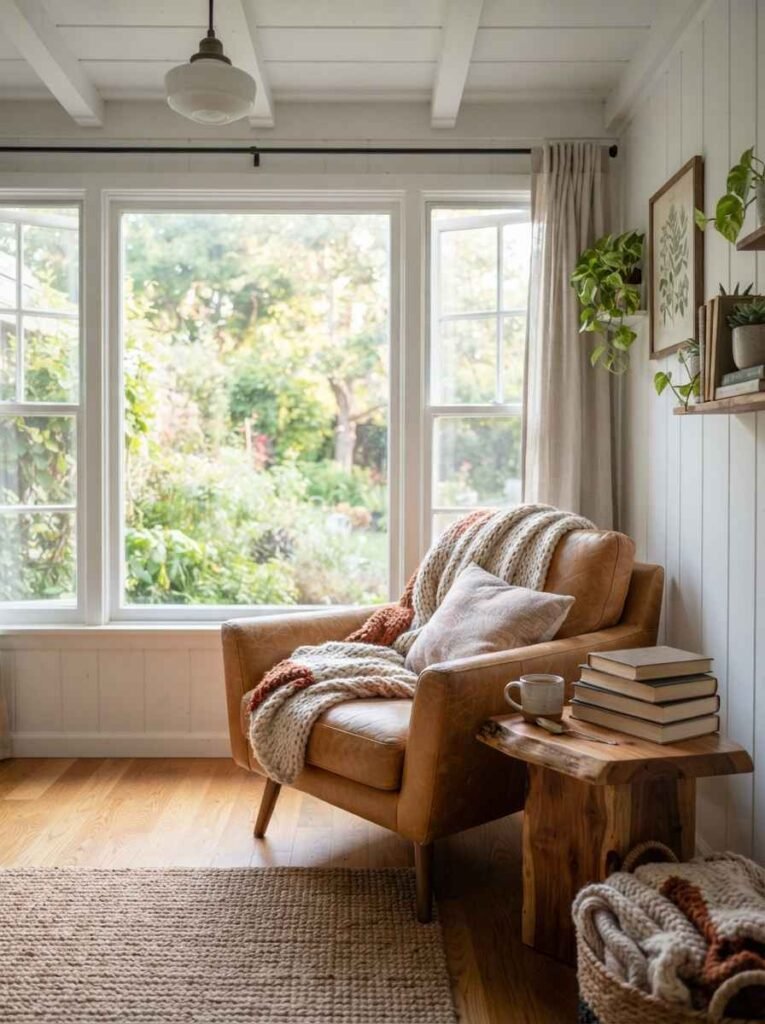
- Add a chunky knit throw. Drape it over the arm of your sofa, not folded in a perfect square. Perfect squares look staged, and staged doesn’t feel cozy.
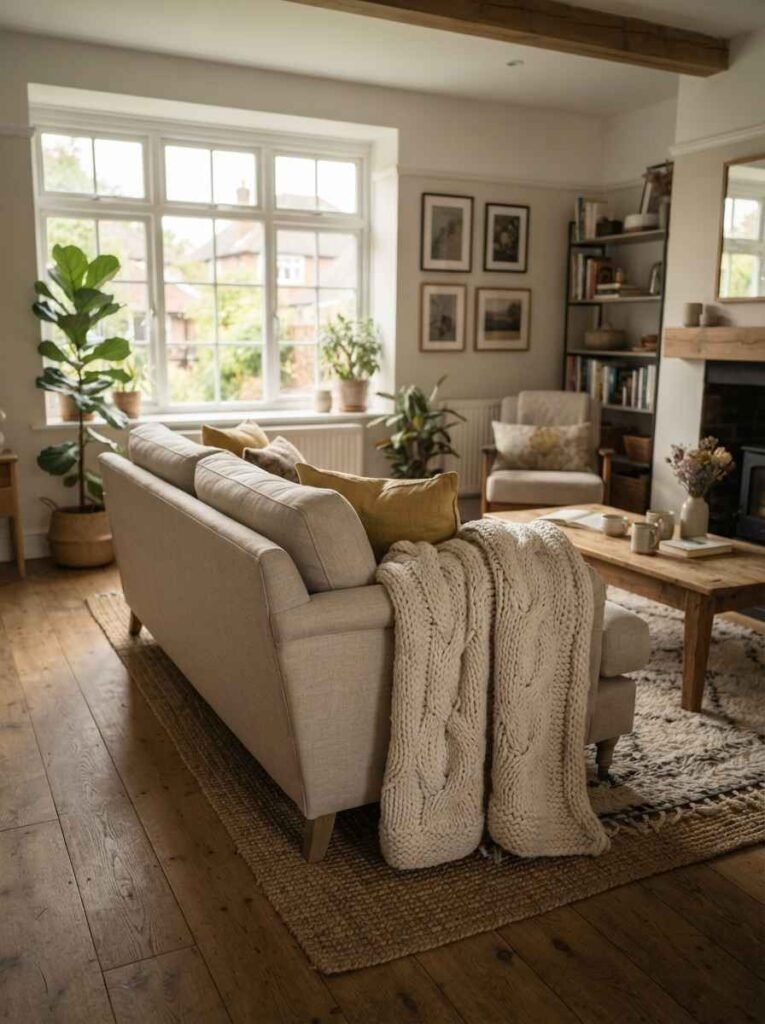
- Layer two rugs. A jute rug as a base with a smaller wool rug on top gives depth without adding clutter.
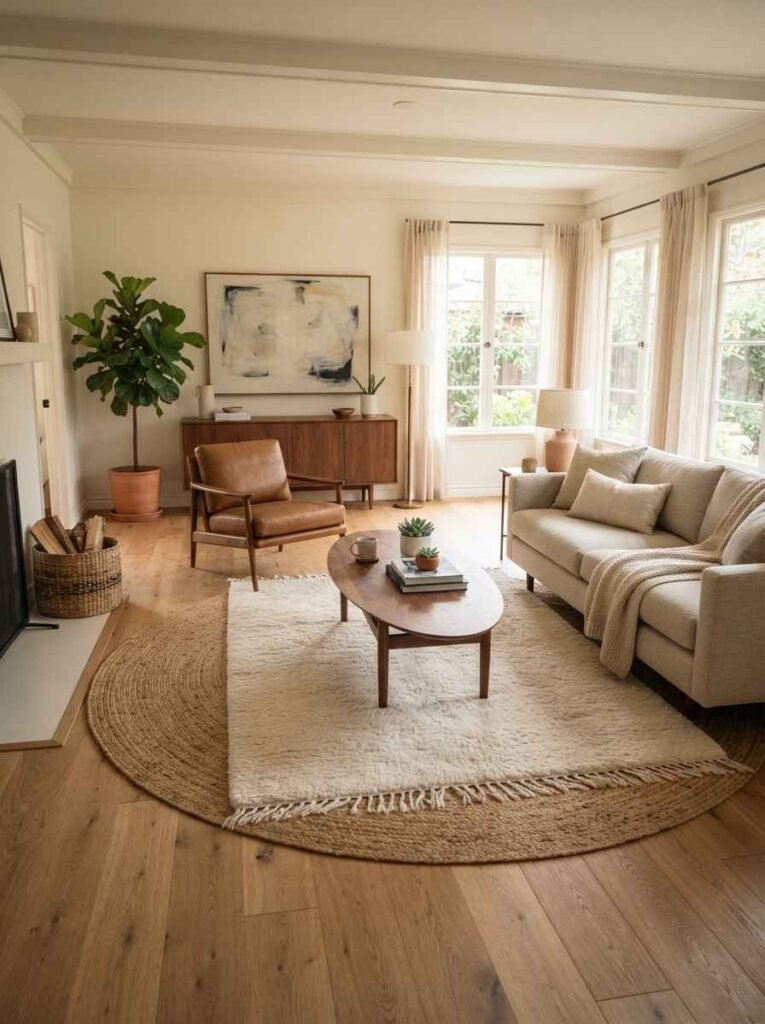
- Bring in linen curtains. They soften harsh light and move slightly with airflow, which somehow makes a room feel alive.
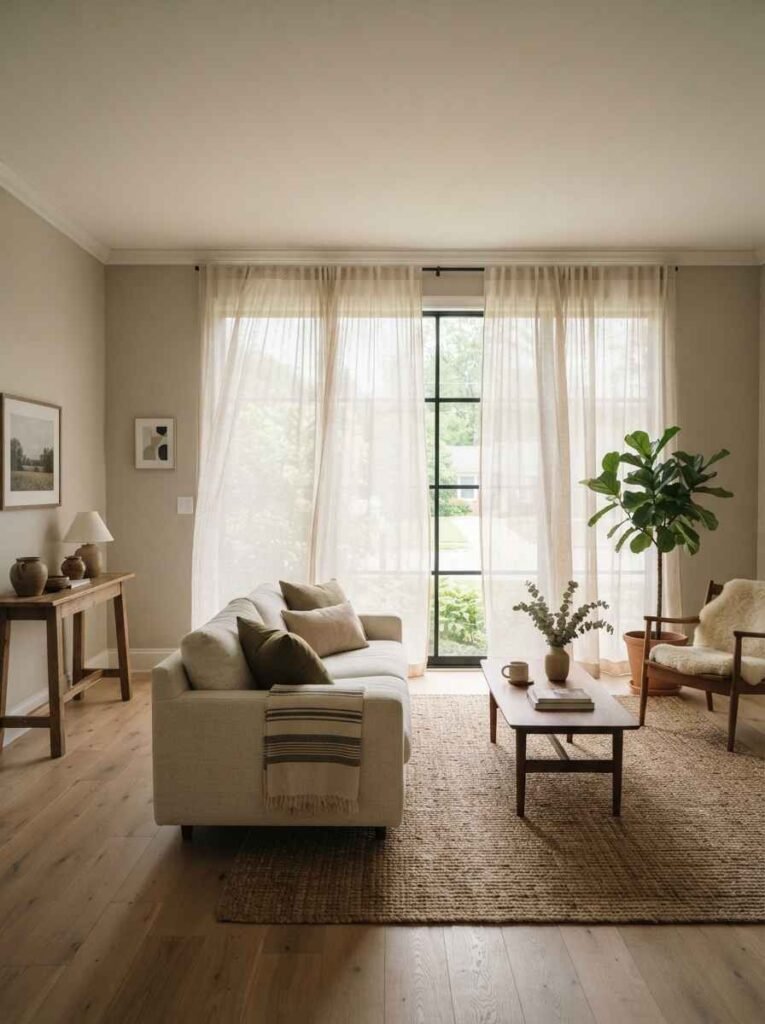
- Use boucle or velvet on one accent piece. One textured chair or pillow set is plenty. Ten textures in one room just looks confused.
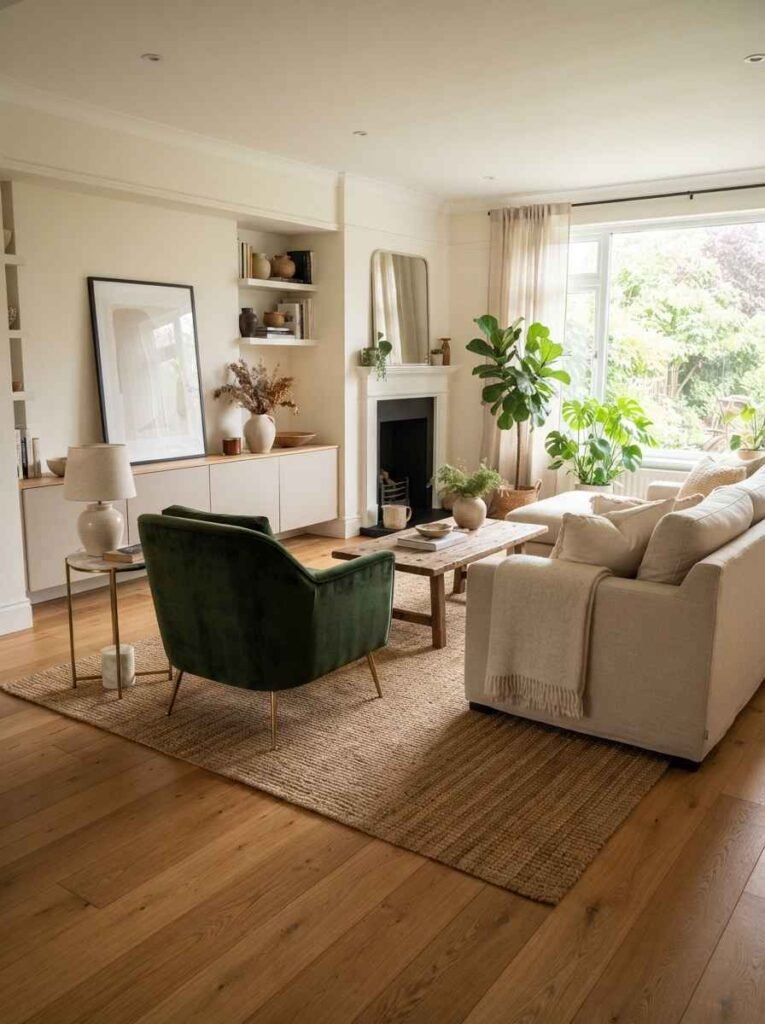
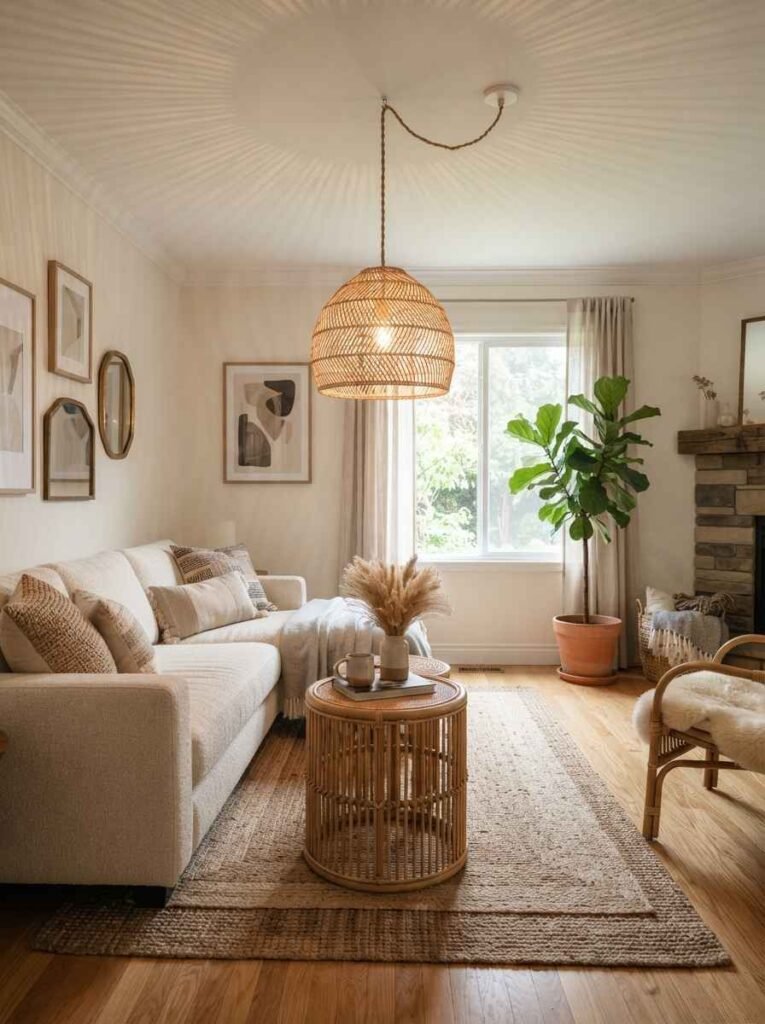
- Add a wood or rattan element. A woven pendant lamp or a rattan side table brings in organic texture that plastic and metal simply can’t replicate.
Lighting Makes or Breaks the Cozy Factor
I used to think lighting was the last thing to worry about. I was wrong, and honestly a little embarrassed it took me this long to figure out. Swap your bulbs before you buy a single new item of decor, and watch the whole room change personality.
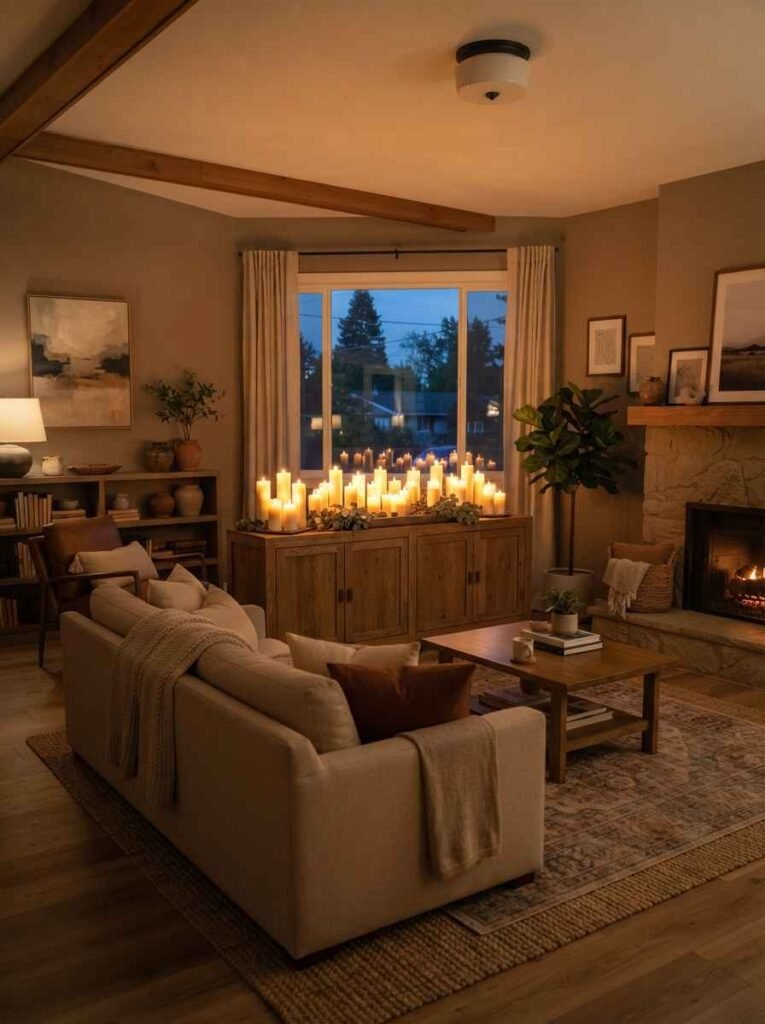
- Layer three light sources per room. Overhead, table, and floor lighting together beat one harsh ceiling fixture every time.
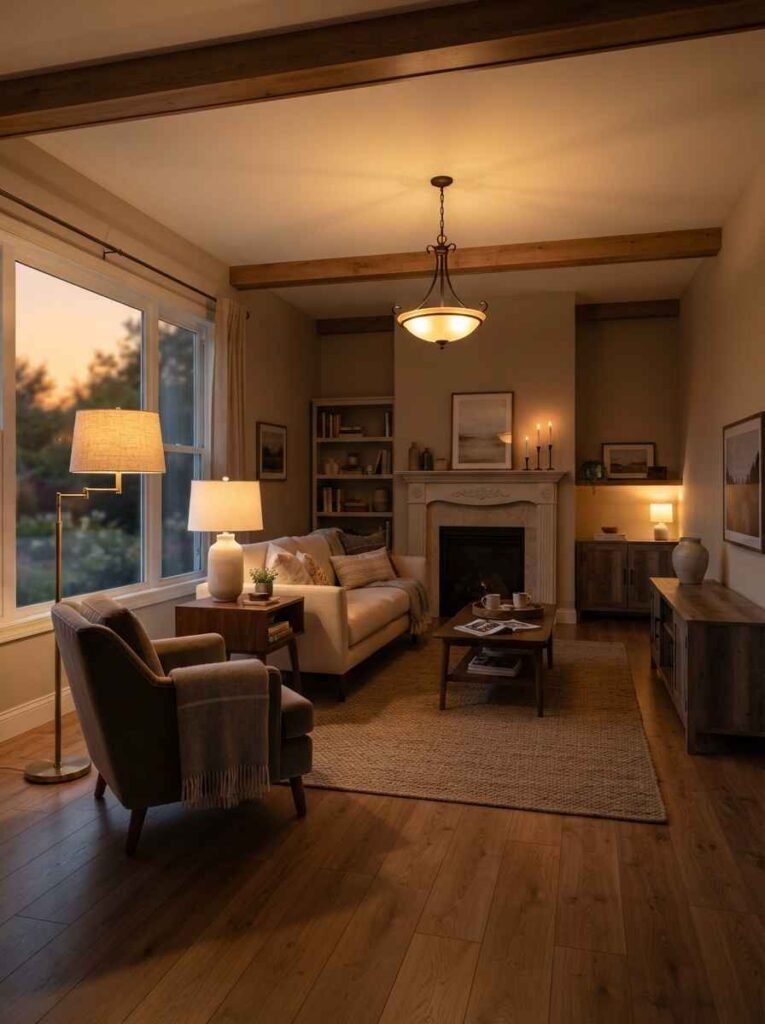
- Use dimmers wherever you can. A $15 dimmer switch is honestly one of the best cheap upgrades in home design, full stop.
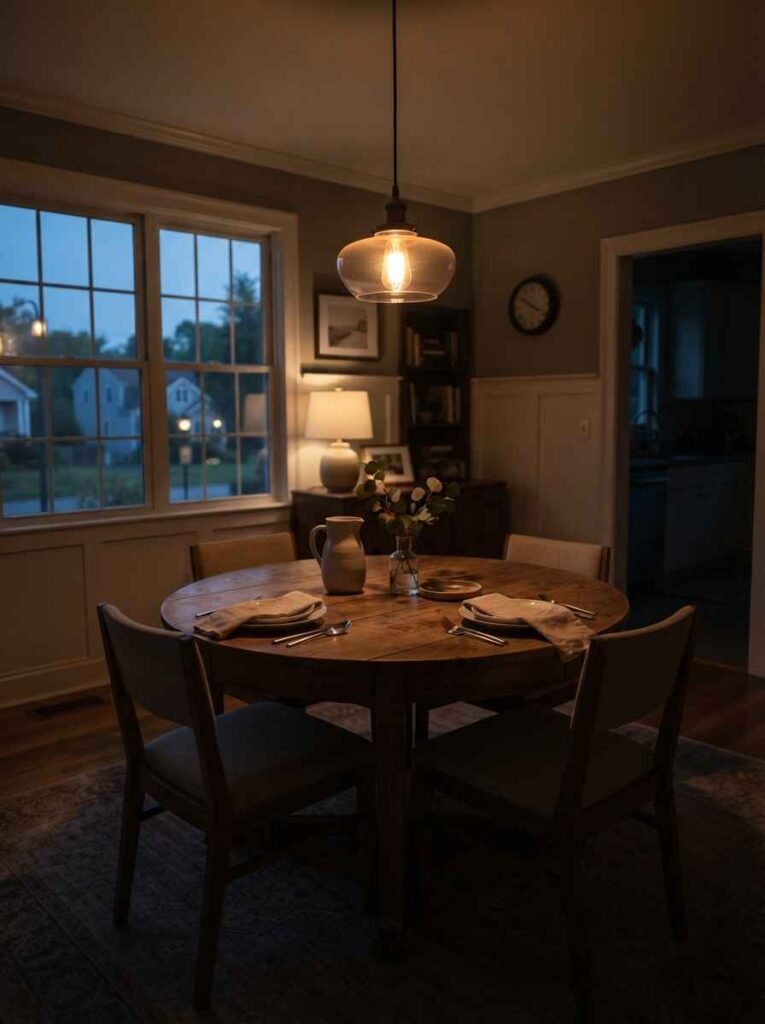
- Add candles or a diffuser flame lamp. Real flame or a flicker-effect bulb adds warmth that no cool white LED will ever match.
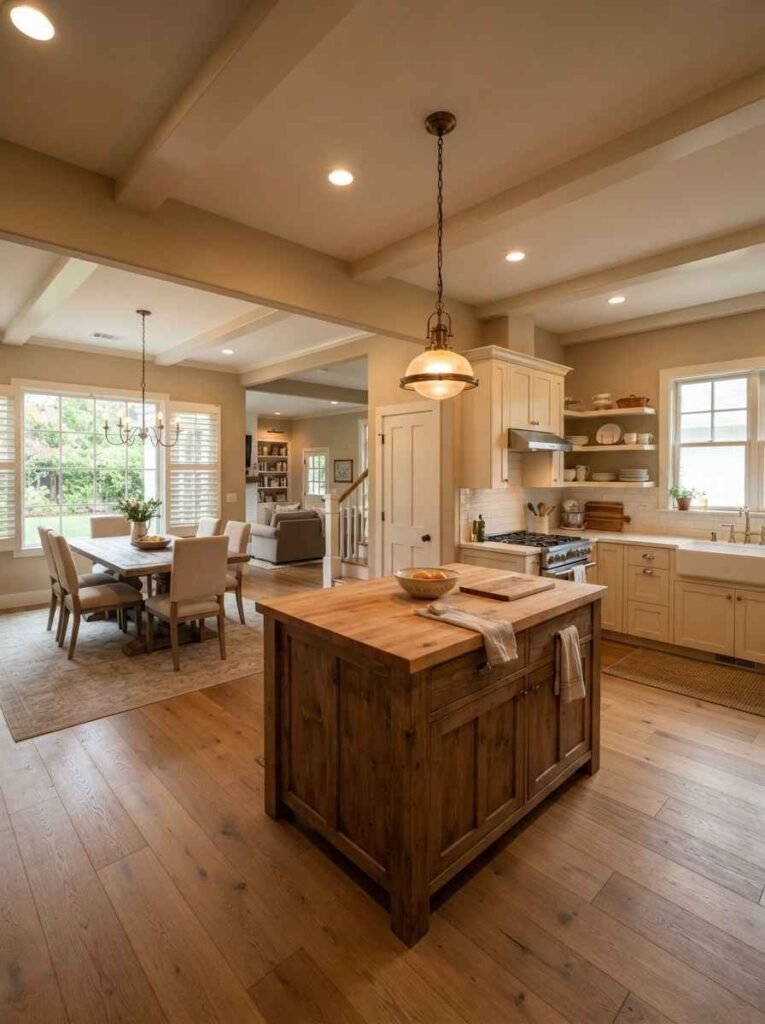
- Hang pendant lights low over key surfaces. A pendant over your dining table or kitchen island draws the eye down, which makes the whole room feel cozier.
Storage Solutions That Keep the Look Clean
Minimalism only survives if you have somewhere to put the stuff you’re not displaying. FYI, hidden storage is the actual secret to that “effortless” minimalist Pinterest look. Nobody’s home is naturally that empty 🙂
- Use closed cabinetry over open shelving in busy rooms. Open shelves look great in photos and chaotic in real life within about two weeks.
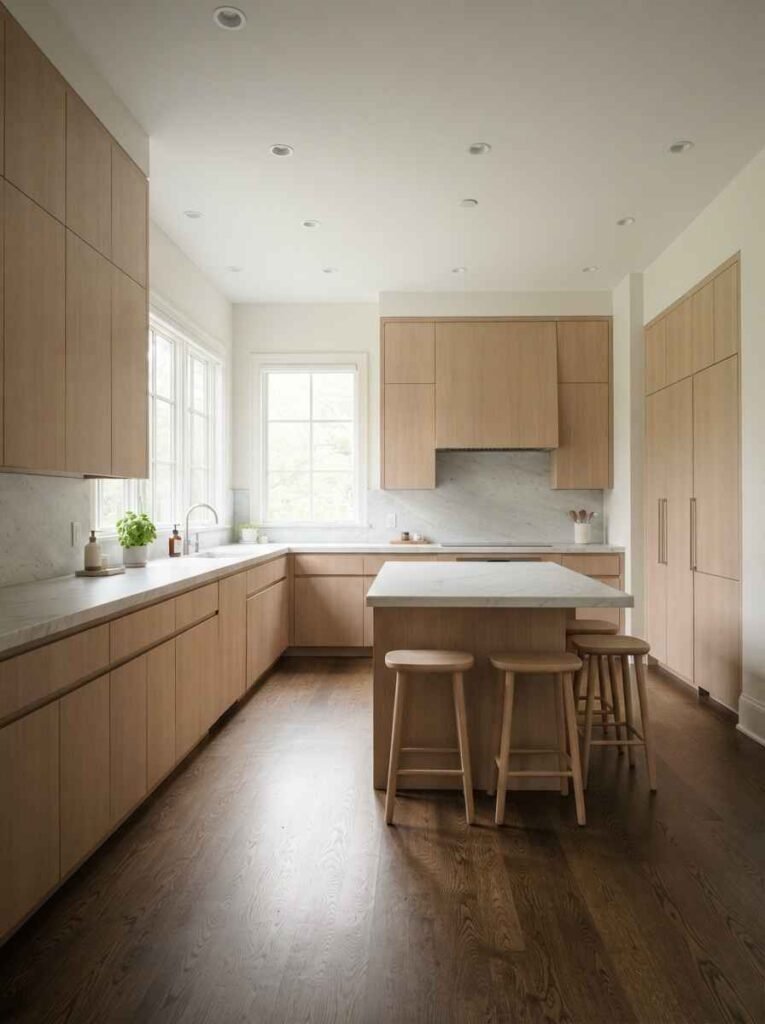
- Add a storage ottoman. It hides blankets, remotes, and whatever random stuff ends up on your coffee table by Friday night.
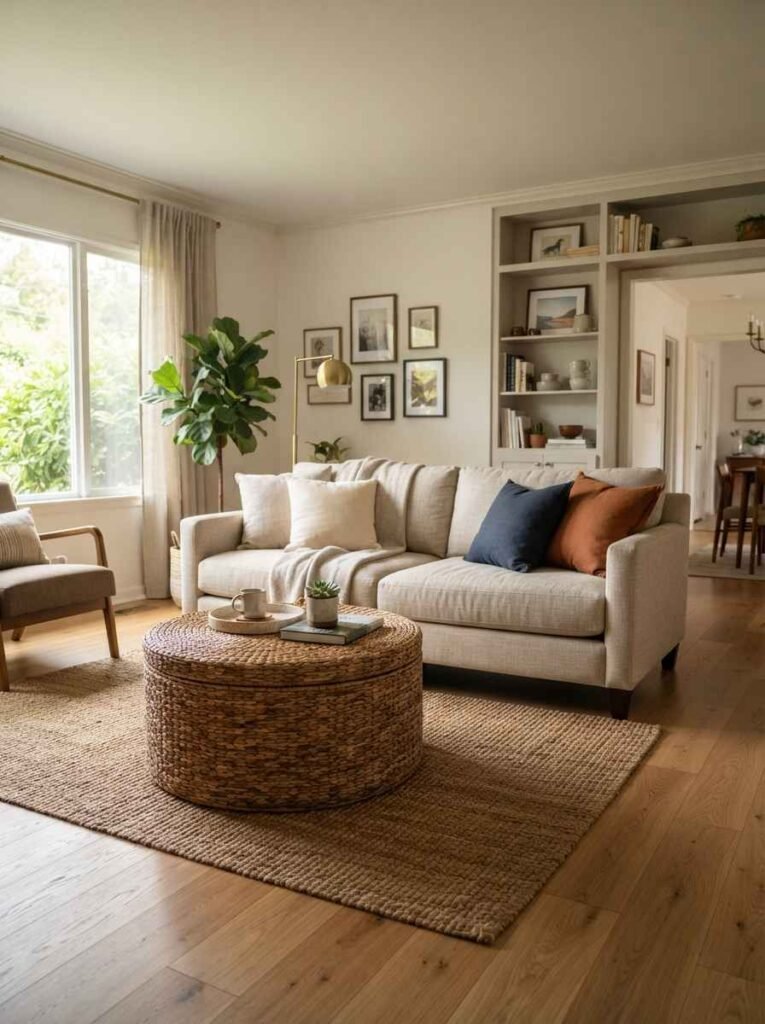
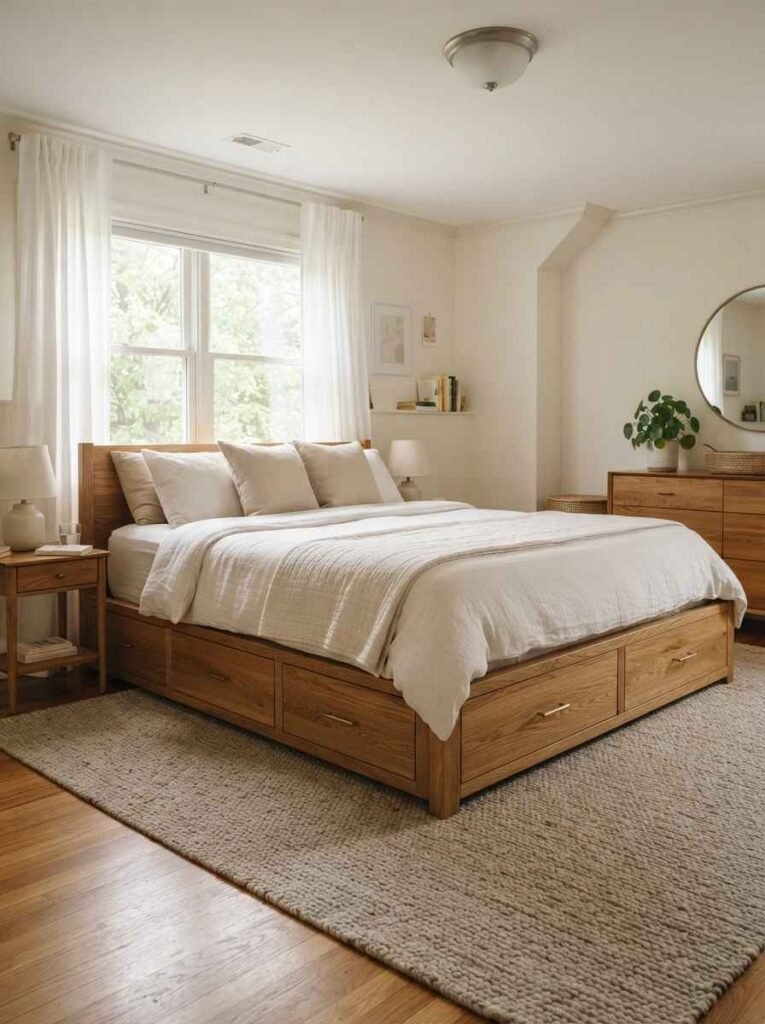
- Get a bed frame with built-in drawers. Bedroom storage disappears completely, and you free up a whole closet.
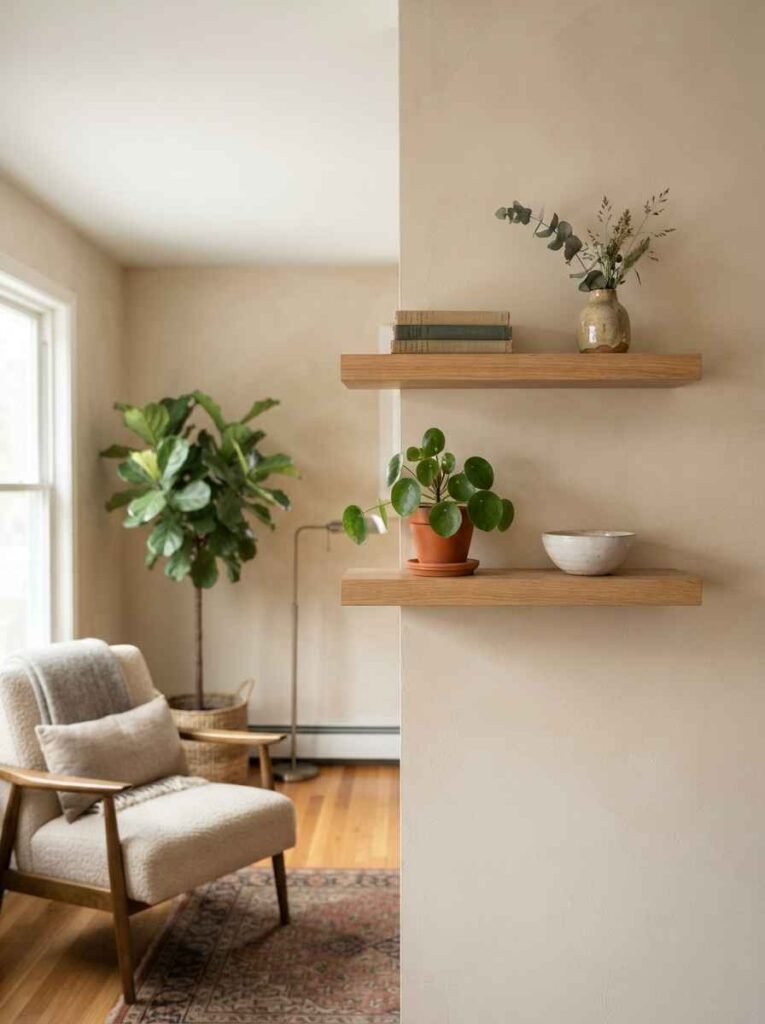
- Mount floating shelves for display only. Reserve them for three or four meaningful objects, not a catch-all for mail and keys.
Small Personal Touches That Keep It From Feeling Sterile
A minimalist home that feels like nobody lives there isn’t cozy, it’s just empty. The goal is restraint, not erasure.
- Display one or two sentimental objects per room. A photo, a piece of pottery from a trip, something that actually means something to you.
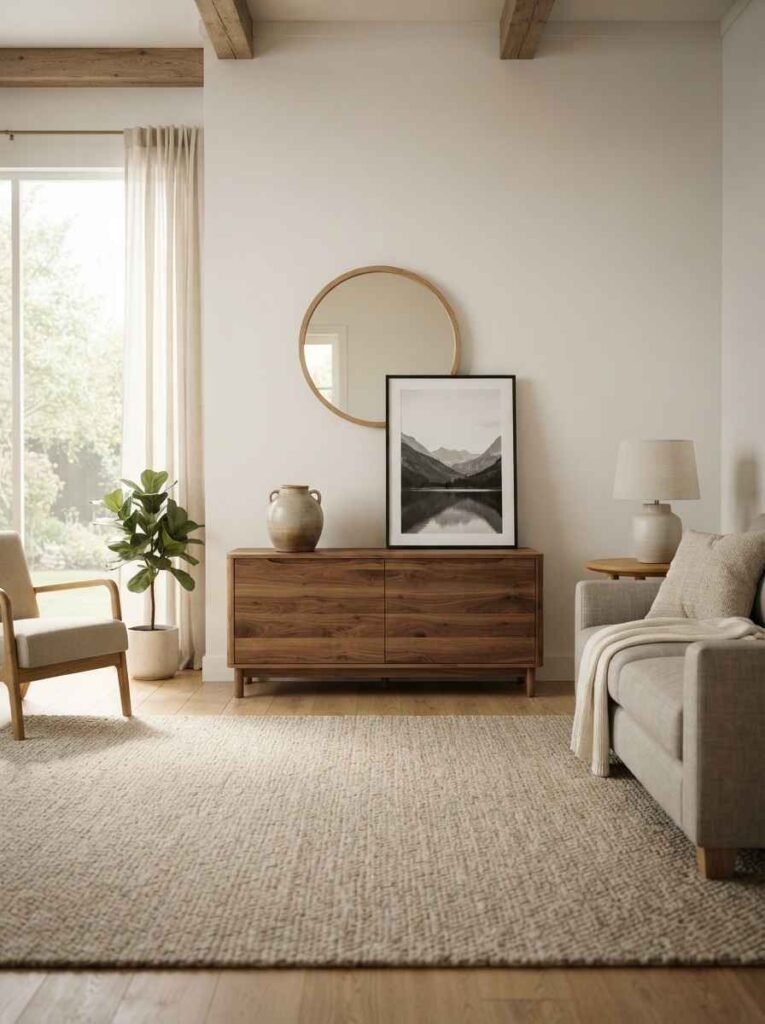
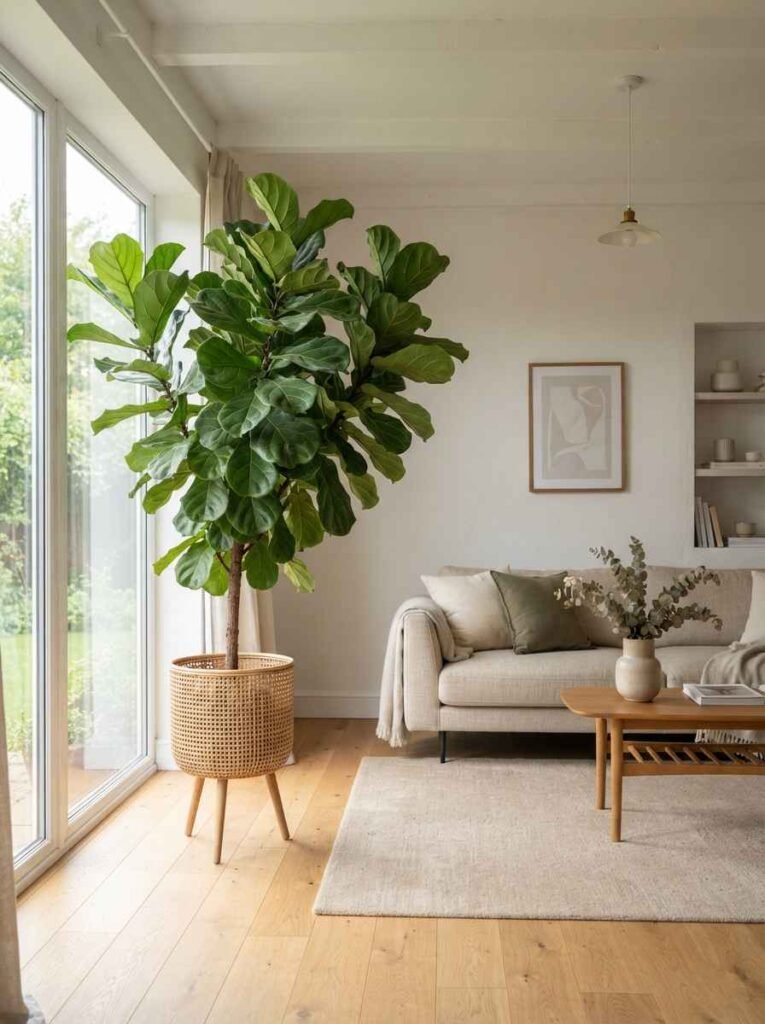
- Bring in a single large plant instead of five small ones. One fiddle leaf fig or olive tree adds life and softness without turning your living room into a greenhouse.
Real talk for a second: I once tried to go full minimalist and got rid of a mug my grandmother gave me because it “didn’t match the palette.” Biggest regret of my whole decluttering phase.
Keep the things that matter, even if they clash a little.
A Few Extra Resources Worth Bookmarking
If you want to go deeper on any of this, a couple of resources are worth your time.
This guide on small-space decorating tricks minimalists swear by covers reflective surfaces and multifunctional furniture in more depth than I could fit here.
And if you’re curious about the actual philosophy behind why less-but-better works psychologically, this piece on the philosophy behind minimalist design breaks it down well.
Quick FAQ
Does minimalist decor have to be all white and gray? No, and honestly it shouldn’t be.
The coziest minimalist homes lean into warm neutrals, wood tones, and one or two deeper accent colors. All-white rooms tend to feel cold rather than calm.
How do I make a minimalist room feel less empty? Layer textures, not objects.
A chunky throw, a woven basket, and warm lighting will do more for coziness than adding extra decor items ever will.
Is minimalist decorating expensive? It doesn’t have to be.
Buying fewer, better pieces over time is often cheaper than constantly replacing trendy decor. Start with lighting and textiles since they’re the lowest-cost, highest-impact changes.
Final Thought
Cozy minimalism isn’t a strict rulebook. It’s permission to stop buying stuff you don’t actually like just because it’s on trend.
Pick a few ideas from this list, try them in one room first, and see how it feels before you commit the whole house.
What’s the one change you’re trying this weekend? Drop it in your notes app, pin this list, and go make your space feel like yours.
