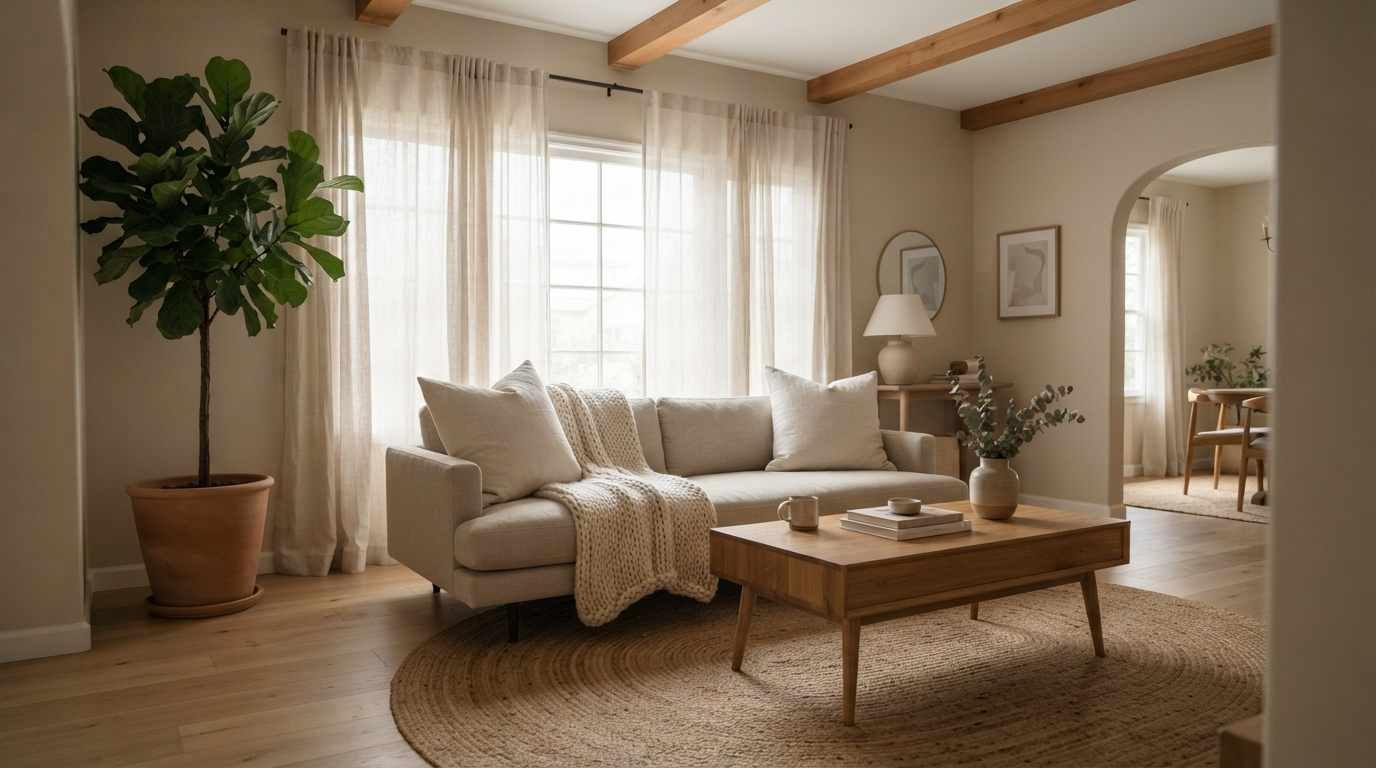
My apartment used to look like a Pinterest board had a meltdown. Throw pillows on top of throw pillows. A gallery wall with 30 frames.
A “reading corner” I never once sat in because there was nowhere to actually put my coffee.
Then I stripped it back. Not all at once, more like room by room over a year, mostly out of frustration with how tired the clutter made me feel.
And here’s the thing nobody warns you about: minimalism isn’t about owning less stuff for the sake of it. It’s about making your home feel like it can breathe.
And so can you.
If you’re pinning “cozy minimalist” boards right now and wondering how people make bare rooms look warm instead of cold and sterile, I get it. That’s the trick everyone struggles with. So here are 20 ideas that actually work, pulled from what I’ve tried, what I’ve undone, and what stuck.
1. Start with a neutral base, not a blank one
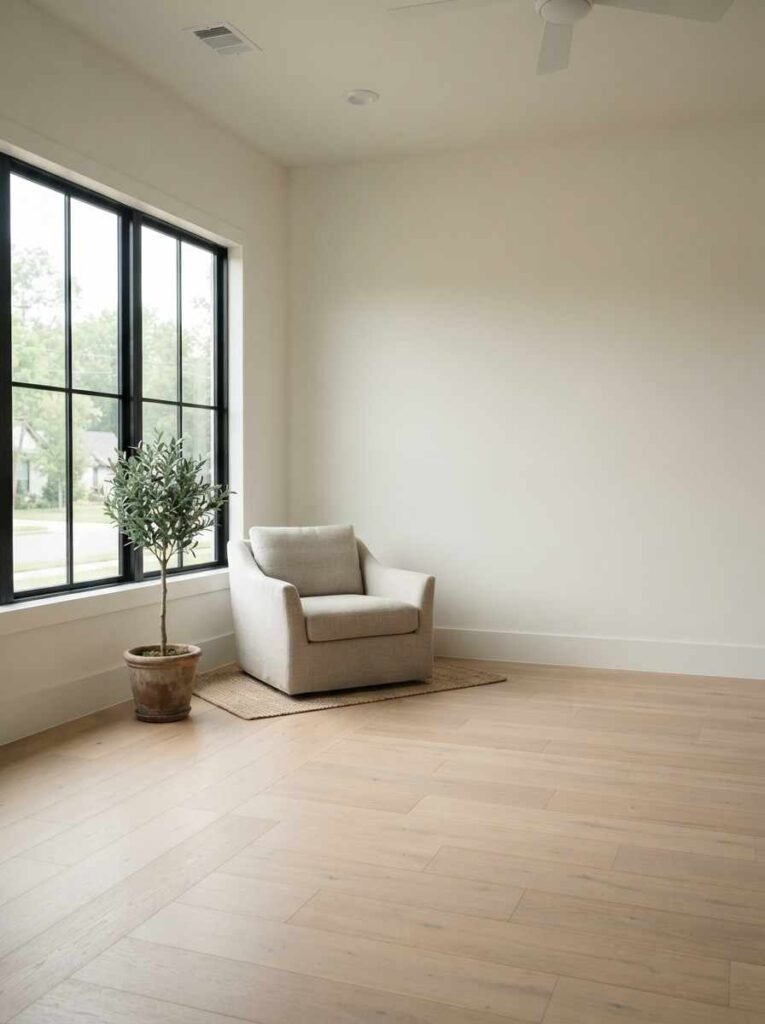
Neutral doesn’t mean boring. Warm whites, oatmeal, soft greige, and clay tones give you a calm backdrop without feeling like a hospital waiting room.
I painted my living room a warm off-white called “Alabaster” (Sherwin-Williams) and the difference from stark white was honestly wild.
it reads soft in every light, morning or night.
2. Layer textures instead of colors
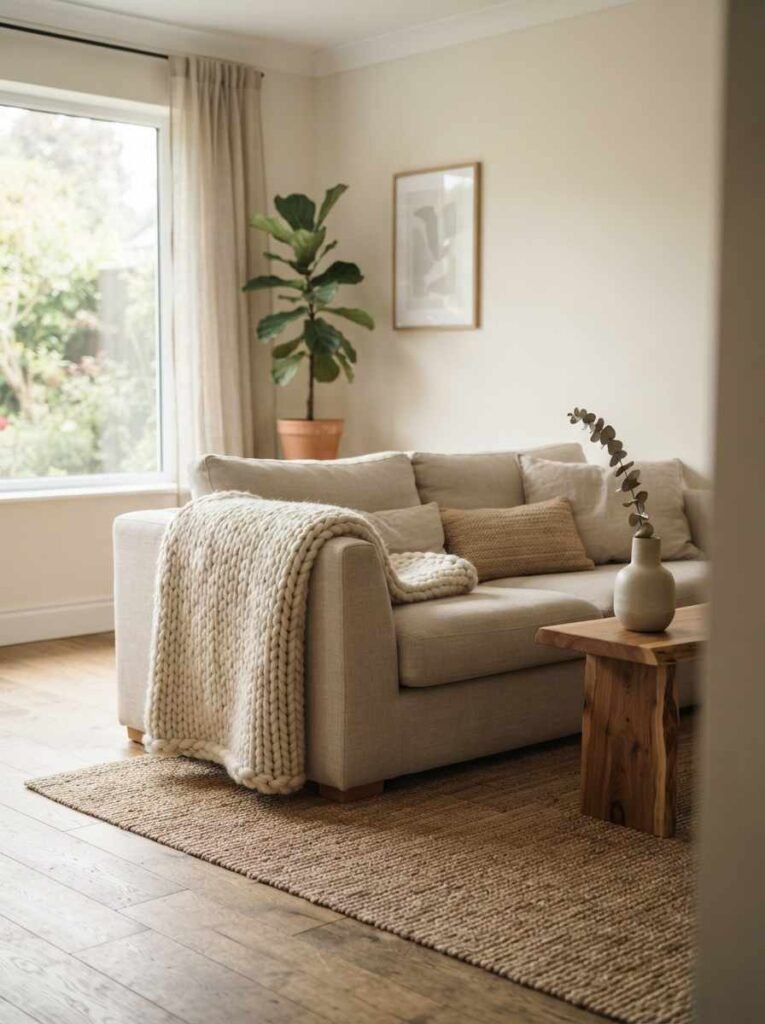
This is the one people miss most. A minimalist room without texture just looks empty.
Mix a linen sofa with a chunky knit throw, a jute rug, and a smooth ceramic vase.
The eye reads texture as warmth, even when the color palette barely moves.
3. Pick one or two accent colors, max
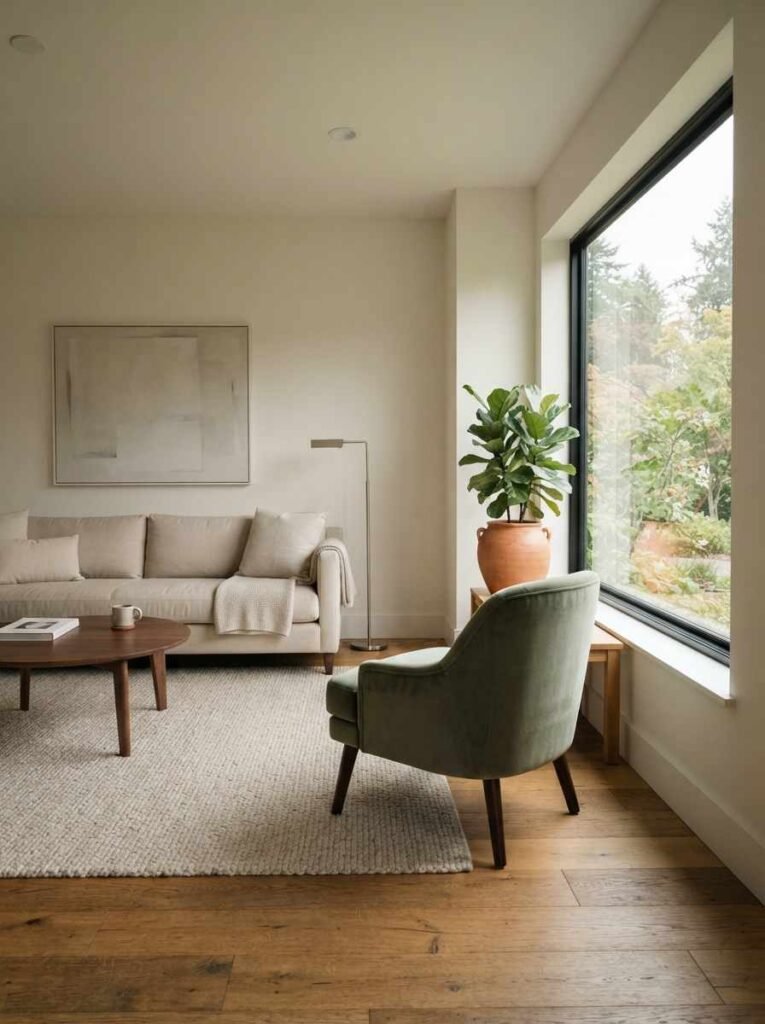
Sage green, terracotta, or a deep navy work well against a neutral base.
Pick one, use it in two or three spots, and stop there.
I learned this the hard way after adding a mustard yellow chair “just because,” and it fought with everything else in the room for attention.
4. Invest in fewer, better pieces
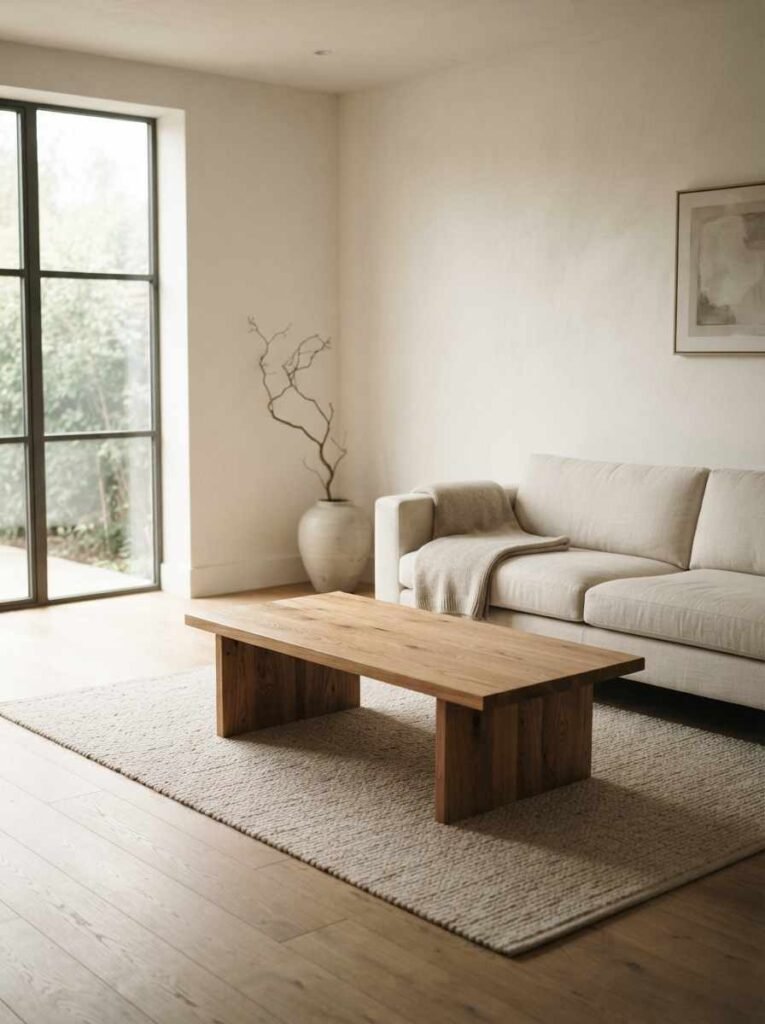
A minimalist space isn’t cheap furniture hiding in plain sight. It’s usually the opposite: fewer pieces, but ones built to last.
A solid wood coffee table will outlive five particleboard ones. IMO that math works out in your favor over time, even if the upfront cost stings.
5. Let natural light do the heavy lifting
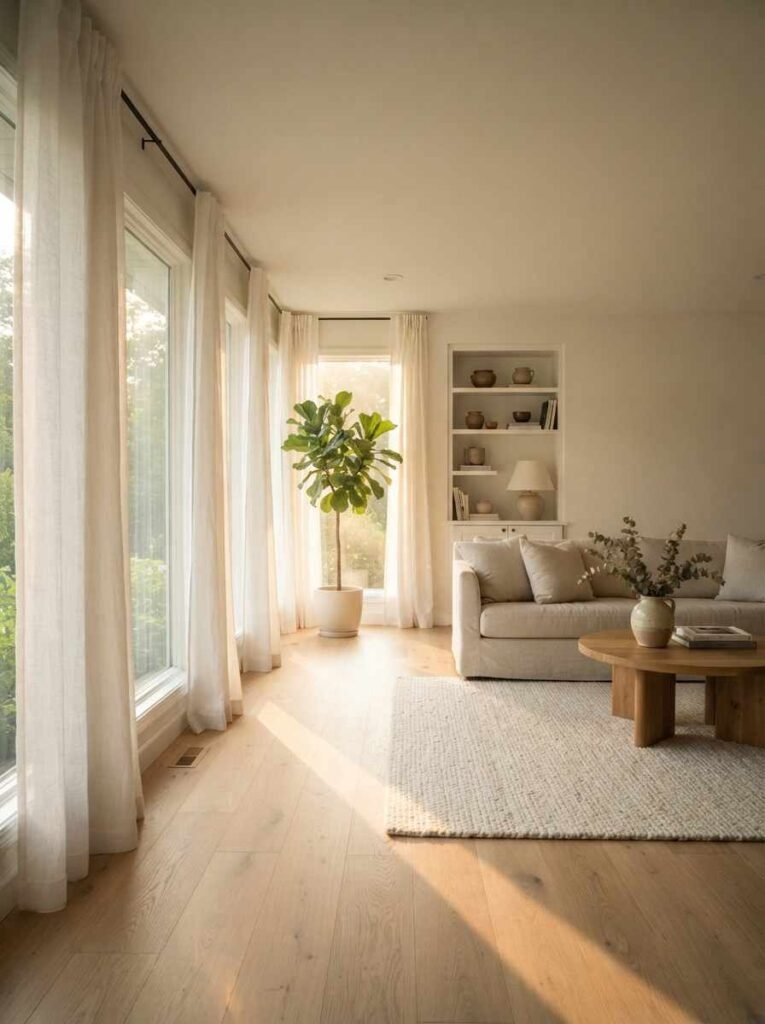
Skip heavy drapes. Linen curtains or simple woven shades let light pour in without blocking the view.
More daylight means less need for décor to make a room feel alive. The sun does that job for free.
6. Add warmth through wood tones
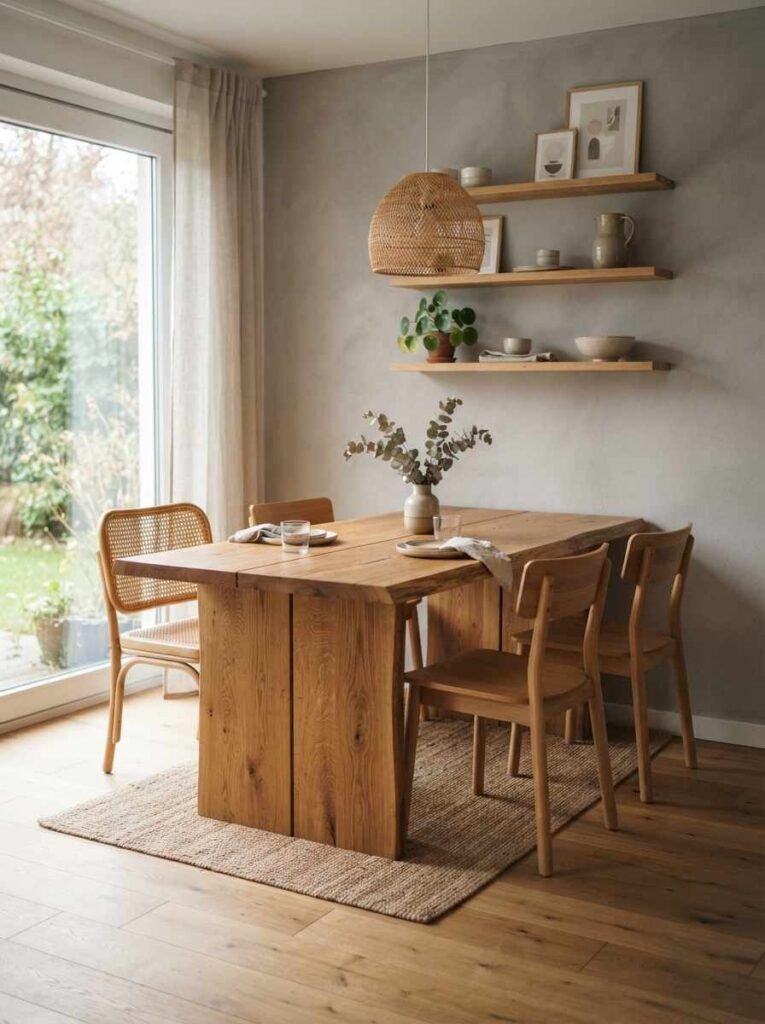
Pure white and gray rooms can tip cold fast.
Bring in a wood dining table, oak shelving, or even a rattan chair to soften things.
Warm wood tones against cool walls create a balance that feels intentional instead of accidental.
7. Keep countertops (mostly) clear
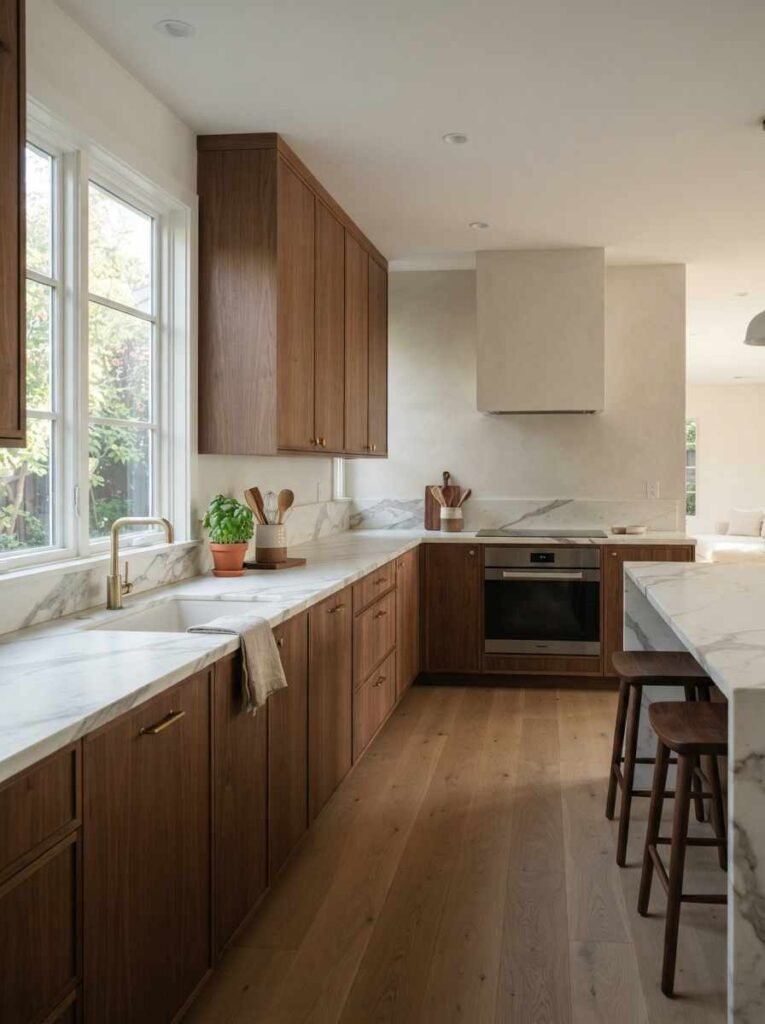
This one sounds obvious, but it’s the single biggest visual difference between a calm kitchen and a chaotic one. Clear counters photograph better and, more importantly, feel better to cook in.
Leave out one or two items you actually use daily, like a wooden spoon holder or a single plant, and store the rest.
8. Use one statement lighting fixture per room
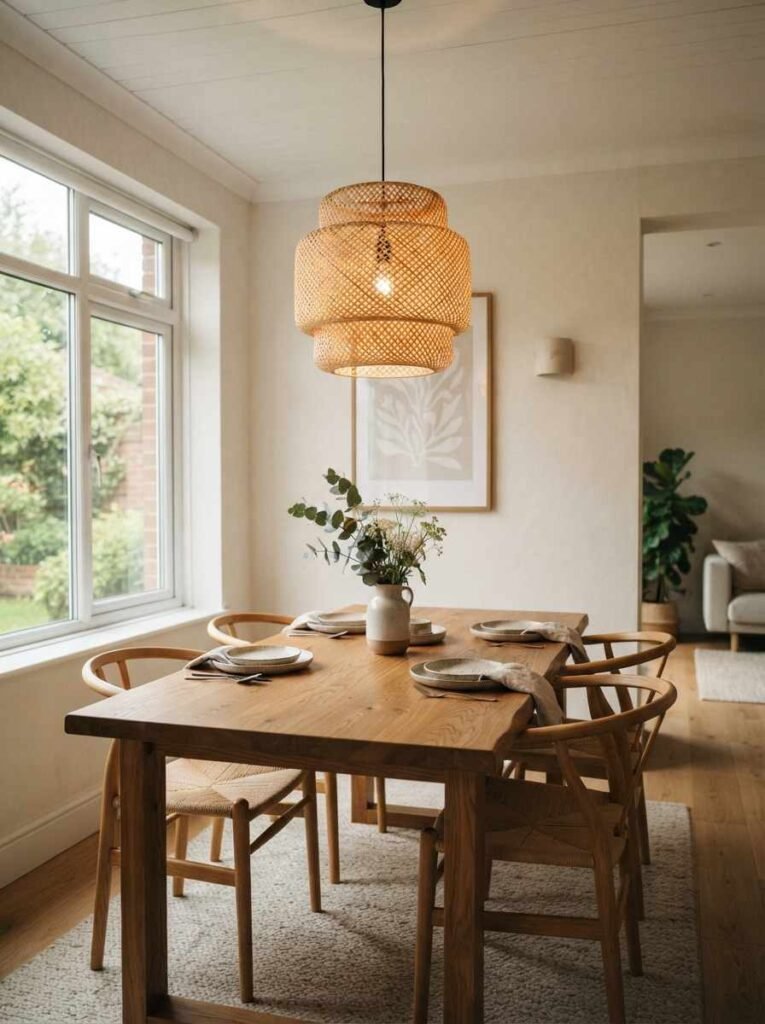
A single well-chosen pendant or floor lamp does more for a room’s mood than five scattered accent lights.
Pick a shape that has personality, since the rest of the room is quiet by design.
A rattan pendant over my dining table became the thing every guest asks about. Funny how one object can carry a whole room.
9. Ground the space with a natural fiber rug
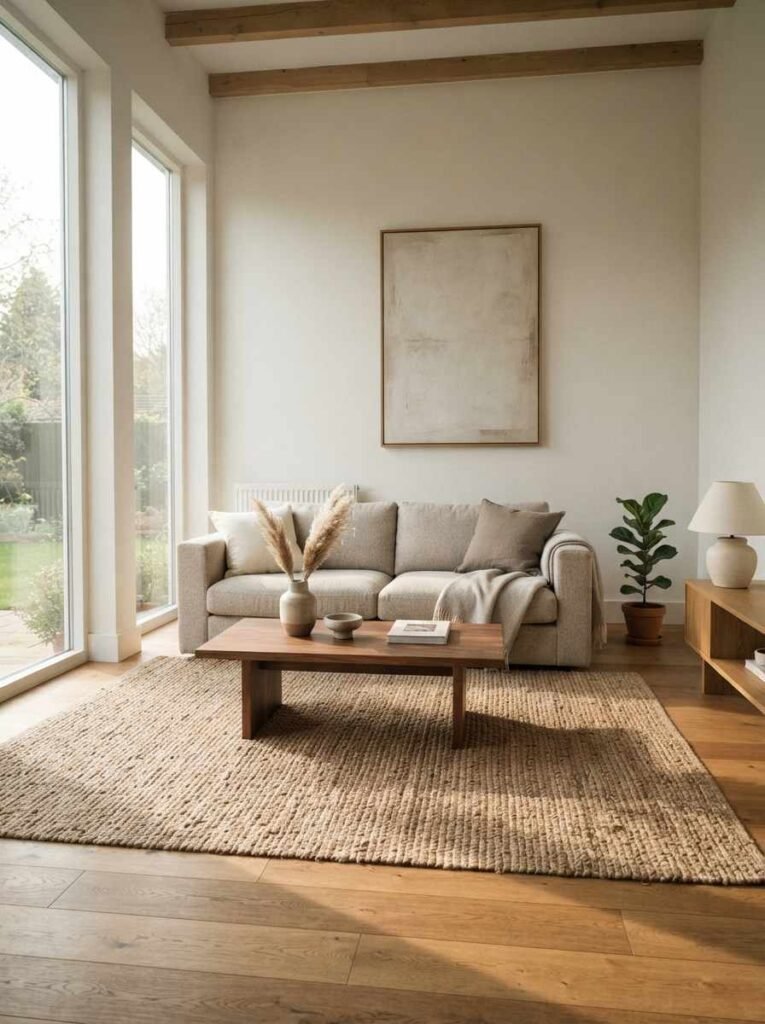
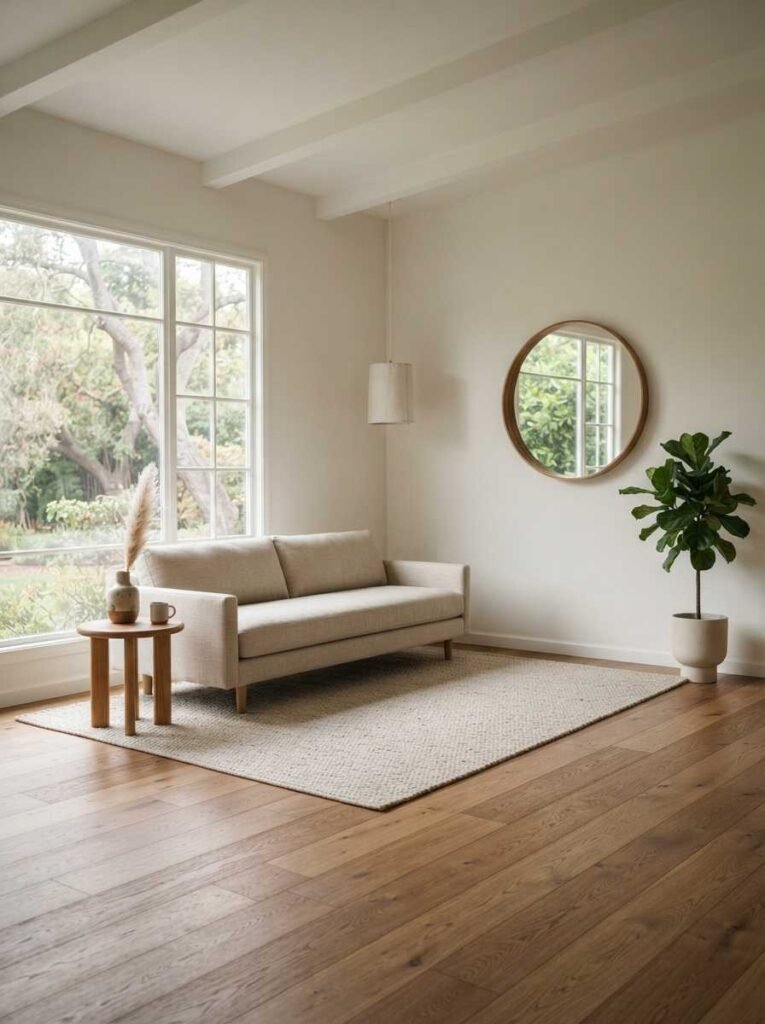
Jute, sisal, or wool rugs add texture underfoot and visually “anchor” furniture groupings. Avoid busy patterns here; save personality for smaller accents instead.
10. Declutter surfaces before you decorate them
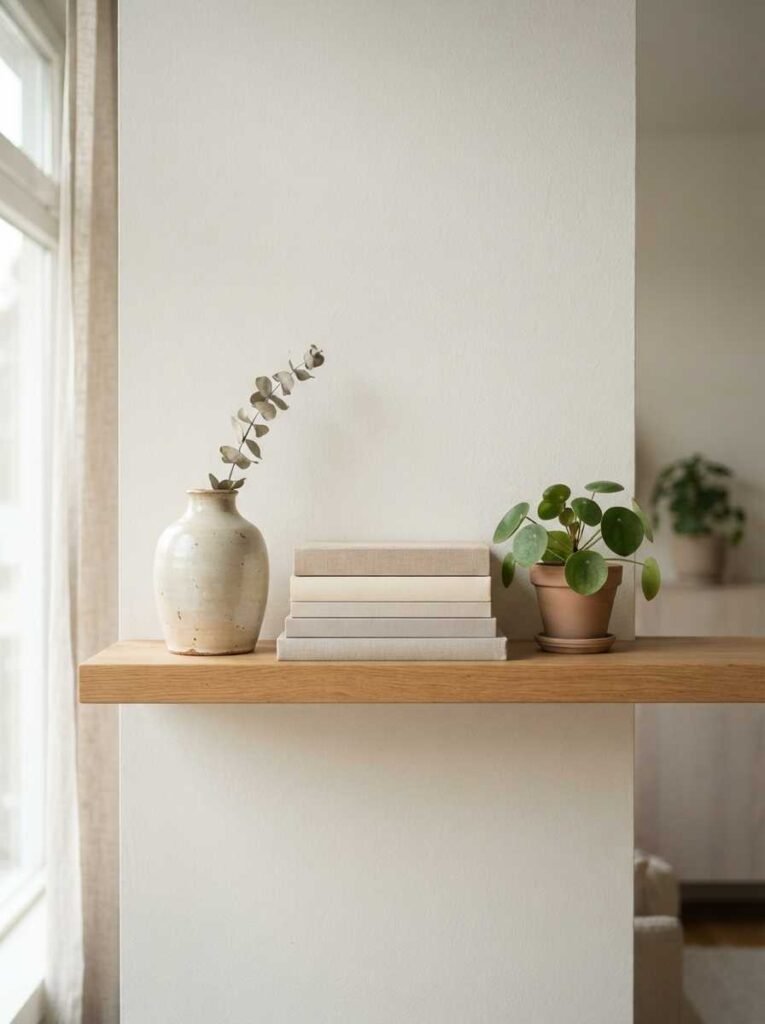
Before adding anything new to a shelf or table, remove everything first. Then add back only what earns its spot.
This sounds almost too simple to matter, but it changes how you shop for décor entirely. You stop buying “filler.”
11. Choose furniture with visible legs
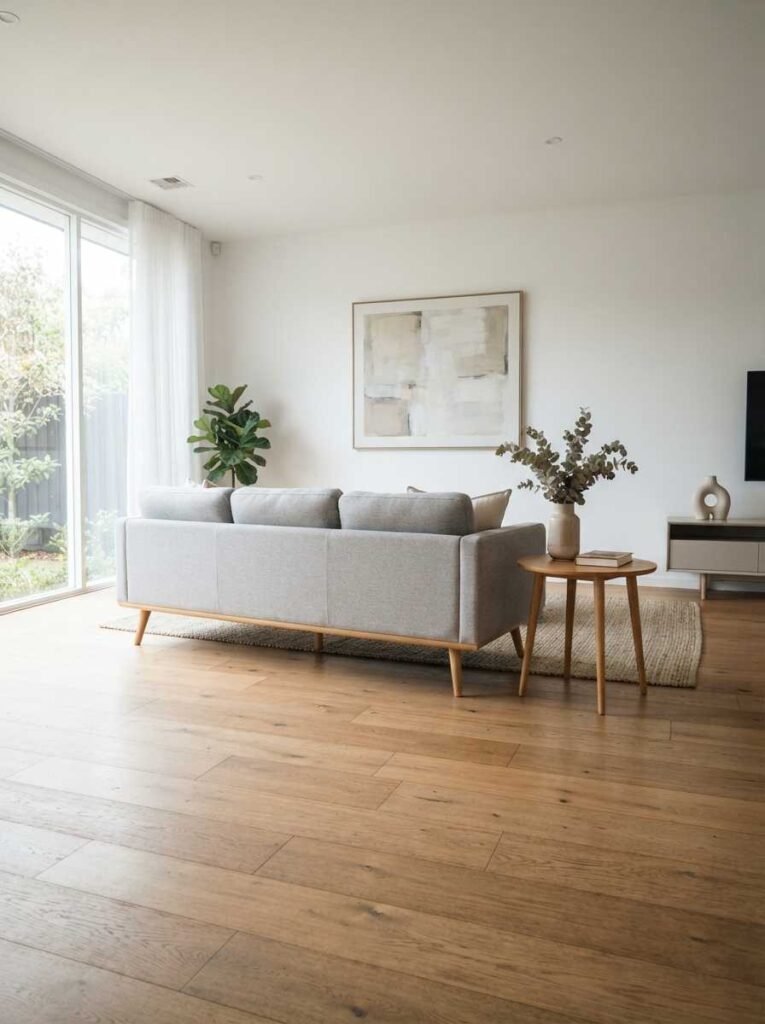
Furniture that sits flush to the floor makes a room feel heavier and smaller.
Pieces with slim, visible legs let light travel underneath, which opens up the whole space.
12. Bring in greenery, but keep it simple
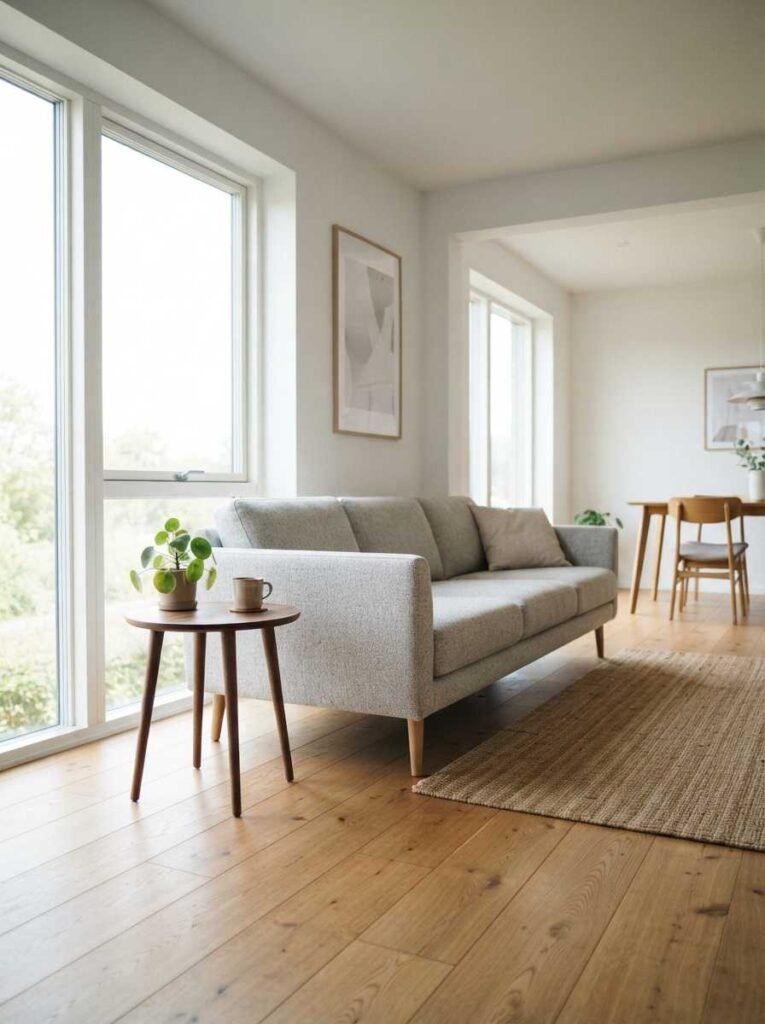
One large plant, like a fiddle leaf fig or a snake plant, does more than five tiny succulents scattered around.
Fewer plants, bigger impact.
Also, and this is a slightly random aside, nobody tells you how much plant maintenance eats into your “calm minimalist” fantasy.
Mine have survived mostly out of spite.
13. Stick to a limited material palette
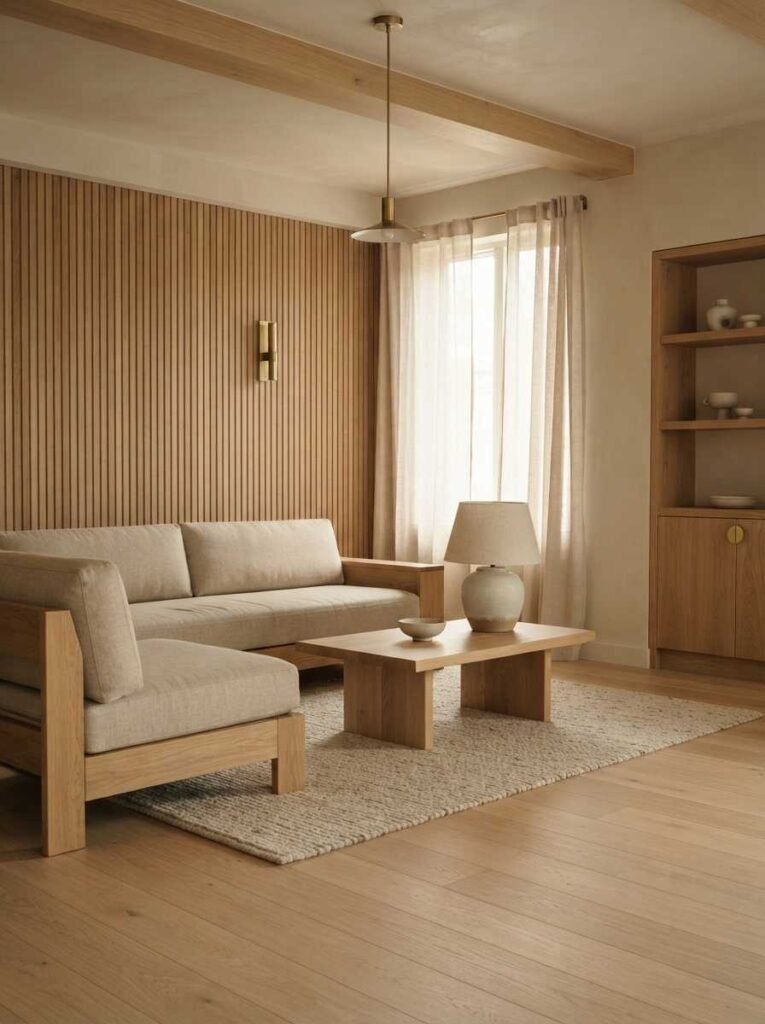
Pick three or four materials total for a room, maybe wood, linen, ceramic, and brass, then repeat them throughout.
Repetition of material reads as cohesion, not repetition of boredom.
14. Hide the cords and clutter
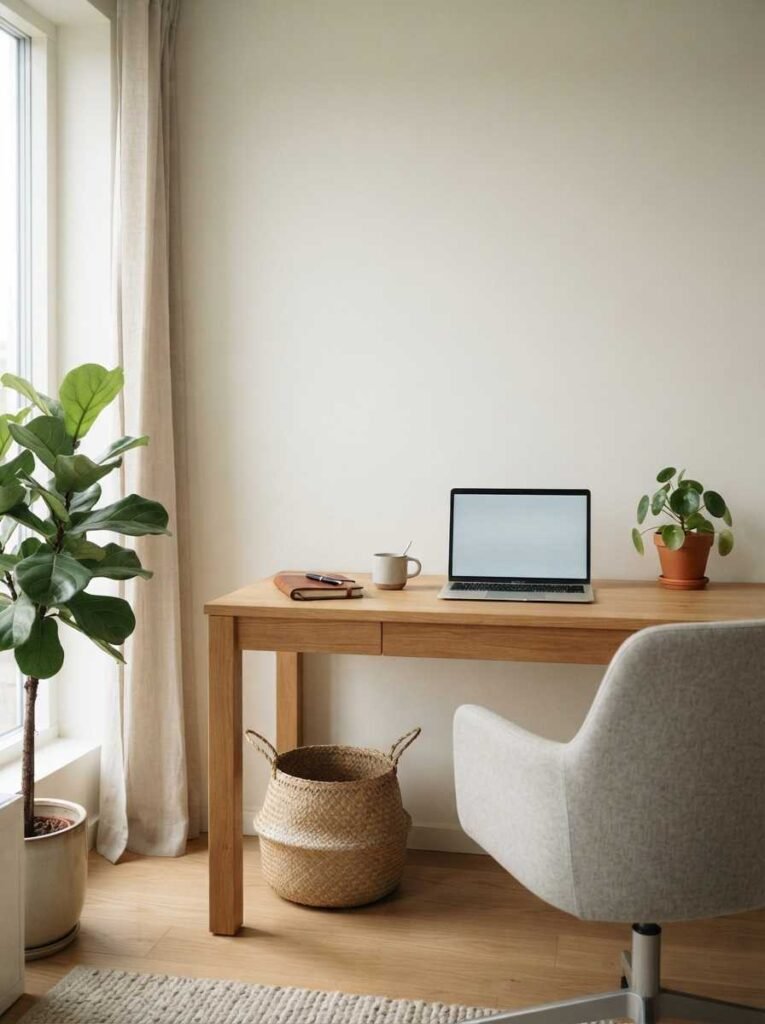
Cord clips, a cable box, or a simple basket for chargers goes a long way.
Visual noise from tech clutter undercuts a minimalist look faster than almost anything else.
15. Use a soft, warm color temperature for bulbs
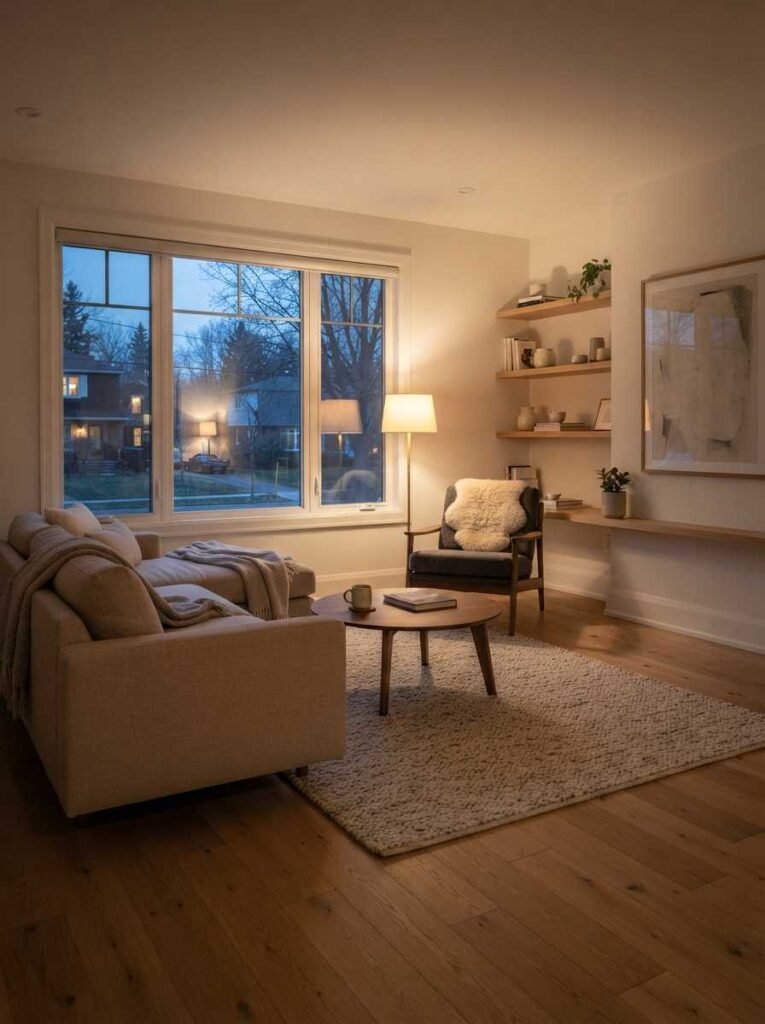
Cool white bulbs (5000K+) make minimalist spaces feel clinical.
Swap in warm white bulbs around 2700K to 3000K instead, and the whole room instantly feels cozier.
16. Style your bed like a hotel would
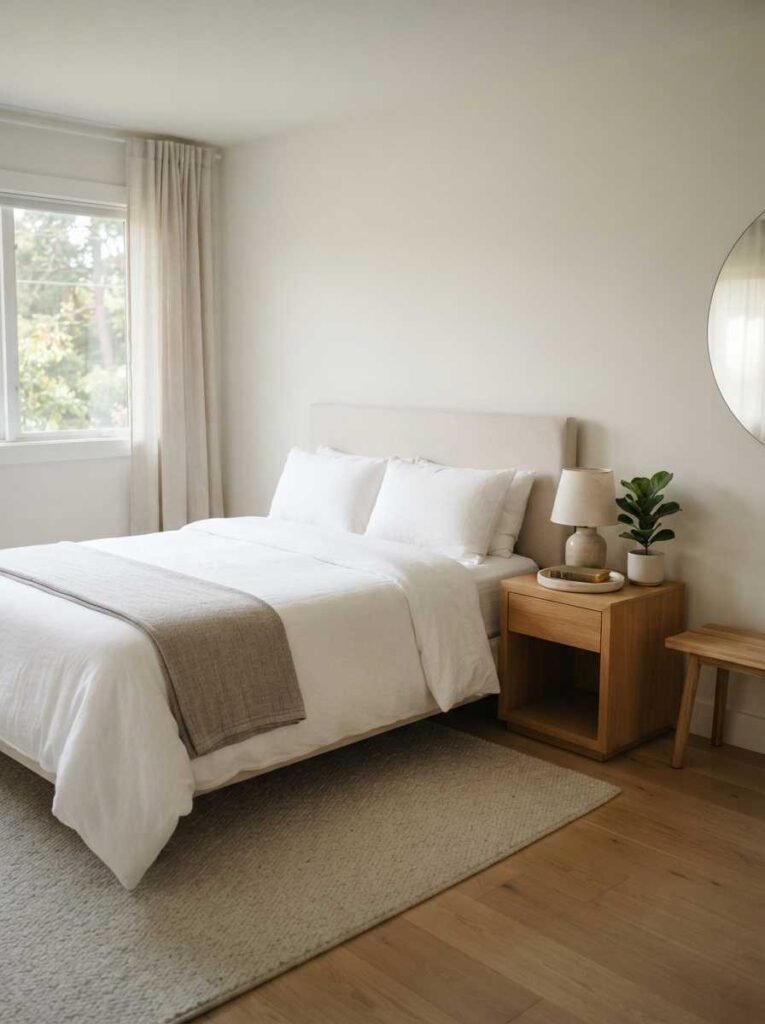
Layer a duvet, one folded throw, and two pillows, nothing more.
This is one of those small changes that has an outsized effect on how a bedroom feels.
17. Choose art that has breathing room
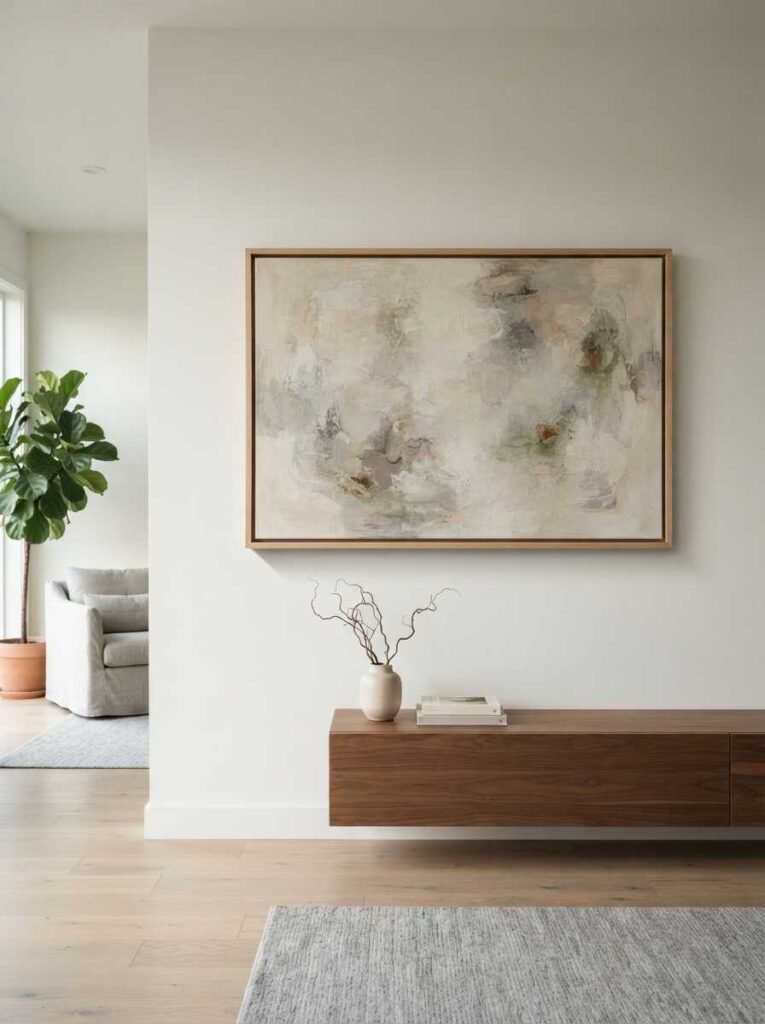
One large piece of art with a generous mat and simple frame beats a cluttered gallery wall in a minimalist space. Give it wall space to actually be seen.
18. Build in hidden storage
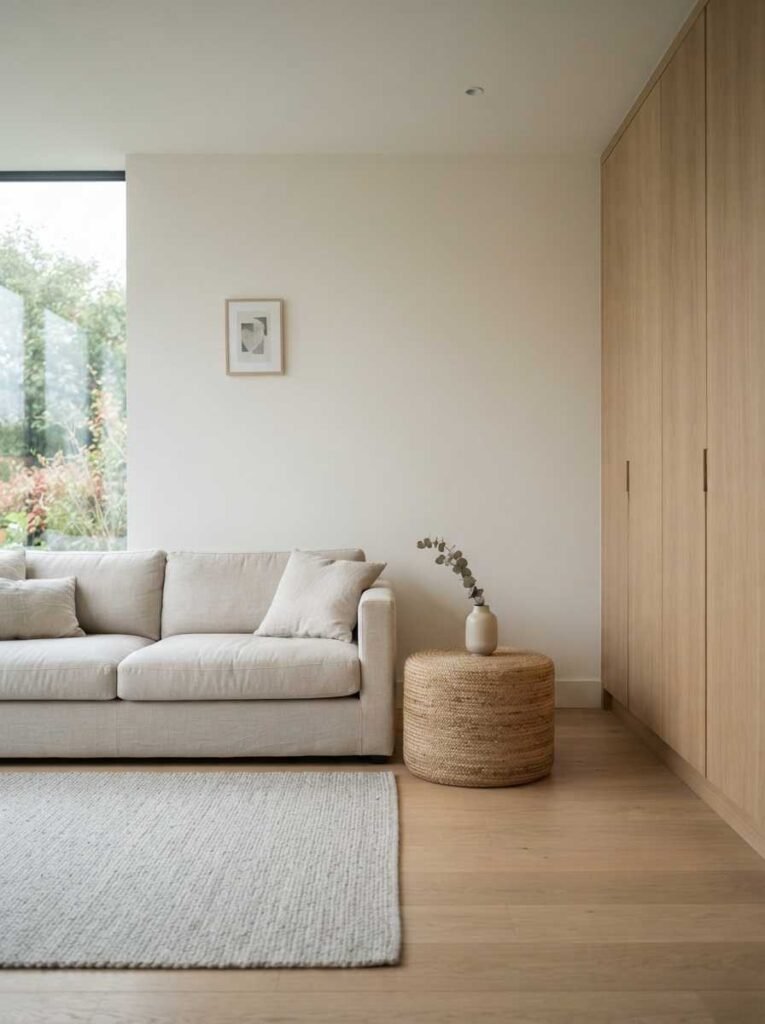
Ottomans with storage, closed cabinets, and baskets with lids all let you keep everyday items nearby without them cluttering your sightlines.
Out of sight really does mean out of mind here.
19. Add one cozy “anchor” element per room
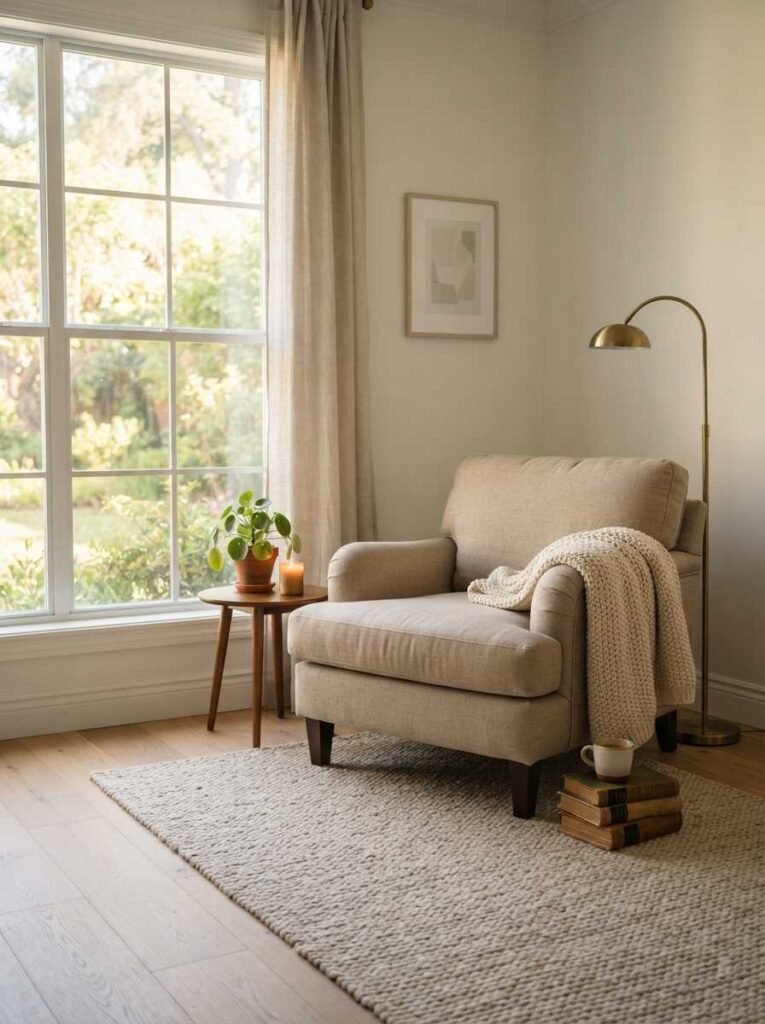
Every room needs one thing that says “sit down and stay a while.” A weighted throw blanket, a reading chair, a stack of real books. Pick one and let it do the work.
20. Slow down your décor shopping
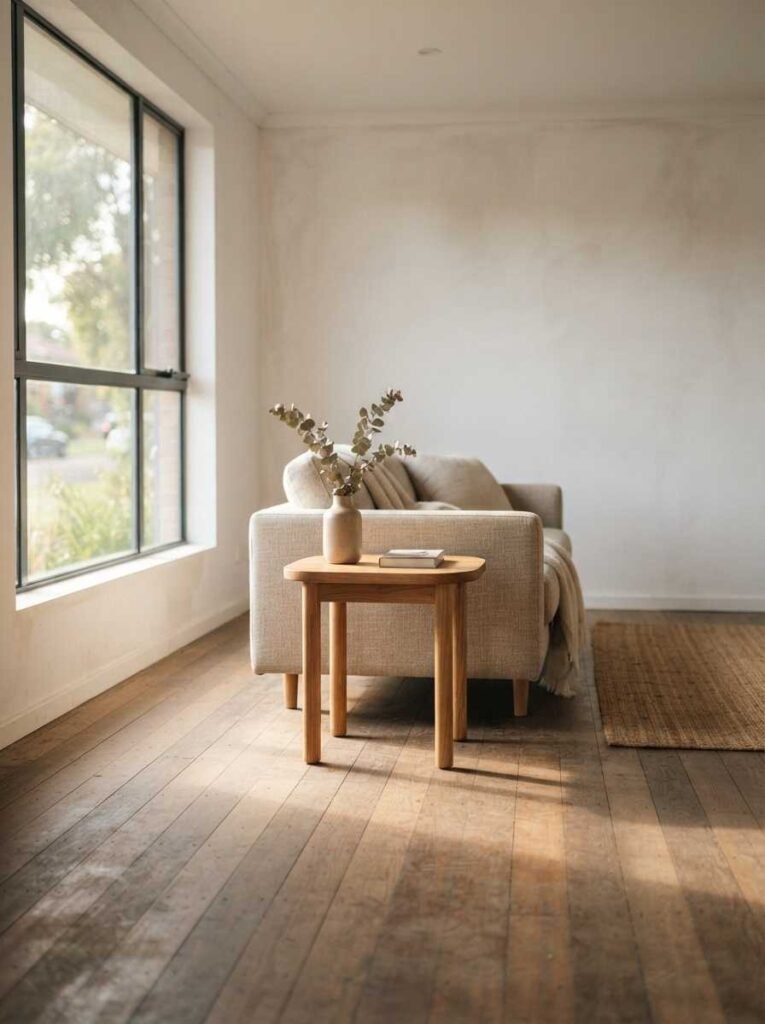
Buy one piece at a time and live with it for a few weeks before adding the next.
This keeps your space from feeling like an assembled set and more like a home that grew naturally.
A quick reference table for small-space minimalist swaps
| Instead of this | Try this | Why it works |
|---|---|---|
| Heavy blackout curtains | Sheer linen panels | Keeps light flowing, softens the window |
| Five small throw pillows | Two oversized ones | Less visual clutter, more comfort |
| Cool white bulbs | Warm 2700K bulbs | Instantly cozier ambiance |
| Cluttered open shelving | Closed cabinet storage | Cleaner sightlines, calmer room |
Why this actually matters for how you feel at home
A cluttered space keeps your brain in a low-grade state of “there’s something to deal with.”
Design researchers and organizations like the American Psychological Association have pointed to clutter as a contributor to stress and difficulty focusing.
A calmer visual environment genuinely supports a calmer mind, and that’s not just décor talk.
If you want more inspiration boards to save for later, sites like Apartment Therapy and The Spruce run regular minimalist home tours worth bookmarking.
I still scroll through both when I’m stuck on a room.
Wow, when I look back at before-and-after photos of my own living room, the change still surprises me. It wasn’t about spending more. It was about choosing less, and choosing it well.
FAQs
Does minimalist decor mean an all-white home? No. White is common, but warm neutrals, wood tones, and one or two accent colors keep a minimalist home from feeling sterile.
Is minimalist design more expensive than other styles? Not necessarily. It often costs less over time since you buy fewer, sturdier pieces instead of replacing cheap ones every year or two.
How do I start decluttering without feeling overwhelmed? Pick one surface, like a coffee table or countertop, and clear it completely first. Small wins build momentum for the rest of the room.
Final thought
Cozy minimalism isn’t a strict rulebook. It’s really just permission to stop filling space for the sake of filling it.
Pick two or three ideas from this list, try them in one room, and see how the space feels a week later.
What’s the first change you’re making this weekend? Save this list to your Pinterest board so you’ve got it handy when you start.
