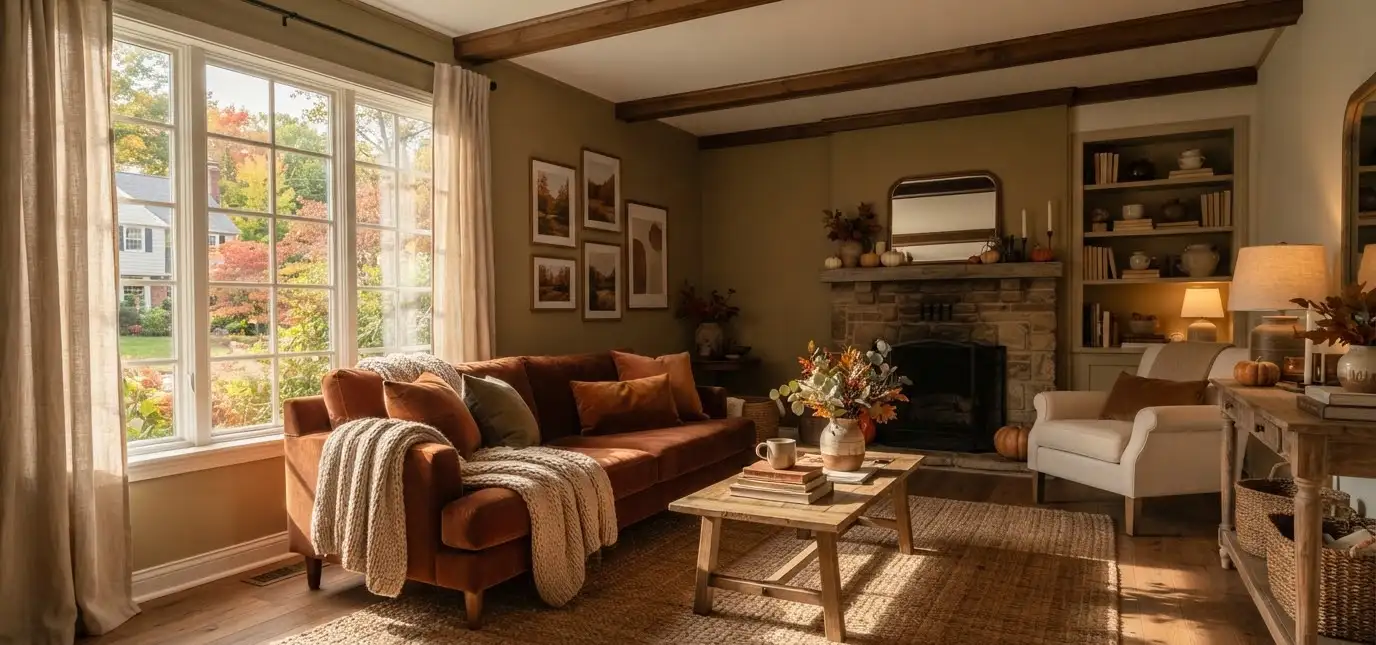
Autumn walks in and suddenly your living room looks like it’s stuck in July. Same white throw pillows. Same bright gallery wall.
Same energy that has nothing to do with sweater weather.
I redecorate my living room for fall every single year, and I’ve made every mistake you can make with moody decor.
Too dark and the room feels like a cave. Too many candles and it smells like a Yankee Candle outlet exploded.
So I’m sharing what actually works, not just what looks good on a Pinterest board taken in perfect lighting.
These 15 ideas cover color, texture, lighting, and the small details that make a room feel like fall instead of just looking like it.
Pin your favorites, because you’ll want to reference them again once the leaves actually start dropping.
1. Start with a warm, earthy wall color
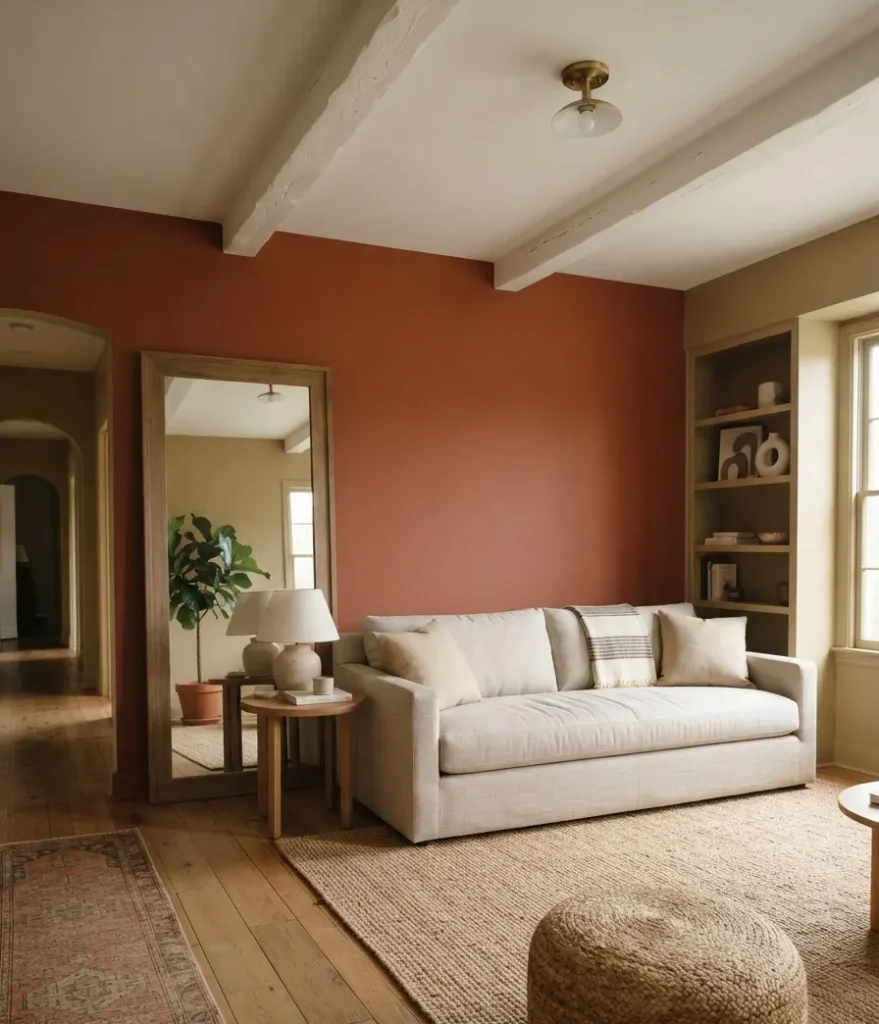
You don’t need to repaint your whole living room. A single accent wall in a deep terracotta, olive, or espresso brown changes the entire mood of a space.
For 2026, Sherwin-Williams named Universal Khaki its color of the year, a warm tan that pairs beautifully with rust, burnt orange, and deep green accents.
IMO it’s a smarter fall base than the gray everyone leaned on for a decade. Gray reads cold. Khaki reads like a worn leather jacket.
If painting feels like too much commitment, peel-and-stick wallpaper in a moody botanical print gets you 80% of the effect with none of the regret.
2. Layer textures instead of colors
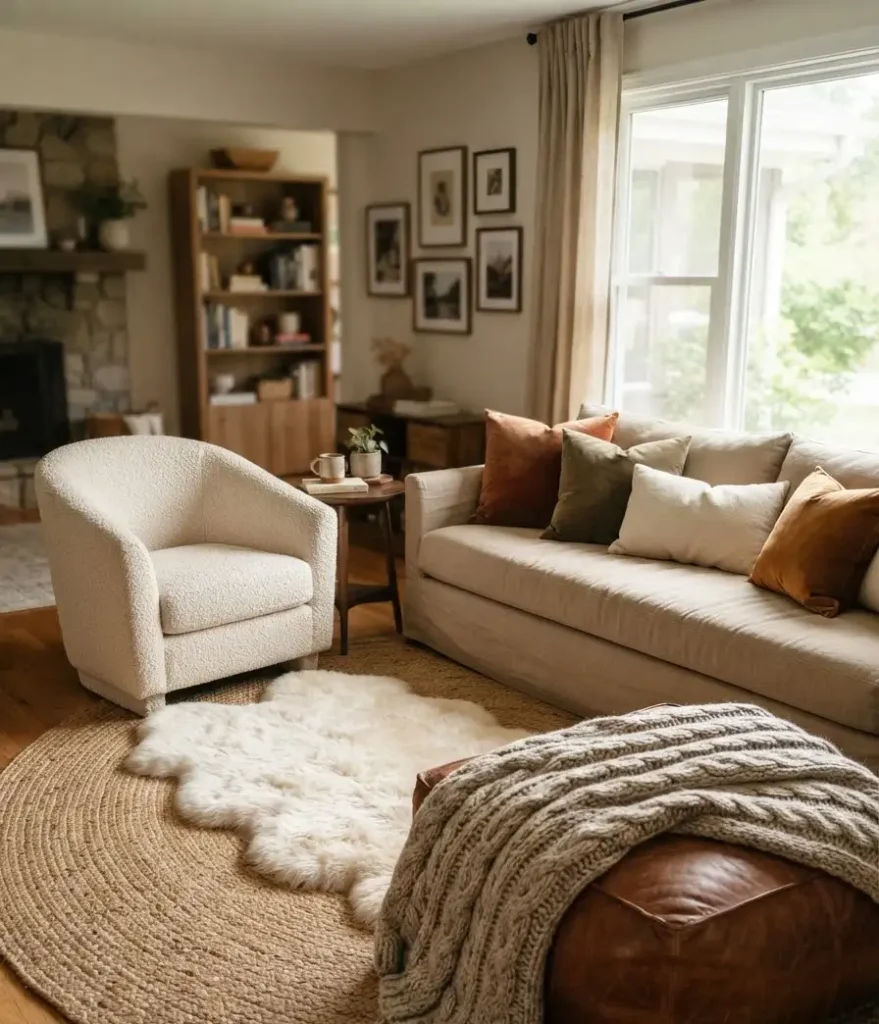
Here’s the thing nobody explains well: moody decor isn’t about making a room dark. It’s about making it feel touchable.
Boucle throws, chunky knit blankets, velvet cushions, a jute rug underneath a leather ottoman.
Mix at least three textures in your seating area and the room instantly reads warmer, even under the same lighting.
- Velvet or corduroy on your main sofa
- A chunky knit throw draped over one arm
- A sheepskin or faux fur accent on a reading chair
- A woven jute or wool rug as your base layer
I learned this the hard way after buying an all-linen living room set that looked gorgeous in June and felt like sitting in a hospital waiting room by October.
3. Swap your lampshades before you swap anything else
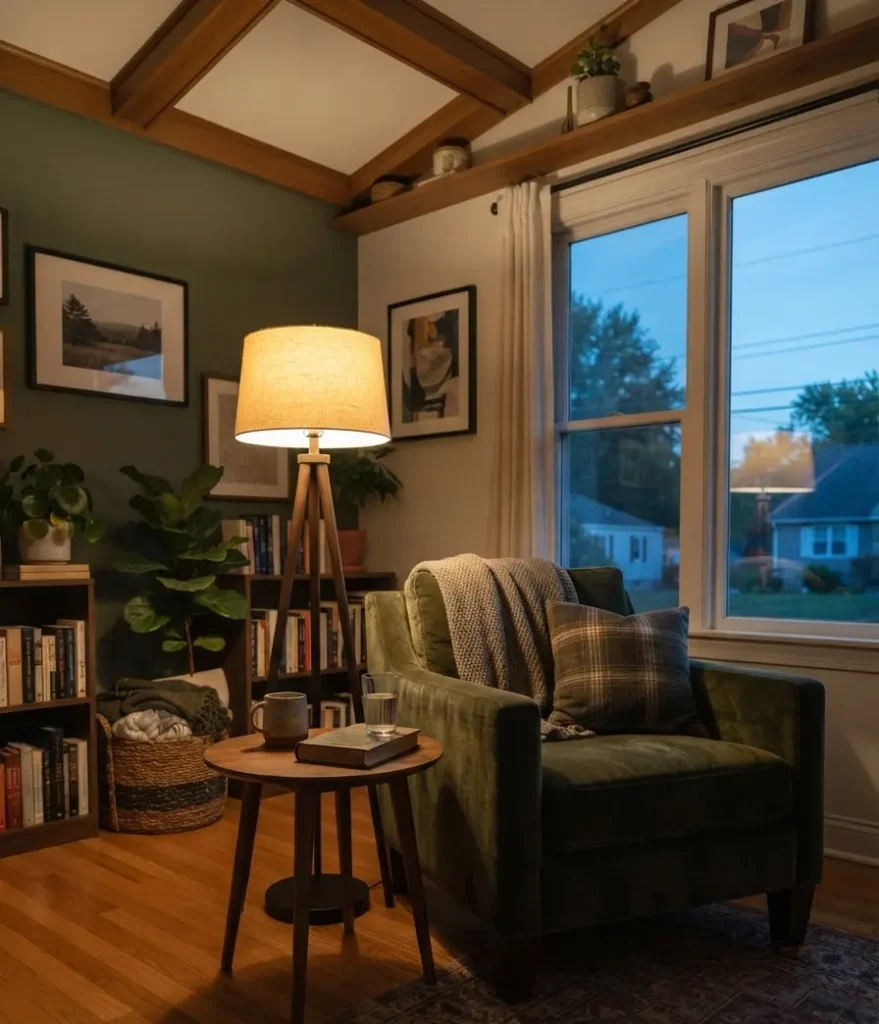
This is the cheapest fix on this entire list, and most people skip it. Bright white lampshades throw cool, flat light.
Amber, linen, or rattan shades cast a warm glow that instantly softens a room.
I switched three lampshades in my own living room for around $60 total and it did more for the mood than any candle ever has. Wow, the difference was almost embarrassing.
4. Bring in burnt orange, rust, and deep burgundy
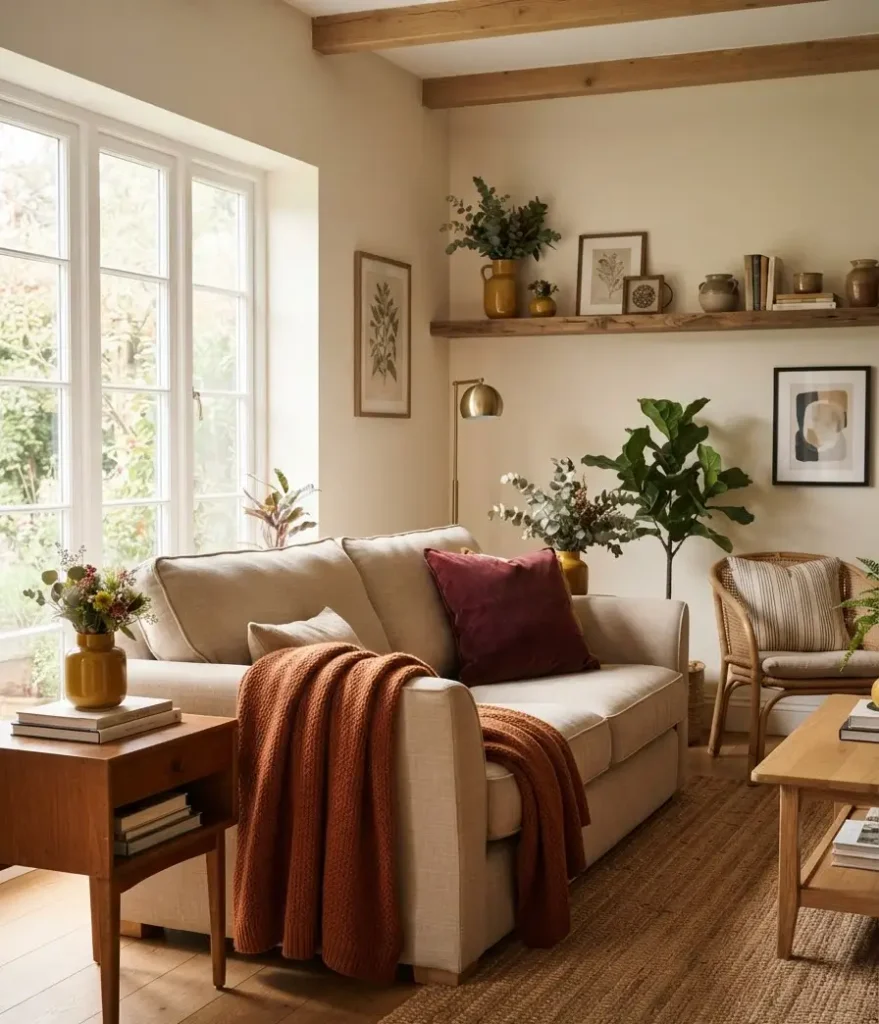
Forget beige-only fall decor. The rooms that actually feel moody lean into saturated, slightly dark jewel tones: rust orange, burgundy, forest green, mustard.
Pick one dominant accent color and repeat it three or four times around the room: a throw pillow, a vase, a piece of art, a candle.
Repetition is what makes a color scheme feel intentional instead of accidental.
5. Add a gallery wall with vintage or botanical art
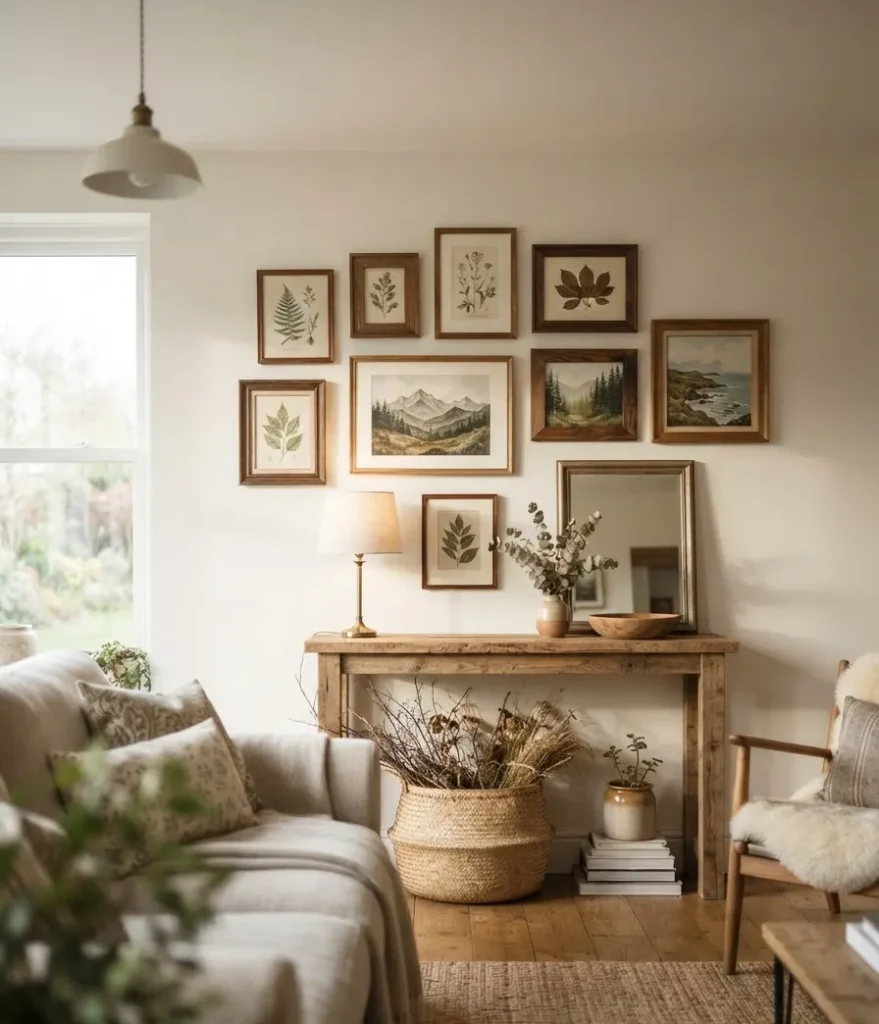
Skip the generic “live laugh love” prints.
A small gallery wall of vintage botanical illustrations, muted landscape paintings, or even old family photos in mismatched frames adds instant depth and personality.
| Wall style | Best for | Cost range |
|---|---|---|
| Vintage botanical prints | Cottagecore living rooms | $20-$60 |
| Framed dried florals | Minimalist spaces | $30-$80 |
| Gallery wall of thrifted art | Eclectic, maximalist rooms | $10-$100 |
| Single oversized landscape | Modern or transitional rooms | $80-$250 |
Thrift stores are goldmines for this in September and October.
Ever wondered why estate sale art always looks better in person than online? Something about the slightly imperfect frames.
6. Use candles that actually smell like fall (not fake pumpkin spice)
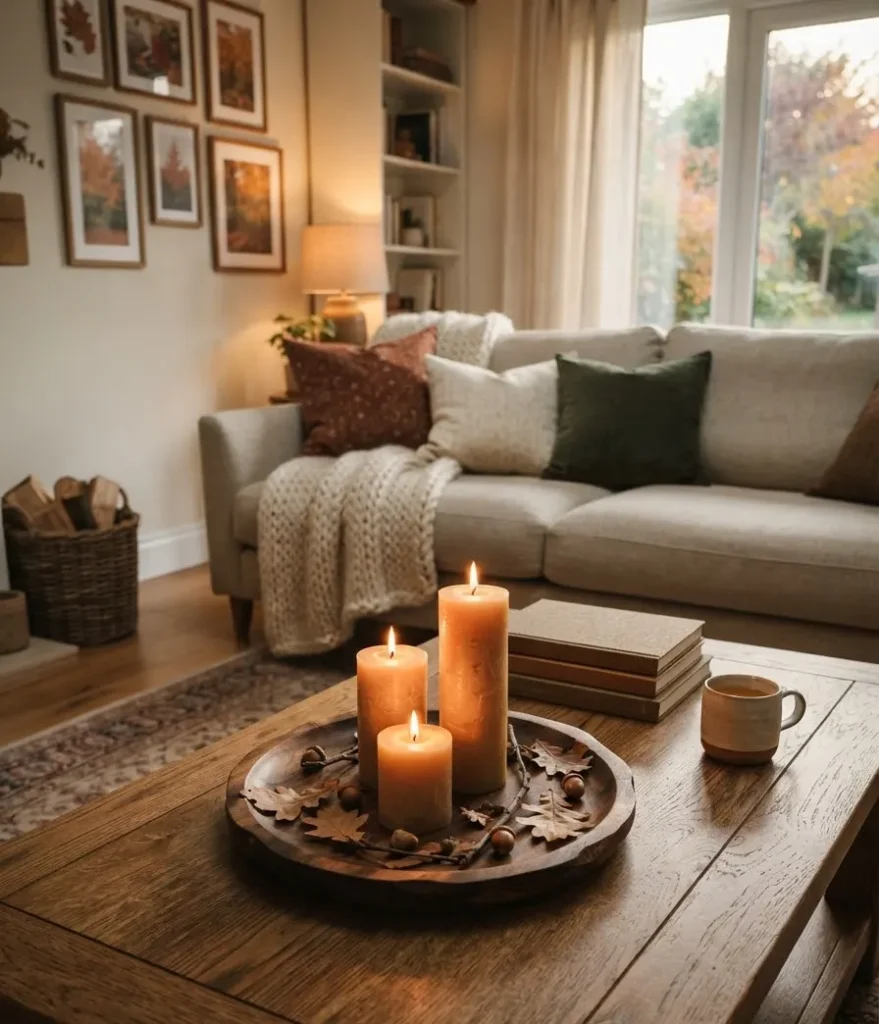
I’ll be honest: most “fall scented” candles smell like sugar cookies dipped in cologne. Look for candles built around real notes: cedarwood, amber, tobacco, fig, or smoked vanilla. They read moodier and less like a mall food court.
Group three candles of varying heights on a wooden tray for an instant styled vignette on your coffee table.
7. Bring in dried florals and pampas grass
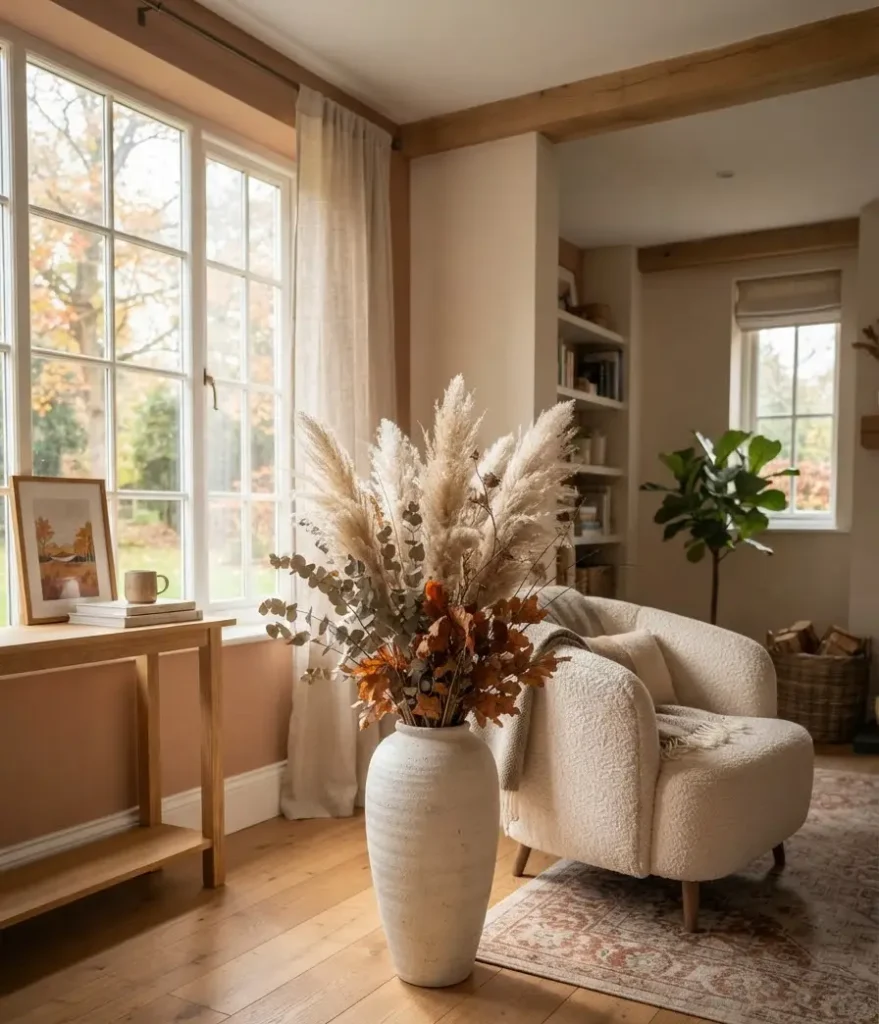
Fresh flowers die within a week. Dried florals, pampas grass, and dried eucalyptus last the entire season and lean naturally into that moody, textural fall look.
A tall vase of pampas grass in a corner does more visual work than most people expect from something that costs $15 at a craft store.
8. Layer your coffee table like you mean it
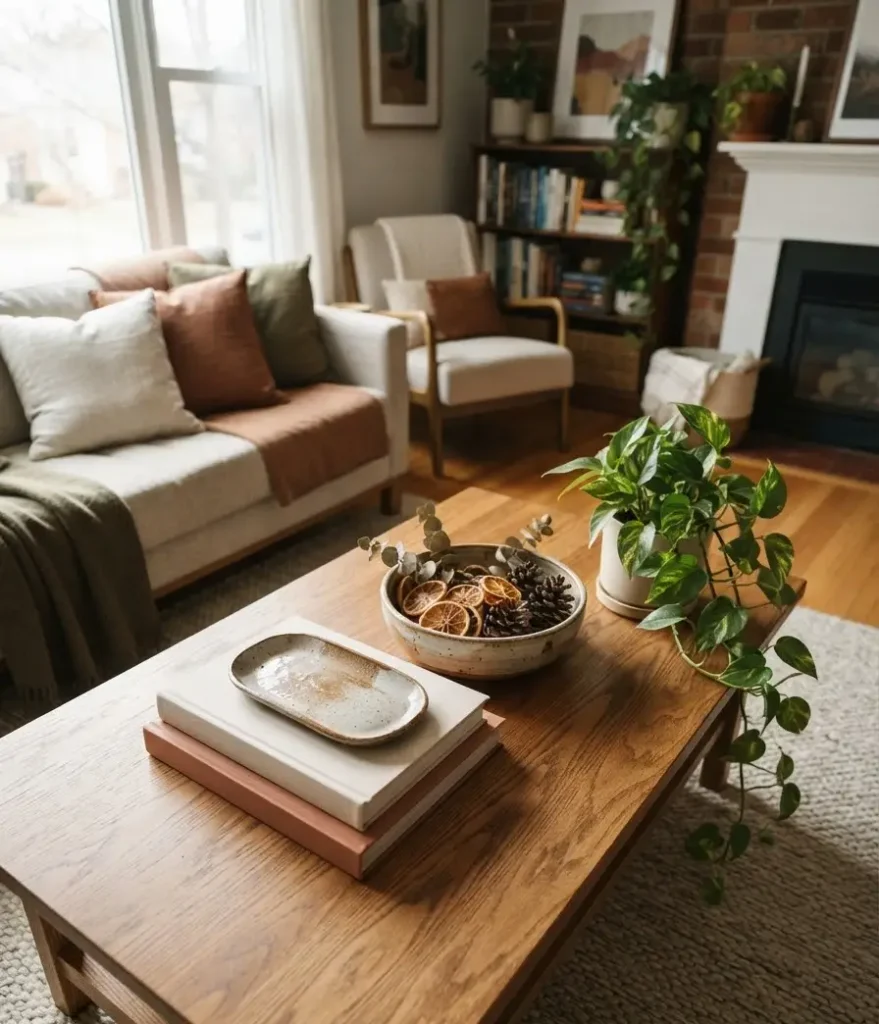
A bare coffee table is a missed opportunity.
Stack two or three coffee table books with warm-toned covers, add a small tray with a candle, and finish with something organic like a bowl of pinecones or dried orange slices.
- Stack books largest to smallest
- Add one textured tray to anchor smaller objects
- Include one organic element (branches, pinecones, dried citrus)
- Leave a little negative space so it doesn’t look cluttered
9. Swap curtains for something heavier
Sheer summer curtains let in too much cool light and do nothing for insulation once temperatures drop. Heavier linen or velvet curtains in a warm neutral or deep color block light better and add instant coziness, both visually and literally.
This one’s a bit of a splurge compared to the rest of the list, but it’s IMO one of the highest-impact swaps you can make.
10. Add a reading nook, even a small one
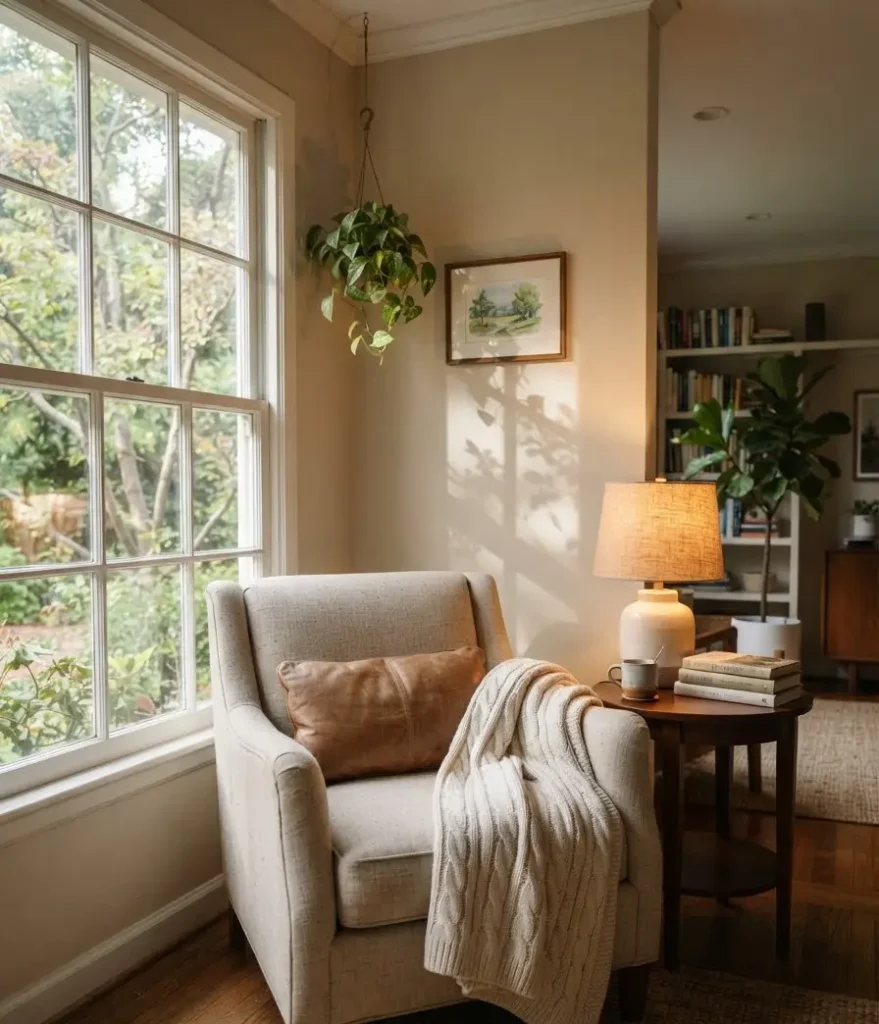
You don’t need a dedicated room.
A single armchair near a window with a small side table, a warm lamp, and a folded blanket creates an entire mood on its own.
I turned an awkward corner nobody used into a reading nook with a $40 thrifted chair and a lamp I already owned.
It’s now the most-used spot in my apartment.
11. Bring in natural wood tones
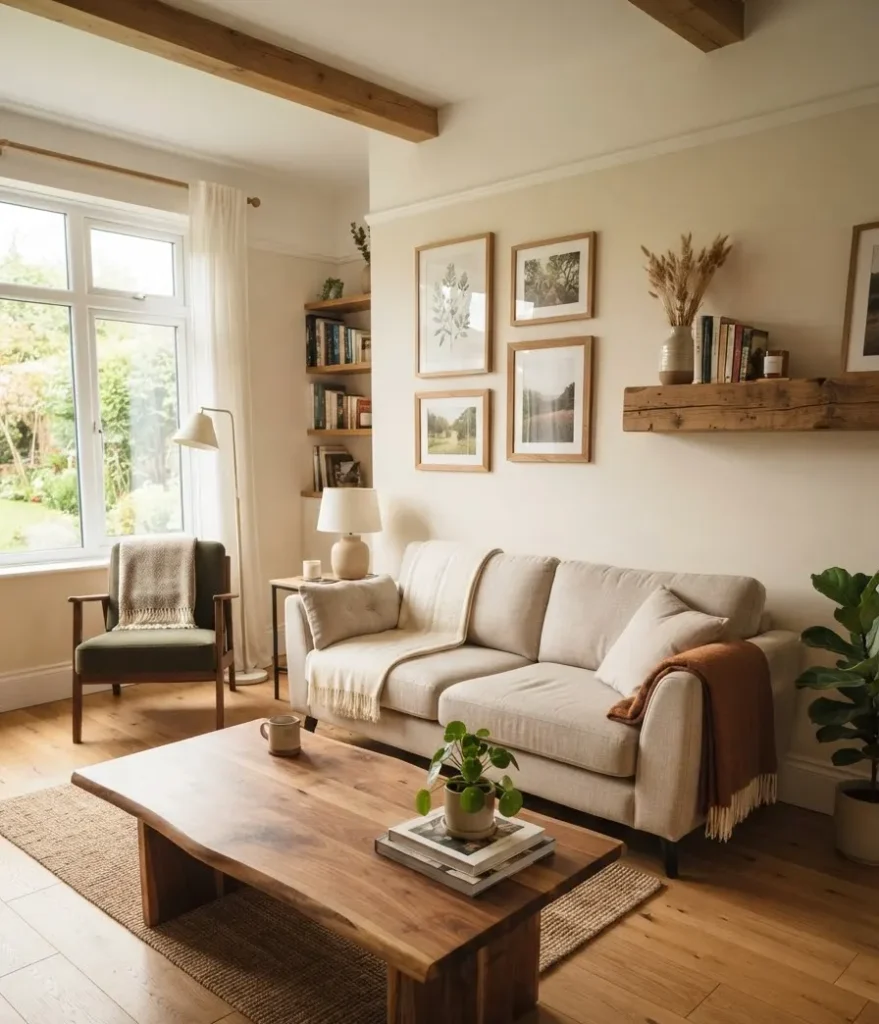
Moody doesn’t mean everything has to be dark. Warm wood tones, oak, walnut, or reclaimed pine, break up heavier colors and keep the room from feeling flat or overly gothic.
A wood coffee table, wood picture frames, or even a single wood bowl on a shelf goes a long way toward balance.
12. Style your bookshelves with intention
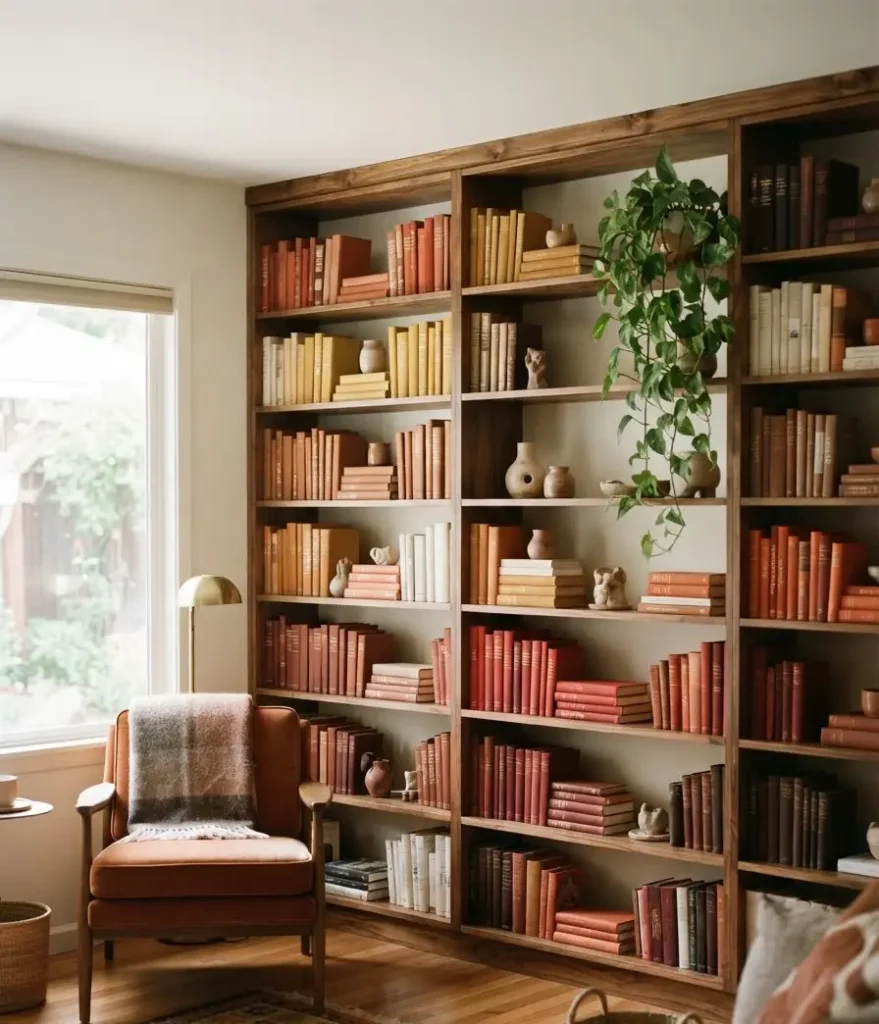
Random books shoved onto a shelf don’t read as decor.
Group books by color (warm tones toward the front), stack some horizontally, and add small objects between stacks: a small plant, a ceramic vase, a piece of dried wood.
According to Better Homes & Gardens’ guide to shelf styling, leaving roughly 20% negative space on each shelf keeps a styled bookshelf from looking cluttered.
That number matches what I’ve found by trial and error too.
13. Add a statement rug in a deep color
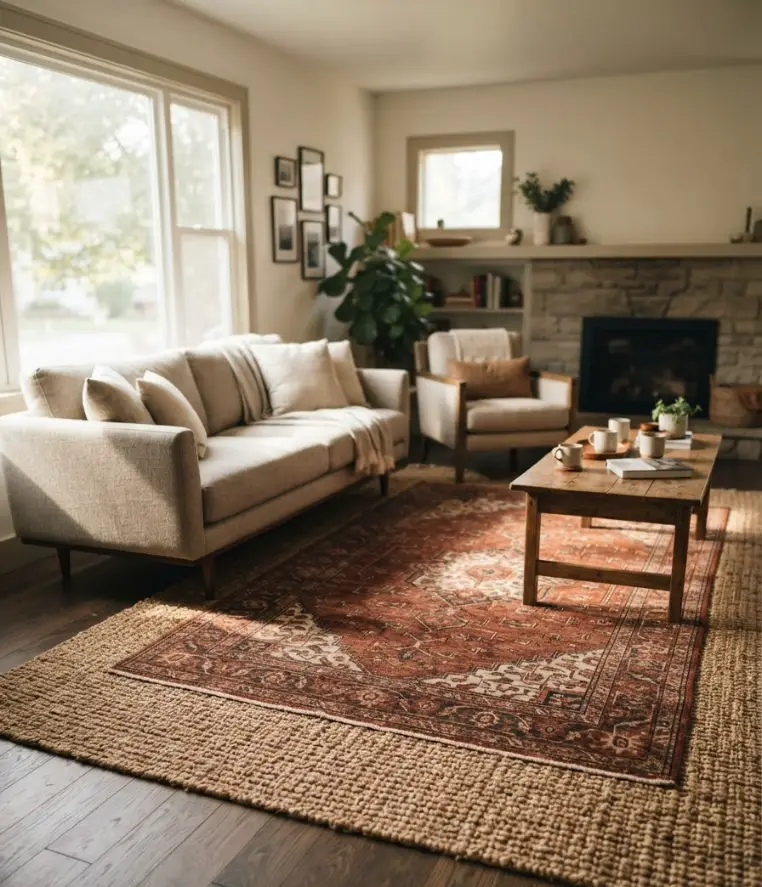
Your rug sets the tone for the entire floor plan. A pale gray or beige rug reads cool no matter what else you do.
A rug in deep rust, chocolate brown, or forest green with a subtle pattern grounds the whole room in autumn.
Layer a smaller patterned rug over a larger neutral one for extra texture if you’re not ready to commit to a full room-sized statement piece.
14. Bring the outside in with branches and foliage
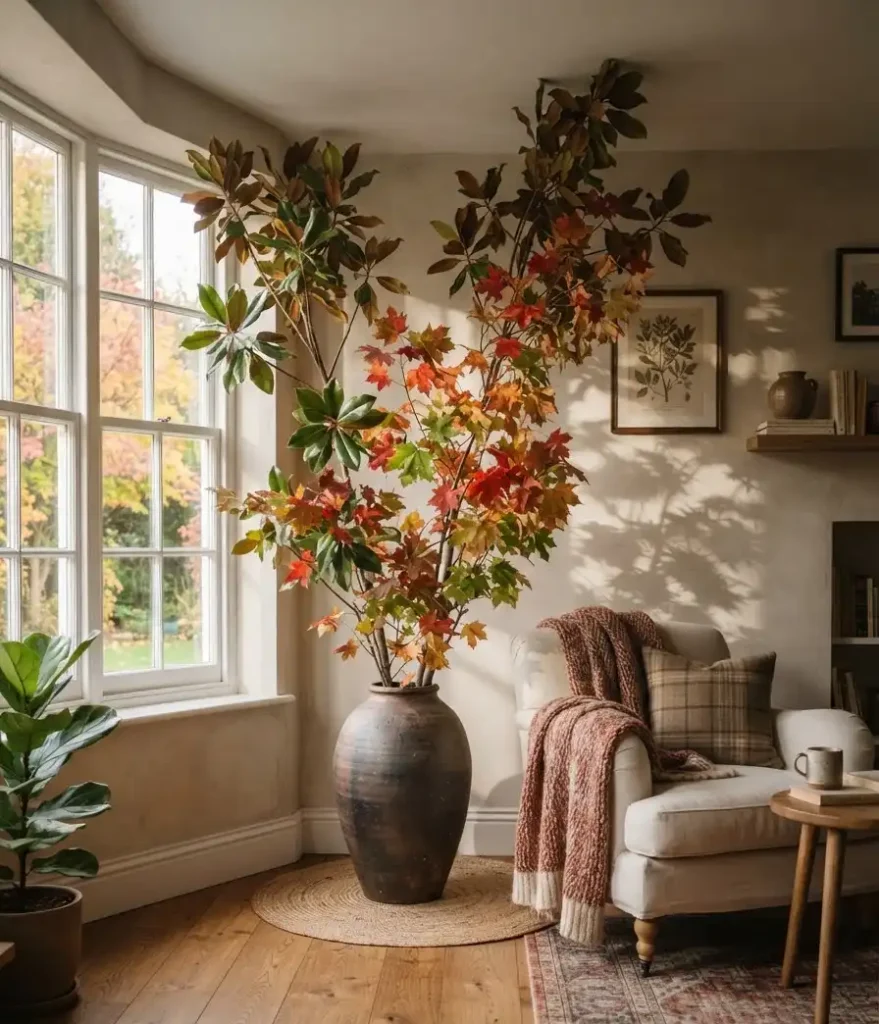
Large branches in a floor vase, whether real or faux, add height and drama without costing much. Magnolia leaves, eucalyptus stems, or even simple maple branches with turning leaves work beautifully in an empty corner.
This is genuinely one of the easiest ways to make a room feel seasonal without touching your existing furniture at all.
15. Don’t forget the ceiling and corners
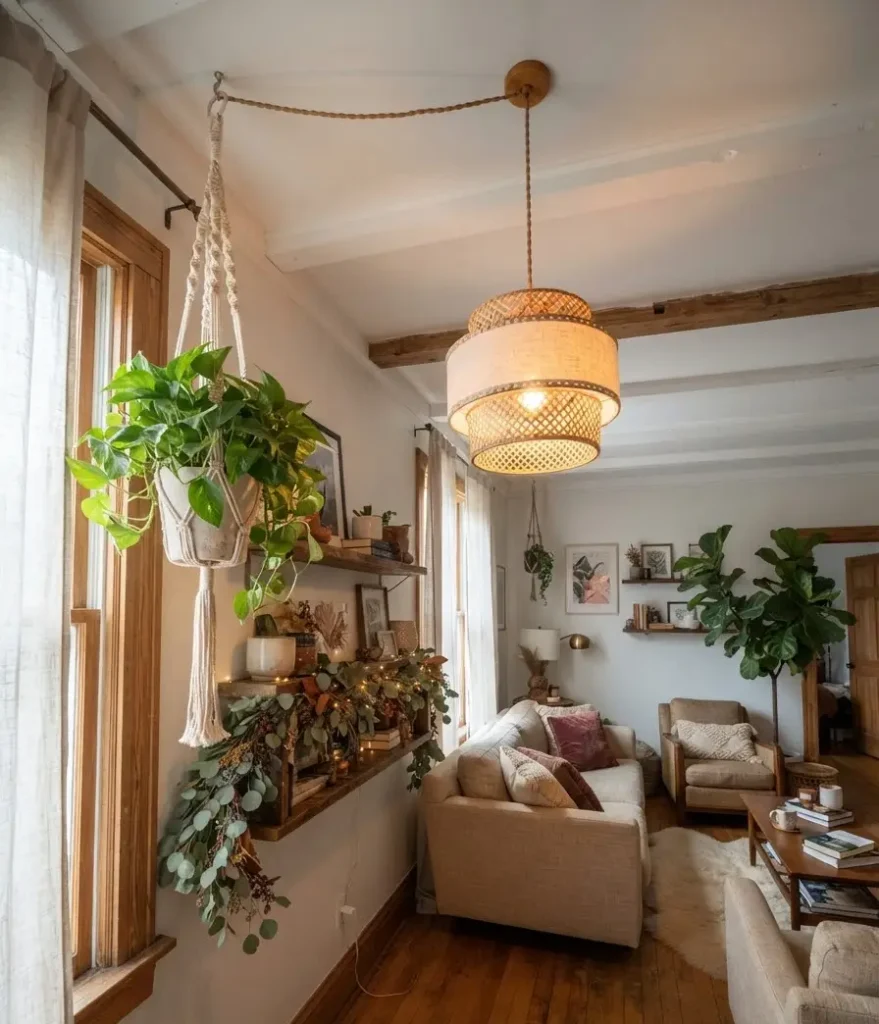
Most people decorate at eye level and stop. Pendant lighting with a warm bulb, a hanging plant, or even draped garland along a shelf pulls the eye upward and makes the whole room feel finished.
A little off-topic, but this is the same principle stylists use in retail windows: you notice height before you notice detail. Apply it to your living room and the whole space suddenly feels more considered.
Quick comparison: budget-friendly vs. splurge-worthy swaps
| Fall decor swap | Budget option | Splurge option |
|---|---|---|
| Lighting | New lampshades | Statement pendant light |
| Textiles | Throw pillow covers | Full curtain replacement |
| Florals | Dried grocery store stems | Preserved florals from a florist |
| Wall decor | Thrifted frames | Custom art print |
Common mistakes I see in “moody” living rooms
A few things trip people up every year, myself included at some point.
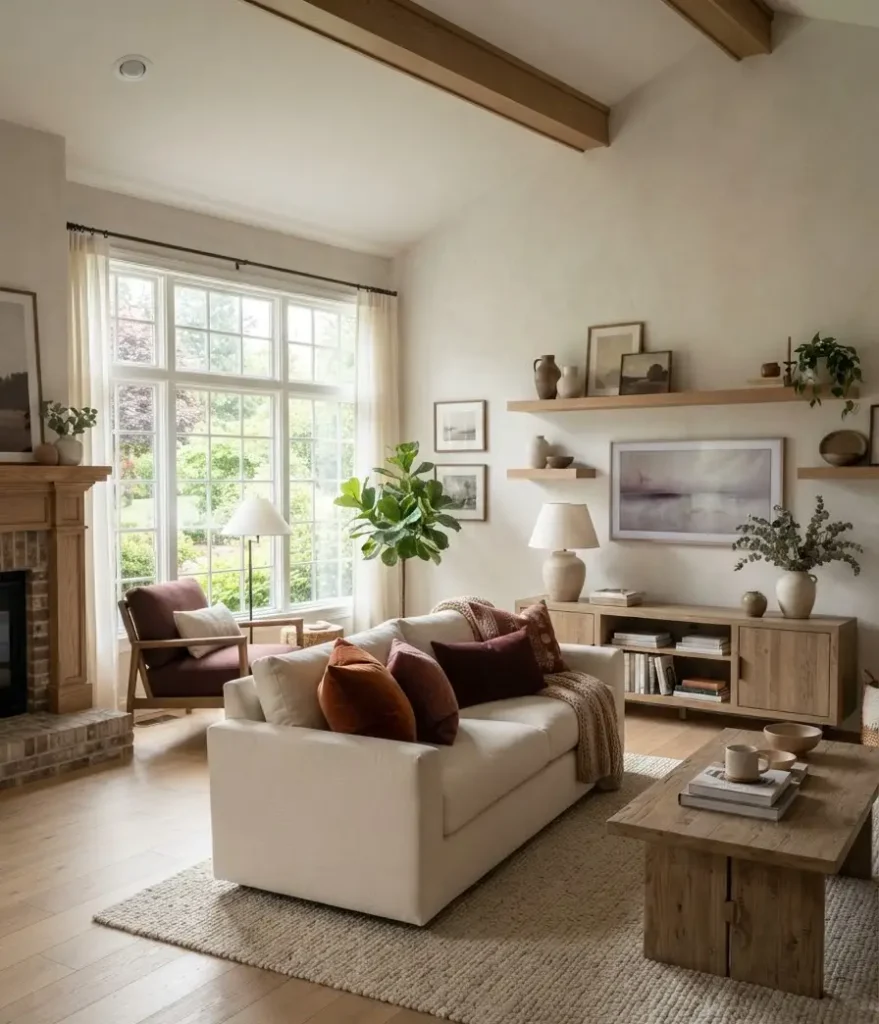
Going too dark on every surface at once is the biggest one.
Dark walls, dark rug, dark furniture, and suddenly your living room feels like a basement instead of a cozy retreat.
Moody works when there’s contrast: one or two dark anchors against lighter wood, cream textiles, or warm metallics.
Buying everything in the same exact shade is another trap.
A living room decorated entirely in one rust tone looks flat under normal lighting, no matter how nice that color is on its own. Mix warm neutrals with your accent color instead of matching everything.
And overdoing artificial fall signifiers, plastic pumpkins, fake maple leaves scattered everywhere, tends to read more “seasonal aisle at Target” than “curated home.” A single well-placed dried arrangement beats five plastic pumpkins every time.
This isn’t a hard rule, more a gut check: if it looks like it came straight off a store shelf with the tag still visible in your mind, it probably needs one more step of styling.
A few honest thoughts before you start
Moody fall decor works best when it feels layered over time, not installed in a single weekend from a shopping cart. Start with one or two changes, live with them for a week, then add more.
This isn’t about buying everything on this list at once. It’s about noticing which changes actually make you want to sit in your living room longer, then building from there.
FAQs
Does moody fall decor work in small living rooms? Yes, as long as you keep at least one light source neutral and avoid using dark tones on every surface. A dark accent wall paired with lighter furniture usually works better than an entirely dark room in a small space.
What’s the cheapest way to get a moody fall look fast? Swap your lampshades, add two or three warm-toned throw pillows, and pick up a bundle of dried pampas grass. Under $50, and it changes the whole feel of the room within an hour.
Will moody decor make my living room feel darker or smaller? Not if you balance it with natural wood tones and at least one warm light source. The mistake is going dark on walls, furniture, and rugs all at once with no lighter elements to break it up.
Final thought
Fall decor doesn’t need a full living room overhaul to feel intentional. Pick three or four ideas from this list, start with the cheapest ones, and build from there as the season goes on.
Which one are you trying first: the lampshade swap, the dried florals, or finally building that reading nook you’ve been putting off?
Save this post now so you’ve got it handy when the leaves start turning.
