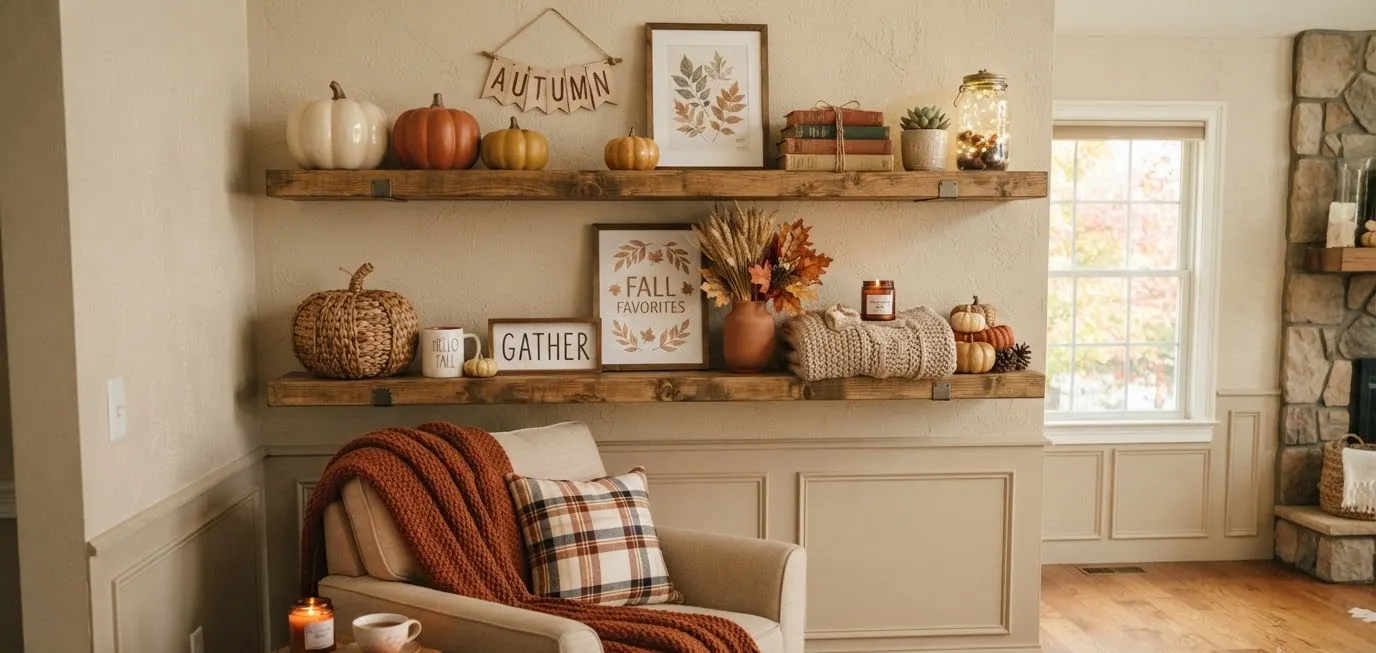
I redid my living room shelves for fall three years ago and never looked back.
One trip to a craft store, forty minutes, and suddenly my bookcase looked like it belonged in a magazine instead of a college dorm.
That’s the whole appeal of fall shelf styling. You don’t need a full renovation. You need a few good pieces, some restraint, and maybe a candle that smells like a pumpkin patch.
If you’ve been scrolling Pinterest for hours trying to figure out why some shelves look effortless and yours look like a garage sale, this is for you.
I’m going to walk you through what actually works, what to skip, and a few mistakes I made so you don’t have to repeat them.
Why shelves matter more than you think in fall
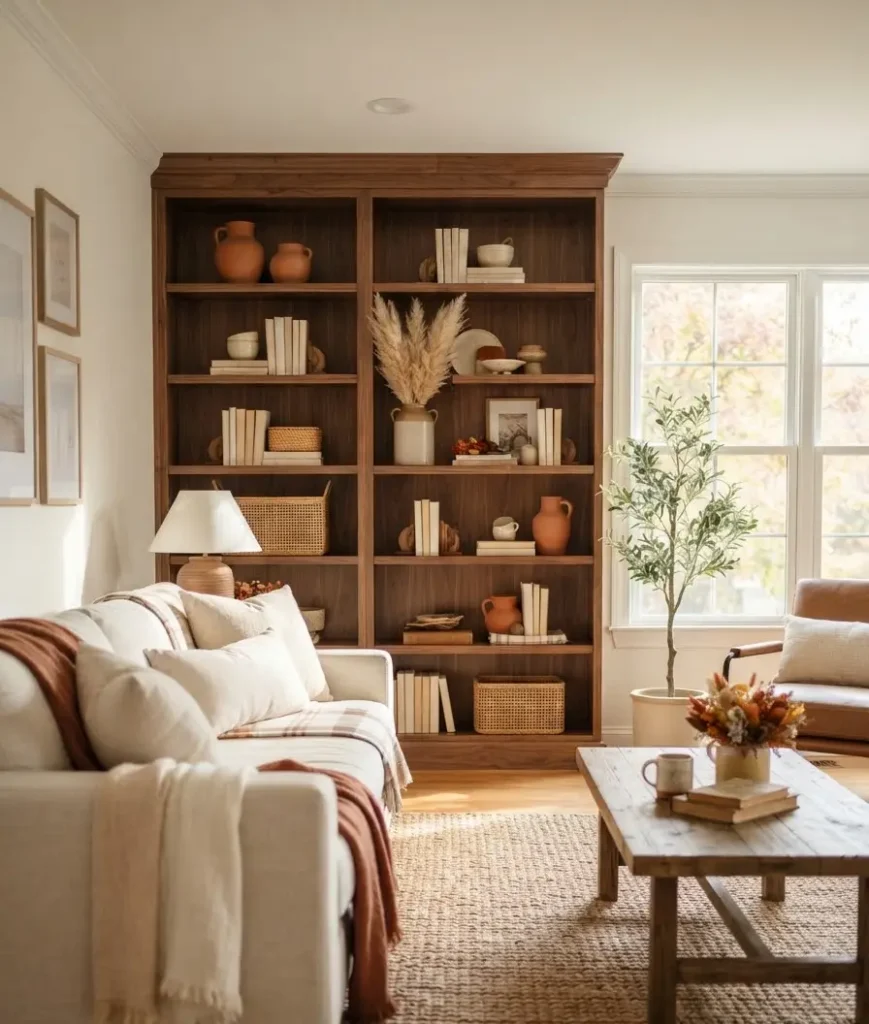
Your walls do a lot of the seasonal heavy lifting, but shelves are where the personality lives.
A wreath on the door says “it’s fall.” Styled shelves say “I actually thought about this room.” There’s a difference, and guests notice it even if they can’t explain why.
Open shelving also gives you a low-commitment way to test a color palette before you paint an entire accent wall.
Swap out a few objects, and the whole vibe of the room shifts. Cheap therapy, honestly.
Start with a color story, not a shopping list
The biggest mistake I see (and made myself) is buying random “fall stuff” without a plan.
Amber candle here, plaid pillow there, plastic pumpkin from three years ago wedged in the corner. It ends up looking chaotic instead of cozy.
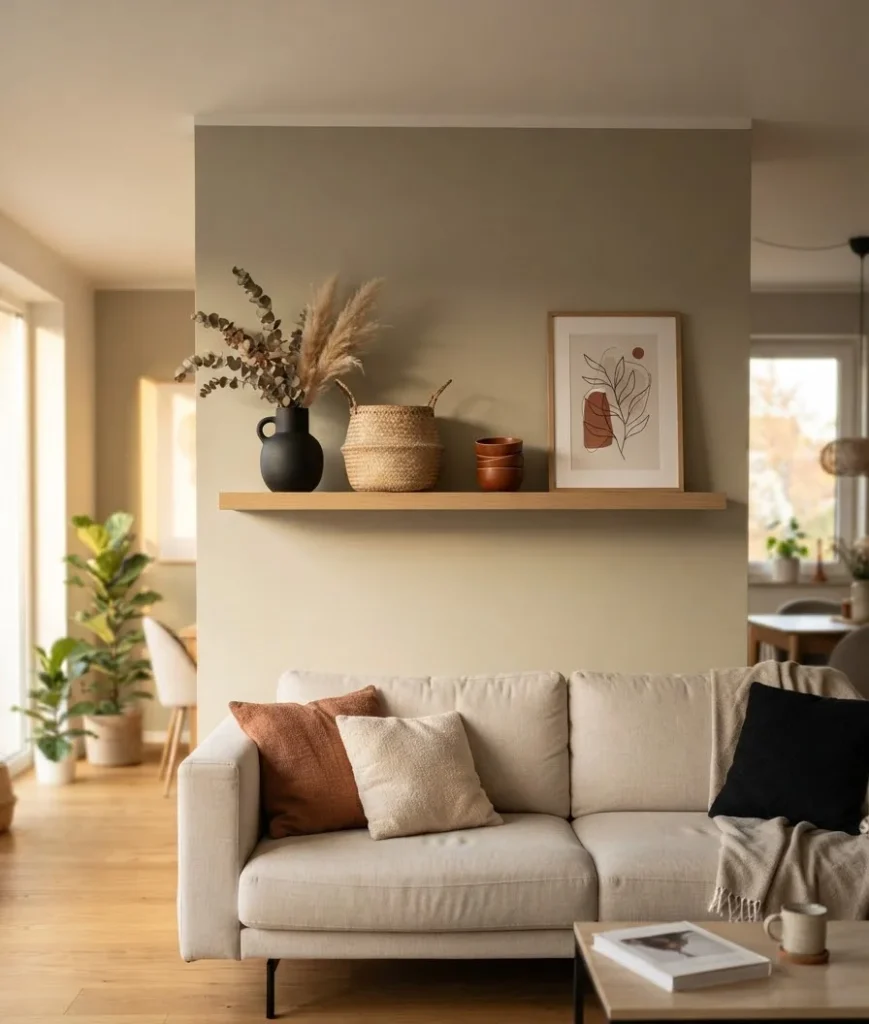
Pick two or three colors and build around them. A few combinations that consistently work:
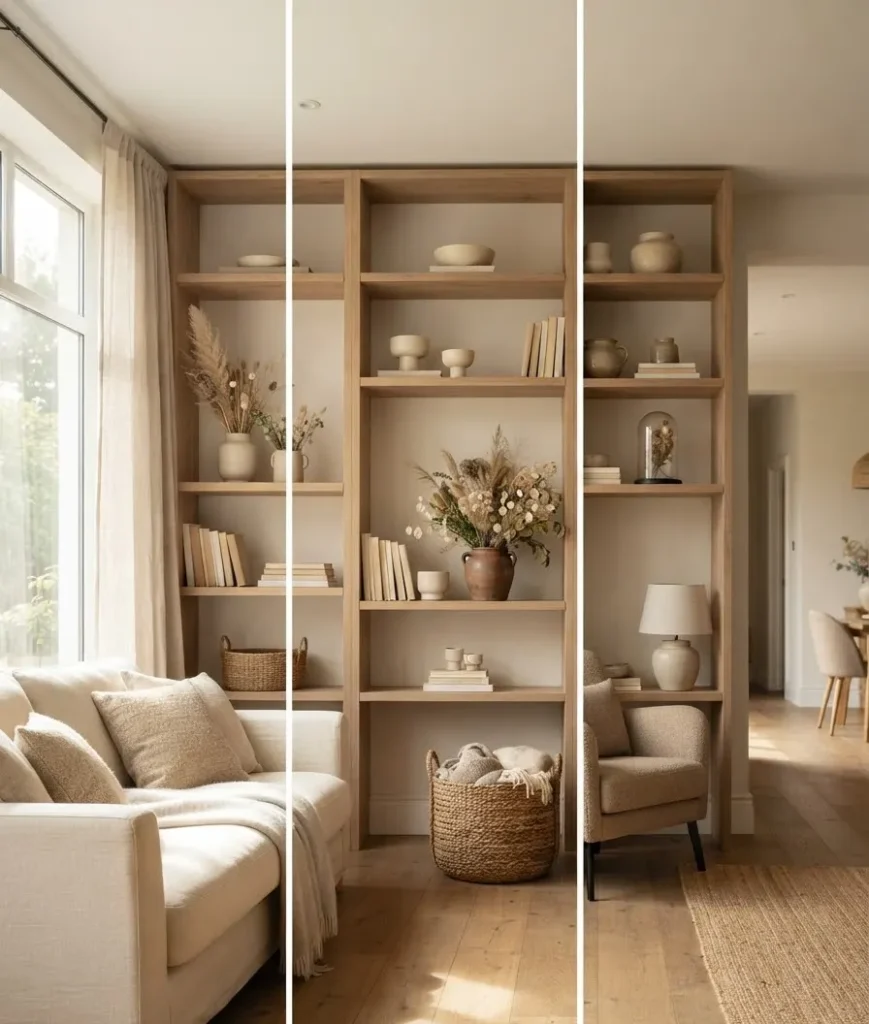
- Warm terracotta, cream, and walnut wood tones for a soft, sunlit look
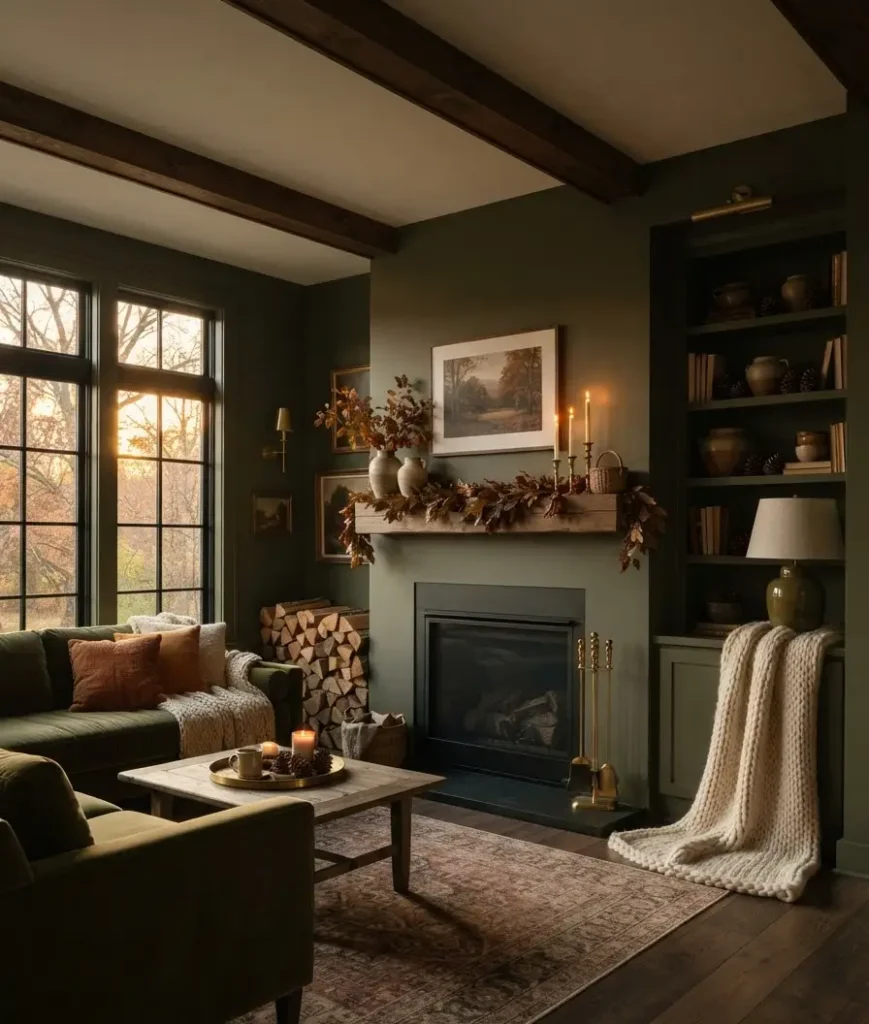
- Deep olive, brass, and charcoal for something moodier and more editorial
- Rust, oatmeal, and black for a modern, almost Scandinavian take on autumn
IMO the rust and oatmeal combo photographs the best for Pinterest boards, if that’s part of your goal here. It reads as intentional even from a thumbnail.
The five things every well-styled fall shelf actually needs
You don’t need forty objects. You need the right five categories, repeated with variation.
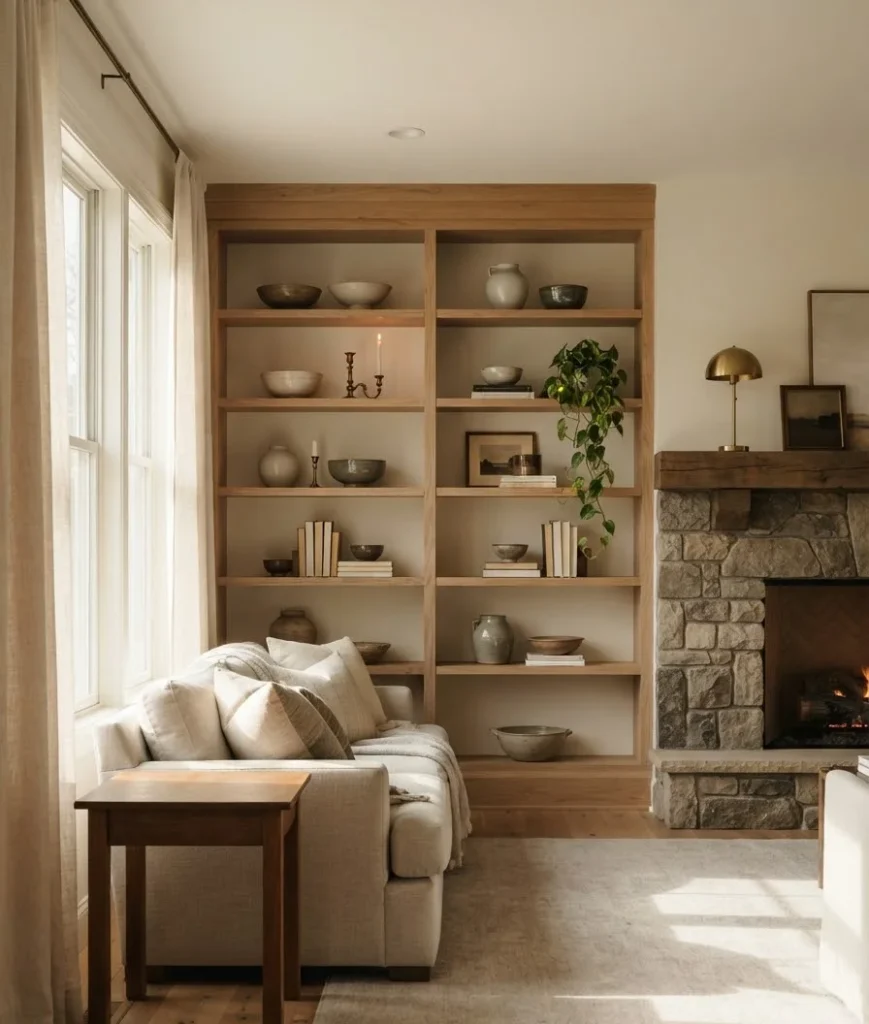
- A tall anchor piece, like a vase, lamp, or stack of oversized books
- Something organic: dried pampas grass, preserved eucalyptus, a small branch of bittersweet
- A textural object such as a woven basket, ceramic bowl, or stoneware vessel
- One sentimental or personal item that has nothing to do with fall at all
- Negative space, which is genuinely underrated
That last one trips people up. Ever notice how the most photographed shelves online have empty spots? That’s not laziness. That’s design. Cramming every inch actually makes a shelf look smaller and busier than it is.
Working the actual layout
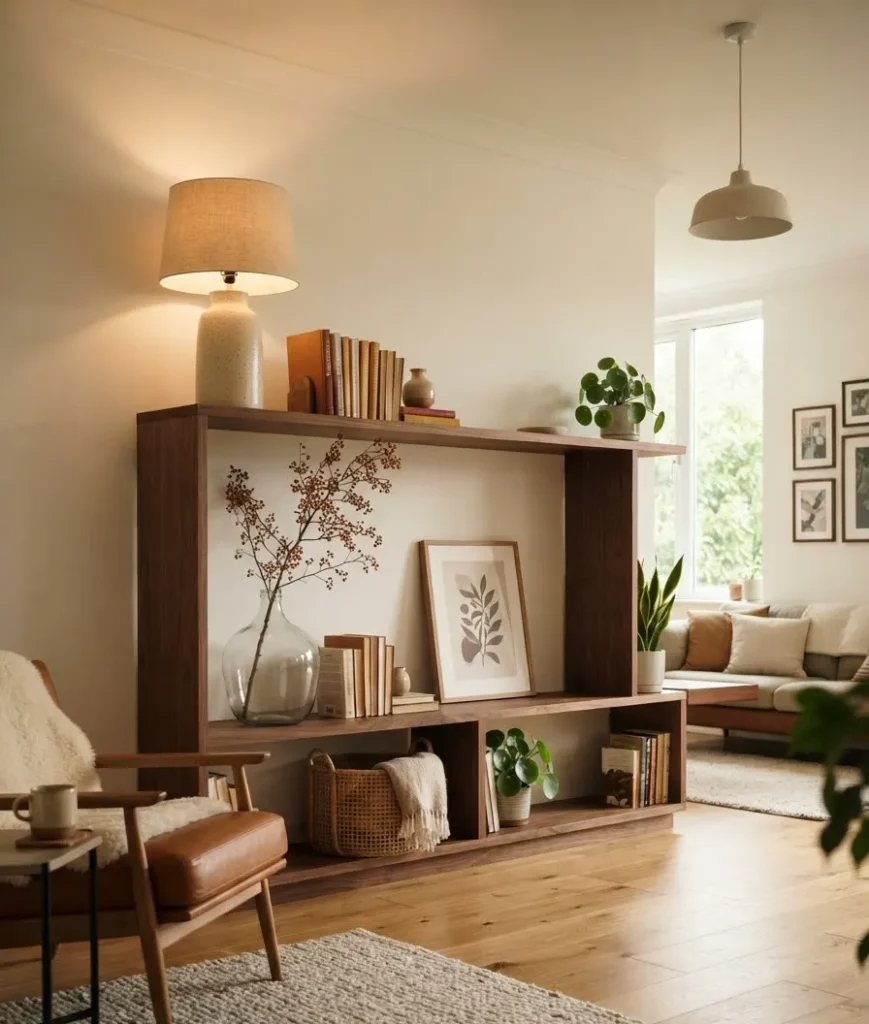
Group items in odd numbers. Threes work almost every time, and fives if the shelf is deep enough.
Vary the height. Vary the texture. Never let two objects sit at exactly the same level right next to each other, since your eye reads that as a mistake instead of a choice.
Stack a couple of books flat and set a small pumpkin or ceramic pinecone on top. Instant height variation, zero effort. I do this on almost every shelf in my house now, fall or not.
The HGTV design team put together a solid guide to styling shelves like a pro that goes deeper into balance and repetition if you want the design-school version of what I’m describing here.
Materials that actually read as “fall” in 2026
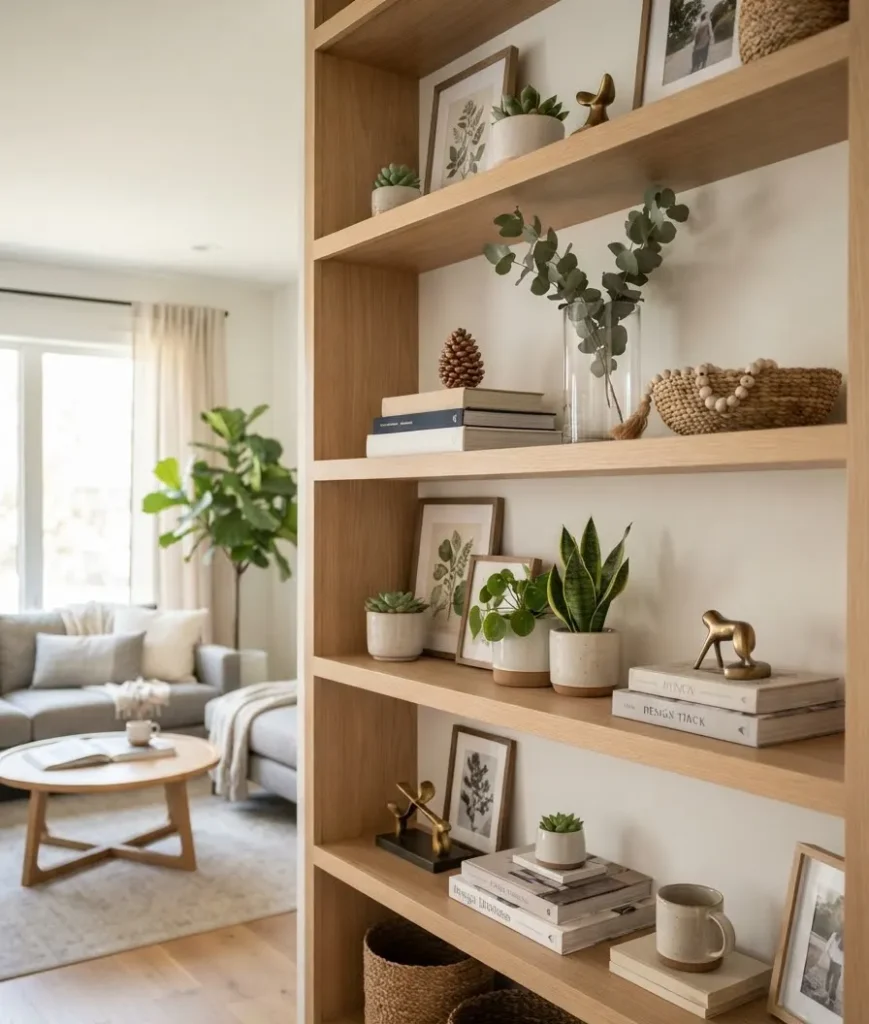
Fall decor has moved away from the orange-pumpkin-everything look from a decade ago.
Here’s what’s trending on shelves this year, based on what I’m seeing repeated across design blogs and my own local shops:
- Warm ceramics in matte cream, rust, or ochre glazes
- Woven rattan and jute baskets for texture without bulk
- Brass or aged bronze candle holders instead of shiny gold
- Dried florals over fresh or fake silk arrangements
- Chunky, hand-thrown pottery instead of mass-produced resin decor
Real talk: skip the plastic leaf garlands. They looked fine in 2015. Now they read as dated the second someone walks past your shelf and touches one.
A quick comparison, because visuals matter more than my opinions
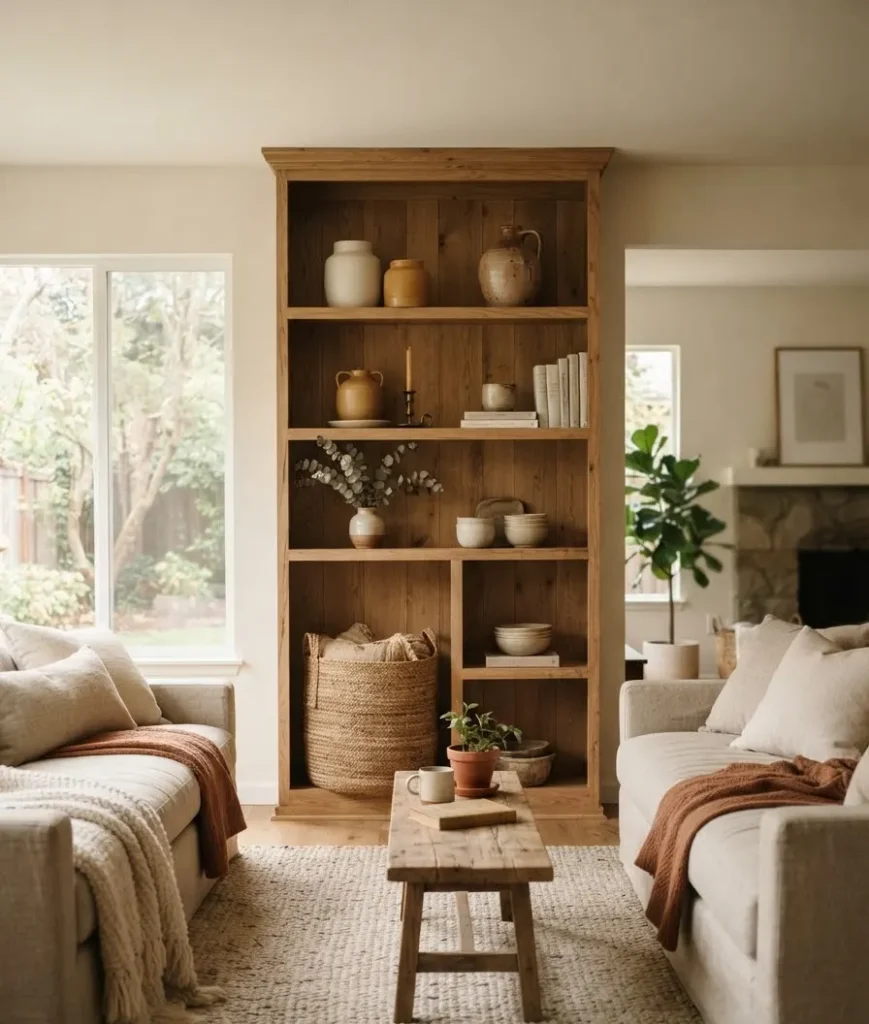
Here’s a simple breakdown of three shelf styles, so you can figure out which one actually matches your living room instead of just copying whatever’s trending this week.
Style | Best for | Watch out for Minimal modern | Small apartments, rentals | Can look empty if you go too sparse Cozy maximalist | Larger shelving units, family rooms | Gets cluttered fast without a color plan Rustic farmhouse | Homes with wood tones already | Can feel dated if overdone with mason jars
I lean minimal modern most years because I move often and don’t want to pack forty knick-knacks every time. But my sister goes full cozy maximalist and somehow it works in her house because she actually commits to the bit.
A few personal opinions, since you asked (sort of)
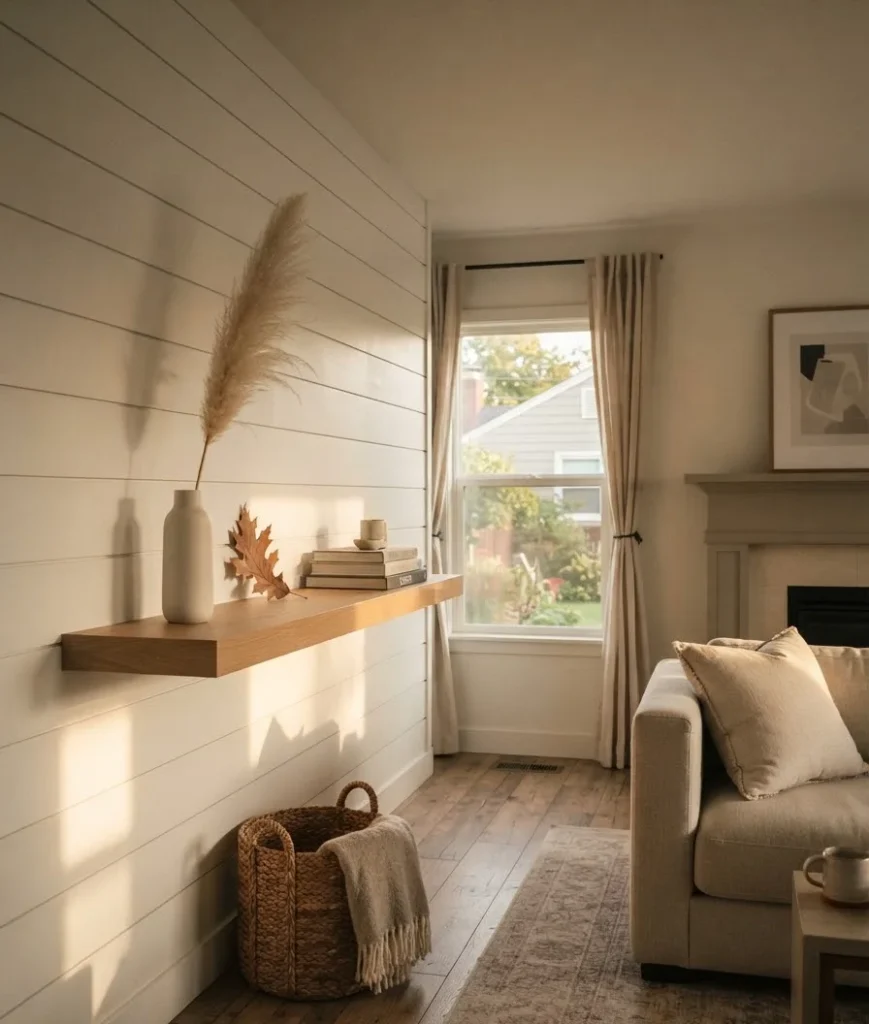
- I think pampas grass is a little overdone at this point, but it still photographs beautifully, so I keep one stem around anyway
- Real dried leaves from your own yard beat store-bought silk ones nine times out of ten, and they cost nothing
- Scented candles on open shelves are a hard no for me. The wax gets dusty, and nobody’s smelling a candle from six feet up on a bookshelf anyway. Put those on a side table instead
Small living rooms need a different approach
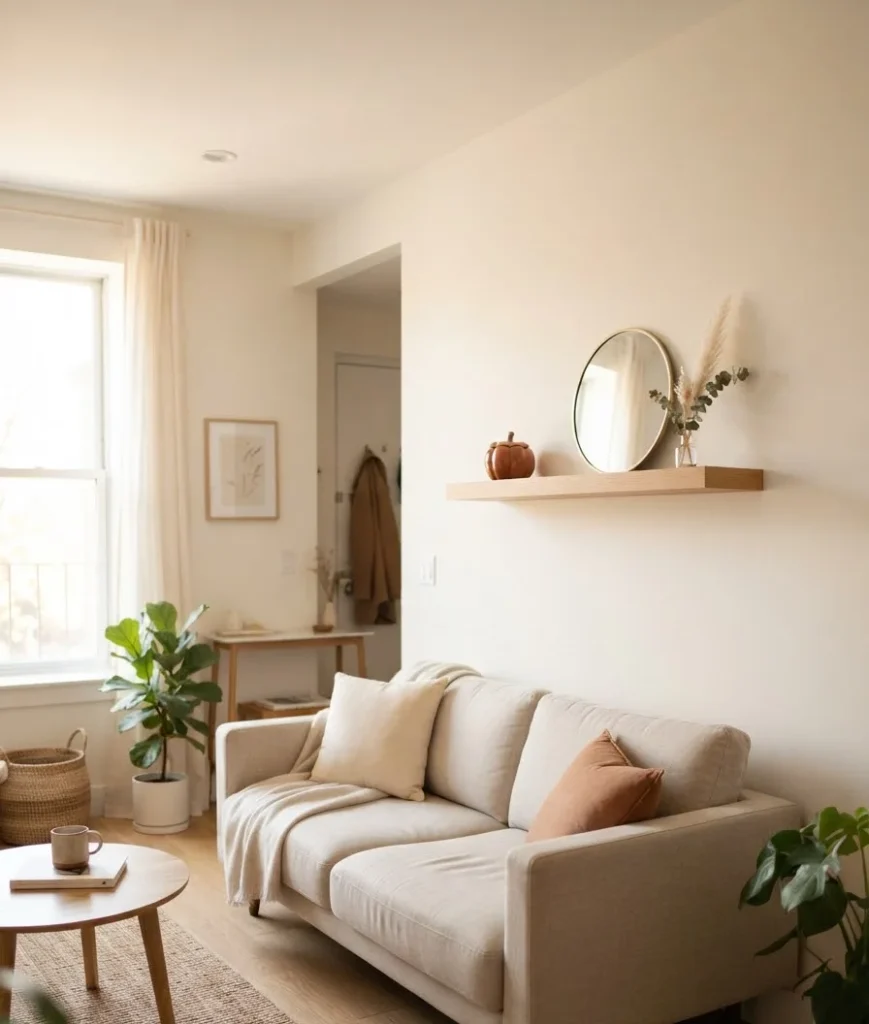
If your shelf space is limited, don’t try to shrink down a big display. Instead, pick fewer, better objects.
One good ceramic pumpkin beats five plastic ones every single time. A single dried floral stem in a nice vase can carry an entire shelf on its own.
Mirrors also help here. A small round mirror leaned against the back of a shelf bounces light around and makes the whole area feel less packed, even with objects in front of it.
On a totally unrelated note, I once tried to dry my own pampas grass in the garage and forgot about it for two months.
It looked incredible by accident. Sometimes the best design choices are just neglect with good lighting.
Lighting changes everything, and people skip it constantly
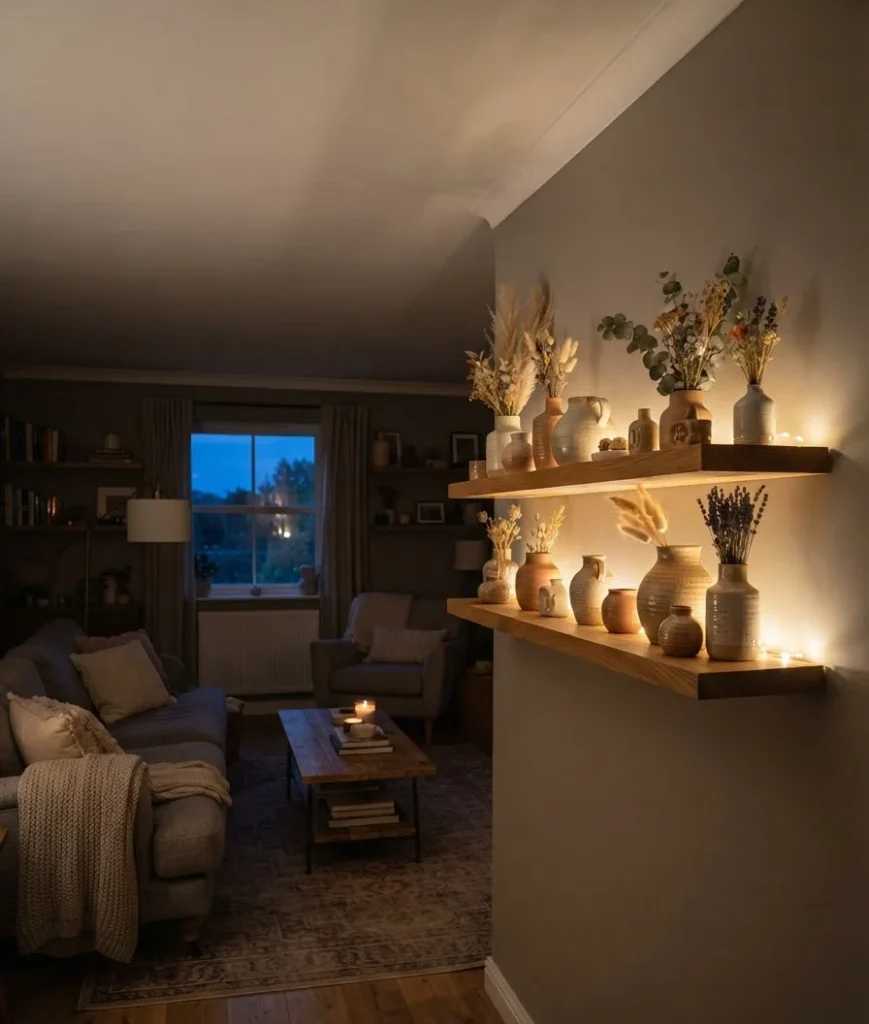
A shelf styled perfectly in daylight can look flat and lifeless at 8pm.
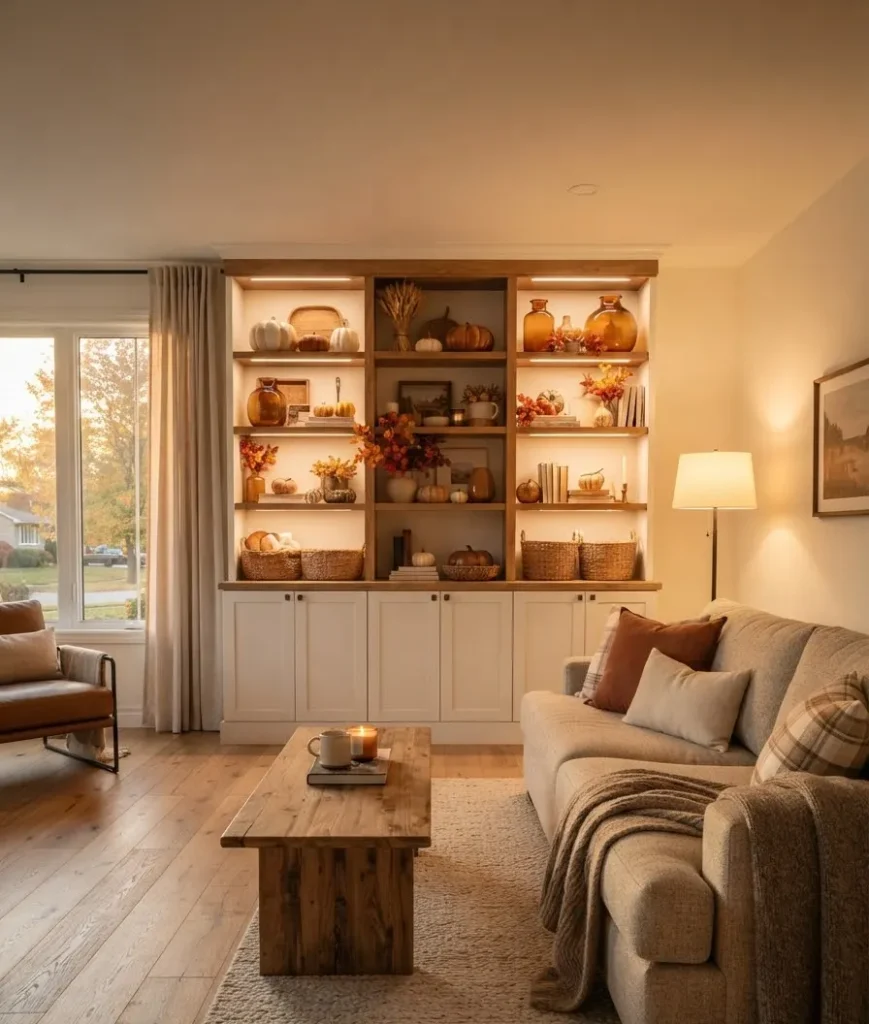
Add a small battery-operated puck light or a short strand of warm white fairy lights tucked behind your taller items.
It’s a five-dollar fix that makes the whole display feel finished at night, which is honestly when most people actually see it.
This one small tweak, IMO, does more for a shelf’s overall look than any single decor object you could buy.
What to avoid, based on things I’ve genuinely regretted buying
- Oversized fake pumpkins that dwarf everything else on the shelf
- Anything with glued-on glitter, which sheds for the entire season and gets everywhere
- Scented decor stacked too close together, since the smells fight each other
- Matching sets bought as a bundle. They look staged instead of collected, and collected is the whole point
There’s a solid roundup of things you shouldn’t keep on open shelves if you want more specifics on pieces that tend to clutter a space rather than elevate it.
Where to actually shop for this stuff
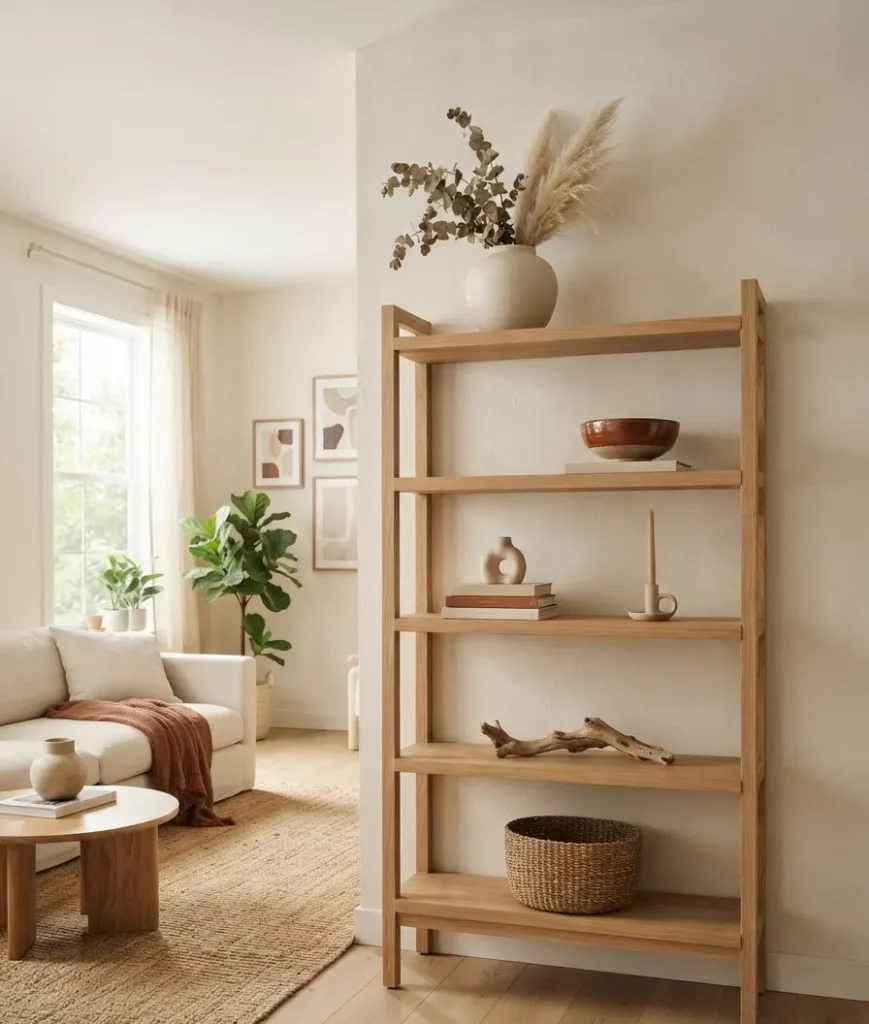
You don’t need designer prices to pull this off. Thrift stores, HomeGoods, and even your own backyard cover about 80 percent of a good fall shelf.
Save the budget for one or two “hero” pieces, like a nice ceramic vase or ceramic pumpkin, and fill the rest in cheap.
Better Homes and Gardens put together a solid list of fall decorating ideas for every room if you want more inspiration beyond just shelving, including tablescapes and mantel ideas that pair well with a styled bookcase.
Transitioning your shelves from September through November
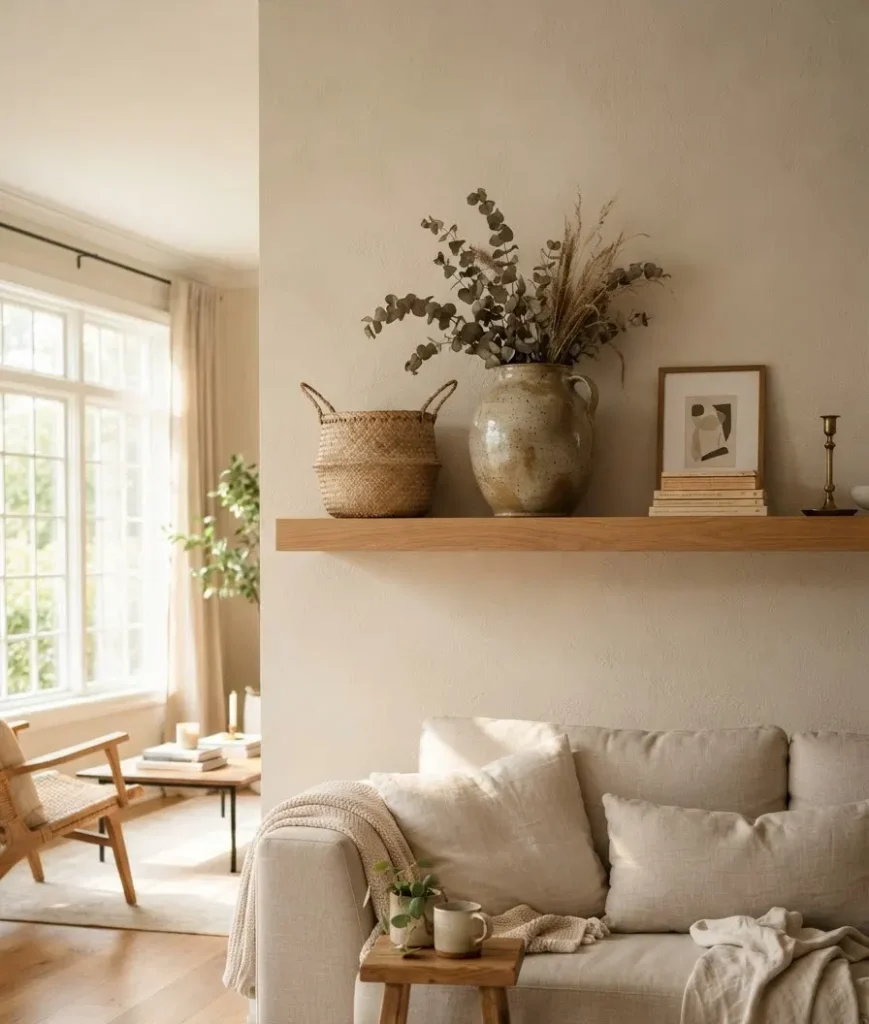
Fall isn’t one static look.
Early September still has some warm-weather energy, and by late November you’re basically staring down the holidays.
Your shelves can shift with that instead of staying frozen on one setup for twelve straight weeks.
In September, I keep things light: dried grasses, cream tones, maybe one small pumpkin as a nod to the season without going full harvest festival.
By mid-October, I swap in deeper colors, more candles, and heavier textures like chunky knit throws draped near the shelf edge.
Wow, the difference a few swapped objects makes is honestly kind of wild for how little work it takes.
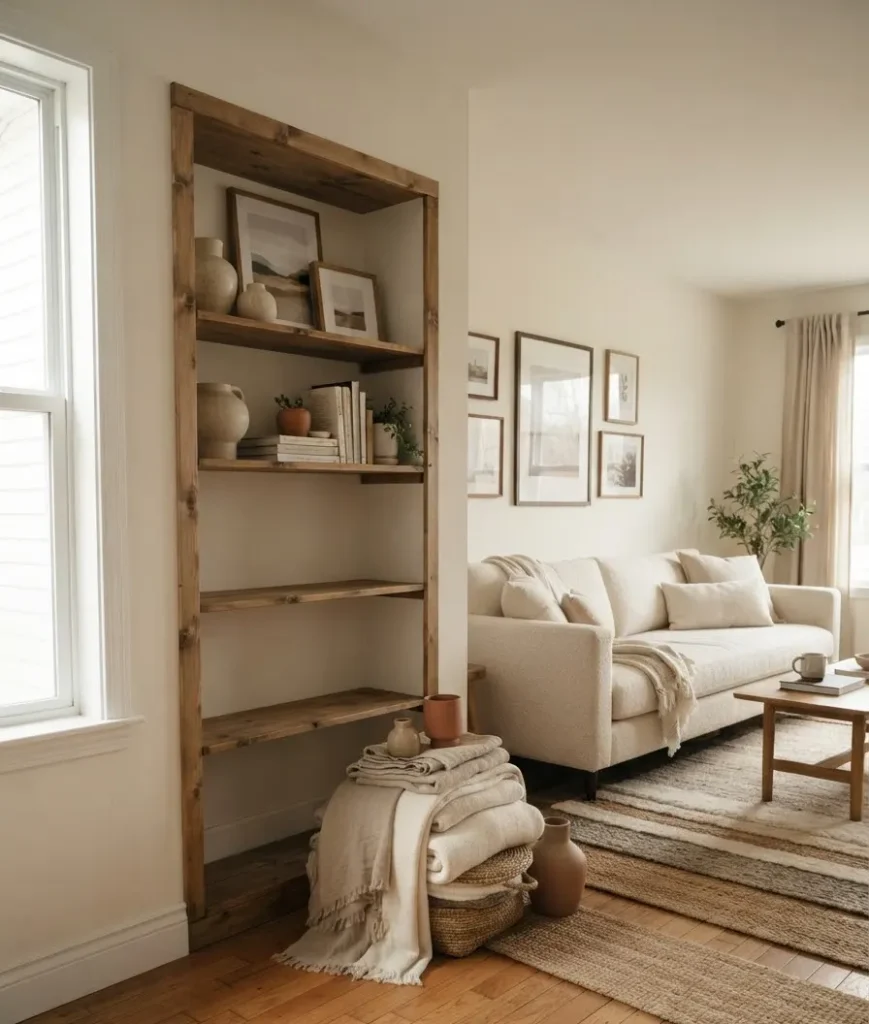
Come late November, I pull back the overtly “fall” pieces (the pumpkins, mostly) and lean into neutral, cozy elements that can carry straight through into December without a full teardown.
Pinecones, warm wood, brass. All of it works from October through New Year’s if you’re smart about what you buy.
Working with the shelf you already have
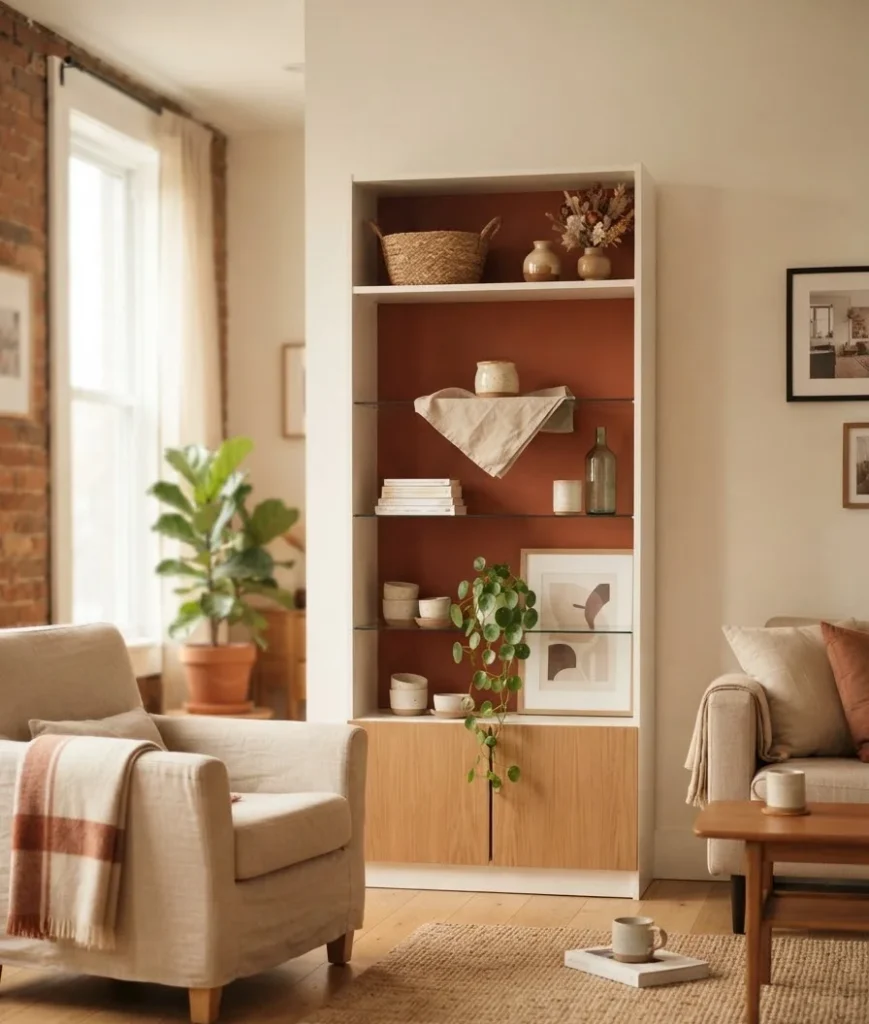
Not everyone has a beautiful built-in bookcase. A lot of us are working with a basic particleboard unit from a big-box store, and that’s fine.
A can of paint on just the back panel of the shelf (a soft terracotta or deep green) instantly upgrades the whole thing without replacing furniture.
If your shelf is glass, add a piece of linen or burlap fabric folded flat under a few objects to break up the reflection and add warmth.
Little tricks like this cost almost nothing and make a rental-grade shelf look intentional.
A simple shelf refresh you can do this weekend
- Pull everything off the shelf. Yes, everything.
- Sort into keep, store, and donate piles
- Pick your two or three colors for the season
- Add your tall anchor piece first, then build around it
- Step back, take a photo on your phone, and look at it in black and white to check the balance without color distracting you
That last trick genuinely works. Removing color from the photo shows you shape and spacing problems instantly.
FAQ
Do I need matching decor for every shelf in my living room?
No, and honestly you shouldn’t. Matching everything looks like a showroom, not a home. Repeat a color or material instead of the exact same object across shelves.
How often should I restyle my shelves for fall?
Once at the start of the season is plenty. A light refresh in late October, swapping in a few extra warm tones, works well if you want the shelf to feel a little different heading into the holidays.
Is real greenery better than fake for fall shelf decor?
Dried real greenery usually wins on texture and cost. Fake silk versions have improved a lot, but up close, most people can still tell. If budget allows, real dried stems are worth it.
Final thought
Fall shelf styling isn’t about buying the most stuff. It’s about editing what you already have and adding two or three pieces that earn their spot.
Start with color, respect the empty space, and don’t be afraid to swap things around until it actually looks like you live there.
What’s on your shelves right now? If it’s still summer decor sitting there in October, you’ve got a weekend project waiting for you.
