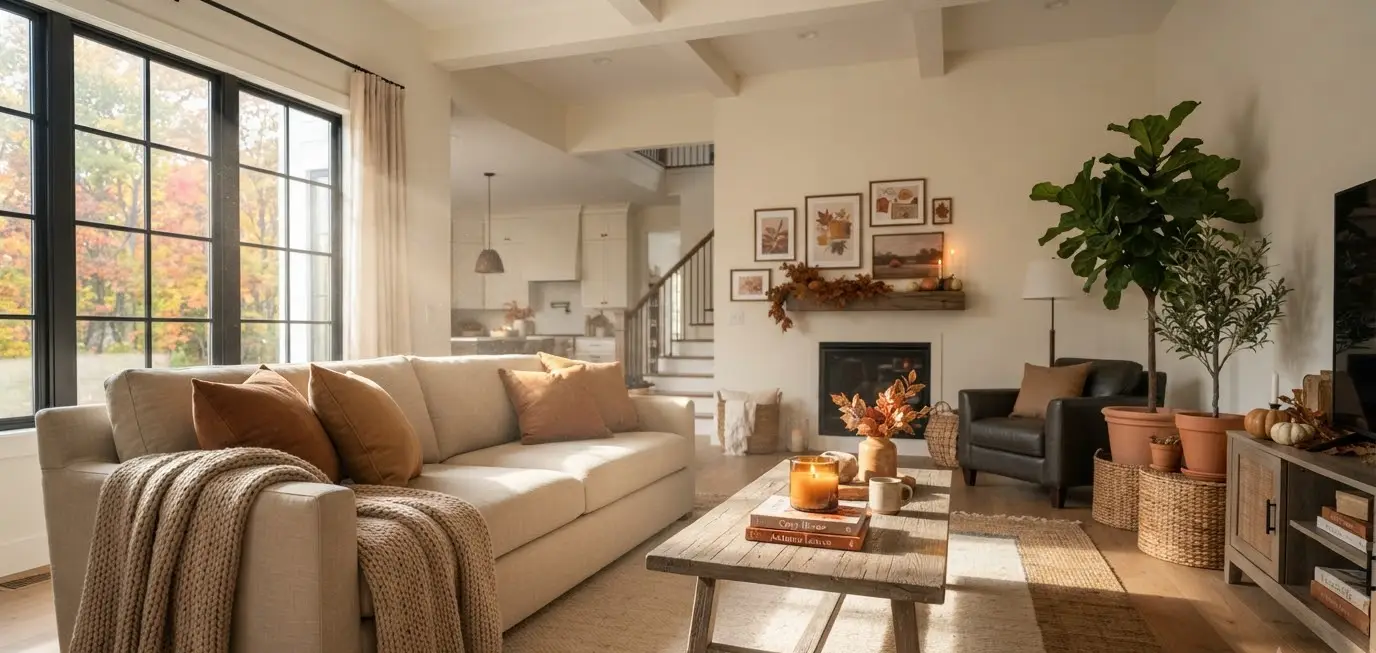
Fall has a way of walking into a house and asking it to slow down. The light changes first, then the air, then, if you let it, your living room.
I redecorate mine every September, and every year I forget how much of a difference a few small swaps can make until I’m sitting under a chunky throw with a candle burning, wondering why I waited so long.
This guide is for anyone who wants that feeling without gutting a budget or spending three weekends on a project.
Pin what you like, skip what doesn’t fit your space, and steal the rest.
Start with color, not clutter
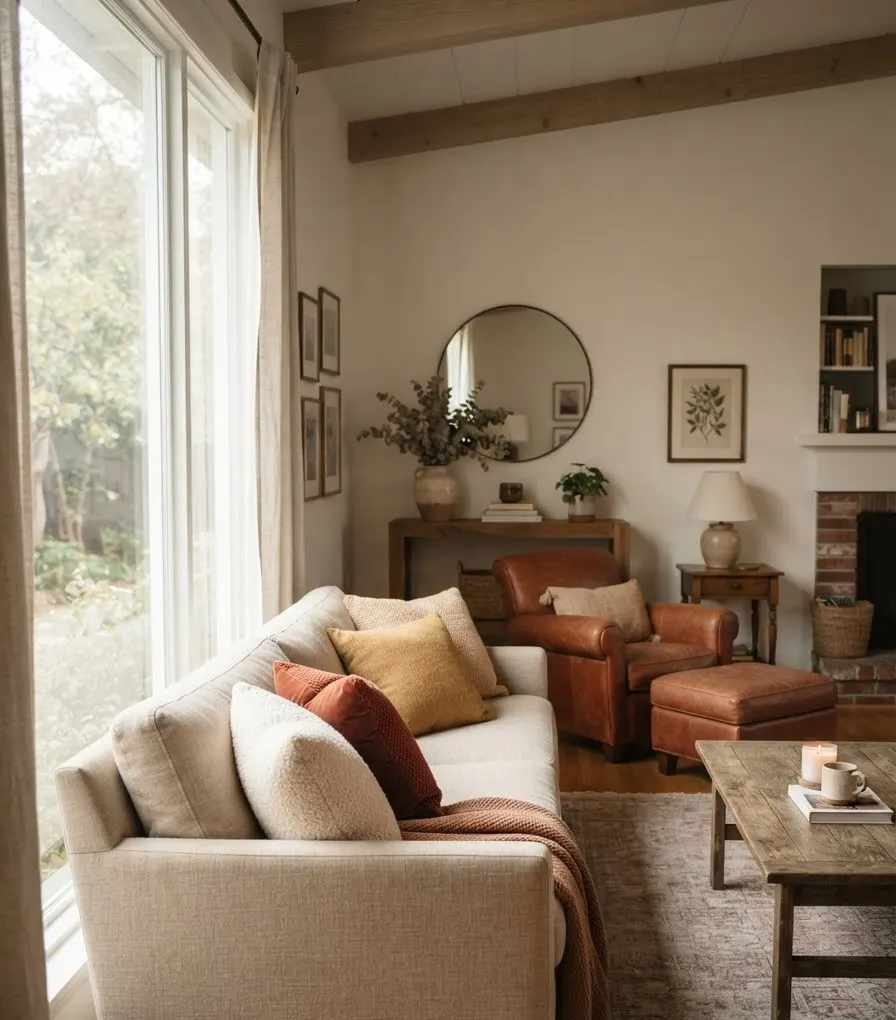
Most people reach for pumpkins first. I’d start with your palette instead.
Fall color doesn’t mean orange everything. Think about a walk through the woods in October: rust, ochre, deep green, chestnut brown, a little black for contrast. Interior stylists at Homes & Gardens point to deep maple reds, brick tones, and mustard yellow as a dependable fall combination, balanced out with warm whites so the room doesn’t feel heavy.
You don’t need to repaint a wall to get this right. Swap it in through:
- Throw pillows in two or three coordinating fall tones (not five, that gets busy fast)
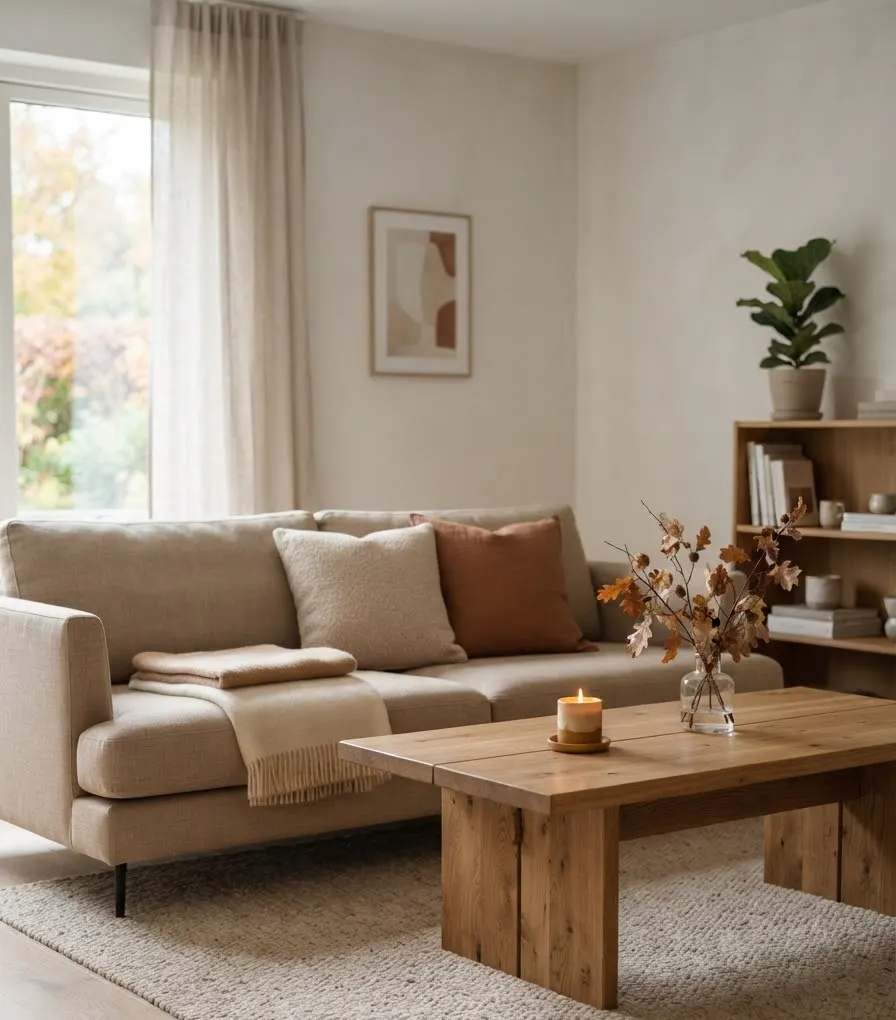
- A wool or chunky-knit throw blanket draped over the arm of the sofa
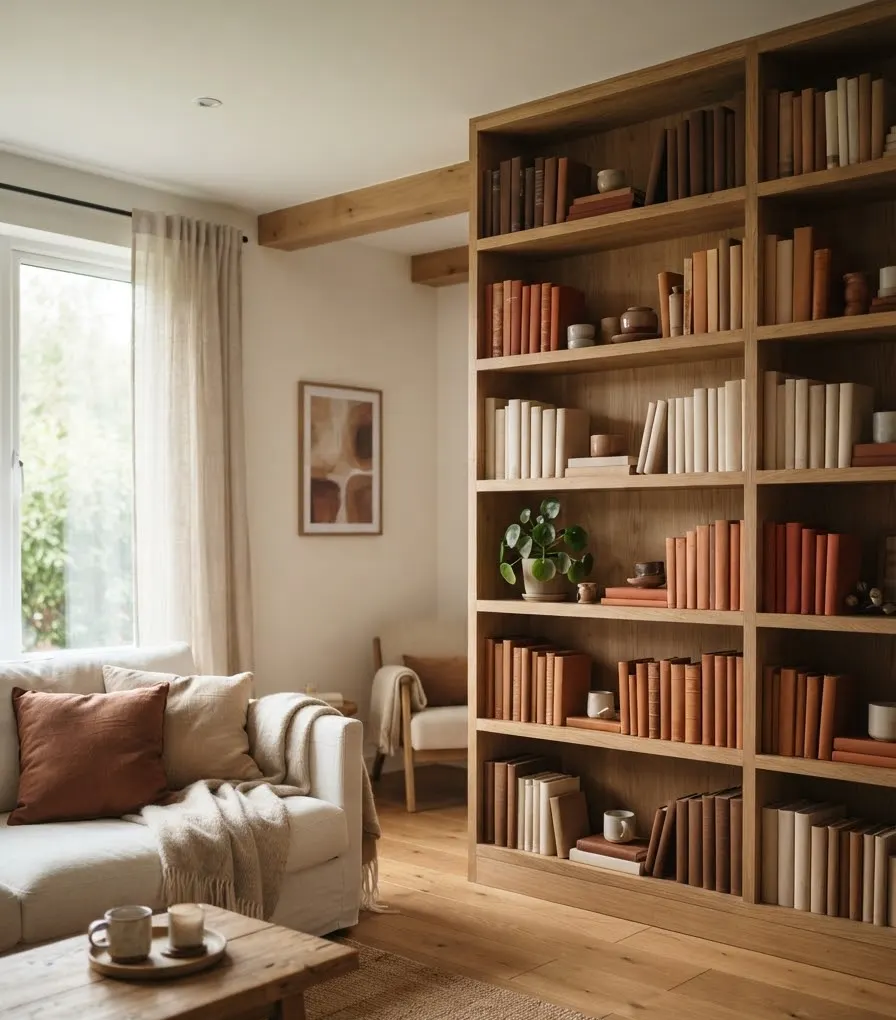
- A stack of books with warm-toned spines on the coffee table
- One statement item, like a rust-colored accent chair or a patterned rug
My honest opinion: skip the matchy-matchy pillow sets that come pre-bundled online. Buy two different textures in the same color family instead. It reads as collected, not staged.
If you’re picking a single anchor color for the season, olive is worth a look.
Designers quoted by Homes & Gardens have called out rich olive green as a grounding neutral that works through fall and straight into winter, which makes it a smart pick if you don’t want to redo everything again in eight weeks.
It pairs well with rust, camel, and cream, and it doesn’t scream “seasonal decor” the way pumpkin orange sometimes does.
Layer texture like you mean it
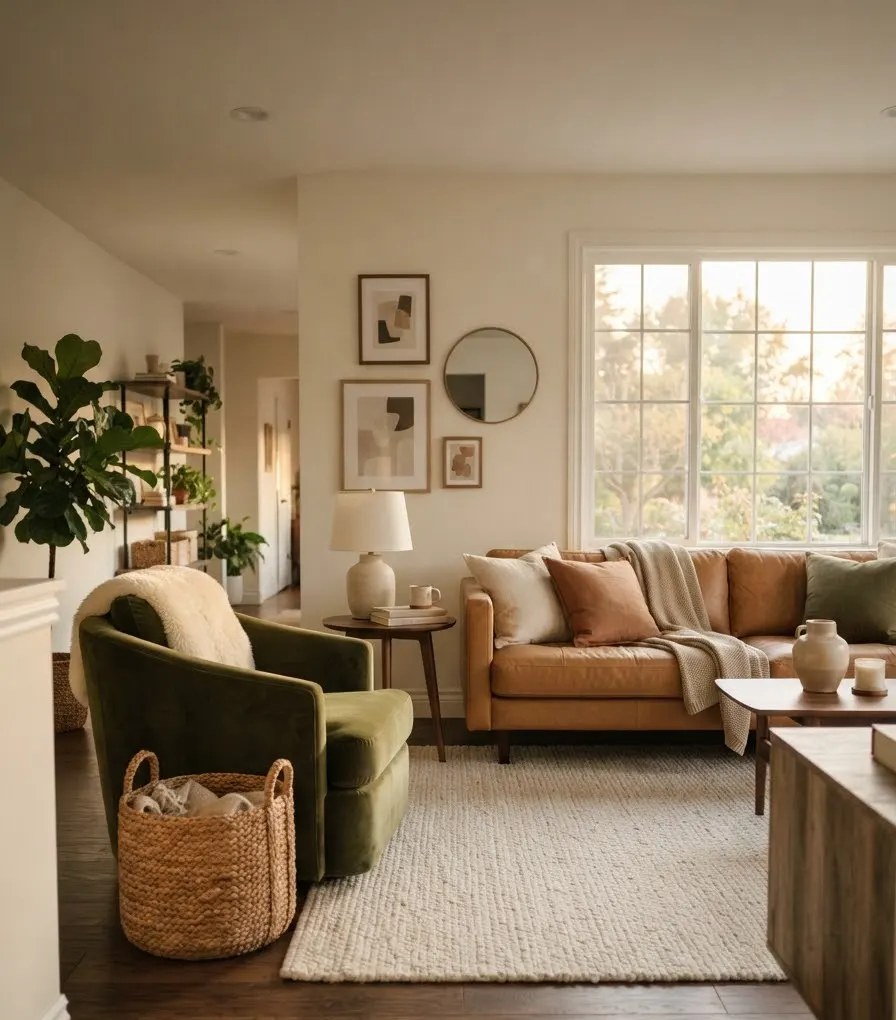
Here’s something nobody bothers to say plainly: fall styling is 80 percent texture and 20 percent color.
A beige room with the right mix of wool, linen, wood, and knit will feel warmer than a bright orange room with none of that.
Chunky knit throws, sheepskin accents, woven baskets, and wood bowls all do a lot of heavy lifting.
Layer a smooth velvet pillow next to a nubby wool one. Put a woven basket of pinecones or dried branches on the floor by the fireplace or under a side table.
The contrast is what makes a room feel finished instead of flat.
I learned this the hard way in my first apartment. I bought every “fall” item at a big box store, all the same fuzzy material, and the room looked like a catalog page nobody edited. Mixing textures fixed it in an afternoon.
Bring the outside in, gently
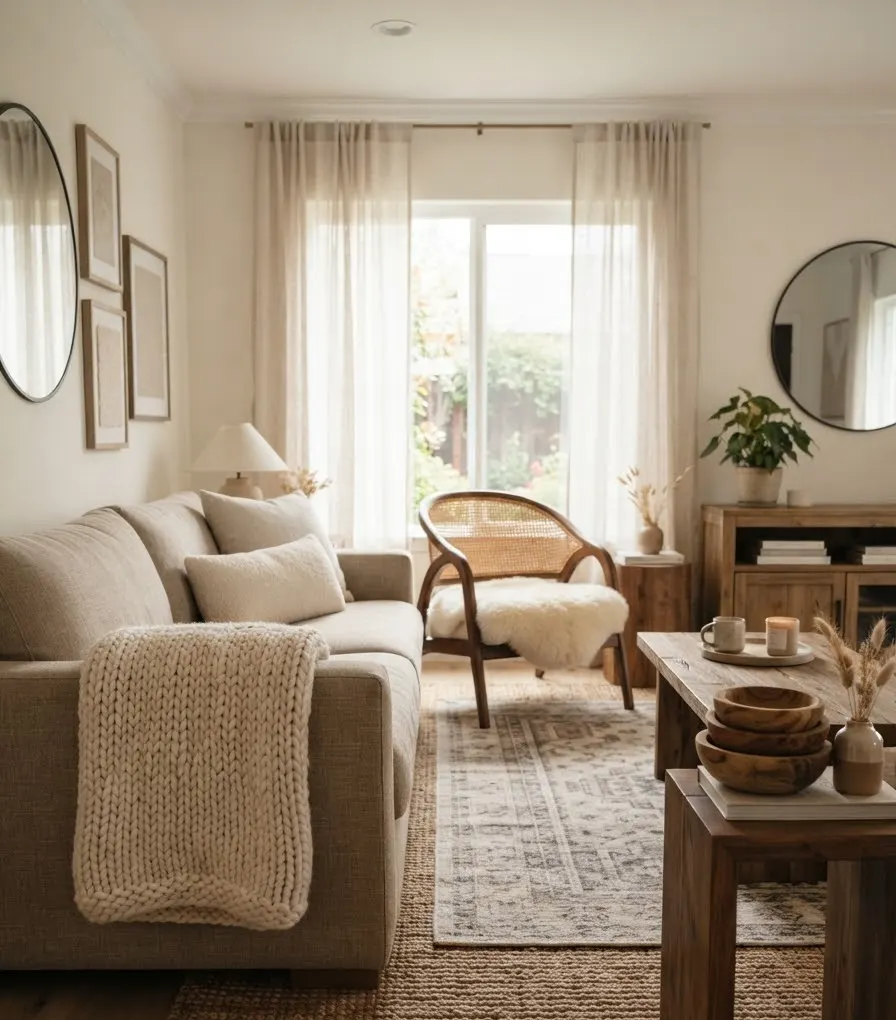
You don’t need a full floral situation to make a room feel seasonal.
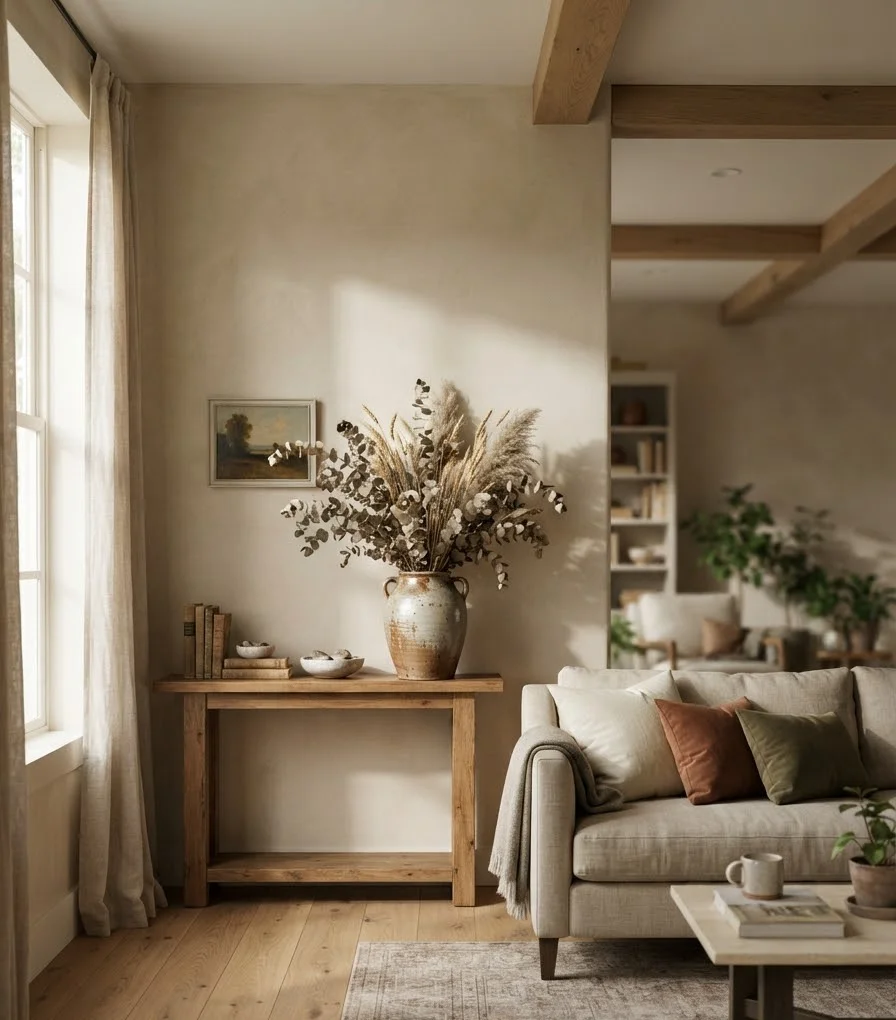
A single vase of dried eucalyptus, wheat stems, or magnolia branches does more work than five plastic pumpkins stacked on a shelf.
HGTV’s seasonal decorating team leans on the same idea for the whole house, not just the living room, using natural elements like gourds, branches, and foliage rather than anything overtly costumey.
That’s the line I try to walk too: seasonal, not Halloween-store seasonal.
A few low-effort, high-payoff options:
- Dried hydrangeas or pampas grass in a ceramic vase
- Small gourds or mini pumpkins grouped on a tray, not scattered around the room
- A wood or ceramic bowl with pinecones and cinnamon sticks near the coffee table
- A wreath, moved indoors, hung above the fireplace instead of on the door
Lighting: the part people skip
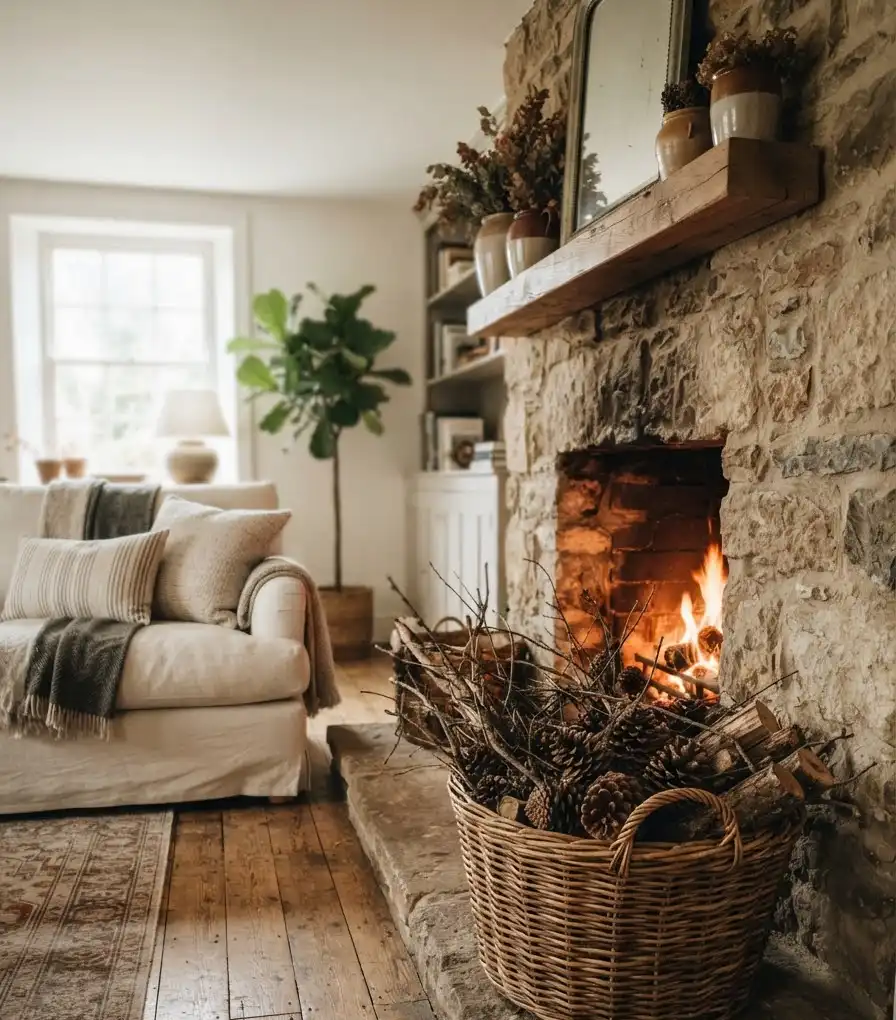
Cooler, shorter days change how light hits a room, and most people never adjust for it. This is the fix that costs the least and does the most.
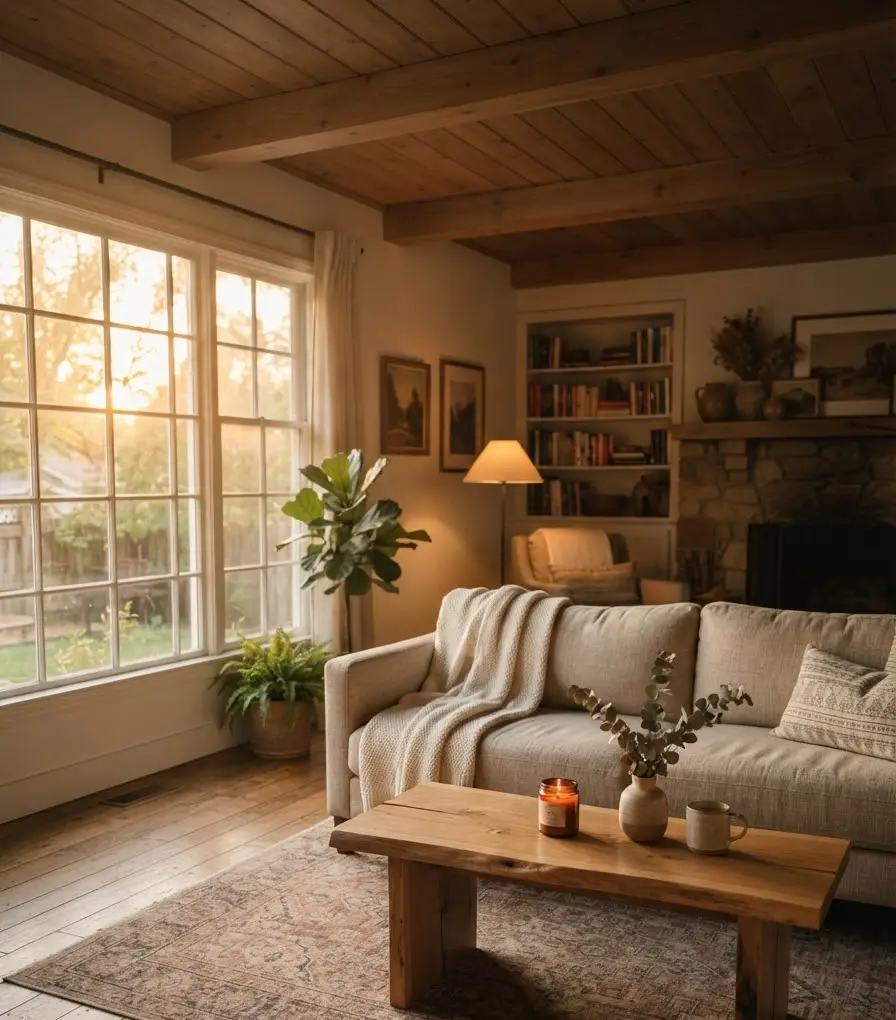
Swap a few bulbs to a warmer color temperature if your fixtures allow it. Add a table lamp with a fabric shade instead of relying only on overhead light.
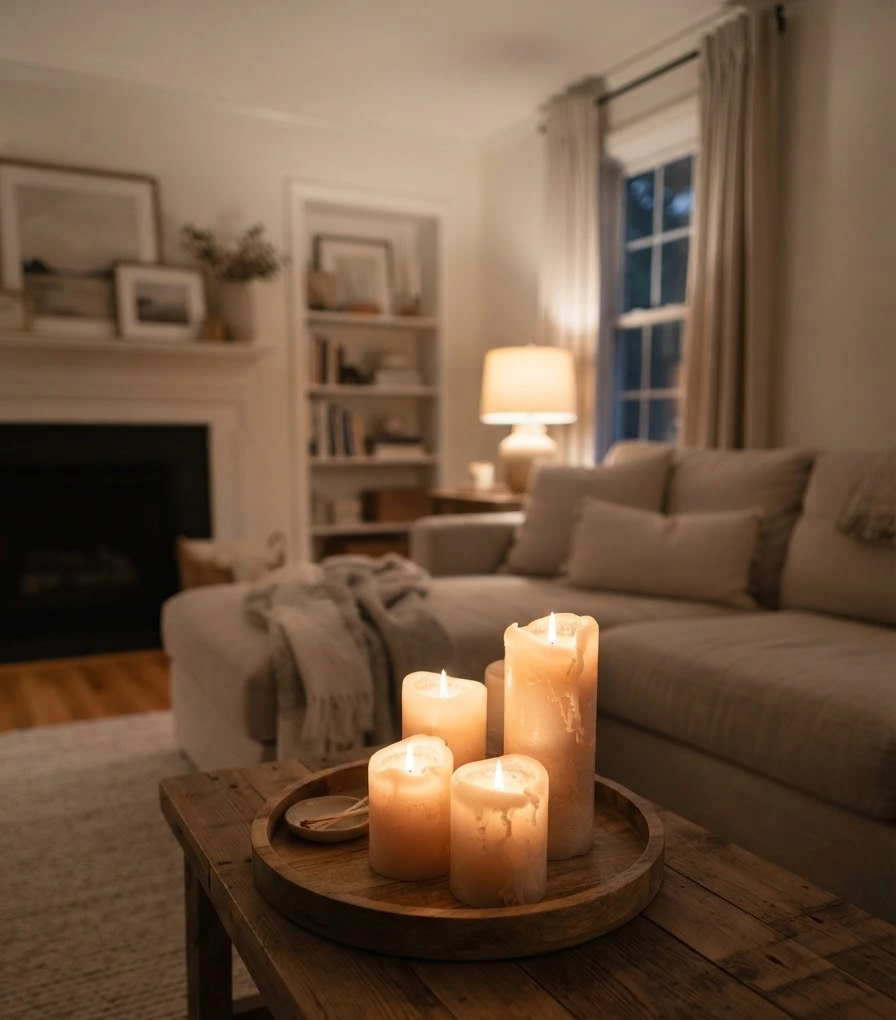
Cluster a few candles, real or flameless, on the mantel or coffee table. Wow, the difference a warm lamp makes at 6pm in October is honestly kind of ridiculous once you notice it.
| Lighting element | Fall upgrade | Rough cost |
|---|---|---|
| Overhead bulbs | Switch to warm white (2700K) | Under $15 |
| Table lamp | Add a fabric or linen shade | $20 to $60 |
| Candles | Cluster 3 to 5 on a tray | $15 to $40 |
| Fireplace (if you have one) | Use it, or add faux logs with a warm bulb | Varies |
The fireplace or mantel, if you’re lucky enough to have one
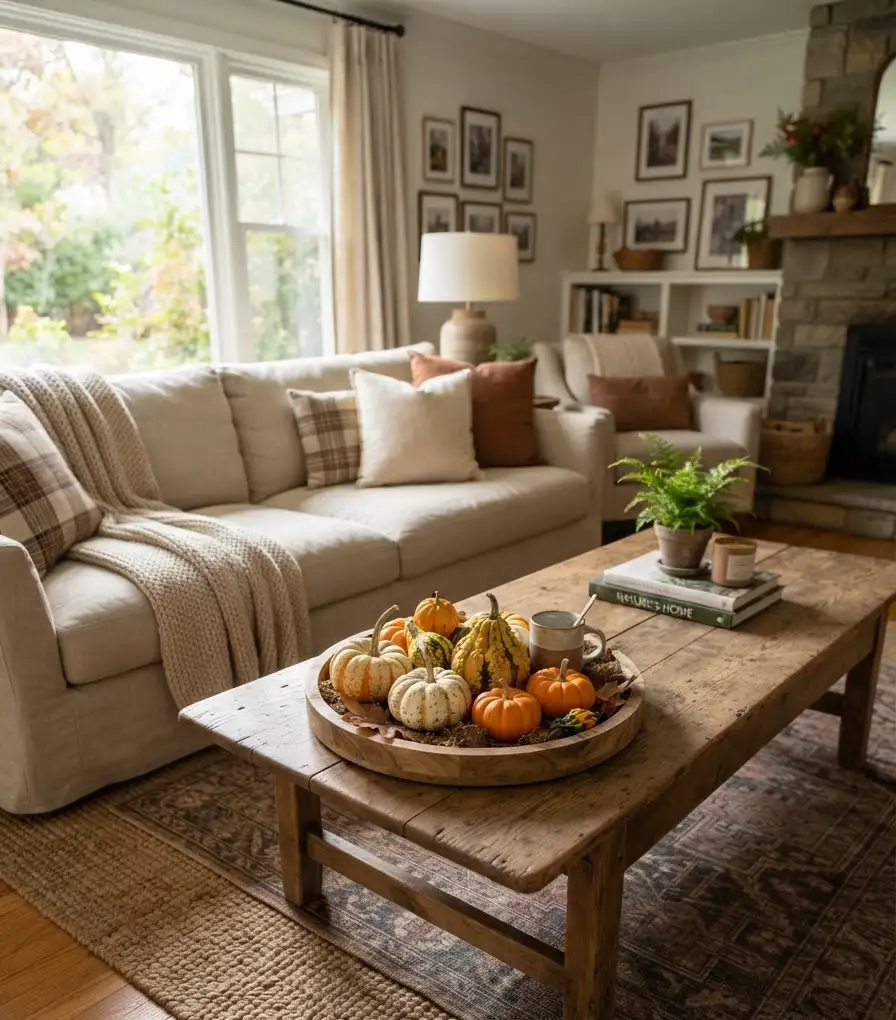
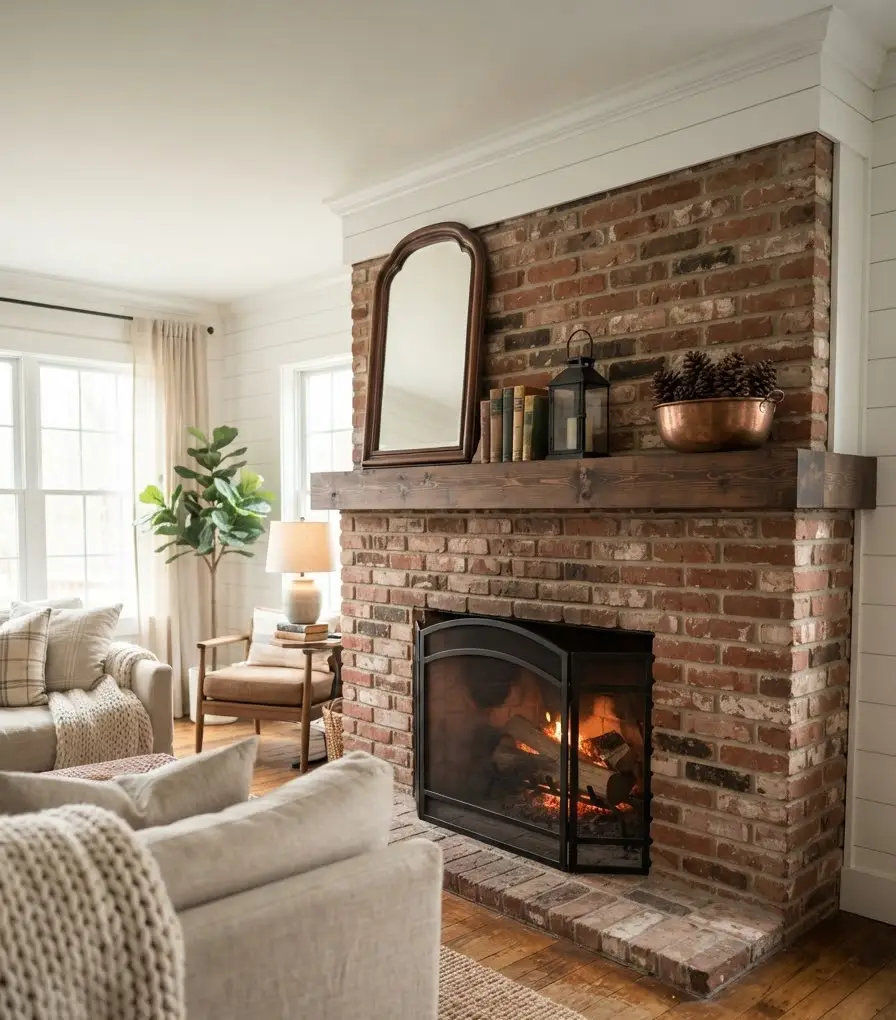
A mantel is basically a free styling opportunity that a lot of people leave half-used all year. For fall, keep the arrangement asymmetrical rather than perfectly centered. It reads more natural.
Try this layering order: something tall on one side (a mirror, art, or branches in a vase), something medium in the middle (a stack of books or a small lantern), and something low and textured on the other end (a bowl of pinecones or a small pumpkin).
Odd numbers of objects tend to look better grouped than even ones. I couldn’t tell you exactly why that rule works, but every designer I’ve ever read swears by it, and my own mantel agrees.
Rugs and throws: the fastest room reset
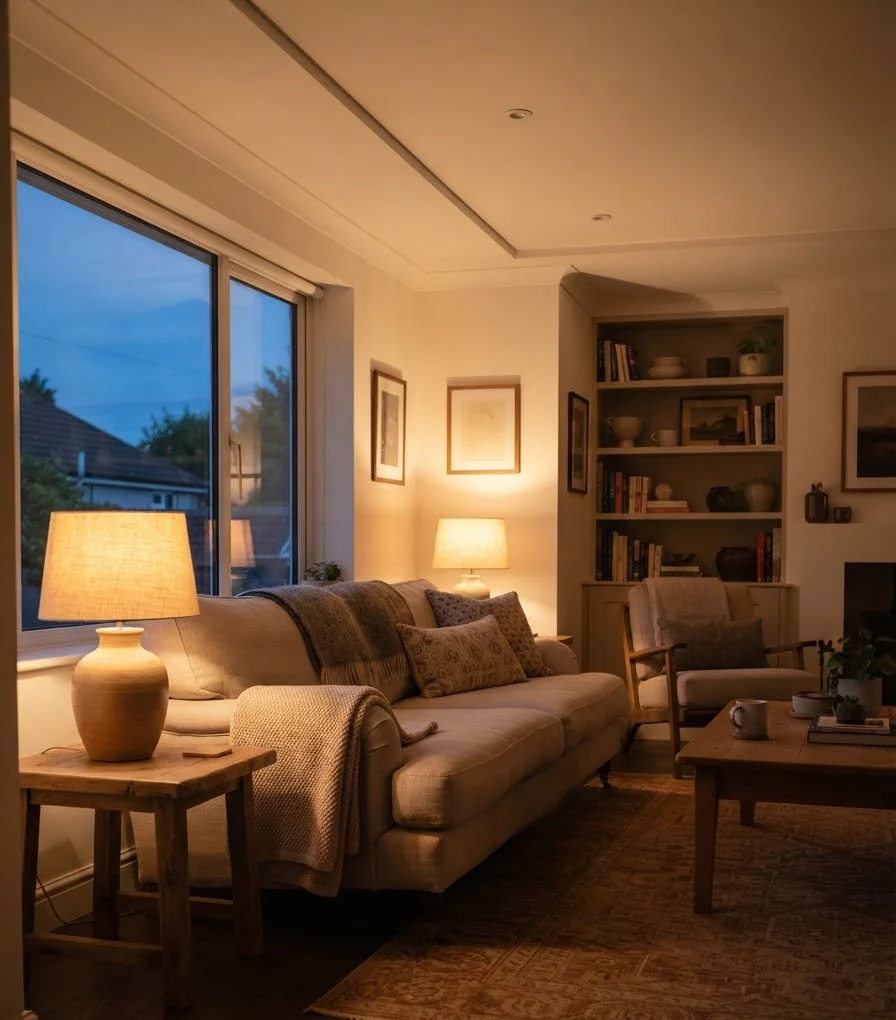
If you only do one thing from this whole list, do this one.
Swapping a light summer rug for something in a deeper tone, or even just adding a smaller layered rug on top of your existing one, changes the entire feel of a living room in under ten minutes.
Same goes for throws draped over the sofa arm or folded at the end of a chair. It’s such a small move, and it’s the one guests actually comment on.
One thing I’d add: don’t just think about color when you’re picking a rug. Think about how it feels underfoot once the heat goes on and the floors get colder.
A flat woven jute rug looks great in July and feels like standing on cardboard in November.
I switched mine out two Octobers ago for a thicker wool blend and genuinely wondered why I hadn’t done it years earlier.
Rearrange before you redecorate
Before buying a single new item, walk into your living room and actually look at the furniture layout.
Summer arrangements tend to open a room up, chairs pulled apart, everything angled toward a window or a door to the patio.
Fall wants the opposite. Pull seating in closer. Angle chairs toward each other, or toward the fireplace if you have one, instead of toward a blank wall.
A few things I check every year when I do this:
- Is the main seating cluster close enough for actual conversation, or is everyone shouting across the room?
- Is there a clear spot for a lamp within reach of the sofa, so nobody has to get up to turn on light?
- Does the coffee table have room for a tray, a candle, and a stack of books, or is it already crowded with remotes and mail?
- Is there a cozy single chair somewhere, a reading nook, that isn’t just there for show?
That last one matters more than people think. A living room styled entirely for looks and never for actually sitting in it stops feeling like a home pretty quickly.
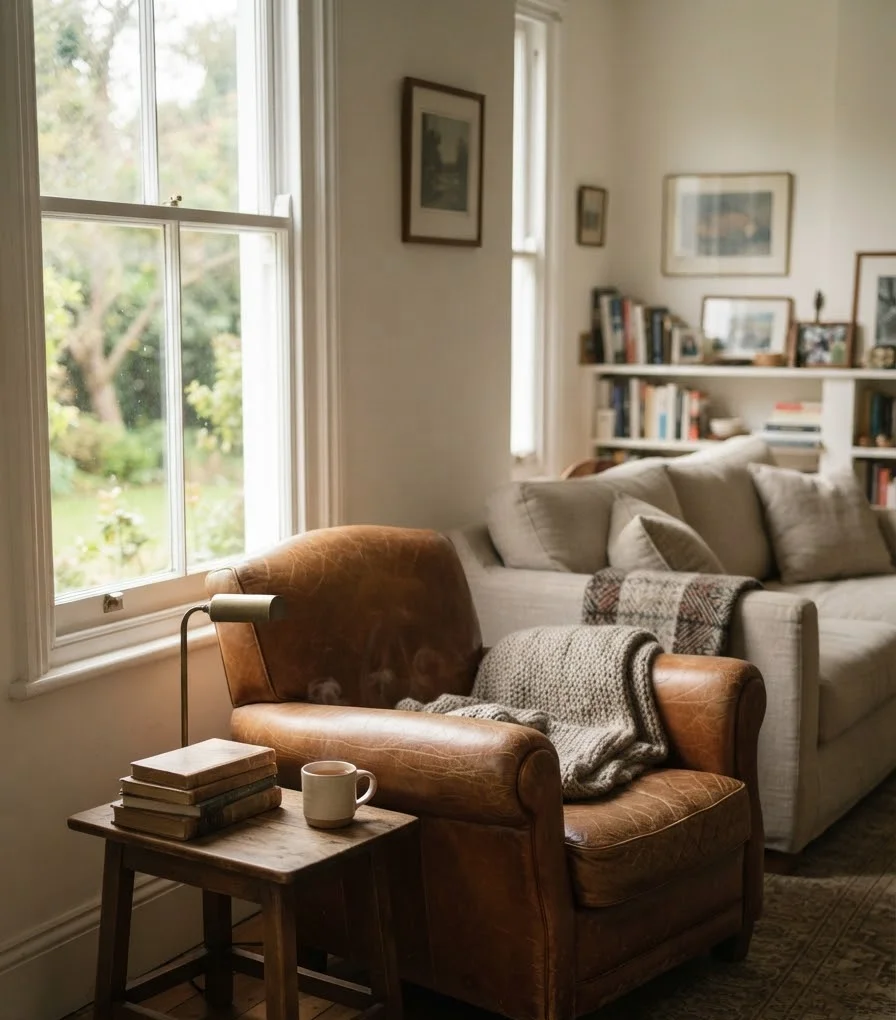
My favorite chair in my own living room is a slightly worn leather armchair in the corner that photographs terribly and gets used every single day. IMO, every fall room needs at least one piece like that.
A quick, honest comparison: buy new vs. restyle what you own
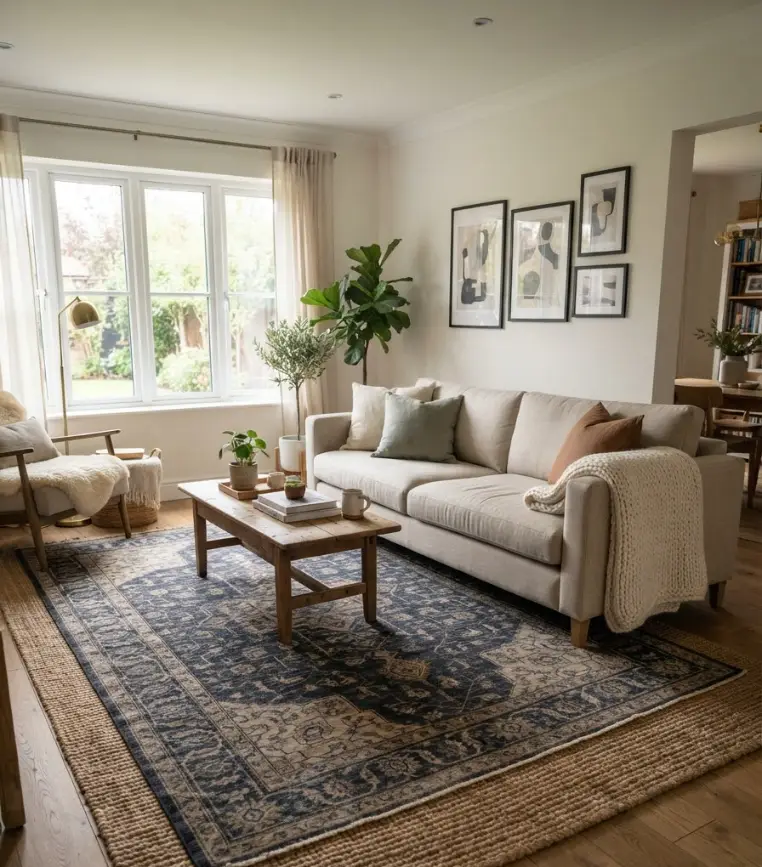
I get asked this constantly, so here’s the real answer. Buying a full new set of fall decor looks great on Pinterest, but it’s rarely worth it unless your current pieces are worn out.
Restyling what you already own, just rearranged with a few seasonal add-ins, gets you 90 percent of the visual impact for a fraction of the cost.
i MO, save the big purchases for pieces that carry into winter too, like a rug or a substantial throw, rather than anything single-use like paper leaf garlands.
A slightly random thought, because this is how my brain actually works
Every year around this time I also end up reorganizing my bookshelf by color instead of subject, which has nothing to do with fall decorating and everything to do with the fact that warm light makes we want everything in the room to feel intentional.
If that happens to you too, you’re not alone, and yes, it does eat an entire Saturday.
Small styling mistakes worth avoiding
- Overdoing artificial leaves scattered across every surface. A little goes a long way.
- Matching every pillow to every throw exactly. Some variation looks more collected.
- Forgetting scent. A warm candle (cedar, clove, apple) does more for “fall feeling” than most visual changes combined.
- Ignoring what’s already dark in the room. If your walls or floors are already deep-toned, lean lighter with your fall accents so the room doesn’t feel closed in.
Frequently asked questions
Do I need to buy new furniture to make my living room feel like fall? No. Rugs, throws, pillows, and lighting changes do most of the work. Save furniture purchases for pieces you’ll use year-round.
What’s the easiest fall decor idea for a small living room? Layer one textured throw, swap in two or three seasonal pillow covers, and add a single vase of dried branches or grasses. Small spaces get overwhelmed fast, so restraint matters more here than in a larger room.
How do I keep fall decor from looking like a Halloween display? Stick to natural materials (wood, dried florals, wool, linen) over anything glittery, plastic, or overtly costume-like. Ochre and rust read as fall; orange string lights and fake cobwebs read as October 31st specifically.
Final thought
A living room doesn’t need a full renovation to feel like fall, it needs a handful of honest, well-placed changes: warmer color, better texture, softer light. Start with one corner if the whole room feels like too much, the coffee table, the mantel, the sofa, and build out from there.
What’s the first thing you’re changing this weekend? Save this for later, and tag a friend who still has summer pillows out in October.
