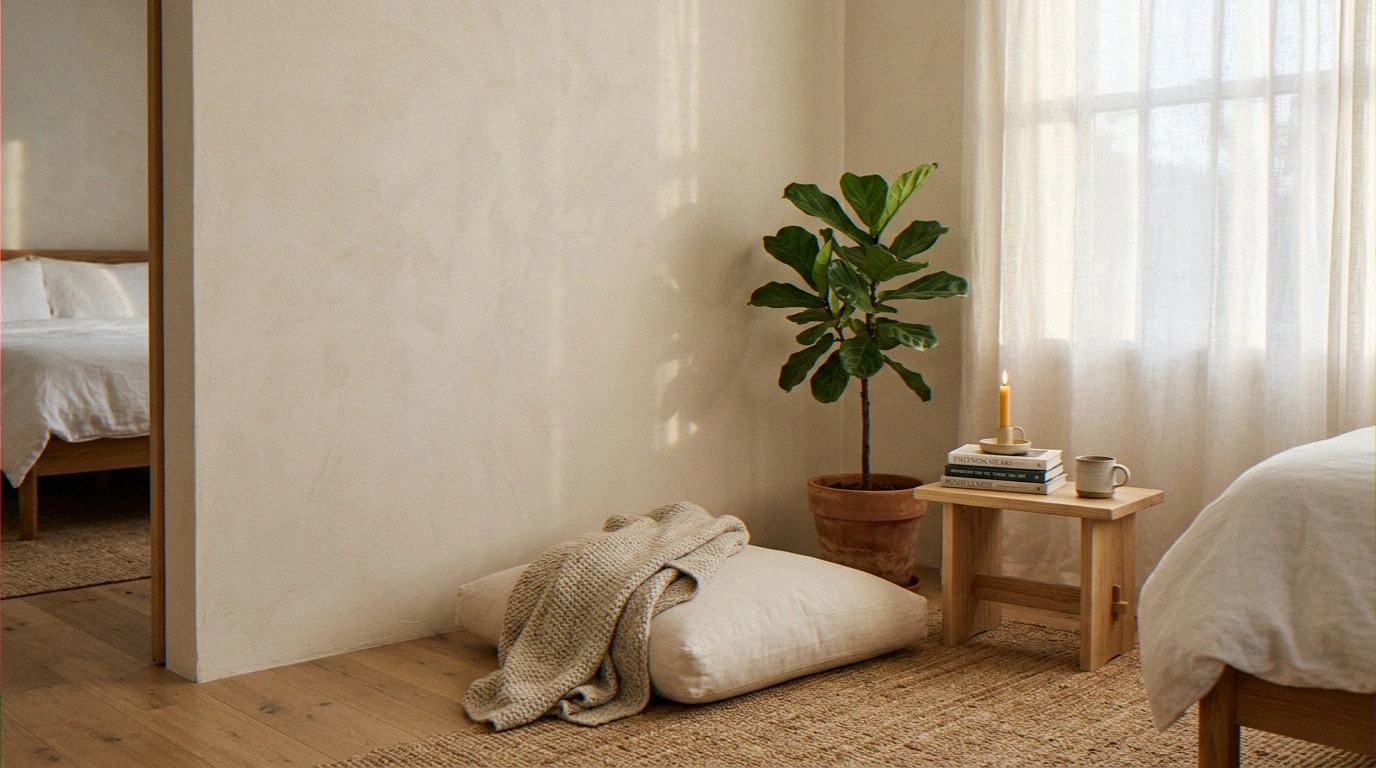
You know that dusty corner of your bedroom where old gym bags and chargers go to die? That one, yes.
I’m not being dramatic when I say that corner could really become the quietest place in your whole house.
changed mine about two years ago, and to be honest, it changed my mornings in ways I didn’t expect. I’ll show you exactly how to do this without spending a lot of money or hiring an interior designer. 🙂
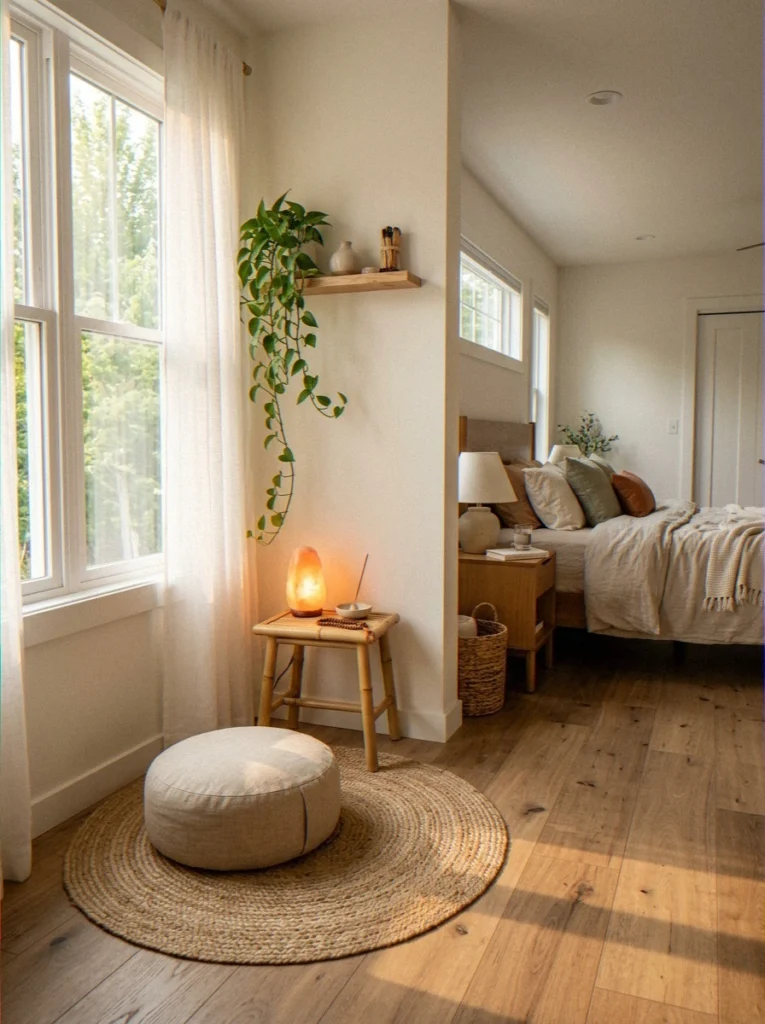
Why a Bedroom Corner Is Actually Perfect for Meditation
A lot of people think you need a separate room to meditate.
You really don’t need to, man. A corner gives you two natural walls that make you feel safe and contained. This subtle physical barrier helps your nervous system calm down faster.
Your bedroom is already your most personal space.
Your brain already associates it with rest and recovery, which gives you a psychological head start before you even close your eyes. IMO, that’s a massive advantage over meditating in the living room where the TV remote is basically calling your name.
The real secret here is intentionality.
Even a tight 4×4 foot corner becomes a powerful sanctuary when you set it up with genuine purpose and care.
Step 1: Picking the Right Corner
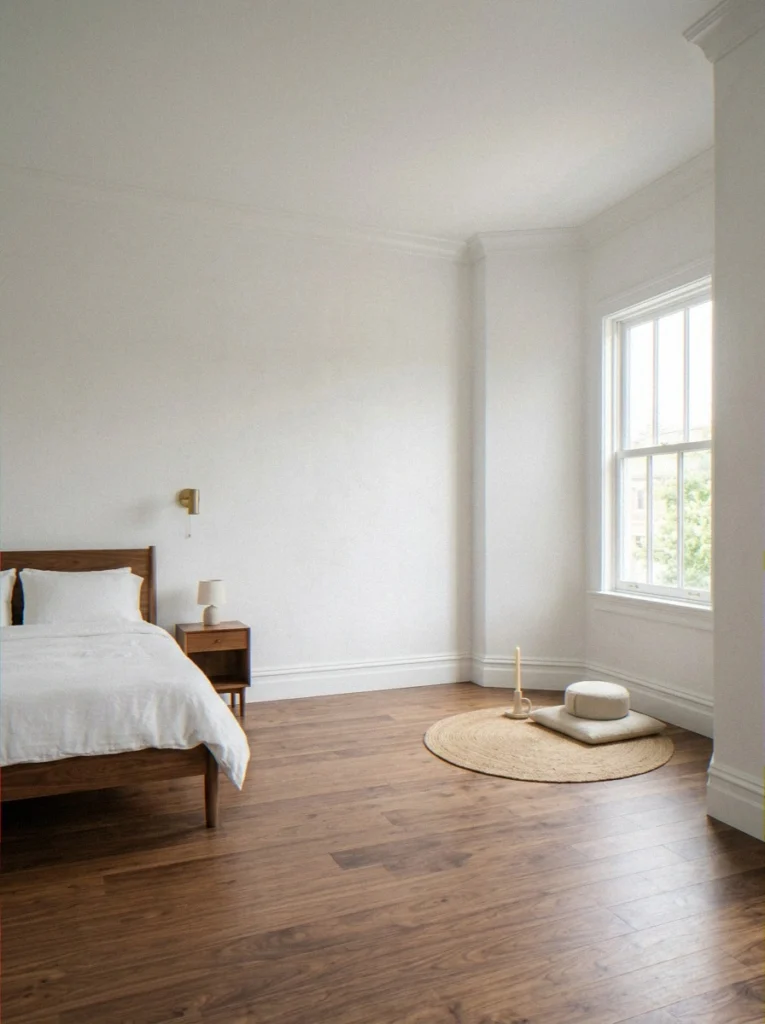
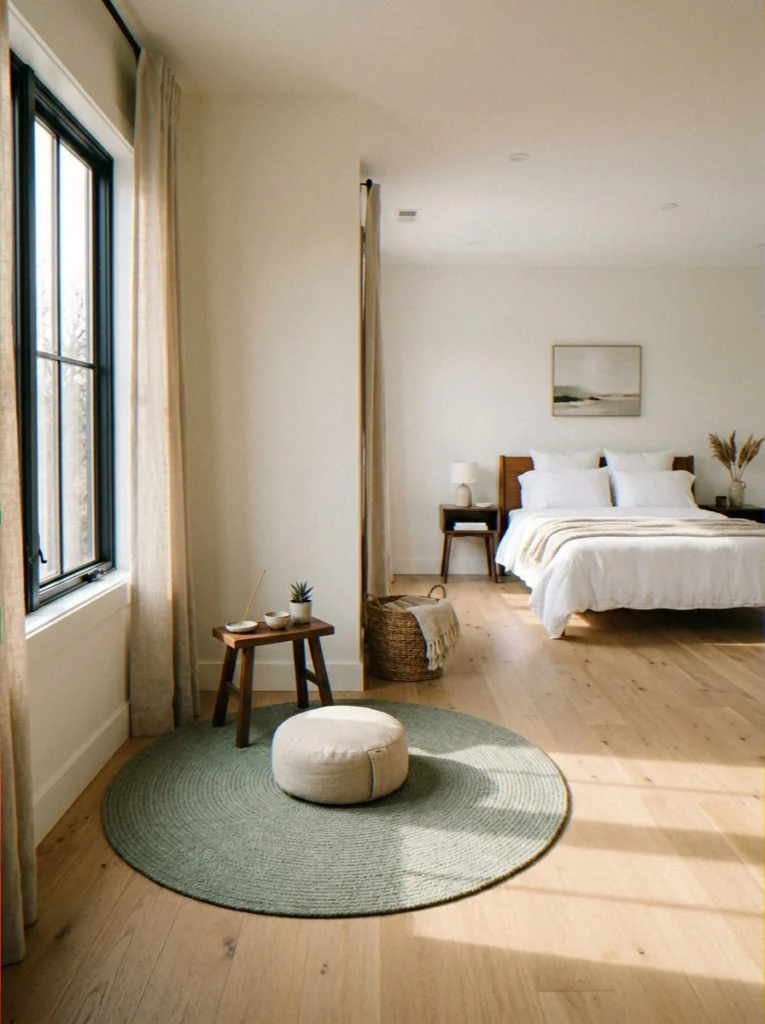
Not all corners are the same. I learned this the hard way when I first set up next to a loud radiator. Before you decide, take a few minutes to walk around your bedroom and stand in each corner.
Here’s what to look for:
- Natural light — A corner near a window (but not in direct harsh glare) is ideal for morning sessions. Soft morning light is genuinely mood-lifting.
- Noise level — Avoid walls shared with a loud street or a TV room next door.
- Foot traffic — Pick a spot you don’t walk past constantly. Interruption genuinely destroys the vibe.
- Floor space — You need at least 3×3 feet to sit without feeling cramped.
I chose the far corner near my bedroom window, away from the door.
Now the moment I walk to that corner, my brain just… shifts. That kind of spatial association is surprisingly powerful — environmental psychology research backs this up strongly.
Step 2: Sorting Your Seating First
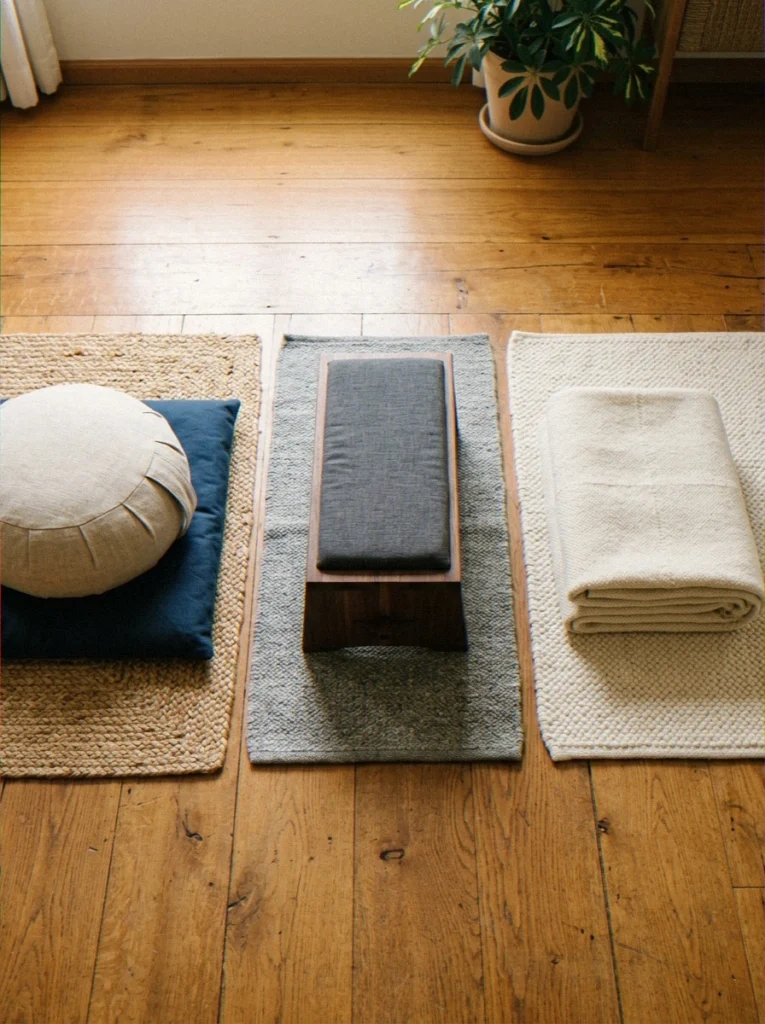
Your seating is the single most important physical element of the whole nook. Get this wrong and your sessions will be uncomfortable, distracted, and short.
Get it right and you’ll happily sit for 20+ minutes without fidgeting.
Option A: Meditation Cushion (Zafu)
You may have seen a zafu, which is a round cushion that is very common.
It raises your hips a little above your knees, which automatically straightens your spine. I use one with buckwheat in it. It’s firm, shapes to your body, and doesn’t flatten out after a week like cheap foam ones do.
Pair it with a zabuton mat underneath to protect your ankles and knees. Seriously, your joints will genuinely thank you after longer sits. Lotuscrafts make solid quality options that last.
Option B: Seiza Bench or Floor Chair
Cross-legged sitting not your thing? No shame — my hips protested dramatically for the first month. A seiza bench (kneeling-style) or a low-back floor chair keeps your spine upright without requiring any real flexibility. I actually switched to a floor chair during winter and found it just as effective.
Option C: A Folded Thick Blanket
Budget option and totally valid.
A firmly folded wool or fleece blanket achieves nearly the same hip elevation as a zafu. Start here if you’re testing the waters before investing real money.
Step 3: Making the Corner Feel Warm and Inviting
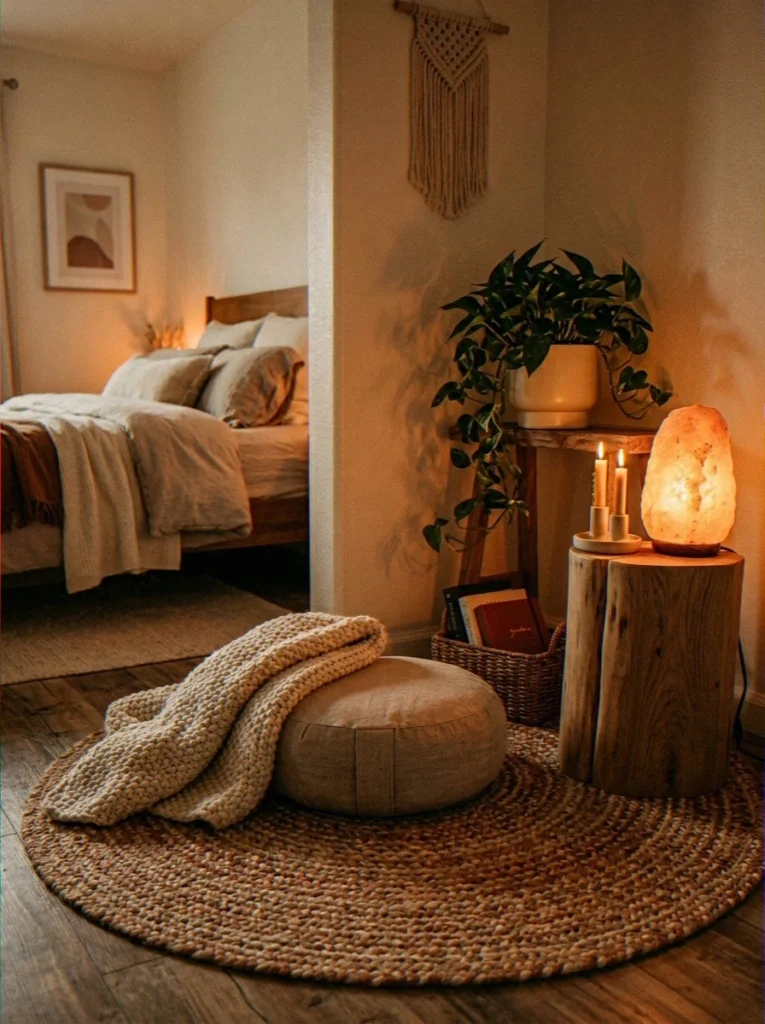
A bare, cold corner doesn’t exactly say “peace of mind.” This is where you add the comfort that makes you want to get up every morning instead of rolling back under the covers.
- A small rug — Defines the space visually and adds physical warmth. Natural fibers like jute or wool feel grounding underfoot. I tried a synthetic rug first and it genuinely felt wrong — too slippery, too cold.
- A warm throw blanket — Your body temperature drops when you sit still. Having something to wrap around yourself mid-session is a total game-changer, especially in winter.
- Floor-level lighting — Overhead lights are way too harsh for meditation. A Himalayan salt lamp or a warm LED candle creates that amber glow that signals your nervous system to calm down.
I’ve had a salt lamp in my nook for two years now.
The mood difference between switching it on versus the main ceiling light is honestly night and day.
Some studies suggest salt lamps may produce mood-lifting negative ions — and even if it’s partly placebo, that warm amber light alone justifies the purchase completely.
Step 4: Engaging All Your Senses (This Part Is Underrated)
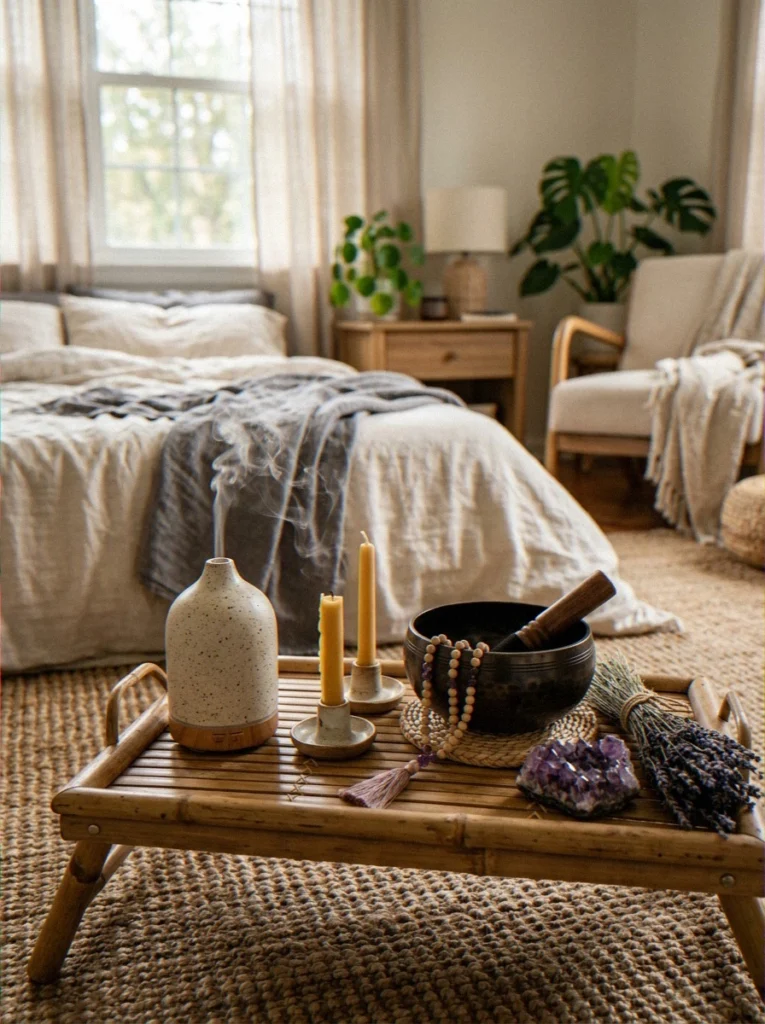
Here’s where most beginner guides completely skip the good stuff.
A killer meditation nook isn’t just visually pretty — it should speak to smell, sound, and touch too. This is honestly what separates a nook you’ll actually use from one that becomes another decorative corner.
Scent — The Fastest Mood Shifter
Scent changes your mental state faster than almost anything else. Before and during sessions, I keep a small essential oil diffuser going with lavender or frankincense.
When that smell hits, my brain really starts to wind down. It’s like Pavlov’s dogs at this point.
Alternatives worth trying:
- Incense sticks — Sandalwood and nag champa are classics for good reason. I tried a “fresh linen” incense once. Huge mistake. Smelled like a laundry room.
- Beeswax candles — Subtle honey scent, clean burn, genuinely beautiful.
- Dried herb bundles — A small lavender bundle hung on the wall looks awesome and smells subtle throughout the day.
Sound — Masking Distractions Without Replacing Them
Even quiet rooms have noise. A few sounds that work brilliantly:
- Tibetan singing bowls — I tap mine once at the start and once at the end of every session. It’s become a ritual boundary marker and I genuinely miss it when I skip it.
- White noise machine — Wow! What a difference this makes if you live somewhere with street noise.
- Insight Timer app — Free, genuinely excellent, massive library of guided sessions and ambient sounds.
Touch — Tactile Anchors That Work
Everything you physically touch in the nook should feel intentional and good.
A smooth mala bead bracelet, a cool crystal, a soft blanket corner — these tactile anchors pull wandering attention back without effort.
Step 5: Personalizing the Visual Space (Without Cluttering It)
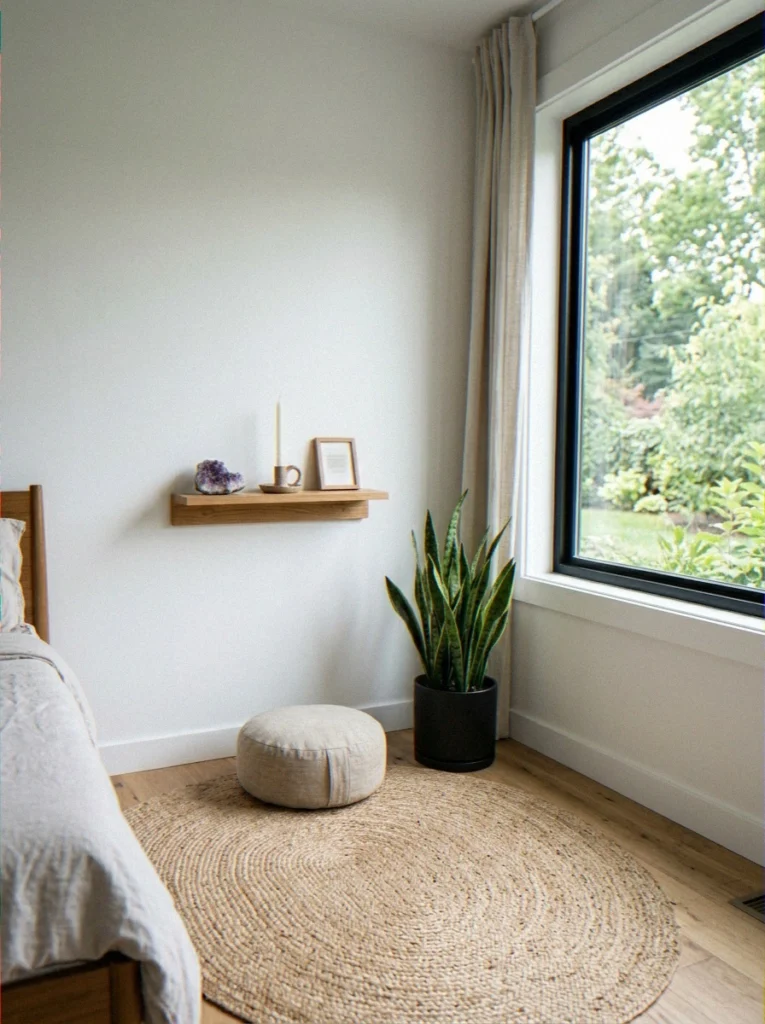
Okay, let’s be real. I’ve seen meditation corners on Instagram that look like someone broke into every spiritual store in Bali and dumped everything in one corner.
That’s not calm. That’s a mess with better lighting. Less is really more in this case.
Cool things to include:
- One meaningful object — A small statue, a crystal, a plant, or a photo. One or two things maximum. I have a small amethyst cluster and a tiny pothos plant. Perfect.
- A small shelf or wooden stool — Holds your essentials: candle, journal, water glass. I use a cheap bamboo stool from IKEA and it works perfectly.
- A live plant — A pothos, snake plant, or peace lily adds life energy and genuinely improves air quality. NASA’s Clean Air Study found several houseplants effectively filter indoor air — cool bonus.
- One framed quote — At eye level on the wall. A single line of something meaningful as a visual focal point. Mine says “This too shall pass” and it’s earned its place.
Things to avoid absolutely:
- Any clutter that doesn’t serve the space
- Bright, stimulating colors — stick to earth tones, soft whites, or muted greens and blues
- Your phone with notifications on. Just… no. :/
At first, I thought the minimalist style was old-fashioned.
I wanted my corner to look full and planned out. But right away, the space felt ten times more peaceful after I made it simpler.
Step 6: Building a Ritual Around the Space
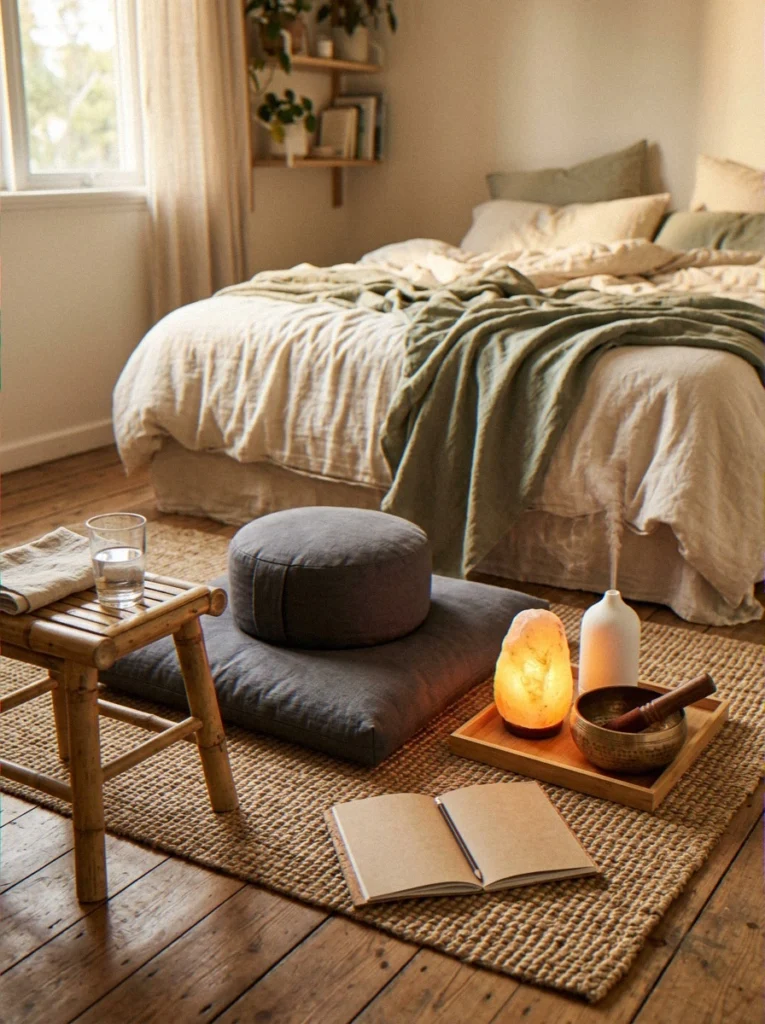
Here’s the step almost everyone skips — and it’s honestly the most impactful one. The physical setup means nothing without consistent, intentional use.
Your brain builds powerful associations through repetition, so you need to actually show up.
My personal daily ritual:
- Switch on the salt lamp and start the diffuser
- Tap the singing bowl once
- Sit down and set a timer for 10–20 minutes
- Breathe, sit, sometimes journal for 5 minutes after
Just so you know, you don’t need a complicated 45-minute routine to get real results. Ten minutes of real quiet every day will make a big difference in a week. The first time I saw it was on day four. That’s not a long wait for something that really makes your days better.
Step 7: Keeping the Space Sacred (This Is Harder Than It Sounds)
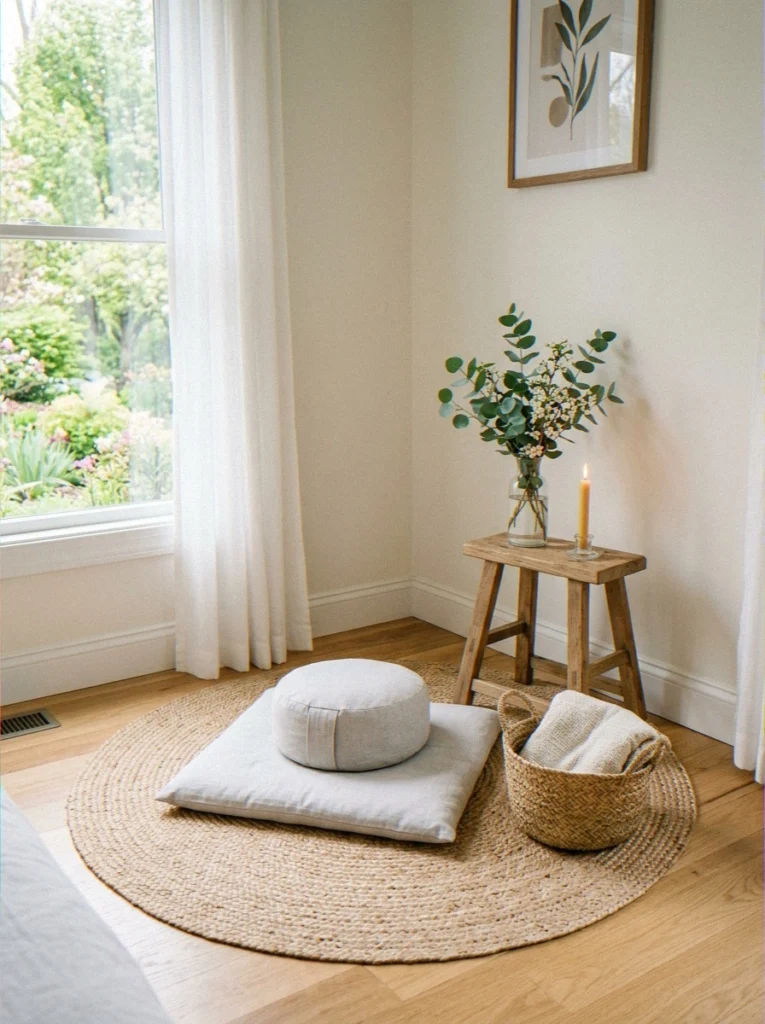
Real talk — don’t let your meditation nook slowly become a second clothes chair. I watched mine almost turn into a cushion-covered dumping ground during a busy work month.
Once random stuff starts appearing there, the magic disappears fast.
Simple maintenance habits:
- Quick 3-minute tidy every Sunday — refresh, reset, re-fold the blanket
- Refresh your diffuser scent seasonally to keep it feeling new
- Swap small decorative elements with seasons — a pine sprig in winter, fresh flowers in spring, a shell or two in summer
Treat the space like it genuinely deserves respect. Because it does.
Quick-Reference Info Table
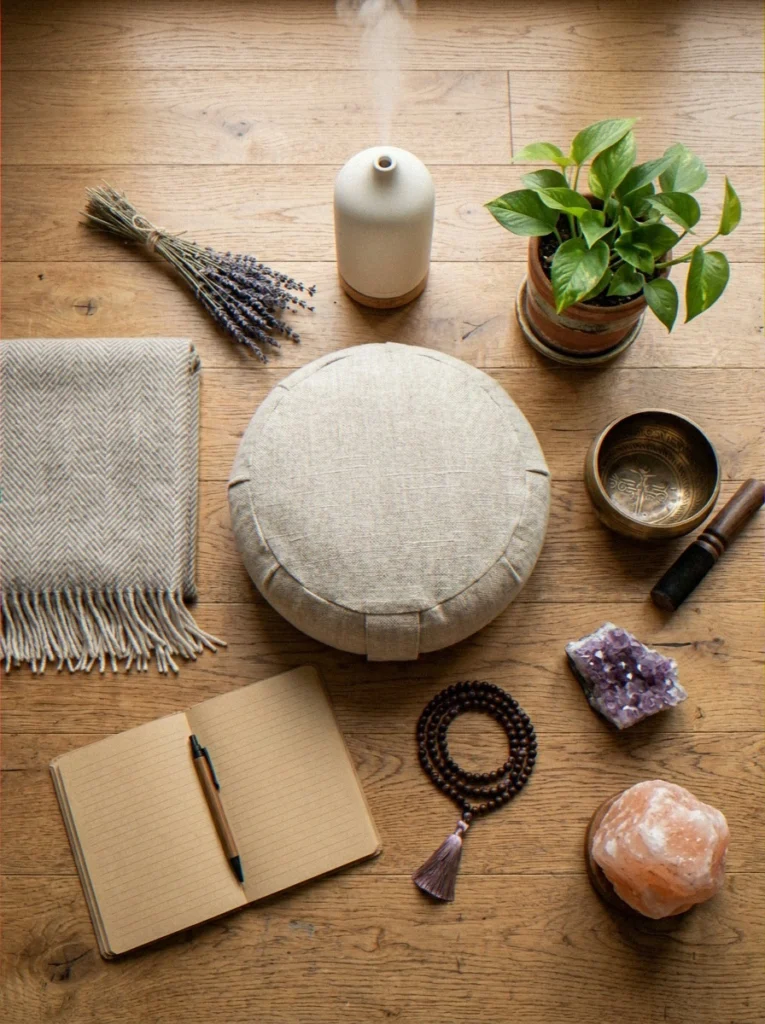
| Element | Budget Option | Mid-Range Option | Why It Matters |
|---|---|---|---|
| Seating | Folded thick blanket | Zafu + zabuton set | Spine alignment, session comfort |
| Lighting | LED candle | Himalayan salt lamp | Signals calm to nervous system |
| Scent | Incense sticks | Essential oil diffuser | Fastest mood-state trigger |
| Sound | Free app (Insight Timer) | Tibetan singing bowl | Ritual anchoring, distraction masking |
| Decor | One meaningful object | Small shelf + plant | Visual calm, spatial intention |
| Comfort | Throw blanket | Natural fiber rug | Physical warmth, sensory grounding |
Bedroom Meditation Corner Ideas Worth Stealing
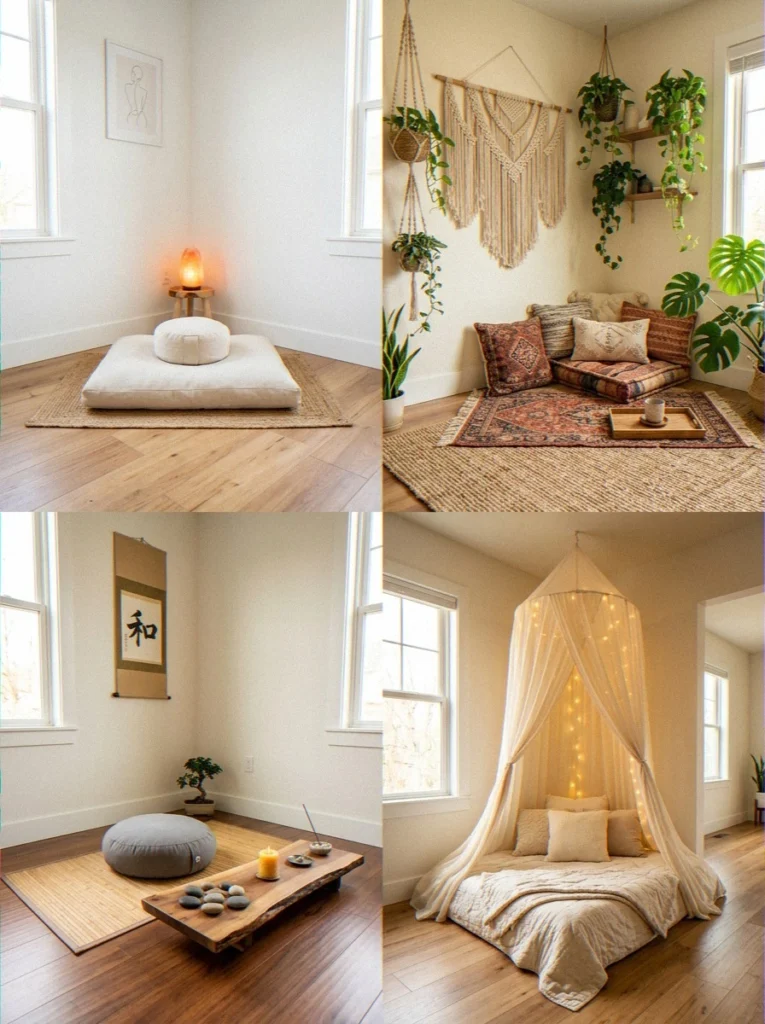
Now that you know the basics, let’s talk about style. Your nook should feel like you, not like a picture from a wellness brand’s website.
Explore More Home Inspiration
How to Zone an Open Plan Living Room Without Using Walls?
How to Build a DIY Trellis for Hanging Basket Cucumbers?
How to Use Permeable Pavers for Driveway Flood Prevention?
Meditation corner in bedroom ideas that actually work:
- The Minimalist Cave — White walls, single cushion, salt lamp, one plant. Zero clutter. Insanely calming. This is my current setup and I love it.
- The Boho Layered Look — Woven rug, layered cushions, macramé wall hanging, trailing pothos. Warm, textured, creative. Works beautifully if your bedroom already has that earthy aesthetic.
- The Zen Corner — Bamboo mat, low wooden stool, single candle, smooth river stones. Simple and genuinely gorgeous.
- The Cozy Nook — Floor cushion inside a canopy or hanging fabric panel, fairy lights, soft blanket. Perfect for small bedrooms where you want to create a “room within a room” feel.
Small meditation room ideas follow the same principles — scale down, simplify, and prioritize scent and lighting over physical size. I’ve seen stunning meditation spaces in 6×6 foot rooms that felt more sacred than big empty studios.
People Also Ask
How to Set Up a Meditation Corner?
Setting up a meditation corner starts with choosing the right spot — ideally a low-traffic corner with soft natural light and minimal noise.
Add supportive seating (a zafu cushion or folded blanket works great), define the space with a small rug, and layer in warm lighting like a salt lamp or candle.
Engage your senses with a scent element like incense or a diffuser, and keep the visual space simple and meaningful.
One or two personal objects, a plant, and consistent daily use will turn a simple corner into a genuinely powerful space within a week.
What to Put in a Meditation Corner?
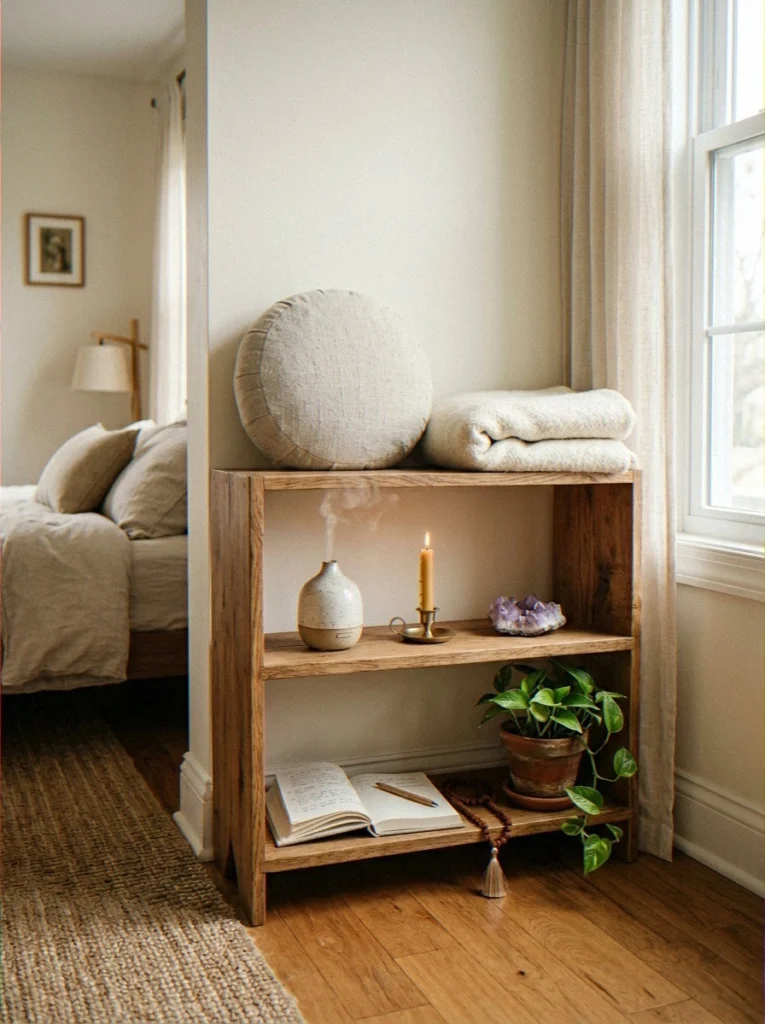
Here’s a solid starter list for your meditation corner:
- Seating — Zafu cushion, seiza bench, or a firm folded blanket
- Lighting — Salt lamp, beeswax candle, or warm LED light
- Scent — Essential oil diffuser, incense, or a dried herb bundle
- Sound — Singing bowl, white noise machine, or a meditation app
- Decor — One meaningful object (crystal, statue, or plant), a small rug, a throw blanket
- Optional extras — Journal, mala beads, a framed quote on the wall
Keep it simple. The corner should feel calm and intentional, not cluttered.
What Are the 4 R’s of Meditation?
The 4 R’s of meditation is a practical framework many teachers use to structure a session and handle distraction:
- Recognize — Notice when your mind has wandered. No judgment, just awareness.
- Release — Let the thought go without following it or analyzing it.
- Relax — Consciously soften your body and breath as you return to the present.
- Return — Bring your attention back to your chosen focus — breath, mantra, or body sensation.
This framework is particularly useful for beginners who feel frustrated when thoughts arise during meditation.
Thoughts aren’t failure — they’re literally just part of the process. The 4 R’s give you a clean, simple method to work with them instead of fighting them.
Final Thoughts
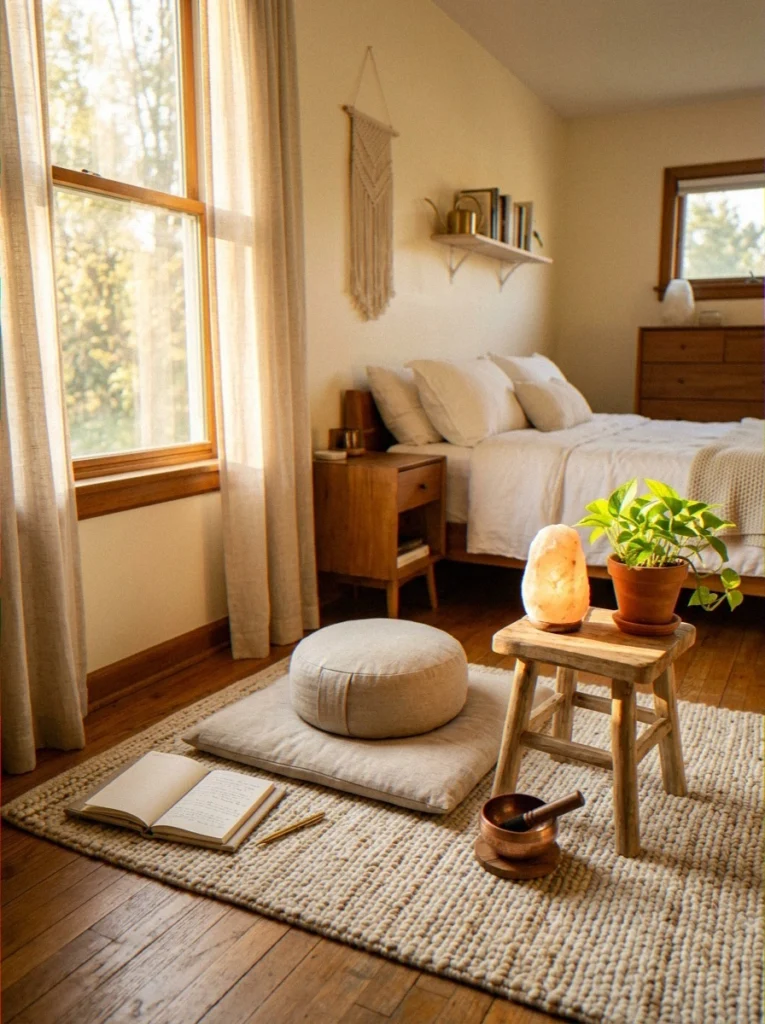
Setting up a meditation corner in your bedroom is one of the best things you can do for your health every day, and it doesn’t cost much.
You don’t need a perfect look, a lot of expensive pillows, or a lot of space. You need a corner, a plan, and the habit of showing up.
I made mine on a Sunday afternoon with things I mostly already had. It’s the place I go every morning before the day gets crazy, two years later.
It doesn’t look perfect on Instagram. That’s why it works: it’s mine.
So — have you already got a corner in mind? Drop it in the comments, or just go claim it right now. Your future calmer self will seriously thank you. 🙏
