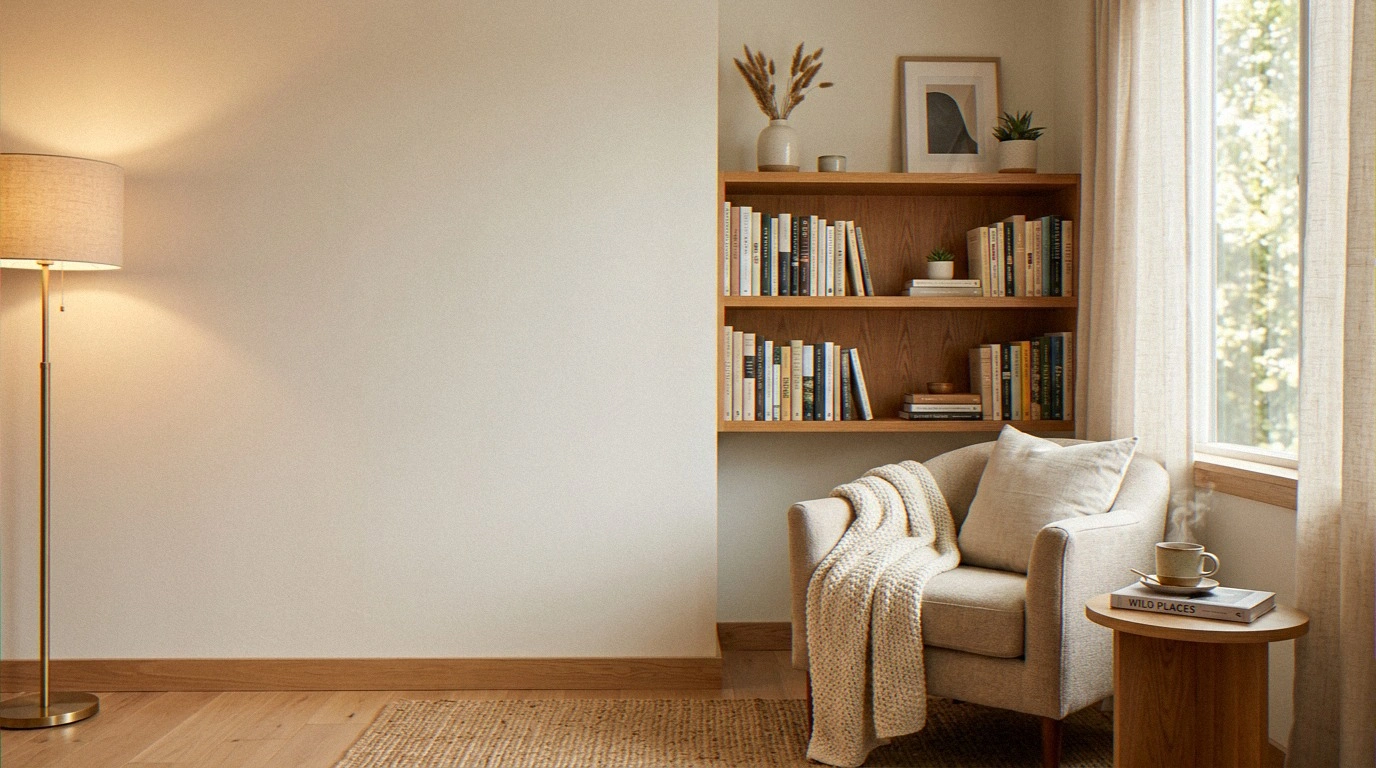
I’ve spent an embarrassing amount of time on Pinterest at midnight, saving library room photos I thought I’d never actually recreate in my tiny flat. Then one afternoon I just… started.
Pushed a bookshelf into a corner, dragged in an old armchair, hung a lamp, and suddenly I had a reading nook that made me genuinely happy every single day. And my place is not big. Not even close.
So if you’ve been telling yourself “I’ll do this when I have a bigger home,” I’m here to tell you — stop waiting. Small homes can have killer library corners, full stop.
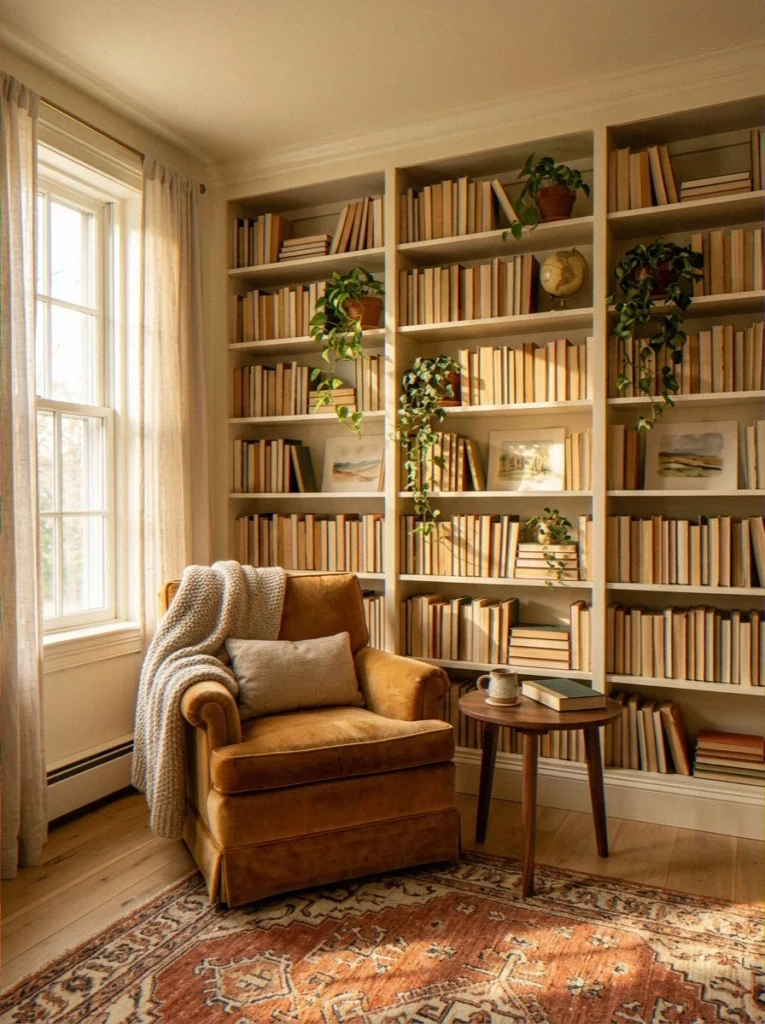
This article is packed with 38 real, achievable small home library ideas — from dead-simple weekend projects to slightly more ambitious builds.
I’ve also pulled in some design principles, budget tricks, a quick FAQ section, and a few personal disasters along the way (you’ll learn from my mistakes, bro, I promise). Let’s go.
Why Small Homes Are Actually Perfect for Cozy Libraries
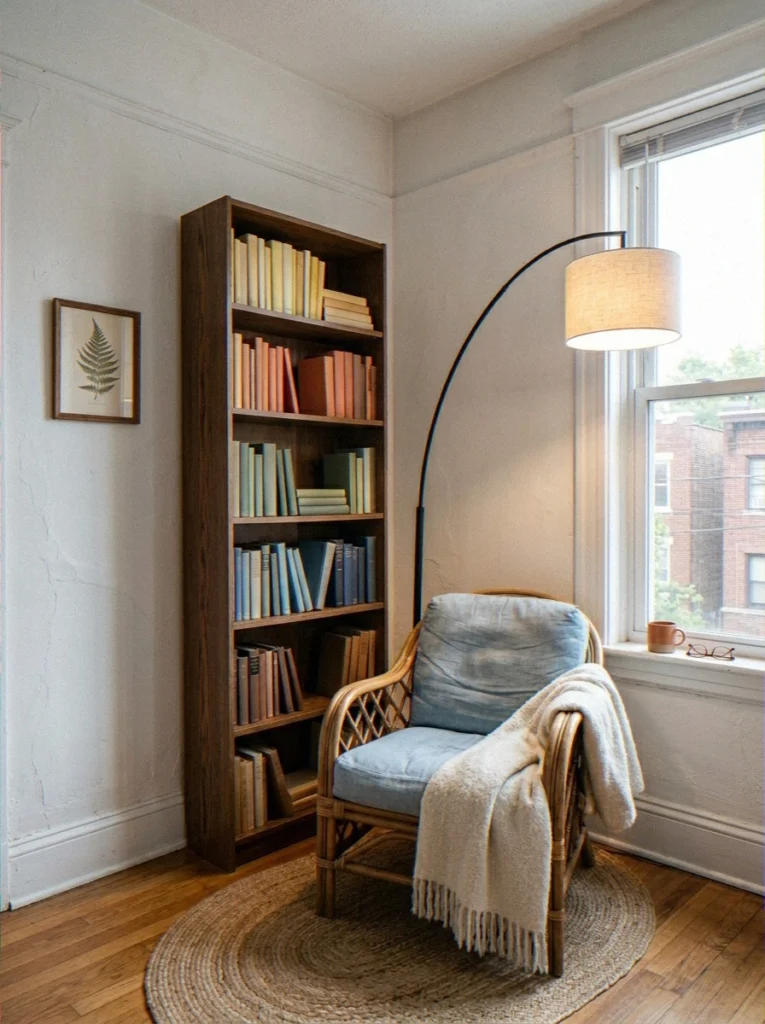
Here’s something that took me way too long to figure out: small spaces are better for cozy atmospheres, not worse.
Think about it — a massive reading room with 20-foot ceilings is impressive, sure, but it’s not cozy. Cozy is intimate. Cozy is enclosed. Cozy is “this corner was made for me and nobody else.”
Research from the University of Sussex showed that reading for just six minutes can cut stress levels by up to 68%. Six minutes! That’s genuinely wild.
A small home library gives you a dedicated, sensory-rich space to get those benefits every single day — and you don’t need a manor house to make it happen. You just need a plan.
Planning Your Small Home Library: The Basics First
Measure Before You Dream (Seriously)
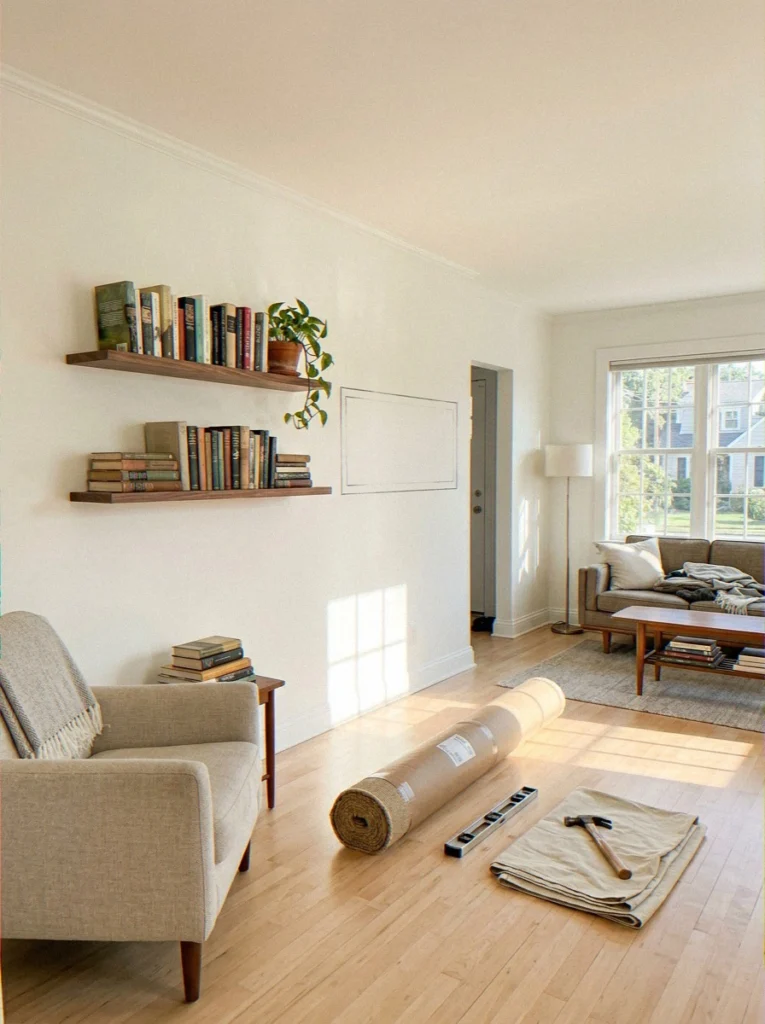
I cannot stress this enough. My first bookshelf purchase — a gorgeous dark wood seven-footer — didn’t fit through my front door.
I stood there in the hallway for a good five minutes just staring at it. Measure your doorways, your walls, and your ceiling before you buy anything.
Here’s what to check before you start:
- Wall width and height — know your vertical space, it’s your biggest asset in a small home
- Door and hallway clearance — for anything you need to carry in
- Outlet and vent locations — these will affect where furniture can actually go
- Natural light direction — you’ll want your reading chair near a window if possible
Choose Your Spot Strategically
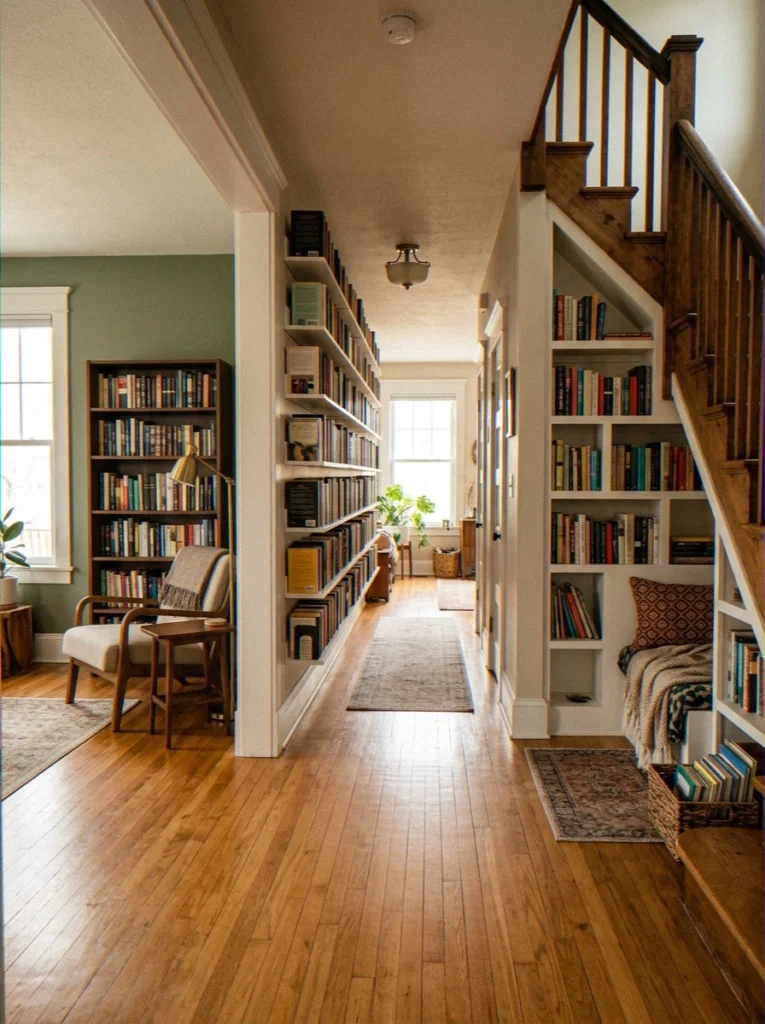
Your library doesn’t need its own room. Some of my favourite small home library setups live in a corner of the living room, an underused bedroom alcove, under a staircase, or even in a converted wardrobe.
Don’t overlook hallways either — a long hallway wall lined with floating shelves is genuinely stunning and uses space that otherwise does literally nothing.
Small Home Library Ideas: The Big Inspiration List
1. Floor-to-Ceiling Bookshelf Wall
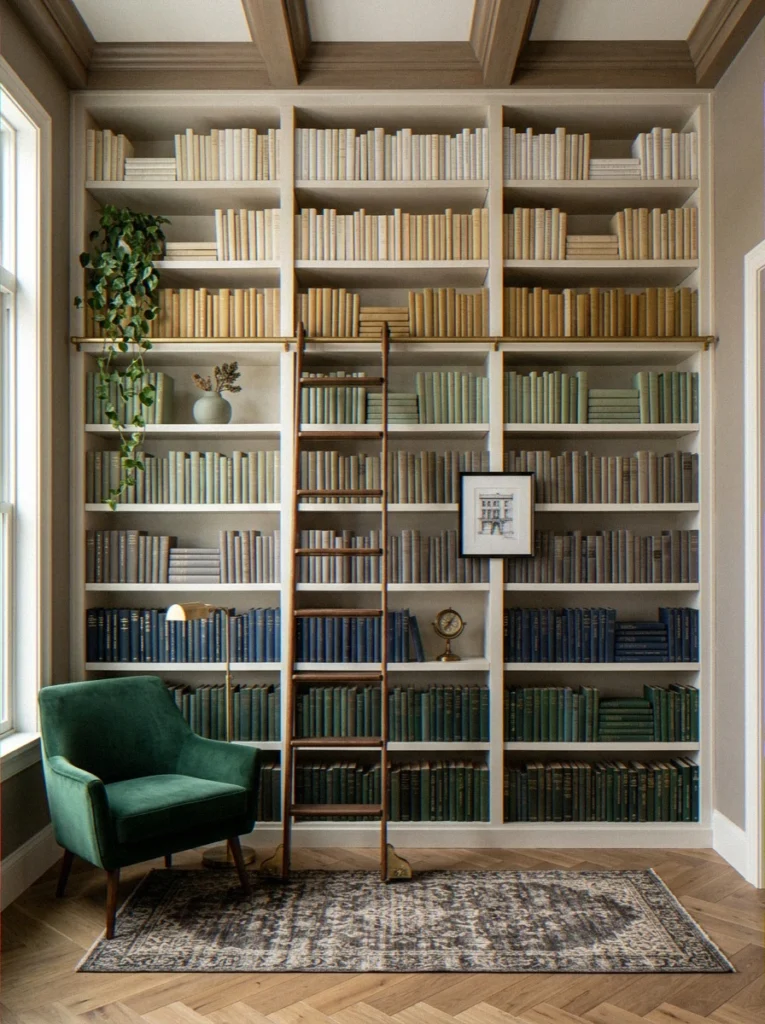
If you’ve got one decent wall, go vertical and go all in. Floor-to-ceiling shelving draws the eye upward, makingsmall rooms feel taller and grander than they actually are.
I did this in my home office with IKEA Billy bookcases stacked and fitted with crown moulding at the top — honestly, it looked custom-built at a fraction of the cost.
Throw in a rolling library ladder if you want to really live out your Belle-from-Beauty-and-the-Beast fantasy (no shame, we’ve all been there 😄).
2. Built-In Window Seat with Book Storage
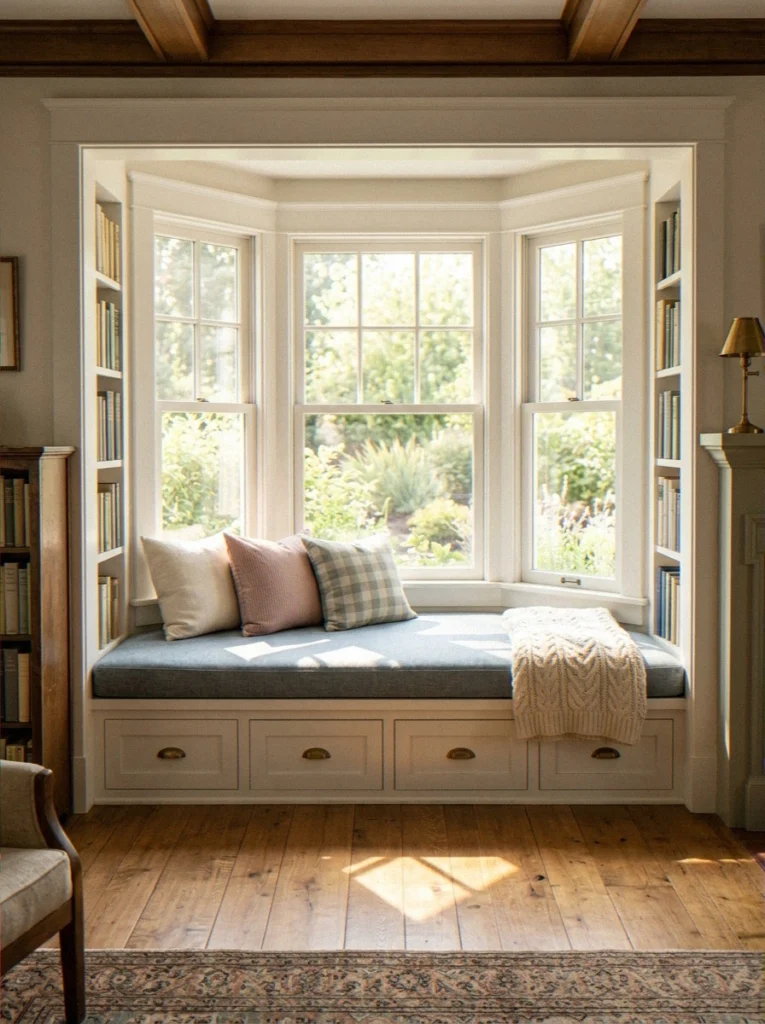
The best library hall-of-famer is a window seat with built-in shelves or drawers underneath. One piece of furniture gives you natural light for reading, a comfortable place to sit, and a place to hide your books.
I’ve seen this done very well in small bay windows with just a plywood bench, a foam cushion, and some simple framing. What is the total cost? About £150. What kind of mood does it create? Worthless.
3. The Reading Nook Alcove
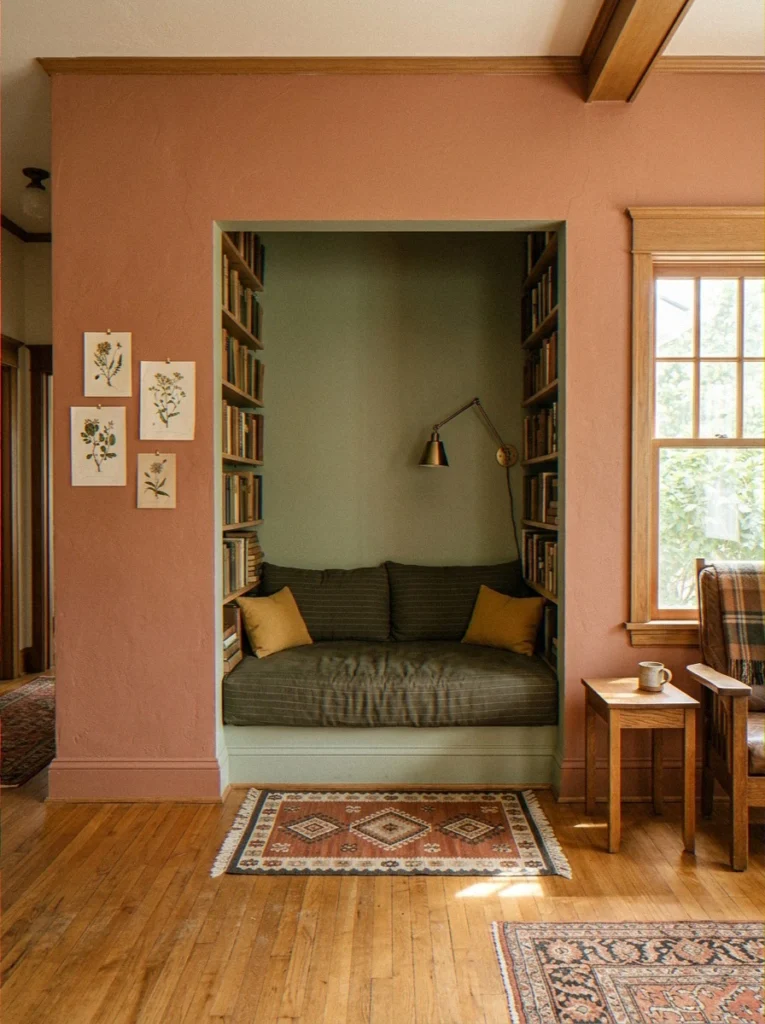
Do you have a small, awkward space in your wall? Don’t hate it; just put shelves on both sides, a cushion at the bottom, and a reading light on the wall, and you’ll have an alcove reading nook that people will really want. This is one of those ideas that makes a design flaw the best part of the room.
4. Floating Shelves Around a Doorframe
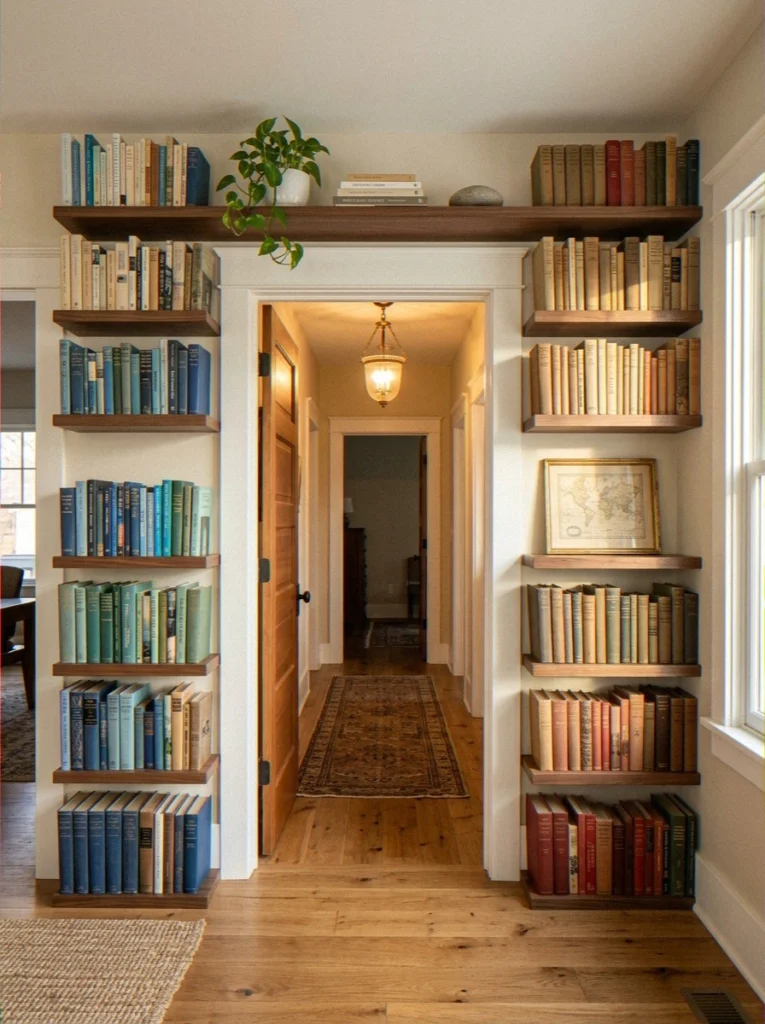
To make a book-framed entryway, put floating shelves on both sides and across the top of a doorframe.
It uses wall space that doesn’t do anything in most homes, and it looks like it was planned and built. This is so easy and works so well that I don’t know why more people don’t do it.
5. Closet Conversion Library
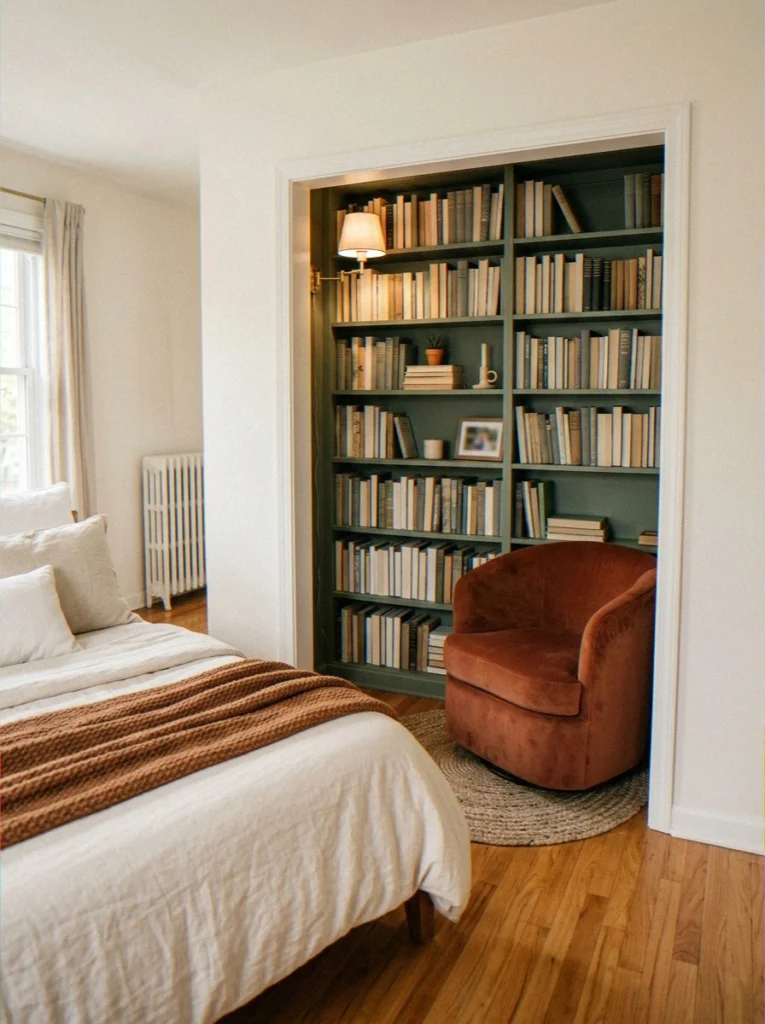
Take off the closet doors. Take out the rod that hangs. Put shelves from the floor to the ceiling, and then put a reading chair or floor cushion in front of them. Your old wardrobe will now be a private, enclosed reading nook.
This works best in bedrooms. The feeling of being enclosed is really cave-like and cozy in the best way.
6. Leaning Ladder Shelf in a Corner
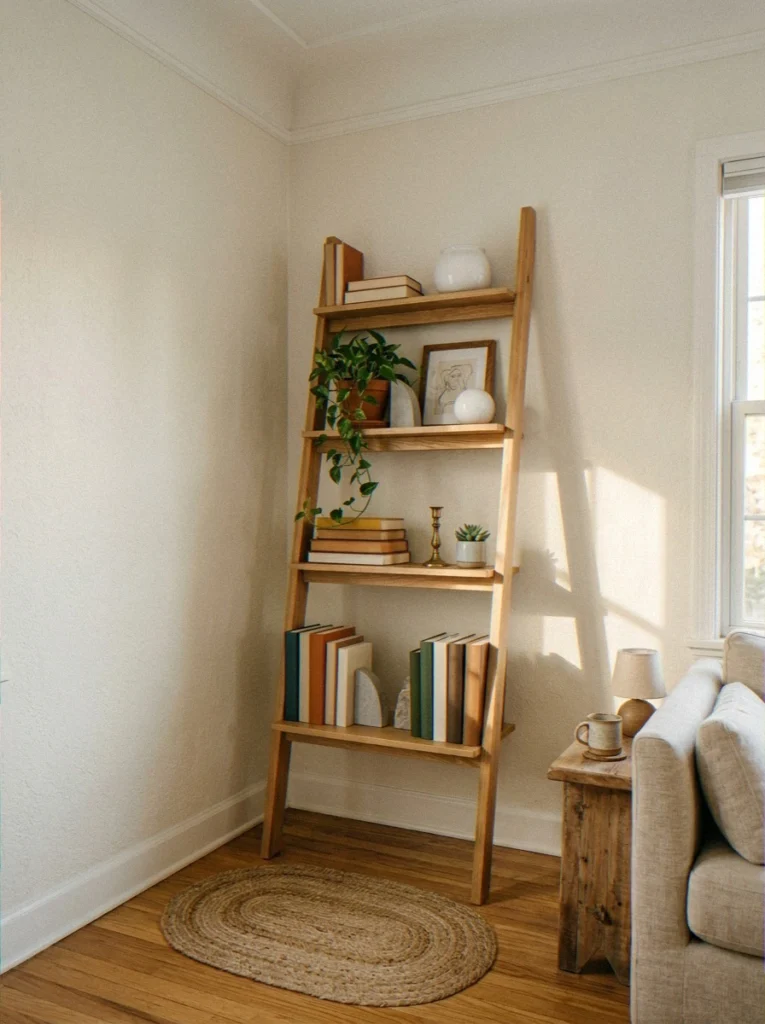
A leaning ladder shelf is the easiest, most affordable route to vertical book storage without wall drilling or major commitment.
Lean it into a corner, style with books and a trailing plant or two, and you’ve got a charming small library setup assembled in under an hour.
I tried this in my spare room and it genuinely transformed the corner — took me maybe 45 minutes total.
7. Dark Moody Walls + Warm Lighting
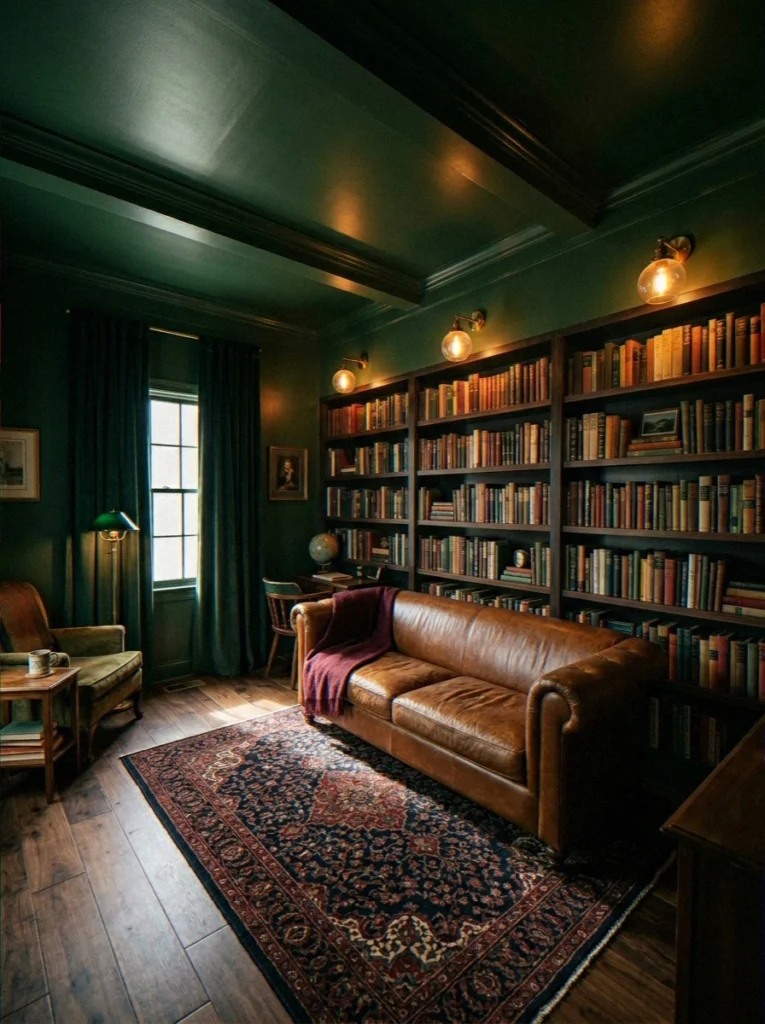
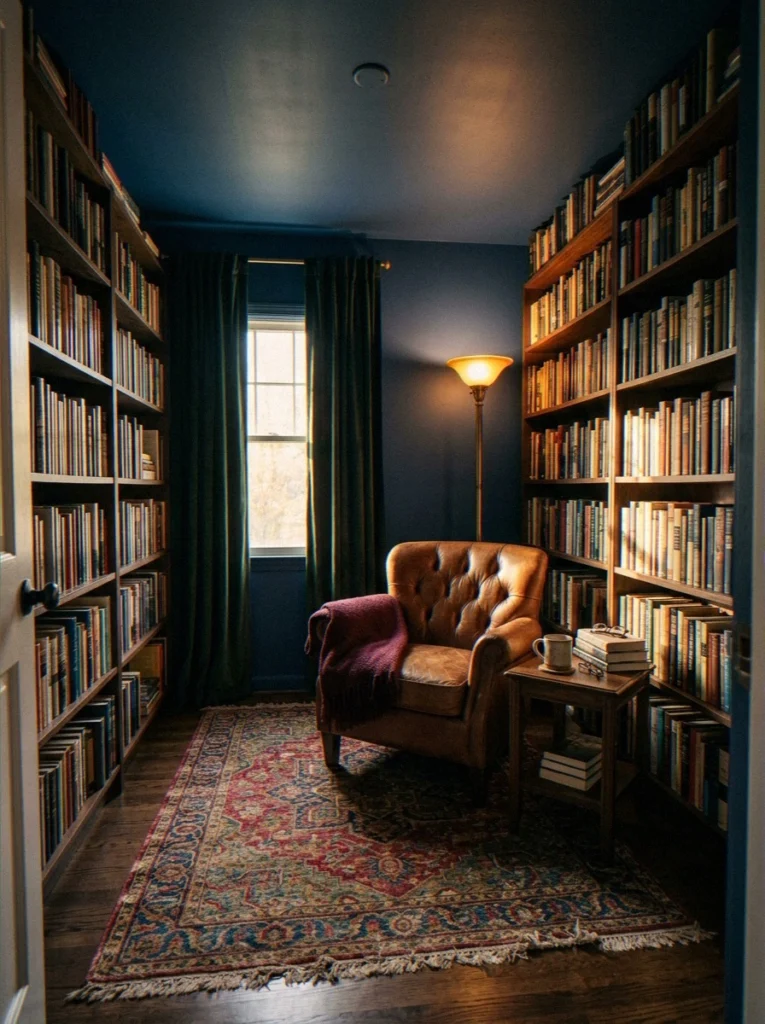
People who say that dark paint makes a small room feel smaller are wrong. Walls in deep forest green, navy, charcoal, or even black can make a small library feel cozy instead of cramped.
When you use warm Edison bulbs or soft-glow sconces with them (look for a color temperature of 2700K), the room will feel like a warm blanket around you. In my opinion, this is the best way to improve the atmosphere.
8. Built-Ins Flanking a Fireplace
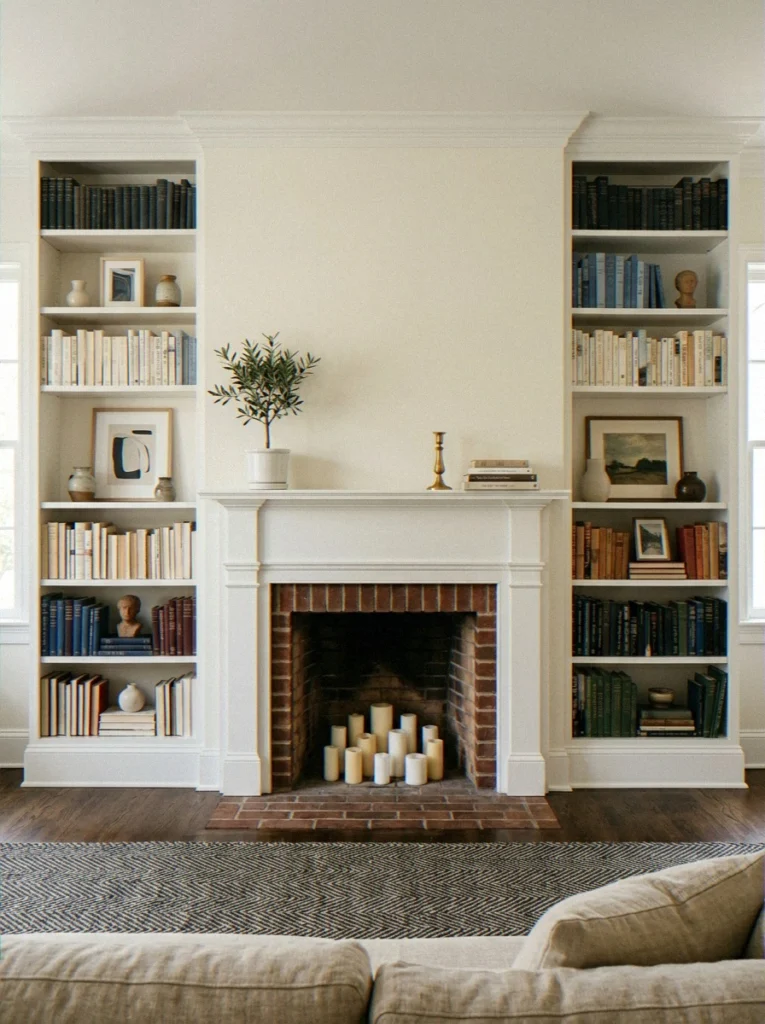
If your home has a fireplace — working or decorative — flank it with built-in bookshelves on both sides. This is the quintessential cozy library look.
Even a simple non-working fireplace with a candle arrangement inside anchors this setup beautifully. It’s a classic for a reason.
9. The Perfect Reading Chair and Ottoman
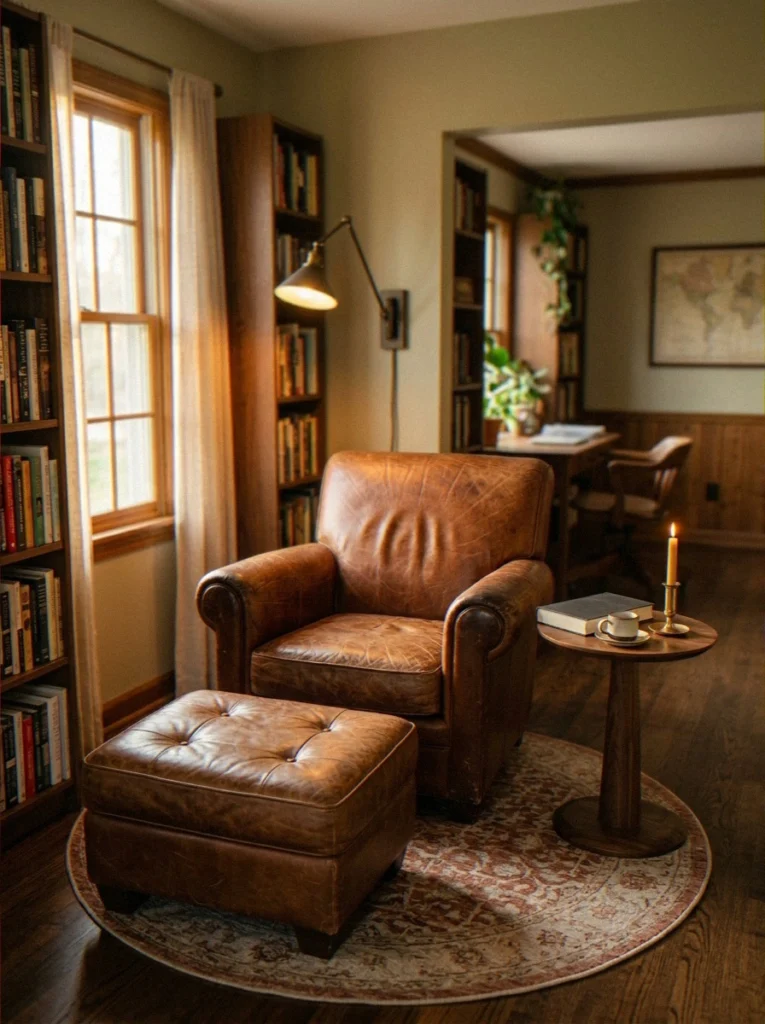
The library is sometimes the furniture. A comfortable armchair with a footstool or ottoman next to your books tells your brain that this is where you read.
I bought a used leather armchair for £40, and it’s the only piece of furniture I’d save in a fire. Having a special reading chair is very Pavlovian: as soon as you sit in it, you want to read. It really works, man.
10. Books Mixed with Art on Open Shelves
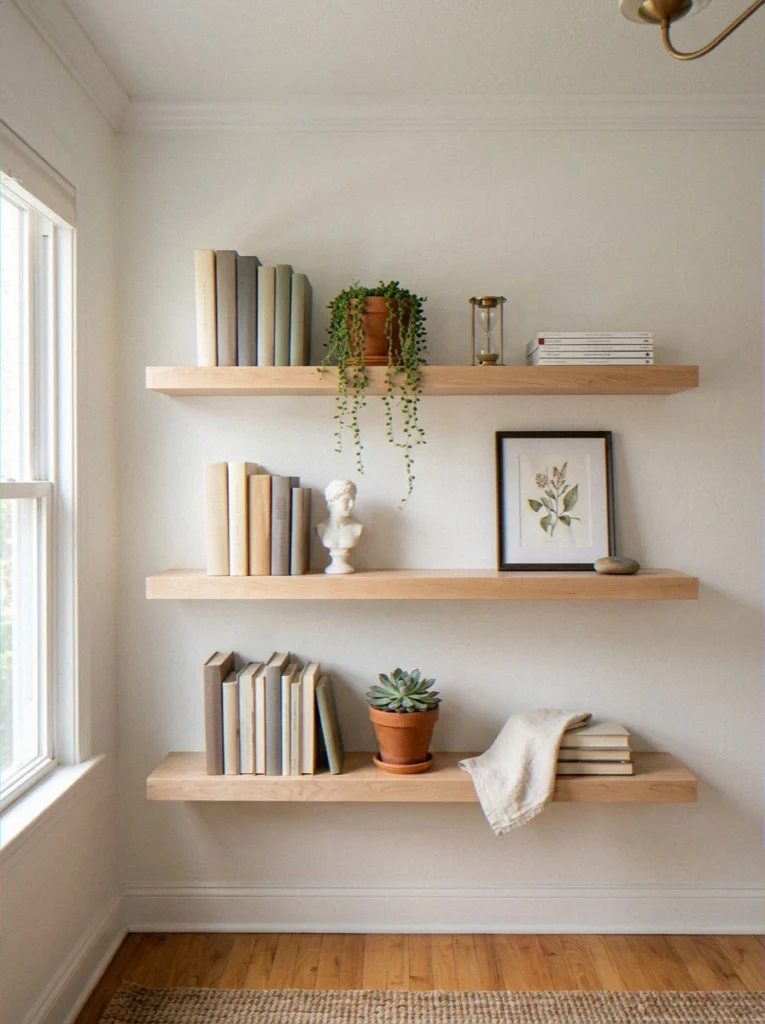
Your shelves don’t need to be wall-to-wall books (and honestly, in a small home, they probably shouldn’t be — it can feel overwhelming).
Intersperse framed art, small sculptures, plants, and meaningful objects among your books. This approach makes shelves feel curated and personal rather than like a storage unit.
| Style | Key Feature | Difficulty | Approx. Cost |
|---|---|---|---|
| Floor-to-ceiling shelves | Max vertical storage | Medium | £200–£600 |
| Closet conversion nook | Intimate, enclosed | Easy | £80–£250 |
| Window seat with storage | Light + seating + books | Medium | £150–£400 |
| Dark moody accent wall | Atmospheric drama | Easy | £30–£80 |
11. Under-Stair Library Nook
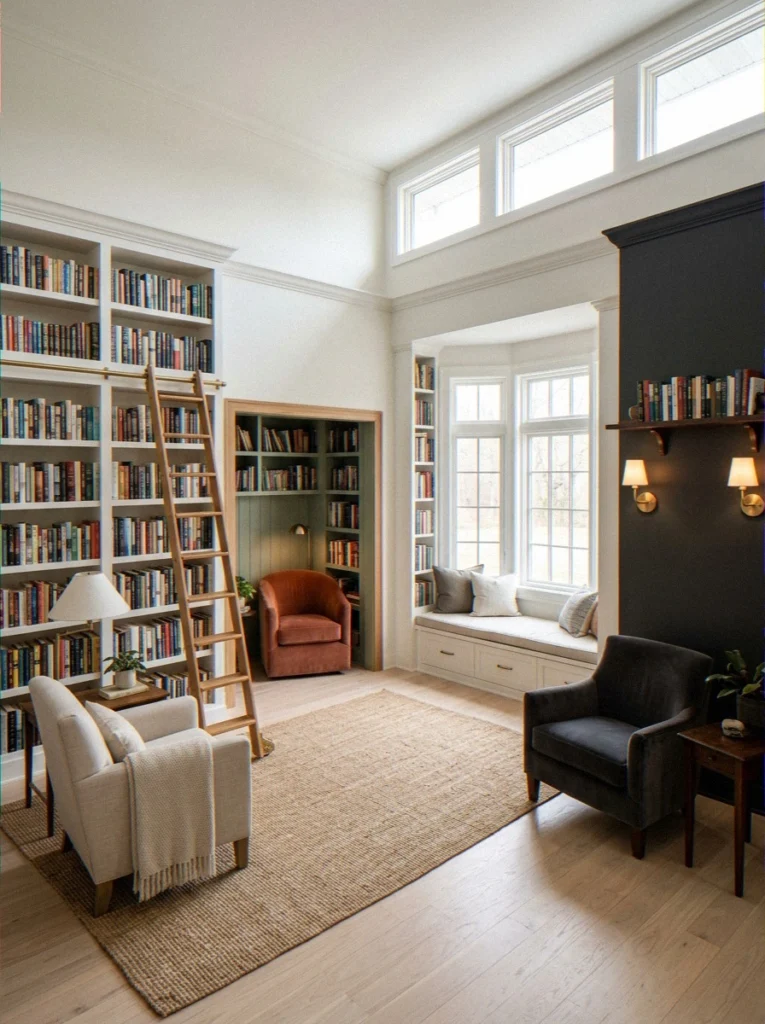
The area under a staircase is not used enough in most British homes, especially. You can store a lot of things under the stairs with custom shelving.
A small bench or cushion at the open end makes a reading nook that looks like it came from a design magazine. It gives the whole staircase area a sense of purpose instead of being wasted.
12. A Gallery Wall of Books — Organised by Colour
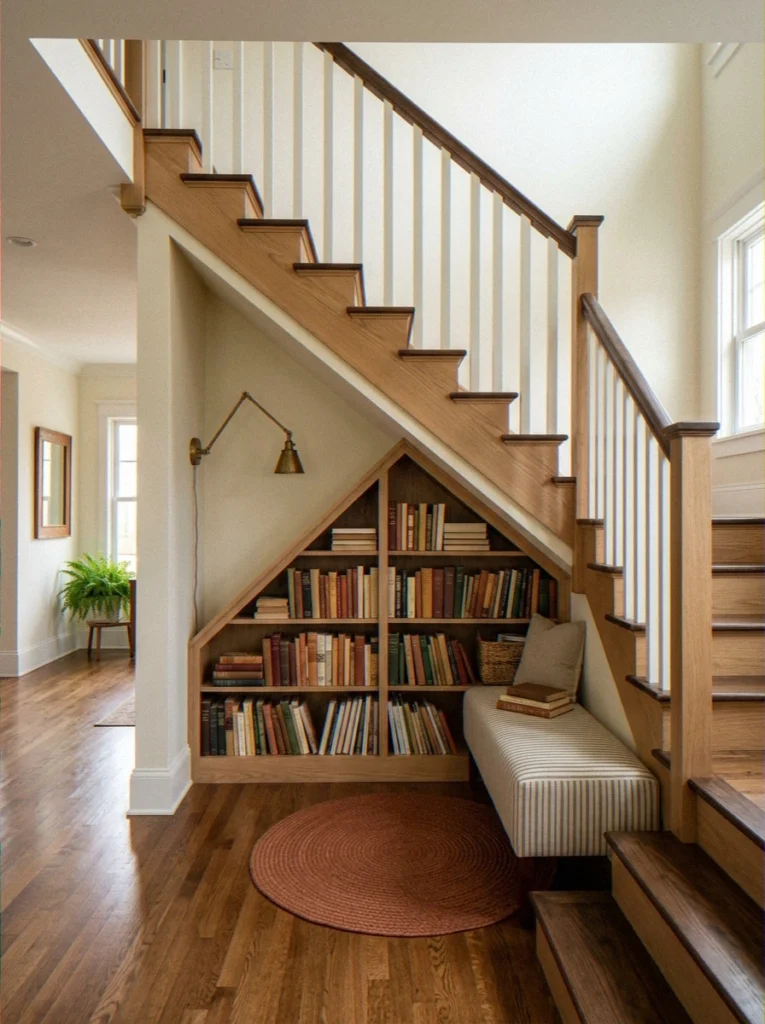
Group books by spine colour to create a visually striking colour-blocked bookshelf wall. It photographs beautifully, it’s genuinely fun to put together, and it makes your book collection look like an intentional art installation.
Fair warning though: I tried this and lasted about two months before reorganising by author. Still worth it.
13. Plants and Books: The Perfect Duo
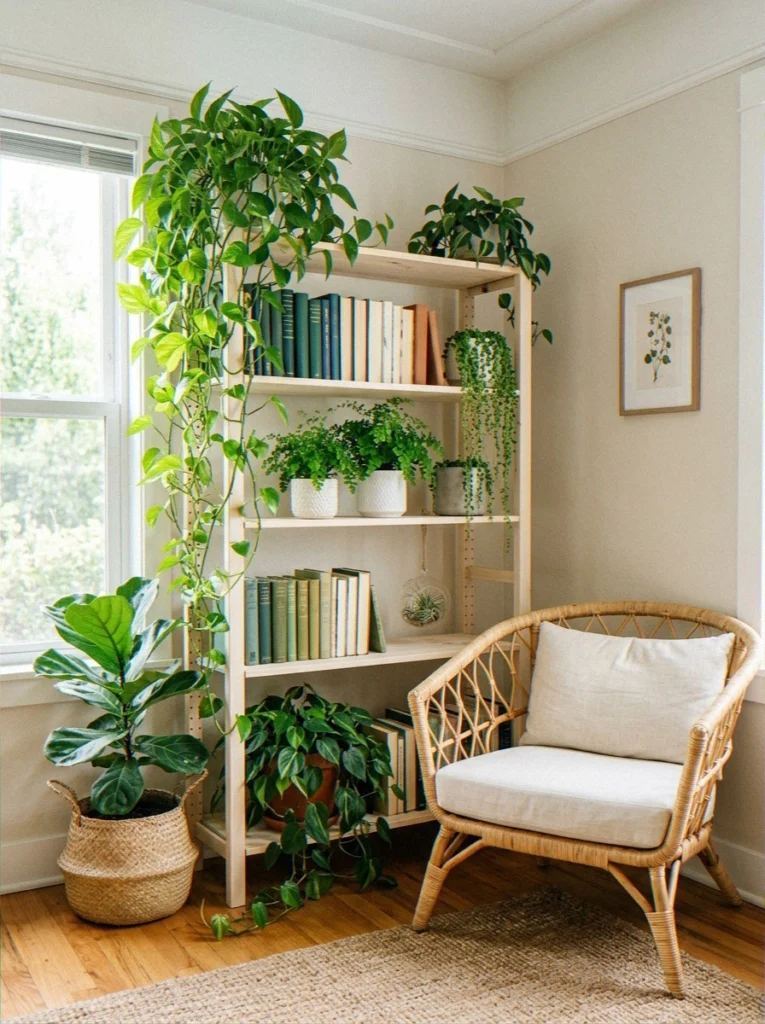
Trailing pothos, small ferns, or a fiddle-leaf fig near your reading corner bring life and texture to the space.
Plants and books belong together — they both create that sense of growth and quiet that a good library needs. For beginner-friendly plant care advice, The Sill is a brilliant resource.
14. Double-Sided Bookshelf Room Divider
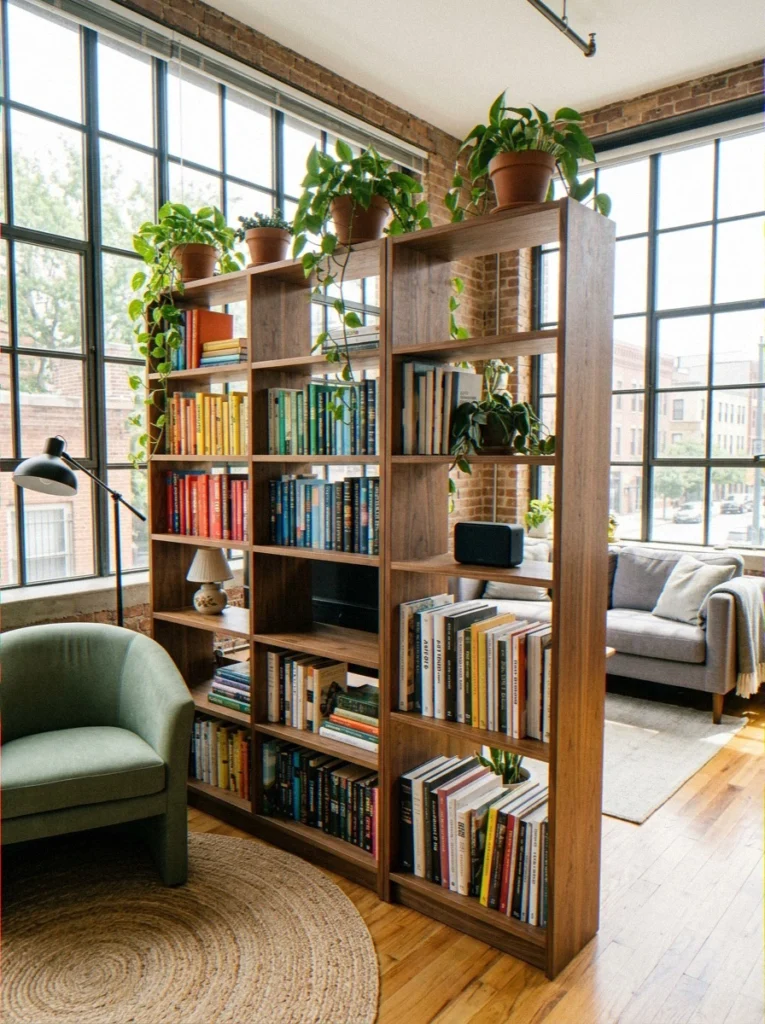
A tall double-sided bookshelf does two things at once in a studio apartment or small open-plan home: It keeps your books safe and divides the room into areas.
Without building a wall, your reading area feels separate from the living area. Useful and cool-looking? Yes.
15. Curtain or Canopy Reading Corner
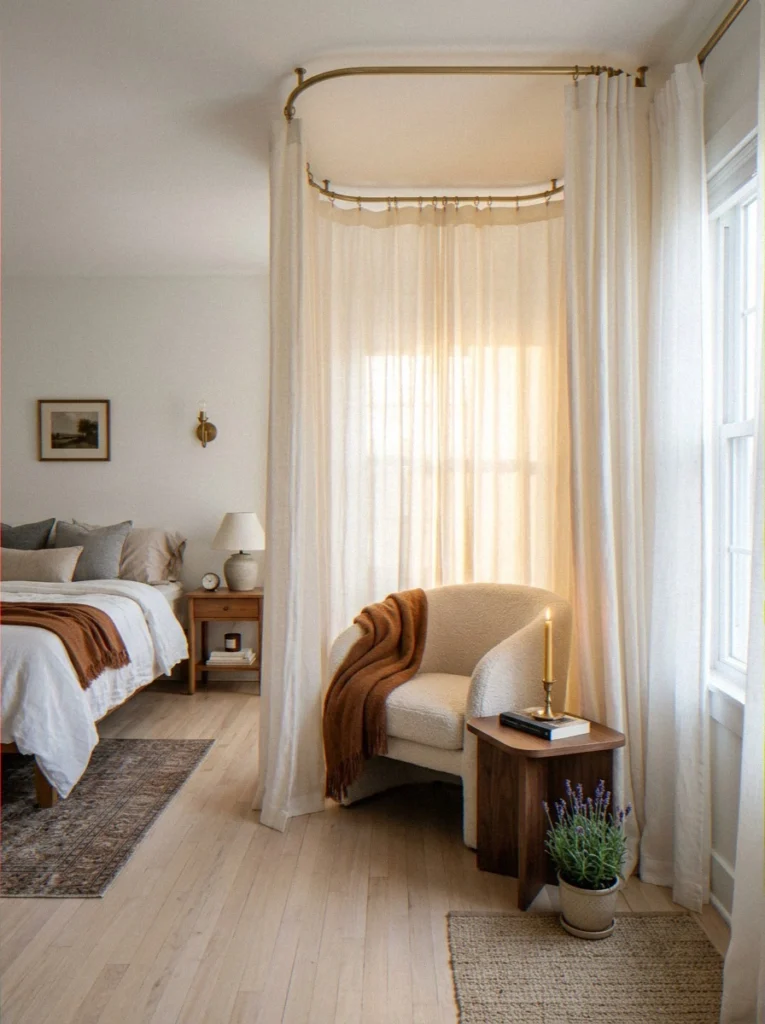
To make a soft, private space around your reading chair, hang curtains or a simple fabric canopy from the ceiling.
This looks really fancy in velvet or linen. It makes even the simplest chair-and-lamp setup more dramatic and personal. Honestly, this trend is really popular right now, and I totally get why.
16. Stacked Vintage Suitcases as a Side Table
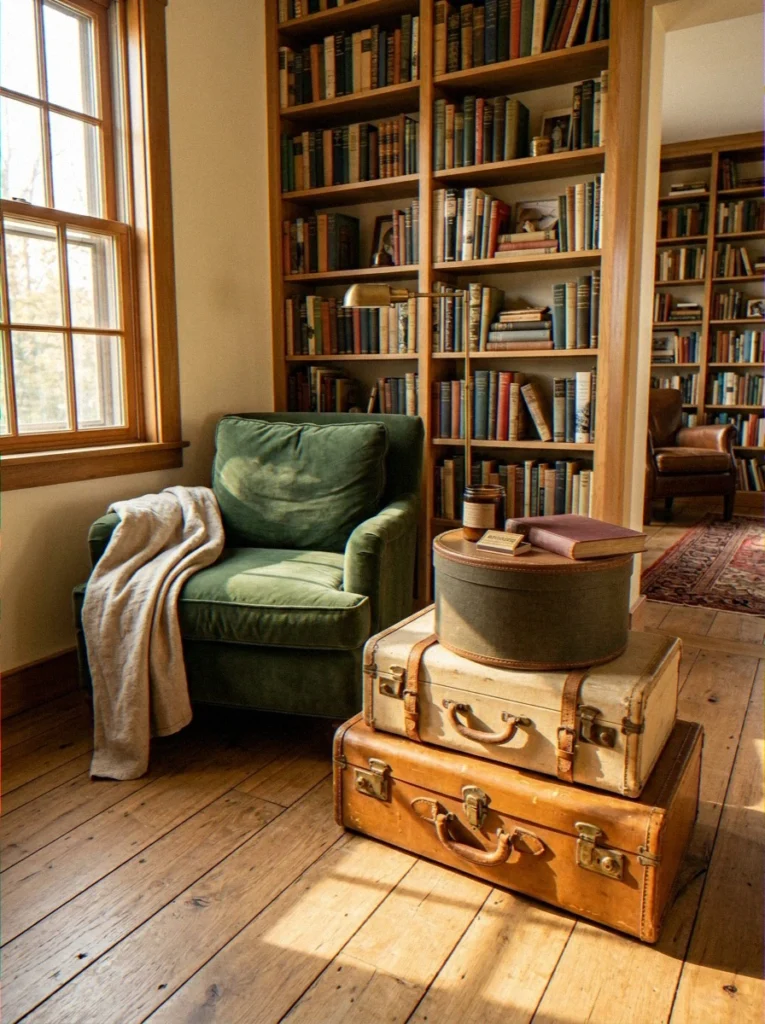
Stack two or three vintage suitcases beside your reading chair for a charming, eclectic side table with hidden storage inside.
They’re perfect for throw blankets, notebooks, or whatever else you want nearby. I picked mine up at a car boot sale for practically nothing — this is the kind of detail that makes a room look curated rather than thrown together.
17. A Bedroom Corner Library
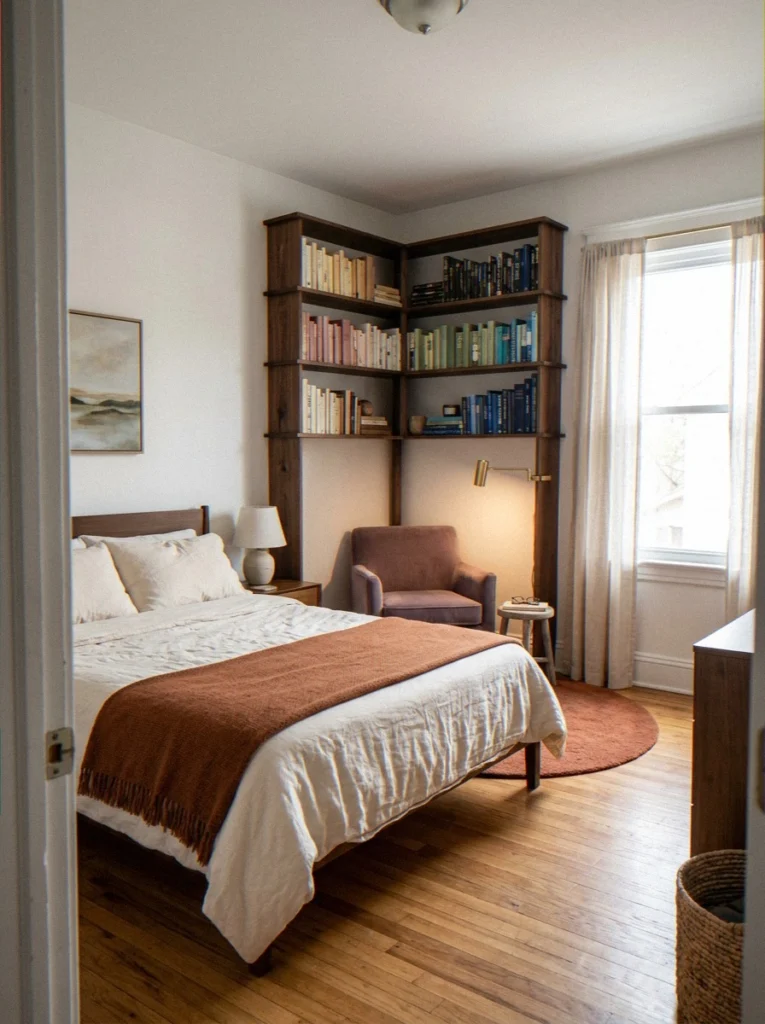
Put a corner bookshelf in the empty corner of your bedroom, angle a small chair toward it, and put a clip-on reading light on the shelf. The corner that was once dead is now the most useful place in your room. I moved everything in my bedroom around just for this, and I don’t regret it at all.
18. Murphy Bed with Integrated Bookshelves
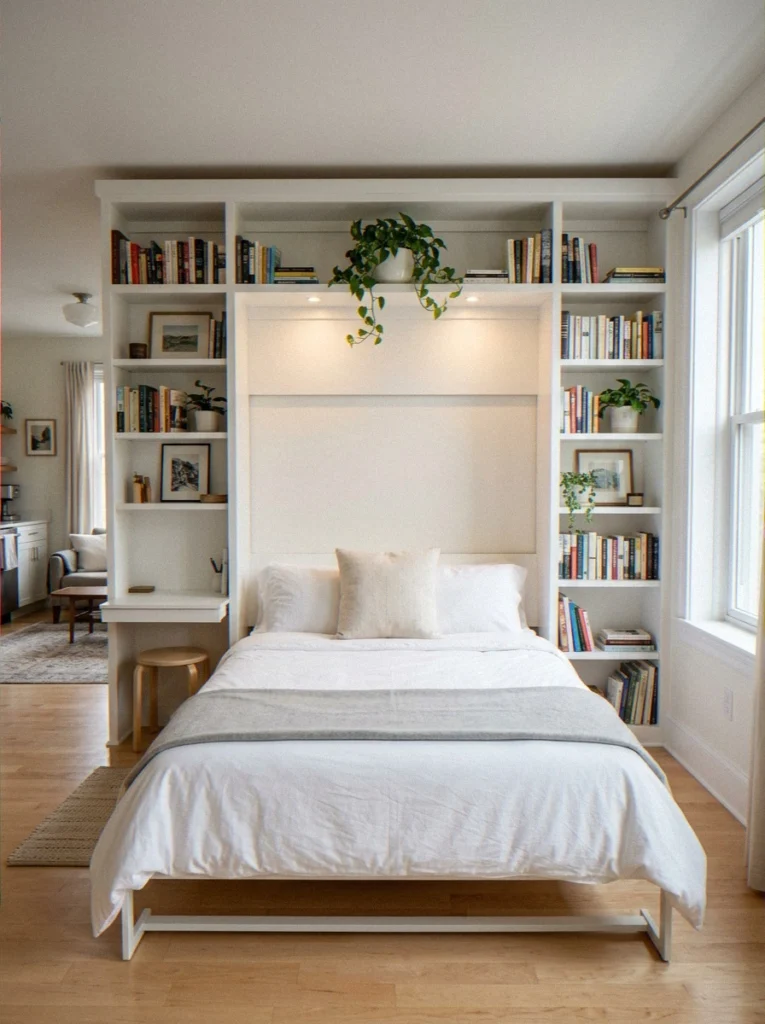
For genuinely tiny spaces, Murphy beds with built-in bookshelves surrounding them are next-level smart.
The shelving frames the bed beautifully when it’s down and provides substantial library storage when it’s folded away. Companies like Resource Furniture do incredible work in this space if you want to go custom.
19. Bay Window Reading Bench
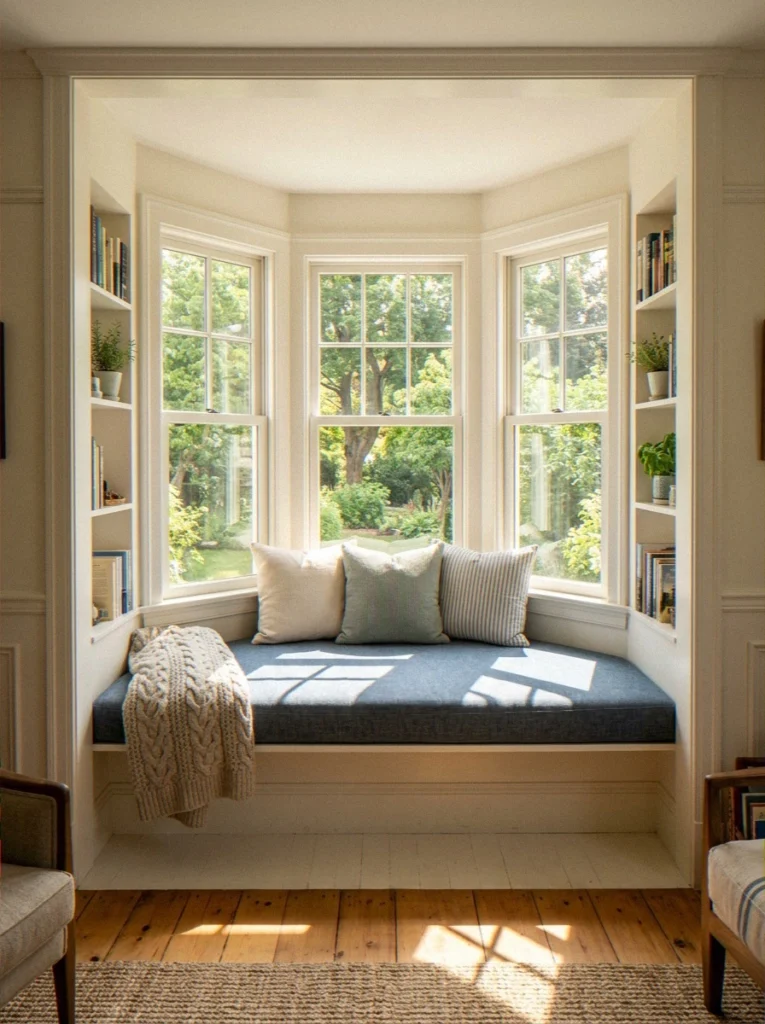
Please, please, please use your bay window the right way. Put a padded bench across the whole width and shelves on the walls of the alcove around it.
You’ve made one of the best places to read. There is natural light, a comfortable chair, and books within reach. That’s all. That’s the goal.
20. Floating Corner Shelves
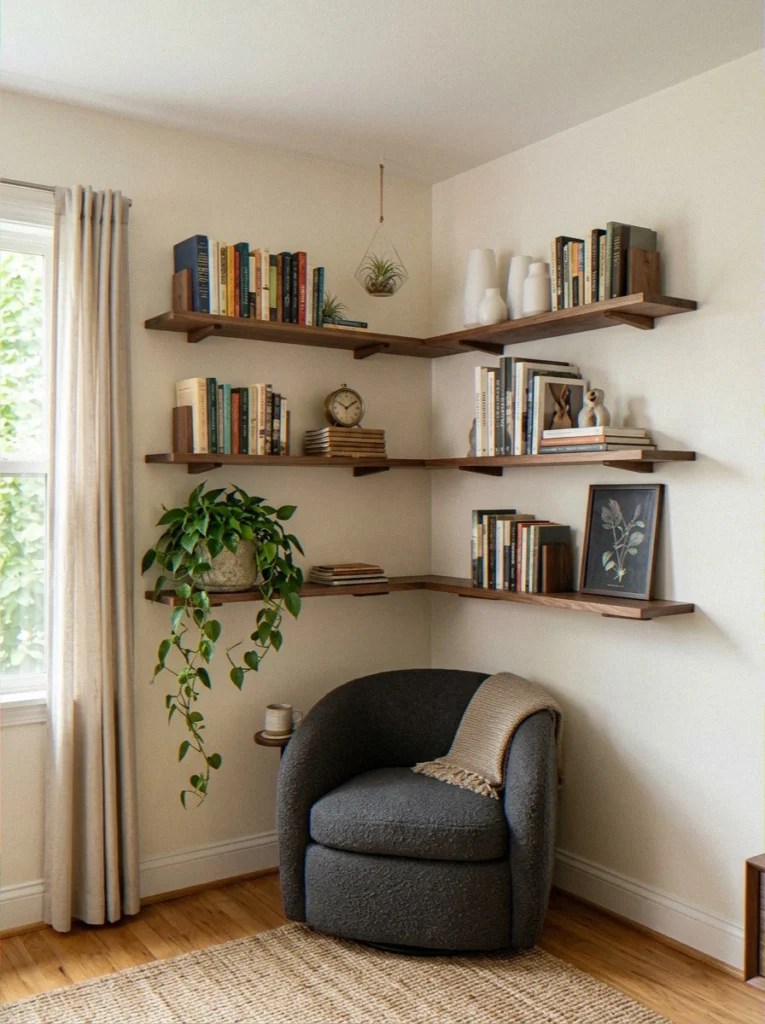
Corner shelving units that wrap around the junction of two walls use space that typically sits completely empty.
They’re inexpensive, relatively easy to install, and create a significant amount of display and book storage without protruding far into the room. Great starter option if you’re renting and can’t do anything too permanent.
21. A Rolling Library Cart 🛒
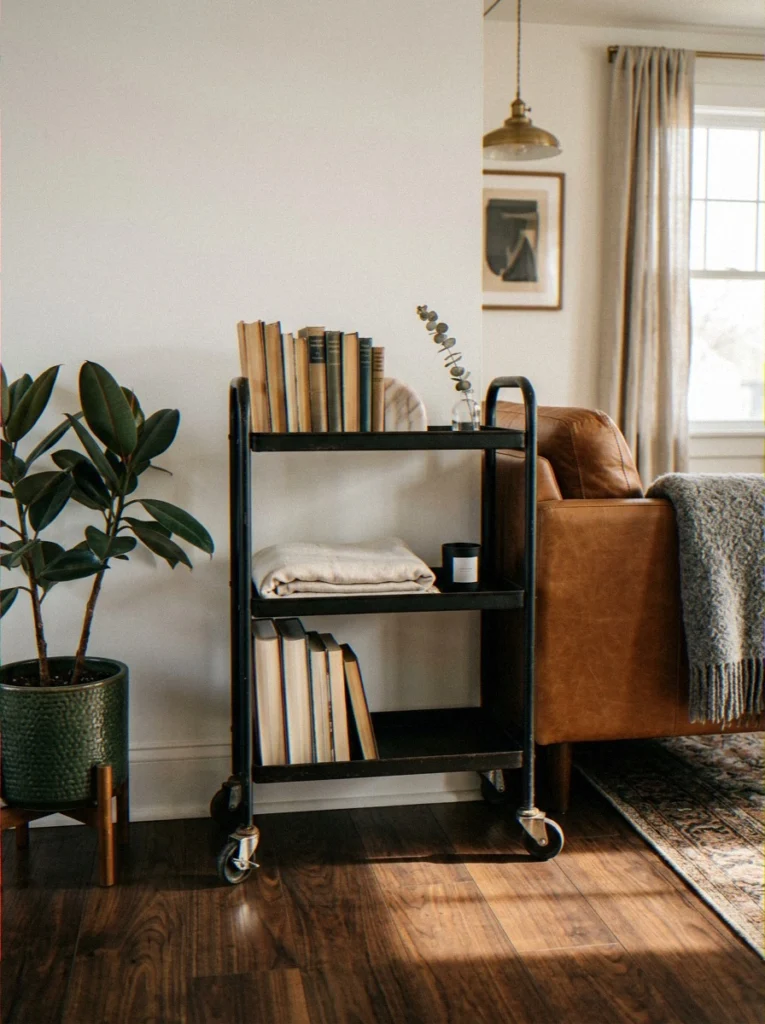
Library-style rolling book carts have had a serious design moment and for very good reason. A wheeled metal book cart lets you move your current reads around the home, tuck it into any corner when not in use, and it looks properly bookish in the best way. This one is an easy win.
22. Layer Warm Textiles Everywhere
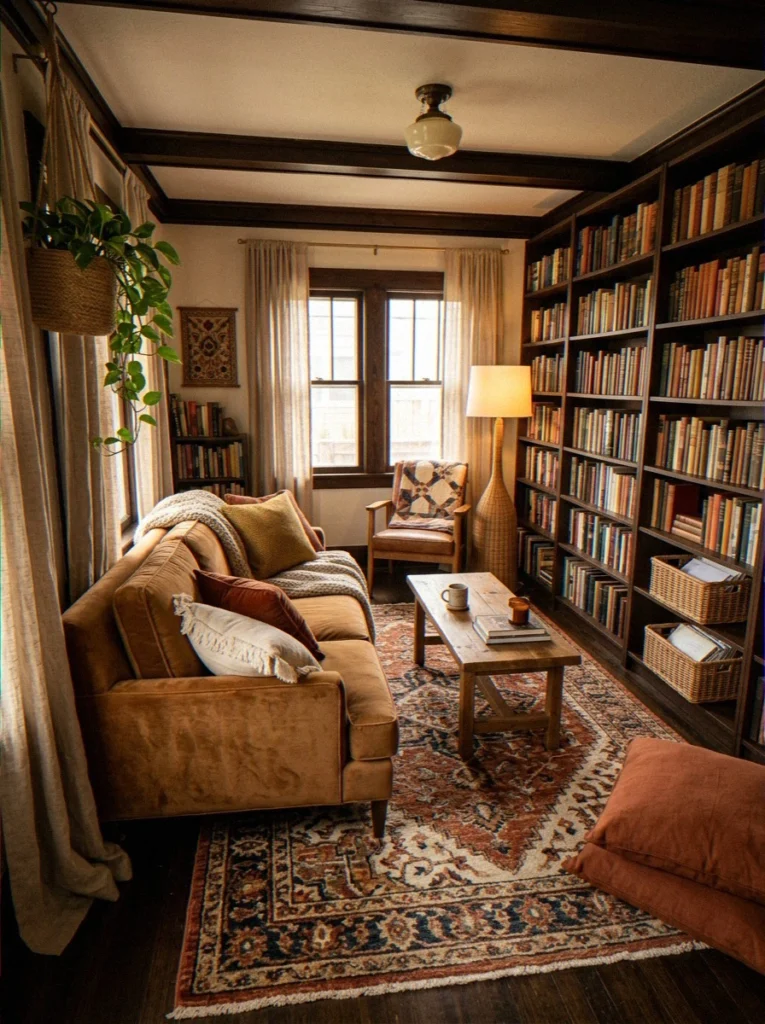
The textiles in a library room are what make it or break it. Use warm, natural colors like oatmeal, rust, forest green, and deep burgundy to layer rugs, throw blankets, cushions, and curtains.
These layers turn “a room with shelves” into “a room that feels like a hug.” Don’t take this lightly. The textiles do more work than almost anything else.
23. Antique and Vintage Furniture
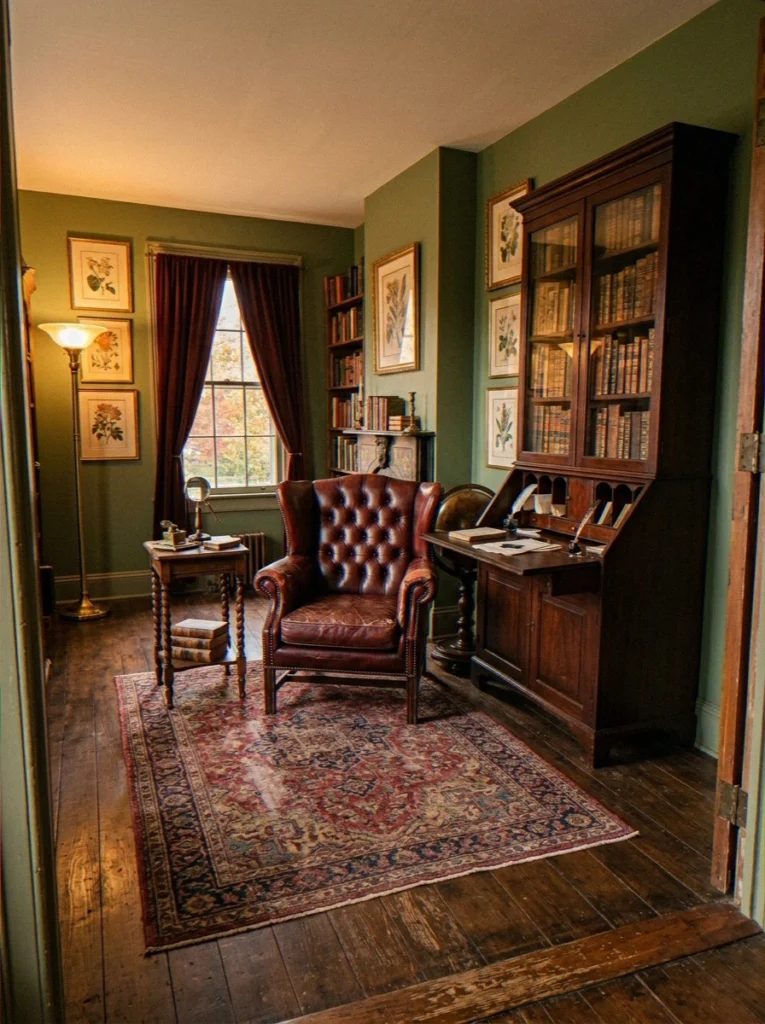
Old furniture carries weight and history — and that energy is perfect for a home library. A vintage writing desk, an antique floor lamp, or a worn leather Chesterfield chair adds instant character that no flat-pack furniture can replicate.
Estate sales, charity shops, and Facebook Marketplace are your best friends. I’ve found genuinely beautiful pieces for almost nothing.
24. The Hallway Book Wall
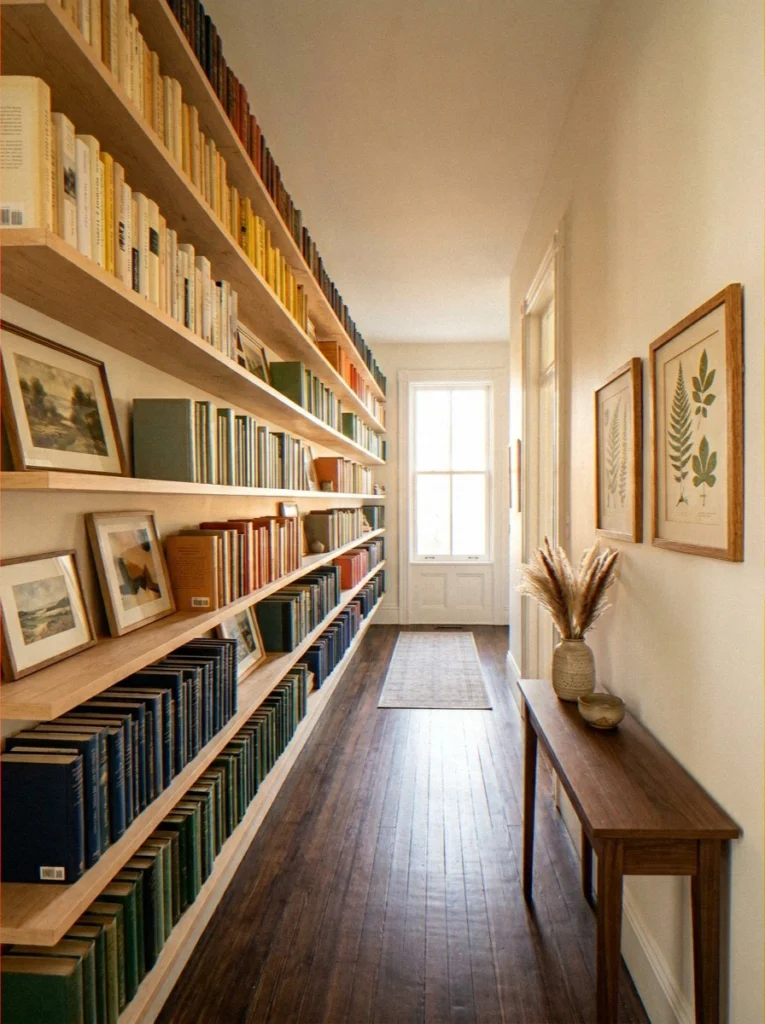
A long, narrow hallway is the best place for a linear book display. Floating shelves along the whole length of one hallway wall, at a height that makes it easy to look through your collection, turn a space that is only used for a short time into a place where you can look through your collection every day. You start to look forward to going to the kitchen.
25. Smart Three-Layer Lighting
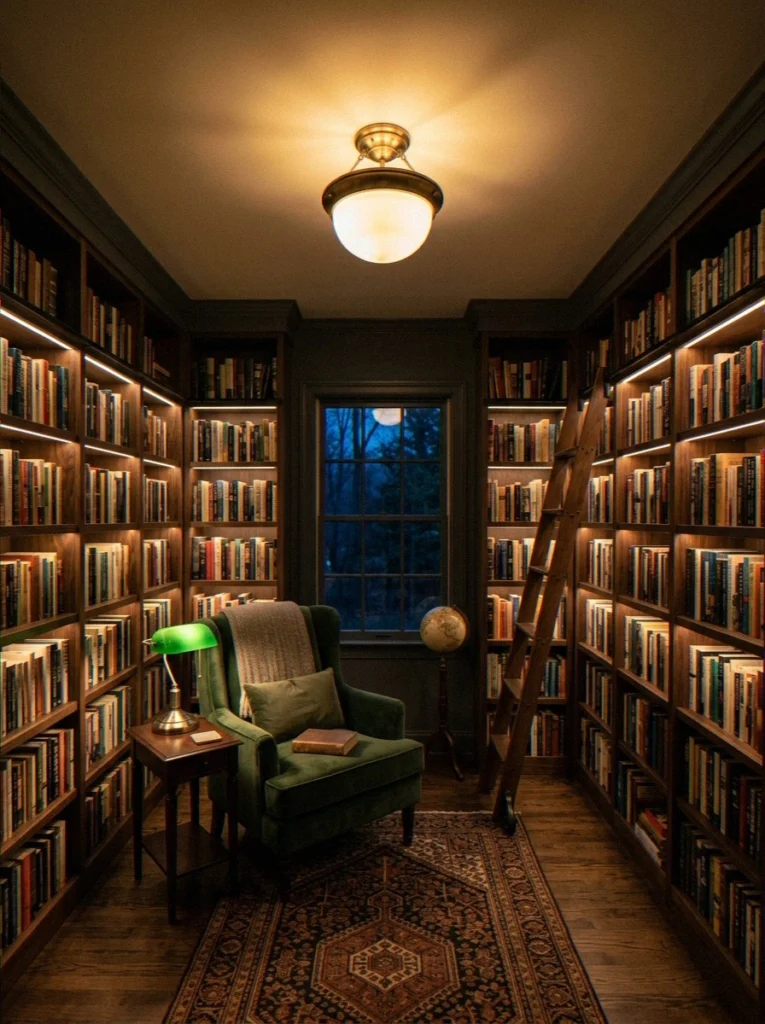
Good lighting in a library is not a choice; it’s everything. You need three kinds of light to work together: ambient overhead light, a focused task lamp for reading, and accent lighting (like LED strip lights inside shelves) to set the mood.
Bulbs with a warm tone between 2700K and 3000K always feel the coziest. If you do this right, the room will look completely different after dark.
26. A Kids’ Reading Nook That Actually Gets Used
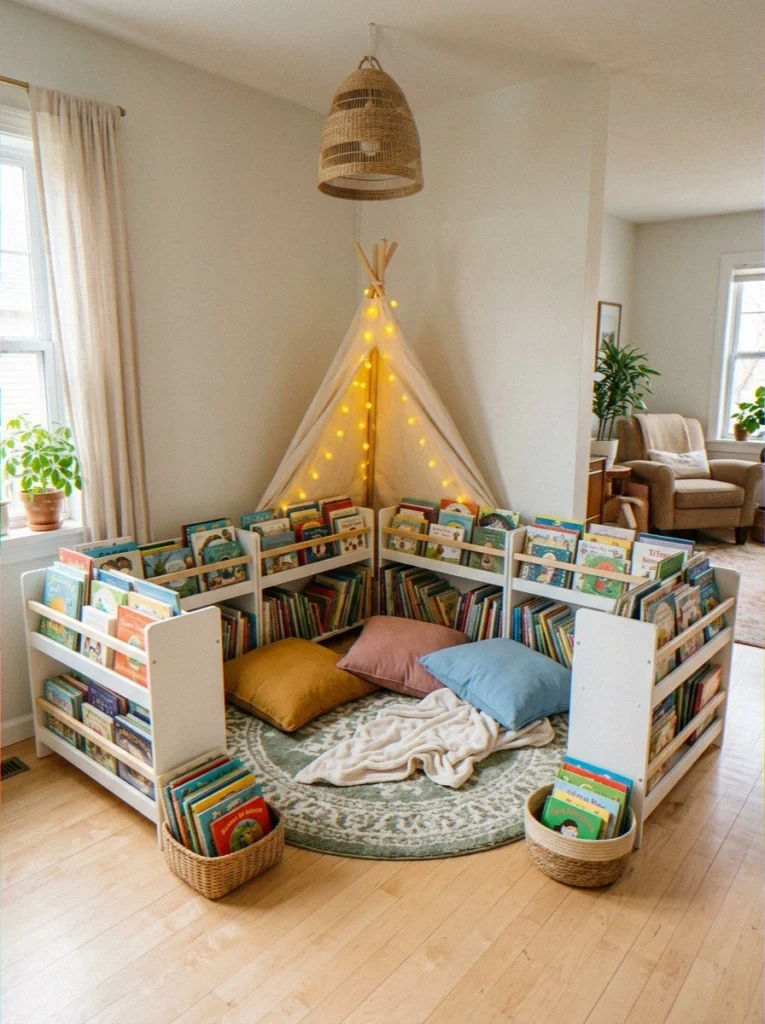
Kids deserve cozy reading corners too! A low bookshelf at child height, a bean bag or floor cushion, and a string of fairy lights creates a reading space that children will genuinely use.
Making books feel special and inviting from early on is one of the most worthwhile things you can do as a parent — and it doesn’t take much.
27. Magazine and Journal Display Rack
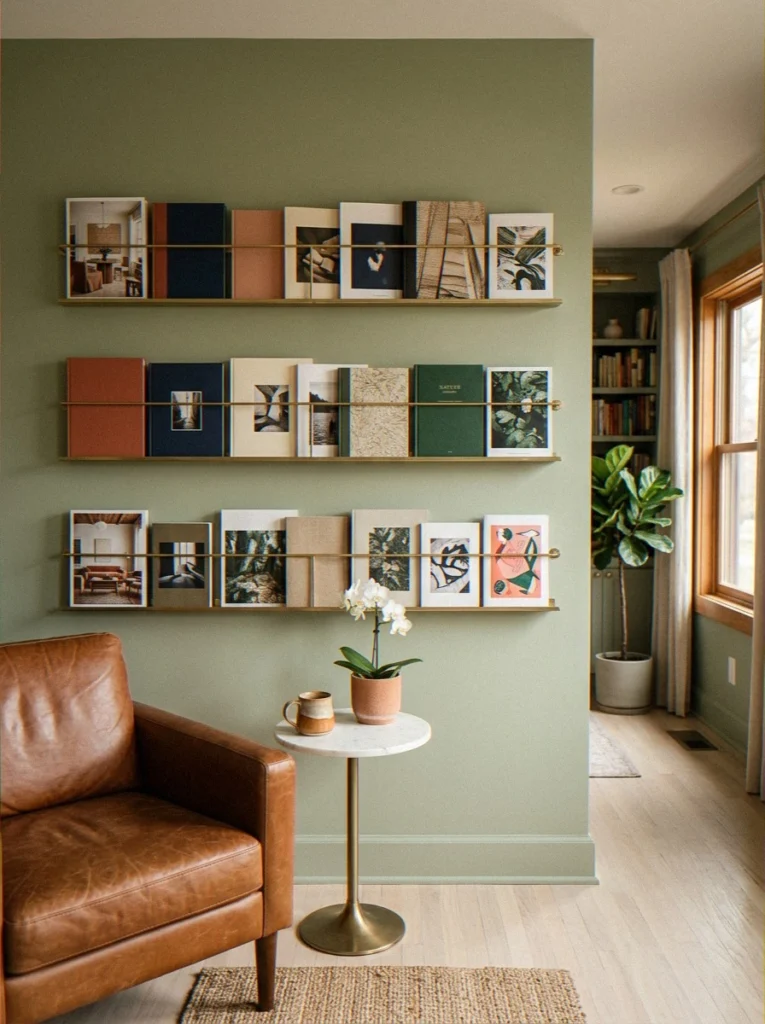
Not every library is novel-only. A wall-mounted magazine rack or journal display keeps your periodicals accessible and adds visual interest to walls that might otherwise be bare. It’s a small detail, but it rounds out the library aesthetic nicely.
28. The Minimalist Scandinavian Library
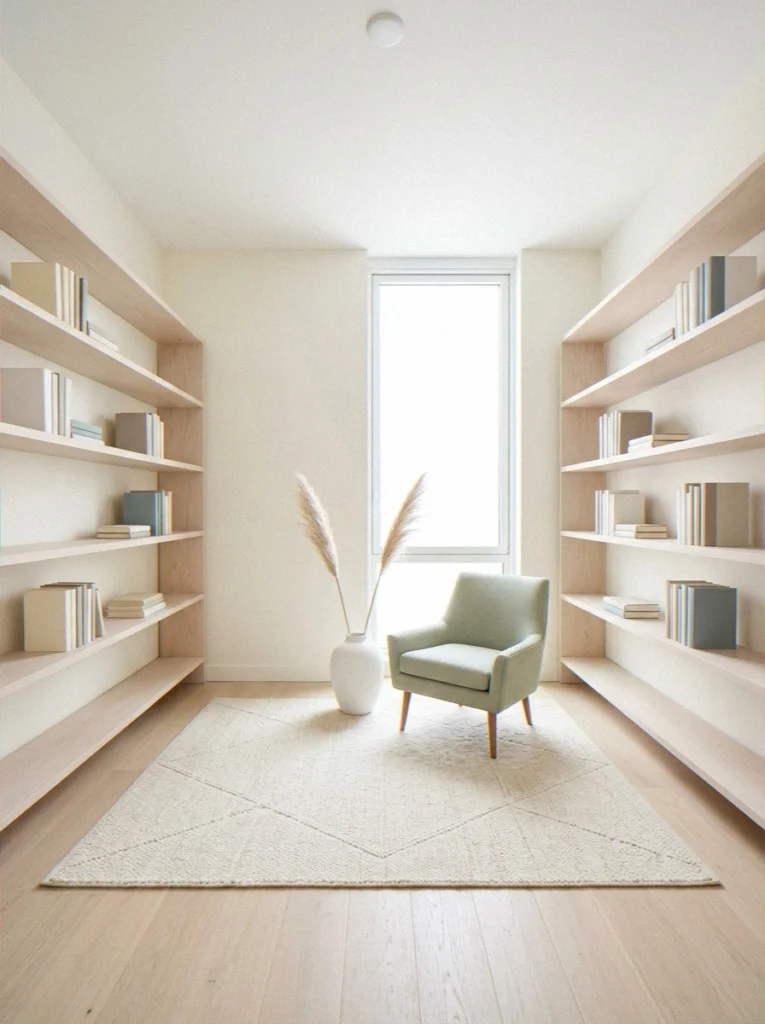
For people who like clean lines, a Scandinavian-style library has white or light oak shelves, a neutral color scheme, and carefully arranged book displays with empty space on the shelves. It is calm, simple, and truly beautiful.
Think of it as the yoga of library design: everything has a purpose and nothing is extra. To be honest, this style didn’t work for me because I have too many books to be that limited, but it looks great on the right person.
29. Exposed Brick + Industrial Shelving
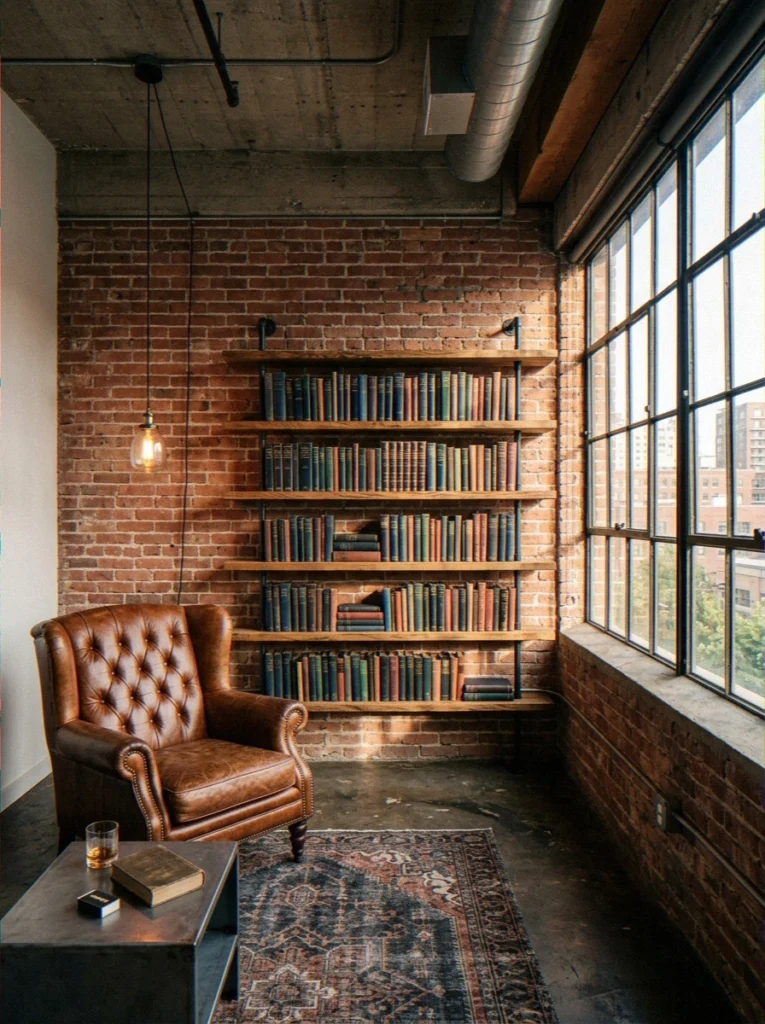
Exposed brick wall + black iron pipe shelving + leather reading chair = one seriously handsome industrial library setup.
If your home has any exposed brick or raw textured walls, lean into the industrial aesthetic with metal-frame shelves and Edison pendant lights. Bold, striking, and photographs like an absolute dream. Wow! 😍
30. The Secret Door Bookshelf
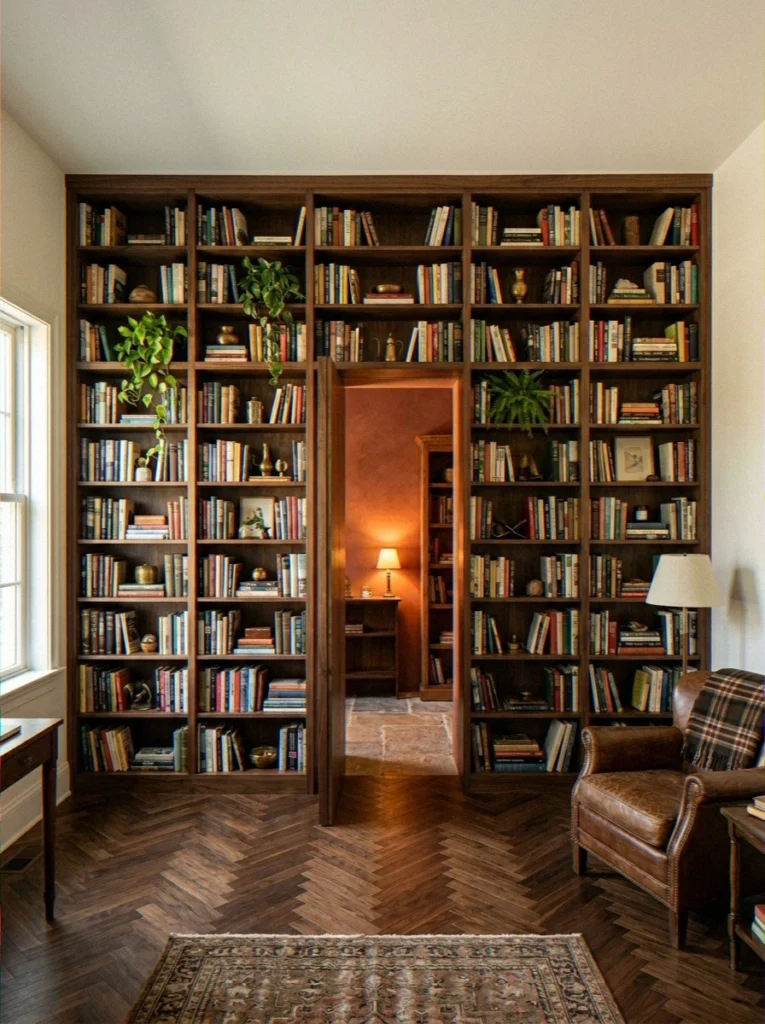
Okay, pure fantasy territory — but achievable! A hinged bookshelf that conceals a doorway is legitimately one of the coolest home features I’ve ever come across.
It’s more doable than you’d think with the right cabinet hardware and a bit of patience. Your home starts to feel like a mystery novel. Honestly, this trend has been around for years and I don’t think it’ll ever get old.
31. The Colourful Maximalist Library
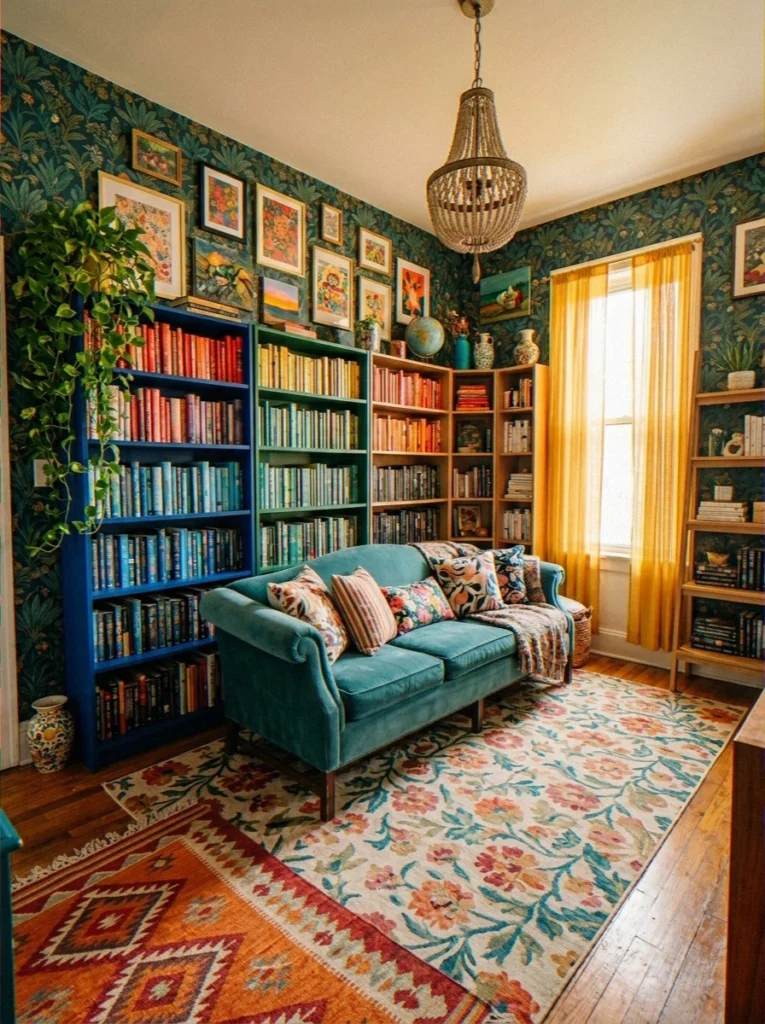
Who decided that libraries had to be serious and dark? A maximalist reading room with mismatched furniture, bright wallpaper, color-sorted books, and textiles that clash with each other is happy, lively, and totally unique.
Even though things are messy, they are still organized. If this is who you are, go all in. Half-measures don’t work with maximalism.
32. Sunroom or Covered Porch Reading Nook
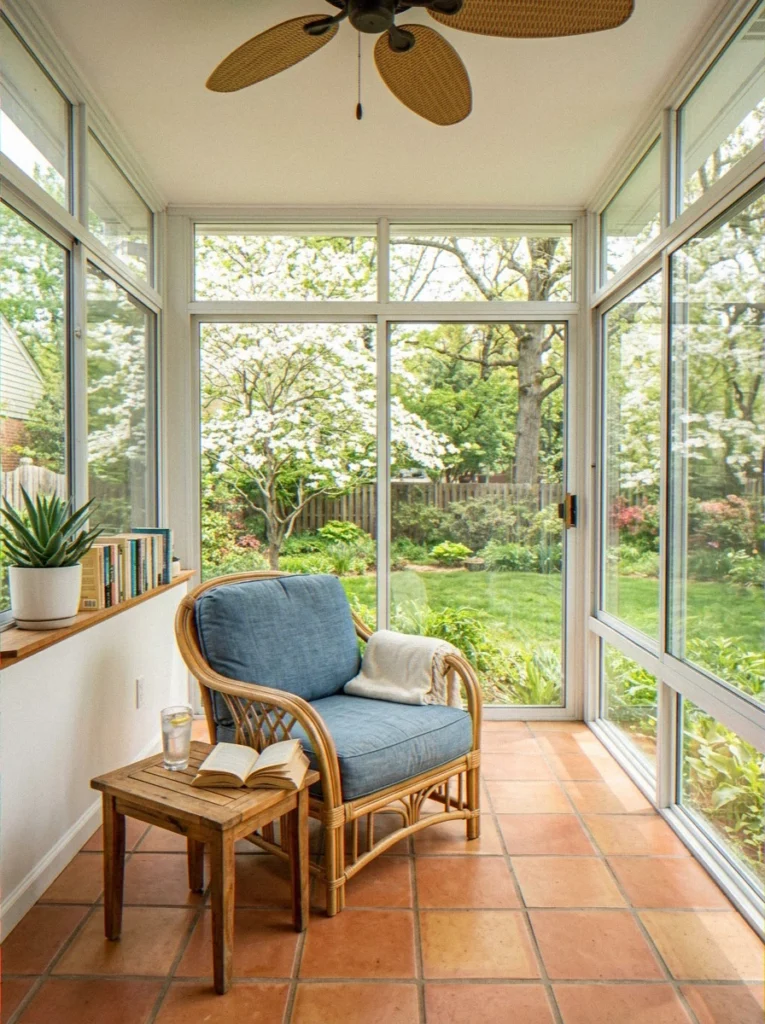
A glassed-in sunroom, screened porch, or covered balcony is a great place to read all year long.
You can bring the library vibe outside with weatherproof shelves, a rattan chair, and some outdoor cushions. Reading outside while drinking tea? To be honest, I don’t know why I don’t do this more often.
33. Box-Frame Floating Shelves
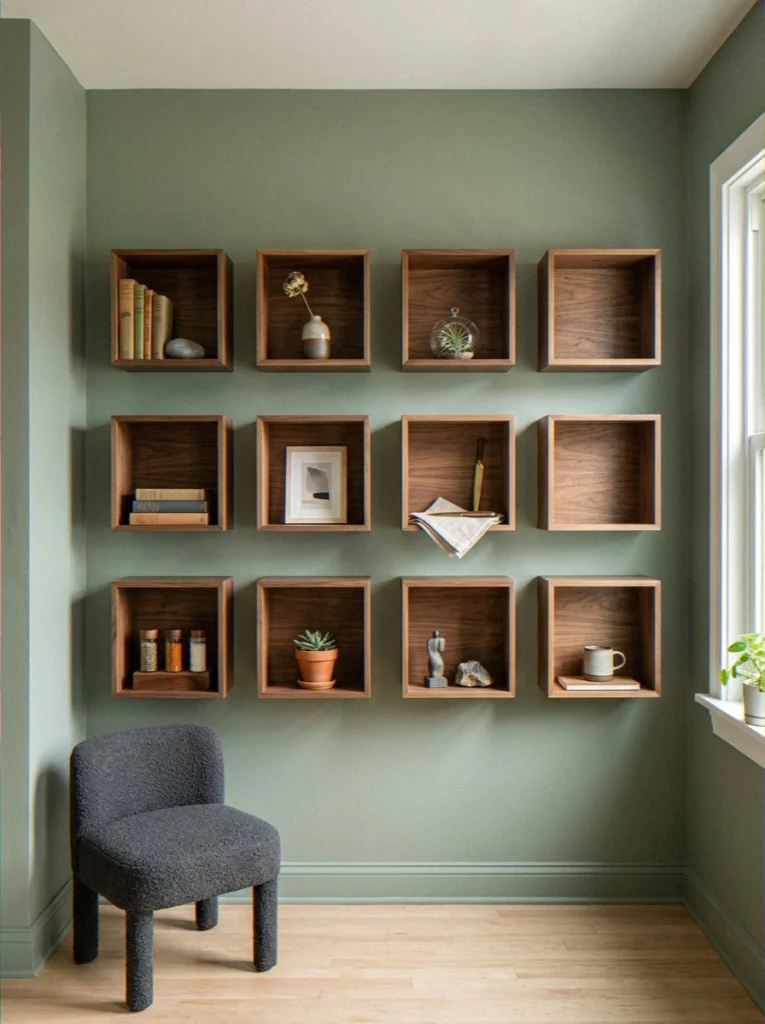
Instead of standard flat floating shelves, use open box frames mounted to the wall — these create defined compartments for books and objects, giving the whole wall a more gallery-like, architectural feel.
Great for small walls where you want maximum visual impact from a minimal footprint.
34. The Work-and-Read Combo Room
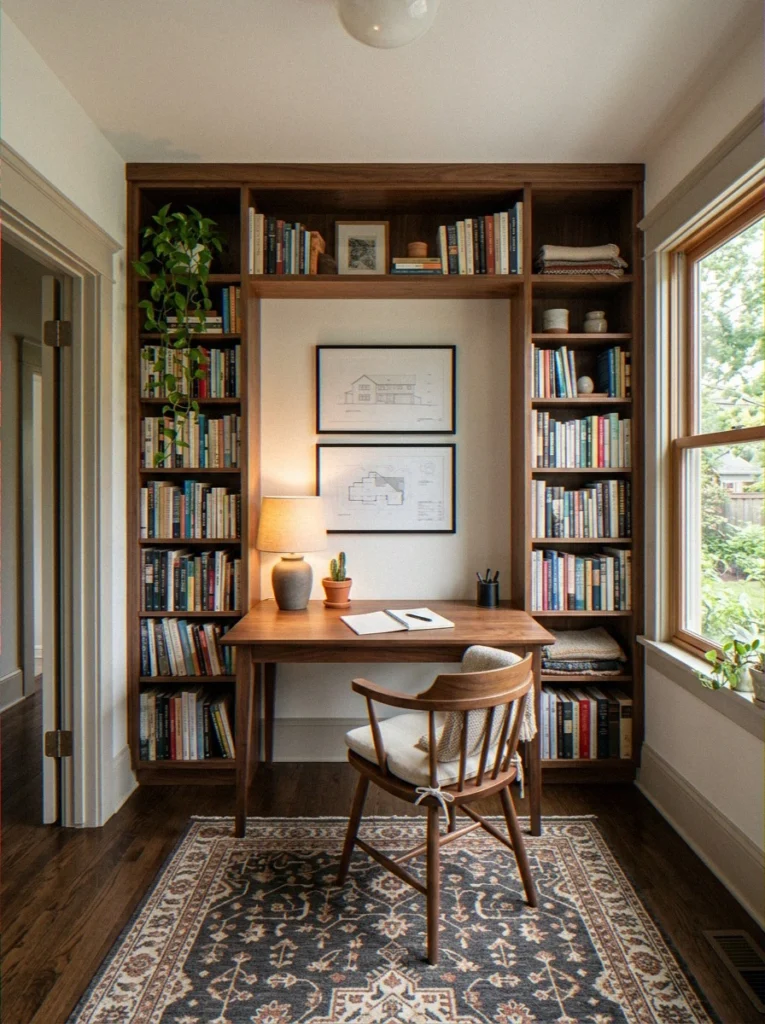
In small homes, rooms have to do more than one thing. A built-in desk with bookshelves on either side makes a space that is good for studying, working from home, and reading all at once. The books make the workspace feel less sterile.
You can always get to reference materials. And the whole thing feels warm in a way that no regular home office ever does.
35. Arched Shelf Cutouts and Archway Framing
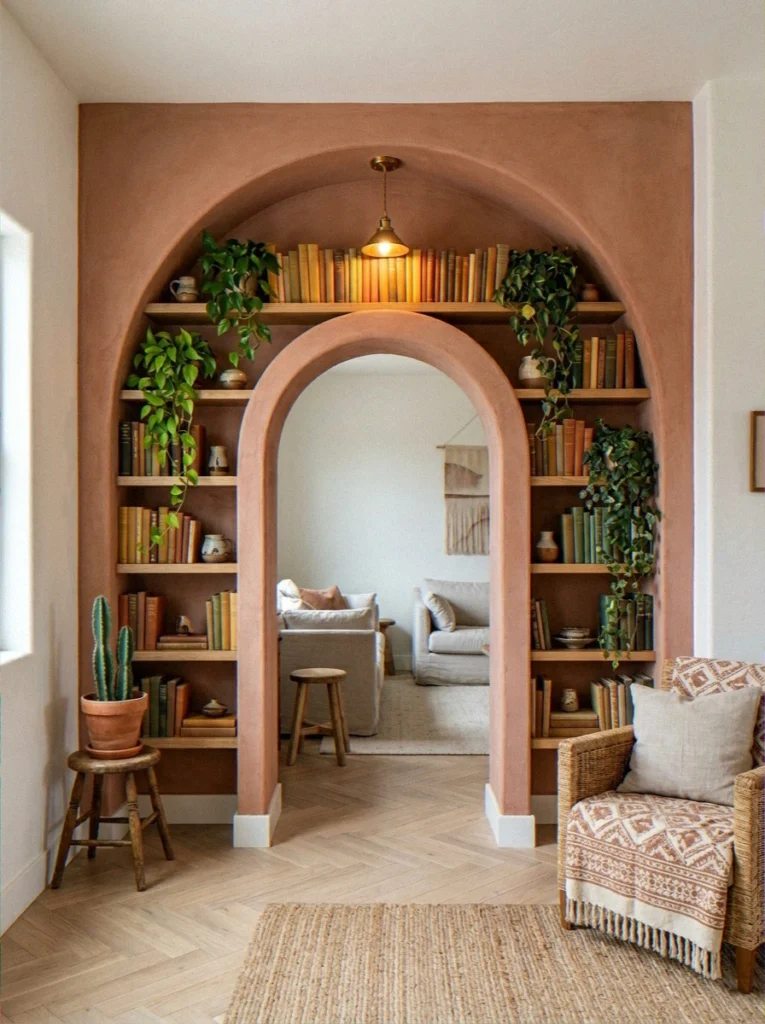
If you’re doing any renovation work, arched cutouts or archway-framed shelving add gorgeous architectural softness to a library corner.
Arches break up the hard geometry of small rooms and make built-in shelving look genuinely custom and considered.
36. The Breakfast Nook Library
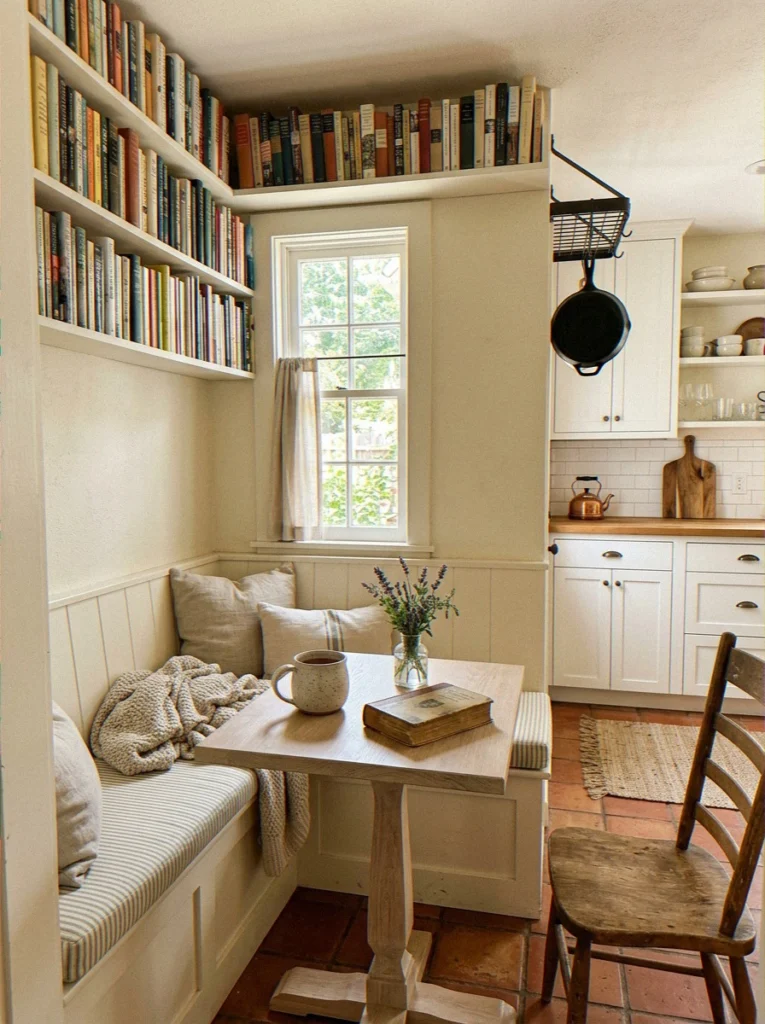
This is my personal dream setup that I haven’t achieved yet but I’m manifesting it aggressively.
Books surrounding a small kitchen nook table and bench seat — reading over your morning coffee, surrounded by shelves. Eccentric? Sure. Wonderful? Absolutely.
37. Cover-Forward Book Display
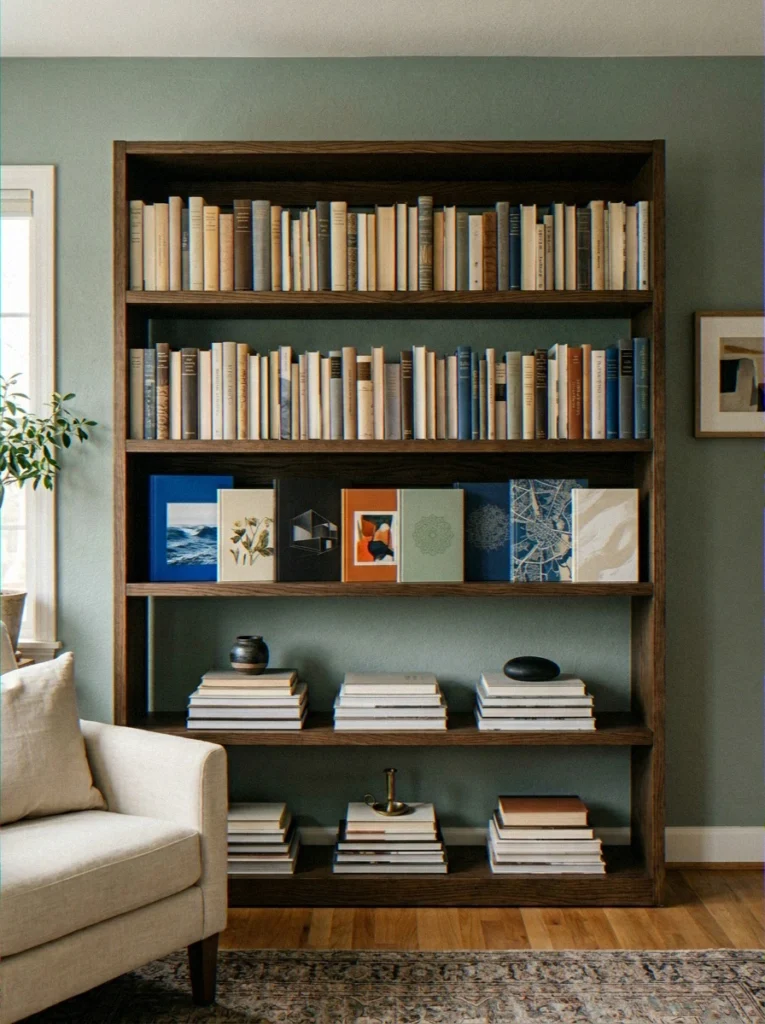
Rather than shelving every book spine-out, turn a selection of your favourites cover-forward on the most visible shelf.
Your favourite books become artwork. Guests get an immediate conversation starter. The shelf feels curated rather than archived.
38. Commit Fully to One Theme
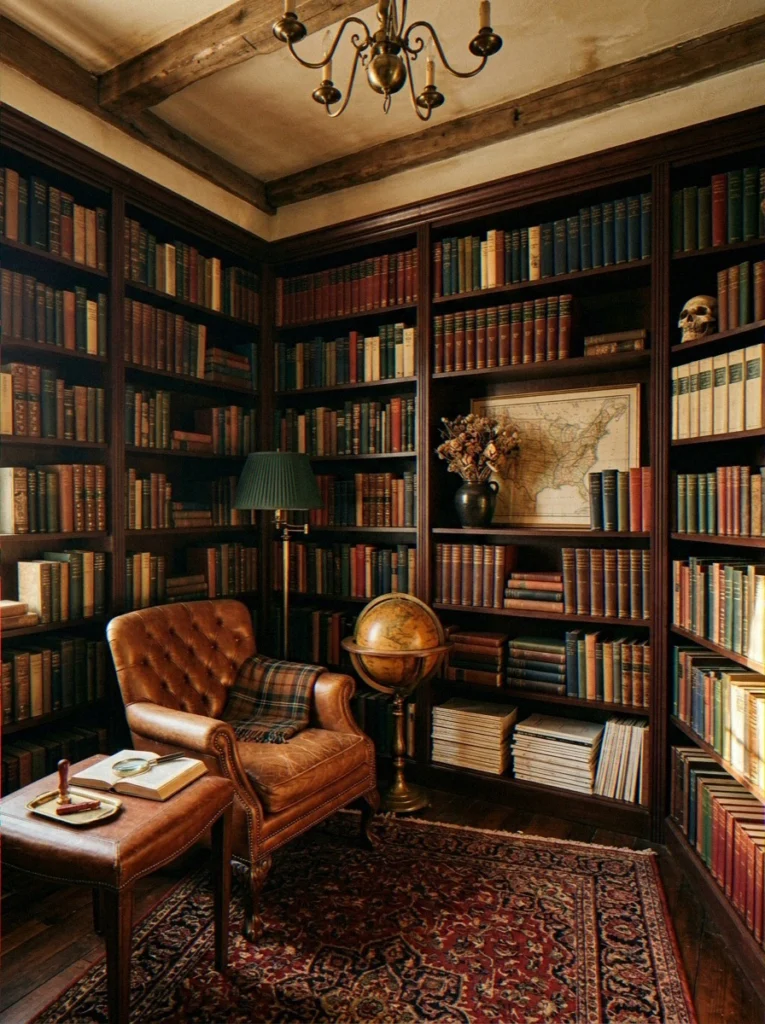
The most important idea on this list is to choose an aesthetic and stick to it completely. This is the idea that ties all 37 others together.
Dark academia. Minimalism from Scandinavia. Cottagecore. Color that is maximalist. Business.
No matter which one you pick, a library room with a clear, committed style always looks like it was planned out better than one that was put together from five different styles. Half-in doesn’t work here.
Small Home Library Ideas: Key Design Principles
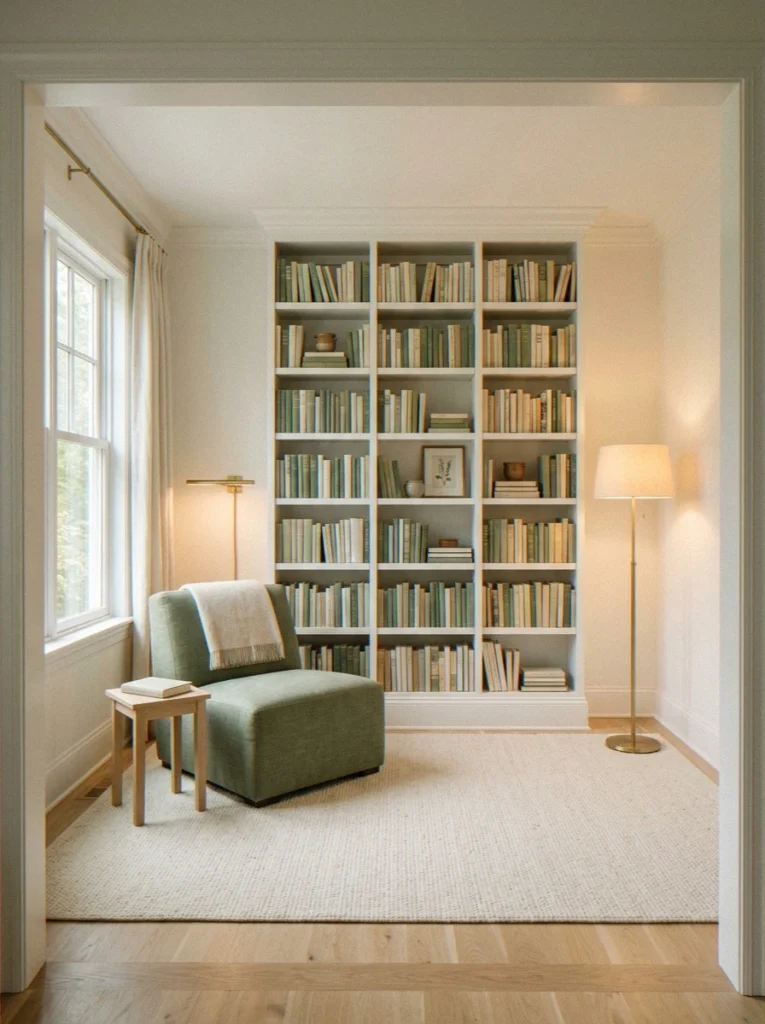
Light, Colour, and Scale — Get These Right
Three elements determine whether a small library room feels cozy or cramped:
- Light: Natural light is ideal for daytime. Warm artificial light (2700K–3000K) creates the cosiest evening atmosphere
- Colour: Dark colours create intimacy; light colours create openness. Both work — choose based on your goal, not on rules
- Scale: One large anchor piece (a tall bookshelf) works well in small rooms; keep everything else proportionate
The Scent of Your Library Matters More Than You Think
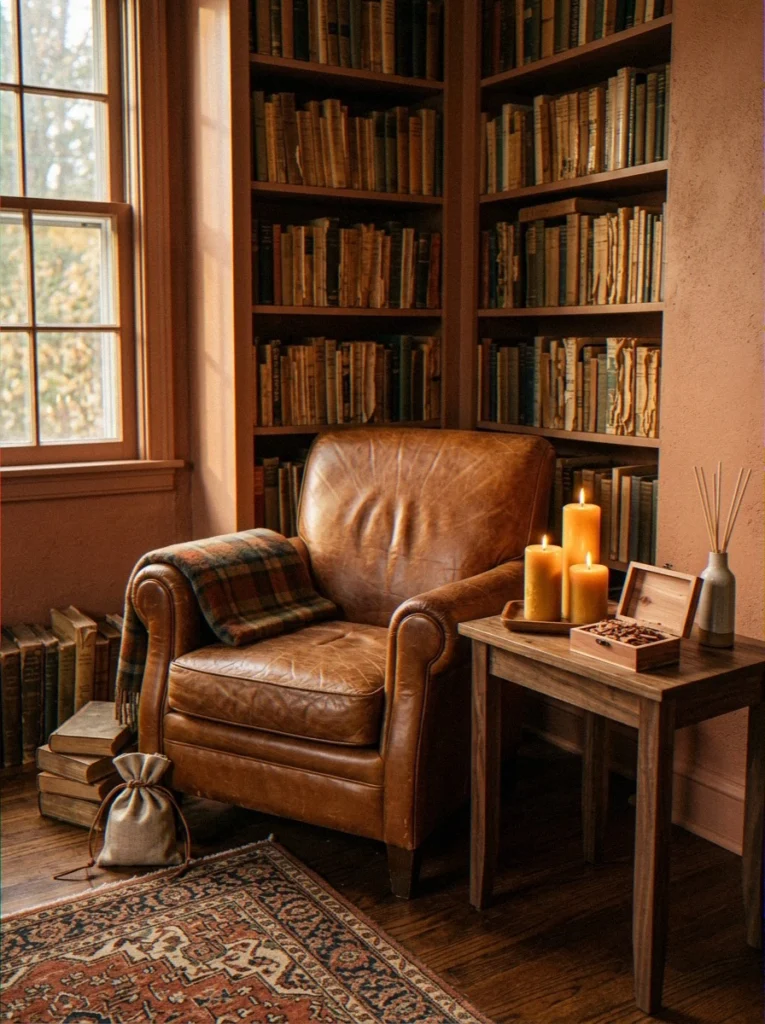
Here’s something design articles almost never mention: the smell of your reading room is part of the experience.
Beeswax candles, cedar sachets, old paperbacks, a subtle vanilla diffuser — these scents activate comfort and memory in ways that no amount of visual styling can fully replicate. Our brains are wired this way. Don’t neglect it.
Home Library Design Photos: What to Look For When Browsing Inspiration
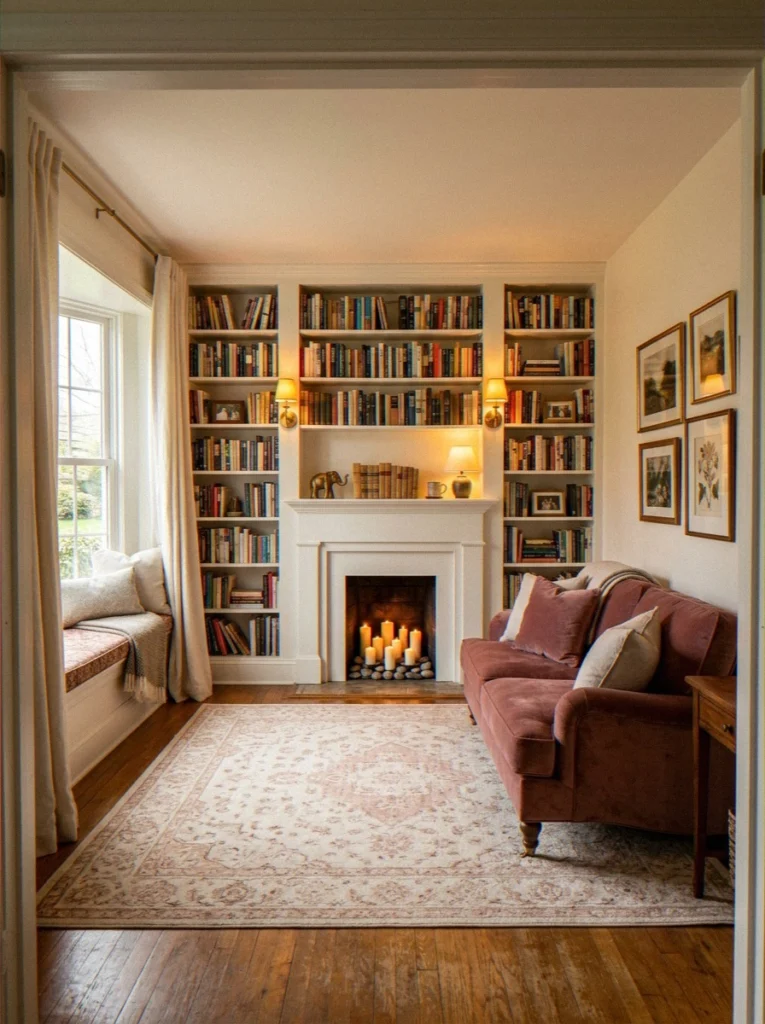
If you’ve been searching library room ideas home small cozy Pinterest or scrolling through home library design photos online, you’ve probably noticed that the best small library rooms share a few common traits — even when the aesthetics are completely different:
- Every inch of wall space has a purpose — shelving, art, or lighting
- The lighting always looks warm, never harsh or blue-toned
- There’s at least one soft, comfortable seat — the seating anchors the whole room
- Personal objects are mixed in with books — it never looks purely utilitarian
- There’s a clear focal point — a fireplace, a window, a statement chair
When you’re looking at photos of home library designs for ideas, use these as a checklist. If a picture has all five, it will probably look good in real life.
If it doesn’t have the seating or the warm lighting, it probably looks better in pictures than it does in real life.
Mini Library Design in a Classroom: A Quick Note
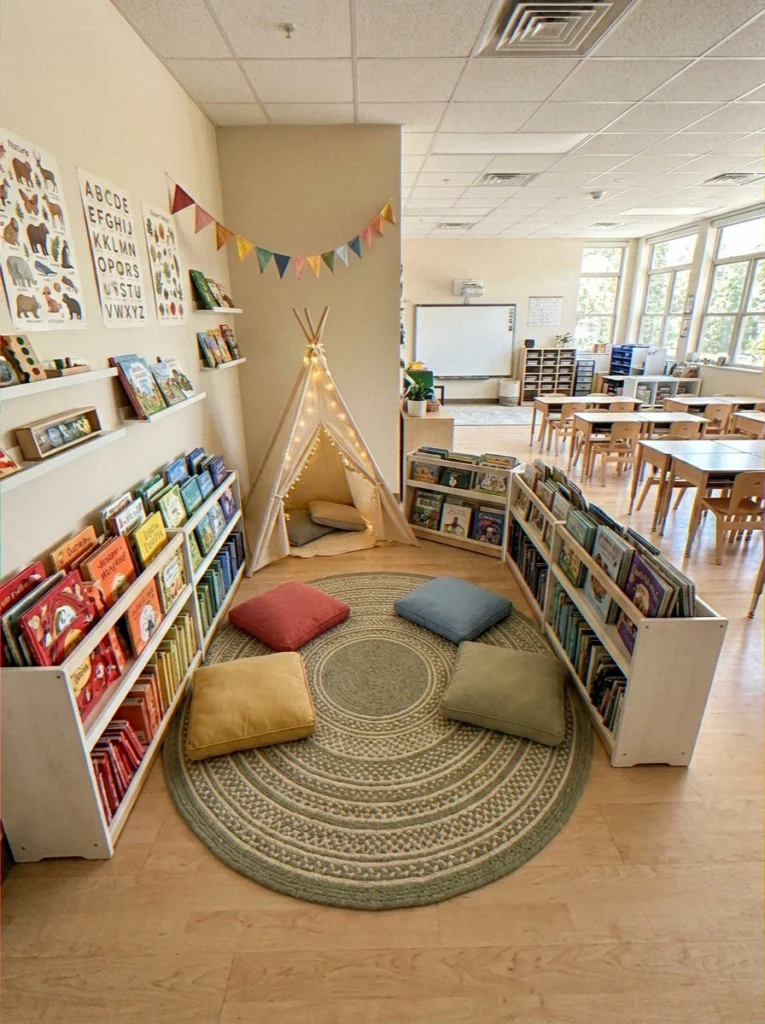
The principles of a cozy home library translate surprisingly well to mini library design in classroom spaces too — and honestly, more teachers and school designers should be thinking about this.
A classroom reading corner with low bookshelves arranged in a U-shape, soft floor cushions or a bean bag, and a string of warm fairy lights creates a micro-library that kids genuinely want to spend time in.
Key points for classroom mini library design:
- Keep shelves low — everything should be accessible to children without adult help
- Face books cover-forward rather than spine-out so younger children can identify them independently
- Use warm, inviting colours — softer tones encourage calm and focus better than bright primaries
- Define the space clearly — a rug helps signal “this is the reading zone” even without physical walls
- Rotate the selection regularly to keep children curious and engaged
The same logic applies to small home library ideas for families — a dedicated children’s reading corner within your home library makes the space work for the whole household, not just the adults.
Explore more ideas
15 Modern Bedroom TV Wall Ideas You’ll Want to Copy
10 Bedroom TV Wall Painting Ideas That Elevate Your Space
17 Bedroom TV Wall Ideas for Small Spaces That Save Room
Budget-Friendly Tips for Building Your Cozy Library
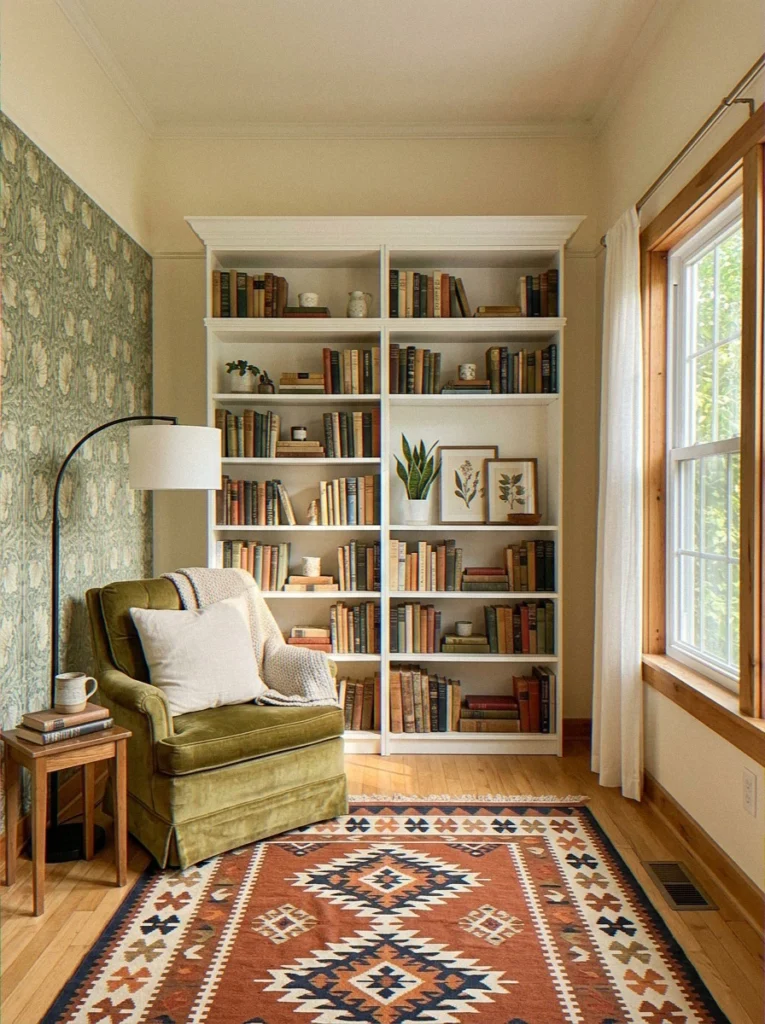
You genuinely don’t need a big budget. Here’s how I’ve kept costs down on my own library build over the years:
- IKEA Billy bookcases — still the best value shelving unit on the market, endlessly hackable with add-ons and moulding
- Charity shops and car boot sales — incredible furniture finds at a fraction of retail cost, trust me on this one
- Peel-and-stick wallpaper — adds huge visual impact with zero permanent commitment (brilliant for renters)
- DIY floating shelves — lumber and L-brackets cost a fraction of pre-made shelving options
- Used bookshops and ThriftBooks — fill your shelves affordably without spending a fortune
Common Mistakes to Avoid in Small Home Libraries
Even with great intentions, things can go wrong. Learn from my errors:
Overfilling shelves immediately — leave breathing room. Empty space on a shelf is good design, not laziness. I crammed mine full on day one and it looked like a charity shop, not a library.
Ignoring acoustics — books absorb sound brilliantly, but a hard floor with no rug will make even a book-lined room feel echoey. Always add a rug. Always.
Forgetting cord management — lamps and reading lights generate cable chaos instantly. Plan for cable clips or cord covers from day one. This one flopped for me though — I ignored it, regretted it, and had to redo it later.
Choosing looks over comfort — the most beautiful reading chair means nothing if you can’t sit in it for an hour. Test before you buy.
Not anchoring tall bookshelves to the wall — safety first. Any shelf over four feet tall should be wall-anchored, especially with children or pets around.
Quick Styling Tips
- Mix heights on your shelves — vary items for visual rhythm
- Rule of odd numbers — group decorative objects in threes or fives for a more natural look
- Add a small tray to any shelf surface — it makes scattered small objects look intentionally grouped
- Turn 20–30% of books cover-forward to break up the visual monotony of spines
- Good bookends are both functional and genuinely decorative — don’t overlook them
People Also Ask: Library Room FAQ
What are some small home library ideas?
Small home library ideas range from simple to more ambitious, depending on your space and budget. The easiest wins are a leaning ladder shelf in a corner, floating shelves around a doorframe, or a closet conversion nook.
More involved but incredibly rewarding options include floor-to-ceiling built-ins, a window seat with book storage underneath, or a Murphy bed surrounded by integrated bookshelves.
The single best advice I can give: go vertical. Small homes have limited floor space but plenty of wall height — use it.
For ongoing inspiration, Architectural Digest’s home library gallery is genuinely excellent for seeing what’s achievable at different scales and budgets.
What are the 10 rules of a library?
In a traditional public library setting, rules govern behaviour and organisation. But for a home library, the “rules” are more like principles:
- Books should be accessible — don’t shelve things you can’t reach
- Organisation should have logic — by genre, colour, author, or size (pick one and stick with it)
- Lighting must be adequate — reading in bad light damages your eyes and your mood
- Seating is non-negotiable — a library without somewhere comfortable to sit is just storage
- The space should invite you in — if it doesn’t feel welcoming, something needs adjusting
- Ventilation matters — books need some air circulation to stay in good condition
- Keep it personal — your home library should reflect you, not a Pinterest template
- Rotate your display — cycle books in and out of prominent display to keep things fresh
- Mix media formats — magazines, art books, journals, and paperbacks all belong together
- Actually use it — the best library is one you spend time in, not one that looks good in photos
How to create a library in a small room?
To make a library in a small room, you need to think vertically, choose furniture wisely, and stick to a style. Find every wall surface that is available, even above doors and windows, which most people don’t think about.
Choose the tallest shelves that will fit in your ceiling. Pick furniture that can do more than one thing, like a desk with shelves on either side or a window seat with storage.
Choose a color scheme and a way to light the room, and stick to them. And really, don’t wait until you have the “perfect” number of books. Start with what you have and add to it over time. A small, carefully chosen collection on display is always better than a random pile of thousands.
How to design a library room?
Designing a library room — even a tiny one — follows a clear process:
Step 1: Define the space. Even if it’s just a corner, make it deliberate and defined (a rug helps enormously with this).
Step 2: Plan your shelving first. Shelving is the backbone of any library — get this right before anything else.
Step 3: Choose your seating. One really good chair beats three mediocre ones in a small space.
Step 4: Layer your lighting. Ambient, task, and accent — you need all three.
Step 5: Add textiles and personal objects. This is what separates a storage room from a library room.
Step 6: Pick a style direction and edit ruthlessly. Remove anything that doesn’t fit the aesthetic you’ve chosen.
For deeper design guidance, Houzz’s home library section has thousands of real home photos filtered by size and style — genuinely useful for finding ideas that translate to actual homes rather than just editorial shoots.
People Also Search For: Related Topics Worth Exploring
Small Home Library Ideas
The search for small home library ideas is growing fast — and for good reason. More people are working from home, spending more time indoors, and investing in spaces that genuinely support their wellbeing.
A reading nook or home library, however small, consistently ranks among the home features that bring people the most daily satisfaction. Start small (a corner, a shelf, a chair) and let it grow organically.
Library Room Ideas Home Small Cozy Pinterest
Pinterest remains one of the best places to gather visual inspiration for library room ideas for small cozy homes, but use it with one eye open.
Many Pinterest library photos are staged for photography and wouldn’t actually function as daily living spaces.
Look for images where you can see real-life details — cords, personal objects, slightly imperfect styling — those are the ones that translate to real homes.
Home Library Design Photos
When browsing home library design photos, pay close attention to the lighting in each image.
The difference between a cozy, atmospheric library and a cold, sterile bookshelf room almost always comes down to the quality and warmth of the light.
Also notice how the most successful small library designs always have a clear focal point — a fireplace, a standout chair, a window — that anchors the whole arrangement.
Mini Library Design in Classroom
Designing mini libraries for classrooms has become a big deal for teachers and school designers.
There is a lot of overlap with the principles used in home libraries. The best classroom reading corners have the same basic features as the best home reading nooks: a clearly defined space, easy access to books, comfortable seating, and warm, inviting light.
The ideas for home libraries in this article can be used in your classroom corner if you’re a teacher or school designer. Just make them smaller and safe for kids.
Wrapping It All Up
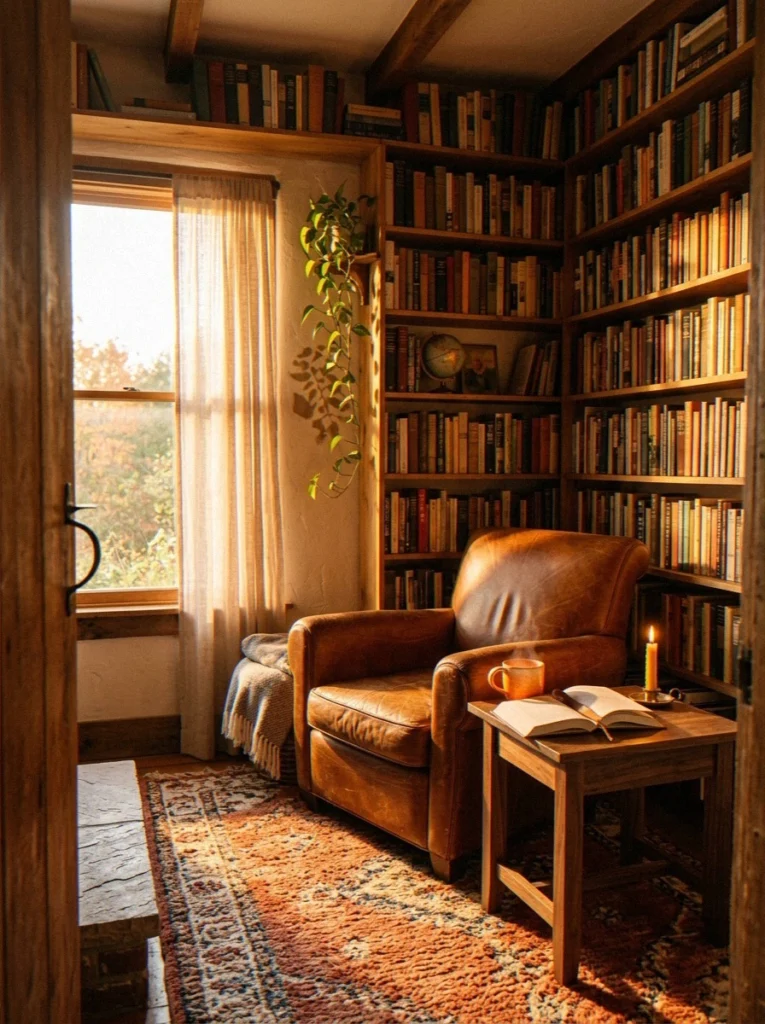
One of those rare projects that pays off every day is making a cozy library room in a small house.
You can relax, feel better, and enjoy the peace of mind that comes from having a space that is completely and unapologetically yours.
You don’t need a lot of space. You don’t need a lot of money. You don’t even need a lot of books.
What you need is a plan, a commitment to going vertical, a comfortable seat, warm lighting, and the willingness to choose one aesthetic and stick to it. That’s genuinely it. Everything else is just detail.
The best library room is the one that makes you want to sit down, pick up a book, and stay there for a while. It could be a dark, moody floor-to-ceiling book cave or a bright Scandinavian corner with a ladder shelf and a linen throw.
So pick one idea from this list — just one — and start this weekend. Don’t overthink it. A leaning shelf and a good lamp is enough to begin. Your future well-read self will be very glad you did.
Now I have to ask: have you started your home library corner yet, or are you still dreaming about it? I’d really like to know what you’re working with and what style you’re going for. Leave a comment and let’s talk about books and cozy places! 📚
For more home design inspiration, check out Architectural Digest, Houzz, and The Spruce — all brilliant resources for real-home library ideas at every budget level.
