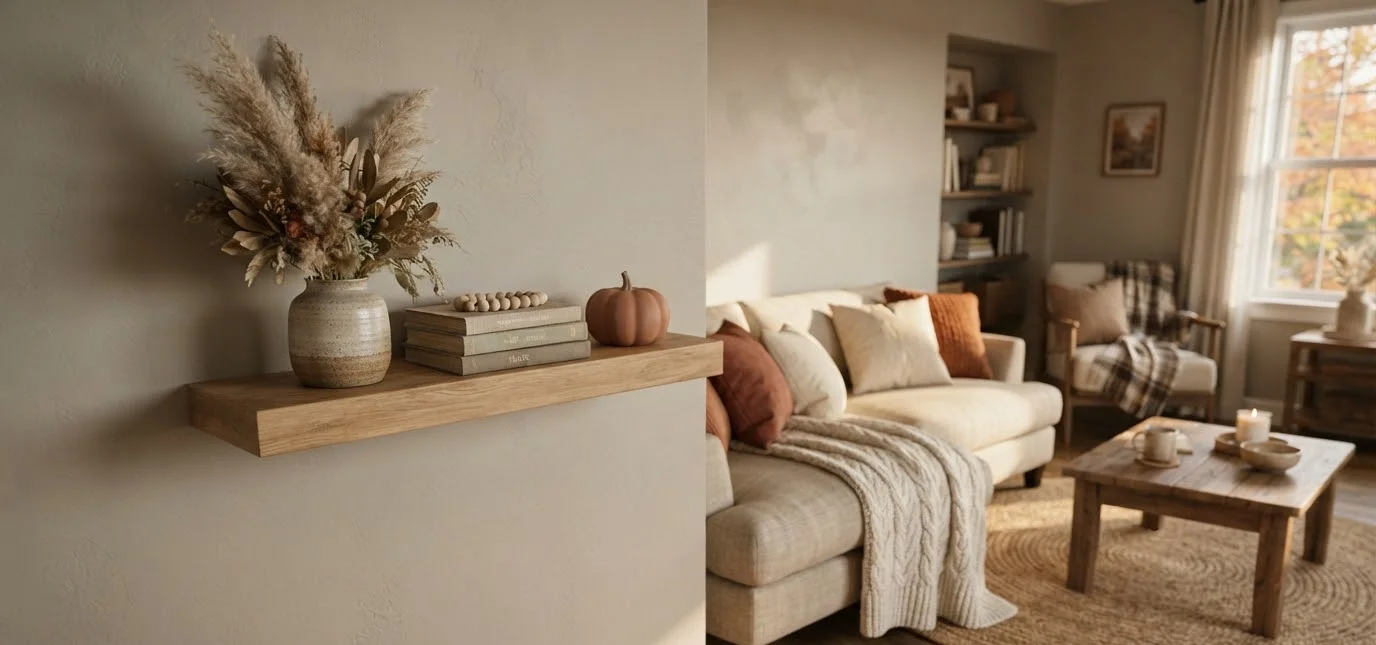
Your shelves are just sitting there. Bare, awkward, collecting dust and the occasional stray remote control.
Meanwhile fall shows up every year with its pumpkins and warm light and you keep meaning to “do something” with that shelf space.
This is the year you actually do it.
I’ve styled shelves for three different apartments now, and I’ve made every mistake in the book.
Overcrowded shelves that looked like a garage sale. Empty shelves that looked like I’d just moved in (twice).
What I’ve landed on is a simple system that takes maybe an hour and makes your whole living room feel intentional. That’s what we’re covering here.
Why your shelves matter more than you think
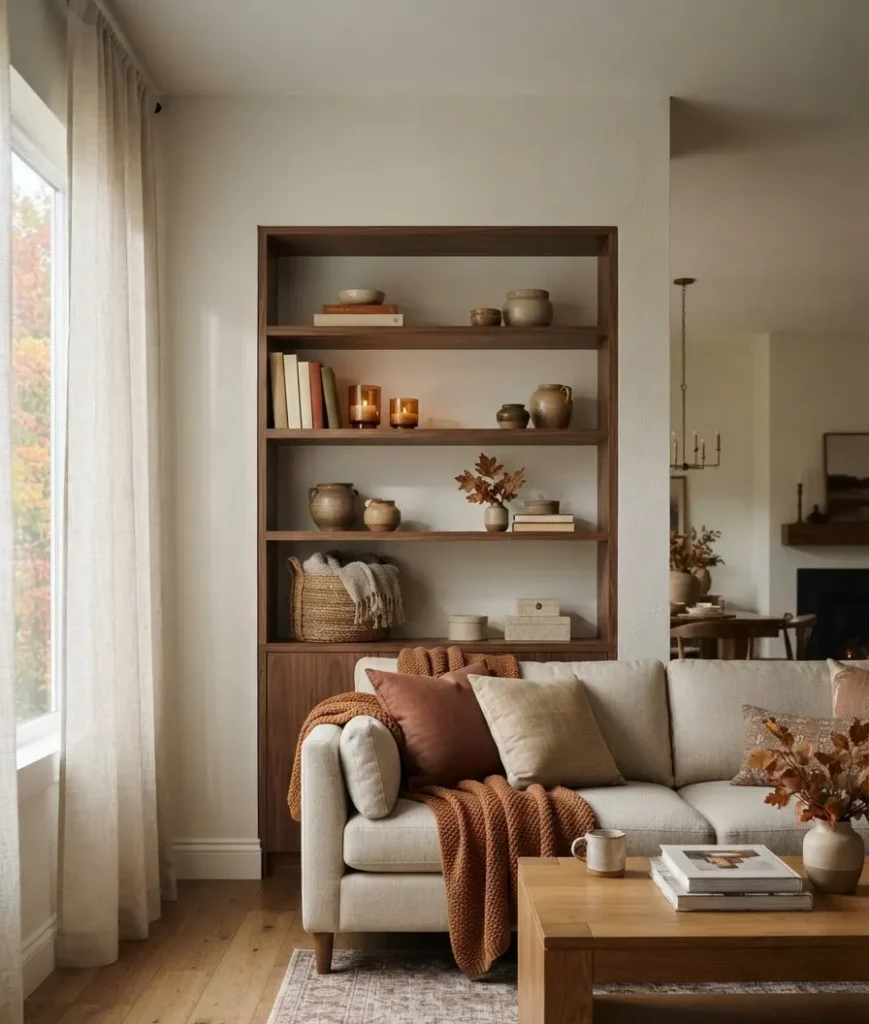
A living room’s personality often lives in the small stuff. The couch and rug get the attention, sure, but shelves are where your actual taste shows up.
Empty shelves say “I haven’t gotten to this yet.” Styled shelves say “I live here on purpose.”
Fall is honestly the easiest season to style for. The colors are already doing half the work: rust, cream, deep green, warm wood tones. You’re not fighting the palette, you’re following it.
IMO, fall shelf styling is the highest return-on-effort decor project you can do this season.
Low cost, high visual payoff, and it takes an afternoon.
Start with a clean shelf (yes, actually clean it)
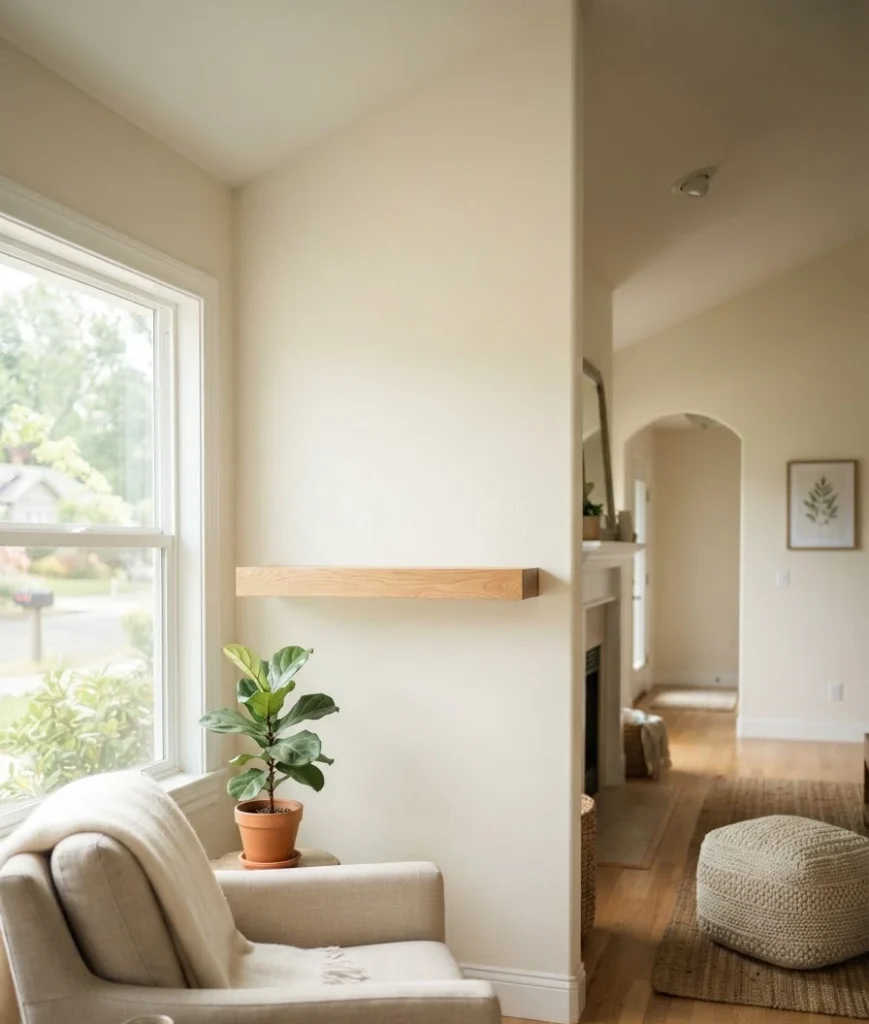
Before you add a single pumpkin, clear the shelf completely. Wipe it down.
I know this sounds like your mom talking, but dust under styled objects photographs terribly, and IRL it just looks tired.
Once it’s clean, ask yourself: what’s already working in this room? Pull your fall colors from something you already own, a throw blanket, a piece of art, even your curtains.
This keeps the shelf feeling connected to the room instead of like a random display case.
The “rule of odd numbers” (and when to break it)
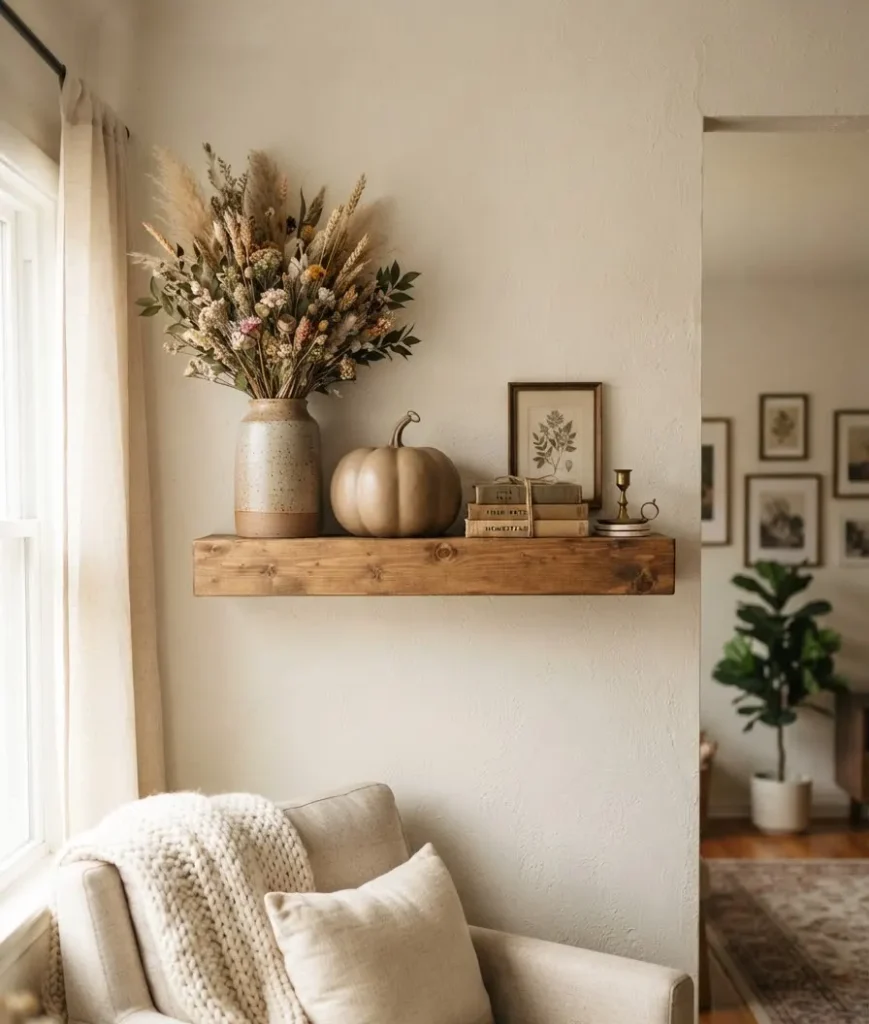
Group objects in threes or fives. Odd numbers create visual interest in a way that pairs just don’t. It’s a design cliché for a reason, it actually works.
But here’s the thing nobody bothers to mention: sometimes two objects look better than three.
If you’ve got one showstopping piece, like a big ceramic pumpkin or a great vintage frame, let it breathe. Don’t cram a third item next to it just to hit a quota.
Layer your shelf like you’re building a little scene
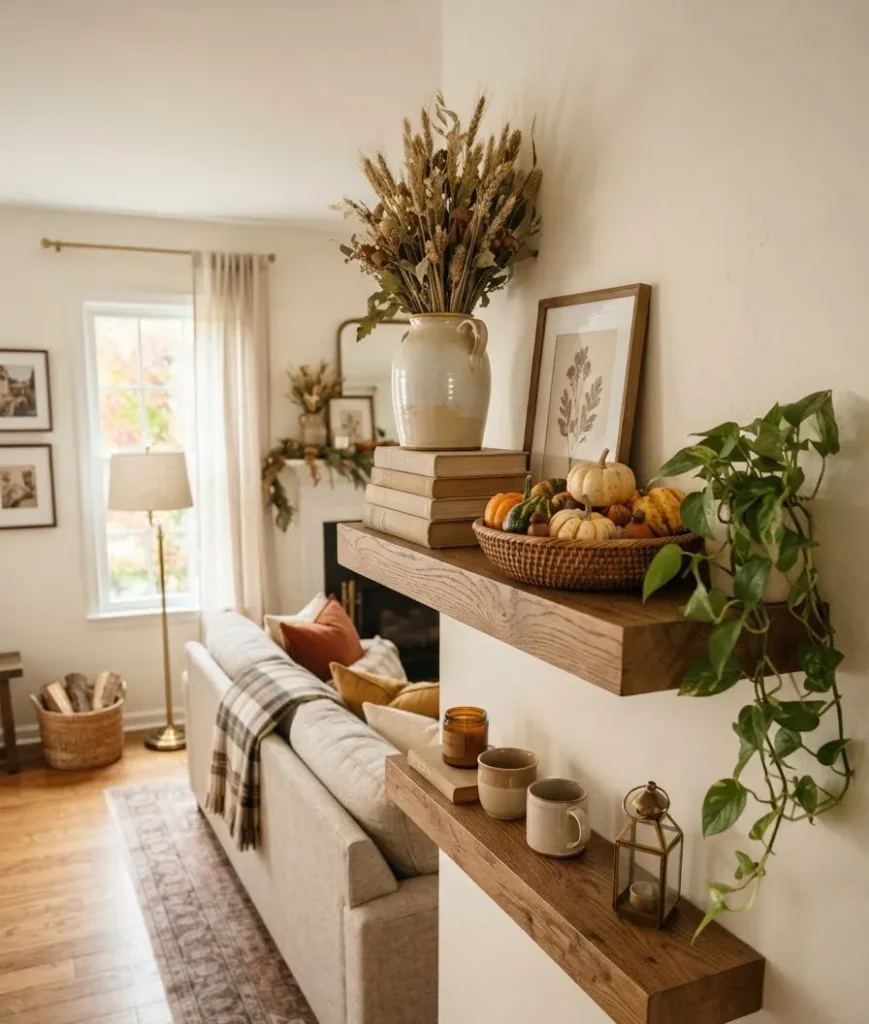
Think of your shelf less like a storage spot and more like a tiny stage set. Every good shelf has layers: something tall, something short, something textured, something flat.
Here’s a breakdown of the layering approach I use on almost every shelf:
- Anchor piece: One larger item that draws the eye first. A tall vase, a stack of books, a framed print leaning against the wall.
- Height variation: Add a shorter object next to the anchor. A candle, a small pumpkin, a little bowl of acorns.
- Texture layer: Something with a different material than the rest. Woven baskets, dried wheat stalks, a chunky knit runner.
- Softener: Greenery or a trailing plant to keep things from looking too stiff and staged.
Skip any one of these layers and the shelf starts feeling flat. I learned this the hard way after styling a shelf with four candles and nothing else. It looked like a very sad birthday cake.
Fall color palettes that actually work indoors
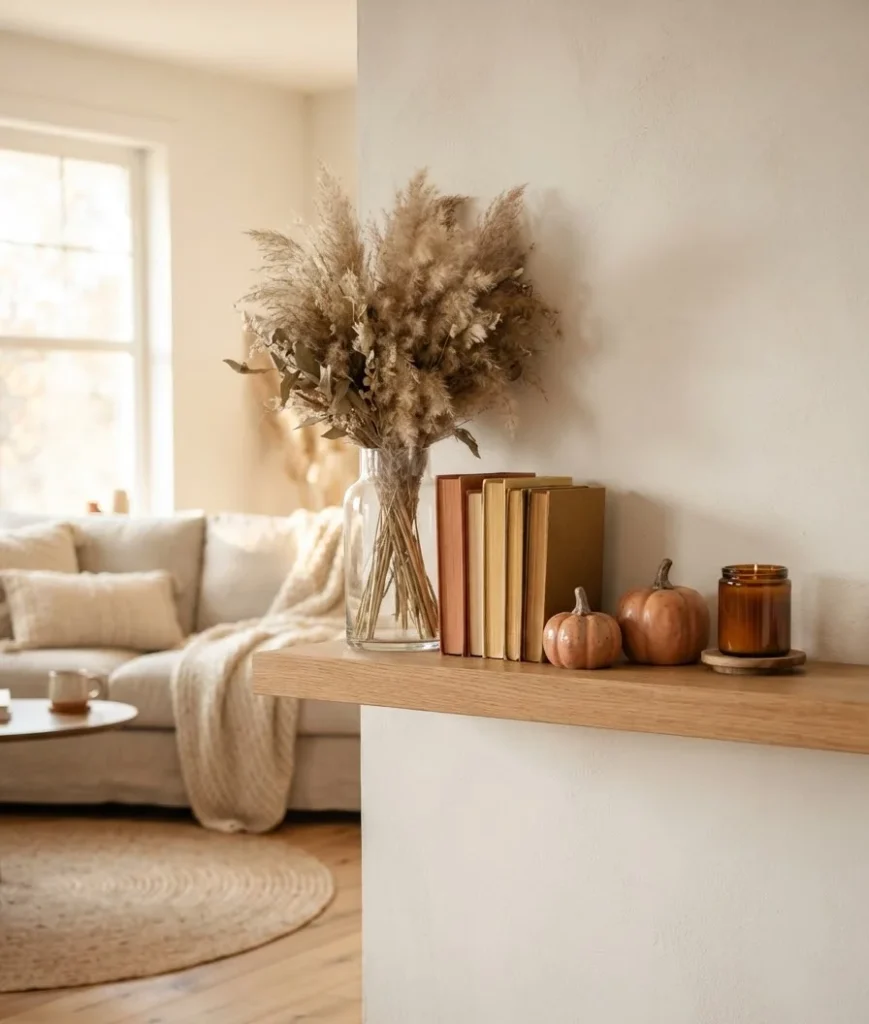
Not every “fall palette” translates well from Pinterest board to your actual living room.
Neon orange pumpkins under warm lamp light can look almost radioactive. Ask me how I know.
Here’s a quick comparison of three approaches, depending on your existing decor:
| Palette Style | Best For | Watch Out For |
|---|---|---|
| Warm rustic (rust, mustard, cream) | Living rooms with wood tones and neutral walls | Can look dated if overdone with too much orange |
| Moody autumn (deep green, burgundy, black) | Modern or minimalist spaces | Needs good lighting or it reads dark and heavy |
| Soft neutral fall (cream, taupe, sage) | Scandi or coastal-leaning rooms | Can lose the “fall” feeling if pushed too far toward beige |
I’m partial to the moody autumn palette, personally. It photographs beautifully and doesn’t scream “seasonal Target haul.” But if your room already leans warm and cozy, rustic tones will feel more cohesive.
Objects that make a shelf feel like fall (without the clutter)
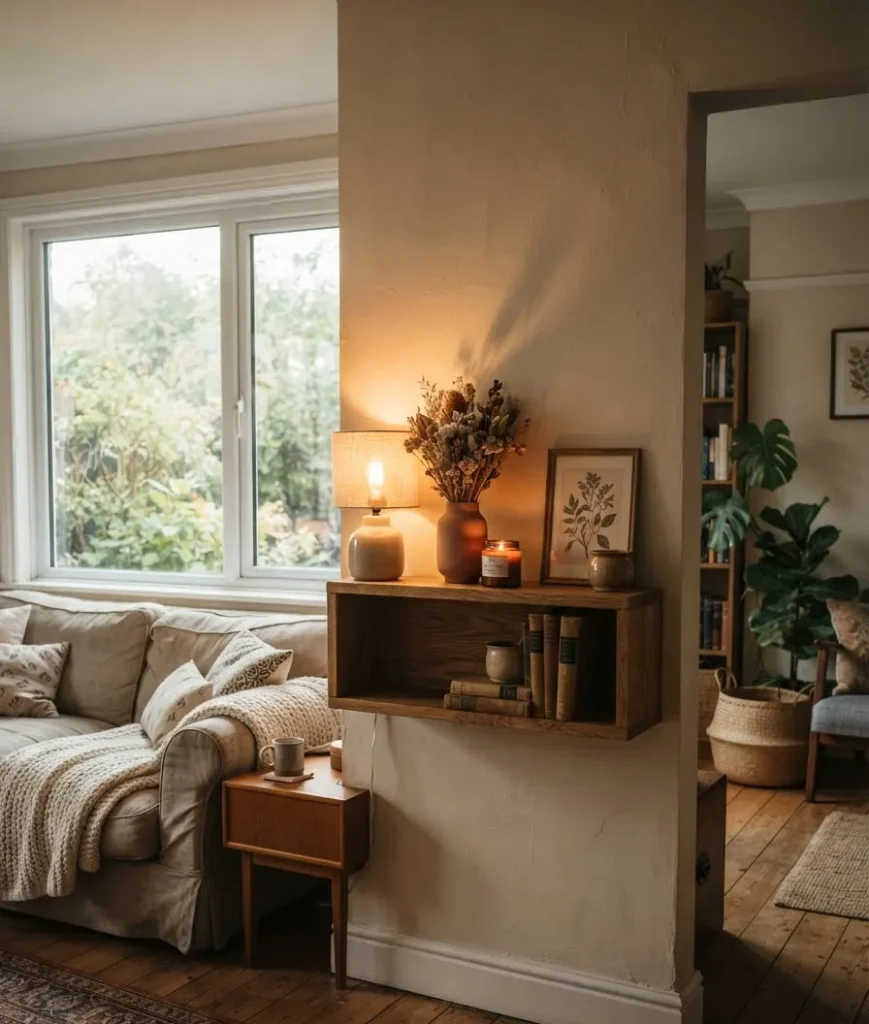
You don’t need a whole box of decorations from the craft store. A few well-chosen pieces go further than a shelf packed with trinkets.
Consider working with:
- Dried florals or pampas grass in a simple vase, they last for months and never wilt on you mid-October.
- A stack of 2-3 books with warm-toned covers, turned spine-in if the covers clash with your palette.
- Small pumpkins, real or ceramic, in muted tones rather than bright orange.
- A textured candle in amber, cinnamon, or clove, both for the smell and the visual warmth.
- One meaningful object, a travel souvenir, a family heirloom, something that isn’t just “decor.” This is the piece that makes the shelf feel like yours and not a showroom.
Skip fake leaf garlands draped across everything. They read cheap fast, and honestly, they collect dust in the fake-leaf grooves in a way that’s hard to clean.
A quick note on lighting
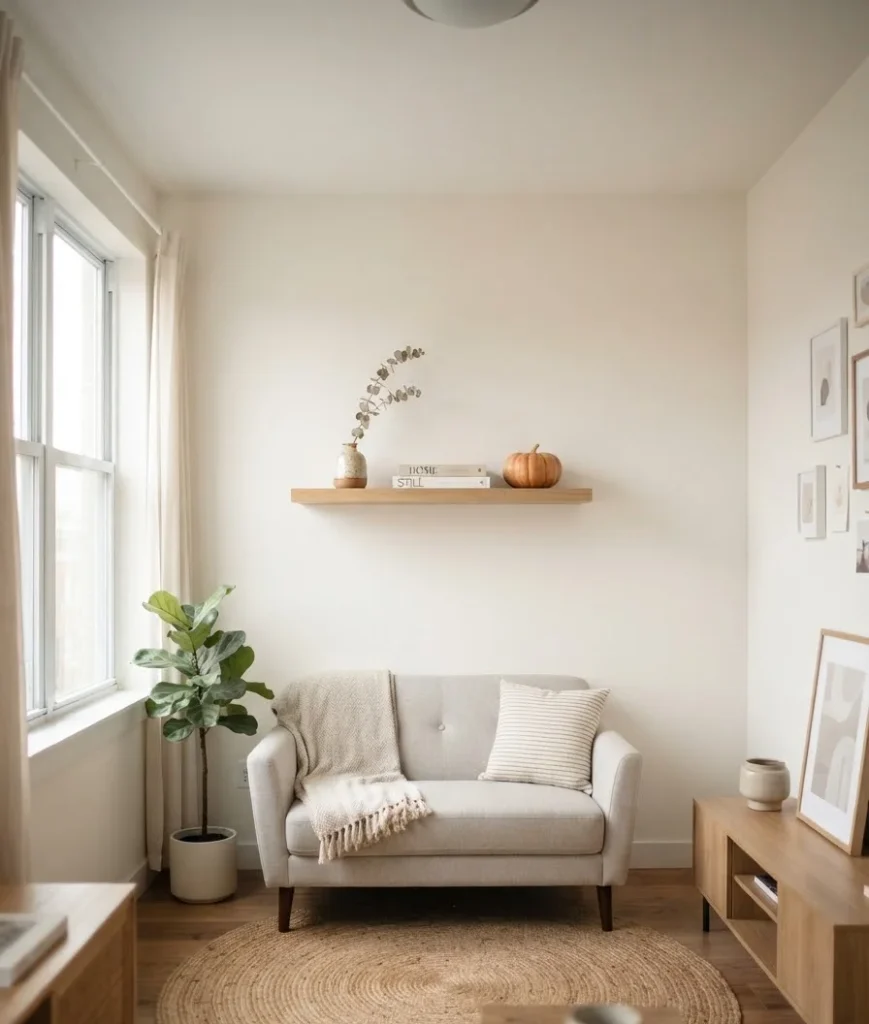
Shelf styling lives or dies by lighting, and this gets skipped constantly. A gorgeous shelf under harsh overhead light looks flat and clinical.
Add a small lamp, a plug-in sconce, or even battery-powered LED candles behind an object for a soft glow.
According to Better Homes & Gardens’ guide to layered lighting, layering multiple light sources at different heights creates depth that a single ceiling fixture just can’t match.
This is especially true for shelf styling since you’re working with a small, contained space that benefits from its own light source.
Small shelf, big impact: apartment-friendly ideas
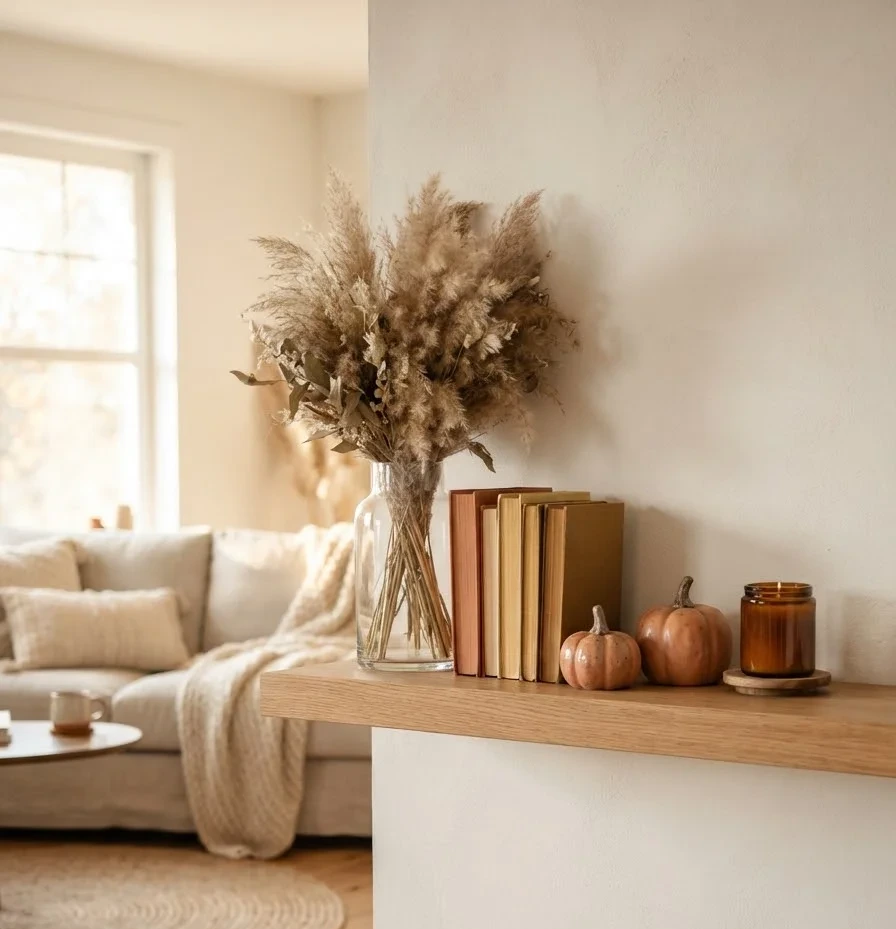
If you’re working with a narrow floating shelf or a small apartment living room, less is genuinely more. A crowded shelf in a small room reads as cluttered instead of cozy.
Try this: pick just three items total. One anchor piece, one textured piece, one small greenery or seasonal touch.
Keep negative space around each object. Believe it or not, the empty space between your items is doing just as much work as the items themselves.
Also, a small side thought here since we’re on the topic: I’ve noticed renters especially avoid shelf styling because they think it needs to be “permanent” or expensive. It doesn’t.
Everything above can be swapped out or packed away in a shoebox come December. Low commitment, high payoff.
Mixing textures without it looking messy
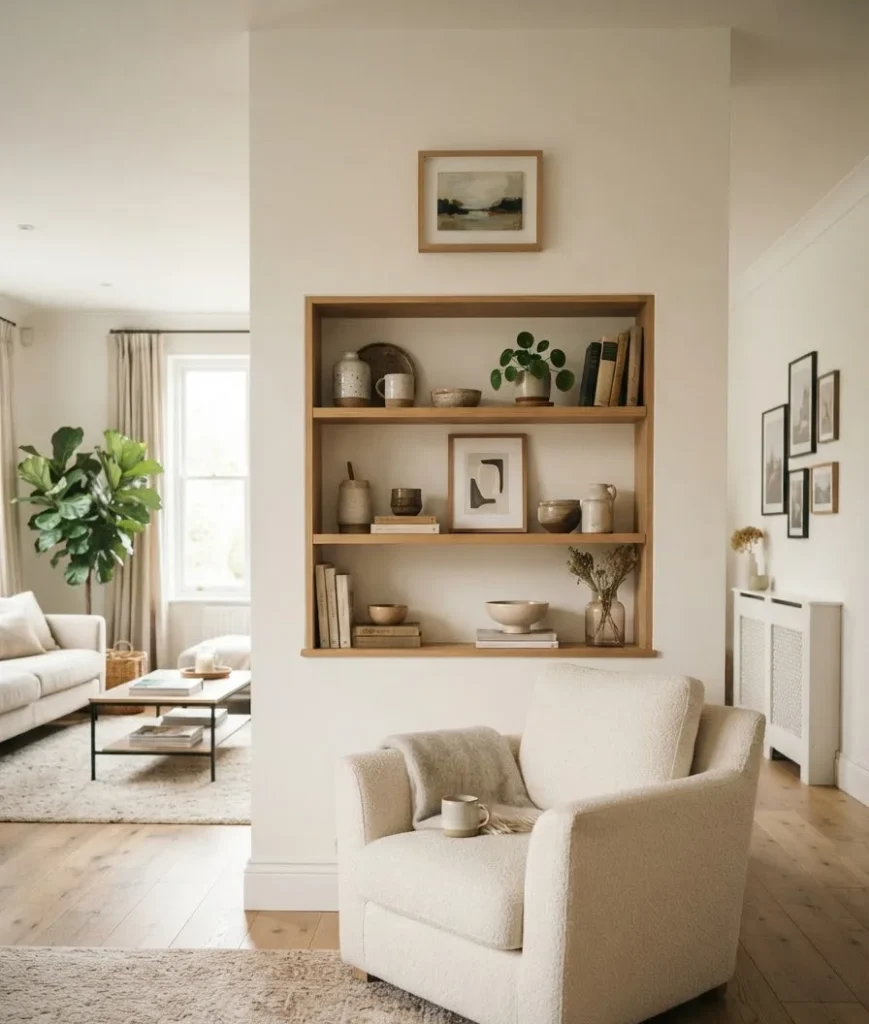
This is where a lot of shelves go wrong. People grab five different materials and the shelf ends up looking like a thrift store shelf rather than a curated one.
A good rule: pick 2-3 textures max per shelf. Wood, ceramic, and woven natural fiber is a classic combination that works almost every time.
Add glass or metal sparingly, as an accent rather than a main material.
The Spruce’s material pairing guide points out that texture contrast, rather than color contrast, is often what makes a vignette feel designed rather than accidental. That tracks with what I’ve seen.
Two shelves with the exact same color palette can look wildly different depending on whether the materials feel intentional or thrown together.
Common shelf styling mistakes (and how to fix them)
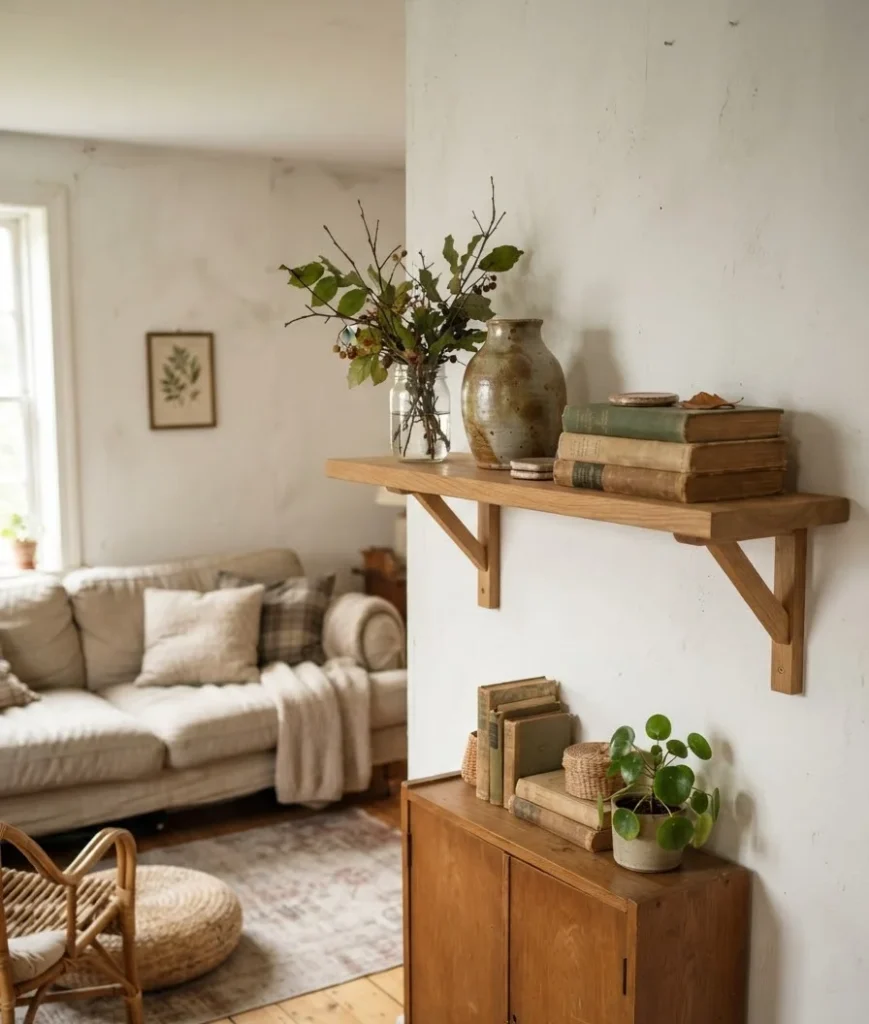
Let’s be honest about what goes wrong, because Pinterest never shows you the failed attempts.
- Everything the same height: Vary it. A flat shelf line is boring to look at.
- Too much symmetry: Perfectly matched sides look staged, not lived-in. Offset your groupings slightly.
- Ignoring the wall behind the shelf: A blank wall above a styled shelf can look unfinished. A small piece of art or a mirror fills that gap nicely.
- Overbuying seasonal decor: You really don’t need 12 pumpkins. Three good ones beat a dozen mediocre ones every time.
This is insane how much of a difference fixing just one or two of these makes. I redid a friend’s shelf last fall by removing half her items and adjusting the heights, nothing new purchased, and it looked like a completely different room.
Budget-friendly ways to refresh your shelf for fall
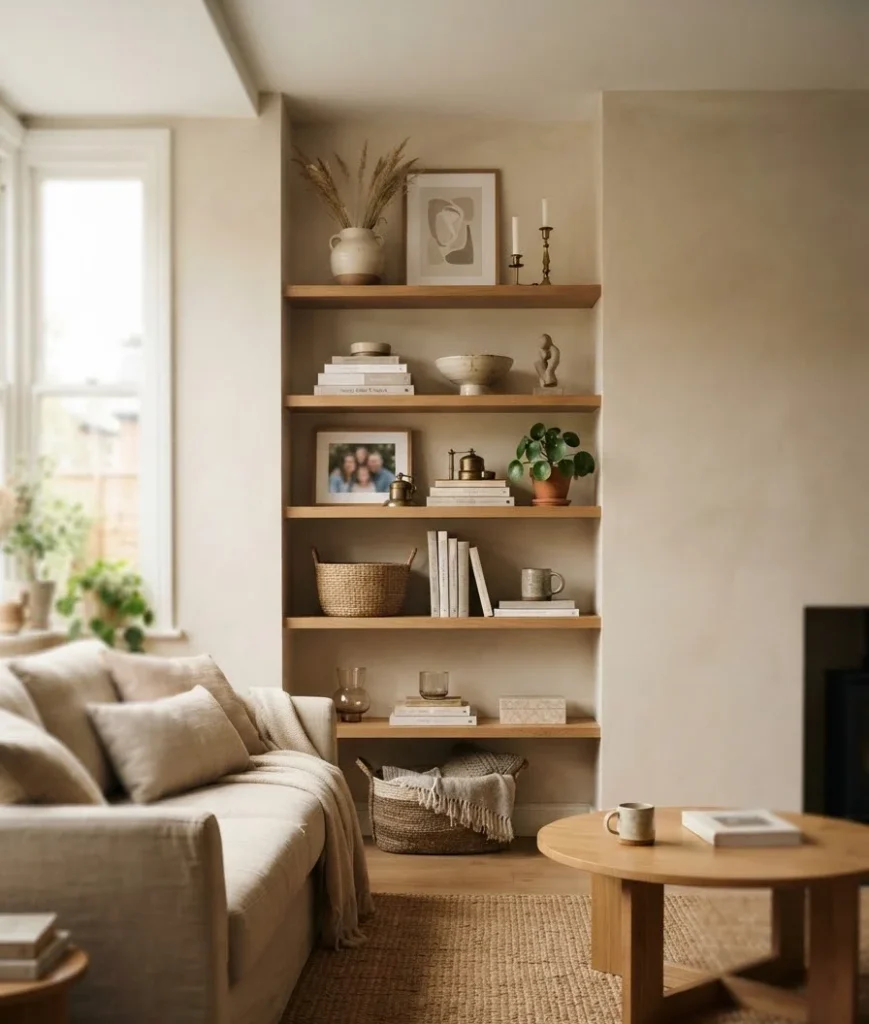
You don’t need a shopping spree. Here’s what actually moves the needle without draining your wallet:
- Rearrange what you already own before buying anything new.
- Swap in a fall-scented candle you already have.
- Clip a few branches or dried leaves from outside (free, and honestly more unique than store-bought stems).
- Thrift one statement piece, a vase, a bowl, a frame, rather than buying five small items new.
If you do want to shop, HGTV’s fall decor roundup has some genuinely tasteful, non-cheesy picks if you’re not into the pumpkin-spice-everything aesthetic.
Putting it all together: a simple styling checklist
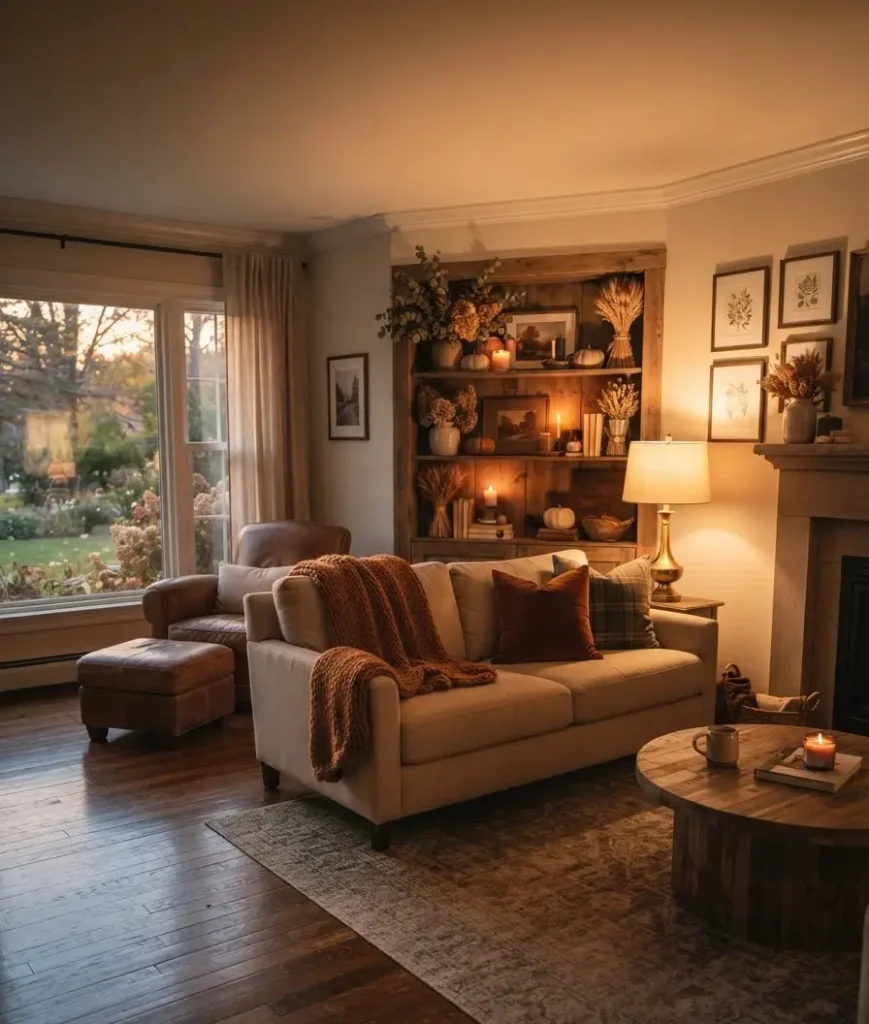
Before you call your shelf “done,” run through this:
- Is the shelf clean and free of clutter that snuck back on?
- Do you have height variation across the objects?
- Are at least two different textures represented?
- Is there a light source nearby, even a small one?
- Does at least one object feel personal rather than purely decorative?
If you can check off four or five of these, your shelf is doing its job.
FAQs
How often should I restyle my shelves for the season? Once per season is plenty for most living rooms.
A light refresh, swapping a candle scent or adding one new object, works fine between the big seasonal changes.
Do I need matching decor across all my shelves? No, and honestly it looks better when you don’t. Matching decor across every shelf in a room can feel more like a showroom than a home. Aim for a shared color palette instead of identical objects.
What’s the cheapest way to add fall texture to a shelf? Natural elements from outside: pinecones, small branches, dried leaves. They cost nothing and tend to look more original than most store-bought seasonal decor.
Final thought
Shelf styling isn’t about perfection, and it’s definitely not about recreating a Pinterest board exactly.
It’s about pulling together a handful of pieces that actually feel like yours, arranged with a little intention.
Give your shelf an hour this weekend. Clear it, layer it, add one thing that means something to you. What’s the one object in your home you’d build a whole shelf around? I’d genuinely love to know 🙂
