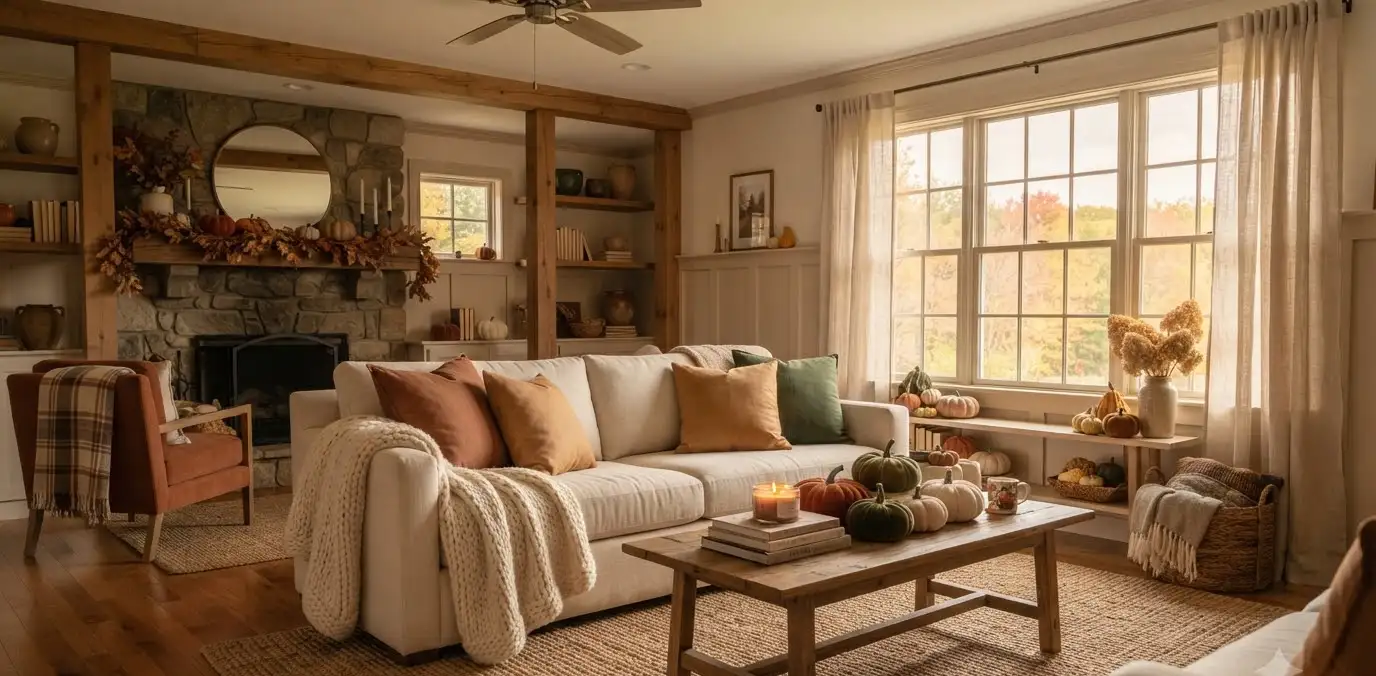
I redecorate my living room for fall every single year, and I still get it wrong the first try.
Last October I bought three pumpkins that didn’t match anything in my house, plopped them on the coffee table, and called it a day.
It looked like a produce stand had exploded in my living room. So trust me when I say: fall decor is easy once you know the tricks, but it’s also really easy to mess up.
This guide covers what actually works, not just what looks good in a Pinterest thumbnail.
I’ve tested most of this in my own space, and I’ll tell you flat out which ideas are worth your money and which ones you can skip.
I’ve also learned that fall decor doesn’t have one right answer. A rented apartment with white walls needs a different approach than a house with exposed brick and dark wood floors. So instead of giving you one rigid formula, I’m giving you the building blocks, and you get to decide how far to take each one. That’s honestly the more useful way to think about seasonal styling anyway.
Why fall decor for your living room actually matters
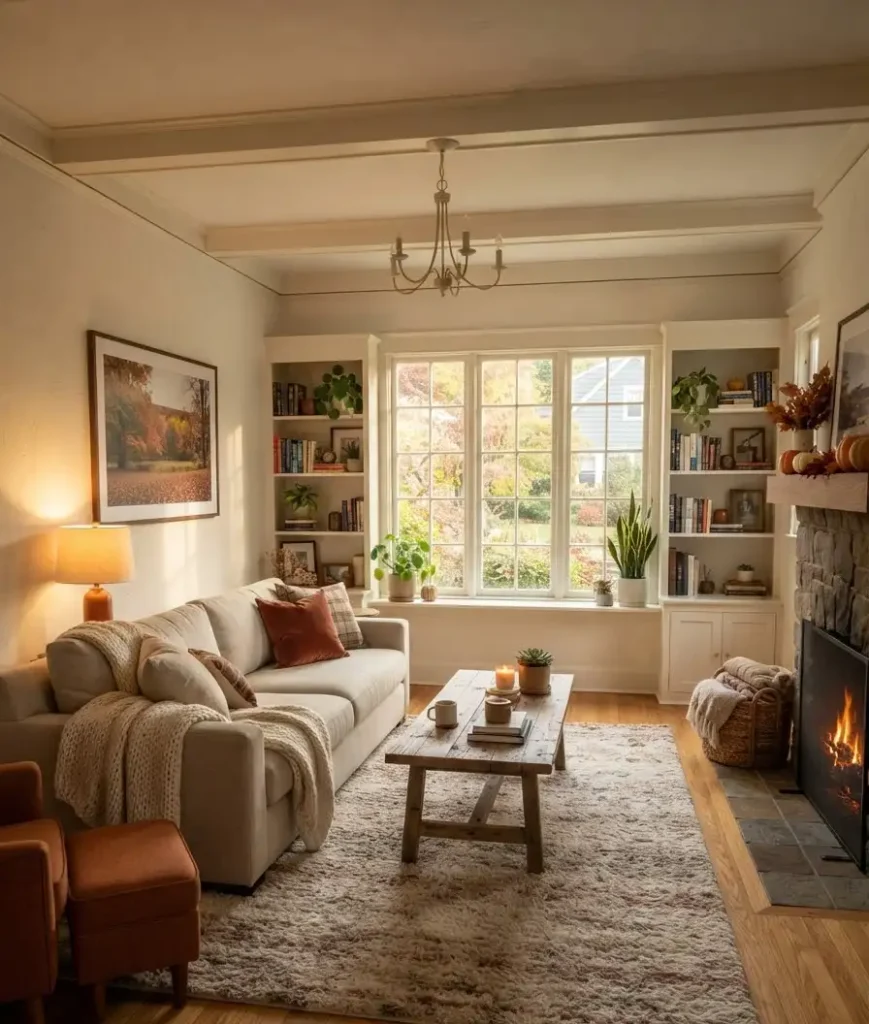
Your living room sets the tone for your whole home. It’s the first space guests see, and it’s where you spend most of your evenings once the days get shorter. A few thoughtful changes can make the room feel warmer without a full renovation.
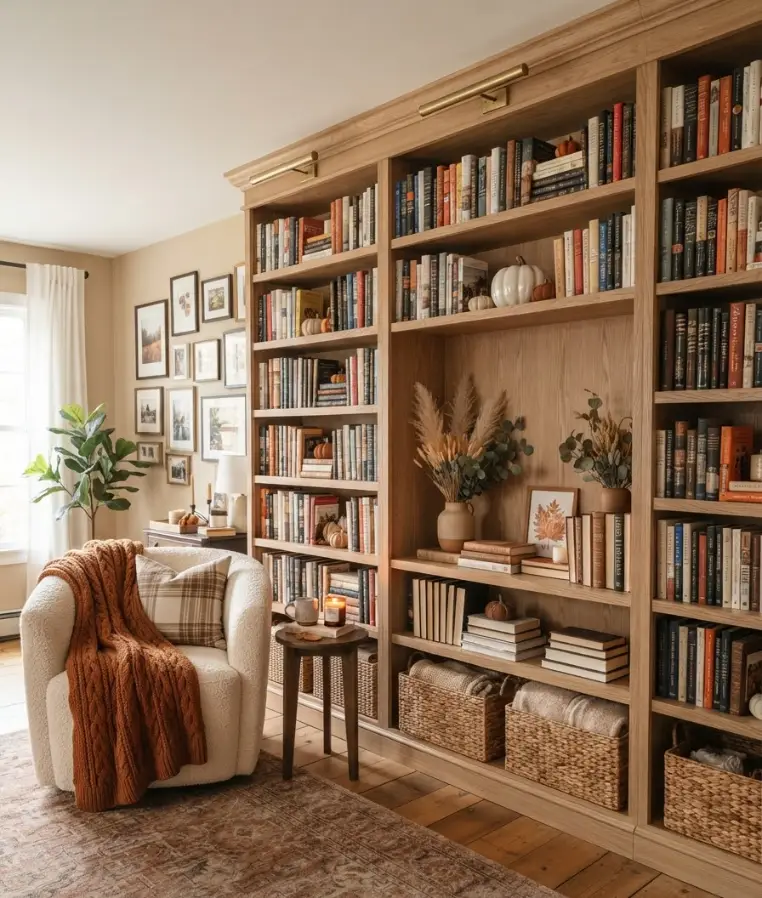
Fall decorating isn’t about covering every surface in orange throw pillows. It’s about layering texture, warmth, and a handful of seasonal touches that feel intentional.
Think of it as dressing your room in a sweater instead of a costume.
According to Apartment Therapy’s seasonal design coverage, the biggest shift homeowners make each fall isn’t color, it’s texture.
Chunky knits, wood tones, and matte finishes do more heavy lifting than any pumpkin ever will.
Start with a color palette that won’t fight your existing decor
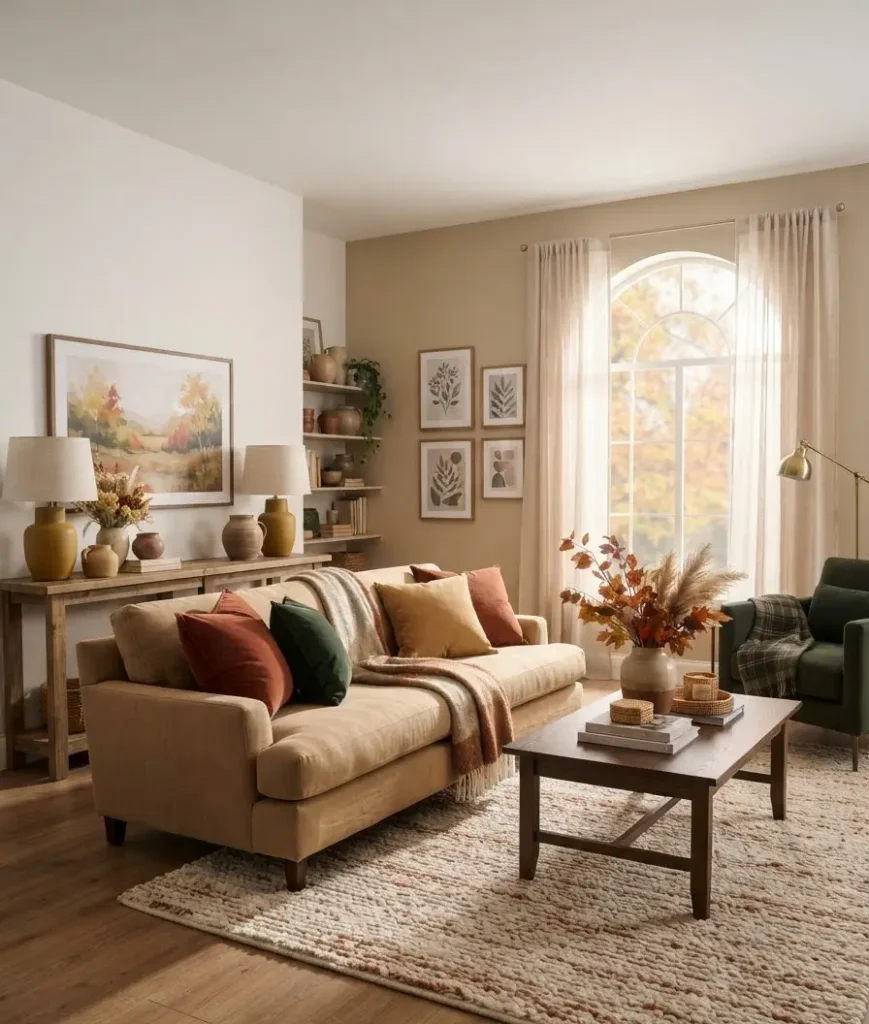
Before you buy a single thing, figure out your palette. This step saves you money and prevents that “produce stand” situation I mentioned earlier.
Here’s what tends to work well in most living rooms:
- Warm neutrals like camel, cream, and taupe as your base
- Deep rust or terracotta for accent pieces
- Forest green or olive to balance the warm tones
- Soft mustard used sparingly, since it can overwhelm a small space
IMO, the biggest mistake people make is going full orange. A little rust goes a long way, but a whole room of pumpkin-colored everything starts to feel like a Halloween store. Pick one or two accent colors and let your neutrals do the rest of the work.
A quick way to test your palette
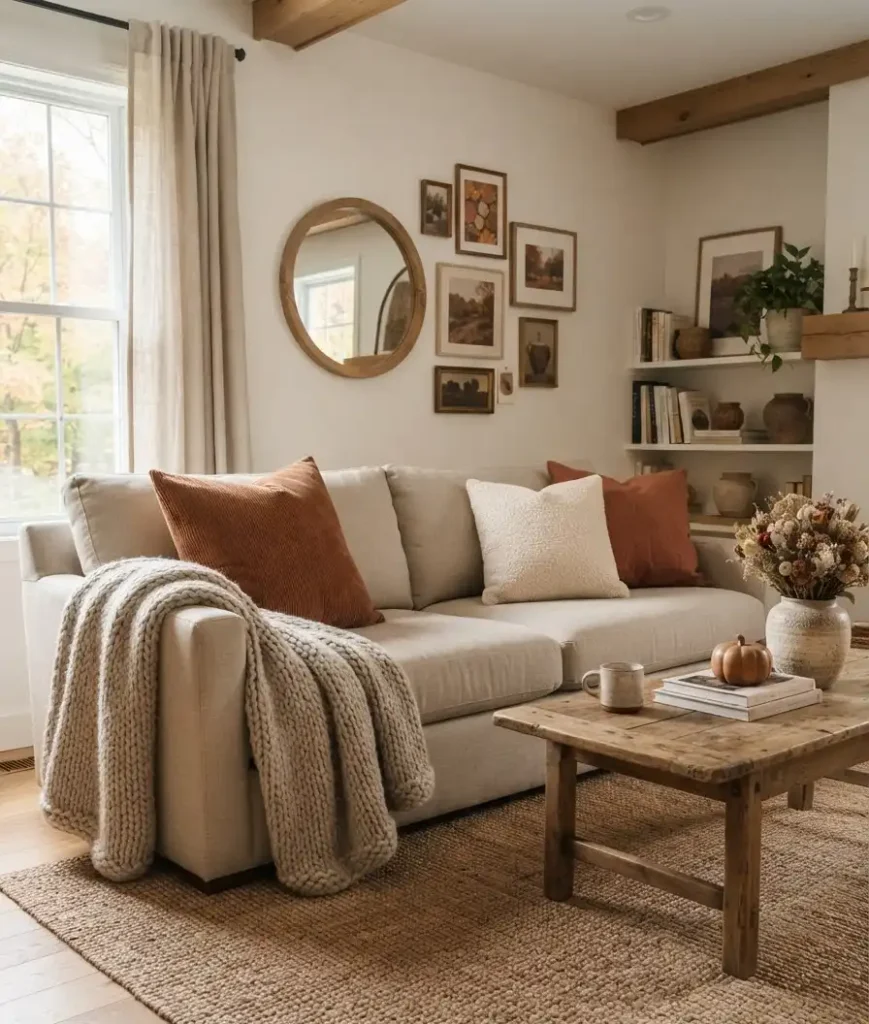
Grab three items you already own in your target colors (a candle, a book, a picture frame) and set them on your coffee table together.
If they look good sitting there for five minutes, they’ll look good in your finished room too.
I do this test every year before I buy anything new, and it’s saved me from at least two impulse purchases at Target that would’ve clashed badly with my navy couch. If an item doesn’t pass the coffee table test, it doesn’t come home with me. Simple rule, but it works.
One more thing worth mentioning: your existing wall color matters more than people realize.
A room with cool gray walls needs warmer accent colors to balance it out, while a room with warm beige walls has more room to play with deeper, moodier tones like burgundy or espresso brown.
Take a look at your walls before you commit to a palette, not after.
Layer textures instead of buying new furniture
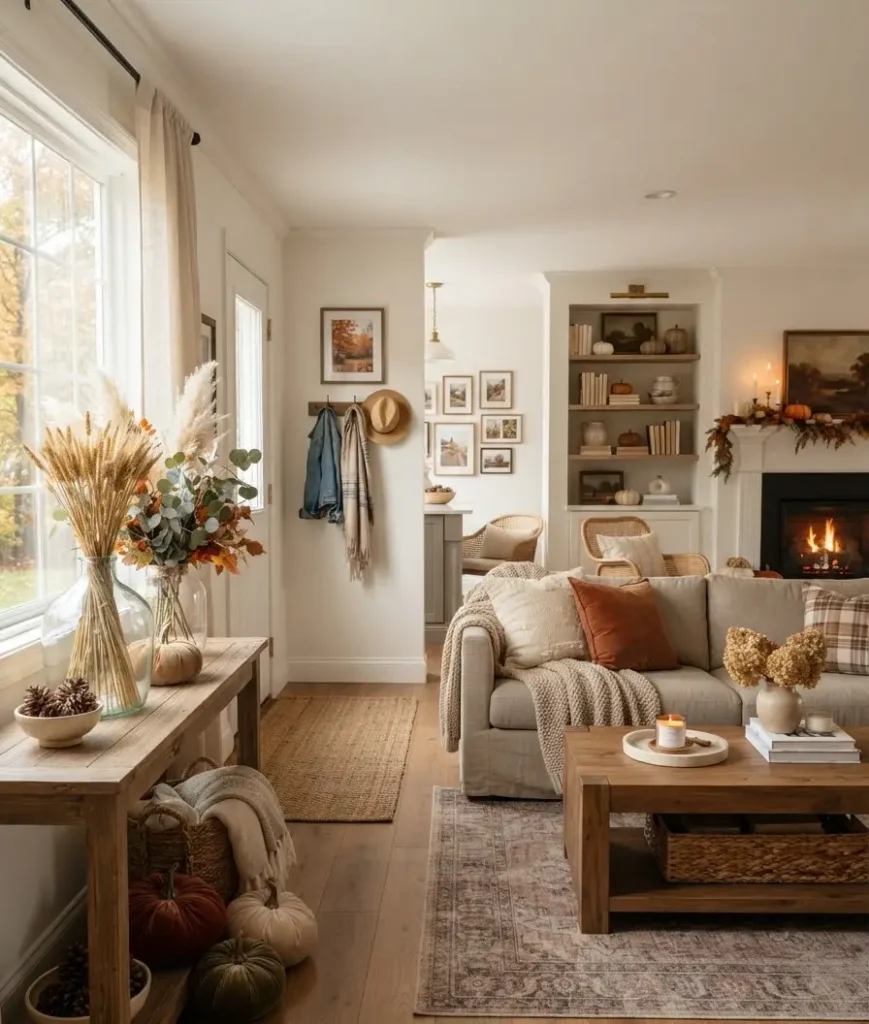
You don’t need a new couch.
You need better texture. This is the cheapest, highest-impact change you can make, and it’s the one most people skip.
Swap your lightweight summer throw pillow covers for something with more weight, like corduroy, bouclé, or a chunky knit.
Add a wool or faux-fur throw blanket somewhere visible, draped over the arm of a chair or folded at the end of the sofa.
Layer a woven jute or wool area rug over your existing rug if your floor allows it.
I bought two bouclé pillow covers two years ago for under $30 total, and they’ve genuinely changed how the whole room feels every October. Cheap fix, big payoff.
Bring in natural elements without the mess
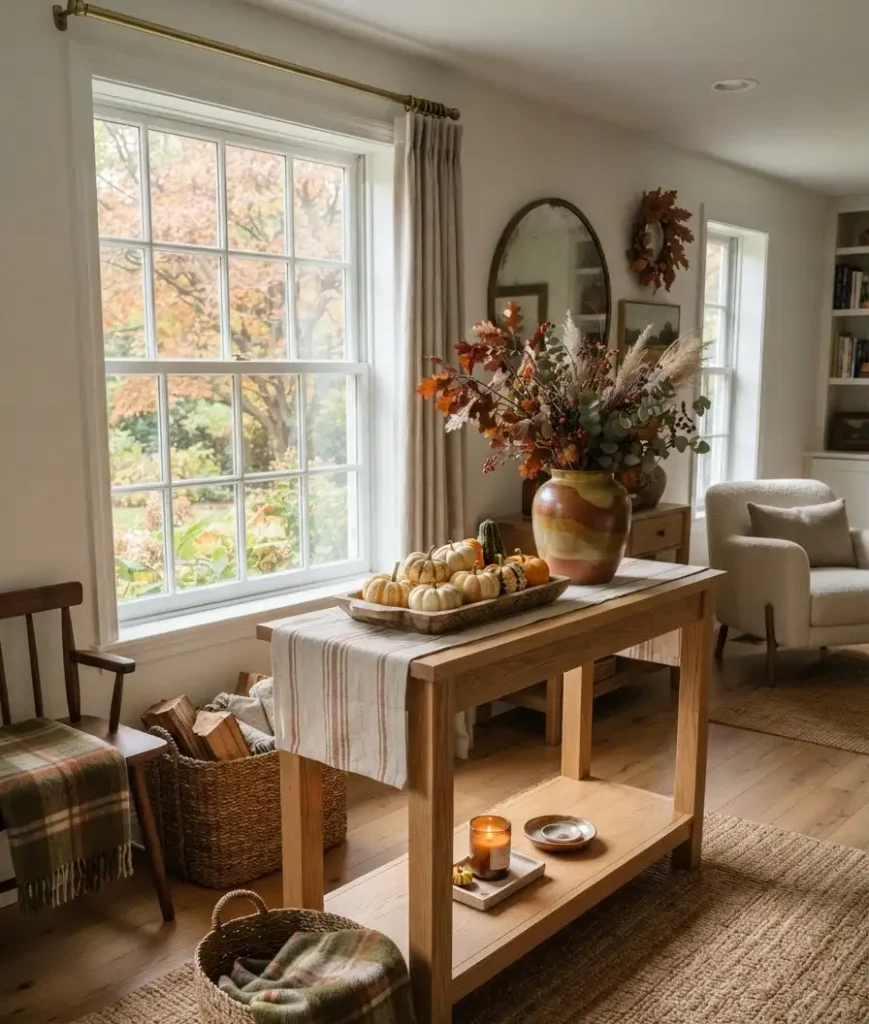
Real pumpkins and gourds look great, but let’s be honest, they don’t last long once fall really settles in. IMO, a mix of real and faux is the smart move.
- Use one or two real mini pumpkins on a tray near the front door or entryway, where they won’t sit for months
- Use faux velvet pumpkins on the coffee table or bookshelf, since they last for years and never rot
- Add dried branches, wheat stalks, or pampas grass in a tall vase for height and movement
- Bring in pinecones in a bowl on a side table for a subtle, low-effort touch
Better Homes & Gardens has covered how faux pumpkins have gotten so realistic in the last few years that most guests genuinely can’t tell the difference from three feet away. My mother-in-law tried to pick one up off my mantel last fall and looked at me like I’d tricked her.
If you go with real pumpkins near an entryway, keep a small tray or plate underneath them. They sweat more than you’d expect once the heating kicks on indoors, and a ring of moisture on a wood console table is not a fun cleanup job. I learned that one the hard way on a console table that still has a faint water mark from three years ago.
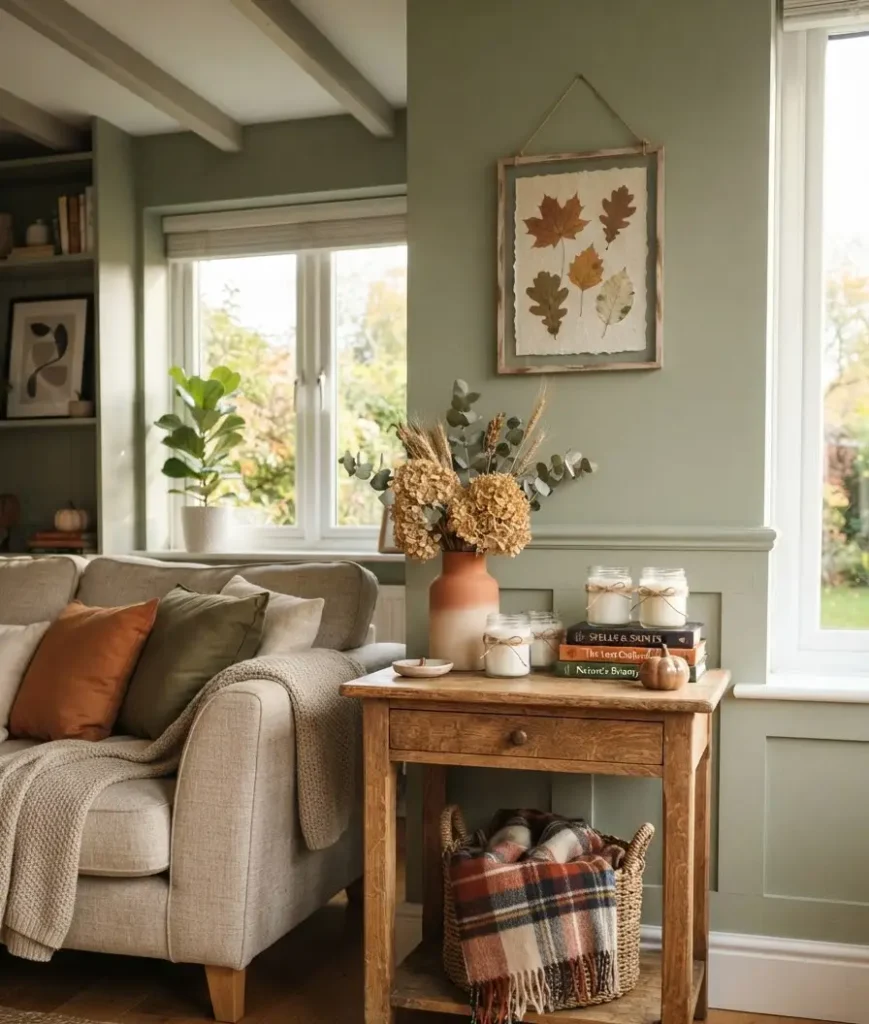
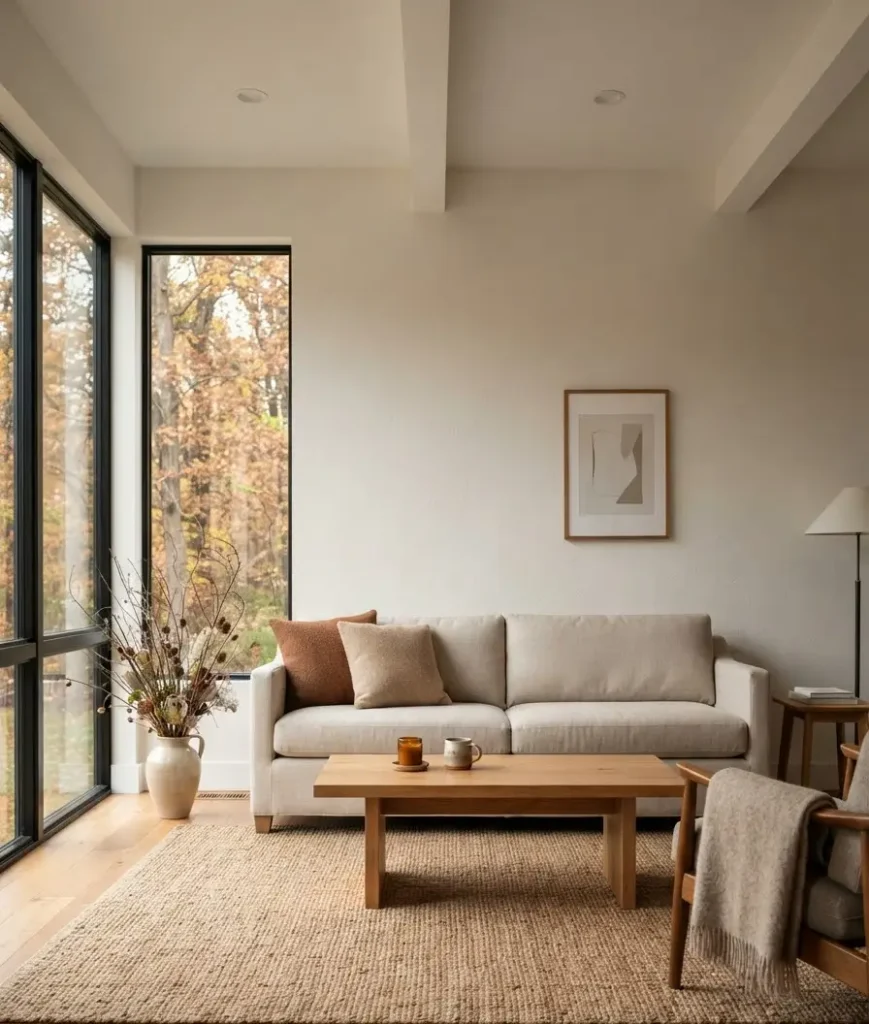
For anyone renting or working with a small apartment, a single glass vase with three or four dried branches does almost as much visual work as a whole tablescape. Height draws the eye upward, which makes even a small living room feel less cramped. That’s a trick interior stylists use constantly, and it costs about $8 at a craft store.
Get the lighting right, because it changes everything
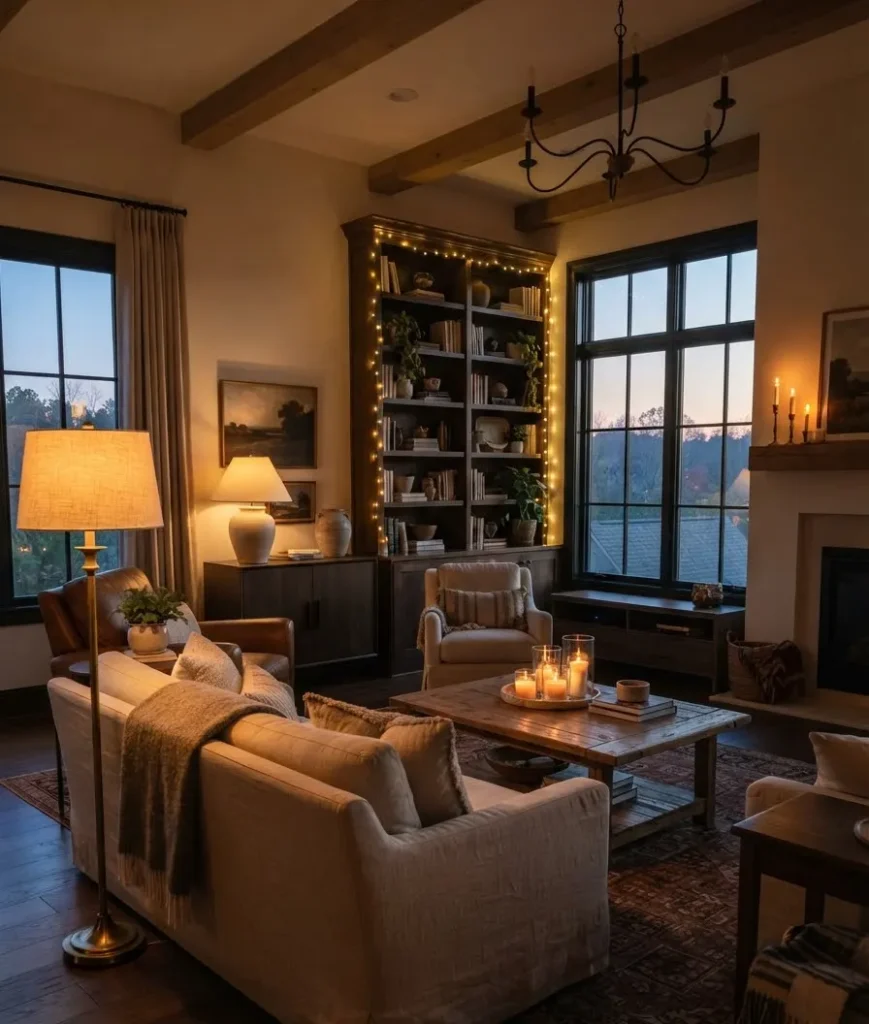
Lighting is the most underrated part of fall decorating. Bright white overhead light kills a cozy mood instantly, no matter how many pillows you’ve added.
Switch your lamps to warm-toned bulbs if you haven’t already.
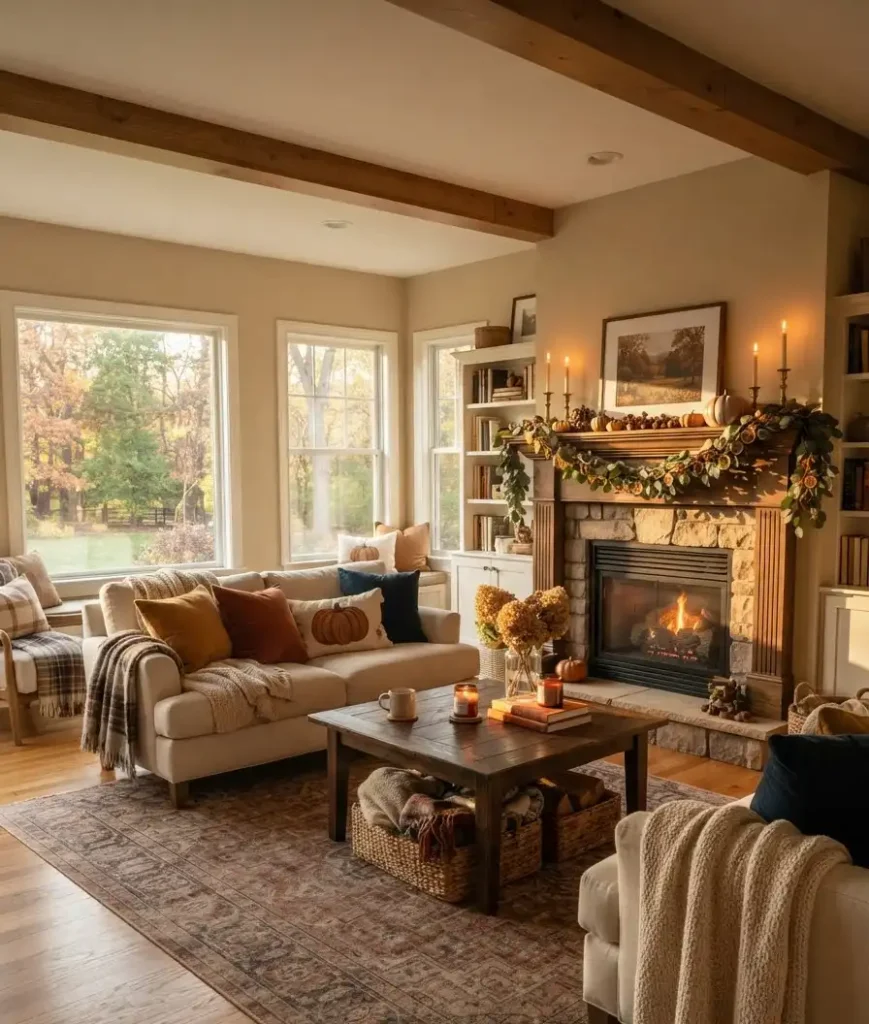
Add a few candles in amber or spiced scents on your coffee table or mantel (unscented if you’re sensitive to strong smells, since not everyone loves a heavily perfumed room).
String lights with a warm white glow work well tucked into a bookshelf or wrapped loosely around a mirror frame.
Random tangent, but every time I light a pumpkin spice candle I think about my freshman year dorm room, where I definitely wasn’t supposed to have candles at all. Anyway, back to your living room.
Style your mantel and shelves like a pro
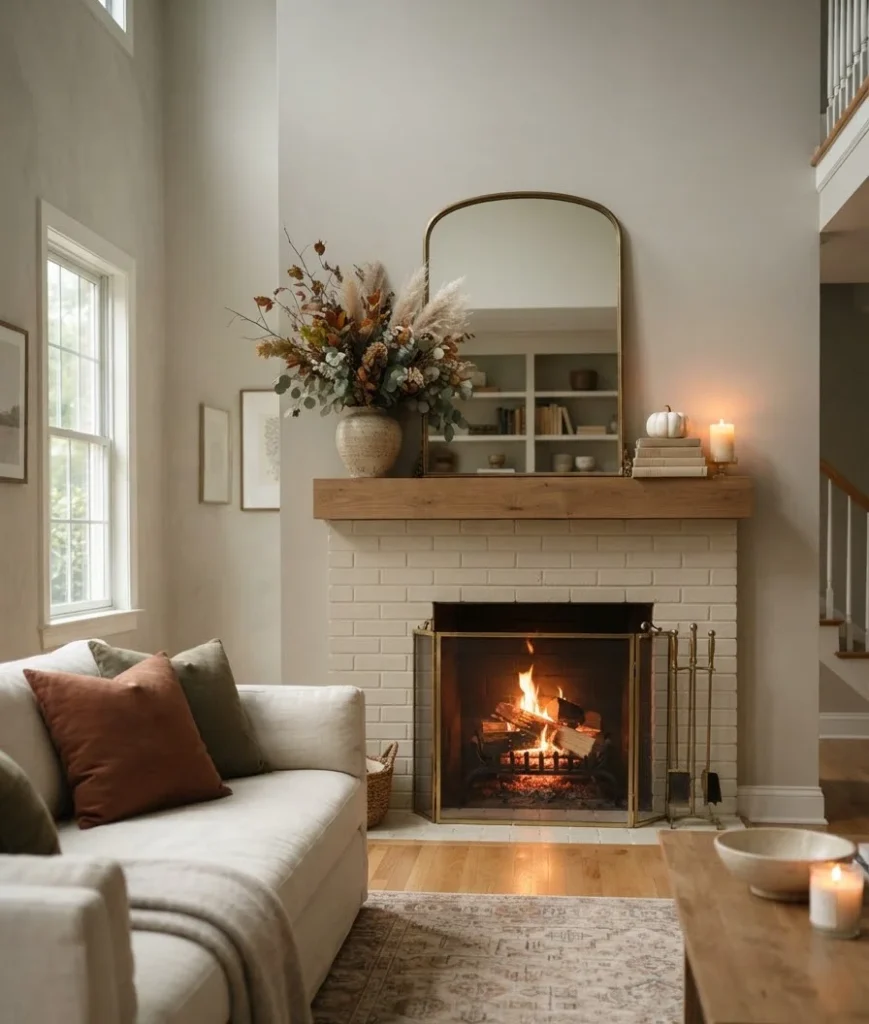
If you have a mantel, it’s basically begging to be styled for fall. If you don’t, a bookshelf or console table works just as well.
The trick is working in odd numbers and varying heights. Three items grouped together almost always look better than two or four.
Start with a large anchor piece (a mirror, a piece of art, or a tall vase), then layer smaller items in front at different heights, like a stack of books topped with a small pumpkin, or a candle next to a small plant.
Here’s a small table breaking down a simple mantel layering formula:
| Layer | What to use | Height | Example |
|---|---|---|---|
| Back | Anchor piece | Tallest | Mirror or framed art |
| Middle | Height filler | Medium | Vase with dried stems |
| Front | Small accents | Lowest | Faux pumpkin, candle, books |
| Extra | Texture piece | Varies | Woven basket or small throw |
That formula works whether you’re decorating a $10 thrifted shelf or a full stone fireplace.
Budget-friendly DIY ideas that don’t look cheap
Not everyone wants to drop $200 on new decor every October, and honestly, you don’t need to. A few of my favorite low-cost swaps:
- Spray paint an old vase in a matte terracotta or forest green for an instant refresh
- Collect real leaves on a walk and press them into a cheap frame for free wall art
- Tie a simple raffia or twine bow around plain candle jars for texture without spending anything
- Repurpose a summer fruit bowl by filling it with pinecones and mini gourds instead
This is insane, but one of the most complimented pieces in my living room right now is a $4 thrift store vase I spray-painted myself. Wow, a can of spray paint really does more than people give it credit for.
Pinterest-worthy styling tips that actually photograph well
If you’re decorating with photos in mind (and let’s be real, most of us are these days), a few small habits make a big difference in how your space looks on camera.
- Shoot near a window during daylight hours for the warmest, most natural light
- Keep your color palette to three tones max in any single photo frame
- Style one corner or vignette really well instead of trying to photograph the whole room at once
- Add one unexpected texture, like a chunky knit blanket or a woven basket, to break up flat surfaces
The Old Farmer’s Almanac has some genuinely useful notes on how fall light angles shift throughout the season, which is worth a peek if you’re the type who plans decor photos around golden hour.
A few things I’d skip entirely
Not every trend is worth your money or your shelf space, and I say this as someone who’s bought a fair share of decor I regretted.
Skip the artificial fall-scented plug-ins if you already have candles, since layering too many scents together gets overwhelming fast.
Skip oversized inflatable yard decor if your goal is a cozy indoor look, that’s a totally different vibe. And skip buying an entirely new decor set every single year.
Rotate what you already own with two or three new pieces instead.
Frequently asked questions
How much does it cost to decorate a living room for fall? You can do a solid refresh for $50 to $100 using pillow covers, a throw blanket, and a few faux pumpkins.
A full mantel and shelf styling with new candles and vases can run closer to $150 to $250, depending on where you shop.
When should I start decorating for fall? Late September through early October works well for most climates in the US and UK. Waiting until closer to Halloween gives you more time to enjoy the look before switching to winter decor.
Can I mix fall decor with items I already use year-round? Yes, and honestly you should. Neutral vases, wood trays, and plain candle holders work in every season. Just swap the smaller accent pieces, like pillow covers and seasonal stems, for the fall-specific look.
Final thought
Fall decorating doesn’t need to be complicated or expensive.
Start with texture, layer in a few natural elements, warm up your lighting, and style one corner really well before worrying about the whole room. That’s genuinely the whole formula.
What’s the one fall decor item you buy every single year without fail? I’d love to know if it matches mine 🙂
