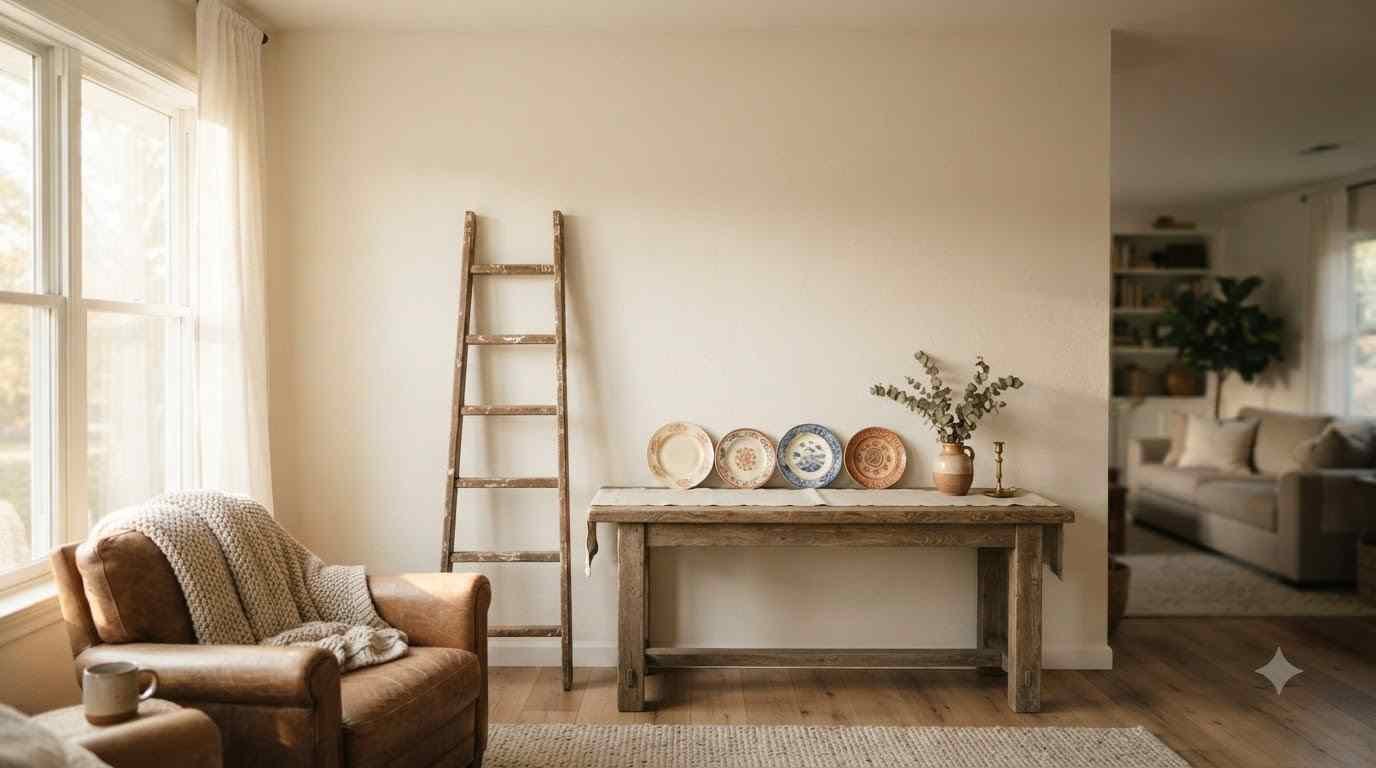
I hung my first plate wall on a Tuesday night with a hammer, a level I never used, and three mismatched thrift store plates. It looked crooked. It looked amazing anyway.
That’s the thing about plate walls. You don’t need a design degree or a perfectly matched china set.
You need a blank wall, some plates you already love, and about an hour of your Saturday.
If you’ve been scrolling Pinterest for hours saving plate wall photos and wondering if you could actually pull one off yourself, you can.
I’ve put together 20 ideas below, ranging from beginner-friendly to slightly more ambitious, so pick whatever fits your space and your patience level.
Why plate walls are having a real moment again
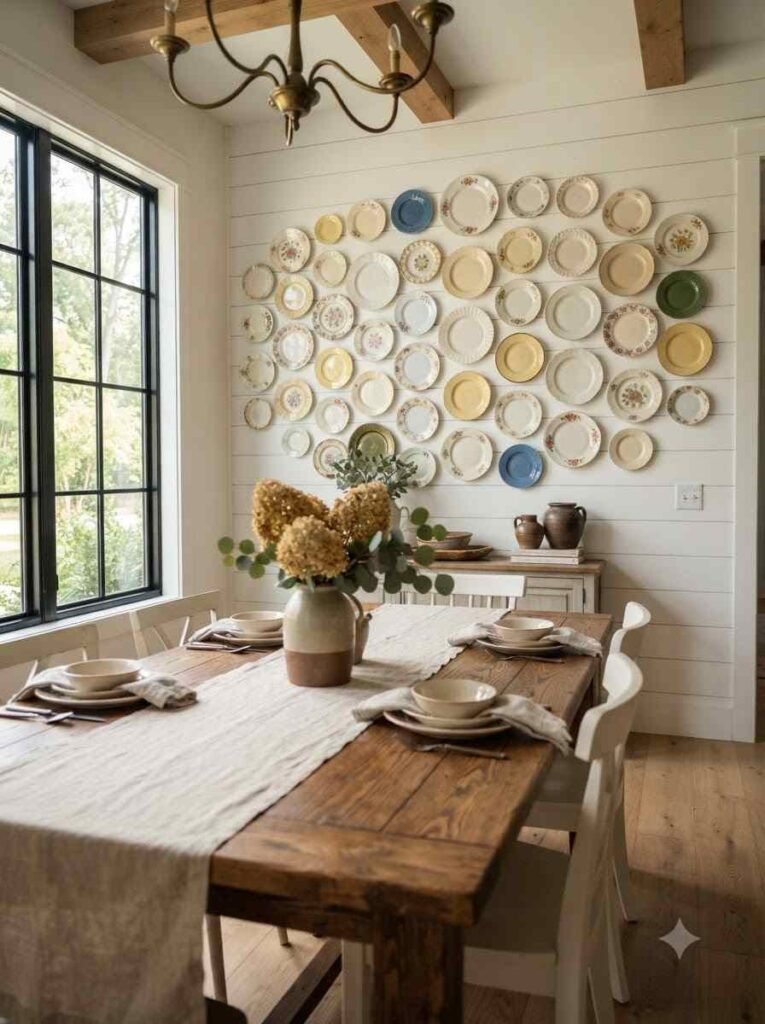
Plate walls aren’t new. Your grandmother probably had one.
But the current version feels different: less formal dining room display, more personal gallery wall that happens to use dishware instead of framed prints.
Part of the appeal is cost. A single piece of framed art can run you 50 dollars or more, while a thrifted plate might cost 2 dollars. Part of it is flexibility too. You can swap plates in and out as your taste changes, which you can’t really do with a painting bolted to canvas.
There’s also the storytelling angle, which I didn’t expect to care about until I started collecting. Every plate on my wall has a small story attached to it: one from a flea market in Jaipur, one from my mother’s cupboard, one I bought purely because the color matched my curtains and I have zero regrets. A gallery wall of prints rarely carries that kind of personal weight. Plates do, almost by accident.
Pinterest users especially seem to gravitate toward this trend for a simple reason: it photographs beautifully.
A well-lit plate wall with good color contrast tends to perform far better on a moodboard than a single framed print, and the layout possibilities mean you can pin dozens of variations without repeating yourself.
According to Martha Stewart Living’s roundup of plate wall styles, decorative plate displays have shifted away from strictly formal dining room setups toward looser, more personal arrangements.
That range is exactly why this trend works for almost any home style, from cottagecore to minimalist.
1. Start with a single statement plate
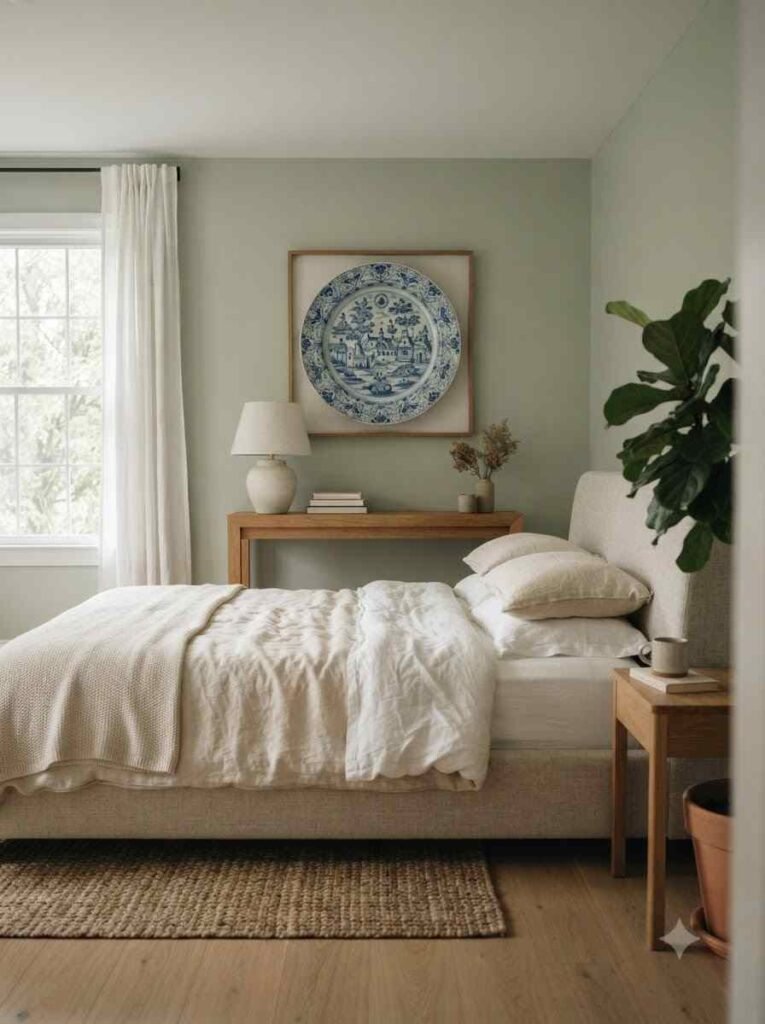
Before committing to a full wall, hang one large, patterned plate above a console table or bed.
It works as a low-commitment test run. If you like how it looks, build outward from there.
2. Go full symmetry with matching plates
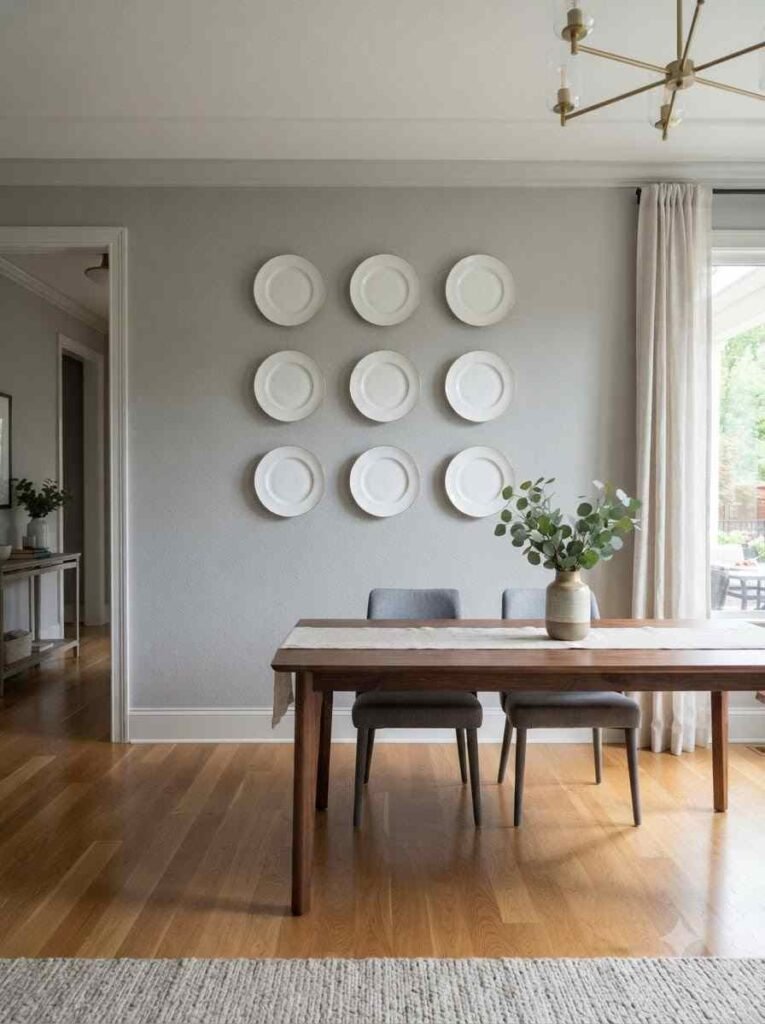
If your brain likes order (mine does, most days), arrange plates in even rows and columns using pieces that are the same size.
This creates a grid effect that reads as polished without much effort on your part.
3. Embrace the eclectic thrift mix
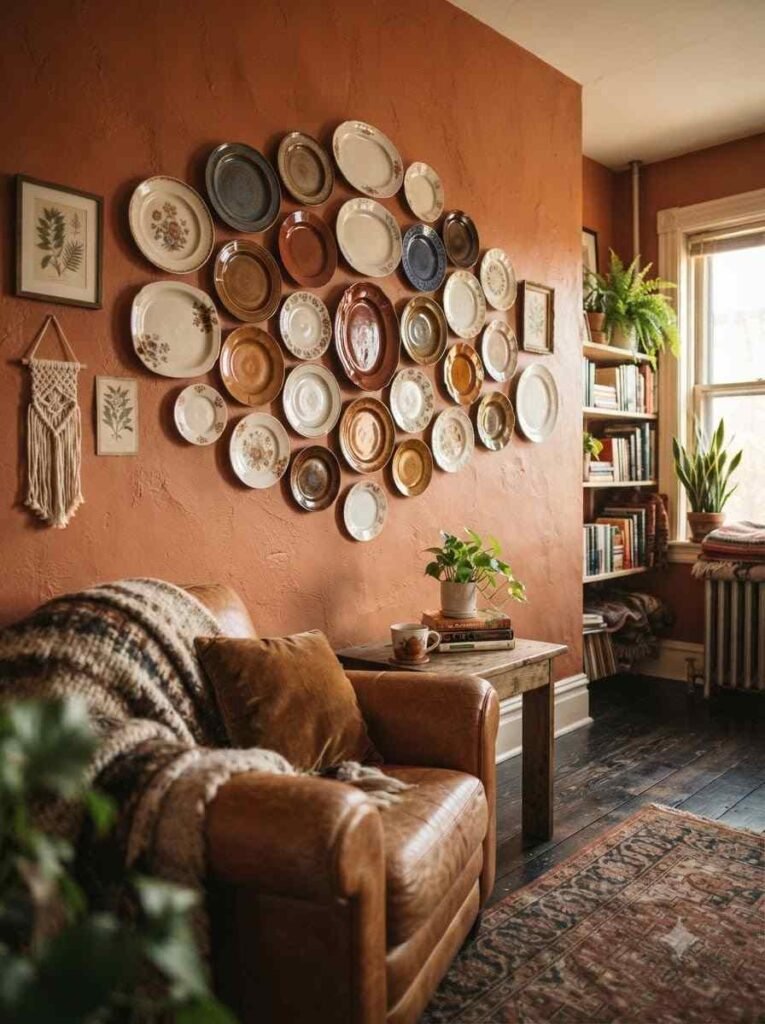
Grab five or six plates from a thrift shop, none of which match, and group them by color instead of pattern.
This is honestly my favorite approach because it never looks like it came from a store, which, ironically, is what makes it look expensive.
4. Build an oval or circular cluster
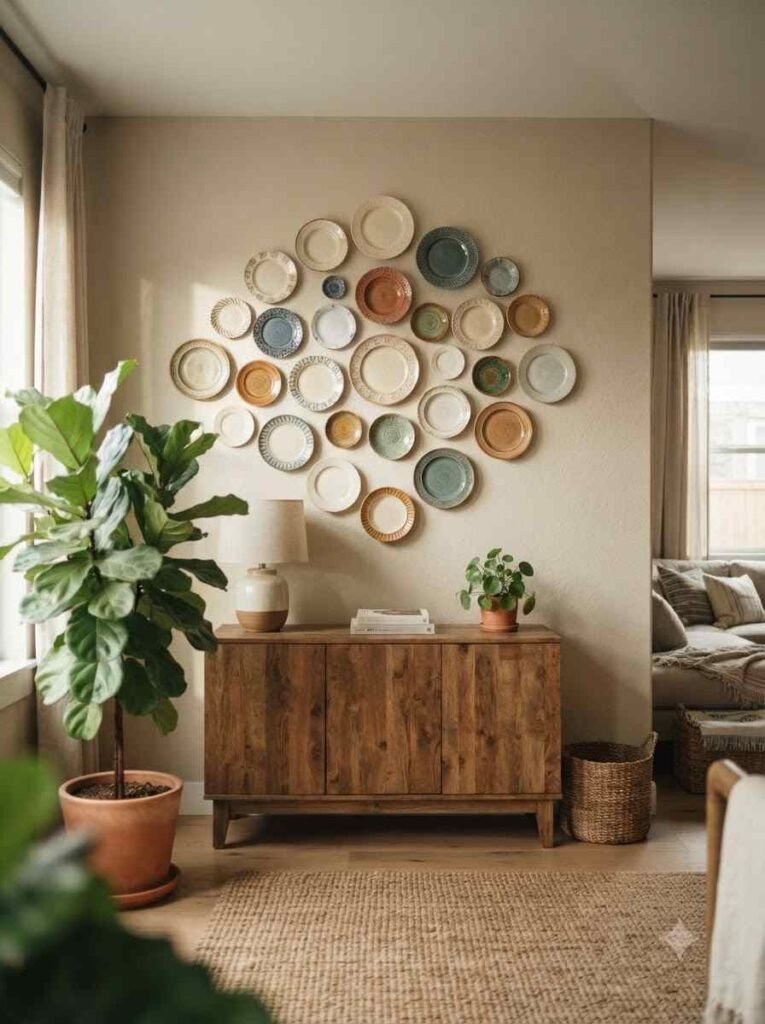
Start with your biggest plate dead center, then work outward in a rough circle. This shape feels softer than a grid and hides small spacing mistakes really well.
5. Try the cascading vine layout
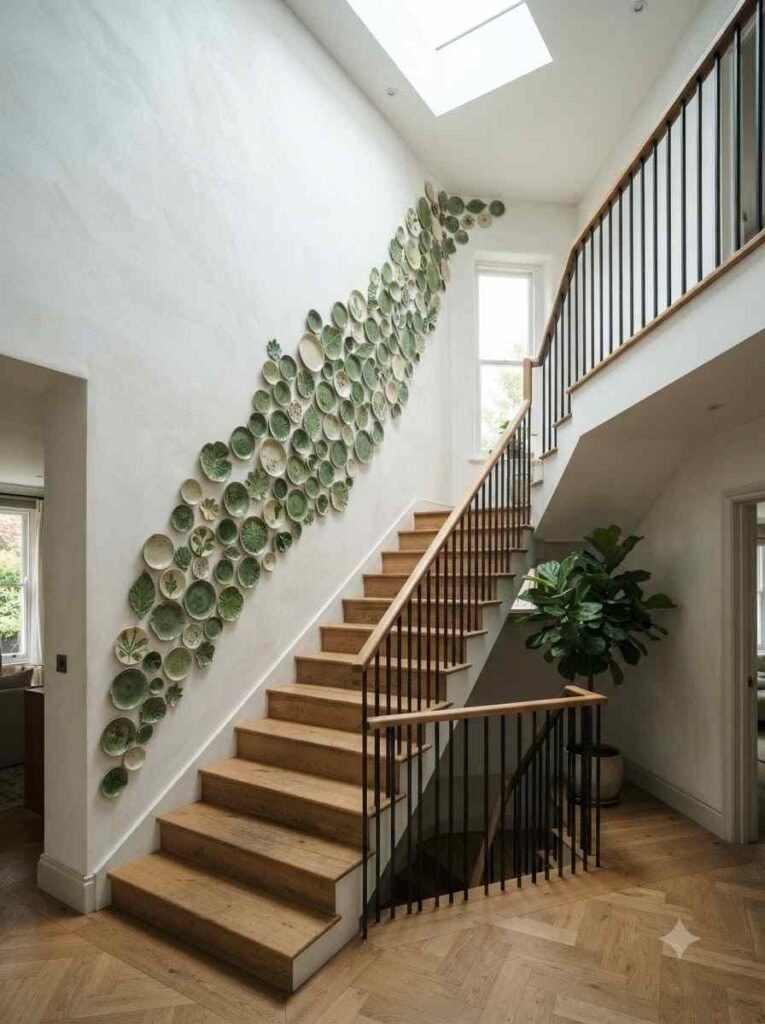
One Alabama shop owner built a vine-like cascading plate wall inspired by the climbing vines she’d seen in historic European orangeries.
You can recreate a mini version of this using 8 to 10 smaller plates in a loose diagonal line.
6. Mix plates with framed art
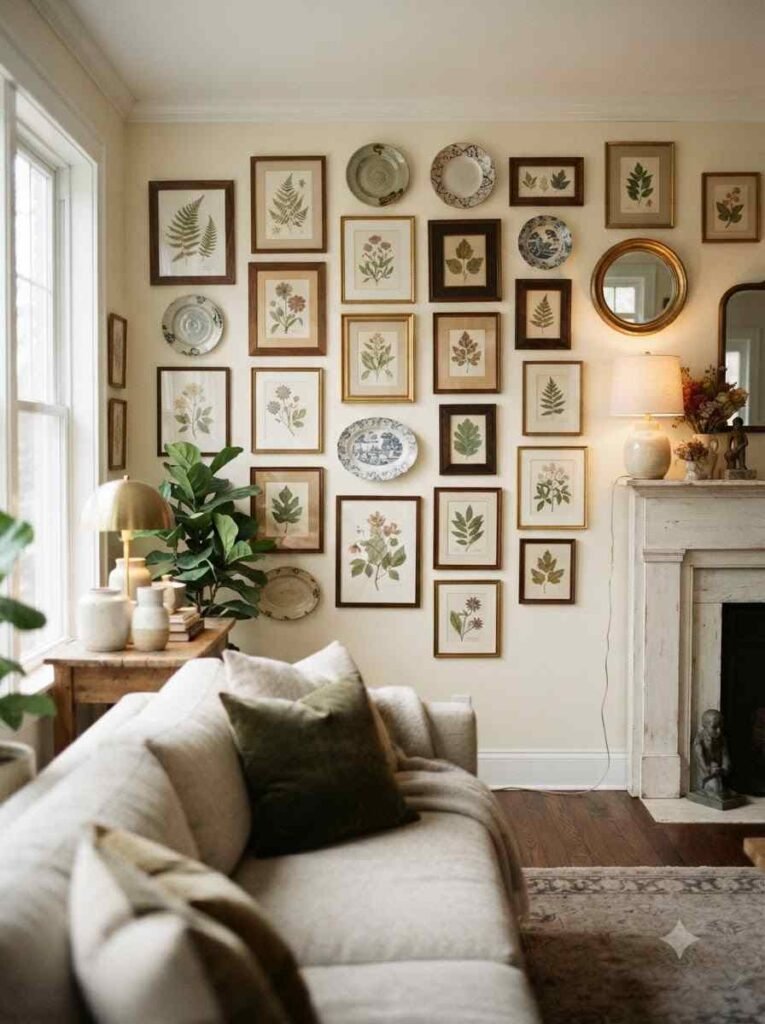
Don’t feel locked into an all-plate wall. Combining plates with framed prints and small mirrors adds texture that plates alone can’t give a space, and it makes the whole thing look more curated.
7. Layer in mirrors for extra depth
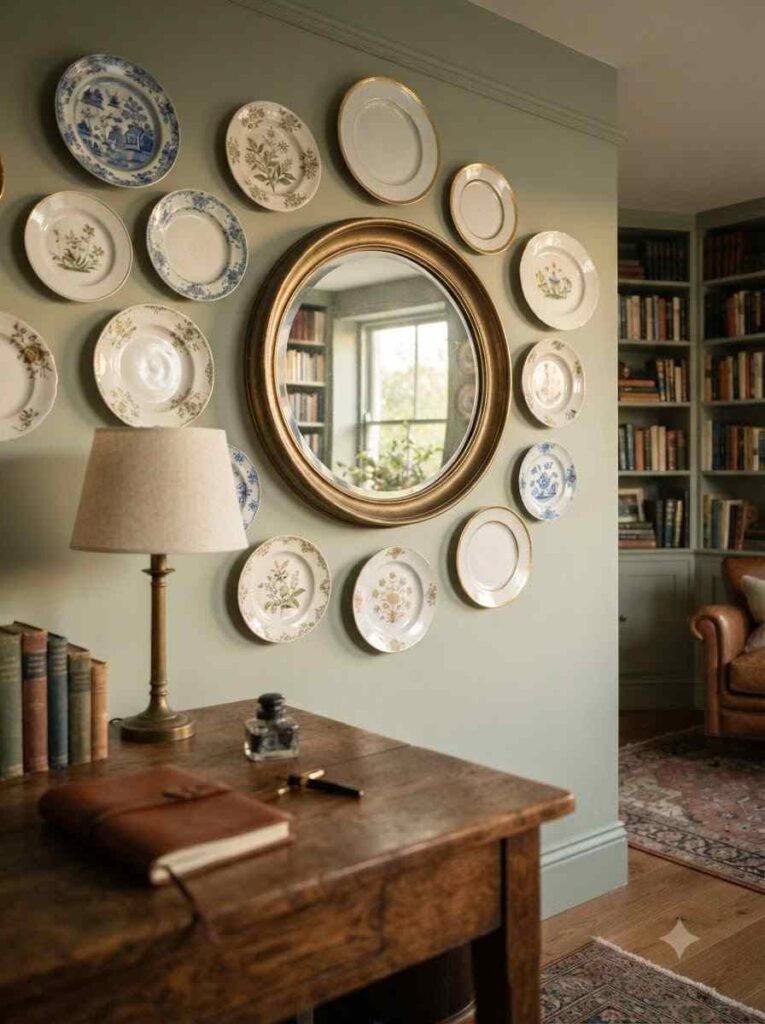
A round mirror tucked between plates bounces light around the room and breaks up what could otherwise be a flat pattern. Small rooms especially benefit from this trick.
8. Use a single dominant color palette
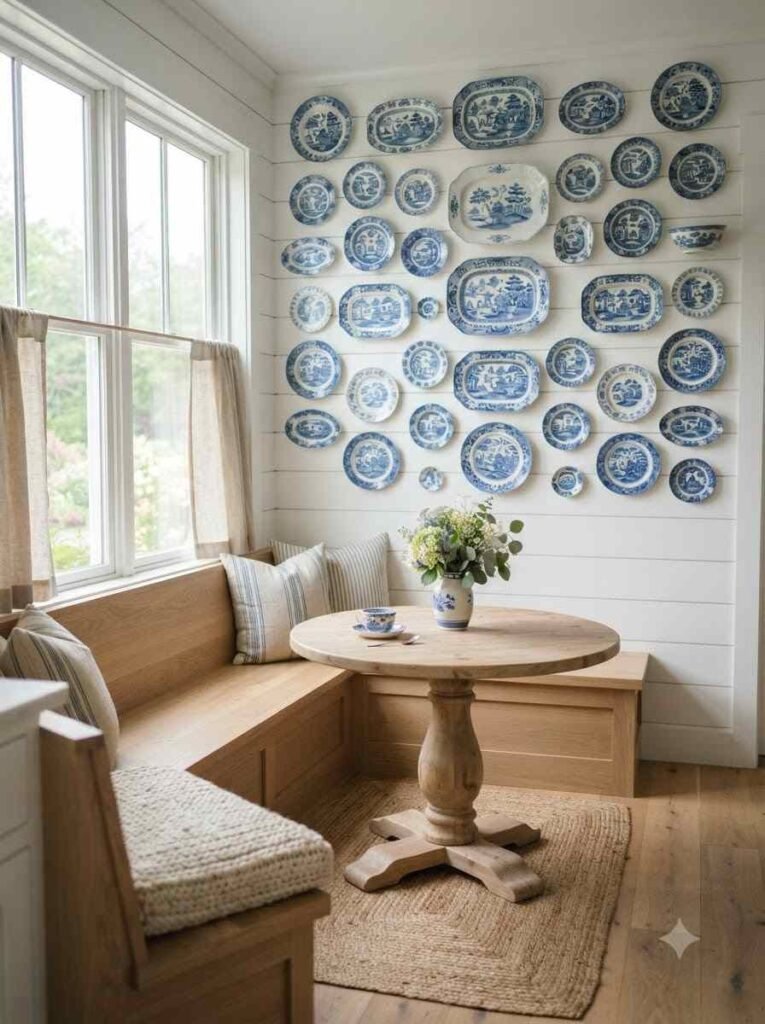
Blue and white. All white. Terracotta and cream.
Pick one palette and stick to it, and your wall will look intentional even if the plates come from five different decades.
9. Go bold with a dark accent wall behind the plates
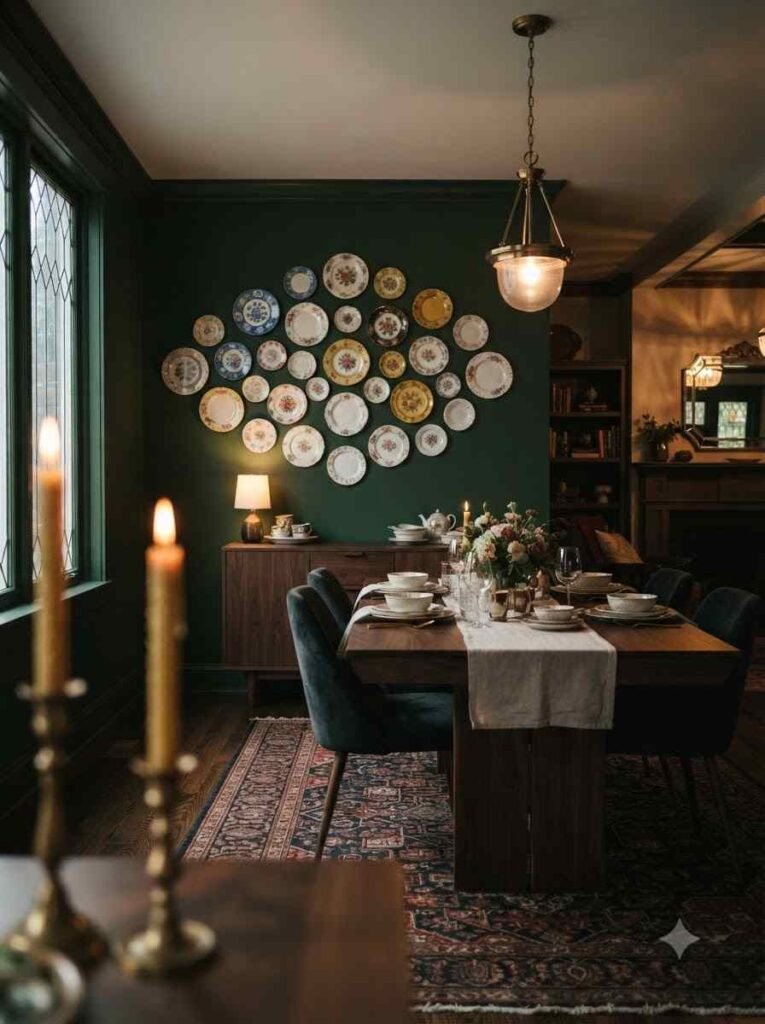
Dark wallpaper or a moody paint color makes plate patterns pop in a way that plain white walls just can’t match. I painted my dining room a deep forest green specifically so my grandmother’s floral plates would stand out, and honestly, it was worth the extra coat of paint.
10. Hang plates in a staircase gallery
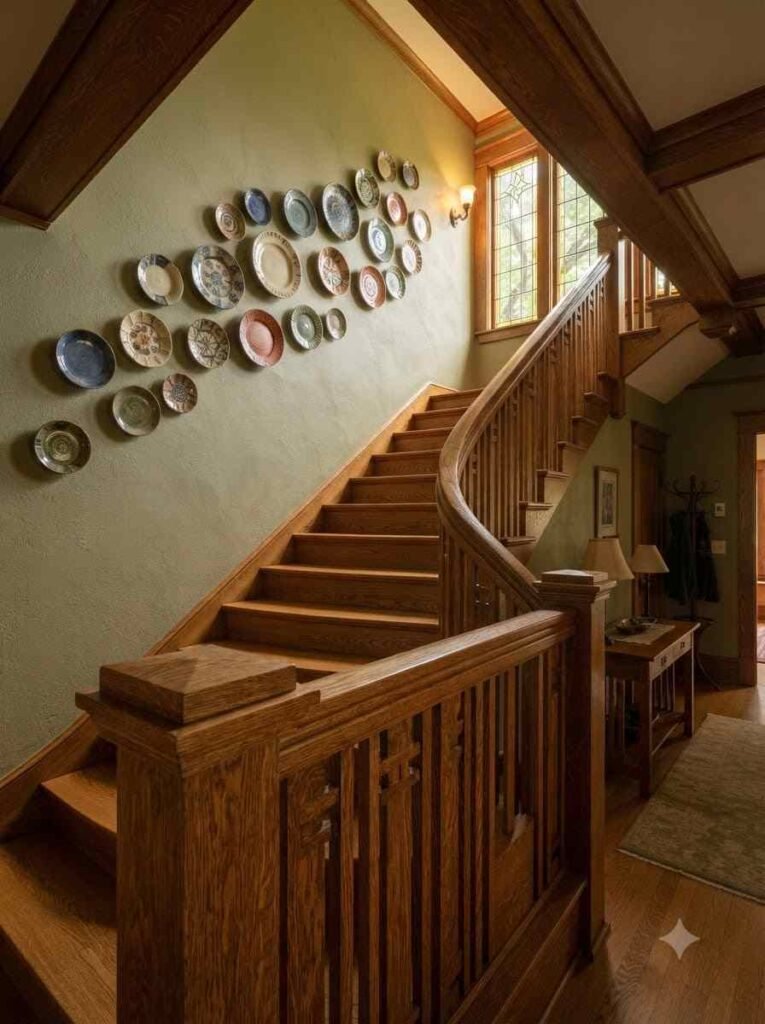
Following the slope of a staircase with graduated plate sizes turns an awkward wall (we all have one) into the most complimented spot in the house.
11. Frame a single plate like fine art
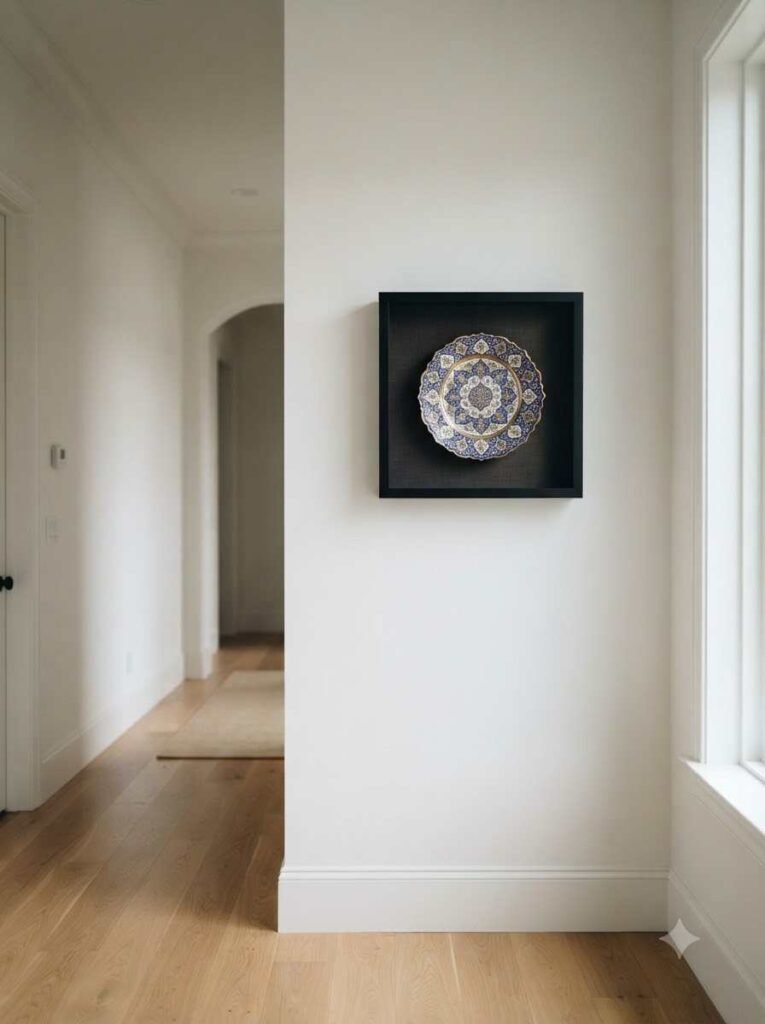
Buy an inexpensive shadow box frame and mount one special plate inside it. This works well for heirloom pieces you want to protect from dust and handling.
12. Add texture with woven or dried-material plates
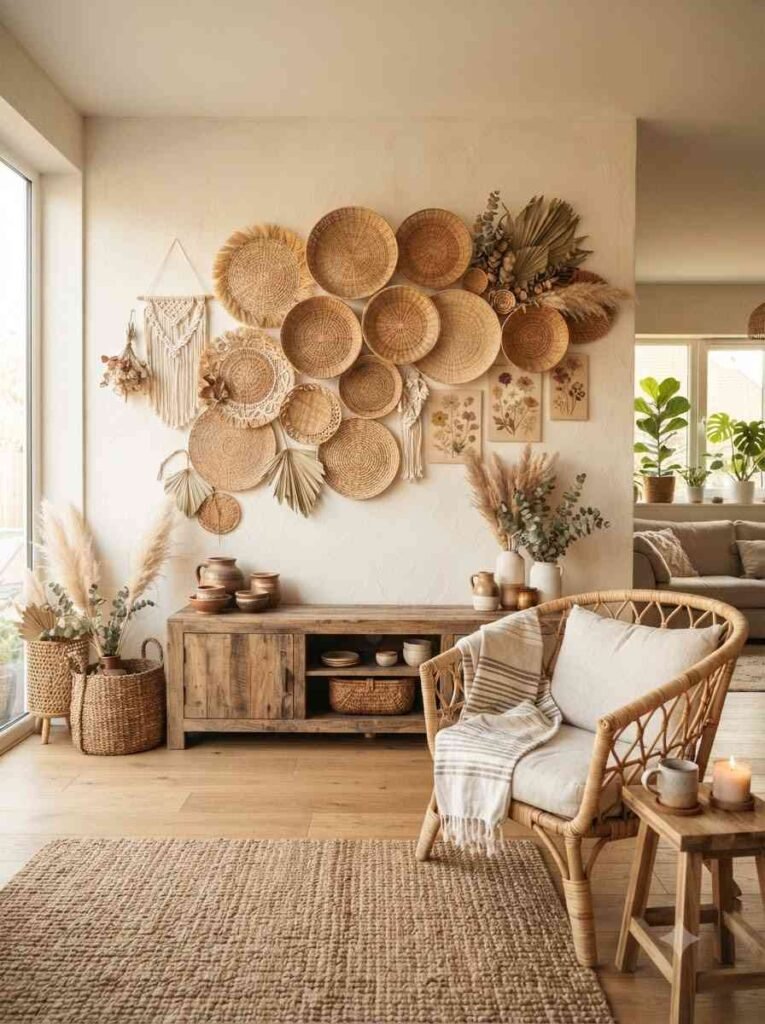
Not every “plate” needs to hold food. Decorative woven or textured wall discs add a boho layer without matching your dinnerware at all.
13. Create a kitchen backsplash plate rail
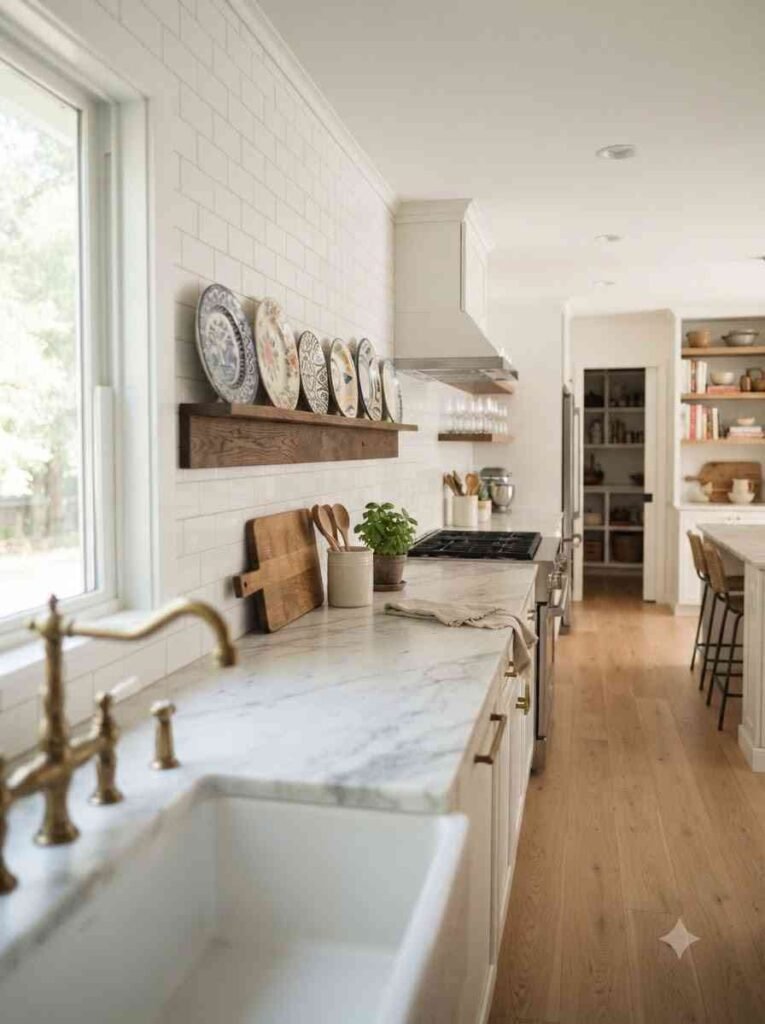
Install a narrow shelf or plate rail above your stove and lean plates against the wall instead of hanging them. It’s removable, renter-friendly, and doubles as functional storage.
14. Theme your plates to the room
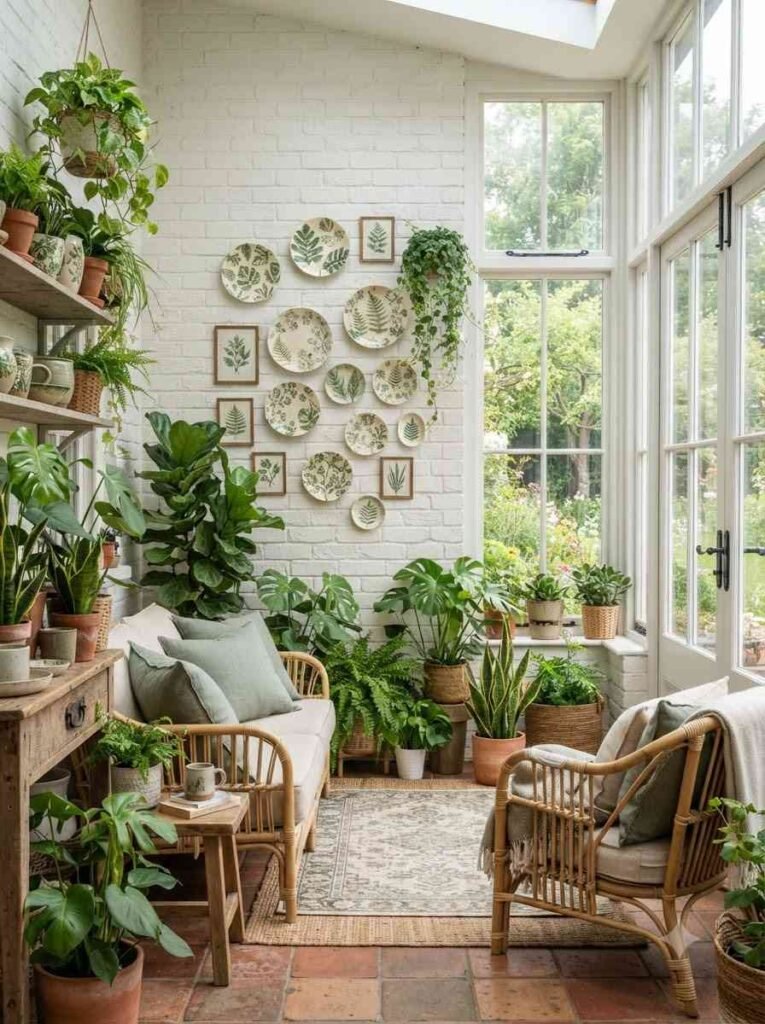
Botanical plates in a sunroom. Nautical designs in a coastal-style bathroom. Matching your plate theme to the room’s purpose makes the whole display feel deliberate rather than random.
15. Use plates as a headboard alternative
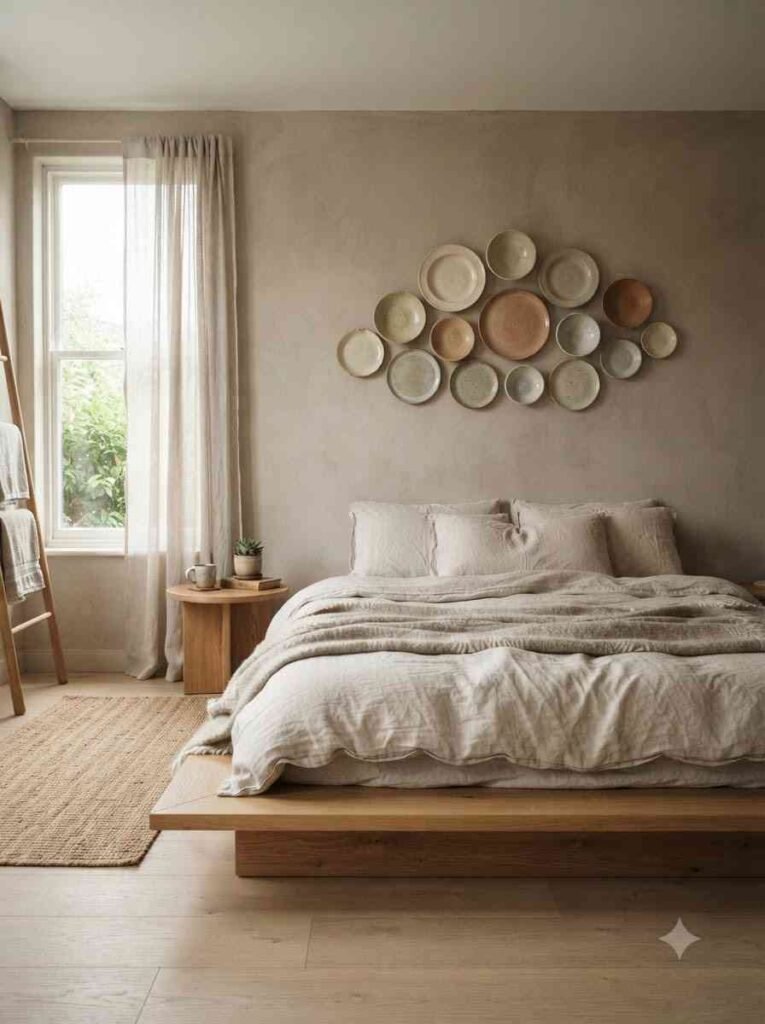
Skip the traditional headboard and arrange a cluster of plates directly above your bed frame instead. It’s an unexpected swap that guests always ask about.
16. Try an asymmetrical scatter
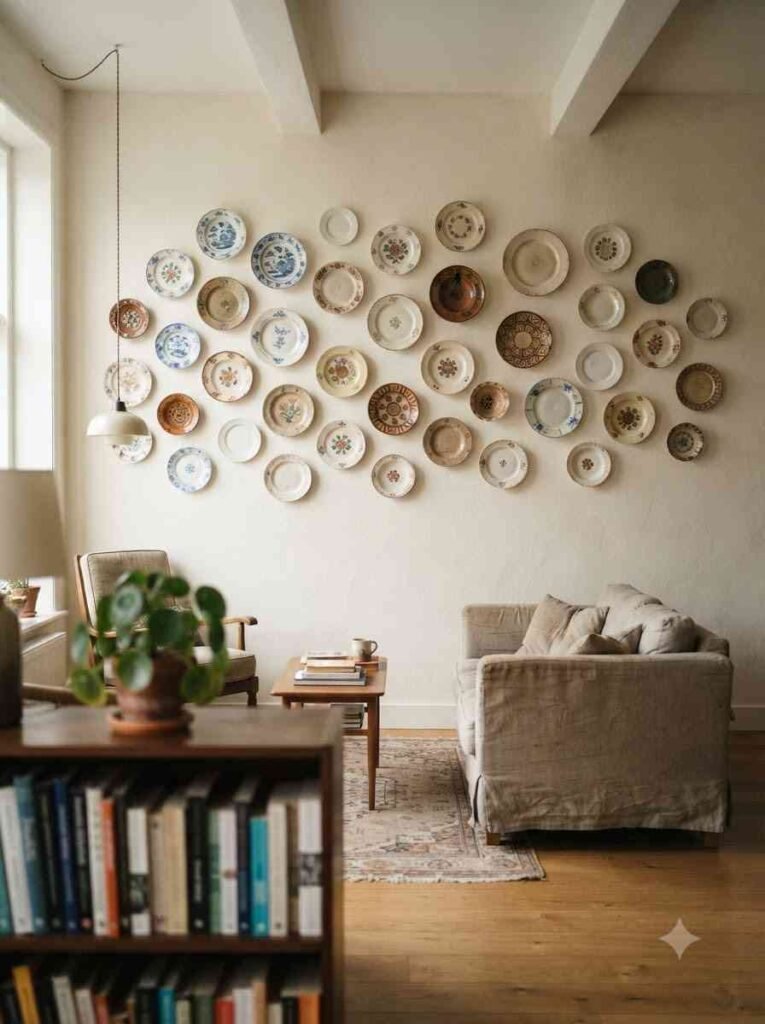
Not everything has to line up. A loose, scattered arrangement with varying gaps between plates gives off a relaxed, collected-over-time vibe.
17. Go vertical with a narrow hallway display
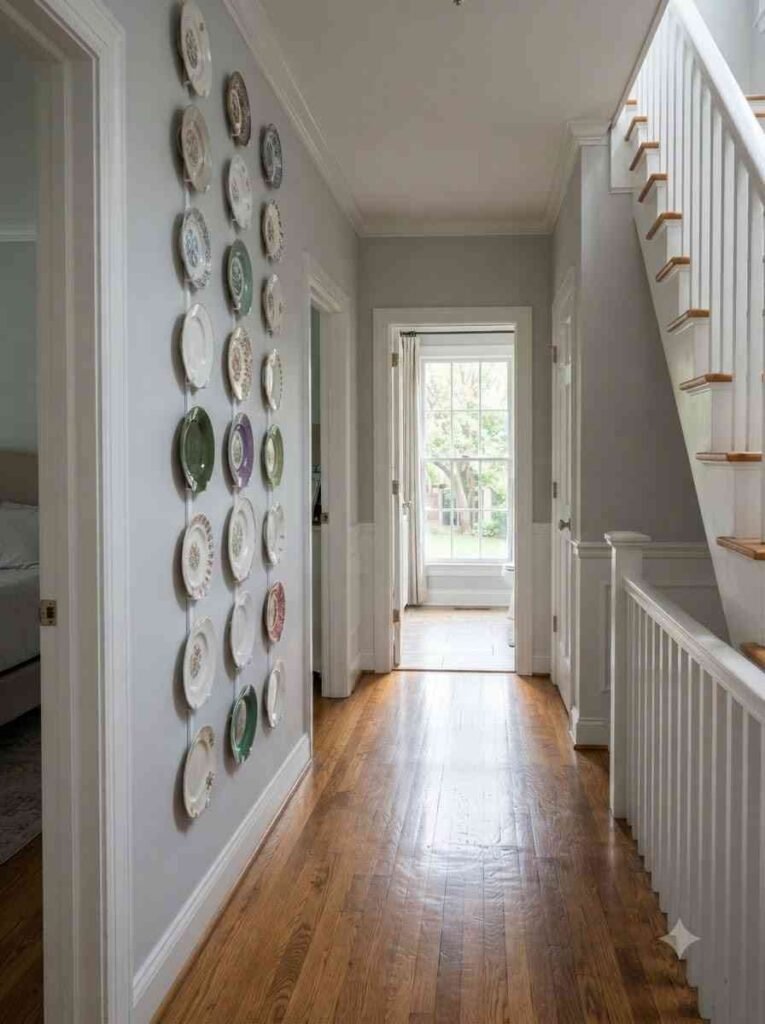
Hallways are often too narrow for furniture but perfect for a tall, single-column plate arrangement. It turns dead space into a feature.
18. Mix in baskets for a layered texture wall
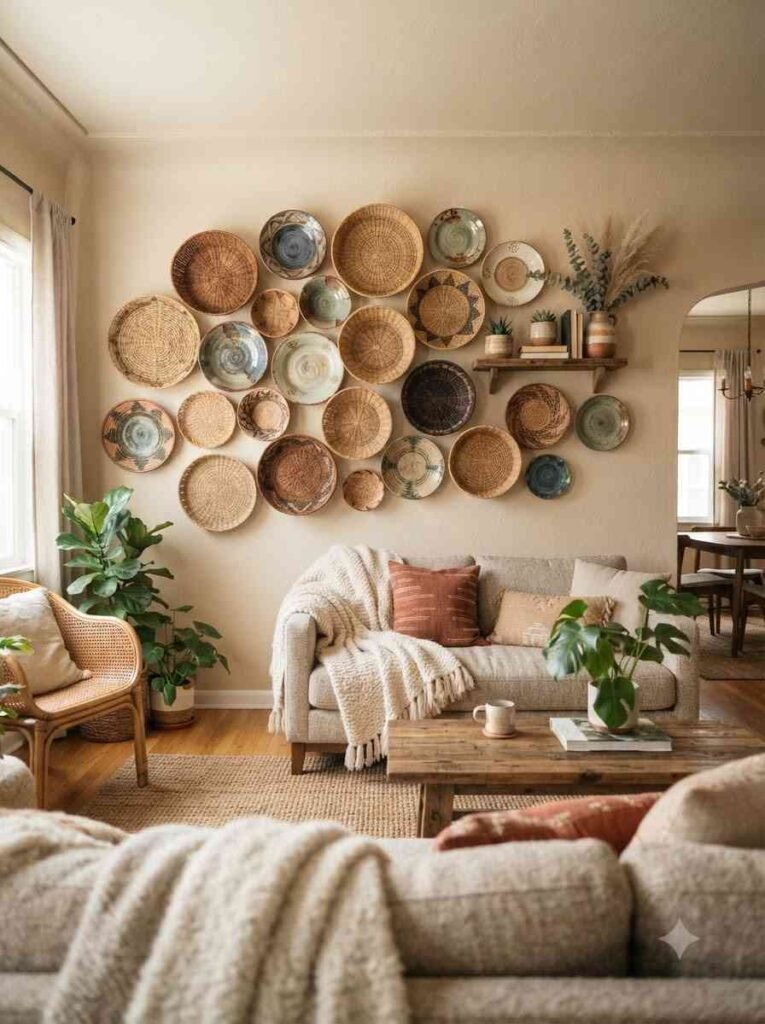
Woven baskets and ceramic plates share a similar earthy quality, and grouping them together adds dimension that flat plates alone can’t achieve.
19. Use removable adhesive hangers for a renter-friendly wall
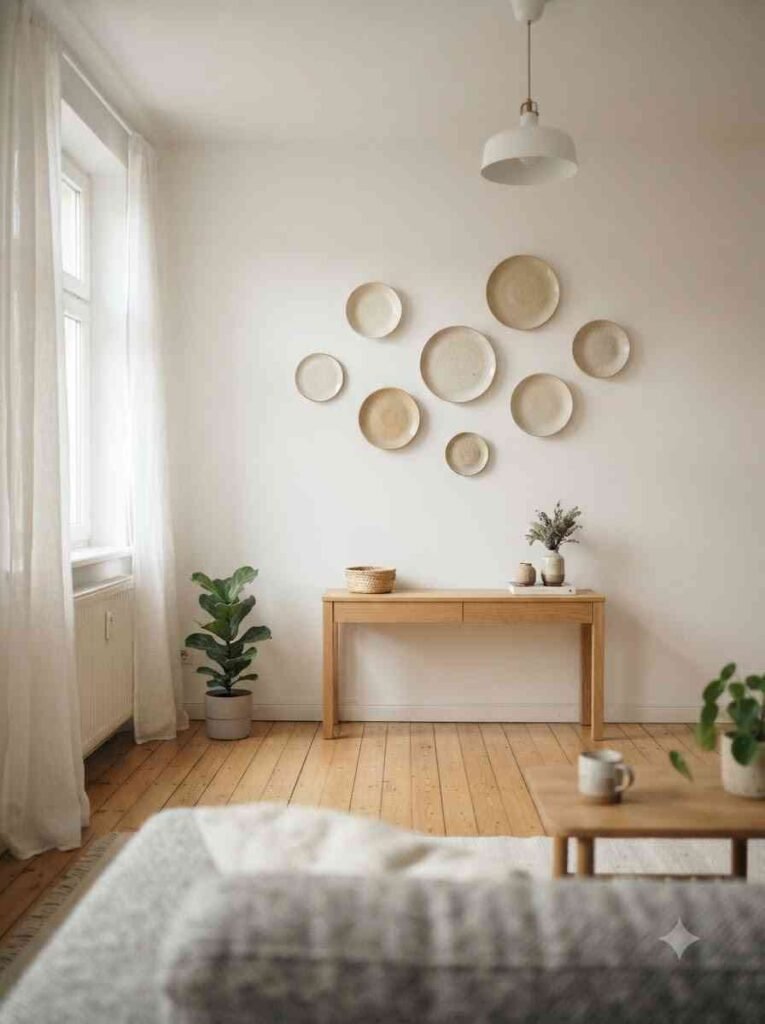
Command strips rated for plates exist, and they hold surprisingly well for lightweight ceramic pieces. FYI, always check the weight rating before trusting them with anything breakable.
20. Build a rotating seasonal display
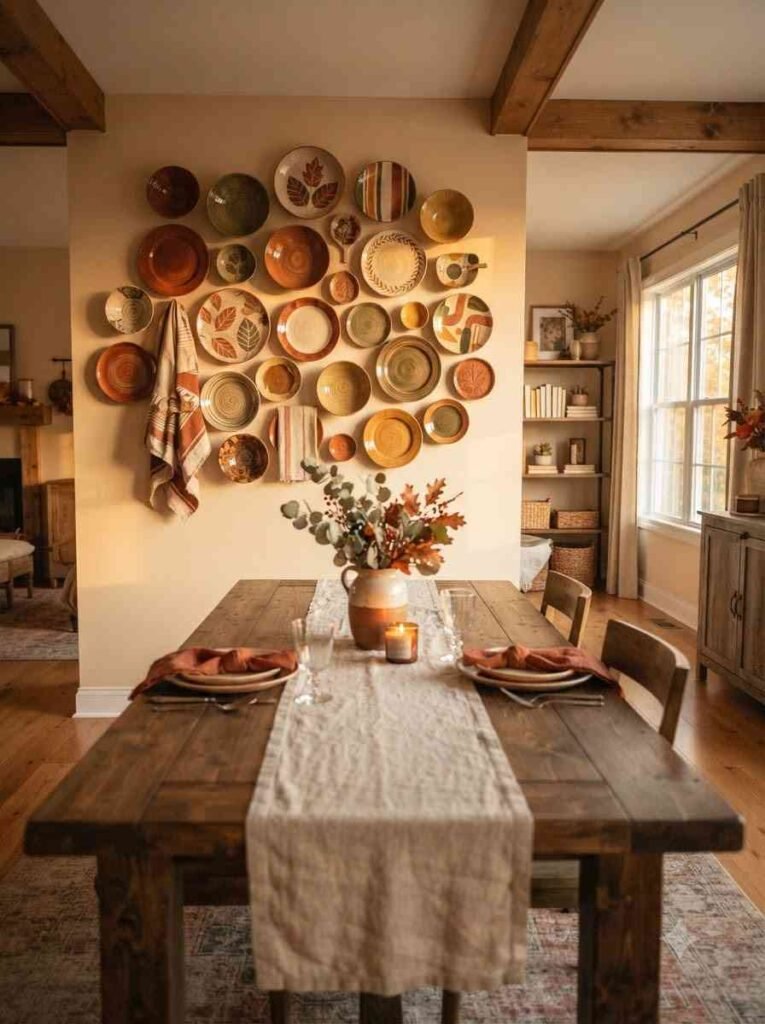
Instead of one permanent arrangement, keep a set of hooks up year-round and swap the plates seasonally: florals for spring, warm tones for fall. Low effort, big payoff.
A few things I wish someone had told me before I started
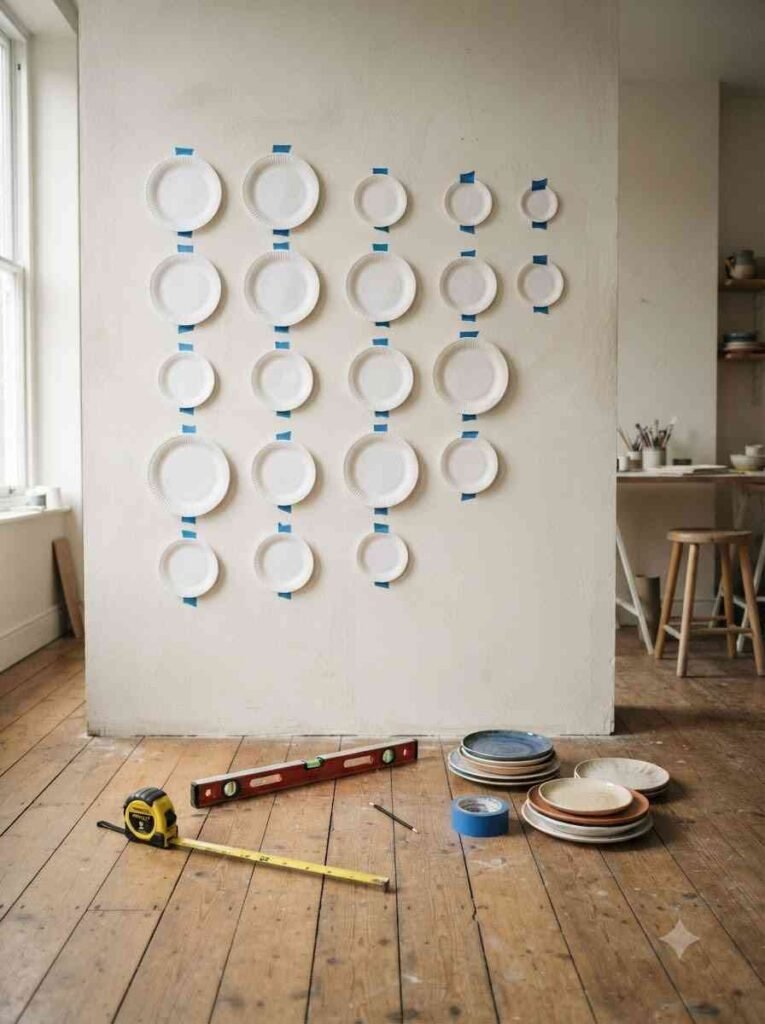
My first attempt involved regular nails and zero planning, and one plate ended up 3 inches off from the others in a way that bugged me for months. Learn from that.
- Measure before you drill. Lay your plates on the floor in your intended arrangement first, then trace or photograph the layout so you’re not guessing on the wall.
- Invest in real plate hangers, not just wire. Spring-clip plate hangers with rubber-coated grips protect the plate rim and hold weight far better than string ever will.
- Leave breathing room. Plates crammed too close together read as cluttered instead of curated. A general rule that’s worked for me: leave at least 2 to 3 inches between pieces.
- Start heaviest, work outward. Hang your largest or heaviest plate first as your anchor point, then build the rest of the arrangement around it.
- Cut paper templates first. Trace each plate onto newspaper or brown packing paper, cut the shapes out, and tape them to the wall before you drill a single hole. This sounds excessive until you’ve had to patch three wrong holes in one afternoon, which, yes, I have.
- Don’t rush the color decisions. IMO this is where most plate walls go wrong. People grab whatever’s on sale instead of stepping back and asking whether the colors actually talk to each other. Give yourself a day to sit with the layout before committing.
I’ll be honest, my second attempt at a plate wall took nearly a full weekend, mostly because I kept rearranging the paper templates like a mildly obsessive person. Was it worth the extra time? Wow, yes. The difference between a rushed layout and a planned one is obvious the moment you step back and look at the whole wall instead of one plate at a time.
Quick reference: which layout suits your space
| Room type | Best layout style | Difficulty |
|---|---|---|
| Small hallway | Vertical column | Easy |
| Dining room | Symmetrical grid | Medium |
| Bedroom | Headboard cluster | Medium |
| Staircase | Graduated diagonal | Hard |
A quick side note
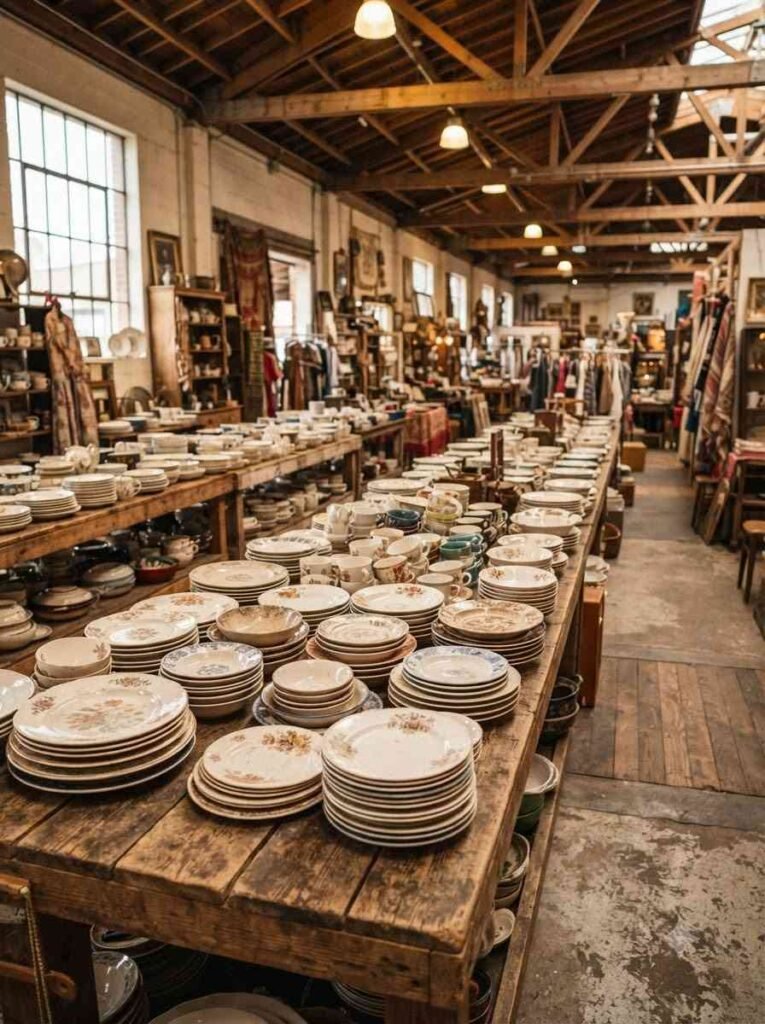
I know this article is supposed to stay focused on plates, but can we talk about how satisfying it is to finally use dishware you were gifted at your wedding and never actually eat off of?
There’s something oddly emotional about giving those plates a second life on your wall instead of leaving them boxed in a cabinet. Anyway, back to the walls.
Where to find plates without spending a fortune
Estate sales and thrift stores remain the cheapest source, but don’t overlook garage sales in older neighborhoods, where vintage china tends to show up more often than you’d expect.
For curated inspiration boards full of layout ideas, Pinterest’s wall plate decoration collection is worth a scroll before you buy anything.
If you want a broader look at how plates fit into a full room design, this roundup of 32 wall décor ideas designers actually use covers plate displays alongside other wall treatments, which is useful if you’re still deciding between a plate wall and something else entirely.
Frequently asked questions
Do plate walls damage the wall when you take them down? Not usually. Small nail holes from plate hangers are easy to patch with spackle, and adhesive hooks rated for the weight of your plates leave minimal residue if removed carefully.
Can I mix plate sizes in one arrangement, or should they all match? You can absolutely mix sizes. In fact, varying sizes usually looks more natural than a uniform set, as long as you distribute the larger pieces evenly instead of clustering them all on one side.
What’s the safest way to hang heavier ceramic plates? Use spring-tension plate hangers rated for the plate’s actual weight, and anchor into a stud or use a proper drywall anchor for anything heavier than a dinner plate.
So which layout are you stealing first: the symmetrical grid, the thrifted eclectic mix, or that cascading vine wall?
Save this one to your board, grab a few plates from your own cabinet, and see what a single afternoon can do to an empty wall.
