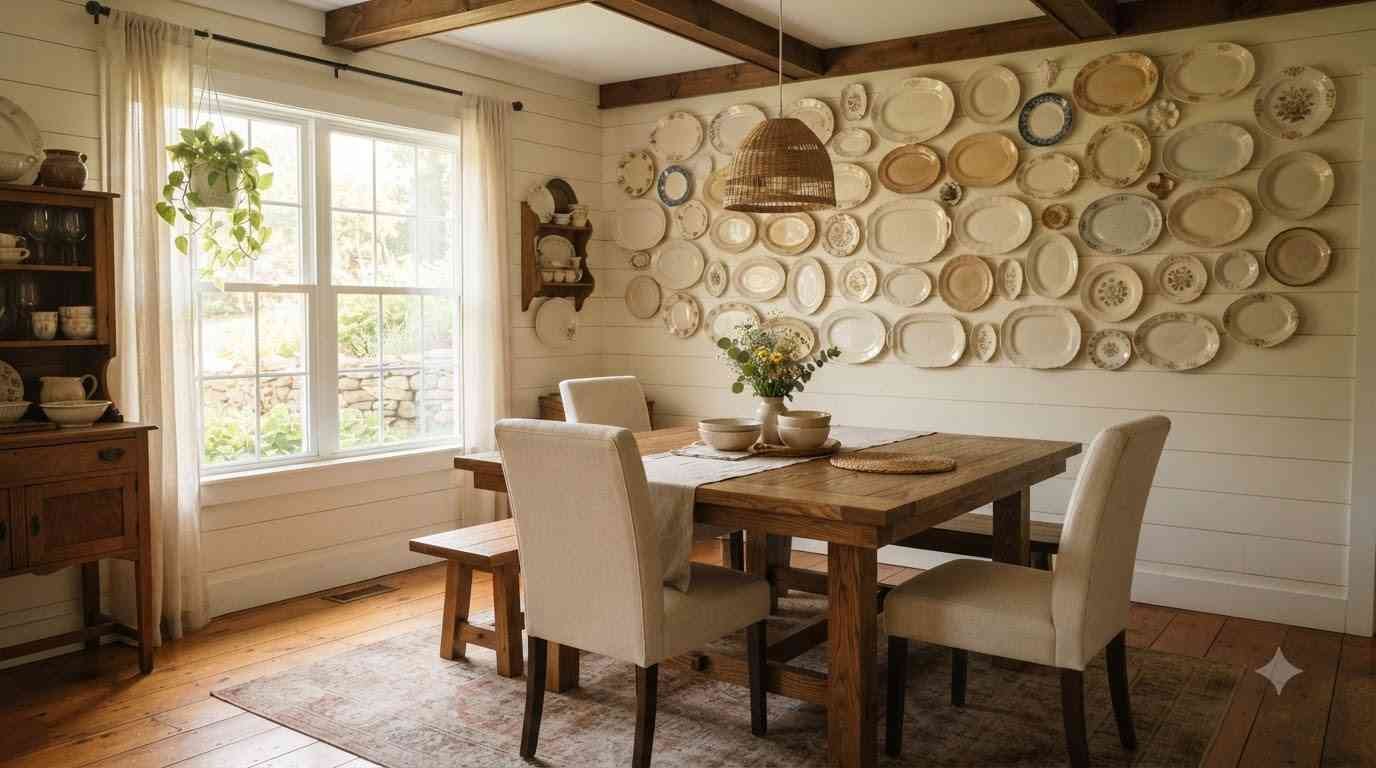
I hung my first plate wall in a rental apartment with painter’s tape and a prayer.
Three plates, one thrifted, one from my grandmother, one I bought because it was two dollars and looked lonely on the shelf.
That wall got more compliments than anything else I owned that year.
Plates are having a real moment again. Not the stiff, matchy display cabinets your aunt had. I’m talking about walls that look collected over time, a little imperfect, full of personality. If you’ve been scrolling Pinterest for hours trying to figure out how to fill that one blank wall, you’re in the right place.
Here are 26 ways to do it, pulled from what I’ve actually tried, seen work in real homes, or would do myself given a hammer and a free Saturday.
FYI, this isn’t a “buy a matching 12-piece set online” kind of list. Most of these looks get better the more mismatched and personal they are.
A plate wall built entirely from one catalog page tends to look flat.
One built from three different decades and two different countries tends to look like an actual life was lived around it.
Why plate walls actually work
Plates solve a problem most wall decor doesn’t: texture without clutter. A single large plate reads almost like a piece of art.
A cluster of them reads like a story.
They’re also forgiving. Got an odd-shaped wall, a stairwell, a narrow hallway? Plates fill awkward spaces that a big framed print never could.
And here’s the part I love most: you don’t need a design degree. You need a wall, some hangers, and the willingness to step back and squint at it a few times.
Classic and collected looks
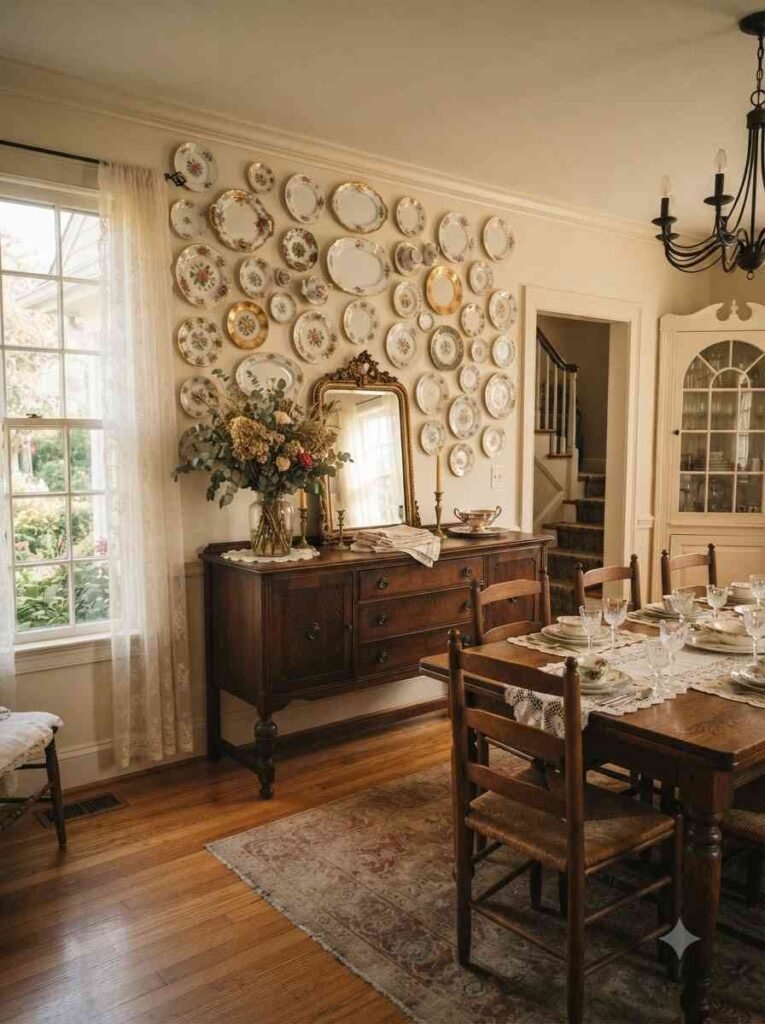
1. The grandmother’s cabinet wall. Mismatched florals, gold rims, a little chipped in places. This look leans into imperfection on purpose. It’s my personal favorite because it never looks like it was bought in one trip.
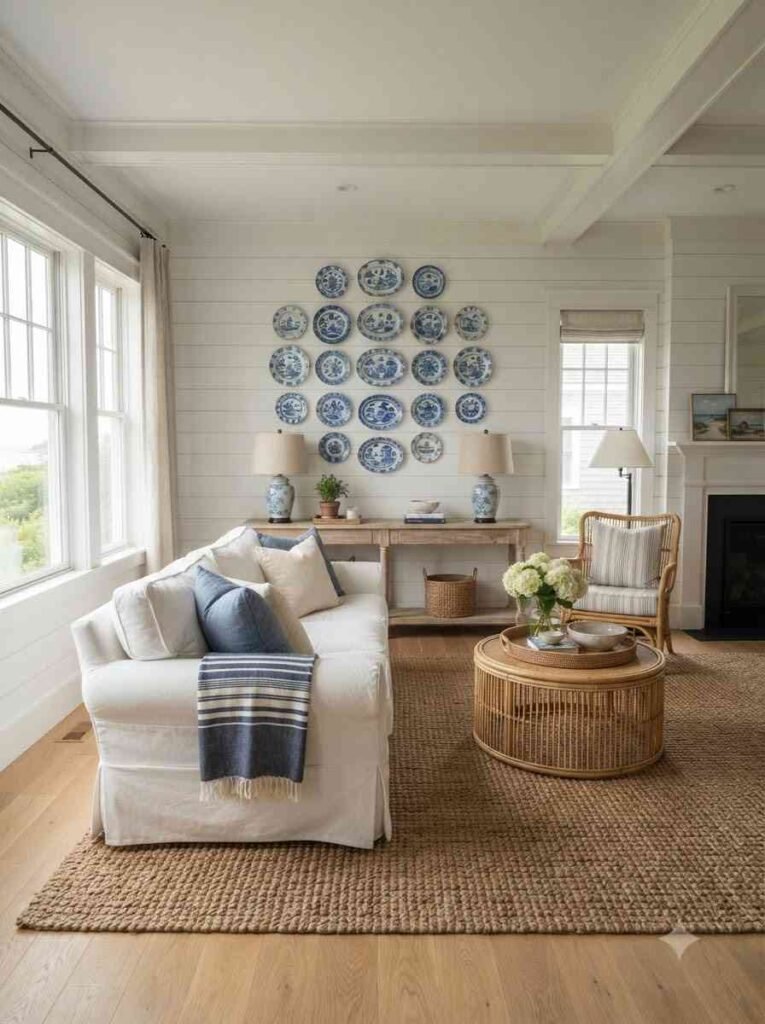
2. Blue and white china cluster. Timeless for a reason. Delft-style or willow pattern plates against a white or pale wall reads coastal without trying too hard.
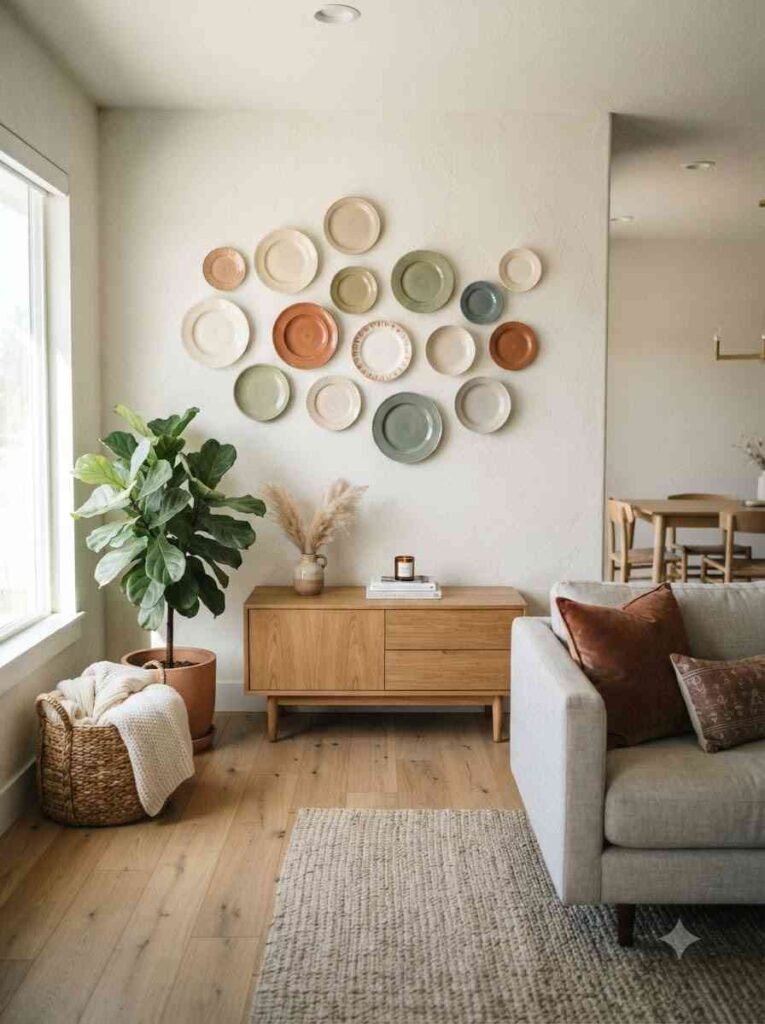
3. Monochrome plate wall. Pick one color family and stick with it. All white, all terracotta, all sage green. It’s oddly calming, IMO, and reads more intentional than a rainbow mix.
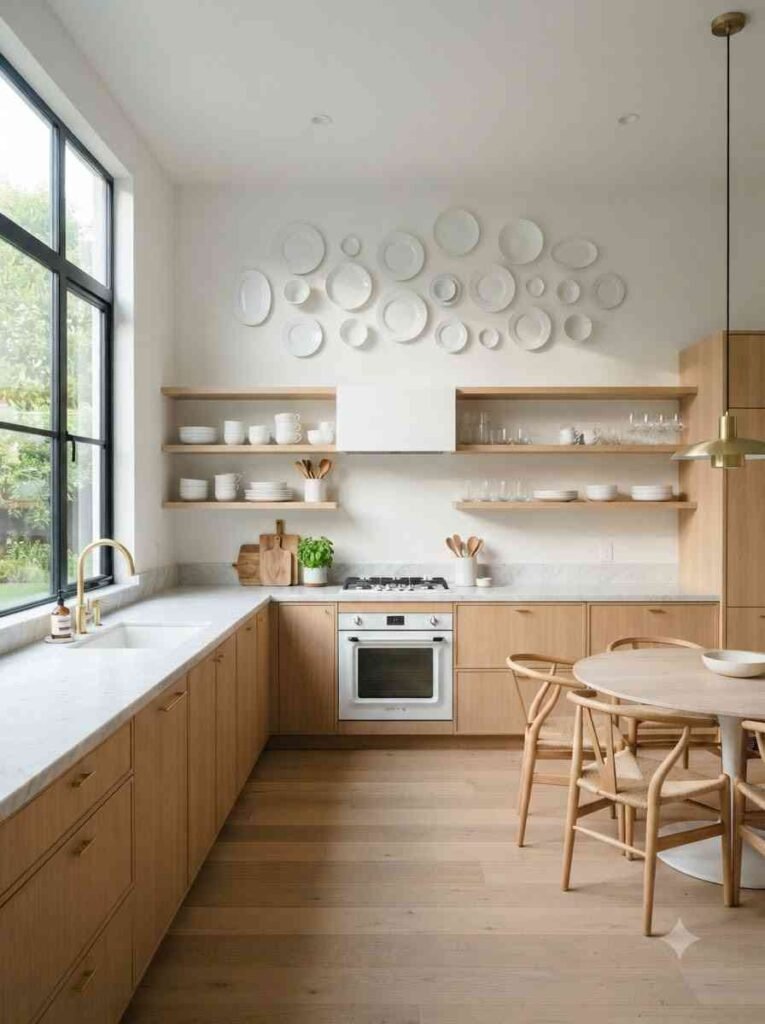
4. Vintage souvenir plates. The tacky travel plates from thrift stores? Genuinely great together. There’s something charming about a wall full of places nobody’s actually been to.
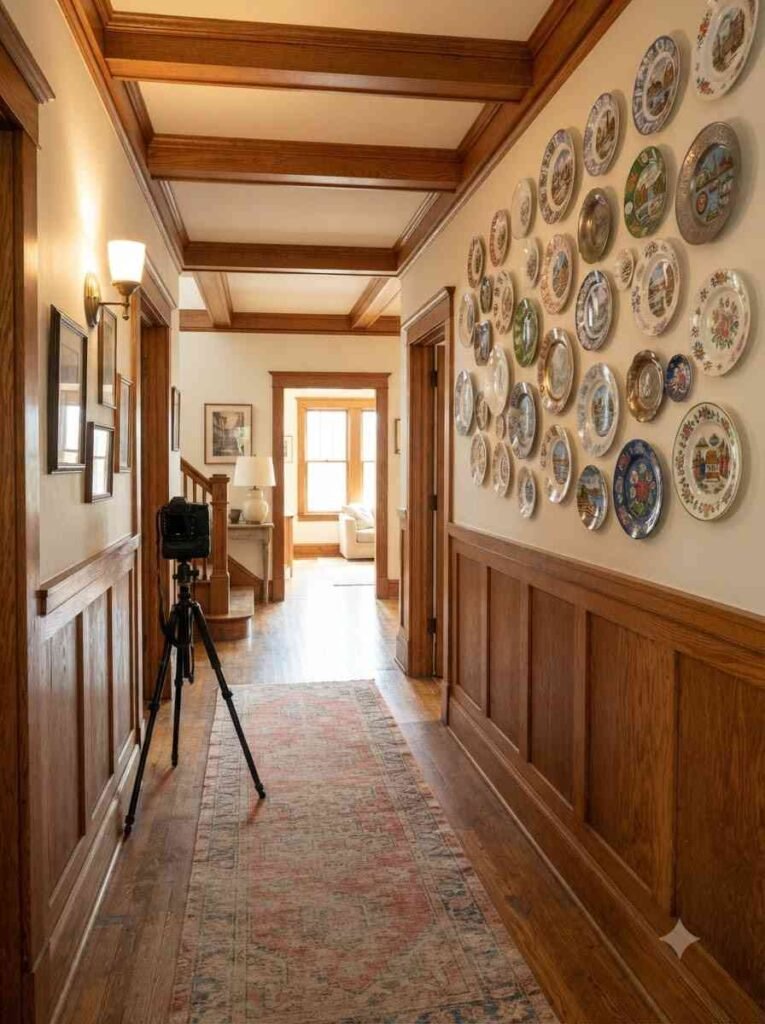
5. Transferware in a tight grid. Symmetrical rows of black or red transferware plates give a dining room serious old-world charm without feeling stuffy.
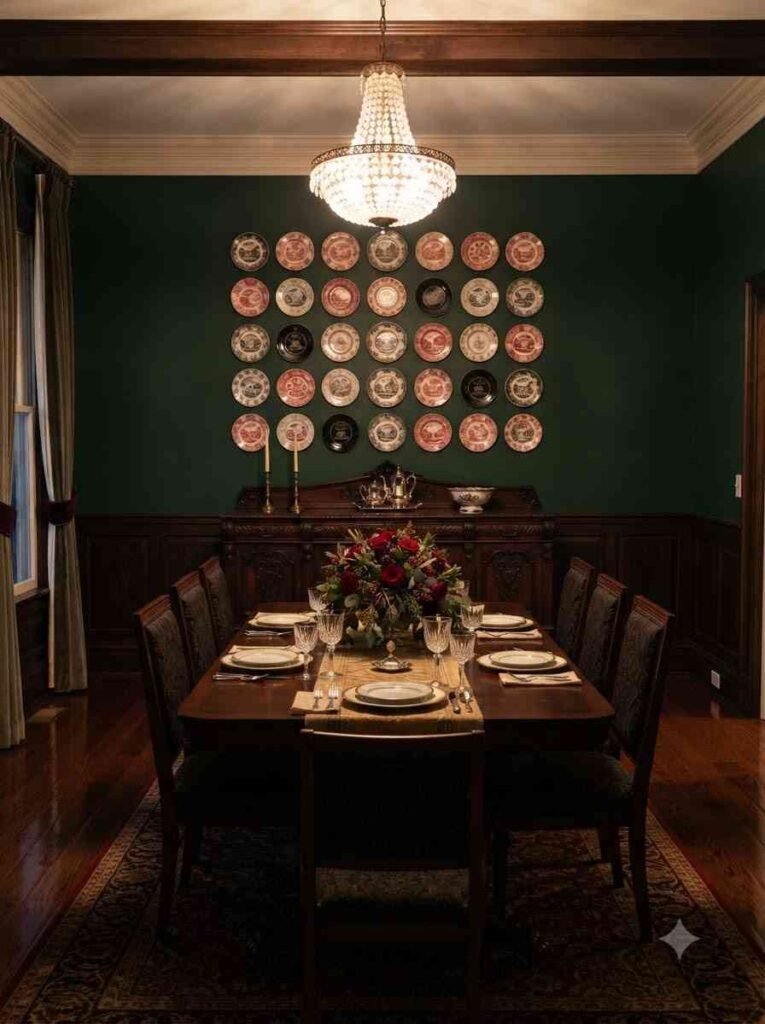
Modern and minimal arrangements
6. Single statement plate. One oversized decorative plate, centered, no neighbors. Sometimes less really does more.
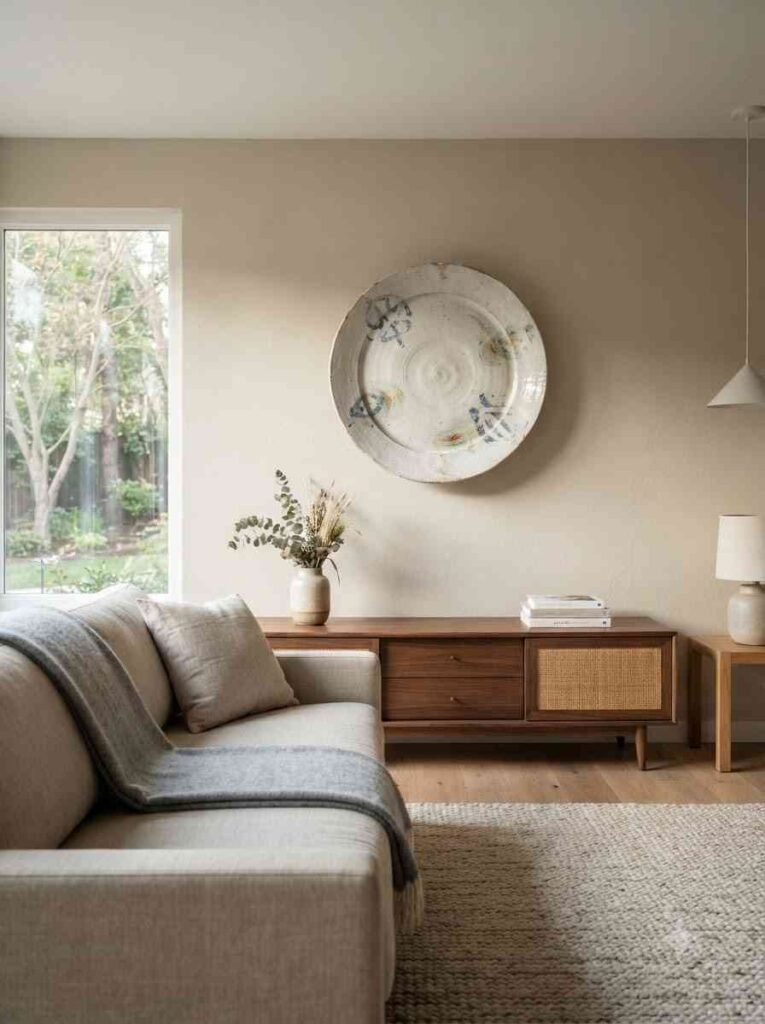
7. Asymmetrical scatter. Plates of different sizes placed off-grid, some tilted, some straight. This one takes nerve. Ever stared at a wall for 20 minutes trying to decide if a plate is 2 inches too high? Welcome to my Tuesday.
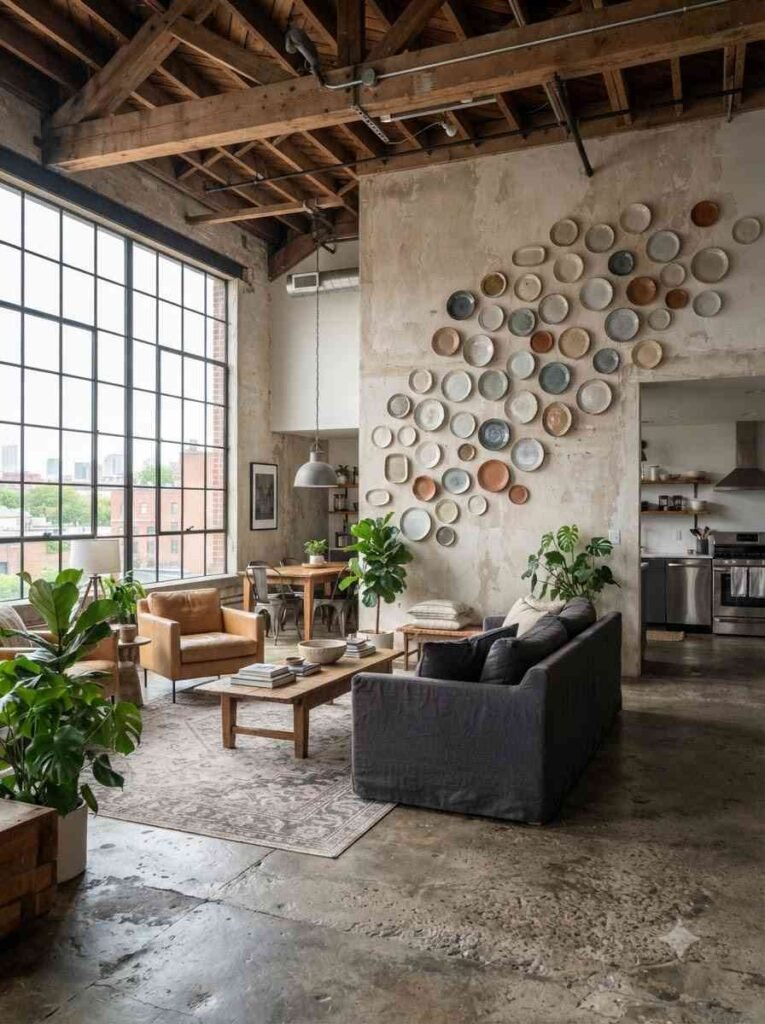
8. Matte black and white pairing. Two colors only. Clean, graphic, works in almost any modern kitchen.
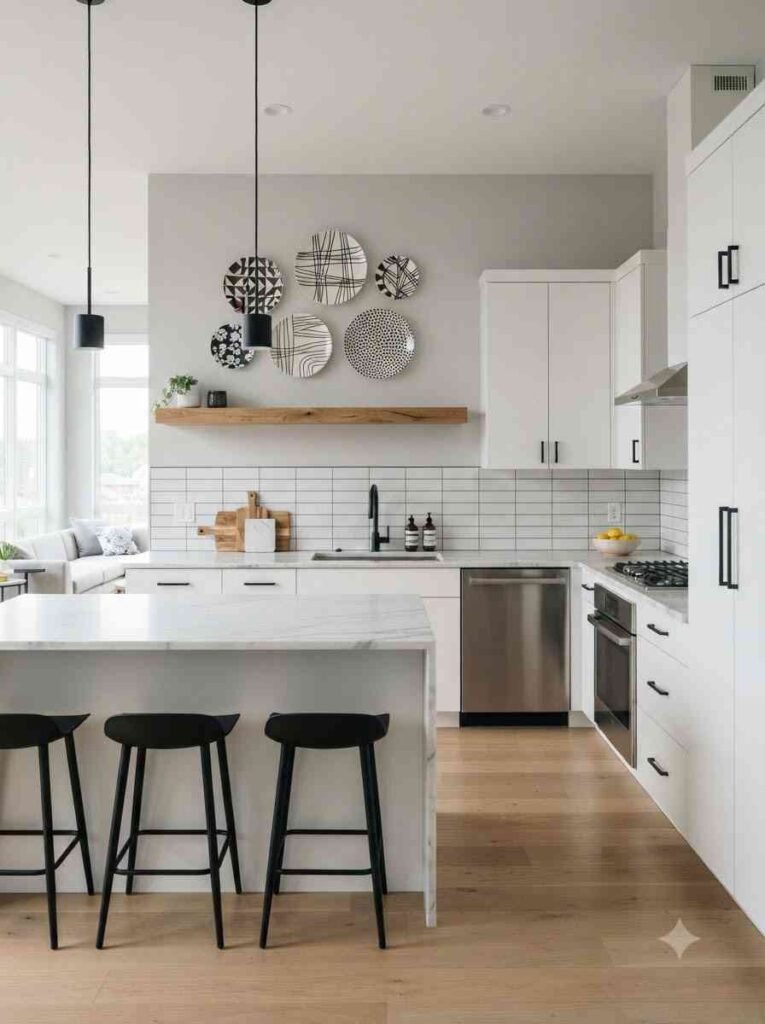
9. Geometric-pattern plates. Bold line work or checkerboard designs turn a plate wall into something closer to abstract art.
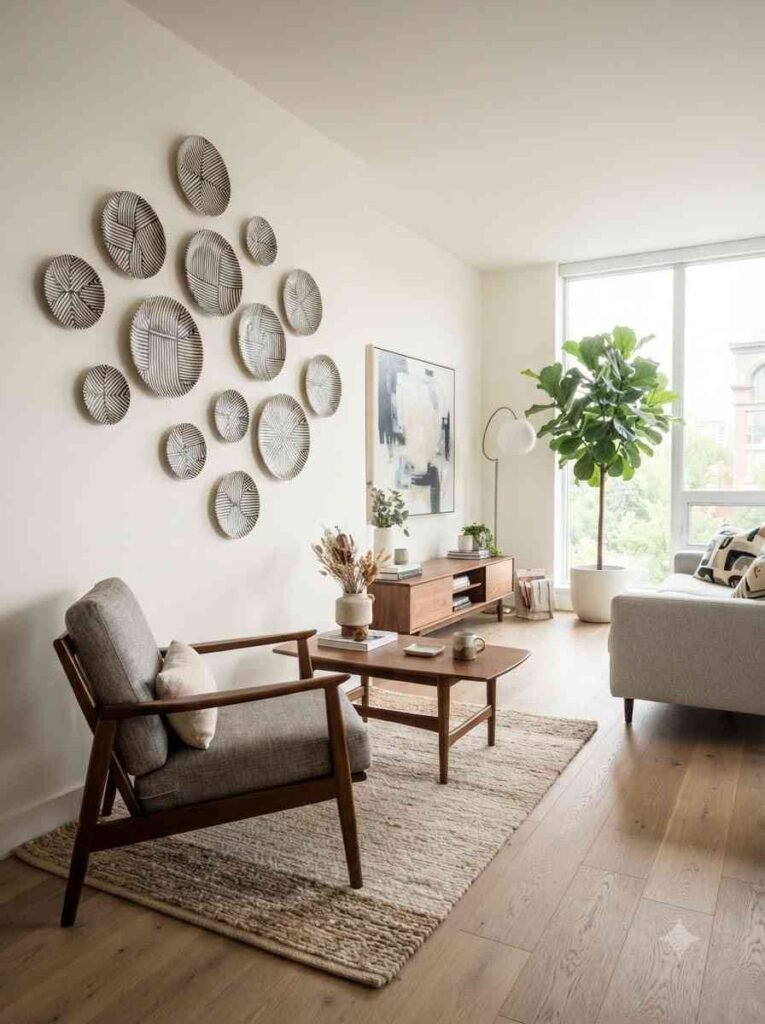
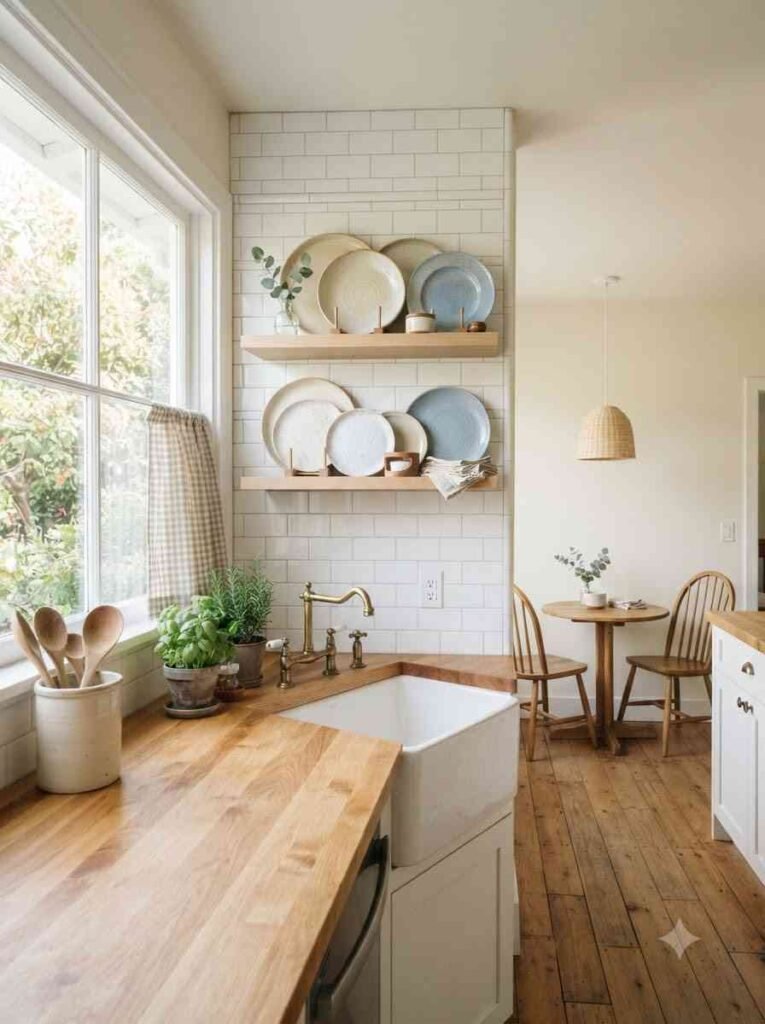
10. Floating shelf plate display. Skip the hanging hardware entirely. Thin ledges let you swap plates out seasonally, which is honestly underrated.
Color-driven walls
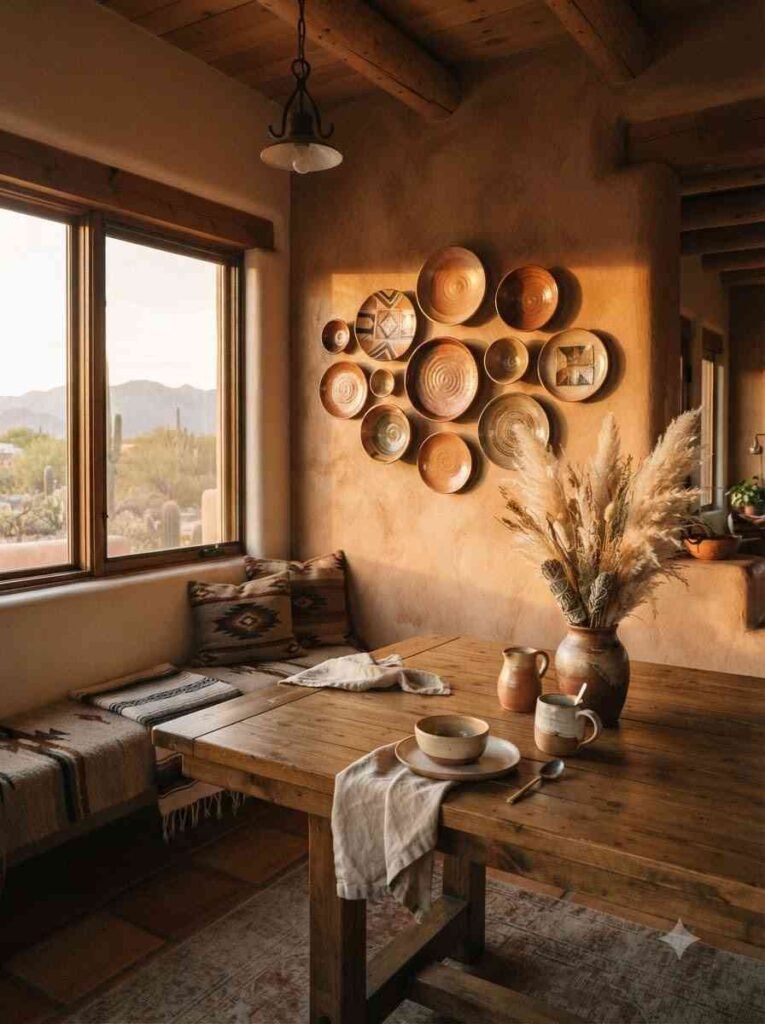
11. Terracotta and earth tones. Warm, grounding, pairs beautifully with wood furniture and linen curtains.
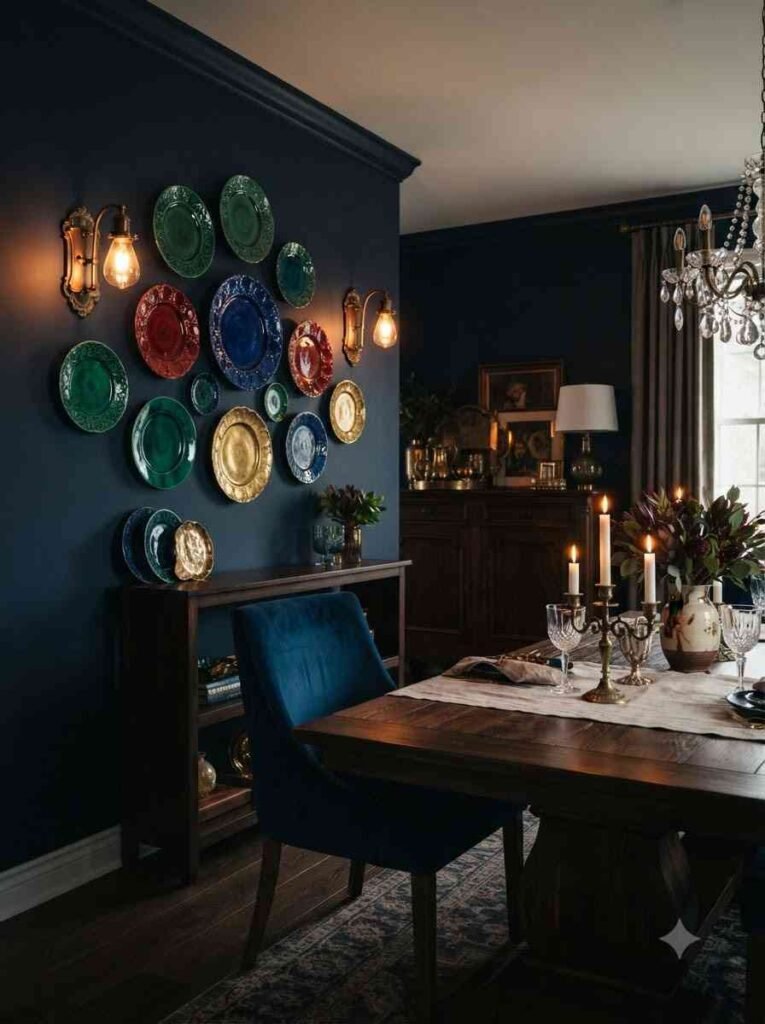
12. Jewel-toned plates on a dark wall. Emerald, sapphire, ruby plates against navy or charcoal paint. Dramatic, and a little unexpected.
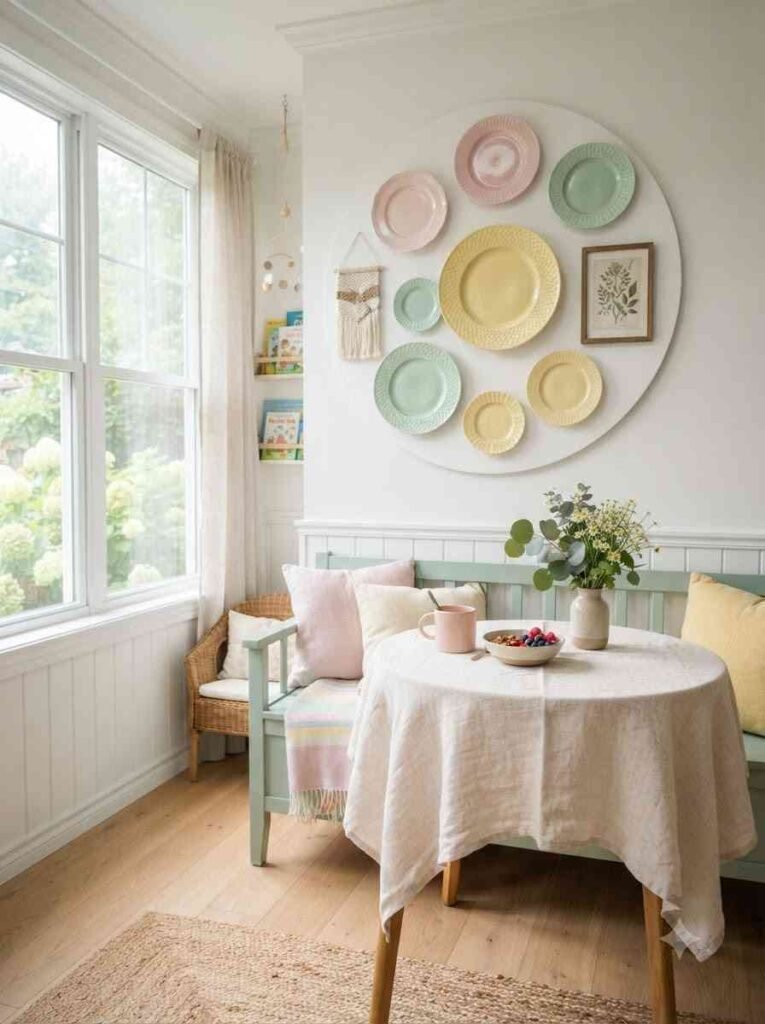
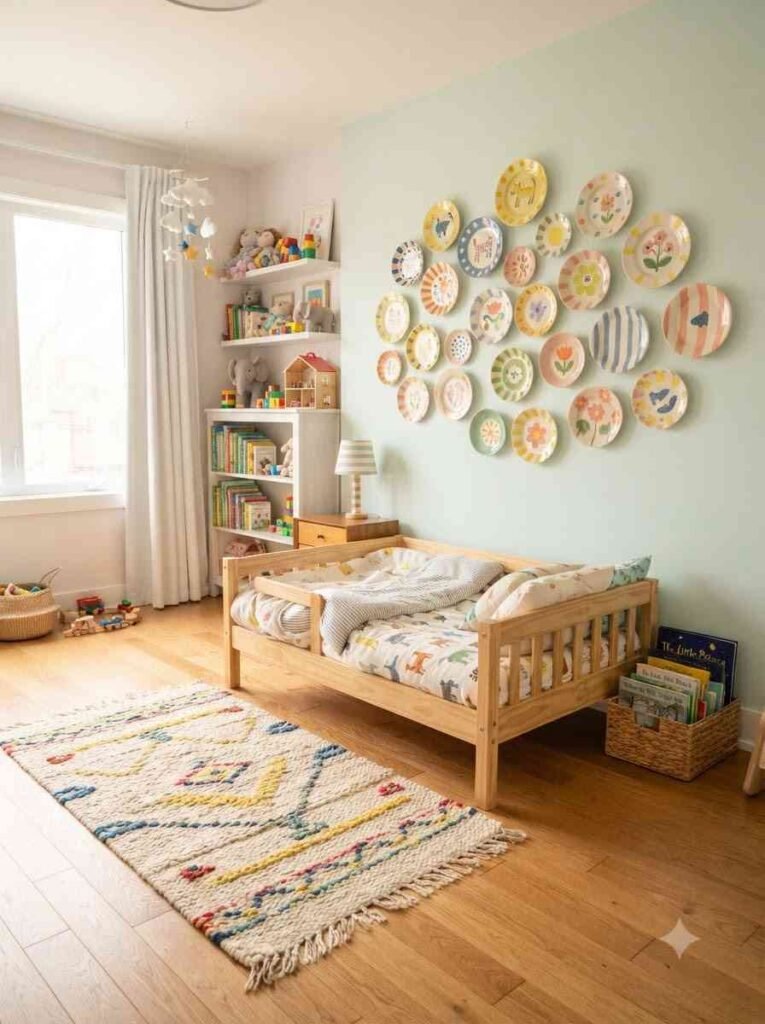
13. Pastel Easter-egg wall. Soft pink, mint, buttery yellow plates in a nursery or breakfast nook. Sweet without being saccharine.
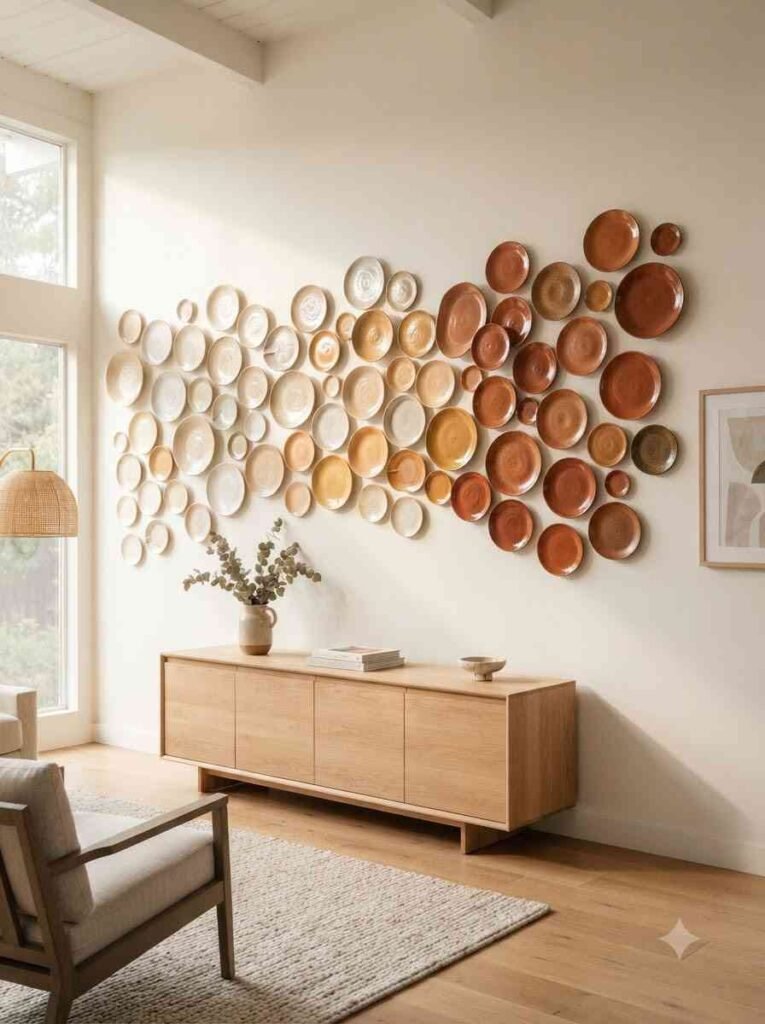
14. Ombre gradient plates. Arrange by shade, lightest at the top or one side, darkest at the other. Takes patience to source but the payoff is worth it.
15. Metallic accent plates. A few gold or copper-rimmed plates mixed into a neutral wall catch light in a way that photographs really well, which matters if you’re doing this for the ‘gram or your Pinterest board.
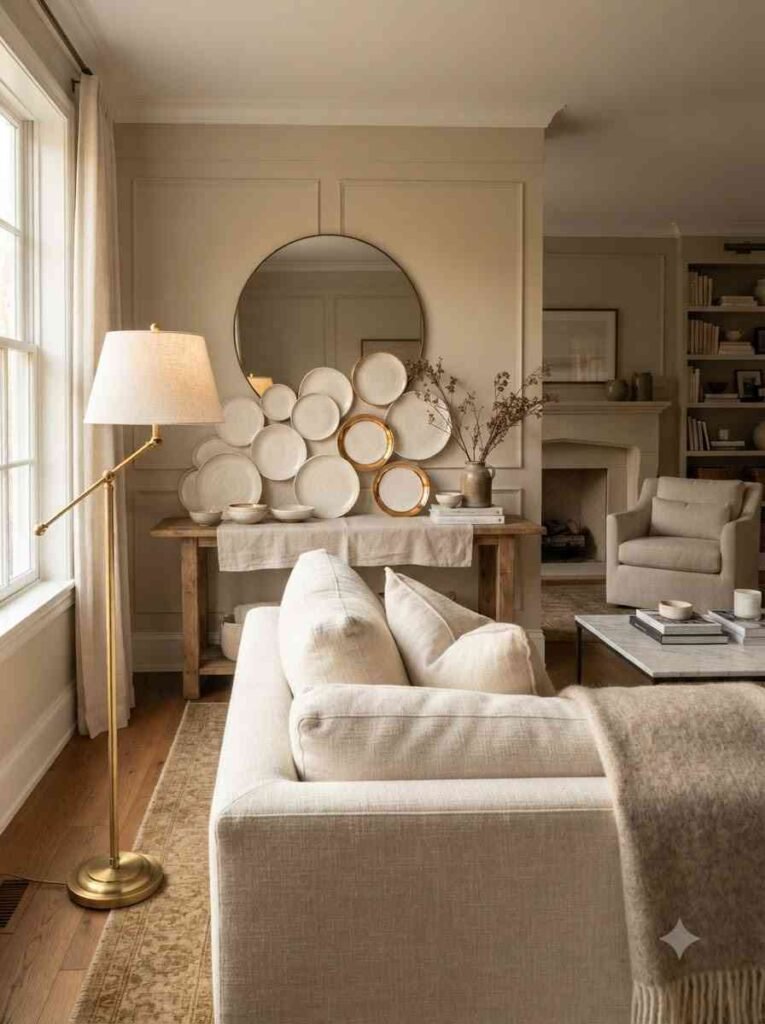
Shape and layout ideas
16. Circle formation. Plates arranged in a ring around a central point, sometimes with a mirror or clock in the middle. Reads as intentional the second you walk in.
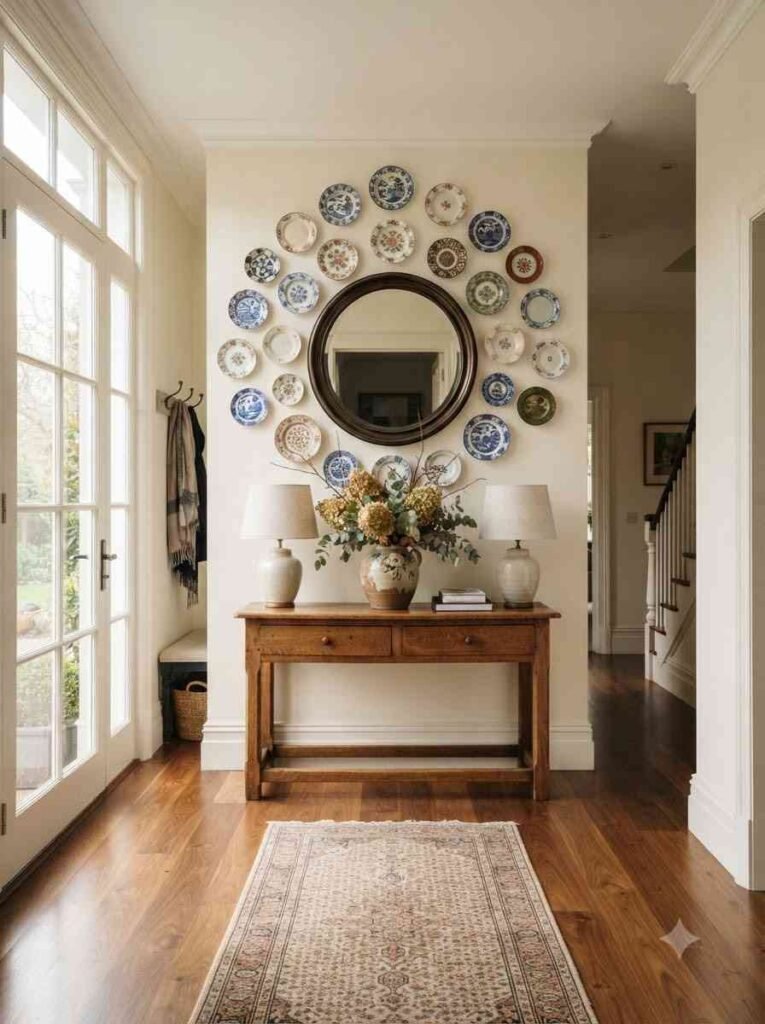
17. Staircase cascade. Following the slope of a staircase with graduating plate sizes. This is one of those ideas that sounds fussy but actually saves you from an awkward wall nobody knows what to do with.
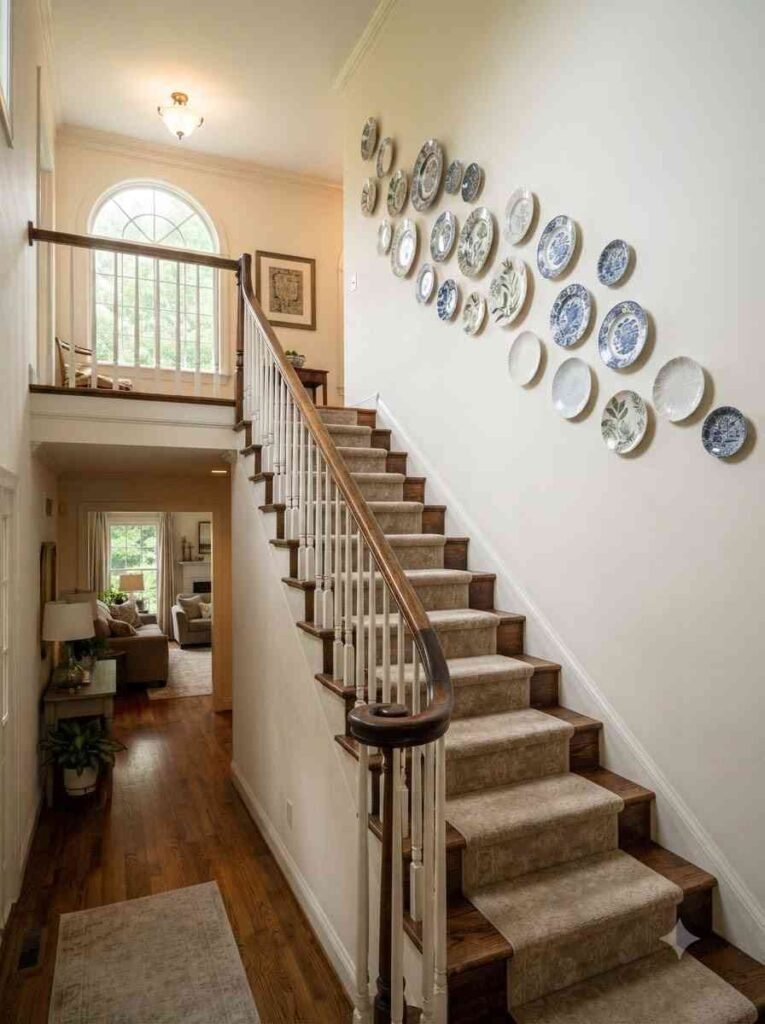
18. Vertical column. A narrow hallway or the side of a bookshelf gets a single stacked line of plates instead of a wide spread.
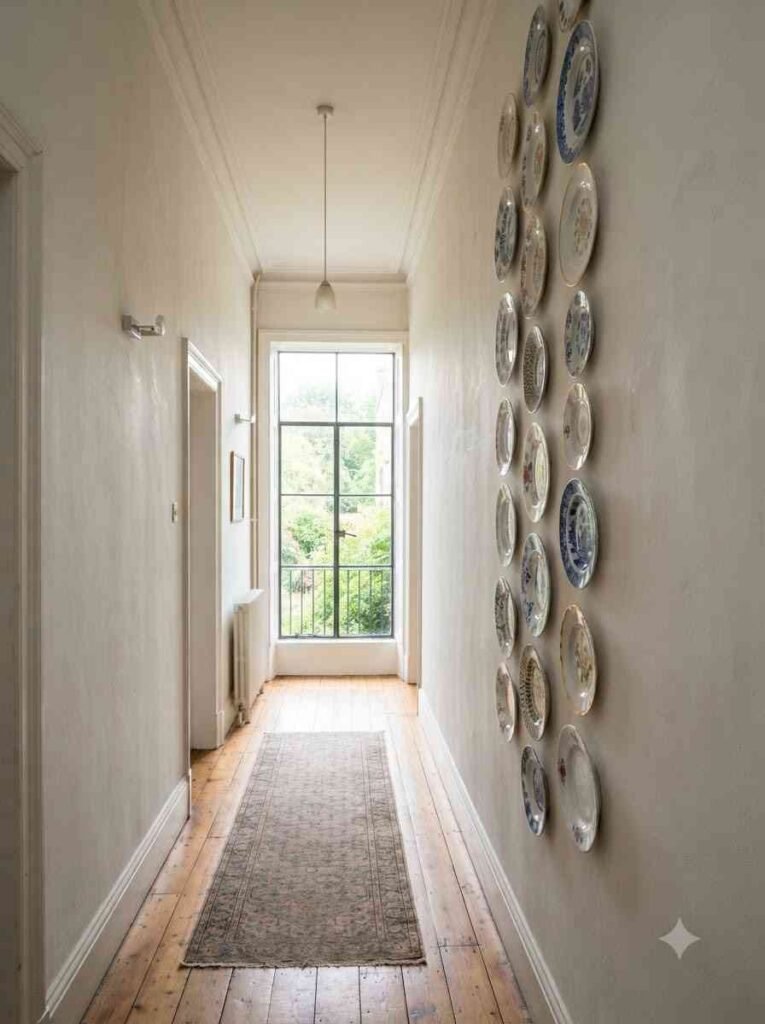
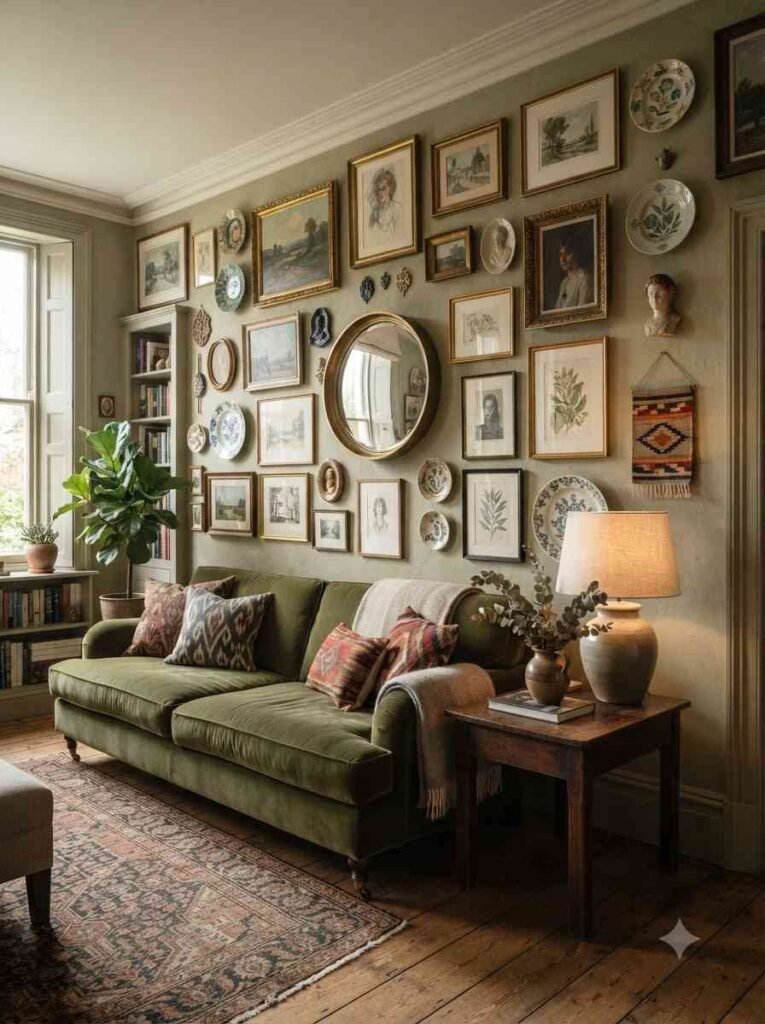
19. Salon-style mixed with art. Plates woven in among framed prints and mirrors. This is my honest favorite for a living room because it doesn’t scream “themed wall.”
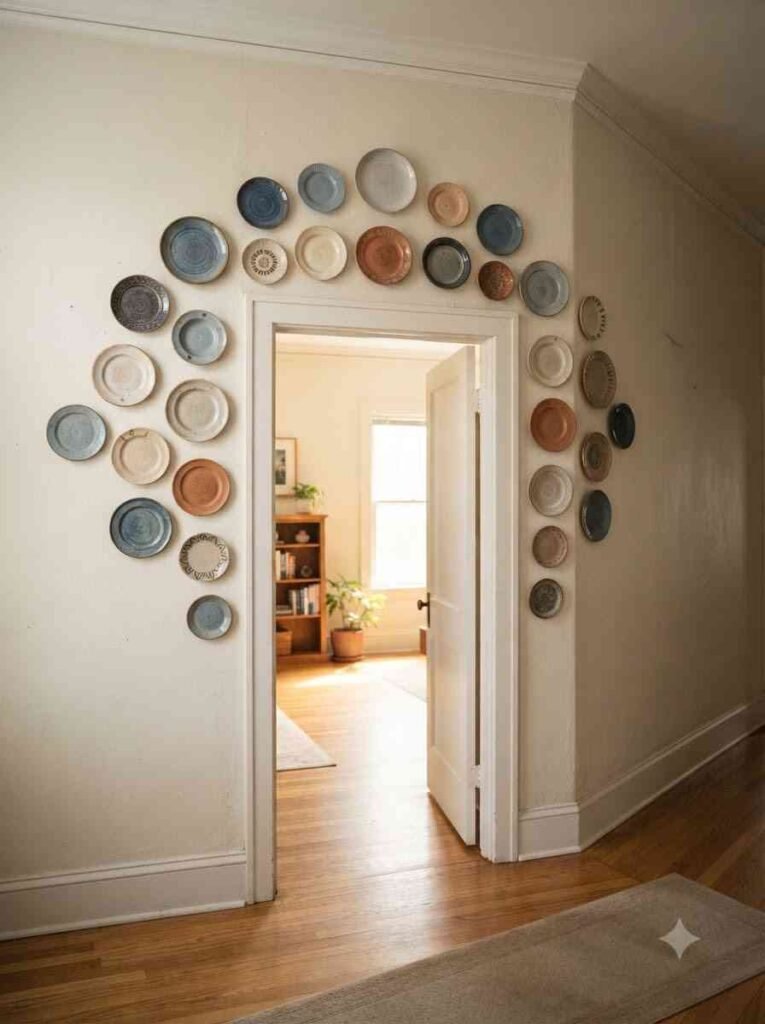
20. Plate wreath around a doorway. Framing a doorway or window with a loose ring of plates draws the eye up and makes a room feel taller.
Room-specific ideas
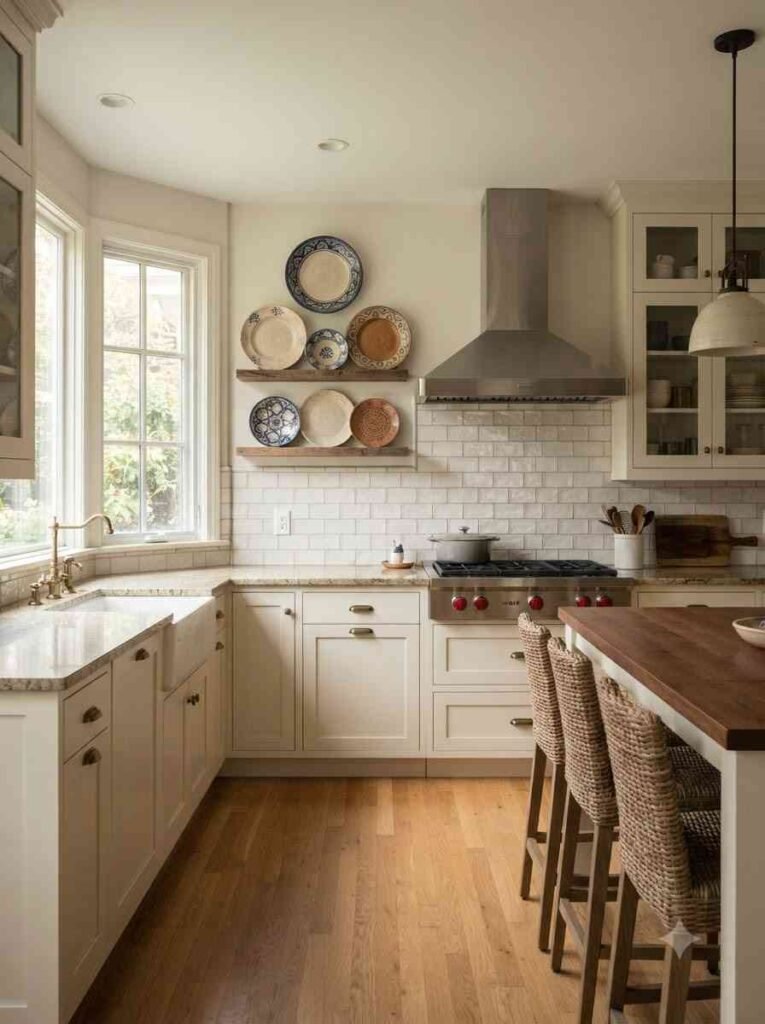
21. Above the stove backsplash. A cluster right behind the range, out of splash range but close enough to feel like part of the cooking space.
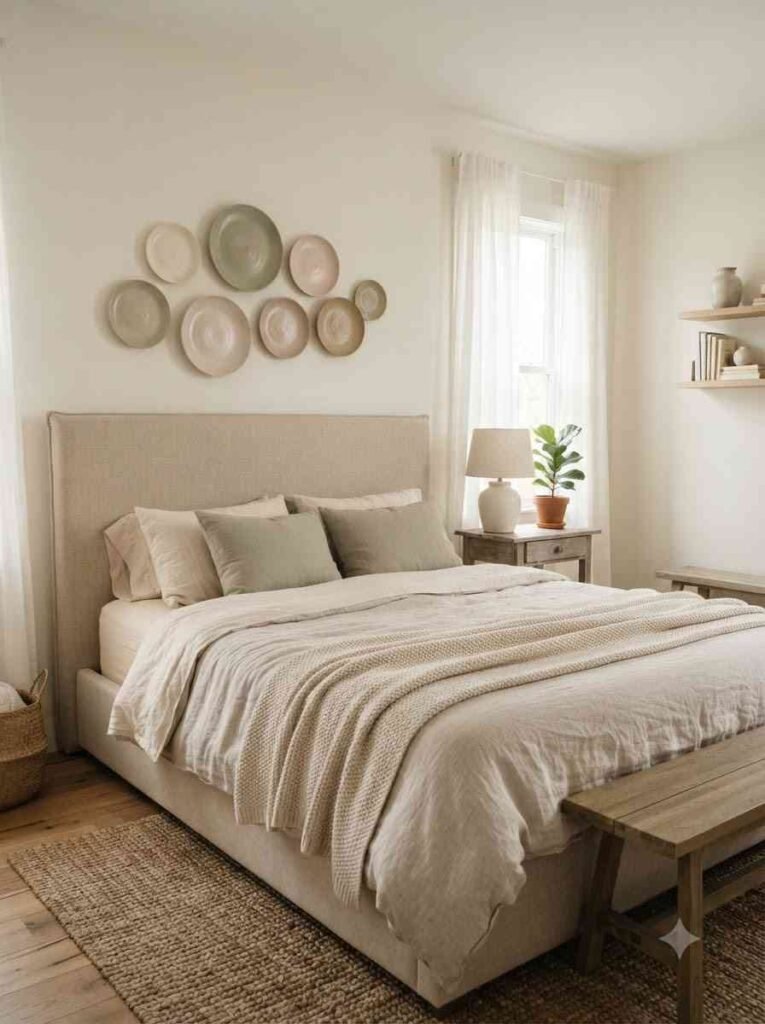
22. Above a headboard. Softer, smaller plates work surprisingly well in a bedroom, especially in muted colors.
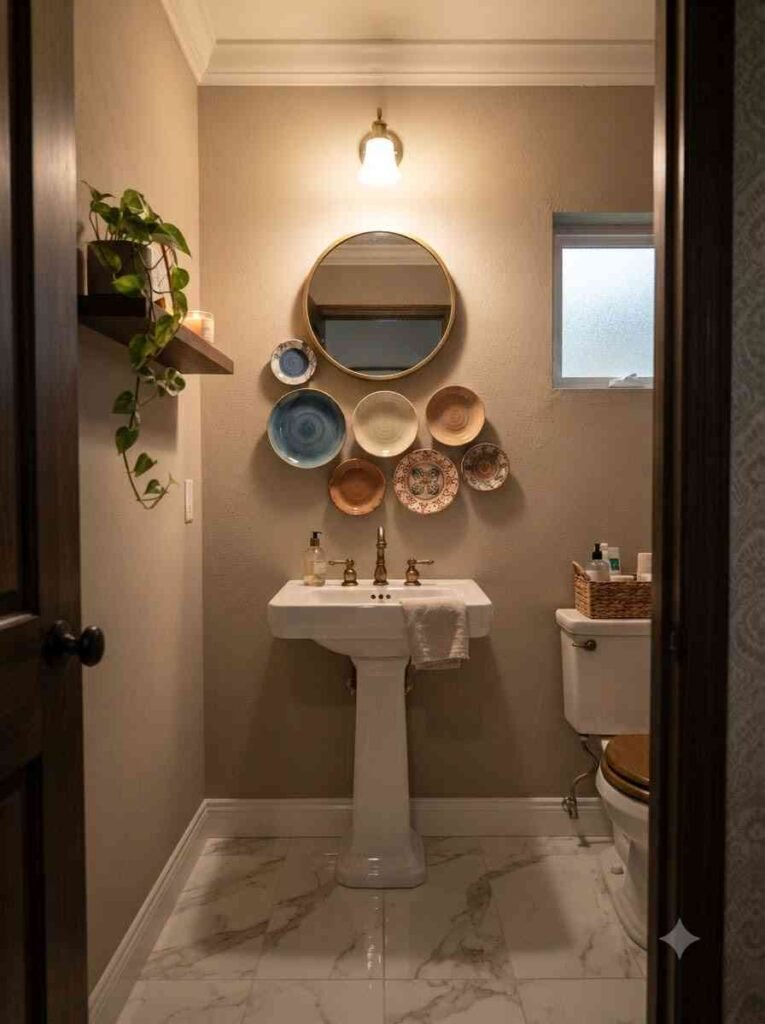
23. Bathroom powder room wall. Small bathrooms are the perfect low-stakes place to experiment since guests only see it briefly.
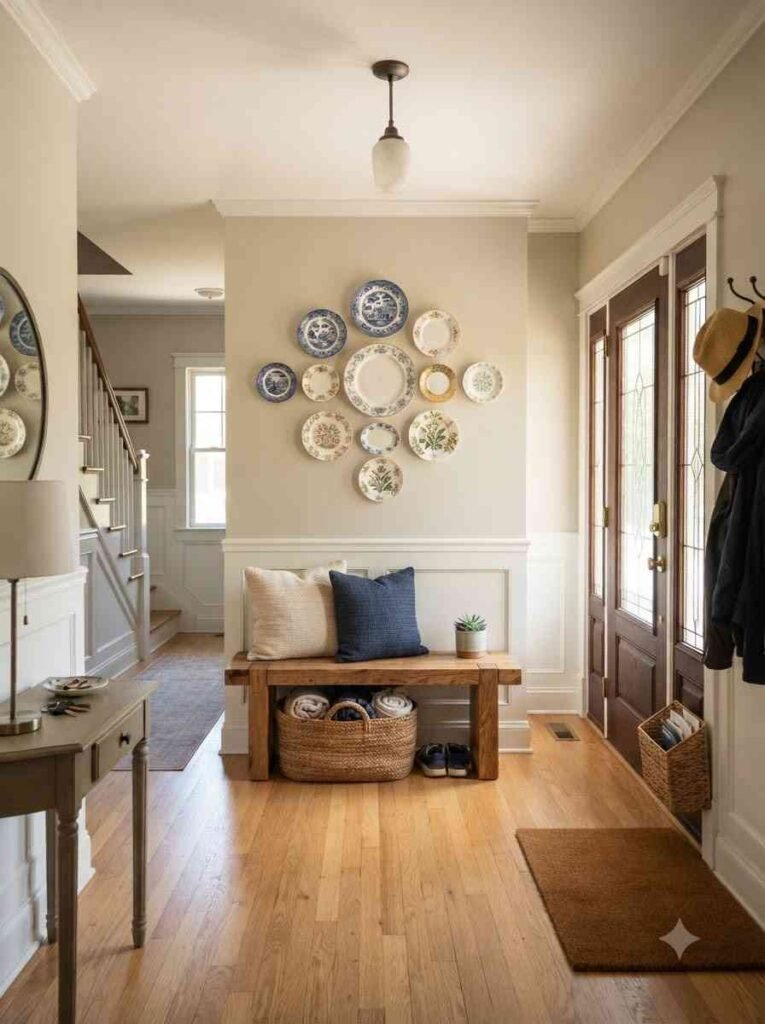
24. Entryway welcome wall. The first thing guests see. A tight, symmetrical cluster near the door sets the tone for the whole home.
25. Kids’ room plate art. Hand-painted or kid-decorated plates, hung low enough for them to actually see and be proud of.
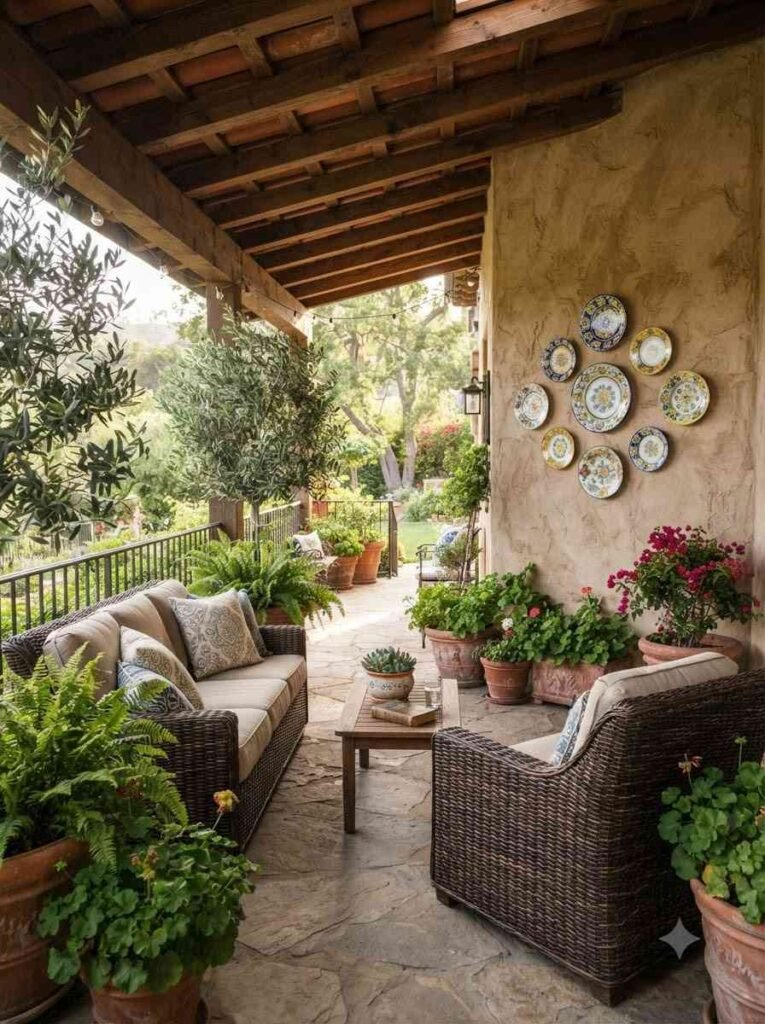
26. Outdoor covered patio wall. Weatherproof enamel or metal plates on a covered porch. Not something people think of, but it holds up better than you’d expect.
Quick reference table
| Style | Best room | Plate count |
|---|---|---|
| Grandmother’s cabinet | Dining room | 7 to 12 |
| Monochrome | Kitchen or hallway | 5 to 9 |
| Single statement plate | Living room | 1 |
| Circle formation | Entryway | 6 to 10 |
How to actually hang them without losing your mind
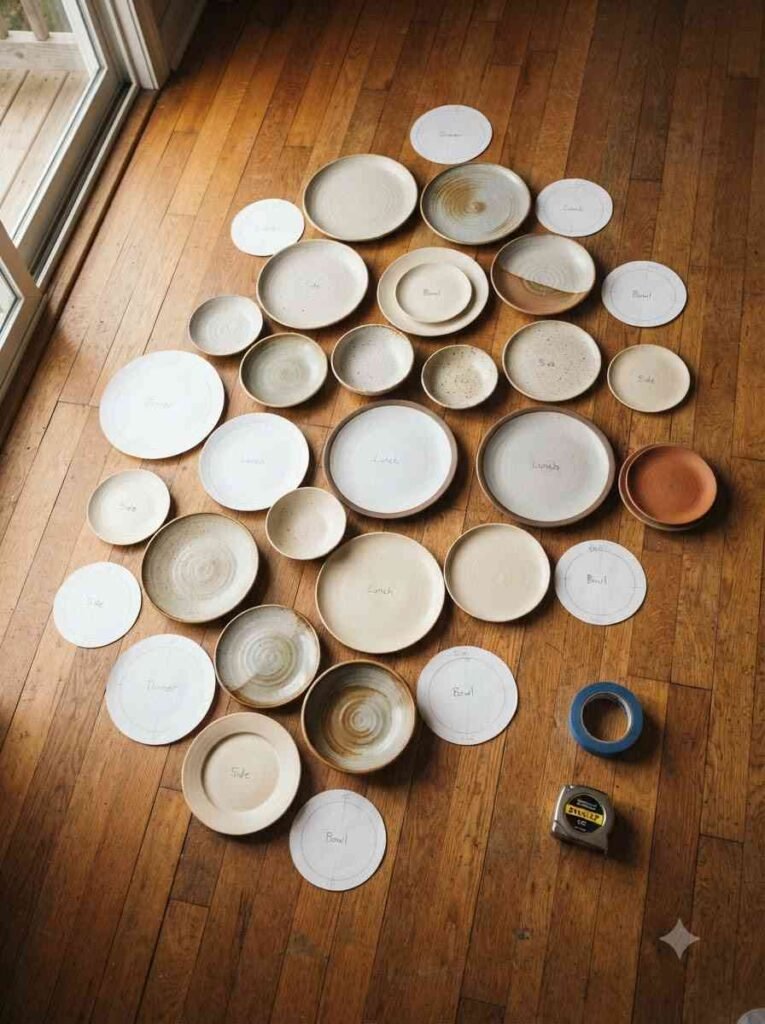
A few things I wish someone had told me before I put the first hole in my rental wall.
Plate hangers with spring-loaded arms hold better than adhesive hooks, especially for anything heavier than a saucer.
I learned that the hard way when a plate slid out of an adhesive hook at 2 a.m. and I woke up to shards on the floor. Not my finest morning.
Lay everything out on the floor first.
Move plates around until the spacing feels right, then transfer the layout to the wall with painter’s tape outlines. It sounds tedious. It saves you from six extra nail holes.
Trace each plate onto paper, cut the shape out, and tape those paper templates to the wall instead of the actual plates.
This is a trick a friend who flips houses taught me, and it changed everything about how I plan these walls now.
You can move paper around for an hour without a single scratch. Try doing that with your grandmother’s china and see how long your nerves last.
Spacing matters more than people think. Two to three inches between plates in a tight cluster keeps things cohesive. Go much wider than that and the wall starts to look unfinished, like you ran out of plates halfway through.
For hanging height, interior designers generally recommend centering artwork so it sits around eye level, roughly <cite index=”9-1″>57 to 62 inches from the floor to the center of the piece</cite>, and that guideline works well for plate clusters too, treating the whole grouping as one unit rather than measuring each plate on its own.
If you’re sourcing plates, thrift stores and estate sales beat big-box retailers nine times out of ten. You’ll pay less and end up with pieces nobody else’s wall has. For inspiration boards while you plan your layout, browsing through curated home decor pins on <cite index=”0-0″>Pinterest</cite> is still one of the fastest ways to test a color palette before you commit to nail holes.
A quick side note
I know this article is about plates, but can we talk about how expensive “vintage-look” plates are at some home decor chains? I once saw a mass-produced plate marked up to look “antique” for 45 dollars, sitting two aisles away from an actual antique shop selling the real thing for 8. Check your local thrift stores first. Always.
Common mistakes to avoid
- Hanging plates too high. This is the number one mistake I see. If you have to tilt your head back to see it, it’s too high.
- Ignoring plate weight. Heavier ceramic or stoneware needs sturdier hangers than thin porcelain. Skipping this step is how you end up with a wall full of small holes and one broken plate.
- Overcrowding a small wall. A tight hallway doesn’t need 15 plates. Sometimes 4 well-spaced pieces look more finished than a packed grid.
- Matching too perfectly. A wall where every plate is the exact same size and pattern can feel a bit sterile. A little variation keeps it interesting.
- Forgetting the room’s existing colors. I once hung a gorgeous cobalt blue cluster in a room with warm orange walls and it fought with everything else in the space. IMO, always hold a plate up against the wall in real light before committing.
- Rushing the layout. This one’s personal experience talking. The walls I love most took two or three tries to get right. The ones I rushed still bug me every time I walk past them.
Wow, and here’s a thing nobody warns you about: plate walls are addictive.
You’ll hang five, love them, then start eyeing the next blank wall in the house within a week. This is insane, but also kind of the best part.
FAQs
Do plate walls damage the wall underneath? Small nail holes from plate hangers are minor and easy to patch with spackle. Adhesive strips are gentler but work best on lighter plates only.
Can I mix plates from different sets? Yes, and honestly, mixing sets usually looks better than a matched set. Tie them together with a shared color, shape, or era instead.
How many plates do I need to start? Three to five is enough to make a visible impact on a small wall. You can always add more once you see how the spacing feels in person.
Final thought
A plate wall is one of those rare decor projects that costs almost nothing and says a lot about who lives there.
Pick a few plates that actually mean something to you, whether that’s a color you love or a place you’ve been, and build outward from there.
Which of these 26 looks would work in your home? Save this list, pin your favorite, and go dig through that thrift store shelf you keep walking past.
