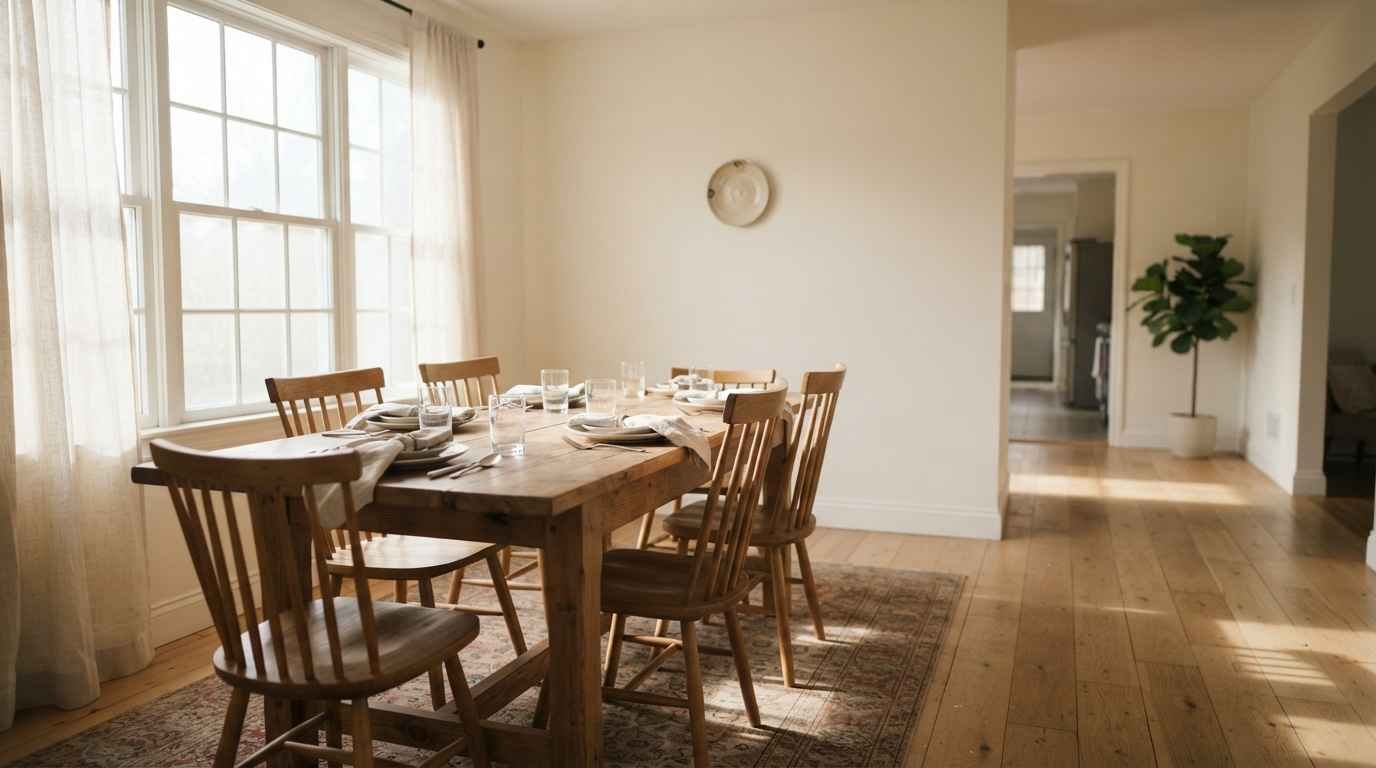
My dining room used to have a giant floral canvas over the table. I loved it in 2019. By 2023, it felt loud every time I sat down to eat cereal alone at 7am.
So I took it down, painted the wall a soft warm white, and hung one small ceramic plate instead.
That’s it. Everyone who visits now asks what changed. Nobody can point to the wall directly.
That’s the whole trick of minimalist dining room decor: it works quietly.
If you’re pinning ideas for a refresh, this list is built for that. Twenty-five ways to dress a dining room wall without cluttering it, organized by the kind of look you’re going for.
Save whichever ones fit your space and skip the rest. No rule says you need all 25 in one room (please don’t).
Start with what you take off the wall, not what you add
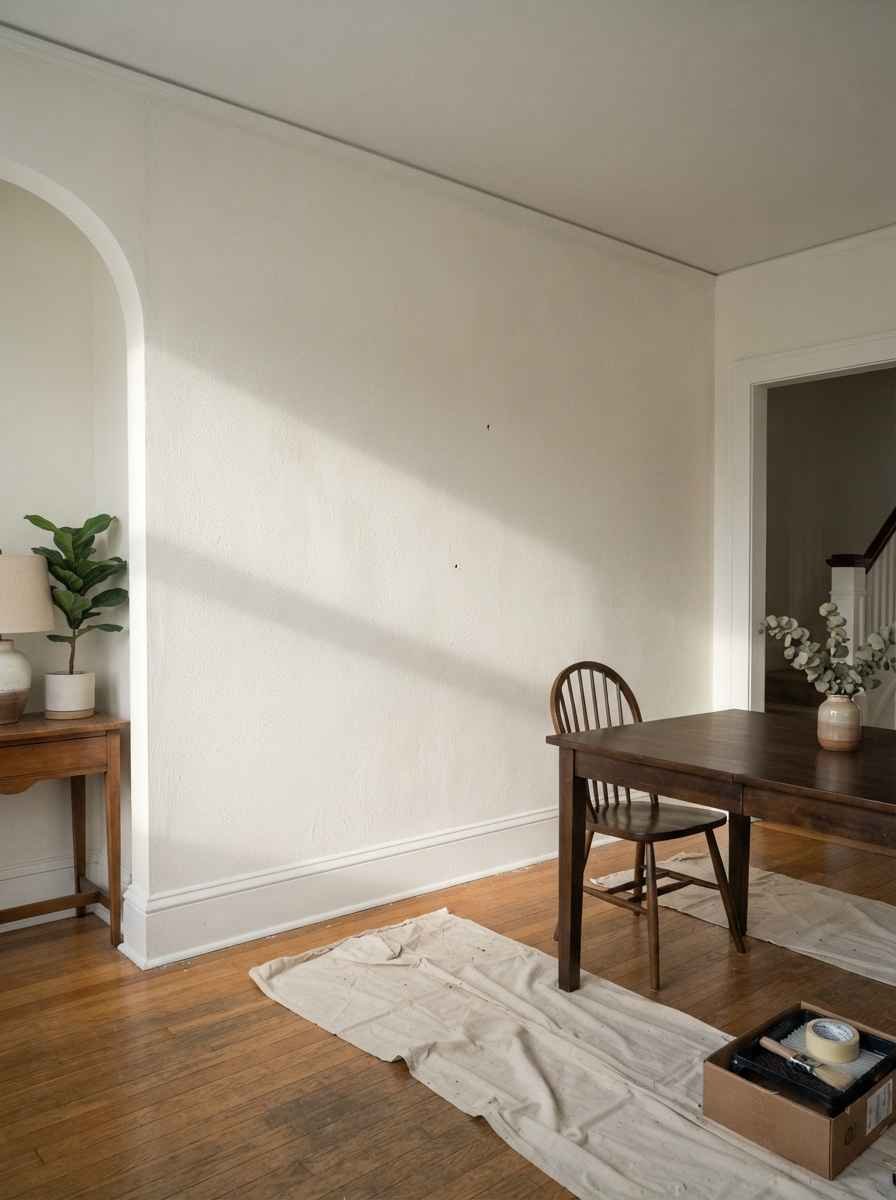
Minimalism in a dining room isn’t about buying less stuff. It’s about editing what’s already there first.
- Remove one thing before adding anything. If your wall currently has a mirror, a clock, and two prints, pick one to keep. Seriously, just one. A crowded wall reads busy no matter how nice each piece is on its own.
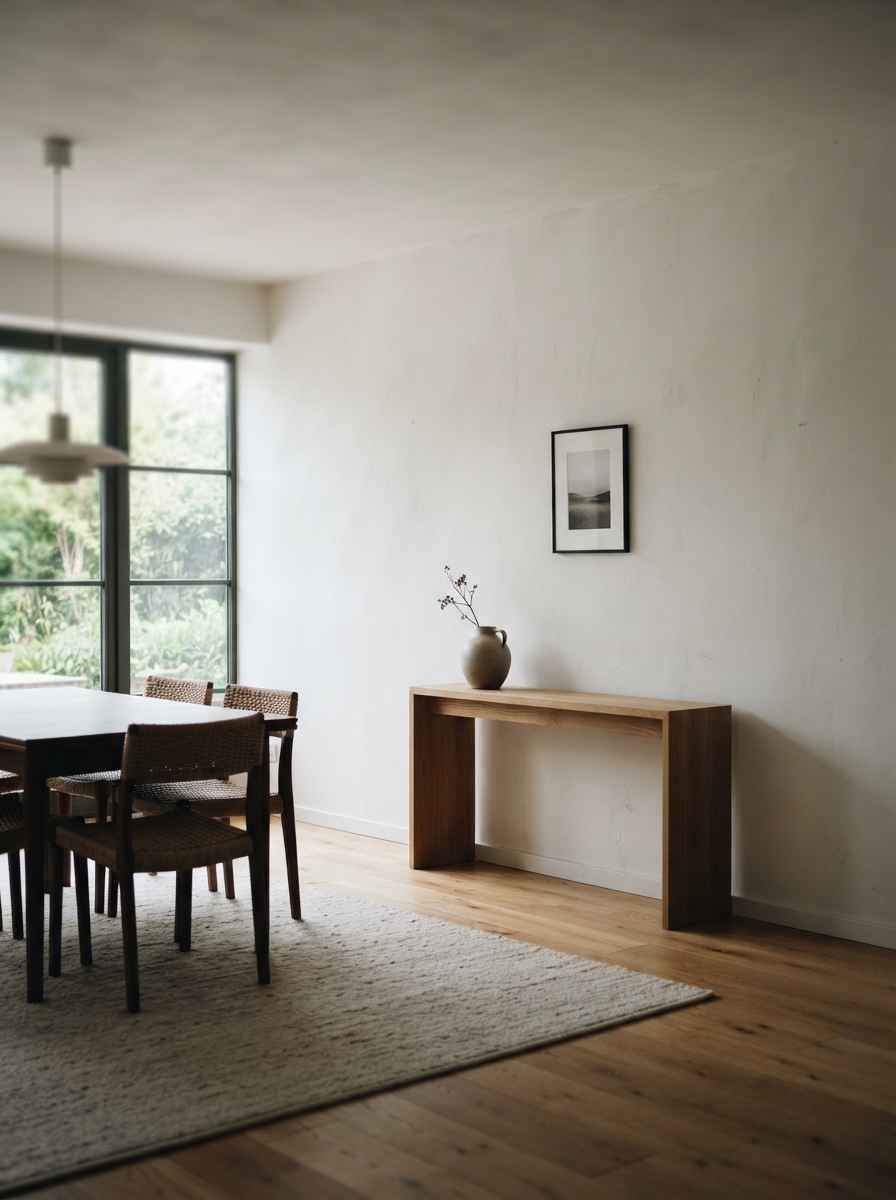
- Paint the wall a single warm neutral, like a soft greige or a chalky off-white, and let the texture of the paint itself be the decor for a few weeks before you hang anything.
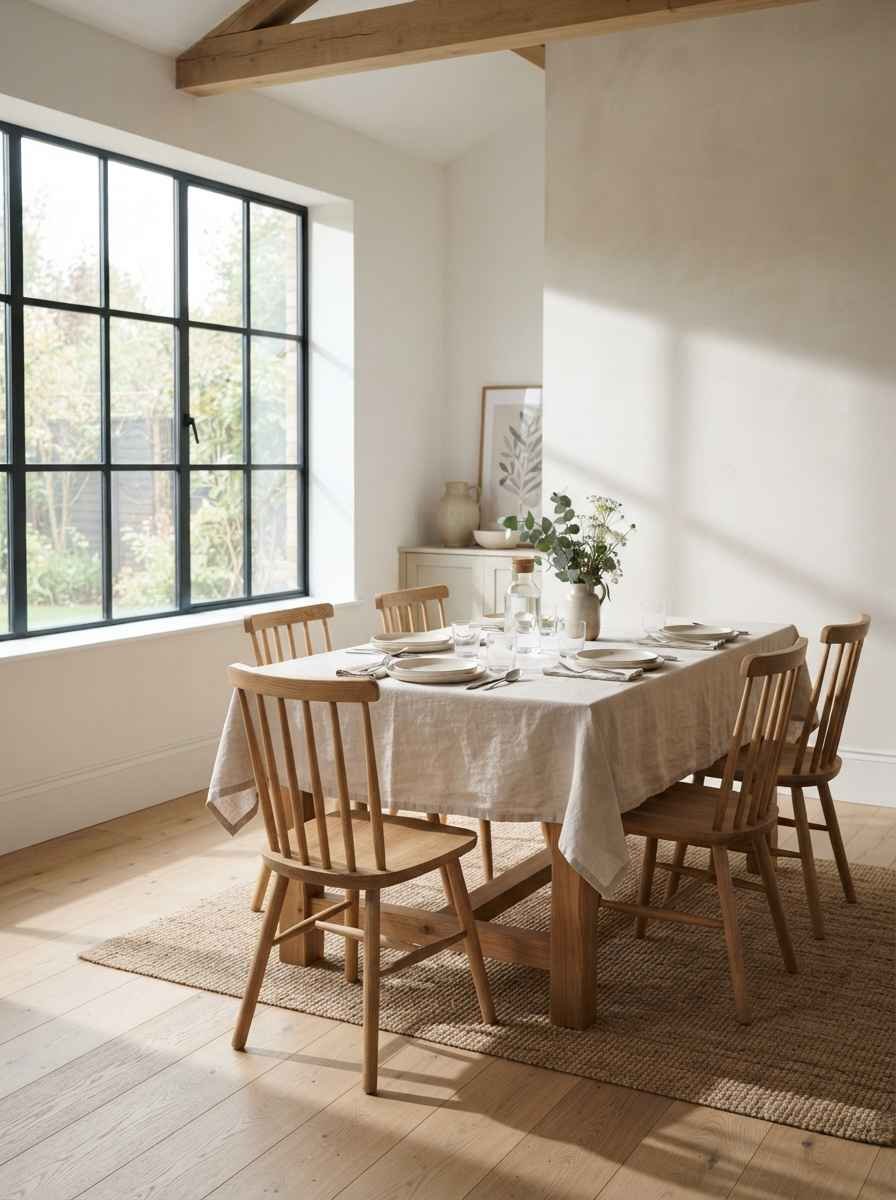
- Leave one wall completely bare if the room has good natural light.
- A window and a clean wall can do more for a dining space than any framed print.
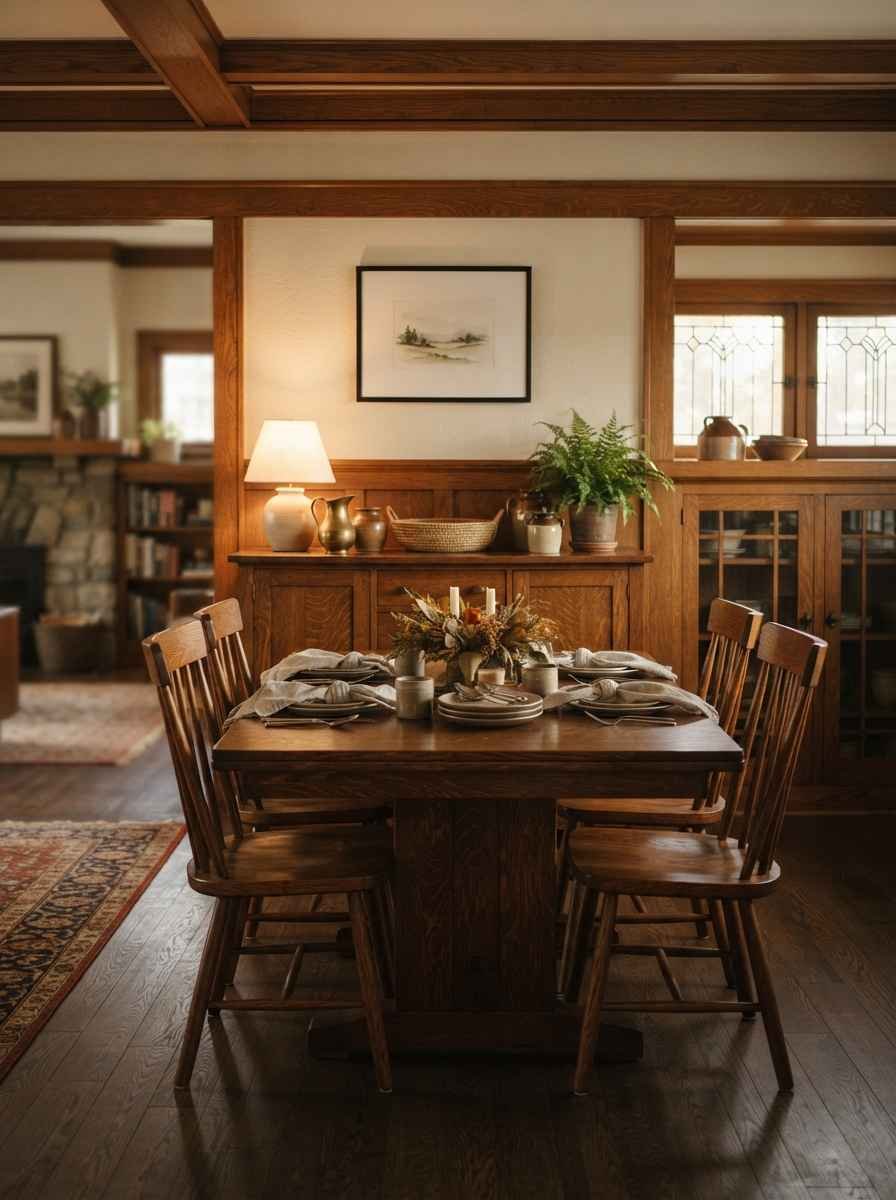
- Swap a large ornate frame for a slim wood or black-metal one. IMO frame weight matters more than the art inside it when you’re going minimal.
- If you inherited a busy gallery wall from a previous owner or your own past self, take photos of each piece before removing them. You’ll want the record later, and it makes editing feel less permanent.
Let one statement piece do the work
Ever notice how the calmest rooms in magazines usually have exactly one thing you actually look at? That’s not an accident.
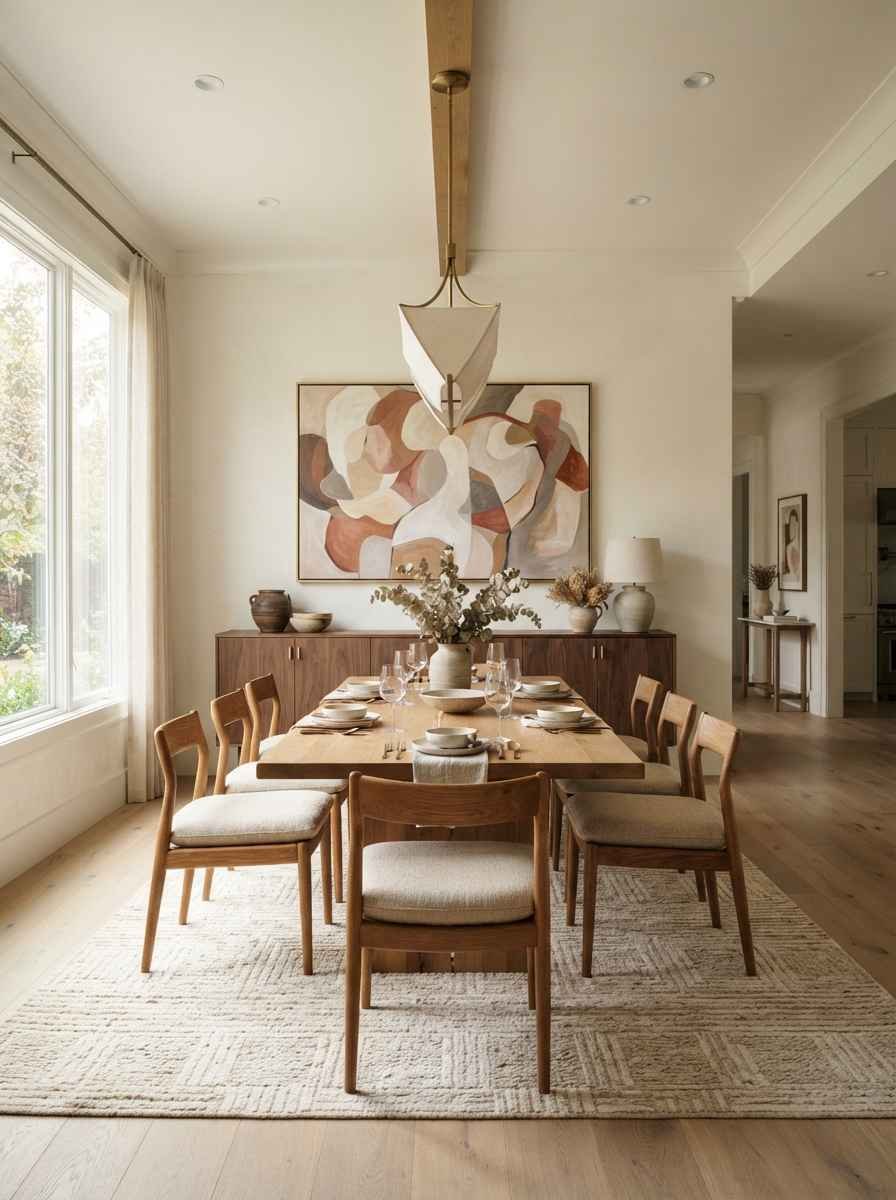
- Hang a single oversized abstract print, in muted tones that echo your table or rug, centered over the sideboard rather than the table itself.
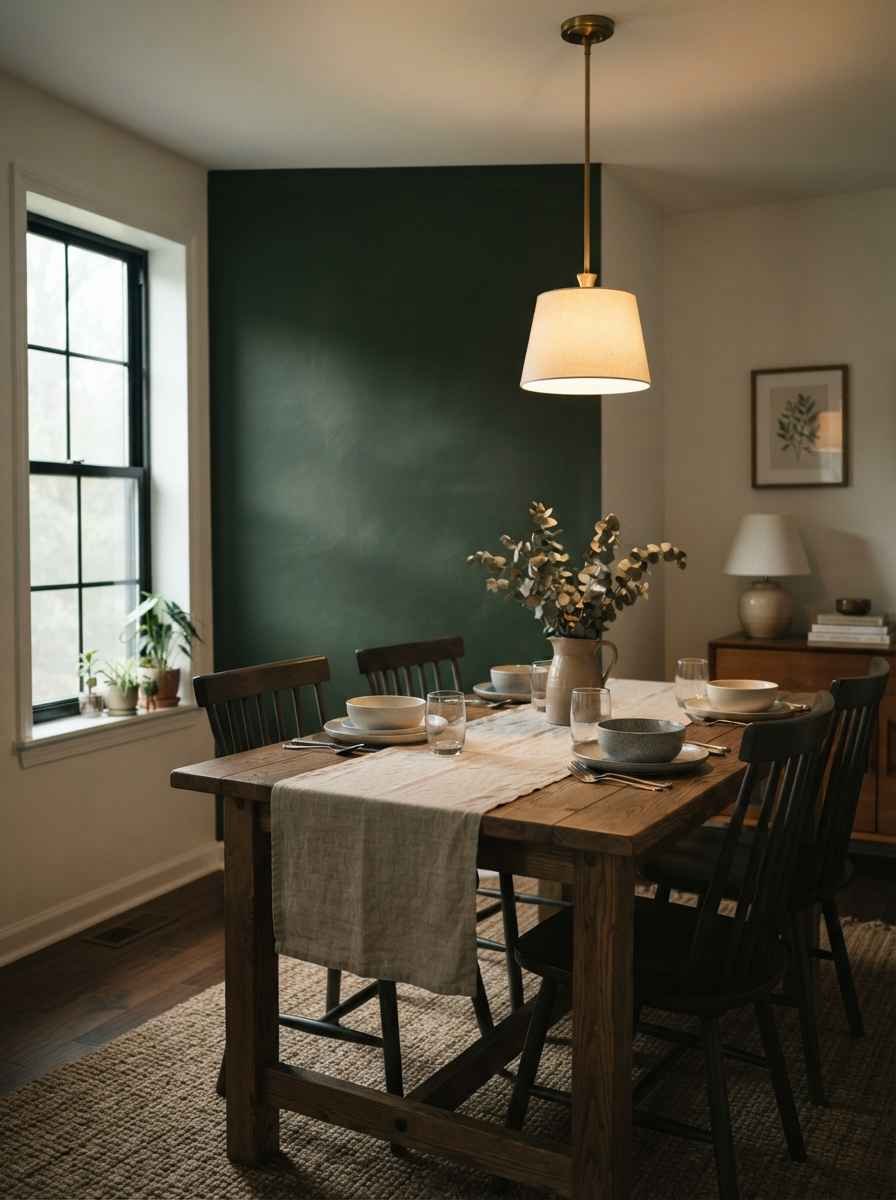
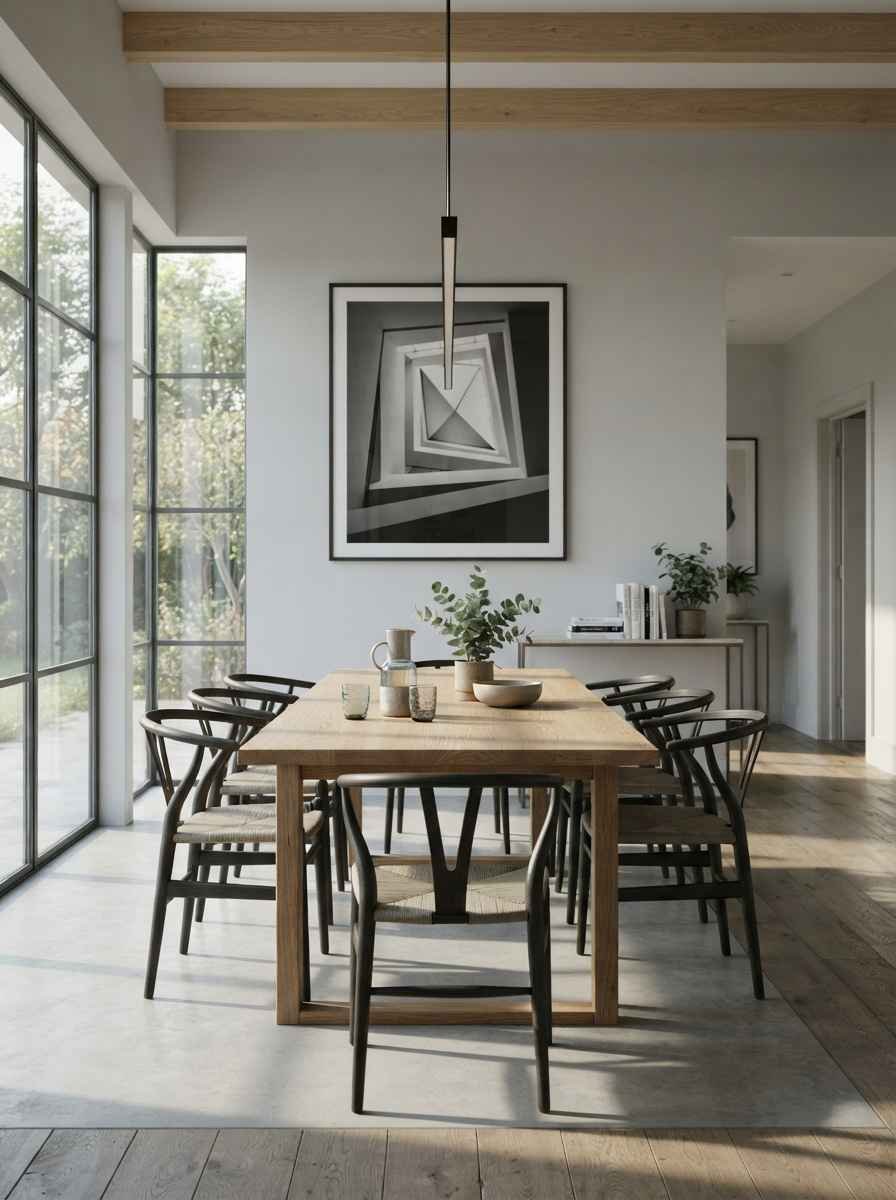
- Try a large-scale black and white photograph. Landscape or architectural shots work especially well because they don’t compete with dinnerware or centerpieces.
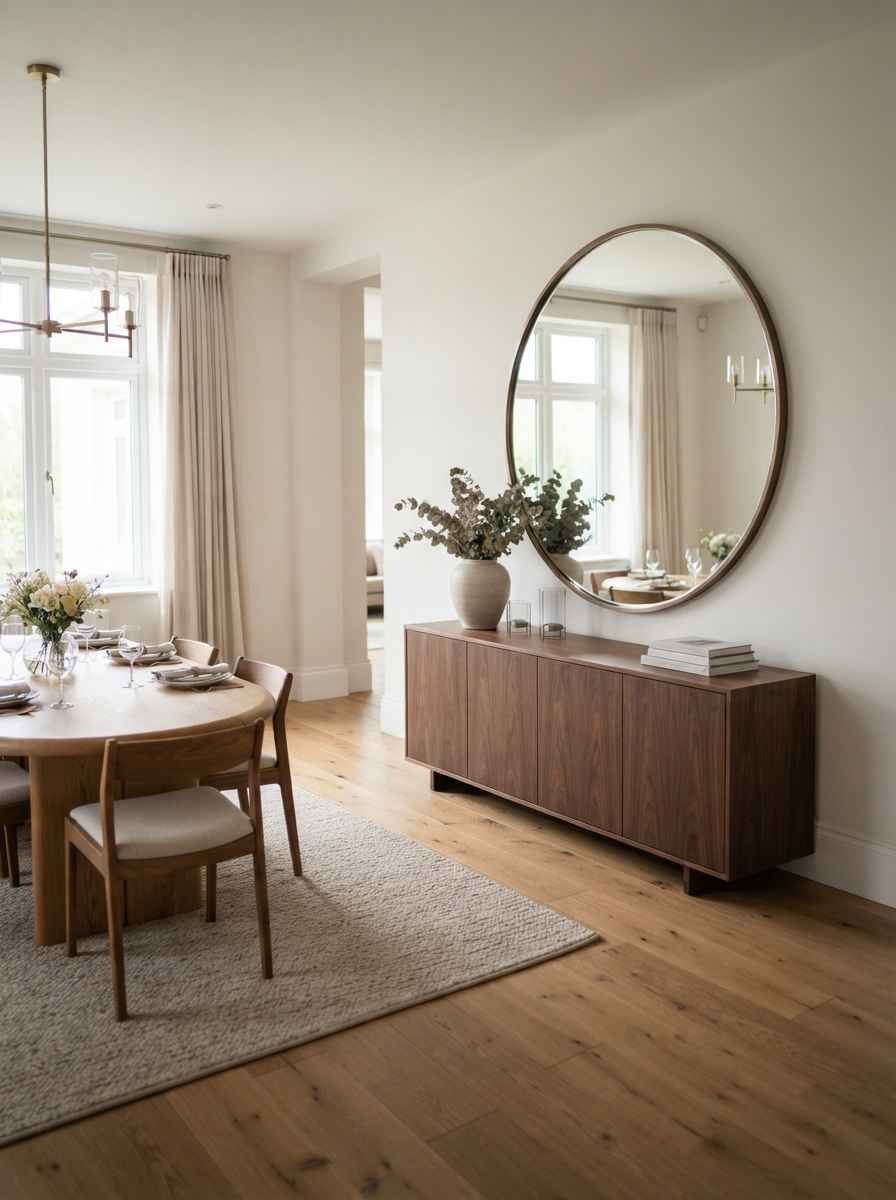
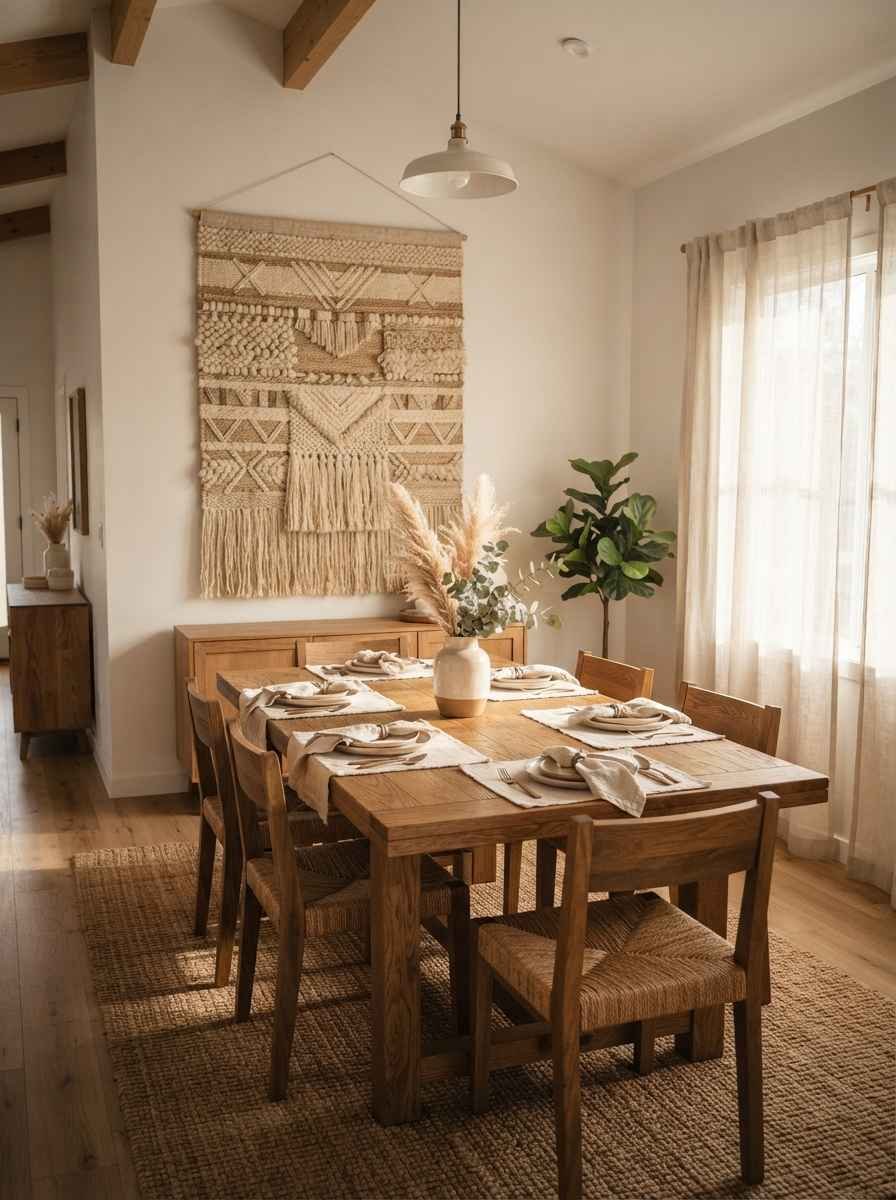
- Go textural instead of pictorial: a woven wall hanging or a piece of raw linen stretched on a frame adds warmth without adding visual noise.
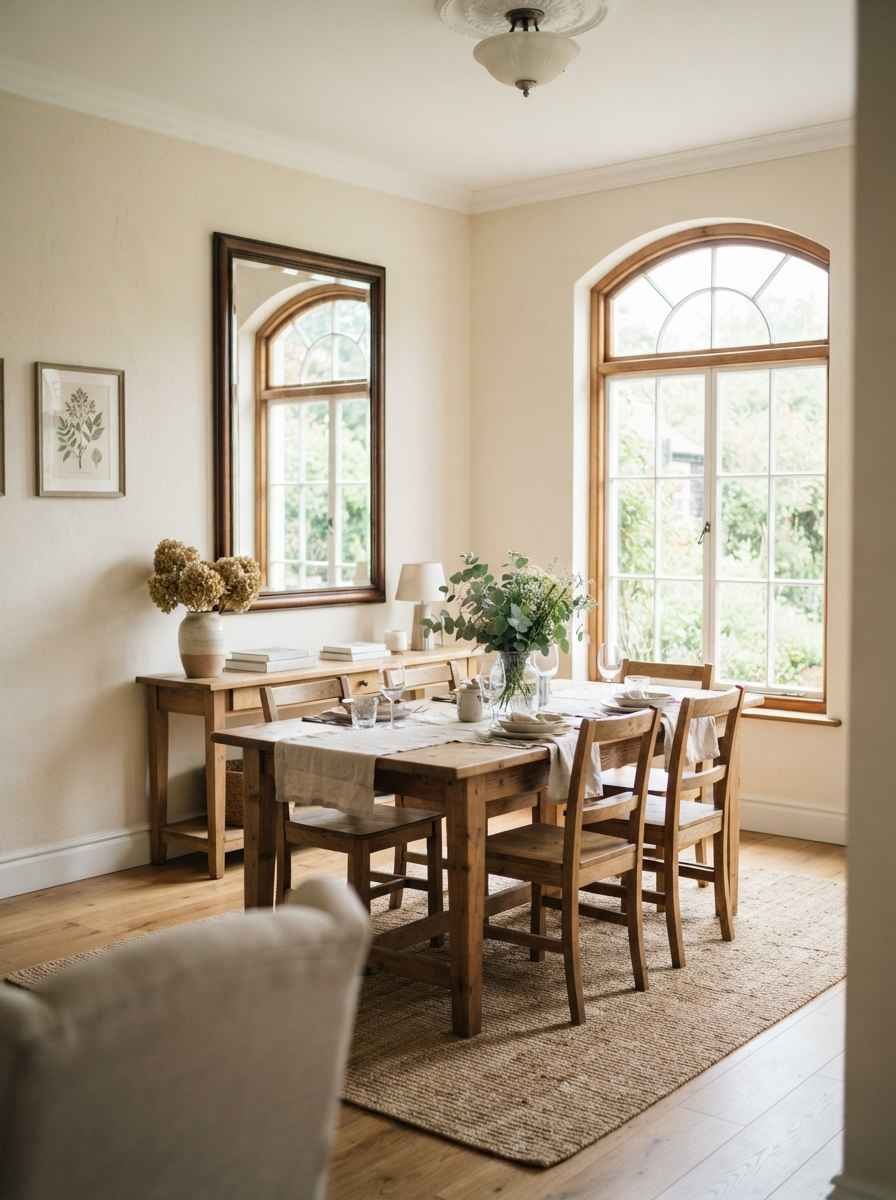
- Pick one bold color moment, like a single terracotta or forest-green panel, and keep every other wall in the room neutral.
- A guide from <cite index=”8-1″>Architectural Digest points out that walls don’t need to be blank or overly decorated, just intentional</cite>, and a single strong color is about as intentional as it gets.
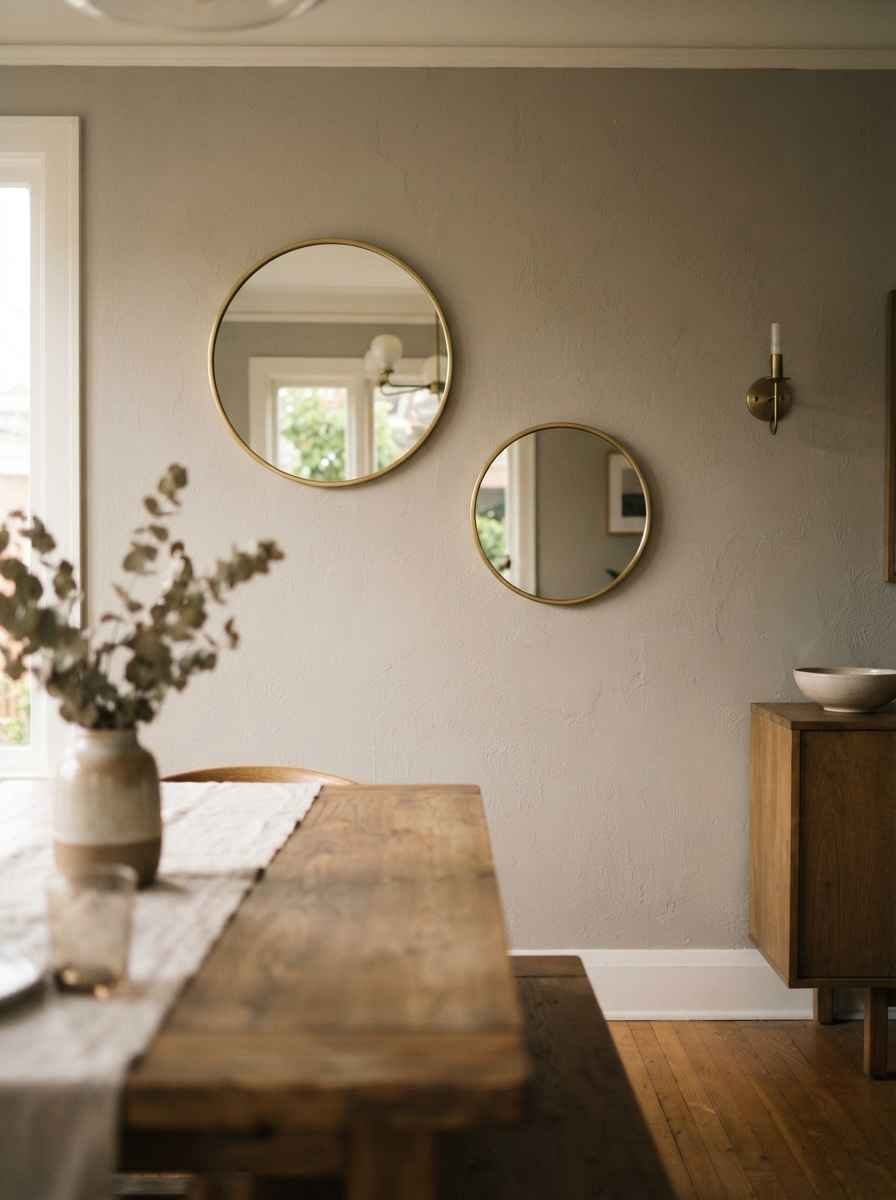
- Consider a large round mirror instead of art. It reflects the table setting, bounces light around a small room, and gives you a rotating “piece” that changes with whatever’s on the table that night.
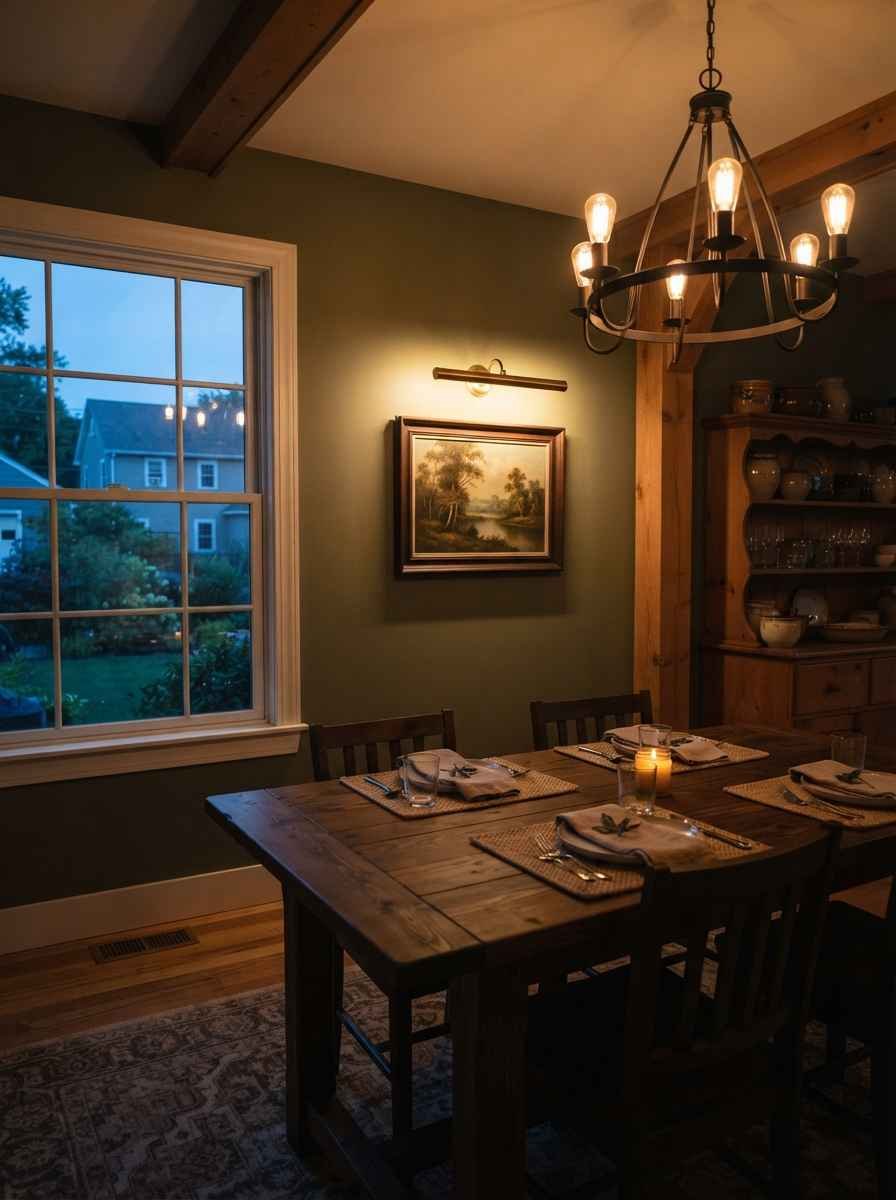
Mirrors, light, and the illusion of more space
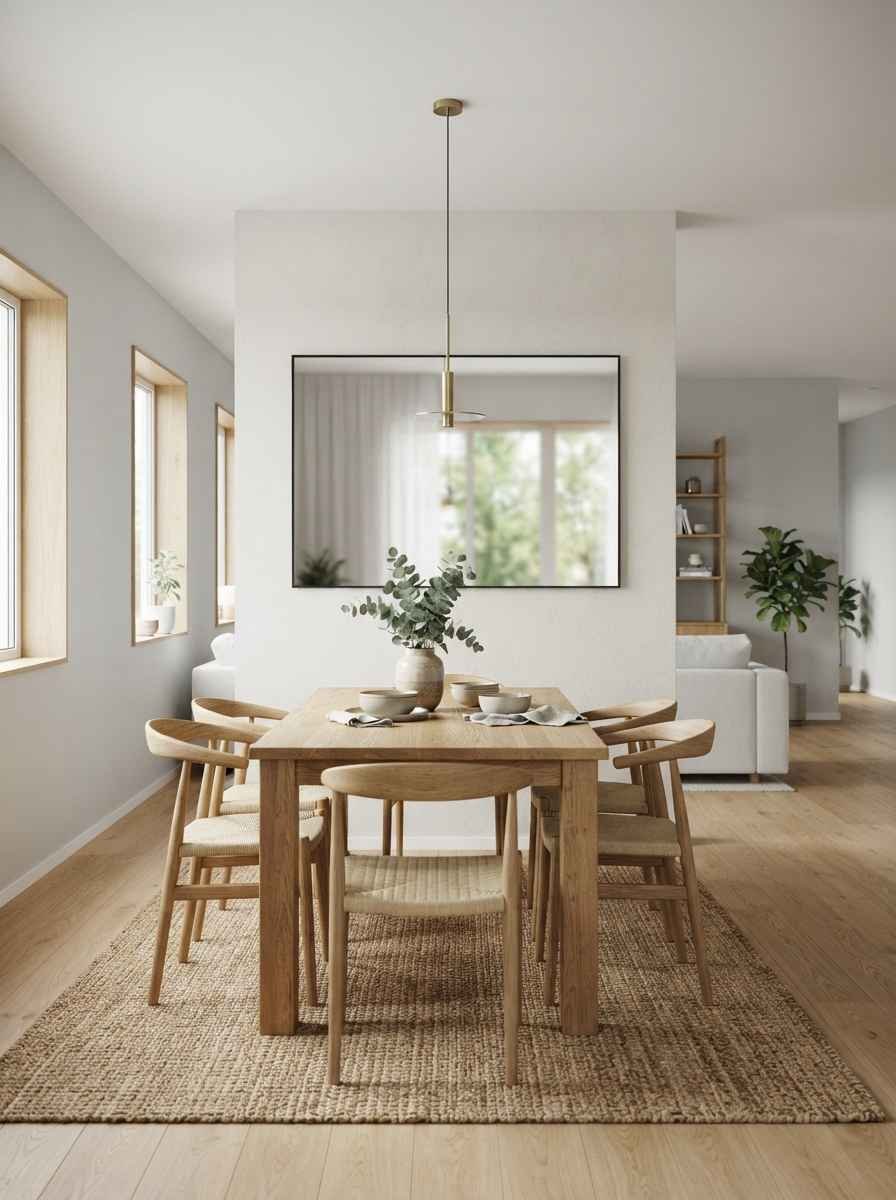
A lot of small dining rooms don’t actually need more decor. They need more light, and mirrors fake that better than almost anything else.
- Place a tall, narrow mirror opposite your main window so it pulls daylight across the whole room.
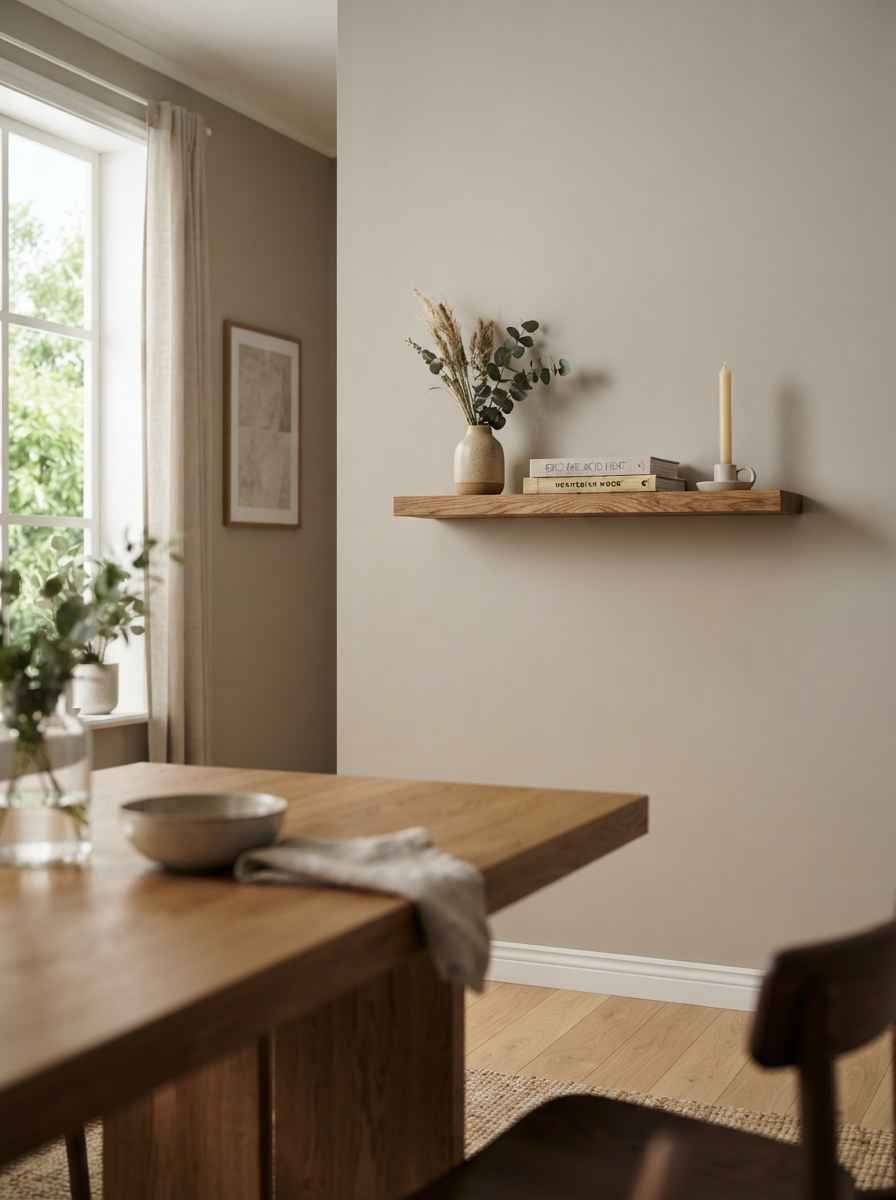
- Try two smaller round mirrors, spaced apart rather than paired symmetrically. Asymmetry reads more relaxed than a perfectly matched set, in my experience.
- Add a single brass or matte black picture light above one piece. It’s a small detail, but a warm, focused glow at eye level while you’re eating makes the whole room feel finished.
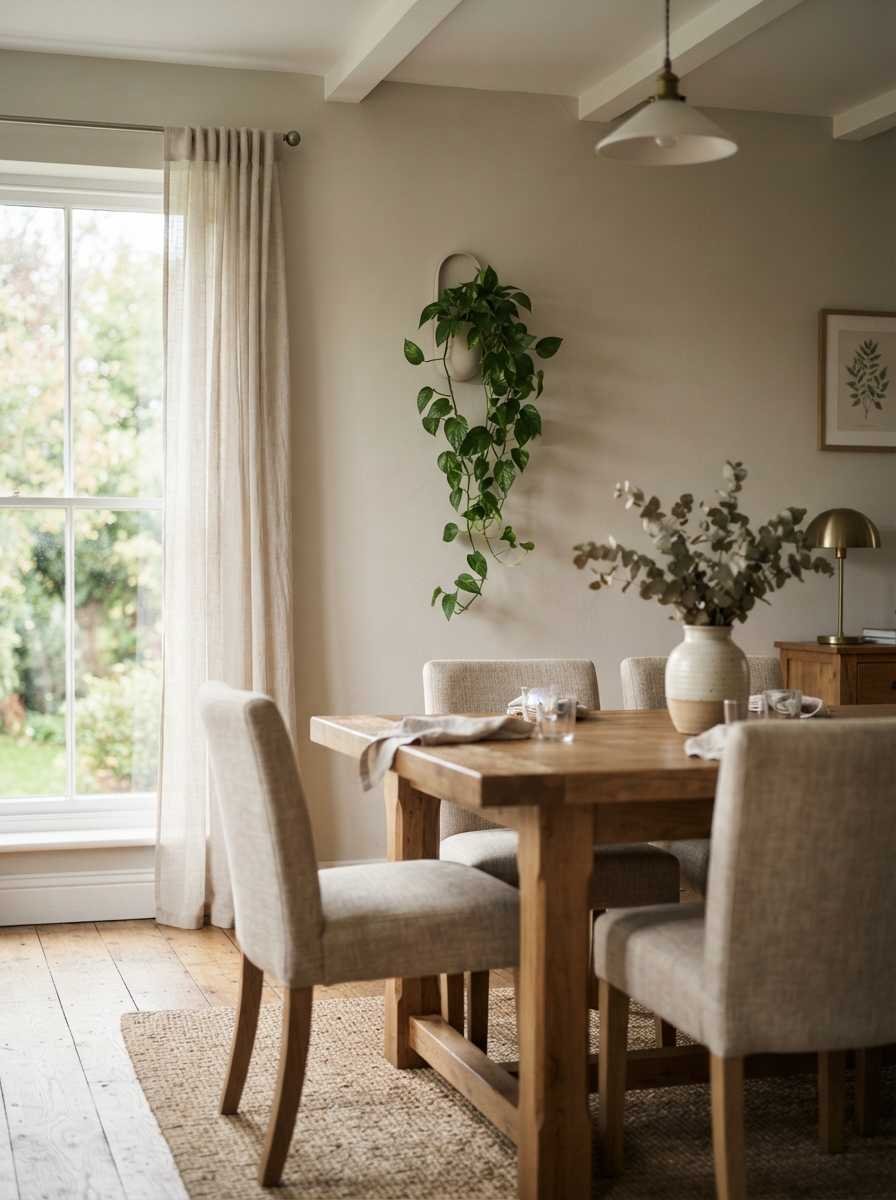
- Use a mirror with a thin, almost invisible frame if your goal is airy and open. A chunky gold frame will fight the minimalist look no matter how nice the mirror is.
Shelving and functional decor that doubles as art
This is where I get genuinely opinionated: floating shelves are either the best or the worst thing you can put on a dining room wall, depending entirely on restraint.
- Install one slim floating shelf and style it with no more than three objects: a small vase, a stack of two books, maybe a single candle.
- Hang two or three matching ceramic plates directly on the wall, spaced with real breathing room between them, rather than a dense plate wall.
- Use a narrow wall-mounted planter for one trailing plant. Real greenery softens a minimalist room in a way that fake plants just don’t, and I say that as someone who has killed at least four pothos plants trying.
- If storage matters, choose open shelving over a bulky hutch, and keep only your favorite glassware visible. Everything else stays in a cabinet, out of sight.
For a closer look at how designers actually balance shelving, storage, and art in tight dining spaces, <cite index=”5-1,5-3″>Havenly’s designer roundup</cite> is worth a scroll, especially if your dining room doubles as a walkway.
The quiet gallery wall (yes, it can still be minimalist)
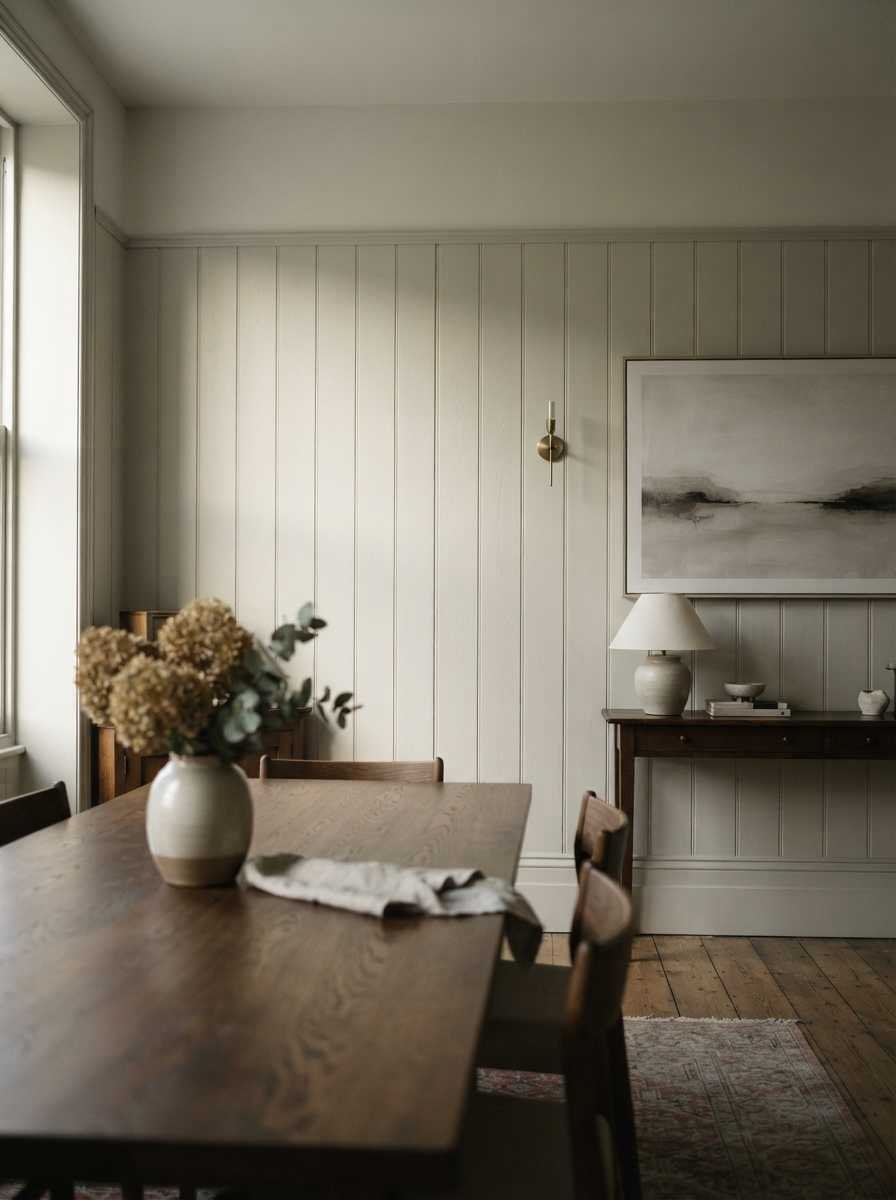
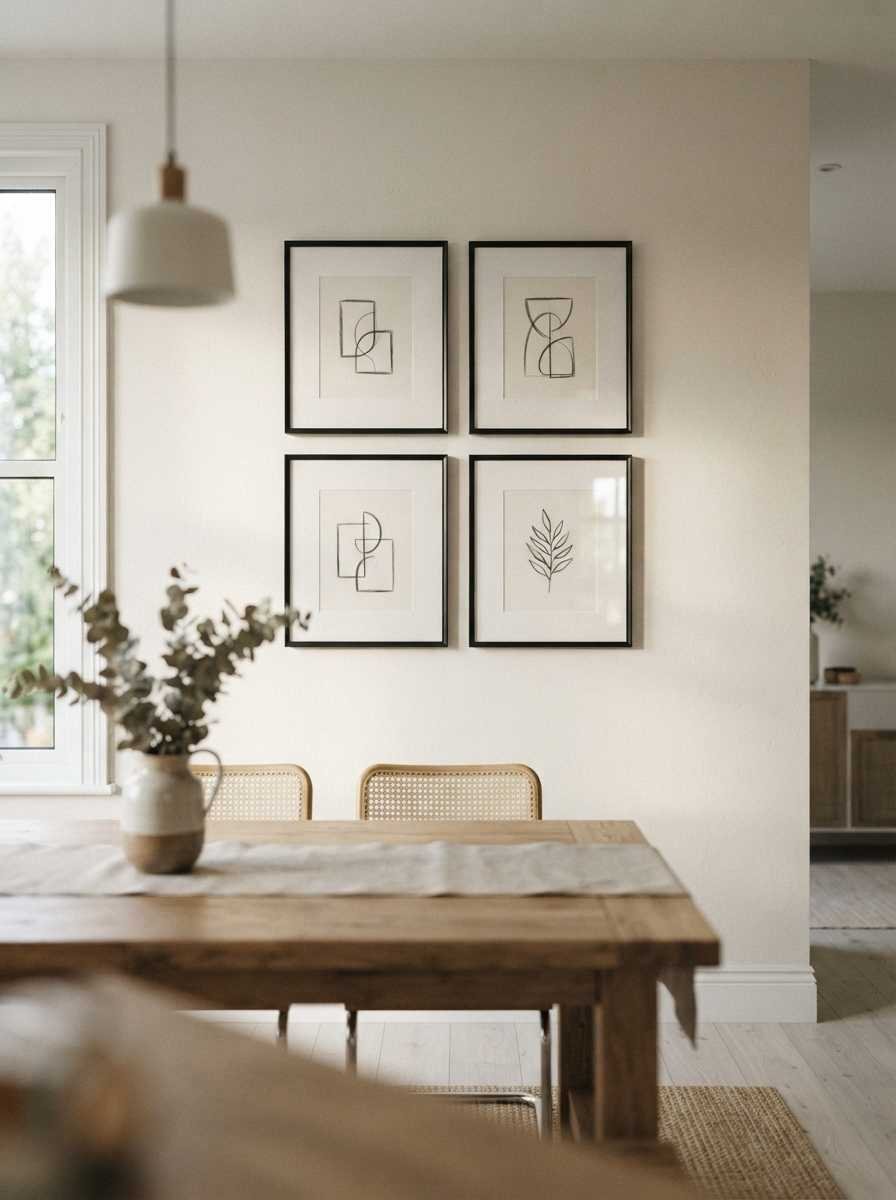
A gallery wall and minimalism aren’t opposites. The trick is discipline in the frames, not the number of pieces.
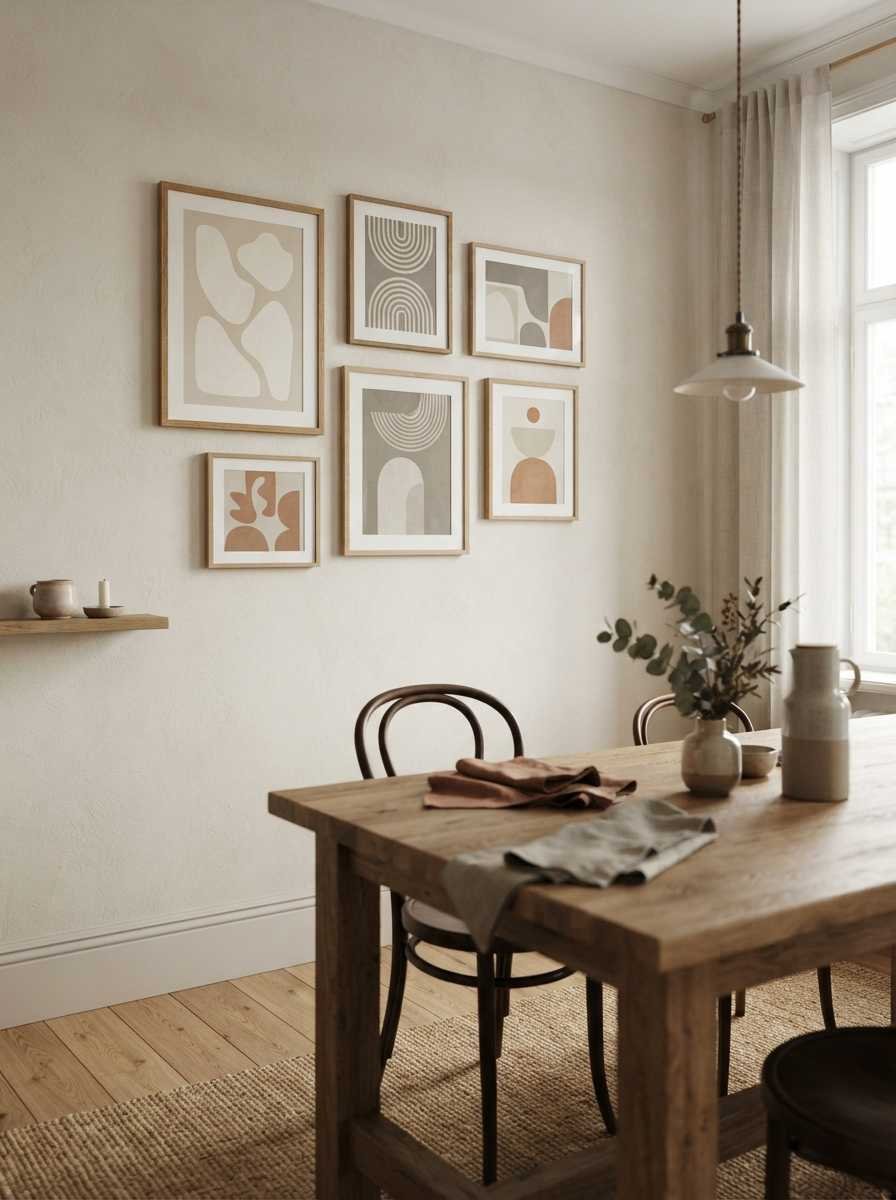
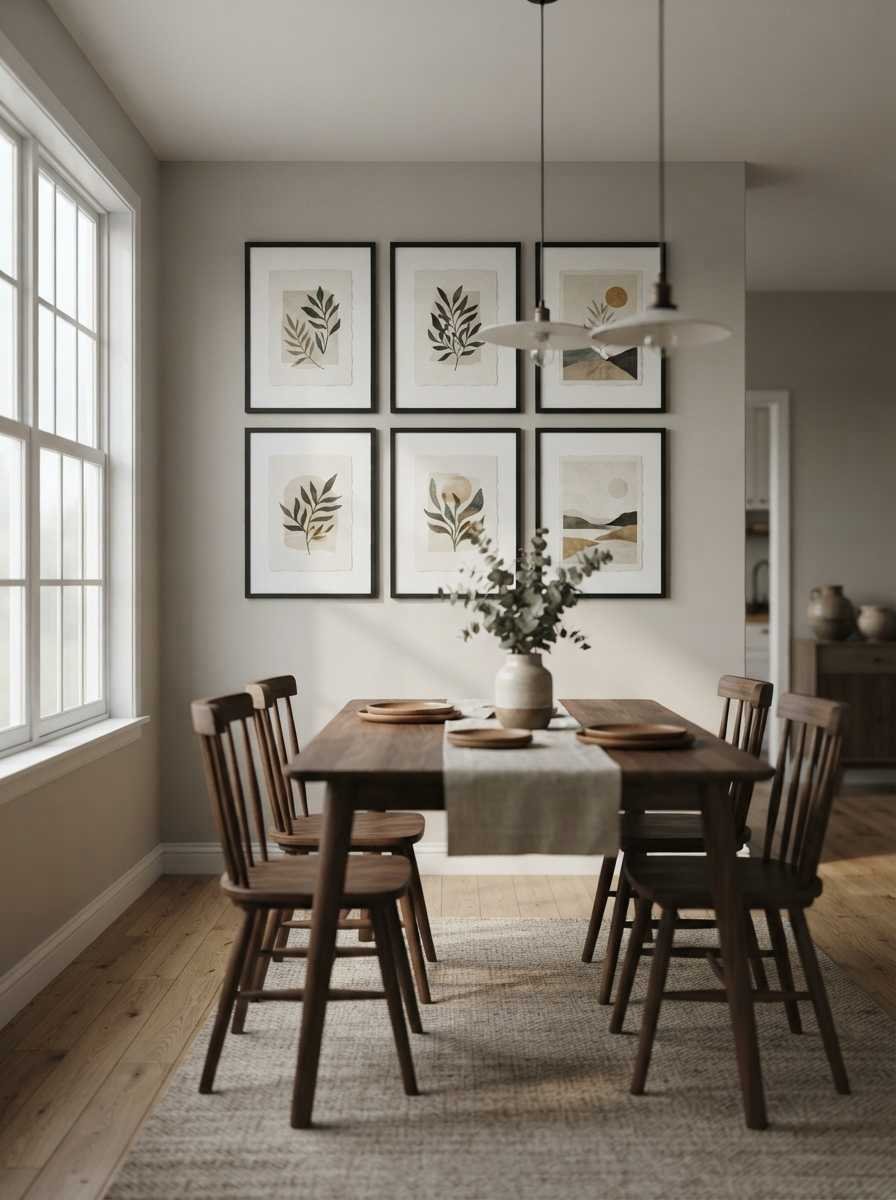
- Keep every frame the exact same color and finish, even if the art inside varies. Consistency in the frames does the “minimalist” job even when the content is a bit more eclectic.
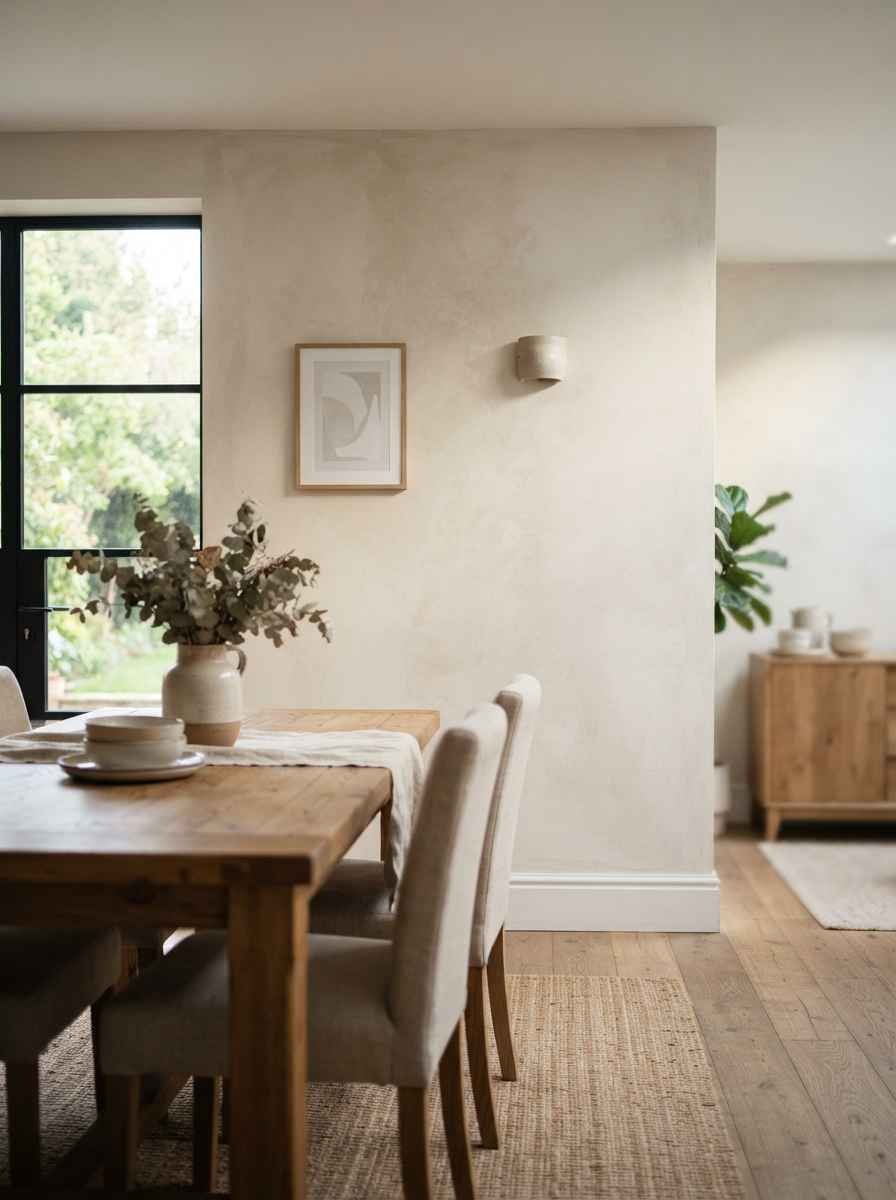
- Limit the palette. Three tones total, including the wall color, keeps a multi-piece wall from tipping into cluttered.
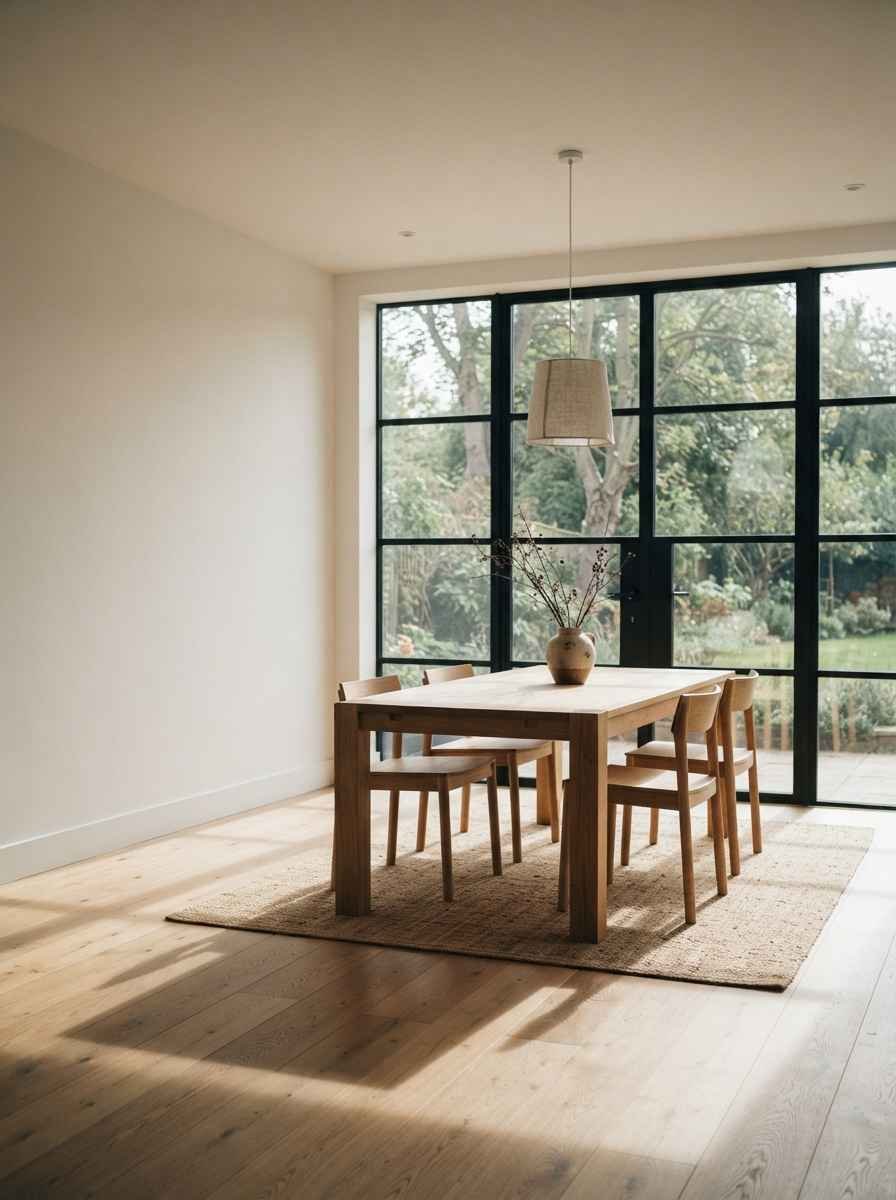
- Try a small, tight grid, like a 2×2 or 3×2, rather than a sprawling salon-style arrangement. Grids read as calm. Salon walls read as a lot.
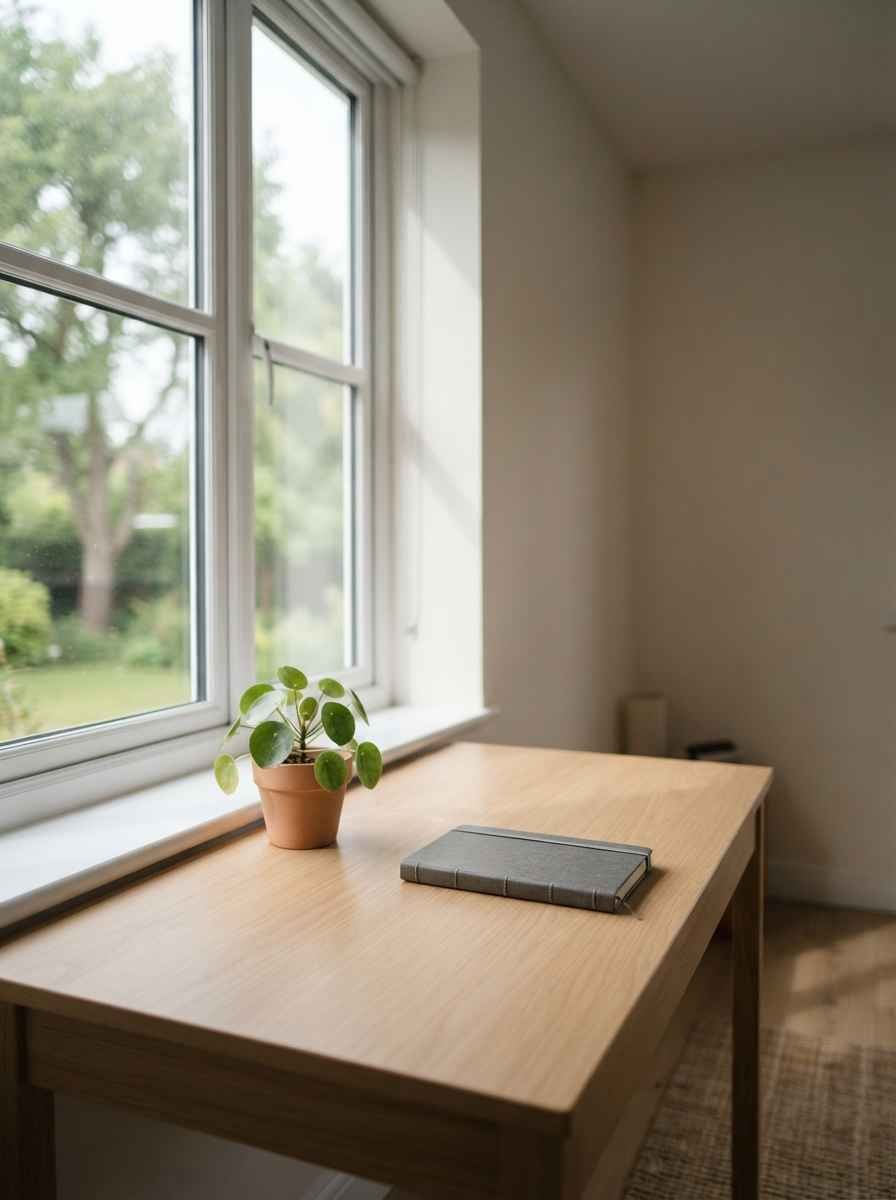
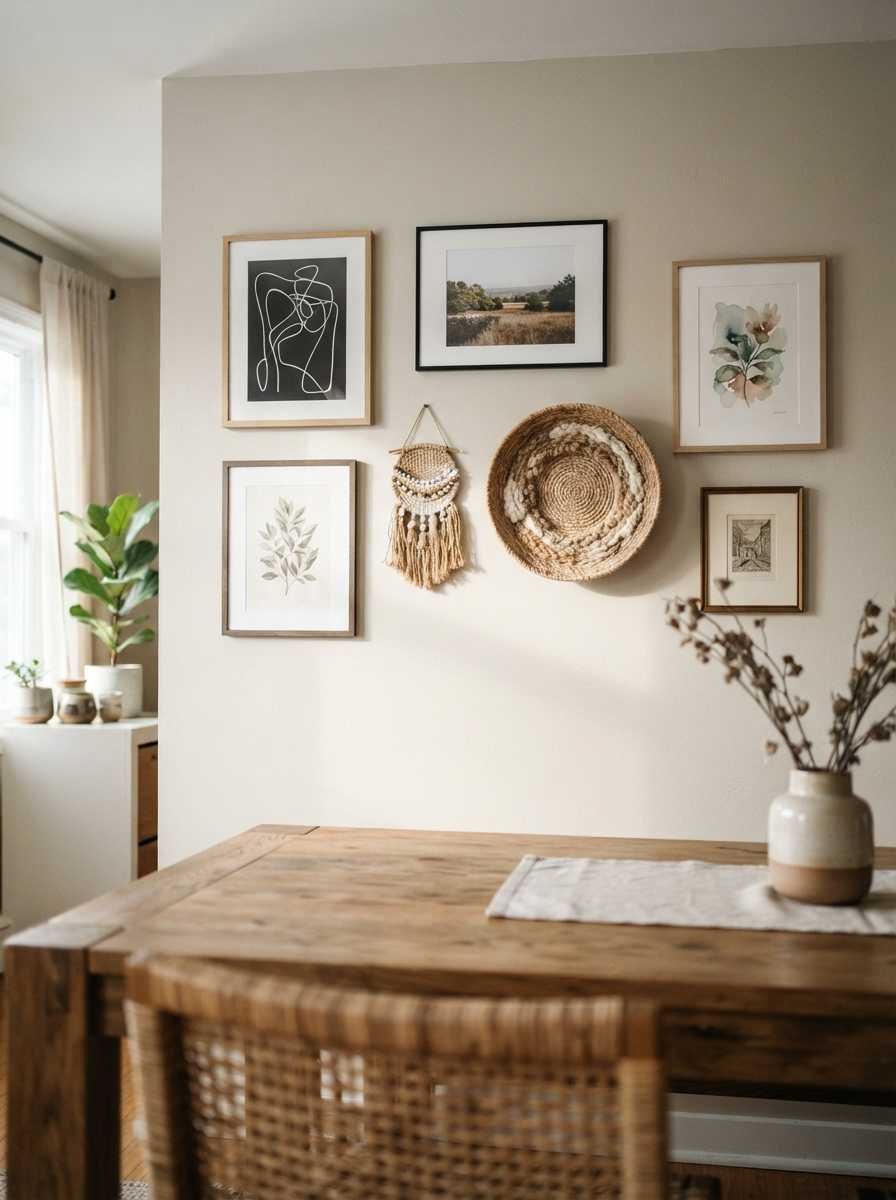
- Mix in one textural element, like a small woven disc or a slim ceramic wall sconce, among the framed pieces to break the flatness without adding busyness.
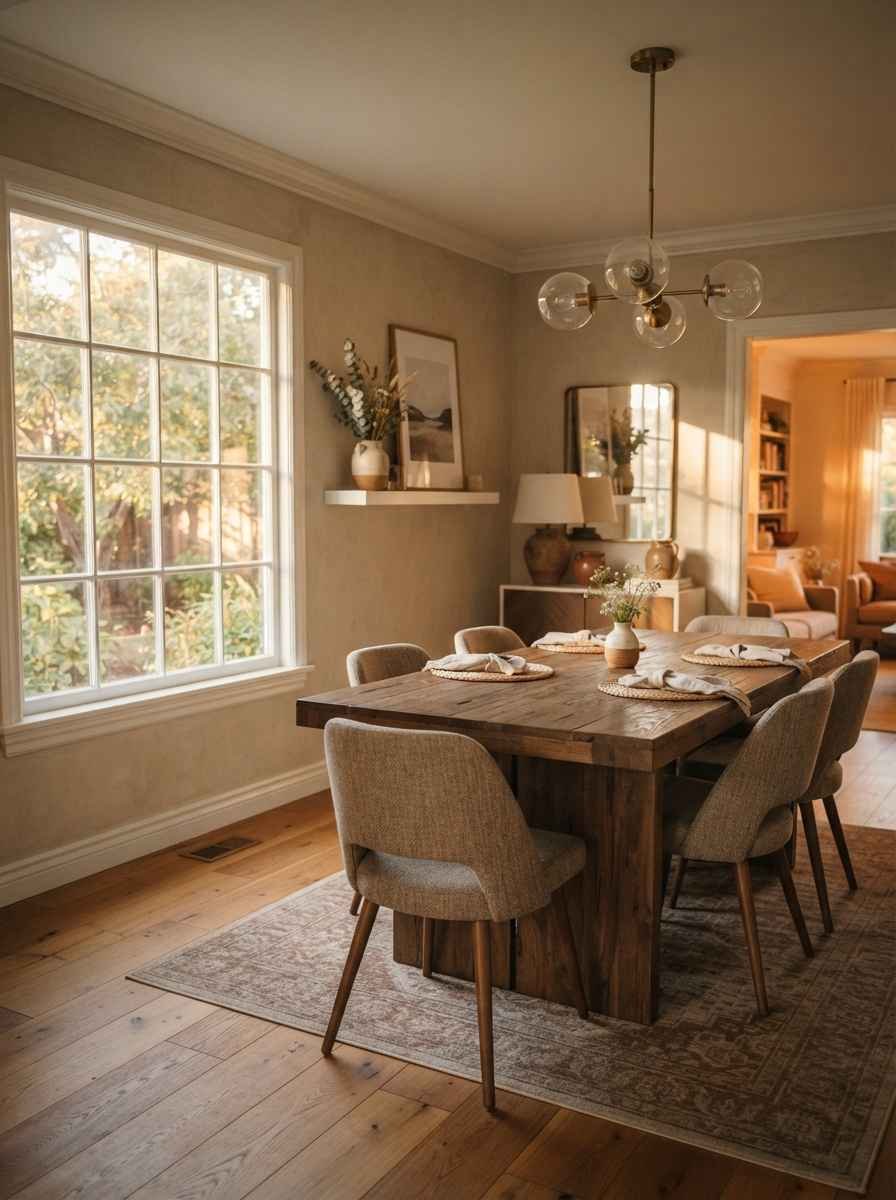
For more small-space specific layouts, including grid spacing and how to work around an awkward nook, <cite index=”4-1″>Mixtiles has a solid breakdown of small dining room wall decor</cite> that lines up with a lot of what I’ve tried myself.
Texture, panels, and the “quiet luxury” wall
- Add simple wood paneling or wainscoting painted the same color as the wall above it. It creates dimension through shadow lines instead of through objects.
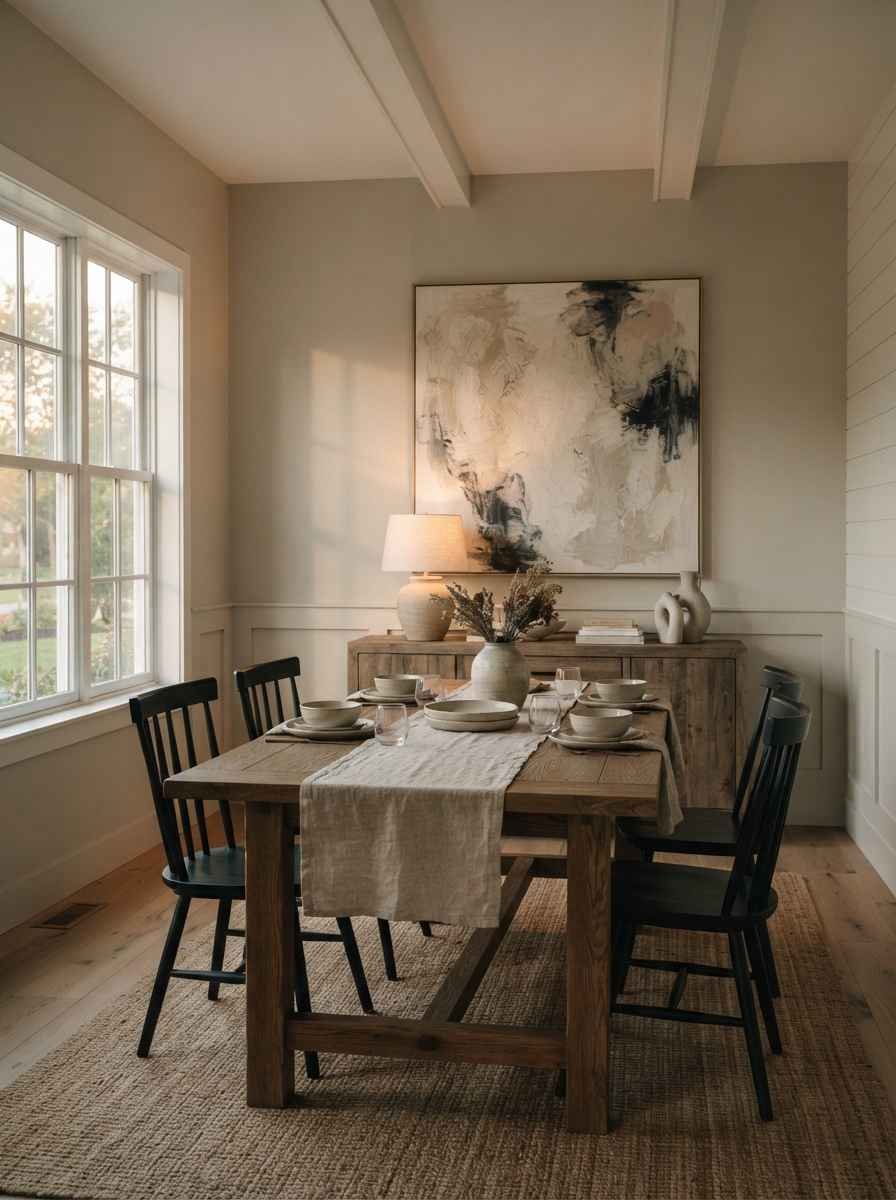
- Try a limewash or lightly textured plaster finish on just one wall. It photographs beautifully and, in person, changes with the light throughout the day, which is honestly more interesting than most framed art.
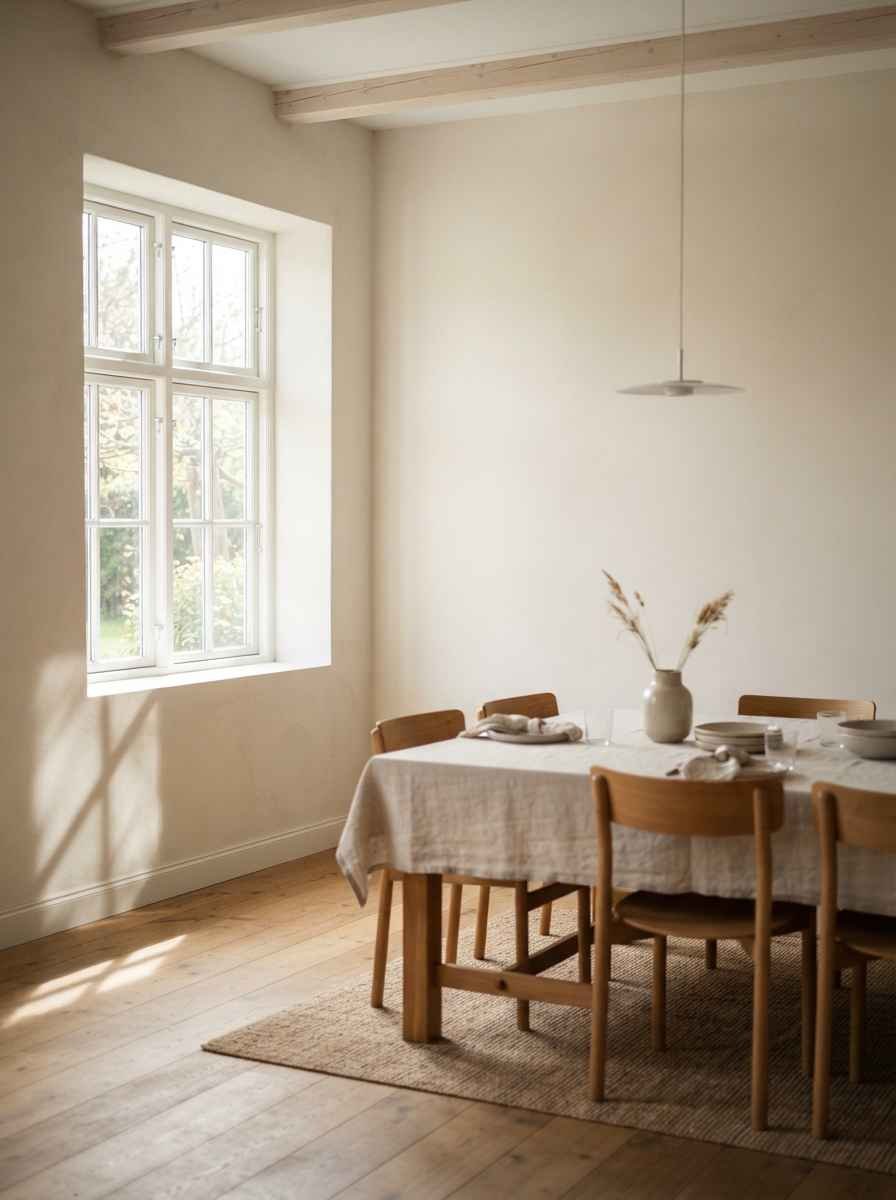
- Skip decor entirely on one wall and let a single architectural detail (a window, a doorway, a built-in) be the visual anchor. Sometimes the most minimalist choice is admitting the room doesn’t need you to do anything to it.
A quick reference before you commit
| Style goal | Best pick from this list | Skip if |
|---|---|---|
| Small, dark dining room | Mirror (idea 10 or 11) | You already have a large window |
| Renters, no drilling | Wall-mounted planter or leaning art | Your lease bans adhesive hooks |
| Big open dining area | Oversized single artwork (idea 6) | Your ceilings are under 8 feet |
| Budget under $50 | Paint one accent wall (idea 9) | You just repainted last year |
A quick, honestly unrelated thought
Random aside, but it’s kind of related if you squint:
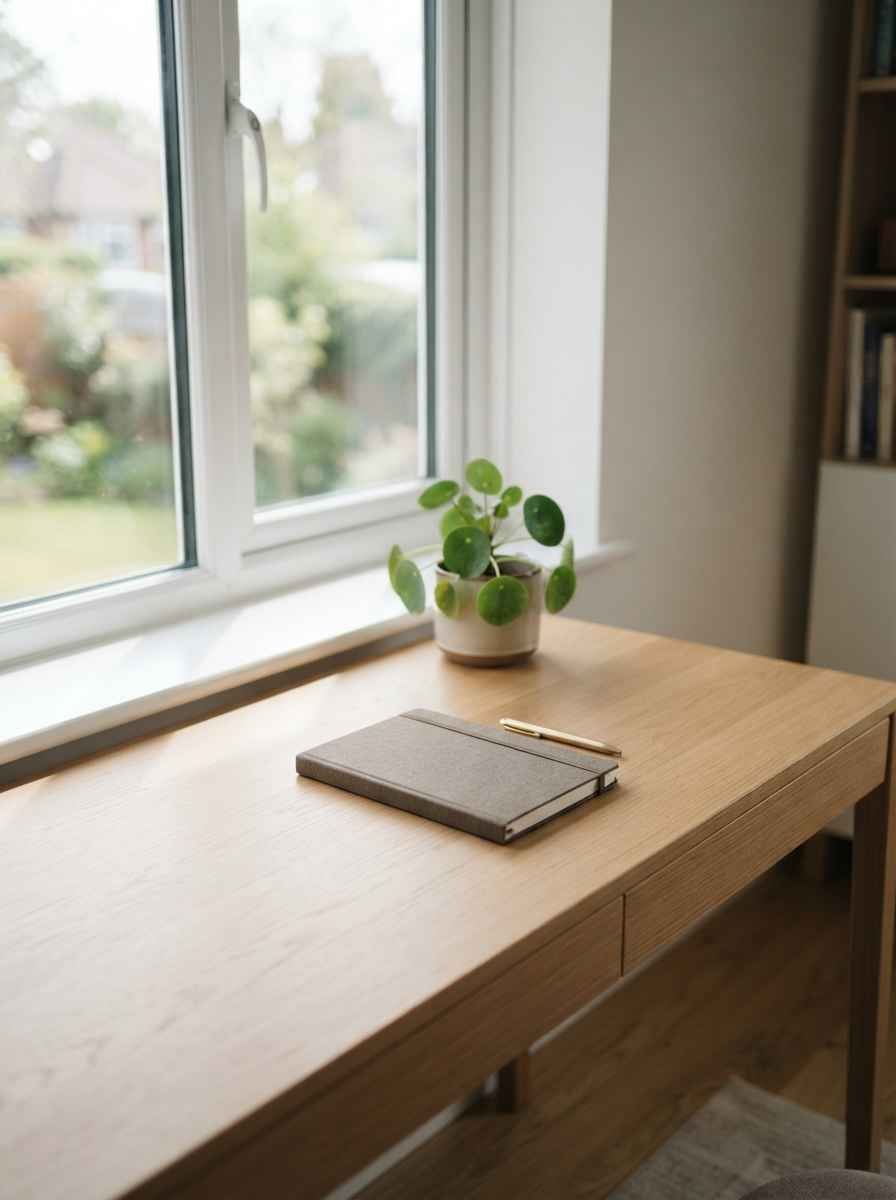
I think the reason minimalist decor photographs so well on Pinterest is the same reason a clean desk feels good to sit down at. Less stuff means less to apologize for.
Your wall isn’t performing “look how much taste I have.” It’s just letting the room breathe. Anyway, back to walls.
FAQs
Do I need to paint my dining room wall white for minimalist decor to work? No. White is common because it’s easy, but soft neutrals, deep greens, and even black walls can look just as minimal if you keep the objects on them limited. The color matters less than the restraint.
How many pieces of art is “too many” for a minimalist dining room? There’s no hard number, but if you can’t name what each piece is doing on the wall without pausing, you probably have one too many. Most of the rooms in this list work with one to four pieces total.
Can a minimalist dining room still feel warm and lived-in? Yes, and honestly it should. Add warmth through texture (wood, linen, ceramic) and lighting rather than through more objects. A minimal wall with the right lamp glow feels cozier than a busy wall under a harsh overhead light.
Final thought
Twenty-five ideas is a lot to look at in one sitting, so don’t try to use all of them.
Pick the one or two that solve an actual problem in your room, a dark corner, a bare wall, a cluttered shelf, and start there.
Then live with it for a couple of weeks before adding more.
What’s actually on your dining room wall right now? If the honest answer is “too much,” that’s usually where to start.
