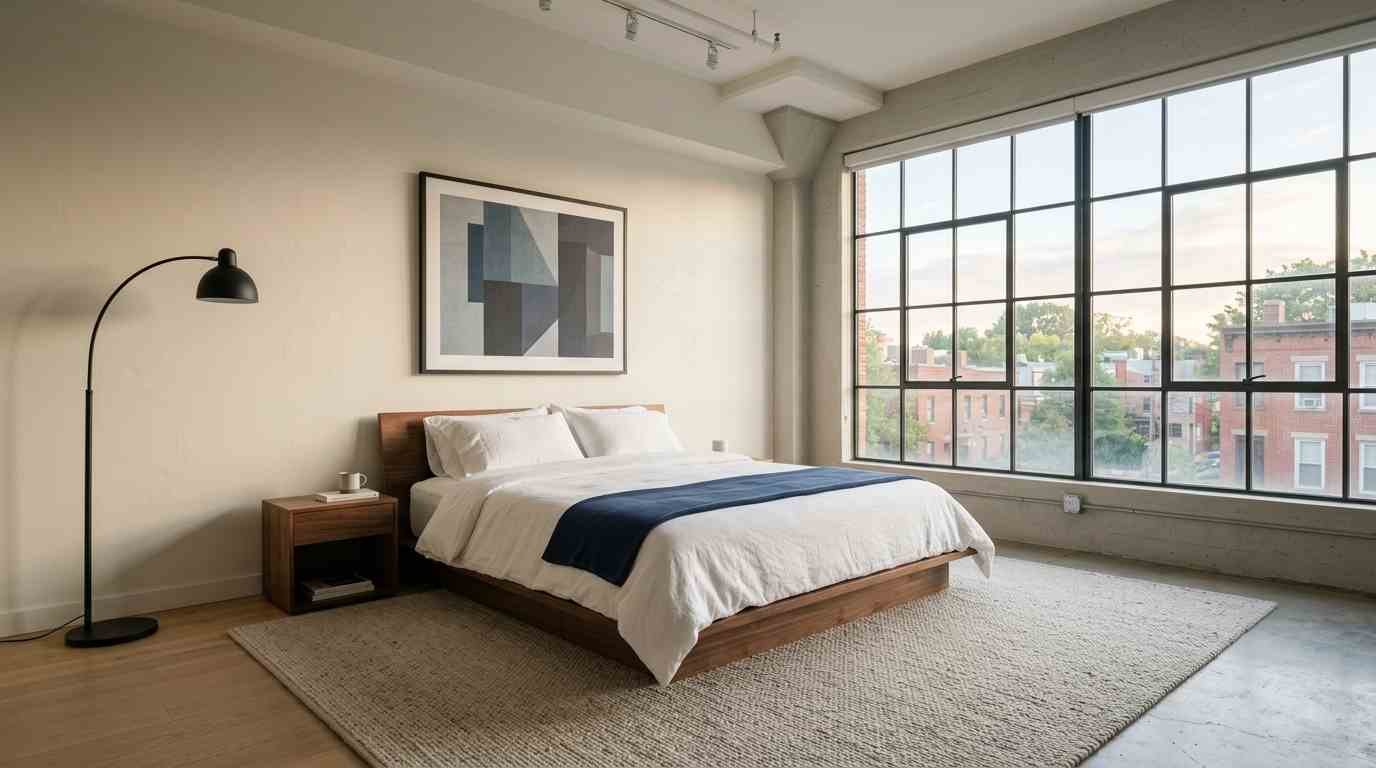
I redid my bedroom three times before I got it right. The first attempt looked like a hotel lobby.
The second looked like nobody lived there at all. The third one finally felt like mine, calm, a little cold-weather Scandinavian, a little bachelor pad, and somehow still cozy enough to nap in on a Sunday.
That’s the thing about “minimalist” decor for guys. People hear the word and picture a bare room with one chair and a regret.
Done right, a minimalist setup just means every object in the room earns its spot.
Less stuff to dust, less stuff to trip over, more room to actually breathe.
Joshua Fields Millburn and Ryan Nicodemus built an entire career out of one idea: own less, but own better.
That’s basically the whole philosophy behind this list. You’re not stripping the room down to nothing, you’re cutting what doesn’t add anything so the pieces that matter actually stand out.
I pulled most of my inspiration from scrolling minimalist bedroom boards on Pinterest, late nights, and a few expensive mistakes I’d rather you skip.
Here are 15 ideas that actually worked in my own room, plus a couple of habits that make the whole thing stick.
- Edit before you decorate

Before you buy a single thing, clear the room out completely. Pull everything off the surfaces and only put back what you use weekly.
Put the rest in a box and see if you miss it after two weeks, most of the time you won’t even remember what was in there.
Princeton researchers studying the visual cortex found that clutter forces your brain to compete for its own attention, which is a fancy way of saying a messy room makes you tired before you’ve done anything in it.
I noticed the difference within a day. My desk went from “where’s my charger” to actually usable, and honestly, that alone was worth the whole afternoon of sorting.
- Pick one accent color and stop there
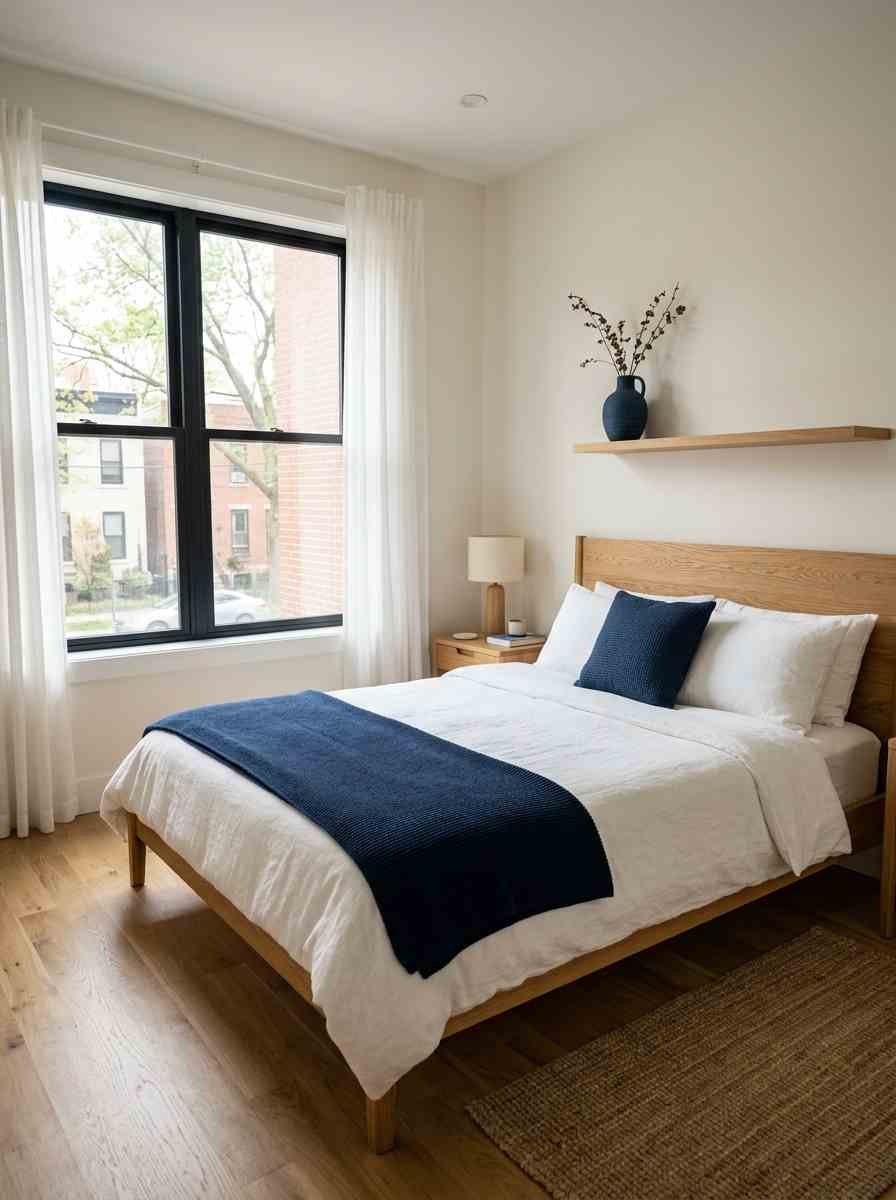
Minimalist doesn’t mean all gray and beige forever. It means restraint. Choose one accent, a deep forest green, rust, navy, charcoal, and let it show up two or three times: a throw pillow, a frame, a blanket.
Research on bedroom color psychology consistently links cooler, muted tones like blue and sage to lower stress and better sleep, so I’d lean navy over anything neon.
Warm tones aren’t off the table either, terracotta and rust both work, just pick one lane and stay in it instead of bouncing between five different moods.
- Get a real bed frame
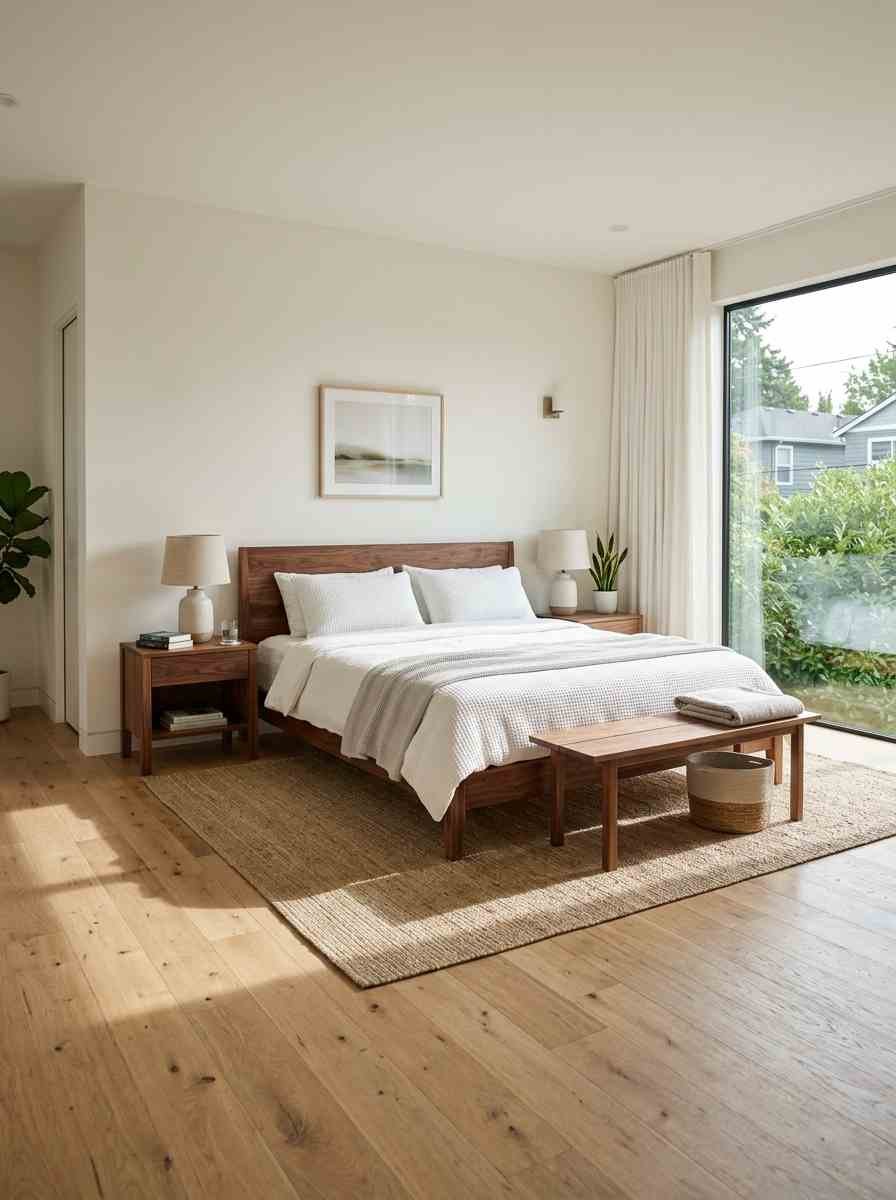
The flimsy metal frame from your first apartment has to go.
A low platform frame in solid wood or a simple upholstered headboard instantly makes the whole room look intentional instead of temporary.
Skip the tall, ornate headboards too, they fight with a minimalist room instead of supporting it.
This was the single upgrade that changed how the room felt the most. I went from a $90 frame that squeaked every time I rolled over to a $300 walnut platform bed, and people who walked into the room actually commented on it unprompted.
Worth every dollar, IMO.
- Hide every cord you can
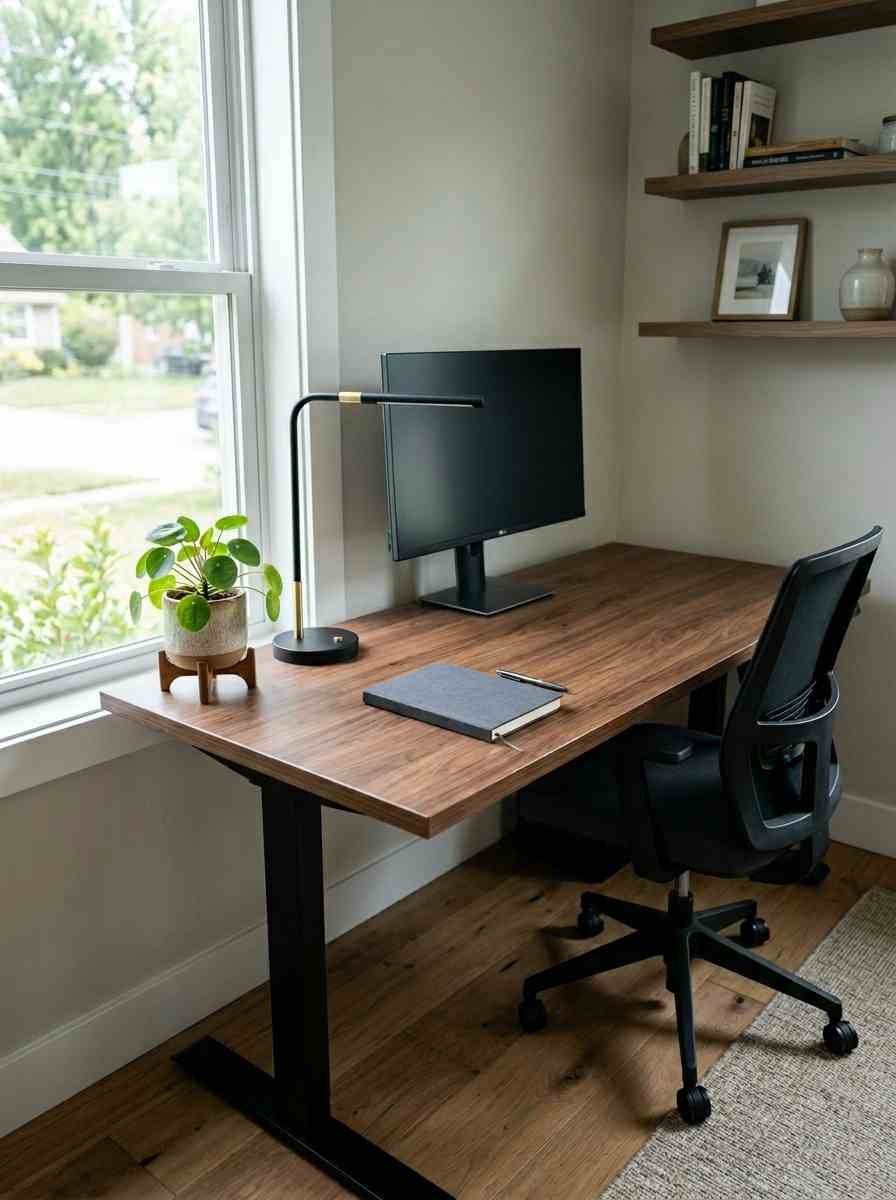
Cable clutter is the fastest way to ruin an otherwise clean setup.
Run cords behind furniture, use a cheap cable sleeve, and mount your power strip somewhere you can’t see it.
Honestly, this fix costs about 15 dollars and does more visual work than half the furniture in the room. Underrated upgrade, full stop on the cheap stuff.
- Swap the bookcase for floating shelves
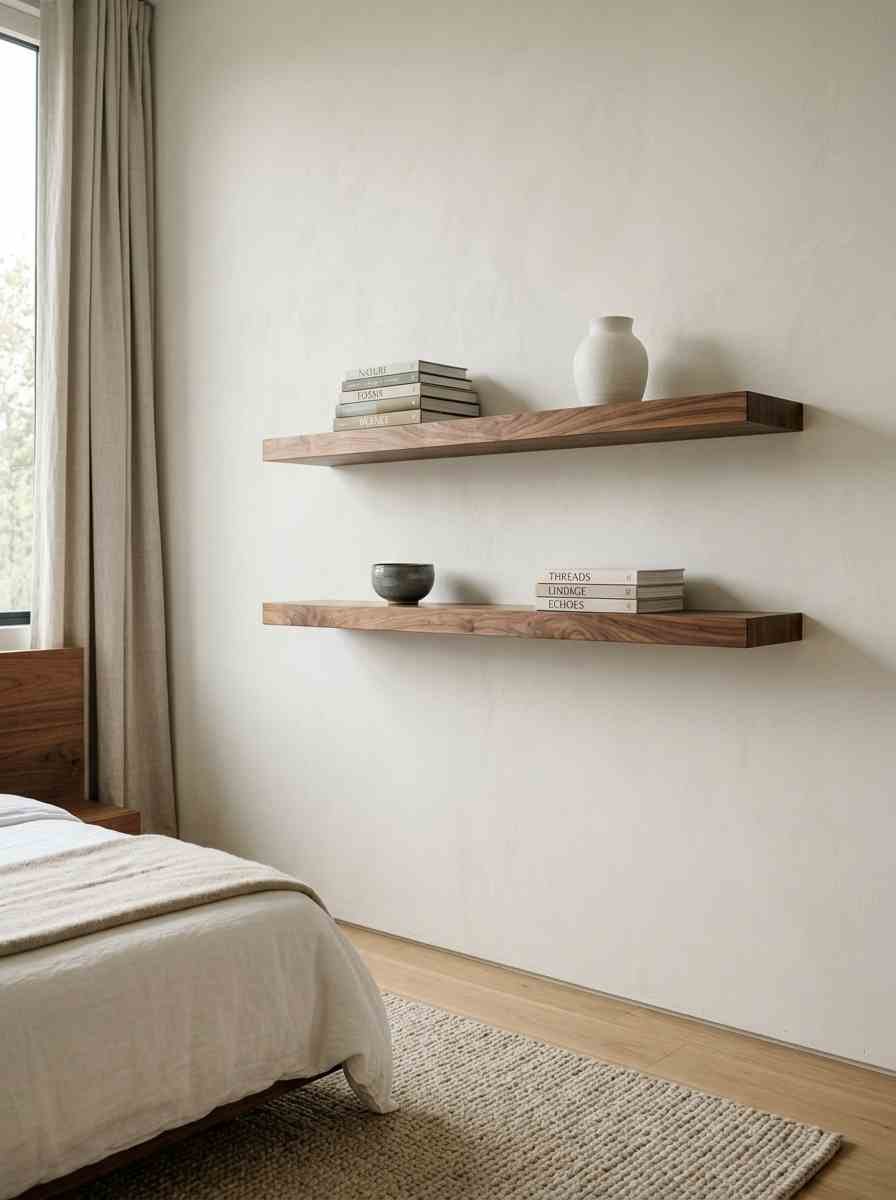
A heavy bookcase eats visual space even when it’s half empty.
Two or three floating shelves, spaced with breathing room between them, hold the same stuff and look ten times lighter. Put a small stack of books, one object, nothing else.
Crowded shelves read as clutter no matter how nice the furniture is.
- Build around one wood tone
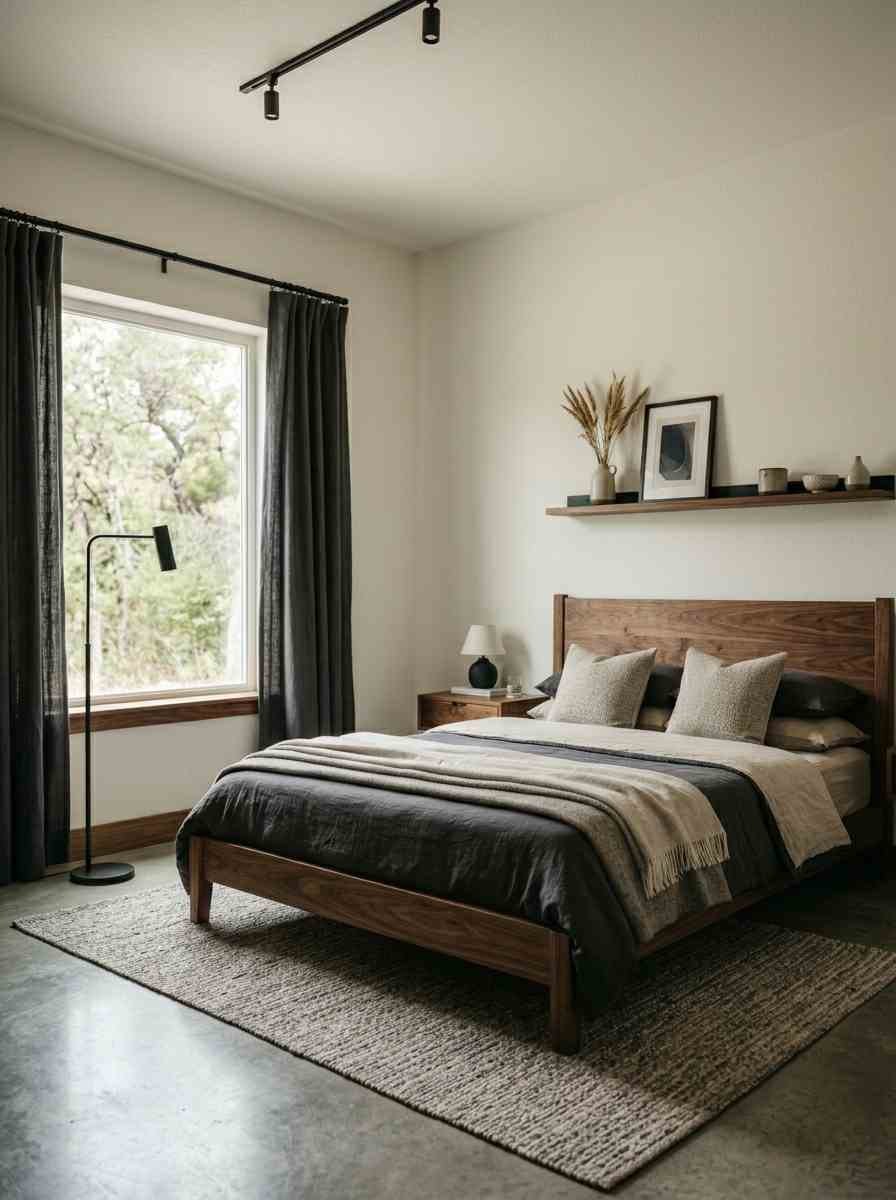
Mixing oak nightstands with a walnut desk and a pine shelf creates visual noise, even if each piece looks fine on its own.
Pick one wood tone and stick with it across the room, nightstands, shelves, desk, frame, all of it.
Walnut and black steel is a combination I keep coming back to.
It reads expensive even when it isn’t, and it’s forgiving if you’re buying secondhand pieces over time instead of furnishing the whole room at once.
- Buy furniture that does two jobs
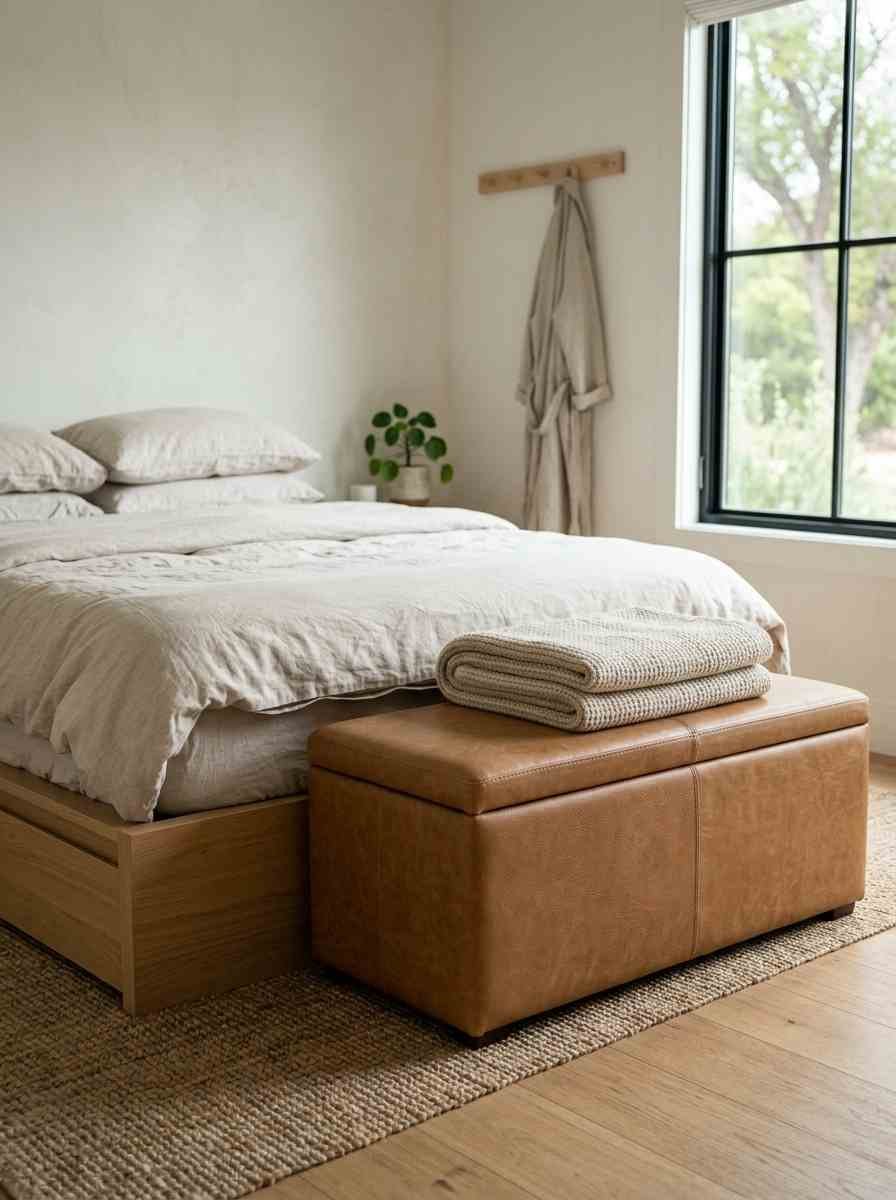
A storage ottoman that holds blankets and doubles as a footrest.
A bed frame with drawers built into the base. A nightstand with a hidden charging drawer instead of a tangle of cords on top.
Multi-purpose furniture cuts down on the number of pieces in the room, which is really the whole minimalist game in one sentence: fewer things, each one working harder.
I used to have a separate laundry hamper, a blanket basket, and a random storage bin, three objects doing one job between them.
Swapping all three for a single ottoman with a lift-top lid cleared a whole corner of the room.
- Layer your lighting
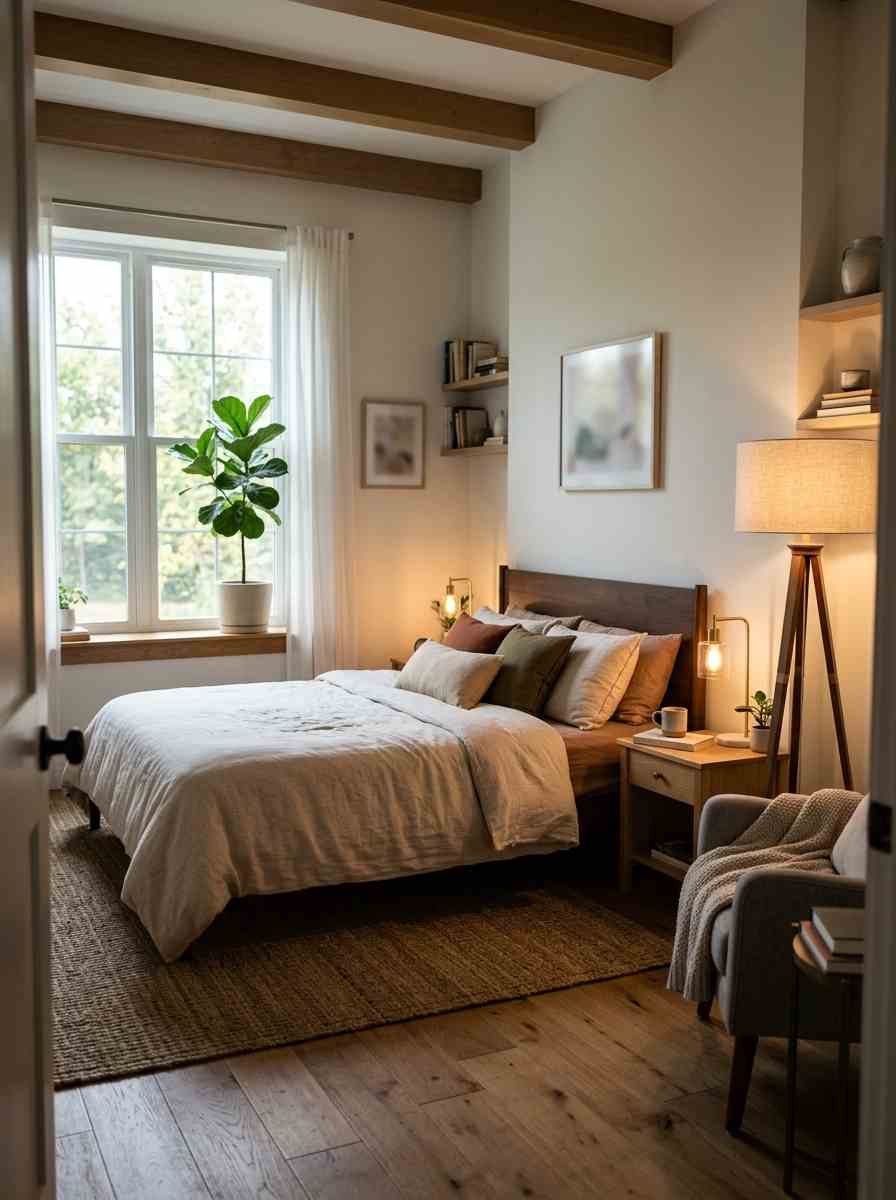
Overhead lighting alone makes a bedroom feel like an interrogation room. Add a floor lamp, a small desk lamp, maybe a plug-in sconce near the bed.
Warm bulbs, around 2700K, make the same furniture feel ten degrees cozier at night, and you can dim them lower for movie nights or reading without flipping the harsh main light on.
This is also where I went on a total tangent one weekend and ended up rewiring lamps in my garage too, which has nothing to do with your bedroom,
but if you’re already in a project mood, don’t be surprised if it spreads to other rooms in the house.
- Limit wall art to one statement piece
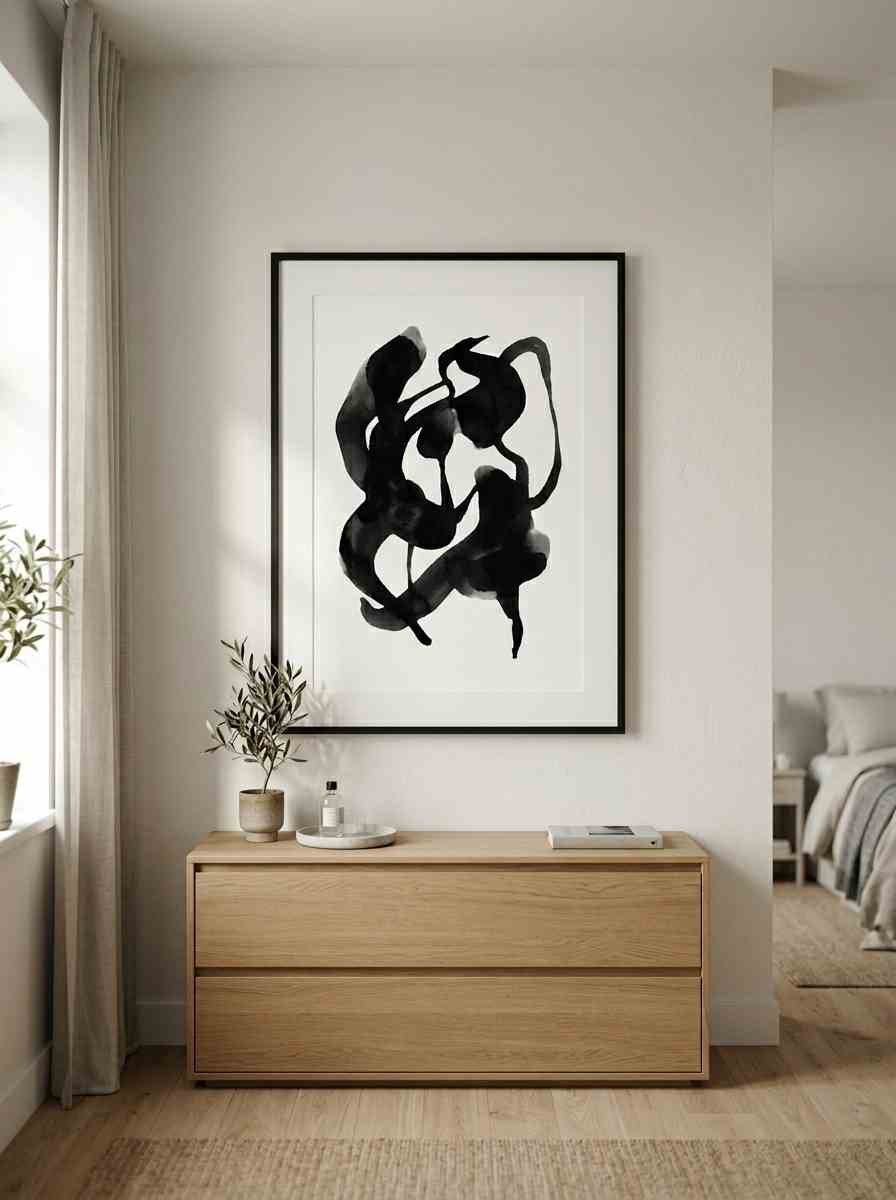
Skip the gallery wall. One large piece of art, a framed print, a black-and-white photo, a simple line drawing, does more for the room than six small frames scattered around.
Negative space on the wall is part of the design, not an empty spot you need to fill.
This is the idea people argue with me about the most.
Everyone wants to fill every wall, and I get it, but an empty wall above a clean dresser reads as calm, not unfinished. Trust the gap.
- Choose texture over pattern
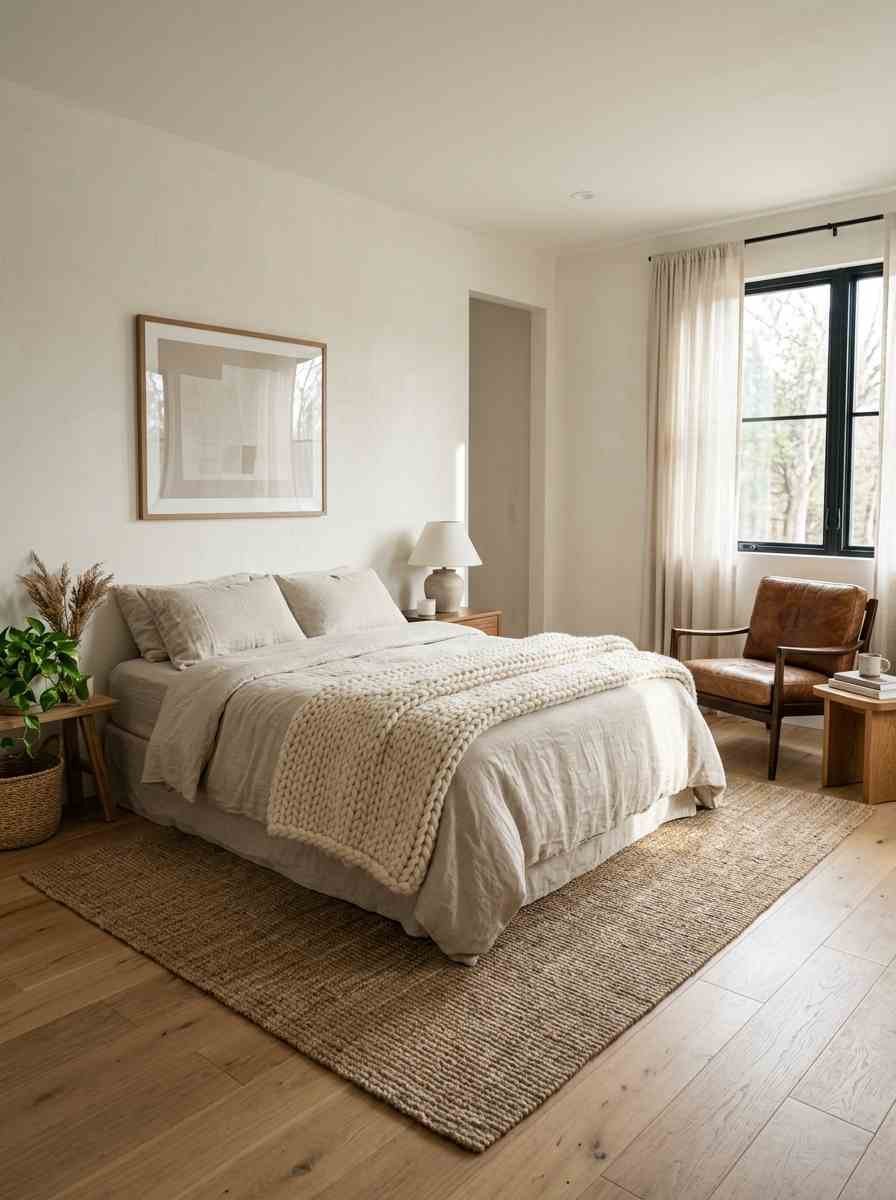
Patterned bedding and rugs date fast and clash easily once you start swapping pieces in and out.
A linen duvet, a wool throw, a leather accent chair, these add depth without adding visual noise. Run your hand across the room before you decide it’s finished, seriously.
If everything feels the same, smooth cotton, smooth wood, smooth metal, add one textured piece and stop there.
- Get one plant, and make it a tough one
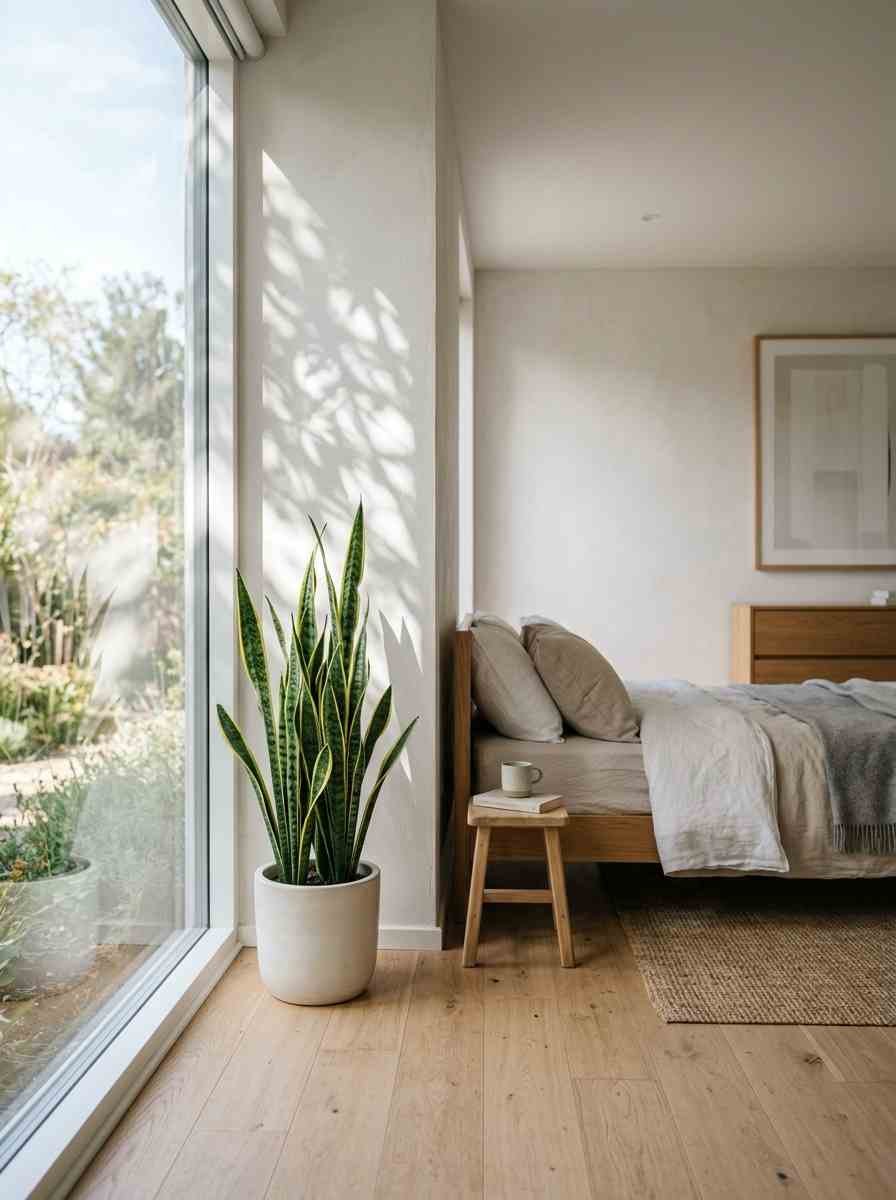
A single snake plant or ZZ plant adds life to the room without turning it into a greenhouse you have to manage.
I killed three plants before this one stuck. My honest opinion: skip the finicky fiddle-leaf fig and get something that survives forgetfulness, because that’s most of us.
- Hide the mess in closed storage
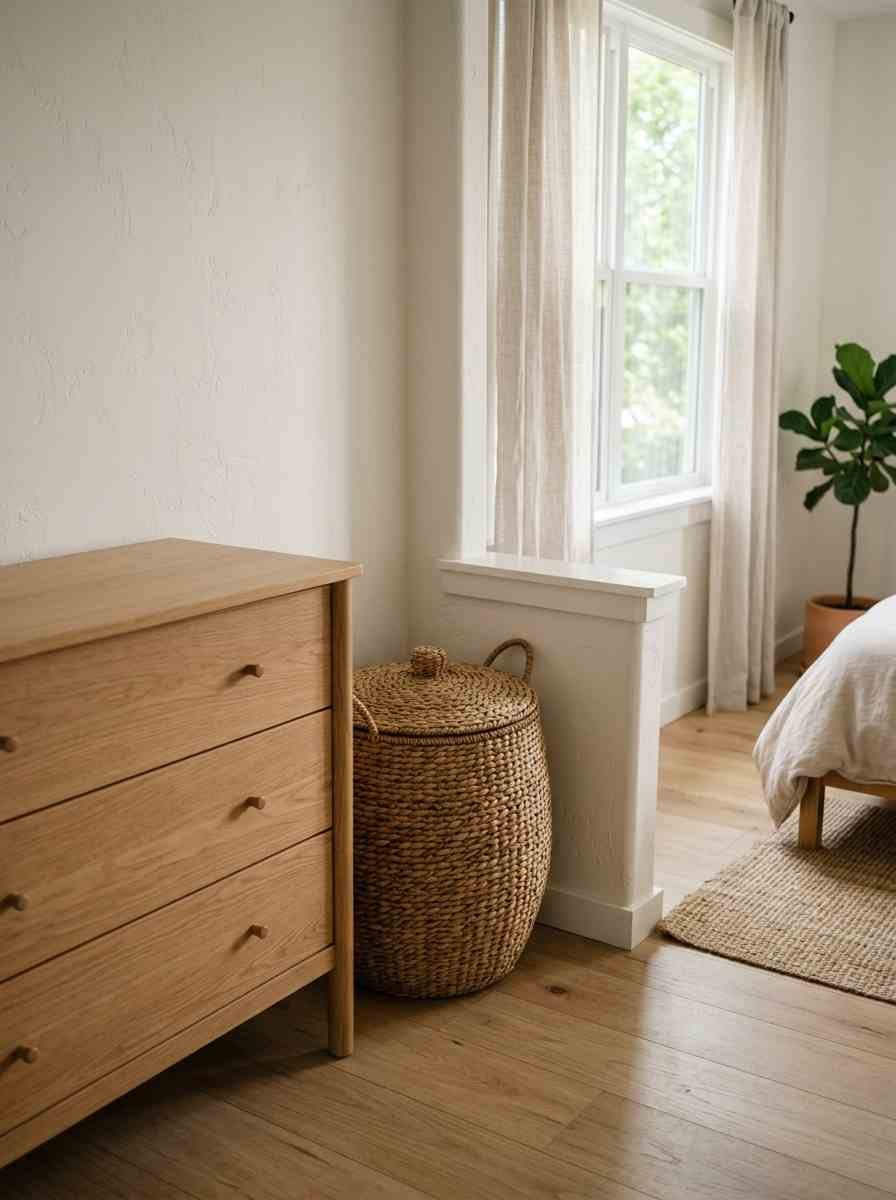
Open shelving looks great until it’s covered in loose change, headphones, and random receipts.
Keep one or two closed storage pieces, a basket, a drawer unit, a hamper with a lid, specifically for the stuff that doesn’t have a home yet.
Your open surfaces stay clean because the chaos has somewhere to live.
- Go matte black or brushed metal on hardware
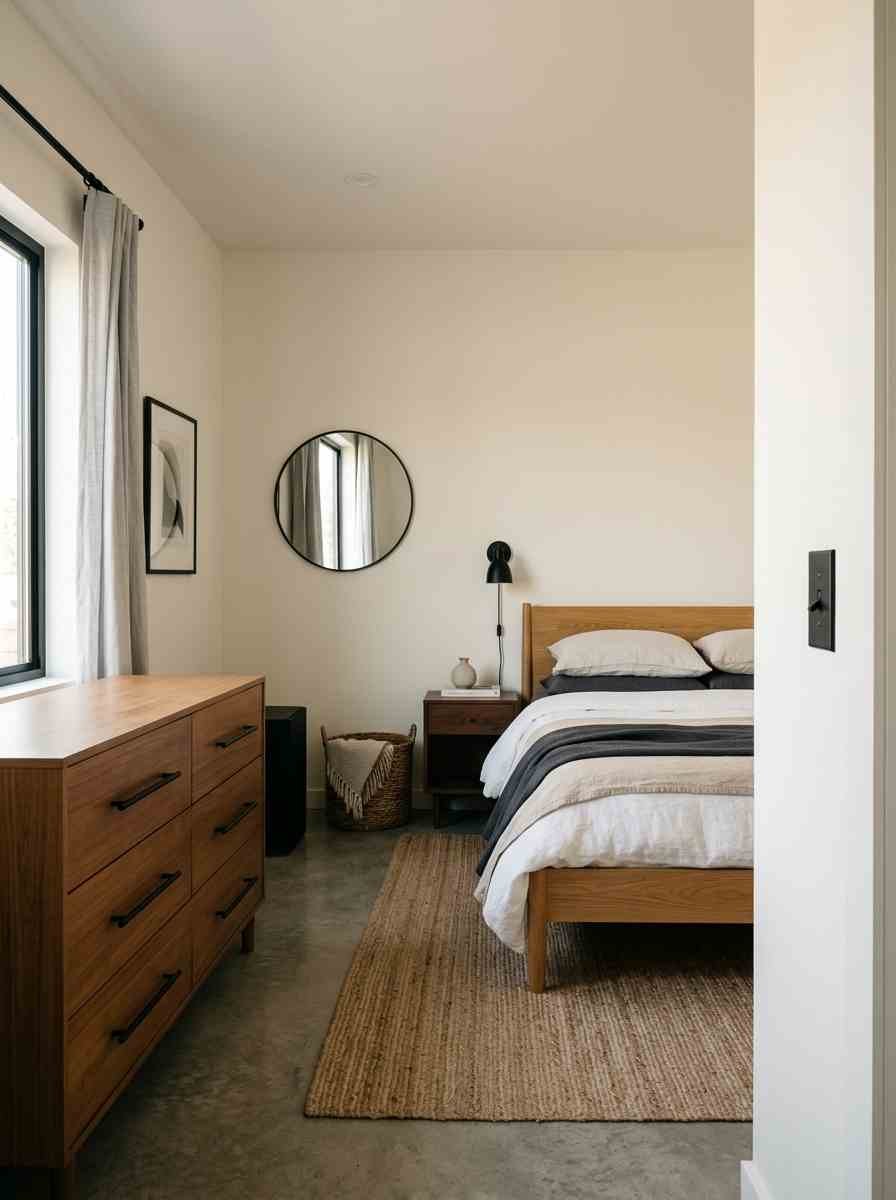
Drawer pulls, light switch covers, curtain rods, even the hinges on your closet doors.
Swapping shiny gold or chrome for matte black or brushed nickel ties small details together without you doing much else. It’s a small purchase that photographs surprisingly well,
which matters if you’re posting the finished room.
I did this last, almost as an afterthought, and it ended up being the detail people noticed first. Funny how the cheapest fix on the list made the biggest difference in photos.
- Anchor the room with one large rug
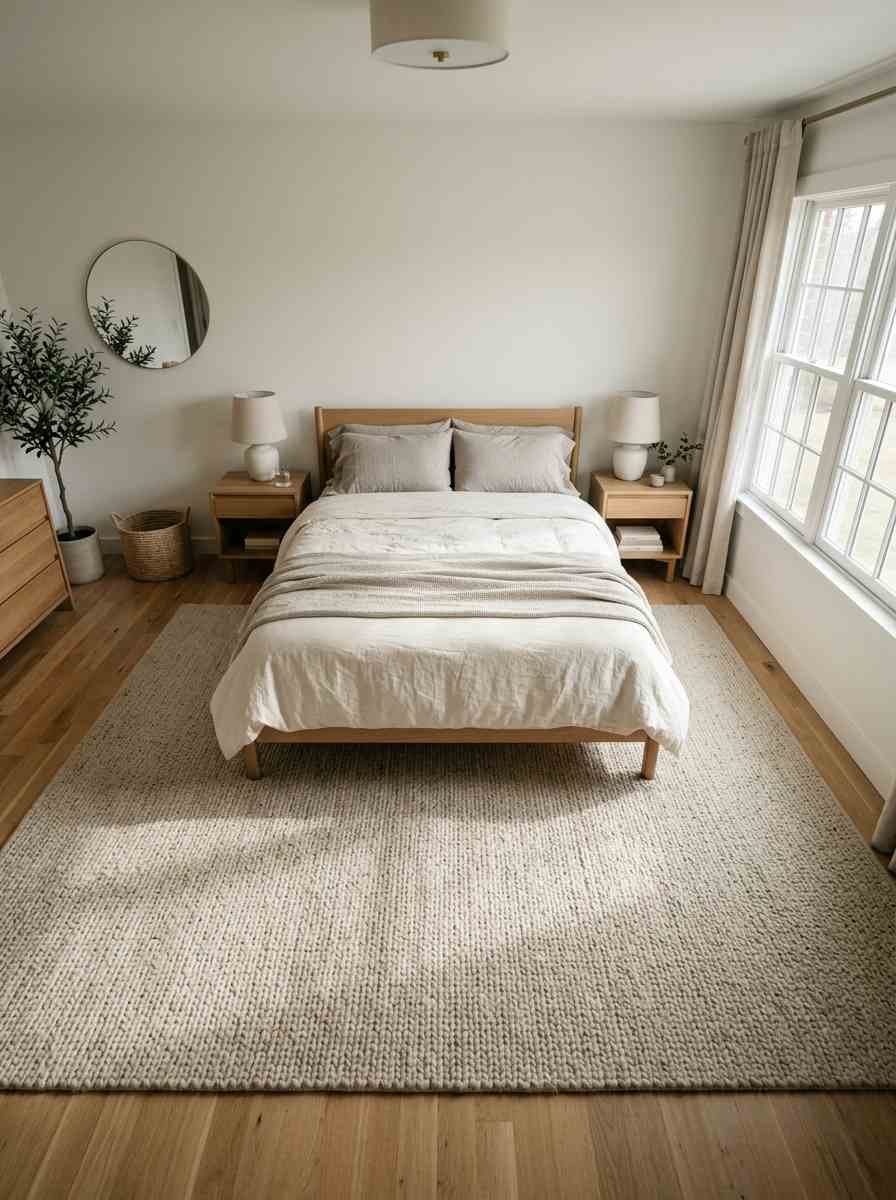
Several small rugs scattered around make a room look choppy and busy, like you couldn’t decide on one. One rug, sized so your bed and nightstands sit on it, pulls the whole space together instead of breaking it into pieces.
This is the upgrade most people skip because it’s not exciting to shop for, a rug just isn’t as fun as new bedding. Wow,
I underestimated how much it mattered until I finally bought one big enough for the whole layout.
- Make the bed every morning
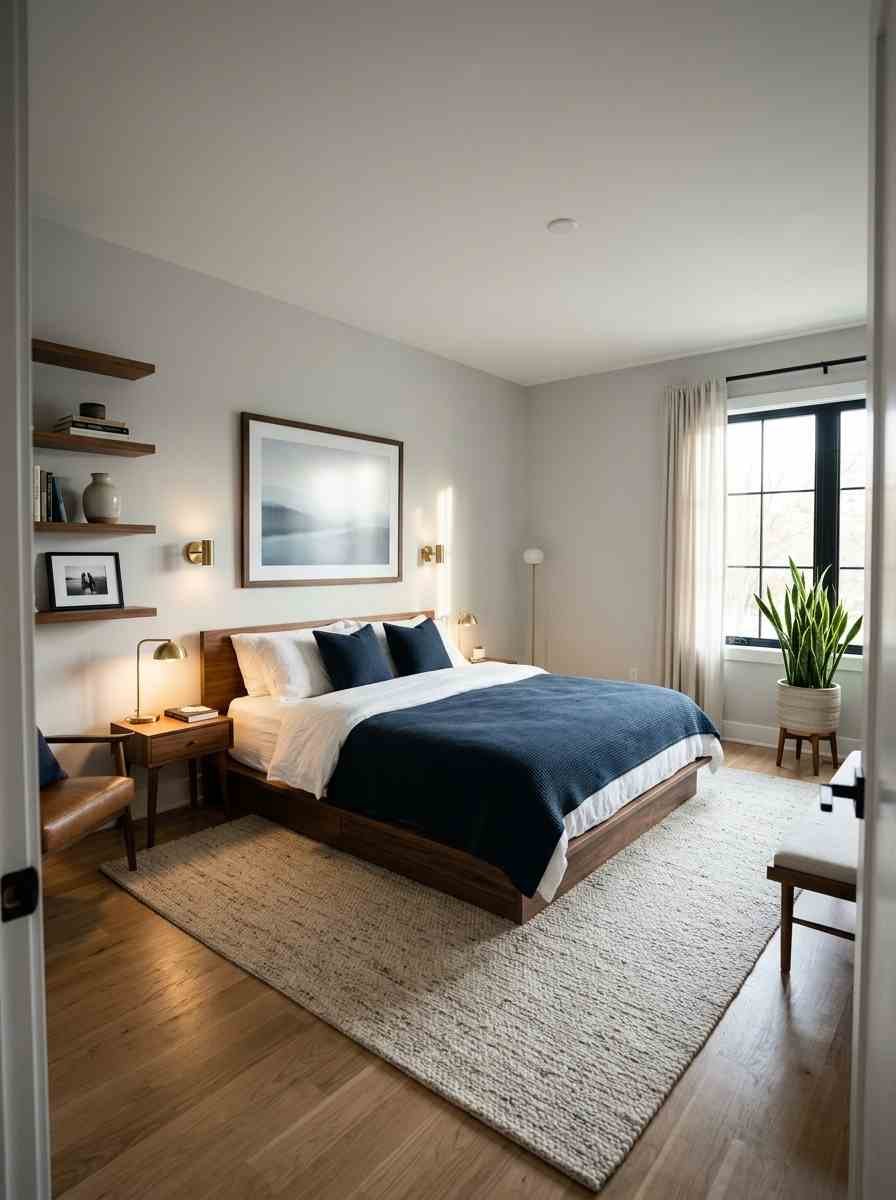
Free, takes 90 seconds, and instantly makes the entire room look 50 percent more put together. Every other idea on this list works better with a made bed underneath it.
If you only do one thing from this article, do this one.
Quick budget guide
| Tier | Typical spend | What you actually get |
|---|---|---|
| Starter | Under $150 | Cable management, new bedding, one plant, decluttering |
| Mid-range | $150 to $500 | Floating shelves, lamps, a rug, wall art, hardware swaps |
| Full makeover | $500 and up | New bed frame, multi-functional furniture, full color refresh |
A few common questions
How much does a minimalist room makeover actually cost? You can hit most of this list for under $150 if you focus on decluttering, cords, and one good accent piece first. The bed frame and rug are the priciest items on here, so save those for when you have more budget and treat the cheap fixes as round one.
What’s the best color for a minimalist man’s bedroom? Cooler, muted tones like navy, sage, and charcoal tend to test best for calm and sleep, paired with a single wood tone like walnut or white oak. Stick with one main palette and one accent color rather than several competing shades fighting for attention.
Do I need to get rid of everything I own to go minimalist? No, and honestly, please don’t. Minimalist decor is about keeping what you use and removing what’s just sitting there collecting dust. Sentimental items and things you genuinely use weekly absolutely stay, this isn’t about living out of one duffel bag.
A clean room won’t fix everything going on in your life, but it removes one source of friction from your day, and that adds up faster than people expect. Pick three ideas from this list, start this weekend, and see how the room feels by Sunday night.
This is insane to say about a bedroom, but the made-bed habit alone changed my whole morning routine.
Which one are you trying first? Save this for later if you’re not ready yet, your future self redoing the room at 11pm on a Tuesday will thank you.
